



A blocked nose can make sinus pressure and congestion feel like they’ve taken over your whole face. Your cheeks ache. Your forehead feels heavy. Even breathing through your mouth can make your jaw tighten, which is an annoying little bonus nobody asked for.
Yoga can help, but not in the magical, cartoonish way people sometimes promise. Gentle folds, supported inversions, and chest-openers can ease the tension around your neck, jaw, and upper back, and that often makes the pressure feel less fierce. The breath usually changes first. Then the face softens a little. Then you notice you’re not clenching quite so hard.
I’m wary of any pose that sounds like a cure-all. It isn’t. If you’ve got a fever, swelling around the eyes, one-sided facial pain, trouble breathing, or symptoms that hang on too long, that’s a medical issue, not a stretching problem. A mat can help you feel better. It cannot do the whole job.
The smartest move is to keep things slow and boring in the best way. Pick three to five poses, hold each one for five to ten breaths, and skip anything that makes your head throb or your ears feel full. If one position feels wrong, leave it. Relief should feel calmer, not more dramatic.
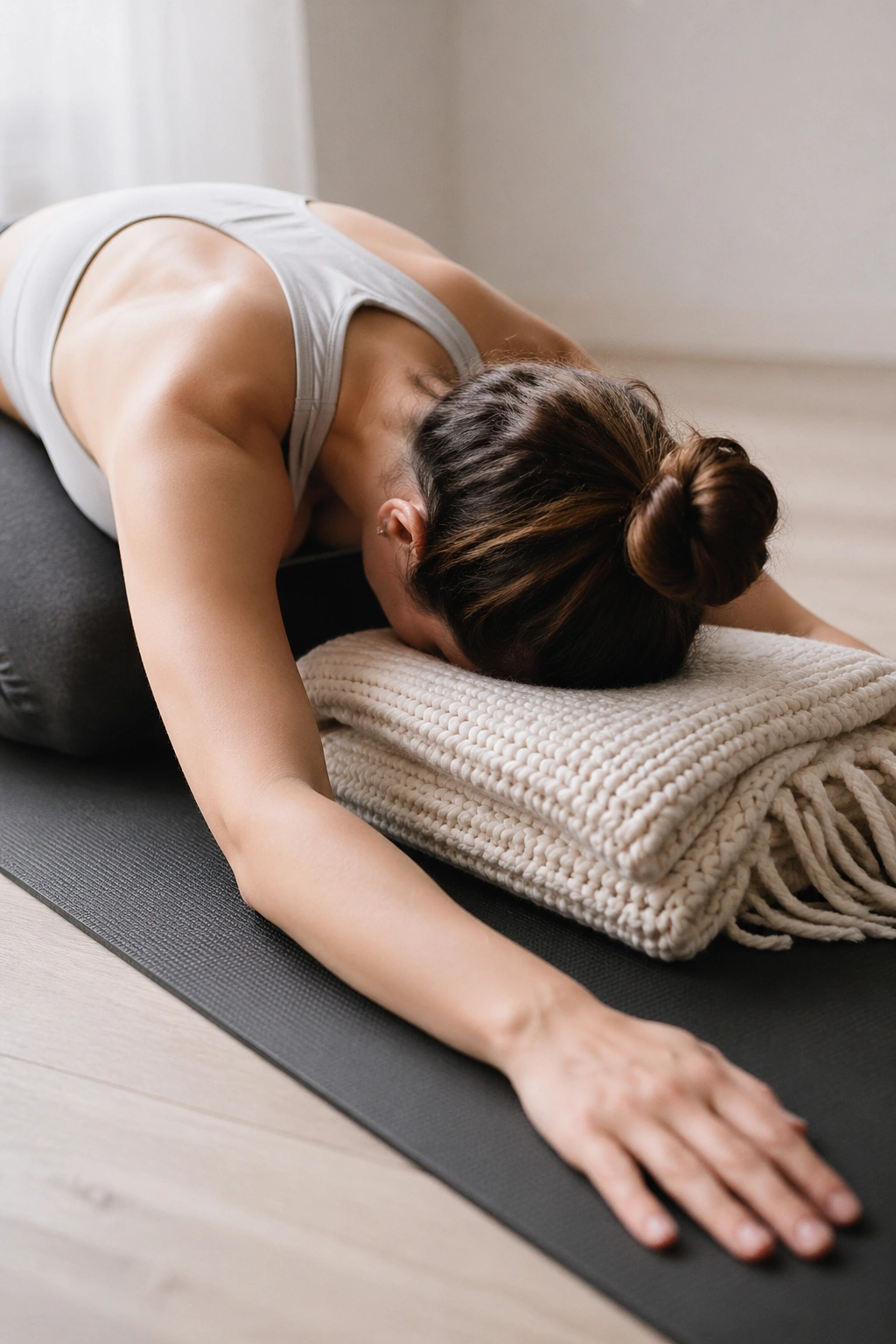
1. Child’s Pose for Sinus Pressure and Congestion
This is the pose I reach for first when my head feels stuffed and my shoulders have climbed halfway to my ears. Child’s Pose is not flashy, and that’s the point. It gives your face a place to rest, takes weight out of your neck, and lets your breath slow down without making you work for it.
Why it helps
When you rest your forehead on the mat, a block, or a folded blanket, the muscles around your jaw and temples usually let go a little. That tiny release matters when sinus pressure has you feeling tight and braced all over. The back body can widen, the ribs can move more easily, and the exhale often gets longer without much effort.
How to set it up
- Kneel with your big toes touching and your knees wide enough that your belly has room.
- Walk your hands forward and lower your forehead to a prop, not the floor if the floor feels too far away.
- Let your elbows rest where they want to rest. Do not force them down.
- Stay for 6 to 10 slow breaths, then sit up before the low back starts complaining.
If your knees are unhappy, place a folded blanket behind them or under your hips. A comfortable Child’s Pose is the whole game here. No gold stars for suffering.
2. Cat-Cow to Loosen the Neck and Upper Back
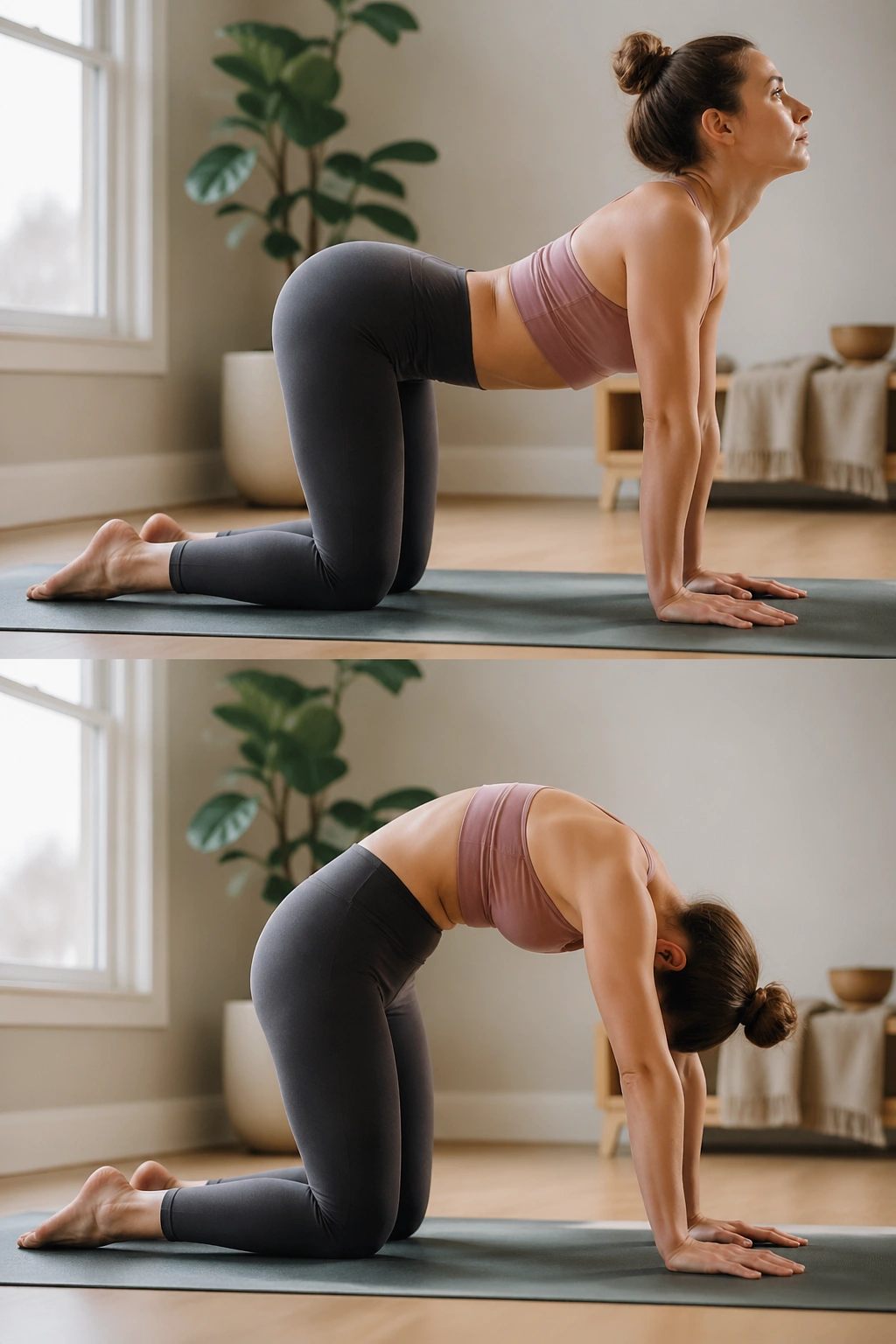
Why does Cat-Cow show up in so many congestion-friendly sequences? Because when your nose is blocked, your neck usually pays the price. You hold your head a little differently, your shoulders creep up, and the space between your shoulder blades gets stiff fast.
Cat-Cow moves that whole area without asking for much. Inhale into a gentle arch. Exhale into a rounded back. The rhythm matters more than the shape. If you rush it, the pose turns into a chore. If you slow it down, you can feel the ribs moving and the breath settling into a steadier pattern.
How to breathe through the movement
Try 8 to 12 rounds. Keep your gaze soft, not flung upward, especially if your head already feels heavy. On the inhale, let the chest widen and the tailbone lift a little. On the exhale, press the floor away and let the upper back spread like you’re fogging a mirror with your spine.
Do not throw your head back if that makes your sinuses throb. A mild, smooth arc is enough. Honestly, the pose works better when it feels almost too easy.
3. Downward-Facing Dog for Gentle Sinus Relief
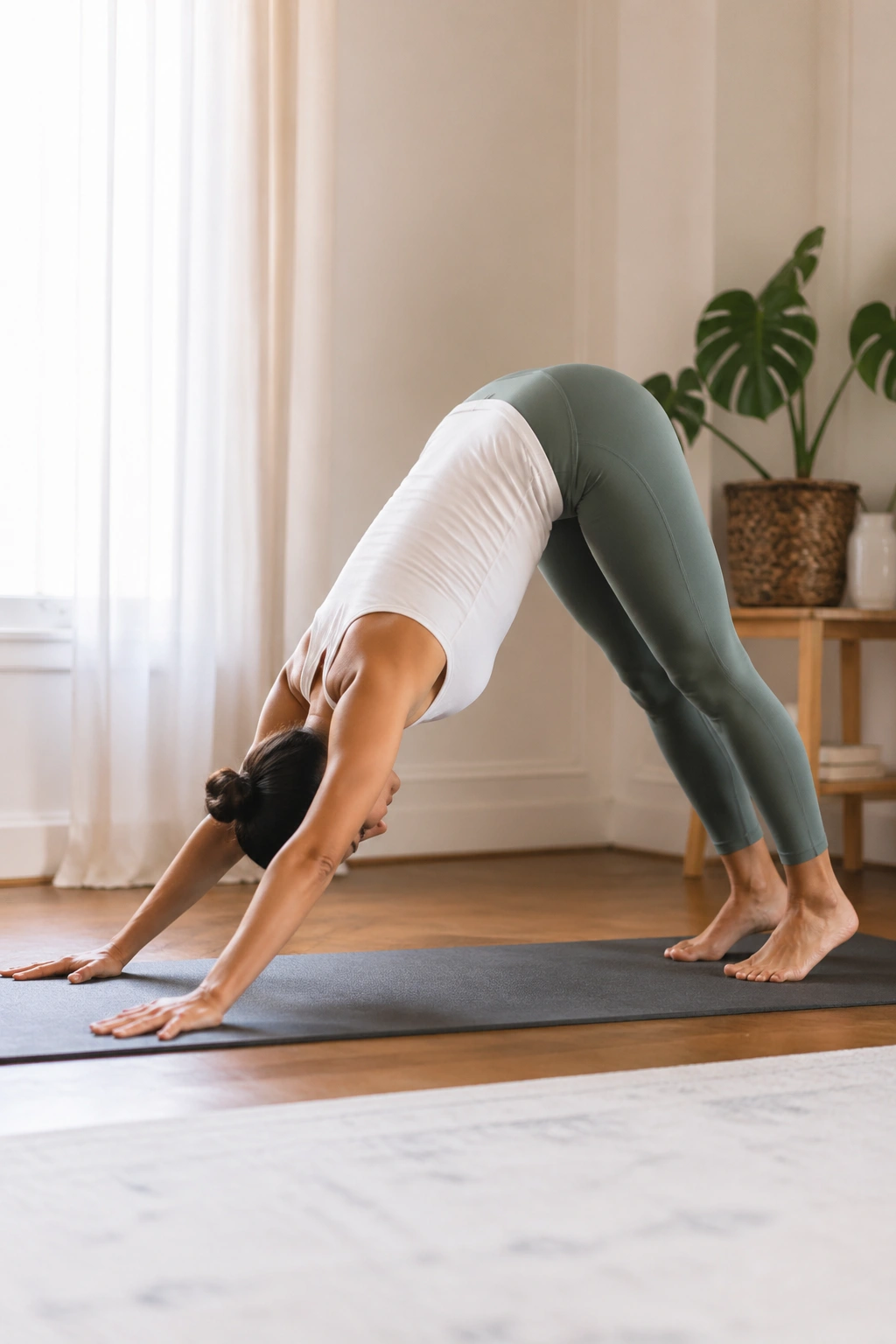
Picture this: you stand up, your face feels packed, and even a deep breath sounds loud in your own head. Downward-Facing Dog can help, but only if you treat it like a short reset, not a fitness test. The mild inversion shifts the head below the heart, and for some people that eases the heavy, stuffy feeling a little.
The catch is that it can also irritate a throbbing head if you stay too long or bear too much weight into the wrists. That’s why I like bent knees and a soft, roomy shape. You are not trying to make a perfect triangle. You’re trying to get blood moving, breathe evenly, and leave the pose feeling better than you entered it.
- Keep your knees bent enough that your spine can lengthen.
- Press through the full hand, especially the base of the index finger.
- Let the heels stay lifted if your calves are tight.
- Hold for 3 to 5 breaths, then come out slowly.
If the first breath feels worse instead of better, that is useful information. Skip it next time and choose Legs-Up-the-Wall instead.
4. Supported Bridge Pose for a Soft Inversion
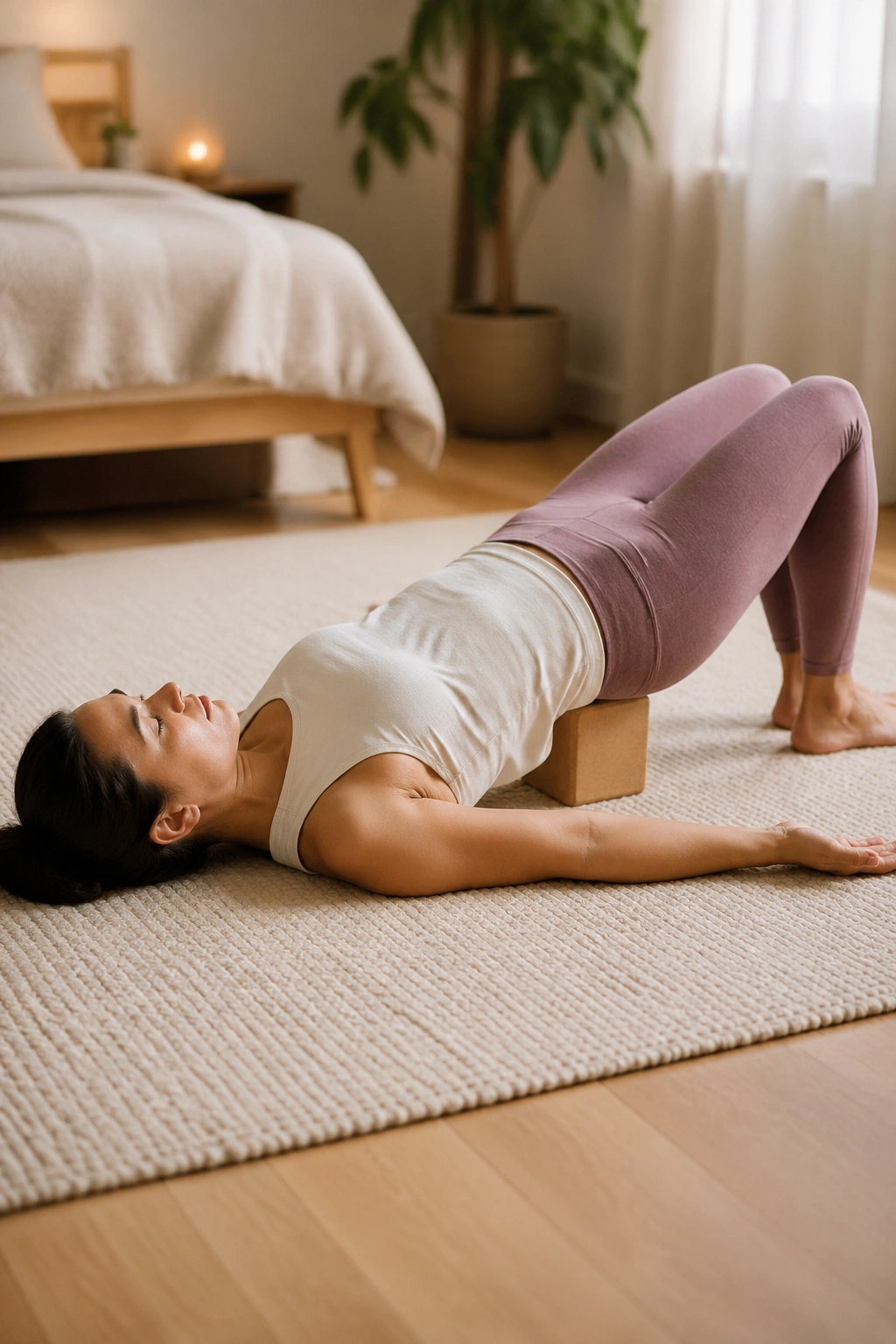
Supported Bridge Pose is one of the better middle-ground choices on a stuffed-up day. It gives you a mild inversion without asking your wrists, shoulders, or hamstrings to do a lot of the work. The block under the sacrum does the heavy lifting. You get the shape. The body gets the rest.
What I like about this version is how calm it feels. The chest opens a bit, the front of the throat relaxes, and the low back stays supported instead of compressed. That matters more than people think. A lot of congestion gets worse when the body is bracing, and a supported shape can interrupt that pattern without making you feel upside down and strange.
Lie on your back, bend your knees, and place a yoga block under the base of the pelvis on its lowest or middle height. If that feels too high, use a folded blanket instead. Stay for 30 to 60 seconds. Breathe through the nose if you can. If you can’t, keep the breath slow and even anyway.
Lower down with care. No drop, no flop. Just unstack, one vertebra at a time.
5. Legs-Up-the-Wall Pose for Easy Drainage
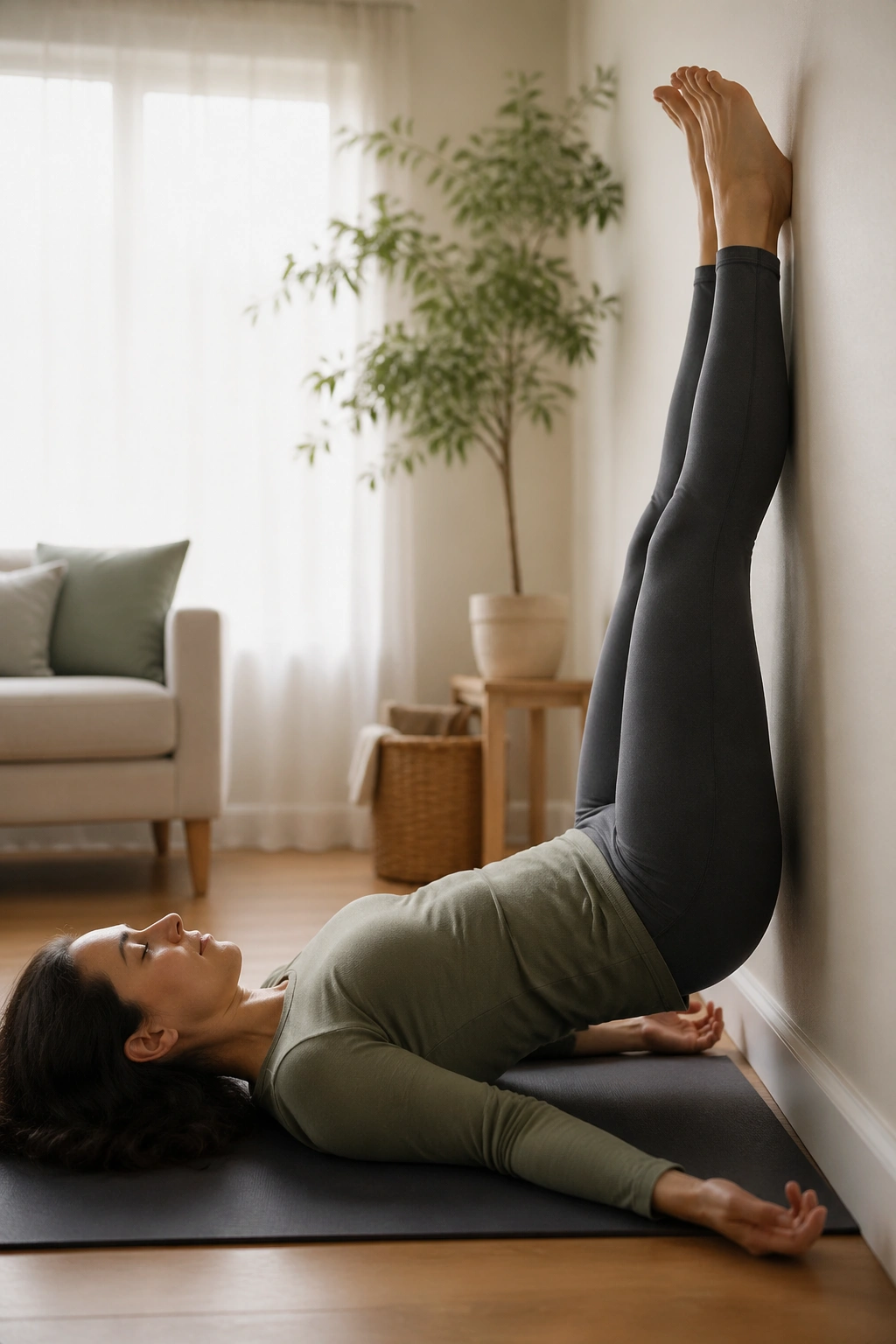
Legs-Up-the-Wall is the pose I’d give someone who says, “I feel awful, but I also don’t want anything intense.” That’s fair. This one is quiet, low effort, and easy to stay in for five minutes without getting bored. It is also one of the gentlest inversions in yoga.
You lie on your back, swing your legs up a wall, and let your arms rest where they want. If your hips are tight, scoot a few inches away from the wall so your hamstrings don’t protest. A folded blanket under the hips can make the shape feel softer, but don’t chase a giant stretch. The whole point is to downshift.
A lot of people notice that the back of the neck softens here. The belly relaxes too, which helps the breath move deeper without sounding strained. That alone can make a congested evening feel less miserable.
No drama. No strain. Just gravity doing a job for once.
6. Puppy Pose to Open the Chest Without Strain
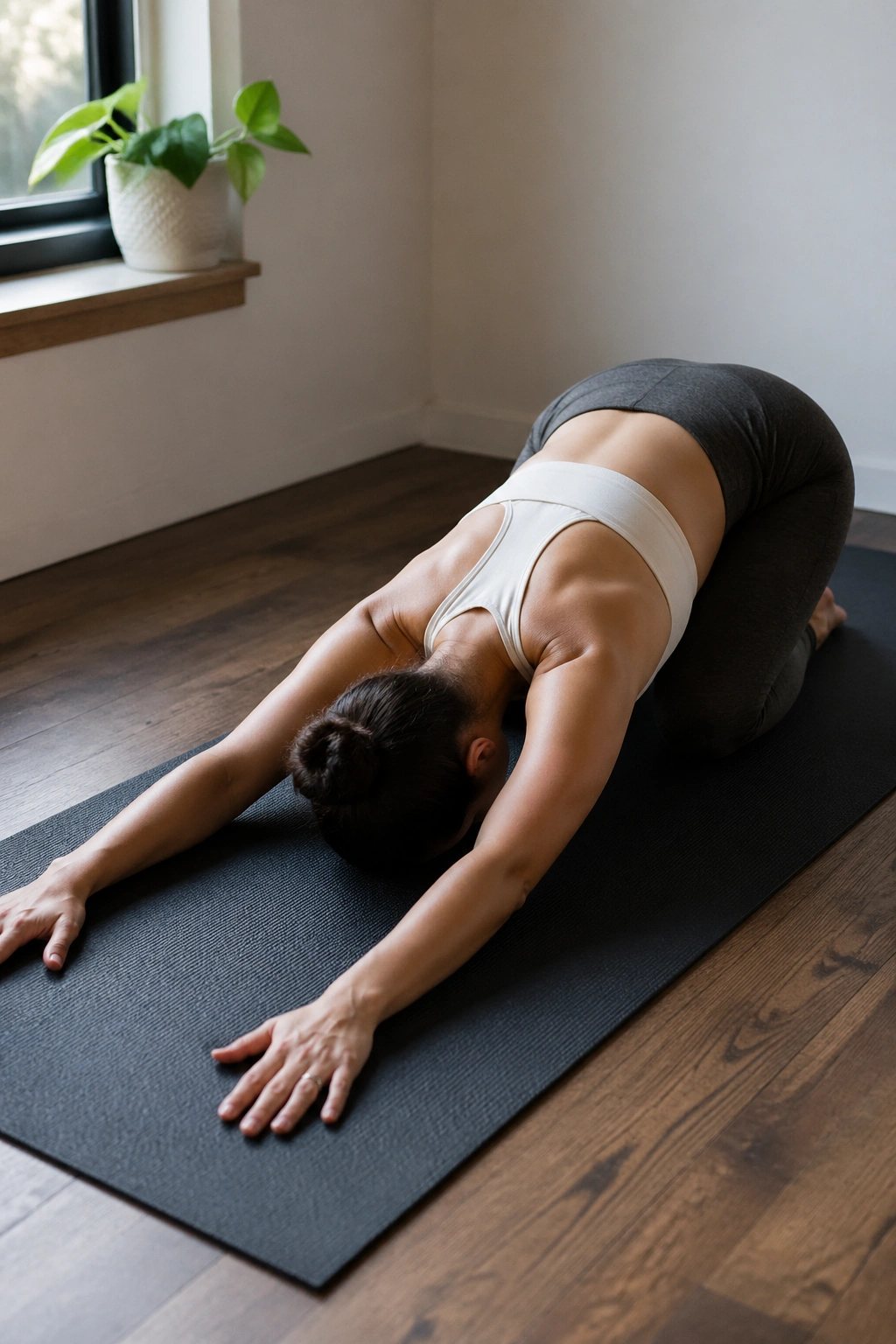
Unlike Downward-Facing Dog, Puppy Pose keeps the knees on the floor and takes the load out of your wrists and calves. That’s why I reach for it when I want a head-down shape but don’t want the full work of an inversion. It feels more like a chest opener than a strength pose.
You kneel, walk the hands forward, and melt the chest toward the mat while keeping the hips stacked over the knees. Forehead on the floor or on a block changes the whole experience. If the neck feels long and easy, you’re in the right neighborhood. If your lower back pinches, back off a bit and make the reach shorter.
This pose is a good fit for people who get congested and also get grumpy in their wrists. It opens the front body, stretches the armpits and shoulders, and often gives the upper chest more room to breathe. That matters on days when breathing feels tight and shallow.
I’d hold it for 5 to 8 breaths. Any longer is fine if it still feels good, but there’s no prize for hanging out forever.
7. Seated Forward Fold with Bent Knees
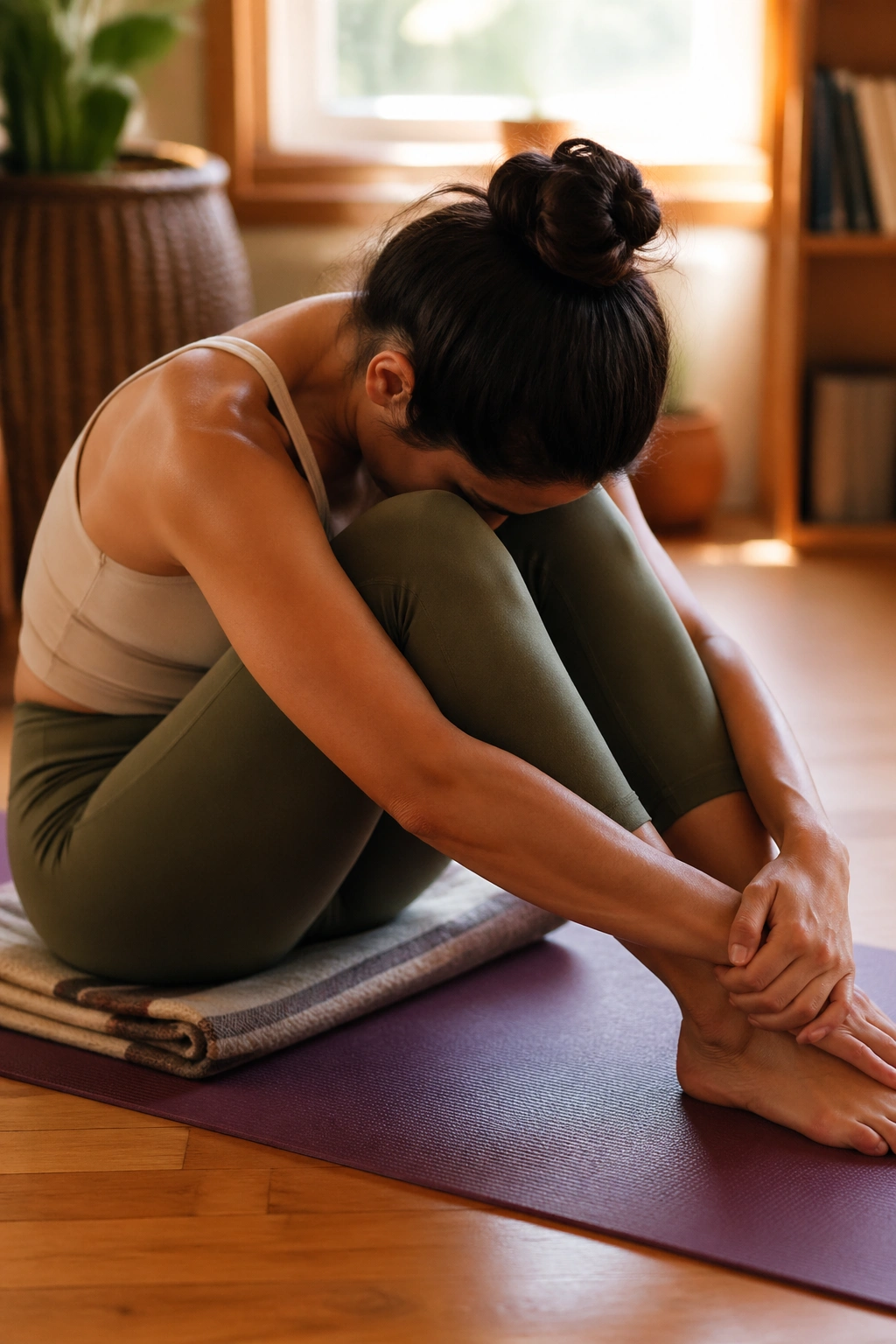
Does a seated forward fold help when you’re congested? Sometimes, yes — if you keep it soft. The bent-knee version is the one worth doing. Straight legs and aggressive reaching are where people get into trouble, usually by yanking on the hamstrings and turning the neck into a knot.
Sit with your legs out in front, bend your knees a lot if you need to, and fold from the hips instead of rounding everything at once. Let your hands rest on your shins, feet, or a strap. If the head drops too low and the pressure behind your eyes suddenly feels worse, come back up a notch. That feedback matters.
How to keep the fold friendly
- Sit on a folded blanket if your pelvis tips backward.
- Keep the knees bent enough to protect the lower back.
- Hold for 5 to 10 breaths, not a long grim session.
- Stop if the pose makes your head pound or your ears feel stuffed.
This is a calming pose, not a test of flexibility. A modest fold usually beats a deep one on a congested day.
8. Sphinx Pose to Ease Facial Tension
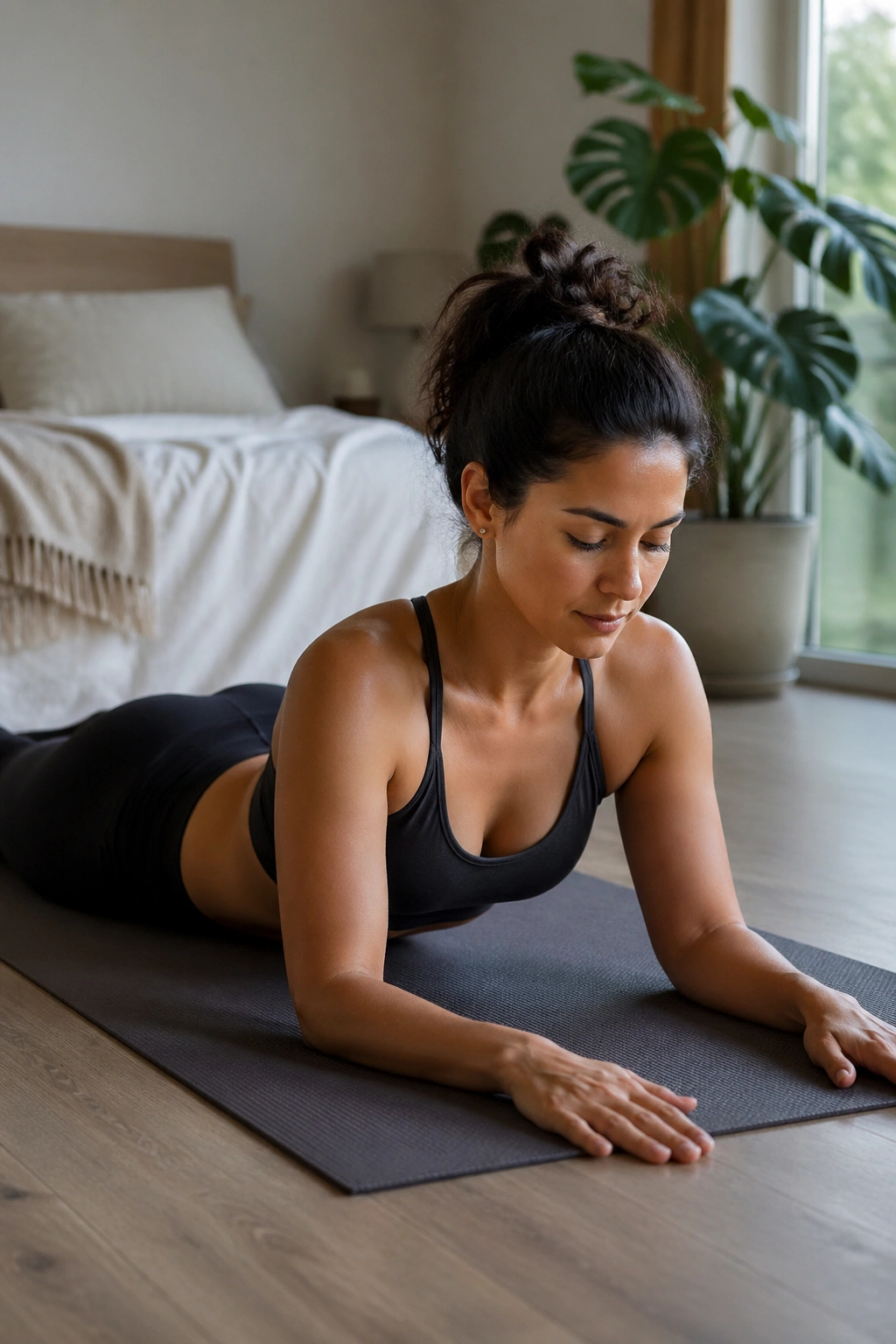
Sphinx Pose is underrated for sinus pressure because it changes the front of the body without asking much from the neck. You’re lying on your belly, propped on your forearms, and the chest opens just enough to invite a deeper breath. No big backbend. No wobbling. Just a steady, grounded lift.
That front-body opening can matter more than people expect. When the chest is collapsed and the shoulders are curled forward, the breath gets shorter and the face often feels tighter too. Sphinx interrupts that. It lets the sternum widen a little, which tends to make breathing feel less boxed in. I also like it for people who spend all day looking down at a screen.
What to watch for
If the low back feels pinchy, slide the elbows farther forward. If the shoulders creep toward the ears, press them down and away from the neck. Keep the gaze toward the mat, not shoved ahead of it.
Stay for 5 slow breaths to start. If it feels good, you can linger longer. If it feels like too much in your spine, choose Child’s Pose instead. That is not a downgrade.
9. Thread the Needle to Release the Upper Back
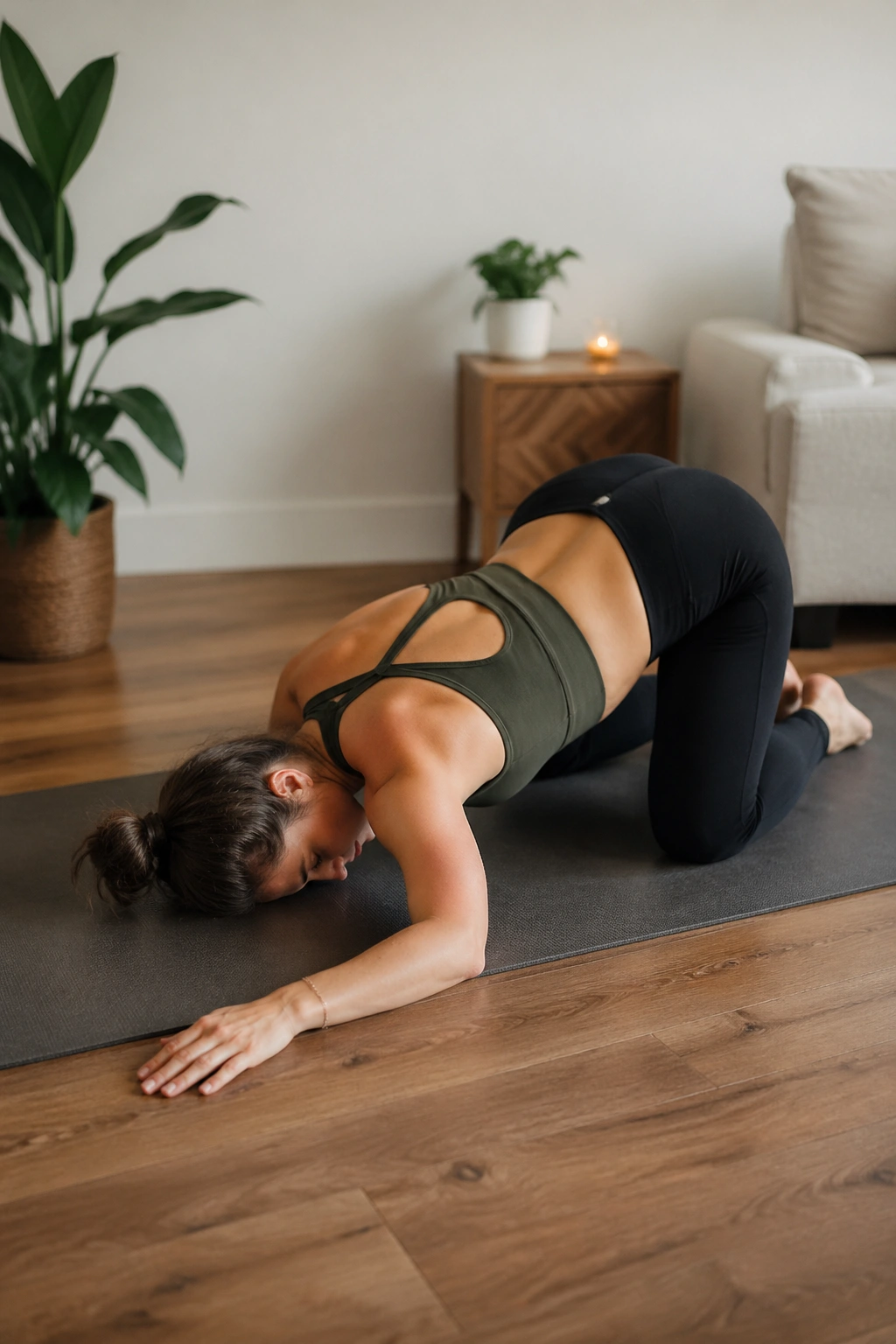
There are days when one side of the neck feels like a rope and the shoulder blade won’t settle down. Thread the Needle is the pose I use then. It gives you a gentle twist through the upper back without forcing the head into a dramatic position, which is useful when sinus pressure already makes everything feel too loud.
Start on hands and knees. Slide one arm underneath the other and rest that shoulder and cheek on the floor. Keep the hips stacked over the knees if you can. If not, shift them back a little. The stretch should land across the upper back, not jam into the neck.
- Breathe into the back ribs for 5 to 8 breaths on each side.
- Keep the supporting hand active so the shoulder doesn’t collapse.
- Use a block or folded blanket under the head if the floor feels too far away.
- Move out slowly, because your body may feel a little lopsided afterward.
This is one of those poses that feels small while you’re in it and oddly useful later in the day. I always notice the shoulders drop a bit.
10. Standing Forward Fold with Bent Knees
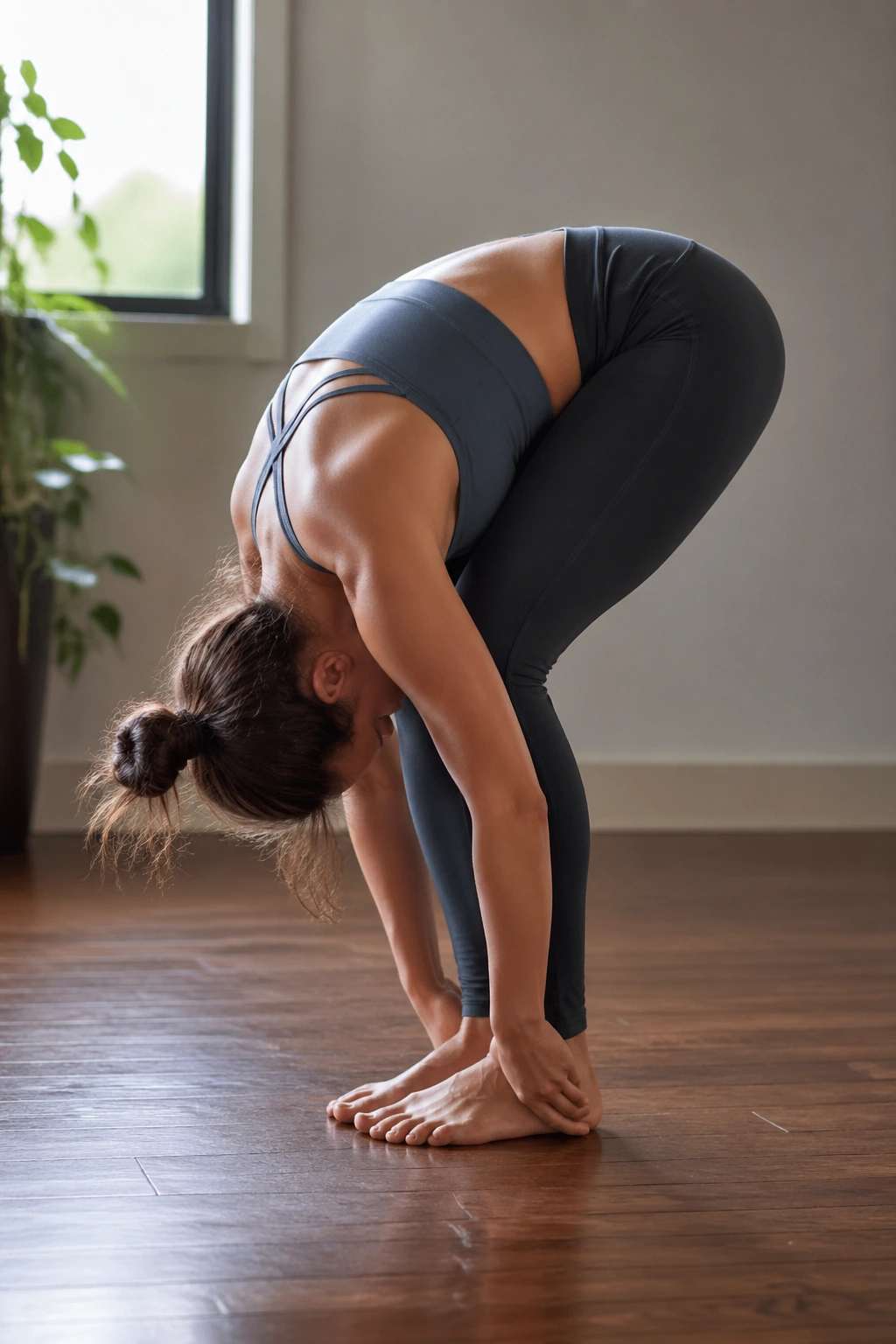
Standing Forward Fold is the move for people who want relief but do not want to get down on the floor yet. That sounds minor. It isn’t. Sometimes the easiest pose is the one you’ll actually do. And on a congested day, that counts for plenty.
Stand with your feet hip-width apart, bend the knees generously, and hang the torso over the legs. Let the arms dangle or rest your hands on blocks, shins, or even the seat of a chair. The head can stay heavy without being forced. A small bend in the knees protects the lower back and keeps the posture from turning into a hamstring tug-of-war.
If it feels good, sway side to side a little. The movement is tiny, but the effect can be real. It loosens the lower back, quiets the breath, and gives you a brief inversion without the intensity of Down Dog or Dolphin.
Don’t lock the knees. Don’t yank your head downward. Just hang there for 4 to 6 breaths, then roll up slowly so you don’t feel dizzy.
11. Reclined Bound Angle Pose for Rest and Breath
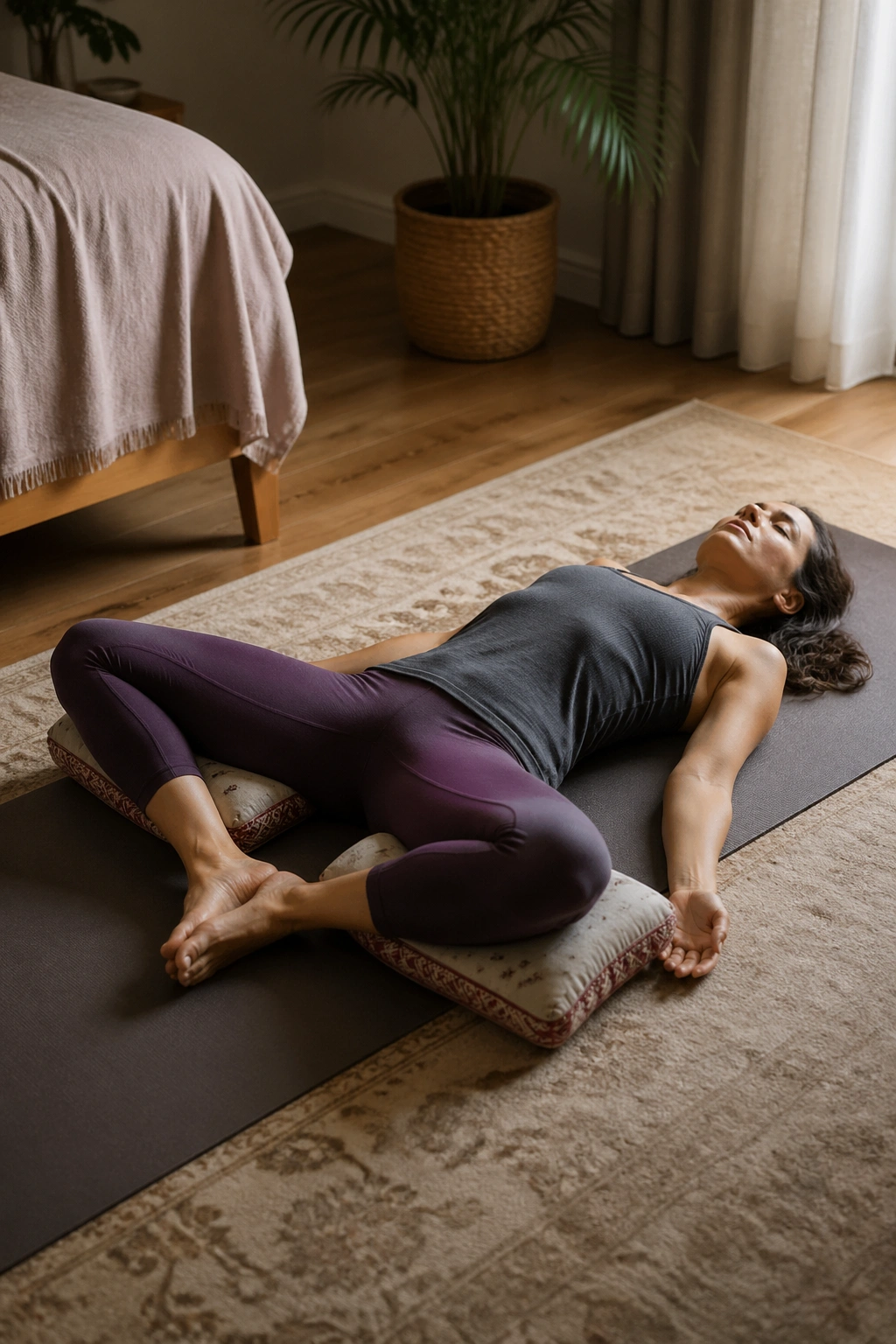
Unlike a forward fold, Reclined Bound Angle Pose does not ask gravity to do the work of a drain-down stretch. It asks you to stop bracing. That difference matters on the days when congestion leaves you tired, irritable, and a little too aware of every breath.
Lie on your back, bring the soles of the feet together, and let the knees fall open. Put pillows or yoga blocks under the knees if your hips grip. A folded blanket under the head can make the neck feel steadier. Then do almost nothing. That’s the beauty of it.
This pose is best when the sinuses are making you feel worn out rather than buzzy. The chest opens a bit, the belly softens, and the breath can get lower and slower without any pressure to perform. I also like it after more active poses, because it gives the body a chance to settle before you stand up or go to bed.
If the groins tug or the low back arches, support the knees more. The shape should feel spacious, not exposed.
12. Gentle Spinal Twist for Ribcage Mobility
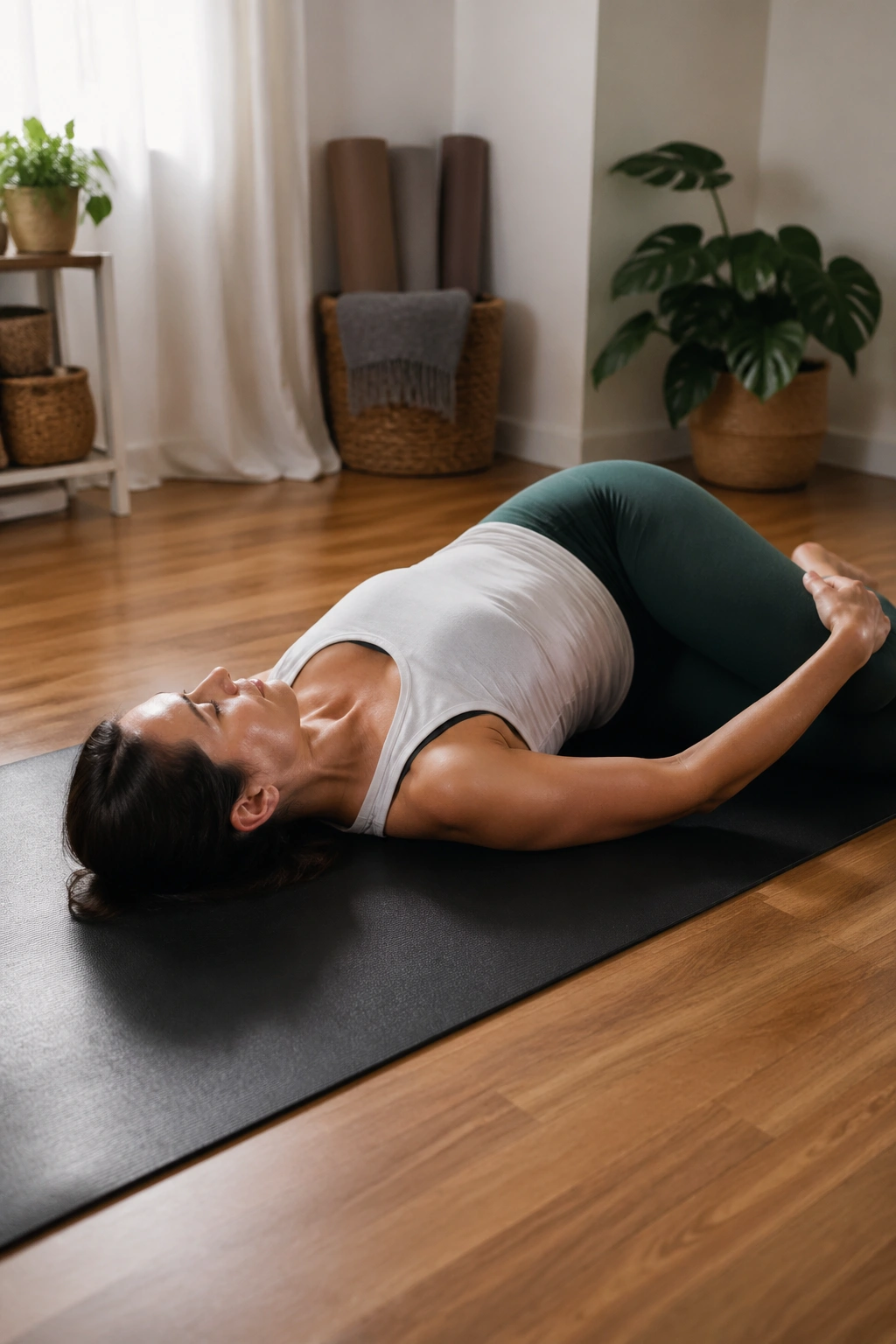
Can a twist help when your head is stuffed? Yes, though not in the dramatic way people imagine. The useful part is not some magic squeeze-and-release trick. It’s the way a gentle twist can free the rib cage, ease the upper back, and calm the breath after a day of hunching.
Lie on your back, hug the knees in, and drop them to one side. Keep both shoulders heavy. If the top knee floats too far, place a pillow or block between the knees. The neck should feel easy. If you want to turn the head the other way, do it slowly and only a little. No cranking.
How to twist without cranking the neck
- Keep the twist in the middle and lower back, not just in the head.
- Let the exhale get a touch longer than the inhale.
- Hold each side for 5 to 8 breaths.
- Come out before the lower back starts to grip.
This is a quiet pose, but quiet can be useful. A gentle twist often feels like a reset after all the forward folding and mild inversion work.
13. Dolphin Pose for Sinus Pressure Relief
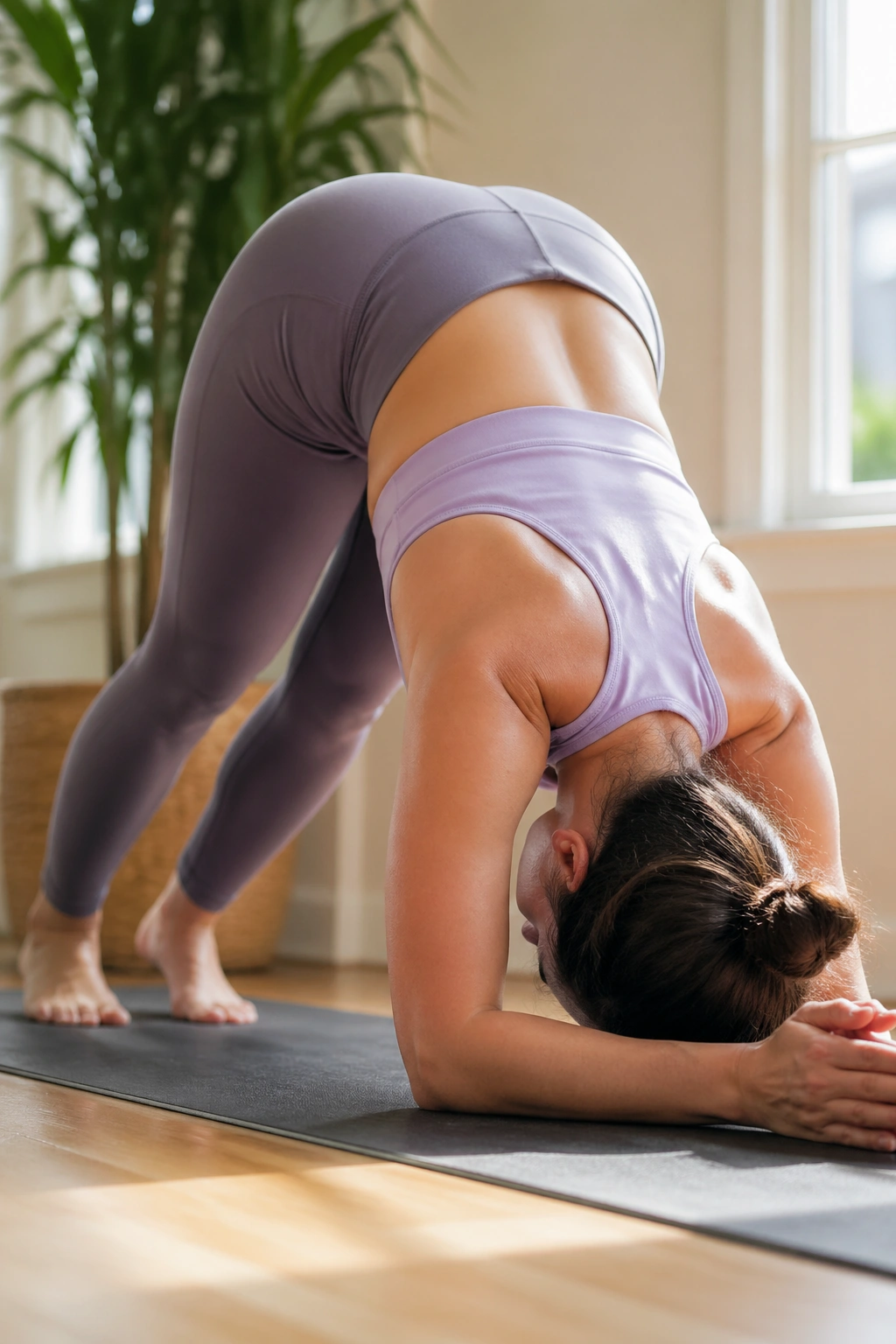
Dolphin Pose is the strongest inversion on this list, and it should feel active, not heroic. Forearms on the floor, hips high, head hanging free. That angle can feel helpful for some people with sinus pressure because it puts the head below the heart without loading the wrists the way Down Dog does.
But it is not the pose I’d force on a bad headache day. If your eyes throb, your ears feel blocked, or your neck is already angry, skip it. A stronger inversion can make that pressure louder instead of softer. I prefer short holds here — 3 to 5 breaths, maybe 2 rounds — rather than staying and hoping for a miracle.
The form matters. Elbows shoulder-width apart. Hands flat or clasped. Legs bent if needed. Heels do not need to touch the floor. If your shoulders are collapsing toward your ears, you’ve gone too far.
Use Dolphin when you want a more athletic option and your body seems up for it. Use Legs-Up-the-Wall when you want ease. Different days, different answers. That’s not inconsistency; that’s paying attention.
14. Supported Fish Pose to Open the Chest
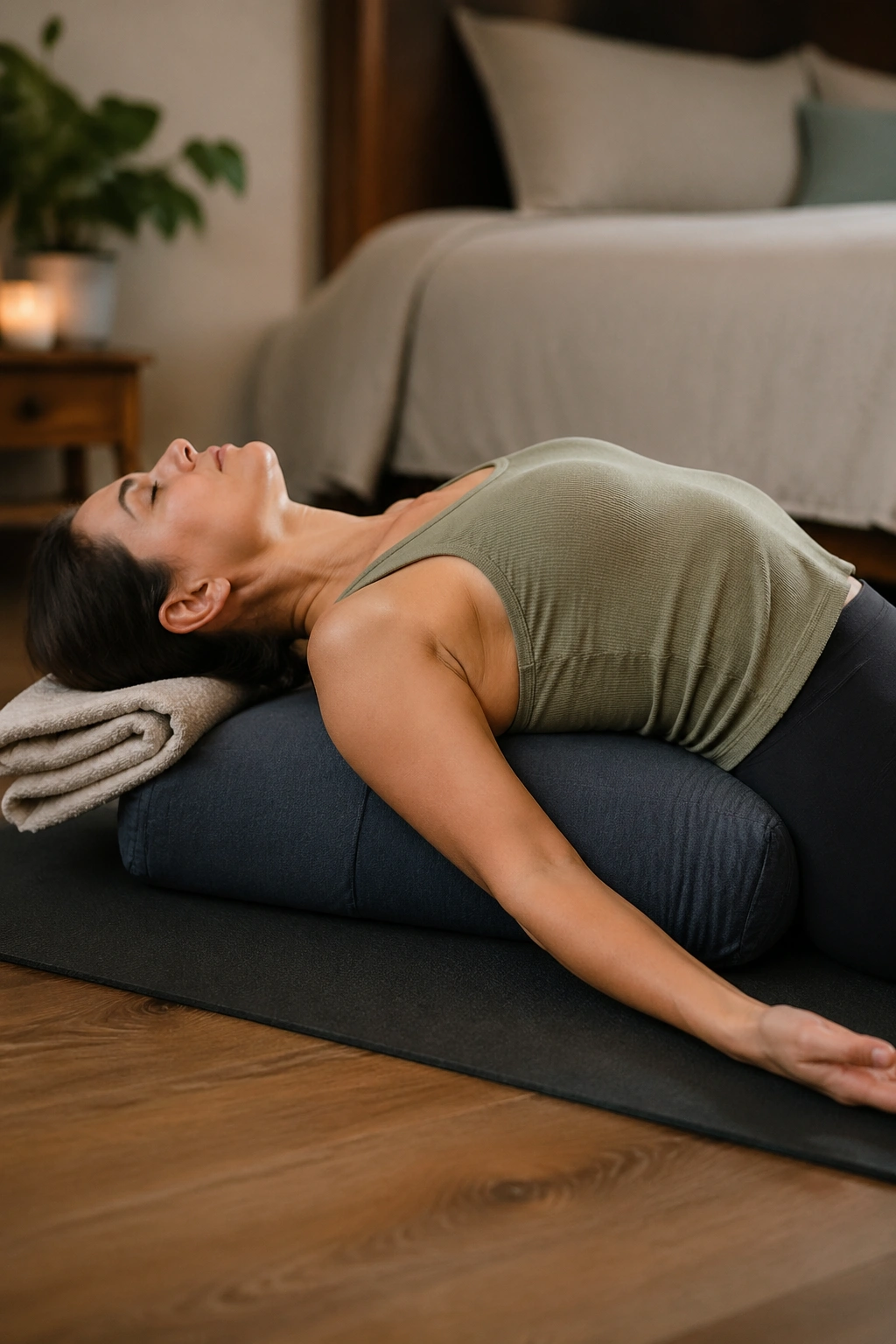
Supported Fish is one of those poses that looks a little odd and feels much better than it looks. You lie back over a bolster, rolled blanket, or a pair of blocks so the chest lifts and the throat opens without a hard backbend. For congestion, that front-body opening can be a quiet win.
The body tends to breathe more fully when the sternum has space. The neck can unwind. The jaw can unclench. You may even notice that the face feels less compressed after a minute or two, which is probably why so many people like this pose before bed. It is not about forcing mucus to move. It is about making breathing easier.
Be picky about the setup. If the neck feels strained, support the head. If the lower ribs flare too much, lower the prop. A pose this open should still feel soft around the edges. I’d rather see a modest lift that you can stay in for 2 to 4 minutes than an exaggerated shape that leaves you stiff afterward.
This is also a nice transition from more head-down poses. It brings you back to center.
15. Savasana with Slow Nasal Breathing
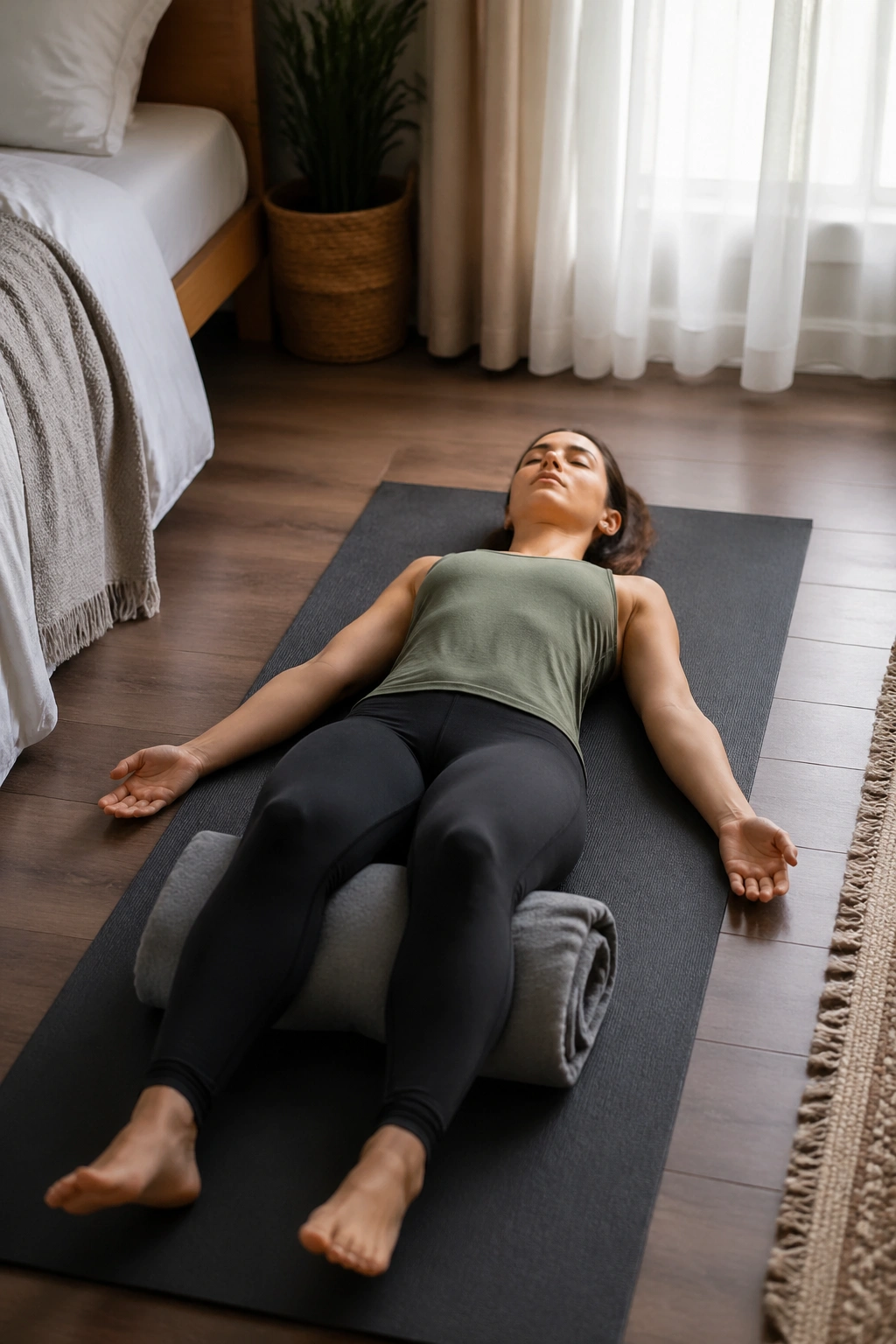
What do you do after all the moving around? You lie down and stop trying so hard. Savasana is the pose people rush past, which is a shame, because on a congested day the nervous system often needs rest more than anything else.
Lie on your back with a rolled blanket under your knees and, if you like, a small towel under your head so the neck feels neutral. Let the arms rest a little away from the body. If the room is bright, cover your eyes. Then breathe slowly. A 4-count inhale and a 6-count exhale is plenty. If your nose is too blocked for smooth nasal breathing, don’t force it. Soft mouth breathing is fine.
You can stay here for 3 to 10 minutes. Longer if it feels good. Shorter if you’re restless. The win is not how long you last. The win is whether your shoulders drop and your face stops holding on so tightly.
A lot of people want one more pose here, one more stretch, one more fix. Skip that urge. Stillness is doing real work.
Final Thoughts
The best poses for sinus pressure and congestion are the ones that calm your body without turning the whole session into a project. A soft inversion, a chest opener, and one restful floor pose usually cover most of what you need. If you only have time for three, I’d pick Child’s Pose, Legs-Up-the-Wall, and Savasana.
A small caution, because it matters: if a pose makes the pressure worse, leaves you dizzy, or causes a sharp headache, leave it out next time. Congestion is stubborn, but it still gives feedback. Listen to that.
Keep the sequence slow. Keep the holds short at first. And if the heaviness in your face keeps coming back day after day, get it checked instead of trying to stretch your way through it.
