



Your temples are pounding, your shoulders have crept up toward your ears, and even blinking at a screen feels like work. That is exactly the sort of headache that sends people looking for yoga poses for tension headache relief, not a heroic workout. Good instinct.
The useful stuff is usually the boring stuff: gentle neck release, slower breathing, and positions that let the back of the skull soften instead of brace. A tension headache often rides along with jaw clenching, desk posture, shallow breathing, and a chest that has spent the whole day folded forward. That mix responds better to easing off than to forcing anything.
Skip the aggressive poses. Deep inversions, fast flow, long neck stretches, and anything that spikes pressure can make a bad head feel louder. If a pose makes the pain throb, that pose is wrong for that day — no debate, no pride, no pushing through.
1. Child’s Pose With Forehead Support
Child’s pose is often the first thing people try because it asks the body to stop holding itself together for a minute. Resting the forehead on a folded blanket, yoga block, or cushion can take the weight out of the neck and let the jaw unclench without effort.
Why it helps
The magic here is not dramatic. It’s the drop in load. When your forehead is supported and your hips sink back toward your heels, the muscles along the back of the neck get a break, and the shoulders finally have permission to stop hovering.
Keep the knees as wide as you need. If your lower back feels pinchy, add a rolled blanket between your calves and thighs. Hold for 6 to 10 slow breaths and let the exhale get a little longer than the inhale.
How to make it better
- Place a folded blanket under the torso if the floor feels too low.
- Turn the head a few degrees right or left if the center feels crowded.
- Keep the arms long or rest them by your sides.
- Do not force the forehead down; support should do the work.
Gentle wins here.
2. Cat-Cow Flow for a Stiff Neck
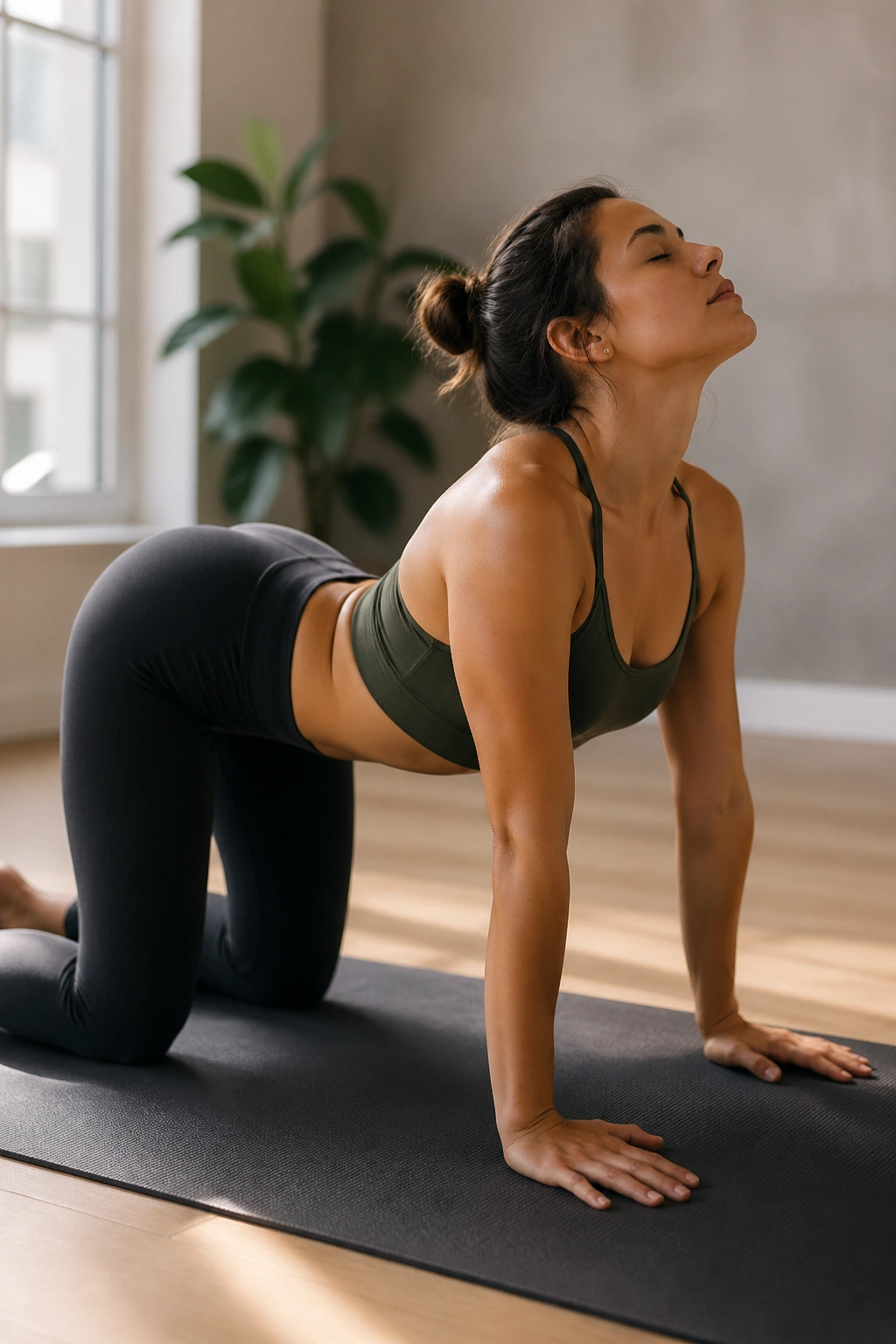
A stiff desk neck often wants motion more than more stretching. Cat-cow gives the spine a slow wave, and that wave can ease the tug between the upper back, shoulders, and the base of the skull.
Start on hands and knees with wrists under shoulders and knees under hips. On the inhale, lift the chest a little and let the tailbone tip up. On the exhale, round the spine and let the head follow naturally — not yanked, not dropped.
Two or three rounds may be enough on a bad headache day. Five or six is fine if it feels smooth. Move like you’re warming cold wax, not trying to impress anyone.
A small detail matters here: keep the neck in line with the movement of the spine. If you crank the chin up hard, the back of the head can tighten more. Soft eyes. Slow breath. That’s the whole trick.
3. Standing Forward Fold With Soft Knees
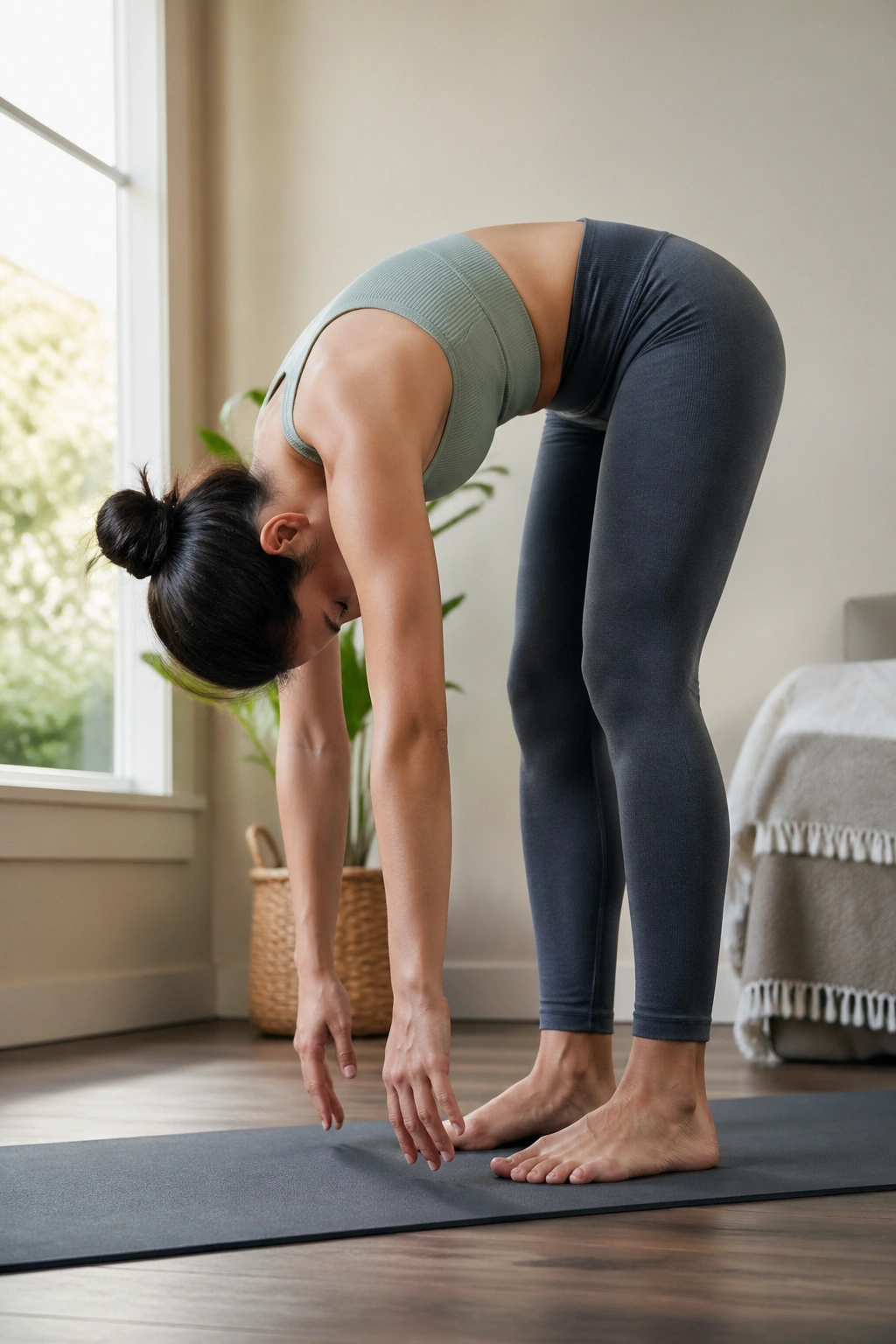
Unlike a toe-touching stretch, a useful forward fold for headache relief should feel like a release, not a contest. Bent knees matter. A lot. Straight legs often turn this into a hamstring fight, and nobody needs that when the temples are already pulsing.
Stand with feet hip-width apart and soften the knees enough that the belly can hang between the thighs. Let the arms dangle, touch the floor, or rest on yoga blocks. If your hands reach the shins and the neck feels long, that’s plenty.
What to notice
- The back of the neck should feel long, not compressed.
- The jaw should loosen on the exhale.
- The shoulders should melt away from the ears.
- The breath should stay smooth, not trapped.
Hold for 5 to 8 breaths, then roll up slowly. Fast uncurling can send a tiny rush through the head, and that’s the opposite of what you want.
4. Thread the Needle for Tight Shoulders
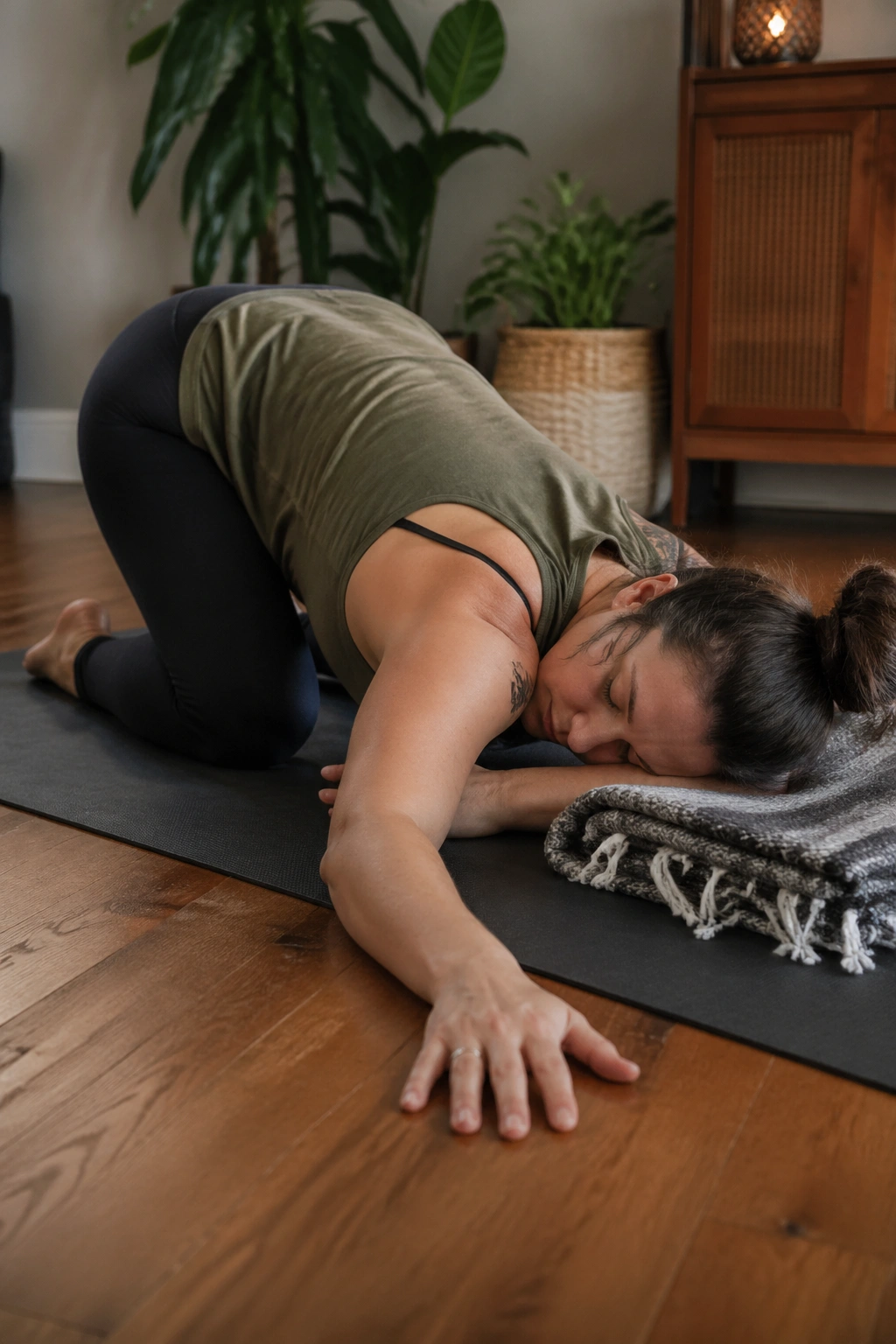
Why does a shoulder stretch help a headache? Because the neck rarely works alone. Tight rear shoulders often drag the upper traps along with them, and that tension loves to climb straight into the base of the skull.
From hands and knees, slide your right arm under your left arm and let the right shoulder and temple lower toward the floor. If the head doesn’t want to rest all the way down, use a folded blanket or block. The shape should feel like a soft twist, not a torque wrench.
How to use it
Keep the supporting hand active so the pose doesn’t collapse. Breathe into the upper back for 4 to 6 breaths, then switch sides. If the neck feels pinched, keep your gaze forward instead of forcing the face to the floor.
A small note: this one often feels better when you come out of it slowly. Sit back on your heels for a breath before moving on. That pause matters more than people think.
5. Eagle Arms to Unclench the Upper Back
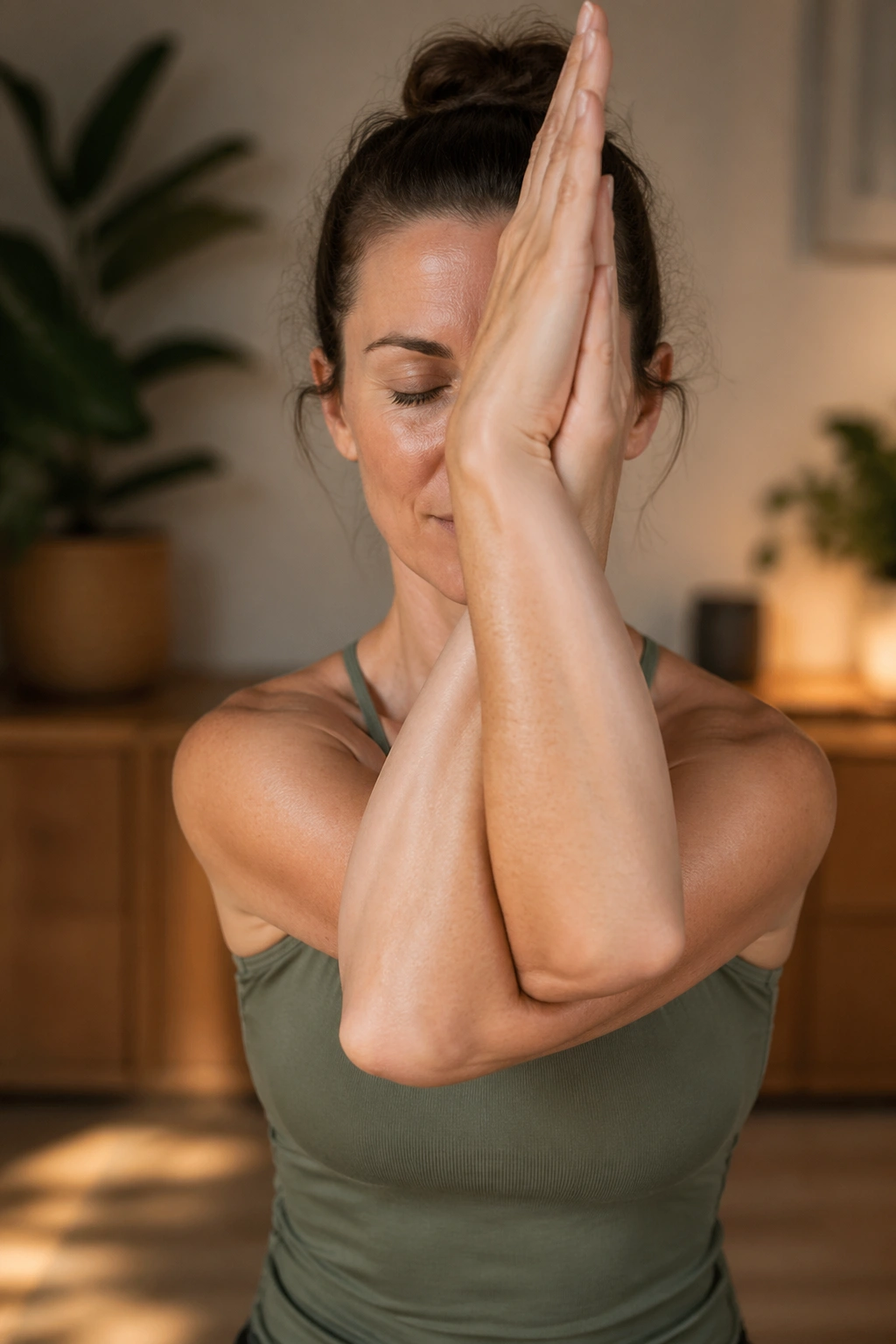
Eagle arms do a sneaky amount of work for such a small shape. They open the space between the shoulder blades, which is where a lot of desk tension hides when you have spent hours reaching forward.
Sit tall or stand in mountain pose. Cross the right arm under the left, then bend the elbows and either press the palms together or hook the backs of the hands. Lift the elbows slightly and let the shoulder blades spread apart.
You should feel broadening across the upper back, not a crunch in the neck. If the hands won’t meet, use a strap or keep the elbows crossed and stop there. There is no prize for the deepest bind.
Hold for 5 breaths, then switch sides. Keep the chin level, and if you catch yourself shrugging, lower the elbows a little. That tiny change usually helps more than squeezing harder.
6. Seated Neck Release With a Very Light Hand
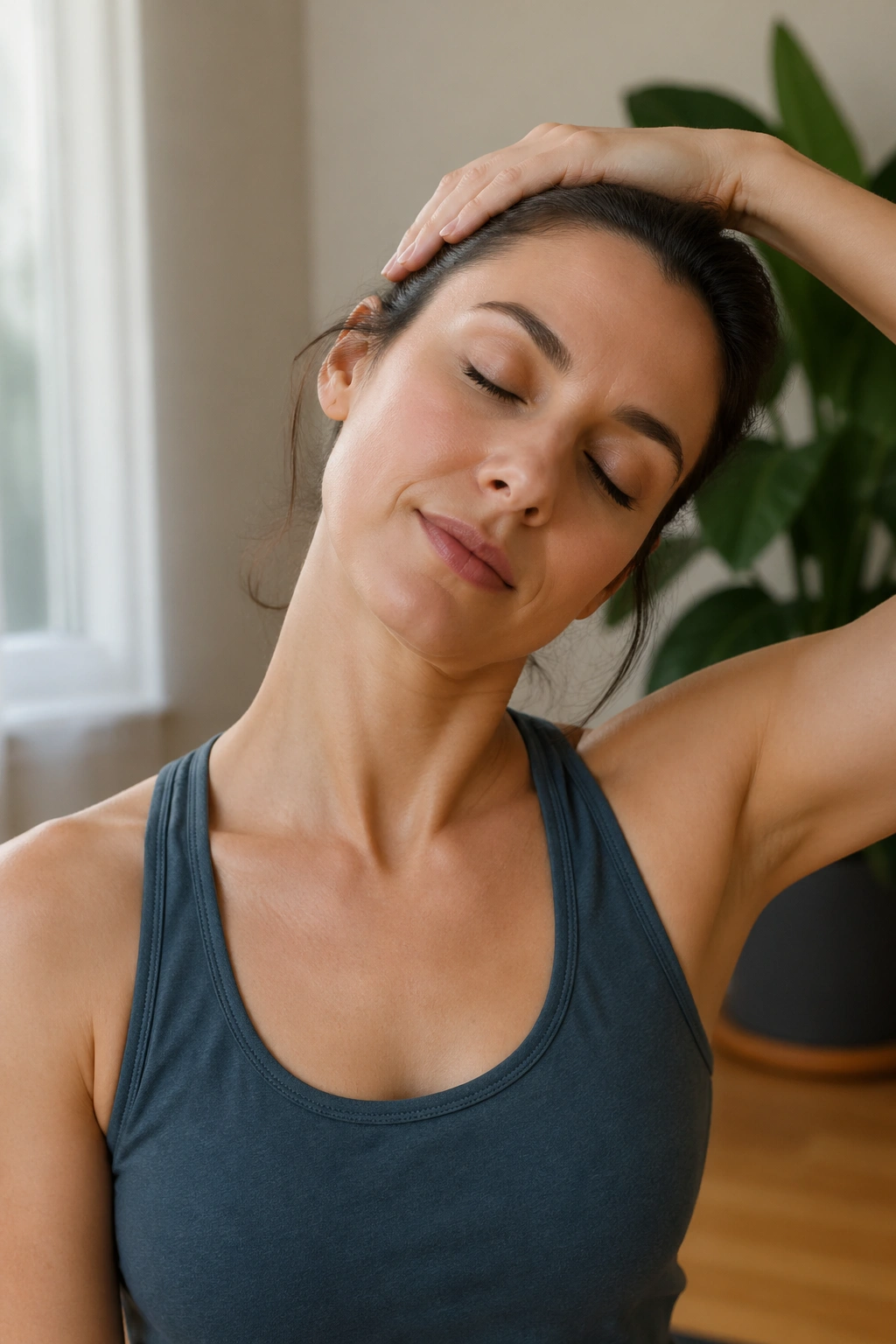
This is the pose people ruin by going too far. Don’t be one of them. The goal is not to haul the head sideways. The goal is to give the side of the neck a small, honest stretch while the shoulder stays heavy.
Sit on a chair or the floor with one hand resting by your side. Let the other hand rest lightly on the side of the head and tip the ear toward the shoulder until you feel a clean line along the opposite side of the neck. That’s it. Then stay there.
A few useful details
- Keep the face pointing forward.
- Let the shoulder on the stretched side drop.
- Stop the moment the stretch turns sharp.
- Breathe out longer than you breathe in.
Hold for 20 to 30 seconds, then switch. If you want a little more, angle the nose a few degrees toward the armpit, but only if the stretch stays soft. A yanky neck stretch can leave you with more tension than you started with.
7. Sphinx Pose to Open the Front Body
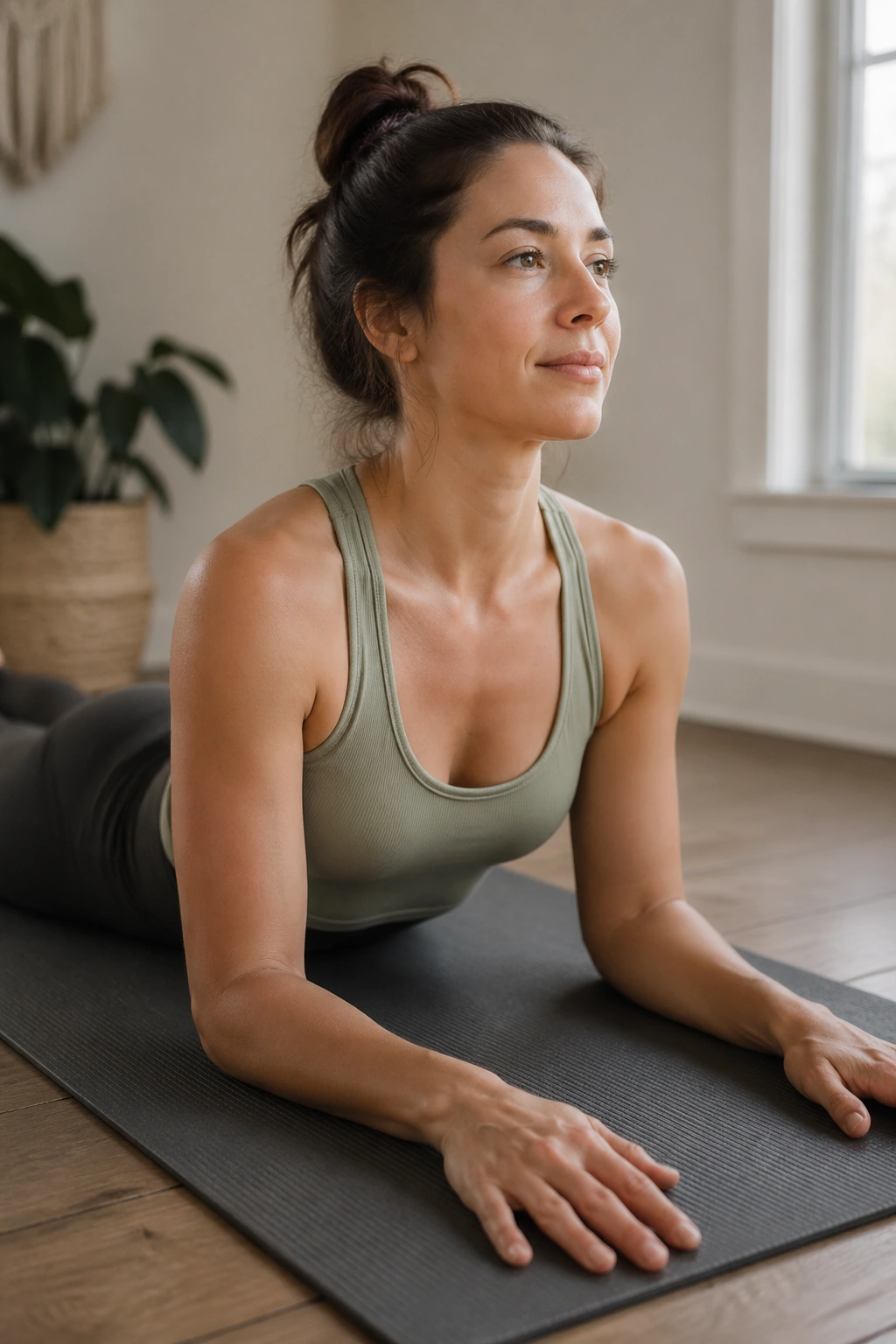
Could a gentle backbend help a tension headache? Sometimes, yes — especially when the headache shows up after a day of hunching. Sphinx pose opens the front of the chest and encourages the upper spine to wake up without dumping all the work into the lower back.
Lie on your stomach and prop yourself on your forearms with elbows under the shoulders. Let the chest drift forward and the neck stay long. You’re aiming for a mild lift, not a dramatic arch.
If the lower back starts talking too loudly, lower the chest or slide the elbows a little farther forward. The front of the neck should feel open, not compressed. Hold for 5 to 8 breaths.
This one is better on a mat than on a slippery floor. It sounds fussy, but stable elbows make the whole pose calmer. That’s the real theme here: calmer.
8. Legs Up the Wall for a Nervous System Reset
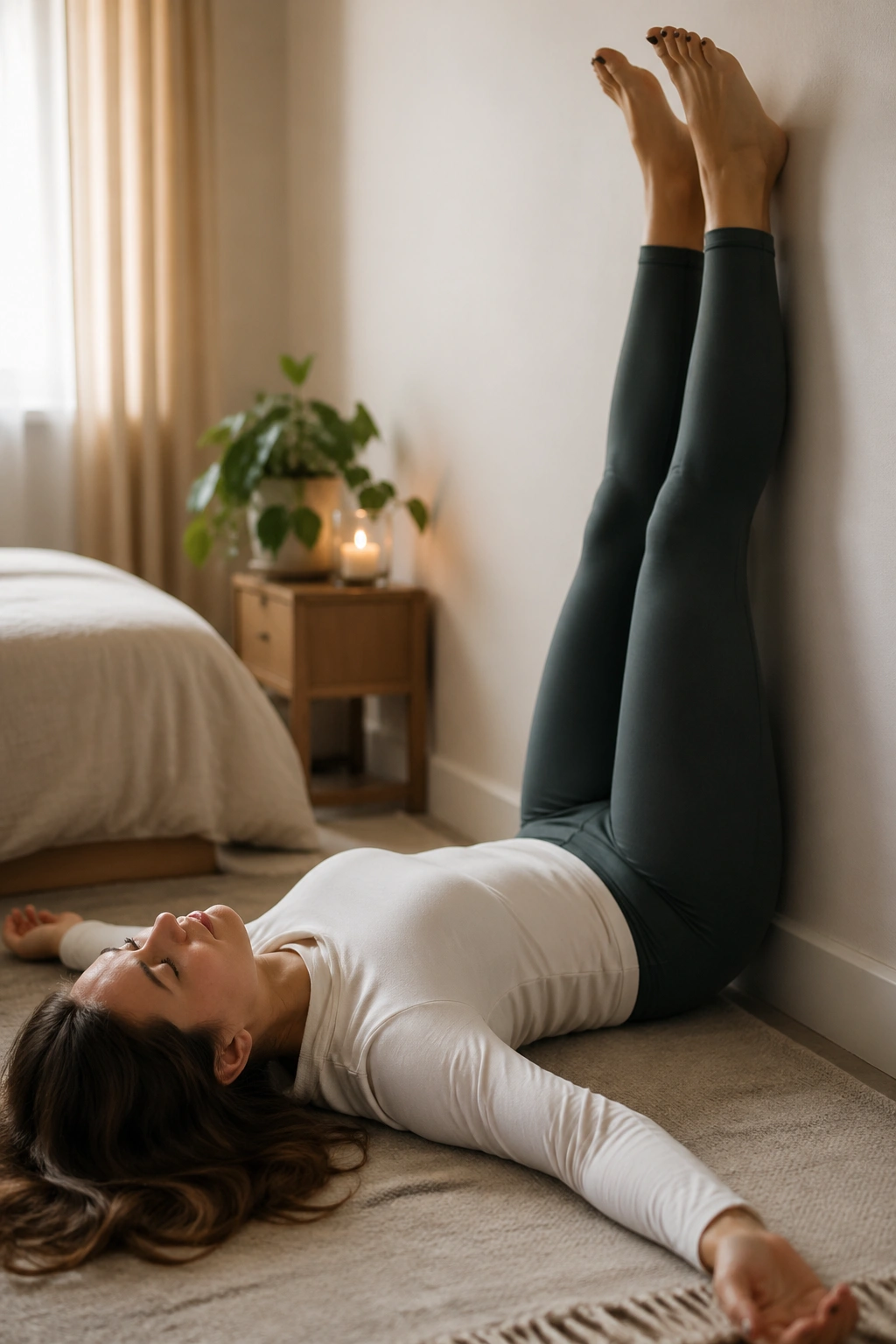
Feet up the wall does more than people give it credit for. It removes the need to hold yourself upright, and that matters when your head has been working overtime. The body finally gets a vote.
Sit beside a wall, swing your legs up, and scoot your hips as close or as far away as feels easy. Keep the arms relaxed. If the hamstrings pull, move farther from the wall. If the low back arches, place a folded blanket under the hips or knees.
Stay here for 2 to 5 minutes and breathe into the back of the ribs. A slower exhale helps the whole shape soften. This is a rest pose, not a stretch contest.
Some people like a thin pillow under the head; others hate it. Try both. The version that lets your jaw unclench is the version to keep.
9. Reclined Bound Angle With Pillow Support
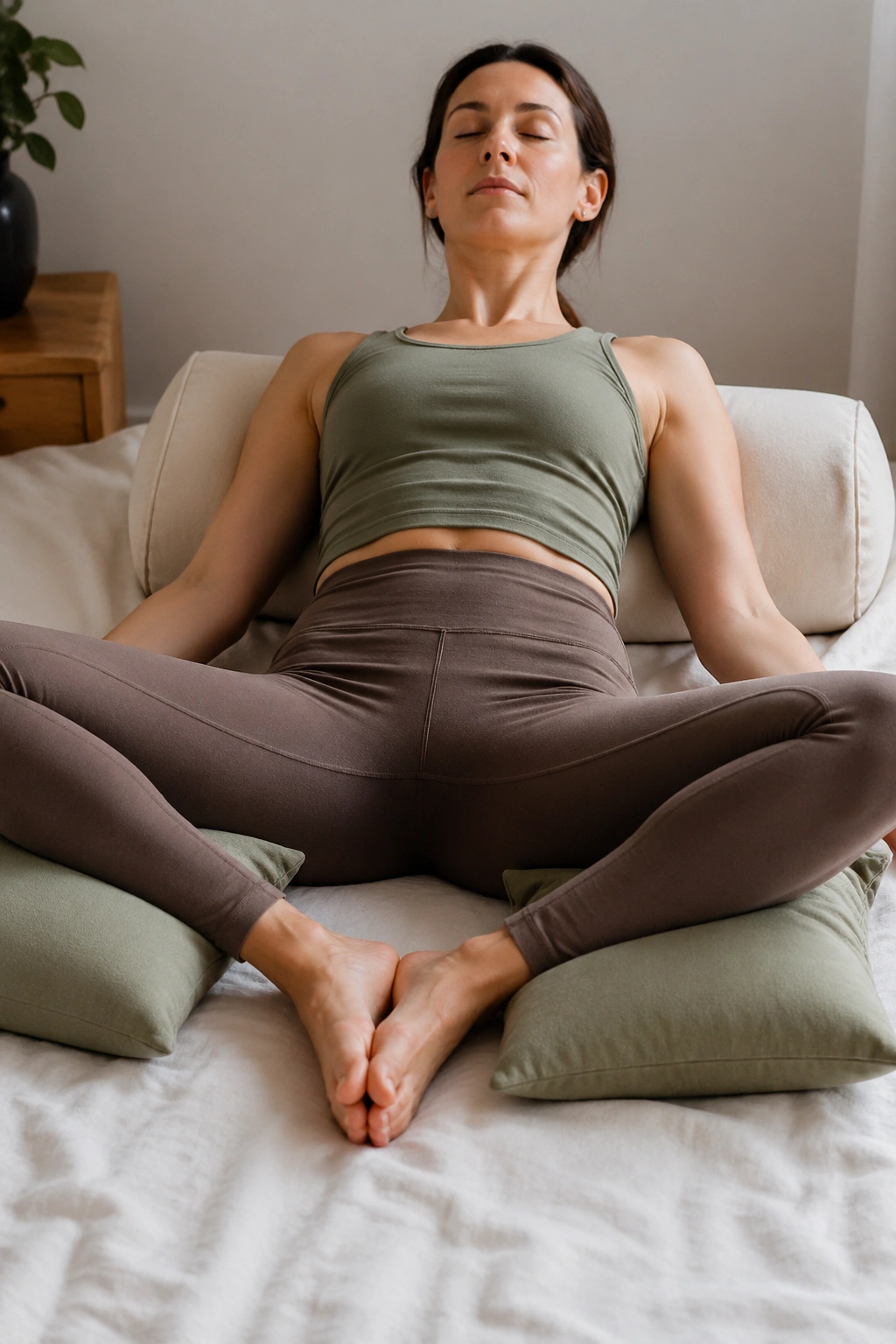
Reclined bound angle is one of those poses that looks passive and does exactly what a tension headache day needs: less effort. The legs open, the belly drops, and the chest gets a little room to breathe.
Lie on your back, bring the soles of the feet together, and let the knees fall open. If the inner thighs complain, place pillows or folded blankets under each knee. A bolster under the spine can make it feel more restful, but it isn’t required.
The interesting part is the breath. When the hips feel supported, many people stop guarding the torso as much. That can ease the ripple of tension that runs from the pelvis to the shoulders. Hold for 1 to 3 minutes if it feels good.
If the low back arches hard, move the feet farther from the pelvis. Tiny adjustment. Big difference.
10. Supine Spinal Twist With the Shoulders Heavy
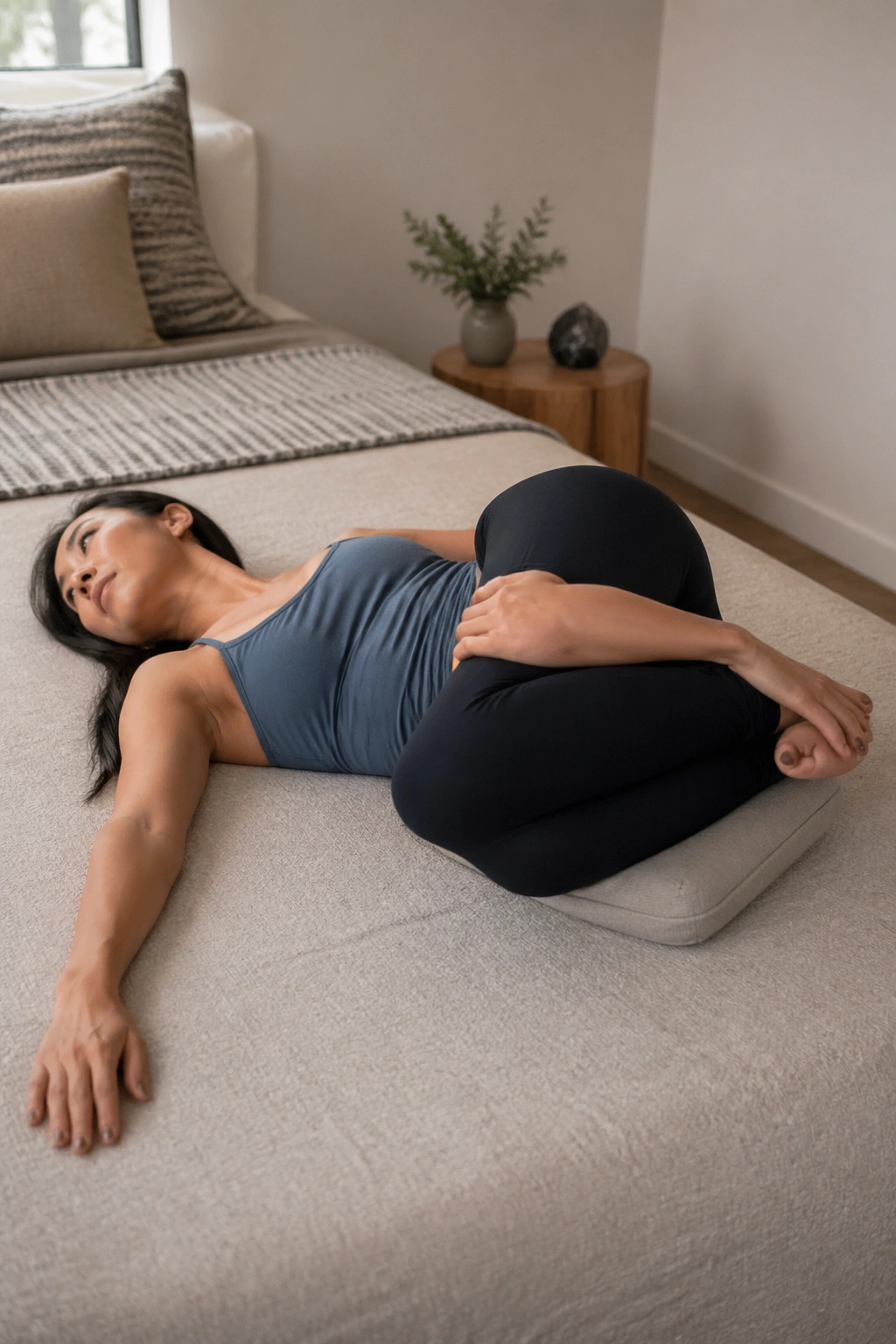
A twist can help when the whole midsection has stiffened up from sitting, but the version here needs to stay small. This is not the place for a cranked spinal pretzel. Keep it mellow.
Lie on your back, hug both knees to the chest, then drop them gently to one side while keeping both shoulders on the floor. If the top knee floats too high, place a pillow or block under it. The point is ease, not range.
How to know it’s working
- The lower back should feel like it is widening.
- The ribs should stay soft.
- The breath should keep moving without catching.
- The neck should feel neutral, not twisted into the drama.
Stay for 4 to 6 breaths per side. If the shoulder lifts, back off a little. A small twist that lets the upper back rest is better than a deep twist that wakes the headache up.
11. Puppy Pose for a Cranky Upper Back
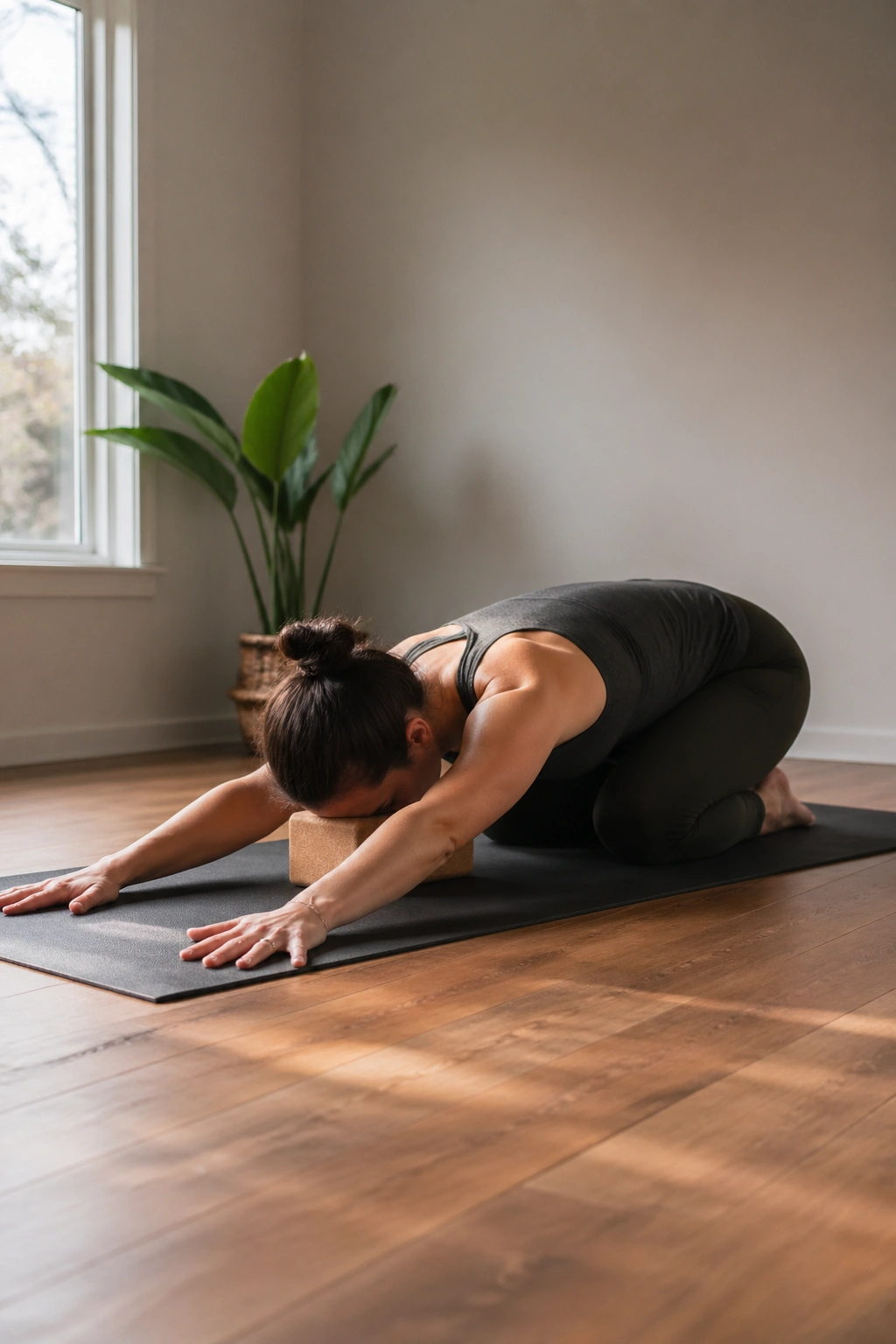
Puppy pose gives you the shoulder-opening feeling of child’s pose with a little more stretch through the armpits and upper back. That can be useful when the neck pain seems to start somewhere between the shoulder blades and the top of the spine.
From hands and knees, walk the hands forward and lower the chest toward the mat while keeping the hips above the knees. Rest the forehead, chin, or chest on a block if the floor is too far away. The arms stay active, but not locked.
If the shoulders feel pinchy, walk the hands back a few inches. You want a long line through the spine, not a jam in the front of the shoulders. Hold for 5 slow breaths, then come out the way you came in.
This pose asks for honesty. If it feels good in the first breath, stay. If it feels sharp in the first breath, leave it alone. That saves time.
12. Easy Seated Side Bend to Open the Rib Cage
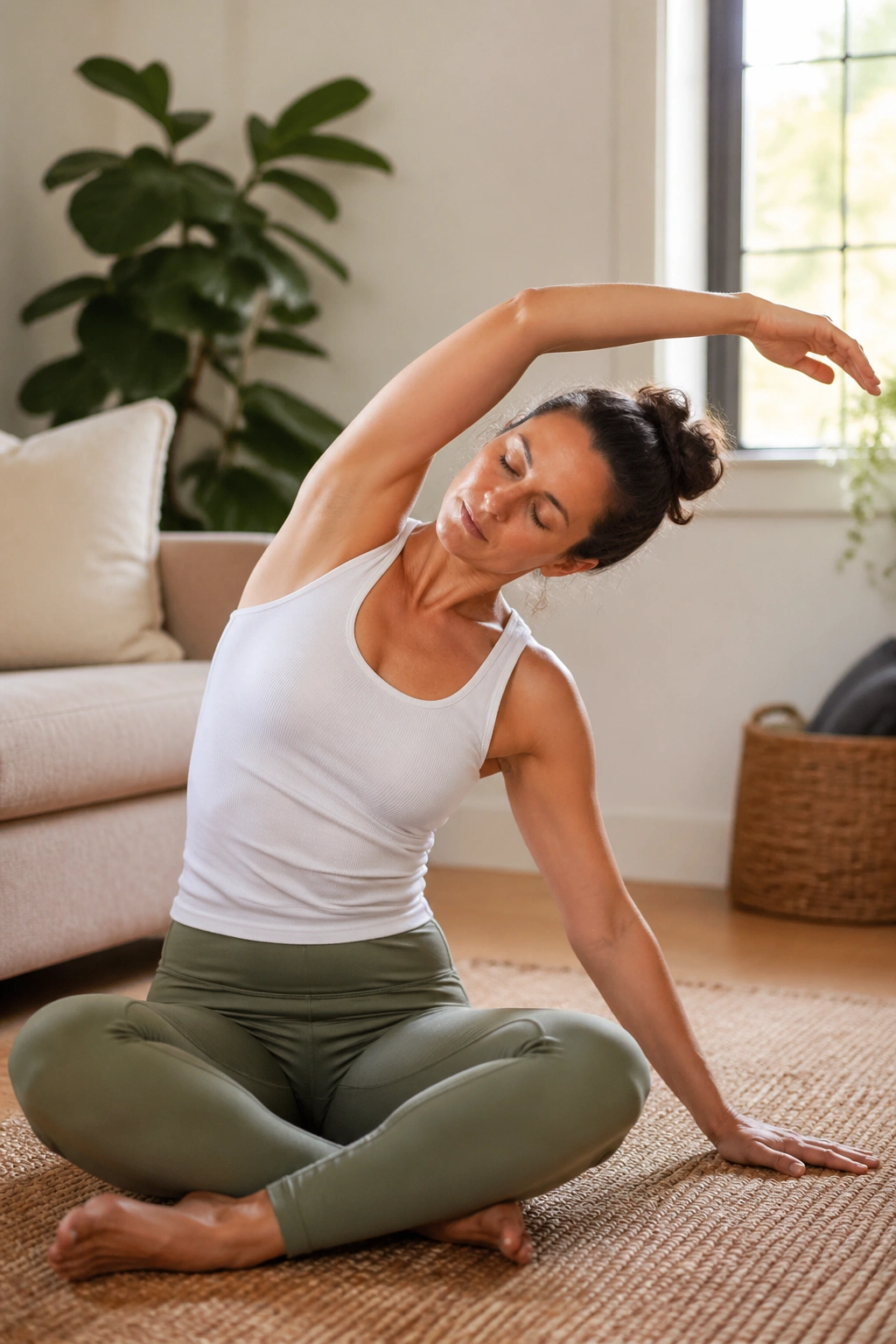
A side bend can be a quiet fix for the weird, one-sided tightness that shows up with tension headaches. When one side of the neck and shoulder feels short, the side body often needs some attention too.
Sit cross-legged or on a chair. Place the right hand on the floor or seat and reach the left arm overhead, lengthening up first and then gently over. Keep the chest from collapsing forward. The lift comes before the bend.
Hold for 3 to 5 breaths, then switch. If the shoulder creeps up toward the ear, lower the arm a little and make the reach smaller. A smaller stretch that stays clean is better than a big bend that turns sloppy.
The side body should feel spacious. The neck should feel as if it has more room to sit on top of the ribs. That’s the feeling to chase.
13. Cow Face Arms for Deep Shoulder Relief
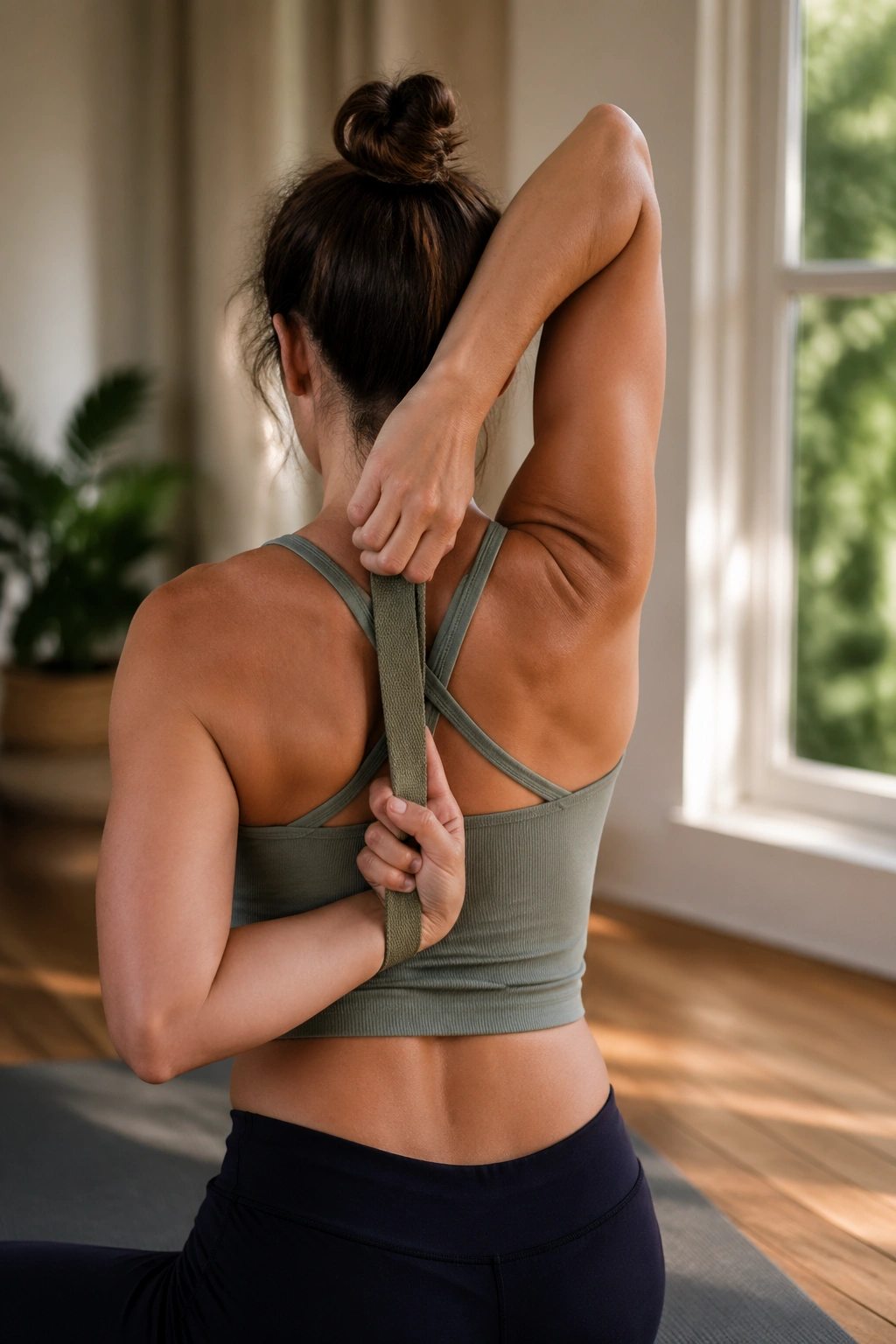
Cow face arms are a little awkward at first, which is why they’re so useful. Tight shoulders make everything surrounding the neck work harder, and this stretch gets into the triceps and upper shoulder line in a way simple arm circles never seem to manage.
One elbow lifts while the other drops. Then either clasp the hands behind the back or use a strap between them. Keep the ribs from flaring forward. If the shoulder range is limited, that’s fine — the pose still works with a shorter hold.
What to focus on
- Keep the chin level.
- Let the shoulder blades move apart.
- Stop before the stretch turns into pinching.
- Breathe into the back of the ribs.
A lot of people try to force the top hand lower. Bad idea. That usually just jams the shoulder and tightens the neck again. Hold for 4 to 6 breaths on each side, and use the strap without apology if your hands don’t meet.
14. Wide-Knee Forward Fold With a Block Under the Head
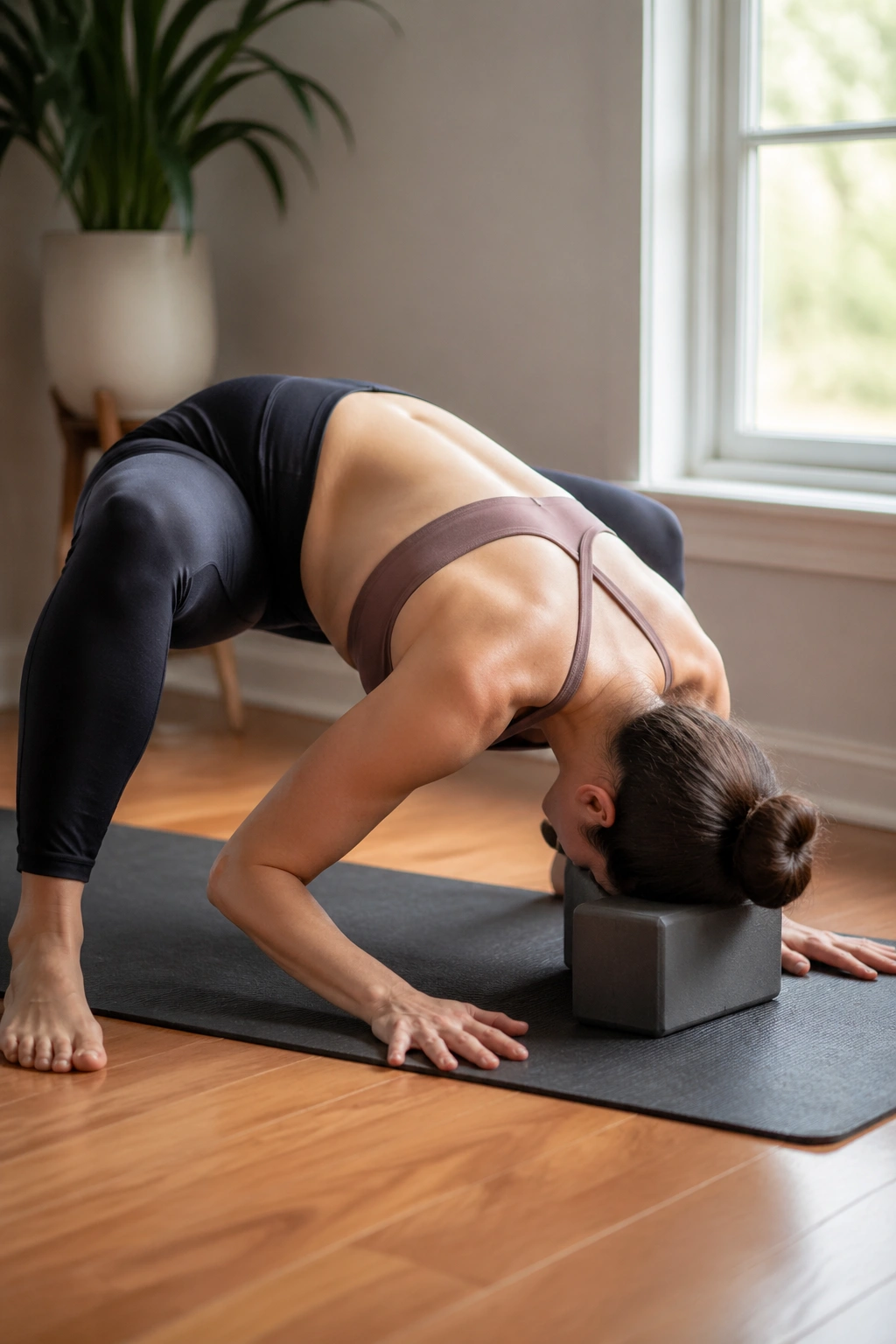
What if a regular forward fold feels too cramped? Use a wider stance. Giving the hips some room often makes the whole upper body release more easily, especially when a tension headache comes with that stiff, compressed feeling across the back.
Stand with your feet a little wider than hips, bend the knees generously, and fold from the hips. Rest your hands on the floor, blocks, or even the seat of a chair. Let the head hang, but don’t force it. If the neck feels noisy, keep the chin slightly tucked.
You can stay here for 5 breaths or a little longer if the shape feels soothing. The knees can stay bent the whole time. That is not cheating. It is what allows the spine to unload.
If the hamstrings are the main complaint, this is the version I’d pick over a straight-legged fold every time. It is kinder and usually more useful.
15. Bridge Pose With a Small Lift
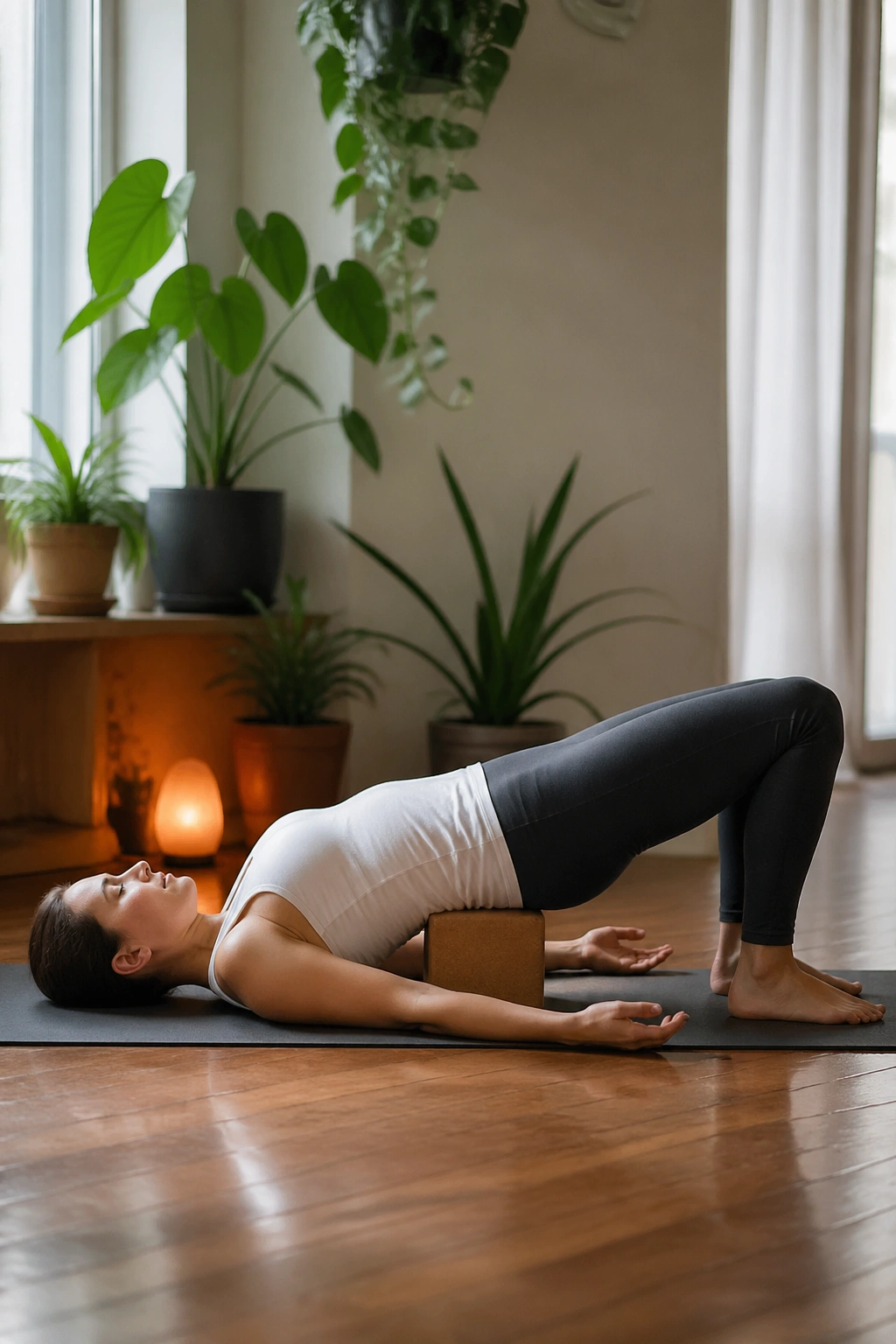
Bridge pose can help when the upper body has spent too long folding forward and the chest needs a wake-up. The trick is to keep the lift modest. A huge bridge tends to turn into a lower-back lecture.
Lie on your back with knees bent and feet hip-width apart. Press the feet down, lift the hips a few inches, and lengthen the tailbone toward the knees. Keep the chin gently tucked so the back of the neck stays long.
A block under the sacrum turns this into a supported bridge, which is often the smarter choice on headache days. A low bridge is enough. You don’t need the highest version on the mat.
Hold for 3 to 5 breaths, then lower slowly, one vertebra at a time if you can. The slow descent matters. It gives the nervous system a chance to notice that nothing is chasing it.
16. Supported Fish Pose to Open the Chest Without Effort
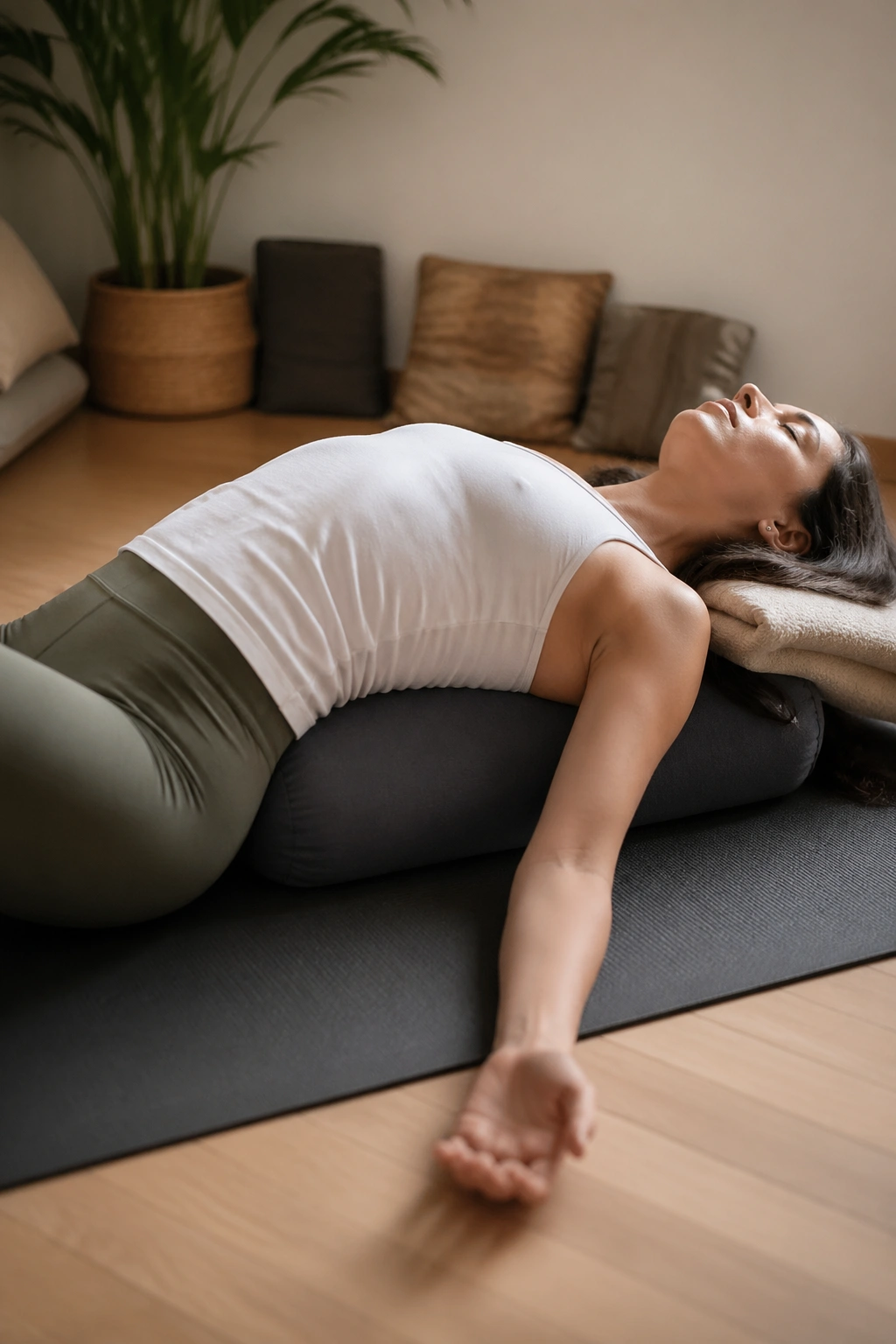
Unlike a big backbend, supported fish pose does most of the work for you. That’s why it’s useful when the chest feels closed and the head has been pulled forward all day. Less strain, more opening.
Place a bolster or a rolled blanket along the spine and lie back so the chest lifts gently. Support the head if needed so it doesn’t tip back. Let the arms drop out wide or rest alongside the body. The face should feel soft.
A pose like this can ease the front-of-body tension that often contributes to neck strain. If the low back arches too much, bend the knees or move the support lower. No one needs to brace in a rest pose.
Stay for 1 to 3 minutes. If the breath starts to feel chesty or forced, come out. A good supported fish feels like space, not effort.
17. Half Happy Baby for a Quiet Hip Release
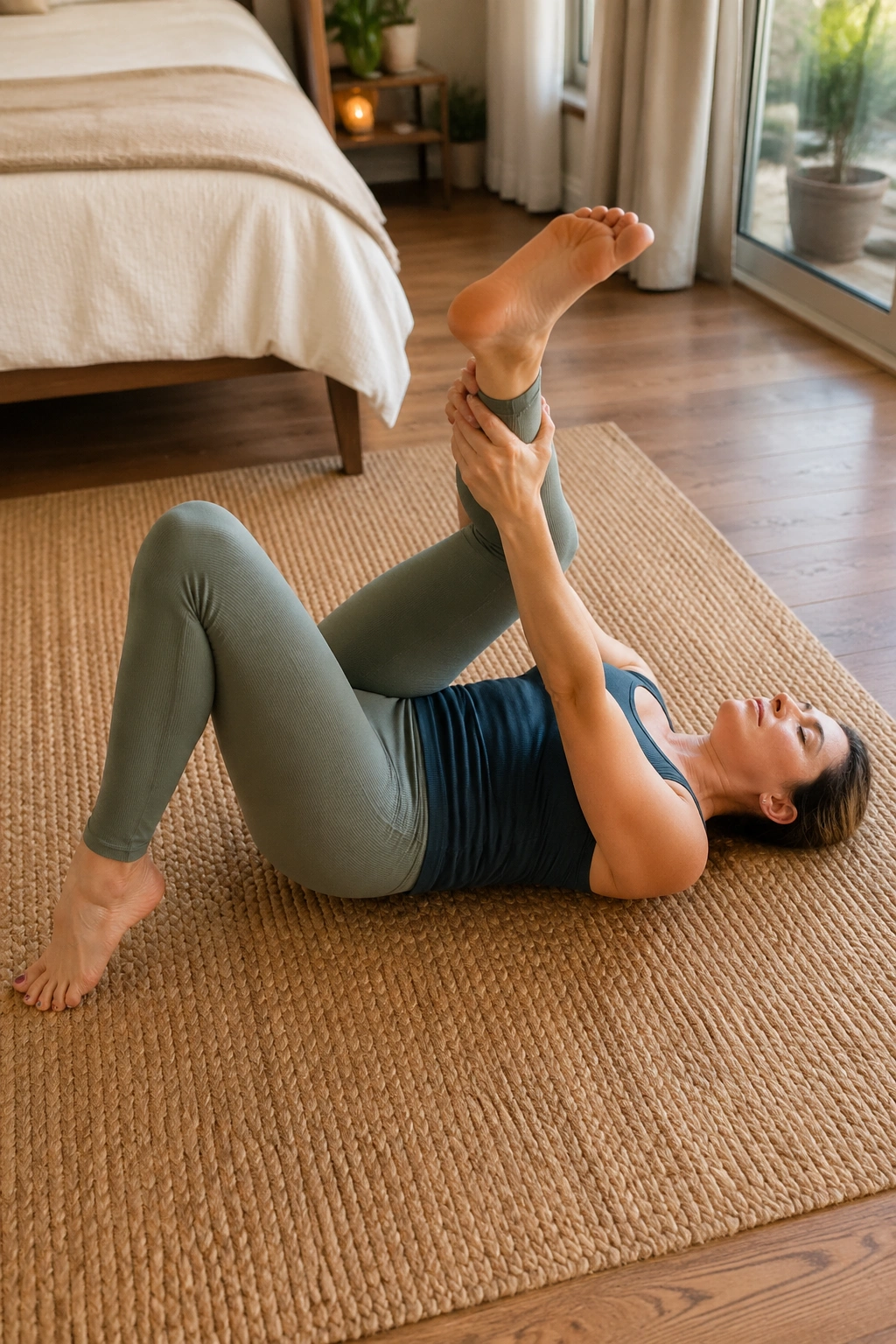
When the hips are locked up, the lower back and mid-back often join the party. Half happy baby gives those areas a chance to soften without the full intensity of the complete pose, which can be too much on a headache day.
Lie on your back, bend one knee, and hold the outside edge of the foot or the back of the thigh. Keep the other leg long or bent with the foot on the floor. Gently guide the bent knee toward the armpit.
The stretch should feel broad through the back and a little open in the hip, not yanked in the groin. If the foot grip makes the shoulders tense, hold behind the thigh instead. A softer grip often gives a better stretch.
Hold for 4 to 6 breaths, then switch sides. You may notice the low back drop into the floor a little more after the first breath or two. That’s usually the good sign.
18. Corpse Pose With a Long Exhale
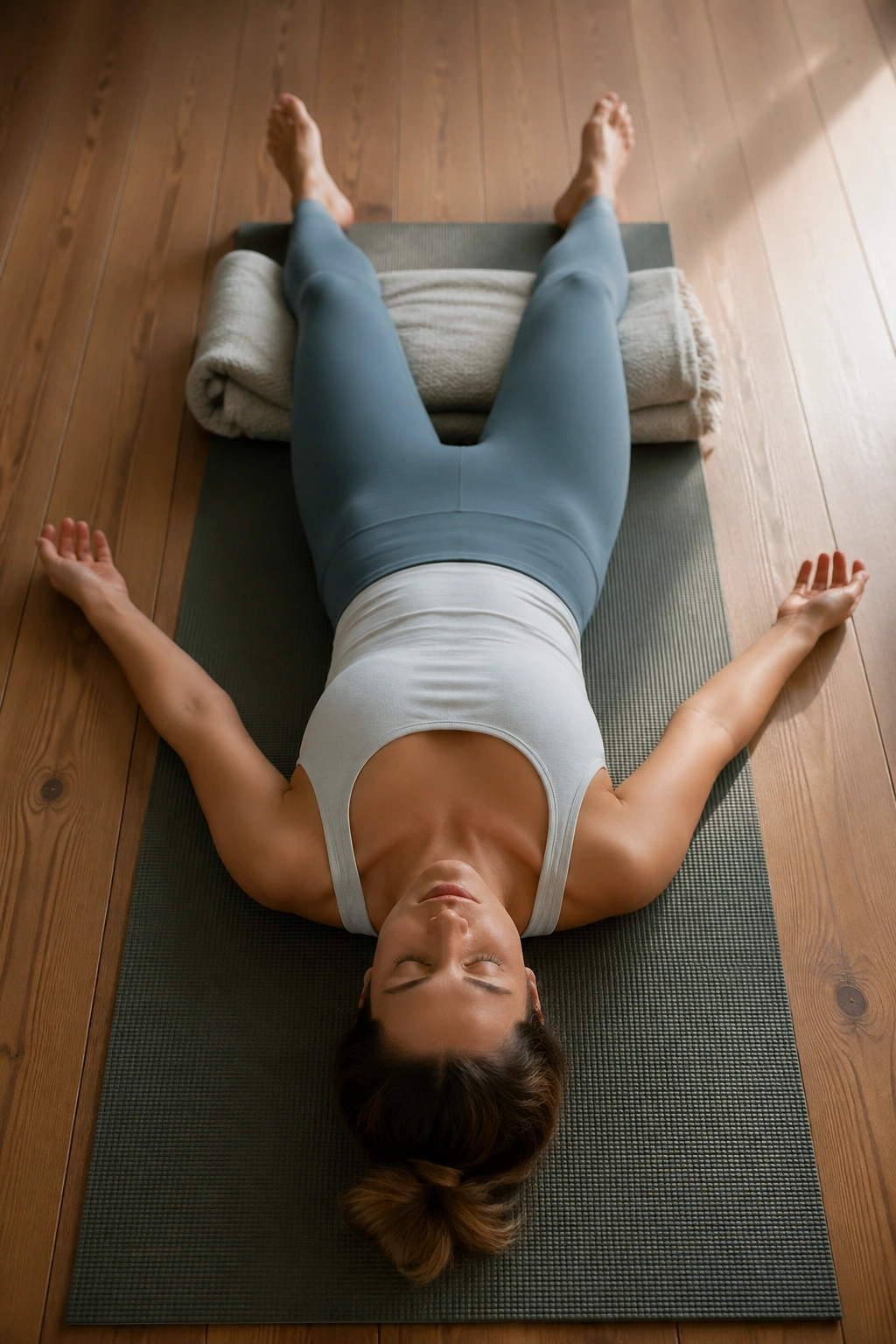
Corpse pose gets skipped by people who think rest is a waste of time. It isn’t. On a tension headache day, lying still with a long exhale may be the most useful thing in the room.
Lie on your back with legs long or knees supported on a bolster. Let the arms fall away from the torso and rest the eyes. If the lower back wants support, slide a pillow under the knees. If the head feels too flat, use a thin folded towel under it.
Count the exhale to 6 or 8. Then let the inhale happen on its own. Don’t chase it. The jaw should stay loose enough that the teeth are not touching. If you notice clenching, that is the exact moment to soften again.
Stay for 2 to 5 minutes, or longer if you have time. If lying flat makes the headache worse, prop the upper body on pillows and stay semi-reclined instead. Same pose. Less pressure.
Final Thoughts
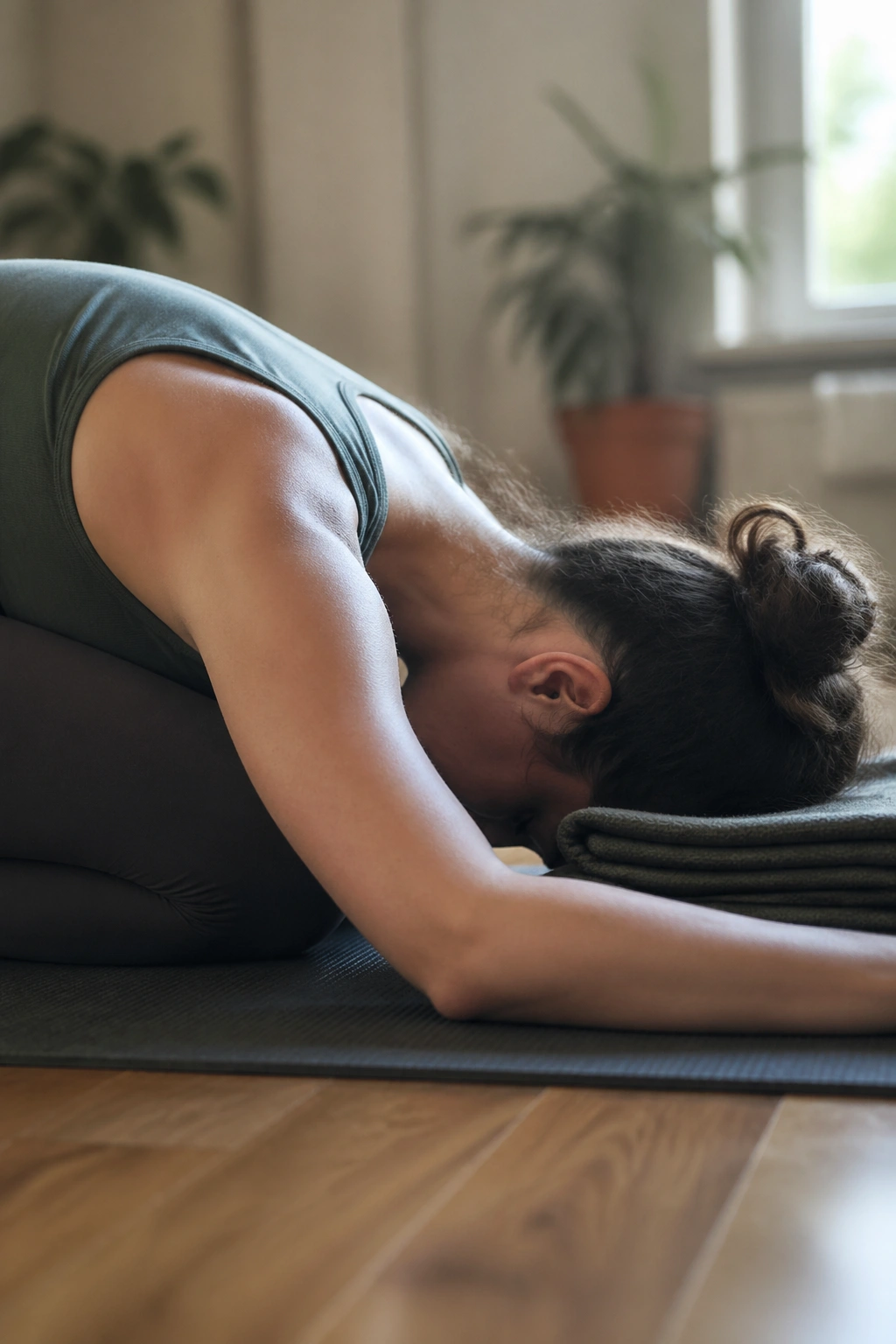
The best yoga for a tension headache is rarely flashy. It is the kind that lowers the shoulders, lengthens the neck, and makes the breath a little quieter than before. That can happen in child’s pose, in a supported twist, or in a plain old rest pose on the floor.
Choose the versions that feel small and clean. If a stretch makes the pain sharper, back out and try a softer shape instead. The headache is already doing enough.
If the same type of headache keeps returning, or if the pain shows up with fever, vision changes, weakness, numbness, a sudden blast of pain, or anything that feels off from your usual pattern, get checked by a clinician. Yoga can be a useful tool. It is not a substitute for paying attention.
