



Stubborn inner thighs usually need two things: better strength and more room to move. Yoga can give you both, and it does it without turning every session into a punishment. The catch is choosing poses that ask the adductors to work, not just stretch and smile for the camera.
A small reality check matters here. Yoga will not melt fat from one exact place, and anyone promising that is selling a fantasy. What these poses can do is strengthen the inner-thigh muscles, improve hip control, and make your legs feel more stable when you squat, walk, climb stairs, or stand on one foot.
The best sequences mix squeeze and stretch. One pose wakes the adductors up, the next gives them space, and the next asks them to hold their ground while the rest of the body moves around them. That back-and-forth is where the useful work happens.
If your inner thighs feel tight and weak at the same time, you are not imagining things. Sitting tends to shorten the groin area while leaving the muscles undertrained, so the area can feel grippy, stubborn, and oddly tired. The poses below lean into that pattern instead of fighting it.
1. Goddess Pose for Inner Thigh Strength
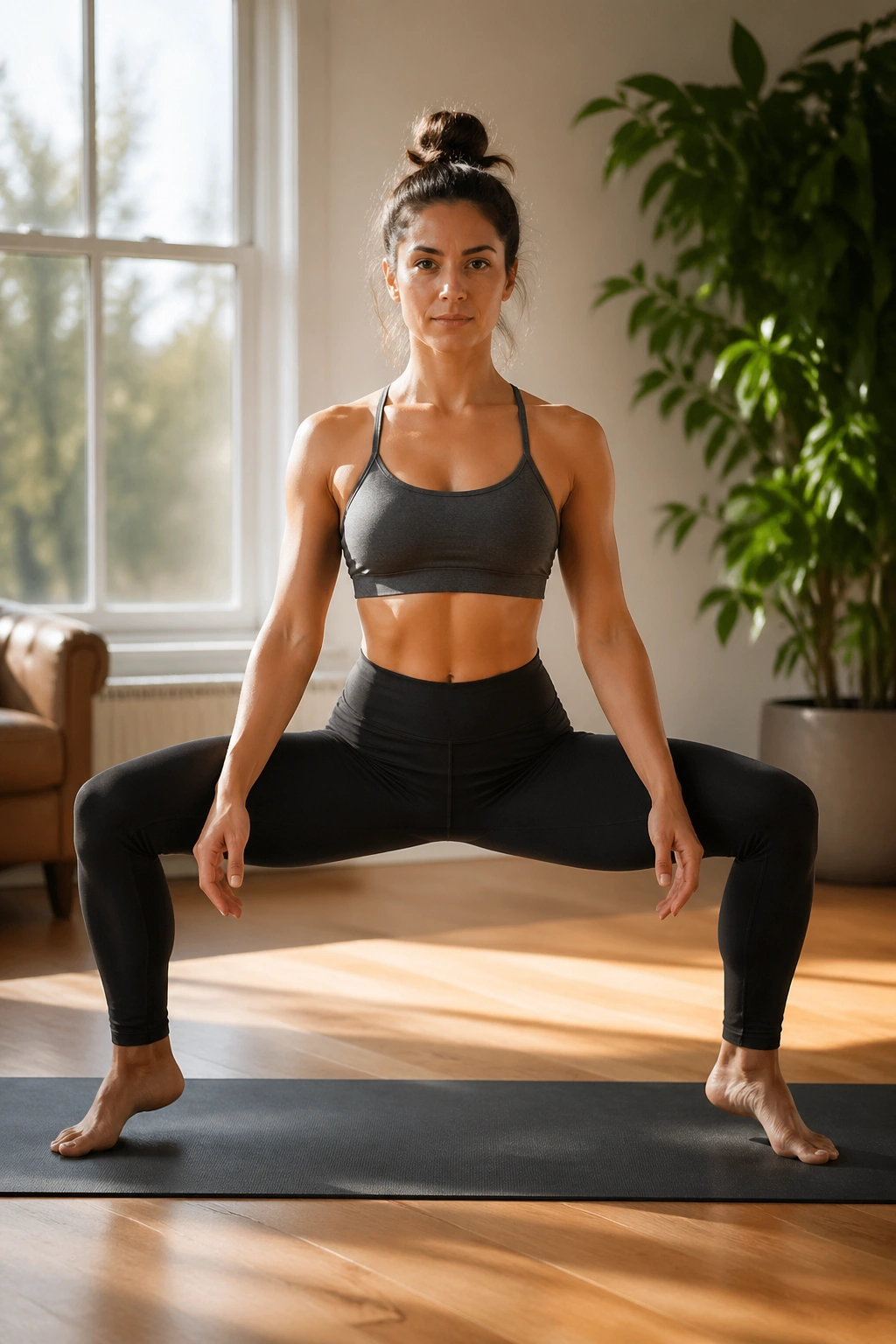
Goddess Pose looks simple from across the room. It is not.
A wide stance with toes turned out and knees tracking over them asks the inner thighs to stay awake while the hips sit low. That gives the adductors a real job to do, especially if you hold the shape with a long spine and steady breath. If you only sink into the pose and hang there, you miss half the point.
What to feel
- The work should sit high on the inner thighs, not in the knees.
- Keep your weight spread through the whole foot, especially the heels and the outer edges.
- Sink only as far as you can keep the knees tracking in the same direction as the toes.
- Hold for 5 to 8 breaths, or pulse gently up and down 1 to 2 inches for 8 to 10 reps.
A tiny pulse is enough. You do not need to bounce like the floor owes you money.
If the stance feels sketchy, shorten it. That usually fixes the wobble faster than trying to force a deeper squat. A block under the seat can also help if your hips are grumpy or your lower back wants to talk back.
2. Chair Pose with Block Squeeze
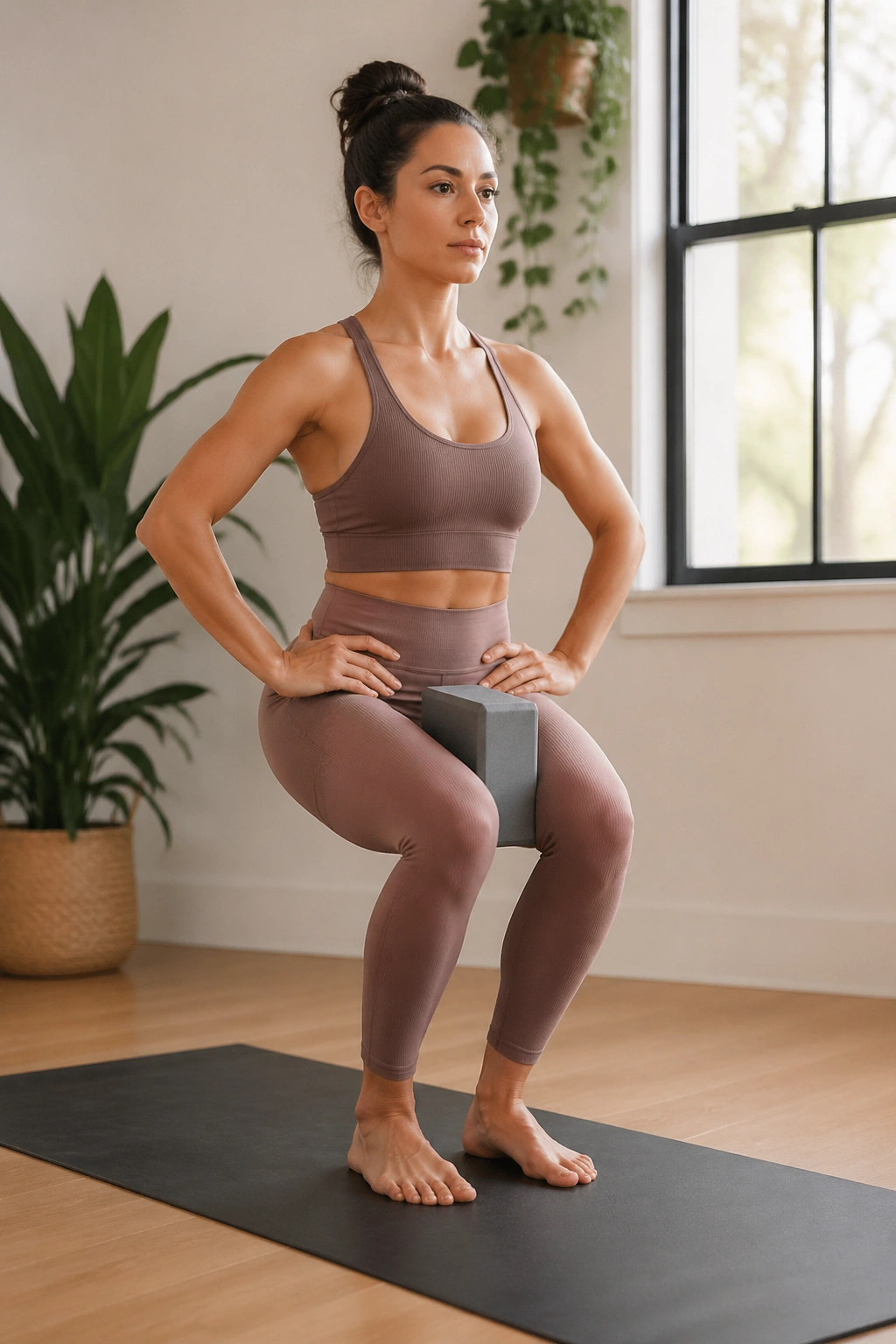
Need one pose that turns the inner thighs on without any fancy balance? This is the one I’d keep near the top of the list.
Place a yoga block, folded towel, or small pillow between the thighs and sit back into Chair Pose as if you were lowering onto a stool that vanished at the last second. The block gives you a clear isometric cue: the legs have to stay active even while the body holds still. That squeeze is what people often miss when they treat Chair Pose like a plain leg burn.
How to work the squeeze
- Stand with feet hip-width apart.
- Slide the block between the upper thighs.
- Sit the hips back and down until the thighs are angled like a shallow chair.
- Squeeze the block at about 30 to 40 percent effort.
- Hold for 20 to 30 seconds, then stand and shake it out.
That medium squeeze matters. If you crush the block with all your might, the breath gets choppy and the pelvis often tucks too far under.
A clean Chair Pose should feel strong in the quads, sure, but also in the inner line of the legs. The best version looks plain and feels honest. No drama. Just work.
3. Wide-Legged Forward Fold for Inner Thigh Release
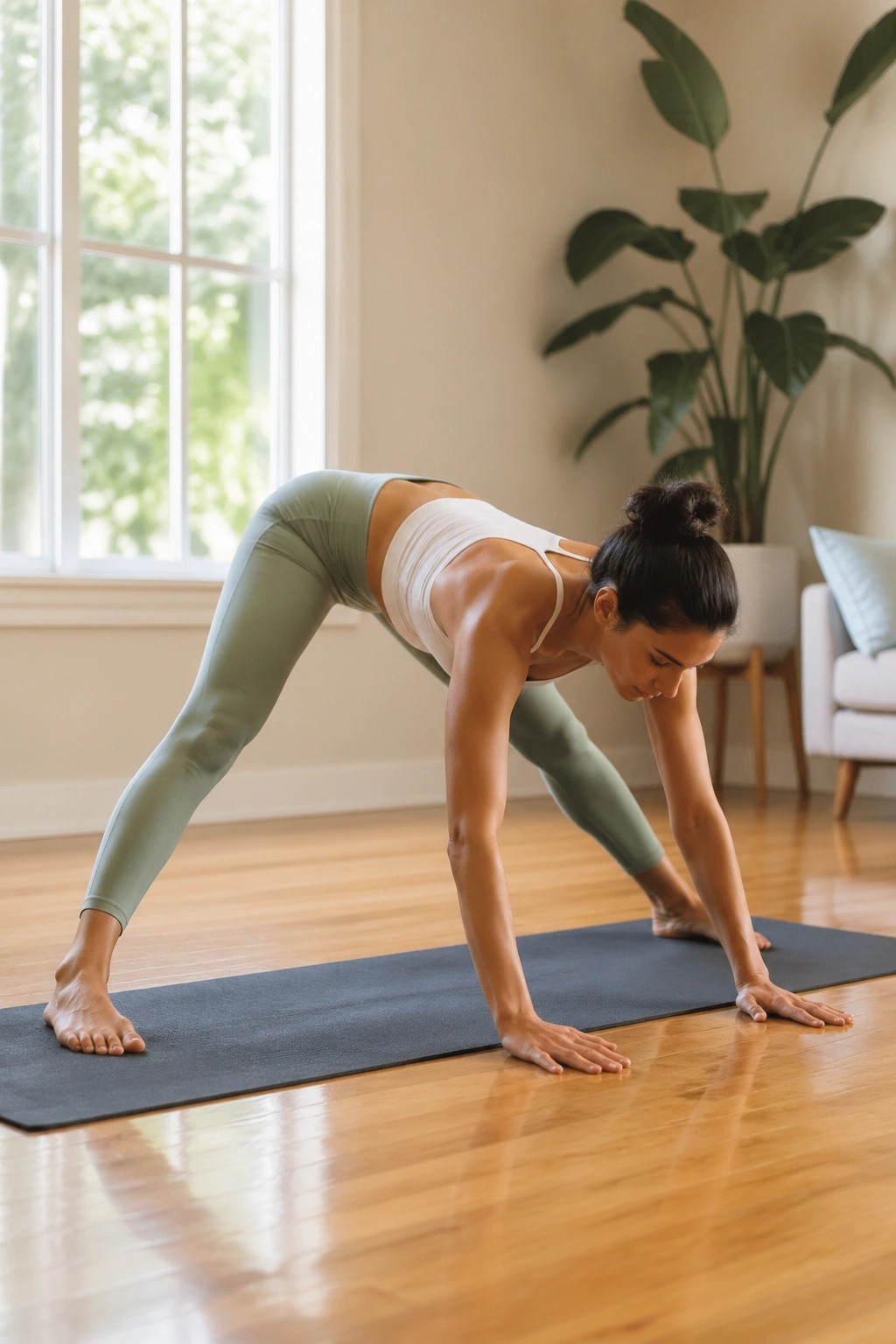
The first thing you notice in this fold is the stretch running up the inside of both legs. The second thing is how easy it is to cheat by rounding the back and dropping the head too fast.
Step the feet wide, turn them in just a little, and hinge from the hips so the belly moves toward the floor before the head does. A soft bend in the knees keeps the hamstrings and inner thighs from grabbing back. If you feel the stretch in the knees, back out. That is not the right place.
Where the stretch should land
The sweet spot is high on the inner thighs, close to the groin. That is the adductor line doing what it was built to do: lengthen under control.
A block under the hands helps if the floor feels far away. You can also press the outer edges of the feet down and imagine gently pulling the mat apart without actually moving it. That cue wakes the inner legs up while the body folds forward, which sounds small but makes a noticeable difference.
Hold for 6 to 10 breaths. Longer is fine if the fold stays calm and the lower back does not start to complain. The pose should feel like a release, not a strain.
4. Bound Angle Pose for Deep Groin Opening
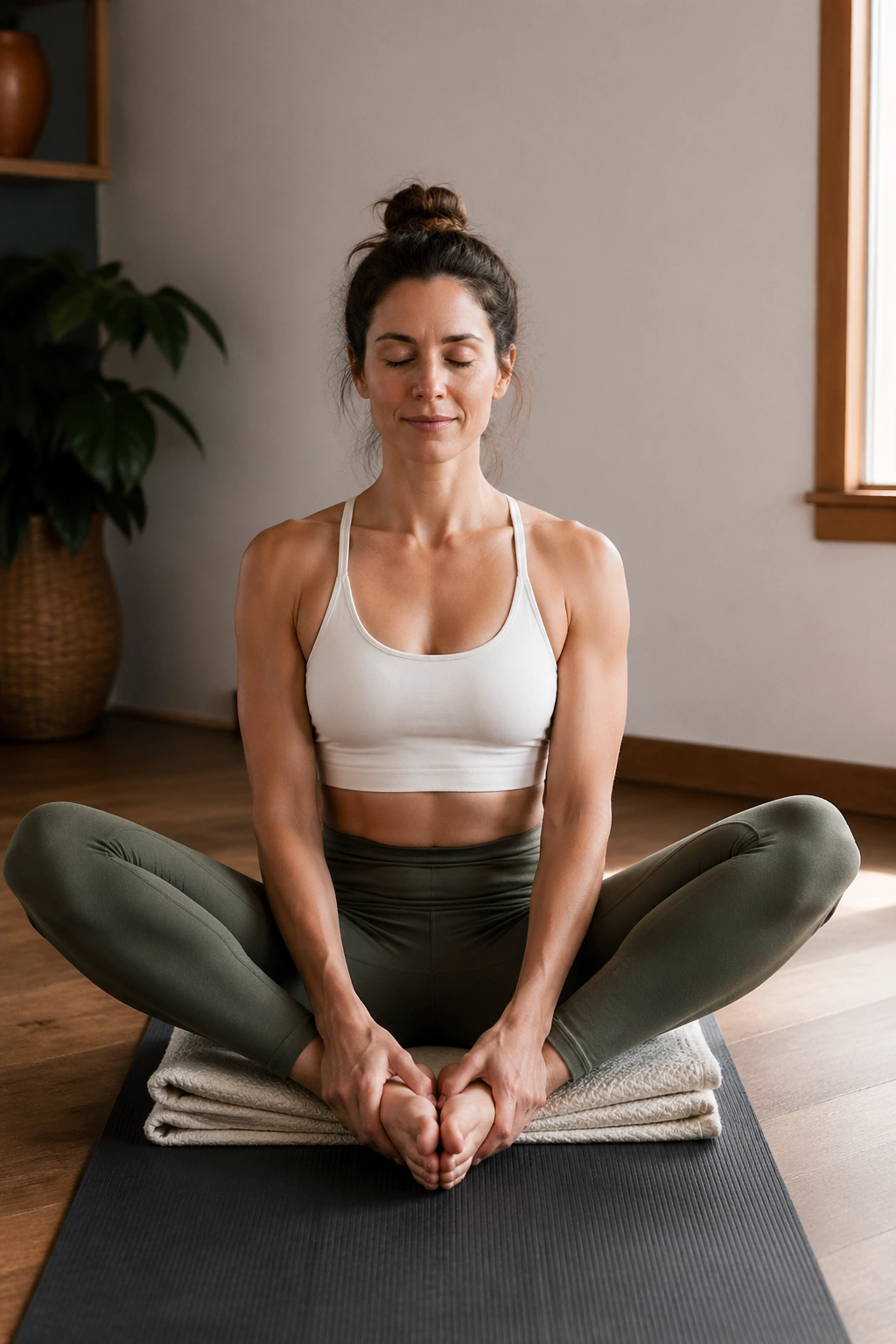
A pose that looks gentle can still matter a lot.
Bound Angle Pose, sometimes called Butterfly, is one of the cleanest ways to let the inner thighs lengthen without forcing them. Sit tall, bring the soles of the feet together, and let the knees fall outward. If your knees hover high off the floor, that is normal. Prop them with blankets or blocks instead of yanking them down.
The magic here is not in how low the knees go. It is in the way the groin softens when the pelvis stays steady and the breath stays slow. That quiet work helps balance all the standing strength poses that come before it.
A few things help:
- Sit on a folded blanket if the pelvis tips backward.
- Keep the feet a little farther from the groin if the knees feel cranky.
- Press the feet together lightly on the inhale.
- Soften the knees outward a touch more on the exhale.
This pose works especially well after a stronger sequence. The muscles get asked to contract, then release, then contract again. That sequence matters more than trying to stretch them into submission.
5. Frog Pose for a Serious Adductor Stretch
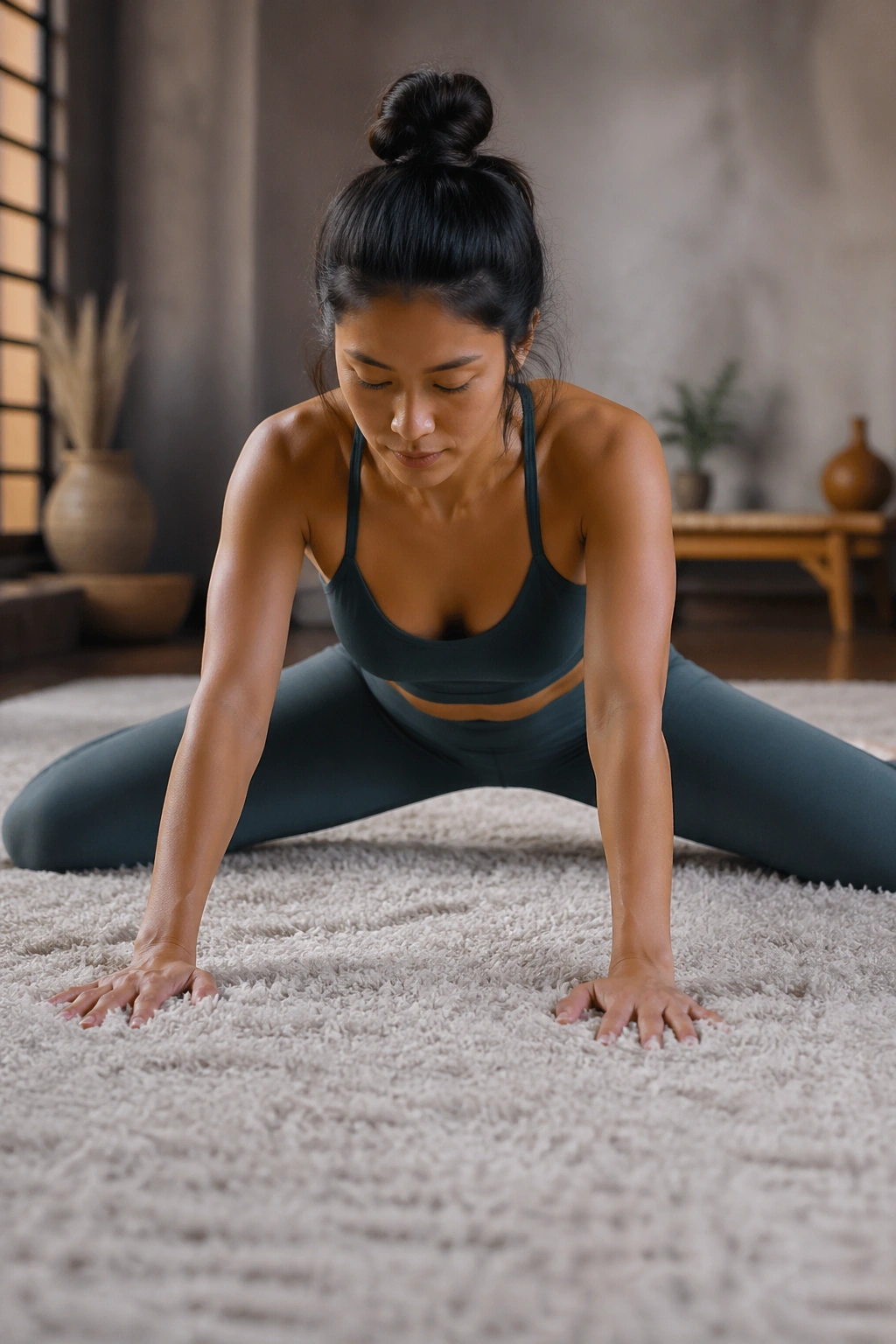
Frog Pose is not the place to prove anything.
It is a deep inner-thigh stretch, and deep stretches deserve a calm setup. Start on hands and knees, then slide the knees wider apart while keeping the shins in line with them. The ankles stay flexed, the pelvis stays level, and the body lowers only until the stretch feels intense but not sharp. If the knees or lower back start to complain, come up. Fast.
Knee-safe setup
- Put a folded blanket under each knee if the floor feels hard.
- Stop before the pelvis dumps forward.
- Keep the ankles behind the knees, not drifting out to the side.
- Rest on forearms if that lets you stay more relaxed.
- Stay for 5 to 8 breaths at first.
The point is to feel the inner thighs open, not to flatten yourself like a rug. That sounds obvious, yet people keep pushing this pose too hard and then wonder why it feels awful.
I like Frog Pose after standing work because it shows you, immediately, whether the groin is moving or bracing. If the breath gets shallow, back off. If the muscles soften and the knees feel supported, you are in the right zone.
6. Side Lunge for Dynamic Inner Thigh Work
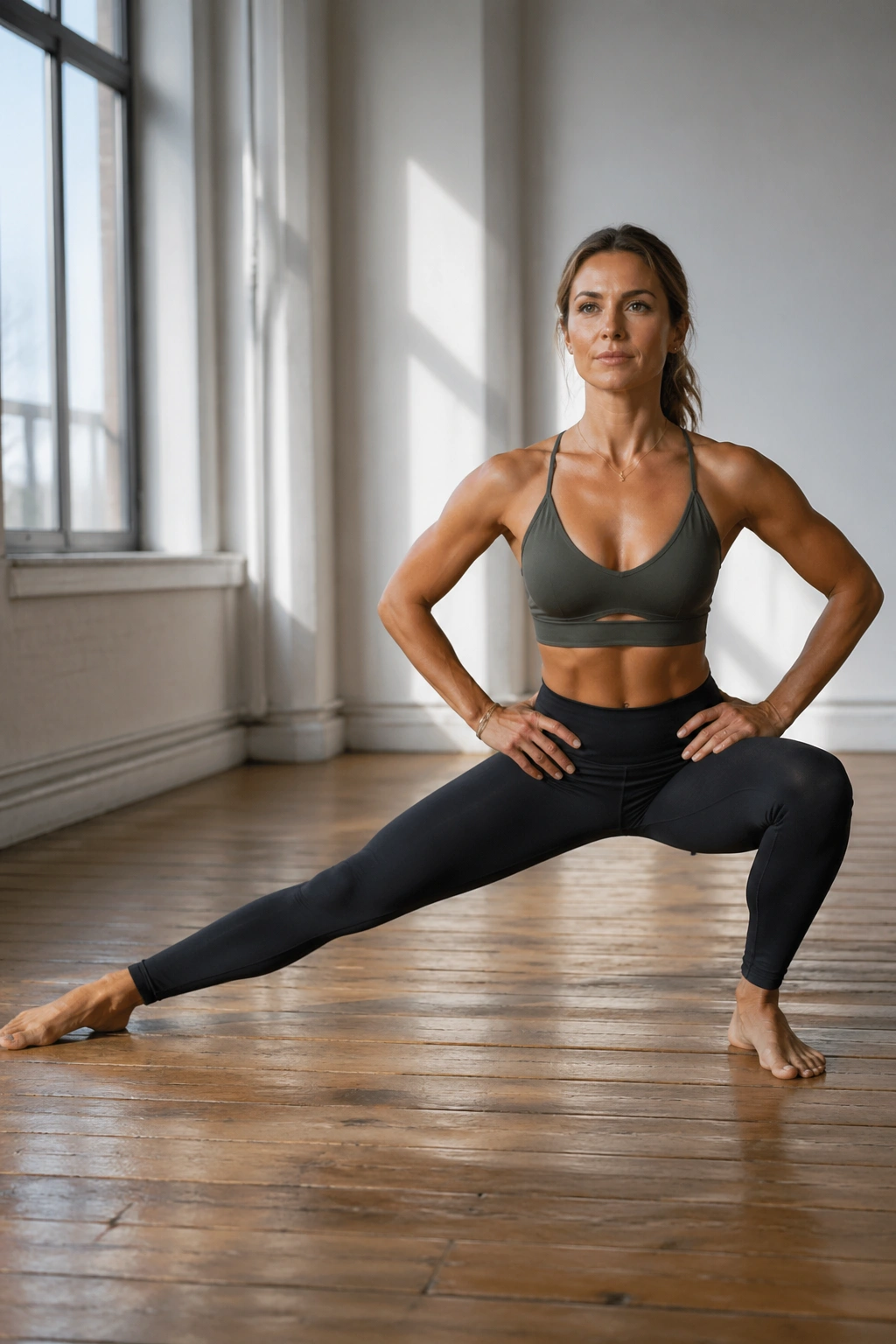
Side lunges feel a little old-school, and that is part of why they still work so well.
Shift your weight to one side, bend that knee, and let the opposite leg stay long. The straight leg gets a clean inner-thigh stretch while the bent side does the heavy lifting. Then switch. That back-and-forth pattern is excellent for adductor strength because the muscles have to lengthen and support the body at the same time.
A few clean cues keep this from turning sloppy:
- Keep the planted foot flat.
- Let the bent knee track over the second toe.
- Sit the hips back instead of pitching the chest forward.
- Use your hands on blocks if the floor is too low.
This pose is especially useful as a warm-up because it wakes up the inner legs without exhausting them. A slow side-to-side rhythm for 6 to 8 rounds can bring a kind of useful heat that static stretching never quite gives you.
The straight leg should feel long and active, not dead. If it collapses into the ankle, shorten the range and try again. Small range, good shape. That beats a big range and a messy one every time.
7. Skandasana for Side-to-Side Leg Strength
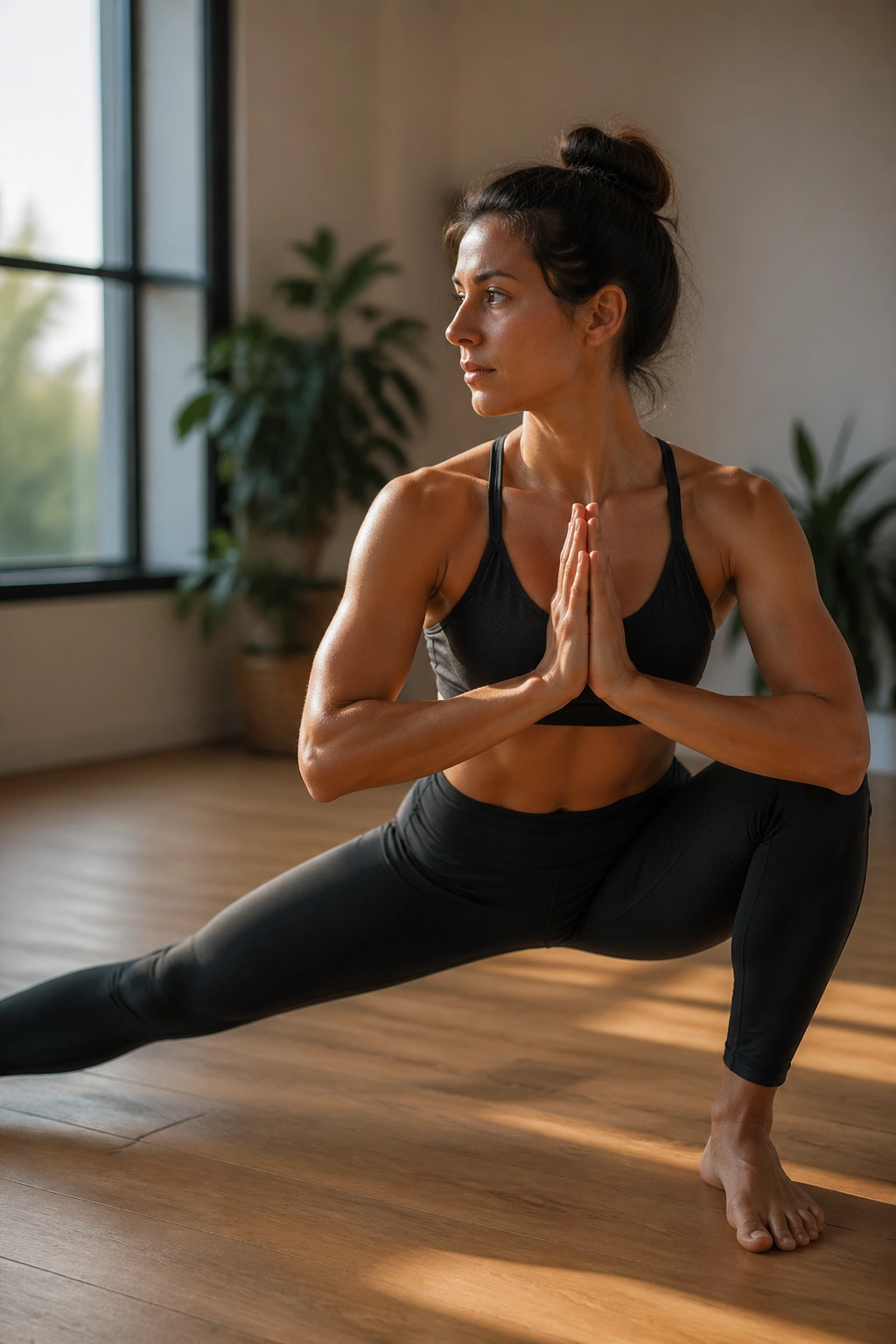
Skandasana is the pose that makes you notice whether your hips actually know how to shift.
From a wide stance, bend one knee deeply while the other leg stays extended. The bent side gets stronger, the straight side gets a clear inner-thigh stretch, and your balance has to stay honest the whole time. It is a simple pattern. It still burns.
Why it works
The pelvis moves laterally, which means the adductors have to control the shift instead of merely hanging on. That gives the inner thighs a mix of stretch and eccentric load, which is a fancy way of saying they have to work while lengthening. That is the good stuff.
Start high if the low version feels sketchy. Hands can stay on blocks, and the back heel may lift. Once the shape feels stable, sink a little deeper and let the chest stay long. The straight leg should not lock hard; a soft knee keeps the hamstring line from getting cranky.
Skandasana is also one of the best poses for showing the difference between strength and control. You can be strong and still wobble. You can be flexible and still collapse. This pose finds out which one is running the show.
8. Triangle Pose for Length and Stability
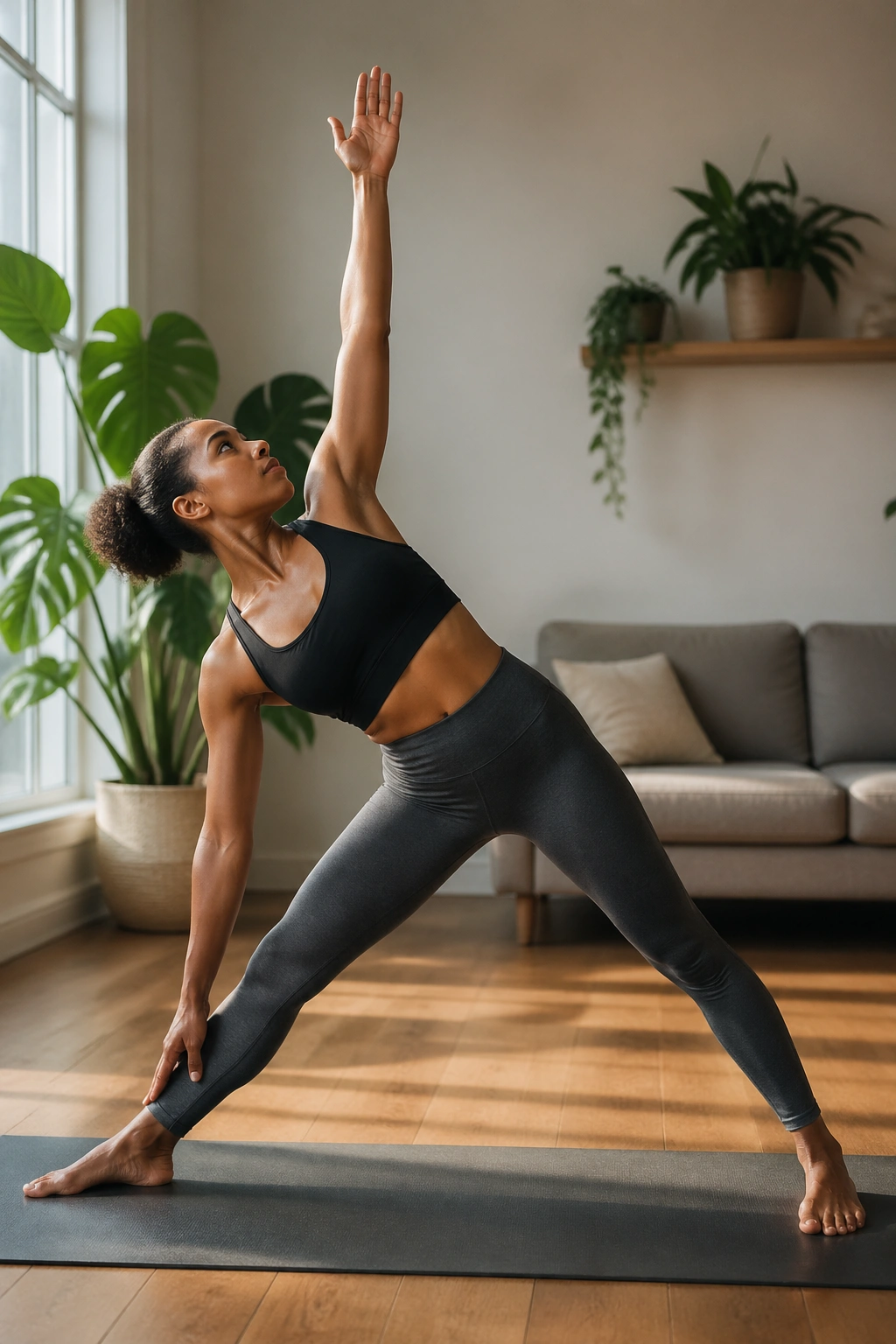
Triangle Pose is not usually the first shape people name when they talk about inner thighs, but I keep putting it in because it sneaks in a lot of useful work.
The front leg lengthens, the back leg anchors, and the inner thigh of the front leg has to stay awake so the pelvis does not dump into the front hip. That little stabilizing job matters more than it sounds like it should. It is one reason Triangle is so good for legs that need tone without a lot of noisy effort.
Why the straight leg matters
A lot of people collapse into the front hand and call it a stretch. That misses the point. Use a block under the lower hand, stack the shoulders as much as your body allows, and keep the front thigh lifted instead of hanging off the joint. The inner thigh should feel engaged, not pinched.
A good cue is to imagine drawing the front leg upward into the hip socket while both feet stay rooted. That creates a cleaner line from the foot to the groin and helps the adductors stay active.
If the hamstring grabs too hard, shorten the stance a bit. Triangle likes space, but it likes precision more.
9. Warrior II for Steady Adductor Engagement
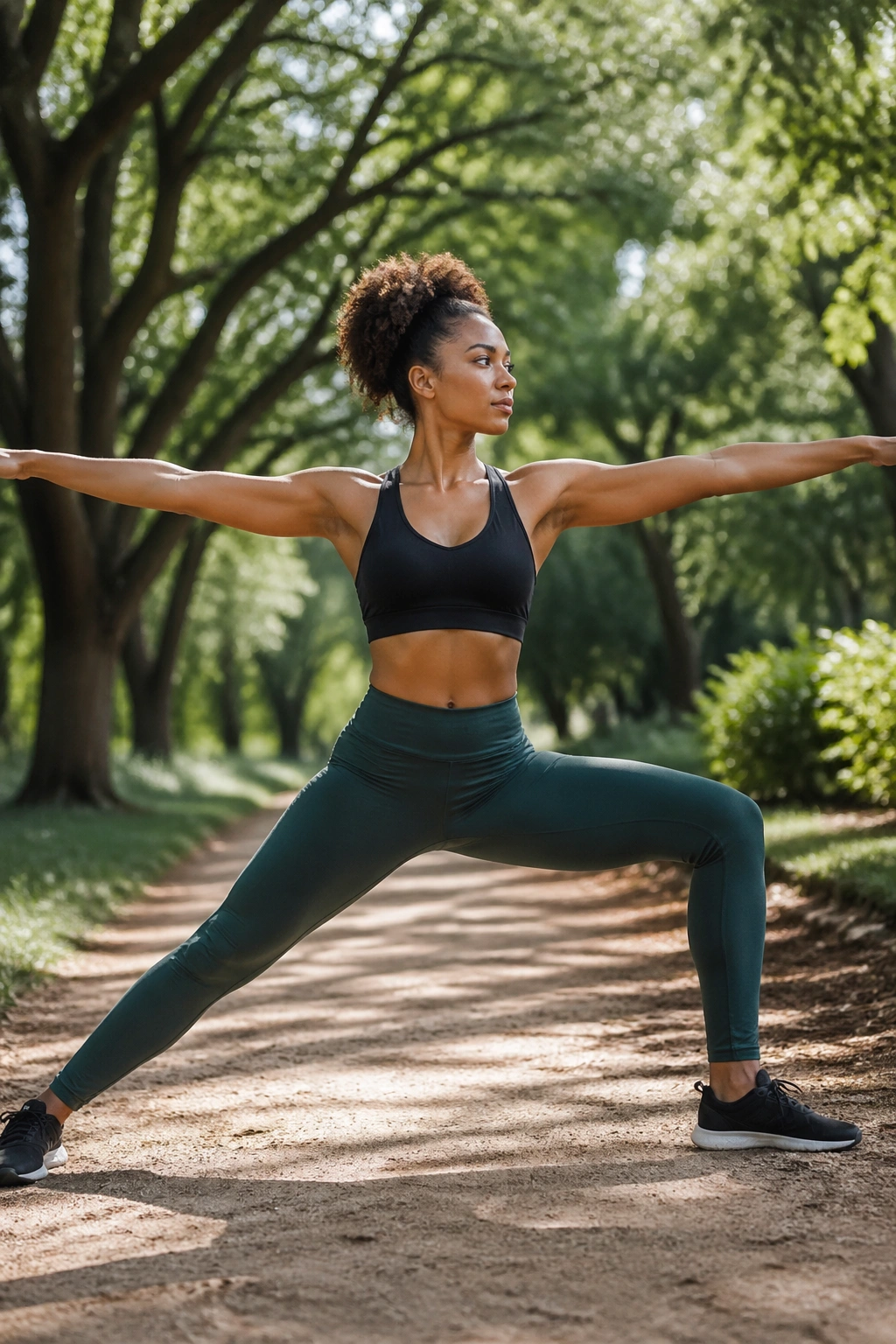
Warrior II earns its keep when you stop lounging into it.
The pose looks open and broad, yet the inner thighs have to work hard to keep the front knee tracking and the pelvis from drifting. Press both feet down, lengthen through the arms, and imagine pulling the legs gently toward each other without moving them. That invisible squeeze is where the adductors wake up.
A few details make a difference:
- Front knee stacks over the ankle.
- Back foot stays firmly grounded.
- The front thigh stays active instead of sinking.
- The pelvis stays neutral, not dumped forward.
Hold for 5 to 8 breaths on each side. If the front knee caves inward, reduce the depth of the bend. A smaller, stronger Warrior II is better than a deep one that folds at the knee.
This pose is a favorite because it looks like a hip opener but behaves like a strength drill. That mix is rare. It trains the inner thighs to stabilize while the rest of the body stays broad and open, which is exactly the sort of thing that carries over into walking and climbing stairs.
10. Half Moon Pose for Balance and Inner Thigh Control
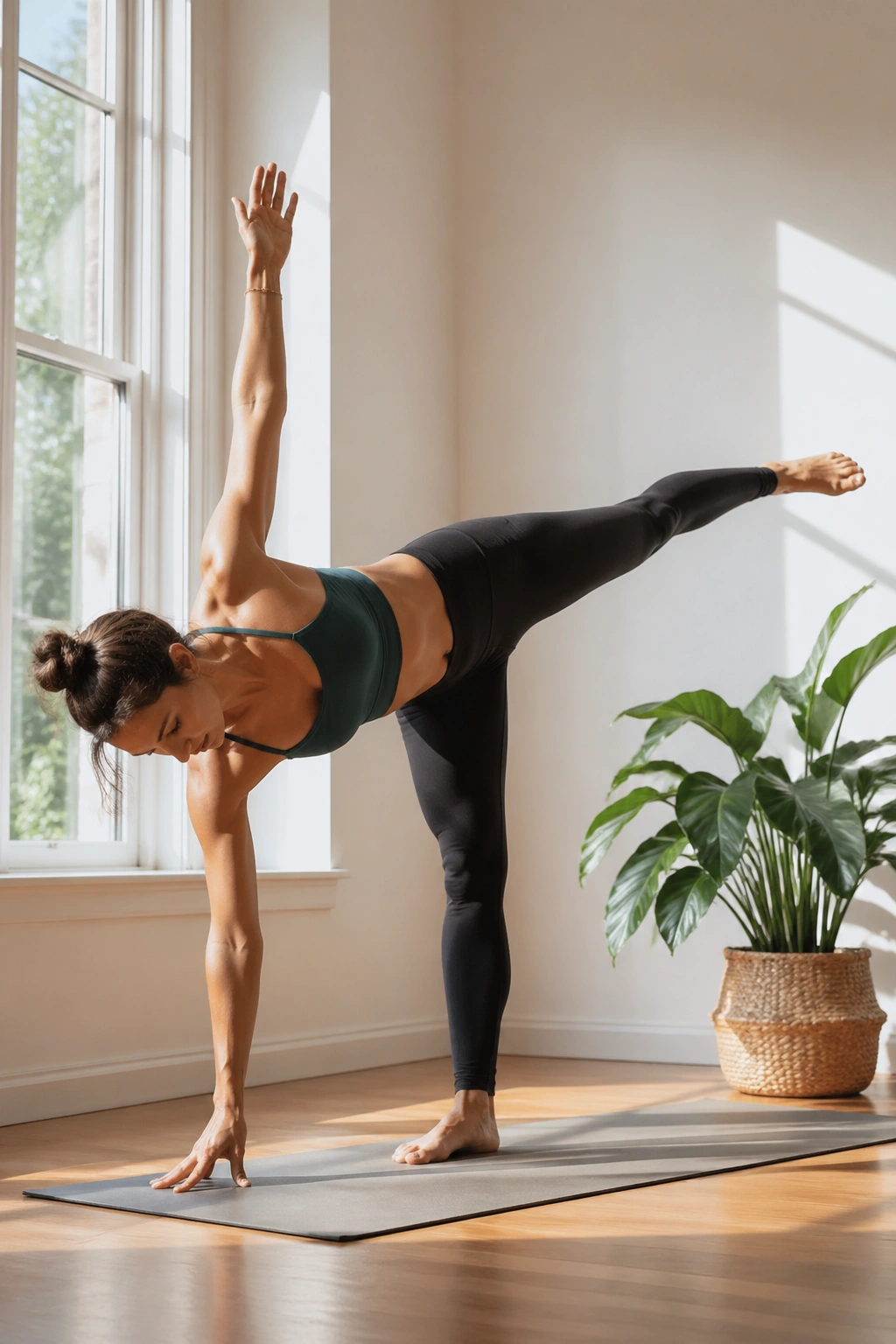
Half Moon is where the inner thigh on the standing leg gets serious.
Balancing on one leg forces the adductors to help keep the pelvis level, and that job is harder than it sounds. The lifted leg extends out, the standing leg bears the weight, and the body has to stay organized in a very small space. If you wobble, fine. That is information, not failure.
Use a block under the lower hand or practice near a wall. The setup matters. A clean balance starts with a stable base, not with bravado. Keep the lifted foot flexed, stack the hips as much as you can, and avoid collapsing into the standing knee.
A useful cue is to press the standing thigh slightly outward while drawing the inner thigh of the standing leg back into the center line. That may sound contradictory. It works.
Half Moon is not flashy in the way big stretches are flashy, but it is efficient. The inner thigh on the standing side has to stabilize every millimeter of the pose. You feel that right away.
11. Bridge Pose with Block Squeeze
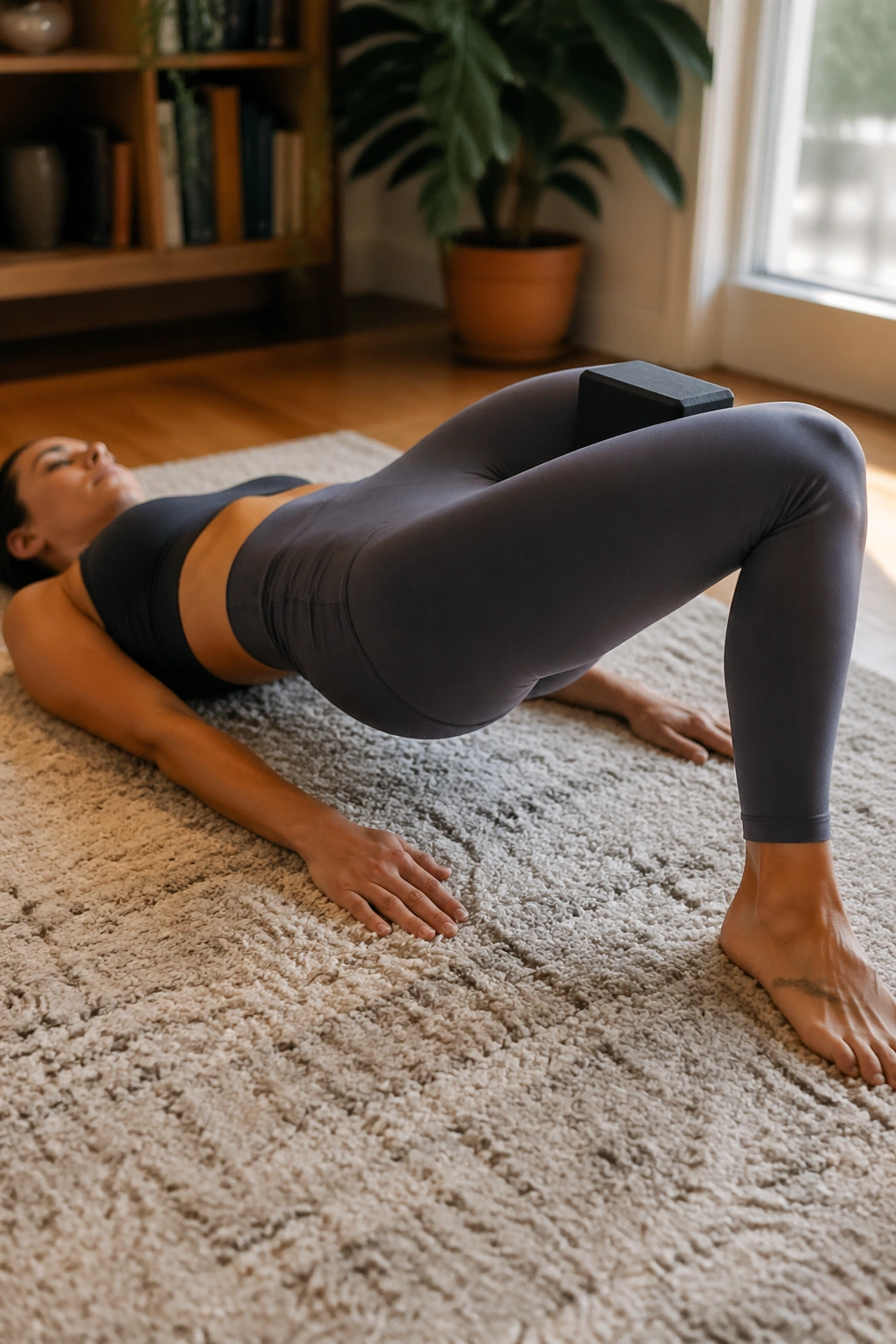
Few things are as honest as a block between the knees in Bridge Pose.
Lie on your back with feet hip-width apart and a block or firm pillow placed between the inner thighs. As you lift the hips, squeeze lightly enough to keep the block steady. The glutes help, the hamstrings help, and the adductors help too. That shared load is exactly what makes the pose feel so useful for inner-thigh work.
Squeeze, then lift
- Set the feet close enough that you can press evenly through the heels.
- Place the block so it sits snugly between the thighs.
- Lift the hips on an inhale.
- Squeeze the block gently on the exhale.
- Hold for 20 to 30 seconds or pulse the hips up and down 6 to 8 times.
Do not squeeze so hard that the lower back arches like a bridge from a cartoon. The ribs should stay relatively quiet. The pelvis should feel supported, not jammed.
Bridge is one of the best poses for people who want the inner thighs to work with the glutes instead of against them. That teamwork is the point. Strong legs often look like joint effort, not isolated effort.
12. Malasana for Deep Hip and Inner Thigh Release
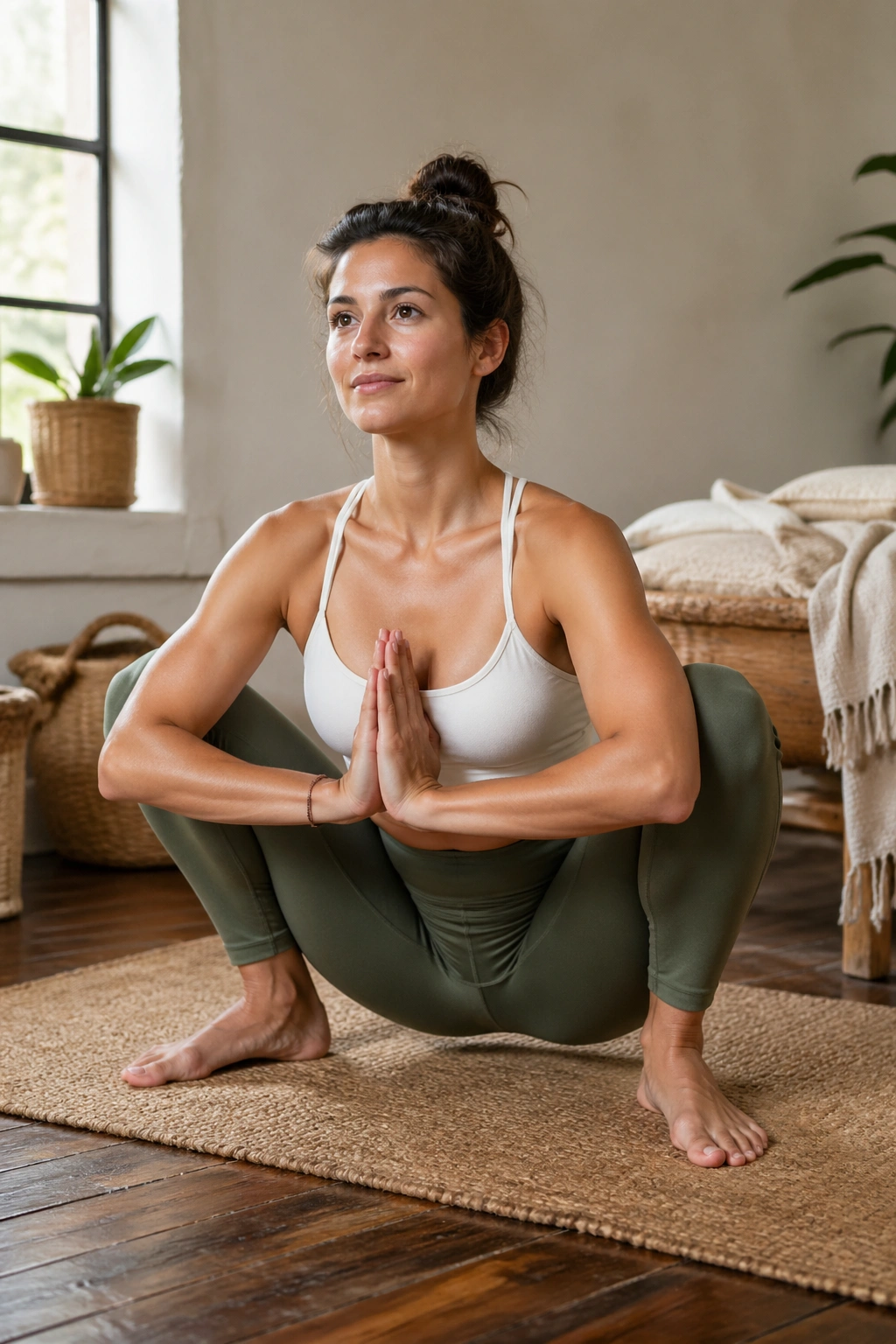
Garland Pose, or Malasana, gives the inner thighs a very different kind of challenge.
Sink into a deep squat with the feet a little wider than hip-width and the knees opening outward. The elbows press gently inside the thighs, which encourages the adductors to lengthen while the hips and ankles share the load. If the heels lift, roll a mat or blanket under them. If the knees complain, widen the stance a bit and come up higher.
The best version keeps the spine long and the chest open. You are not collapsing into the bottom of the squat. You are sitting there with purpose.
Malasana is useful because it blends mobility with strength. The legs have to support the body in a compressed position, and that alone can change how the inner thighs feel after a few steady practices. It also teaches the ankles to contribute, which people often overlook until their heels float off the floor and the whole shape turns into a fight.
A small pause at the bottom is enough. Breathe. Let the knees press gently into the arms. Then come up with control.
13. Lizard Pose with a Hover for Extra Leg Work
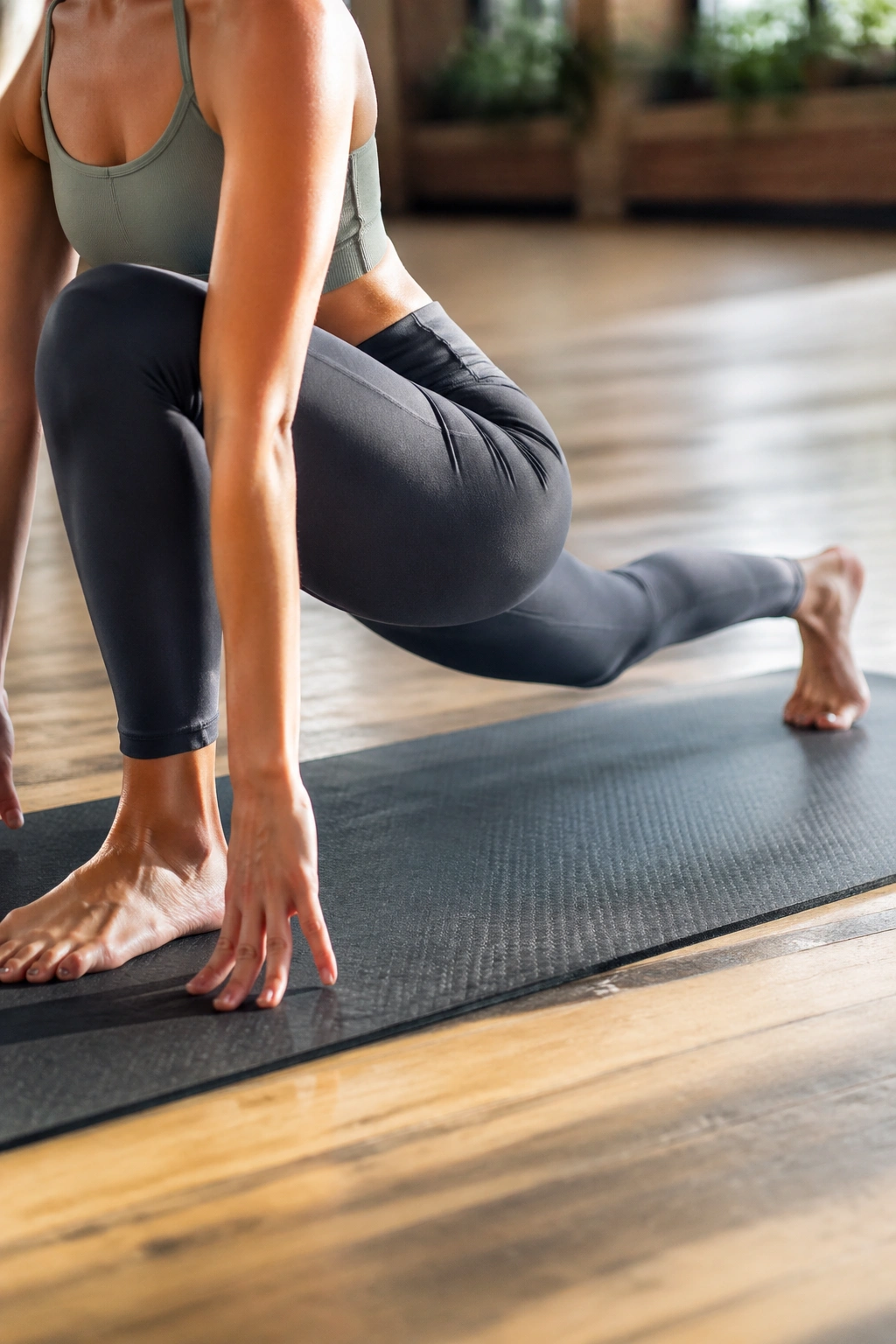
Lizard Pose gets much more interesting when you stop treating it like a loose hip stretch.
Step one foot outside the hand, lower the back knee, and settle into the lunge. Once the shape feels stable, hover the back knee an inch off the floor for a breath or two. That tiny lift adds work through the inner thighs and the stabilizers around the hip, which is exactly why this variation earns a place here.
A few details keep it clean:
- Keep the front foot planted and steady.
- Let the front knee angle outward only as much as the hip allows.
- Use blocks under the hands if the floor feels too far away.
- Lower the back knee again if the hover starts to wobble.
The hover should feel controlled, not frantic. A couple of breath cycles is enough. If you hold the hover too long and lose the shape, the pose becomes noise.
What I like about this version is the contrast. You get a deep opening through the front groin, then a small burst of leg work, then another opening. That pattern keeps the inner thigh muscles from falling asleep halfway through the session.
14. Reclined Butterfly for Recovery and Relaxation
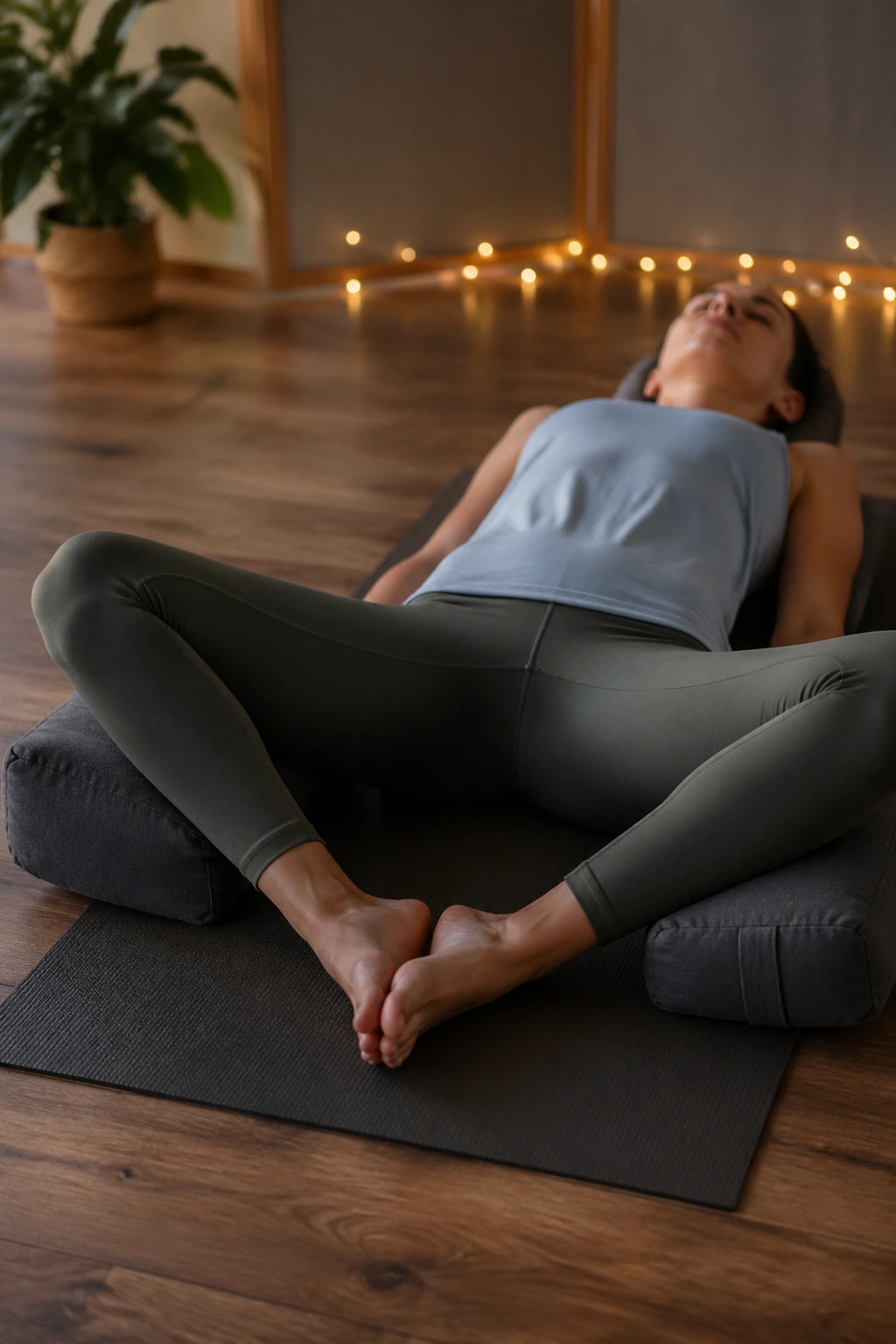
Reclined Butterfly looks almost too easy, which is exactly why people skip past it.
Lie on your back, bring the soles of the feet together, and let the knees fall outward. Support the thighs with cushions if the groin feels overstretched. Hands can rest on the belly or ribs so the breath stays even and low. That quiet setup helps the inner thighs let go after stronger standing work.
The pose is gentle, but it is not empty. Restorative positions let tissues recover, and recovery is part of getting the inner thighs to look and feel firmer over time. Muscles that never relax well tend to stay guarded. Guarded muscles do not move well.
Keep the feet close enough to be comfortable, not so close that the knees hang and strain. If the lower back starts to arch, slide a folded blanket under the spine or place a cushion under the knees. Little adjustments like that make the pose far more useful.
This is the one I reach for when the legs have done enough talking and need to settle down.
15. Legs-Up-the-Wall with an Inner Thigh Squeeze
Here’s a quiet pose that still asks the inner thighs to work.
Lie on your back with your legs up the wall, hips as close to the wall as feels comfortable. Place a block, rolled towel, or even a thick book between the thighs or ankles and give it a gentle squeeze. The wall does most of the support, so the body can relax while the adductors get a low-level reminder to stay online.
That combination is sneaky in the best way. You get recovery through the back body and steady engagement through the inner line of the legs. If the squeeze feels tiring, hold it for 5 breaths, release, then repeat. A few rounds is enough.
How to use it in a real sequence
- Start with 2 standing strength poses such as Goddess and Warrior II.
- Follow with 1 balance pose like Half Moon or Triangle.
- Add 1 deep opener such as Frog or Bound Angle.
- Finish here, legs up the wall, with a light squeeze and long exhales.
That mix works better than chasing one magic pose. Strong inner thighs need challenge, but they also need release. Both matter.
Run this sequence a few times a week, and the legs start to feel more connected from the pelvis all the way down to the feet. The inner thighs stop behaving like an afterthought. They start doing their share.
