



If your inner thighs feel like they never get the memo, you’re not alone. They’re one of those areas people notice in the mirror long before they notice what the muscles are actually doing, which is a little unfair because the adductors work all day long to help you walk, balance, squat, and change direction without wobbling like a shopping cart with one bad wheel.
A tighter look comes from two things: stronger inner-thigh muscles and, in many cases, a lower overall body-fat level. The workout side handles the first part. That means the real win is not endless tiny leg lifts that make you want to quit halfway through. It’s smart loading, side-to-side movement, controlled squeezes, and positions that force the adductors to do some honest work.
The other thing people miss? Inner-thigh training does not have to be delicate. Some of the best moves are wide, awkward, and a little humbling. Good. That’s usually where the tension lives. A set of sumo squats can wake up the inside of the legs fast, while a Copenhagen plank will make you respect muscles you barely knew were there.
So here’s the useful part: pick a few of these, rotate them through the week, and stop treating the inner thighs like they need special treatment wrapped in glitter. They need load, control, and enough variety to hit the muscles from different angles. That’s where the shape change starts to happen.
1. Sumo Squats for Inner Thighs
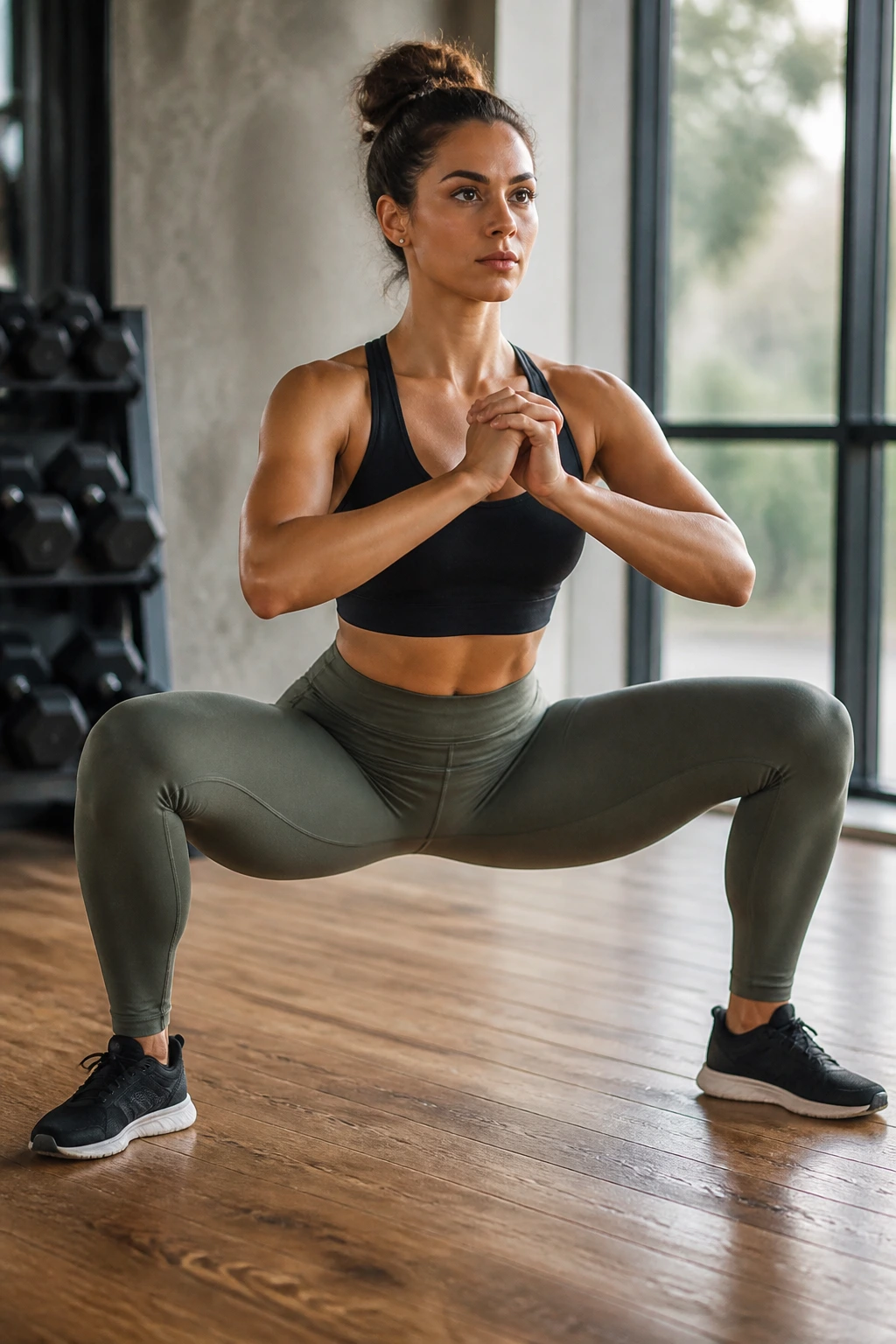
Sumo squats are the classic for a reason. Take a wide stance, turn your toes out about 20 to 30 degrees, and let your knees track over the same line as your toes as you lower. The wide position makes the adductors work harder to control the descent and drive you back up.
How to make it hit the inner thighs
A good sumo squat should feel like you’re sitting between your heels, not folding forward at the waist. Keep your chest proud, your ribs stacked over your hips, and your weight balanced through the middle of your feet.
If your knees cave inward or your heels pop up, the load shifts away from the inner thighs and into a sloppy pattern. That’s not the goal.
- Sets and reps: 3 to 4 sets of 8 to 12 reps
- Tempo: 2 seconds down, 1 second pause, 1 second up
- Best cue: Push the floor apart on the way up
- Gear option: Hold a dumbbell or kettlebell at chest height for more resistance
One clean rep beats five rushed ones. If you want the inner thighs to feel the work, slow the lowering phase and stay honest about depth.
2. Sumo Pulse Squats
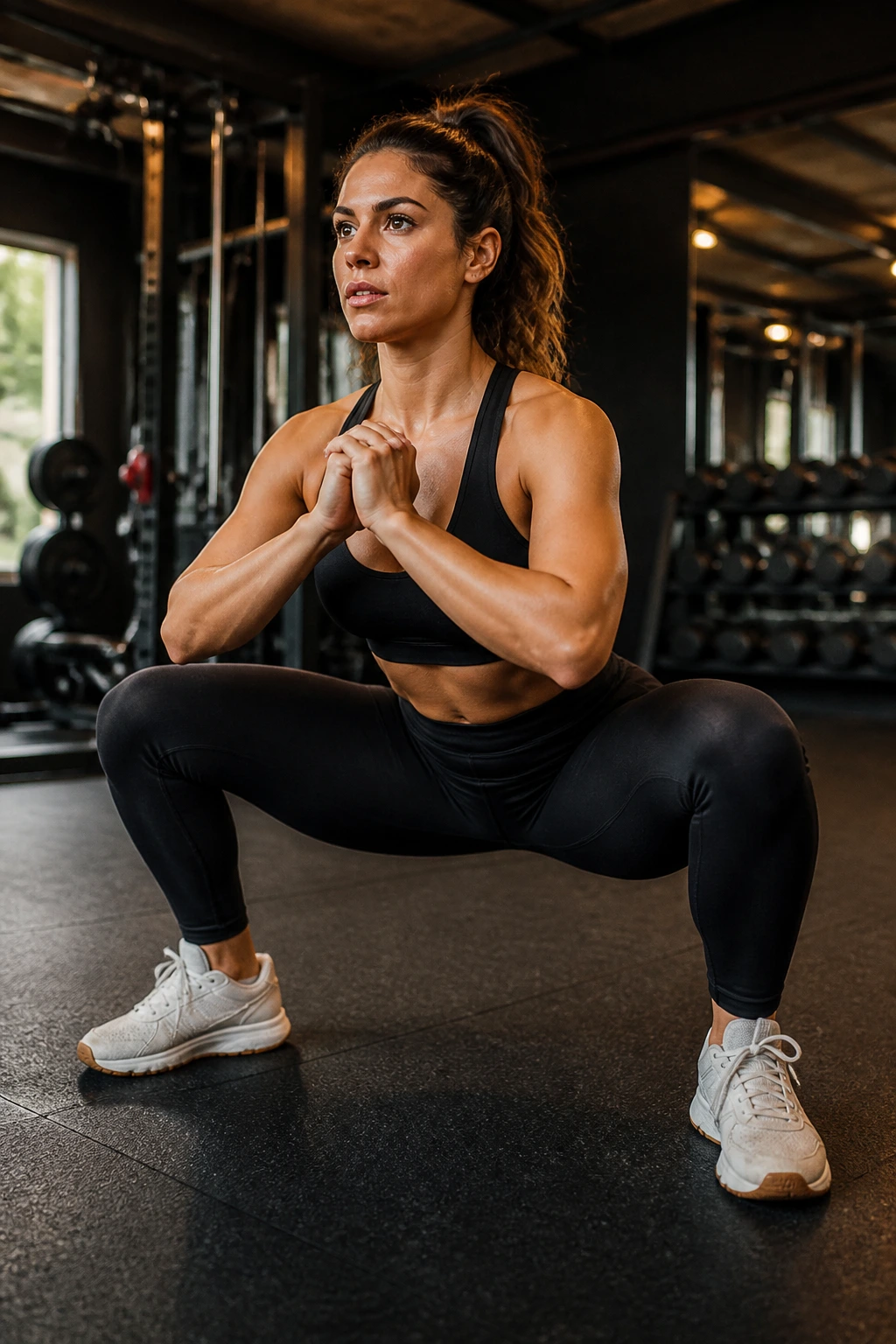
A pulse squat looks simple until you’re halfway through the set. Then it feels like your legs are arguing with you. In this version, you drop into the bottom of a sumo squat and work through tiny up-and-down pulses instead of standing all the way up.
That short range keeps tension on the adductors the whole time. It’s not a power move. It’s a burn move.
Do 20 to 30 pulses after a full set of sumo squats, or use them as a finisher for 30 to 40 seconds. Keep the movement small, controlled, and low enough that your thighs are under real strain without your lower back taking over.
No bouncing. No dropping into the bottom and hoping for the best.
Your feet stay planted, your knees stay open, and your torso stays tall. The pulses should look almost boring from the outside. Inside your legs? Not boring at all.
3. Wide-Stance Goblet Squats
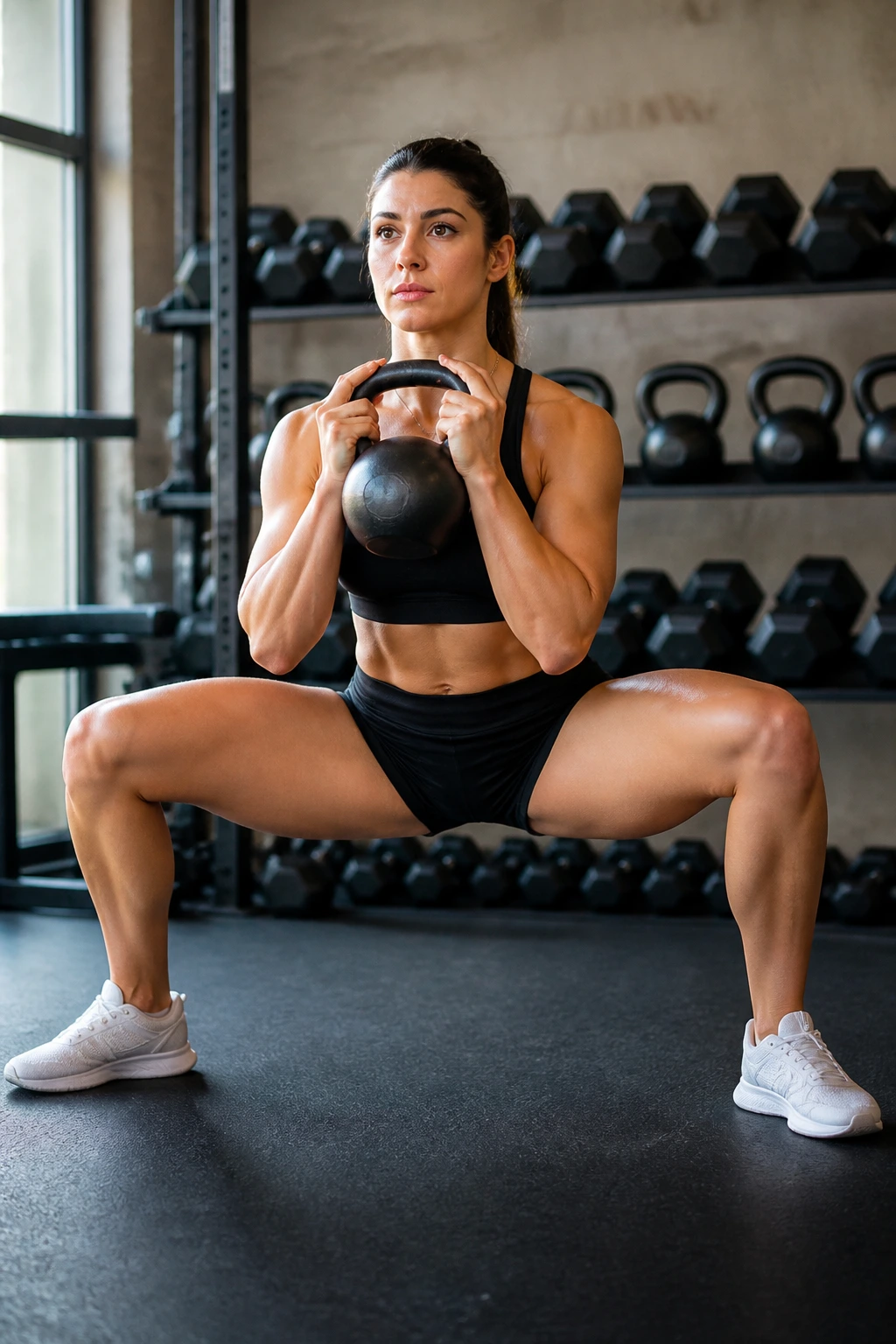
This is sumo squatting with a little more load and a lot more honesty. Hold a kettlebell or dumbbell close to your chest and use the weight to keep your torso upright while you squat in a wide stance.
That upright position matters. When the chest stays lifted, the hips do more of the work, and the adductors get pulled into the movement without your lower back doing extra drama.
Three slow goblet squats with a heavy enough bell can feel harder than 15 fast bodyweight reps. That’s the point. If the movement is too easy, you’re practicing the pattern without giving the muscles much reason to adapt.
What to watch for
- Keep the weight close to your sternum
- Use a stance slightly wider than shoulder width
- Stop the descent when your hips tuck under
- Drive up through the heels and the outside edge of the feet
If you want more shape, add load before you add speed. Speed has its place. Inner thighs usually need tension first.
4. Lateral Lunges
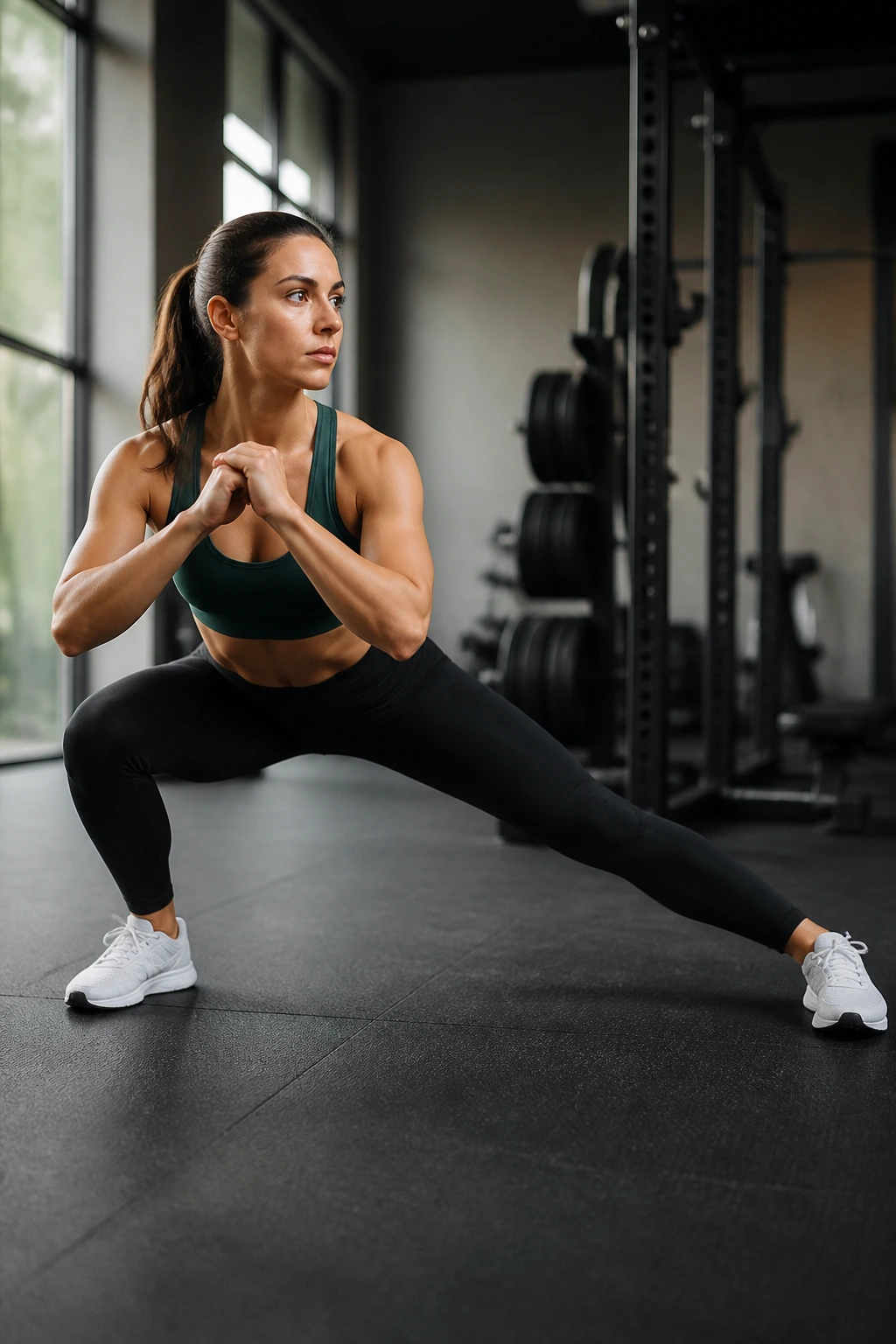
Why does a side lunge work so well when straight-ahead squats don’t? Because the adductors are built to help you move and stabilize side to side, not just front to back. Step out to one side, sit your hips back into the stepping leg, and keep the other leg long and straight.
The bent leg takes the load. The straight leg gets a long stretch through the inner thigh, which is part of why this move feels so different from a regular squat.
Form that actually matters
Your stepping foot should stay flat. Your toes can turn out slightly, but don’t let the knee collapse inward or shoot way past the toes in a weird, forced angle. Move like you’re sitting into a deep side pocket, not lunging across a room.
- Sets and reps: 3 sets of 8 to 10 reps per side
- Depth: Only as deep as your hips can control
- Cue: Keep the non-working leg straight, but not locked hard
- Variation: Hold a dumbbell at your chest for more resistance
Side lunges are one of the best mixes of strength and mobility. They make the inner thighs work while also teaching the hips to move cleanly.
5. Cossack Squats
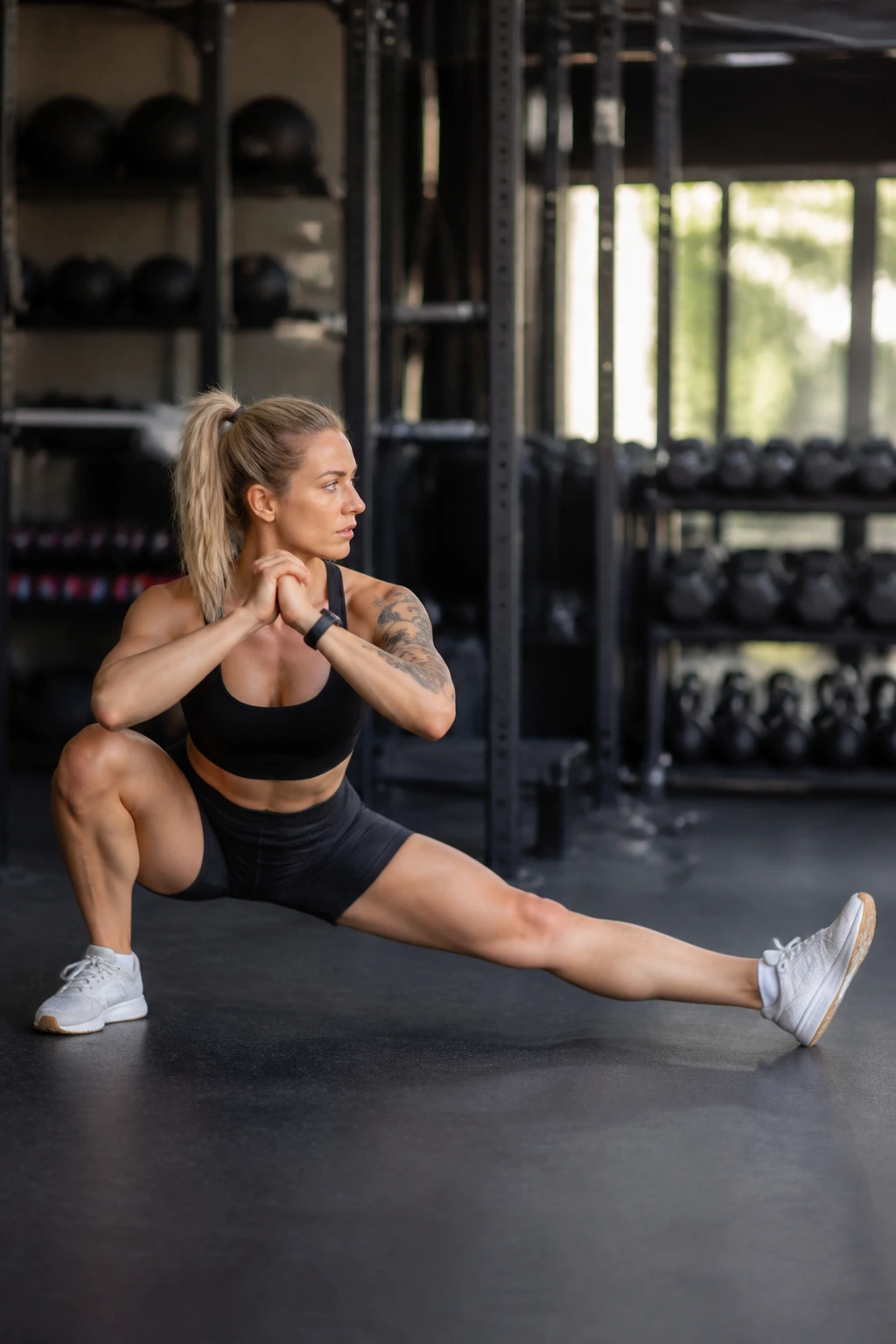
Cossack squats are the move people either fall in love with or avoid for six months. There’s not much middle ground. The setup is simple: take a very wide stance, shift into one side, and let the other leg straighten as you sink down.
The magic here is the stretch under load. The adductors on the straight leg lengthen hard, and the bent leg has to control a deep, awkward bottom position. That combination is gold for inner-thigh strength and hip mobility.
Do not force depth on day one. Seriously. If your hips are stiff, your ankles are stiff, or your groin feels cranky, stay shallow and own the range you have. The movement gets better fast when you stop trying to impress anyone.
A clean Cossack looks like this
- One heel may lift a little, and that’s fine
- The chest stays lifted
- The working knee tracks over the foot
- The non-working leg remains straight and active
A Cossack squat should feel demanding, not sketchy. If the inside of the thigh lights up and the hips feel open afterward, you’re on the right track.
6. Curtsy Lunges
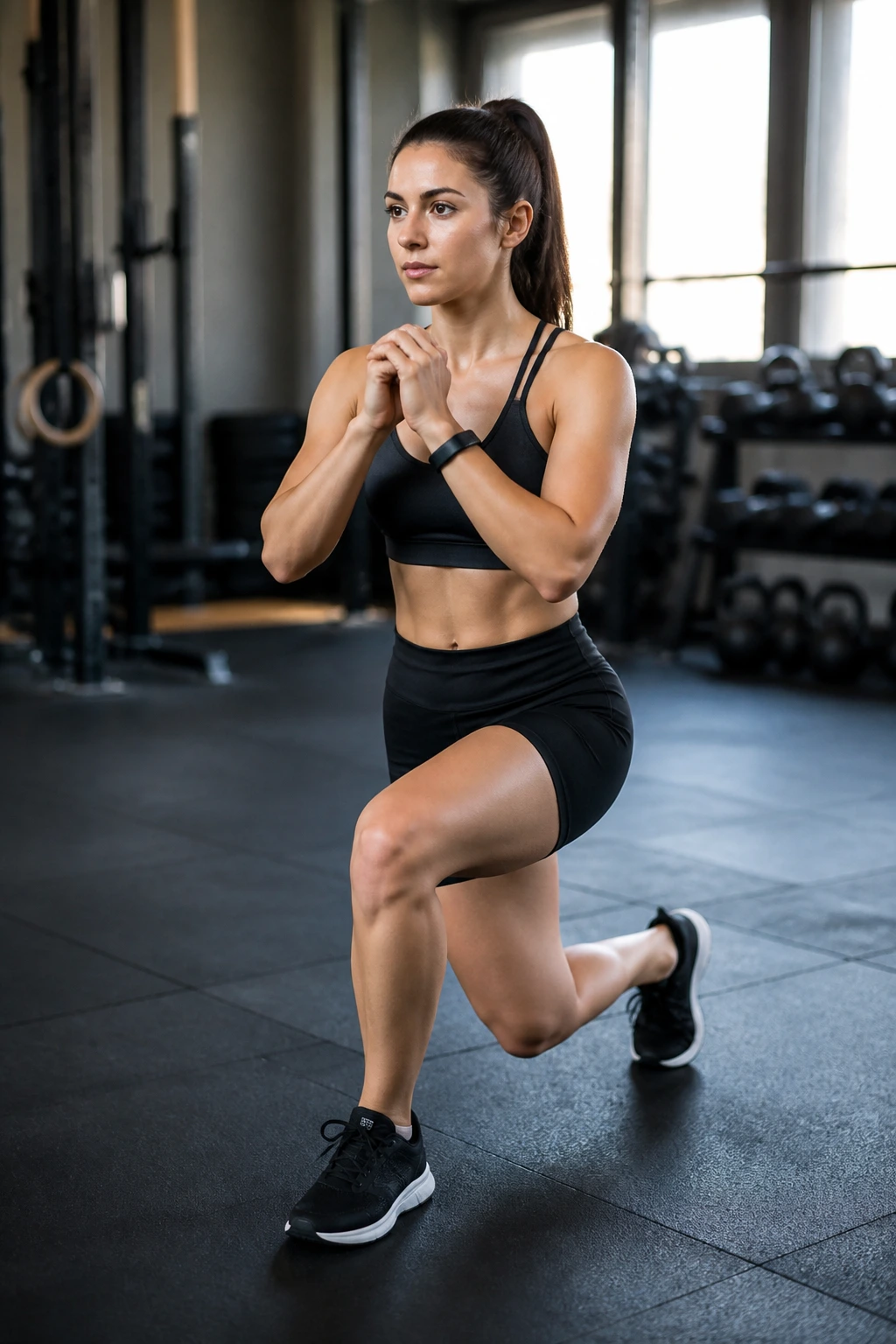
Curtsy lunges get a bad rap because people turn them into a knee-cranked dance move. Done well, though, they load the adductors, glutes, and hip stabilizers in a way few other lunges do. Step one leg diagonally behind the other, then lower with control.
The cross-behind position makes the inner thigh on the front leg work harder to steady the pelvis. It also trains balance, which is useful if your lower body tends to feel wobbly during split stance work.
Keep the step modest. You do not need to lunge into a dramatic crossed-over mess. If your knee complains, shorten the range and keep the torso tall. That’s usually enough to make the exercise productive without turning it into a joint complaint.
Some people love curtsy lunges. Others never warm up to them. Fair enough. If they feel good on your body, they’re a solid inner-thigh option. If they don’t, skip them and move on. No workout deserves loyalty for no reason.
7. Side-Lying Inner Thigh Lifts
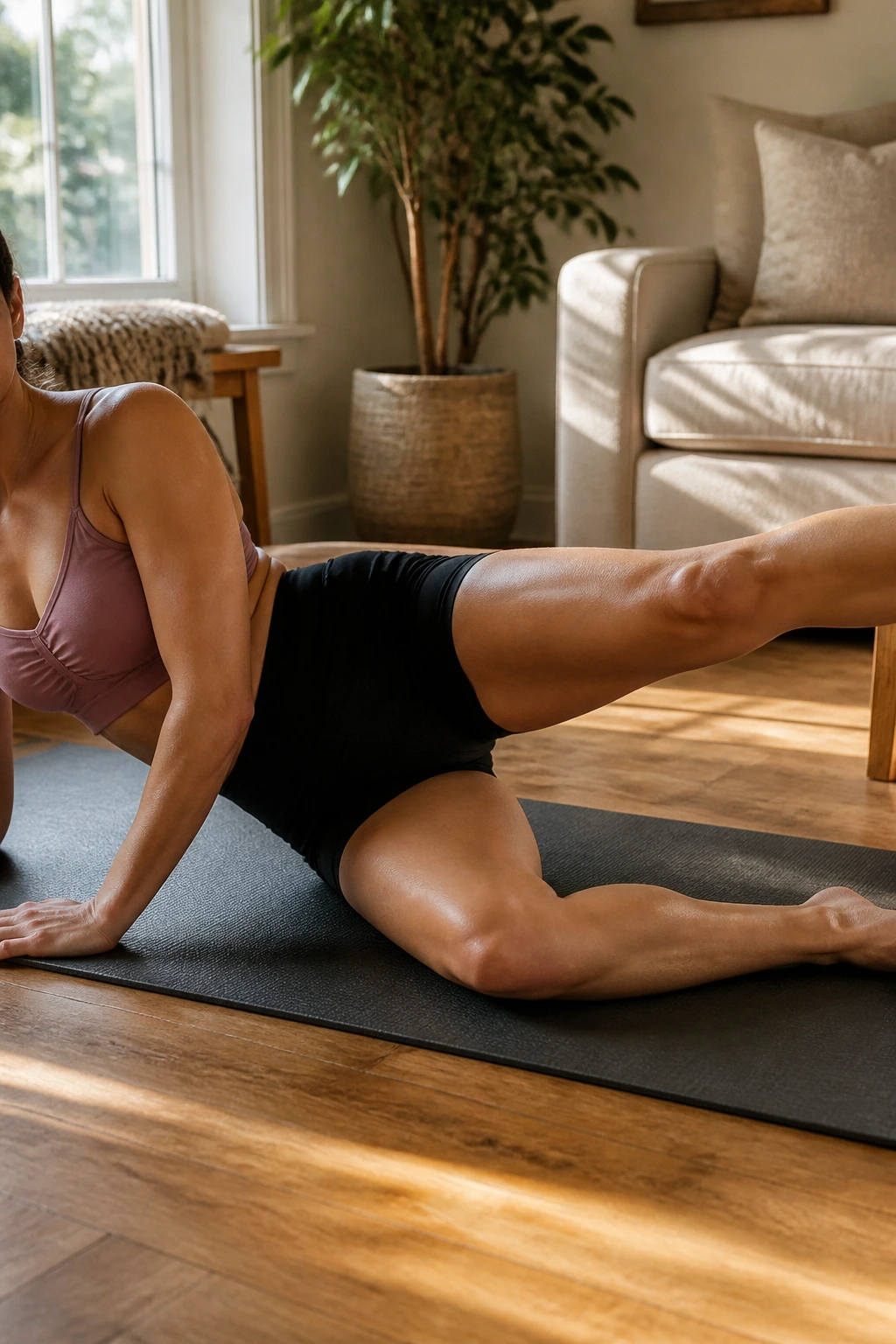
Lie on your side with your bottom leg straight, your top leg bent and placed in front of you for support. Then lift the bottom leg a few inches off the floor and lower it with control. That’s it.
It sounds tiny because it is tiny. And that’s exactly why it works.
How to stop cheating
The first mistake is rolling backward and using momentum. The second is swinging the leg up like you’re trying to kick through the ceiling. Don’t do either. Keep your hips stacked, your toes relaxed or slightly flexed, and your lift controlled enough that you can feel the inner thigh switching on at the top.
- Reps: 15 to 20 per side
- Sets: 2 to 4
- Pace: Slow up, slower down
- Extra burn: Pause for 1 to 2 seconds at the top
This is one of the best no-equipment inner-thigh workouts you can do at home. It looks easy. It is not.
8. Standing Band Adductions
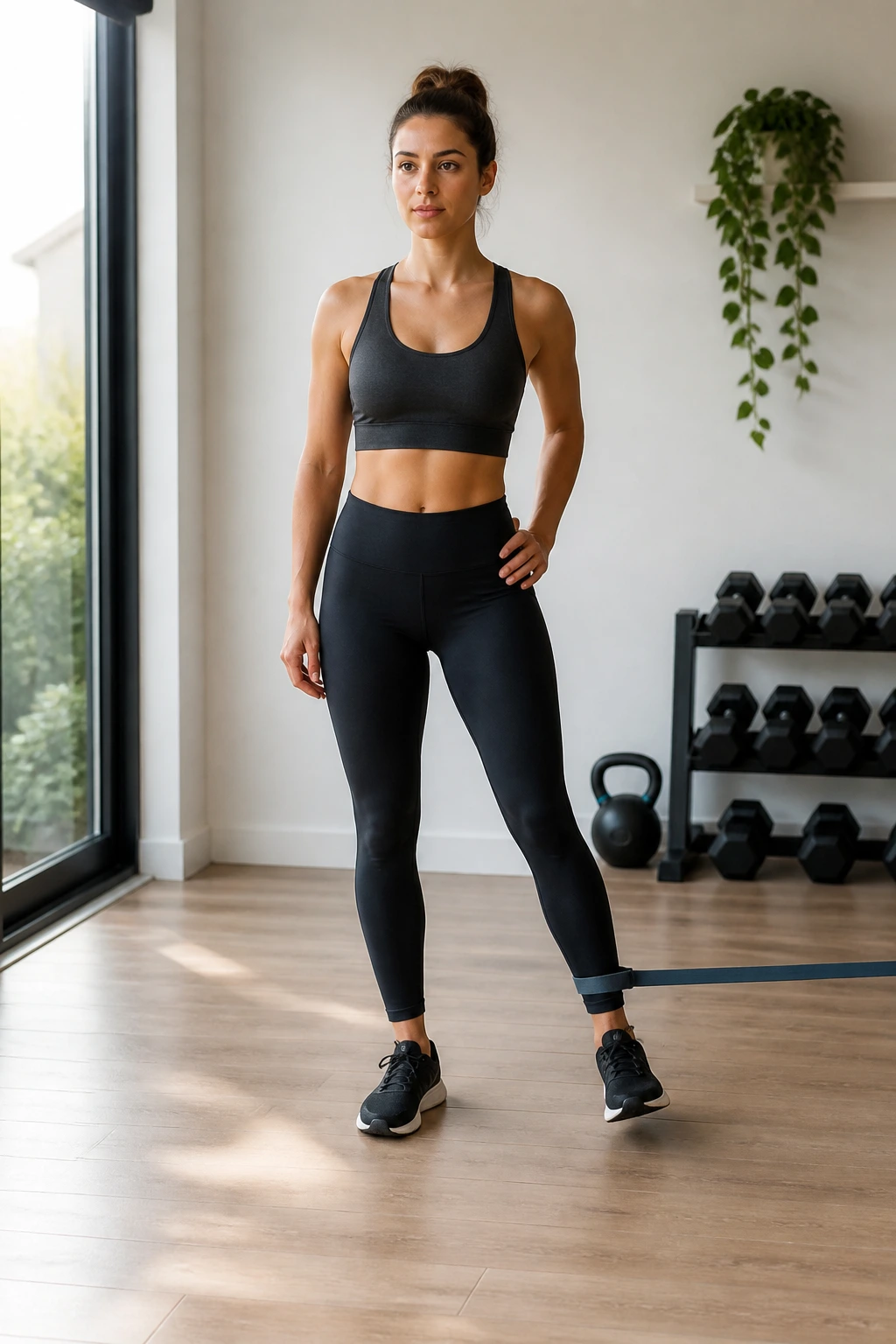
Small movement, huge burn. Attach a resistance band low to the ground, loop it around the ankle of the working leg, and stand tall while you pull that leg inward across your body. The motion is called hip adduction, and the inner-thigh muscles are built for it.
This is one of the easiest ways to isolate the adductors without needing a gym machine. It also teaches control in a standing position, which matters because your inner thighs don’t work in a vacuum. They help steady the pelvis when you’re upright, walking, or changing direction.
Best setup
Use a light-to-moderate band first. If the band is too heavy, you’ll twist your torso and lose the target muscle. Stand close enough to the anchor point that you feel tension right away, but not so close that the band yanks you off balance.
A few crisp reps beat a messy set every time.
- Keep the standing leg soft, not locked
- Stay tall through the ribs
- Move the working leg slowly back to center
- Stop before the band snaps your foot past the midline
9. Cable Hip Adductions
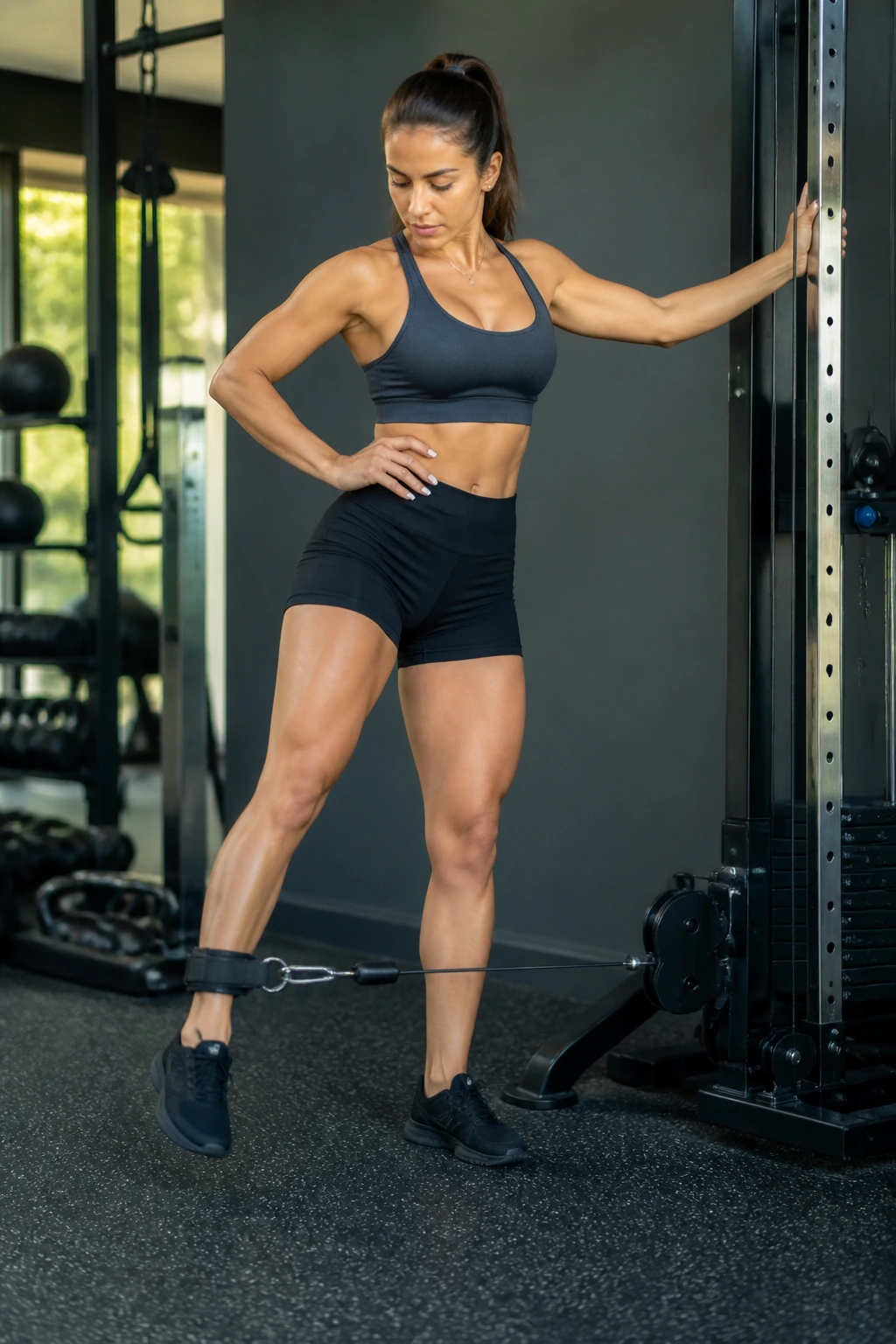
If you want a move that lets you measure resistance cleanly, the cable stack is the best tool in the room. Clip an ankle cuff to a low pulley, stand side-on to the machine, and bring the working leg inward across the body.
This is direct adductor work. No guessing. No hidden cheat. If the weight stacks go up over time, the muscles have a reason to adapt.
What makes it worth the trip to the gym
Cable adductions are smooth, and smooth matters. The resistance stays steady through the full range, which makes it easier to keep tension on the inner thigh instead of jerking through the rep. That’s one reason they feel so different from band work.
- Reps: 10 to 15 per side
- Sets: 3 to 4
- Cue: Keep your hips square to the front
- Mistake to avoid: Leaning your torso to fake the movement
If you like simple numbers, use this one as a reference. Add a rep or a small plate over time, and the work is easy to track.
10. Pilates Ring Squeezes
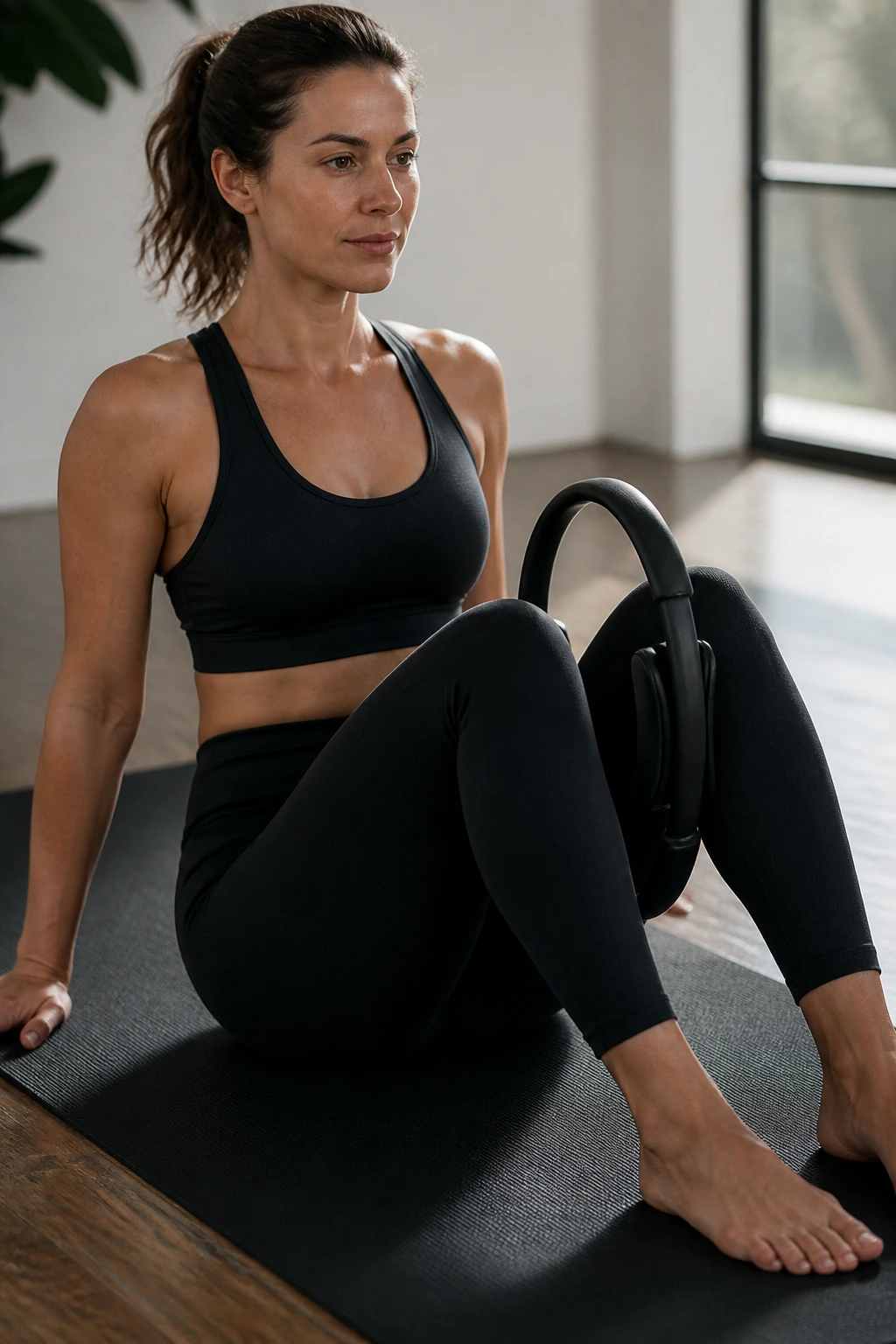
Can a ring between your knees actually matter? Yes. Especially when you squeeze it with intent instead of mindlessly pressing while scrolling through your phone.
A Pilates ring squeeze is an isometric move, which means the muscles contract without much visible motion. That kind of work can be sneaky-hard, especially if you use it during a bridge, a wall sit, or even a seated hold.
You can press the ring for 15 to 20 slow squeezes, or hold the squeeze for 20 to 30 seconds. The inner thighs should feel like they’re gripping the ring and staying active the whole time, not just at the start.
This move is good for people who want a low-impact option or a warm-up before heavier leg work. It’s also a smart finisher when your legs are cooked and you want one more round of controlled tension.
11. Glute Bridge with a Ball Squeeze
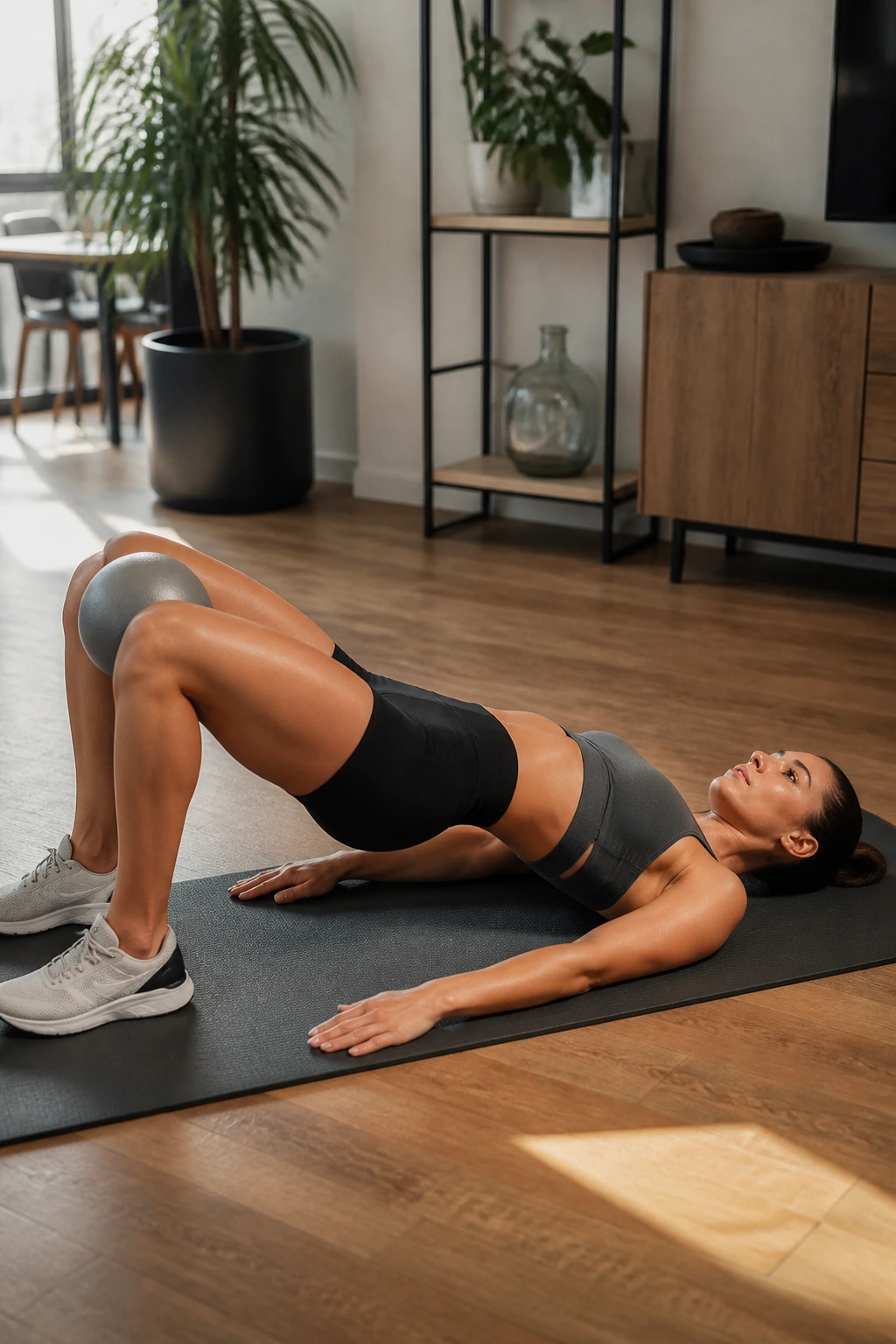
The floor version is simple: lie on your back, place a small ball, pillow, or yoga block between your knees, and lift your hips into a bridge while you squeeze the object gently but firmly.
That squeeze changes the whole feel of the bridge. Your glutes still work. Your hamstrings still work. The inner thighs join in to stabilize the knees and keep the pressure even.
You should feel the squeeze, then the lift, then the pause at the top. If your lower back feels jammed or your ribs flare up, lower your hips and reset. The goal is a smooth bridge with steady pressure between the knees.
A two-second pause at the top makes the movement much more useful. Don’t fling your hips upward and call it a day. Hold, breathe, lower with control, repeat.
12. Copenhagen Planks
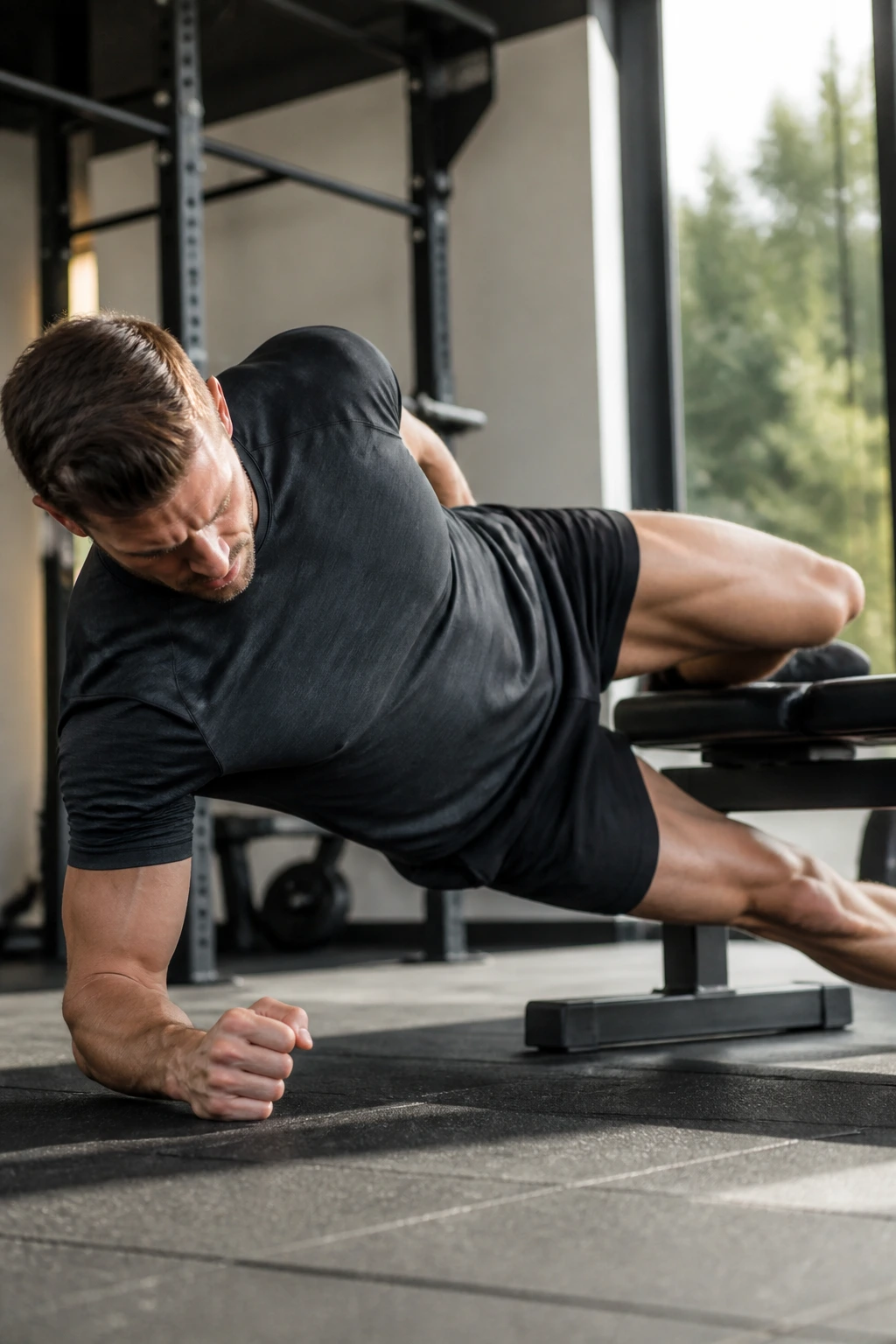
This is the nasty one. Copenhagen planks are one of the strongest bodyweight adductor exercises out there because they ask the inner thigh to support your body against gravity from a side plank position.
Start with the easier version: knee on a bench or chair, forearm on the floor, lower leg hanging free. Lift your hips and hold for 10 to 20 seconds per side. If that feels manageable, work toward the foot-supported version.
What to know before you try them
- Keep the hips lifted, not sagging
- Start short. Ten seconds is enough at first
- Use a bench that doesn’t slide
- Stop if you feel sharp groin pain
These are not flashy, and they are not forgiving. They are excellent. If you want adductor strength that carries over to side lunges, skating movements, and general lower-body stability, Copenhagen planks deserve a place on your list.
13. Wall Sit Ball Squeezes
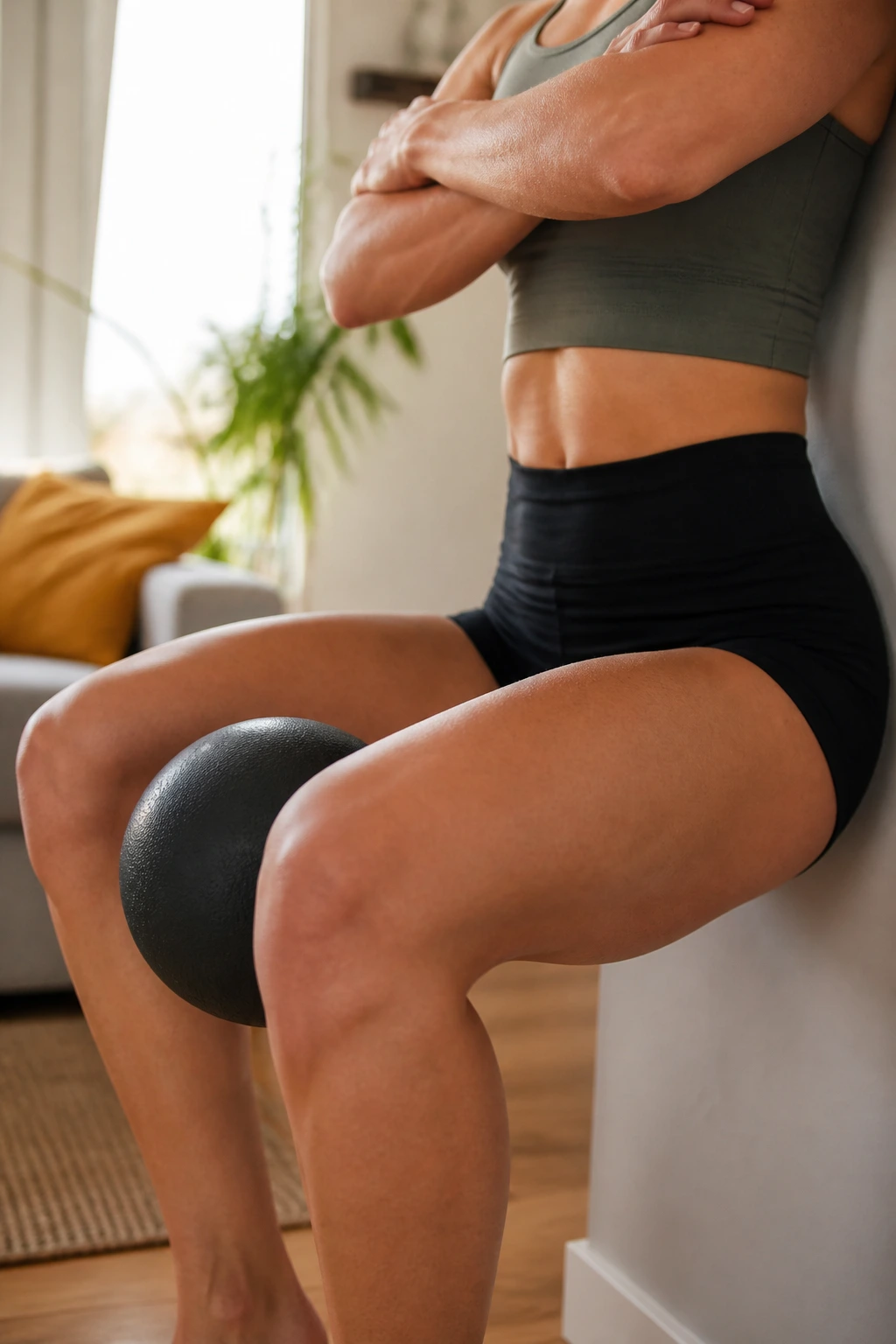
Picture the last 10 seconds of a wall sit when your legs are already complaining. Now add a ball or pillow between your knees and squeeze. That’s the whole game.
The wall takes away momentum. The squeeze gives the inner thighs a job. Put those together and you get a brutally simple isometric workout that doesn’t need much space or equipment.
Keep your thighs close to parallel with the floor, or a little higher if your knees don’t love deep angles. Press the ball firmly for 20 to 45 seconds, breathing through the burn instead of collapsing into it. The squeeze should stay active the entire time.
This one works nicely at the end of a leg session or between other exercises. It’s also one of the few inner-thigh moves that feels easy to set up in a living room without making the room look like a gym exploded in it.
14. Slider Side Lunges
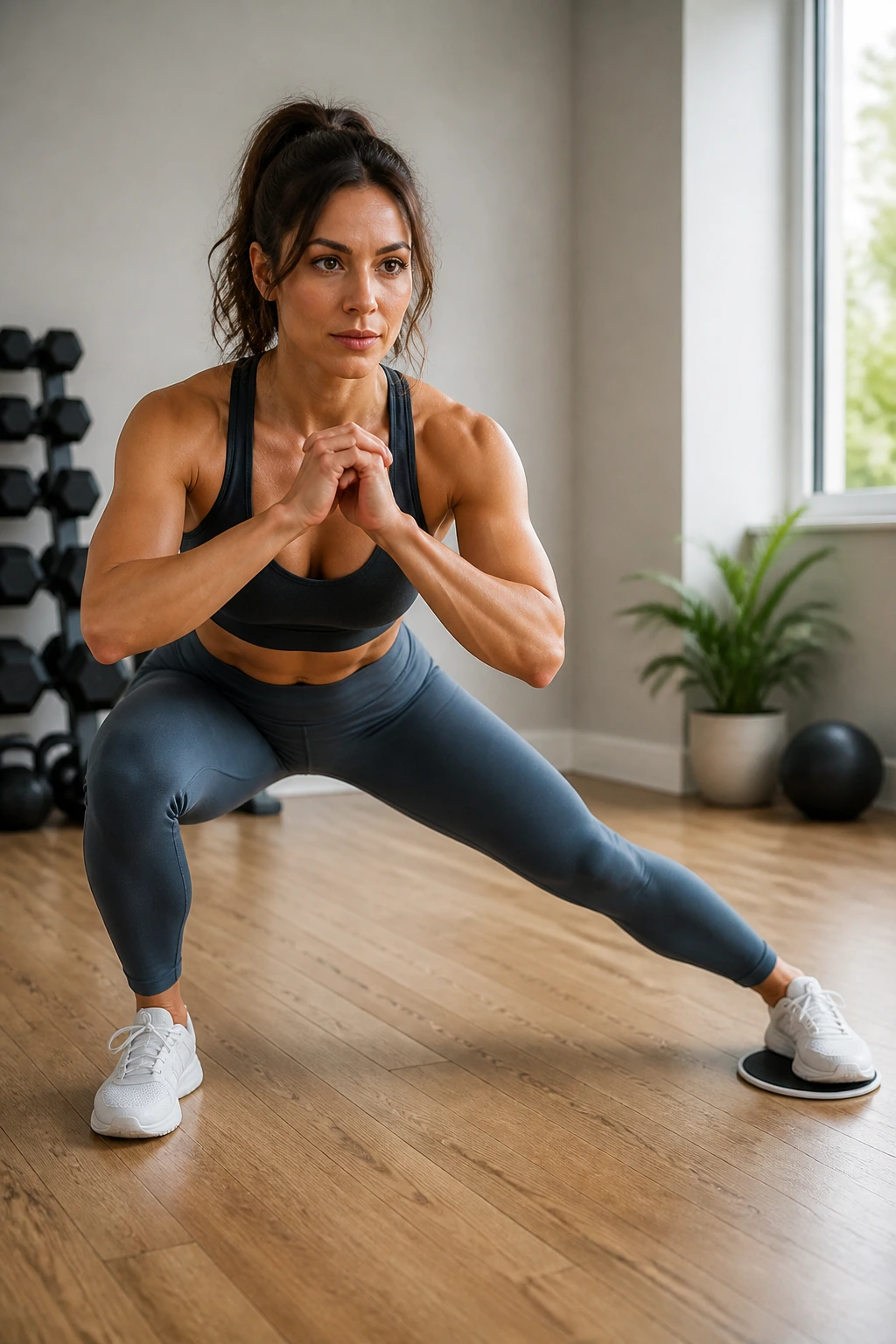
If your floor is smooth enough, sliders or a folded towel can turn side lunges into a longer, cleaner movement. One foot stays planted while the other slides out and back in, which lets you control the depth without crashing into the bottom.
That glide matters. It reduces impact and gives the inner thigh a longer line to work through, especially on the returning side. You’ll feel the adductor on the straightening leg working to pull you back to center.
How to get the most from it
Use a smaller range first. If the slide gets too wide, your hips may twist and the working leg may lose tension. Keep the chest up, the standing foot grounded, and the sliding leg light.
- 8 to 12 reps per side
- Slow out, slower back in
- Keep the moving foot under control
- Use a shorter slide if balance gets messy
This is a very good choice if you want side-lunge mechanics without pounding your knees.
15. Sumo Deadlifts
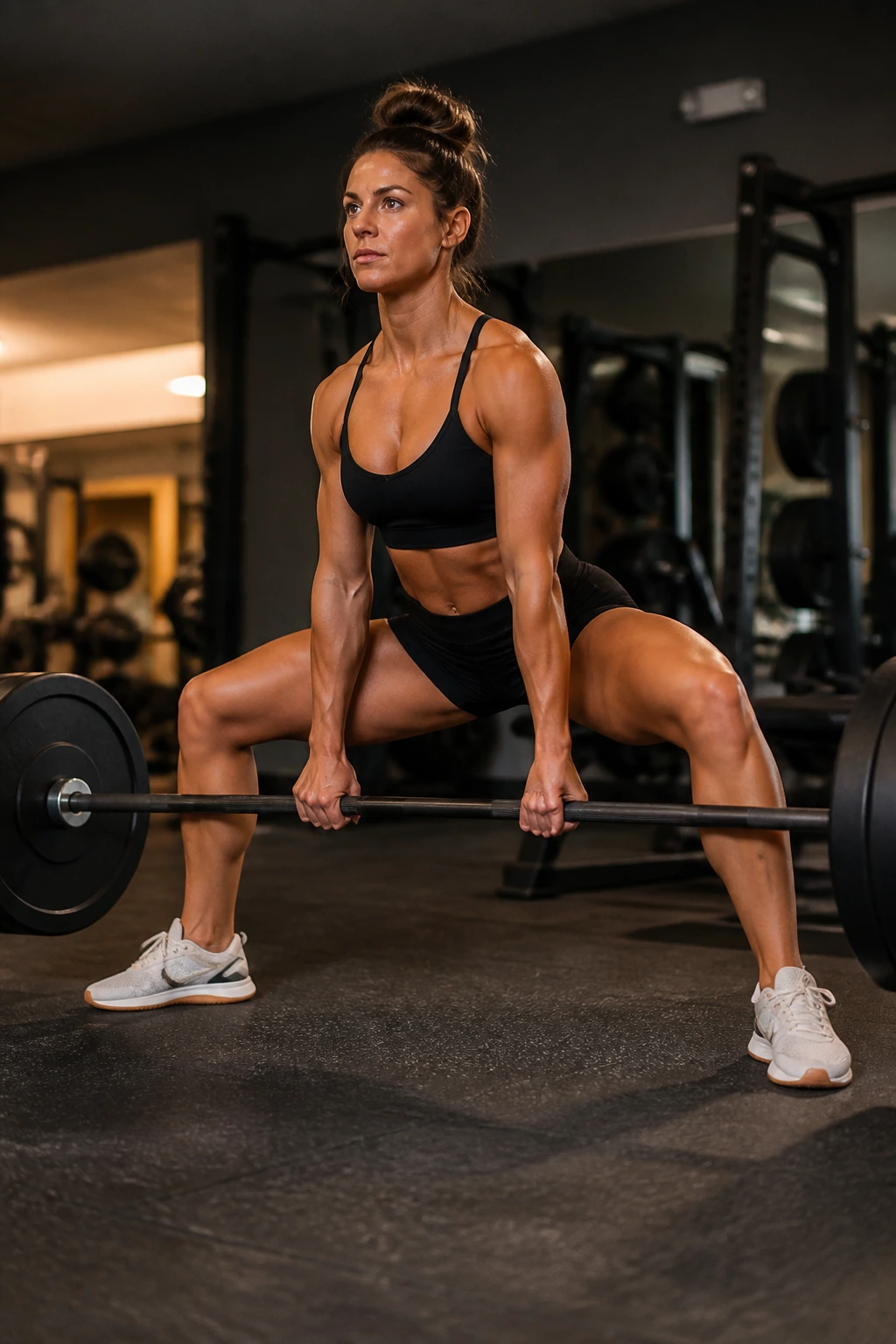
A loaded hinge can do more for inner-thigh shape than ten minutes of flailing around with tiny reps. The sumo deadlift proves that point fast.
With a wide stance and toes turned out, the adductors help keep the hips stable as you drive the weight off the floor. You still hit glutes and hamstrings hard, but the inner thighs are absolutely part of the job, especially out of the bottom.
What makes it different from a regular deadlift
The wider stance shortens the range a bit and opens the hips. That often makes the movement feel more natural for people whose hips prefer side room. It also shifts some of the effort into the inner line of the legs, which is exactly why this belongs on an inner-thigh list.
- Use a barbell, kettlebell, or two dumbbells
- Keep the weight between your feet
- Brace before you pull
- Finish tall without leaning back
If you like heavier lifting, this is one of the best ways to make the lower body work as a unit.
16. Adductor Rock-Backs
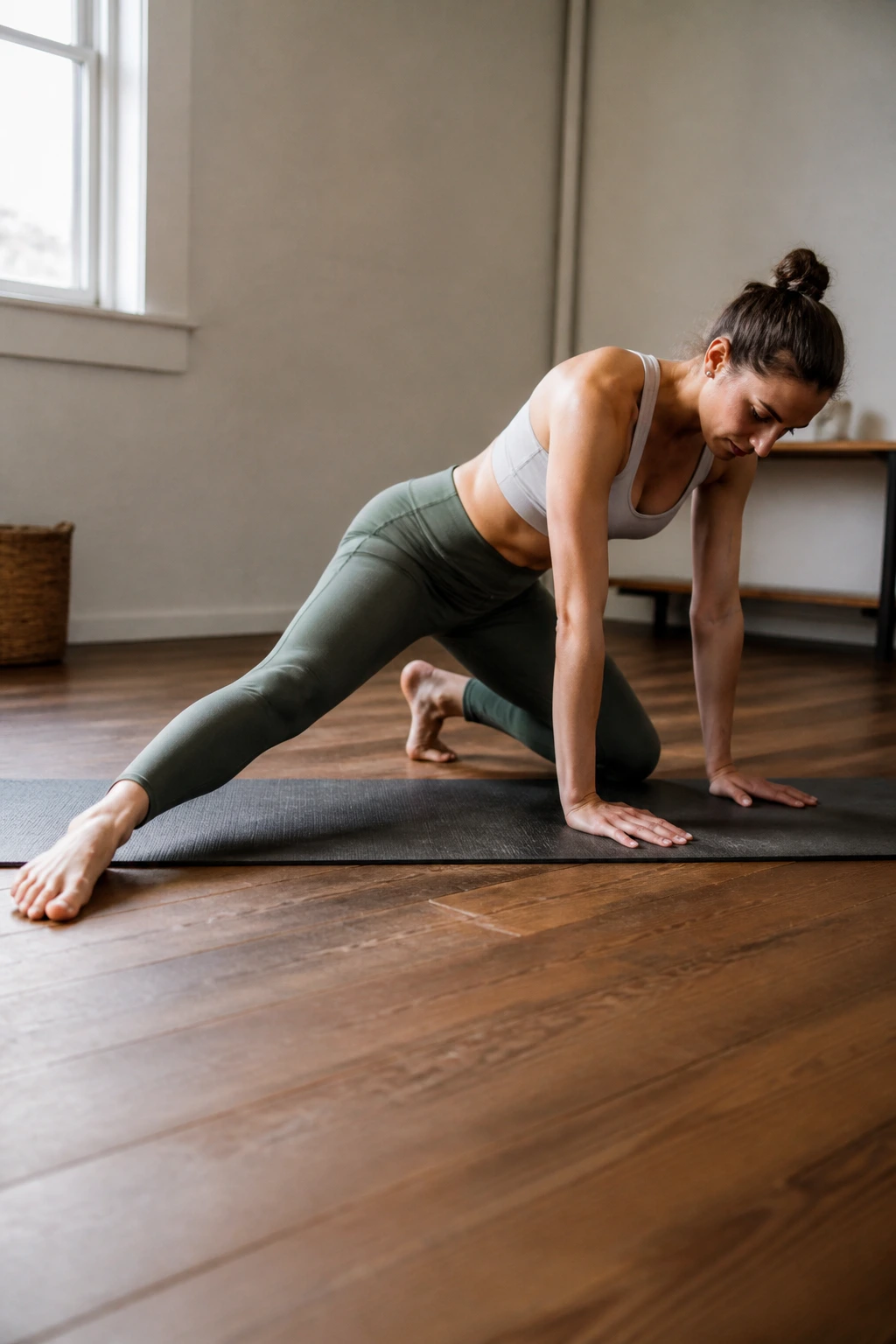
On all fours, slide one leg out to the side with the foot flat or the heel down, then rock your hips back toward your heels. That’s an adductor rock-back. It looks mild. It doesn’t feel mild for long.
This is part stretch, part strength drill, and part sanity check for tight hips. It teaches the inner thigh to lengthen under control, which often makes the deeper squat patterns feel better later in the workout.
Do 8 to 12 slow reps per side. Move only as far as you can without pinching the groin or twisting the pelvis. The idea is a smooth rock back and forward, not a dramatic collapse into the floor.
I like this move as a warm-up before Cossack squats or side lunges. It’s also one of those exercises that quietly reveals how one-sided your hips may be. Annoying? Yes. Useful? Also yes.
17. Side-Lying Bottom-Leg Circles
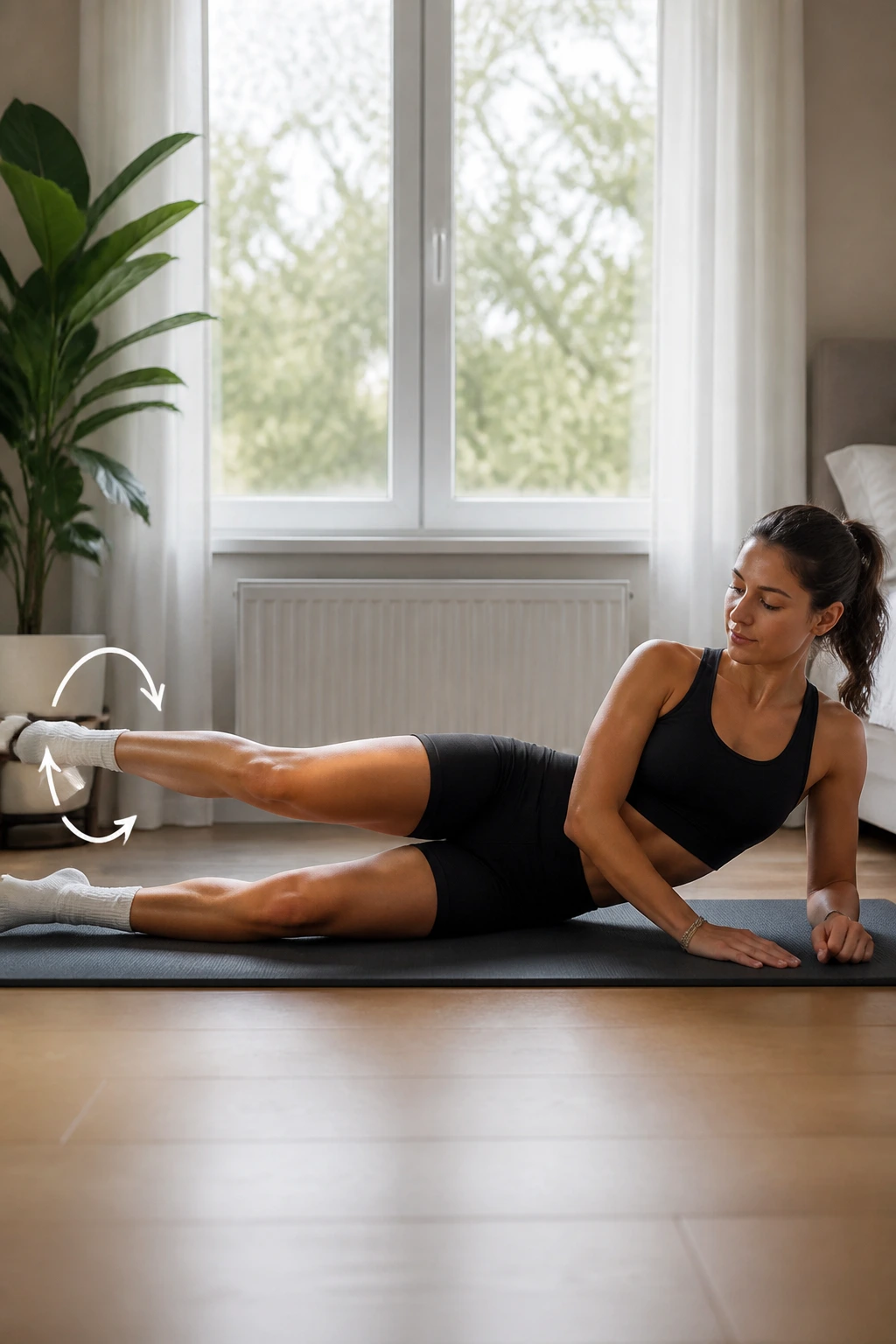
Here’s a sneaky little burner. Lie on your side, lift the bottom leg a few inches, and draw small circles in the air. Small circles. Not giant, sloppy ones that turn into hip flexor noise.
The tiny arc keeps the adductors under tension while forcing the hip to stay controlled. Because the leg never gets a big break, the inner thigh starts talking fast.
Why the size matters
Keep the circles about the size of a grapefruit. If they get too big, momentum takes over and the point of the drill disappears. If they’re small and steady, the work stays where you want it.
- 8 circles forward, 8 backward
- 2 to 3 sets per side
- Optional ankle weight, but only if form stays clean
- Keep the torso stacked and quiet
This is a good one for home workouts, warm-ups, or a final burn after heavier leg training. It looks harmless. It is not.
18. Half-Kneeling Cable Adductions
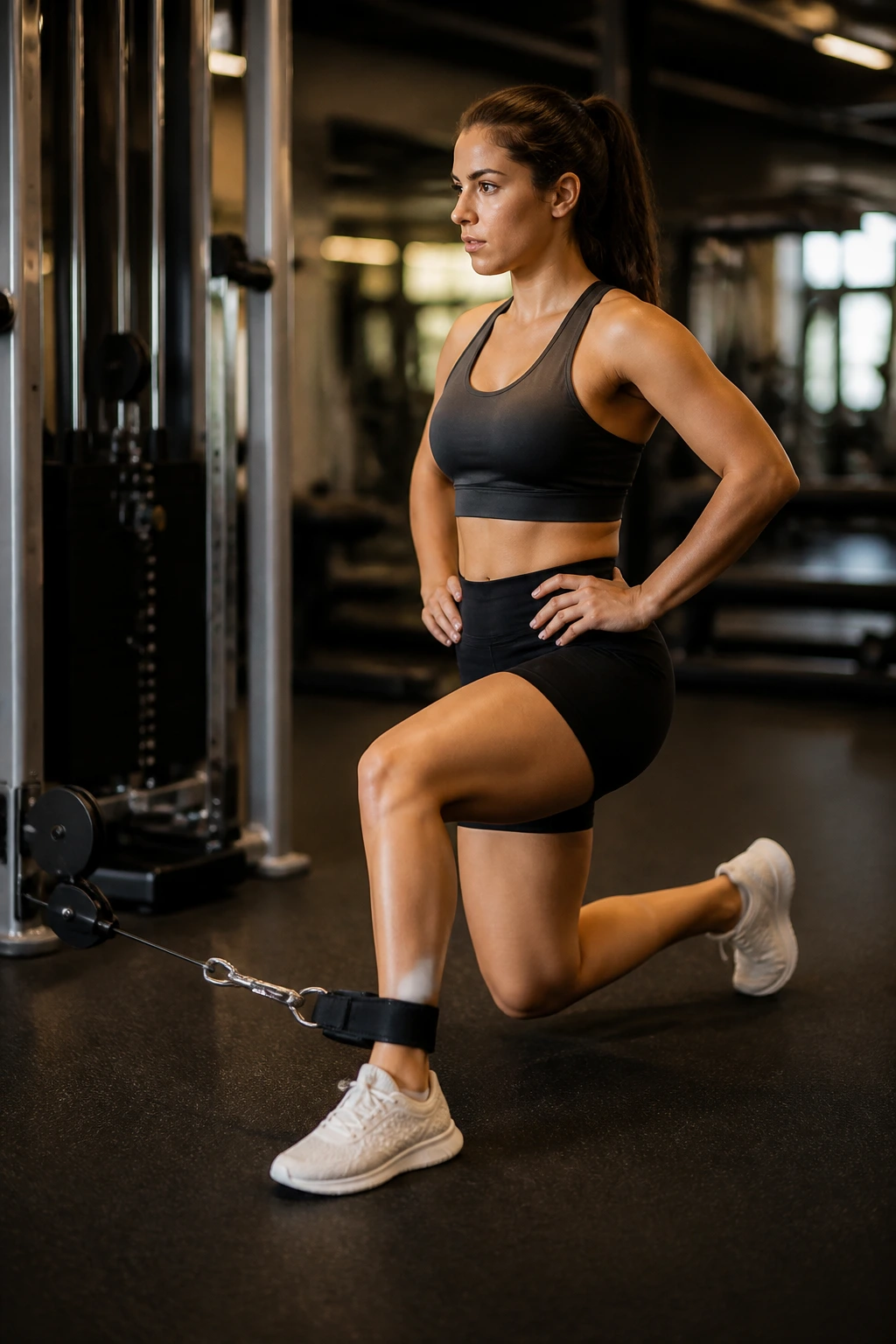
If standing cable work feels like your balance is stealing the show, half-kneeling fixes that. Drop one knee to the floor, set the cable low, and pull the working leg inward across the body from a more stable position.
The half-kneeling setup lets you focus on the movement instead of fighting to stay upright. That usually means cleaner inner-thigh work and less compensation from the hips or lower back.
Set it up like this
- Knee under hip, torso tall
- Cable attached low, ankle cuff secure
- Move the leg across the midline slowly
- Pause for a second near center before returning
This version is great if you want to feel the adductor working without the balance challenge of a standing machine exercise. It’s also handy when one side feels weaker or less coordinated than the other.
19. Frog Squat Pulses
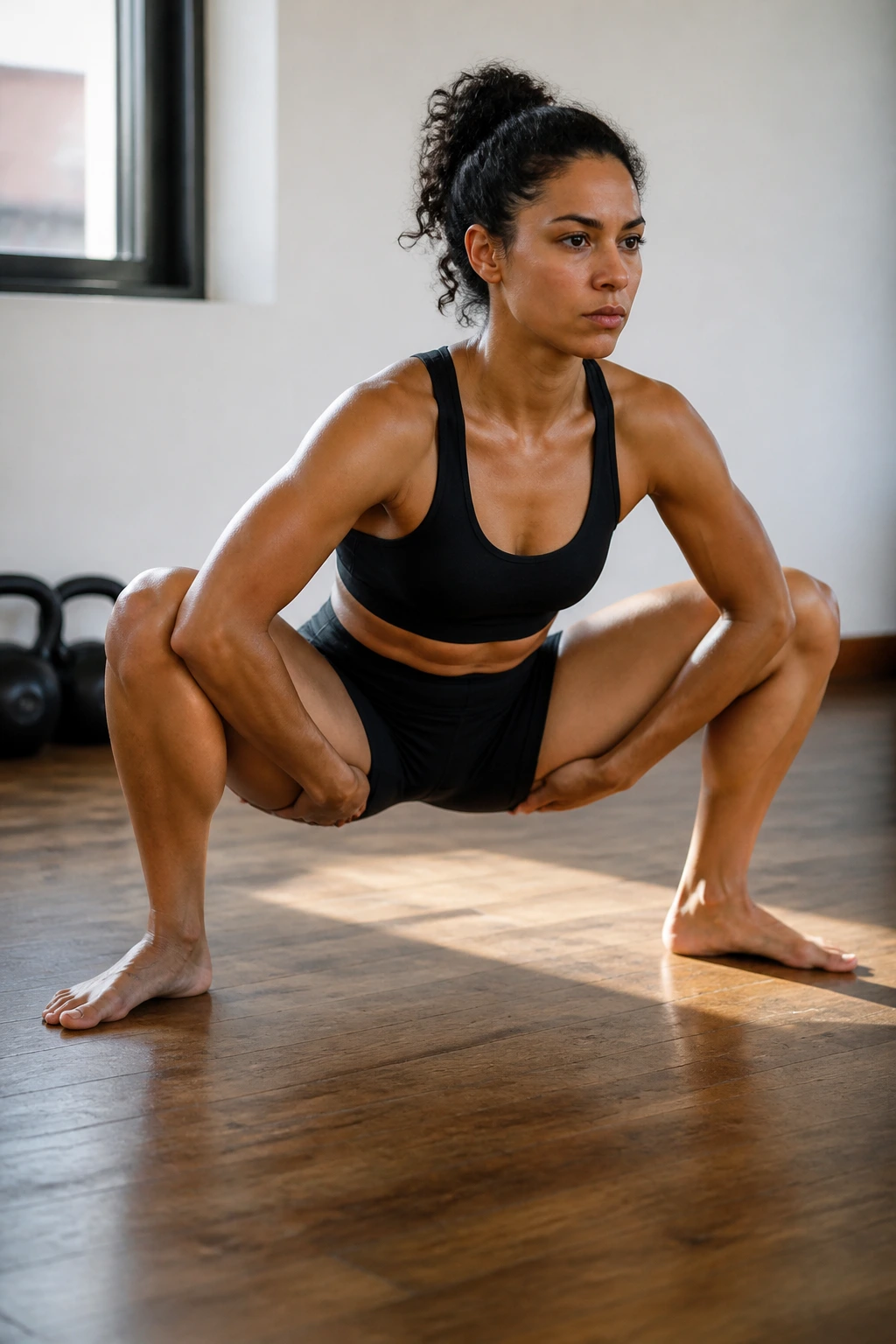
The frog squat sits somewhere between a squat and a mobility drill. Feet are wide, toes are turned out, and the knees open as you lower into a deep position with your elbows pressing gently inside the thighs.
Now pulse a few inches up and down. That’s where the inner thighs start complaining in the useful way.
The wide, turned-out stance keeps constant demand on the adductors, while the elbow pressure reminds the hips to stay open. If your ankles are stiff, use a shallow range first. That’s fine. Depth comes after control, not before it.
This one is good at the end of a workout, especially if you want a mobility-strength mix without touching a machine. Do 15 to 25 pulses, then stand up slowly. Your legs may feel a little wobbly. Expected.
20. The 5-Minute Inner-Thigh Finisher
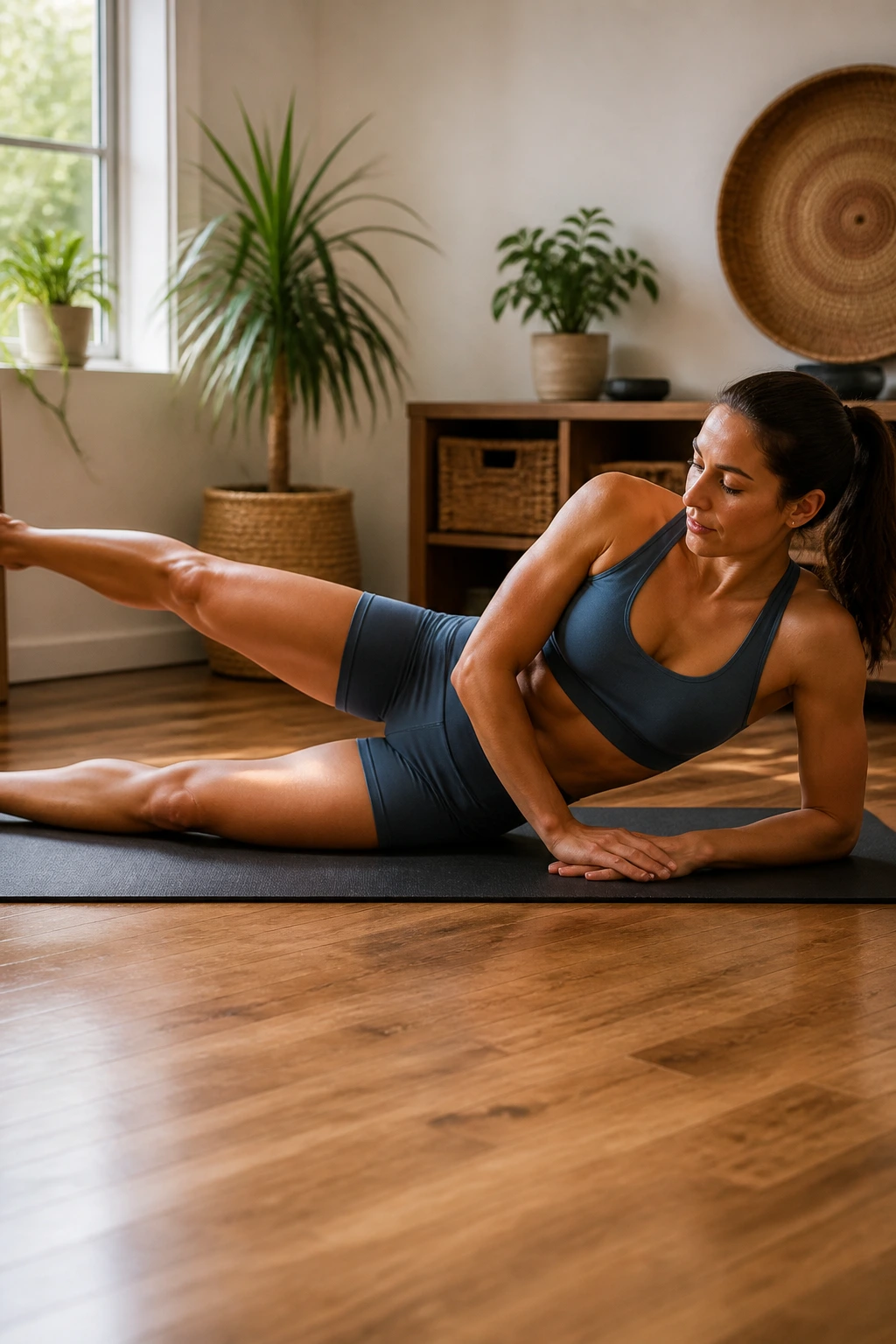
If you want all of this to feel like a real workout instead of a random list of leg moves, put the pieces together in a short circuit. Use 30 seconds of work, 15 seconds of rest, and move through four exercises for two rounds.
Try this:
- Sumo squat hold — 30 seconds
- Side-lying inner thigh lifts — 30 seconds per side
- Wall sit ball squeeze — 30 seconds
- Copenhagen plank, knee version — 15 to 20 seconds per side
That’s five minutes if you keep moving. It’s also enough to make the inner thighs light up without needing a long session. If five minutes feels too short, add a third round. If Copenhagen planks are too much, swap in standing band adductions or a Pilates ring squeeze.
The important part is not the exact circuit. It’s the pattern: one loaded squat, one isolated lift, one isometric squeeze, one harder stability move. That combination covers more ground than chasing the same burn over and over.
If you want the inner thighs to look firmer, train them 2 to 3 times a week, keep the reps controlled, and add resistance when bodyweight stops feeling hard. That’s the part most people skip. Progression matters. A lot.
