



There is a specific kind of burn you only get from lunges. It is not the blunt, heavy fatigue of a leg press, where you feel like you are pushing a freight train with your feet. Lunges hit differently. They find that one tiny, neglected muscle fiber in your glutes or quads that has been slacking off and force it to work. If you have ever walked down a flight of stairs two days after a heavy lunge session and felt your legs turn to jelly, you know exactly what I am talking about.
Many people skip unilateral training—working one leg at a time—because it is harder. It requires balance, core engagement, and focus. But if you want functional, aesthetic, and balanced legs, you have to do the work. The beauty of the lunge pattern is its versatility. You can bias the quads, you can hammer the glutes, or you can turn the whole movement into a core-stability challenge by adding a weight to one side.
Stop treating leg day like a numbers game on a machine. Start treating it like a movement practice. Here are eighteen variations that will change how your legs look and perform.
1. Standard Forward Lunge
This is the baseline. If you cannot do a clean forward lunge, do not bother with the fancy variations. The goal here is control on the descent. You want to step out far enough that your front shin remains vertical, but not so far that your hip flexor on the back leg screams in pain.
Why It Matters
Most people rush the rep. They step out, let their momentum carry them down, and then shove off the floor to return. That is a waste of potential. The “negative” part of the movement—the way down—is where you build strength and stability.
Execution Cues
- Step forward with control, landing on your heel first, then the ball of your foot.
- Keep your torso upright; don’t lean forward like you are bowing.
- Push through the entire front foot to return, not just the toes.
Pro tip: Imagine you are standing on railroad tracks. Keep your feet hip-width apart at all times. If you put your front foot directly in front of your back foot, you are walking on a tightrope, and your balance will suffer.
2. Reverse Lunge
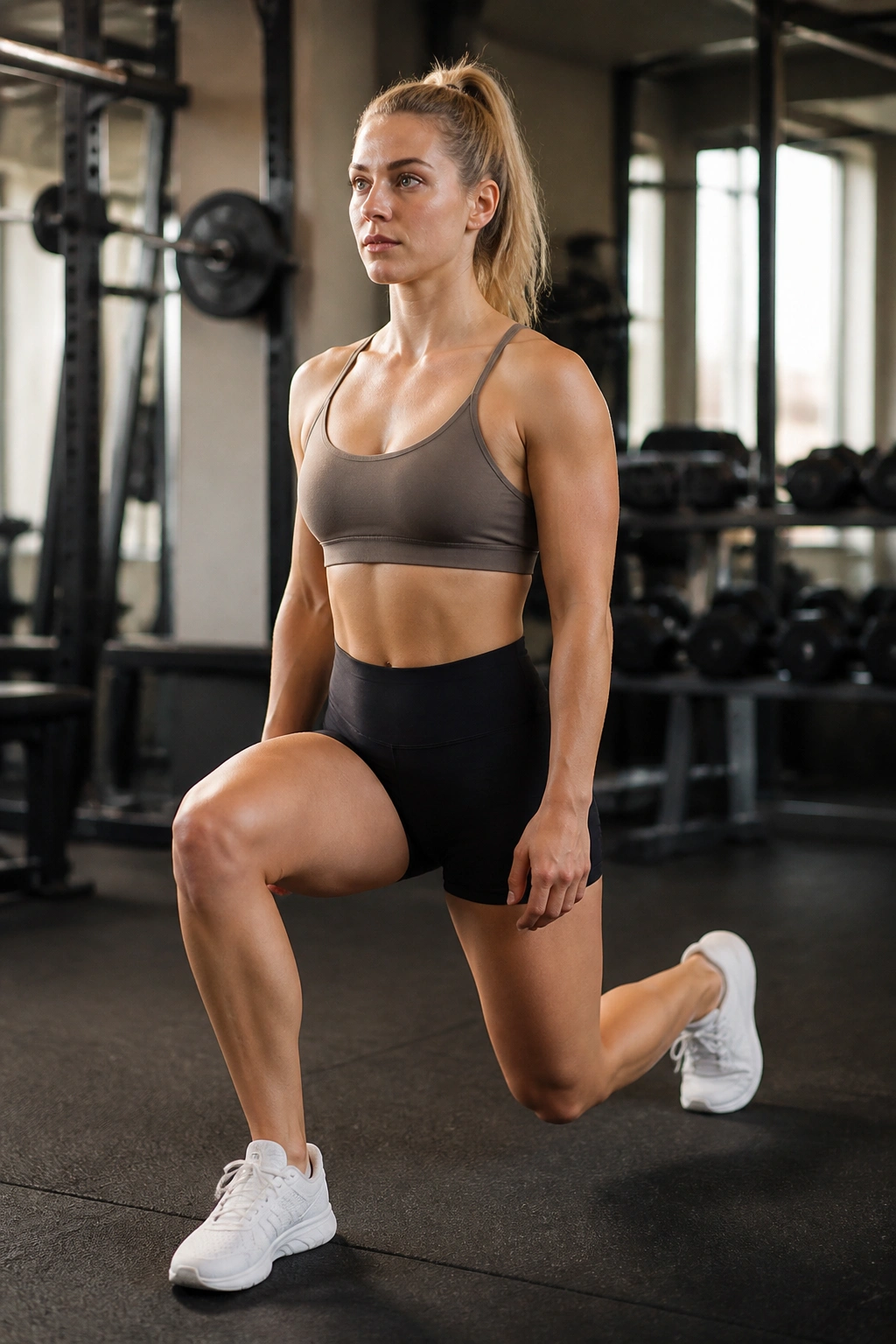
If the forward lunge is about deceleration, the reverse lunge is about stability. Many people with cranky knees find the reverse lunge much more forgiving. Because you are stepping backward, the weight stays firmly centered over your front heel, which takes the shearing force off the knee joint.
Anatomy of the Move
When you step back, the front leg does 90% of the work. You are essentially doing a single-leg squat with a kickstand. This is fantastic for targeting the glutes. The slight hinge at the hips that happens naturally when you step back shifts the load from the quadriceps to the posterior chain.
How to Build Volume
Use this as a staple. You can go heavy with dumbbells in each hand, or use a barbell on your back if you are comfortable with the stability requirement. Aim for higher rep ranges—12 to 15 per leg—to really get the muscle fibers firing without needing to load up a massive amount of weight.
3. Walking Lunge

This is a dynamic test of endurance. Walking lunges turn leg training into a cardiovascular event. You are forcing your body to stabilize, drive, and transition over and over again. It is less about max strength and more about work capacity.
The Rhythm
Find a rhythm. Step, lower, drive, step. If you are rushing, you are likely losing your balance and compromising your form. Take a breath at the top if you need to, but keep the tension in the legs.
Common Mistake to Avoid
Do not “scuff” your back foot across the floor. Lift the back leg completely and drive it through to the next step. Dragging the foot is a lazy habit that prevents you from fully engaging the hip flexors and glutes. If you have the space, do twenty paces. If you are in a crowded gym, do ten, turn around, and do ten more.
4. Lateral Lunge
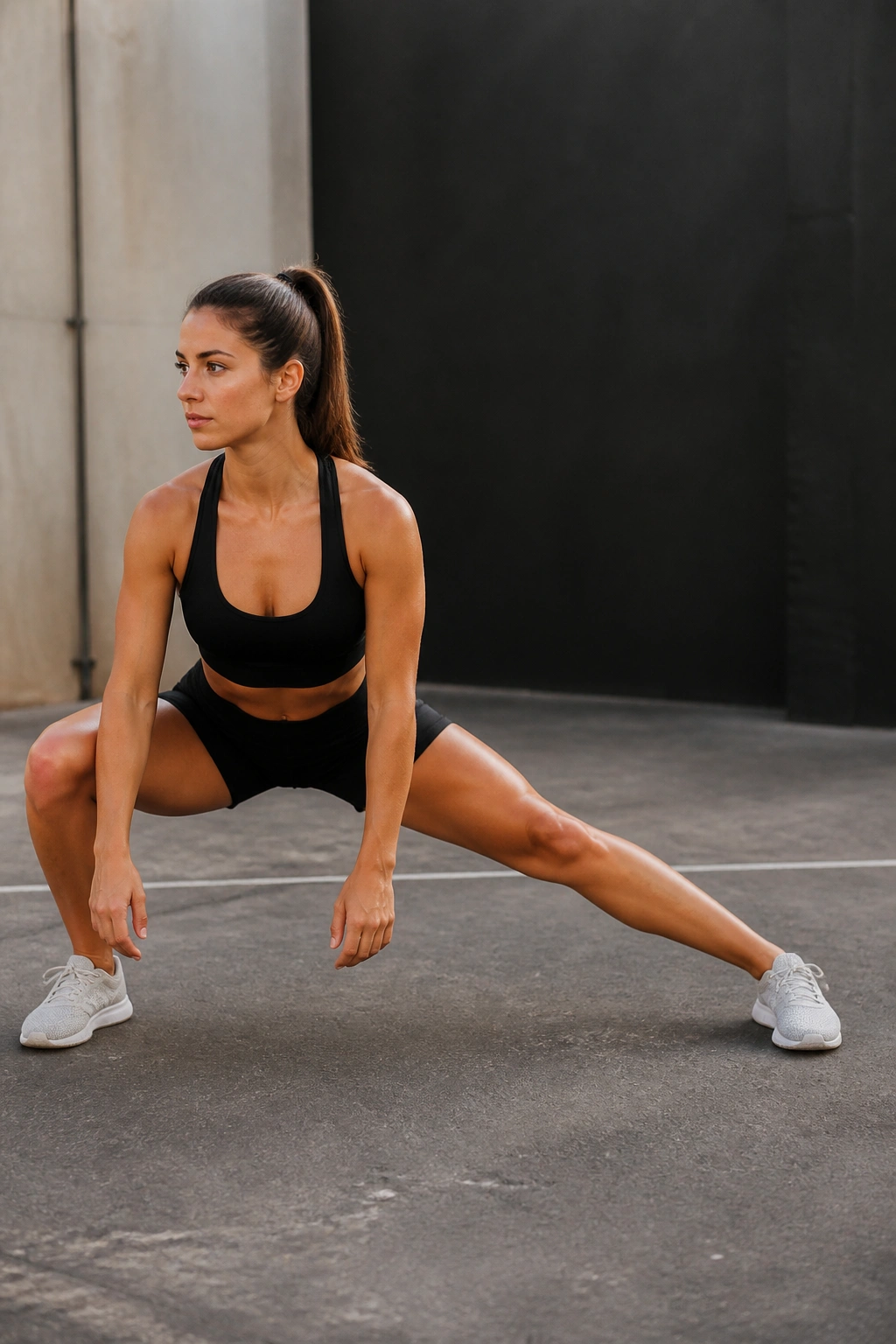
We spend most of our lives moving forward and backward. The lateral lunge forces your body to move in the frontal plane, which is exactly where most people have the least amount of stability. This variation hammers the adductors (inner thighs) and hits the glute medius in a way that standard squats never will.
The Setup
Stand with a wide stance. Shift your weight to one side, bending that knee while keeping the other leg perfectly straight. Keep the foot of the straight leg planted firmly into the floor. You should feel a deep stretch in the inner thigh of the straight leg and intense activation in the glute of the bent leg.
Why You Need This
If your inner thighs are weak, your knees will collapse inward during your heavy squats. Lateral lunges are the corrective medicine. Start with just your body weight until you master the hip-hinge motion. Once you feel comfortable, hold a single kettlebell at your chest (a “goblet” hold) to increase the challenge.
5. Curtsy Lunge
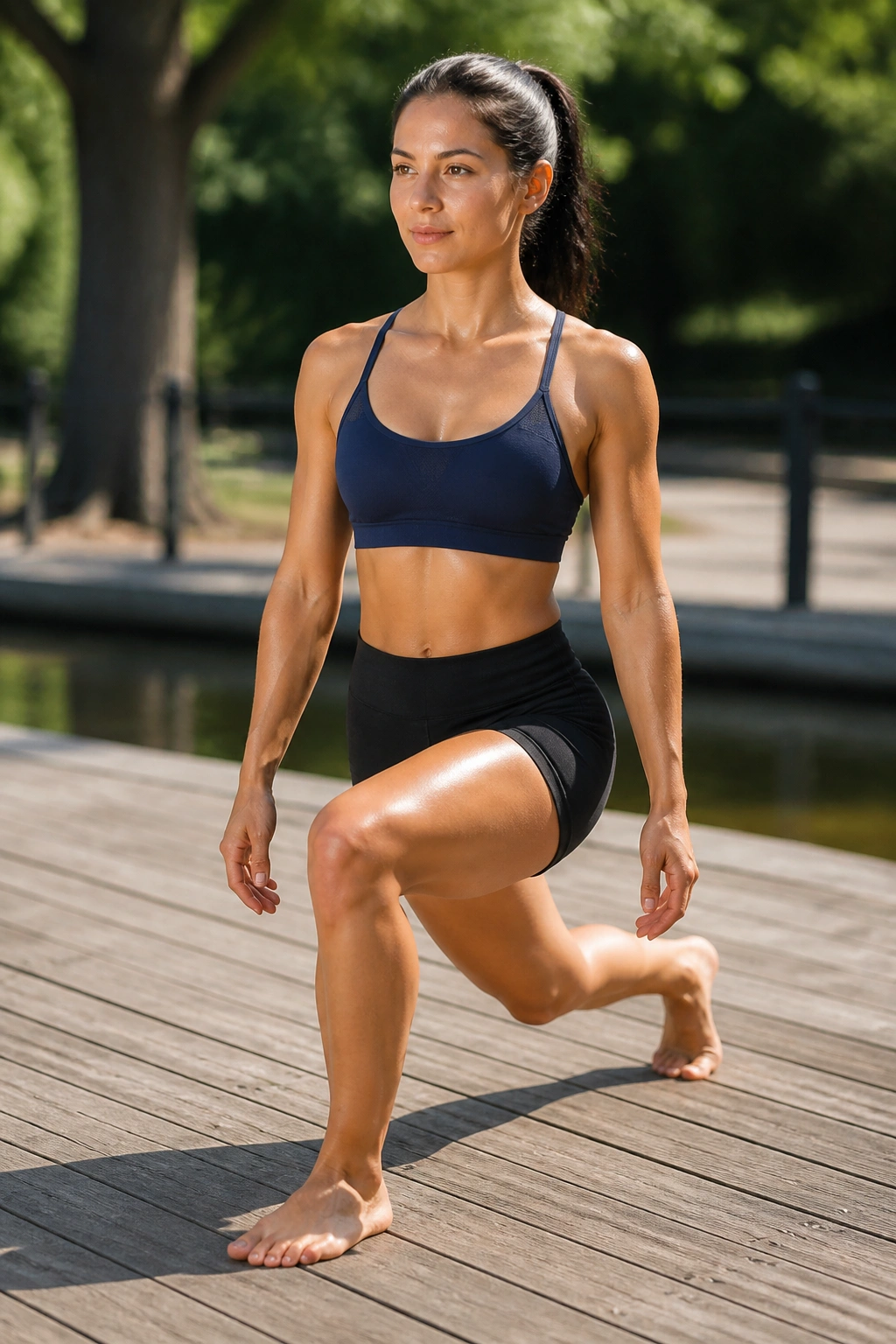
This move looks a little strange, but the glute activation is undeniable. By stepping your foot back and across the midline, you are changing the angle of your femur, which forces the gluteus medius to work overtime to stabilize your pelvis.
The Mechanics
Step back and across at a 45-degree angle. Keep your chest up. If you round your back, you shift the load into your lower back, which is exactly where we do not want it. You aren’t actually “curtsying” to the floor; you are creating a stable base to drive up from.
Focus Areas
This is a great movement to do barefoot or in flat shoes. A high-cushioned running shoe can make the ankle instability feel worse. If you are struggling with balance, hold onto a rack or wall until you get the movement pattern dialed in.
6. Bulgarian Split Squat
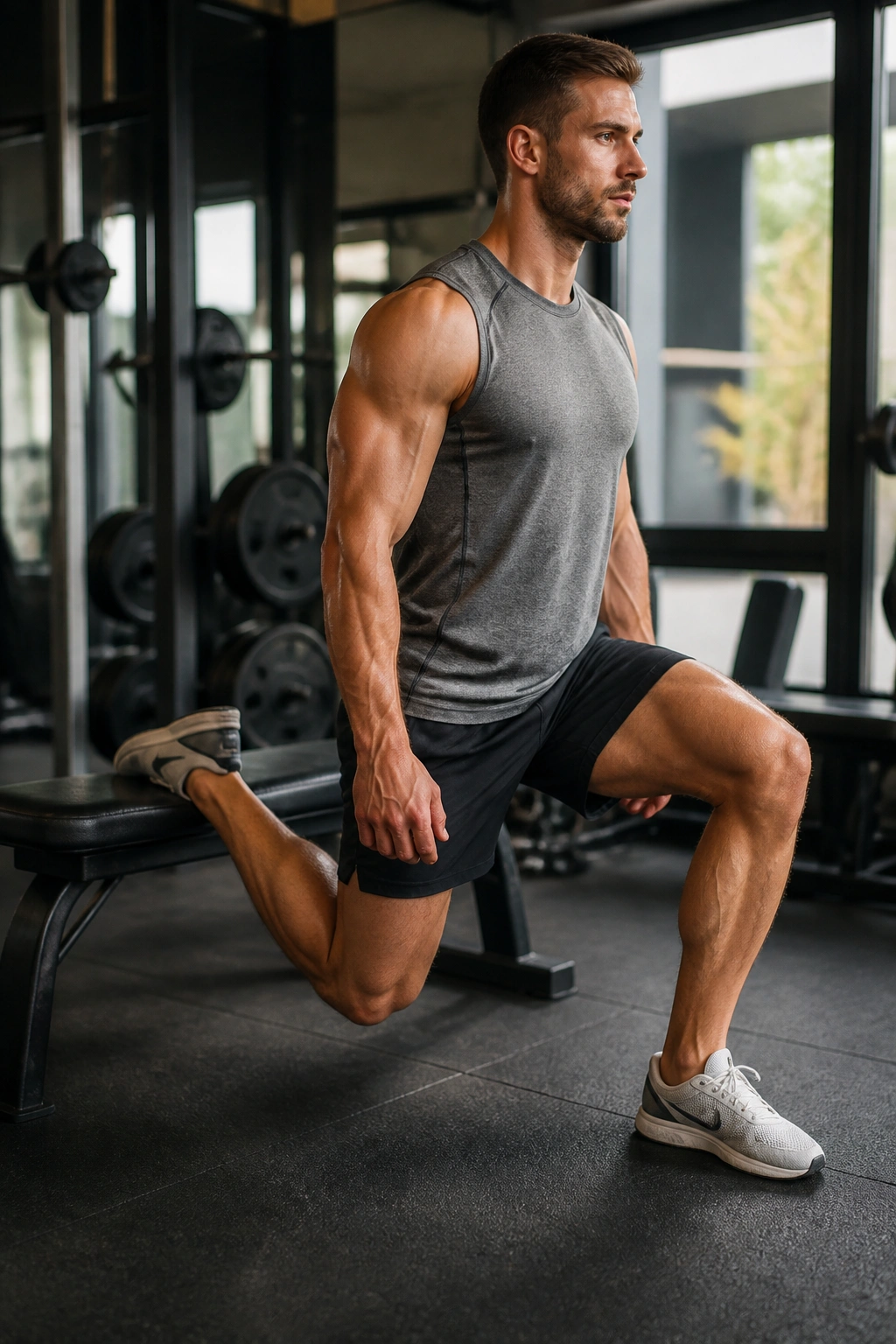
Some people call this the “split squat,” but let’s be honest: it is the hardest lunge variation in existence. Putting your back foot on a bench removes the “assistance” of that back leg and turns the front leg into the sole driver of the movement.
Why Everyone Hates (and Loves) Them
You will hate them while you do them. You will love the results. This is the absolute best way to build single-leg mass. Because you are isolated on one side, you can fix imbalances where one leg is stronger than the other.
The Setup
- Get into a lunge position with your back foot elevated on a bench or couch.
- Your front foot needs to be far enough forward that your knee doesn’t track way over your toes (unless you are specifically training for that).
- Drop your hips straight down. Do not reach back with your hips like a deadlift.
- Critical: Keep your chest upright. A forward lean is fine if you are targeting glutes, but a vertical torso hits the quads much harder.
7. Deficit Reverse Lunge
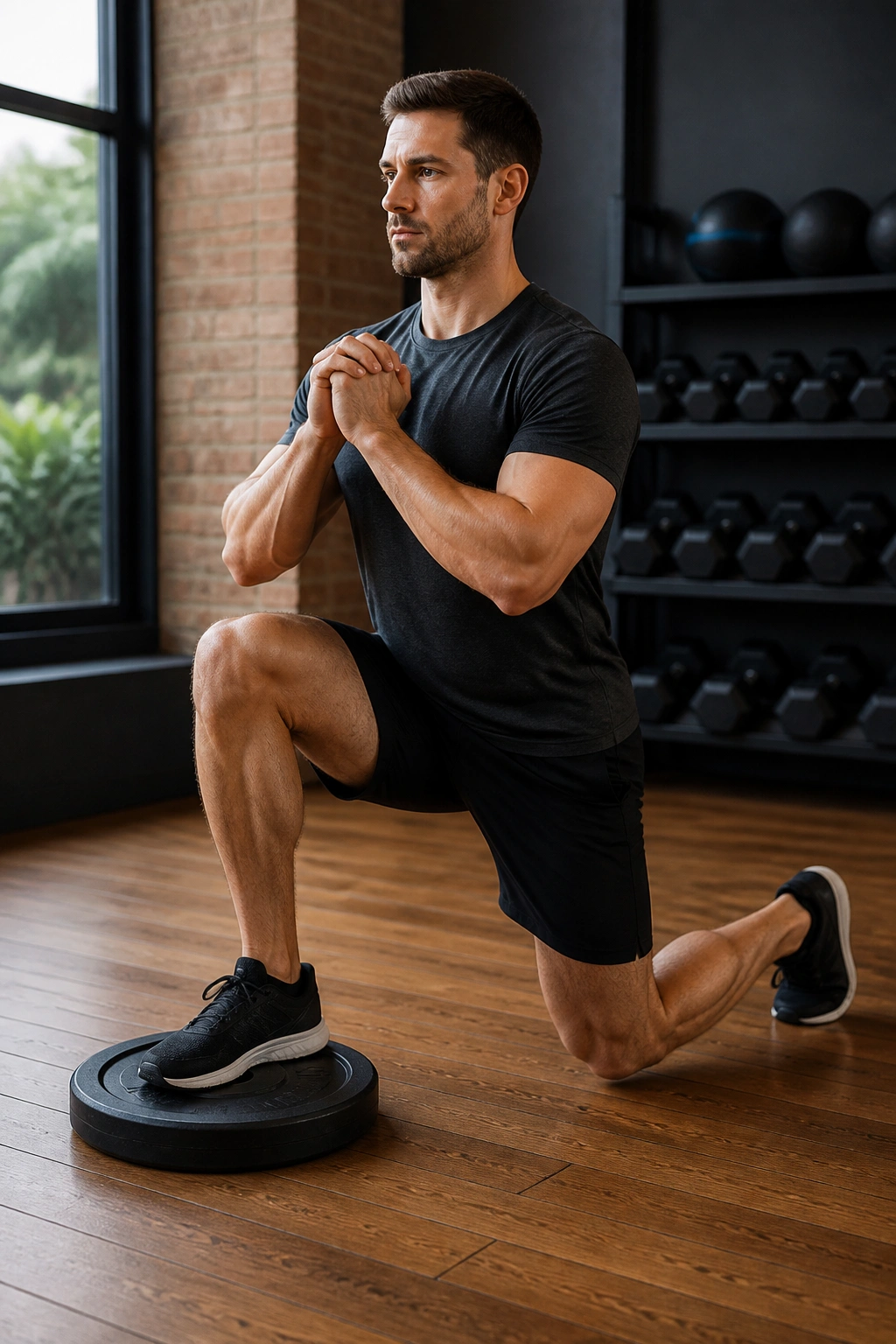
Adding a deficit—standing on a weight plate or a low step—increases the range of motion. By elevating your front foot, you allow your back knee to get closer to the floor before your back hip stops you.
Who Needs This
Athletes and those with good mobility. This is not for a complete beginner. The extra range of motion puts a significant stretch on the glute and quad at the bottom of the movement.
Safety First
Do not go too deep if your hip mobility isn’t there. If you feel a sharp pinch in the hip, reduce the deficit. You want to feel a deep, controlled stretch, not an injury-inducing strain. Start with a small, 2-inch plate, not a tall box.
8. Jumping Lunge
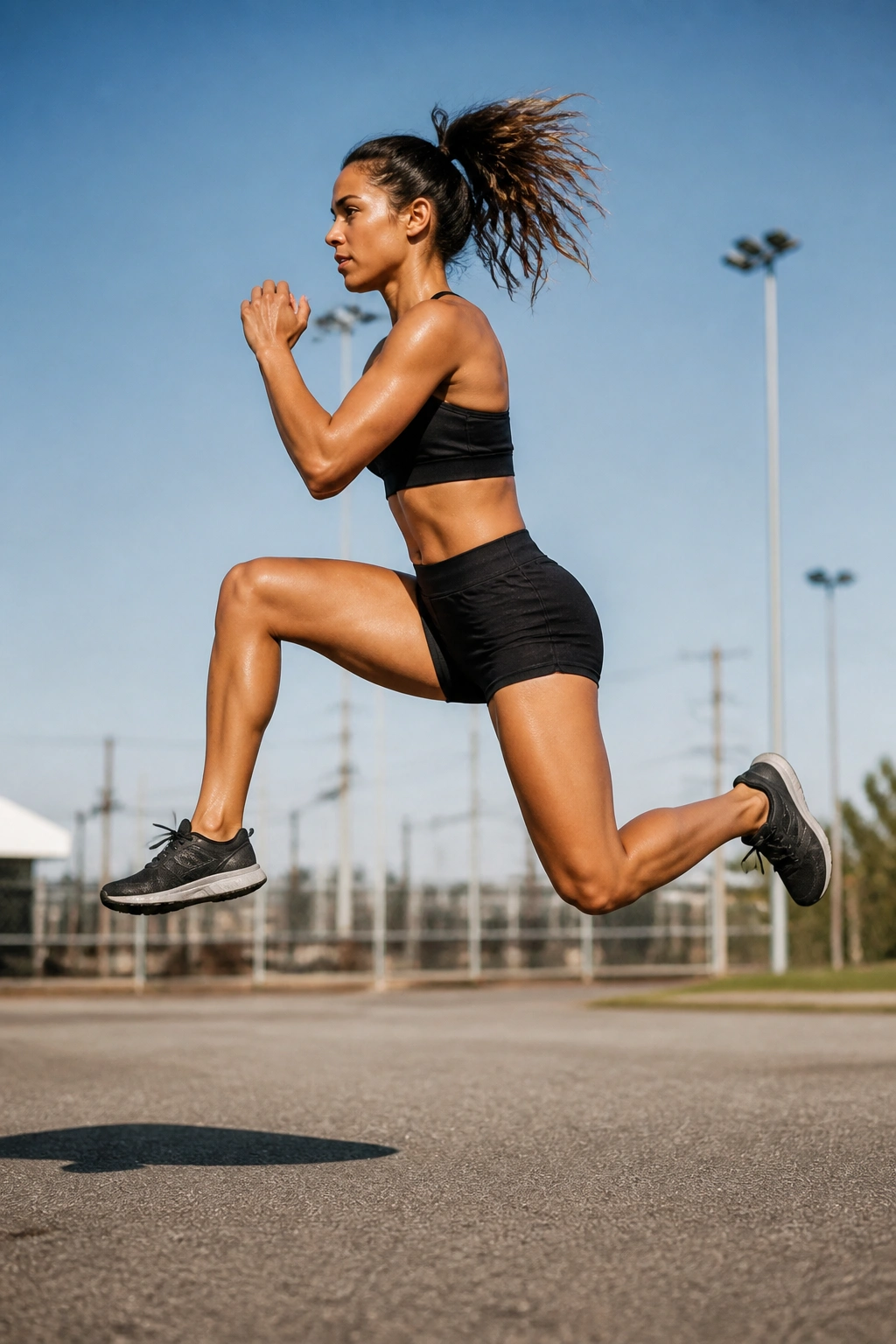
This is your plyometric phase. We are switching from strength to power. Jumping lunges build explosive force, which is essential for athletic performance and metabolic conditioning.
The Land
The jump is easy; the landing is the skill. You must land softly. If your knees are slamming into the ground, you are doing it wrong and asking for tendonitis. Absorb the impact by keeping the landing leg slightly bent and engaged.
Volume Tip
Do not do these for sets of twenty. They are a power movement. Aim for 6 to 8 reps per leg, with maximum intensity on the jump. If you lose the ability to jump high or land softly, stop the set.
9. Clock Lunge
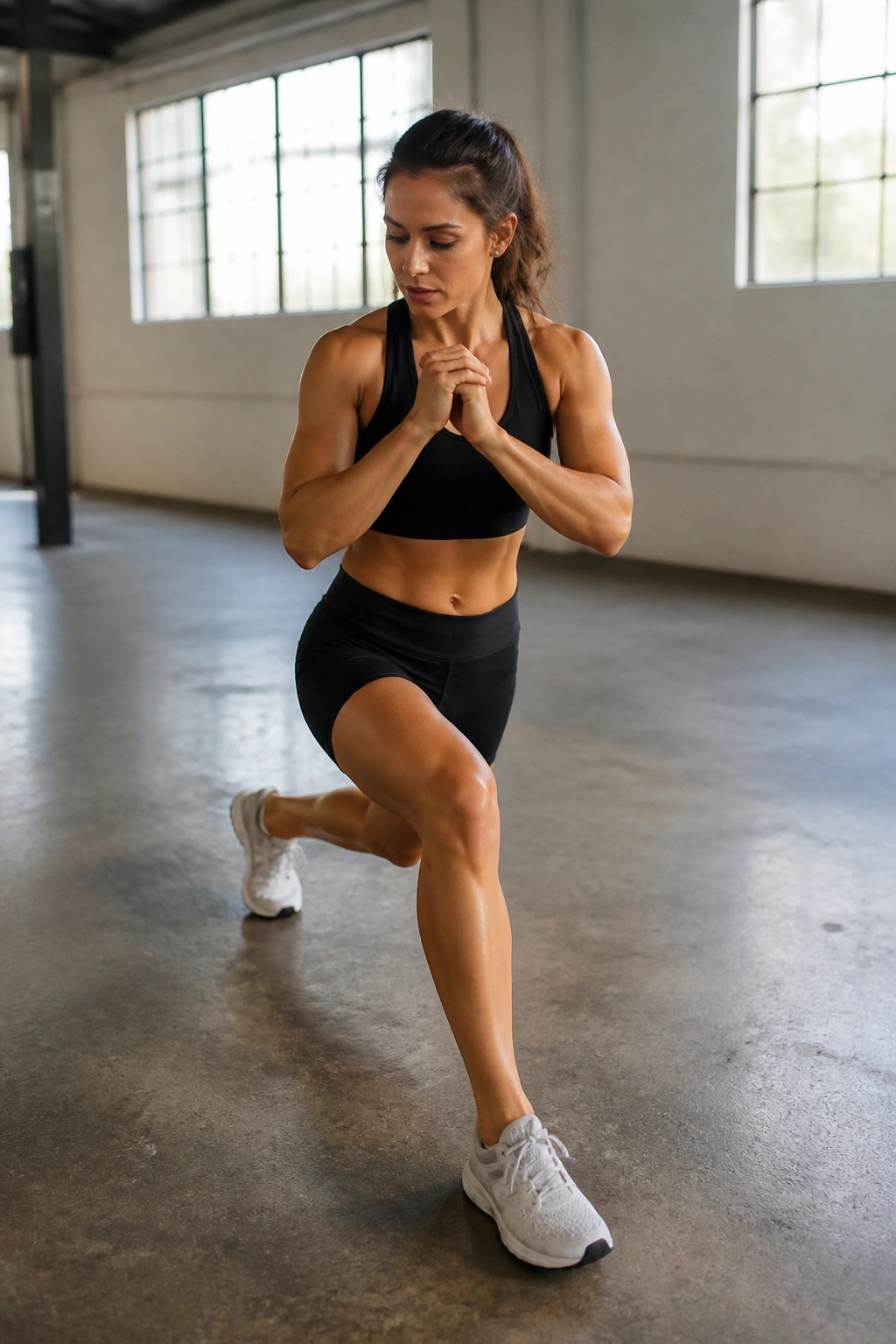
This is a multi-directional lunge that challenges your brain as much as your legs. Imagine you are standing in the center of a clock face. Your front foot is the hour hand.
The Pattern
- Right leg: 12 o’clock, 3 o’clock, 6 o’clock.
- Left leg: 12 o’clock, 9 o’clock, 6 o’clock. This variation covers forward, lateral, and reverse lunges in one continuous circuit. It is excellent for “movement snacks”—short, intense bursts of activity that keep you mobile throughout the day.
Why It Works
It requires massive amounts of stabilization. Every time you switch directions, your body has to recalculate its center of gravity. It is the ultimate test of lower-body coordination.
10. Cossack Squat
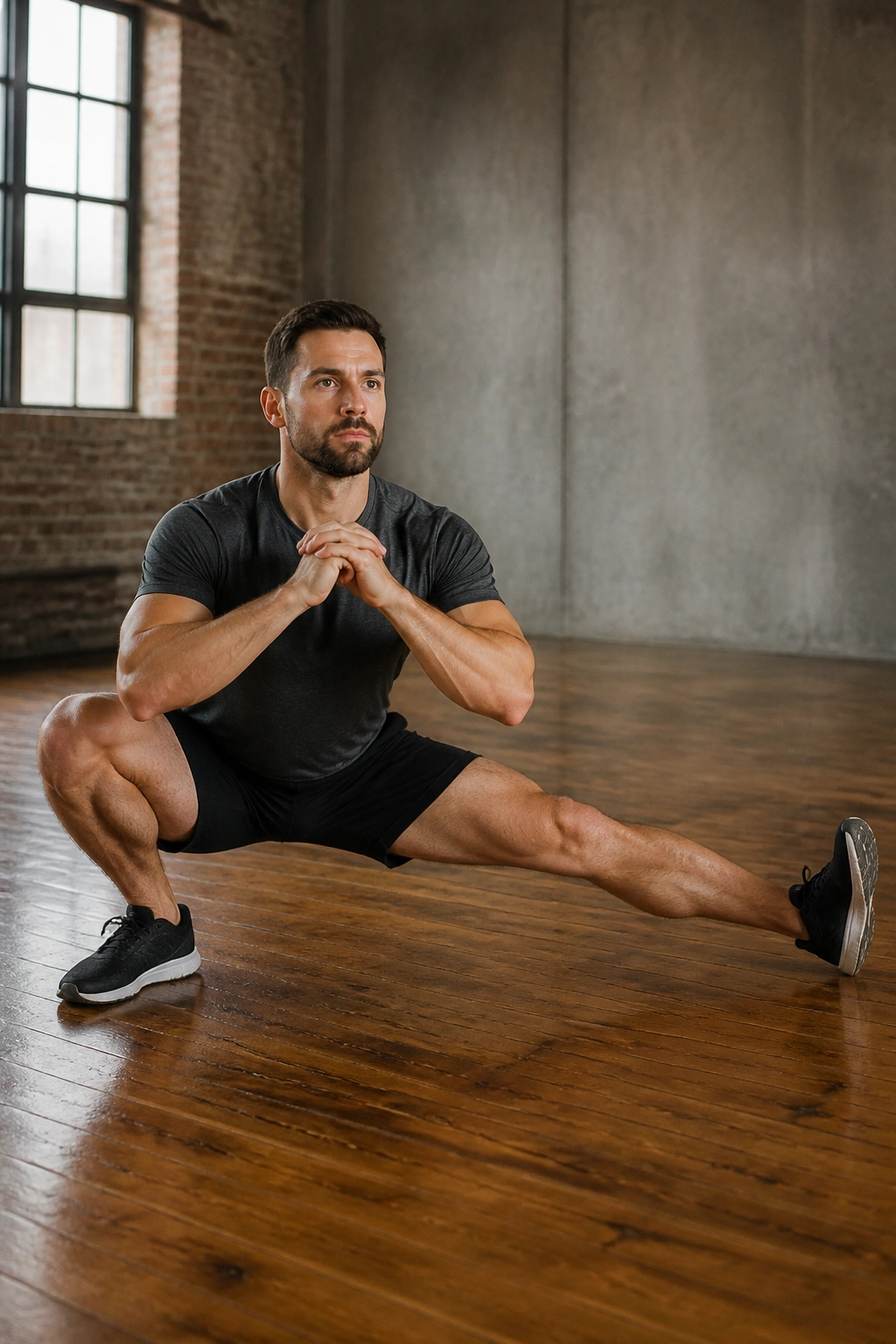
Think of this as a very deep lateral lunge. In a standard lateral lunge, you keep your chest up and don’t go super low. In a Cossack squat, you go as deep as your ankle mobility allows, often sitting all the way down on your heel.
Mobility Requirement
You need serious ankle and hip mobility for this. If your heel pops off the floor, shorten the range of motion. It is better to do a solid, controlled movement at half-depth than a shaky, dangerous one at full depth.
Strengthening
This hits the adductors like nothing else. It also creates a “stretchy strength” in the hamstrings. If you find your squat feels tight, adding Cossack squats as a warm-up or accessory will unlock your range of motion.
11. Static Lunge with Rotation
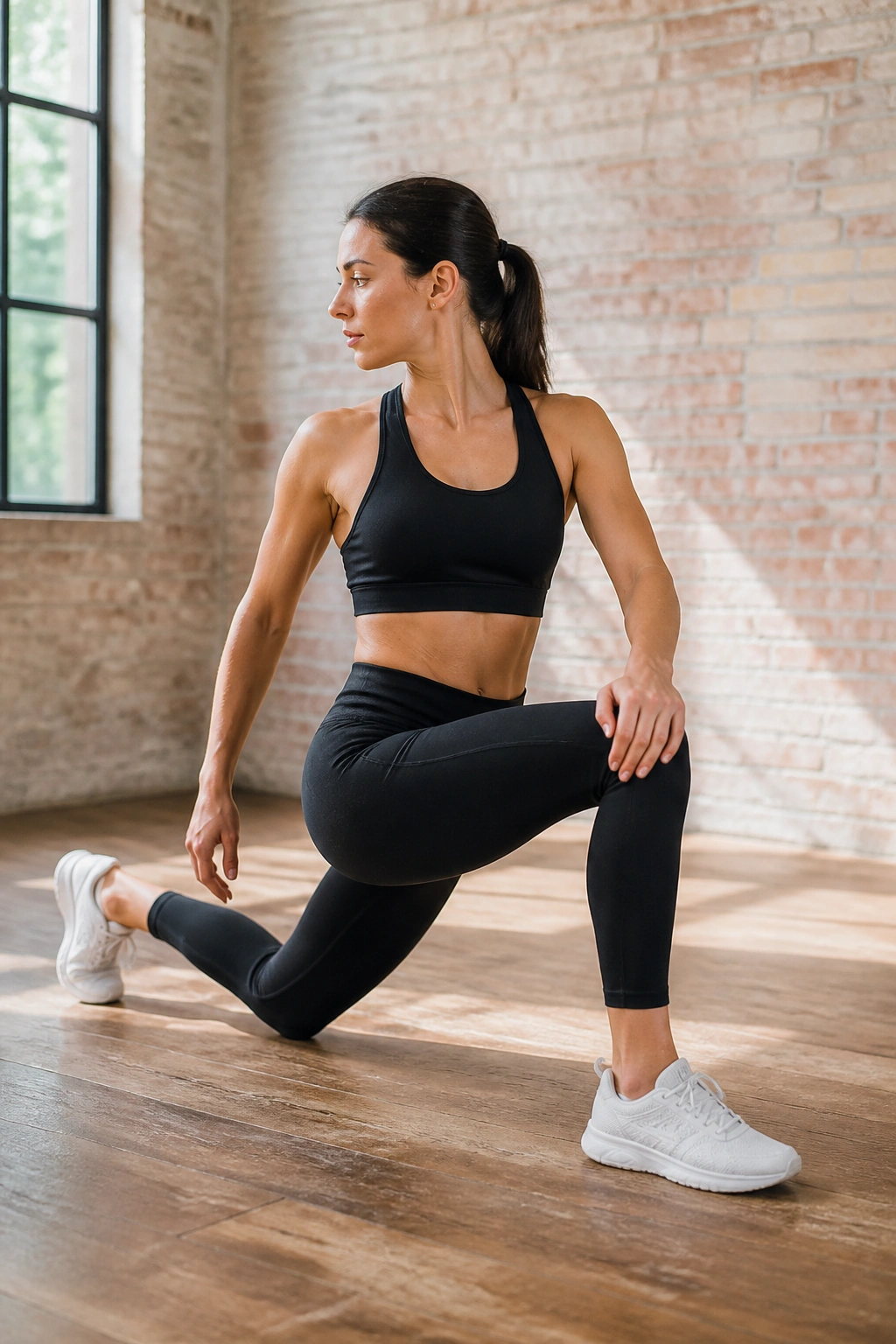
Most lunges only challenge the legs. This one drags the core into the fight. As you lower into your lunge, rotate your torso toward the front leg.
The Kinetic Chain
This is a “rotational stability” exercise. By twisting while under load, you are forcing your obliques to stabilize your spine against the rotational force. It translates directly to real-world tasks like picking up a box or swinging a racket.
Speed
Don’t rush the twist. Time the rotation so that you reach maximum twist at the exact bottom of the lunge. As you drive back up, bring your torso back to center.
12. Prisoner Lunge
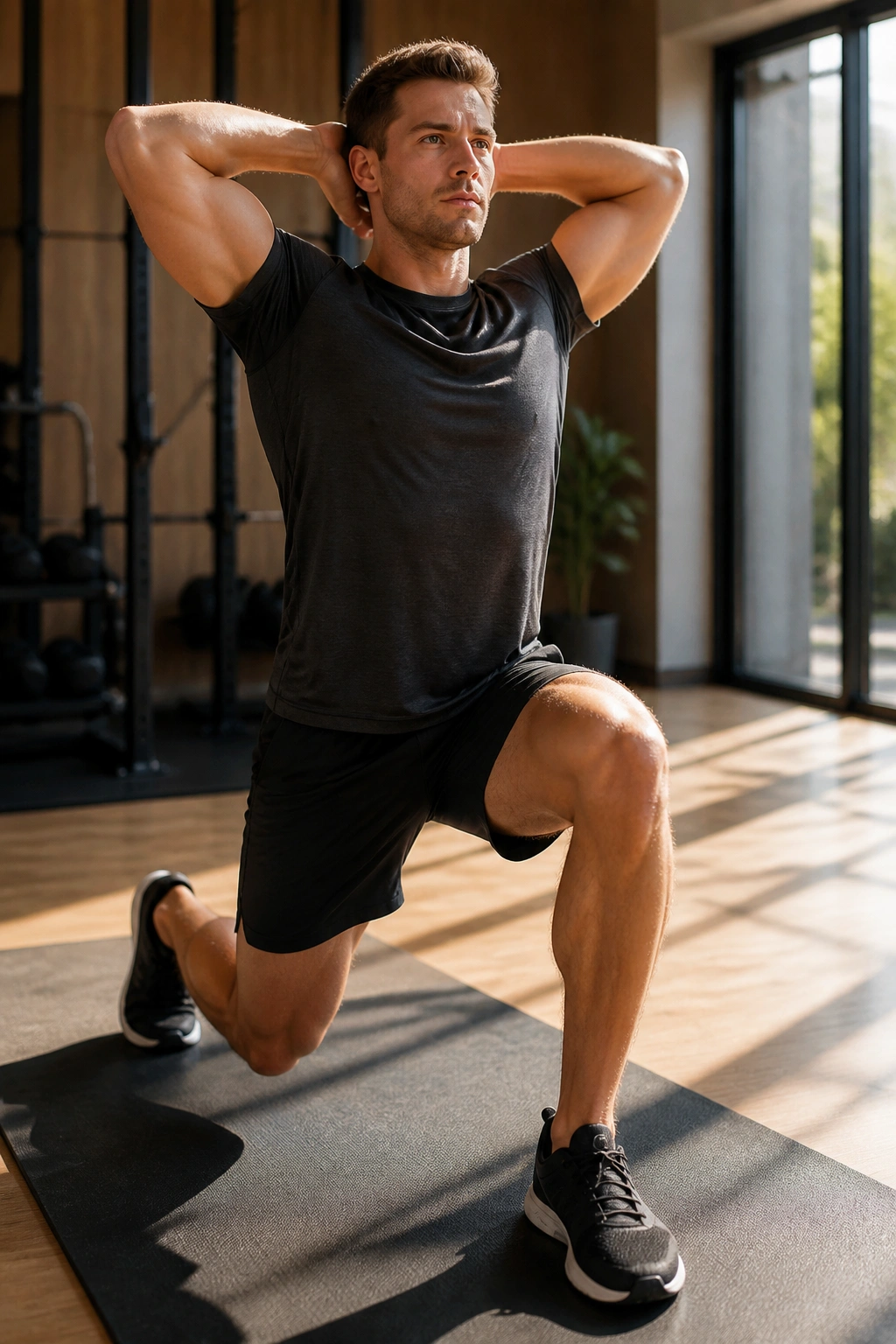
The name comes from the hand position: interlaced behind the head, elbows wide. This simple change removes your ability to use your arms for balance and forces you to maintain perfect, upright posture.
Posture Correction
If you have a habit of hunching over during lunges, this is your fix. It forces thoracic extension. You cannot slouch without your elbows dropping, and the moment your elbows drop, you know you’ve lost your form.
The Challenge
It is surprisingly hard. Without the counterweight of your arms swinging, you have to rely entirely on your core and legs to keep you from toppling over.
13. TRX/Suspension Lunge
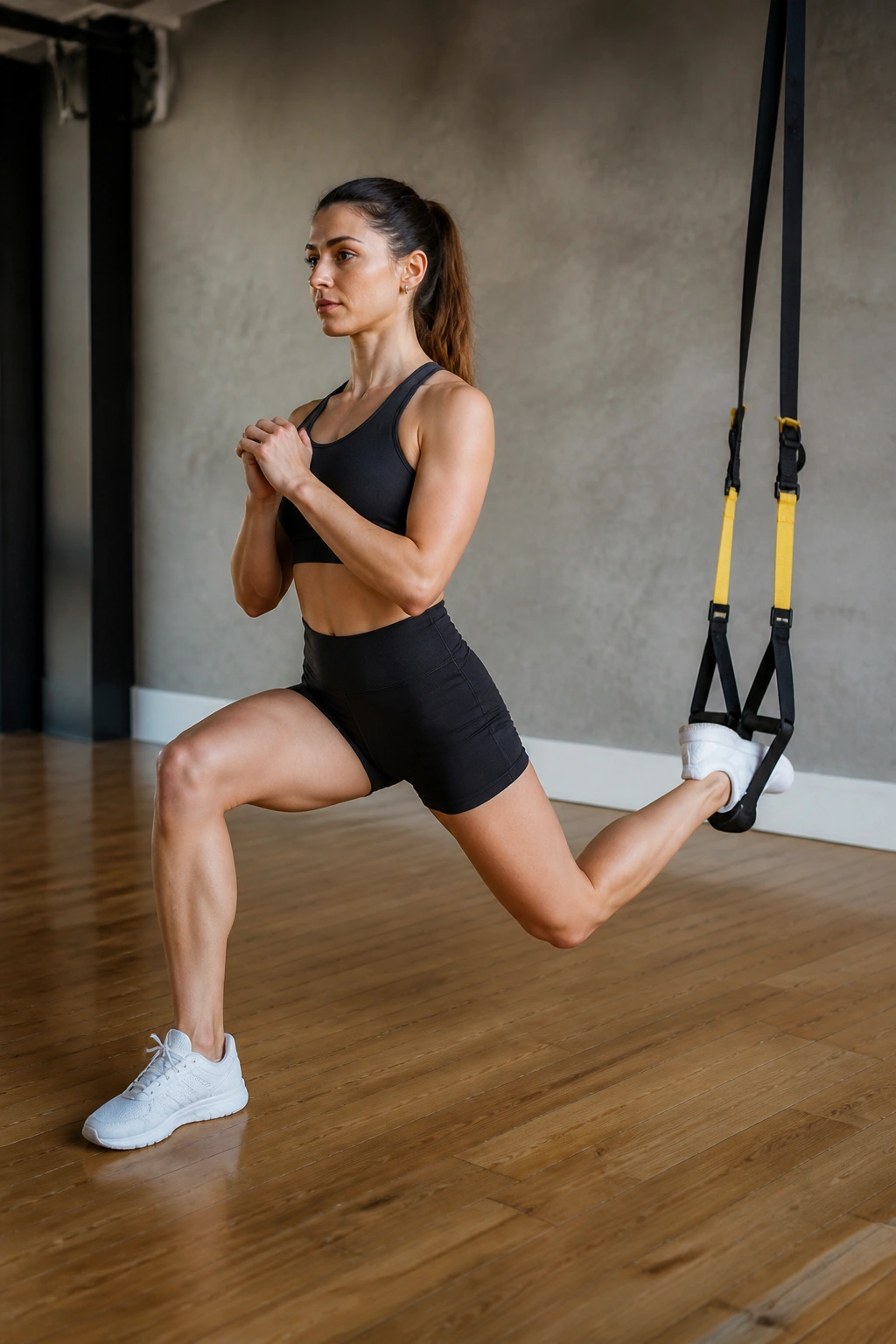
Using a TRX strap or gymnastics rings for your back foot (instead of a bench) introduces instability. Because the strap can swing, your front leg has to make constant, micro-adjustments to keep you upright.
Why This Is Different
The bench is solid; the strap is not. This variation engages the deeper stabilizer muscles in your hip and ankle that usually stay dormant on fixed equipment.
The Technique
Focus on pressing your back foot into the strap, not just letting it dangle. You need that tension to keep your balance. If the strap is swinging wildly, slow your tempo down.
14. Weighted Lunge with Front Raise

This is a compound movement that blends leg work with upper-body conditioning. As you step into a forward lunge, perform a front raise with a dumbbell or plate in your hands.
Metabolic Demand
This skyrockets your heart rate. You are moving blood from your legs to your shoulders and back. It is a full-body burner.
The Coordination Trap
Do not let the weight pull you forward. As you raise the weight, keep your core braced. If you find yourself arching your back to get the weight up, the weight is too heavy. Drop the load and focus on the clean, synced movement.
15. Side-to-Side Lunge Switch
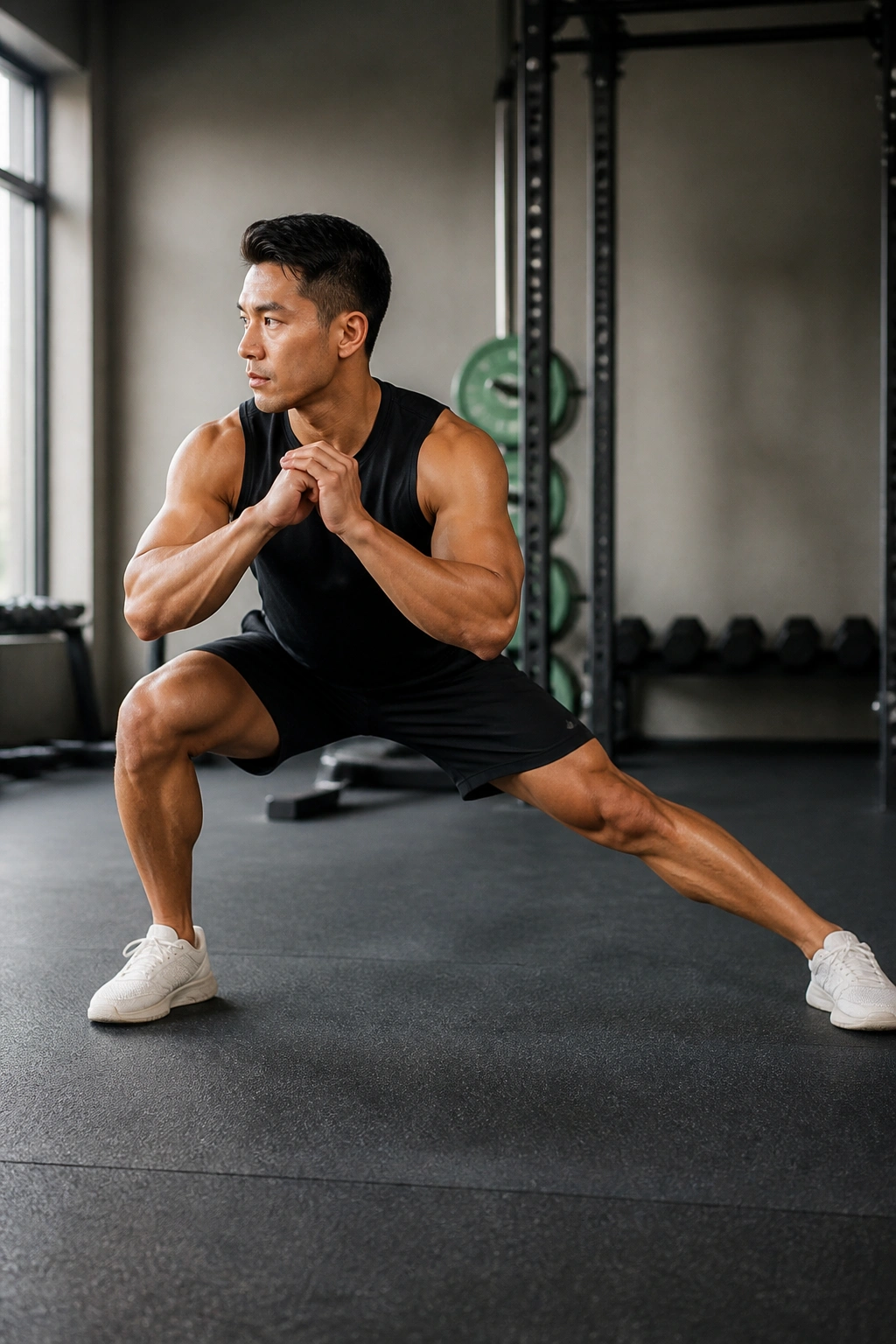
This is an agility-based movement. You are effectively performing a lateral lunge and then “jumping” or shifting immediately into the opposite side.
The Flow
You aren’t coming back to center. You stay low. Imagine you are a tennis player readying for a volley. You want to stay in that “low gear,” shifting your center of gravity from right to left while keeping your hips level.
Benefit
This burns serious calories. Because you aren’t resetting at the top of the movement, the time under tension is much higher.
16. Single-Arm Kettlebell Lunge
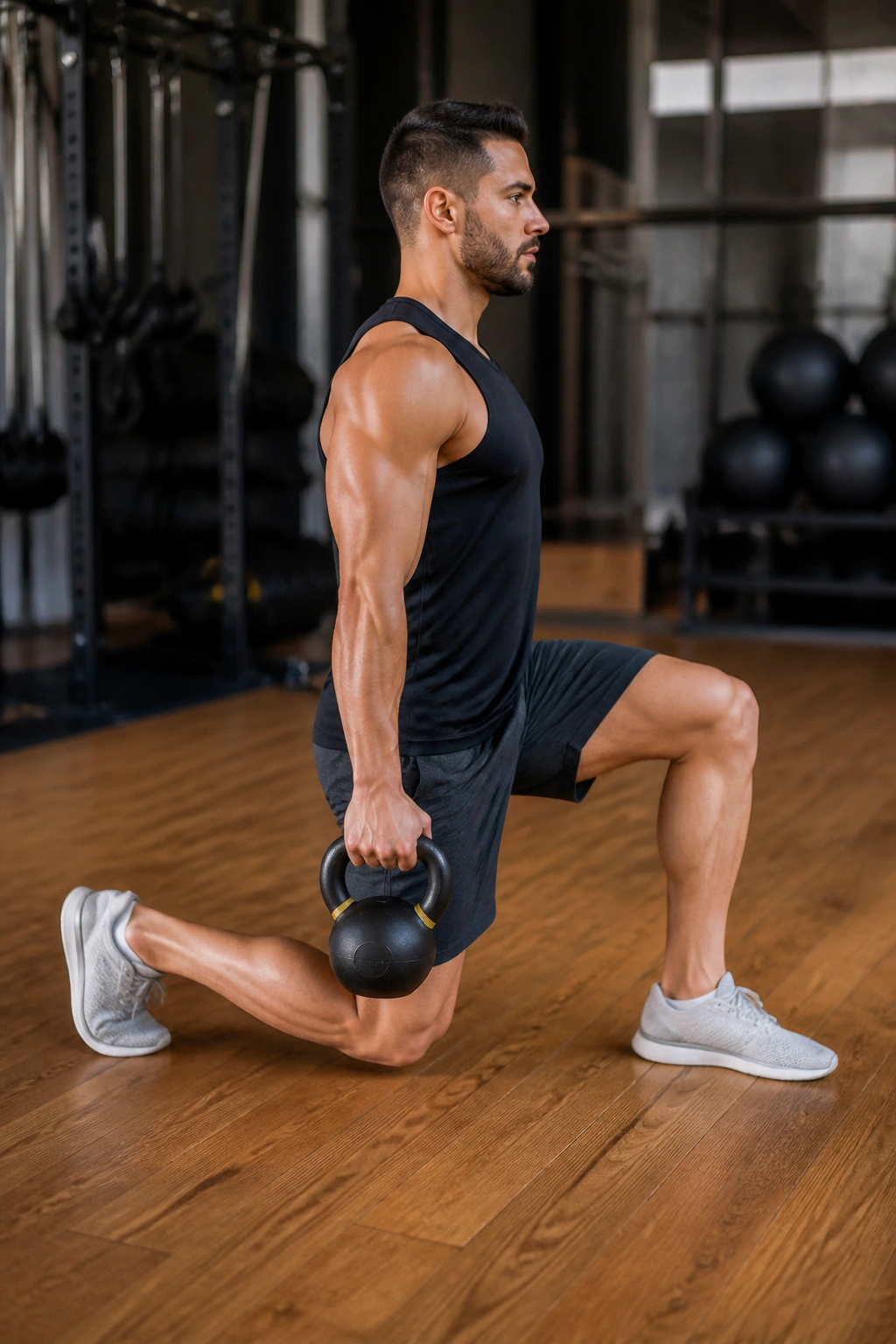
Hold a kettlebell in your right hand and lunge with your left leg (contralateral) or right leg (ipsilateral). The offset weight forces your core to work hard to keep you from tipping over.
Anti-Rotation
This is “anti-rotation” training. Your body wants to tilt toward the weight. Your muscles have to fight that tilt. It is the best way to train the obliques while simultaneously working the legs.
Variety
Try both ways. Holding the weight on the same side as the working leg makes it harder to balance. Holding it on the opposite side makes it harder to stay upright.
17. Elevated Front-Foot Lunge
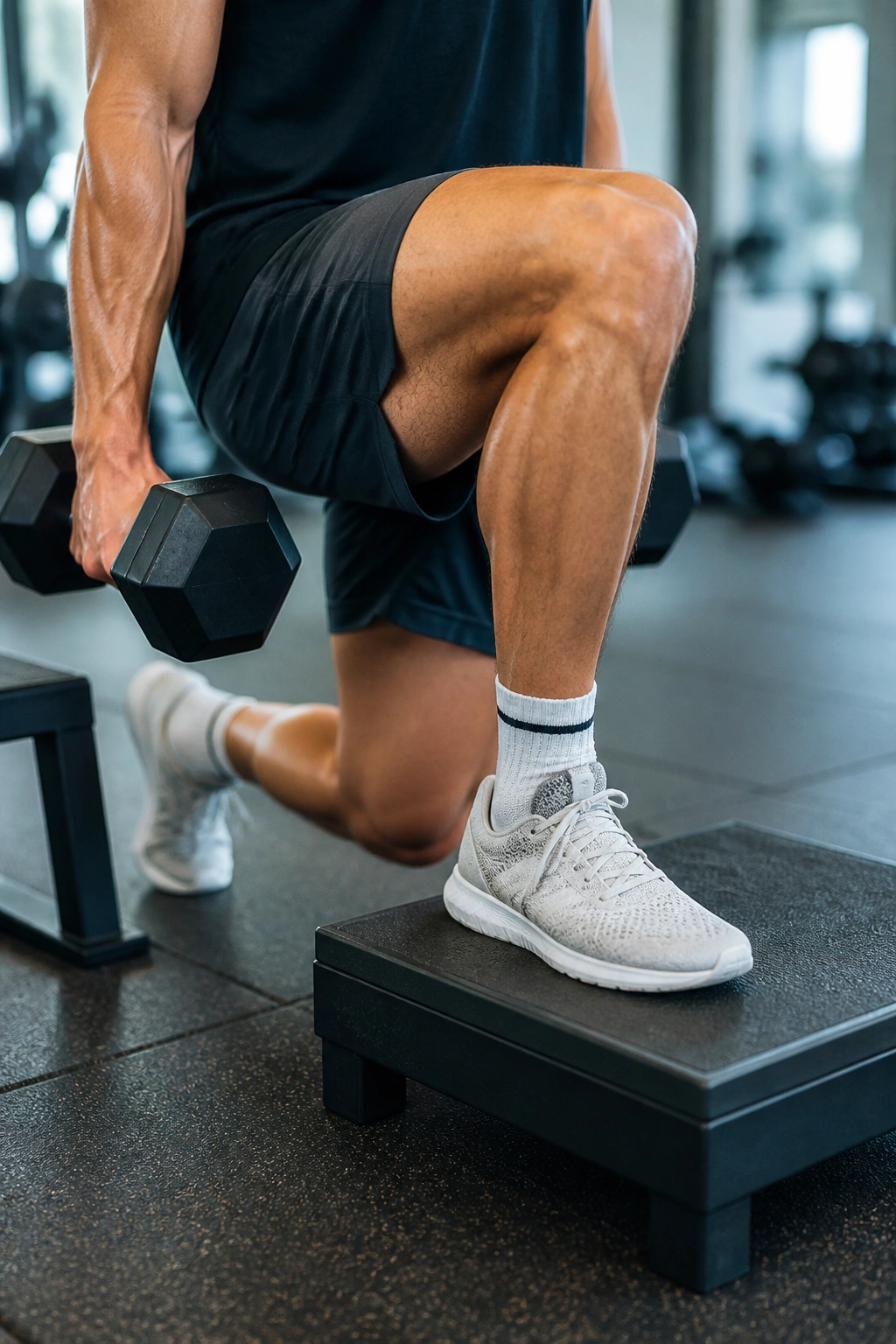
We mentioned the deficit reverse lunge earlier, but this is different. Here, you are doing a forward lunge, but your front foot is on a step. This biases the quad significantly.
Quad Focus
By elevating the front foot, you force a greater degree of knee flexion. This is pure quad destruction. If you have been doing lunges for years but your legs aren’t growing, this is the missing piece of the puzzle.
Warning
Be very careful with your knees. This puts a lot of pressure on the patellar tendon. Do not use a high step to start. A simple 4-inch riser is plenty.
18. Sliding Lunges
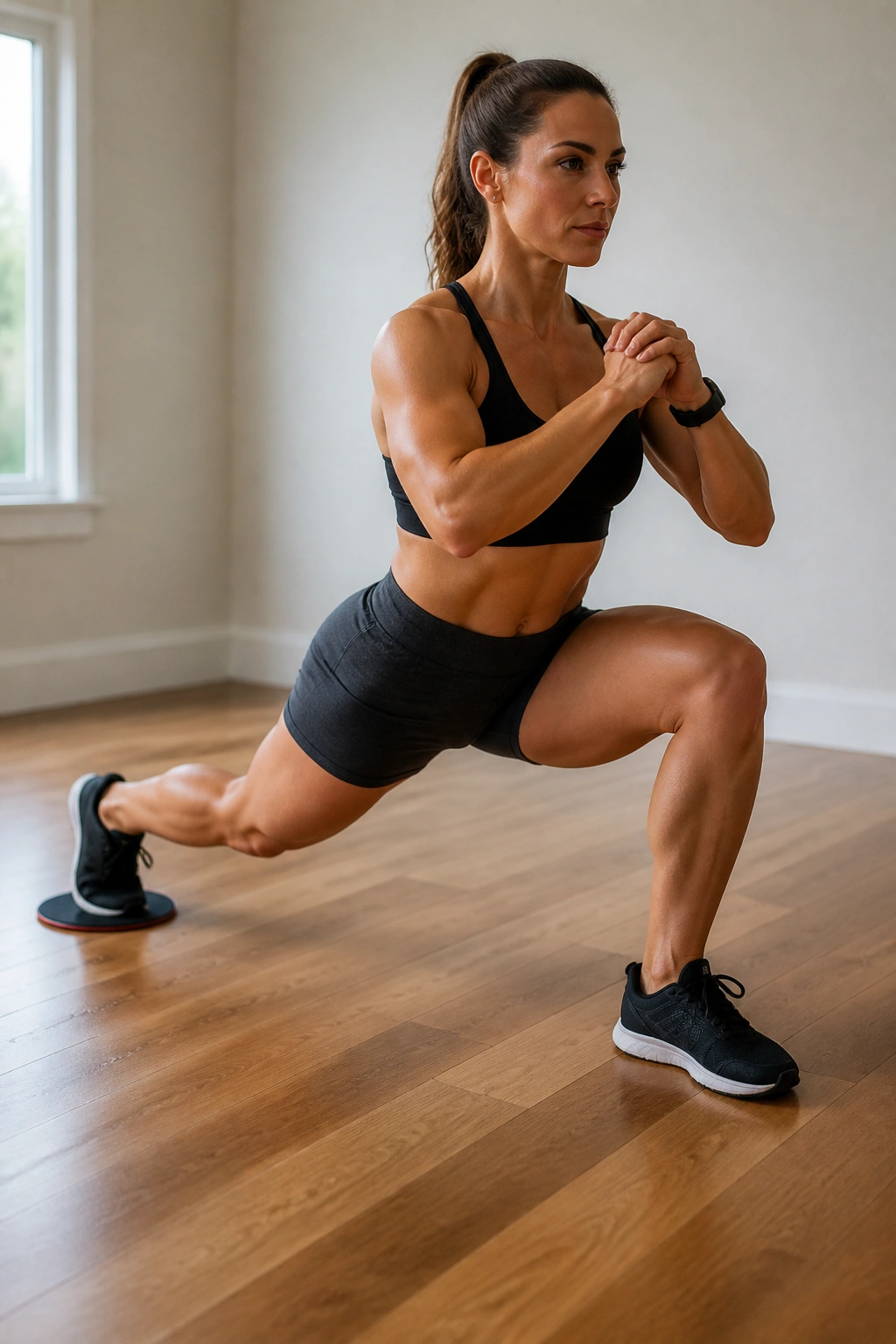
Using a furniture slider (or a towel on a hardwood floor) under your back foot, you slide the leg back into a lunge. This forces you to control the eccentric (lowering) phase completely because you have to actively drag your foot back to the starting position.
Constant Tension
There is no “drive” phase here. You are under tension the entire time. It is a slow, grinding movement that builds incredible control and stability.
The Secret
Don’t use the back leg to push. Use the front leg to pull your body back to standing. You will feel this in the hamstrings of the front leg in a way that regular lunges just don’t capture.
Final Thoughts
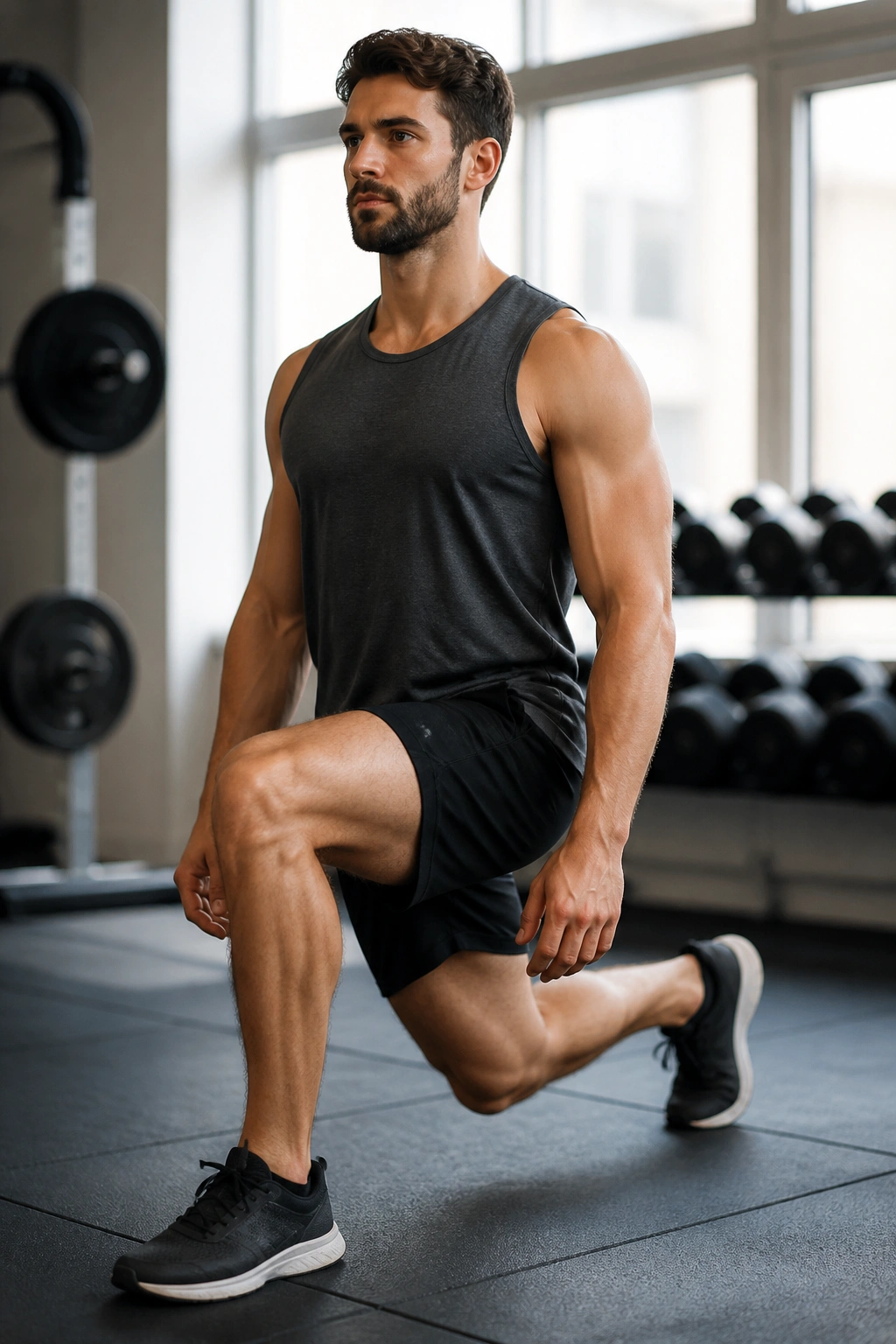
The key to lunges is not to try all eighteen of these in one workout—that would be a recipe for injury and extreme soreness. Instead, treat these like a menu. Choose one or two variations to slot into your leg day as the primary movement, or use them as finishers to exhaust the remaining energy in your legs.
The secret to growth isn’t doing the most complicated move; it’s doing the simple ones with perfect, controlled, focused effort. If you are shaking at the end of a set of twelve, you are doing it right. Keep the movement clean, watch your tempo, and respect the burn. Your legs will respond.
