



A full-body tone routine does not need fifteen machines and a clipboard. It needs a small set of resistance training exercises that hit the big movement patterns hard enough to change how your body feels in clothes and how it moves outside the gym.
That is the part people miss. What most people call “tone” is built from muscle that has been trained, recovered, and trained again under real load — not from endless light reps that leave you tired but unchanged. The useful work lives in squats, hinges, pushes, pulls, carries, and a few core drills that keep your trunk from wobbling when the weight gets honest.
Pick the right exercises and the rest gets simpler. Pick the wrong ones and you end up with a routine that hammers the chest while neglecting the back, or burns the legs without teaching the hips to drive. The list below leans on compound lifts, single-leg work, and a few stability moves that do more than they look like they should.
Sharp pain is a stop sign. Muscle fatigue is fine, sloppy reps are not. Keep that in mind as you move through the list, because the best-looking rep is the one you can repeat with control when the set starts to bite.
1. Goblet Squat
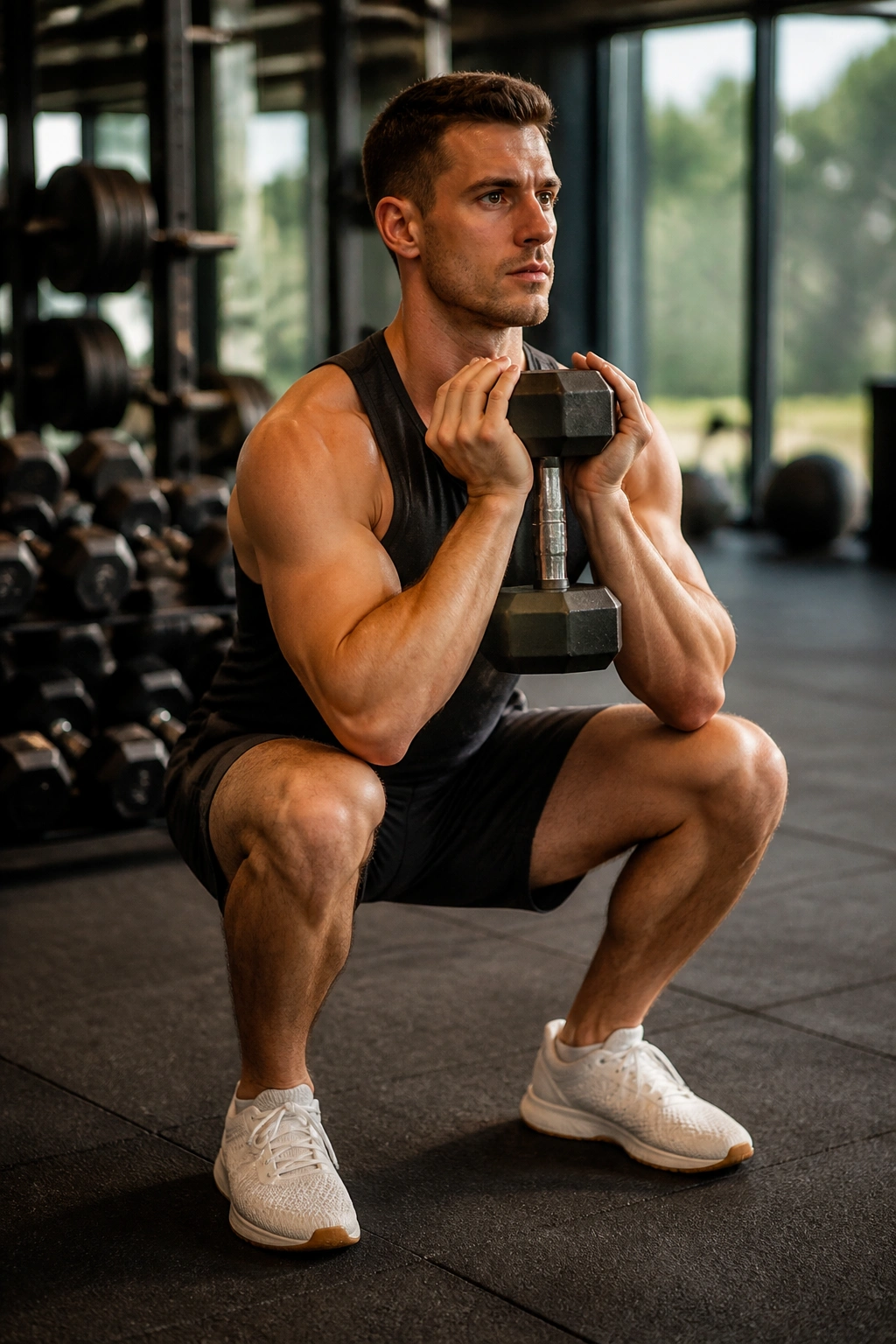
The goblet squat is the easiest place to start if you want a lower-body move that still behaves like a full-body exercise. Holding the dumbbell or kettlebell at your chest forces your torso to stay upright, which means your quads, glutes, and core all share the work.
It also teaches a clean squat pattern without turning the rep into a circus. If your knees cave in, if your heels pop up, or if your chest collapses, the front-loaded position exposes it fast. That honesty is useful.
Why It Works
- Keep the weight close to your sternum.
- Sit between your hips instead of dropping straight down.
- Aim for 3 to 4 sets of 8 to 12 reps with a controlled 2-second lower.
- Stop one or two reps before your back starts rounding.
Best cue: drive the floor apart with your feet as you stand.
If you want a move that teaches tension, balance, and leg drive in one shot, this one earns its place. It also scales well. A lighter goblet squat can warm up the ankles and hips, while a heavier one can leave your legs doing real work without needing a barbell.
2. Romanian Deadlift
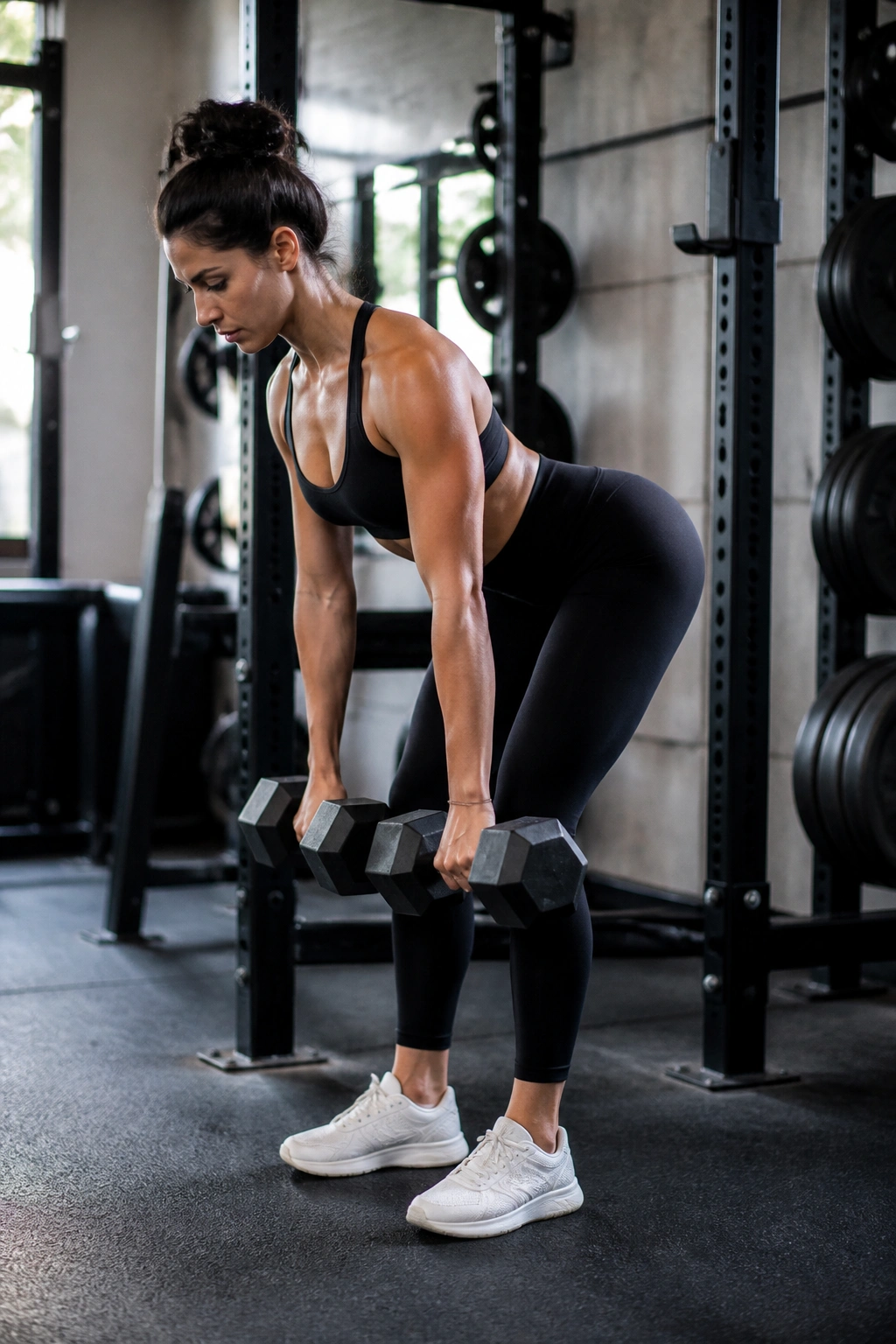
If your hamstrings feel like they never get enough attention, the Romanian deadlift fixes that fast. This is a hinge, not a squat, which means the hips move back, the shins stay mostly vertical, and the back stays long while the load travels close to the legs.
That close bar path matters. Drift the weight away from your body and the lower back starts doing jobs the hamstrings should own. Keep the dumbbells or bar brushing the thighs and the movement feels much cleaner.
A good RDL should look almost boring from the side. The knees stay soft, the chest stays proud, and the hamstrings load like stretched cables before you stand tall again. 3 to 4 sets of 6 to 10 reps is a smart place to live here.
One clean rep beats three rushed ones. Every time.
3. Push-Up
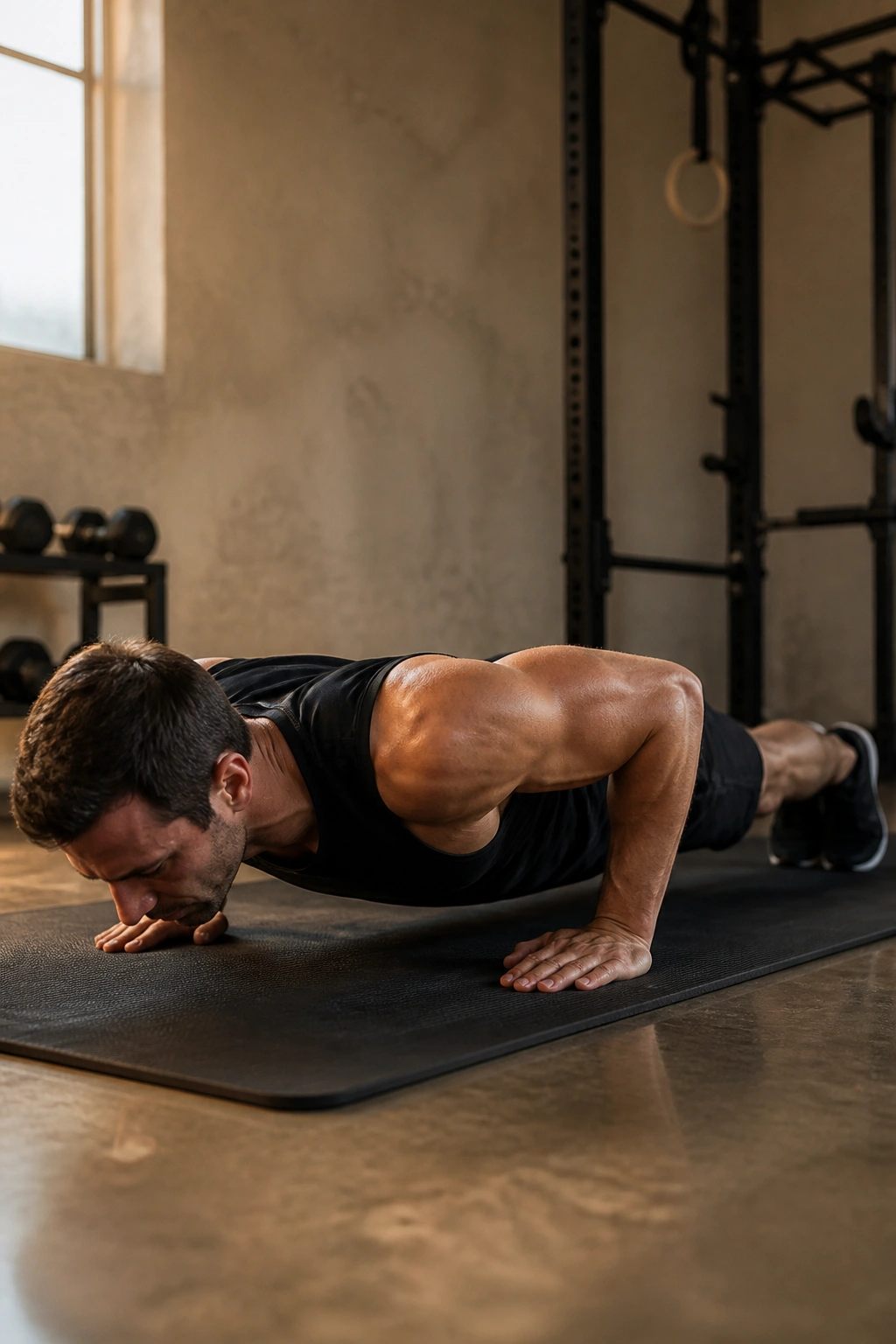
Why does the push-up still matter when dumbbells are sitting in the corner? Because it turns your whole body into the load. Chest, triceps, shoulders, abs, and even the glutes have to stay switched on if you want the torso to move as one solid piece.
A sloppy push-up is easy to spot. The hips sag, the head cranes forward, and the elbows flare like they are trying to escape. A good one stays straight from shoulders to heels, with the chest lowering under control and the hands pressing the floor away.
How to Keep the Torso Honest
- Keep your ribs down.
- Squeeze your glutes before every rep.
- Lower until the chest comes close to the floor or a raised surface.
- Use an incline bench if full floor push-ups break down early.
Practical note: 3 sets taken to 1 or 2 reps shy of failure usually works better than chasing endless sloppy reps.
You can also add a weighted vest or slow the lowering phase to make the movement harder without changing the exercise. That keeps the push-up useful long after standard reps stop feeling challenging.
4. One-Arm Dumbbell Row
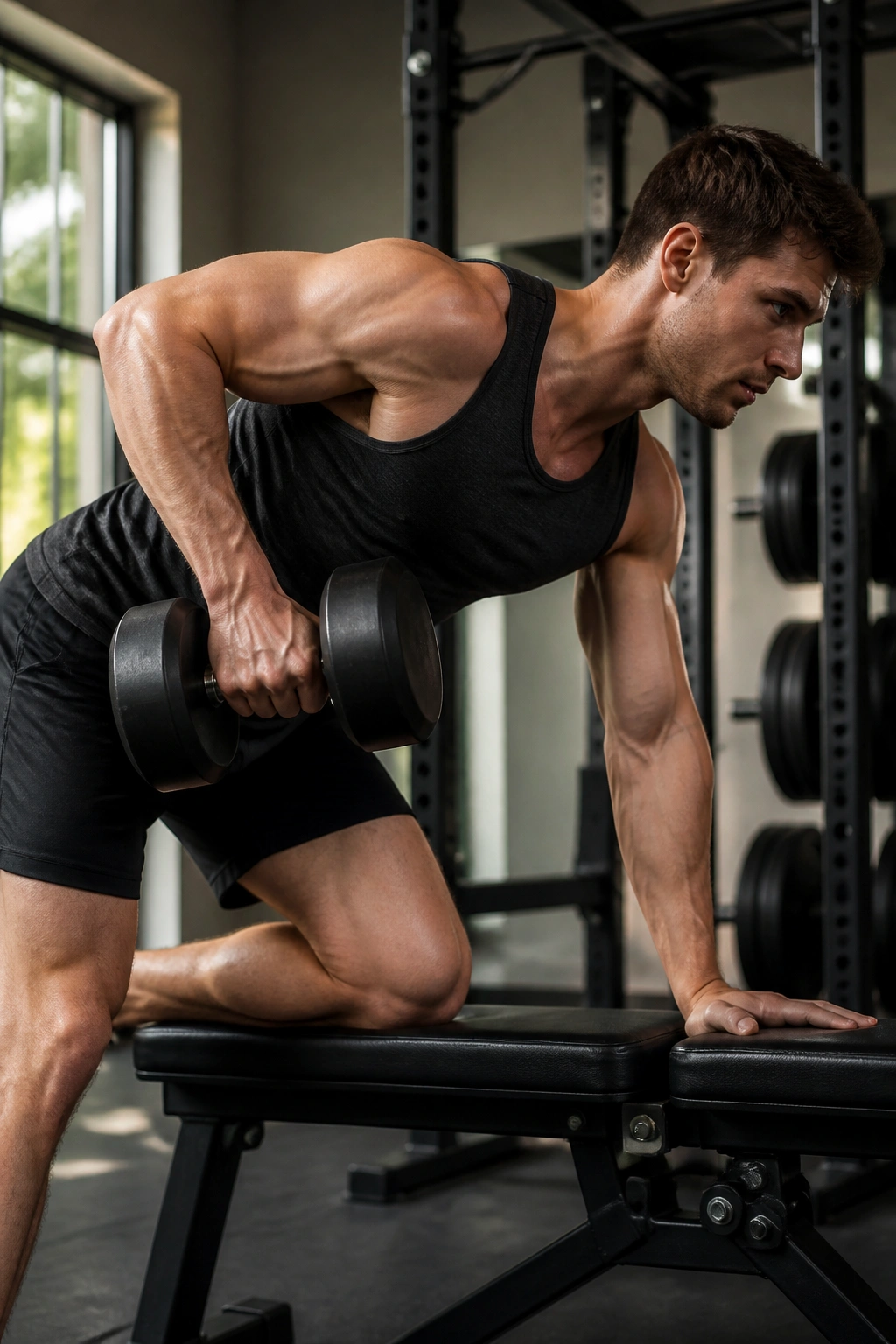
After a day of sitting, a one-arm dumbbell row feels like pulling your shoulder blades back into place. It hits the lats, rhomboids, rear delts, and the small stabilizers that keep your upper back from folding forward all day.
The single-arm setup matters because it forces the trunk to resist twisting. That anti-rotation demand is easy to miss, but it is one reason the exercise carries over so well to better posture and cleaner lifting.
Plant one hand and one knee on a bench, or hinge with the free hand on a rack if that feels better. Pull the elbow toward your back pocket, pause for a beat at the top, and lower under control. 8 to 12 reps per side is a solid range.
Do not yank the weight. If the torso starts swinging, the load is too heavy or the set is too long.
5. Dumbbell Bench Press
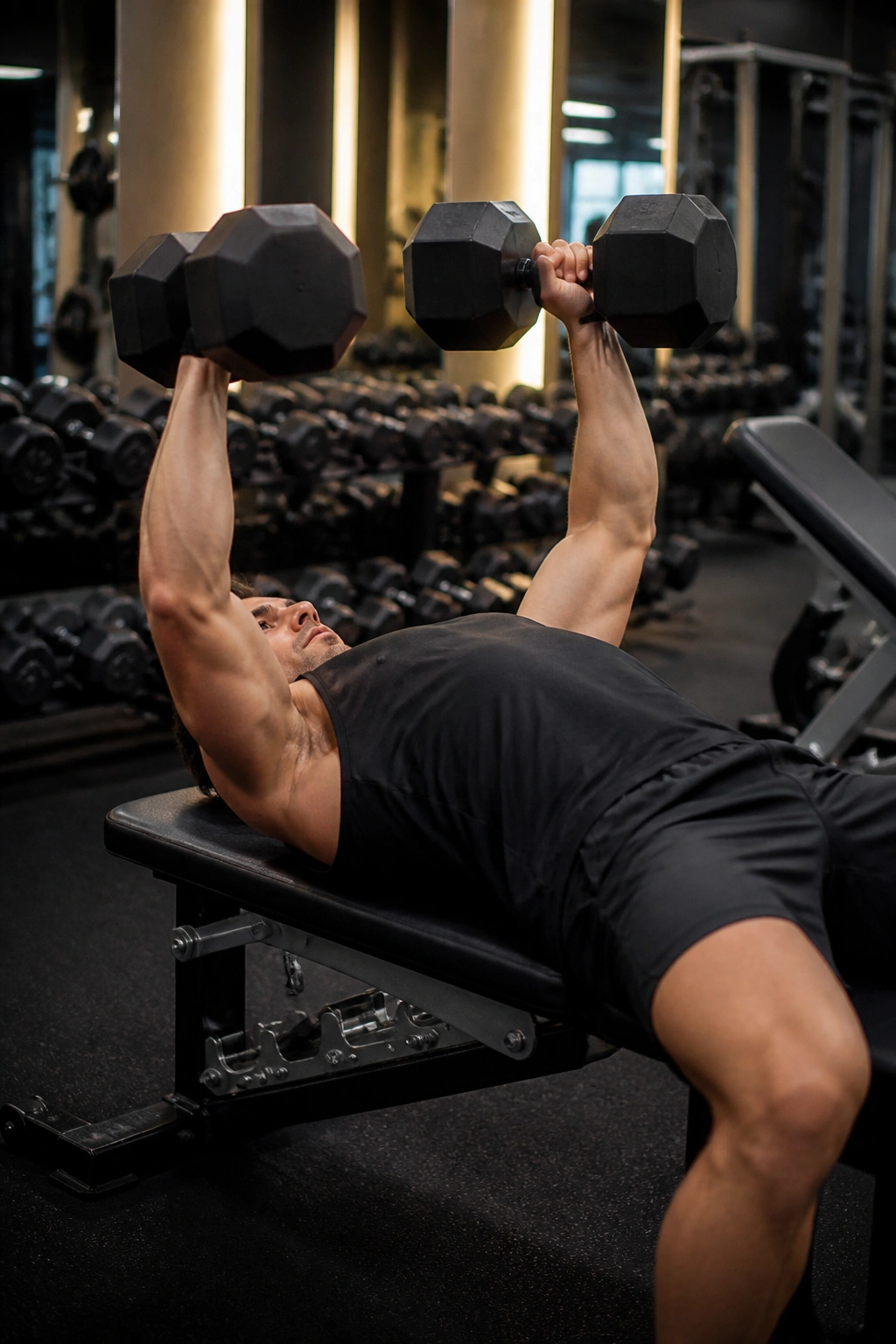
The dumbbell bench press earns its place because each arm has to pull its own weight. That sounds obvious, but it matters. A barbell can hide a stronger side. Dumbbells usually do not.
You also get a slightly freer shoulder path, which can feel better for a lot of lifters than locking both hands to a bar. Lower the dumbbells until the upper arms are near parallel to the floor, keep the shoulder blades set, and press up without banging the weights together at the top.
A slight incline turns the emphasis a little more toward the upper chest and front delts. Flat bench stays the classic choice. Either way, 3 to 4 sets of 6 to 10 reps gives you enough load to build strength without turning the exercise into a shrug contest.
If the shoulders feel cranky, shorten the range a little and keep the elbows at about a 45-degree angle from the torso. That small adjustment often helps more than people expect.
6. Reverse Lunge
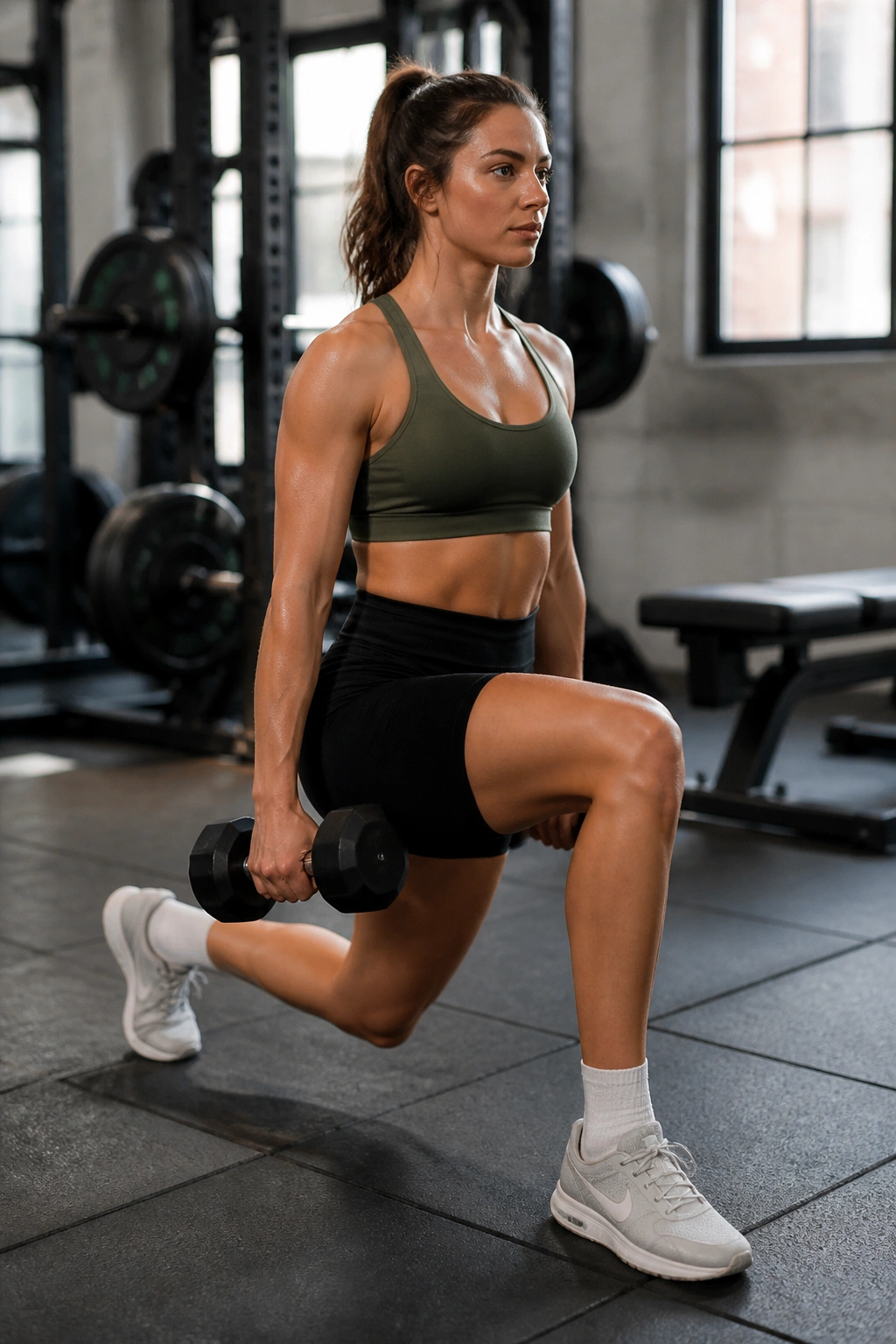
Why step back instead of forward? Because the reverse lunge is usually easier to control, and control is the whole point when you want legs that look strong and move well. Stepping back tends to feel kinder on the knees, too, which is why a lot of people stick with it long after they have outgrown the forward version.
The front leg does most of the work. That is where the quad and glute burn comes from. Keep the front foot flat, take a long enough step back that the front knee can bend without the torso folding, and drive through the whole front foot to stand up again.
What to Watch For
- Keep your weight on the front leg.
- Avoid pushing hard off the back foot.
- Let the front knee track over the toes.
- Use dumbbells at your sides once bodyweight feels stable.
Best use: 3 sets of 8 to 10 reps per leg, with a brief pause at the bottom if you want more control.
This is one of those exercises that looks simple and then quietly exposes every weak hip and shaky ankle you have been ignoring.
7. Standing Overhead Press
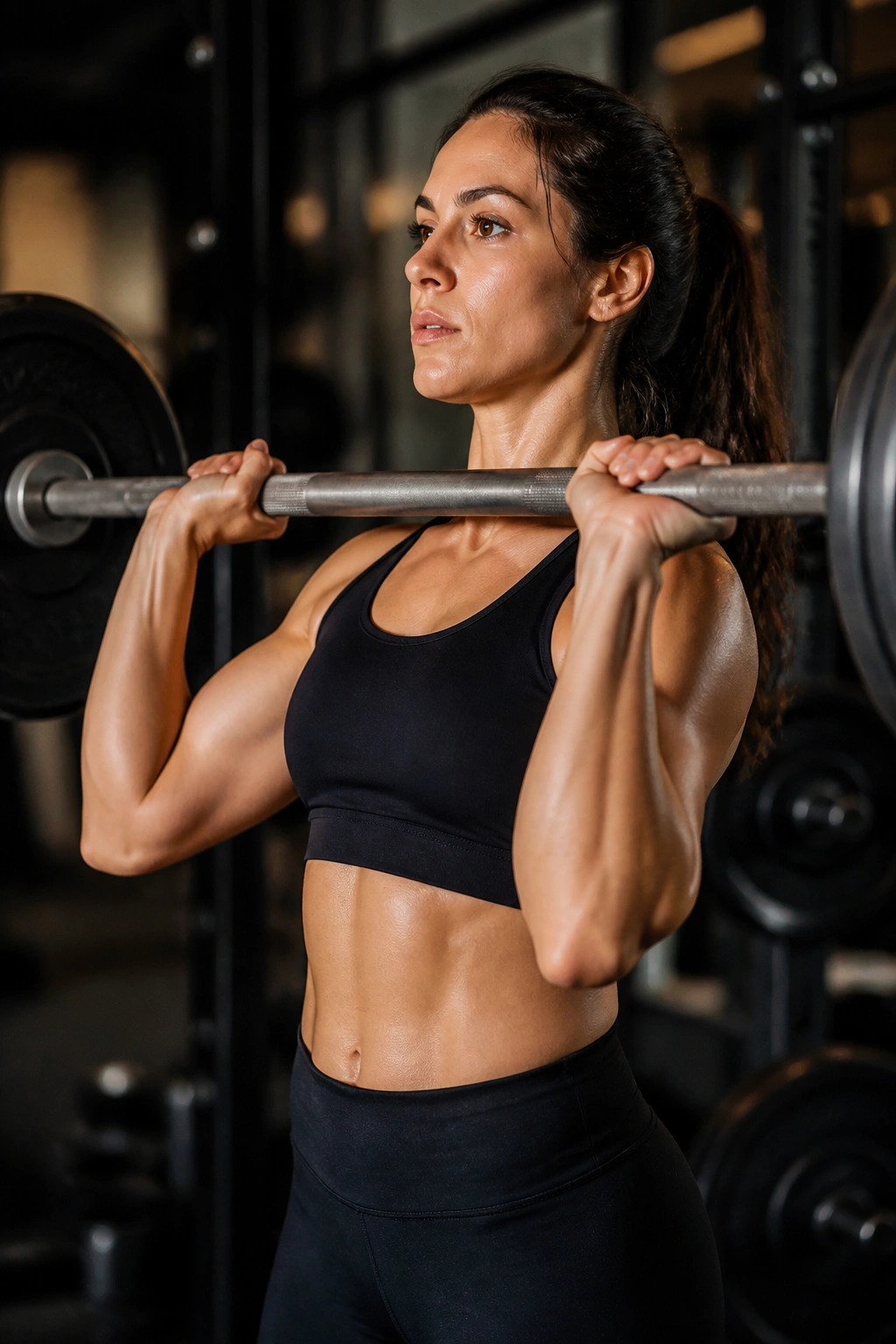
The bar starts at your shoulders, the ribs want to flare, and the whole midsection has to brace the moment the weight leaves your collarbone. That is why the standing overhead press matters. It does not just train shoulders; it teaches the body to create stiffness from the ground up.
A lot of people turn this into a lean-back contest. Don’t. Squeeze the glutes, keep the ribs stacked over the pelvis, and send the bar up in a straight line close to the face. A small head move out of the way is normal. A giant back arch is not.
Bar Path and Breathing
- Take a breath into the belly before each rep.
- Brace as if someone is about to bump your midsection.
- Press the bar just in front of the face, then move your head back under it.
- Lock out with the biceps near the ears, not way behind the body.
Useful range: 3 to 4 sets of 5 to 8 reps.
This one is honest. If the core is weak, the press tells on it fast.
8. Hip Thrust
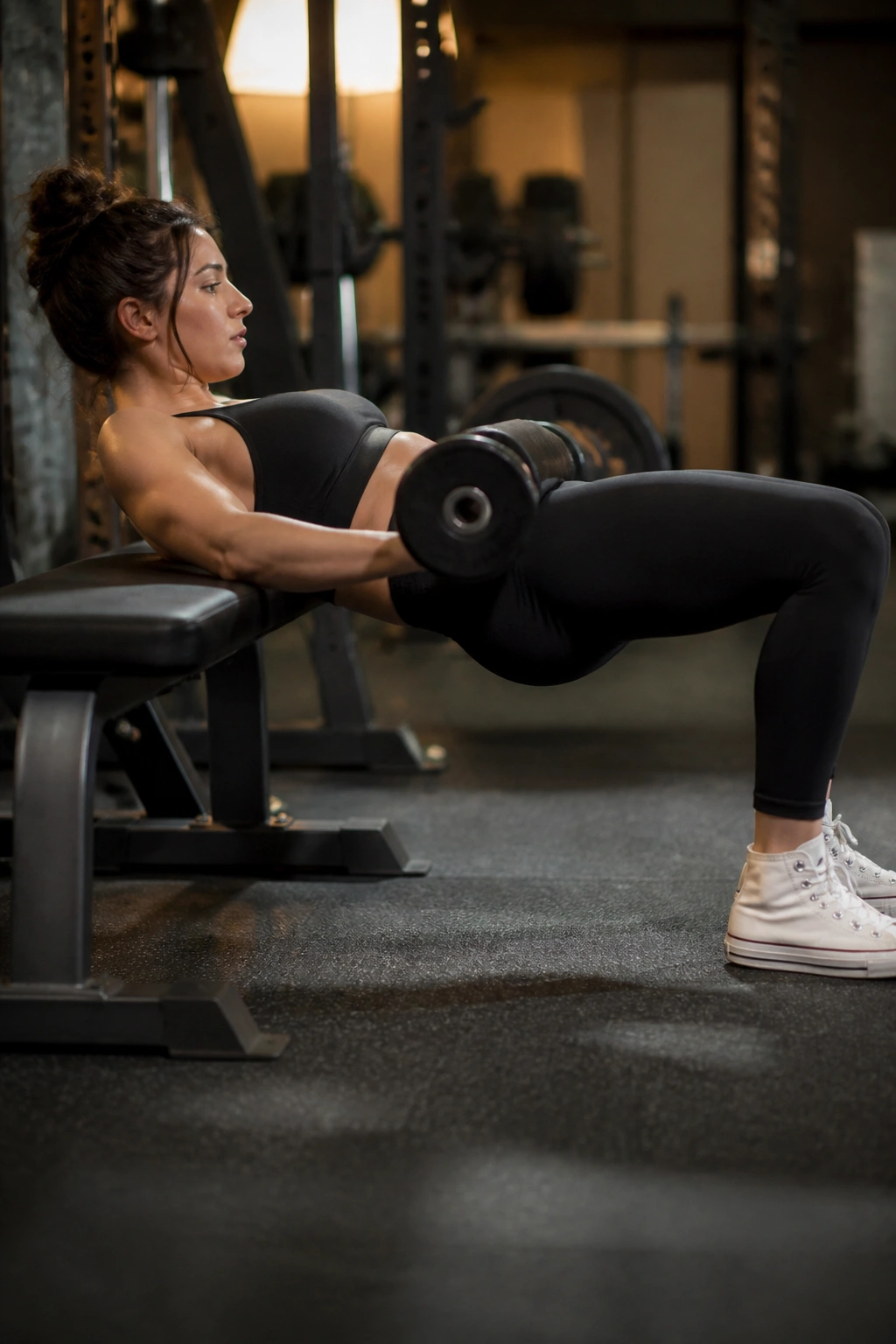
A lot of people train glutes only after everything else has tired them out. That is a mistake. The hip thrust lets the glutes do the job directly, with less help from the quads than a squat and less lower-back stress than some hinge variations.
The setup is simple, but the details matter. Upper back on a bench, feet planted so the shins are close to vertical at the top, chin tucked, and pelvis tucked slightly under at lockout. If you finish with a big arch in the lower back, the glutes stop doing the real work.
The top position should feel like a hard squeeze across the backside. Hold it for a second. That pause is not decorative; it teaches the glutes to finish the rep instead of coasting.
3 to 4 sets of 10 to 15 reps works well here. If the load climbs, keep the pause and shorten the ego.
9. Pull-Up or Assisted Pull-Up
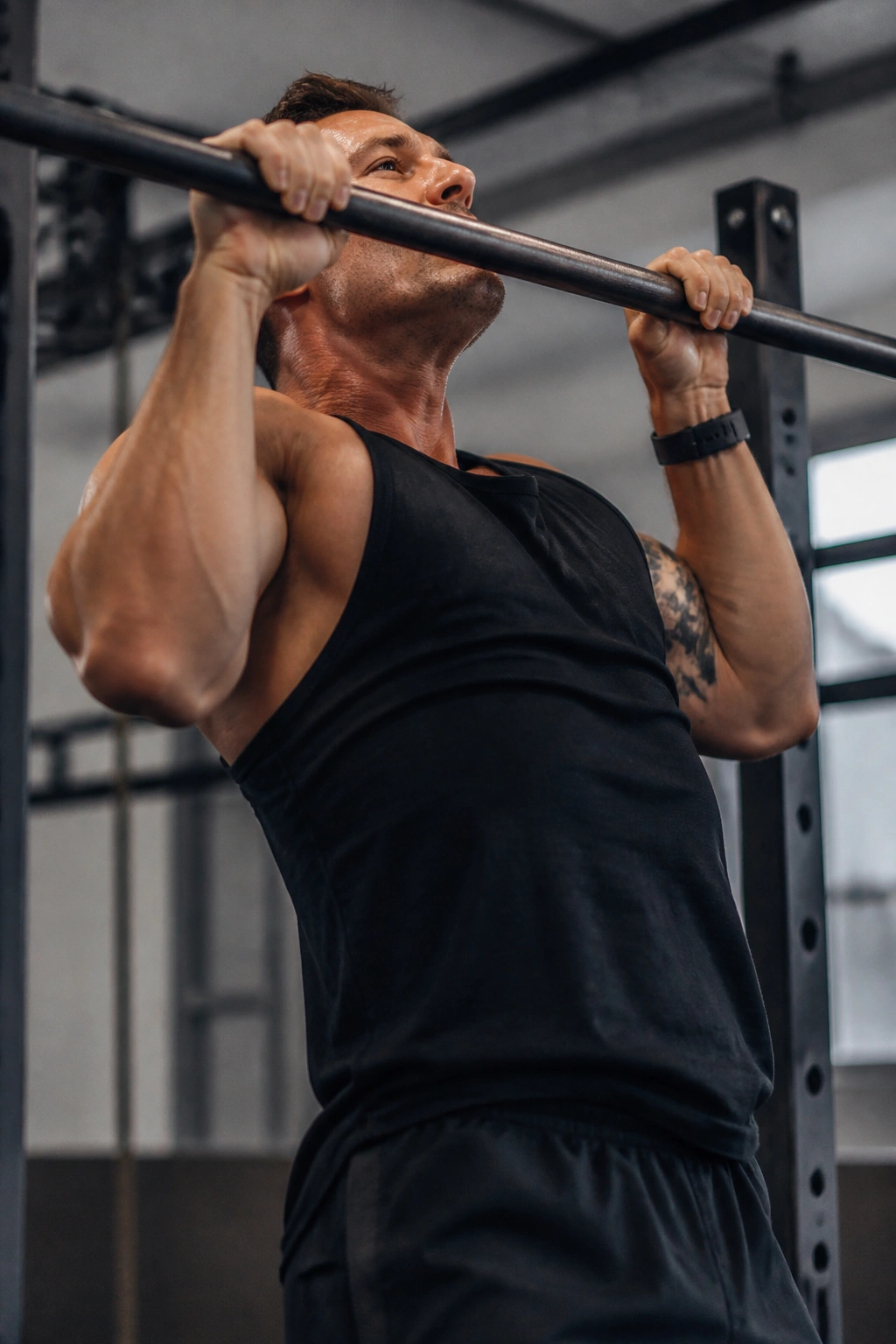
Unlike the lat pulldown, the pull-up asks your grip and trunk to keep the whole movement honest. That is part of why it carries such a strong payoff. You are not only pulling with the back. You are controlling your own body weight.
If full pull-ups are not there yet, use an assisted machine, a band, or slow eccentrics. Starting with the shoulders active, not hanging like a sack of wet clothes, makes the rep cleaner and kinder on the shoulder joint.
The chest should move toward the bar, not the chin craning toward the ceiling. Lower under control until the elbows fully extend if the shoulders tolerate it. If that bottom position feels rough, shorten the range and build from there.
- Assisted pull-ups: 3 to 5 sets of 5 to 8 reps
- Slow negatives: 3 to 4 reps with 3 to 5 seconds on the way down
- Band pull-ups: keep the band light enough that the rep still feels like work
There is no prize for ugly reps here. Grip, lats, and upper-back tension are the point.
10. Step-Up
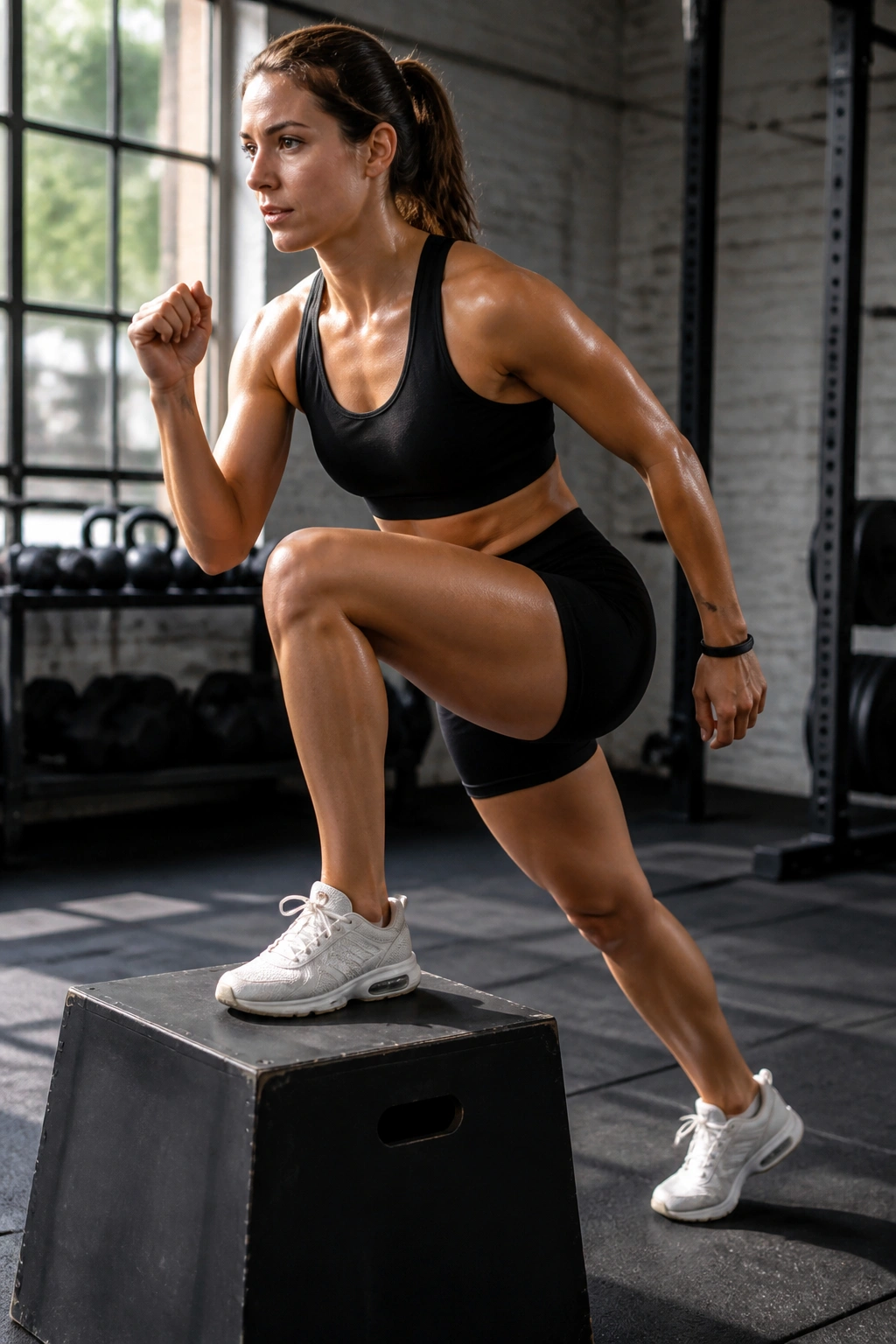
A step-up is the exercise you notice when stairs stop feeling like a nuisance and start feeling like a warm-up. It builds one leg at a time, which means the hips have to stabilize while the working leg pushes the body upward.
Choose a box height that lets the front thigh stay roughly parallel to the floor or a little above it. Higher boxes can be fine later, but too much height turns the rep into a hip flexor circus. Keep the entire foot on the box, lean the torso slightly forward, and stand up by driving through the front heel and midfoot.
Small Details That Matter
- Do not bounce off the back leg.
- Keep the knee aligned with the toes.
- Hold dumbbells only after the bodyweight version feels smooth.
- Control the lowering phase; that is where the leg strength builds.
Good target: 3 sets of 8 to 12 reps per side.
It is a straightforward move. It also shows you, fast, whether one side is doing more than the other.
11. Renegade Row
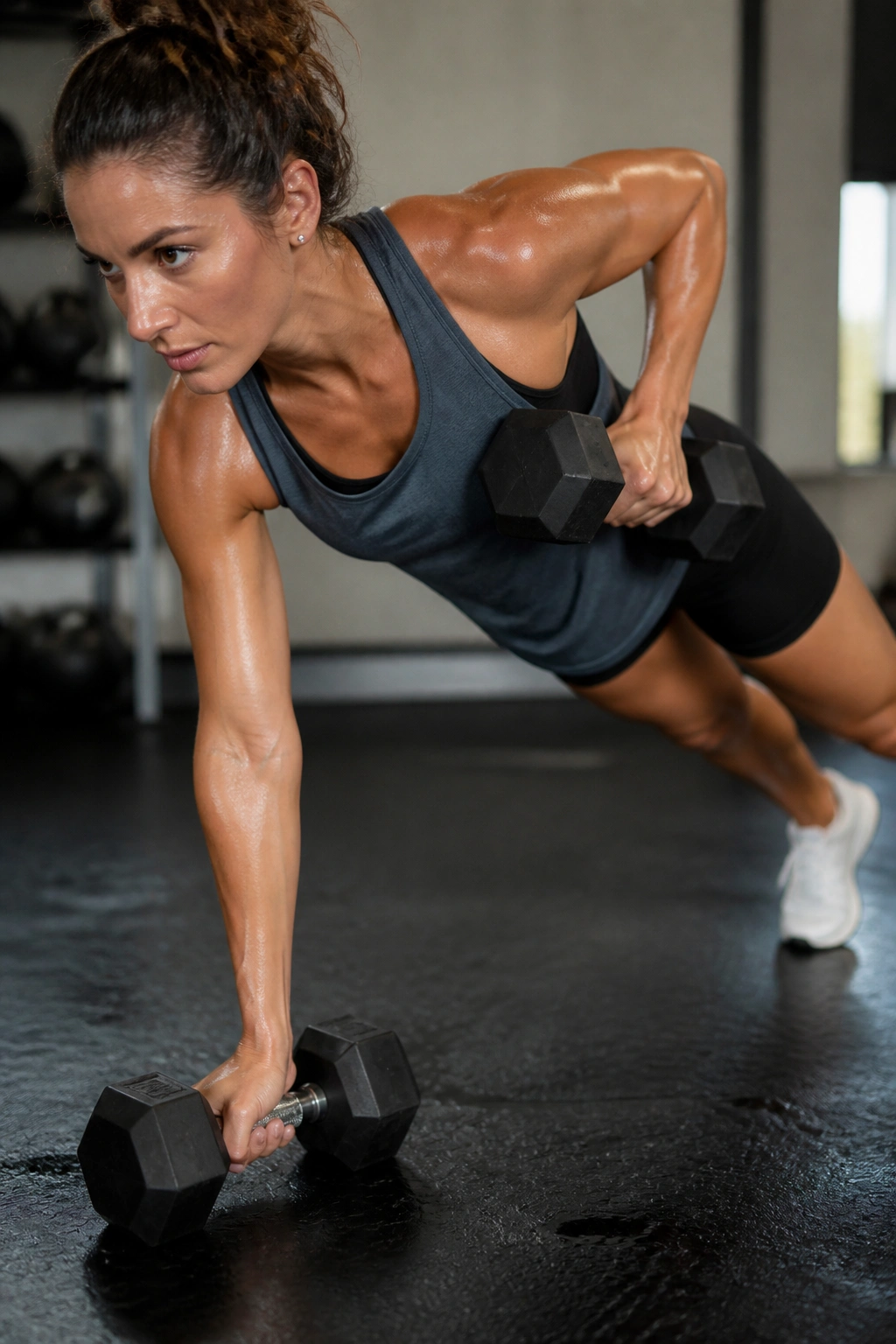
Renegade rows build back strength and core control at the same time, but only if you keep the body from twisting like a loose door hinge. That is the whole test. If the hips rock hard every time you lift a hand, the load is too heavy or the stance is too narrow.
Set the dumbbells under the shoulders, spread the feet wider than you think you need, and row one arm while the other side stays planted. The feet wide enough to calm the sway is not cheating. It is how you make the exercise work.
The row itself should be short and sharp. Pull the elbow toward the hip, pause for a beat, and lower with control. 6 to 8 reps per side is plenty when the plank position is real.
I like this one as a reminder that strength is not only about moving weight up. Sometimes it is about not moving anywhere else while you do it.
12. Kettlebell Swing
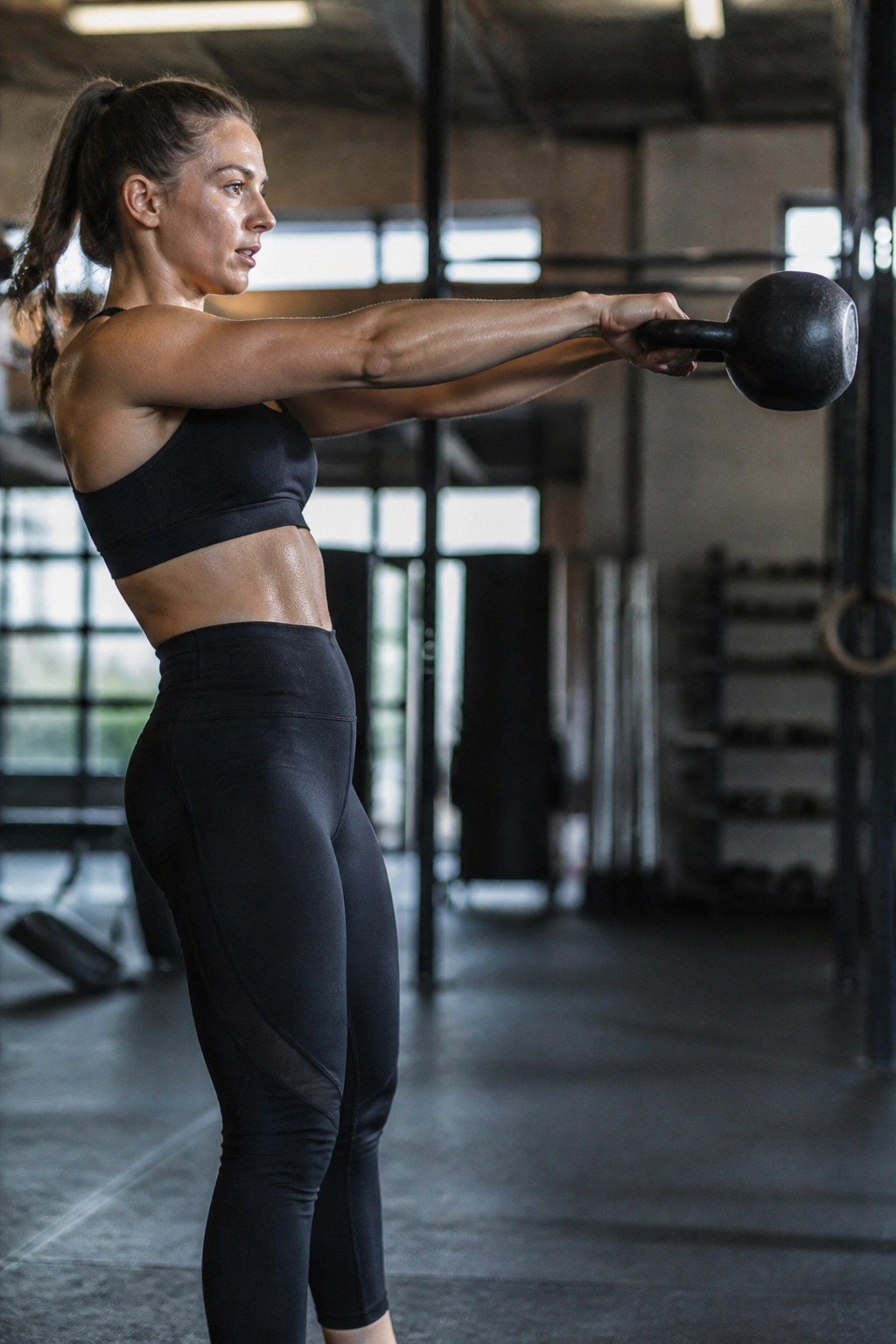
Is the kettlebell swing a leg exercise, a back exercise, or cardio? Yes. The answer is yes, which is why it keeps showing up in well-built programs.
The swing is a hinge with speed. The hips snap the bell forward, the arms guide rather than lift, and the glutes finish the rep hard at the top. If it turns into a squat, the bell probably feels too light or the hips are not sending enough force through the ground.
What Makes the Swing Worth Learning
- It trains hip power without a long setup.
- It raises heart rate fast.
- It teaches the difference between hinging and squatting.
- It works well in short sets of 12 to 20 reps.
The bell should float to chest height, not get muscled overhead. That float is the sign that the hips did the work. If the shoulders are burning more than the hamstrings and glutes, something has drifted.
Keep the movement crisp. Swings get ugly fast when people chase too many reps with tired form.
13. Bulgarian Split Squat
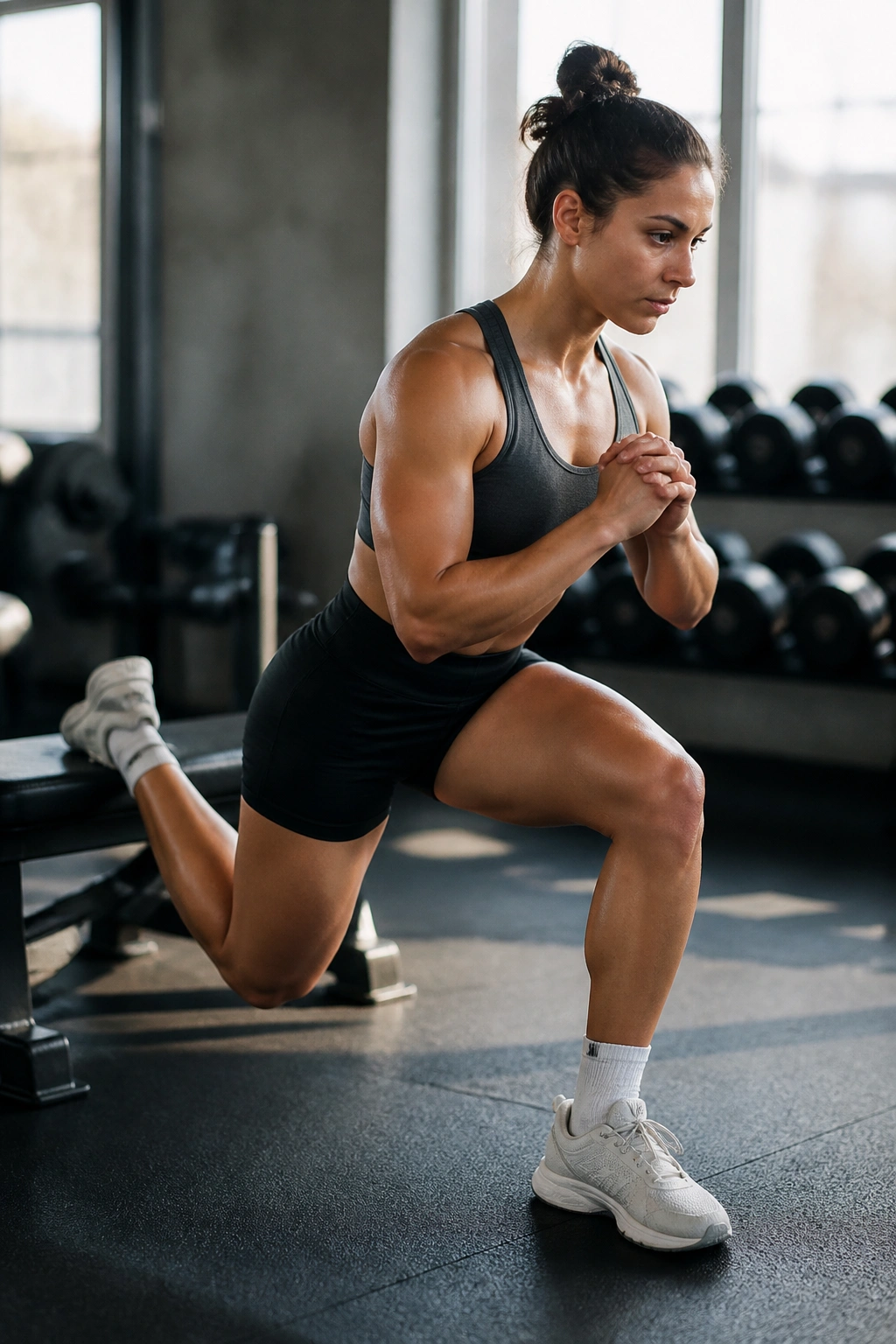
The Bulgarian split squat is one of the harshest honest exercises in this whole list. That is part of its charm. With the back foot elevated and the front leg doing almost all the work, the quads and glutes get forced into real effort without needing a giant load.
You do not need a dramatic stance here. A moderate step forward usually works better than an exaggerated one. Lower under control until the back knee comes near the floor, keep most of the pressure on the front leg, and stand back up without bouncing.
The torso can lean slightly forward if you want more glute work. Stay more upright if you want the quads to scream sooner. Both versions are useful. Both are annoying in a productive way.
3 sets of 6 to 10 reps per leg is enough for most people.
It is not glamorous. It works anyway.
14. Chest-Supported Row
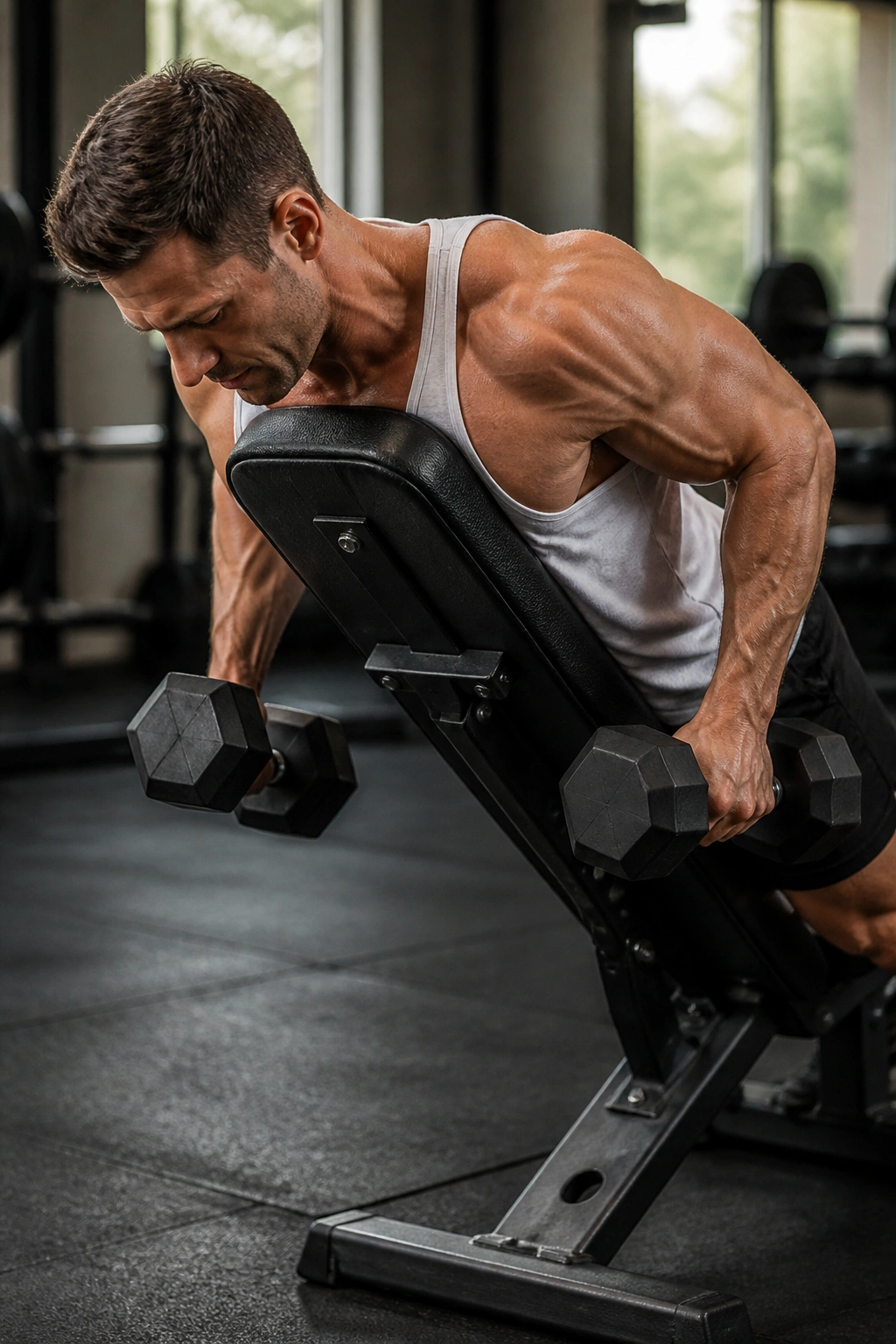
If bent-over rows leave your lower back smoked before your lats, the chest-supported row fixes the problem. That is why I reach for it often. It strips away a lot of body English and lets the upper back do the work cleanly.
Set the bench at roughly a 30- to 45-degree incline, lie chest-down, and row the dumbbells or machine handles toward the lower ribs. Keep the shoulders down away from the ears and avoid jerking the weight off the floor with momentum that never should have been there.
The support changes the feel in a good way. You can chase a stronger squeeze at the top without wondering whether the lower back will give up before the target muscles do. That makes it a useful companion to deadlifts, squats, and heavier hinge work.
- Use it when the back is already tired.
- Use it when you want cleaner upper-back volume.
- Use it when posture work needs a break from cheating.
Typical range: 3 to 4 sets of 8 to 12 reps.
15. Farmer’s Carry
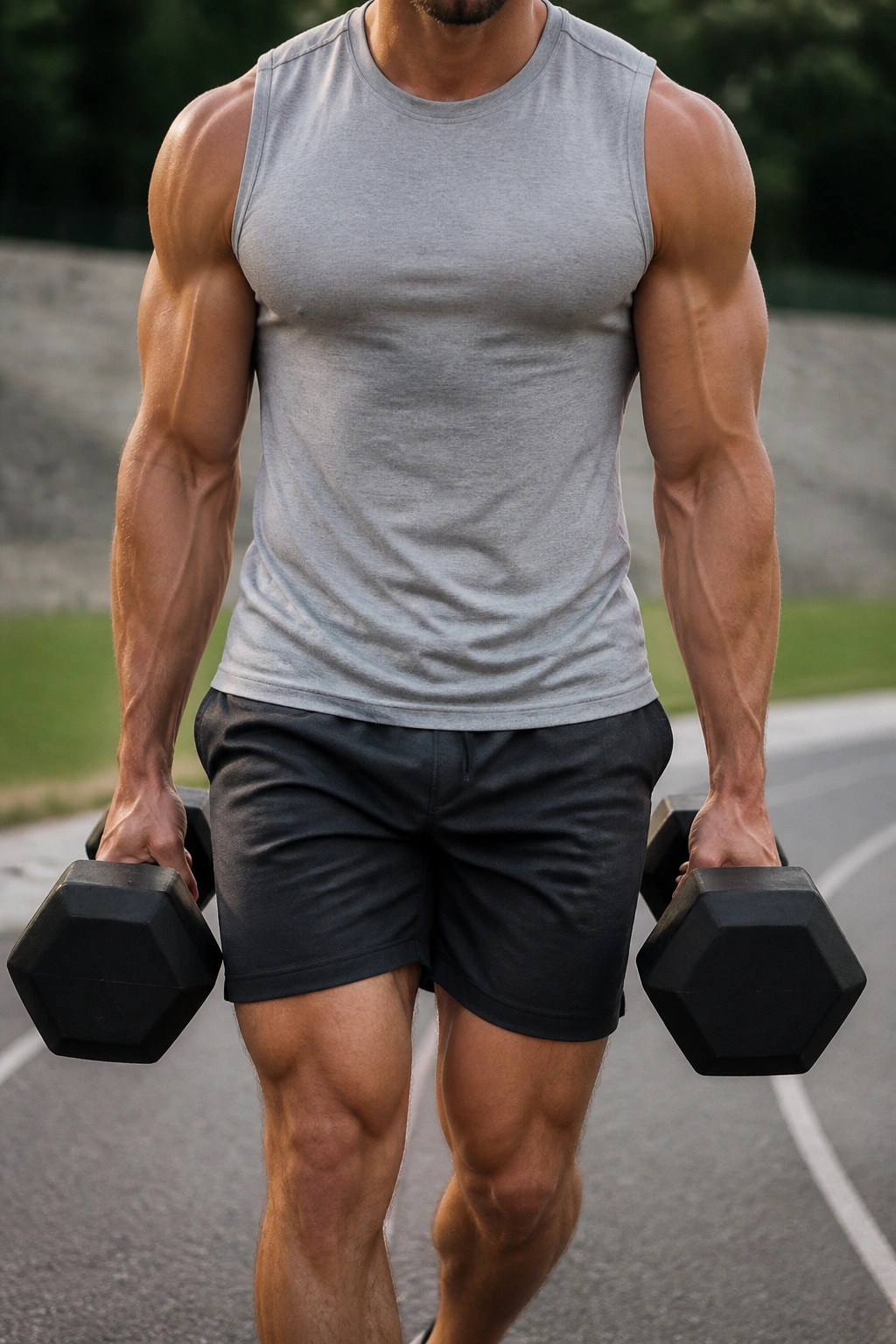
Carry heavy weights for 20 to 40 meters and your whole body starts negotiating with gravity. The grip tightens, the traps light up, the trunk braces, and the walk becomes a lesson in staying organized under load.
That is why the farmer’s carry belongs in a full-body routine. It does not look flashy, and it does not need to. It trains posture, grip, core stiffness, and even the way you walk while tired. That carryover is real.
Setup That Pays Off
- Stand tall with the shoulders stacked over the hips.
- Hold the weights at your sides without shrugging hard.
- Take short, controlled steps.
- Stop before the torso starts swaying or the grip opens.
A pair of heavy dumbbells works well. Trap bar holds work too. Start with a load you can manage for 20 meters without leaning like a shopping cart with a bad wheel.
There is something satisfying about simple work that leaves no place to hide. This is that kind of work.
16. Face Pull
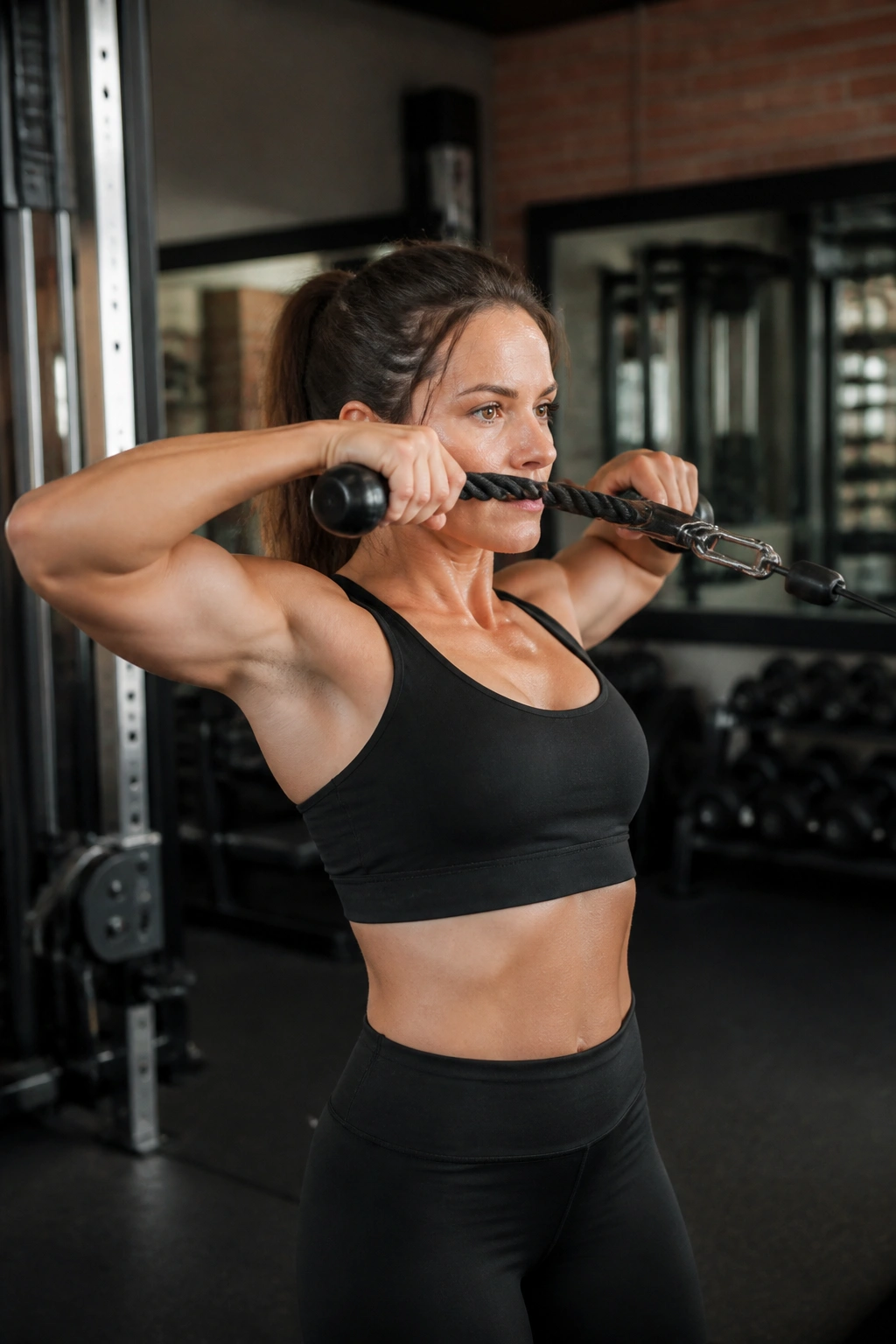
Why do so many lifters ignore face pulls until their shoulders start complaining? Because the movement looks small. It is not small at all. Rear delts, lower traps, rhomboids, and the rotator cuff all get involved when the rope is pulled toward the face with the elbows high and the shoulders under control.
Use a cable or band set around upper-chest to face height. Pull toward the nose or forehead, then finish with a slight external rotation so the hands separate and the shoulder blades move back and down. That finish matters. Without it, the exercise becomes a sloppy row.
What to Avoid
- Do not arch the lower back to fake range.
- Do not turn it into a shrug.
- Do not let the elbows drop too low.
- Keep the movement smooth, not snappy.
Useful rep range: 12 to 20 reps for 3 sets.
Face pulls are one of those accessories that look easy until you do them with real control. Then the rear shoulders start talking.
17. Pallof Press
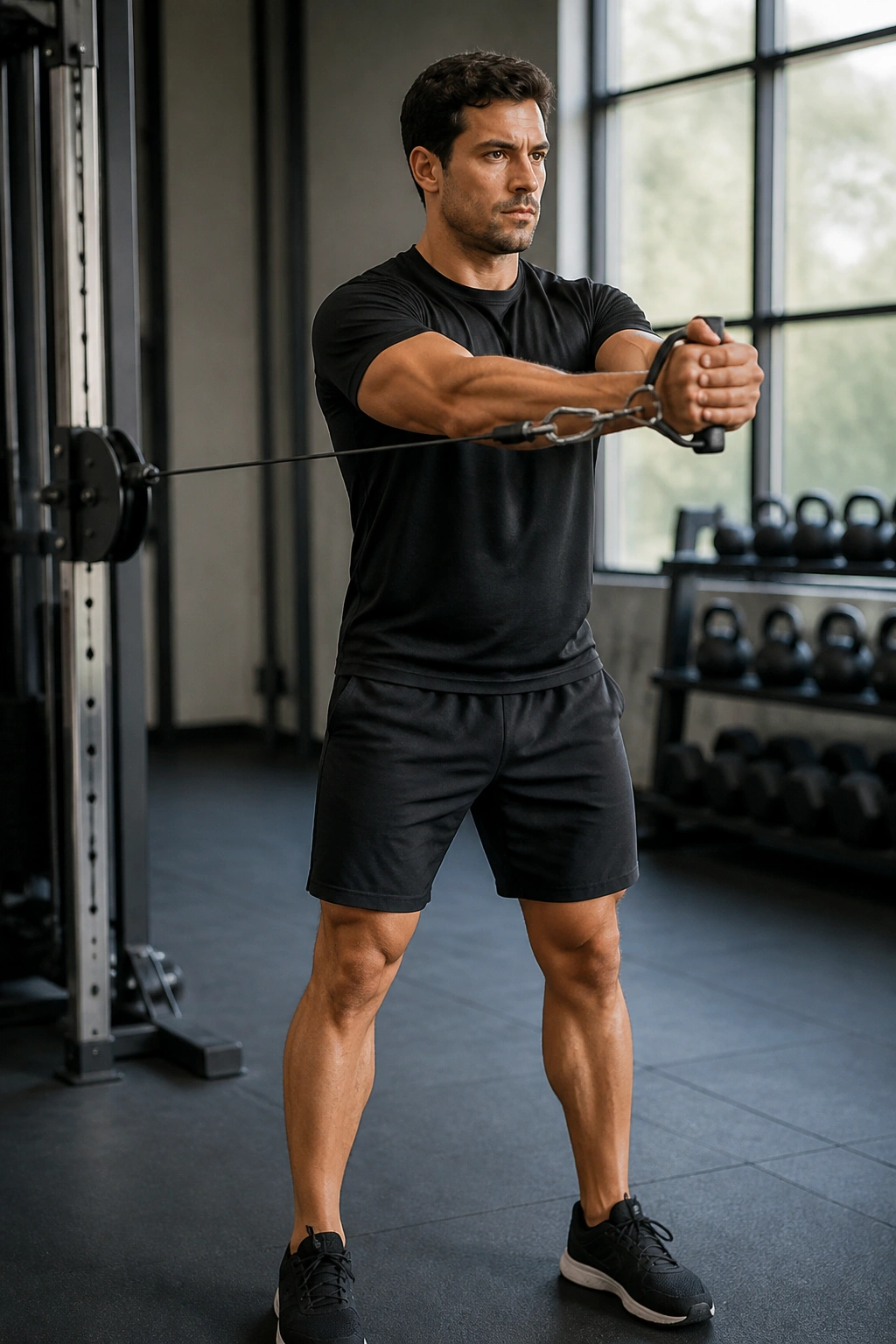
The Pallof press is one of the best anti-rotation exercises on the planet, and it looks almost too simple. A cable or band pulls you sideways, and your job is to press the handle straight out without letting your torso twist an inch.
That sounds dull. It is not dull when the resistance starts trying to yank your ribs out of alignment.
Stand with the cable at chest height, brace the midsection, press the handle away from the chest, hold for a second or two, then bring it back without wobbling. The feet stay planted. The hips stay square. The ribs stay stacked. That is the rep.
This move carries over to carries, presses, swings, and even heavy squats because it teaches the trunk to stay put while the arms or legs move. 3 sets of 8 to 12 reps per side is plenty.
It is quiet work. Quiet work matters.
18. Trap Bar Deadlift
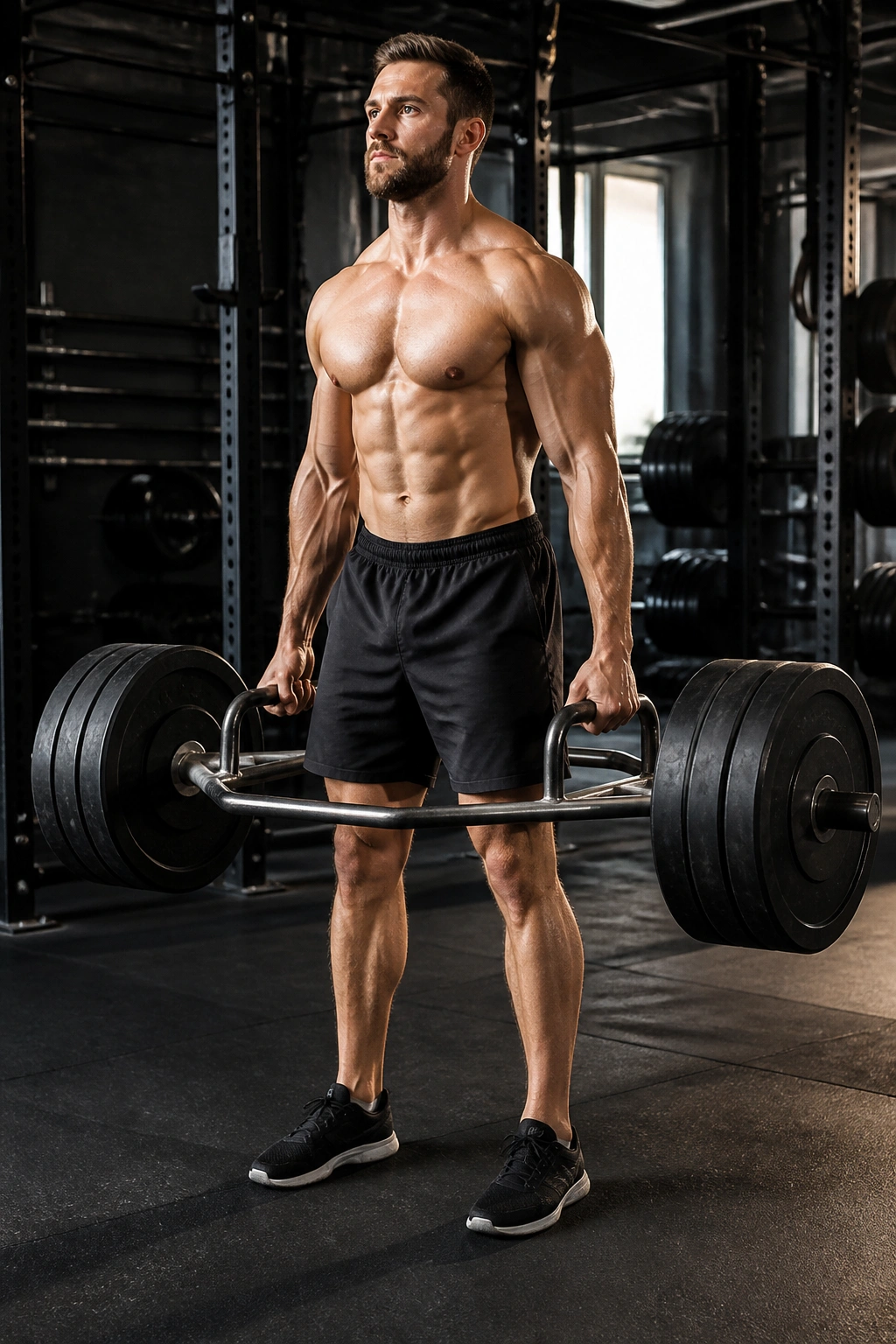
If you want one heavy lift that feels athletic rather than awkward, the trap bar deadlift is hard to beat. The handles sit at your sides, the torso stays a little more upright than in a straight-bar deadlift, and the legs can drive hard without the same level of lower-back strain that some people feel with conventional pulling.
The setup should be tight. Stand in the middle of the bar, take a breath, brace, and wedge yourself into the handle position before the plates leave the floor. Then push the floor away and stand tall. No yanking. No half-grip panic. No rounding because the weight looked lighter in the air than it did on the floor.
A clean trap bar deadlift feels decisive. The rep leaves the floor, the hips and knees extend together, and the lockout happens without a weird lean-back at the top. 3 to 5 sets of 3 to 6 reps works well if strength is the goal; 3 sets of 6 to 8 is plenty if you want steadier muscle-building work.
If a program had room for only one big lower-body pull, this would be near the top of my list. It is direct, repeatable, and hard to fake — which is exactly why it helps build that full-body look people are after.
