



Rounded shoulders rarely happen in one dramatic week. They creep in through desk time, steering wheels, long phone sessions, and gym work that keeps the front of the body busy while the upper back sits there getting ignored.
Upper back exercises for better posture help because posture is built by the muscles that hold your shoulder blades, ribcage, and neck in a sane position. That usually means the rhomboids, mid and lower traps, rear delts, and the small rotator cuff muscles that keep the shoulders from rolling forward.
The tricky part is that posture is not one muscle and one fix. You need pulling strength, a little thoracic mobility, and some control work that teaches your body how to stay tall when the load is light and the reps are clean.
A band, a pair of dumbbells, a cable station, and a wall cover most of the useful work, and the first few moves are the ones I reach for most often.
1. Face Pulls
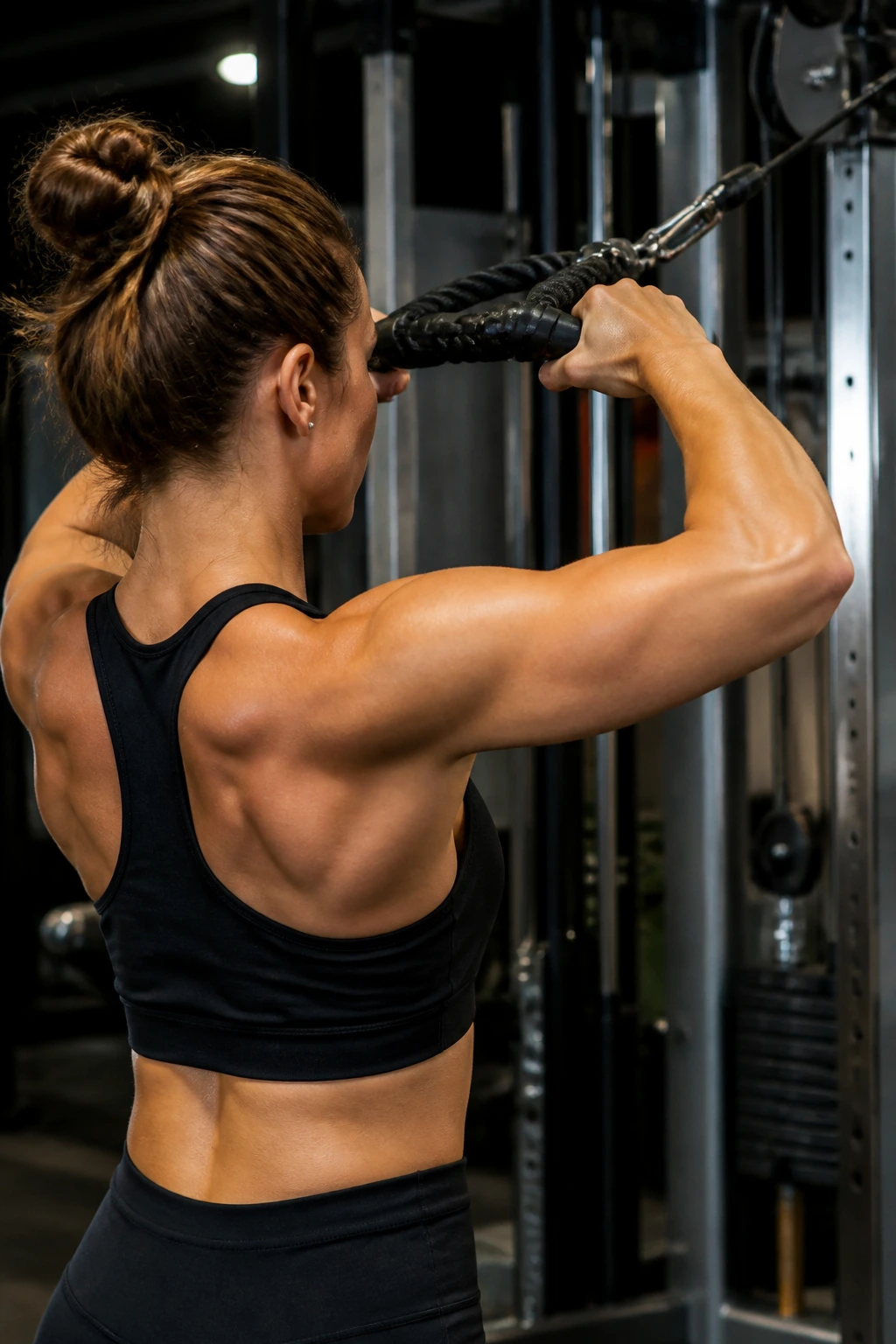
Face pulls are one of the cleanest upper back exercises for better posture when your shoulders want to live in front of your chest. A rope attachment, a cable set around eye level, and a controlled pull toward the forehead can wake up the rear delts, mid traps, and rotator cuff without turning the whole thing into a shrug-fest.
Why They Work
The magic is in the angle. When you pull the rope apart as it comes toward your face, you’re asking the shoulder blades to move back and slightly down while the upper arms stay out of the way. That’s a useful pattern for anyone who spends hours rounded forward, because it trains the body to hold a more open chest without cranking the lower back.
Keep the weight honest. Too heavy, and the elbows flare, the ribs pop up, and the movement turns into a jerky half-row. Two to three sets of 12 to 20 reps is a good place to start, with a one-second squeeze at the end of each rep.
- Set the cable at forehead height or a little higher
- Pull the rope toward the bridge of your nose or eyebrows
- Keep the wrists neutral and the neck long
- Let the shoulder blades move, but do not jam them together hard
Watch this: if you feel it mostly in your traps and neck, the load is too high or you’re shrugging at the top.
2. Band Pull-Aparts
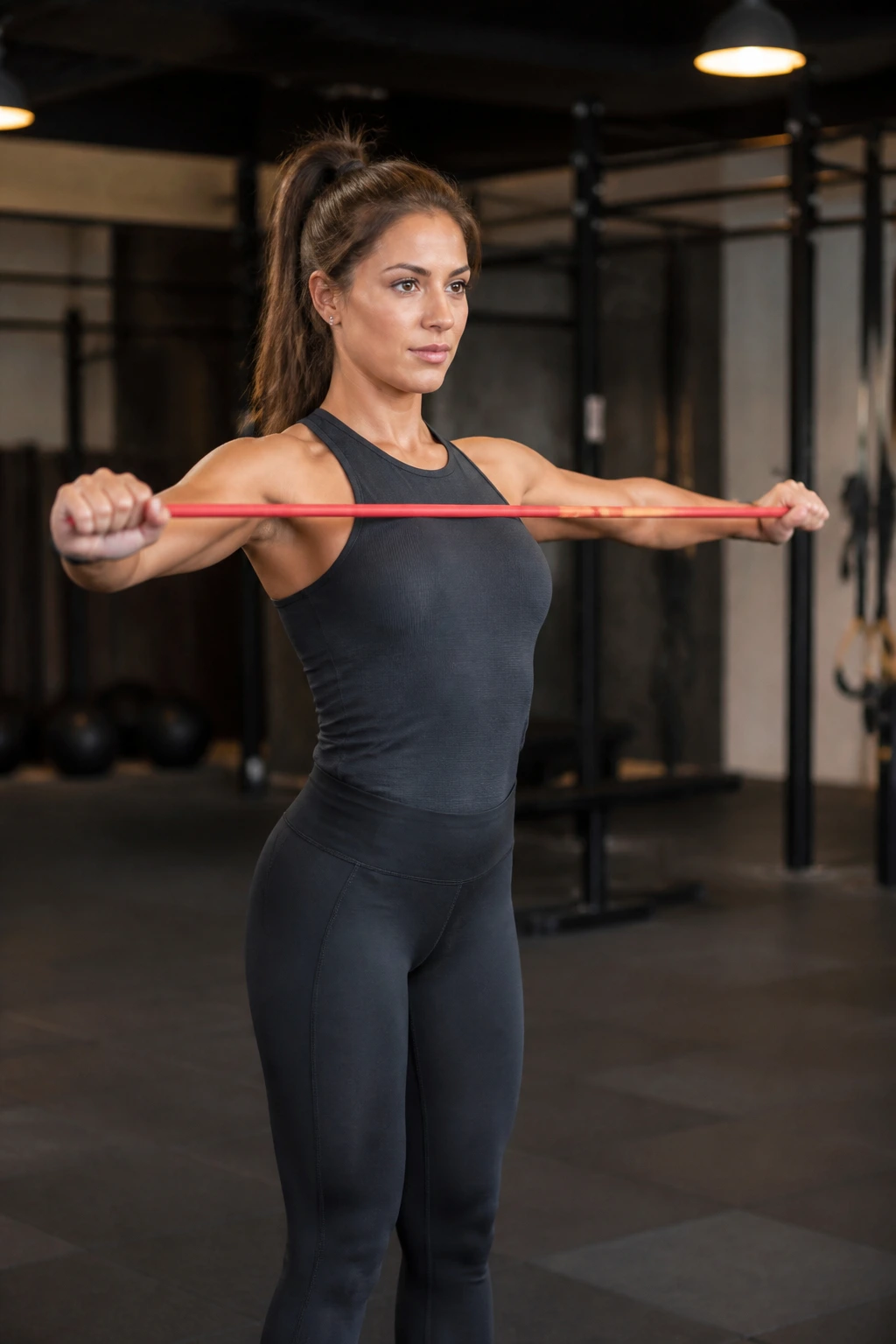
A thin band can do more for sloppy posture than a heavy dumbbell day if you use it often. Band pull-aparts are simple, cheap, and easy to sneak into a warm-up, a work break, or a short home session when you don’t feel like getting fancy.
The reason they matter is that they train horizontal abduction and shoulder blade control with very little joint stress. That makes them useful for the rear delts and mid back, but also for the little postural habits that get sloppy when you sit too long. Palms up changes the feel. Palms down changes it again. Both are worth trying.
Start with 2 to 4 sets of 15 to 30 reps and keep the movement crisp. No jerking. No leaning back. No shoulder shrugging.
Short reps are fine here.
If your band is too stiff, you’ll cheat. If it’s too light, you’ll sail through the motion and learn nothing. The sweet spot is the one where the last five reps make your upper back work, but your neck still feels quiet.
3. Wall Angels
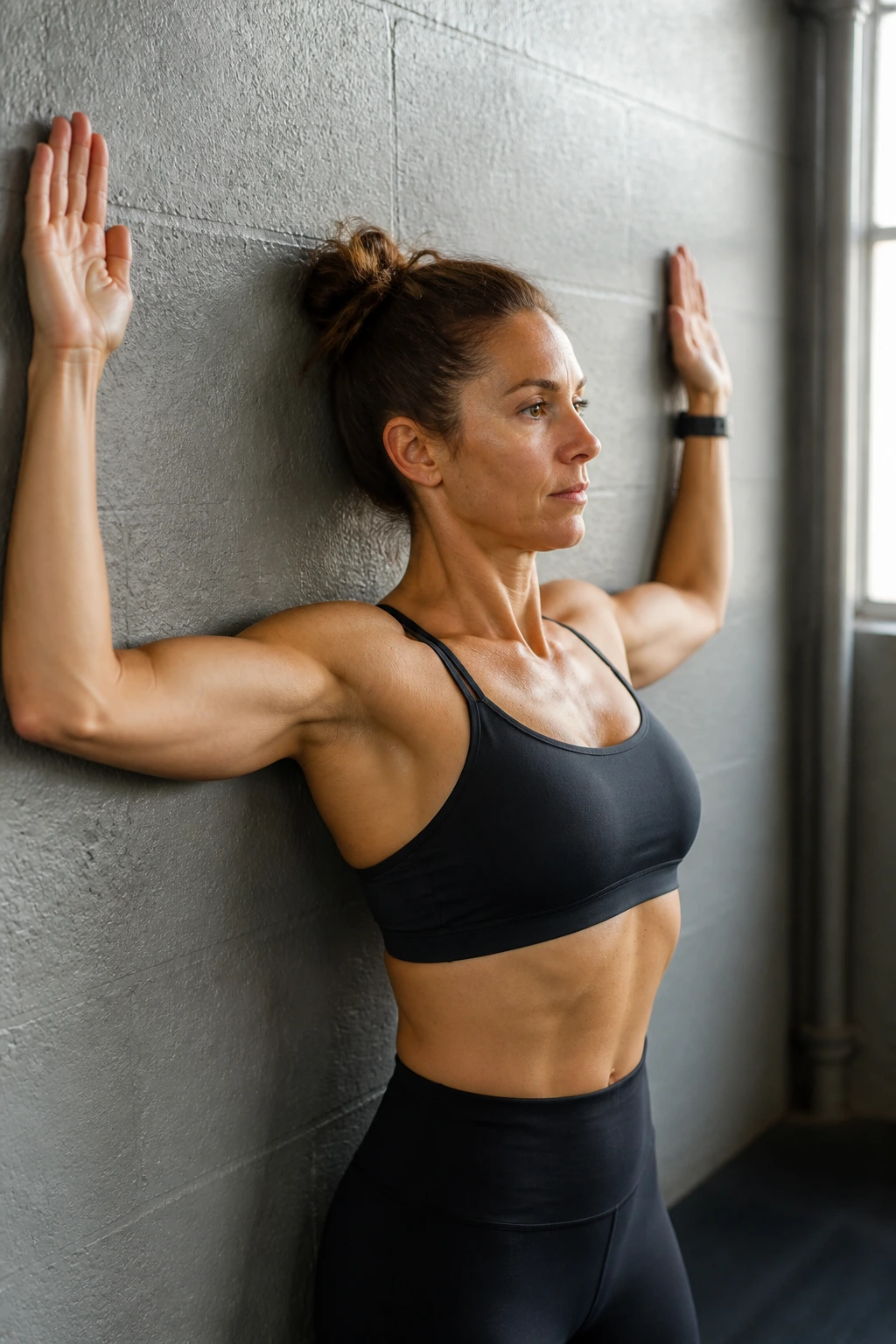
Why do wall angels feel awkward at first? Because they expose the exact parts of your upper body that have gotten lazy. If your ribs flare, your shoulders round forward, or your upper back refuses to move, the wall makes it obvious fast.
Stand with your back against the wall, feet a few inches out, and let your lower ribs settle down instead of arching. Then raise your arms into a “goalpost” shape and slide them upward as far as you can without losing contact. A perfect wall angel is less about looking graceful and more about staying honest.
How to Use It
Start with 2 sets of 6 to 10 slow reps. Move like you’re trying not to wake somebody in the next room.
- Keep the chin gently tucked
- Let the forearms slide only as far as control allows
- Don’t force the hands flat if the ribs start popping up
- Breathe out as the arms rise, so the rib cage stays stacked
If the wall version is too hard, do floor angels. Same idea, less cheating room.
That little downgrade is often smarter.
4. Thoracic Extensions on a Foam Roller
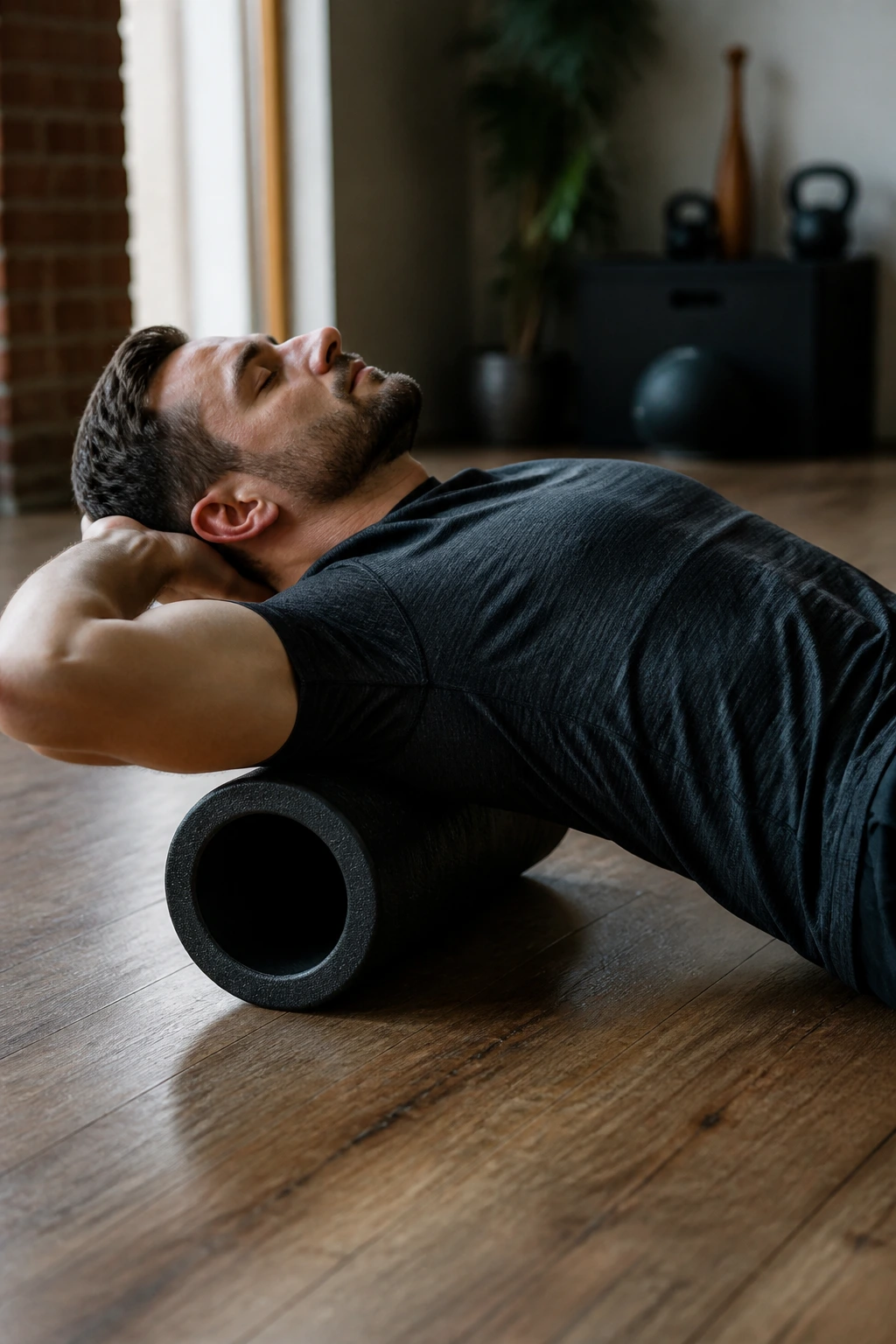
The foam roller under your mid-back feels odd for about twenty seconds, then your spine does something it probably has not done enough of lately. Thoracic extension matters because a stiff mid-back forces the shoulders and neck to steal motion they were not built to own.
Lie on the roller with it across the middle of your back, support your head lightly, and lean back over it without turning the move into a lower-back arch. The action should happen in the upper and middle thoracic spine, not the lumbar area. Slow breaths help here. They keep the ribs from bracing like a board.
Use 4 to 6 slow breaths in 2 or 3 spots, then move the roller a few inches and repeat. If you rush it, you miss the point.
Do not crank your neck. That’s the ugly habit that turns a useful mobility drill into a headache.
This is one of the few posture drills that works well before rows, carries, or wall work because it opens the space those exercises need.
5. Chest-Supported Dumbbell Rows
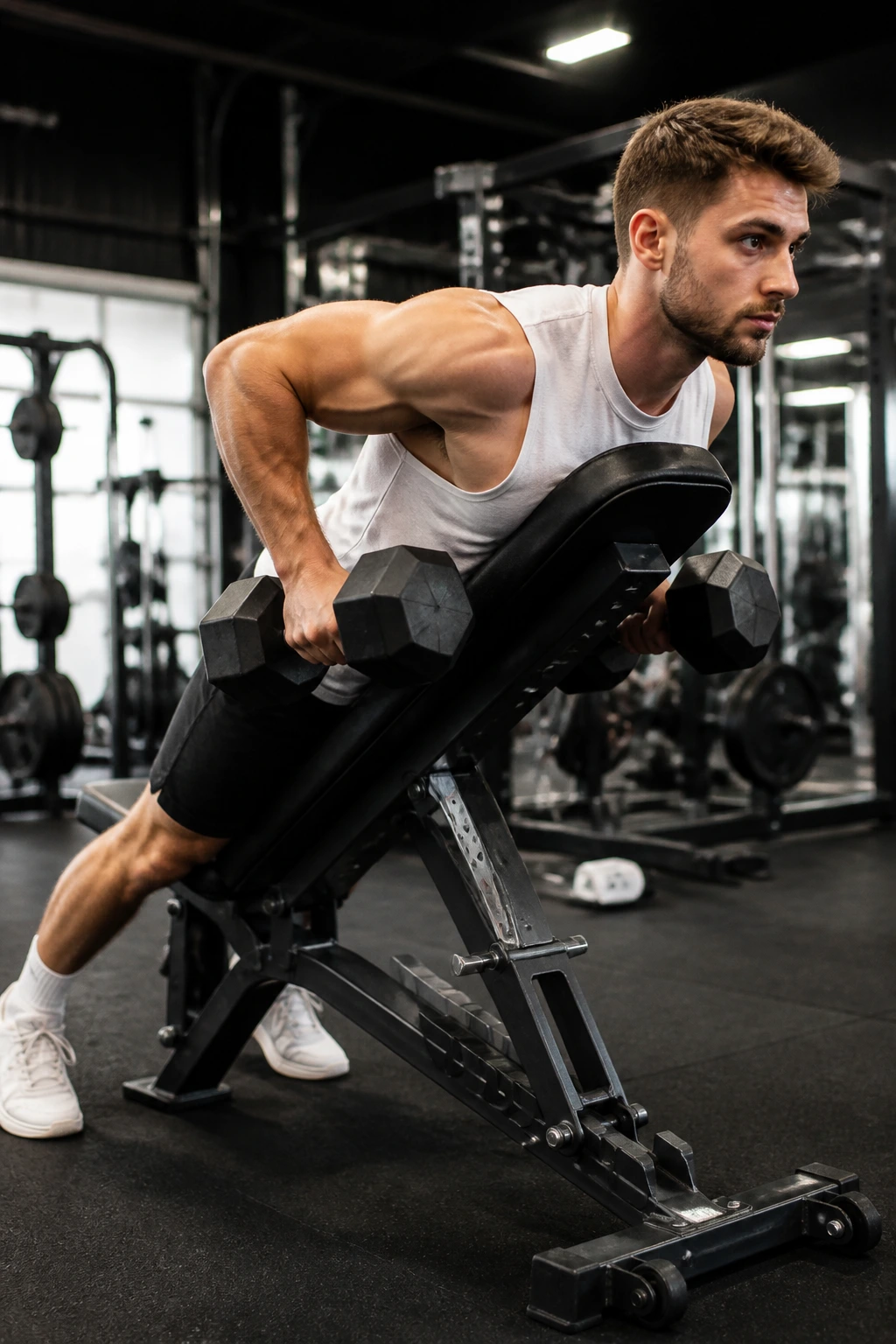
If bent-over rows turn your lower back into the bottleneck, chest-supported rows are the fix I’d use first. The bench removes most of the cheating, which means your upper back has to earn the rep instead of your hips and low back hauling the load around.
Set an incline bench to about 30 to 45 degrees, lie chest-down, and row the dumbbells toward the side of your ribs. Keep the neck long and the elbows slightly out from the body so the rear delts and mid traps get a say. If you tuck the elbows too hard, the lats take over and the posture benefit drops a bit.
What to Aim For
- 3 to 4 sets of 8 to 12 reps
- 2-second squeeze at the top
- Slow lower on the way down
- Use a load you can control without bouncing off the bench
The nice thing about this movement is that it teaches the upper back to stay active without asking the rest of the body to fake it. That matters more than people think. Good posture under load is partly about strength, but it’s also about refusing to cheat every rep.
6. Seated Cable Rows with Pause
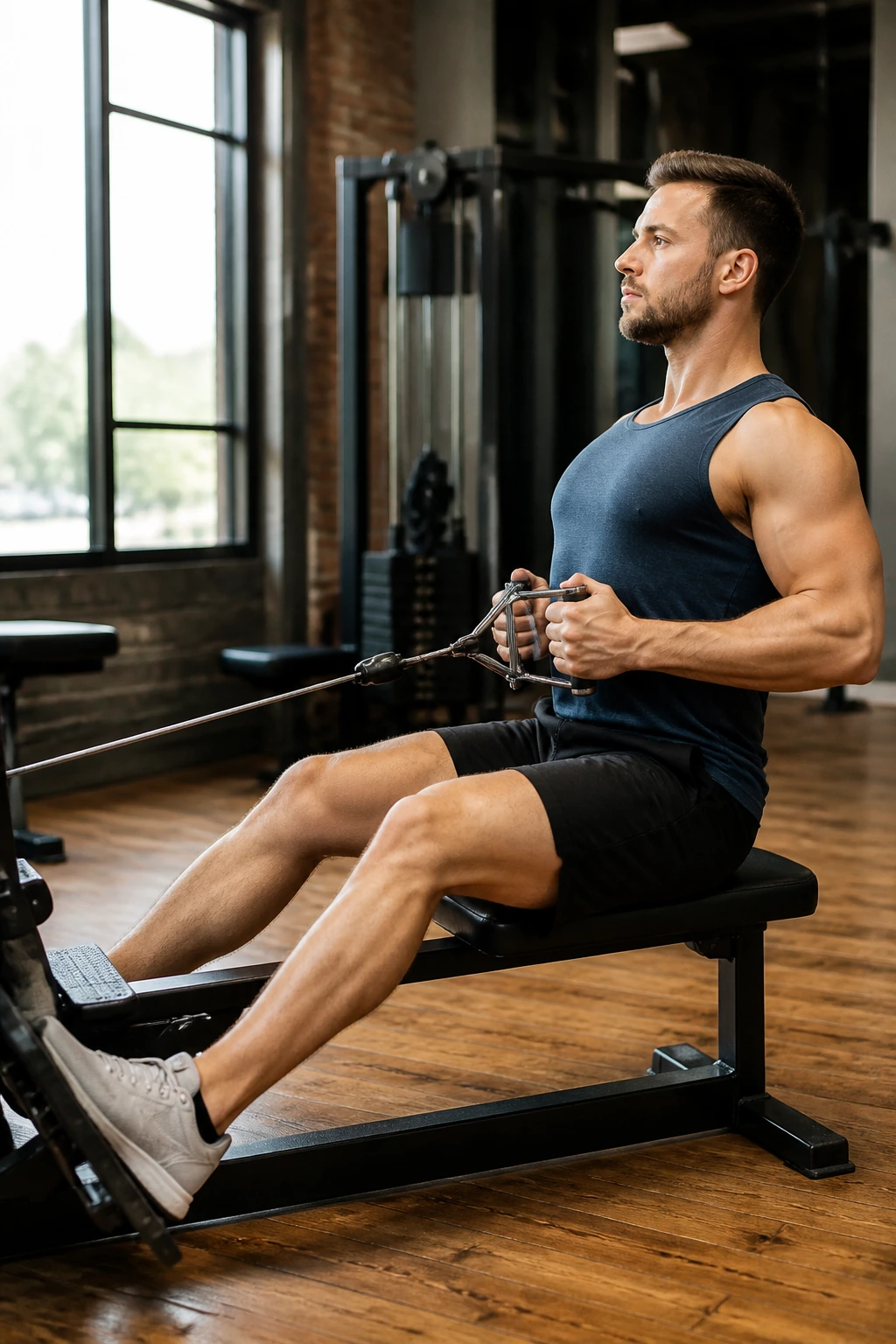
A fast row can look hard and still teach almost nothing. Pause reps clean that up. When you hold the cable row for a beat or two, you force the shoulder blades to do the job instead of letting momentum do the talking.
Sit tall, plant the feet, and start with the shoulders relaxed rather than jammed back. Pull the handle toward the lower ribs or the base of the sternum, then hold the end position for 2 full seconds. On the way back, let the arms extend slowly so the shoulders don’t snap forward.
That slow return is part of the work.
Use a neutral grip if your shoulders like it, or a wider handle if you want a little more upper-back feel. Three sets of 10 to 12 reps is enough for most people. More isn’t always better here; sloppy reps multiply fast.
If the torso rocks back and forth, lower the weight. If the neck tightens, soften the grip. The whole drill should feel like control, not a tug-of-war.
7. Reverse Flyes
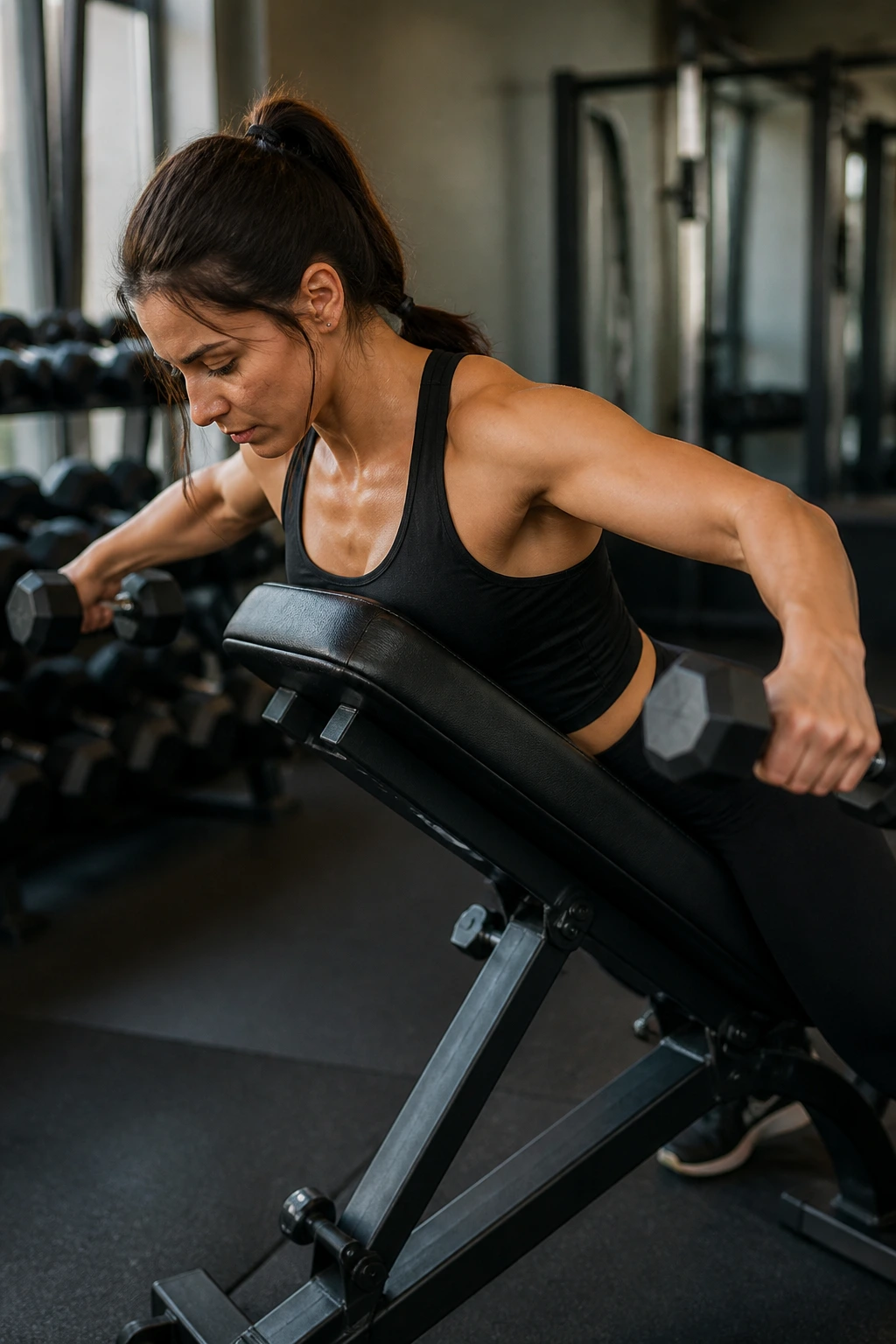
Reverse flyes are the kind of exercise that looks tiny until the last third of the set. Then the rear delts start talking, the mid back joins in, and you realize how much quiet work the upper back does just to keep the shoulders from drifting forward.
You can do them bent over, but I prefer chest-supported reverse flyes on an incline bench when posture is the goal. The bench takes the lower back out of the equation and lets you move the arms through a clean arc. Keep a soft bend in the elbows and think about opening the arms from the shoulders, not flinging the hands backward.
The load should stay light. Two to three sets of 12 to 15 reps is enough. If you need to swing, it’s too heavy.
The most common mistake is turning the move into a trap shrug. Don’t. The neck should stay long, the shoulders should stay away from the ears, and the upper back should do the slow, gritty work of holding position.
Small movement. Big payoff.
8. Prone Y Raises
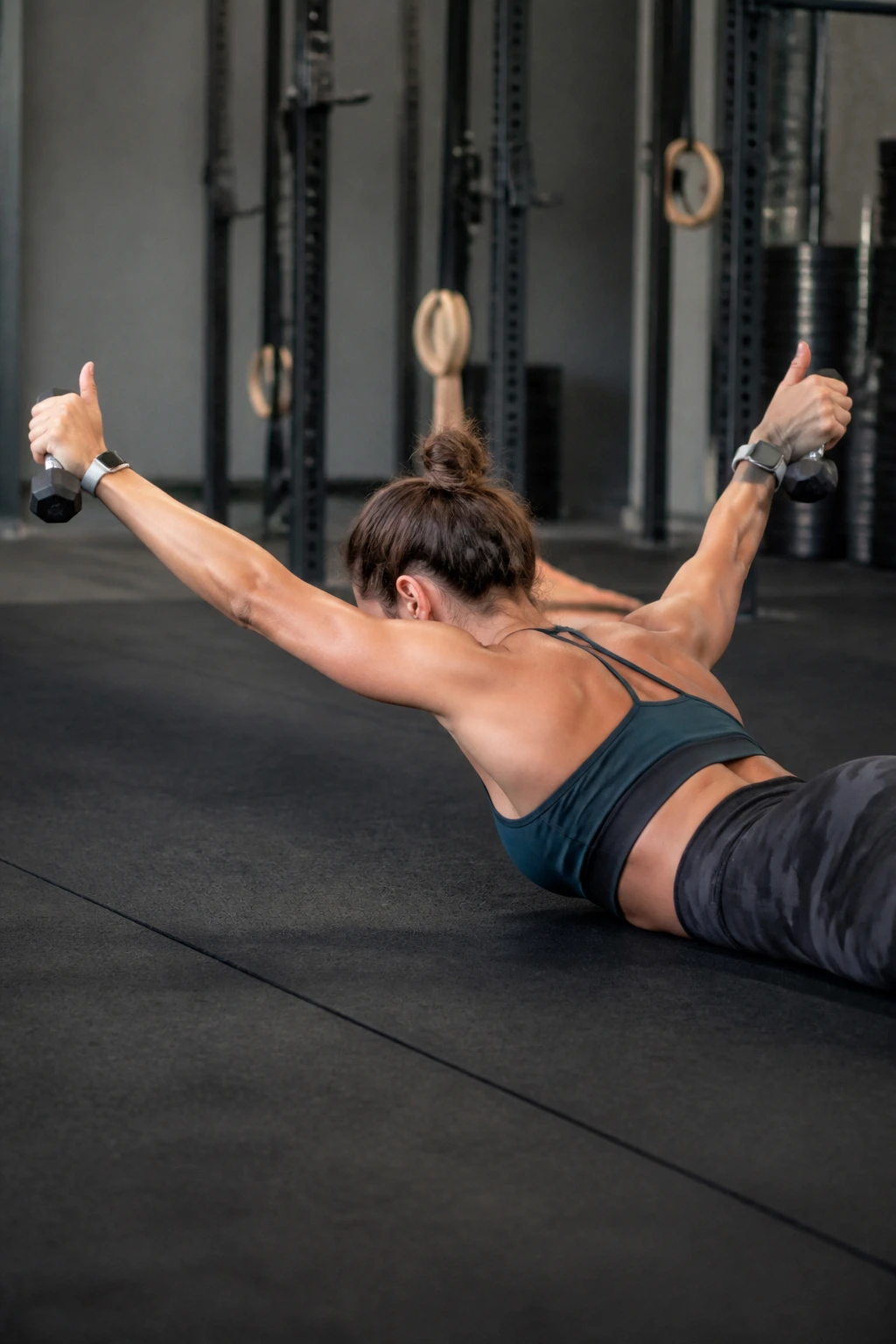
Why do Y raises show up in so many smart upper-back routines? Because they hit the lower traps, and lower traps are often the missing piece when someone’s shoulders sit forward all day. You do not need a lot of weight here. You need control.
Lie face down on an incline bench or on the floor and reach the arms into a shallow Y shape, thumbs pointing up. Lift a few inches, pause, and lower with care. The motion is small, but it should feel precise. If your upper traps burn first, the load is too much or your shoulders are creeping upward.
How to Make Them Honest
- Start with no weight or 1- to 3-pound dumbbells
- Keep the chin slightly tucked
- Lift the arms only as high as control allows
- Hold the top for 1 second
- Stop when the neck starts helping
Two sets of 8 to 12 reps is plenty for most people. You’re not trying to move the biggest dumbbells in the room. You’re trying to give the lower part of the shoulder blade a job it can actually finish.
9. Prone T Raises
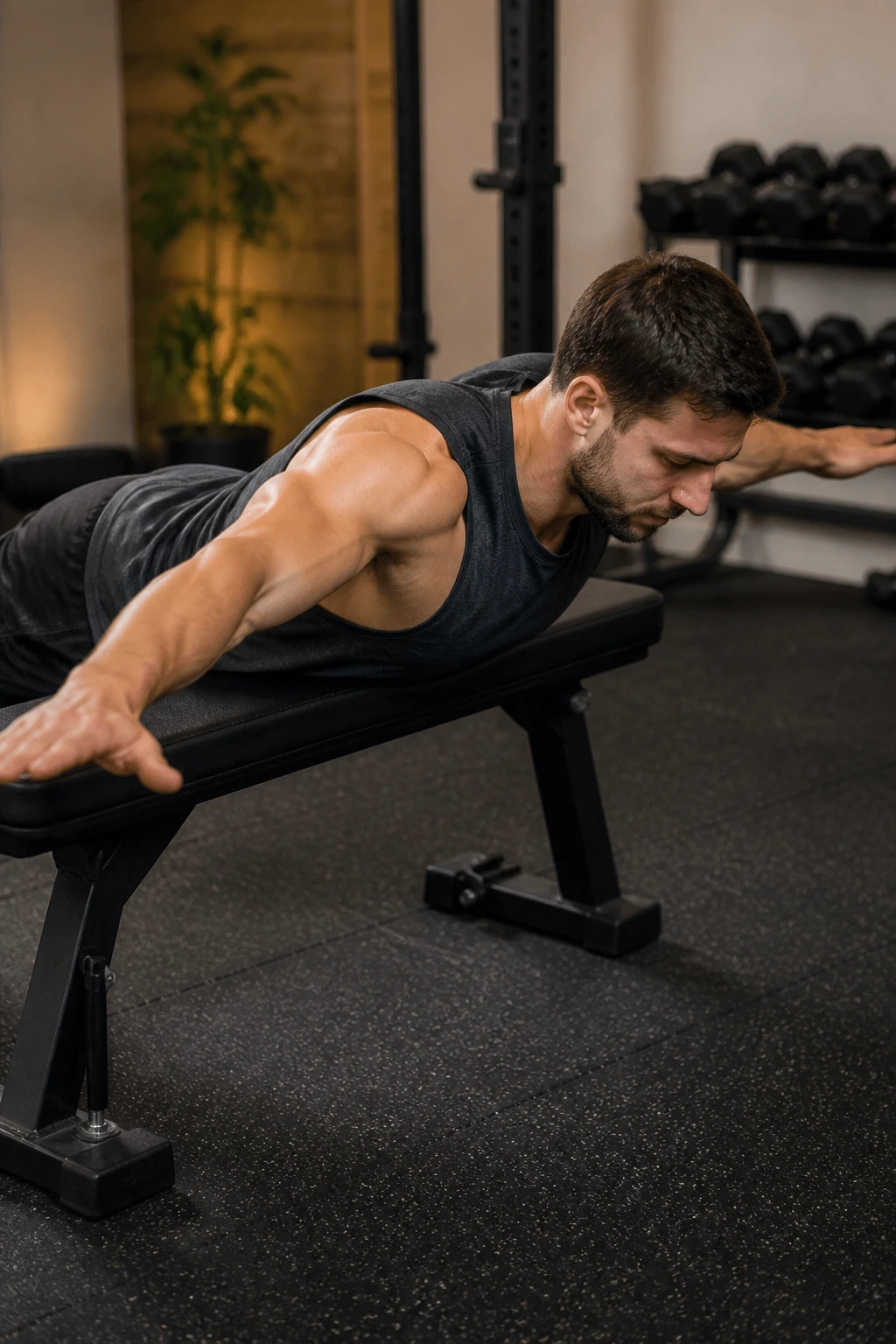
The T raise is a small move that catches a lot of the sloppy stuff a row misses. With the arms out to the sides in a T shape, you train horizontal abduction and mid-trap control in a way that feels direct and honest.
Lie chest-down on a bench or floor, palms facing down or slightly forward, and raise the arms until they line up with the shoulders. That’s enough. Higher is not better. Higher usually means the neck joins in, the ribs flare, and the whole point gets fuzzy.
What you want is a feeling across the back of the shoulders and between the shoulder blades, not in the top of the neck. Two to three sets of 10 to 12 reps works well, with a slow lower and no swinging.
Compared with reverse flyes, T raises usually feel a little more centered in the upper back. That makes them a neat companion exercise rather than a replacement. If one of them feels easier on your joints, use that one more often. The goal is consistency, not variety for its own sake.
10. Scapular Pull-Ups
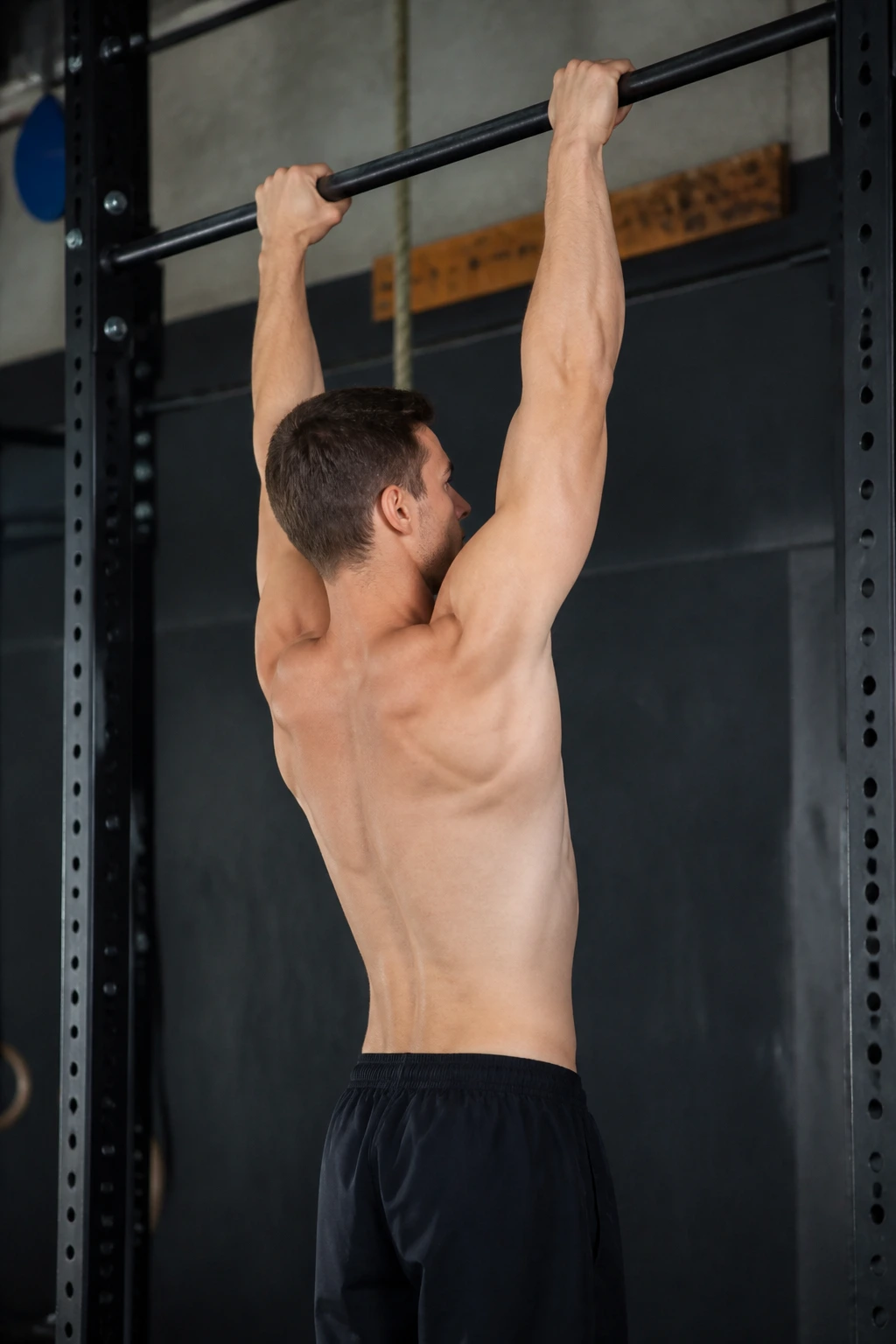
You can train posture on a pull-up bar without doing a single full pull-up. Scapular pull-ups are the proof. They teach the shoulder blades to move down and up under control, which matters a lot if your upper back tends to feel stuck or your shoulders live too close to your ears.
Hang from a bar with straight elbows, then gently pull the shoulders down away from the ears without bending the arms. Let them rise back up under control. That is the whole rep. Small, clean, and more useful than it looks.
Use a box or a band if a full hang feels too much. Three sets of 5 to 8 reps is enough at first. The movement should feel like a small shrug in reverse, not a wild swing.
No yanking.
If you feel a pinch in the front of the shoulder, back off and shorten the range. If you can’t keep the ribs from flaring, keep the feet lightly on a box until the pattern feels steadier.
11. High Rows
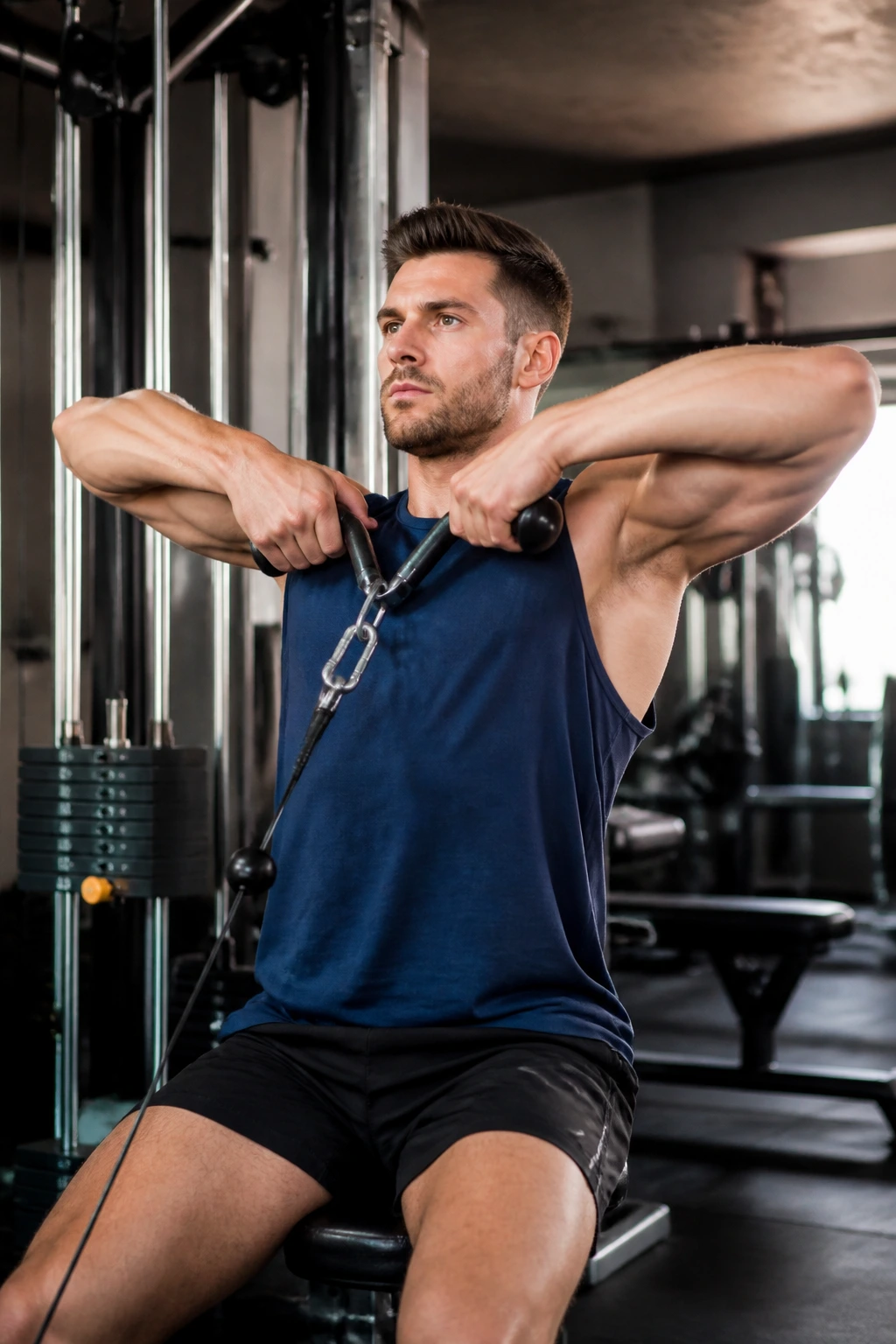
Unlike a tucked-elbow row, high rows give the rear delts and upper back more of the load. That elbow path matters. It changes where the work goes and makes the exercise feel closer to the way your shoulders should move when you’re trying to stand and sit with less slump.
Use a cable, machine, or even bands. Pull the handles toward the upper chest with the elbows traveling out at roughly 45 to 70 degrees from the torso. Keep the chest tall, shoulders down, and the neck relaxed. If you drag the shoulders up toward the ears, the whole thing gets ugly fast.
Set the Angle
A slightly higher pull usually shifts more work toward the upper back and rear delts. A lower pull moves the stress toward the lats. For posture, the higher path is usually the better choice.
- 3 sets of 10 to 12 reps
- 1-second squeeze at the top
- Slow return on every rep
- Stop the rep before your torso starts heaving
This is a strong option when you want a row that feels a little more upright and a little less gym-bro heavy. It has a place.
12. Farmer’s Carries
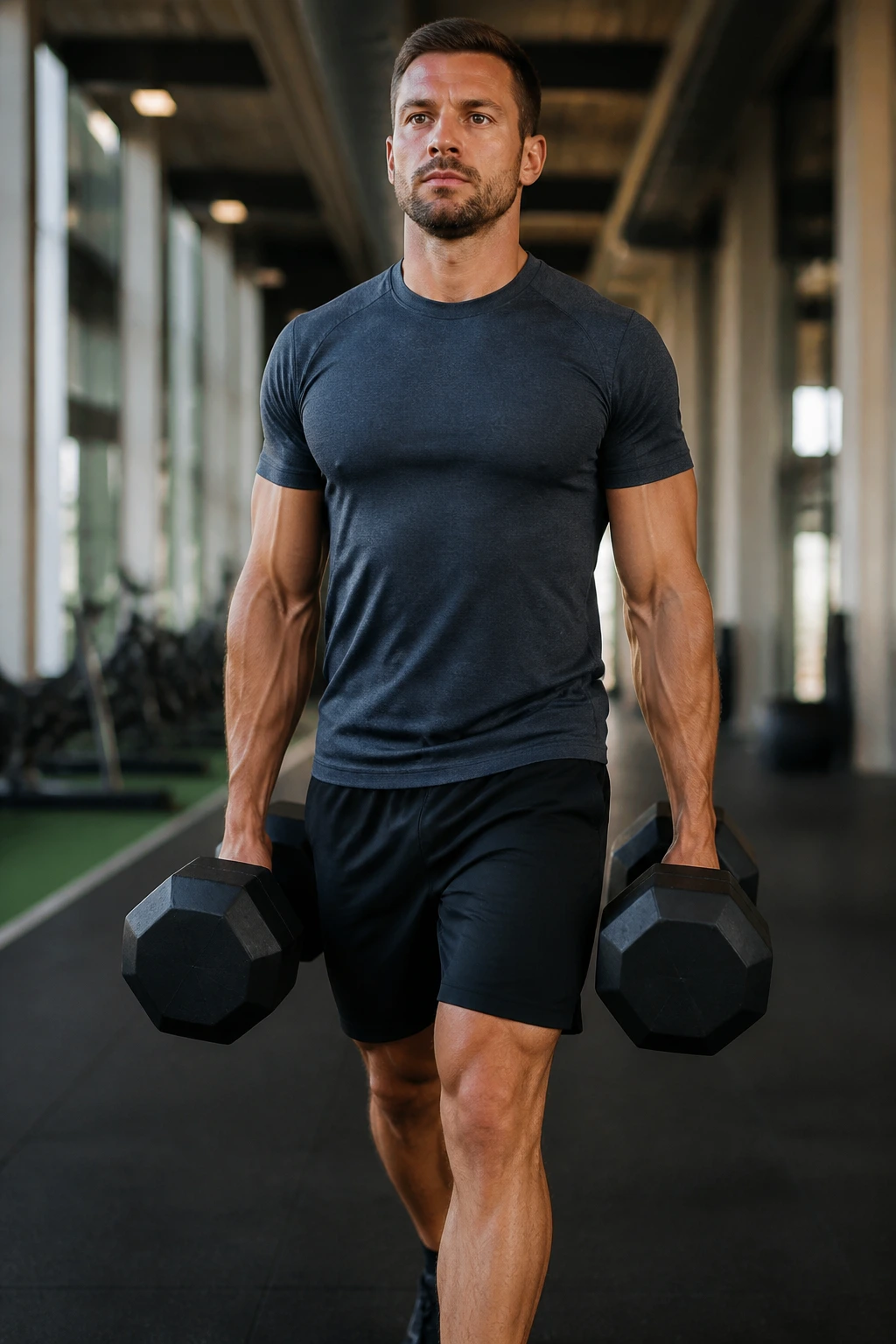
Pick up a pair of heavy dumbbells and walk 20 meters, and you learn fast which side likes to collapse. Farmer’s carries expose posture leaks in a way almost nothing else does. They force the upper traps, grip, obliques, and mid-back to work together while you keep breathing and moving.
Stand tall before the first step. Then keep that same shape while you walk. Shoulders should not be yanked back hard; they should sit quietly in a strong place. The neck stays long. The ribs stay stacked. The weight is doing the challenging part, not your ego.
A good starting point is 4 to 6 carries of 20 to 40 meters. If space is limited, use 20- to 30-second walks instead.
- Try a double carry for overall bracing
- Use a suitcase carry on one side if you want to catch side-to-side weakness
- Keep the steps even and unhurried
- Stop when the torso starts leaning or the shoulder slips
This is one of those drills that looks plain and works anyway.
13. Cobra Holds
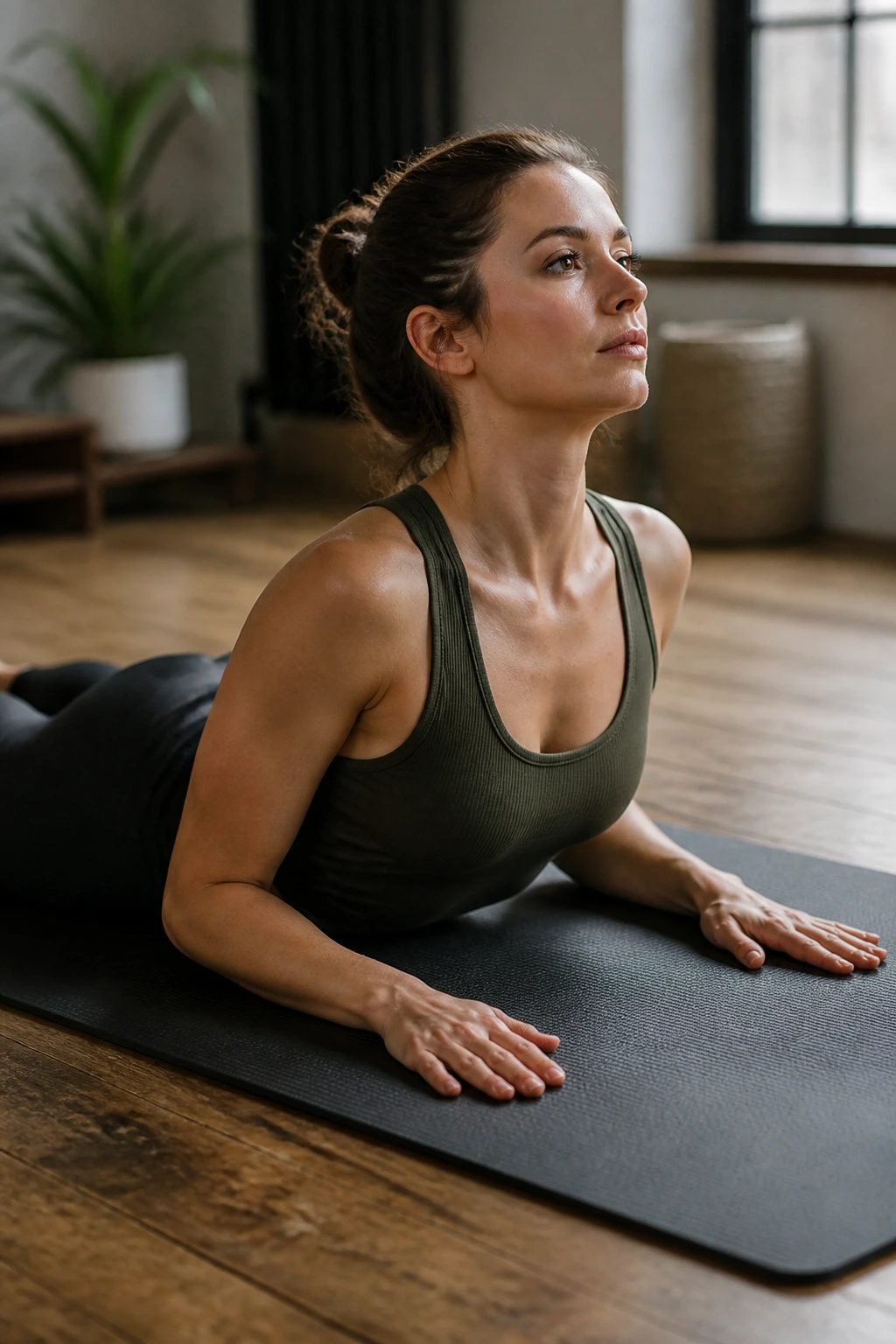
A cobra hold looks mild on the floor. It is not mild when you do it well. The point is to hold a small extension through the upper back while the shoulder blades stay gently drawn back and down, which gives the spine a break from the usual rounded shape.
Lie face down, lift the chest a few inches, and reach the arms back so the shoulder blades stay active. The neck should stay long. The lower back should not be doing all the arching. If the low back takes over, lower the chest a bit and tighten the reach through the upper spine instead.
Hold for 15 to 30 seconds, rest, then repeat for 3 to 5 rounds. Breathe quietly through the nose if you can. That helps keep the ribs from flaring and makes the hold more useful.
This is not a max-strength move. It’s a position drill. The posture payoff comes from holding a cleaner line than your body usually chooses.
14. Wall Slides with Lift-Off
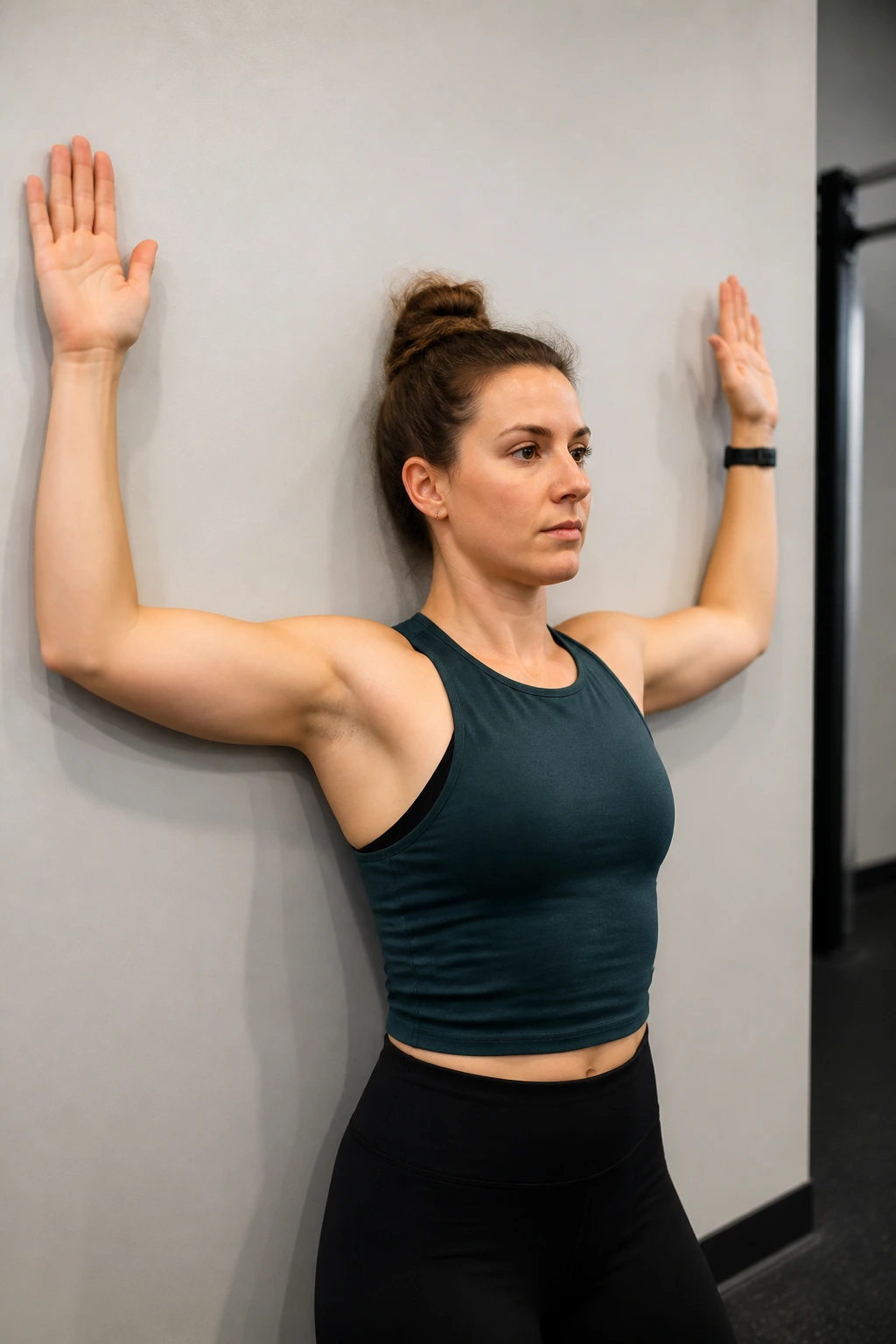
The lift-off is the point. A plain wall slide is fine, but the tiny moment when your hands leave the wall is where the upper back has to prove it can control the shoulder blade without losing the rib cage.
Stand with your back against the wall, ribs down, and forearms up in a goalpost shape. Slide the arms upward slowly. At the top, if you can keep the spine quiet, let the hands peel off the wall by about an inch. Then return just as slowly.
What to Watch For
- Keep the lower ribs from popping forward
- Don’t force the forearms flat if the shoulders hate it
- Move through a clean, pain-free range
- Use 2 to 3 sets of 5 to 8 reps
The lift-off should feel small and controlled, not dramatic. If the shoulders shrug, shorten the range. If the neck starts gripping, slow the tempo down. Wall slides are sneaky that way; they expose sloppy movement in a hurry.
When they’re done well, they leave the upper back feeling more open and the shoulders sitting in a better spot for the rest of the session.
15. Dead Hangs with Active Shoulders

A dead hang is not laziness on a bar. The active version asks your upper back to keep the shoulders organized while gravity does some of the talking. That can be useful if your shoulders feel crowded, your lats are tight, or your grip work needs a little posture-friendly cleanup.
Hang from a pull-up bar and let the body lengthen. Then, instead of fully sinking into the shoulders, keep a light sense of engagement so the shoulder blades do not dump all the way up. Think long neck, quiet ribs, and a slight pull of the shoulders away from the ears. That’s the sweet spot.
Start with 3 to 5 holds of 10 to 20 seconds. If the full hang irritates the shoulders, keep one foot on a box or use a band for support. There is no prize for grinding through a bad hang.
This pairs well with scapular pull-ups, which makes sense. One teaches control from a still position; the other teaches a small movement on top of that control. Together, they give your upper back a better chance of holding you up when the day gets long and your posture starts to sag.
