



Tight hips make the first few minutes of a workout feel clumsy. Tight shoulders do the same for reaching, pushing, and even carrying groceries. Flexibility exercises at home are a lot more useful than people give them credit for, especially when you don’t have a studio corner, resistance bands, or a big block of free time.
A wall, a towel, and the floor cover most of what matters. Some stretches belong before training as moving drills. Others work better after a workout, when the body is warm and a longer hold feels natural. That difference matters more than people think.
I’ve always liked home flexibility work because it rewards honesty. If a stretch feels sharp, it’s too much. If you have to hold your breath, you’ve gone past useful range. Start high, start slow, and work through the body in a way that feels clean rather than heroic.
1. Neck Side Bend to Ease Desk Stiffness
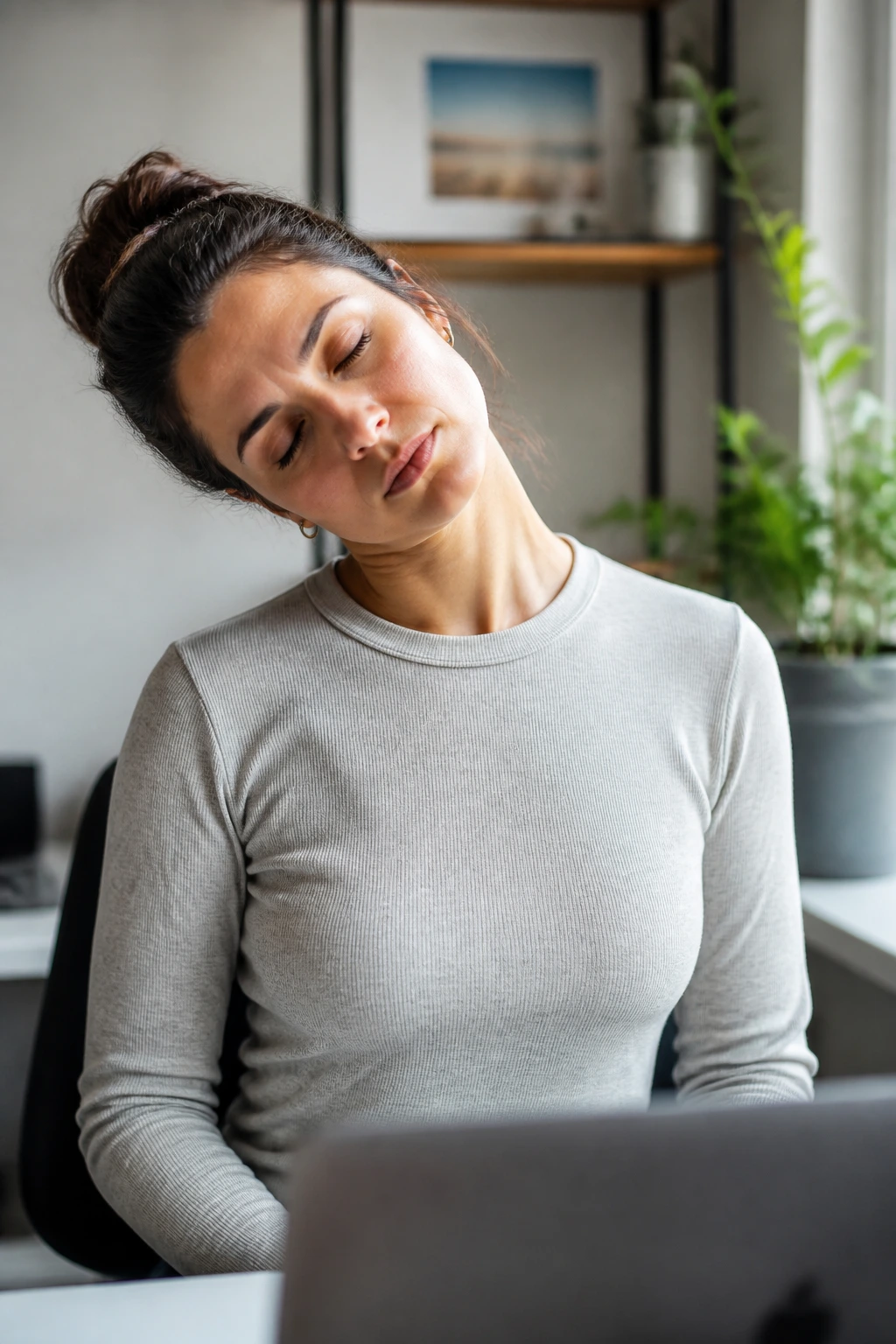
If you spend time at a screen, this is the place to start. The neck rarely complains on its own; it usually shows up carrying the load from shoulders that have been shrugged up for hours.
Sit tall, let one ear drift toward one shoulder, and keep the opposite shoulder heavy. Hold for 15 to 20 seconds per side, or use it as a short reset between long work blocks. Do not pull on your head with your hand. The goal is length, not a tug-of-war.
What it should feel like
- A mild line of stretch from jaw to shoulder
- No pinching behind the ear
- No strain in the throat or jaw
That little move can also help before upper-body training, especially if you wake up feeling stiff through the top of the traps. If one side feels much tighter, give it an extra round. Tiny corrections beat forcing symmetry.
2. Cat-Cow for a Loose, Moving Spine
Want a stretch that wakes up your back without making you sweat? Cat-cow does that job well. It’s one of the best flexibility exercises at home because it moves the whole spine instead of parking you in one static shape.
Start on hands and knees. On the exhale, press the floor away and round the back. On the inhale, let the belly soften and the chest widen as you arch gently. Six to eight slow rounds is enough for most people.
Tempo matters
The pause is the useful part. One second at the top, one second at the bottom, and you can feel the joints separate a little more with each pass. If you rush it, the whole thing turns into a shrug with better branding.
This works before squats, deadlifts, or any session where the lower back feels sleepy. It also works after sitting for too long, which is probably when most people need it most. Easy. Low drama. Useful.
3. Thread the Needle for Upper-Back Rotation
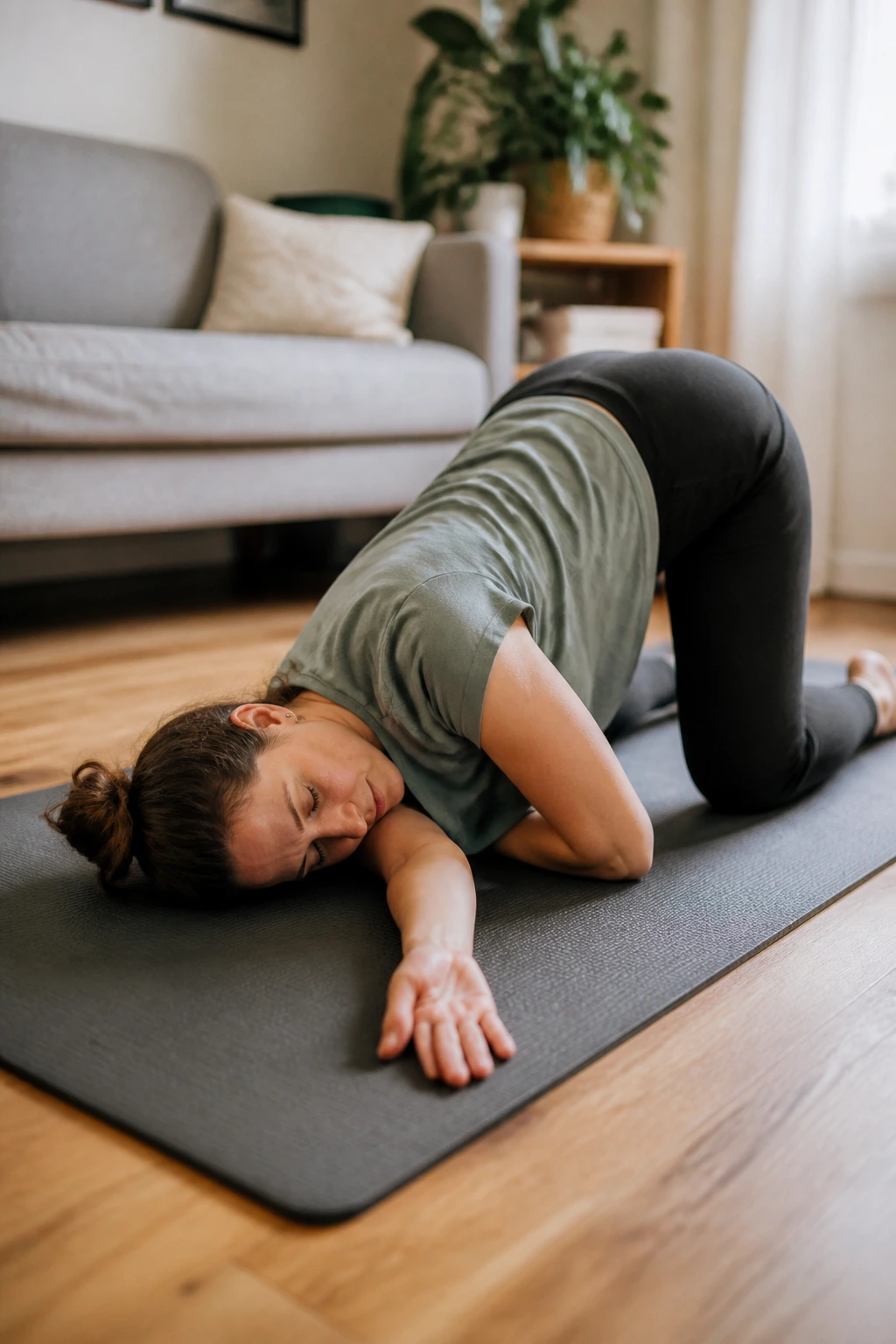
After rows, push-ups, or a day spent hunched over a keyboard, the upper back can feel welded in place. Thread the needle opens that area without asking much from the rest of the body.
From hands and knees, slide one arm under your torso, palm up, and let the shoulder and side of the face rest on the floor. Keep the hips stacked over the knees if you can. Stay for 20 to 30 seconds per side, or take three slow breaths and repeat once.
A few cues that matter
- Reach the top arm forward if you want more space through the shoulder
- Keep weight on the supporting hand if the shoulder feels cranky
- Back off if the lower back starts twisting more than the upper back
That last point matters. This stretch should live in the thoracic spine and shoulders, not turn into a lower-back wobble. The better you keep the shape clean, the more useful it becomes.
4. Doorway Chest Stretch for Rounded Shoulders
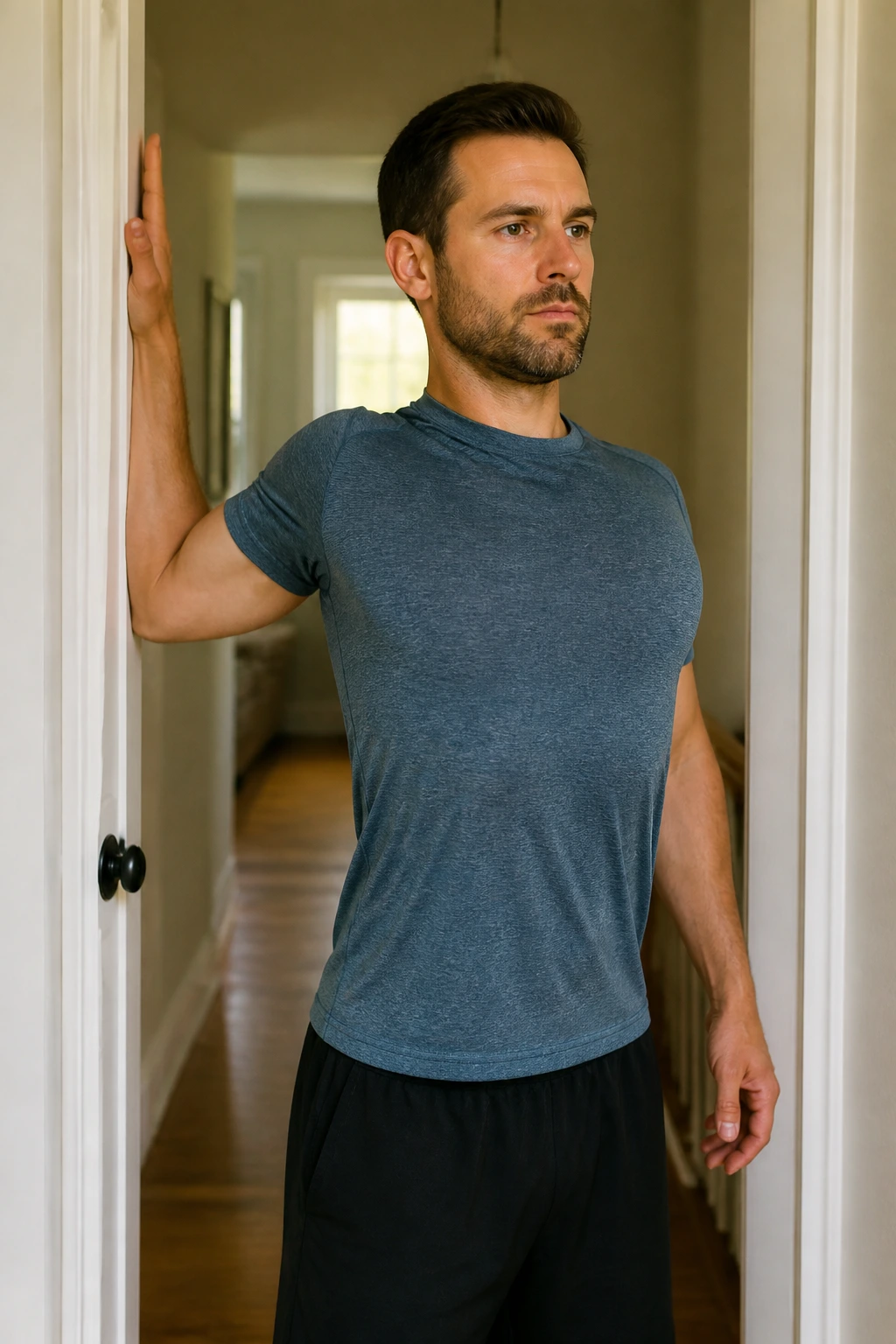
Rounded shoulders love this stretch. If your upper body spends a lot of time curled forward, the front of the chest often feels shorter than it should.
Stand in a doorway, bend one elbow to about 90 degrees, and place the forearm on the frame. Step through just enough to feel the chest open, then stop there. A small step is often enough. A forearm at shoulder height hits the upper chest and front shoulder; dropping the arm a little lower shifts the feel down the pec line.
The piece people miss is the ribs. Keep them from flaring. If the lower back arches hard, you’ve turned a chest stretch into a spine compensation. Hold 20 to 40 seconds per side after training, or shorten it to about 10 to 15 seconds when you want a lighter warm-up.
I like this one because it gives quick feedback. Either the chest opens, or it doesn’t. No guessing.
5. Child’s Pose with Side Reach for the Lats
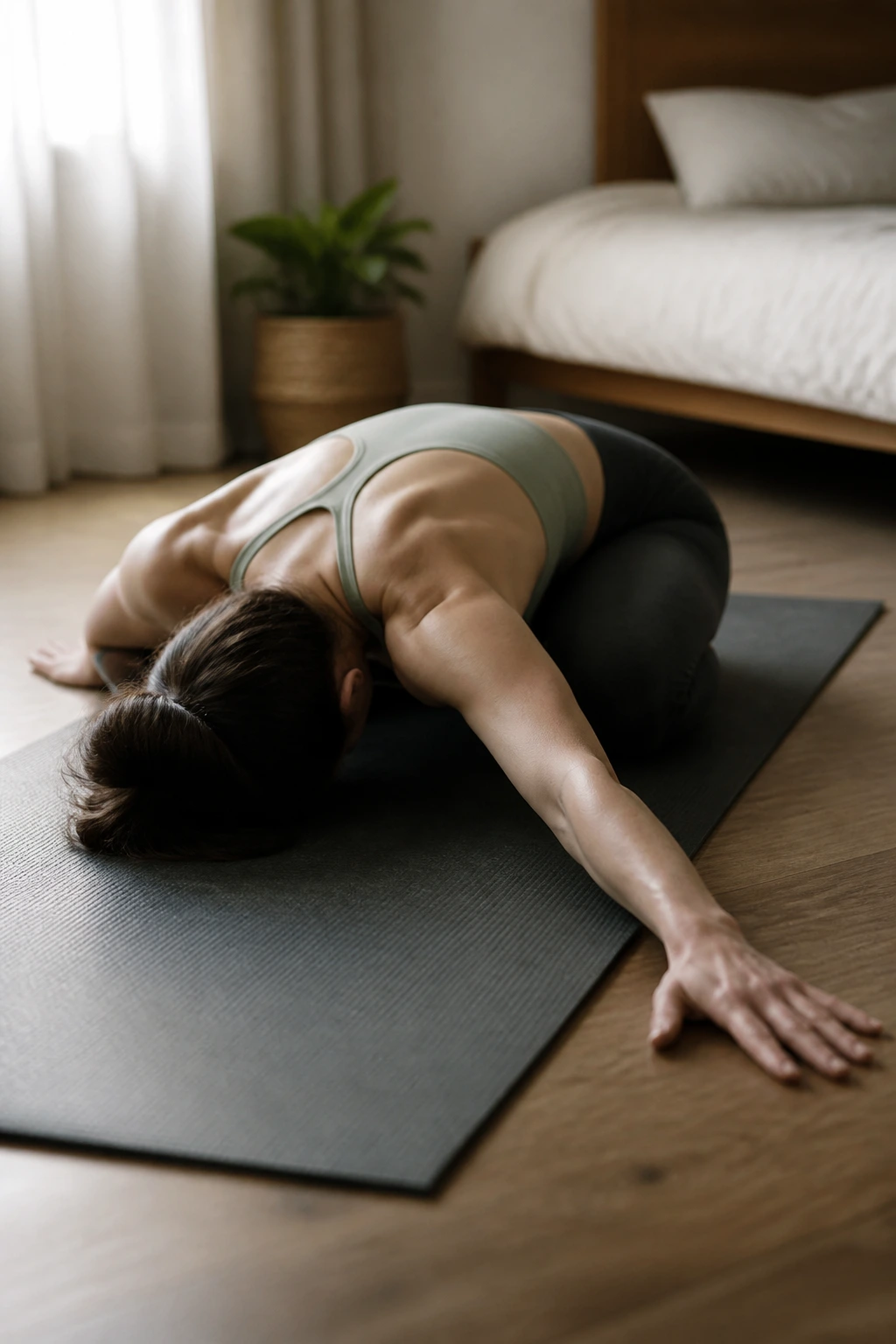
Child’s pose is the calm one. The side reach version turns that calm into a real stretch for the lats, side ribs, and the long muscles that run down the back.
Walk both hands forward, sink the hips toward the heels, then crawl one hand a little to the right. The stretch shows up along the left side of the back, under the armpit, and sometimes into the side of the waist. Switch after 20 to 30 seconds and breathe into the side that feels packed.
One slow exhale can change the feel more than forcing another inch. That’s the whole point here.
Keep the sitting bones heavy. If the hips drift up, the stretch gets vague and loses the good part. I also like this after carrying a bag on one shoulder or after pull-heavy workouts, when the upper side of the torso feels like it’s holding a secret.
A quiet stretch is still a real stretch.
6. Seated Forward Fold with Soft Knees for Hamstrings
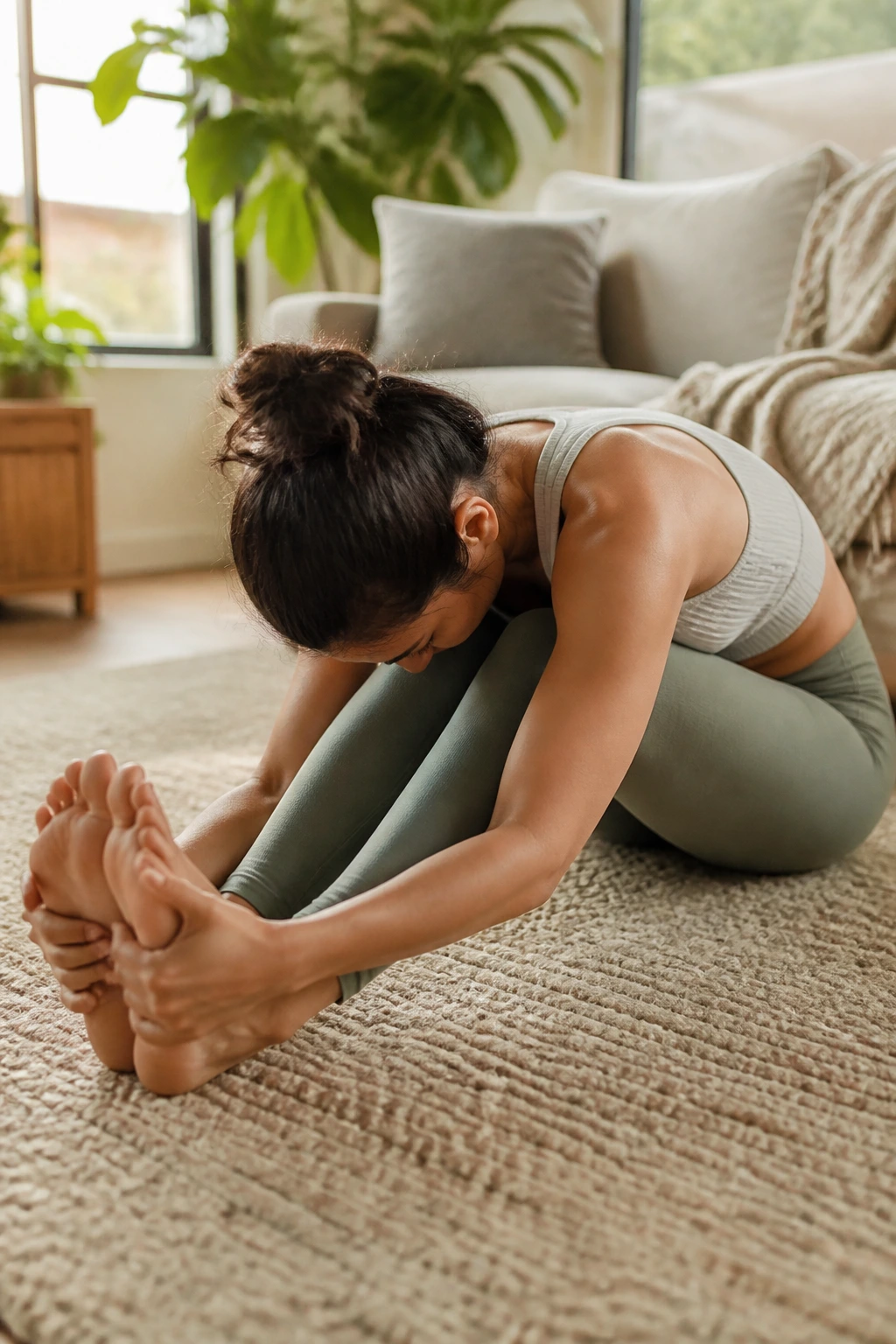
Straight legs are not the prize here. A soft knee bend usually makes the stretch better, because it lets the pelvis tip forward without dragging the lower back into the mess.
Sit on the floor with legs out long, hinge from the hips, and reach toward shins, ankles, or a towel looped around the feet. Hold for 20 to 40 seconds, then deepen a little on the next exhale if the back of the thighs still feels open. If your lower back rounds hard, bend the knees more. That is not cheating.
Why bent knees win
The hamstrings attach high at the sit bones. A little knee bend gives the pelvis somewhere useful to go, which keeps the stretch where you want it instead of yanking on the lumbar spine. Locked knees may look deeper, but they often feel worse and teach you less.
Use this after running, leg work, or a long drive. If you feel the stretch behind the knees instead of through the meat of the hamstrings, ease off and re-bend. A useful stretch feels honest, not dramatic.
7. Half-Kneeling Hip Flexor Stretch That Actually Hits the Front of the Hip
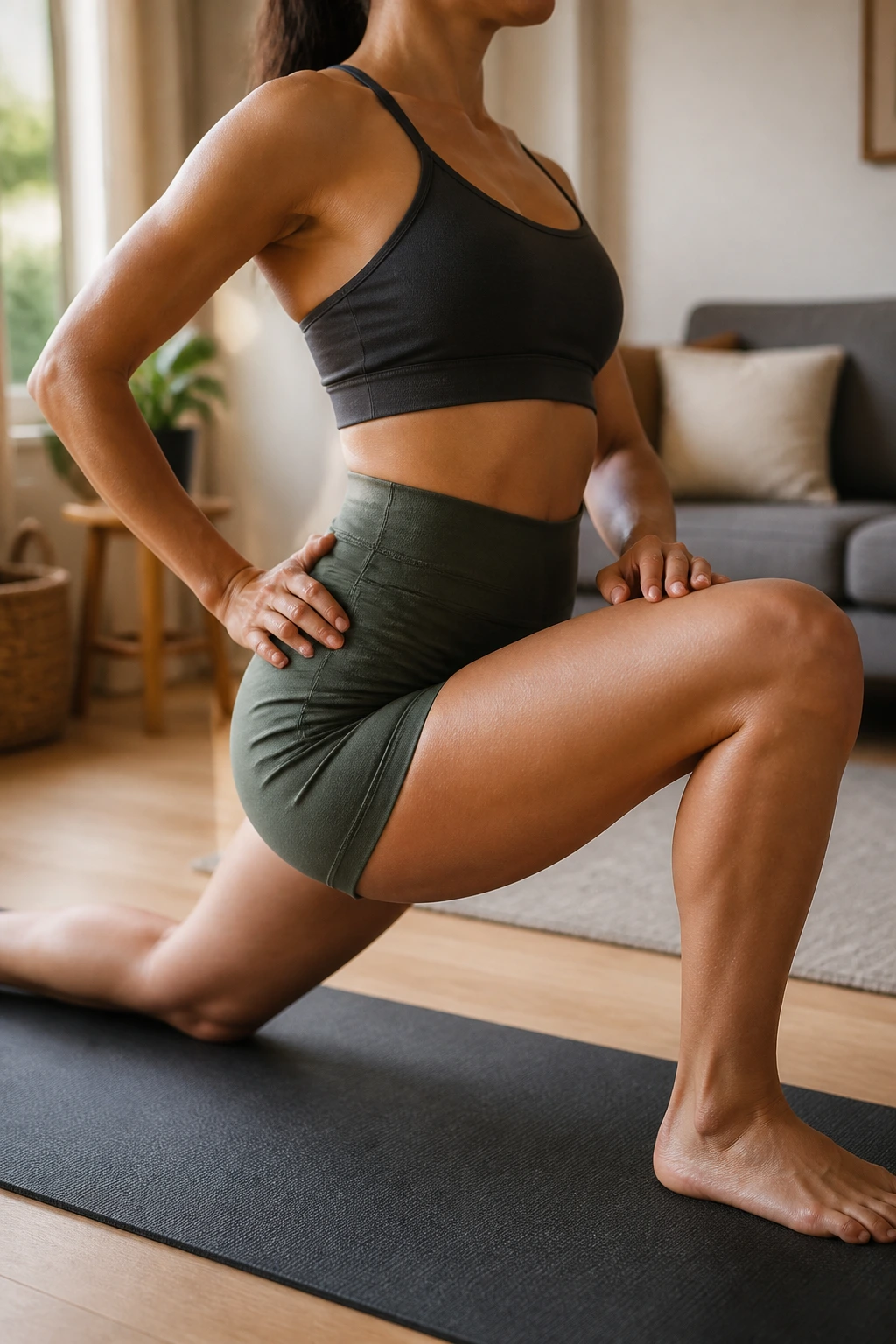
This is the stretch I reach for when the front of the hip feels short and grumpy. Half-kneeling keeps things honest because the floor pins one leg down and stops you from faking range with momentum.
Set the pelvis first
Kneel with one knee on the floor and the other foot in front. Tuck the pelvis slightly and squeeze the glute on the back-leg side. Then shift forward a few inches until the front of that hip opens. Hold for 20 to 30 seconds per side.
What to watch
If you arch your lower back to chase more range, you miss the point. The stretch should live in the front of the hip crease, not in the lumbar spine. A folded towel or knee pad makes the floor version much easier to stick with.
Small shift. Real change.
I like this after sitting for long stretches, after sprinting, or after leg day when the hip flexors feel a bit braced. It’s not flashy. It works because it’s precise.
8. 90/90 Hip Hold for Rotation on Both Sides
If one hip opens like a door and the other one feels stuck, 90/90 shows you the difference fast. That’s one reason I trust it more than stretches that only chase one position.
Sit with one shin in front and the other to the side so both knees sit around 90 degrees. Stay tall, then lean slightly toward the front shin for a few breaths. The front hip works into external rotation; the back hip gets the opposite pattern. Five to eight slow shifts per side is plenty, or hold for about 20 seconds if stillness suits you better.
How to keep it useful
- Keep both sit bones as heavy as you can
- Use a hand behind you if the torso collapses
- Stay upright instead of folding in half
I like this one because it tells the truth. If one side feels smooth and the other side feels like sandpaper, you know exactly where to focus. That makes the rest of your mobility work smarter.
9. Figure-Four Stretch for the Glutes and Outer Hips
A grumpy glute often feels like a lower-back problem. Figure-four is one of the cleaner ways to check whether the hip is the real source.
Lie on your back, cross one ankle over the opposite knee, and pull the supporting thigh toward you. Keep the head relaxed on the floor and let the crossed knee open gently. The floor version is easy on the back; the seated version on a chair works well when you want something you can do without lying down.
Hold for 20 to 30 seconds per side. Stop when the outer hip feels warm, not when the knee starts arguing.
If you run, cycle, or sit for long stretches, this one earns its place near the end of a cooldown. It also tends to make stairs feel smoother, which is a nice little bonus that shows up fast. Nothing magical. Just a better-feeling hip.
10. Frog Stretch for the Inner Thighs
Why does frog stretch feel so different from everything else? Because it opens the inner thighs at a wide angle, and most people barely train that space.
Drop to all fours, slide the knees out wide, and keep the shins roughly in line with the knees. Ease the hips back only as far as the inner thighs allow. You’ll feel it along the groin and inner thigh before the torso gets anywhere fancy. Start with 15 to 20 seconds if this is new, then build from there.
How to keep it sane
- Keep the ankles in line with the knees, not behind them
- Place a folded towel under the knees if the floor feels sharp
- Breathe slowly instead of bracing hard
Frog stretch is excellent after lower-body training, but it is not the move to force on a cold body. The stretch tells you where the limit is, and that’s useful information all by itself.
11. Standing Quad Stretch with a Wall for Better Balance
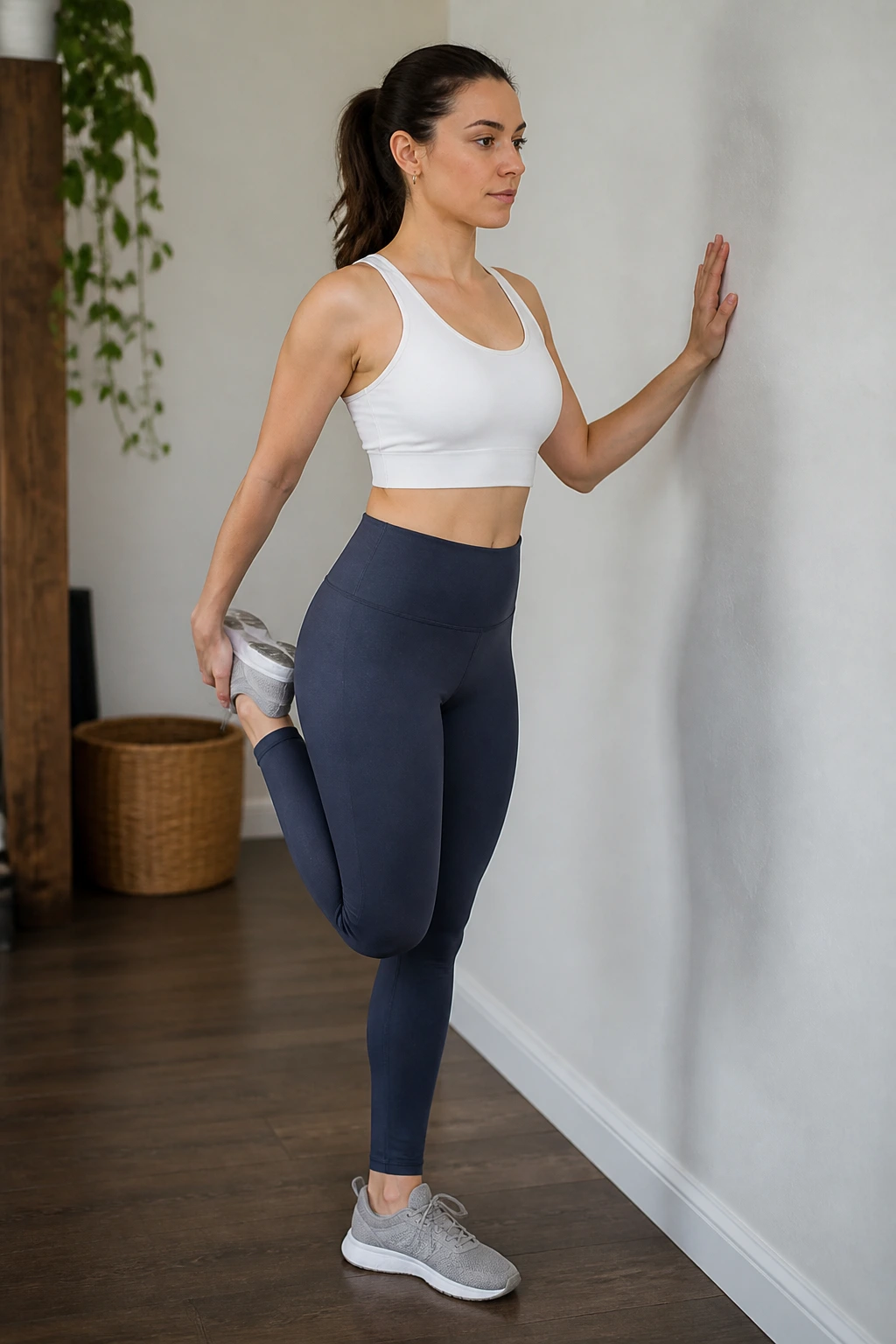
I trust standing quad stretches more when there’s a wall nearby. Balance fights waste energy, and this one is better when the attention stays on the front of the thigh.
Catch one ankle, bring the knees close, and keep the stretching thigh pointing down rather than flaring out to the side. A wall or chair makes that much easier. Squeeze the glute on the stretching side and you’ll usually feel the front of the hip and quad open more cleanly.
Small things that help
- Hold for 20 to 30 seconds per side
- Keep the standing knee soft, not locked
- Use a folded mat under the floor knee if you prefer the kneeling version
This works well after cycling, hill walking, or leg day when the front of the thigh feels tight but the knees are fine. If the knee grumbles, reduce the pull on the foot and shorten the hold. A good quad stretch should feel tidy, not yanked.
12. Calf Stretch Against the Wall for Ankles and Lower Legs
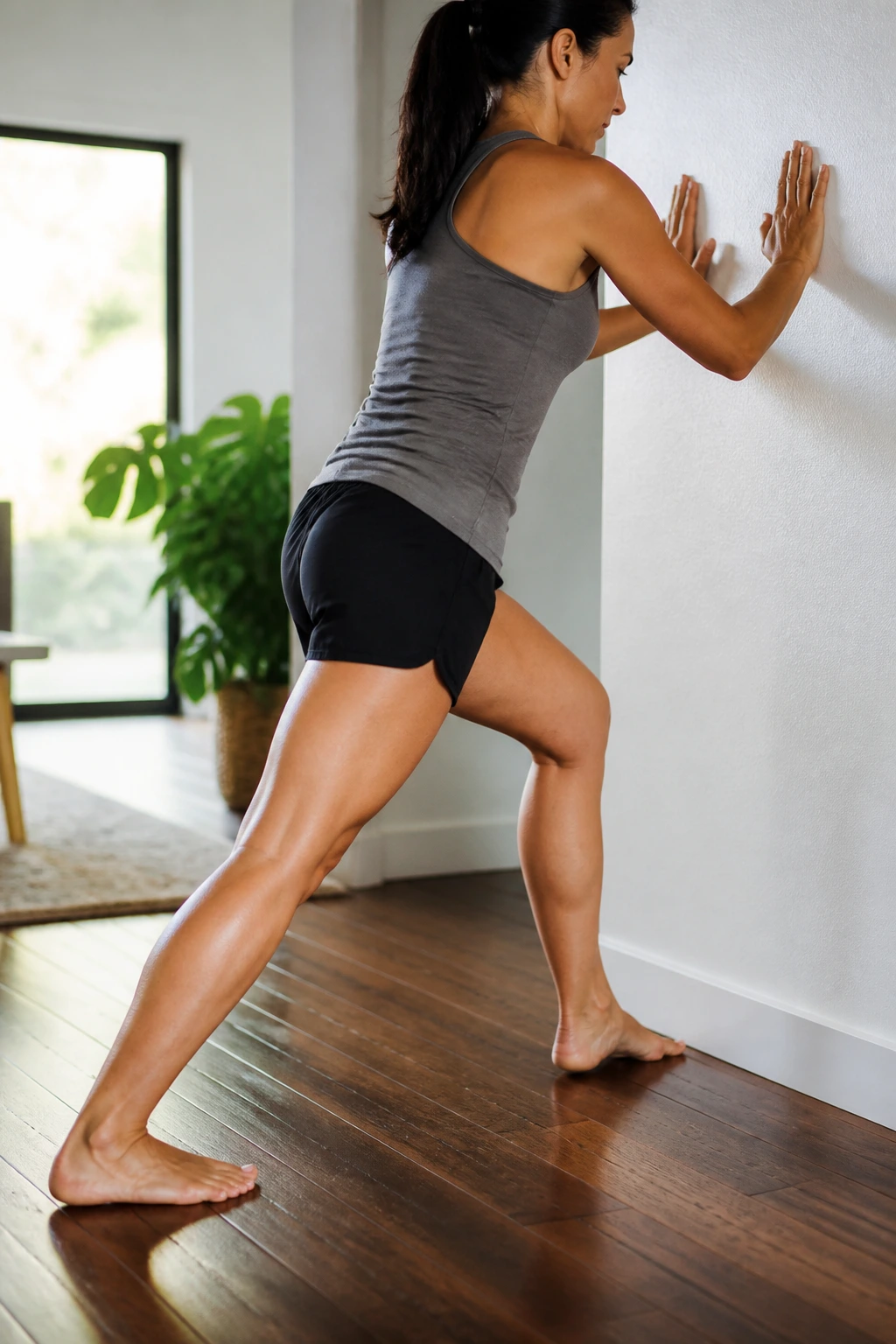
Tight calves mess with more than the calves themselves. They change how you squat, how you land, and how easy stairs feel.
Step one foot back, keep the heel glued down, and lean toward the wall until the back calf stretches. Then bend the back knee slightly for about 20 seconds to reach the deeper soleus muscle. Straight knee first, bent knee second. Simple enough to remember.
- Heel stays heavy
- Back foot points forward
- Hips move toward the wall, not the shoulders down
I like this after walking, jumping, or anything that leaves the lower legs buzzing. It’s quiet work, but the difference shows up quickly in how the ankle behaves. A lot of knee and foot irritation starts with a calf that doesn’t move well.
13. Ankle Rocks for Better Dorsiflexion
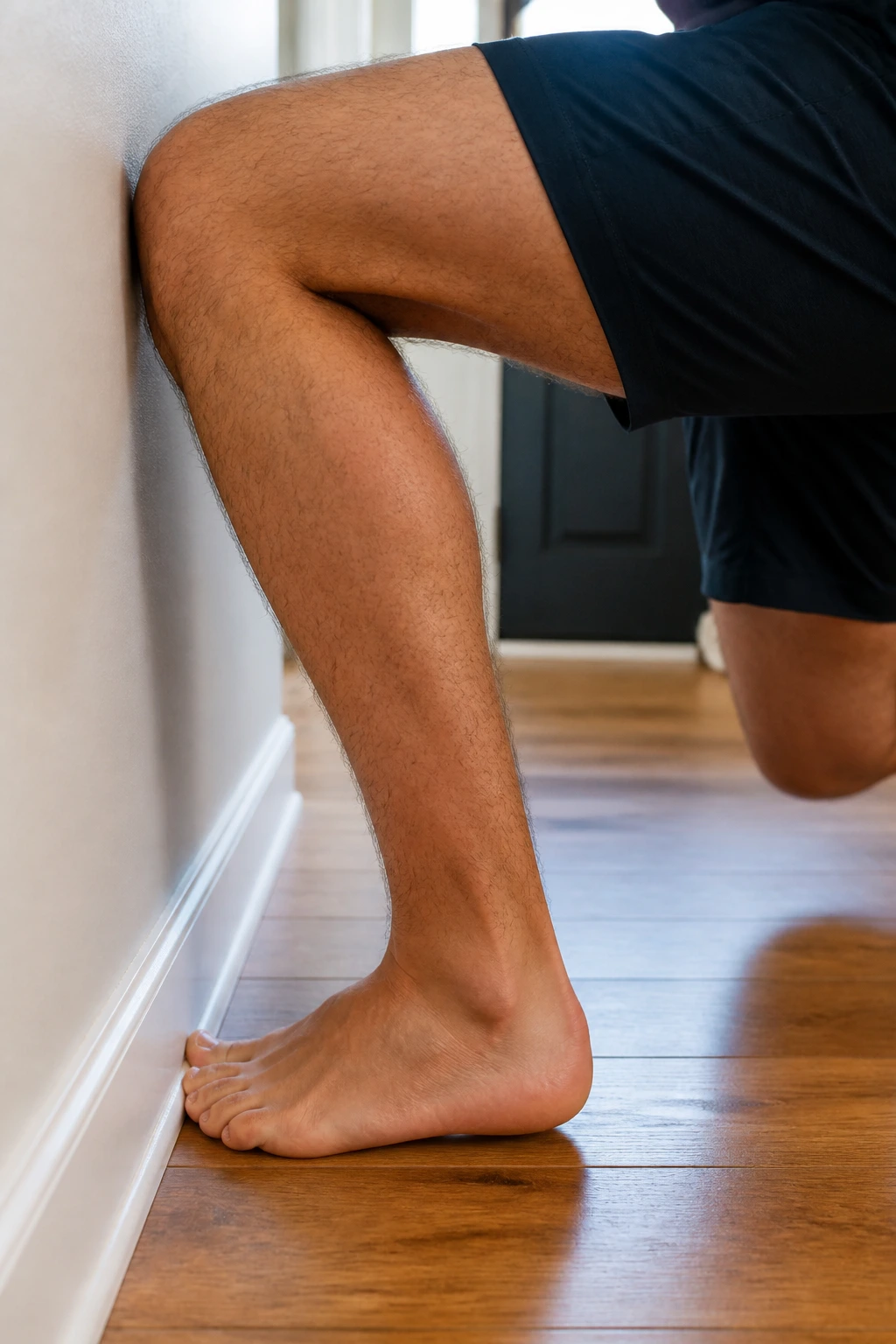
Stiff ankles can make your hips and lower back work harder than they should. That’s why ankle rocks are worth doing before squats, lunges, or any lower-body session at home.
Stand facing a wall, place one foot a few inches away, and drive the knee toward the wall without letting the heel lift. Rock in and out for 10 to 15 reps per side. This is a mobility drill, not a hold, so the motion matters more than the end position.
How to use it before leg work
Try two or three slow sets per ankle. If the knee can’t touch the wall, move the foot a little closer and repeat. The goal is a smooth knee track, not a heroic range that makes the heel pop up.
I like ankle rocks because they are honest. They show the exact spot that’s stiff, and they do it fast. No guessing, no fancy gear, no drama. That’s a good trade.
14. Deep Squat Hold for Hips, Ankles, and Lower Back
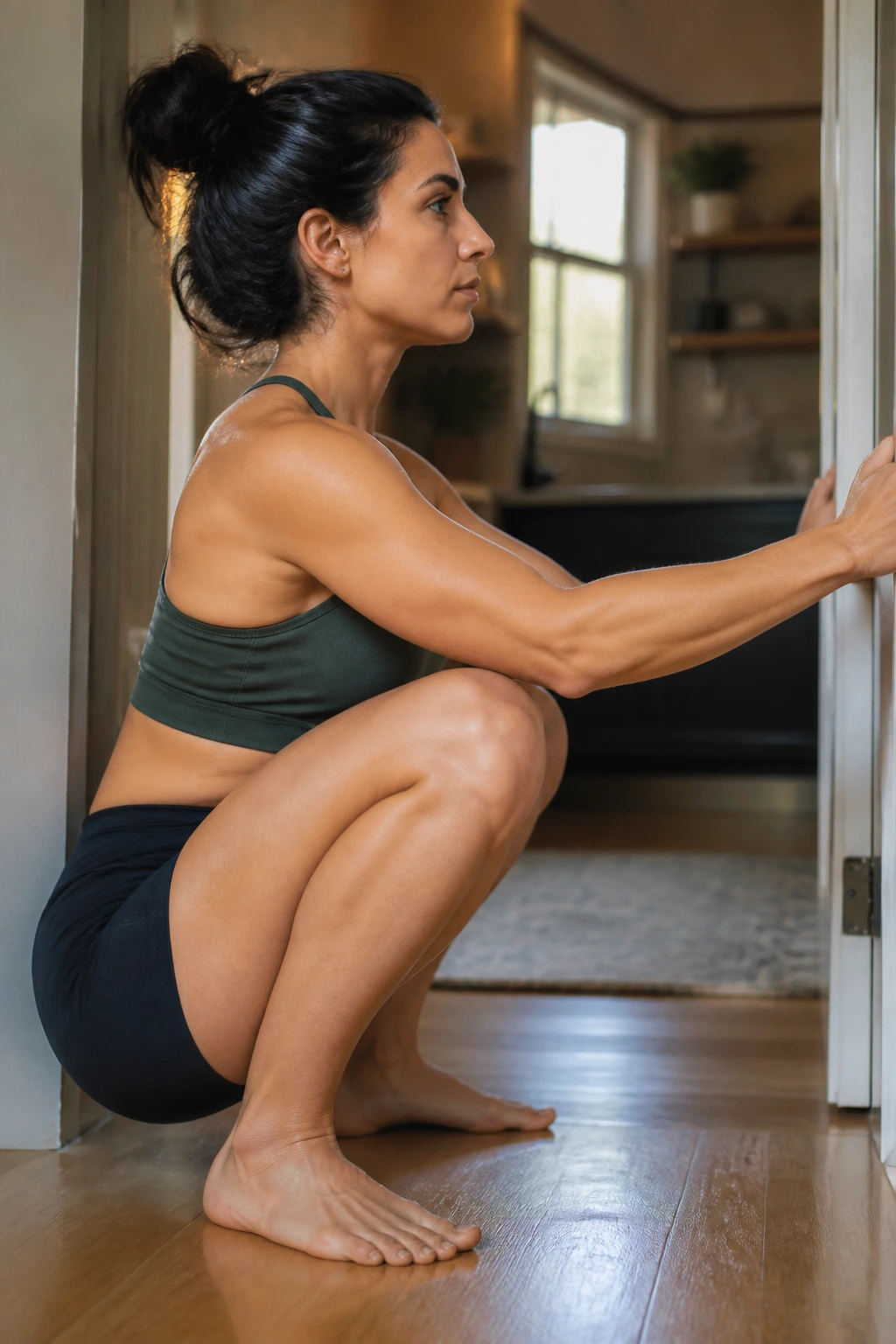
Not every flexibility move needs to look graceful. The deep squat hold can feel awkward, wobbly, and a little rude to your balance. Fine. It still counts.
Sink into the deepest comfortable squat you can manage. Keep the heels down if possible, and grab a doorframe or countertop if balance is the problem. A rolled towel under the heels makes the position workable for stiffer ankles. Stay for 20 to 45 seconds, breathing through the tight spots.
A good squat hold ties together the ankles, hips, and spine in a way isolated stretches sometimes miss. If the chest collapses, sit a little higher. If the heels pop up, use support. If the knees hurt, stop and choose something else. The point is control, not punishment.
The body often needs this kind of low position just to remember it exists.
15. Open Book Stretch for the Thoracic Spine
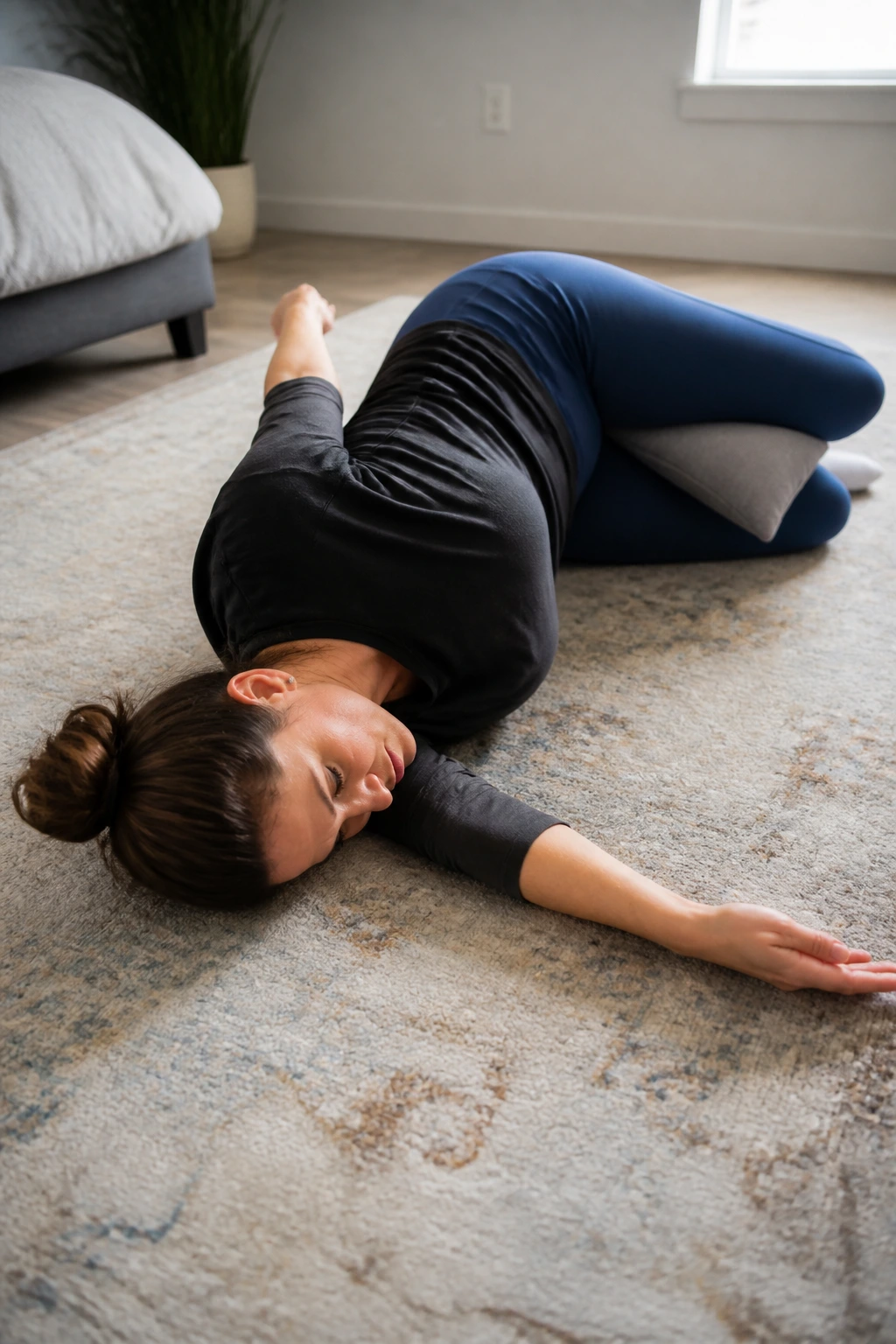
Lie on your side and open the top arm like a book. That image is cheesy. The movement is still excellent.
Bend the knees, stack them together, and let the top arm sweep across the body before opening toward the floor behind you. The chest rotates while the knees stay put, which is exactly why the stretch finds the thoracic spine so well. Five slow reps per side is a good start, or hold the open position for 15 to 20 seconds if you like stillness better.
Where it works best
A pillow between the knees helps keep the lower back from taking over. This is a strong choice after upper-body lifting, especially if overhead work leaves the mid-back stiff between the shoulder blades. It also feels good after a long car ride.
The movement is small, but the effect shows up fast when the upper back is the sticky part.
16. Cobra Stretch for the Front Body
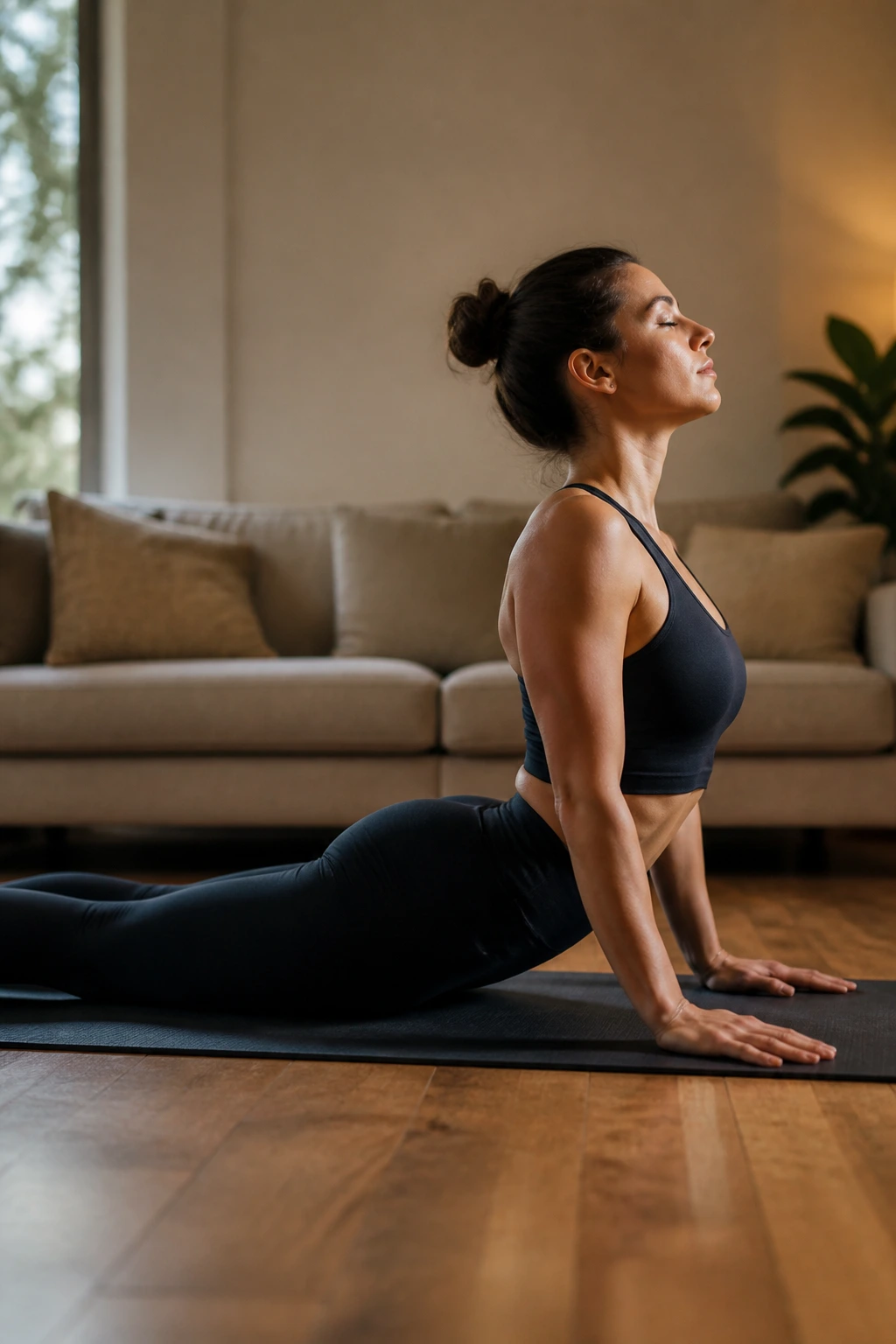
Unlike child’s pose, cobra opens the front side of the body. That alone makes it worth a place in a home cooldown.
Lie face down, place the hands under the shoulders, and press the chest up while the hips stay down or lightly grounded. Keep the elbows bent if you need the milder version. The stretch runs through the abs, hip flexors, and the line along the front of the torso.
If the lower back pinches, lower the chest and soften the elbows. A low, calm lift is usually better than a dramatic arch. Stay for 10 to 20 seconds, breathe into the ribs, and lower slowly.
High cobra turns into a strength move fast. Low cobra feels like a stretch. For most people at home, the lower version is the smarter one.
17. Wall Shoulder Slides for Easier Overhead Reach
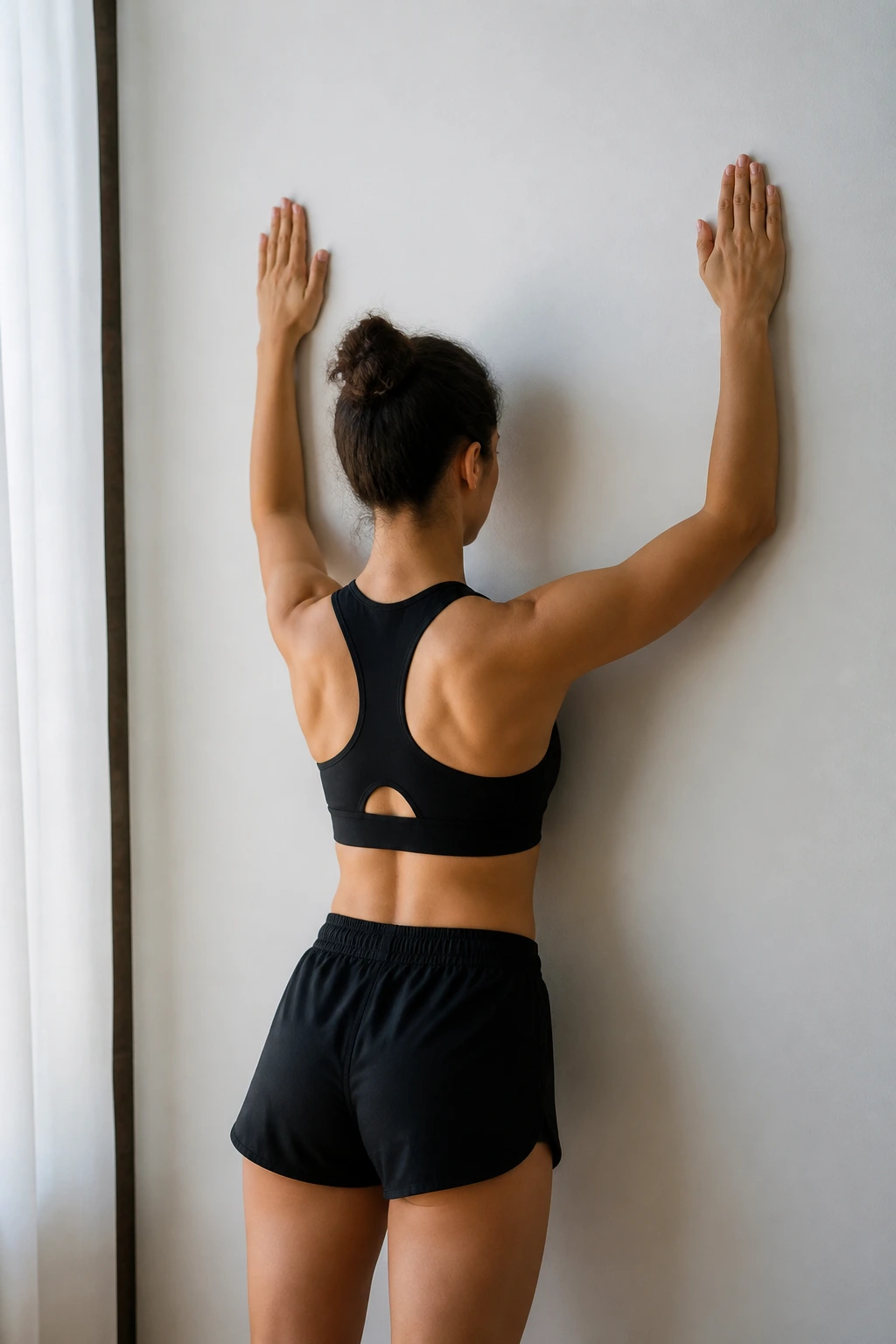
Can your arms slide overhead without your ribs flaring? If not, wall slides are a good place to start.
Stand with your back, head, and hips near a wall. Bend the elbows and rest the forearms on the surface, then slide the arms upward only as far as you can keep contact and control. Eight slow reps is enough. The goal is cleaner shoulder motion, not a forced overhead reach.
What to keep steady
- Chin neutral
- Lower ribs quiet
- Forearms in contact with the wall as long as possible
If the wrists or elbows drift off the wall, lower the arms a little and try again. That small correction teaches the shoulder blade to move without the chest flying open. It’s a smart prep before pressing or any overhead work, and it also helps after a day spent hunched over a keyboard.
18. Supine Spinal Twist to Wind Down Tight Hips and Lower Back
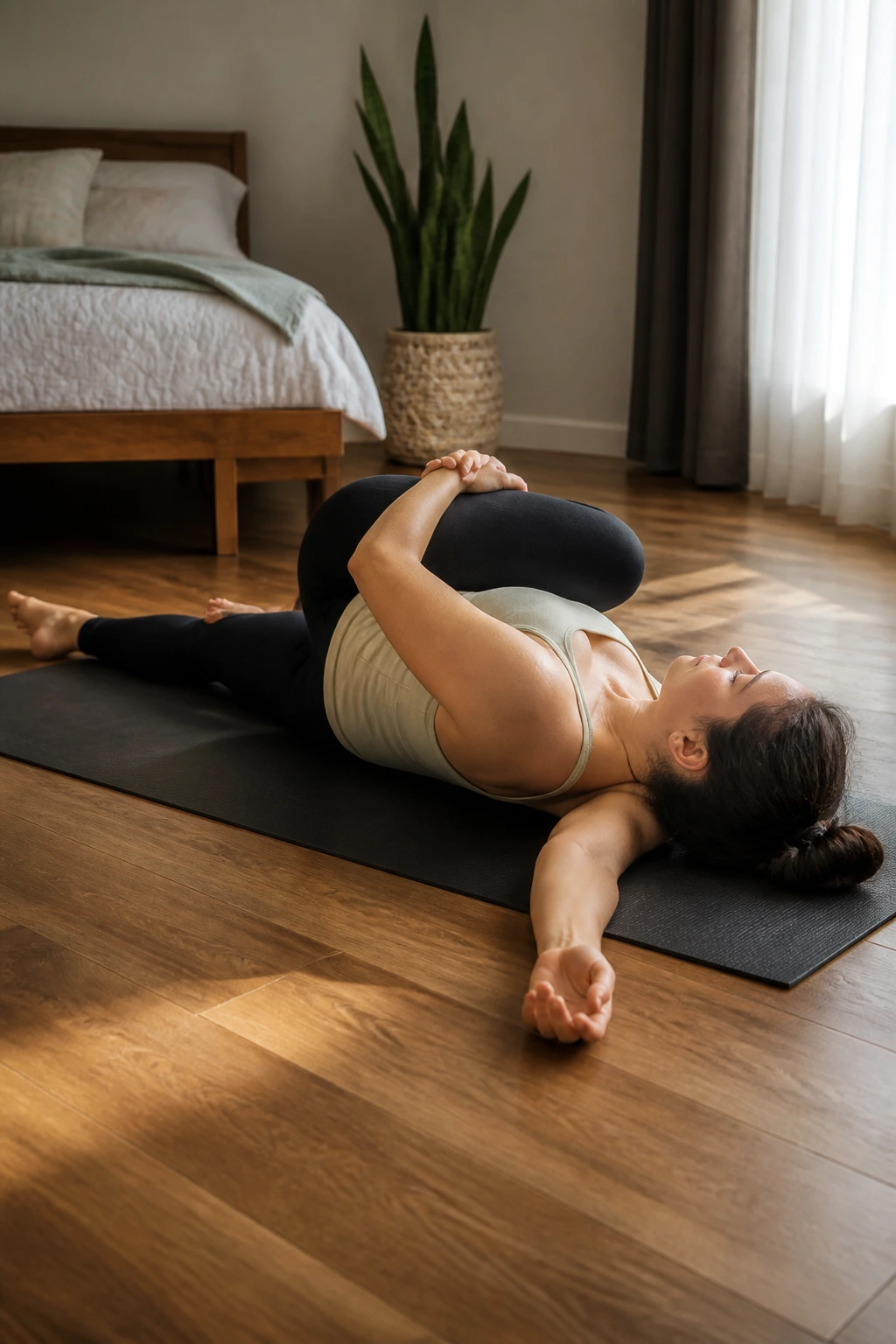
Lie on your back, hug one knee in, then guide it across the body while the shoulders stay heavy. The twist runs through the lower back, hips, and outer torso in a way that feels more like unwinding than stretching.
Keep both shoulders as close to the floor as they’ll comfortably go. The lower knee can hover; it does not need to slam down. Hold for 20 to 30 seconds per side, or longer if this is the last thing you do after a workout and the room has gone quiet.
I like ending a home flexibility routine here because it feels like the body is being put back together, one slow breath at a time. If you only have time for a handful of moves, a few careful rounds from this list can still change how you move for the rest of the day. Consistency wins. Loud sessions don’t.
