



A toddler can turn a simple home workout into a moving obstacle course, and that is exactly why the best workouts you can do with a toddler are the ones that stay flexible. Sticky hands. Sudden demands for a snack. A shoe that disappears under the couch at the worst possible moment. If a routine can survive that kind of chaos, it can survive almost anything.
The trick is not chasing a “perfect” session. It’s building a workout plan that bends instead of breaks. Short bursts, simple moves, low setup, and a few things that keep small hands busy for a minute or two — that’s the sweet spot. A good day might give you 20 tidy minutes. A messy day might give you seven, then another eight later. Both count.
Toddlers also make exercise oddly honest. They copy what you do. They notice when you stop. They usually want to join in, even if their version of a squat looks like a deep knee bend followed by a dramatic floor flop. That is fine. Better than fine, actually. Movement becomes play, and play is easier to repeat.
So the goal is simple: pick workouts that work in a living room, a driveway, a park path, or the patch of floor between a pile of blocks and a half-finished cup of water. Start with the easy one first.
1. Stroller Interval Walks with a Toddler
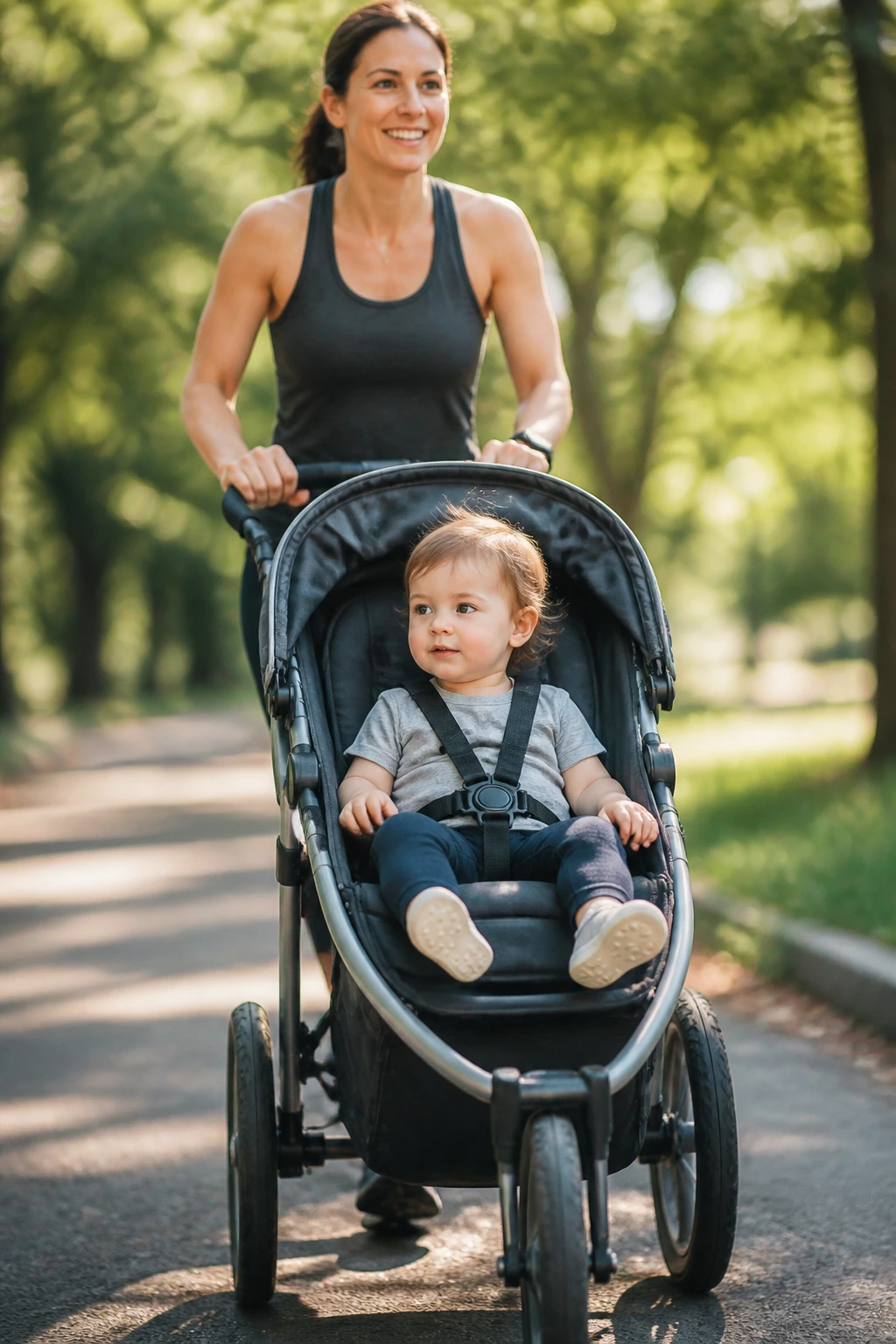
If I had to choose one toddler workout that survives the most moods, this is it. A stroller walk gives you cardio, fresh air, and a built-in place for your child to sit when the wheels of cooperation come off. No fancy setup. No floor space. Just shoes, a safe route, and a timer.
How to Run the Intervals
Try 5 minutes of easy walking, then 1 minute brisk, then 2 minutes easy. Repeat that pattern 4 to 6 times. The brisk parts should feel like you can still speak in short phrases, but you would rather not hold a long conversation.
- Pick a flat route first.
- Keep both hands on the stroller when the path is busy.
- Use the easy sections to reset your breathing.
- Let your shoulders drop. People clench there without noticing.
- If your toddler gets restless, treat the workout as a loop, not a failure.
Pro tip: I like to end the last fast interval just before home. The cooldown happens naturally, and nobody has to fake enthusiasm for one more lap around the block.
2. Squat-and-Stand Pickup Games
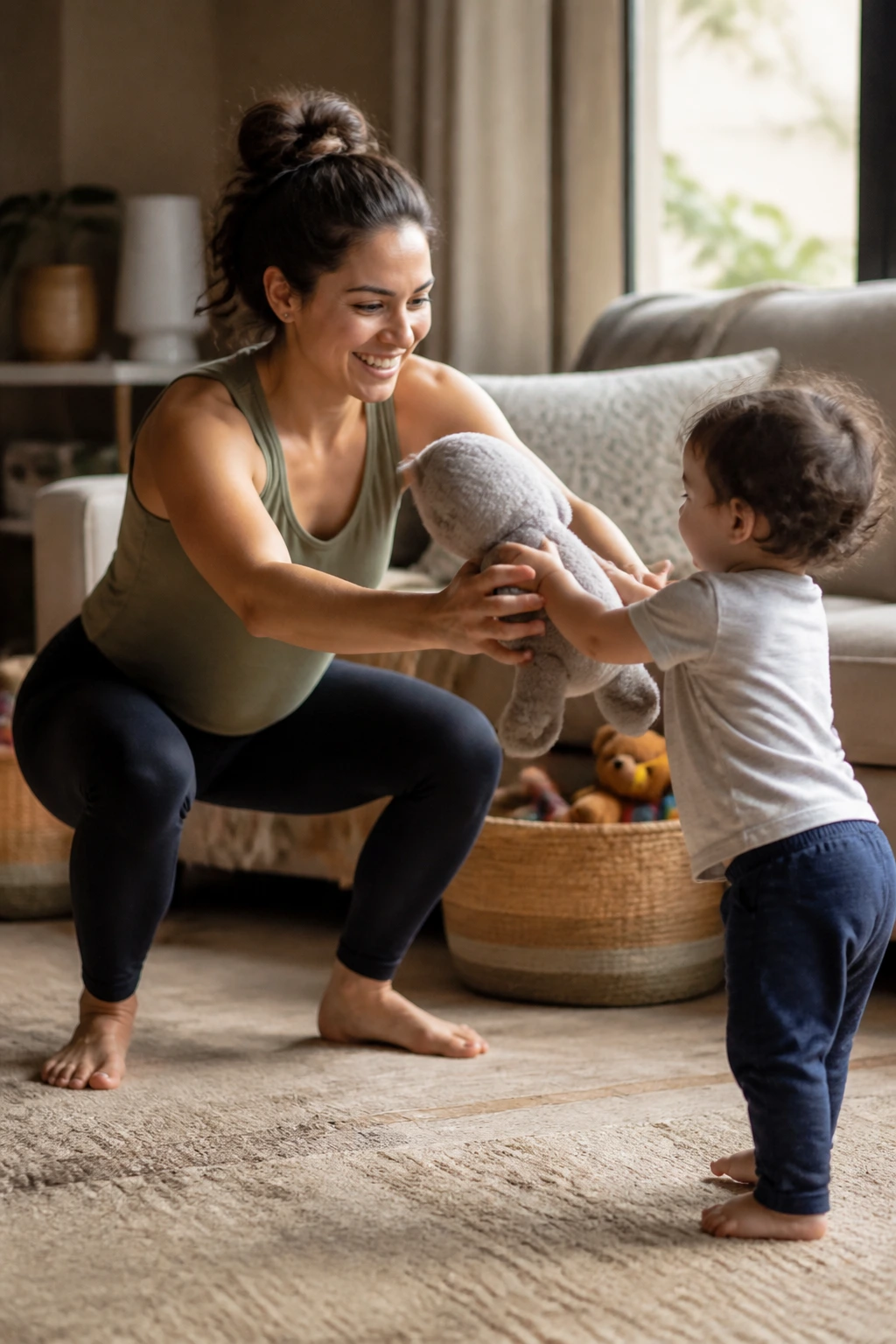
Why do squats feel easier when a toddler is handing you every stuffed animal they own? Because the game keeps your brain busy enough that the reps stop feeling like reps. That matters more than people think. Boredom kills consistency faster than sore legs do.
Use a basket of toys, soft balls, or laundry piles and make each pickup a squat. Lower your hips back, keep your heels on the floor, grab the item, and stand tall. If your child wants to help, let them hand items to you one at a time. If they want to undo the whole system by throwing the toys back down, that works too.
A clean starting point is 3 rounds of 8 to 12 squats, with 30 to 45 seconds of rest between rounds. You can also add a 2-second pause at the bottom if bodyweight squats start to feel too easy.
What to watch for: Don’t rush and don’t let your knees cave inward. Smooth is better than fast here. Fast usually turns sloppy.
3. Couch Step-Ups While They Cheer
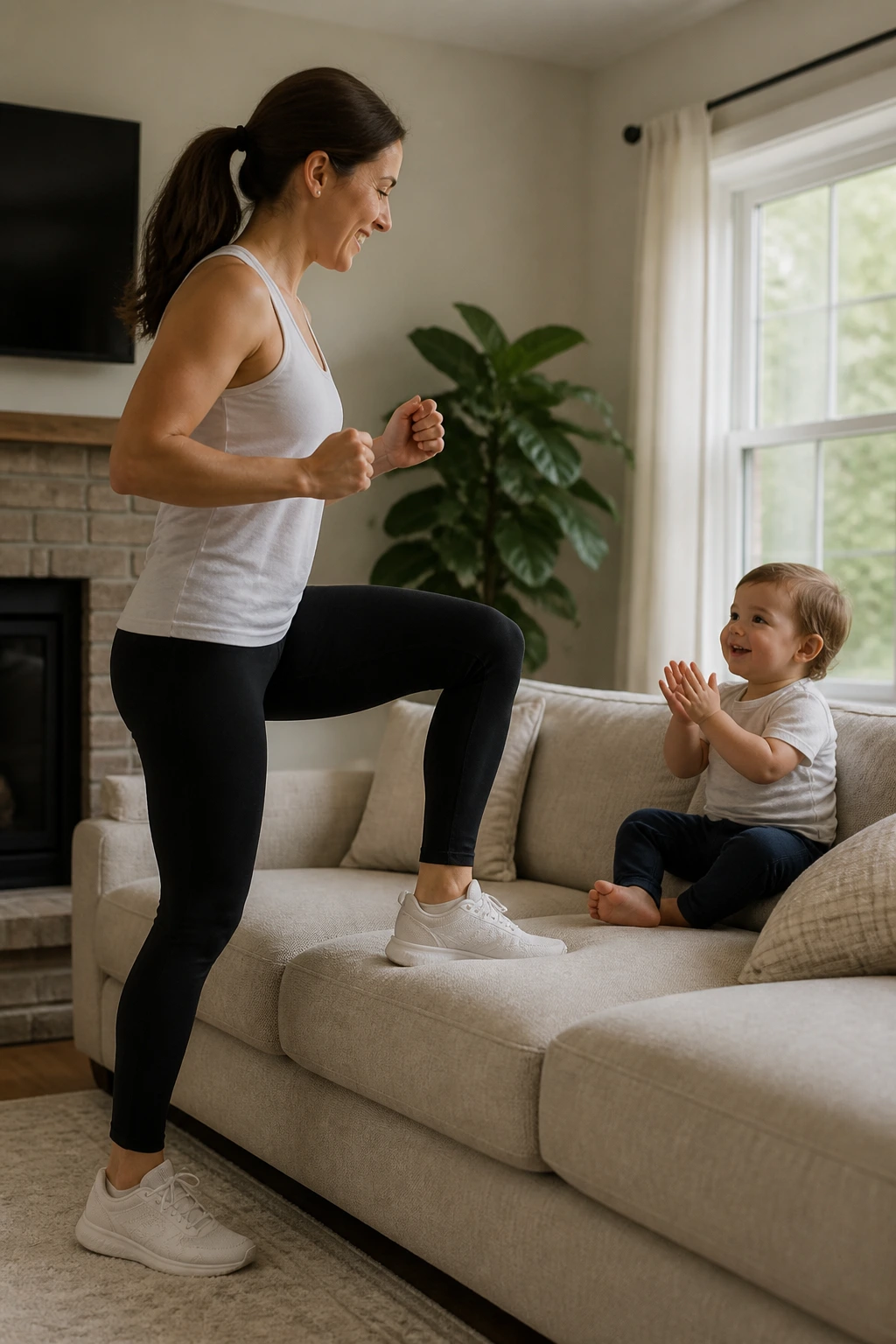
The couch, a sturdy ottoman, or a low step can become a perfectly good workout station. If your toddler already treats the furniture like a climbing gym, you might as well borrow the habit for something useful.
Step up with one foot, press through the heel, bring the other foot up, then step back down under control. Keep the landing soft. No stomping. A good rhythm is 10 reps on one side, then 10 on the other, repeated for 3 rounds. If balance feels shaky, slow the pace down and hold onto a wall or the back of a solid chair.
Make the Space Work
Clear toys away from the landing zone first. That part is not optional. A block under a heel changes a decent workout into a dumb story.
- Use a surface that does not slide.
- Keep the step low enough that your knee never feels jammed.
- Stand tall at the top instead of leaning forward.
- Treat each rep like a controlled climb, not a hop.
The nice thing about step-ups is that they quietly train your legs and your balance at the same time. Handy when the day already includes enough wobbling.
4. Push-Up Games at Floor Level
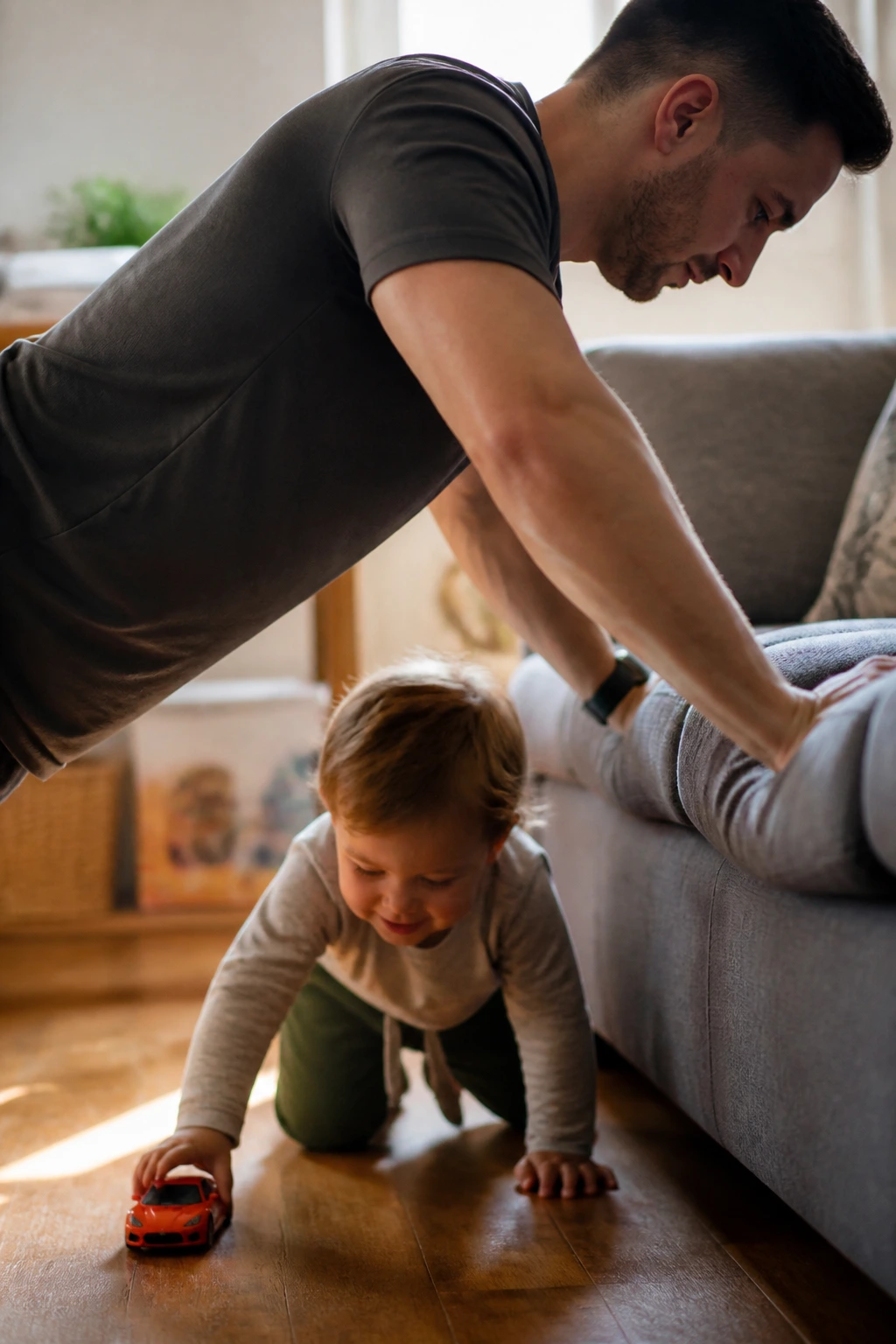
You do not need a pristine mat session to keep your upper body strong. You need a wall, a counter, a couch, or the floor, plus the willingness to do a few clean reps while a toddler drives a toy truck around your elbows.
Start with incline push-ups if the full floor version feels too much. Hands on the couch or countertop, body in a straight line, elbows bending at about a 45-degree angle. If that feels good, move lower over time. A simple target is 3 sets of 5 to 10 reps, with the last rep still looking crisp. Ugly push-ups teach bad habits fast.
The toddler part can stay loose. They can crawl under you like you are a tunnel, stack soft toys nearby, or sit nearby and “coach” you with nonsense commentary. That is part of the charm. Keep the floor clear enough that you are not balancing over Lego pieces, though. I have seen that mistake. It is not elegant.
One small rule: stop the set when your hips start sagging. A shorter set with good form beats a heroic mess every time.
5. Walking Lunges Through the Hallway
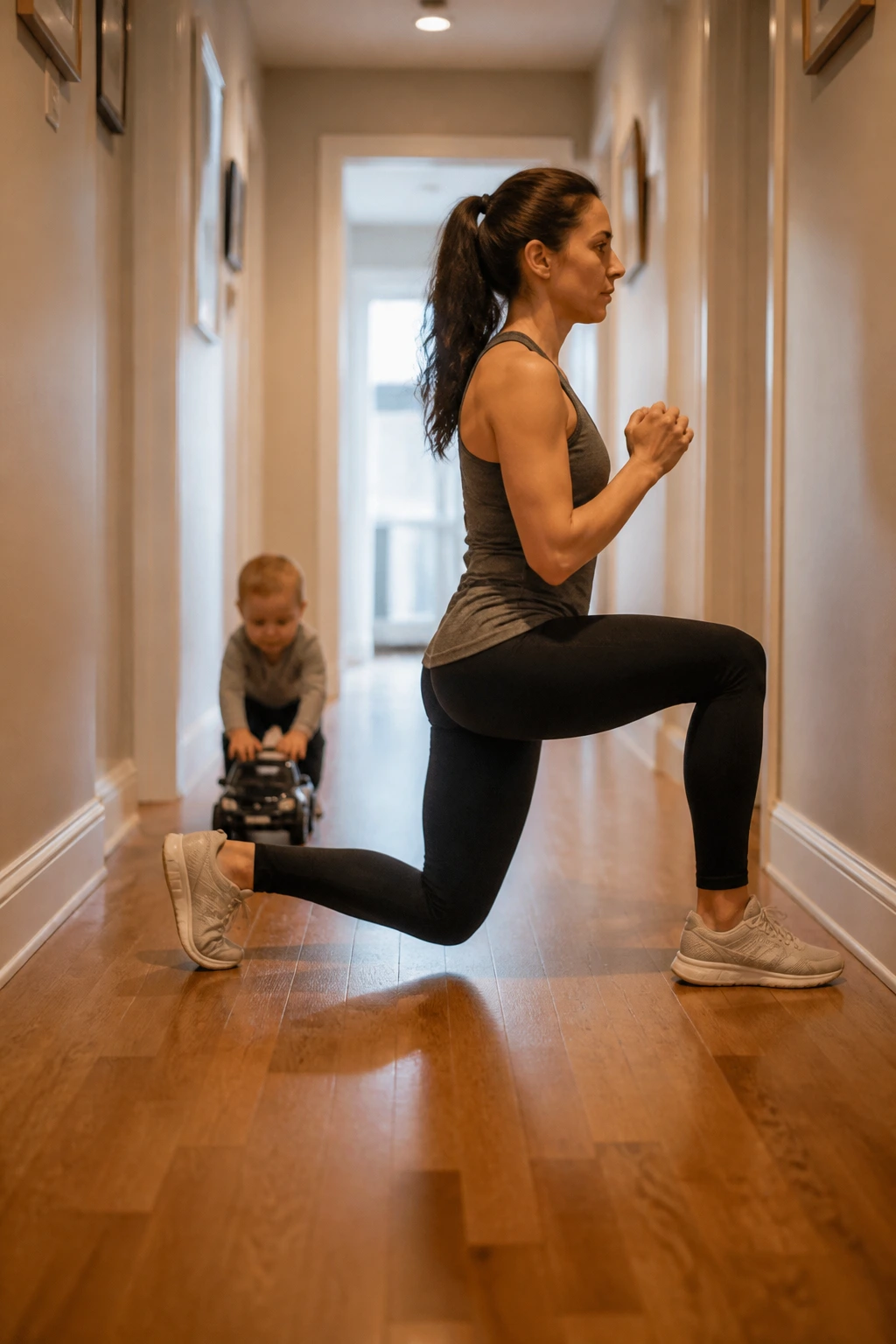
The hallway is longer than it looks when you are counting lunges. That is a good thing. It gives you space to move, turn, and keep the whole thing from feeling like a punishment. And if your toddler is following you with a toy car, a doll stroller, or a giant grin, the repetitions go down easier.
Step forward or backward into a lunge, lower until both knees bend comfortably, then push through the front heel to stand. Reverse lunges are often kinder on the knees and a little easier to control. Try 8 to 10 reps per leg, then walk back to the starting point and repeat for 2 to 4 rounds.
Some days the hallway becomes a race track. Fine. Some days it becomes a parade route. Also fine. What matters is that you stay steady, upright, and in control. Keep your chest lifted, and do not let your front knee slam inward.
If your toddler keeps crossing your path, shorten the stride and slow the tempo. Long steps are not worth a collision.
6. Glute Bridges with Toddler Hugs
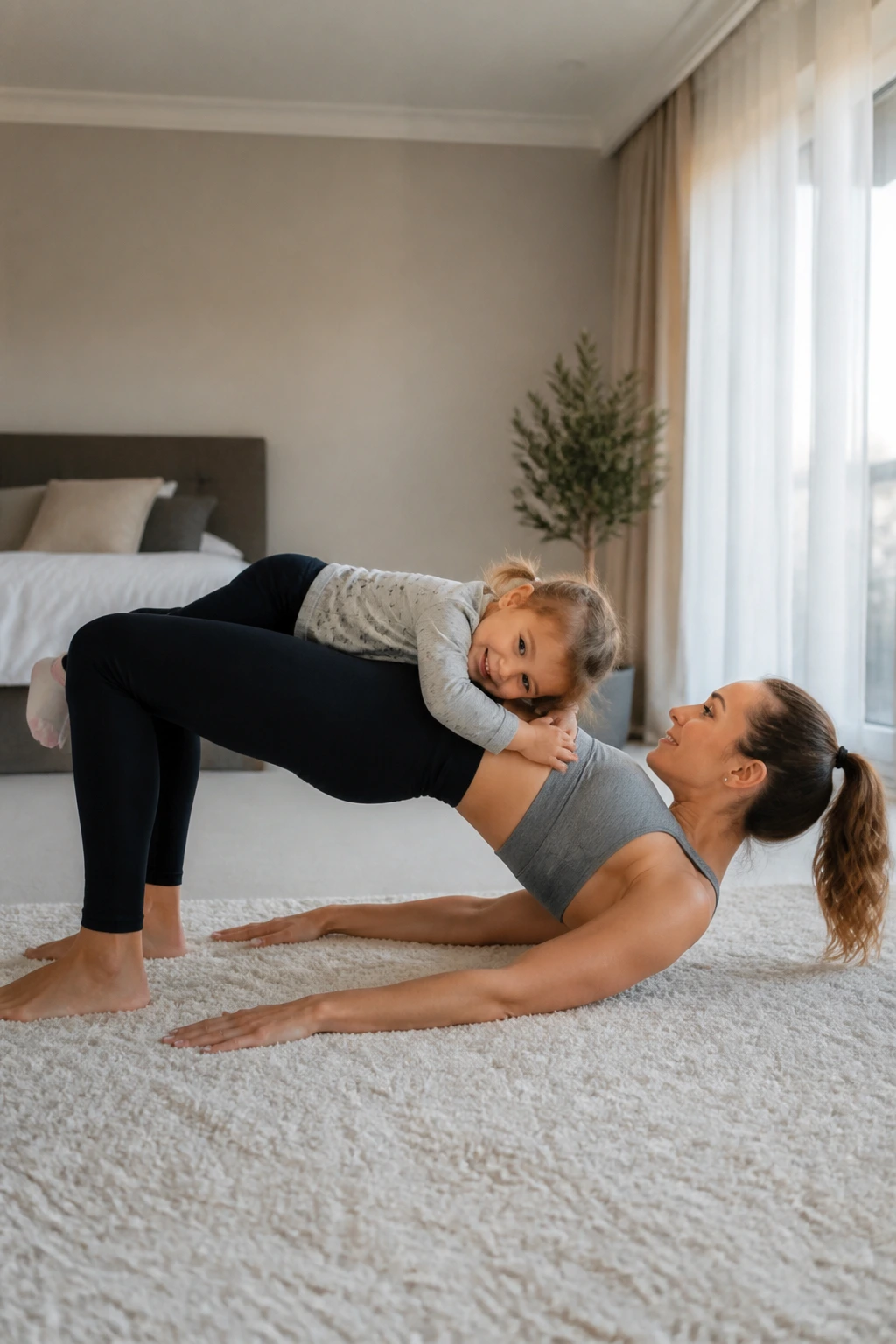
This is one of the few exercises where a toddler on your hips can actually make sense. If they are small, steady, and in a cooperative mood, a light seated hold can add enough resistance to wake up your glutes without turning the movement into a circus act.
Lie on your back with knees bent and feet flat. Drive through your heels, lift your hips, squeeze your glutes at the top for 1 to 2 seconds, then lower under control. A clean set is 10 to 15 reps. If your child wants to sit across your hips, keep the movement slow and make sure they’re balanced before you start.
When to Skip the Extra Weight
If your toddler wiggles, bounces, or suddenly decides to become a shark, keep the bridge unweighted. No prize is waiting for you at the bottom of a sloppy rep.
- Keep your ribs down, not flared.
- Press evenly through both feet.
- Stop before your lower back starts to arch.
- Use a mat or rug if the floor is hard.
There’s something nice about this one. Low drama. Quiet burn. And if your toddler laughs every time you lift, that’s free entertainment.
7. Bear Crawls After a Rolling Ball
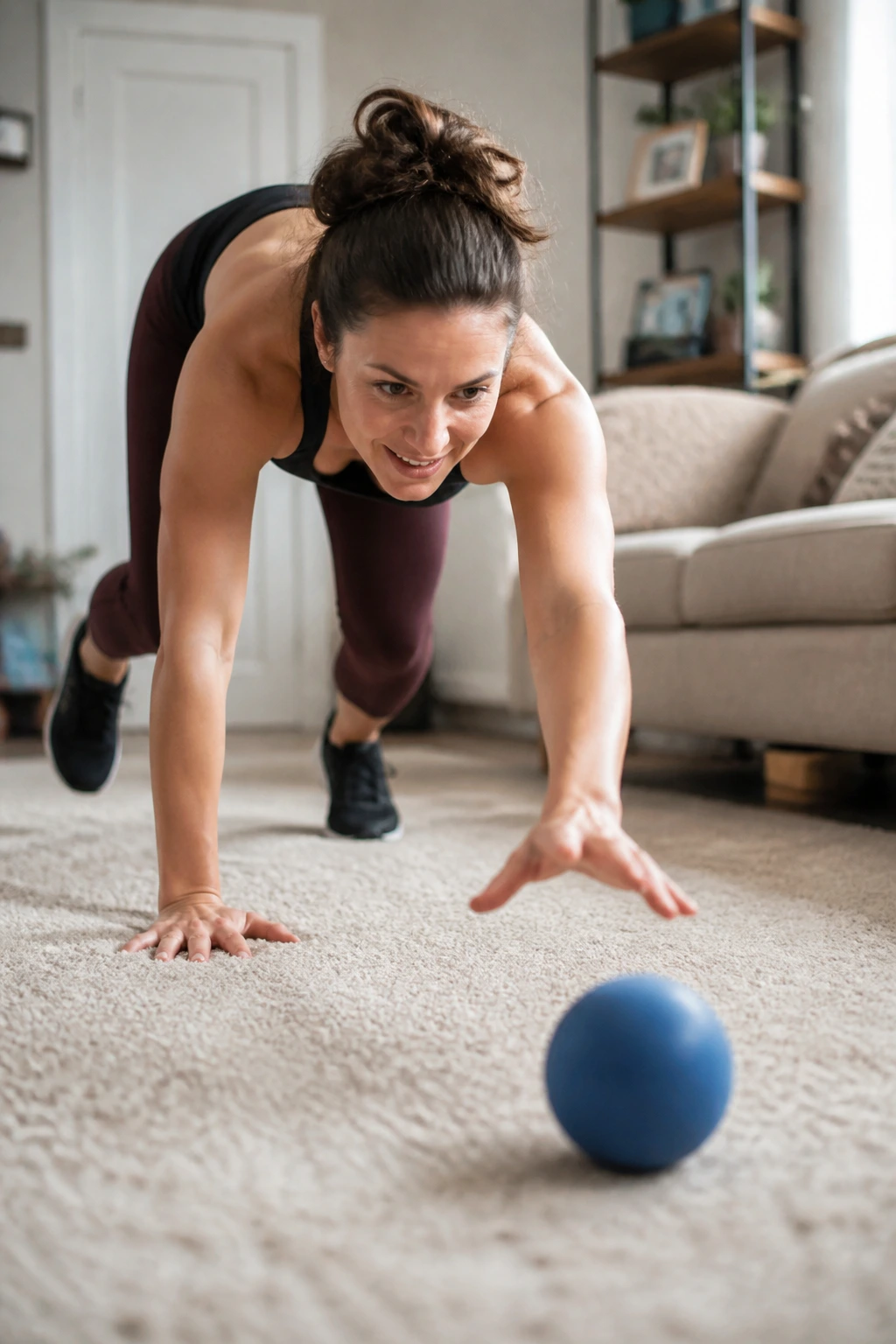
What happens when you turn crawling into a chase? Usually you get a child who thinks the whole thing is hilarious and a workout that lights up your shoulders, core, and legs in one go.
Set a soft ball or rolled-up toy a few feet ahead of you. Start in a bear crawl position: hands under shoulders, knees hovering an inch or two off the floor, back flat. Crawl forward a few steps, reach the ball, then crawl back. If your toddler is rolling the ball away, even better. That gives you a reason to keep moving.
How to Keep It Comfortable
A carpet or mat helps. So do shorter distances. Bear crawls get ugly when people try to race them.
- Keep your knees low but not dragging.
- Move opposite hand and foot together when possible.
- Take breaks before your wrists get cranky.
- Use 10 to 20-second crawls instead of long slogs.
I like this one because it feels playful without pretending to be easy. It’s work. But it looks like a game, and that changes everything.
8. Shadow Boxing and Sidestep Rounds

Fast hands. Light feet. A toddler in the middle of it all.
Shadow boxing gives you cardio, coordination, and a surprisingly good stress release, especially if the day has been loud. Stand in a soft athletic stance and throw a quick jab-cross combination for 20 seconds, then sidestep left and right for 20 seconds, then breathe for 20 seconds. Do 6 to 8 rounds. If your child wants to copy the punches, let them punch the air or clap on the beat.
The beauty of this workout is that it needs almost nothing. A little space. A pair of sneakers. Maybe music if the room feels flat. You can keep the punches sharp, or you can make the footwork the main event.
A small caution: keep your elbows in and your fists controlled. Wild flailing gets old fast, and it can whack a coffee table if you are not paying attention. Short, crisp punches are better anyway.
This one’s good on days when you want to feel more awake than when you started. That is enough.
9. Wall Sits During Story Time
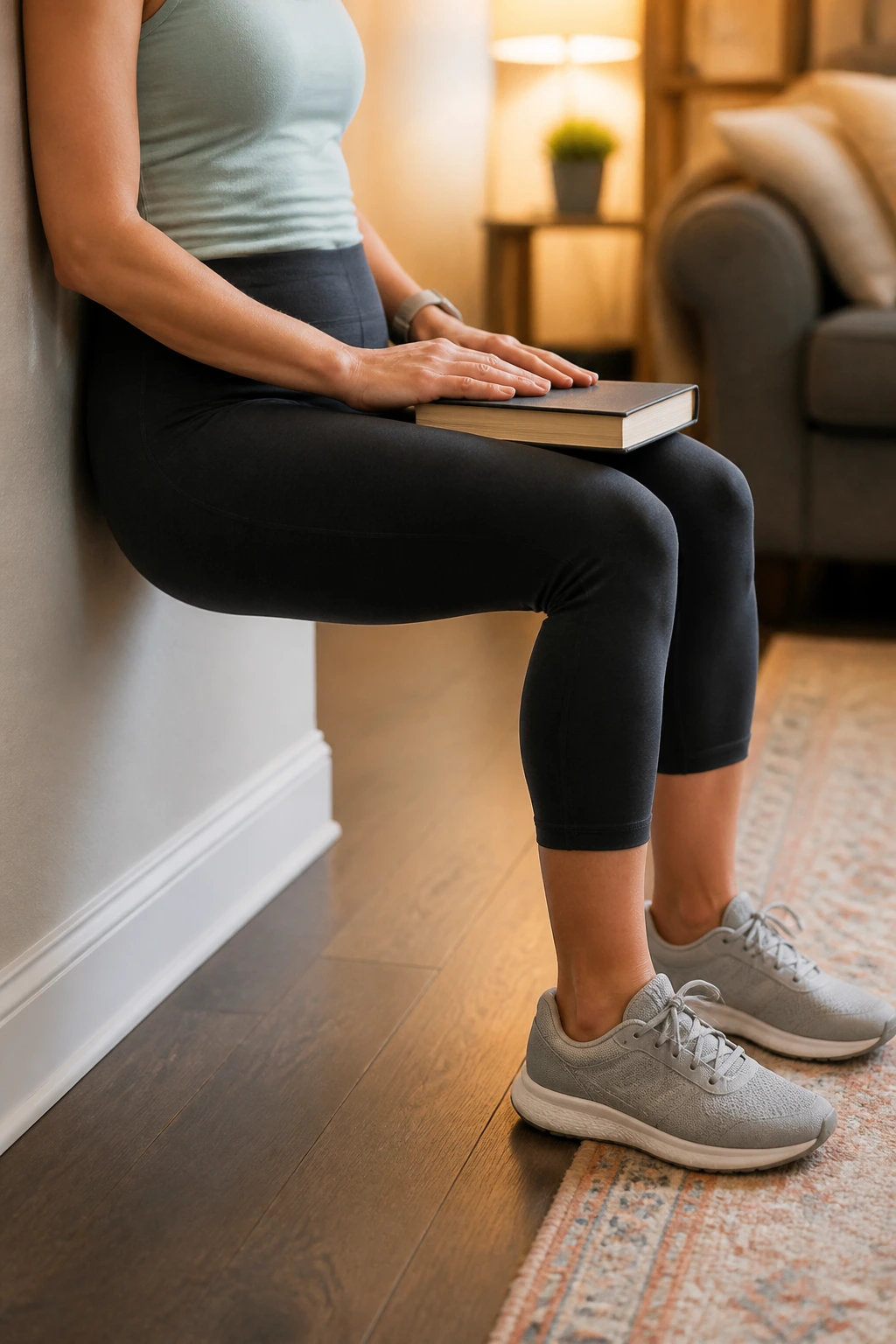
Picture this: you’re reading one page while your legs do the work. That’s a wall sit, and it pairs weirdly well with a toddler who wants to hear the same book twelve times in a row.
Slide down a wall until your knees are bent around 90 degrees, or a little higher if that feels kinder. Keep your back flat against the wall and hold for 20 to 45 seconds. Rest, then repeat for 3 to 5 rounds. Your thighs should light up before your mind gets bored, which is part of why the wall sit works so well.
If your child wants to sit on the floor and turn pages, perfect. If they want to lean on your knees, also fine as long as the position stays stable. This is a good “parent workout” because it fits into an existing moment instead of demanding a separate one.
One sentence says it all: quiet pain, low setup. That’s the appeal.
10. Dance Cardio Freeze Games with a Toddler
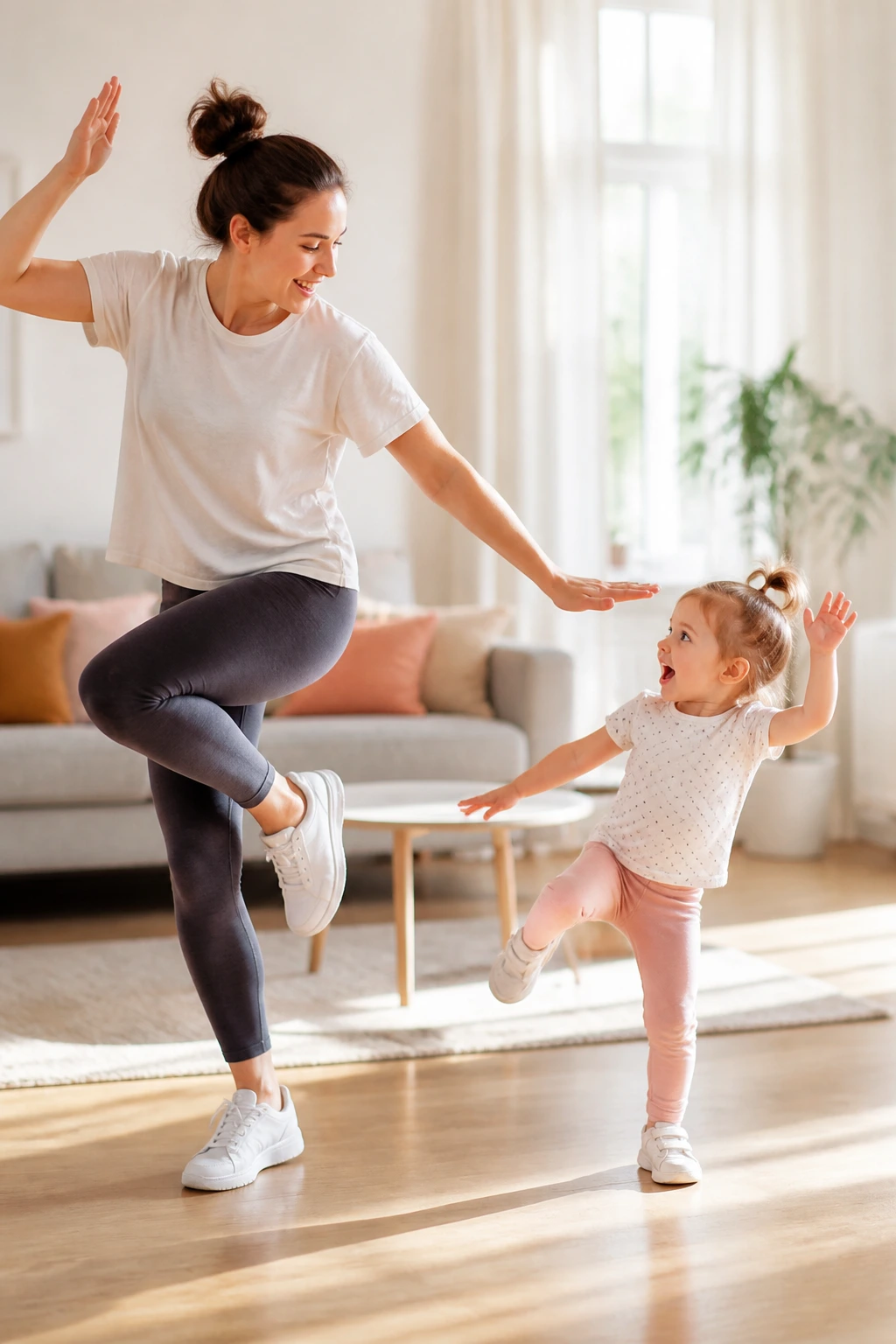
This is probably the most forgiving cardio session you can do in a small room. Turn on 2 or 3 songs, dance hard during the music, and freeze every time it stops. Toddlers get the rule instantly, which is part of why this works so well.
Why It Works
The stop-start pattern gives you bursts of effort without asking for perfect timing. You move your arms, bend your knees, hop, twist, and keep your feet alive for the full song. Then you stop. Clean and simple.
- Use one song for warm-up, one for hard movement, one for a wind-down.
- Keep the freeze positions easy at first.
- Add high knees, side steps, or little jumps when the mood is good.
- Let your toddler choose a song if you want buy-in fast.
I like the freeze part because it breaks up the noise. There’s a tiny reset every time the music cuts, which is enough to make the next round feel fresh. Also, toddlers love being in charge of the pause button. That helps more than you’d think.
11. Toddler-Mimic Yoga Flows
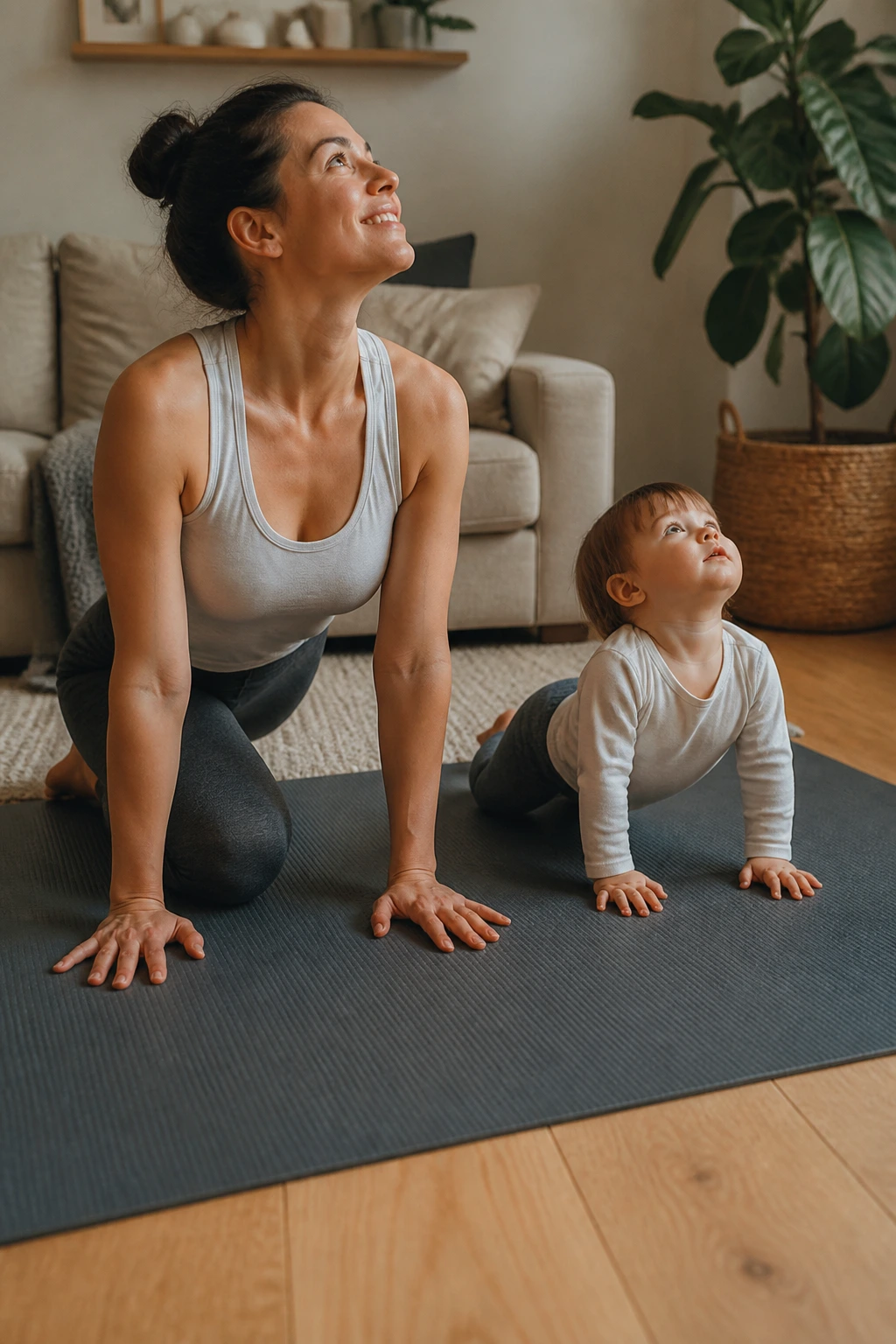
Can a yoga session survive a child who wants to do downward dog on your back? Sometimes, yes. The trick is to treat the session as movement, not stillness. If you hold rigid expectations, the whole thing turns annoying. If you loosen up, it gets useful fast.
Use a simple flow: cat-cow for 5 breaths, downward dog for 3 breaths, low lunge on each side for 3 breaths, then child’s pose for a short reset. Repeat once or twice. Let your toddler copy whatever they can manage. They do not need perfect alignment. They need a floor, some room, and a grown-up who isn’t fussing over every wobble.
Best Poses for a Busy Room
- Cat-cow for gentle spine movement.
- Downward dog for shoulders and hamstrings.
- Low lunge for hip flexors.
- Child’s pose for a break when the room gets noisy.
This is one of the calmer workouts on the list, and I think that matters. Not every session needs sweat dripping off your nose. Sometimes you need to open your hips, calm your breathing, and survive the afternoon without becoming a statue.
12. Stair Intervals with a Handrail
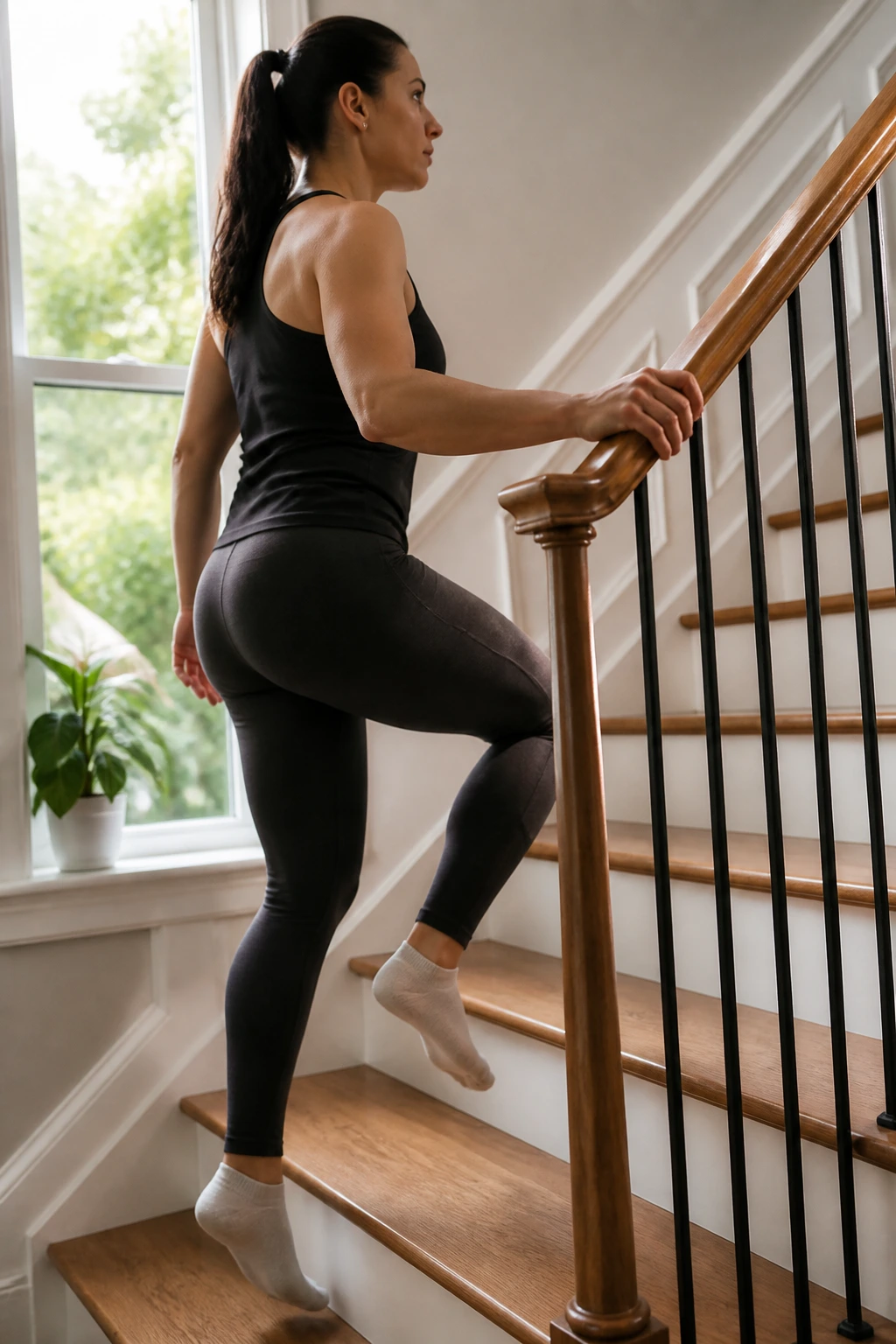
Stairs are not just for laundry and lost socks. They are also one of the fastest ways to get your heart rate up in a small space. The catch is obvious: stairs demand attention, especially when a toddler is nearby. Keep the child in a safe, gated area or with another adult while you do the work. Do not carry a squirmy child up and down the stairs as part of the workout.
A simple stair interval looks like this: walk or step up for 30 to 60 seconds, come back down slowly, rest 30 seconds, and repeat for 5 to 10 rounds. Use the handrail. Keep your torso tall. Move like you mean it, but not like you’re racing a bad decision.
What makes stairs different from a treadmill or hallway walk is the constant demand on your calves and glutes. It’s short, sharp, and efficient. If your knees don’t love it, shorten the interval and keep the pace modest. No prize for proving a point.
This is one of the workouts I respect most because it’s plain, blunt, and effective. No frills. Just steps.
13. Plank Reaches for Toy Pickup
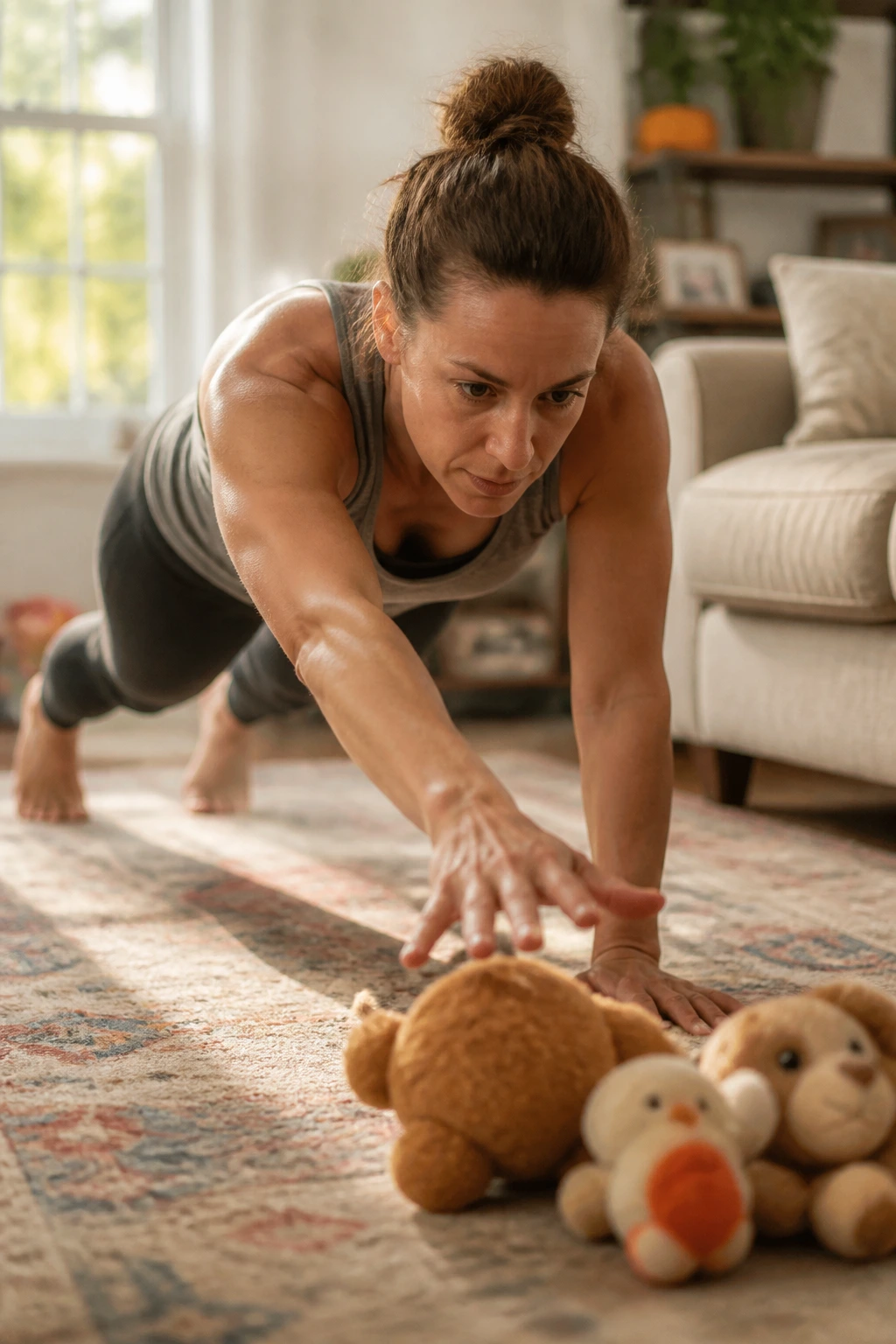
Every toy on the floor becomes a reason to brace your core. That is the whole game here, and it works better than it sounds.
Get into a high plank, or drop to your knees if that’s the smarter choice. Place 3 to 5 soft toys just beyond reach. Reach one hand at a time to tap or slide an item an inch or two, then return to your plank. Hold for 20 to 30 seconds, rest, and do 3 to 4 rounds.
Set Up the Floor First
A cluttered floor is helpful here, but only in the right way. You want soft, safe items — not hard blocks rolling under your wrist.
- Put toys close enough that you can reach them without twisting hard.
- Keep your hips from swinging side to side.
- Breathe out as you reach.
- Stop if your lower back starts to pinch.
The core work comes from resisting movement, not from doing something flashy. That is why planks can feel boring and still be useful. Your toddler may not care about the mechanics. Your trunk will.
14. Mini Band Side Steps While They Play
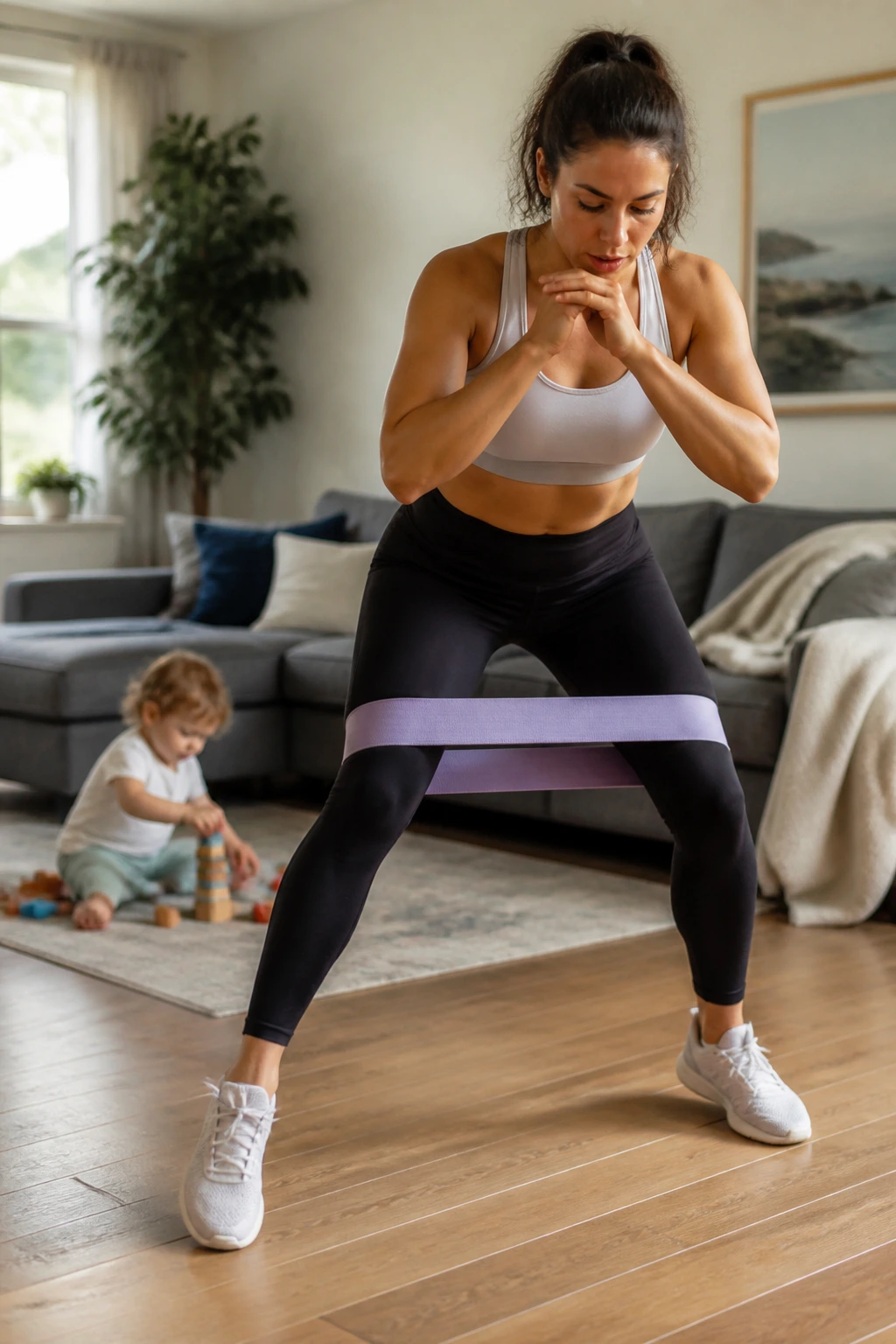
If your hips spend all day sitting, this one wakes them up fast. A mini band around your thighs or ankles gives your outer hips something to do while your toddler stacks blocks, drives cars, or crawls under the coffee table.
Step sideways for 8 to 12 steps in one direction, then come back the same way. Keep the tension in the band the whole time. Do 3 rounds. The move should feel like your glutes are working, not your lower back. If you feel it in your spine, the band may be too low or too tight.
What to Feel
You want a steady burn on the sides of your hips. That’s the sign you’re doing it right.
- Stay in a slight squat.
- Don’t let your knees snap inward.
- Move slowly enough that the band never goes slack.
- Keep your feet parallel, not turned out.
This one isn’t flashy, but it’s one of those small exercises that pays off by making everything else feel a bit smoother. Walking. Standing up. Chasing a toddler who has found the remote.
15. Sit-to-Stand Reps from the Couch
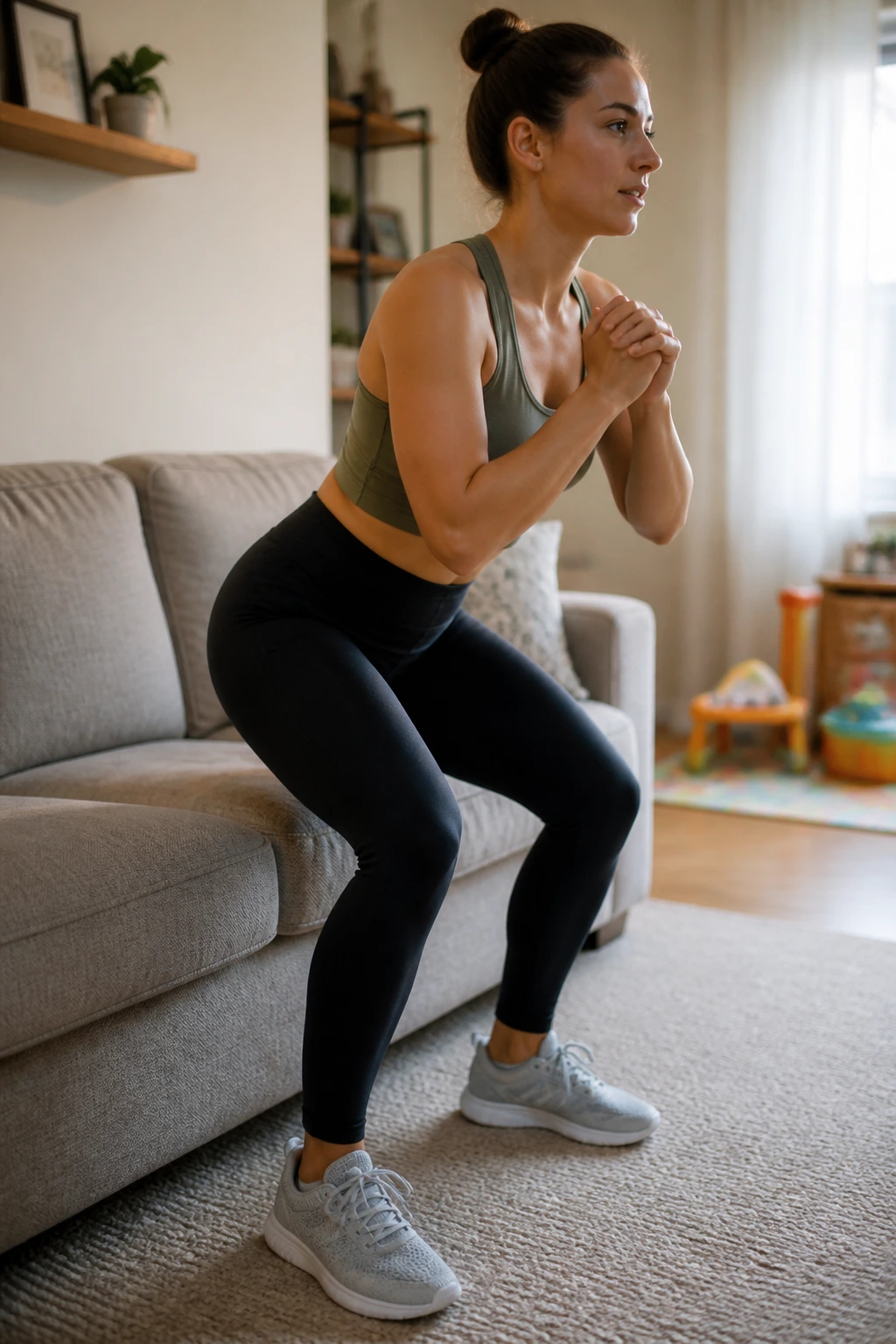
How many times can you stand up and sit down before the toddler asks for a turn? More than you think, if you keep it clean and steady.
Sit on a sturdy couch or chair with your feet under your knees. Lean slightly forward, press through your heels, stand tall, then sit back down under control. A simple target is 10 to 15 reps for 3 rounds. If that feels too easy, slow the lowering phase to 3 seconds or hold a light object close to your chest.
Ways to Change It
- Use a lower seat for more challenge.
- Hold your toddler on your lap only if the child is still and the setup feels safe.
- Pause for one second at the top.
- Keep your knees tracking forward, not collapsing inward.
I like sit-to-stands because they look ordinary, and ordinary is useful. They train your legs in a way that actually maps to real life. Getting off the floor. Standing up from a low seat. Lifting yourself after a long afternoon of being sat on.
16. Playground Bench Circuits
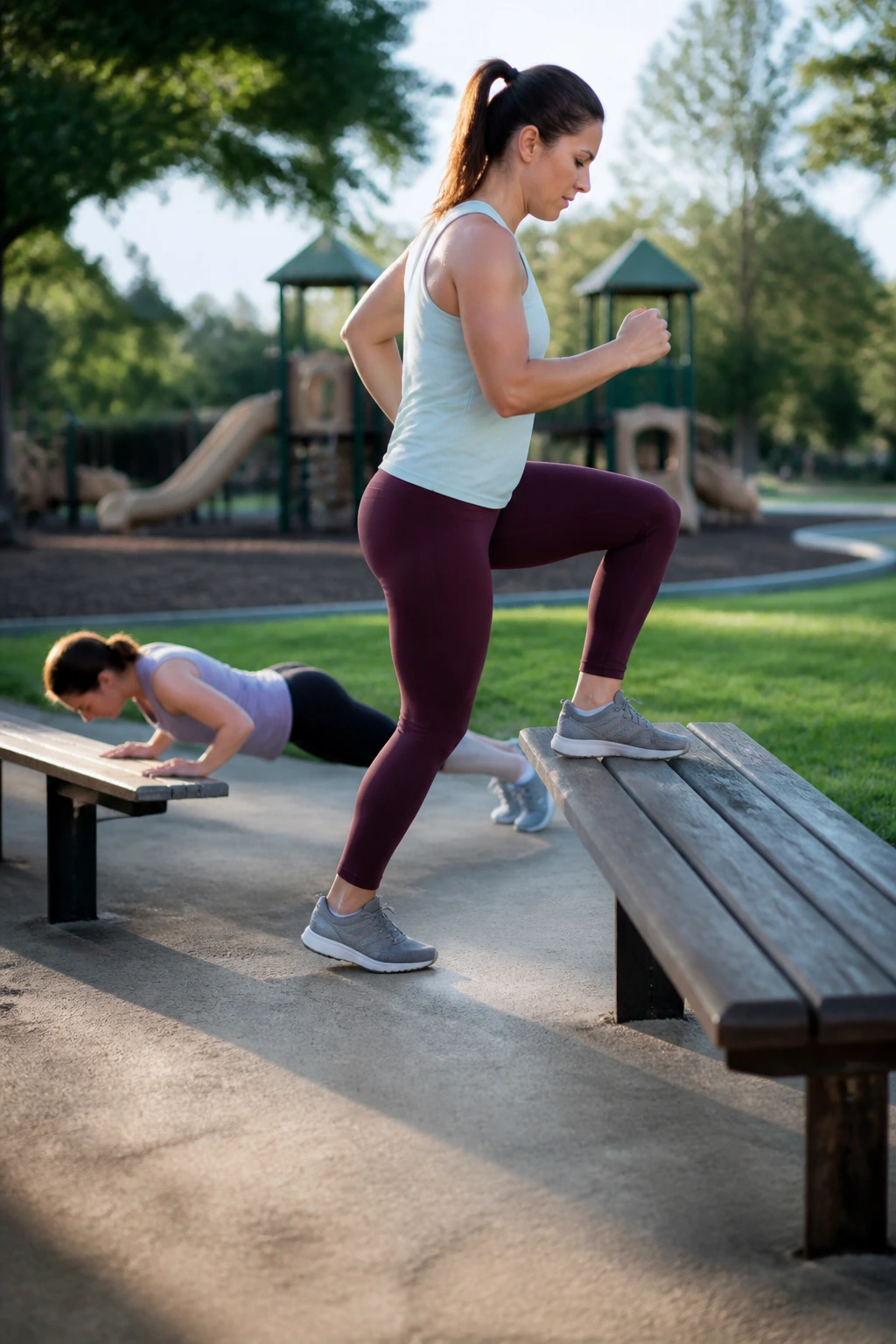
The playground is already a gym if you know where to look. A bench, a low step, an open patch of ground, and a toddler who wants to climb everything in sight — that is enough for a solid circuit.
Use the bench for step-ups, incline push-ups, or even a short seated recovery between rounds. Walk the perimeter of the play area for a minute, do 8 step-ups per leg, then 6 to 10 incline push-ups, then another lap. Repeat for 3 rounds. If the bench is wet, skip it. Wet wood and half-awake muscles are a bad mix.
There’s a nice rhythm to playground workouts. Your child gets play time. You get movement. Nobody has to pretend this is a formal training session, which helps it stay light.
Skip anything that feels awkward in public. Bench dips, for instance, can be rough on shoulders and are not worth forcing. The point is to use what’s there, not to prove anything to the people near the slide.
17. Jogging Stroller Runs with Walk Breaks
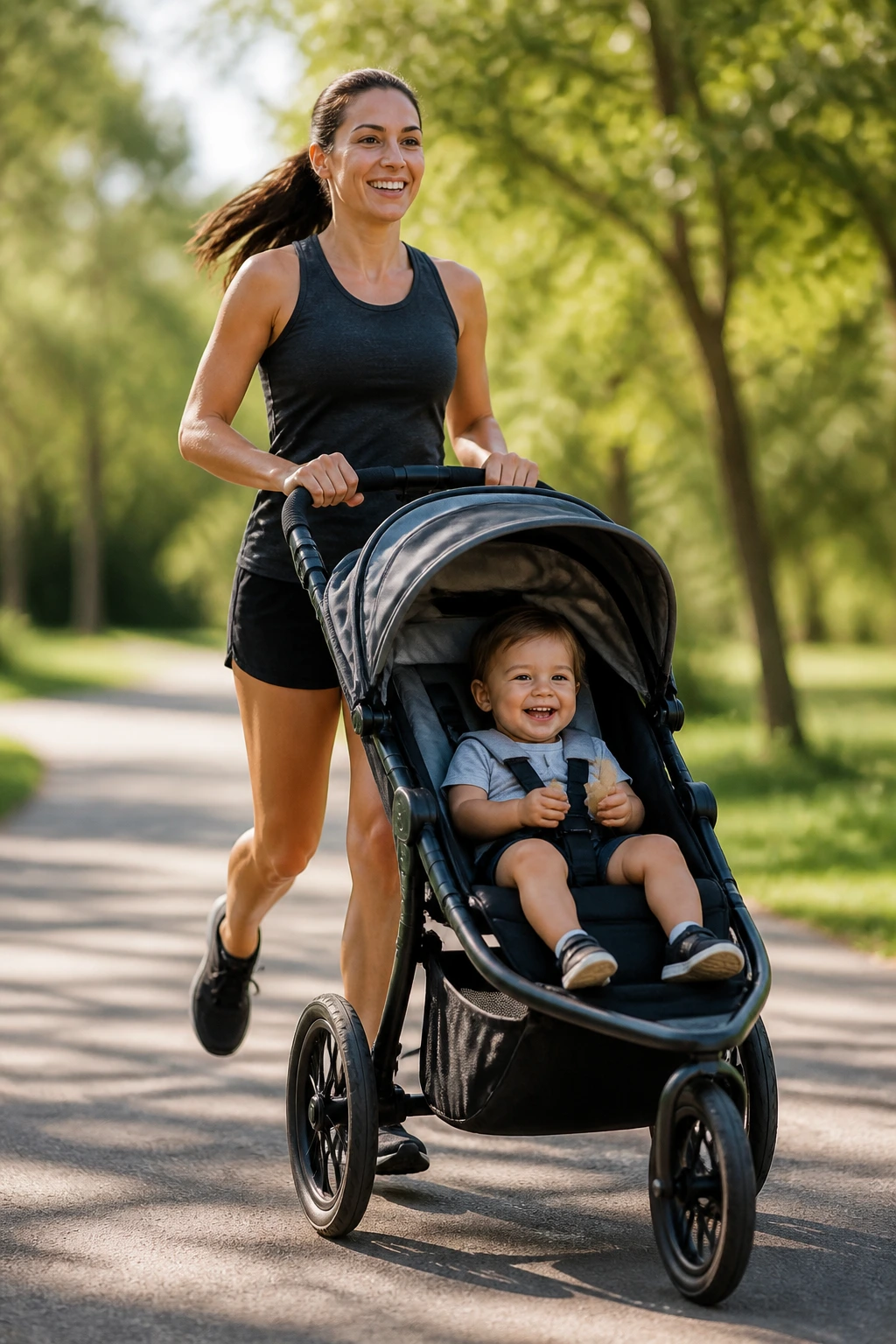
Some workouts feel ambitious until you give them a stroller and a simple run-walk pattern. If you have a jogging stroller and a safe, smooth path, this is one of the strongest ways to get real cardio while keeping your toddler along for the ride.
Start with 20 to 30 seconds of easy jogging, then 60 to 90 seconds of walking. Repeat for 8 to 12 rounds. Keep your pace controlled. You should be able to talk, just not much. Make sure the stroller is designed for running, the wheels are locked or set for that use, and your hand strap is on if the model has one.
What Makes It Different
This is not the same as a normal walk. The run intervals ask more from your calves, hips, and lungs, while the walk breaks keep the session from going sideways.
- Use a smooth path with good visibility.
- Avoid uneven ground and sharp turns.
- Do not look down at the child while running.
- Stop if the stroller starts bouncing or pulling off-line.
I prefer run-walk stroller sessions over all-out efforts because they feel honest. Hard enough to matter. Easy enough to repeat next week.
18. Partnered Hopscotch and Frog Jumps
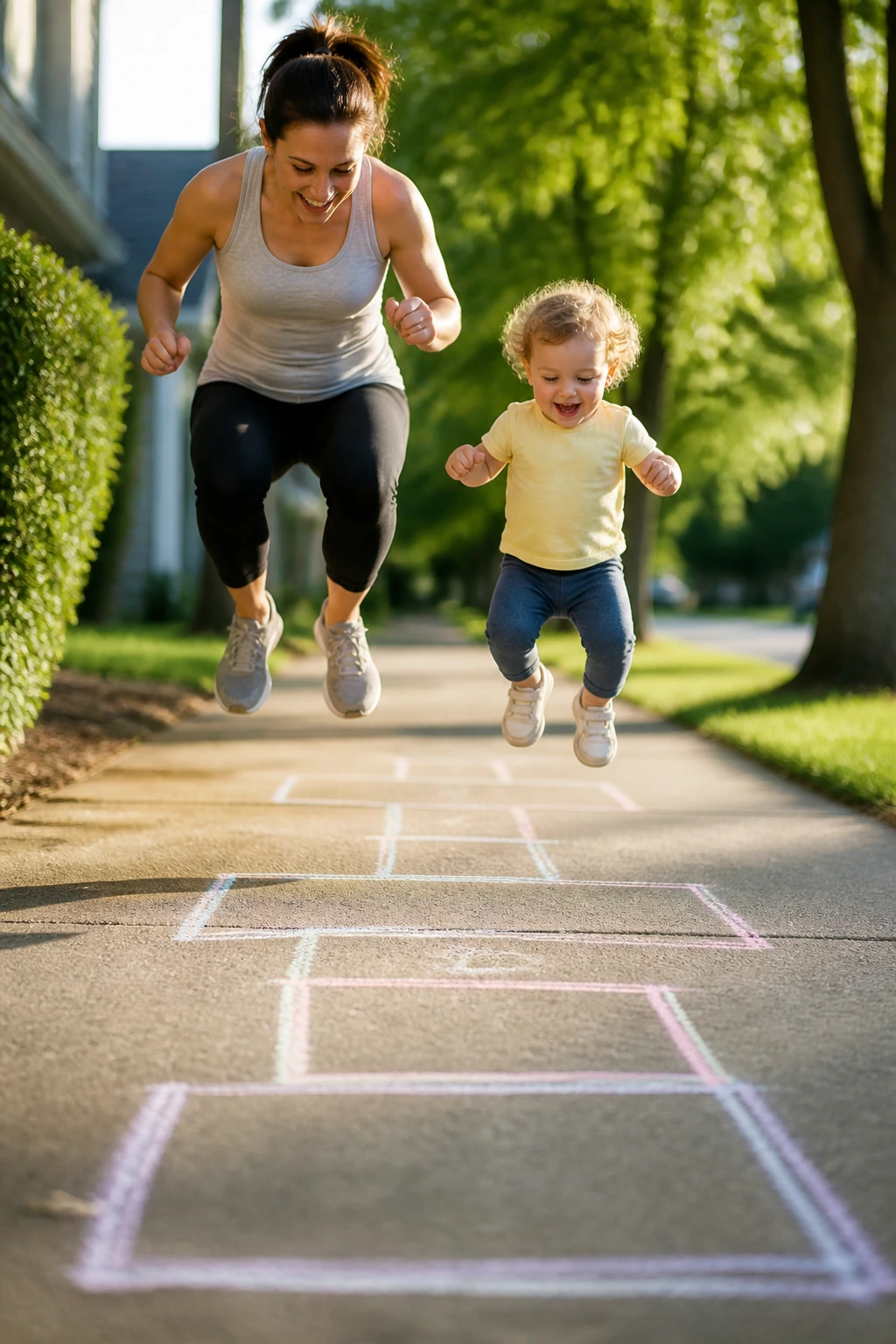
It sounds like recess. It is. That is the point.
Use chalk outside or painter’s tape on an indoor floor to make simple hopscotch boxes. If your toddler can hop, great. If they can only step, that’s fine too. You can hop on one foot, step through the squares, or turn the whole thing into frog jumps with a squat between each leap. Try 3 to 5 passes through the pattern, then rest and do it again.
The appeal here is coordination. You are not just raising your heart rate; you’re paying attention to balance, foot placement, and rhythm. A child who wants to copy every move makes the whole thing better, not worse.
A tiny note: keep the jumps small. Big jumps sound athletic, but they usually fall apart in a cramped room. Short, springy, controlled. That’s the version that works.
19. Floor Mobility Reset Between Meltdowns

Sometimes the best workout is the one that keeps you from locking up. This is the quiet reset I reach for when the day has gone sideways and my body feels welded together from carrying bags, toys, and maybe a child who refused to walk.
Spend 5 minutes moving through a few simple positions: neck rolls, shoulder circles, a kneeling hip flexor stretch, a seated twist, ankle rocks, and a few slow forward folds. Let your toddler roam nearby with books, blocks, or a snack. You are not trying to be elegant here. You are trying to feel human again.
A Quiet Reset
- Hold each stretch for 20 to 30 seconds.
- Keep breathing slow through your nose if you can.
- Skip any stretch that pokes pain.
- Repeat the side that feels tighter, because it usually needs more attention.
This one doesn’t look dramatic, but I think it belongs on the list because parenting is physical. The body gets tight. The hips stiffen. The shoulders creep up. A short mobility block can save the rest of the day from feeling much worse.
20. The Walk-and-Stretch Cooldown Ritual
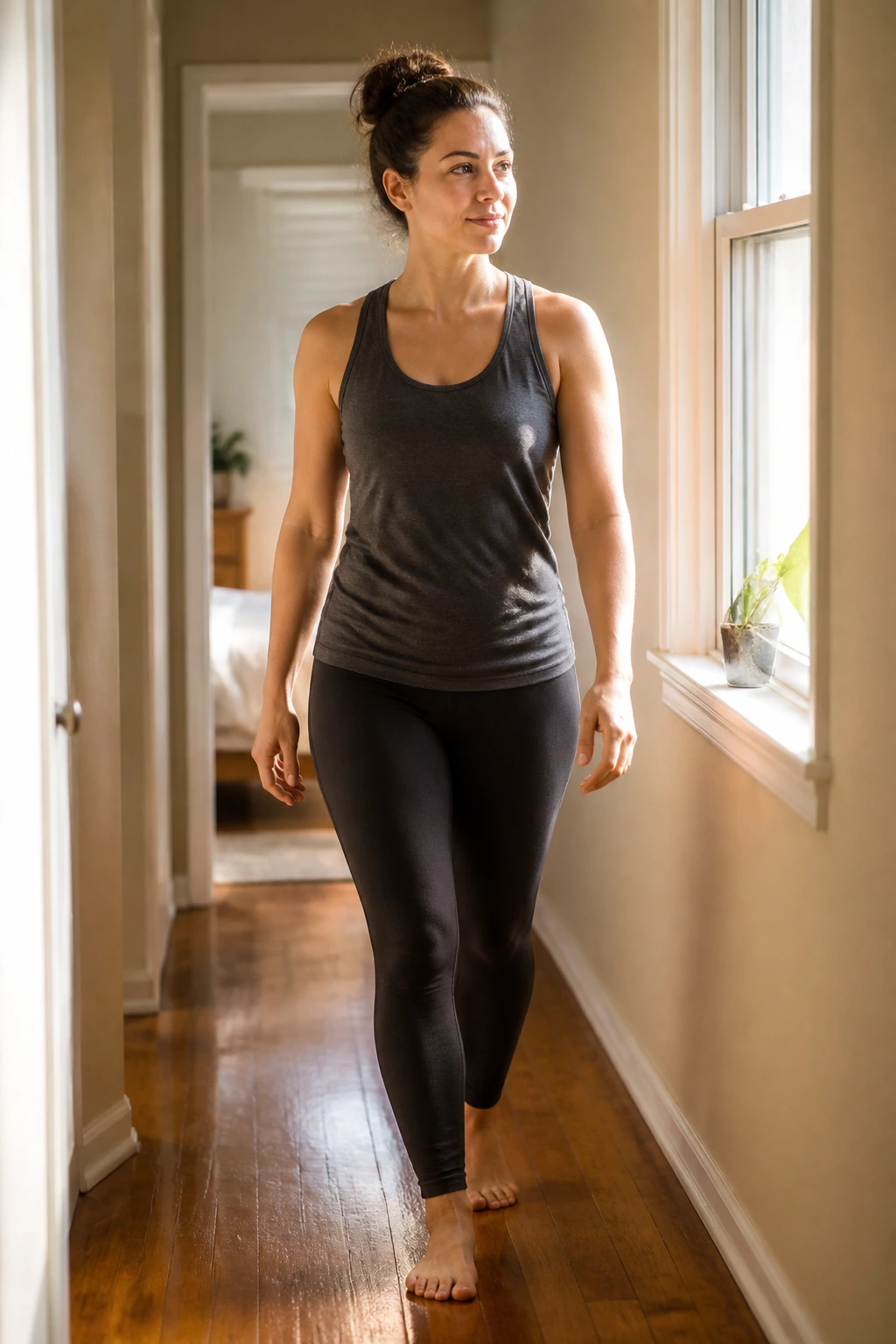
End the session the way real life often ends: by slowing down, rounding everyone up, and taking a few calm minutes before the next thing starts. A gentle walk around the block, the driveway, or even the hallway can settle both you and your toddler after a burst of movement.
Use 5 to 10 minutes of easy walking, then finish with a few simple stretches — calves against a wall, hamstrings on a low step, chest opening with clasped hands behind your back, and a slow exhale or two. If your child wants to copy the stretch, let them. If they’d rather ride in the stroller or sit on the floor and watch, that works too.
This matters more than people think. A decent cooldown makes the next workout easier, and it also makes the whole routine feel less abrupt. You move hard, then you ease out of it. Nice. Clean. No drama.
And if the session was shorter than you planned? Still useful. Still counts. The trick is not perfect consistency; it’s having a handful of movement ideas that fit the strange, noisy rhythm of life with a toddler.
