



Some workouts die from lack of effort. Most home workouts die from boredom. If you can predict the next ten minutes before the warm-up is over, your brain starts looking for the door long before your legs do.
That is the annoying part about exercise at home. No commute helps, sure, but the same five moves in the same order can feel stale by the third round. People do not usually quit because a bodyweight session is impossible. They quit because it feels like reruns.
The fix is not always a harder workout. Often, it is a different container: a timer, a playlist, a deck of cards, the stairs, a backpack, a rule that changes every minute. Those little twists keep your attention busy while the work still gets done.
A boring workout is a design problem. Solve the design, and the sweat usually follows.
1. The 3-Move Timer Triangle

Three moves. One timer. No room for boredom to settle in.
Pick one lower-body move, one upper-body move, and one move that gets your heart rate up. A simple setup looks like squat jumps, push-ups, and mountain climbers, but you can swap in reverse lunges, incline push-ups, and fast marching if jumping isn’t your thing. Run each move for 30 seconds, rest for 15 seconds, and repeat the triangle 3 to 5 times.
Why the triangle works
Your brain gets a fresh target every half minute. That matters more than people think. Home workout ideas fall apart when the session feels endless, but a short timer makes the next decision obvious, and that tiny sense of progress keeps you moving.
- Pick 1 squat pattern, 1 push pattern, and 1 cardio or core move
- Do 30 seconds on / 15 seconds off
- Keep the whole session to 12 to 20 minutes
- Change one move every time you repeat the workout
Tip: If a move starts to feel easy, slow the lowering phase to 3 counts down. That small change makes a basic squat or push-up feel new again without adding equipment.
2. Shadowboxing Rounds in the Living Room
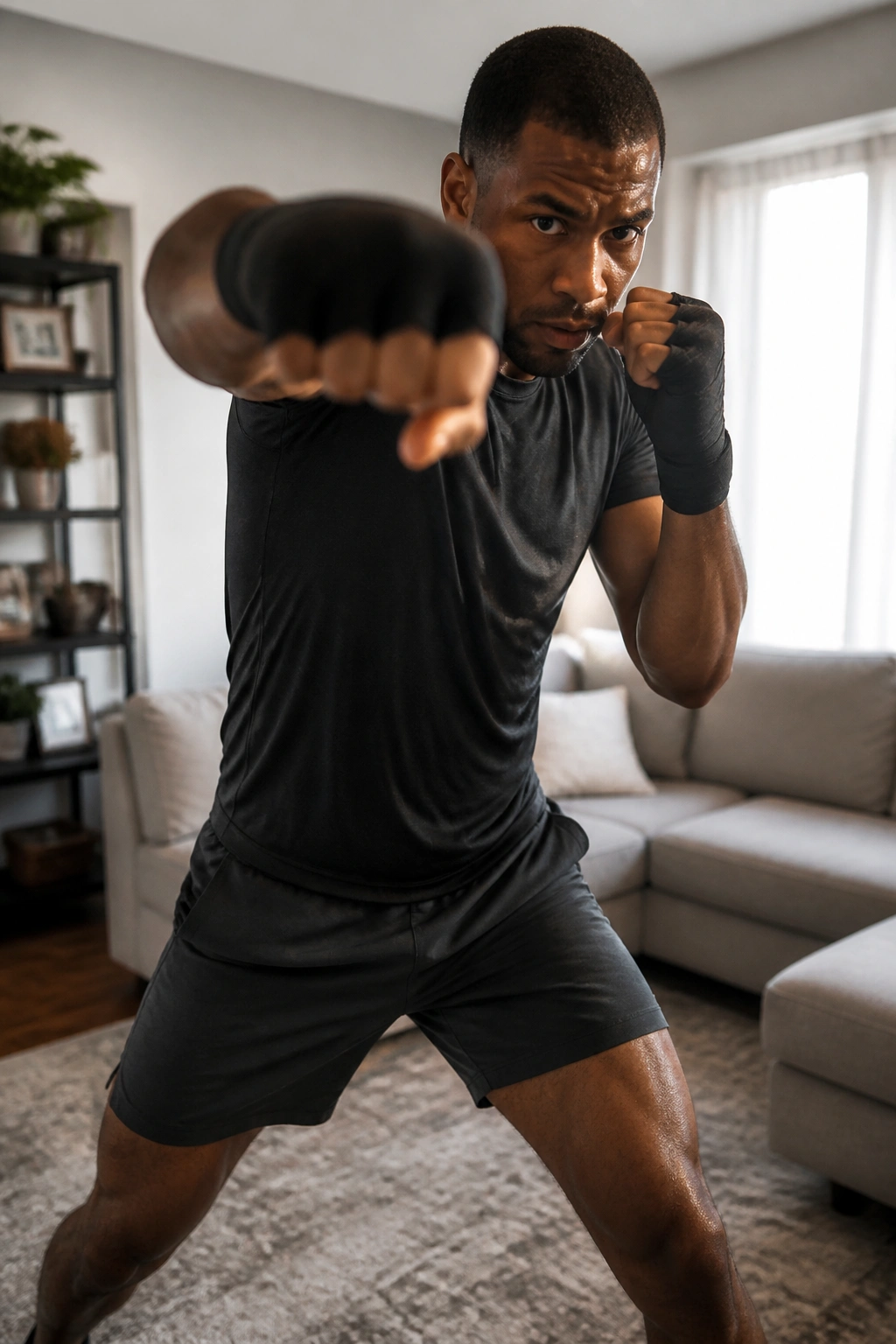
Shadowboxing is one of the few home workouts that can feel like a game and a hard cardio session at the same time.
Set a timer for 2-minute rounds with 30 to 45 seconds of rest. Jab, cross, slip, hook, reset. Then change the combo on the next round so you are not mindlessly flinging your arms around the room. A mirror helps, but it is not required. What matters is rhythm, footwork, and enough variety to keep your head engaged.
The best part is how fast it sneaks up on you. Two minutes sounds short until your shoulders start burning and your feet are a little too warm on the floor. Keep the punches crisp. Do not turn it into sloppy waving. Tight hands and small steps beat giant swings every time.
A simple way to stay interested is to give each round a theme. One round can be only jabs and movement. The next can be power punches. Another can mix in slips, pivots, and knee drives. That tiny rule change keeps your mind working while your lungs catch up.
3. Stair Climb Intervals That Never Feel Quite the Same
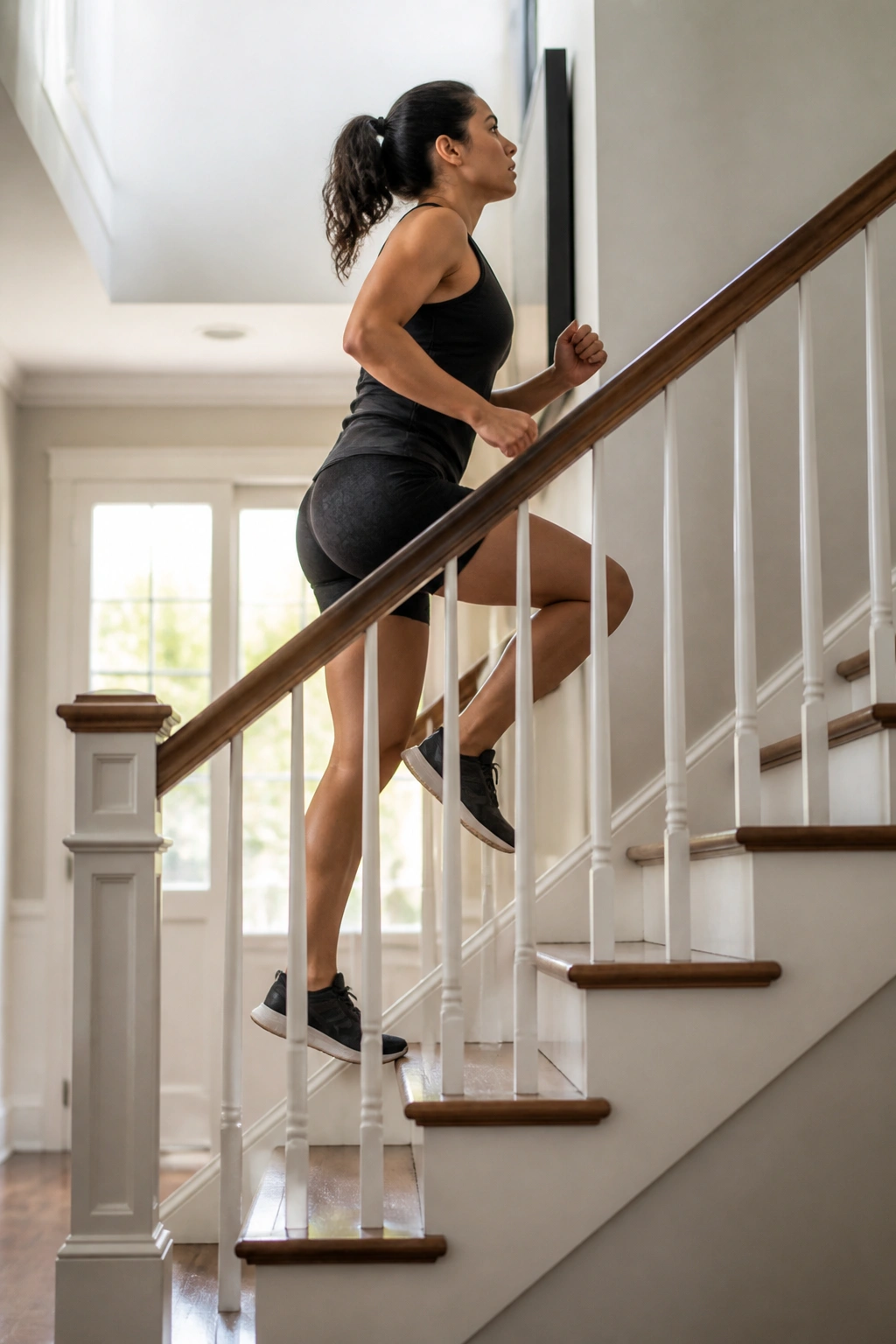
Got stairs and a short attention span? Good.
Stair work is sneaky because the environment does half the work for you. One flight becomes a hill, then a recovery walk, then another climb. Try 8 to 12 trips up and down. Walk down slowly, or use the down trip as your recovery. If you want more challenge, take the stairs two at a time on the way up for the first half of the session, then switch to single steps.
How to keep the stair work from getting stale
Change the rule every few climbs. One trip can be fast feet. The next can be power steps with an upright chest. Another can be a side-step up the staircase if the space is clear and the railing is there for balance.
- Start with 5 minutes of easy marching
- Do 20 to 30 seconds hard on the stairs
- Recover for 45 to 60 seconds
- Repeat for 8 to 15 minutes
A sturdy staircase is the key here. Skip any setup that feels sketchy, especially if the steps are narrow or the surface is slick. Boredom is annoying. A bad landing is worse.
4. Playlist-Switch Dance Cardio
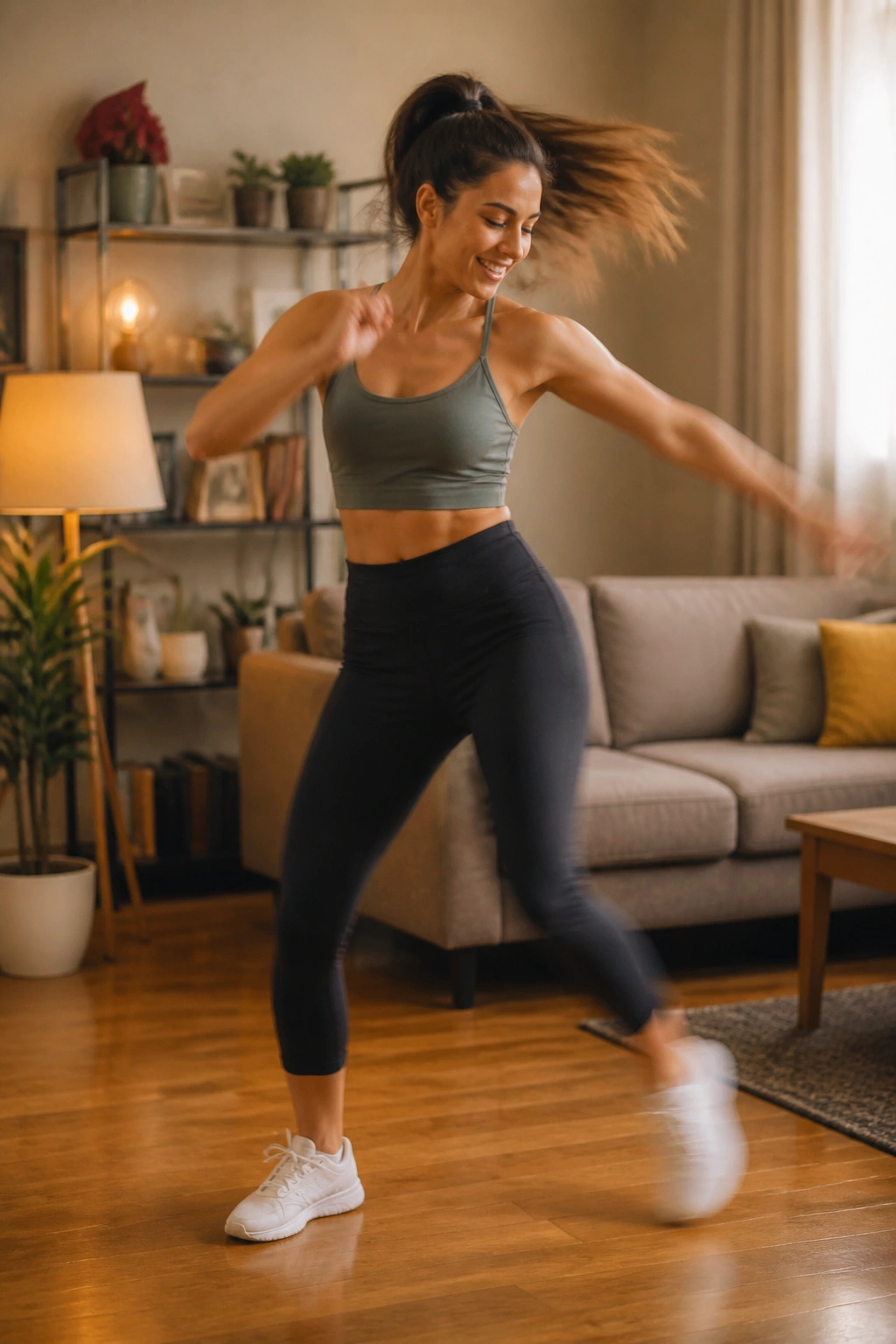
A song change can save a workout.
That sounds almost too simple, but it works because your brain likes a new beat before your body gets tired of the old one. Put together a 5-song playlist and give each song one move pattern. Side steps for one track. Knee lifts for the next. Skater steps, then grapevines, then punch-and-step combos if you want more upper-body work.
The goal is not to dance well. The goal is to keep moving without having to think hard about what comes next. If coordination makes you self-conscious, keep the footwork basic and repeat the same four counts until the song changes. That is enough.
A lot of people quit cardio because it feels like staring at the wall while counting down the seconds. This fixes that. You get music, a tiny bit of structure, and enough change to stop your mind from wandering off.
One rule helps a lot: one song, one main pattern. No complicated choreography. Just a clear job for three or four minutes, then a new job.
5. Every-Minute-on-the-Minute Strength Blocks

EMOM workouts are great for people who get bored because the clock does the thinking for them.
Pick 2 exercises and set a timer for 10 minutes. At the start of each minute, do a set, then rest for whatever time is left. Minute 1 might be 8 squats. Minute 2 might be 6 push-ups. Repeat that pattern until the timer ends. If you finish your reps in 20 seconds, you get 40 seconds of rest. If you finish in 45 seconds, you know the set was a little too spicy.
That built-in pressure changes the feel of the workout. You are not wandering through a vague circuit. You are racing the clock in small, manageable bites. And because the rest is earned, not guessed, the whole thing feels cleaner than a random “do this until you’re tired” session.
You can make this harder by adding a backpack, slowing the lowering phase, or choosing moves that tax different parts of the body. You can make it easier by using incline push-ups, bodyweight squats, and dead bugs. The format stays the same either way, which is half the charm.
6. Dice-Driven Bodyweight Circuits
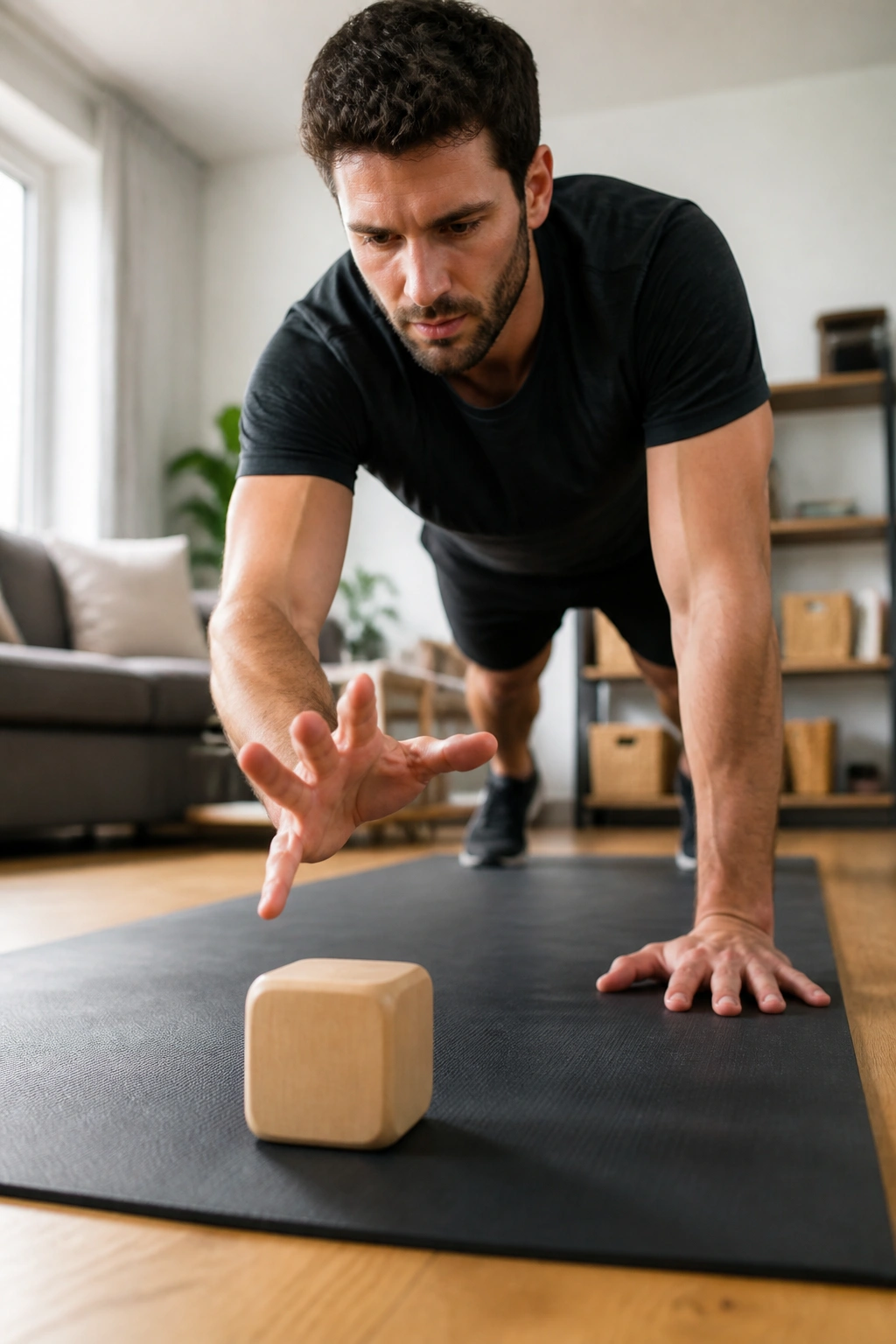
Unlike a fixed circuit, dice do the programming for you.
That little bit of randomness keeps the workout from turning into another memorized routine. Assign 6 exercises to the numbers on a die, then roll for your next move. A simple map might be 1 = squats, 2 = push-ups, 3 = reverse lunges, 4 = plank, 5 = jumping jacks, 6 = dead bugs. Roll 12 times and do the matching move each round.
What makes this work is not the dice itself. It is the uncertainty. You do not know whether the next roll will give you legs, arms, or core, so you stay a little more alert. That tiny hit of unpredictability is often enough to keep a session from feeling flat.
Best use? People who hate planning and do not want to stare at a written circuit. Keep the reps honest — 5 to 15 reps for strength moves, 20 to 30 seconds for cardio moves. If you want more challenge, roll two dice and add them together for the rep count.
7. Deck-of-Cards Workouts
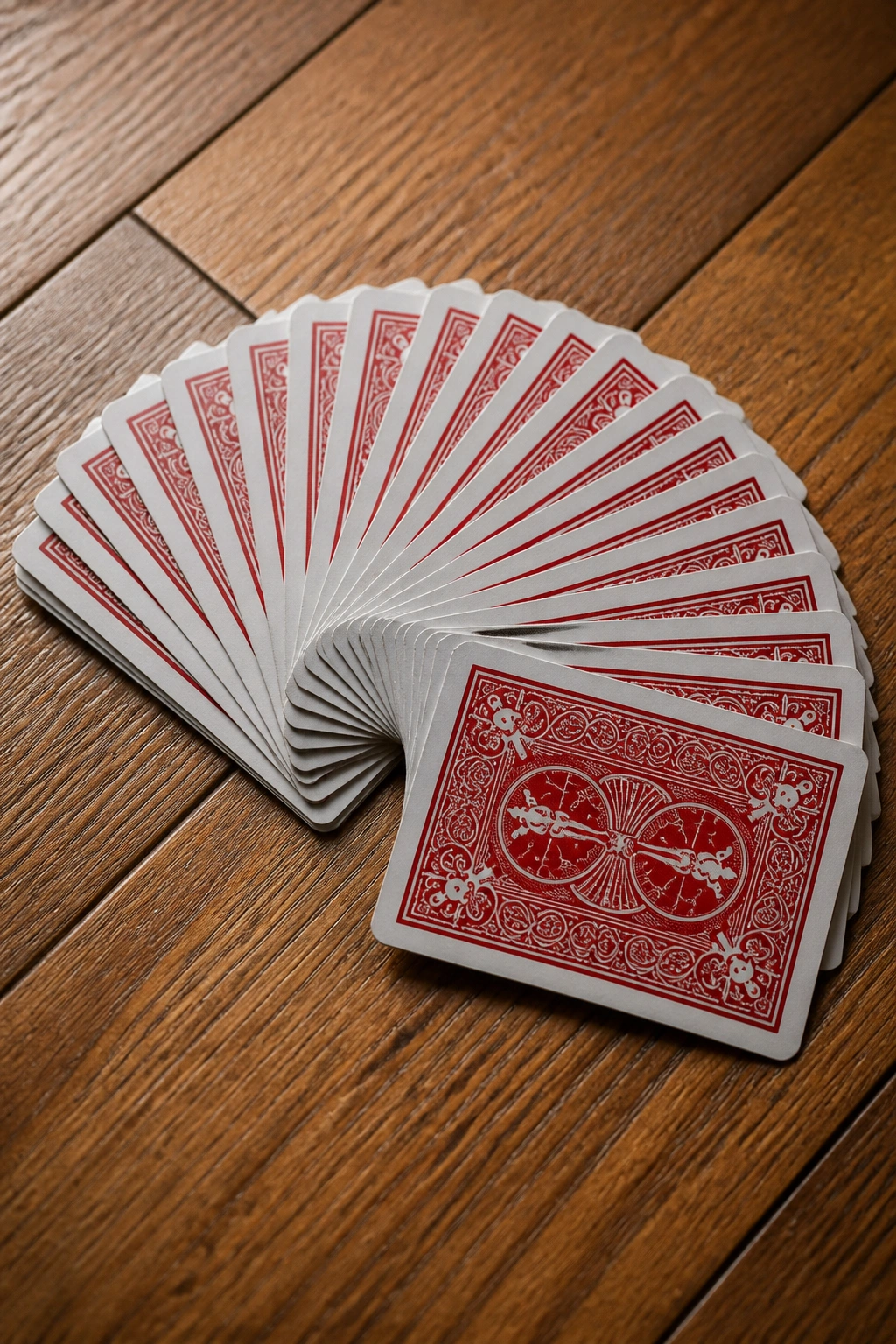
A deck of cards can be a better trainer than a lot of apps.
Shuffle a normal deck and assign each suit to a movement. Hearts can be squats, diamonds can be lunges, clubs can be push-ups, and spades can be core work. Face cards count as 10 reps, aces can be 14 reps or a 45-second plank, and you keep drawing until the deck is gone or your form starts to fall apart.
What makes it different from a regular circuit
Cards give you variety without making you invent the plan on the fly. That matters on low-motivation days. You are still working hard, but the workout feels like a game because the next move is out of your hands.
If the full deck feels like too much, use 20 cards and stop there. If you want more cardio, turn red suits into lower-body work and black suits into bursts like mountain climbers or high knees. Keep the deck on a chair or table so you are not bending over a sweaty pile of cards every thirty seconds.
Small but useful tip: remove one or two face cards if you are new to this. A stack full of 10-rep push-up cards gets old fast.
8. Tabata Bursts With One Move at a Time
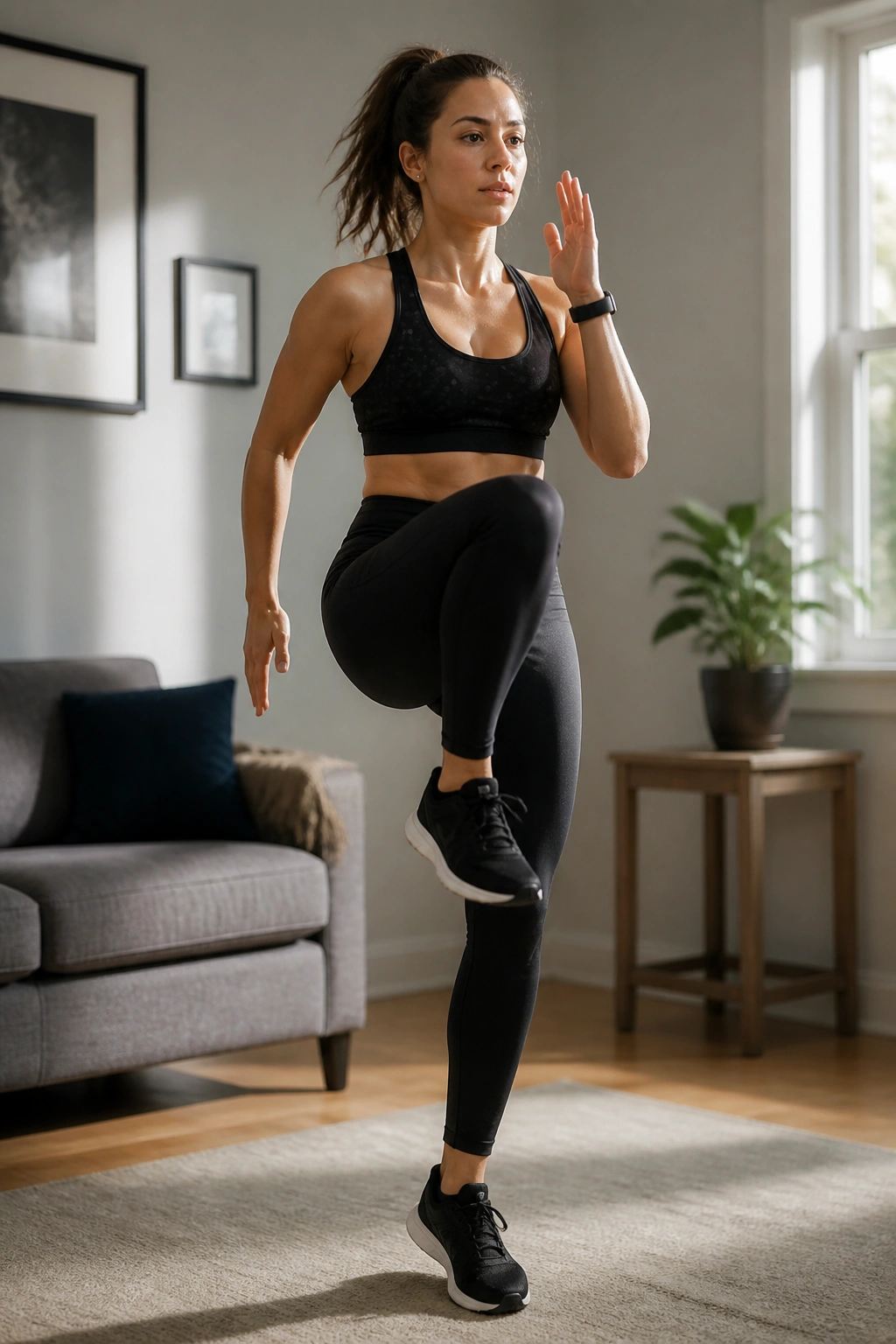
Four minutes can be enough. That is the part people forget.
Tabata is the cleanest format for boredom because it gives your brain no time to wander. Do 20 seconds hard, rest 10 seconds, and repeat for 8 rounds. One exercise, one block, one goal. High knees, squat thrusts, skaters, or fast bodyweight squats all work well here.
That single-move focus is the trick. You are not juggling a giant circuit or thinking about the next three exercises. You are just finishing the next 20 seconds. Then the next. Then the next. It sounds tiny, but the clock starts to feel sharp in a good way.
You can run one Tabata block and be done, or stack two blocks with a 90-second walk between them. If jumping beats up your knees or floors, pick marching high knees, fast step jacks, or shadowboxing instead. The method matters more than the move.
9. The Strength Ladder

Why does a ladder feel less boring than sets of ten?
Because your brain likes a climb. Start with 1 rep, then 2, then 3, and keep going until you hit 5, 6, or 7, depending on the move. Then walk back down. You can do that with squats, push-ups, glute bridges, or even dead bugs if you want a calmer version. A ladder turns a workout into a small puzzle, and that puzzle is enough to keep people engaged longer than a plain repeat-count.
How to climb it without getting sloppy
Do not chase speed here. Chase clean reps. A ladder only works if the form stays tight on the higher rungs, because once the movement gets sloppy, the challenge turns into survival.
- Use 1-2-3-4-5-4-3-2-1 for a classic ladder
- Rest 20 to 40 seconds between rungs
- Stop one rung earlier if your form breaks
- Pick one upper-body move and one lower-body move if you want a longer session
A ladder is excellent when you want a workout that feels orderly but not dull. It gives you a clear beginning and end. That matters more than people admit.
10. Chair, Couch, and Wall Circuit
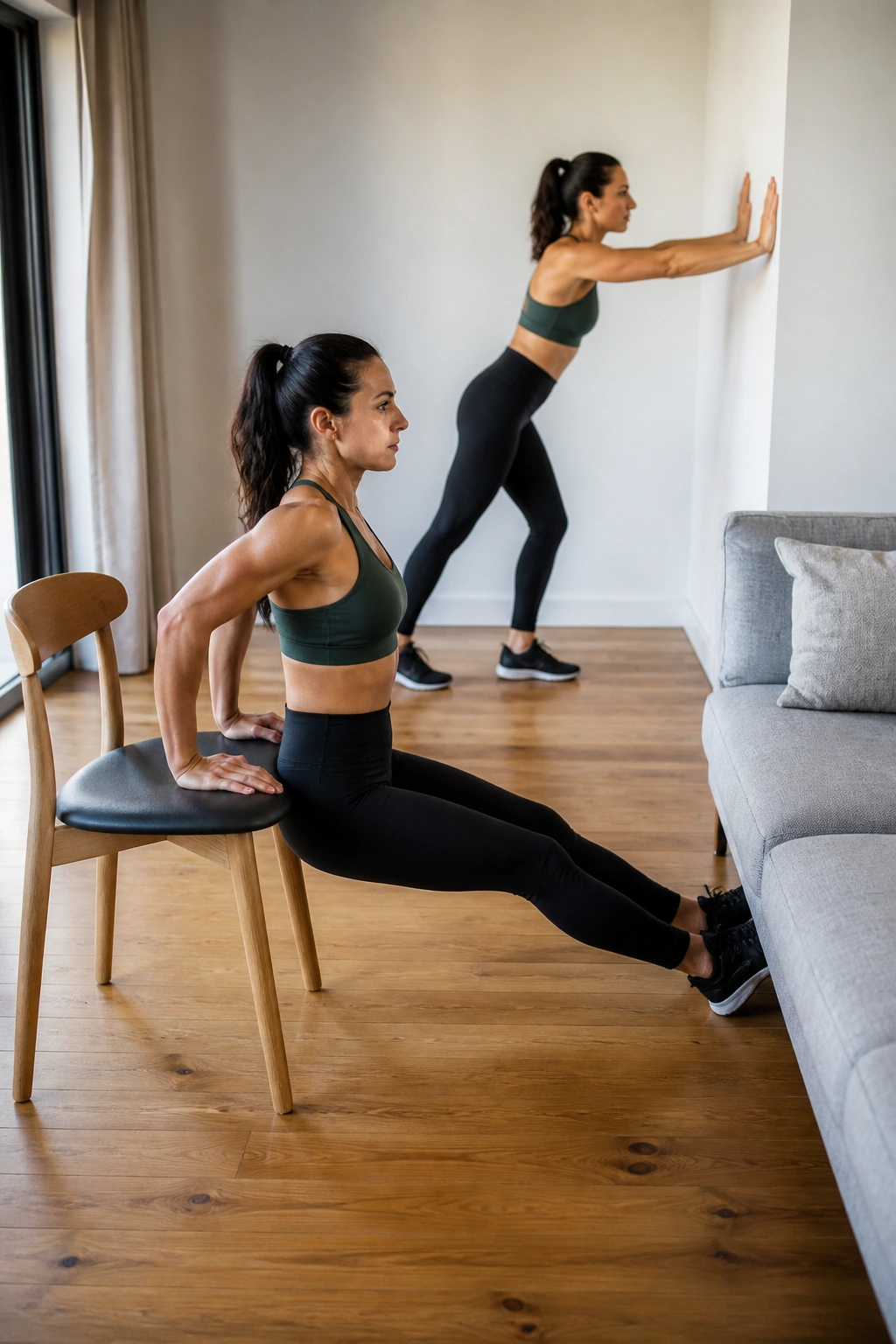
A living room can be a decent gym if you use it with a little common sense.
A sturdy chair, a couch edge, and a wall can give you a full-body circuit without any extra gear. Use the chair for step-ups or sit-to-stands, the wall for wall sits and incline push-ups, and the couch for hip thrusts or supported split squats. Keep everything stable. No wheeled chairs. No wobbly side tables. That part is not optional.
The reason this works for bored exercisers is the angle changes. A wall sit feels nothing like a couch hip thrust, and a step-up feels different again. Your muscles notice the change, and your brain does too. That contrast is enough to make the session feel less repetitive.
Try 30 seconds per move, 3 rounds, and 20 to 30 seconds of rest between moves. If dips bother your shoulders, skip them. There are enough safe options here that you do not need to force anything ugly.
11. Mobility Flow Between Hard Sets
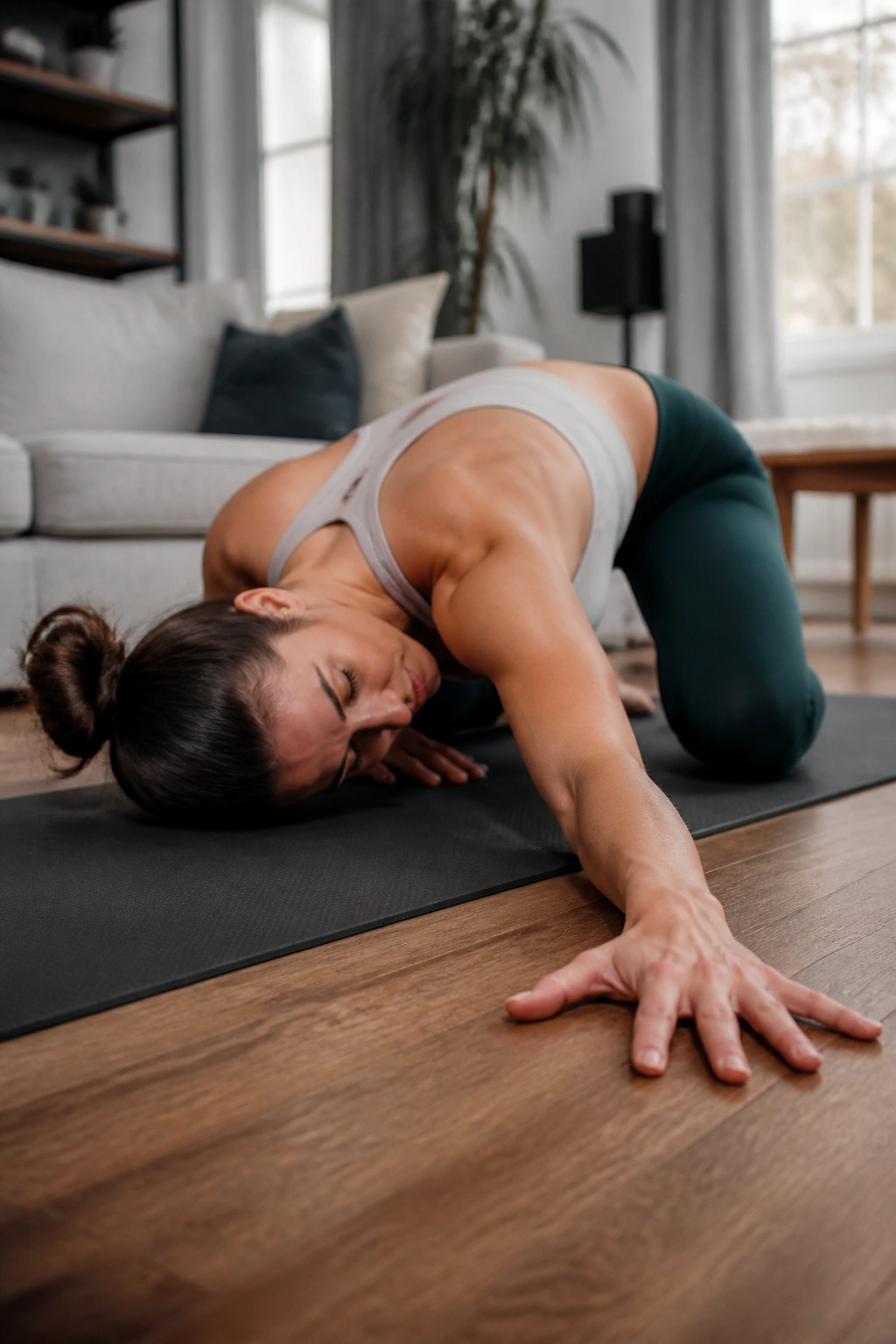
If hard workouts make you restless, this is the calmer fix.
Pair one strength move with one mobility move that opens the same area. A set of squats can be followed by a deep squat hold. Push-ups can be followed by a thread-the-needle stretch. Lunges can flow into a hip-flexor reach. The workout still feels active, but the pace changes enough to keep your head from checking out.
This is a smart way to train on days when you want movement more than punishment. You stay warm, your joints get a little relief, and the session feels more like a moving reset than a grind. That matters if boredom shows up when the workout gets too aggressive or too stiff.
A good format is 40 seconds of work, then 20 to 30 seconds of mobility. Keep the flow steady for 12 to 18 minutes. The transitions are the point. You should feel like you are moving through a sequence, not hammering the same pattern over and over.
12. Grocery-Bag Carry Challenge

Unlike a lot of home cardio, carries make you work without bouncing around the floor.
Fill two grocery bags with books, water bottles, or canned food. Then walk laps around your hallway, kitchen, or living room for 30 to 60 seconds at a time. Switch to one bag for a suitcase carry. March in place with the bags if space is tight. Hold them at your sides and keep your ribs stacked over your hips. That posture work is no joke.
This is a strange little workout in the best way. Your grip gets taxed. Your trunk has to brace. Your legs still do work, but in a quieter, more controlled way than jumping drills. People who hate noisy, high-impact home workouts usually like carries more than they expect.
Best use: small spaces, low ceilings, and days when you want to feel sturdy instead of wrecked. Start lighter than you think. A bag that feels fine for one lap can feel rude by the third.
13. Silent Low-Impact Cardio
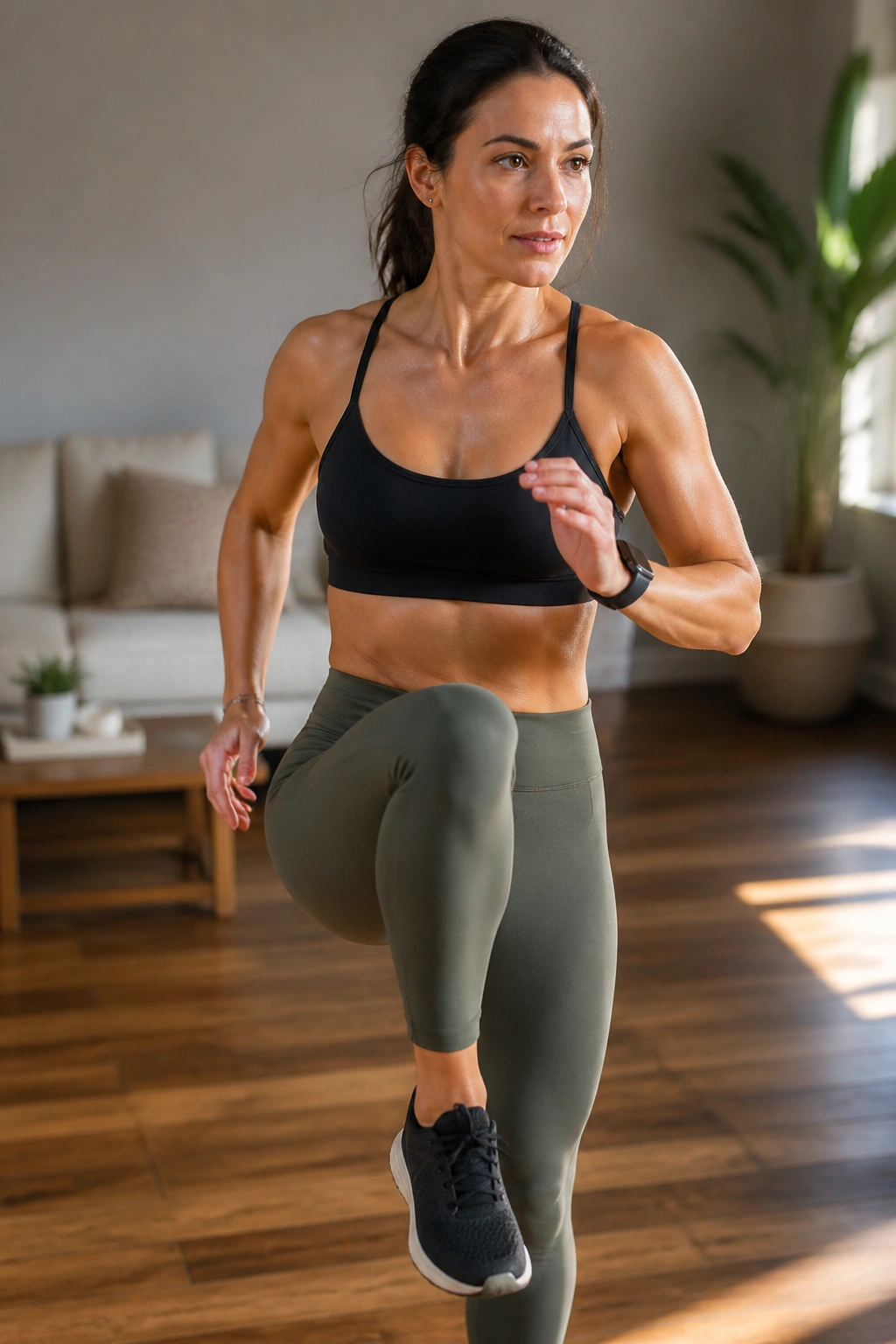
If your floors are thin or your neighbors are close, keep the workout quiet and keep moving anyway.
Silent cardio is just cardio with the impact removed. Think step jacks, standing knee drives, toe taps, low skaters, and marching fast enough to raise your pulse. Do 40 seconds on, 20 seconds off, and build a 12-minute block that never needs a jump.
Moves that stay quiet
- Step jacks instead of jumping jacks
- Knee drives instead of sprinting in place
- Side steps with arm reaches
- Low skaters with no hop
- Squat to calf raise instead of squat jumps
The appeal here is practical, not glamorous. You can do it in socks. You can do it early or late. You can do it while someone else is working in the next room. And because the options are low-impact, you can keep the session going longer without your landing mechanics falling apart.
14. Commercial-Break Sprints
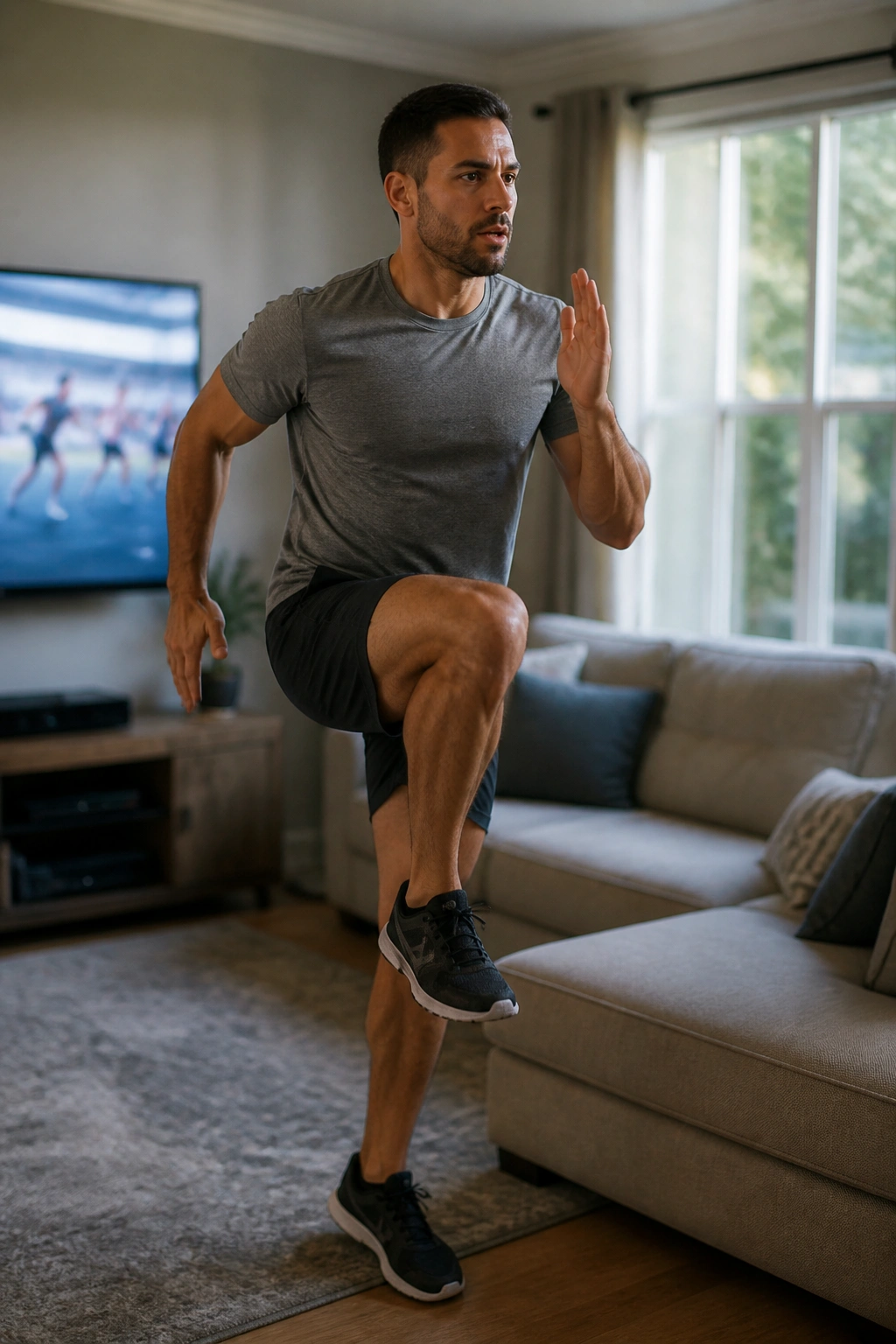
A four-minute break can change a lazy night into a sweaty one.
Set a short timer, or wait for a natural pause in what you are watching, and do one round of fast exercise before the screen comes back on. Ten squats, eight push-ups, twenty marching high knees, and a 30-second plank is enough to make your breathing change. If the break is longer, do a second round. If it is short, keep it simple.
The reason this works is psychological. You are not “starting a full workout.” You are just using a break. That tiny mental trick lowers the resistance, which is usually the part that gets people. The body follows after the first set.
Keep the moves basic and quick to reset. This is not the place for a complicated plan. It is the place for speed, a little sweat, and zero fuss. If you want more structure, keep the same four moves every break for a week, then swap two of them out so the routine does not turn stale.
15. Animal-Flow Floor Sequence
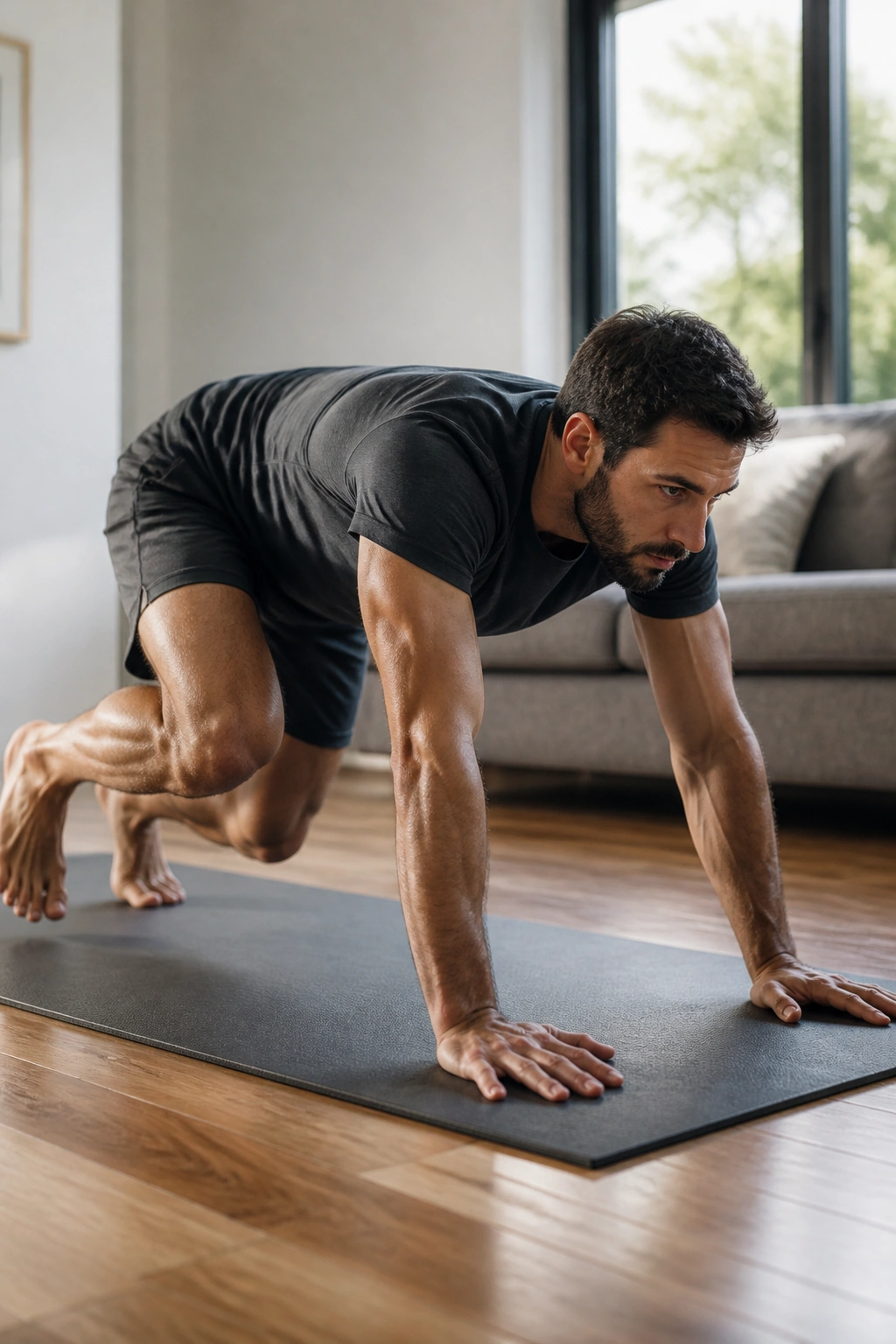
When a workout starts feeling too human, crawl a little.
Animal-flow drills are good for bored people because they feel odd in a useful way. Bear crawl, crab reach, beast hold, lizard step-through — those names alone wake up the brain. Pick 3 or 4 moves, do each for 20 to 30 seconds, and travel 5 to 10 feet if you have the room.
How to use it without turning it into a circus
Keep the movements slow enough that your hips and shoulders stay controlled. A beast hold should look quiet, not frantic. A bear crawl should feel deliberate, not like an escape attempt. That control is what makes the sequence training, not just floor flopping.
Animal flow is best when you want something that challenges coordination as much as fitness. It is not the easiest home workout idea here, and that is part of the appeal. Your body has to pay attention. Your mind has less room to drift.
16. Yoga-Strength Hybrid
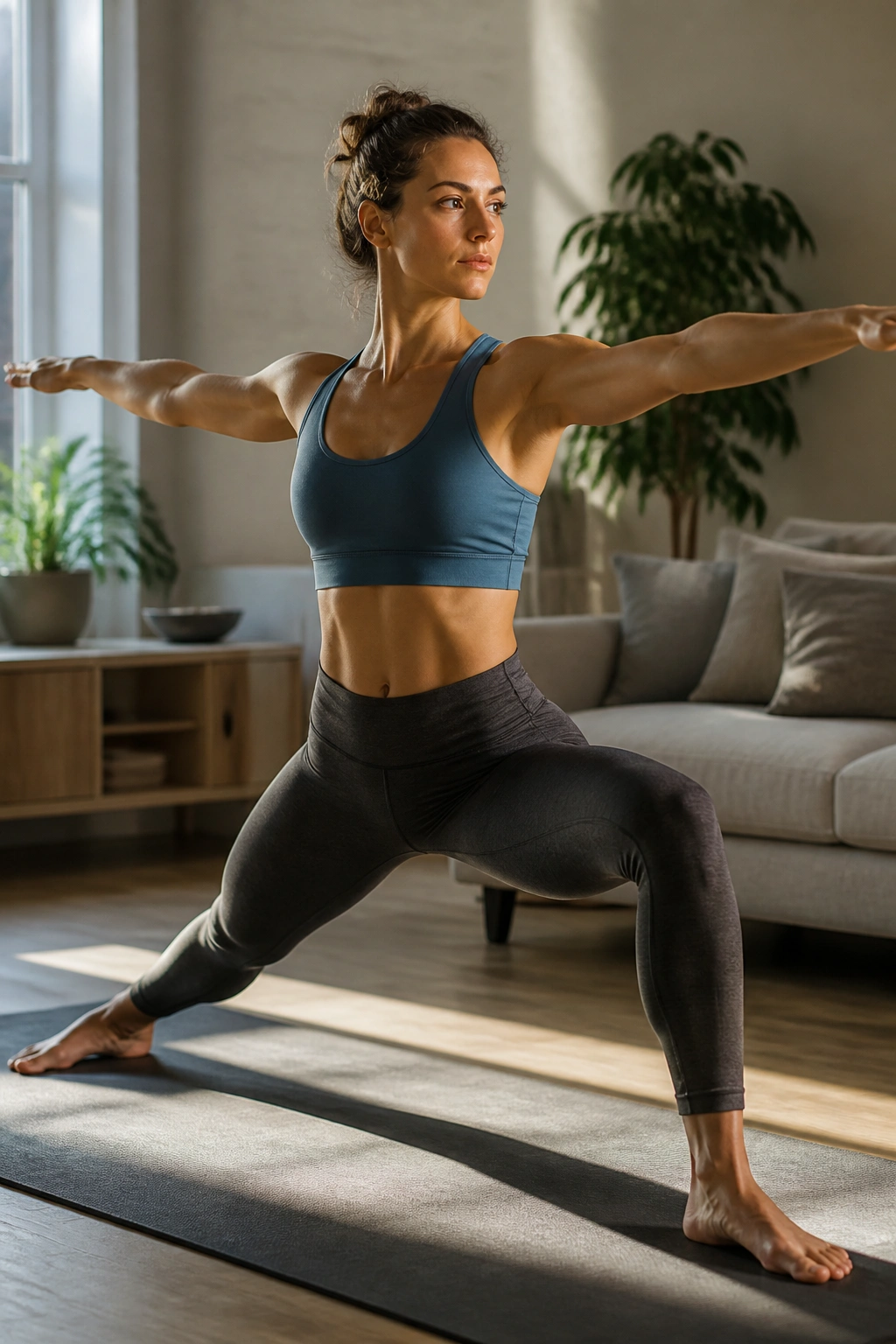
A slow session can still be a hard one.
Yoga-strength hybrids work because they change tempo so often. Hold Warrior II for 5 breaths, pulse in Chair Pose for 10 reps, step into plank and lower for 5 controlled push-ups, then move into Down Dog and walk the feet. The body gets strength, balance, and a little stretch all in the same sweep.
This is not soft exercise. It can burn. A long chair hold will wake up your thighs fast, and slow push-ups are rude in the best way. The difference is that the pace feels less like punishment and more like controlled work. That matters on the days when you are bored by brute-force cardio.
A good session uses 5 to 8 poses or transitions and lasts 15 to 25 minutes. Keep the moves linked, not random. If the flow feels messy, slow it down. Slower is often better here.
17. The Random-Core Challenge
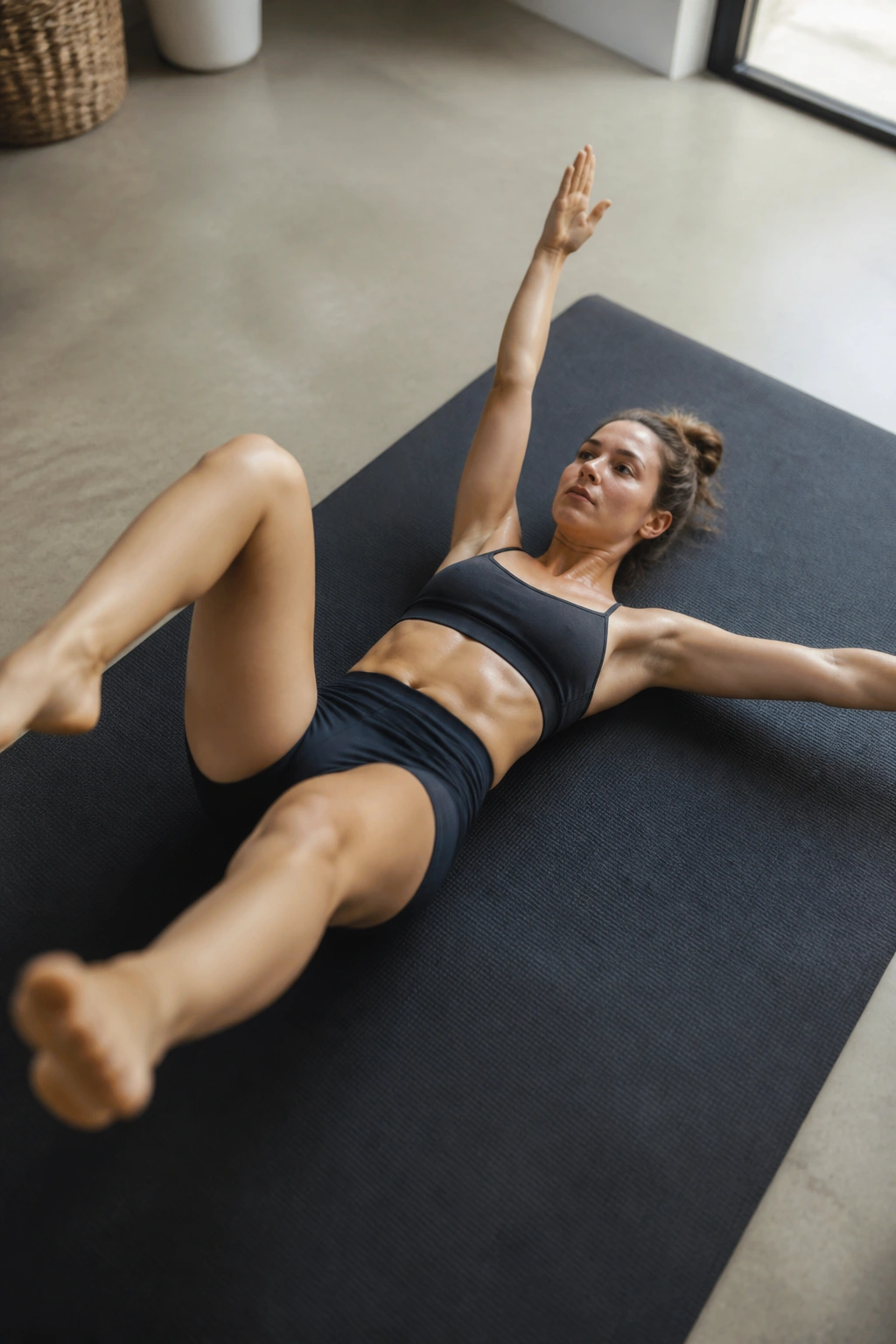
Core work gets boring when every set looks the same.
A better way is to write six core moves on slips of paper, toss them in a bowl, and pull them one by one. Dead bugs, side planks, hollow holds, bicycle crunches, bird dogs, and reverse crunches all fit well. Do each for 30 to 40 seconds, then pull the next one without knowing what it will be.
That random order does more than kill boredom. It keeps your trunk from getting too comfortable with one pattern. Side planks after hollow holds feel different. Bird dogs after reverse crunches feel different. The session stays awake because you never settle into a groove long enough to zone out.
If you want a cleaner version, use 3 slips only and repeat them for 3 rounds. If you want a tougher version, make one slip a hold and one a moving drill. Small changes in format keep the work interesting without making it messy.
18. The Room-Lap Workout
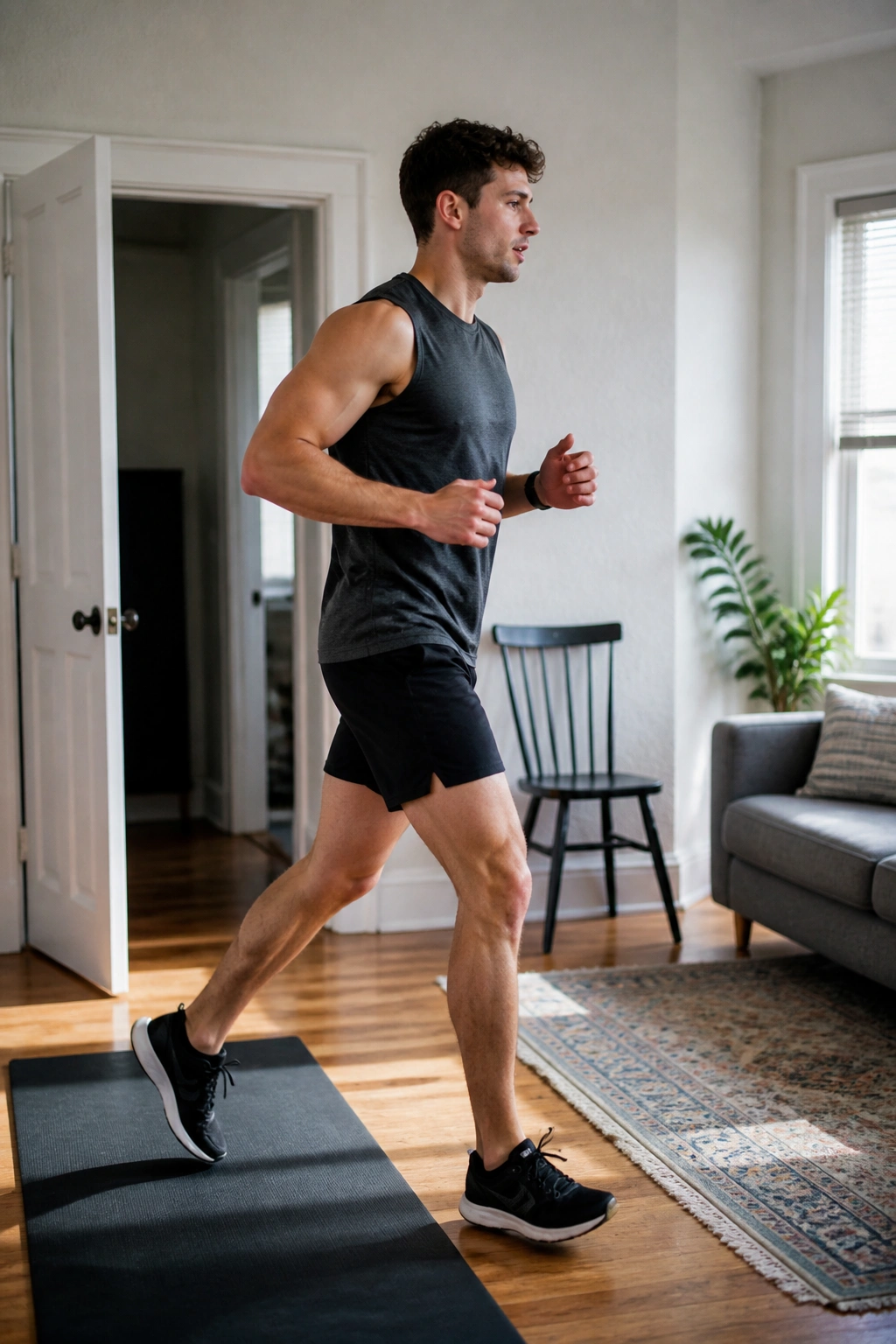
Unlike EMOM work, this one turns the room itself into the plan.
Pick 4 to 6 spots around your home — a mat, a doorway, a chair, a wall, a rug, a hallway corner. Assign one exercise to each spot and move clockwise after every 45-second work block with 15 seconds to walk or reset. That route matters. It gives the workout a start, a middle, and an end you can see.
This is a good choice for people who get bored when they stay in one place too long. The room becomes a path, not a square. You can pair a wall sit at one station with push-ups at another, then a plank at the mat, then marching knee drives by the doorway.
Best for people who like feeling organized. Keep the route the same for one week, then shuffle the stations. That little switch changes the whole feel of the workout without changing the equipment list at all.
19. Backpack-and-Towel Resistance Session
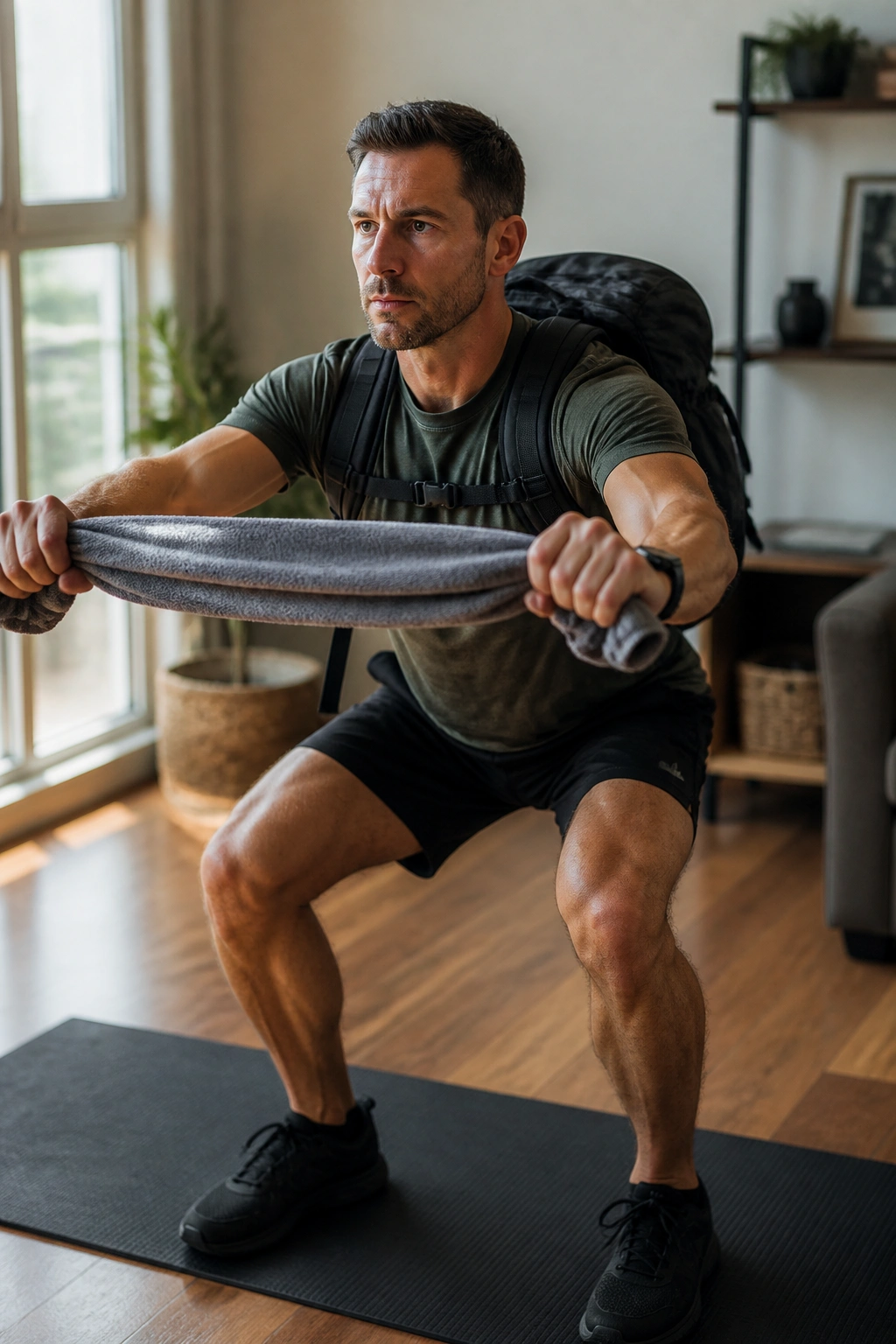
A backpack and a towel can do more than people give them credit for.
Stuff a backpack with books, water bottles, or even rice bags, then use it for squats, bent-over rows, and loaded marches. A towel can add isometric work if you pull on it hard during rows or use it for hamstring slides on a smooth floor. You do not need fancy gear to make a session feel fresh. You need a little resistance and a plan.
What to put in the backpack
- Light setup: 5 to 10 pounds for beginners
- Middle ground: 10 to 20 pounds for controlled squats and rows
- Harder day: add a book or two, then test the first set before continuing
The best part is the feel of it. A backpack changes your posture in a way bodyweight alone does not, and that makes the workout feel new. Use 3 rounds of 8 to 12 reps for strength moves, plus 30-second carries or marches between sets if you want to push your breathing a bit.
20. Reset

The best boredom-proof workout ends before you hate it.
A short reset session is not a cop-out. It is how you make tomorrow’s workout more likely to happen. Put 10 minutes on the clock: 2 minutes of easy marching, 3 minutes of mobility for hips and shoulders, 3 minutes of gentle core work like dead bugs or bird dogs, then 2 minutes of slow breathing with your hands on your ribs.
That finish matters more than it looks. Ending on a calmer note teaches your body that home exercise is not always a battle. Some days it is a punchy cardio block. Some days it is a carry session. Some days it is a short reset that leaves you looser than when you started.
Keep this one in your pocket for the days when motivation is thin. A small, clean finish beats an ambitious workout you never start. And if the only thing you do today is a 10-minute reset, that still counts.
