



The baby finally settles, the bottle is warm, and you have eleven minutes before the next cry. That is enough time for postpartum workouts with baby, if you pick the right kind.
Your body may feel softer, heavier, or a little unfamiliar. Fine. That does not mean you need a perfect routine, a full hour, or a spotless house before you move.
What matters is load, pressure, and pace. A stroller walk, a short carrier squat set, or five quiet minutes of breathing can do more good than an ambitious plan you never start.
If you had a C-section, a big tear, dizziness, heavy bleeding, leaking, or a belly that domes when you move, start smaller and get clearance when needed. Baby-led fitness has to respect the parent part of the equation too. Walking earns the first slot for a reason.
1. Stroller Interval Walks
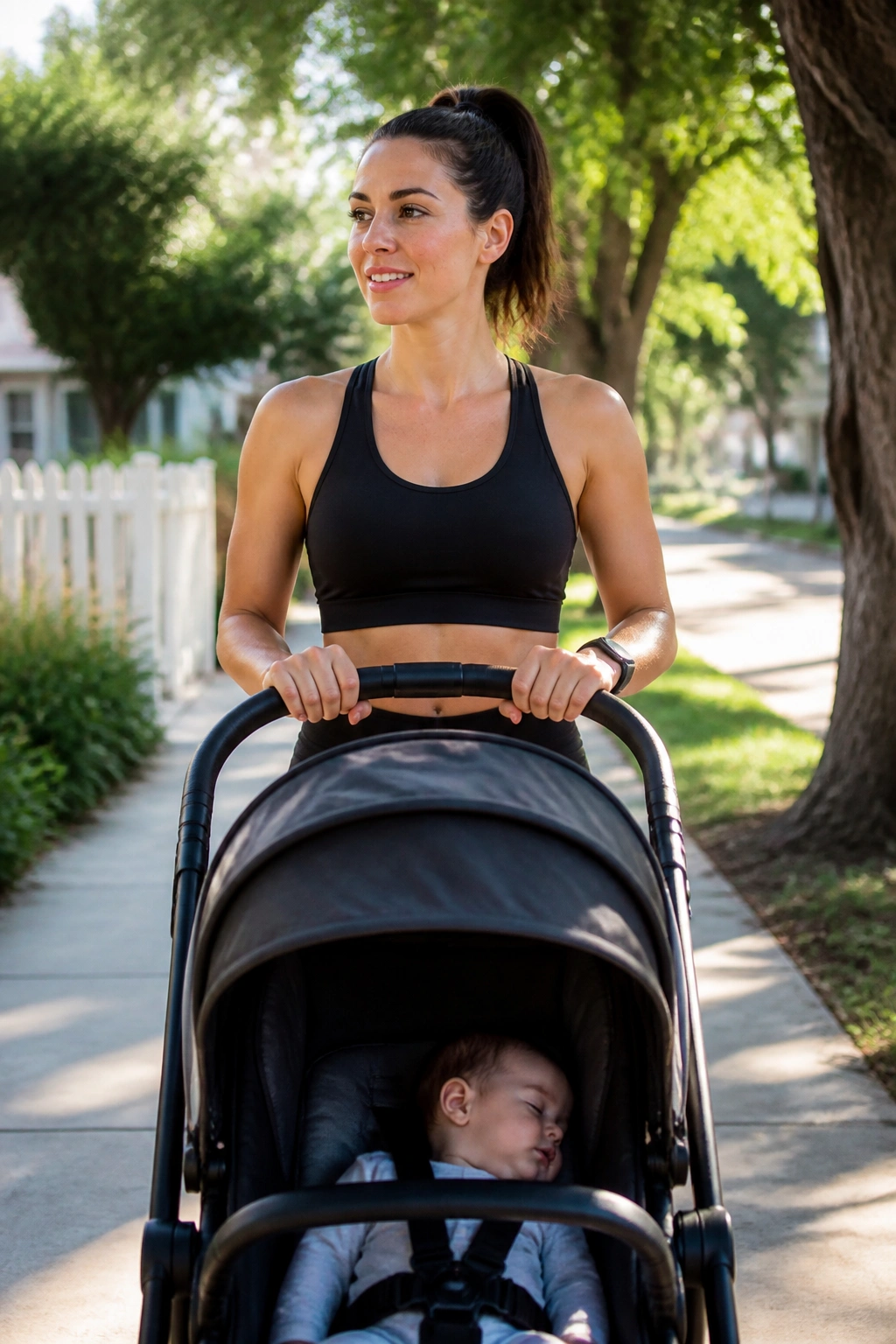
A stroller walk sounds almost too simple to count, which is exactly why it works so well. You get moving without having to wrestle with equipment, and the baby gets the kind of motion that often helps them settle.
How to set the pace
Start with 5 minutes of easy walking, hands light on the handlebar, shoulders relaxed, and eyes up. Then move into 6 rounds of 1 minute brisk walking and 90 seconds easy walking. Finish with another 3 to 5 minutes at a slower pace.
Keep your stride short enough that your pelvis feels steady. Big lunging steps can make your lower back complain fast, and nobody needs that kind of surprise mid-walk. If the stroller drifts, you’re probably overstriding or leaning too hard into the handle.
- Brisk means brisk, not frantic. You should still be able to talk in short sentences.
- Choose flat ground first. Hills are fine later, but flat sidewalks are friendlier when your core is still rebuilding.
- Hold the handle lightly. Death-gripping the stroller turns your shoulders into junk drawers.
- Use the same route twice. Familiar loops make it easier to judge whether your pace is actually improving.
Best tip: if the baby falls asleep, keep the walk going for five more minutes. That quiet bonus round counts.
2. Babywearing Squat Ladders
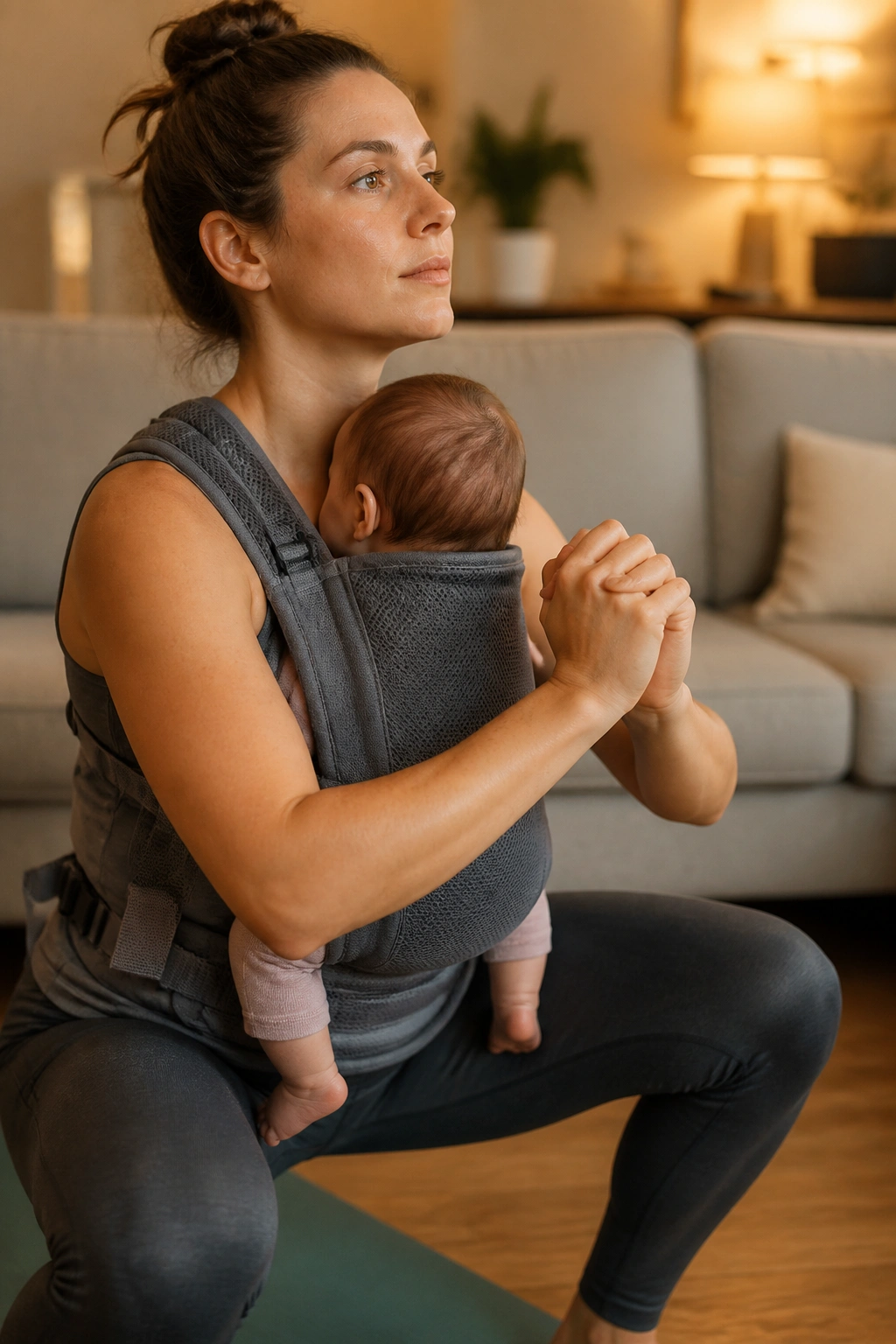
If your carrier fits well, this is one of the strongest ten-minute workouts on the list. Squats with baby in a snug carrier light up your glutes, thighs, and deep core without asking you to leave the room or entertain anyone else.
The carrier should sit high and tight, with the baby close enough that you don’t feel them bouncing. That matters. Loose straps make the whole thing awkward, and awkward squats are how people end up folding forward and loading the wrong muscles. Stand with feet about hip-width apart, inhale, then sit back like you’re reaching for a chair.
A ladder keeps the work from feeling endless. Try 10 squats, then 8, then 6, resting about 30 seconds between rounds. Stand all the way up on each rep and exhale as you rise. Do not sink so deep that your lower back tucks under or your belly domes forward.
If bodyweight squats feel easy, slow the lowering phase to 3 seconds down. That small change can turn a sleepy set into real work.
3. Pelvic Floor Breathing Reset

Need a workout that looks almost too quiet to count? This is it. And it may be the most useful thing you do on a day when your body feels tight, shaky, or overloaded.
Lie on your back with your knees bent, or stay on your side if that feels better. Put one hand on your ribs and one on your lower belly. Breathe in through your nose and let your ribs widen. Then exhale slowly through your mouth, as if you’re fogging a mirror, and feel the floor of your pelvis gently lift.
How to use it
- Take 5 slow breaths first.
- On each exhale, gently draw the low belly inward.
- Add 5 heel slides per side if you want a little more challenge.
- Finish with 5 pelvic tilts, moving only as far as feels smooth.
This is not a sweaty session. It’s pressure control. That difference matters more than people think. If your belly pops outward in a cone shape, if you feel dragging low in the pelvis, or if your incision tugs, back off and keep the range smaller.
A quiet floor reset can set up everything else that follows.
4. Couch Incline Push-Up Break
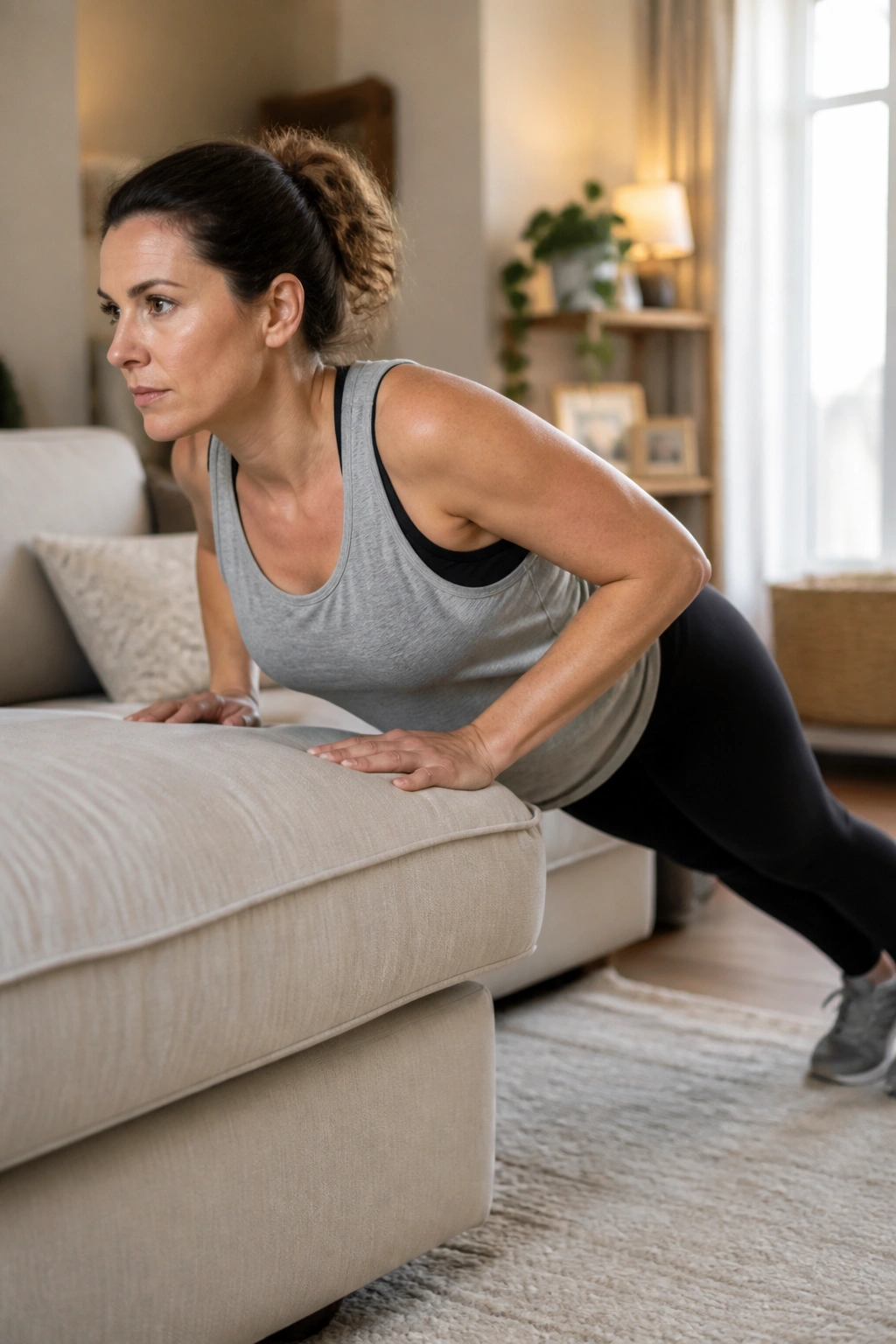
A couch, a baby mat, and six push-ups can save your chest and shoulders after a day of feeding, carrying, and hunching over tiny socks. Incline push-ups are friendlier than floor push-ups, and they still wake up the muscles that keep your upper body from collapsing inward.
What makes it easier on your body
Put your hands on the edge of a couch, sturdy bench, or countertop. Walk your feet back until your body forms one long line from head to heels. Lower your chest toward the edge with elbows at about a 45-degree angle, then press back up without shrugging your shoulders into your ears.
Start with 2 sets of 6 to 10 reps. If your wrists ache, use a wall instead of the couch. If your lower back arches, bring your feet closer and shorten the range. Simple fix. No drama.
- Hands slightly wider than shoulders usually feels better.
- Keep your neck long. Looking forward, not down, helps.
- Stop before your belly sags. That’s the point where the move stops helping.
- Use a slow lower. Two or three seconds down changes the whole exercise.
Best tip: do these while the baby is on a blanket nearby. Thirty seconds of eye contact makes the set feel easier than it has any right to.
5. Standing Marches and Reach
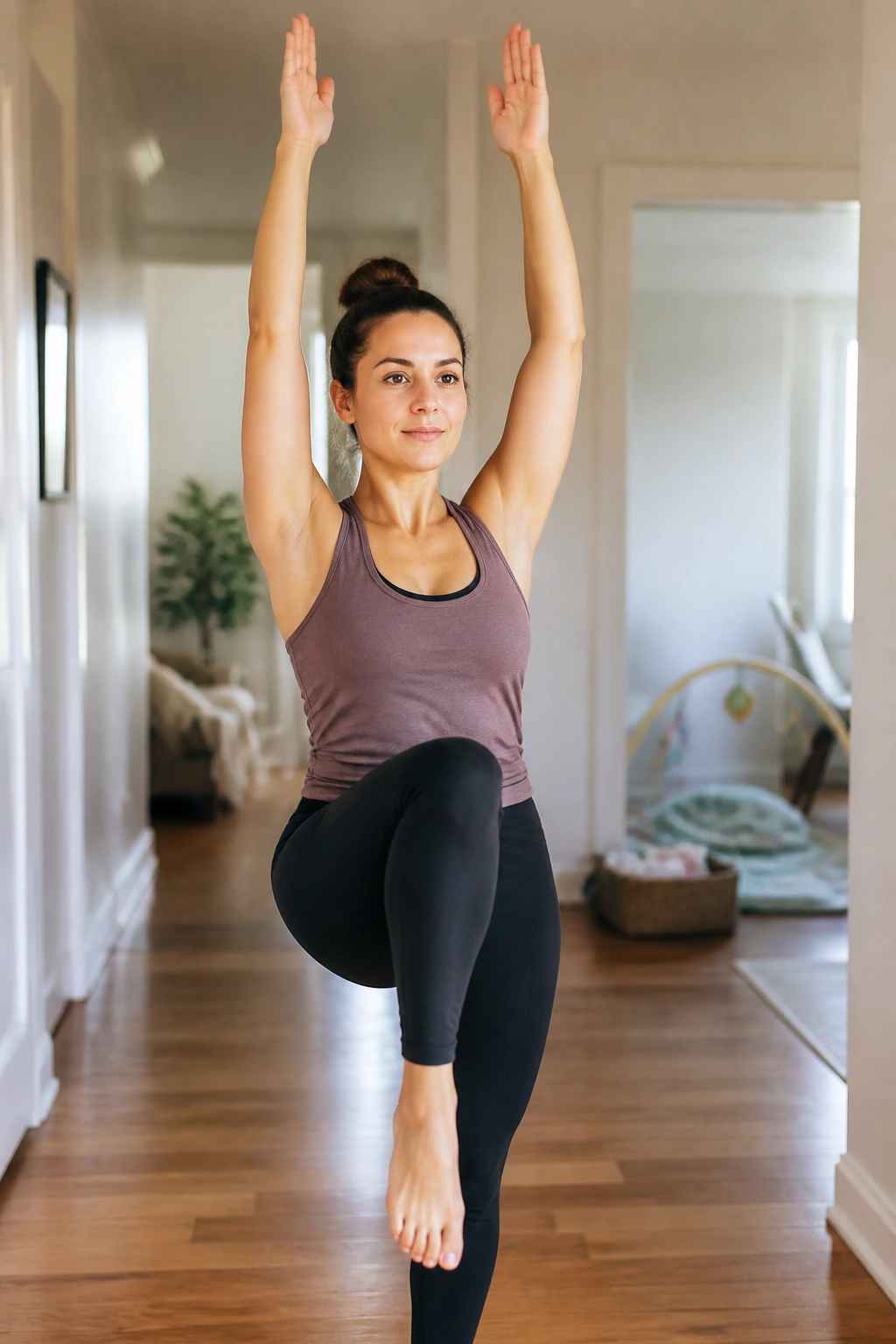
No floor space needed.
That alone makes standing marches one of the most forgiving postpartum cardio moves. You can do them while the baby is in a carrier, while they’re on a play mat, or while you’re waiting for milk to warm. The motion is tiny, but the rhythm adds up.
Lift one knee at a time, then reach both arms overhead as the knee lowers. After 30 seconds, switch to side steps with gentle arm swings. After another 30 seconds, add a light torso turn and keep the feet moving. Repeat that pattern for 6 rounds. It’s enough to raise your heart rate without jarring your joints.
The key is restraint. If you start slamming your feet into the floor, the move stops being friendly. Soft knees. Upright spine. Calm jaw. That’s the whole trick.
Babywearing works well here because the motion can help settle a fussy baby while you get your own blood moving. If you’re holding the baby in your arms, keep the range smaller and stay near a counter or wall. Safety first. Pretty much always.
6. Side-Lying Glute Series
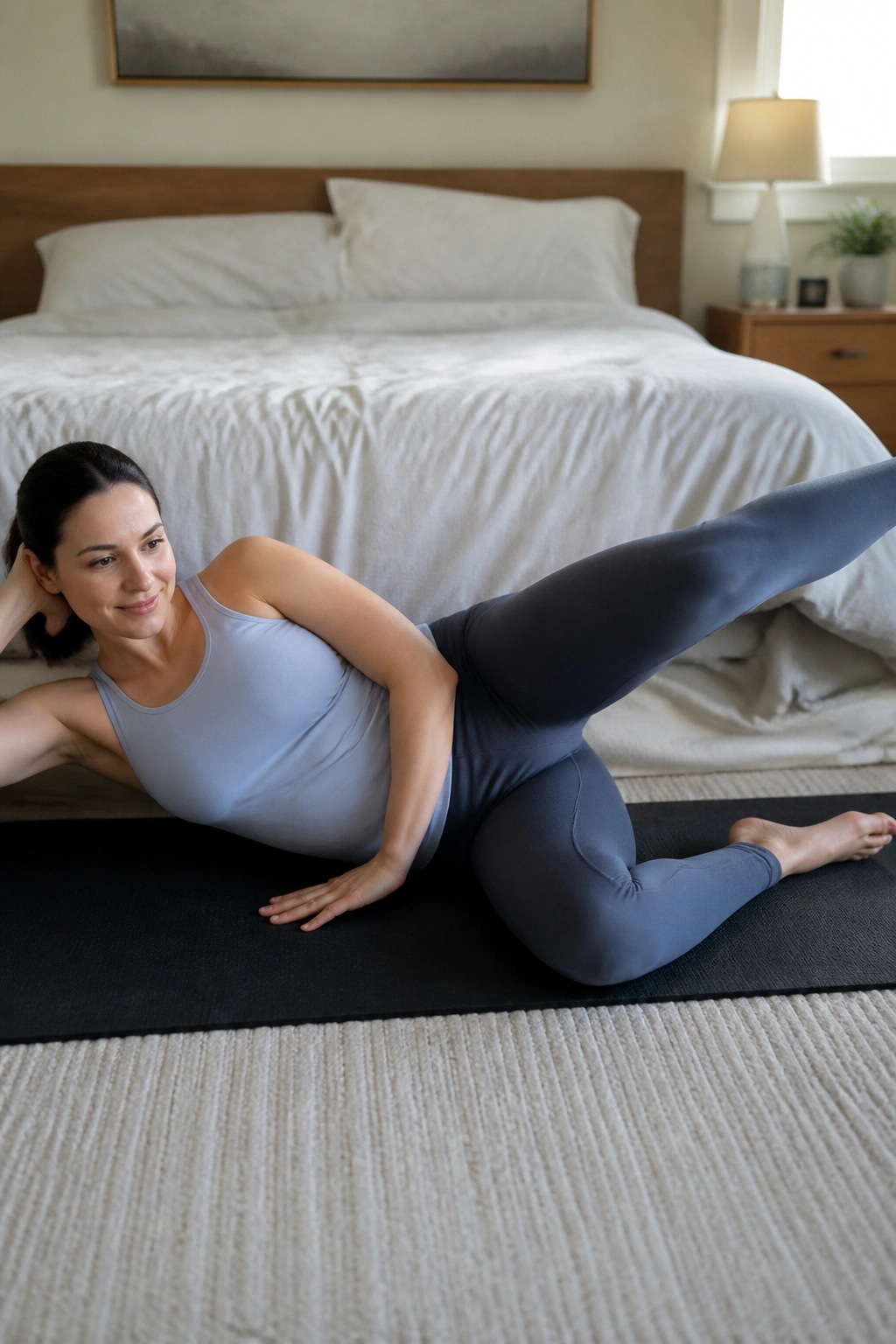
Unlike squats, side-lying work gives your hips a job without asking your core to brace for everything at once. That makes it a smart choice for a body that feels tender, tired, or uneven after birth.
Lie on one side with your knees bent a little and your head supported. First do clamshells, opening the top knee without rolling your pelvis backward. Then move to straight-leg lifts for the outer hip. Finish with a few small bent-knee pulses if you still have energy. Two rounds on each side is enough to feel it in the right places.
The payoff is sneaky. Better glute strength helps with walking, stair climbing, carrying the car seat, and even standing up from the couch without that awkward little wobble. The move is not flashy. It just works.
If your hip flexors are cranky, keep the top leg lower and the motion smaller. If your lower back takes over, that’s your sign to slow down and re-stack your ribs over your pelvis. The glute should do the work, not your spine.
7. Resistance-Band Row Circuit
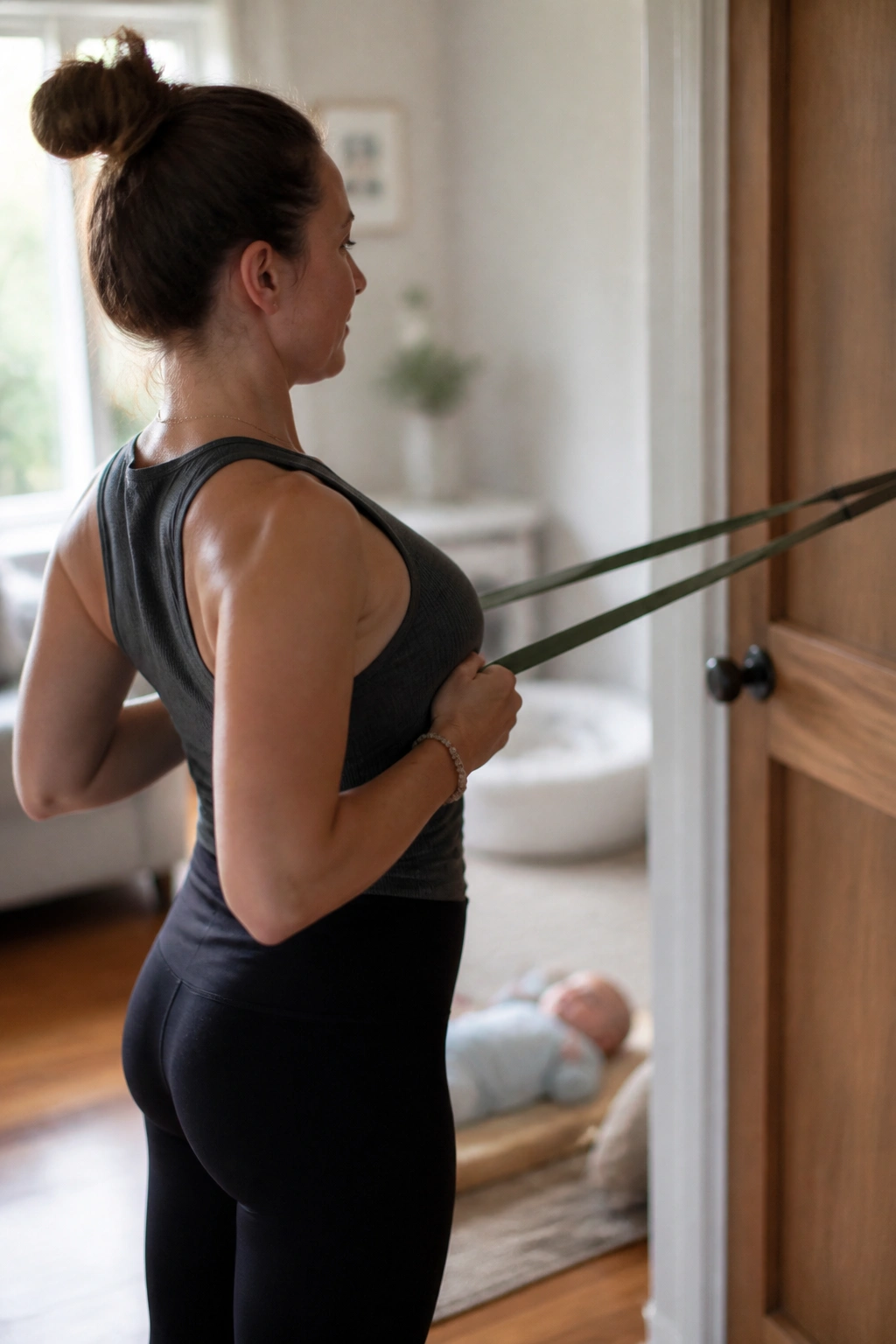
Feeding a baby rounds your shoulders in a way nothing else does. Band rows are the fast fix for that slumped feeling, and they’re easy to do while the baby is happy on a mat or napping nearby.
Anchor a resistance band at chest height around a sturdy door or post. Stand tall, take a step back, and pull the band toward your ribs with elbows close to your sides. Squeeze your shoulder blades together, then let the band return with control.
The payoff
A simple circuit looks like this:
- 12 band rows
- 12 pull-aparts
- 10 slow biceps curls
- Rest 30 to 45 seconds
- Repeat 2 to 3 rounds
The pull-aparts are the part people skip, which is a shame. They teach your upper back to stay open instead of folding in all day. That matters when you’re feeding, holding, and bouncing a baby on one hip for the fifth time.
Keep your ribs down and avoid leaning backward to cheat the motion. If the band is too heavy, your neck will tell on you immediately.
8. Bird-Dog Core Pair
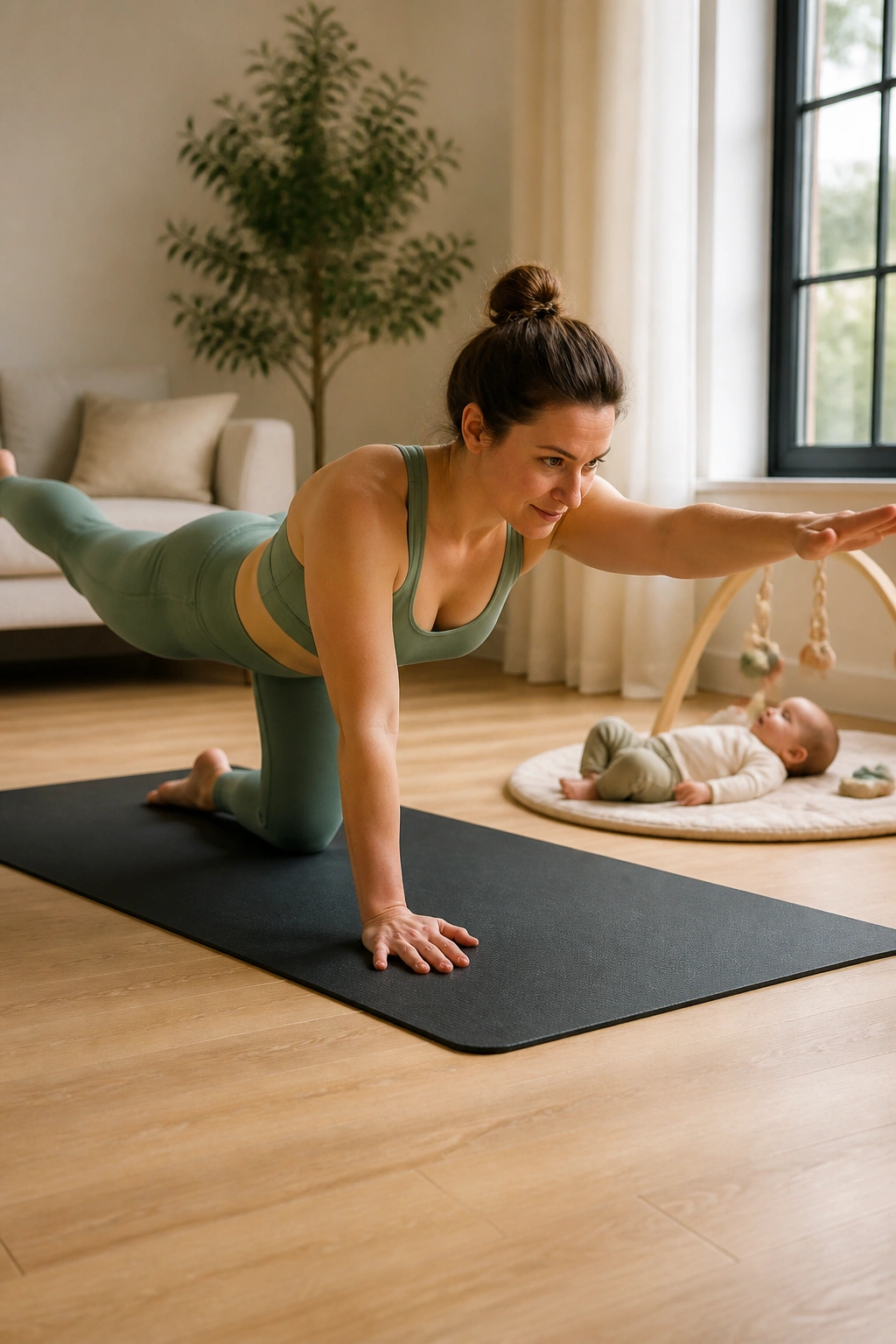
Bird-dog is the move I reach for when a postpartum core feels wobbly. It’s calm, controlled, and brutally honest. If one side of your body wants to twist or sag, bird-dog will show you.
Start on hands and knees with wrists under shoulders and knees under hips. Reach one leg back and the opposite arm forward without shifting your weight. Hold for 2 to 3 seconds, then return slowly. The goal is not height. The goal is stillness.
Add a second layer if you want more work: after each reach, draw the knee and elbow back under the body, then extend again. That tiny pause makes your trunk work harder without turning the drill into a circus act.
If you see your belly dome downward or feel pressure in the pelvic floor, shorten the lever. Slide the foot back on the floor instead of lifting it high. That version is still useful, and honestly, often better early on.
Six reps per side is enough for one round. Two rounds is plenty on a tired day.
9. Wall Sit and Calf Raise Combo
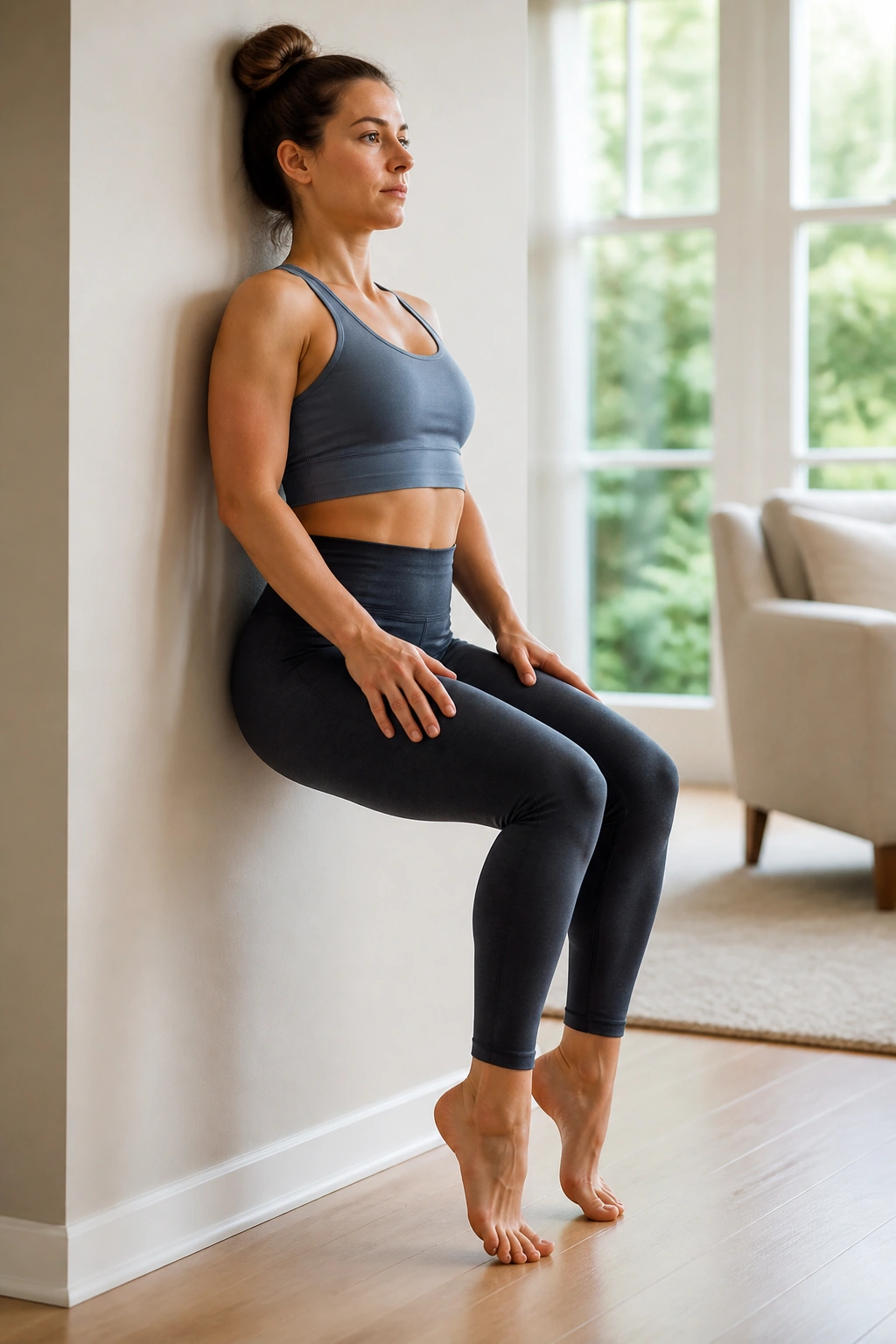
Got three minutes before the nap ends? Good. That’s enough.
Wall sits are plain old leg work, which is probably why people ignore them. They shouldn’t. They train your thighs, glutes, and patience all at once. Add calf raises and you get lower-leg strength that helps with carrying, standing, and walking around the house without feeling like your feet are made of bricks.
Why it works when you’re tired
Lean your back against a wall and slide down until your knees are bent about 90 degrees, or a little higher if that feels safer. Hold for 20 to 30 seconds, then stand and do 15 calf raises. Repeat 3 or 4 rounds.
That’s the whole session.
- Keep your feet about 2 feet away from the wall to start.
- Press your low back gently into the wall instead of arching.
- Lift your heels slowly on the calf raises.
- Rest 20 seconds between rounds.
This one is useful on days when you’re mentally fried. You don’t need a mat, a playlist, or a brave mood. You just need a wall and a little stubbornness.
10. Baby-and-Mat Yoga Flow
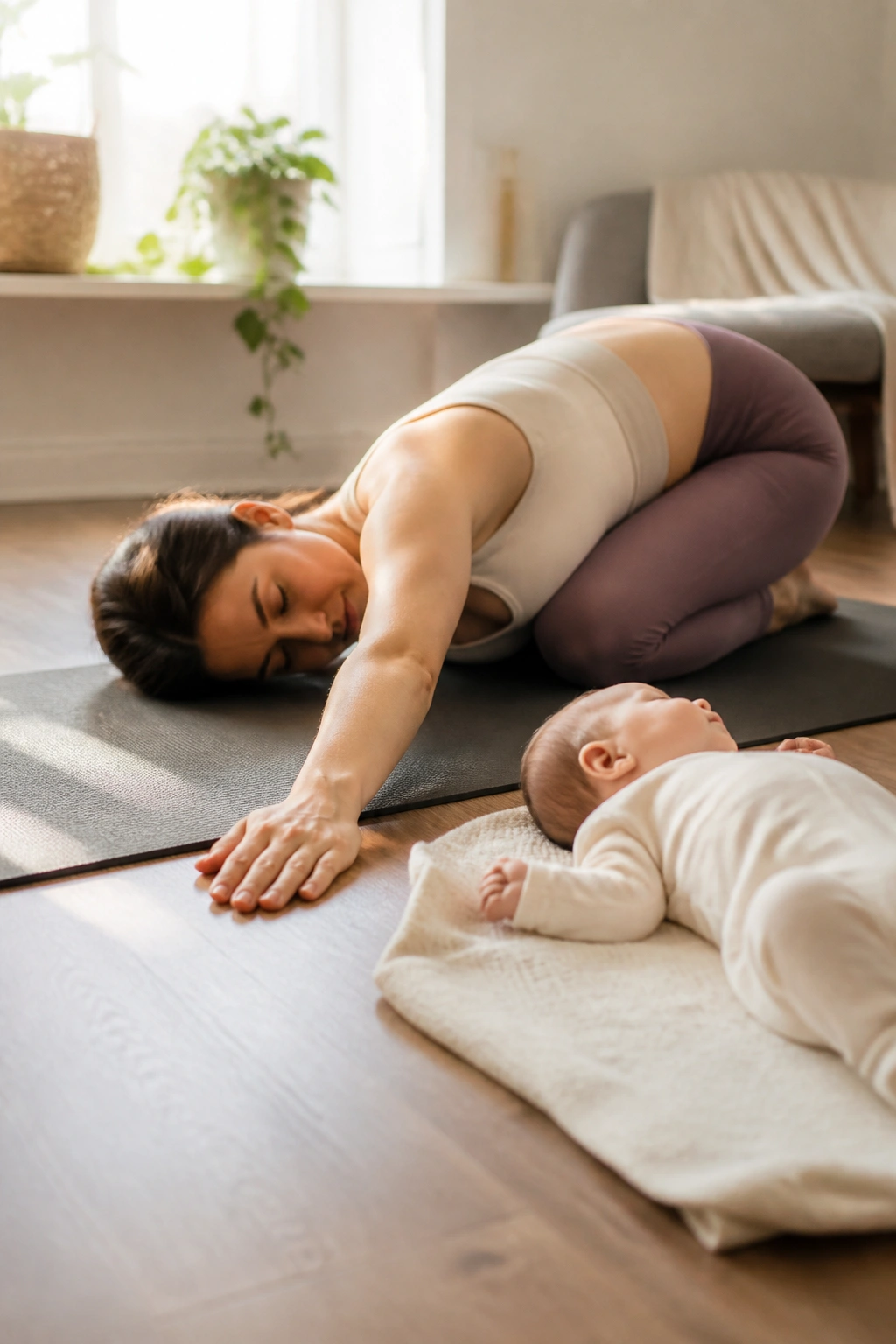
A baby on a blanket beside you changes yoga in a good way. The flow becomes less about perfect shapes and more about breathing, opening tight places, and staying calm when someone small starts waving a sock in your face.
A simple sequence
Try this in order, moving slowly and pausing whenever the baby needs you:
- Cat-cow for 5 breaths
- Half-kneeling hip flexor stretch for 20 seconds each side
- Thread-the-needle for 4 slow breaths each side
- Child’s pose with knees wide for 5 breaths
- Seated side bend for 3 breaths each side
That sequence gives your back, hips, and shoulders something useful to do without asking for a lot of energy. The deep kneeling stretch is the real gem if you’ve spent the day sitting on the couch with a feeding pillow.
Skip any deep twists if your midline feels domed or your abdomen feels strained. There’s no prize for forcing a pose that makes your body push back. Gentle range beats heroic stretching every time.
A short yoga flow also buys you one of the nicest postpartum wins: a calmer breath.
11. Dance Cardio Playlist Burst
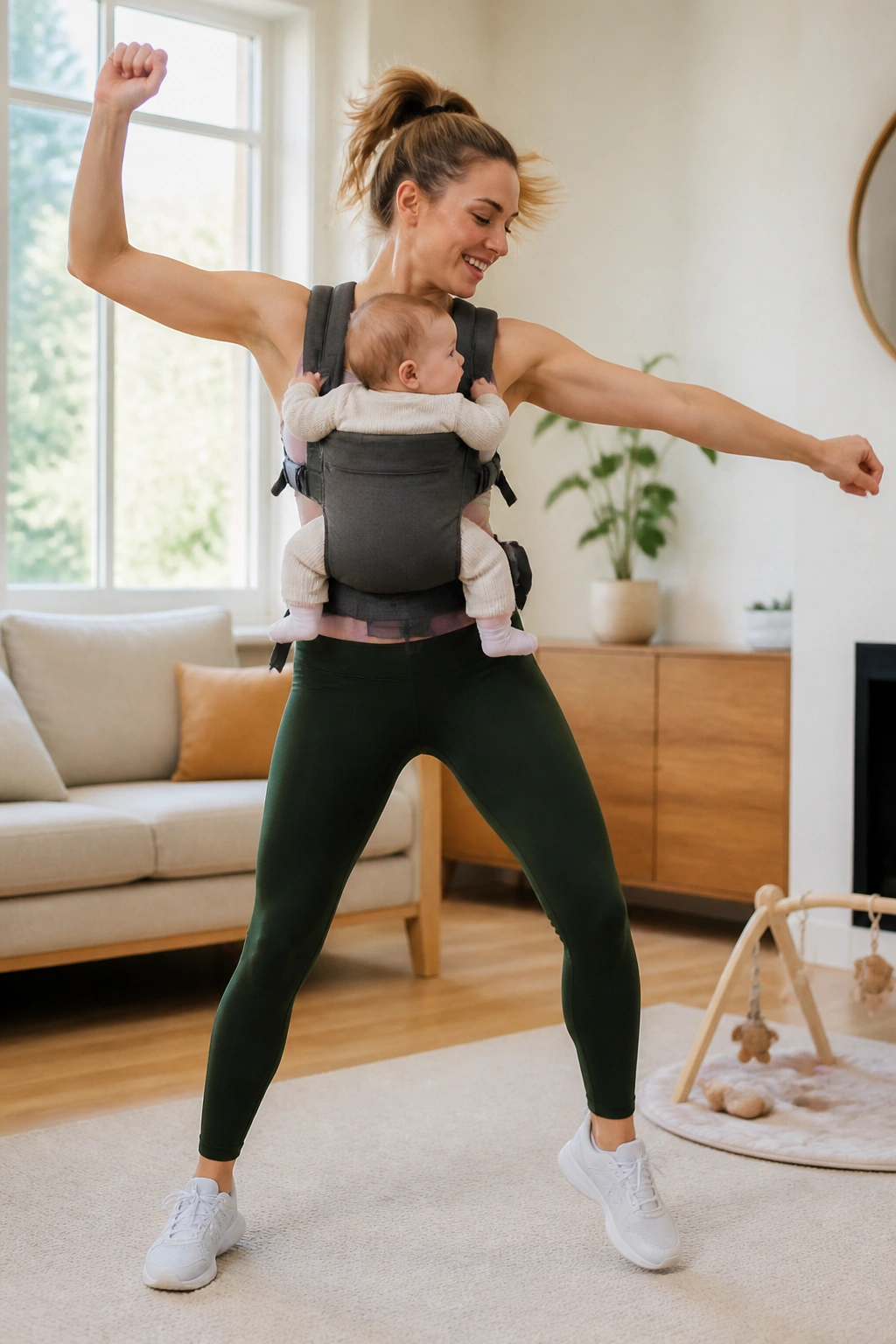
Some days you do not want an exercise plan. You want a song.
That’s where dance cardio earns its place. Put on one upbeat playlist, keep the baby in a carrier if that feels comfortable, or set them safely on the floor and move around them like the living room is your own tiny studio. Step-touch, grapevine, marching, arm circles, side reaches. Nothing fancy.
The best part is that dance keeps changing shape before boredom can settle in. A minute of swaying can become a minute of faster steps, then a minute of hip circles, then a minute of walking in place with big arm swings. You can do 8 to 12 minutes and still feel like you worked.
If the baby likes motion, they may calm down while you move. If they don’t, you still got the workout. That’s the whole point. Not every session needs to look graceful from the outside. Some sessions are just you, a beat, and enough room to keep going.
Keep the bounce low if your pelvic floor is still sensitive. The music can stay energetic even when the movement stays gentle.
12. Hip Hinge with Backpack or Light Dumbbell
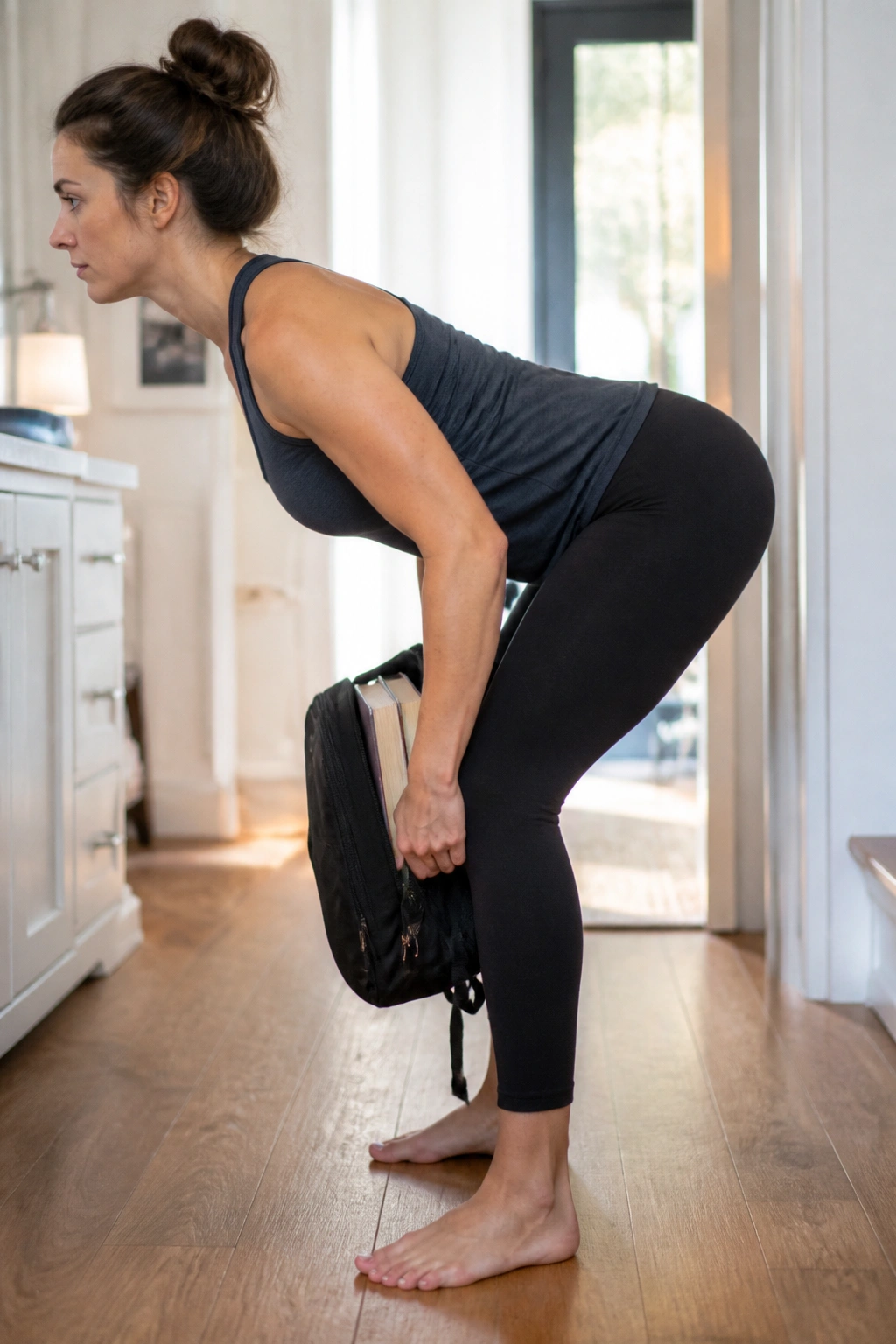
Squats get all the attention, but the hip hinge is what saves your back when you’re lifting a car seat, a diaper bag, or a baby who suddenly weighs twice as much as yesterday. This one trains the back of your body: hamstrings, glutes, and the muscles that help you bend without folding in half.
Hold a backpack with books or a light dumbbell against your thighs. Soften your knees, push your hips back, and let your torso tilt forward while your spine stays long. Stand back up by driving your hips forward. If the weight drifts away from your body, the move gets sloppy fast.
Use 2 sets of 10 reps to start. The load should feel moderate, not heroic. Postpartum strength work works better when you finish with some gas left in the tank.
Unlike squats, which are knee-dominant, the hinge teaches you to load the backside of your body. That matters when you’re picking up baskets, tubs, and squirmy babies all day long. A small backpack loaded with 5 to 15 pounds is enough for most people to feel the pattern.
13. Glute Bridge and March Set
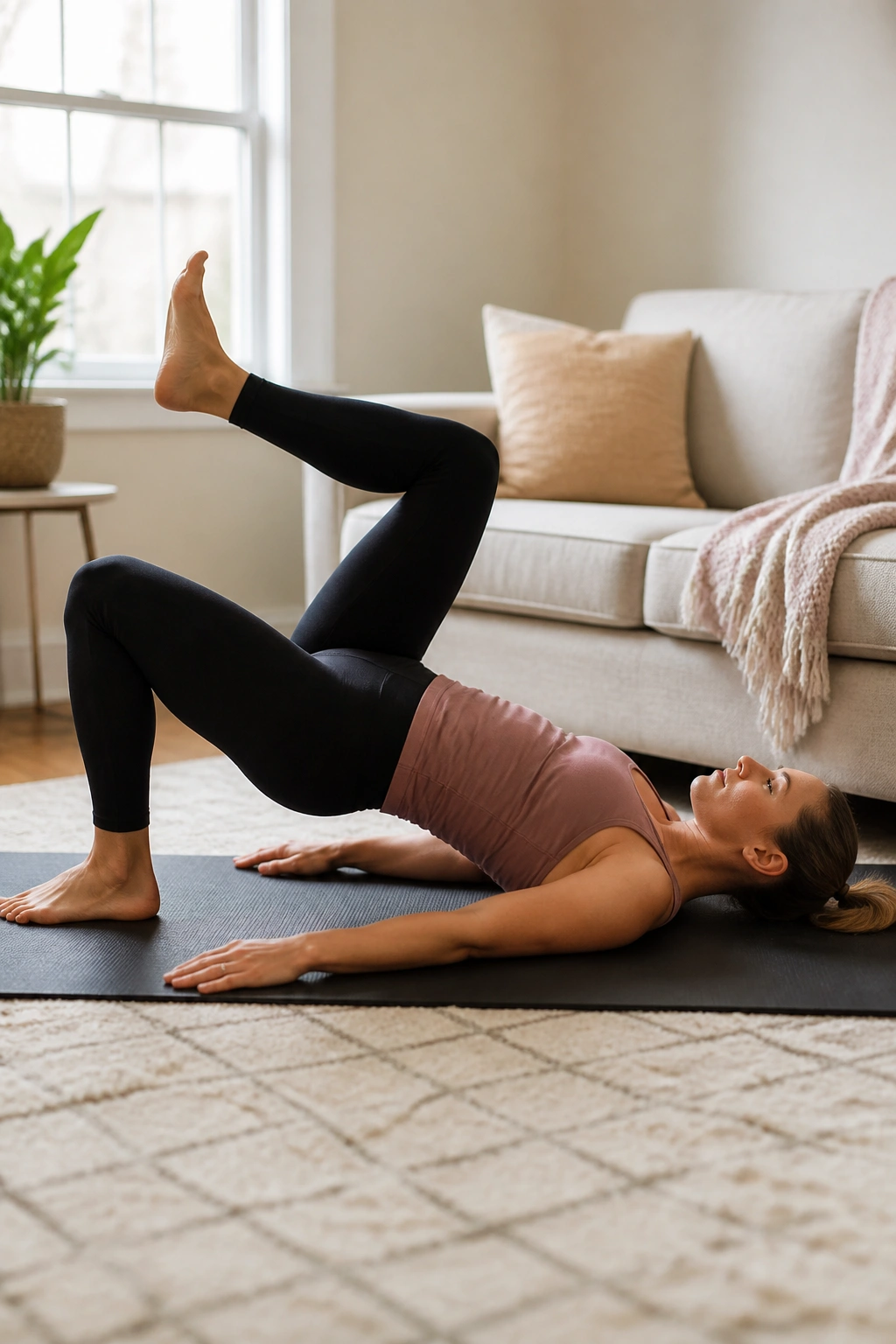
You’re on the floor, the baby is batting at a toy, and your glutes are finally awake. That’s a good sign.
Glute bridges are a nice bridge between rehab and real strength. They load the hips without impact, and the top hold gives your pelvis a chance to learn what stable feels like again. If the baby is nearby on a blanket, you can make it a shared floor session and keep an eye on them between reps.
What to look for
- Press through your heels.
- Lift your hips until your body makes a straight line from shoulders to knees.
- Hold the top for 2 seconds.
- Lower slowly.
- After 10 bridges, try 6 alternating marches while keeping the hips level.
The march part is where the work gets sneaky. One foot lifts at a time, so your trunk has to resist twisting. If your hips wobble all over the place, shorten the hold and skip the march for a week or two.
Keep your ribs from flaring up toward the ceiling. That’s the mistake that turns a glute move into a back arch. Small correction. Big difference.
14. Shadow Boxing Intervals

Shadow boxing is the fastest way to lift your heart rate without pounding your joints. It looks a little silly. It also works.
Stand with knees soft, fists up, and elbows close. Punch straight ahead with a jab-cross pattern, then add a light hook or uppercut if your shoulders feel good. Keep the movement crisp and compact. You do not need huge swings; in fact, huge swings usually mean the core is doing too much twisting.
Try 20 seconds on, 40 seconds off, for 8 rounds. That gives you a short, sharp cardio hit without the panic of a full workout. If you want more, add another four rounds after a water break.
If your core still feels tender, keep the torso facing forward and let the arms do more of the work. If your wrists are fussy, make the fists looser and slow the punches down. The goal is a brisk rhythm, not a sparring match with the sofa.
This one is especially handy when the baby is in a bouncer or on a mat and you need both hands free for a minute.
15. Reverse Lunge with Baby Carrier
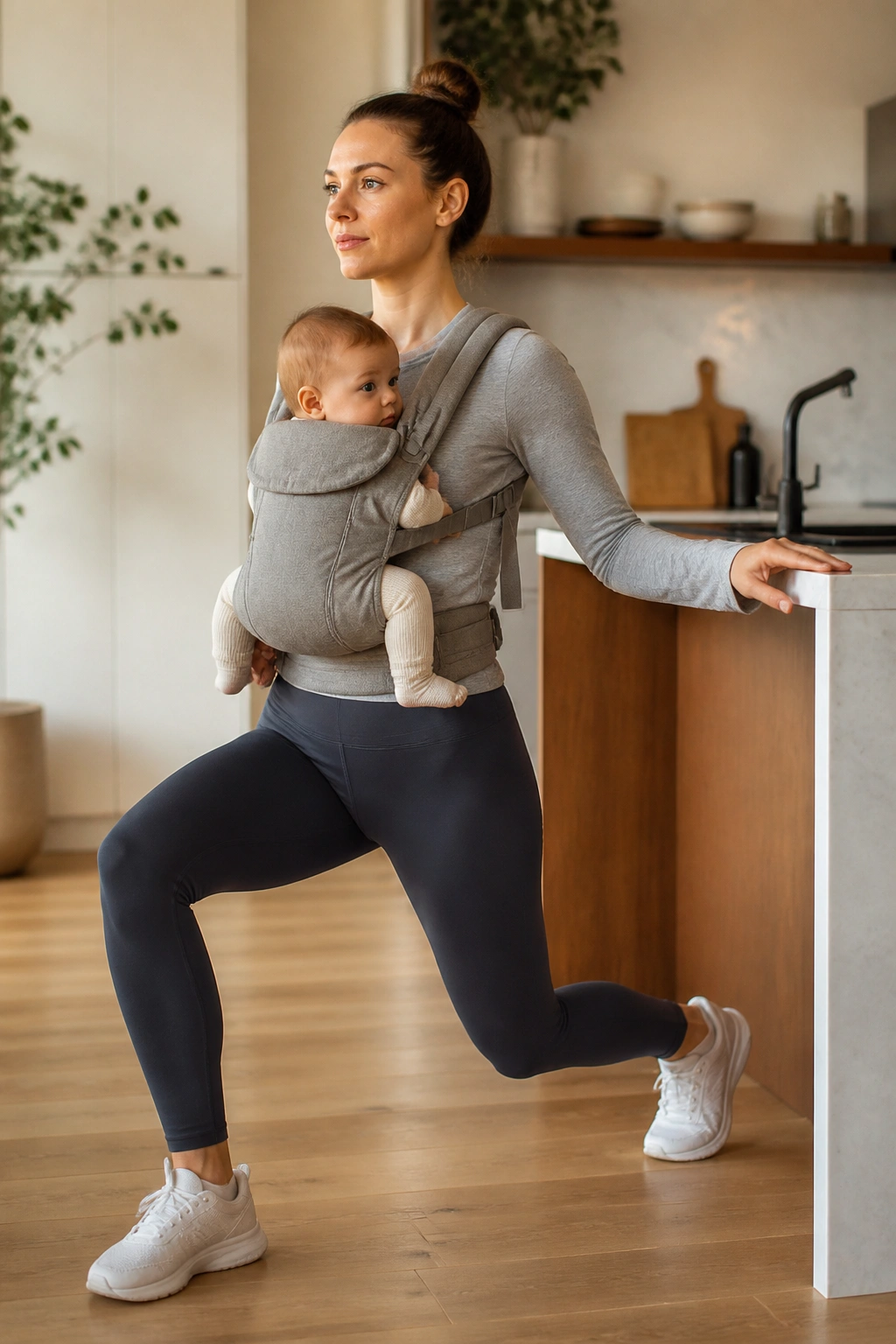
Want one lower-body move that feels like real life? Reverse lunges are it. They copy the stepping pattern you use all day when you back away from a crib, reach for a dropped pacifier, or sidestep a toy train in the hallway.
Wear the baby in a secure carrier, then stand near a counter or sturdy chair for light balance help. Step one foot back, lower until both knees bend comfortably, then push through the front foot to come back up. Keep the front knee tracking over the middle toes, not collapsing inward.
Start with 6 reps per side. If that feels smooth, add a second set. If the motion feels unstable, switch to a stationary split squat and keep one hand on support. That still counts. Actually, it may be the better version for a while.
A reverse lunge is often kinder than a forward lunge because you control the step back. That tiny detail matters when your balance is still a little off. If the carrier shifts or the baby feels too low, stop and fix the fit before another rep.
16. Tummy-Time Cardio Circuit
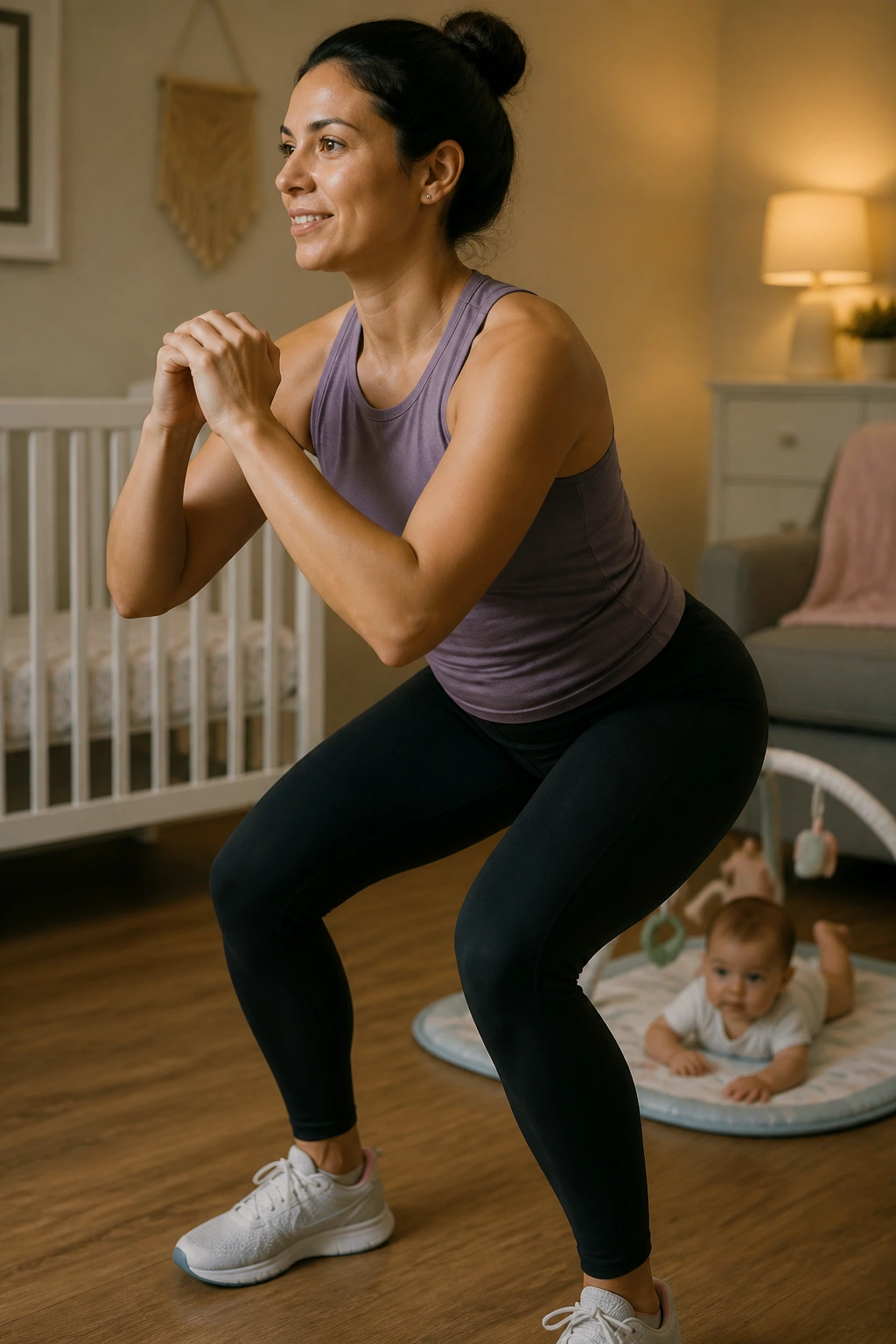
Baby on tummy time mat. You nearby. That’s the whole setup.
This kind of workout is useful because it turns a baby task into your exercise block without making either one feel separate. While the baby works on neck strength and floor play, you cycle through low-impact cardio moves beside them and keep the energy up in the room.
How to set it up
- 30 seconds squat-to-chair
- 30 seconds side steps with arm reaches
- 30 seconds wall push-ups
- 30 seconds rest while you check on the baby
- Repeat for 6 rounds
Keep a toy close by so the baby has something to stare at while you move. If they fuss, shorten the circuit to 4 rounds and call it enough. The point is not to win a fitness contest in the nursery. The point is to keep the day from becoming one long sitting session.
This format works well when you want structure but not complexity. One round. Then another. That’s enough.
17. Mobility Flow for Neck, Shoulders, and Wrists
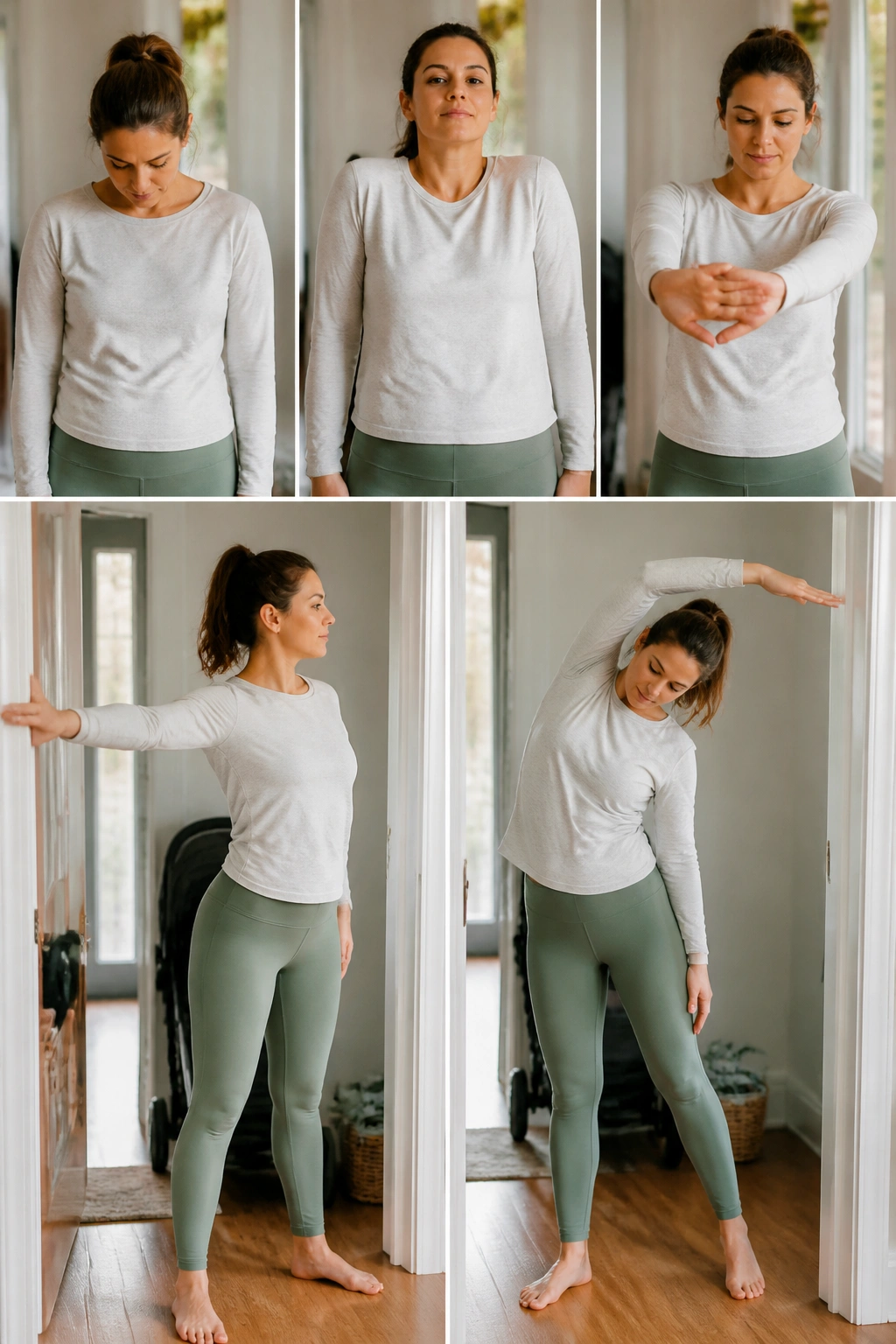
Your upper back can get grumpy fast. Feeding positions, phone cradling, stroller pushing, and one-handed baby lifts all pile up in the same places, and the knots usually show up in the neck first.
A short mobility flow can fix that better than another hard workout. Start with 5 slow chin nods, then 8 shoulder rolls in each direction. Add 10 wrist circles each way, because wrists take a beating when you keep hoisting a growing baby. Finish with a 20-second chest opener at a doorway and a gentle side bend on each side.
Breathe through the whole thing. If you hold your breath while stretching, the muscles usually fight back. Easy breathing tells your body it can let go a little.
This flow is also a nice reset after carrying the baby on one side for too long. You know the posture: hip popped out, shoulder lifted, head tilted toward the baby. We all do it. The trick is not pretending you never do. The trick is giving your body a short correction before the pattern settles in.
A few minutes is enough. Long enough to matter. Short enough to actually happen.
18. Recovery Walk and Stretch Cooldown
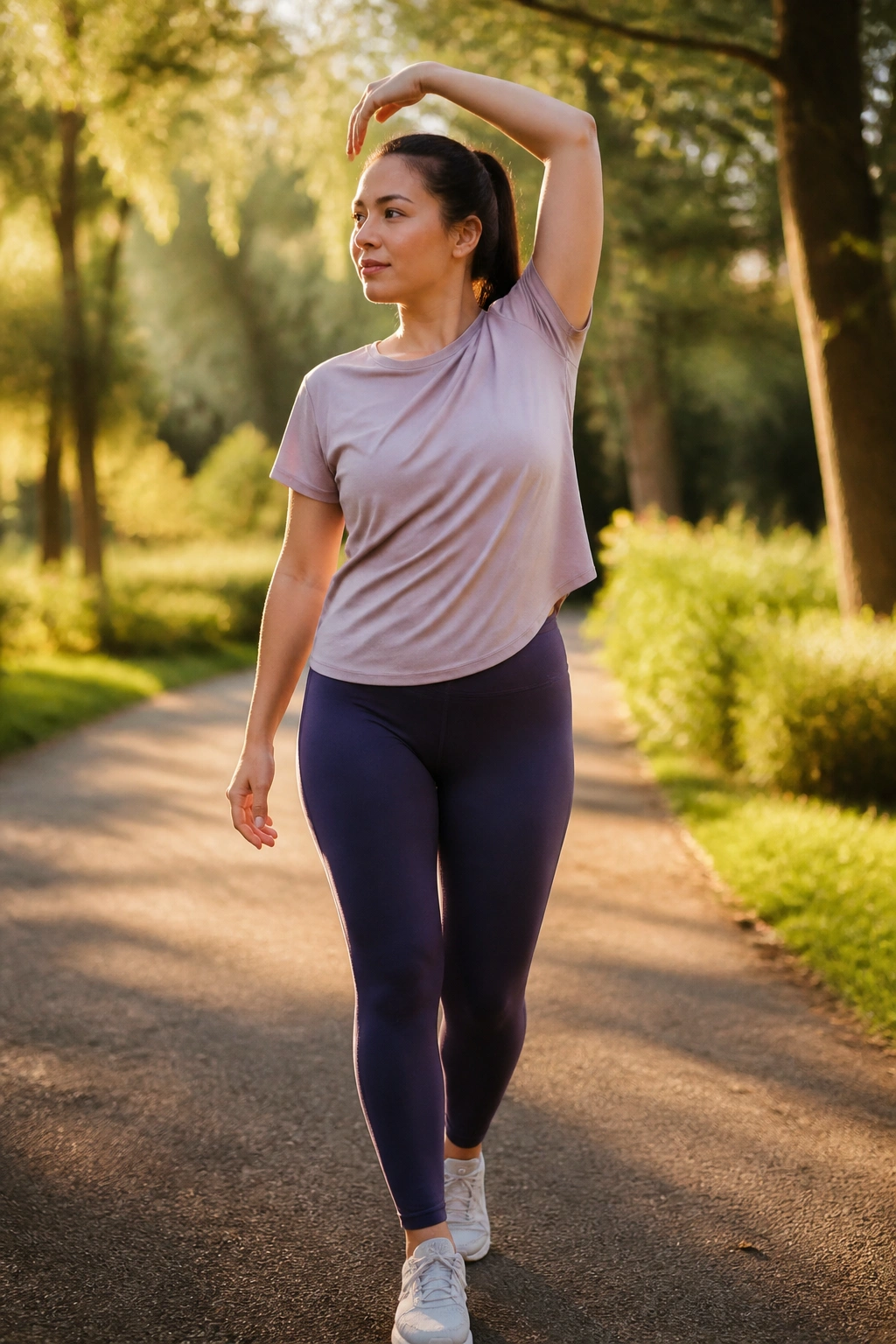
Not every workout needs sweat.
Some of the best postpartum sessions are just a calm 10-minute walk followed by a few stretches that tell your body the hard part is over. That can mean calves, hip flexors, chest, and a slow reach overhead while the baby naps in the stroller or watches from a blanket. No timer drama. No chasing intensity.
If your day has already been noisy, this one is a relief. Walk at a pace where your breathing stays easy. Then stop and do one gentle stretch per tight spot for about 20 to 30 seconds each. If the baby is fussy, keep the whole thing moving; if they’re content, linger a little longer.
This is the workout I’d keep on the worst days. Not because it’s glamorous. Because it’s reliable.
Some days, the win is a hard set of squats or a proper core circuit. Other days, the win is leaving the house, loosening your shoulders, and coming back a little more like yourself than you were ten minutes earlier. That counts.
