



Past beginner is where a lot of training gets lazy. You can already finish a workout, sweat through it, and feel like you earned a snack. That is not the same as getting stronger.
Intermediate workouts need a job. Some days that job is more load. Some days it’s more density, meaning the same work in less time. Some days it’s control — cleaner reps, better pacing, fewer wasted movements, less of that sloppy “I did something” feeling that leaves you guessing.
If a session leaves you wrecked but gives you no number to beat next week, it’s entertainment, not programming. The 18 workouts below give you different ways to train with intent: heavier lifting, better conditioning, more muscle, and enough variety to keep things honest.
1. Upper-Body Push-Pull Supersets
Two exercises at a time beats a long ramble. That’s the whole point here.
You pair a pushing move with a pulling move, rest once, then repeat. The shoulder joint usually likes that setup better than endless pressing, and your workout moves fast without turning into a cardio circus. Aim for RPE 7-8, which means you should finish most sets with about 2 clean reps left in the tank.
How to run it
- Barbell bench press — 4 sets of 6 reps
- Chest-supported row — 4 sets of 8 reps
- Incline dumbbell press — 3 sets of 10 reps
- Pull-up or lat pulldown — 3 sets of 8 to 10 reps
- Face pulls — 2 sets of 15 to 20 reps
Rest 60 to 90 seconds after each superset. Keep the row strict. Don’t turn it into a hip swing disguised as back work.
The nice part is simple: you get more quality volume in less time, and the session teaches you to stay tight under fatigue. If your pressing numbers are stuck, this is often where the fix lives — not in more random triceps burnouts, but in cleaner balance between the front of the body and the back.
2. Barbell Squat and Deadlift Pair
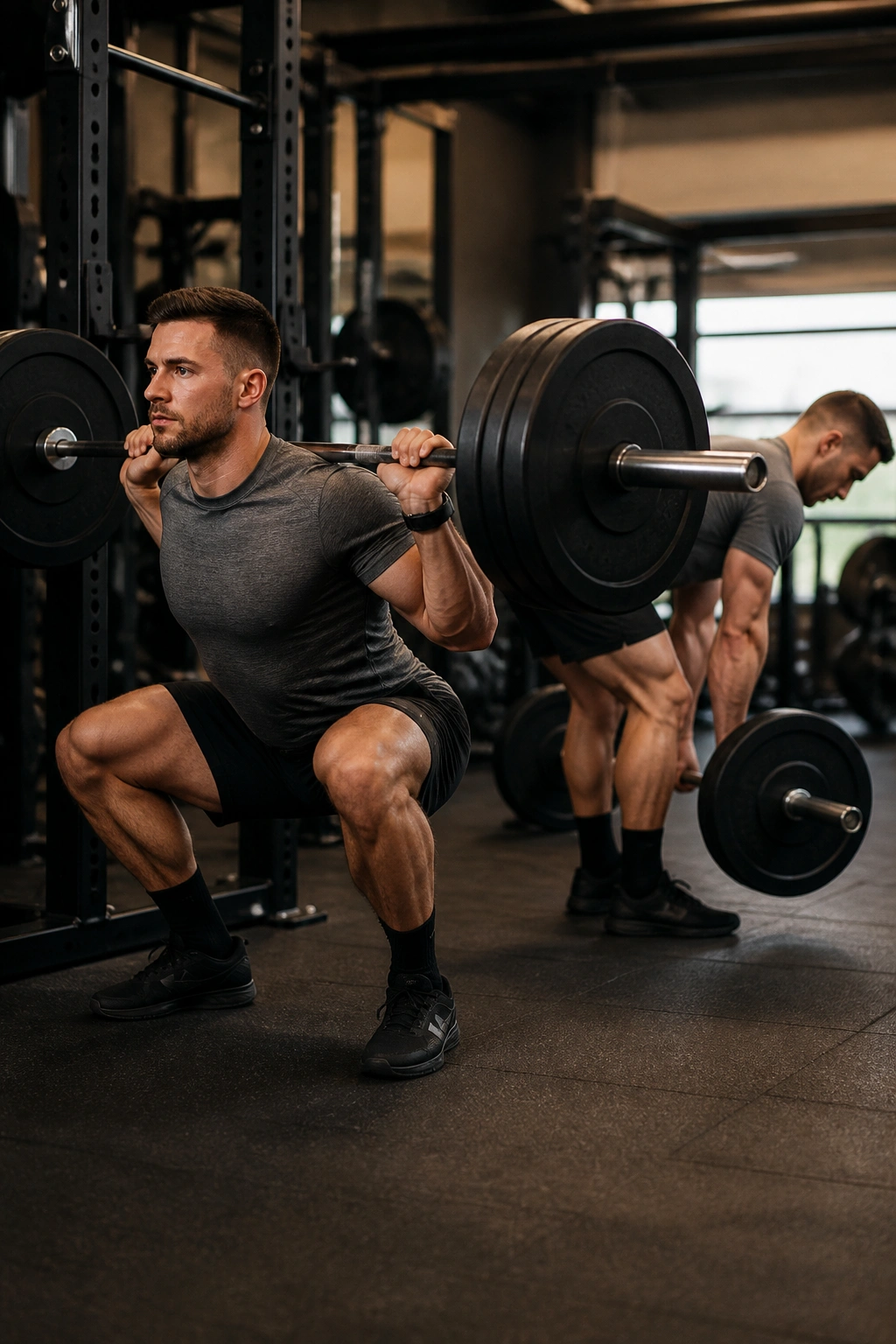
Heavy pairs punish sloppy reps. That’s why this works so well for people past beginner.
Instead of treating squat day and hinge day like separate islands, you put them in the same room — but only one of them gets to be the main event. Start with back squats for 5 sets of 5, then move to Romanian deadlifts for 4 sets of 6. If your low back is already tired from the squats, keep the hinge controlled and stop the set the second your position starts to fold.
Then add pause squats for 3 sets of 3 at a lighter load. The pause should be about 2 seconds in the bottom. That tiny freeze exposes bad bracing fast. It also makes the regular rep feel cleaner when you come back to it later.
This is an intermediate workout because it asks you to manage fatigue, not just lift something heavy once. The goal is not survival. It’s discipline. And yes, that sounds boring until the bar starts moving better.
3. Intermediate EMOM Full-Body Conditioning

Can you get stronger and out of breath in the same workout?
Yes. But only if you keep the load honest.
EMOM means every minute on the minute. You do a set at the start of the minute, then rest for the remainder. If the work takes 35 seconds and the rest takes 25, that’s a good sign. If you’re still gasping when the next minute starts, the pace is wrong.
How to use it
- Minute 1: 12 kettlebell swings
- Minute 2: 10 goblet squats
- Minute 3: 8 push-ups plus 8 dumbbell rows per side
- Minute 4: rest
- Repeat for 5 rounds
Choose a kettlebell or dumbbells that let you finish each minute with 15 to 20 seconds left. That’s the sweet spot. More rest and the workout gets too easy. Less rest and your form starts leaking everywhere.
EMOMs are great for intermediate trainees because they force pacing. Beginners often go too hard. Advanced lifters often go too soft. This middle ground makes you earn every minute without turning the session into a mess.
4. Tempo Interval Runs

A track session can look boring on paper and still wreck your legs by minute twelve.
That’s because tempo work sits in a useful but uncomfortable place. You’re running hard enough to notice your breathing, but not so hard that you explode. The pace should feel like you can speak in short phrases, not hold a full conversation.
Start with 10 minutes of easy jogging. Then run 6 rounds of 2 minutes at tempo pace with 2 minutes of easy recovery between each one. Finish with 4 strides of 20 seconds, each one fast but smooth, with a full walk-back or light jog between them.
- On a treadmill, hold a pace that feels controlled, not desperate.
- Outside, pick a landmark and keep the effort even between repeats.
- If your stride gets choppy, back off by a notch.
That last part matters. Tempo work only helps if you can repeat the effort cleanly. The workout teaches you how to stop starting too fast, which is half the battle in running anyway.
5. Dumbbell Complex for Shoulder-to-Hip Power
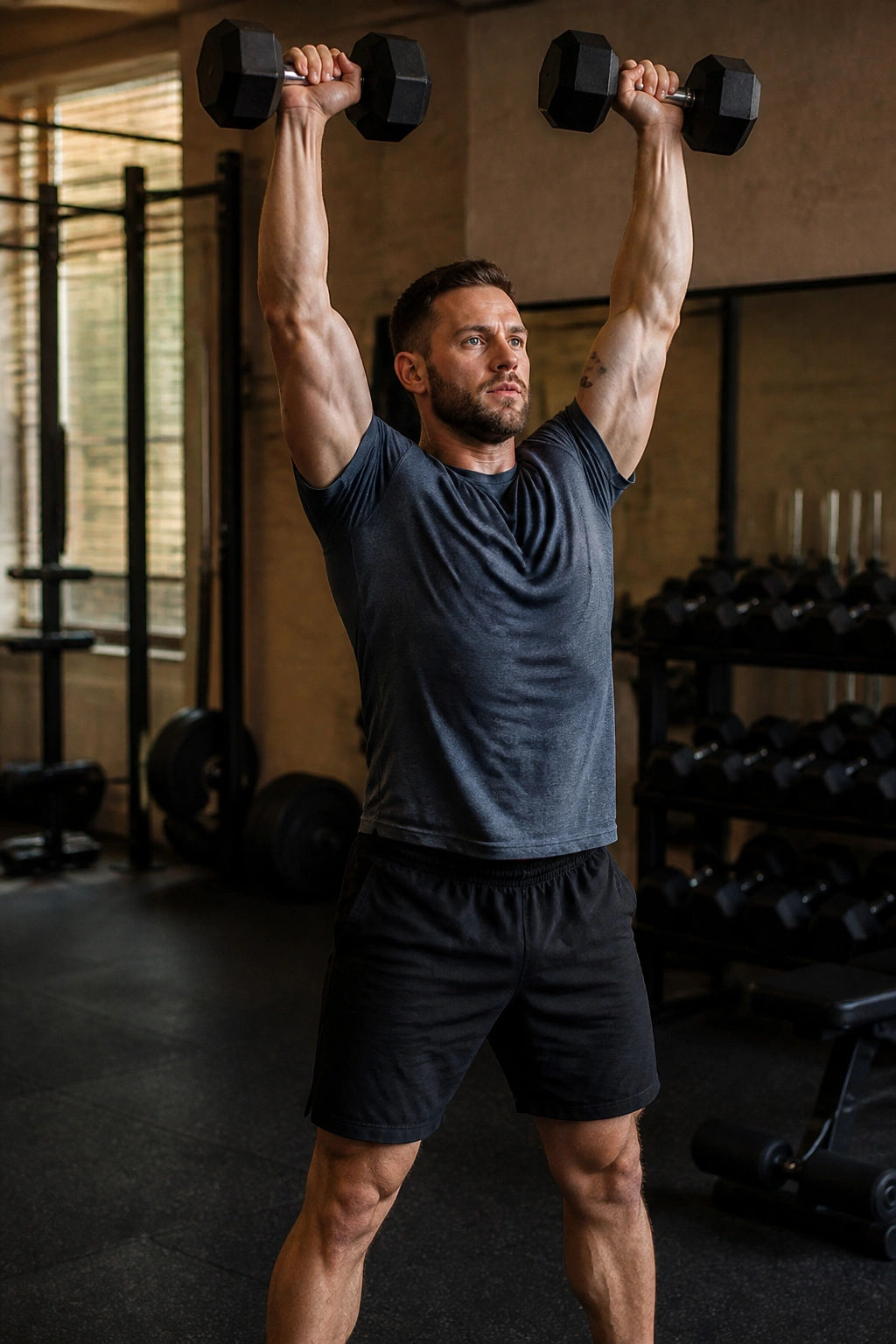
A dumbbell complex is half strength work, half breathing test, and it sneaks up on people.
Pick a pair of dumbbells and don’t set them down until the whole round is done. One round might look like 6 Romanian deadlifts, 6 bent-over rows, 6 clean to front squats, 6 push presses, and 6 reverse lunges per leg. Then rest 2 minutes and do it again for 4 rounds.
The load should be moderate. If you need to heave the dumbbells up during the clean, they’re too heavy. If the front squat turns into a dive, they’re too heavy. The point is a smooth chain of movement, not a personal war with gravity.
What I like about this workout is the way it exposes weak links. Grip goes first for some people. For others, the hinge falls apart because the rows and cleans steal their posture. That feedback is useful. Honest, even. And a little rude.
6. Unilateral Leg Day
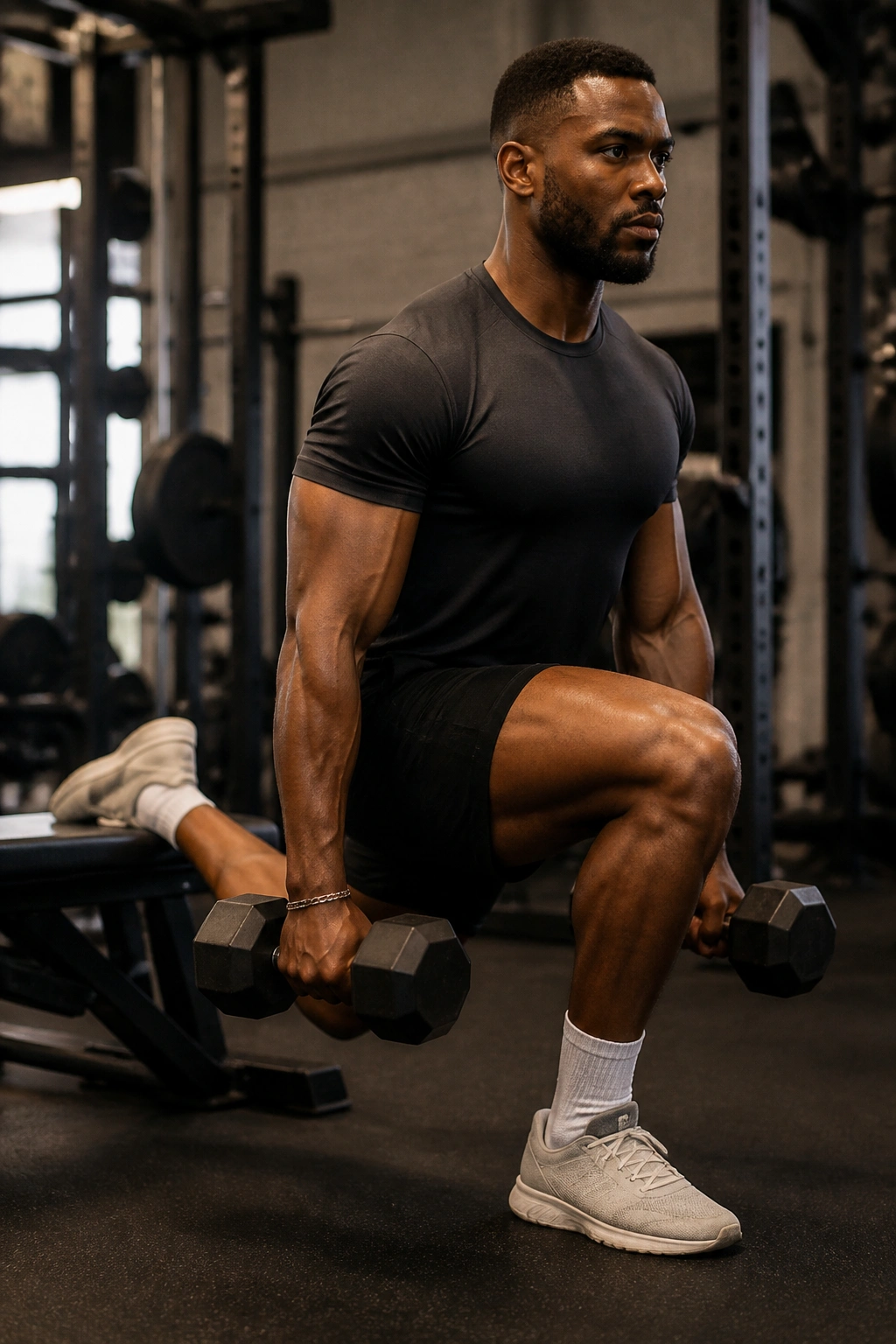
Two legs are fine. One leg is better for this day.
Unilateral work shows you where your strength really lives. The left side always looks the same as the right until you ask each leg to carry its own weight. Then the story changes fast. A split squat that feels decent on paper can reveal a huge gap in balance, hip control, or ankle stability.
Try this:
- Bulgarian split squat — 4 sets of 8 reps per leg
- Single-leg Romanian deadlift — 3 sets of 10 reps per leg
- Step-up — 3 sets of 8 reps per leg
- Lateral lunge — 2 sets of 10 reps per leg
- Standing calf raise — 3 sets of 15 reps
Use a box or bench that puts your front thigh close to parallel on the split squat. Higher is not better. Higher is usually just wobblier. Rest 45 to 75 seconds between sides if you need it, and don’t rush the setup.
This day is great if your bilateral squat is stalled or if one knee always complains at the bottom. One-leg training often clears that up faster than piling on more barbell work.
7. Pull-Up and Row Ladder

Ladders keep egos in check. They also build back volume without forcing you to live at failure.
The setup is simple: do 1 pull-up, 1 row, then 2 pull-ups, 2 rows, then 3 and 3, climbing to 5. If that feels manageable, come back down the ladder in reverse. Rest 45 to 75 seconds between rungs.
Why this works
The early sets feel almost too easy. Then the middle starts to bite. That’s the point. You’re building density while staying crisp, and the body never gets the chance to coast through a huge sloppy set.
If you can’t hit clean bodyweight pull-ups yet, use a band or a lat pulldown and keep the same ladder shape. No drama. The real win is that your total work climbs without your form crashing.
Best move: keep your chest up on the row and stop each pull-up one rep before you start kicking. Once the kicking starts, the ladder is no longer training your back — it’s training momentum.
8. Kettlebell Swing and Goblet Squat Density Circuit

A kettlebell circuit only works if the load stays honest. Otherwise it turns into fast but meaningless flailing.
Set a timer for 15 minutes. Do 10 kettlebell swings, 8 goblet squats, and 6 push-ups, then repeat the circuit as many times as you can with clean form. The kettlebell should be heavy enough that the swings snap, not float. If the bell is so light that your hips barely notice it, you picked the wrong one.
The swing is the star here. Hinge hard, stand tall, and let the bell travel because of your hips — not because you lifted it with your arms. The goblet squat keeps the heart rate up and forces you to stay upright. Push-ups are just the little extra tax.
Do not chase ugly speed. That’s the trap. A clean 5-round session beats a messy 7-round ego trip every time.
9. Intermediate Zone 2 Cardio with Strides

Steady cardio looks soft from the outside. It isn’t.
This session is about building a base without frying your legs. Spend 40 to 60 minutes on a bike, treadmill, rower, or outdoor run at a pace where you can still talk in full sentences. Not sing. Talk. If you can’t finish a sentence, you’re drifting too hard.
Then add 6 strides of 15 seconds with 45 seconds of easy movement between them. Strides are not sprints. They’re smooth, quick bursts that wake up your legs without turning the workout into a race.
That mix matters for intermediate training because it gives you volume and a little speed in one session. You get the boring work done, then you remind the body how to move with some snap. Nice, simple, effective.
If you hate cardio, this is the version that tends to stick. It doesn’t beat you up, so you can repeat it often enough for it to matter.
10. Pyramid Rep Strength Session

Pyramids are old-school for a reason. They teach you how to build, peak, and back off without losing form.
Pick one main lift — front squat, bench press, or overhead press works well. Run a pyramid like 5 reps, 8 reps, 10 reps, 8 reps, 5 reps, changing the load as the reps climb and fall. The middle set should feel like the hardest one, not the first one. That’s where the work lives.
Rest 90 to 120 seconds between sets. The early weights should move cleanly. The middle set should be demanding but not a grind. If the bar slows to a crawl, the load is too heavy or the jump was too big.
A pyramid session gives intermediate lifters a nice blend of exposure and control. You get one heavy-feeling top set without turning the entire workout into a max-effort mess. Add a row or a split squat afterward and you’ve got a tidy, hard session that leaves room for recovery.
11. Incline Treadmill Core Burner

The treadmill gets a bad rap, mostly from people who use it badly.
Set the incline between 8 and 15 percent and walk at 2.5 to 3.5 mph for 20 to 30 minutes. You should feel your glutes and calves working, but you shouldn’t be clinging to the rails. If you need the rails, lower the incline or the speed.
Then move to core work:
- Dead bug — 3 sets of 8 reps per side
- Front plank — 3 sets of 30 to 45 seconds
- Side plank — 2 sets of 20 to 30 seconds per side
The real trick is posture. Keep the rib cage stacked over the hips. Don’t lean back and pretend that counts as abs work.
This workout is low impact, which makes it useful on weeks when the legs feel beat up but you still want to train. It’s not flashy. It doesn’t need to be. Sometimes the smartest session is the one that keeps you honest without chewing up recovery.
12. Power Primer Workout with Jumps and Med-Ball Throws

Power work should feel snappy, not sloppy.
That means low reps, full recovery, and zero interest in turning the session into cardio. Start with 3 sets of 5 box jumps or broad jumps, resting 60 to 90 seconds between sets. Then do 4 sets of 5 medicine ball slams and 3 sets of 5 push presses. Pick a light-to-moderate load that lets the bar move fast.
Nope. Not a burnout.
The moment your landings get loud or your throws start turning into awkward heaves, the workout is over. Power training depends on fresh nervous-system output, which is a fancy way of saying you need enough rest to stay sharp. Intermediate lifters often make the mistake of stacking too many reps here. Don’t.
This session is especially useful before a strength block or when your lifting has gone a little slow and sticky. A few crisp reps can wake the body up in a way that endless grinding never will.
13. Cycling Sprint Intervals

A bike sprint hurts in a specific way. Clean, direct, and rude.
Warm up for 8 to 10 minutes with easy pedaling. Then ride 8 rounds of 20 seconds all-out effort followed by 100 seconds of very easy spinning. If that feels too aggressive, use 6 rounds of 30 seconds hard and 90 seconds easy instead.
What to watch for
- Cadence should rise fast, not stall out.
- Your hips should stay planted.
- Resistance should be high enough to matter, but not so high that your knees grind.
- If you can keep talking, you’re not sprinting hard enough.
The beauty of bike intervals is that they’re simple to scale. More fit riders can push the watts or shorten the recovery. Less experienced riders can keep the work interval the same and just protect the form.
This is a brutal little conditioning workout, but it’s also joint-friendly compared with repeated running sprints. That makes it a smart choice when your legs need intensity without all the pounding.
14. Carries and Core Anti-Rotation Session

Carries look simple until your ribs start drifting and the weight wants to pull you sideways.
That’s why this workout earns its spot. You’re not just holding heavy stuff. You’re teaching your torso to stay organized while your limbs do the work. Start with farmer’s carries for 4 rounds of 30 meters, then suitcase carries for 3 rounds of 20 meters per side. Finish with Pallof presses for 3 sets of 10 reps per side and front rack holds for 3 sets of 20 seconds.
Use loads that make you brace hard without shrugging your shoulders into your ears. If your grip gives up first, fine. If your posture folds, the weight is too much.
This kind of training is sneaky useful for everything from deadlifts to overhead pressing. It helps you stay tall under load, which carries over into almost every lift that matters. Plus, it tends to light up the trunk in a way crunches just don’t.
15. Upper-Body Hypertrophy Split

Hypertrophy days are where a lot of intermediate lifters finally learn patience.
The goal here is muscle growth, which means moderate loads, controlled reps, and enough total volume to make the work count. A clean session might look like incline dumbbell press for 4 sets of 8 to 12, seated cable row for 4 sets of 10 to 12, lateral raise for 3 sets of 15, rope pressdown for 3 sets of 12 to 15, and EZ-bar curl for 3 sets of 10 to 12.
Rest 60 to 75 seconds between sets. Use a tempo that keeps the weight honest — down under control, up with purpose. The pump matters here, but only if the rep still owns the range of motion.
If you want an upper-body day that feels productive without destroying you, this is it. It gives you enough volume to grow and enough structure to avoid turning every set into a half-rep scramble. The muscle doesn’t care about drama. It cares about repeated tension.
16. Plyometric Lower-Body Speed Session

Jump training is not a cardio class.
It’s a speed session with a high price for sloppy landings. Start with pogo hops for 3 sets of 20 seconds to wake up the ankles. Then do box jumps for 4 sets of 3 reps, split squat jumps for 3 sets of 5 reps per side, and lateral bounds for 3 sets of 5 reps per side. Rest 60 to 90 seconds between sets, longer if needed.
The rule is blunt: if the jumps get slow, stop. If the landings sound like furniture falling over, stop. If the knees cave in, stop.
That sounds fussy until you remember what the session is for. Plyometrics teach force production and fast ground contact. They do not need to be exhausting to work. In fact, exhaustion usually makes them worse.
Use this on a day when you want to feel quick and athletic, not crushed. It pairs well with a separate strength day because the two stressors are different. That difference matters more than most people think.
17. Rest-Pause Dumbbell Metabolic Workout
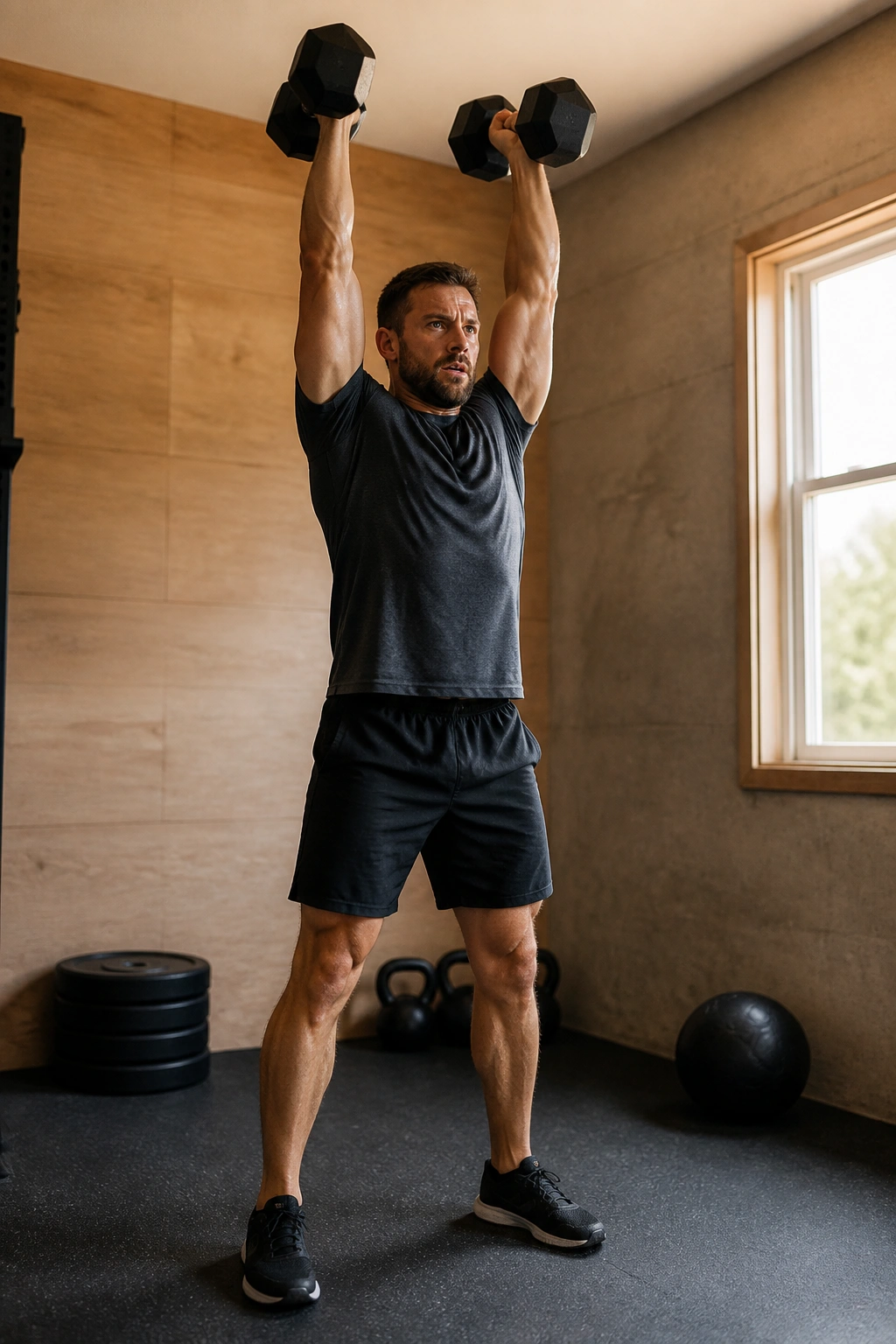
Rest-pause is what you do when the clock is rude and the workout still needs to matter.
Pick 3 dumbbell exercises — something like thrusters, one-arm rows, and Romanian deadlifts. Do 12 reps, rest 20 seconds, do 4 more reps, rest 20 seconds, then do 3 more reps. That’s one sequence. Complete 3 rounds with 90 seconds between rounds.
The weight should feel moderate on rep 1 and stubborn by the last mini-set. Too light, and the method is pointless. Too heavy, and the form gets ugly fast. This is not the place for a technical lift you’re still learning.
What I like about rest-pause is the way it compresses work without pretending it’s easy. You get a lot done in a short window, but the quality still depends on your ability to reset, breathe, and attack the next mini-set with decent shape. It’s a good intermediate workout when time is tight and you still want something with teeth.
18. Intermediate Benchmark Workout for Repeating Progress

Benchmark workouts are part workout, part lie detector.
Pick a circuit you can repeat later under the same conditions. One good option is 3 rounds for time of 500 meters on the rower, 12 kettlebell swings, 10 push-ups, and 8 front-rack reverse lunges per leg. Another is a 12-minute AMRAP with the same movements if you want a cleaner time cap.
The key is consistency. Use the same rower, the same kettlebell, and the same movement standards each time you retest. Don’t change the rules because your ego wants a faster number. That ruins the point.
This kind of session is useful because it shows whether your conditioning is actually improving or whether you just feel tired a lot. Keep the pace steady in round 1. If you go out like a maniac, you’ll pay for it in rounds 2 and 3. That lesson shows up fast, and it’s a good one to learn once.
Final Thoughts
More hard work is not the same as better work.
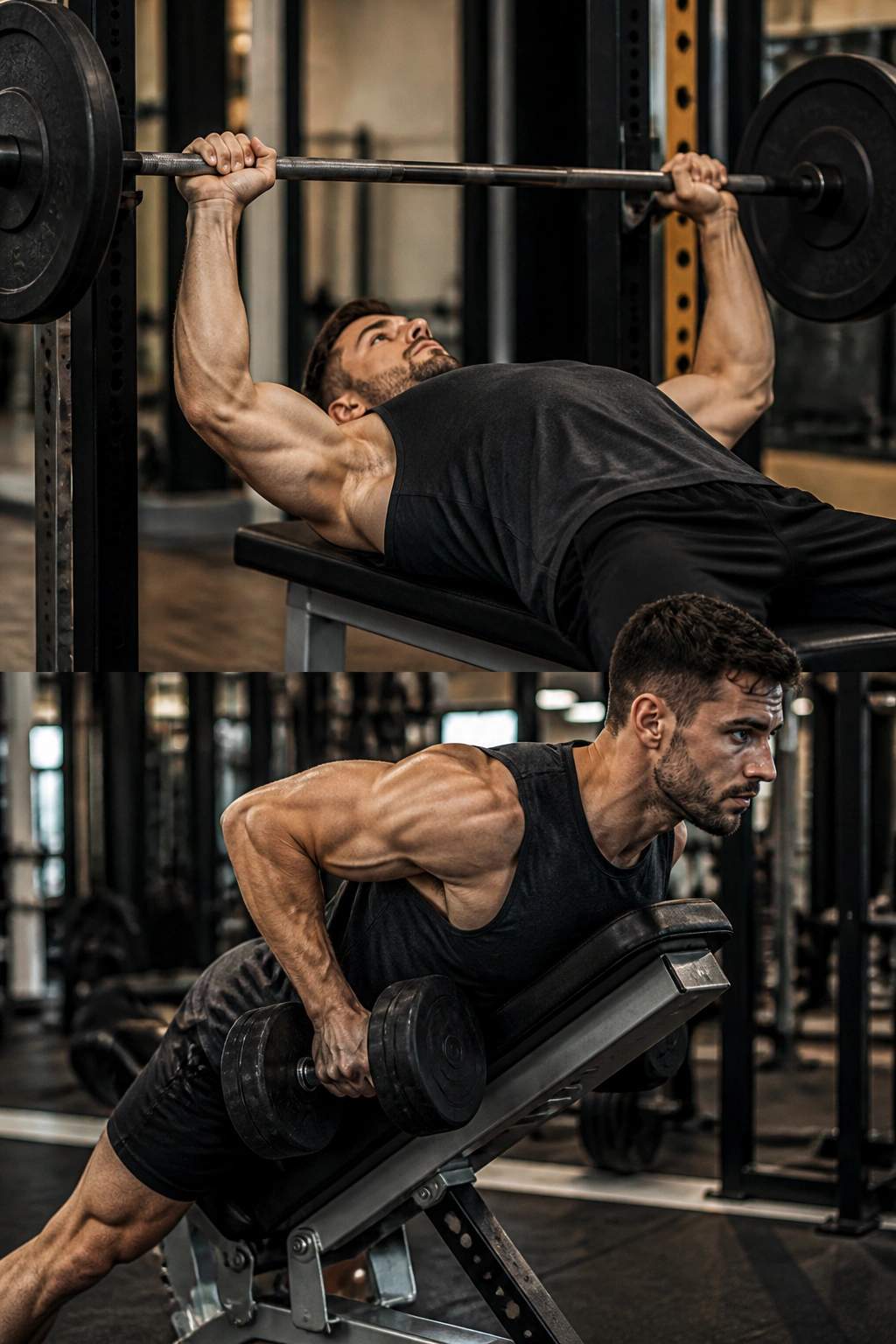
The smartest intermediate training usually mixes one or two heavy sessions, one conditioning day, and one workout that keeps the body moving cleanly under load. Barbell strength, EMOM work, carries, intervals, and hypertrophy all have a place. They just do different jobs.
Pick three or four of these workouts, run them long enough to see a number move, and stop changing the plan every time you get bored. Repeatable beats heroic.
