



The best functional full body workouts do not leave you crushed on the floor. They leave you more capable the next morning — able to pick up a bag of dog food, carry laundry up the stairs, and twist to grab something from the back seat without feeling like your body is arguing with you.
That is the real test. Not how wrecked you feel, not how sweaty your shirt gets, and not how many fancy moves you can cram into 30 minutes. Everyday strength comes from training the patterns you actually use: squat, hinge, push, pull, carry, and rotate.
The good news is that you do not need a giant gym setup to build that kind of strength. A dumbbell, a kettlebell, a sandbag, a resistance band, or even just body weight can cover a lot of ground if you put the movements together the right way. The trick is choosing workouts that hit your legs, trunk, upper body, and breathing at the same time without turning every session into a sloppy cardio contest.
These 18 workouts are built around that idea. Some are beginner-friendly. Some ask a little more from your balance, grip, or coordination. All of them are meant to make daily movement feel easier, cleaner, and less annoying.
1. Goblet Squat to Press
This is one of those full-body workouts that looks simple until you actually do it with honest weight. Hold a kettlebell or dumbbell at your chest, sink into a squat, stand tall, and press it overhead in one smooth sequence. Your legs do the heavy lifting, your trunk keeps you from folding, and your shoulders finish the job.
Why It Works
The goblet hold keeps the load close, which makes the squat easier to learn and harder to fake. You get front-loaded core work without needing a barbell on your back, and the press teaches you to transfer force from the floor to your hands.
Try 3 to 5 rounds of 6 squats and 6 presses per side. Rest 45 to 60 seconds between rounds. If your lower back starts arching on the press, the weight is too heavy or your ribs are flaring.
Tip: the bell should stay close to your body during the squat. Wandering elbows usually mean the load is too far out in front.
2. Dumbbell Deadlift, Row, and Carry Circuit
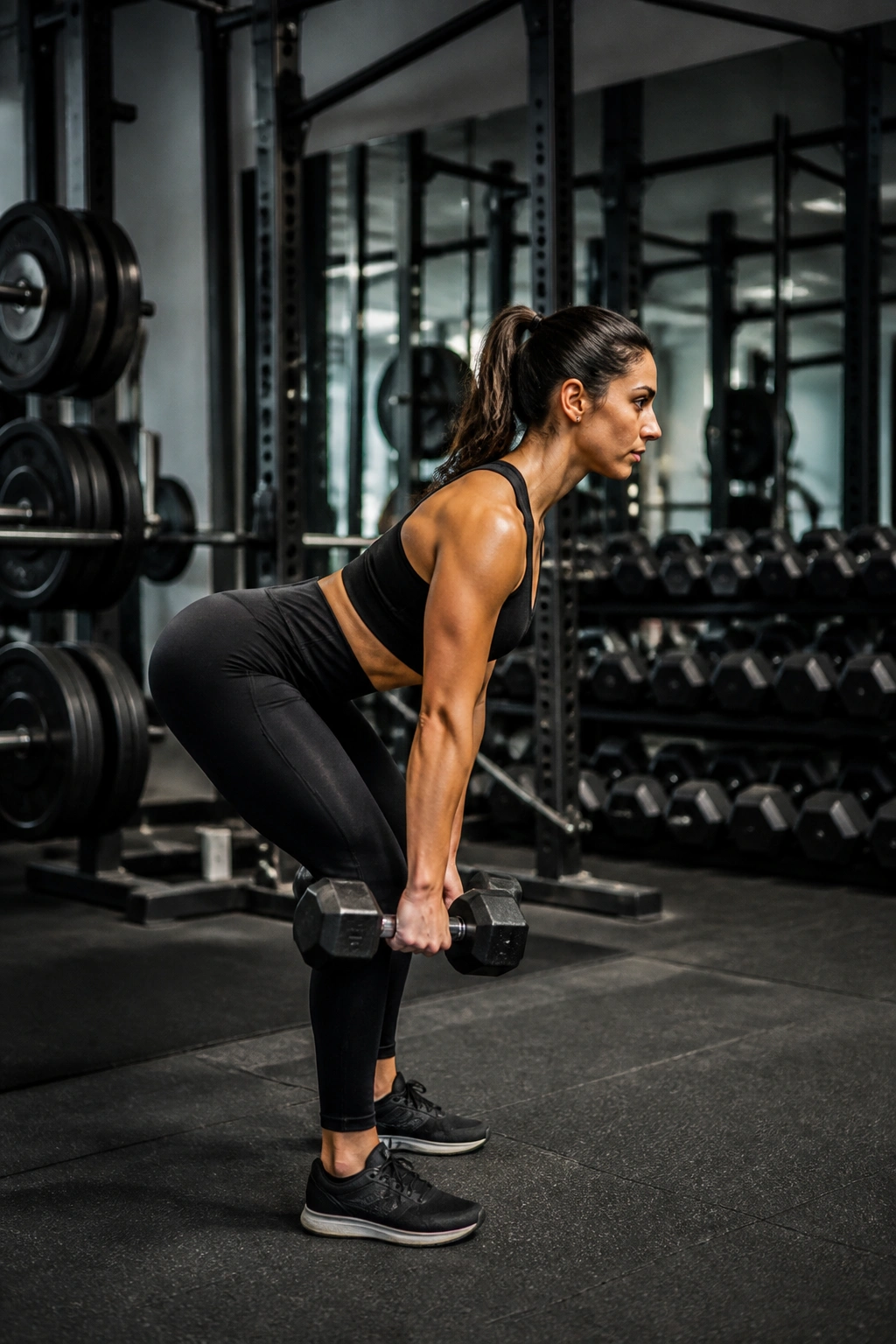
If you want everyday strength, this is a hard workout to beat. Deadlifts train the hips, rows hit the upper back, and carries force your trunk to behave while you walk. That combination is brutally practical. It also happens to be one of the quickest ways to teach your body to stay organized under load.
A simple version uses two dumbbells. Do 8 deadlifts, 8 bent-over rows, then a 30- to 40-yard farmer’s carry. Repeat for 3 to 4 rounds. The deadlift should feel like your glutes and hamstrings are doing the work, not your lower back. The row should end with the elbows close, not yanked past your torso.
The carry is where people get lazy. Don’t. Keep your ribs down, stand tall, and walk as if you’re balancing a tray of drinks on your head.
Strong grip. Quiet torso. That’s the whole point.
3. Push-Up, Squat, and Plank Ladder
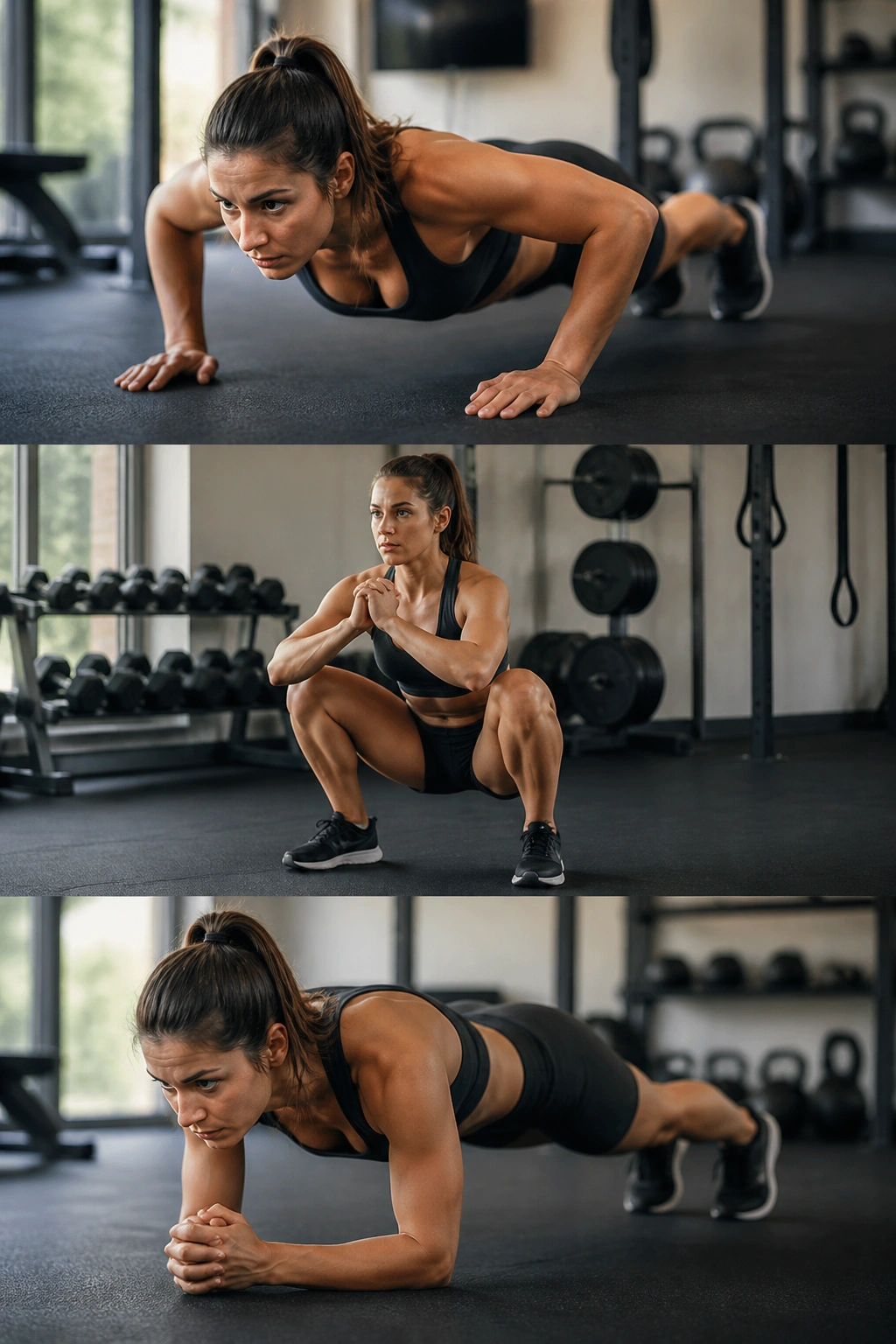
Why does this feel so effective even though none of the moves are fancy? Because it ties together pushing, leg strength, and anti-extension core work without giving you a chance to coast. You’re either doing the rep cleanly or you’re not.
Set a timer for 10 to 15 minutes and run a ladder: 1 push-up, 2 squats, 10-second plank; 2 push-ups, 4 squats, 20-second plank; 3 push-ups, 6 squats, 30-second plank, then keep going until the form slips. Use incline push-ups on a bench if the floor version turns into a faceplant. The squats should stay smooth and deep enough that your hips drop below parallel only if your mobility allows it.
How to Use It
If you want strength, stop before total failure. Leave one or two reps in the tank on the push-ups and keep the plank crisp. The ladder format is sneaky: it builds density, but it also exposes where your body gets sloppy when you’re tired.
This workout is excellent on days when you want something short that still feels like work.
4. Reverse Lunge to Knee Drive
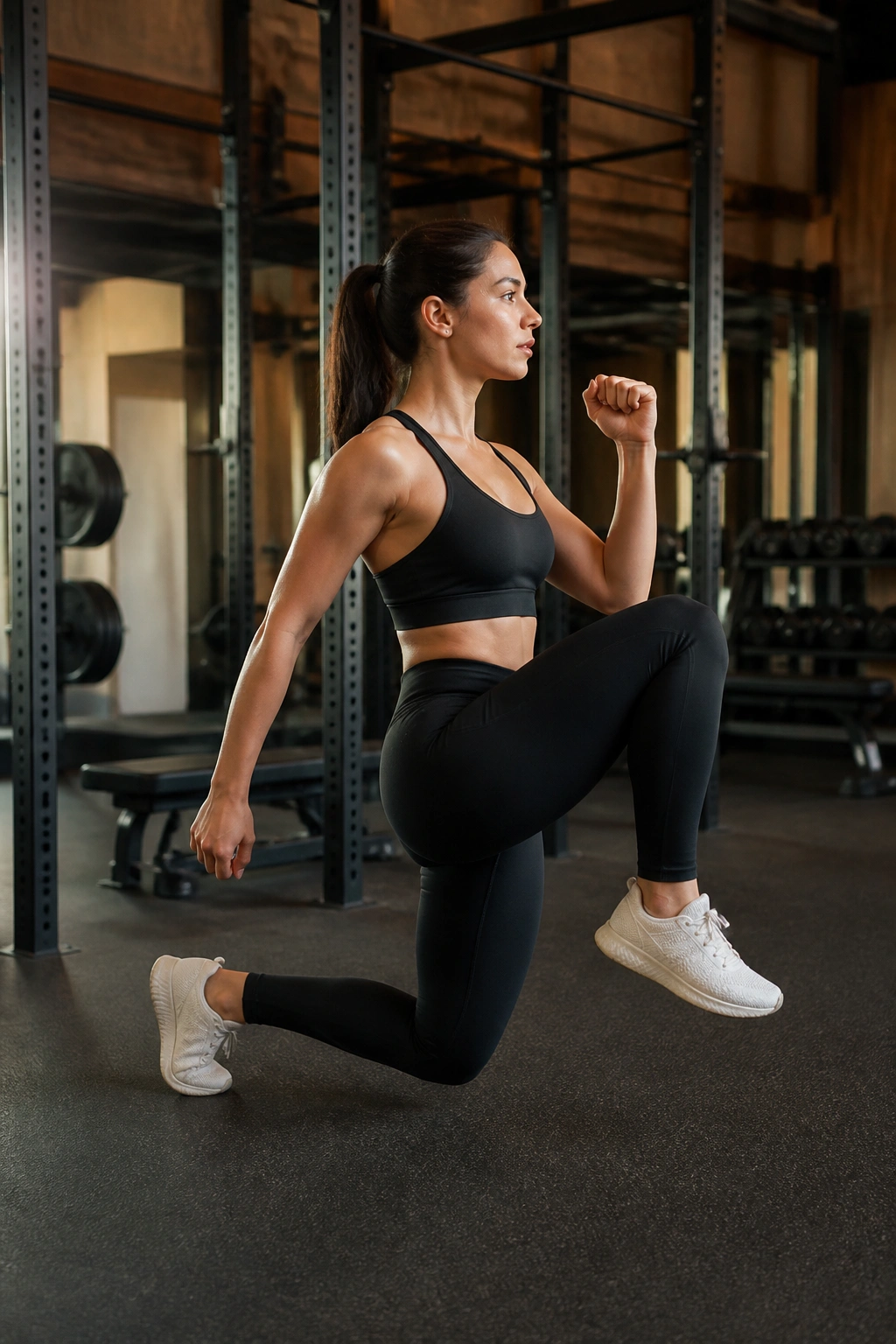
A reverse lunge looks boring until you notice what it asks from you. One leg has to support your body while the other leg moves, your hips have to stay square, and your trunk has to keep your chest from tipping over like a folding chair. Add the knee drive at the top and you get balance, control, and a little bit of power.
Use body weight first, then hold dumbbells at your sides when you can do 8 clean reps per side without wobbling. Step back softly, drop the rear knee close to the floor, then drive up through the front heel and bring the back knee up under control. The knee drive should feel athletic, not rushed.
- Great for stair climbing and getting off the floor
- Easier on many knees than forward lunges
- Teaches single-leg strength without brutal joint stress
- Works well for 2 to 4 sets of 6 to 10 reps per side
Do not bounce out of the bottom. That’s where most of the value lives.
5. Kettlebell Swing and Front Rack March
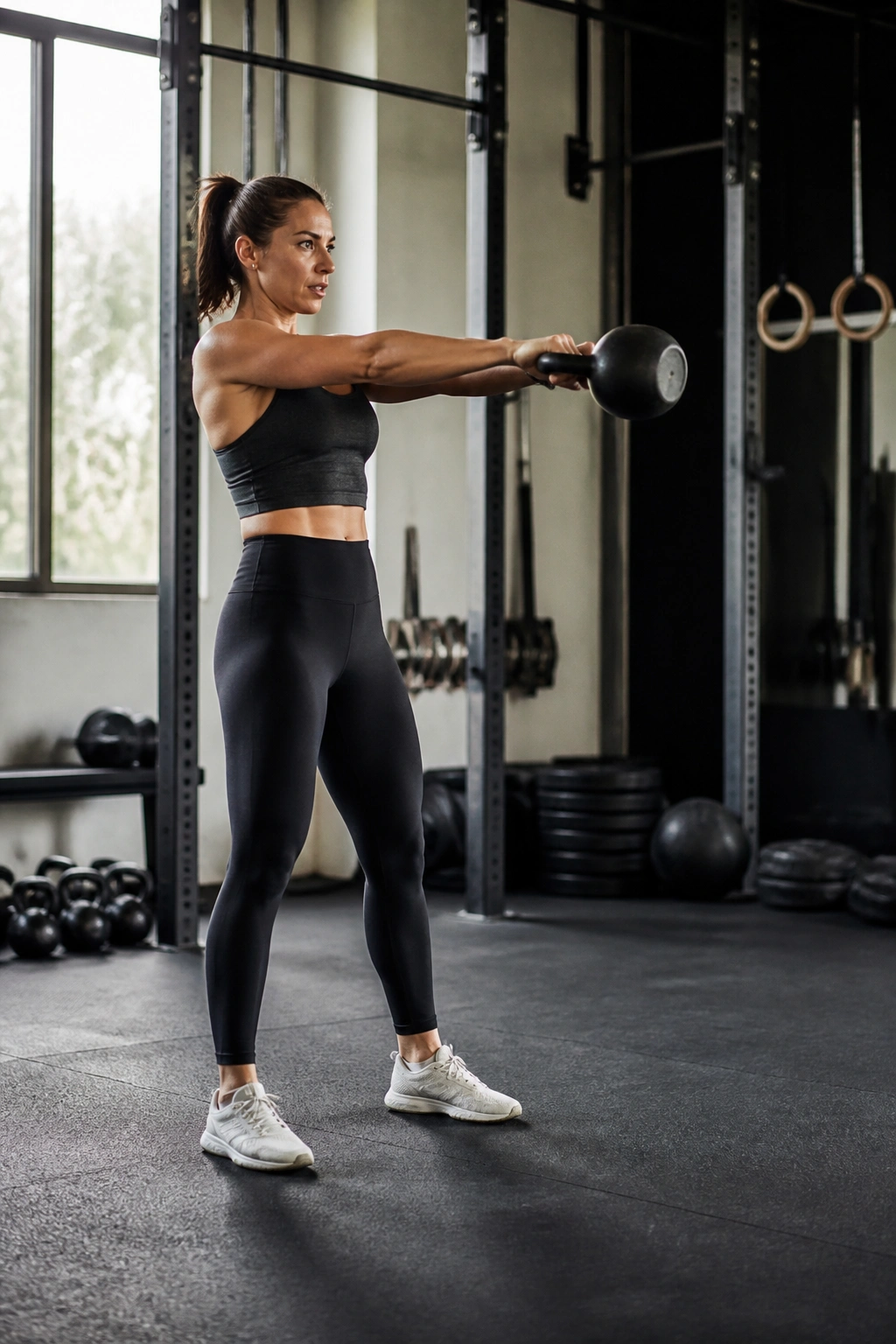
The kettlebell swing is about the hips, not the arms. The front rack march is about staying tall while you resist the urge to lean, shrug, or twist. Put them together and you get a workout that feels oddly close to real life: generate force, then carry that force without falling apart.
Start with 10 swings, then 20 steps of front rack marching per side. Rest 30 to 45 seconds and repeat for 4 to 6 rounds. The swing should snap at the hips with a crisp float at the top, not a front raise in disguise. The march should feel steady, almost stubborn.
I like this pairing because it teaches two different kinds of control. One is explosive. The other is boring in the best possible way. If your lower back gets tight during swings, shorten the set and check your hinge. If the rack position crushes your wrist, move the bell deeper into the palm and keep the forearm vertical.
6. Step-Up and Overhead Reach
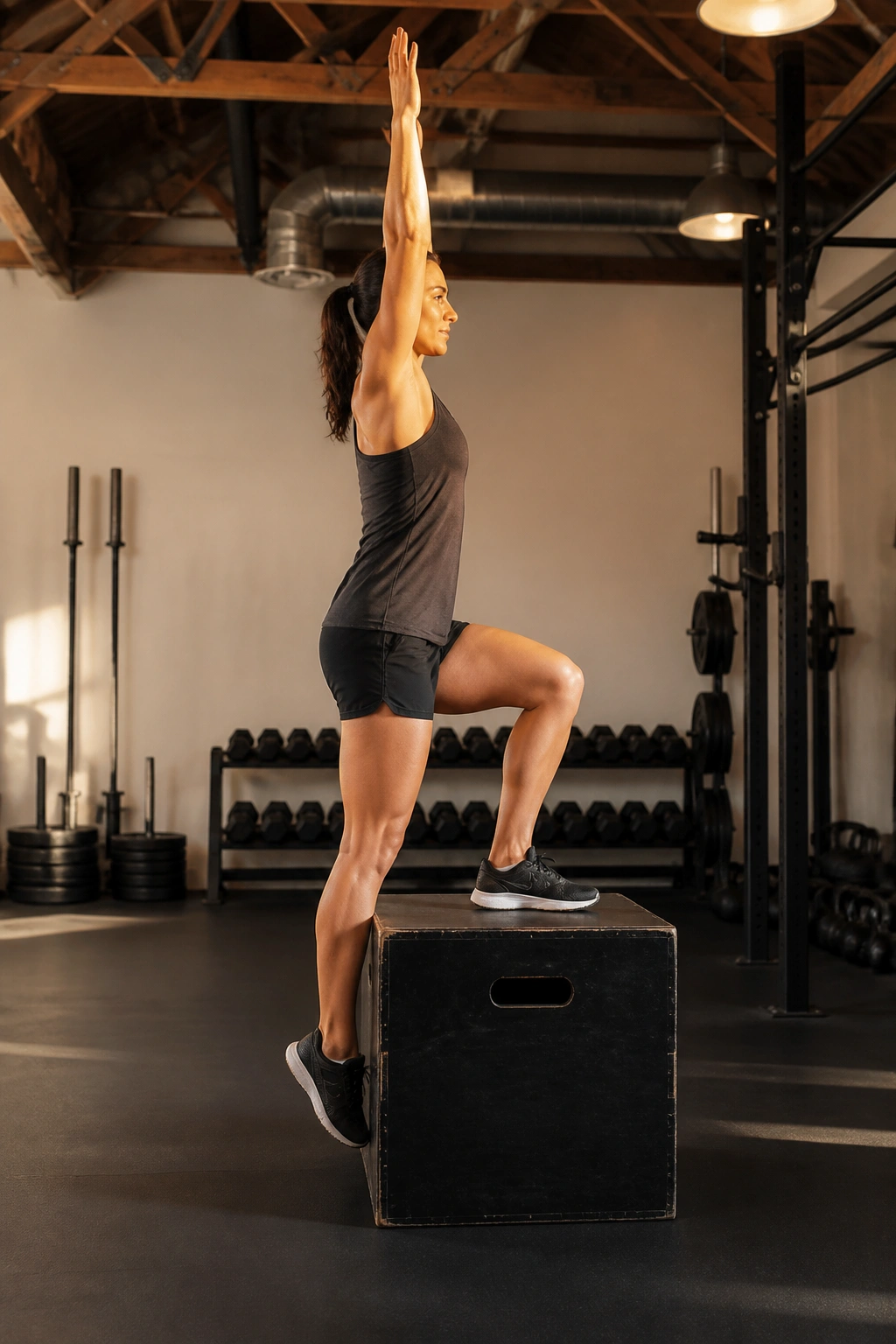
Stairs do not care how strong your deadlift is. They care whether one leg can lift, stabilize, and keep you upright while you hold something overhead or reach for a railing. That’s why step-ups deserve a permanent place in functional full body workouts.
Use a box or bench that lets your front thigh stay roughly parallel to the floor. Step up with control, drive through the whole foot, and reach both arms overhead at the top without shrugging. 3 sets of 8 reps per side is a clean starting point. Add dumbbells only after your body weight version feels smooth.
What to Watch For
Keep the working knee tracking over the middle toes. If it caves inward, lower the box or slow the descent. If you push off hard with the back leg, you’re stealing work from the front leg, and that defeats the whole point.
The overhead reach is not there for show. It forces your ribs and pelvis to stay stacked while your legs do something demanding.
7. Renegade Row with Shoulder Tap Finish
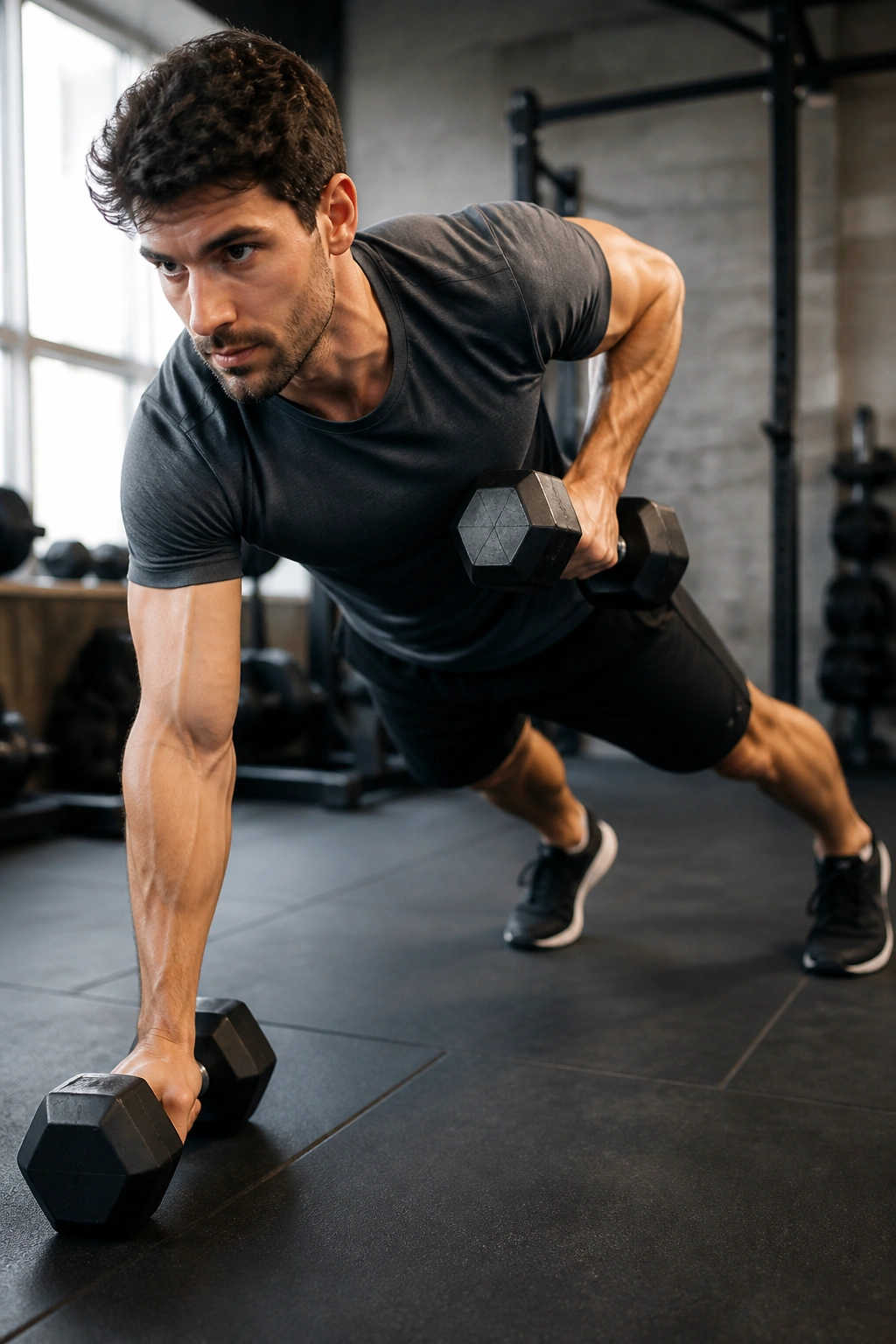
This one is a little rude. That’s why I like it.
You’re in a plank with your hands on dumbbells, rowing one side while the rest of your body tries to twist open. Then you finish with a shoulder tap, which sounds easy until your hips start swaying like a loose shopping cart wheel. The workout trains pulling strength, core anti-rotation, and shoulder stability in one messy little package.
Keep the dumbbells wider than your chest and use a weight that lets you stay square. Try 5 rows per side, 10 shoulder taps total, then 20 seconds of plank hold. Repeat 3 to 4 times. If your feet have to sit very wide at first, fine. Narrow them later.
The key is not speed. It’s almost annoyingly calm control. If you rush the row, the trunk leaks. If you rush the tap, the hips wobble. And that wobble is the thing you’re trying to fix.
8. Bear Crawl, Crawl-Out Plank, and Stand
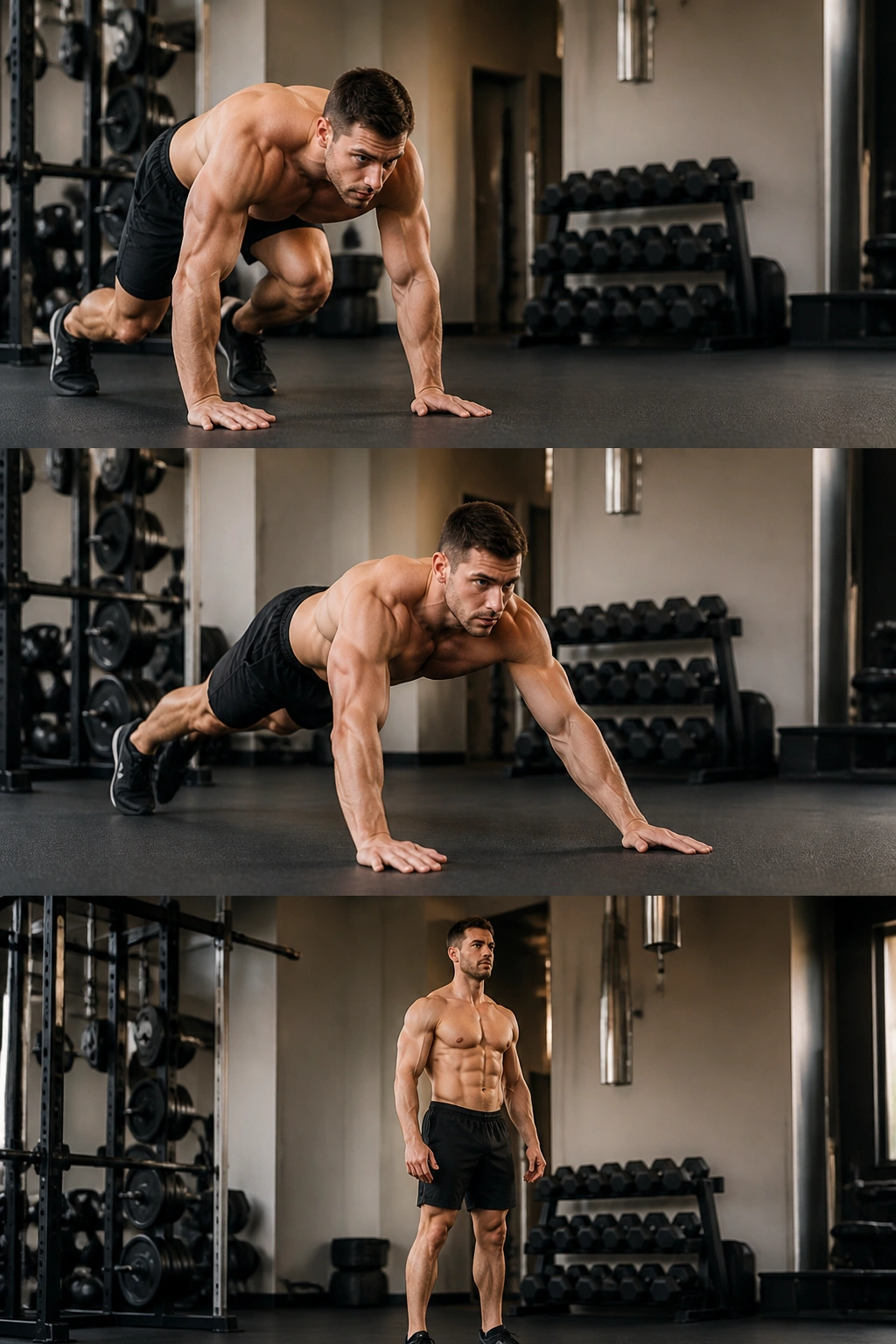
There’s something honest about ground-based training. You feel your shoulders, your core, your hips, and your breathing all at once, and there’s nowhere to hide. Bear crawls and crawl-outs do that better than most gym moves.
Start on hands and toes with knees hovering an inch or two above the floor. Crawl forward 10 to 15 steps, crawl back, then lower into a plank walkout and stand up under control. One round is enough to wake up the whole body, but 3 rounds will make you notice your hands, feet, and midsection in a hurry.
This workout is especially useful if you sit a lot. It asks your shoulders to bear weight above your hands, which feels different from pressing, and it teaches your trunk to stay stiff while your limbs move. That matters more than people admit.
A small warning: if your wrists complain, put your hands on dumbbells or use push-up handles. No prize exists for grinding through pain on the floor.
9. Thruster Intervals
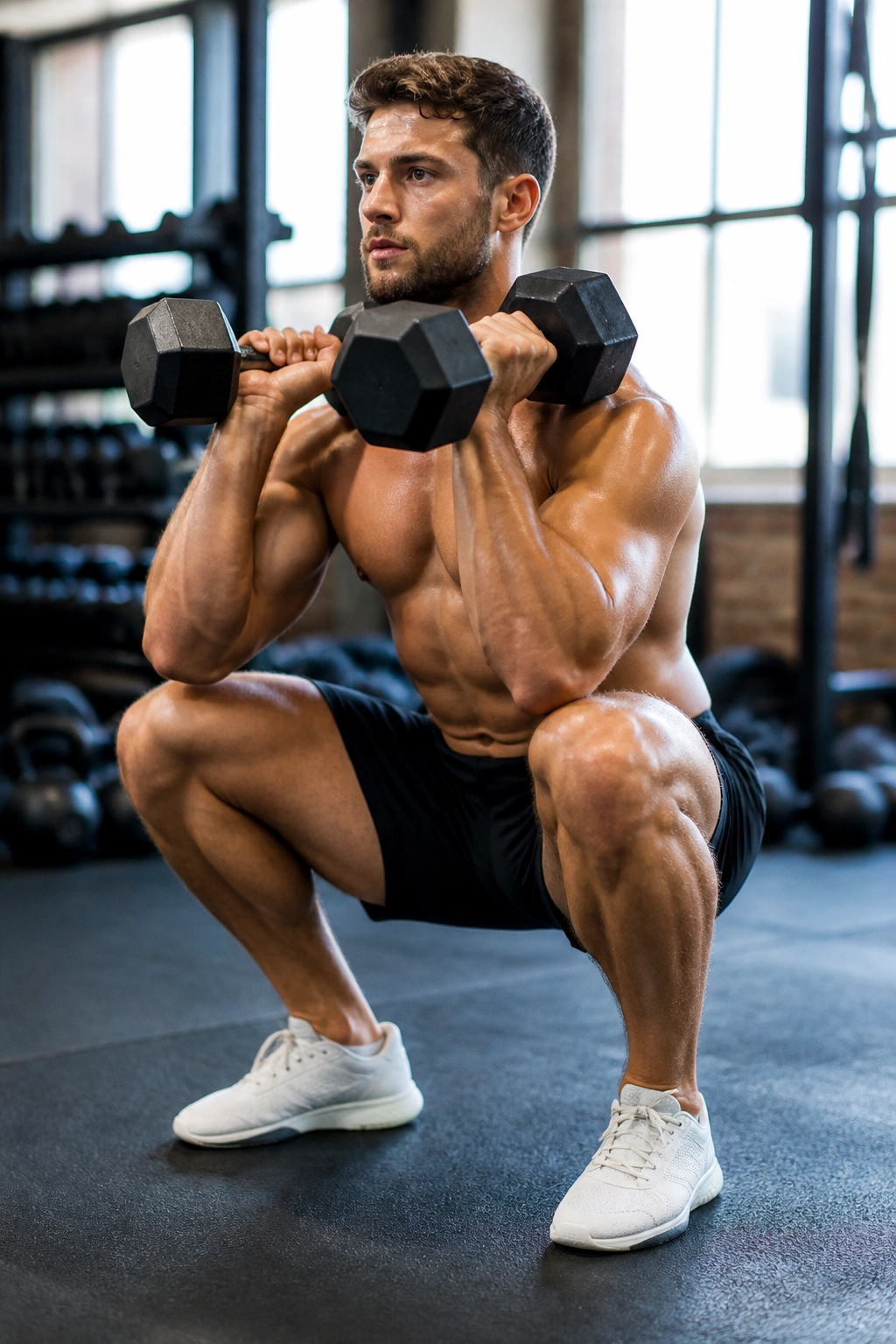
A thruster is a front squat that ends with an overhead press. That means your legs create the power and your shoulders finish the rep while your breathing tries to keep up. It is one of the fastest ways to make a workout feel like a full-body event without needing a dozen exercises.
Use dumbbells or a single kettlebell. Do 30 seconds of work, 30 seconds of rest for 8 to 12 rounds. Move steadily, not wildly. The squat should be deep enough to load the legs, and the press should come from a strong leg drive, not a desperate shoulder heave.
How to Get the Most From It
Pick a load you can control for the full interval. If the first 15 seconds are pretty and the last 15 turn into a shrugging contest, the weight is too much. Keep your elbows just in front of your ribs on the front squat, then punch overhead at the top without arching your lower back.
Thrusters are sweaty. Fine. But they’re useful because they build strength under fatigue, and fatigue is part of life whether we want it or not.
10. Single-Leg Romanian Deadlift and Row
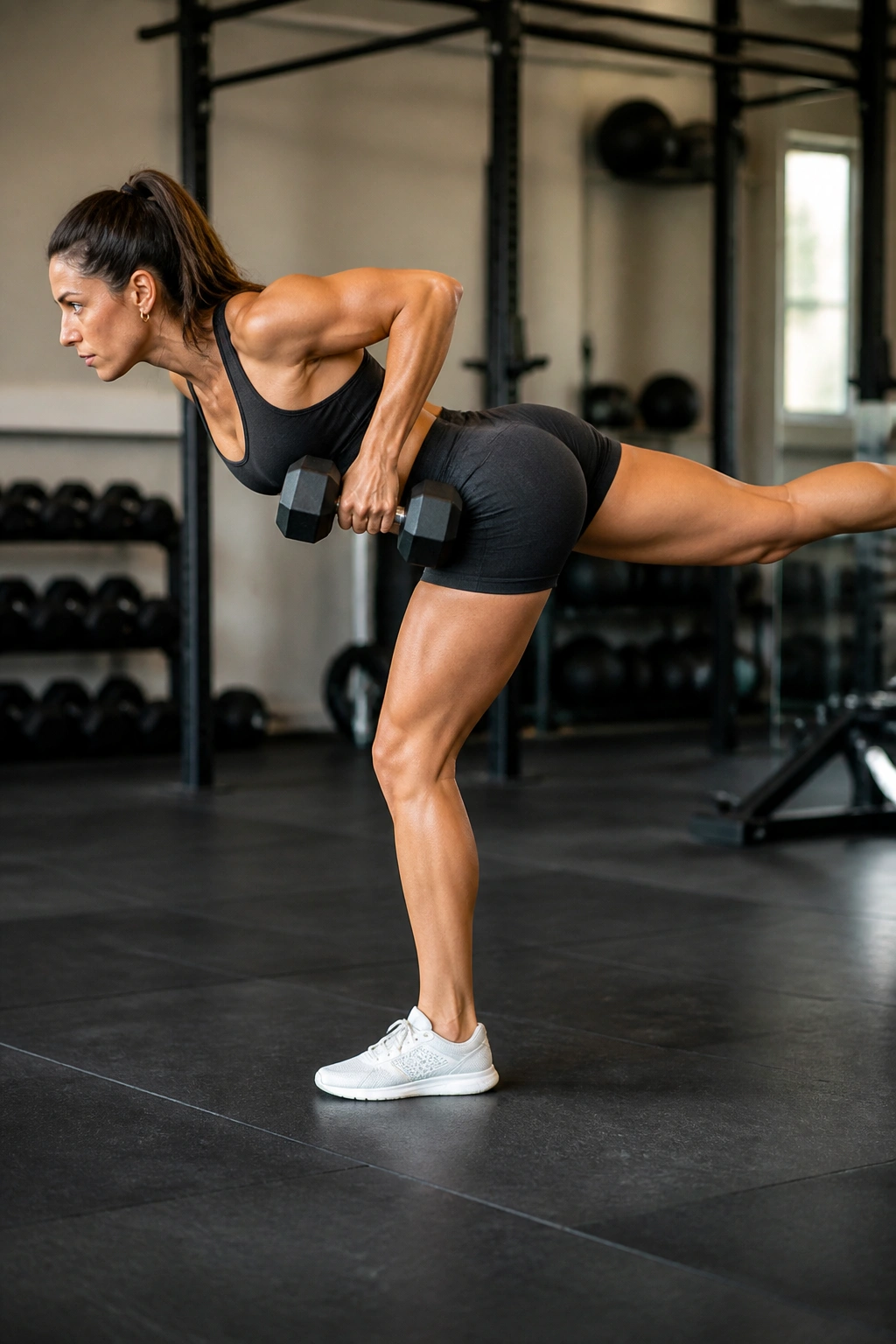
One leg at a time changes the whole feel of training. A single-leg Romanian deadlift exposes balance issues, hip control, and ankle stability in a way both feet never can. Add a row and you have a workout that pairs lower-body hinge strength with upper-back work, which is a nice trade.
Hold a dumbbell in one hand and hinge on the standing leg while the free leg reaches back. At the bottom, row the dumbbell toward your ribs, then stand tall without snapping your back into extension. 6 to 8 reps per side is enough to make this interesting. Slow reps beat heavy reps here.
The beauty of this move is how much it reveals. If your standing hip dumps outward, you’ll feel it. If your foot arches collapse, you’ll feel that too. Good. Those are the weak links that make everyday movement feel unstable.
Do not chase the floor. Hinge until your hamstrings say “enough” and stop there.
11. Clean to Front Squat Complex
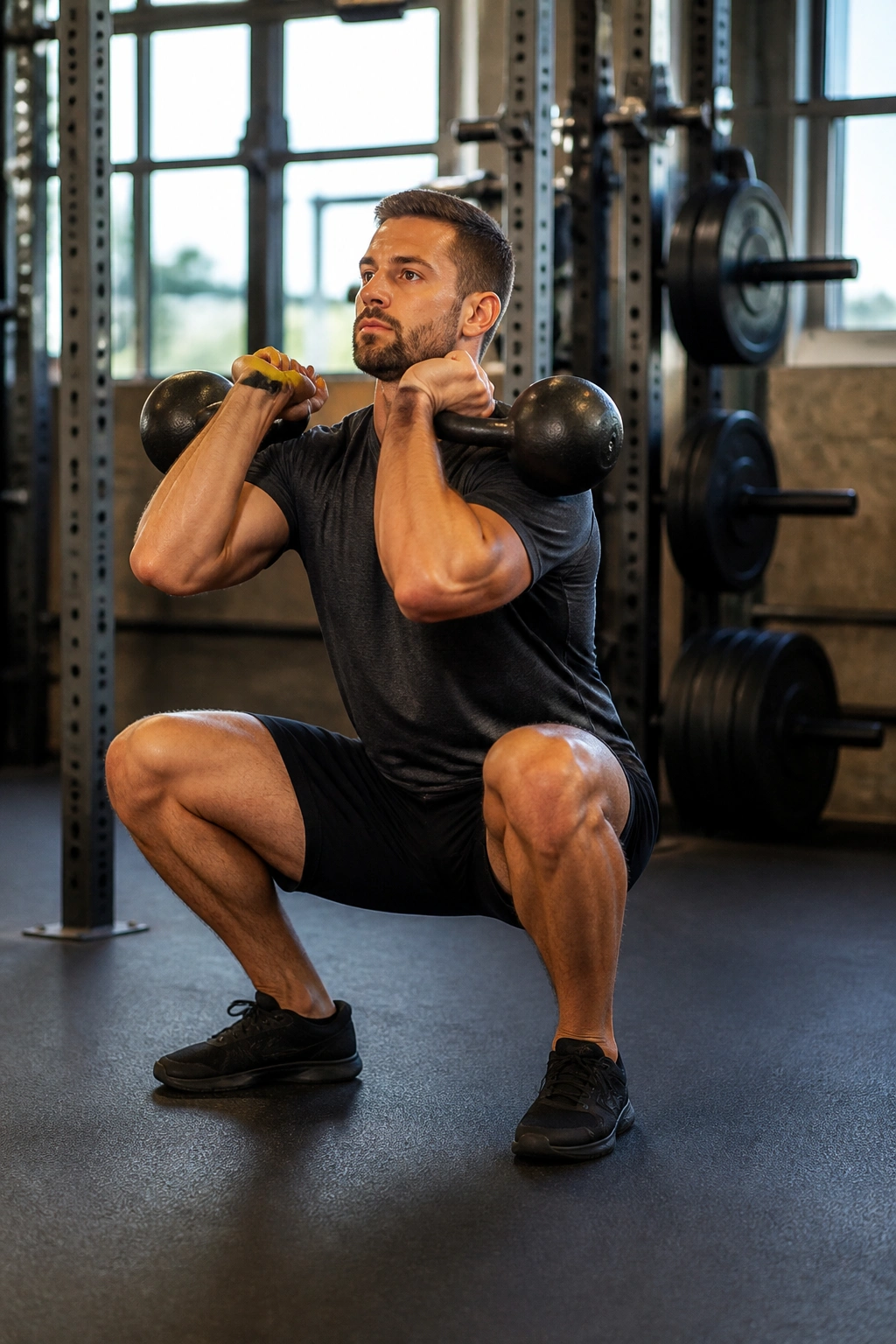
A clean to front squat complex is one of the strongest choices if you want a workout that feels athletic and grounded. The clean teaches you to move a load from the floor to the rack position, and the front squat forces your trunk to stay upright while your legs absorb the work. It is simple enough to learn, but it will expose sloppy mechanics fast.
Use a kettlebell, dumbbell, or sandbag. Do 3 to 5 reps of the clean, then 3 front squats, then set the weight down and rest. That’s one round. Build to 4 or 5 rounds. The clean should land softly in the rack, not smack your forearm or crash into your chest.
- Keep the weight close on the pull
- Catch with soft knees
- Breathe at the top of the squat, not at the bottom
- Use one weight only if the rack position feels stable
If your wrists hate the rack, try a kettlebell or a sandbag before you give up on the pattern. Different tools change the feel a lot.
12. Farmer’s Carry Ladder
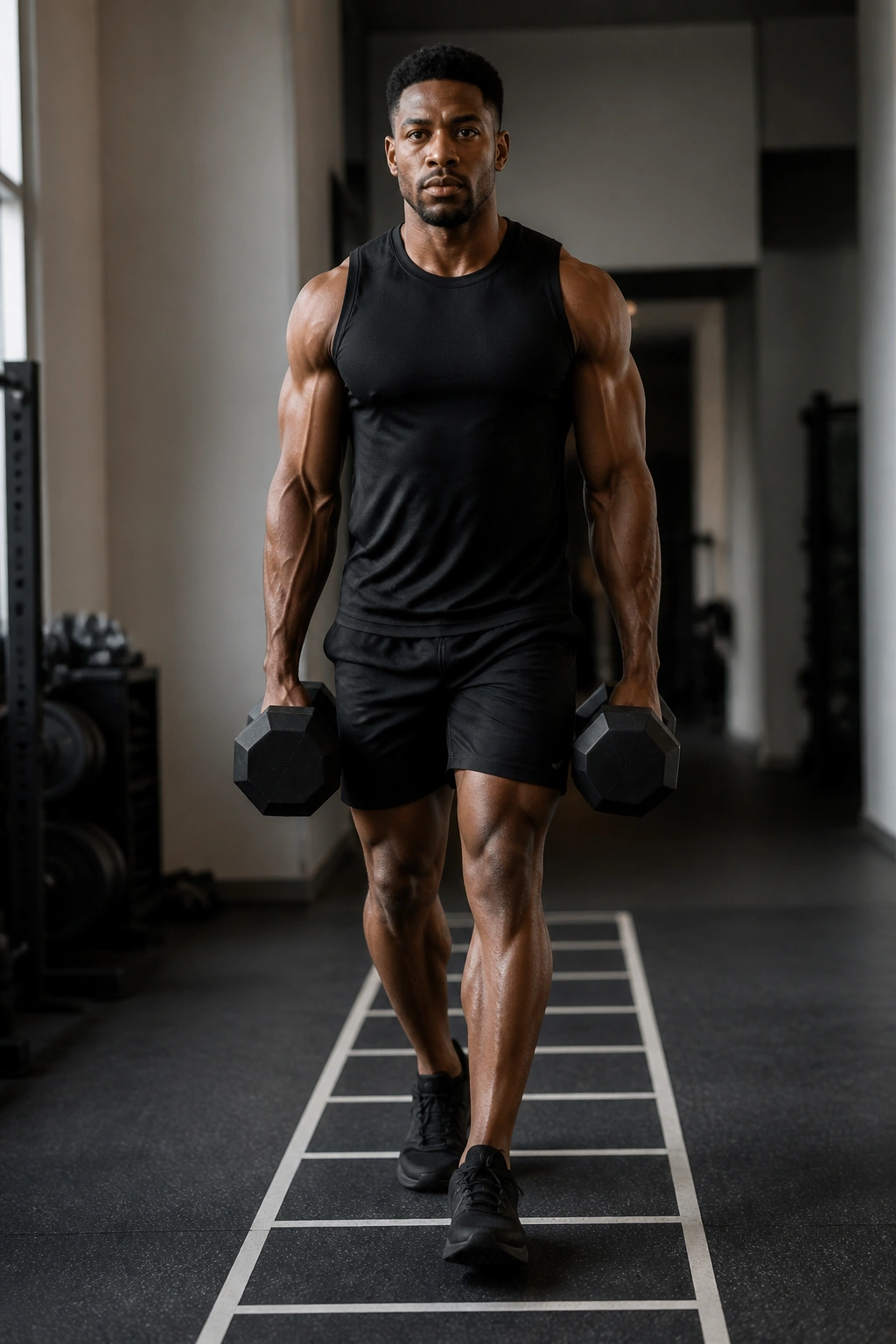
A farmer’s carry ladder is the kind of workout that looks too easy from across the room. Then you try it with honest weights and your core, grip, and posture start negotiating with reality.
Set up three distances: 20 yards, 30 yards, and 40 yards. Carry a heavy dumbbell or kettlebell in each hand for the first pass, then do one hand at a time on the next pass, and finish with a front rack carry if you’re still moving well. Rest just long enough to keep the walks crisp. The carry should feel like a tall, controlled march, not a side-to-side stumble.
This one has a nice carryover to everyday life because you are literally practicing what life asks: hold a load, walk with it, don’t lean, don’t twist. Grocery bags, luggage, water jugs, a sleeping kid on one hip — the body reads those the same way.
If your shoulders creep up toward your ears, the load is too heavy. Drop it. Posture matters more than bragging rights.
13. Sandbag Hug Squat and Shoulder
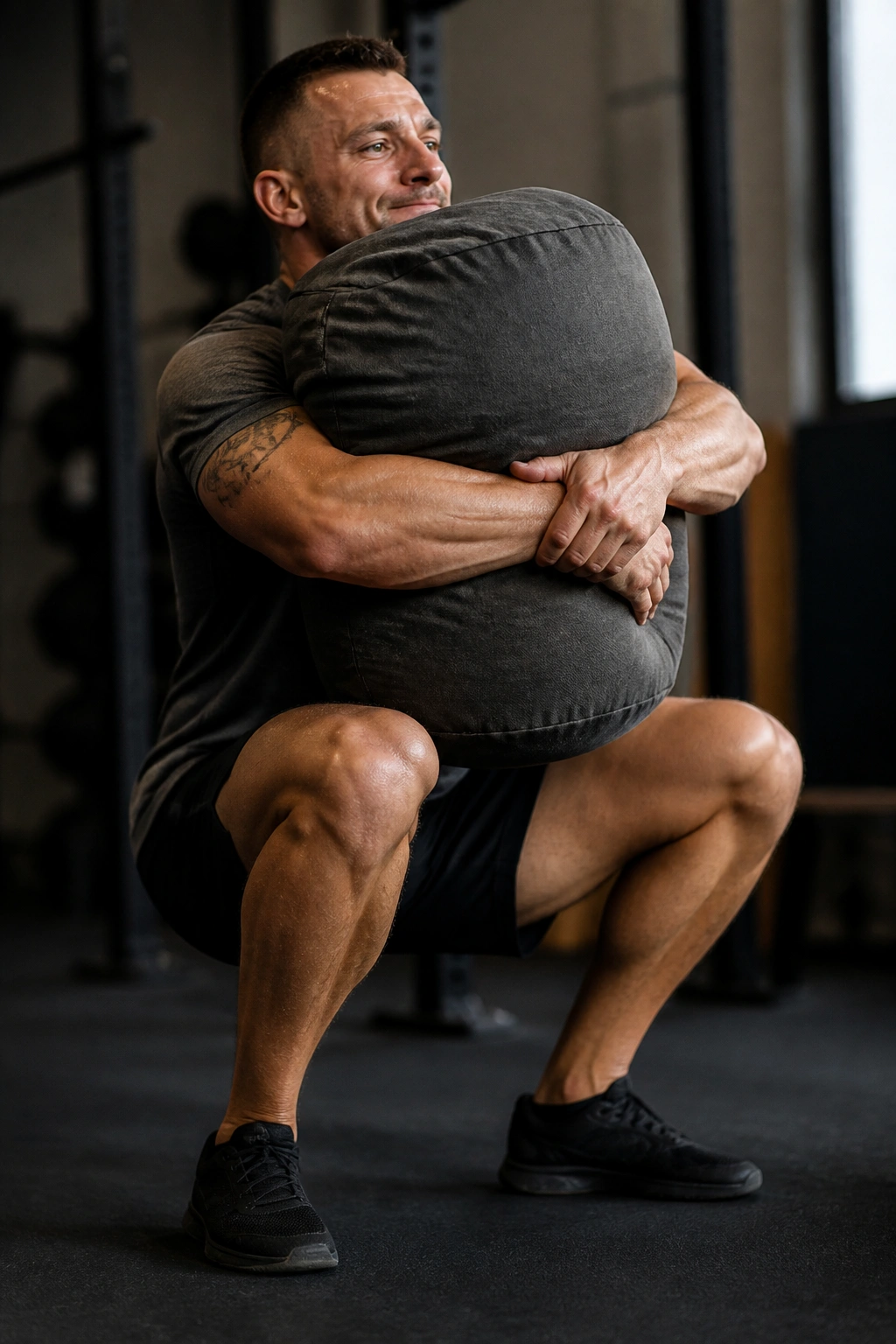
A sandbag changes everything. It shifts. It pulls you forward. It makes each rep feel a little untidy, and that’s exactly why it belongs in functional full body workouts. Hug the bag tight, squat down, then either stand and carry it or clean it to one shoulder.
The bear-hug squat is easier on the wrists than a front rack and harder on the trunk than a goblet hold. Try 4 sets of 5 to 8 squats, then 3 to 5 shoulder loads per side if you want more work. The load to shoulder should be slow and deliberate; no yanking from the floor like you’re angry at it.
Compared with a kettlebell, the sandbag asks for more upper-back endurance. Compared with a barbell, it is less exact and more awkward. That awkwardness is the point. Real life is rarely symmetrical and polished.
Use a bag that matches your floor space and your ceiling height. That sounds odd, but it matters when you start cleaning it to the shoulder.
14. Band-Resisted Full-Body Circuit
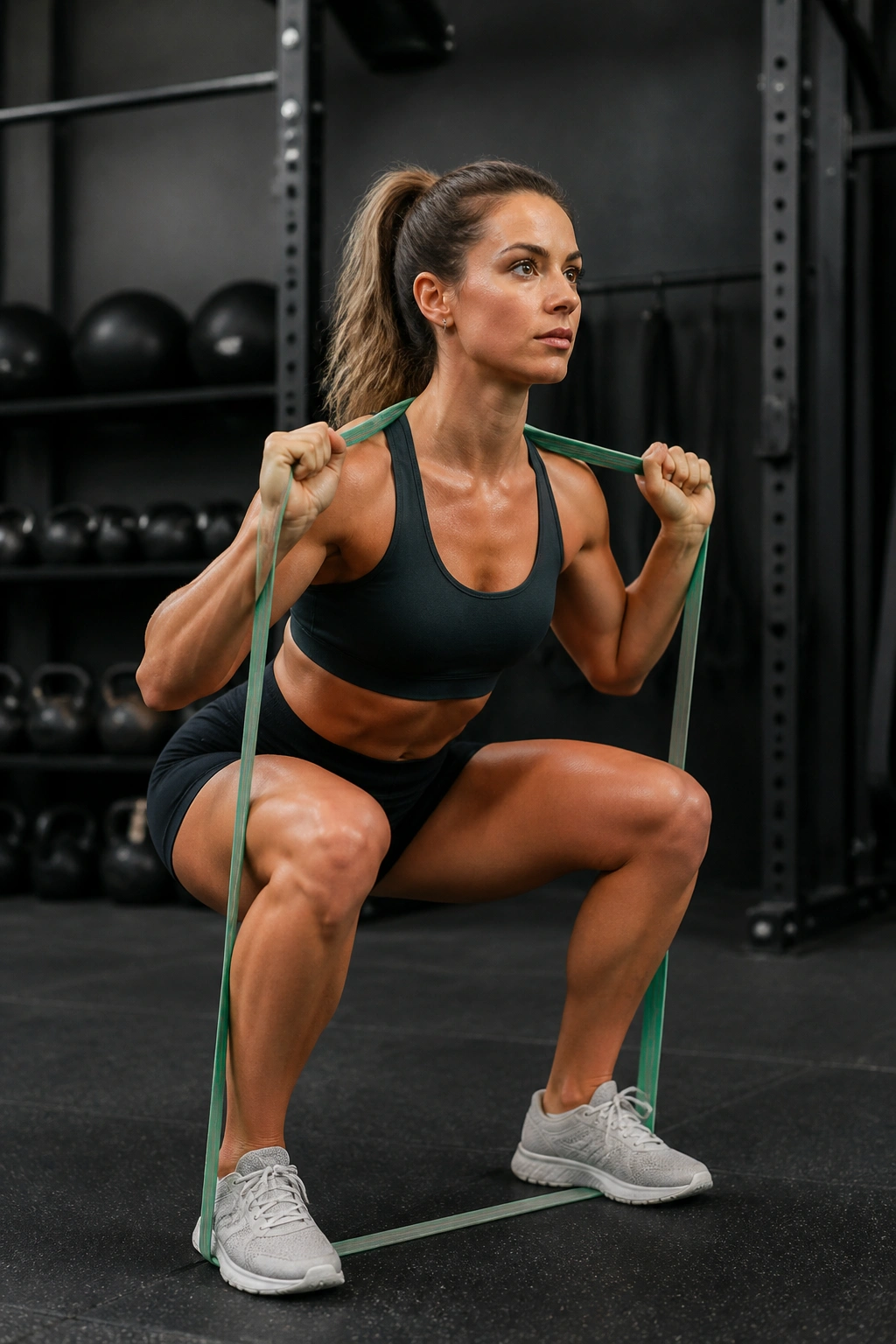
Resistance bands are cheap, portable, and underrated. They also make you earn the top of a movement because tension climbs as the band stretches, which means the end of each rep can feel harder than the start. That changes the whole rhythm of a workout.
A simple circuit looks like this: band squats, band rows, band overhead presses, and band-good mornings, 10 reps each, 3 to 4 rounds. Step on the band for squats and presses, anchor it low for rows, and keep the good morning hinge slow. Your glutes and upper back will light up faster than you expect.
What the Band Changes
Bands are useful when you want more tension without more joint stress. They’re also handy on days when you want to move with control instead of loading up heavy dumbbells. The catch is that people often use a band that’s too light and then fling through the reps.
If the band goes slack at the start, move up a level. If your shoulders get cranky on presses, shorten the range and keep the ribs down. Small tweaks matter here.
15. Turkish Get-Up Practice Set
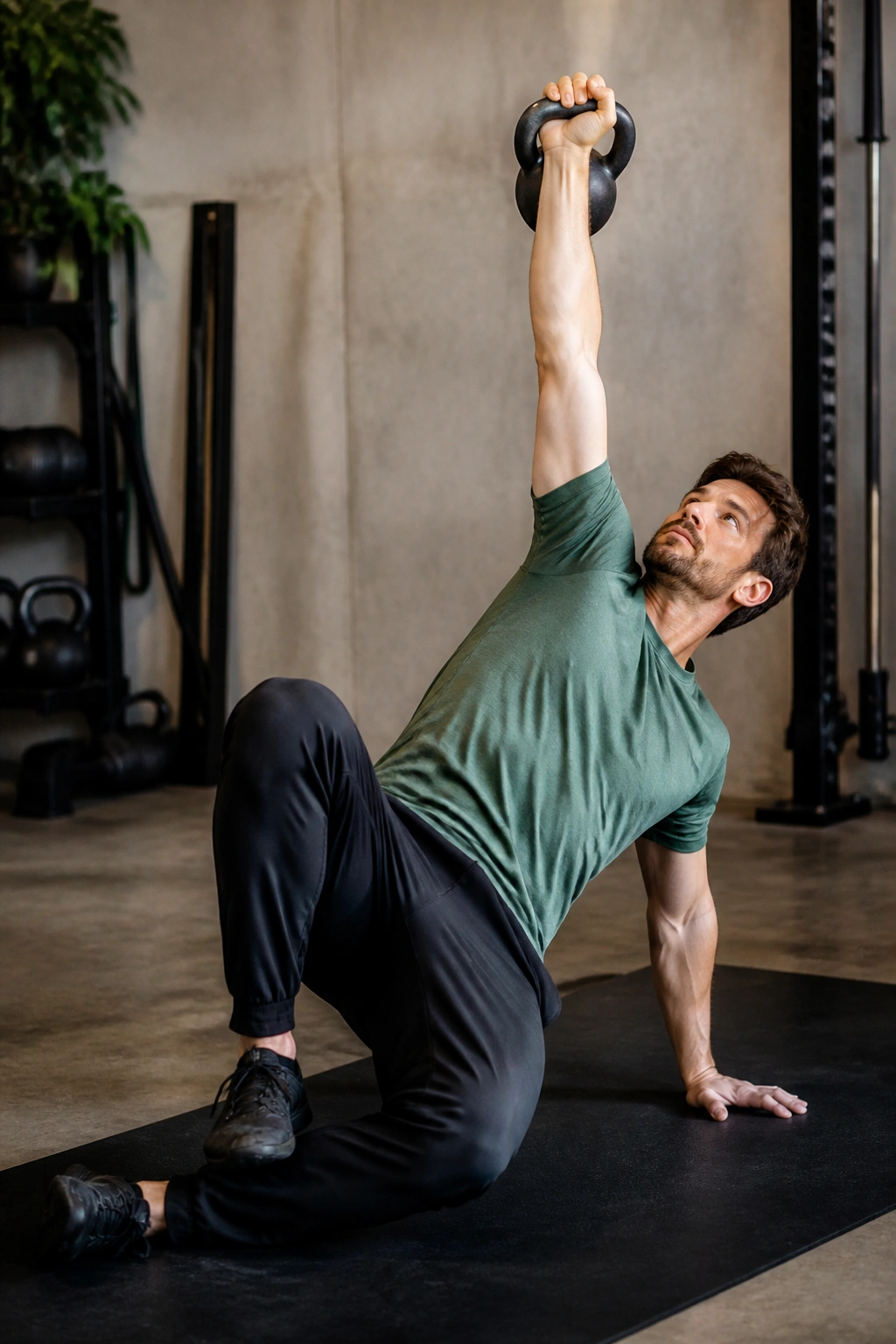
Why do coaches love the Turkish get-up so much? Because it’s a full lesson in getting from the floor to standing while staying stacked, balanced, and aware of where your limbs are. It trains shoulder stability, hip control, trunk strength, and coordination in one move. That sounds dramatic. It also happens to be true.
Start with no weight. Move from lying down to standing and back down again in five slow stages. Then add a light kettlebell once the pattern feels clean. 1 to 3 reps per side is plenty for a session; this is not a high-rep exercise. Quality matters more than volume by a long shot.
How to Use It
Treat each rep like practice, not punishment. Keep your eyes on the bell, plant your feet with purpose, and pause at every transition so you know where your weight is. If you rush the get-up, the whole thing turns into a scramble.
This is one of the few exercises that can make you feel more graceful over time. Not flashy. Just steadier.
16. Mountain Climber to Push-Up Flow
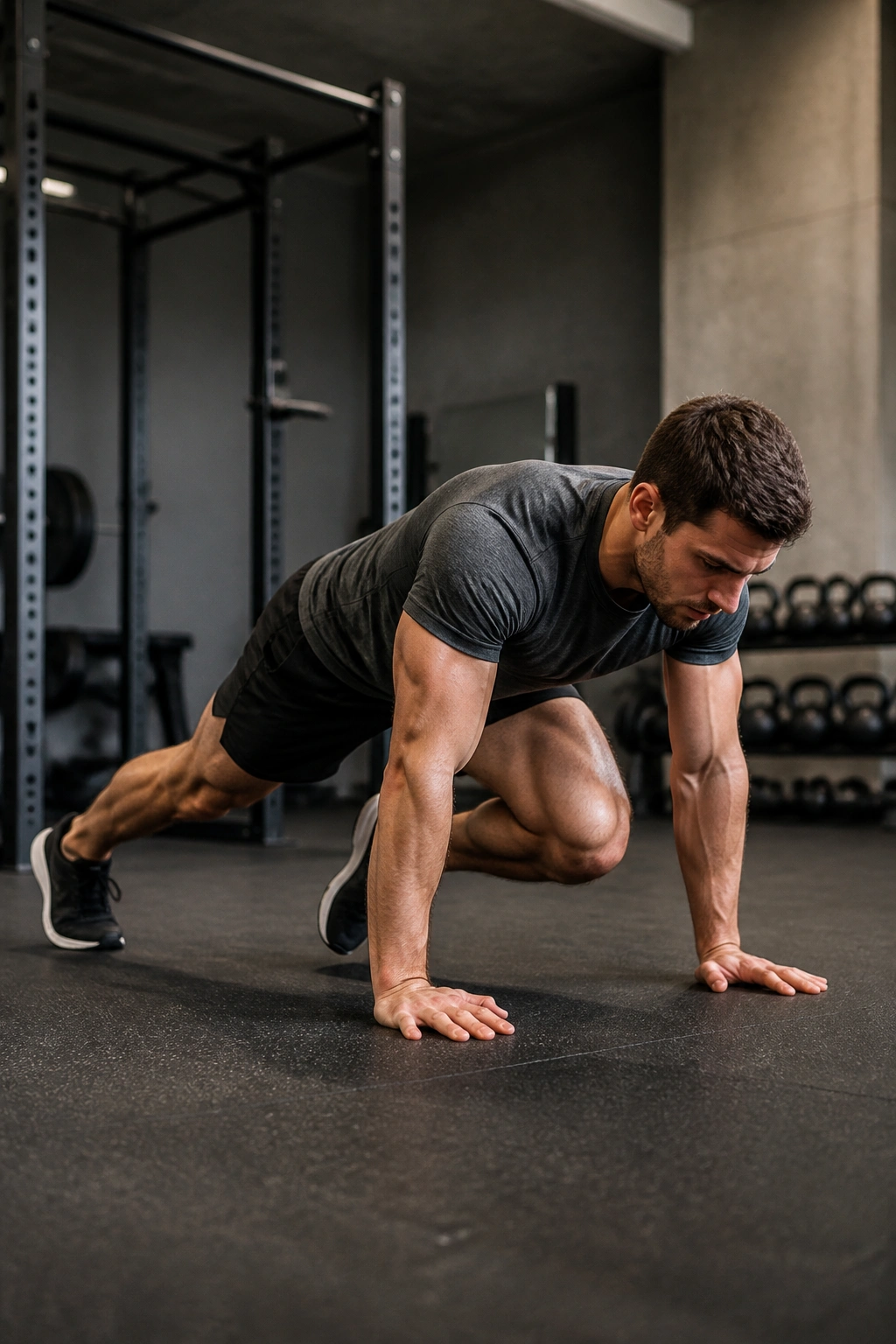
Mountain climbers alone are fine. Push-ups alone are fine. Together, they create a fast bodyweight sequence that asks your shoulders, chest, core, and hips to keep working even while your breathing gets louder. That’s useful.
Try 4 mountain climbers per side, 1 push-up, then 6 climbers per side, 2 push-ups and keep building for 8 to 12 minutes. You can step the climbers slowly if jumping your knees forward feels sloppy. The goal is tension, not speed for its own sake.
What makes this workout stick is the transition. Moving from a high plank into a push-up and back into leg drive means your body never fully resets. That’s close to how real movement feels when you’re carrying something, climbing stairs, or getting up and down from the floor.
If your hips sag during climbers, shorten the interval and clean up the plank. The core has to hold first.
17. Hill Sprints or Sled Push Repeats
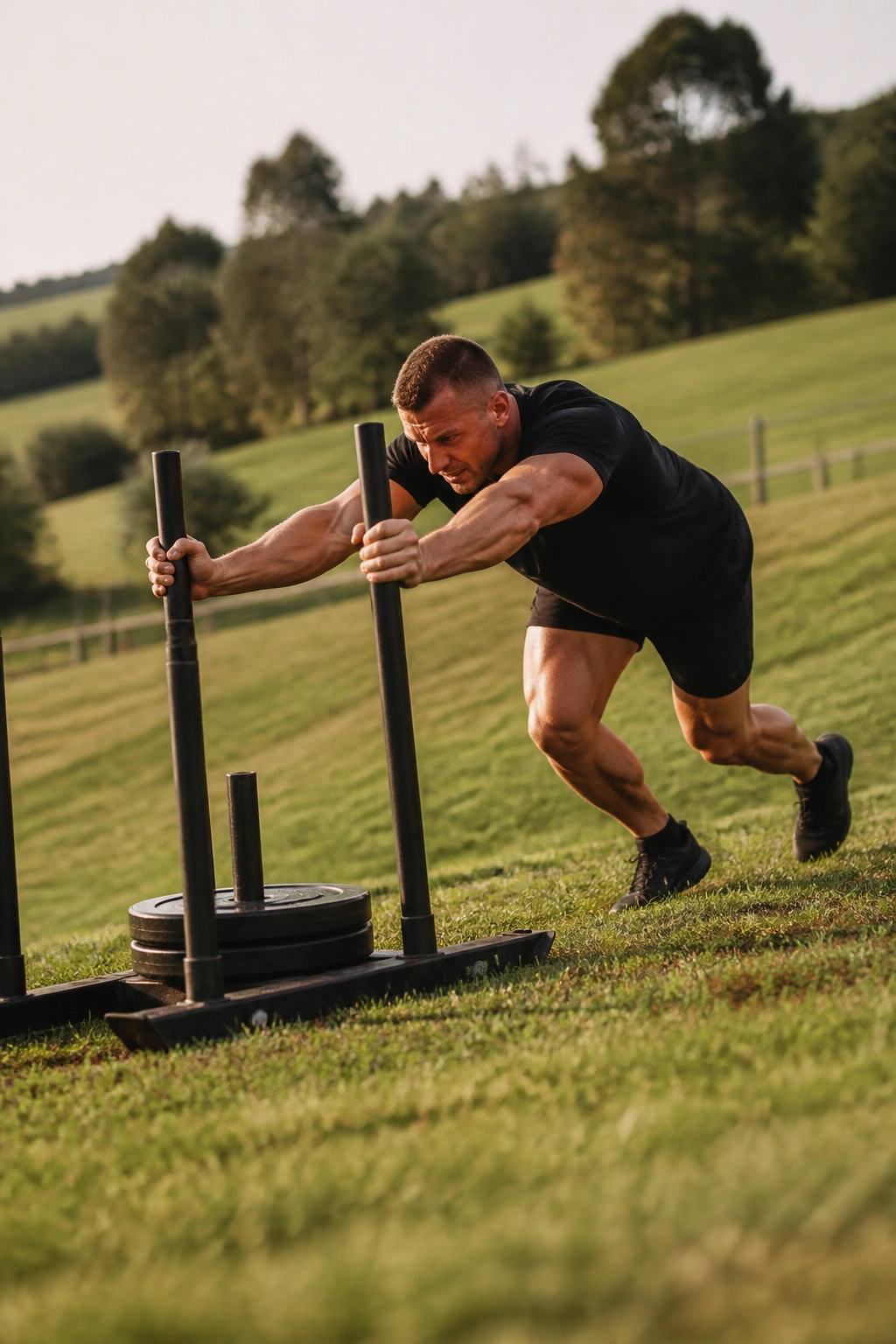
A hard push uphill is one of the cleanest ways to train total-body power without turning your joints into a science project. If you have a sled, great. If you don’t, a hill and a backpack will get you surprisingly far. The legs drive, the arms pump, the trunk braces, and your heart rate climbs fast.
Use 6 to 10 efforts of 10 to 20 seconds, then walk back down or rest 60 to 90 seconds. For sled work, keep the torso slightly angled and push through the whole foot. For hills, stay short and quick on the steps instead of overstriding. You want force, not chaos.
This isn’t a max-effort ego test. It’s a power drill. That distinction matters because your form should stay sharp even when the breathing gets ugly.
A hill is simpler than most gym equipment, and sometimes that is the best part.
18. Bodyweight Strength Density Circuit
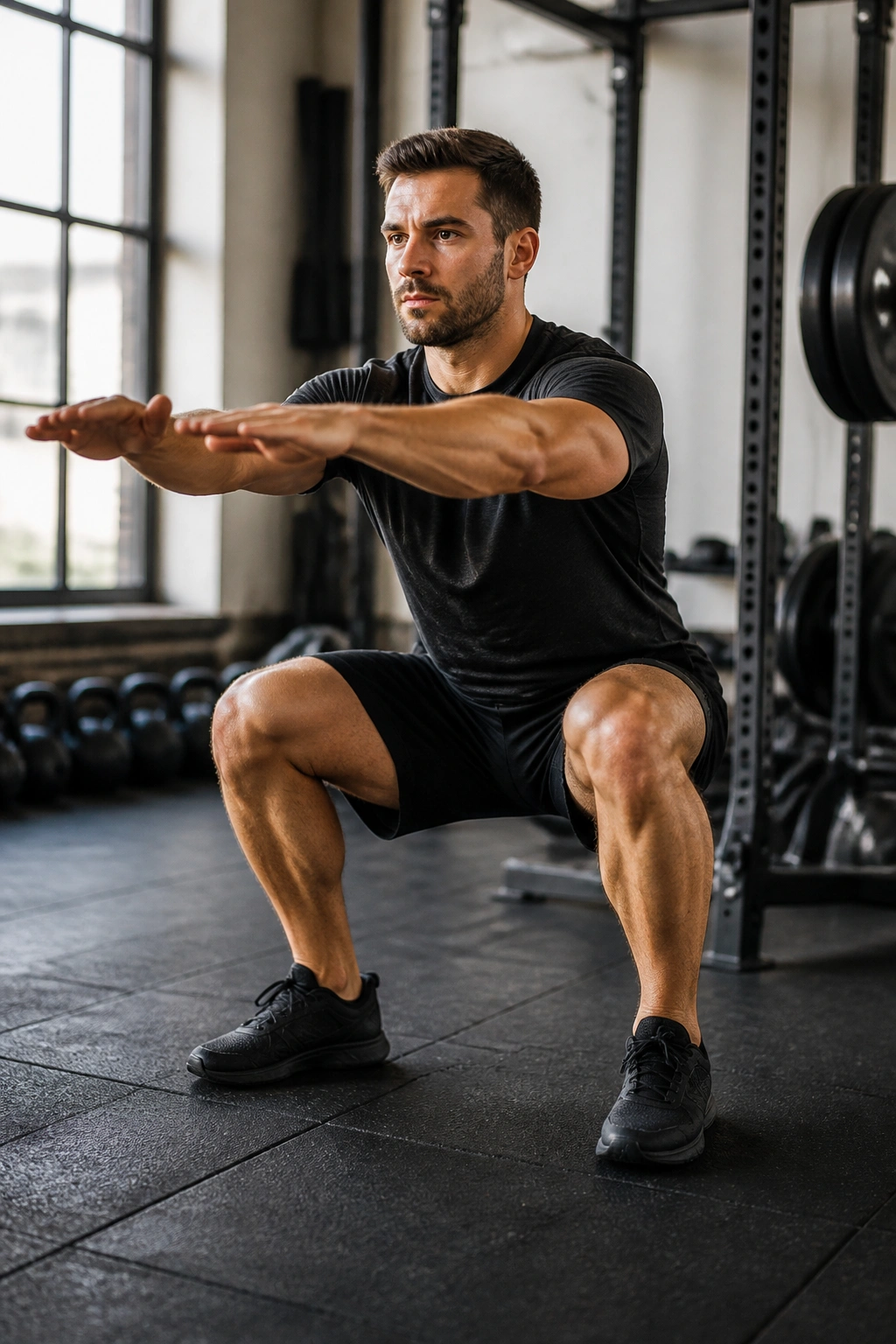
Bodyweight training gets dismissed because people assume it can’t be hard enough. That’s a lazy take. If you string the right moves together with honest pacing, bodyweight circuits can build real everyday strength, especially when your goal is movement quality instead of chasing numbers.
Use a 15-minute clock and cycle through 10 air squats, 8 push-ups, 10 reverse lunges per side, 20 seconds of hollow hold, and 10 glute bridges. Move at a pace that keeps form intact. If the push-ups break down, elevate your hands. If the hollow hold becomes a lower-back arch, shorten the hold and brace harder.
A Simple Way to Progress
Add one round before you add drama. That’s the part people skip. More total clean reps usually beats turning every set into a grind. You can also slow the lowering phase to three seconds, which makes bodyweight work feel much heavier without changing the exercise.
This kind of workout is useful on travel days, busy days, and low-energy days when you still want to train without wrecking yourself.
Final Thoughts
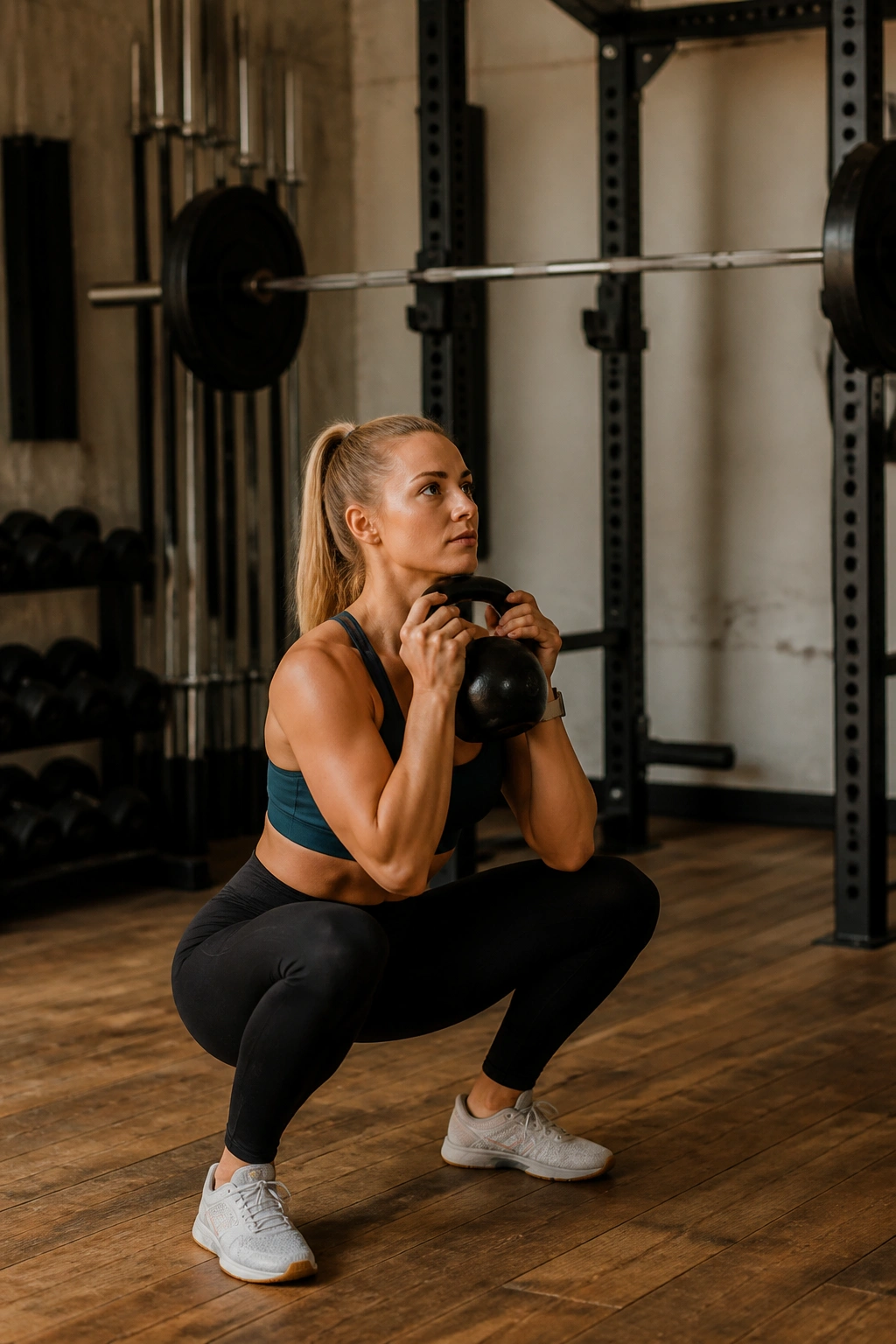
Functional full body workouts work best when they feel a little ordinary. Squat. Hinge. Push. Pull. Carry. Repeat with purpose. That’s the pattern, and it’s hard to beat when your real goal is to move through life with less friction.
Pick three or four of these workouts and rotate them through the week instead of trying to do all 18 at once. You’ll get farther by staying consistent, keeping the loads honest, and leaving each session with a bit of gas in the tank. That last part matters more than people think.
If a workout makes you stronger in the gym but clumsier in daily life, it missed the mark. The right full-body plan should make stairs easier, boxes feel lighter, and your posture feel less fragile by the end of the day. That’s a better scorecard than any mirror check.
