



Most people do not need a punishment plan. They need rhythm.
A real total body reset usually looks plain on paper: walking, mobility, a few hard-but-not-crazy strength sessions, some cardio that doesn’t leave you bent over a trash can, and one recovery day that actually counts. That is the part people skip, then wonder why their “new me” energy disappears before the calendar gets interesting.
The phrase new you challenges sounds flashy, but the best ones are stubbornly simple. You want work that wakes up your legs, opens your hips, gets your heart rate moving, and leaves you able to come back tomorrow without limping around the kitchen. If your workouts have felt random — three hard days, a missed week, then a panic burst of burpees — your body probably wants structure more than drama.
A total body reset is not about starting over from zero. It is about giving your joints, muscles, and lungs a clear pattern they can trust. Public-health activity guidelines usually land on roughly 150 minutes of moderate movement and at least two strength sessions a week, and that baseline is a lot more practical than most social-media fitness noise.
Start with the easiest lever first. Walking.
1. The 20-Minute Walk Reset

Walking looks too easy until you do it every day and notice your lower back stops grumbling at the sink.
This is the least glamorous challenge on the list, and I mean that as a compliment. A brisk 20-minute walk — ideally five to seven days a week — lowers the barrier so much that you can build momentum before your brain starts negotiating. Keep it at a pace where you can talk in short sentences, but not sing without sounding silly.
How to run it
- Walk for 20 minutes straight, or split it into 2 x 10 minutes if your schedule is chopped up.
- Add 3 one-minute push segments where you pick up the pace.
- Keep your shoulders loose and your hands open.
- If you sit a lot, take the walk after meals or after long work blocks.
One detail matters more than people think: your stride should feel smooth, not forced. If you’re stomping, you’re probably going too hard for a reset phase. That’s the whole point here — you’re building a base, not chasing a finish line.
Best use: on days when you want movement without soreness.
2. The 10-Minute Mobility Wake-Up
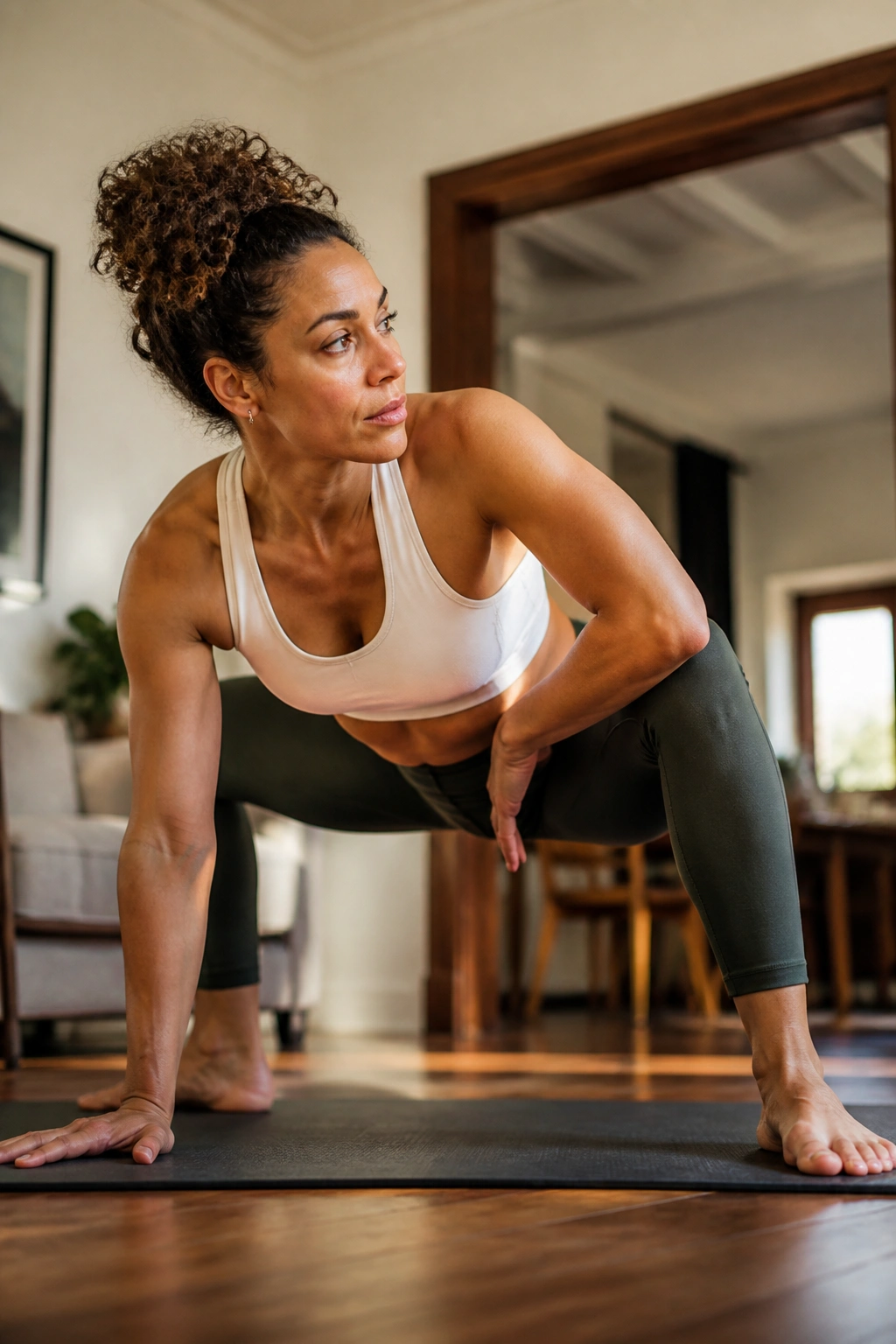
Why start with mobility instead of squats? Because stiff joints make good squats look sloppy, and sloppy reps spread bad habits fast.
A short mobility flow is not fluff. It gets your ankles, hips, thoracic spine, and shoulders ready to do real work without that rusty first-rep feeling. Ten minutes is enough if you stay honest and move through the ranges with control.
A simple 10-minute flow
The Morning Sequence
- 5 neck nods in each direction
- 8 cat-cow reps
- 5 world’s greatest stretches per side
- 10 ankle rocks per ankle
- 30-second deep squat hold with heels down as long as you can keep them there
When to use it
- Before a strength workout
- After waking up
- After a long drive or desk stretch
- On recovery days when you still want to feel put together
Stiff isn’t a moral failure. It just means you’ve been still too long.
If a deep squat feels ugly, hold onto a door frame or the edge of a counter. That tiny support lets your hips relax instead of fighting for balance, and the whole thing becomes useful instead of performative.
3. The 3-Round Bodyweight Circuit

If your first squat feels like it came from a creaky hinge, this is the fix.
A bodyweight circuit is the simplest way to test whether your reset is working. It lights up your legs, chest, core, and lungs in one compact block, and it does not need fancy gear. Three rounds is enough to make the point without turning the session into a punishment.
The circuit
- 8 bodyweight squats
- 6 incline push-ups on a bench, couch, or countertop
- 8 reverse lunges per leg
- 10 glute bridges
- 20-second plank
Rest 60 to 90 seconds between rounds. Keep the rest a little longer if your form starts wobbling. Form beats speed every single time during a reset week.
What to watch for
- Knees track over the middle toes, not collapsing inward.
- Push-ups stay smooth, even if they’re elevated.
- Your plank should feel like a strong brace, not a low-back pinch.
This one works well twice a week. If you finish all three rounds and feel like you could do one more, that is fine. If you need to stop at two rounds the first time through, also fine. Better that than pretending you’re a different person and paying for it tomorrow.
4. The Core Bracing Ladder
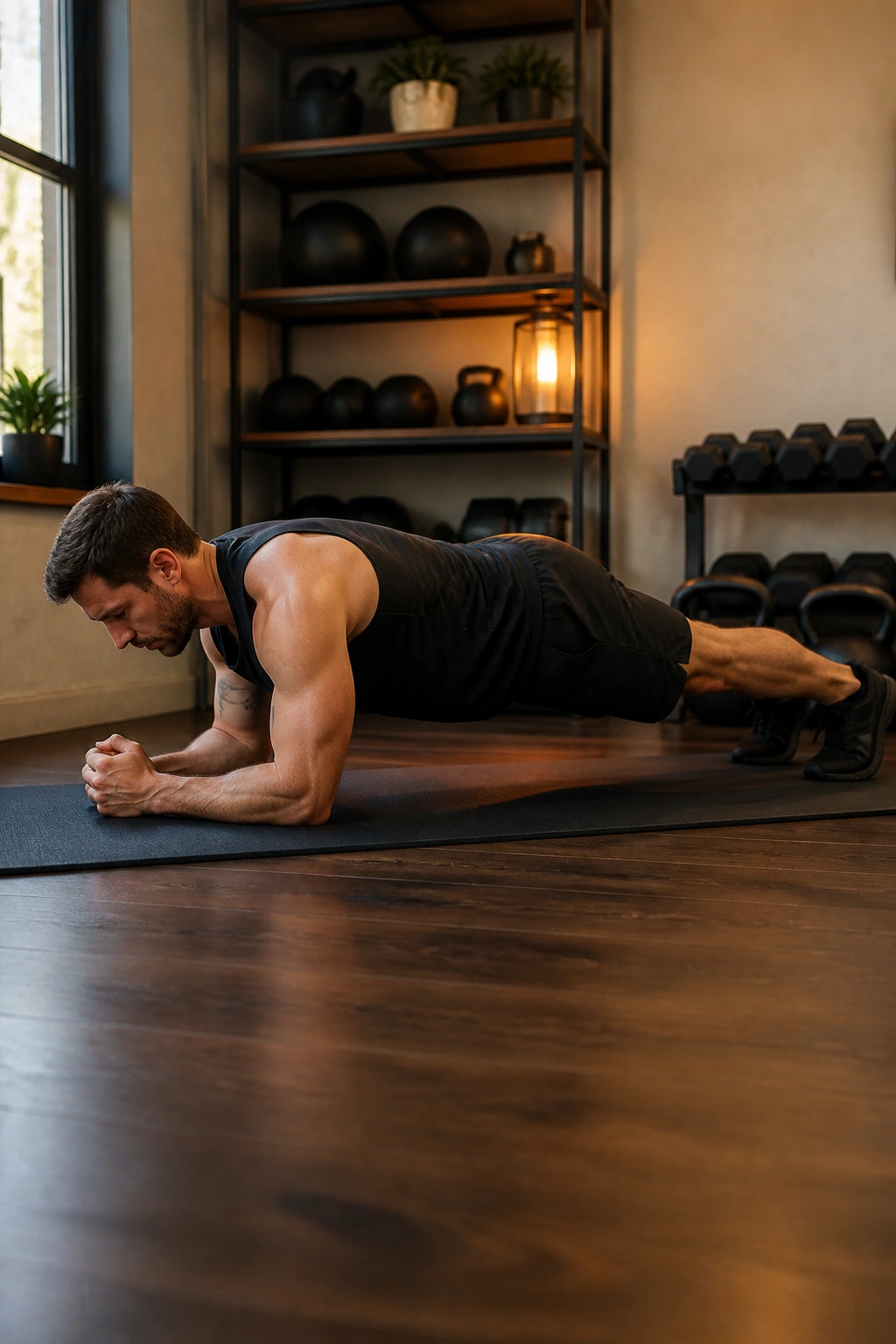
Your core is not a six-pack contest. It is a braking system.
That sounds dramatic, but anyone who has ever sneezed while carrying groceries knows what I mean. A solid core helps you keep ribs and pelvis stacked, which makes nearly every other movement cleaner. Endless crunches miss the point. Bracing work does not.
Why bracing beats endless sit-ups
The muscles around your middle are supposed to stop unwanted movement. They resist extension, resist twisting, and keep your trunk steady while your arms and legs do the noisy work. That’s why dead bugs and planks show up so often in smart workout plans. They train control.
The ladder
- Dead bug — 8 reps per side
- Front plank — 20 to 30 seconds
- Side plank — 15 to 20 seconds per side
- Bird dog — 6 slow reps per side
Run the sequence for 2 to 3 rounds, resting about 30 seconds between exercises. On the dead bug, exhale as the opposite arm and leg extend. On the plank, squeeze your glutes lightly so your lower back doesn’t take over.
A small tip: stop the set when your ribs flare. That is usually the first sign the core has stopped working and your back has stepped in to help. Not ideal.
5. The Zone 2 Base Builder

Zone 2 is the workout people skip because it feels too easy. That is exactly why it belongs in a reset.
This is the steadier cardio that builds a better engine without trashing your legs. Think 30 to 45 minutes on a bike, incline walk, easy jog, or rower at a pace where you can still speak in full sentences. You should feel warm and working, not wrecked.
That steadiness does something useful. It teaches your body to use oxygen better, makes recovery between harder sessions feel less dramatic, and keeps your week from turning into one long red line. I like it for people who keep “going hard” until they vanish from the gym for six days.
A practical target: stay around RPE 5 to 6 out of 10. If you need to grab a rail or gasp between phrases, you’ve gone too hard for zone 2. If you’re tempted to check whether you’re working at all, you’re probably close enough.
Use this challenge two times a week. Do it on a separate day from your hardest strength work, or after lifting if your schedule is tight. The goal is to feel better when you finish than when you started.
6. The Lower-Body Strength Ladder

A random leg day can leave you sore for three days and confused for five. A lower-body ladder keeps the work focused.
This challenge hits the big patterns that matter most: squat, hinge, split stance, and calf work. You don’t need 14 variations of the same exercise. You need a few clean ones with enough load to wake up your legs and enough control to keep your back out of it.
The ladder
- 10 goblet squats
- 8 Romanian deadlifts
- 6 split squats per leg
- 12 calf raises
Do 3 to 4 rounds with 60 to 90 seconds between rounds. Use a dumbbell or kettlebell that makes the last two reps of each set feel slow, but not ugly. If your torso starts pitching forward on the squat, the weight is too much or your heels are shifting.
How to load it
- Start light enough to move crisply.
- Add weight only when every rep looks the same.
- Keep the hinge in the hamstrings, not the lower back.
I like this challenge because it does not pretend the lower body is one muscle. It never is. Quads, glutes, hamstrings, calves, ankles — they all show up and complain in their own way. Better to train them on purpose.
7. The Upper-Body Push-Pull Day

Do you really need a push day and a pull day if you’re trying to reset? Yes, especially if your shoulders live in front of your ears.
A lot of people overdo pressing and underdo pulling. The result is familiar: rounded shoulders, cranky neck, and the feeling that your upper back is always doing rescue work. This challenge balances the front and back of the body so the reset doesn’t turn into another round of desk posture fitness.
Push side
- 8 incline push-ups
- 8 dumbbell floor presses
- 8 overhead presses
Pull side
- 10 one-arm rows per side
- 12 band pull-aparts
- 20-second suitcase hold per side
Run 3 rounds. If your shoulders are visibly rolled forward, keep the pull side a little heavier than the push side. A lot of office bodies need that. A lot.
What to remember
Pulling should feel like the shoulder blade slides back and down, not like a shrug in disguise. If your neck gets tight, lower the weight and slow down. The rep speed matters less than the line of the movement.
This is one of those challenges that pays off in daily life fast. Carrying bags, opening doors, picking something up off the floor — all of it feels a little cleaner when your upper body is better balanced.
8. The Glute Bridge and Hinge Reset
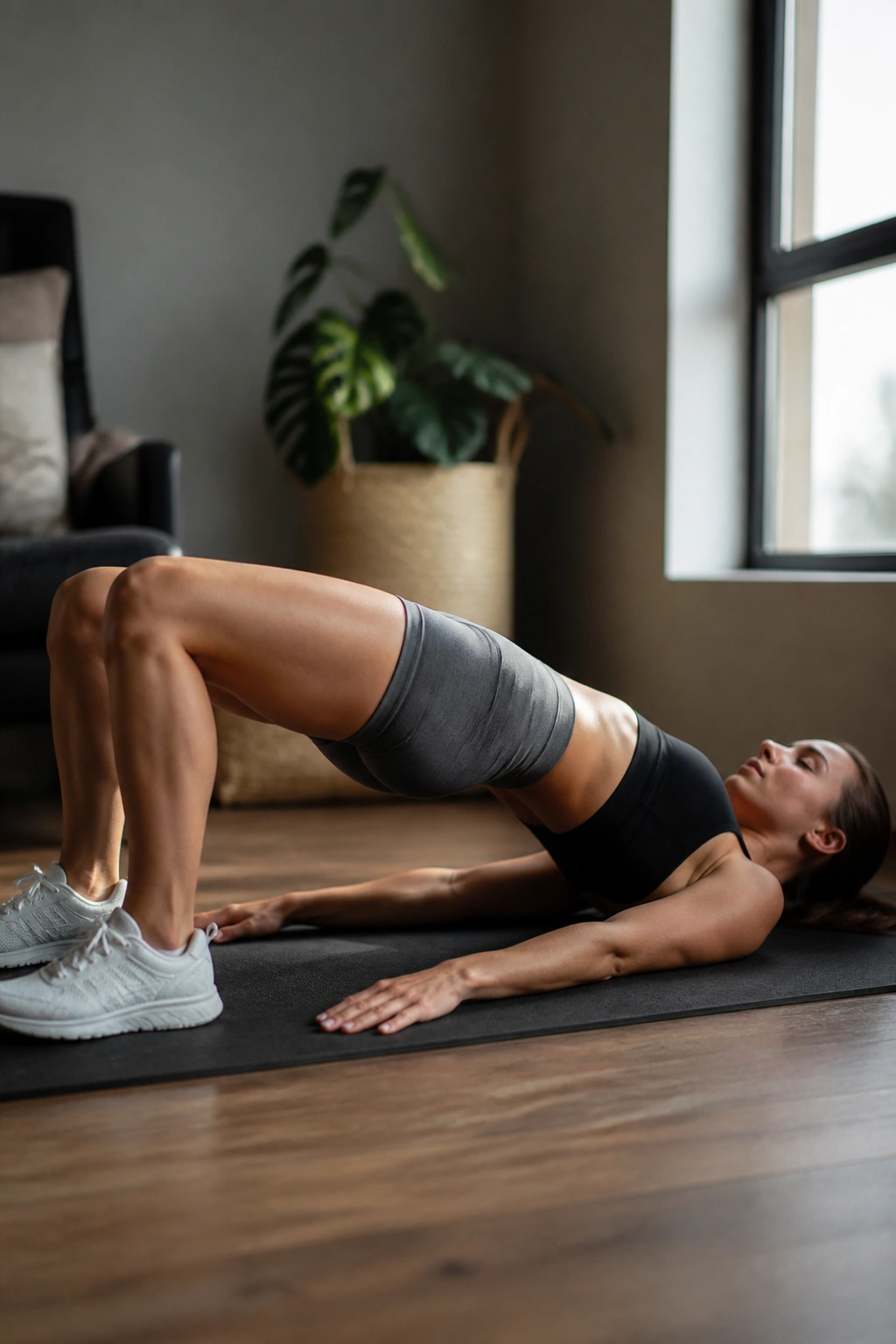
I like glute work for resets because you feel the payoff in walking, stairs, and getting out of chairs by day three.
Glutes are easy to ignore until they stop helping. Then the lower back starts doing extra work, the hips feel sticky, and every hinge looks more complicated than it should. This challenge wakes up the back side of the body without needing a barbell or a long setup.
The sequence
- 15 glute bridges
- 10 hip hinge drills with a dowel, broom handle, or hands on hips
- 8 single-leg Romanian deadlift reaches per side
- 20 frog pumps
Do 2 to 3 rounds. At the top of the bridge, squeeze for 1 second and keep your ribs down. On the hinge drill, push the hips back until your hamstrings feel loaded, then stand tall without over-arching the back.
The frog pumps are the sneaky part. They burn fast, and they should. If they feel easy forever, you’re not moving far enough or your feet are too close in.
A small warning: do not turn this into a lower-back exercise. If you feel it in your spine instead of your hips, shorten the range and slow the tempo. The right version feels like work in the butt and hamstrings, not a weird pinch above the belt line.
9. The Single-Leg Balance Challenge
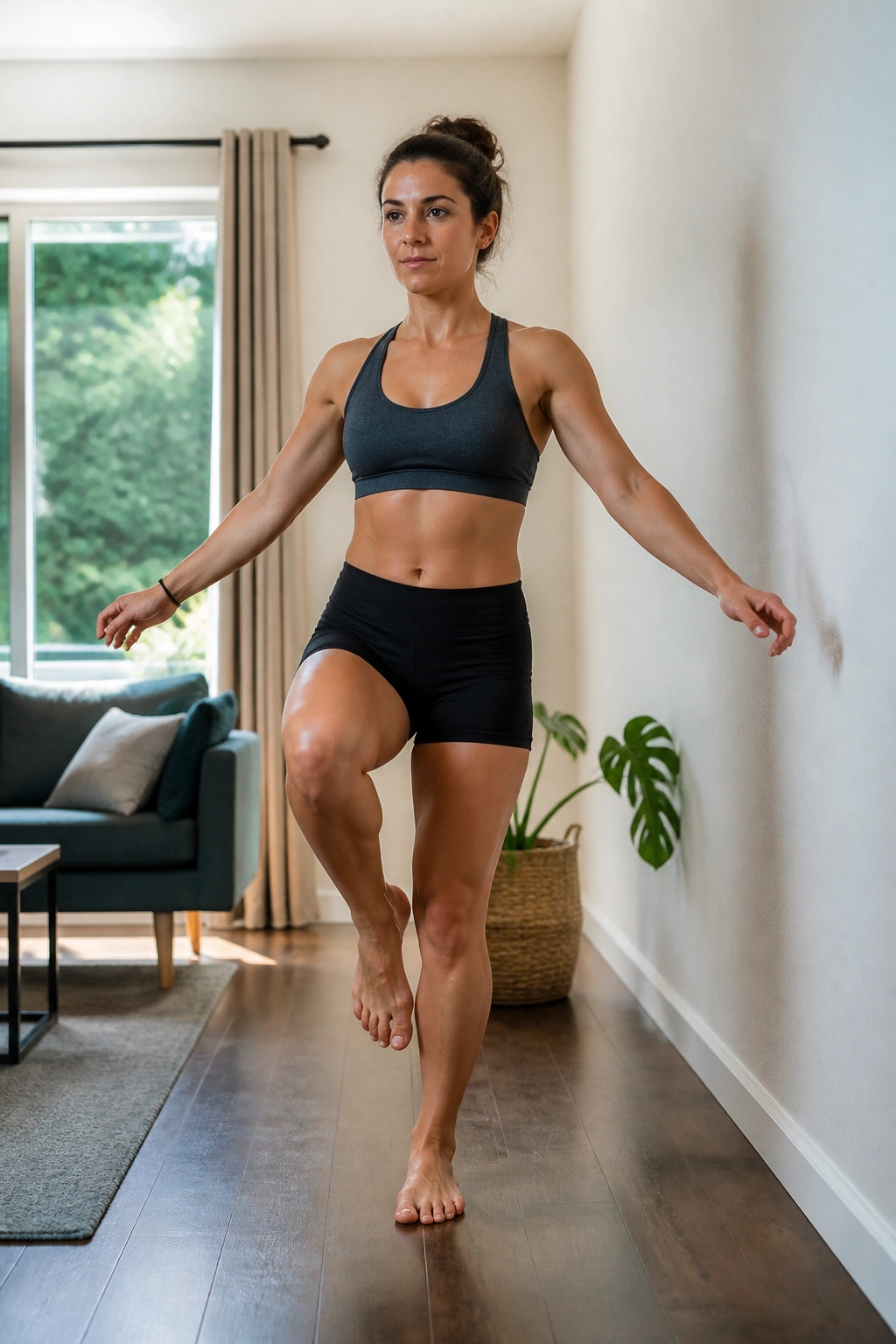
Single-leg training is where balance, ankle strength, and knee control stop being abstract.
Nobody walks on both legs at once. That sounds obvious, but gym plans still forget it. This challenge fixes the mismatch. It builds the little stabilizers around your ankle and knee, and it also shows you where one side cheats harder than the other. That feedback is useful. Sometimes annoying, but useful.
The challenge
Start with 30 seconds of single-leg standing on each side. Keep the free foot lightly off the ground and your torso tall.
Then move into:
- 8 step-downs per leg
- 8 single-leg deadlift reaches per side
- 20 calf raises per side
Do 2 rounds. Use a wall or railing lightly if balance is the limiting factor. That is not cheating. That is smart scaling.
The goal is control, not drama. Your standing leg should feel steady, your knee should track cleanly, and your foot should stay planted instead of rolling inward. If you wobble a lot on the first round, repeat it later in the week. That wobble usually calms down fast when you give it practice instead of brute force.
This is one of the more underused parts of a total body reset, and I think people miss it because it looks too small. It is not small. It just does its job quietly.
10. The Low-Impact Interval Sweat Test

Not every sweat session has to beat you up.
That point saves more people than it gets credit for. Low-impact intervals can push your heart rate, build work capacity, and leave your joints happier than a jump-heavy class ever could. The format is simple: 30 seconds hard, 30 seconds easy, repeated for 10 to 12 rounds.
Choose one mode
- Fast march with strong arm drive
- Shadow boxing
- Step-ups on a low bench
- Stationary bike
- Rower
- Incline treadmill walk
The “hard” part should feel sharp but controlled. Think RPE 7 out of 10, not a full sprint that makes your form fall apart. On the easy minute, bring the breathing back down and keep moving.
I like this challenge when someone wants a reset but hates feeling smashed afterward. It gives you the sweat and the rhythm without turning the next day into a complaint session. If you’re newer to training, it also builds confidence because you can feel the work without getting launched out of your own body.
Best rule: if impact hurts your knees, swap it out. There is always another way to make the heart work.
11. The Posture and Back Strength Fix

Why does your upper back round the minute you sit for two hours?
Because posture is not a reminder. It is a strength problem. This challenge attacks the places that usually get lazy: upper back, rear shoulders, and the muscles that keep your chest from collapsing forward. Stretching alone usually does not fix that. It feels nice, but nice is not the same as stronger.
The wall-based reset
- 8 wall slides
- 8 chin tucks
- 10 scapular push-ups
The back-side work
- 12 band rows
- 6 prone Y-T-W raises in each position
- 30-second farmer carry
Do 2 to 3 rounds with about 45 seconds between exercises. Keep the ribs down during wall slides and move slowly enough that you can feel the shoulder blades glide. On the farmer carry, walk with tall posture and quiet feet.
What to avoid
- Shrugging the shoulders on every row
- Leaning back during the chin tuck
- Cranking the neck to “fix” the posture
There is nothing glamorous about this session. It just works. And if your desk life is part of the problem, this is the kind of boring work that pays rent.
12. The Recovery Day That Counts

Recovery is a workout if you stop pretending otherwise.
This is the challenge people try to skip because it looks too easy to matter. It matters a lot. A reset that has no recovery built into it usually turns into one more reason to feel tired, tight, and weirdly stubborn about taking a rest. That is not fitness. That is friction.
A recovery day template
- 20-minute easy walk
- 10 minutes foam rolling for calves, glutes, upper back, or quads
- 5 minutes slow breathing through the nose
- 5 minutes gentle stretching
Keep the breathing slow enough that your shoulders stop climbing with each inhale. Foam rolling should feel like pressure, not pain. If a spot feels sharp, move on and come back later.
I’d rather see someone do this once a week than bury themselves under another half-baked circuit. Recovery days keep your next hard session useful. They also make a reset feel sustainable instead of like a short-lived boot camp fantasy.
If you are sore, choose movement that lowers tension. If you are mentally fried, keep the walk outside. Simple. Effective. A little boring, which is often the point.
13. The Power Primer

A few fast reps can wake up your nervous system in a way slow work never will.
That is the whole idea here. Power training is not about doing more. It is about moving with intent, crispness, and full rest between sets so each rep stays sharp. Use this challenge if you want your reset to feel athletic instead of merely “healthy.”
Pick 3 movements
- 3 box jumps or low step jumps
- 5 medicine ball slams
- 5 fast push-ups on a bench or the floor
- 5 kettlebell deadlift to high pulls if you know the pattern well
Do 3 to 5 sets and rest 60 to 90 seconds between sets. The reps should look the same from the first one to the last one. If they slow down or get noisy, stop the set. Power work gets dumb fast when fatigue takes over.
A small caution: land softly. Always. Knees slightly bent, chest stacked, feet quiet. If jumps bother your knees, keep the movement low and snappy — squat-to-toe raise, quick step-ups, or medicine ball slams still get the job done.
I love this session as a reset tool because it reminds people that training can feel springy. Not every workout needs to leave you flattened.
14. The Weekend Full-Body Benchmark

A benchmark is different from a max-out test. You are checking where your engine sits, not trying to win the day.
This is the challenge I’d save for the weekend, when you have a little room to breathe. It samples the whole body without turning into a circus. You’ll get legs, push, pull, core, and a bit of cardio in one block, and the real value is repeatability. Do it again in a few weeks and see what changed.
The benchmark circuit
- 10 goblet squats
- 10 push-ups or incline push-ups
- 12 one-arm rows per side
- 10 reverse lunges per leg
- 30-second plank
- 200-meter brisk walk or 90 seconds on a bike
Run 4 rounds. Rest 90 seconds between rounds. Keep the pace steady enough that you can finish with decent form, not a heroic collapse. If you need to drop the push-ups to a bench or cut the rows down a bit, do it and keep moving.
Track two things: your total time and how the work feels in round four. If the last round is cleaner than the first, your reset is doing its job. That is a satisfying feeling, and not a fake one.
15. The Maintenance Week

A reset only matters if you can repeat it.
That is why I like a maintenance week as the final challenge. It turns the whole plan from a one-off burst into something your body can actually live with. Pick the pieces that worked, keep the ones you didn’t hate, and stitch them into a week that feels firm without being stiff.
A simple maintenance layout
- Monday: 20-minute walk + 10-minute mobility
- Tuesday: lower-body strength ladder
- Wednesday: zone 2 cardio, 30 to 40 minutes
- Thursday: upper-body push-pull day + posture work
- Friday: recovery day that counts
- Saturday: bodyweight circuit or benchmark circuit
- Sunday: easy walk and light stretching
That schedule is only a template. Some people will need more recovery. Others will want one extra cardio day and fewer strength sessions. Fine. The point is to keep the pattern clear: move often, train hard a few times, and recover on purpose.
A lot of fitness plans fail because they act like every week should be a fresh test of character. That gets old. Fast. A better reset teaches you how to train in a way you can still respect three weeks later, when the novelty has worn off and the calendar looks normal again.
That is the part I trust. The quiet version. The one you can repeat.
