



A lot of home weight workouts fail for a dumb reason: the person writing them treats a garage, spare room, or basement like a stripped-down version of a commercial gym. That’s backwards. A home setup can be brutally effective if the session has a clear job, honest loading, and a little creativity about how to squeeze more work out of the same dumbbells, kettlebell, barbell, or band.
The trap is chasing variety for its own sake. Too many exercises. Too many choices. Too much wandering around between sets. Then the workout turns soft, and you finish with a sweat but not much else. Better to pick sessions that fit your space, your equipment, and the time you actually have.
I’ve always liked home lifting when it’s stripped to the bone. Clean reps. Tight rest periods. Movements that expose weak spots fast. Some of the best sessions below are short and mean. Others are slower, heavier, and a little old-school. All of them work because they respect the one thing a home gym gives you that a crowded facility rarely does: control.
1. Full-Body Dumbbell Complex for Home Weight Workouts
A dumbbell complex is the fastest way to make a modest setup feel serious. You pick one pair of weights and run through several lifts without putting them down. By the third movement, your grip is talking. By the fifth, your lungs are, too. That’s the point.
How to run it
Use 4 rounds of this sequence with the same pair of dumbbells:
- 6 Romanian deadlifts
- 6 bent-over rows
- 6 front squats
- 6 push presses
- 6 reverse lunges per leg
Rest 90 seconds after each round. Pick a weight you could usually handle for about 10 clean reps on the first movement. If you start with something too heavy, the later exercises get ugly fast.
The beauty of a complex is that it punishes sloppy setup. If the hinge is loose or the squat is rushed, you feel it immediately. If you like a workout that leaves no room for drifting, this is a good one. No fluff. No wandering around. Just work.
Best use: short days, medium weights, and the times when you want the whole body involved without turning the session into a circus.
2. Push-Pull Supersets for a Short Upper-Body Day
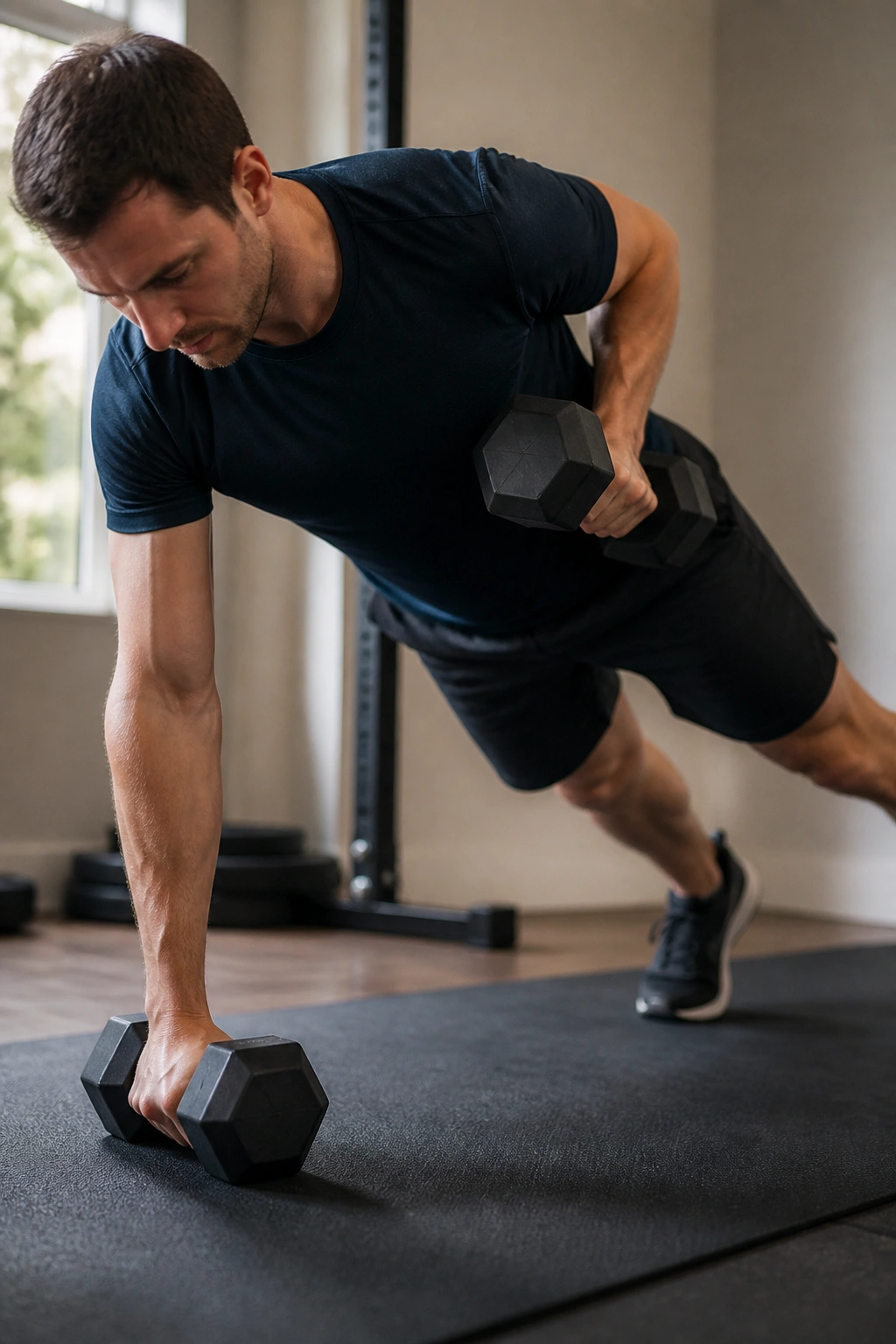
Can you build a real upper-body day with two dumbbells and a little floor space? Absolutely. Pairing a push with a pull keeps the session moving and stops your shoulders from getting cranky from too much pressing in a row.
Run 4 supersets of these pairs:
- Dumbbell floor press for 8 to 10 reps
- One-arm dumbbell row for 10 to 12 reps per side
Then:
- Standing dumbbell overhead press for 6 to 8 reps
- Rear-delt fly for 12 to 15 reps
Finish with:
- Hammer curls for 10 to 12 reps
- Lying triceps extensions for 10 to 12 reps
Rest 45 to 60 seconds between supersets. Keep the rowing strict. If your torso is swinging like a pendulum, the weight is too heavy or the rep count is too high.
The smart part here is the balance. Your pressing gets work, your upper back gets work, and your elbows usually feel better than they do after a pure arm day. That matters at home, where people often press too much and row too little.
3. Goblet Squat Ladders That Make Light Weight Feel Heavy
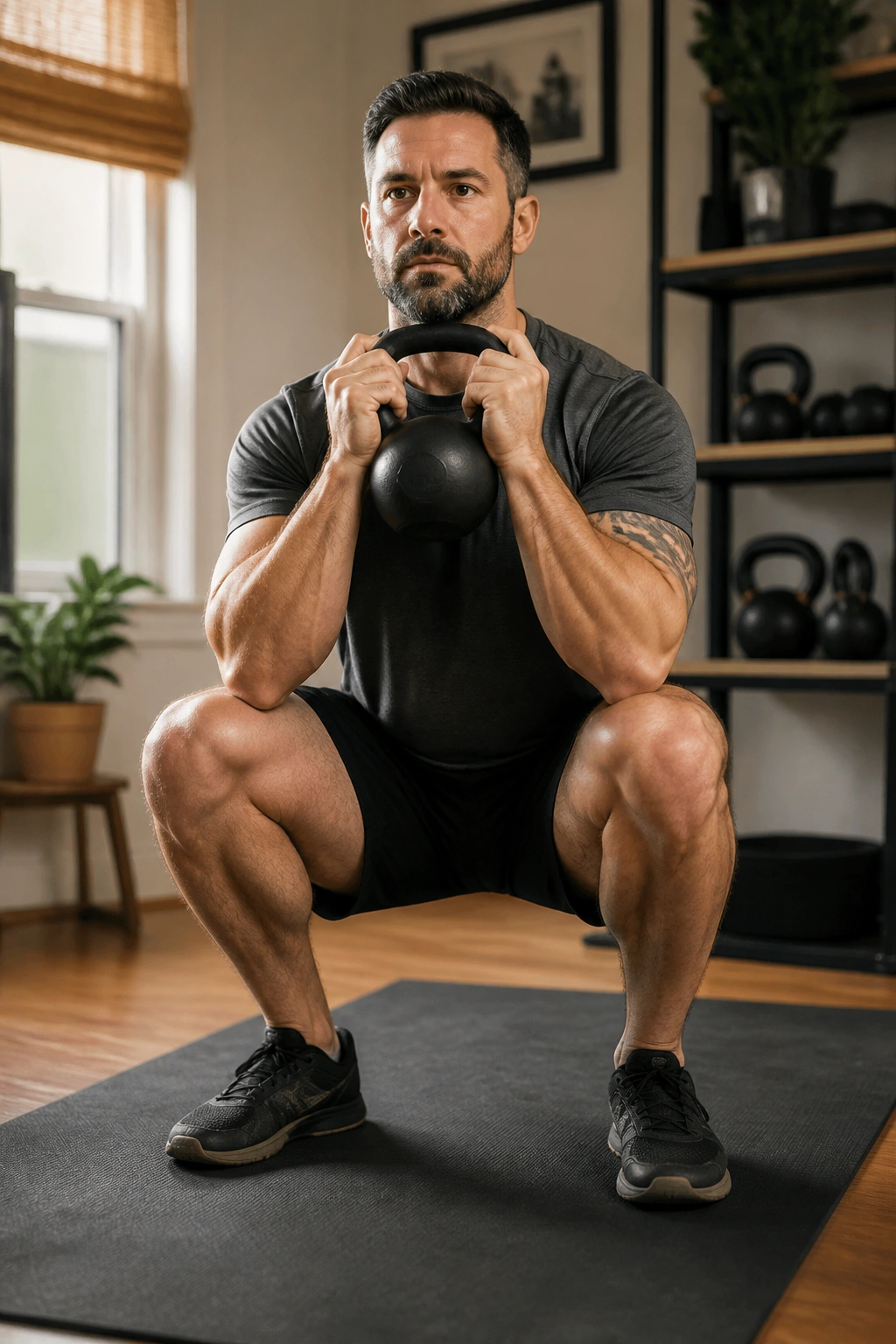
If your quads stop working before your lungs do, the goblet squat ladder will tell the truth fast. It’s simple, and that’s what makes it useful. One kettlebell or dumbbell. One squat pattern. A ladder that keeps climbing while your legs complain.
Why it works
Use a 2-4-6-8-10-8-6-4-2 ladder. Rest 20 to 30 seconds between sets. Hold the weight tight to your chest and keep your elbows pointed down, not flared out like a chicken wing. The first few sets feel easy. Then the reps start stacking up and your brace gets real.
This is a good choice when your heaviest dumbbells are not heavy enough for a low-rep squat day. The ladder solves that problem by making fatigue do some of the work. It also teaches you to keep your torso honest, which is harder than it sounds when you’re breathing hard.
Watch for: heels lifting, chest folding, and cutting the depth short. If that happens, slow the descent and shorten the rest only after the form stays clean.
4. Romanian Deadlift and Row Pairings for the Back Side
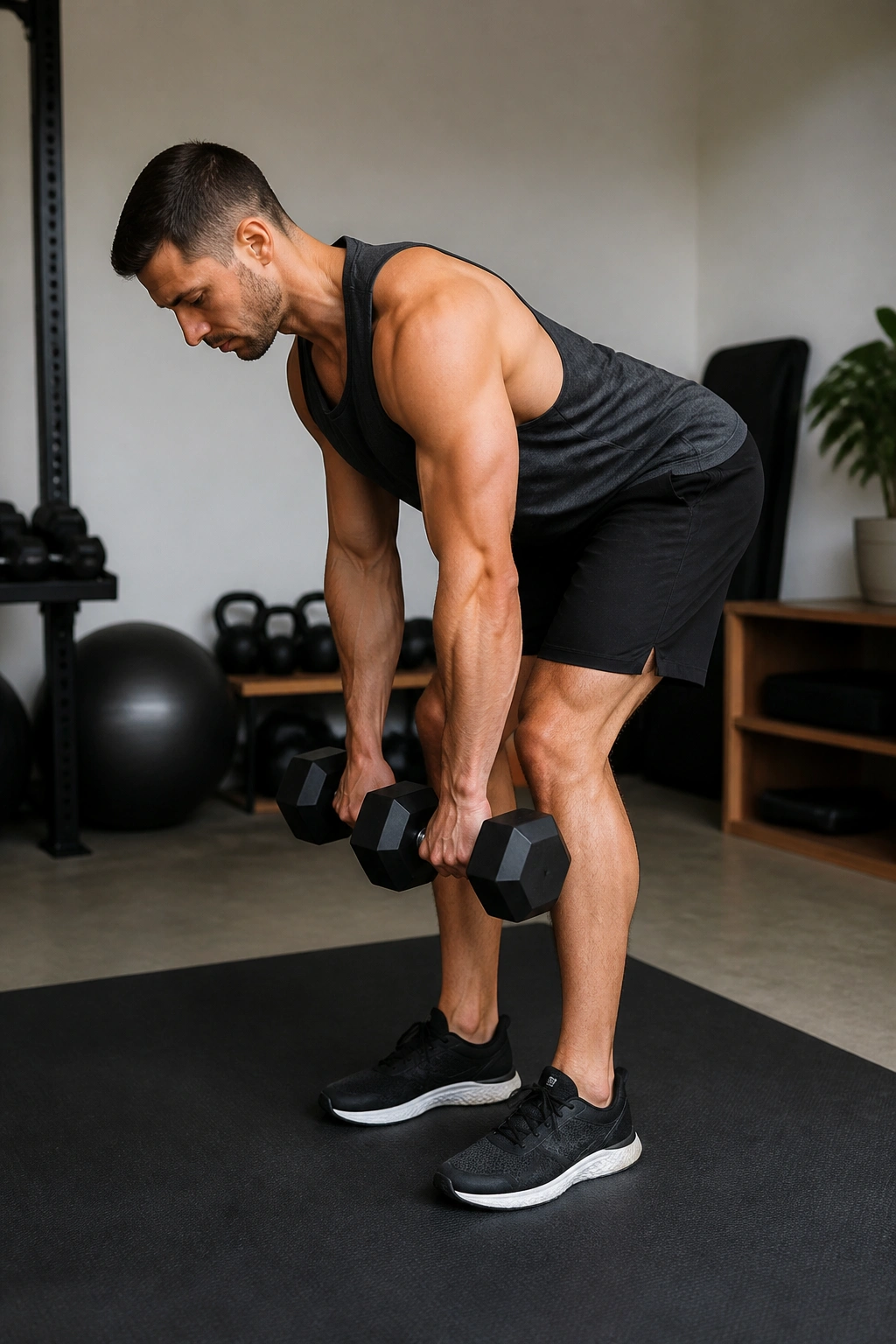
A row workout can be a lower-body workout, too, when the hinge is the main event. That’s the nice thing about pairing a Romanian deadlift with a bent-over row: both lifts ask the posterior chain to stay braced while the arms do their work.
Run 4 rounds of:
- Romanian deadlift for 8 reps
- Bent-over row for 10 reps
Rest 75 to 90 seconds after the pair. Keep your shins nearly vertical on the deadlift. Push the hips back until the hamstrings stretch, then stand up by driving the floor away. On the row, keep the chest proud and the neck long. Don’t yank the dumbbells with the shoulders.
This one is sneaky. The back side gets smoked without the workout feeling flashy. That makes it useful for home lifters who need more hamstrings, more lats, and fewer exercises that feel like decoration. If your lower back starts doing too much of the work, lighten the load and stop the descent a little higher. The hamstrings should still be the main complaint.
5. Floor Press and One-Arm Row Sessions
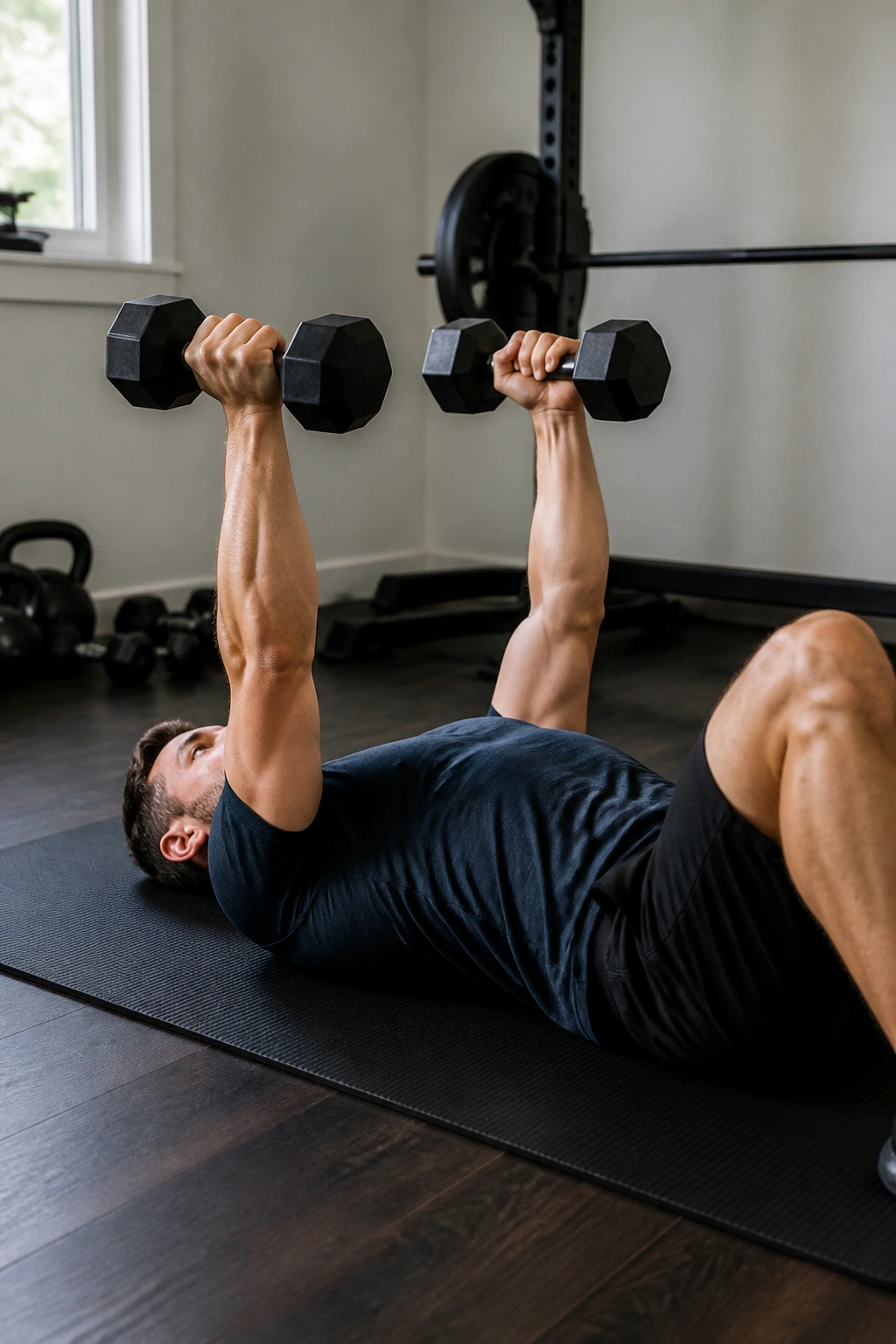
The floor press has a strange feel to it: your upper back stays glued down, the dumbbells hover just above the chest, and the whole set gets tighter instead of looser. I like it because it removes some of the nonsense that shows up on a bench when people bounce, arch too hard, or turn every press into a shoulder exercise.
The setup
Do 5 rounds of:
- Dumbbell floor press for 6 to 8 reps
- One-arm row for 8 to 10 reps per side
Rest 60 to 75 seconds between rounds. If you have a bench, fine. If you do not, the floor version is often better anyway because it protects the shoulders and forces a cleaner press path.
A small but useful rule
Keep the press explosive on the way up and controlled on the way down. Three seconds lowering is enough to expose bad habits without turning the set into a grind.
This workout is a strong fit for people who want a thicker upper body without a lot of setup. It also leaves the room less messy, which is a real quality-of-life benefit when your training space shares space with everything else.
6. Split Squat Burn Sets for Quads and Glutes
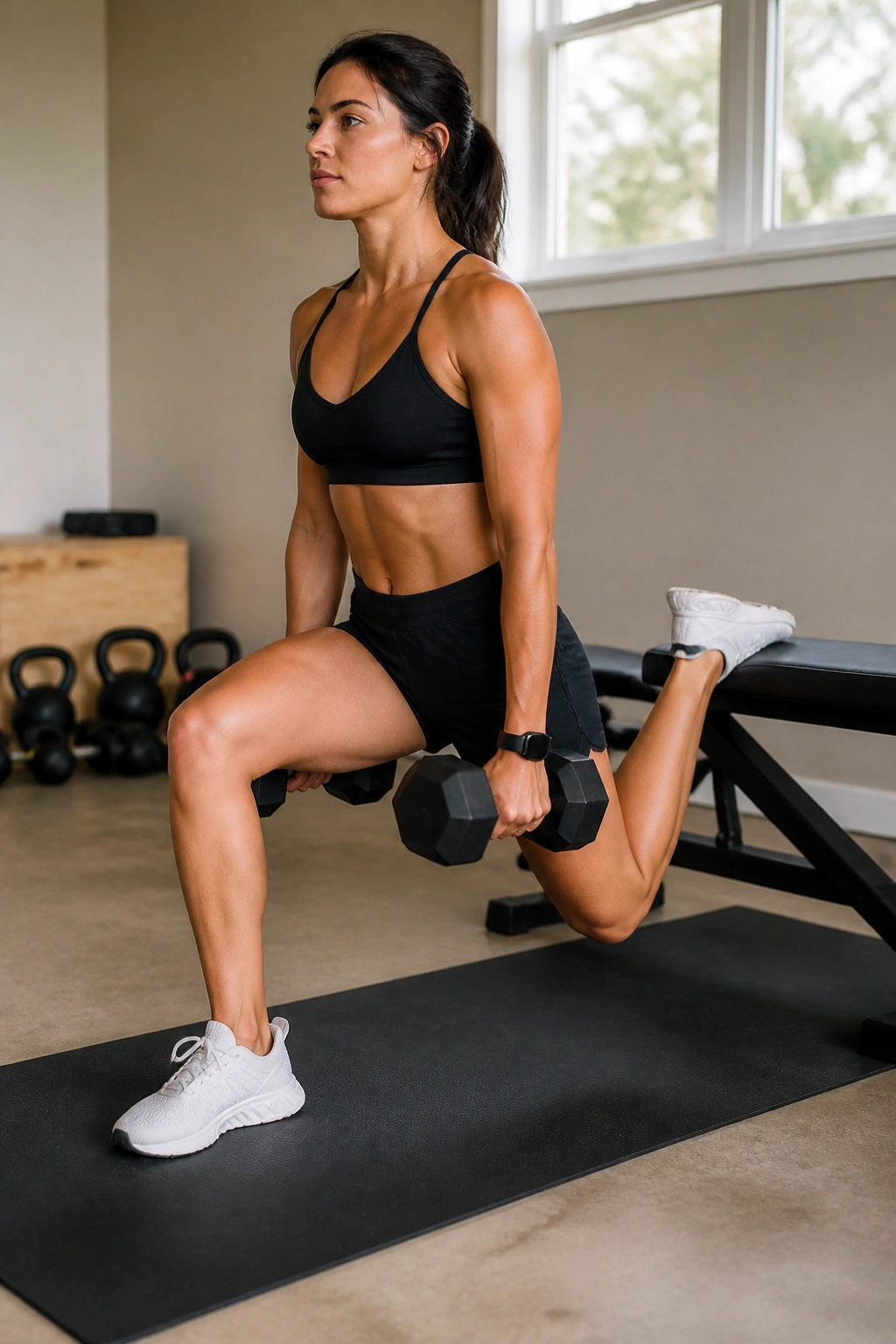
Single-leg work is where home lifters stop fooling themselves. If one leg is weaker, there’s nowhere to hide. A split squat shows it fast, and that can be annoying. It’s also useful.
Start with rear-foot elevated split squats for 3 sets of 10 to 12 reps per leg. Use a pair of dumbbells if you can keep your balance, or hold one dumbbell goblet-style if that feels steadier. Then add 2 sets of 12 walking lunges per leg with lighter weight.
A few cues matter here:
- Keep the front foot flat.
- Let the front knee travel forward a little.
- Stay tall, but allow a slight torso lean.
- Stop the set when the back leg starts helping too much.
The burn comes fast, and that’s normal. Split squats hit the quads in a way regular squats sometimes miss, especially when your home weights cap out. If you want more from the same load, use a 3-second lowering phase. That tiny change is not glamorous, but it works.
7. Overhead Press and Lateral Raise Builder
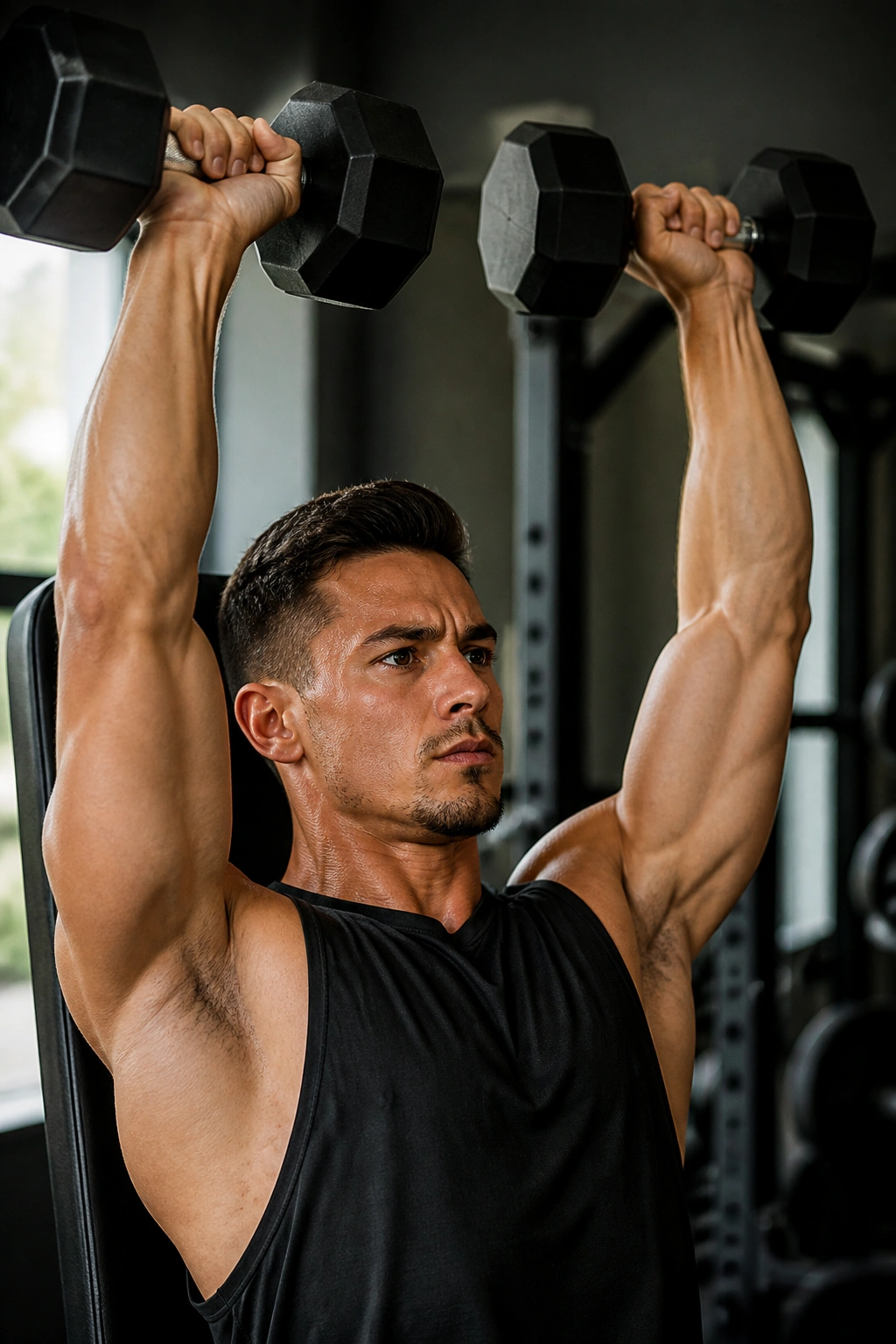
Strict pressing is cleaner than the sloppy shoulder day fluff people often build at home. It tells you whether your shoulders are actually strong or whether your lower back has been carrying the bill.
Run 5 sets of 5 on the standing dumbbell overhead press. Rest 90 seconds. Keep the ribs down and the glutes tight so you’re not turning the lift into a standing incline bench. Then move to 3 sets of 12 to 15 lateral raises and 3 sets of 12 to 15 rear-delt flys.
That combination works because the heavy press builds force, while the raises fill in the smaller shoulder muscles that make the joint feel more stable. It’s not complicated. It’s just honest.
If the press turns into a backbend, lower the weight. If the lateral raises turn into shrugs, use a lighter pair and stop at shoulder height. Shoulders like control more than drama.
8. Kettlebell Swing Intervals That Get Your Heart Rate Up
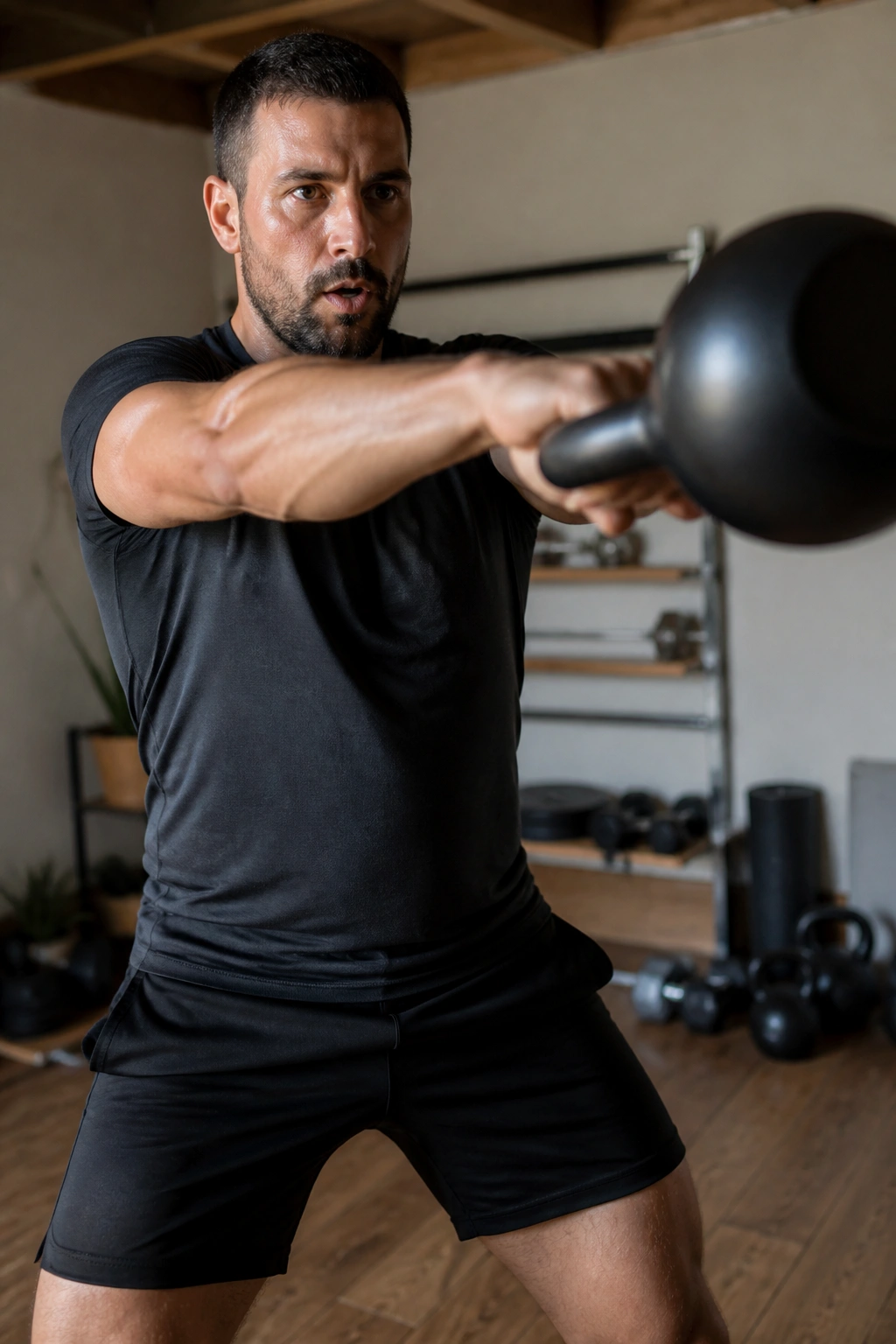
A ten-minute swing block is the kind of thing you swear will be easy until minute seven. Then your grip starts to slip, your breathing gets loud, and the clock suddenly looks rude. Good. That means the work is doing something.
How to use the timer
Set a timer for 10 minutes. Every minute on the minute, perform 12 to 15 kettlebell swings. Rest for the remainder of the minute. If the bell gets heavy in a bad way or your back starts taking over, stop at 10 reps instead.
The swing is a hinge, not a squat. Snap the hips, keep the arms loose, and let the bell float. If you’re muscling it up with your shoulders, the set is done. There’s no prize for grinding through ugly swings.
This is a strong conditioning tool for home lifters because it takes almost no room and almost no setup. It also respects the floor. No jumping. No banging plates around. Just a hard, efficient block that makes the posterior chain and lungs work together.
9. Barbell Strength Days for People Who Lift at Home

Three barbell lifts. That’s enough. People love to pile on extras, but a home barbell day usually works best when it stays plain and heavy. The bar doesn’t need to be complicated to be effective.
Run this structure if you have a rack and enough plates:
- Back squat: 5 sets of 3 reps
- Bench press: 5 sets of 3 reps
- Deadlift: 3 sets of 5 reps
Rest 2 to 3 minutes on the squat and bench, and a little longer if the deadlift gets demanding. If you do not have a rack, swap in front squats, floor press, and Romanian deadlifts.
The nice part about a barbell day is that progression is easy to track. Add 2.5 to 5 pounds when all the reps move cleanly. If the last rep turns into a grind-fest, keep the weight where it is and clean up the execution first.
- Heavy enough to matter.
- Simple enough to repeat.
- Boring in the best possible way.
10. EMOM Upper-Body Density Workouts
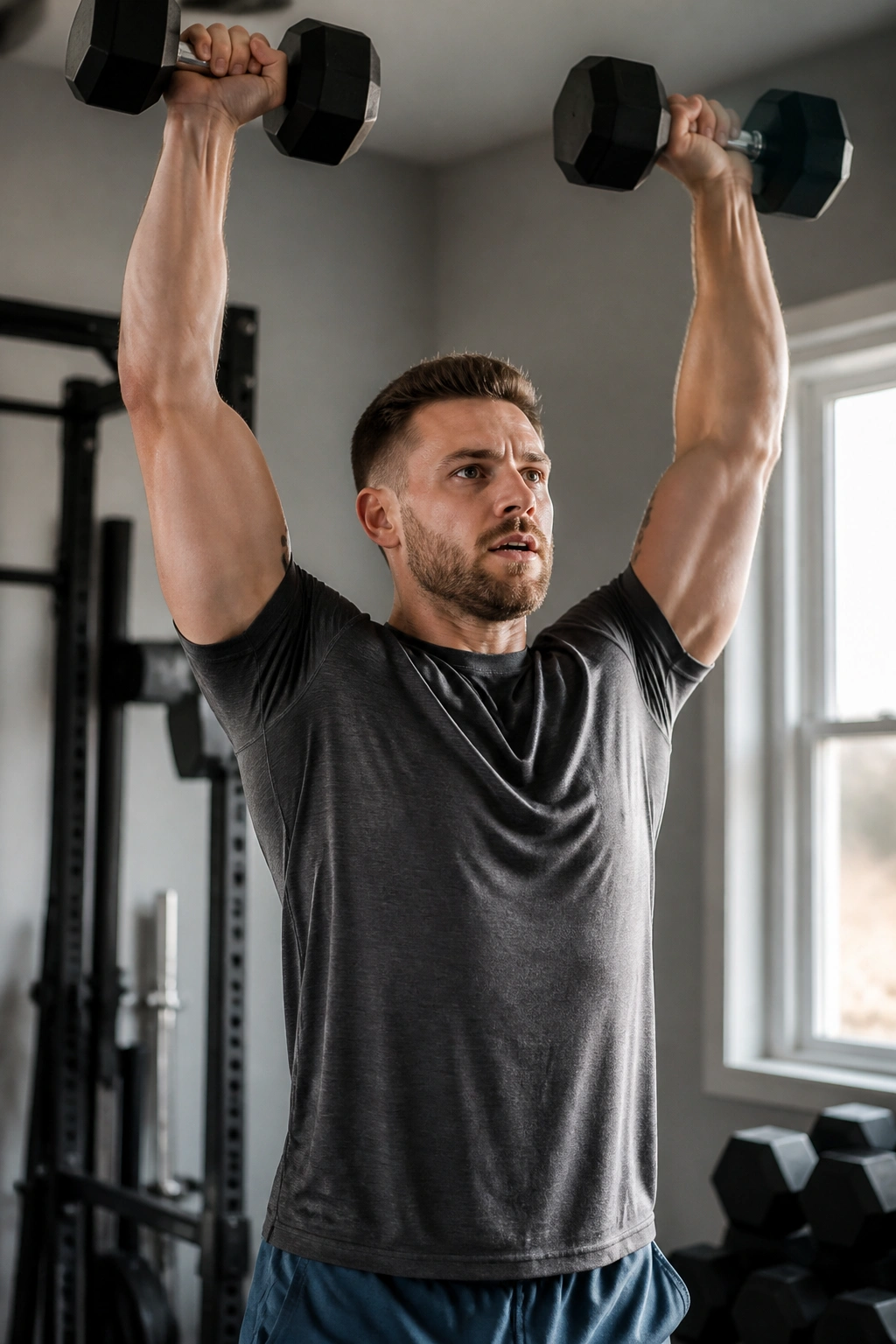
What if your whole workout lived on a one-minute clock? That’s the idea here. EMOM stands for every minute on the minute, and it’s one of the cleanest ways to push work density without letting the session wander.
Use 16 minutes total and cycle through four stations:
- Minute 1: 8 dumbbell push presses
- Minute 2: 10 bent-over rows
- Minute 3: 8 hammer curls
- Minute 4: 10 overhead triceps extensions
Repeat that circuit 4 times. If you finish a set with 15 or 20 seconds left, rest. Do not rush into sloppy reps just to fill the clock. The point is controlled work, not panic.
This style is perfect when you want a hard session but do not have the patience for a long one. It also keeps the pace honest. If your loads are too heavy, you’ll know by minute six. That feedback is useful, even if it stings a little.
11. Posterior Chain Circuits for Glutes and Hamstrings
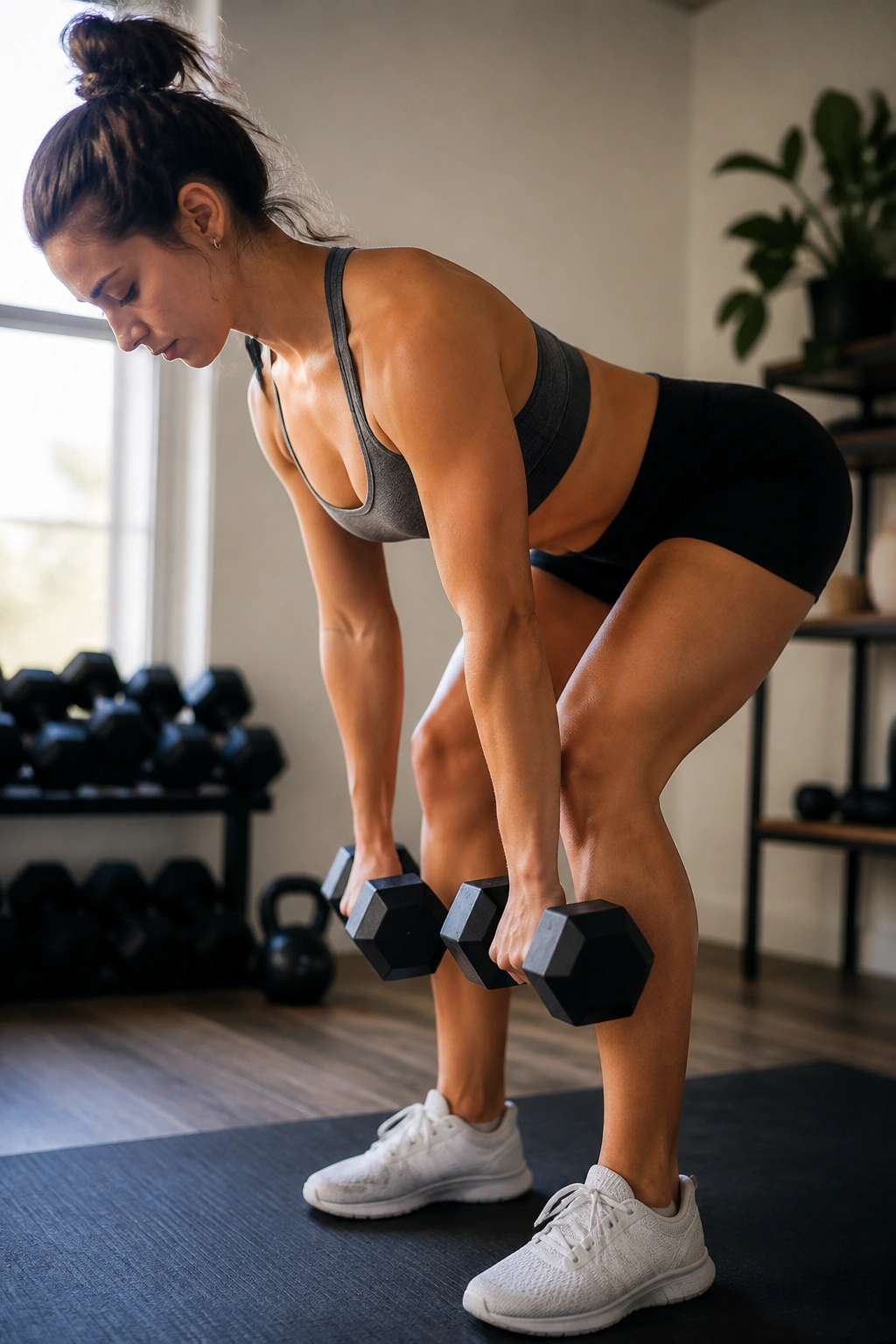
Your hamstrings do not get enough love in most home gyms. They usually get a few half-hearted deadlifts and then everyone moves on to arms. That’s a mistake, and it shows up later in the way people hinge, sprint, and even squat.
Run 3 rounds of:
- Dumbbell Romanian deadlift for 10 reps
- Glute bridge for 12 reps
- Slider hamstring curl for 10 reps
- Suitcase carry for 30 seconds per side
Rest 60 seconds between rounds. If you don’t have sliders, use towels on a smooth floor. If the floor is too sticky, socks often do the job better than expensive gear.
The circuit works because it covers the back side from two angles: hinge strength and knee flexion. That combination matters. A lot of people think their glutes are strong because their deadlift is decent, then they try a hamstring curl and find out the engine is missing a few parts.
Keep the bridge pause for one second at the top. Small detail. Big difference.
12. Unilateral Core and Balance Workouts
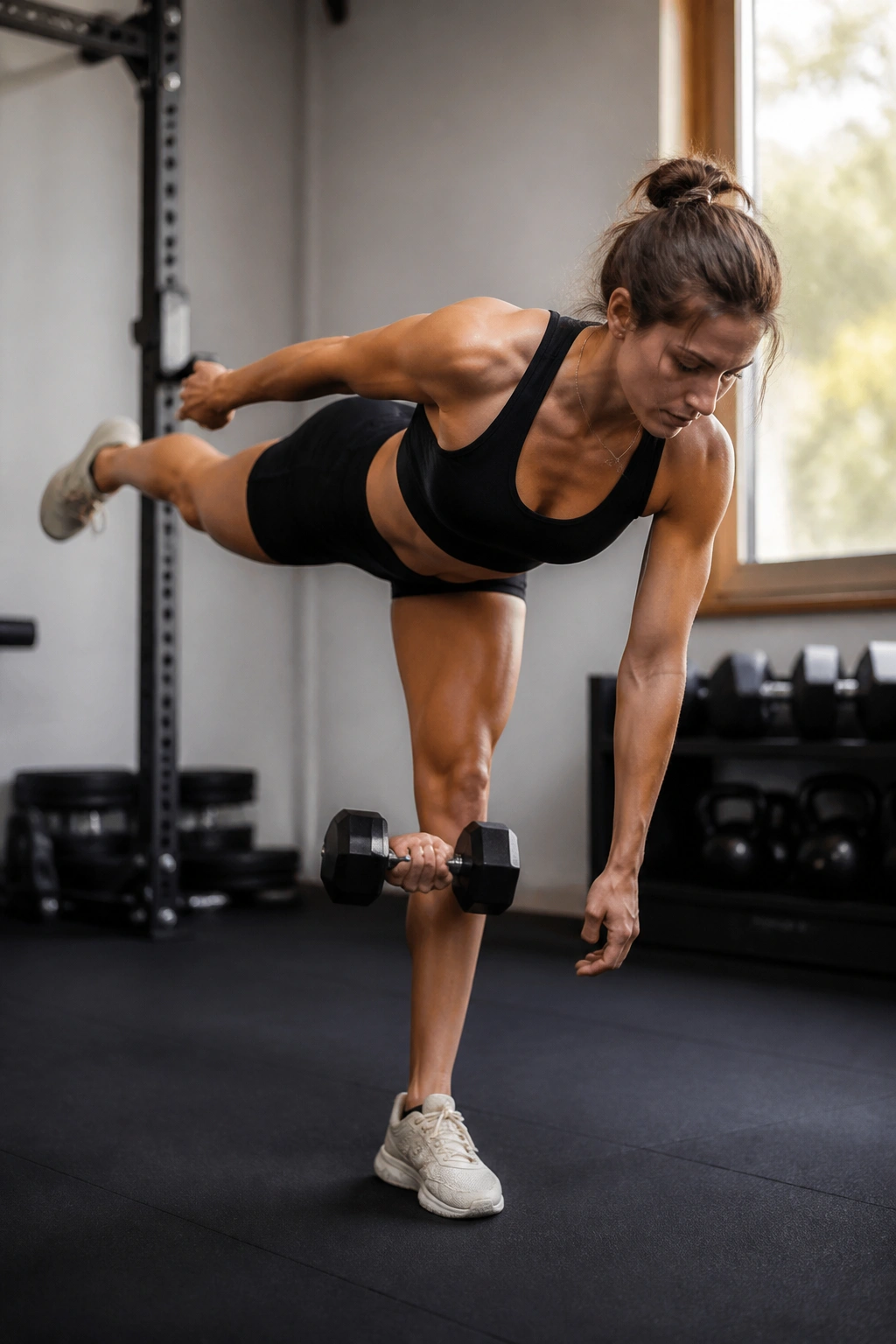
A suitcase carry on one side and a single-leg RDL on the other will teach you more than a mirror selfie ever will. Unilateral work exposes sloppy bracing, lazy foot pressure, and all the little leaks that bilateral lifts can hide.
The core session
Use 3 rounds per side of:
- Single-leg Romanian deadlift for 8 reps
- Single-arm overhead press for 6 to 8 reps
- Suitcase carry for 30 to 40 steps
- Offset front squat for 8 reps
Rest 45 to 60 seconds between rounds. Move slowly enough to stay in control, especially on the single-leg hinge. The standing leg should feel stable, not wobbly.
This kind of session is especially useful if your home weights are limited. One leg or one arm makes a moderate dumbbell feel much heavier. It also gives your core real work without needing endless crunches or plank variations that start to feel like punishment.
If balance is the issue, keep your free hand near a wall for the first few sets. That is not cheating. It is good coaching.
13. Tempo Squat Sessions That Slow Everything Down
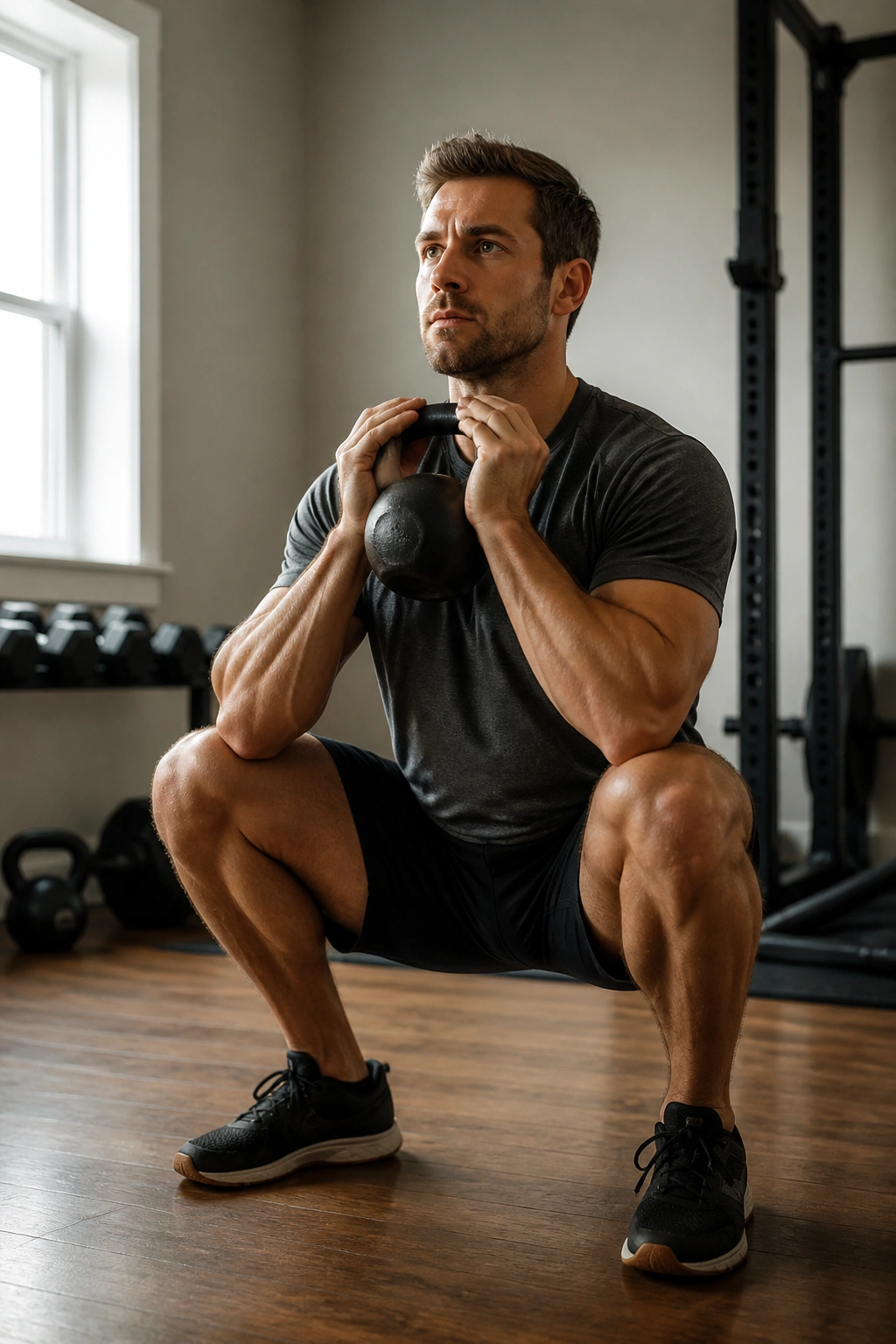
Why make a squat slower on purpose? Because light weight stops being light when you remove momentum. A slower descent and a real pause force your legs to own the rep instead of bouncing through it.
Run 4 sets of 6 reps with this tempo: 3 seconds down, 1 second pause, stand up hard. Use goblet squats, front squats, or dumbbell front squats if you have the setup. Rest 75 to 90 seconds between sets.
The count that matters
Don’t rush the bottom. The pause is where the work lives. Stay tight, keep the chest tall, and make the pause clean enough that you could stop and talk for a second if you had to. If the knees cave or the torso folds, the weight is too heavy for this style.
This is one of my favorite home workouts when loading is limited. It takes a weight that might normally feel easy and turns it into something that demands focus. No fancy equipment. No weird tricks. Just time under tension, and a little patience.
14. Incline Press and Back-Off Row Workouts

Incline pressing is not a vanity move. It changes the angle, shifts the demand, and gives the upper chest and front delts more to do than a flat press usually does. Paired with a row, it becomes a very solid upper day.
Run 4 sets of 8 reps on the incline dumbbell press. Then do 4 sets of 10 reps on a chest-supported row or a bent-over row. Finish with 2 back-off sets of 12 to 15 pushups if you want a little extra volume.
Unlike flat benching, incline pressing usually feels easier on the shoulders for a lot of lifters. The line of push is a little different, and that can be a welcome change if your home training has become press-heavy.
If you don’t have a bench, use feet-elevated pushups as the press slot and keep the row the same. It won’t feel identical, but the pattern still works. The bigger lesson here is simple: a good upper session does not need a pile of exercises. It needs a smart pair.
15. Band Accessory Sessions Between Heavy Days
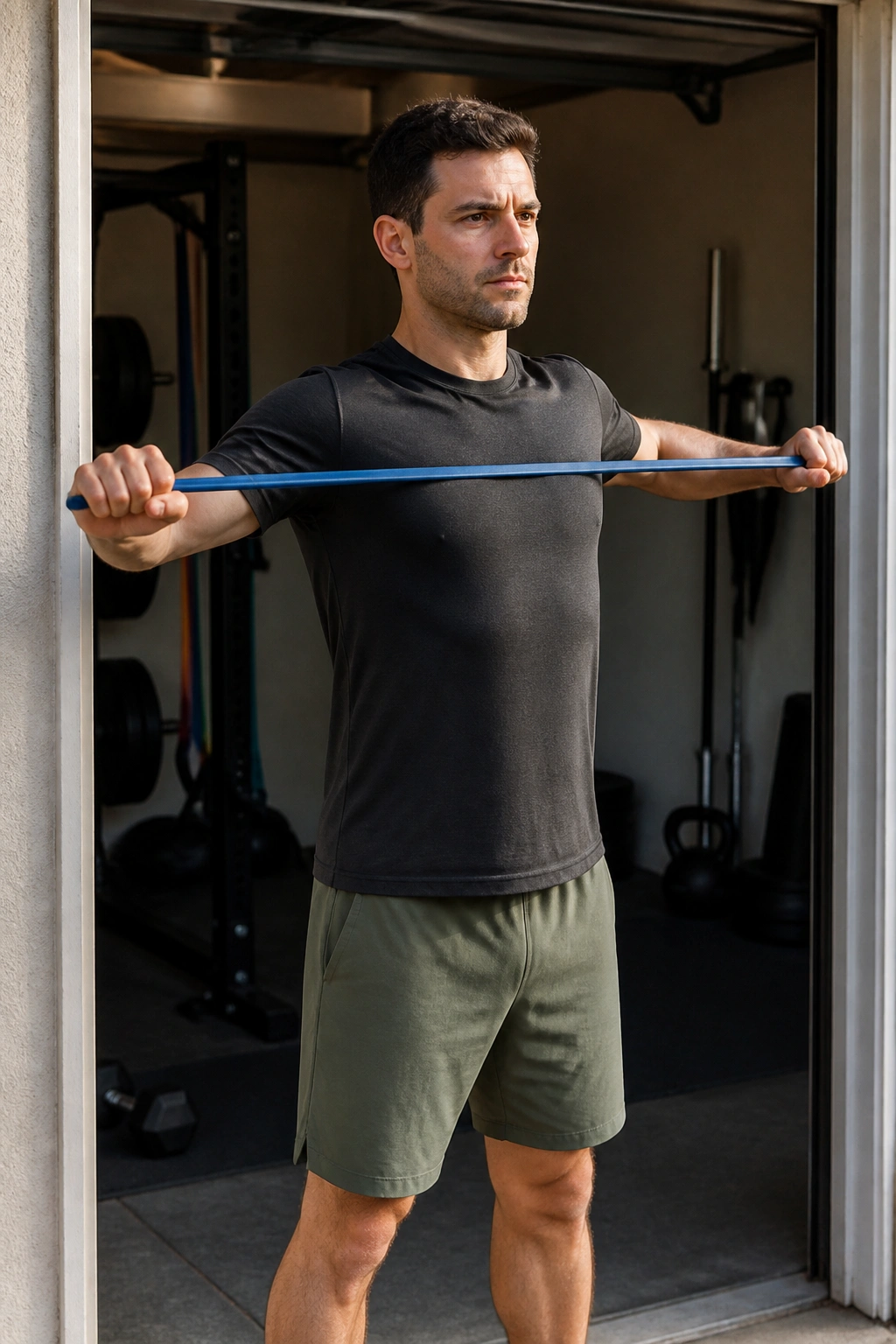
Bands make a cheap, ugly little noise when they stretch, and I mean that in a good way. They’re not glamorous, but they’re useful in a home gym where you want extra work without extra recovery cost.
Use 2 to 3 sets of 15 to 25 reps for each move:
- Band pull-aparts
- Face pulls
- Triceps pressdowns
- Biceps curls
- Monster walks
Keep the tension smooth and the tempo controlled. The goal here is not to smash yourself. It’s to keep shoulders, elbows, and hips moving well while the heavier sessions do the main job.
Bands are also handy when the house is quiet and you want to train without thudding the floor or dragging out plates. They travel well, take almost no space, and fill the gap between hard days and off days.
The catch? Bands are easy to cheat. If you let the tension yank you around, the exercise turns into noise. Stay honest. Use the full range.
16. Full-Body AMRAP Grinders for Busy Evenings
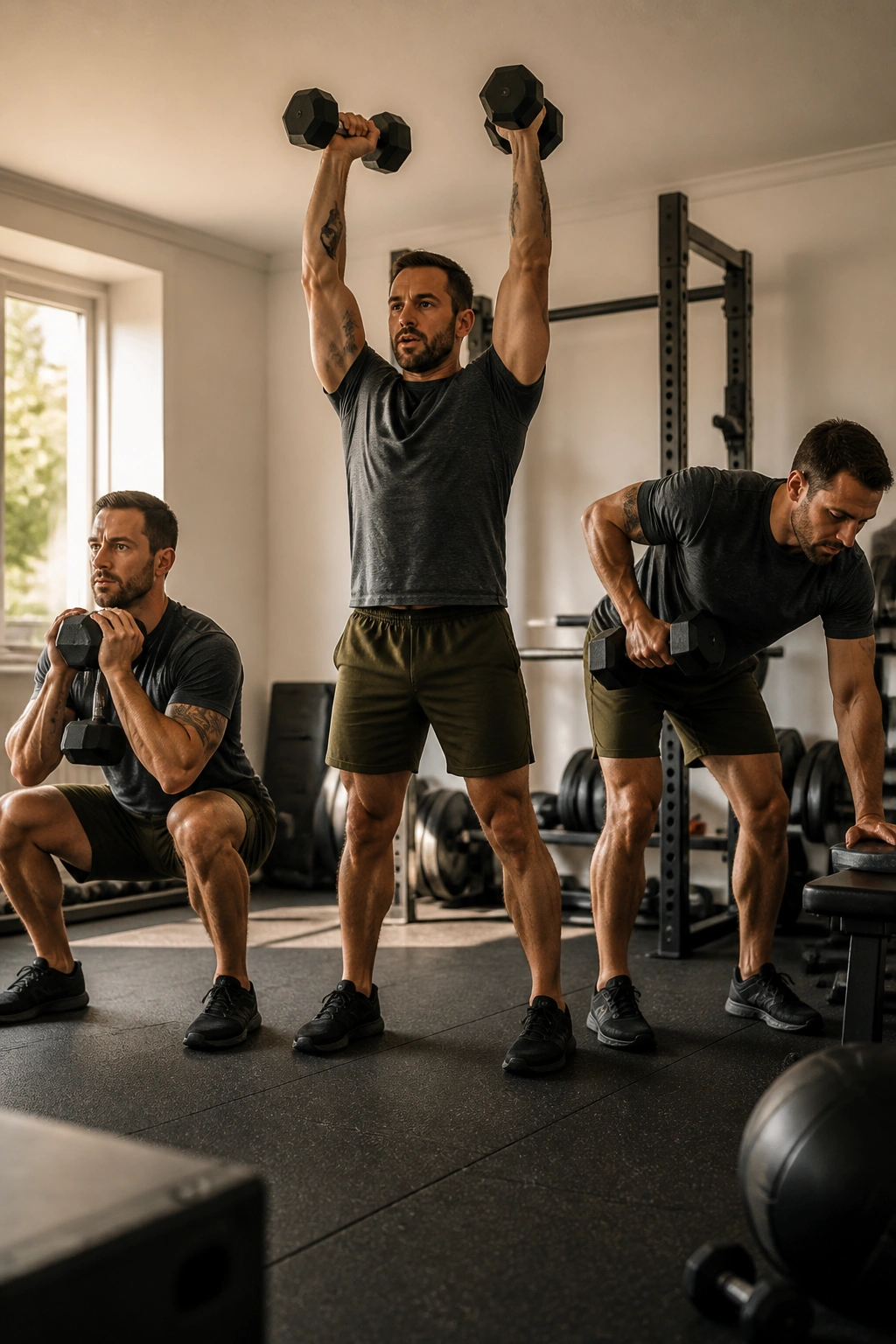
Some nights you do not need a hero workout. You need a hard, clear block that gets in and gets out. An AMRAP — as many rounds as possible — does that well when the exercise list stays short and the loading stays sane.
Set a timer for 20 minutes and cycle through:
- 8 goblet squats
- 8 dumbbell push presses
- 10 one-arm rows per side
- 8 Romanian deadlifts
- 20-second plank
Move steadily, not frantically. Stop one rep before form gets messy. If you find yourself gasping too early, the dumbbells are too heavy for the pace you picked.
This format works best when you want a blend of strength and conditioning. It also gives you a simple performance marker: how many rounds you complete with decent form. That number is worth tracking. Not because it’s glamorous, but because it shows whether your work capacity is improving.
17. Rest-Pause Arm Pump Workouts

Arms are often the first thing people want to train at home, and I get it. They’re easy to attack with limited equipment, and a good arm pump can make even a plain dumbbell pair feel useful.
Try this rest-pause structure:
- Dumbbell curls: 12 reps, rest 20 seconds, 4 reps, rest 20 seconds, 3 reps
- Overhead triceps extension: 12 reps, rest 20 seconds, 4 reps, rest 20 seconds, 3 reps
- Hammer curls: 10 reps, rest 20 seconds, 4 reps
- Lying triceps extensions: 10 reps, rest 20 seconds, 4 reps
Run 2 to 3 rounds. Keep the rest short and the form clean. Rest-pause works because it squeezes extra reps out of a load that would normally run out of steam too early.
This is not the day to chase numbers with sloppy body English. Curling your whole torso around a dumbbell may look heroic in the mirror. It is usually just cheating. Stay tight, and the smaller muscles will do the job.
18. Dead-Stop Pull Sessions for Stricter Reps

Dead-stop reps are cleaner than touch-and-go reps when the weight starts creeping up. Each rep begins from a full reset, which kills momentum and forces the back and legs to earn every inch.
Run 4 sets of 6 reps on a dead-stop barbell row or dumbbell row from the floor. Then add 3 sets of 5 reps on deadlift variations, with a full reset at the bottom each time. Rest 90 to 120 seconds between sets.
What to watch for
- Set your back before the pull starts.
- Pull the slack out of the bar.
- Stop bouncing the weight off the floor.
- Keep the last rep looking like the first.
This kind of session is a good fit for home lifters who want stricter strength work without relying on speed or stretch reflex. It also tends to feel more controlled, which matters when your space is tight and you do not want plates crashing around.
If your lower back gets tired before your upper back does, the load is too ambitious. Reduce it and keep the reset perfect.
19. Low-Impact Metabolic Dumbbell Circuits
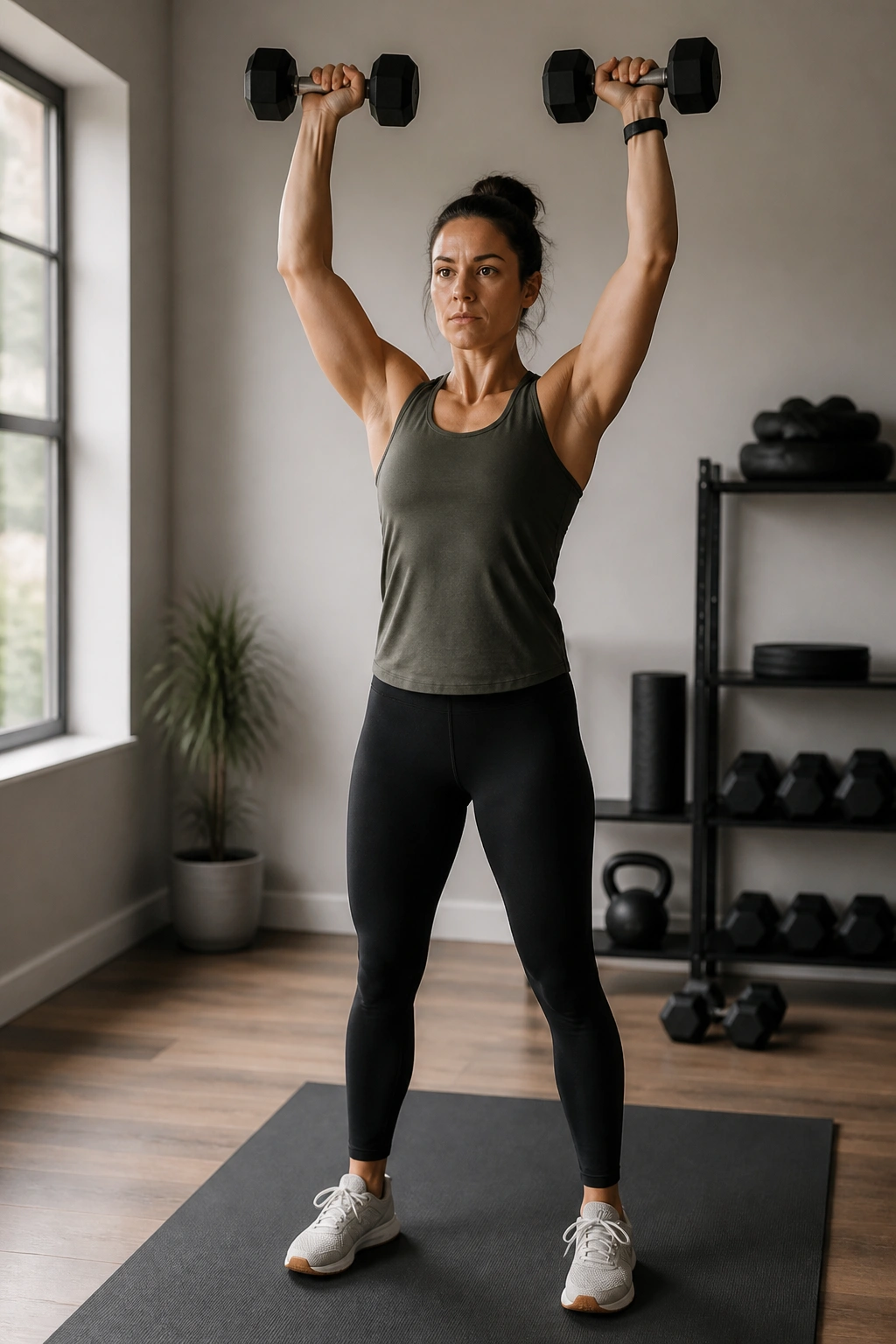
Want cardio without pounding your knees or upsetting the neighbors below you? Use dumbbells and keep your feet on the floor. You can raise your heart rate without jumping, dropping weights, or turning the room into a noise problem.
Run 4 rounds of:
- 10 step-back lunges per leg
- 10 dumbbell push presses
- 12 sumo deadlifts
- 30-second farmer carry march
- 60 seconds rest
That march matters. Hold the dumbbells at your sides and take short, controlled steps in place. Your trunk has to fight to stay tall, which makes the whole circuit feel more demanding than the exercise list suggests.
This session is useful when you want a sweat-heavy workout but don’t want the impact. It’s also a strong option if your home ceiling is low or your floor is thin. Practical matters. A lot of home training advice ignores them.
The pace should stay brisk, not frantic. There’s a difference.
20. Minimalist Home Weight Workout Reset
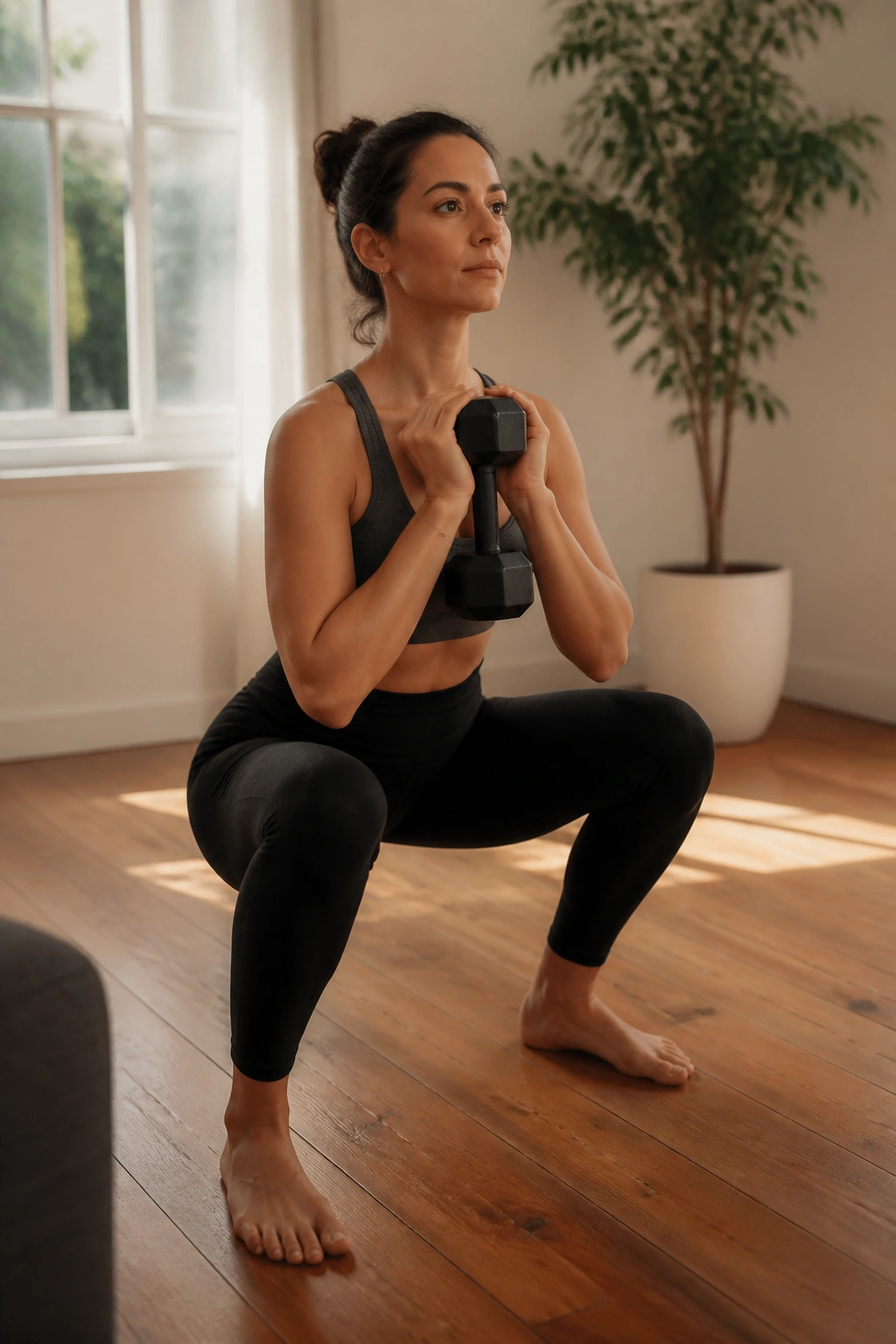
A recovery day with light weights can still count as training. In fact, it often works better than pretending every session has to be a war. Sometimes the goal is to move well, get blood into the muscles, and leave the room feeling looser than when you walked in.
Use 2 to 3 sets of 15 to 20 reps for each movement:
- Light goblet squat
- Single-arm dumbbell row
- Lateral raise
- Band pull-apart
- Dumbbell curl
- Farmer carry for 30 to 45 seconds
Rest 30 to 45 seconds between sets. Keep the tempo slow and the effort moderate. No grinding. No ugly reps. The point is to get work in without digging a recovery hole.
This is the session I’d keep around for stiff joints, long workdays, or the times when you want to train but know a hard day would be a bad idea. It still feels like lifting. It just leaves you with more in the tank.
Final Thoughts
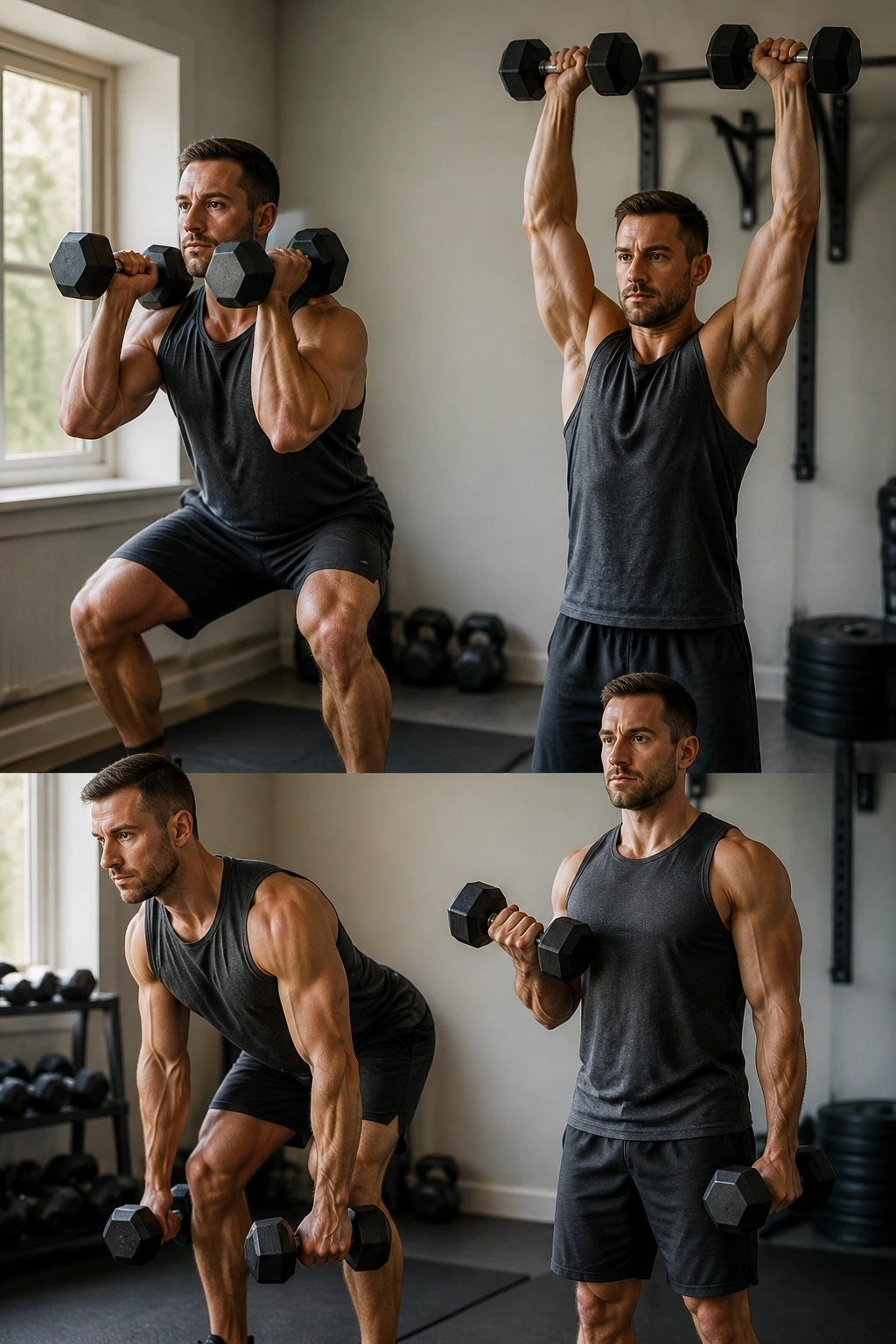
Home lifting works when the workout has structure. That means enough load to matter, enough rest to stay honest, and enough repetition that you can track progress instead of guessing at it. A good dumbbell session can do a lot. A good barbell session can do even more. Even the lighter band work earns its spot if you use it with purpose.
Pick a few of these workouts and repeat them. That part matters more than novelty. The person who runs a smart upper day, a solid lower day, and one conditioning block every week usually gets farther than the person who keeps changing everything because they got bored.
Keep one small notebook near the weights. Write down the load, the reps, and the one thing that felt off. That little habit pays off fast, because home training gets better when you stop guessing and start building from the last set you actually did.
