



A good home workout does not need a treadmill, a mirror wall, or a drawer full of gear. It needs a little structure, a timer, and enough honesty to stop pretending that a half-hearted sweat counts as training. The right workouts to get fit for summer at home build legs that carry you better, lungs that recover faster, and a midsection that holds up when the pace picks up.
That matters more than people think. A lot of home routines fail because they chase soreness instead of fitness, or they lean too hard on one type of movement and leave everything else undercooked. You can do jumping jacks until your calves complain, sure, but that will not help much if your hips are weak, your push-ups collapse at rep three, and your core folds the second you leave the floor.
The fix is simple, though not always easy: mix strength, cardio, core work, mobility, and a few low-impact pieces so you can keep showing up. A chair, a backpack, a short stretch of floor, and maybe a set of stairs are enough. Keep the work honest. Keep the rests short. And pick movements that make sense in a living room, not just on a fitness poster.
1. Summer Squat Ladder for Stronger Legs at Home
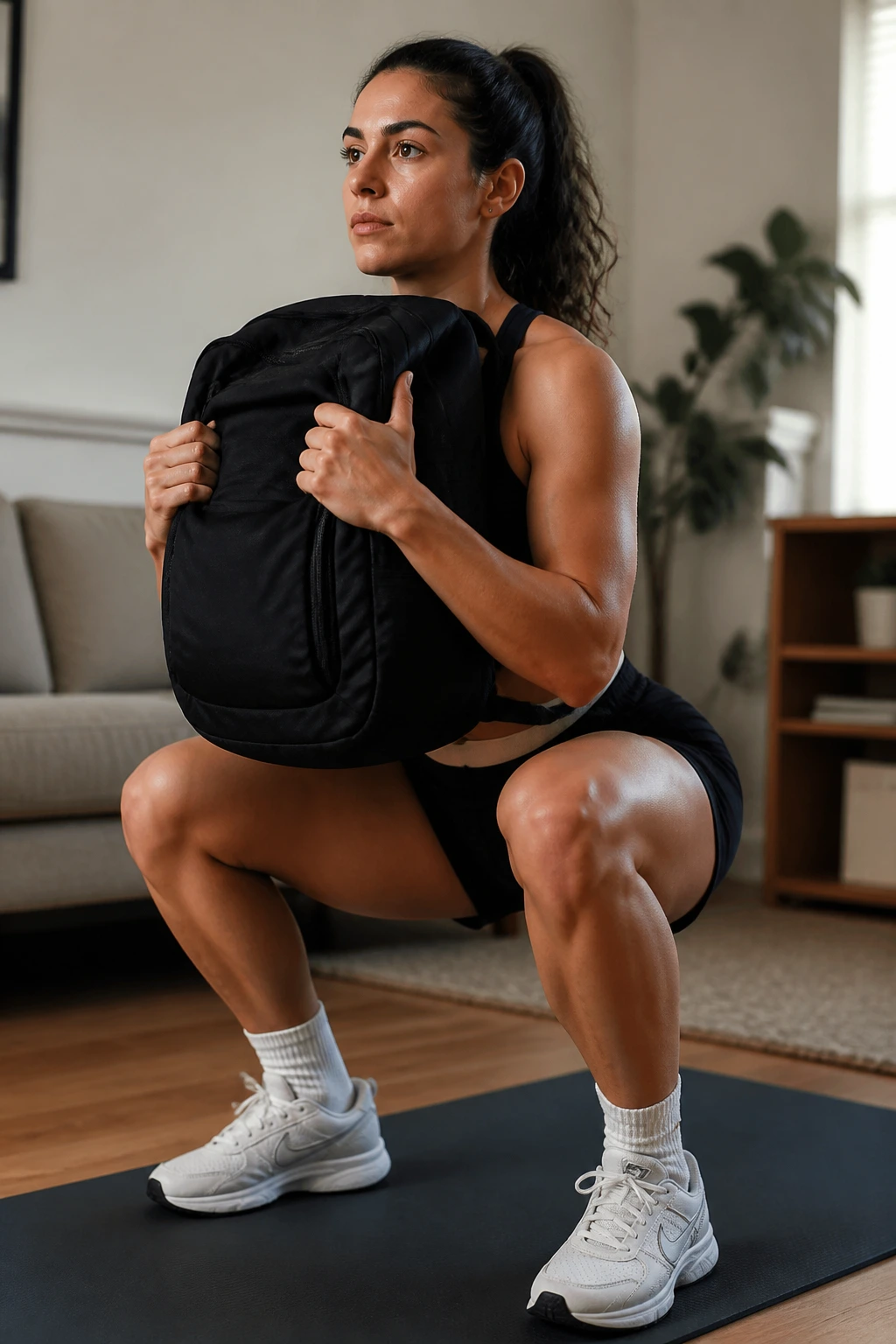
A squat ladder is one of the cleanest ways to make bodyweight work feel serious without making it weird. You start with a manageable set, climb a little, then come back down before your form gets sloppy. It’s simple, and that’s the point.
Try 10 squats, 12 squats, 14 squats, 12 squats, then 10 squats. Rest 30 to 45 seconds between sets. If that feels too light, slow the lowering phase to three seconds and pause for one second at the bottom. That tiny pause changes everything.
How to make the squat count
- Stand with feet about hip-width apart and toes slightly turned out.
- Sit down between your hips, not forward onto your knees.
- Keep your chest proud, but do not arch your lower back.
- Drive up through the whole foot, especially the heel and mid-foot.
If the last three reps don’t make you focus, the ladder is too easy.
A backpack loaded with books makes this even better. Hold it in a front rack position or hug it close to your chest. That extra front load forces your core to work harder, and it keeps the move honest without requiring anything fancy.
2. Push-Up Progression for Upper-Body Strength
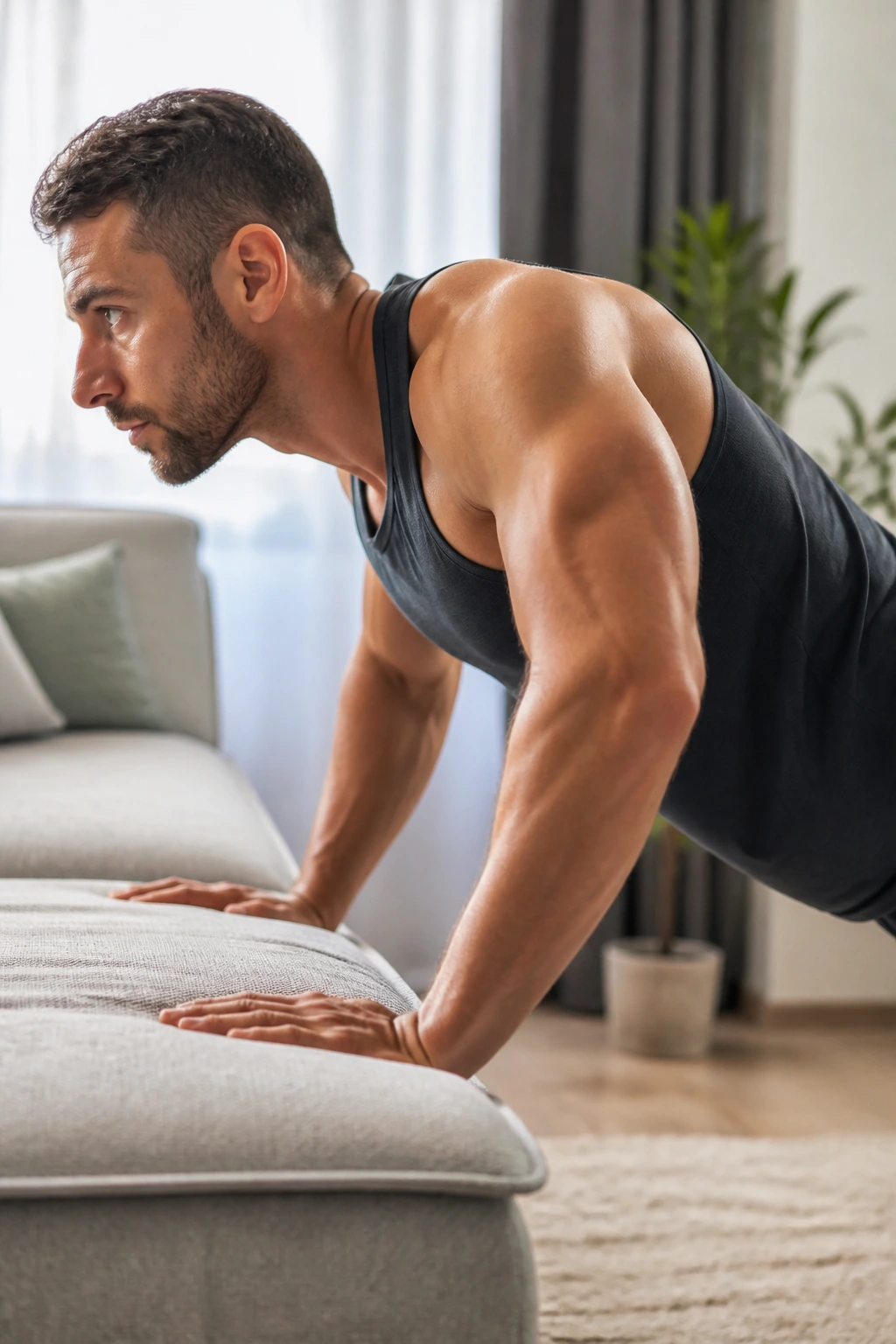
Push-ups are still one of the best home tests because they tell the truth fast. If your chest, shoulders, and triceps are underprepared, you’ll know by rep four. No drama. No guessing.
Start with an incline version if the floor is too much. Hands on a sofa, a sturdy table, or a countertop are all fair game. Aim for 3 rounds of 6 to 12 reps, leaving one or two reps in the tank on each set. Once that feels clean, lower the angle. Floor push-ups come later.
How to scale it
Use the right version for your day
- High incline: easiest, best for rebuilding pattern and control.
- Low incline: a good middle step when the floor still feels rough.
- Floor push-up: full body tension, ribs tucked, elbows angled back.
- Negative push-up: lower for 3 to 5 seconds, then reset from the top.
The slow lowering phase is the secret sauce here. It teaches control in a way fast reps never will. You’ll feel the chest and triceps working long before the rep count climbs.
Do not chase ugly reps. A clean set of 8 beats a shaky set of 15 every time.
3. Reverse Lunge Intervals That Light Up the Legs
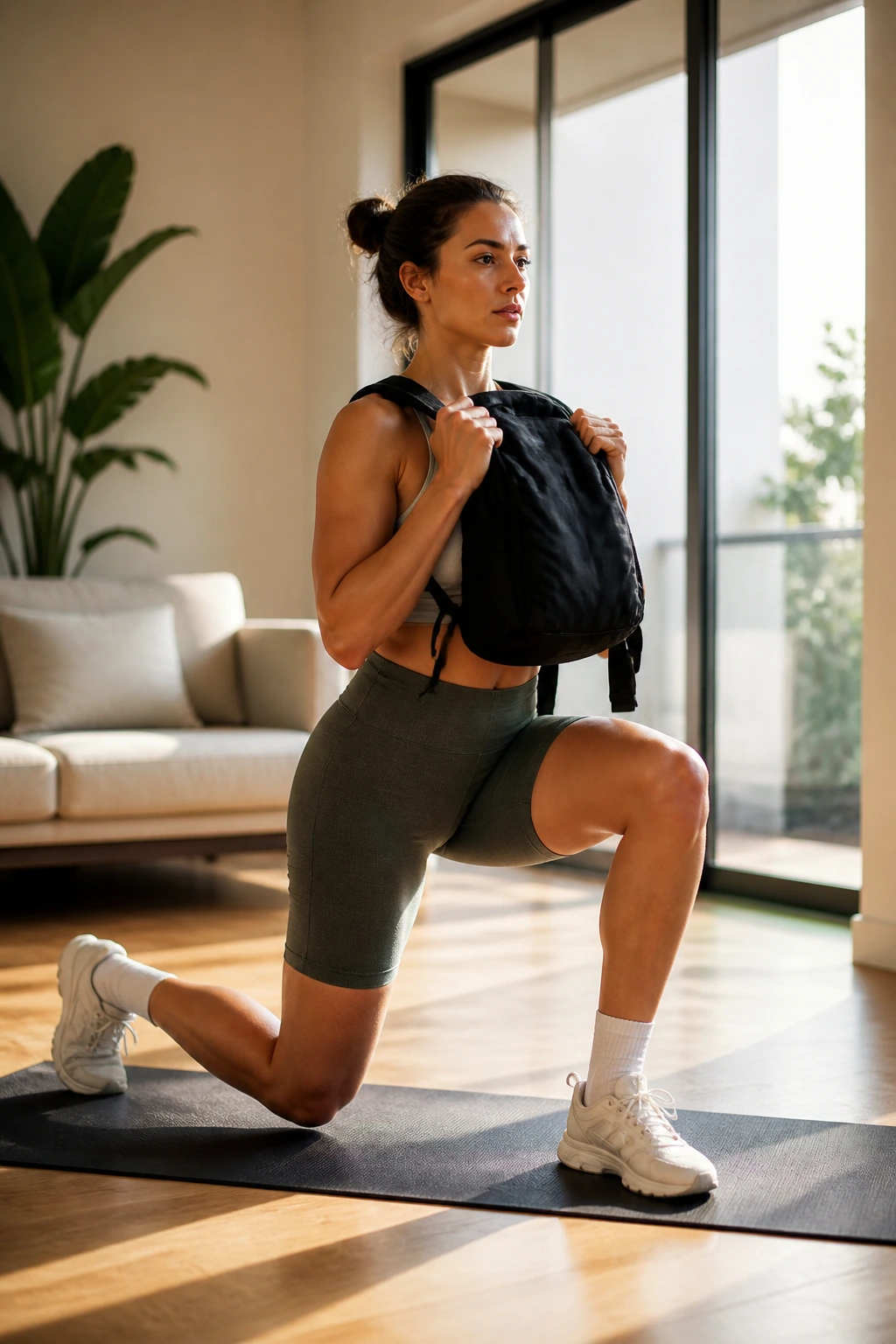
Forward lunges look flashier. Reverse lunges usually treat the knees better and make balance less annoying, which is why I prefer them for home training. They also hit the glutes a little cleaner when you keep your torso stacked and your front foot rooted.
Use 30 seconds of work, 30 seconds of rest, for 6 to 8 rounds. Step back softly, drop until both knees bend, then push the floor away with the front leg to stand. If you want more heat, hold a backpack at chest height or add a two-second pause at the bottom.
A lot of people rush the step back and wobble through the bottom. Don’t. Put the rear knee near the floor, keep pressure in the front heel, and let the front glute do the real work on the way up.
If your balance is shaky, tap the wall with one hand. That is not cheating. That is smart training.
4. Plank Series for a Sturdy Midsection
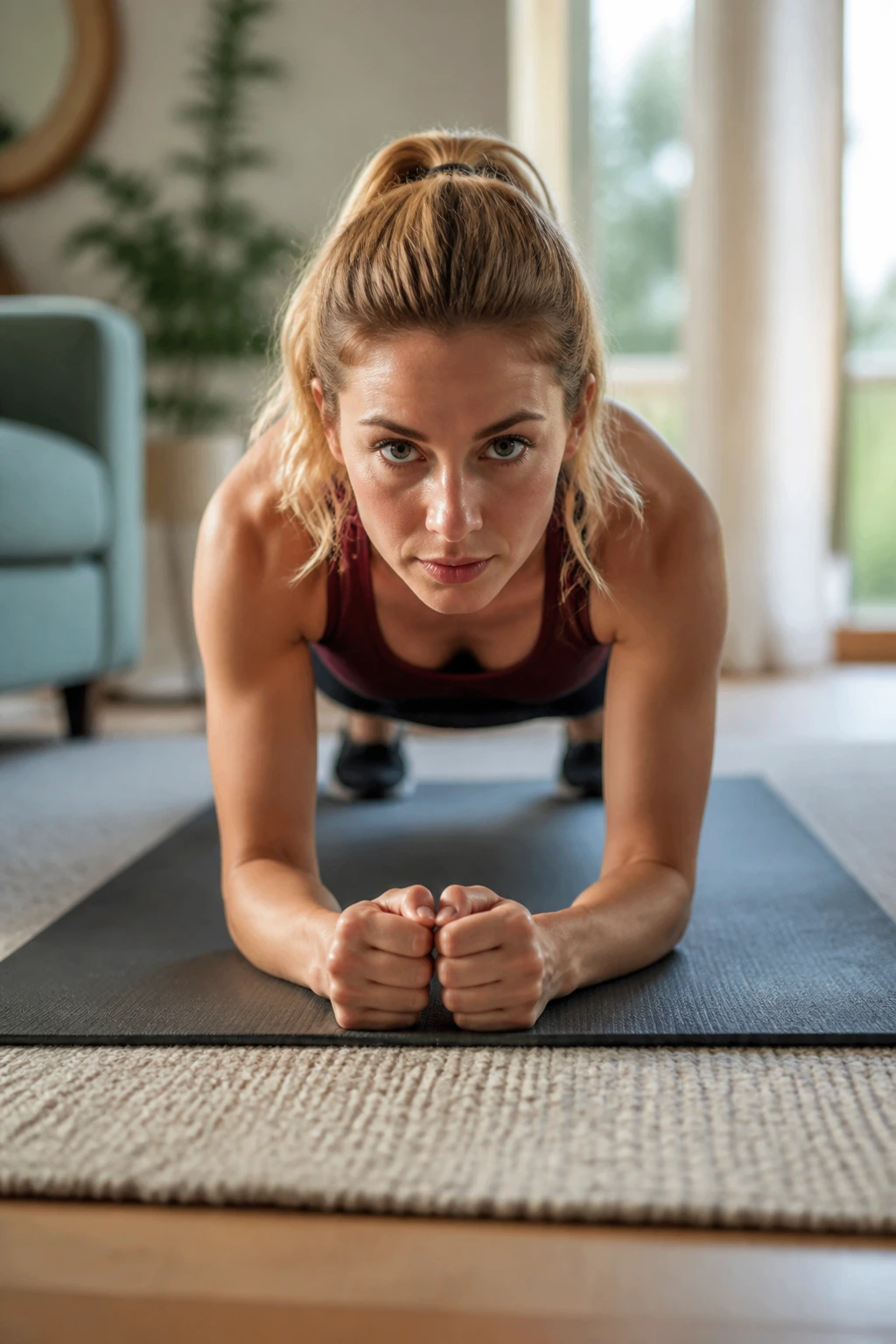
What makes a plank worth doing? Not the suffering. The position. A good plank teaches your body how to resist collapse, and that skill carries into everything else you do on the floor and off it.
Use a small circuit: 30 seconds front plank, 20 seconds side plank each side, 10 shoulder taps, then rest for 30 seconds. Run that 3 times. Keep your ribs down, your glutes tight, and your neck long. If your hips sag, the set is over.
A better plank circuit
Front plank
Elbows under shoulders, forearms pressed into the floor, and heels reaching back. You should feel abs, glutes, and upper back all working together.
Side plank
Stack shoulder over elbow, press the floor away, and keep the top hip from rolling forward. This one is sneaky. It looks calm and acts like a knife.
Shoulder taps
From a high plank, tap each shoulder without letting your hips swing like a gate in the wind.
Stop the set the second your low back starts talking. That is the cue, every time.
5. Mountain Climber Rounds for Fast Cardio at Home
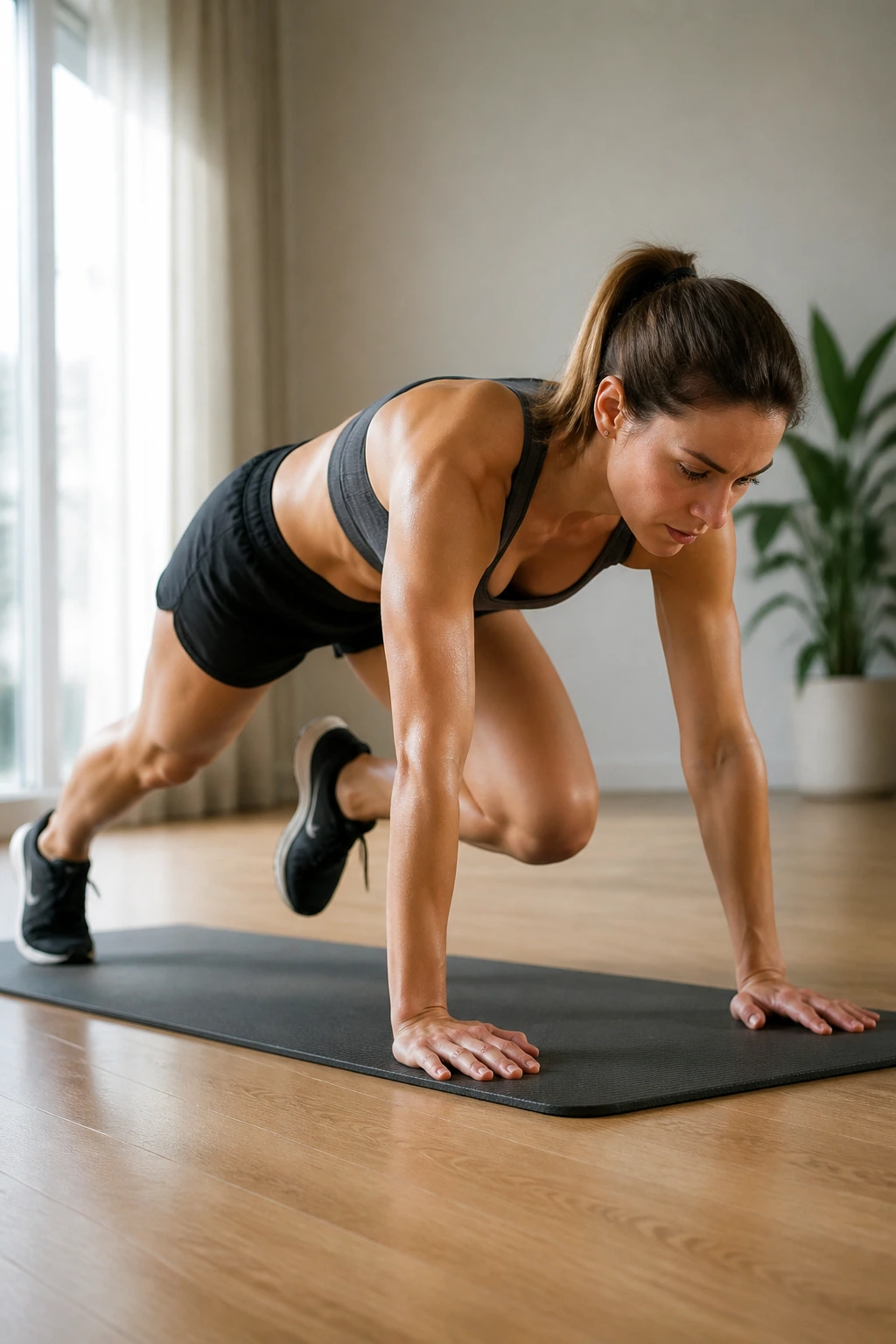
Mountain climbers are not subtle. They hit your shoulders, hip flexors, and lungs all at once, which is why they belong in a summer fitness routine built for home. They are also one of the quickest ways to turn a small patch of floor into a sweaty mess.
Try 40 seconds on, 20 seconds off for 6 rounds. Start in a strong high plank, then drive each knee toward the chest under control. The pace should be quick, but the hips should stay fairly level. If your backside is bouncing up and down, you’re turning cardio into chaos.
Hands need to stay planted under the shoulders. If the wrists complain, spread the fingers wide and shift a little more weight into the fingertips. That small change helps more than people expect.
A mat is nice here, but not required. A towel on smooth flooring can save your hands if the surface gets slick.
6. Jump Rope Intervals for Quick Feet and Better Conditioning
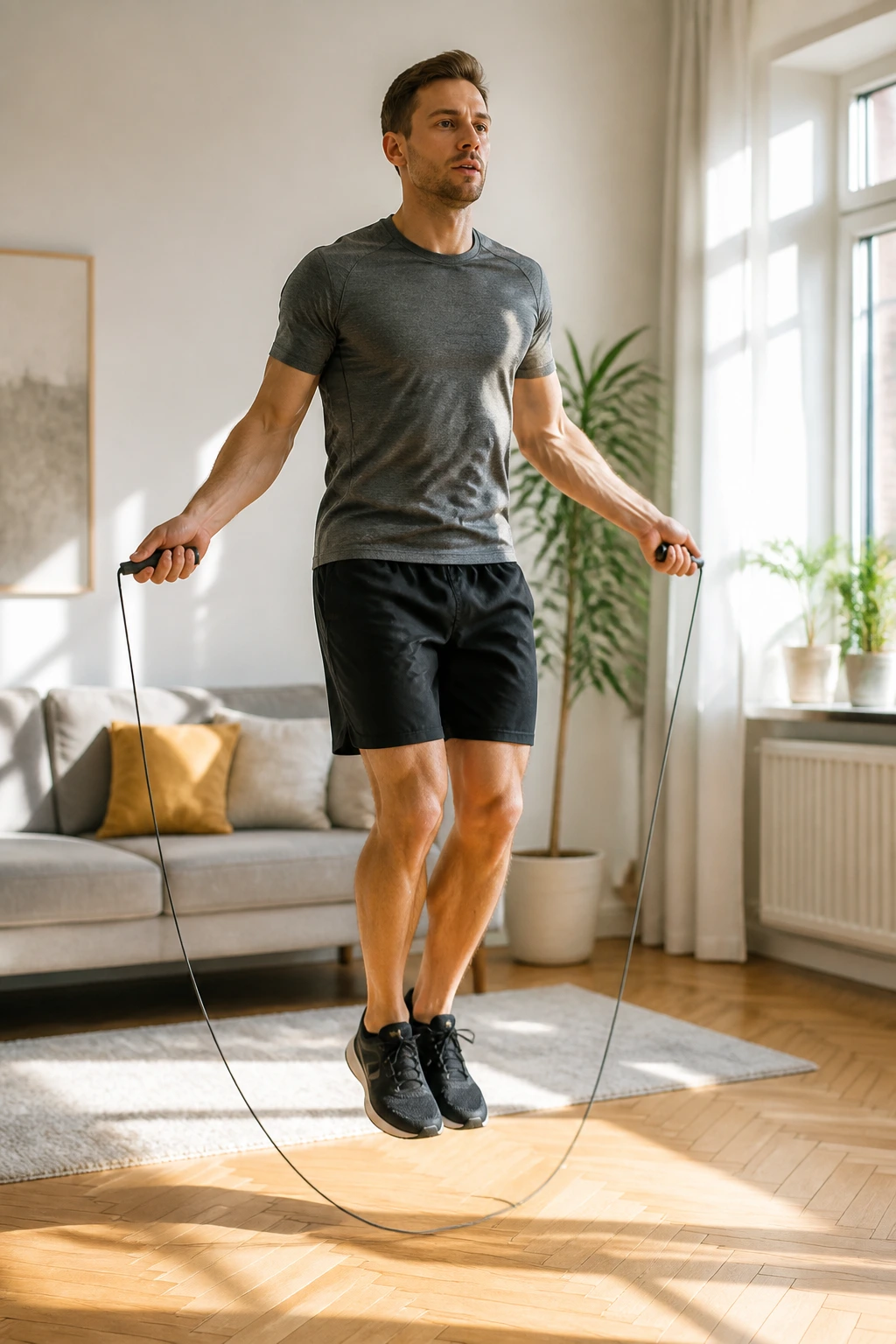
Jump rope looks almost too basic to matter, which is exactly why it works. It trains rhythm, coordination, calves, and cardio in a way that feels compact and efficient. You do not need an hour. Ten to fifteen good minutes can be enough.
Start with 30 seconds of jumping, 30 seconds of rest for 10 rounds. Keep the jump small. The rope should clear your toes by only a little, and your landings should be soft and quiet. If the rope slaps the floor like a angry whip, slow down and shorten your swing.
The part people get wrong is trying to jump high. Don’t. You want low, quick hops, almost like you’re stepping over a line that isn’t there. That keeps the effort in the right places and spares your shins a bit of grief.
No rope? Mimic the movement anyway. Fake rope work still gives you the foot speed and the rhythm, and honestly, it’s better than skipping the session.
7. Shadow Boxing Rounds for Summer Cardio at Home
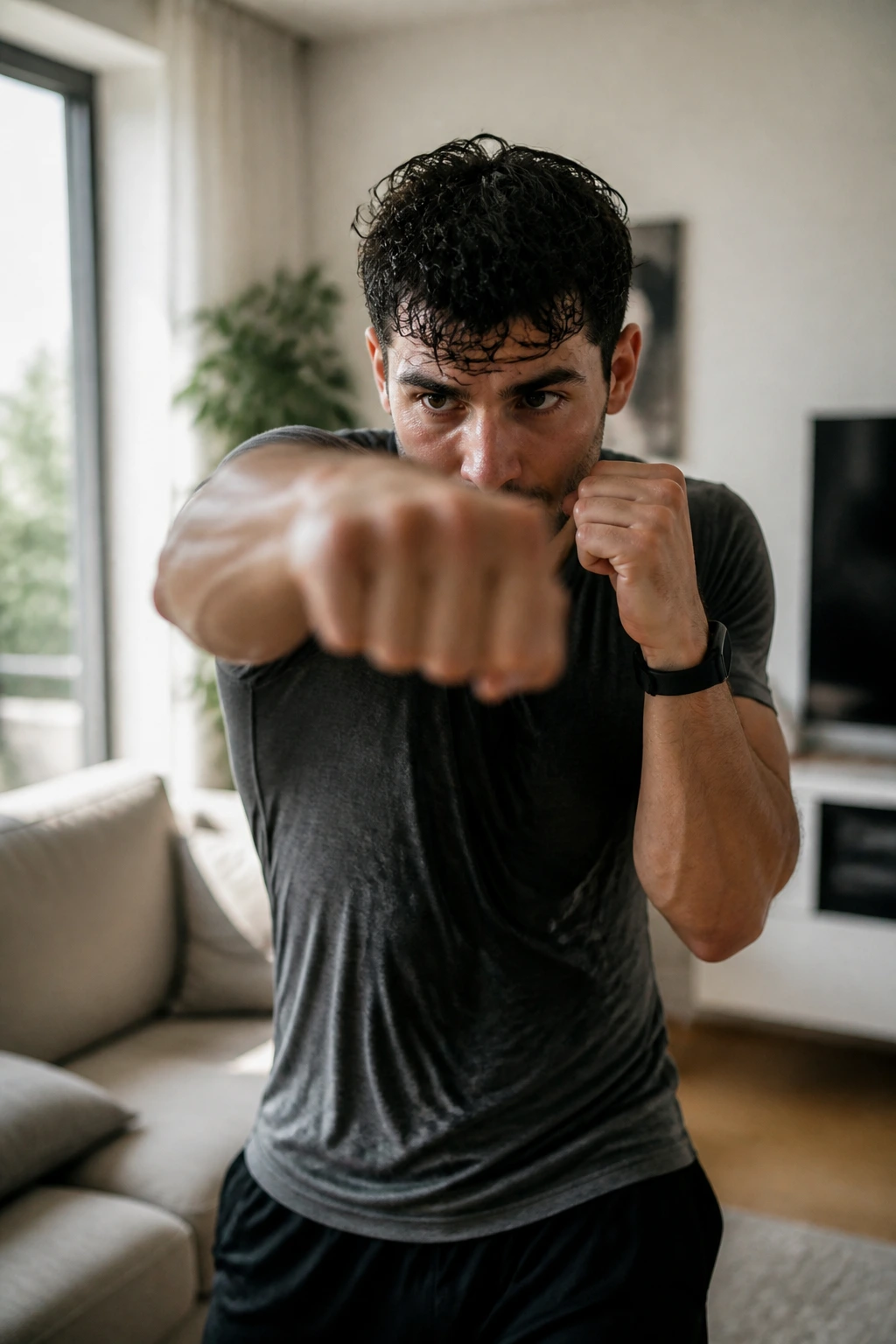
Shadow boxing gives you cardio without the mindless grind. Unlike steady jogging in place, it asks your hands, feet, shoulders, and brain to work together, which keeps the session from feeling flat. And yes, it absolutely counts.
Use 3-minute rounds with 1-minute rest, just like a simple fight-conditioning setup. Move around your space, keep your hands high, and cycle through jab-cross, jab-cross-hook, slips, and light pivots. The punches do not need power at first. They need shape.
What a round can look like
- First minute: straight punches only.
- Second minute: add slips and rolls.
- Third minute: mix in hooks, pivots, and a few bursts of fast hands.
- Between rounds: walk, breathe, shake out the shoulders.
The biggest mistake is standing planted like a statue. Boxing footwork matters even in a living room. Step lightly, turn the hips a little, and keep your chin tucked. If you get sloppy, the pace should drop before the form does.
This one is especially good when you want a sweaty workout without pounding your knees. That trade matters more than people admit.
8. Stair Sprints for a Short, Hard Leg Session
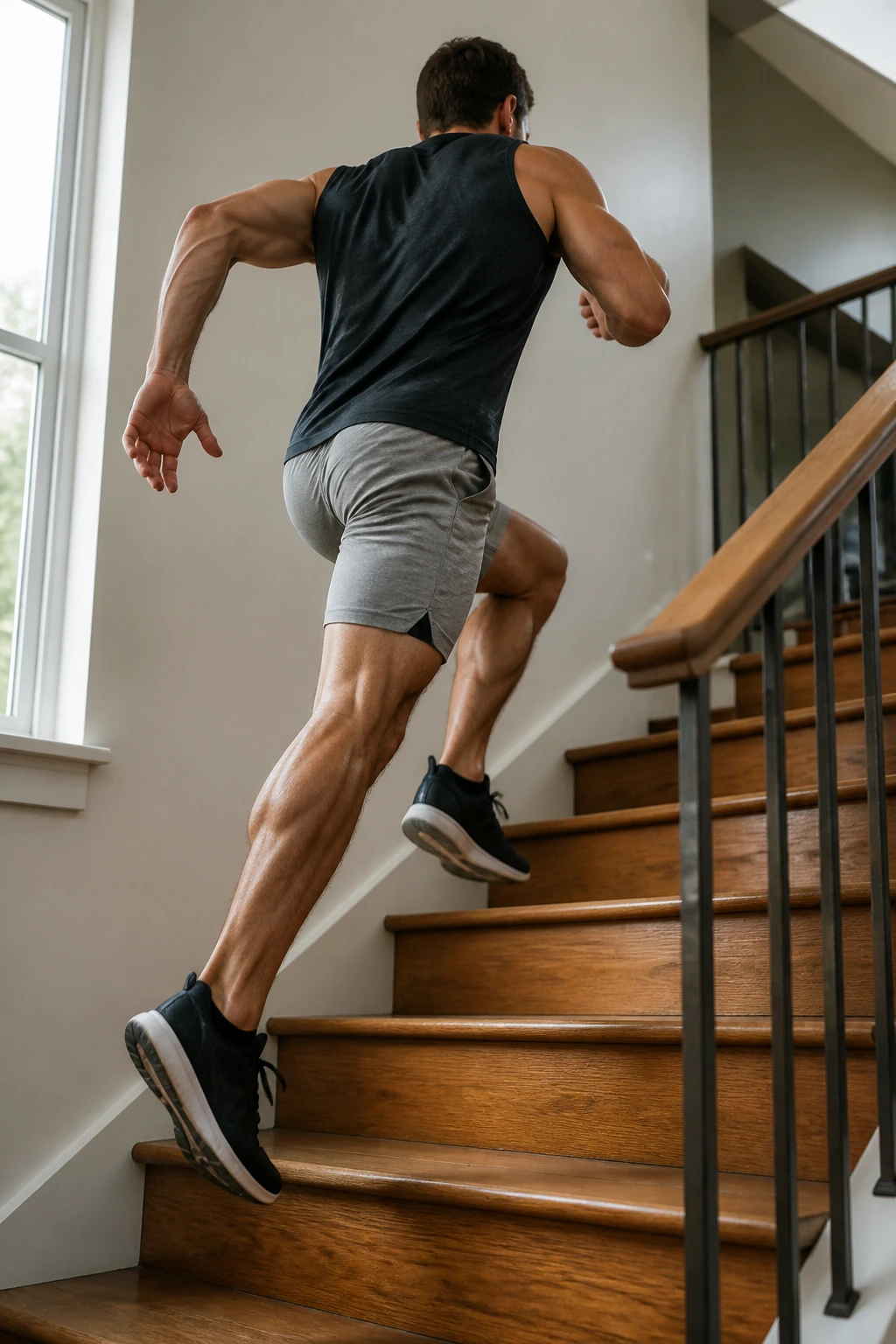
If you have stairs at home, you already have a rough little conditioning tool sitting in plain sight. Use it. Stair sprints are brutally efficient, and they make a ten-minute workout feel much longer than it is.
Sprint up for 10 to 20 seconds, then walk down slowly and rest fully. Repeat for 6 to 10 rounds. Take the first few reps under control. The win is not in smashing the first climb and surviving the rest; it’s in keeping the effort strong from start to finish.
Keep your posture tall and drive through the whole foot. Don’t lean so far forward that your back rounds. If the stairs are narrow, go one step at a time and keep a hand free for balance.
Skip stair sprints if the steps are slick, steep, or crowded. They’re effective, not magical.
This is one of those workouts that can be done fast, but never feels rushed. That’s a good thing. Fast and rushed are not the same.
9. Glute Bridge Ladder for Hips and Hamstrings
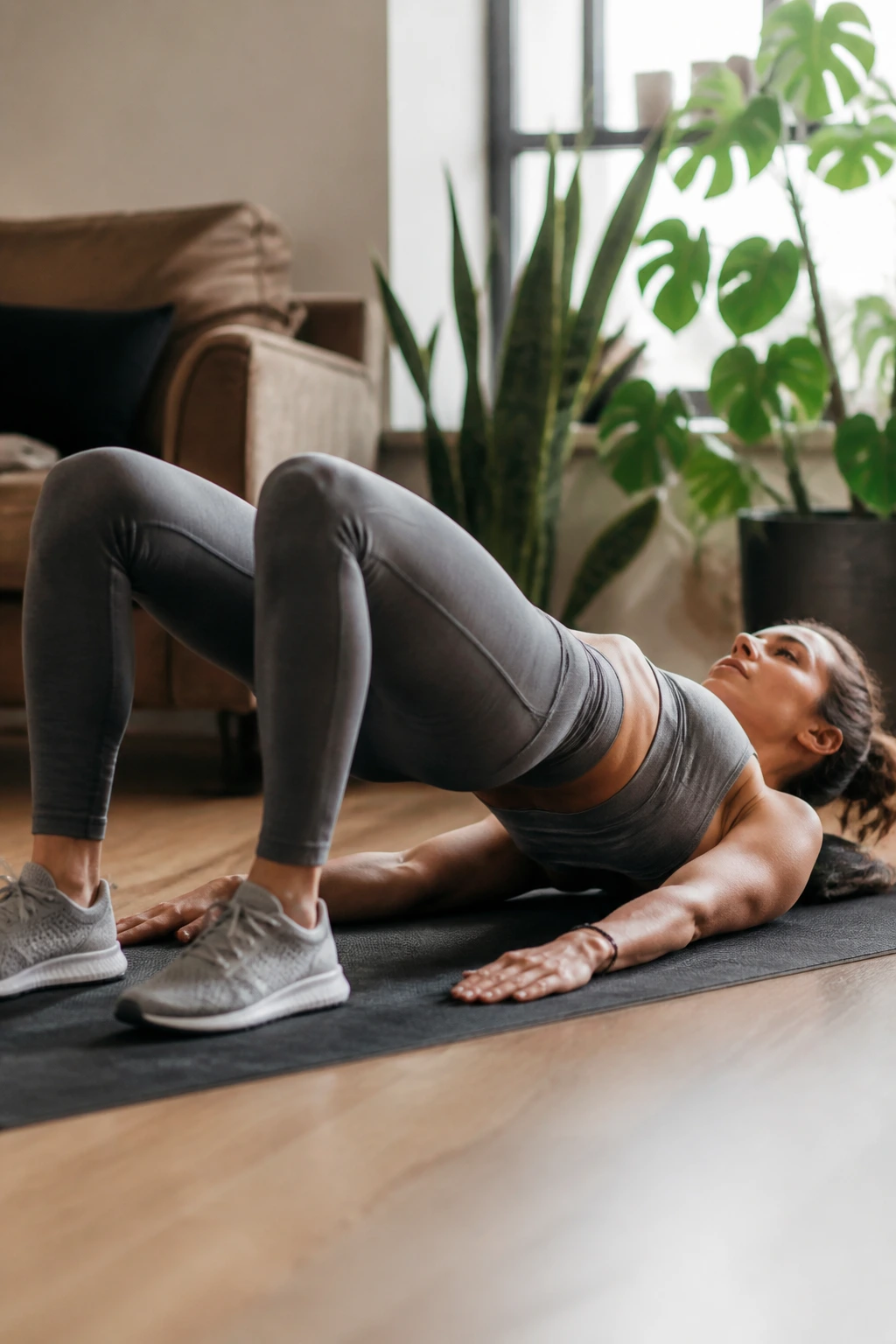
A lot of home workouts overfeed the quads and forget the backside. Glute bridges fix that without needing a bench, a band, or a complicated setup. They’re quiet, but they add up.
Try a ladder like this: 12 reps, 10 reps, 8 reps, then hold the top for 20 seconds. Rest 20 to 30 seconds between sets. Squeeze your glutes at the top, but do not overarch your lower back to fake the work. That’s the line people cross all the time.
The squeeze matters
The best bridge starts with a small posterior pelvic tilt — think ribs down, tailbone slightly tucked — before the hips lift. That keeps the load in the glutes instead of dumping it into the lower back. If you feel mostly back, reset.
- Feet flat, about a foot from your hips.
- Drive through the heels and mid-foot.
- Pause for one second at the top.
- Lower with control, not a drop.
Single-leg bridges are a good next step once the two-leg version feels easy. They are a little ugly at first. That’s fine. Ugly and effective is still effective.
10. EMOM Full-Body Circuit for Busy Days
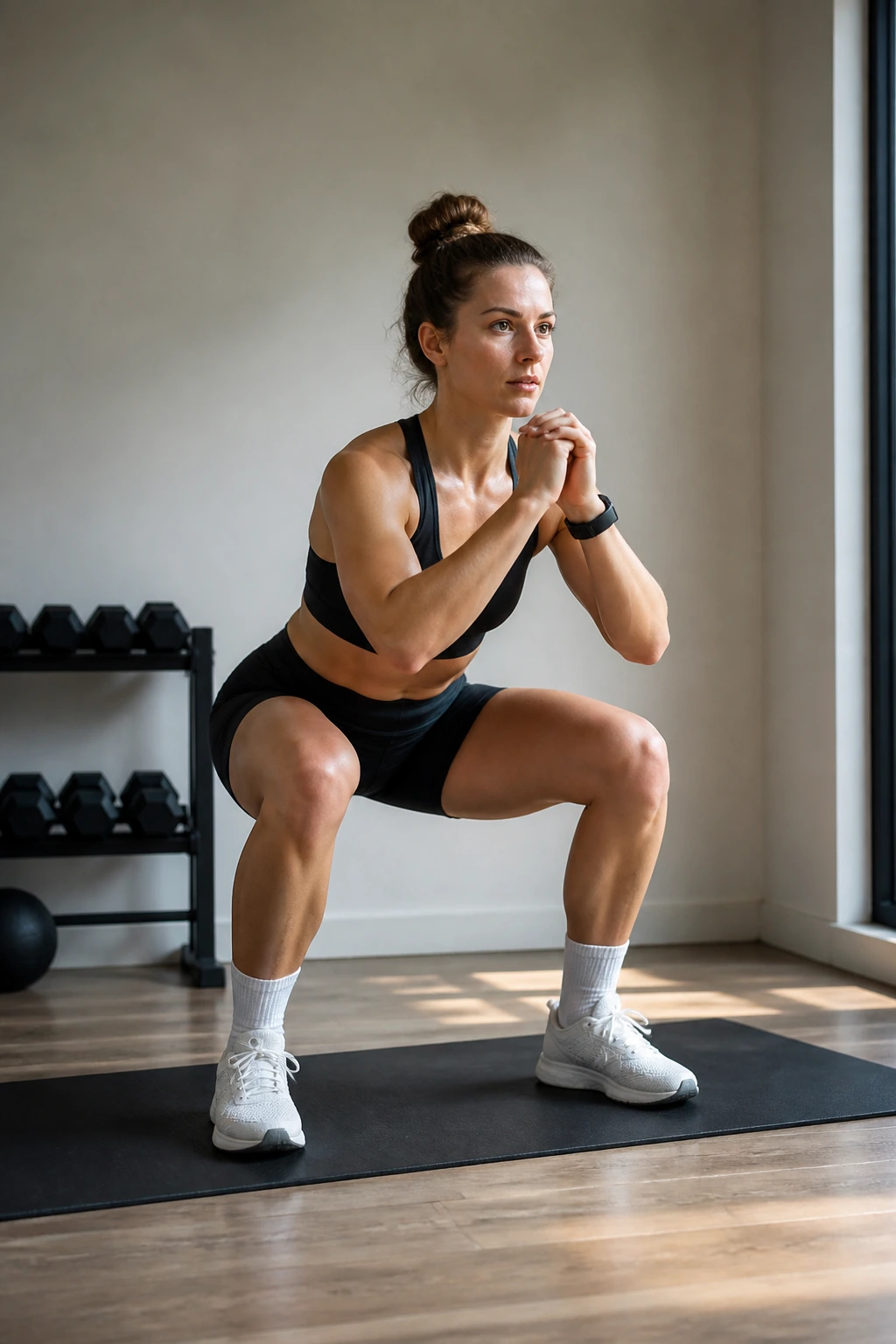
An EMOM is one of the best answers to the classic excuse of being short on time. Every minute on the minute, you do a task, then rest for whatever time is left before the next minute starts. That built-in clock keeps you honest.
Try a 12-minute EMOM:
Minute 1
- 12 squats
Minute 2
- 8 push-ups, or 12 incline push-ups
Minute 3
- 20 mountain climbers per side
Repeat that sequence four times. If the work takes less than 40 seconds, rest until the next minute starts. If it takes the full minute, scale the reps down a little.
The beauty here is the pressure. You cannot coast and you cannot drift. You have to show up, finish the minute, and move on.
One sentence is enough here: EMOMs make average effort obvious.
11. Dance Cardio Intervals That Feel Less Like Work
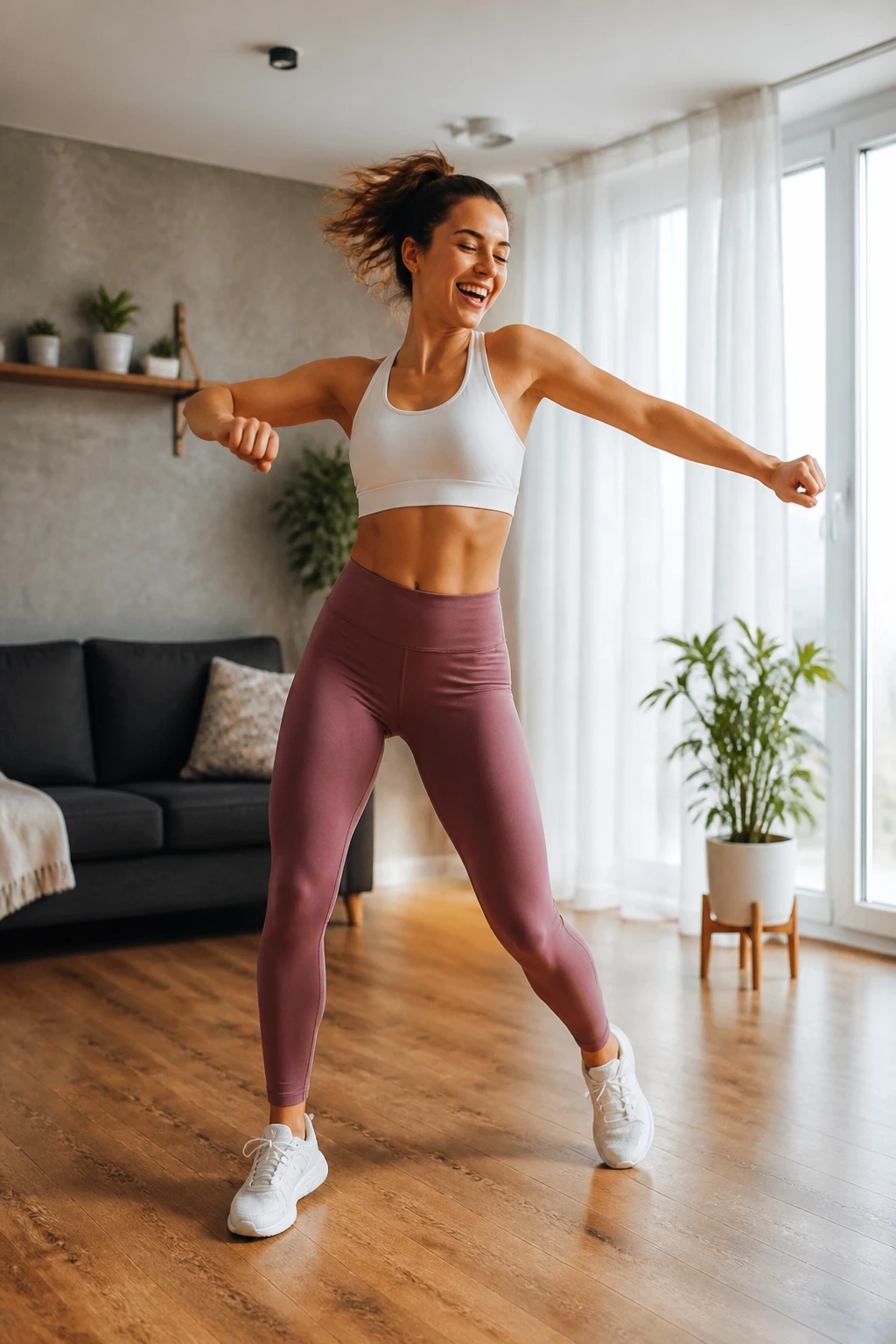
Dance cardio earns a spot because it fixes the one thing a lot of fitness plans ignore: boredom. If you can move for 20 minutes without mentally checking out, you are far more likely to come back tomorrow.
Pick 3 songs and treat each one as a round. Spend the first minute of each song with big arm movement and simple steps. Then turn the middle minute into faster footwork — grapevines, side steps, knee lifts, whatever keeps you moving. Finish the song with your strongest effort and a few extra arm punches or reaches overhead.
You do not need choreography. You need motion, rhythm, and enough effort to raise the breathing rate. The best dance sessions leave you warm and a little goofy, not confused and watching the clock every twelve seconds.
I like this one on days when everything else feels stale. It sneaks in cardio without the heavy feel of a formal interval workout, and sometimes that’s exactly what keeps the routine alive.
12. Power Yoga Flow for Strength and Mobility
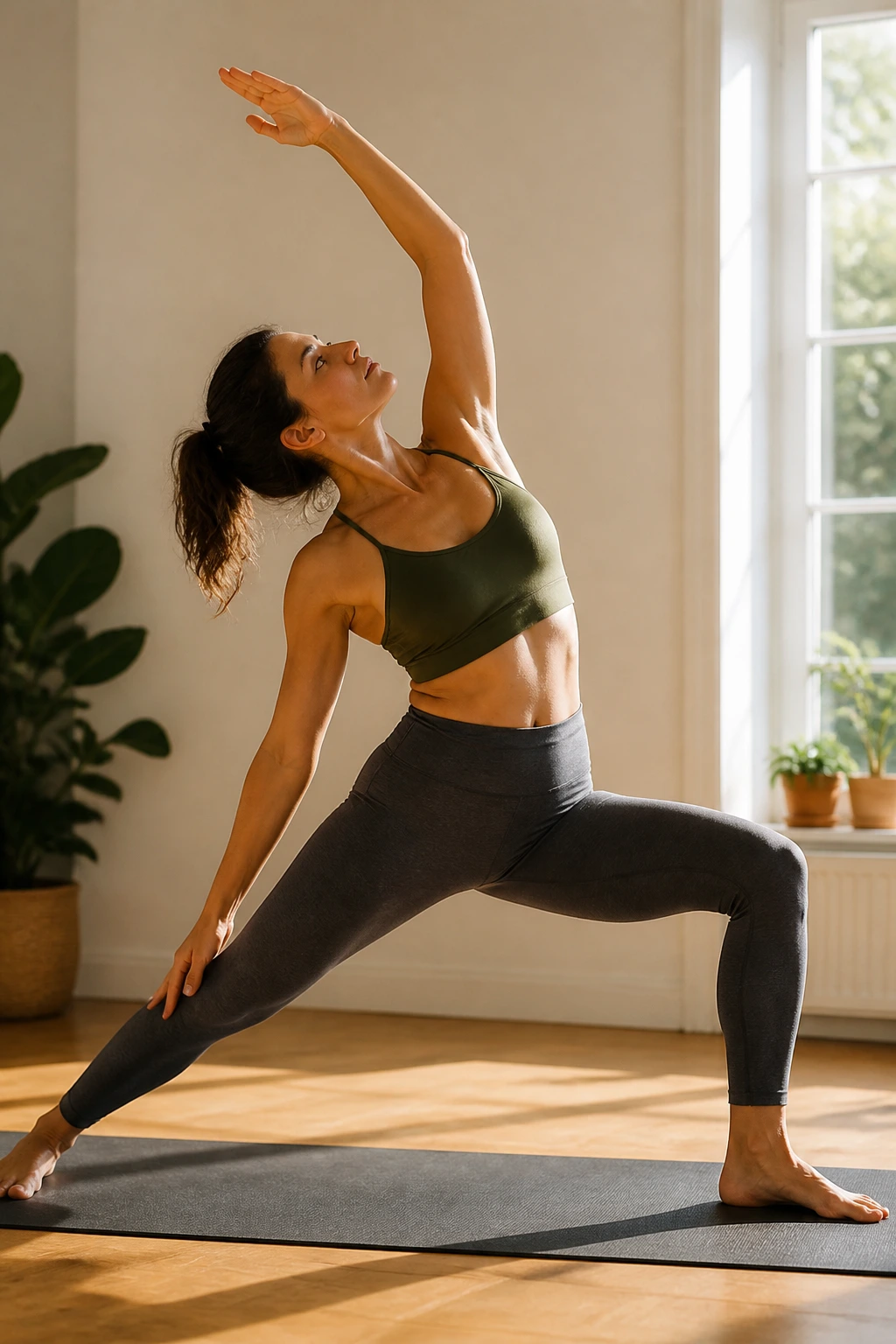
Not every workout needs to leave you gasping. A power yoga flow can build strength, open stiff hips, and calm the joints without turning the session into a nap. It’s the right kind of work for days when your body feels tight but not broken.
Move through 5 to 6 rounds of a short flow: downward dog, plank, low lunge, warrior II, chair pose, then back to standing. Hold each shape for 3 to 5 breaths. Keep the transitions smooth and deliberate. Rushing defeats the point.
What separates power yoga from a sleepy stretch session is tension. You should feel active through the legs and trunk the whole time. In chair pose, sink until your thighs wake up. In warrior II, press the back foot into the floor and stay long through the arms.
There’s a real place for this in summer conditioning. People forget that getting fit is not only about hammering the heart rate. It’s also about staying loose enough to keep moving well the next day.
13. Resistance Band Circuit for Summer Strength at Home
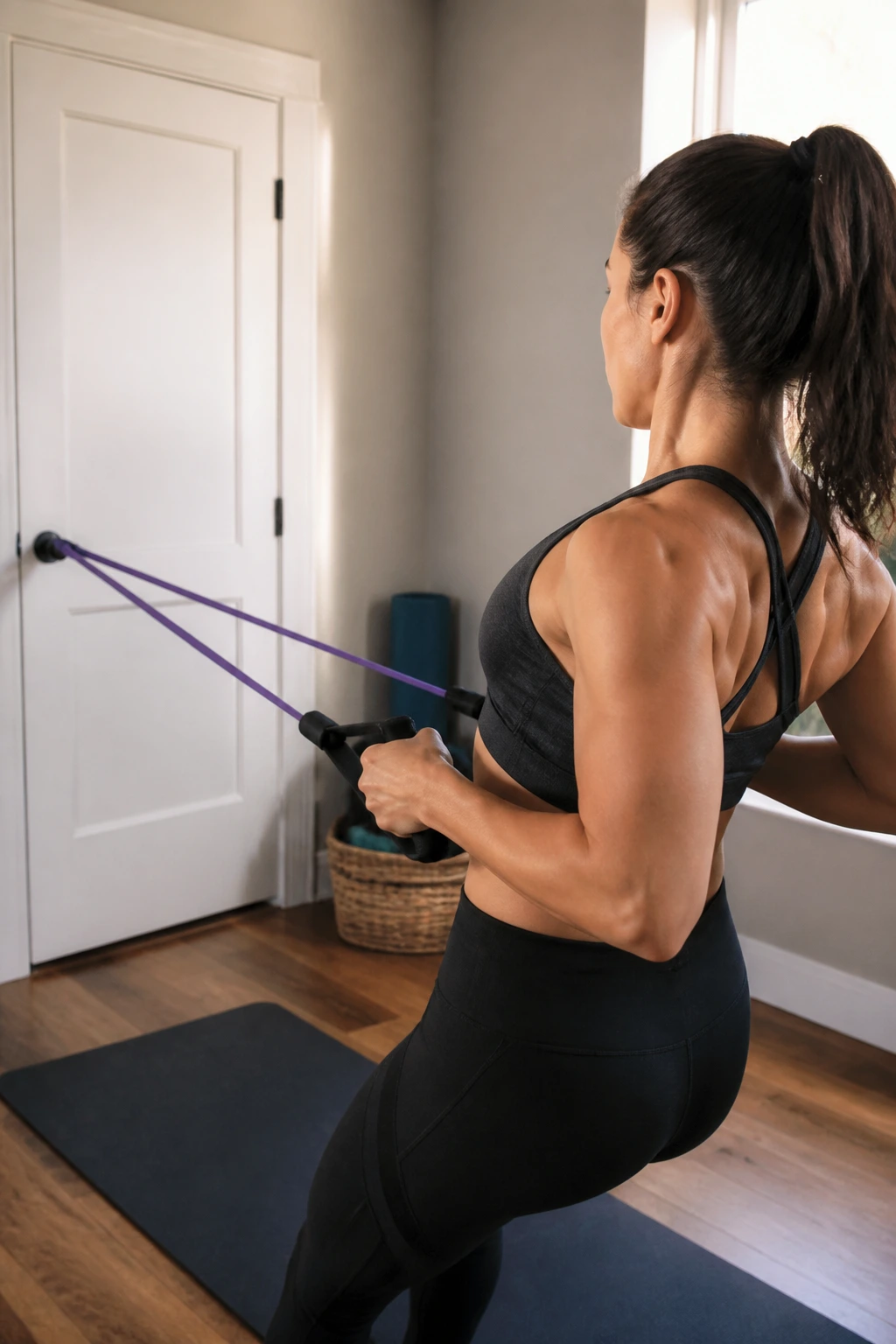
Resistance bands are boring in the best way. They take almost no space, cost less than most fitness gadgets, and let you load movement in a way bodyweight alone cannot. For home strength, that matters.
Use a circuit of band rows, banded squats, lateral walks, and band pull-aparts. Do 12 to 15 reps of each, then rest 45 seconds and repeat for 3 to 4 rounds. If you have a long loop band, anchor it around a sturdy post or door anchor. If not, a mini band still gives you plenty to work with.
Anchor, loop, repeat
A good circuit needs clear tension from the start. There should be stretch in the band before the first rep begins.
- Rows: pull elbows back and squeeze between the shoulder blades.
- Squats: keep tension on the band as you sit and stand.
- Lateral walks: small steps, knees soft, toes forward.
- Pull-aparts: hands move apart until the band brushes your chest.
The nice thing about bands is the top of the rep usually gets harder, not easier. That changes the feeling of the work in a way dumbbells do not always match. It also makes the shoulder and upper back work a little smarter.
14. Tabata Core Blast for Short Workouts
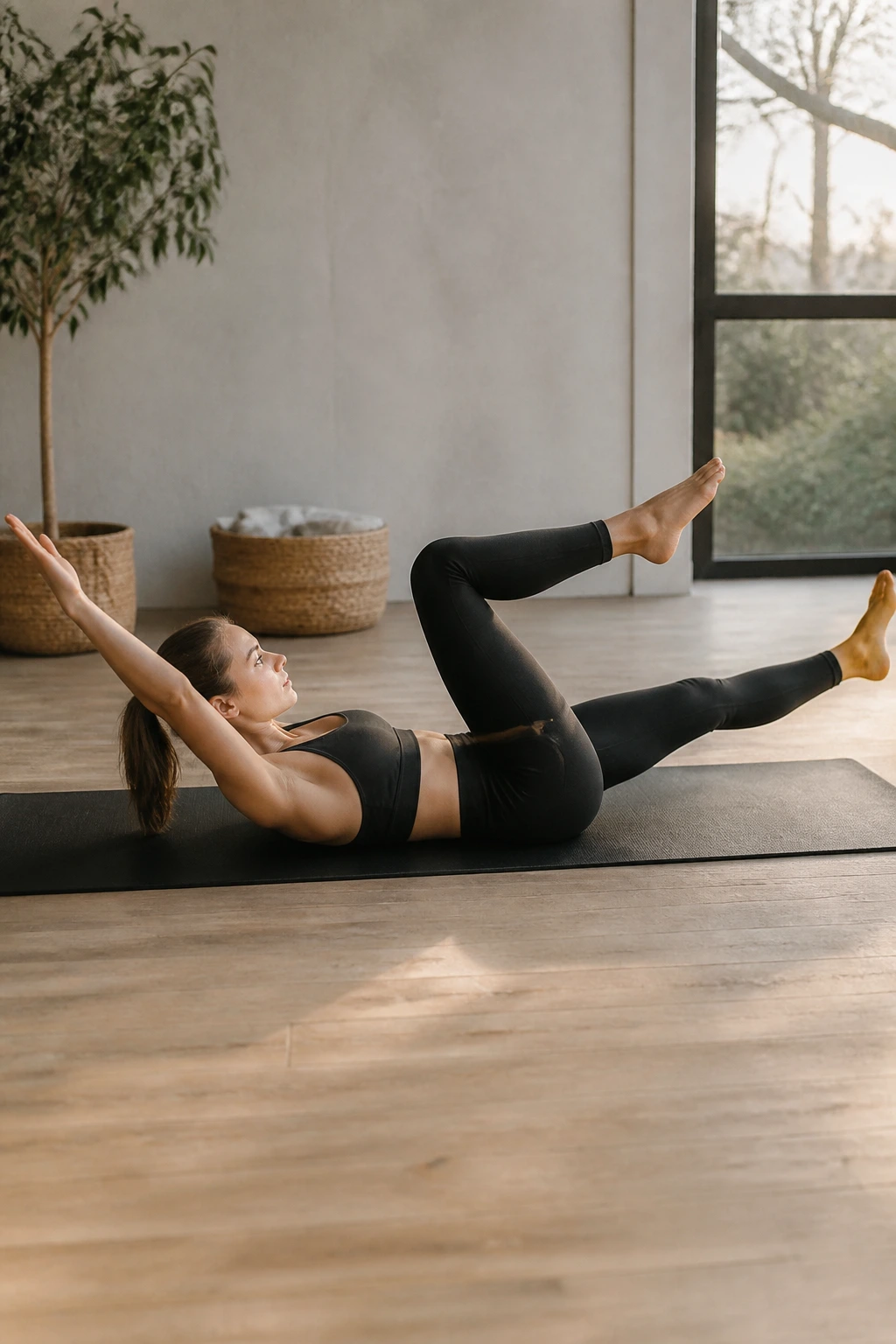
Tabata is short enough to fit almost anywhere and hard enough to feel earned. The classic format is 20 seconds of work, 10 seconds of rest, repeated for 8 rounds. For core training, that works best when the moves are sharp and controlled, not frantic.
Try dead bugs, reverse crunches, hollow holds, and bicycle crunches. Do one move for 8 intervals, rest a minute, then move to the next. If 8 rounds feels like too much, run 4 rounds per exercise and build up later.
The trick is not speed. The trick is precision. In a dead bug, keep your lower back pressed into the floor. In a hollow hold, ribs stay tucked and legs stay lower only as far as you can control. If the shape falls apart, the rep is over.
A lot of core work gets dumbed down into endless crunches. This is better. Short, sharp, and not messy.
15. Low-Impact Marching Cardio for No-Jump Training
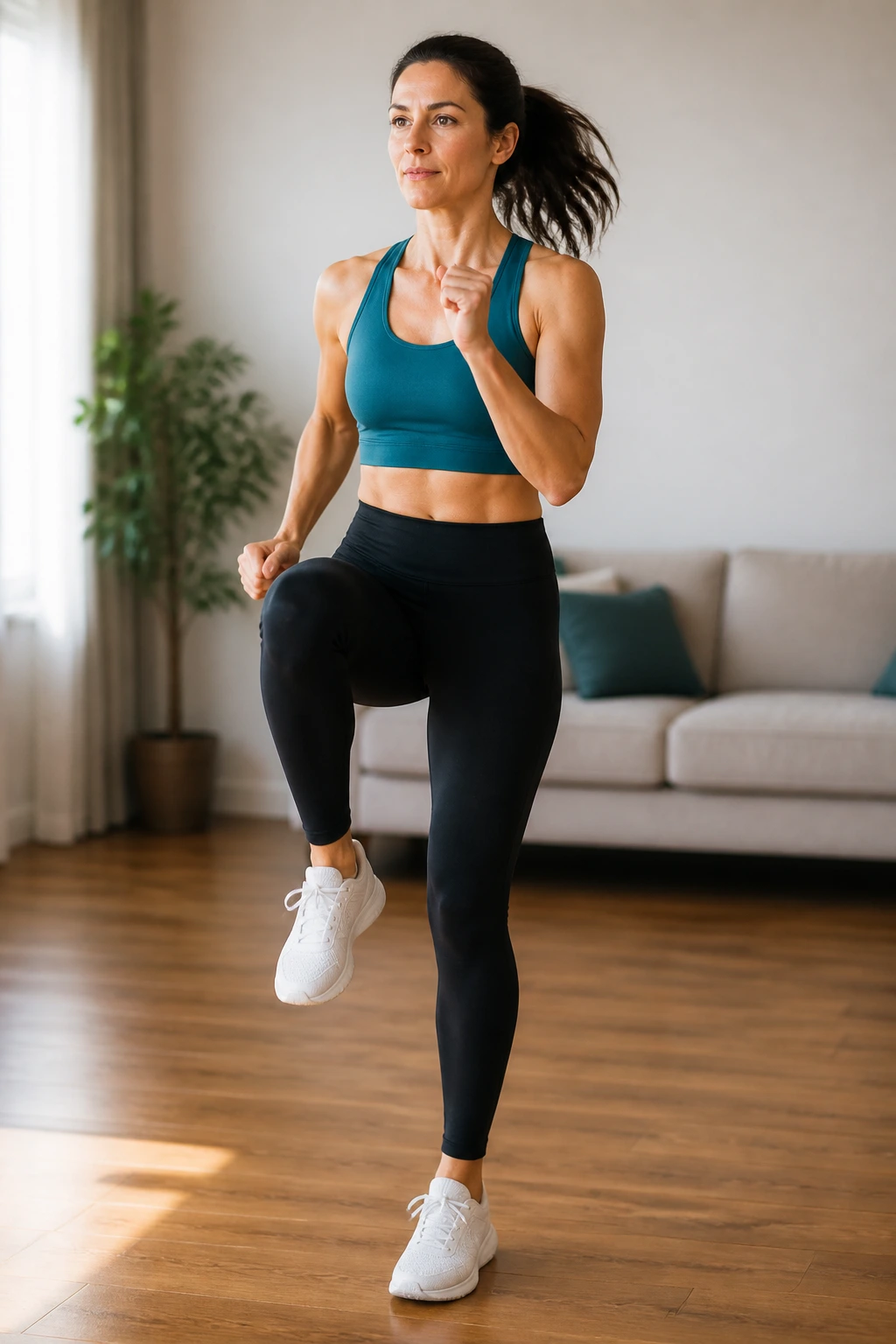
No jumping does not mean no effort. That needs saying because people still act as if cardio only counts when the floor shakes. Low-impact marching work can push your heart rate just fine when the pace is honest.
Set a timer for 45 seconds of movement, 15 seconds of rest, and cycle through high-knee marches, step jacks, lateral toe taps, and knee drives with opposite arm reach. Keep the feet light and the torso tall. You should feel the rhythm pick up even if the movement stays grounded.
This style is gold if your knees, ankles, or downstairs neighbors dislike jumping. It also pairs well with other workouts because it keeps you moving without frying the legs. That matters when you still have squats or lunges later in the week.
The danger is drifting into a lazy stroll. Don’t. March like you mean it, and the session stops feeling gentle very quickly.
16. Bear Crawl and Crab Walk Combo for Total-Body Control
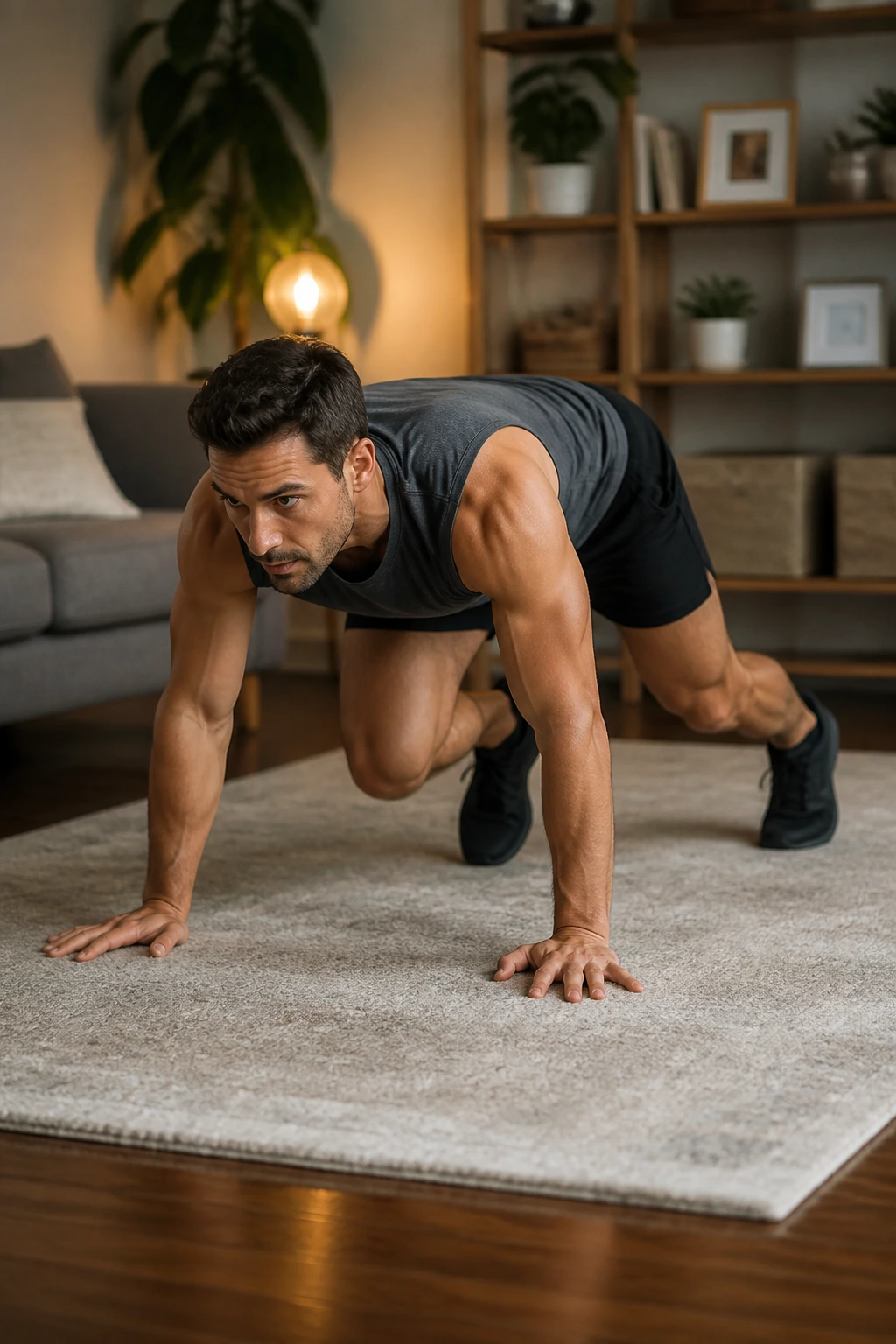
Bear crawls and crab walks look a little strange, which is probably why they work. They force coordination, shoulder stability, core tension, and hip control all at once. You can’t fake your way through them for long.
Try 20 steps forward in bear crawl, 20 steps back, then 20 steps crab walk forward and back. Rest 45 seconds and repeat for 4 rounds. Keep the movements small and controlled. If the shoulders shake or the hips drift, slow down.
Why this one earns its keep
The bear crawl teaches you to keep the spine quiet while the limbs move. The crab walk flips that pattern and makes the backs of the shoulders and glutes work differently.
- Knees hover just off the floor in the bear crawl.
- Hands stay under shoulders.
- In the crab walk, chest lifts and hips stay high.
- Move over a rug or mat if the floor is hard.
One nice side effect: this is a little humbling. Good. Training should be, sometimes.
17. Chair Dip and Triceps Circuit for Arm Work
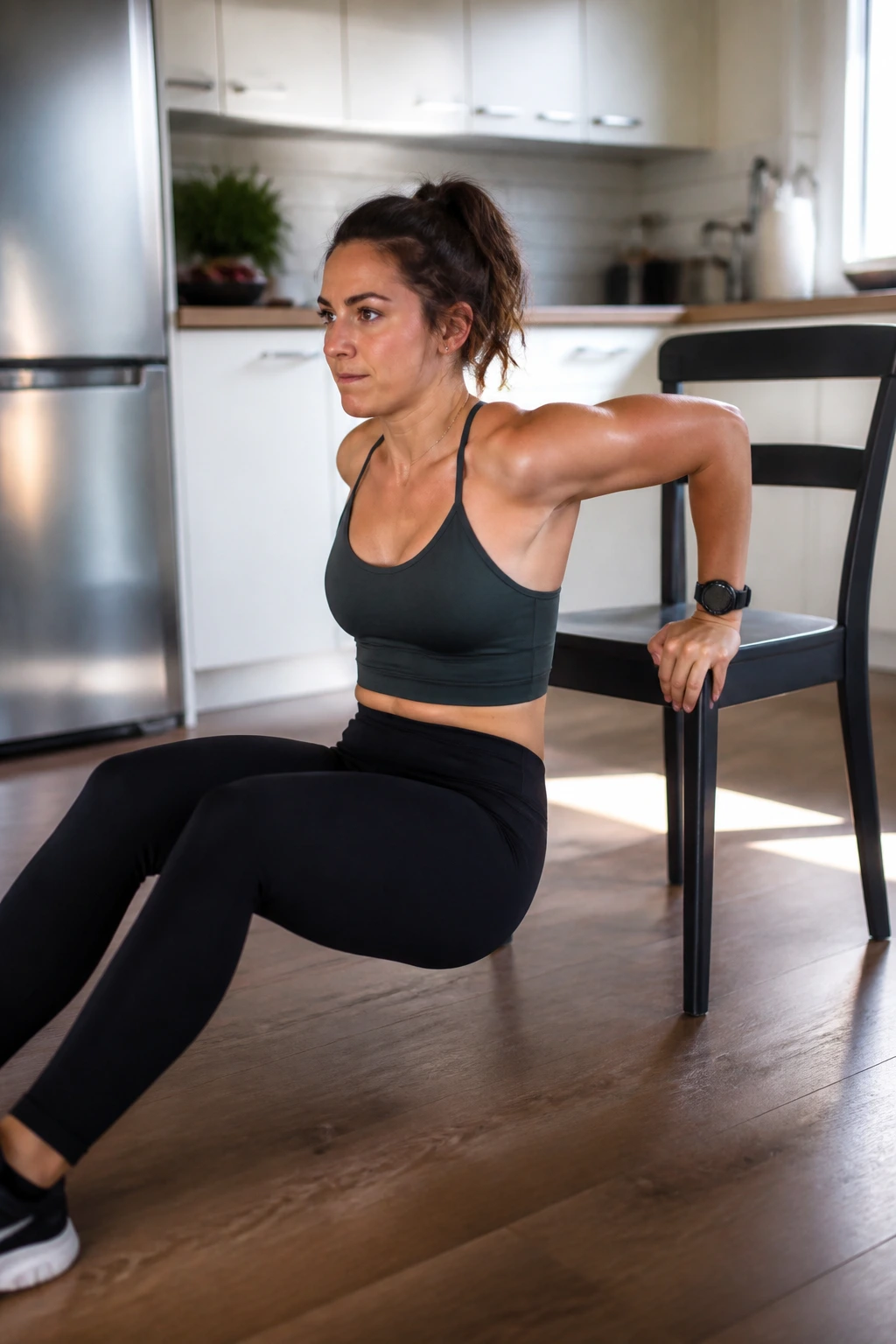
If push-ups hit the chest and shoulders, chair dips land squarely on the back of the arms. They are not fancy, but they are effective when set up with a stable chair or bench and a little discipline.
Use 8 to 12 dips, then immediately go into 10 close-grip incline push-ups or 10 triceps kickbacks with light bottles or dumbbells. Rest 45 seconds and repeat for 3 to 4 rounds. Keep your shoulders down and your elbows tracking back, not flaring out.
The setup matters more than people think. Use a sturdy chair that does not slide. Place your hands on the edge, slide the hips off, and lower only as far as your shoulders stay comfortable. Going too deep is a fast way to irritate the front of the shoulder.
This is not the prettiest workout on the list. It is one of the most useful, though, especially if you want arms that feel tighter when you wear short sleeves.
18. Split Squat Hold Workout for a Deep Leg Burn
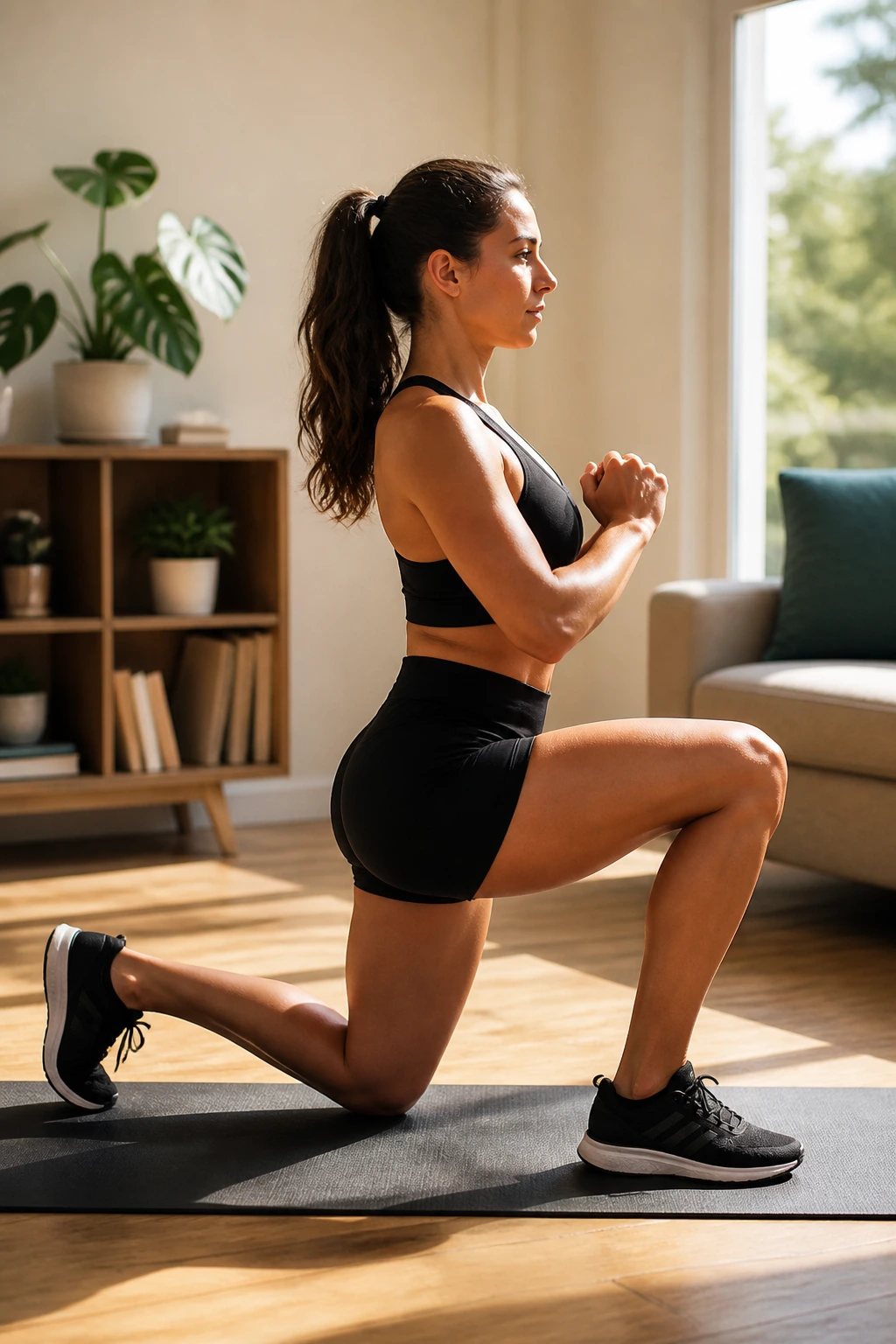
A split squat hold looks simple. Stand in a lunge position, sink down, and stay there. That’s it. It is also a surprisingly rough way to build leg strength because the muscles never get to coast.
Hold the bottom of a split squat for 20 to 30 seconds per side, then add 10 small pulses before standing up. Repeat for 3 to 5 rounds. Keep the front foot flat and the back heel lifted. If the front knee tracks over the toes, that’s fine; just keep the weight spread through the full foot.
This is where people tend to cut corners by leaning forward and turning it into a back exercise. Don’t. Stay tall, keep the core tight, and let the front thigh do the complaining.
A small note: this one burns faster than it looks. If you want to make it harder, raise the back foot on a low step. If you want to make it kinder, hold onto a wall with one hand.
19. Mobility Flow for Recovery Days That Still Count
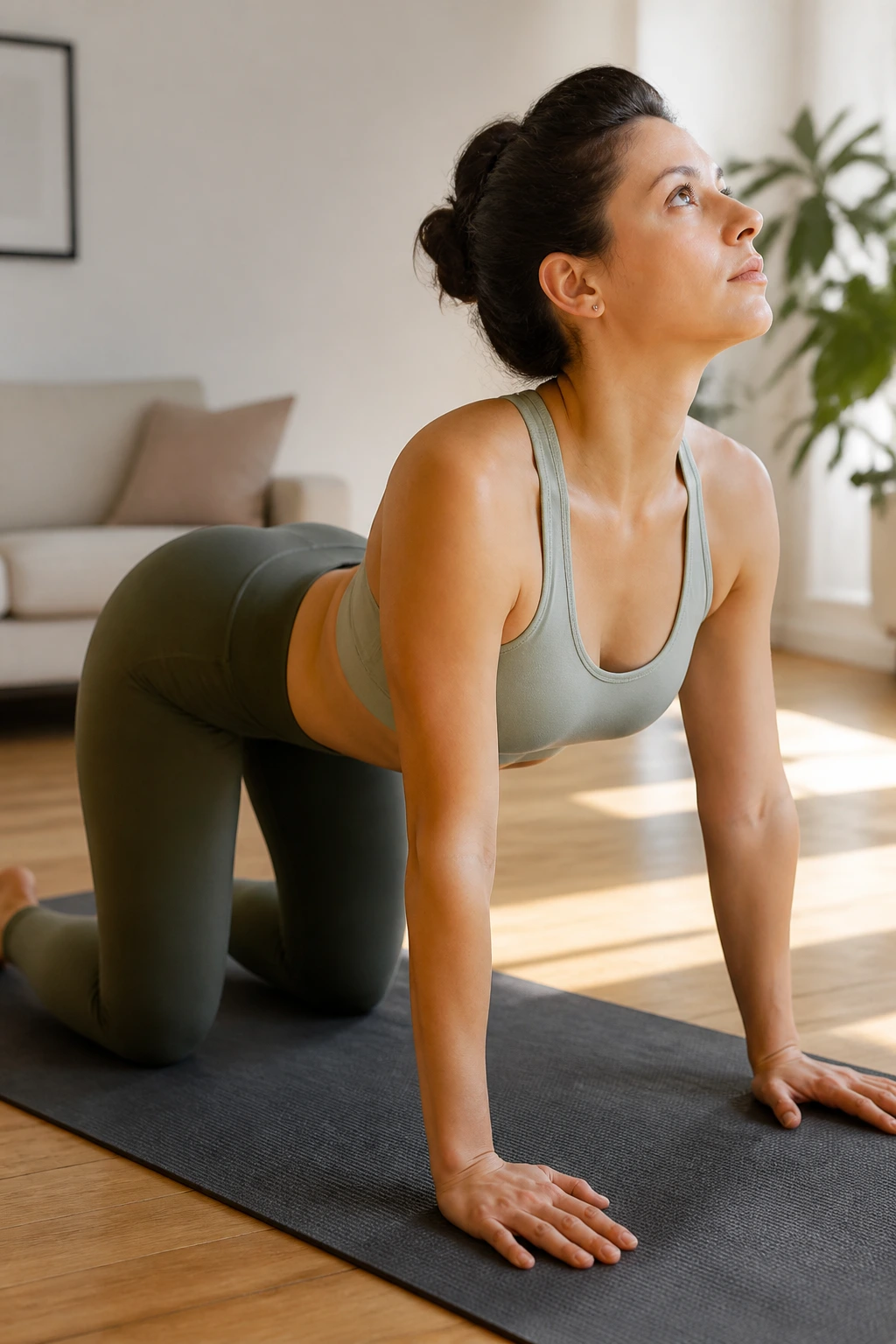
Recovery does not have to mean doing nothing. In fact, the days you move a little with purpose are often the days that keep the next workout from feeling stiff and clunky. Mobility flow is the unglamorous answer, and I mean that in a good way.
Run through cat-cow, world’s greatest stretch, ankle rocks, thoracic rotations, and a couch stretch. Stay in each position for 30 to 45 seconds or move through 5 slow breaths. Keep it gentle. The goal is to wake things up, not to win a flexibility contest.
What to keep gentle
A mobility day should feel like you’re taking the rust off hinges.
- Cat-cow: move one vertebra at a time.
- World’s greatest stretch: step long, keep the back leg active.
- Ankle rocks: heel stays down if possible.
- Couch stretch: squeeze the glute on the back-leg side.
This kind of work matters more when the week has a few hard sessions packed into it. It keeps the hips, ankles, and upper back from locking down in the exact places that make squats, lunges, and planks feel worse than they should.
20. Backpack AMRAP Finisher for a Full-Body Test
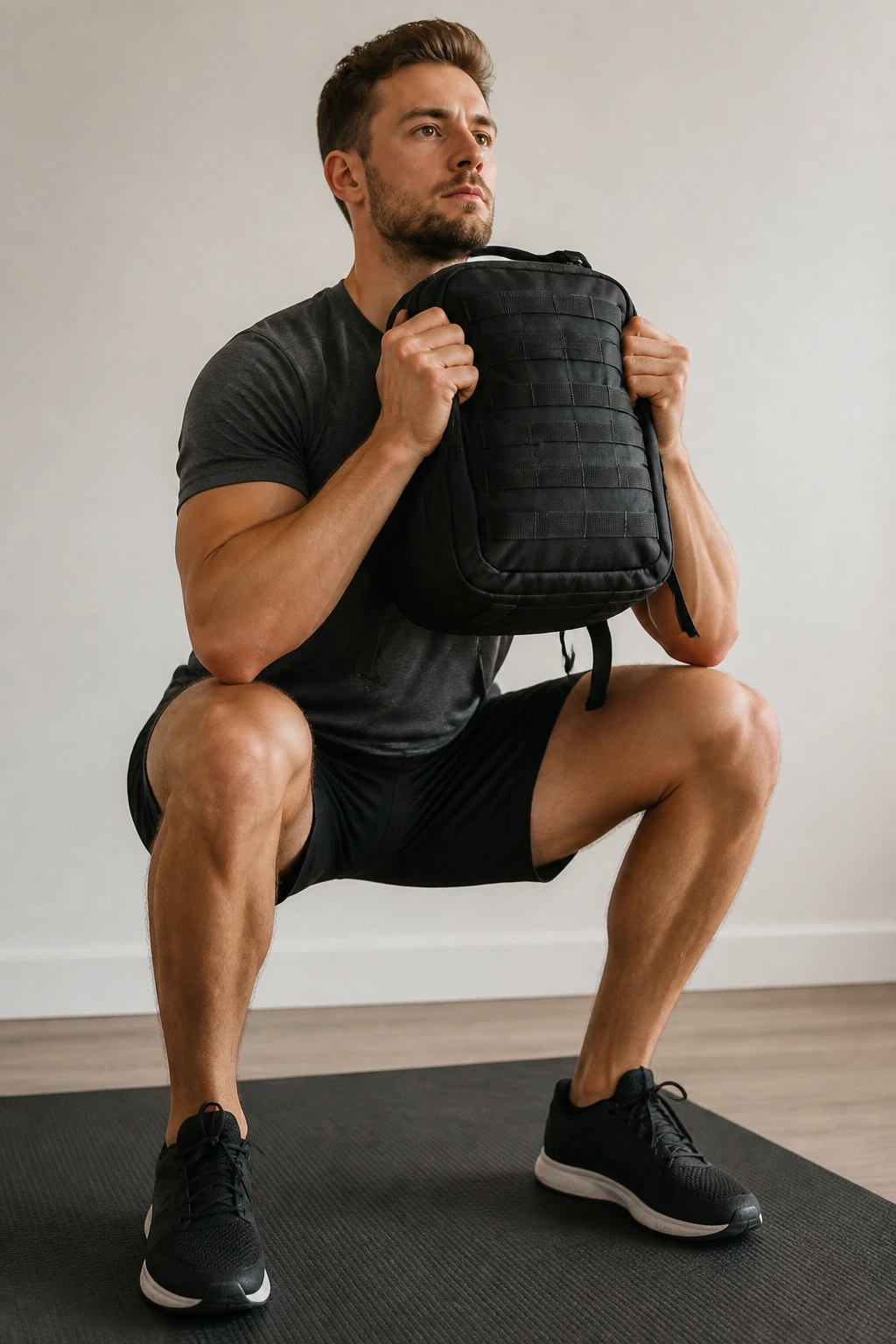
A backpack AMRAP is a blunt, useful ending to a home workout. AMRAP means as many rounds as possible in a set time, and a loaded backpack makes the work feel more like training than circling the room. Load it with books or canned goods, cinch it tight, and keep it close to the body.
Try 15 minutes of this loop: 10 backpack deadlifts, 8 goblet squats holding the backpack, 10 bent-over rows, 8 push-ups, and 20 mountain climbers. Move steadily, not recklessly. If form slips, reduce the reps before you chase the clock.
The deadlift should feel like a hip hinge, not a squat. The rows should come from the upper back, not a shrug. And the push-ups need to stay clean even when you’re tired, because sloppy pressing under fatigue is where shoulders get cranky.
If you want one practical rule for the whole list, it’s this: pick three strength-based sessions, two conditioning days, and one mobility day in a week, then repeat. That’s enough structure to matter, and enough variety to keep you from hating the routine halfway through the month.
