



The worst morning yoga routine is the one that asks for forty-five minutes you do not have. Most people do better with twenty-minute yoga flows for busy mornings because they can finish them before the day gets loud. That matters more than people admit. A short, repeatable flow wins over a long, ambitious one that lives on a wish list.
Done well, twenty minutes is enough to wake up the spine, open the hips, and stop your shoulders from sitting somewhere near your ears. Done badly, it turns into a sleepy fold-fest where you reach for your toes three times and call it practice. I’d rather see a clean, honest sequence with a clear purpose than a “perfect” routine nobody repeats.
These flows are built for real mornings: stiff hamstrings, a neck that feels glued on, one eye open, and maybe a coffee mug cooling on the counter. Some days you need heat. Some days you need calm. Some mornings call for balance, and some call for the simplest possible reset.
If you keep the sequence short enough to remember, you’re far more likely to roll out the mat tomorrow too. That’s where the good stuff happens.
1. The Wake-Up Spine Flow
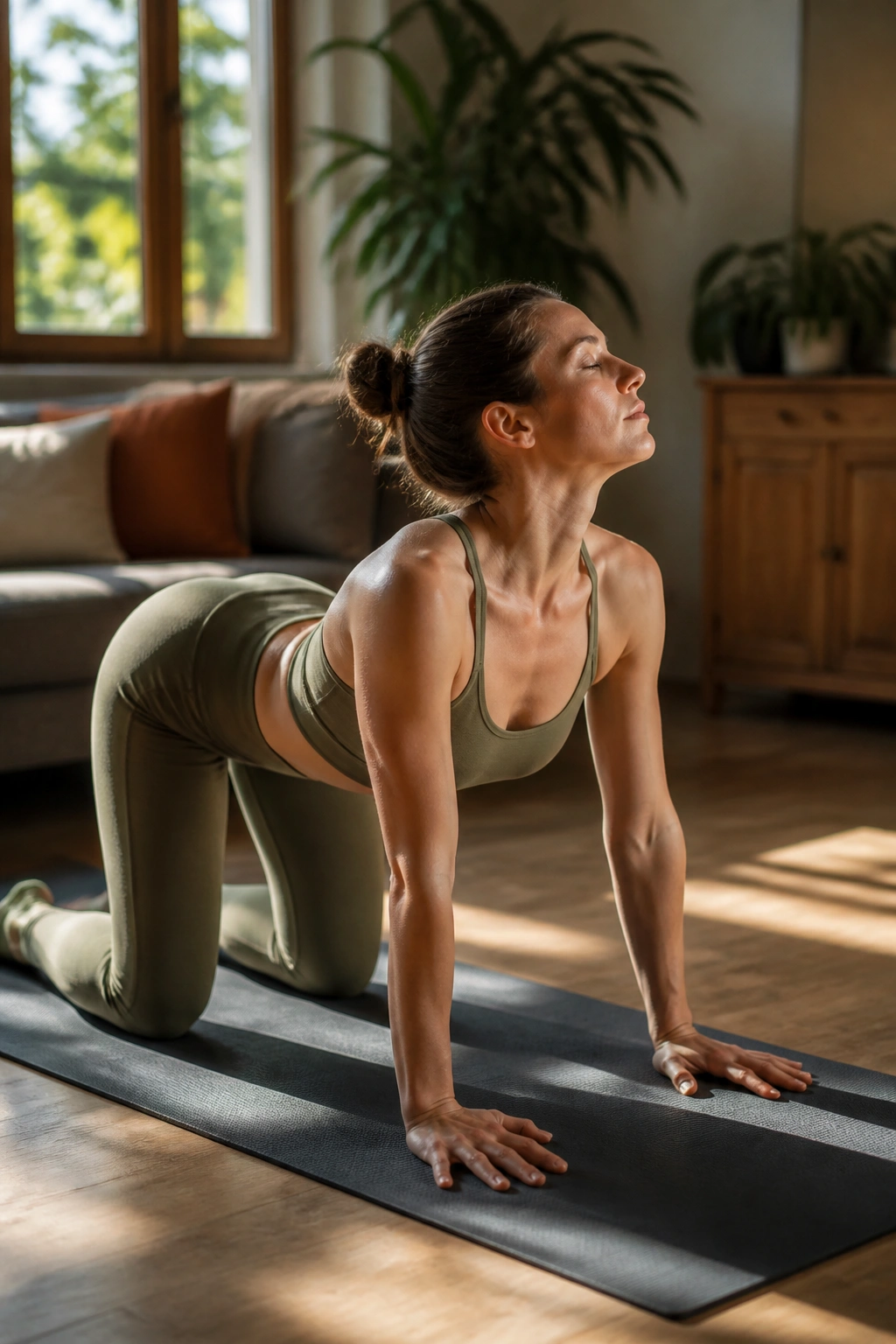
If your spine feels welded together before breakfast, start here. Sleep tends to leave the middle back flat and the low back a little cranky, and the fastest fix is usually gentle movement in both directions. Cat-cow, small twists, and a few slow roll-ups do more good than a big hamstring stretch you can barely hold.
A clean 20-minute shape
- 2 minutes: standing breath with overhead reaches
- 3 minutes: cat-cow on hands and knees
- 3 minutes: thread-the-needle, 90 seconds per side
- 4 minutes: sphinx to child’s pose waves
- 4 minutes: low lunge with a soft twist, 2 minutes per side
- 2 minutes: ragdoll folds and slow roll-ups
- 2 minutes: standing side bends and mountain pose
Keep the ribs soft and the jaw loose. If your low back feels pinchy in child’s pose, widen the knees and slide a folded blanket under the shins. That tiny change matters more than people think.
I like this one for days when the body feels old before noon. It is calm, but not sleepy.
Use breath as the metronome: inhale to lengthen, exhale to twist or fold.
2. Neck, Shoulder, and Jaw Reset
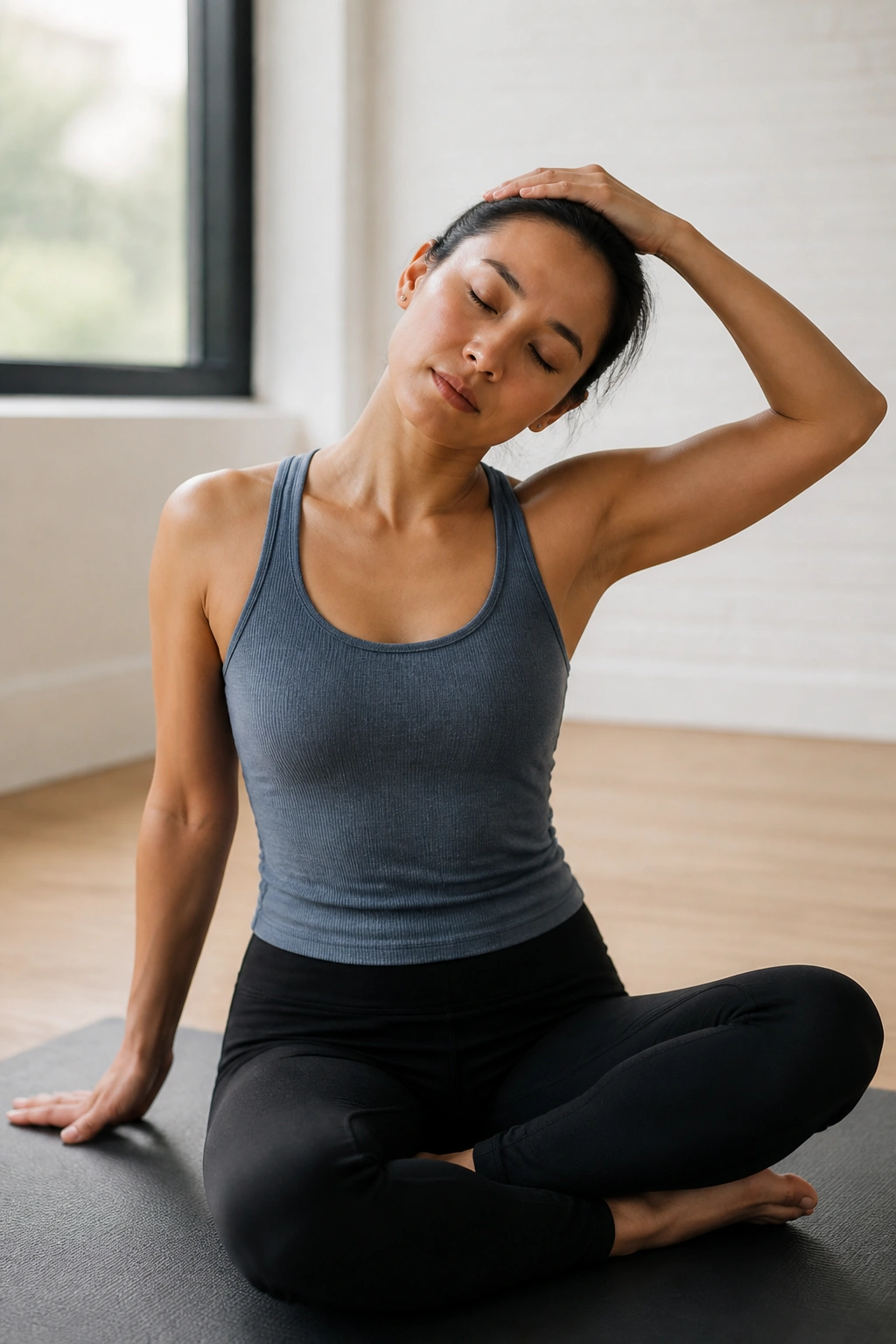
Why does the neck and shoulder area feel tighter than the rest of you first thing in the morning? Because sleep, stress, and phone posture all love the same two places. If you wake up with teeth clenched or shoulders up by your ears, spend the whole 20 minutes there instead of pretending a single downward dog will fix it.
Start seated or kneeling. Roll the shoulders forward and back a few times, then settle into slow ear-to-shoulder stretches with one hand resting on the floor. Keep the pull tiny. Big neck yanks are a bad idea. The goal is length, not drama.
Safety notes
- Skip full neck circles
- Move the head slowly side to side
- Keep the chin level, not dropped hard
- Breathe through the nose for most of the sequence
After that, thread in eagle arms, puppy pose with the forehead on the mat, and a few rounds of cactus arms while lying on your back. Finish with a jaw release: lips closed, teeth apart, tongue resting on the roof of the mouth. It sounds almost too simple, which is usually a good sign.
I use this flow when the whole upper body feels compressed. It works because it stops you from treating the neck like an afterthought.
3. Cat-Cow to Down Dog Wake-Up
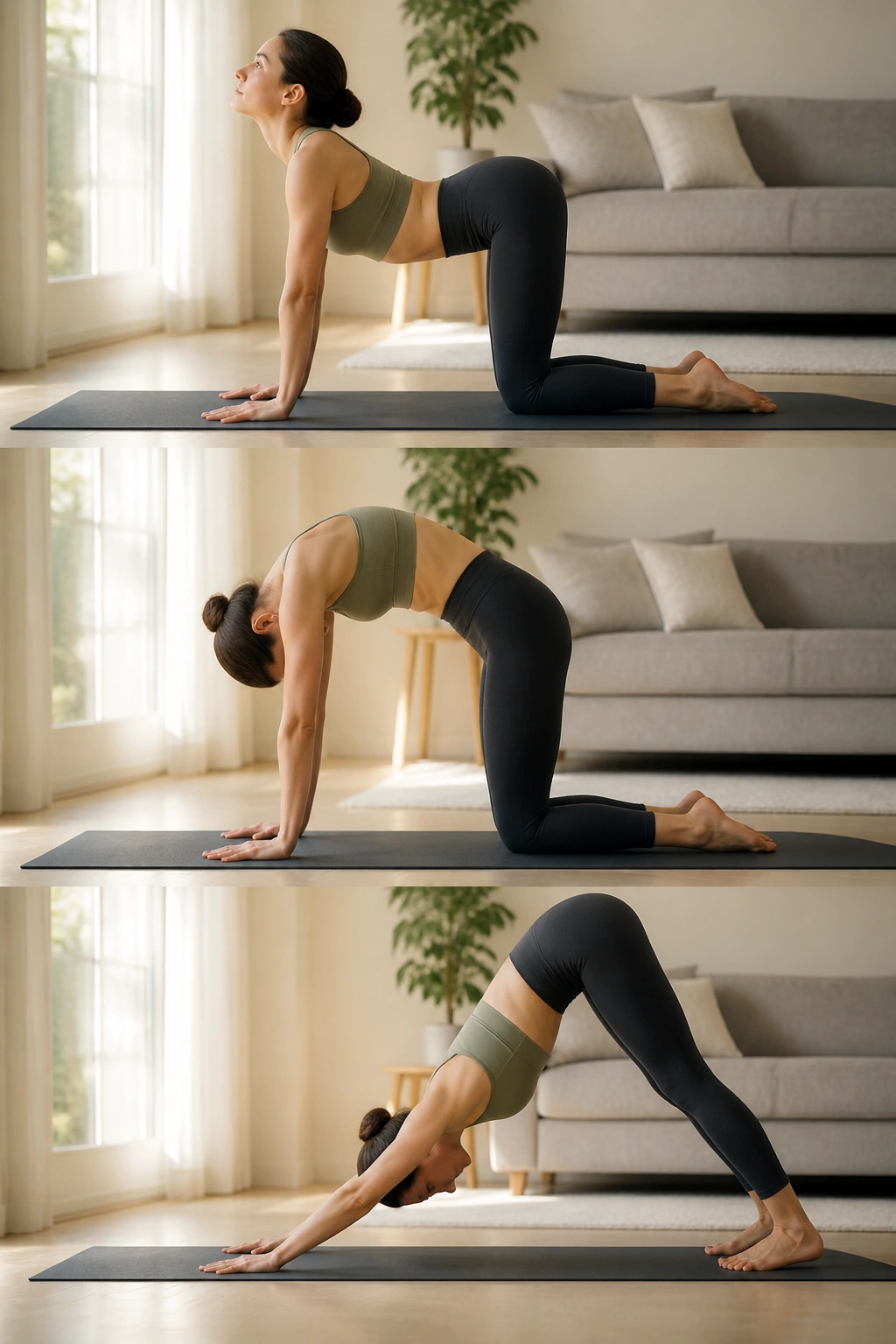
A real morning flow does not need flash. It needs rhythm. Start on hands and knees with cat-cow, then let that motion carry you straight into down dog, low lunge, half split, and a gentle vinyasa if your shoulders want more work. Nothing fancy. Just clean transitions and enough breath to keep you from rushing.
Try this order
- Cat-cow for 1 minute
- Down dog with pedal steps for 2 minutes
- Low lunge, 2 minutes per side
- Half split, 1 minute per side
- Plank to cobra, 3 minutes total
- Easy seated twist, 2 minutes
A small detail changes the whole thing: move one breath at a time. Inhale to lengthen, exhale to shift. If you try to hustle through it like a fitness class, the sequence turns stiff again. That’s the trap. The poses are familiar, but the pacing is what makes them useful.
I reach for this one when I want enough heat to feel awake without leaving the mat drenched. It is a classic for a reason.
4. Standing Sun Salutation Lite
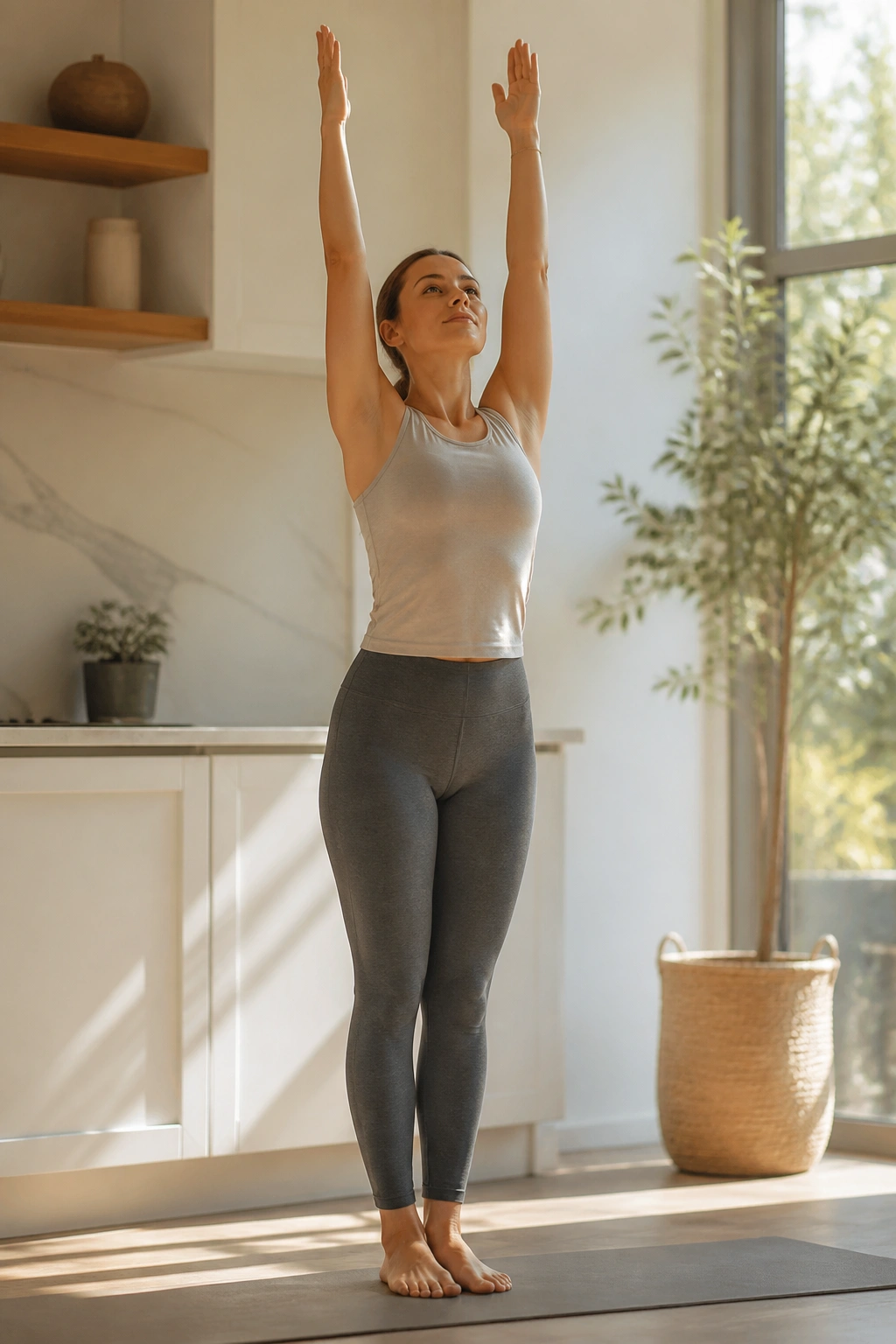
Standing yoga gets ignored because people assume the floor is where the “real” work happens. Not on a rushed morning. When the floor feels cold and your hamstrings feel like cables, staying upright for most of the flow can be a lot kinder, and a lot easier to repeat.
Start in mountain pose, sweep the arms up, fold with bent knees, and rise to a half lift. Step one foot back into a short lunge, come up into crescent, and hold for three breaths. Move into warrior II, reverse warrior, side angle, then switch sides. A few rounds like that will wake up the legs fast.
Best part of this flow
- You stay warm
- Transitions are easy to remember
- Balance work sneaks in without much fuss
- Hair, clothes, and cold floors matter less
If you want a little more spice, add chair pose between sides. If your knees complain, shorten the stance and keep the front shin more vertical. A smaller stance often feels better than a deep one.
This is the flow I’d use when I need to look like I’m getting my life together, even if breakfast is still half-finished.
5. The Hip Opener for Tight Mornings
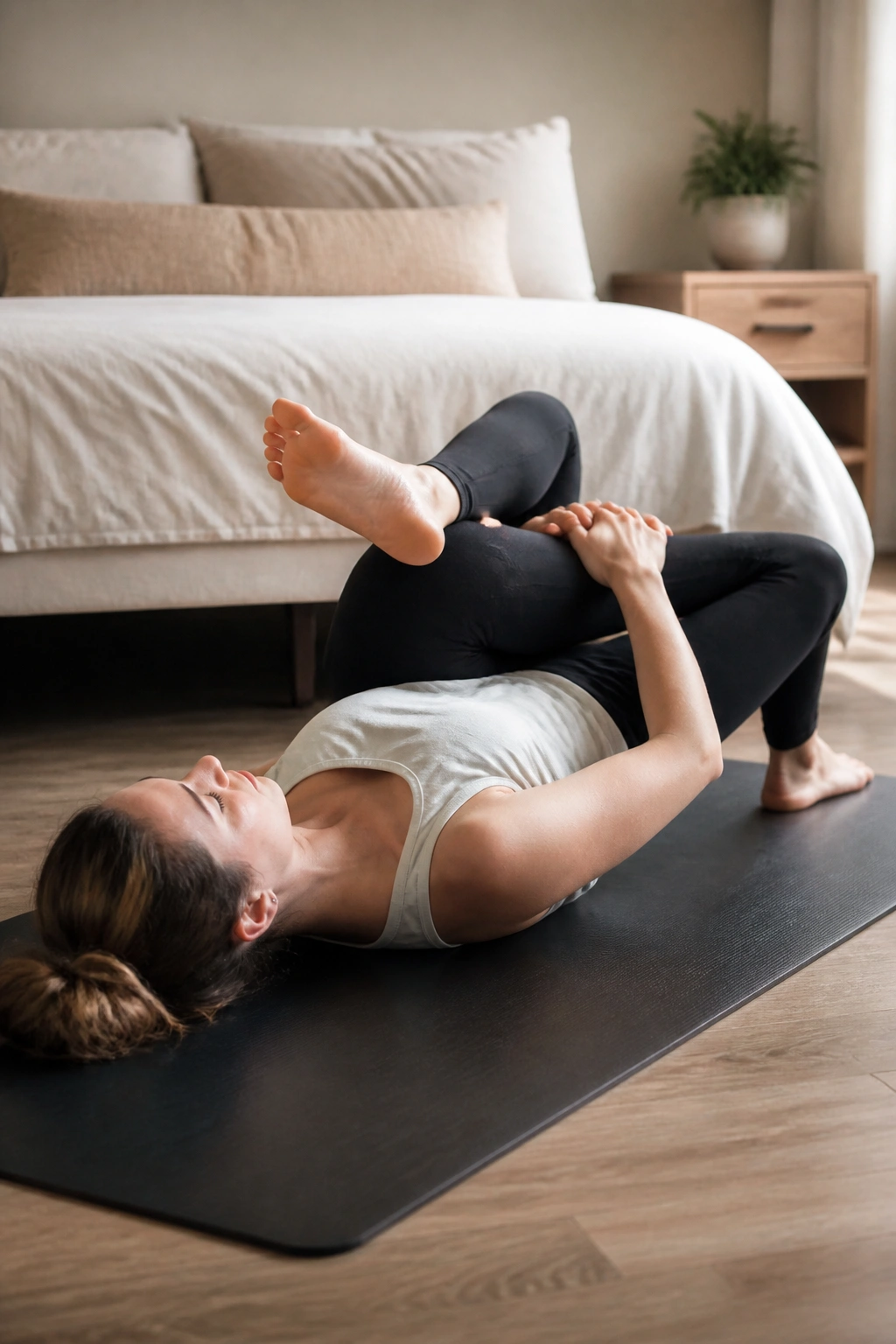
Tight hips feel like a creaky door hinge. You know the sound. It shows up when you get out of bed, and it shows up again when you try to sit cross-legged for five minutes and immediately regret it. This flow gives the hips room without forcing anything.
Begin on your back with figure-four stretch, then move into low lunge, lizard, and a supported pigeon prep if your knees are happy with it. A block or folded blanket under the hip makes pigeon calmer and easier to hold. Finish with butterfly, goddess, and a few slow squats if you want to stay upright for the last few minutes.
What makes it work
- The front of the hip gets open without harsh pulling
- The outer hip gets space through rotation
- The squat gives you a little active strength
- Props keep the work honest, not heroic
I would not chase depth here. That’s the mistake. The first few minutes of the morning are for coaxing, not proving something.
If one side is tighter, stay there an extra 30 seconds. That little bit of attention usually beats forcing both sides to behave the same.
6. Core and Balance Wake-Up
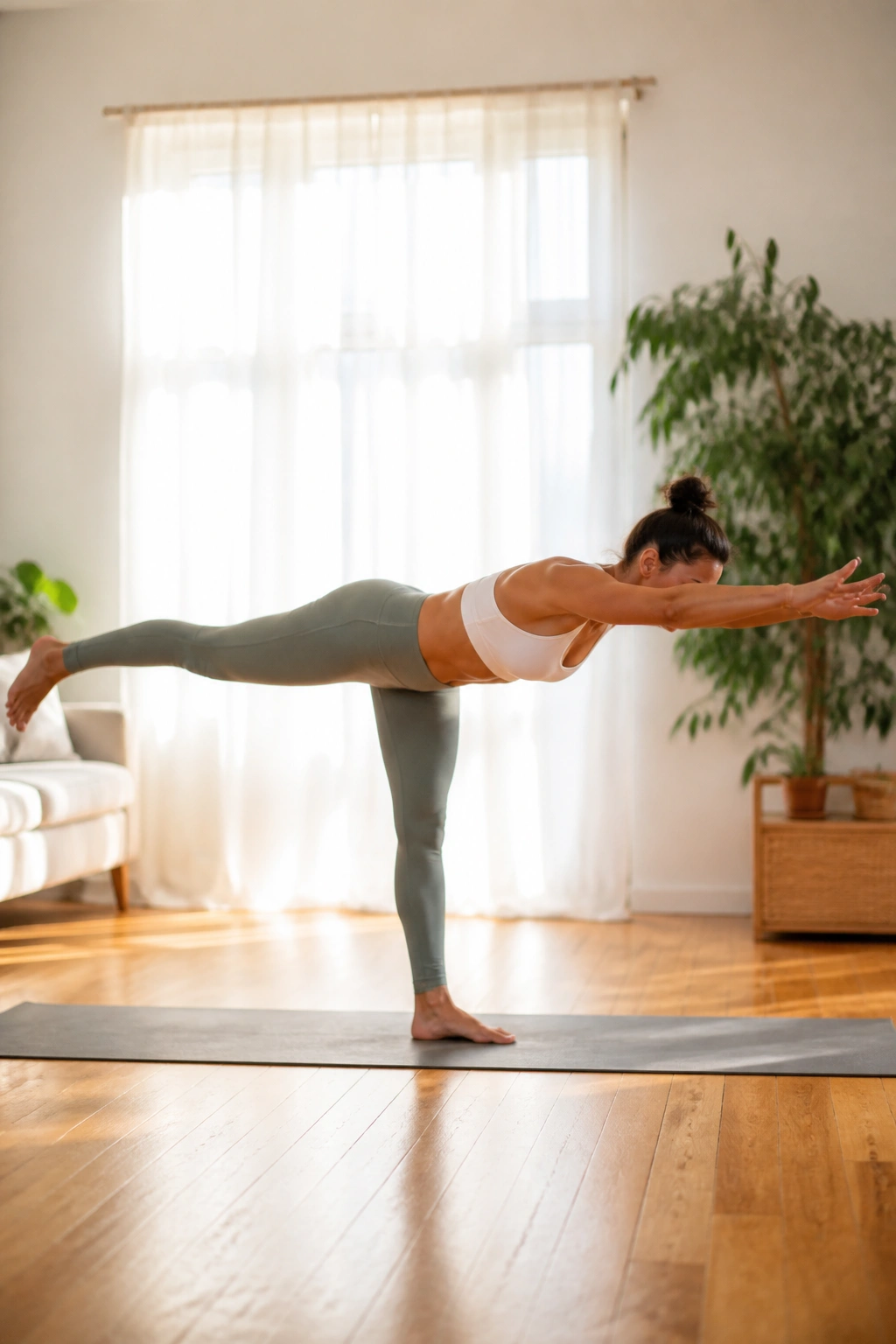
Core work does not have to mean crunches. In a yoga flow, the best core activation often comes from standing on one leg, moving slowly, and keeping the breath steady when the body wants to wobble. That is enough to turn the lights on.
Try chair pose to standing knee lift, then step back into warrior III with hands on blocks if balance is shaky. Add a side plank from the knees or full side plank if your wrists and shoulders are happy. Finish with boat pose for short holds, not long grinds. Ten-second clean holds beat thirty sloppy ones.
A better way to think about it
You are not trying to smoke your abs first thing in the morning. You are trying to wake up the deep support around the ribs, pelvis, and low back so the rest of the day feels less floppy.
A quick sequence might look like this:
- 1 minute chair pose pulses
- 2 minutes standing knee drives
- 2 minutes warrior III each side
- 3 minutes side plank work
- 2 minutes boat pose rounds
- 3 minutes bridge pose with slow lifts
The rest of the time can go into easy breath and standing recovery. A little core work goes a long way before coffee.
7. Hamstring and Calf Unknot
What if your calves are the thing making the whole morning feel clunky? That happens more than people expect, especially if you walk a lot, run, or sleep with your feet pointed down. Tight calves pull on the backs of the knees, and the hamstrings usually join the complaint.
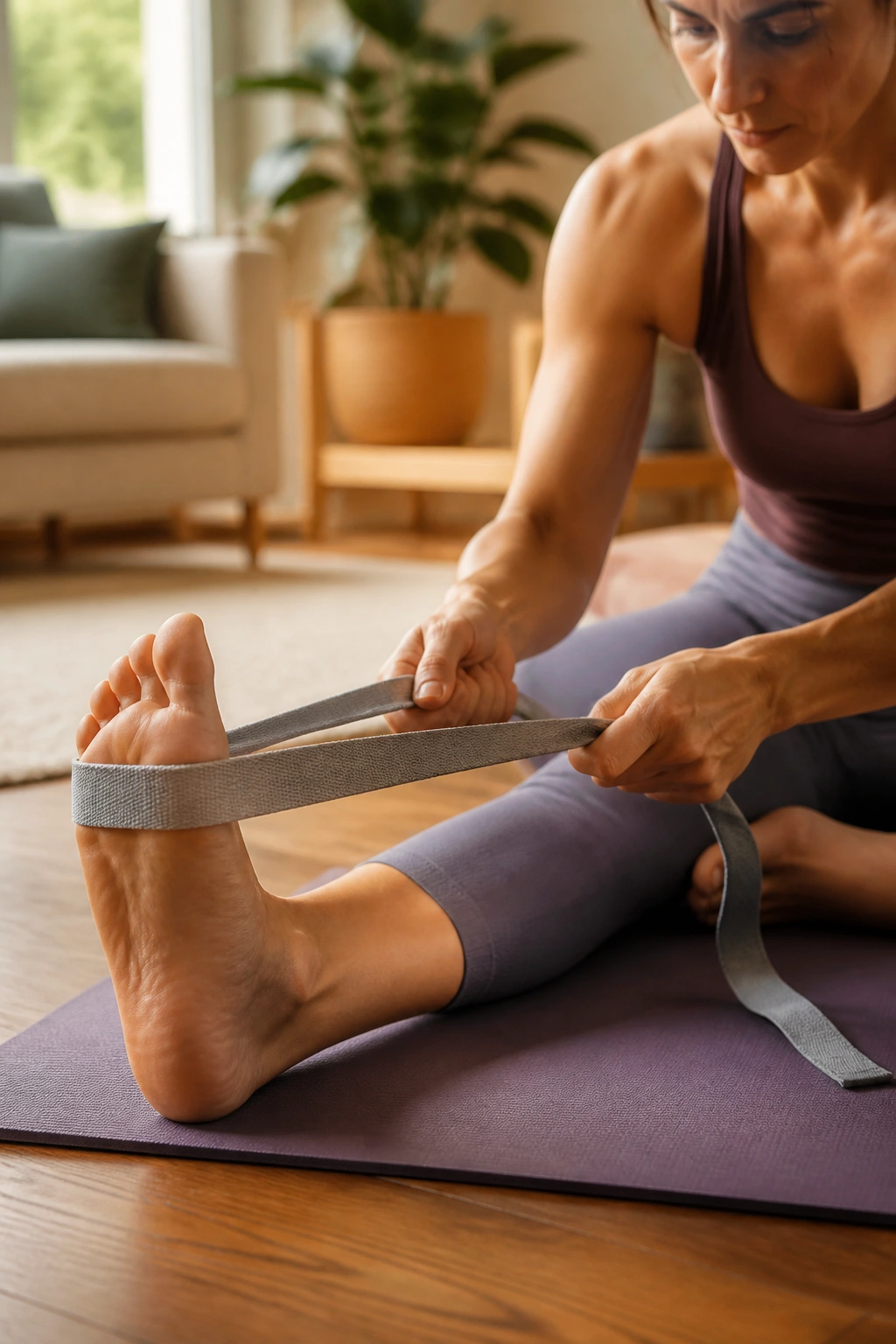
Start in down dog and pedal the feet for a full minute. Then shift into runner’s lunge, half split, and pyramid pose, keeping the front knee soft until the tissue warms up. After that, lie down and use a strap or towel around one foot for a supine hamstring stretch. Don’t yank it. Let the leg rise until you feel a clean line, not a tug-of-war.
Good props for this one
- A yoga strap or bath towel
- One block under the front hand in pyramid
- A wall for calf stretches
- A folded blanket under the hips if your back rounds too much
I like ending this flow by rolling through the feet slowly, toes to heels, standing for a few breaths. It sounds tiny. It is not tiny at all.
Loose calves change the whole chain. The knees feel better, the low back gets less grumpy, and standing up from the floor stops feeling like a small event.
8. The Low-Back Friendly Flow
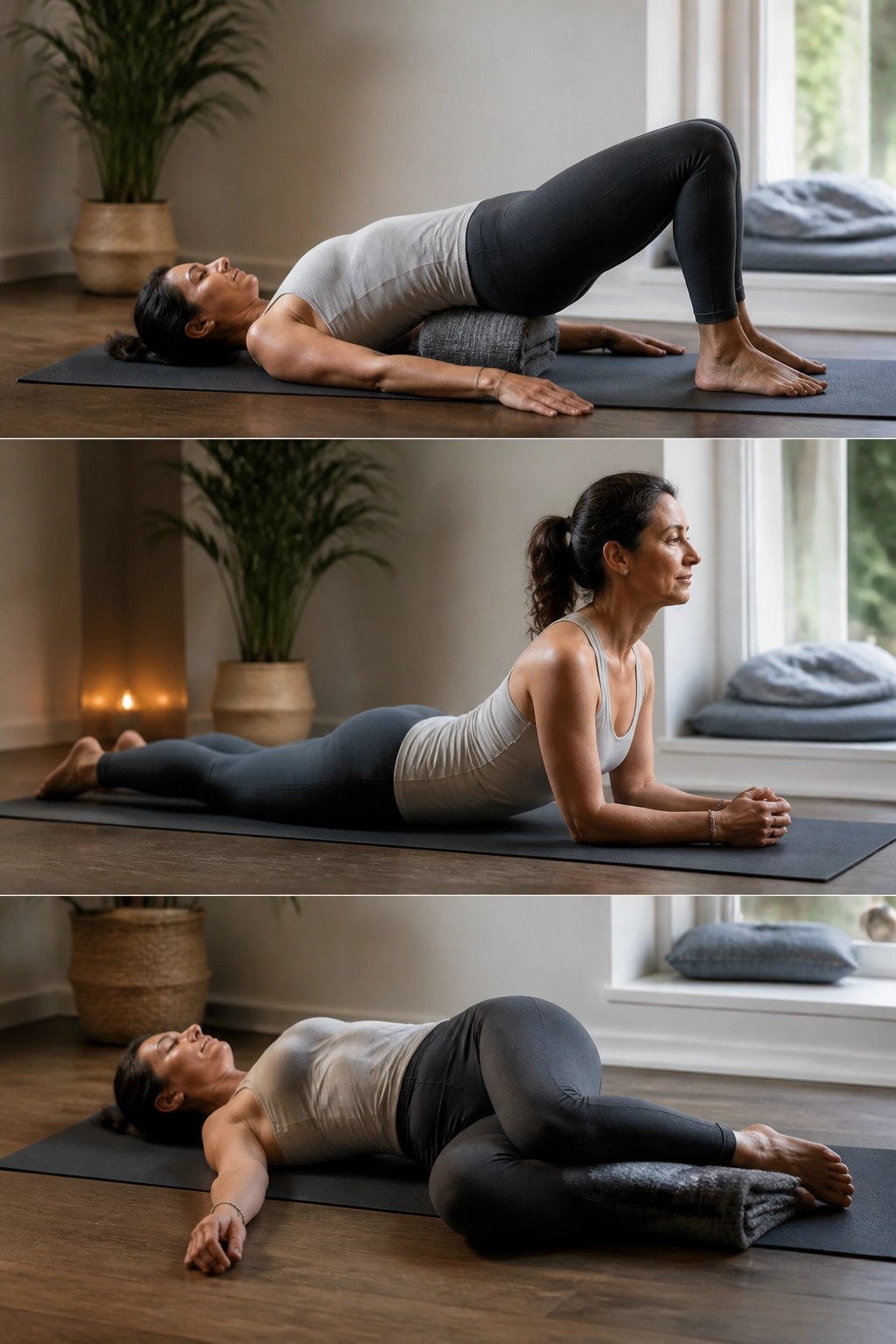
Some mornings, a back that feels stiff wants support, not bravery. That’s when deep forward folds and aggressive twists can backfire. A low-back friendly flow keeps the pelvis steady, the breath slow, and the movements small enough that your body trusts them.
Start on your back with knees bent and feet on the floor. Rock gently side to side, then move into bridge pose with a short hold. Slide into sphinx, baby cobra, and a supported supine twist with a blanket between the knees if one side feels cranky. Then come to low lunge with hands on blocks so the spine stays long.
What to skip
- Deep seated folds first thing
- Fast twisting
- Over-arching in cobra
- Any shape that sends pain into the leg
The best low-back flow often feels almost boring. Good. Boring can be the right answer. You’re trying to make the back feel safe enough to move, not impressive enough to post.
A final child’s pose with the knees wide and the forehead supported usually lands nicely here. If the low back relaxes, the whole day tends to go easier.
9. Breath-Led Calm Start
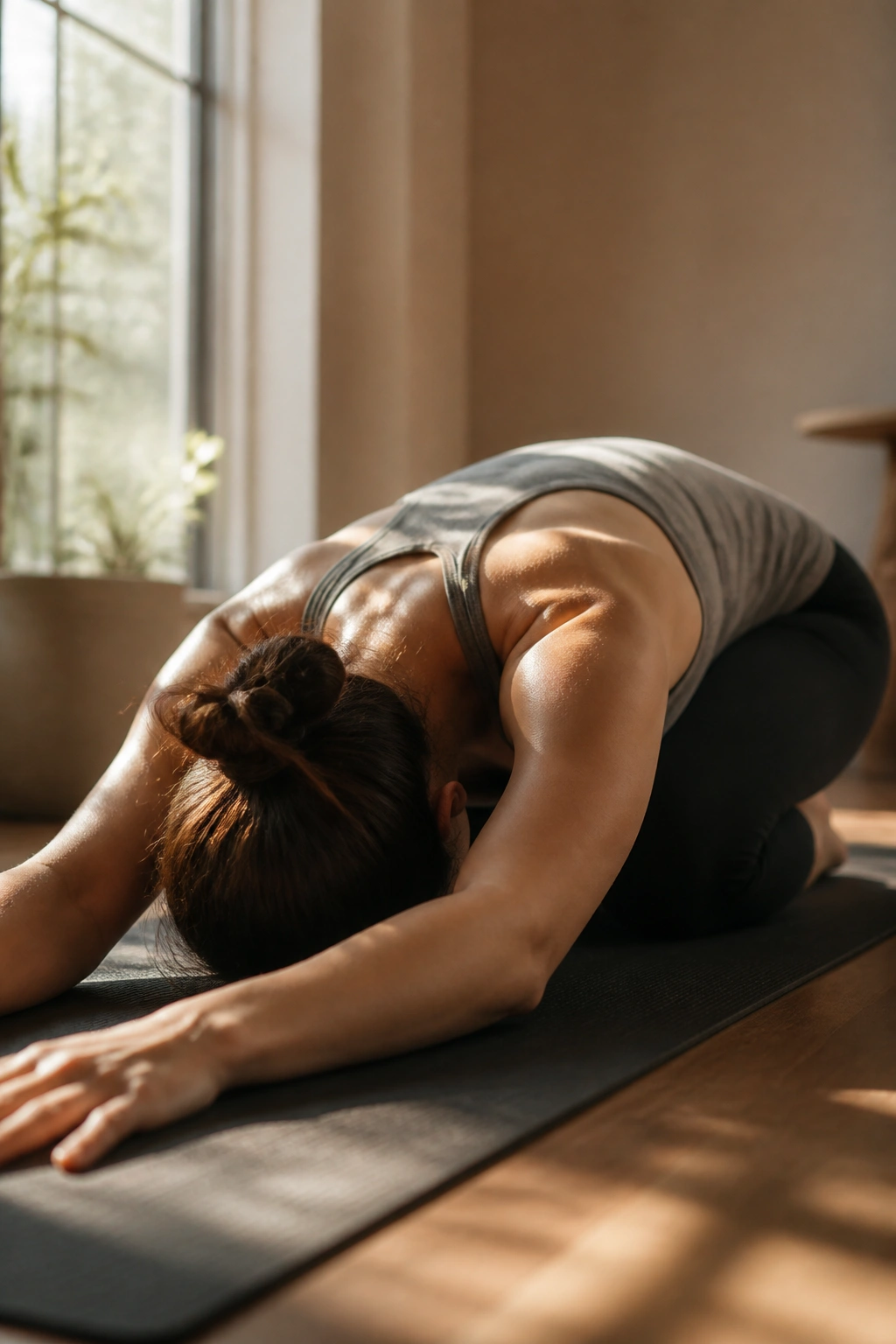
A calm flow is not lazy. It is the right tool for mornings when your mind is already sprinting while your body is still in bed. If you wake up tight through the chest, scattered, or a little wired, a slower pace can do more than a harder practice.
Settle into child’s pose, then move to kneeling side bends, seated twists, and a supported forward fold with a cushion under the hips. Use a steady count: inhale for four, exhale for six. That longer exhale matters. It tends to slow the whole practice down without making it drag.
No need to chase sweat. No need to save time by rushing the transitions. The point is to make the next choice feel less frantic.
A few minutes on the wall also fits well here. Legs up the wall, or calves on a chair, gives the lower body a break and lets the breath do the heavy lifting. This is the flow I’d pick on mornings when I want to arrive in the day, not tumble into it.
10. The Energy-Boosting Vinyasa
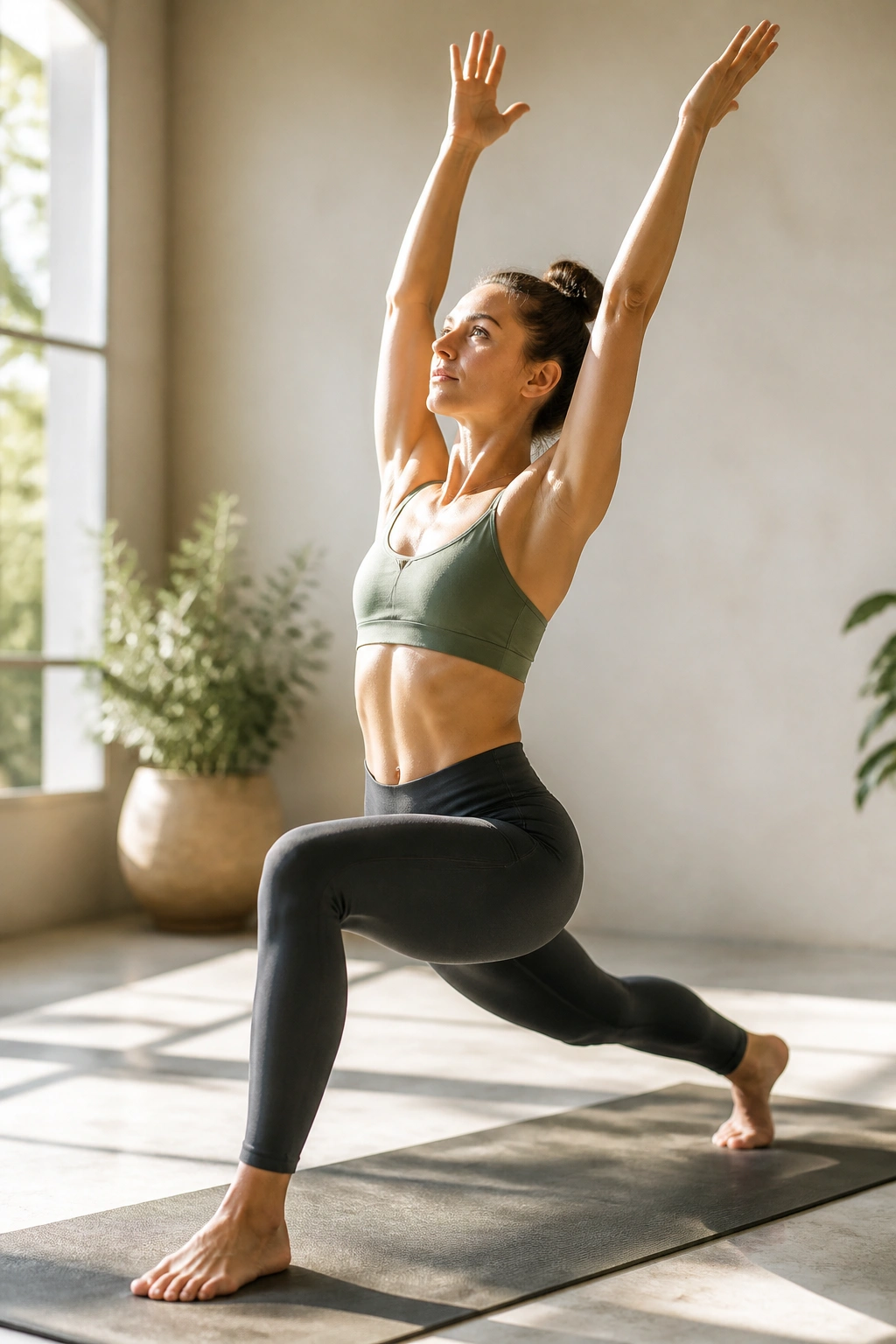
A little heat changes the whole day. If you want a morning practice that feels athletic without getting complicated, a simple vinyasa sequence is hard to beat. It wakes up the shoulders, legs, and lungs at the same time, which is useful when sleep has made everything sluggish.
Start with sun salutations, then layer in chair pose, plank, chaturanga or knees-down lowering, upward dog or cobra, and a short standing series like warrior I, warrior II, and crescent lunge. Keep the pace crisp. Not frantic. Crisp.
If you want more warmth
- Hold chair for 3 breaths each round
- Add five slow pulses in warrior II
- Stay in plank for 20 to 30 seconds
- Finish each side with a half split
- End with standing forward fold and three slow breaths
Wrists can get irritated if you rush the plank work or dump weight into the heels of the hands. Spread the fingers wide and press through the thumb and index finger mound. That tiny adjustment often makes the sequence far kinder.
I use this one when I want my morning to feel like a real workout. It earns its place.
11. The Desk-Worker Posture Fix
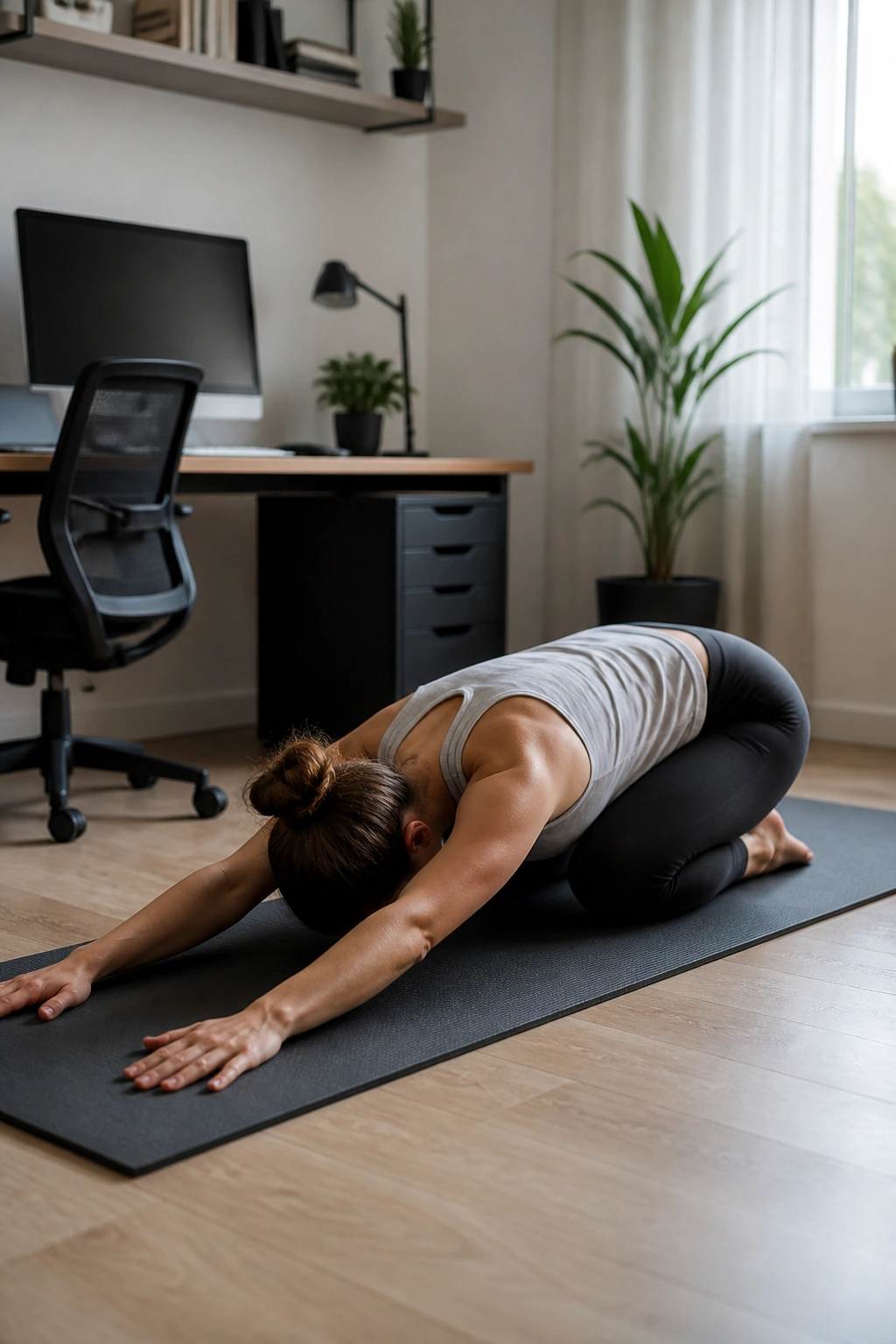
A desk worker’s body often wakes up already rounded forward. Shoulders slumped. Upper back stiff. Chest a little closed. If that sounds familiar, the smart move is to open the front of the body and wake up the thoracic spine before you sit down and repeat the same shape all day.
Start with puppy pose or a forearm variation if the shoulders are tight. Then move into thread-the-needle, sphinx, locust, and reverse tabletop. Gate pose helps too, because it opens the side body that gets pinched by long hours at a keyboard. This is not about looking graceful. It is about undoing the worst parts of a chair.
A better upper-body trio
- Puppy pose for the chest
- Locust for the back line
- Reverse tabletop for shoulder opening
Keep the chin neutral in locust. If you crane the neck up, you miss half the point. And if reverse tabletop feels too intense on the wrists, keep the feet planted and simply lift the chest over a block.
I like this flow because it feels useful immediately. Your breathing gets bigger. Your upper back stops feeling like a coat hanger.
12. The Strength-First Morning Flow
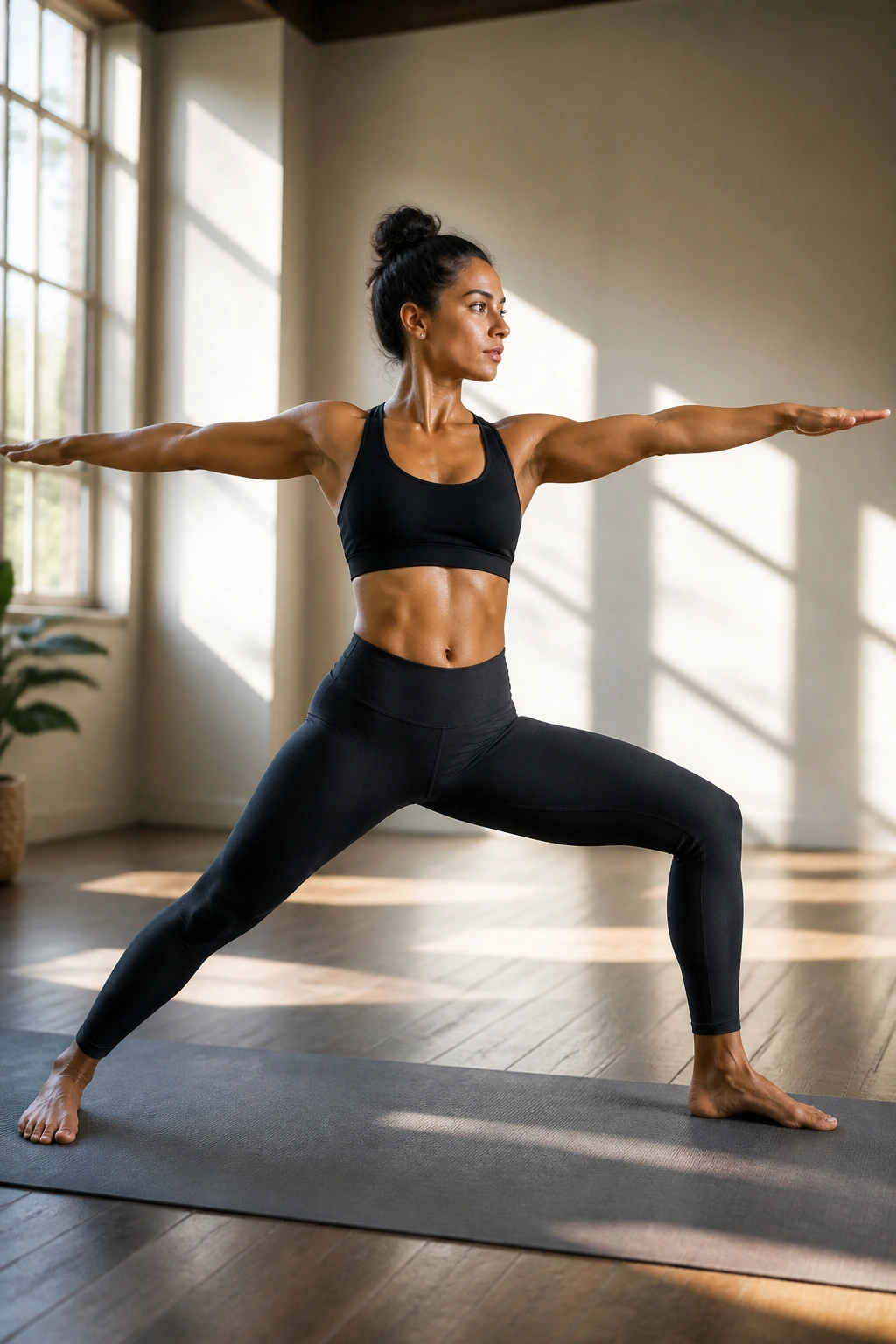
Strength-first yoga is not the same as a hard workout. The difference is control. You are not racing through poses to burn out. You are holding shape, pressing the floor, and making the legs and core do some honest work before the rest of the day gets a vote.
Start with chair pose, then move to warrior II holds, crescent lunge pulses, goddess pose, and a slow bridge sequence on the mat. Add a few rounds of plank shoulder taps if your wrists are ready. Keep the transitions clean and pause between sides long enough to reset the breath.
How to scale it
- Shorter holds if you’re stiff
- Longer holds if you want more heat
- Blocks under the hands for balance
- Knee-down plank for wrist relief
This is the flow I’d choose when I want yoga to feel like conditioning, not just stretching. There is a place for both. Some mornings call for softness, but some mornings call for a little effort and a clear finish line.
The nice part? You do not need complicated choreography to feel it.
13. Side-Body Stretch and Twist
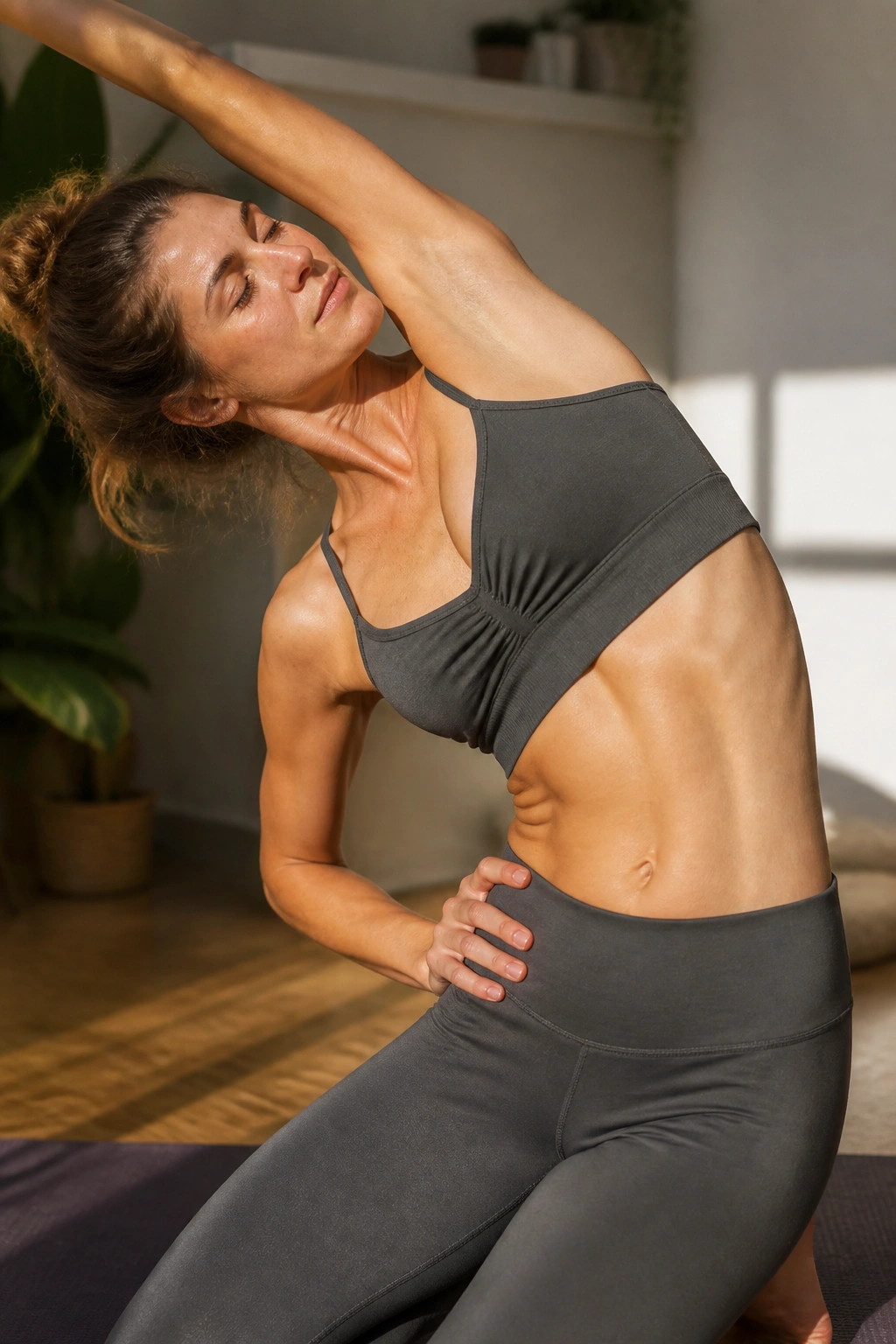
Why do side stretches feel so good first thing? Because the ribs, obliques, and spine tend to get ignored in most normal movement. You fold forward. You sit. You walk. Then one morning your whole torso feels like it forgot how to open.
Build this flow with standing side bends, crescent lunge with a reach overhead, gate pose, and a gentle twist from a low lunge. If the low back is touchy, keep the twist high and let the chest rotate a little without cranking the pelvis around. On the floor, a reclined twist and a knees-to-chest squeeze make a good finish.
Try this order
- Standing side reach
- Crescent side bend
- Gate pose on each side
- Low lunge twist
- Reclined twist
- Knees-to-chest reset
A side-body focus can feel surprisingly energizing because it changes how you breathe. The rib cage has room to move, and that often changes the whole tone of the practice.
If your breath feels shallow, this is a smart place to go. The stretch is one thing. The better exhale is the real payoff.
14. The Gentle Floor-Based Recovery Flow
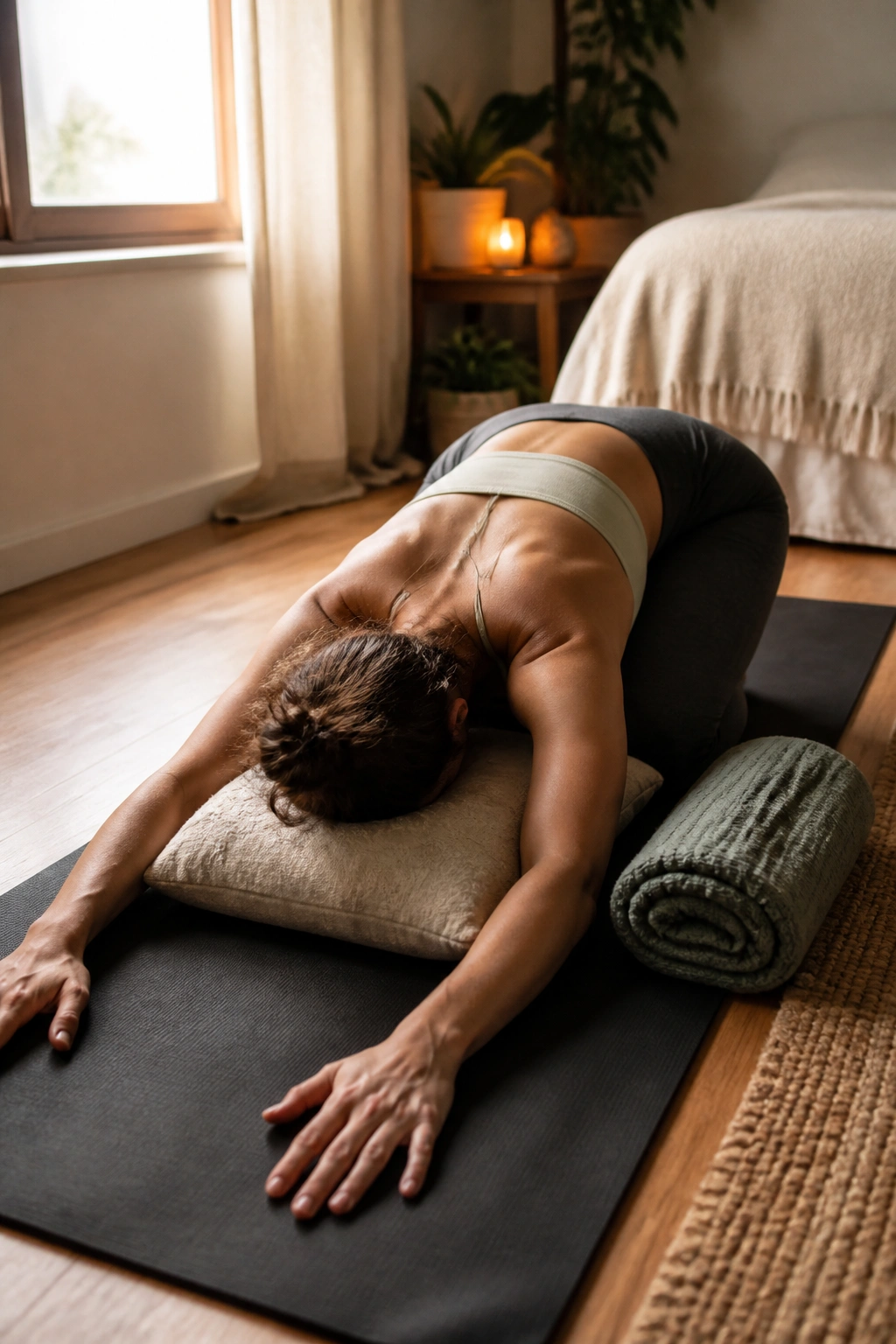
Not every morning needs energy. Some call for less effort, less noise, and a sequence that feels almost like a long exhale. When sleep was poor or the body feels worn down, a floor-based flow can be the difference between dragging all day and starting with a little dignity.
Stay on the mat the whole time. Child’s pose, cat-cow, thread-the-needle, reclined butterfly, happy baby, supported bridge, and a long final rest fit together well here. Keep the holds soft. Use pillows, blocks, or a rolled blanket without making a big deal about it. The props are there to help the body stop guarding.
A good recovery flow usually has a slower pulse than people expect. That is on purpose. You want the nervous system to notice that nothing is chasing it.
I like finishing with calves on a chair or legs up the wall for two to three minutes. The position is plain. The effect is not. Lower body heaviness tends to ease, and the whole practice lands with a little more calm.
15. The Repeatable All-Week Flow
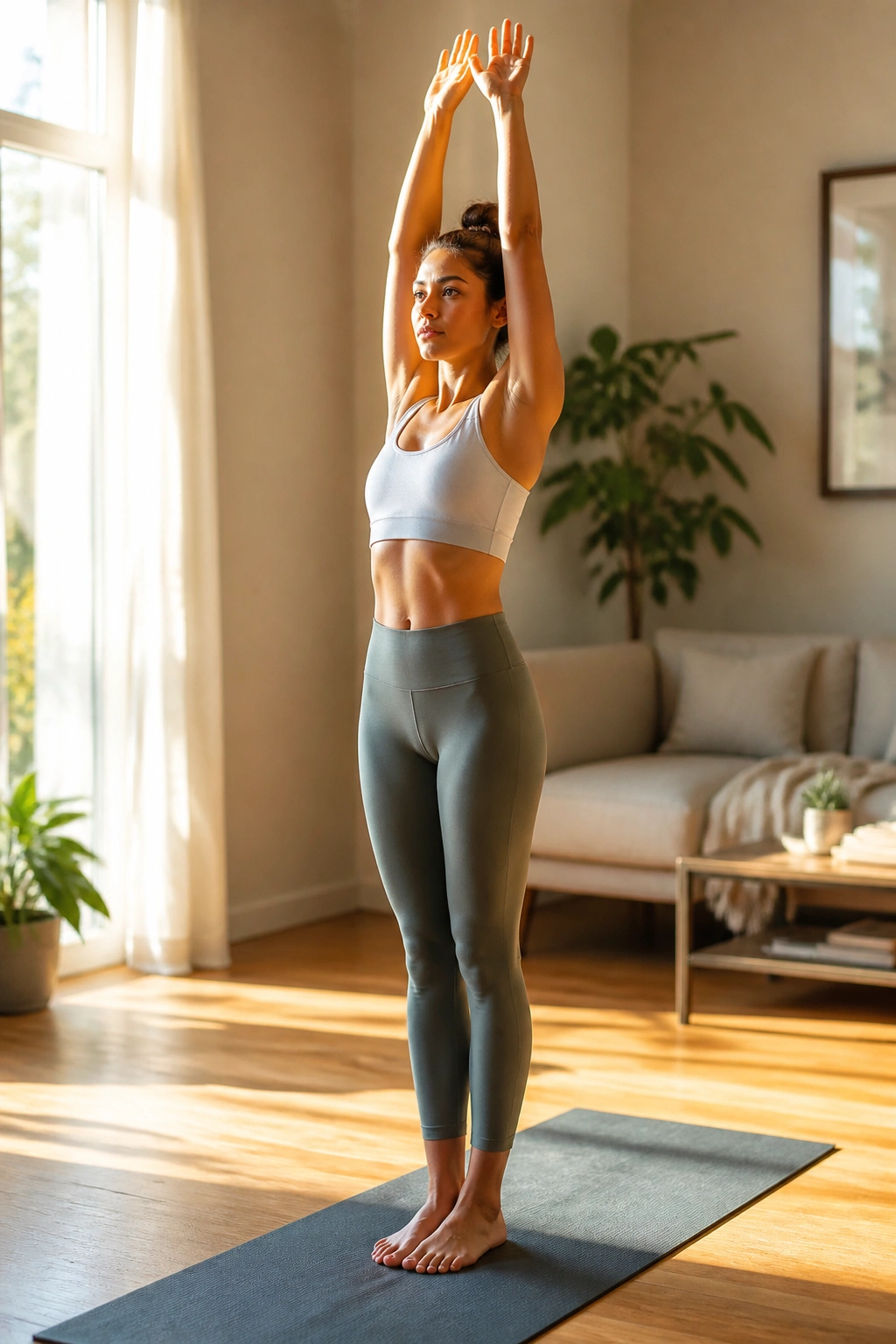
The best all-week flow is the one you can do half-asleep and still remember. If you only save one of these twenty minute yoga flows for busy mornings, make it the one that mixes spine work, hip opening, a little standing strength, and a short breath-down at the end.
Start with two minutes of mountain pose and arm reaches. Move into cat-cow, then thread-the-needle. Step forward for low lunge, half split, and a gentle twist on each side. Add chair pose, warrior II, and one balance pose like standing knee lift or tree. Finish with child’s pose, reclined twist, or a few breaths lying flat.
My keep-it-simple version
- 2 minutes breath and reach
- 4 minutes spine mobility
- 6 minutes hips and hamstrings
- 4 minutes standing strength and balance
- 4 minutes quiet finish
That balance matters. Too much stretch and the body stays sleepy. Too much heat and the routine starts feeling like a chore. The sweet spot is somewhere in the middle, where you finish a little looser, a little steadier, and not wiped out.
If you’re building a morning habit from scratch, this is the one I’d keep nearby. Not because it is flashy. Because it is repeatable. And repeatable wins.
