



Soft arms in a sleeveless shirt are usually not a biceps problem. They’re a training problem, and arm toning exercises at home work best when they hit the triceps, shoulders, chest, back, and core instead of chasing only the front of the upper arm.
That’s the part people miss. The triceps make up more of the upper arm than the biceps, and the shape of your arms changes faster when you train pressing and pulling patterns, not just curls. A few good moves done with control will beat a random marathon of light reps every time.
You do not need much equipment. A chair, a pair of dumbbells, a resistance band, or even a backpack loaded with books can give you enough resistance to make real progress. What matters is that the last few reps feel honest. Not sloppy. Honest.
A smart home arm session usually mixes one push, one pull, one shoulder move, and one direct arm isolation exercise. Add a short finisher if you want a bit more burn. That’s where the real work starts.
1. Push-Up
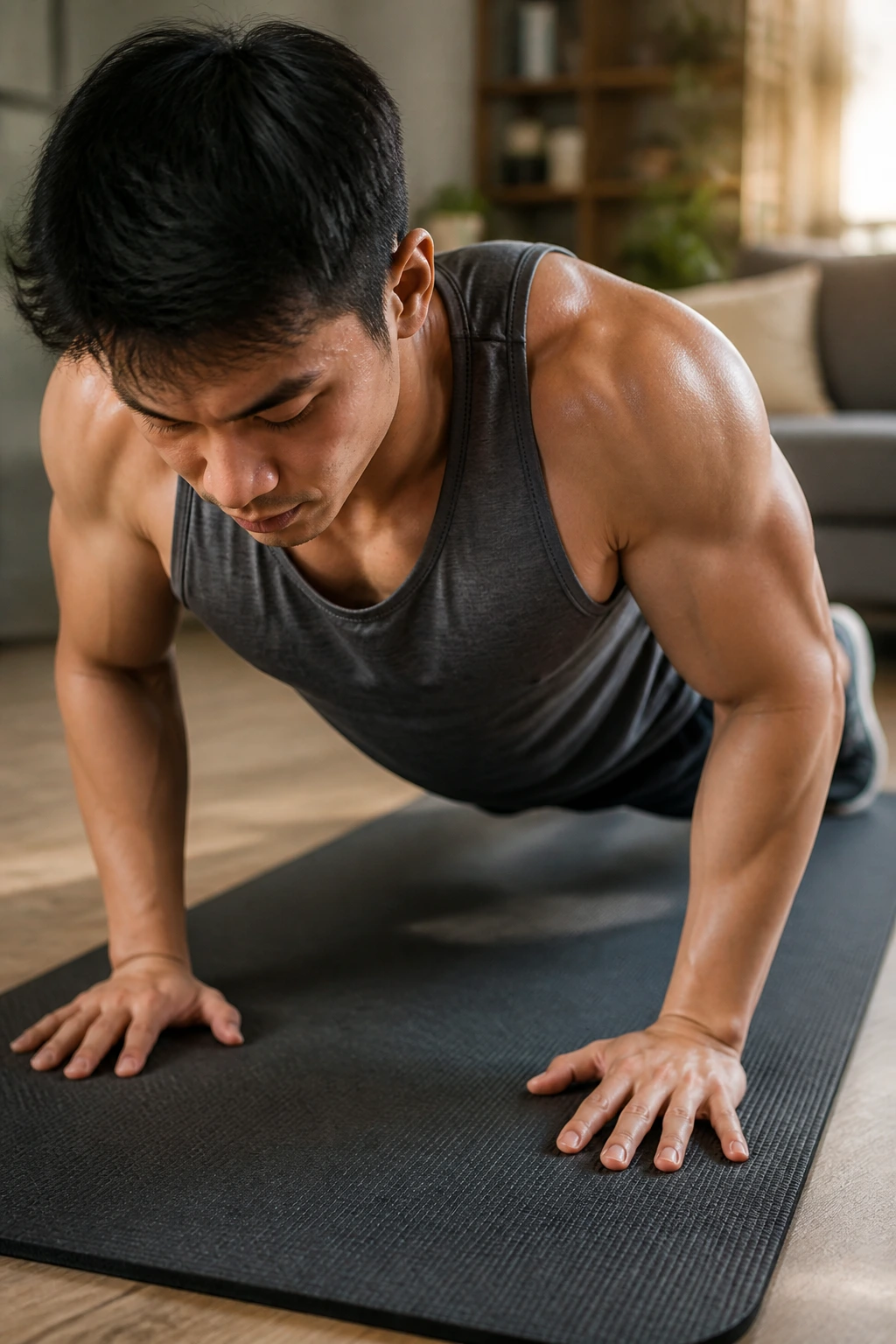
Push-ups earn the top spot because they do more than people give them credit for. Yes, they train the chest, but the triceps and front shoulders take a hard hit too, especially when you keep your elbows tucked and lower with control.
Why it works on the arms
At the bottom of a push-up, your elbows have to press your body away from the floor. That’s triceps work, plain and simple. If your core sags or your elbows flare out too wide, the load shifts away from the arms and the movement turns sloppy fast.
Start on a wall, countertop, or knees if you need to. There’s no medal for suffering through bad form. A clean incline push-up is far better than a messy floor rep that turns into a half-snaking dive.
- Keep your hands under or just outside shoulder width.
- Lower until your chest is a few inches from the floor or surface.
- Press up while keeping your ribs from flaring.
- Stop with 1 to 2 reps left in the tank on most sets.
Pro tip: If your wrists feel cranky, use push-up handles, dumbbells as blocks, or a slightly elevated surface. That tiny change can make the movement feel a lot better.
2. Chair Triceps Dip
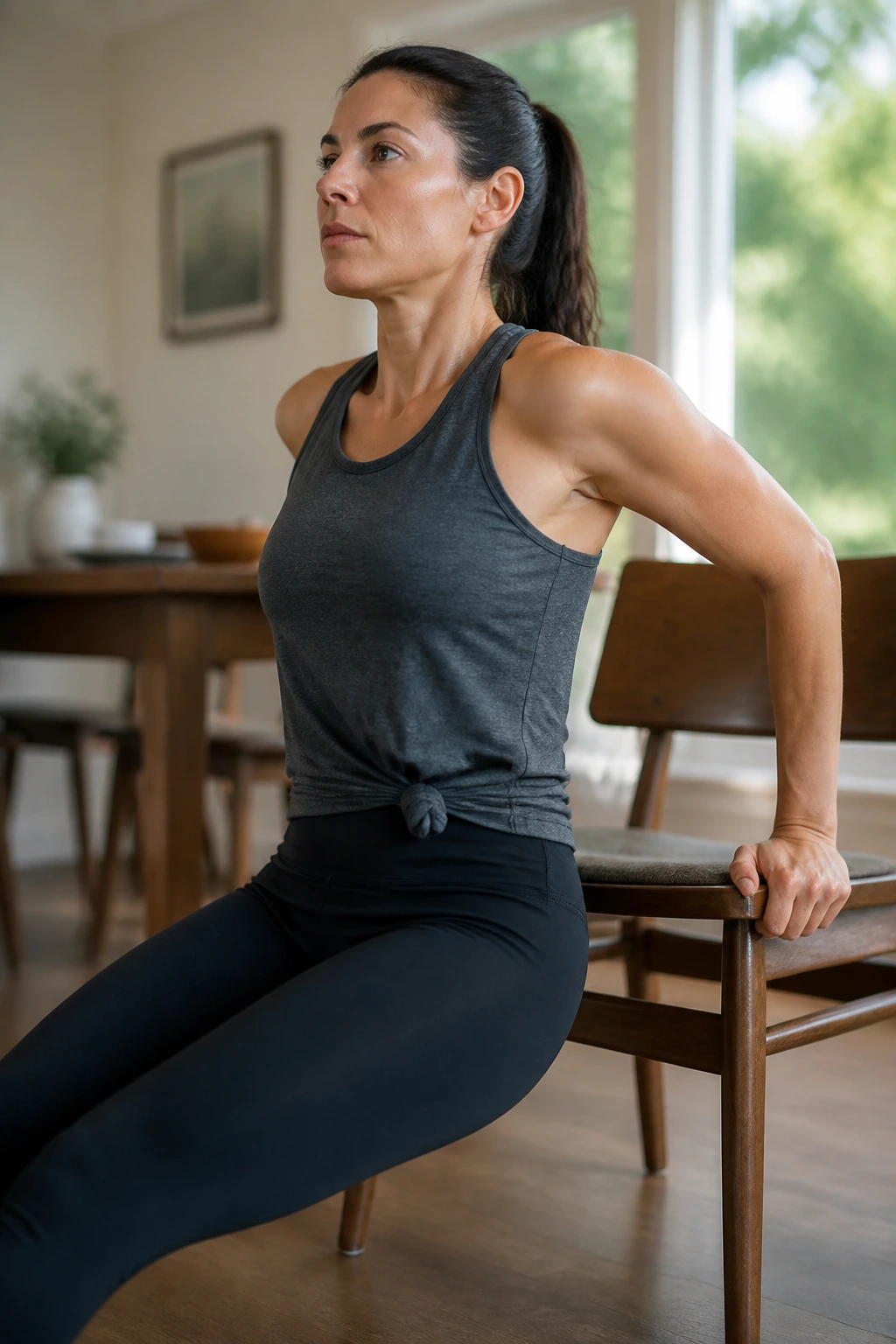
A sturdy chair or couch edge turns into a pretty brutal triceps tool. The dip is simple, and that’s part of the charm, but it also punishes bad setup fast. If your shoulders creep toward your ears, the exercise gets ugly.
Set up the chair
Sit on the edge of the chair, place your hands beside your hips, and walk your feet out a few inches. Slide your hips forward so your weight is in your hands, then bend the elbows to lower. Keep the chest open and the shoulders down. Go only as low as your shoulders tolerate comfortably.
A lot of people drop too deep and jam the front of the shoulder. That is a bad trade. A small range with clean elbow bend is better than trying to impress nobody by dipping six inches lower than necessary.
What to watch for
- Use a stable surface that does not slide.
- Keep your elbows pointing mostly backward.
- Stop if you feel pinching in the front of the shoulder.
- Aim for 8 to 15 controlled reps.
This one is especially good if your triceps are the area you want to tighten up first. The back of the upper arm is where the shape shows, and dips go straight there.
3. Pike Push-Up
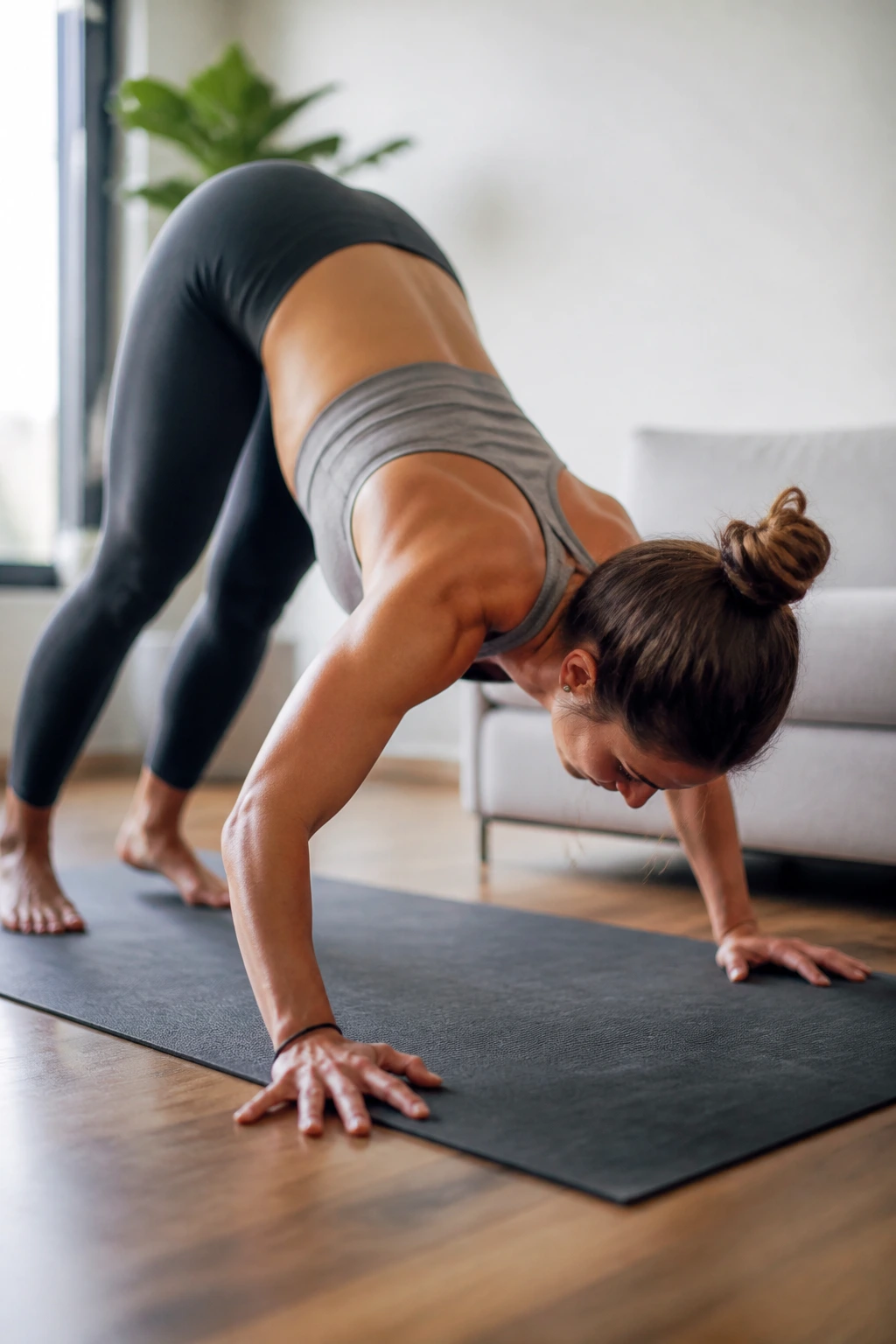
Why does a move that looks almost like a yoga stretch burn the shoulders so fast? Because the angle changes everything. A pike push-up shifts more of your bodyweight toward the shoulders, which makes it one of the best home moves for upper-arm and shoulder tone.
Start with your hands on the floor and your hips high, almost like an upside-down V. Bend the elbows and lower the head toward the floor between your hands, then press back up. Keep your heels lifted if needed. The more vertical your torso gets, the harder it becomes.
This is not the place to rush. A slow descent shows you exactly where your strength is and where it is not. If you can only do 3 clean reps, fine. That is still useful work.
How to make it easier or harder
- Bend the knees a little to reduce the load.
- Put your hands on a bench or couch for an incline version.
- Elevate your feet on a step or sturdy chair for more challenge.
The nice thing about this one is the carryover. Stronger shoulders help your push-ups, dips, and even carrying groceries upstairs without your arms feeling like wet noodles.
4. Diamond Push-Up
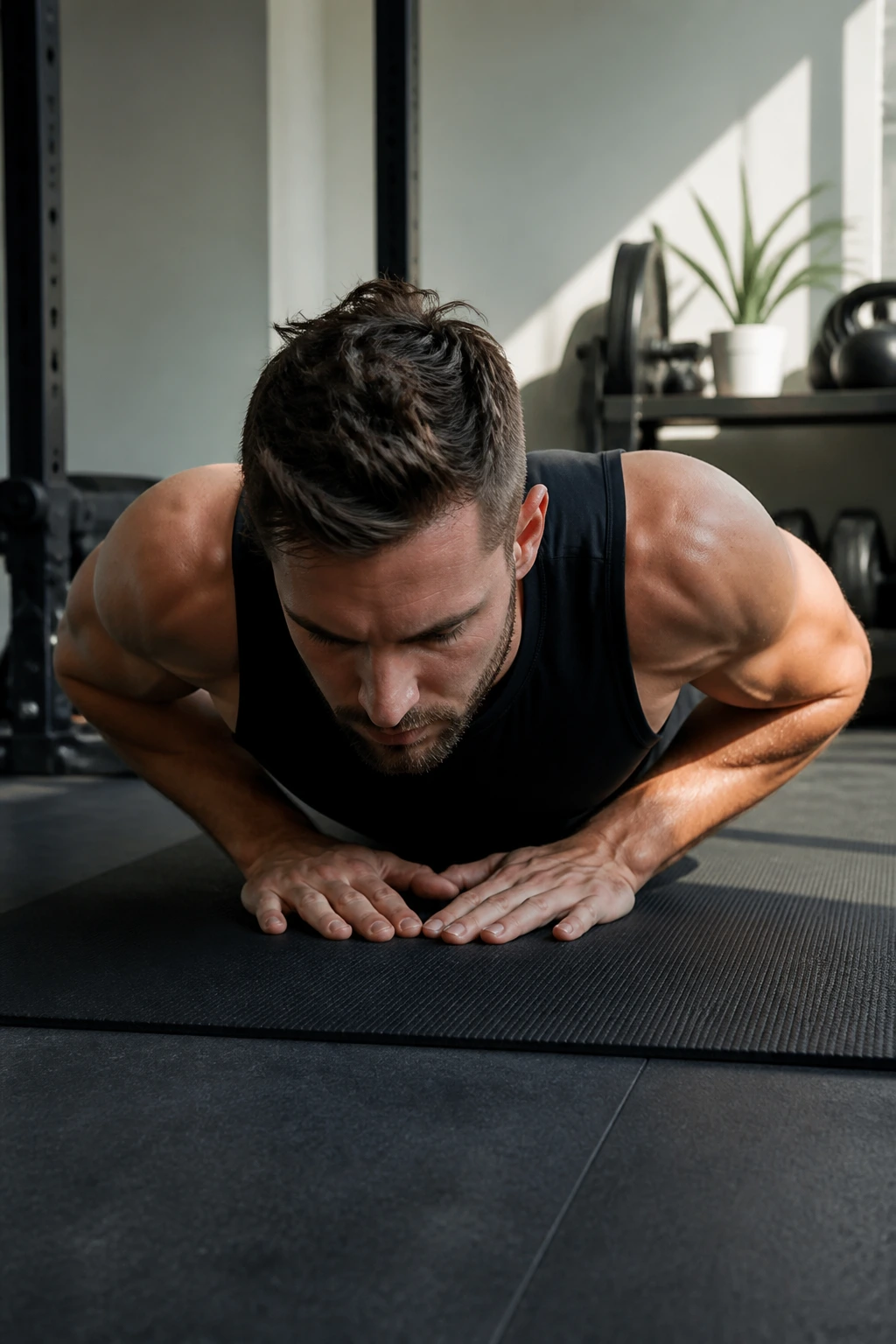
Diamond push-ups are the triceps-biased sibling of the regular push-up. Bring your hands close together under your chest, and the back of the arms has to do more of the pressing work. Simple setup. Nasty burn.
Your hands do not need to form a perfect diamond if your wrists hate it. A narrow hand position is enough. The point is to shift load toward the triceps without turning the movement into joint pain theater.
I like this variation because it tells the truth fast. If your regular push-ups look fine but your triceps fade early, diamond push-ups expose the weak spot. Clean reps only.
If you cannot hit a full version yet, drop to your knees or raise your hands on a counter. That adjustment keeps the shoulders and elbows in a better place while you build strength.
One good set here can light up the back of the arm more than three lazy sets of random curls.
5. Plank Shoulder Tap
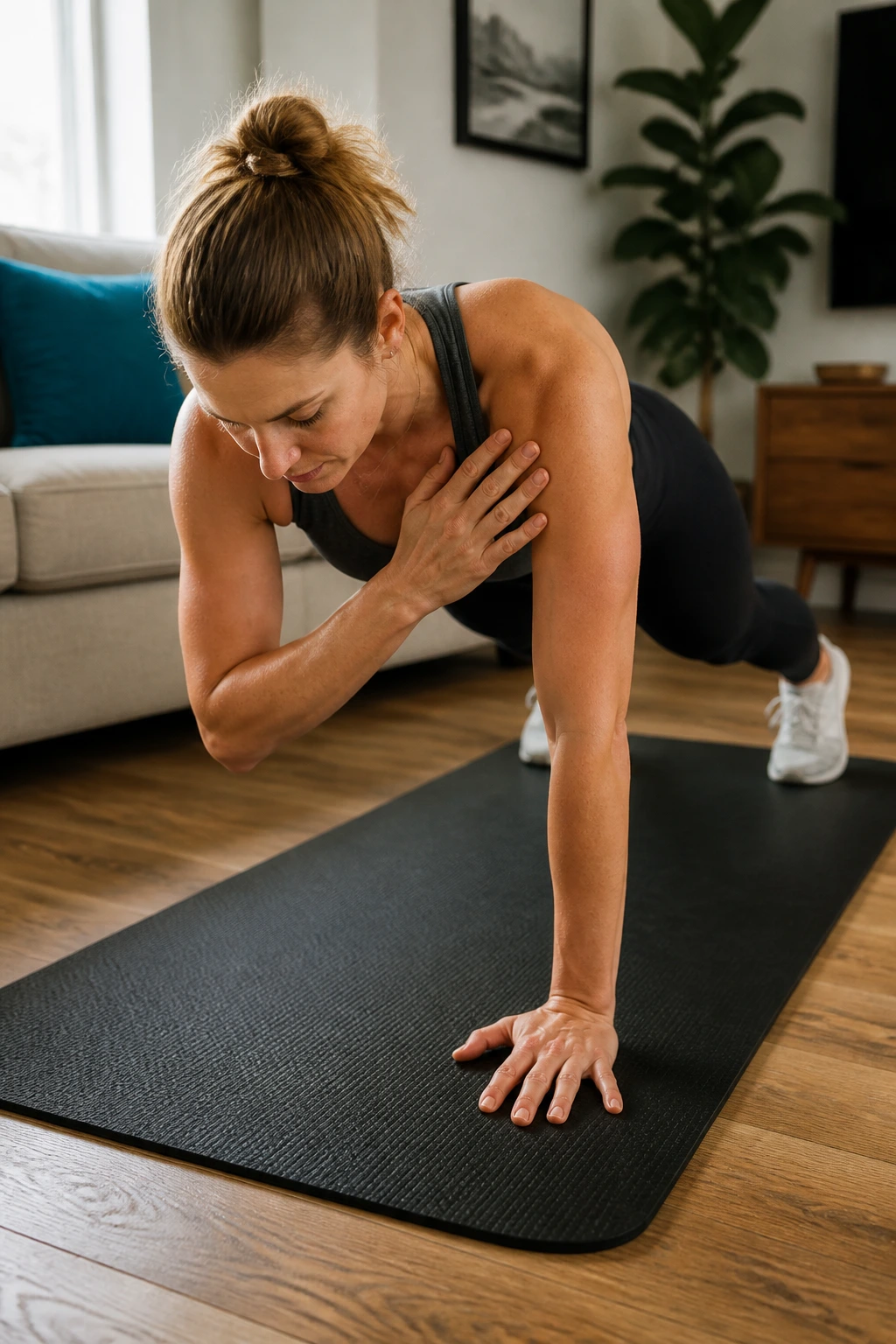
A shoulder tap in plank looks easy from a distance. Then you try it, and your hips start drifting everywhere. That’s the whole point. The exercise trains the shoulders and arms while your core works overtime to keep you square.
Get into a high plank with your feet wider than hip width to start. Tap one shoulder with the opposite hand, then switch sides without rocking side to side. Your hips should stay almost level the whole time.
What makes it useful
The tapping arm has to support your body while the other arm moves. That demands shoulder stability and triceps endurance, which is exactly what a lot of home arm work misses. It’s not flashy. It works.
- Spread your feet wider if you wobble.
- Slow down if your hips twist.
- Keep your head in line with your spine.
- Do 10 to 20 taps per side.
If you want a move that quietly strengthens the whole upper body while giving your arms a firm, tired feeling, this one belongs in the mix. It is also great when you do not have weights nearby.
6. Dumbbell Biceps Curl
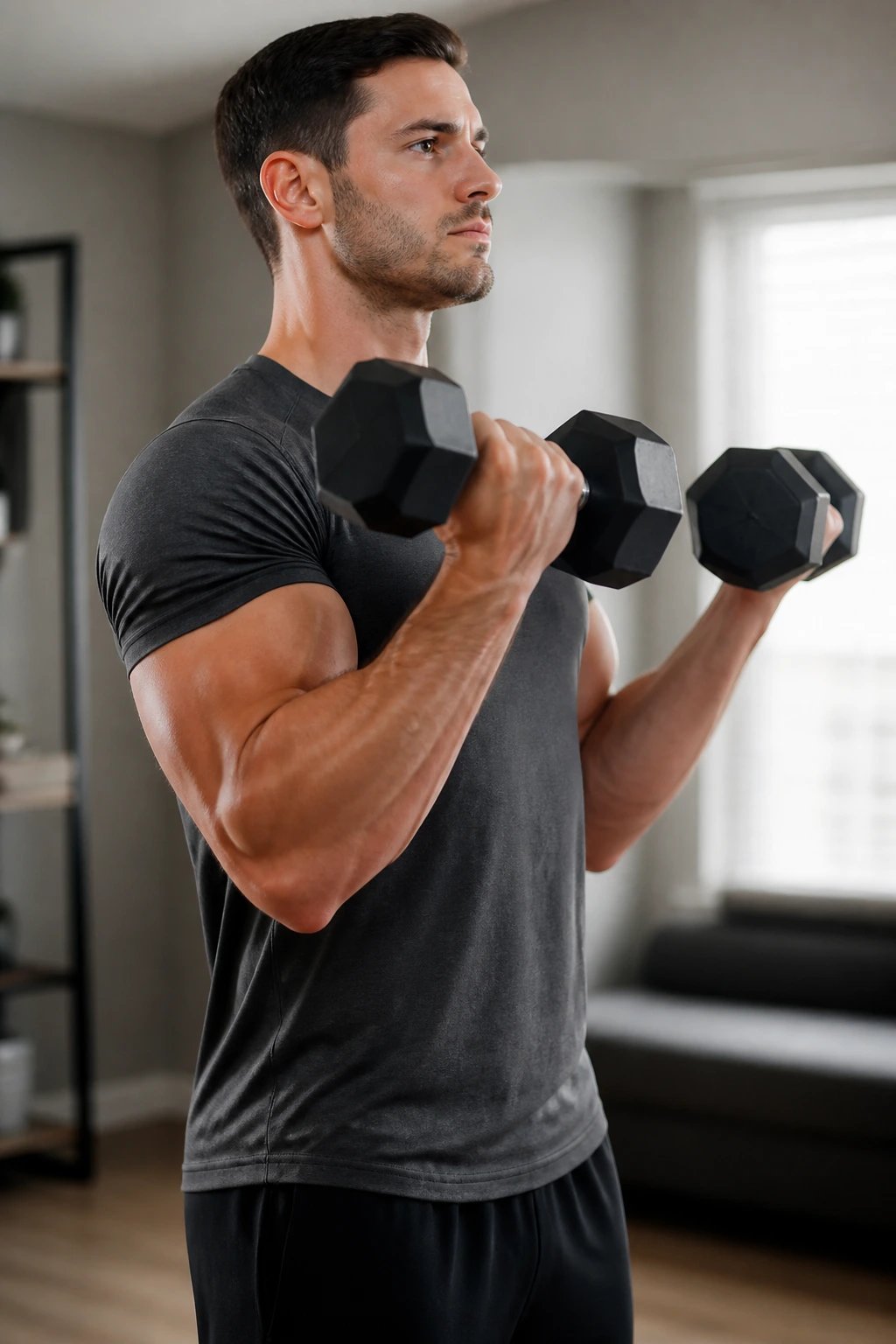
A good curl still deserves a spot in any arm routine. Just don’t let the move become a full-body heave. If your shoulders swing forward and your back arches, the biceps are no longer doing the job.
Stand tall with a dumbbell in each hand, palms facing forward, and curl the weights toward your shoulders. Lower them slowly. The lowering phase matters more than people think because it creates a clean stretch and keeps tension on the muscle.
Form that keeps the biceps honest
- Keep your elbows close to your ribs.
- Don’t kick the weights upward.
- Lower for about 2 to 3 seconds.
- Use a weight that lets you get 8 to 12 controlled reps.
I’m a fan of curling one arm at a time if you tend to cheat. Unilateral curls make it easier to feel the biceps working without your body trying to help too much. A pair of water bottles works in a pinch, but dumbbells usually feel better in the hand.
This is one of those moves that looks basic and still delivers. That’s not boring. That’s useful.
7. Overhead Triceps Extension
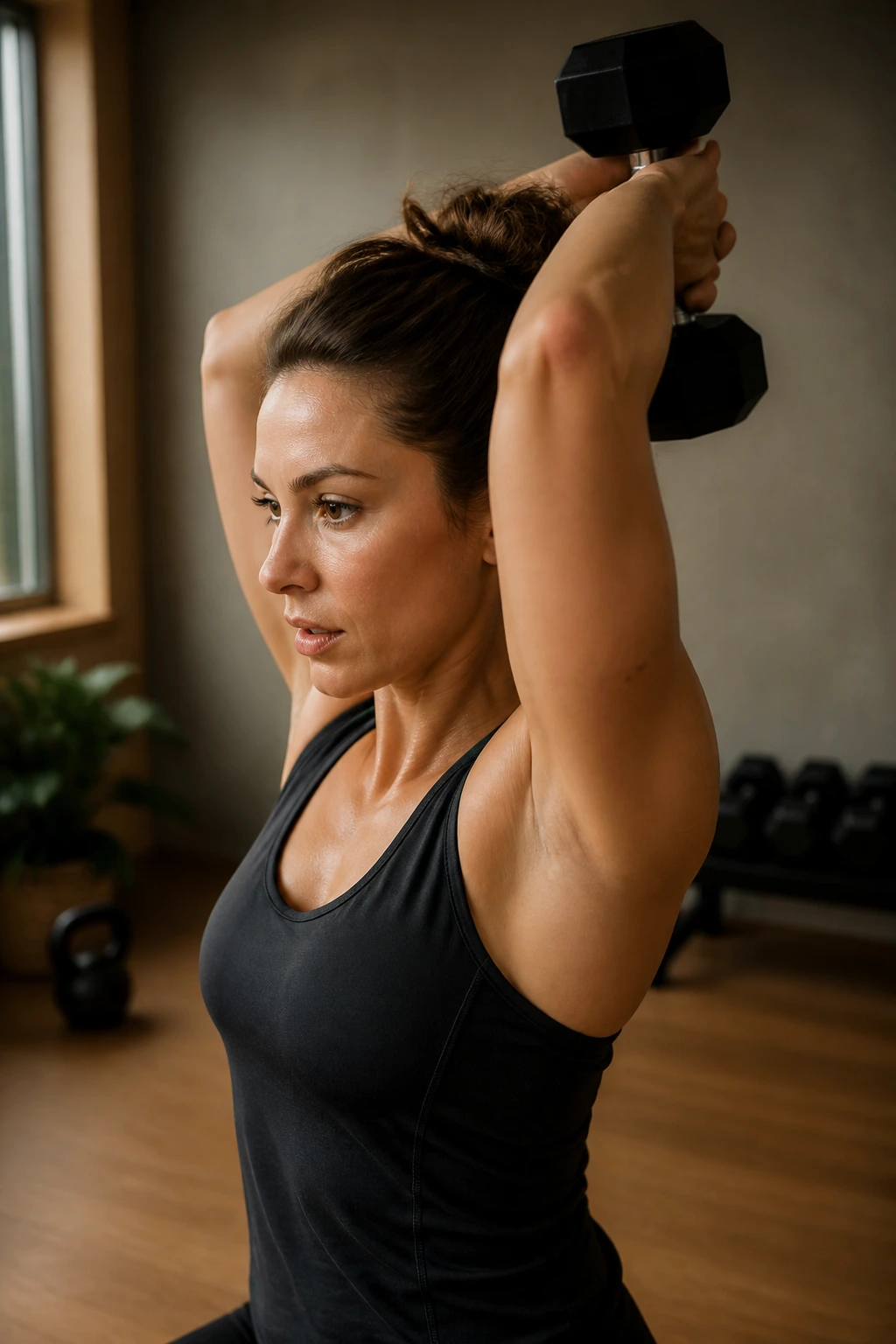
Why does this one burn so fast? Because the long head of the triceps gets stretched overhead, and that stretched position makes the exercise sting in a good way. If the back of your arms is the place you care about most, keep this one near the front of the queue.
Hold one dumbbell with both hands, bring it behind your head, and press it back up until your elbows straighten. Keep your elbows close and pointed forward, not flared wide. The upper arms should stay mostly still.
A lot of people turn this into a shoulder movement by accident. Don’t. The only thing that should really move is the forearm hinge at the elbow. A slow, controlled rep tells you immediately whether you’re doing it right.
Use 10 to 15 reps and choose a weight that feels manageable on the first set but honest on the last two. If your lower back starts arching, reduce the load or sit down.
8. Hammer Curl
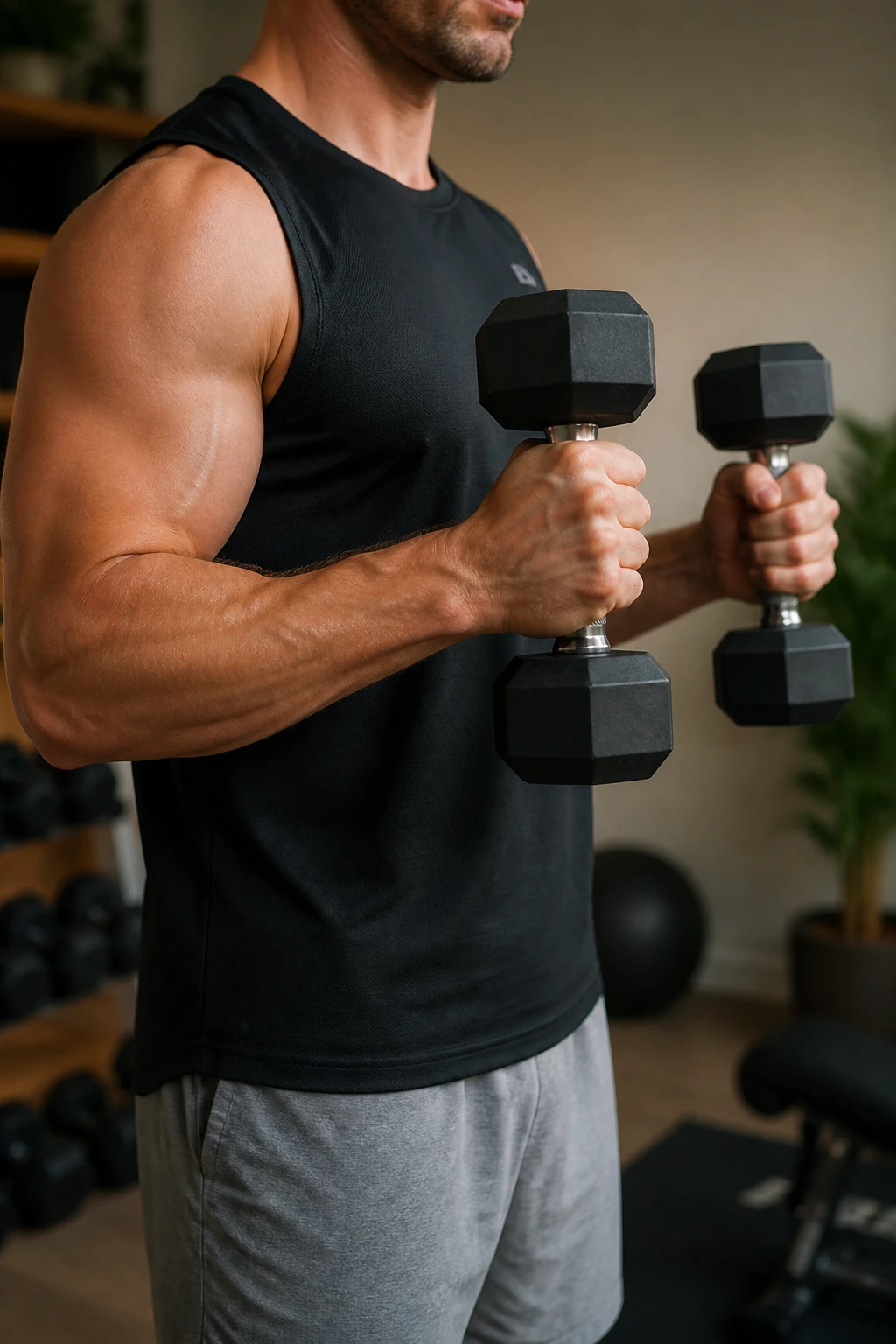
If regular curls make your wrists feel cranky, hammer curls are the friendlier choice. Palms face each other, the grip feels more neutral, and the movement tends to feel cleaner for a lot of people.
The brachialis, a muscle under the biceps, gets more attention here, which helps the upper arm look thicker from the side. That matters more than most people realize. Arms are seen in profile, not just straight on.
What to notice
- Keep the thumbs up through the whole rep.
- Do not let the elbows drift forward.
- Lower the weight all the way with control.
- Try 8 to 12 reps per arm.
One nice thing about hammer curls is that they often let you use a slightly heavier weight than a strict curl. Not always. But often enough to matter.
And they carry over. Stronger forearms and brachialis muscles make rows, carries, and even push-up variations feel steadier.
9. Lateral Raise
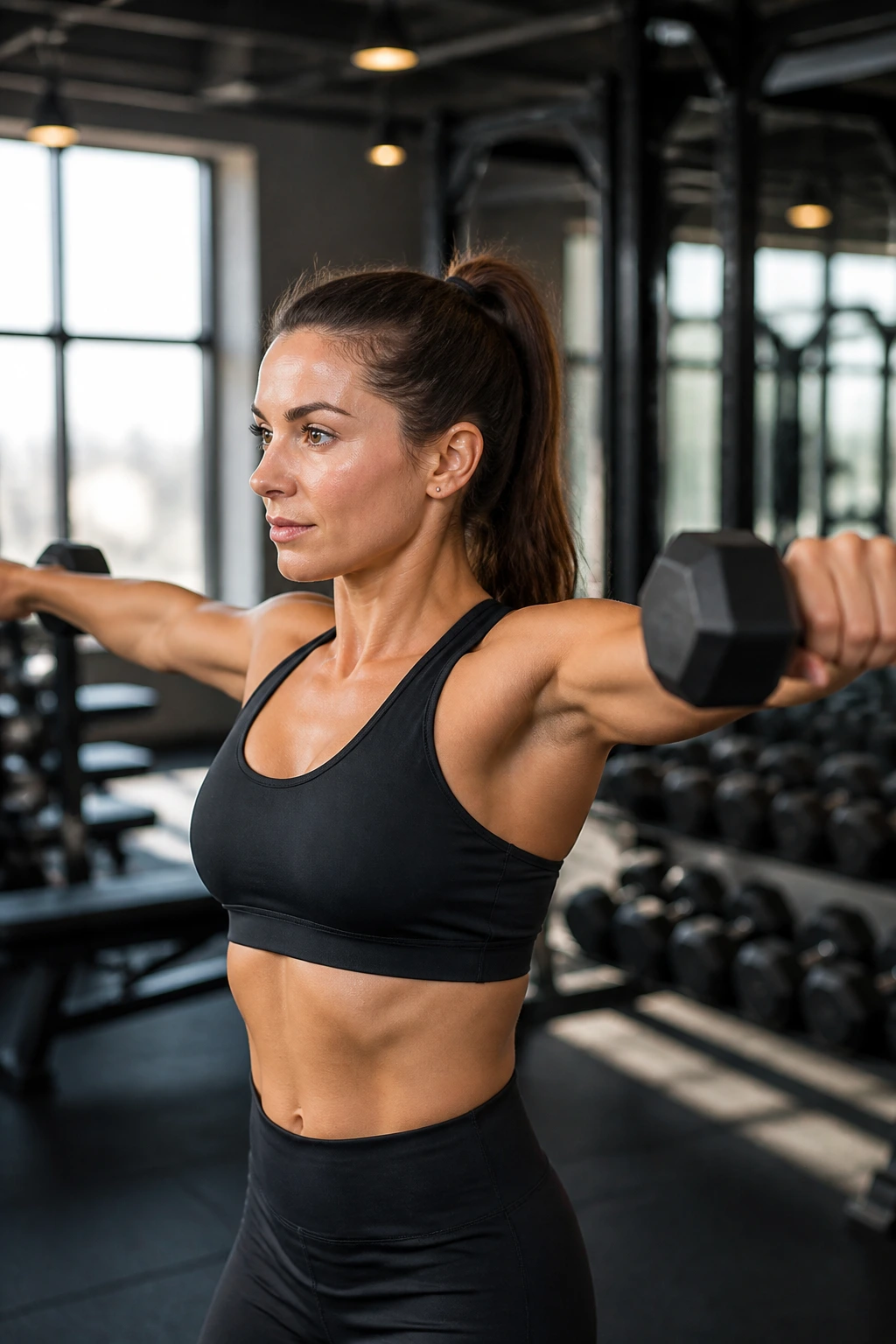
For arms that look firmer in a T-shirt, the shoulders matter more than people think. Lateral raises build the side of the shoulder, which gives the upper body a rounder shape and makes the arms look more defined next to a smaller waistline.
Stand tall with light dumbbells at your sides. Lift them out to shoulder height with a soft bend in the elbows, then lower them under control. Light weight is not a cop-out here; it’s the whole game.
A few things that save the movement
Do not shrug the shoulders. Do not swing the weights. Do not raise higher than shoulder level unless you have a very specific reason and good control. That last part gets messy fast.
A clean lateral raise should feel smooth for the first few reps and spicy by the end of the set. If you need to swing, the load is too heavy. Pick a smaller pair and keep the path wide and steady.
This is one of those exercises that looks tiny but changes the look of the upper arm and shoulder line in a real, visible way over time.
10. Front Raise
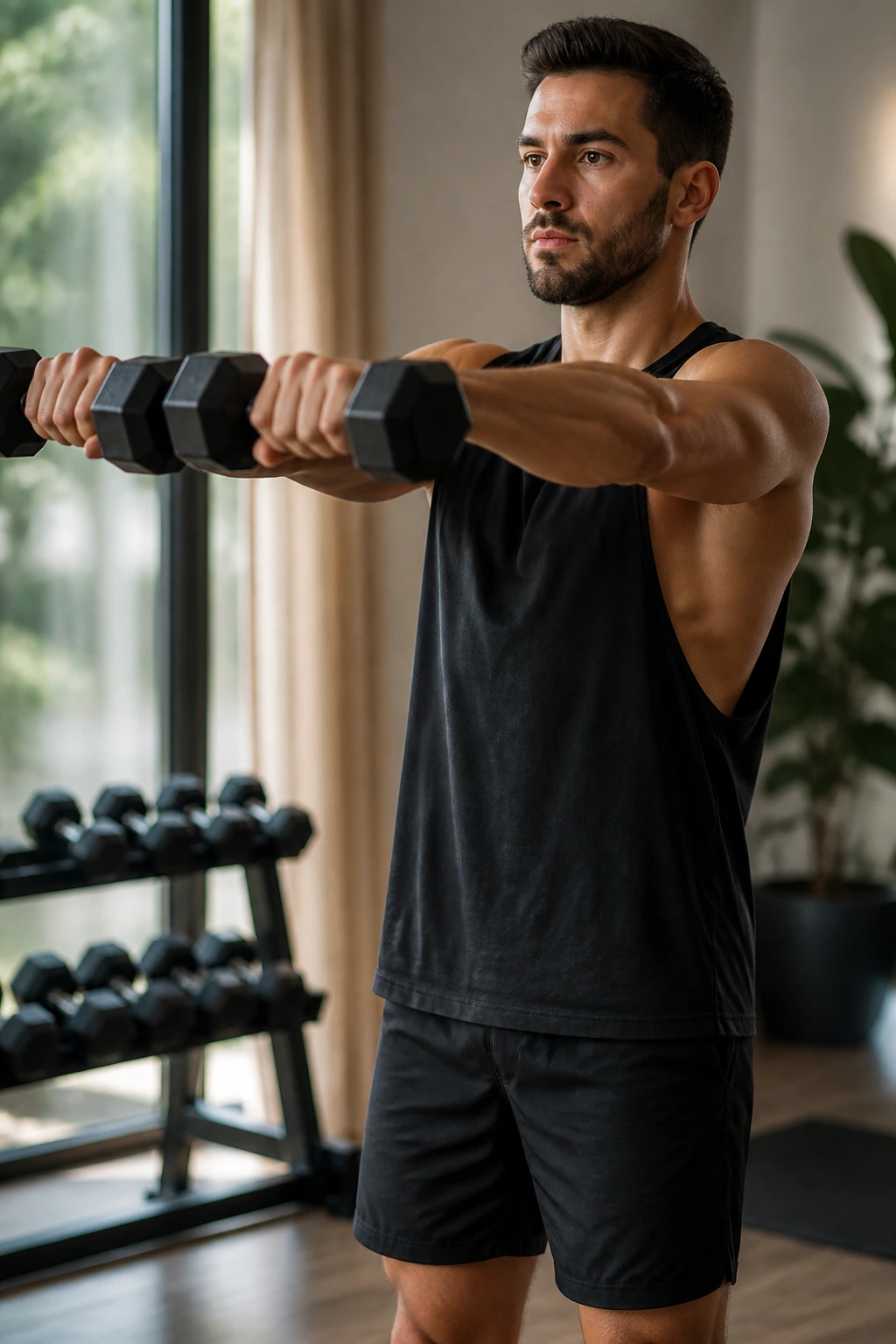
Front raises get less praise than lateral raises, probably because the front delts are already involved in push-ups and pressing. Still, they matter. A strong front shoulder helps fill out the upper body and supports the pressing moves that hit the triceps.
Hold dumbbells in front of your thighs and lift one or both arms straight out to about shoulder height. Lower slowly. That’s the whole thing. And that simplicity is the point.
The mistake here is going too heavy and turning the rep into a swing. Once the torso starts rocking, the shoulder loses the job. Keep the chest quiet, the ribs stacked, and the movement small and neat.
If you already do lots of push-ups or shoulder pressing, front raises can stay light and occasional. If your shoulders are undertrained, they deserve a little more attention. They shape the arm line more than a lot of people expect.
11. Bent-Over Row
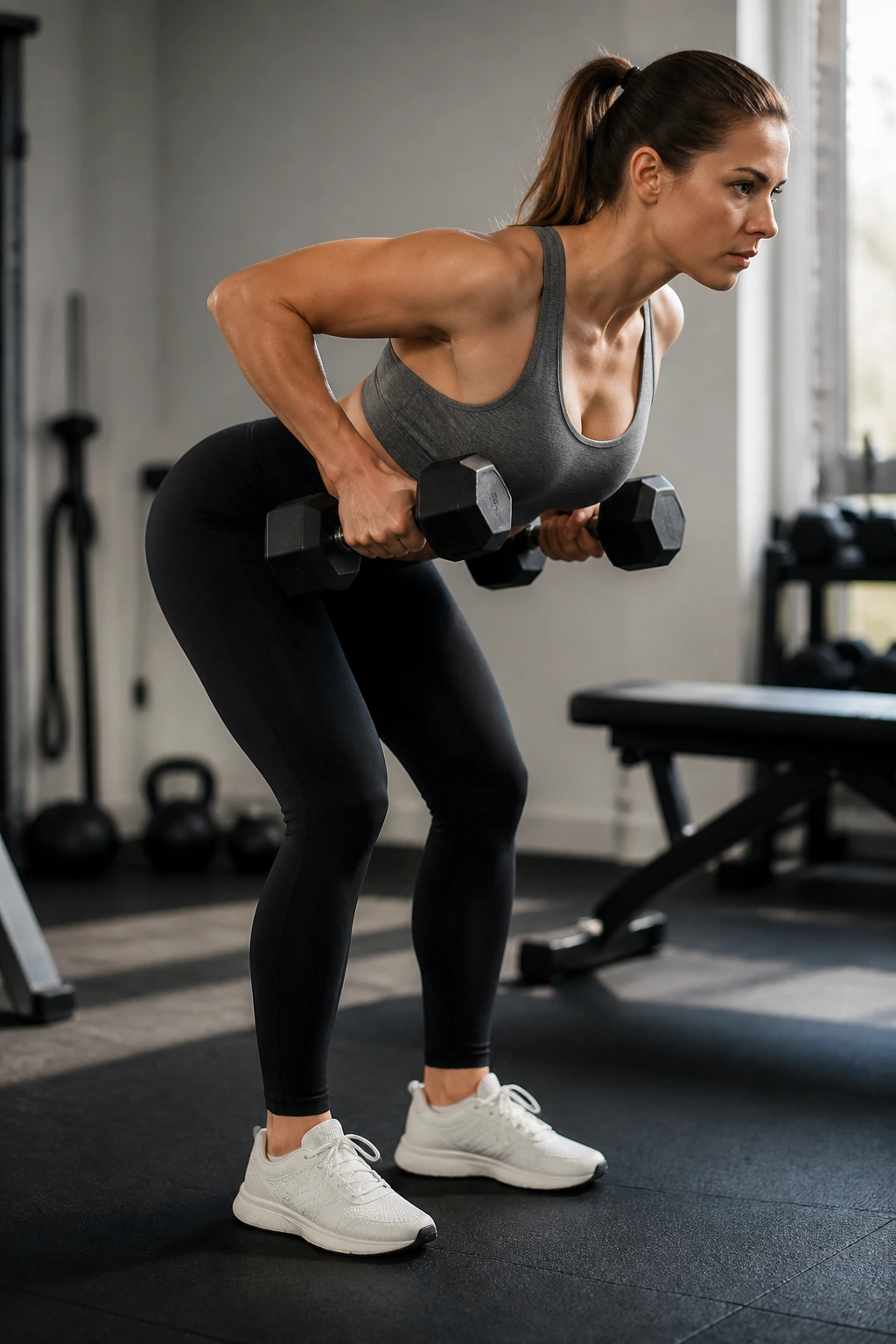
Rows are not just a back exercise. They help the biceps, rear shoulders, and the muscles around the upper arm look tighter because they teach you to pull with control instead of yanking on the weights like you’re starting a lawn mower.
Hinge at the hips, keep a flat back, and row the dumbbells or a backpack toward your lower ribs. Squeeze at the top for a second, then lower slowly. Your torso stays steady. That’s the whole deal.
What the row does for your arms
When your back gets stronger, your arms stop carrying every pulling job alone. That often makes curls feel easier and your posture look cleaner. It also helps if your shoulders roll forward from too much sitting.
- Pull toward the hip line, not the chest.
- Keep the neck long.
- Use 8 to 12 reps.
- Pause briefly at the top instead of rushing through.
A lot of home workouts skip rows because they look less glamorous than curls. Bad idea. Rows are one of the best investments you can make if your arms need shape and your upper back needs some attention too.
12. Renegade Row
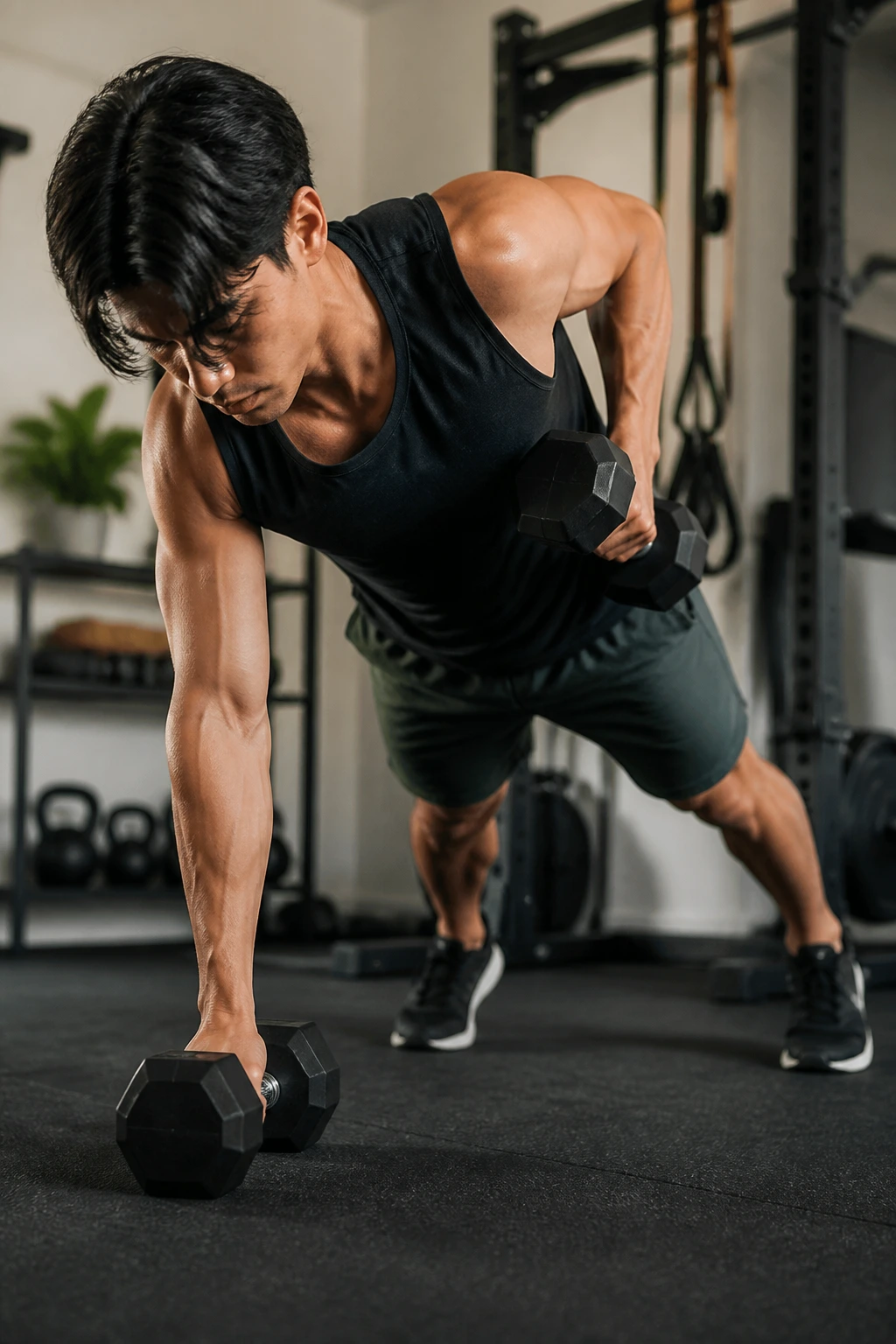
Can you row without wobbling? That is the real test. Renegade rows combine a plank with a one-arm pull, which means your core, shoulders, and arms all have to behave at the same time.
Set up in a high plank with your hands on dumbbells or on the floor if you are just practicing the shape. Row one weight toward your ribs while keeping the hips as still as possible, then switch sides. Wider feet make the exercise more manageable.
How to keep your hips steady
The biggest mistake is twisting hard toward the lifted arm. That turns the row into a core cheat session and takes some of the load away from the working arm. Keep your feet a little wider than you think you need, and slow the rep down.
- Row one side at a time.
- Stop the weight near your ribs.
- Set it down softly.
- Try 6 to 10 reps per side.
This one is harder than it looks, which is part of why it earns a place here. It trains arm strength and anti-rotation control in one clean package.
13. Resistance Band Curl
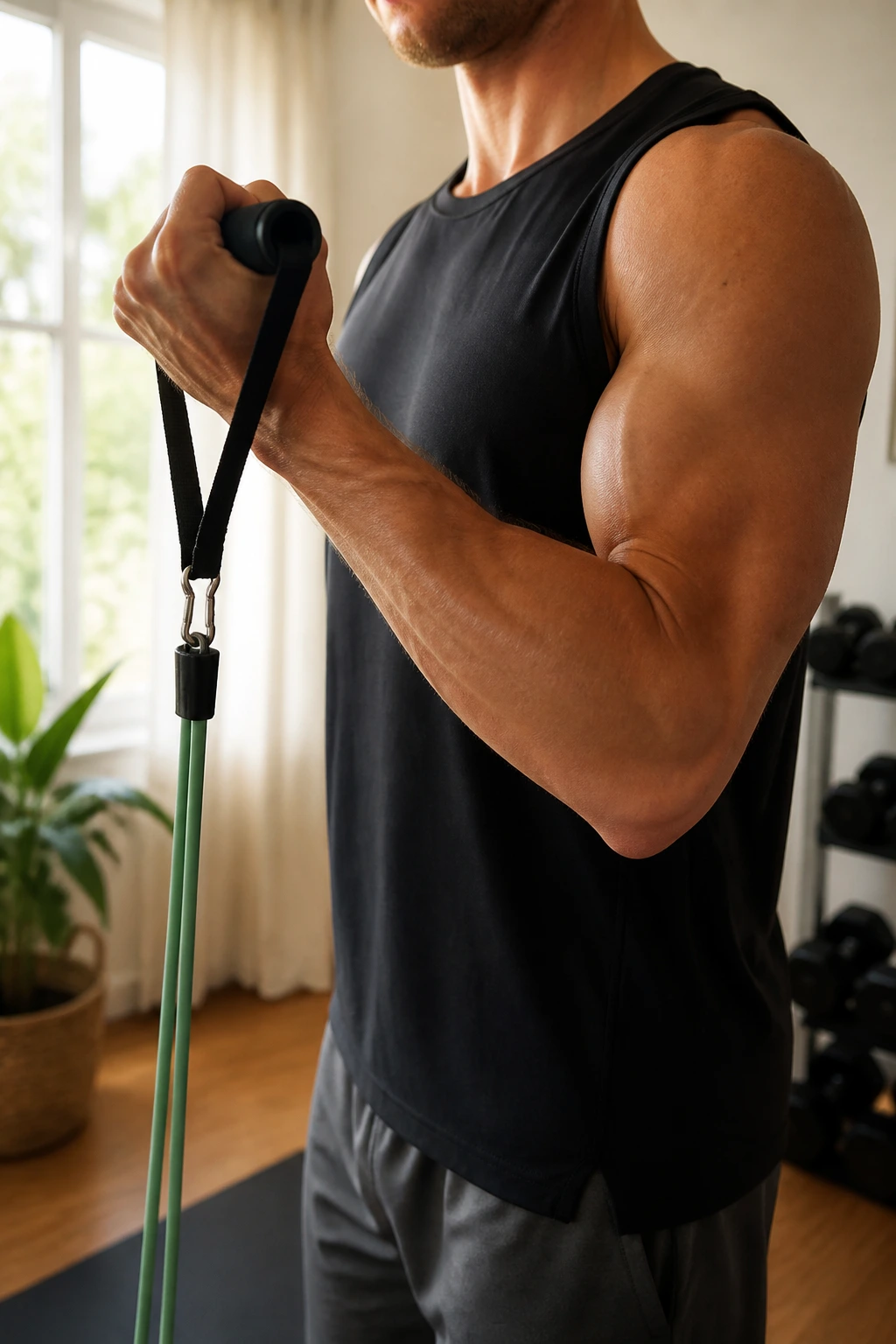
Bands keep tension through the whole curl, which is a big deal. Dumbbells get easier near the top of the rep. Bands do not. They get tighter as you curl, so the top half can feel sneaky hard.
Stand on the band, grab the handles or ends, and curl with your palms facing forward. If the bottom feels too easy, step wider or shorten the band. That tiny adjustment changes the resistance fast.
Bands are good when you want a lighter, joint-friendly session without losing the arm pump. They are also easy to stash in a drawer, which I appreciate. Too many home tools take up half a closet.
Try 12 to 20 smooth reps here. The goal is not to yank the band. It’s to keep steady tension and stop the elbows from wandering forward.
14. Triceps Kickback
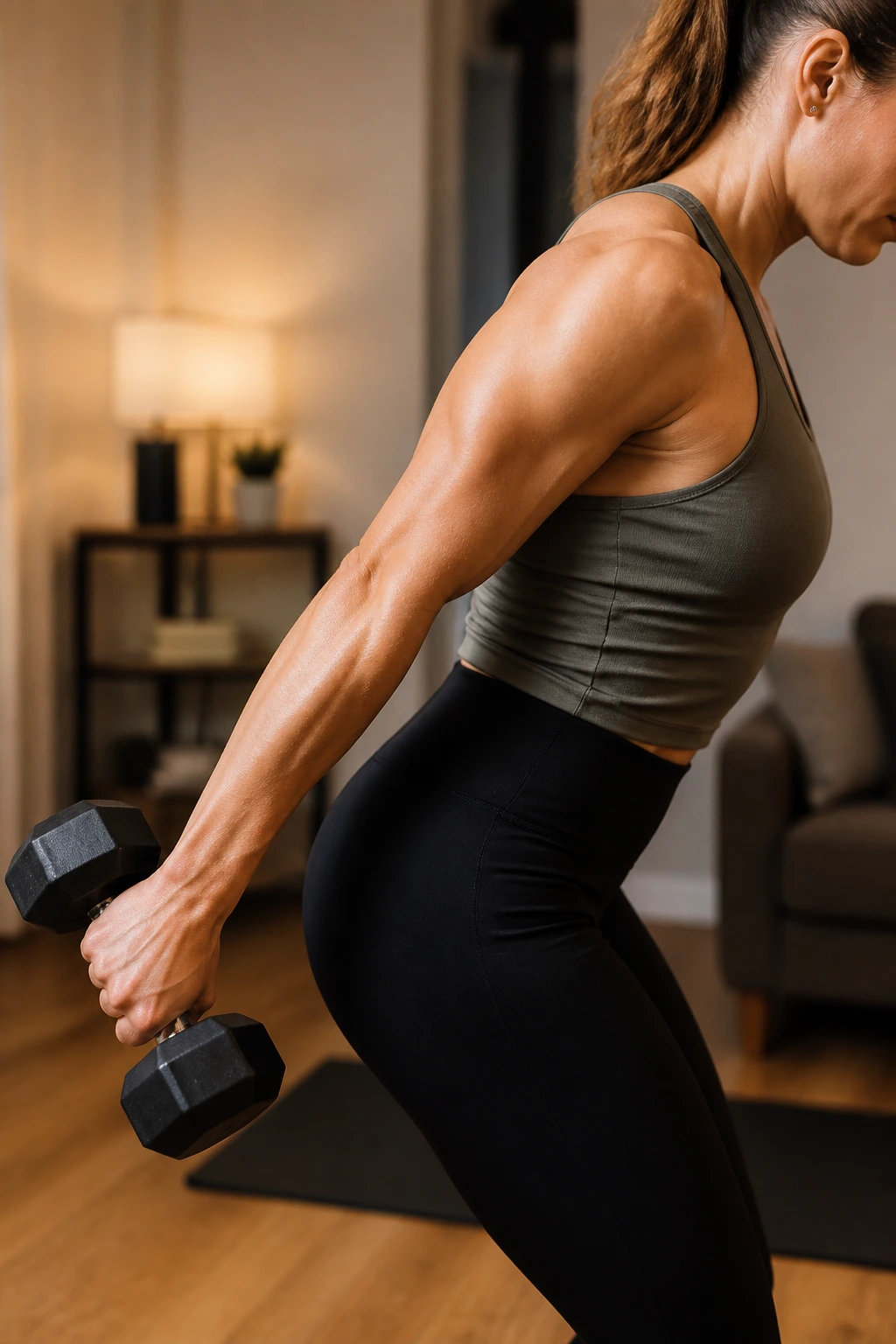
Triceps kickbacks look small, and that makes people underestimate them. Then the elbow stays fixed, the arm burns, and they realize the motion is far more specific than it seems.
Hinge forward, upper arm tucked beside your torso, and extend the forearm backward until the elbow straightens. Hold the squeeze for a beat, then return under control. If the upper arm swings, the exercise loses most of its point.
Where people cheat
They use too much weight. Always. The body wants to fling the dumbbell backward with momentum, and the triceps get a tiny fraction of the work. Pick a light weight and make the motion strict.
This is one of the best moves for a focused triceps finish because the range is small and the squeeze at the top is easy to feel. It is not flashy. It does the job.
- Keep the shoulder still.
- Finish with a hard elbow lockout.
- Use 10 to 15 reps.
- Pause for 1 second at the end.
A clean kickback leaves the back of the arm warm and tight in a way that’s hard to fake.
15. Close-Grip Floor Press
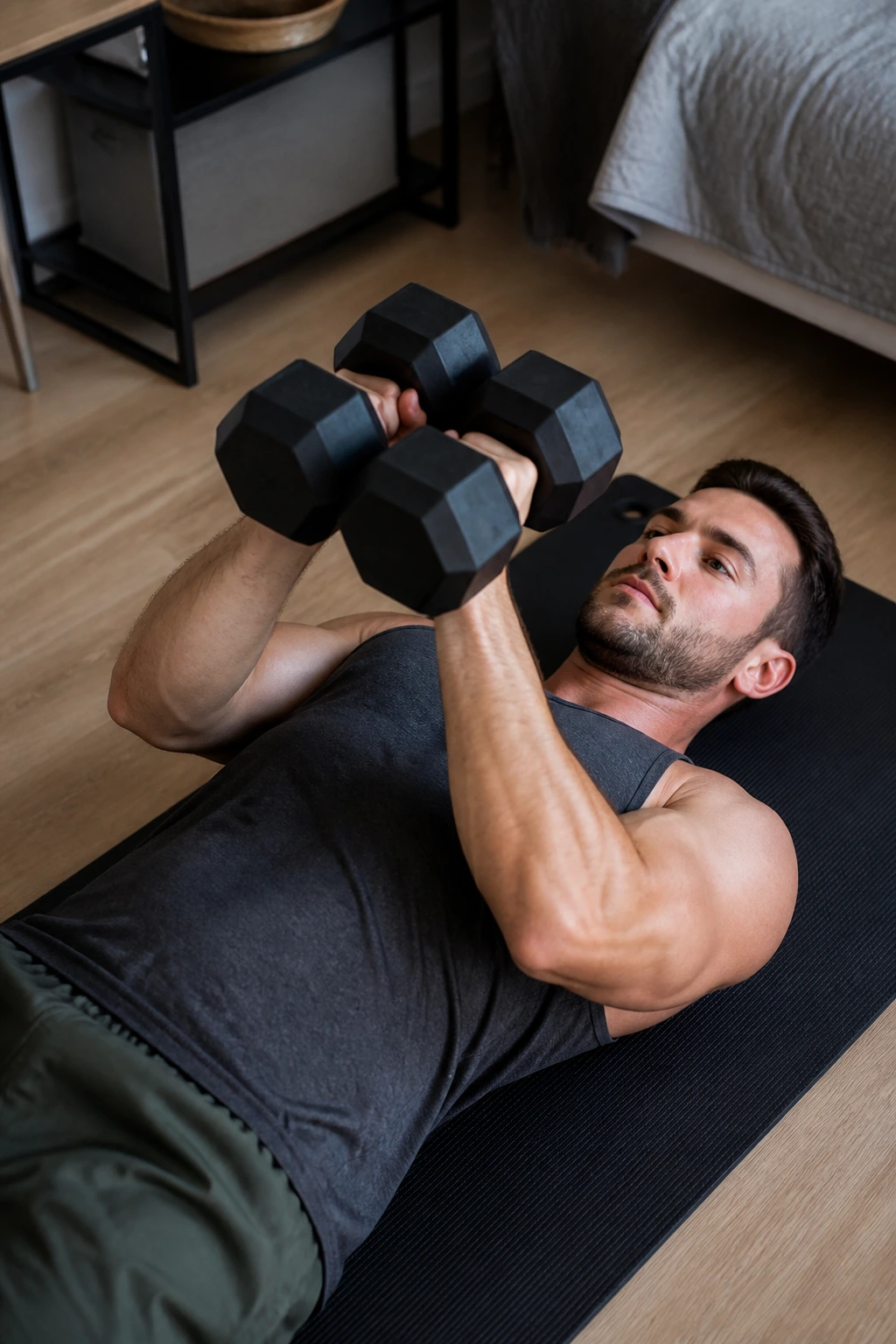
If you like pressing moves but want a home setup that feels safer than a full bench press, the close-grip floor press is a smart choice. The floor limits range, which protects the shoulder a bit, and the narrow hand position shifts more work toward the triceps.
Lie on the floor with dumbbells over your chest, palms facing each other or slightly turned in. Lower until your elbows touch the floor lightly, then press back up. Keep the elbows closer to the body than you would in a wide press.
I prefer this one for home training because the floor gives you a built-in stop. You do not drift into a deep bottom position where the shoulder starts complaining. That makes the movement easier to repeat well.
Use 8 to 12 reps, and think about driving the dumbbells straight up rather than angling them inward. A smooth rep here usually feels stronger than it looks.
16. Bear Crawl Hold
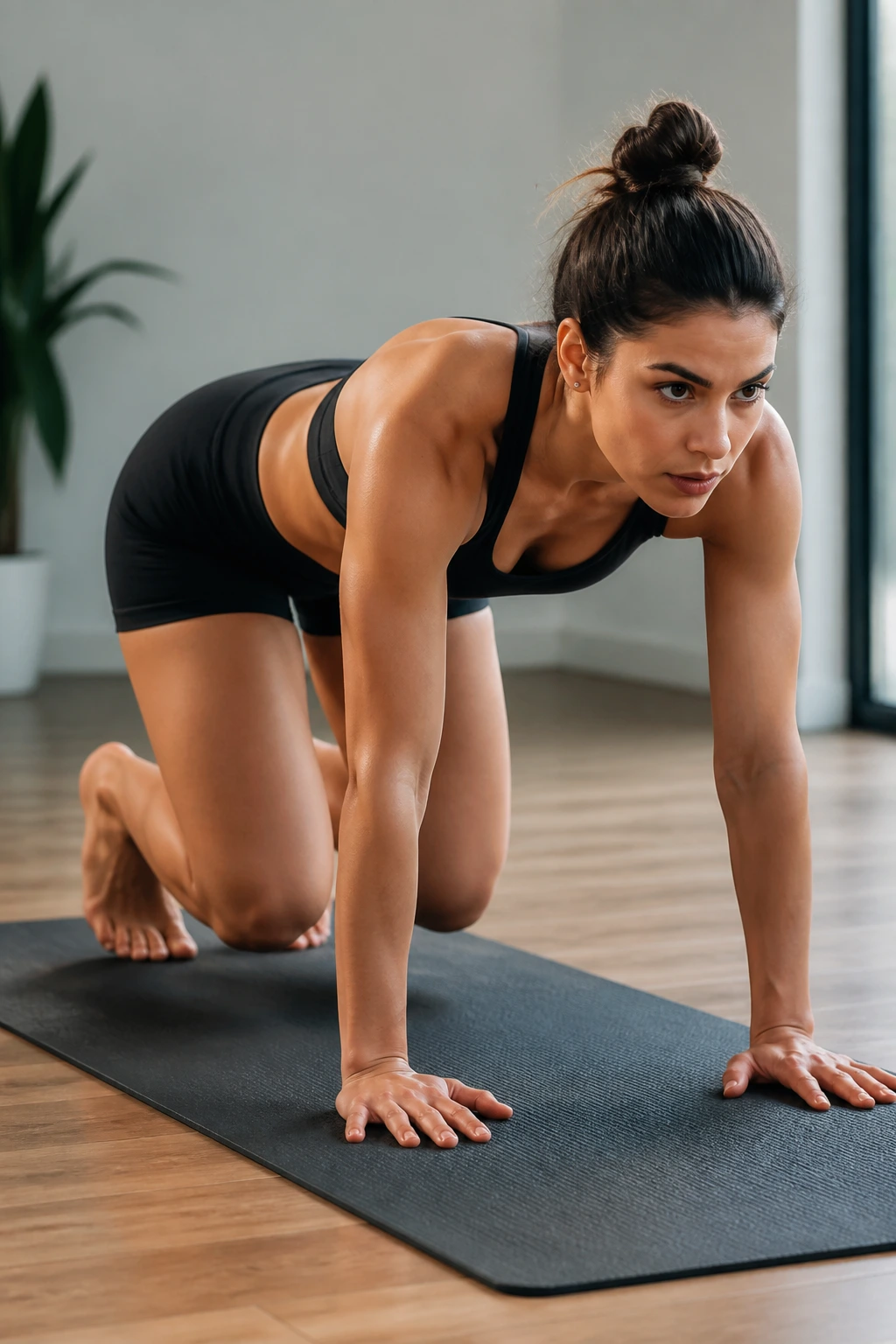
This one feels a little strange the first time, and that’s fine. A bear crawl hold is basically a suspended animal-like plank where your knees hover just off the floor and your shoulders have to do a ton of quiet work.
Start on hands and feet, knees under hips, then lift the knees one to two inches off the floor. Hold steady. You should feel your shoulders, triceps, abs, and even your hands working hard to keep things together. The body shakes a bit. That’s normal.
Why it belongs in an arm workout
Bear crawl holds build isometric strength, which means the muscles are working without moving through a big range. That kind of strength helps your shoulders stay stable during push-ups, rows, and planks. It also teaches your wrists and hands to تحمل? no, cannot use foreign words. It teaches your wrists and hands to tolerate load better over time.
- Keep the knees low.
- Breathe slowly through the hold.
- Try 15 to 30 seconds.
- Stop before your low back sags.
The hold is simple, but it teaches discipline fast. No cheating, no swinging, no excuses.
17. Scapular Push-Up
What if your shoulders, not your elbows, need the work? Scapular push-ups are the quiet answer. The arms stay straight while the shoulder blades glide apart and back together, which helps the upper back and shoulder girdle work the way they should.
Get into a high plank with locked elbows. Let the chest sink slightly between the shoulder blades, then push the floor away and spread the shoulder blades apart. Your elbows do not bend. That is the point.
This exercise looks tiny, but it cleans up a lot of the mechanics that make push-ups, planks, and rows feel better. When your shoulder blades move well, your arms usually feel more stable too.
Do 8 to 15 controlled reps or 20-second holds in the protracted position. If your wrists are sensitive, do it on a counter or against a wall. No shame in that. There is only better positioning.
18. Shadow Boxing With Light Resistance
A pair of light dumbbells, or no weights at all, can turn shadow boxing into a sharp little finisher. Punching works the shoulders, triceps, and upper arms in a fast, rhythmic way, and the whole thing feels more athletic than most arm finishers.
Stand in a staggered stance, guard up, and throw straight punches for 20 to 40 seconds at a time. Keep the shoulders down and the fists moving cleanly forward and back. Light resistance is the rule here, not the exception.
Make it harder without wrecking your wrists
If you use weights, keep them very light — think 1 to 3 pounds, not more. Heavy weights change the punch path and can irritate the shoulders or elbows. If that feels awkward, skip the weights and punch fast with tight form instead.
- Keep the chin tucked.
- Turn the torso a little on cross punches.
- Stay light on the feet.
- Rest 30 to 45 seconds between rounds.
This is one of my favorite finishers because it does not feel like pure lifting. It feels like work. And when your shoulders start to warm up and your arms get that tight, tired feeling, you know the session has done its job.
