



A bedroom floor and a pair of sneakers can cover a lot of ground. For teens, at-home workouts do not need a gym, a treadmill, or a pile of equipment that ends up holding laundry. A little space, a bit of structure, and enough honesty to keep the reps clean are usually enough.
That matters more than people think. Teen bodies are still changing, which means the goal is not to chase some cartoon version of “hardcore” training. The goal is to build legs that move well, shoulders that don’t ache, a core that actually stabilizes the body, and a bit of stamina that carries into sports, stairs, chores, and everyday life.
A good home routine also has to fit real life. Homework happens. Phones ring. Sleep gets weird. Some days there’s time for 20 minutes; other days, there isn’t. So the smartest teen workouts are the ones that can shrink or stretch without falling apart. Same room. Same bodyweight. Different intensity.
And yes, you can make a workout matter without making it miserable. A backpack, a chair, a wall, a stair step, and a stopwatch can do more work than most people give them credit for. The first one is the easiest place to start, and honestly, it’s the one I’d hand to the most distracted teenager in the house.
1. The 10-Minute Wake-Up Circuit
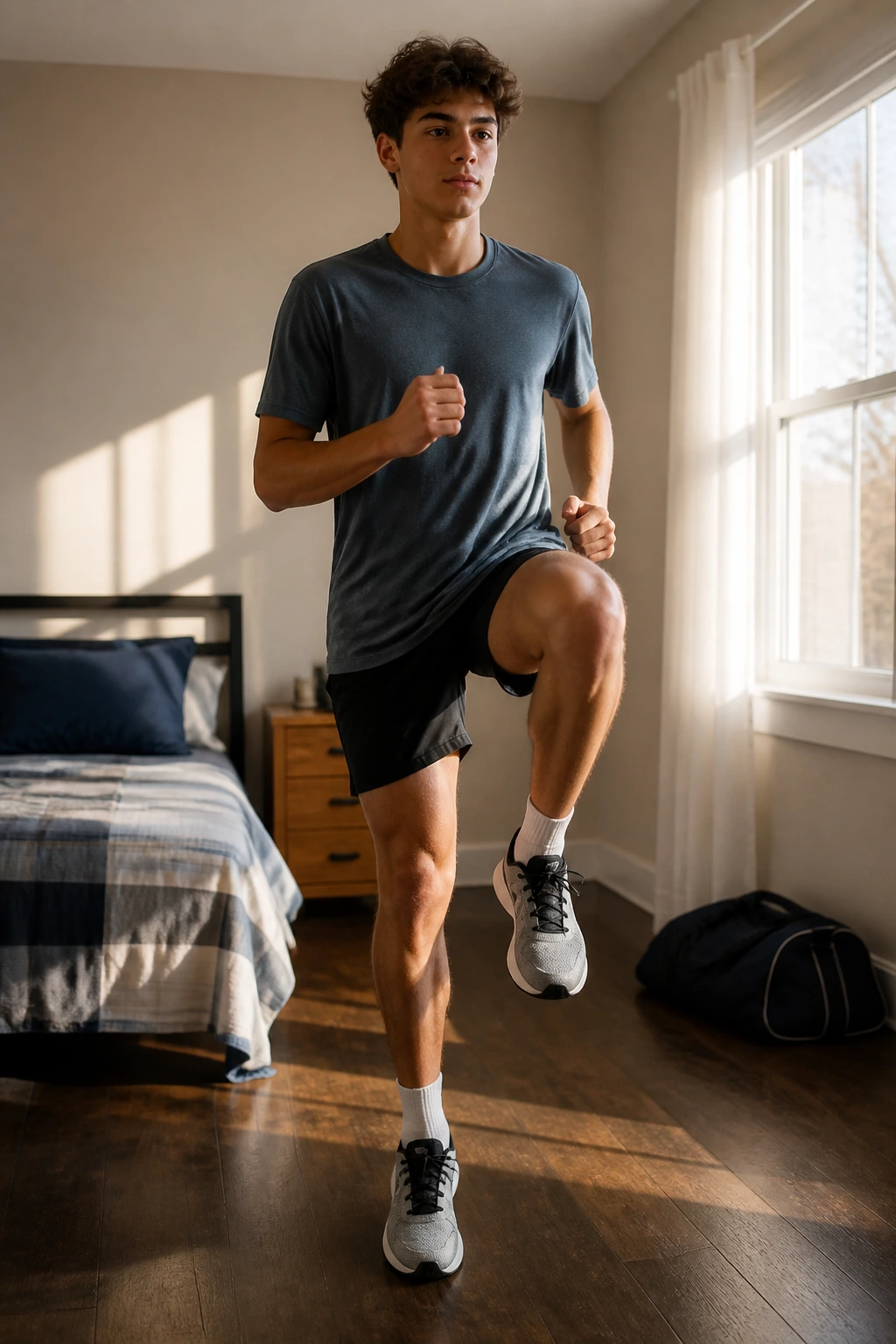
Ten minutes is enough.
Not for everything, of course, but enough to wake up the body, lift the heart rate, and stop the afternoon slump from winning.
This is the workout I like for days when motivation is thin and the room is small. You do 30 seconds of marching in place, then 30 seconds of jumping jacks, then 30 seconds of high knees, then 30 seconds of arm circles and reach-ups. Rest for 30 seconds, then repeat the whole thing 2 more times. That gives you a clean 10-minute block, and it feels more useful than random movement because every piece has a job.
The march is not fluff. It gets the hips moving and warms the ankles. Jumping jacks bring in the shoulders and raise the pulse. High knees make the lower body work a little harder. The arm reaches open up the chest, which is a nice reset after a day of leaning over a phone or desk.
Keep the effort around 6 or 7 out of 10. If you’re gasping by minute three, you started too hard. Smooth breathing matters more than looking dramatic.
Pro tip: land softly. If the feet sound loud, the body is working harder than it needs to.
2. Squat, Sit, and Stand Circuit
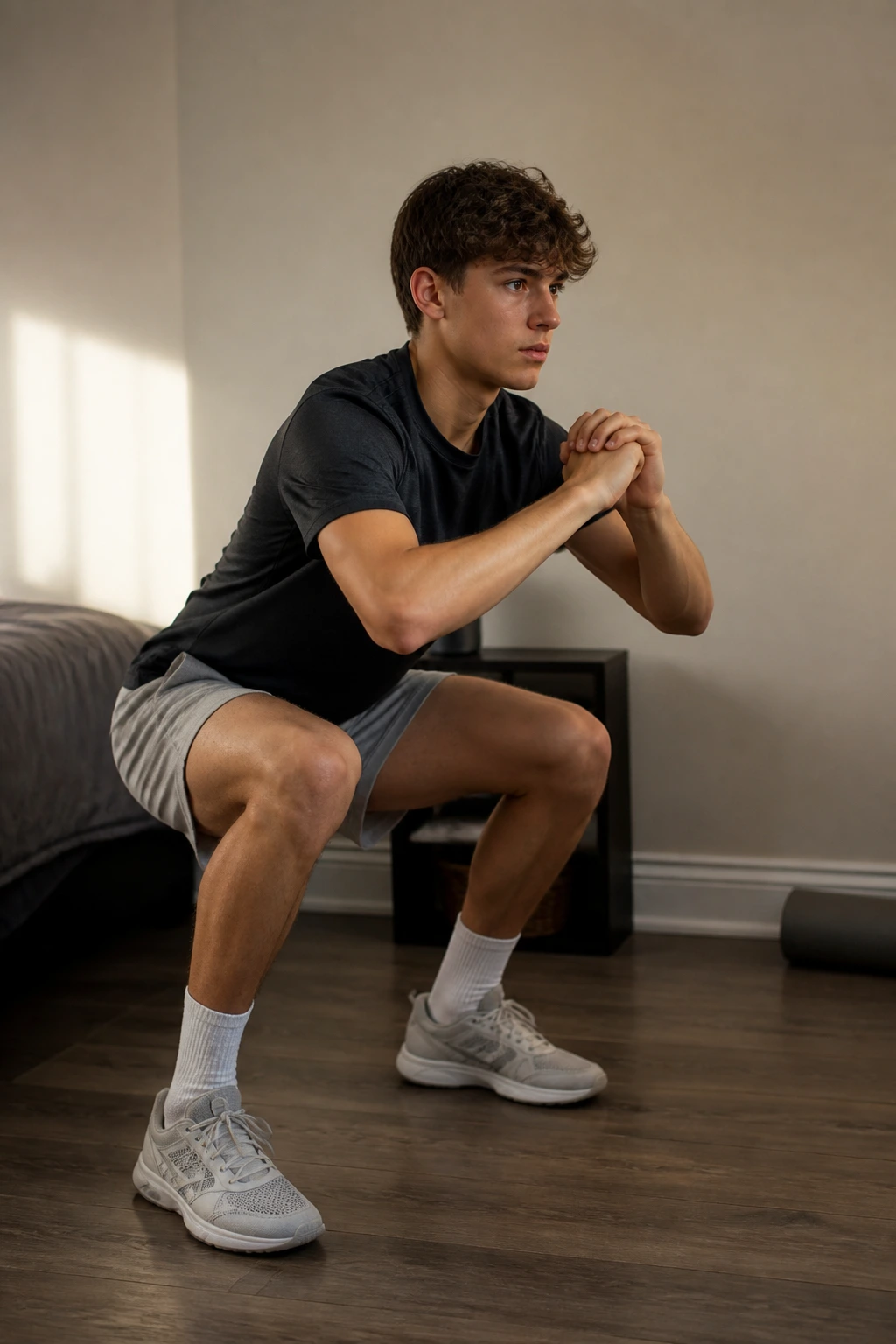
Leg day does not need a barbell to be effective.
A few controlled squats can light up the quads, glutes, and hips fast, especially when you slow the descent.
Try 3 rounds of 12 bodyweight squats, 8 reverse lunges per side, and 20 seconds of a wall sit. Rest for 45 seconds between rounds. If the legs feel too easy, add a 3-second lower on each squat. That tiny change makes a bigger difference than most teens expect.
What to Watch For
Your heels should stay down on the squats.
Knees should track in the same direction as your toes, not cave inward.
On reverse lunges, step back far enough that the front shin stays mostly vertical.
A lot of teens rush leg work because it feels simple. That’s the trap. Slower reps build better control, and better control is what keeps knees happier when sports season gets busy or when you have to sprint for a bus.
If the room is tight, skip walking lunges and stick to split squats in one spot. That version is boring. It also works.
3. The Push-Up Ladder That Builds Real Upper-Body Strength
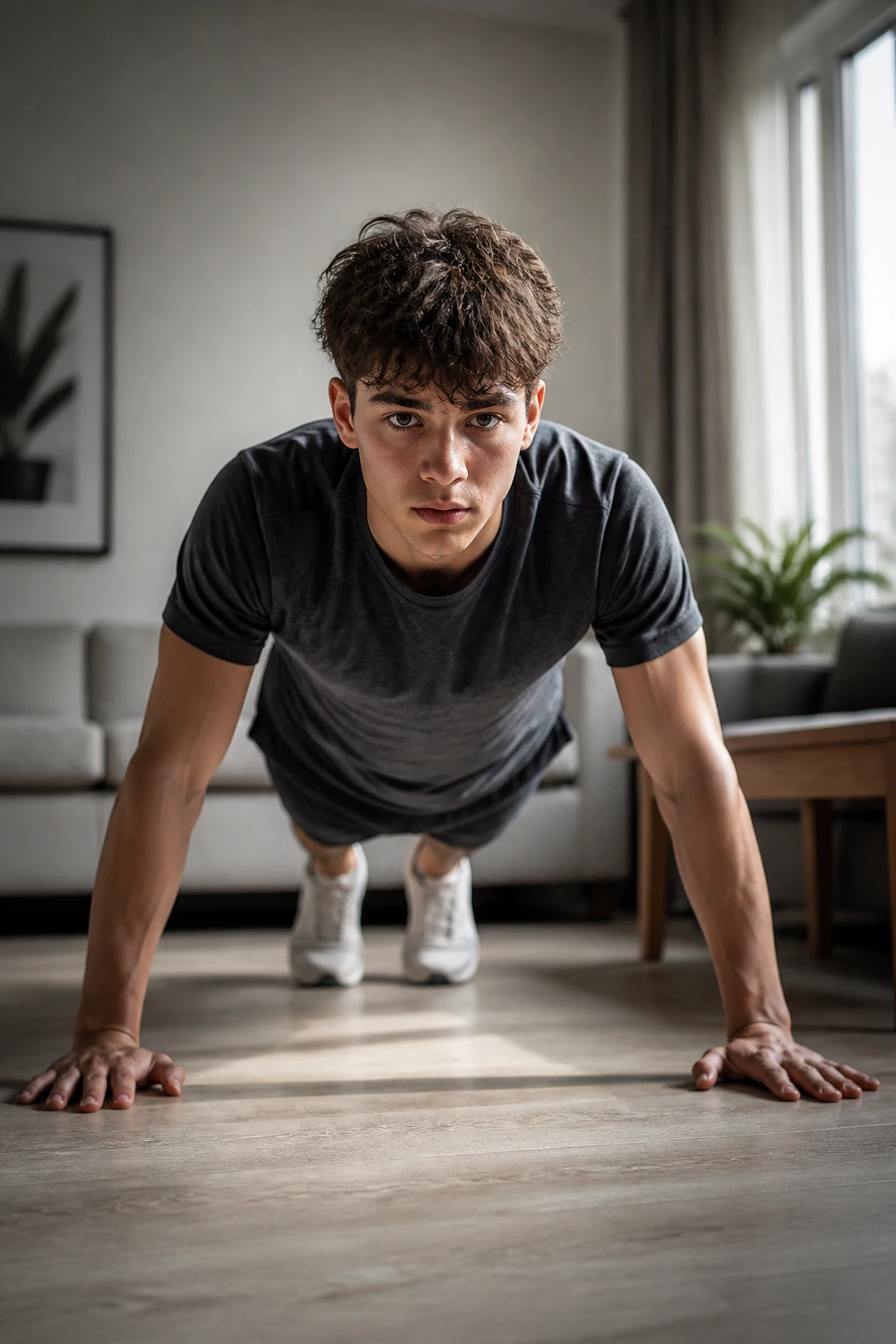
Why does push-up practice matter so much? Because it teaches more than chest strength.
A clean push-up asks the shoulders, triceps, core, and glutes to hold together at the same time. That’s useful, whether you play basketball or just want to stop collapsing into your desk.
Start with the version you can do well. Wall push-ups are fine. Incline push-ups on a couch or sturdy table are better if you can keep the body straight. From there, drop to knee push-ups, then full push-ups. Don’t guess. Pick the level where 5 clean reps feel controlled.
Simple Ladder Format
- 5 wall or incline push-ups
- 4 knee push-ups
- 3 full push-ups
- 2 full push-ups
- 1 full push-up
- Rest 60 seconds
- Repeat once or twice
The ladder keeps the workout honest. You begin with the version that lets you move well, then finish with the version that starts to feel heavy. That last rep should look the same as the first one, only slower.
Elbows about 30 to 45 degrees from the body usually feels best. Wide elbows tend to irritate shoulders. Nobody needs that.
4. Plank and Core Ladder for a Strong Middle
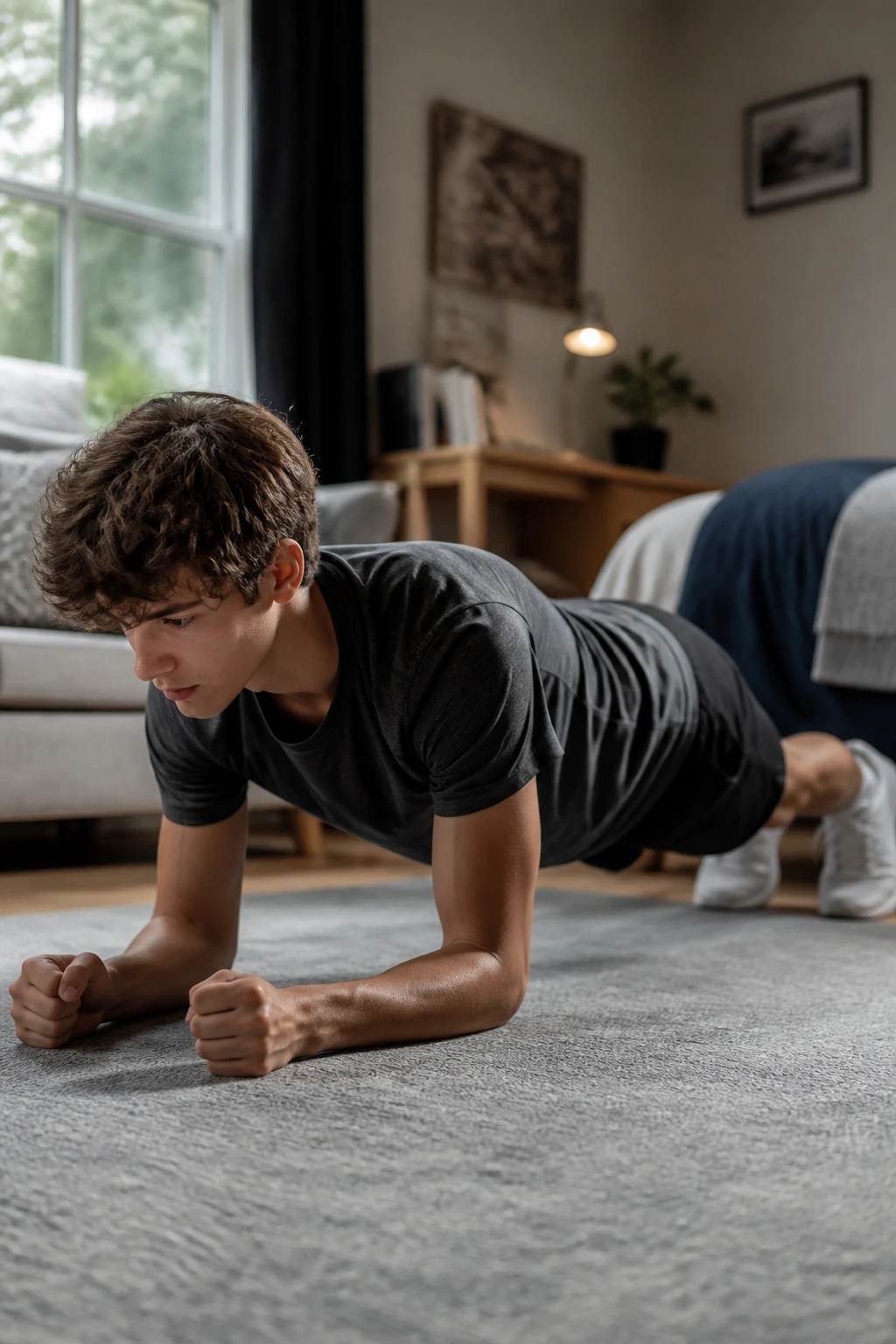
A strong core is not about doing a hundred crunches and calling it a day.
It’s about learning to hold the trunk steady while the arms and legs move around it.
This ladder starts with 20 seconds of a forearm plank, then 10 shoulder taps from a high plank, then 15 dead bugs, then 20 seconds of a side plank on each side. Rest 30 to 45 seconds, and do the whole thing 2 to 3 times. It’s short, but it gets sneaky hard when the form stays strict.
The dead bug is the piece most people underestimate. You lie on your back, press the lower back gently into the floor, and move opposite arm and leg without letting your ribs pop up. That’s the kind of core work that shows up later in sports and even in posture.
Your lower back should not feel like it’s doing the work. If it does, shorten the lever. Bend the knees more. Slow the movement down. Done well, this workout leaves the abs tired in a deep, steady way rather than giving you that useless “I just did a bunch of sit-ups” feeling.
5. Stair Intervals That Feel Way Harder Than They Look
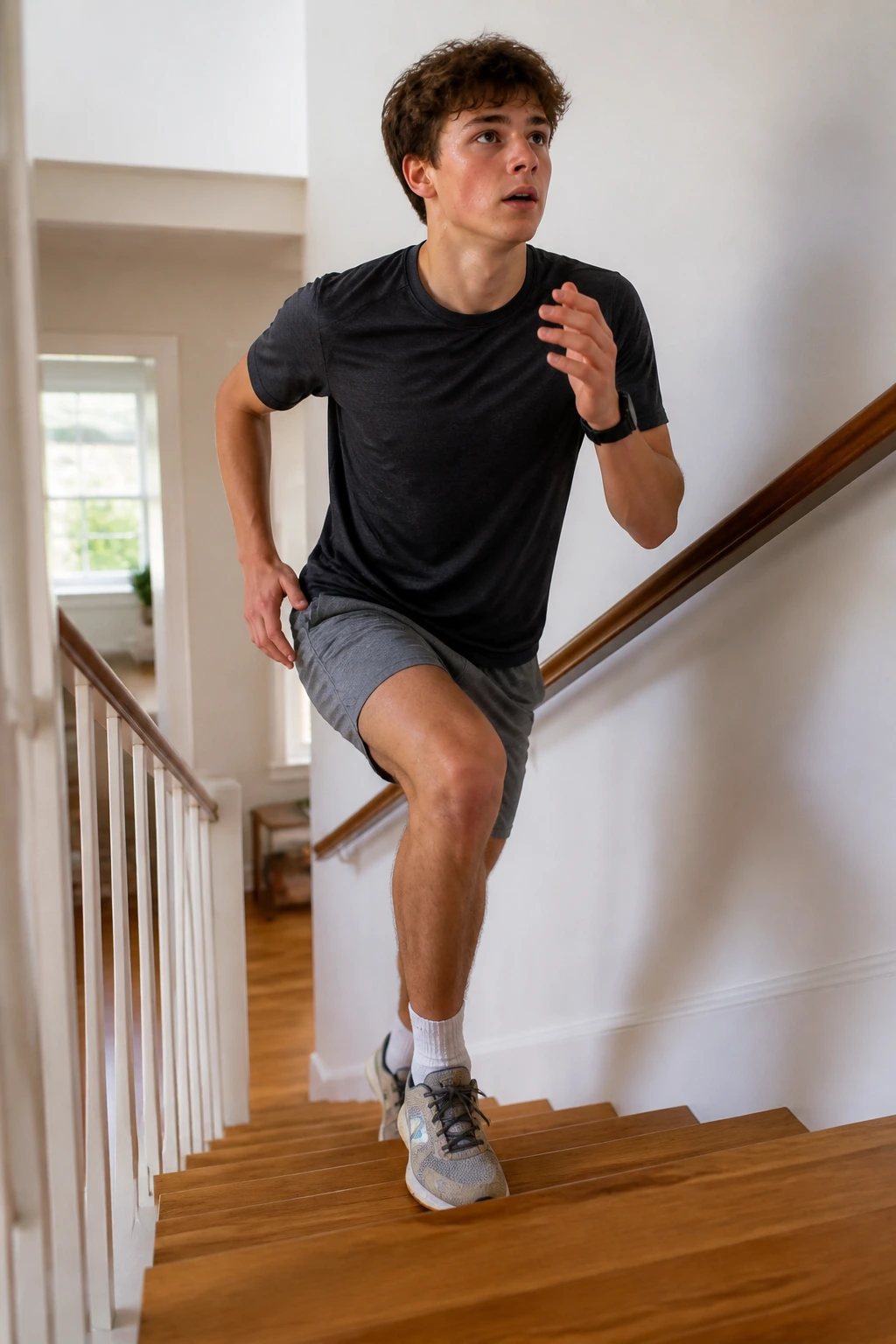
Stairs beat fancy cardio machines more often than people admit.
They’re blunt, cheap, and annoying in the best way.
Find a safe staircase and do 20 seconds up, walk down, then repeat for 6 to 10 rounds. If running stairs feels too sharp on the knees, switch to step-ups on the bottom step and keep the pace brisk. The point is not to explode like a sprinter. The point is to keep moving without sloppy foot placement.
Use the Handrail If You Need It
That is not cheating.
It is smart.
Teen workouts at home should build confidence, not create a bad landing that ruins the rest of the week. Watch the foot placement. Keep the torso tall. If the stairs are slippery, dusty, or crowded, skip the run and use march-and-step intervals instead. One fall can turn a useful routine into a bad story.
The beauty of stairs is the pacing. You get a burst of effort, then a built-in recovery on the way back down. That rhythm makes it easier to push hard without going off the rails. Short. Hard. Controlled. Good stuff.
6. Shadow Boxing Rounds in the Living Room

Can shadow boxing count as real training? Absolutely.
It builds cardio, coordination, footwork, and shoulder endurance without needing anything except a little room and some focus.
Set a timer for 3 rounds of 2 minutes, with 30 seconds of rest between rounds. Use simple punches: jab, cross, hook, then mix in slips and quick steps. Keep the hands up near the face, even when you’re tired. Loose fists are fine; death-gripping your hands is not.
Round Structure
- Round 1: jab and move, jab and move
- Round 2: add the cross and a hook
- Round 3: add slips, pivots, and quick feet
The nice thing about shadow boxing is that it does not punish you for being a beginner. You can keep the punches light and still get winded fast. You can also make it more technical by focusing on balance and clean turns through the hips.
If your shoulders burn early, shorten the combos. Two sharp punches beat six sloppy ones. That lesson carries over into a lot of teen training, honestly.
7. Low-Impact Cardio for Small Spaces
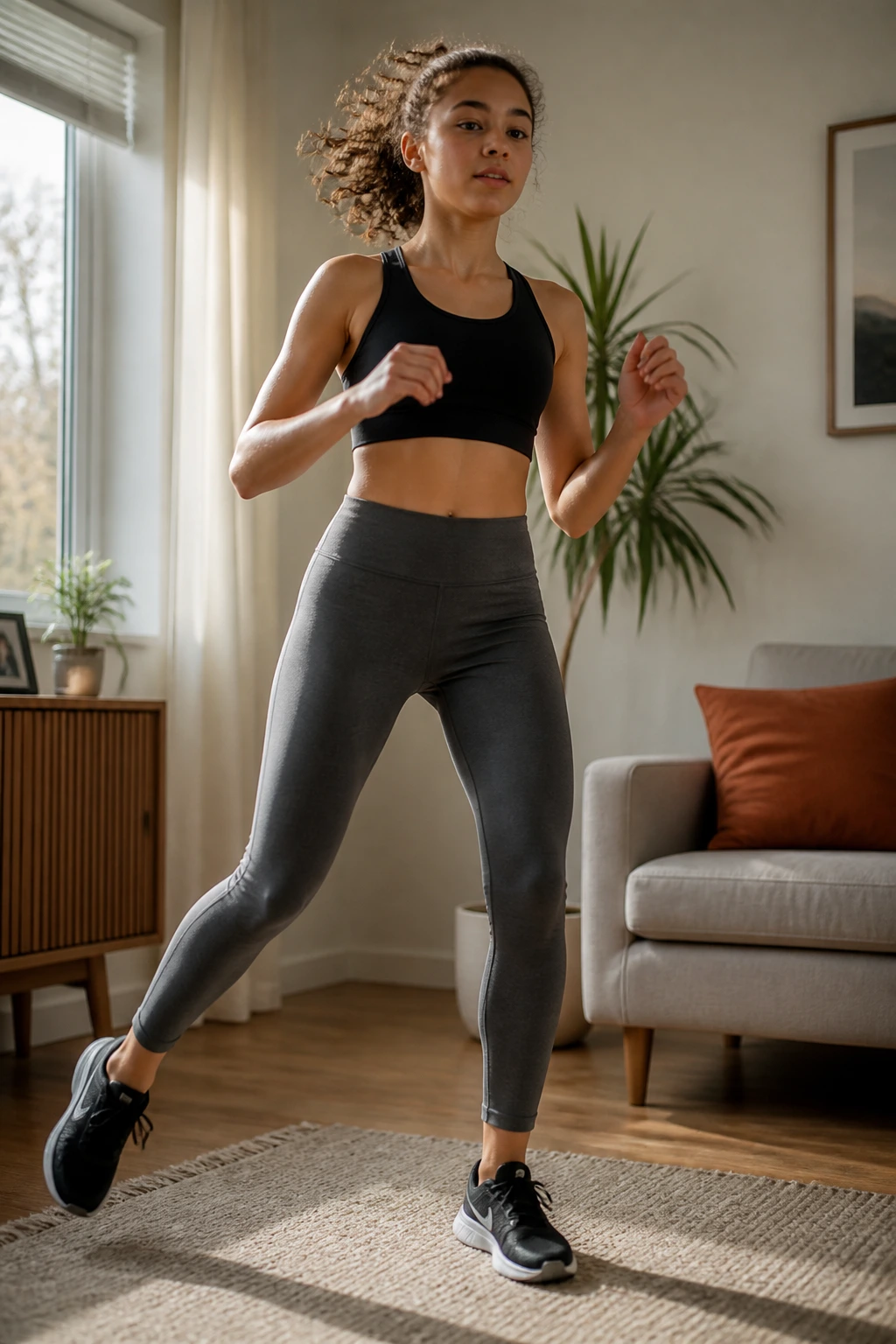
Not every teen wants jumping.
Some need a quieter workout because of neighbors, knees, or just plain preference.
This one runs on 40 seconds of work and 20 seconds of rest for 8 rounds. Use movements like step jacks, skaters without the hop, knee drives, boxer shuffle, and squat to reach. Keep it moving, but keep it soft. Feet land under control. Shoulders stay relaxed. Breathing stays even.
What Makes It Work Indoors
- No floor-thumping jumps
- Easy to stop and restart
- Good for shared rooms or upstairs apartments
- Enough variety that boredom does not hit as fast
The best part is that this style of cardio can sit between school and dinner without turning the whole house into a noise complaint. It also works well for days when the body feels stiff, not strong. You sweat, but you don’t feel battered.
Don’t mistake “low-impact” for easy.
If you keep the pace up and the rest honest, this one gets your heart working.
8. Glute Bridge and Single-Leg Strength Work
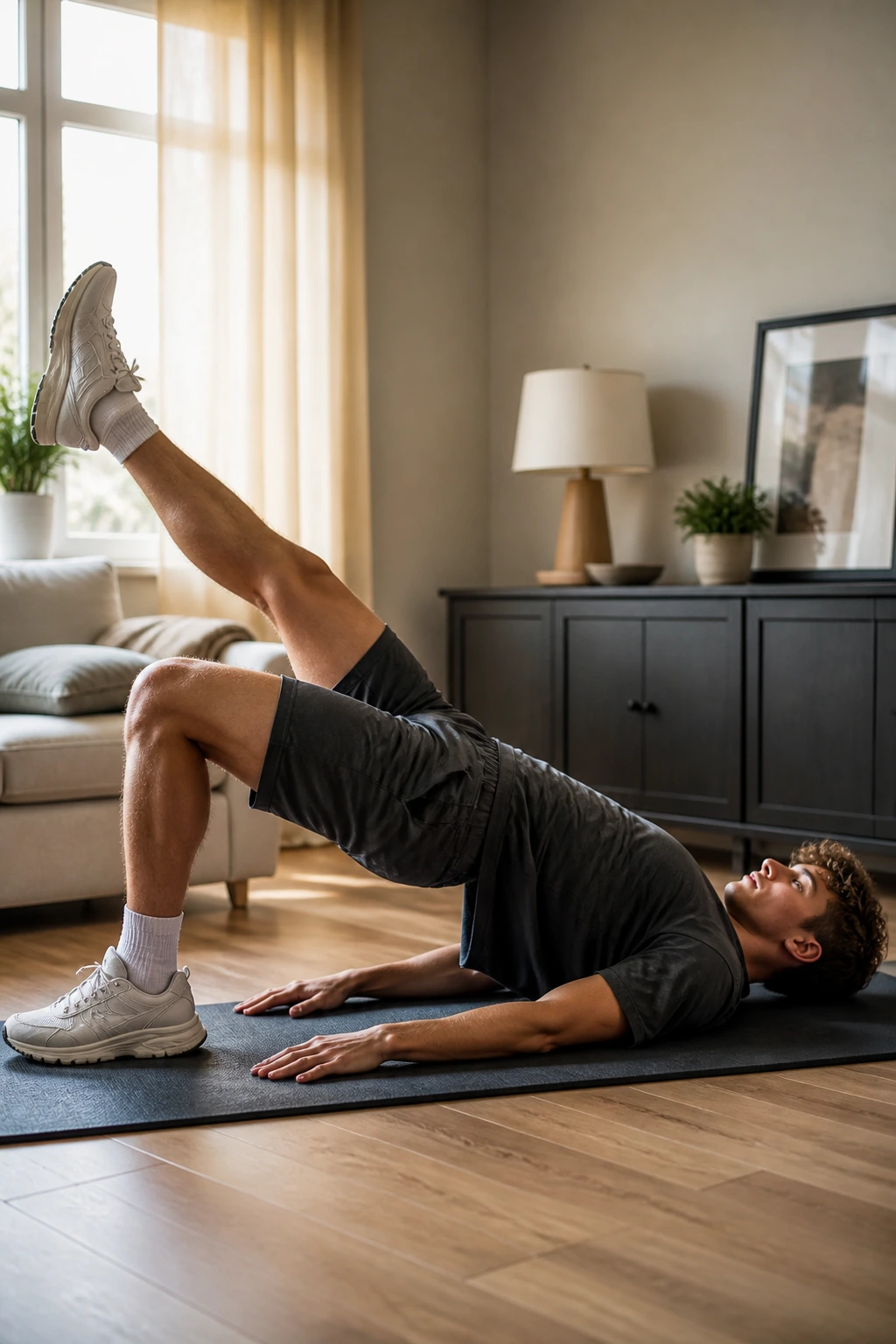
A lot of teens sit too much, and their glutes get sleepy.
Glute bridges wake them up fast.
Lie on your back, feet flat, knees bent, and drive through the heels to lift the hips. Then move into 3 rounds of 15 glute bridges, 8 single-leg bridges per side, 12 frog pumps, and a 20-second hold at the top. Rest 45 seconds between rounds.
The bridge is simple, but the effect is not. When the hips rise and the ribs stay down, the glutes and hamstrings do a proper share of the work. That helps with sprinting, jumping, and even basic posture.
Single-leg work makes the sides of the body behave. One side will probably feel steadier than the other. Normal. Use that as information, not a reason to quit.
If the lower back arches, shorten the range and squeeze the glutes harder at the top. You want a firm lift, not a yoga stunt. A teen who can control this workout usually moves better in everything else, too.
9. Dance Cardio That Doesn’t Feel Like Homework
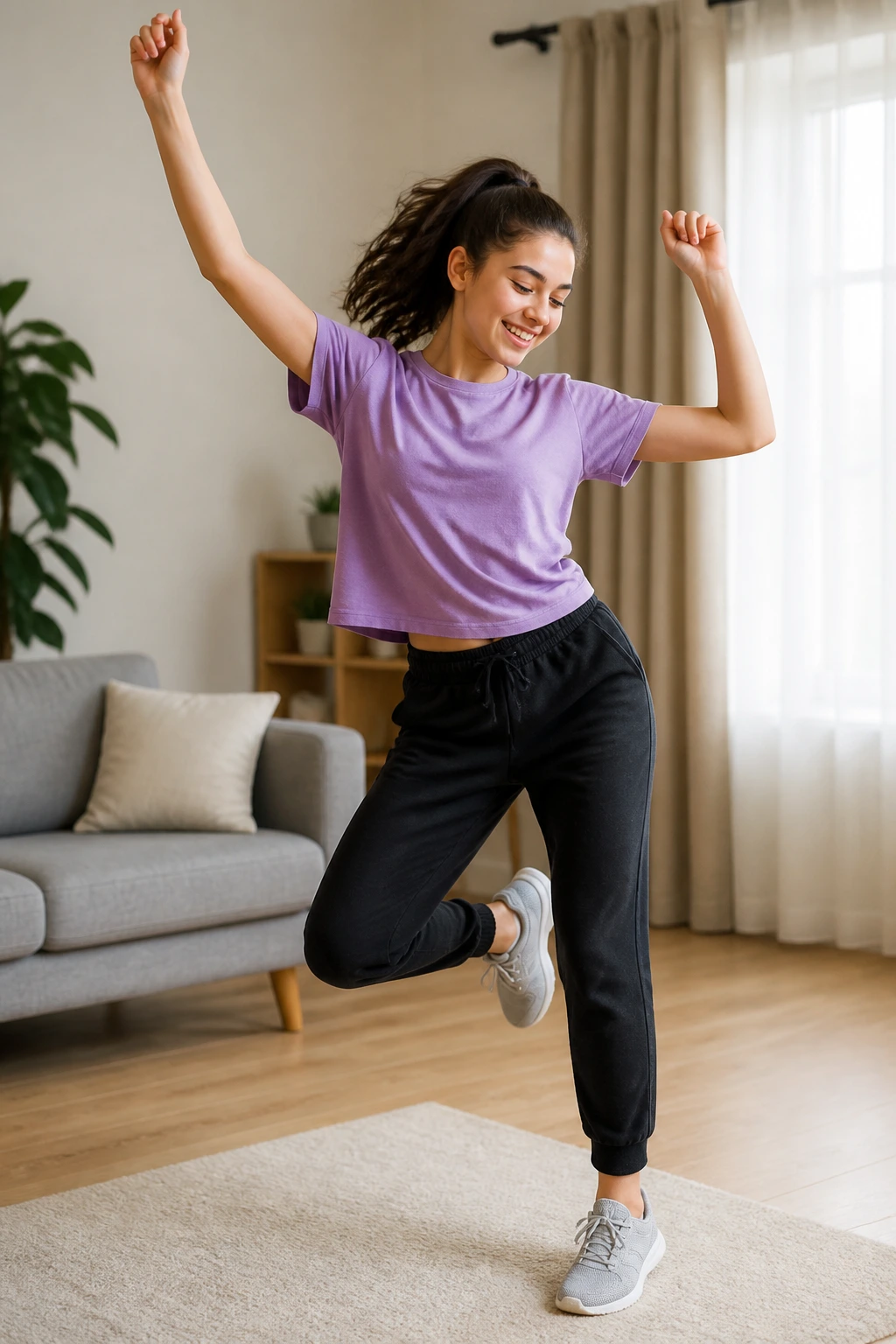
A playlist can do more for teen fitness than a dull checklist sometimes.
When the songs are good, the work feels lighter, and that matters.
Pick 4 songs that add up to about 15 minutes. Use the first song to warm up with marching and easy steps. Make the second song your main dance round. Push harder in the third song with quick feet, side steps, and big arm swings. Use the last song to cool down and keep moving until the breathing settles.
The trick is not to choreograph anything fancy. Just use big, honest movement. Step right, step left, turn, reach, bounce, repeat. If a move feels awkward, toss it and keep going. Nobody needs to look polished in a living room.
This works especially well for teens who hate the idea of “exercise” but like music. That’s not a small thing. If the workout gets done because the playlist is strong, I’m not going to complain. Consistency beats suffering for style.
10. The EMOM Full-Body Circuit
EMOM workouts are honest.
Every minute on the minute, you do a task, then use whatever time is left to recover.
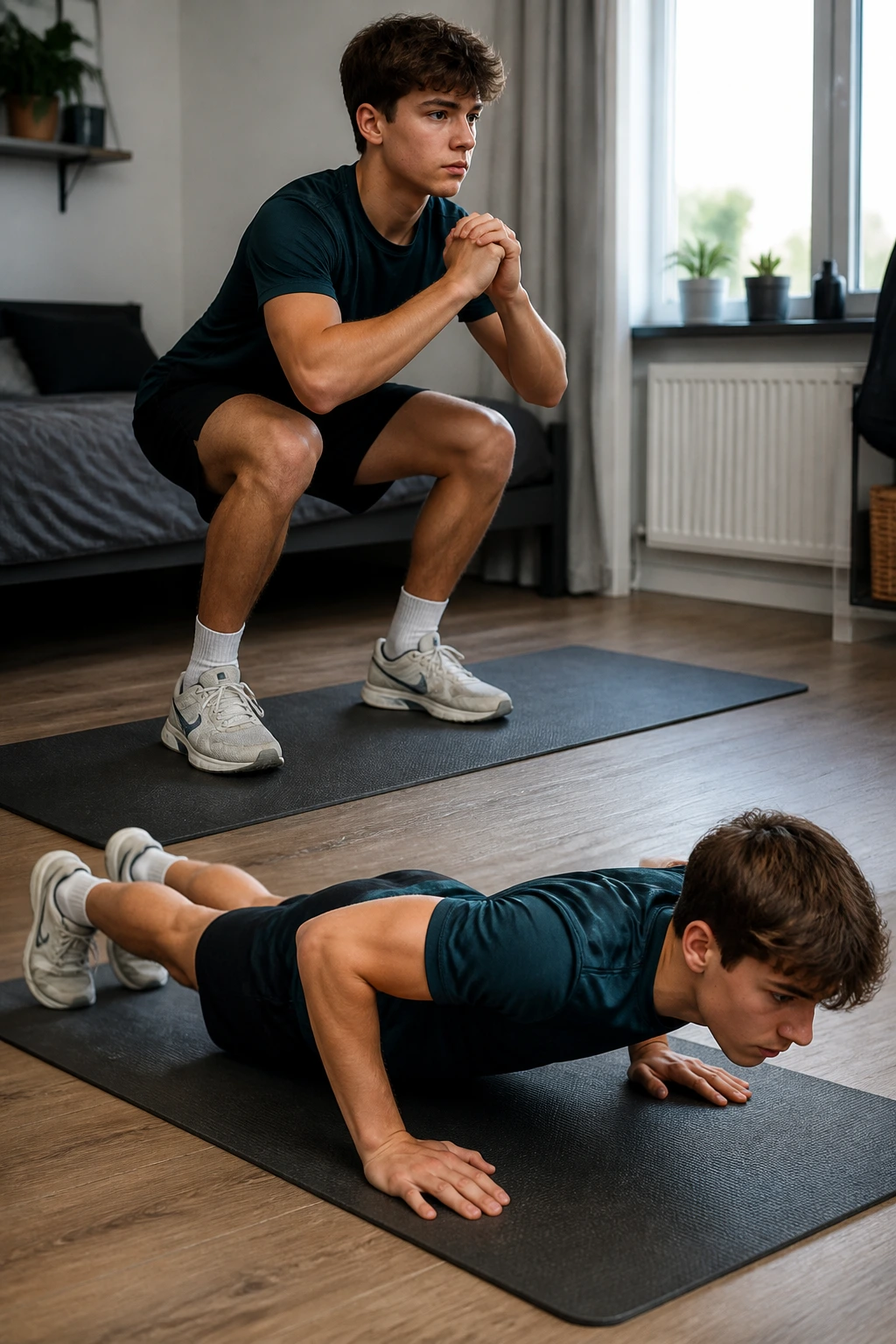
Set a timer for 12 minutes. In minute 1, do 10 squats. In minute 2, do 6 push-ups. In minute 3, do 20 mountain climbers total. In minute 4, do 10 reverse lunges per leg. Repeat that pattern three times.
How to Pace It
The reps should finish in about 35 to 45 seconds, leaving enough room to breathe before the next minute starts.
If you need the full minute every time, the reps are too high.
If you finish in 15 seconds, the workout is too easy.
That built-in pacing is what makes EMOM work well for teens at home. It keeps the session structured without dragging on forever. It also teaches time awareness, which sounds dull until you realize how often people go out too hard in the first two minutes and fall apart later.
You can swap exercises based on space or skill. Bodyweight squats, planks, dead bugs, and step-ups all fit nicely here. Keep the list simple. The timer is doing a lot of the heavy lifting.
11. Mobility Flow for Tight Hips and Shoulders
What do stiff hips and tired shoulders have in common?
A lot of teenagers have both, usually from sitting, gaming, scrolling, or hauling a backpack that sits badly.
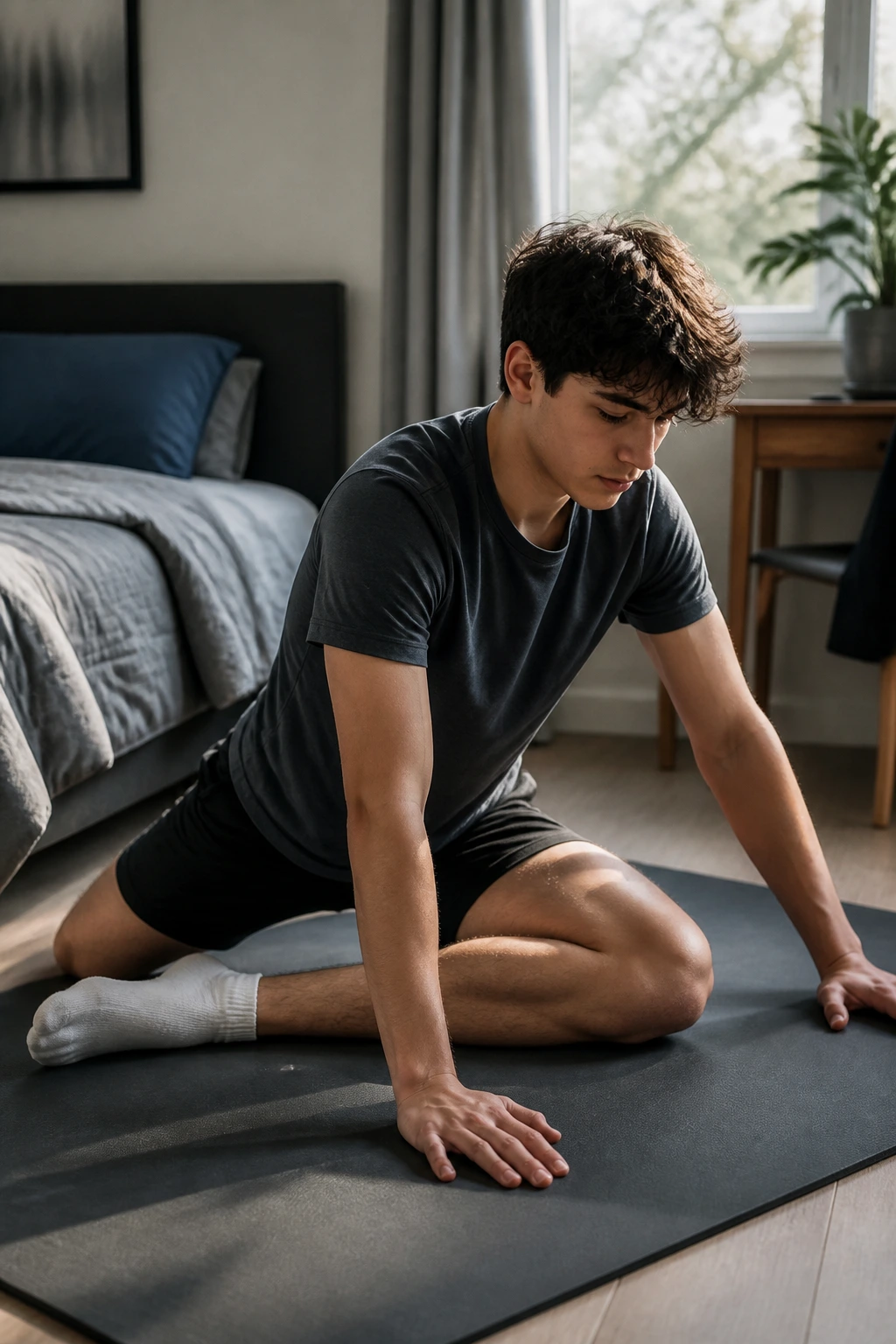
A short mobility flow can count as a workout when it’s done with focus. Start with cat-cow for 30 seconds, move into world’s greatest stretch on each side, then 90/90 hip switches, arm circles, and a few thoracic rotations. Go through the sequence for 2 to 3 rounds.
This one is less sweaty than the others, but don’t write it off.
Loose hips make squats better.
Freer shoulders help push-ups, planks, and even throwing motions.
The goal is not to force a giant stretch. It’s to move through positions that most teens skip all day. Smooth breathing helps. So does patience. If a knee or shoulder feels pinchy, shorten the range and slow down. Mobility should feel like a reset, not a fight.
I like this routine after a hard day or before bed. It takes pressure off the body without asking much from the mind. Sometimes that’s exactly the win you want.
12. Tabata Burnout in Short, Sharp Blocks
Thirty seconds on. Twenty seconds off.
That’s not Tabata, technically, and the real version is even meaner: 20 seconds hard, 10 seconds rest, repeated 8 times for one exercise.
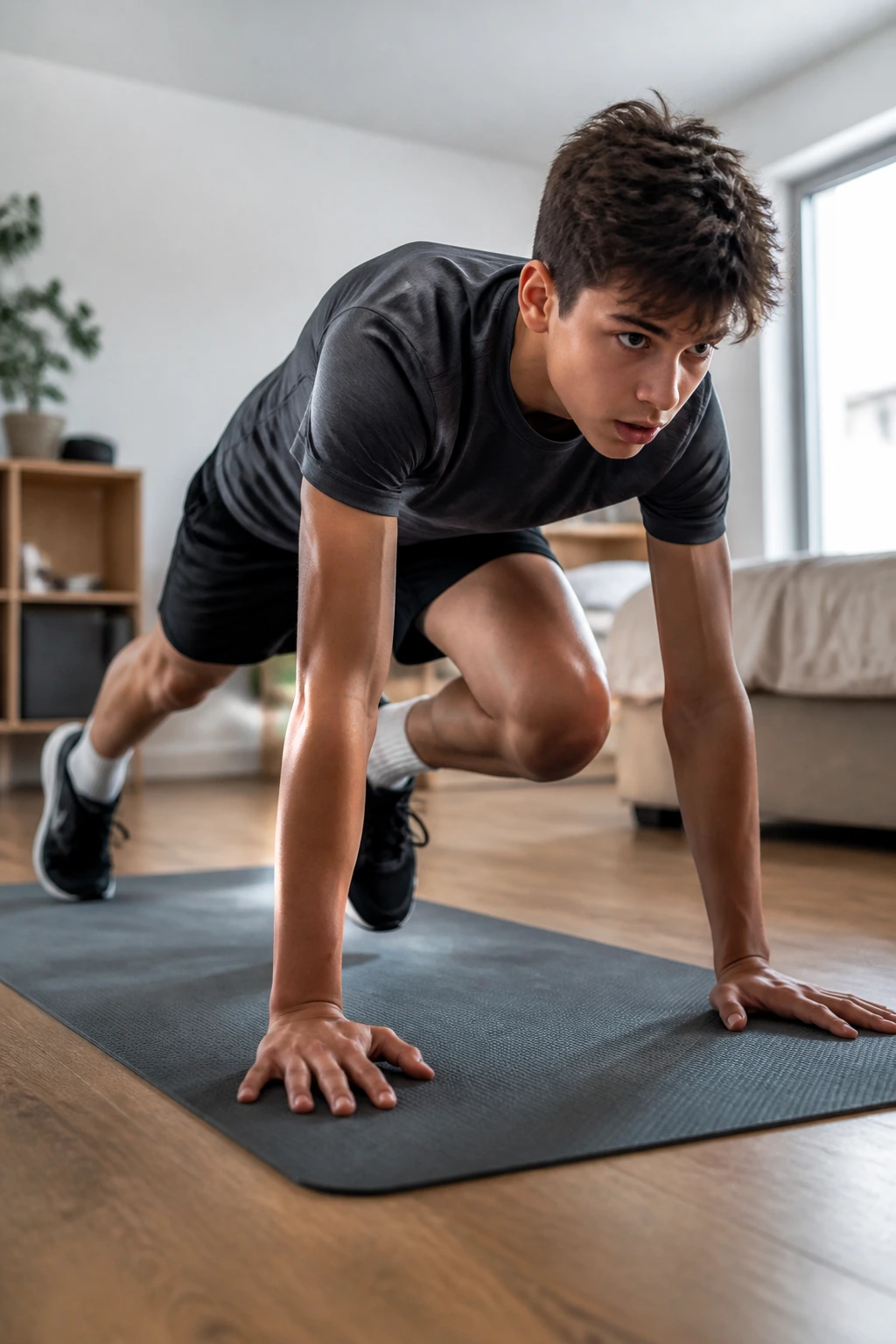
Choose one movement to start, like jumping jacks, squat to reach, or mountain climbers. Work for 4 minutes, rest 1 minute, then pick a second move if the legs and lungs still have some life in them. A full session might include 2 to 3 Tabata blocks.
Good Choices for Teens
- Jumping jacks
- Fast step jacks
- Mountain climbers
- Bodyweight squats
- Skaters without the hop
The whole point is short bursts. If the first 20 seconds are too easy, speed up. If the form turns into chaos, slow down a little and keep the reps clean. A Tabata round should feel sharp, not sloppy.
This is not the workout I’d hand to someone who is already wrecked from sports practice. It is better used when energy is decent and the teen wants a short, hard hit of conditioning. Used well, it punches above its size.
13. Backpack Strength Session
A backpack is enough.
That sounds too simple, but simple tools are part of the charm of home training.
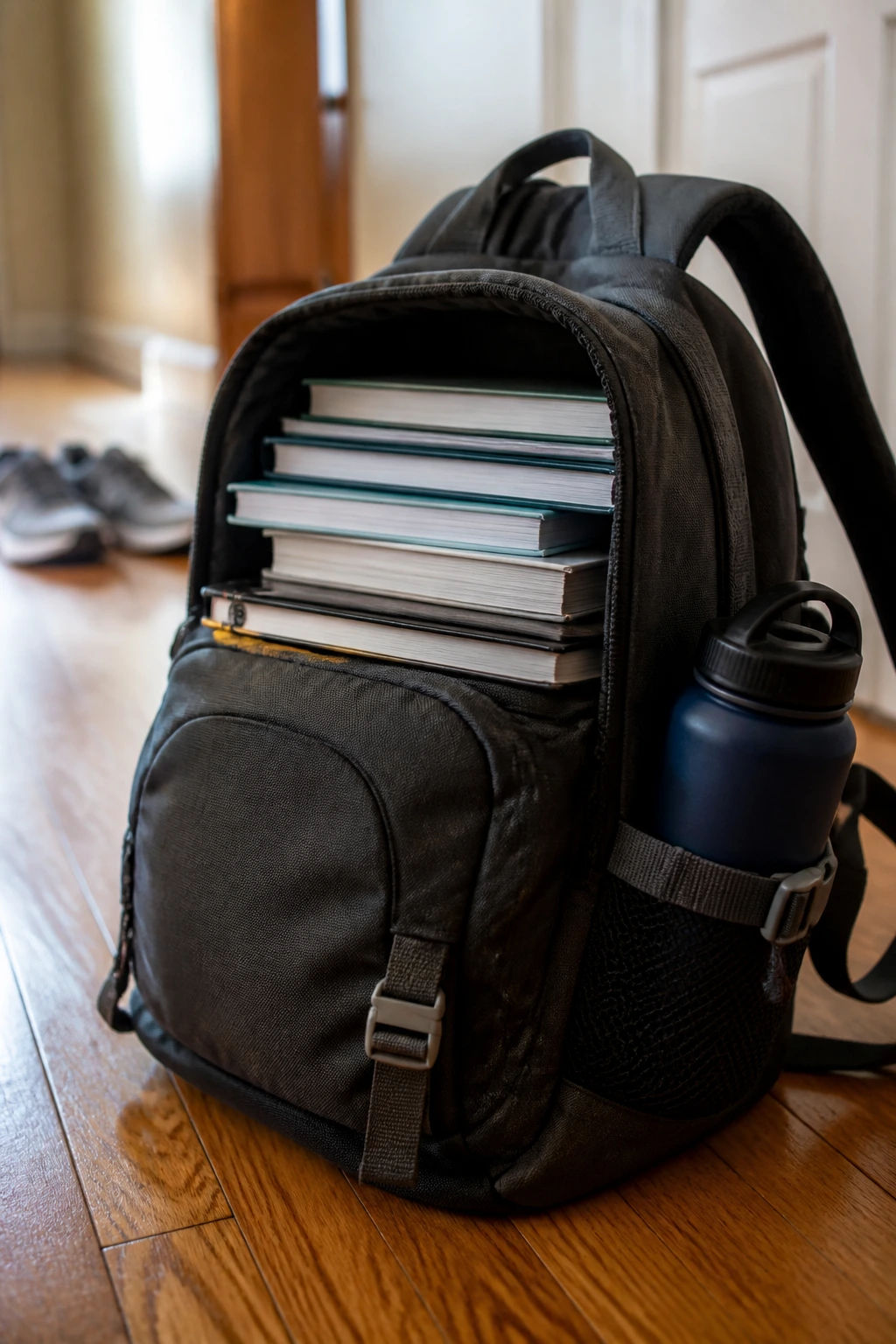
Fill a backpack with books, a water bottle, or canned goods. Start with a load that feels manageable for 8 to 12 reps of squats and rows. Then do 3 rounds of 12 backpack squats, 10 bent-over rows, 8 Romanian deadlifts, and 30 seconds of a farmer carry around the room or hallway.
Keep the Load Close
The backpack should stay close to the body on rows and deadlifts.
If it swings away from your torso, the back works harder than it needs to.
That’s where form gets messy.
This workout is especially useful for teens who want a taste of strength training without dumbbells. The rowing motion hits the upper back, which a lot of bodyweight routines miss. The deadlift pattern teaches the hips to hinge instead of folding at the spine. That’s a big deal, even if nobody is posting it on social media.
Start light. Then add books.
Not the other way around.
14. The No-Crunch Core Workout
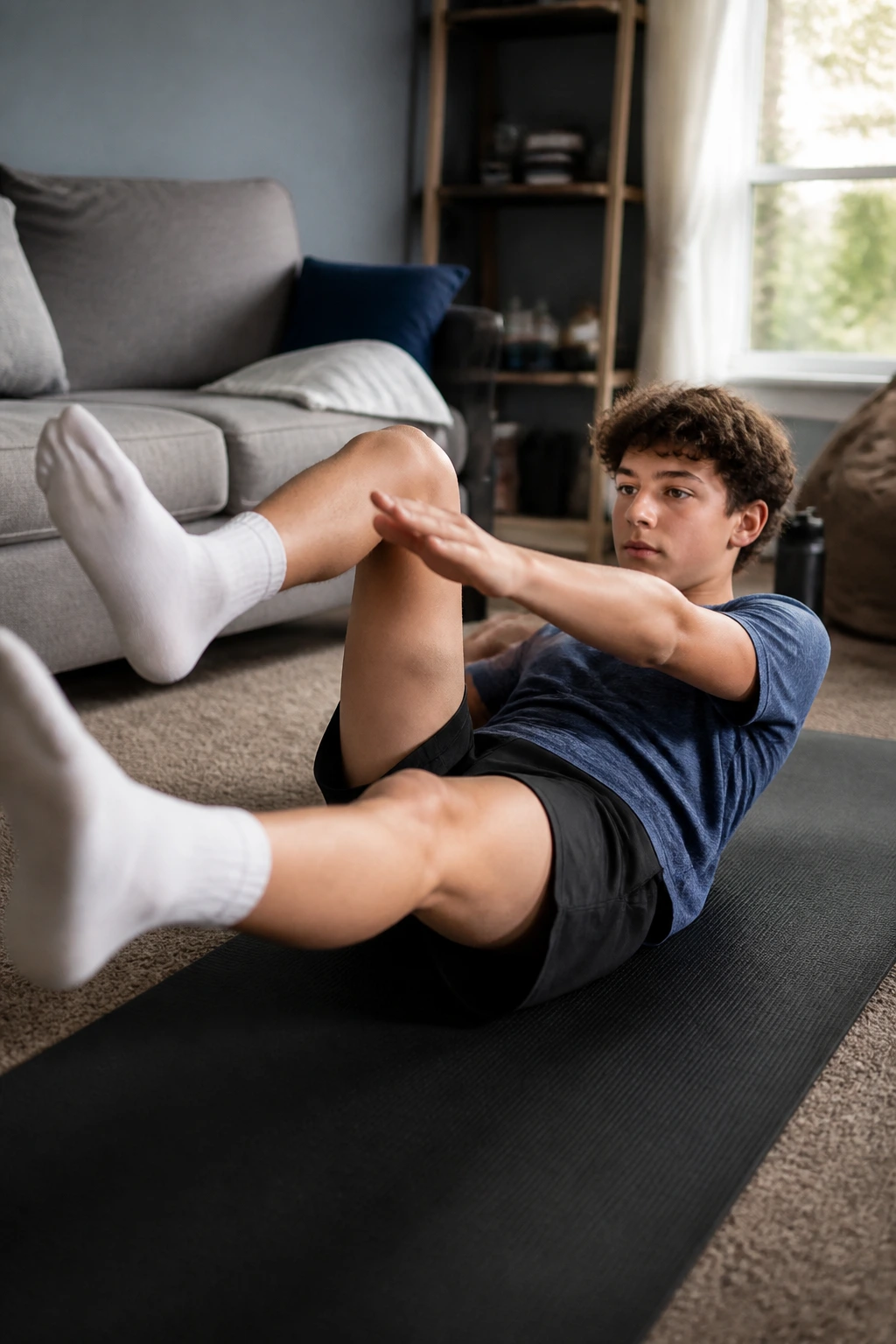
Why skip crunches? Because the core does more than curl the spine.
It braces, resists motion, and keeps the body from folding in half when life gets busy.
Try dead bugs for 8 reps per side, bird dogs for 8 per side, side planks for 20 seconds per side, and a hollow hold for 15 to 20 seconds. Do 2 or 3 rounds with 30 seconds of rest between moves if needed.
The dead bug and bird dog look calm, which is part of why people skip them. Bad move. They train control in a way crunches can’t match. The hollow hold is the spicy piece. Keep the lower back pressed toward the floor and stop the hold before the back starts arching.
Small Cues That Matter
- Move slowly
- Keep ribs down
- Breathe out on effort
- Stop before form cracks
Teens who do this workout well usually feel it in the lower abs, deep core, and around the sides of the trunk. That’s the good kind of tired. It shows the body was actually stabilizing, not just flopping through reps.
15. The Burpee Ladder
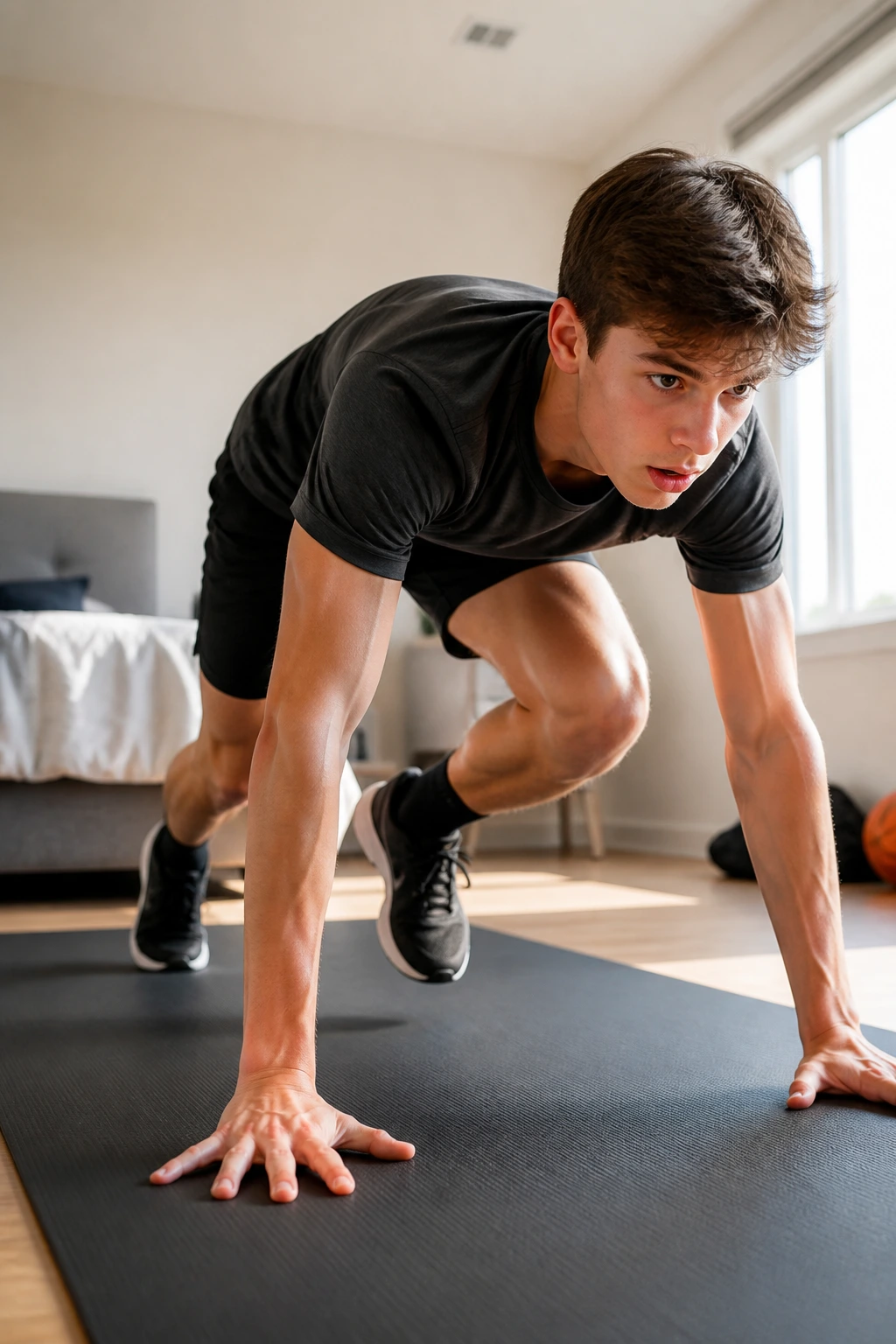
Burpees after homework? Not as wild as it sounds.
Done right, they’re a fast way to train the whole body without equipment.
Start with 2 burpees, rest 30 seconds, then 4 burpees, rest, then 6, 8, and 10. Stop there if form starts slipping. A modified version is fine: step back instead of jumping, skip the push-up, or leave out the jump at the top.
A Clean Burpee Looks Like This
- Hands plant under the shoulders
- Feet step or jump back
- Core stays tight
- Chest comes up before the next rep
- Land softly
Burpees get messy when people chase speed. That is the whole problem. The ladder gives a structure that keeps the reps honest and makes the workout feel like a climb instead of random suffering. The first two sets should feel almost too easy. If they don’t, you started too high.
This is a good one for teens who like a clear challenge. Short workout. Clear target. No guessing. Just don’t let the chest hit the floor like a sack of laundry.
16. Yoga-Style Strength Flow
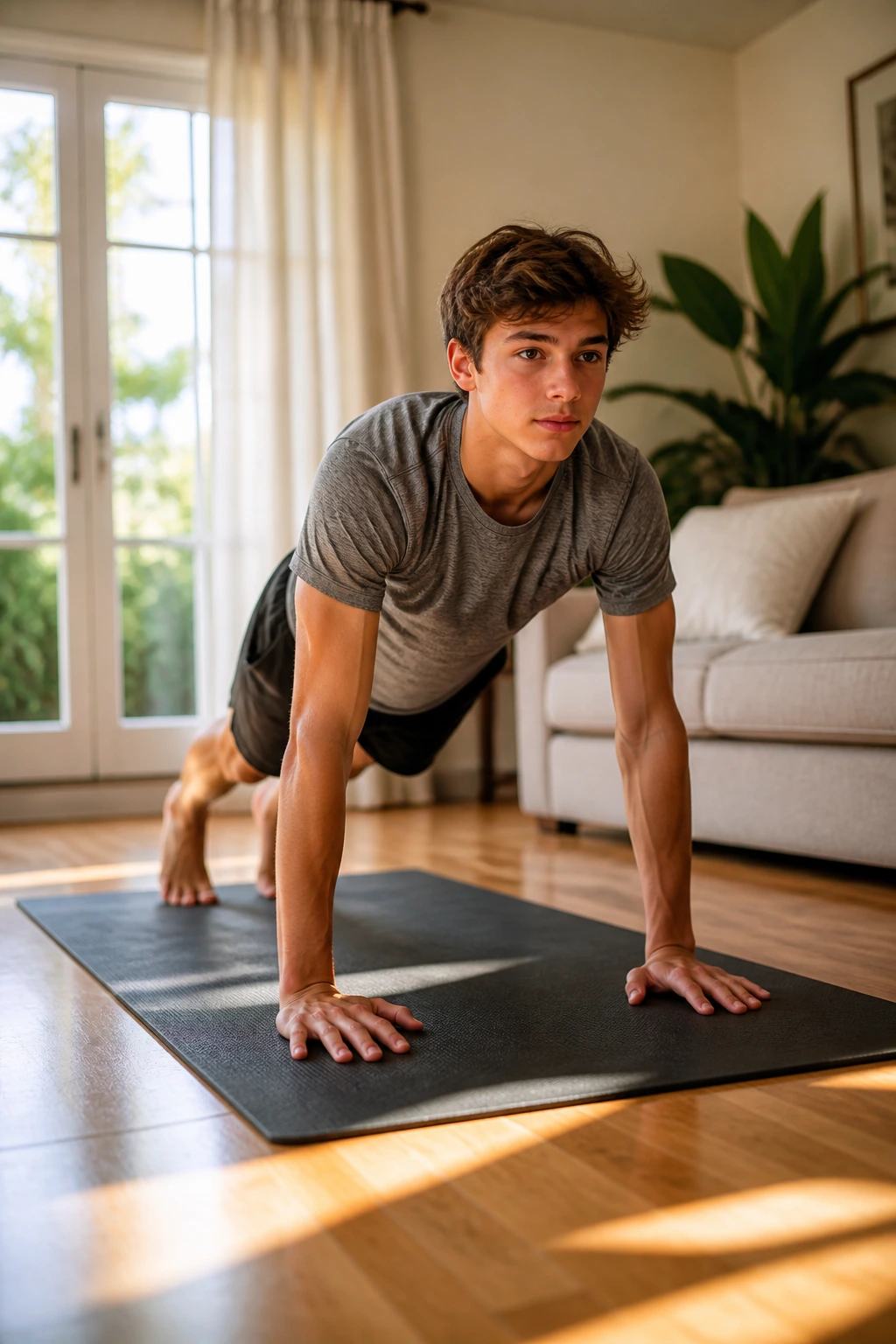
Slow sun salutations have a sneaky way of making the body work hard.
They look gentle, then the shoulders, legs, and balance all start complaining.
Move through 3 to 5 rounds of a simple flow: mountain pose, forward fold, half lift, plank, cobra or upward dog, downward dog, step the right foot forward, lunge hold, step back, then switch sides. Hold each position for 3 to 5 breaths instead of rushing through it.
The magic here is control.
You keep the breath steady, hold the shapes long enough to feel them, and stop relying on momentum.
Teens who never sit still usually hate the idea of yoga for about 90 seconds, then notice how hard it is to hold a lunge or plank without wobbling. That surprise is useful. It reminds you that slow work has teeth.
If the hamstrings are tight, bend the knees in the forward fold. If the wrists are cranky, drop to forearms in plank or skip the plank and go back to downward dog. There is no prize for forcing a pose that your body is not ready for.
17. Step-Up and Balance Work
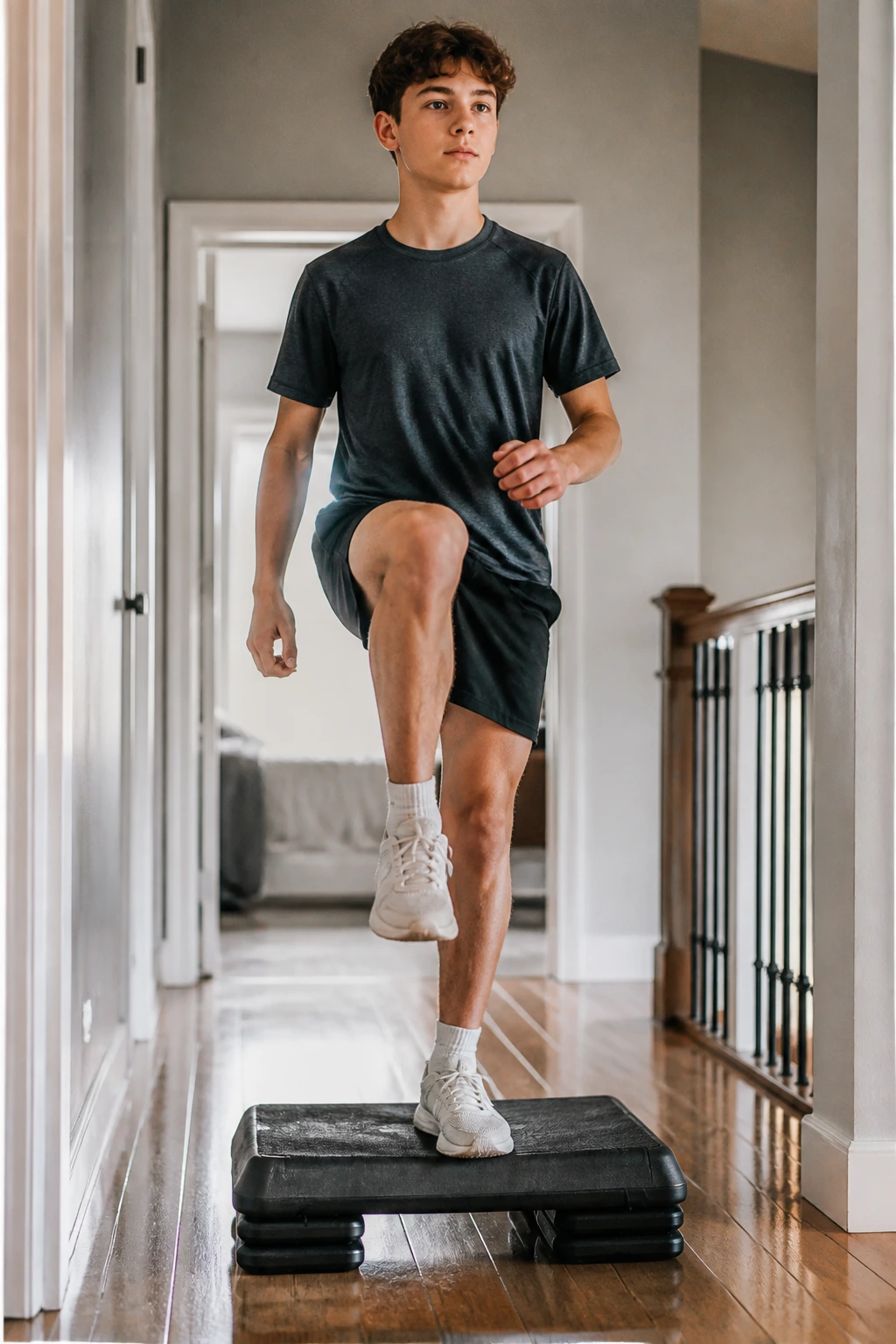
Step-ups are less flashy than jump squats, and that’s part of why I like them.
They build single-leg strength, balance, and control without demanding a giant open space.
Use a sturdy step or staircase and do 3 rounds of 10 step-ups per leg, 8 knee drives per leg, and 20 seconds of single-leg balance on each side. Rest 30 to 45 seconds between rounds. If the step is high enough that the hip tucks or the knee caves inward, it’s too high.
Good Form Checks
- Whole foot on the step
- Chest tall
- Push through the working heel
- Lower under control
- No crashing down
This workout is useful for teens who play sports, but it also helps anyone who wants better leg symmetry. One side is usually a little clumsy at first. Fine. That side probably needs the work more than the other one.
A backpack can make the step-ups harder later, but bodyweight is plenty to start. The single-leg balance piece matters more than it looks. A shaky ankle has a way of showing up at the worst possible moment, and this is a decent way to shut that down early.
18. Agility Drills for Small-Space Athletes
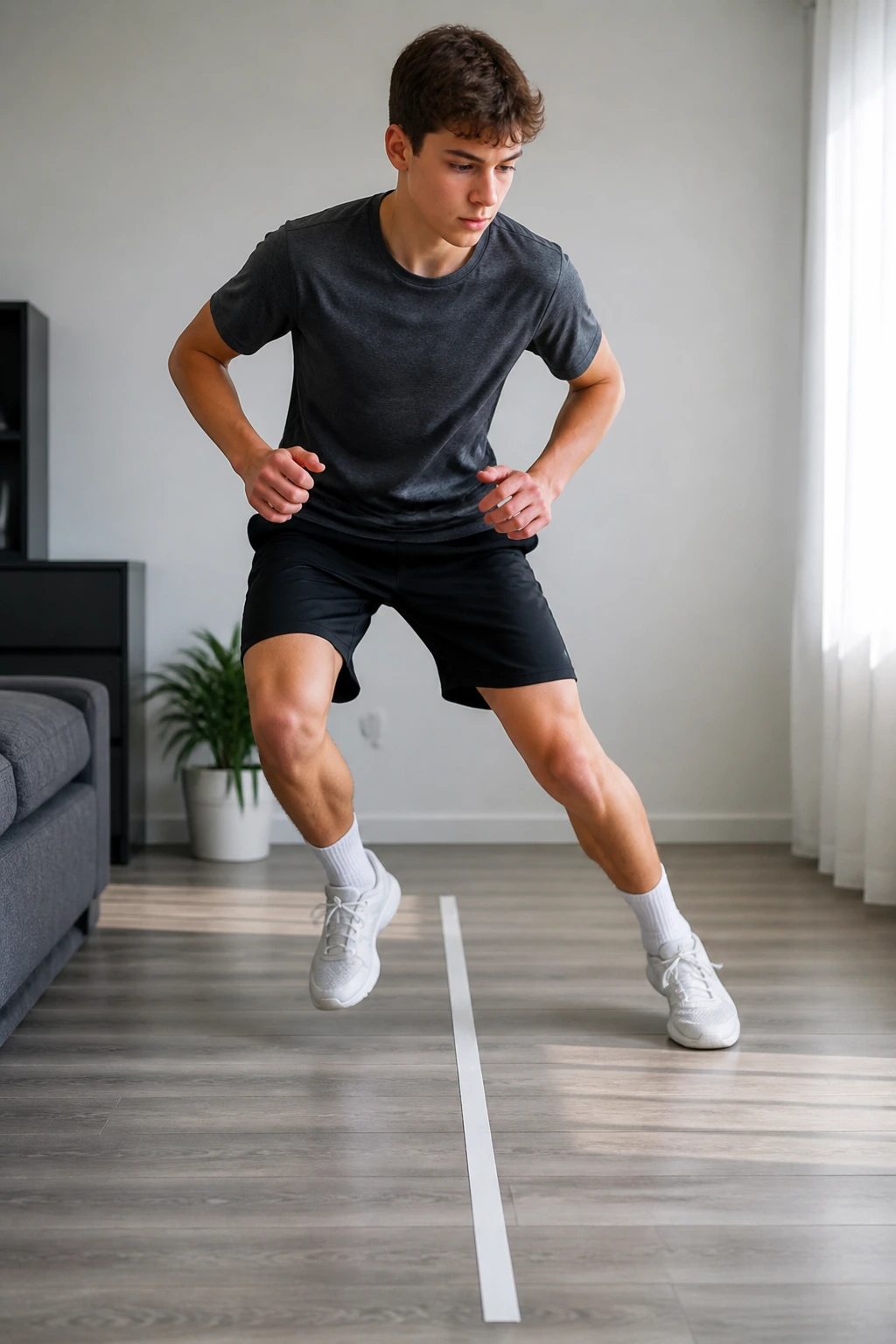
If your teen plays soccer, basketball, tennis, or anything with quick starts and stops, this one earns its keep fast.
It doesn’t need much room. A strip of floor and a little focus are enough.
Mark a short line with tape, a sock, or a shoe. Then do 20 seconds of lateral shuffles, 20 seconds of quick feet, 20 seconds of line hops, and 20 seconds of forward-and-back steps. Rest 20 to 30 seconds, then repeat for 4 to 6 rounds.
Tiny-Space Setup
- One line on the floor
- One clear path
- One timer
- Flat shoes or bare feet on a safe surface
The point is not to move all over the house. It’s to train quick feet, body control, and clean direction changes. Keep the knees bent a little, stay light on the balls of the feet, and avoid crossing the feet over each other during shuffles unless that’s the drill you want.
This is one of those workouts that looks almost too simple on paper. Then the calves start burning. Then the breathing changes. Then the floor starts feeling longer than it looked five minutes earlier. That’s normal. It means the drill is doing something useful.
19. Recovery Stretch Session
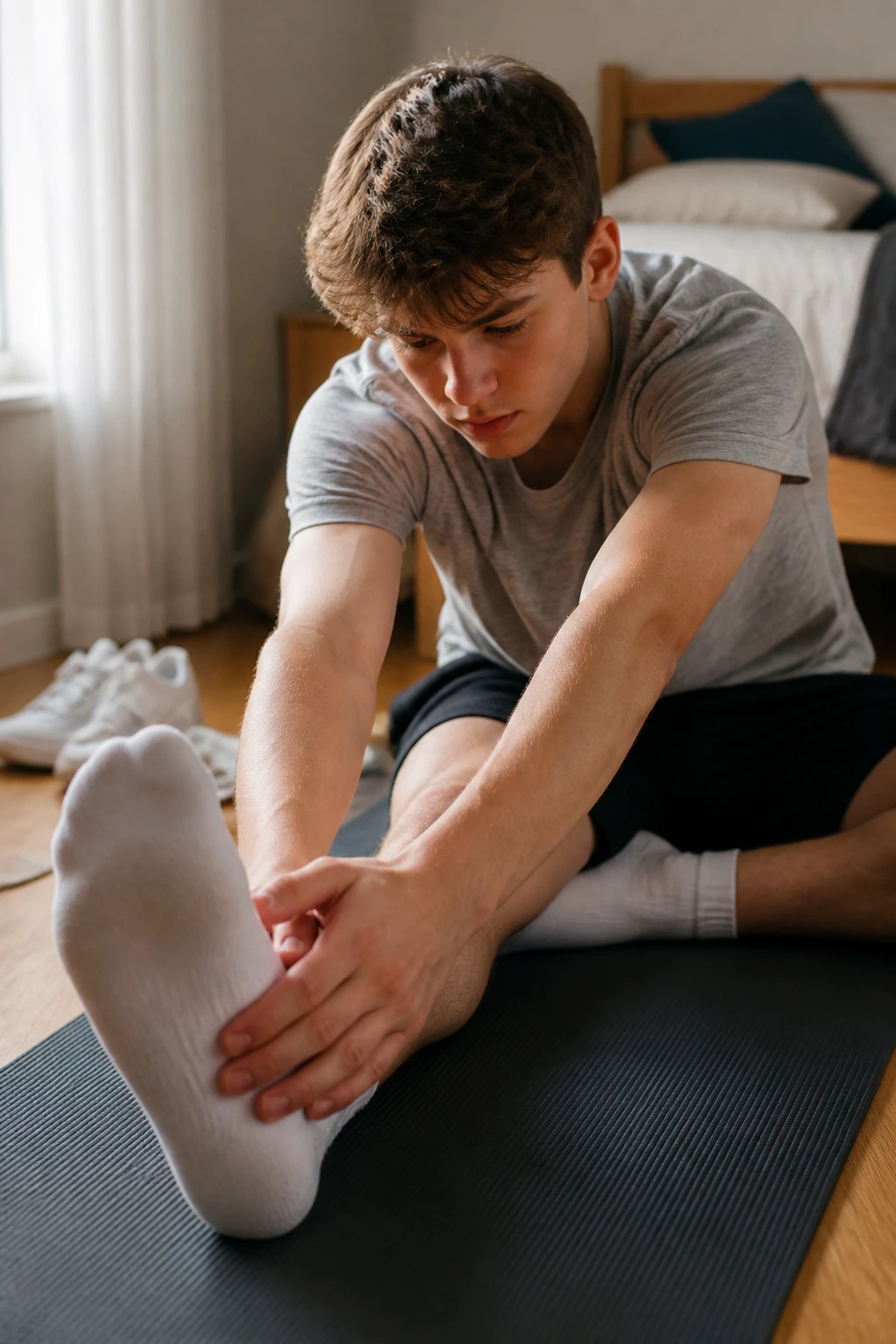
Recovery is training.
That sounds neat until you realize how many teens skip it and then wonder why they feel stiff all the time.
Spend 8 to 12 minutes moving through a short recovery sequence: hamstring stretch for 30 seconds per side, hip flexor stretch for 30 seconds per side, calf stretch for 30 seconds per side, chest opener against a wall or doorway, and child’s pose with slow breathing. If the body feels beat up, add gentle neck rolls and ankle circles.
This is the workout to use after hard cardio, sports practice, or a day when the shoulders feel crowded from sitting. The goal is not to force flexibility. It’s to keep tissue moving and let the nervous system settle a little.
Breathing matters here more than people expect. Inhale through the nose if possible, exhale longer than you inhale, and let the body soften on the exhale.
No yanking.
No bouncing.
I’d hand this to any teen who thinks rest means doing nothing. It doesn’t. It means giving the body a chance to stay usable.
20. The 12-Minute Benchmark Challenge
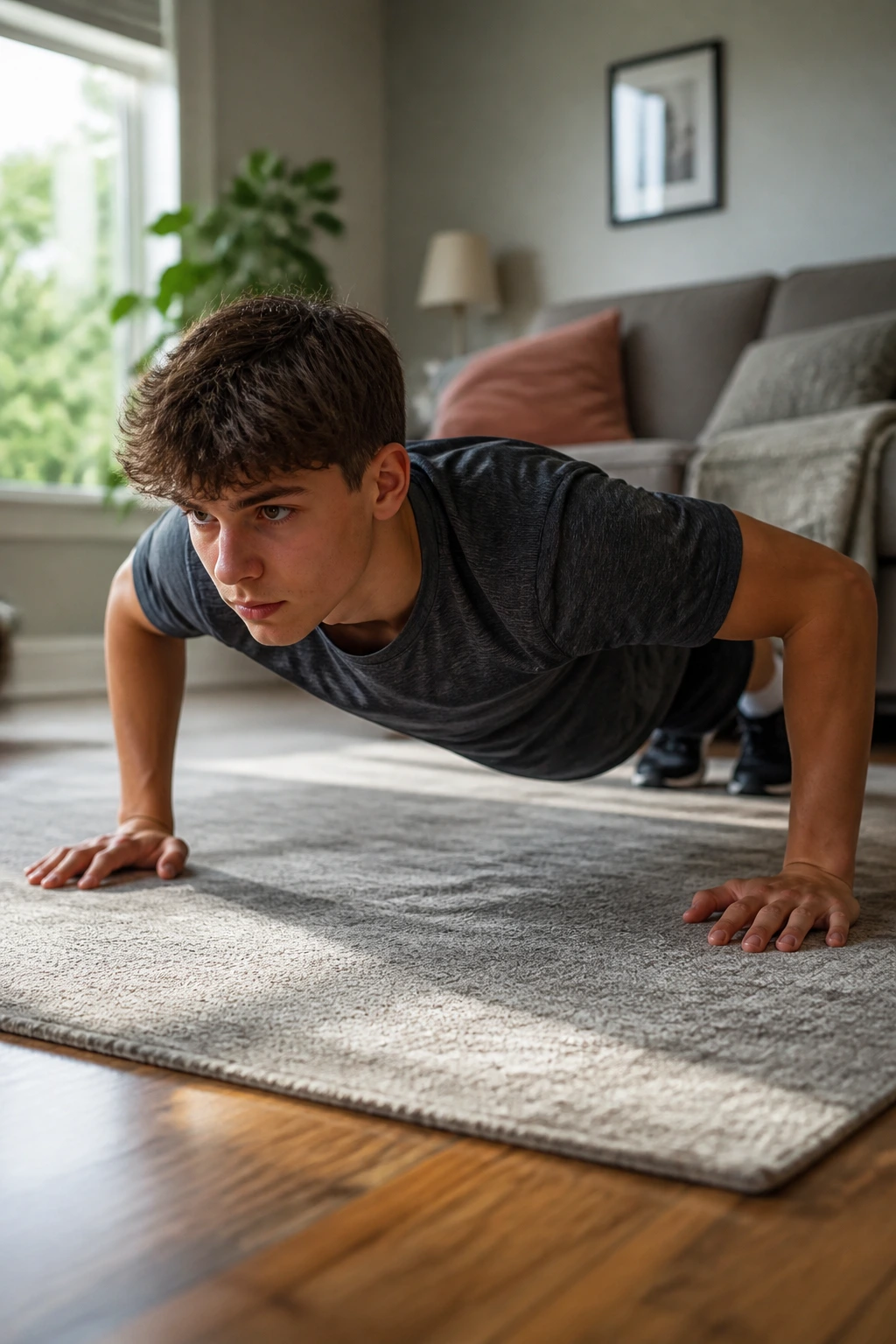
A benchmark workout is useful because it gives you something to compare later.
Same room. Same timer. Different day. That’s how progress starts to feel real.
Set a timer for 12 minutes and repeat this circuit as many times as you can with clean form: 5 squats, 5 push-ups, 10 mountain climbers per side, and 20 seconds of plank. Rest as needed, but keep the breaks short enough that the heart rate stays up.
How to Use It Well
- Pick a push-up version you can repeat
- Keep squats low and controlled
- Move mountain climbers with a stable hips-down shape
- Stop the plank before the lower back sags
This is not a test to “win” by flinging yourself through the reps. It is a test to see what the body can handle with good form. A teen who improves by a round, cleans up the push-ups, or spends less time resting is making real progress.
Use it every couple of weeks, not every day.
The point is to measure, not punish.
And if the workout feels humbling the first time, good. That means it gave you honest information. That’s worth more than a fake easy win, every time.
