



Metabolism isn’t a switch you flip, nor is it a singular process that you can suddenly rev up with a magic pill or a specific brand of green tea. Instead, your metabolic rate—the speed at which your body burns energy—is a complex engine that responds to the demands you place on it. When you are sedentary, your energy needs are low. When you introduce consistent, challenging movement, your body recognizes that it needs to operate more efficiently to keep up.
The goal of home-based workouts isn’t just to burn calories while you are moving; it is to shift your body’s baseline. By focusing on compound movements that recruit large muscle groups, you force your body to expend more oxygen and energy during the workout and, just as importantly, in the hours following the session. This is the physiological state known as EPOC—excess post-exercise oxygen consumption. You are effectively teaching your body to be a more efficient furnace, even when you are sitting on the couch later in the day.
You do not need a commercial gym membership or heavy machinery to achieve this. Bodyweight training, when performed with enough intensity and volume, provides ample resistance to trigger muscle maintenance and metabolic acceleration. The following exercises are designed to be performed in any living space. They require nothing more than a few square feet of floor and the willingness to move until you feel the work.
1. Burpees
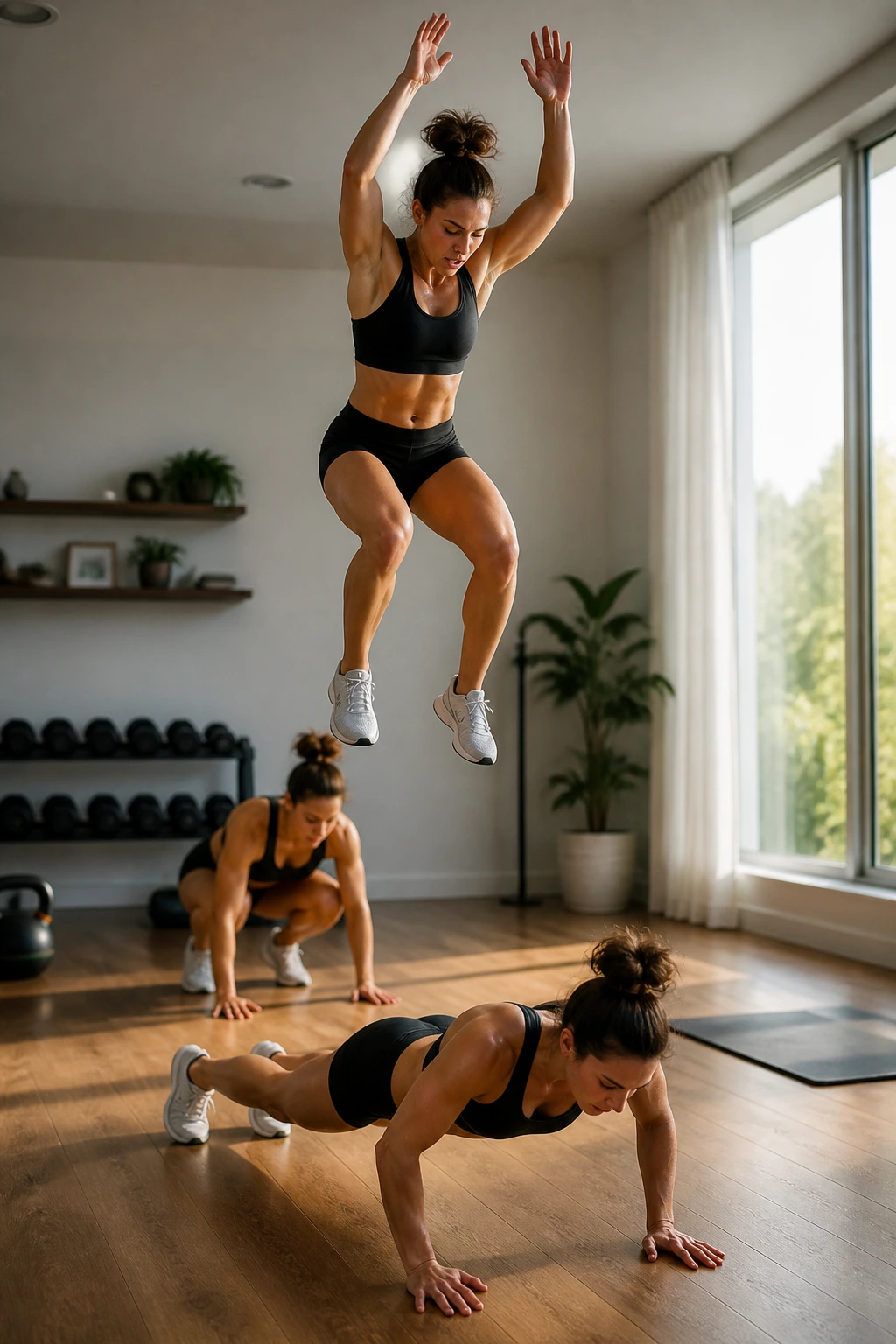
The burpee is a total-body movement that bridges the gap between cardio and strength training. It forces your heart rate to spike immediately because it requires you to move your center of mass from a standing position to the floor and back up again, over and over.
Why It Works for Metabolism
Because you are using your legs, core, and arms in a single, explosive repetition, your body requires a massive influx of oxygen. This demand forces your cardiovascular system to work harder than it does during simpler, isolated movements like bicep curls or crunches. The metabolic cost of a set of burpees is significantly higher than steady-state movement.
How to Execute Properly
- Start standing tall.
- Drop quickly into a squat, placing your hands on the floor.
- Kick your feet back into a high-plank position.
- Perform one push-up (optional but recommended for maximum intensity).
- Jump your feet back toward your hands.
- Explode upward into a jump, reaching your hands toward the ceiling.
Pro tip: Do not worry about speed in the beginning. Focus on the transition between the plank and the jump. If you feel your lower back arching, your core is not engaged enough. Tighten your stomach as if you are preparing to take a punch before you jump your feet back.
2. Jump Squats
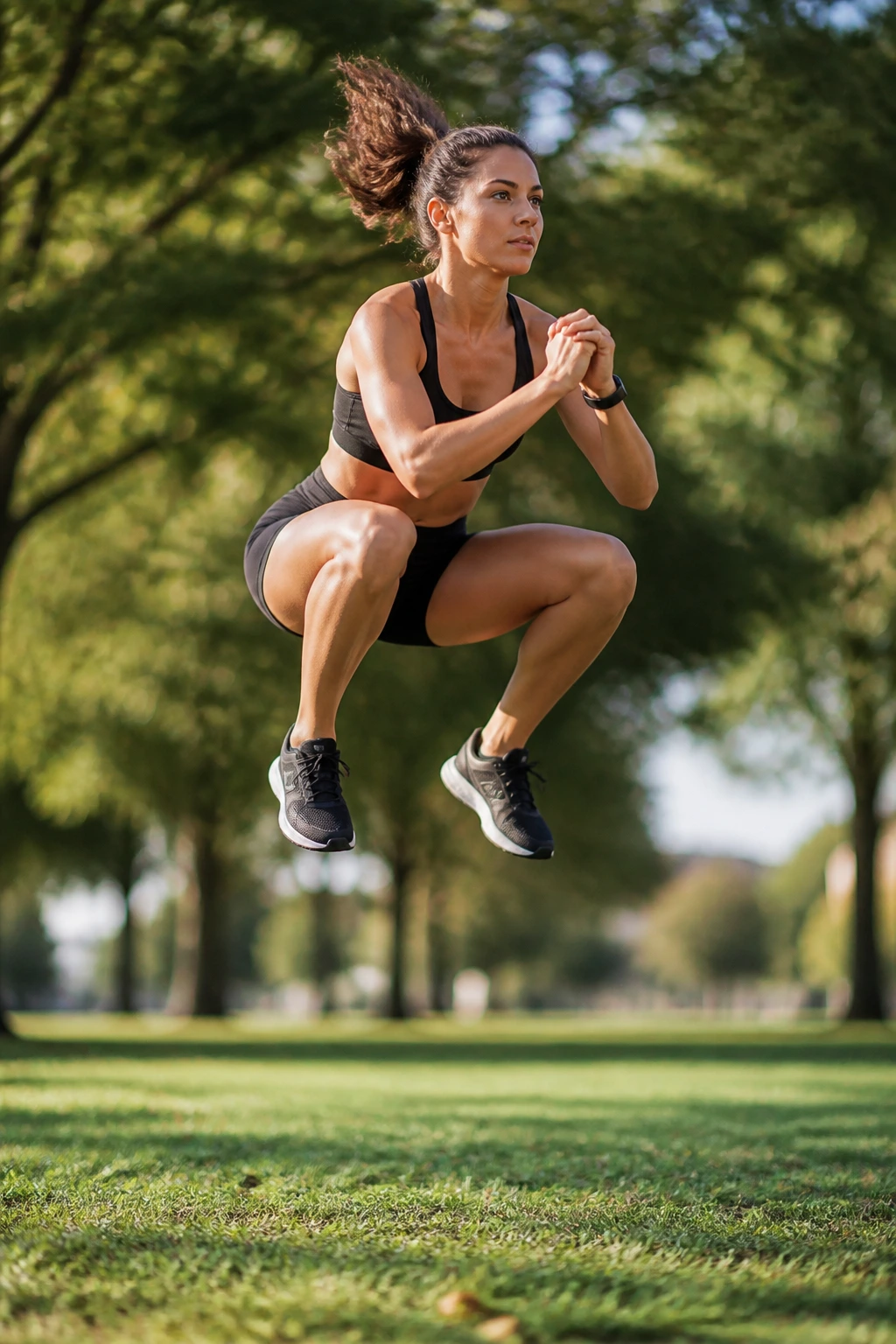
Squats are foundational, but adding a jump introduces a plyometric element that turns an endurance exercise into a power movement. This engages your fast-twitch muscle fibers, which are more metabolically active and help create a more toned look in your lower body.
The Mechanics of Power
When you squat, you recruit your quads, hamstrings, and glutes. When you jump, you add a dynamic phase that requires your body to decelerate upon landing and then re-accelerate instantly. This constant stop-and-start motion creates a high caloric demand that keeps your metabolism elevated long after the workout concludes.
Technique Checklist
- Set your feet slightly wider than hip-width apart.
- Keep your chest upright as you lower into the squat, ensuring your knees track over your toes.
- Explode upward, driving through your heels to clear the floor.
- Land softly, rolling from the ball of your foot to your heel to absorb the impact.
Crucial warning: If you have knee issues, skip the jump and perform high-speed air squats instead. You can still achieve a significant metabolic boost by maintaining a high tempo without the jarring impact of landing.
3. Mountain Climbers
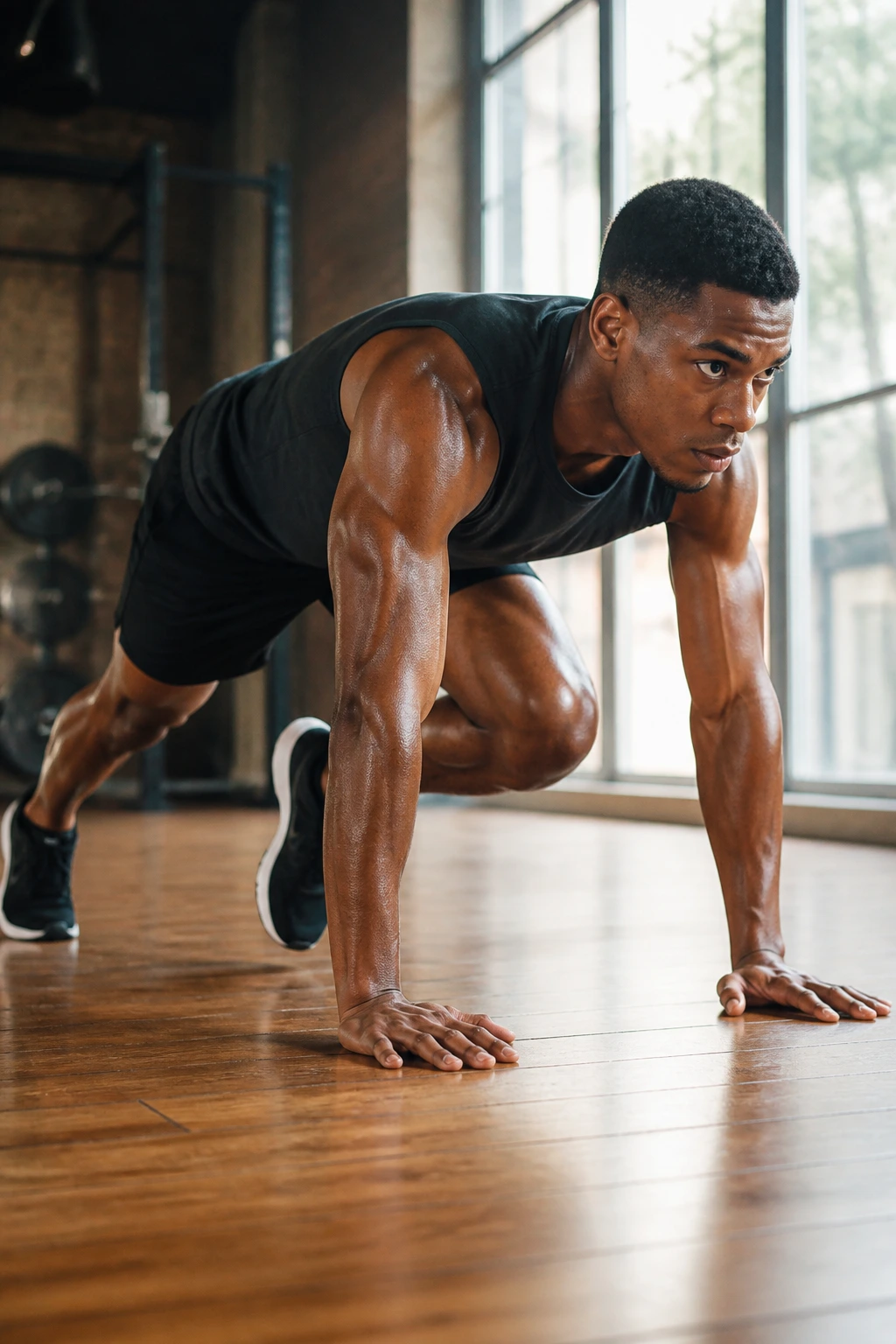
Mountain climbers are an excellent tool for combining core stability with high-intensity aerobic work. Because you are in a plank position, your core muscles are constantly firing to stabilize your spine while your legs move rapidly.
Why They Are So Effective
This exercise is all about anti-rotation. Your torso should remain as still as possible while your legs pump toward your chest. This forces your abdominal muscles to work overtime. By maintaining a quick, steady pace, you keep your heart rate in the anaerobic zone, which is highly efficient for fat oxidation over time.
How to Get the Most From Them
- Place your hands directly under your shoulders in a strong plank position.
- Keep your hips low—don’t let them pike up toward the ceiling.
- Drive your right knee toward your chest, then quickly switch legs as if you are running in place horizontally.
- Maintain a rhythm where both feet spend roughly the same amount of time in the air.
Observation: You will notice your shoulders burning before your abs do. That is normal. Your upper body is stabilizing the entire movement, providing a great secondary benefit for shoulder strength and posture.
4. High Knees
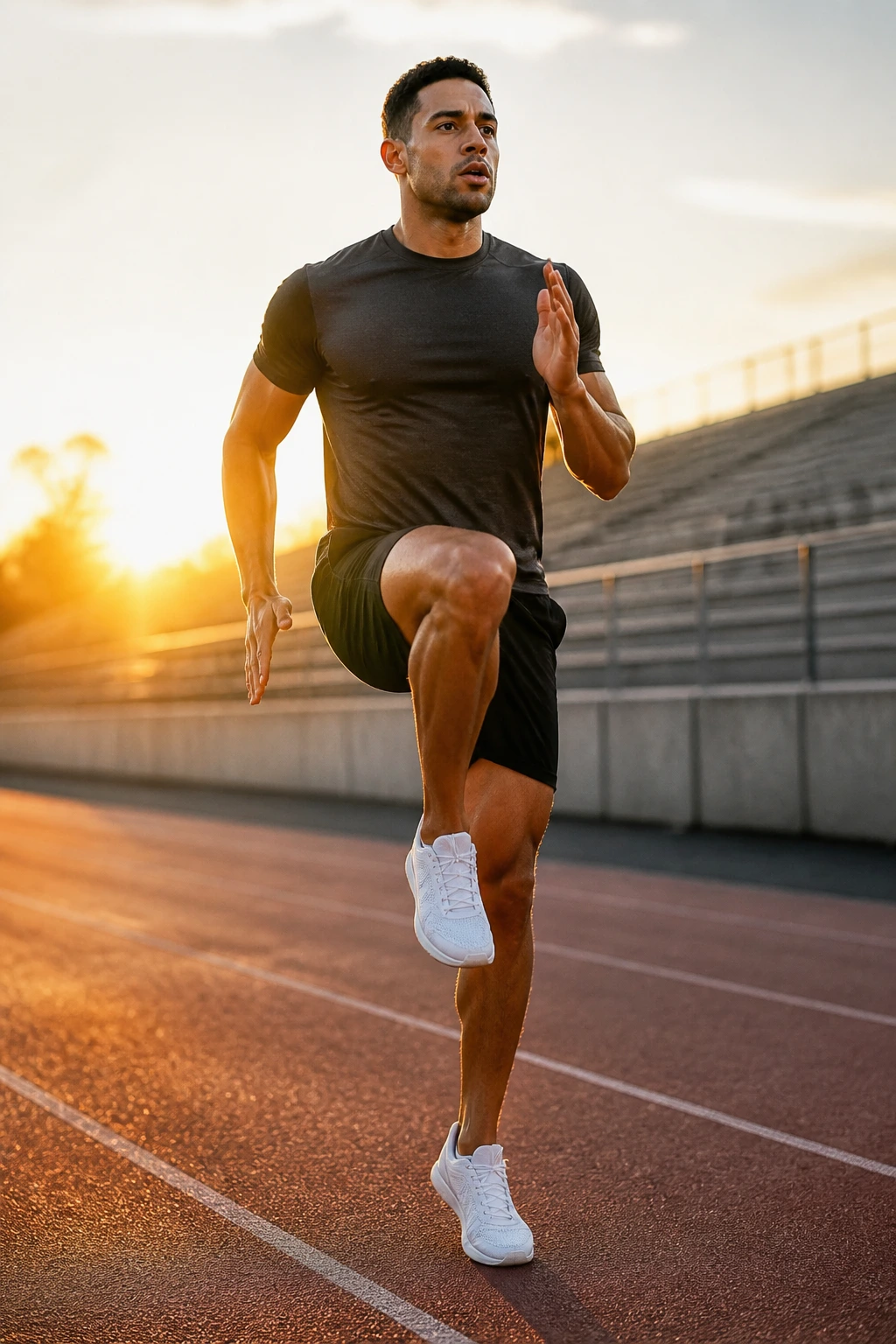
High knees look simple, but they are incredibly demanding when performed with intention. This is pure aerobic conditioning that targets the hip flexors and the cardiovascular system simultaneously.
The Science Behind the Pace
When you perform high knees, you are essentially sprinting in place. The key is the height of your knees. You want them to reach at least hip level with every repetition. This forces you to engage your lower abdominals to pull the weight of your legs up against gravity, creating more work than a standard jog.
Common Mistakes
- Leaning back: Many people lean back to counterbalance the lifting of the legs. Maintain a slight forward lean from the ankles to keep your core engaged.
- Short-changing the height: If your knees are only rising a few inches, you aren’t getting the full benefit. Use your hands as targets; hold your palms out at hip height and aim to tap them with your knees.
5. Push-Up to T-Rotation
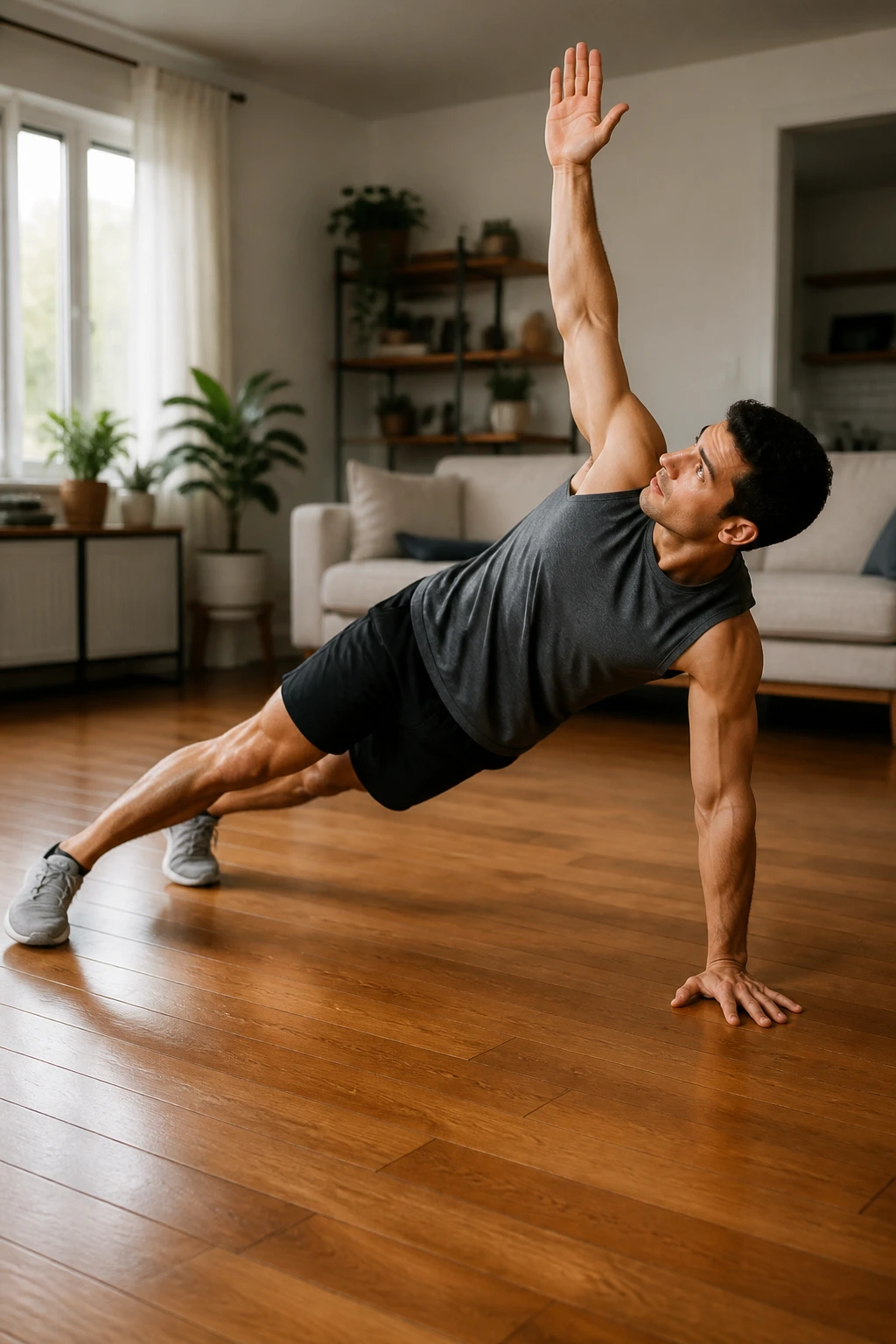
A standard push-up is great, but adding a rotation turns it into a full-body stabilizer. This movement forces your obliques and shoulders to work as hard as your chest and triceps.
Why It Boosts Your Metabolism
By introducing a rotational element, you recruit the smaller stabilizer muscles that often go unused. More muscle recruitment means higher energy expenditure. You are constantly shifting your center of gravity, which forces your central nervous system to remain alert and engaged throughout the entire set.
How to Perform It
- Lower your body into a standard push-up, keeping your elbows tucked at a 45-degree angle.
- As you press back up to the starting position, shift your weight onto one hand.
- Rotate your torso, stacking your feet, and reach your free hand toward the ceiling so your body forms a “T” shape.
- Return to the center, perform another push-up, and rotate to the opposite side.
Pro tip: Slow down the rotation. Using momentum makes it easy; controlling the movement makes it effective. Try to keep your hips elevated during the transition.
6. Plank Jacks
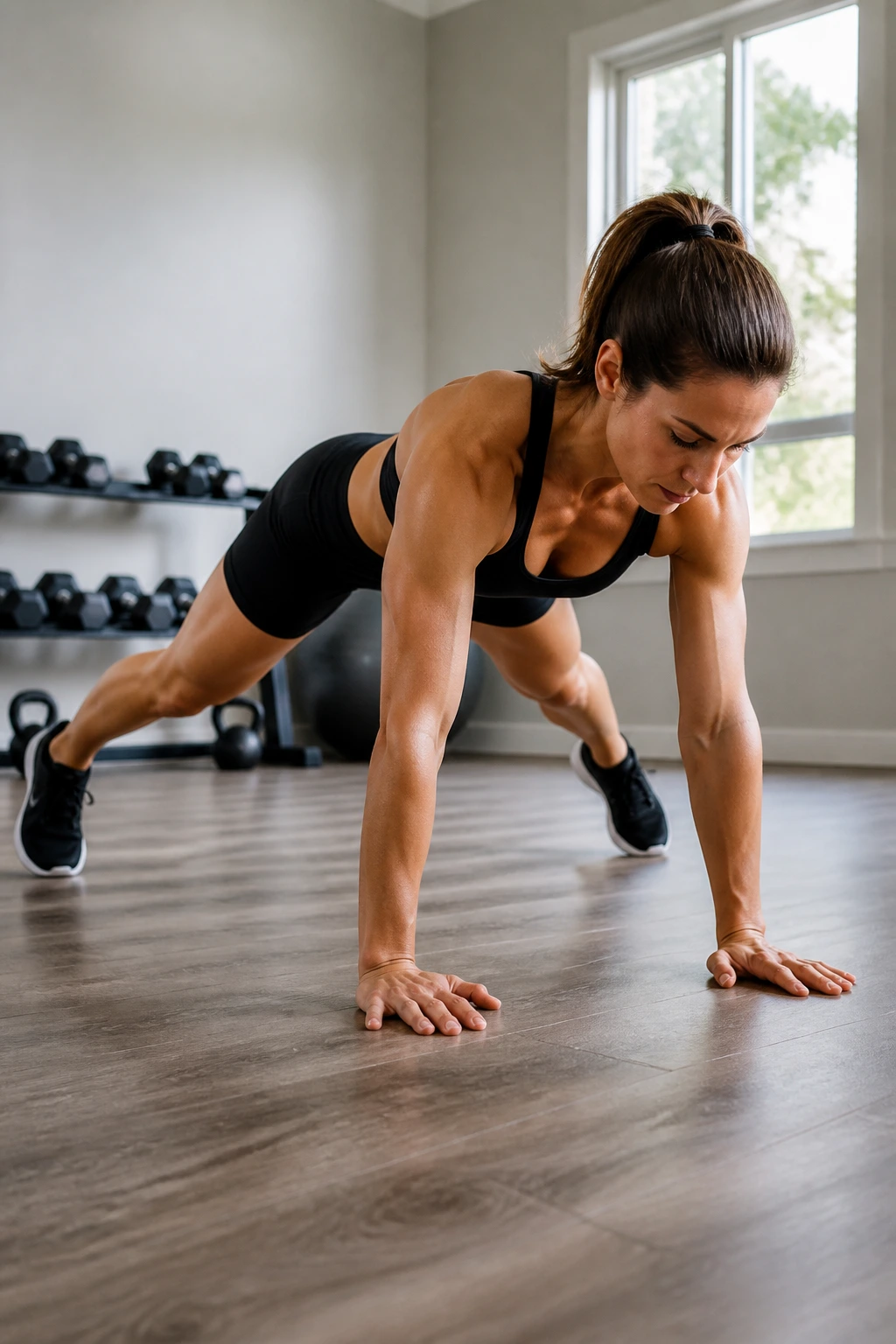
Plank jacks combine the static hold of a plank with the dynamic movement of a jumping jack. It is a fantastic exercise for anyone who wants to improve core strength while simultaneously raising their heart rate.
The Dual Benefit
Your core is challenged by the plank hold, while your cardiovascular system is challenged by the rapid movement of your legs. This dual approach forces your body to shuttle blood and oxygen to multiple muscle groups at once, which is a massive metabolic driver.
Mastering the Form
- Start in a standard high-plank position, hands under shoulders.
- Jump your feet out wide, then jump them back together, similar to a jumping jack.
- Keep your hips perfectly level. They should not bounce up and down as your feet move.
Important note: If your hips start to sag toward the floor, your core is fatiguing. Take a brief pause, reset, and re-engage your glutes before continuing. Quality of form always dictates the metabolic return.
7. Lunges with Knee Drive
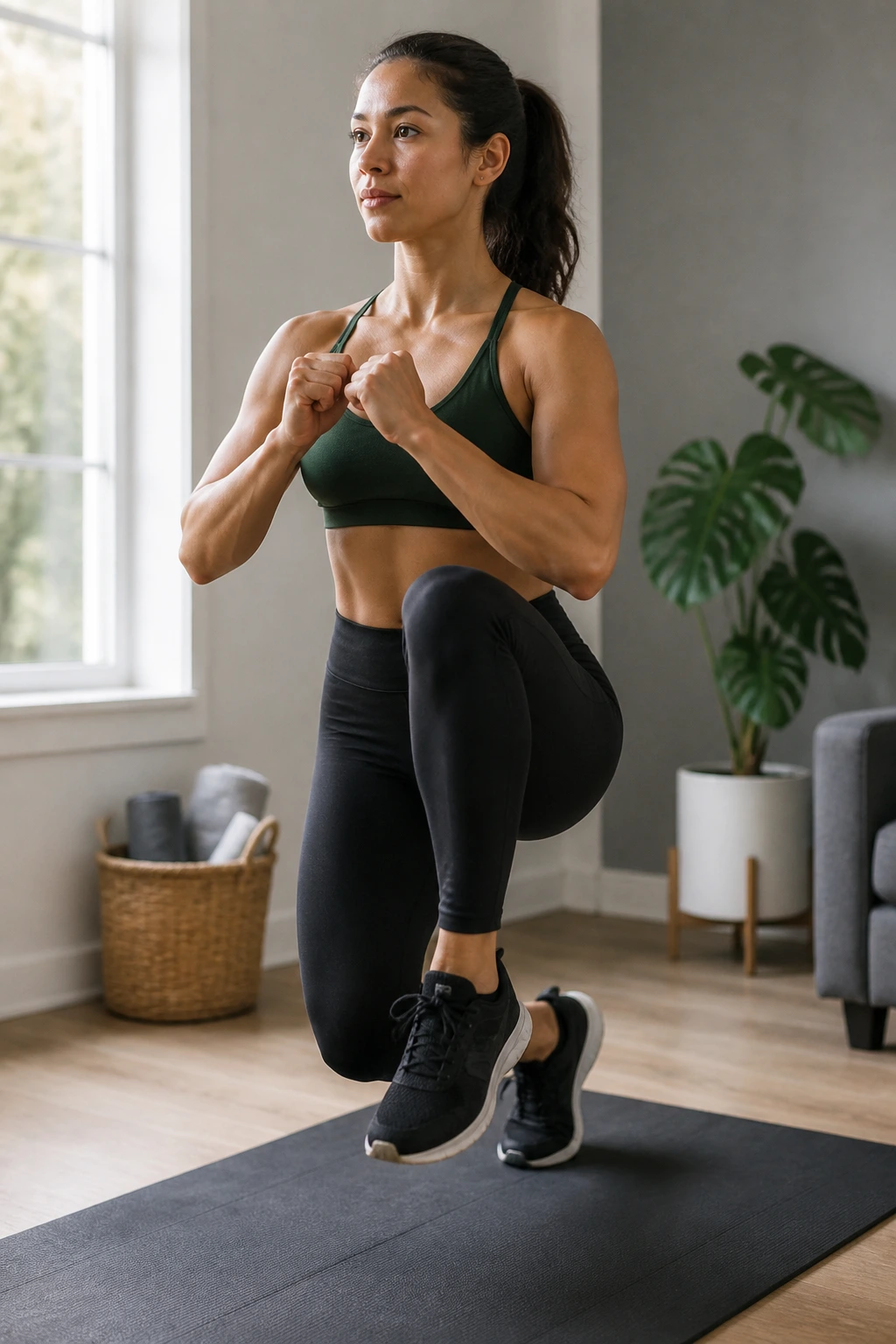
Standard lunges are a staple for leg strength, but adding a knee drive turns them into an explosive, balance-challenging movement that torches calories.
How It Changes the Game
By driving the back knee up toward your chest as you come out of the lunge, you shift your weight and activate your glutes and core dynamically. This prevents the movement from becoming repetitive and forces your stabilizer muscles to work significantly harder than they would in a standard walking lunge.
Step-by-Step
- Step backward into a lunge, ensuring both knees form roughly 90-degree angles.
- Drive through the front heel to bring the back leg forward, lifting the knee high toward your chest.
- Immediately lower back into the lunge without touching your moving foot to the floor if you have the balance.
Consistency check: Keep your torso upright throughout the movement. If you find yourself hinging at the hips, you are shifting the load away from your legs and toward your lower back, which reduces the effectiveness of the exercise.
8. Skater Hops
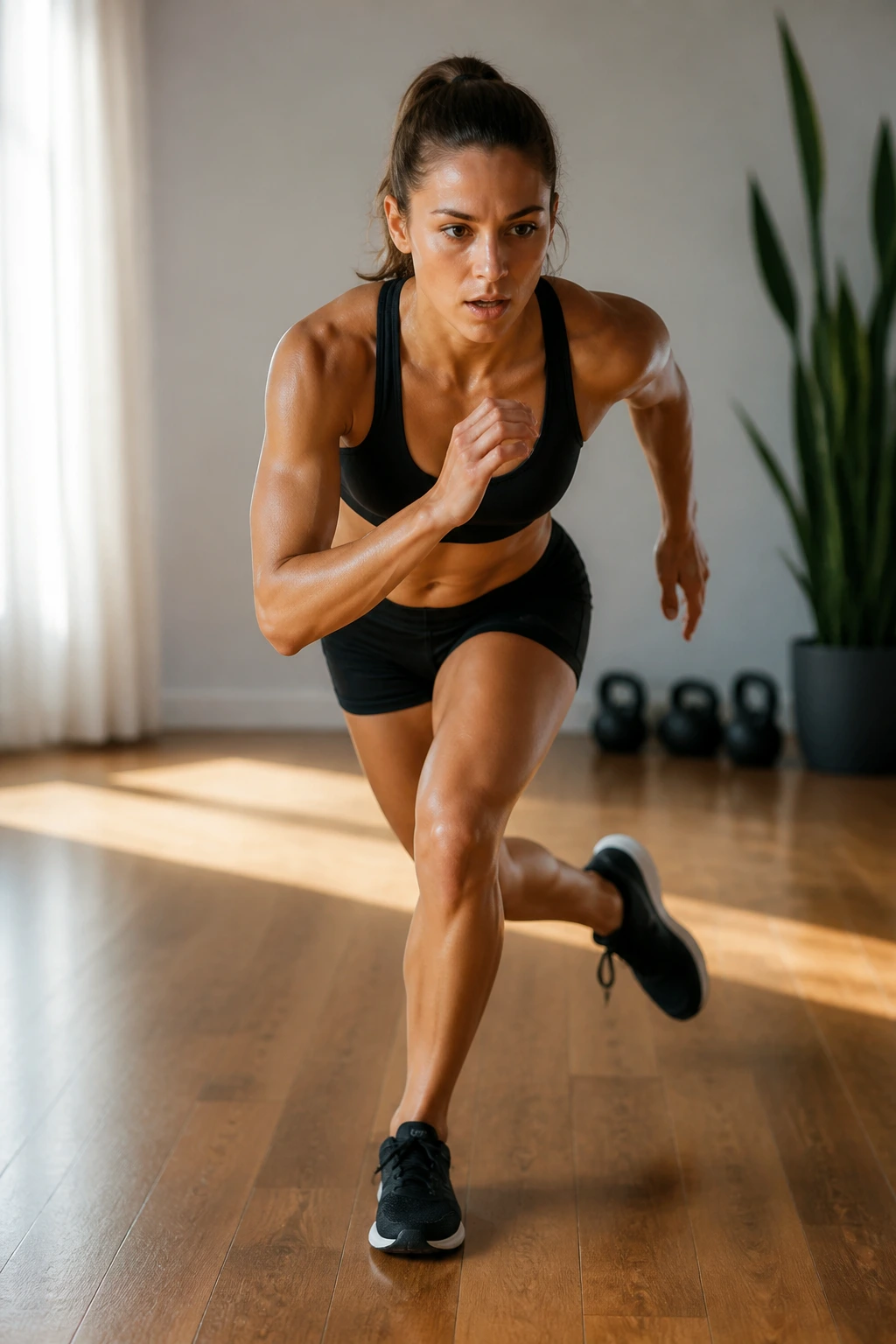
Lateral movement is frequently neglected in standard fitness routines, which are dominated by forward and backward motion. Skater hops force you to move in the frontal plane, engaging the gluteus medius—the muscle responsible for hip stability.
The Metabolism Connection
Skaters require power and coordination. Pushing off one leg, flying through the air, and landing softly on the other leg demands significant energy from your posterior chain. Because this movement is slightly unstable, your body has to work harder to maintain balance, which increases the total work performed during the session.
Execution Tips
- Start standing, then hop to the right, landing on your right foot while sweeping your left foot behind you.
- Immediately explode to the left, landing on your left foot and sweeping your right foot behind.
- Use your arms for momentum, swinging them naturally as you move.
Pro tip: Focus on the distance of the jump. The further you jump to the side, the more control and power you need to stop your momentum, leading to a harder workout.
9. Bear Crawls
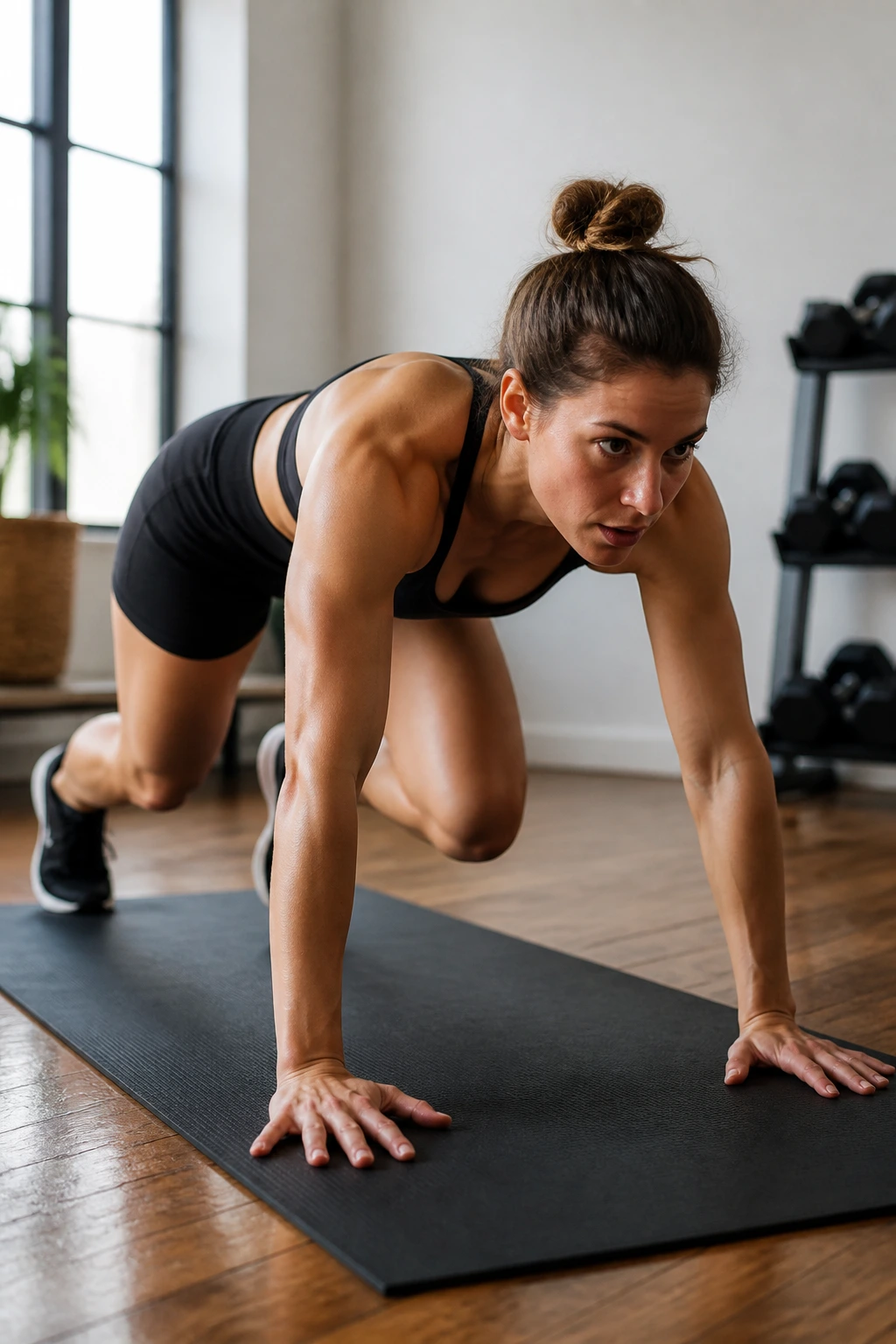
Bear crawls are an often-overlooked movement that provides a comprehensive workout for the shoulders, core, and quads. They look deceptively simple, but try doing them for 60 seconds, and you will see why they are a favorite in athletic conditioning.
Why They Work
By keeping your knees hovering just an inch off the floor, you create constant tension in your quadriceps and core. This is an isometric hold combined with dynamic movement. Your shoulders are also under continuous load as you crawl forward and backward.
How to Crawl
- Get on your hands and knees.
- Lift your knees just an inch off the ground.
- Keep your back flat—imagine balancing a glass of water on your spine.
- Move your right hand and left knee simultaneously, then switch.
- Keep your movements controlled and deliberate.
Warning: Do not speed through these. A slow, controlled bear crawl is significantly more demanding and safer for your joints than a frantic, sloppy one.
10. Bicycle Crunches
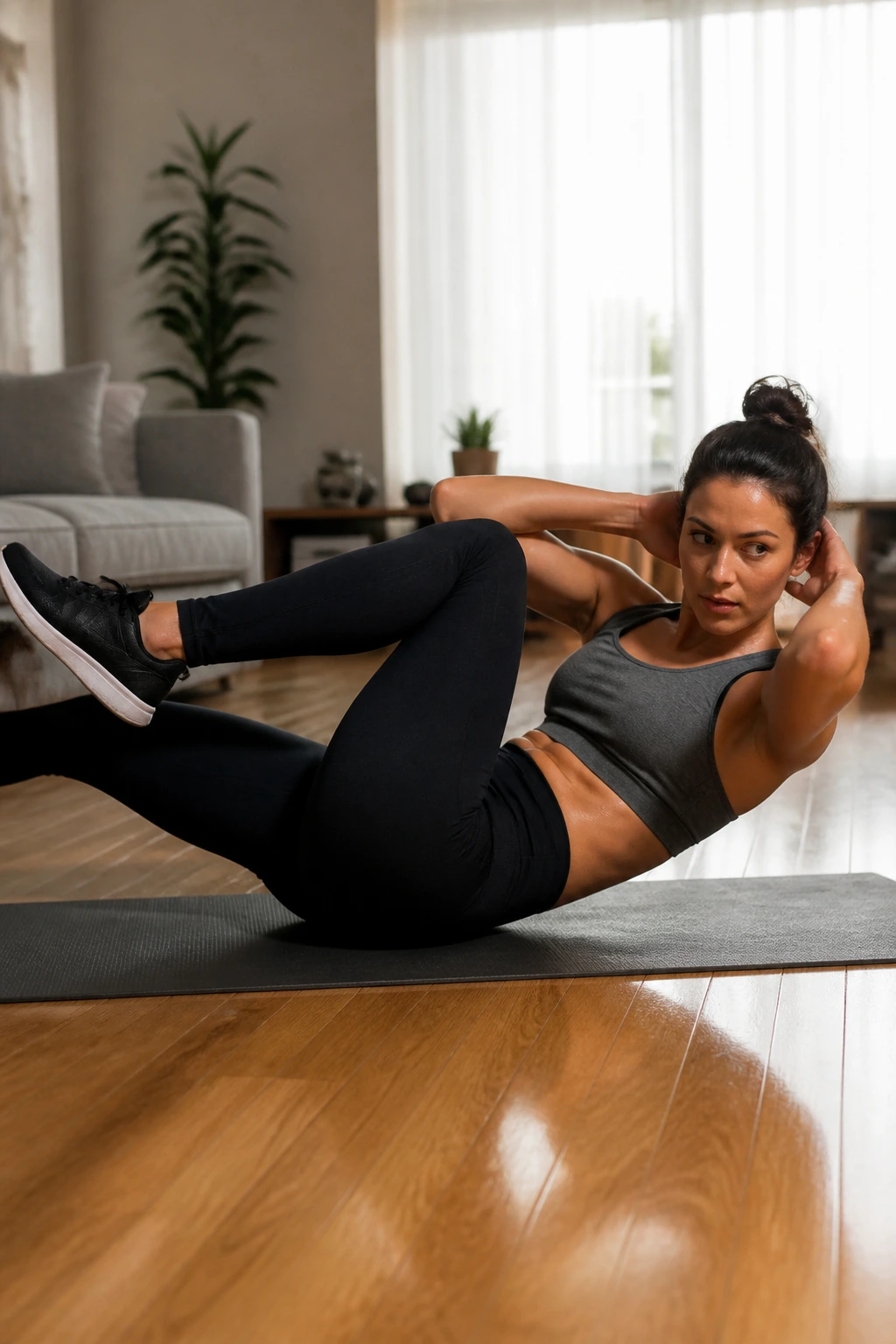
Bicycle crunches are frequently cited in research as one of the most effective ways to activate the rectus abdominis and the obliques simultaneously.
The Metabolic Nuance
While crunches are often thought of as endurance exercises, performing them with a focus on rotation adds a core-strengthening element that helps improve overall posture. Good posture allows you to move more efficiently during your day-to-day activities, which subtly increases your baseline energy expenditure.
Technique for Maximum Effect
- Lie on your back, hands behind your head, elbows wide.
- Lift your head, neck, and shoulders off the floor.
- Bring your right elbow toward your left knee as you extend your right leg.
- Focus on twisting your torso, not just pulling your elbow across.
- Switch sides in a smooth, fluid motion.
Remember: Do not pull on your neck. Your hands are there for support, not to haul your head up. All the movement should come from your upper abdominal muscles.
11. Inchworms
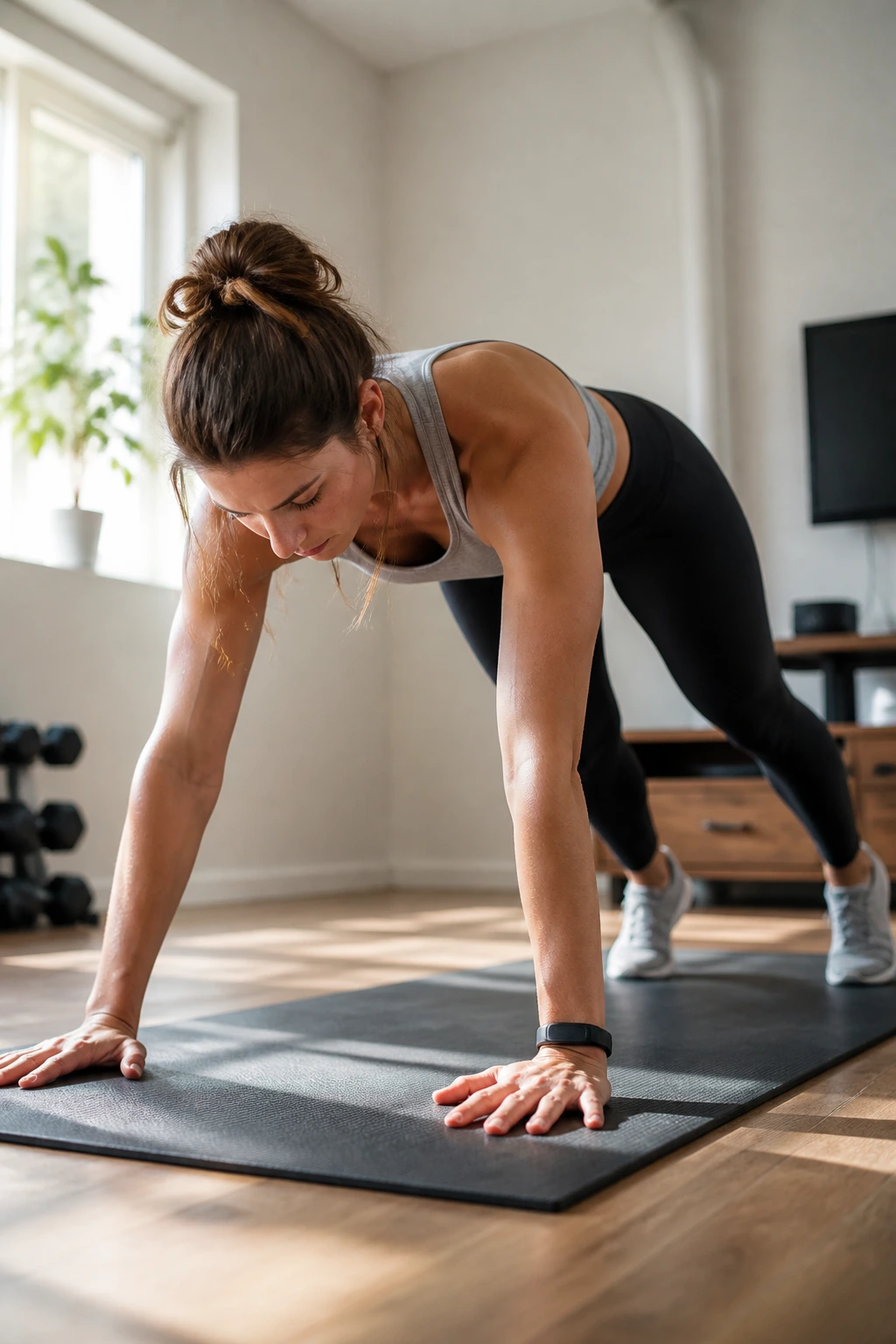
Inchworms are a full-body movement that doubles as a dynamic stretch for your hamstrings. They are excellent for warming up, but when performed with high intensity, they become a challenging metabolic workout.
Why Include Them
They require you to support your entire body weight with your shoulders and core while your legs are locked out, which forces a lot of stabilization. The transition from standing to a high plank and back again is an full-body engagement that few other movements can replicate.
Step-by-Step
- Stand tall, hinge at the hips, and place your hands on the floor in front of you.
- Walk your hands forward until you reach a perfect high-plank position.
- Pause for a second to engage your glutes.
- Walk your hands back toward your feet, pressing through your heels, and stand up.
Pro tip: Keep your legs as straight as possible throughout the movement. You will feel a significant stretch in your hamstrings, which is a great indicator that you are using the right muscles.
12. Dumbbell (or Object) Swings
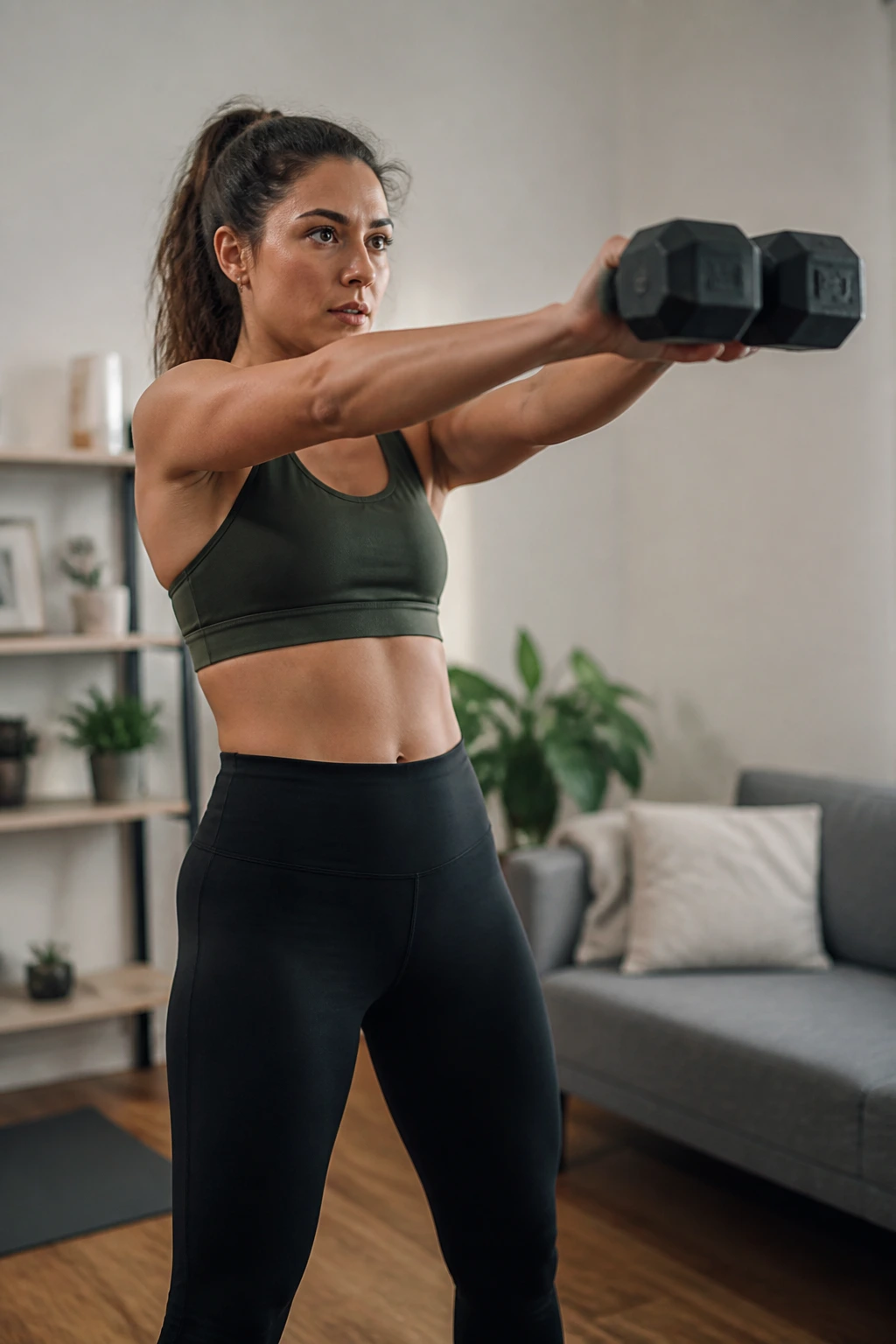
Swings are arguably the most effective way to train the posterior chain—the backside of your body—without heavy equipment. If you don’t have a kettlebell, a heavy laundry detergent jug or a backpack filled with books works perfectly.
The Engine of the Body
The posterior chain (glutes, hamstrings, back) is the largest muscle group in your body. Training these muscles has the highest potential for caloric burn because they require so much energy to power. The swing is a hinge, not a squat; all the power comes from snapping your hips forward.
Proper Form
- Stand with feet slightly wider than shoulder-width.
- Hinge at the hips, pushing your glutes back while keeping your spine neutral.
- Use the momentum of your hips to “pop” the weight upward. The arms are just cables; they should not be lifting the object.
- At the top of the swing, your glutes should be squeezed tight, and your body should be in a straight line.
Caution: Ensure you have a firm grip. If you are using a household object, make sure the handle is secure and there is no risk of it flying out of your hands.
13. Shadow Boxing

You don’t need a heavy bag to get the benefits of boxing. Shadow boxing is an incredible cardiovascular tool that builds coordination and agility.
Why It’s a Metabolism Booster
Boxing requires you to engage your core for rotation, your shoulders for punches, and your legs for footwork. The constant bouncing and shifting of weight keep your heart rate elevated and your body guessing. It is fun, engaging, and highly effective for burning calories.
How to Start
- Maintain a boxer’s stance with one foot slightly in front of the other and knees soft.
- Throw a combination of jabs, crosses, hooks, and uppercuts.
- Keep your core tight and rotate your torso with every punch.
- Don’t just throw punches; move your feet, bob, and weave as if you are sparring.
Note: The intensity is entirely up to you. Treat it like a fight, and you will be out of breath within three minutes.
14. Russian Twists
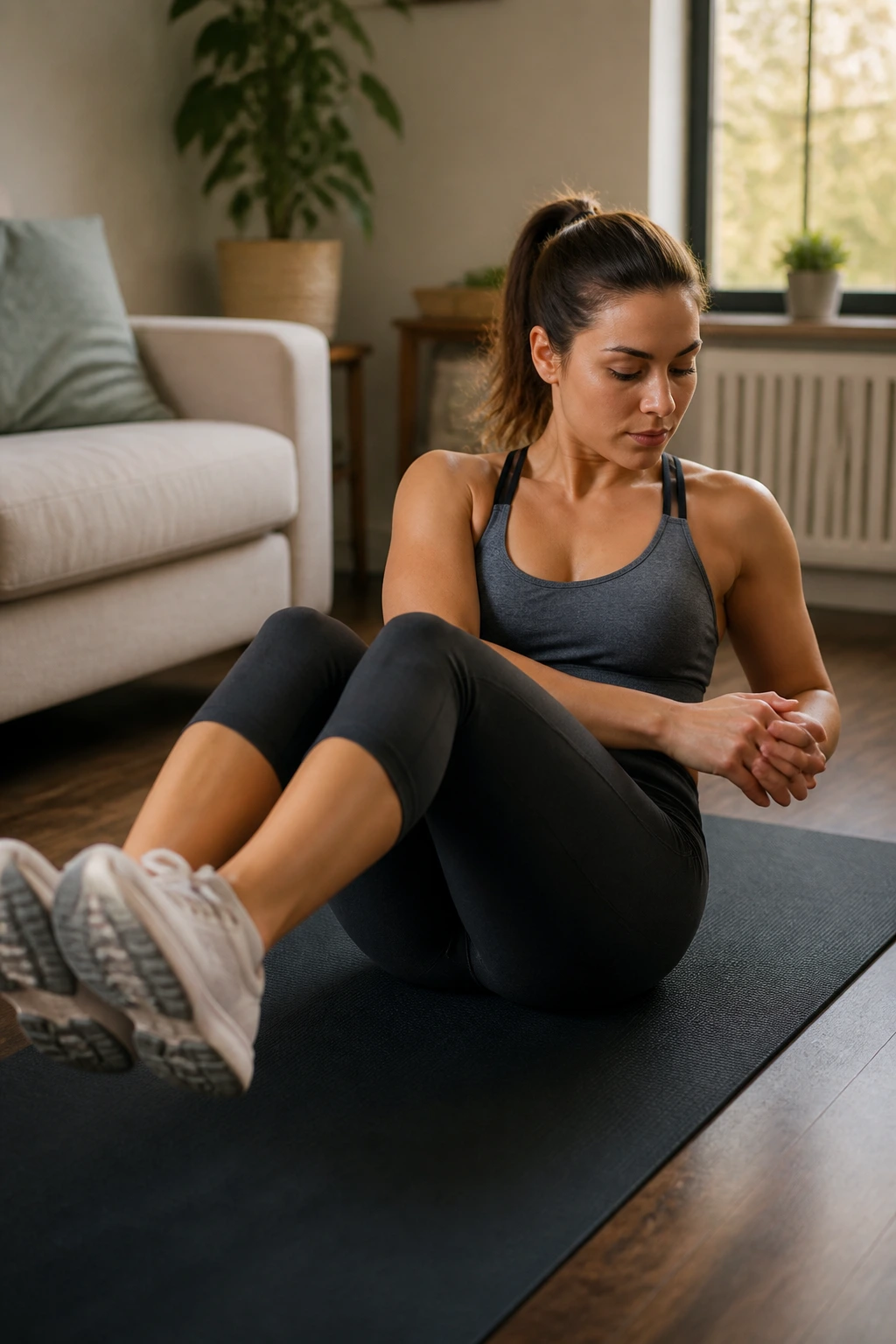
Russian twists are a classic for a reason: they directly target the obliques, which are vital for core stability and rotational strength.
The Metabolic Benefit
While the caloric burn per minute of a Russian twist is lower than a burpee, they are a necessary part of a metabolic program because they build the core strength needed to perform more intense exercises safely. Stronger obliques mean better performance in movements like swings and mountain climbers.
Execution
- Sit on the floor, lean back slightly, and lift your feet a few inches off the ground.
- Clasp your hands together or hold a light weight.
- Twist your torso from side to side, touching your hands to the floor near your hip.
- Keep your chest lifted and your back straight; do not let your shoulders slump forward.
Pro tip: For an added challenge, straighten your legs. This increases the lever length, making it much harder for your core to stabilize the movement.
15. Glute Bridges
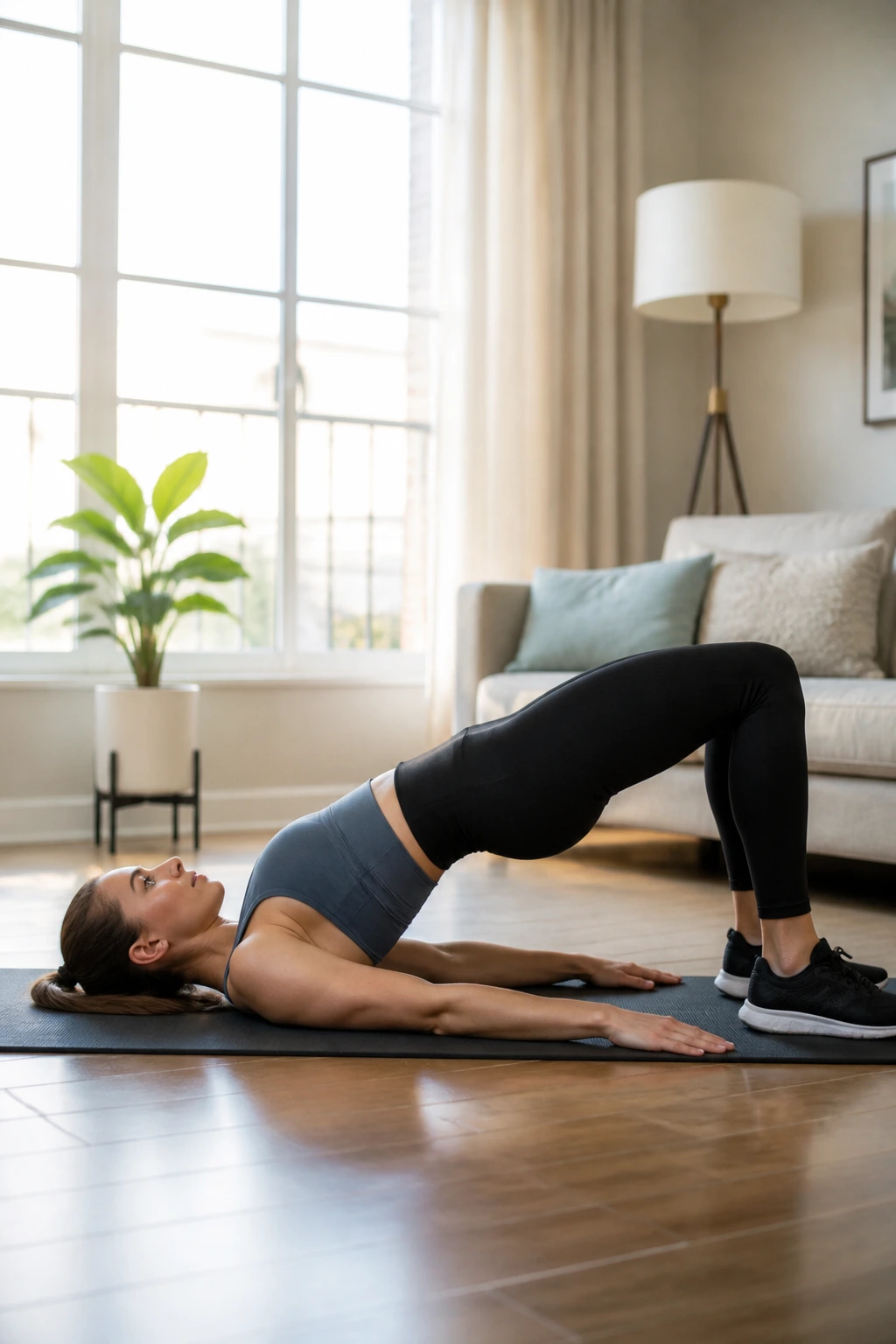
Glute bridges are often ignored by those who think you need to be standing to burn calories, but they are essential for posterior strength.
Why They Matter
Weak glutes lead to compensation by the lower back and knees, which limits your ability to perform high-intensity movements like squats or lunges. By strengthening the glutes, you become more capable of tackling harder workouts. Plus, an active set of glute bridges can really get your heart rate up if you perform them with a high tempo.
Technique
- Lie on your back, knees bent, feet flat on the floor close to your glutes.
- Drive through your heels to lift your hips toward the ceiling.
- Squeeze your glutes at the top for a full second.
- Lower slowly, not letting your glutes touch the floor entirely before the next rep.
Variation: Perform these with a single leg lifted in the air to double the intensity on the working side.
16. Wall Sits
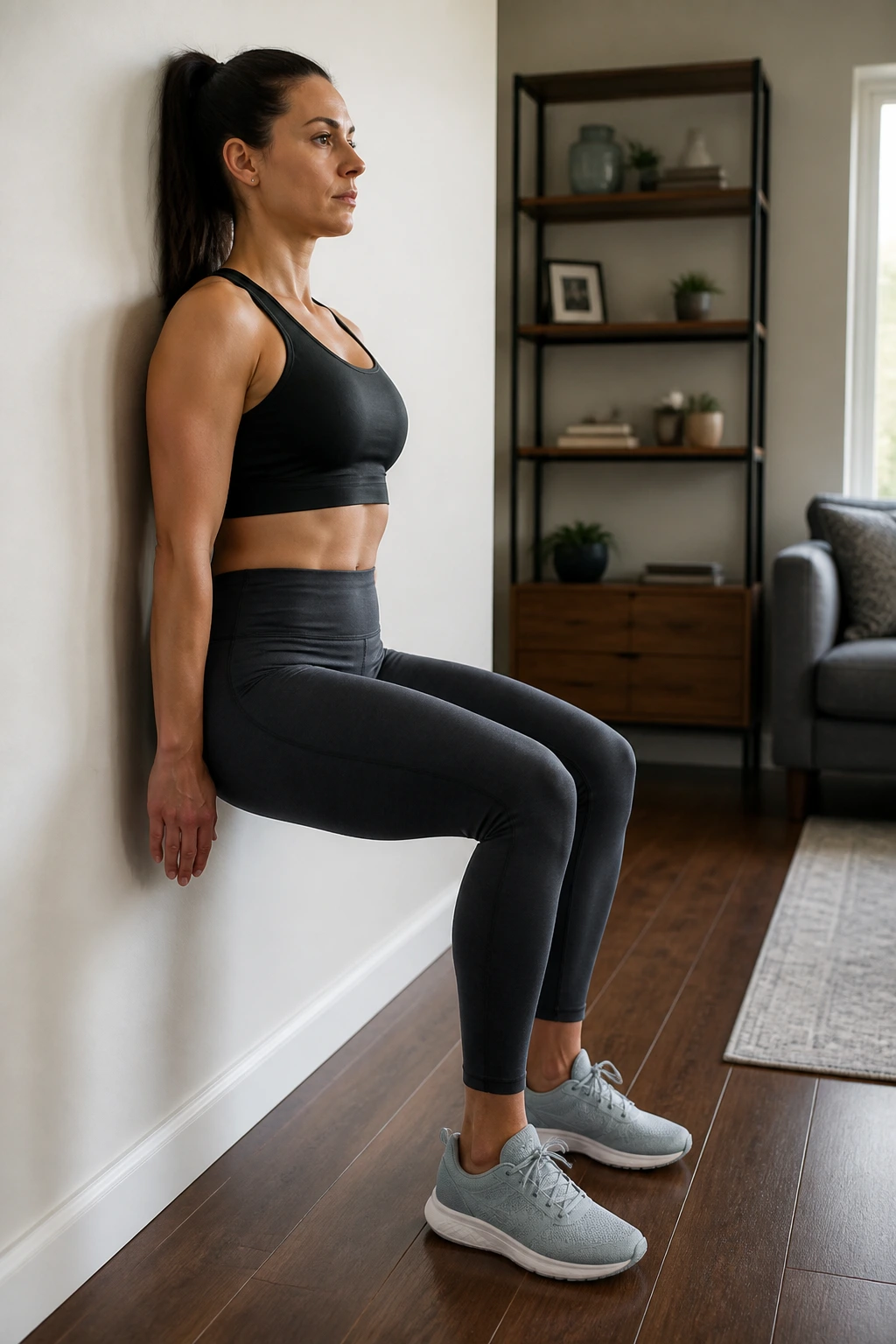
Wall sits are the ultimate isometric burner. There is no movement, yet the muscle fatigue is immediate and profound.
The Science of Isometric Holds
Isometric holds (where the muscle creates tension without changing length) are fantastic for building local muscular endurance. By holding a wall sit, you are pushing your quads to the limit of their endurance, which triggers a metabolic response related to muscle fatigue and recovery.
How to Sit
- Stand with your back against a flat wall.
- Slide down until your thighs are parallel to the floor.
- Keep your knees at a 90-degree angle.
- Press your lower back into the wall.
- Hold this position for as long as possible while maintaining good form.
Challenge: See if you can hold it for 60 seconds without your knees buckling or your back arching away from the wall.
17. Tricep Dips
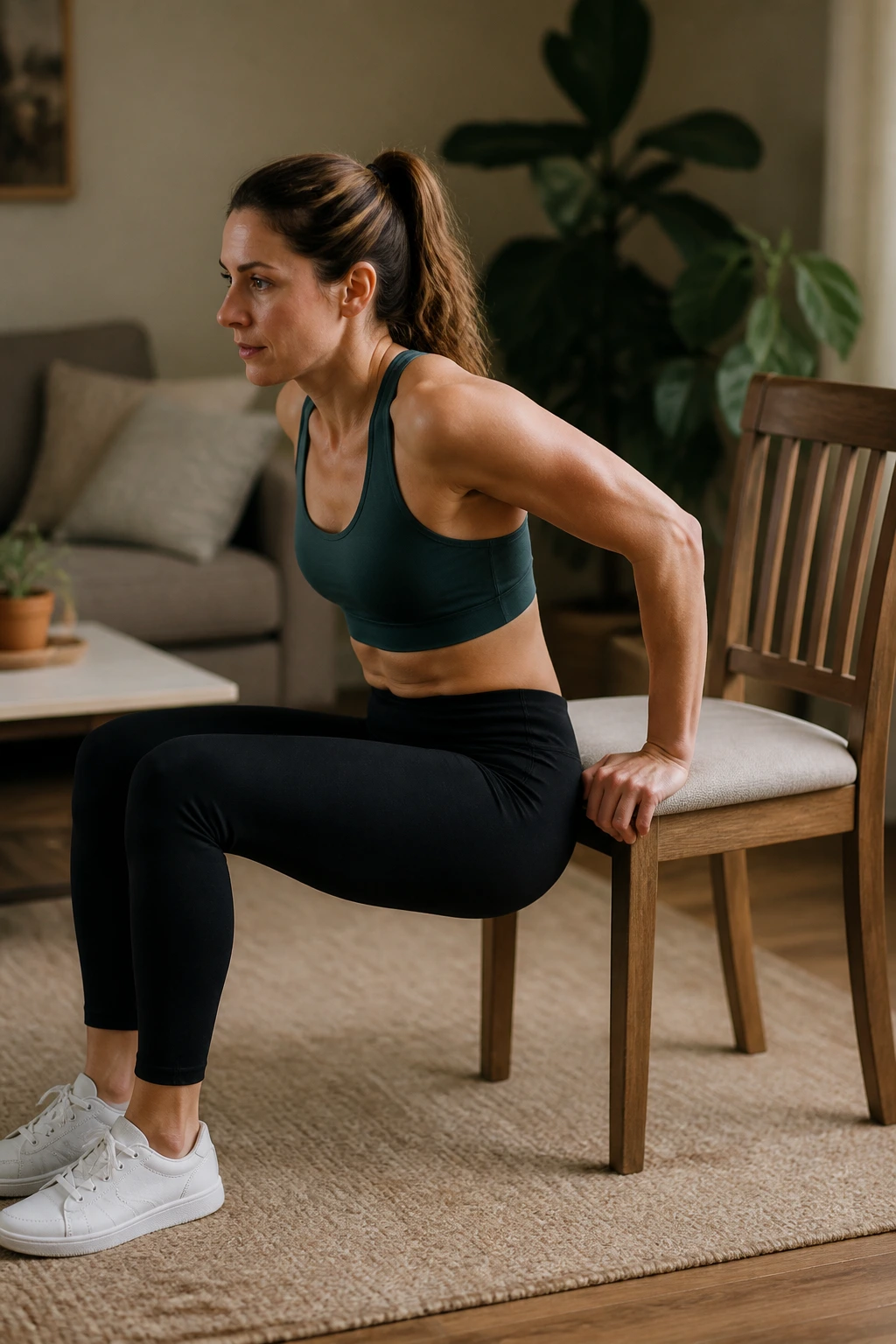
Using a chair or the edge of your sofa, you can target the back of your arms with tricep dips.
Why Include Them
While small, the triceps are a muscle group that, when trained consistently, help balance out the chest and shoulder work you do in push-ups. A well-rounded physique burns more calories at rest, and these are an easy way to add volume to your workouts.
Proper Form
- Place your hands on the edge of a sturdy chair, fingers facing forward.
- Extend your legs out in front of you.
- Lower your hips toward the floor, keeping your back close to the chair.
- Press back up until your arms are straight.
Crucial warning: Keep your elbows pointing backward, not flaring out to the sides. Flared elbows put unnecessary stress on your shoulder joints.
18. Jumping Jacks
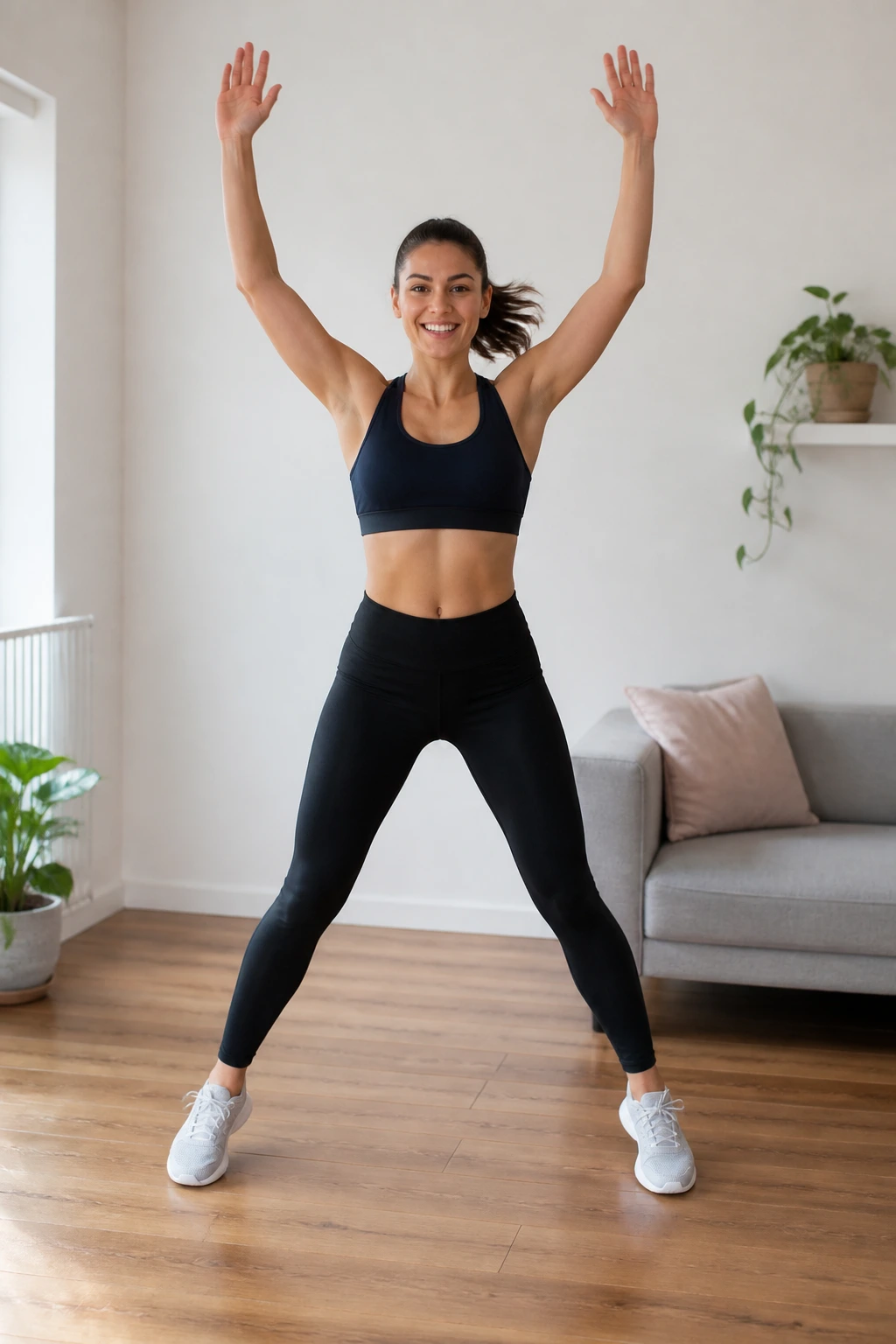
The jumping jack is a universal metabolic driver. It is simple, requires no equipment, and hits every major muscle group in a coordinated fashion.
The Metabolic Value
The beauty of the jumping jack is the ability to sustain it. You can perform these for several minutes at a time, which keeps your heart rate in the target zone for aerobic conditioning. They are the perfect filler between strength-based movements to keep your metabolism elevated throughout the workout.
Form Check
- Start with feet together, arms at your sides.
- Jump your feet out wide while bringing your arms over your head.
- Jump back to the start.
- Maintain a steady, brisk rhythm.
Observation: Do not just go through the motions. Reach for the ceiling and jump wide. The range of motion dictates the caloric burn.
19. Plank to Downward Dog
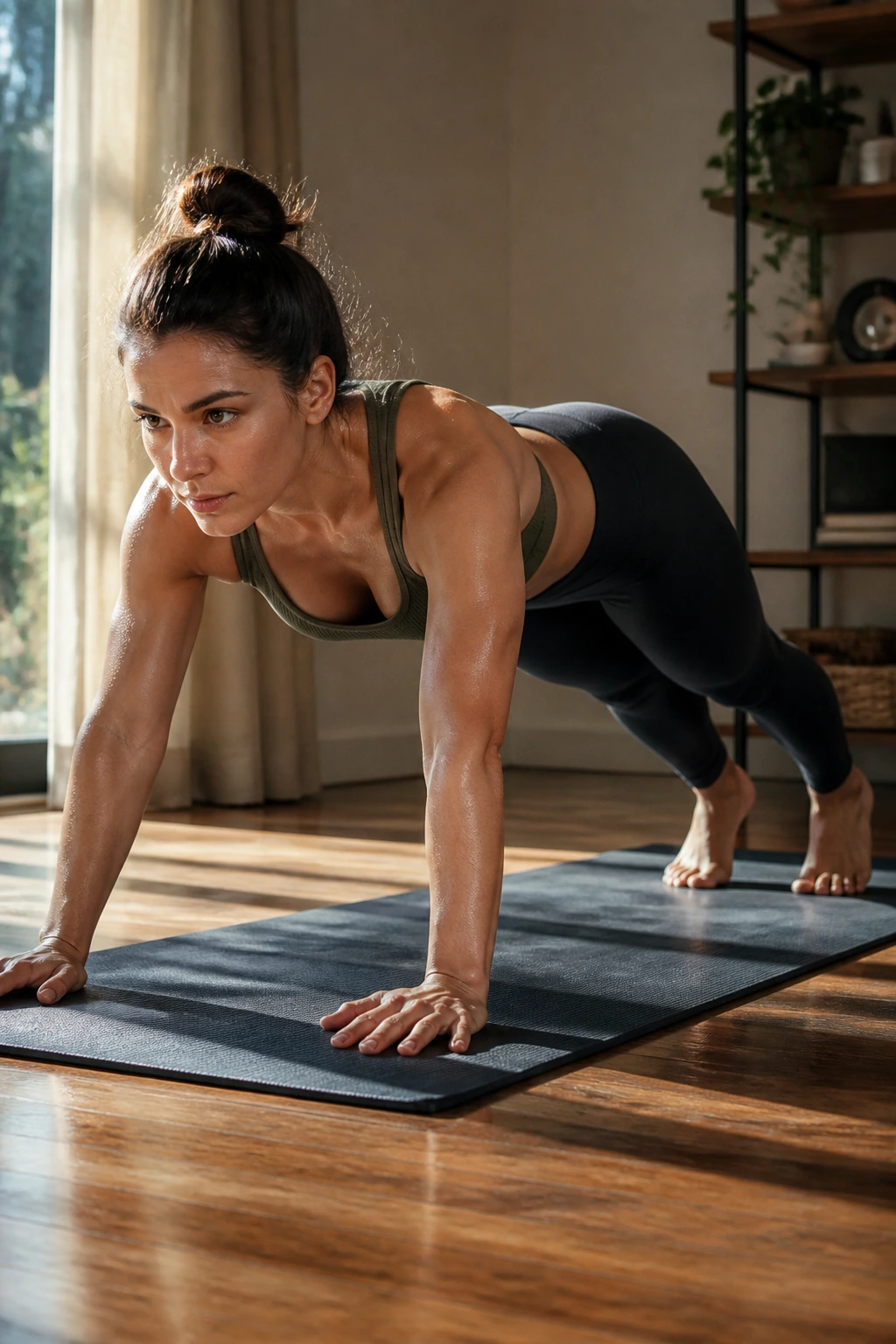
This flow movement combines core work with a mobility stretch, keeping your body moving constantly.
Why It Works
It shifts your center of gravity significantly. When you move from a plank to a downward dog, you have to use your core to pull your hips up and your shoulders to stabilize the transition. This dynamic movement is far more taxing than just holding a static plank.
How to Flow
- Start in a high-plank position.
- Push your hips up and back, bringing your body into an inverted “V” shape (downward dog).
- Feel a stretch in your hamstrings and shoulders.
- Flow forward back into the plank position, ensuring your shoulders come forward over your hands.
- Repeat.
Pro tip: Focus on your breathing. Inhale as you move into the plank, exhale as you push back into the downward dog.
20. Side Lunges
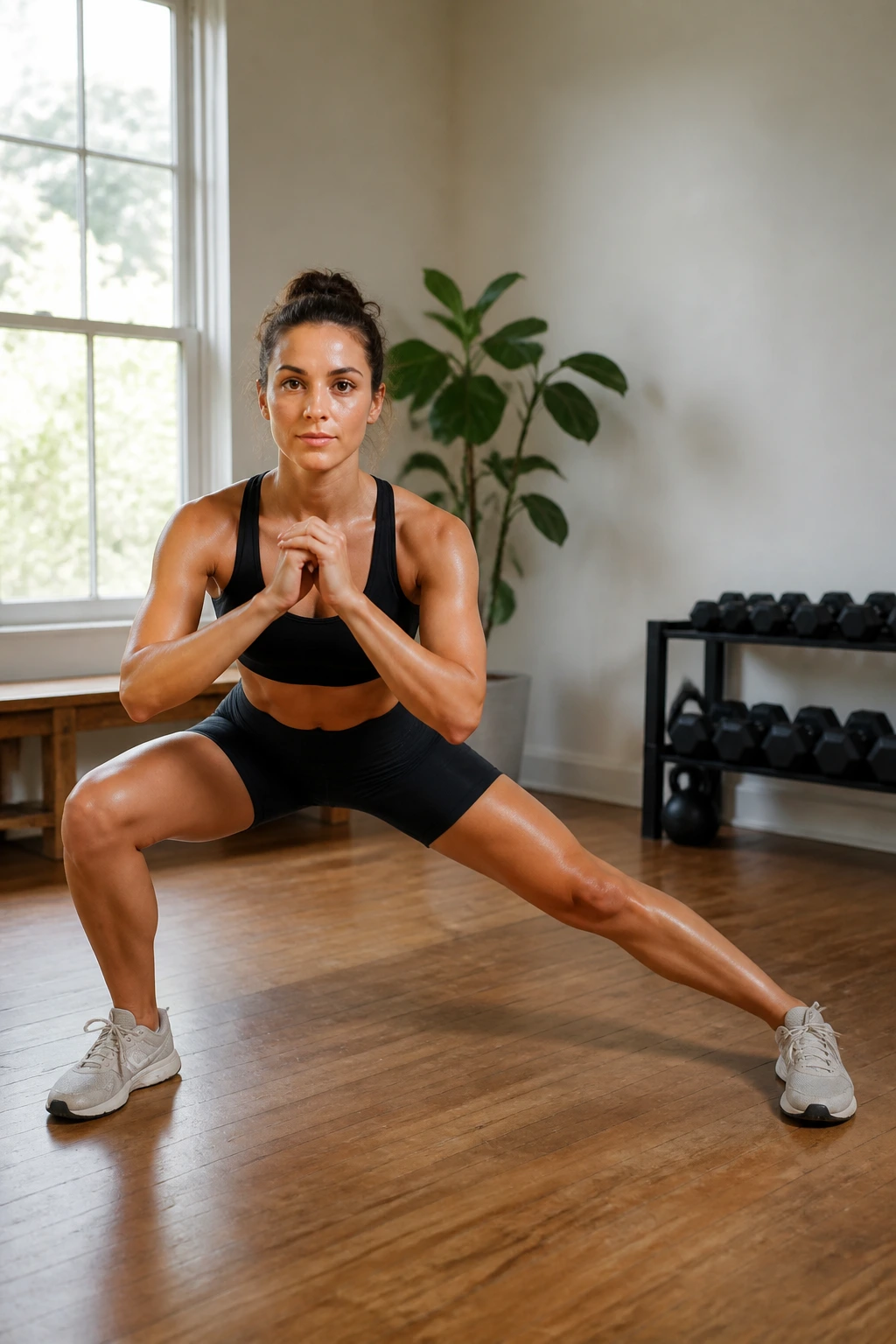
Side lunges work the muscles in the frontal plane, specifically the inner thighs (adductors) and the glutes.
The Metabolic Benefit
Moving in different planes of motion forces your body to adapt. If you only move forward and backward, your muscles only get strong in that specific way. By adding side lunges, you train your stabilizers to act in new ways, which helps prevent injury and allows you to work harder in your other exercises.
How to Lunge Laterally
- Stand with your feet wider than shoulder-width.
- Shift your weight to one side, bending that knee while keeping the other leg perfectly straight.
- Keep your chest up and your back flat.
- Push off the bent leg to return to the center.
- Switch to the other side.
Check: Ensure your bent knee does not collapse inward. It should track directly over your toes, just like in a regular squat.
Final Thoughts
Boosting your metabolism at home does not require expensive equipment or complicated routines. It requires effort, consistency, and a willingness to push your body outside of its comfort zone. The twenty exercises listed here are all you need to create a demanding, efficient routine that works your entire body and keeps your energy systems running at a higher level.
Remember that these are just tools. The results come from how you use them. Stringing them together in circuits—doing one after the other with minimal rest—will provide a much higher metabolic stimulus than doing them as isolated sets. Choose five or six movements, perform each for 45 seconds with 15 seconds of rest, and repeat the circuit three times. That is a potent, time-efficient way to change how your body handles energy.
Ultimately, the best workout is the one you actually do. Consistency is the foundation of any metabolic change. Start with what you can manage today, focus on doing the movements correctly, and increase the intensity as you get stronger. Your body is highly adaptable; give it a reason to change, and it will.
