



The reality of reshaping your legs is often misunderstood. Many people search for the perfect move to spot-reduce fat specifically from the thighs, only to find that the human body doesn’t really work that way. You cannot choose where your body burns fat first. It is a systemic process. However, what you can do is build lean muscle mass in the quadriceps, hamstrings, and adductors while maintaining a consistent caloric deficit. That is the only way to achieve the definition and shape you are likely looking for.
When you train your legs, you are targeting the largest muscle groups in your entire body. This isn’t just about appearance. It is about metabolic demand. Working these muscles hard forces your body to burn more energy, not just during the workout, but in the recovery phase that follows. If you focus on compound movements that recruit multiple muscle groups, you improve your functional strength, protect your joints, and naturally lean out your lower body over time. Forget the notion of endless high-repetition sets with light weights; you need tension, progression, and consistency.
1. The Classic Barbell or Goblet Squat
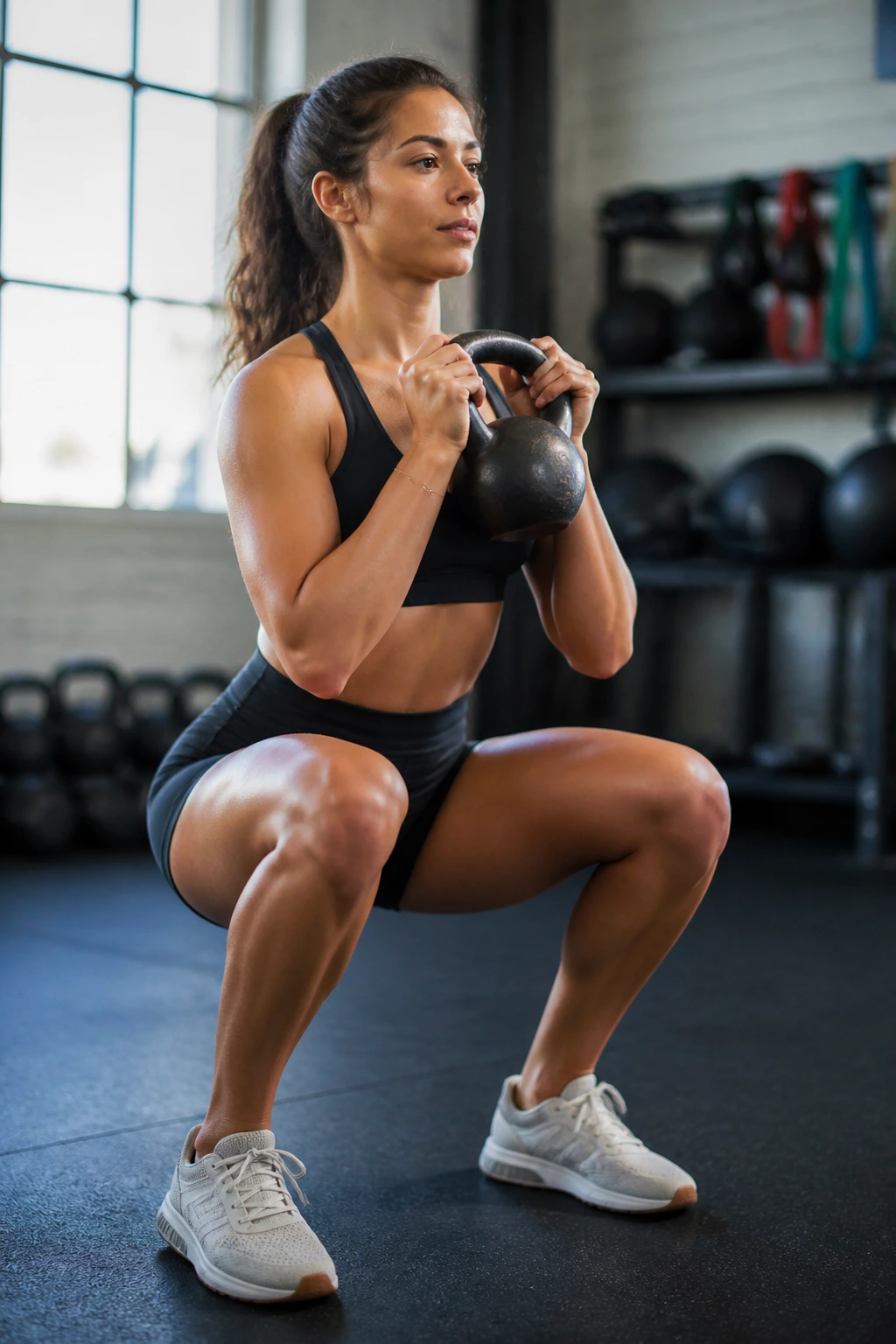
This is the non-negotiable foundation of any effective lower-body routine. Squats are a compound movement, meaning they force your quads, glutes, hamstrings, and core to work in unison. If you are a beginner, start with a goblet squat holding a single dumbbell or kettlebell against your chest. This weight acts as a counterbalance, helping you keep your torso upright and your spine neutral.
Why It Works for Leg Definition
When you drop into a squat, you are placing your quadriceps under significant mechanical tension. Unlike isolation exercises, the squat requires your body to stabilize a load while moving through a full range of motion. This builds the foundational muscle density that makes legs look toned rather than just thin.
Critical Form Tip: Stop thinking about “sitting down” and start thinking about “spreading the floor.” As you descend, imagine you are trying to push your feet apart without actually moving them. This activates your glutes and keeps your knees from caving inward, which is the most common mistake I see in gyms. Keep your heels glued to the ground at all times. If your heels lift, your stance is likely too narrow or your mobility needs work.
2. Walking Lunges
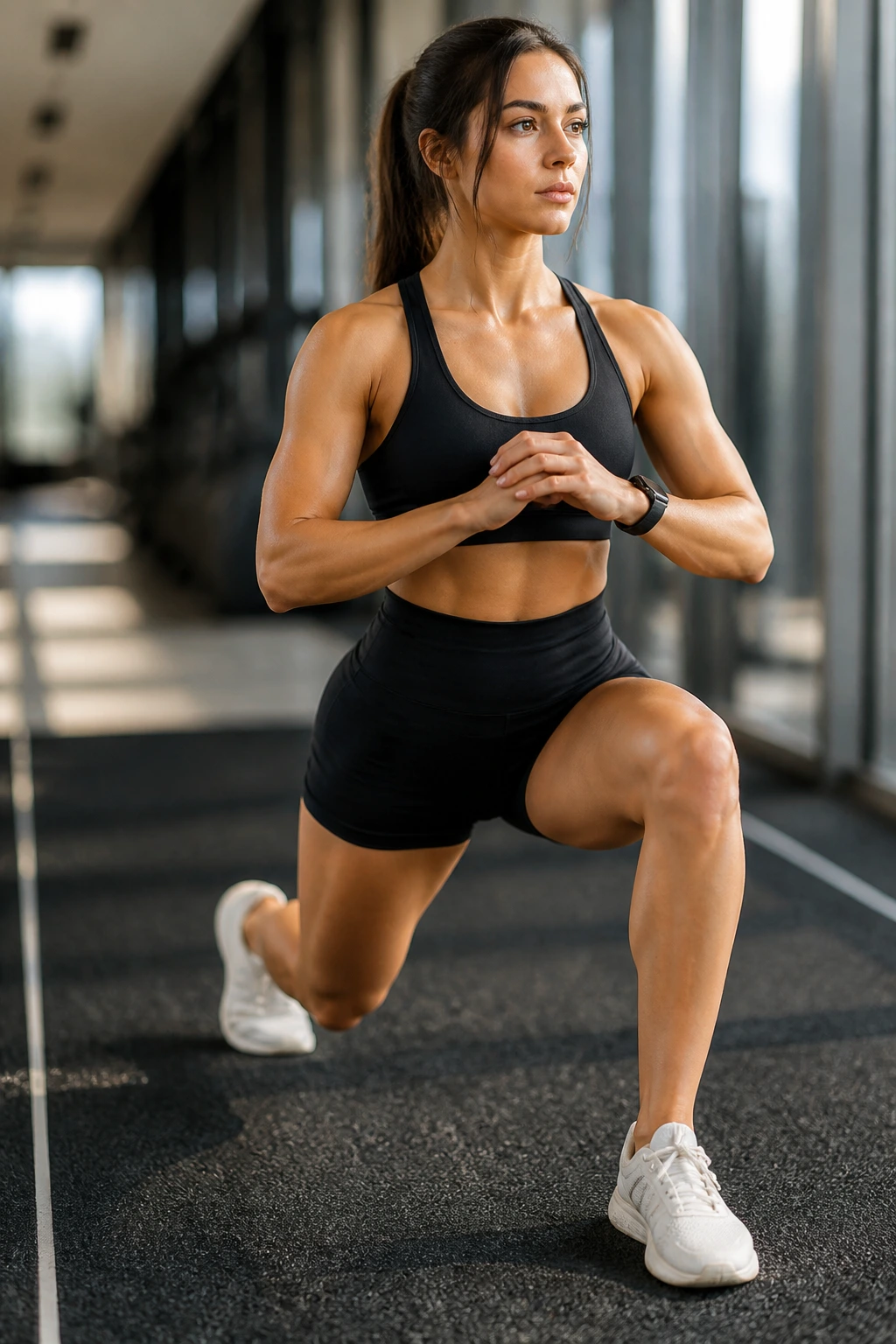
Walking lunges are brutal in the best way possible. They force you to stabilize your entire body on a single leg with every step, which recruits the smaller stabilizer muscles around the knee and hip that squats often miss. This constant shifting of weight creates a significant burn in the quads and glutes that lasts well after the set is over.
Mastering the Technique
Many people treat lunges as a race. They rush through the steps, letting momentum do the work. Don’t do that. Take long, controlled strides. When you step forward, your front shin should be roughly vertical, and your back knee should hover just an inch or two above the floor. If your front knee is pushing way past your toes, you are putting unnecessary stress on your joint and taking tension away from the muscle.
- Keep your core tight to avoid leaning forward.
- Push through the heel of your front foot, not the ball, to stand back up.
- Add light dumbbells to increase the metabolic demand as you get stronger.
3. Sumo Squats
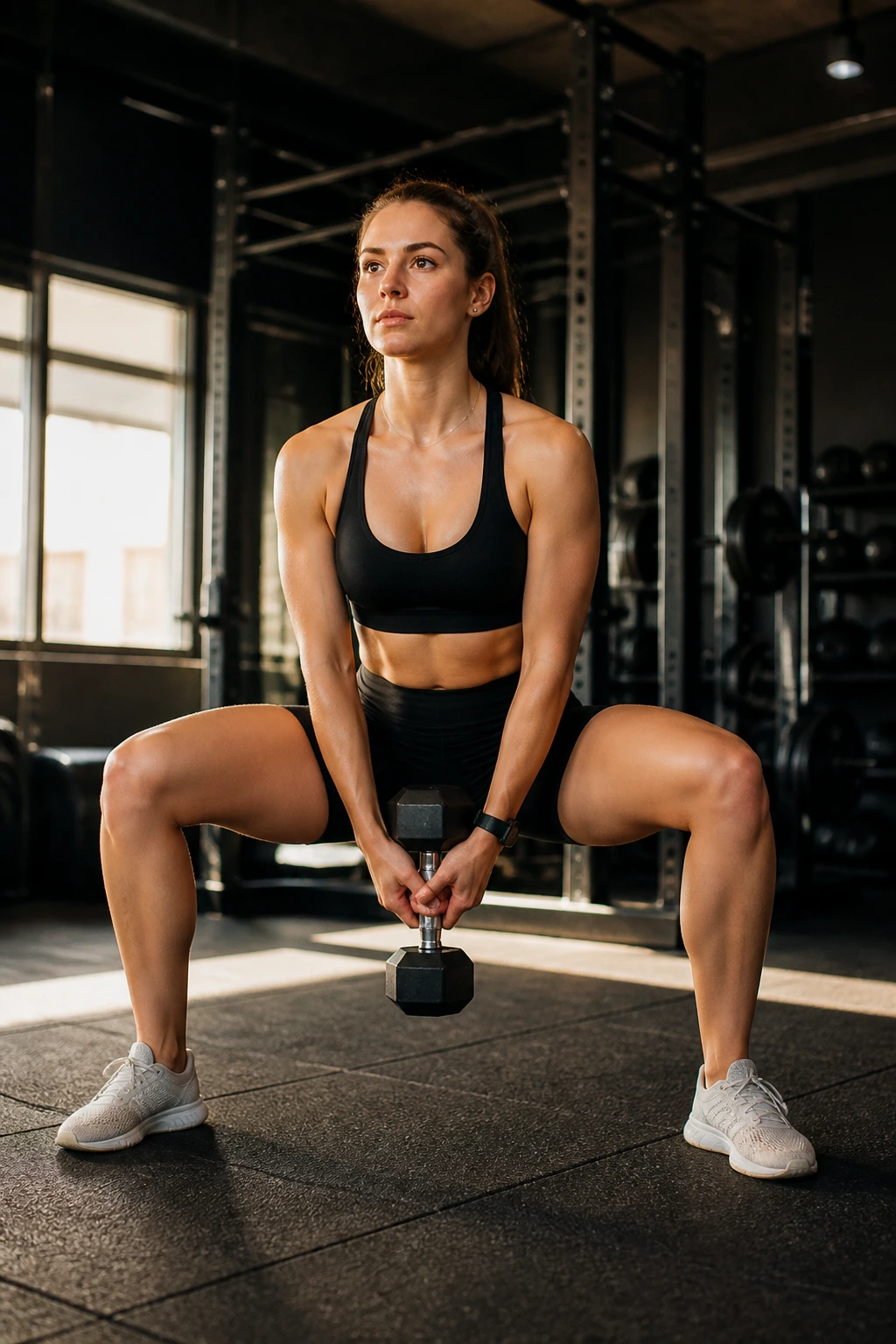
If you want to shift the focus toward your inner thighs—the adductor group—the sumo squat is your best tool. By widening your stance significantly and turning your toes outward, you force the adductors to work much harder to control the descent and stabilize the movement.
This variation effectively changes the biomechanics of the squat. Your quads are still working, but the inner thighs have to handle more of the load. I suggest holding a single heavy dumbbell or kettlebell between your legs. Let it hang straight down. As you squat, ensure your knees are tracking directly over your middle toes. If your knees collapse inward, you have gone too wide. Narrow your stance until you can maintain proper tracking.
4. Romanian Deadlifts
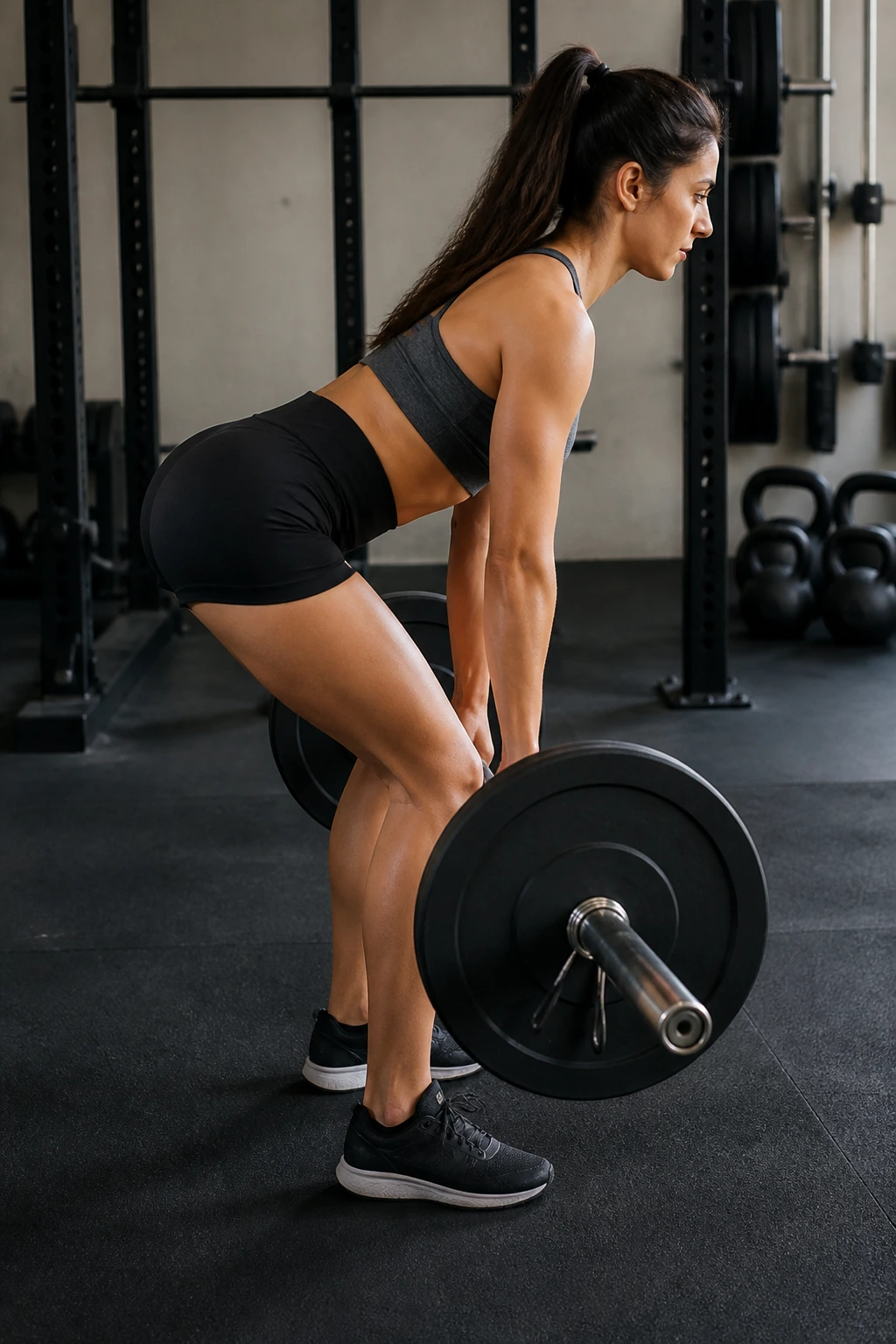
Most people focus on the front of their legs, but your hamstrings are the key to a balanced, toned look. The Romanian Deadlift (RDL) is the gold standard for posterior chain development. It isn’t a squat; it is a hip hinge. The movement should come entirely from pushing your hips backward, not bending at the waist.
The Mind-Muscle Connection
You should feel a deep stretch in your hamstrings as you lower the weight. If you feel it in your lower back, you are doing it wrong. Keep the weight very close to your shins—practically scraping them—all the way down. The moment the weight drifts away from your body, you put massive strain on your lumbar spine.
- Soft bend in the knees, but don’t squat.
- Keep your back perfectly flat.
- Drive your hips forward aggressively to return to a standing position.
5. Bulgarian Split Squats
There is a reason why trainers call these the “love to hate” exercise. They are arguably the most effective movement for building single-leg strength and definition. By elevating your back foot on a bench or chair, you isolate the front leg and force it to do almost all of the work.
Because this movement is so demanding, your heart rate will skyrocket. This is where you get the “fat loss” effect combined with muscle building. It is a full-body challenge disguised as a leg exercise. If you find yourself wobbling, focus on a fixed point on the wall in front of you. Wobbly knees aren’t just frustrating; they suggest your stabilizing muscles are weak and need exactly this kind of training to improve.
6. Glute Bridges
Isolation matters, and the glute bridge is the king of isolating the posterior without loading the spine. Whether you do these with just your body weight or with a heavy barbell across your hips, they force you to engage the glutes to extend the hips.
Lie flat on your back, knees bent, feet flat on the floor. Drive through your heels to lift your hips toward the ceiling. At the top of the movement, squeeze your glutes as hard as you can for a full second. That squeeze is the secret. If you are just flopping up and down, you are wasting your time. Keep your ribs tucked down, too. If you arch your back at the top, you are cheating the movement and reducing the effectiveness for your target muscles.
7. Side-Lying Leg Lifts
Sometimes, you need to strip away the heavy weights and focus on the smaller muscles that give the thighs their shape. The hip abductors, located on the outside of your thigh and hip, are crucial for stability and aesthetic structure.
Lie on your side, legs stacked. Keep your top leg perfectly straight and lift it toward the ceiling, then lower it with control. Do not just let it drop. The eccentric, or lowering, phase is where the muscle fibers get the most work. Aim for high repetitions here—15 to 20 per side—until you feel that deep, unmistakable burning sensation in the side of your hip. If you aren’t feeling it there, you might be lifting your leg too far forward or backward. Keep it aligned with your torso.
8. Stability Ball Inner Thigh Squeezes
This is an old-school move that works because it provides constant tension. Place a stability ball (or a thick pillow if you are at home) between your knees while lying on your back or sitting on the edge of a chair. Squeeze your knees together as hard as you can for 30 seconds.
This move is all about the adductors. It isn’t a high-calorie burner, but it is excellent for targeting the area where many women feel they carry excess fat. By maintaining a squeeze, you recruit muscle fibers that standard squats often neglect. It’s a fantastic “finisher” to do at the end of a workout when your legs are already tired.
9. Curtsy Lunges
The curtsy lunge is a twist on the traditional lunge that targets the glute medius—the muscle on the side of your hip—in a way that few other exercises do. Start standing, then step one foot back and across behind your other leg, as if you are doing a polite curtsy.
Your front knee should stay pointing forward, and your back knee should lower toward the ground behind your front heel. This diagonal movement challenges your balance and forces your muscles to work in a different plane of motion than the standard front-and-back lunges. It’s highly effective for sculpting the outer thigh and glute tie-in area. Be careful with your knees; if this move hurts, stop immediately and stick to standard lunges.
10. Jump Squats
When you want to increase the intensity and metabolic demand, add explosive power. Jump squats are plyometric movements that build fast-twitch muscle fibers. These fibers are responsible for power and speed, and they are excellent at burning through energy stores.
Lower yourself into a standard squat, then explode upward, leaving the ground. Land softly—this is the most important part. You want to absorb the landing through your muscles, not your joints. If you land with a loud “thud,” you are coming down too hard. Think of landing like a cat, completely silent. Start with sets of 10 to 12. You will be breathless very quickly, which is a sign that you are training your cardiovascular system alongside your leg muscles.
11. Kettlebell Swings
While technically a total-body movement, the kettlebell swing is a posterior chain powerhouse. It effectively works the hamstrings and glutes through an explosive hip hinge. Because you are performing the movement for high repetitions, it serves as both a strength exercise and a cardio interval.
The movement isn’t a squat; it’s a snap of the hips. Drive your hips forward, and let the momentum of the kettlebell carry it to shoulder height. Do not use your arms to lift the weight. Your arms are just ropes attached to the bell. If you feel your lower back burning before your glutes, stop and reset. Your back should never be the engine for this movement.
12. Lateral Lunges
We spend most of our lives moving forward and backward. Lateral lunges force you to move side-to-side, which is the frontal plane of motion. This is essential for athletic balance and for hitting muscles in the inner and outer thighs that get ignored by traditional front-facing exercises.
Step out to the side with one leg, keeping the other leg straight. Sit your hips back, ensuring the bent knee stays behind your toes. Push off the bent leg to return to the standing position. You will immediately feel the stretch in your inner thigh and the engagement of the outer glute. This is a deliberate, slow movement. Do not bounce.
13. Wall Sit
This is an isometric exercise, meaning your muscles are working, but they aren’t changing length. It is deceptively simple and excruciatingly effective. Lean your back against a wall and slide down until your thighs are parallel to the floor, like you are sitting in an invisible chair.
Hold this for as long as you can. It builds endurance in the quads that can help you power through other, more dynamic exercises. If you want to make it harder, place a dumbbell on your lap. The key is to keep your back flat against the wall and your knees at a 90-degree angle. Don’t slide up as the pain sets in; stay in the deep position.
14. Plank Jacks
Why include a core exercise in a list of thigh workouts? Because your core controls your lower body. Plank jacks combine a forearm plank with a jumping-jack motion of your legs. This forces your inner thighs to stabilize your hips while you jump your legs out and in.
Maintain a tight core and ensure your hips don’t bounce up and down. If your hips are moving, you aren’t doing the exercise right. Keep your upper body rock solid while your legs move quickly. It is an amazing way to spike your heart rate and get the glutes firing in a different, high-intensity way.
15. Fire Hydrants
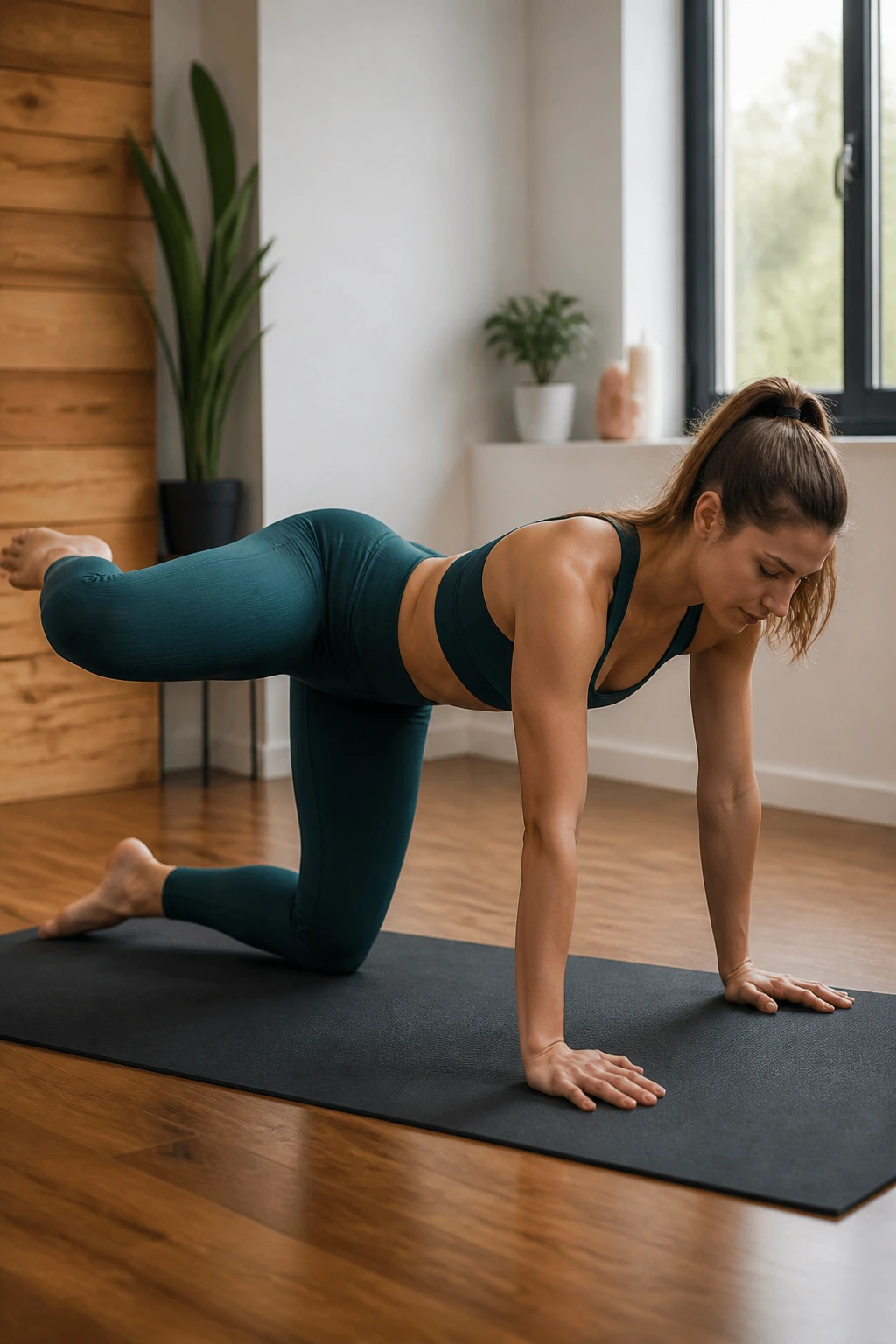
This is a classic Pilates-style move that isolates the glutes and hip abductors. Get on all fours, hands under shoulders and knees under hips. Lift one leg out to the side, keeping the knee bent at a 90-degree angle, as if you are a dog at a fire hydrant.
The goal isn’t to lift your leg as high as possible; it’s to rotate your hip and feel the deep glute engagement. If you swing your whole body, you are cheating. Keep your torso perfectly still. Your core should be braced the entire time. This is excellent for hip health and helps tighten the area around the top of the thigh.
16. Donkey Kicks
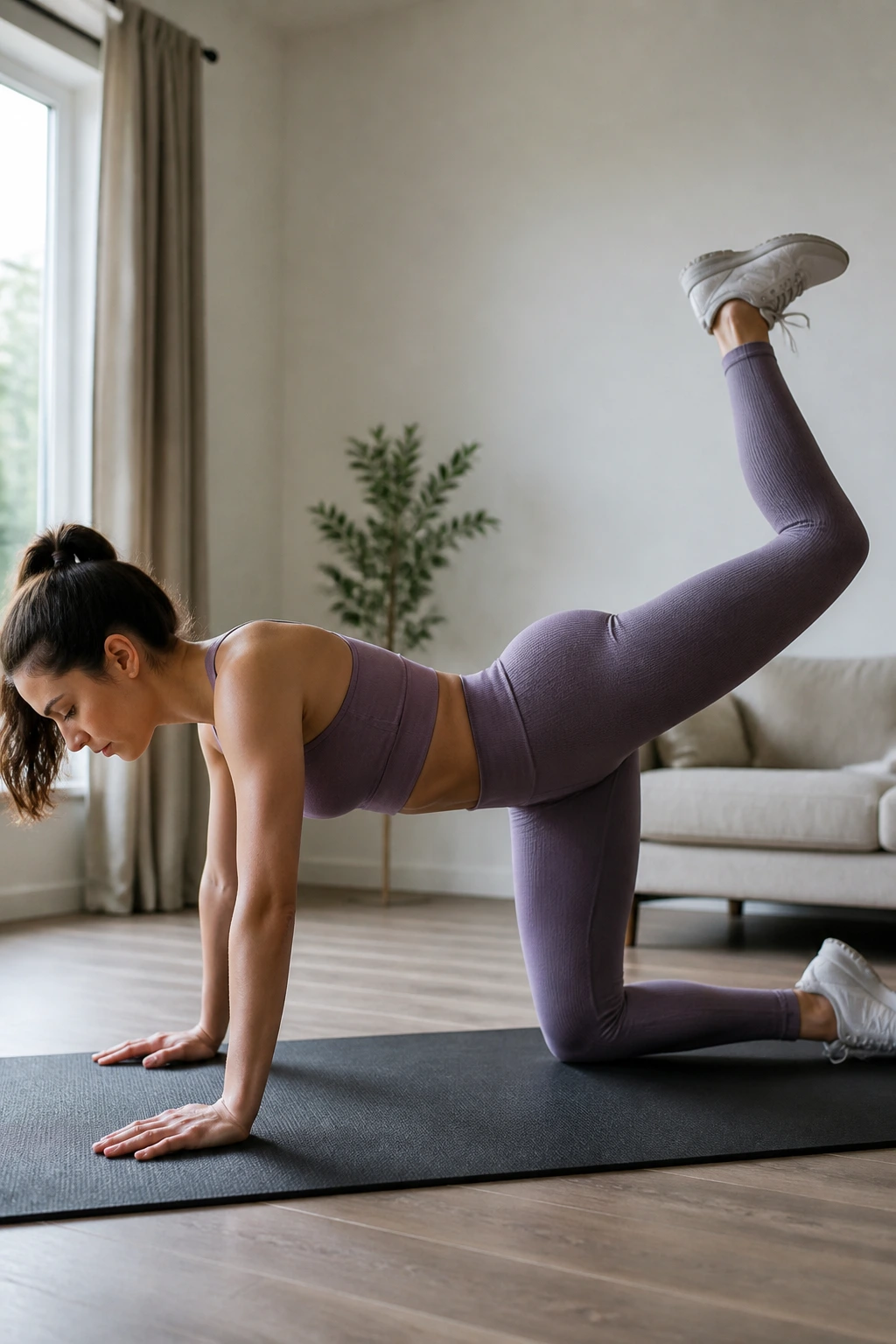
Another effective glute-isolation move that keeps the pressure off the knees while demanding a lot from the posterior chain. On all fours, kick one leg straight back and up toward the ceiling. Your foot should remain flexed.
Squeeze your glute at the very top of the movement. Don’t arch your lower back. If you arch, you are losing the glute engagement. Think about kicking the ceiling with your heel. Do 15 to 20 reps on one side before switching. This is great for those days when your knees are feeling a bit tired but you still want to work your legs.
17. Step Jacks
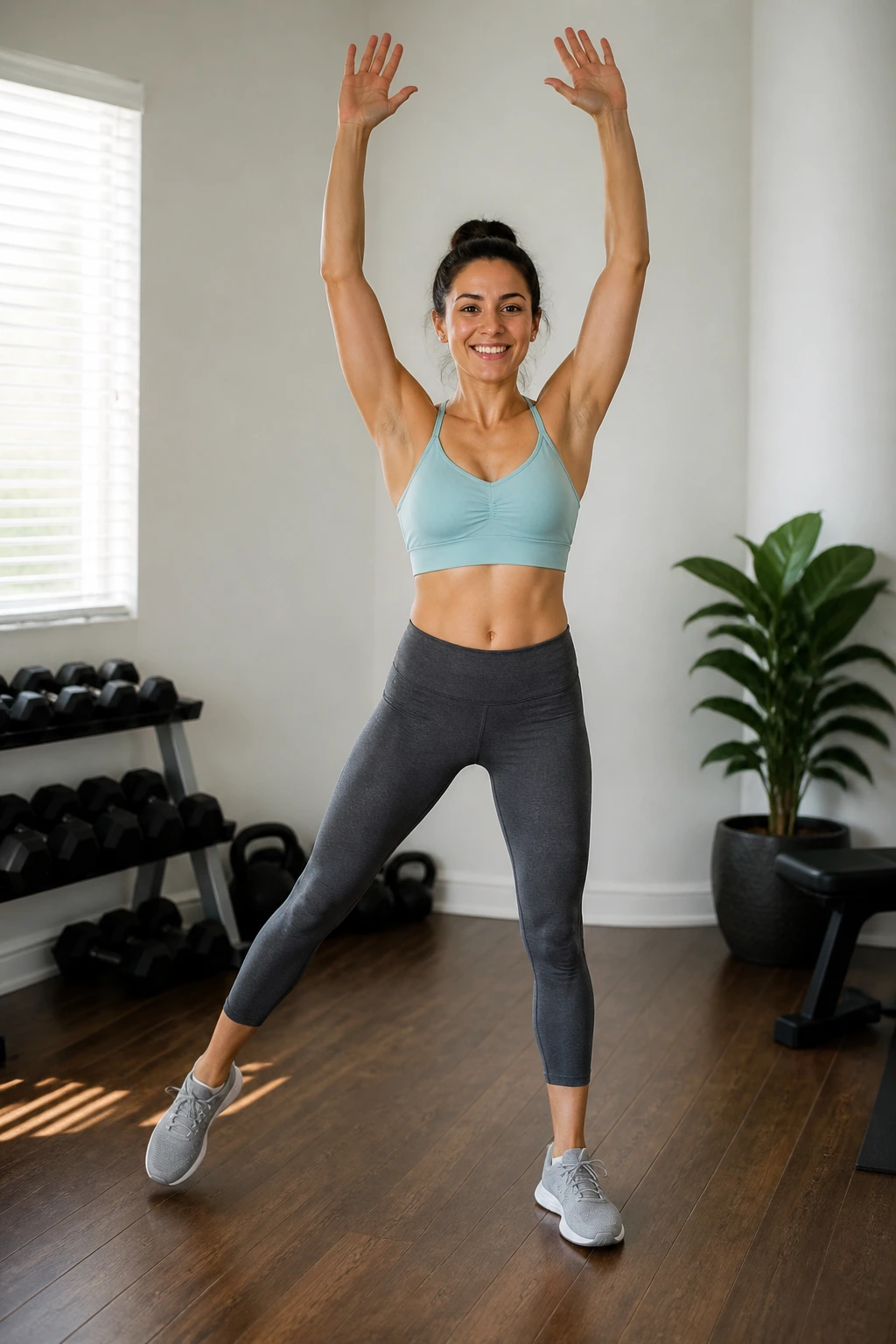
Think of this as a low-impact version of jumping jacks. It’s perfect for active recovery days or for people with joint issues who still want to get their heart rate up. Stand tall, and instead of jumping, step one foot out to the side while simultaneously reaching your arms overhead.
Return to the center and switch legs. Because you are constantly moving side-to-side and using your arms, you keep your heart rate in the “fat burn” zone without the high-impact stress of jumping. It’s a sneaky way to add intensity to your routine without needing any equipment at all.
18. Pilates Leg Circles
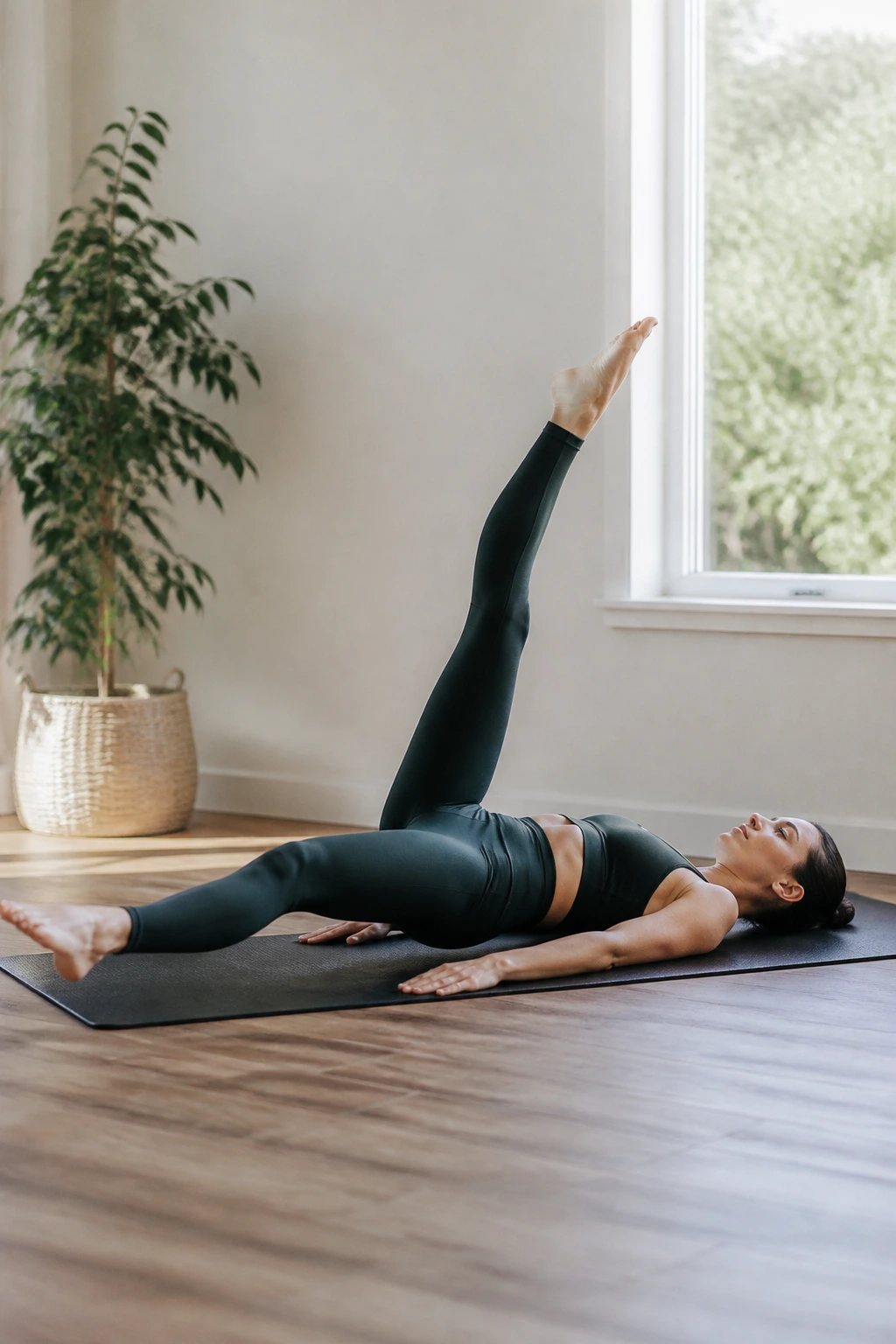
If you want to focus on control and precision, this is the move. Lie on your back, extend one leg toward the ceiling, and keep the other flat on the floor. Draw small circles with your lifted leg, keeping your hips pinned to the ground.
The challenge is to keep your torso perfectly stable. As the leg moves in a circle, your core and hip stabilizers have to work overtime to prevent your body from rocking. This is all about slow, controlled movement. It’s not flashy, but it builds the kind of lean stability that makes legs look strong and defined.
19. Incline Walking
Sometimes the best workout isn’t a fancy gym move; it’s a simple, high-intensity incline walk. Set your treadmill to a high incline—around 10% to 12%—and walk at a moderate pace. Do not hold onto the handrails.
Walking on an incline forces your glutes and hamstrings to work significantly harder than walking on flat ground. It is low impact, steady-state cardio that builds endurance in the lower body and burns calories effectively. If you can walk for 30 minutes at a steep incline without holding on, your legs are getting a serious workout.
20. Step-Ups
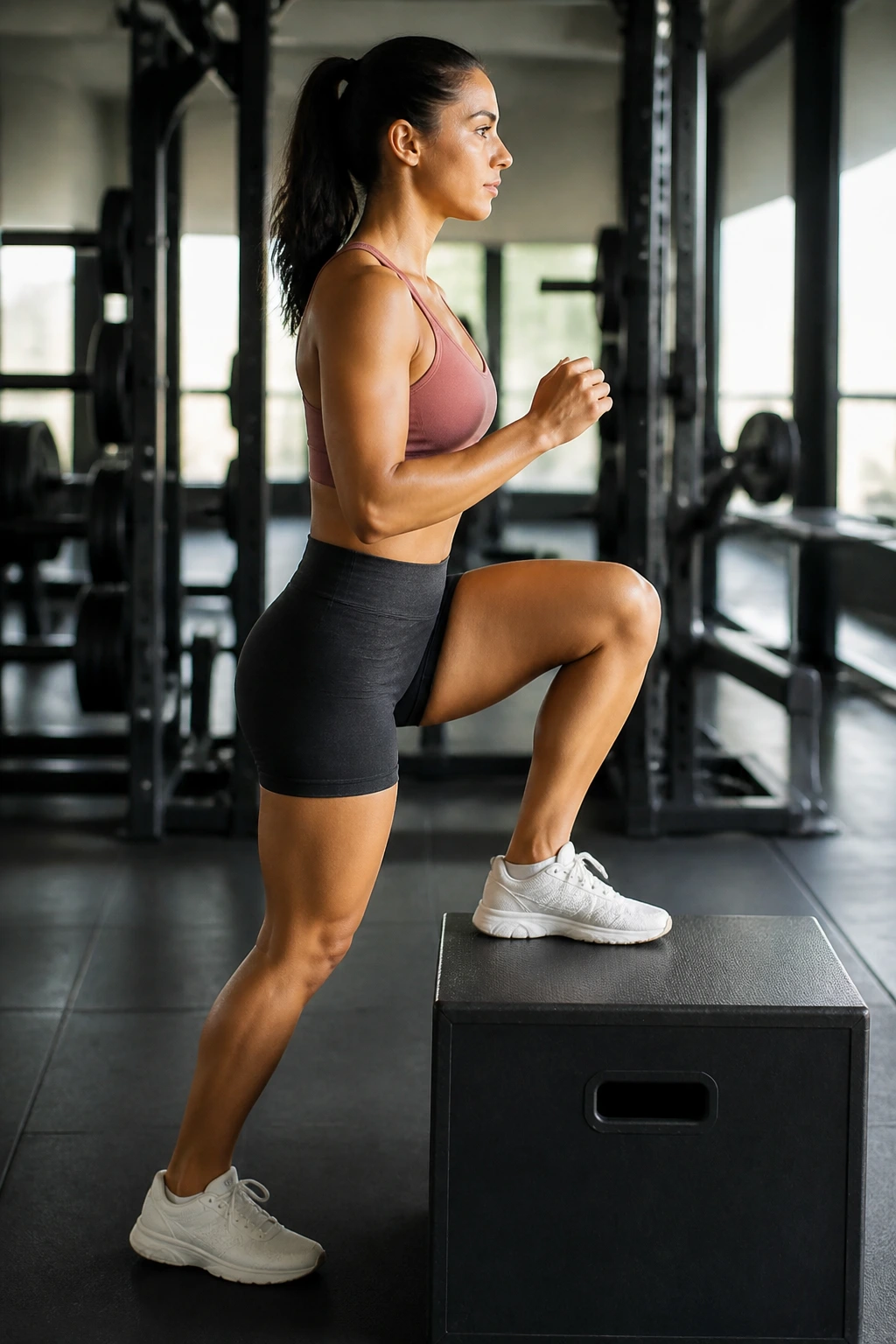
Find a box, a sturdy chair, or a bench. Step up onto it with one leg, driving through your heel. The key here is height. If the box is too high, you will struggle with balance. If it is too low, it won’t do much.
Start with a box height that puts your knee at roughly a 90-degree angle when your foot is on it. Drive upward, bringing your other knee up toward your chest. Lower yourself back down slowly. The lowering phase—the eccentric part—is where the real work happens for your quads. If you just drop back down to the floor, you miss half the benefit. Control your descent.
The Bottom Line
Achieving the body composition you want is rarely about finding that one “secret” exercise. It is about the consistency of your training and the quality of your movement. I have seen countless people jump from one trendy workout to another, hoping for results, while ignoring the basic, boring, effective moves like squats and lunges.
Do not overcomplicate your routine. Pick three to four movements from the list above, perform them with perfect form, and add weight or increase your intensity as you get stronger. That is how you change your body. Focus on the feeling of the muscle working. If you are doing squats and you feel it everywhere except your legs, check your form. If you are doing lunges and your knees hurt, shorten your stride.
Training is a skill. It takes time to learn how to activate the right muscles and how to push through discomfort without causing injury. Be patient with yourself. Your legs are a powerful, resilient part of your body, and they will respond to the work you put in—provided you show up consistently and prioritize strength over speed. Forget the search for a magic fix and get back to the basics of good, hard work.
