



Belly fat exercises do not peel fat off your stomach on command. They do something more useful: push your heart rate up, challenge your core, and make a short workout hard enough to matter.
That sounds less magical than a flat-stomach promise, and that’s the point. Spot reduction is a bad bet; the waist changes when overall body fat drops, your posture improves, and the muscles under the fat stop slouching like they’ve had a long day.
Set a timer for 45 seconds on, 15 seconds to switch. Fifteen moves fill 15 minutes cleanly, which is why this kind of circuit works so well when you’re short on time but still want a session that feels earned.
These moves mix standing cardio, floor work, and anti-rotation core training so you’re not grinding the same crunch pattern over and over. Good form matters more than speed; sloppy reps just turn a short workout into a tired one.
1. Jumping Jacks That Wake Up Your Whole Body
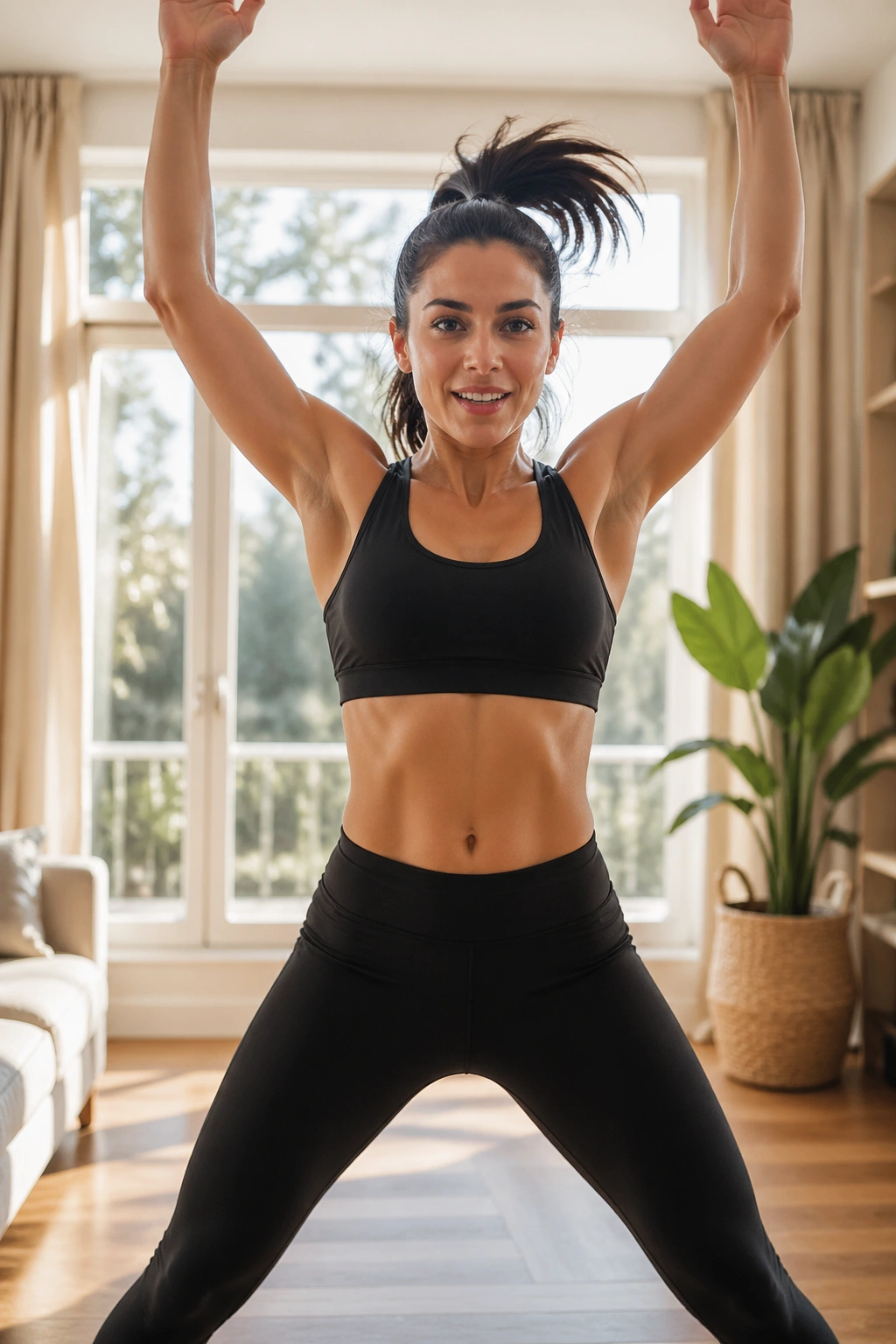
Jumping jacks are old-school for a reason. They wake up the shoulders, calves, hips, and feet in one clean rhythm, and they do it fast enough to make your pulse notice almost immediately.
Why They Belong First
A short workout needs a fast start. Jumping jacks do that without any equipment, and they give the rest of the circuit a better feel because your joints are warm before the harder moves arrive. Keep the landing soft, the knees slightly bent, and the hands moving in a smooth arc overhead instead of yanking your back into an arch.
- Land on the balls of your feet, then let the heels kiss the floor.
- Keep your ribs down so your lower back doesn’t take over.
- Step one foot out at a time if you want less impact.
- Use a steady rhythm, not a frantic one.
Tip: If your shoulders complain, shorten the arm path a little. The cardio effect is still there.
2. Mountain Climbers That Turn Up the Heat Fast
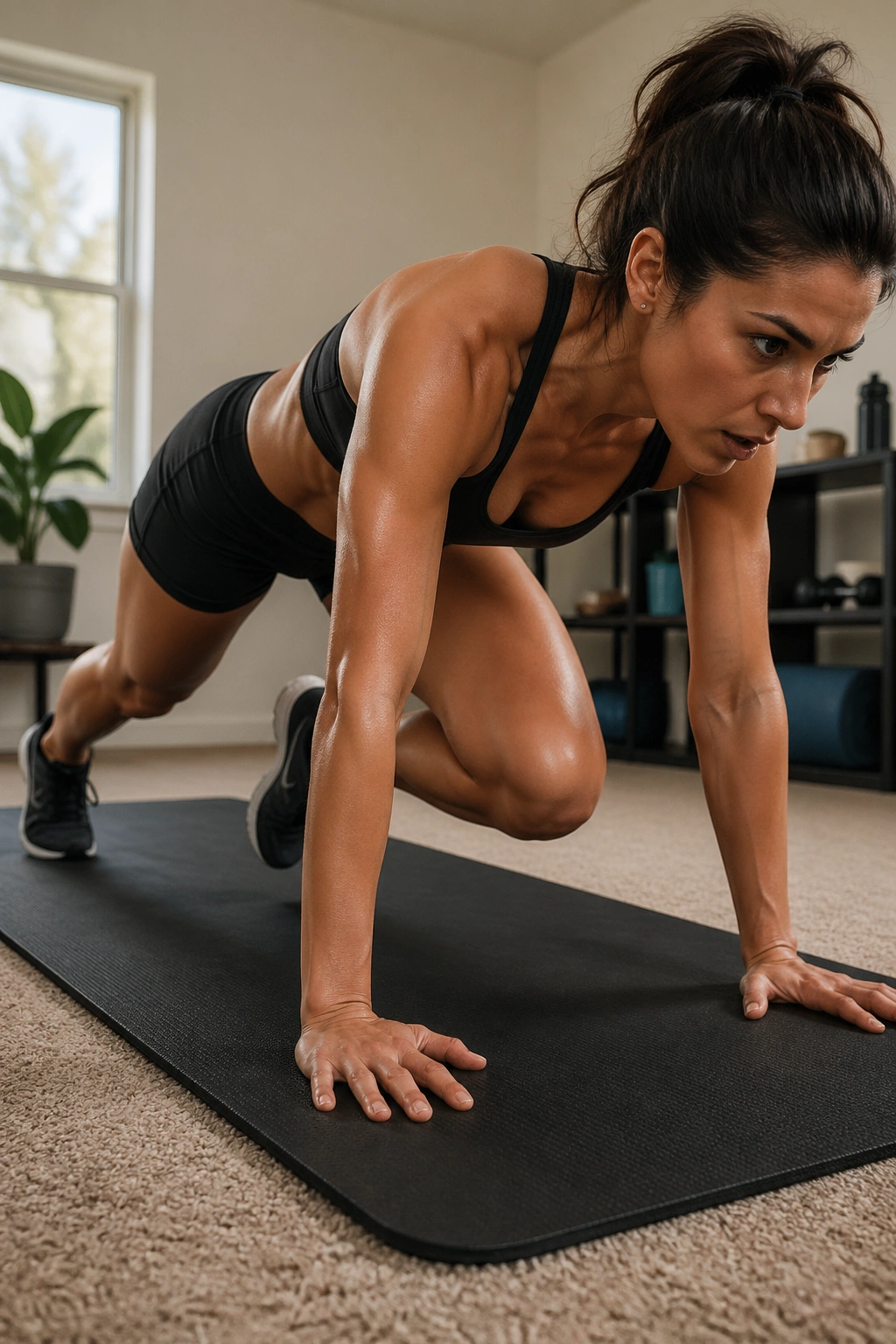
Mountain climbers are a rude little exercise. They look small, then they start stealing your breath.
Your hands stay under your shoulders, your hips stay low, and your knees drive toward your chest one at a time. That alone makes them useful for a belly-fat circuit, because they tax the core, the shoulders, and the lungs all at once. The trick is not speed for its own sake. Fast climbers with a sagging low back are just messy. Slow climbers with clean tension are better.
If your wrists are tender, put your hands on a sturdy couch, bench, or countertop and do the same knee drive from an incline. That keeps the core work intact and takes some load off the hands. I also like this move because it punishes laziness. The second you stop bracing your middle, your hips bob around and the whole thing gets sloppy.
Keep your neck long. Keep your knees moving. That’s enough.
3. Squat Jumps That Bring the Legs Into the Fight
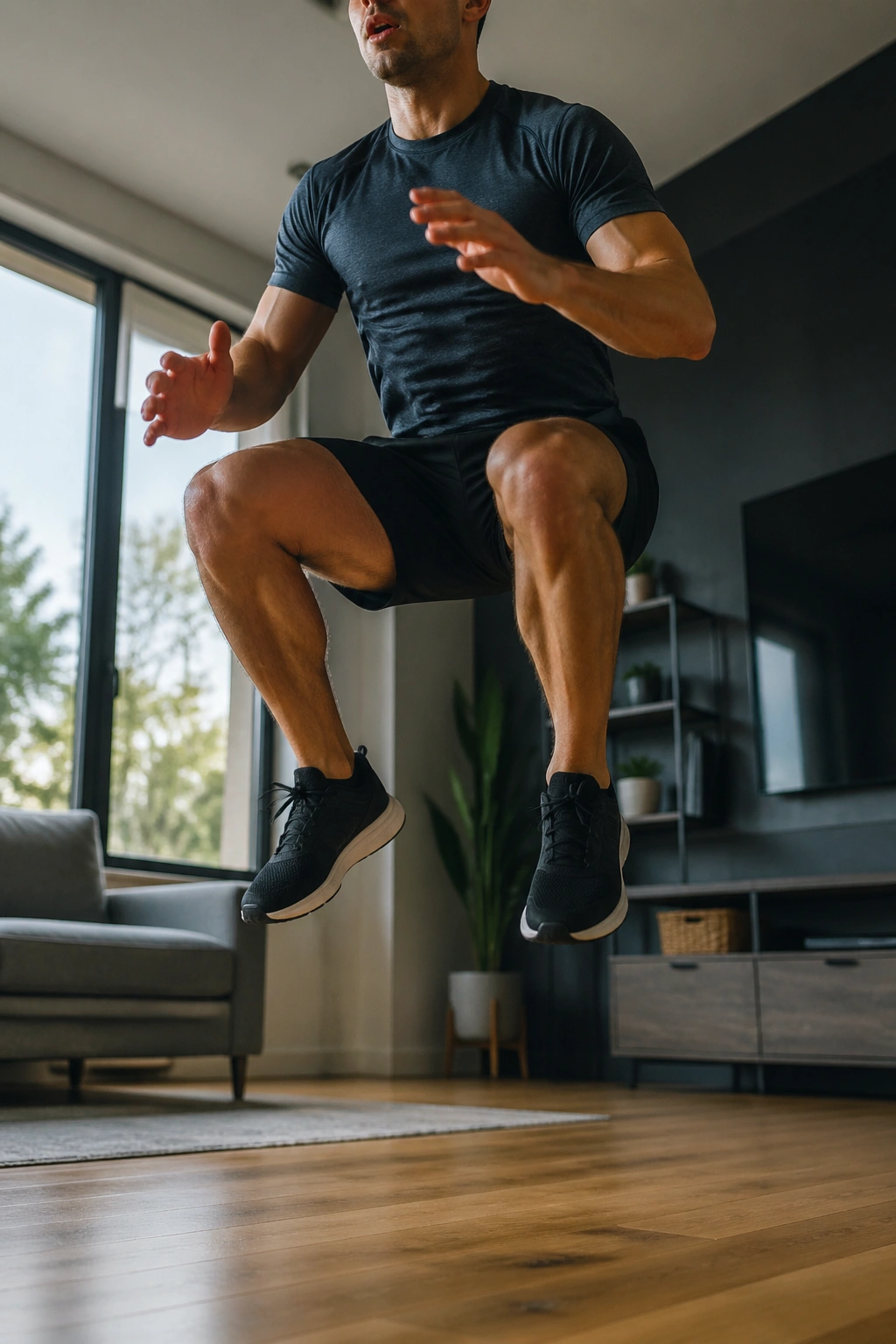
Why put a jump after a squat? Because it turns a basic lower-body move into a faster, more demanding burst that raises the heart rate and hits the glutes harder than a plain squat.
You don’t need to launch yourself to the ceiling. Drop into a squat with your chest tall, drive through your feet, and leave the floor just enough to make the move explosive. Land like you’re trying not to make noise in the next room. Quiet landings are a good sign; loud ones usually mean you’re slamming down and asking your knees to absorb too much.
How to Use It in a 45-Second Window
A clean set usually looks like 8 to 12 reps if you’re counting. If you’re moving by time, keep the pace sharp for about 30 seconds, then breathe through the last stretch without turning the form into mush.
- Keep your knees tracking over your toes.
- Sit back slightly before you jump.
- Stop the jump and do fast bodyweight squats if your knees are irritated.
- Reset your stance between reps if balance gets fuzzy.
Tip: If you can’t land softly, the jump is too big. Shrink the height and keep the snap.
4. Plank Shoulder Taps That Catch Every Wobble
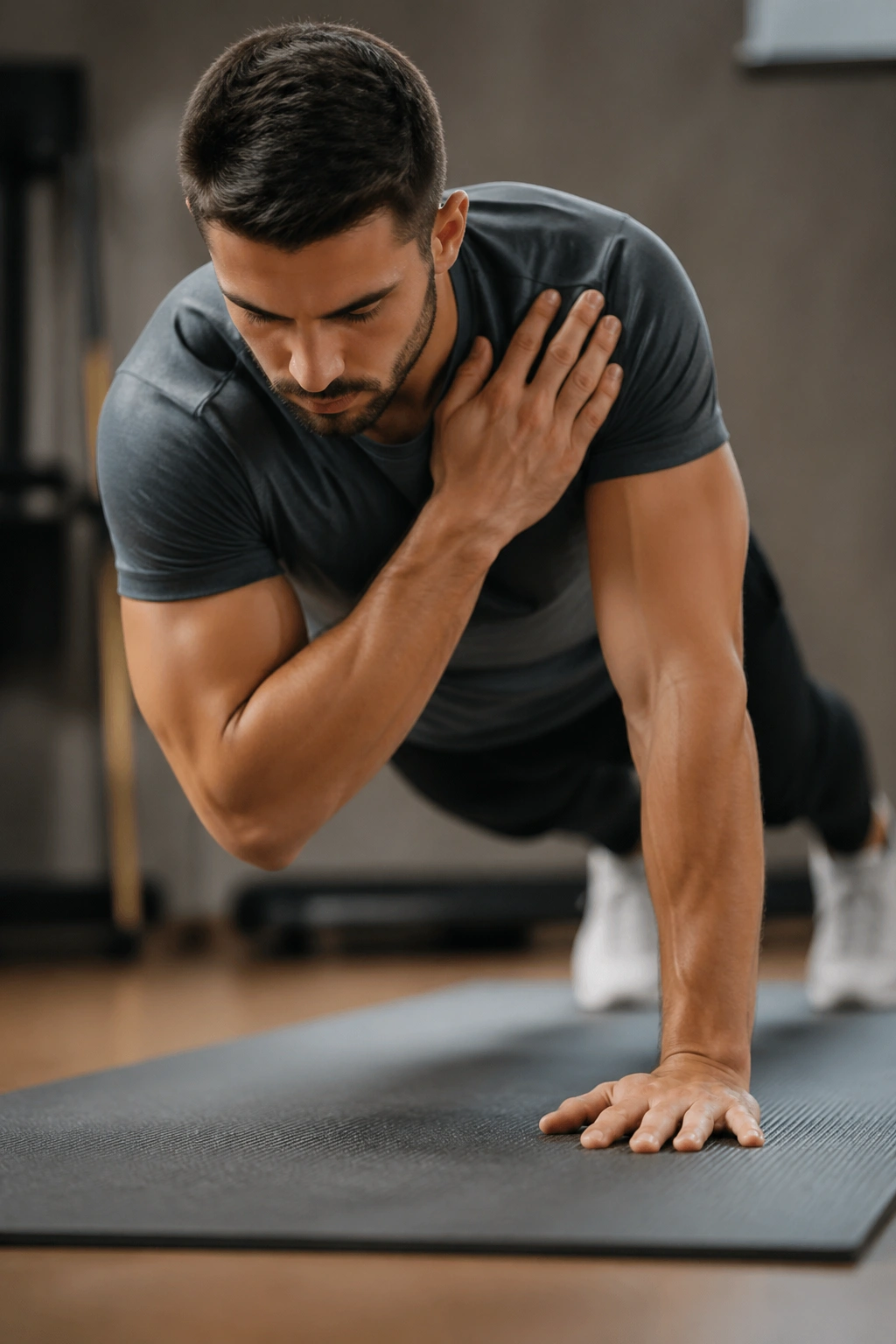
A plank looks polite until you lift one hand.
That’s when the core has to stop pretending and start working. Shoulder taps train anti-rotation strength, which is the fancy way of saying your midsection has to stop your torso from twisting all over the place. That matters in a short fat-loss workout because the move hits the abs hard without needing a lot of space or equipment.
What to Watch For
- Put your hands under your shoulders, not too wide.
- Spread your feet a little if your hips sway.
- Tap the opposite shoulder with control, not speed.
- Keep your belt buckle pointed toward the floor.
The big mistake is rushing the taps like they’re a race. They’re not. A clean tap with a quiet torso does more than three sloppy ones. If your low back starts sagging, stop and reset. If your hips rock side to side, widen your feet and slow down. That’s not failure; that’s form telling you the truth.
I like this move because it makes your core work in a way crunches never do. Your abs have to brace, your shoulders have to stabilize, and your whole middle learns how to stay still while your arms move. That’s a useful skill, not just a calorie burn.
5. High Knees That Make a Small Space Feel Smaller
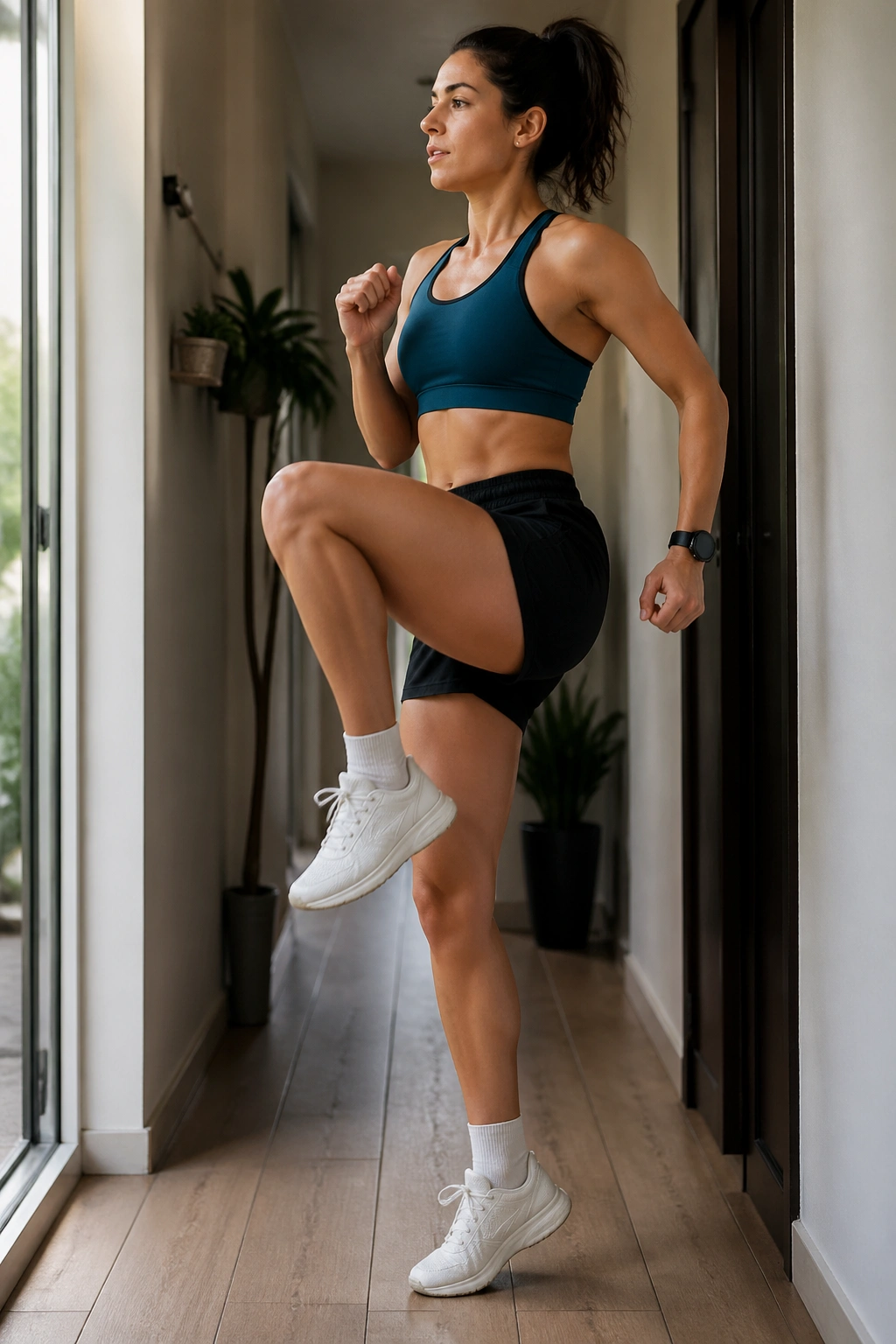
These are not polite.
High knees turn a hallway, a living room, or a patch of open floor into a hard little cardio drill. The best part is the simplicity: drive one knee up, pump the opposite arm, and switch quickly enough that the whole body starts to work like a spring.
The first ten seconds feel harmless. Then the breathing changes. Keep your chest tall and your torso stacked over your hips so you’re not leaning back and dumping the work into your lower spine. The goal is a quick, springy rhythm with controlled foot strikes, not a flailing run in place.
A marching version works too. Lift one knee at a time, but drive it with purpose and bring the arm across the body. That low-impact option is a good choice if your knees don’t love jumping, and it still makes the heart rate climb.
One detail people miss: high knees are not only about the legs. The arms matter. If the arms move weakly, the whole drill loses its snap. Pump them hard enough to help the knees rise, and the exercise starts feeling more like a workout than a warm-up.
6. Bicycle Crunches That Hit the Obliques Without the Neck Drama
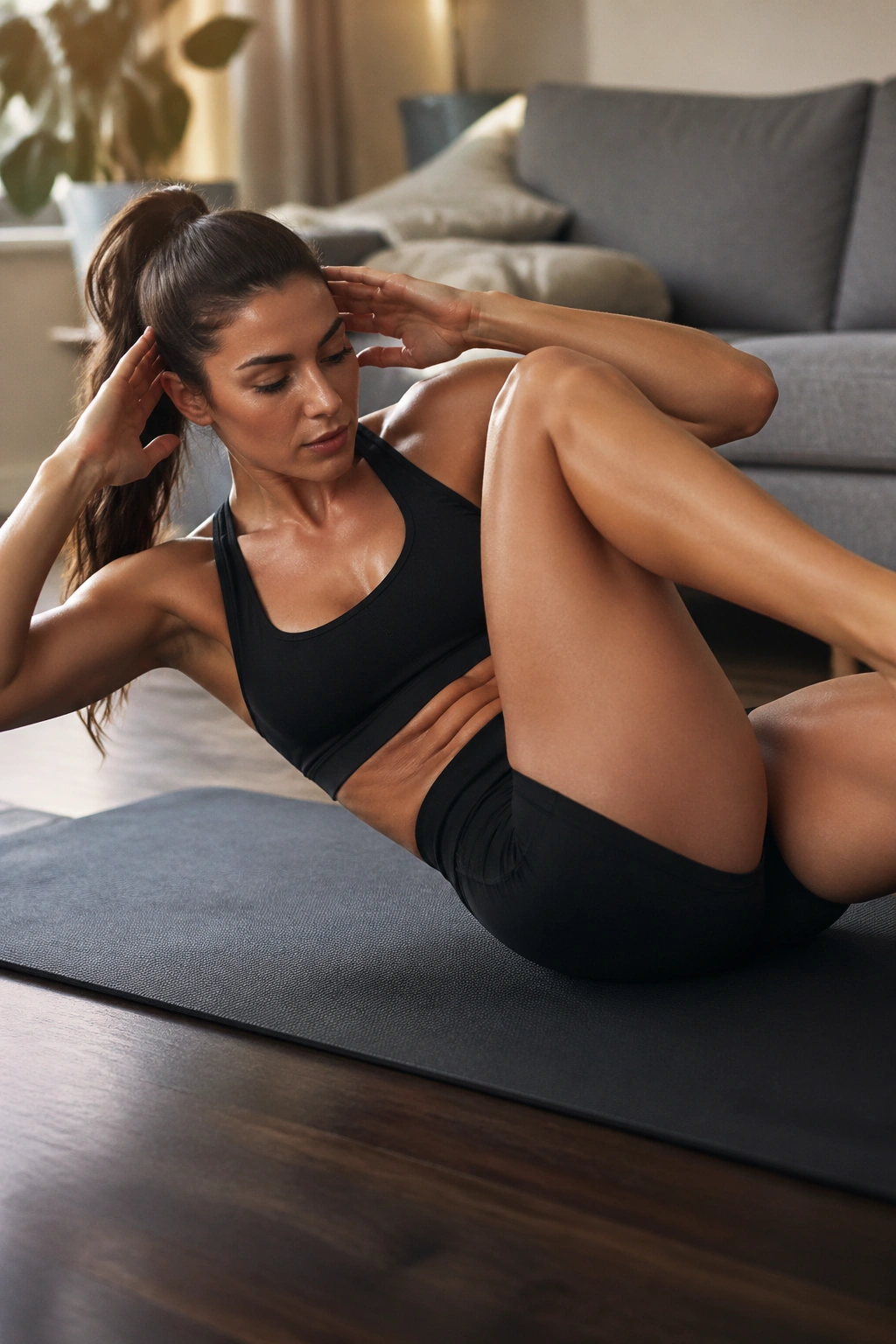
Unlike endless sit-ups, bicycle crunches ask your torso to rotate and your hips to stay involved. That’s why they show up in so many core circuits: they make the obliques work while the upper abs and hip flexors keep the rhythm going.
The useful version is slower than most people expect. One elbow does not need to smash the opposite knee. In fact, chasing contact usually turns the movement into a neck pull or a hip swing. Bring the shoulder toward the opposite knee, extend the other leg with control, and keep the lower back pressed into the floor.
If you want a cleaner feel, breathe out as the rib cage rotates. That little exhale helps the abs tighten instead of letting the whole midsection go slack. A lot of people rush these and end up with fast, shallow reps that burn less and annoy the neck more. Slower reps usually fix both problems.
This is a solid move for anyone who wants direct abdominal work inside a 15-minute circuit. It is not the most glamorous exercise in the world. It works anyway.
7. Reverse Lunges With a Knee Drive for Balance and Core Control
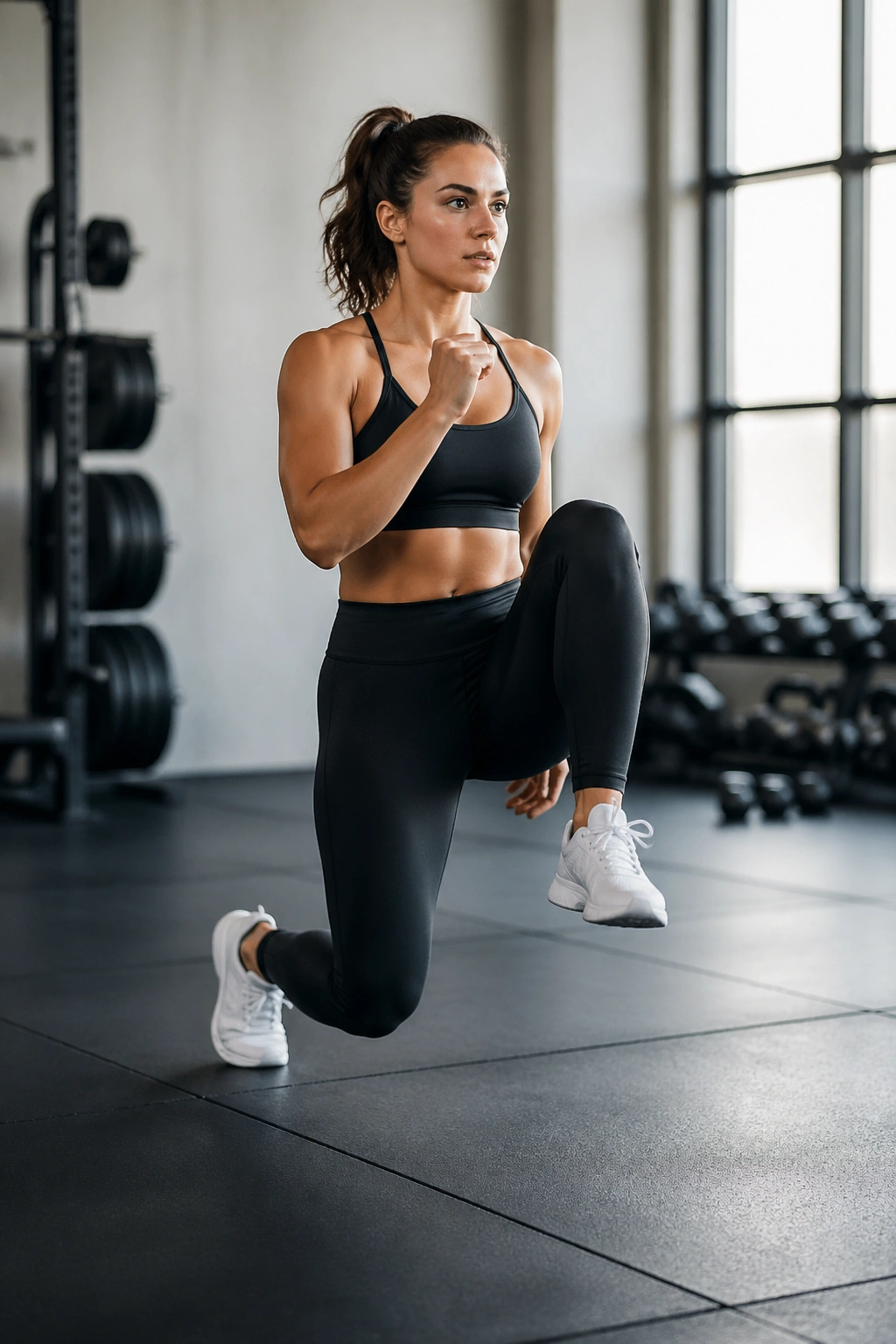
A reverse lunge with a knee drive looks simple until your balance starts negotiating with your legs.
Step one foot back, lower under control, then drive up through the front leg and bring the back knee forward into a strong knee lift. That knee drive adds a small balance test, which is exactly why this move earns its place in a belly-fat workout. Your legs burn, your glutes fire, and your core has to keep your torso from wobbling all over the place.
What to Keep Steady
- Step back far enough that your front knee stays comfortable.
- Keep most of your weight in the front heel and midfoot.
- Stand tall as the knee drives up.
- Use a wall or chair for balance if you need it.
The best thing about this exercise is how much work it sneaks into one pattern. You get single-leg strength, some cardio, and a little trunk control without needing to lie on the floor. That makes it easier to keep moving through the 15-minute mark without feeling like you’re stuck in one corner of the room.
Tip: If the knee drive throws you off, remove it for a round or two. The lunge itself still does plenty.
8. Skaters That Hit the Hips From a Different Angle
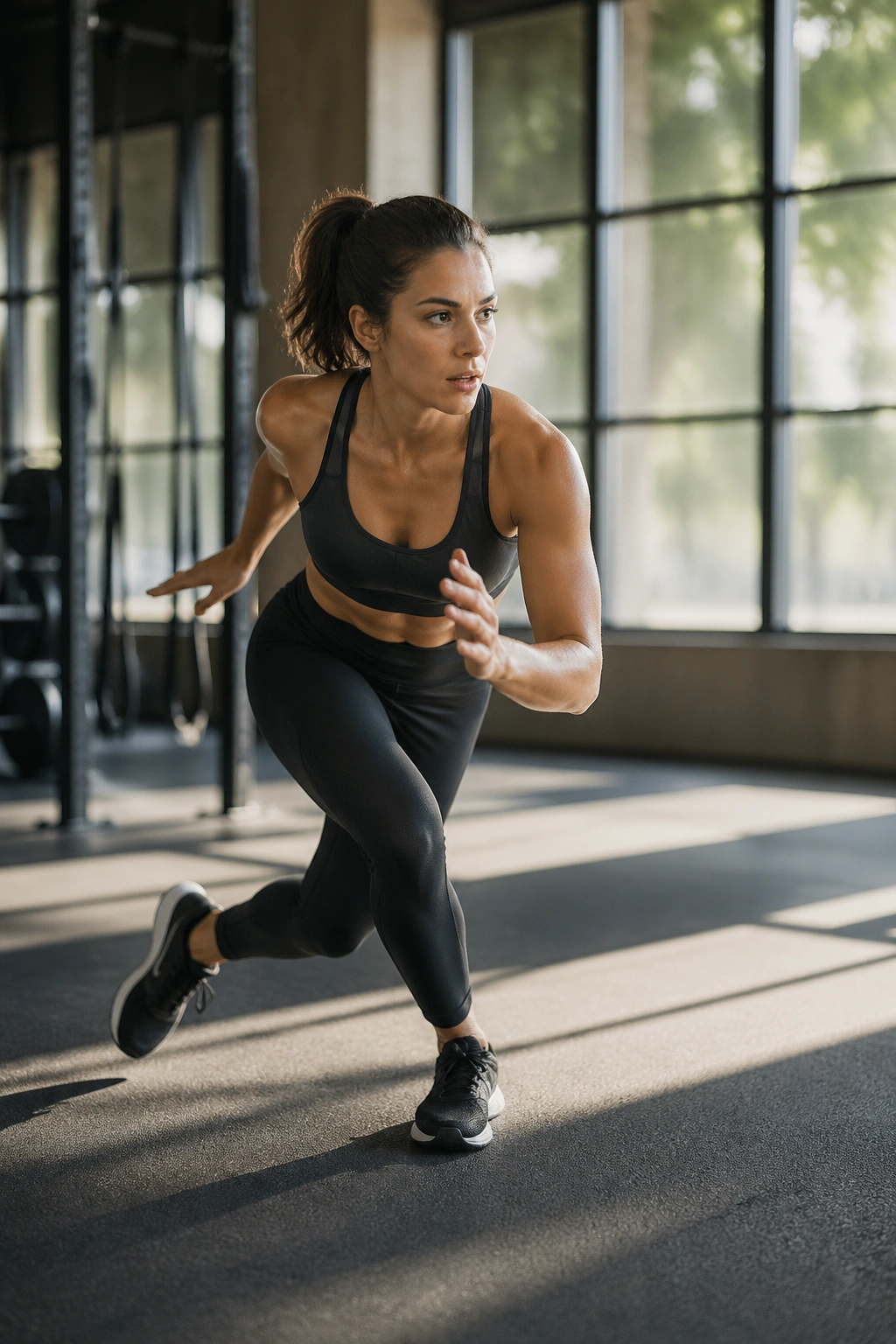
Skaters are sneaky cardio.
They look playful, almost too simple, then the side-to-side push starts lighting up the outer hips, inner thighs, and glutes. That lateral motion matters because most people spend all day moving forward and backward. Side-to-side work wakes up muscles that sit quiet for hours.
The move is straightforward: shift your weight from one leg to the other, reach the opposite hand toward the floor, and let the back leg cross behind in a smooth, skating motion. Stay low enough that your thighs have to work. If you stand too tall, the exercise turns into a wobbly step instead of a real push.
I like skaters in a short circuit because they change the feel of the workout. After a few straight-ahead moves, the body craves a different pattern. This one gives it to you and still keeps the pulse high.
Want less impact? Step side to side and tap the trailing foot behind you instead of jumping. The movement stays useful, and your joints get a break.
9. Dead Bugs That Teach Your Core to Stop Flaring
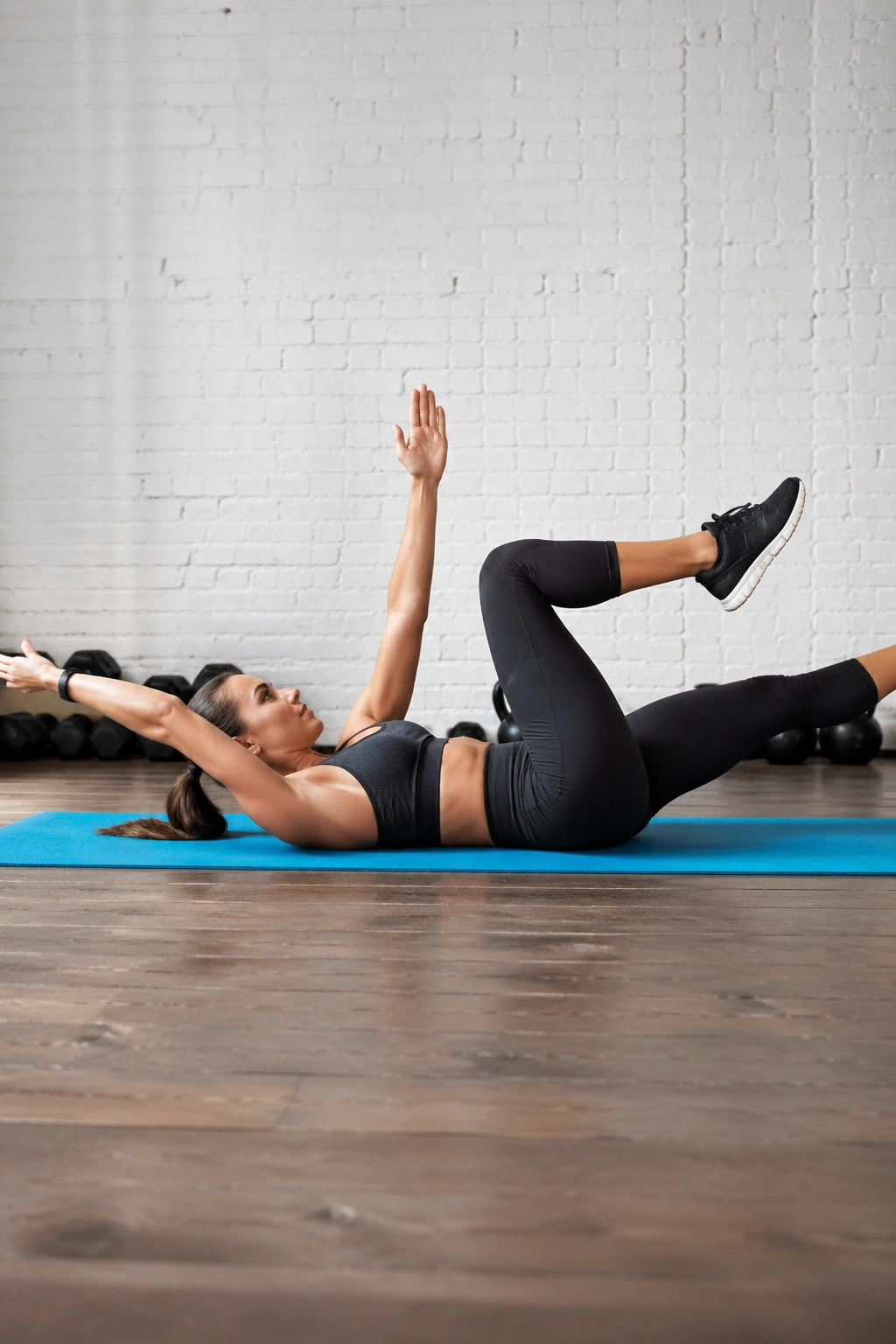
Why slow down in a fat-loss circuit? Because dead bugs teach your midsection how to brace instead of just flopping around. That makes every other exercise cleaner.
Lie on your back with your arms pointed up and your knees bent at 90 degrees. Lower the opposite arm and leg together while pressing your lower back into the floor, then return and switch sides. The whole point is control. If your ribs pop up or your low back arches, the range is too big.
How to Keep Your Lower Back Pinned
- Exhale before you extend the arm and leg.
- Keep the movement small if your back lifts.
- Move one side at a time, not both legs together.
- Stop where you can still feel your abs working.
Dead bugs look easy. That’s the trap. They are one of those exercises that punish sloppy form immediately, which is why they help so much in a 15-minute routine. You’re training the deep core muscles that support the spine and keep the torso stiff when the faster moves show up later.
If your lower back gets tired fast, tuck your knees closer and shorten the arm reach. Clean reps beat long reps every time.
10. Burpees That End the Argument Quickly
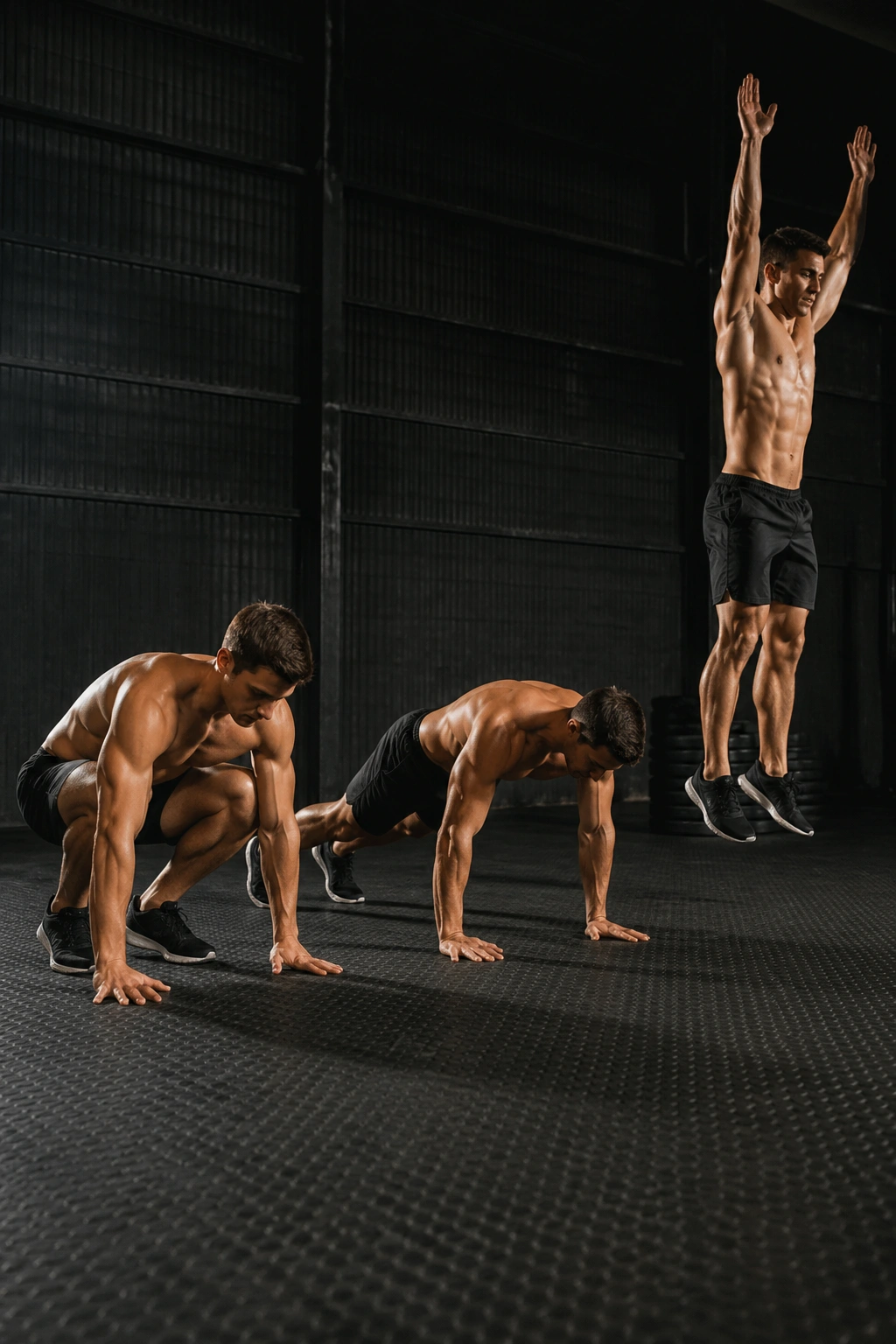
You know a burpee is working when you start bargaining with the clock.
That’s because it asks for a squat, a plank, and a stand-up jump in one package. The whole body has to move, and the heart rate usually climbs fast. It’s one of the most efficient bodyweight drills for a short workout, which is why people either love it or avoid it with a strange amount of passion.
The version that works best in a belly-fat circuit is the one you can repeat without collapsing into chaos. Step back one foot at a time if you need to. Leave out the push-up if your shoulders are fried. Keep the jump if you can do it quietly and land under control. You want a hard move, not a wrecking ball.
- Hands down under the shoulders.
- Feet step or hop back into plank.
- Core tight in the plank.
- Feet step or hop in, then stand and jump.
Tip: If the full burpee feels too much, do a squat-thrust with no push-up and no jump. You still get the heart-rate hit.
11. Russian Twists That Work Better When You Stop Rushing
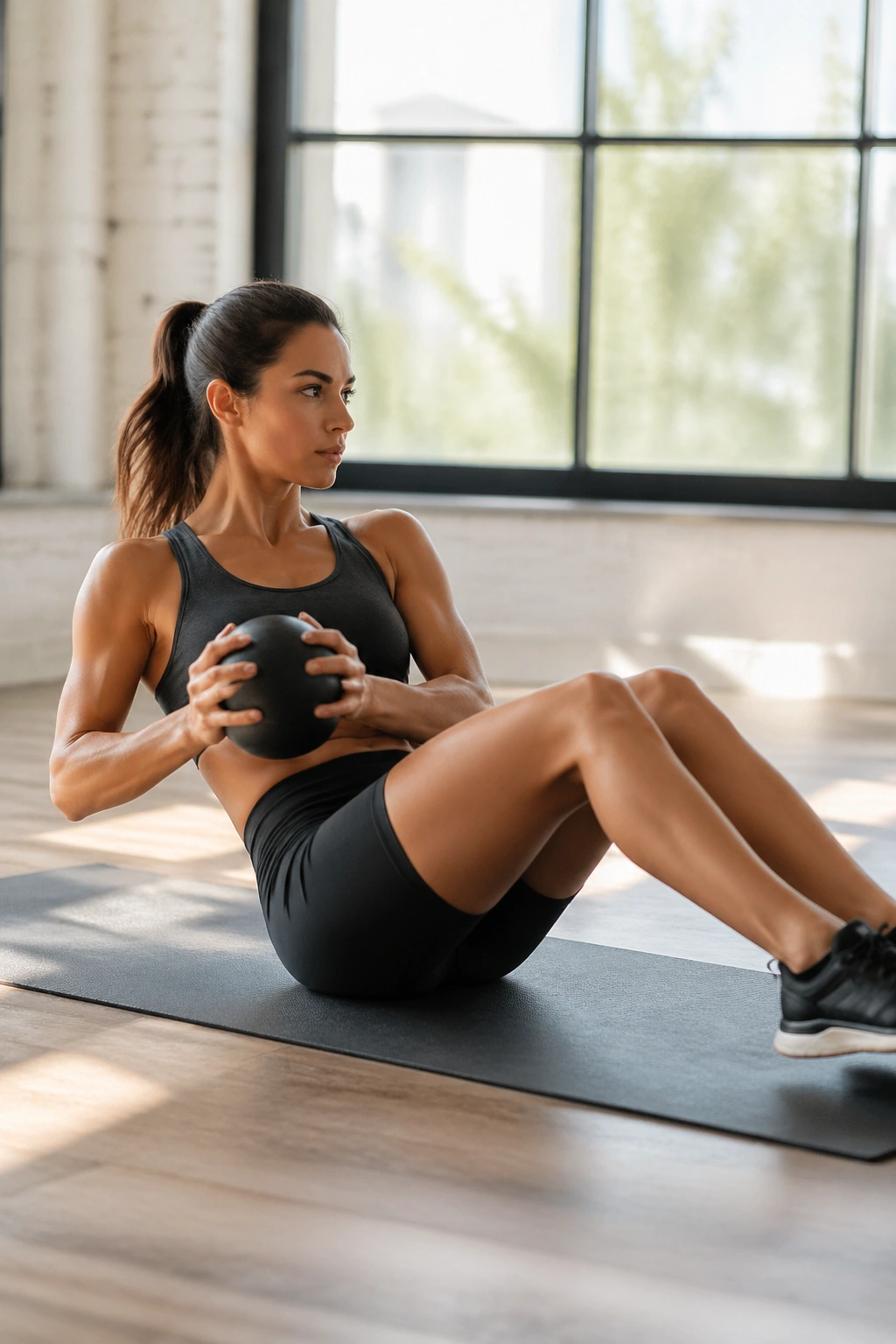
Russian twists get abused.
People usually rush them, fling a weight around, and call it core work. That version is mostly momentum with a sore lower back attached. The better version is slower, tighter, and more honest. Sit tall, lean back a little, lift your feet only if you can keep control, and rotate the ribcage from side to side while the arms follow.
The useful thing here is rotation under control. Your obliques have to help guide the movement, and your torso has to stay braced enough that your spine doesn’t do all the twisting. A light dumbbell or a single water bottle is plenty. You do not need much load to make this one bite.
If your lower back feels pinched, put your feet on the floor and keep the range smaller. That’s the version I’d use for most beginners, honestly. It still works, and it keeps the exercise from turning into a hip-flexor circus.
This move belongs in a 15-minute circuit because it gives the floor work a different flavor than crunches or planks. It’s rotational, steady, and brutal in a controlled way when you do it right.
12. Plank Jacks That Mix Cardio With Core Tension
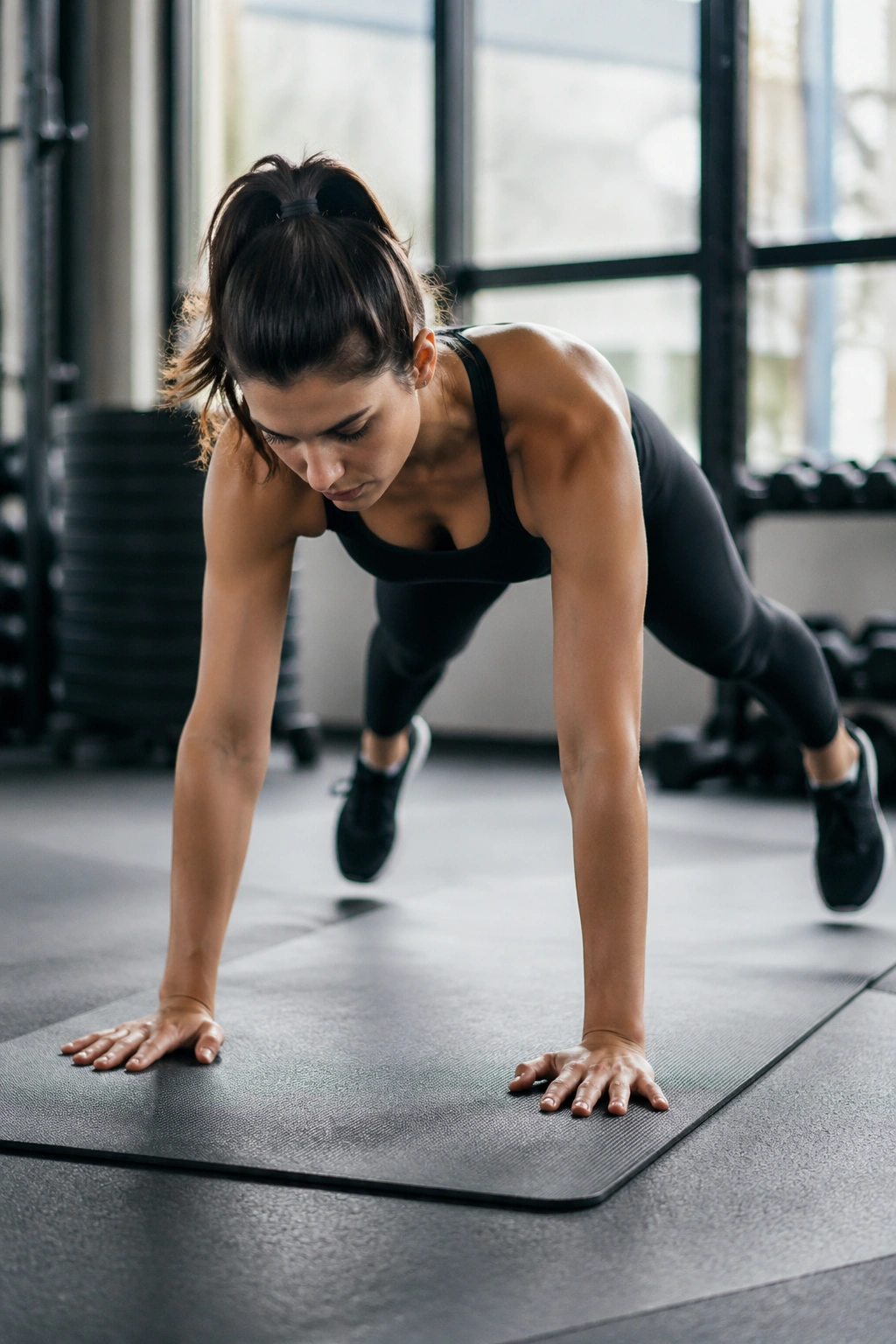
Unlike regular planks, plank jacks add movement without letting the core off the hook. That’s the whole appeal.
Start in a strong plank, then hop the feet out and in while keeping the torso as still as you can. The shoulders stay stacked, the hands stay planted, and the midsection has to brace against the bounce. It is a cardio move, sure, but it also asks for real trunk control. That combination is why it earns a spot in a short belly-fat workout.
If your wrists or shoulders are tired, step one foot out at a time instead of jumping both feet. The exercise becomes easier to manage, but the bracing demand stays useful. I like that option for people who want a cleaner session instead of a noisy one.
Keep your hips from popping up on each hop. That’s the common mistake, and it usually means the core is dumping the work into the shoulders and lower back. Shorter, quieter jumps tend to feel better and look better too.
13. Standing Cross-Body Punches That Save Your Knees and Still Raise the Pulse
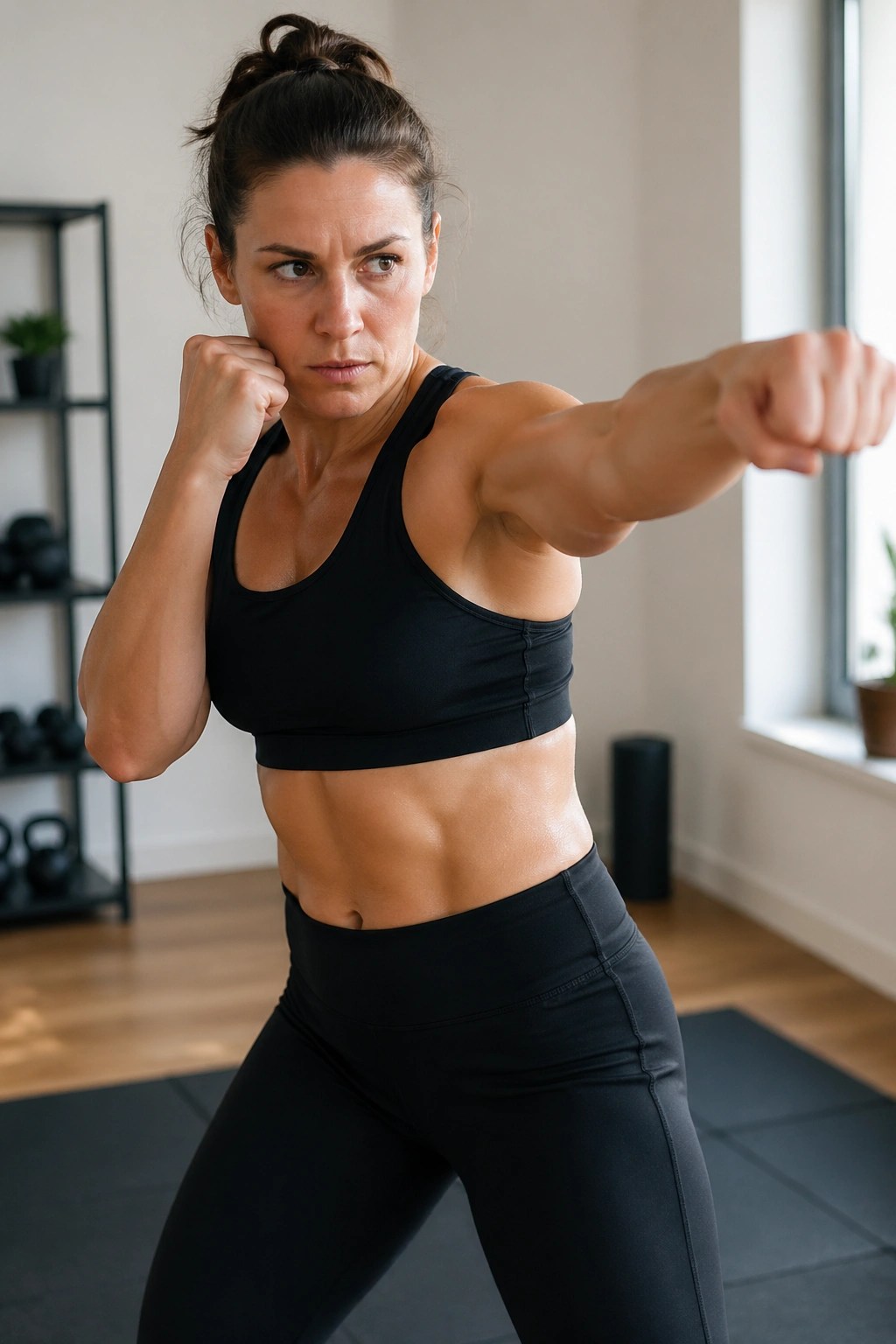
Standing punches are easy to underestimate. They shouldn’t be.
Why They Work
Twisting through the torso while throwing crisp cross-body punches gets the shoulders, obliques, and upper back involved without asking you to go to the floor. That makes them a smart choice if you need a low-impact option or you’re working out in a cramped space.
Keep your feet about hip-width apart, soften the knees, and punch across the body at about cheek height. The twist should come from the ribs and hips together, not from yanking the lower back. Move fast enough to raise the heart rate, but not so fast that your shoulders climb toward your ears.
- Punch across, then retract quickly.
- Keep the chin tucked a bit.
- Rotate through the torso, not just the arms.
- Breathe in a steady rhythm.
Tip: If your shoulders get tight, slow the punches and think about sharp, clean lines instead of speed. You’ll still feel the cardio hit.
14. Hollow Body Holds That Expose Weak Core Control
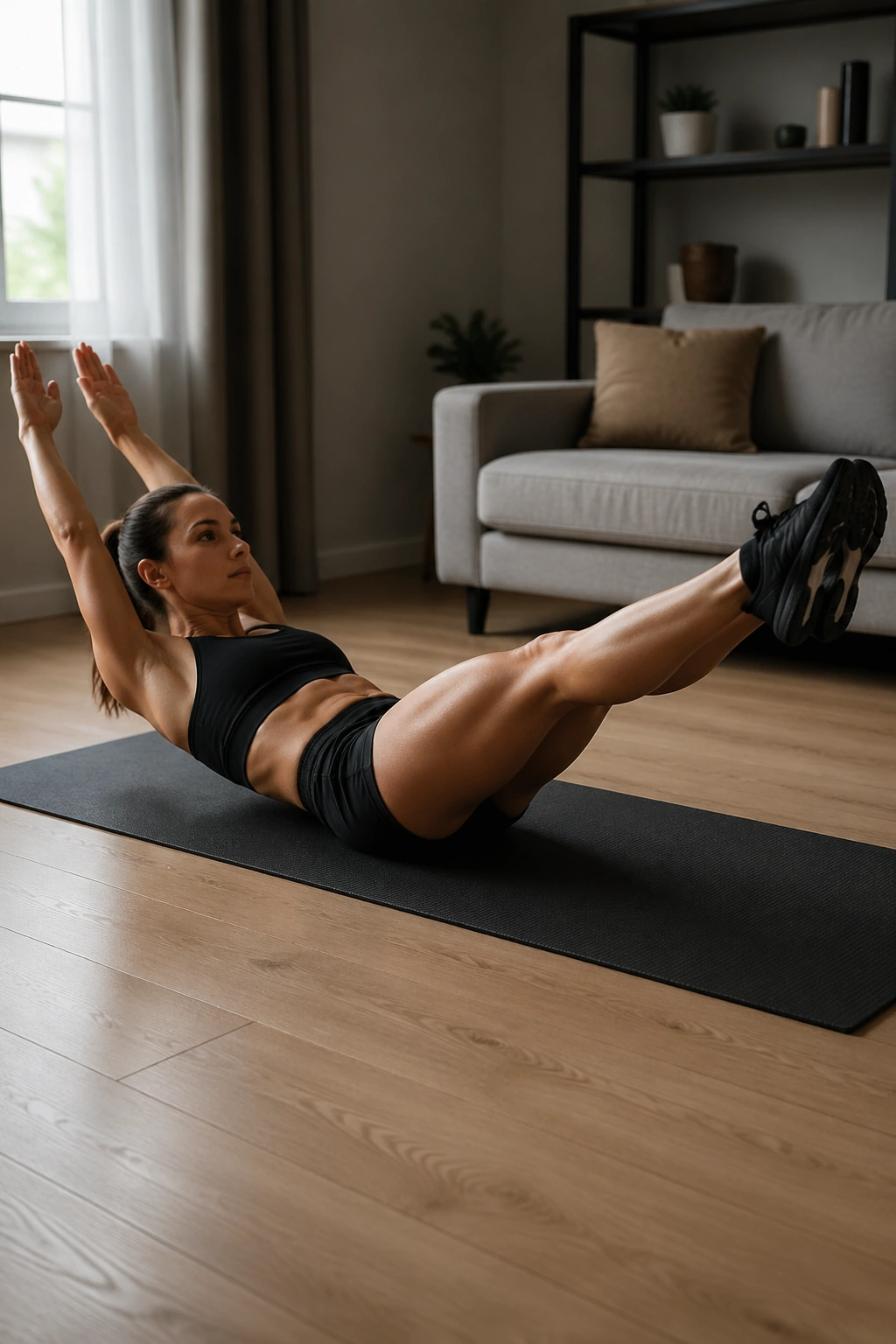
If you want one move that tells the truth about your core, this is it.
The hollow body hold looks simple from a distance: lower back pressed into the floor, arms overhead or by the sides, legs extended, abs clenched hard enough to keep everything from arching. In practice, it can feel like a slow fight with your own midsection. That’s exactly why it’s useful. It teaches full-body tension, and that tension carries into every other exercise in the circuit.
The mistake people make is chasing a long hold before they can own the position. Better to start with 10 to 15 seconds and keep the shape clean than hang on for 40 seconds with a back arch. A tuck version works well too: knees bent, shins parallel, arms reaching forward. Same lesson. Less strain.
If your lower back lifts off the floor, stop and reset. Don’t just grin and suffer through a bad hold. The abs need to learn the shape, not the ego.
This is one of those belly-fat exercises that doesn’t look flashy at all. It also happens to make the rest of the workout feel more solid, because your core starts understanding what “tight” is supposed to mean.
15. Bear Crawls That Finish the Job
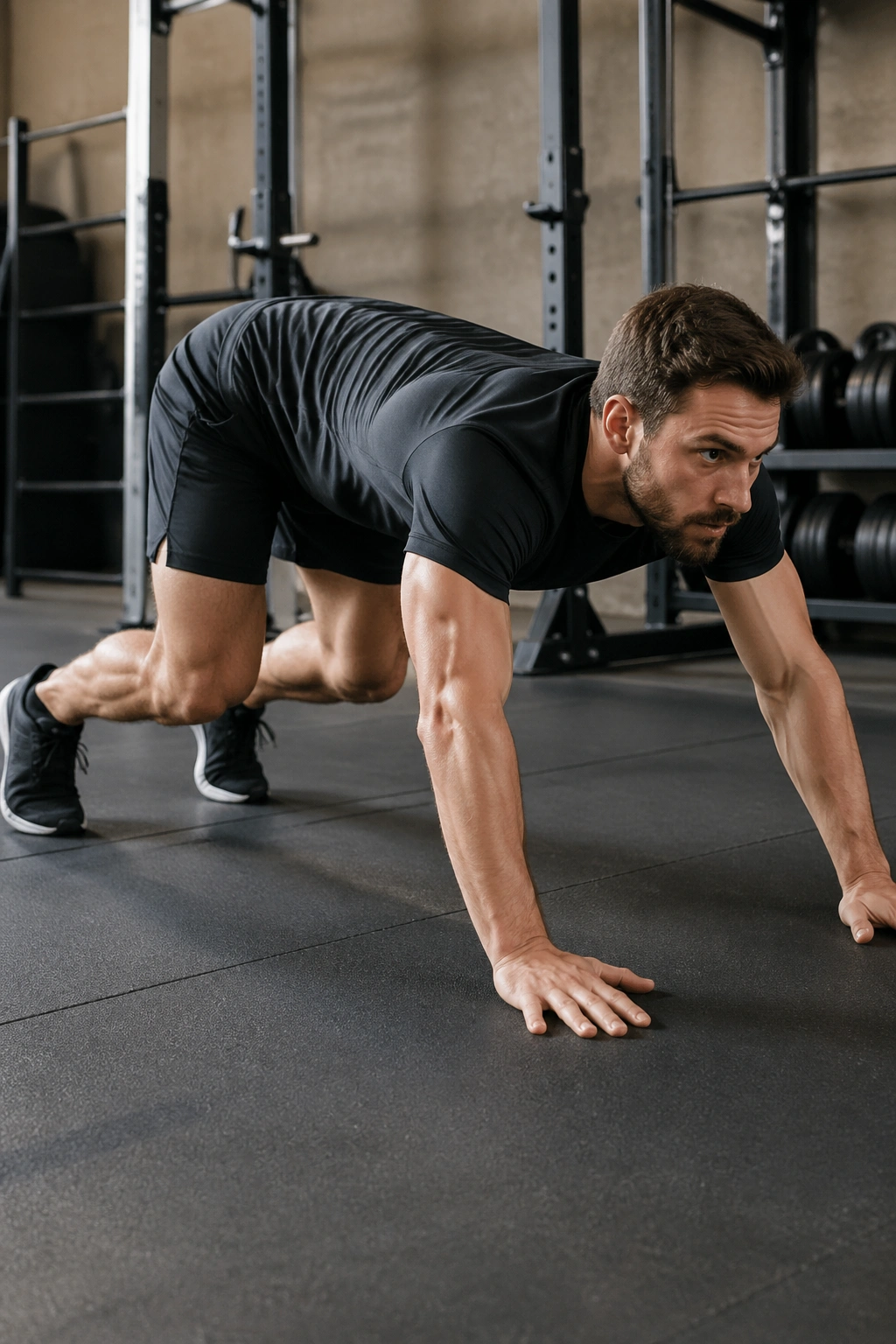
Bear crawls feel awkward for about ten seconds, and then they start lighting up your shoulders and midsection.
Get on hands and feet with your knees hovering just off the floor. Move the opposite hand and foot forward in small steps, keeping the hips low and the core braced. The goal is not speed. The goal is to stay controlled while your whole body has to coordinate under pressure. That combination makes bear crawls a brutal little finisher.
How to Finish the Circuit
- Keep your knees only 1 to 2 inches off the floor.
- Take short steps so the torso stays quiet.
- Move slowly enough that the shoulders don’t bounce.
- Turn around and crawl back if space runs out.
This move is especially good at the end of a 15-minute session because your core is already warm. Bear crawls then ask it to keep working while the shoulders and hips join in. If you only have room for one finisher, this is one of the better ones.
Fifteen minutes is not long. That’s also why it works. A short circuit like this is easier to repeat than a heroic workout you dread for two days afterward. Repeatable beats dramatic. Every time.
