



Getting to the gym is often the hardest part of the entire workout. By the time you pack your bag, fight traffic, and wait for a machine to open up, you have already spent more energy on logistics than on actual movement. Home cardio effectively removes that barrier. It is just you, your floor, and your heartbeat. When you strip away the heavy machines and the crowded weight rooms, you are left with the purest form of exercise: using your own body weight to challenge your cardiovascular system.
Effective fat loss at home does not require expensive equipment or a dedicated studio space. It requires intensity, consistency, and a clear understanding of how to move your body efficiently. The most common mistake people make is treating home workouts like a casual hobby. If you want to see changes, you have to treat your living room floor with the same seriousness as a professional training facility. These movements are designed to spike your heart rate, demand stability, and push your anaerobic threshold. They are simple, but that does not make them easy.
1. Burpees
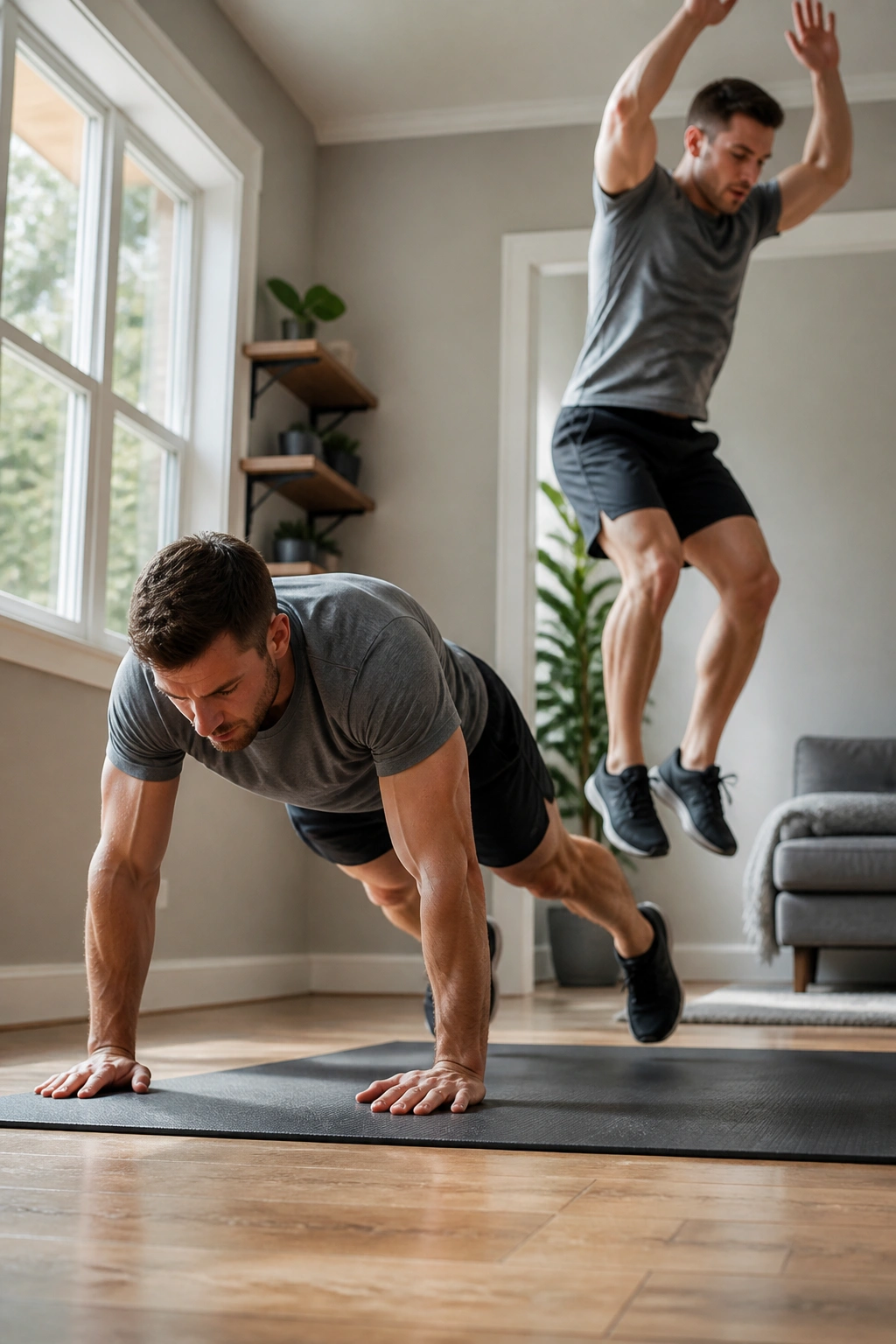
The burpee is the gold standard for a reason. It is a full-body movement that transitions from a standing position to a push-up and back to a vertical jump. It forces your heart rate to jump instantly because it constantly changes your body’s elevation. Your blood has to work harder to move from your feet to your head and back again.
The Mechanics of the Move
Start standing tall. Drop your hands to the floor and kick your feet back into a plank. Lower your chest to the ground, push back up, snap your feet under your hips, and explode upward. Reach for the ceiling. That is one rep. If you find the push-up portion too taxing at first, just step your feet back and forth instead of jumping. You still get the heart rate benefit without compromising your lower back form.
Common Mistakes to Avoid
- Saggy hips: During the plank position, keep your core braced. Letting your lower back dip toward the floor puts unnecessary strain on your spine.
- Rushed landings: When you jump up, land softly on the balls of your feet. Stomping creates impact stress on your joints.
- Neglecting the jump: The explosion is where the cardio benefit lives. Do not just stand up; get air.
2. Mountain Climbers
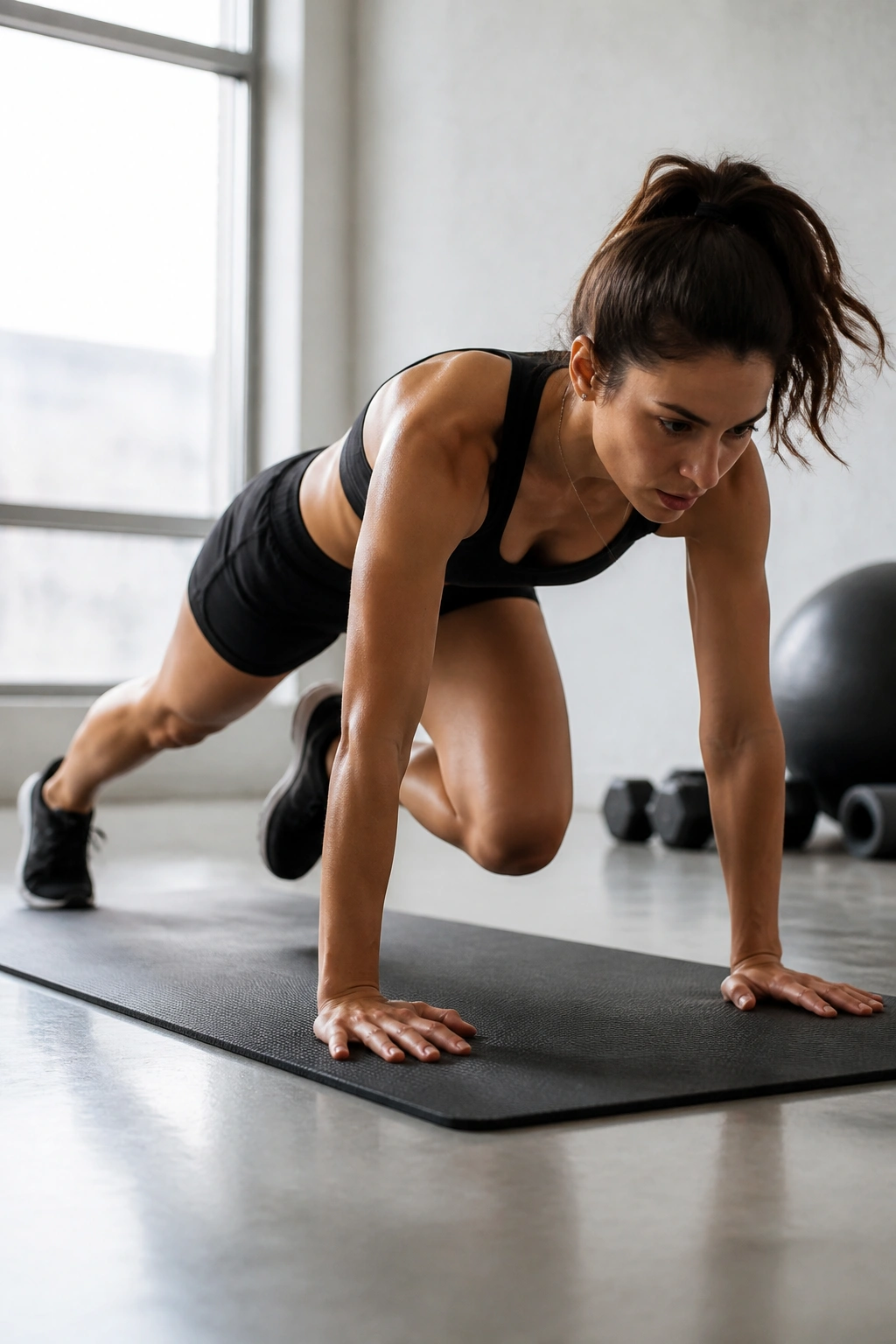
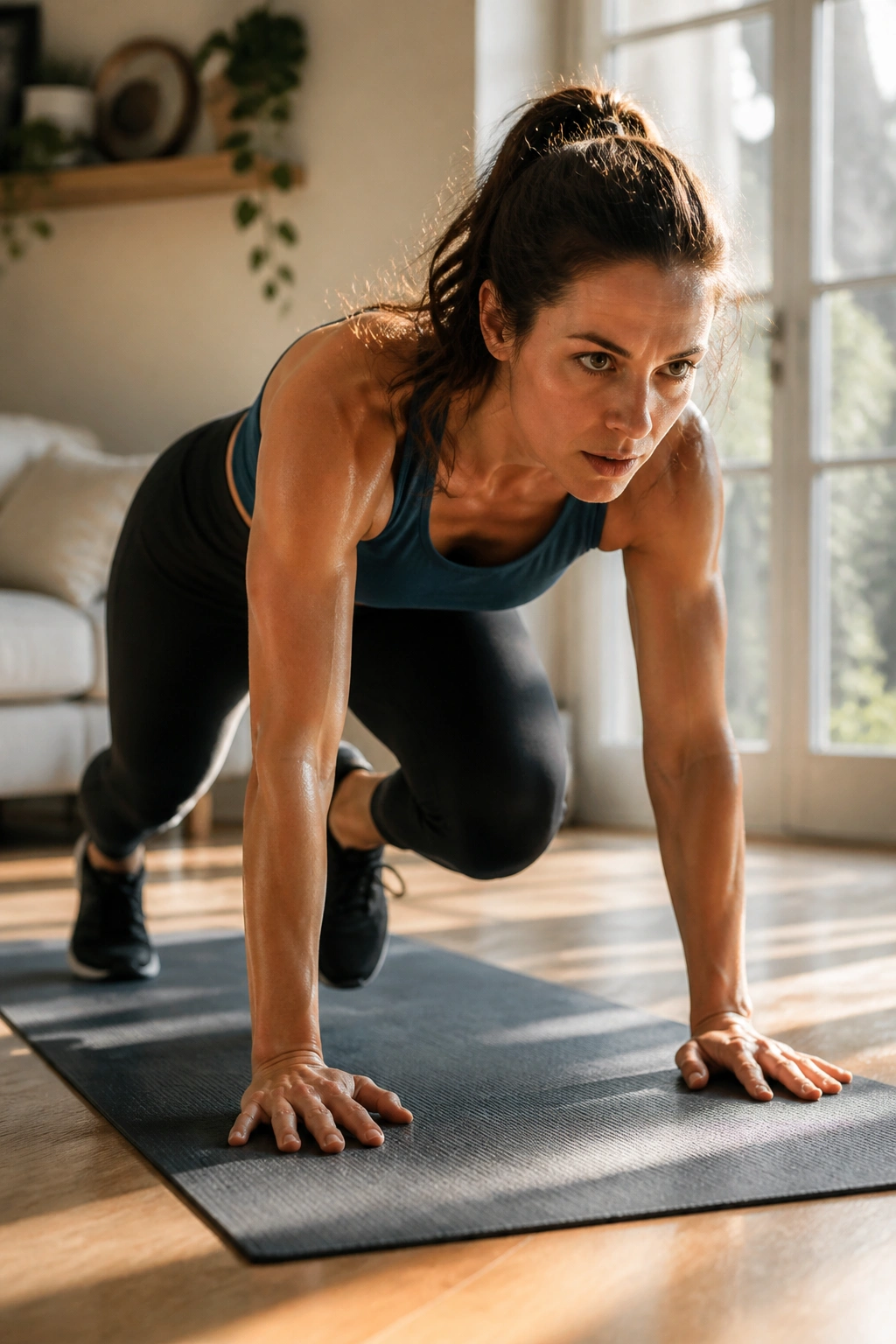
Mountain climbers are essentially running while in a high plank position. This move is deceptively difficult because it requires you to maintain a rock-solid core while your legs move at high speed. It is a cardio move, but your abs will feel the burn just as much as your lungs.
Why They Work
The constant knee drive engages your hip flexors and deep abdominal wall. Because you are horizontal, your heart has to fight gravity to push blood through your body. Aim for a pace that feels fast but controlled. If you find your hips bouncing up and down, you are going too fast. Slow it down until you can keep your back flat, then gradually increase the tempo over the weeks.
Pro-Tip for Intensity
For a higher level of difficulty, do not let the toe of the moving leg touch the ground. Hover it mid-air for a split second before switching legs. This forces your core to work overtime to stabilize your torso while your legs are moving.
3. Shadow Jumping
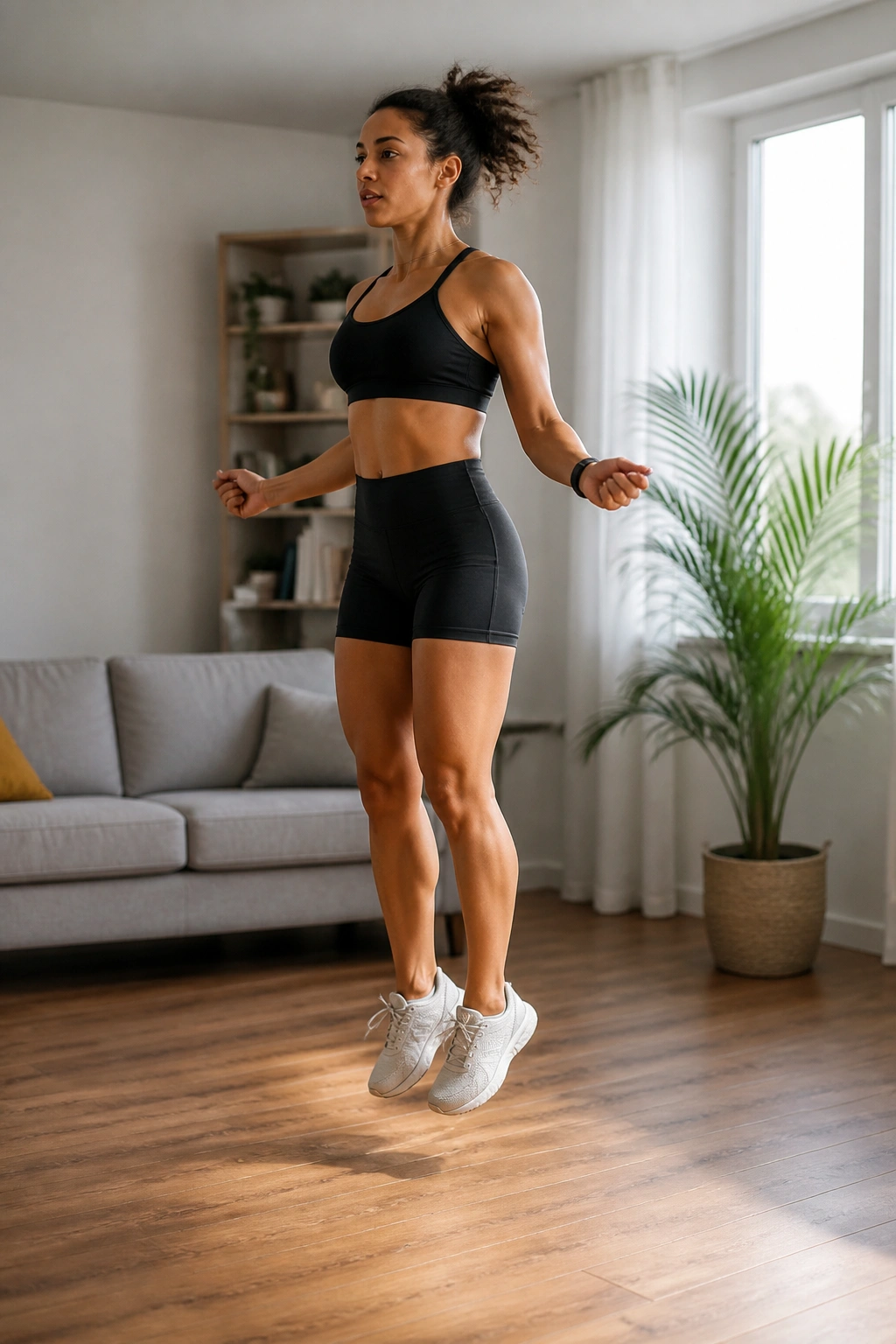
You do not need a physical rope to reap the benefits of jumping. Shadow jumping, or air-rope, mimics the exact motion of skipping. It is fantastic for calf strength and coordination. The beauty of this move is that it is low impact if you land correctly, yet it can spike your heart rate to 160 beats per minute within sixty seconds.
How to Master the Rhythm
Stand with your feet together, hands at your sides, and elbows tucked in. Visualize holding a rope handle in each hand. Keep your hands stationary while rotating your wrists as if you are spinning a rope. Bounce on the balls of your feet. The goal is rhythm, not height. You only need to clear the floor by an inch or two.
Troubleshooting the Bounce
If your calves feel tight, you are likely staying on your toes too long. Aim for a quick, “bouncy” sensation. If you feel like a heavy weight hitting the floor, take a moment to reset. Soft landings are non-negotiable for longevity and joint health.
4. High Knees
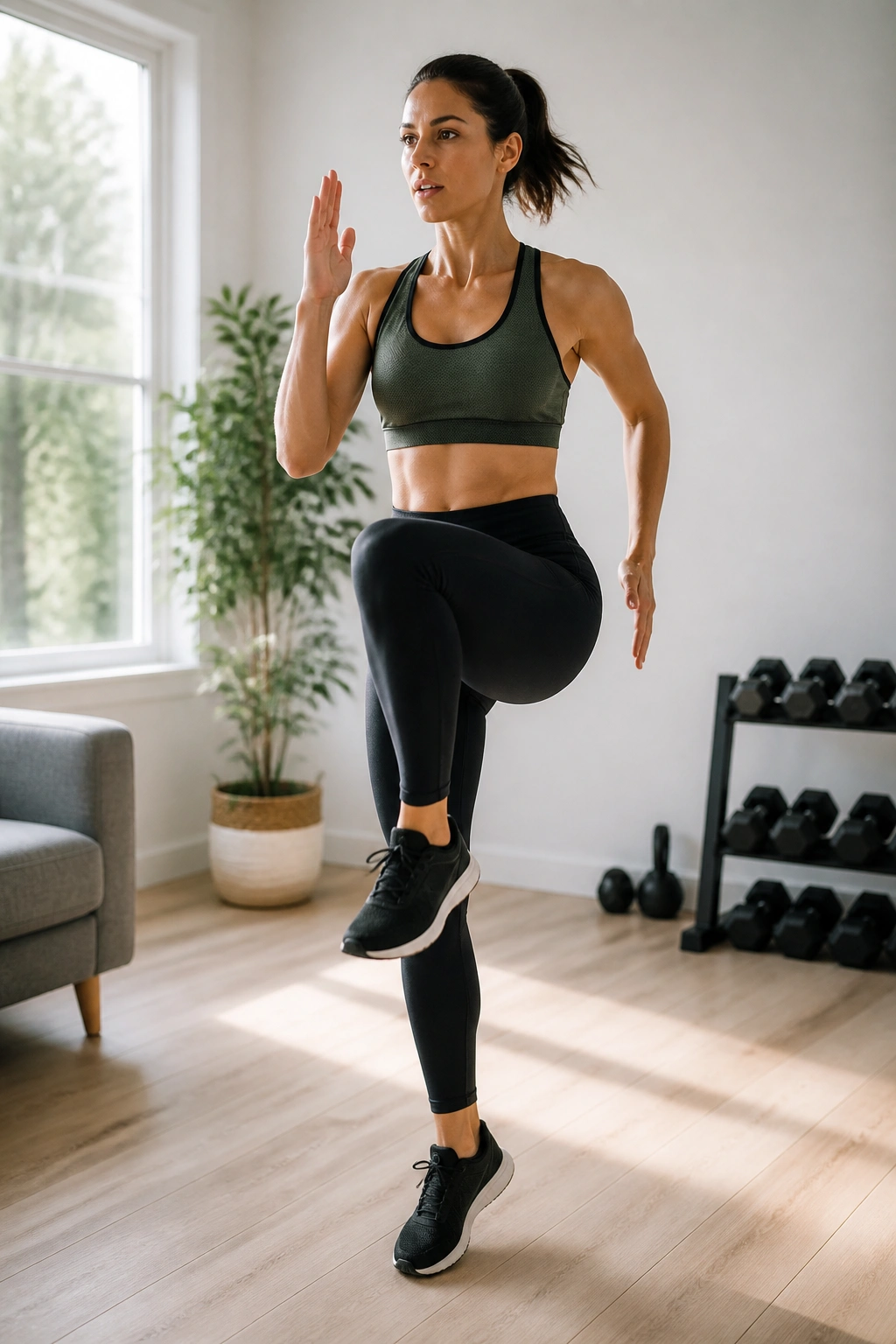
This is a simple running-in-place movement, but it is one of the fastest ways to hit a peak heart rate. You are essentially sprinting while staying in one spot. It demands significant engagement from your lower abdominals and hip flexors.
Finding the Right Intensity
Focus on bringing your knees up to waist height. Many people just jog in place and call it “high knees,” but the magic happens when the thigh crosses parallel to the ground. Pump your arms in sync with your legs. This creates a full-body movement cycle.
When to Use This Move
I prefer using high knees as a finisher. After a long circuit, your core is tired, and your breathing is heavy. Giving it thirty seconds of all-out high knees is the perfect way to empty the tank. Do not expect to last for minutes; aim for short, intense bursts of fifteen to thirty seconds.
5. Skater Hops
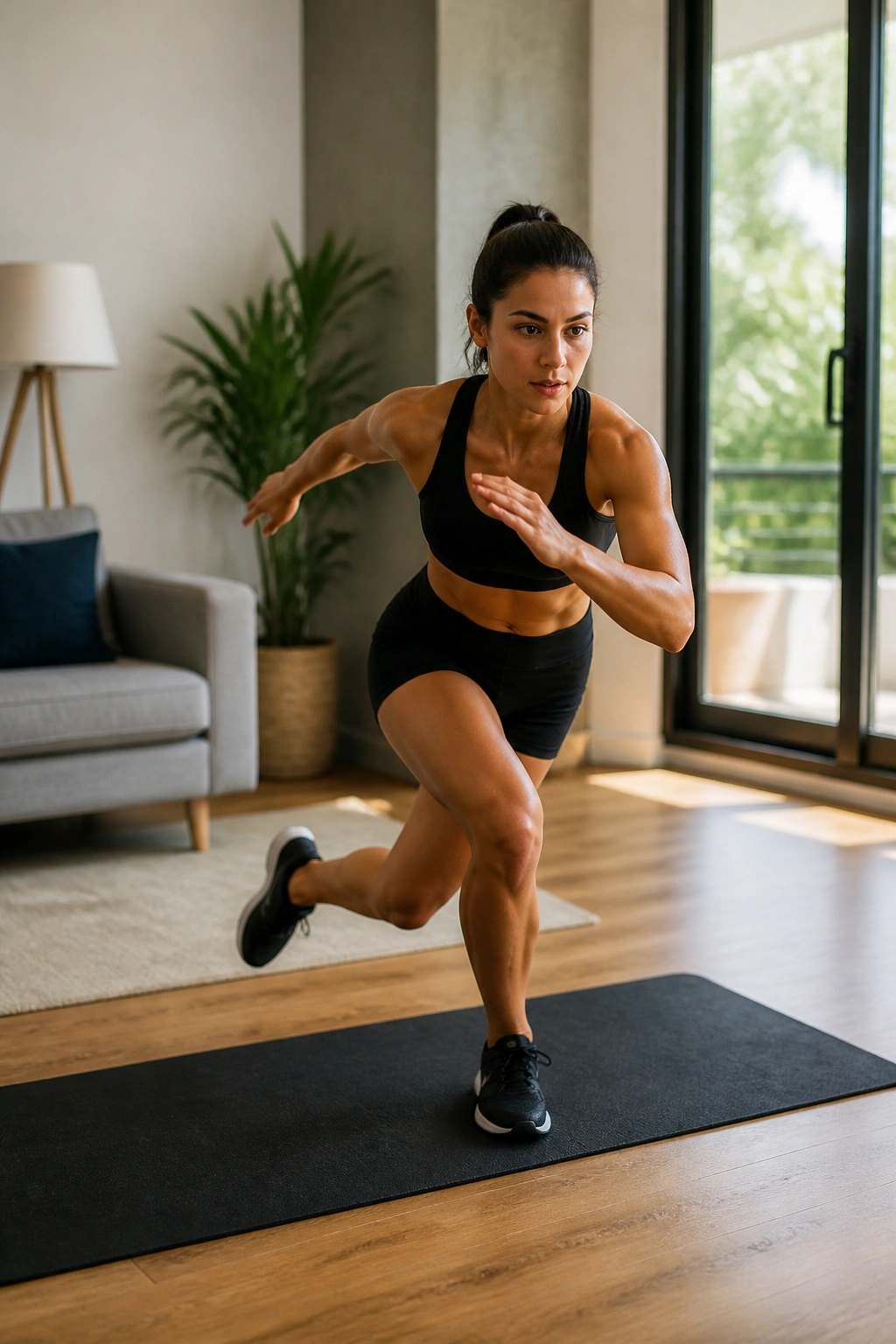
Skater hops involve leaping laterally from one foot to the other. This plane of motion—side-to-side—is often ignored in standard weight training, which usually focuses on moving forward and backward. Adding lateral movement challenges your stabilizing muscles in the ankles, knees, and hips.
The Proper Technique
Push off your left foot to leap to the right, landing softly on your right foot while swinging your left leg behind you. The movement should look like you are ice skating. The deeper you sit into the landing leg, the more you will work your glutes and quads.
Adding Dynamic Range
To increase the intensity, try to cover more ground with each leap. Reach your hand toward the floor near the landing foot. This extra reach adds a rotational component to your core and forces your legs to work harder to decelerate your body weight.
6. Jumping Jacks
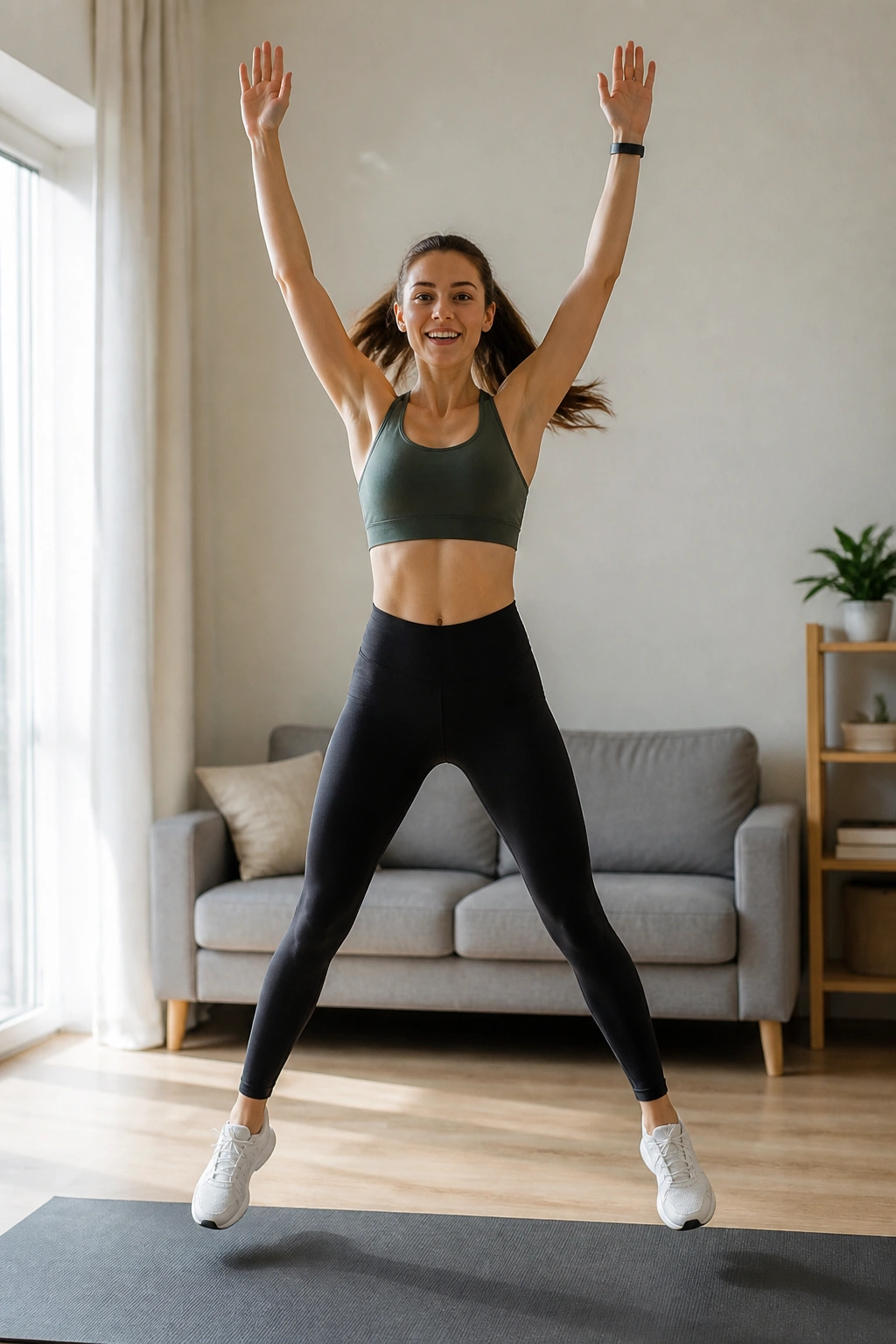
The jumping jack is the quintessential cardio move for a reason. It is rhythmic, easy to learn, and engages the entire body. It promotes blood flow and improves coordination. If you are a beginner, this is the best place to start.
The Science of the Motion
When you jump your feet out and raise your arms, you are temporarily increasing your surface area, which forces the heart to pump more blood to the extremities. It is a fantastic way to warm up or to keep the heart rate elevated between more strenuous exercises.
Why You Should Not Disregard It
Do not fall into the trap of thinking it is “too easy.” If you do them for three minutes straight without stopping, your lungs will be burning. Speed and arm position determine the intensity. Keep your arms straight and slap your palms together at the top of the movement to maximize the range of motion.
7. Bear Crawls
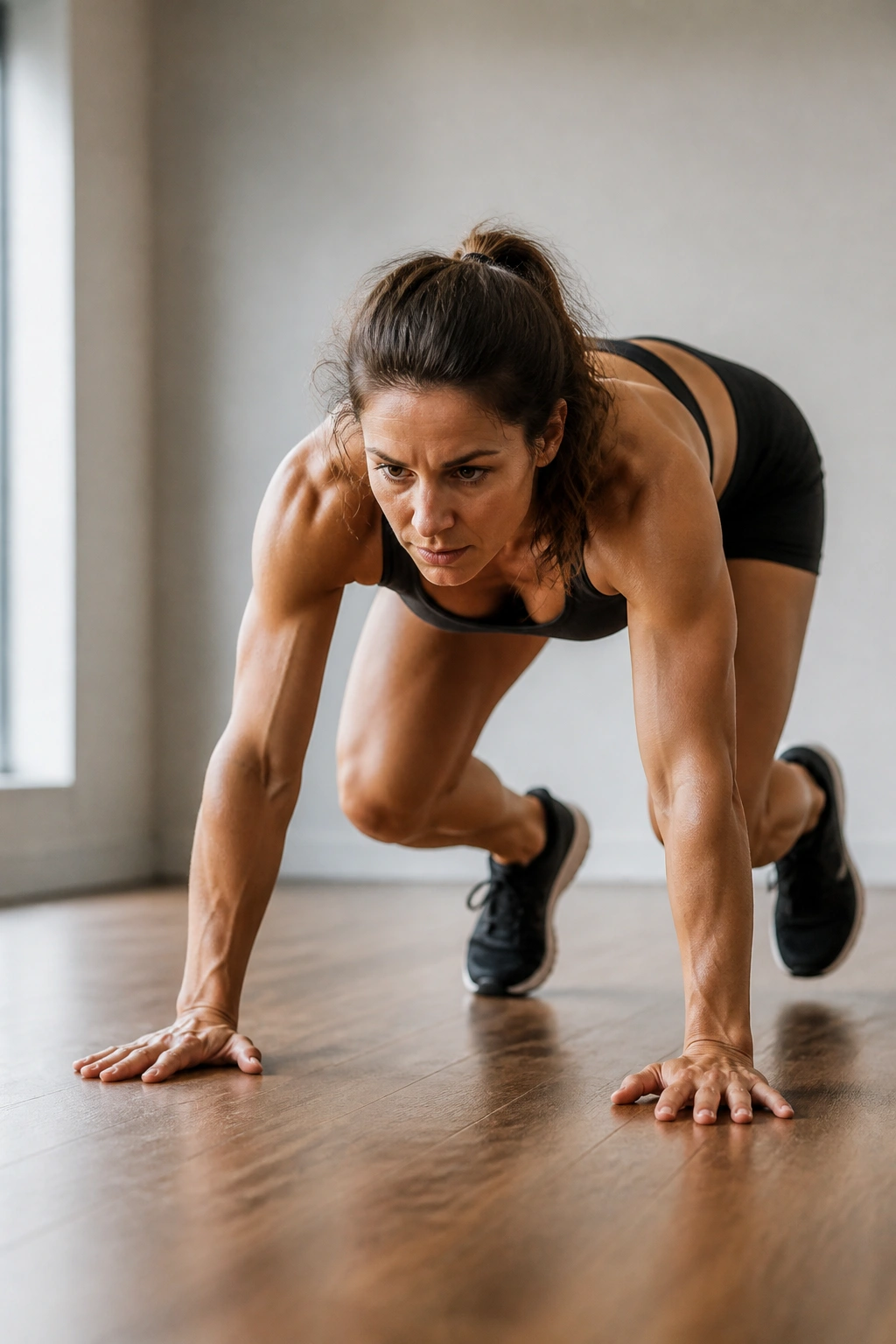
Bear crawls are a total-body conditioning tool that builds functional strength and cardiovascular endurance simultaneously. You start on all fours, knees hovering just an inch off the floor. Then, move opposite hand and foot in unison to “crawl” forward.
The Challenge of Stability
The hardest part of a bear crawl is keeping your hips level. As you move, your hips will naturally want to sway or hike up. Fighting this sway is what torches your core. You are essentially holding a plank while moving through space.
Variation for Small Spaces
If you do not have a long hallway, just crawl forward for three steps, then backward for three steps. The backward movement adds a layer of difficulty and coordination. Keep your gaze focused on a spot on the floor a few inches ahead of your hands to keep your spine neutral.
8. Plank Jacks
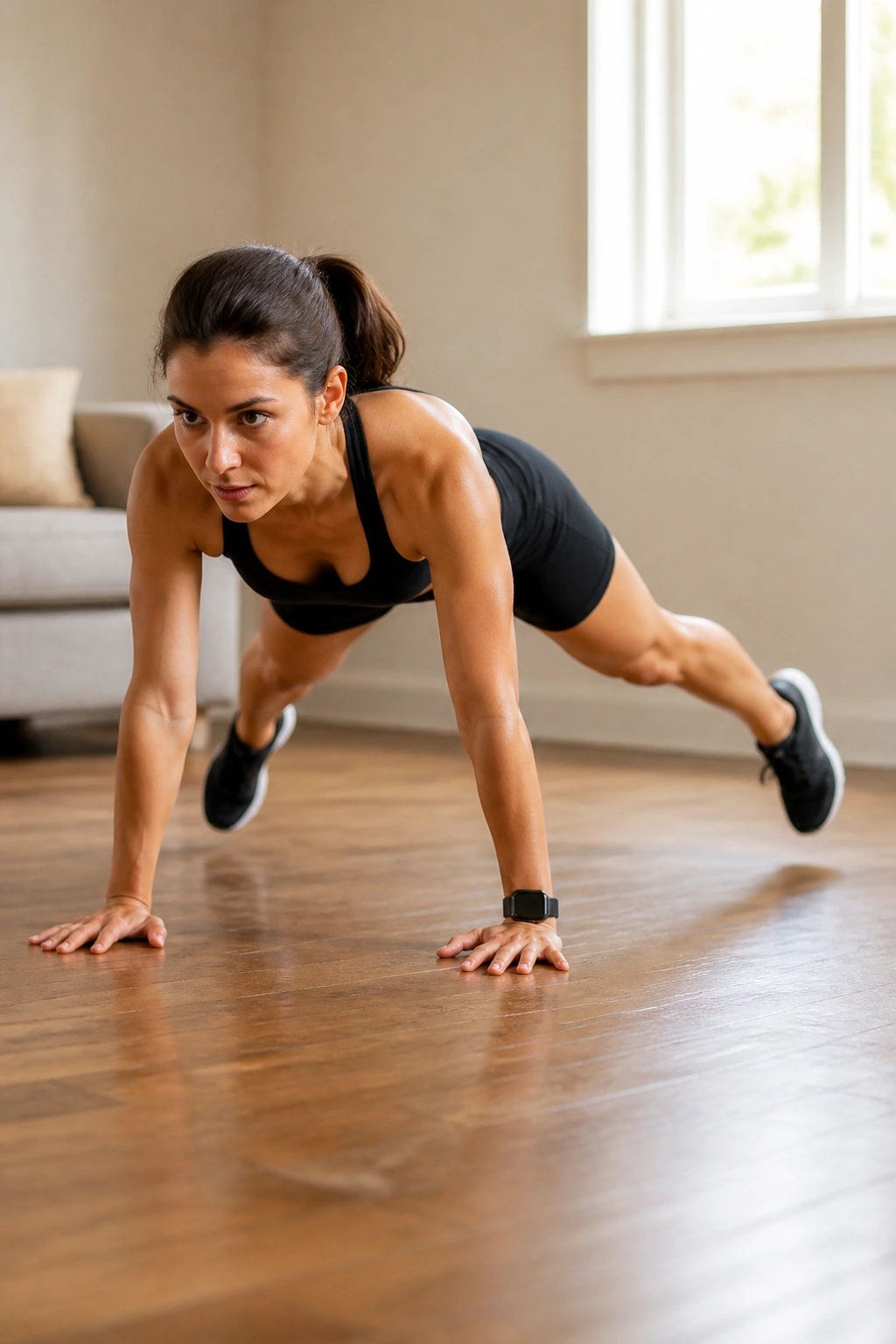
This is a cross between a plank and a jumping jack. You hold a high plank position and jump your feet out and in, like you are doing a jumping jack on the floor. It hits your core stabilization and gets your heart rate up.
The Core Connection
The biggest mistake here is letting your butt rise toward the ceiling every time your legs jump out. Keep your body in a straight line. If you feel your lower back arching, that is a sign to stop and reset your core. Your abs should be working as hard as your legs.
Modifying for Success
If the jump is too much for your shoulders to handle initially, just step your feet out one at a time. It is a “plank step-out.” You still get the work, but you reduce the impact on your upper body. Build up to the jump.
9. Jump Squats
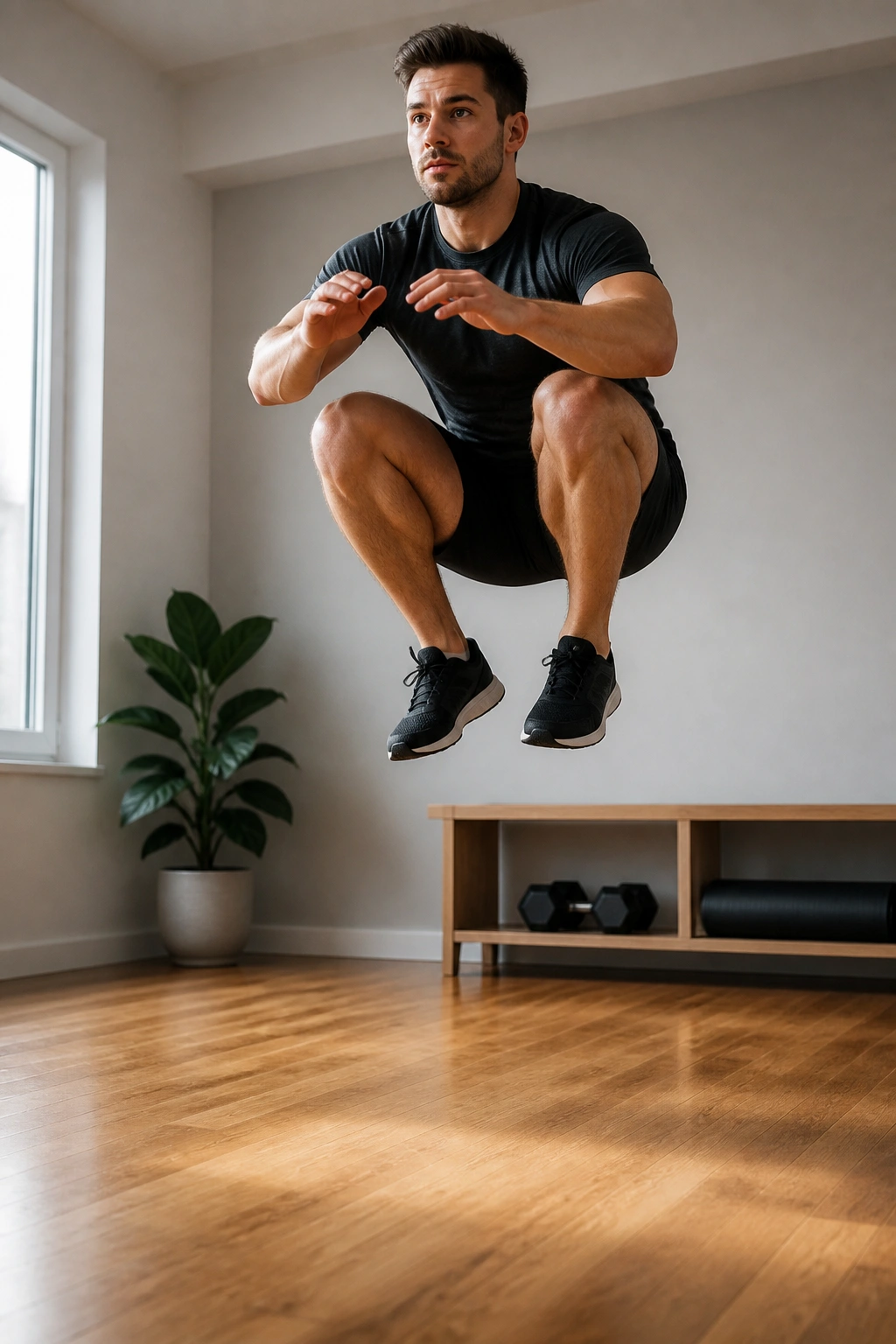
Jump squats are an explosive movement that builds power in your lower body. You squat down until your thighs are parallel to the floor, then explode upward, leaving the ground. This recruits fast-twitch muscle fibers, which are essential for burning fat and shaping your legs.
The Landing Logic
The jump is easy; the landing is the skill. Land on your mid-foot and immediately transition into the next squat. This keeps the tension on your muscles and prevents you from pausing at the top. The constant motion is what turns this from a strength move into a cardio burner.
Safety Warning
If you have bad knees, skip the jump and perform high-speed, bodyweight squats. Stand up quickly, but keep your heels on the ground. You will still get your heart rate up, but you will save your joints from the impact.
10. Butt Kicks
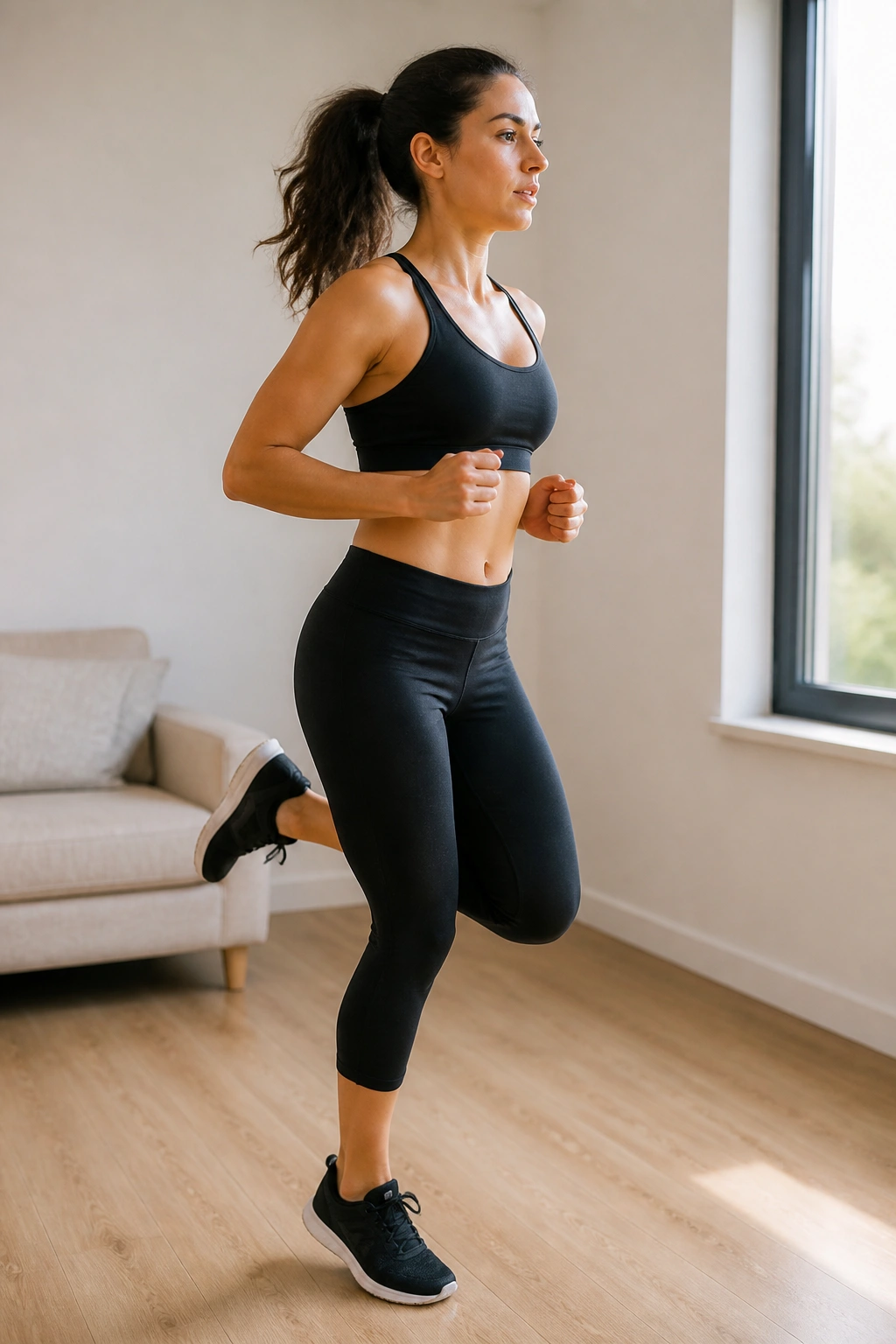
Butt kicks are often used as a warm-up, but if you perform them with high intensity, they become a legitimate fat-loss tool. The goal is to kick your heels against your glutes as fast as possible. This puts your hamstrings through a rapid-fire range of motion.
Engaging the Hamstrings
Focus on the pull. Do not just let your heels flop. Actively use your hamstring muscles to pull your heel toward your glutes. This creates more tension in the back of your legs and forces the muscle to work against its own resistance.
Keeping the Pace
The rhythm should be rapid. If you are doing this slowly, it is just a stretch. It needs to be fast—almost like you are vibrating. If your upper body starts to swing wildly, tighten your core and keep your torso upright.
11. Inchworms
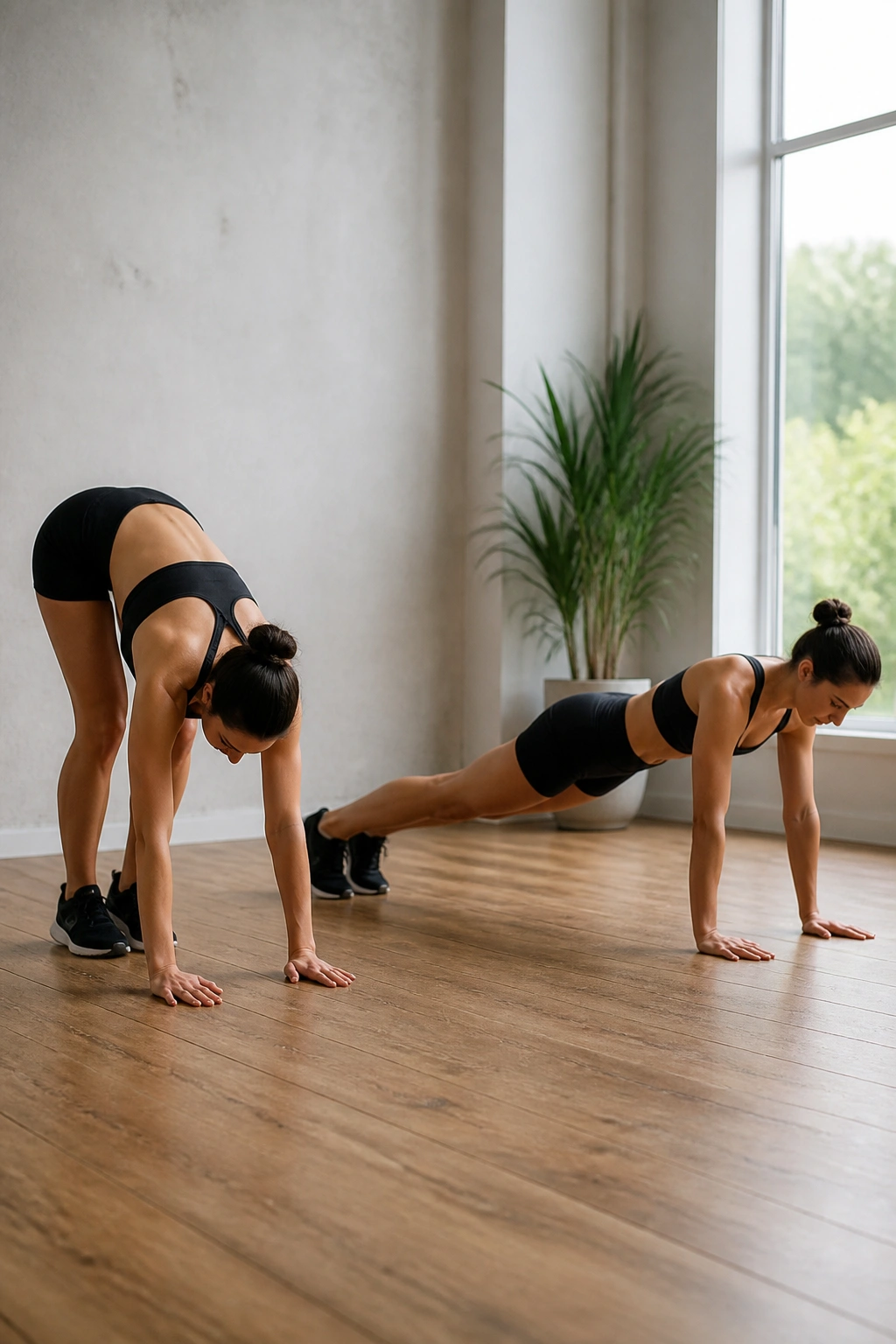
Inchworms are a mobility-meets-cardio movement. You stand tall, hinge at the hips, place your hands on the floor, and walk them out into a high plank position. Then, you walk your feet toward your hands to stand back up.
The Stretching Effect
This move stretches the entire posterior chain—your calves, hamstrings, and lower back—while the walkout activates your core and shoulders. It is a great way to “reset” during a workout if your breathing has gotten too erratic. It forces you to control your movement speed.
Adding a Push-Up
To make it harder, add a push-up once you reach the high plank position. That one extra motion changes the game entirely. It moves the inchworm from a mobility drill into a full-body strength and conditioning beast.
12. Lateral Shuffles
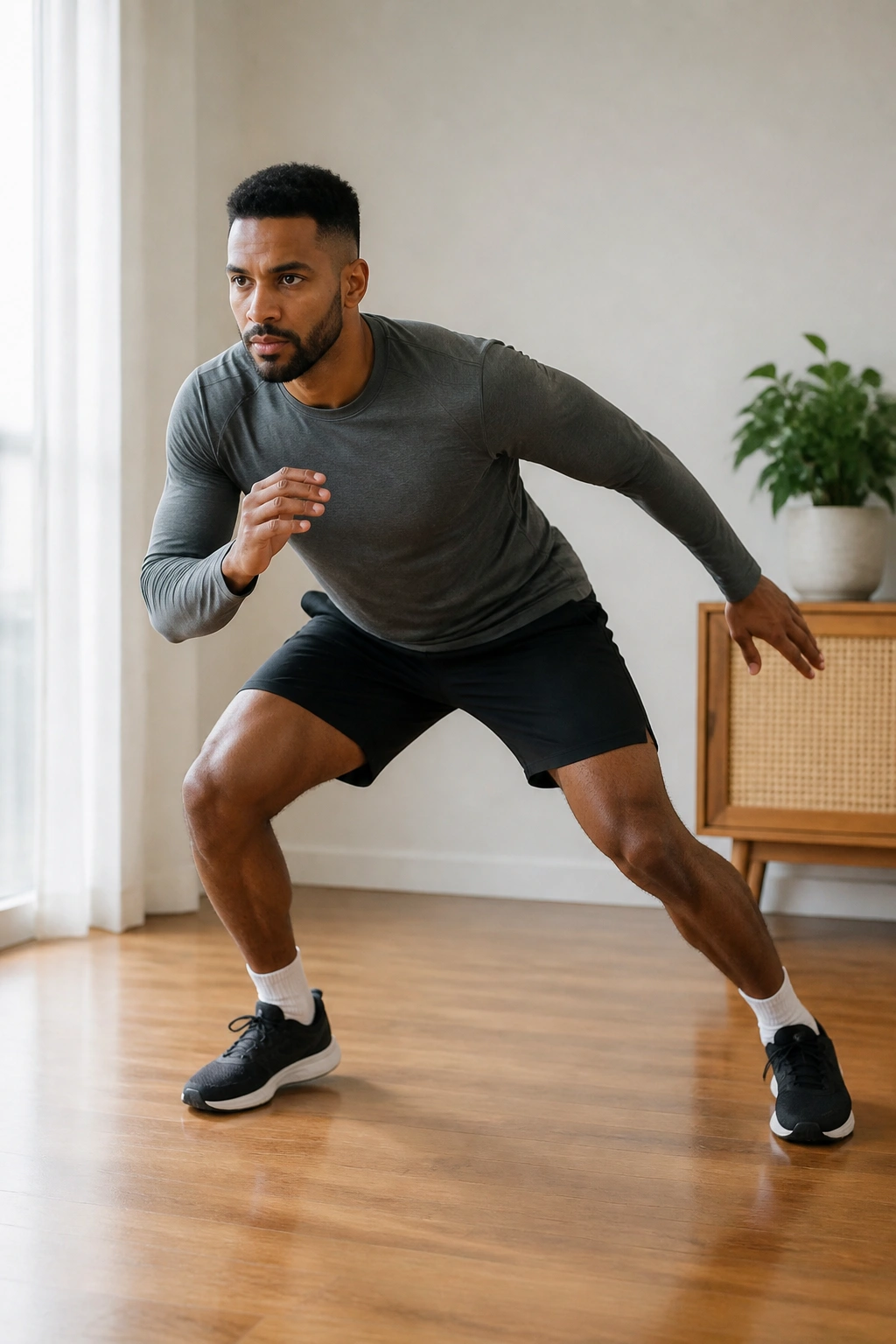
Imagine playing defense in basketball. You get into a low athletic stance, knees bent, and shuffle your feet side to side. Lateral movement is the fastest way to fatigue the glutes and quads because you are constantly changing direction.
Keeping the Stance
The lower you stay, the harder it is. If you stand up straight, you aren’t doing the work. You should feel the burn in your thighs within thirty seconds. Keep your chest up and your eyes forward; do not look at your feet.
Building Intensity
To get more fat loss, increase the speed of the shuffle and the distance. Even in a small room, taking two quick steps to the right and two to the left is enough to keep your heart rate elevated for the duration of the set.
13. Bicycle Crunches

While often categorized as an ab exercise, bicycle crunches are an incredible cardiovascular move if you do them with high tempo. The combination of trunk rotation and leg extension makes this a full-body engagement.
The Rhythm of Rotation
The key is to bring the opposite elbow to the opposite knee, not the other way around. Keep your lower back pressed firmly into the floor. If your back arches, your abs are not doing the work—your hip flexors are.
Improving Efficiency
Do not pull on your neck. Keep your fingers lightly behind your ears. Let the rotation of your torso do the work. If you find yourself holding your breath, force yourself to exhale on every crunch. This rhythm will help you last longer during the set.
14. Step-Ups
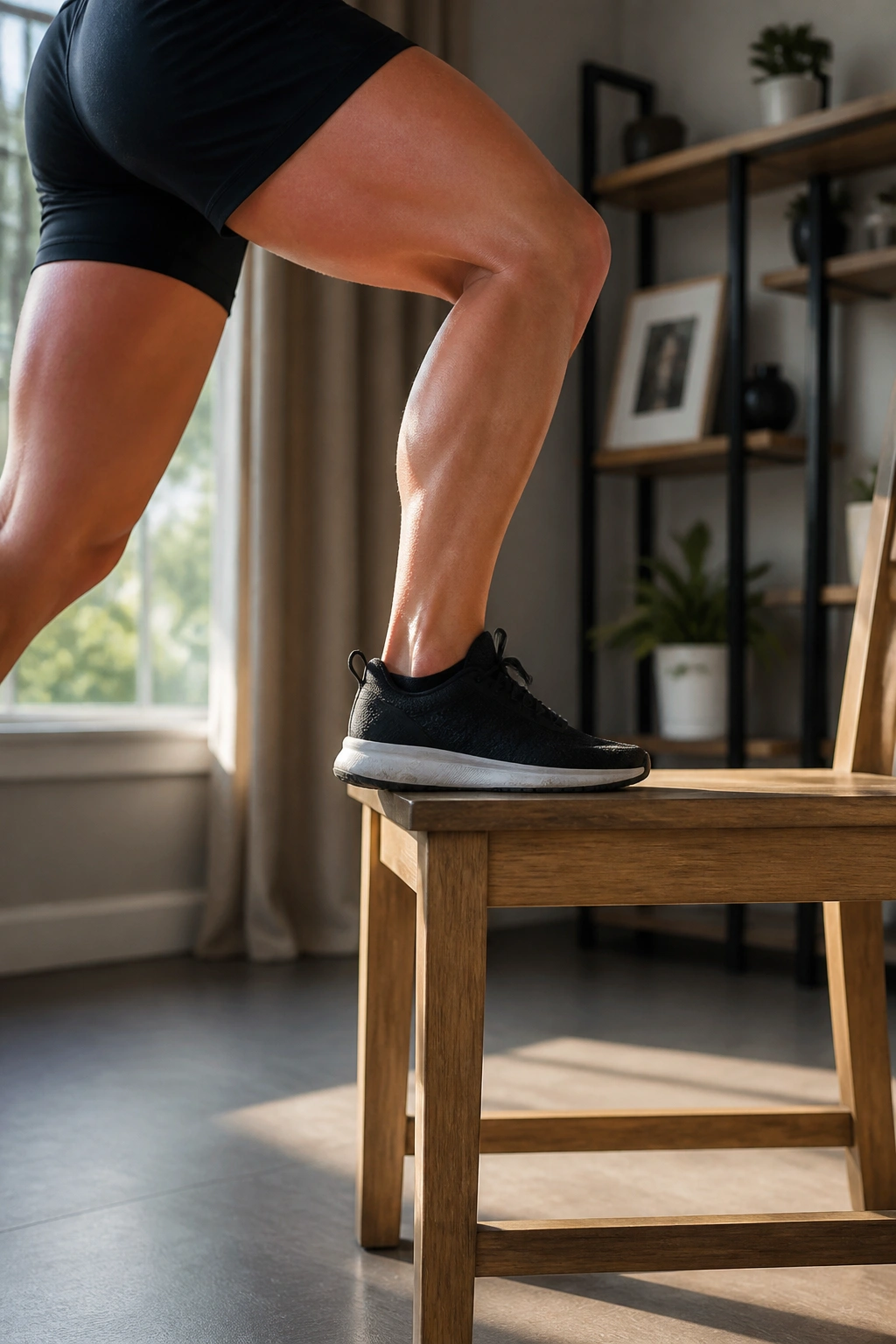
Find a sturdy chair or a couch. Step one foot up onto it, drive your knee up, and then step down. This is unilateral training—meaning you work one leg at a time. It creates significant metabolic demand.
Powering the Move
The drive up is the most important part. Press through your heel to stand tall on the surface. If you push off the toe of your bottom foot, you are cheating yourself out of the glute work. Control the descent just as much as the ascent.
Variation for Variety
You can do these slowly for strength, or you can switch legs rapidly for a cardio burn. Rapid switching—without fully planting the bottom foot—is an advanced skill that mimics running up stairs. Use a chair that is stable; do not use anything that wobbles.
15. Shadow Boxing

Shadow boxing is a favorite among professional fighters for conditioning. You do not need to punch hard; you need to punch fast. Move your feet, bob and weave, and keep your hands moving in a fluid, rhythmic pattern.
The Mental Engagement
The secret to effective shadow boxing is visualization. Imagine you are sparring. Don’t just throw aimless punches. Throw combinations: jab-cross-hook, then weave. This mental effort requires focus, which keeps your brain active while your body works.
Stance and Guard
Keep your hands up near your cheeks. Even if you are just shadow boxing in your living room, practice good form. Dropping your hands makes the workout easier, but it builds bad habits. Keep your guard up and stay on the balls of your feet.
16. Tuck Jumps
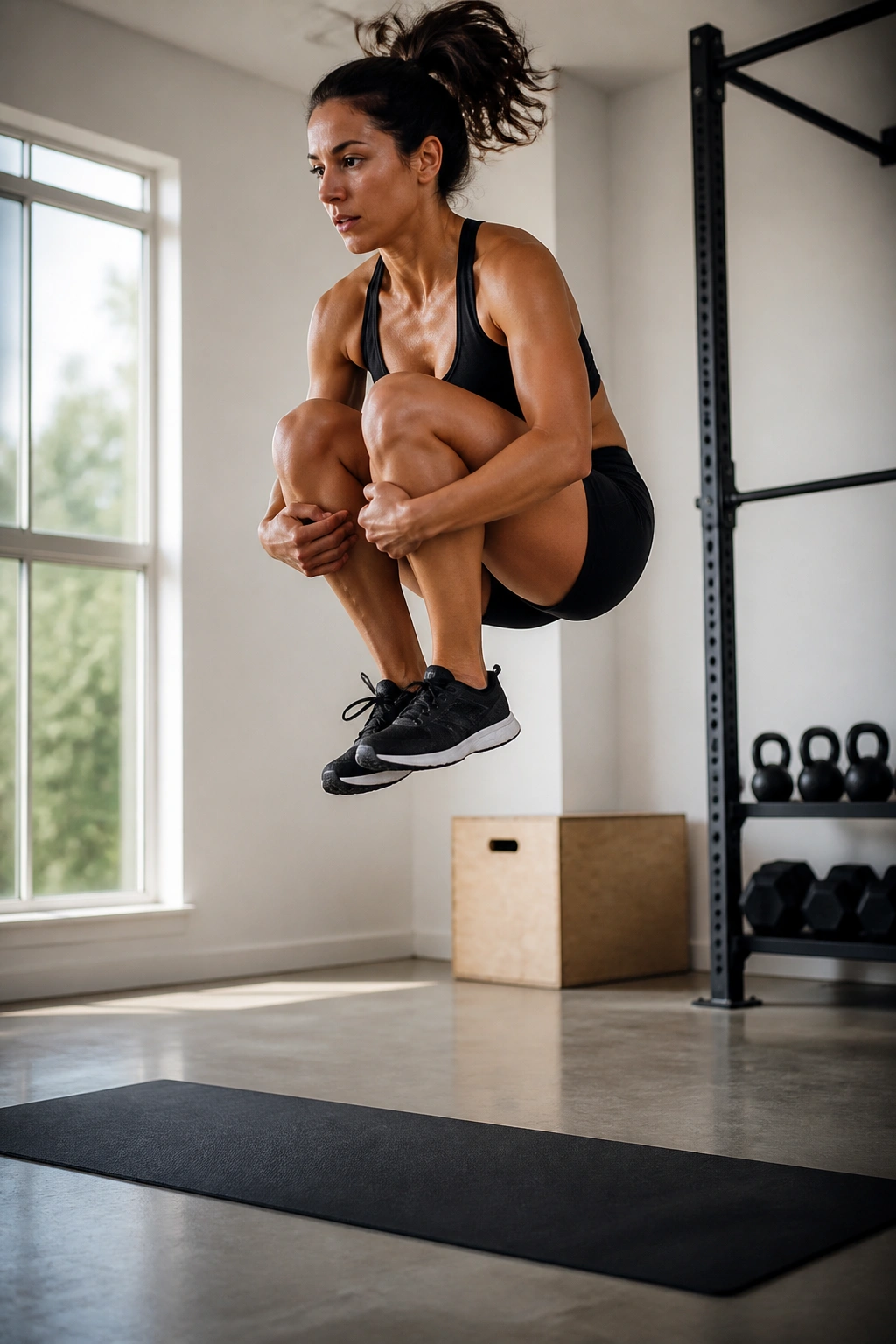
Tuck jumps are high-intensity plyometrics. You jump straight up and pull your knees toward your chest while in mid-air. It is an explosive movement that requires a high degree of core strength and lower body power.
Landing Safely
Because this movement is so jarring, you must land softly. Absorb the impact through your ankles, knees, and hips—like a spring. If you are landing with a loud thud, you are jumping too high for your current conditioning level.
Scaling Back
If a full tuck jump feels too intense, do a “mini-tuck.” Jump up and just bring your knees halfway up toward your waist. It provides the same explosive demand without the extreme strain on your joints.
17. Frogger Jumps
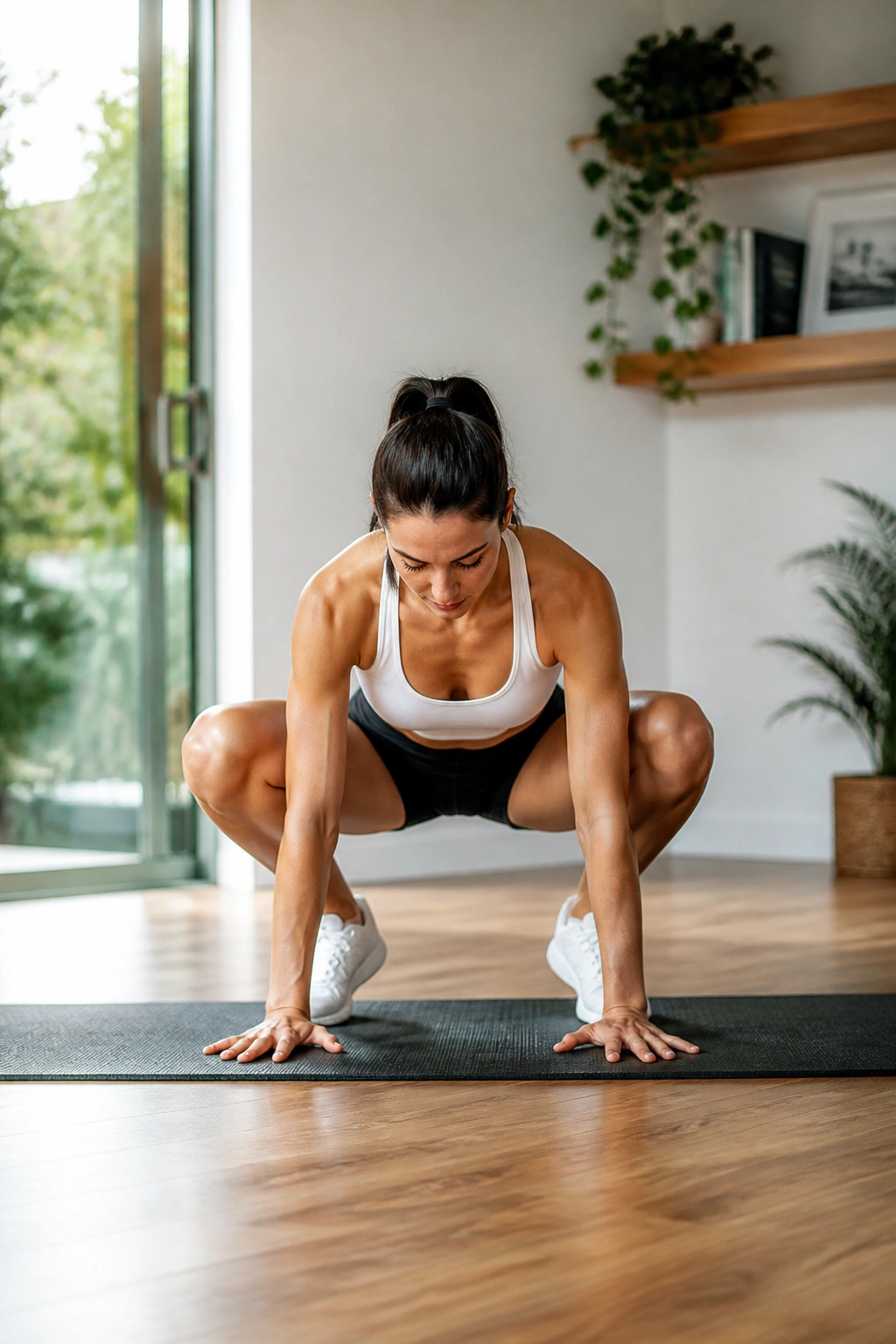
Start in a low squat with your hands on the floor. In one explosive movement, jump your feet forward outside your hands, so you are in a deep squat position. Then, jump your feet back into a plank.
The Hip Opener
This movement is excellent for hip mobility. Tight hips often contribute to poor squat form, so this exercise kills two birds with one stone. It is a grueling, uncomfortable movement that pushes your cardio limits very quickly.
Pacing the Reps
Do not try to race through these. Focus on hitting the deep squat position on every single rep. You want your heels to stay on the ground when you jump forward. If your heels are popping up, widen your stance.
18. Split Squat Jumps
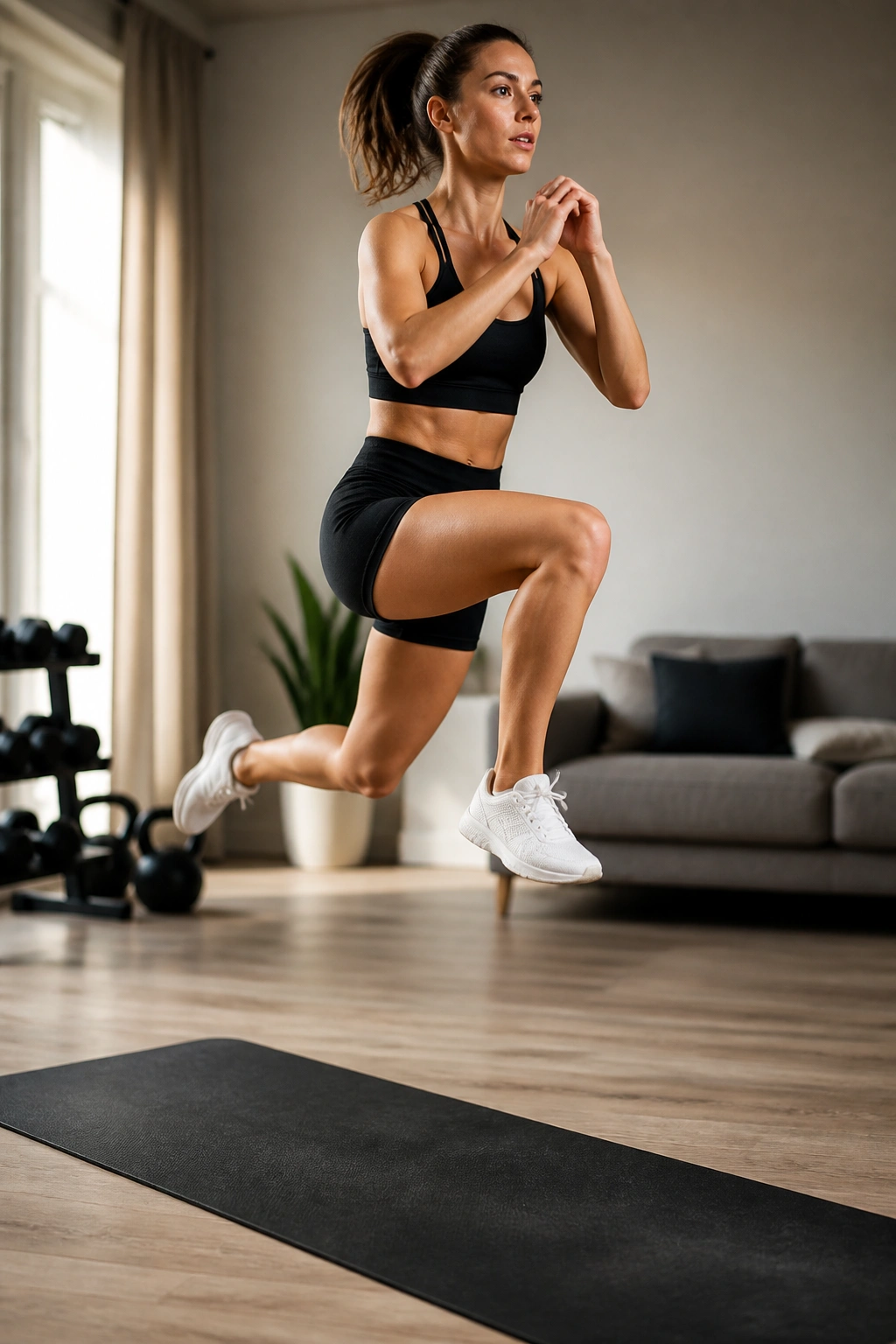
This is an advanced move. You start in a lunge position, jump up, switch your legs in the air, and land in a lunge with the other foot forward. It is the ultimate test of lower-body endurance and explosive power.
Controlling the Landing
The split squat jump requires exceptional balance. If you are wobbling, slow down. Focus on keeping your torso upright. Do not lean forward. Your goal is to land in a perfect 90-degree lunge on both sides.
Final Burnout Strategy
This move is best used at the absolute end of a workout. It will fatigue your legs instantly. If you find your form breaking down—if your knee is caving inward or your back is rounding—stop immediately. It is better to do five perfect reps than twenty sloppy ones that risk injury.
How to Structure Your Home Workouts
You have the movements, but how do you put them together? The most efficient way to lose fat with these moves is through a High-Intensity Interval Training (HIIT) protocol. This involves short bursts of maximum effort followed by brief periods of rest. This method keeps your heart rate high and creates an “afterburn” effect, where your body continues to burn calories after the workout is finished.
Building Your Own Circuits
Select four or five of the movements above. Perform the first movement for forty seconds, then rest for twenty. Move immediately to the second movement for forty seconds. Repeat this for four movements, then rest for sixty seconds before starting the next round. Aim to complete three to four rounds total. This keeps your workout under twenty-five minutes, which is the sweet spot for maintaining intensity.
Tracking Progress
The best way to stay consistent is to track your numbers. If you did thirty mountain climbers in forty seconds last week, try for thirty-two this week. Small, incremental improvements are what lead to long-term body composition changes. If you just “wing it,” you will eventually stop pushing yourself. When you measure, you force yourself to be accountable.
The Importance of Warm-Ups
Never start a high-intensity session cold. Spend three to five minutes doing light movement. March in place, do some arm circles, or perform slow, controlled squats. You need to lubricate your joints and signal to your nervous system that it is time to work. Jumping straight into burpees from a seated position on the couch is the fastest way to pull a muscle or get winded before the workout even begins.
Listening to Your Body
There is a difference between “good” fatigue—where your muscles are burning and your lungs are working—and “bad” pain. If you feel sharp, shooting pain in your joints or lower back, stop immediately. Adjust your form or pick a different exercise. You can always modify an exercise to make it easier. You cannot “modify” a torn ligament or a sprained ankle. The goal is to be able to train again tomorrow, not to crush yourself so hard that you need a week of recovery.
The Bottom Line
Home cardio workouts are powerful tools for fat loss because they remove the friction of getting to a gym. You do not need anything other than your own body and a clear, focused mind. By choosing moves that demand full-body engagement and performing them with high intensity, you can achieve results that rival anything you would do with a gym membership.
Focus on the quality of your movement over the quantity. It is better to do ten clean, explosive burpees than thirty sloppy ones that hurt your back. Stay consistent, track your performance, and keep pushing that intensity. Your living room is the only gym you actually need.
