



At 6:15 a.m., most women do not need a heroic workout.
They need something they can do in a small window, half-awake, before the day starts making demands. That is where smart morning belly fat workouts earn their keep: short bursts of movement, enough core work to wake up your midsection, and no nonsense about spot reduction.
Crunches do not melt fat off your waist.
They can strengthen the muscles under the fat, which matters, but the waistline changes when your body burns more energy than it takes in and you keep showing up long enough for the work to stack. A brisk walk, a few standing intervals, a floor move or two, and some lower-body work can do far more for busy mornings than a complicated plan that takes 45 minutes and a lot of willpower.
There is one more thing worth saying plainly. Morning does not have to mean fasted if fasted feels awful. If you wake up shaky, light-headed, or just cranky enough to snap at your toaster, a few bites of banana, a slice of toast, or even half a yogurt is smarter than forcing a hard session on an empty tank.
The best routines are the ones that fit into real life. So let’s stay with that idea and keep it practical.
1. Brisk Walk Intervals for a Morning Belly Fat Workout
A fast walk looks almost too simple to matter, which is exactly why people underestimate it.
Give me 10 or 12 minutes of brisk walking before breakfast, and I’ll take that over a dramatic workout you keep postponing. It raises your heart rate, loosens up stiff hips, and burns calories without beating up your knees or turning your living room into a gym.
How to do it
Walk at an easy pace for 2 minutes. Then pick up the speed for 1 minute so your arms swing and your breathing gets louder, but you can still speak in short phrases. Repeat that pattern 5 or 6 times.
- Easy walk for 2 minutes
- Brisk walk for 1 minute
- Repeat for 10 to 12 minutes
- Use a treadmill, hallway, driveway, or block route
- Keep your chest tall and your ribs stacked over your hips
If you want a little more work, hold a light dumbbell or a water bottle in one hand for short stretches and switch sides halfway through. That tiny change keeps your upper body awake too.
Best for: women who want low-impact morning belly fat workouts they can repeat on tired days without dreading them.
2. Marching High Knees Beside the Counter
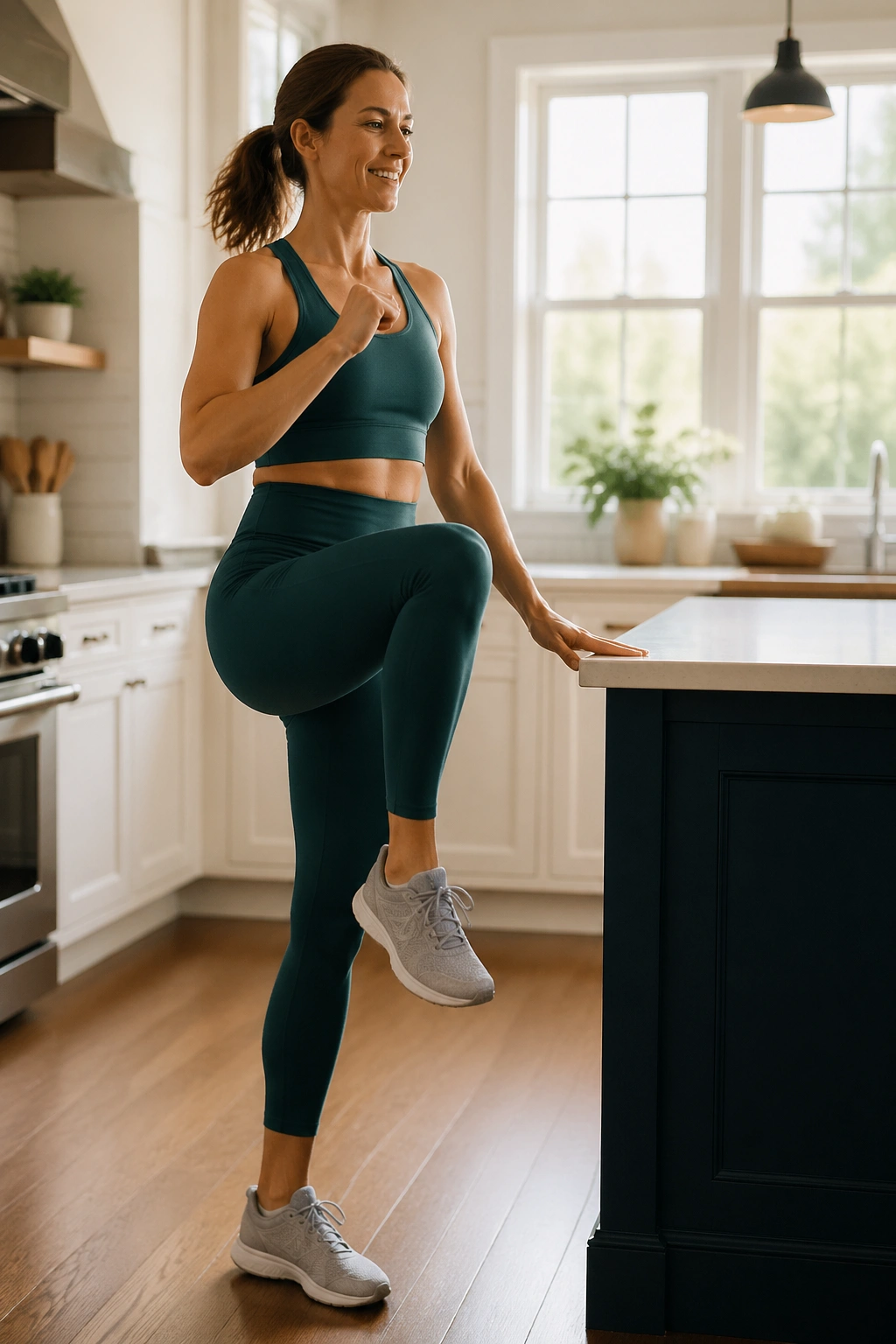
You do not need to jump to get your heart rate up. That’s the nice part.
Marching high knees look gentle, but once you drive each knee up with purpose and pump your arms, they start to feel like a real cardio drill. The counter gives you balance if you need it, which is handy at sunrise when your body still feels a little stiff.
Stand tall, brace your middle, and lift one knee toward hip height. Switch quickly and keep the pace sharp for 30 seconds, then rest for 15 seconds. Do 6 rounds if you want a short burn, or 8 rounds if you’ve got a little more gas.
A lot of people lean back when they try this. Don’t. Keep your ribs pulled down and your gaze forward so the work stays in your core and hips, not in your lower back.
One round looks easy. Three rounds do not.
3. Standing Knee-to-Elbow Drives That Wake Up the Core
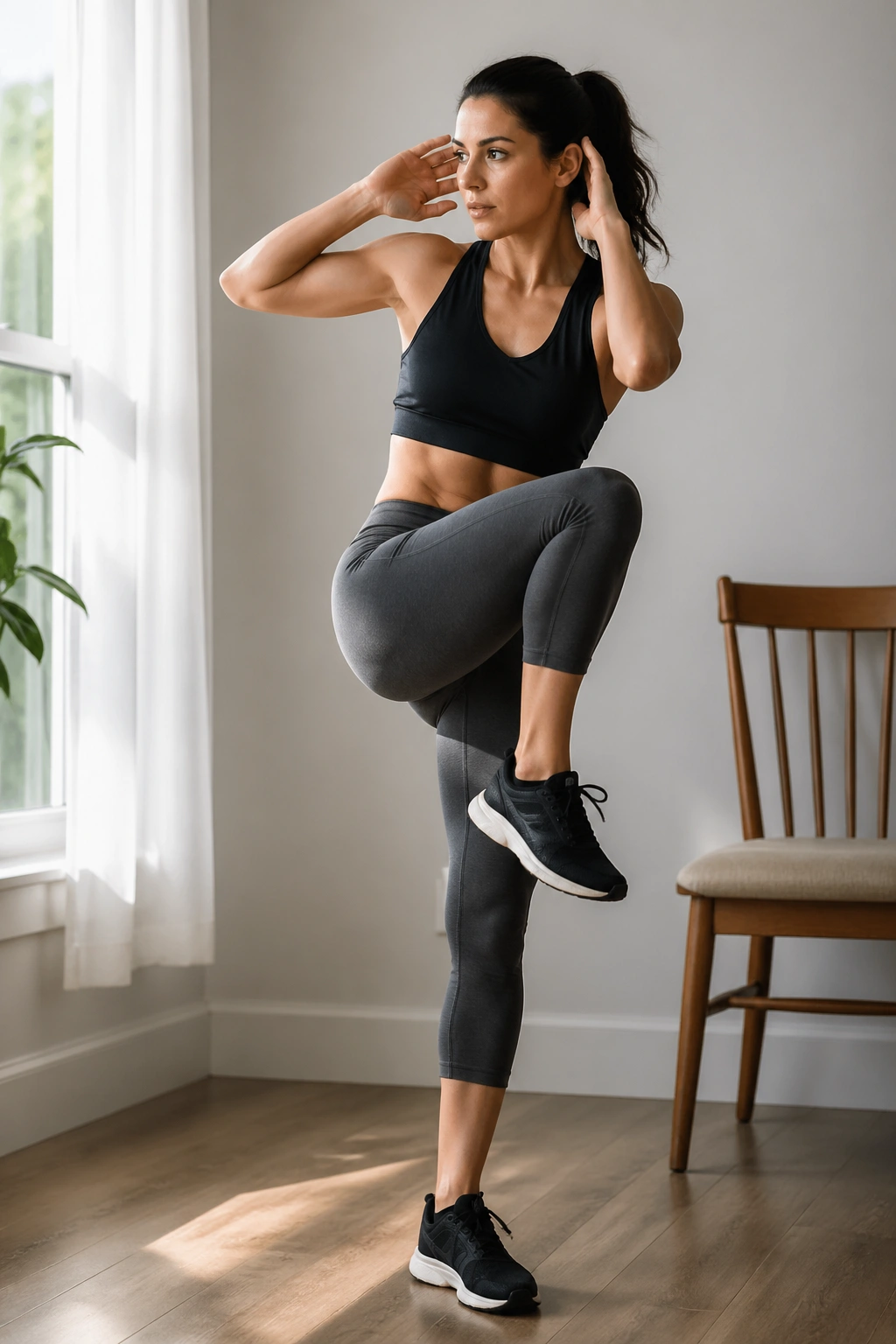
Why does a move this simple leave your abs braced by breakfast?
Because your body has to rotate and stabilize at the same time. That cross-body pattern wakes up the obliques, the deep core muscles, and the hip flexors without asking you to get on the floor or memorise a dance routine.
How to make it count
Bring your right knee toward your left elbow, then switch sides in a steady rhythm. Do not rush just to look busy. The real work happens when you exhale as the knee comes up and keep your chest lifted instead of folding forward.
- 10 to 12 reps per side
- 2 or 3 rounds
- Use a slow, controlled twist
- Keep your standing foot rooted into the floor
- Touch elbow to knee only if your body can do it cleanly
A kitchen wall or sturdy chair can help if balance is shaky first thing in the morning. That’s not cheating. That’s smart.
Tip: if you feel this in your lower back more than your middle, slow down and shorten the reach.
4. Squat-to-Reach Circuits for Legs and Waistline
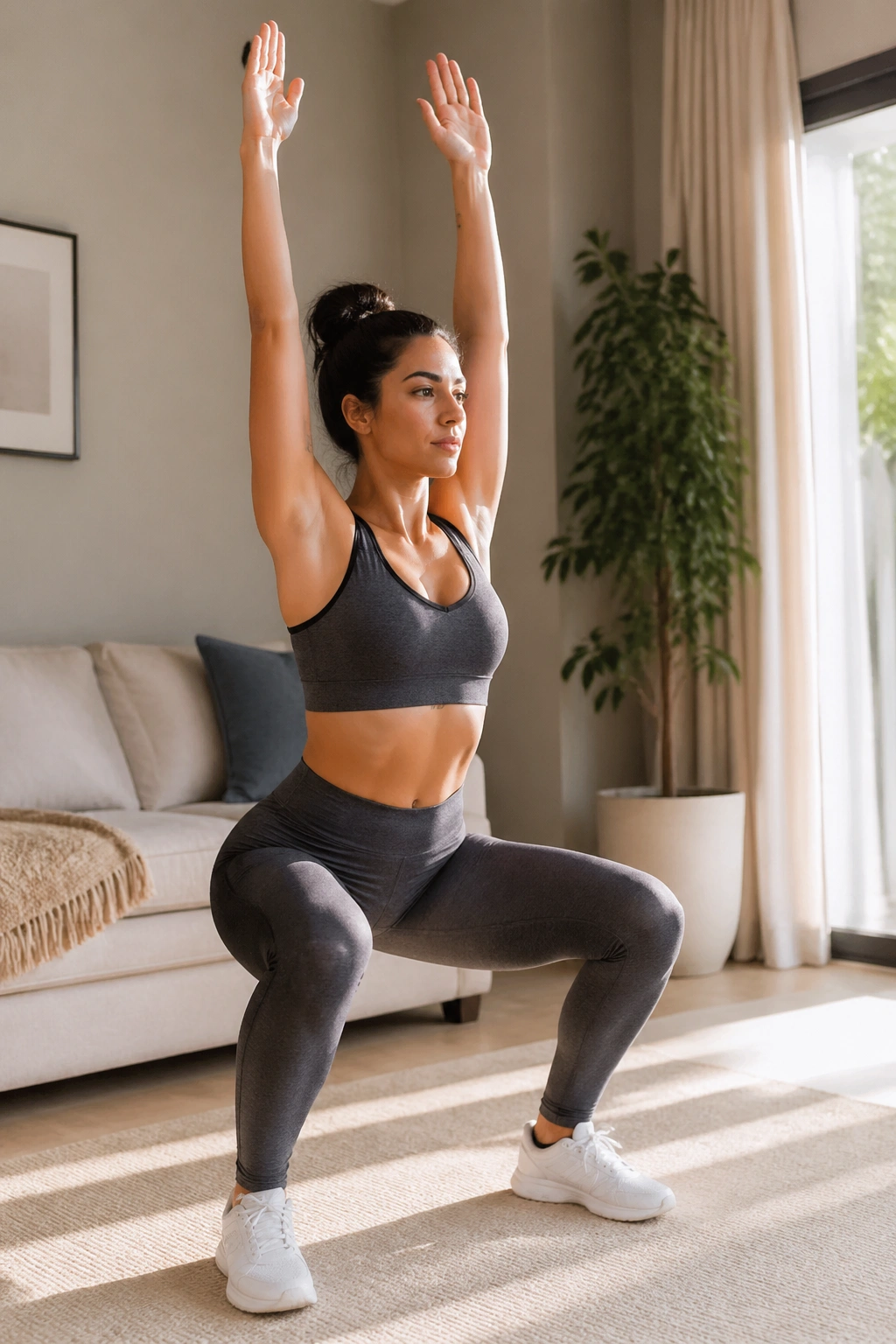
Unlike crunches, squats make your biggest muscles work.
That matters. Bigger muscles demand more from your body, and when you pair a squat with an overhead reach or a diagonal reach, you add a little core challenge on top of the leg work. The result is a standing move that feels more like a wake-up call than a chore.
Start with feet about shoulder-width apart. Lower into a squat until your thighs are roughly parallel to the floor, or stop higher if your knees complain. As you stand, reach both arms overhead, then bring them back down with control. Do 12 reps, rest for 20 seconds, and repeat for 3 rounds.
If overhead reaches bother your shoulders, reach forward at chest level instead. Same pattern. Less joint noise.
I like this one for busy mornings because it checks two boxes at once: it gets your heart rate up, and it reminds your body that legs are not optional in fat-loss work. Too many people skip the lower half and wonder why their workouts feel flimsy.
5. Mountain Climbers in Short, Hard Bursts
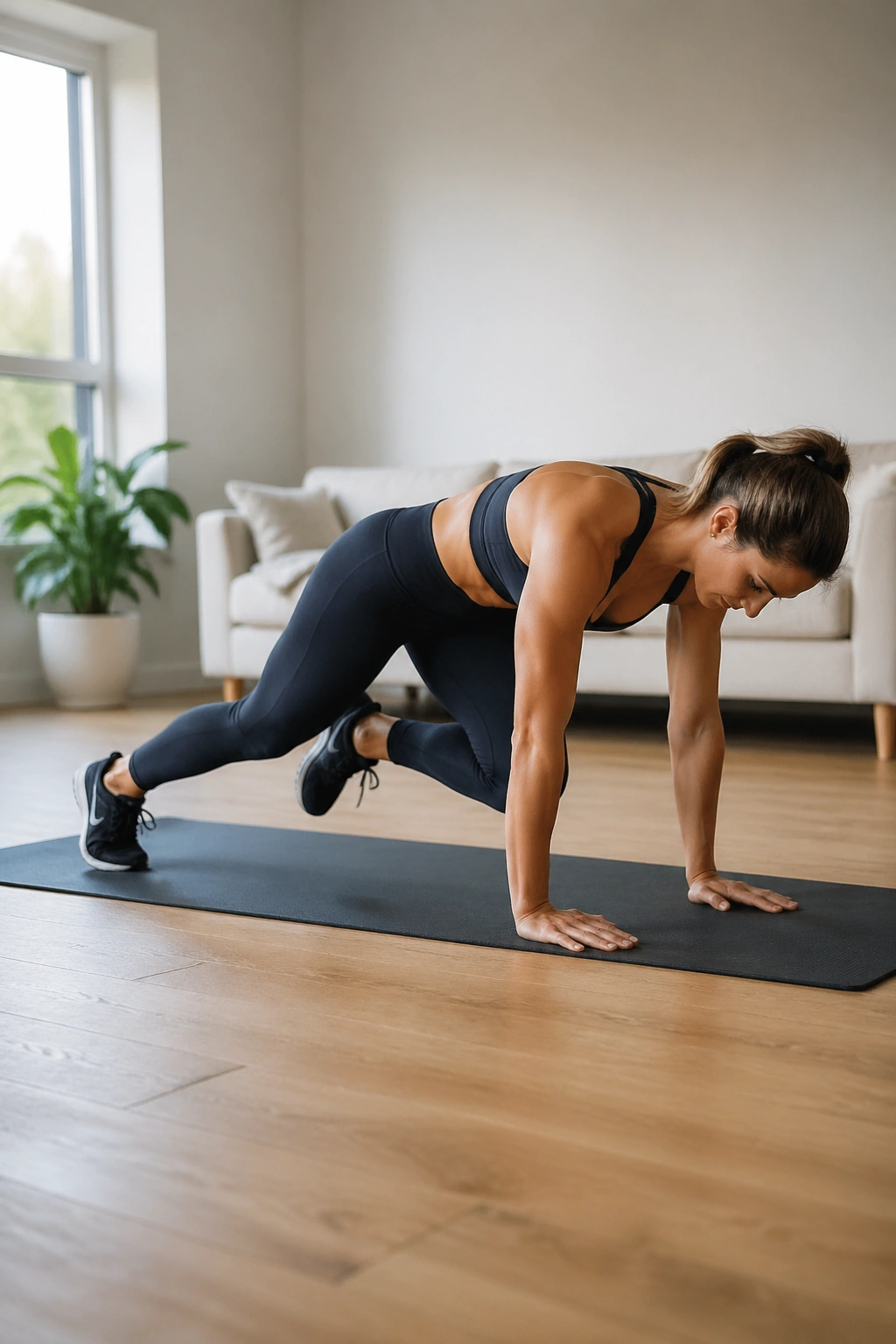
Can a floor move be practical before work?
Yes, if you keep it short and honest.
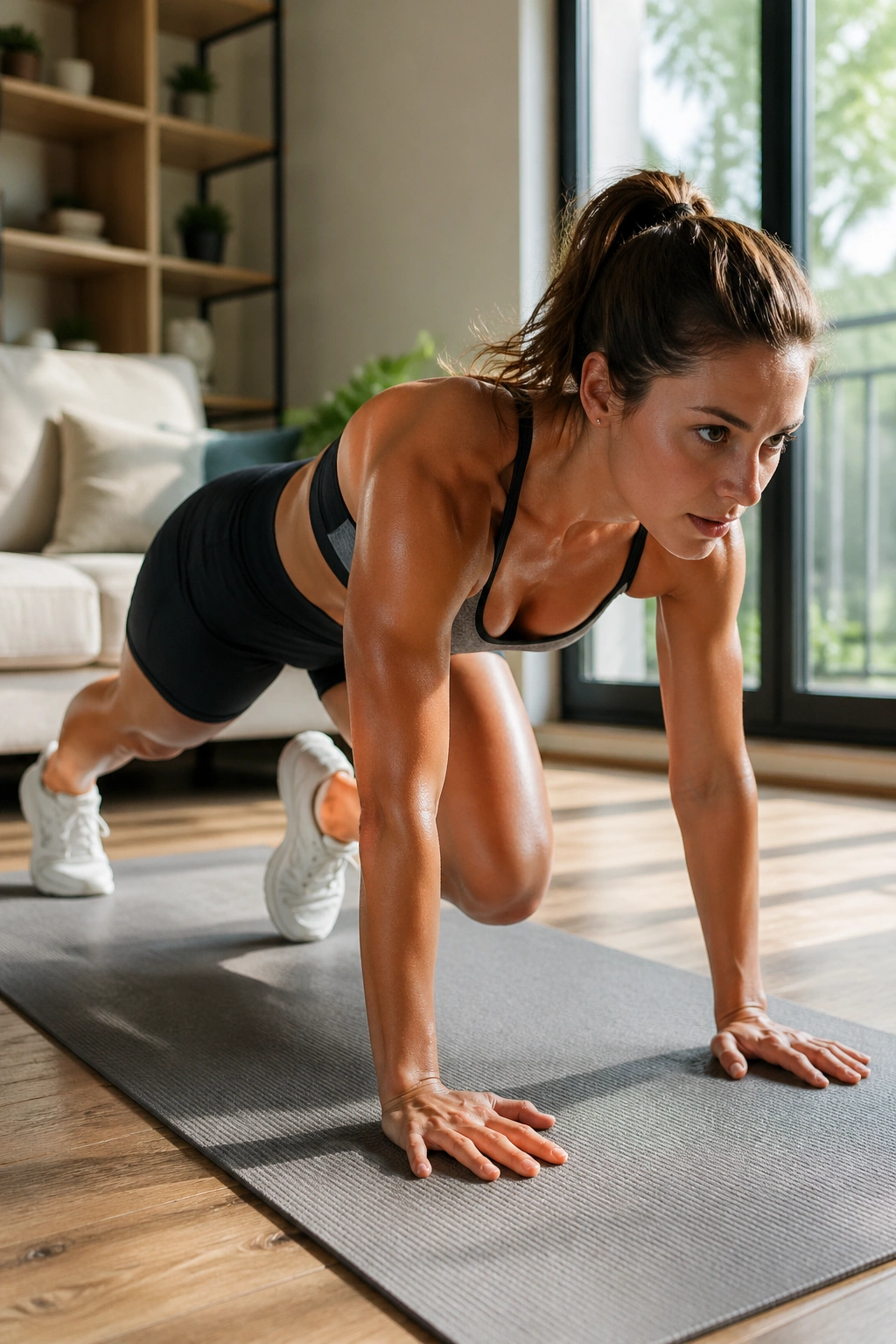
Mountain climbers earn their place because they combine cardio with core tension. Your shoulders hold you up, your abs keep your hips from swinging all over the place, and your legs fire fast enough to make the whole thing feel urgent. That’s a lot of work for a small patch of time.
How to use it
Set a timer for 20 seconds of work and 20 seconds of rest. Keep your hands under your shoulders, your hips low, and your knees driving in toward your chest. If the jumping version feels sloppy, step one foot in at a time.
- 20 seconds on
- 20 seconds off
- 6 to 8 rounds
- Step, don’t jump, for a quieter version
- Stop if your wrists hate it and switch to a wall or bench incline
The main mistake is turning it into a sprint with no shape. When that happens, your hips rise, your back hollows, and the move loses its point. Slow it down enough to stay strong.
6. Plank Shoulder Taps for a Quiet Core Burn
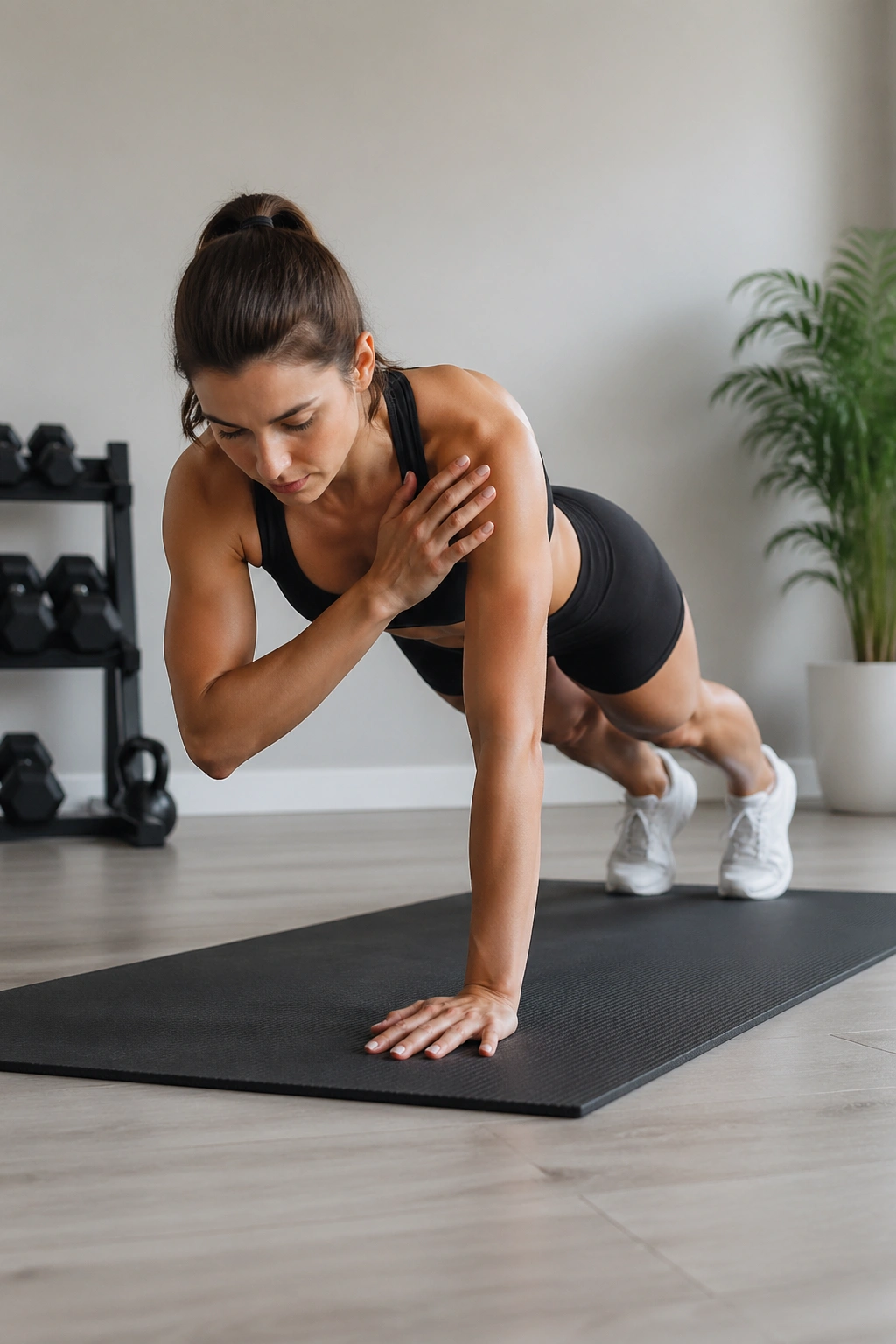
There’s a moment in plank shoulder taps when everything starts to tremble a little.
That’s normal. Your body is fighting rotation, which is exactly the point. Every time one hand leaves the floor, your core has to keep your hips from wobbling. The move looks small, but the hidden work shows up fast, especially if you’ve been sitting all day before your workout.
Set up in a high plank with your hands under your shoulders and your feet a little wider than hip width. Tap your left shoulder with your right hand, return it to the floor, then switch. A wider stance makes the movement cleaner. A narrow stance makes it harder, but also messier if your middle is not ready yet.
Keep the taps slow enough that your hips stay nearly still. If they sway like a loose shopping cart wheel, widen your feet and shorten the rep. You want control, not speed.
If straight-arm plank hurts your wrists, put your hands on dumbbells or try the move on an incline bench. One small adjustment can save the whole workout.
7. Dead Bug Holds for a Morning Belly Fat Workout Without Crunches
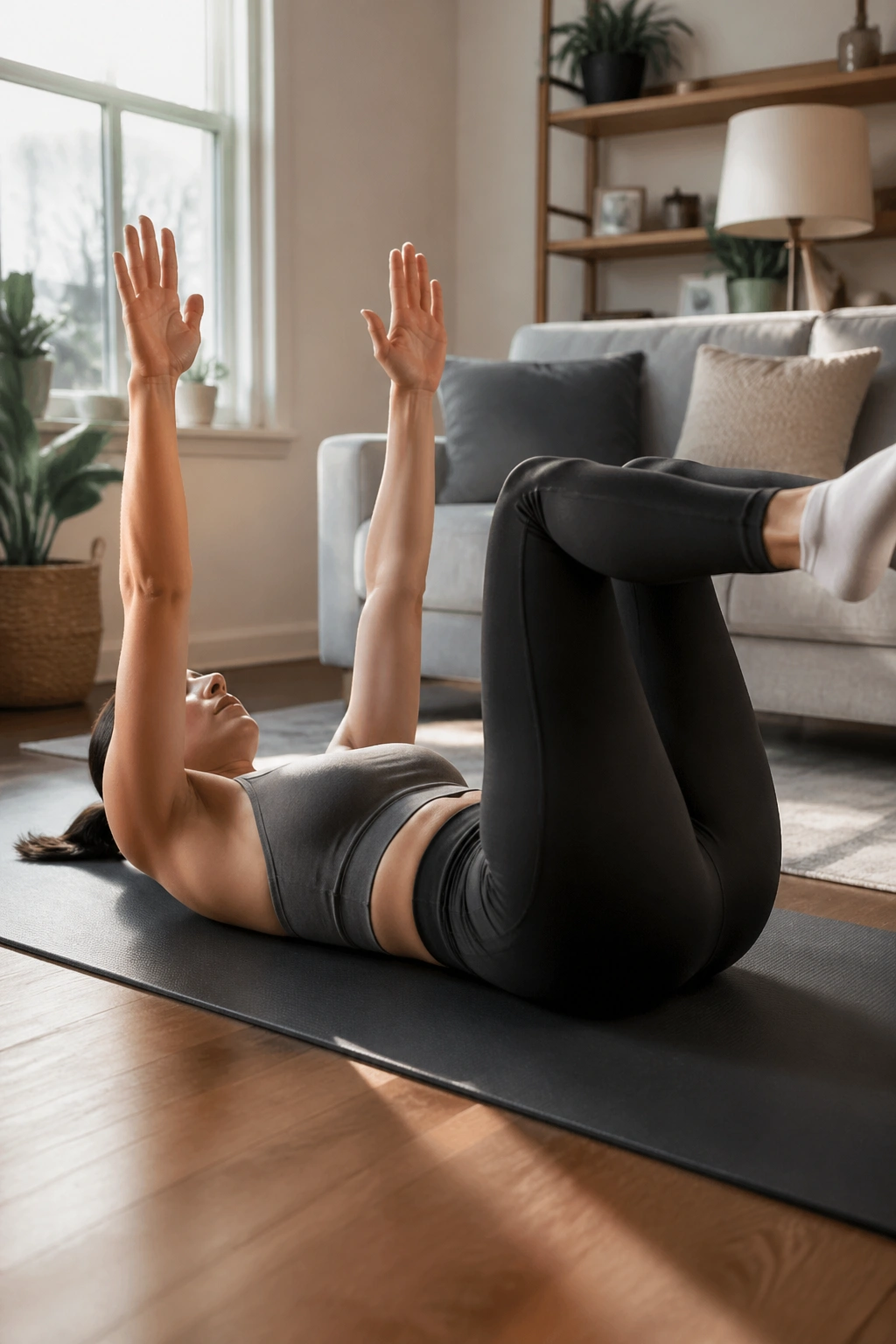
Dead bugs look easy until you try to keep your low back glued to the floor.
That little detail changes everything. The move teaches your core to brace while your arms and legs move in opposite directions, and that is exactly the kind of control most busy women need in the morning. It is quiet, low-impact, and far less annoying than endless crunches.
Lie on your back with your knees bent over your hips and your arms pointing toward the ceiling. Press your lower back gently into the floor, then slowly extend one leg and the opposite arm. Return to center and switch sides. If your back arches, make the reach shorter.
The version that actually helps
- 5 slow breaths per side
- Or 6 to 8 controlled reps per side
- Keep your ribs down the whole time
- Move slower than you think you need to
- Stop the rep the second your low back starts lifting
This is a smart choice if you want a morning belly fat workout that does not leave you sweaty before shower time. It also works well on days when your back feels stiff or your energy is low and you still want to do something worth doing.
8. Bicycle Crunch Intervals That Hit the Obliques
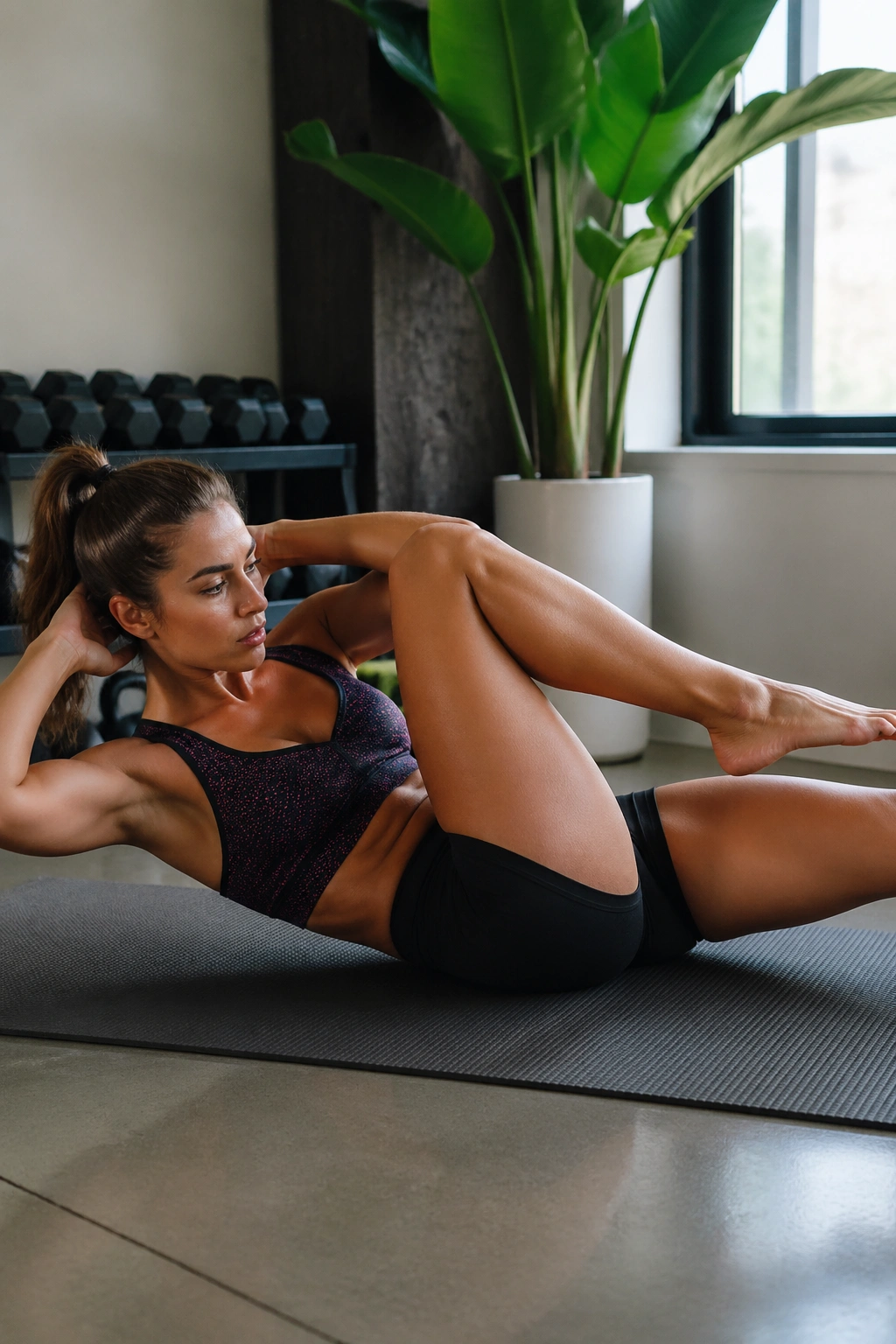
Everyone knows bicycle crunches. Most people do them badly.
They yank on the neck, pedal too fast, and turn a useful core drill into a mess. Done well, though, they are one of the better floor moves for the sides of the waist because the twist asks your obliques to work while your legs keep moving.
Lie on your back, lift your shoulders a few inches off the floor, and bring one elbow toward the opposite knee as the other leg extends long. The twist should come from your ribs and torso, not from cranking your neck toward your knee. Keep your elbows wide and your chin relaxed.
Try 15 seconds on, 15 seconds off for 8 rounds. That’s enough to matter without letting your form fall apart.
Watch for this: if your lower back pops off the floor, bring your legs higher and slow the pace down. Better a clean half-range rep than a sloppy full one.
9. Reverse Lunges With Knee Drives for Balance and Burn
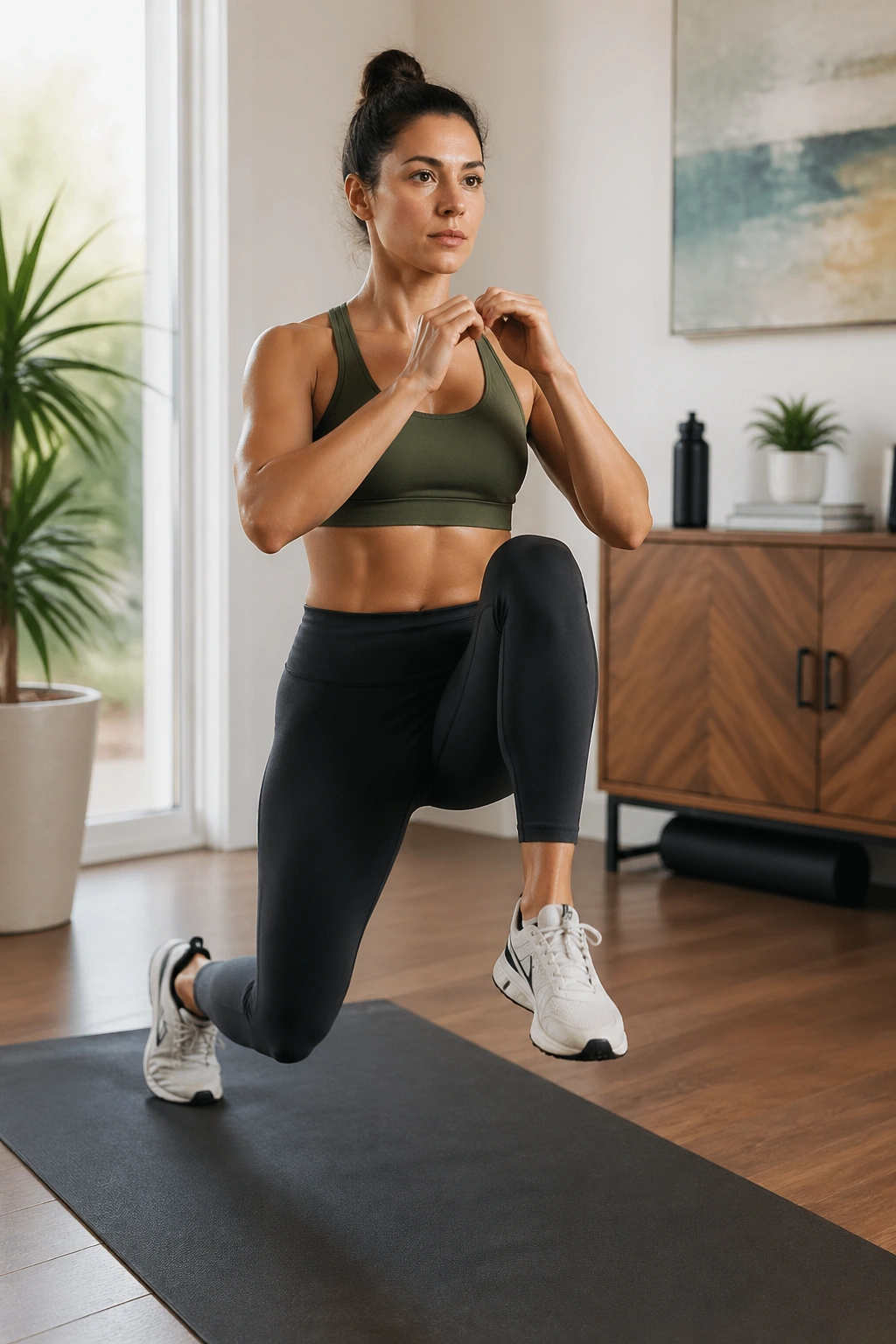
A reverse lunge is one of those moves that looks ordinary until your legs start talking back.
Step one foot behind you, lower under control, then drive that back knee up as you stand. The knee drive adds a little burst of cardio, and the lunge itself wakes up your glutes, quads, and core. It is one of my favorite standing options for mornings because it feels strong without being fussy.
Reverse lunges are usually kinder to the knees than forward lunges. That matters if you’re tight first thing, or if you’ve had one of those weeks where stairs already feel like a negotiation. Keep your front heel rooted, your torso tall, and your front knee tracking roughly over the second toe.
Do 8 reps per side, rest for 20 seconds, then repeat for 2 or 3 rounds. If balance is rough, hold a counter with one hand. Clean reps beat wobbly reps every time.
A good lunge should leave your legs warm and your middle working. If you only feel it in the lower back, shorten the step and slow the descent.
10. Low-Impact Jumping Jacks for Apartment-Friendly Cardio
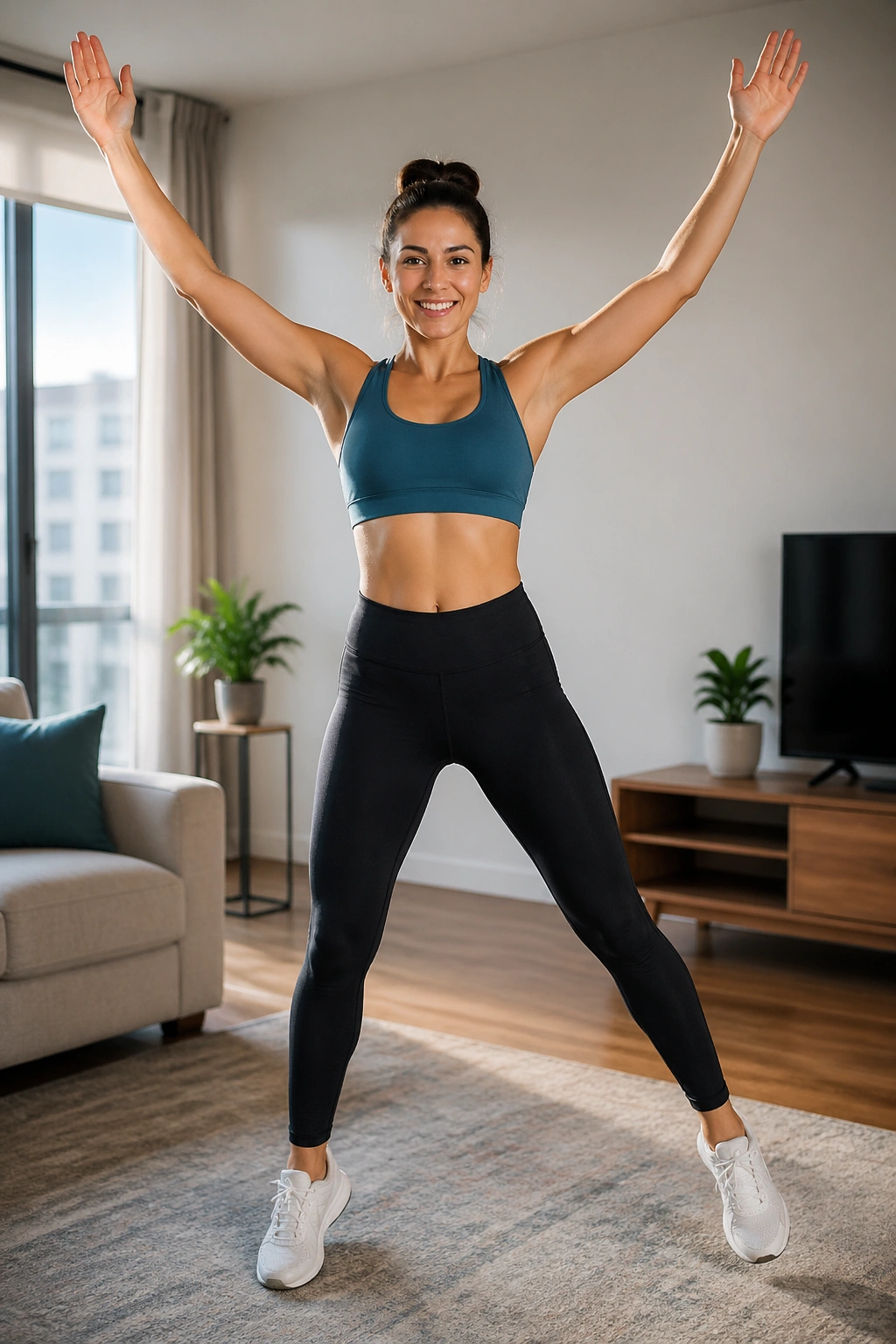
If your downstairs neighbor hates your workout, this is the version to pick.
Low-impact jumping jacks keep the familiar rhythm without the thump. Step one foot out at a time while your arms travel overhead, then step back in and repeat. It looks almost too easy at first, then the breathing changes and you realize it is doing more than you gave it credit for.
This is a solid morning option if you want cardio that won’t wake the house or irritate a cranky knee. It also works well between strength moves because it keeps the session lively without demanding much setup.
Try 45 seconds of work, 15 seconds of rest, for 4 rounds. If that feels mild, speed up the step and make the arm sweep bigger. If that feels like too much, keep the hands lower and move at a steady pace.
Simple. Quiet. Effective enough to earn a place on the list.
11. Shadow Boxing Rounds That Feel Nothing Like Exercise

Why do people stick with shadow boxing longer than burpees?
Because it feels like release instead of punishment. You can throw jabs, crosses, hooks, and uppercuts while you keep your feet moving, and suddenly your morning workout has a little attitude. The heart rate climbs fast, your torso rotates, and your arms get more work than they expect.
How to structure the rounds
Stand in a light boxing stance with one foot slightly ahead of the other. Throw a jab-cross for 30 seconds, then add hooks, slips, or knee drives if you want more work. Rest for 30 to 45 seconds, then go again.
- 2-minute rounds
- 30 to 45 seconds rest
- 2 to 4 rounds
- Keep your fists moving, not your shoulders shrugged up
- Step lightly instead of planting your feet like cement
A mirror helps. So does a timer. And if you have no boxing background, that is fine. Sharp punches, quick feet, and steady breathing are enough.
This one is especially good on mornings when you feel a little irritated and need the workout to take the edge off.
12. Stair Climbs and Step-Ups for Fast Heart Rate Spikes
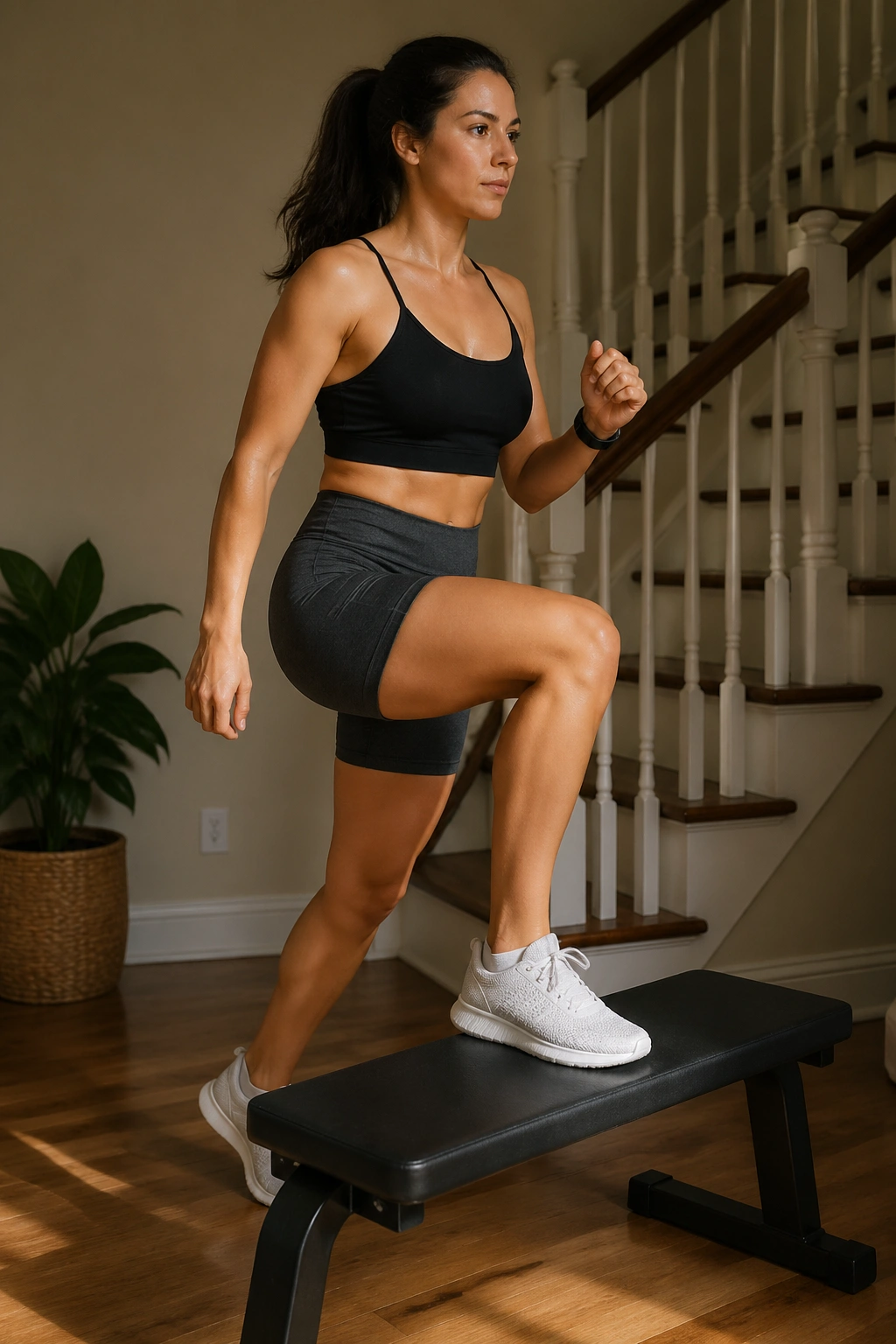
Stairs are not glamorous, but they are efficient.
One trip up a flight or two can leave your breathing heavier than a lot of prettier-looking workouts. That is because step-ups recruit the glutes, quads, calves, and core while forcing your heart to catch up. If you live in a building with stairs, you already have a pretty decent training tool.
Use a sturdy step, a stair, or a low bench. Step up with one foot, bring the other up, then step back down with control. If you’re on a staircase, move one step at a time and keep one hand close to the rail until your balance feels solid.
- 30 to 60 seconds of work
- 30 seconds of rest
- 4 to 6 rounds
- Keep your whole foot on the step
- Lean slightly forward from the hips, not the waist
If your knees complain, lower the step height. If the move feels too easy, pick up the pace or add a knee drive at the top.
13. Glute Bridge Marches for Lower Abs and Posture
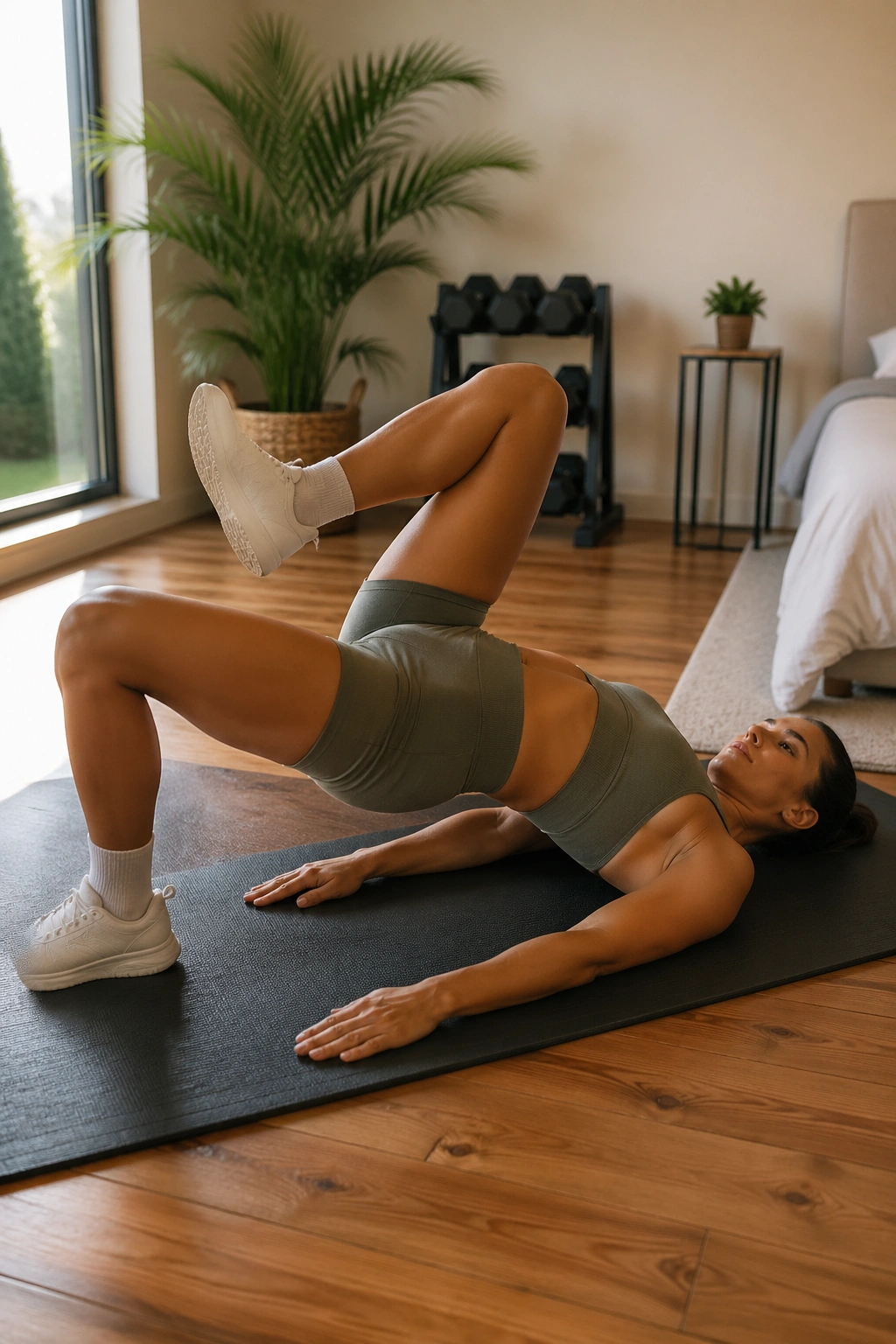
A move that looks slow can still burn.
Glute bridge marches are one of those sneaky exercises that quietly wake up the lower body and core at the same time. You lie on your back, lift into a bridge, and then march one knee up at a time without letting your hips drop. The glutes have to stay switched on, and your abs have to keep the pelvis steady.
That stability matters more than people think. When your glutes are asleep and your pelvis tips forward all day, your lower back tends to do more work than it should. This drill helps clean some of that up, especially if you spend a lot of time sitting.
Start with 10 marches per side. If that is easy, hold the bridge higher and slow the knee lift down to a three-count. If your hamstrings cramp, bring your feet a little closer to your hips and squeeze your glutes harder at the top.
It is not flashy. It works anyway.
14. Burpee Walkouts for a Hard Morning Finish
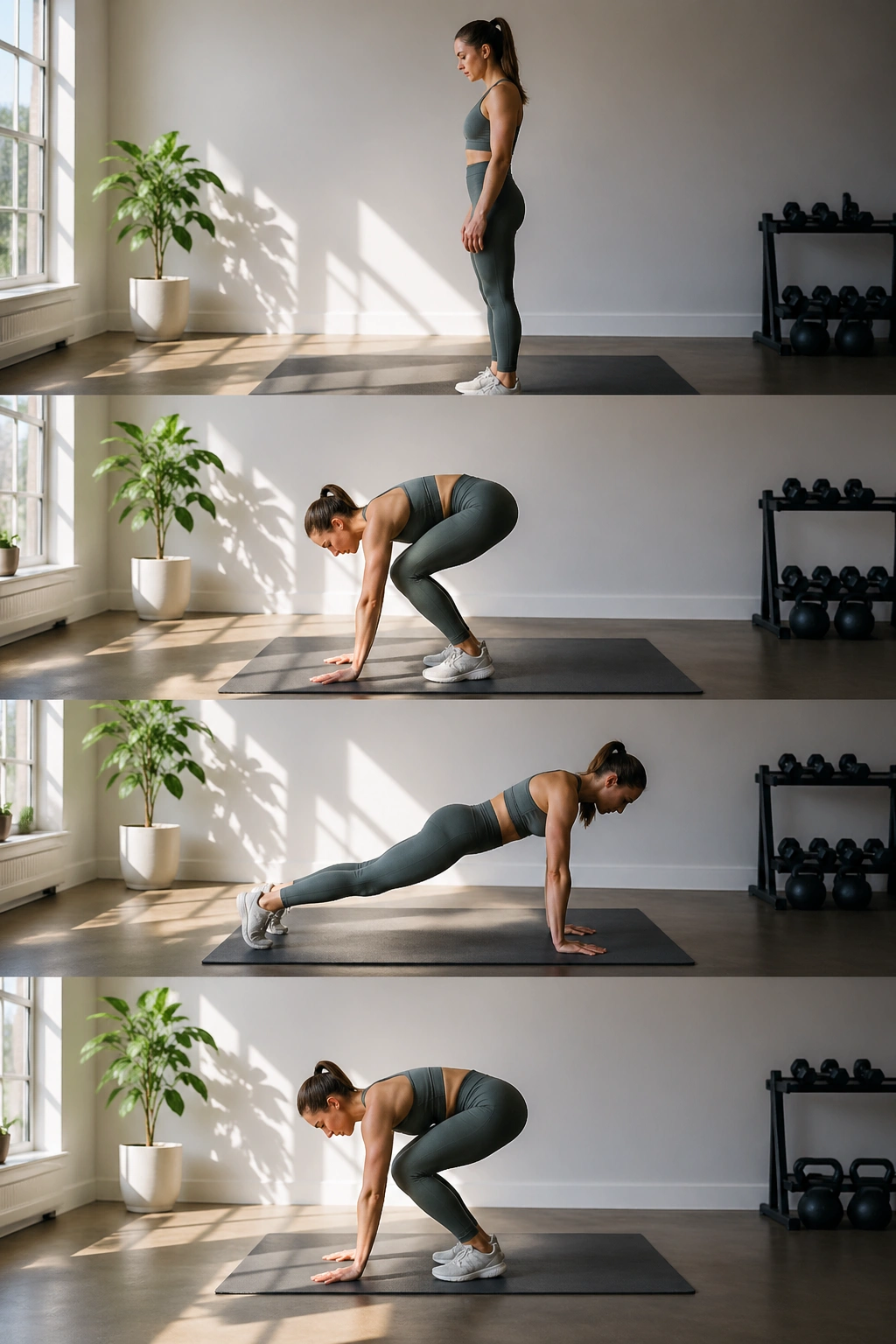
Full burpees are not the only way to earn a sweat.
Burpee walkouts give you the hard part without the jump that makes some people dread the move. From standing, hinge down, place your hands on the floor, walk your feet back into a plank, walk them back in, and stand. Add a push-up if you want more challenge. Leave it out if you want to keep the pace steady.
This version is easier on the joints and easier to repeat. That matters more than people admit. A workout that scares you off by Wednesday is not a good workout for a busy week.
Try 6 to 8 reps, rest for 30 seconds, and repeat for 2 or 3 rounds. The goal is not to collapse at the end. The goal is to finish breathing hard while still feeling like you could do one more rep if someone paid you.
If you want a hard finisher after a short circuit, this is the one I’d keep.
15. A 10-Minute Morning Belly Fat Workout You Can Repeat
If you want one routine to keep coming back to, make it this kind of mix.
A good short session should do three things: get your pulse up, make your core brace, and fit into the kind of morning where the laundry is already waiting. This one does all three without needing equipment.
Simple 10-minute circuit
- 30 seconds brisk marching high knees
- 30 seconds squat-to-reach
- 30 seconds mountain climbers
- 30 seconds shadow boxing
- 30 seconds dead bug hold or dead bug reps
- Rest 30 seconds
- Repeat the circuit one more time
That gives you about 8 minutes of work plus a little breathing room before and after. If you want to make it a full 10 minutes, walk in place for 1 minute first and 1 minute after. Keep the intensity honest. You should finish warm, awake, and a little sweaty, not wrecked.
This is the kind of routine that works best when it becomes boring in the best way. Same timer. Same moves. Same start time. The less drama you attach to it, the easier it is to repeat, and repetition is where the waistline changes start to show up.
Final Thoughts

The best belly-fat workout is not the one that looks hardest on paper. It is the one you will actually do before the day gets loud.
Short cardio bursts, standing core work, and a little lower-body strength can do more for a busy schedule than a long, perfect plan that never leaves the notes app. Pick three moves, keep the timer simple, and let consistency do the heavy lifting.
If one of these feels easy, use it as a warm-up and move on to a harder round. If one of them feels too rough first thing in the morning, scale it down instead of quitting. That small adjustment is often what keeps the habit alive.
