



The misconception that yoga is merely a gentle, static practice of stretching has kept many people from realizing its full potential for weight management. Realistically, when you transition from holding poses to flowing through them, the dynamic nature of the practice shifts. You are no longer just stretching; you are building heat, engaging deep core muscles, and demanding sustained aerobic effort from your cardiovascular system. This is where the magic happens for body composition and fat loss.
Movement is the key. By linking breath to rapid, controlled transitions, you can elevate your heart rate into a fat-burning zone that rivals traditional cardio workouts. It isn’t just about how long you hold a pose; it’s about how much oxygen you consume while moving between them. When you approach your mat with the intention of increasing intensity and maintaining a steady flow, you transform a standard session into an efficient metabolism-boosting tool.
1. Sun Salutation A (Surya Namaskar A)
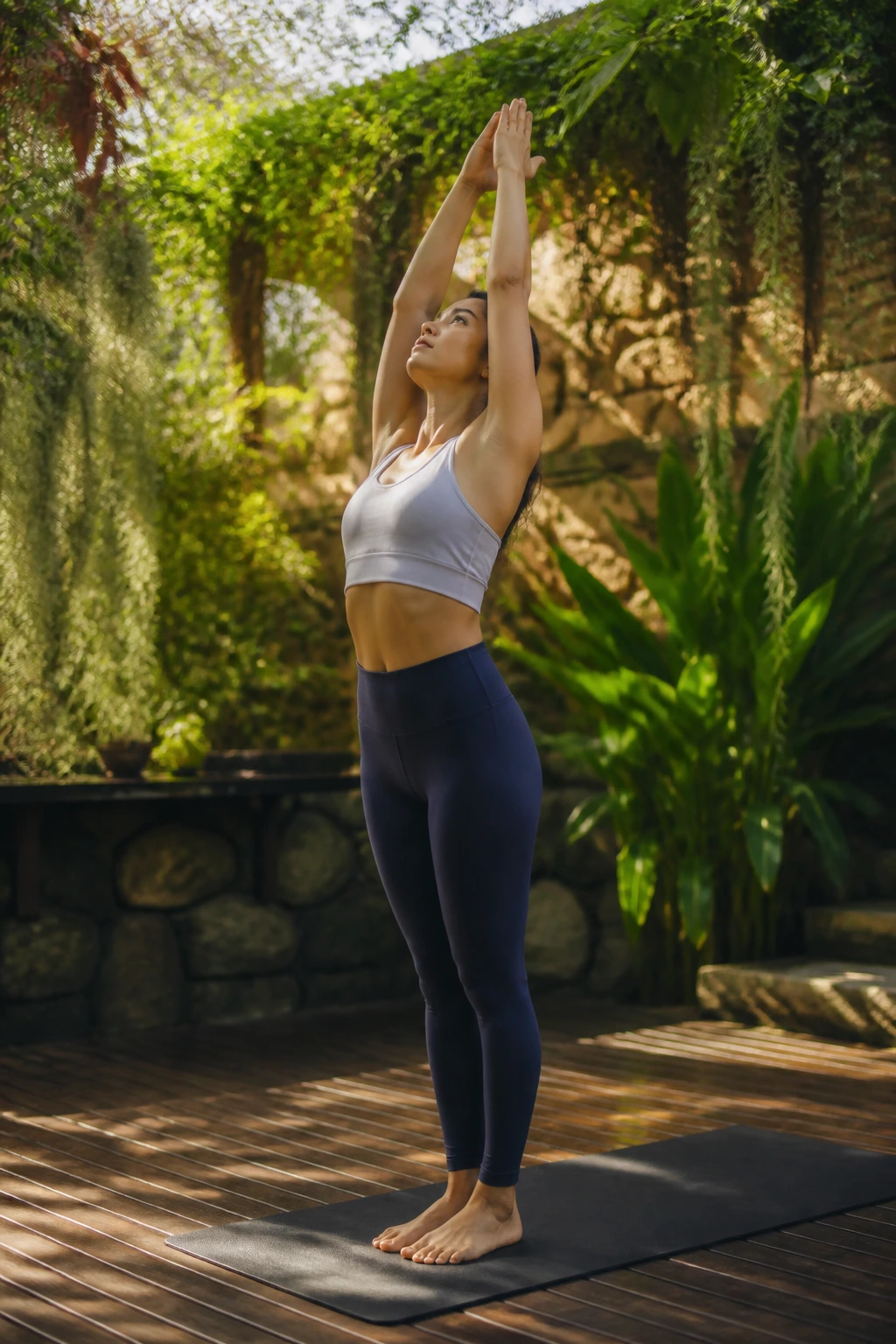
This is the foundational sequence for a reason. It is a rapid, fluid cycle of poses that connects the breath to movement, effectively acting as an aerobic warm-up and a high-intensity circuit all in one. You cycle through Mountain Pose, Forward Fold, Plank, Chaturanga, Upward Dog, and Downward Dog, repeating the cycle with increasing speed.
Why It Works for Fat Loss
The constant shifting from high (Mountain) to low (Forward Fold) and horizontal (Plank) positions creates a significant demand on the heart. By moving quickly and syncing every movement with an inhalation or exhalation, you keep the blood pumping and the metabolic rate elevated.
Key Performance Cues
- Move with the breath: Inhale to reach up, exhale to fold.
- Keep the transitions tight: Do not linger in transitions; treat the floor as if it is hot.
- Full engagement: Squeeze the core during the entire Plank-to-Chaturanga transition.
Pro tip: To amplify the cardio effect, move through five to ten rounds of this sequence as quickly as your breath control allows, without compromising form.
2. Power Vinyasa Flow
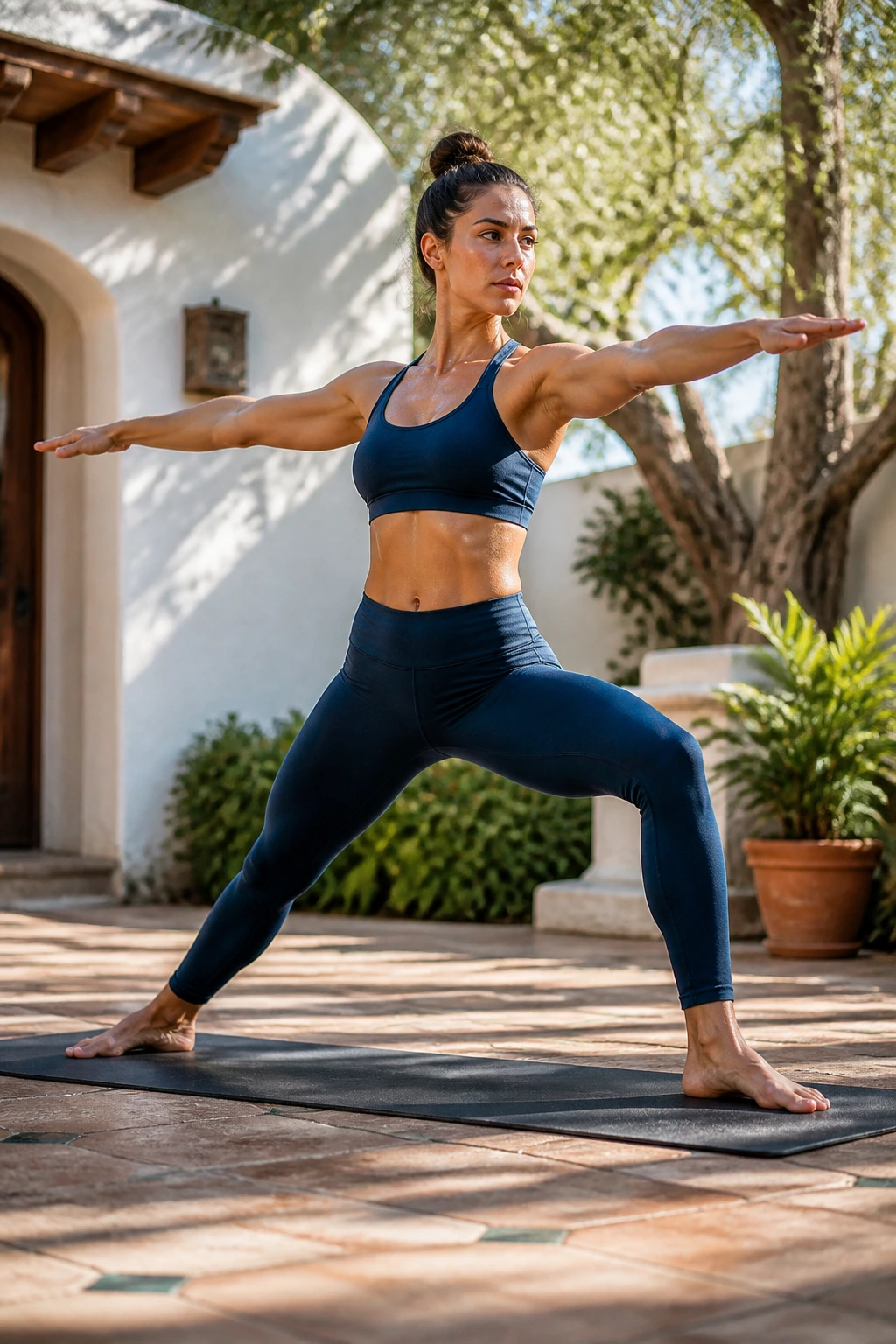
Unlike a restorative flow, a Power Vinyasa session is intentionally structured to be relentless. It emphasizes the “flow” aspect, meaning you rarely stay static for more than a breath or two. This constant motion keeps your heart rate spiked, forcing your body to utilize energy stores more aggressively than during slow-paced sequences.
This isn’t about reaching the deepest stretch possible; it is about maintaining a rhythmic intensity for the duration of the practice. If you find yourself catching your breath while standing, you are moving too slowly. You want to reach a state where your breathing is heavy but controlled, a hallmark of effective cardiovascular exercise.
Focus on the transition between poses. The act of “stepping” or “jumping” your feet to the front of the mat is an explosive movement that recruits more muscle fibers than a simple walk. By chaining these explosive actions back-to-back, you turn your entire practice into a high-intensity interval session disguised as yoga.
3. Chair Pose Pulses
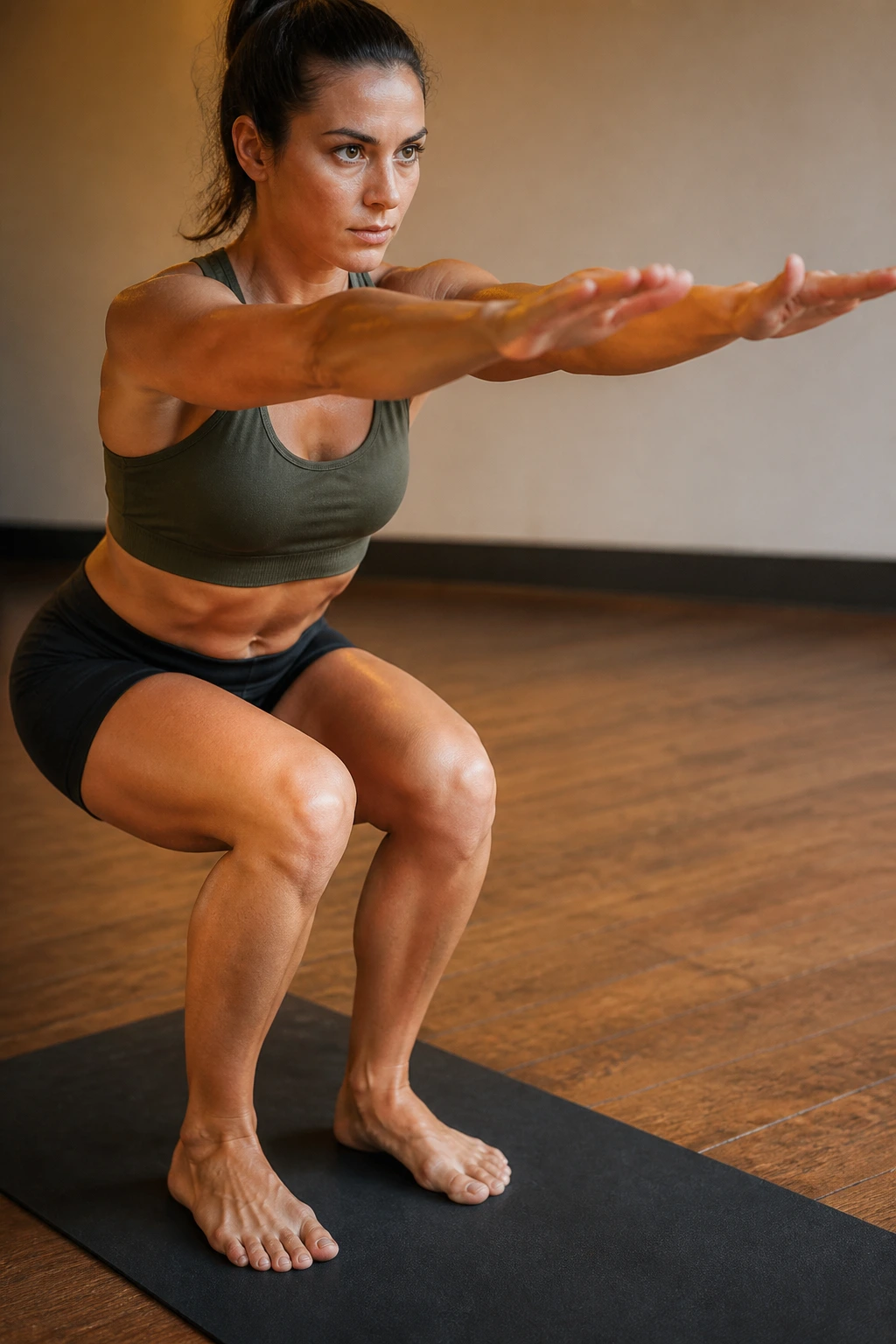
Chair Pose (Utkatasana) is an incredible builder of heat, but holding it statically can become monotonous. To make it a cardio powerhouse, you need to add dynamic movement. By pulsing the hips just an inch up and down while maintaining the chair position, you keep the large muscles of the legs—the quads and glutes—under constant tension.
Adding Intensity Through Rhythm
Why does this simple movement spike your heart rate? The legs are the largest muscle group in the body. When you work them continuously without full extension, they act like a furnace, demanding massive amounts of oxygenated blood.
How to Execute Properly
- Sink hips low while keeping the chest lifted.
- Pulse up and down in a small, 2-inch range.
- Keep the weight in your heels to protect the knees.
- Engage the core to prevent the lower back from arching.
What to watch for: If your knees drift past your toes, you are putting unnecessary strain on the joint. Keep the weight shifted back into your heels and focus the intensity in the glutes and thighs.
4. Plank Jacks from Downward Dog
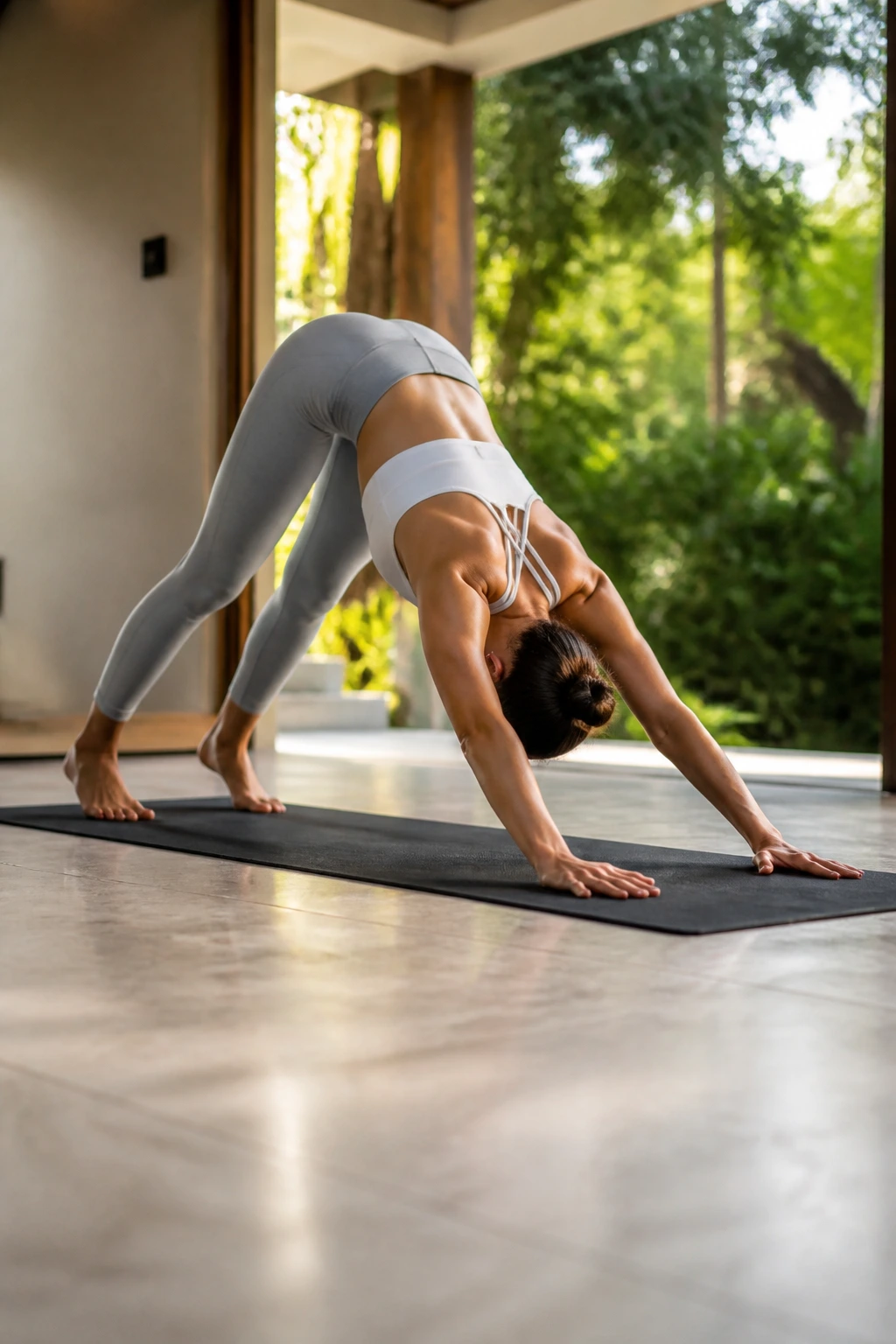
Plank Jacks are a gym staple for a reason: they are an elite cardio move. By integrating them into a yoga flow, specifically springing from Downward Dog into a Plank and then performing a jack, you combine upper body stability with lower body agility. This sequence hits the core, shoulders, and legs simultaneously.
Start in Downward Dog. Use an inhale to ripple your spine forward into a high Plank position. Once in Plank, jump your feet out wide and then back together. That is one repetition. Immediately push back into Downward Dog.
Repeating this cycle builds incredible stamina. Your shoulders will be the first to fatigue, but pushing through that burn is exactly how you signal your body to adapt and strengthen. By keeping the transition smooth and the jump explosive, you mimic the heart-rate-elevating effects of jumping rope.
5. Warrior II to Extended Side Angle Flow
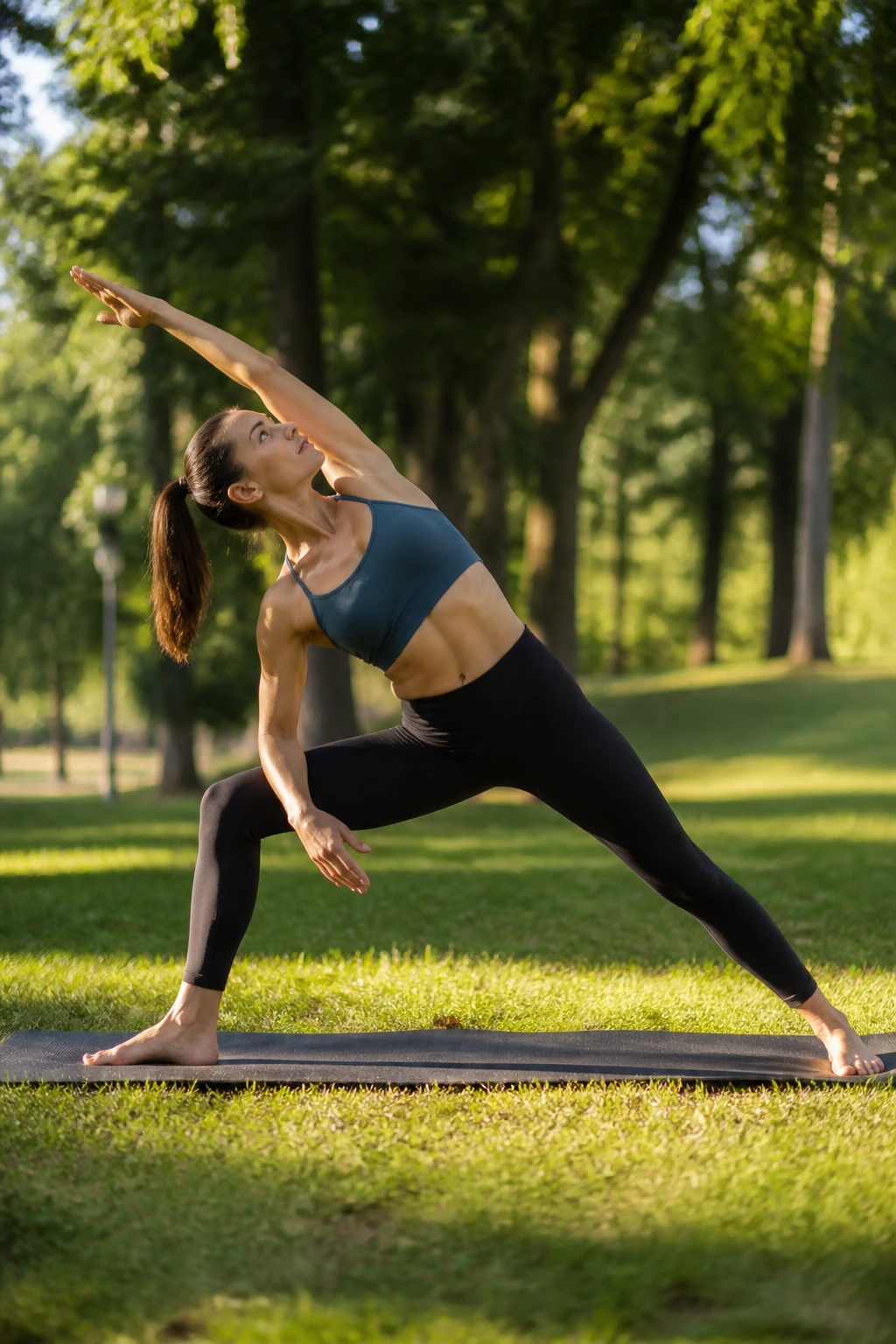
This sequence focuses on the lower body’s endurance. By flowing back and forth between Warrior II and Extended Side Angle, you create a lunging motion that requires significant stabilization. The key to making this cardio-focused is to minimize the rest time and maximize the speed of the transition while keeping your feet planted firmly.
Unlike a static hold, this flow forces you to engage the obliques and the deep stabilizers of the hips repeatedly. As you reach your arm forward to transition into Extended Side Angle, think about lengthening the side of your body. This active reaching prevents you from “dumping” into the bottom hand and keeps your core muscles firing to support the weight of your torso.
Perform ten reps on each side. If you want more intensity, do not let your back leg straighten completely during the transition. Keep the legs in a “constant tension” state, which prevents the heart rate from dropping between reps. This is the difference between a relaxing yoga stretch and a high-efficiency fat-loss workout.
6. Boat Pose Scissor Kicks
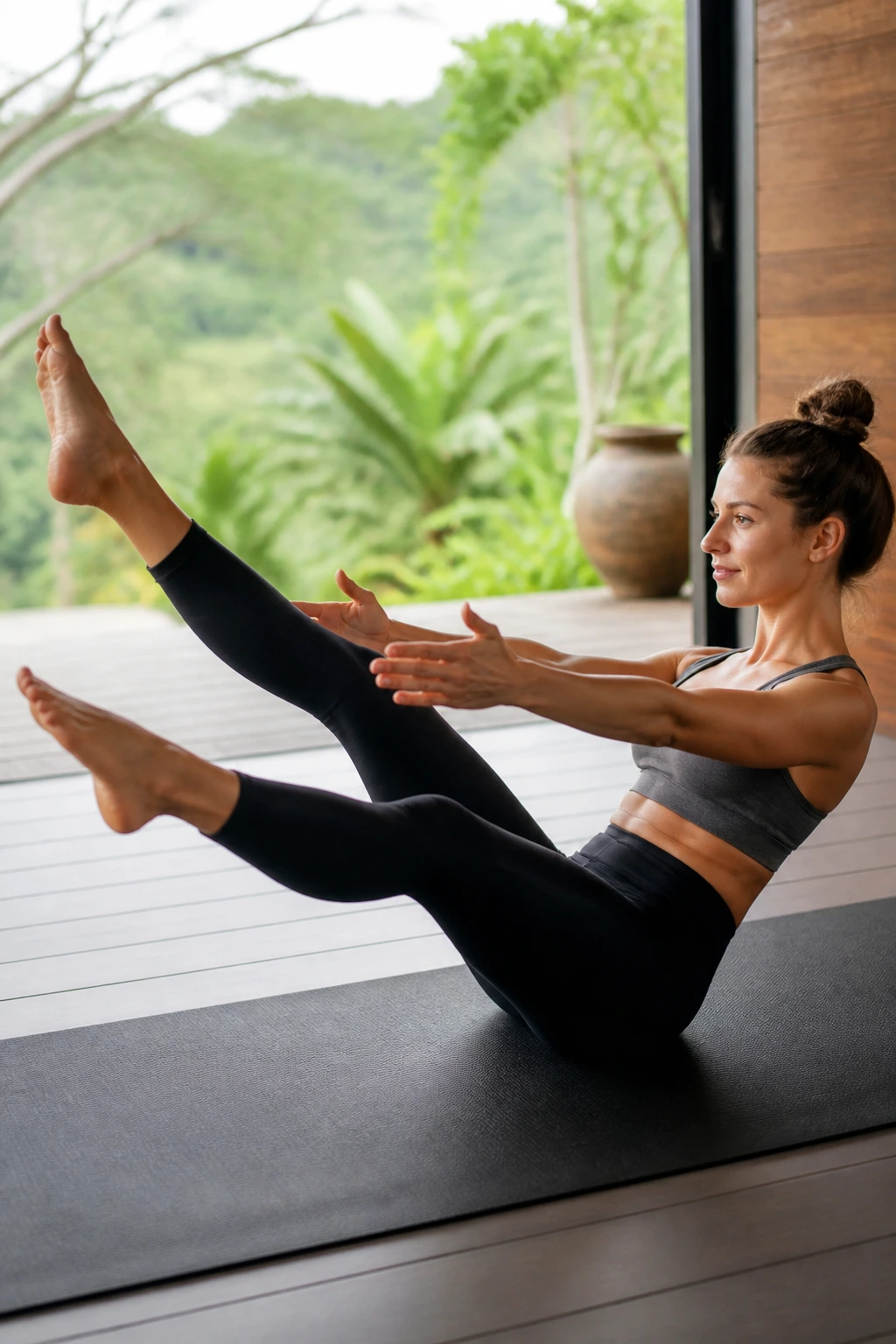
Boat Pose (Navasana) is notorious for core strength, but often practiced as a static pose. To turn it into a fat-loss movement, you need to add the scissor kick. This variation demands not just abdominal strength, but also coordination and cardiovascular effort.
Why It Works for Fat Loss
The abdominal muscles are notoriously difficult to target with high-intensity cardio. By forcing them to stabilize your torso while your legs are moving dynamically, you increase the caloric demand of the pose significantly.
How to Get the Most From It
- Keep the spine long; do not round the upper back.
- Lower your legs to a 45-degree angle to increase the lever arm.
- Scissor the legs slowly, maintaining control throughout the entire range of motion.
What to watch for: If you feel the strain in your lower back, your core has likely fatigued. Stop, reset, and pull the knees into your chest before trying again. Never sacrifice spinal alignment for more reps.
7. Dolphin Push-ups
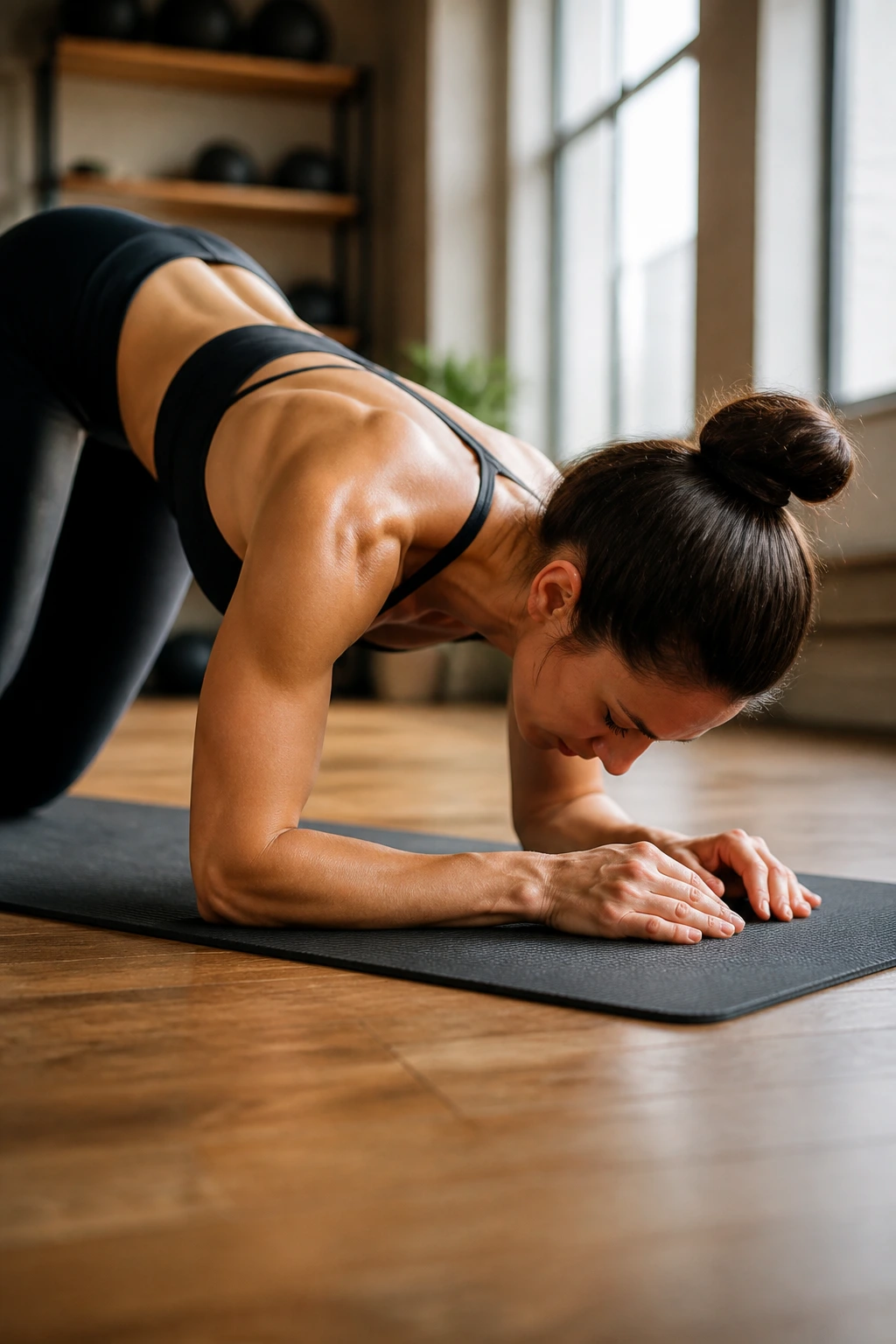
Dolphin Pose is a deep shoulder and back stretch, but the push-up variation is a strength-cardio hybrid. By starting in Dolphin (forearm downward dog) and pushing your chest toward your hands before returning to the start, you engage the deltoids, lats, and core.
This move is deceptive. It looks subtle, but performing 15 to 20 reps with a focus on speed will leave you breathless. The key is to keep your elbows tucked at shoulder-width distance. If the elbows splay out, you lose the structural integrity and the shoulder engagement, turning the move into a sloppy, ineffective effort.
Keep your gaze toward your feet or between your hands to maintain a neutral neck alignment. As you push forward, imagine you are a wave, moving smoothly rather than jerky. This controlled movement creates constant time-under-tension for the muscles, which is essential for muscle growth and metabolic upkeep.
8. High Lunge to Warrior III Transitions
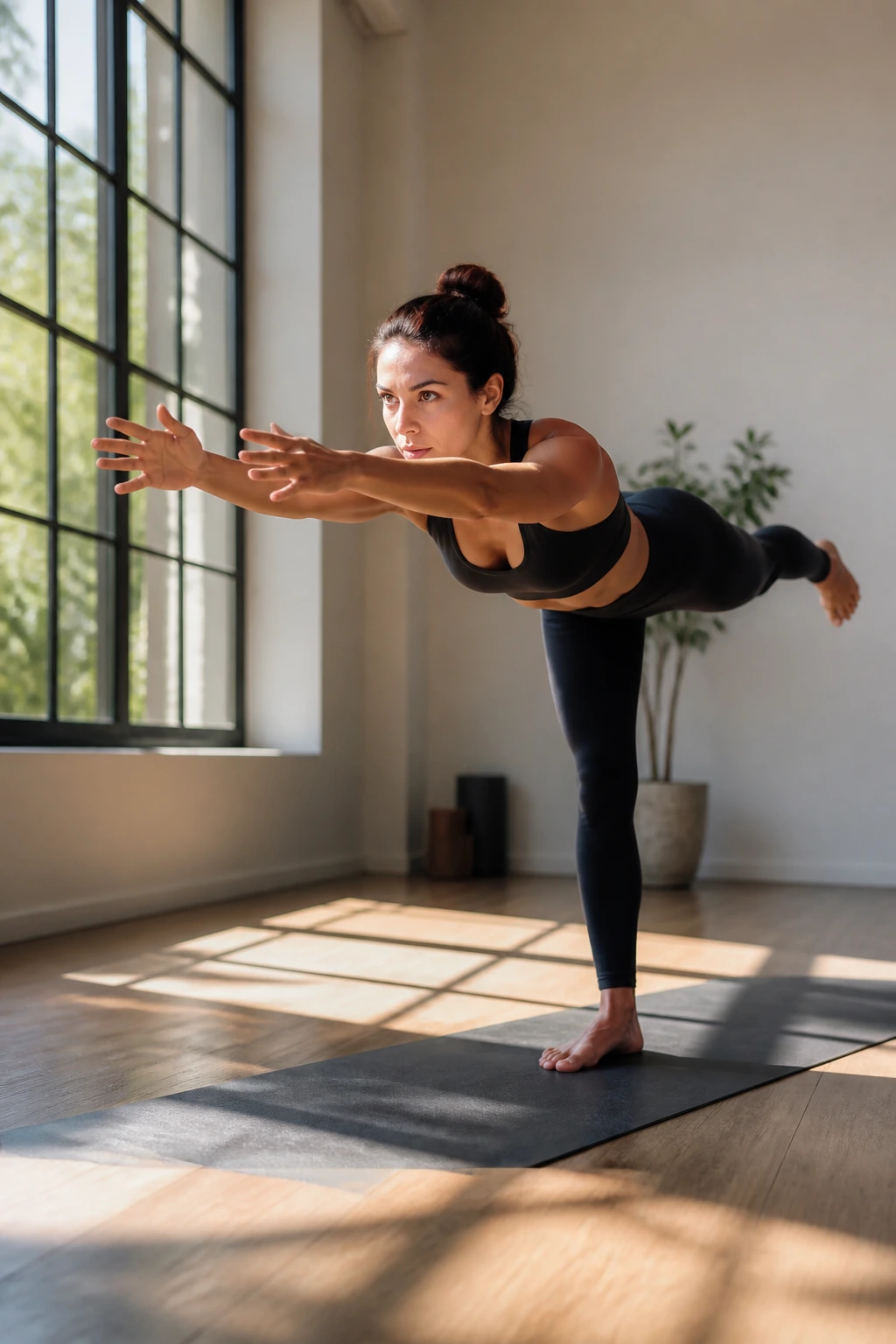
This is a balance-and-burn sequence. Moving from a High Lunge (crescent) directly into Warrior III (balancing on one leg) requires significant recruitment of the stabilizers in the standing ankle, calf, and hip. Repeating this transition is a form of functional cardio that improves your balance while burning calories.
Why is this effective? It requires a “hinge” movement at the hip. When you stand up from a deep lunge and balance on one leg, your glutes have to fire instantly to keep you upright. Doing this repeatedly, especially if you move with deliberate speed, forces the large muscle groups to work hard.
To make this harder, don’t tap your foot down between the lunge and the balance. Let the foot hover. This continuous balance work increases the energy expenditure, as your body is constantly making micro-adjustments to keep you upright.
9. Jump-Throughs from Downward Dog
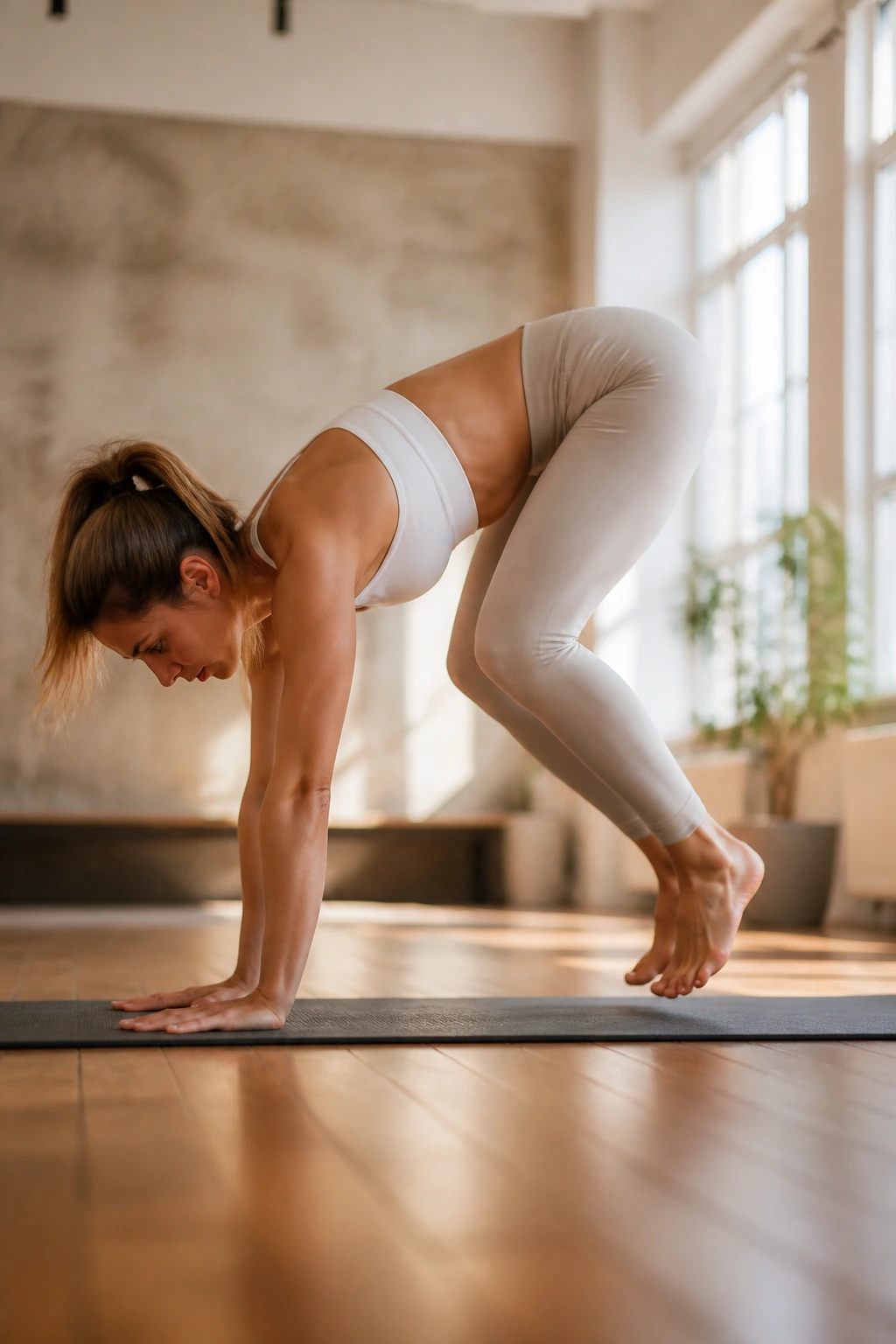
The jump-through is a classic transition in Ashtanga yoga, but it is often glossed over. When performed as a repetitive exercise, it becomes a plyometric movement. From Downward Dog, you bend your knees and explode your feet forward between your hands to land in a seated position.
This explosive movement is pure cardio. It recruits the entire core and requires significant power from the shoulders. Doing this ten times in a row will spike your heart rate faster than almost any other yoga move. It is effectively a burpee variation without the chest-to-floor component.
Make sure you land softly. The goal is silence. If you land with a heavy thud, you are relying too much on impact rather than muscle control. Use your abdominal strength to lift your hips high enough to clear your feet—that lift is where the fat-loss potential really lies.
10. Forearm Plank Saws
Plank variations are essential for core stability, but the “saw” adds a dynamic element that turns it into a full-body engagement. From a standard forearm plank, you rock your body weight forward and backward by pushing off your toes. This movement creates a “sawing” motion over the floor.
The Mechanics of the Saw
Why does this work? The movement forces the core to fight the shifting center of gravity. As you push forward, the load on the shoulders and abs increases exponentially. It is one of the most effective ways to build a dense, hard core.
Essential Tips for Success
- Keep the hips in line with the shoulders; do not let them sag.
- Move slowly; this is not about speed, but about total control of the oscillation.
- Focus on the push from the toes to initiate the movement.
Final insight: The longer your body remains in that perfectly straight plank line while rocking, the more your deep abdominal muscles are forced to engage.
11. Crescent Lunge Pulses
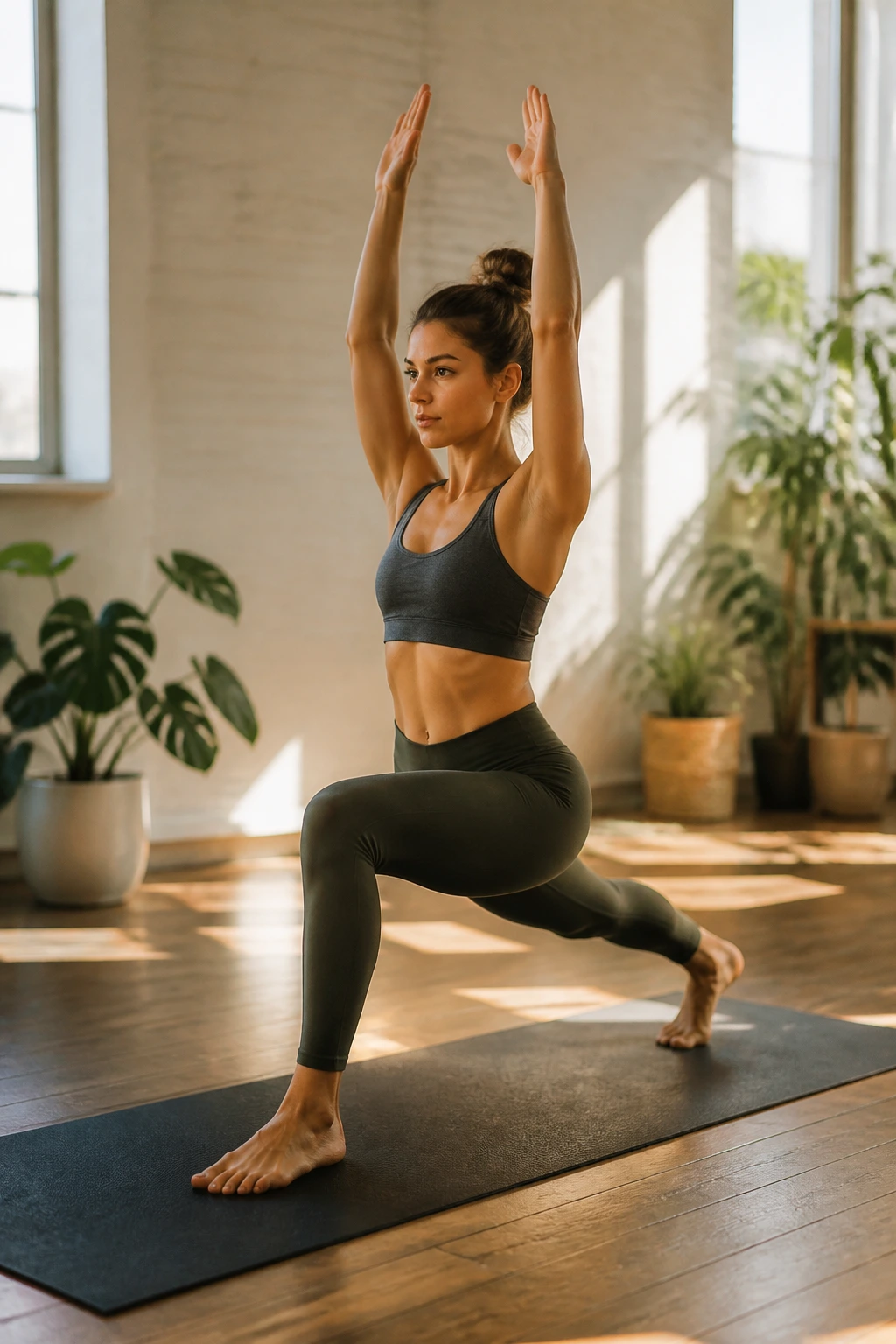
High lunges build lower body strength and endurance. By adding pulses to your Crescent Lunge, you extend the time the muscles spend under tension. This isn’t about deep, slow pulses, but rather sharp, controlled movements that keep the legs burning.
Keep the back heel lifted high; this engages the calf and creates stability. As you pulse, ensure the front knee stays stacked directly over the ankle. If it pushes forward, you’re shifting the load from the quads to the knee joint, which is exactly what you want to avoid.
The intensity of these pulses comes from the speed and the repetition. Aim for 20 pulses per side, then immediately switch. The back-to-back switching of the legs is what drives the cardio element, as you are not giving the legs a chance to recover between sets.
12. Squat to Crow Pose Transitions
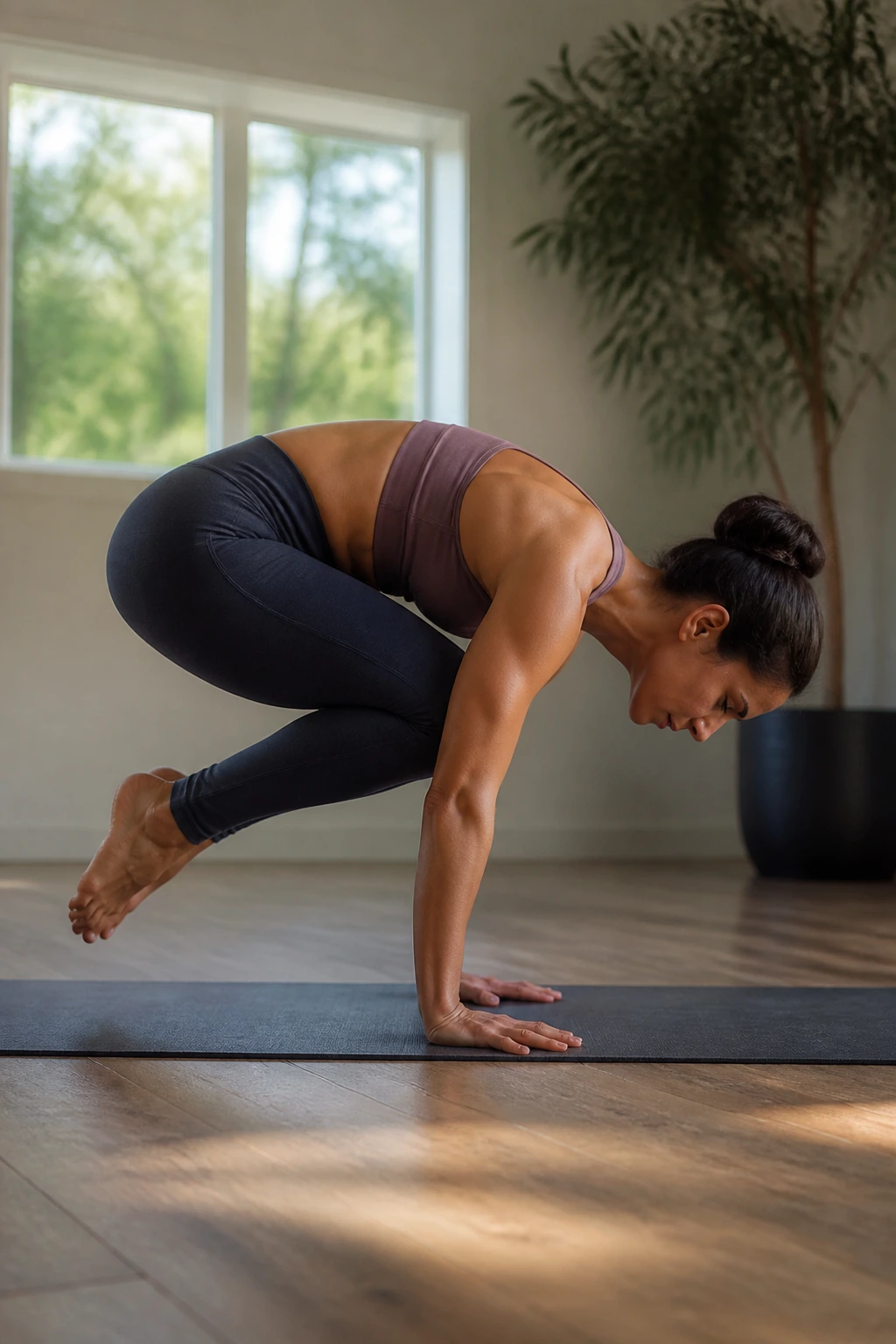
This transition is advanced, but once you master it, it becomes a fantastic cardio drill. Start in a deep squat (Malasana), then plant your hands, shift your weight forward, and hop or lift your feet into Crow Pose (Bakasana). Return to the squat and repeat.
This sequence challenges your core and your explosive strength. The act of lifting your body weight onto your arms requires total core compression. By repeating this, you are performing a functional full-body lift, which burns a high amount of energy.
If Crow Pose is out of reach, you can modify by planting your hands and jumping your feet back into a Plank, then jumping back into the squat. This is a “yoga burpee” and is arguably one of the most effective fat-loss moves you can do.
13. Downward Dog to Three-Legged Dog Flow
This flow seems simple, but when you add speed and a knee-to-nose crunch, it becomes a cardio movement. Start in Downward Dog. Lift your right leg high (Three-Legged Dog). As you exhale, pull your right knee toward your nose, rounding your spine. Inhale back to Three-Legged Dog.
This is a dynamic mountain climber variation. By lifting the leg high and then compressing the core, you use the full range of motion. Do 15 reps on the right, then 15 on the left. The continuous movement ensures your heart rate remains elevated.
Pay attention to your hands. Keep them rooted firmly into the mat. As you pull your knee in, you should feel your abs working to compress your torso. That squeeze is the most important part of the move.
14. Reverse Warrior to Triangle Flow
Moving between Reverse Warrior and Triangle Pose requires a deep side-body stretch and a strong lunge base. When you perform this flow dynamically, you are constantly alternating the orientation of your torso and the stretch in your legs.
This move is less about intense cardio and more about sustained work. It is the kind of move you can do for 5-10 minutes without stopping, which keeps your metabolism churning at a steady, elevated level. It targets the obliques, the hamstrings, and the glutes.
Don’t rush the transition. Maintain a deep, strong lunge in the front leg throughout the flow. The constant tension in the legs is what keeps the workout effective. If you straighten the leg completely, you lose the engagement.
15. Eagle Pose to Chair Squats
Eagle Pose (Garudasana) requires balance and concentration. To turn it into a cardio move, you must move into it dynamically. Start standing, arms wide, then swing them into Eagle bind while simultaneously sinking into a deep one-legged squat. Release, stand tall, and switch sides.
The balancing aspect is what makes this so demanding. Your stabilizers are firing at maximum capacity to keep you from wobbling. When you combine this with the squat, you’ve got a move that works the hips, the core, and the shoulders in a complex, integrated way.
It is helpful to focus your eyes on a single, unmoving point. This helps with the balance. If you are constantly adjusting your gaze, your body will sway, and you won’t be able to generate the power needed for the squat transition.
16. Mountain Climbers (Yoga Style)
Mountain climbers are a gym classic, but in a yoga setting, we focus on the spinal alignment. Start in a high Plank. Drive one knee toward the chest, then the other, at a steady pace. Unlike the “rushed” gym version, yoga mountain climbers emphasize the core squeeze.
Making It Effective
Why focus on the squeeze? Because the abdominal muscles are what pull the leg in. The faster you move, the more your heart rate rises, but if you don’t compress the core, you are just moving your legs without purpose.
Form Essentials
- Keep your hips low; do not pike them toward the ceiling.
- Press firmly into the ground with your fingers.
- Maintain a steady rhythm; do not let the speed cause your form to break down.
Pro tip: For maximum cardio, alternate between slow, deep squeezes and rapid, explosive steps.
17. Locust Pose to Bow Pose Transitions
While these are back-strengthening poses, transitioning between them is physically demanding. Start in Locust, lifting your chest and legs off the mat. Transition directly into Bow Pose by grabbing your ankles, then release back to Locust.
This sequence is intense for the lower back and requires significant exertion. It is an excellent way to balance out the front-side work of planks and lunges. By keeping the flow going without resting your chest on the floor, you keep the posterior chain active.
This is not a high-impact cardio move, but it is a “high-effort” move. The muscle engagement required to lift your body against gravity is substantial. It raises your metabolic demand simply because the effort of holding your limbs in the air is constant.
18. Boat Pose Crunches
Traditional Boat Pose is static, but adding a crunch—lowering the legs and torso toward the floor and then pulling them back up—turns it into a dynamic ab exercise. This is, in effect, a V-up variation.
This movement is significantly harder than a standard crunch because the leverage is much greater. You are moving a longer lever (your legs and torso) against gravity. This increased workload leads to a higher calorie burn per repetition.
Be mindful of your lower back. If you feel any “clunking” or pain in the spine, you are lowering too far. Only go as low as you can while keeping your back firmly pinned against the floor. Safety in the spine is the priority over the range of motion.
19. Extended Child’s Pose to Plank
This is a flow between rest and intensity. Start in Child’s Pose with your arms extended forward. Shift your weight forward, rolling through the spine into a Plank. Hold the Plank for one breath, then push back into Child’s Pose.
This is an excellent “recovery” cardio move. It allows you to catch your breath while still keeping your muscles engaged. It is the bridge between high-intensity sets. Use this move when you need to recalibrate your heart rate without stopping your practice completely.
The rolling motion through the spine is also great for mobility. As you come into Plank, ensure your shoulders are stacked directly over your wrists. This alignment ensures you are supported by bone structure rather than just muscular effort.
20. Wide-Legged Forward Fold Pulse
Stand in a wide-legged stance. Hinge at the hips to come into a forward fold. While in this position, pulse your torso toward the ground, then lift slightly. This dynamic movement loosens the hamstrings while keeping the legs engaged.
Why does this matter for cardio? Because you are constantly moving a large portion of your body mass. The hinging movement requires the glutes and lower back to work. It’s an active stretch, which is far better for fat loss than a passive, static stretch.
Keep your weight centered in the balls of your feet. Do not let your heels lift, but do not dump all your weight into the heels either. A balanced stance allows for more fluid, controlled movement.
21. Goddess Pose Sways
Goddess Pose (Utkata Konasana) is a deep squat with the hips open and knees out. It is a legendary leg builder. To add cardio, sway your hips from side to side, keeping the legs in that deep, burning squat the whole time.
This constant side-to-side motion forces the legs to maintain their output. It is essentially an isometric hold with a dynamic layer. It targets the inner thighs, glutes, and obliques simultaneously.
If the burn becomes too intense, lift slightly, but do not stand up. The moment you stand up, the cardio effect dissipates. Stay in the “burning” zone for 45 seconds to a minute—that is where the structural changes to your endurance happen.
22. Chaturanga-to-Upward-Dog Speed Reps
Chaturanga is the push-up of yoga. The transition to Upward Dog involves a deep chest opening. By moving rapidly between these two, you create a powerful, repetitive movement that hits the chest, triceps, and shoulders.
This is a high-intensity move. Most practitioners move through this too slowly. To get the cardio benefit, move with intent. Push the floor away hard during the transition. Use your muscles to power the lift, not just momentum.
Be careful with your wrists. If this feels too intense, modify by doing the push-ups on your knees. The modification does not make the move “easy”—if you do it correctly, it remains a fantastic strength-endurance builder.
23. Twisted Lunge Flows
Start in a High Lunge and twist your torso toward the front leg, arms extended. Return to center, then twist the other way or repeat the same side. This rotational movement is incredibly effective for the obliques and cardiovascular system.
The twist requires you to brace your core, which is an energy-intensive process. When you add the lunge stability to the twist, you are working your entire midsection. It is a sophisticated way to get more out of your lunge practice.
Focus on twisting from the navel, not the shoulders. If you just crank your shoulders around, you aren’t getting the deep abdominal work. The movement should be slow, controlled, and deep.
24. Jump Back to Plank
This is the “power” move of the sun salutation. When you are in a forward fold, plant your hands and explode your feet backward into a high Plank in one single movement. This is a plyometric exercise that requires significant core and shoulder power.
Why is this a fat-loss move? It uses your entire body weight explosively. Any movement that forces you to lift or move your body weight against gravity rapidly is a winner for metabolic health. It is far more demanding than walking your feet back.
Land softly. The goal is to land with your feet in the perfect Plank position every time. If you land with a crash, reduce the speed until you have the control to be silent. Control is the hallmark of a high-level practice.
25. Surya Namaskar C (Focus on Speed)
Surya Namaskar C (often called the lunge-based sun salutation) is perfect for cardio because of the lunge transitions. By moving through these sequences with speed and precision, you turn a stretching routine into a full-body conditioning session.
The lunges in this sequence keep the heart rate elevated. The reach to the sky works the shoulders, and the flow keeps the core braced. It is a complete package. If you want to lean out, this is the sequence to master.
Practice this sequence 10 times consecutively, focusing on your breathing. If you can keep your breath even and steady while moving quickly, you are building the exact kind of aerobic capacity that translates to fat loss and improved health.
Final Thoughts
Yoga for fat loss is entirely about your intent. If you treat your practice as a time to rest and stretch, you will get those benefits, but you will miss the cardiovascular rewards. By focusing on constant movement, deep muscle engagement, and transitions that challenge your explosive power, you turn your mat into a gym.
Remember that consistency matters more than intensity on any single day. It is better to have a moderate, sustainable flow six days a week than to push yourself to the brink of exhaustion once and then take three days off to recover. Listen to your body, find that sweet spot of effort, and keep moving. Your practice should feel like work, but it should also leave you feeling energized and capable, not depleted and broken. Find the flow that makes you sweat, and the rest will naturally follow.
