



At three months pregnant, safe workouts often look calmer than people expect.
No heroics. No all-out sprints. For an uncomplicated pregnancy, the sweet spot is usually movement that keeps you warm, steady, and able to talk in short sentences without gulping air.
Obstetric guidance has long leaned toward regular moderate exercise rather than bed rest, and the practical signs are plain enough: you should feel worked, not wrecked; challenged, not shaky. That usually means no breath-holding, no overheating, no hard contact, and no workouts that make your balance feel sketchy.
If your clinician has given you restrictions for bleeding, placenta issues, severe anemia, high blood pressure, or anything else, those instructions win every time. Otherwise, the smarter question is not whether you can exercise, but which movements still feel good around 12 weeks, when nausea may be easing but fatigue can still hit like a truck.
A good rule: if you can speak in short, clear sentences while you move, you’re probably in the right zone.
Some days call for a brisk walk. Some days call for the pool, a bike, or a mat on the floor. The safest workouts at this stage tend to be the ones that look almost boring from the outside, which is exactly why they work so well.
1. Brisk Walking
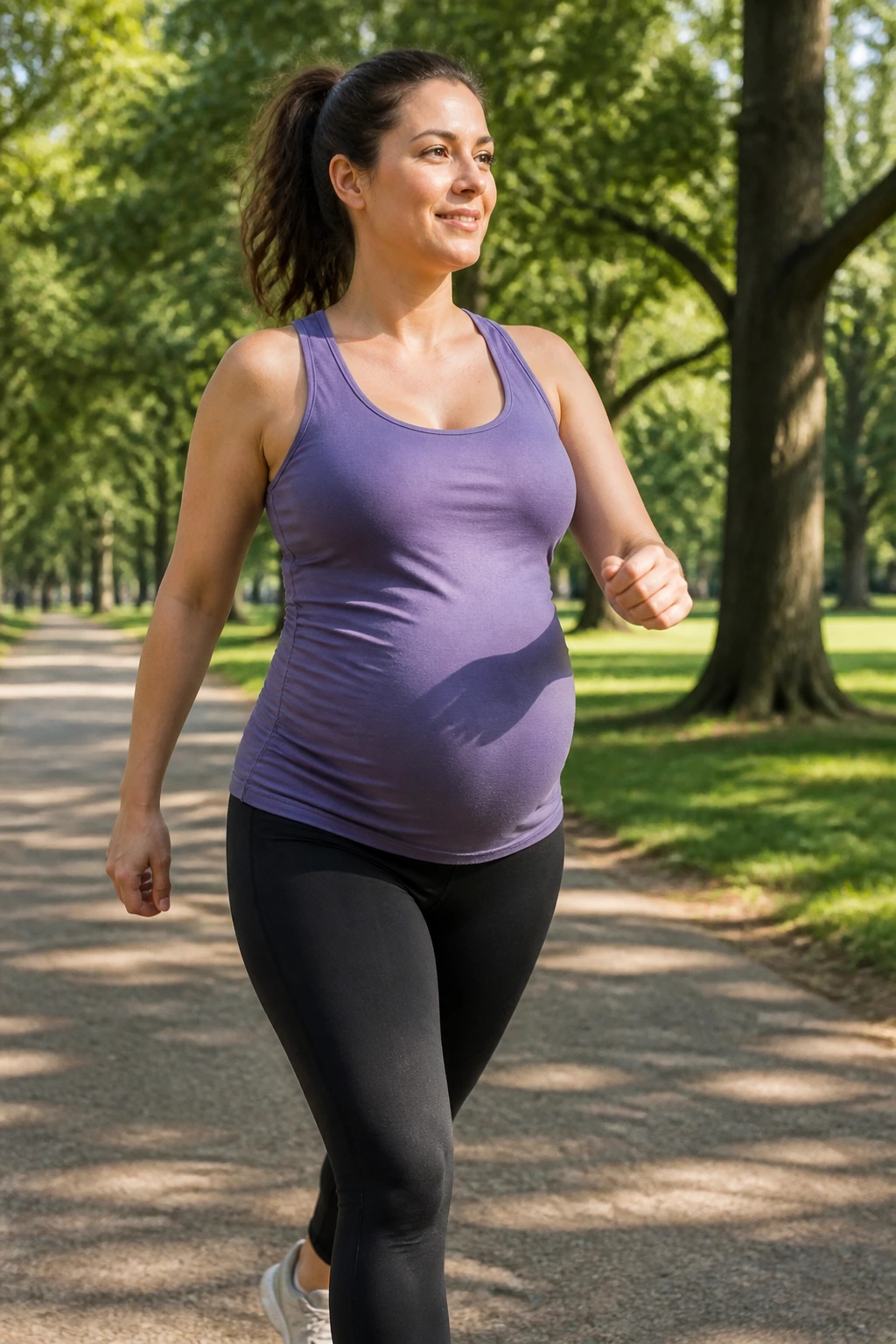
Walking sounds too plain to count, and that’s partly why it earns a permanent place in prenatal fitness. At three months pregnant, a brisk walk can lift energy, ease that heavy-legged feeling, and give you a cardio dose without jarring your joints.
How Fast It Should Feel
Keep the pace at a level where your breath is quicker but controlled. You should still be able to talk in short phrases. If you need to stop mid-sentence to catch air, back off a notch. A 15- to 30-minute walk on flat ground is plenty for most days.
A few details make a bigger difference than people think:
- Wear shoes with a stable heel and enough toe room.
- Keep your stride a little shorter than usual.
- Swing your arms naturally instead of hunching forward.
- Skip slippery paths, uneven curbs, and steep downhill stretches.
- Split the walk into two or three shorter outings if fatigue shows up.
Pro tip: the walk you actually take beats the “perfect” walk you keep postponing. Ten minutes after lunch counts.
2. Stationary Cycling
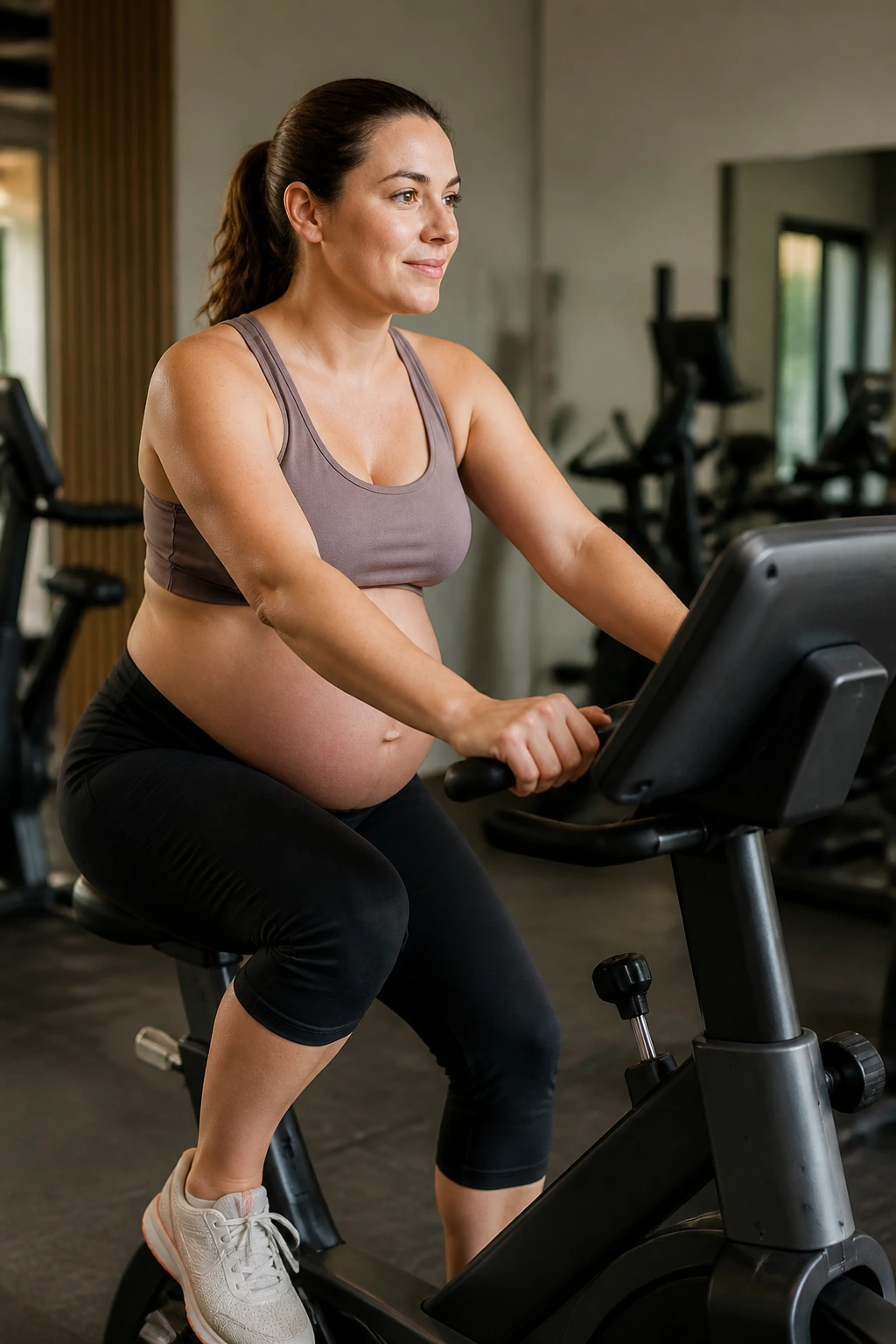
A stationary bike is one of the cleanest cardio options in early pregnancy. No impact. No balancing act. No pounding through the pelvis.
The bike also lets you control everything: resistance, speed, posture, and how hard you breathe. Set the seat so your knee stays slightly bent at the bottom of the pedal stroke, and keep the handlebars high enough that you are not folding your rib cage into your thighs. That cramped, curled-up position gets old fast.
A steady 15- to 25-minute ride at moderate resistance works well for many people. The goal is smooth pedaling, not a personal best. If your lower back feels pinchy, raise the handlebars or use a recumbent bike instead. Recumbent seats are a little boring, yes, but they’re kind to the pelvis.
And one thing people forget: keep your cadence easy enough that you do not start bracing your belly. Pregnancy exercise should feel like movement, not a test of how tightly you can hold yourself together.
3. Swimming Laps
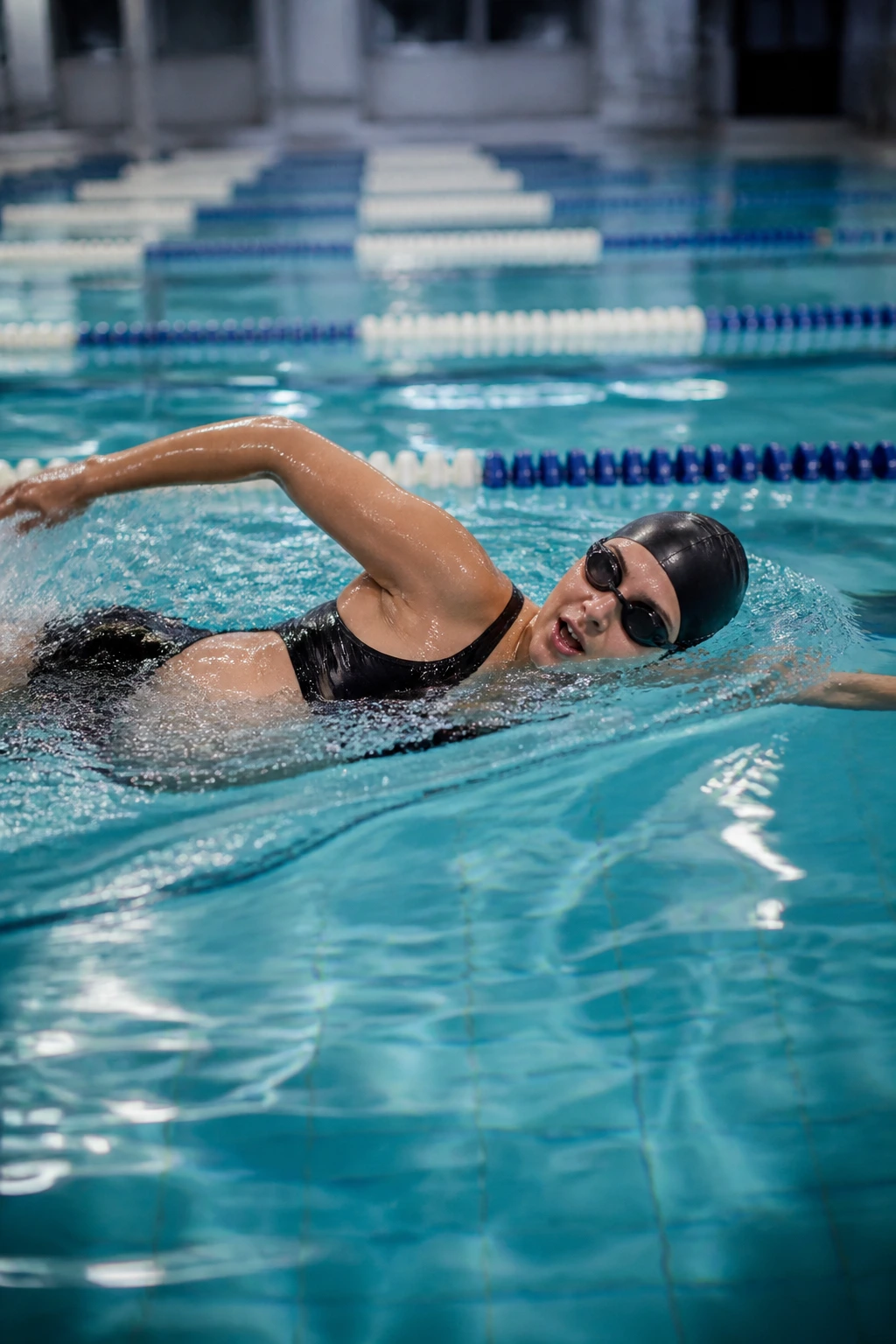
Why does the pool feel so good at 12 weeks? Because water takes the load off your joints and gives your body a break from gravity for a while.
That floating feeling is not just pleasant. It can make a stubborn lower back feel calmer, and it can help if your hips feel weirdly stiff after sitting all day. Freestyle, easy breaststroke, and relaxed backstroke are all fair game if they feel good and your pool allows them.
How to Use the Pool
Keep the pace easy and the turns unhurried. A 10- to 20-minute swim can be enough, especially if nausea or fatigue has been part of your day. If full laps sound like too much, alternate a lap with a short rest at the wall.
A few practical cues matter here:
- Choose a lane with room so you are not dodging fast swimmers.
- Drink water before and after, even though you’re already in it.
- Skip very hot pools.
- Use a kickboard only if it does not strain your neck or low back.
- Keep flips and tight underwater work out of the mix if they make you dizzy.
Swimming is sneaky in a good way. It feels gentle, then you get out and realize your shoulders worked, your legs worked, and your mood improved too.
4. Water Walking or Aqua Aerobics
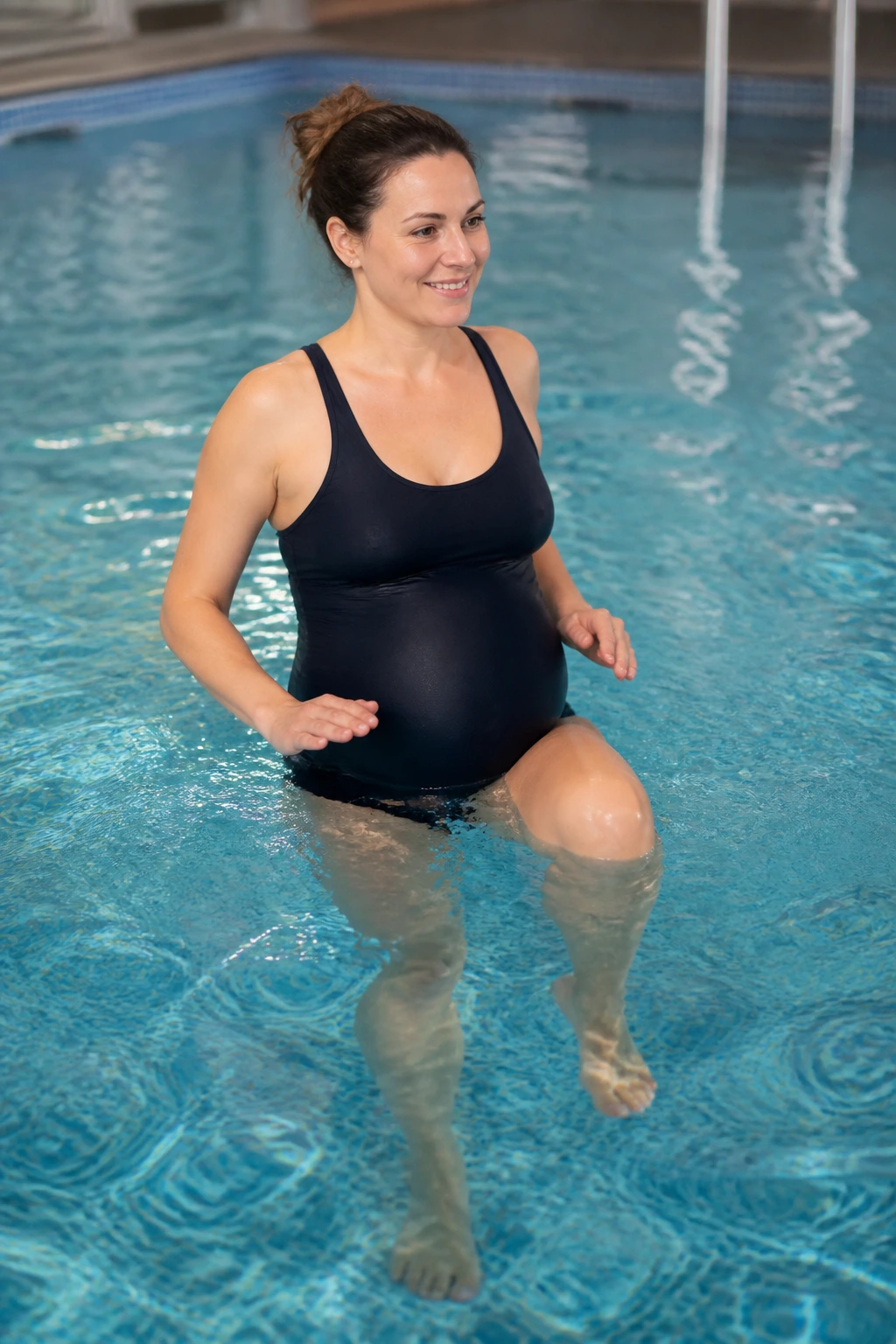
If dry-land cardio leaves your hips grumpy, water walking is a sharp little fix. Chest-deep water gives you buoyancy, but it also adds resistance, so your legs and glutes still have work to do.
Picture marching forward through the pool, then adding side steps, gentle knee lifts, and slow arm sweeps. That is aqua exercise in its simplest form. It looks easy from outside the lane. Inside the water, it burns in a clean, manageable way.
- Use chest-deep or shoulder-deep water.
- Keep your steps deliberate, not splashy.
- Try 2 to 4 minutes of marching, then 1 minute of easy recovery.
- Add side shuffles if your balance feels solid.
- Stop if the pool is so warm that you start feeling flushed or light-headed.
A pool noodle can help with support during jogging drills or light kicks. Twenty minutes in water often feels easier on the body than ten minutes on land, and that matters when pregnancy makes your joints a little less predictable.
5. Prenatal Yoga
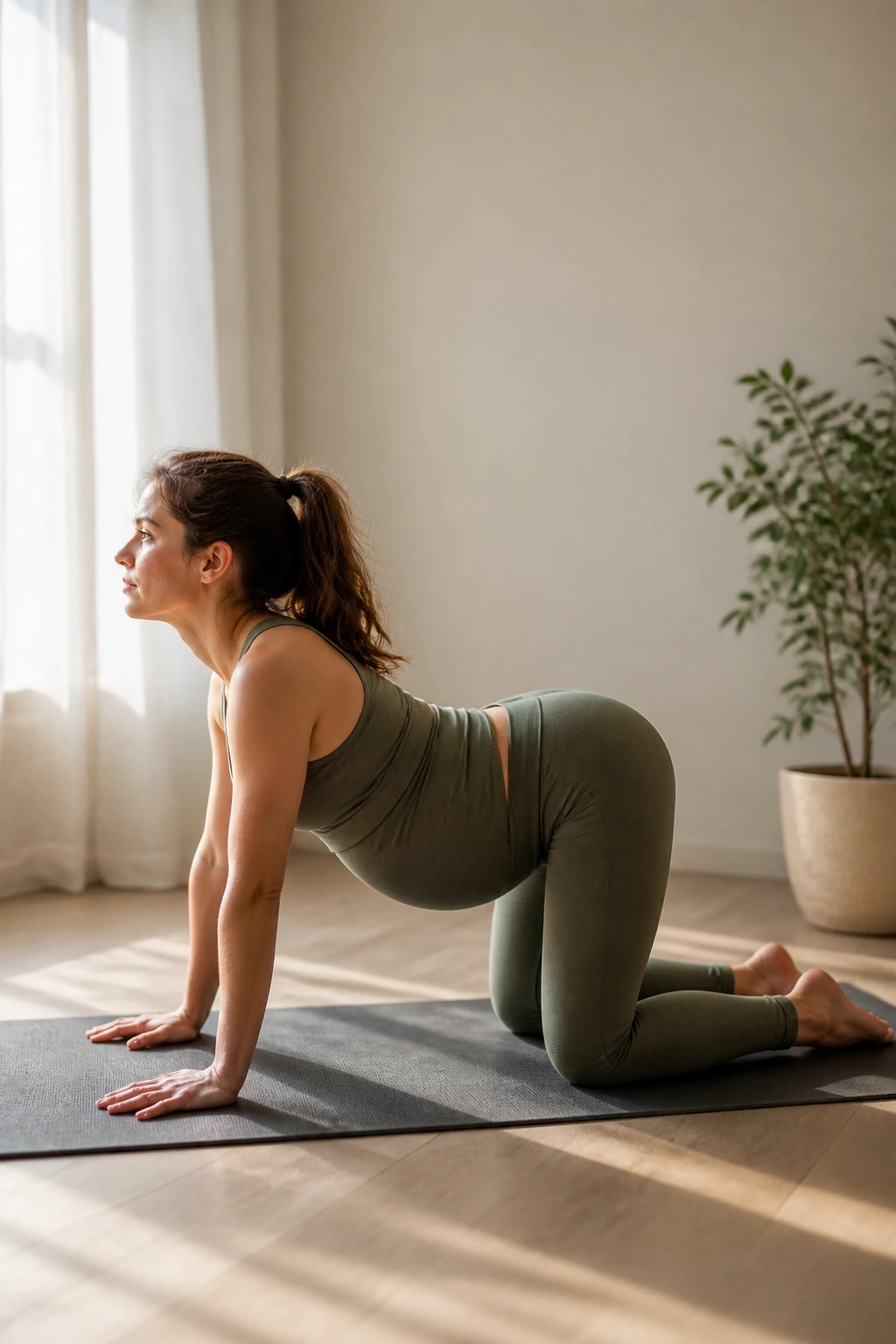
Prenatal yoga works because it does three useful things at once: it moves your joints, slows your breathing, and gives your nervous system a break. That combination matters when your body is changing faster than your brain can keep up.
Choose classes or videos that avoid hot rooms, aggressive twists, and long holds that leave you straining. Gentle cat-cow, wide-knee child’s pose, supported warrior stances, and side stretches usually feel better than deep backbends or anything that asks you to brace hard through the belly.
A good teacher will keep reminding you to breathe first. That is the whole point. If a pose makes you hold your breath, clench your jaw, or feel unstable on one foot, the pose needs to change, not your standards. Use a wall, a block, or the back of a chair without apology.
One of the nicest things about prenatal yoga is that it doesn’t need to be dramatic. Slow movement, clean alignment, and a few minutes of stillness can leave you feeling more put together than a sweaty workout ever could.
6. Pilates Mat Work
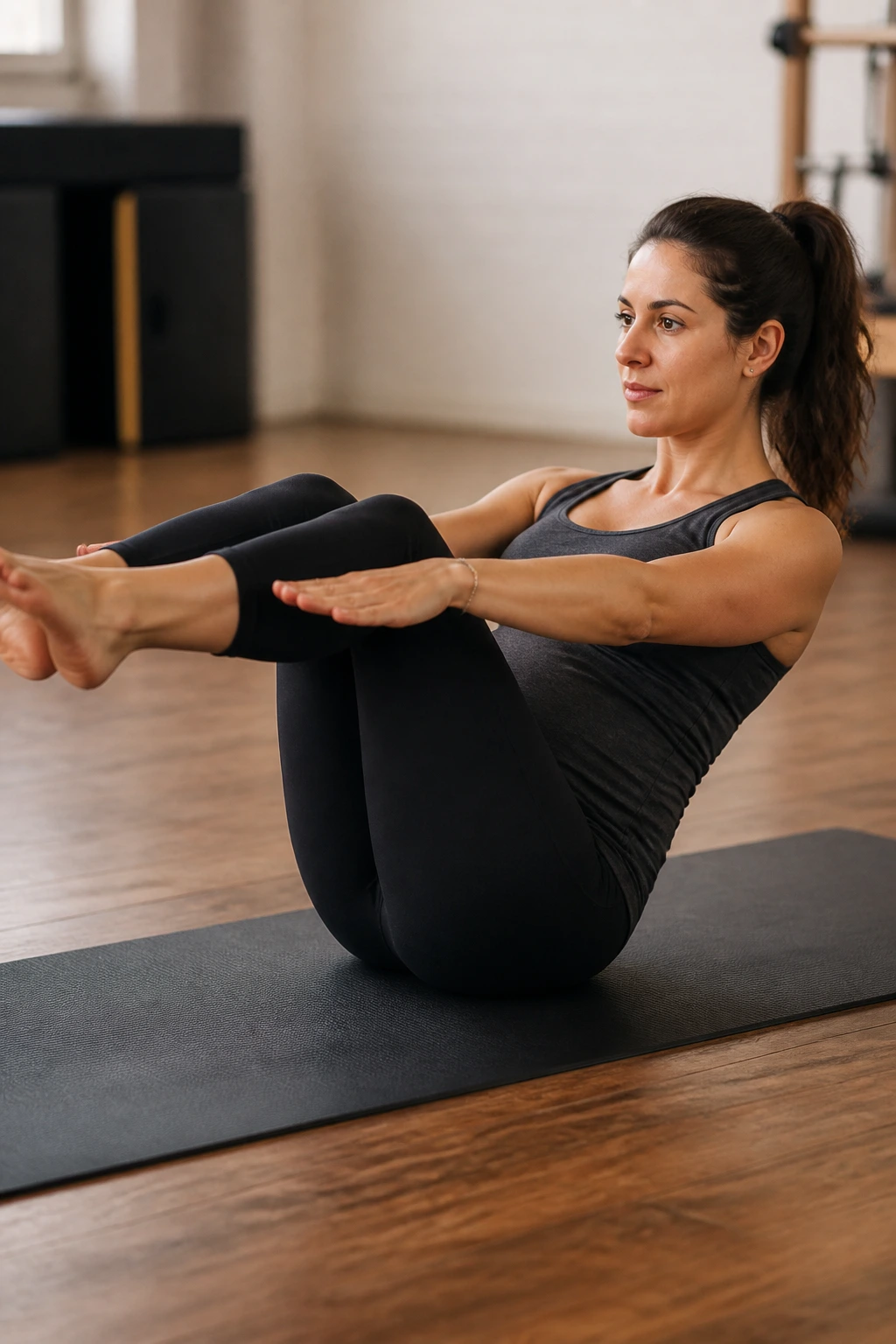
Unlike old-school ab circuits, prenatal Pilates focuses on control, posture, and the muscles that actually help you carry a changing body. That usually means deep core support, glutes, and the muscles around the upper back, not endless crunches.
Think heel slides, bird dogs, side-lying leg lifts, pelvic tilts, and slow arm work while you keep your ribs stacked over your hips. If a move creates visible doming down the middle of your belly, ease off. That little ridge is your cue that pressure is building where it doesn’t need to.
Pilates is best for people who like precision. You can do a short session with one or two sets of 8 to 12 slow reps and still feel the work later in the day. That’s enough. Really.
It also tends to expose sloppy posture fast. The fix is simple: soften the knees, lengthen the neck, and stop trying to “suck in” your stomach. That old cue causes more trouble than it solves.
7. Bodyweight Squats and Sit-to-Stand Drills
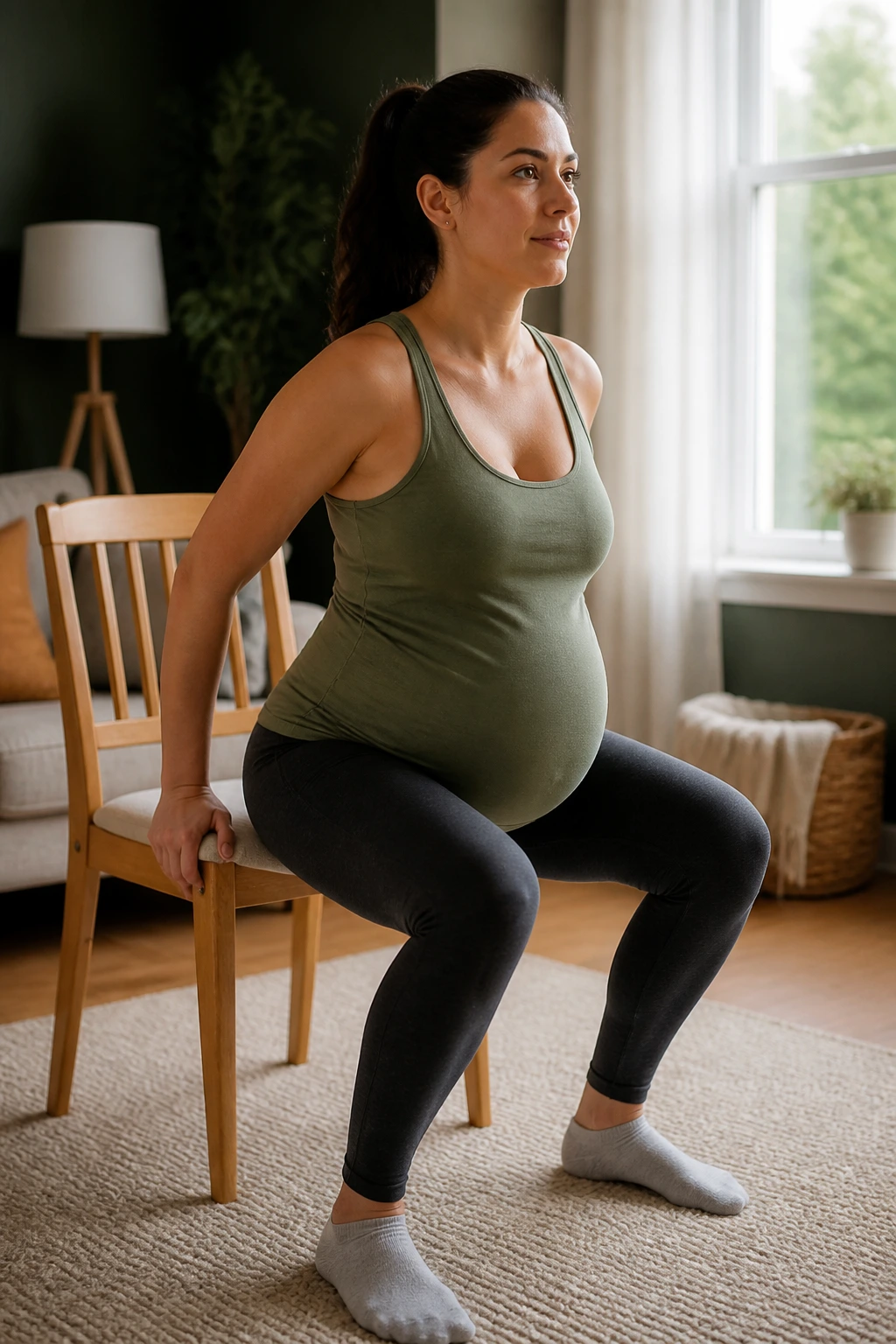
Squats are a workhorse in pregnancy fitness because they train exactly the things you use all day: standing up, sitting down, getting in and out of the car, and picking things up without feeling wobbly.
A chair, couch edge, or sturdy bench turns the movement into a sit-to-stand drill, which is honestly one of the friendliest ways to build leg strength at this stage. Keep your feet about shoulder-width apart, send your hips back first, and stand by exhaling rather than holding your breath.
What to Watch For
- Let your knees track in line with your toes.
- Use a countertop or chair back for balance if needed.
- Stop the descent before you feel pinching in the pelvis.
- Keep the chest open instead of collapsing forward.
- Try 8 to 10 slow reps for 2 rounds.
A lot of people make squats harder than they need to be. You do not need a deep, gym-style squat to get benefit. A clean, controlled half-squat done well beats a shaky deep one every time.
8. Resistance Band Upper-Body Work
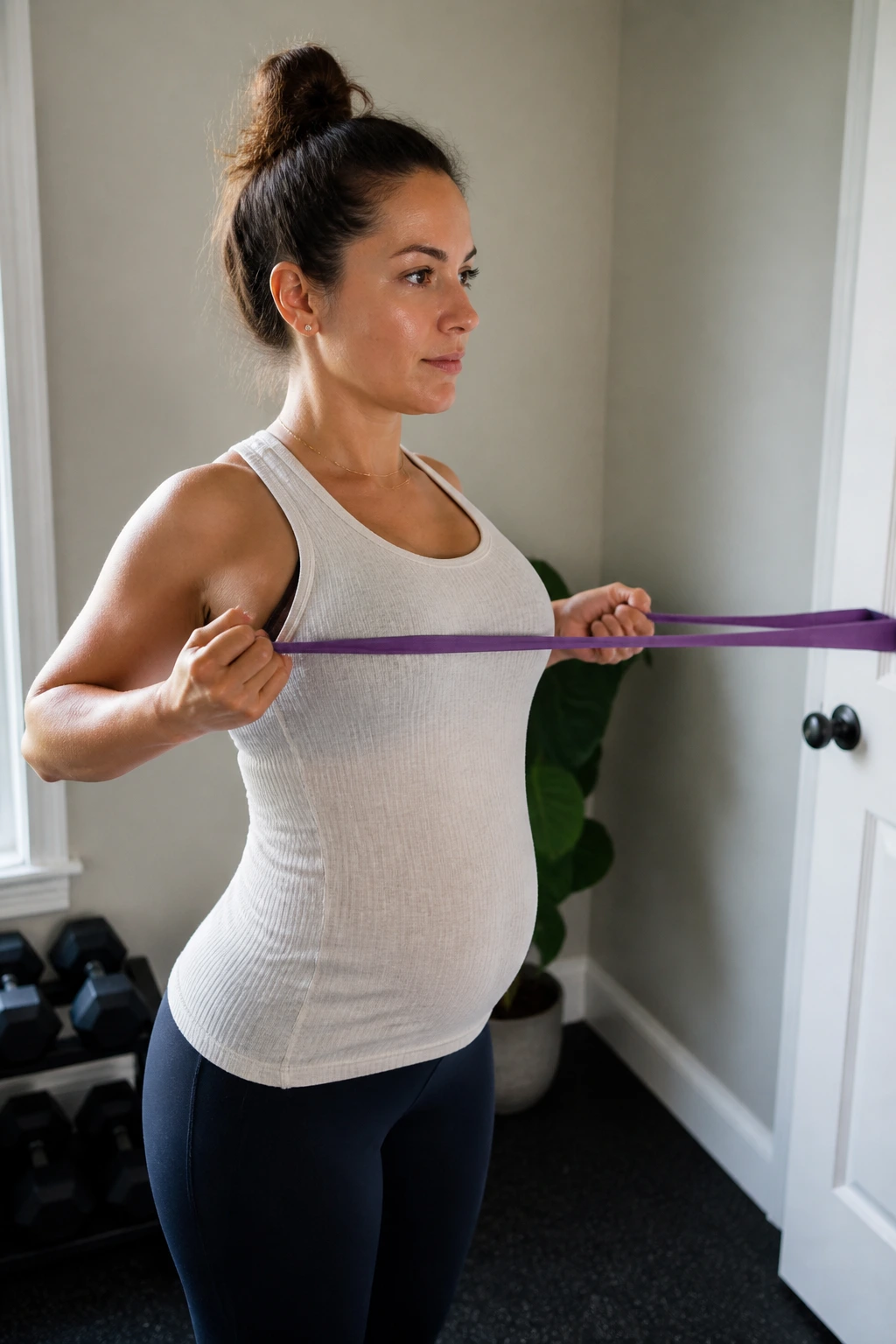
Bands are underrated. They give you a useful amount of resistance without loading the joints the way heavier free weights can, and they fit easily into a prenatal routine.
Rows, chest presses, biceps curls, triceps press-downs, and pull-aparts all work well. Keep the motions smooth and don’t let your ribs flare up just because the band gets tough near the end of the rep. That flare is a sneaky way to dump pressure into your back.
A simple band session can look like this: 10 rows, 10 presses, 12 curls, 10 pull-aparts, then a short rest. Repeat two or three times. The sweet spot is a burn in the muscles, not strain in the neck.
If you feel the band tugging you forward, step closer to the anchor or use a lighter band. Pregnancy is not the time to prove anything to a stretchy piece of rubber.
9. Light Dumbbell Circuit
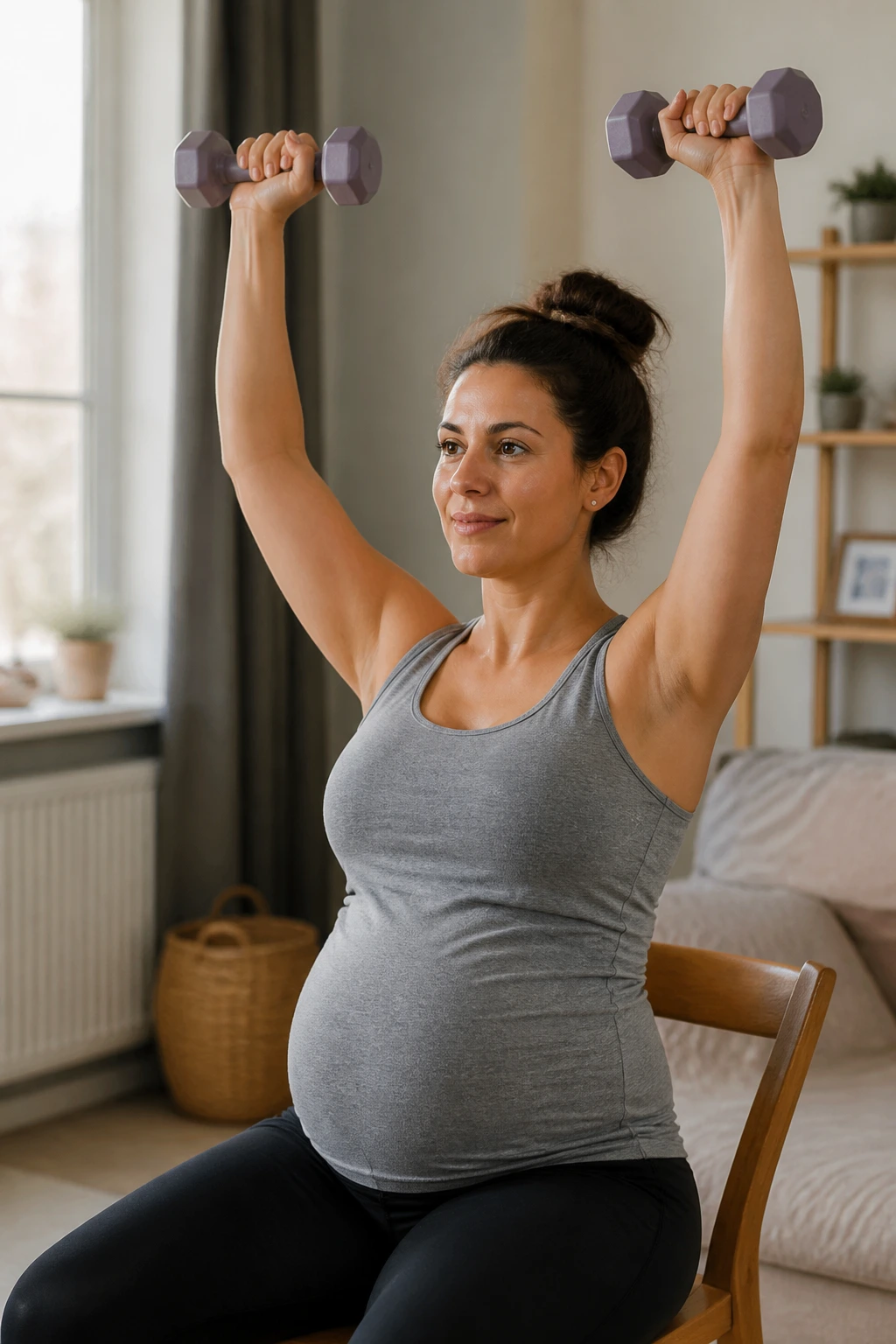
A pair of light dumbbells can still do a lot of useful work, even if “light” now means 3 to 8 pounds instead of whatever used to feel easy. The trick is to move slowly enough that the muscles do the work instead of momentum.
A good circuit might include one-arm rows, seated shoulder presses, goblet squats, and farmer carries. Keep the movements smooth, and rest before your form starts getting sloppy. Slow lowering phases matter here more than people think; that’s where a lot of the training effect lives.
If overhead work makes you dizzy or arch your back, drop it. Do rows and carries instead. If goblet squats feel awkward because of belly pressure, keep the dumbbells at your sides and use a sit-to-stand pattern.
This kind of session works well on days when you want to feel strong without feeling wrecked. Twenty minutes can be enough. Maybe 25 if you’re having a good day and your energy is cooperating.
10. Elliptical Training
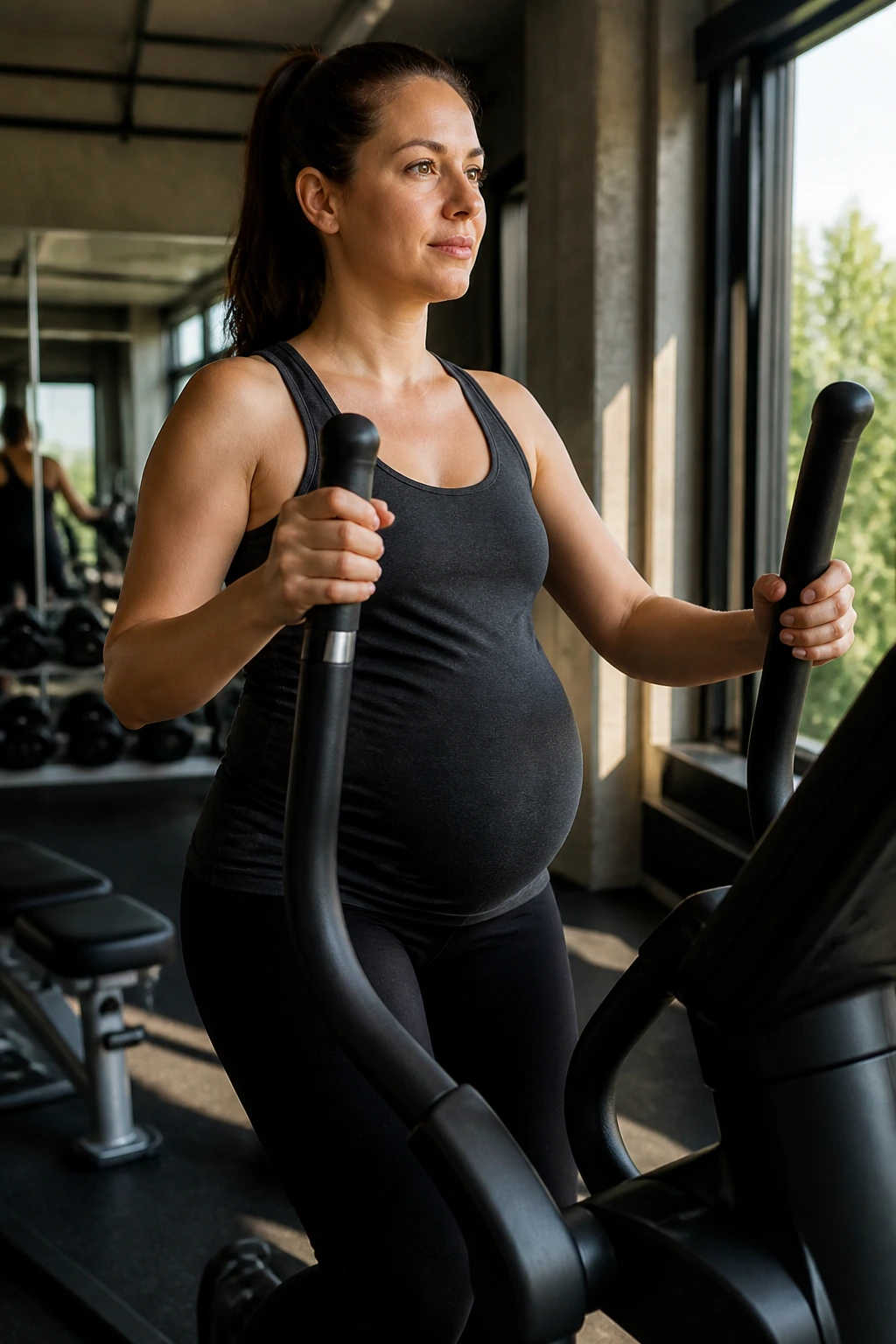
The elliptical earns its spot because it gives you cardio without the pounding you get from running or jump-heavy classes. Your feet stay connected to the pedals, which keeps things steadier for the pelvis and ankles.
Set the resistance low enough that you can keep your shoulders relaxed. If you are hanging on the handles like they owe you money, the machine is too hard or your posture is off. Stay tall, keep the stride smooth, and let the legs turn the pedals without muscling every push.
A 10- to 20-minute session is often enough. Add a minute or two if you’re feeling solid, not because you’re chasing a number. If your balance feels odd, use the fixed handles or step off and switch to walking.
One upside people don’t always expect: the elliptical can mimic a brisk walk on a rainy day without the impact. That makes it a decent bridge when walking outdoors feels boring, wet, or too hot.
11. Low-Impact Dance Cardio
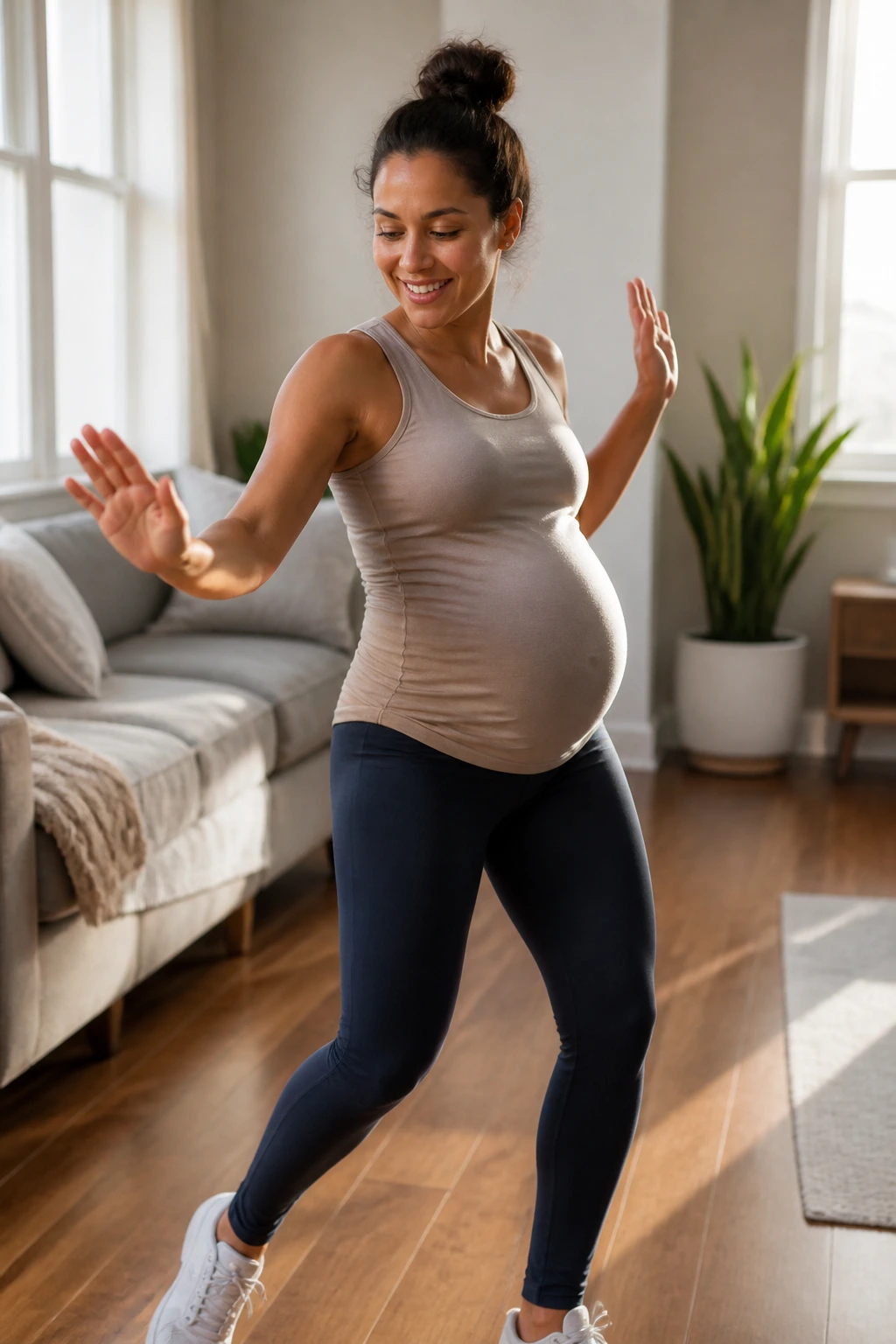
Low-impact dance cardio is the answer for anyone who wants to move, sweat a bit, and not feel like the workout has turned into a punishment. Think step-touch, side taps, grapevines without jumps, marches, knee lifts, and easy arm patterns.
The key is to keep the moves grounded. No hop-switches. No fast spins that leave you dizzy. No move that asks you to land hard or wrench your torso into a twist. A class or video can be lively without being frantic.
What Makes It Work
The rhythm keeps your mind engaged, and the repeated steps are easy to scale up or down. If you need a lower-intensity version, take the arms out and keep the legs moving. If your hips feel tender, shorten the side steps and lower the knee lifts.
Dance cardio is one of those workouts that quietly helps mood as much as fitness. That matters. A routine you enjoy is a routine you’re more likely to repeat tomorrow.
12. Rowing Machine, Gently
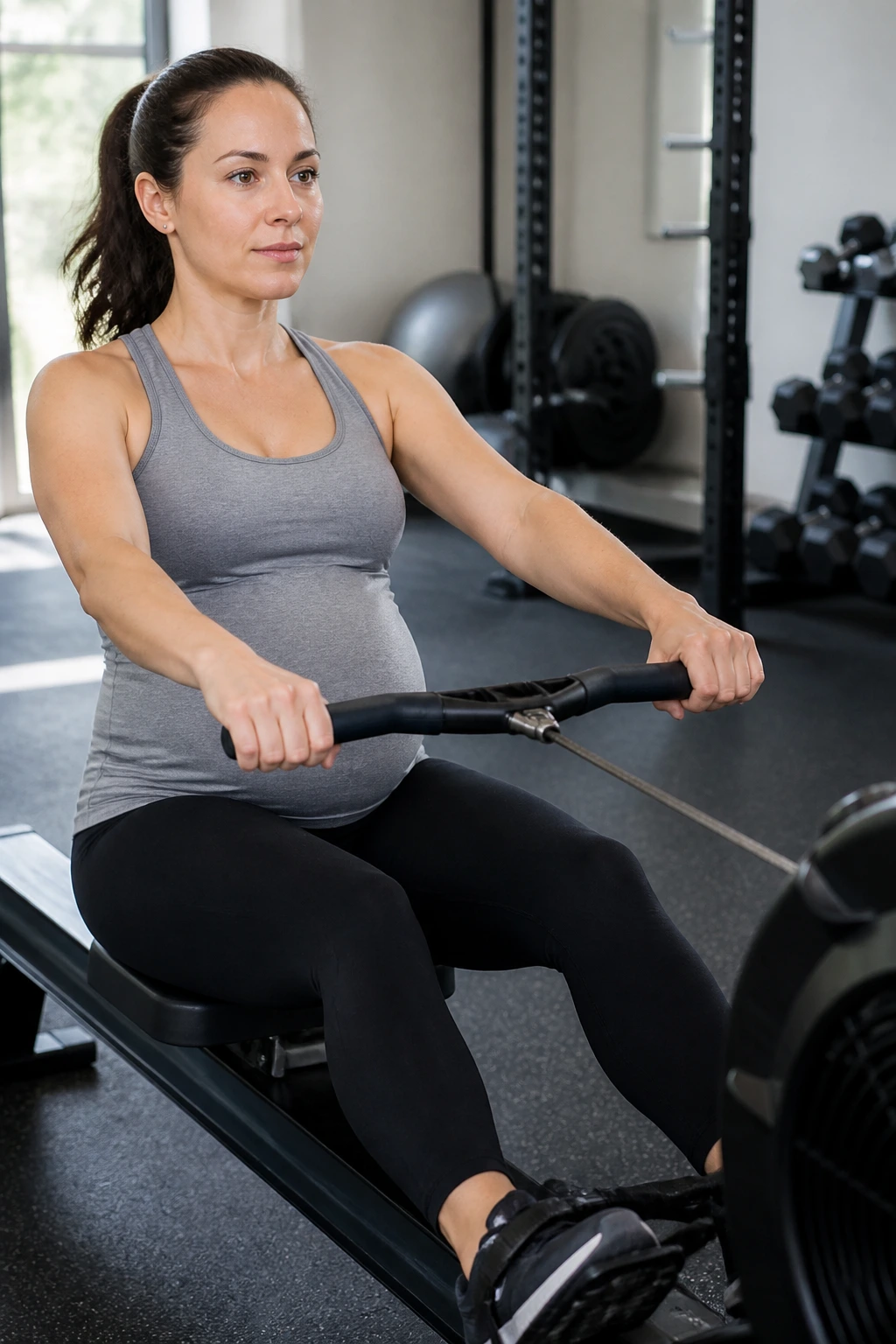
If you miss the feel of a full-body workout, a rowing machine can scratch that itch without the impact of running. The catch is that form matters a lot more than people assume.
Use a low damper setting, keep the stroke smooth, and lean forward from the hips rather than collapsing your chest. The drive should feel like legs first, then back, then arms. If your lower back rounds or the handle taps your belly in an uncomfortable way, the machine may not be your friend that day.
Try 8 to 15 minutes of easy intervals — maybe 1 minute rowing, 1 minute easy rest — and see how your body responds. Some people love rowers in early pregnancy. Some hate them within two minutes. Both reactions make sense.
No prize for forcing it. If the seat feels too hard, your pelvis gets sore, or your stomach feels compressed, swap to a bike or a walk and move on with your life.
13. Incline Treadmill Walk
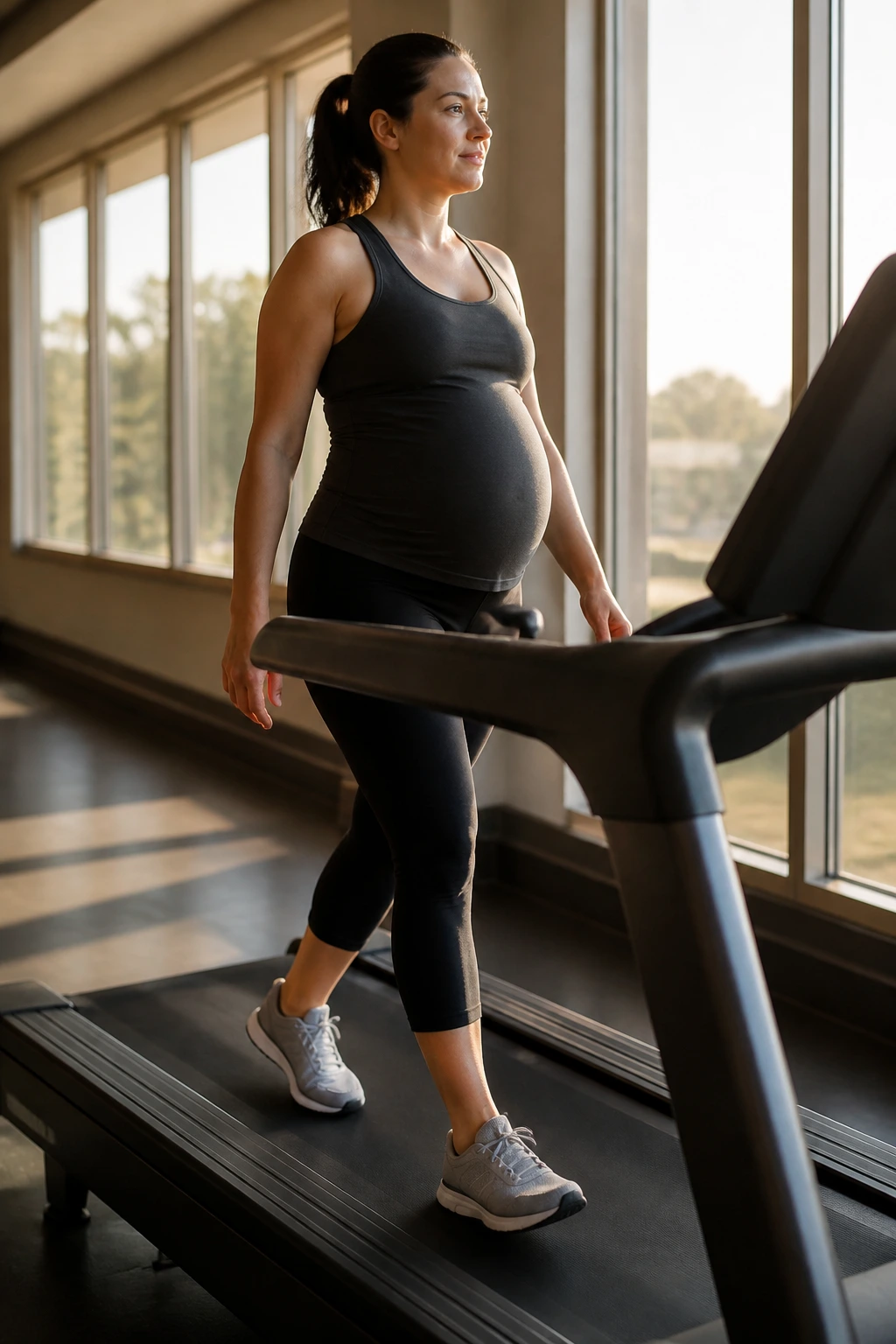
A small incline changes everything. A flat treadmill walk is fine, but a mild incline lets you raise effort without needing to run or bounce around.
Keep the incline modest — 1 to 4 percent is enough for most people — and the speed conversational. That combination wakes up the glutes and calves without turning the walk into a climb. Hold the rails only lightly, if at all. Gripping hard makes the posture worse, and it cuts down on the work your body is supposed to be doing.
A few minutes at a steady incline can feel more efficient than a much longer flat walk. That’s useful when fatigue shows up and you want a workout that counts without dragging on.
If your balance feels off on the moving belt, slow down before you touch the rails. The treadmill is not the place to test how brave you are.
14. Side-Lying Core and Hip Work
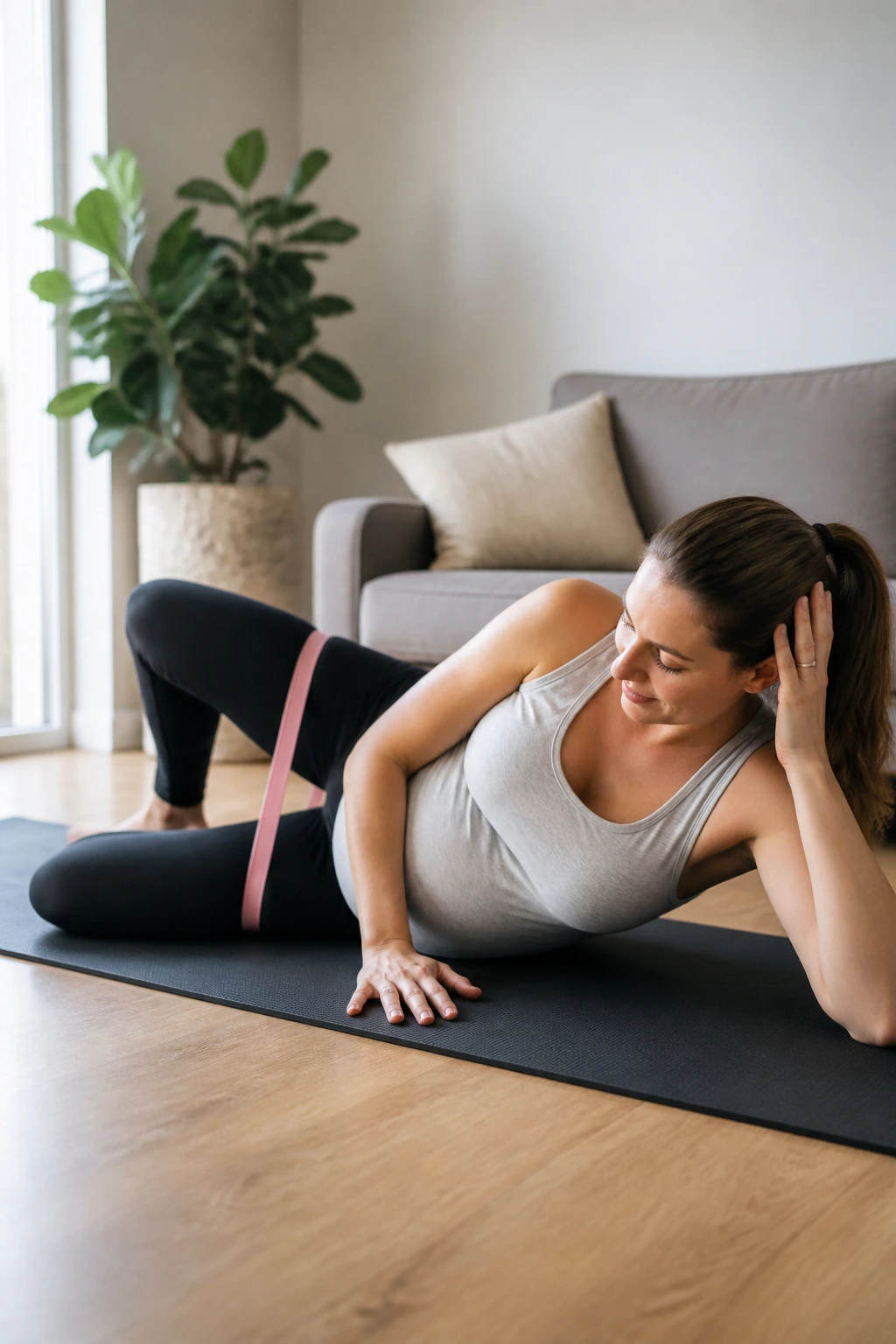
What does core work look like when crunches are off the table? Usually, it looks quieter and smarter.
Side-lying drills are a good answer because they train the hips and deep trunk muscles without asking you to curl up under pressure. Clamshells, side-lying leg lifts, and side-lying breathing with a hand on the rib cage can help the whole torso feel more supported. Add a gentle side plank on the knees only if it feels stable and calm.
How to Use It
- Lie on your side with knees bent for clamshells.
- Open the top knee slowly, then close it with control.
- Do 10 to 15 reps per side.
- Keep the waist long instead of crunching it up.
- Stop if you feel abdominal doming or a pulling sensation.
This work is not flashy. It is useful, though, especially if your hips start complaining during longer walks or if your low back feels like it’s picking up extra load.
15. Step-Ups at a Low Height
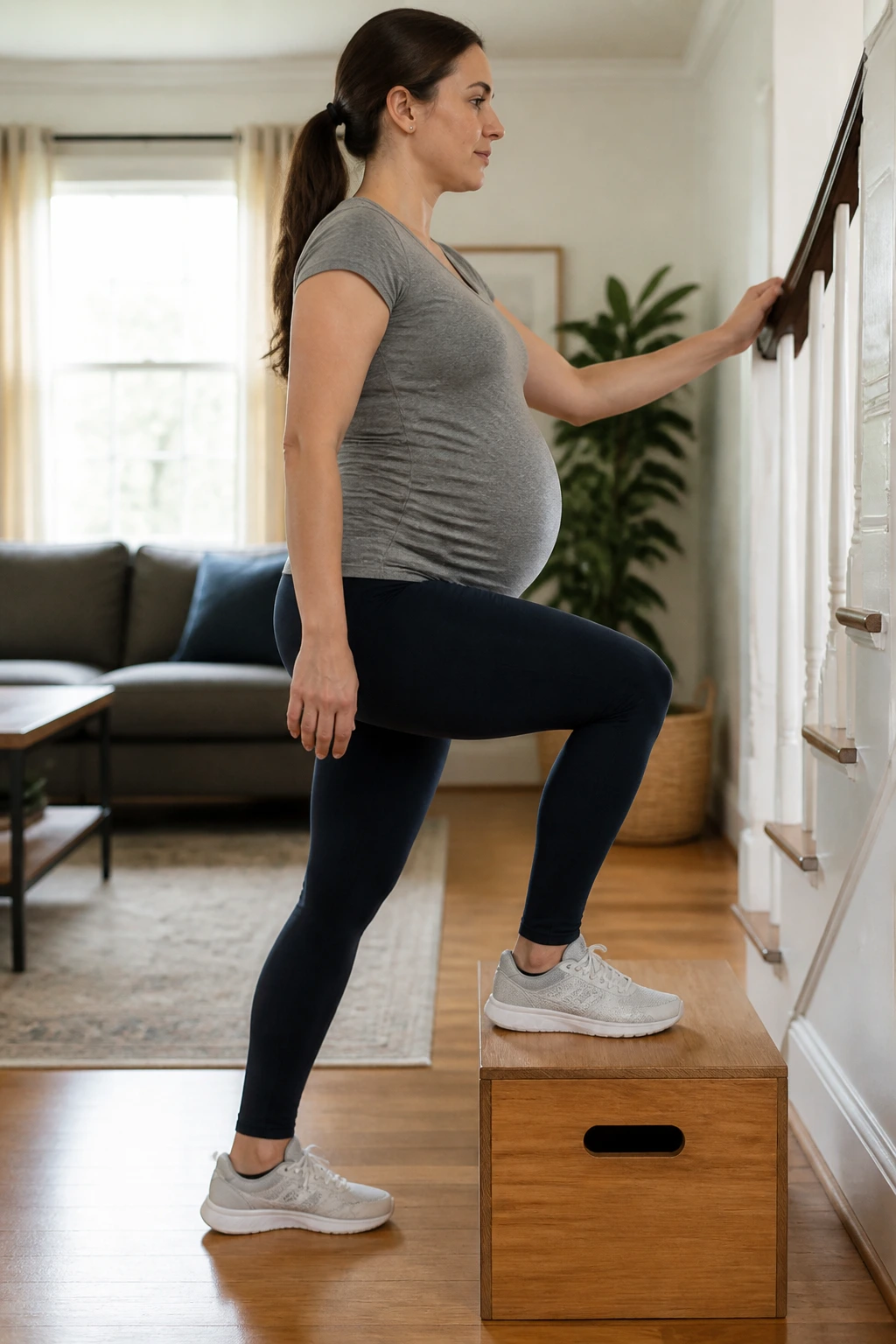
A single 4-inch step can humble your glutes in the best way. Step-ups train balance, leg strength, and the kind of real-world coordination you use every time you climb stairs or step into a tub.
Choose a low, sturdy step or a bottom stair. Keep one hand on a rail or wall. Step up slowly, stand tall at the top, then step down with equal control. No bouncing. No rushing. Six to eight reps per leg is enough to start.
A lot of people make step-ups harder than they need to be by using a box that is too high. That’s a fast route to hip strain and sloppy form. Lower is better here, especially if your center of gravity already feels a little different.
This exercise also reveals which leg is doing the work and which one is sneaking off the job. That’s useful information. Annoying, maybe, but useful.
16. Stability Ball Strength Work
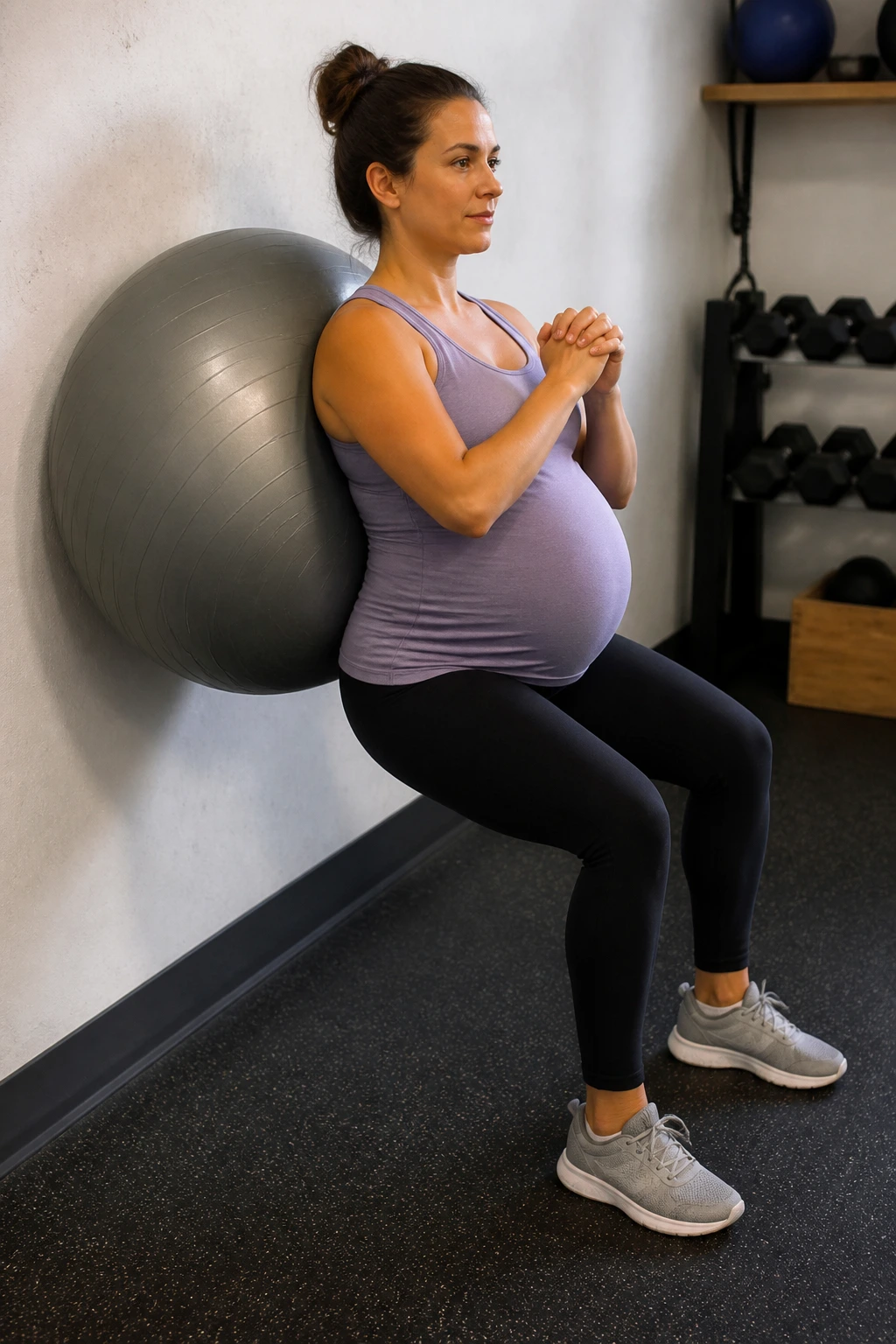
A stability ball adds support and a little challenge at the same time, which is a nice combination in early pregnancy. It can back you up during wall squats, seated marches, and gentle chest-opening moves.
The best part is that it encourages movement without locking you into one position. Sit tall on the ball and practice tiny pelvic circles. Lean the ball against a wall and do controlled squats. Place your hands on the ball against the wall for incline push-ups if your wrists prefer that angle.
Safety matters here. Use the ball on a non-slip floor, keep a wall nearby, and don’t try anything that makes the ball shoot out from under you like a cartoon gag. Stability is the point.
If you’ve spent hours at a desk, this kind of session can feel like a reset for the hips and upper back. Slow, steady, and a little playful. That’s a good mix.
17. Pelvic Floor and Breathing Sessions
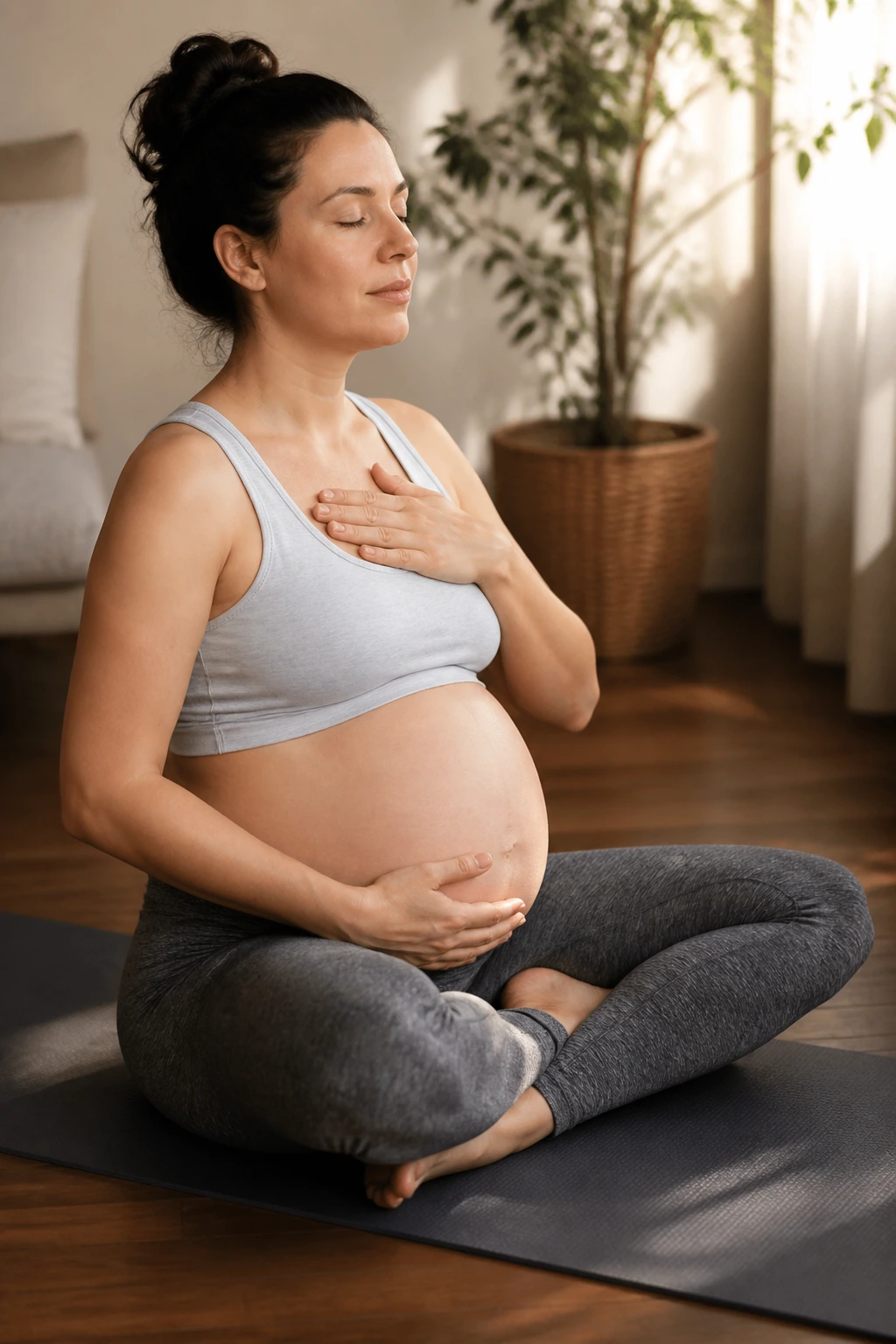
Not every safe workout needs sweat. Some of the most useful prenatal sessions are the quiet ones where you relearn how to breathe and how to relax the pelvic floor instead of bracing against everything.
Diaphragmatic breathing is simple: one hand on the chest, one on the belly, inhale so the ribs widen, then exhale gently and let the lower belly soften. Pair that with light pelvic floor contractions and full releases. The release matters. A lot. Tightening forever is not the goal.
A Clean 5-Minute Routine
- Sit or lie on your side.
- Inhale for 4 counts.
- Exhale for 6 counts.
- Gently lift the pelvic floor on the exhale.
- Let it fully soften on the inhale.
That rhythm helps connect breath, posture, and pressure management. It also teaches you not to hold your breath during other exercises, which is a habit worth fixing early.
18. Prenatal Mobility Flow
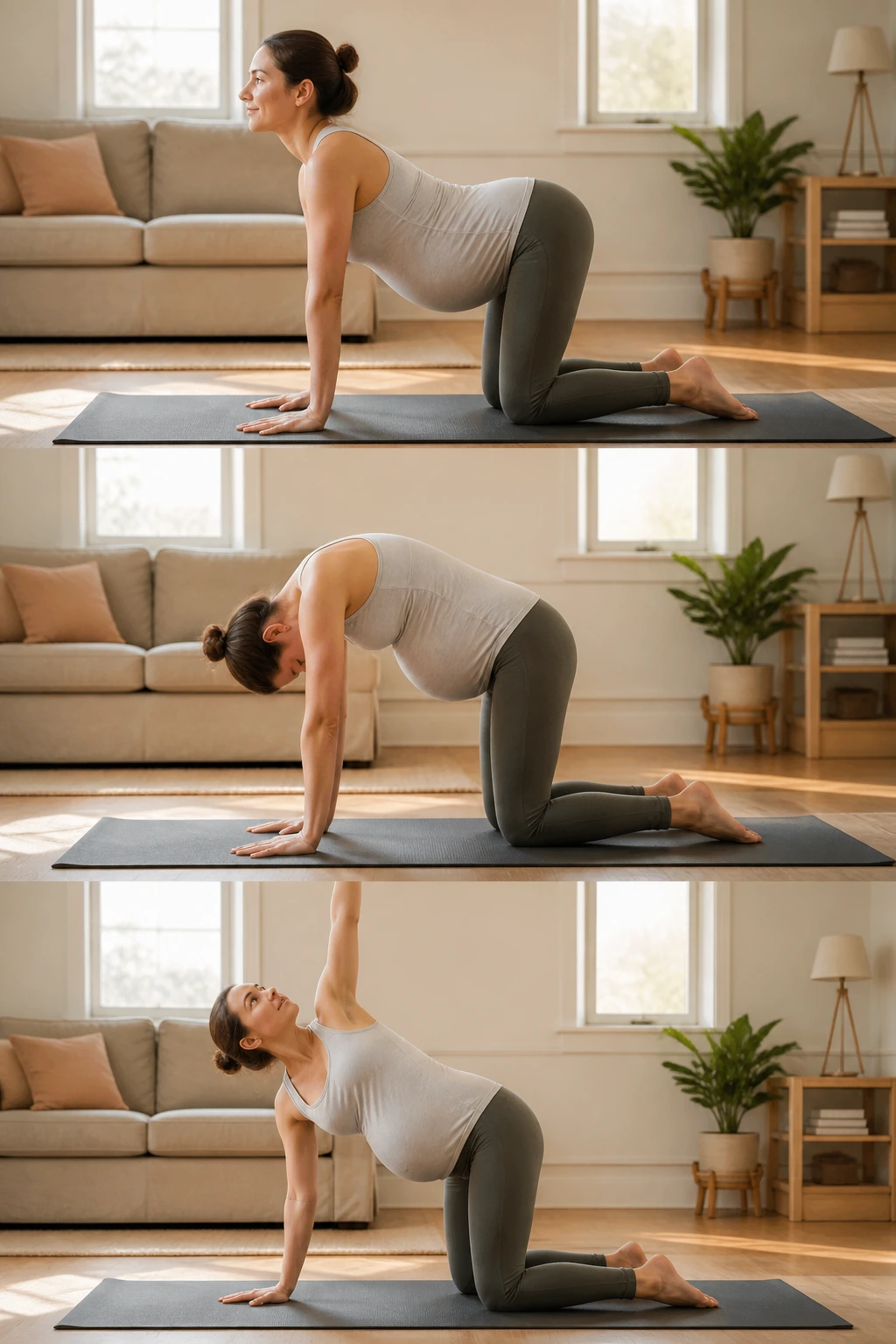
Why do eight gentle minutes matter? Because stiff hips and a locked upper back can make every other workout feel worse than it should.
A mobility flow is part warm-up, part reset button. Cat-cow, thoracic rotations, ankle circles, hip circles, calf stretches, and shoulder rolls all belong here. Keep the pace slow enough that you can notice where the tightness sits instead of powering through it.
You do not need a complicated sequence. Five to eight moves, 30 to 60 seconds each, is enough. If one side feels tighter, stay there a little longer. If a movement causes pinching or pressure, skip it. Your body will tell you which pieces are useful and which ones are wasted effort.
This is a good low-energy option on days when a full workout feels like too much but total stillness leaves you cranky. Sometimes the smallest session changes the whole day.
19. Hiking on Smooth Trails
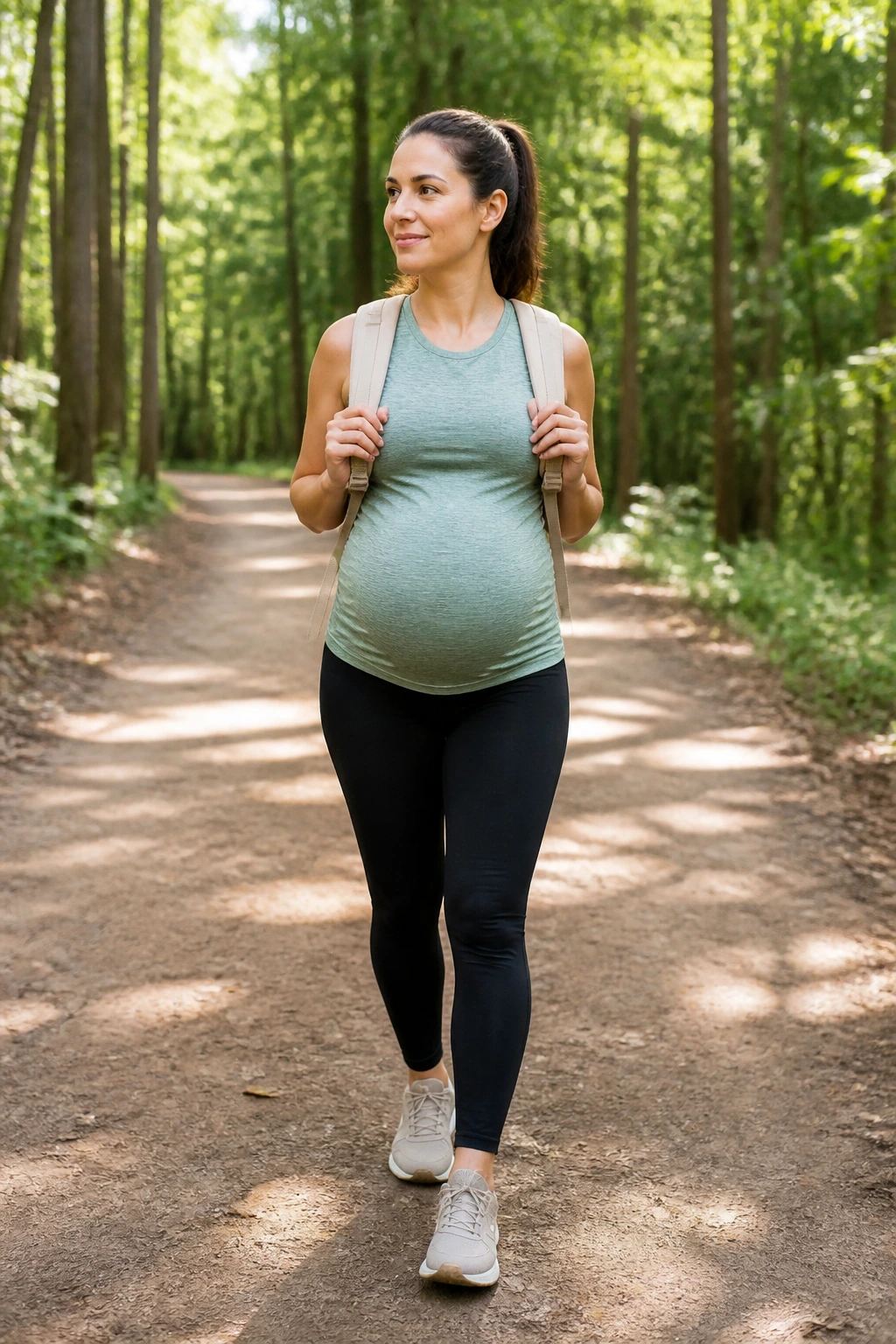
A flat trail with a real bench beats a steep “easy hike” that turns into a calf burn and a balancing act. At three months pregnant, the smartest hikes are the ones that respect your footing.
Choose smooth ground, stable shoes, and a route you can finish without pushing through thirst or fatigue. Bring water. Bring a snack. Bring a phone. A buddy helps too, especially on trails with limited restroom access or patchy cell service.
Trekking poles can take some pressure off the knees and make descents feel less awkward. Keep the pace conversational. If the trail starts to feel too hot, too steep, or too isolated, turn around early. That is not quitting. That is reading the room.
A short hike can feel like a proper mental break in a way an indoor workout sometimes doesn’t. Fresh air, a little sunlight, and steady movement go a long way.
20. Gentle Cooldown Walk and Stretch
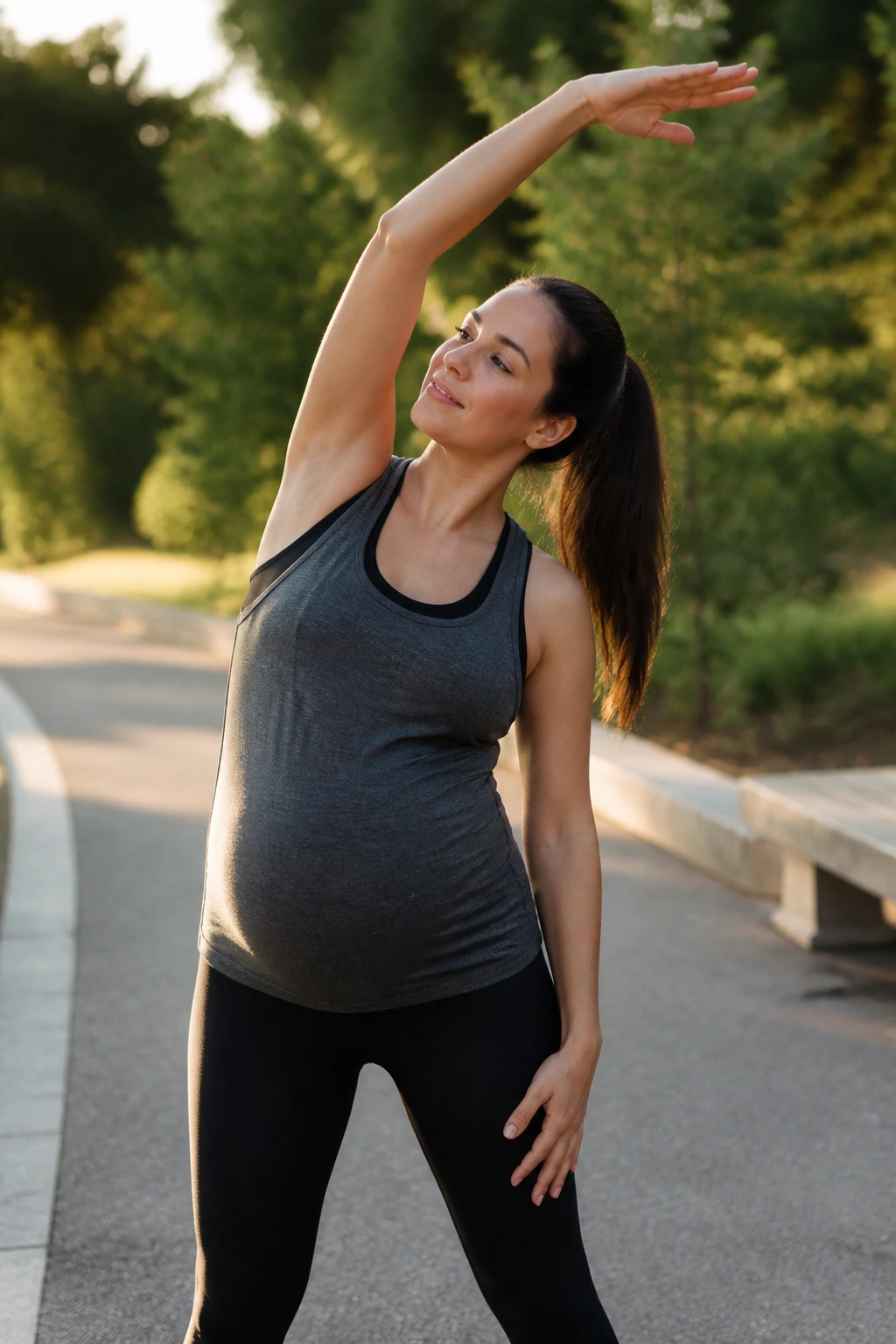
The cooldown is where a lot of pregnancy workouts either help or backfire. If you slam to a stop after cardio, the light-headed feeling can sneak up fast.
Give yourself 5 to 10 minutes of easy walking first. Let your heart rate drift down on purpose. Then stretch the calves, chest, hips, and side body without forcing anything. A gentle hip flexor stretch at a wall, a doorway chest opener, and a slow calf stretch against a curb are all fair game.
A few rules keep this useful:
- Breathe through every stretch.
- Skip anything that causes pulling in the abdomen.
- Keep stretches short, around 20 to 30 seconds.
- Move out of any pose that feels wobbly or hot.
This finish is simple, but it matters. A boring finish is a good finish. When you are three months pregnant, the best workout is often the one that leaves you feeling steadier after it ends, not emptied out.
