



One dumbbell. That’s enough.
If you’ve got a decent weight and a small patch of floor, you can train legs, back, shoulders, and core hard enough to feel it the next day. Single dumbbell workouts for women work so well because one side has to stabilize while the other side pushes, pulls, or presses; that extra job is where a lot of the real work happens. It’s not glamorous. It is effective.
Pick a load that lets you move with control for about 6 to 12 reps on most exercises. For carries and core work, go lighter than your ego wants. For squats and presses, you want the last two reps to feel honest, not sloppy. Clean form beats a heavier dumbbell that turns every set into a shrug and a wobble.
Start with the goblet squat. It teaches the brace the rest of these moves ask for, and it gives you instant feedback if your posture falls apart.
1. Goblet Squat for a Single Dumbbell Workout
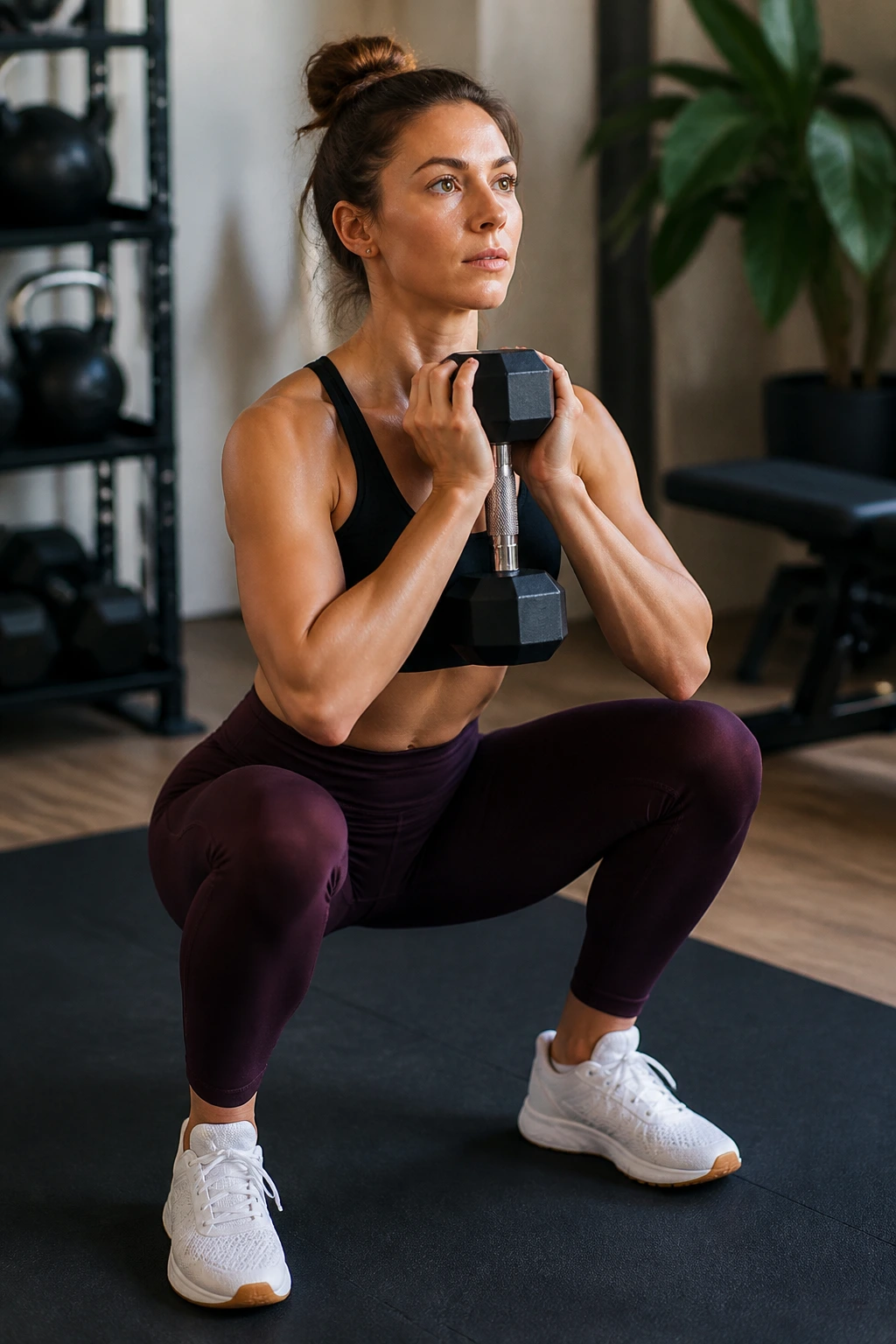
The goblet squat is the move I hand to almost everyone first. It’s simple, which is exactly why it works: the dumbbell sits at your chest, your torso stays upright, and your legs have to do the honest work instead of letting momentum cheat for them.
Why It Works
Holding the weight close makes it easier to keep your ribs down and your spine stacked. That matters. A lot of squat mistakes start because the load pulls you forward, and the goblet hold fixes that before it starts.
- Hold one end of the dumbbell vertically at chest height.
- Keep your feet about shoulder-width apart, toes turned out slightly.
- Sit down between your heels, not out over your toes.
- Drive up through the whole foot, especially the heel and big toe.
Best rep range: 8 to 12 reps for 3 to 4 sets.
A small pause at the bottom helps more than people think. Half a second is enough. It stops the bounce from doing the work for you, and you’ll feel your quads and glutes light up fast.
2. Single-Arm Romanian Deadlift
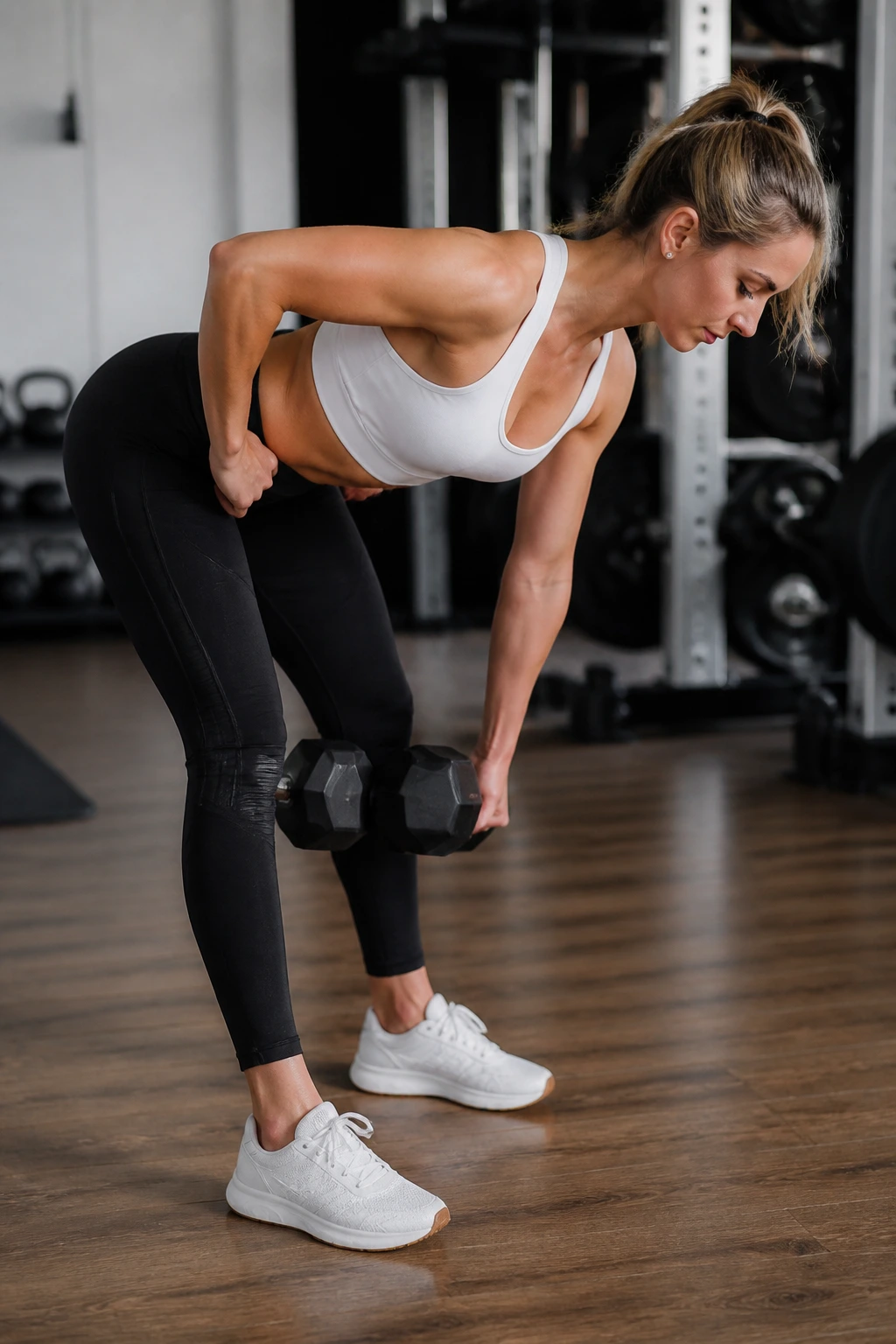
Can one dumbbell teach a hinge better than two? Yes, if you actually slow down and let your hips do the job. The single-arm Romanian deadlift is a little sneaky; it looks calm until your hamstrings and grip start making their feelings known.
What You Should Feel
You should feel a stretch along the back of the leg, not a bend in the low back. Keep both hips square to the floor and let the dumbbell slide close to your thigh and shin as you hinge.
How to Make It Clean
- Soften the standing knee.
- Push your hips back like you’re trying to close a car door with your butt.
- Keep the free hand on your hip or out to the side for balance.
- Stop when your torso is about halfway to parallel or when your hamstrings say that’s enough.
Best rep range: 6 to 10 reps per side.
If you twist at the top, the weight is too heavy or you’re rushing. Don’t rush. The whole point is to make your core and hip stabilizers earn their lunch.
3. Bulgarian Split Squat
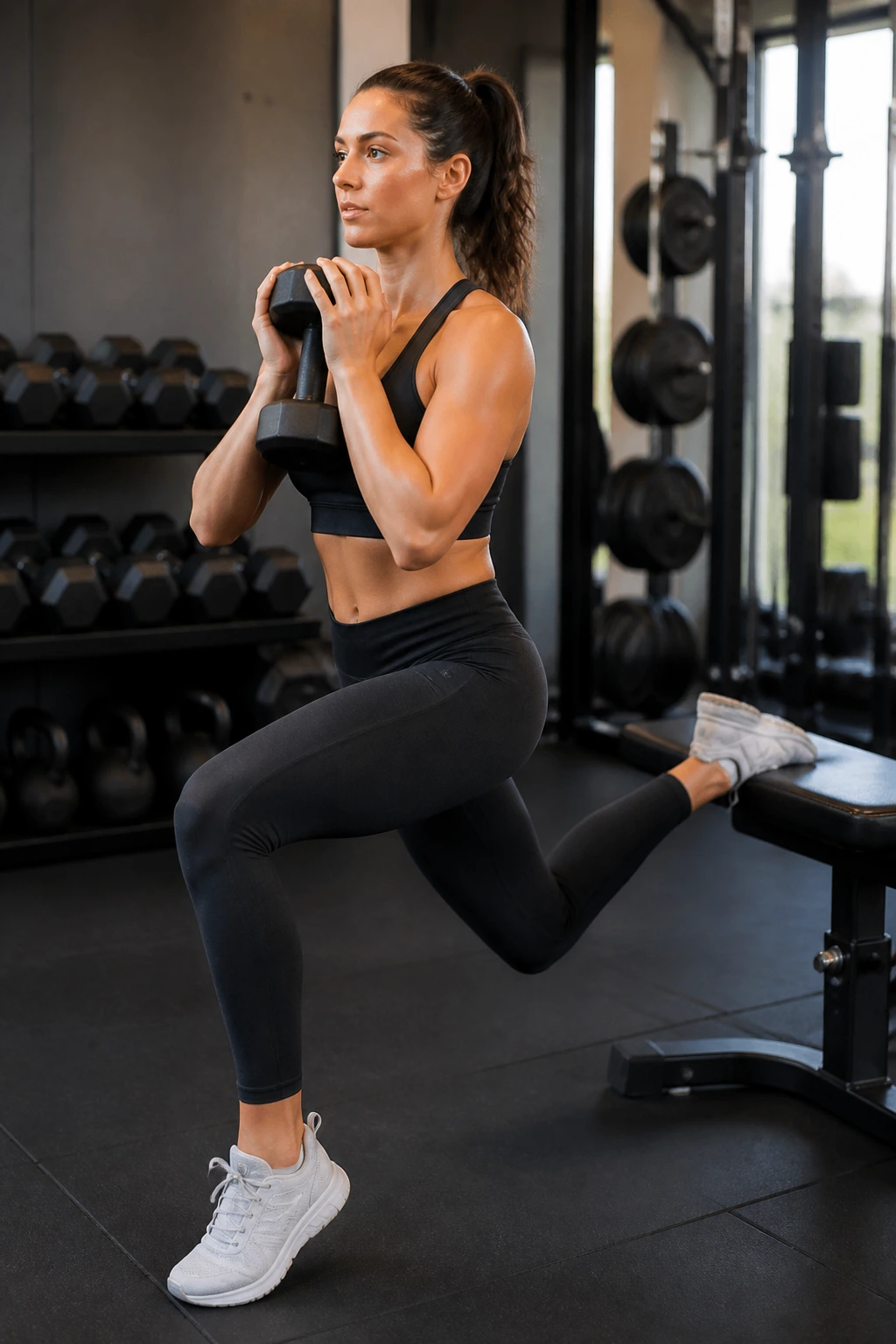
This one has a reputation, and for once the reputation is deserved. Your back leg is on a bench, your front leg does the bulk of the work, and the dumbbell adds enough load to make the first few reps feel polite before the burn arrives.
The trick is stance length. Too short, and your knee shoots forward like it’s trying to escape. Too long, and you turn it into a weird hip stretch. You want the front foot far enough out that you can drop straight down with a tall chest and keep the front heel planted.
A single dumbbell can sit in goblet position or hang by your side in suitcase style. Goblet keeps the torso more upright. Suitcase makes your core work harder. I usually prefer goblet for beginners and suitcase for people who already know how to brace.
Best rep range: 8 to 10 reps per side.
Slow the lowering phase. Really slow it. That awkward, controlled descent is where the exercise becomes useful instead of just miserable.
4. Reverse Lunge to Knee Drive
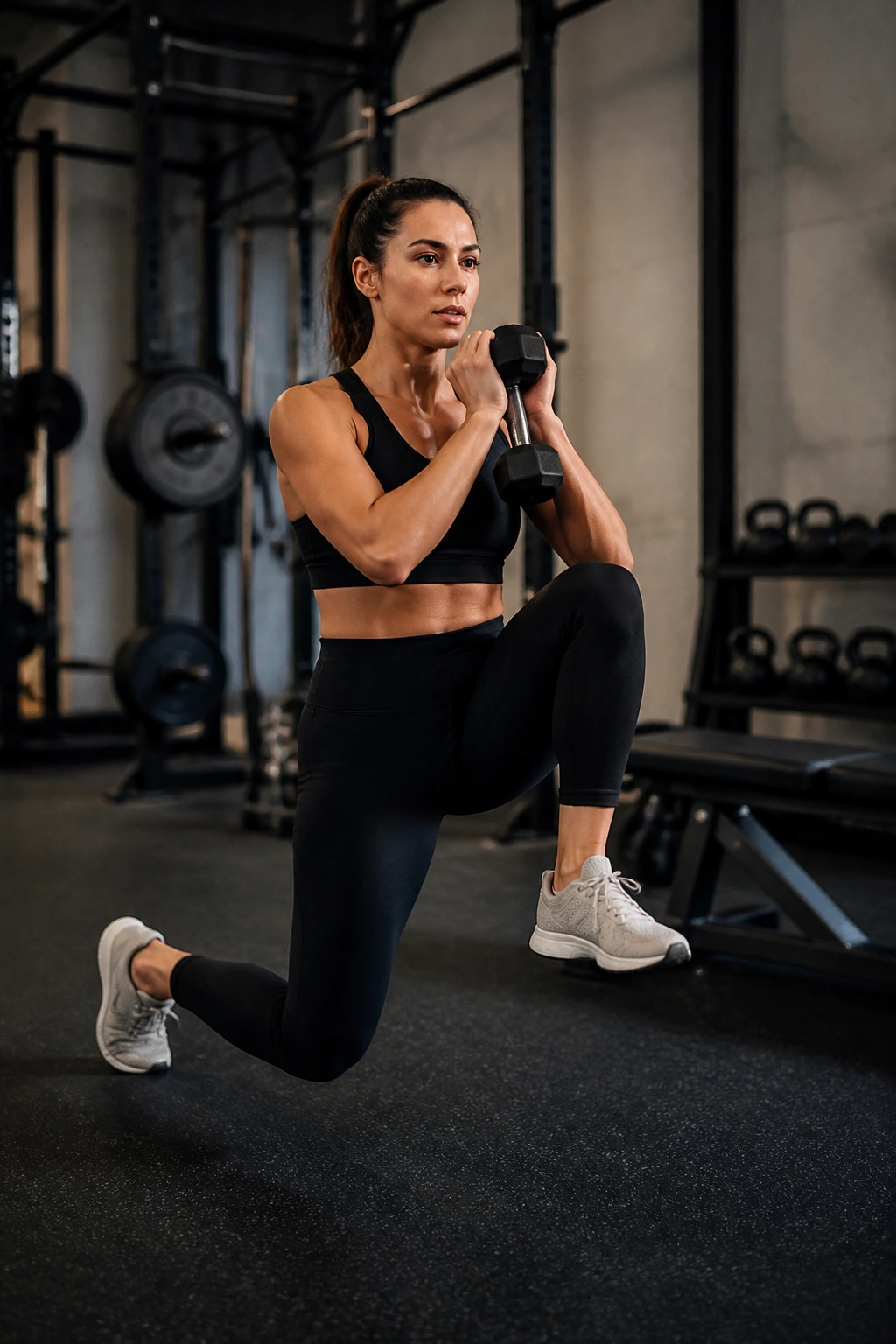
This is the move if you want legs, balance, and a little athletic pop in the same set. Step back, drop the knee, then drive up and bring the back knee through like you mean it. That last part changes the whole exercise.
The knee drive forces you to own the top position. You can’t lean on the back leg or wobble through the rep if you want a clean finish, and that makes the glutes and core do more work than a plain reverse lunge.
Hold the dumbbell at your chest, or keep it in one hand if you want the anti-rotation challenge. One hand will make your torso fight to stay straight. It’s a useful kind of annoyance.
Best rep range: 6 to 8 reps per side.
If your front knee caves inward, shorten the range and slow down. That tiny correction does more for the move than chasing bigger reps ever will.
5. Step-Up
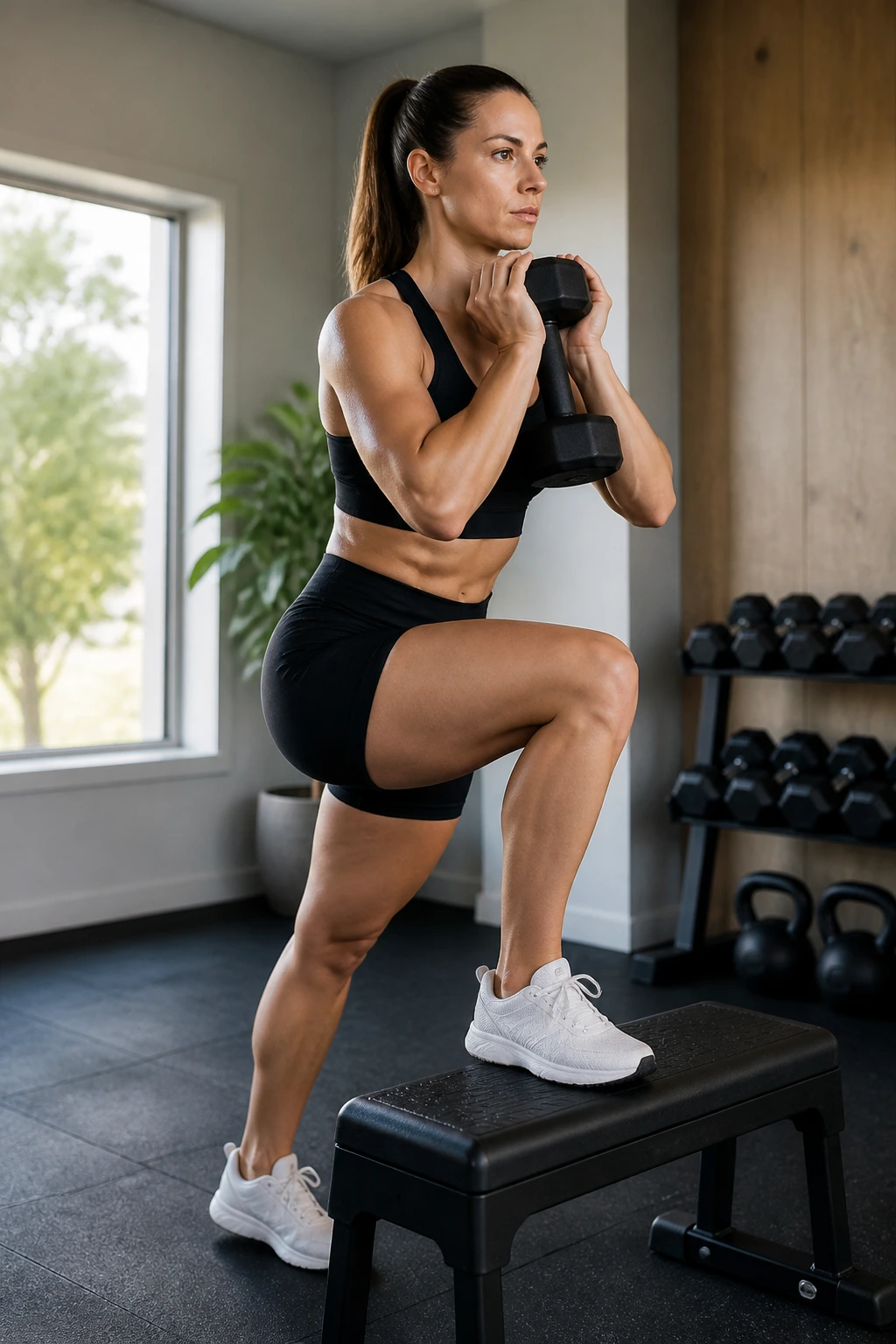
A sturdy bench, box, or even a low step can make a humble workout mean. Step-ups look easy until your lead leg has to do all the lifting while the other foot pretends to help.
The Right Height Matters
Use a surface that puts your working thigh somewhere around parallel or slightly below. If the step is too high, you’ll start leaning and pushing off the back foot. That turns the exercise into a half-hearted climb instead of a clean leg builder.
- Plant the full foot on the step.
- Lean your torso slightly forward from the hips.
- Drive through the working heel to stand up.
- Lower yourself with control; do not drop.
Best rep range: 8 to 10 reps per side.
A one-second pause on top can clean this up fast. It forces you to stand tall before you come down again, which makes balance and glute work a lot harder to fake.
6. Dumbbell Glute Bridge
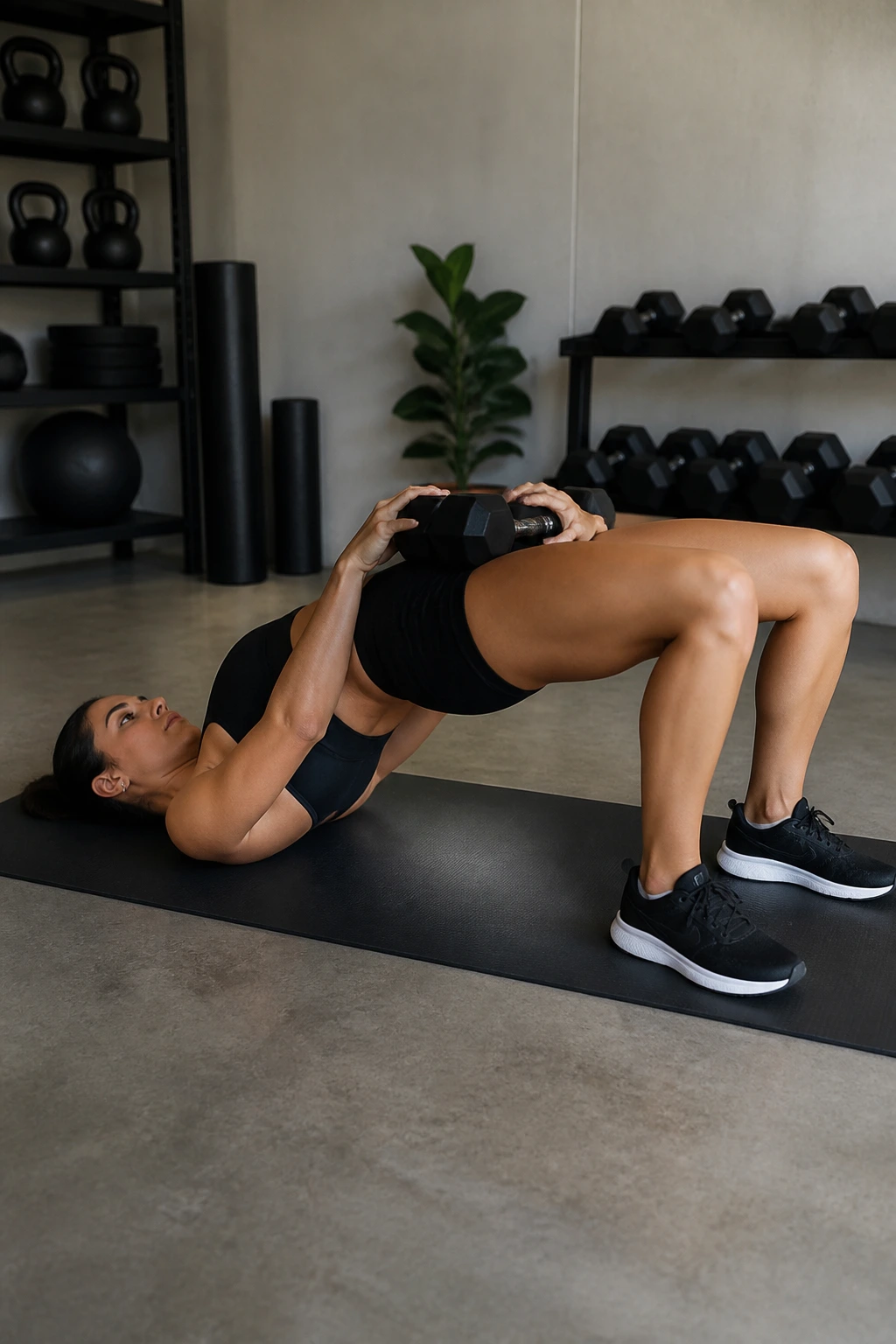
If you want glutes without beating up your knees, this is a very good place to live for a while. A dumbbell across the hips adds load, but the floor keeps the range tidy and gives you a strong, repeatable base.
The bridge works best when you don’t turn it into a lower-back arch. Brace first. Then tuck the pelvis slightly and squeeze the glutes as you lift. At the top, your ribs should stay down and your hips should be the highest point, not your low back.
A folded towel or yoga mat under the dumbbell helps if the weight digs into your hip bones. Small detail. Big comfort difference.
Best rep range: 10 to 15 reps with a 1 to 2 second squeeze at the top.
If you want to make it harder without grabbing a heavier dumbbell, try one-and-a-half reps: lift, lower halfway, lift again, then come down fully. Brutal in a quiet way.
7. Single-Arm Floor Press for Single Dumbbell Workouts
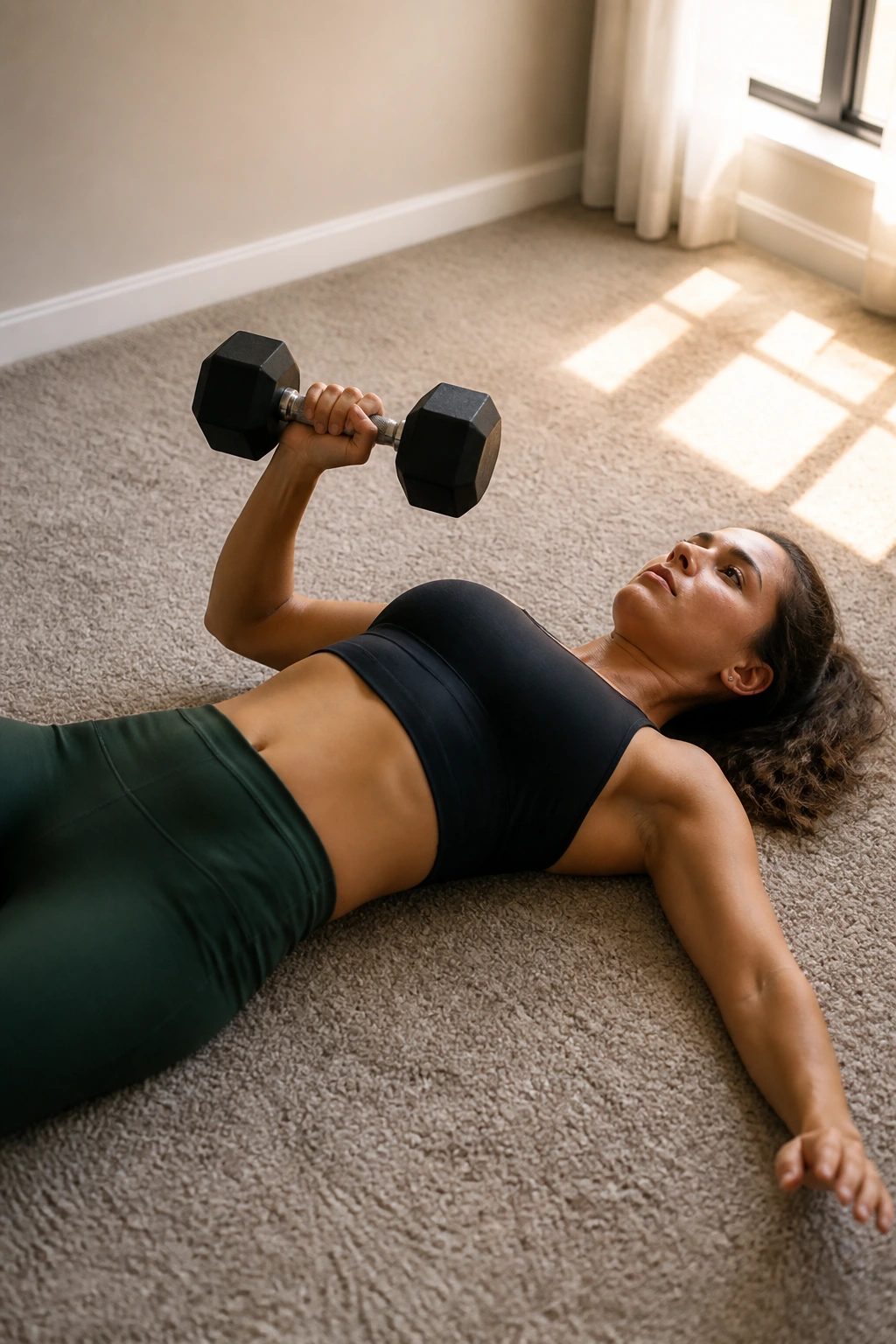
The floor press is one of those exercises that feels plain until you notice how friendly it is to the shoulders. Because the floor stops your elbow, you avoid the deepest range of motion, which can be a blessing if overhead pressing feels cranky or bench pressing makes your shoulders grumble.
Why the Floor Helps
That shorter range is not a cheat. It’s a feature. It keeps tension where you want it — chest, triceps, and the front of the shoulder — without forcing your arm into a deep stretch that some people hate.
Lie flat, plant your feet, and press the dumbbell from just outside your chest. Keep your wrist stacked over your elbow. If the dumbbell drifts toward your face, slow down and reset.
Best rep range: 8 to 12 reps per side.
This move is excellent for home training because it needs almost nothing. No bench. No setup drama. Just a floor and one weight.
8. Half-Kneeling Overhead Press
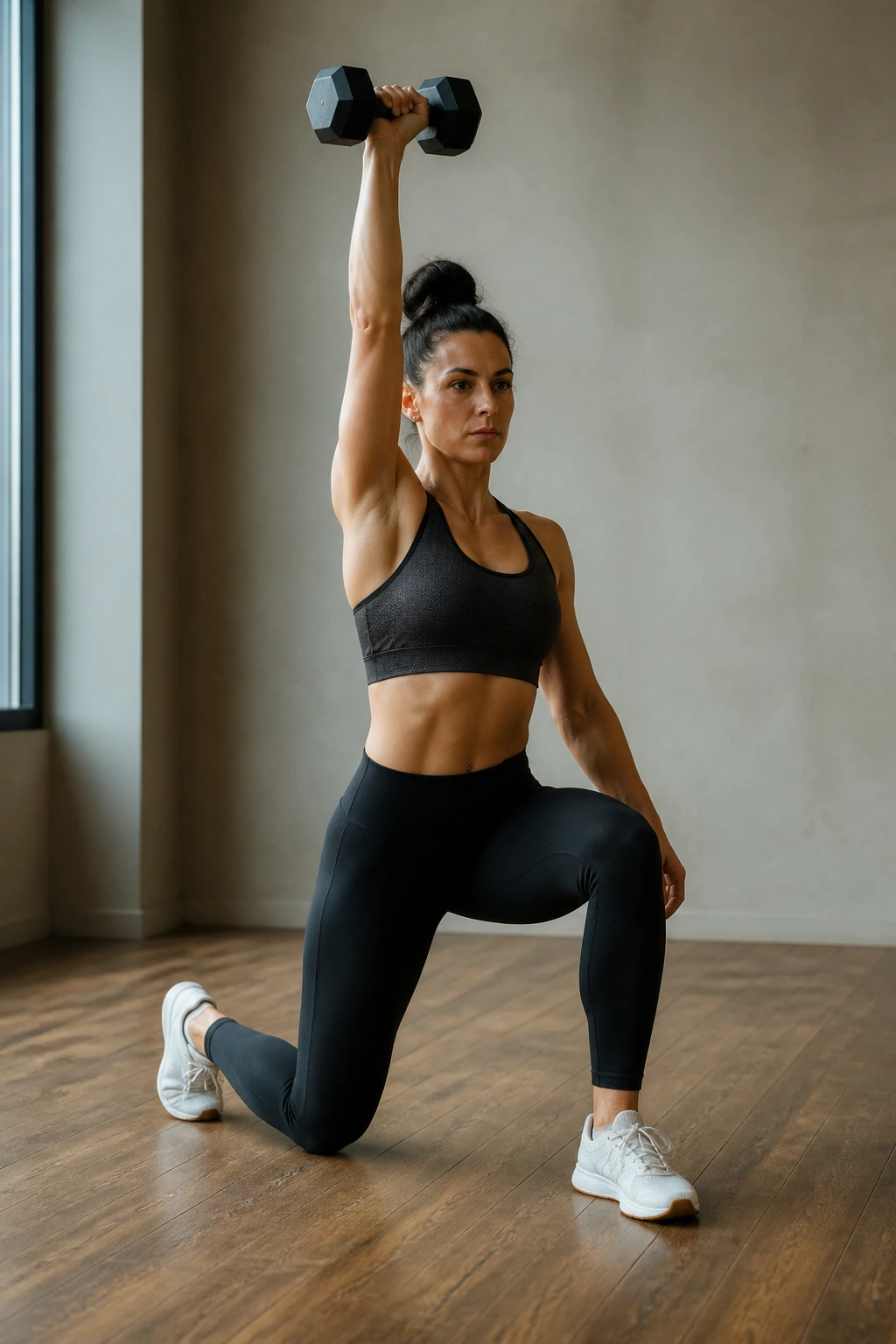
Why half-kneeling? Because it keeps you honest. One knee down, one foot planted, glute engaged, ribs stacked — the whole setup makes it much harder to lean backward and turn the press into a full-body wobble.
The half-kneeling stance also tells you a lot about your shoulder and core control. If you can press smoothly here, your standing press usually gets better too. If you can’t, the half-kneeling position shows you exactly where the leak is.
What to Watch For
- Squeeze the glute on the down knee side.
- Keep the zipper line of your ribs pointed forward.
- Press straight up, not out in front.
- Lower with control until the dumbbell is near shoulder height.
Best rep range: 6 to 8 reps per side.
If your lower back arches, the dumbbell is too heavy or your ribs are flaring. Fix the position first. The press comes after.
9. One-Arm Bent-Over Row
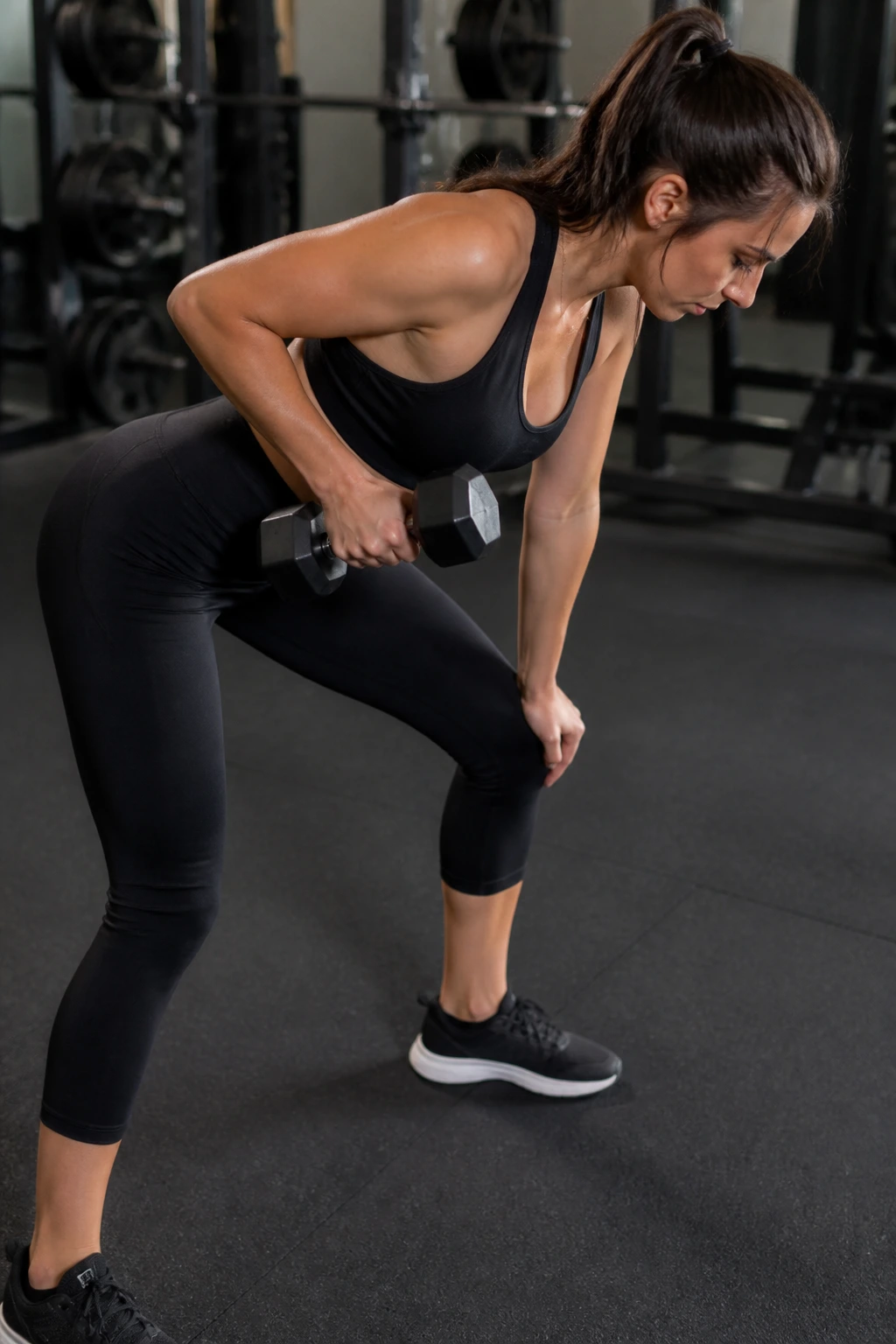
A row done with sloppy body English is just a shrug in disguise. The one-arm bent-over row is better than that. It builds the lats, rhomboids, and mid-back while teaching your torso to hold a hinge under load.
Lean forward with a flat back, brace through your midsection, and pull the dumbbell toward your hip, not straight up to your shoulder. That path matters. Pulling to the hip hits the lat cleaner and keeps the shoulder from riding too high.
Rest your free hand on a bench, a sturdy chair, or the opposite thigh if your lower back gets tired quickly. That little support can save the set.
Best rep range: 8 to 12 reps per side.
At the top, pause for a count of one. You should feel the shoulder blade slide back and down, not the whole shoulder shrug toward your ear.
10. Renegade Row
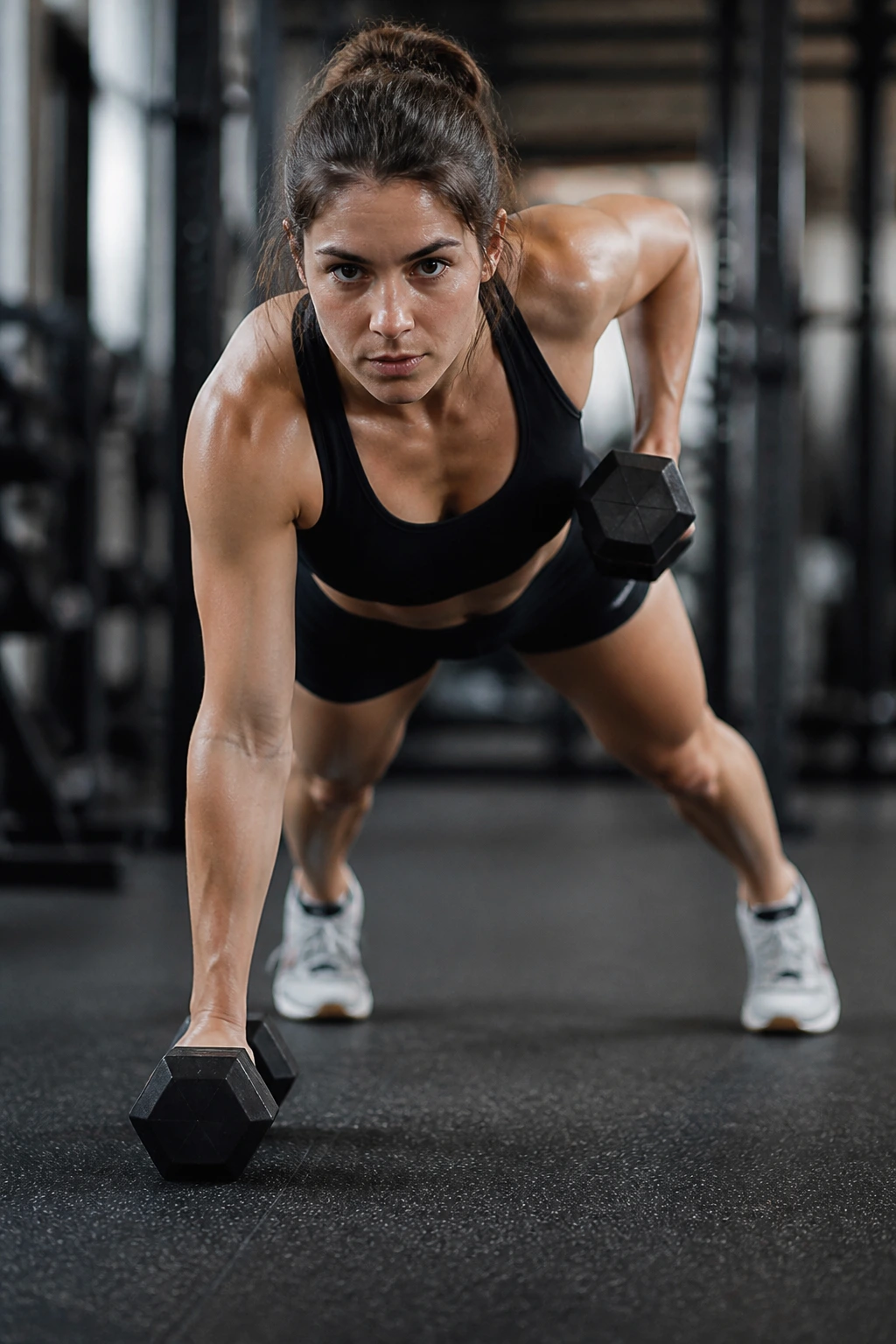
Can you row without letting your hips swing? That’s the question here. The renegade row is a plank, a row, and a core test all at once, and it gets harder the minute you try to rush it.
Start in a high plank with feet wider than hip-width. That wider stance is not lazy; it’s smart. It gives you a base wide enough to row without tipping over, especially if you’re using a heavier dumbbell or you’re still learning the move.
Make It Stable
- Place the dumbbell under one shoulder.
- Grip the floor hard with the free hand.
- Row the weight slowly toward your ribs.
- Set it down with control before switching sides.
Best rep range: 5 to 8 reps per side.
If your hips rock side to side, widen your feet and lighten the dumbbell. If your wrists get angry, elevate your hands on a bench or sturdy step and keep the same pattern.
11. Suitcase Carry
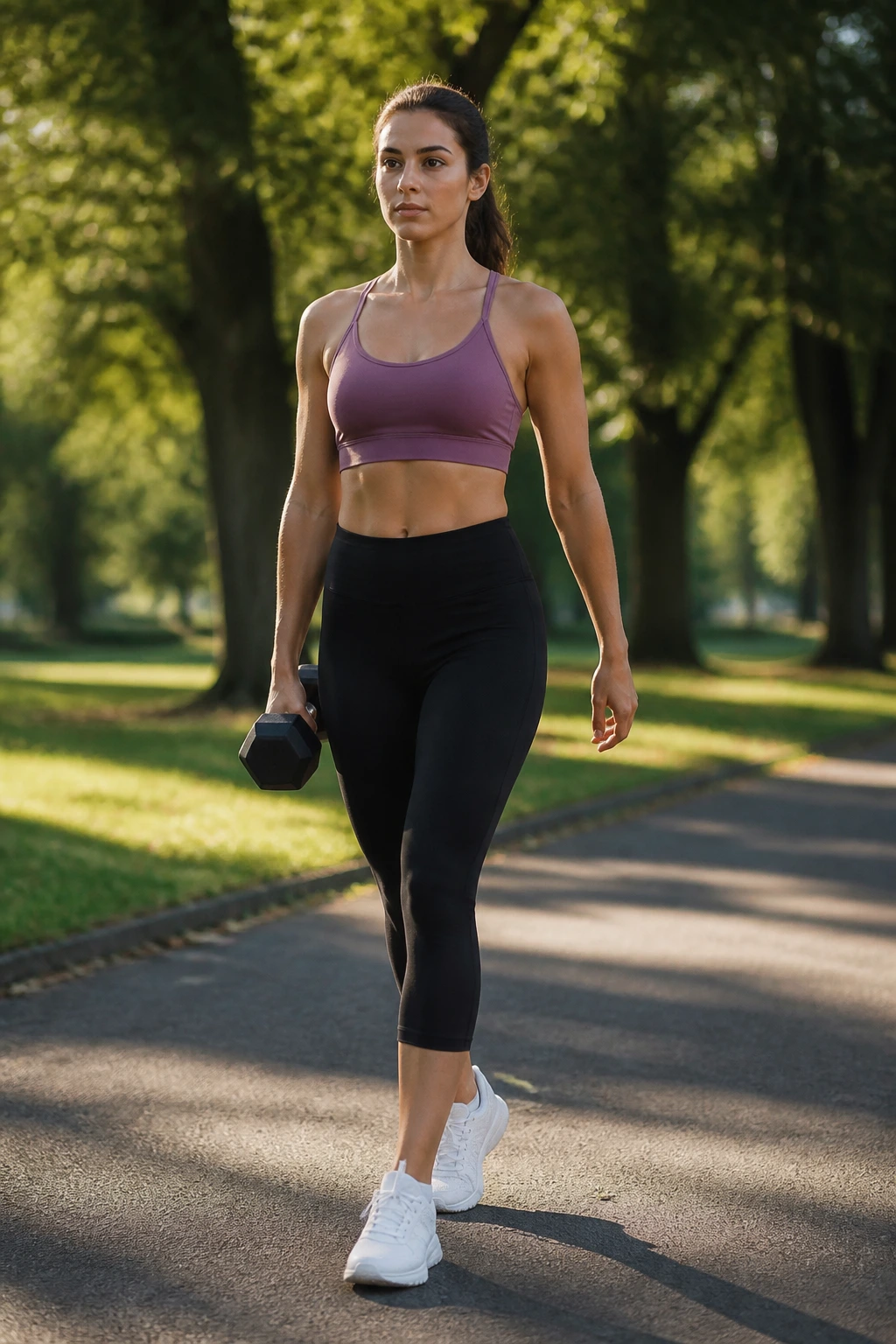
This is one of the best core moves you can do with a single dumbbell, and it doesn’t look like much. One weight at your side, a few steps forward, no leaning, no twisting, no drama. Then your obliques and grip start complaining.
Walk tall and slow. Don’t let the dumbbell drag your shoulder down, and don’t lean away from it like you’re trying to balance a heavy grocery bag on a sloped street. Stay stacked from ear to ankle.
A suitcase carry can be used as a finisher, a warm-up, or a bridge between strength sets. It’s flexible like that.
Best carry prescription: 30 to 60 seconds per side, or 20 to 40 controlled steps.
If you want a neat little test, walk past a mirror. The body should look almost boring. Upright. Still. Unimpressed. That’s the goal.
12. Dumbbell Halo
If your shoulders feel stiff before a workout, the halo is a good reset. It’s a small circle around the head, but the point isn’t showmanship. The point is keeping your ribs still while your shoulders move through a useful range.
Hold one end of the dumbbell with both hands and trace a slow circle around your head. Keep the path close and smooth. If the weight bumps your scalp or drifts way out in front, it’s too heavy or you’re moving too fast.
How to Move It
- Start with a light dumbbell.
- Keep your elbows tucked, not flared wide.
- Breathe out as the weight passes the back of the head.
- Reverse direction after each set.
Best rep range: 6 to 8 circles each direction.
This is a warm-up, not a ego lift. If you have to strain to control the circle, drop the weight and keep the motion clean.
13. Single-Arm Thruster for a Single Dumbbell Workout
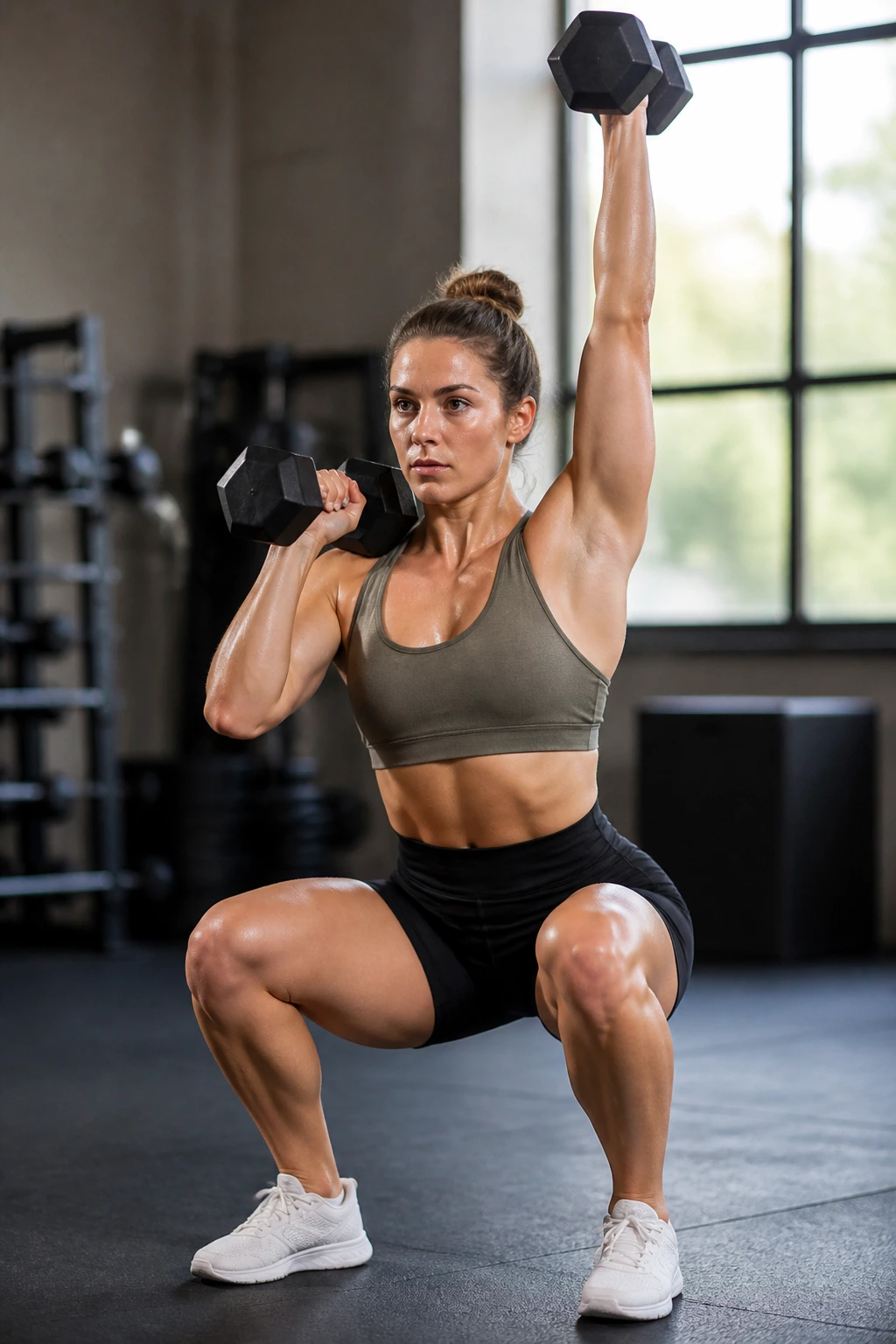
The thruster is the fastest way to turn one dumbbell into a conditioning tool. It asks your legs to squat and your upper body to press in one smooth motion, which means your heart rate climbs fast even with modest weight.
Hold the dumbbell at one shoulder, drop into a squat, and drive straight up as the dumbbell moves overhead. The timing matters. If the squat and press happen as separate pieces, the move gets clunky. If they blend together, it feels fluid and hard in the best way.
What Makes It Hard
The legs generate the power. The shoulder finishes it. If you try to press the dumbbell with your arm alone, the set dies fast and your form gets ugly.
Best rep range: 5 to 8 reps per side for strength; 8 to 10 if you want more conditioning.
Keep the press path close to your face and finish with the biceps near your ear. If the weight drifts forward, your lower back pays for it.
14. Lateral Lunge
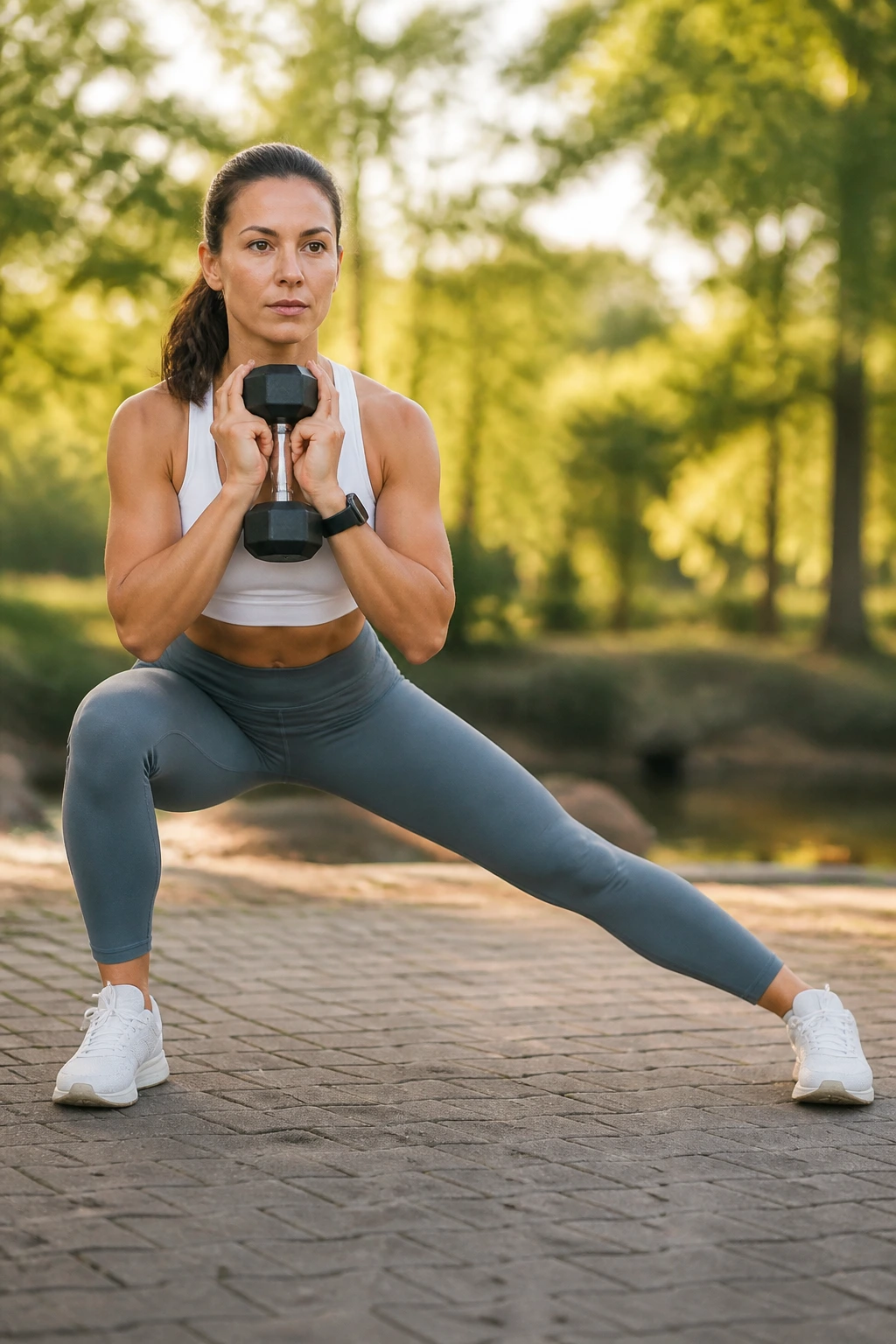
Most people live in forward and backward movement. Side-to-side work gets skipped, which is a shame because the hips and inner thighs love it when you train all planes of motion instead of pretending life only happens in a straight line.
Step out to one side, sit the hips back into that working leg, and keep the other leg long. The straight leg matters. It gives the adductors a stretch and makes the returning push stronger. Hold the dumbbell in goblet position or at chest height if you want a clean, upright torso.
Common Mistakes
- Folding the chest too far forward.
- Letting the working knee collapse inward.
- Cutting the range short because the inner thigh feels weird.
Best rep range: 6 to 8 reps per side.
You want the planted foot to stay flat. If your heel lifts, shorten the step and sit a little deeper into the hip instead of reaching farther.
15. Dumbbell Dead Bug Press
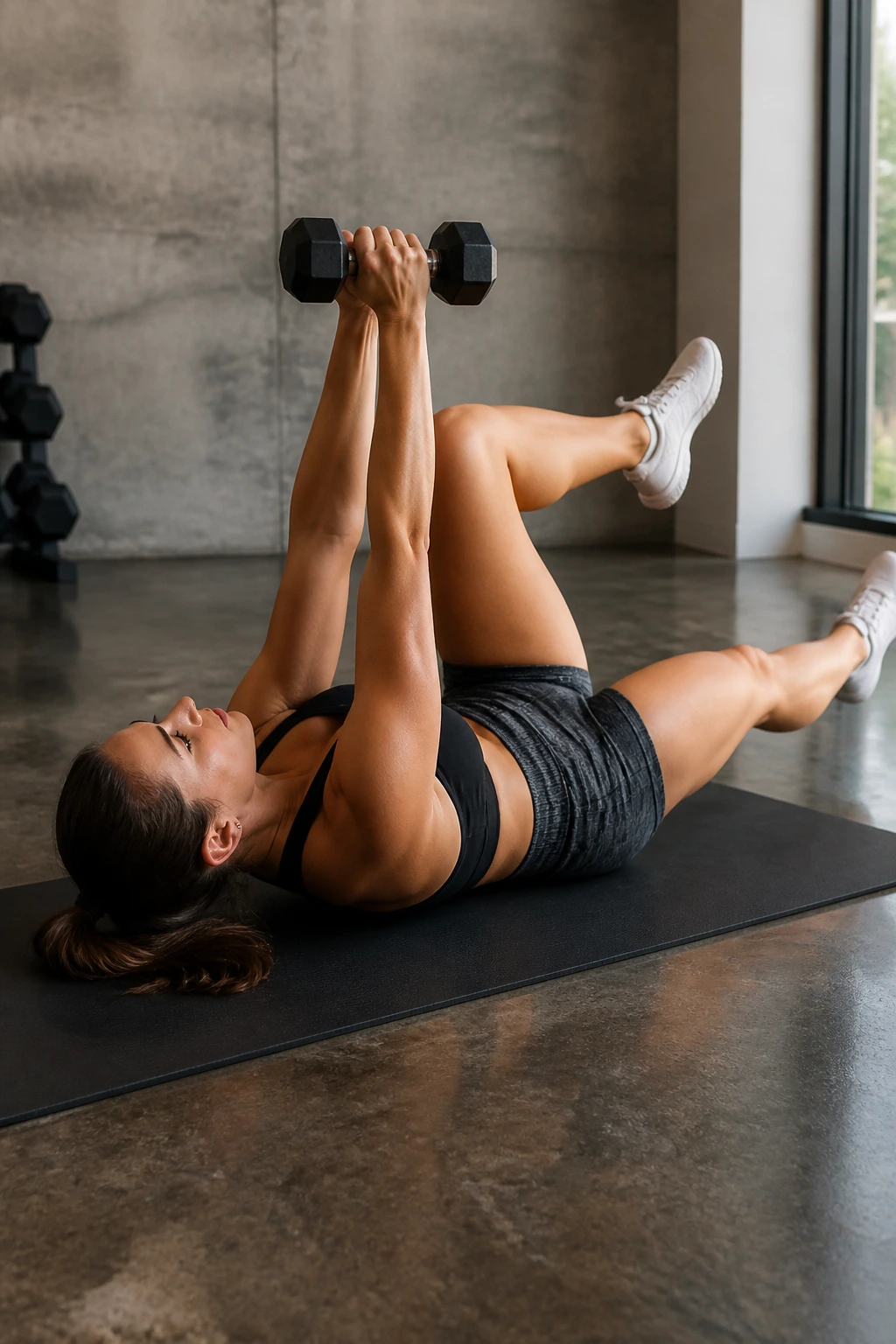
Why hold a dumbbell while doing a dead bug? Because the load makes your abs pay attention. A plain dead bug is useful. A weighted one forces your ribs, pelvis, and shoulders to stay in line when your arms and legs move away from each other.
Lie on your back, press the dumbbell straight over your chest with one arm, and lower the opposite leg slowly toward the floor. The low back should stay heavy against the mat. If it lifts, the movement is too big or too fast.
Keep the Low Back Heavy
- Exhale before you move the leg.
- Keep the dumbbell stacked over the shoulder.
- Move one leg at a time, not both.
- Stop the leg before the low back pops up.
Best rep range: 6 to 8 reps per side.
This move is quieter than a crunch, but don’t underestimate it. A few slow reps done well can light up the midsection more than a messy set of fifty.
16. Clean to Front Rack Squat
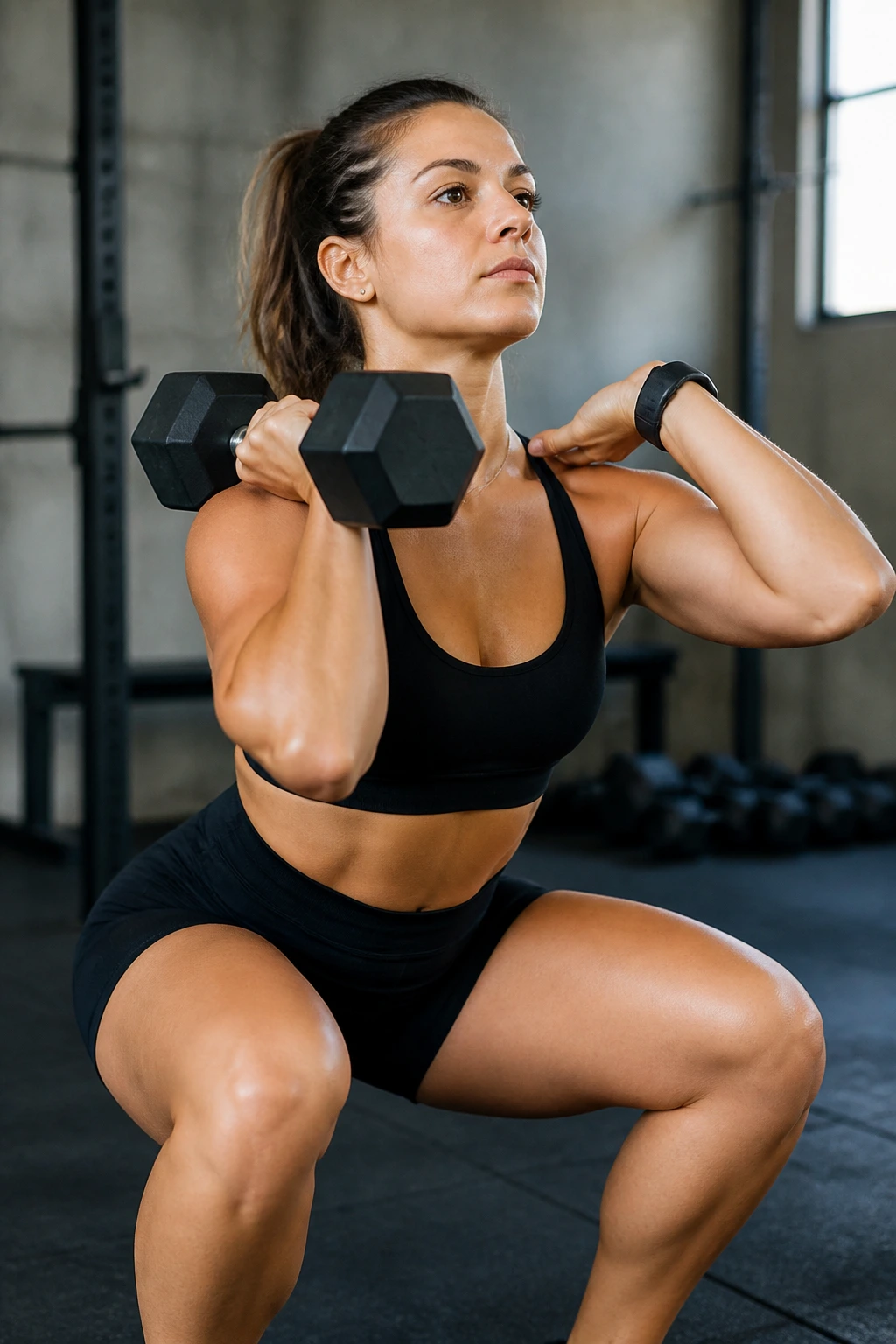
This move feels a little old-school, in the best way. The dumbbell travels from the floor or hang position to your shoulder, then you squat it down and stand back up. It’s a compact full-body sequence that rewards timing more than brute force.
The clean is not an arm curl. That’s the part people botch first. The hips drive the weight upward, the elbow comes through fast, and the dumbbell lands softly in the front rack. From there, the squat finishes the job.
The Clean Is Not an Arm Curl
- Start with a neutral spine and a soft hinge.
- Pull the dumbbell close to your body.
- Snap the hips, then catch it at the shoulder.
- Squat only after you’ve secured the front rack.
Best rep range: 4 to 6 reps per side.
Use a lighter dumbbell than you think at first. Clean mechanics get sloppy when the weight gets heavy too soon, and sloppy cleans are a fast route to a bruised wrist.
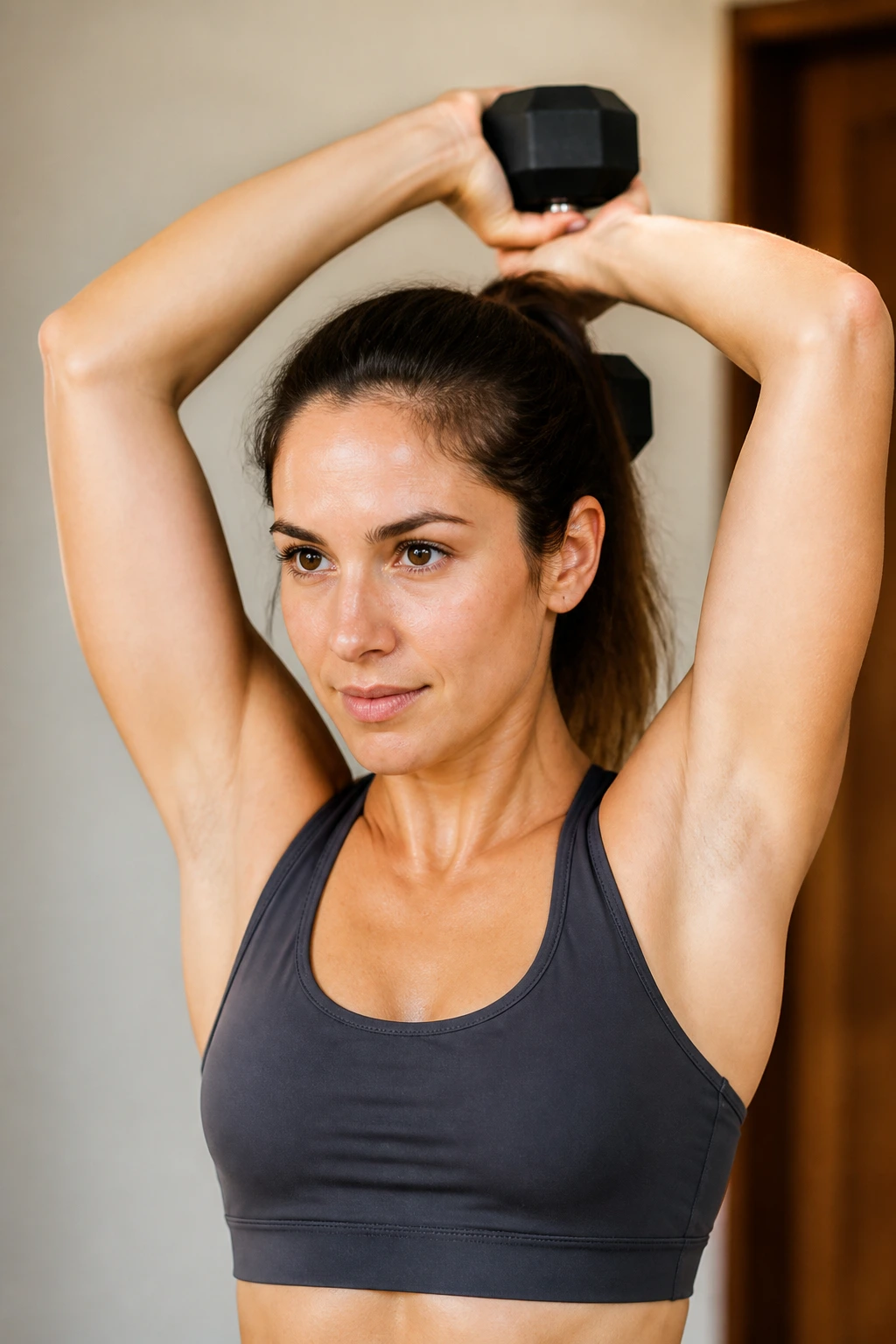
17. Single-Arm Overhead Triceps Extension
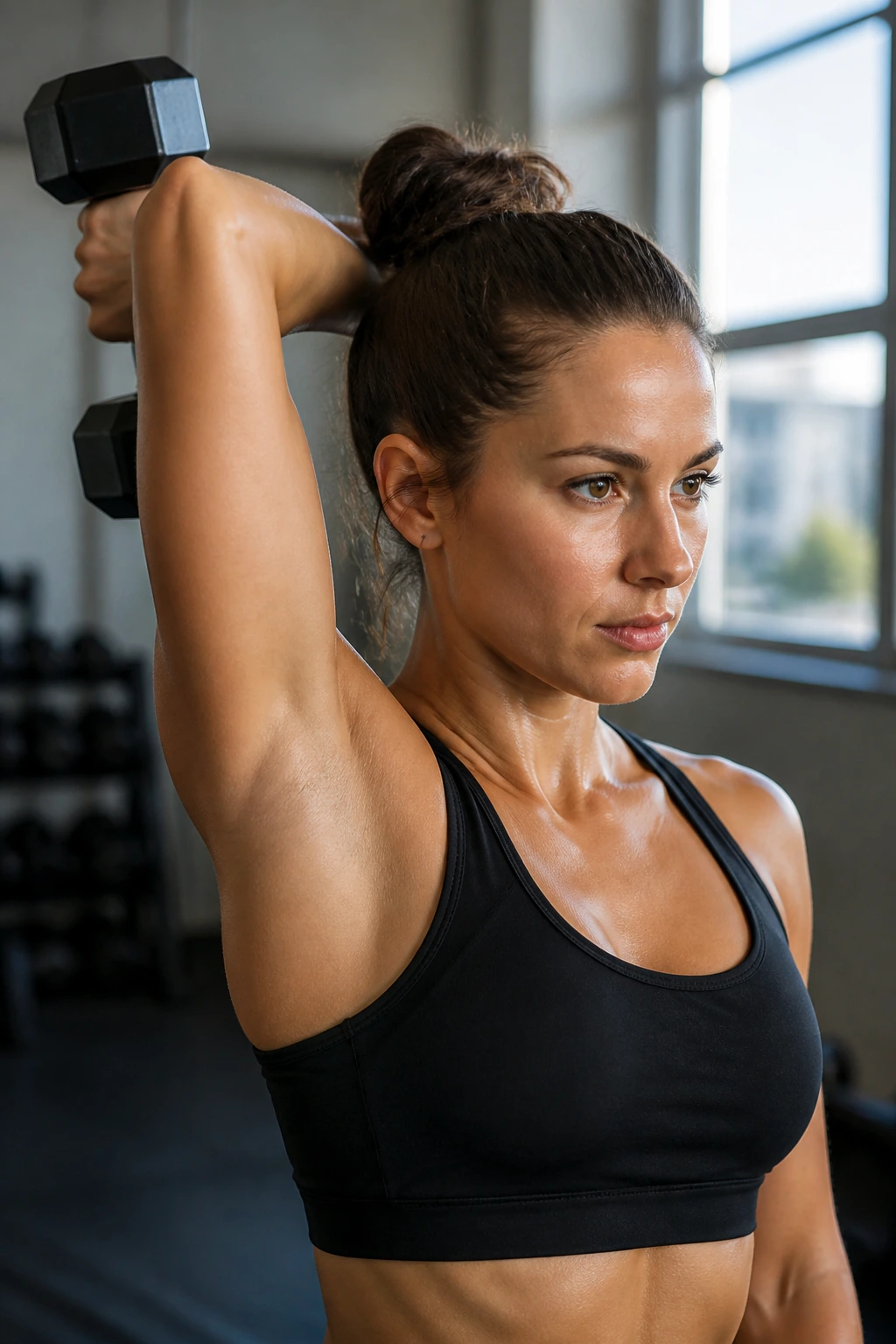
This is the arm move people skip until they want sleeves to fit a little better. The single-arm overhead triceps extension targets the long head of the triceps, which gets overlooked if you only do pressing work.
Stand tall or kneel to remove the urge to lean. Hold the dumbbell overhead, bend the elbow so the weight drops behind your head, then extend until the arm is straight again. Keep the elbow pointed mostly forward. If it flares wide, the shoulder starts helping more than the triceps.
It should feel like a clean stretch and squeeze, not a wrestling match.
Best rep range: 8 to 12 reps per side.
If your shoulder complains overhead, swap this for a lying triceps extension on the floor. Same muscle, less irritation, and often a nicer feel.
18. Dumbbell Pullover
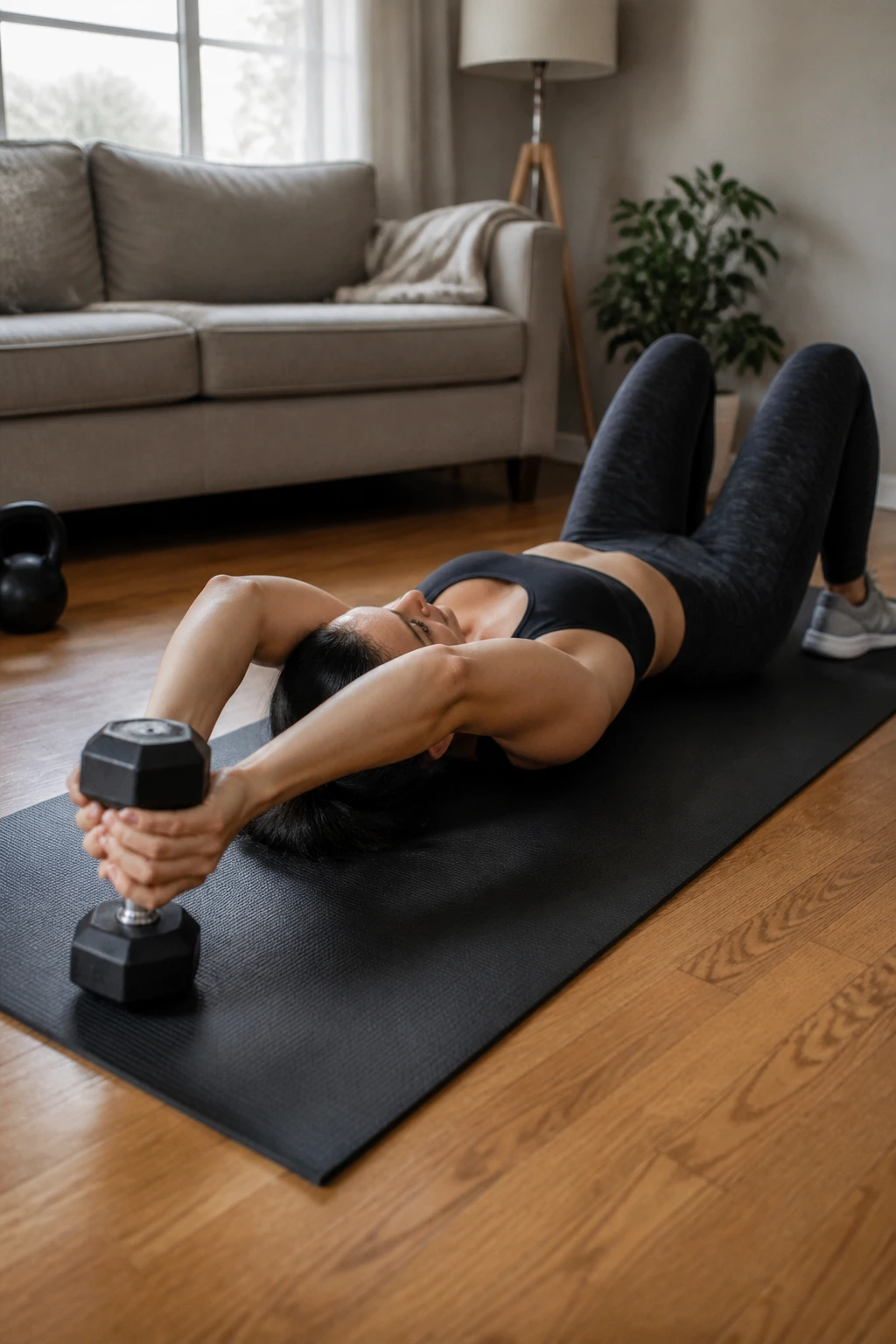
People reach for crunches when their core feels weak, but a pullover can do a lot more than a hundred rushed reps. It trains the lats, chest, and the front of the rib cage while asking the core to stop the lower back from turning into a bridge.
Lie on the floor or a bench, hold one end of the dumbbell with both hands, and lower it slowly behind your head. Stop before your shoulders start to feel yanked open. Then pull it back over the chest with control.
Where It Should Land
The dumbbell should move in a smooth arc, not a drop. If it falls too far back, you’ll lose shoulder position and turn the set into a mess.
- Keep the elbows slightly bent.
- Stop the descent when the upper arms are close to your ears.
- Exhale as you pull the weight back up.
- Keep the ribs from flaring.
Best rep range: 8 to 10 reps.
This one pairs well with floor presses. Push, then pull. Chest, then lats. It’s a tidy little upper-body pairing.
19. Single-Arm Snatch
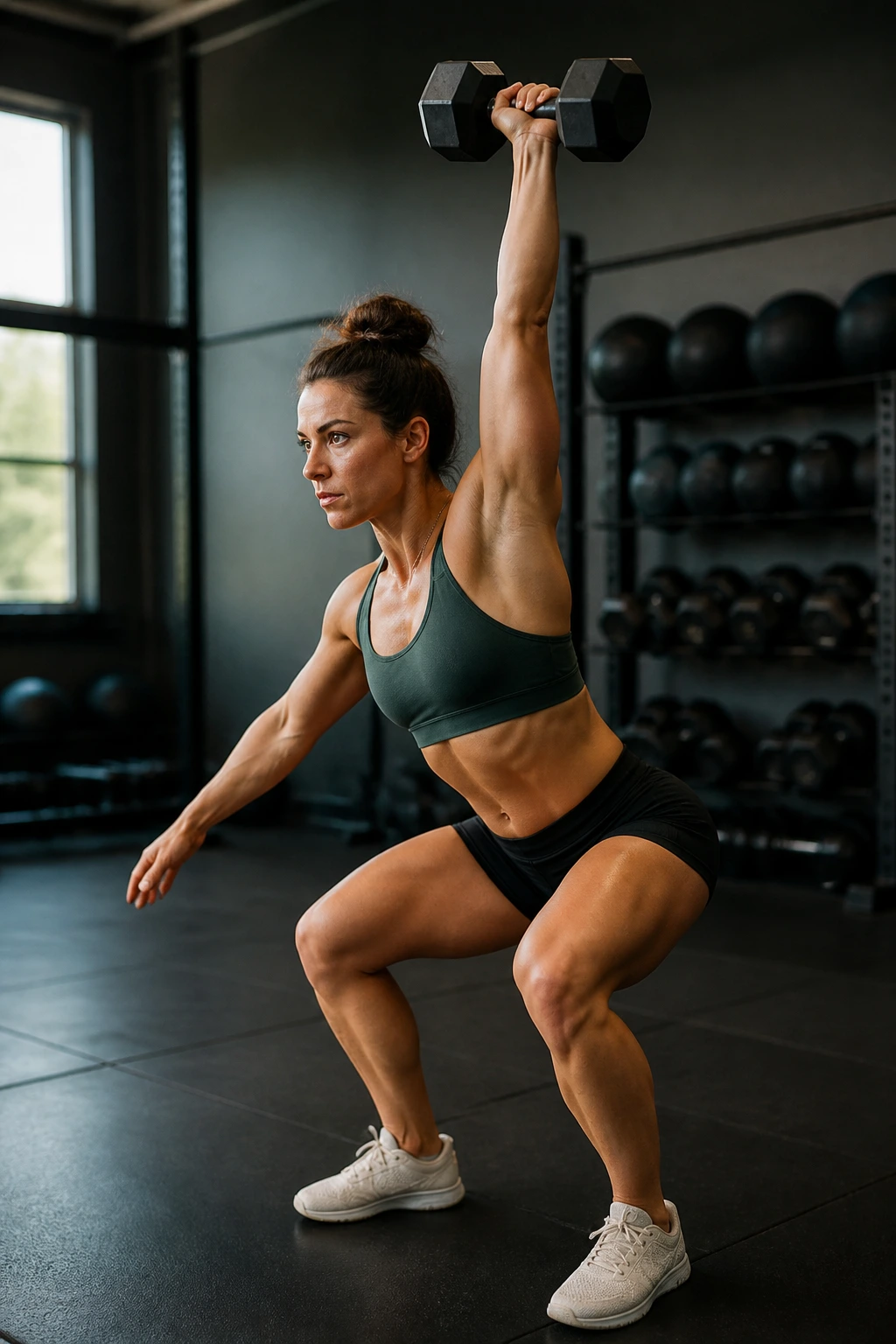
This is the flashy one, and yes, it earns the fuss. The single-arm snatch is a power move that sends the dumbbell from the floor or hang position to overhead in one smooth motion. When it’s done well, it looks sharp. When it’s done badly, it looks like a near miss.
The power should come from the hips, not a wild yank from the arm. Think of it as a fast hinge, a strong finish, and a quick turn over the wrist so the weight lands softly overhead. If the dumbbell smacks your forearm, the timing needs work.
Only If the Hinge Is Clean
- Start with a light dumbbell.
- Practice a high pull first if needed.
- Finish with the arm locked out and the biceps by the ear.
- Keep the ribs down so you don’t overarch at the top.
Best rep range: 3 to 5 reps per side.
This is not the place to chase fatigue. Chase crisp reps. The move rewards speed and control, and it punishes mess.
20. Dumbbell Windmill
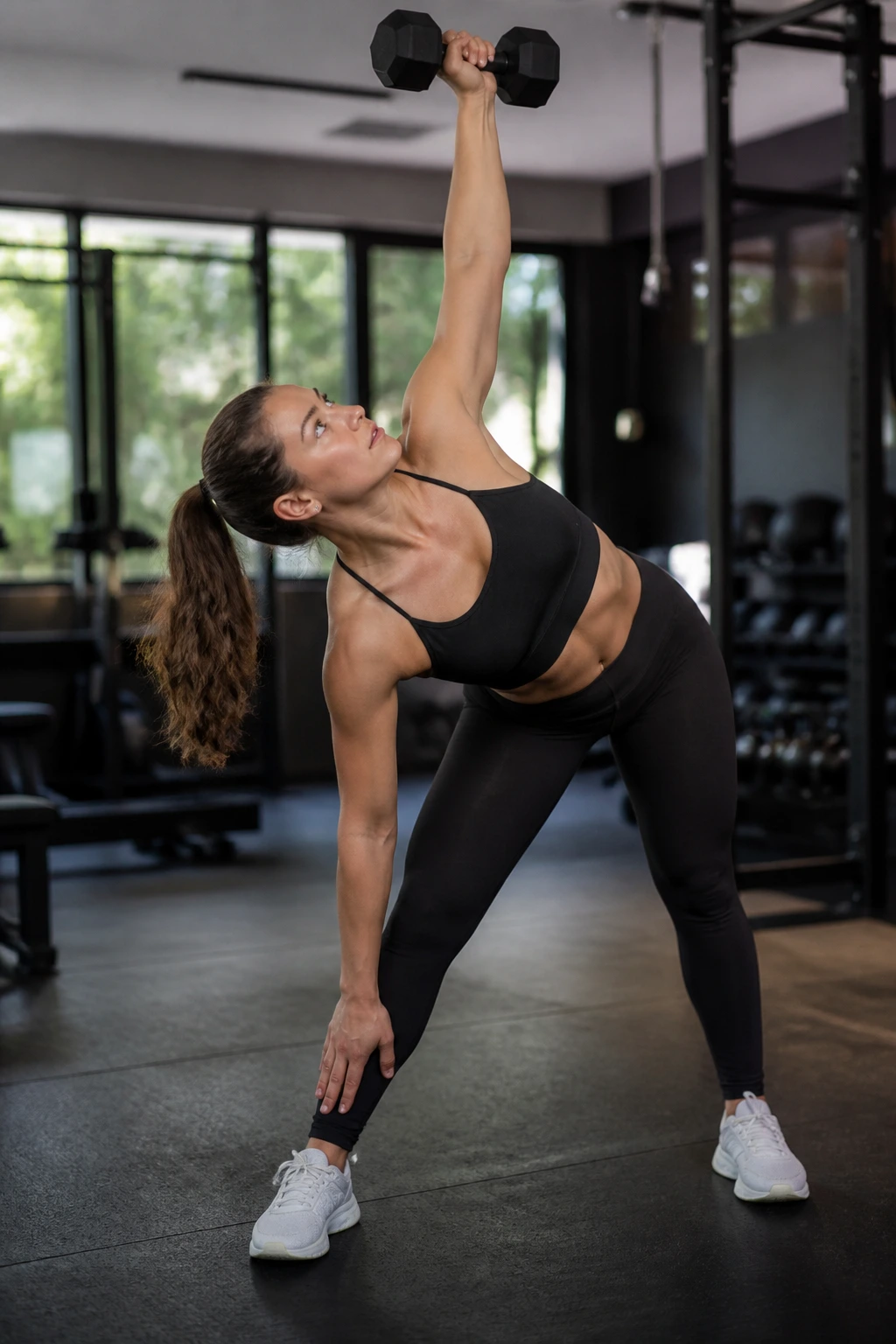
Want a move that tests your shoulders and side body at the same time? The dumbbell windmill does that, and it does it without needing much weight. It looks a little odd at first, which is probably why people avoid it. They shouldn’t.
Hold the dumbbell overhead, turn one foot slightly out, and hinge the hip back on the opposite side while keeping your eyes on the weight. The free hand can slide down the inside of the leg for balance. Your torso will rotate a touch, but the real job is staying stacked and controlled while the hip folds.
Who Should Skip It for Now
If your shoulders are unstable overhead or your hamstrings are very tight, start with a bodyweight version or skip it until the other moves in this list feel steadier. There’s no prize for forcing a windmill with bad positioning.
Best rep range: 4 to 6 reps per side with a light dumbbell.
If you want a simple way to build a full routine from this list, pick one squat, one hinge, one push, one pull, one carry, and one core drill. Three rounds of that, with 45 to 90 seconds of rest between rounds, is plenty for a hard session. And if you only have time for four moves, make them goblet squat, single-arm Romanian deadlift, floor press, and suitcase carry. That’s a solid day.
