



Gentle workouts for 38 weeks pregnant are less about fitness bragging rights and more about staying loose enough to sleep, walk, and get out of a chair without bargaining with your hips. That is the whole trick.
At this point in pregnancy, your body may feel roomy in one direction and tight in another. The belly pulls forward, the ribs flare, the pelvis gets heavy, and a five-minute errand can feel like a small expedition. A hard workout is not the goal here. A calm one is.
If your care team has told you to avoid exercise because of bleeding, fluid leakage, placenta issues, contractions, high blood pressure, or any other reason, follow that guidance first. Otherwise, look for movement that keeps you breathing easily, lets you speak in full sentences, and leaves you feeling a little better than when you started.
The best late-pregnancy routine usually looks plain on paper. A short walk. A few slow squats. A ball, a wall, a chair, maybe a pool if you have one. Nothing flashy. Everything steady. And when your energy dips halfway through, that does not mean you failed. It means you’re 38 weeks pregnant, which is its own sport.
1. Short, Easy Walking Loops
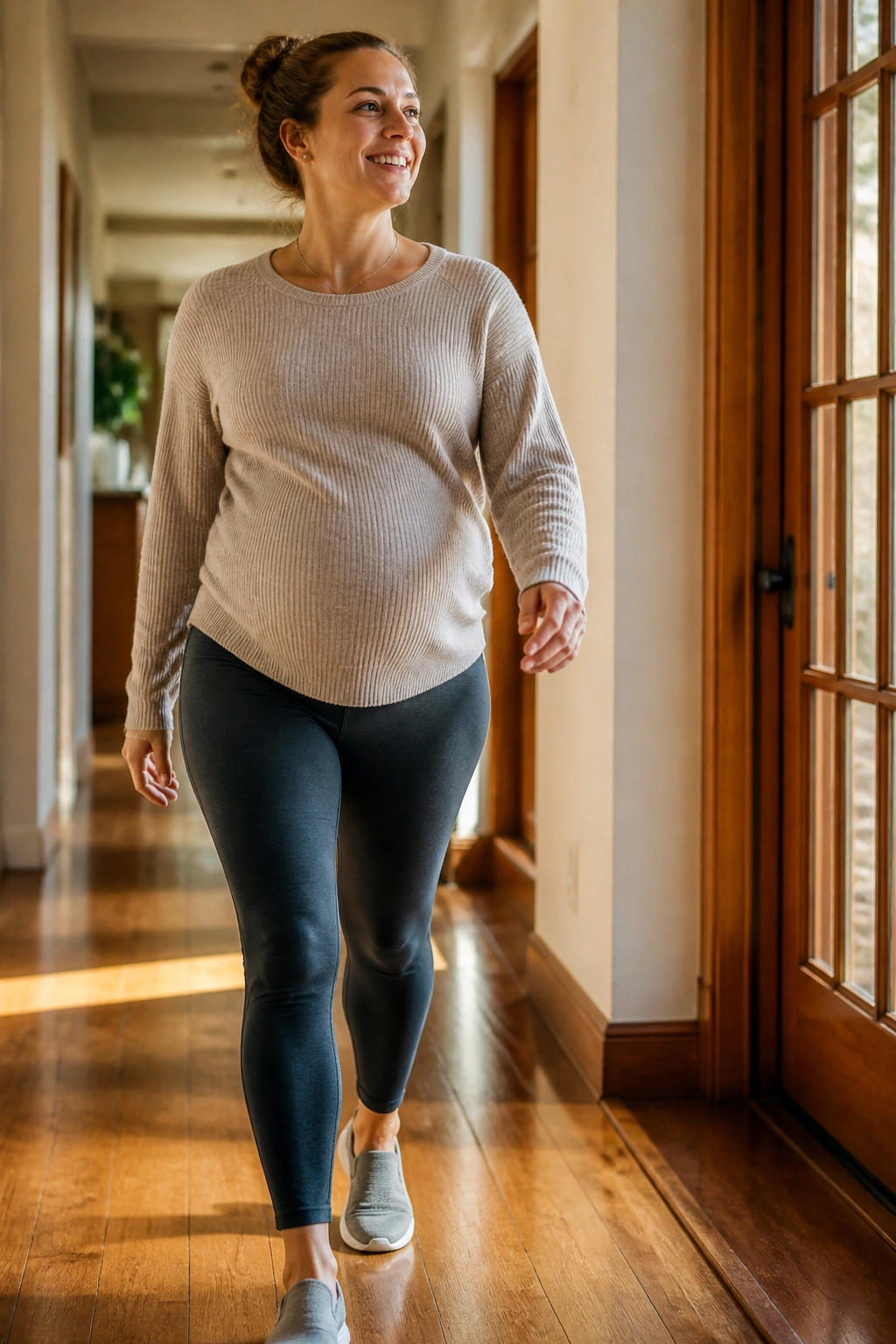
Walking is still the simplest place to start, and I mean that in the nicest possible way. A ten-minute loop around the block, a stroll through the house, or a lap down a hallway with a turn at the end can be enough to loosen your back and settle that stale, stuck feeling that shows up late in pregnancy.
What Makes a Good Late-Pregnancy Walk
The pace should feel almost too easy. You want to breathe through your nose some of the time, talk without huffing, and keep your stride short so you are not overreaching with each step. A flat route is better than a hilly one, and shoes with a firm heel counter help more than people think. Soft slippers are pleasant at home. They are not great for long walks.
A good walk at 38 weeks is also a walk you can end without drama. Pick a route with a bathroom nearby. Bring water. Don’t wait until you feel tired to turn around; turn around when you still feel fine. That tiny bit of restraint makes the walk feel better the next day, which is usually the whole point.
- Walk for 5 to 15 minutes at a time.
- Keep your shoulders loose and your hands unclenched.
- Use the talk test: if you can’t speak a full sentence, slow down.
- Stop sooner if your pelvis feels heavy or your lower belly starts to tug.
Pro tip: if a “walk” feels boring, that’s often a good sign. Boring usually means manageable.
2. Cat-Cow on Hands and Knees
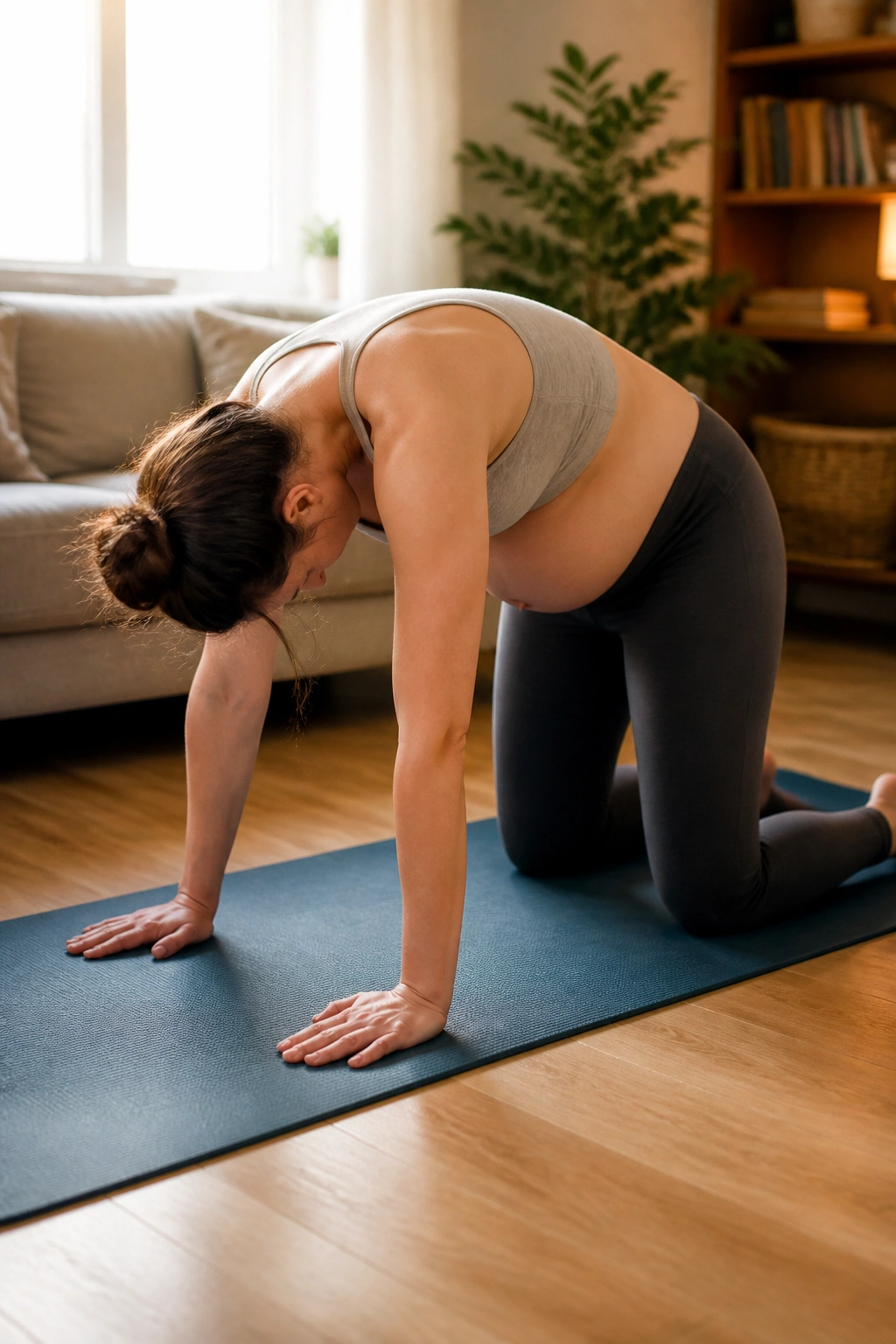
Cat-cow is one of those moves that sounds almost too simple, then somehow saves the day. The shifting between a rounded spine and a gently arched one gives your back a break, especially if you’ve spent the morning curled on the couch or standing at the sink washing the same mug twice because your attention wandered.
The key at 38 weeks is to keep the range small. You do not need a dramatic backbend. You need space. Start on hands and knees with your wrists under your shoulders and your knees a little wider than hip width if that helps your belly feel less crowded. On the inhale, let your chest soften forward a bit. On the exhale, round your spine and tuck your tail just enough to feel your low back open.
If the floor feels annoying, don’t force it. Hands on a countertop works. Forearms on the bed works too. Pregnant bodies are not impressed by floor-based suffering.
The rhythm matters more than the shape. Six to eight slow rounds can wake up your back, let your ribs move, and make your breathing feel less boxed in. A tiny movement done calmly beats a big one done awkwardly.
3. Birth Ball Hip Circles
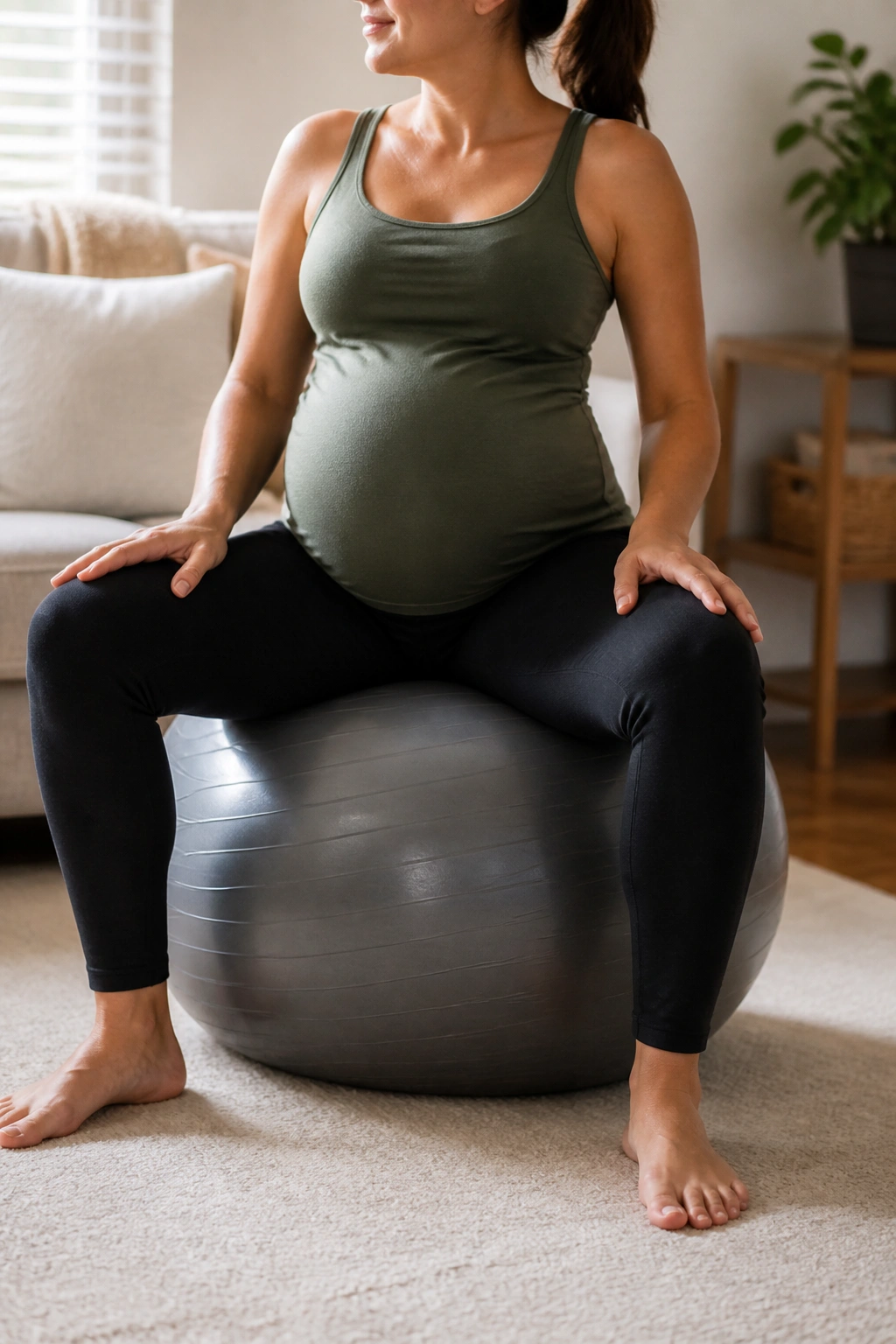
Why does sitting on a birth ball feel so good to so many pregnant people? Because it gives your pelvis motion without asking much of your joints. The ball lets you rock, circle, and shift weight in a way a chair never does, and late in pregnancy that freedom can feel almost suspiciously helpful.
Sit with your feet flat and your knees at about a right angle. If the ball is too low, your hips sink and the work gets sloppy. If it is too high, your feet dangle and you lose stability. Once you’re settled, draw slow circles with your hips—small ones first, then a little bigger if they feel smooth. Reverse direction after a minute or two.
How to Use It
- Sit tall, but not stiff.
- Keep your feet wider than your hips for balance.
- Make circles, side-to-side rocks, or gentle figure-eights.
- Stay on the ball for 3 to 10 minutes if it feels good.
A lot of people turn this into a bouncing contest. Don’t. The useful part is the quiet motion. Small, controlled circles often feel better on the low back and pelvis than big, noisy ones. If your baby seems low or you feel a lot of pressure, shorten the session and keep the movement softer. That’s usually the smarter move.
4. Supported Squats to a Chair
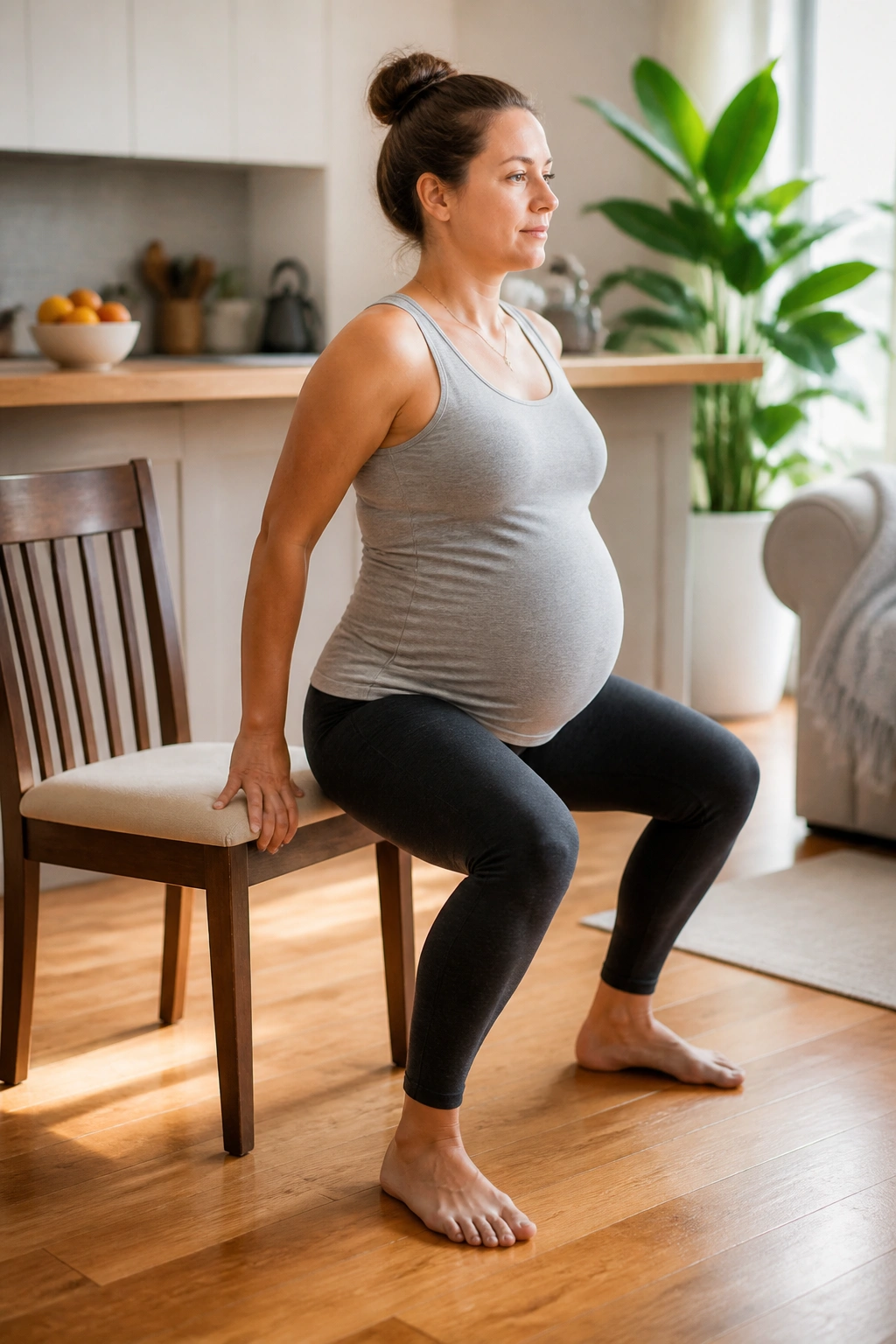
Standing up from a couch at 38 weeks can feel like an event. Supported squats are a cleaner version of that same motion, which is why they’re worth keeping around. They help your hips stay mobile, wake up your legs, and give you a little practice with the up-and-down mechanics you’re already using all day.
Use a chair behind you, a countertop in front of you, or both. Stand with your feet a little wider than your hips and your toes turned out slightly. Lower yourself slowly until your hips lightly touch the chair, then stand back up with control. You are not trying to drop into the chair. You are trying to touch it and rise.
- Do 5 to 10 reps.
- Keep your weight in your heels and midfoot.
- Hold the chair or counter if your balance feels off.
- Stop if you get sharp pubic bone pain or a pinching feeling in the pelvis.
This is not the time to chase depth. A shallow squat with clean form is better than a deep one that makes you brace your jaw and hold your breath. You want your knees tracking comfortably, your chest easy, and your exhale doing some of the work.
5. Water Walking or Easy Pool Laps
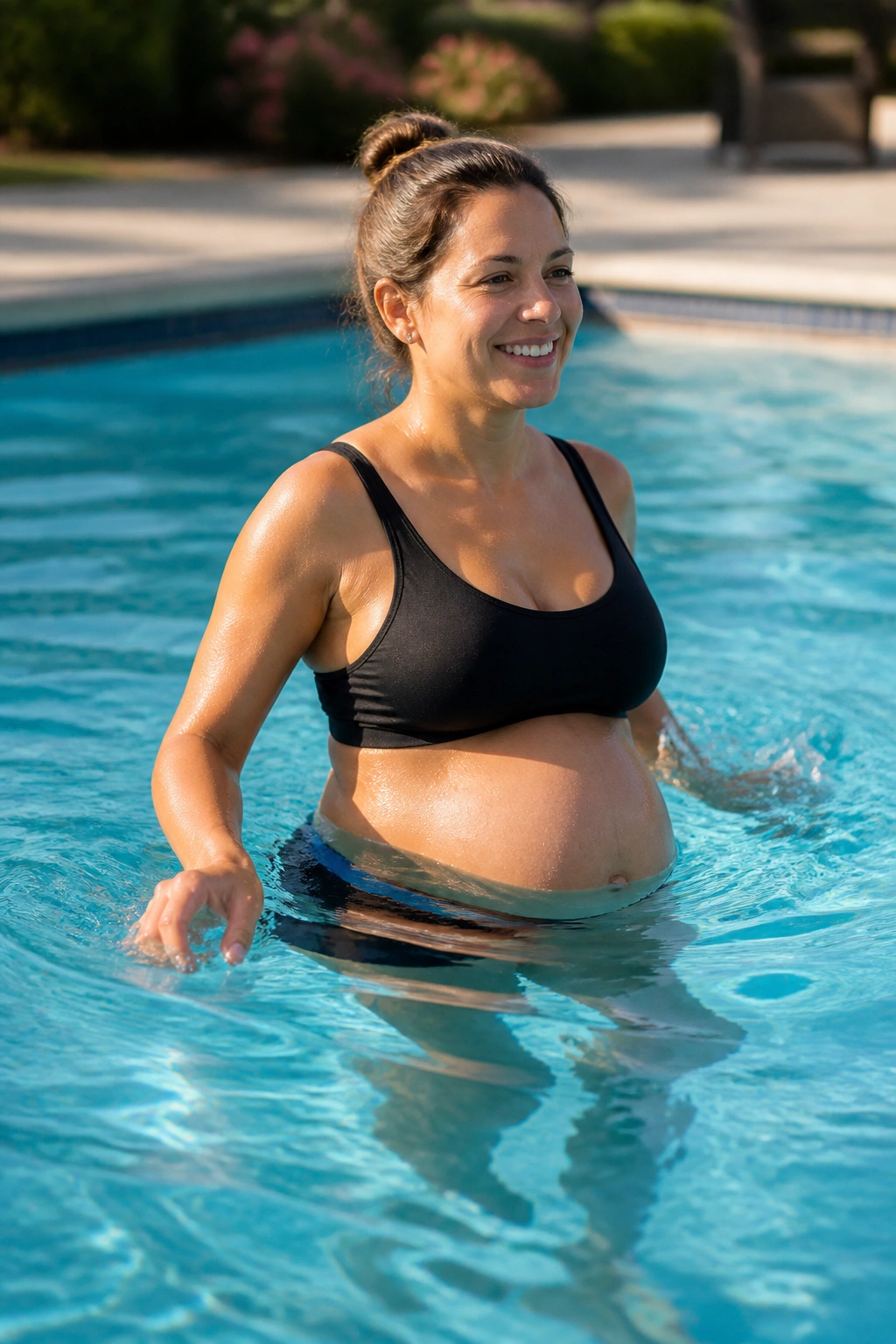
Water is underrated in late pregnancy. The buoyancy takes pressure off your belly, hips, and feet, and the water itself gives you just enough resistance to keep moving without feeling like you’re grinding through a workout. It’s one of the few places where your body can feel lighter before it feels exercised.
If you have pool access, keep it simple. Walk the shallow end. March in place with slow arm swings. Do a few easy lengths if swimming feels natural to you, but there is no prize for distance. A few back-and-forth passes are enough. Chest-deep water often feels good because it supports the bump without forcing you to twist around it.
The best pool workout at 38 weeks is the one that leaves you warm, loose, and not wiped out. Water that feels cool but not cold is usually more comfortable than a steamy pool, and a steady handrail helps if your balance gets strange on the slick deck. Take short breaks on the edge. Drink water even though you are surrounded by it.
Nope, you do not need fancy swim drills.
A slow 10-minute water session can be a relief on swollen ankles, a cranky lower back, and that heavy, dragging feeling that shows up after standing too long.
6. Wall Push-Ups and Wall Angels
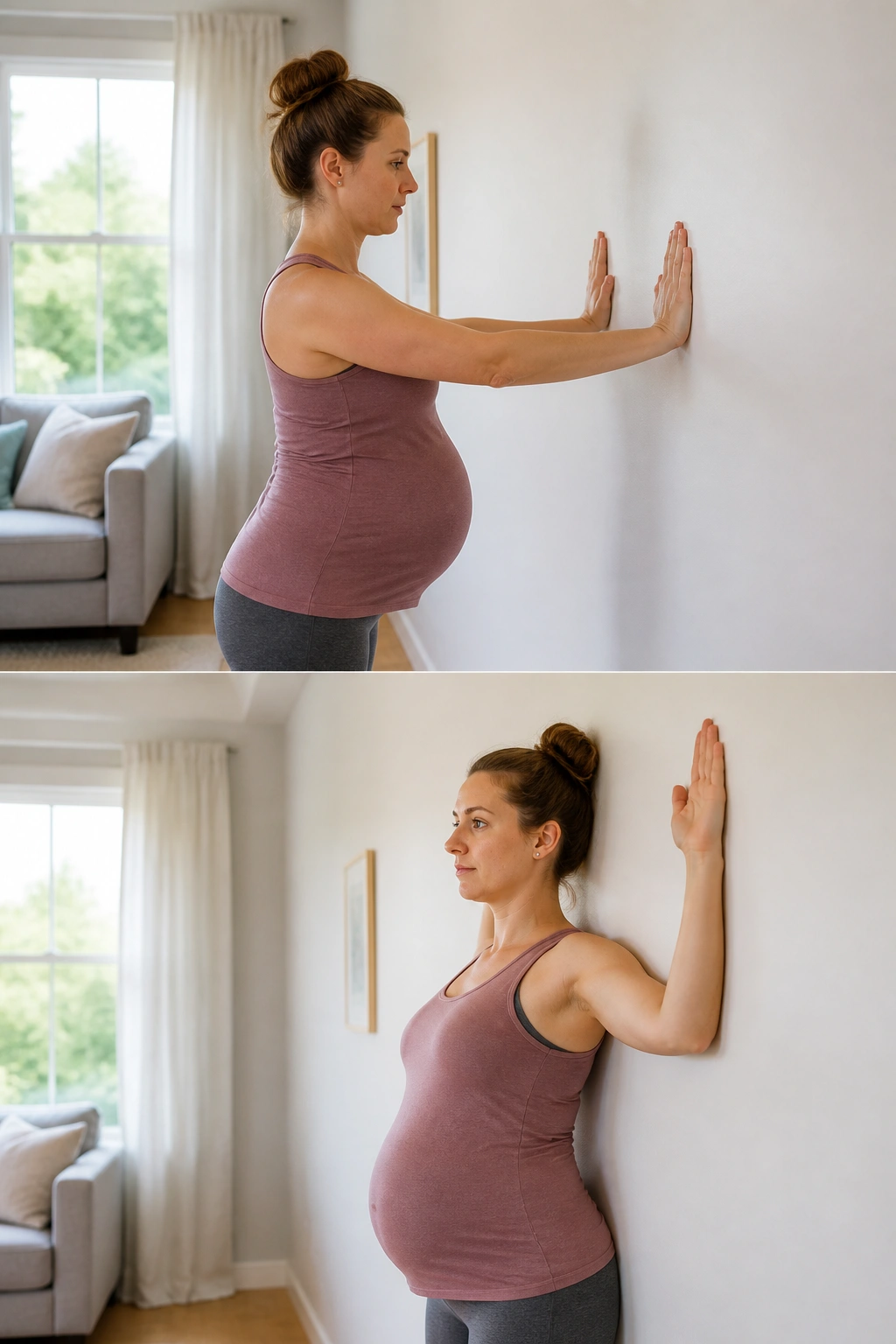
Unlike floor push-ups, wall push-ups let your belly stay out of the way and keep pressure off your wrists. That alone makes them worth doing. Wall angels are the quiet companion move here: they open the chest, remind your shoulders not to live by your ears, and counter the rounded posture that late pregnancy loves to create.
Stand an arm’s length from a wall, place your hands on it at chest height, and bend your elbows to lower your chest toward the wall. Push back out slowly. Keep your body in one line from head to heels. Then shift to wall angels by pressing your forearms against the wall and sliding them up and down in a controlled path, only as far as you can go without shrugging.
A Good Wall Combo
- 6 to 10 wall push-ups
- 5 to 8 wall angels
- Slow exhale as you press away
- Soft knees, relaxed ribs
I like this pair because it does not ask for much setup, and it gives you a tangible sense of effort without any impact. The work lands in your chest, triceps, and upper back, which is useful when your posture has started to feel like it was borrowed from a folding chair. Keep the motion smooth. If your shoulders pinch, shorten the range and slow down.
7. Seated Marching with Ankle Pumps
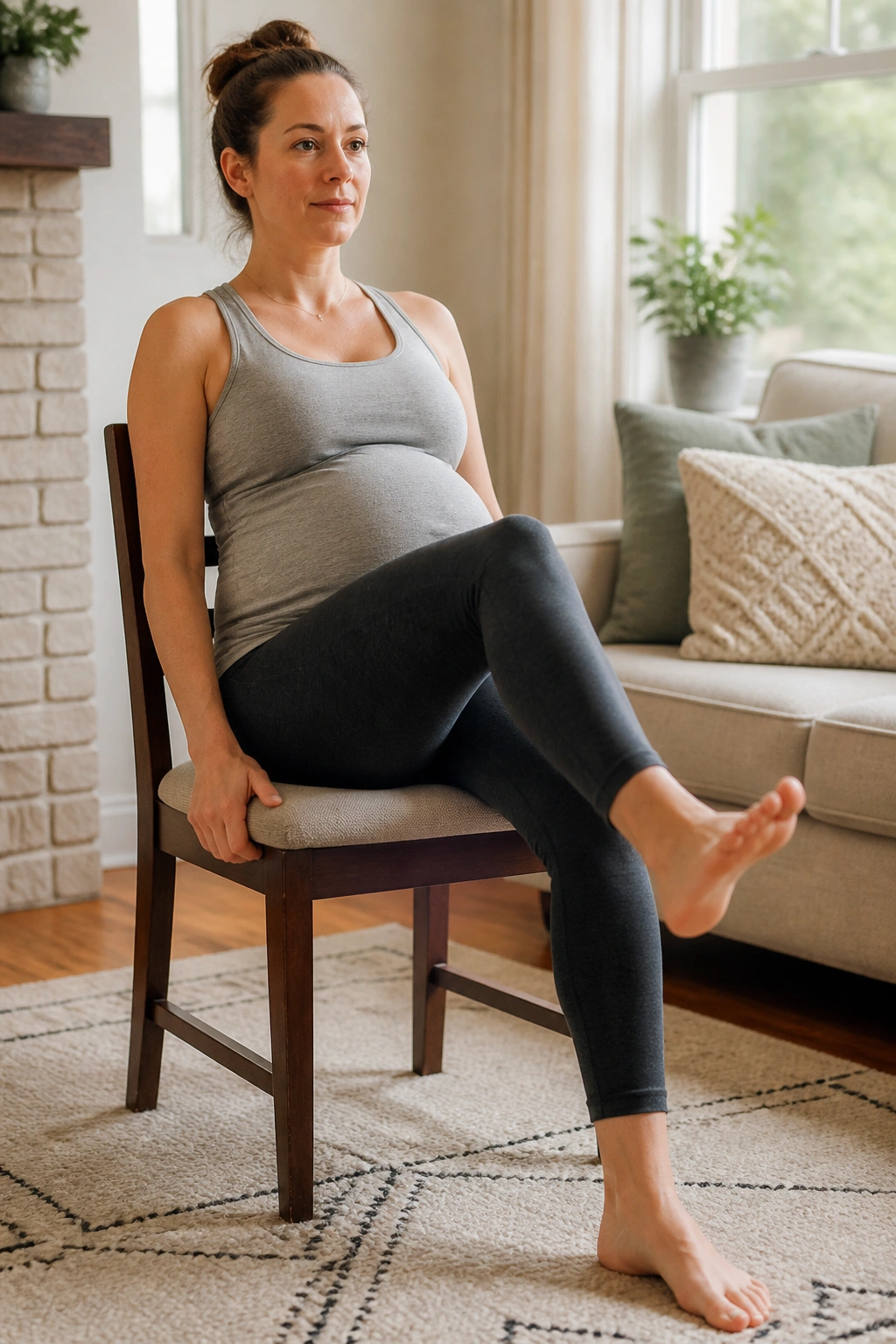
Some days standing feels like a bit much. On those days, seated marching is the move that saves the session from turning into “maybe tomorrow.” Sit on a firm chair with both feet flat, then lift one knee a few inches, lower it, and switch sides. Add ankle pumps by flexing and pointing your feet while you keep the pace slow.
It looks small. It isn’t.
A few minutes of seated marching can wake up your hip flexors, get blood moving through tired legs, and make your lower body feel less glued to the chair. If your feet swell by evening, the ankle work can be especially nice, and if your back gets cranky from standing, the seated position gives you a break without making you fully stop.
Try 30 seconds on, 30 seconds off, for three rounds. Or march one minute and then do ten ankle pumps on each side. There is no need to turn it into a formal circuit. The point is motion, not performance. Keep your chest lifted, your chin level, and your breathing smooth. If you catch yourself gripping the seat, loosen up your hands.
8. Prenatal Yoga Flow with a Wide Stance
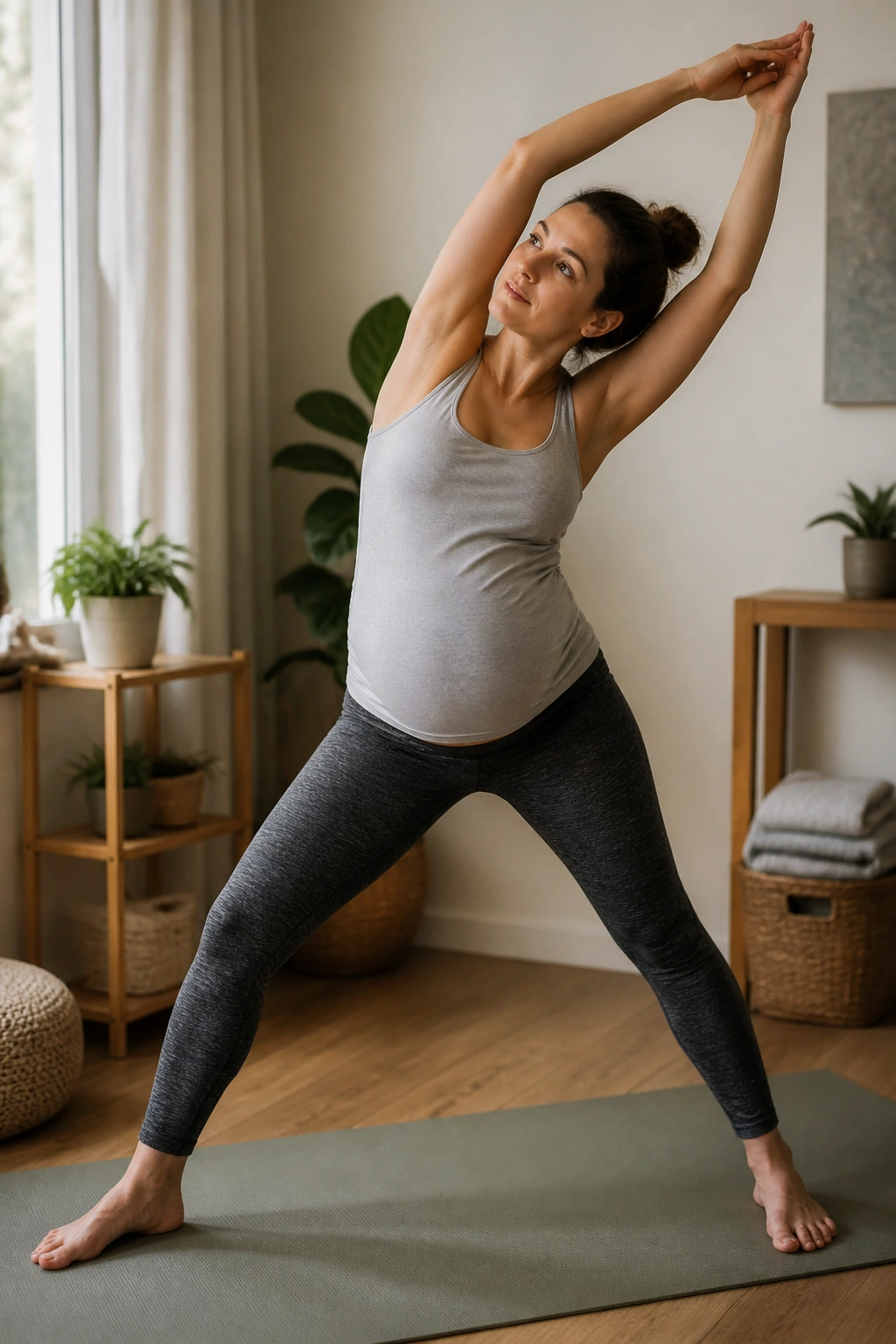
A good prenatal yoga flow at 38 weeks should feel roomy, slow, and a little unimpressive in the best way. No dramatic twists. No deep backbends. No heroic balance poses where one wobble sends you reaching for the wall. Wide stance, steady breath, and enough space for your belly to move are the things that matter.
Start standing with your feet a little wider than hip width and your knees soft. From there, move into a gentle side reach, then into a supported goddess squat or a shallow chair-like bend, and then back to standing with a long exhale. If you’re comfortable on the floor, a supported hands-and-knees stretch can follow, but there is no rule that says yoga must include the floor.
A Simple Sequence
- Stand and roll your shoulders three times.
- Reach one arm overhead and lean slightly to the side.
- Hold a shallow goddess squat for 3 to 5 breaths.
- Return to standing and repeat on the other side.
- Finish with hands on a wall and slow breathing.
The best part of prenatal yoga this late is the permission to shorten everything. If a pose feels awkward, it gets a smaller range. If you need a chair, use one. If a twist compresses your belly, skip it without guilt. The yoga mat is not the boss here.
9. Side-Lying Clamshells and Leg Lifts
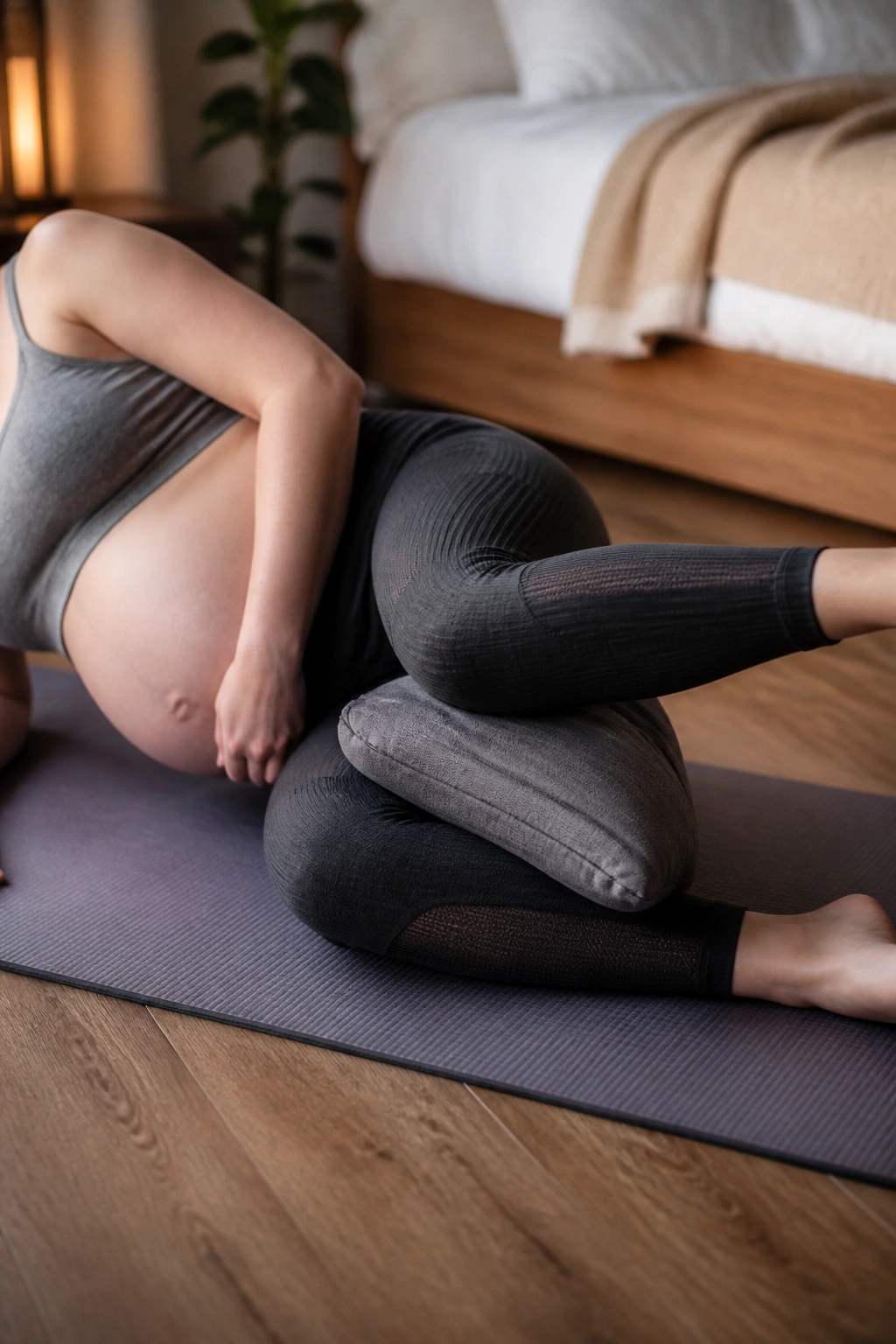
Side-lying work is underrated because it asks so little from your belly and so much from the muscles that help keep your pelvis steady. That matters when your hips feel loose, sore, or tired after standing. It also feels nice to lie on your side for a minute without being trapped flat on your back.
Lie on one side with a pillow between your knees if that helps. Bend your knees for clamshells, keeping your feet together as you open the top knee like a book. For leg lifts, keep the top leg straighter and lift it just a few inches, then lower it with control. The movement should be tidy, not huge.
- 8 to 12 clamshells per side
- 6 to 10 leg lifts per side
- Keep your hips stacked
- Move slowly enough that you can feel the side of the hip working
If your hips feel crunchy, smaller is better. If your lower back wants to take over, reduce the range and tighten your belly only a little as you lift. The goal is gentle activation, not muscle failure. A side-lying routine like this tends to feel better when you finish than when you start, which is a nice thing to be able to say about anything at 38 weeks.
10. Standing Calf Raises and Toe Taps
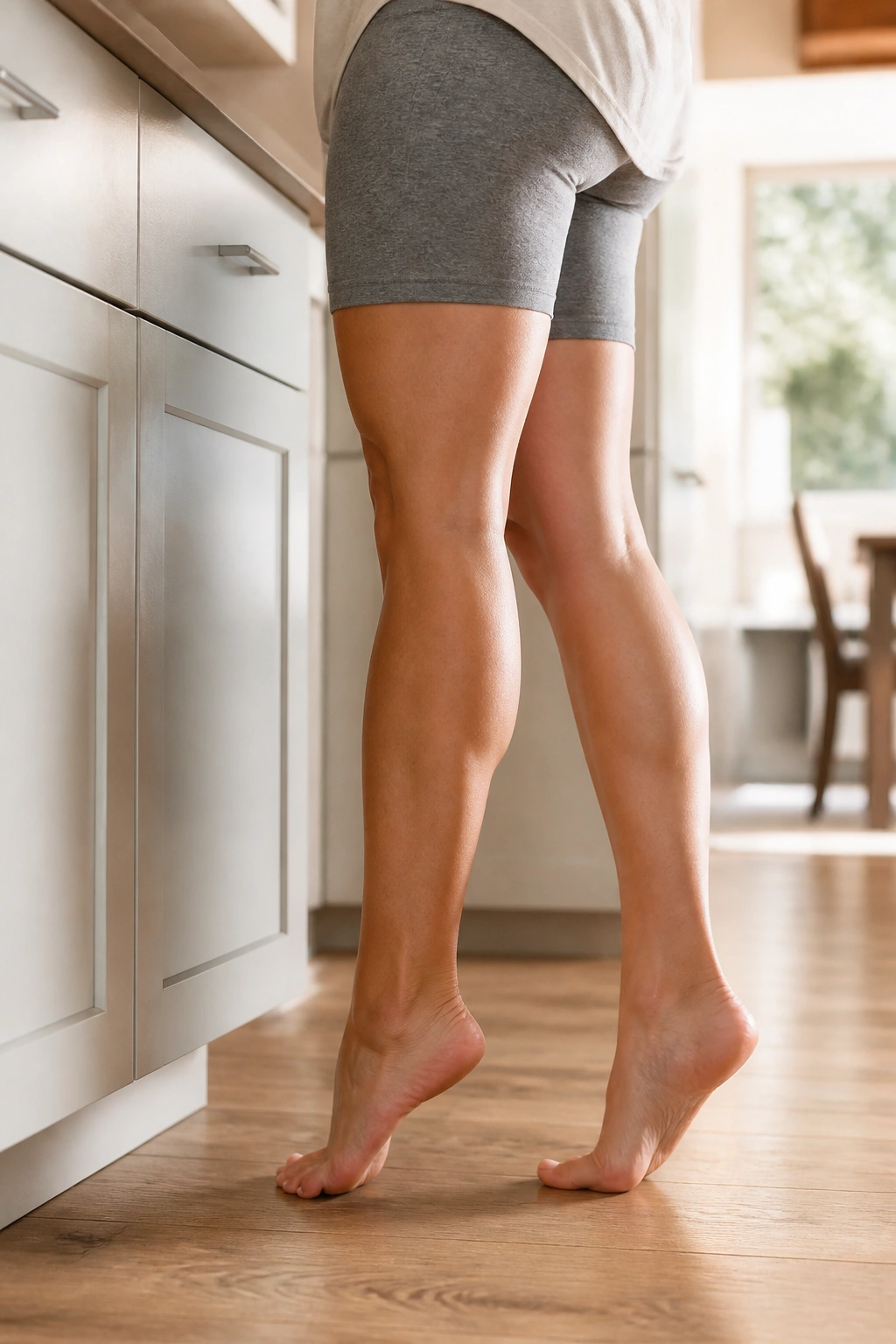
Standing calf raises are one of those tiny exercises that sound almost too plain to matter. Then you do them for a minute and realize your feet, ankles, and lower legs have been sulking all day. Late pregnancy can bring swelling and heaviness, and this little routine gives your legs a reason to move blood around.
Hold onto a counter, chair back, or wall. Rise up onto the balls of your feet, pause for a second, then lower slowly. Follow that with toe taps: keep your heels down and lift your toes, then lower them back to the floor. You can alternate the two or do them as separate sets.
A 3-Minute Reset
- 10 to 15 calf raises
- 10 to 20 toe taps
- Pause at the top for a count of one
- Keep your knees soft, not locked
The beauty here is that you can do it almost anywhere. In the kitchen. By the sink. Next to the bed. If your balance feels strange, stand closer to the counter and keep one hand down the whole time. The movement is small, but it can make your lower legs feel less stiff and your feet a little less far away from you.
11. Pelvic Tilts Against a Wall
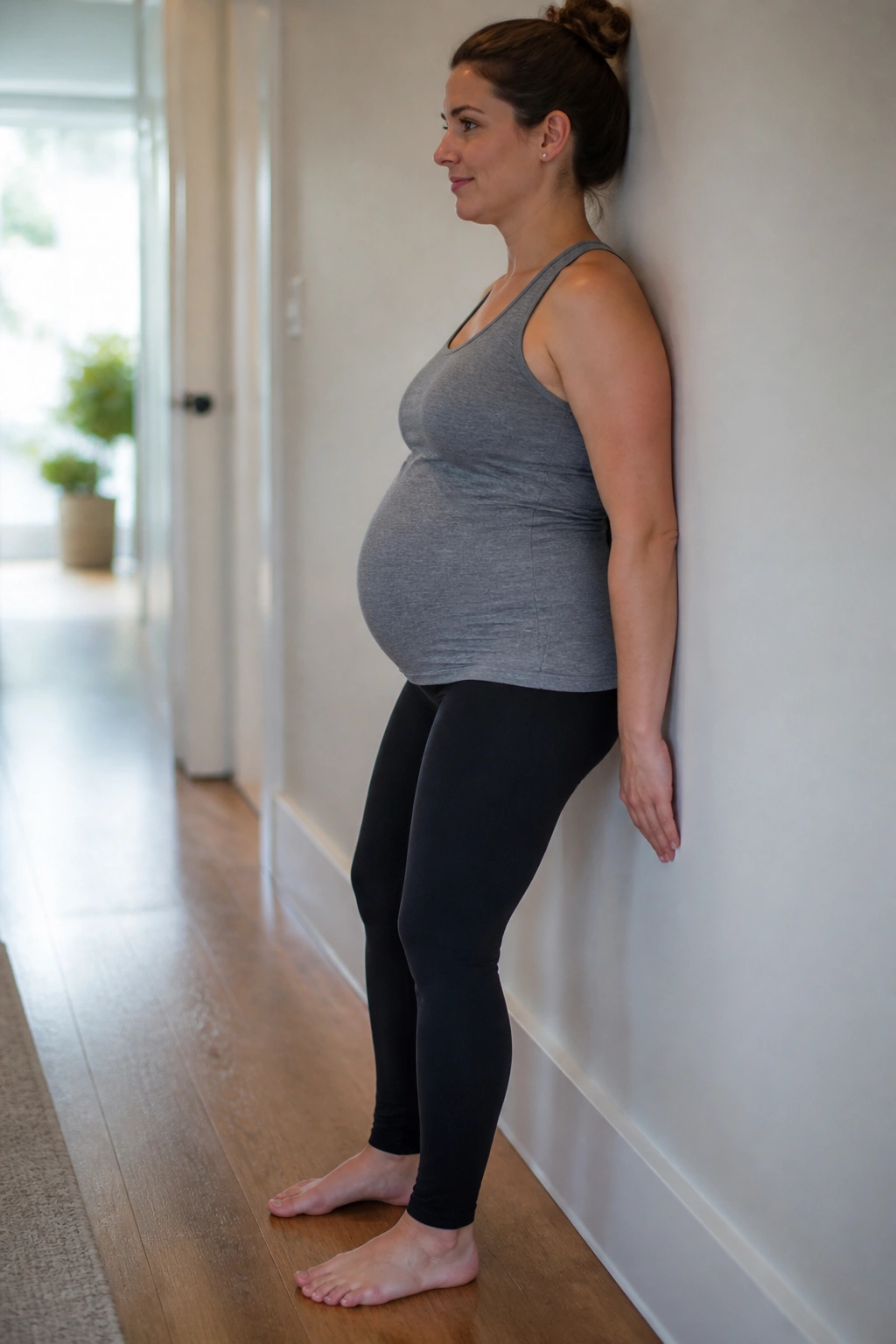
If lying on the floor feels like a hassle, standing pelvic tilts are the cleaner fix. You get the same basic motion—gentle movement through the pelvis and low back—without having to lower yourself down and figure out how to get back up again.
Stand with your back against a wall, feet about a foot away, and knees soft. Press the small of your back lightly toward the wall by tucking your pelvis under, then release back to neutral. The motion is small. That’s the point. You’re not trying to flatten your whole spine or force your ribs to behave.
What to Feel
- A little space through the low back
- Gentle work in the lower abdomen
- No pain in the pubic bone
- No breath-holding
Do 8 to 10 reps and let each one finish before starting the next. A helpful cue: imagine your waistband sliding up just a touch in the back when you tuck. That’s enough. If you find yourself squeezing hard or clenching the glutes, back off. The move should feel like a soft reset, not a strength test.
12. Gentle Resistance Band Rows
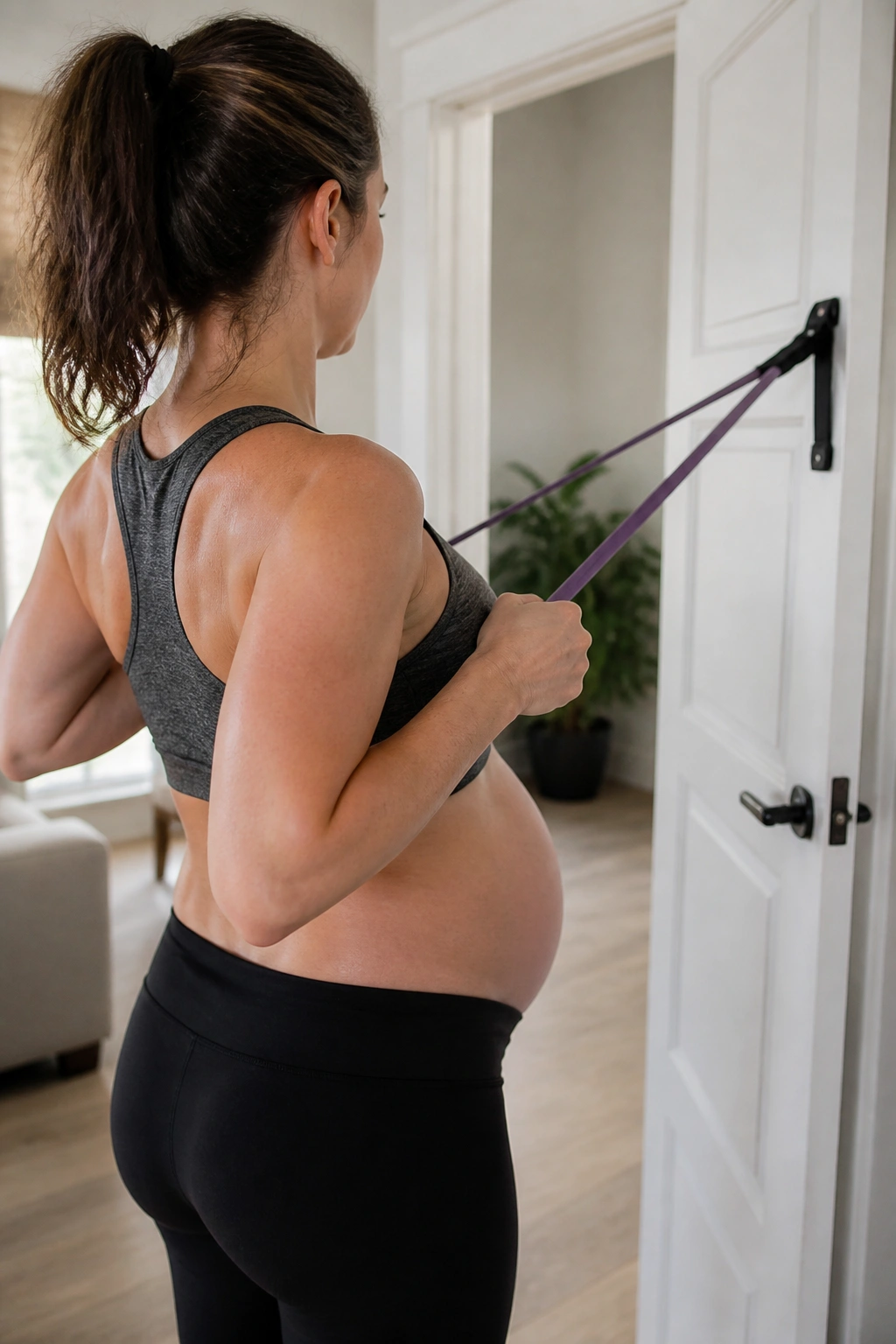
I like rows more than random arm circles because they give your upper back something real to do. Late pregnancy tends to pull the shoulders forward, and a simple band row is a tidy way to remind your posture who’s in charge. Nothing dramatic. Just a firm pull and a controlled return.
You can stand on the band or anchor it around a sturdy post. Hold one end in each hand, start with your arms forward, then pull your elbows back close to your sides until your shoulder blades slide toward each other. Pause for a beat, then return slowly. The movement should feel smooth from the first rep to the last.
- Do 8 to 12 rows
- Keep your ribs from flaring forward
- Soften your knees and stand tall
- Stop if your neck starts doing the work
This is one of the best “I need to move, but I don’t want to move much” exercises in the list. It opens the chest, wakes up the upper back, and gives your arms a little purpose. If the band feels too heavy, step closer to the anchor or use a lighter one. A row should feel like control, not wrestling.
13. Side Steps with a Mini Band
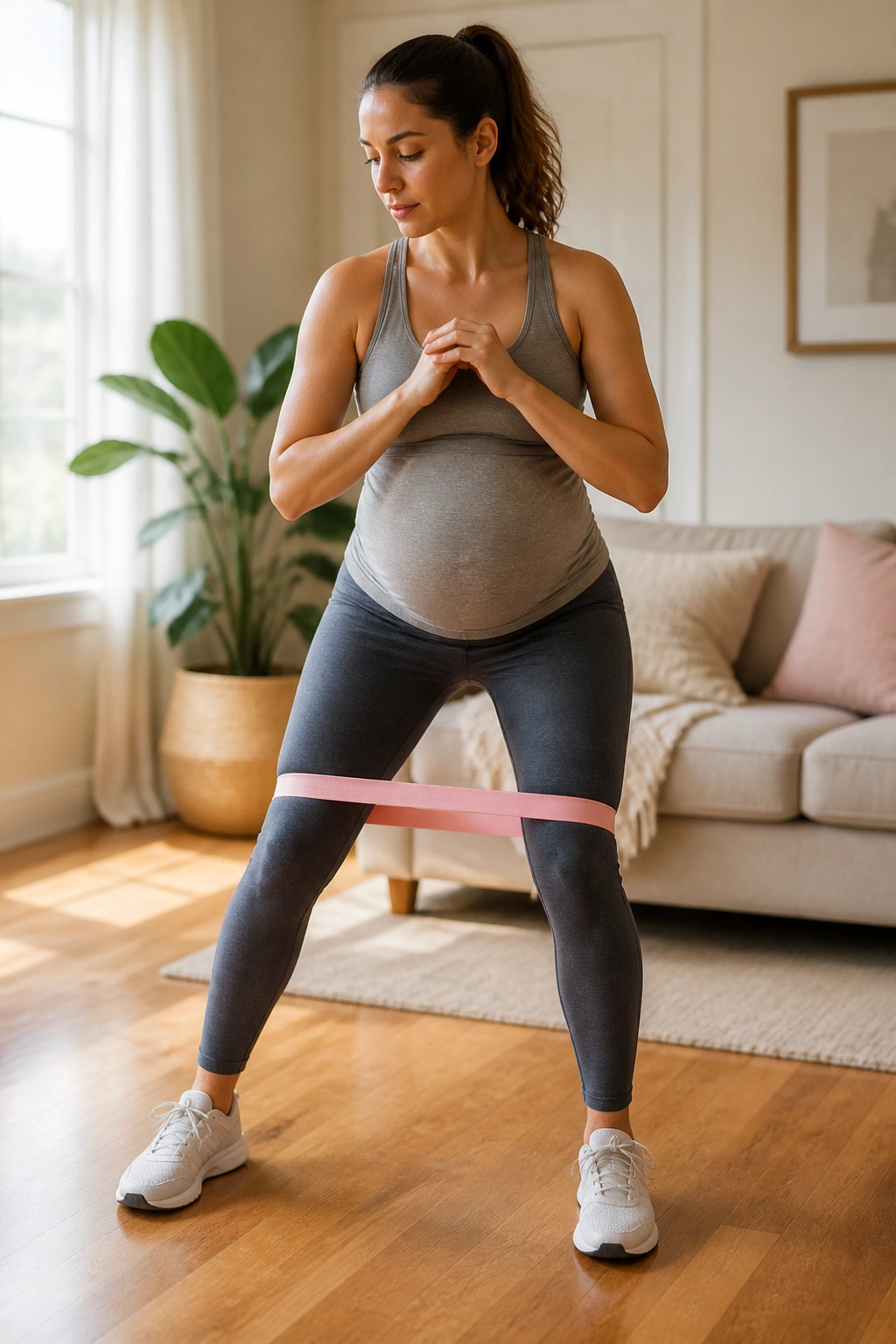
Side steps look small. They are not. Once the band goes above your knees or around your ankles, those little shuffles light up the hips fast, especially the muscles on the outside of the glutes that help keep your pelvis steady when you walk.
Stand with your feet hip width apart and a soft bend in your knees. Take a small step to the right, then bring the left foot in without letting the band snap your knees together. Repeat for 6 to 10 steps, then go back the other way. Keep your torso quiet. The work belongs in the hips, not in the shoulders or lower back.
If you have pubic symphysis pain or a sharp tug in the front of the pelvis, shorten the step, raise the band above the knees, or skip this move for the day. That’s not overcautious. That’s paying attention. Side steps are useful when they feel smooth. When they feel crunchy, they are no longer useful.
A good version leaves the outer hips awake and the knees warm, not irritated. Slow down if the band starts bouncing around or if you have to lean your whole body to cheat each step.
14. Deep Breathing and Pelvic Floor Relaxation

Why count breathing as exercise? Because at 38 weeks, the muscle work that matters most is often the one you cannot see. The diaphragm, ribs, and pelvic floor move together, and if everything has been tense for weeks, a few quiet breaths can help more than another set of leg work.
Sit or lie on your side with support under your head and belly. Inhale through your nose and try to send the breath into the sides and back of your ribs. Let your belly soften. On the exhale, gently draw the pelvic floor up just a little—think 20 percent effort, not a hard squeeze—then let it release fully before the next breath.
A 5-Breath Reset
- Inhale for a count of four.
- Exhale for a count of six.
- Soften the jaw and shoulders.
- Let the pelvic floor relax on the inhale.
- Repeat five times.
If you tend to clench your butt, your thighs, or your stomach when you think about “engaging,” skip the hard version and focus on release instead. That’s the part many people miss. Not every late-pregnancy movement needs to build something. Some of it is just learning how to let go of tension you’ve been carrying without noticing.
15. Supported Restorative Stretching
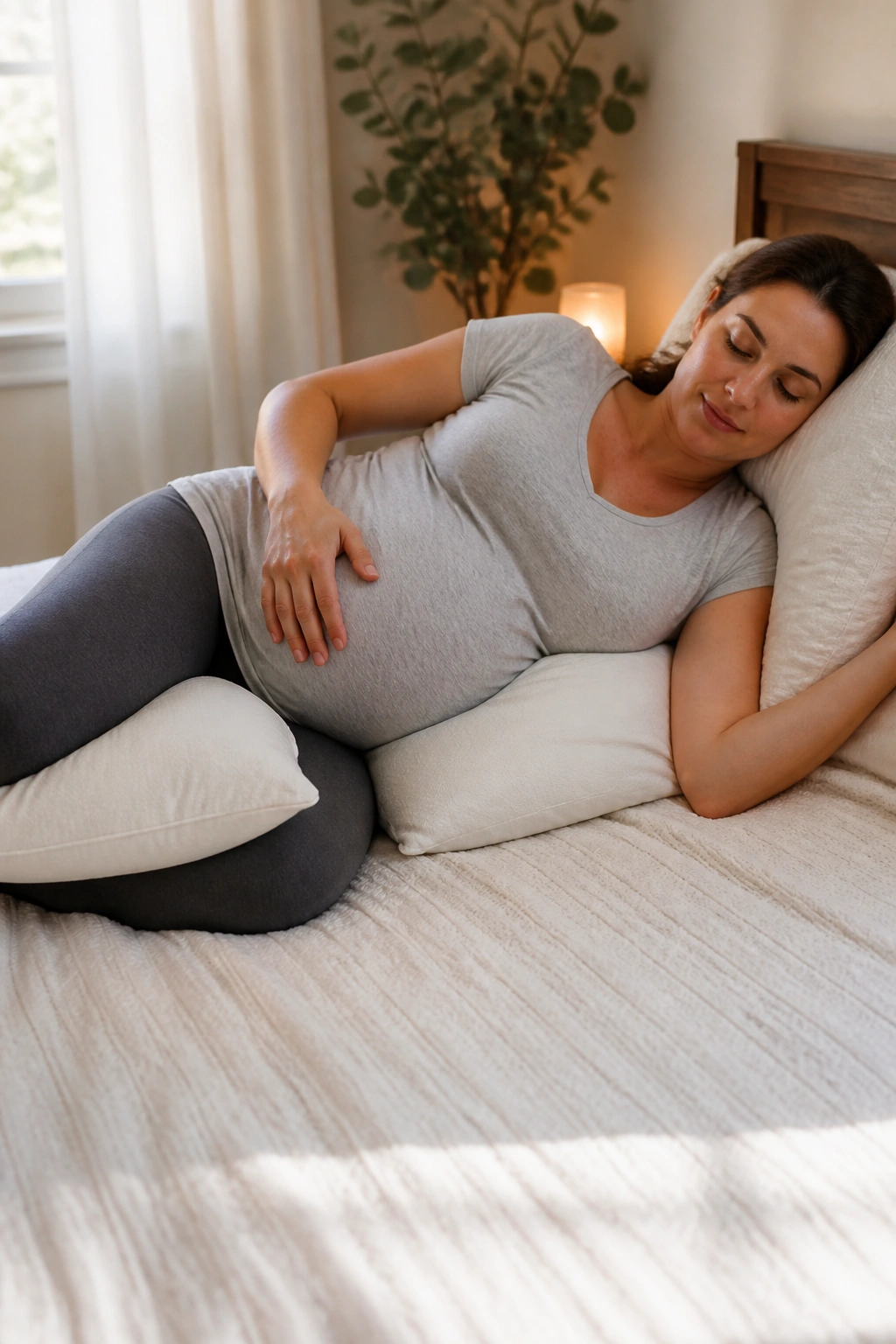
The best end-of-day movement at 38 weeks is often the quietest one. Supported stretching gives you the feeling of working without asking for much strength, and that matters when your body is tired in the specific, heavy way that late pregnancy brings on. A pillow, a couch, and a wall can do a surprising amount.
Try side-lying rest with a pillow between the knees, a pillow under the belly, and another behind the back so you feel held instead of twisted. A supported butterfly on the bed works too if your hips enjoy it: soles of the feet together, knees propped on pillows, torso slightly elevated. If you prefer to stay upright, sit on a firm chair and lean forward over a stack of pillows with your arms draped down. Slow breathing goes with all of it.
- Hold each position for 30 to 60 seconds
- Keep the stretch mild, not deep
- Breathe into the ribs and lower back
- Leave any pose that creates pinching, numbness, or a sharp pull
This kind of movement is not flashy, and I like that about it. It respects the fact that a body at 38 weeks can be strong and tired at the same time. Some days the best workout is a walk. Some days it is three slow breaths on your side with a pillow under your knee. That still counts.
