



A gym membership earns its keep when the workout gets awkward, heavy, or too loud to do in a living room. A pair of dumbbells covers a lot. A squat rack, sled, cable stack, rowing machine, and leg press open a different lane entirely, and that’s where the money starts to make sense.
The boring advice from the big fitness organizations has never changed much: keep some strength work in the week, get your heart rate up, and make the load harder over time. The gym gives you tools for that. Not flashy tools. Reliable ones.
A workout worth paying for is not the one that looks hardest on a screen. It’s the one you can keep progressing for months without running out of resistance, without beating up your joints for no reason, and without turning every session into a scavenger hunt for equipment. That’s the real test.
So let’s start with the workhorse everyone pretends is too basic to matter. It isn’t.
1. Barbell Back Squats That Make Gym Membership Money Worth It
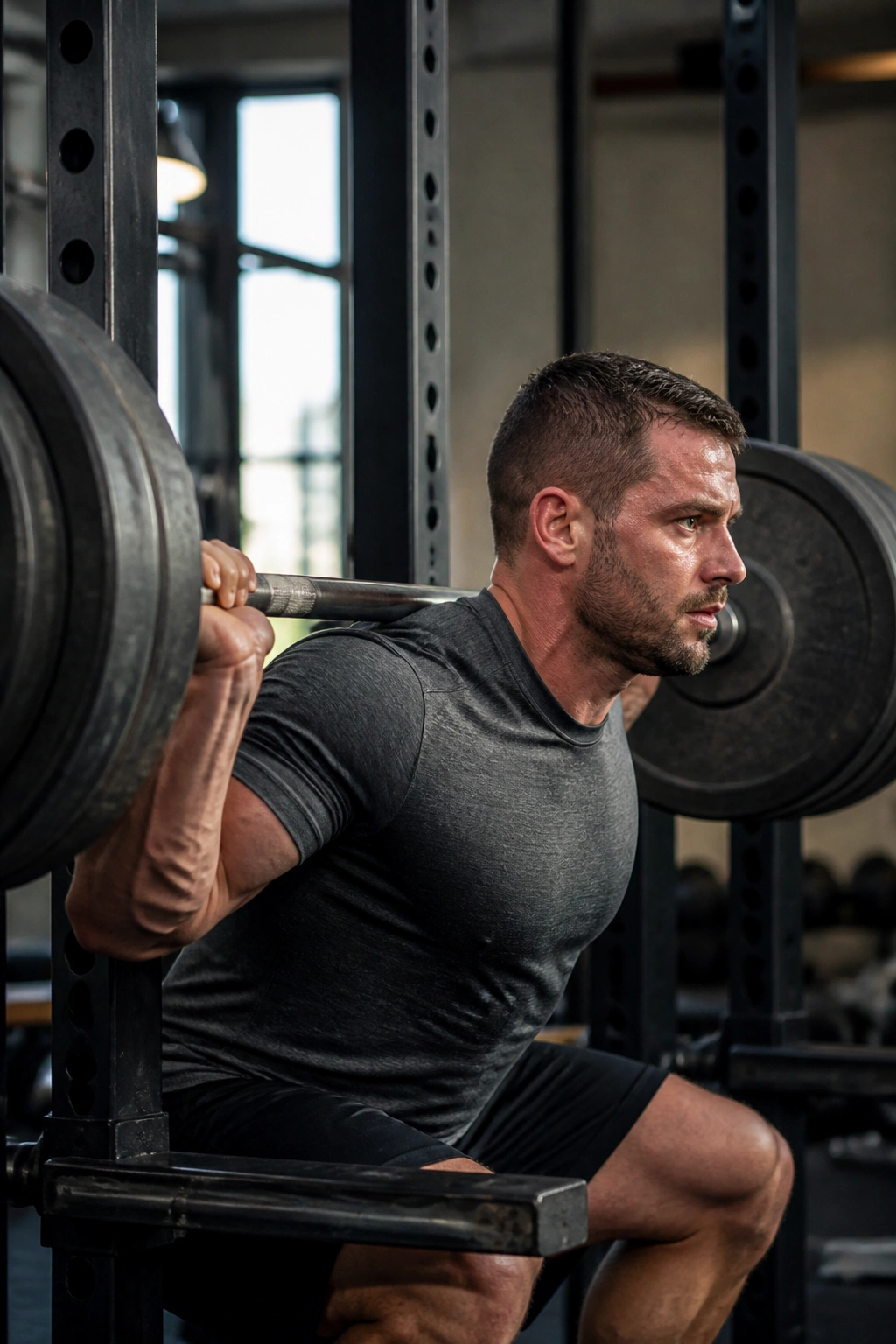
If you want one workout that makes a gym feel non-negotiable, this is the one. A barbell back squat in a real rack gives you load, progression, and safety in a way bodyweight work can’t touch once you get past beginner territory.
The rack matters more than people admit. Safety pins let you push hard without needing a spotter to hover over you like a nervous parent, and that freedom changes the whole session. You can work in clean sets of 3 to 6 reps for strength, or 5 to 8 reps if you want more leg size. Either way, you know exactly what changed when the bar goes up 5 pounds.
Why the rack changes the lift
A goblet squat is fine. A barbell back squat is a different animal. Your quads, glutes, adductors, and trunk all have to brace at once, and the load gets heavy fast enough to matter.
- You can load the movement past home-gym limits. That matters once a dumbbell stops being challenging.
- The motion stays honest. A real rack gives you the chance to work from consistent depth.
- The logbook becomes useful. Add 5 pounds, hit the same depth, repeat.
Pro tip: Don’t turn every rep into a grind. Leave one clean rep in the tank and your squats usually improve faster.
2. Trap Bar Deadlift Sessions
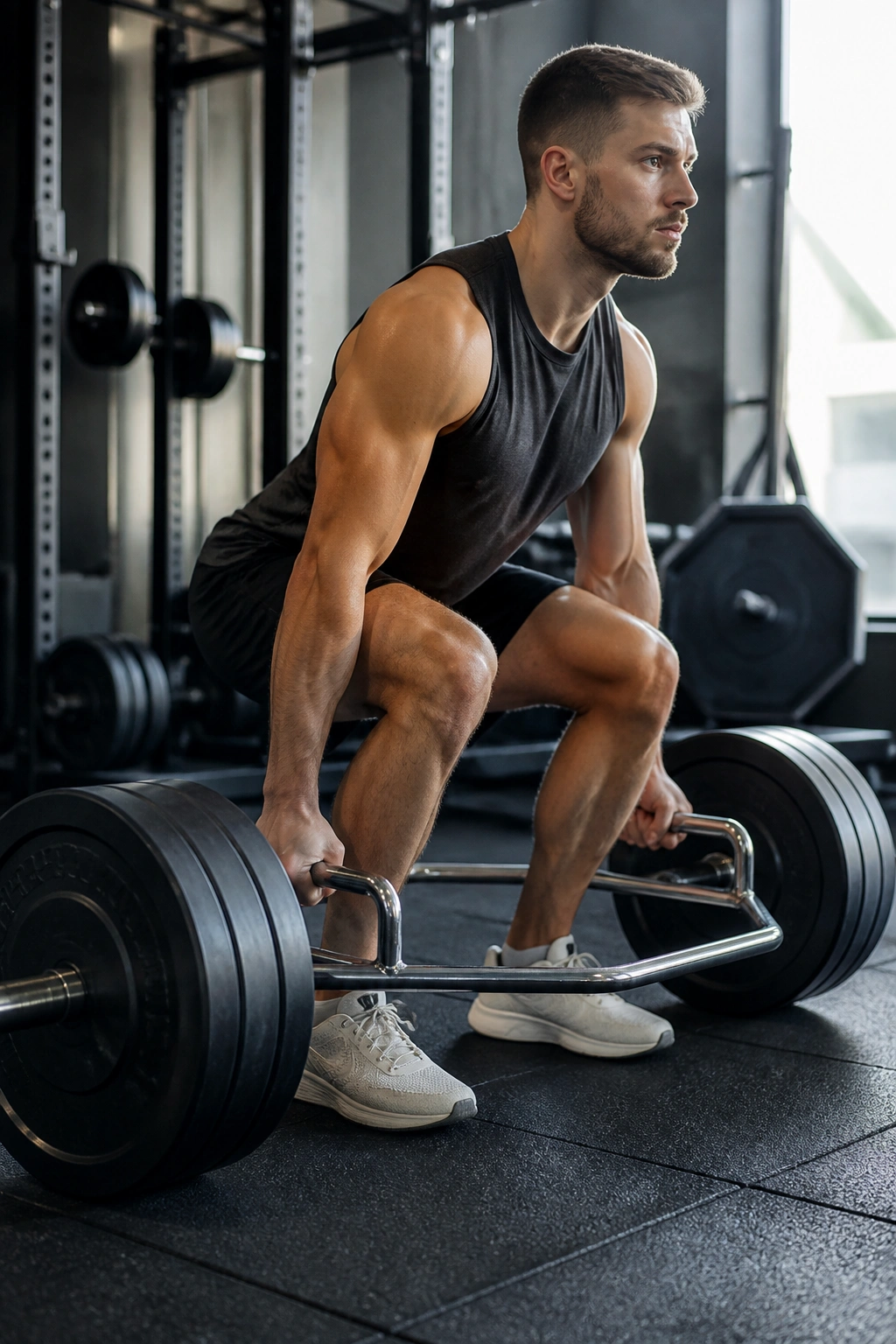
Why do so many people end up liking the trap bar more than the straight bar? Because it feels like a deadlift that wants to cooperate. The neutral grip is easier on many shoulders, the torso stays a bit more upright, and the lift often feels friendlier on the lower back if your form is sound.
It’s also brutally practical. You can use it for heavy triples, medium sets of 5, or higher-rep work when you want a full-body session that leaves your grip and legs cooked at the same time. A lot of home setups run out of options here. The trap bar doesn’t.
How to use it without turning the lift sloppy
Start with 3 to 5 working sets of 3 to 6 reps, resting 2 to 3 minutes between sets. The bar should leave the floor smoothly, not shoot up like a startled cat. If your hips rise way too fast or your back rounds hard, the load is too ambitious for the day.
A trap bar session is also one of the best places to learn what “heavy but clean” feels like. That feeling matters. It teaches you to respect a hard rep without chasing a circus number that looks good and pulls your form apart.
3. Cable Machine Push-Pull Workouts That Need a Real Stack
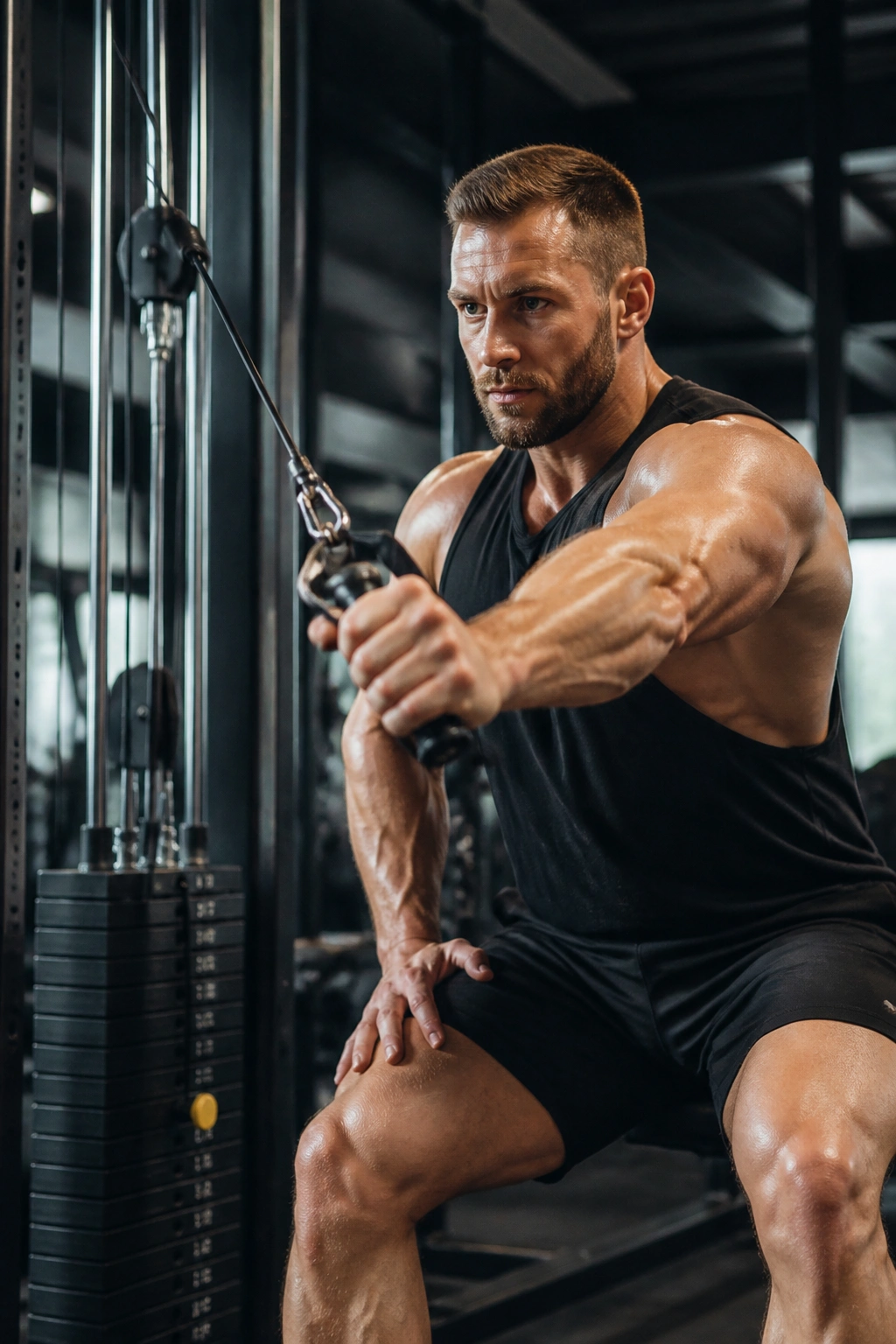
A cable stack is the quiet workhorse in most gyms. No one posts about it much, which is a shame, because it gives you constant tension, tiny weight jumps, and angles that dumbbells can’t copy cleanly. That’s worth the membership on its own.
This is where shoulder-friendly pressing, crisp rows, face pulls, and anti-rotation core work live. The stack lets you train one side at a time, change the line of pull, and keep the muscle under load through the whole rep. That can be a gift on cranky elbows and tired shoulders.
The movements that earn their place
- Single-arm cable row for tight, controlled back work
- Cable chest press when dumbbells feel too unstable for the day
- Face pull for rear delts and upper-back balance
- Pallof press for anti-rotation core strength
- Triceps pressdown when you want arm work without shoulder strain
A session like this works well as 3 rounds of 10 to 15 reps per movement. Nothing fancy. Just clean tension, short rests, and enough weight to make the last few reps honest.
The best part? You can micro-load. That tiny jump from one pin to the next is gold when you’re trying to keep improving without jumping too far and stalling.
4. Rowing Intervals on the Erg
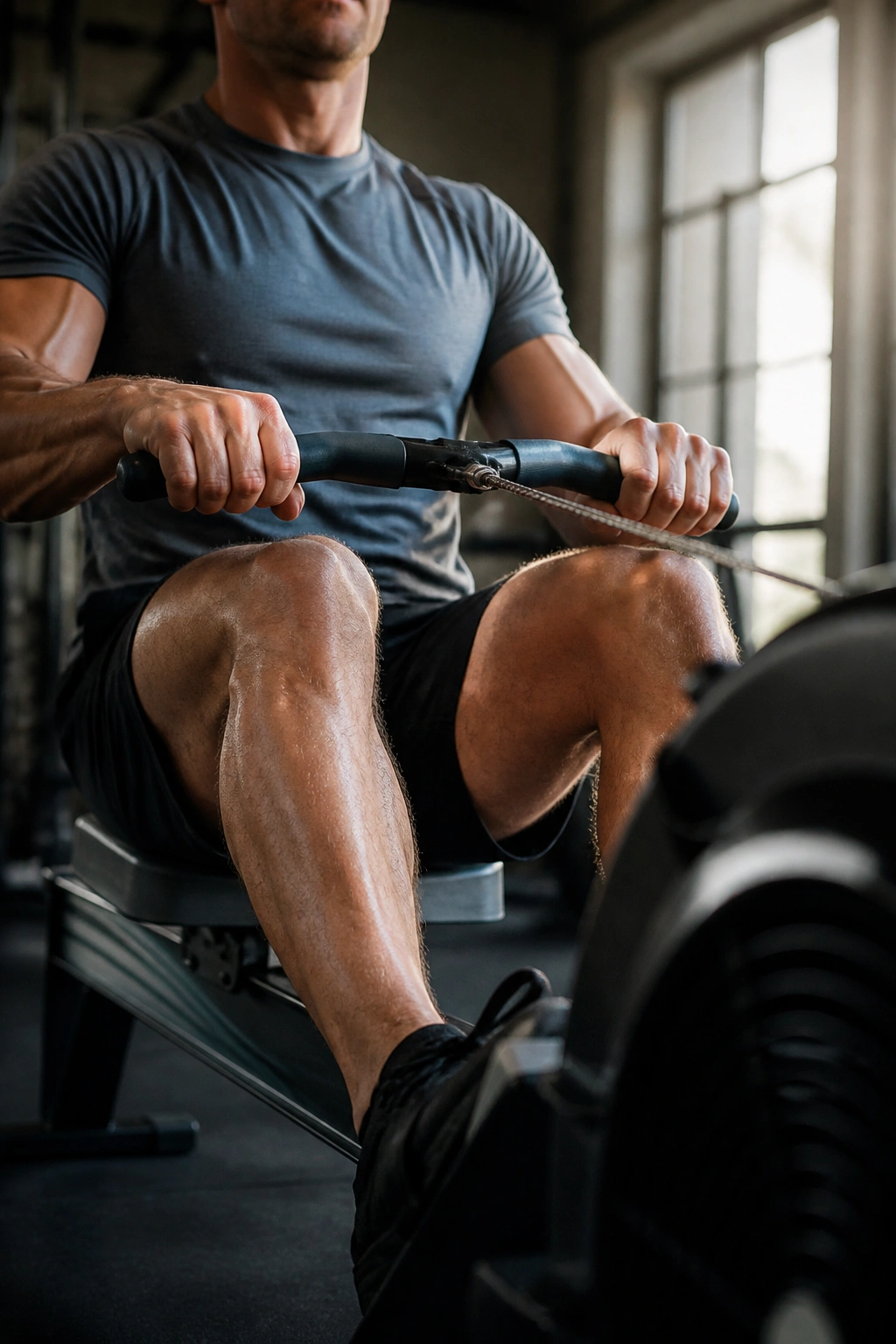
A rowing machine punishes lazy pacing in a way a lot of cardio equipment can’t. Pull too hard too soon and you’ll feel it in your lungs, your legs, and your grip all at once. Keep the stroke smooth and the erg gives you one of the best full-body conditioning workouts in the gym.
The rower also earns its keep because it’s low impact. That matters if running makes your knees grumble or if you want hard conditioning without the pounding. The legs drive first, the torso swings next, and the arms finish the stroke. People who yank with their arms alone usually learn the lesson in about 30 seconds.
You can build a lot of sessions around simple intervals: 8 rounds of 250 meters, 6 rounds of 500 meters, or 10 rounds of 1 minute hard / 1 minute easy. The exact structure matters less than the consistency of your pace. Start too hot and the back half gets ugly. Start controlled and the machine does what it does best: expose your fitness without drama.
One reason the erg belongs on a membership list is pace control. A jog outside can drift. A bike ride can soften. The rower gives you numbers, split times, and a clean reset every time you sit down.
5. Incline Dumbbell Press Days

A flat bench has its place, but incline dumbbell pressing hits a different target. The bench angle usually sits around 20 to 30 degrees, and that slight tilt shifts more work toward the upper chest and front delts while forcing each arm to do its share.
Dumbbells also reveal asymmetry fast. That’s annoying. It’s also useful. If one side drifts, shakes, or presses faster than the other, the set tells the truth before your ego can hide it.
Who gets the most from this workout
People who want a more balanced pressing pattern usually do well here. Lifters who feel flat bench too much in the shoulders often find the incline a bit kinder. And if you train in a gym with good dumbbells, this is the kind of session that keeps paying off because you can keep adding small increments for a long time.
A useful session might look like 4 sets of 6 to 10 reps, with the last two reps feeling slow but controlled. Don’t slam the dumbbells together at the top. Don’t arch like you’re trying to fold yourself in half either.
The real value is in the combination of range, stability, and measurable load. That’s not something a casual home setup always gives you.
6. Leg Press and Hack Squat Blocks
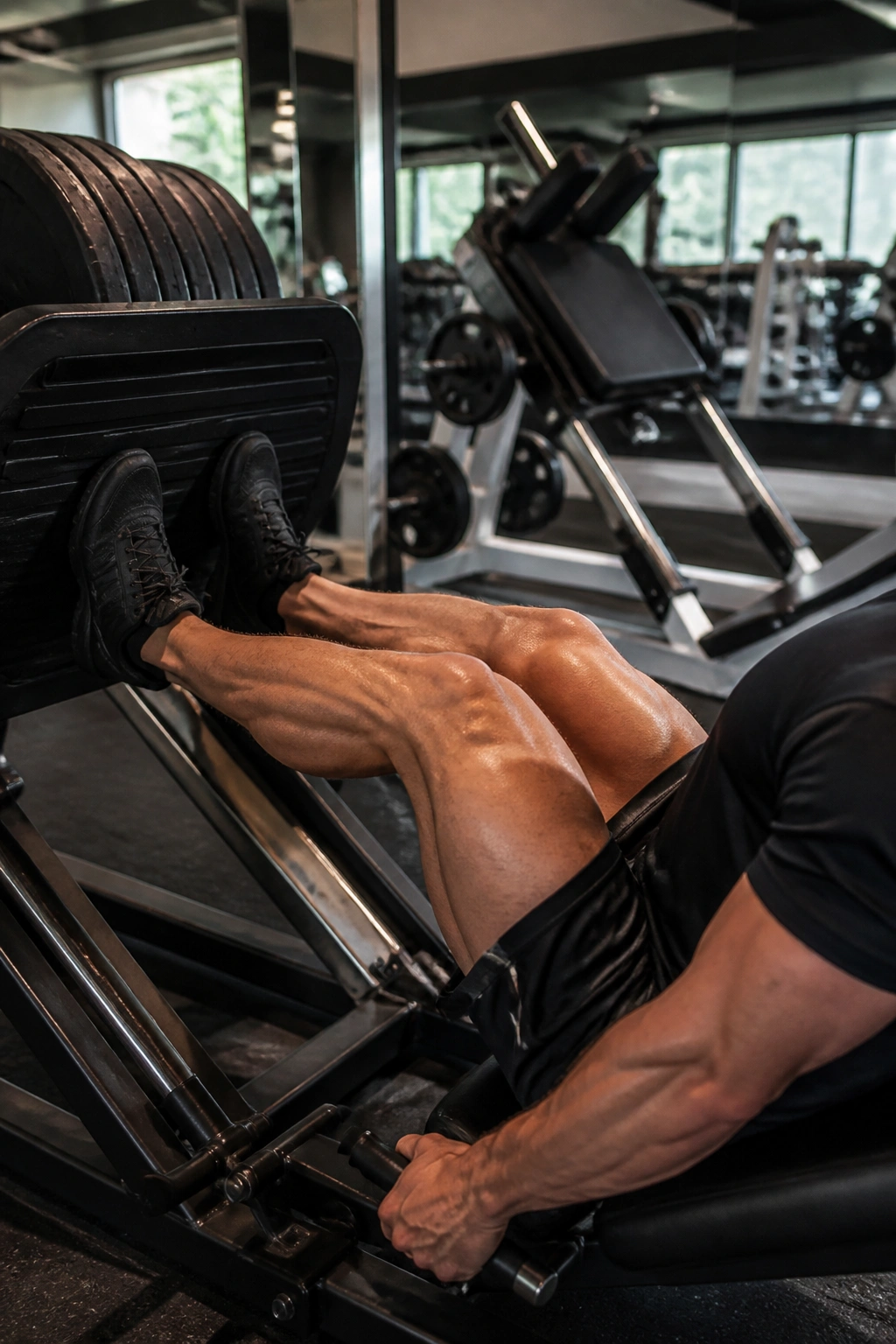
Some people talk about the leg press like it’s cheating. That’s a strange take. A machine that lets you push your legs hard without your balance or lower back quitting first is not cheating. It’s useful.
The hack squat is even more direct. It keeps the torso locked in, makes the quads work hard, and strips away some of the excuses that sneak into free-weight leg day. If your legs stop growing because your stabilizers tap out before your quads do, this is the section of the gym that fixes that problem.
What to watch on these machines
- Do not cut the depth short. Get as deep as your hips and knees allow with control.
- Keep the lower back glued to the pad. If it rounds hard, the load is too much.
- Don’t slam the knees out on lockout. Smooth reps beat ego reps.
- Use foot placement on purpose. Higher feet usually shift more to glutes; lower feet usually hit quads harder.
A solid block is 3 to 5 sets of 8 to 15 reps, depending on whether you want strength, size, or a brutal finisher after squats. The machines let you stay in the set longer, which is the whole point.
This is gym money well spent. Leg press sleds and hack squat machines don’t live in most garages for a reason.
7. Pull-Up and Lat Pulldown Progressions
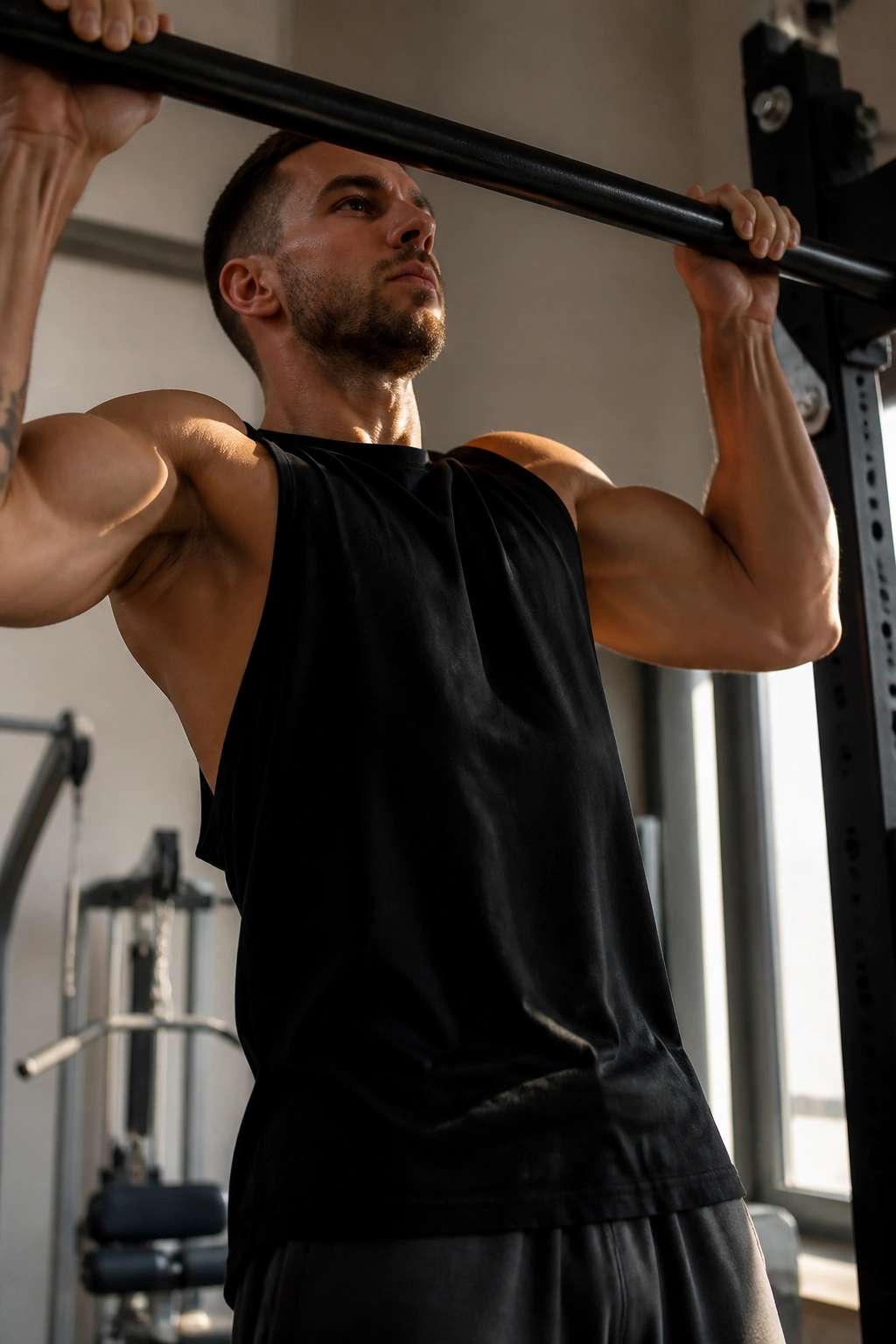
Can you build a serious back without a pull-up bar? Sure. Can you build a better one if the gym gives you a pull-up station, assisted machine, and lat pulldown stack? Absolutely.
This is one of those workouts where the equipment changes the learning curve. A pull-up progression can start with dead hangs and scapular pulls, move to assisted reps, then to full reps, then to weighted work. The lat pulldown fills the gap in between. You get vertical pulling, grip work, and clear progression instead of guessing.
A simple ladder that actually works
- Dead hang for 20 to 30 seconds
- Scapular pull-ups for 5 to 8 reps
- Assisted pull-ups for 3 to 6 reps
- Lat pulldowns for 8 to 12 reps
- Slow negatives for 3 to 5 reps
Keep the chest up, pull the elbows down, and stop yanking the chin over the bar with sloppy momentum. That shortcut usually steals the back work and leaves the shoulders irritated.
The gym makes this better because you can move between assistance levels in small jumps. That’s the whole game. A pull-up progression should feel like a ladder, not a cliff.
8. Sled Pushes and Drags That Justify the Gym Membership
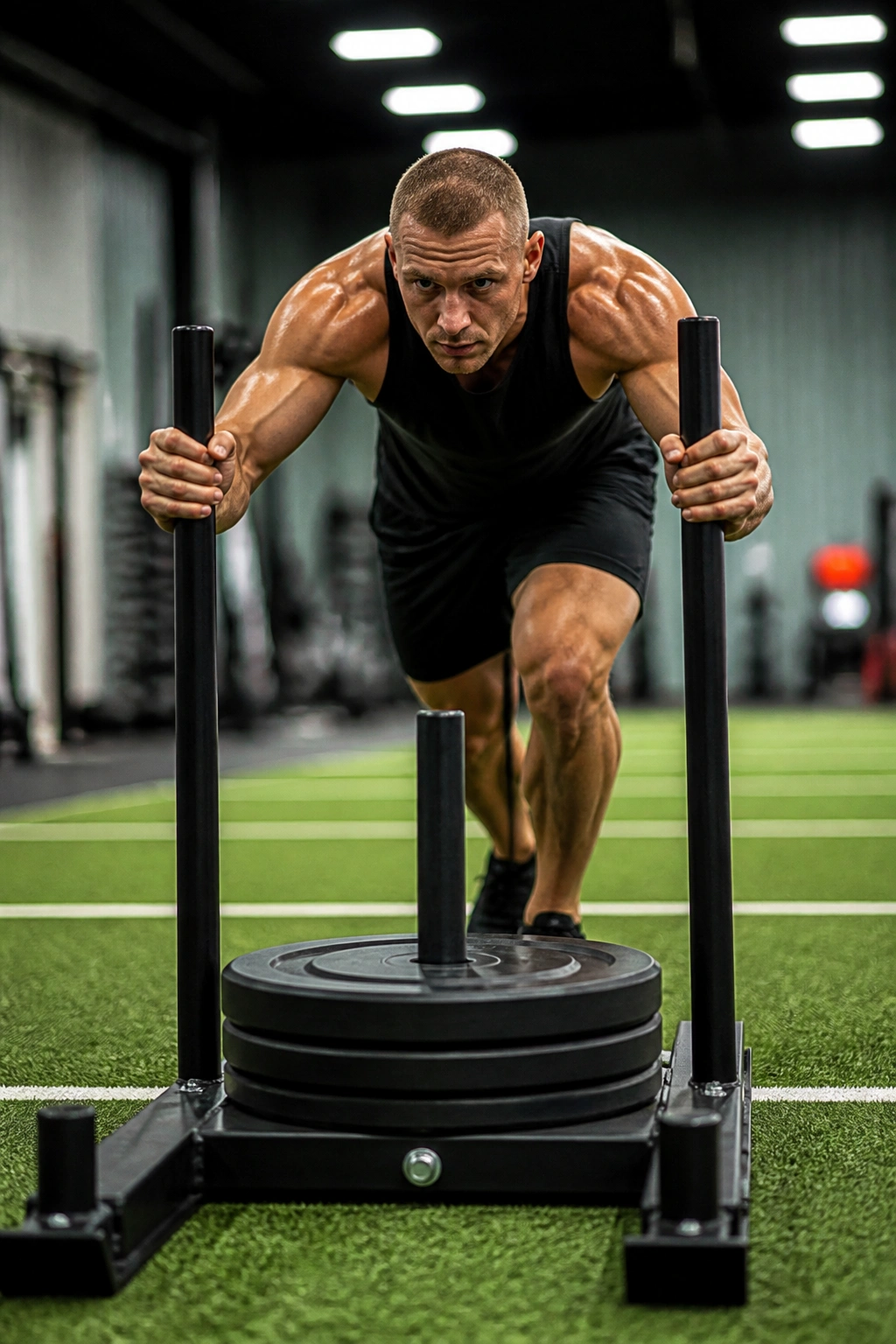
On turf, a sled is brutally honest. There’s no bounce, no elastic help, and no hiding behind pretty mechanics. You push, the sled moves, and your legs tell you the truth a few seconds later.
That’s why sled work earns a spot on this list. It gives you conditioning without the pounding of hard running, and it lets you load your legs, lungs, and trunk in one compact drill. The best part is the lack of eccentric damage. You can get smoked by a sled and still walk the next day without feeling like you got hit by a truck.
How to load and run it
A useful starting point is 4 to 6 pushes of 15 to 25 meters, resting about 60 to 90 seconds between efforts. If the sled barely moves, the load is too high for speed work. If it flies across the turf and your heart rate barely changes, add weight.
You can also drag the sled backward for quad work. That looks simple. It isn’t. The burn shows up fast, especially if you keep the steps short and controlled.
A gym with a proper sled lane is giving you something most home setups can’t: hard conditioning that doesn’t beat up your joints.
9. Hip Thrust Sessions for Glute Strength
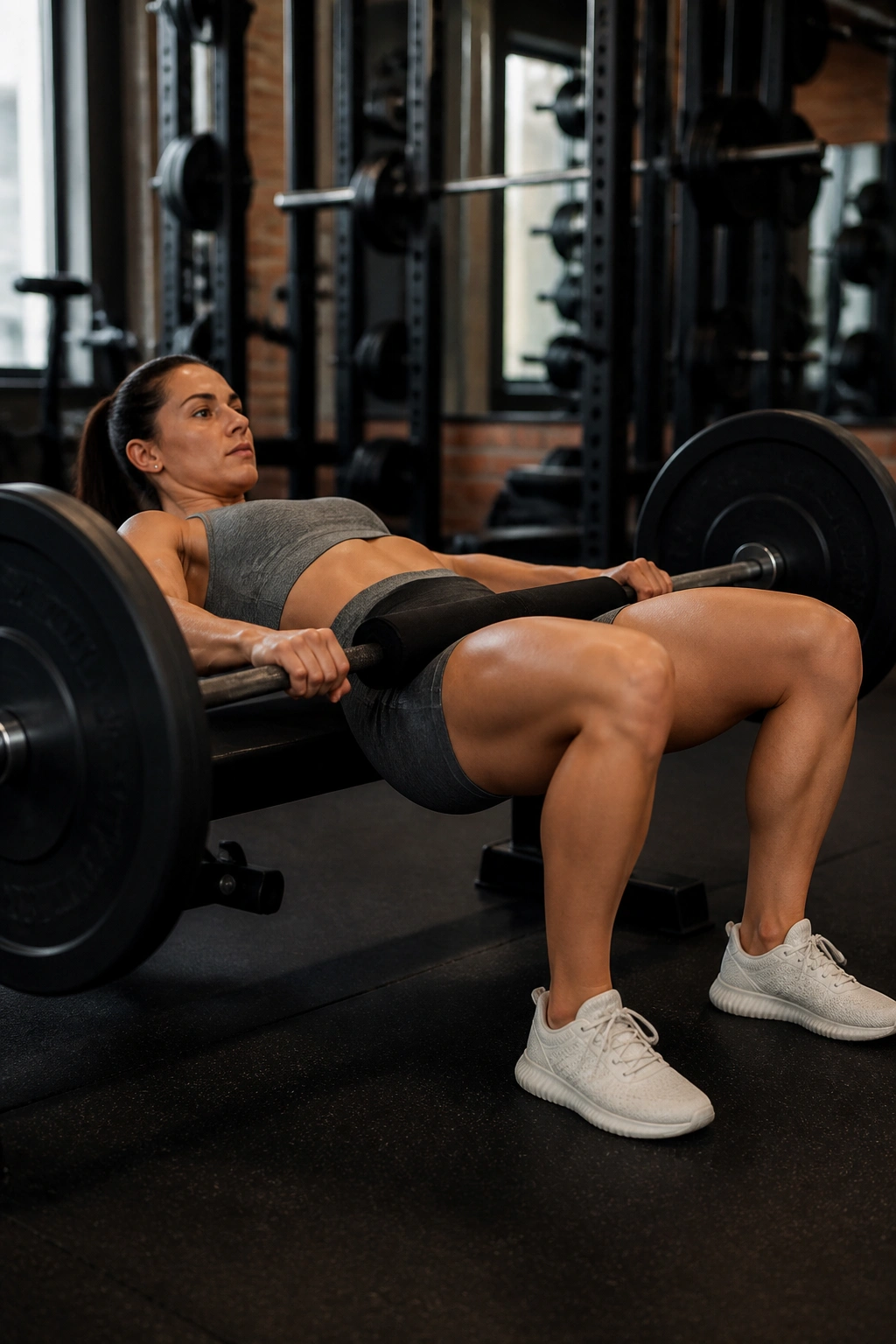
The barbell hip thrust gets mocked by people who haven’t spent much time trying to load the glutes well. That’s their problem. A well-done hip thrust loads the top position hard, and it does it without turning the exercise into a lower-back arch contest.
Unlike floor bridges, the barbell version gives you enough resistance to keep progressing long after bodyweight work stalls. Set your upper back on a bench, plant your feet, keep the ribs down, and drive the hips up until the torso is nearly parallel to the floor. That top squeeze is the whole point.
What good reps feel like
Your shins should be close to vertical at the top. The chin stays tucked a little. The lower back does not turn into the main event. If you feel the movement mostly in the quads, slide your feet out a touch. If you feel it mostly in the lower back, reset your rib position and cut the range a bit.
A strong session is often 4 sets of 8 to 12 reps, with a second pause at the top on each rep. That tiny pause matters. It keeps the reps honest and makes the glutes do the work instead of coasting through momentum.
This is one of those exercises that gets better in a real gym because the setup is easier, the bench is sturdier, and the bar can keep getting heavier.
10. Air Bike Intervals for Fast Conditioning
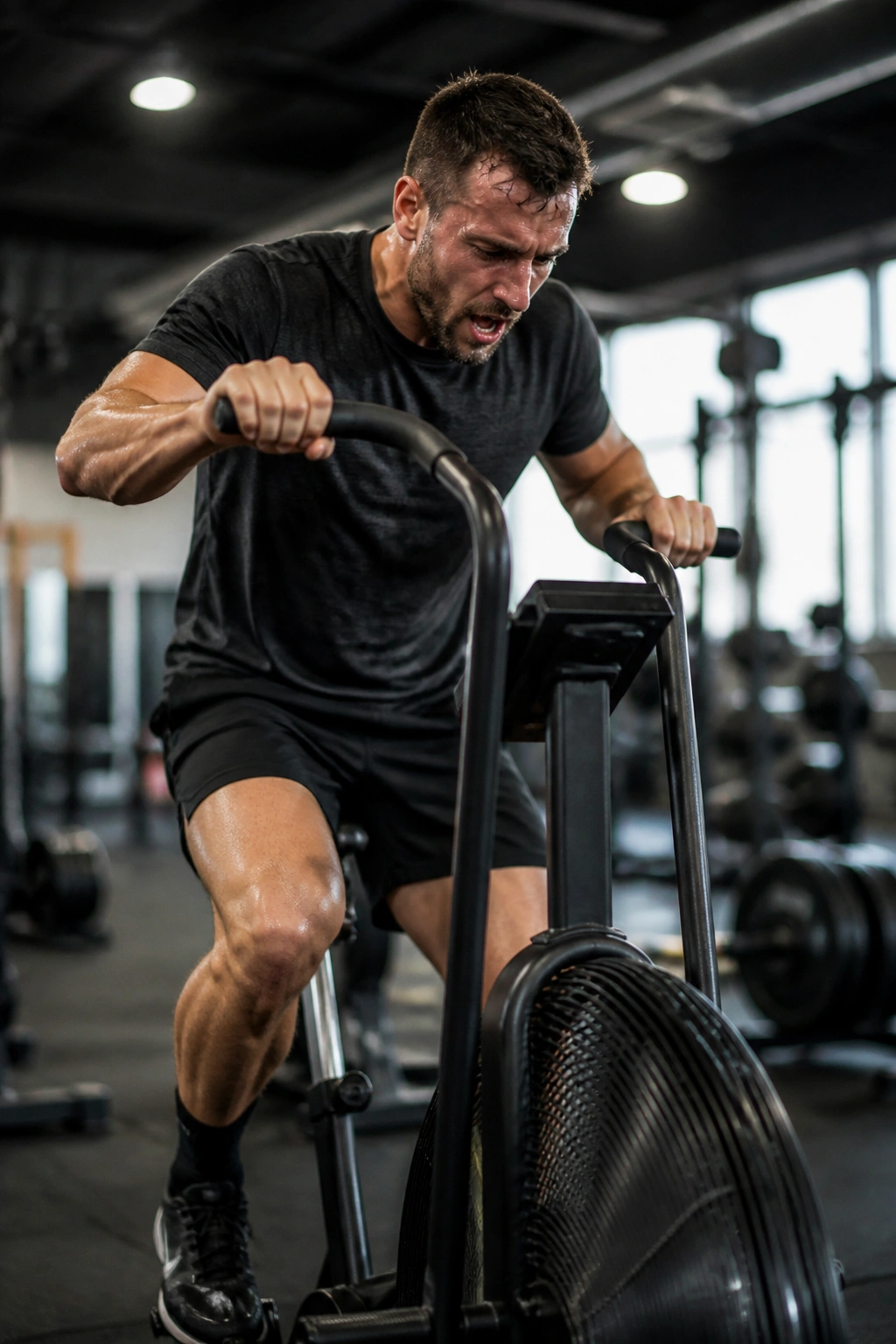
I’d take a hard air bike session over a half-hearted treadmill jog almost any day. The fan resistance changes with your effort, so the machine rewards actual work instead of pretending a stroll counts as conditioning.
That’s the appeal. Push harder and the bike pushes back harder. Simple. Brutal, useful, and hard to fake.
A classic setup is 10 rounds of 20 seconds all-out / 100 seconds easy, or 8 rounds of 30 seconds hard / 90 seconds easy if you want a slightly longer push. The first few rounds feel manageable. Then the legs start filling with acid and the breathing gets loud, fast.
The air bike also works for people who don’t love running but still want cardio that feels honest. The arms and legs both chip in, which is why it can smoke you faster than you expect. It’s not glamorous. It is effective.
A gym that keeps an air bike tucked in the corner is giving you a compact, measurable conditioning tool that fits in a short session and leaves no question about effort.
11. Battle Ropes and Medicine Ball Circuits
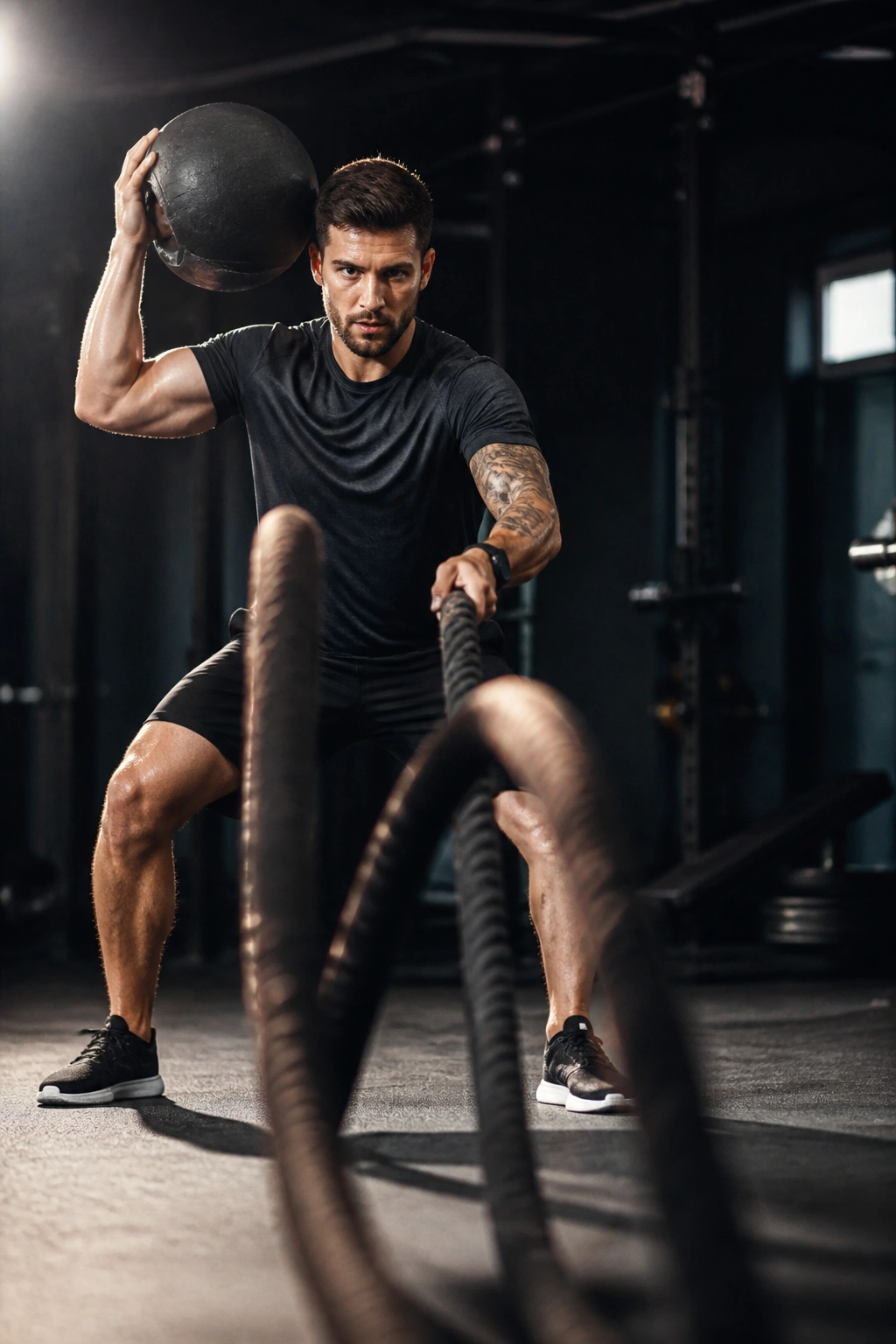
Why do battle ropes and medicine balls still earn floor space? Because they let you train power and conditioning without needing heavy setup or a lot of room. That’s a rare combination.
These tools are easy to underestimate until you do them for real. A 20-second rope wave set can spike your heart rate fast, and a heavy medicine ball slam makes your core, shoulders, and hips work in a way that feels different from slow, controlled lifting. Different is the point.
Use them like training, not like a warm-up
A solid circuit might look like this:
- 20 seconds alternating rope waves
- 8 medicine ball slams
- 8 rotational throws per side
- 30 to 45 seconds rest
- Repeat for 4 to 6 rounds
If the rope waves turn into arm-flailing and your lower back starts taking over, stop. Reset. Make the movement crisp again. If the med ball is so heavy that you can’t throw it with intent, the weight is wrong for the drill.
This is one of the best “small space, big output” workouts in a gym. That earns rent.
12. Smith Machine Split Squats That Save Your Joints
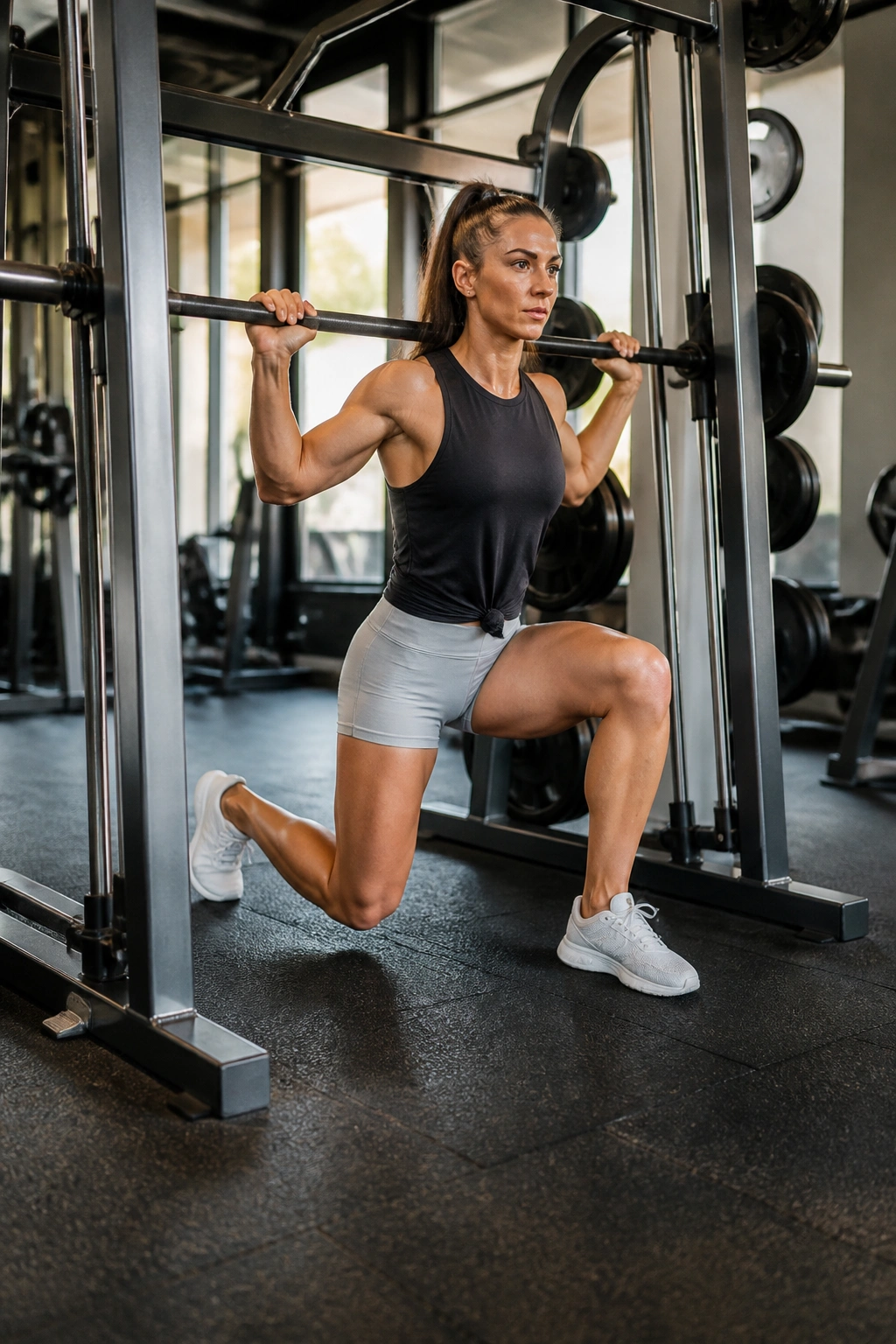
The Smith machine gets a lot of side-eye from people who mostly care about what looks cool on the floor. Fine. Their loss. For split squats, the fixed bar path can be a gift.
Why? Because it lets you load the legs hard while taking some of the balance chaos out of the equation. That means more focus on the front leg, more control over depth, and less wasted energy trying not to tip over. For quads and glutes, that’s useful as hell.
Set the front foot out far enough that you can drop straight down without the knee collapsing inward. Then lower until the back knee gets close to the floor, pause for a beat, and drive up through the whole foot. The front shin can travel forward if your knees are happy with it. The old rule about keeping the knee frozen behind the toes has ruined more good split squats than it helped.
Balance is not the goal here.
A good session is 3 to 4 sets of 8 to 12 reps per leg, and the burn shows up fast. If one leg always shakes more than the other, that’s useful information. The machine doesn’t care. It just keeps the bar path honest.
13. Dumbbell Complexes for Full-Body Work
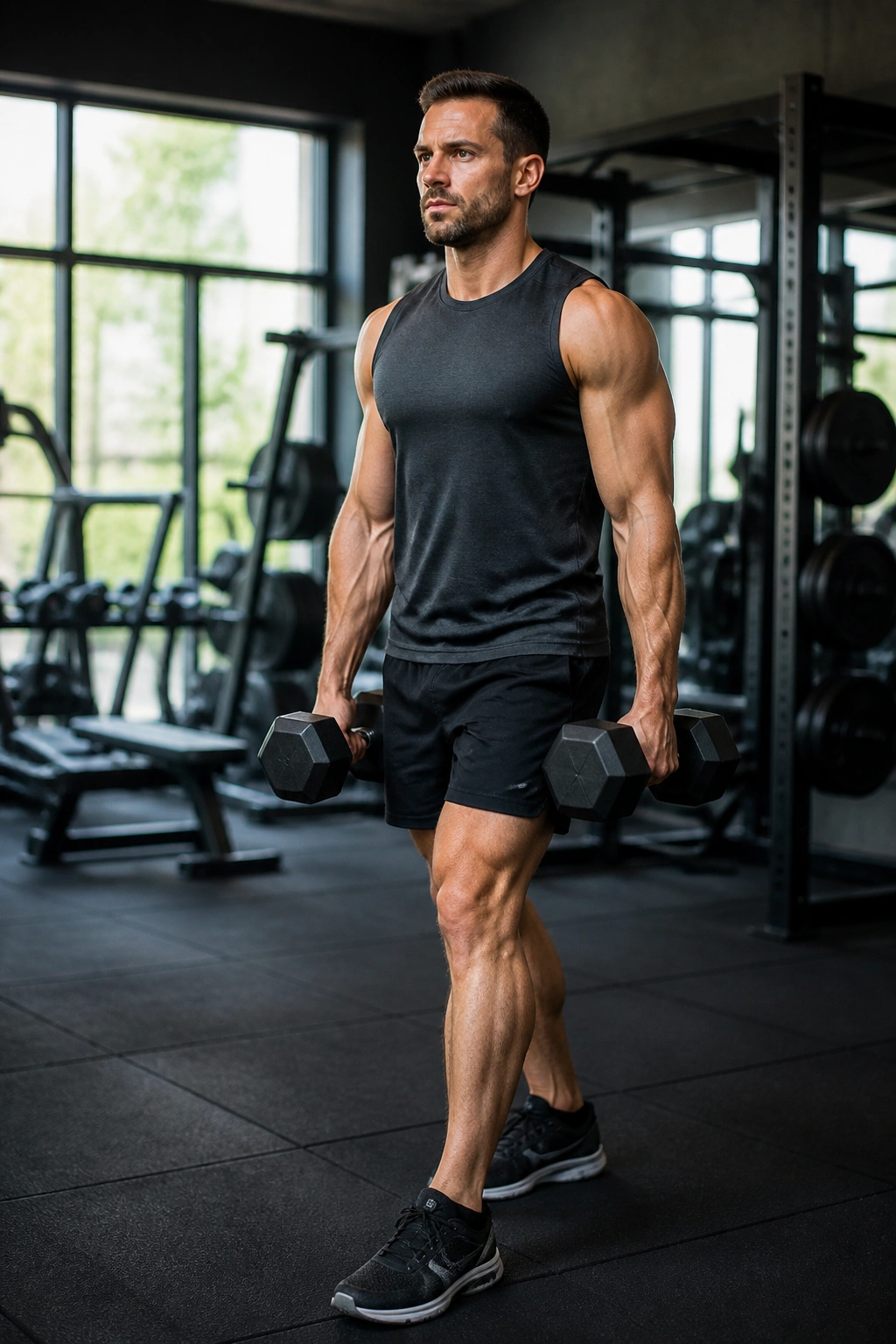
A dumbbell complex is one of the cheapest-looking workouts in the gym, which is exactly why I like it. One pair of dumbbells. Several moves in a row. No setting the weights down until the round is done.
That makes complexes great for conditioning, coordination, and full-body fatigue without hogging equipment. They also teach you how to keep technique together while tired, which is a skill a lot of people skip. Start too heavy and the whole thing turns into a mess. Start modest and the workout bites back in a very clean way.
A simple complex to try
Use a pair of dumbbells you can control for every move:
- 6 Romanian deadlifts
- 6 bent-over rows
- 6 front squats
- 6 push presses
- Rest 60 to 90 seconds
That’s one round. Do 3 to 5 rounds.
The key is to pick a load that lets the weakest link survive. Usually that means the push press or the front squat decides the weight, not the deadlift. If your grip blows up halfway through round two, go lighter next time. That is not a failure. It is data.
A real gym gives you space to do this without bumping into the sofa, the dog, or the coffee table.
14. Machine Circuits for Low-Brain-Energy Days
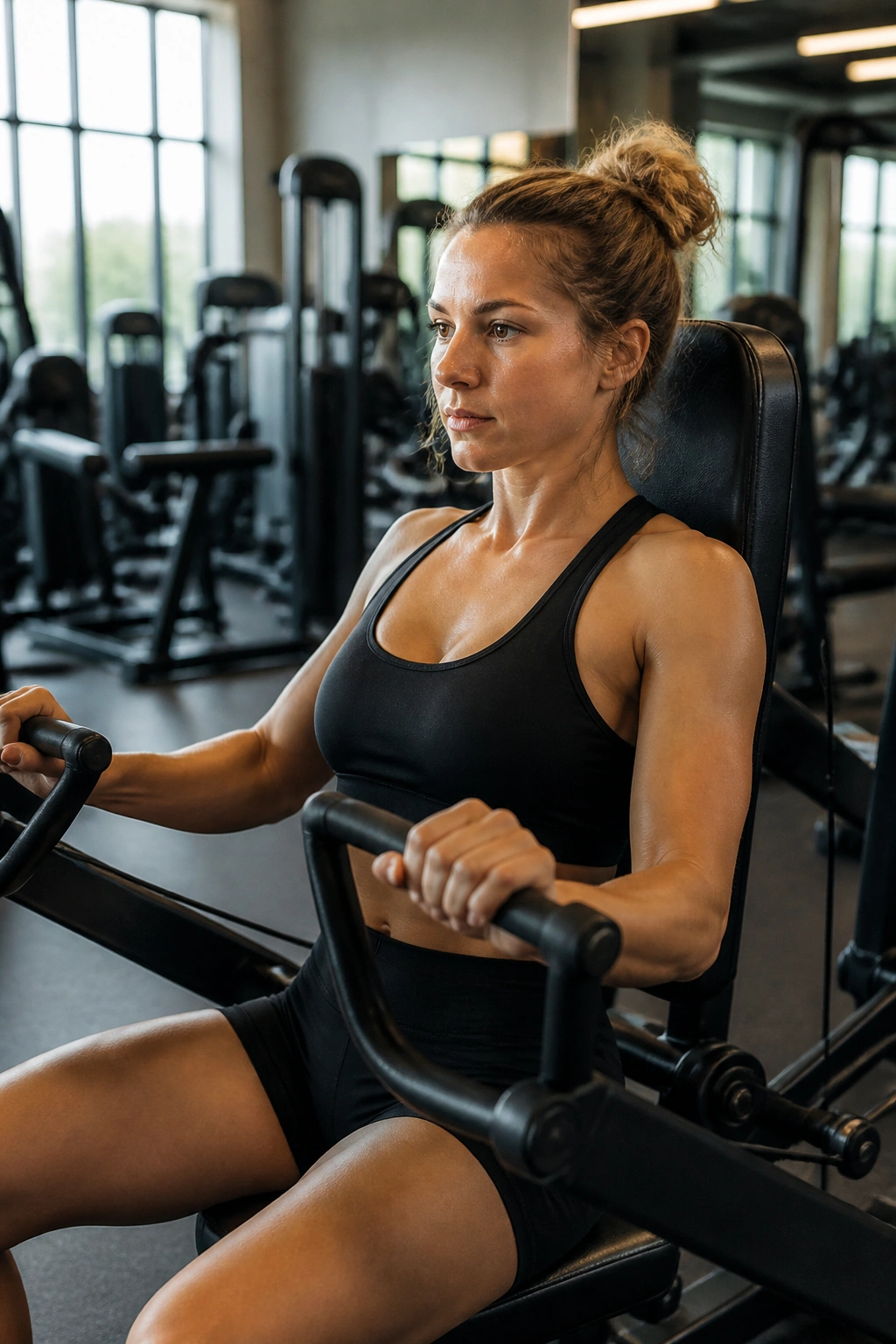
Not every workout needs to be a heroic event. Some days you just need to get in, hit the big machines, and leave with your muscles worked and your head clear. Machine circuits are perfect for that.
They’re also smarter than people give them credit for. Machines let you keep moving when your joints feel a little off, when the gym is packed, or when you do not have the mental energy to set up a bunch of free-weight stations. There’s no shame in that. There’s only wasted time if you skip the workout entirely.
A clean circuit might include chest press, seated row, leg extension, leg curl, and lateral raise, done for 2 to 4 rounds of 10 to 15 reps each. Move from one station to the next with short rests, maybe 30 to 60 seconds if you need them. You’ll get a lot of work done without wandering around the gym in a daze.
This is also a good way to build extra volume after heavier days. The machines aren’t there to replace the big lifts. They’re there to make your weekly work total more solid.
15. The Full-Body Day That Pays for the Gym Membership
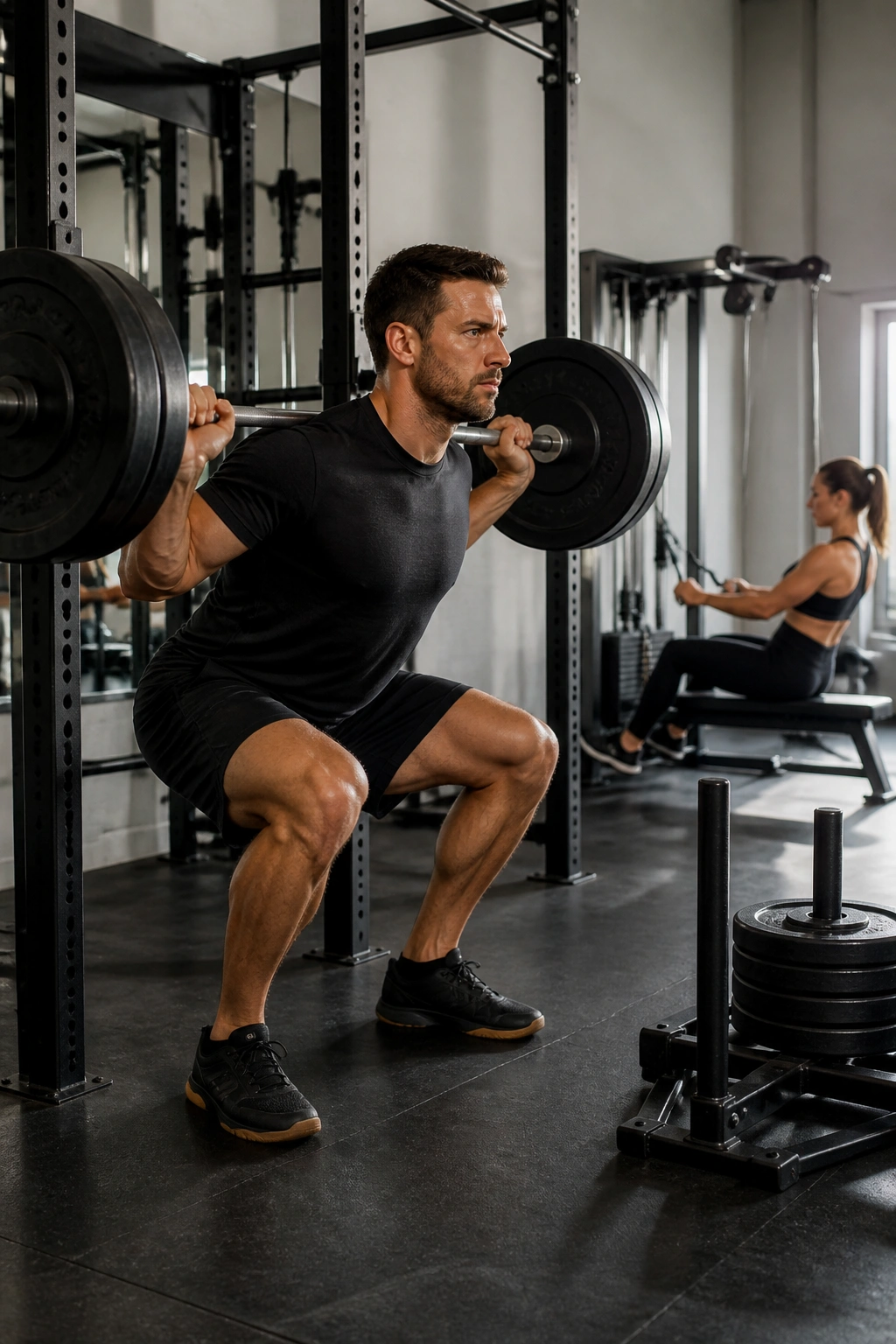
If I had to pick one workout that sums up the value of a gym membership, it would be a full-body day built around real progression. Not random sweating. Not a mash-up of trendy drills. A session with a squat, a press, a pull, a carry or sled, and a finisher that makes the numbers climb over time.
That’s where the gym starts paying rent. A rack gives you the squat. Cables give you rows and presses with clean tension. The sled or air bike handles the conditioning. Dumbbells and machines fill the gaps. Put those pieces together and you have a program that keeps moving without getting stale.
What to track so the workout keeps working
- Load on the big lifts
- Reps on each working set
- Rest times
- Range of motion
- How fast the final set slows down
A simple full-body day might look like this: back squat, incline dumbbell press, cable row, sled push, and air bike intervals. That combination covers strength, muscle, and conditioning without needing a circus of equipment. It’s tidy. It’s measurable. It’s the kind of session that makes a monthly fee feel cheap.
The gym is worth it when it gives you enough tools to keep improving without inventing a new workout every week. That’s the real bargain.
