



Toned, sculpted arms are built with more than endless curls. You need biceps work, triceps work, a little shoulder strength, and enough forearm grip that the last reps don’t turn into a sloppy swing-fest.
Light weights alone won’t do it.
The arm isn’t one muscle, either. The biceps bend the elbow, the triceps straighten it, and the brachialis and brachioradialis add a lot of the shape people notice in short sleeves. Miss those pieces, and the whole thing looks flat. Train them well, and the upper arm looks fuller even before you flex.
You also do not need a circus of equipment. Dumbbells help. Cables help. A bench, a barbell, a pull-up bar, and your bodyweight can cover a shocking amount of ground if you use them with some discipline and stop treating every set like a race.
Start with the move everyone thinks they already know, because that’s where most people leave size on the table.
1. Standing Dumbbell Bicep Curl
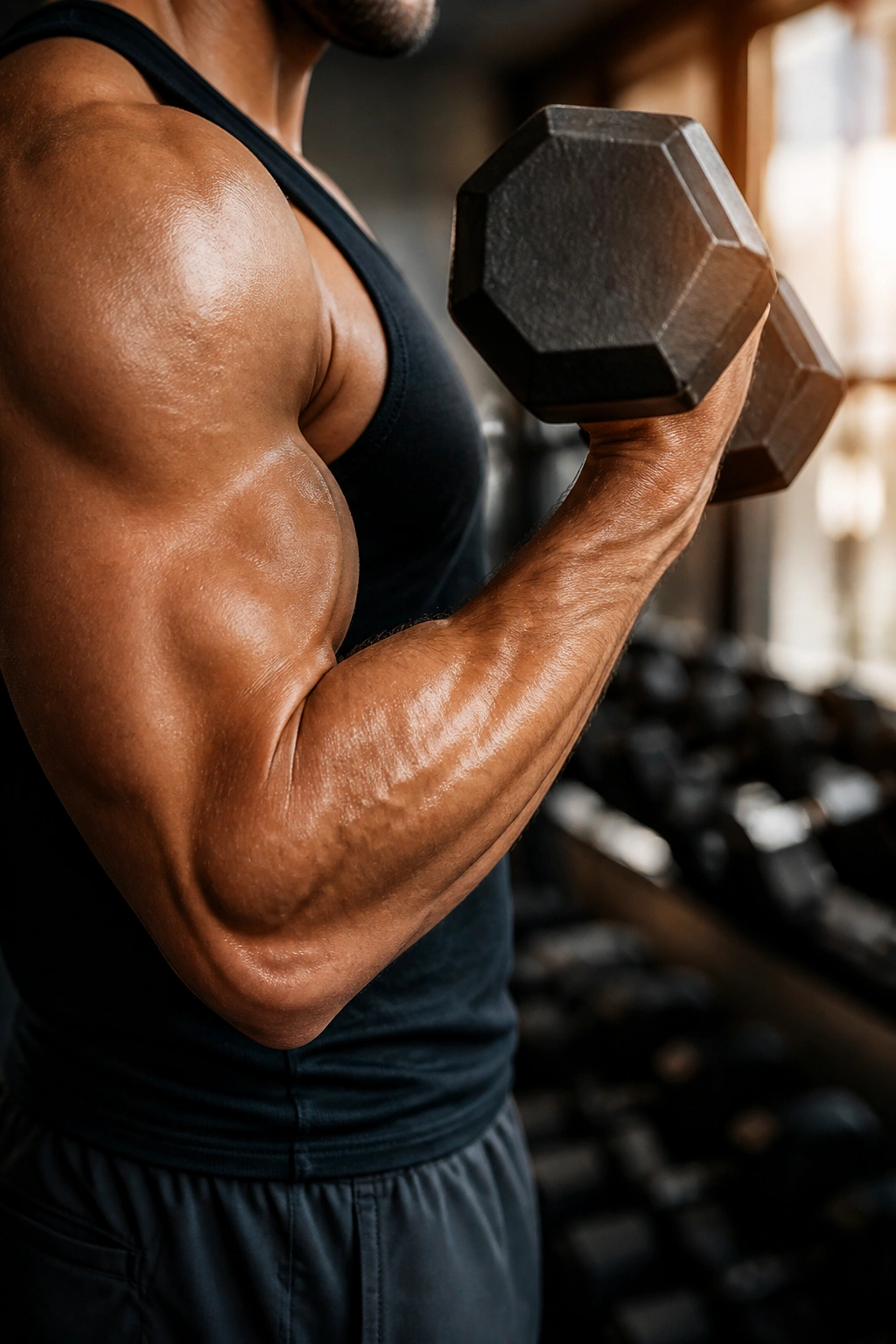
The standing dumbbell curl is the obvious one, which is exactly why people rush through it and miss the point. Done well, it teaches you to keep the shoulders quiet while the elbow does the work, and that matters more than flashy variation. You should feel the front of the upper arm working hard, not your hips throwing the weight upward.
Why It Belongs in the Mix
A strict dumbbell curl gives you honest feedback. If your body starts leaning back or your wrists bend hard at the top, the dumbbells are too heavy. Simple.
- Use a weight that lets you stop the swing by rep 6 or 7.
- Keep your palms facing forward for the whole lift.
- Lower the dumbbells for 2 to 3 seconds.
- Stop when the biceps feel loaded, not when your lower back feels tired.
Best cue: keep your elbows near your ribs and imagine they’re sliding up only a few inches, not traveling forward.
That small cue cleans up a lot. It also makes the set feel harder with less weight, which is usually a good trade when the goal is shape, not ego. If you want toned sculpted arms, this is the sort of rep quality that matters.
2. Hammer Curl
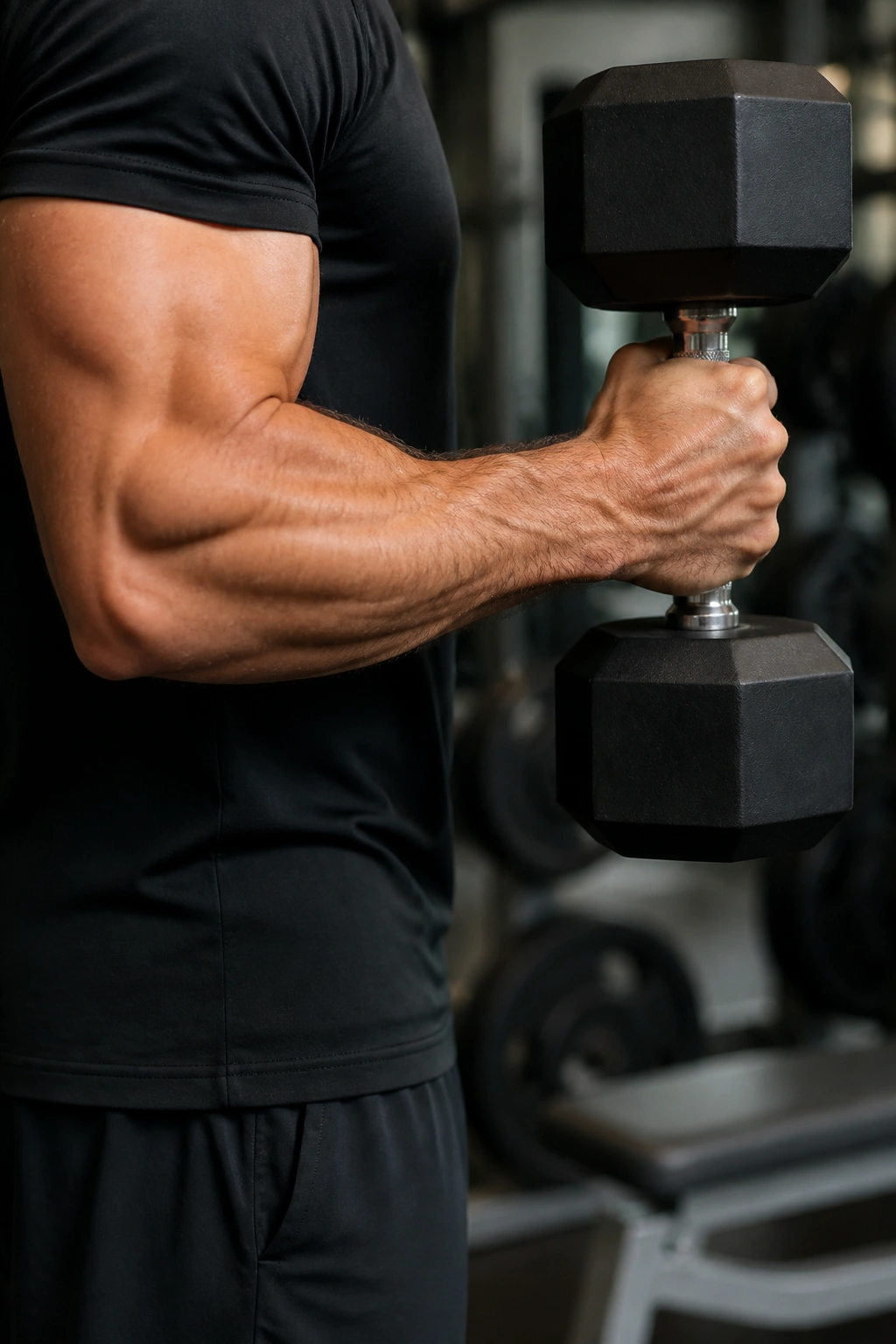
Hammer curls build thickness more than a pretty peak, and that’s why I like them so much. The neutral grip shifts work toward the brachialis and brachioradialis, two muscles that make the upper arm and forearm look denser from the side. A lot of people chase biceps peak and forget the arm needs width too.
Do these with your thumbs pointed up, not let them drift inward. The movement is simple, but the loading feels different right away because the forearm has to stay stable while the elbow bends. If you’ve ever felt regular curls mostly in the front of the elbow, hammer curls usually clean that up fast.
A good rep range is 8 to 12 with controlled lowering. You can alternate arms or curl both at once. I prefer alternating when the weight gets serious, because it keeps the torso from helping out too much. If the shoulders start rolling forward, back off. That’s the set telling on you.
Hammer curls are also nice on days when your wrists feel cranky. Neutral grip. Less nonsense. Good trade.
3. Concentration Curl
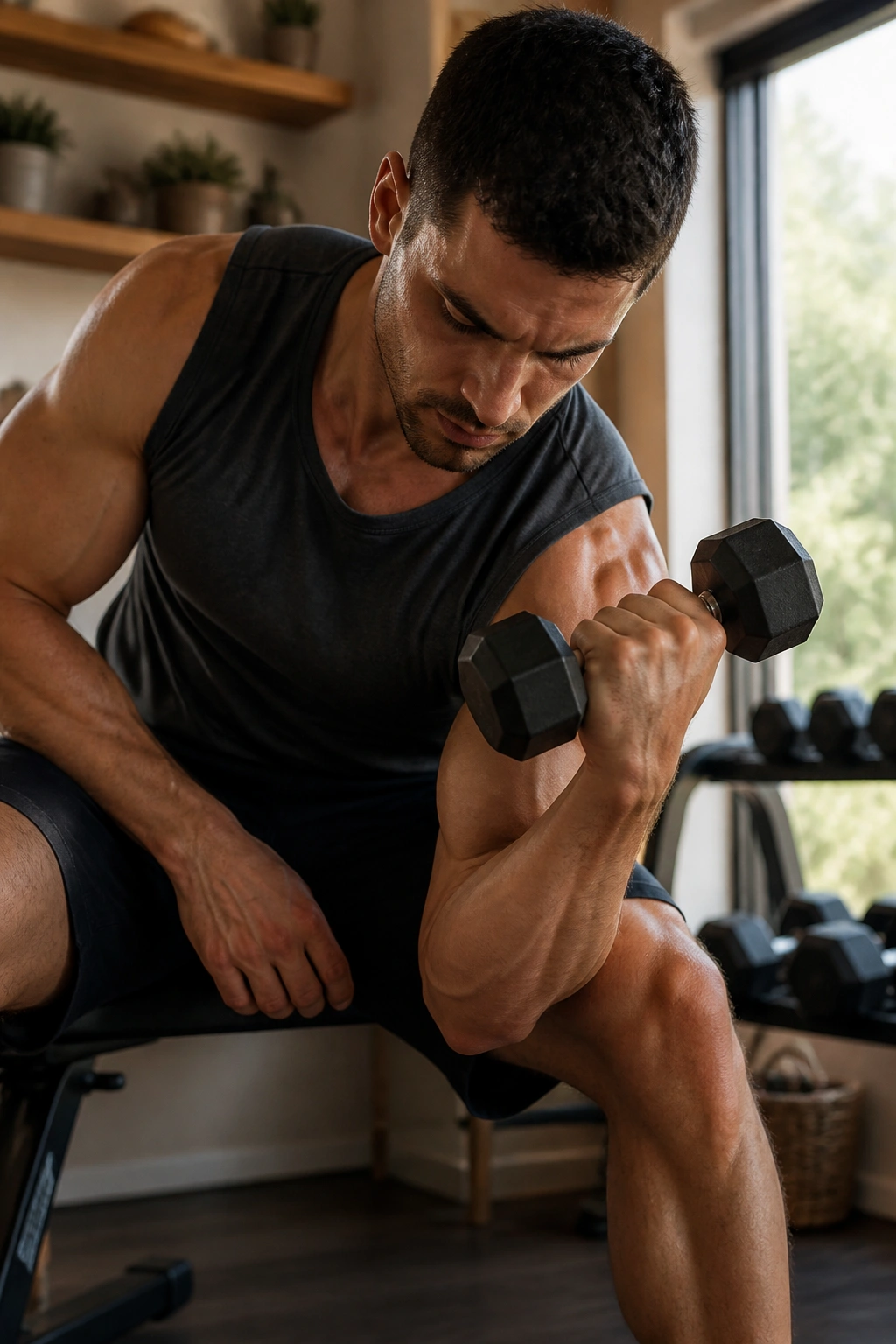
Why do concentration curls burn so fast? Because they take away your favorite cheat codes. No hip drive, no shoulder sway, no bouncing the dumbbell off the thigh unless you’re doing it wrong. The elbow stays pinned against the inner leg, and the biceps end up doing nearly all the lifting.
How to Use It
Sit down, brace the upper arm, and curl the dumbbell up with a full squeeze at the top. Then lower it slowly. That slow lower is where the set gets honest, and it’s the part most people skip because it gets uncomfortable quickly.
- Use a moderate weight you can control for 10 to 15 reps.
- Keep your chest tall instead of collapsing over the thigh.
- Turn the pinky slightly toward the ceiling near the top if it helps you feel the squeeze.
- Pause for 1 second at the top before lowering.
This is a good move when you want the biceps to work without the rest of the body barging in. It also pairs well after a heavier curl, because it finishes the muscle without needing much load. Nothing fancy. Just a lot of tension in a small space.
4. Reverse Curl
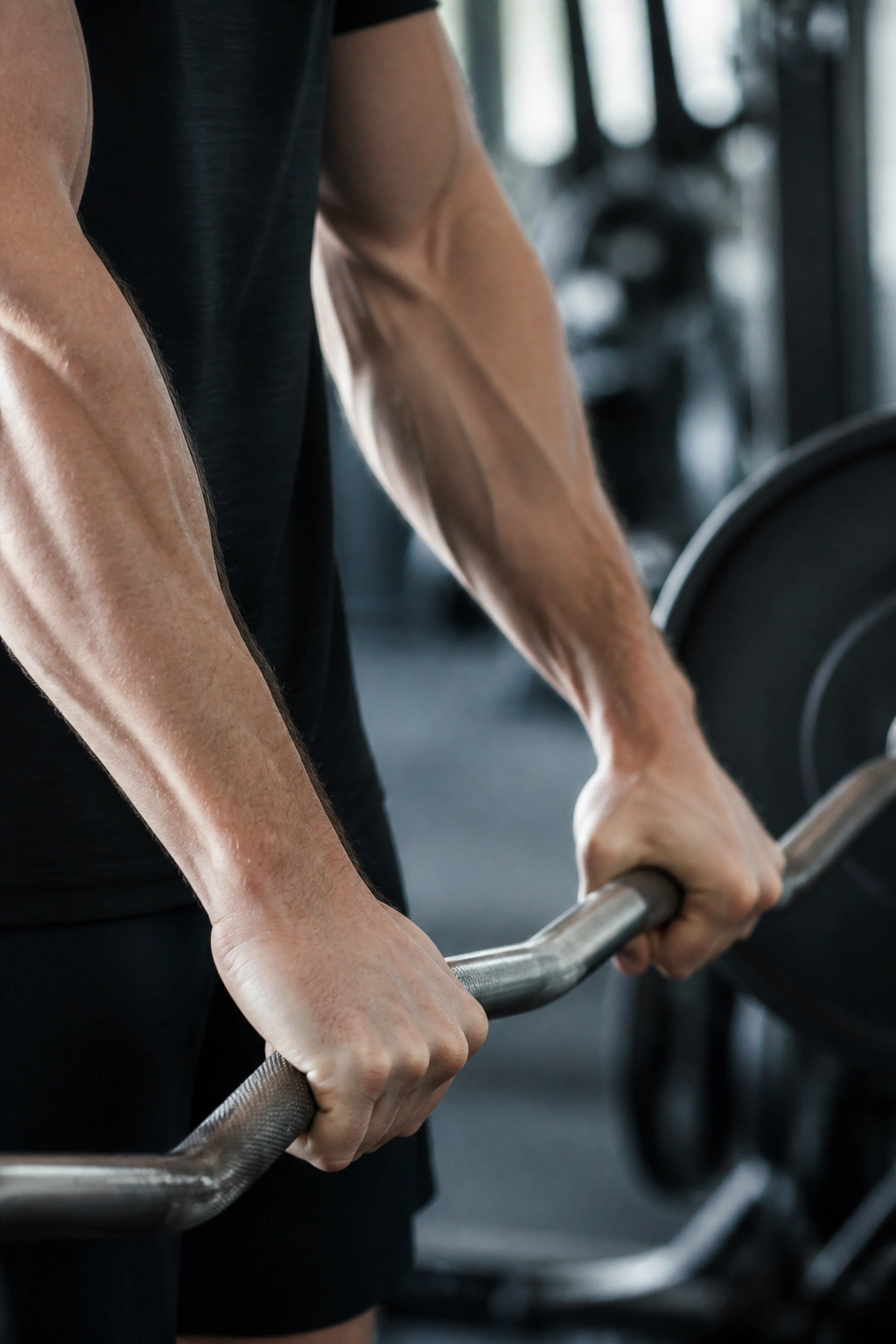
If your forearms lag behind your biceps, reverse curls will tell you fast. The overhand grip changes the game. The biceps help less, the brachialis works harder, and the forearms have to keep the wrist from folding back. It feels awkward for the first few sets. That’s normal.
Use an EZ bar if a straight bar bugs your wrists. Keep the knuckles up, the elbows quiet, and the wrist from bending backward at the top. The weight will be lighter than your regular curl, and it should be. This is not a move for loading the ego.
- Start with a lighter bar than you think you need.
- Keep the upper arms still.
- Stop the set when the wrists start taking over.
- Use 8 to 12 reps with a slow lower.
The real value here is the forearm tie-in. Reverse curls help the arm look more complete because they add that thicker line from elbow to wrist. Not glamorous. Useful, though. And useful wins.
5. Zottman Curl
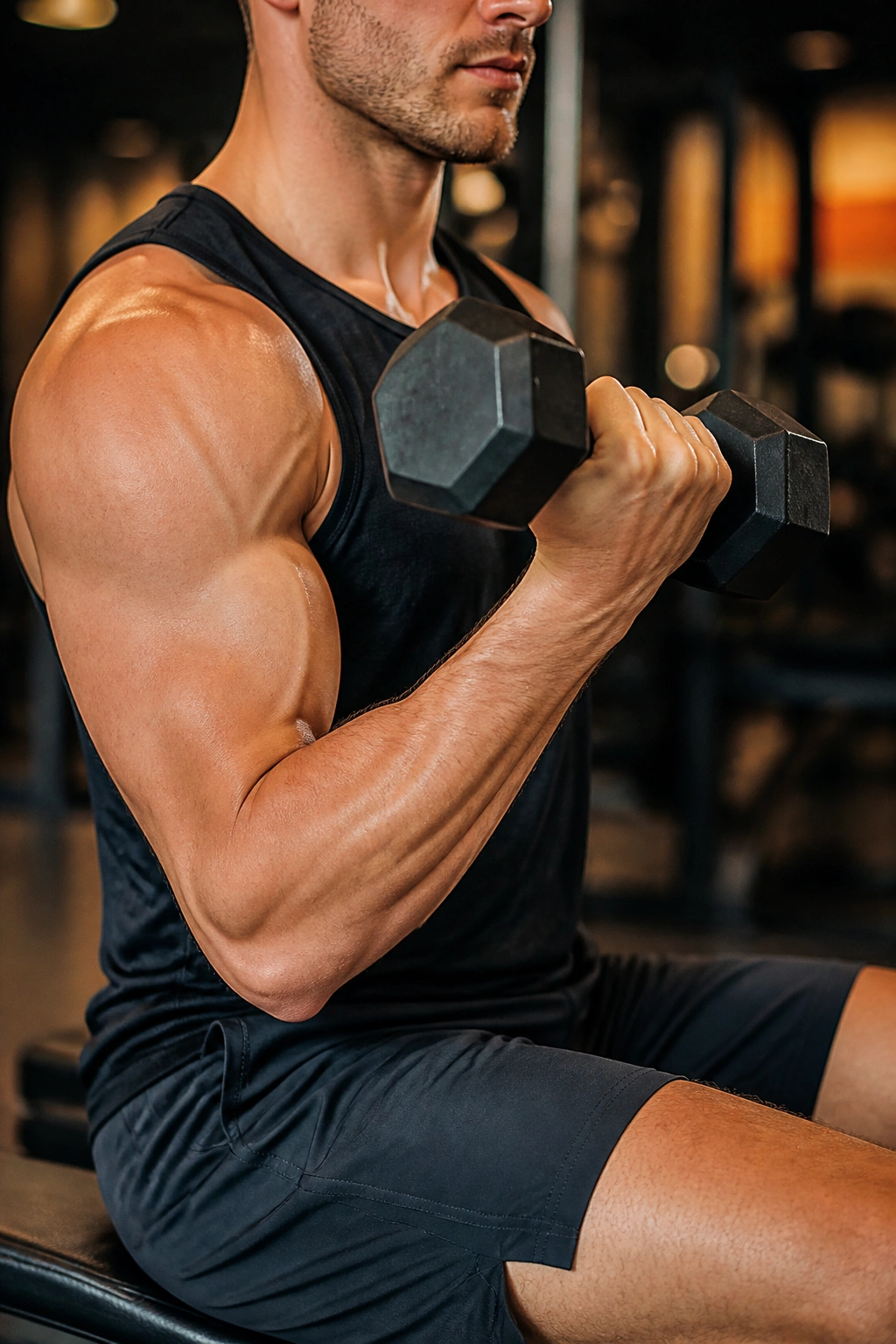
Zottman curls are one of those exercises that looks odd until you do them, then the logic clicks. You curl up with a supinated grip, rotate at the top, and lower with the palms facing down. That means the biceps get the curling work, and the forearms take a very different kind of load on the way down.
I like this move because it respects both halves of the rep. The lift is for the biceps. The lower is for the forearms and brachioradialis. A lot of arm training lives in the curl-up phase only, which is a shame. The eccentric, or lowering phase, does a lot of the heavy lifting for muscle growth.
Keep the dumbbells light enough to control the wrist rotation without jerking. If you rush the turn at the top, the whole rep falls apart. Use 8 to 10 reps and slow the descent to about 3 seconds. The arms will feel smoked in a different way than they do after straight curls.
This is a smart choice for people who want both arm shape and stronger grip work in one go. It’s a little awkward. That’s part of why it works.
6. Barbell Curl
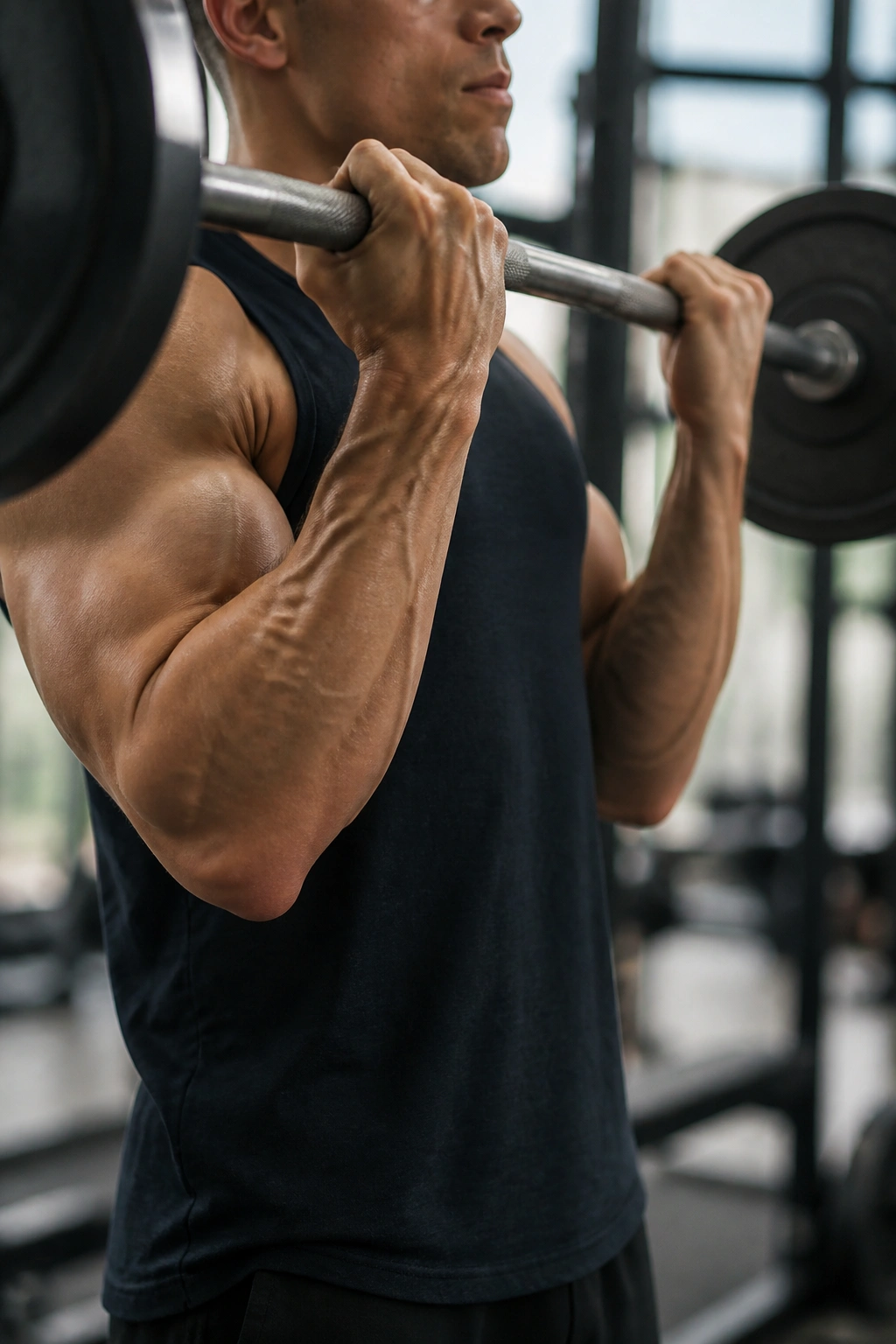
Unlike dumbbells, a barbell locks both arms into the same path, and that makes cheating easier to spot. It also lets you use more load, which is why it stays on the list. If you can control a barbell curl with strict form, you’re getting a very clean dose of tension through both biceps at once.
The straight bar can feel harsh on some wrists, so the EZ bar is a fair swap. I actually prefer the EZ bar for most people, because it usually lets the wrists stay in a more natural angle without turning the set into a joint complaint. If your forearms flare up on the straight bar, switch. No drama.
Best use: heavier curl work in the 6 to 10 rep range. Keep the torso locked, squeeze at the top, and lower without dropping the bar. The move gets sloppy fast if you let the elbows drift forward. That’s where the set turns into a hip swing with some bonus elbow bend.
Barbell curls are best for people who already know how to curl and want to load the pattern a little harder. Plain and simple.
7. Incline Dumbbell Curl
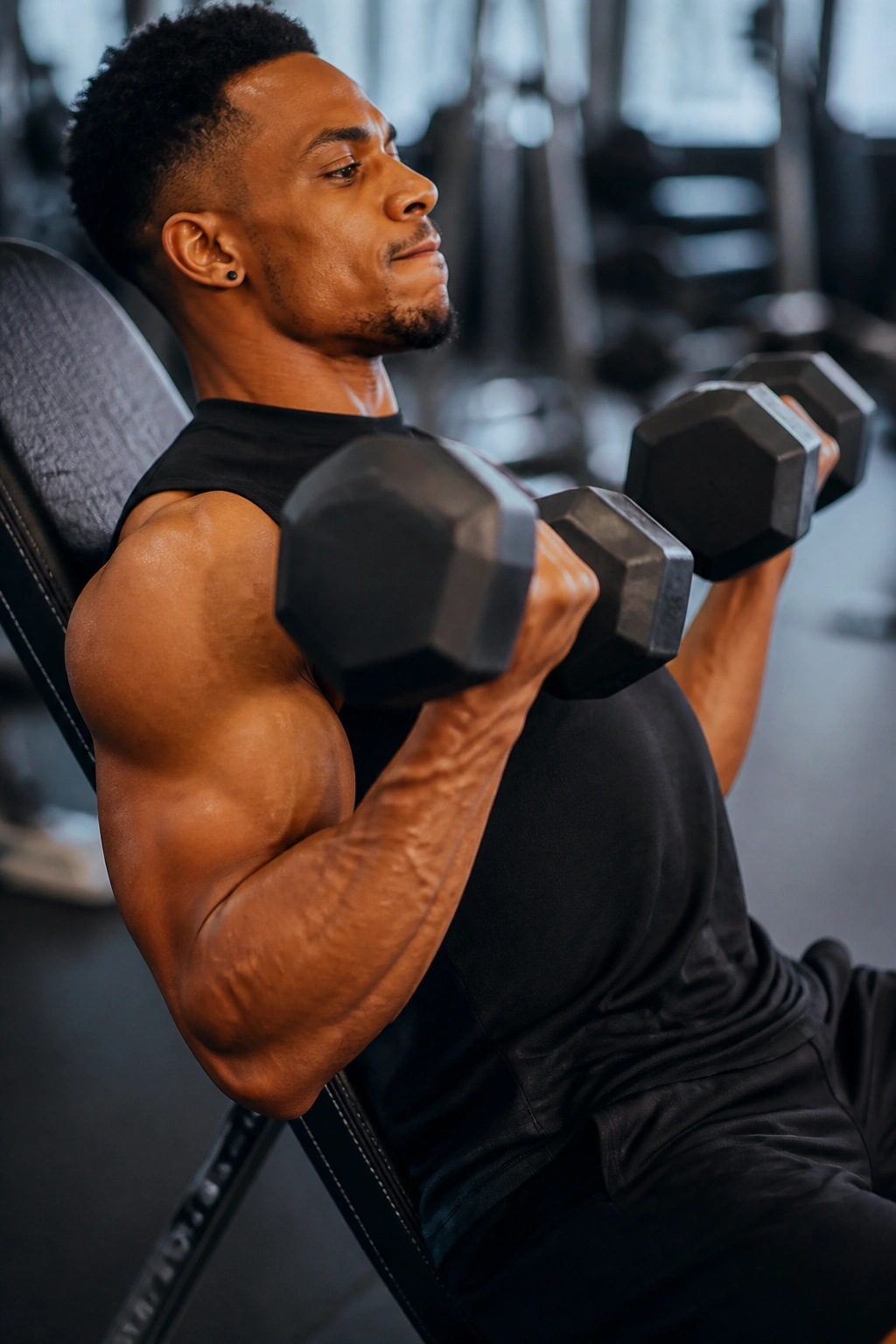
Leaning back on an incline bench changes the whole curl because your arms start behind your torso. That stretch matters. The long head of the biceps gets put on notice before the rep even starts, which is one reason incline curls feel so deep in the muscle.
What Makes It Different
You can’t fake much here. The bench takes away body English, and the bottom position stretches the biceps in a way standing curls do not. That stretch is what makes the first half of the rep feel long and slow.
If you want the most out of it, keep your shoulders pinned to the bench and let the dumbbells hang for a second before curling. Don’t whip them up. Don’t shrug. Use 10 to 12 reps, and keep the lowering phase controlled. The bottom stretch should feel strong, not painful.
A lot of people make the mistake of turning this into a front-shoulder exercise by letting the elbows travel too far forward. That ruins the angle. Keep the upper arms back, curl from the elbow, and let the biceps do the work. It’s a prettier curl than the standing version, but only if the setup stays strict.
8. Preacher Curl
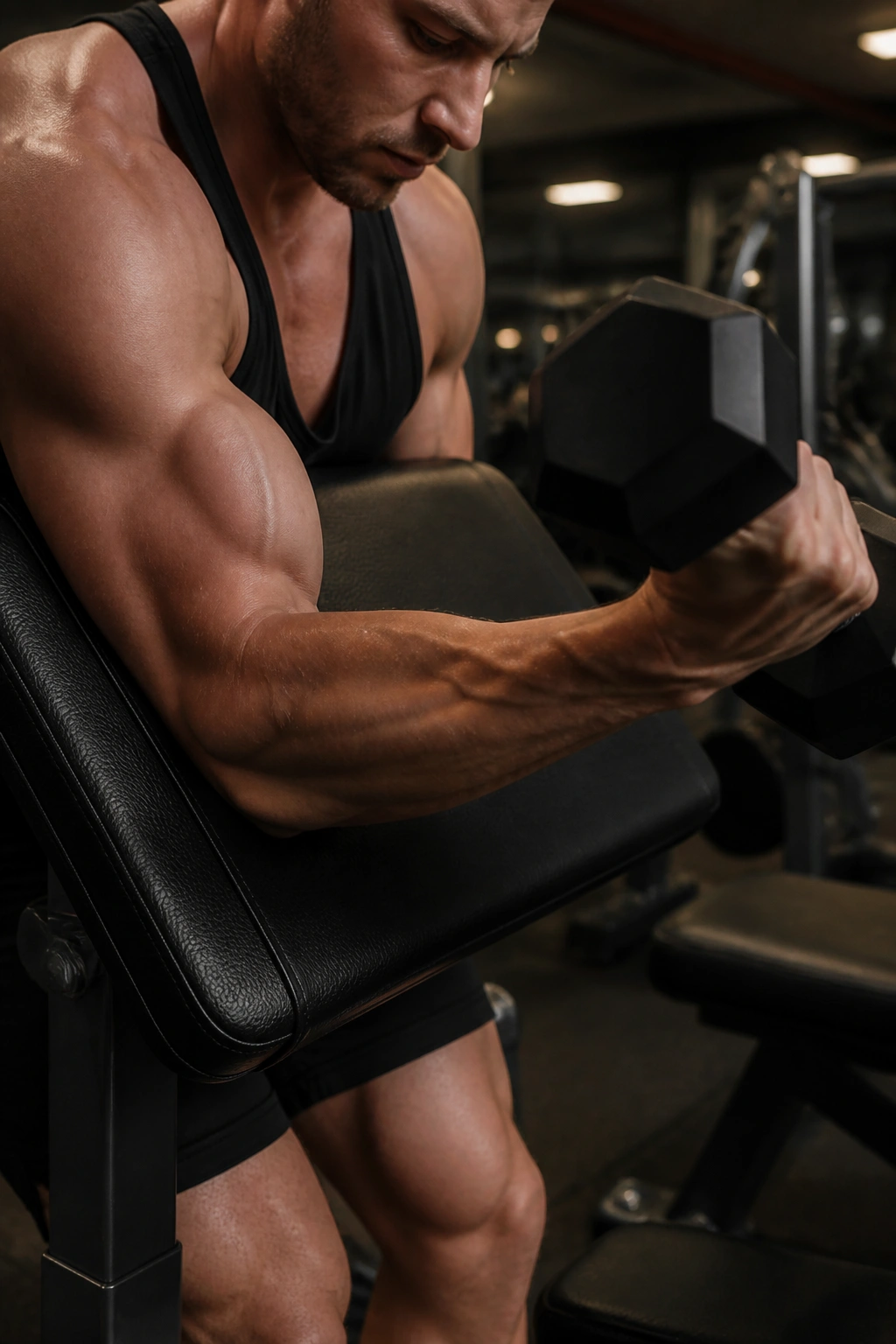
A preacher curl is basically a cheating-proof curl, and that’s why it earns a place in a serious arm routine. Your upper arm rests on the pad, which strips out the temptation to swing the torso or drag the weight upward with the shoulders. The biceps have to work through a very clean line.
The biggest mistake is dropping too fast into the bottom and bouncing out of the stretched position. That’s rough on the elbows and usually not worth it. Keep the descent controlled. Stop just short of a hard elbow lockout if your joints complain.
What to Watch For
- Set the pad so your armpit sits just above the top edge.
- Use an EZ bar or dumbbells if a straight bar feels harsh.
- Lower until the arm is nearly straight, then reverse smoothly.
- Aim for 8 to 12 reps with no body swing.
I like preacher curls near the middle or end of an arm session, when the biceps are already warm. They give you that clean, burning kind of fatigue that makes the muscle feel full afterward. Not a move for ego lifting. A move for control.
9. Cable Curl
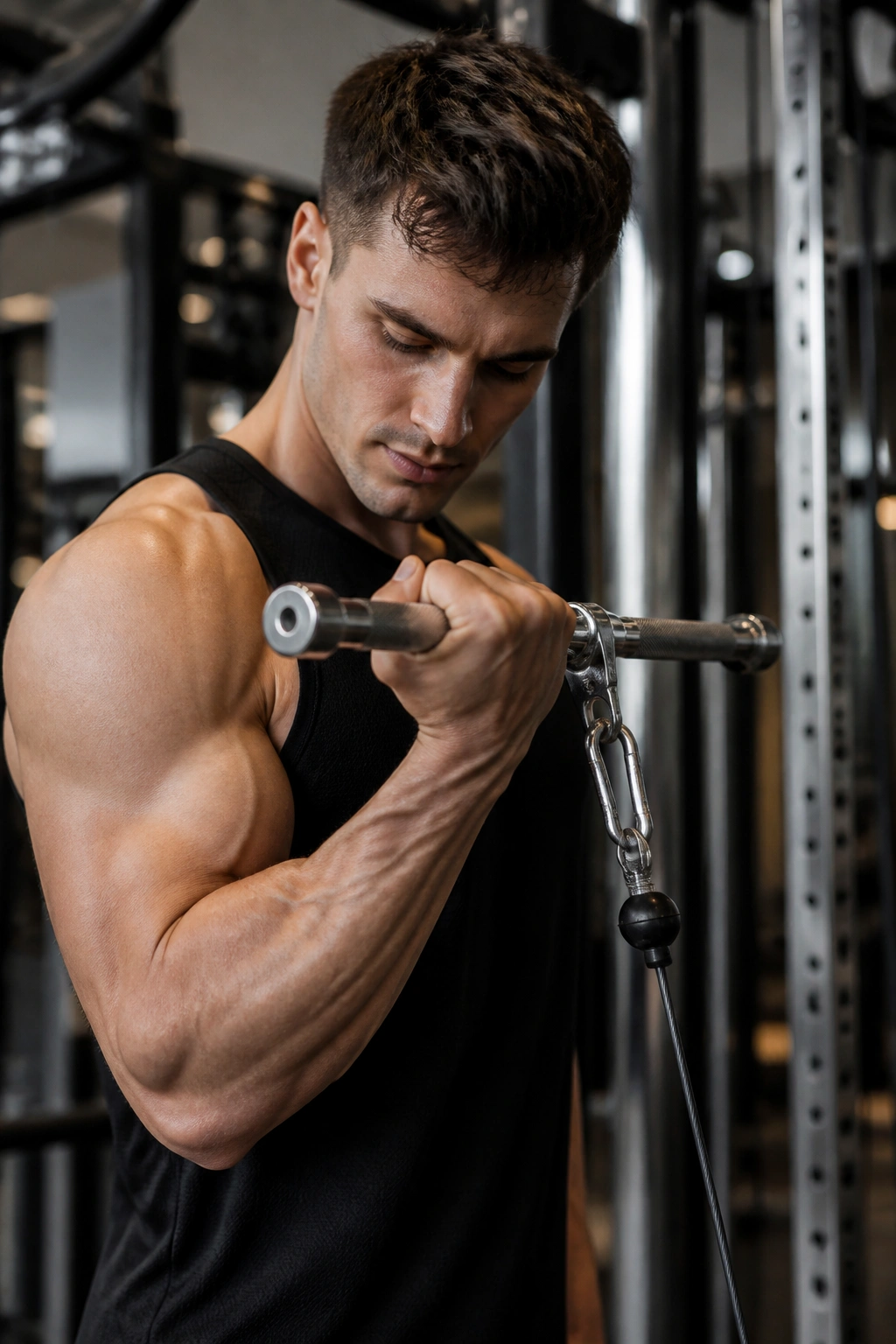
Cable curls keep tension on the biceps the whole way up and down, which is why they feel different from dumbbells even when the movement looks similar. The stack doesn’t care if you’re tired, and it doesn’t give you a dead spot at the top. That constant pull is useful.
The best part is how easy they are to fine-tune. Swap to a straight bar, rope, or single handle and the feel changes a little each time. Low pulley, elbows tucked, curl without rocking the torso. That’s the clean version. If the stack is set high enough, the cable can even give you a slightly different line of pull at the top, which helps the muscle stay loaded when dumbbells would have gone slack.
I like cables for higher-rep work, especially 12 to 15 reps, because the burn shows up fast without needing a ton of weight. They’re also a nice finisher if your elbows are tired from heavier curls. If your gym has cables and you ignore them, you’re leaving a simple tool on the rack.
10. Cross-Body Hammer Curl
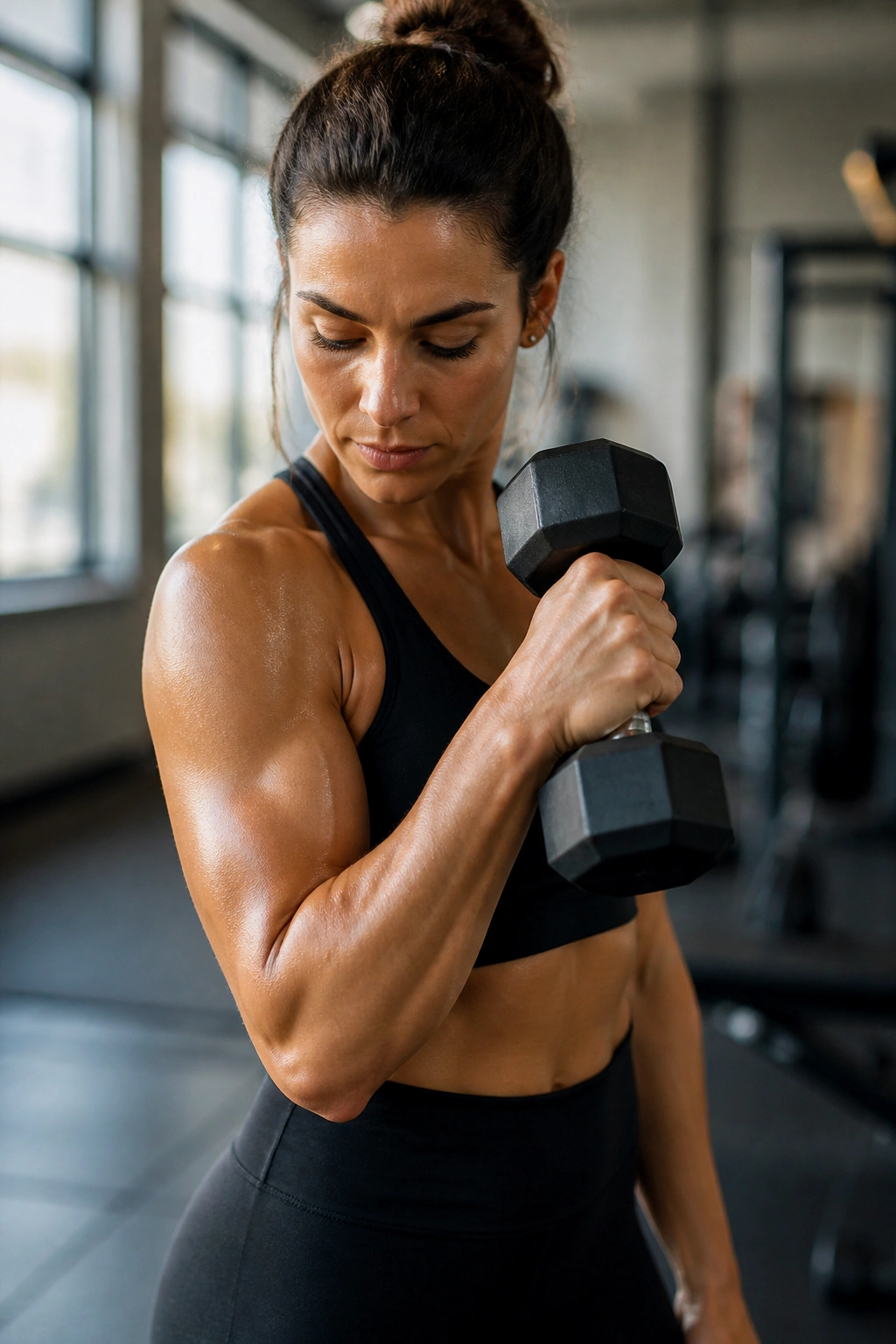
A cross-body hammer curl looks small, but it changes the target enough to matter. Instead of curling straight up, you bring the dumbbell across toward the opposite shoulder. That path puts a bit more emphasis on the brachialis and the outer forearm line, which helps the upper arm look fuller from the front and side.
Think of it as a thicker-arm variation, not a flashy one. The movement arc is short, so the temptation is to rush through it. Don’t. Keep the elbow close to the ribs and let the hand travel diagonally, not in a giant swing.
This one works well in moderate reps, around 10 to 12 per side. It’s especially handy if straight hammer curls feel stale or if you want a second hammer-style move without repeating the exact same pattern. The body likes a little variation, but only when the variation actually changes the demand. This one does.
11. Overhead Dumbbell Triceps Extension
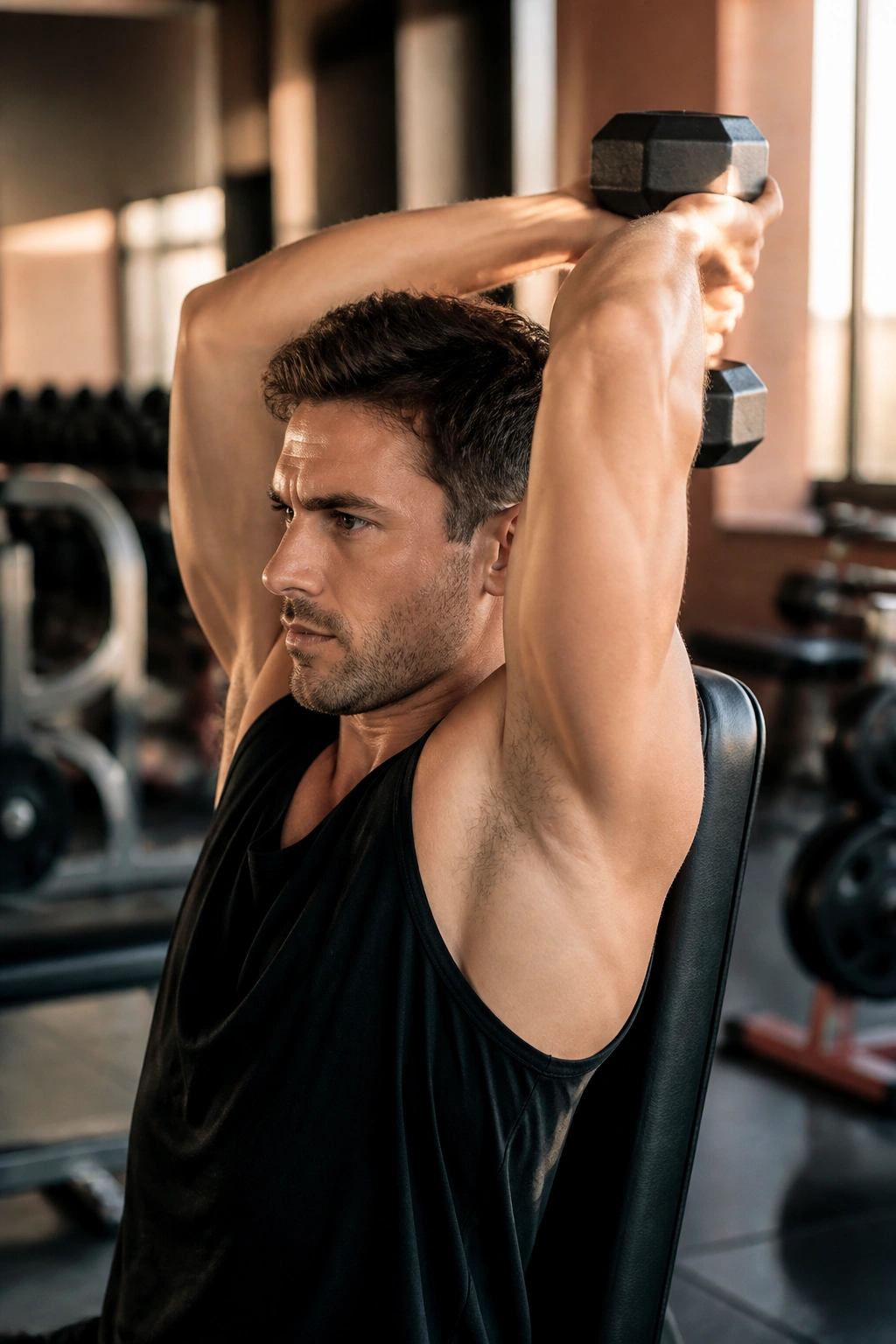
The overhead dumbbell extension hits the long head of the triceps in a way few other arm moves do, because that part of the muscle crosses the shoulder joint. Put the arm overhead and the long head stretches. That stretch is the point.
Why It Earns a Spot
If you only do pushdowns and close-grip pressing, the triceps can still get strong but miss some of that full upper-arm look from the side. Overhead work fills that gap. One dumbbell held with both hands is fine. A single arm version works too if you want more control.
- Keep your ribs from flaring.
- Lower the dumbbell behind the head with control.
- Stop when the elbows start drifting wide.
- Use 10 to 15 reps and avoid heavy, ugly loading.
Best cue: point the elbows slightly forward and keep the upper arms mostly still.
This move can feel a little awkward at first, especially if your shoulders are tight. That’s not a reason to force it. Use a lighter load, clean the path up, and let the triceps stretch do the work. It’s one of the better shape-builders on the list.
12. Rope Triceps Pushdown
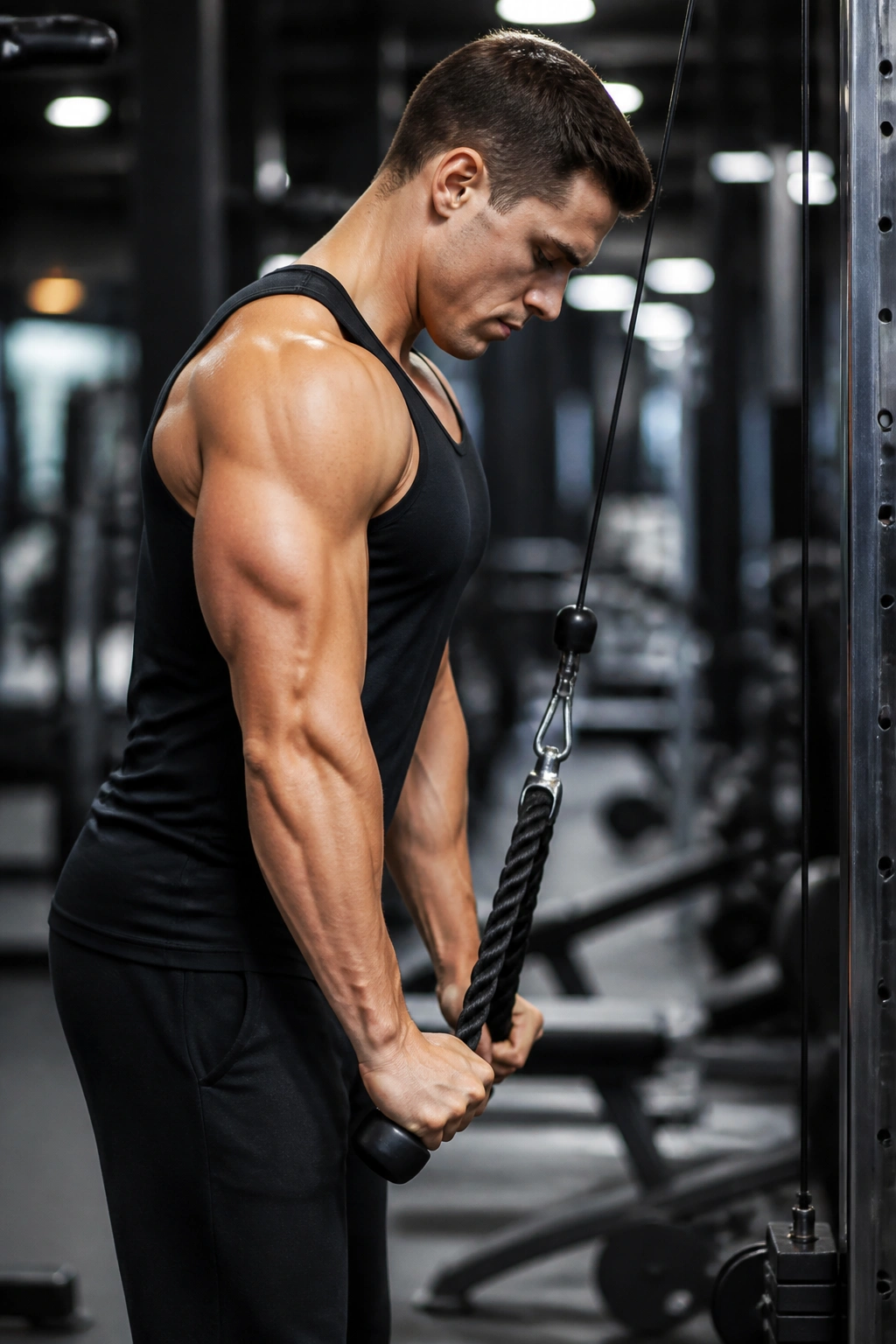
Rope pushdowns are the triceps move people keep coming back to for a reason. The setup is easy, the tension is steady, and the rope lets you separate the hands at the bottom for a better squeeze. That little flare at the end is not decoration. It helps finish the lockout cleanly.
Keep your elbows glued near your sides and let the forearms move. If the shoulders roll forward or the torso starts leaning through the set, the weight is too heavy. A pushdown should feel crisp, not like a standing row with a rope attached.
I like these in the 12 to 15 rep range, especially near the end of a workout. The triceps are a big muscle group, but they also respond well to clean, repeated tension without a lot of joint drama. That’s one reason pushdowns show up in so many good arm sessions.
If your gym has a cable stack and a rope attachment, this is one of the safest bets on the list. It’s boring in the best way.
13. Skull Crusher
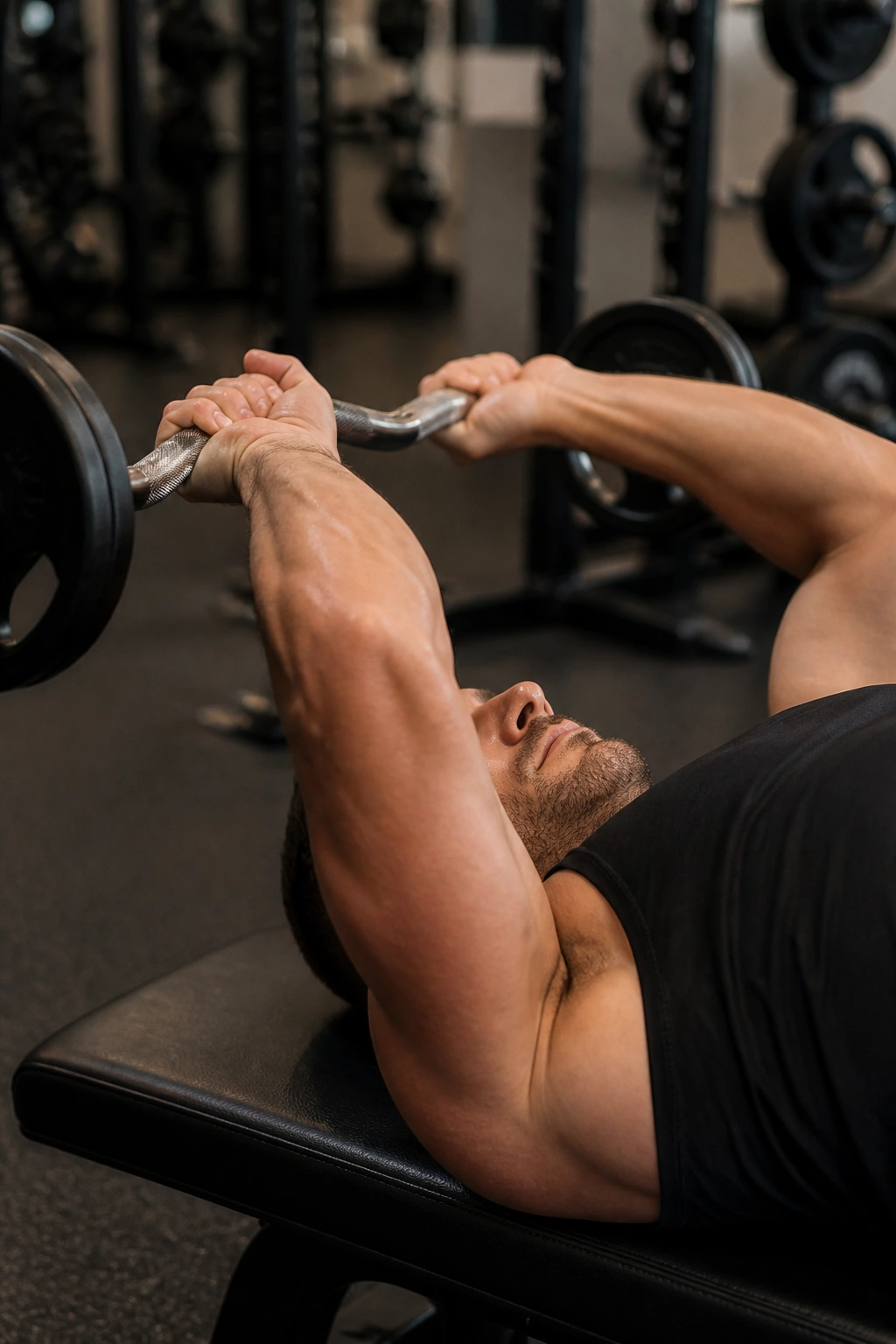
Why do skull crushers have such a dramatic name? Because the bar path heads toward the forehead area, and if your form is sloppy, the name starts sounding less like gym humor and more like a warning. Done properly, though, it’s one of the best triceps isolation moves around.
How to Keep Your Elbows Calm
Use an EZ bar or dumbbells if a straight bar feels rough. Lower the weight toward the forehead or slightly behind it, depending on shoulder comfort. Keep the elbows from drifting wide, and stop the descent before the shoulders take over.
The real mistake is turning this into a bench press with bent elbows. That loads the chest more than the triceps and usually makes the movement less friendly on the joints. Stay honest with the elbow bend. Use 8 to 12 reps. If the load forces you to shorten the path, it’s too heavy.
This move rewards control. The triceps get hit hard in the stretched position, which is exactly why it can feel so productive and so annoying at the same time. If your elbows are cranky, reduce the weight and slow the descent. Ugly skull crushers are not a badge of honor.
14. Close-Grip Push-Up
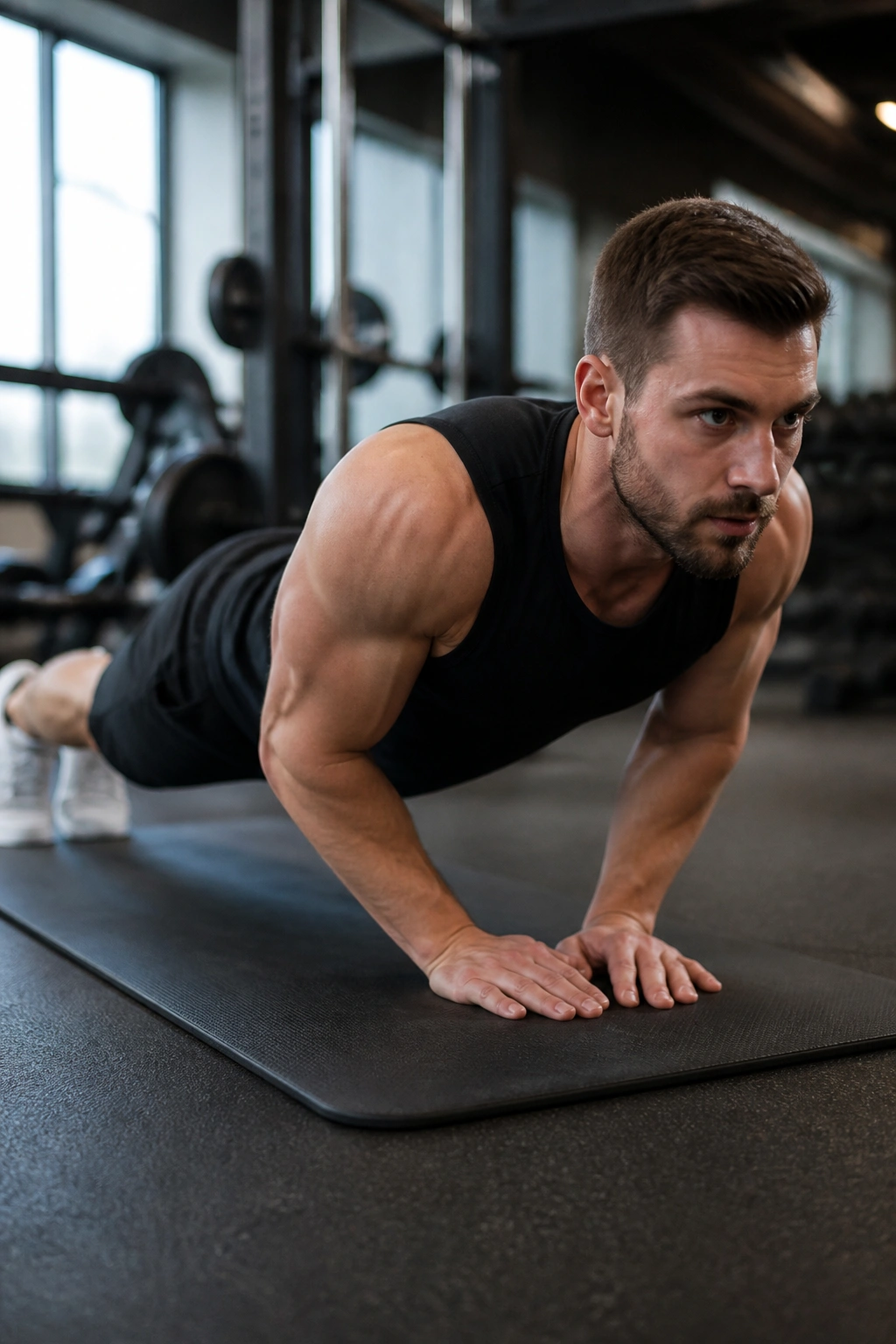
No weights? Fine. Close-grip push-ups still belong in a serious arm routine. Move the hands inside shoulder width, keep the elbows tucked closer to the torso, and the triceps step into the spotlight fast. It’s a simple shift, but it changes the press enough that the upper arms notice.
The body has to stay in a straight line from head to heels. If the hips sag, the set becomes a lower-back test. If the hands drift too narrow and the wrists complain, open them a little. You want narrow, not cramped.
- Place hands just inside shoulder width.
- Lower until the chest hovers a few inches above the floor.
- Keep the neck long and the core tight.
- Use knees down or an incline if full reps are too hard.
This is one of the best bodyweight triceps builders because it scales easily. You can do it on the floor, a bench, or a wall if needed. The exercise stays the same. The difficulty changes.
15. Bench Dip
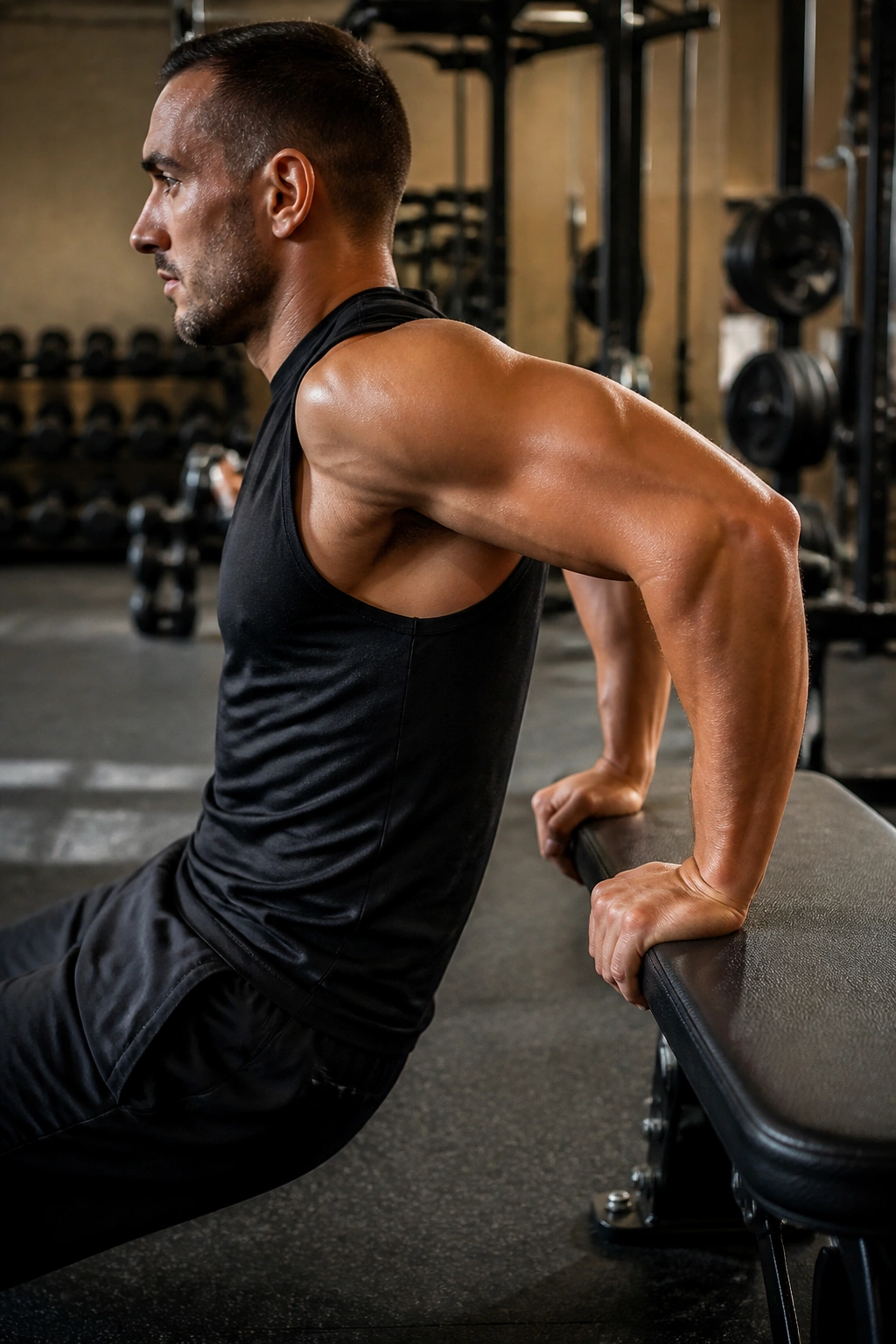
Bench dips are popular because they’re easy to set up and they light up the triceps fast. Sit on a bench, place the hands beside the hips, slide off the edge, and bend the elbows to lower the body. Simple. The catch is that not everyone’s shoulders love them.
That’s the honest part. If your shoulders feel pinchy at the bottom, skip them or shorten the range. There’s no prize for forcing depth. Keep the chest open, the shoulders down, and the descent controlled. A small bend with good tension is better than a deep dip with joint irritation.
I prefer these as a moderate-rep triceps move, around 10 to 15 reps, and I’d rather see clean form than extra depth. Bend the knees to make them easier. Straighten the legs to make them harder. That adjustment alone gives you a lot of room to progress without changing equipment.
Bench dips can work well, but they’re not sacred. Use them if they feel clean. Move on if they don’t.
16. Triceps Kickback
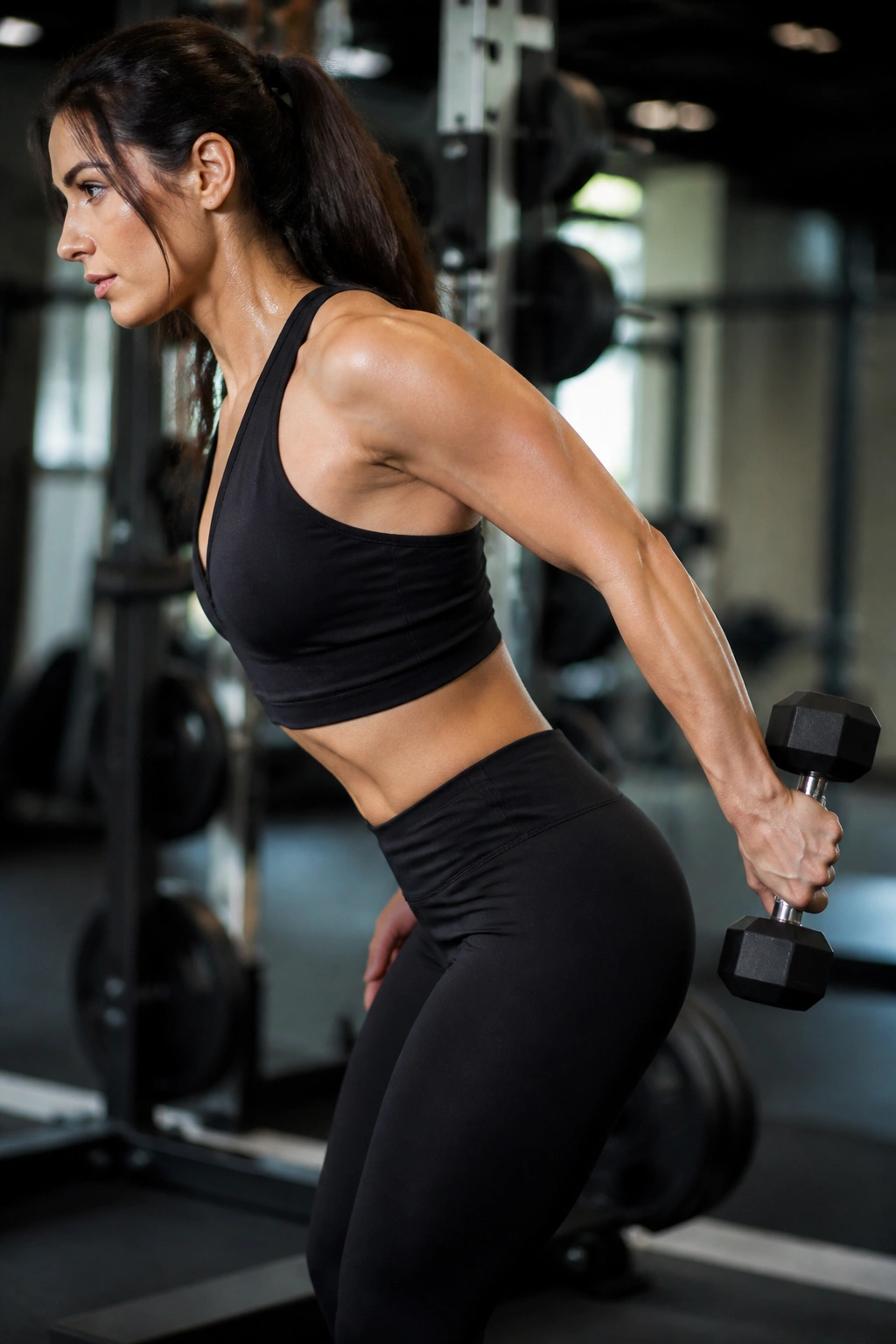
A triceps kickback is a small move that punishes lazy form. That’s not a criticism. It’s the whole point. You hinge at the hips, lock the upper arm in place, and extend the elbow until the arm straightens behind you. The triceps do the work, but only if the upper arm stays still.
This is not the place for heavy dumbbells. In fact, heavier usually means worse here. A lighter weight with a hard squeeze at the back end does more for the muscle than a sloppy heave. I like kickbacks near the end of a workout, usually 12 to 20 reps, when the goal is clean finish, not maximal load.
Unlike pushdowns or presses, the kickback feels almost tiny in the beginning and then suddenly brutal once fatigue sets in. That’s normal. Keep the torso stable, avoid twisting, and don’t let the elbow drift down as the hand moves back. Once the upper arm starts waving around, the set is gone.
It’s a finisher, not a hero lift. Treat it that way.
17. Diamond Push-Up
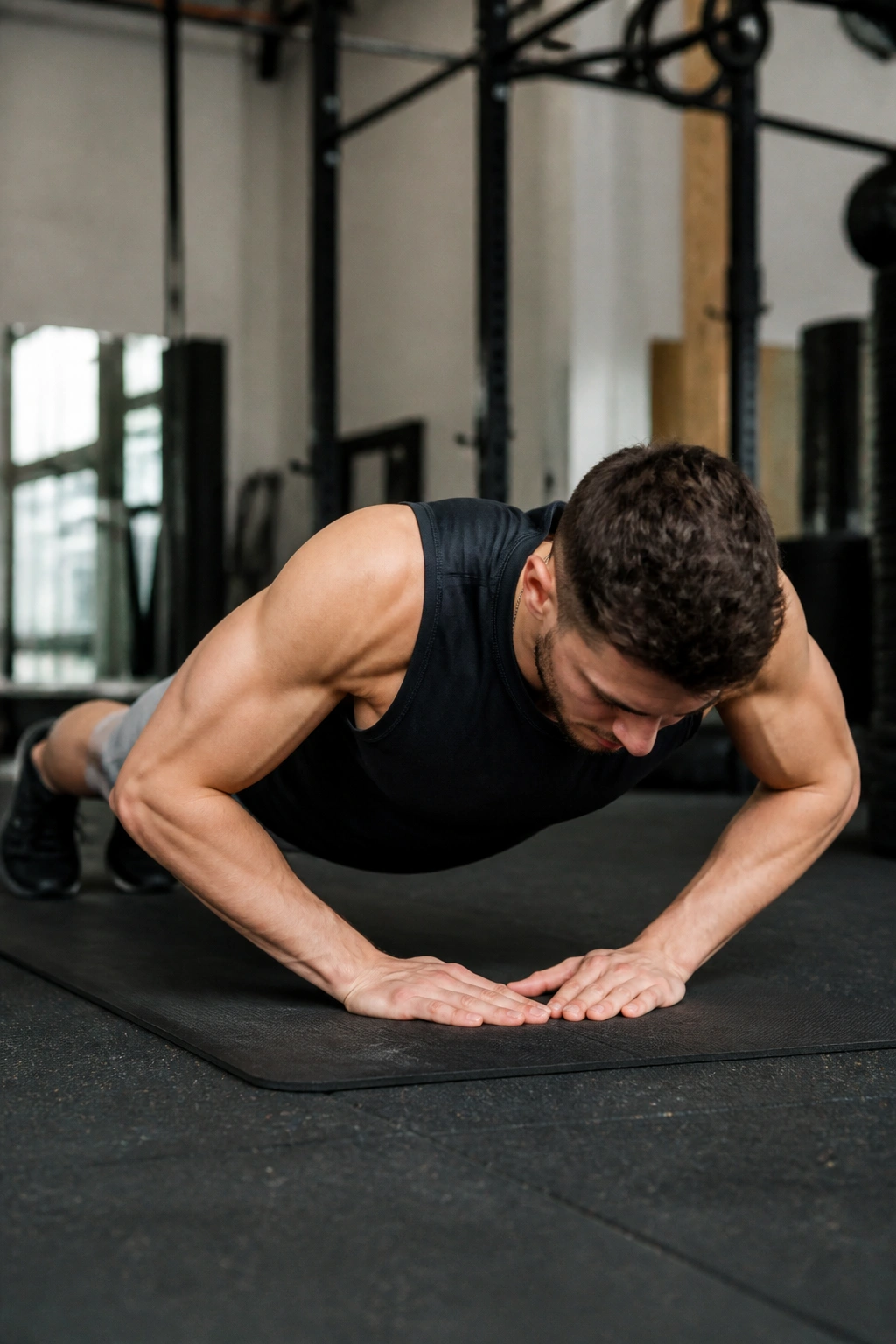
Diamond push-ups shift a lot more work toward the triceps than a standard push-up does, and you feel it fast. Bring the hands close together under the chest, form the diamond shape with the fingers, and lower with a body line that stays tight from shoulders to heels. The narrower hand position changes the press enough to make the triceps kick in harder.
What Makes It Feel So Different
The range of motion is usually shorter than a normal push-up, but the load on the elbows and triceps is sneaky. People expect a chest exercise and get a triceps burner instead. That surprise is part of the appeal.
Use an incline or knees-down version if the full bodyweight version is too hard. Clean reps beat ugly reps. Keep the elbows from flaring wide, and stop before the shoulders drift forward. I’d rather see 6 good reps than 15 messy ones.
Best cue: think about pushing the floor away through the middle fingers and thumb, not collapsing onto the wrists.
Diamond push-ups are one of the simplest no-equipment choices for sculpting the back of the upper arm. Hard, cheap, and effective. Hard to argue with that.
18. Arnold Press
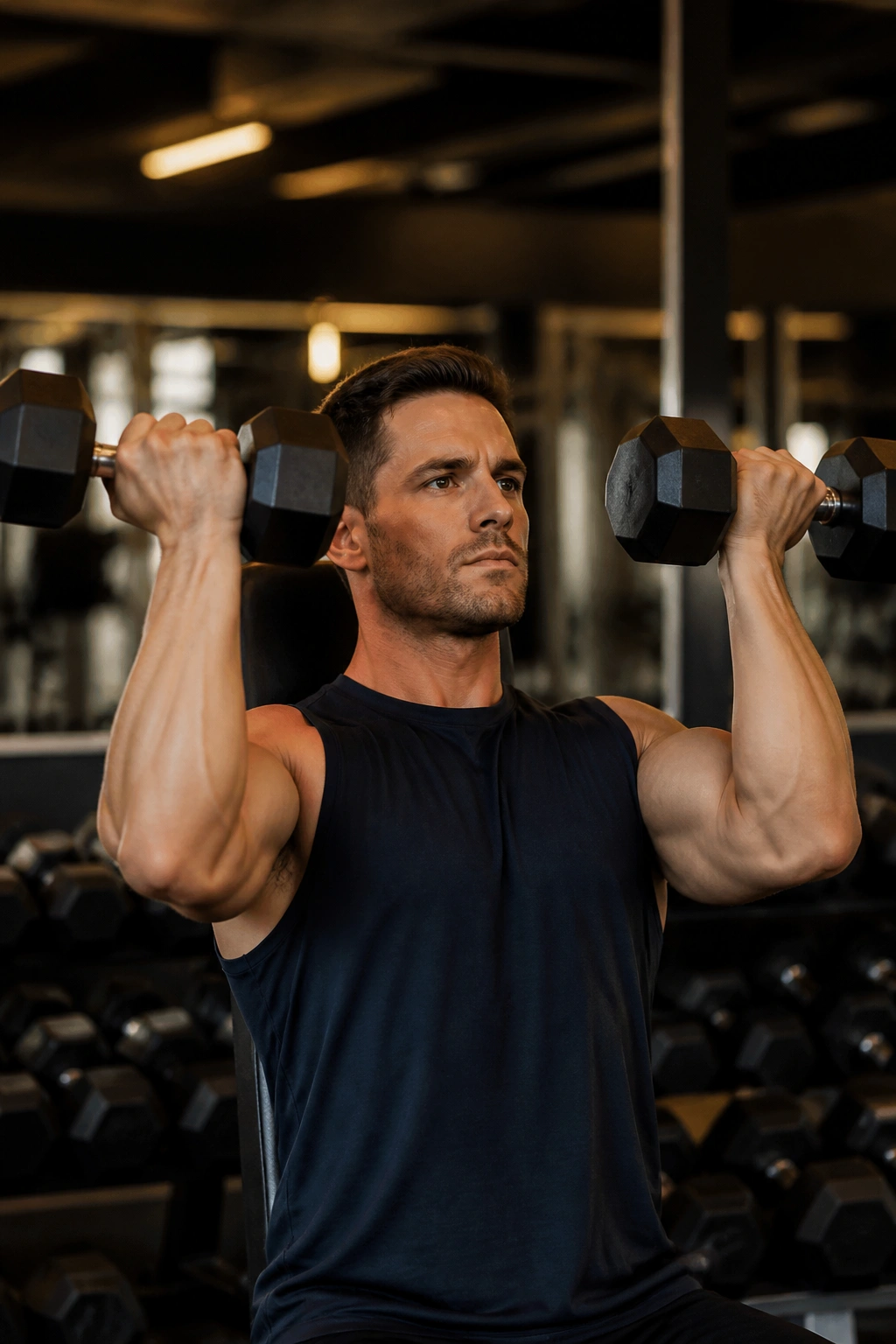
The Arnold press is not a pure arm isolation move, and that’s exactly why it belongs here. It works the shoulders hard, but the triceps still have to finish the press, which helps the upper arm look more complete. The rotation from palms-in to palms-forward gives the movement a longer path and a different feel from a plain overhead press.
I like this one for people who want their arms to look better from every angle, not just from the side. Start with the dumbbells in front of the shoulders, palms facing you. As you press up, rotate the hands outward. Then reverse the motion on the way down. Smooth is the goal.
This is best in the 8 to 10 rep range with manageable weight. If the spine starts arching hard, the load is too heavy. Keep the ribs down and the movement clean. The triceps will help, but the shoulders will complain first if you get sloppy.
It’s a useful compound move, not a magic trick. Still worth it.
19. Chin-Up
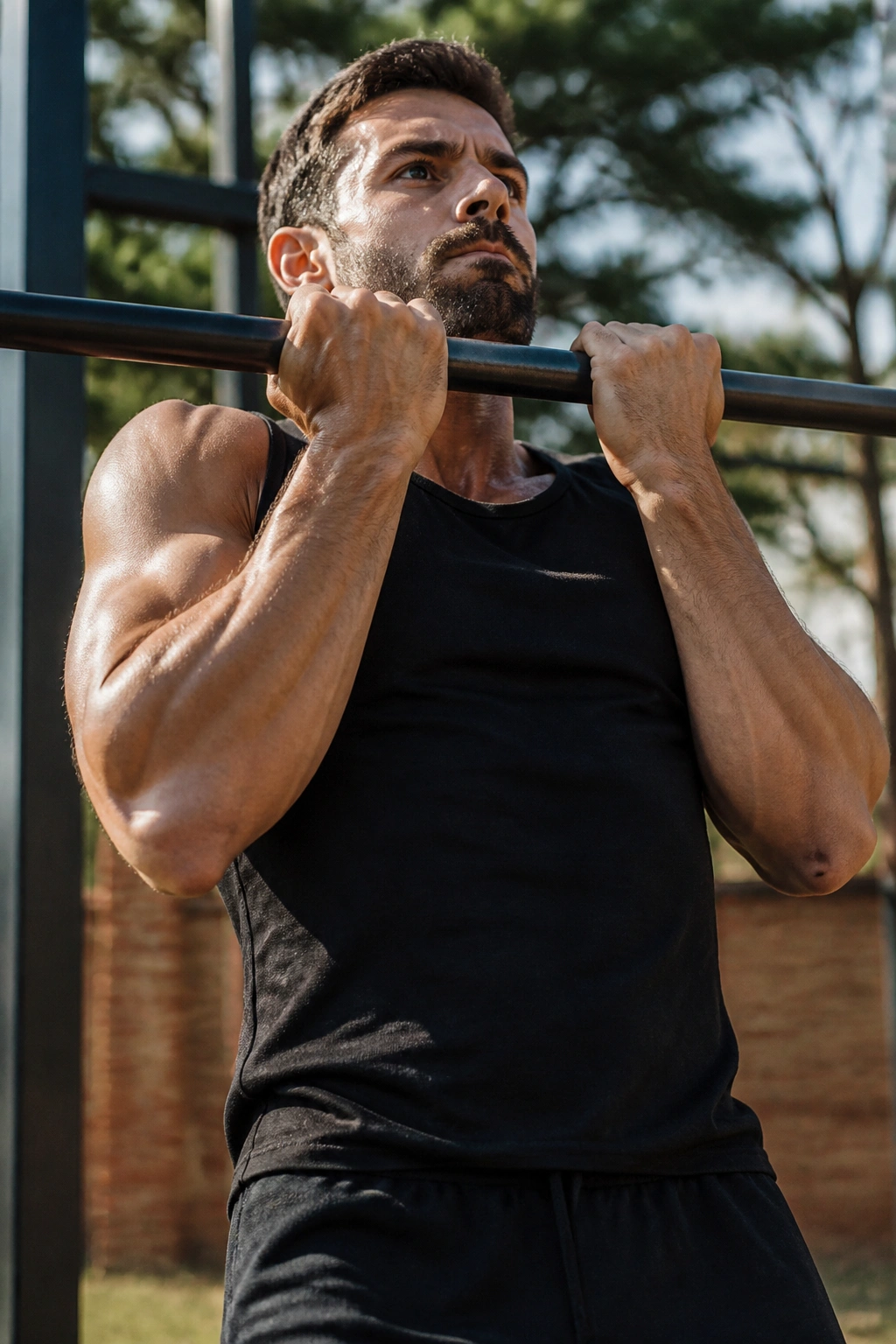
Why does a chin-up show up on an arm list? Because the underhand grip makes the biceps work far harder than most people expect, especially in the lower half of the pull. Add the back muscles helping in the background, and you get a very strong, very honest upper-body builder.
How to Scale It
If you can’t do a full chin-up yet, use a band, a machine assist, or slow negatives. Jumping to the top and lowering for 3 to 5 seconds teaches strength fast. Grip the bar with palms facing you, hang with control, and pull the chest toward the bar without jerking the legs.
- Start from a dead hang or near-dead hang.
- Pull until the chin clears the bar.
- Lower under control instead of dropping.
- Use assistance before the movement gets sloppy.
Chin-ups are demanding, but they pay off. They build biceps size, forearm grip, and upper-back strength in one shot. That’s a lot of return for one exercise. If you’re chasing toned sculpted arms and you can only earn one harder bodyweight move, this is a strong candidate.
20. Close-Grip Bench Press
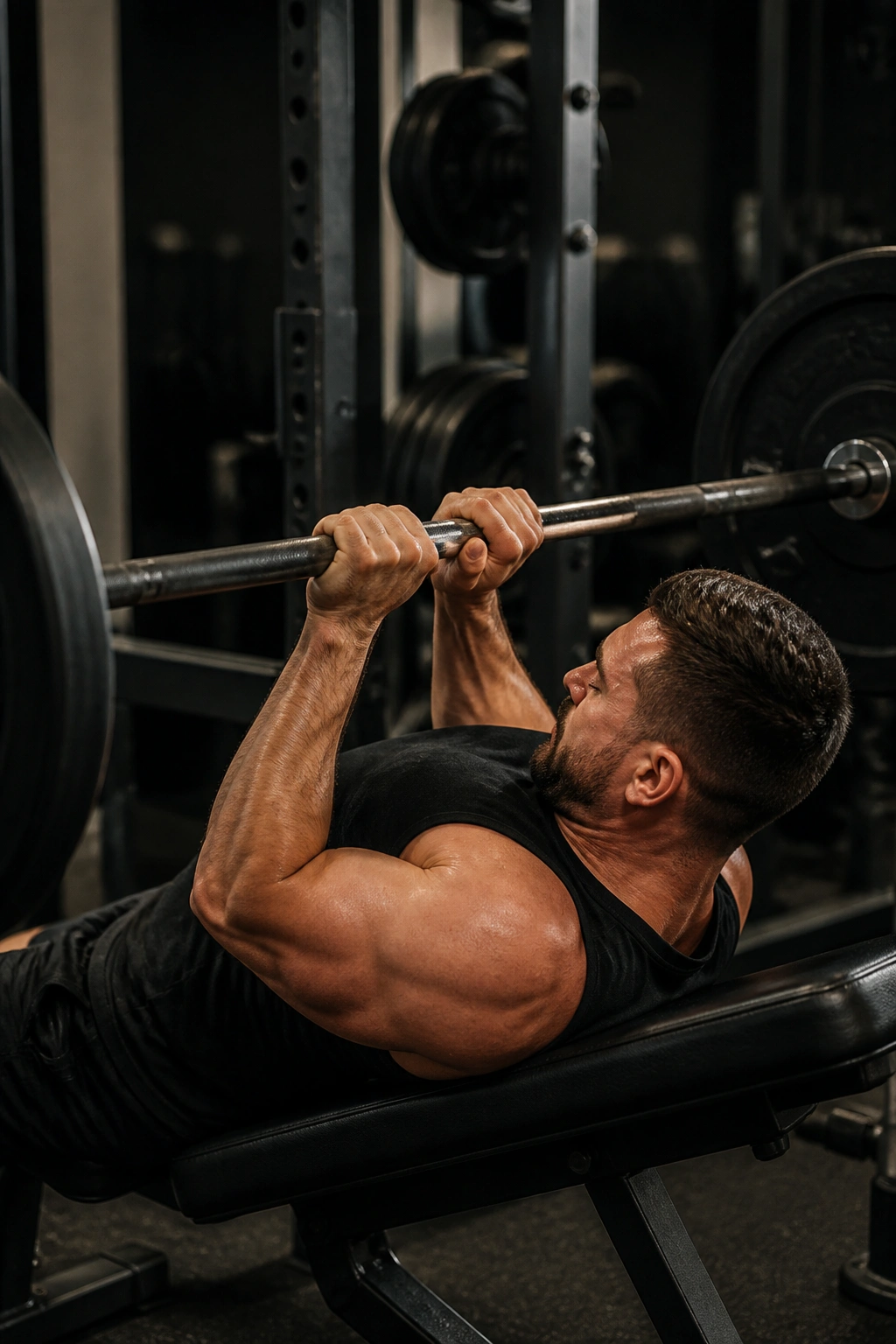
The close-grip bench press is one of the best loaded triceps builders around, and it earns that reputation by letting you press heavier than most isolation moves. Hands just inside shoulder width, elbows tucked at a natural angle, bar lowered under control to the lower chest or upper sternum. The triceps have to finish the press, and they get very little help from sloppy momentum if you keep the form tight.
Use a spotter or safety pins if the load is heavy. That part matters. This is not a lift to freestyle when fatigue is high. Keep the wrists stacked over the elbows, and avoid turning the grip so narrow that your hands feel cramped. Close-grip does not mean hands touching. It means closer than your normal bench setup.
I like this move for people who want the upper arm to actually grow, not just feel tired. Heavy pressing plus clean triceps isolation is a strong combination. Pair it with one curl, one overhead triceps move, and one bodyweight press, and you’ve got a routine that covers size, shape, and the kind of arm strength you notice when you carry grocery bags or press a heavy door open.
If you want the arms to look more defined in a T-shirt, the trick is not chasing one perfect exercise. It’s mixing heavy tension, clean isolation, and enough variety that the biceps, triceps, and forearms all get a turn under real load.
