



A decent beginner circuit workout at home doesn’t need fancy gear. It needs a timer, a little floor space, and the nerve to start before you feel ready.
Most people make the first workout too hard. They stack together jumping jacks, burpees, and a plank hold that turns ugly by minute three, then wonder why the habit never sticks. That’s a shame, because beginner circuit workouts at home work best when they feel almost suspiciously manageable at first.
The trick is boring in the best possible way: short bursts, clean form, and enough rest that your breathing settles before the next round starts. A chair, a wall, a mat, and maybe one light dumbbell are enough for a month’s worth of solid training. No drama. No circus.
So the first circuit below keeps things plain on purpose. Plain is useful. Plain gets done.
1. No-Equipment Beginner Circuit Workout at Home
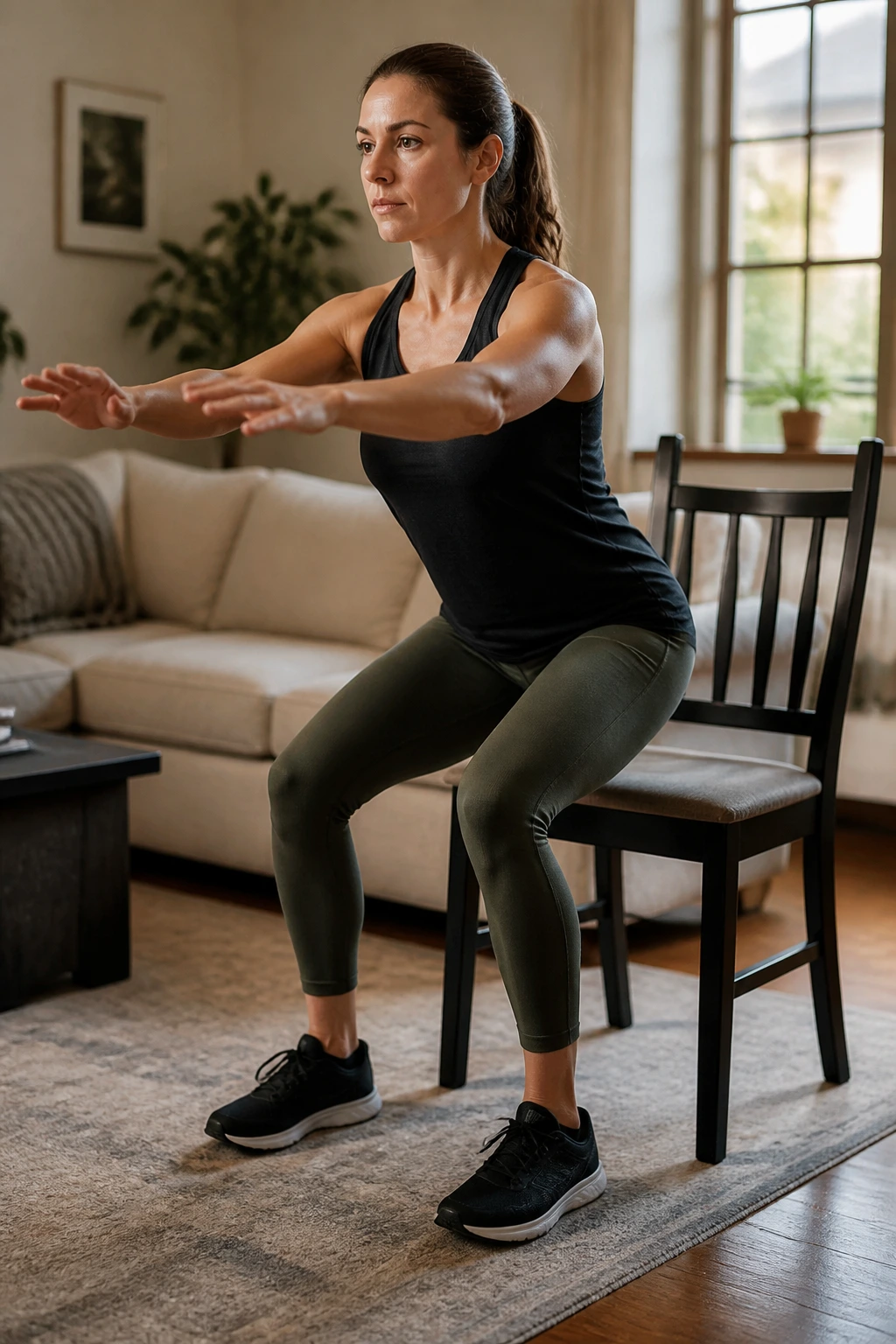
This is the one I’d hand to someone who wants to move today, not redesign their whole life around exercise. It uses 30-second work blocks and simple movements your body already understands, which means you can spend your energy on form instead of decoding the routine.
How the circuit works
Do 2 rounds to start, with 30 seconds of rest between exercises and 60 seconds between rounds. If that feels smooth, push to 3 rounds the next time you repeat it.
- 30 seconds of chair squats
- 30 seconds of wall or countertop push-ups
- 30 seconds of glute bridges
- 30 seconds of marching in place with strong arm swings
- 30 seconds of dead bugs
The goal here is not to win a private contest against the timer. It’s to finish with enough gas left in the tank that you’d do it again tomorrow.
Stop each set while your form still looks neat. If your shoulders creep up, your knees cave in, or your lower back starts arching on the floor, cut the set short and move on.
2. Chair-Assisted Starter Circuit for Wobbly Days
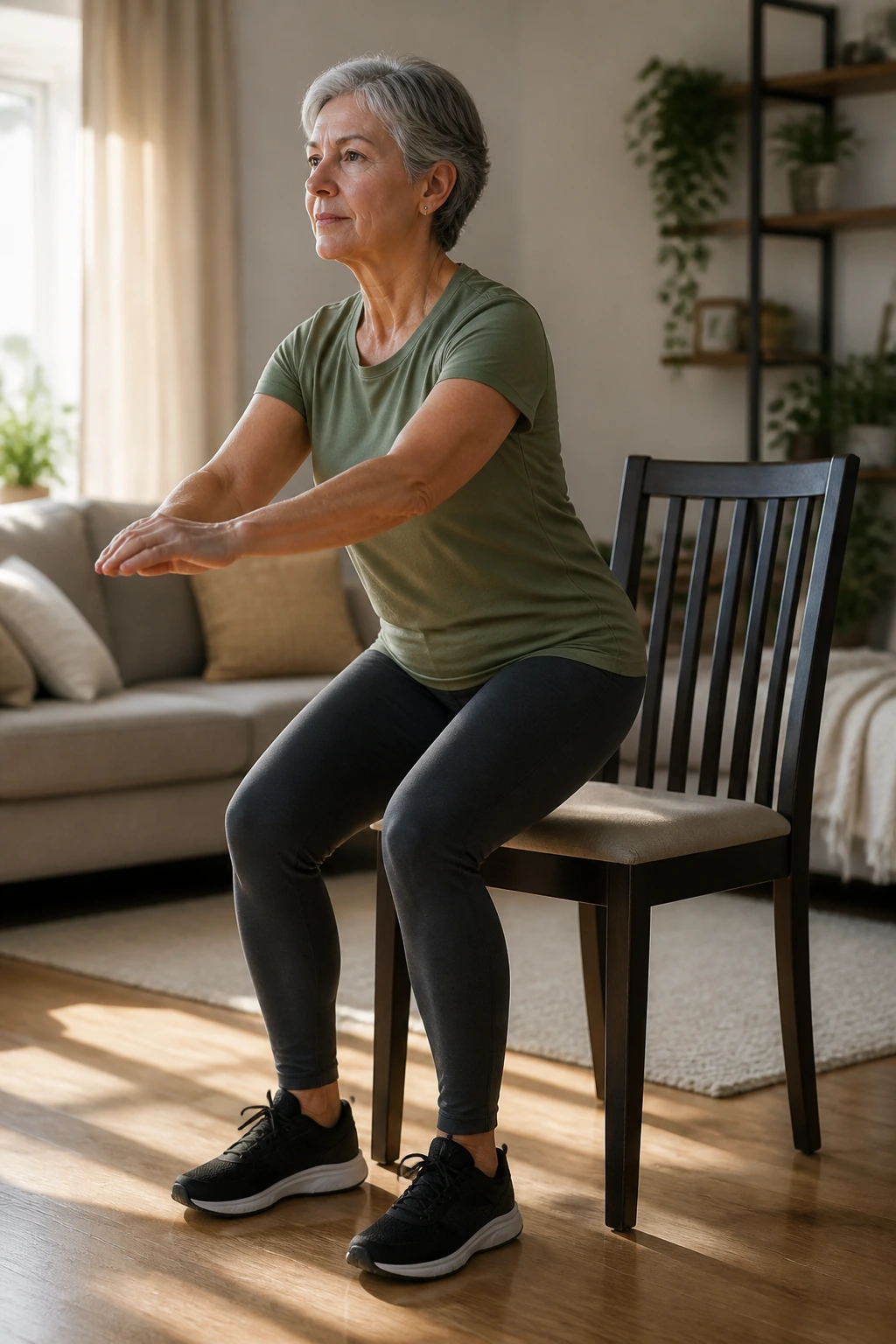
Why pretend the floor is mandatory when a sturdy chair makes the whole thing cleaner? A chair is one of the best beginner tools in a home workout, especially if your knees, balance, or confidence need a little slack.
Start with sit-to-stands, which are exactly what they sound like: sit down, stand up, sit down again. Then add incline push-ups with your hands on the seat or the back of the chair, step-ups if your chair or step is solid enough for that job, seated knee lifts, and calf raises while holding the chair back. Keep each move to 8 to 12 reps or 30 seconds, and rest 20 to 30 seconds between moves.
The nice part is how honest this circuit feels. If the chair setup is too easy, you’ll know right away. If it’s too hard, you can lower the seat depth, shorten the range, or slow down. No mystery. No guessing.
Use this on the days your body feels stiff at the start. It usually wakes up fast.
3. Silent Apartment Cardio Circuit

If the floor squeaks and someone lives below you, this is the circuit that keeps the peace. No jumping, no pounding, no thunder through the room. You still get sweaty. Just quietly.
Five quiet moves that still raise the heart rate
Run each move for 40 seconds, then rest 20 seconds before the next one. Finish 3 rounds.
- Brisk marching with arms driving hard
- Step jacks instead of jumping jacks
- Squat to reach overhead
- Skater steps with a soft side tap
- Standing knee drives, one side at a time
Keep your feet as soft as you can. That tiny detail matters more than people think. Quiet feet usually mean better control, and better control usually means better knees, hips, and ankles.
This circuit works when you want cardio without the mess. It’s also good when you’re rusty and don’t want to start with a workout that feels like punishment.
4. Upper-Body Push and Pull Circuit
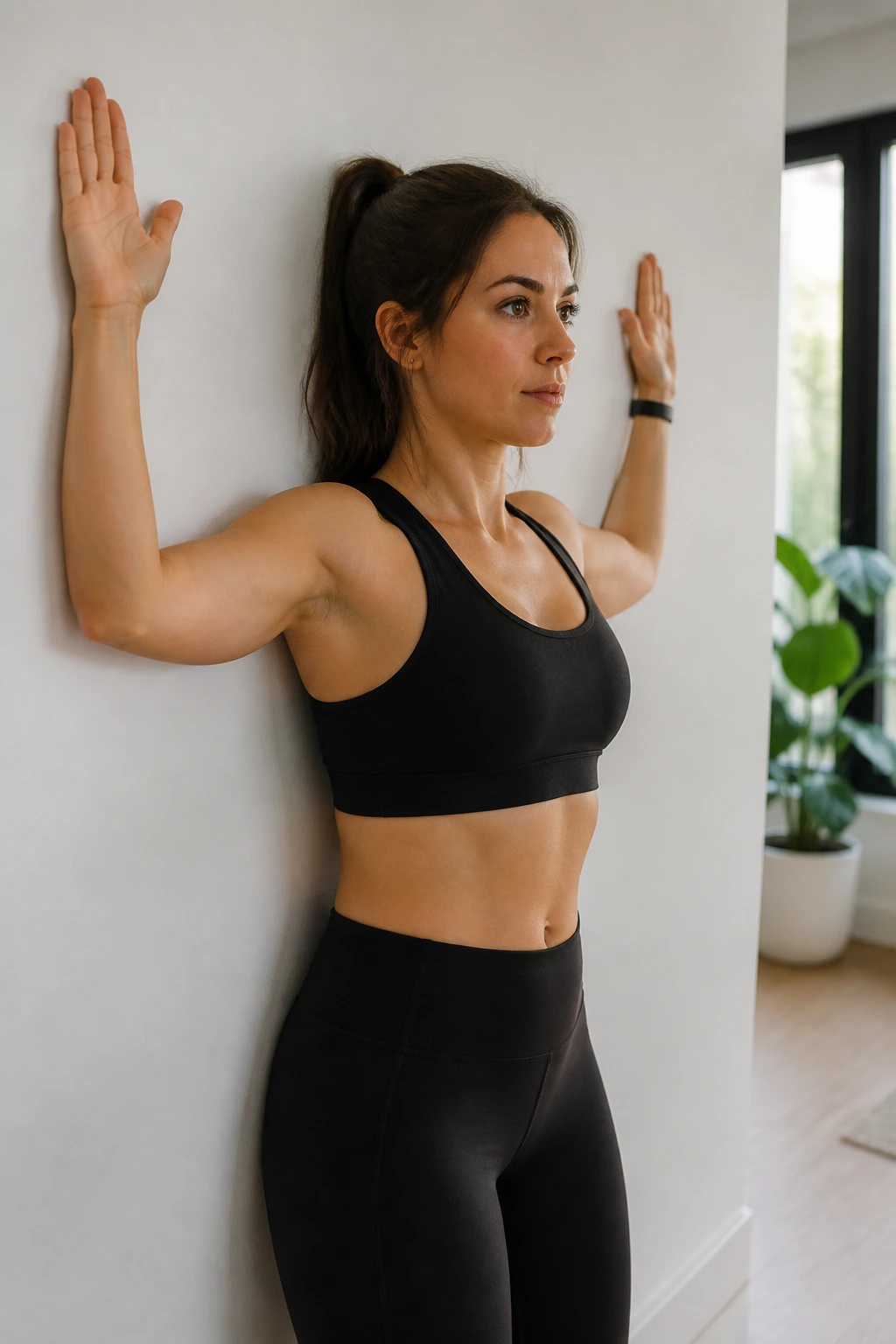
Upper-body training at home does not need a thousand push-ups. That’s the lazy advice people repeat because it sounds tough. Most beginners need smart angles, not more suffering.
Try this instead: wall slides, incline push-ups, prone Y raises on the floor, reverse snow angels, and plank shoulder taps from the knees if needed. Use 8 slow reps for the strength moves and 20 to 30 seconds for the plank work. Two rounds is enough at first.
What to watch for
- Keep your ribs tucked slightly so your lower back doesn’t sag.
- Lower the push-up angle if your neck starts craning forward.
- Move the shoulder blades, not the elbows, during wall slides and prone raises.
- Stop the plank taps before your hips start swaying.
This kind of circuit feels light at first, then it sneaks up on you. That’s a good thing. Your shoulders, upper back, and triceps get work without the sloppy grind that usually ends with sore wrists and a grumpy neck.
5. Glute and Leg Burner Without Floor Jumps
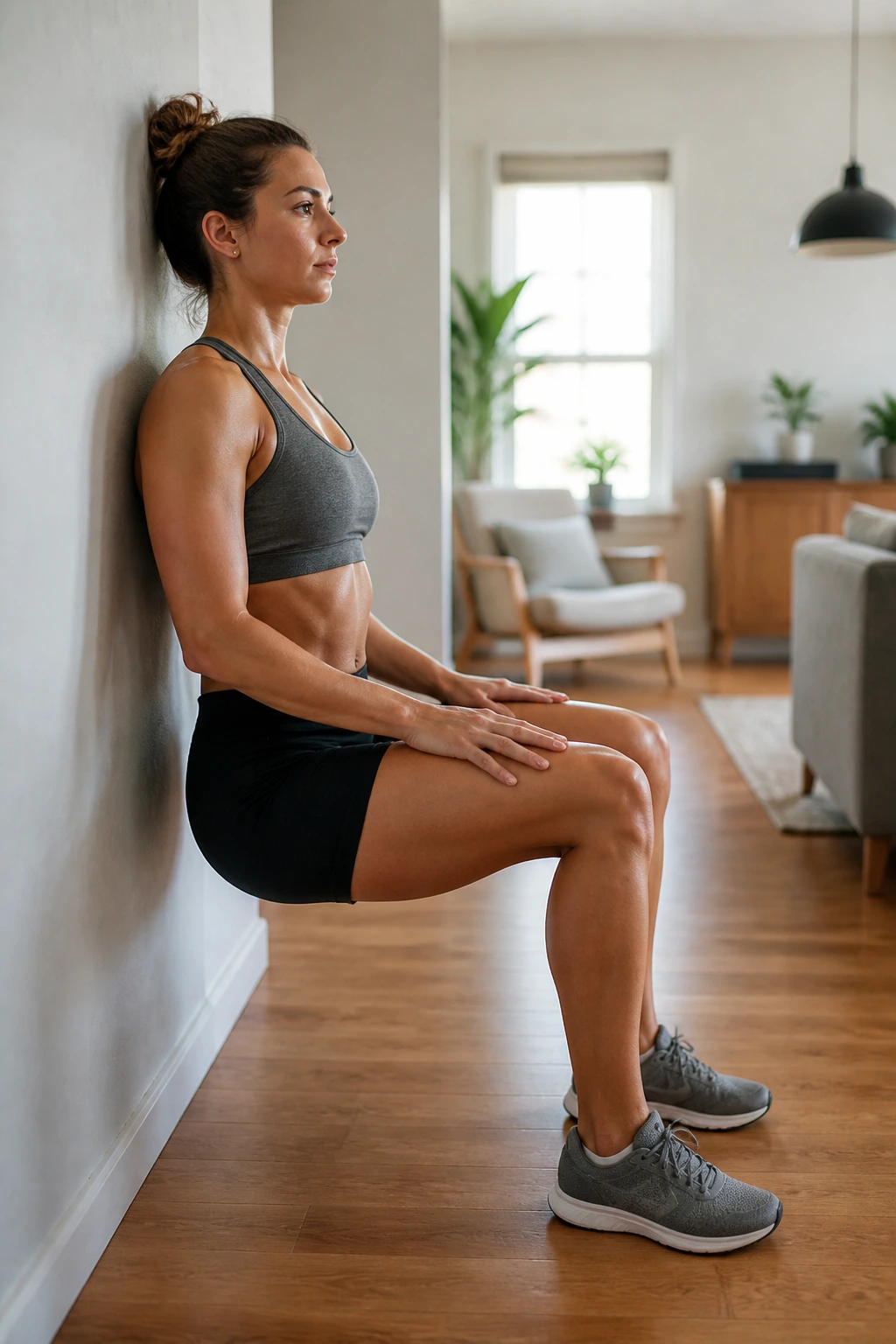
Your thighs will notice this one before your lungs do. That’s the whole point. A good beginner leg circuit should feel hard enough to matter and controlled enough that you can still walk normally after.
Use 35 seconds of work and 25 seconds of rest for each move. Try 3 rounds.
Start with chair squats, then move into reverse lunges, glute bridges, wall sits, and calf raises. If reverse lunges feel awkward, step back only a little and keep most of your weight on the front leg. If wall sits bother your knees, shorten the hold to 15 seconds and build up.
The best cue I know here is simple: keep your knees tracking over the middle toes. That little line saves a lot of wobble. It also keeps the whole circuit from turning into a sloppy set of half-reps.
This is the leg workout I’d pick for anyone who wants strength without jumping around like they’re in a boot camp video.
6. Core-Stability Circuit on a Mat
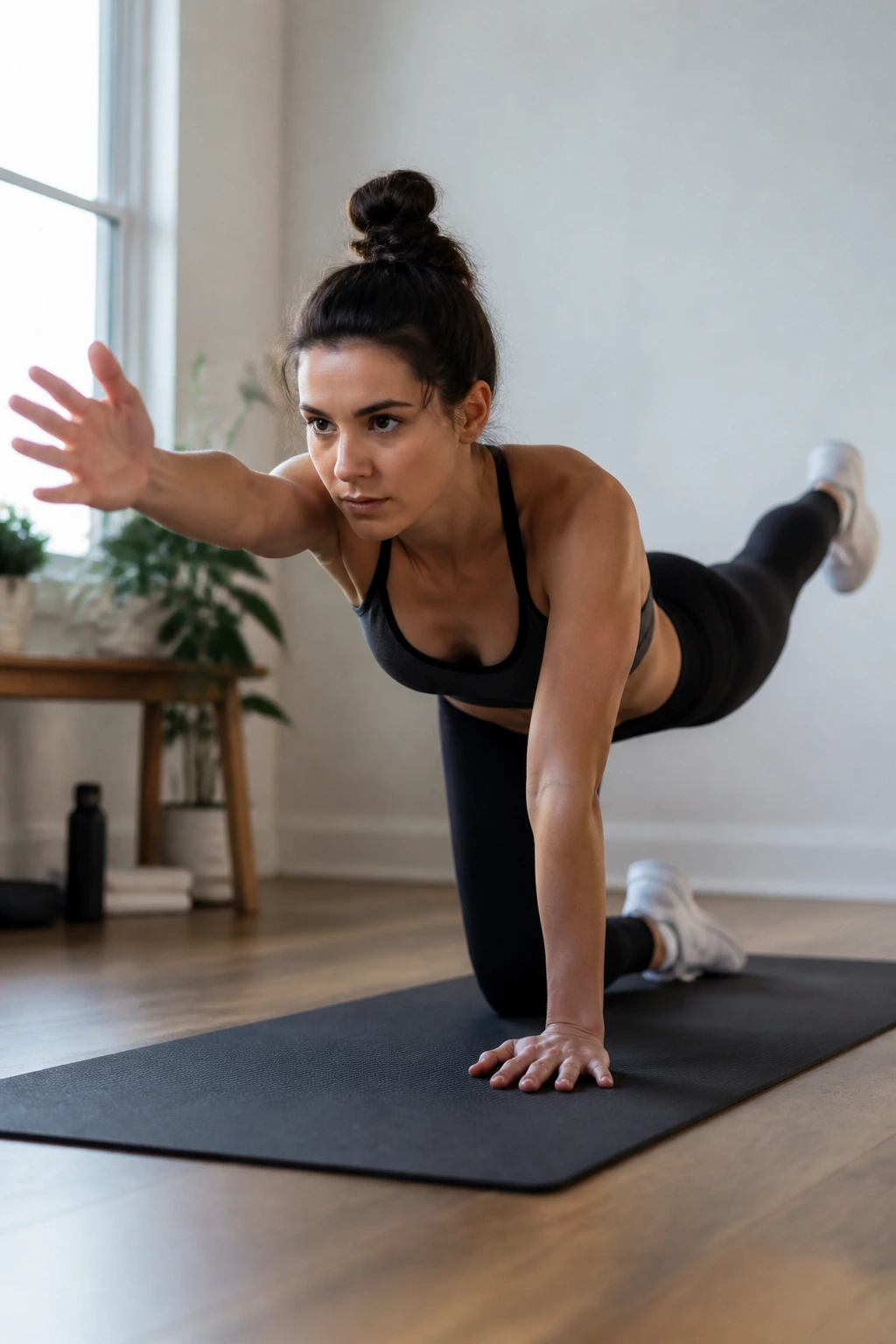
Unlike a crunch marathon, this circuit trains your trunk to resist movement. That sounds less exciting than burning your abs into submission, but it’s far more useful when you want a stronger midsection that actually helps your posture and balance.
Start with dead bugs, bird dogs, side planks from the knees, heel taps, and a glute bridge march. Do 6 to 10 reps per side on the controlled moves, or hold the planks for 15 to 25 seconds. Two rounds is fine. Three if you’re steady and your lower back stays quiet.
How to keep your back happy
Exhale on the hardest part of each rep. That one habit helps your ribs stay down and keeps the work where it belongs. If your lower back presses hard into the mat and then lifts away as soon as your legs move, shorten the range. Don’t fight the floor.
This circuit is especially good if you sit a lot, because it asks your core to support movement instead of just curling forward for a few tired reps. Boring? A little. Useful? Absolutely.
7. Low-Impact Fat-Burn Circuit for Small Spaces
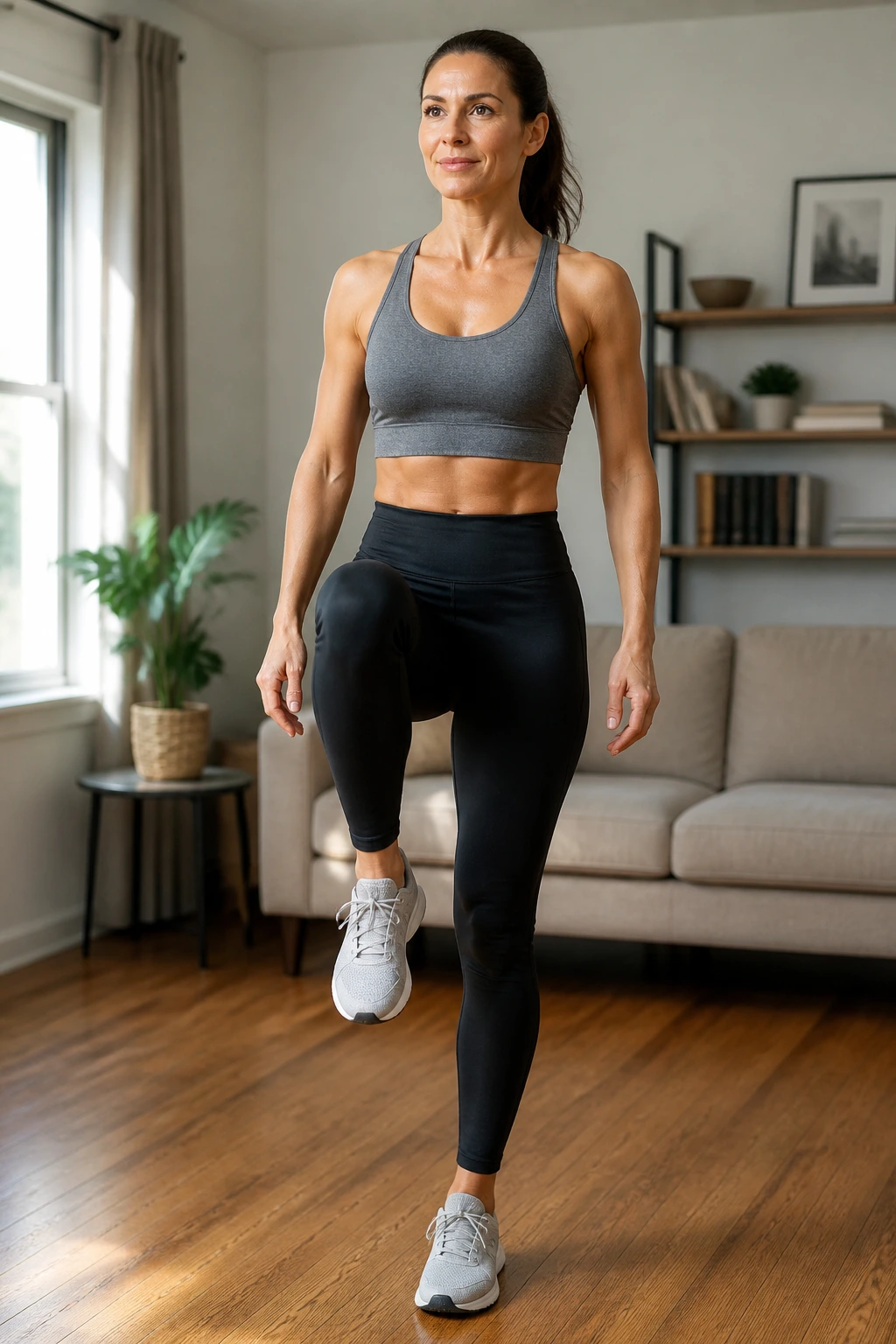
You can get a good sweat without a single jump. People forget that, then blame their apartment, their neighbors, or their knees. A steady pace beats a noisy one when you’re building a habit.
Five moves, one calm rhythm
Perform each exercise for 30 seconds, rest 15 seconds, and complete 3 rounds.
- Fast march with a tall posture
- Step jacks
- Squat to calf raise
- Alternating knee drives with a reach
- Shadow boxing with light footwork
Keep the tempo brisk but not frantic. If your breathing becomes ragged by the second round, slow the feet before you cut the work. That’s not cheating. That’s pacing.
This circuit is handy when you want the feeling of cardio without the punishment. It also works well as a warm-up before strength training, because it wakes up the ankles, hips, and shoulders without draining them.
8. 12-Minute EMOM Beginner Circuit

EMOM workouts are friendlier than they sound. The clock does half the coaching for you, which is great when you’re new and don’t want to guess how long to rest.
Here’s the format: every minute on the minute, start the listed work. If you finish early, you rest until the next minute begins. Repeat the four-minute block 3 times for a total of 12 minutes.
- Minute 1: 8 chair squats
- Minute 2: 6 incline push-ups
- Minute 3: 10 reverse lunges, total
- Minute 4: 20-second forearm plank, then rest
That structure keeps the work honest. If the squat set takes 20 seconds, you rest 40. If it takes 40 seconds, you’ve already learned something useful about your pace.
Use a light, clean effort on the first round. If you rush because the timer feels exciting, the last round will bite you back. It usually does.
9. 10-Minute AMRAP Home Circuit
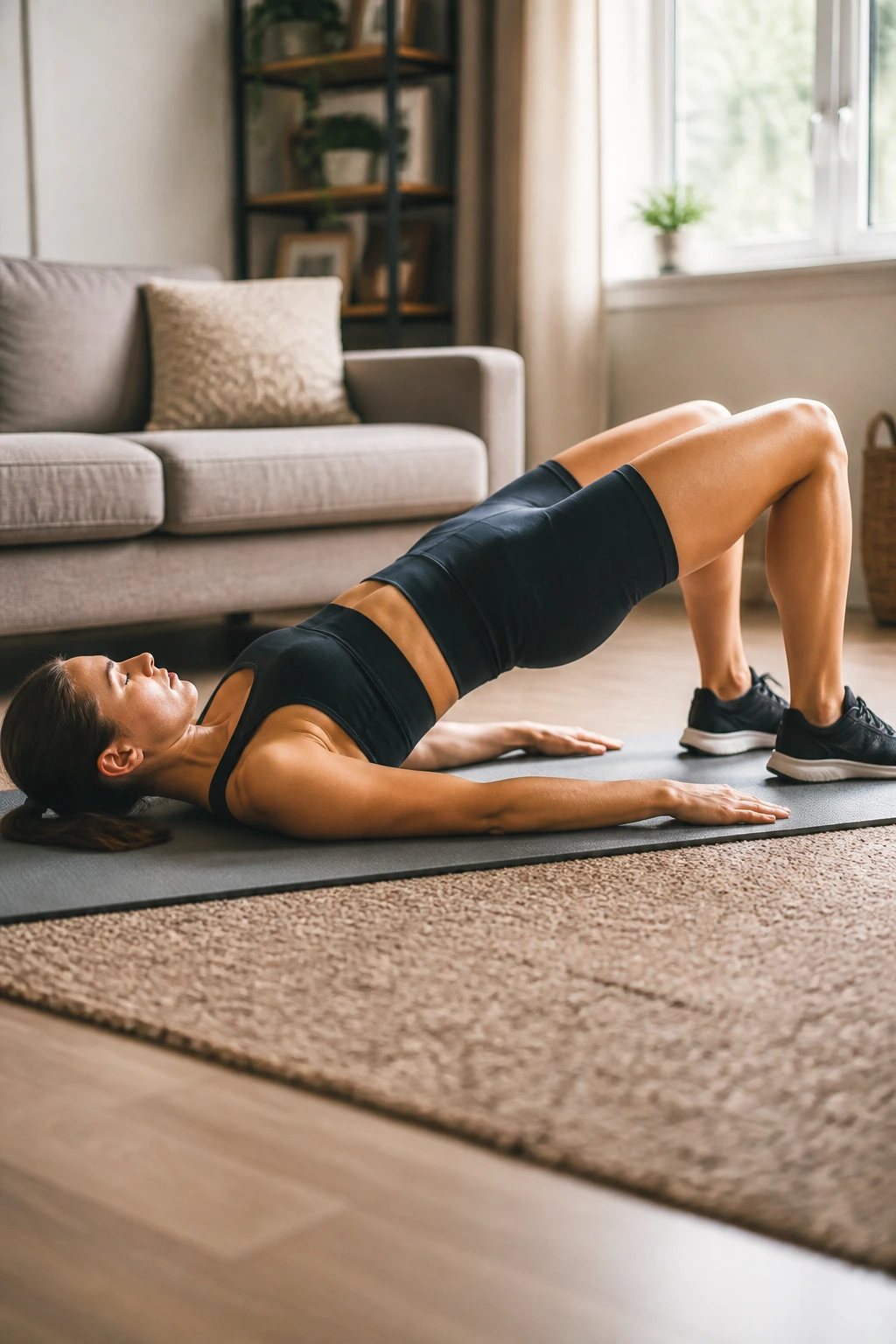
Picture a timer counting down and a pace that stays honest the whole way through. That’s the charm of an AMRAP: as many rounds as possible in the time you choose, without turning it into a sprint that collapses halfway.
For this one, set a 10-minute clock and cycle through:
- 5 chair squats
- 5 wall push-ups
- 8 glute bridges
- 10 marching high knees, total
- 6 standing hip hinges
Move briskly, then settle back into your breathing. The score you’re after is clean rounds, not ugly speed. If you can maintain smooth reps from start to finish, you picked the right intensity.
This is one of the best beginner circuit workouts at home when you want a simple benchmark. You can repeat it later and notice, without any fancy testing, that you moved a little faster or rested a little less between rounds. That’s progress. Quiet, but real.
10. Ladder Circuit With Rising and Falling Reps
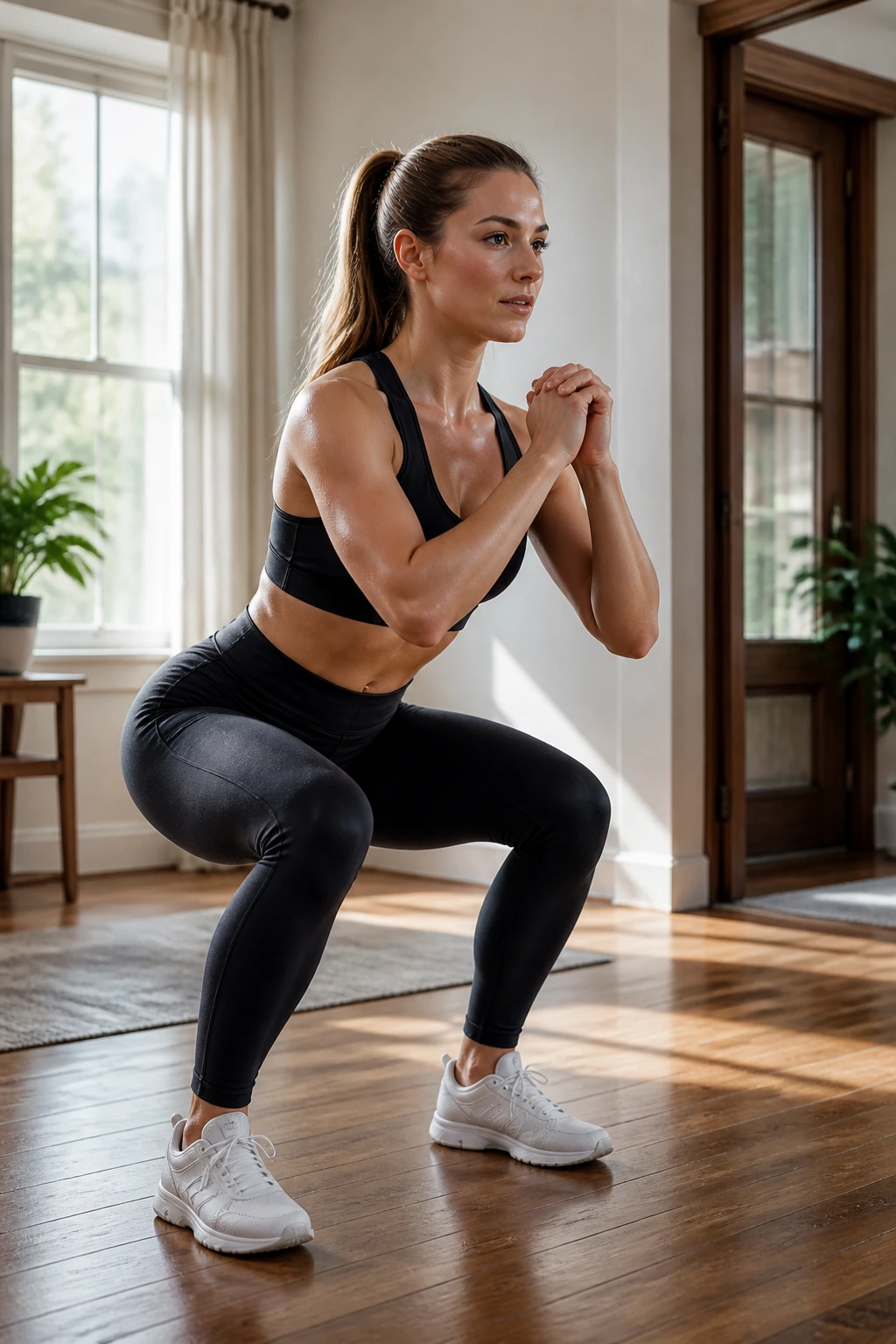
Want a workout that feels organized instead of random? A ladder gives you a clear shape. You climb up in reps, then come back down, which makes the session feel structured even if you only have a few minutes.
Try this ladder: 2-4-6-8-6-4-2 reps for each of these moves:
- Chair squats
- Incline push-ups
- Reverse lunges, total reps
- Dead bugs, total reps
Take 20 to 30 seconds between movements and a slightly longer rest after the 8-rep rung. If the 8s feel messy, stop there and come back down with fewer reps. No law says you have to be heroic.
How the ladder changes the feel
The early rungs are a warm-up. The middle gets your attention. The way back down feels strangely satisfying because the volume drops while your body is still warm. Beginners often like ladders because there’s a finish line in sight almost the whole time.
That matters more than it sounds.
11. One-Dumbbell Beginner Circuit Workout at Home
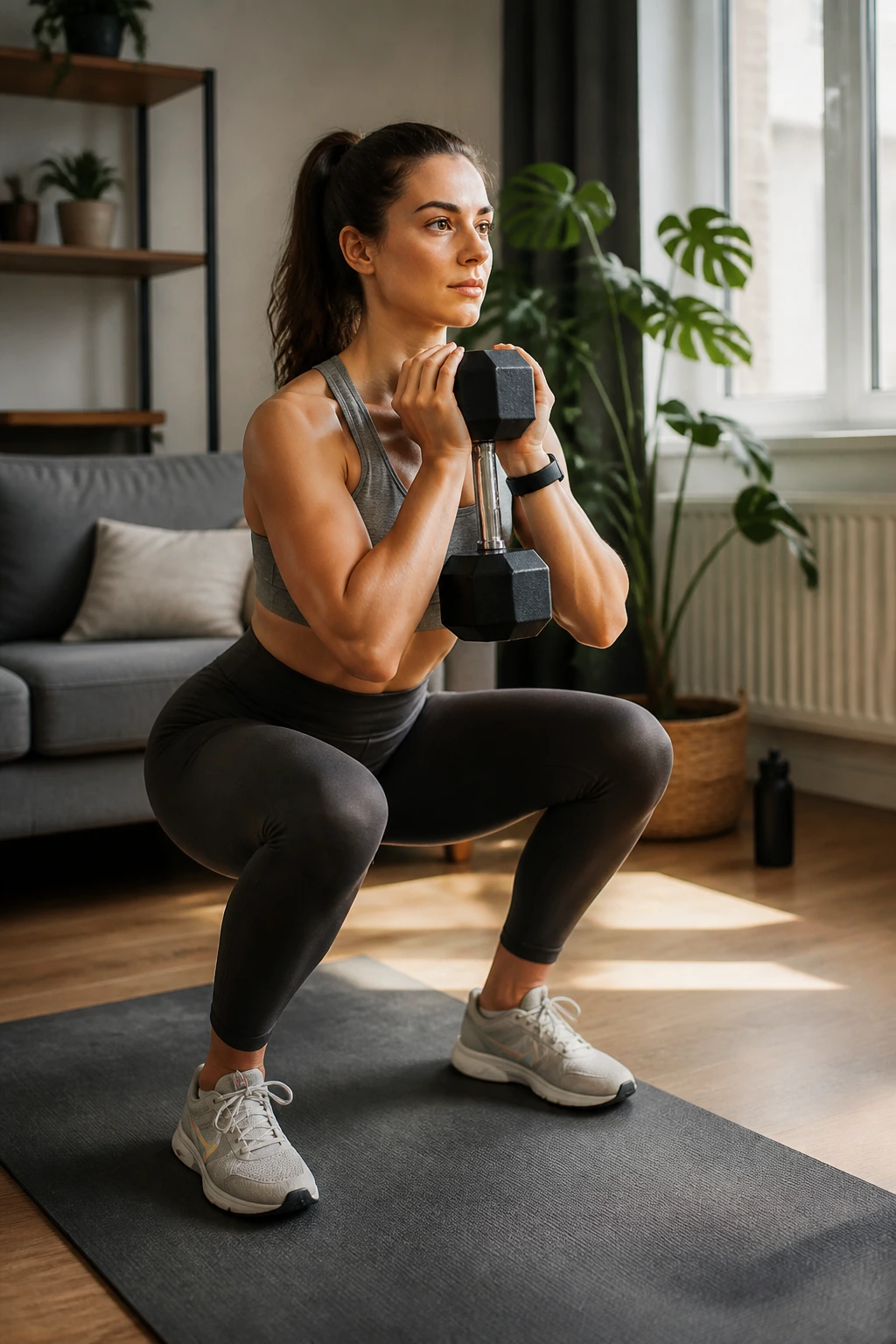
One dumbbell is enough. Seriously. A single weight gives you squats, presses, rows, hinges, and carries without taking over your room or your budget.
Choose a dumbbell that lets you do 8 clean reps without twisting your torso or flinging the weight around. Then run this circuit for 2 to 4 rounds:
- Goblet squat
- One-arm row, each side
- Floor press, each side
- Romanian deadlift
- Suitcase march, each side
Use 8 to 10 reps per move, or 30 seconds for the carries and marches. If the dumbbell feels too light, slow the lowering part to 3 seconds. That alone makes the workout harder without needing a heavier weight.
This is the kind of workout that rewards patience. Rush the reps, and the dumbbell owns you. Slow down, keep your ribs down, and the whole thing starts to make sense.
12. Resistance-Band Full-Body Circuit
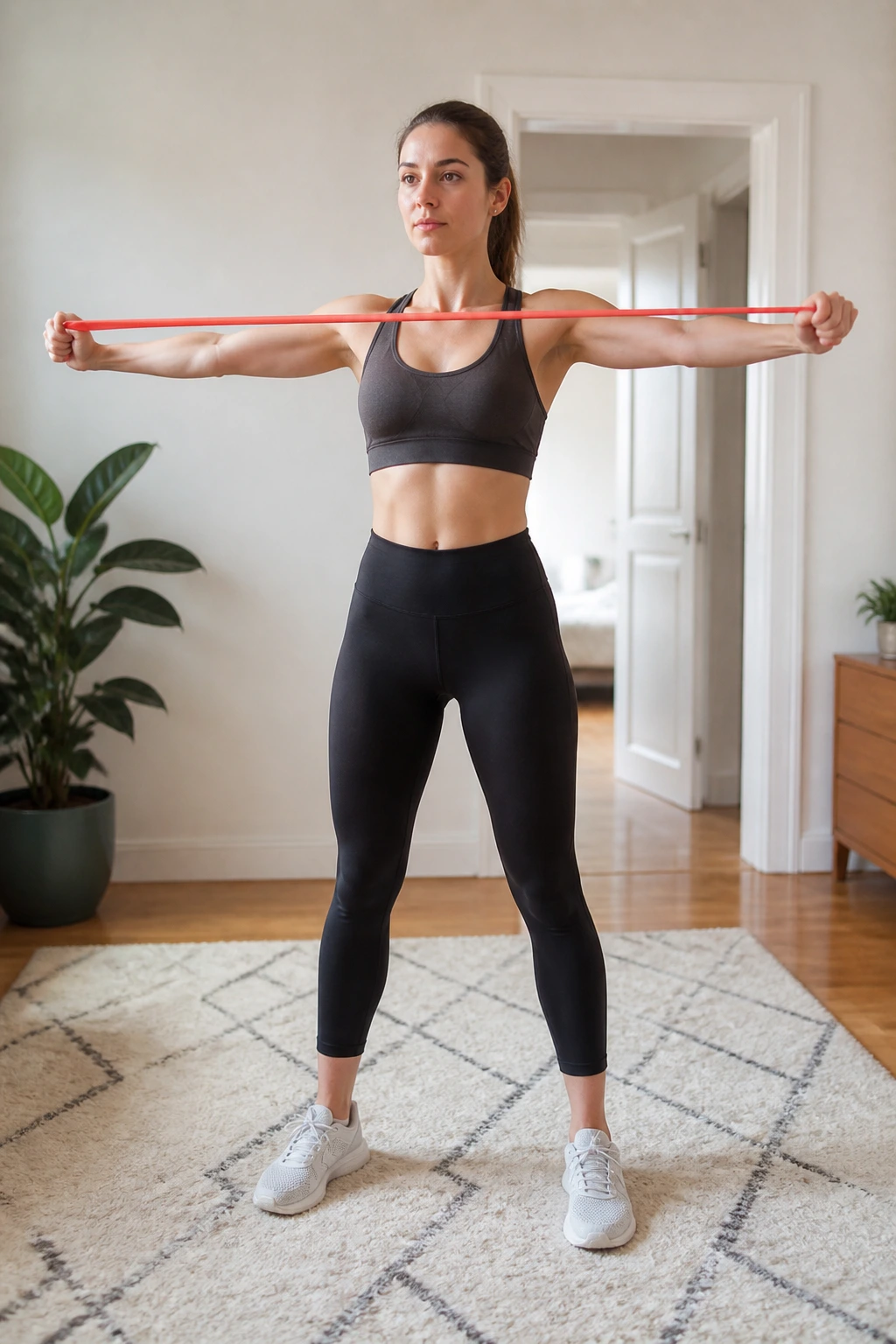
A band changes the feel of a workout fast. Unlike a dumbbell, it loads the movement most at the end, which means you get tension even with a light piece of gear. That’s handy when you want resistance without noise, bulk, or a pile of iron in the corner.
Use a medium band and work through band pull-aparts, banded squats, lateral band walks, seated or standing rows, and a dead bug with the band held overhead or anchored around the feet. Keep the reps around 10 to 15 and finish 3 rounds.
The best part is the back-and-shoulder work. People often neglect pulling motions at home because push-ups are easy to find. Bands fix that problem fast.
If your shoulders shrug up during pull-aparts, the band is too heavy or you’re pulling too high. Lower the hands, keep the neck long, and stop when your upper back is doing the work instead of your traps.
13. Mobility-Strength Circuit for Tight Hips and Shoulders
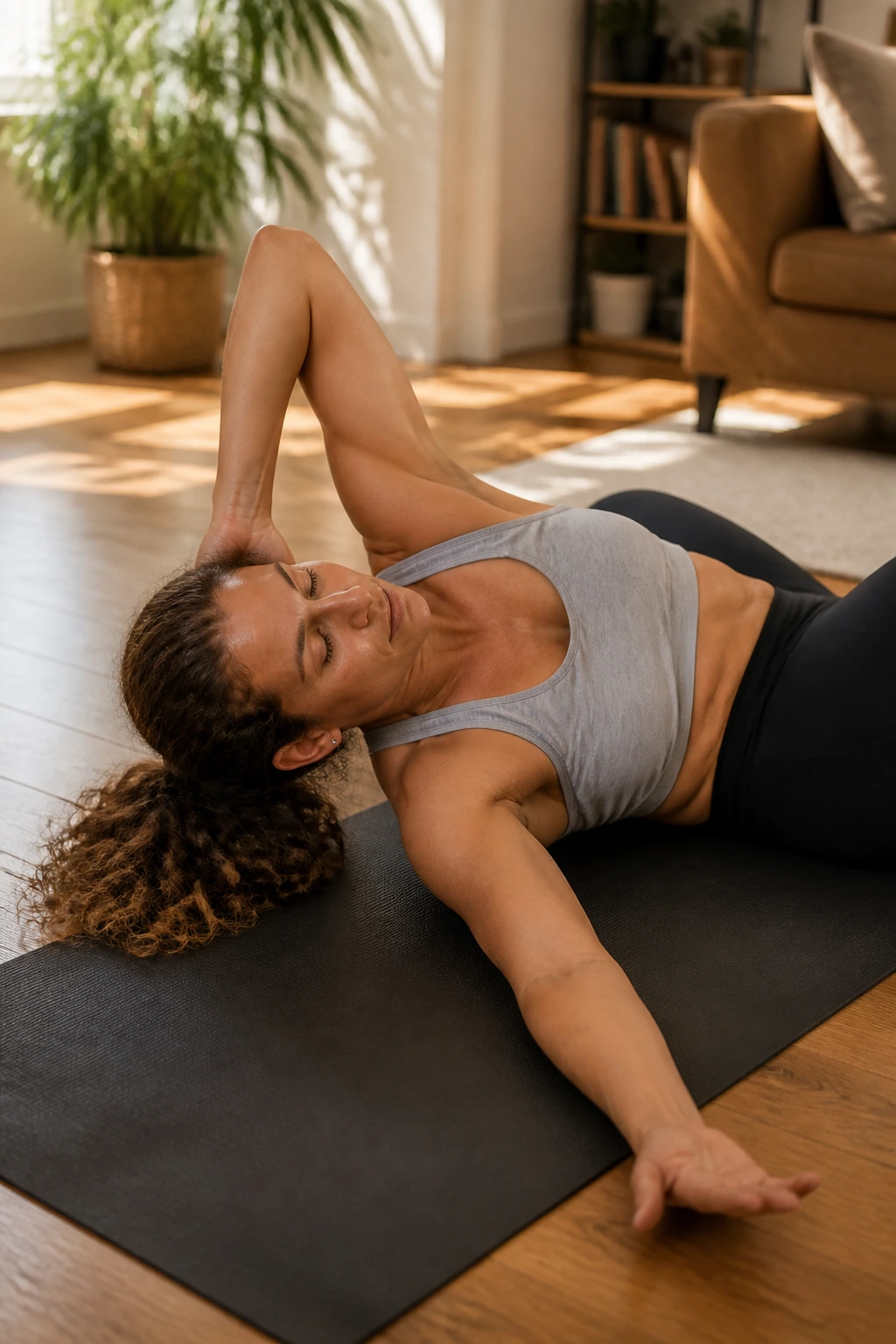
Some days the body wants a reset more than a sweat fest. This is the circuit for that feeling — the one where your hips are stiff, your shoulders feel glued, and you still want to count the session as a workout.
Move first, then load it a little
Go through squat-to-stand, lunge with a reach, inchworm walkouts, glute bridges, and thoracic open books. Use 5 to 8 slow reps per move, or hold the stretches for 15 seconds before moving on.
The trick is not to chase depth right away. Warm tissue likes gradual input. So sink only as far as you can keep a steady breath, then come back up and do it again. That’s the whole game.
This circuit is a smart starter on days when you feel stiff from sitting or from the previous workout. You still move enough to raise your temperature, but you leave feeling looser instead of flattened.
14. Standing-Only Circuit for Very Small Spaces
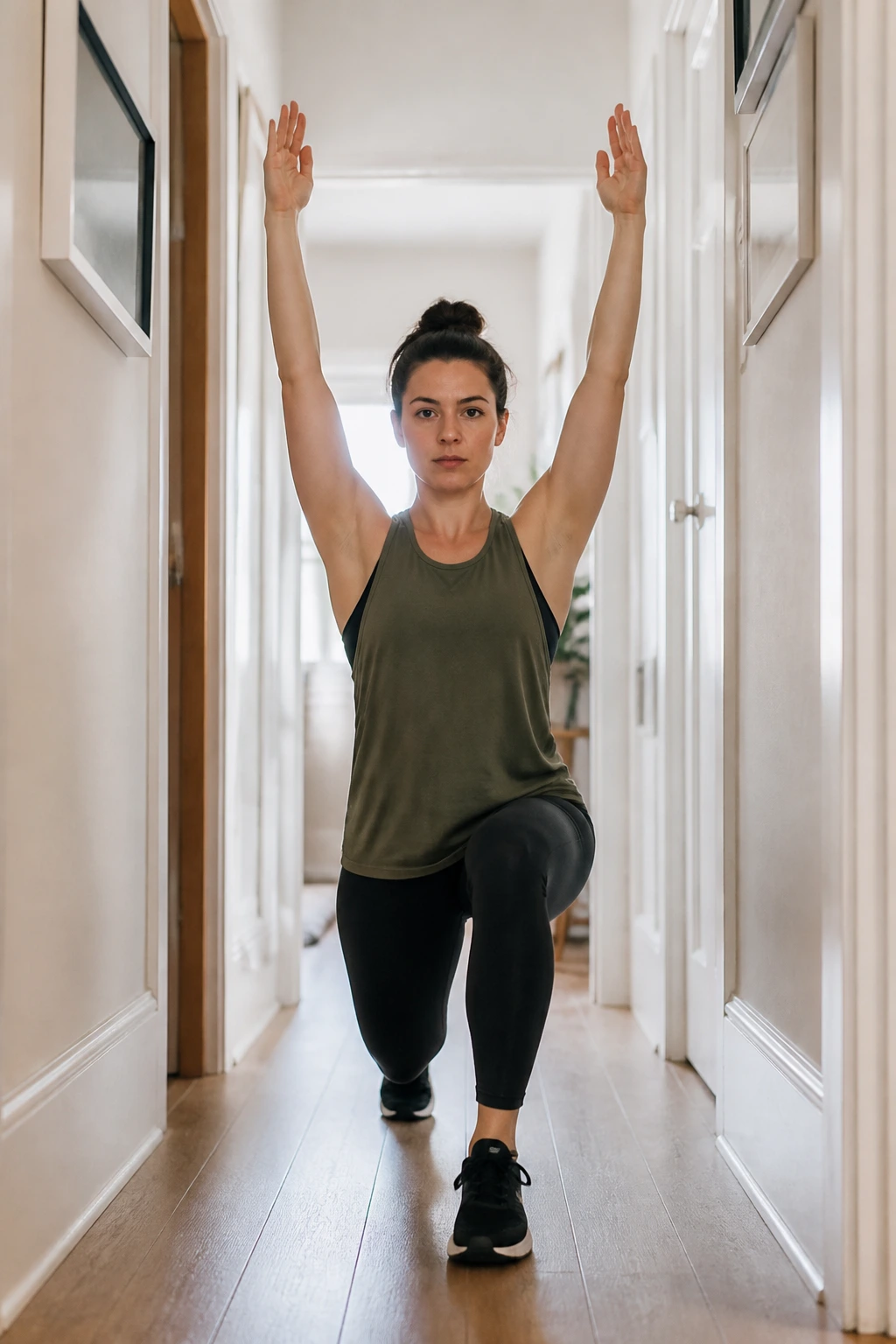
No mat? Fine. No floor work? Also fine. Standing-only circuits are underrated because they remove the biggest excuse people use to skip a session.
Try this set: step-back lunges, overhead reaches with a side bend, cross-body knee drives, wall push-ups, and fast side steps. Run each move for 30 to 40 seconds and repeat the circuit 3 times.
The benefit is obvious once you do it. You can workout in a hallway, next to a desk, or beside a bed that’s still unmade. The body gets a real challenge from the legs and core without needing you to get down and crawl around the room afterward.
Keep the feet planted between moves for a second. That tiny pause helps you reset posture and stop the whole session from turning into a jittery dance. Clean transitions beat frantic ones.
15. Floor-Based Circuit for Quiet Evenings
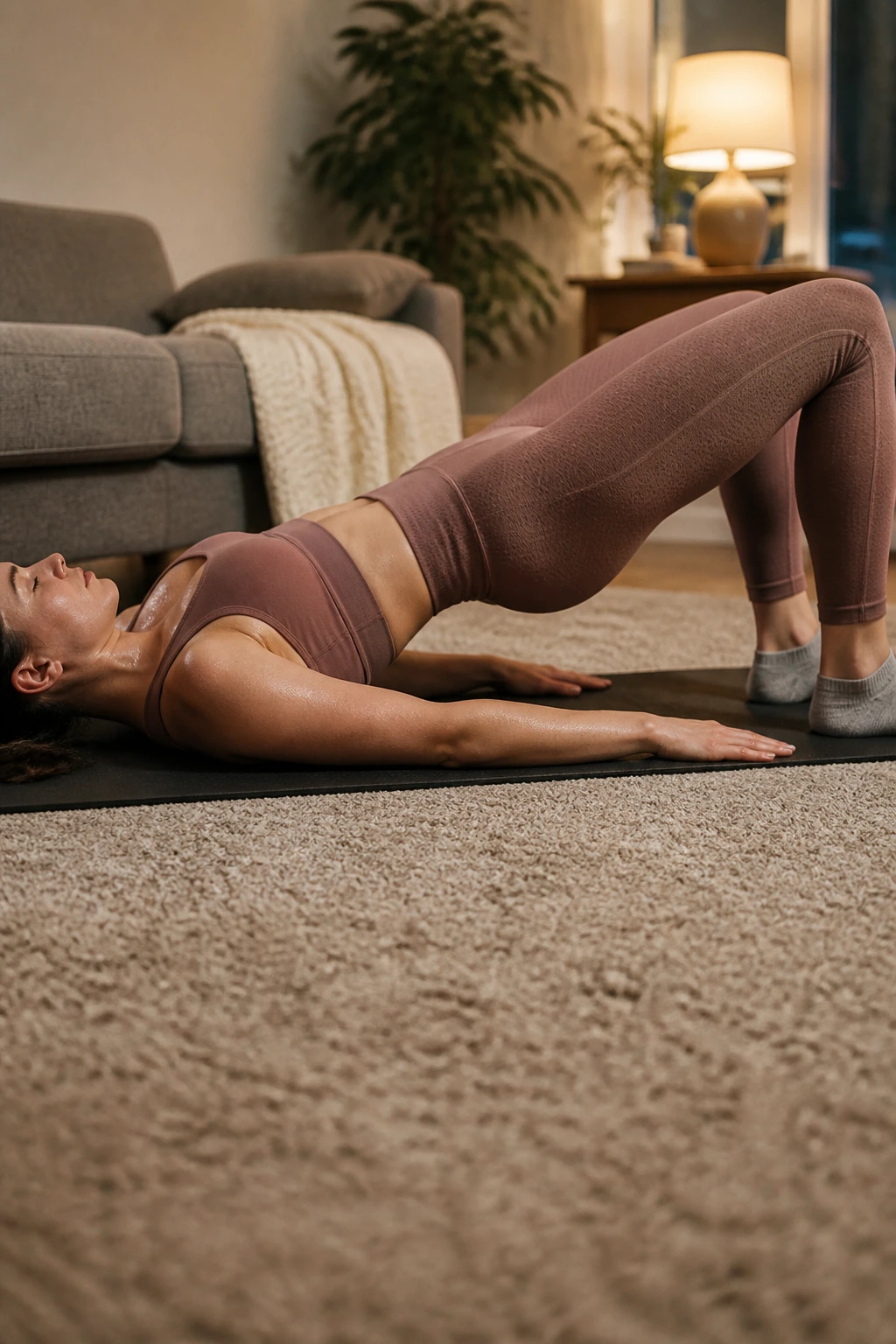
Why do floor circuits feel easier to stick with? Because once you get down there, the pace drops a little and your brain stops arguing about where to put your feet.
Work through glute bridges, dead bugs, side-lying leg lifts, prone cobras, and heel taps. Use 8 to 12 reps on the moving exercises and 15 to 20 seconds on the holds. Two or three rounds is plenty.
How to use it
- Keep your ribs heavy on the mat during dead bugs.
- Press through the heels on glute bridges, not the toes.
- Let the neck stay long in prone cobra; don’t crank the chin up.
- Move the leg lifts slowly enough that you can feel the outer hip doing the work.
This circuit is calmer than the cardio options, but it still trains the parts that help with everyday movement. Hips. Core. Back. The stuff people usually ignore until it gets cranky.
16. Towel-and-Tile Hamstring Circuit
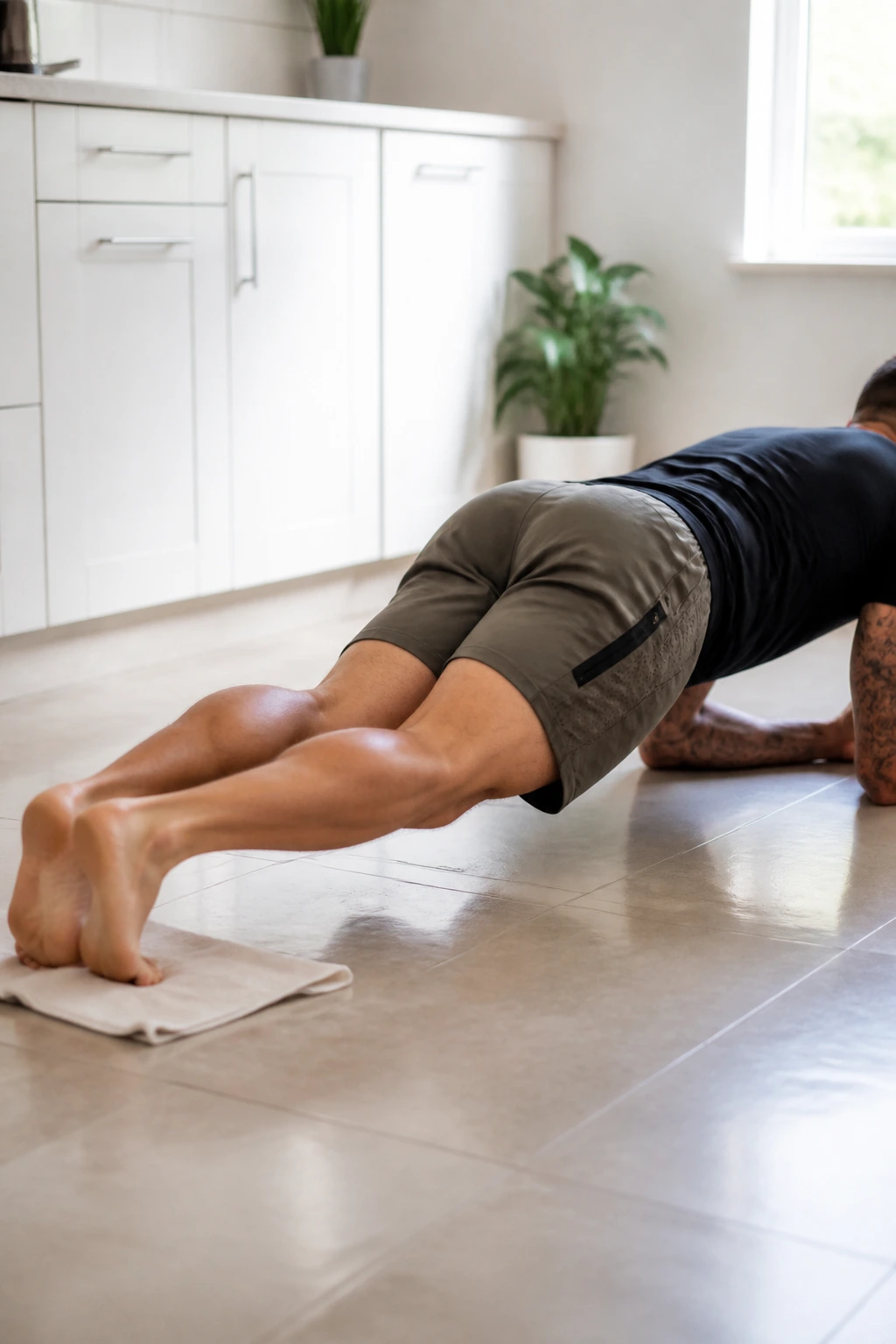
A towel and a smooth floor can humble your hamstrings fast. Carpet won’t give you the same slide, so this circuit works best on tile, wood, or a similar surface where your feet can glide without catching.
Use sliding hamstring curls, towel plank knee tucks, reverse lunges with a light slide, calf raises, and a hip bridge hold. Keep the work to 20 to 30 seconds each, because the hamstrings fatigue sooner than people expect when sliding is involved.
The trick is to move slowly enough that the towel doesn’t shoot away from you. If it does, shorten the range. That’s not failure. It’s feedback.
This one feels different from a standard bodyweight circuit. The hamstrings stay under tension, the core works to keep you from wobbling, and the floor becomes a piece of equipment instead of empty space. That’s a nice change when the usual moves start to feel stale.
17. Cardio-Strength Blend for Everyday Conditioning

This is the circuit I’d use when I want to breathe harder without feeling wrecked. It sits in the middle, which is where a lot of beginners actually need to live for a while.
Set your timer for 45 seconds on, 15 seconds off, then move through squat-to-reach, shadow boxing, reverse lunge with a knee drive, plank from the knees, and fast marching. Do 3 rounds if you’re feeling good. Two rounds is enough if the pace is honest.
The blend matters. Squats and lunges give you the strength piece. Boxing and marching keep the heart rate up. The plank keeps the middle of the body from going slack.
If the 45-second interval feels too long, cut it to 30 seconds and keep the same round count. That small change can be the difference between a workout you finish cleanly and one you dread halfway through.
18. Desk-Break Micro Circuit
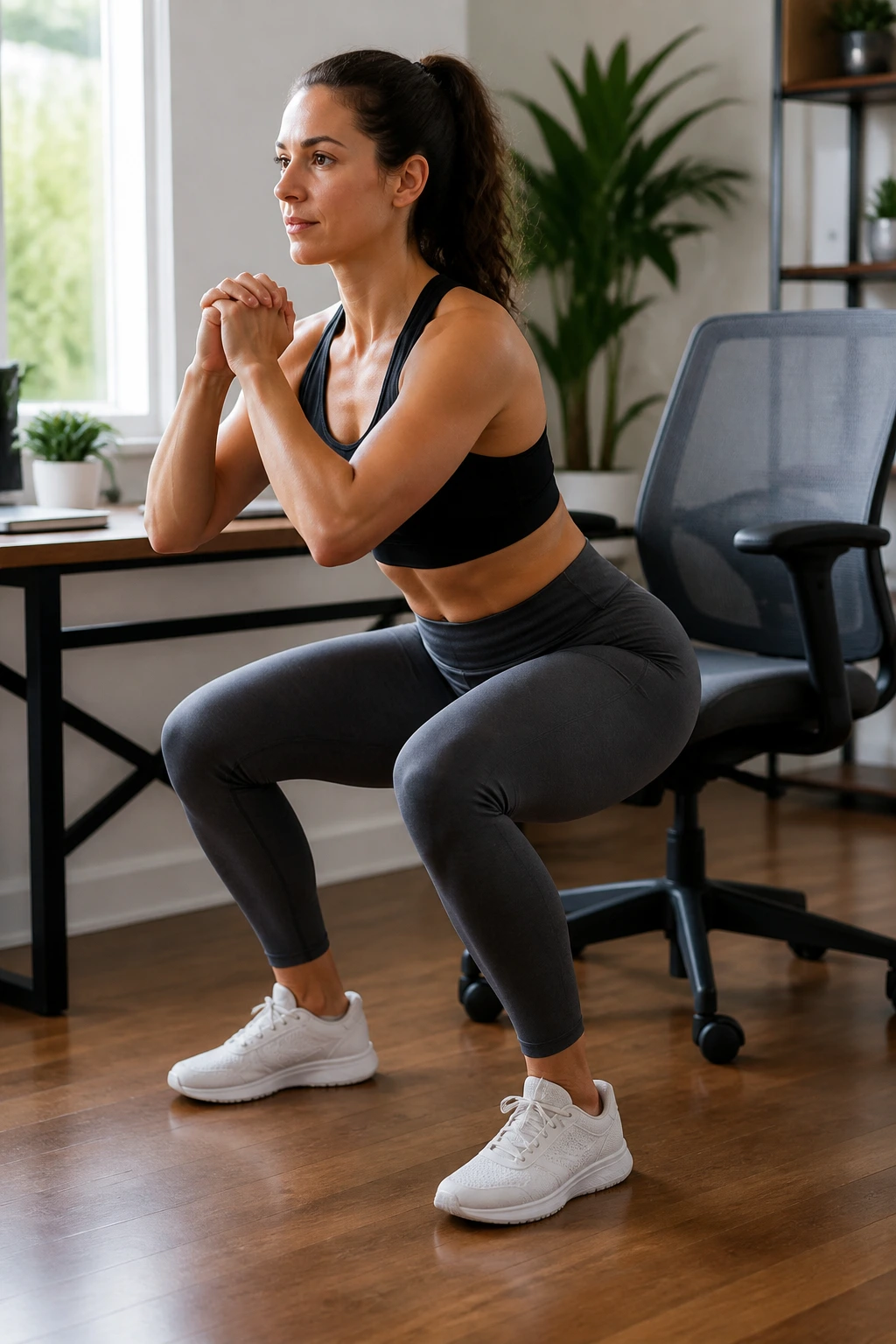
Sometimes the workout has to fit between emails, dishes, and the next thing asking for your attention. This is that circuit. It is not supposed to feel like a full gym session.
Pick 4 moves and run them for 1 minute each: chair squats, wall push-ups, standing calf raises, and a brisk march in place. If you’ve got a spare minute, add arm circles or a standing side reach. That gives you a 4- to 6-minute reset you can repeat later in the day.
Who this helps
- People rebuilding a habit after a long break
- Anyone who hates “all or nothing” workouts
- Busy parents who need a short block before the day gets loud
- Remote workers whose hips lock up after sitting too long
The real value here is consistency. A small circuit done often beats a perfect plan that keeps getting postponed. That sounds plain because it is plain. Plain habits survive.
19. Balance-and-Control Circuit for Better Footwork
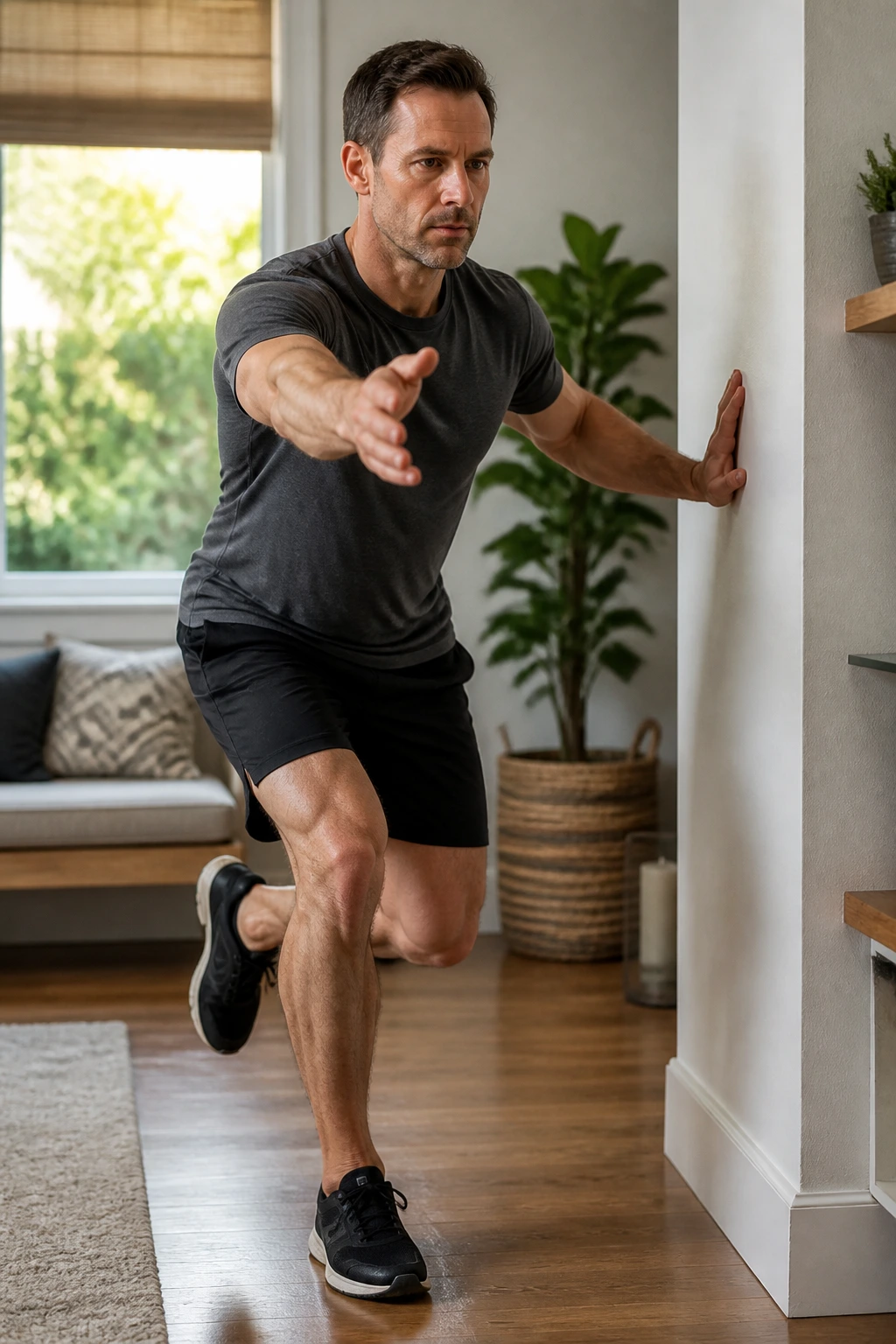
If your knees wobble on lunges or you feel a little clumsy on one leg, this section earns its keep. Balance work can be boring on paper and useful in real life, which is a fair trade.
How to run it
Use 2 rounds of:
- Single-leg stand with a forward reach, 20 seconds per side
- Reverse lunge to balance, 6 reps per side
- Heel-to-toe walk, 10 slow steps forward and back
- Split squat hold, 15 seconds per side
- Bird dog, 6 reps per side
The win here is control. Hold each rep long enough to notice what your ankle is doing, where your knee drifts, and whether your torso leans. That feedback is gold.
Keep a wall or countertop nearby. Touch it if you need to. The point is not to wobble dramatically and call it work. The point is to teach your body cleaner lines under small amounts of pressure.
20. Repeatable 20-Minute Starter Circuit
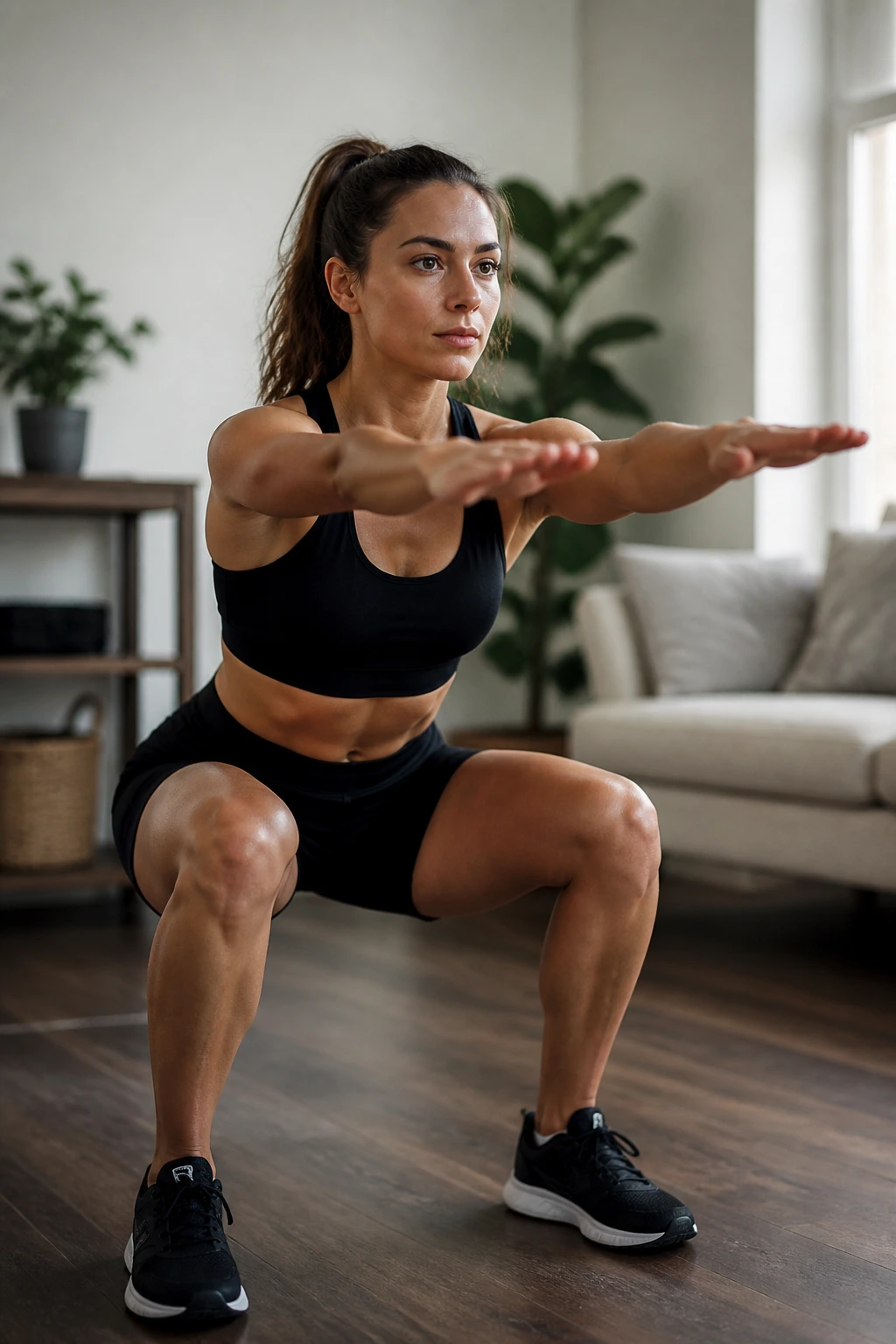
When you want one routine to come back to over and over, keep the shape simple and the rules clear. Five exercises, three rounds, steady pace, clean reps. That’s enough.
Use 40 seconds of work and 20 seconds of rest on each move:
- Squat
- Incline push-up or wall push-up
- Hip hinge or glute bridge
- Step-up or marching in place
- Dead bug or forearm plank from the knees
If the first round feels too easy, slow the lowering phase to 3 seconds. If it feels too hard, cut the work to 30 seconds and keep the rest the same. The structure stays the same either way, which is why it works so well as a repeat workout.
This is the circuit I’d keep in rotation when I wanted something reliable and unspectacular. Reliable matters. Unspectacular matters too, because the workout you’ll actually repeat is worth more than the one you admire and skip.
Give the first round a clean start. The rest usually follows.
