



The most useful fitness diary templates you can print are the ones you can finish in 20 seconds after a workout, when your shirt is damp and your brain is already thinking about food. If the page asks for too much, it dies in the gym bag. If it asks for almost nothing, it becomes a blank rectangle that never tells you anything worth keeping.
Paper still has a strange advantage. It sits there. It does not ping, update, or tempt you into a 14-step analytics rabbit hole. A good printed workout log gives you just enough structure to remember what you lifted, how hard the session felt, and whether you’re actually moving forward or simply staying busy.
That’s why the shape of the page matters so much. A lifter, a runner, a class regular, and someone who is mostly trying to stay consistent all need different pages, not a single giant spreadsheet pretending to suit everybody. A smart fitness diary template is simple, specific, and honest. Clean enough to use. Detailed enough to matter.
1. The One-Page Daily Workout Snapshot
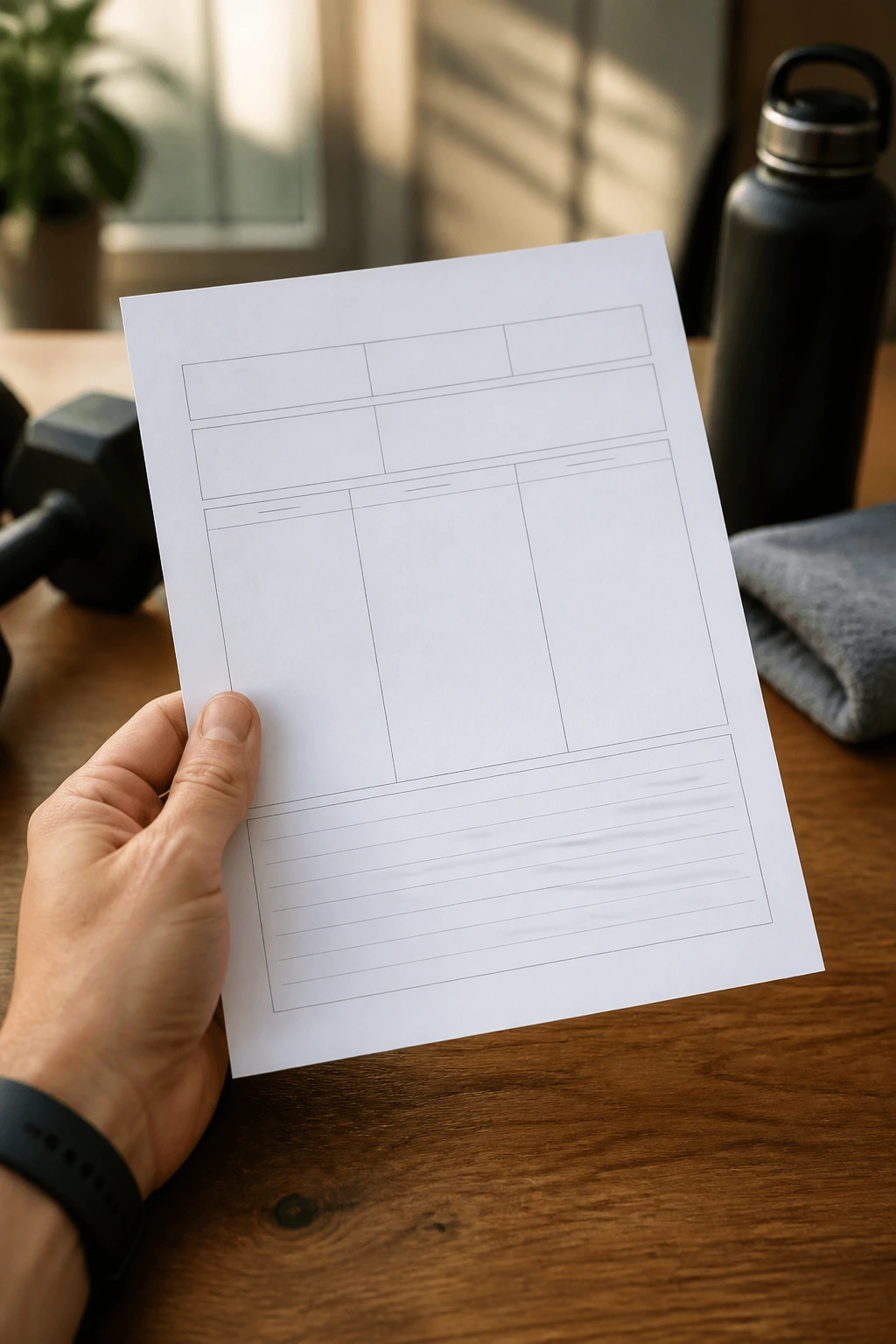
A one-page daily workout snapshot is the page I’d hand to almost anyone who wants a printable fitness diary without the clutter. It gives you the basics fast: date, session type, what you did, and one short note about how it felt. That last line matters more than people think. A session that looked fine on paper can feel flat in real life, and the note is where that truth lives.
What Belongs on the Page
- Date and time of training
- Workout type, like legs, upper body, run, spin, or yoga
- Duration in minutes
- Main exercises or session focus
- A simple effort score, like 1 to 10
- One line for notes, aches, wins, or weird stuff
Keep the page roomy. Leave a little air between boxes so you can write after a hard session without squeezing your notes into a corner. A tiny, crowded form tends to get ignored the moment the workout gets long.
My strong opinion: if you print only one fitness diary template, start with this one. It’s easy, and easy wins on tired days.
2. The Strength Training Set-and-Rep Log
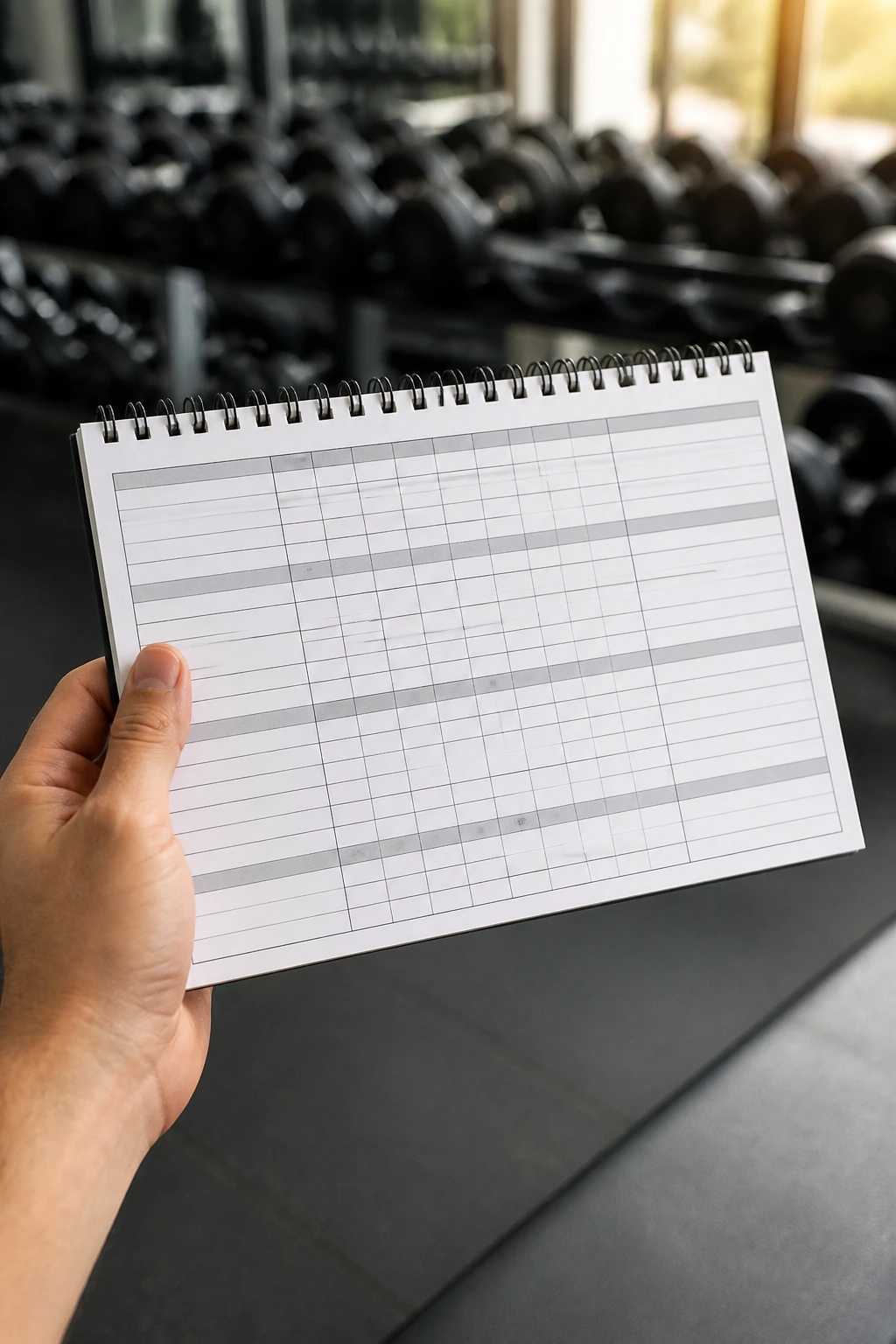
Heavy lifting needs receipts. A strength training set-and-rep log gives you those receipts without making you work for them. The best versions track the exercise, the warm-up sets, the working sets, the load used, and one note about form or speed. That’s enough to show whether your squat is getting stronger or just getting noisy.
A lot of people only write the top set, then wonder why the next week feels vague. Don’t do that. Write the warm-up ramp if it helps, but at minimum keep the working sets visible so you can see patterns in volume and load.
This page works best in landscape layout with columns for exercise, sets x reps, weight, rest, and effort. If you want one extra field, make it a tiny note box for cues like “knees in,” “slow descent,” or “brace better.” Those little reminders are gold when you come back to the lift a week later.
A strength page should answer one question: what changed since last time? If it doesn’t answer that, it’s just a notebook page with dumbbells on it.
3. The Cardio Distance, Pace, and Splits Sheet
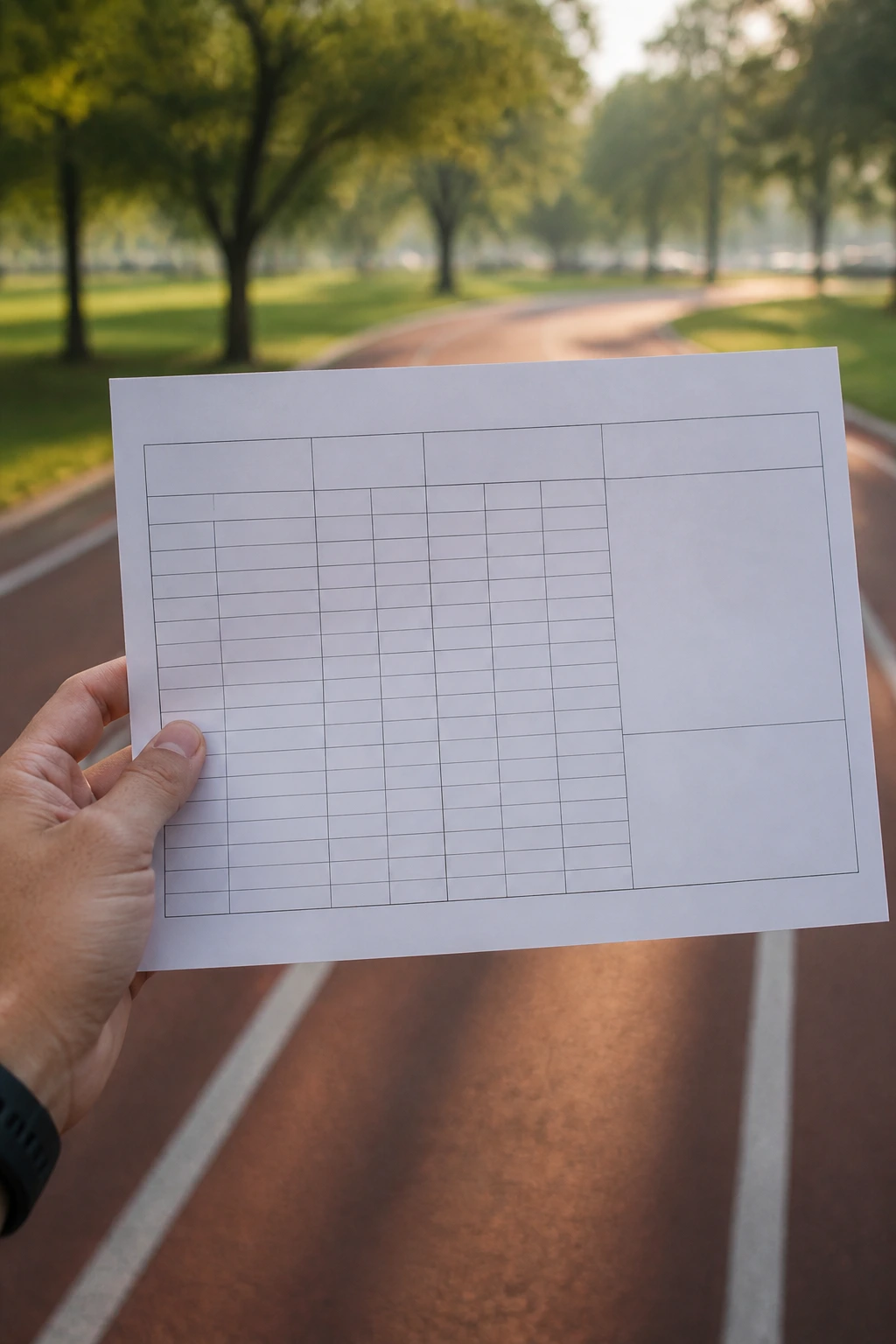
Why do some runs feel clear in your head but fuzzy once you’re done? Because cardio gets slippery when you don’t write it down right away. A good cardio sheet captures distance, average pace, splits, and the route or machine used, so you’re not guessing later.
How to Lay It Out
- Workout type: treadmill, road run, rower, bike, stair climber
- Total distance or total time
- Average pace or speed
- Split times for each mile, kilometer, or interval
- Heart rate if you track it
- Notes on hills, wind, heat, or how the legs felt
A split column matters more than most people expect. A run that starts fast and fades tells a different story from one that stays boringly even, and boringly even is usually what you want. If you’re on a machine, a simple interval box works just as well. Write the work/rest pattern and whether the final minute felt smooth or like a grind.
This template is better in landscape too. Cardio data needs room to breathe, or it turns into a line of messy numbers nobody wants to read twice.
4. The Habit Checkbox Page for Consistency
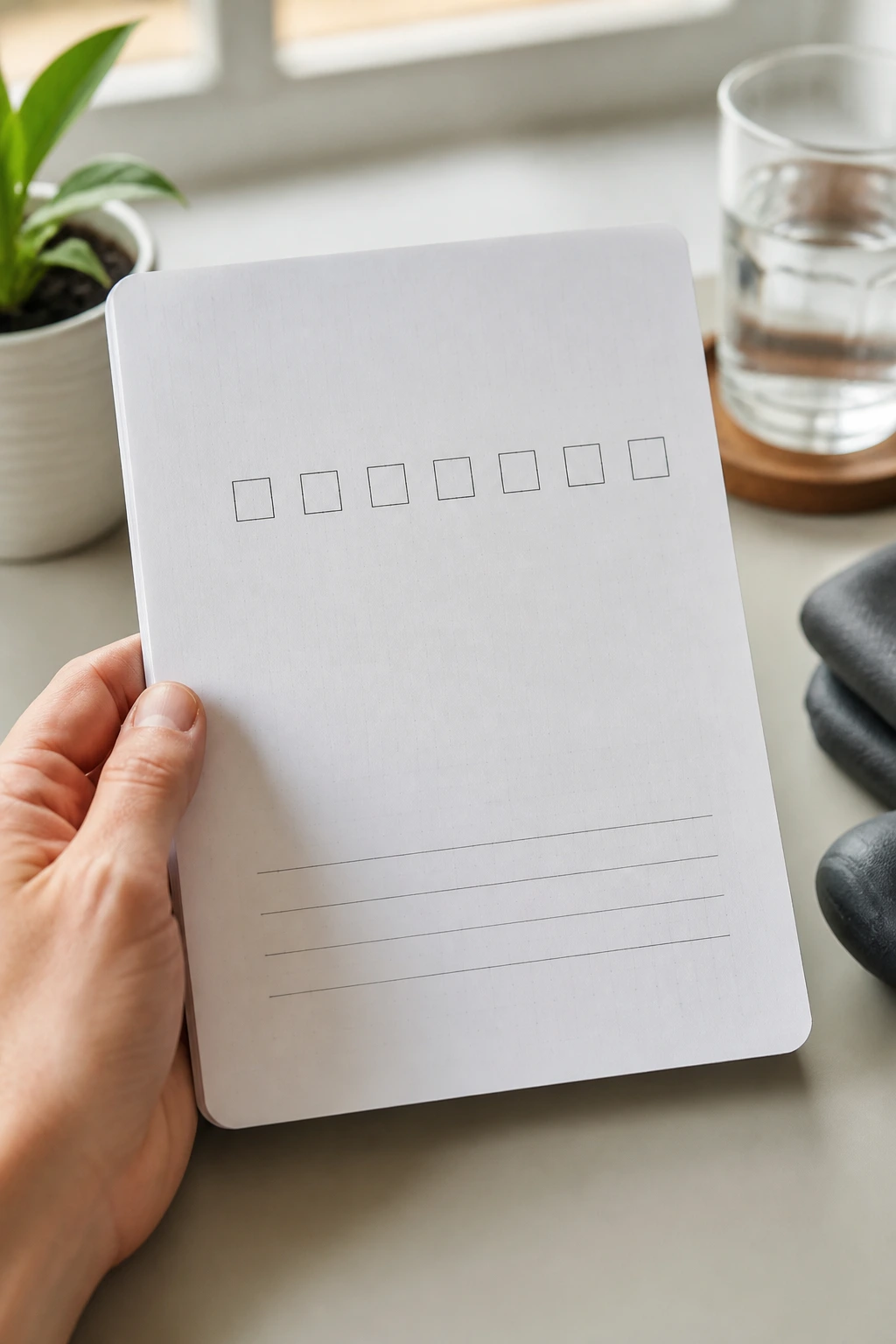
A page with seven little boxes can be more motivating than a giant weekly planner. That sounds backward, but it isn’t. Habit checkbox pages work because they reward consistency instead of perfection, and consistency is what actually keeps a fitness routine alive.
Picture a page with rows for sleep, steps, water, protein, stretching, and training. Each day gets a quick tick mark, maybe one tiny note if something was off. That’s enough to show whether the week had shape or whether it was a blur of skipped basics and random effort.
A Clean Habit List Might Include
- At least 7 hours of sleep
- 2 liters of water
- 1 session of movement
- 10 minutes of mobility
- Protein at each meal
- A full rest day
- A short walk after dinner
Do not cram in nine habits because they look impressive. Five to seven is the sweet spot. If you need a second page for bigger goals, fine, but the daily sheet should feel almost too easy.
This kind of page is not about guilt. It is about visibility. A streak you can see on paper tends to matter more than a streak you vaguely remember.
5. The Rest Day Recovery and Sleep Tracker
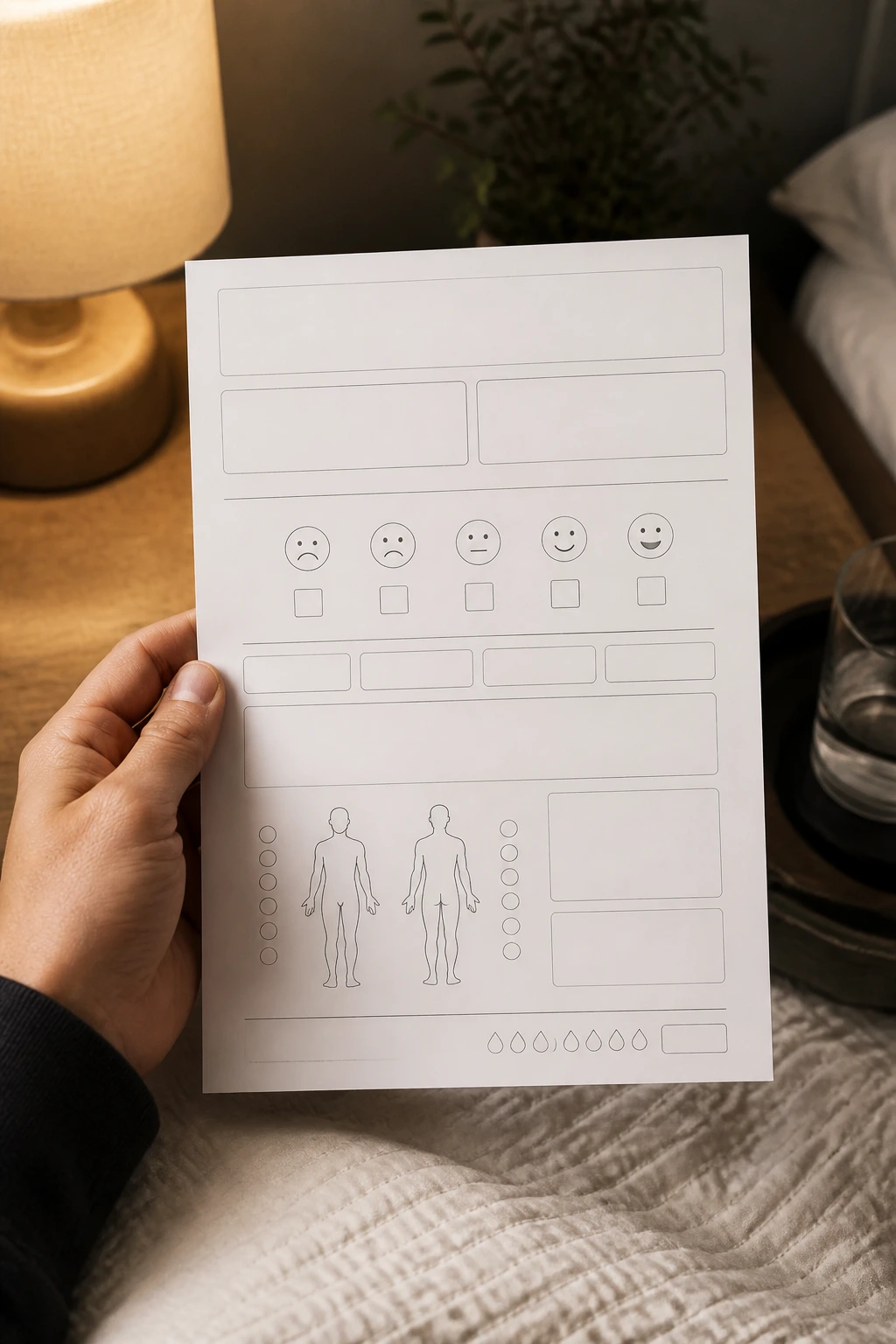
Rest days disappear fast in memory. You think you took them, then the week blurs, and suddenly your legs feel heavy for reasons you can’t quite explain. A recovery page makes the invisible stuff visible: sleep, soreness, stress, walk time, and whether you actually got off your feet for a while.
A good recovery template is calm, not flashy. It should have spaces for bedtime, wake time, number of wake-ups, morning stiffness, and a simple note about your energy. Some people also like a tiny box for resting pulse, but that’s optional. The point is not to turn recovery into another project. The point is to catch fatigue before it spills into your next few workouts.
Sore is not the same as fresh.
That one sentence belongs on a recovery page somewhere, maybe in bold if you make it yourself. You can be a little stiff and still train well. You can also feel “fine” and be carrying a lot of low-level fatigue. A short note about mood or work stress helps more than people admit, because recovery is not just muscle repair. It’s sleep quality, food, movement, and life pressure all hitting the same body.
6. The Food, Water, and Protein Log
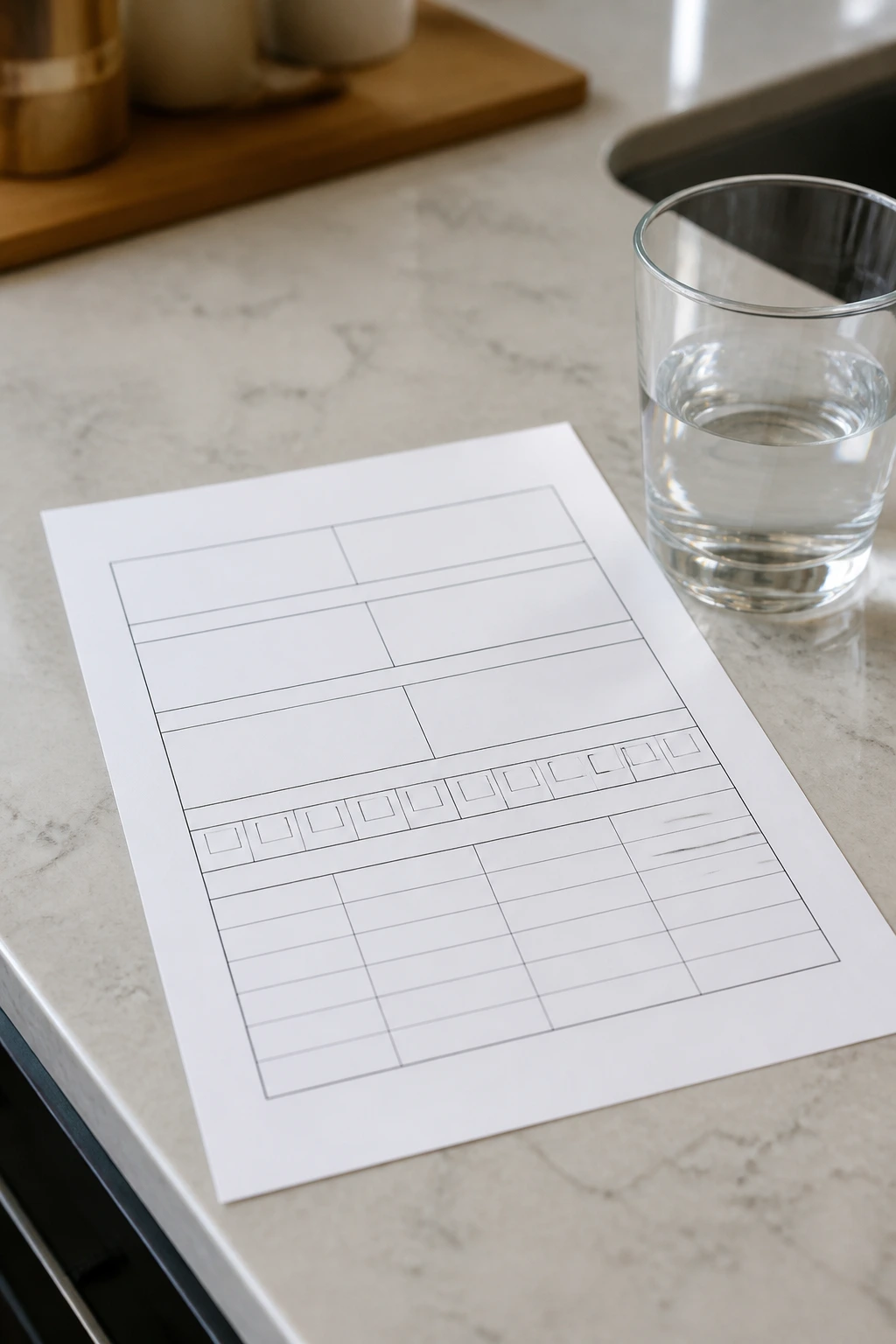
A food log on paper is a different animal from a nutrition app. Apps are good at numbers, but they can become annoying fast, especially if you only want a rough picture of what you’re eating around training. A printed food and hydration log is lighter. It shows patterns without demanding a full lecture from you at every meal.
This template works well with three meals, one or two snacks, water checkboxes, and a simple protein line. You do not need a perfect calorie count to notice that lunch is tiny, post-workout food is missing, or hydration falls off after noon. That kind of plain honesty is useful.
For lifters, I like a page that leaves room for meal timing and protein source. A note like “eggs and toast before training” tells you far more than a blank calorie total. If you prefer to keep it even simpler, use checkboxes for water bottles, fruit servings, and protein hits. Clean pages get used. Busy pages get abandoned.
Best fit: people who want meal awareness without living inside an app.
7. The Body Measurements Tracker with Monthly Check-Ins
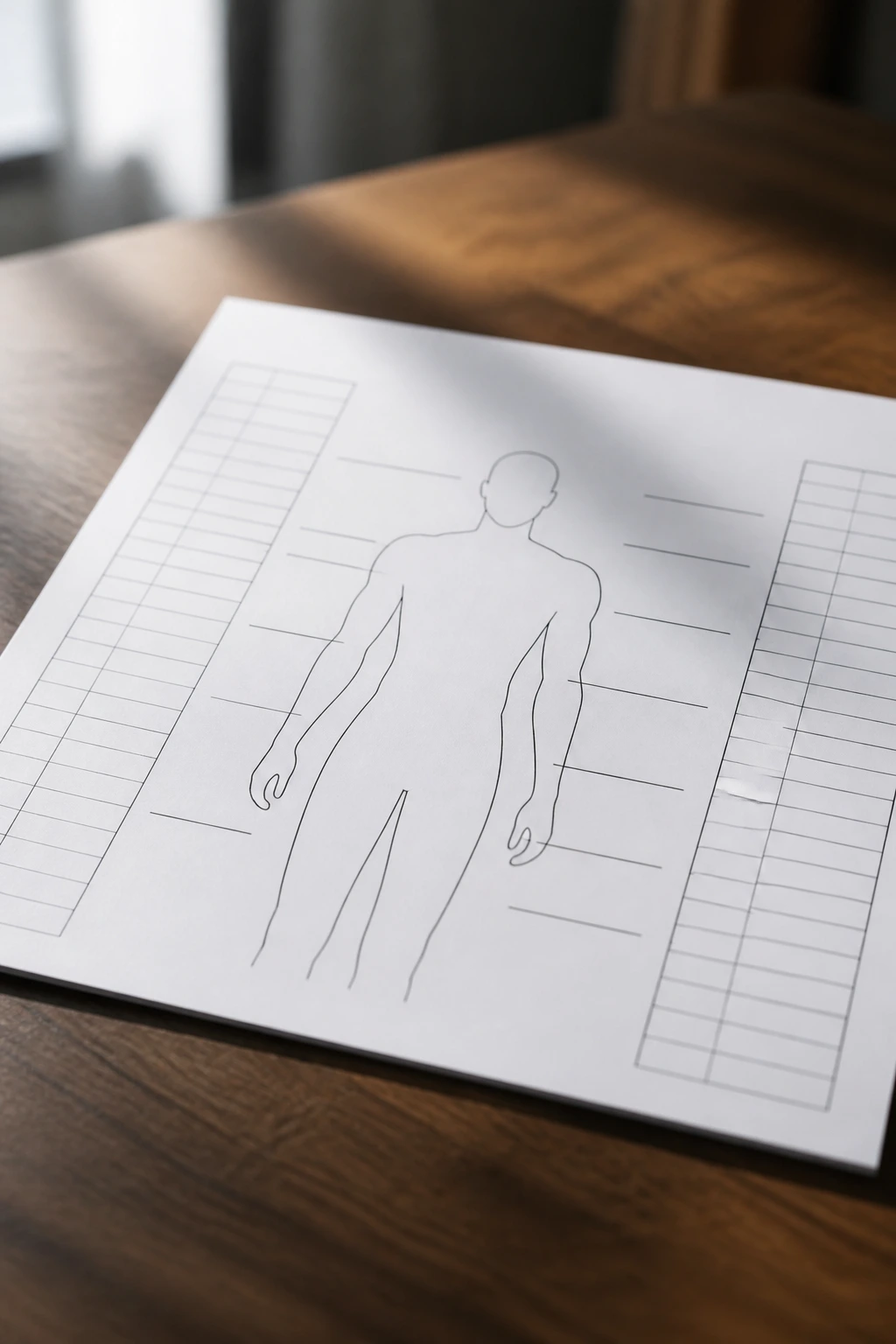
Why does the tape measure catch changes before the mirror does? Because the mirror lies by the day. Water shifts, posture shifts, and your brain picks different details depending on mood. A body measurements tracker gives you a steadier read on what is changing around the waist, hips, chest, thighs, arms, or calves.
The trick is consistency. Measure the same spots each time, at the same time of day, with the same tape tension. If you choose the waist at the navel, keep using the navel. If you choose the narrowest point, stay with that. Don’t switch methods halfway through and expect clean numbers.
How to Keep Measurements Honest
- Use a soft tailor’s tape, not a metal one
- Stand relaxed, not sucked in
- Measure over bare skin or the same thin clothing
- Write the date beside every set of numbers
- Add one short note about training, food, or water if needed
A printed tracker with a small body outline can help too. Mark the spots lightly, then record the numbers beside each line. Monthly check-ins are usually enough for most people. Weekly measuring tends to create drama where there is none.
8. The Progress Photo Planner
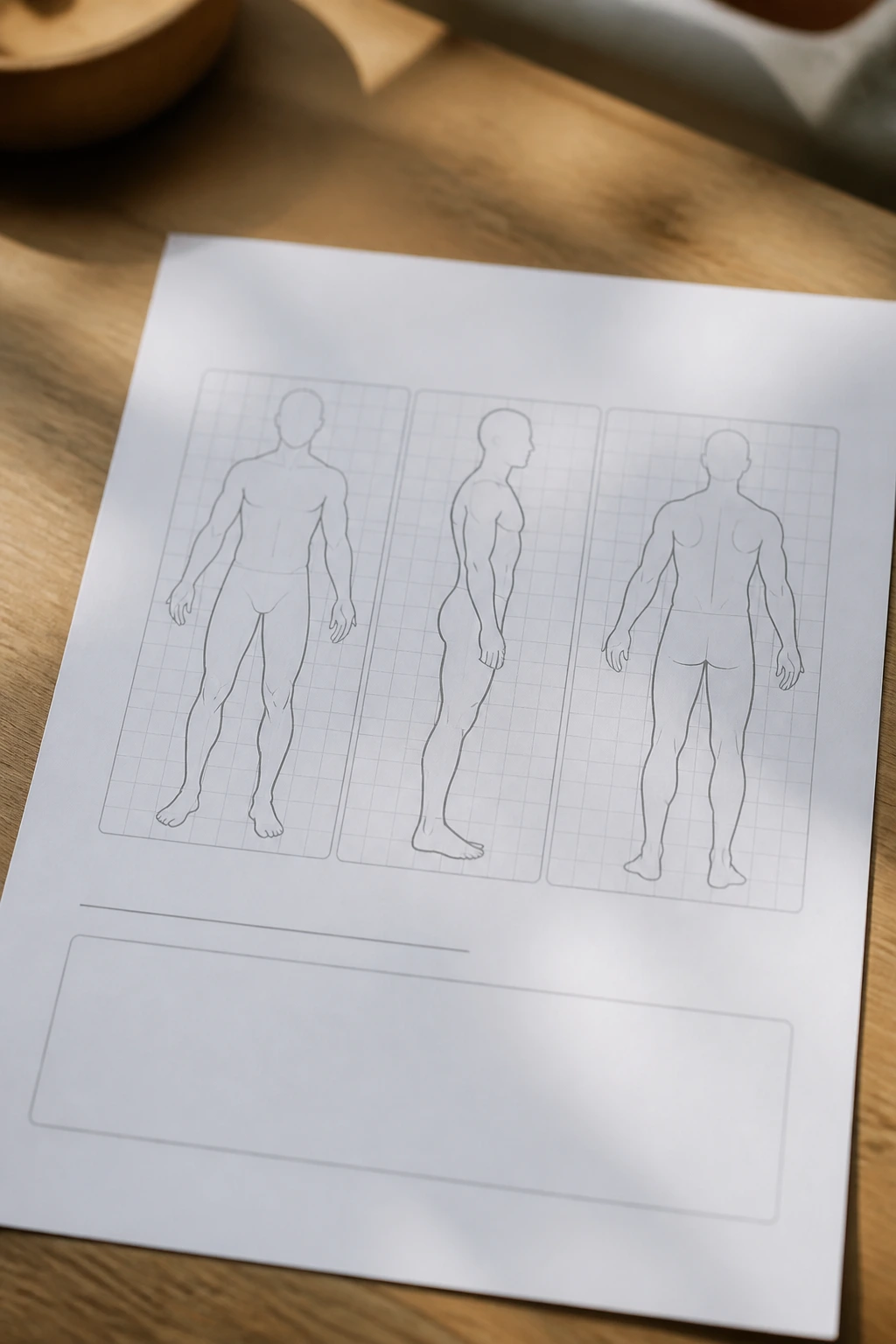
You take three photos, then forget the angle, the shirt, and the light. Happens all the time. A progress photo planner fixes that problem with a simple page that tells you exactly how to repeat the shot next time.
The page should have boxes for front, side, and back photos, plus a date line and a short note about where the photo was taken. Same wall. Same distance. Same time of day if you can manage it. Same clothes or at least the same kind of clothes. That kind of sameness is boring in the moment and very useful later.
A small notes area helps too. Write whether you were bloated, sore, traveling, or coming off a hard training block. Otherwise you’ll compare a flat stomach in one photo to a water-retention day in another and make a bad guess.
This template is for people who struggle to see change while it’s happening. The body changes in slow, awkward ways. Photos catch those shifts better than memory does, especially when the scale is being annoying.
9. The Gym Bag and Pre-Workout Checklist
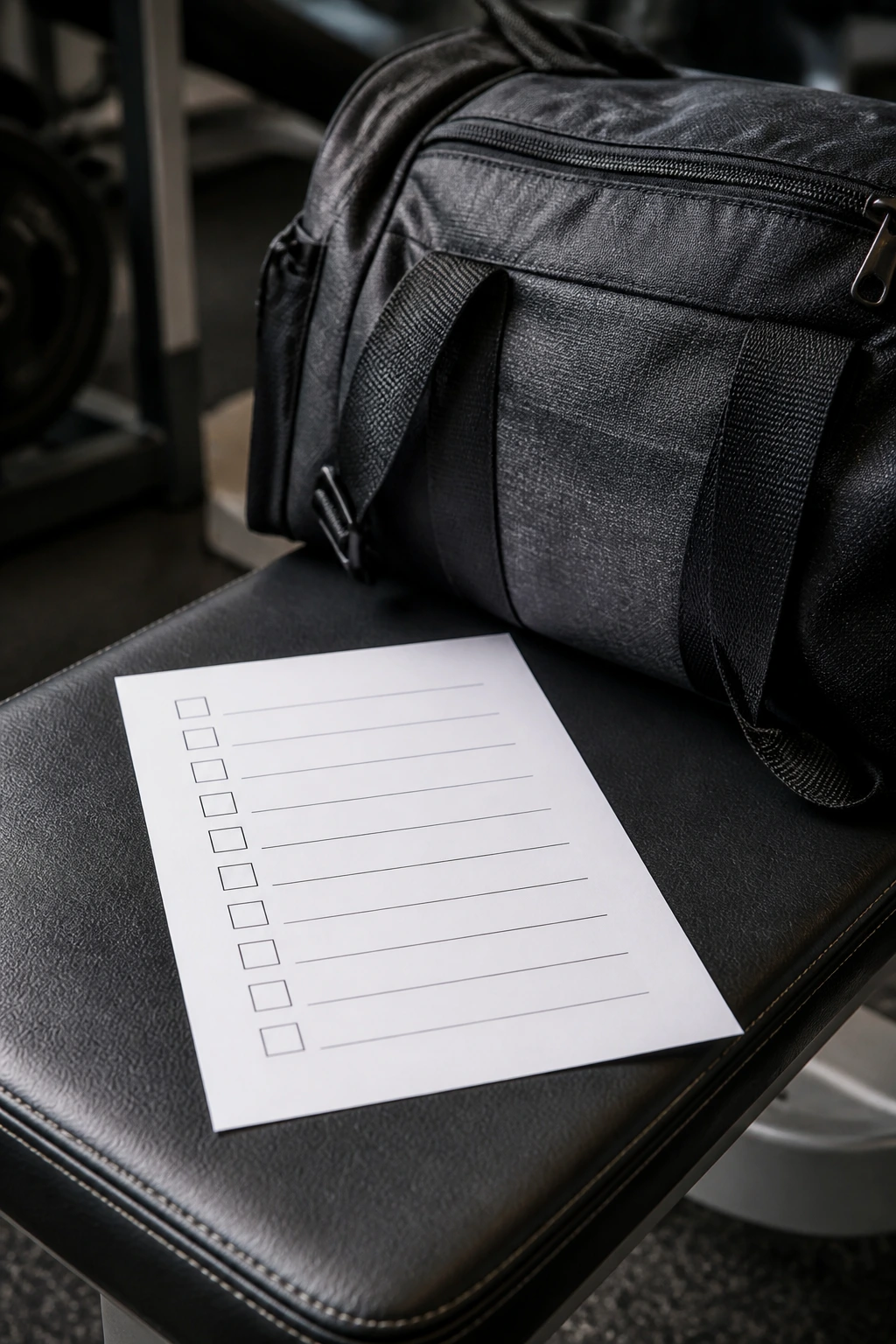
Nothing says “bad morning” like getting to the gym and realizing your shoes are still by the door. A pre-workout checklist saves time, money, and a little embarrassment. It’s not glamorous. It is useful, which is better.
I like this template because it lives at the edge of the workout, not inside it. Put it on a page you can check before leaving the house. Your essentials probably include shoes, water bottle, headphones, lock, towel, and whatever snack you eat before training. If you train with straps, gloves, or wrist wraps, those can go on the list too.
A Simple Checklist Might Include
- Shoes
- Socks
- Water bottle
- Headphones
- Towel
- Lock
- Hair tie or cap
- Snack
- Wrist wraps or straps
A second column for “sometimes” items works well. Bandage, shaker bottle, clean shirt, or gym card can sit there without cluttering the main list. The best version is the one that matches your real routine, not a perfect fantasy routine where everything is always packed the night before.
10. The Weekly Workout Planning Sheet
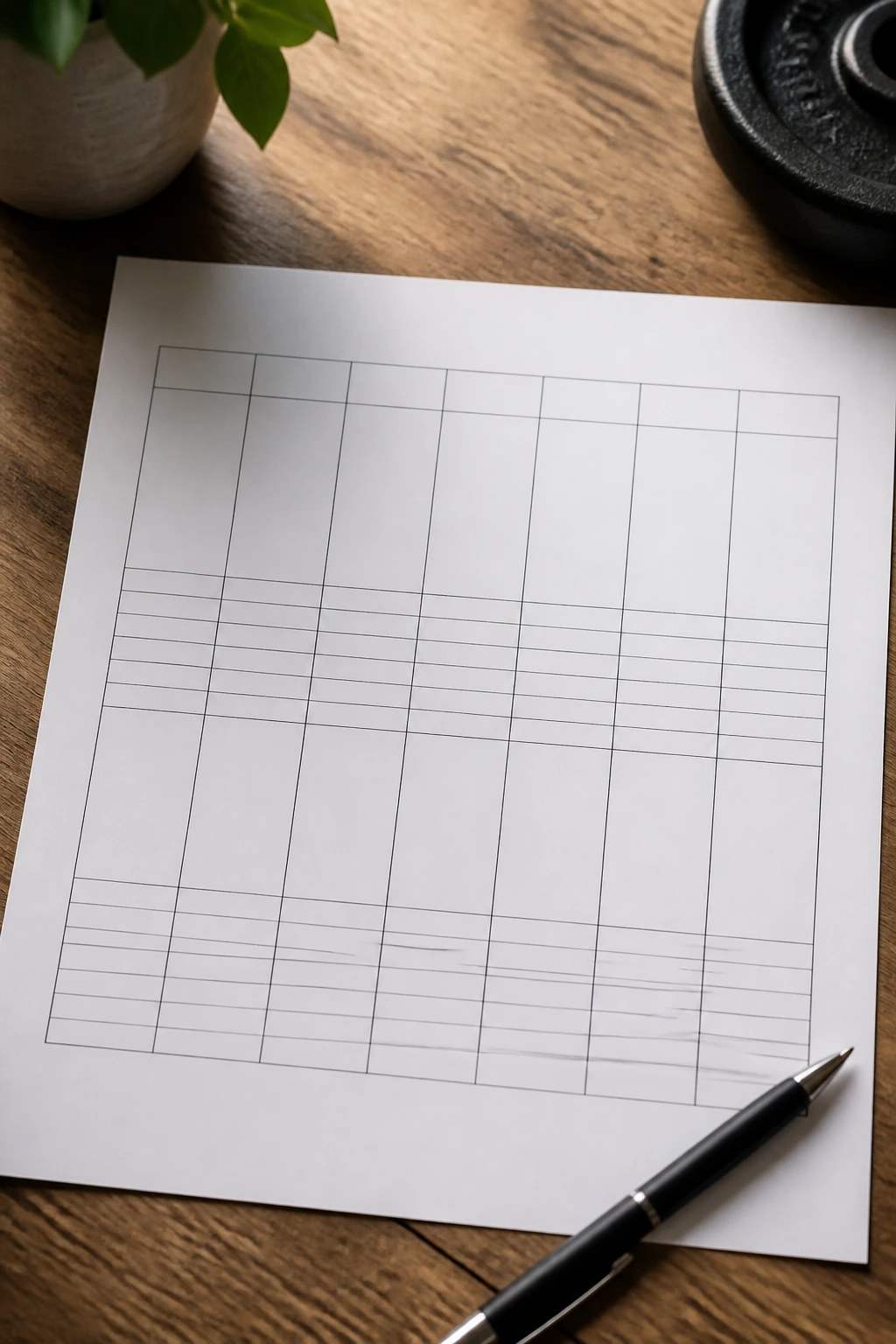
What if the hardest part of training is not the session itself, but deciding where it fits? A weekly workout planning sheet answers that before the week gets messy. It gives each day a clear box, so you know whether it’s lifting, cardio, mobility, or rest.
This page works best as a seven-day grid with one line for the session type and one smaller line for a backup plan. That backup line matters. If Tuesday gets wrecked by work, you need a shorter session or a swap ready to go, not another excuse to skip entirely.
Each Day Box Should Hold
- Planned workout type
- Time block
- Location
- Main focus, like lower body, intervals, or stretching
- Backup version if time gets cut in half
A tiny weekly notes area at the bottom is useful for real life stuff: travel, soreness, class schedule, or a longer recovery block. I’d leave one day deliberately lighter. People who pack every day with hard sessions usually end up rearranging the whole week by Thursday.
A clean planning sheet is less about discipline theater and more about reducing decision fatigue. That’s the win.
11. The Mood, Energy, and Stress Tracker
Some bad training weeks start with bad sleep, not bad motivation. A mood, energy, and stress tracker makes that obvious before you blame the wrong thing. It is one of the most underrated fitness diary templates you can print because it catches the soft signals: the flat warm-up, the heavy mood, the weirdly low appetite, the session that felt harder than it should.
A simple 1-to-5 scale is enough for most people. Rate energy, mood, stress, sleep quality, and soreness. Then give yourself one blank line for the reason, if there is one. “Worked late,” “argued with someone,” or “slept badly” can explain a lot more than a mysterious bad session.
- 1 = rough
- 3 = steady
- 5 = strong
That little scale makes patterns easier to spot across a month. If you see low energy every time sleep dips under six hours, you have something real to work with. If stress climbs before performance drops, same deal. You are not trying to judge yourself here. You are trying to notice the chain before it tightens.
12. The Mobility and Stretching Journal
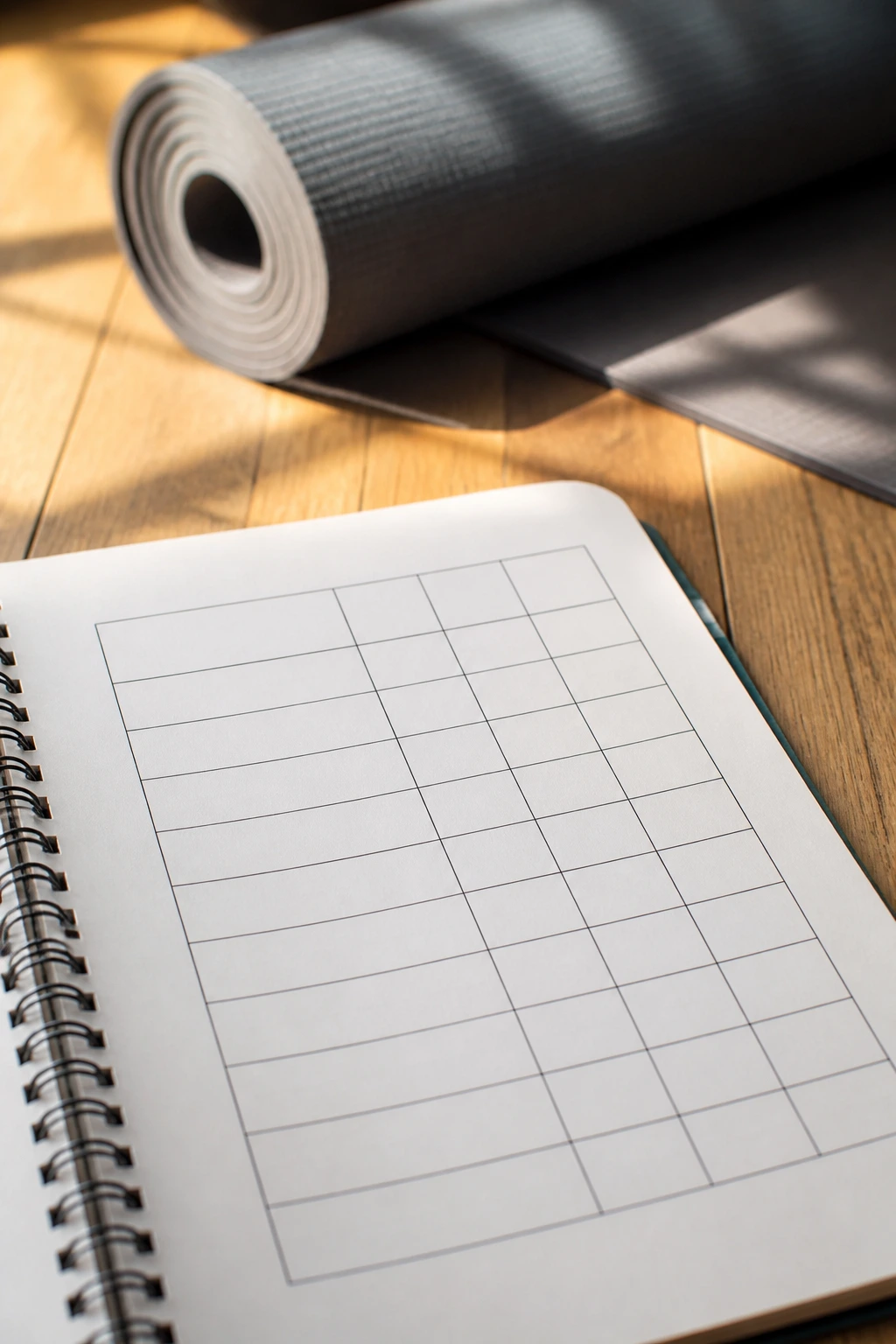
A good mobility page should look almost boring. That’s the point. It is there to help you remember what you stretched, how long you held it, and whether your body felt looser or just irritated. If you’ve ever done the same hip opener three times in a row and still forgotten whether it helped, this one is for you.
I like a layout with columns for stretch name, hold time, side, and post-stretch feeling. A few rounds of 30-second holds are easy to record. If you prefer flow-based mobility, write the sequence instead: cat-cow, thoracic twist, deep squat hold, ankle rocks. The page can handle either style.
What to Record After Each Session
- The exact stretch or drill
- How many seconds or breaths you held it
- Left side, right side, or both
- Any pinchy or sharp feeling
- Whether it helped the next workout
Do not turn stretching into a pain contest. Tight is one thing. Sharp or catching is another. A printed journal keeps the line between those two a little clearer, which is worth the paper.
13. The Personal Records Dashboard
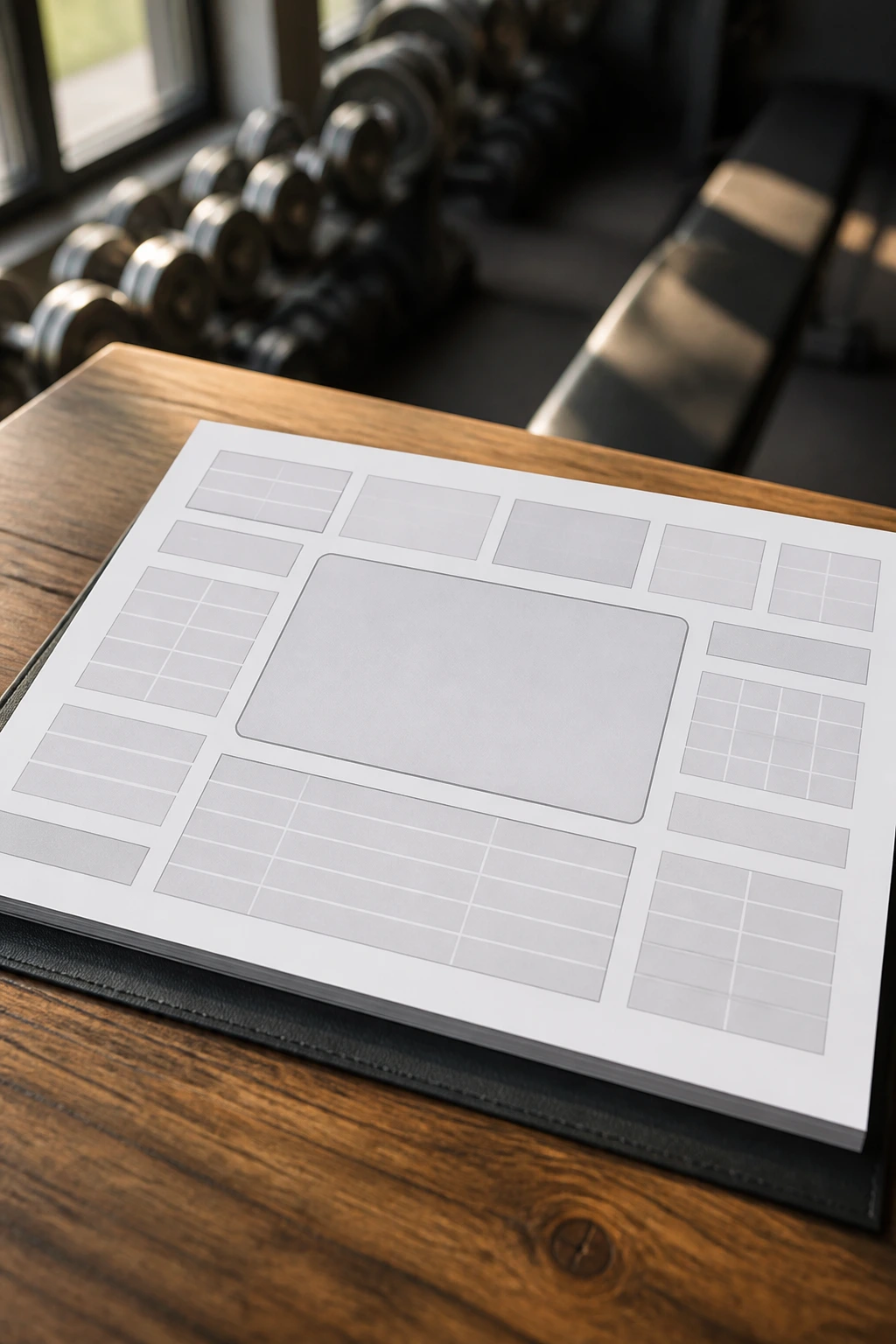
A PR page is not a diary; it’s a scoreboard. That’s why it deserves its own printable template. A personal records dashboard gives your biggest lifts, best times, and standout numbers a single place to live, so you can see them at a glance instead of digging through months of workout notes.
This page works well when it tracks both raw numbers and context. A 225-pound bench means something different if it was a clean single than if it was a grinder with a spotter hovering an inch away. Same with a run time, a pull-up count, or a row erg score. The number matters, but so does the story around it.
A dashboard can hold your top squat, bench, deadlift, mile time, longest plank, or best set of push-ups. You don’t need every category under the sun. Pick the ones you care about and leave the rest off the page. Too many blanks make a PR sheet feel fake.
This template is especially nice in landscape format with a big central box for the main number and smaller boxes for date, bodyweight, and notes. It’s neat. It’s blunt. I like that.
14. The Simple Beginner Fitness Log
If you’re new, the fancy stuff can wait. A simple beginner fitness log should feel friendly, not judgmental. Just enough structure to get you writing after a walk, a machine session, or a short bodyweight workout. No clutter. No jargon. No pretending you need a sports science degree to record a 20-minute session.
The best beginner page has five basic fields: date, activity, duration, effort, and one note. That’s it. You can add a checkbox for “done” if that helps, because checking a box can be weirdly satisfying on low-energy days.
Clean beats clever.
A beginner log also needs big writing space. New exercisers often write more than they expect at first because everything feels new: new soreness, new machines, new confidence, new doubts. A cramped page is a bad welcome. A roomy one makes the habit feel possible.
If someone asked me what to print first for a new routine, I’d pick this before anything fancy. It lowers the bar without lowering the value.
15. The Home Workout Circuit Card
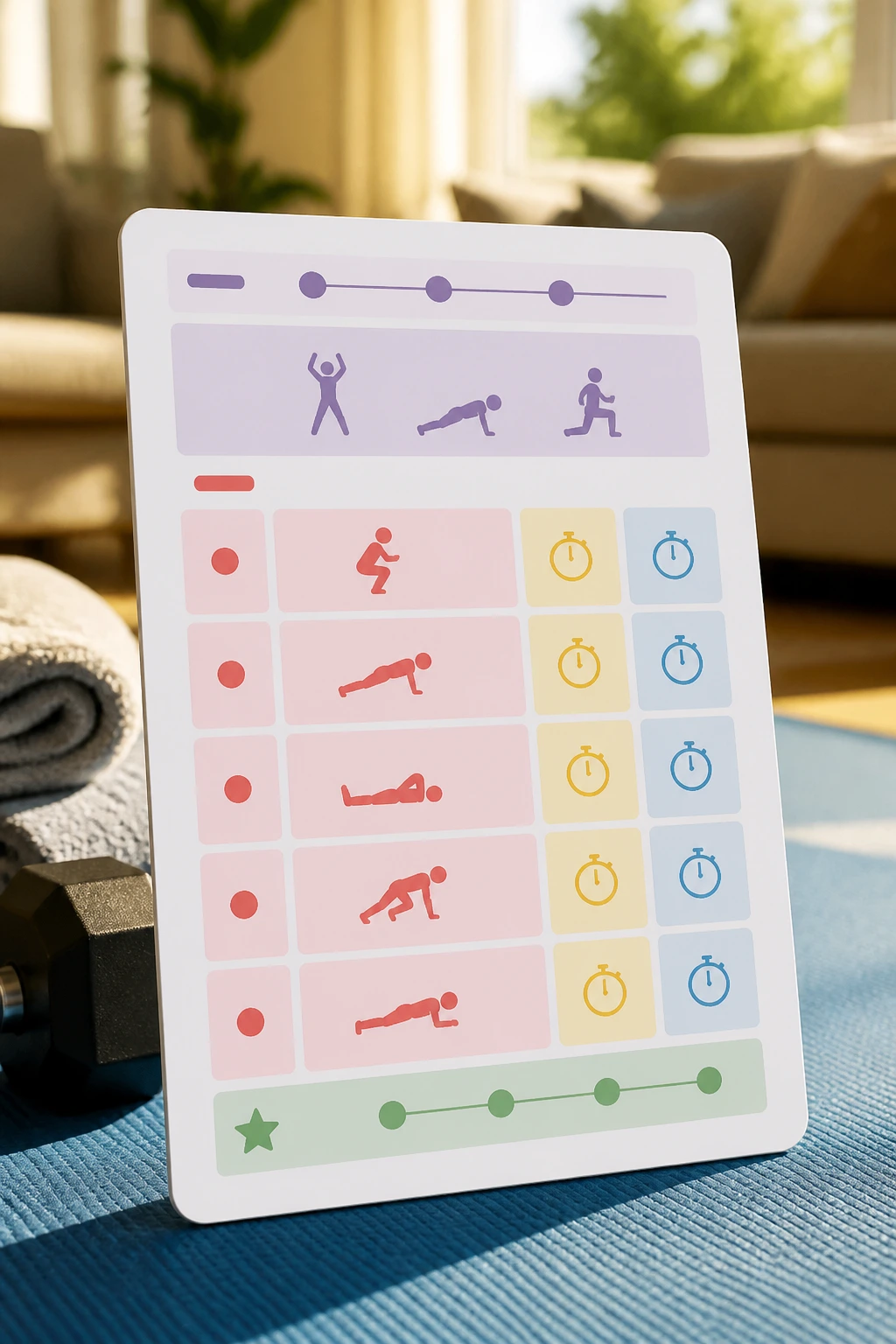
A home workout circuit card is made for people training in small spaces with limited time and no interest in flipping through a full notebook mid-workout. It keeps the round order, the work interval, the rest interval, and the exercise list in one tight, easy-to-see block. When you’re in the middle of burpees or split squats, that matters.
What to Put on the Card
- Warm-up
- Round count
- Work time and rest time
- Exercise order
- Reps or seconds for each move
- One modification option for each exercise
A half-page or postcard-sized print works well here. You can clip it to a wall, place it near a mat, or tape it to a cabinet door. I’d leave a space for “swap if needed,” because home workouts often need a backup move when the floor space shrinks or your knees are cranky.
The strength of this template is speed. You glance, you move, you finish. That’s all a circuit card should ask for.
16. The Class Attendance and Trainer Notes Page

Classes are easy to forget in detail and easy to remember in feeling. You leave sweaty and happy, then two days later you can’t recall which cue the instructor gave for your shoulders. A class attendance and trainer notes page fixes that. It records the class name, the instructor, the date, and one or two cues worth keeping.
This template is especially useful if you take spin, yoga, Pilates, boxing, or small-group training. Those sessions often hinge on one specific correction: ribs down, elbows tucked, hips square, breathe on the effort. Writing that cue down makes the next class better, because you walk in already remembering the thing that tripped you up.
A tiny note box for how the class felt helps too. Hard, smooth, cramped, energizing, too fast, too much jumping. Those words are simple, but they tell a story. If a class repeatedly leaves your knees unhappy or your lower back tight, the pattern will show up here before it shows up in a bigger problem.
I like this page kept near the front of a binder, because class notes are the kind of thing people want to save and actually revisit.
17. The Outdoor Walk and Run Template
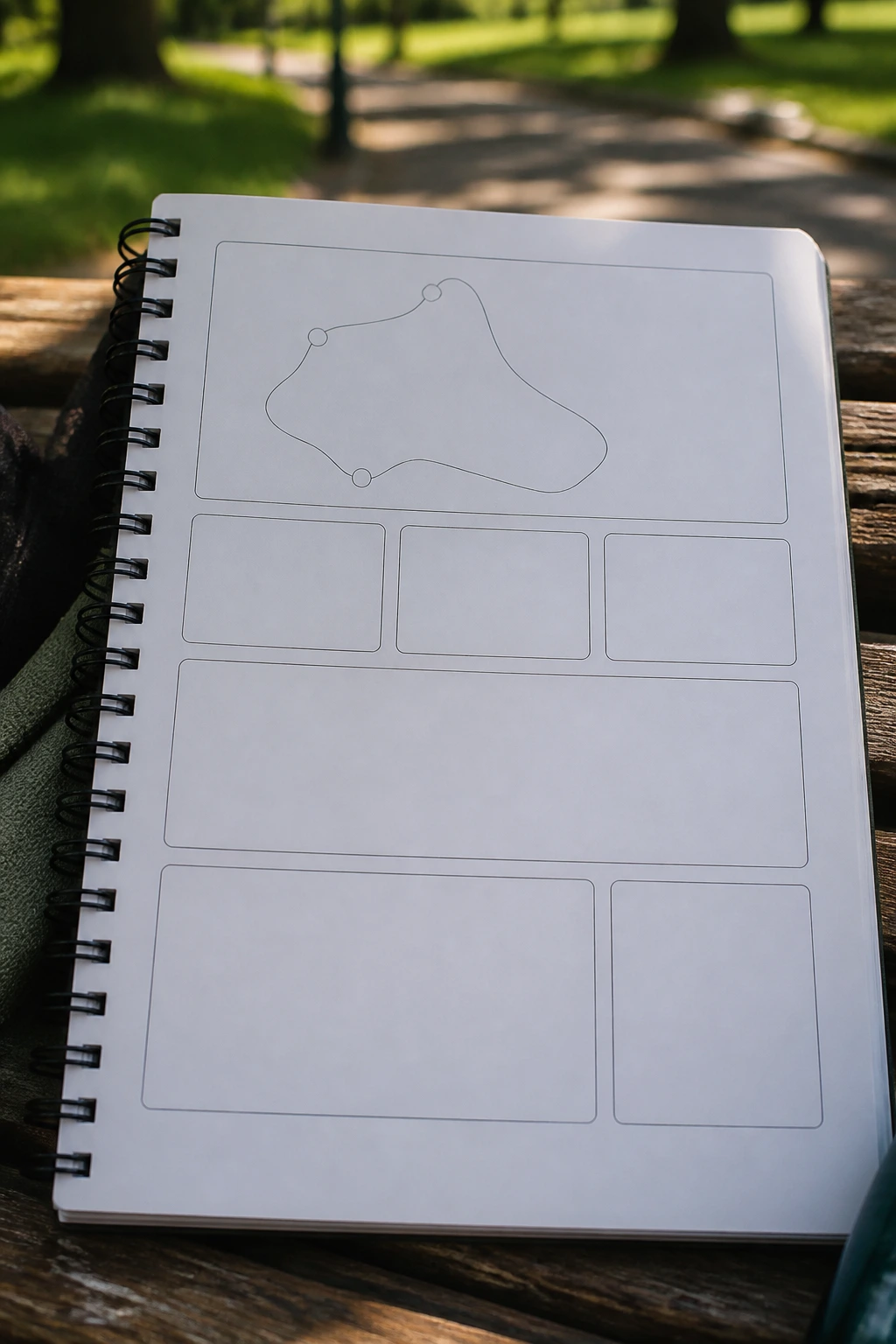
Why does an outdoor session need its own page? Because weather and terrain change everything. A walk in heat, a run on hills, and a flat loop on a cool morning do not feel the same, even if the distance matches. An outdoor walk and run template captures that context instead of pretending every session is just time plus distance.
How to Set It Up
- Route name or sketch box
- Distance or duration
- Terrain, like flat, hilly, trail, or mixed
- Weather note
- Shoes worn
- Pace or interval details
- How the legs and breathing felt
A small route sketch can be more useful than a pace number if you’re repeating local loops. You might notice that one hill always hits harder at mile two, or that one path leaves your calves tighter because the surface is uneven. That kind of note helps you choose smarter routes later.
This page is good for walkers too, not just runners. People who walk for fitness often pay attention to the wrong thing, then miss the better clue: how the body feels over the route, not just the step count.
18. The Injury, Pain, and Modification Log
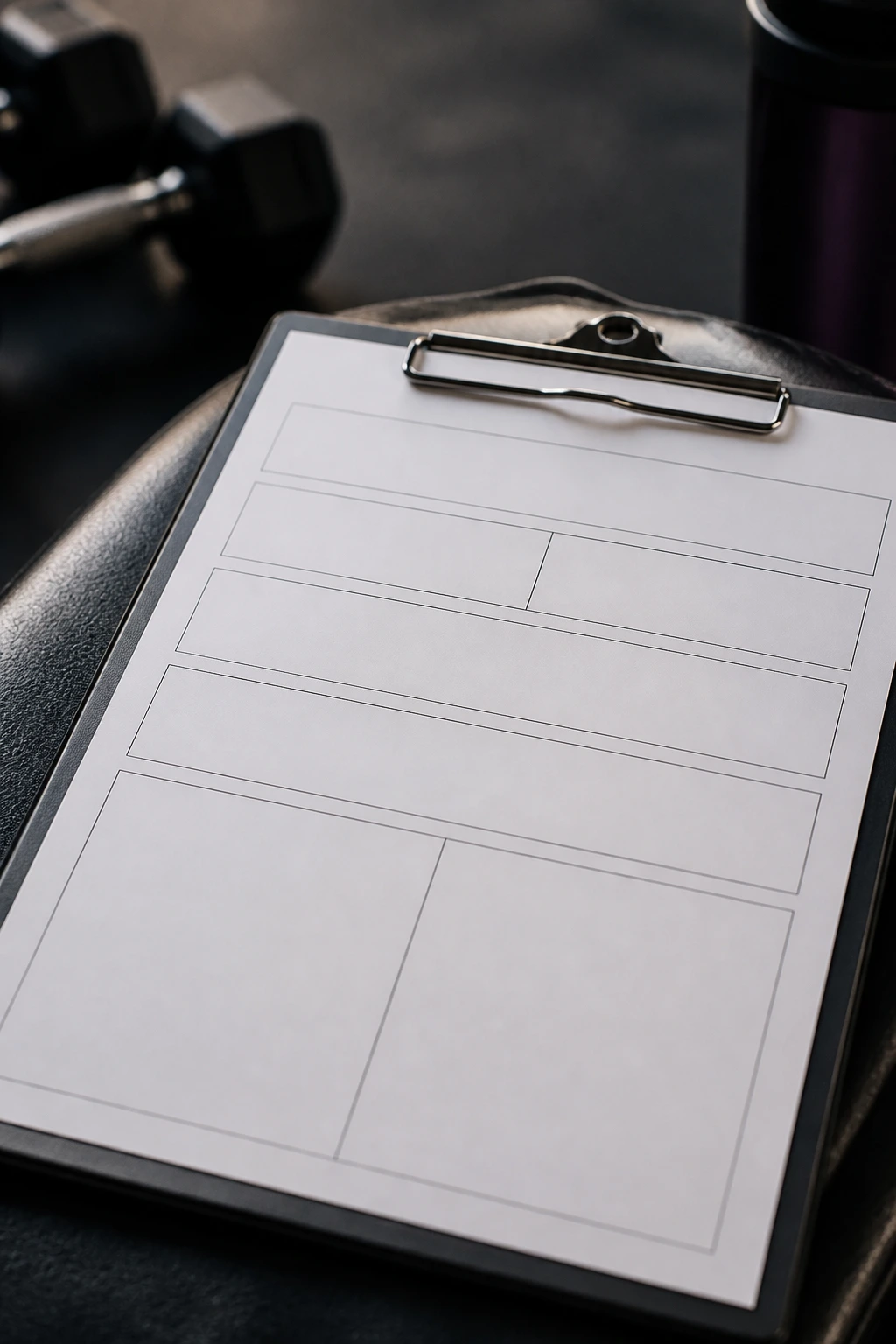
When something hurts, memory gets fuzzy fast. You forget exactly when it started, which movement made it flare, and what helped it calm down. An injury and pain log is not dramatic. It is practical. It helps you spot patterns before they turn into bad guesses.
This template should have a place for body area, pain level, trigger movement, and what you did instead. If squats made your knee bark, write that. If overhead work made your shoulder complain, write that too. And if a modification helped, record that as well, because the next session will likely need the same adjustment.
Sharp pain, numbness, swelling, or a sudden loss of strength should not be treated like normal soreness. That belongs in the “get proper help” category, not the “push through it” category.
Useful Fields for This Page
- Body area
- Pain level from 1 to 10
- What made it worse
- What eased it
- Exercise changes you made
- Whether the issue improved, stayed the same, or got worse
A page like this can save you from repeating the same mistake three workouts in a row. That alone makes it worth printing.
19. The Goal Ladder and Milestone Planner
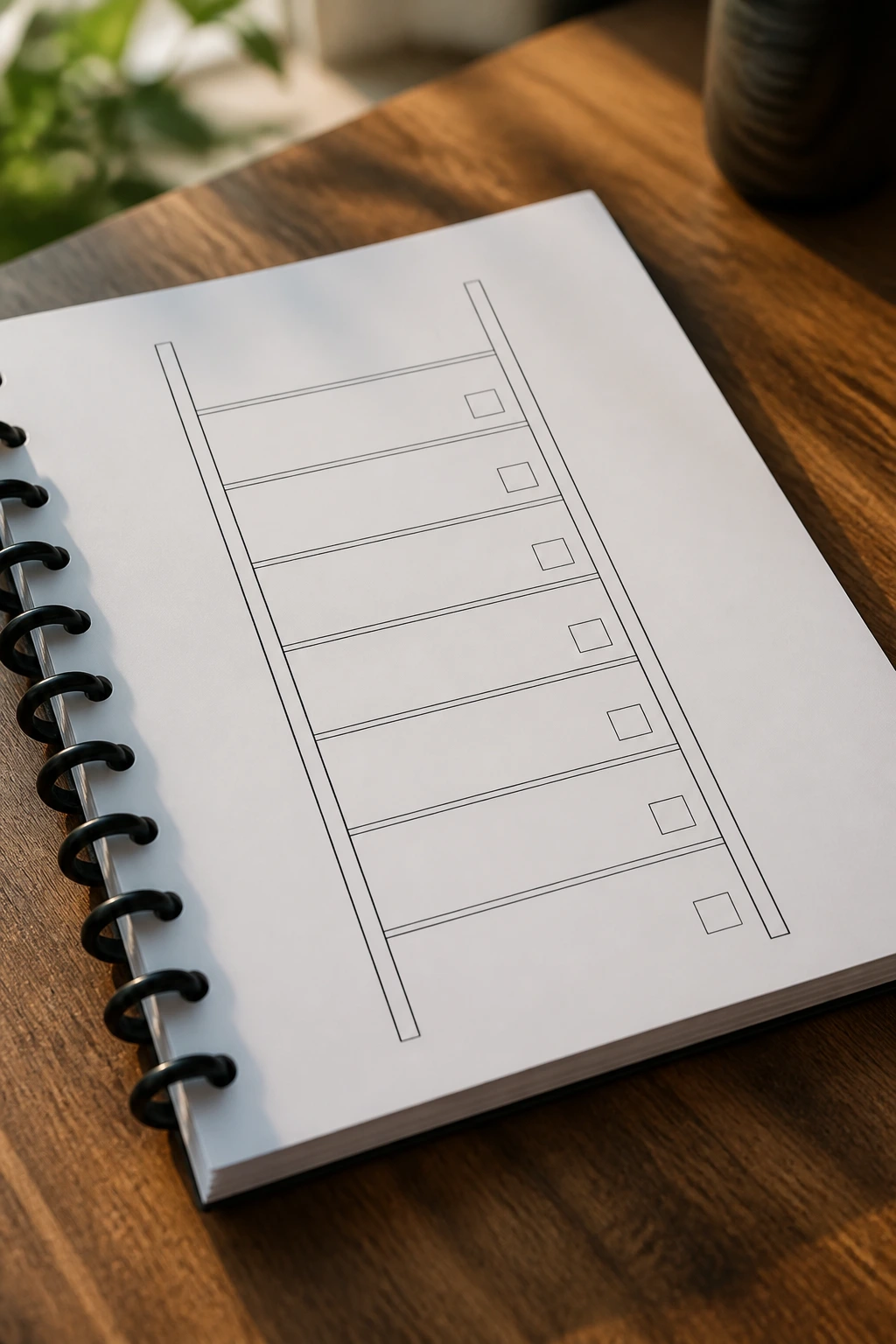
Big goals stick better when they have steps you can see. A goal ladder page turns one large target into smaller rungs that feel reachable. That is much more useful than a vague promise written in the margin of a notebook.
Say your goal is a pull-up, a 5K without walking, or a consistent four-day routine. The ladder breaks that goal into milestones: complete three sessions a week, improve grip strength, hit a certain run distance, hold a plank longer, or finish a month without missing twice in a row. Each rung gets its own box.
Tiny wins matter here.
I like this template because it keeps motivation tied to behavior, not mood. A goal that lives only in your head can feel huge and slippery. A goal with four or five visible steps becomes something you can check off, argue with, and work toward on a normal Tuesday.
A Ladder Might Look Like This
- Main goal at the top
- Four to six smaller milestones underneath
- A short note beside each milestone
- A checkbox for completion
- One line for the next action
Keep the steps concrete. “Get stronger” is not a rung. “Add 5 pounds to the bench for 3 clean reps” is.
20. The Monthly Fitness Diary Spread

A monthly fitness diary spread is the page I’d print if I wanted one sheet to hold the bigger picture. It gives you the calendar, the weekly totals, the wins, the annoying misses, and a small space for body notes or training focus. Over a month, that kind of layout tells the truth in a way a single day never can.
The best monthly spread has enough room to show trends without forcing you to write an essay. A small box for each week, a line for total sessions, and a few prompts at the bottom work well. You can ask yourself simple things: What felt easy? What kept getting skipped? Which workout type showed up most often? The answers are usually plain, and that’s useful.
If you only print one page for a longer stretch of time, make it this one. Daily logs help with detail. Monthly logs help with perspective. One keeps the memory sharp; the other keeps you from overreacting to a rough Tuesday or getting cocky after a good Friday.
Store the finished pages in a slim binder or folder, and keep the next blank sheet behind the current one. That tiny bit of order makes the whole habit easier to maintain. Also, it’s oddly satisfying to flip back and see a month that looked messy at first and turned out to be the one where things finally started to stick.
