



The first week in a gym can feel noisy, crowded, and a little embarrassing in the ordinary way new places can be. The best beginner workouts for people new to the gym do one thing well: they make the room less confusing.
You do not need a six-day split or a heroic hour on the treadmill. Public-health guidance from groups like the CDC and the American College of Sports Medicine keeps circling back to the same useful idea — regular cardio, regular strength work, and enough recovery to come back again. That sounds plain because it is plain. Plain works.
Most people get tripped up by choice, not effort. Too many machines. Too many weights. Too many people who look like they were born knowing where the cable stack lives. A smart first plan strips out the noise and gives you a few repeatable sessions that use simple movements, clear rep ranges, and loads light enough that you can still think.
Boring is useful. The less time you spend guessing, the more time you spend training.
1. Treadmill Incline Walk
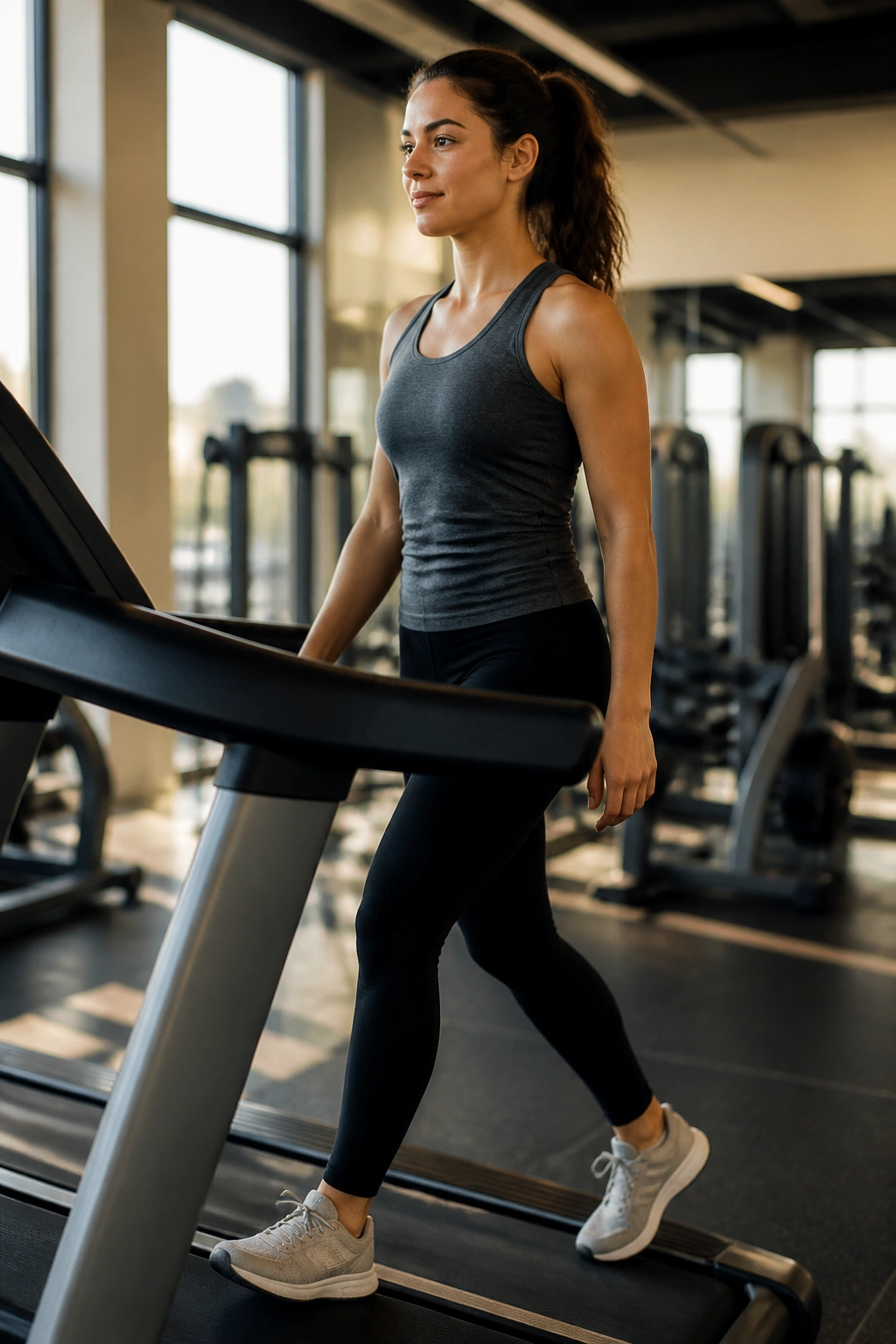
If the floor feels crowded, start on the treadmill. The incline walk is the least intimidating way to get your heart rate up without turning your first gym visit into a balance test.
A good setup is simple: 5 minutes at an easy pace, then 10 to 15 minutes at a 3 to 6 percent incline. Your speed should let you speak in short sentences, not sing, not gasp. If you are hanging on the rails, the walk is too hard or too fast, and your posture has already gone sideways.
How to Pace It
- Start with 0 to 1 percent incline for the warm-up.
- Raise the incline to 3 to 6 percent.
- Keep your steps short and steady.
- Swing your arms lightly instead of clutching the handles.
- Finish with 3 minutes at a flat incline to cool down.
That sounds almost too easy, and that is the point. The treadmill walk builds a base without beating up your knees, your calves, or your confidence. It also gives new lifters a chance to learn the lay of the room before they touch a weight.
One clean rule: if your shoulders creep up toward your ears, slow down.
2. Seated Leg Press
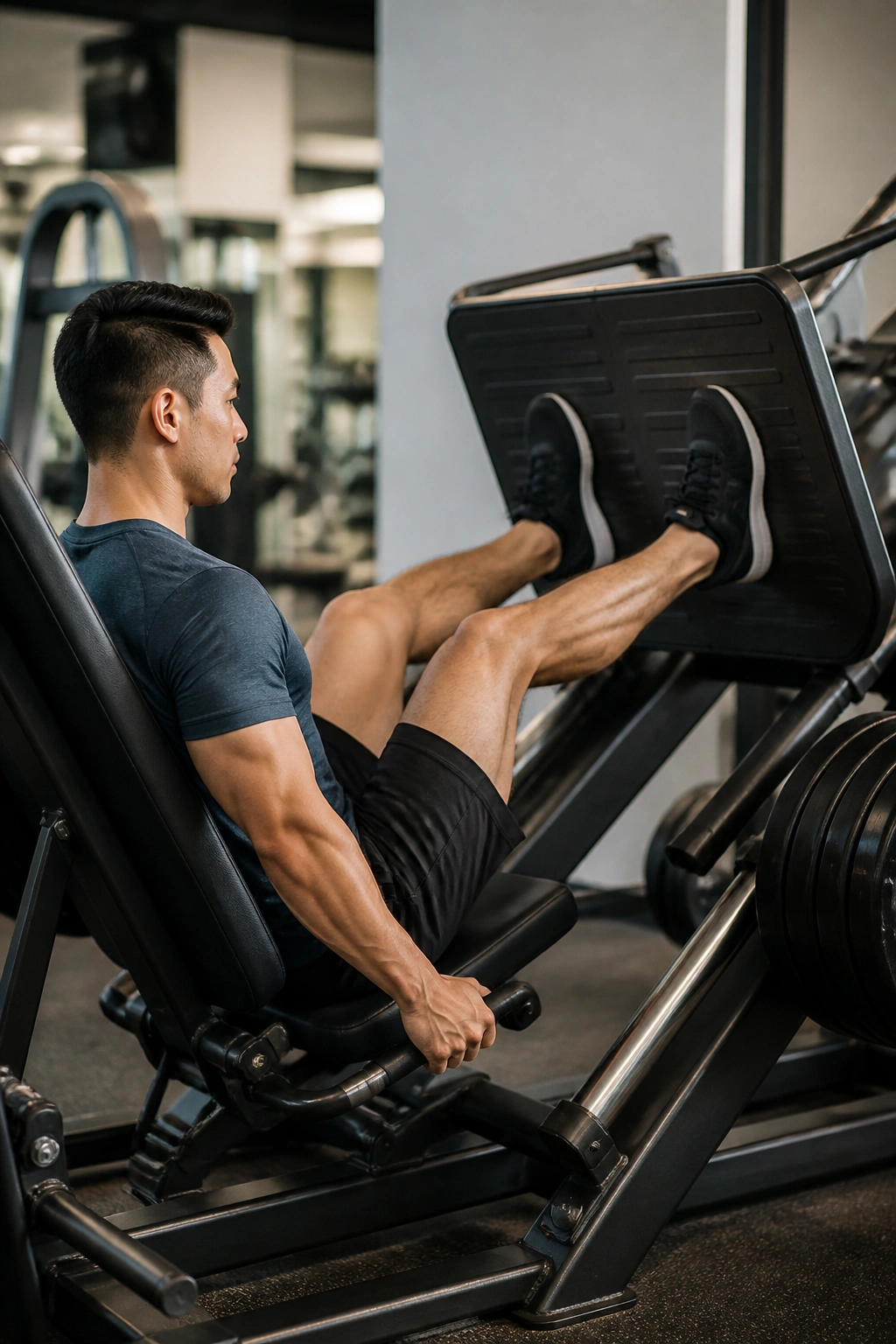
Why does the leg press show up in so many beginner plans? Because it lets you load the legs without turning balance into the main event. That matters when you are still figuring out how a gym works.
Set the seat so your knees bend to roughly 90 to 110 degrees at the bottom. Put your feet about shoulder-width apart on the platform, then lower the sled under control for 2 seconds until your thighs come close to your torso. Push through the middle of your feet and stand back up without locking your knees hard at the top.
The Range That Works
The sweet spot is a rep that feels heavy in the legs but still smooth. 2 to 3 sets of 8 to 12 reps is enough for most new lifters. Rest 60 to 90 seconds between sets.
The mistakes are easy to spot once you know them. Knees caving inward. Feet too low on the platform. Letting the hips peel off the pad. Loading too much weight just because the machine can handle it. None of that makes the set better.
Tap the platform on the way down. Do not bounce.
3. Push-Pull Machine Circuit
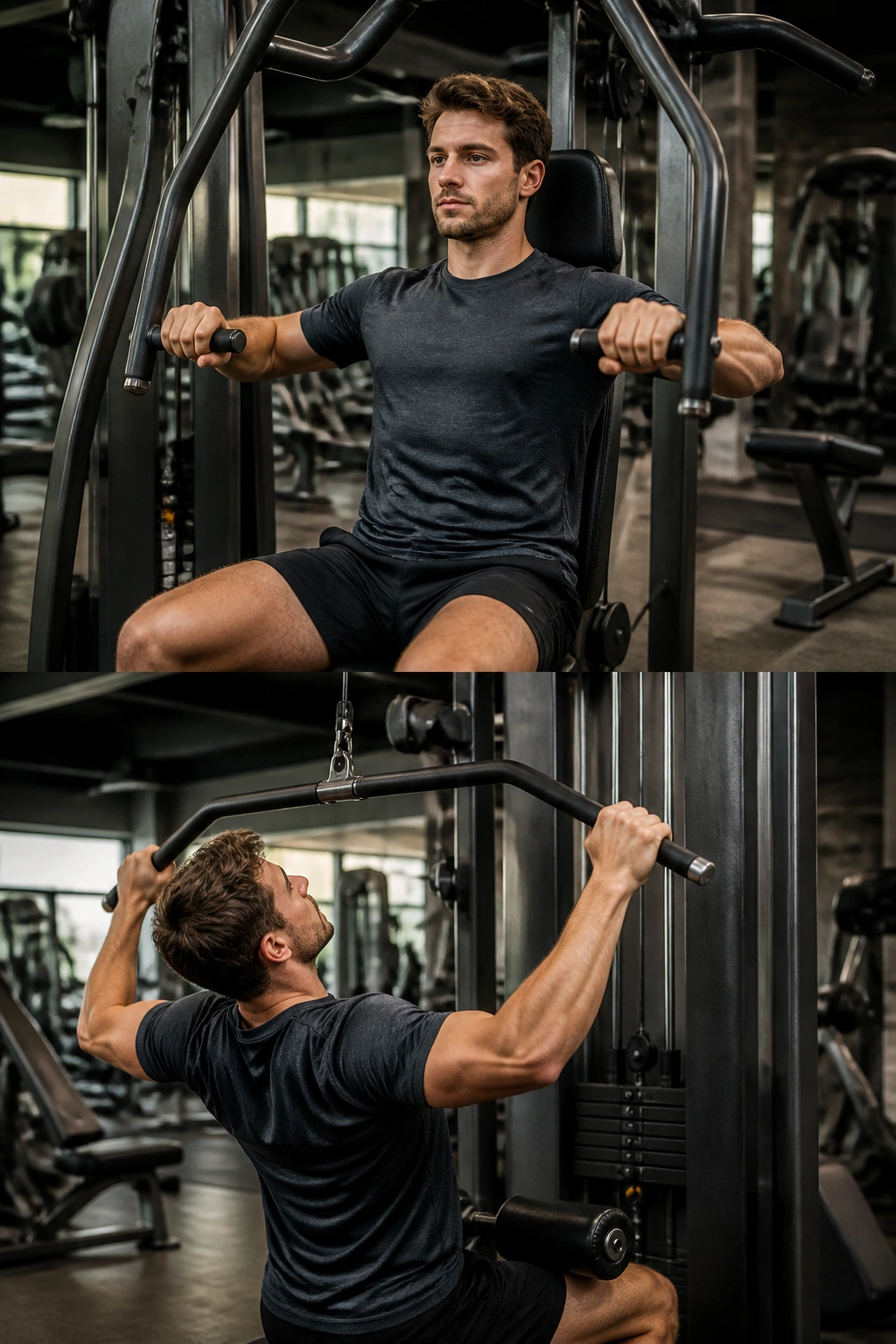
Push and pull machines are the closest thing the gym has to training wheels, and I mean that as a compliment. You get upper-body work without having to stabilize a dumbbell in two directions at once.
A straightforward circuit pairs a machine chest press with a lat pulldown. Do 8 to 10 reps on the chest press, then move straight to 8 to 12 reps on the pulldown. Rest 60 seconds, then repeat for 2 to 3 rounds. That’s enough volume to feel the work without turning the session into a marathon.
What to Feel
- Chest press: shoulders down, wrists stacked, handles moving in a straight line.
- Lat pulldown: pull the bar to the upper chest, not the belly.
- Both lifts: keep the ribcage from flaring up.
- Both lifts: slow the return phase for a count of 2.
This circuit teaches the basic push-pull pattern fast. It also shows you whether your shoulders like pressing, whether your back likes pulling, and whether one side is doing all the work. If you want one first strength session that feels orderly, this is a strong candidate.
A small note: if the machine seat height feels awkward, adjust it. Bad setup ruins more beginner sets than bad effort does.
4. Goblet Squat to Box
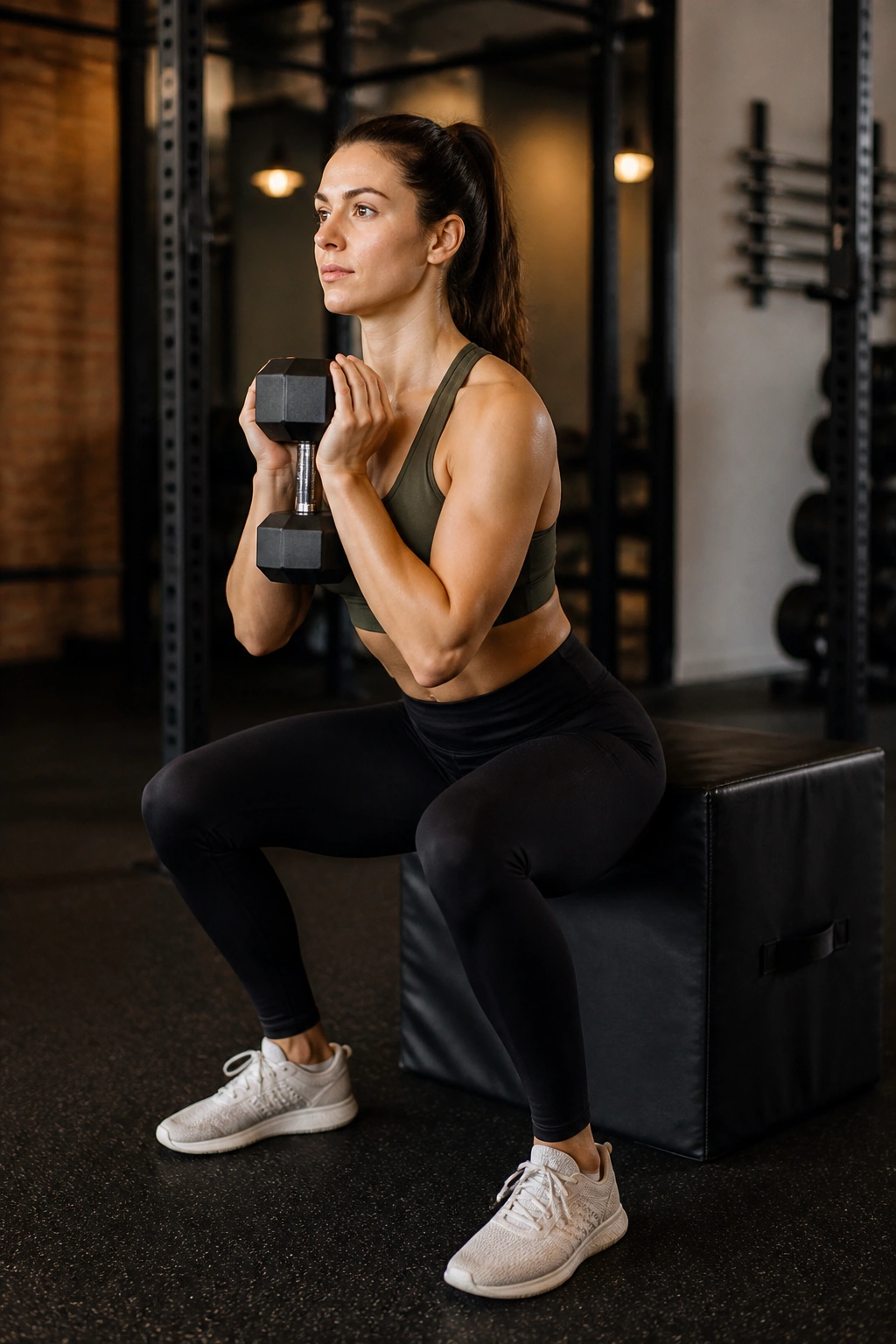
A box or bench removes the guesswork from the squat. That is why the goblet squat to box works so well for people who are new to the gym.
Hold a dumbbell close to your chest like a heavy book. Stand with your feet a little wider than hip-width, sit your hips back, and lower until you lightly touch the box or bench behind you. Then stand back up. 3 sets of 6 to 10 reps is a clean starting point, with 60 to 90 seconds of rest.
Why the Box Helps
The box gives you a depth target. No wobbling around, no wondering if you are low enough, no turning every rep into a debate. It also makes it easier to feel whether your weight is staying in the middle of the foot instead of dumping into the toes.
A lot of new lifters rush the bottom. Don’t. Tap the box and drive up. That little pause cleans up form fast.
Tap, don’t crash. If you crash into the box, the set stops teaching you anything useful.
If your knees cave in, drop the weight and make the stance a touch wider. A lighter squat with good shape beats a heavier one that looks like a collapse.
5. Dumbbell Romanian Deadlift
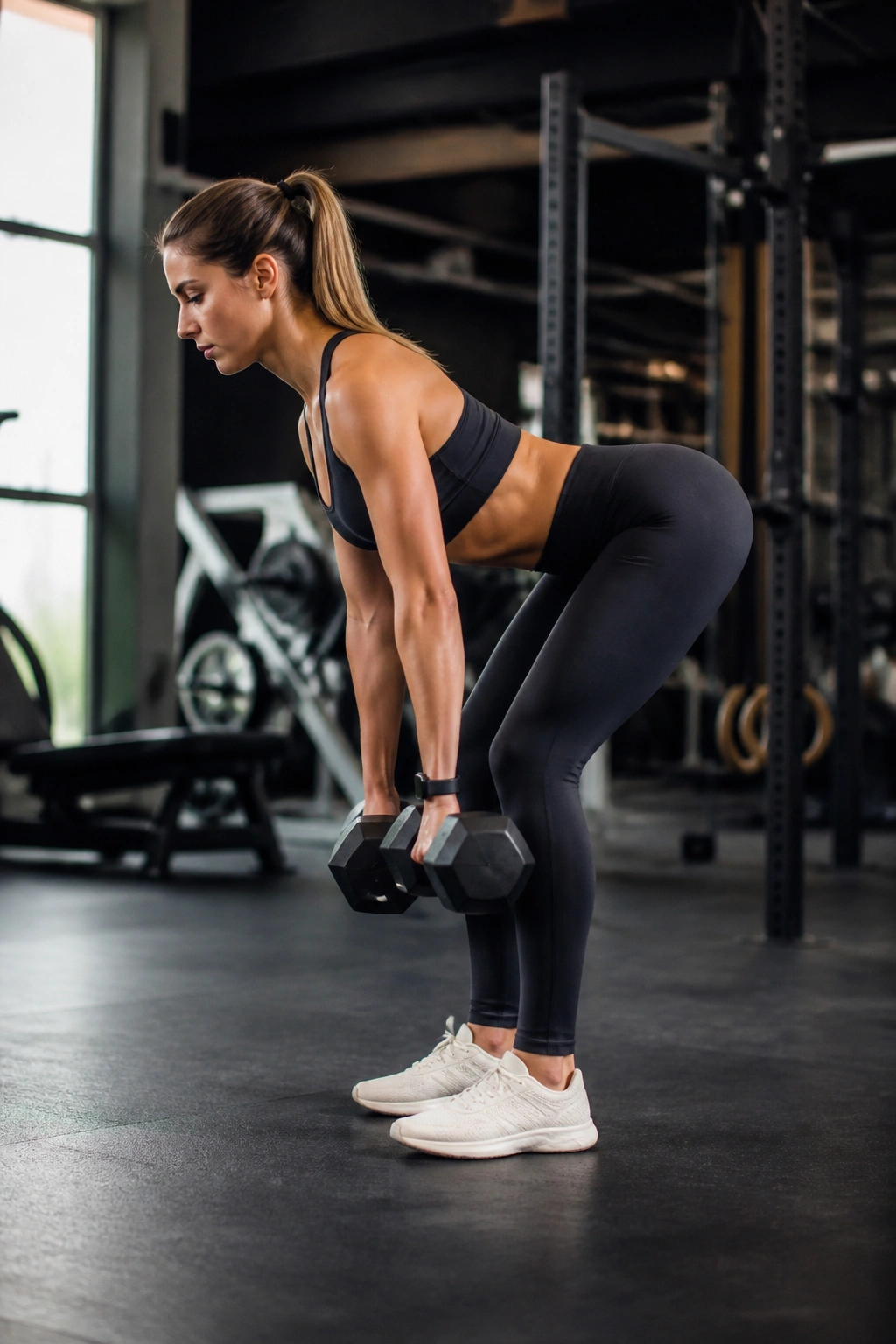
Most new lifters do not need to squat lower. They need to learn how to hinge. The dumbbell Romanian deadlift teaches that without forcing you to wrestle a barbell off the floor.
Stand tall with a dumbbell in each hand, feet about hip-width apart, knees soft. Push your hips back as if you are trying to close a car door with your glutes. The dumbbells should slide down the front of your thighs and shins, staying close the whole time. Stop when you feel a strong stretch in the hamstrings or when your back wants to round. Then stand up by squeezing your glutes.
2 to 3 sets of 8 to 10 reps is enough for beginners.
What the Rep Should Feel Like
The lowering phase should take about 3 seconds. If the dumbbells drift away from your legs, the low back starts doing work it does not need. If you can only reach your knees, that is fine at first. Depth comes later. Shape comes first.
A lot of people think the Romanian deadlift is about touching the floor. It isn’t. It’s about teaching your hips to move back while your spine stays steady.
One clean checkpoint: you should feel this mostly in the hamstrings and glutes, not in the lower back.
6. Seated Cable Row
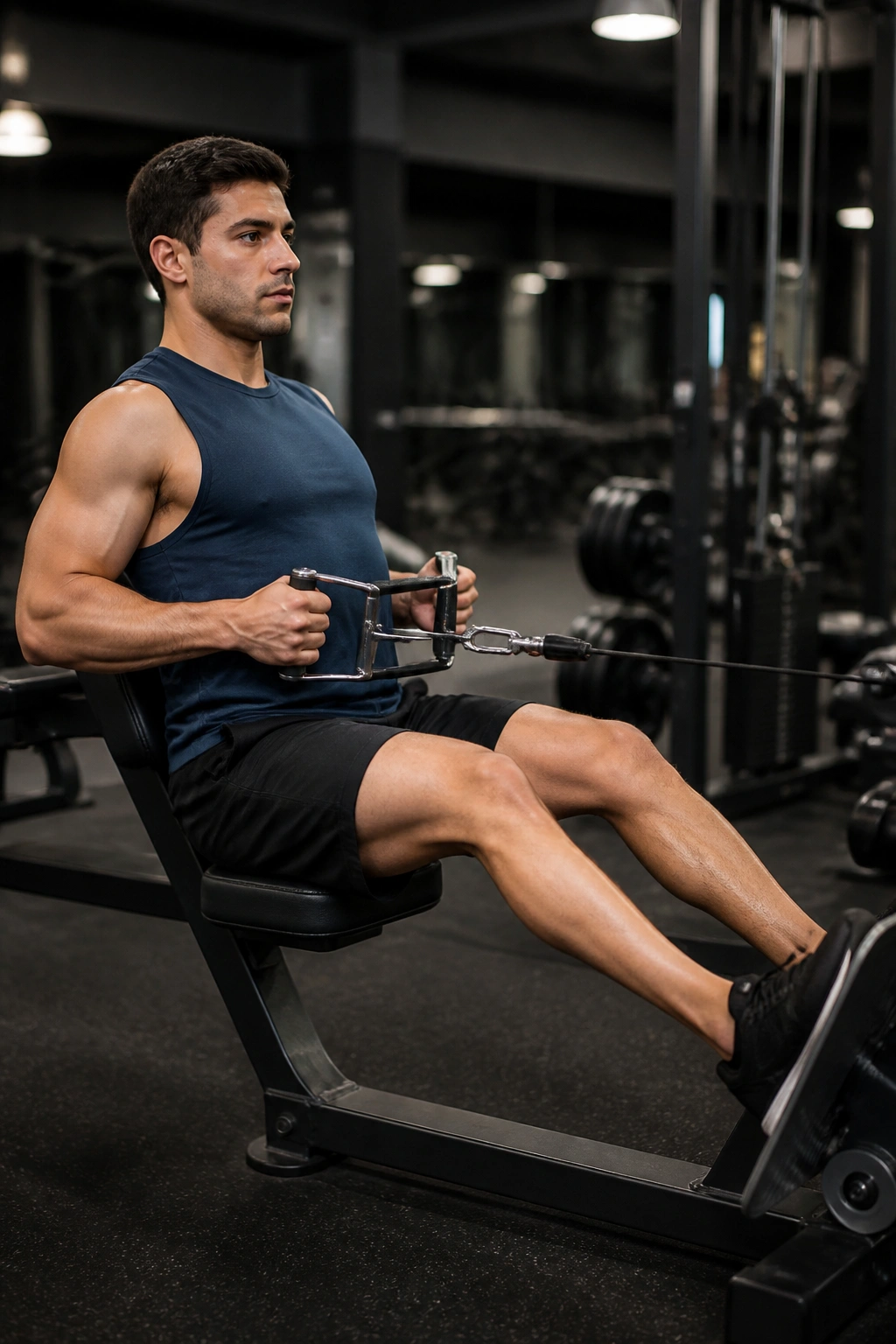
Unlike a dumbbell row, the cable never drops the tension. That makes the seated cable row a useful early back exercise, especially if your posture feels a little slumped from sitting all day.
Sit tall, brace your feet, and pull the handle to the lower ribs. Keep the chest open without puffing the ribs up like a parade float. Let the shoulder blades glide back, then return the handle slowly for 2 counts. 2 to 3 sets of 10 to 12 reps is a solid range.
Setup That Saves the Set
- Sit far enough back that your arms start straight but not locked.
- Keep the torso mostly still.
- Pull the elbows behind the body, not the shoulders up.
- Pause for 1 second when the handle reaches your torso.
- Do not rock backward to fake the pull.
The row is a good reminder that back training does not have to be dramatic. It just has to be clean. If your neck tightens up, the weight is too heavy or the shoulders are creeping toward the ears.
I like this one for first-timers because it gives you a hard pull without much chaos. Simple handle. Simple path. Clear feedback.
7. Flat Dumbbell Bench Press
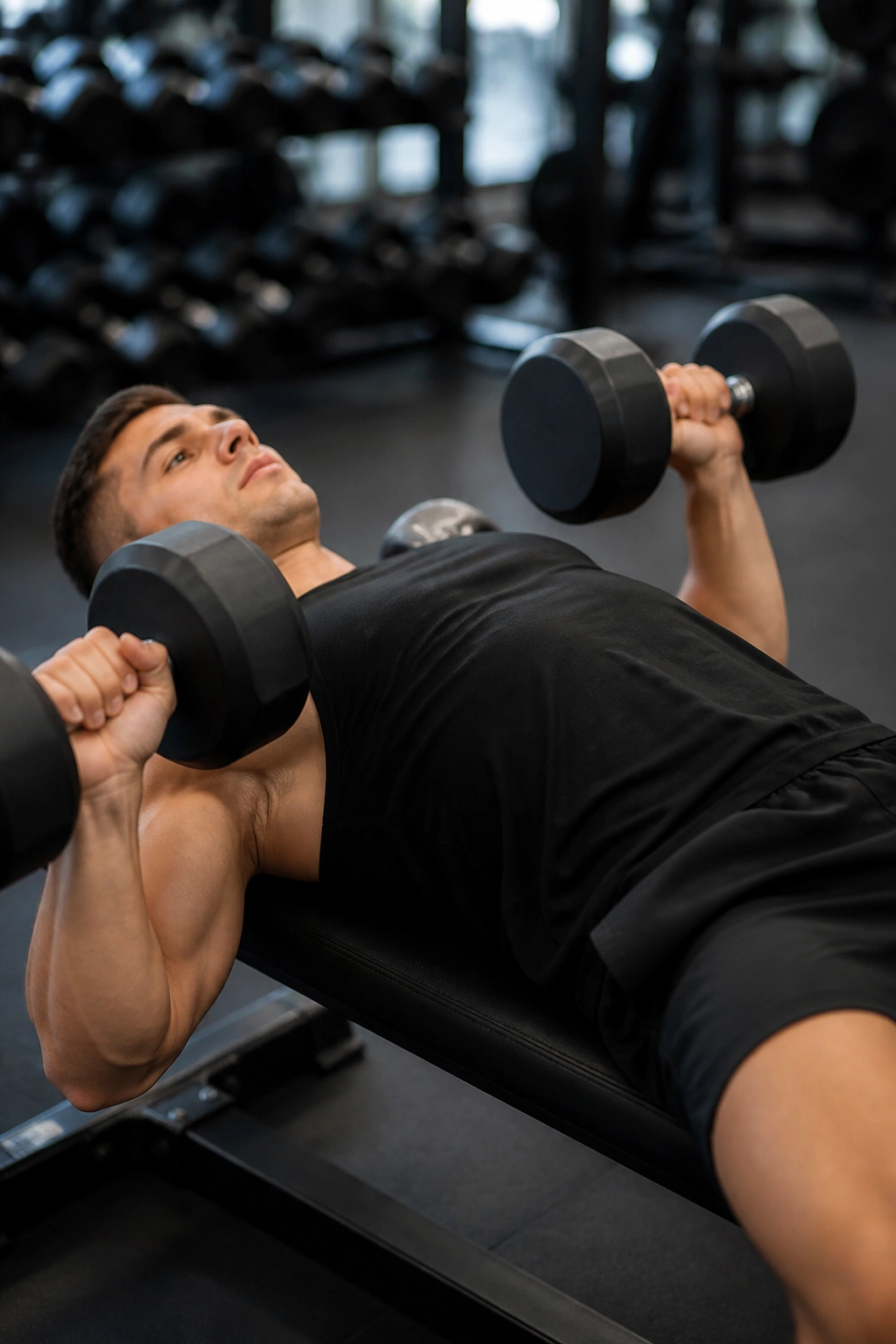
Want a pressing move that forgives small mistakes? The flat dumbbell bench press is friendlier than a barbell press and a lot easier to bail out of if a set goes sideways.
Lie on a flat bench with the dumbbells over your shoulders, feet planted, and shoulder blades gently pulled back and down. Lower the bells until your elbows are roughly level with your torso, then press them up until your arms are straight but not jammed. 2 to 3 sets of 6 to 10 reps works well for beginners.
Set Your Shoulders First
If your shoulders feel pinchy, use a neutral grip with palms facing each other. That small tweak can make the movement feel a lot smoother. The dumbbells should travel in a slight arc, not straight into your face and not down by your waist.
What a Good Rep Feels Like
The chest and triceps should do the work. The lower back should stay lightly arched, not forced into a huge bridge. If the dumbbells wobble on the way up, slow the lowering phase and drop the weight before you start chasing cleaner reps.
A dumbbell press also tells the truth fast. If one arm drifts higher than the other, you’ll know. Good. That’s useful information, not failure.
8. Lat Pulldown and Face Pull Combo
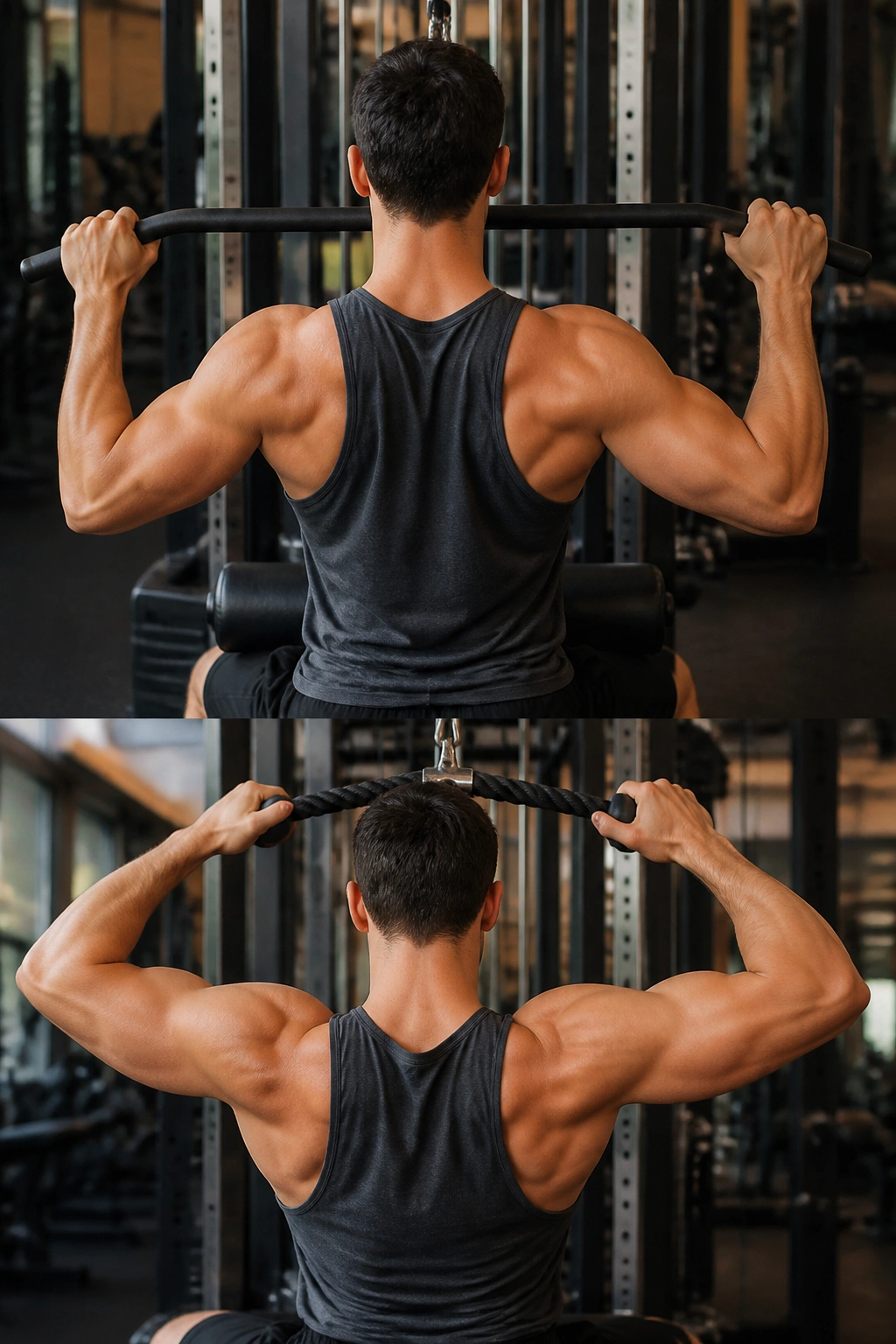
The cable stack hums, the bar comes down, and your upper back wakes up fast if you let the shoulders stay down. This combo is one of the easiest ways to teach pulling mechanics without needing pull-up strength on day one.
Do 8 to 12 reps of lat pulldowns, then move to 12 to 15 reps of face pulls with a rope attachment. Rest 45 to 75 seconds and repeat for 2 to 3 rounds. The lat pulldown handles the bigger pull; the face pull cleans up the rear delts and upper back.
A Simple Pair That Teaches Two Jobs
- Lat pulldown: pull the bar to the upper chest, elbows angled down and slightly in.
- Face pull: bring the rope toward eye level, thumbs back, elbows high.
- Both: let the return happen slowly.
- Both: keep the ribs from flaring forward.
- Both: stop the set before your neck takes over.
This pairing is especially useful if you sit a lot, because it reminds the shoulder blades how to move without hunching. It also balances out all the pressing work in the chest and shoulders. If the face pull feels awkward at first, lighten the stack. It’s a small movement with a big payoff when done correctly.
One rep done well beats three sloppy ones. Every time.
9. Stationary Bike Intervals
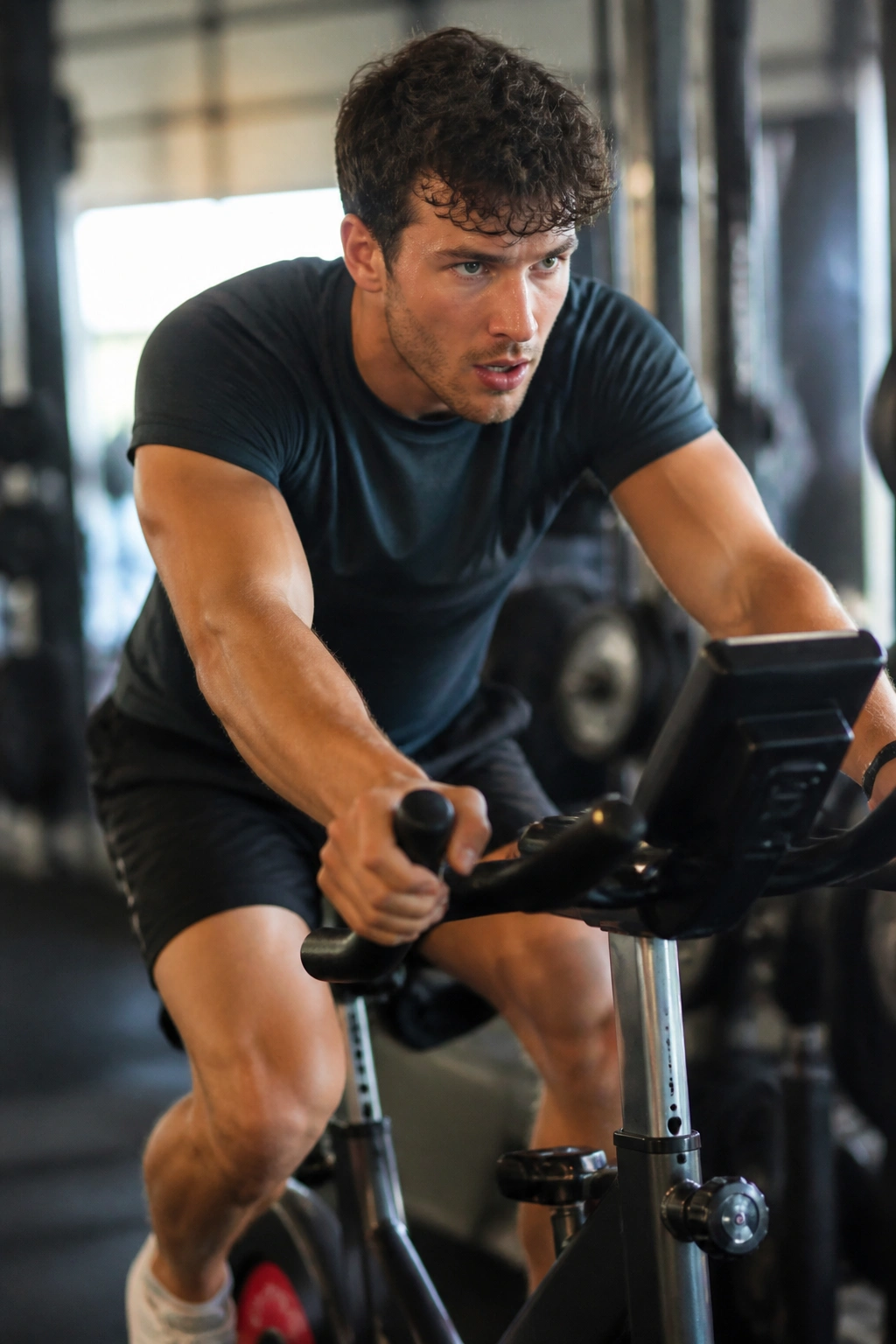
Sweat is not the goal. A repeatable effort is.
The stationary bike is a smart place to practice that. Set the seat so there’s a slight bend in the knee at the bottom of the pedal stroke. Warm up for 5 minutes at an easy pace, then ride 1 minute hard and 2 minutes easy for 6 to 8 rounds. Finish with 5 minutes of light spinning.
The hard minute should feel demanding, but not panicked. You should still be able to keep your posture steady instead of folding over the handlebars. A cadence around 70 to 90 revolutions per minute works for many beginners, though the exact number matters less than keeping the effort smooth.
If your knees ache, raise the seat a bit and reduce resistance. If your hips rock side to side, the seat is probably too high. The bike is merciful when the fit is right and annoying when it isn’t.
I like bike intervals for new lifters because they build conditioning without the impact of running. That matters more than people think.
10. Kettlebell Deadlift and Carry
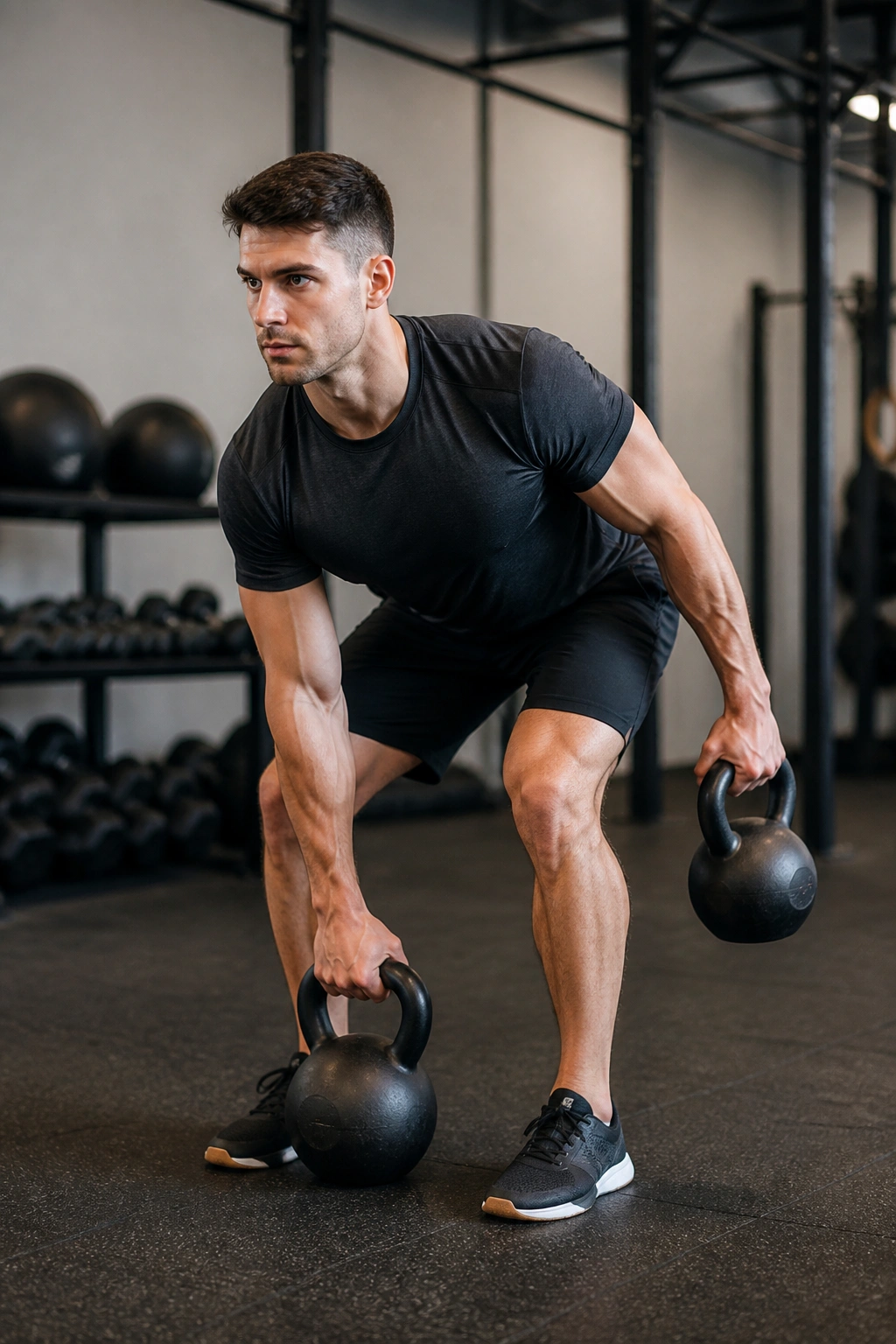
Why use a kettlebell for the hinge? Because the handle starts where your hands need to go. There’s less setup, less confusion, and fewer chances to turn the lift into a guessing game.
Stand with the kettlebell between your feet, shins close to the bell. Push your hips back, grab the handle, and stand up by driving through the mid-foot. Do 3 sets of 6 to 8 deadlifts, then pick the bell up for a farmer carry or suitcase carry of 20 to 30 meters per side.
What the Carry Adds
- Farmer carry: two bells, walk tall, ribs down.
- Suitcase carry: one bell, don’t lean away from it.
- Both train grip, core, and posture.
- Both teach you to stay steady while moving.
The carry part is the sleeper. People expect deadlifts to be the hard bit, then the walk makes them notice how much their trunk has to work to keep the body from folding. That is exactly why it’s useful.
If your grip gives out early, use a lighter bell and walk with cleaner posture. And if the kettlebell bumps your forearm on the way down, you are probably squatting the weight instead of hinging it.
11. Rowing Machine Pyramid Workout
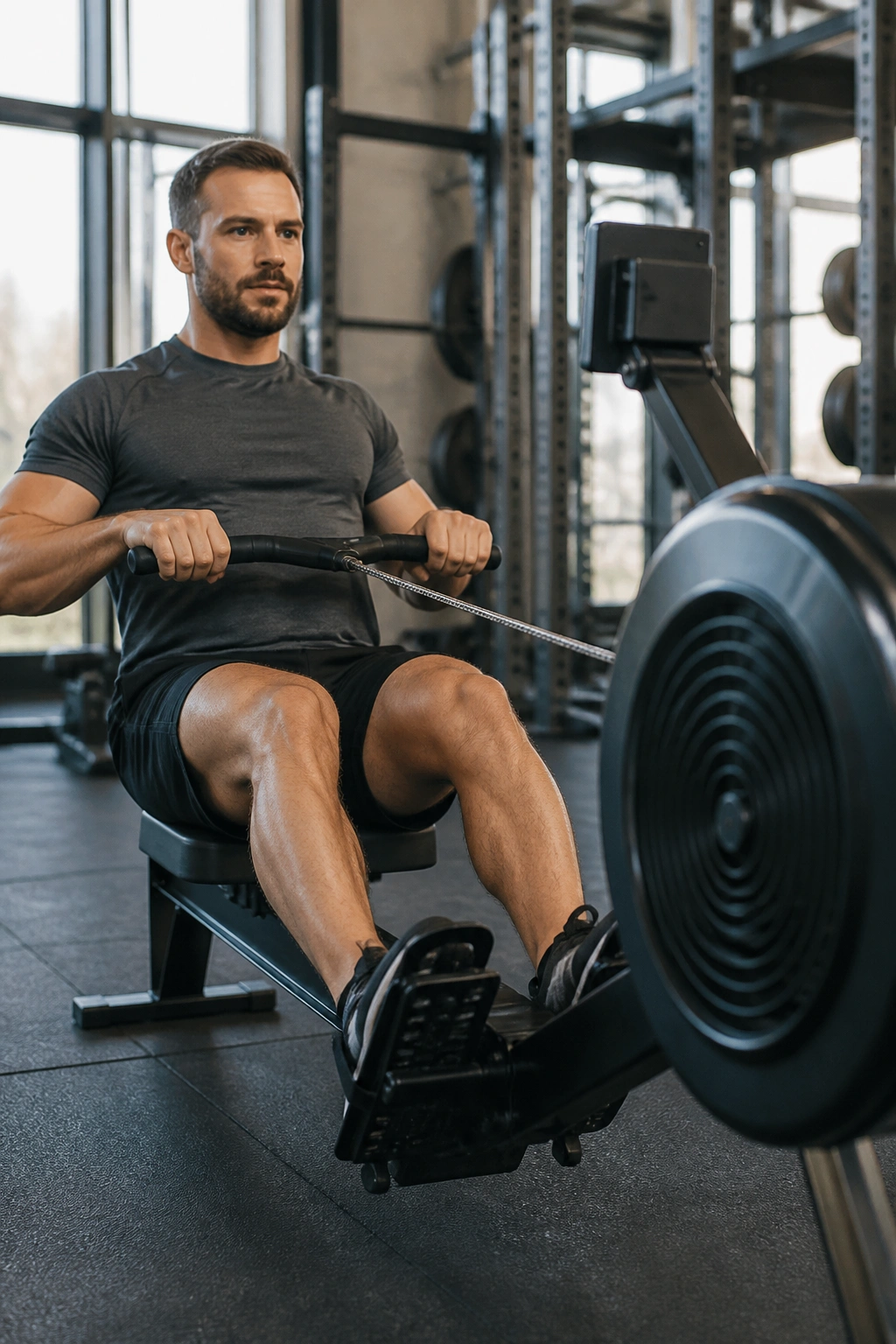
The rower looks simple until your lungs start paying attention. Then the machine gets honest fast.
A beginner-friendly pyramid is 1 minute moderate, 2 minutes moderate, 3 minutes moderate, 2 minutes moderate, 1 minute moderate, with 1 minute easy rowing or complete rest between each work interval. Keep the stroke rate around 18 to 22 strokes per minute. That pace gives you room to use your legs instead of yanking with your arms.
The Stroke Order That Saves Your Back
On the drive, think legs first, then hips, then arms. On the recovery, reverse it: arms, then hips, then legs. If you rush the return, the seat shoots forward and the whole stroke gets messy.
A lot of people set the damper too high because heavier feels tougher. It usually just feels clumsier. A middle setting is fine for beginners, and a smooth stroke is worth more than brute force.
One clean warning: if your lower back rounds hard at the front of the stroke, shorten the stroke and lighten the effort. The rower should light up your legs and lungs, not punish your spine.
It’s a quiet machine. It just doesn’t stay quiet for long.
12. TRX Suspension Circuit
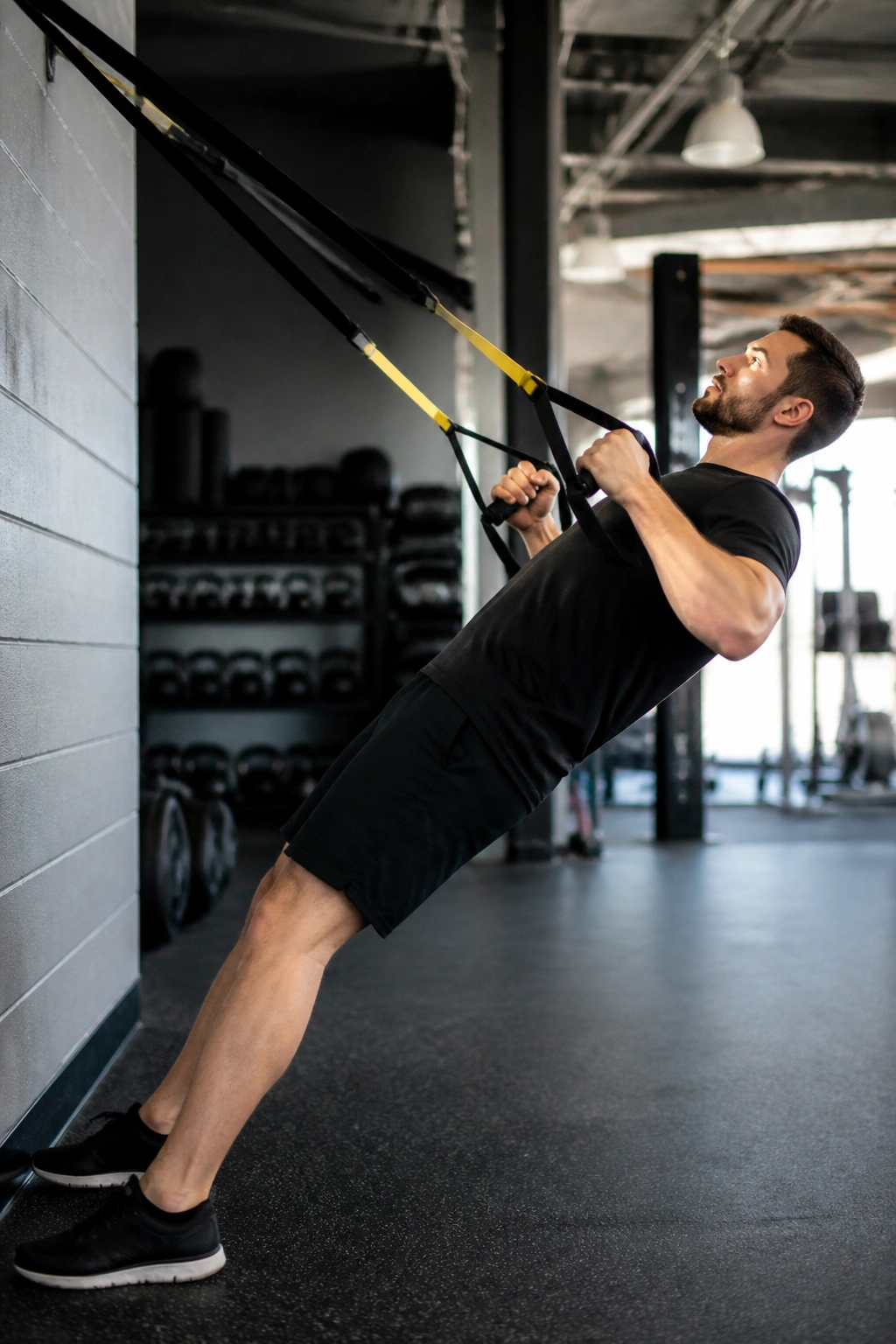
Give a pair of straps and a wall anchor to a new lifter, and balance issues show up fast. That’s useful. The TRX suspension circuit forces the body to stay honest without needing a pile of weights.
Try TRX rows, TRX chest presses, assisted squats, and a plank hold. Do 8 to 10 reps of each move, then rest 60 seconds and repeat for 2 rounds. Keep the body in a straight line from head to heels during the row and press. If the straps sway like crazy, step your feet a little closer to the anchor.
How to Change the Difficulty
- Walk your feet forward to make rows harder.
- Step back to make them easier.
- Lower your body angle for chest presses if you want more load.
- Hold the straps lightly; death-gripping them makes the shoulders tense up.
- Keep the core tight so the lower back doesn’t sag.
The nice thing here is how fast the machine responds. Small body-angle changes make the exercise harder or easier in a second or two. That’s gold for beginners, because it lets you find the right challenge without needing to change plates or hunt for dumbbells.
A TRX session can look light from across the room. It is not light once you’re halfway through.
13. Smith Machine Split Squat
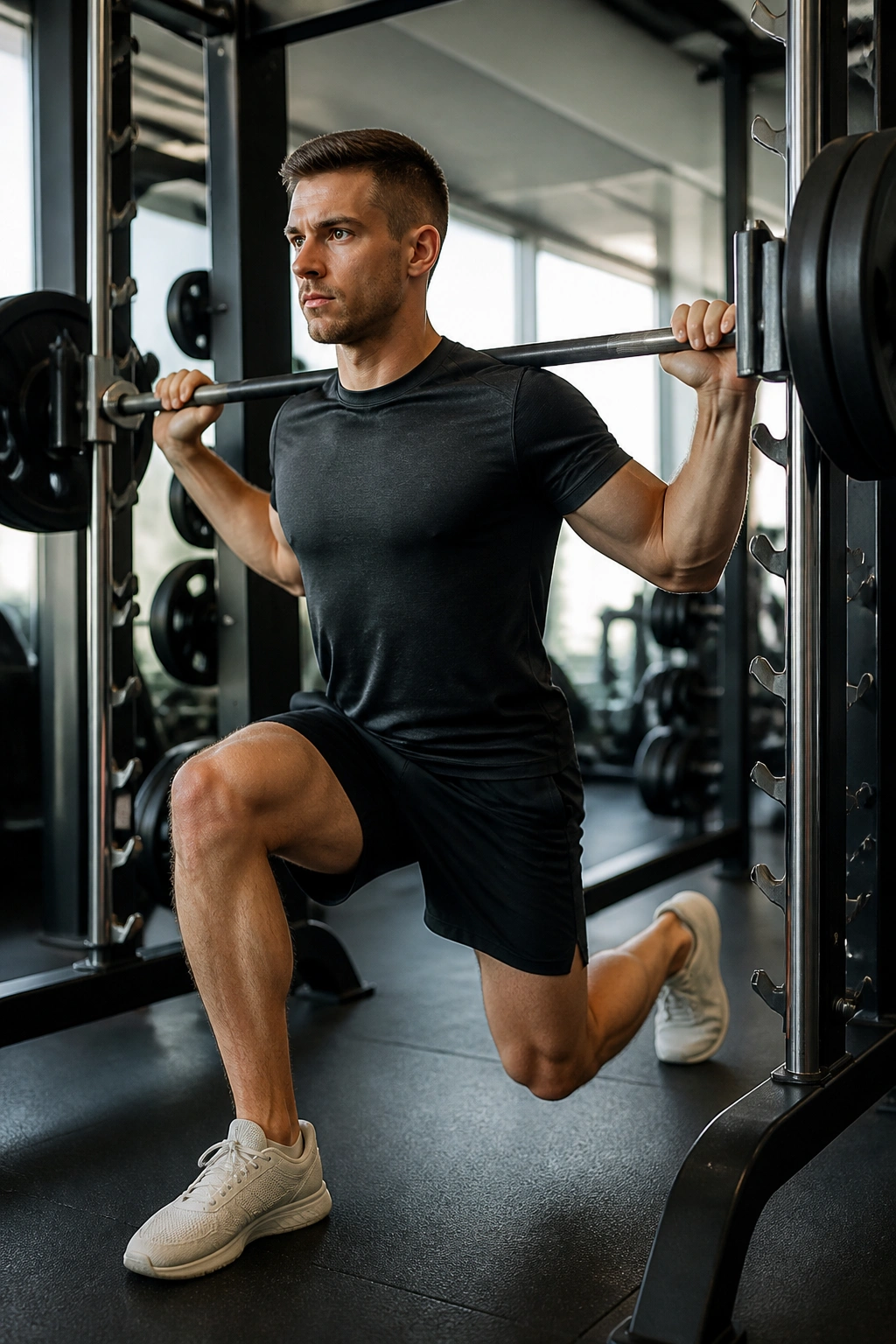
A free-weight split squat asks a lot of balance. The Smith machine cuts that part down and lets you focus on the legs, which is a fair trade when you’re new.
Set one foot forward and the other back, then place the bar on your upper back as you would for a squat. Lower straight down until the back knee nearly kisses the floor, then drive up through the front heel and mid-foot. 2 to 3 sets of 8 reps per leg is plenty at the start.
The front foot needs to be far enough forward that the heel stays down. Too close, and the knee shoots forward and the set feels awkward. Too far, and the front leg turns into a deadlift. There’s a sweet spot, and you’ll find it quickly if you lower under control.
This is a good choice for people who want leg work without having to manage a barbell, dumbbells, and balance all at once. It can feel a little clunky the first time. Fine. Clunky is part of learning.
If the back knee gets cranky, shorten the range of motion and use a smaller stance until the movement settles down.
14. Cable Core and Carry Workout
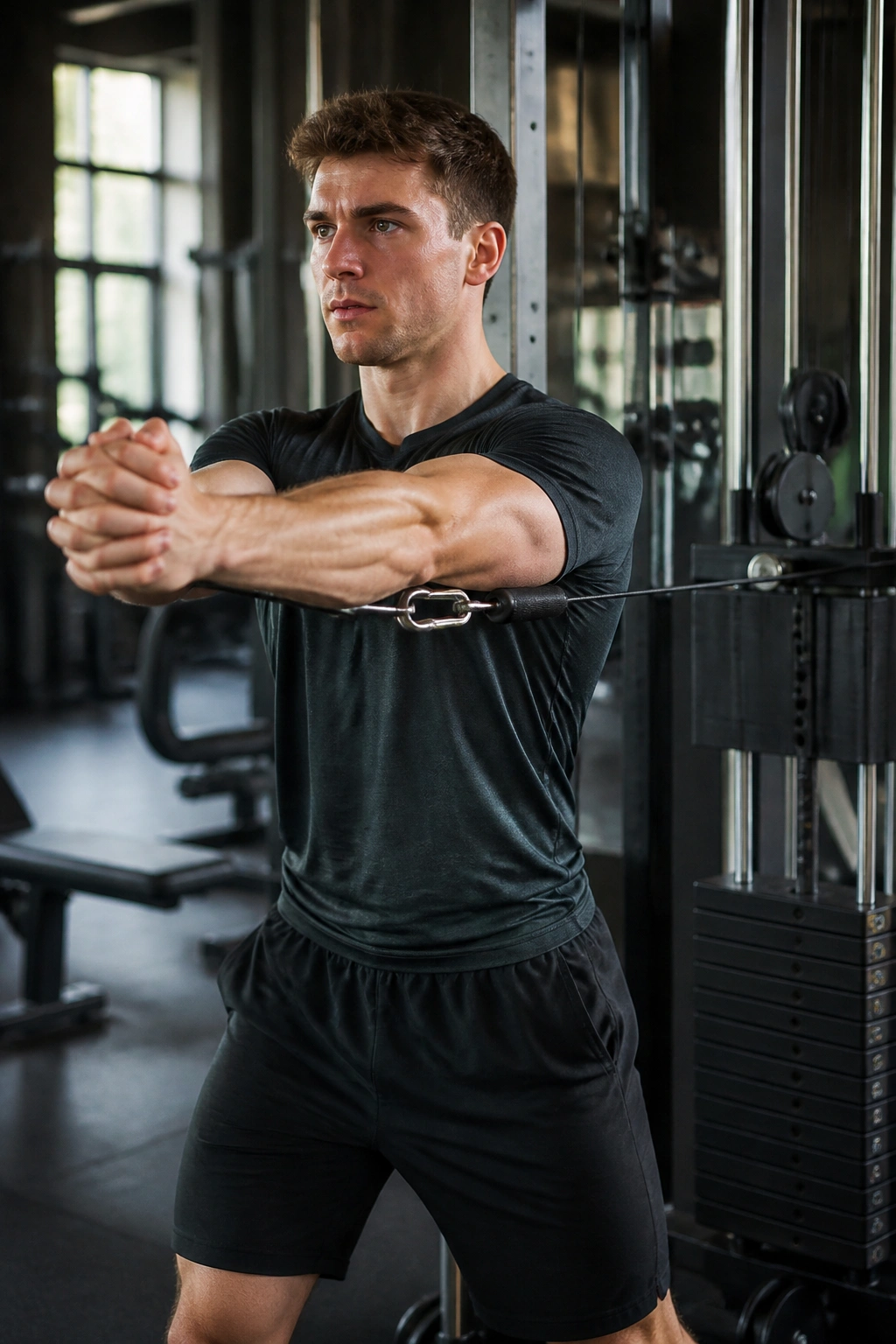
A strong core is mostly about resisting movement, not doing endless crunches. That’s why cable work and carries make such a strong beginner combo.
Try a Pallof press, a cable wood chop, and a farmer carry. Do 10 reps per side on the Pallof press, 8 to 10 reps per side on the wood chop, then walk 20 to 30 meters with the carry. Rest 45 to 60 seconds and repeat for 2 rounds.
What Each Move Teaches
- Pallof press: resist rotation.
- Wood chop: control rotation.
- Farmer carry: keep the torso steady while moving.
- All three: brace the ribs without holding your breath forever.
The Pallof press is probably the cleanest anti-rotation drill most beginners never try. You press the handle straight out and fight the pull back toward the stack. That tiny fight teaches the middle of the body to stay put.
If your lower back feels loaded during these moves, the weight is too high. Drop it. The goal is control, not a heroic cable stack number.
It’s boring in the best way.
15. Mobility and Recovery Session
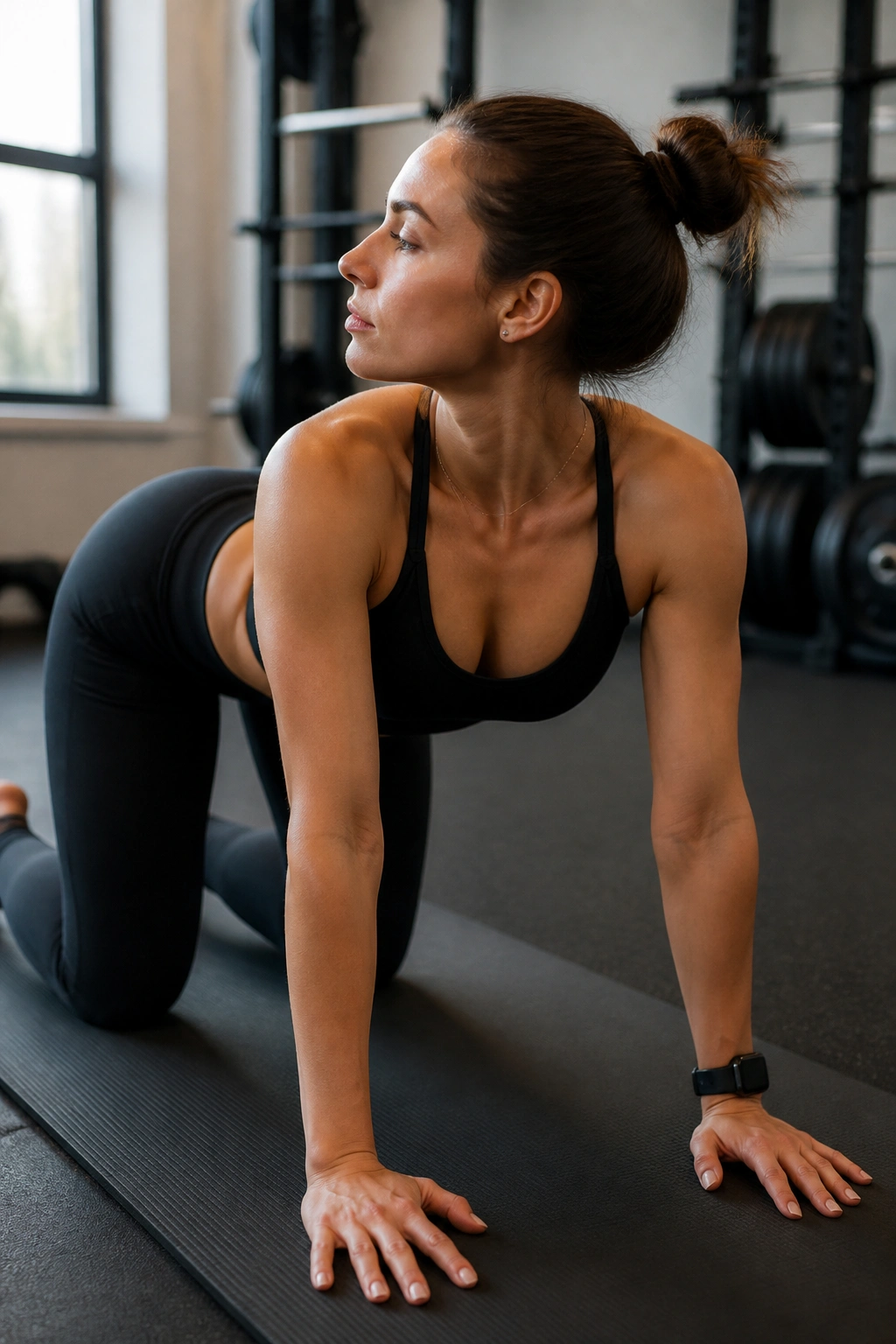
Rest days should not mean staring at your phone and hoping soreness goes away. A recovery workout gives you something productive to do when your body feels stiff, beat up, or mentally flat.
Start with 5 to 10 minutes of easy walking or cycling. Then move into a simple mobility circuit: cat-camel for 6 reps, wall slides for 8 reps, ankle rocks for 10 reps per side, hip flexor stretch for 30 seconds per side, and dead bug breathing for 5 slow breaths. One round is enough on a very tired day. Two rounds works if you want a little more.
A session like this will not leave you drenched. That is not the point. It should leave you moving a little better, breathing a little easier, and less creaky when you stand up from the bench or car seat.
If you like structure, put this on the calendar between harder gym days. If you hate stretching, keep it short and almost annoyingly simple. Ten honest minutes beats forty scattered ones.
This is the workout that keeps the other workouts possible.
Final Thoughts
A first gym plan does not need to look fancy. It needs to feel repeatable. That’s the real test. If you can walk in, do the work, and know roughly what comes next, you’re already ahead of the usual chaos.
Pick three or four of these sessions, write them down, and repeat them for a few weeks before you start hunting for new moves. New lifters usually need less variety than they think and more rhythm than they expect.
The best sign you chose well is not a destroyed feeling on the way out. It’s being willing to come back two days later and do it again.
