



The best four week workout challenges for beginners do one simple thing well: they make starting feel possible. A month is long enough to build a habit, short enough to finish before life starts pushing back, and that matters more than most fitness advice admits.
Beginners do not need punishment. They need a clear lane, a repeatable schedule, and a little room to miss a day without deciding the whole thing was pointless. The plans that work best are usually not flashy; they’re the ones you can actually keep doing when your motivation dips and your schedule gets messy.
Public-health guidance has long pointed to roughly 150 minutes of moderate activity a week, but that number only matters if you can live with it. I care more about whether you can finish week two without dreading week three. Walks, bodyweight work, dumbbells, bands, machines, mobility — they all have a place when they’re used with some restraint and a little common sense.
Pick the one that matches your life, not your fantasy self. A home workout with no gear can be perfect. So can a simple gym plan with dumbbells and a bench. The first challenge you finish beats the perfect one you keep meaning to start.
1. Walking Ladder Challenge

Walking is underrated. Hard stop.
People tend to dismiss it because it doesn’t look dramatic, but a brisk walk done four or five times a week can change how training feels for a beginner. It warms up the legs, wakes up the lungs, and gives you a low-stress win before you ever touch a dumbbell.
How the four weeks build
Week one should feel almost too easy: 20 minutes, four days a week, at a pace where you can talk in full sentences. Week two adds five minutes to each walk and throws in three one-minute brisk pickups. Week three goes to 30 minutes and one hill or incline route. Week four lands at 35 to 40 minutes, with five brisk pickups spread through the session.
- Best for: people who hate complicated plans
- Equipment: decent shoes, that’s it
- Good cue: breathing faster, but not gasping
- Good sign: your legs feel warmer after 8 to 10 minutes
A small hill changes the whole feel of the challenge. So does a route with one loop you can repeat without thinking. I like that part — less decision-making, more moving.
Tip: if you keep skipping walks because they feel “too light,” make the first 5 minutes slower and the middle 10 minutes brisker. That usually fixes the boredom without turning the session into a slog.
2. Bodyweight Strength Challenge

Bodyweight work isn’t weak. It’s only weak when you rush through sloppy reps and call it training.
A good beginner strength challenge can be built around five moves: squat, push, hinge, plank, and pull substitute. No, bodyweight rows are not always possible at home, so a beginner version often uses a towel row in a sturdy doorway, an incline push-up, a glute bridge, a dead bug, and a split squat. That’s enough to build a real foundation.
Week one is about learning positions. Do 2 rounds, 6 to 10 reps per move, with 60 seconds of rest. Week two becomes 3 rounds. Week three slows the lowering phase to 3 seconds down on squats and push-ups. Week four either adds a fourth round or adds 2 reps per exercise. The pace matters more than chasing exhaustion.
One sentence matters here: clean reps beat hard reps.
I like this challenge for people who have been inactive because it teaches control first. If your knees cave inward on squats or your lower back arches on bridges, shorten the range and slow down. That’s not failure. That’s the lesson.
3. Resistance Band Challenge
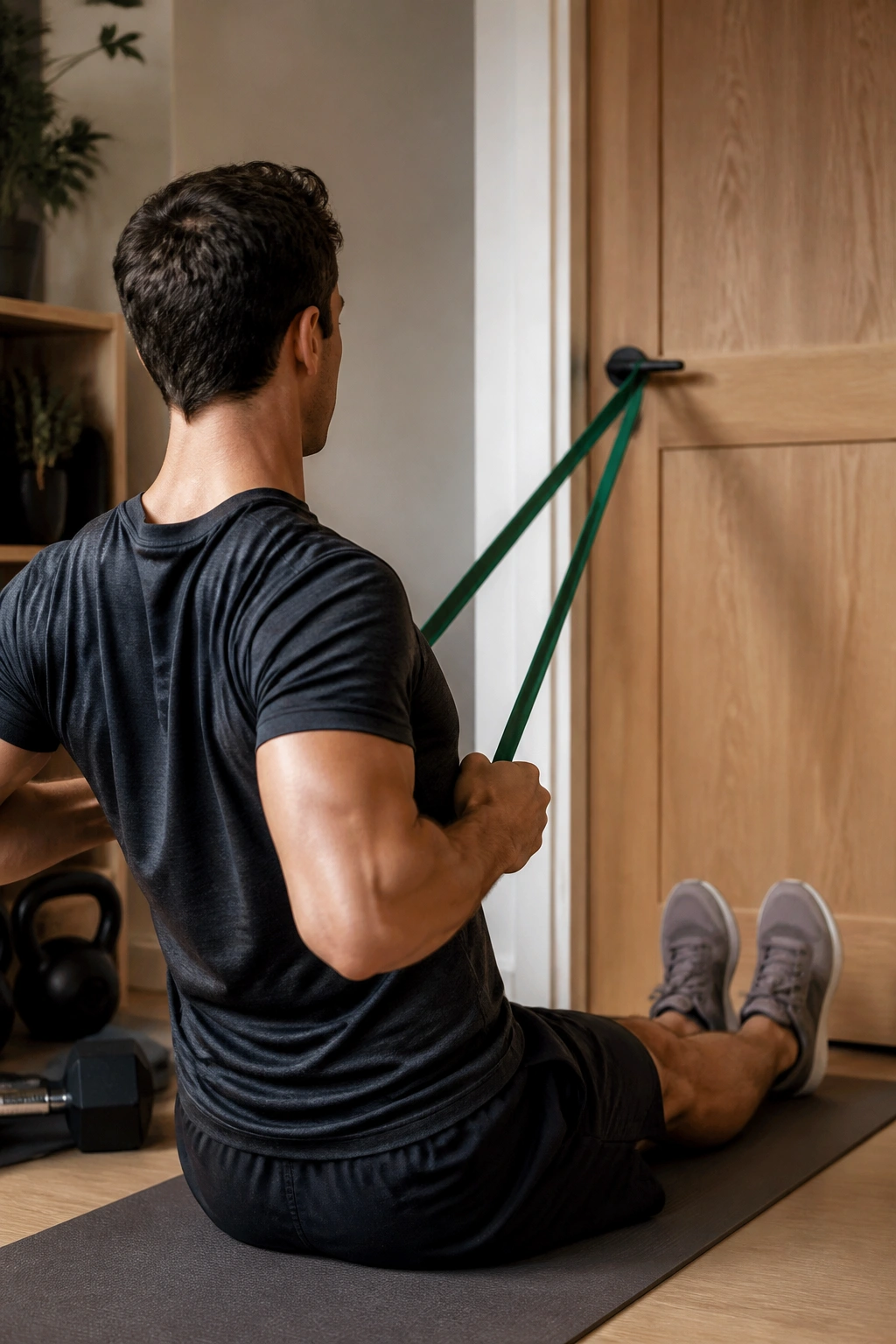
Can one band carry a whole month of training? Yes, if you choose the right moves.
Resistance bands are cheap, small, and sneaky in the best way. They’re easy on joints, they travel well, and they make simple exercises feel real without needing a rack or a pile of plates. A beginner only needs a long loop band or tube band with a handle, plus maybe a mini band for the hips.
The band moves that matter
- Band row for the back
- Banded squat for the legs
- Chest press for pushing strength
- Pull-apart for upper-back posture
- Monster walk for glutes and hips
- Pallof press for core control
Use two to four sessions a week. Start with 2 sets of 10 to 12 reps, then build to 3 sets by week three. By week four, make the band feel harder by stepping farther from the anchor or slowing the lowering phase.
A band can feel too easy if you stand too close. It can also feel ridiculous if you yank it around without tension. That’s the catch. Smooth control is the whole game.
Pro tip: keep one band in the car or near the couch. Convenience makes the difference between “I’m doing a challenge” and “I meant to.”
4. Dumbbell Basics Challenge

Dumbbells are the sweet spot for a lot of beginners. They’re simple enough to learn fast, but they scale well enough that you won’t outgrow them in two weeks.
The best beginner dumbbell challenge uses a small handful of lifts and repeats them often: goblet squat, one-arm row, floor press, Romanian deadlift, and overhead press. That’s a real full-body plan, not random machine hopping. Two or three workout days a week is plenty.
Start with 2 sets of 8 reps for each lift in week one. In week two, move to 3 sets on the first two exercises. Week three keeps the same sets but adds a slow 2-second pause at the bottom of the squat and deadlift. Week four is where you can push to 3 sets across the board, as long as form stays tidy.
Pick a dumbbell weight that leaves 2 good reps in reserve. If the last rep turns into a shrug, a swing, or a back bend, it’s too heavy for now.
What to watch for
- Neutral wrists on presses
- Flat back on deadlifts
- Elbows tucked enough on rows
- Feet planted hard on squats
This plan works best for beginners who like a little structure and want to feel stronger in a clear, measurable way.
5. Low-Impact Cardio and Core Challenge

Not everyone wants jumping, burpees, or a floor full of sweat by minute six. Fair enough.
A low-impact cardio and core challenge is a good fit for people who want to build stamina without feeling beat up. Think bike, elliptical, marching in place, step-touches, or a rower at an easy pace. Pair that with a short core block, and you’ve got a month that builds work capacity without nagging the knees or ankles.
Here’s a clean weekly pattern: 3 cardio days and 2 core days. Cardio starts at 15 to 20 minutes in week one, moves to 20 to 25 minutes in week two, and reaches 30 minutes by week four. Core work stays short — 8 to 12 minutes — but gets a little more demanding through longer holds or extra rounds.
The best intensity cue is simple: you should be breathing harder, but still able to say a short sentence.
For the core, use dead bugs, bird dogs, side planks, and heel taps. Skip the thousand-crunch nonsense. It gets boring fast and doesn’t teach much.
I like this challenge for people rebuilding after a long break. It gives you conditioning without the punishment that makes beginners quit.
6. Push-Up Progression Challenge

Can’t do a floor push-up yet? Good. Start higher.
That is not a setback. It’s smart training. Most beginners fail push-ups because they start too low, not because they’re “bad at upper body work.” Hands on a wall, a countertop, a sturdy bench, or the edge of a couch can all be the right place to begin.
Week one should use an incline where you can manage 3 sets of 6 to 8 clean reps. Week two lowers the angle a little. Week three keeps the lower incline but adds a 2-second pause at the bottom. Week four either returns to the lower incline for more reps or tries a few slow negatives from the floor.
How to know you’re ready to lower the angle
- Your ribs stay tucked
- Your neck stays long
- Your body moves as one line
- Your shoulders don’t shrug up to your ears
One clean push-up at a better angle teaches more than ten sloppy floor reps. That’s the part people hate hearing, and it’s still true.
If you want a simple rule, use this one: move the hands lower only when your last rep looks the same as your first.
7. Squat and Glute Builder Challenge

Leg day does not need to be complicated.
A beginner squat and glute challenge works because the lower body responds well to repetition. You do not need seven exercises and a playlist that sounds like a nightclub. You need a squat pattern, a hinge, a single-leg move, and one bridge or carry that wakes the hips up.
A simple four-week build
Week one: sit-to-stand, glute bridge, and box squat for 2 sets each.
Week two: add reverse lunges or split squats at a small range.
Week three: raise the box a little lower or add a 3-second lowering phase.
Week four: move to 3 sets and push the last few reps with clean depth.
The glute bridge is the quiet star here. It looks plain. It isn’t.
If your knees complain, use a higher box or hold onto a wall for balance during split squats. If your lower back takes over on bridges, squeeze the ribs down and shorten the range.
This challenge is especially good for people who sit a lot and want their legs to feel more awake when they stand up.
8. Mobility and Morning Reset Challenge

Some bodies need motion before they want effort.
This challenge isn’t about sweating through your shirt. It’s about getting your joints to move without a fight. Ten to fifteen minutes a day is enough if you repeat it often enough to matter. I like this one for beginners who wake up stiff, sit at a desk, or spend too much time pretending stretching doesn’t count.
The daily sequence
- Cat-cow for the spine
- Thoracic rotations for the upper back
- Hip flexor stretch for the front of the hips
- Ankle rocks for squat depth
- Wall slides for shoulders
- Deep squat hold, if it feels okay
Spend 30 to 45 seconds on each move. Week one is about learning where you feel tight. Week two adds a little more range. Week three holds each position a bit longer. Week four mixes in slow breathing so the body stops bracing all day.
One thing I’d say plainly: mobility is not a magic fix. But it makes squats easier, walking smoother, and desk stiffness less annoying.
A daily reset like this often becomes the thing people keep after the four weeks end. There’s a reason for that. It fits between waking up and making coffee.
9. Treadmill Incline Walk Challenge

Need cardio without jogging? Use incline, not speed.
Treadmills give beginners a nice control knob. You can keep the pace modest and make the workout harder by raising the incline a little. That’s cleaner than trying to run before your ankles, shins, or lungs are ready for it.
Start with 20 minutes, 3 to 4 days a week, at about 2 to 4 percent incline and a speed that feels like a purposeful walk. By week two, push one or two sessions to 5 percent. Week three can include short 2-minute climbs at 6 to 8 percent. Week four might be 25 to 30 minutes with a steady middle block on incline.
A useful cue: you should feel like you’re working, but not like you’re hanging on the rails for dear life.
Treadmill habits that help
- Keep your stride natural
- Don’t lean on the handles
- Wear shoes with a stable base
- Shorten the pace before you grab the rails
If the incline makes you hunch forward, back off a notch. A small hill with good posture beats a steep wall with bad form. Every time.
This challenge is excellent for rainy days, hot weather, and anyone who wants a little structure without impact.
10. Kettlebell Foundation Challenge

Kettlebells teach a lot in a small space.
They’re not magic, and they’re not hard for the sake of being hard. What makes them useful is the shape. The offset handle trains grip, the bell teaches you to control a load that sits outside your hand, and the basic movements — especially deadlifts and carries — build real-world strength fast.
Start with kettlebell deadlifts, goblet squats, halos, and suitcase carries. If your hinge looks solid by week three, you can add a light two-hand swing. If it doesn’t, skip the swing and keep practicing deadlifts. That’s the honest call.
A simple weekly rhythm
- Day 1: deadlift, goblet squat, carry
- Day 2: halo, row, dead bug
- Day 3: deadlift, split squat, suitcase carry
Begin with 2 sets of 8 to 10 reps. Week two adds a set to one or two moves. Week three keeps the same load but slows the lowering phase. Week four adds distance to the carries or a few more reps.
The bell should feel stable, not wild. If it slaps your forearm on halos or pulls you off balance on carries, the weight is too much.
This is one of my favorite beginner plans for people who want a compact home gym option that still feels serious.
11. Row, Bike, or Elliptical Endurance Challenge

Machine cardio gets ignored by people who think it looks boring. They’re missing the point.
A rower, stationary bike, or elliptical gives a beginner one big advantage: the machine does a lot of the path work for you. That leaves you free to focus on breathing, rhythm, and keeping a steady pace. No traffic, no weather, no excuses about sidewalks.
Pick one machine and stay with it for the full month. The plan is simple: 10 to 12 minutes in week one, 15 minutes in week two, 20 minutes in week three, and 25 minutes in week four. If straight time feels dull, use intervals like 40 seconds moderate, 80 seconds easy.
Your body should feel warm by minute five and a little tired by the end, not wrecked. That difference matters.
A tiny detail people miss: posture on machines makes a bigger difference than they think. On a bike, keep the chest open. On a rower, don’t yank with the arms first. On an elliptical, let the legs do the heavy lifting and stop clinging to the handles.
Machine work is not glamorous. It is, however, efficient. That counts.
12. Core Stability and Plank Challenge

Crunches aren’t the whole story. Not even close.
A beginner core challenge should teach bracing, not just burning. The goal is to keep the spine steady while the arms and legs move around it. That’s what helps with lifting, walking, and even standing around without feeling floppy through the middle.
The core tools that earn their keep
- Dead bug
- Bird dog
- Side plank
- Front plank
- Pallof press
Do 2 to 3 rounds of 3 to 4 exercises, with 20 to 30 seconds of work to start. Week two extends some holds to 30 seconds. Week three adds a second set if you’re staying stable. Week four can use longer side planks or slower dead bugs.
A plank should feel like your midsection is firm, not like your lower back is dropping. A dead bug should feel controlled, not frantic. If your neck is doing the job, you’re cheating the movement and probably feeling it in the wrong place.
Bracing cue
Imagine you’re about to cough. That light tightening through the middle is the feeling you want, just calmer and easier to hold.
This challenge is small, but it pays off fast. Your squats feel steadier. Your push-ups look cleaner. Even walking upstairs can feel less sloppy.
13. Posture and Upper Back Challenge
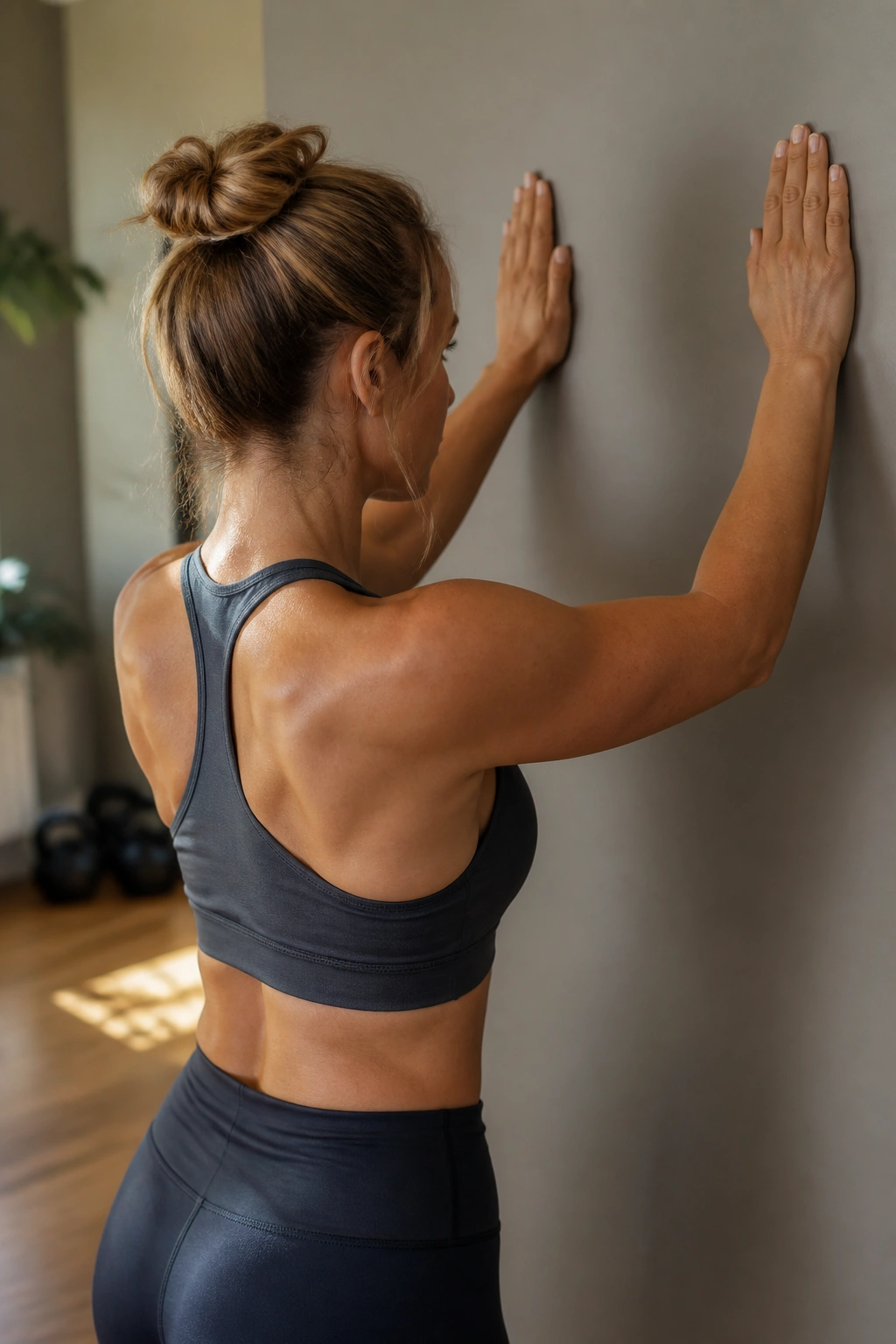
A desk doesn’t ruin posture by itself. Weak upper-back muscles do the heavy lifting there.
If your shoulders round forward after a long day, a posture-focused challenge can help. The point is not to stand stiff like a statue. The point is to give your back enough strength and endurance to hold your body in a better position without effort.
Use rows, band pull-aparts, wall slides, reverse flys, and farmer carries. That mix hits the upper back, rear shoulders, and the muscles that keep your shoulder blades moving well. Two or three sessions a week works fine.
Week one can be 2 sets of 12 reps. Week two moves to 3 sets for the rows and pull-aparts. Week three keeps the sets but slows the squeeze at the top. Week four adds a carry or a few extra seconds in the wall slide.
A little burn between the shoulder blades is fine. A pinchy shoulder is not.
I like this challenge for beginners who sit a lot or carry tension in the neck. It’s practical, not pretty, and that’s exactly why it works.
14. Beginner Split Routine Challenge

At some point, full-body sessions start to feel repetitive. That’s when a simple split can make training feel cleaner.
A beginner split routine usually means dividing the week into upper body and lower body days. Four sessions a week is enough: upper, lower, rest, upper, lower, then two easier days or full rest depending on recovery. You do not need to copy a hardcore gym bro schedule to get value from this.
A simple split layout
Upper days:
- Row
- Press
- Pull-apart or rear-delt work
- Carry or curl
Lower days:
- Squat
- Hinge
- Split squat
- Glute bridge or calf raise
Week one stays light and focused on form. Week two adds a set to the main lift on each day. Week three keeps the load steady and makes the reps cleaner. Week four raises either the weight or the reps, but not both at once.
Unlike full-body training, this gives each area a little more work in one session. That can feel easier to manage if you like seeing clear themes in your workout.
It’s a good bridge between beginner basics and the kind of routine you can keep for a long time.
15. Finish-Strong Mix Challenge

If you’re the kind of beginner who gets bored fast, stop forcing one style.
A mixed challenge gives you a bit of everything without turning the month into chaos. The trick is to keep the pieces simple. One strength day, one cardio day, one mobility day, one light full-body day. Repeat that pattern, and you’ve got enough variety to stay interested without losing the thread.
Here’s a clean version: Monday strength, Wednesday cardio, Friday mobility, Saturday full-body circuit. Strength can be dumbbells or bodyweight. Cardio can be a brisk walk, bike, or incline treadmill. Mobility stays short, around 10 minutes. The circuit can be squats, rows, presses, and planks for 2 or 3 rounds.
Week one is about learning the rhythm. Week two adds a little time to cardio. Week three adds a set to strength. Week four keeps the same schedule but trims the rest periods so the sessions feel tighter.
That mix matters because beginners rarely know what they’ll actually enjoy until they try it. Some people love lifting. Some prefer walks. Some surprise themselves by liking mobility work more than anything else. Fine. That’s useful information.
A month like this doesn’t just build fitness. It teaches you what you’ll repeat when the challenge ends. And that’s the part worth keeping.
