



Thirty minutes is enough. Enough to raise your heart rate, build a little muscle, loosen stiff hips, and clear the static from your head. It is not a consolation prize. Done well, a 30-minute workout can be sharp, focused, and far more useful than a wandering hour where you spend half the session looking for a bench, a kettlebell, or the motivation to start.
The trick is simple: stop treating half an hour like a warm-up for a “real” workout. Half an hour is the workout. That means tighter rest periods, cleaner exercise choices, and less drama. You pick a target — strength, cardio, mobility, or some mix of all three — then you stay on task. No wandering. No endless setup. No five-minute phone scroll between sets.
I like this format because it works on ordinary days. The days when you slept badly. The days when the gym feels crowded. The days when your brain wants a simple win. A 30-minute plan can be a hard sweat session, a low-impact reset, or a proper strength block, and that flexibility is the whole point.
1. The No-Equipment Bodyweight Ladder That Wakes Up Everything
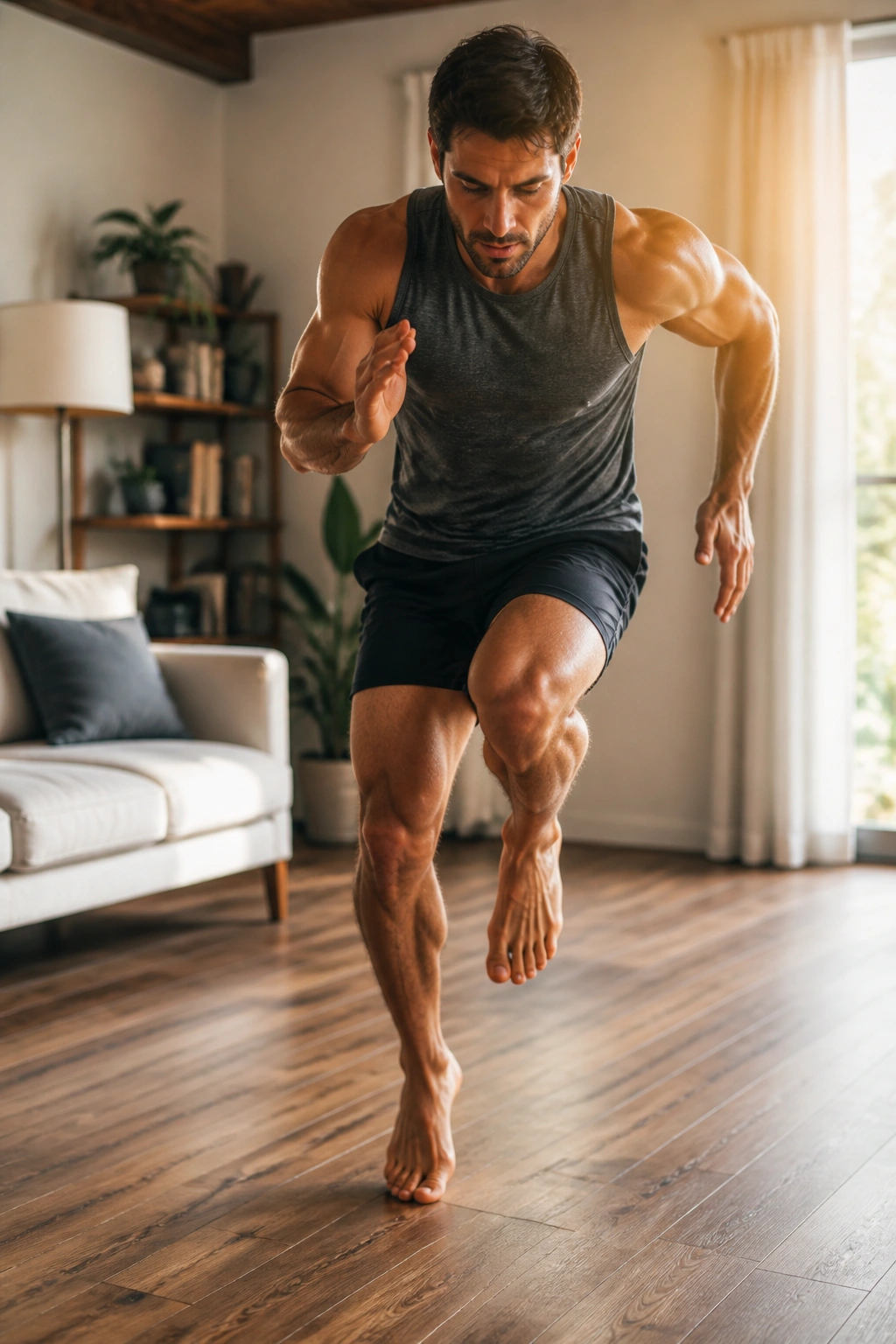
No equipment. No setup. No excuse. This is the workout I’d give someone who wants to train hard in a small space and doesn’t want to spend a second negotiating with dumbbells.
How the ladder works
Spend 5 minutes warming up with marching, arm circles, hip hinges, and a few easy squats. Then run a 20-minute ladder with five movements: squats, push-ups, reverse lunges, glute bridges, and mountain climbers. Start at 10 reps, then move down by one rep each round until time runs out.
Why it works so well
The ladder format keeps you moving without feeling frantic. You get enough volume to build heat and strength, but the decreasing reps make it easier to maintain decent form. That matters. A sloppy bodyweight workout is just fast exercise noise.
- Squats hit the legs and wake up the knees.
- Push-ups load the chest, shoulders, and triceps.
- Reverse lunges are kinder to the knees than forward lunges for a lot of people.
- Glute bridges keep your hips honest.
- Mountain climbers raise the heart rate fast.
Tip: If push-ups fall apart early, switch to an incline on a counter, bench, or sturdy chair. Clean reps beat ugly ones every time.
Finish with 5 minutes of easy stretching: calves, hip flexors, chest, and a slow forward fold. Your body should feel worked, not wrecked.
2. The Dumbbell Complex That Builds Strength Without Endless Rest
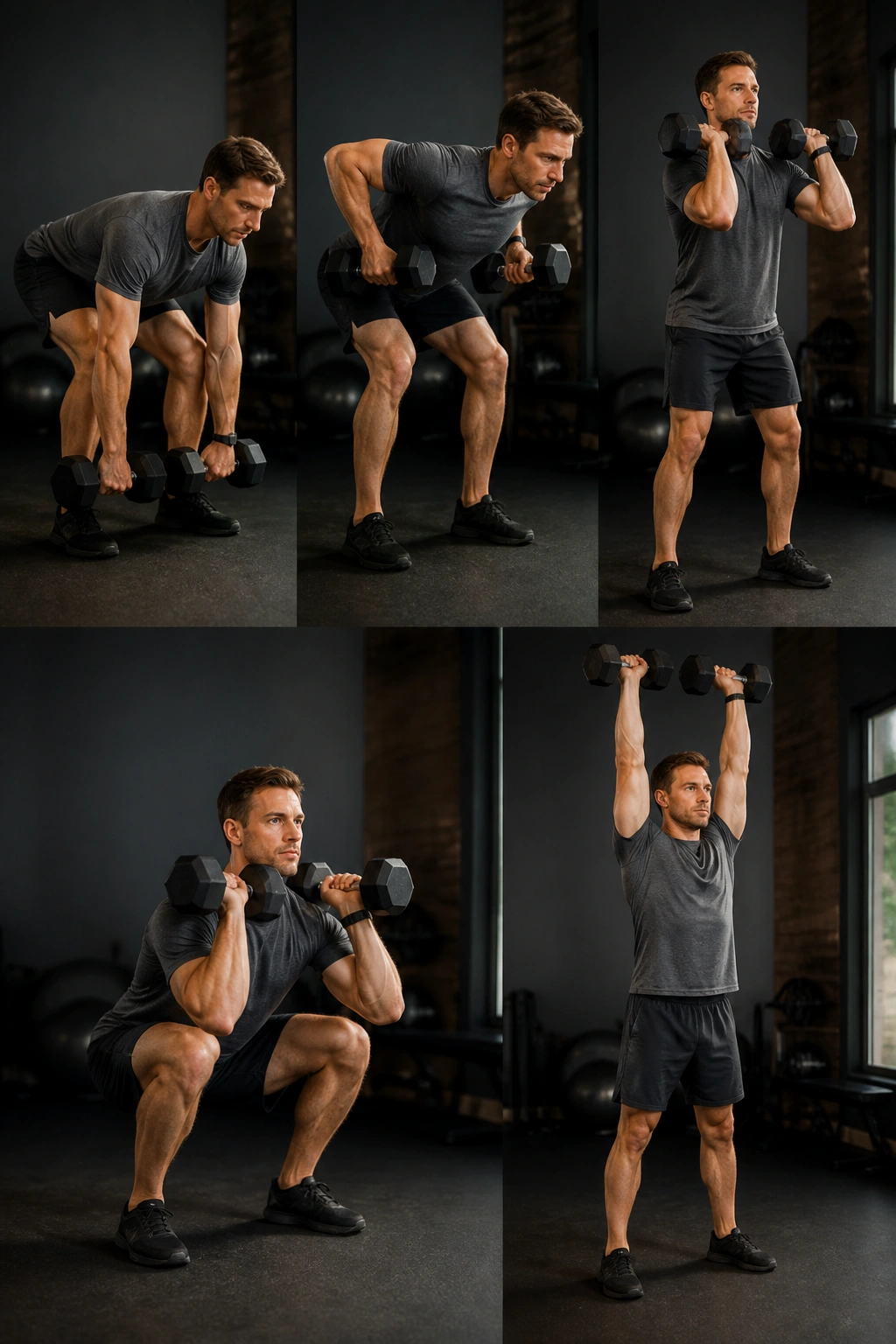
This one is brutally efficient. You pick up a pair of dumbbells, and you do not set them down until a round is finished. That’s the whole mood.
A simple complex can look like this: Romanian deadlift, bent-over row, hang clean, front squat, push press. Do 6 reps of each movement in order, then rest 90 seconds. Repeat for 4 rounds, which lands you right around 20 minutes of working time.
The beauty of a dumbbell complex is that the weight has to stay honest. You cannot use a load that only works for the strongest move in the sequence, because your grip, lungs, and legs all have to survive the whole chain. That makes the weight selection a little humbling. Good. It should.
What to watch for
The clean should be smooth, not wild. The front squat should feel controlled, not rushed. And the push press is where a lot of people cheat by turning it into a sloppy heave; use a small knee dip and drive straight up.
The first round usually feels tidy. The third round tells the truth.
Keep the dumbbells at a weight you can manage for all five moves with clean form. If the last two reps of the push press look like you’re trying to escape a bee, the load is too heavy.
3. Brisk Walking Intervals on a Hill or Treadmill

Need a workout that does not leave your joints grumpy? Walking intervals are underrated for a reason: they’re easy to start, hard enough to matter, and merciful on recovery days.
Set aside 5 minutes for a warm-up walk at an easy pace. Then spend 20 minutes alternating 2 minutes brisk and 1 minute easy. On a treadmill, use an incline of about 3 to 8 percent during the brisk segments. Outside, find a hill or just push the pace until talking in full sentences gets awkward.
How to make it count
The brisk part should feel purposeful. Not a stroll. Not a sprint. Think of it as a pace you could hold for a while, but you would rather not.
That middle ground is useful because it trains your aerobic system without the crash that can come from pushing too hard on tired legs. It’s also the kind of session you can repeat often without dreading it. That matters more than people admit.
Easy cues to use
- Arms swing naturally, not stiffly.
- Chest stays tall.
- Steps stay quick and light.
- Breathing gets deeper, but stays under control.
Good rule: if you finish and feel like you could have done a little more, you probably hit the right zone.
Spend the last 5 minutes cooling down at an easy pace. Simple. Effective. Annoyingly useful.
4. The Kettlebell Swing and Squat Circuit for a Fast Full-Body Hit
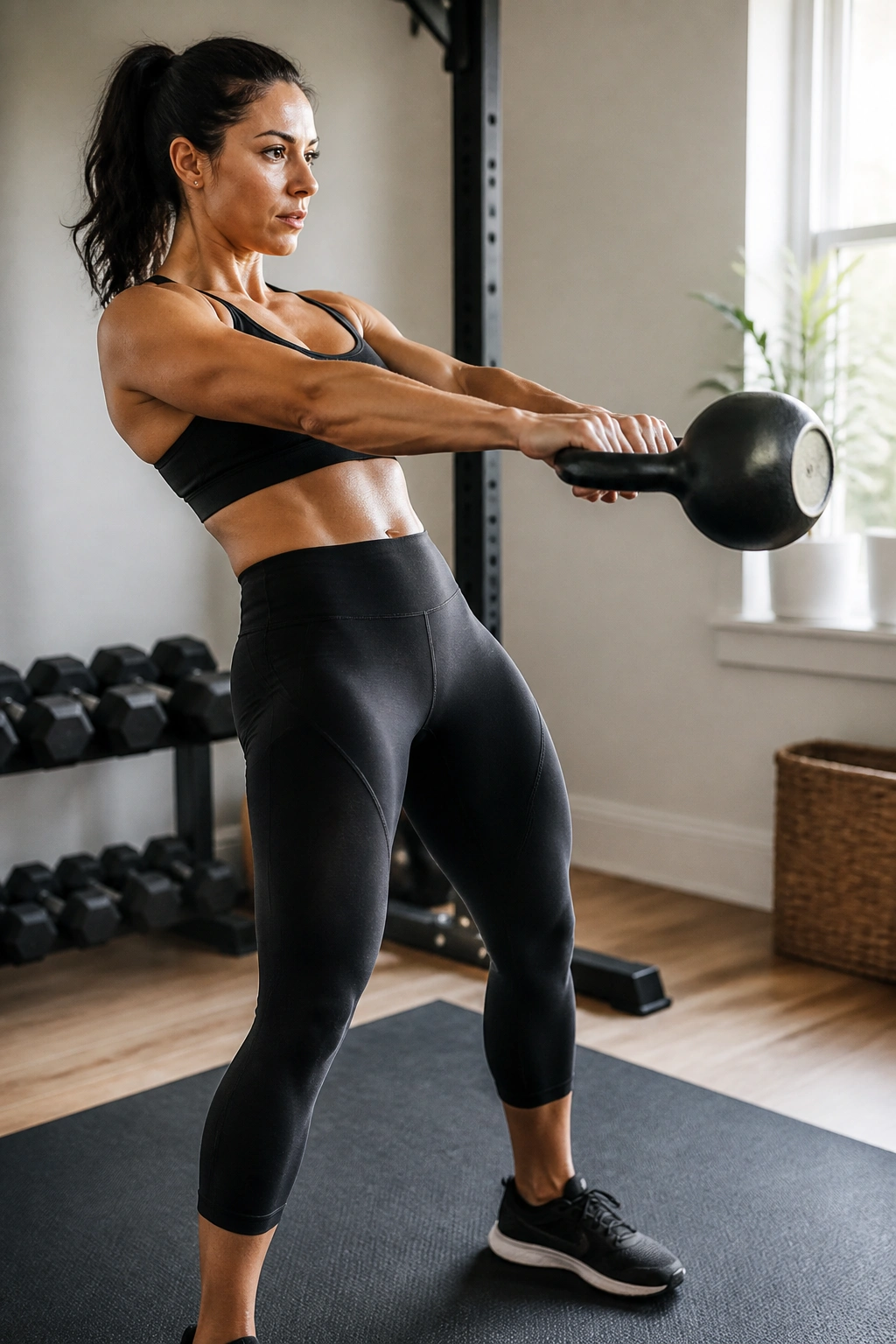
I love this format on days when I want to sweat, get my legs involved, and leave the gym feeling like I did something useful. Kettlebells are great for that because they reward crisp movement and punish laziness.
Run 5 rounds of this circuit: 15 kettlebell swings, 10 goblet squats, 8 kettlebell cleans per side, and a 30-second farmer carry. Rest 60 seconds between rounds. Add a 5-minute mobility warm-up before you start and a quick walk or stretch at the end.
The swing is the engine here. It drives the heart rate up fast, but it should come from a hip snap, not a squat. That’s the part people get wrong. If your shoulders are doing most of the work, the bell is too heavy or your hinge needs practice.
The goblet squat adds slower leg work, which balances out the explosive swings. The clean teaches you to move the bell without flinging it into orbit. And the carry? That’s your quiet little finisher. Your grip will know it happened.
If you only have one kettlebell, this still works. If you have two, don’t get greedy unless your form is already solid.
5. The Upper-Body EMOM That Keeps You Honest
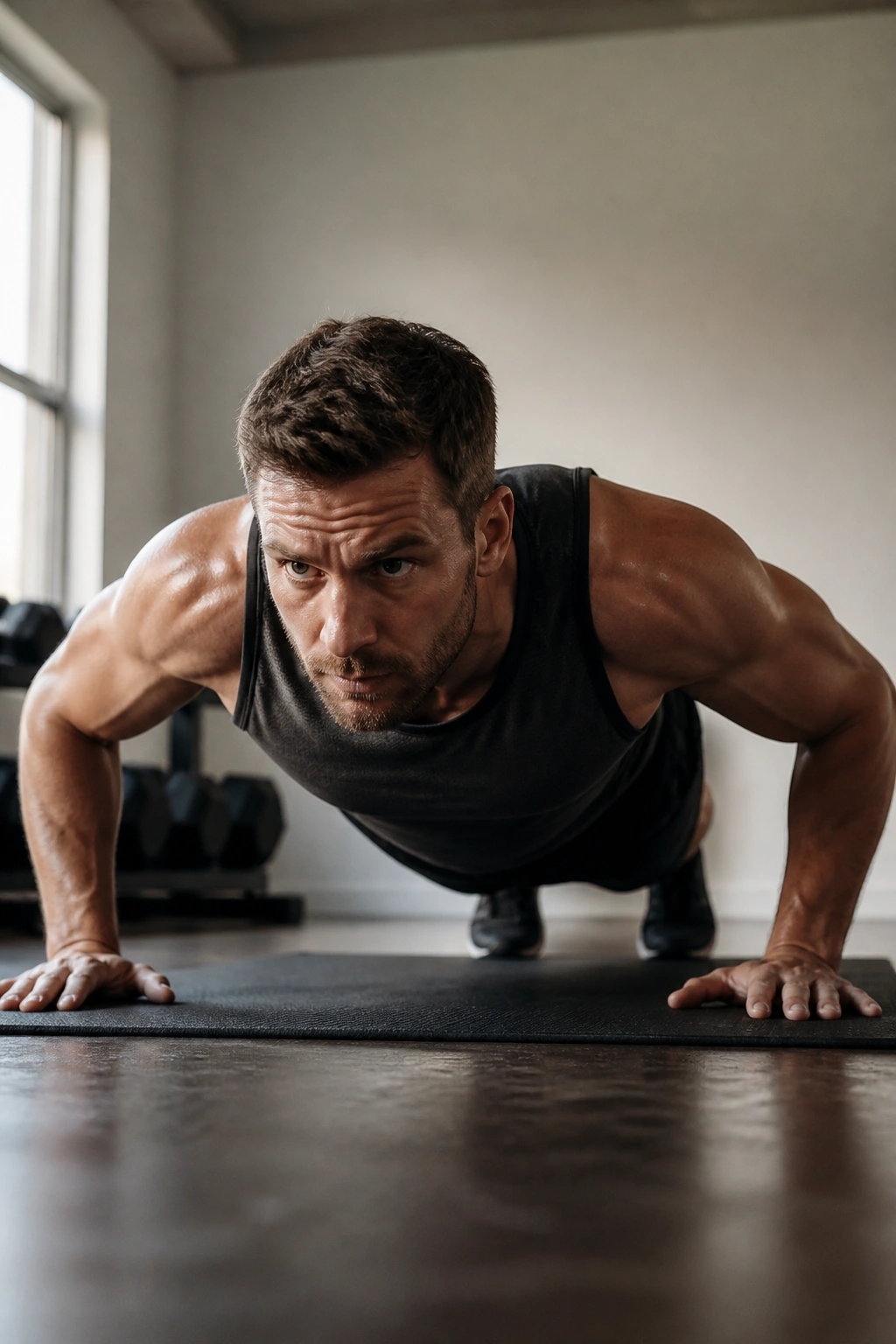
EMOM means every minute on the minute. You start a task at the top of the minute, finish it, then rest for whatever time is left before the next minute begins. It sounds neat because it is neat. Your brain gets structure, and your body gets no easy hiding places.
Use 20 minutes for the main block. Alternate these four stations for five rounds: 8 push-ups, 10 dumbbell rows per side, 8 dumbbell overhead presses, and 20-second plank hold. Warm up for 5 minutes with shoulder circles, band pull-aparts, and wall slides. Cool down for 5 minutes with chest and upper-back stretching.
Why this format is so good
Unlike a chest-day marathon, this keeps the work tidy. You hit pushing, pulling, and bracing in a way that feels balanced instead of lopsided. The minute clock also stops you from drifting.
If you finish a station in 25 seconds, great. You get 35 seconds to breathe. If you finish in 45, you learn something about your pacing. That feedback is useful.
How to scale it
- Do push-ups from a bench if needed.
- Use one heavier dumbbell row if your back feels stronger there.
- Press lighter than you think at first.
- Keep the plank sharp, not saggy.
Do not chase failure on round one. The workout should stay clean through the last round, or the EMOM loses its shape.
6. Split Squat Day for Legs That Need Real Work
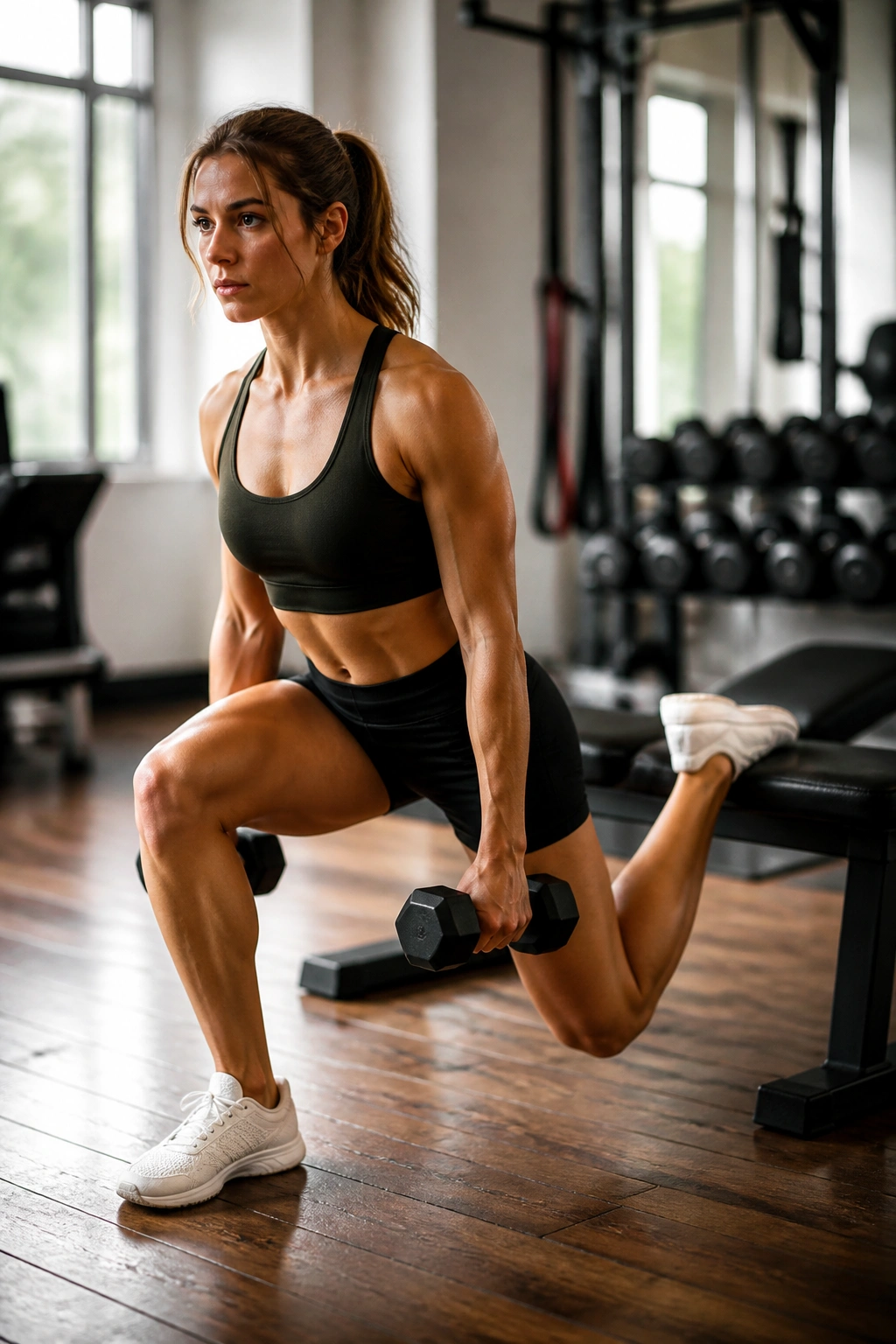
Split squats look boring until your front leg starts shaking. Then they feel like a very direct conversation with your quads and glutes.
Spend 5 minutes warming up with bodyweight lunges, ankle rocks, and a few glute bridges. Then work through 4 rounds of 10 Bulgarian split squats per leg, 12 single-leg Romanian deadlifts per leg, 15 calf raises per side, and a 30-second wall sit. Rest 60 to 90 seconds between rounds.
What makes this one bite
The split stance forces one leg to do the job instead of letting your stronger side hide in the background. That makes it excellent for balance, but it also exposes weak spots fast. One ankle may complain. One knee may wobble. Good. That’s information.
The Bulgarian split squat is the main event. Keep your front foot planted, let the back foot rest on a bench or chair, and lower slowly for 3 seconds. The slower descent is where the work lives.
If balance is the issue, ditch the rear-foot elevation and do a regular split squat first. There’s no prize for making it harder than necessary.
The calf raises and wall sit are not glamorous. They do not need to be. They finish the legs without wrecking your back, and that’s a trade I’ll take.
7. Jump Rope Intervals for Fast Cardio
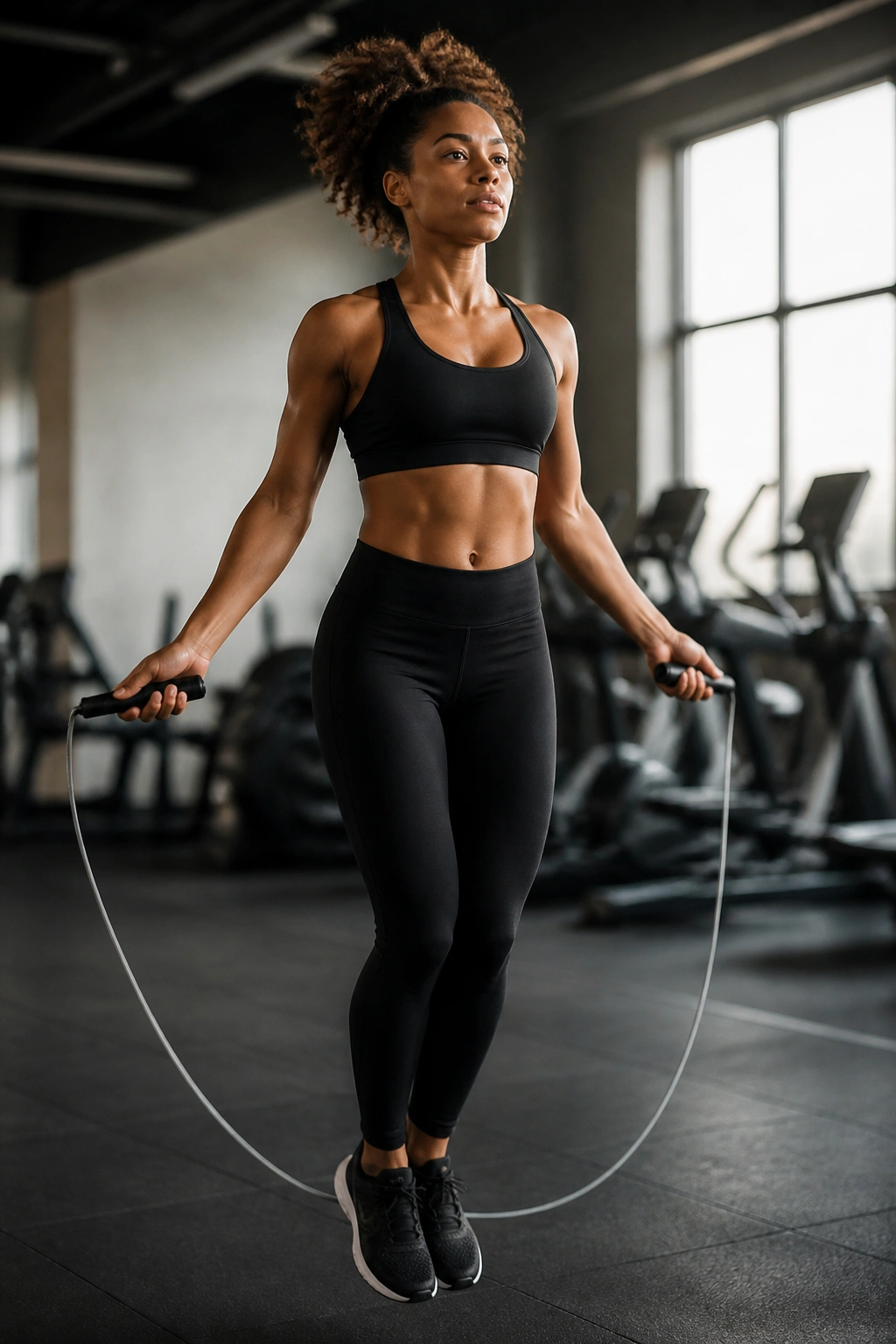
The rope snaps the floor, your feet start to bounce, and suddenly the room feels smaller. That’s jump rope for you. Compact. Unforgiving. Excellent.
Use 5 minutes to warm up with marching steps, ankle circles, and a few practice swings of the rope. Then do 10 rounds of 45 seconds on, 15 seconds off. Alternate basic bounce steps, alternate-foot steps, and high-knee rope work. Finish with 5 minutes of easy walking and calf stretching.
What makes rope work so well
Jump rope is honest cardio. If your rhythm is off, you know it immediately. If your calves are tight, they complain. If you lean too far forward, the rope catches your toes. There’s no hiding.
That’s also why it burns so much energy in a small window. The foot speed, the rhythm, and the coordination all stack on top of each other. You get a lot of output for the time spent.
A few useful cues
- Turn the rope with your wrists, not your shoulders.
- Keep jumps low. Think an inch or two.
- Land softly through the middle of the foot.
- Stay relaxed in the jaw and hands.
If you trip a few times, fine. Reset and keep going. A messy rope session still counts if you keep the work moving.
8. Pilates-Style Core and Glute Flow
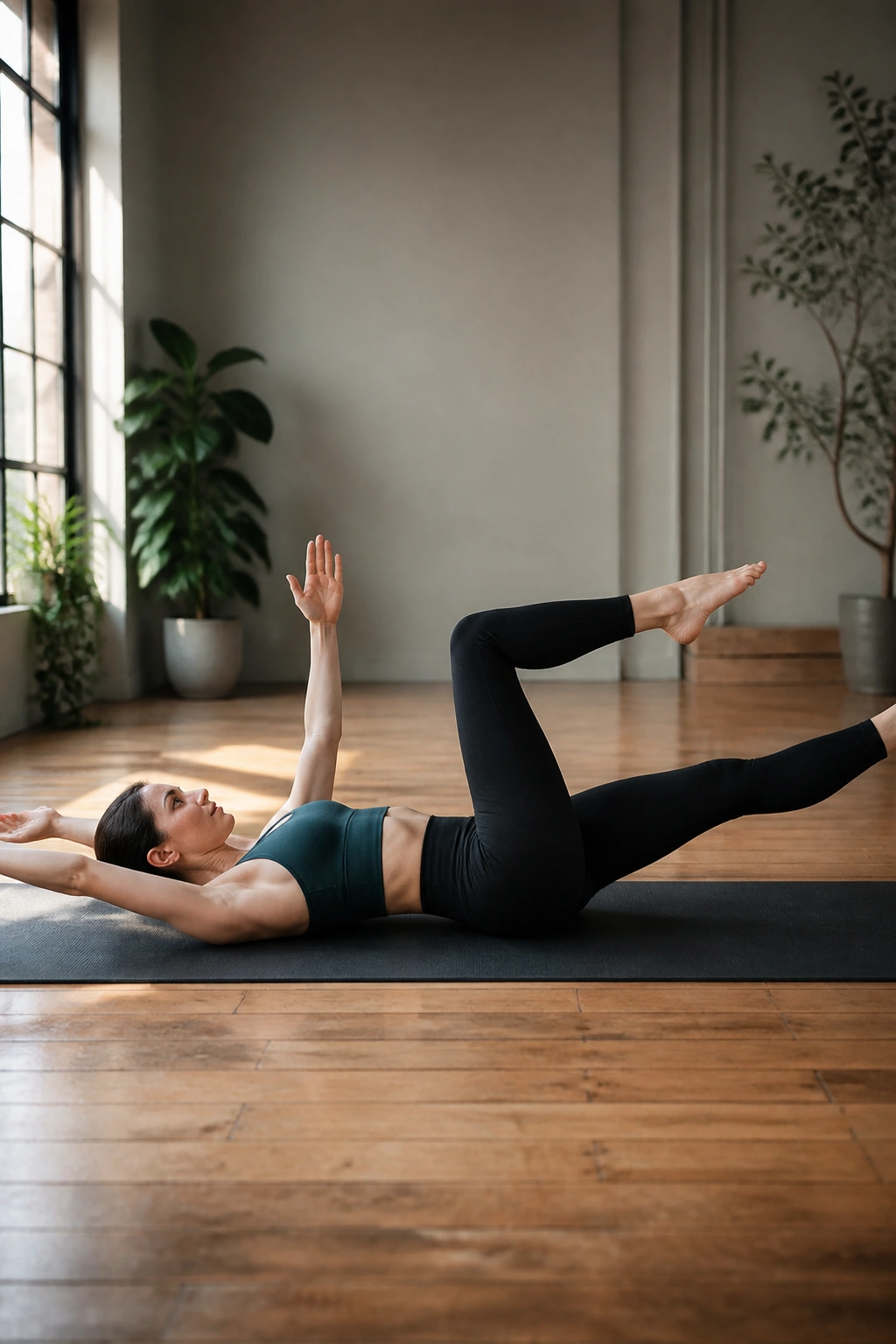
Want to train without beating up your knees or lower back? A Pilates-style flow is a smart choice. It is slower, yes, but slow does not mean easy.
Start with 5 minutes of easy breathing, spinal rolls, and cat-cow. Then spend 20 minutes moving through dead bugs, bird dogs, glute bridges, side planks, single-leg lowers, and hollow holds. Finish with 5 minutes of hip flexor and hamstring work.
Why the slow pace matters
A lot of people rush core work and wonder why their back feels more tired than their abs. Slow movement changes that. It makes you pay attention to rib position, pelvis control, and the small stabilizers that keep everything stacked.
How to keep it useful
- Move with control, not speed.
- Exhale on the hard part.
- Keep your lower back from arching off the floor.
- Stop the set when form gets shaky.
The glute bridge and side plank do a lot of heavy lifting here. The dead bug looks mild, but if you do it with proper control, it lights up the deep core in a way that crunches rarely do.
This is a smart workout for recovery days, desk-day stiffness, or anyone whose body wants training without impact.
9. Rowing Intervals That Teach Your Legs to Work First
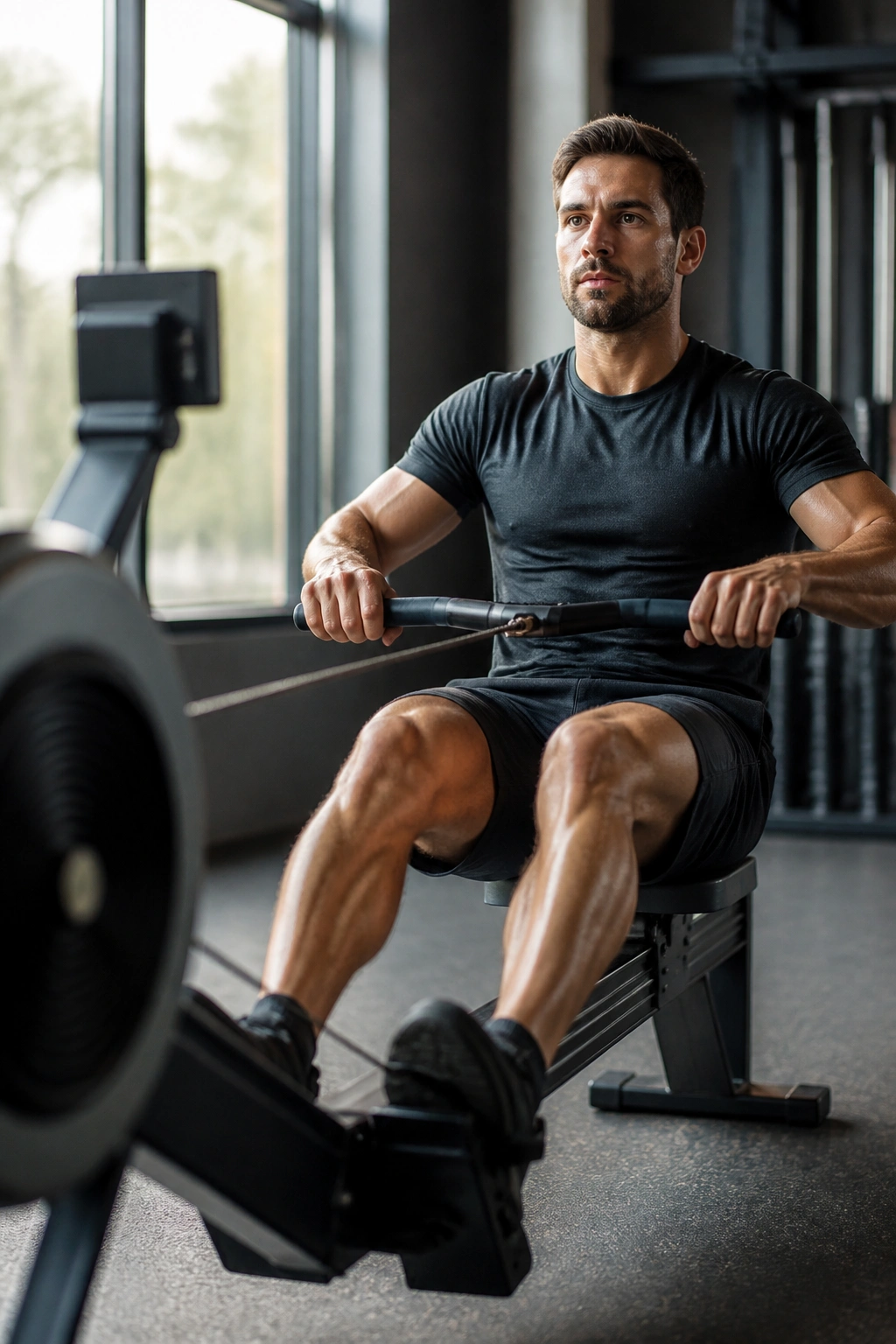
Most people row with their arms and wonder why they gas out early. The machine is not the problem. The sequence is.
Row for 5 minutes easy to warm up. Then do 6 rounds of 2 minutes hard and 1 minute easy. Focus on a clean stroke: legs drive first, torso follows, arms finish last. Cool down for 5 minutes at a low stroke rate.
Stroke order matters
If the legs do not lead, the rower turns into an awkward upper-body tug-of-war. That usually looks like rounded shoulders and a frantic pull. Bad trade. The pull should feel smooth from floor to handle.
Think push, open, pull. Push through the legs, open the hips, then draw the handle in. On the return, reverse the order and let the machine glide.
What to watch for
- Shins stay close to vertical at the catch.
- Shoulders stay away from the ears.
- The handle moves level, not upward.
- The damper setting should not be cranked to the ceiling.
A 30-minute rowing workout can build a lot of aerobic capacity without pounding your joints. It is also one of those sessions where good technique pays off immediately. Row well, and it feels smoother. Row badly, and it feels like fighting furniture.
10. Low-Impact Dance Cardio for Days You Want Sweat Without Impact
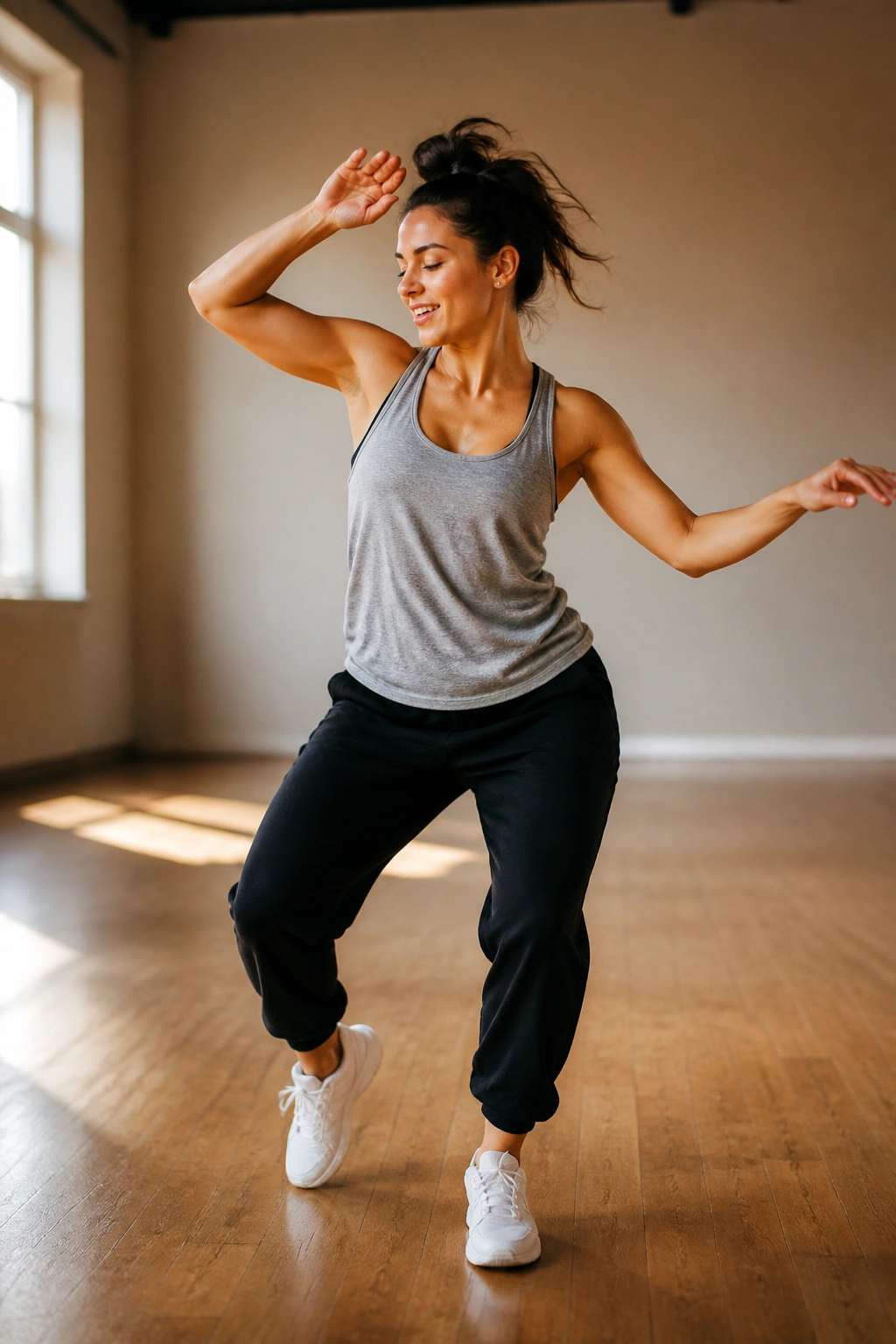
Some days you want to move like a person, not like a machine. Dance cardio fits that mood perfectly.
Spend 5 minutes warming up with marching, shoulder rolls, and side steps. Then run six 3-minute blocks of continuous movement: step touches, grapevines, knee lifts, hamstring curls, and light reaches overhead. Rest 30 seconds between blocks. Use the final 7 minutes for a longer cooldown and some loose hip circles.
This works because it keeps the rhythm alive. You are not bouncing hard off the floor, so the joints get a break, but you are still moving enough to build heat. A lot of people skip dance-style work because they think it looks too easy. That opinion tends to change after the third song.
Easy ways to make it better
- Keep the steps big enough to raise your heart rate.
- Use your arms. Half the benefit is there.
- Turn your feet out and in to wake up the hips.
- Pick music with a steady beat, not a chaotic one.
No one needs to dance like a class demo video. Clean, simple patterns are enough. If the workout leaves you smiling and slightly out of breath, it did its job.
11. Power Yoga Flow That Opens Hips and Builds Heat
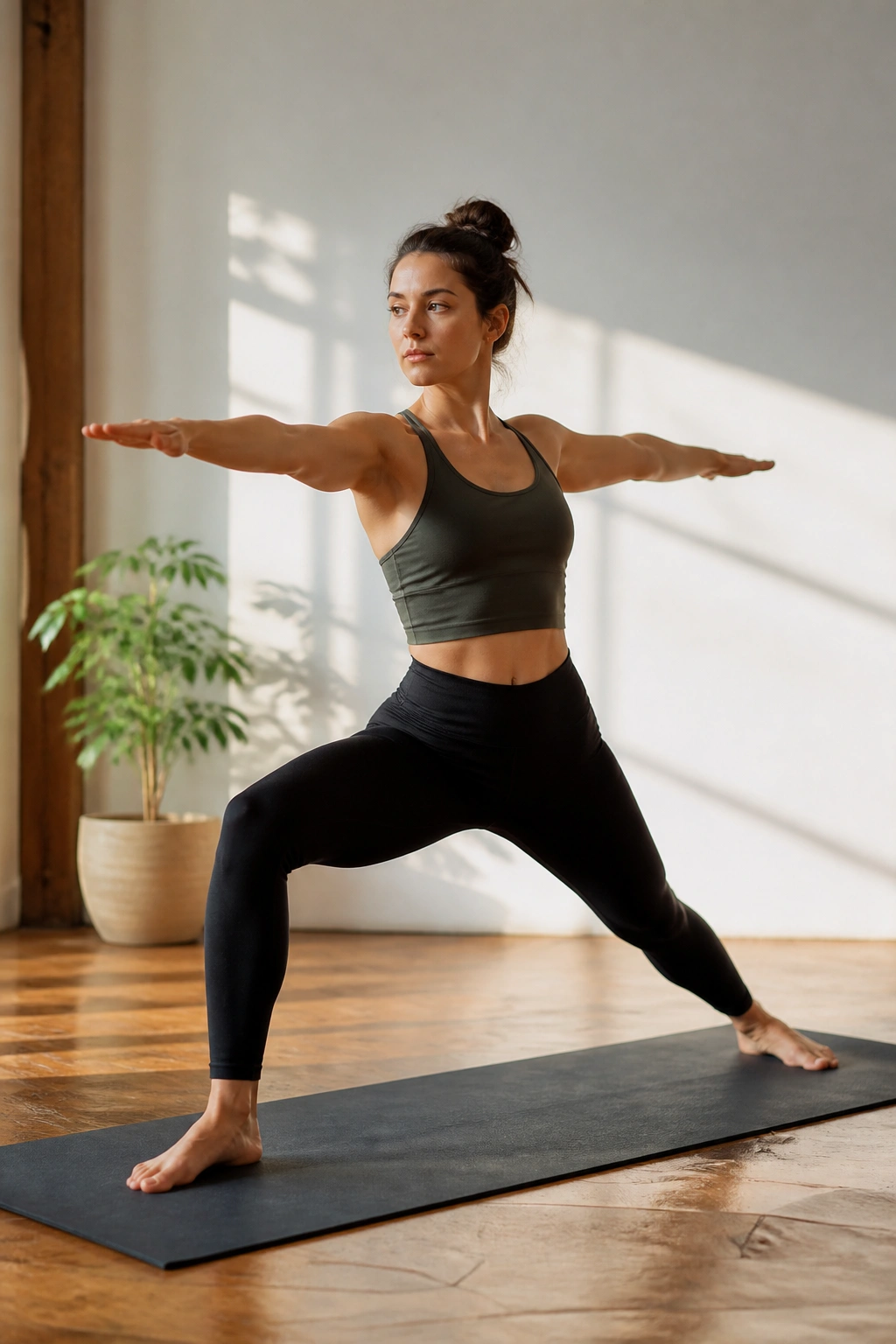
Unlike a sleepy stretch session, this kind of yoga flow asks your muscles to stay switched on. You still get mobility, but you also get work.
Use 5 minutes to breathe, roll the shoulders, and move through cat-cow. Then flow for 20 minutes through repeated rounds of sun salutations, chair pose, crescent lunge, warrior II, plank, and downward dog. Spend the last 5 minutes settling into pigeon, seated twist, or a long child’s pose.
The shape of the session
Keep the movements linked. Chair into forward fold. Forward fold into lunge. Lunge into warrior. It should feel like a sequence, not a collection of poses thrown at the wall.
The useful part here is the blend of load and control. Chair pose asks the legs to hold position. Plank makes the trunk work. Lunge opens the hips while also challenging balance. That combination leaves you feeling both looser and more awake.
What to avoid
- Don’t dump into the joints.
- Don’t rush the transitions.
- Don’t hold your breath in balancing poses.
- Don’t force a deep stretch when the muscle is cold.
If you want a 30-minute workout that calms the mind without turning into a nap, this is the one I’d point to first.
12. Battle Rope Rounds for Pure Upper-Body Smoke
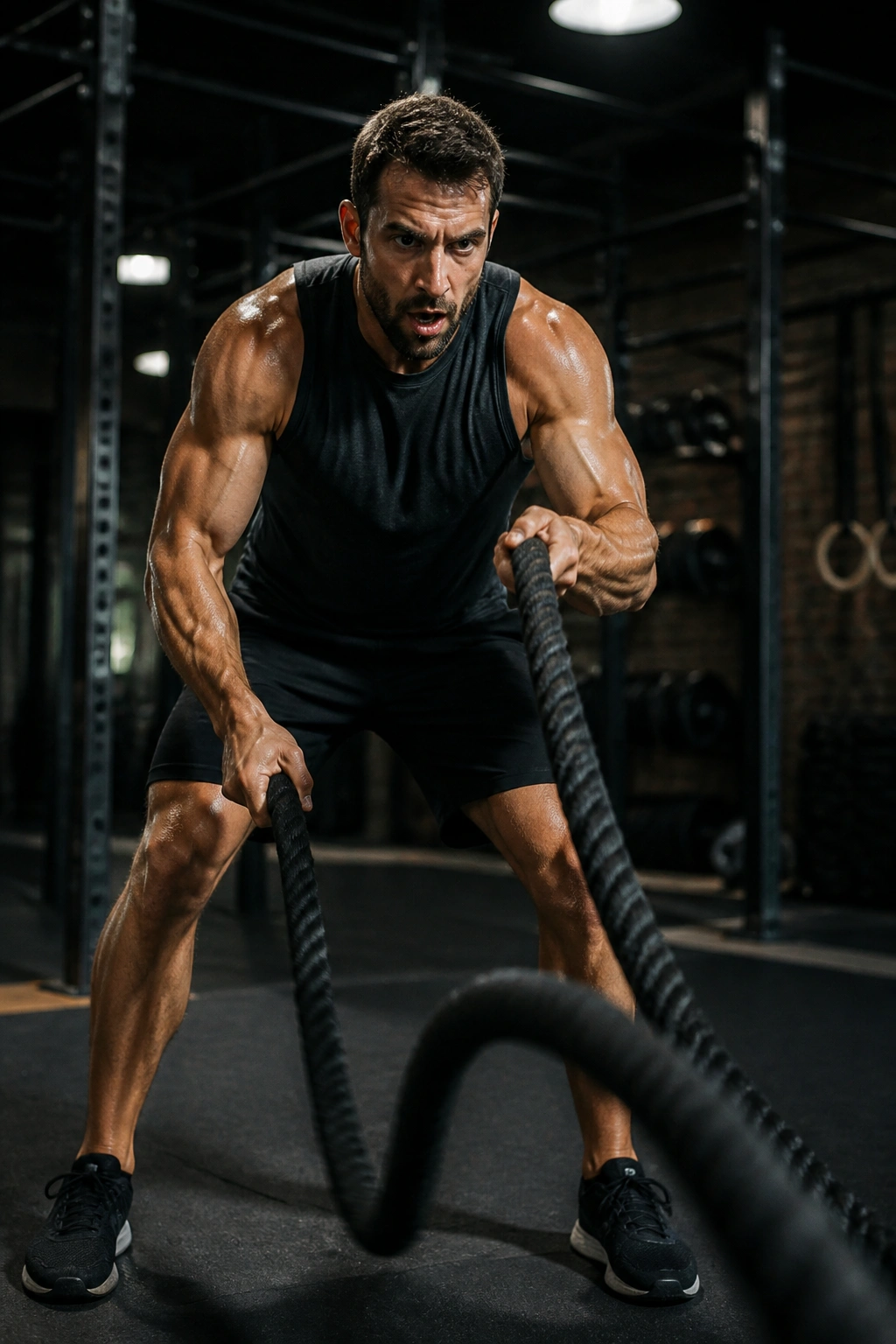
Battle ropes are rude in the best possible way. The first round feels manageable. The second round starts making arguments. By the end, your arms are telling you stories.
Warm up for 5 minutes with shoulder circles, light jumping jacks, and some torso rotations. Then do 10 rounds of 20 seconds hard, 40 seconds easy. Rotate through alternating waves, double waves, rope slams, and outside circles. Cool down with 5 minutes of easy movement and upper-back stretching.
Why they hit so hard
The ropes keep tension on the upper body the entire time. There’s no locking out and hiding. Your grip stays active, your shoulders stay awake, and your core keeps your ribs from flaring around like a broken tent.
That also means technique matters more than people think. Soft knees help. A braced midsection helps more. If your whole body starts flopping, the rope has already won.
Small fixes that help fast
- Stand tall, then hinge slightly at the hips.
- Move the ropes from the shoulders, not the neck.
- Keep the waves crisp and even.
- Breathe out on the hard drive.
If you’ve got ropes in your gym, use them. They are one of the fastest ways to get your heart rate up without needing a treadmill or a lot of room.
13. Hill Repeats for Runners Who Want More Speed

A hill changes the whole deal. You get speed work without needing to sprint flat-out, and the incline cleans up your mechanics fast.
Start with 5 to 8 minutes of easy jogging or brisk walking. Then do 8 repeats of 45 seconds uphill at a strong effort, walking back down for recovery. Finish with a 5-minute easy jog or walk and a few calf stretches.
Why hills work so well
Running uphill makes you use more glute and hamstring drive, and it usually shortens the stride in a good way. That means less pounding than a flat sprint, and often better posture too. You lean slightly forward from the ankles, not the waist, and you lift the knees without overstriding.
The first two repeats should feel controlled. If you blast the opening hill like you’re late for a train, the rest of the workout gets messy quickly.
A few practical notes
- Pick a hill that takes 30 to 60 seconds to climb.
- Keep your eyes up.
- Pump the arms, but do not tense the shoulders.
- Walk down with purpose; recovery is part of the plan.
This is a hard workout, but a clean one. Your lungs notice it. Your legs do too.
14. Medicine Ball Power Circuit for Throwing and Slamming
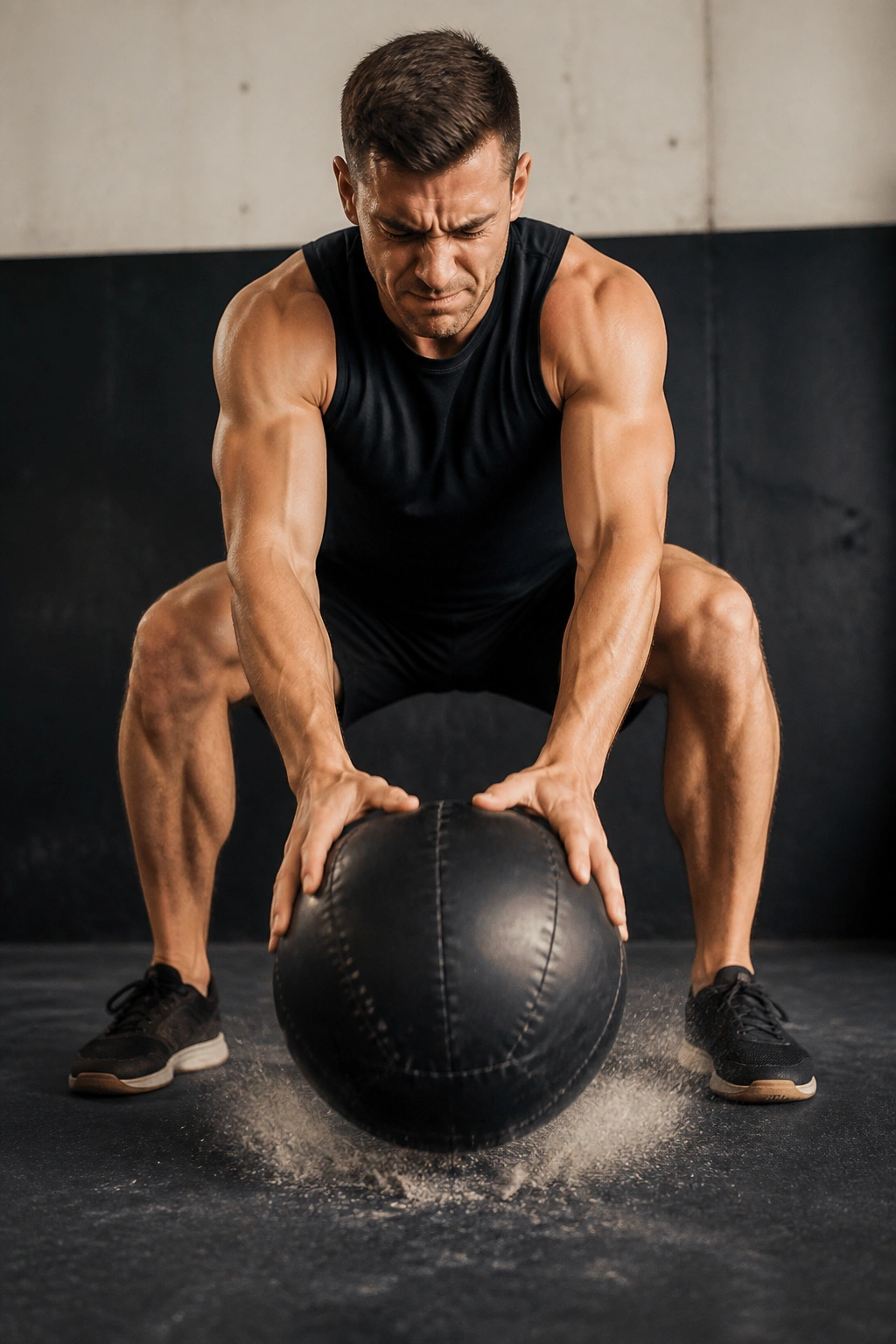
If you want explosive work without loading a barbell, the medicine ball is a very good tool. It is simple, blunt, and a little bit fun, which helps on days when heavy lifting feels like too much ceremony.
Spend 5 minutes warming up with squats, reaches, and trunk twists. Then do 4 rounds of 12 medicine ball slams, 10 squat-to-press reps, 8 rotational tosses per side if you have a wall, and 20 seconds of fast mountain climbers. Rest 60 seconds between rounds.
The slam is the showpiece here. Pick the ball up overhead, brace hard, and drive it into the floor like you mean it. That single movement wakes up the whole front side of the body. The squat-to-press adds legs and shoulders. The rotational work teaches the torso to transfer force, not just hold it.
Who this suits
- People who like athletic training.
- Anyone bored by slow cardio.
- Lifters who want a lighter power day.
- Home gym folks with a floor that can take a bit of noise.
Watch the spine on the twists. Let the hips and torso move together. Cranking only from the lower back is a bad idea and a boring way to get sore in the wrong place.
15. Resistance Band Total-Body Work at Home or on the Road
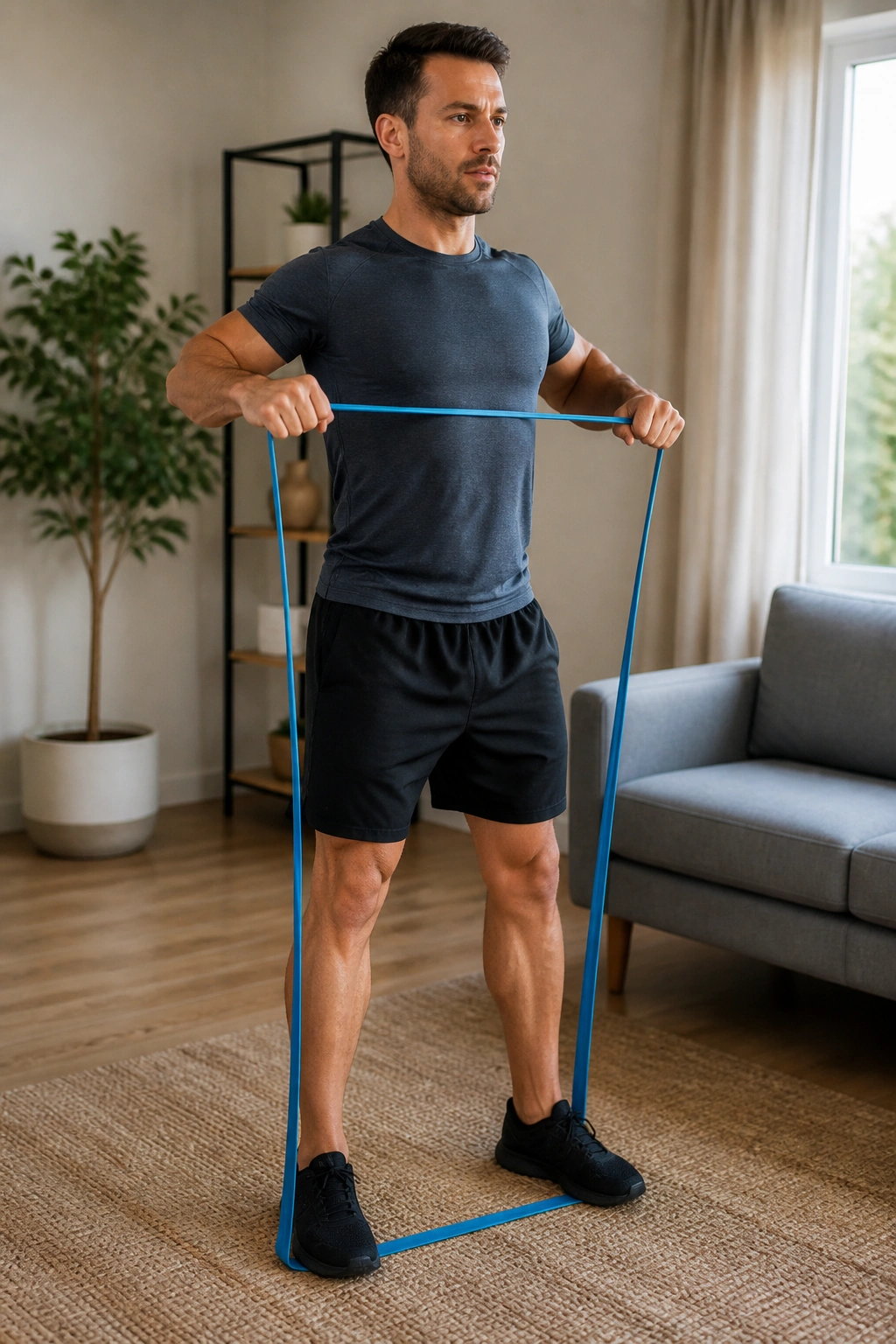
Bands are not flashy. They are useful, which is better. One loop band or one long band can cover a lot of ground when you’re away from heavier gear.
Warm up for 5 minutes with arm swings, bodyweight squats, and easy hip hinges. Then spend 20 minutes rotating through band squats, standing rows, chest presses, lateral band walks, and Pallof presses. Use 45 seconds of work and 15 seconds to switch. Finish with 5 minutes of stretching the hips, chest, and back.
What bands do well
They create tension through the whole range of motion, which makes even simple moves feel more demanding. They also travel well. A band takes up less space than a shoe. That alone makes it worth owning.
If you want the session to feel tougher, slow the lowering phase. Three seconds down on squats or rows changes the whole tone. The band does not care about your excuses.
Quick setup notes
- Anchor long bands low or chest-high, depending on the move.
- Stand on the loop band for squats or presses.
- Keep wrists straight on rows.
- Step a little wider if the band feels too loose.
This is one of the best 30-minute workout options for travel days, apartment workouts, and anyone who wants a quiet session.
16. The Recovery Workout That Still Feels Like Training
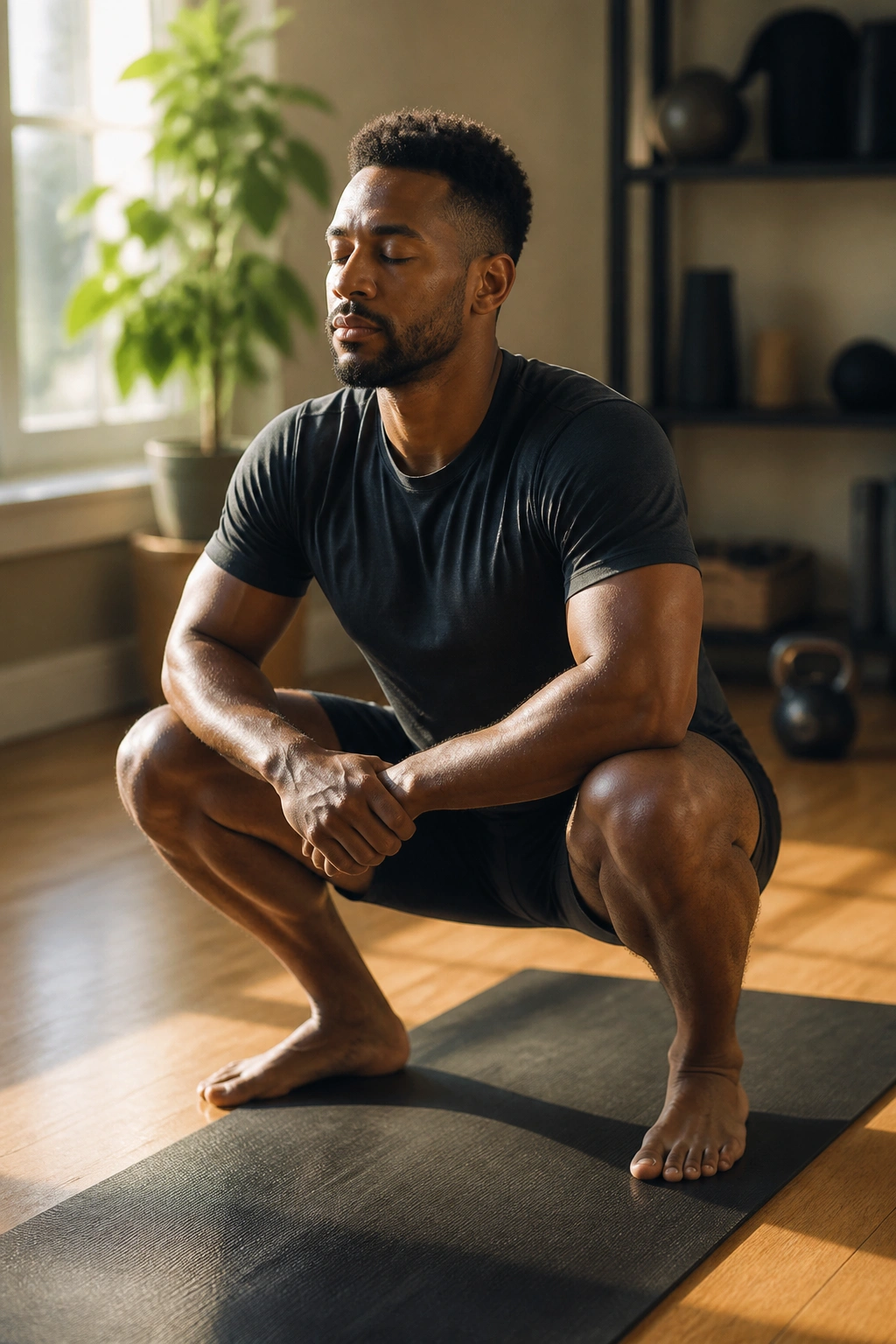
Recovery does not mean doing nothing. Sometimes it means moving in a way that gives your body room to unclench.
Start with 5 minutes of nasal breathing and easy walking. Then spend 20 minutes on ankle circles, hip airplanes, thoracic rotations, deep squat holds, hamstring sweeps, shoulder dislocates with a band, and cat-cow. Finish with 5 minutes of slow breathing on your back.
That may sound gentle, and it is. But gentle can still be specific. The deep squat hold opens the hips and ankles. Thoracic rotations help the upper back move again. The breathing at the end brings the nervous system down a notch, which is useful if your day has been loud.
What makes this worth doing
A lot of stiff bodies are not weak bodies. They’re just tired, tight, and under-moved. This session helps with that without making the problem worse.
You should leave feeling looser, not sleepy. If your joints move better and your shoulders sit lower, the workout did its job.
Skip the ego here. There is nothing to prove. Smooth, patient movement is the point.
17. Stair Workouts That Turn a Flight of Steps Into a Gym
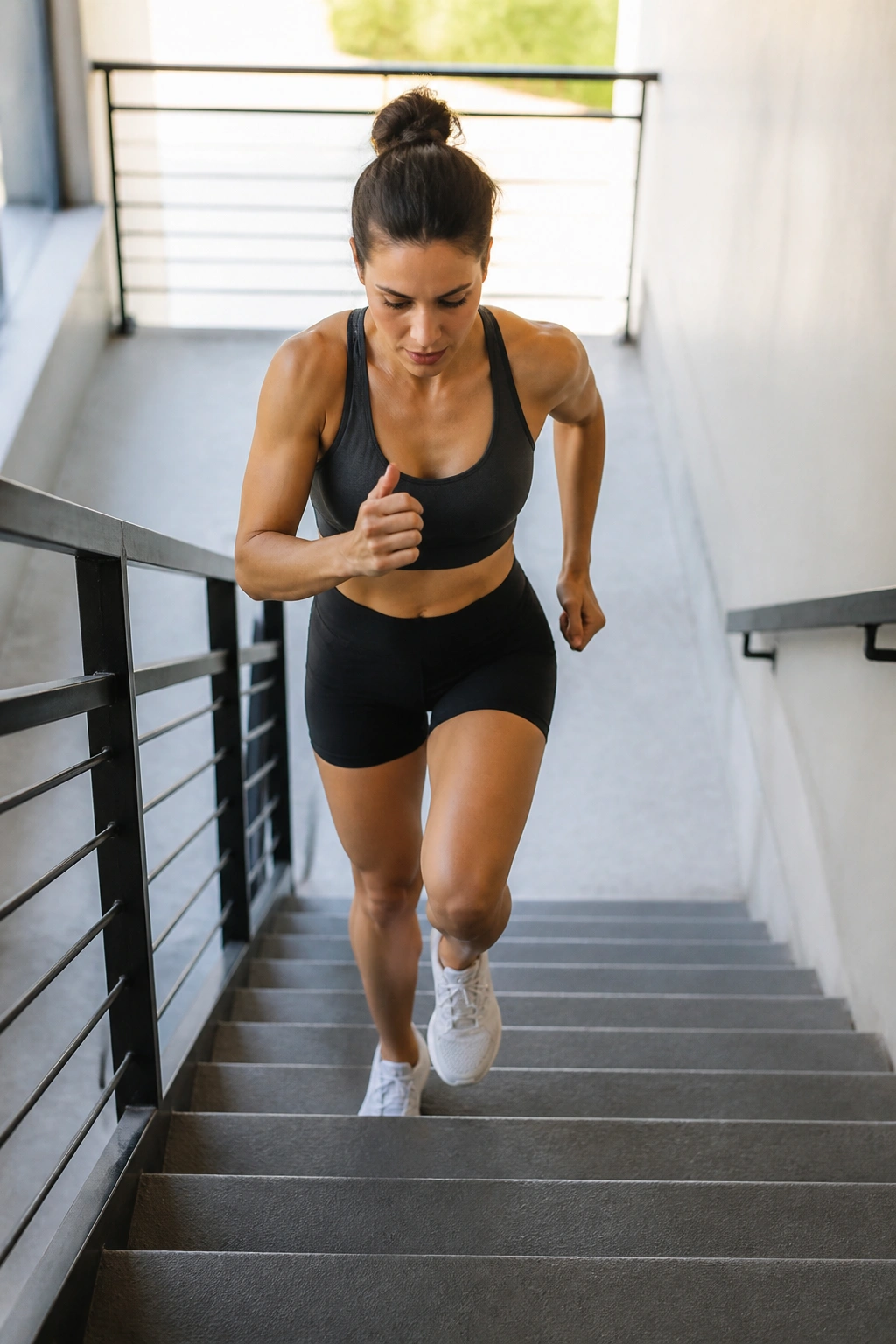
A staircase is free equipment, and it’s harsher than people expect. That makes it useful.
Use 5 minutes to warm up with flat walking, calf raises, and a few bodyweight squats. Then do 10 rounds of stair climbing for 30 to 45 seconds, walking down slowly for recovery. Between every third climb, add 10 step-ups per leg or 20 seconds of high-knee marching. Finish with 5 minutes of easy walking.
Why stairs hit differently
Each step asks your legs to lift your body against gravity, which is why the heart rate climbs fast. The quads do a lot of work, the glutes fire hard, and the lungs catch up faster than they would during a flat walk.
The descent is where people get sloppy. Slow down. Control the way down. Your knees will thank you, and your balance will improve too.
Useful form cues
- Keep the torso tall.
- Push through the whole foot.
- Use the rail if balance is shaky.
- Do not stomp.
Stair workouts are great when you want a straightforward hit and do not feel like learning a fancy routine. No frills. Just effort.
18. Tabata Intervals for the Days You Want a Hard Stop at 30 Minutes
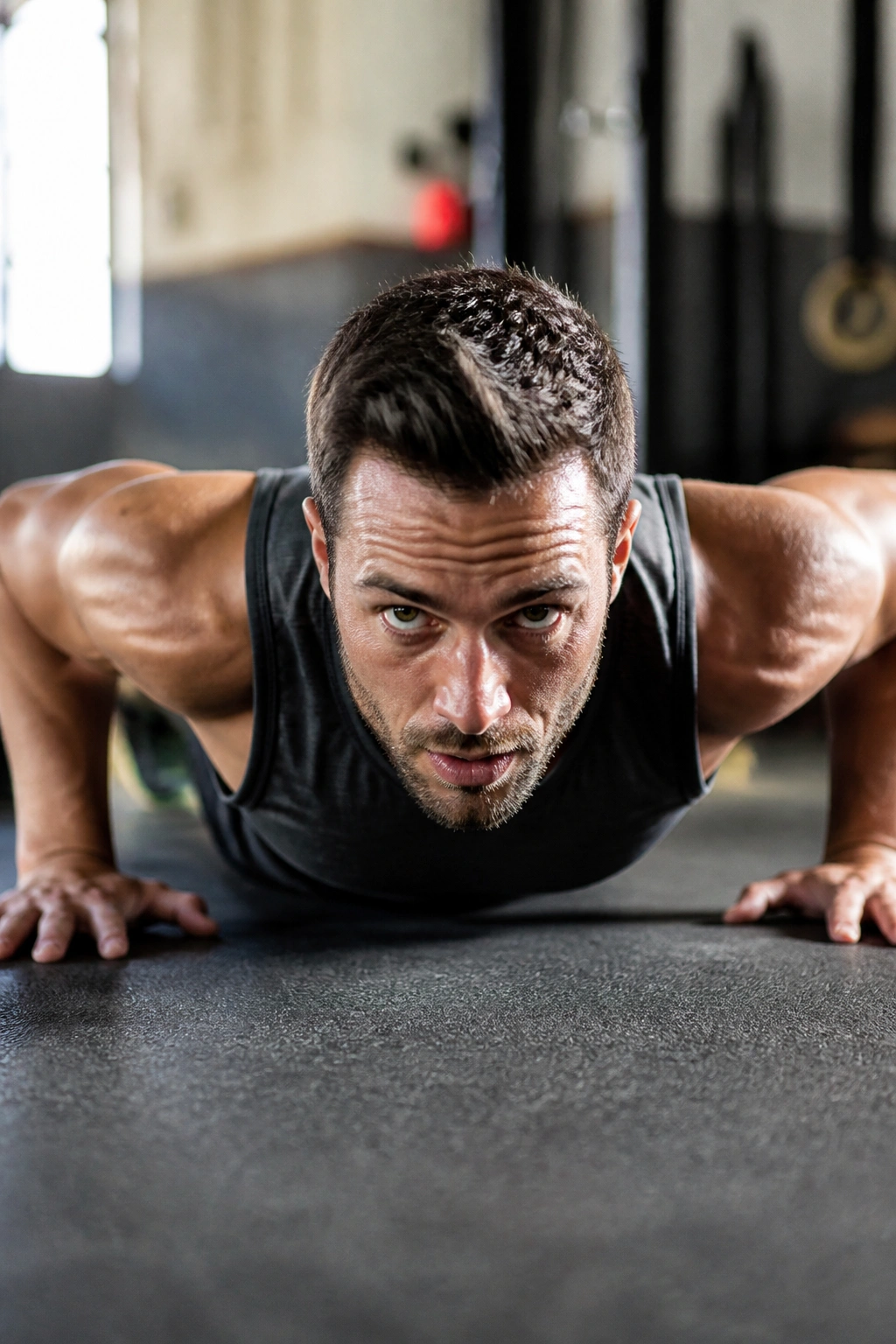
Tabata is short, intense, and a little rude. That is the appeal.
After a 5-minute warm-up, pick 3 or 4 exercises and run 20 seconds all-out, 10 seconds rest for 8 rounds on each one. Squat jumps, mountain climbers, burpees, and skaters are common choices, but you can also use low-impact options like fast step jacks or shadow boxing. That gives you 16 to 20 minutes of main work, plus cool-down time, and the whole session lands neatly at 30 minutes.
A blunt warning
Tabata is not a thing to do every day. It is too taxing for that, and the quality drops fast if you keep trying to make every session a maximal one. Use it when you want a short hard burst, not when you’re already fried.
The best Tabata work feels controlled at first and ugly near the end. That ugly part is normal. What matters is that your form stays within reason and the speed stays honest.
Good choices for the moves
- Burpees if you want a full-body hit.
- Skaters if you want lateral work.
- Shadow boxing if impact bothers you.
- High knees if your knees tolerate fast drive.
Finish with a long exhale and a slower walk. Your pulse will come down. Eventually.
19. Loaded Carries and Core Work That Fixes Sloppy Posture
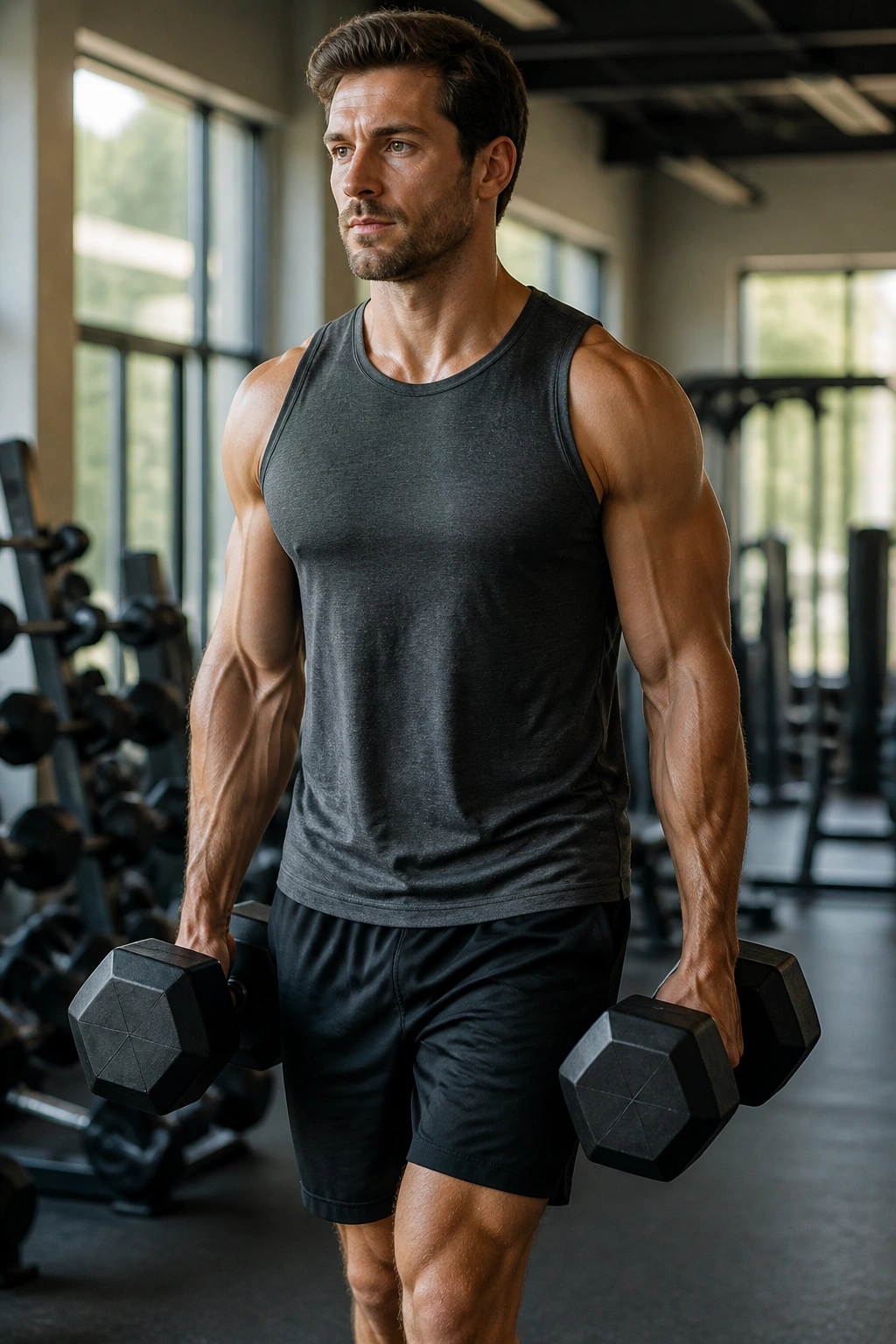
A lot of ab workouts chase burn and miss the real job of the trunk, which is to keep you steady while the rest of you moves. Loaded carries do that job better than most crunches ever will.
Warm up for 5 minutes with marching, arm circles, and light hip hinges. Then do 4 rounds of 40-meter farmer carries, 30-meter suitcase carries per side, 20-second front rack carry, and 10 slow dead bugs per side. Rest 60 to 90 seconds between rounds. Cool down with 5 minutes of easy walking and breathing.
Why carries matter
Farmer carries challenge grip, posture, and core tension at the same time. Suitcase carries force you to resist leaning. Front rack carries ask the upper back and midsection to stay stacked. It all sounds plain until you try it with a load that makes you want to tilt.
That resistance is the point. Your body learns not just to move, but to stay organized while moving. That translates into better lifting, better walking, and fewer little aches from bad posture.
What to keep in mind
- Walk slowly enough to stay tall.
- Do not shrug the weights.
- Keep the ribs down.
- Use shorter distances if form starts to wobble.
This is one of my favorite 30-minute workout ideas because it feels practical. Strong, steady, and useful. Nice trio.
20. The No-Equipment Travel Workout You Can Do in a Hotel Room
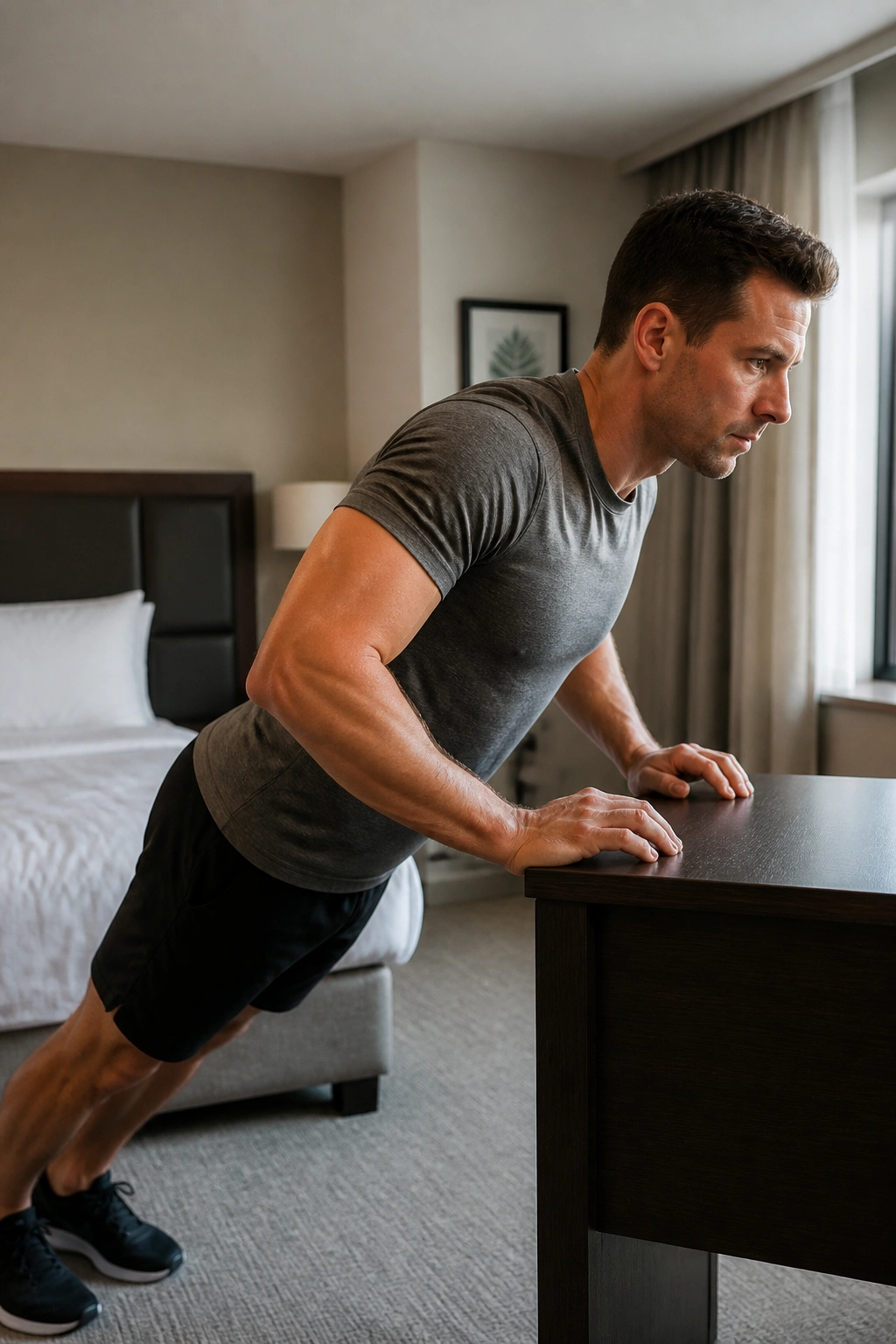
A small room, a bad mattress, and no gear do not have to kill the day’s workout. They just change the shape of it.
Spend 5 minutes warming up with walking in place, shoulder rolls, and hip circles. Then run three 6-minute blocks of this circuit: chair squats, incline push-ups on a desk or bed edge, reverse lunges, bear crawls or plank holds, and dead bugs. Rest 1 minute between blocks. Use the last 4 minutes to breathe, stretch the hips, and let your heart rate settle.
Why this one belongs in the rotation
Travel workouts are not about impressing anyone. They are about keeping the rhythm intact when the environment gets messy. Sleep is off. Food is weird. The room is tiny. Fine. Keep moving anyway.
Chair squats give your legs a load without needing weight. Incline push-ups save the shoulders if the floor feels cramped. Reverse lunges open up tight hips from sitting. Bear crawls wake up the whole trunk, and dead bugs clean up the core work at the end.
Simple ways to scale it
- Make the push-up angle steeper or shallower.
- Swap bear crawls for a high plank if space is tight.
- Cut the lunge depth if your knees are annoyed.
- Slow the dead bugs if your lower back wants to arch.
That’s the part I like most: this workout is flexible without becoming vague. Rotate it in when life gets awkward, and the half hour still counts.
One good 30-minute session can reset a day. A string of them can change how training fits into your life, which is a much better deal than chasing some perfect plan that only works when the calendar is empty and the gym is quiet.
