



A good home workout doesn’t need a treadmill, a studio mirror, or a heroic amount of free time. It needs a little structure, a timer that actually gets used, and movements your body can repeat without getting weird and sore in the wrong places.
The best workouts you can do at home share the same trait: they fit into an ordinary room and still feel like real training. A chair, a mat, a backpack, a stair, an empty patch of floor — that’s enough when the plan is smart. If you’ve ever done three sloppy exercises in a row and called it a day, you already know the difference.
A hallway. A timer. A towel on the floor.
That’s all some days require. And the nice part is that home workouts can be shaped to match the kind of energy you actually have, whether you want strength, cardio, core work, or something that keeps your joints calm while still making you sweat.
1. Bodyweight Squat Circuit
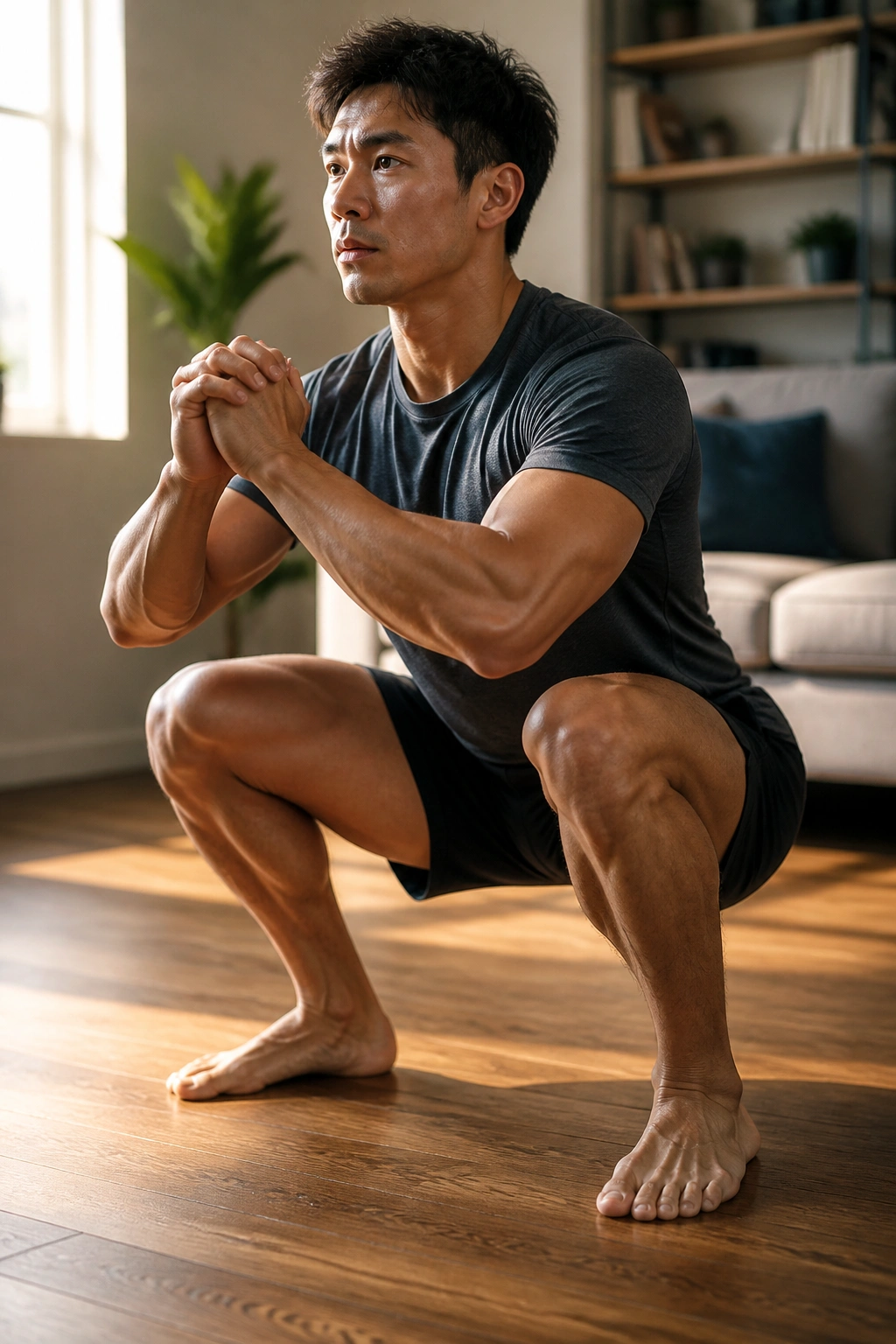
Squats are the easiest way to make a small room feel like leg day. They light up the quads, glutes, and inner thighs without asking for anything fancy, and they scale well whether you’re a beginner or someone who already knows what a hard set feels like.
Start with 3 rounds of 15 air squats, 10 pulse squats, 20 calf raises, and a 20-second wall sit. Keep your feet about shoulder-width apart, press through the whole foot, and let your knees track in the same direction as your toes. The movement should feel clean, not rushed.
Why It Works
The squat is a plain-looking exercise that quietly does a lot. It trains your biggest lower-body muscles, which is part of why it works so well for home workouts. More muscle recruited in one move means more work done in less space.
If you want a little more challenge, slow the lowering phase to 3 seconds down and pause for 1 second at the bottom. That tiny pause changes the whole feel. Your legs will notice.
- Use a chair behind you if depth is tricky.
- Hold a backpack at your chest if bodyweight starts feeling too easy.
- Keep your chest up so you don’t fold forward.
Tip: stop one rep before your form gets sloppy. That one rule saves a lot of knees.
2. Push-Up Ladder
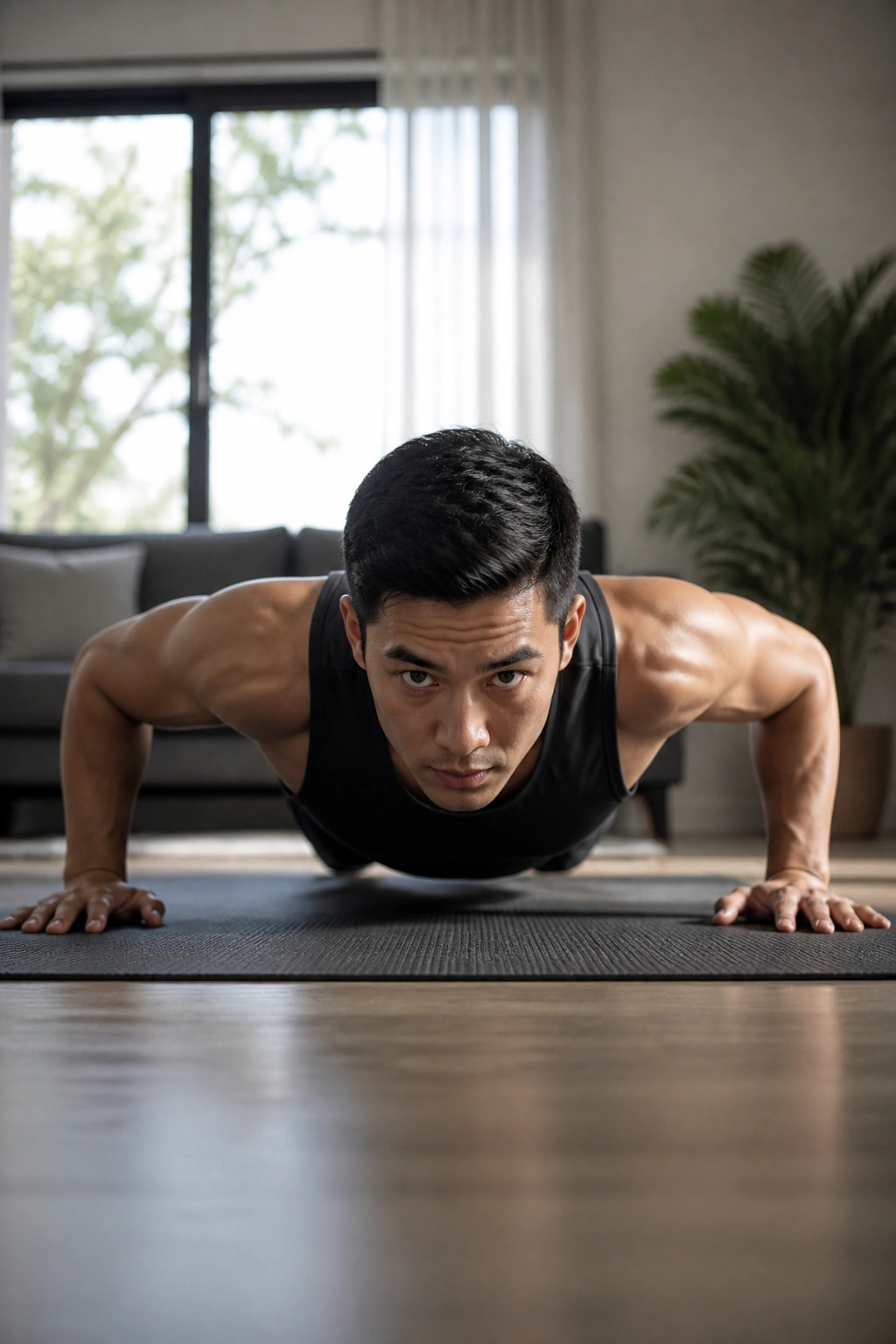
A push-up ladder is brutally honest. It tells you where your strength is, where your trunk wobbles, and whether your shoulders are helping or cheating.
The simple version is this: do 1 push-up, rest 10 to 20 seconds, do 2 push-ups, rest again, then climb to 8 or 10 depending on your level. If that sounds too easy on paper, wait until your chest and triceps start bargaining with you halfway up the ladder.
Use a countertop or sturdy couch edge if floor push-ups are still a fight. If regular push-ups are easy, elevate your feet on a chair or slow the lowering phase to 4 seconds down. That shifts the load fast.
What I like about this one is the pacing. You’re not just grinding through random reps. You’re giving your muscles a pattern to follow, and that makes the workout feel structured even in a cramped living room.
No drama. Just reps.
3. Reverse Lunge Flow
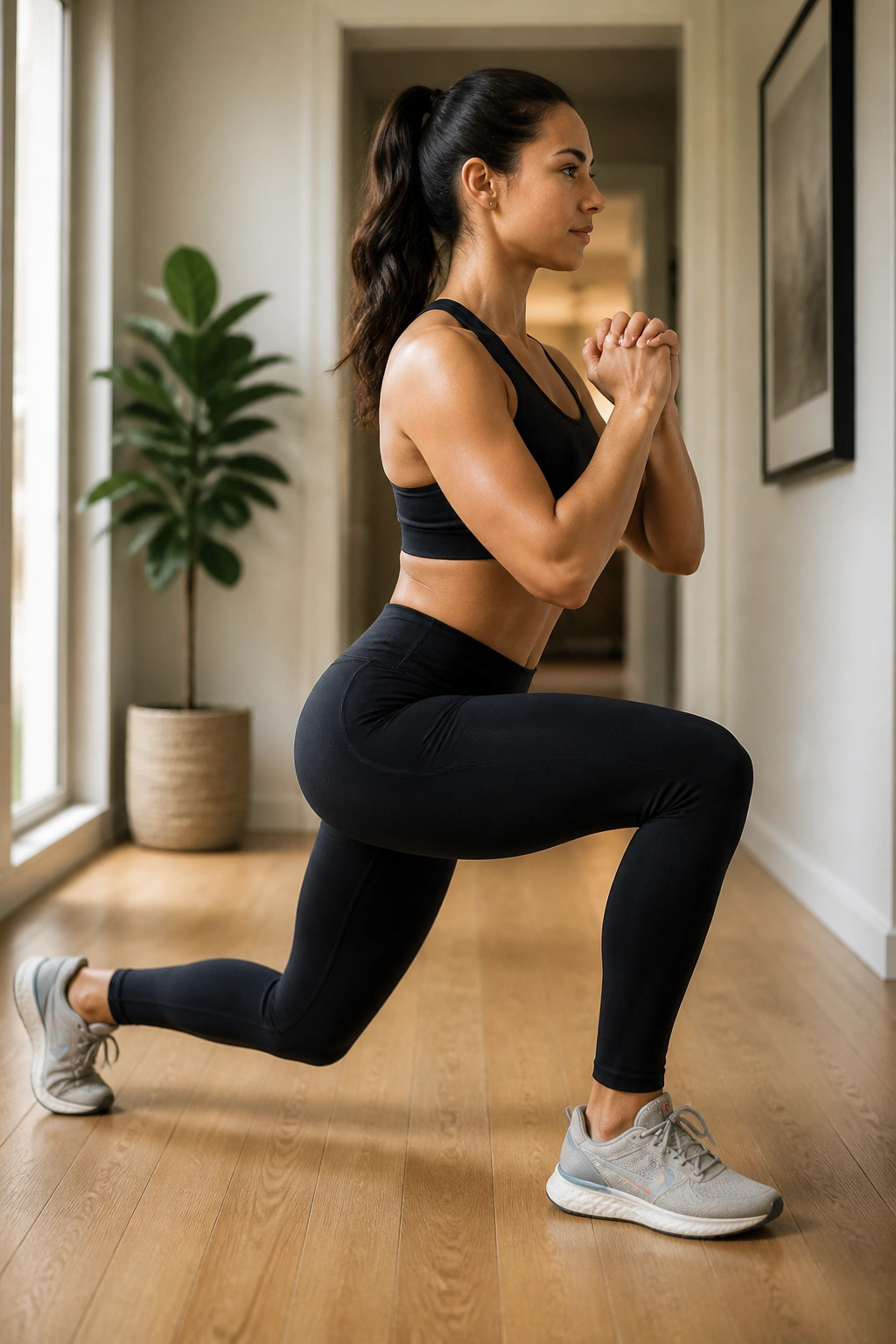
Why do reverse lunges show up in so many solid home routines? Because they train balance, legs, and hips without the knee jolt that forward lunges can bring for some people. They also work well in a narrow space, which matters more than people admit.
Do 3 sets of 8 to 10 reps per leg, stepping back far enough that your front knee stays comfortable and your front heel stays planted. Add a 20-second split-squat hold at the end of each set if you want the workout to bite a little harder.
How to Use It
- Step back softly, not sharply.
- Keep your torso tall instead of folding over the front thigh.
- Drive up through the front heel and glute.
- Hold a backpack or a single dumbbell at chest height once bodyweight feels manageable.
Reverse lunges are one of those exercises that look simple until the third set. Then the stabilizing muscles wake up, and the room gets quiet for a second.
If one side feels shakier, that’s the side to train with patience, not speed.
4. Glute Bridge Burnout
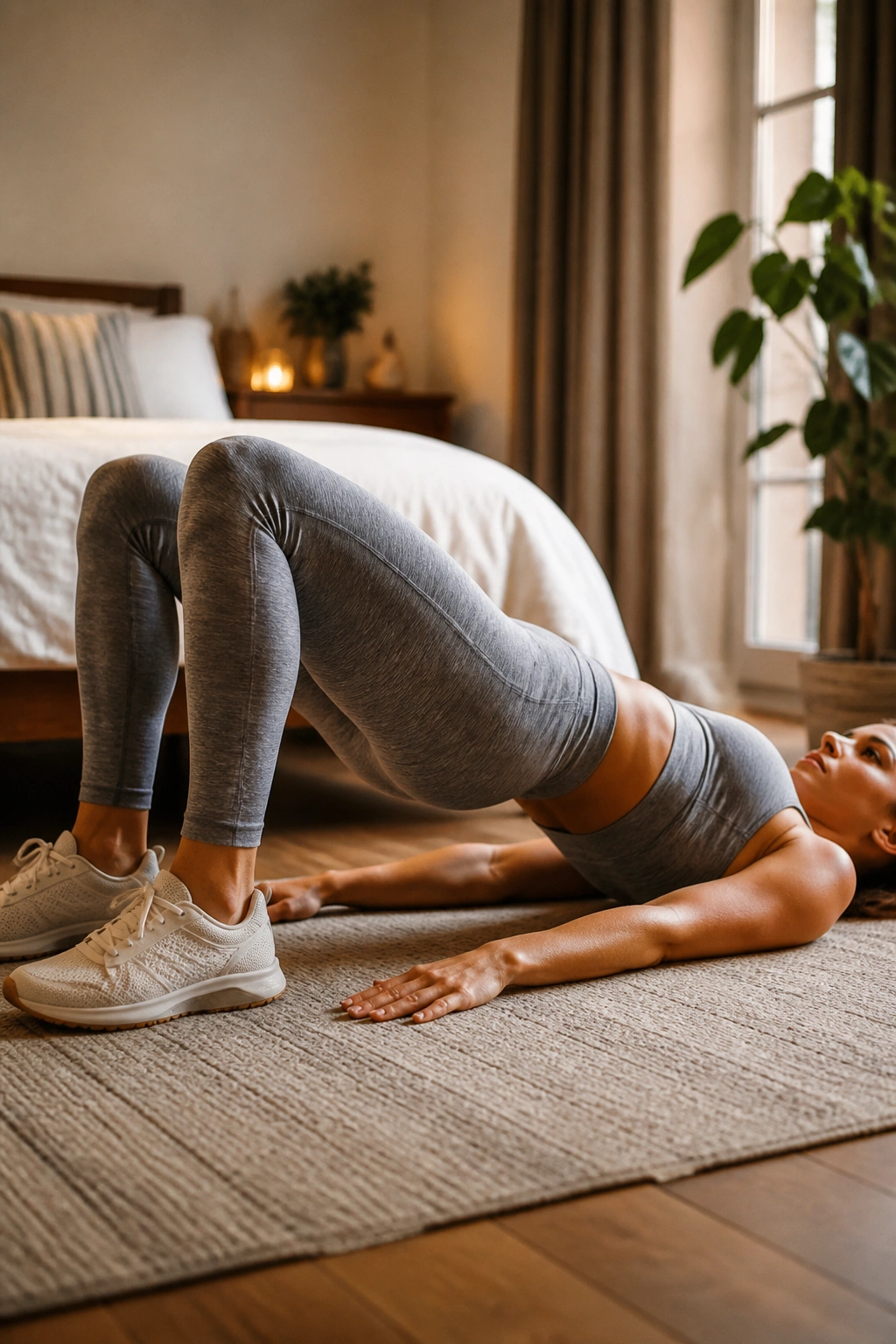
Lie on the floor and you’ll find out fast whether your glutes have been doing their job or freeloading. A glute bridge session is one of the cleanest ways to train the back side of the body without loading the spine heavily.
Try 15 standard bridges, 10 bridge marches, 8 single-leg bridges per side, and a 20-second top hold. Put your heels close enough that your fingertips can almost brush them, then lift by squeezing the glutes instead of arching the lower back.
Key Details
- Feet stay flat.
- Ribs stay down.
- The top position should feel firm, not cranked.
- If hamstrings cramp, move your feet a little farther away.
This is a useful workout on days when jumping feels like too much or your lower back wants a break from standing exercises. It’s also sneaky hard if you do the pauses properly.
A lot of people rush bridges. Don’t. The burn shows up when you slow down and hold the top position long enough for the glutes to do the work they’re supposed to do.
5. Plank Series
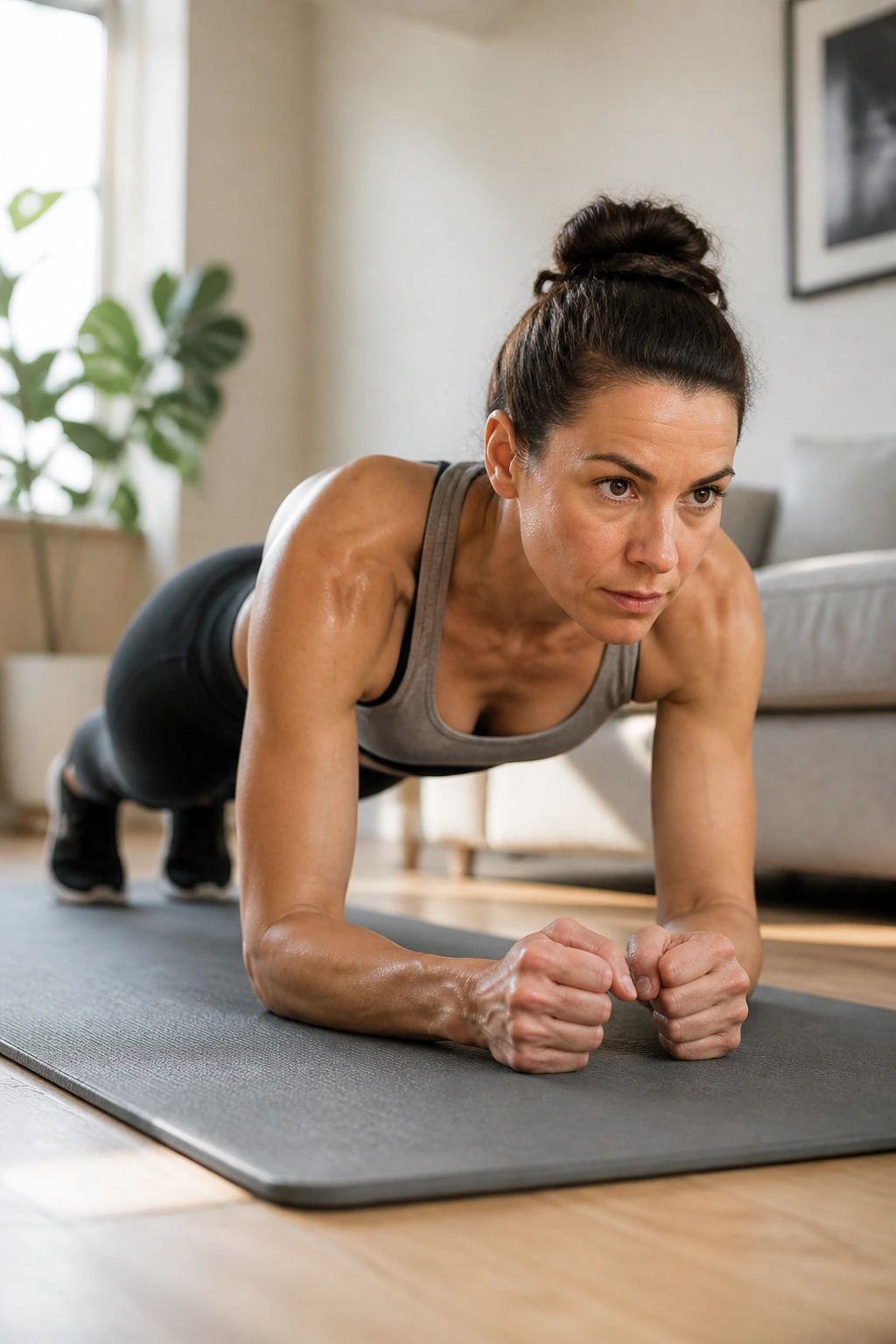
A plank isn’t a test of willpower. It’s a test of whether you can keep your ribs down, your hips quiet, and your breathing under control while your abs do the boring, stubborn work.
Start with 20 seconds of forearm plank, 20 seconds of side plank on each side, 10 shoulder taps, and a 20-second long-lever plank. Repeat the circuit 3 times with short rests between moves. Short rests matter here; once your form slips, the quality falls off fast.
A clean plank should feel tight through the front of the body and steady through the shoulders. If your low back starts sagging, shorten the hold and keep the position crisp. That’s more useful than hanging on for 90 shaky seconds.
What to Watch For
- Elbows under shoulders.
- Glutes lightly squeezed.
- Neck long, not jammed upward.
- Breath steady, not held.
One good plank beats three bad ones. Every time.
6. Mountain Climber Intervals
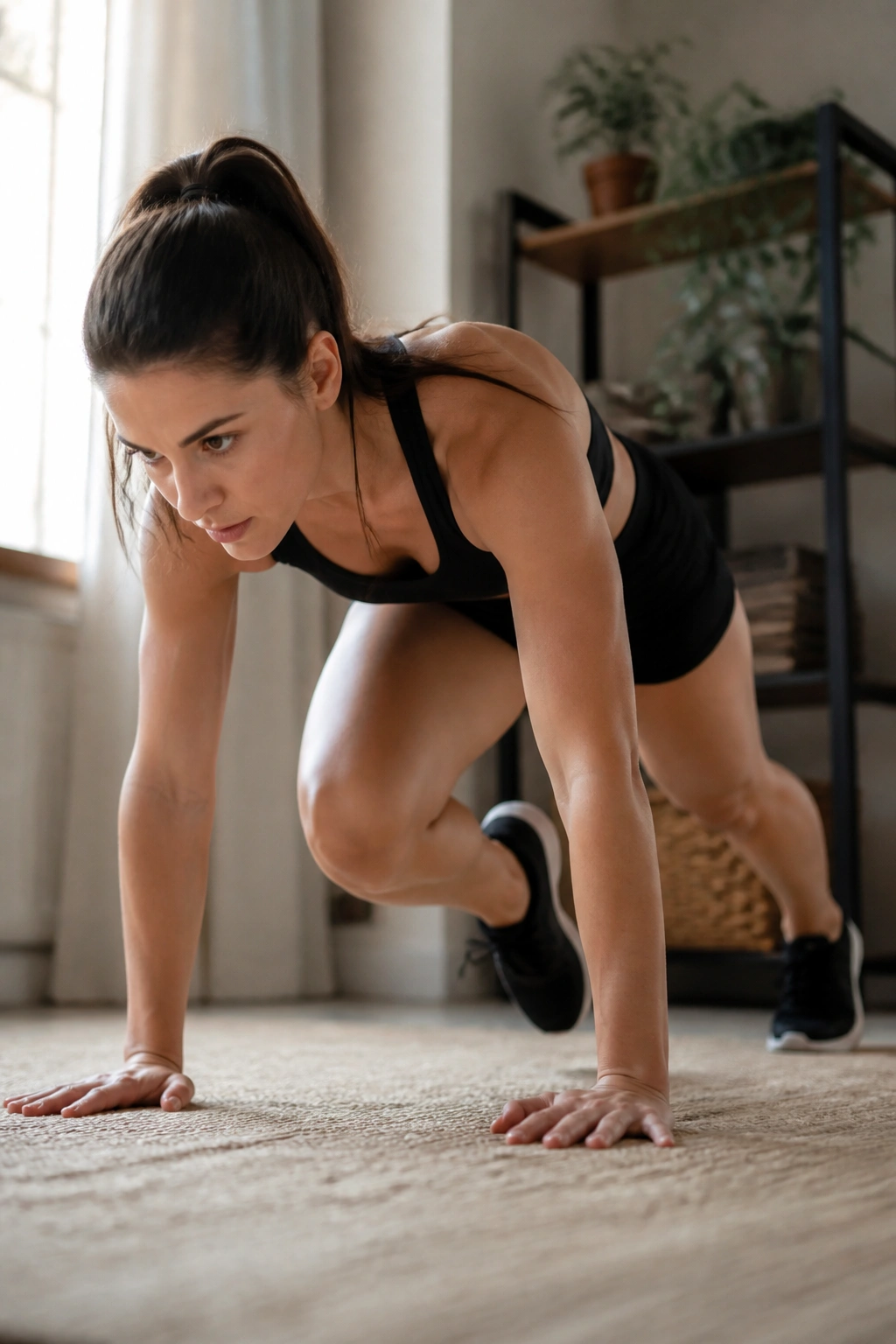
Hands planted. Shoulders warm. Breath getting loud. That’s mountain climbers when they’re done right, and the appeal is hard to miss: they feel like cardio, core work, and a wake-up call all at once.
Use 20 seconds on, 40 seconds off for 8 rounds if you’re easing in. If you already know this move, try 30 seconds on, 30 seconds off and keep your hips from bouncing all over the place. The point is speed with control, not frantic knees and a wobbly upper body.
How to Keep Form From Falling Apart
- Keep your hands under your shoulders.
- Bring the knee toward the chest, not just forward in space.
- Stay low enough that your core stays active.
- Step faster before you start hopping higher.
This one works especially well when you want a short workout that still leaves your breathing changed. It’s also easy to scale. You can step the knees in one at a time or pick up the pace once your shoulders stop feeling like they’re holding up a house.
If you’ve got a thin mat and a timer, you’re set.
7. Shadow Boxing Rounds

No equipment. No setup. Just your hands, your feet, and a little bit of rhythm. Shadow boxing is one of the cleanest home workouts for cardio because it keeps your upper body active while your footwork keeps the whole thing from getting stale.
Do 3 rounds of 2 to 3 minutes, with 1 minute of rest between rounds. Start each round with a few light jabs, then add cross punches, hooks, slips, and small pivots. Keep your fists relaxed until the moment they land. Tension in the shoulders makes your arms tire early.
A lot of people treat shadow boxing like flailing around. That’s a waste. The better version has a pattern: jab-jab-cross, step back, hook, roll under, reset. You’ll feel your breathing rise without pounding your joints.
If you’re in an apartment, keep your footwork light and the turns small. That’s enough. And honestly, it’s more useful than trying to punch hard while standing stiff as a post.
8. Stair Workout
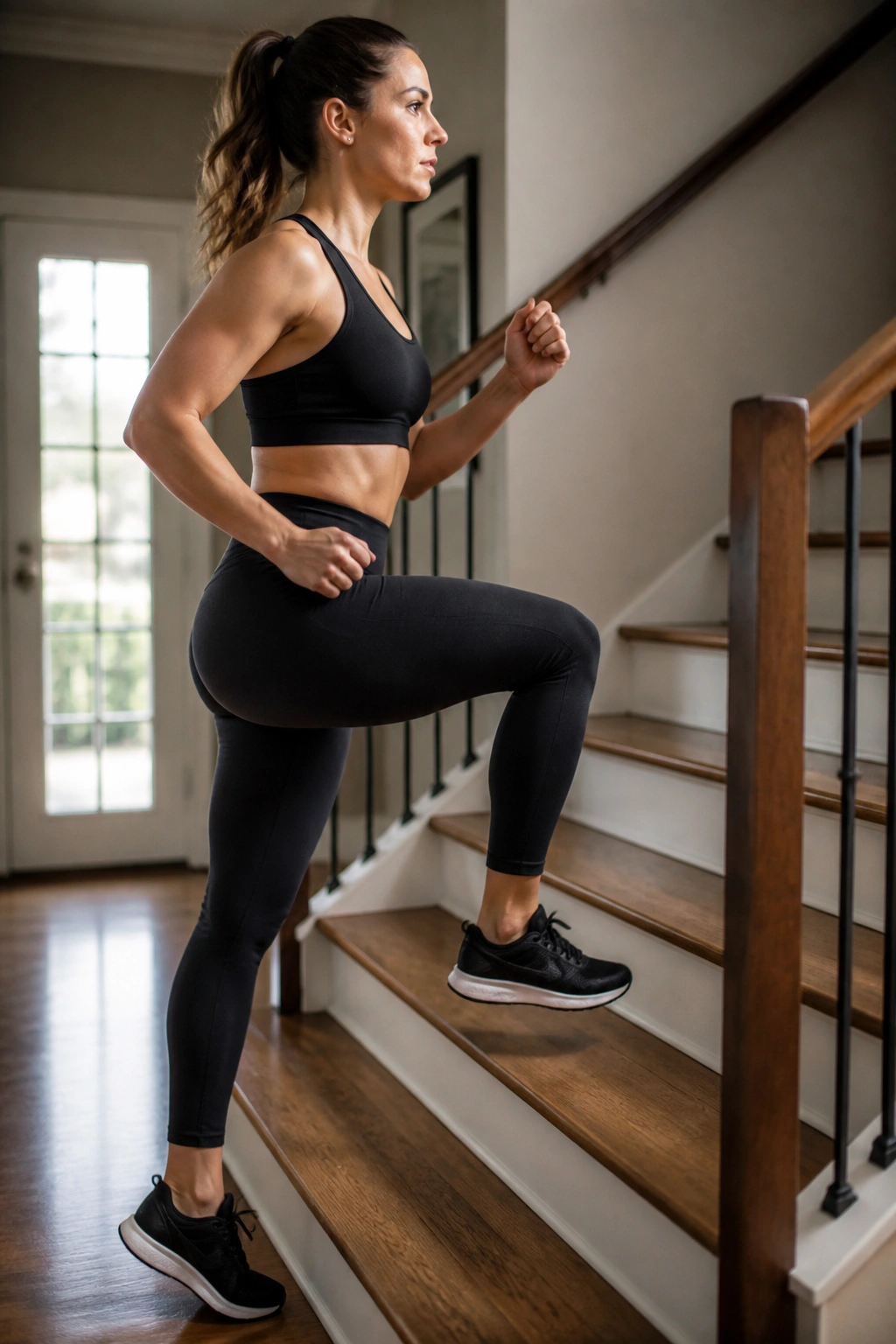
One flight. Ten minutes. More than enough.
Stairs are one of the simplest home training tools around, and they’re useful because the incline does part of the work for you. Step-ups, stair climbs, side steps, and calf raises all hit the legs differently, which keeps the workout from feeling repetitive.
Try 30 seconds climbing, 30 seconds walking down and recovering, then repeat for 10 to 15 minutes. If you want more strength than cardio, switch to controlled step-ups: 10 reps each leg, then a slow walk back down. Use the handrail if the stairs are narrow or steep. No prizes for being reckless.
A Basic Stair Circuit
- 30 seconds fast climb
- 10 step-ups each leg
- 20 calf raises on the bottom step
- 20 seconds side-step climb
- 60 seconds rest
Stair workouts are underrated because they’re plain. No playlist trickery needed. They just work, and they work fast.
9. Chair-Only Upper Body Circuit
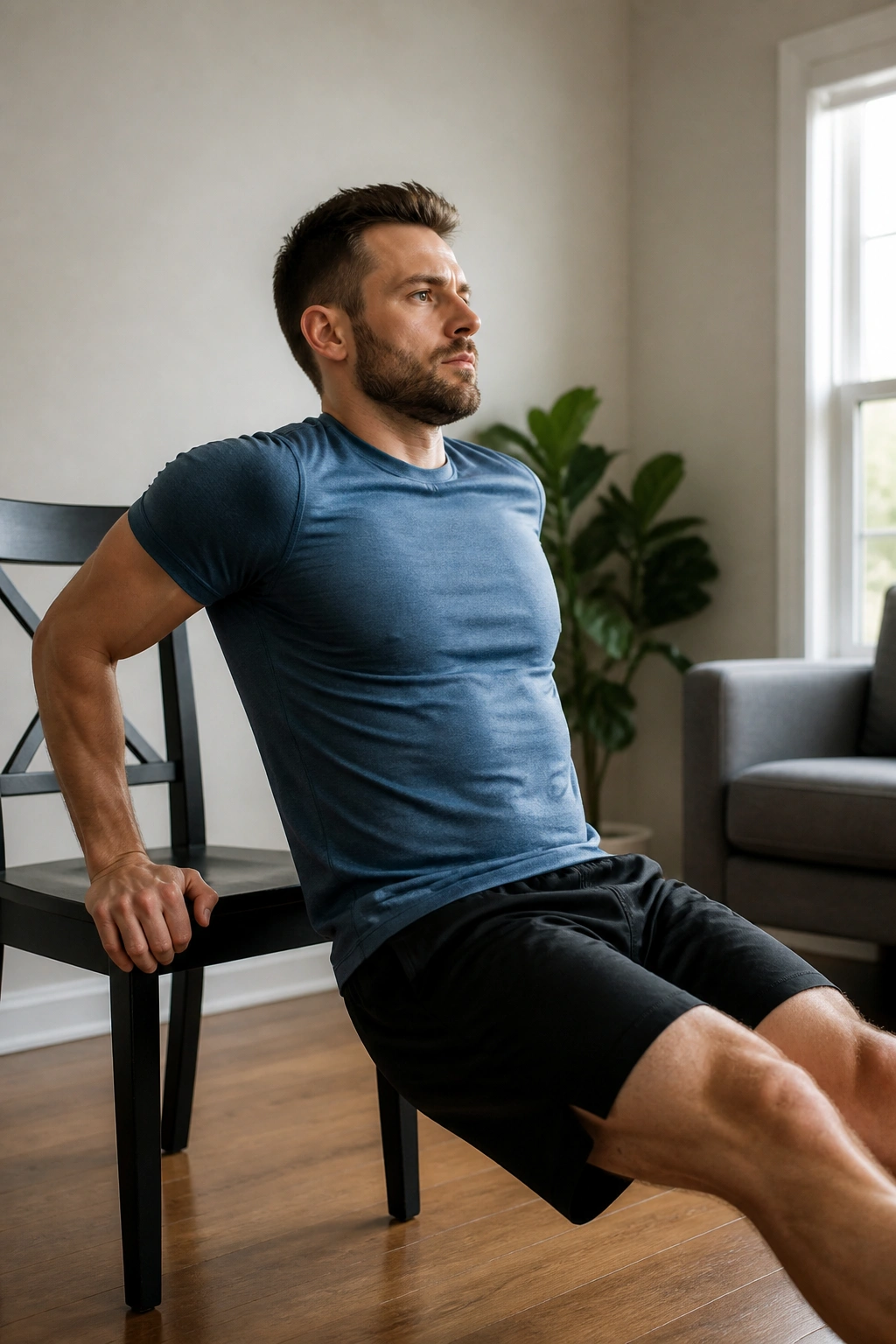
Unlike floor push-ups, chair-based work lets you change the angle fast, which is handy when your wrists, shoulders, or plain old energy aren’t in the mood for a full upper-body grind. A sturdy chair turns a corner of the house into a decent training station.
Use chair dips, incline push-ups, and a support hold for 3 rounds. Start with 8 dips, then 10 incline push-ups, then finish with a 20-second straight-arm support hold on the chair seat. Keep the chair against a wall so it doesn’t scoot.
Important: don’t use a wobbly kitchen chair. That’s the kind of bad idea people regret halfway through the second set.
This is a good choice if you want chest, shoulders, and triceps work without going flat on the floor. It’s also a clean stepping stone for people building toward standard push-ups. The angle is friendlier, but the muscles still have to show up.
10. Resistance Band Full-Body Routine
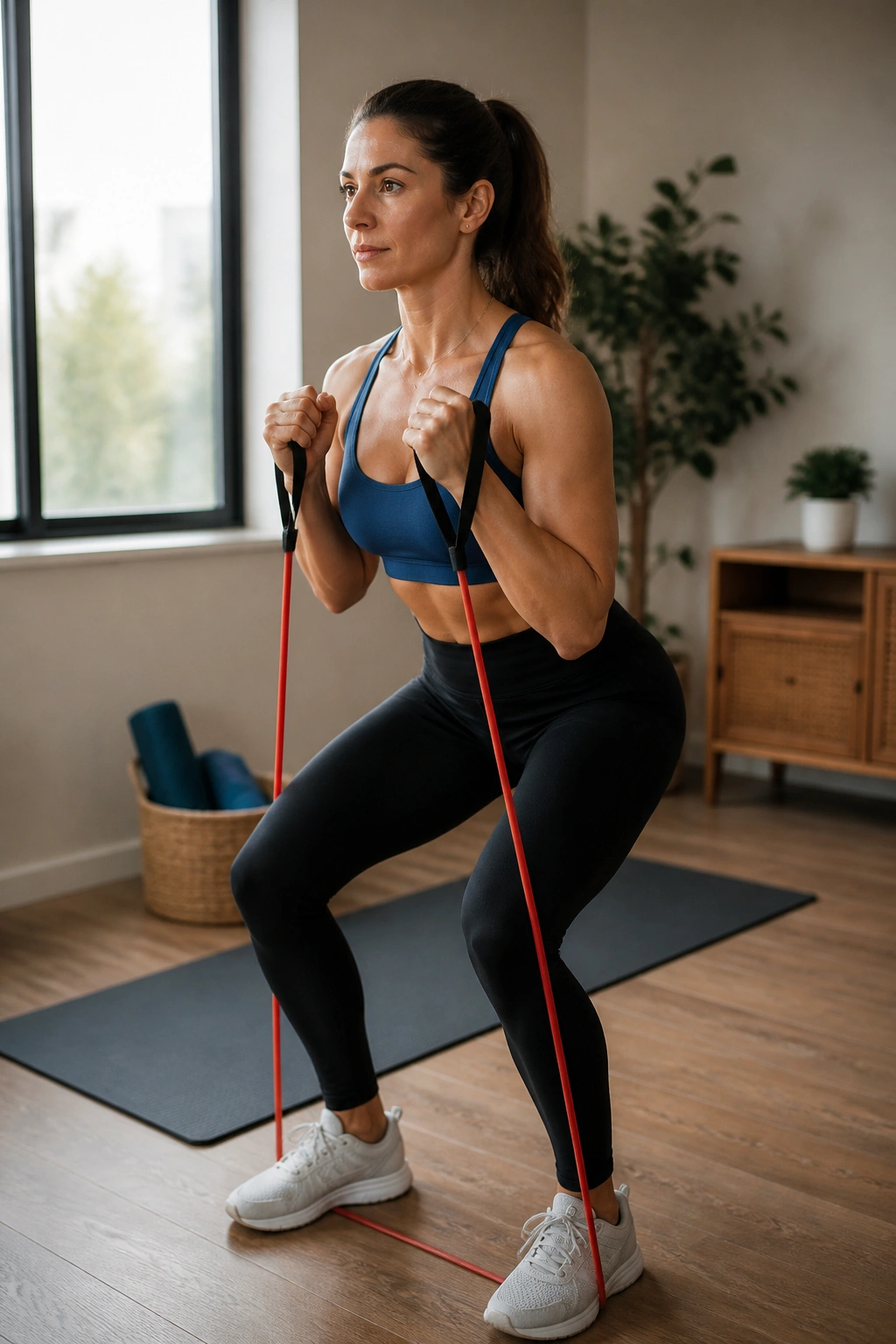
Got a band stuffed in a drawer? Good. That little strip of rubber can handle rows, presses, squats, pull-aparts, and hinge work without taking up any space at all.
A simple version looks like 12 band squats, 12 rows, 10 overhead presses, 15 pull-aparts, and 12 band deadlifts. Move through the list for 3 to 4 rounds, resting 45 to 60 seconds between rounds. If you can anchor the band in a door, rows get even better. If not, stand on it and work with what you’ve got.
A Simple Setup
- Put the band under both feet for squats and deadlifts.
- Grip it with hands shoulder-width apart for presses.
- Pull it apart at chest height until the band touches your upper chest or shoulders.
- Keep each rep smooth. Bands punish jerky movement.
Bands are sneaky because the resistance climbs as you stretch them. That means the last third of the rep is often harder than the first. Good. That’s the point.
11. Dead Bug and Hollow Hold Core Session
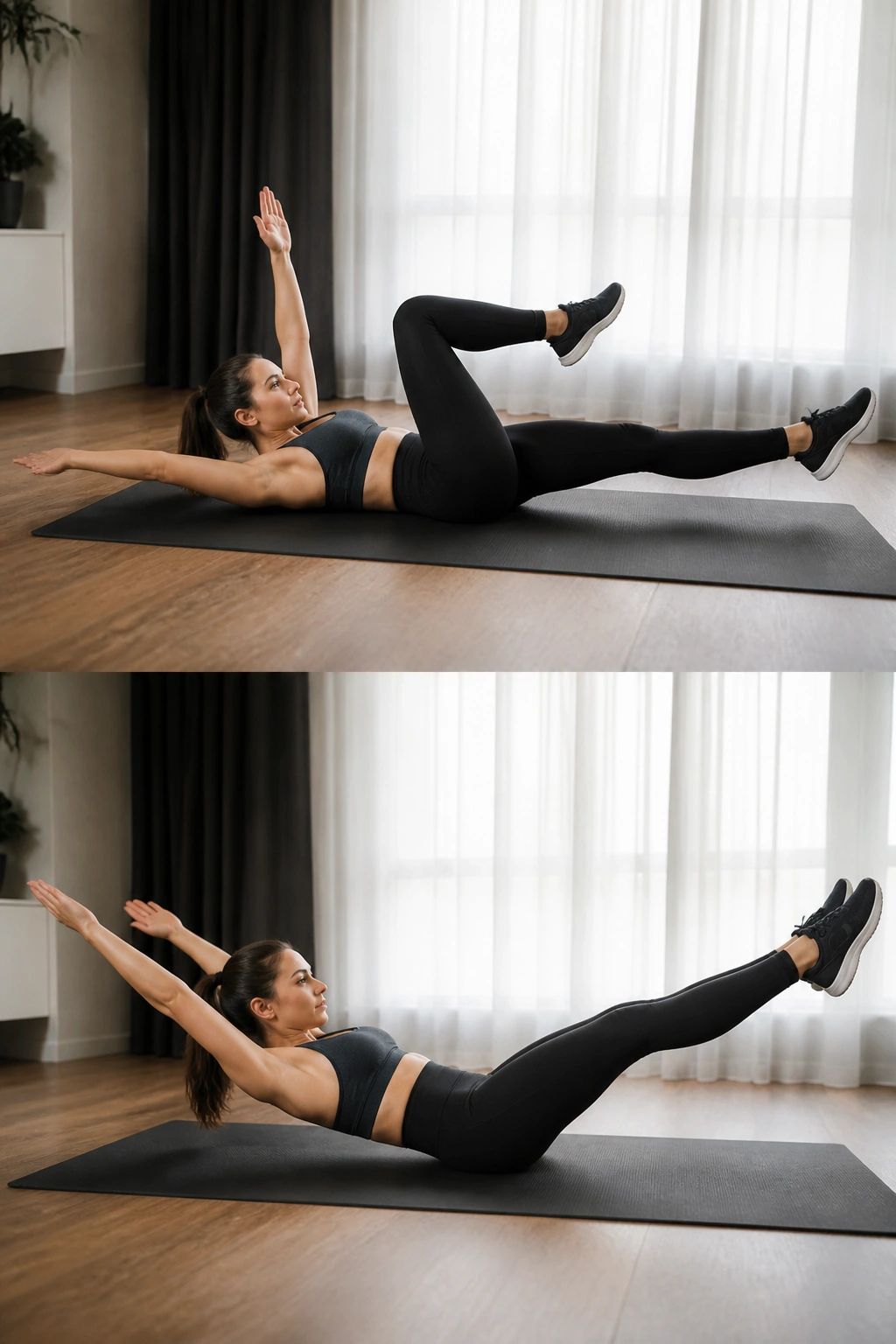
If your lower back complains during crunches, dead bugs are a kinder answer. They train the deep core in a way that teaches your trunk to stay quiet while your arms and legs move around it.
Do 8 dead bugs per side, then a 15- to 20-second hollow hold, then 8 bird dogs per side. Run that circuit 3 times. The floor should feel like feedback, not punishment. Keep your low back pressed down gently during the dead bug and hollow hold. If it pops up, shorten the lever or bend the knees more.
Why It Matters
This style of core work helps you resist extension, which is the fancy way of saying your back doesn’t collapse when your limbs are moving. That shows up in squats, planks, carries, and even everyday stuff like lifting groceries.
- Move slowly.
- Exhale as the leg extends.
- Stop the set if your back arches.
- Make the range smaller before making it harder.
A lot of core work looks dramatic. This one looks modest and quietly does the job.
12. Pilates Mat Flow
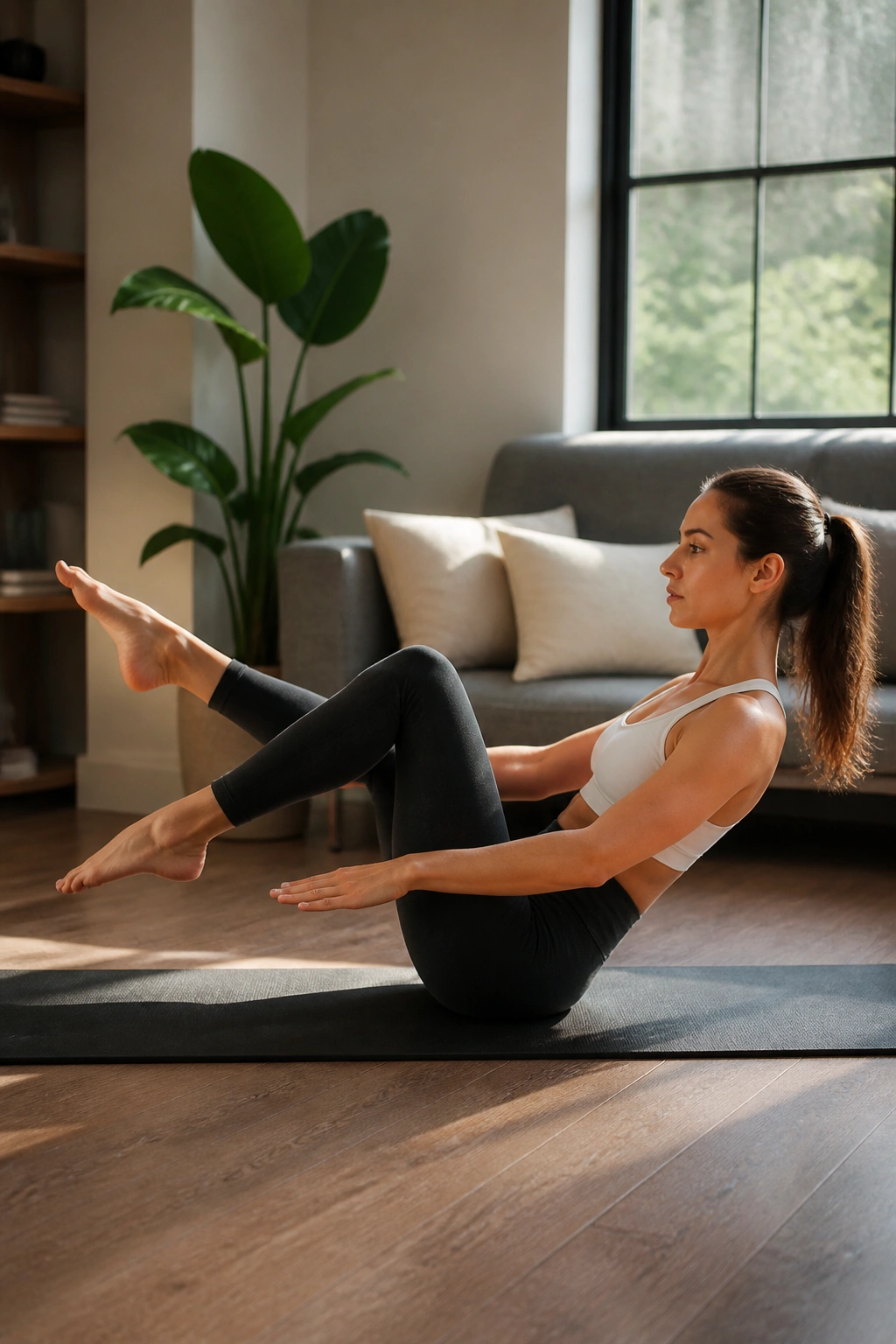
A quiet mat session can still leave your abs shaking. Pilates tends to do that — not with noise, not with jumping, but with tiny controlled movements that ask for patience and a steady breath.
A simple home flow can include toe taps, leg lowers, side-lying leg lifts, glute bridge pulses, and a rolled breathing sequence for 2 to 3 rounds. Keep the pace slow enough that you can feel where your ribs are, where your pelvis sits, and where your shoulders drift when you get tired.
What makes Pilates work so well at home is precision. A half-inch of movement done cleanly often beats a big sloppy range of motion. That’s especially true on days when you want training but not impact.
If you’ve got a mat and some floor space, you’ve got enough. The session should feel controlled, almost tidy, but not easy.
13. Yoga Strength Flow
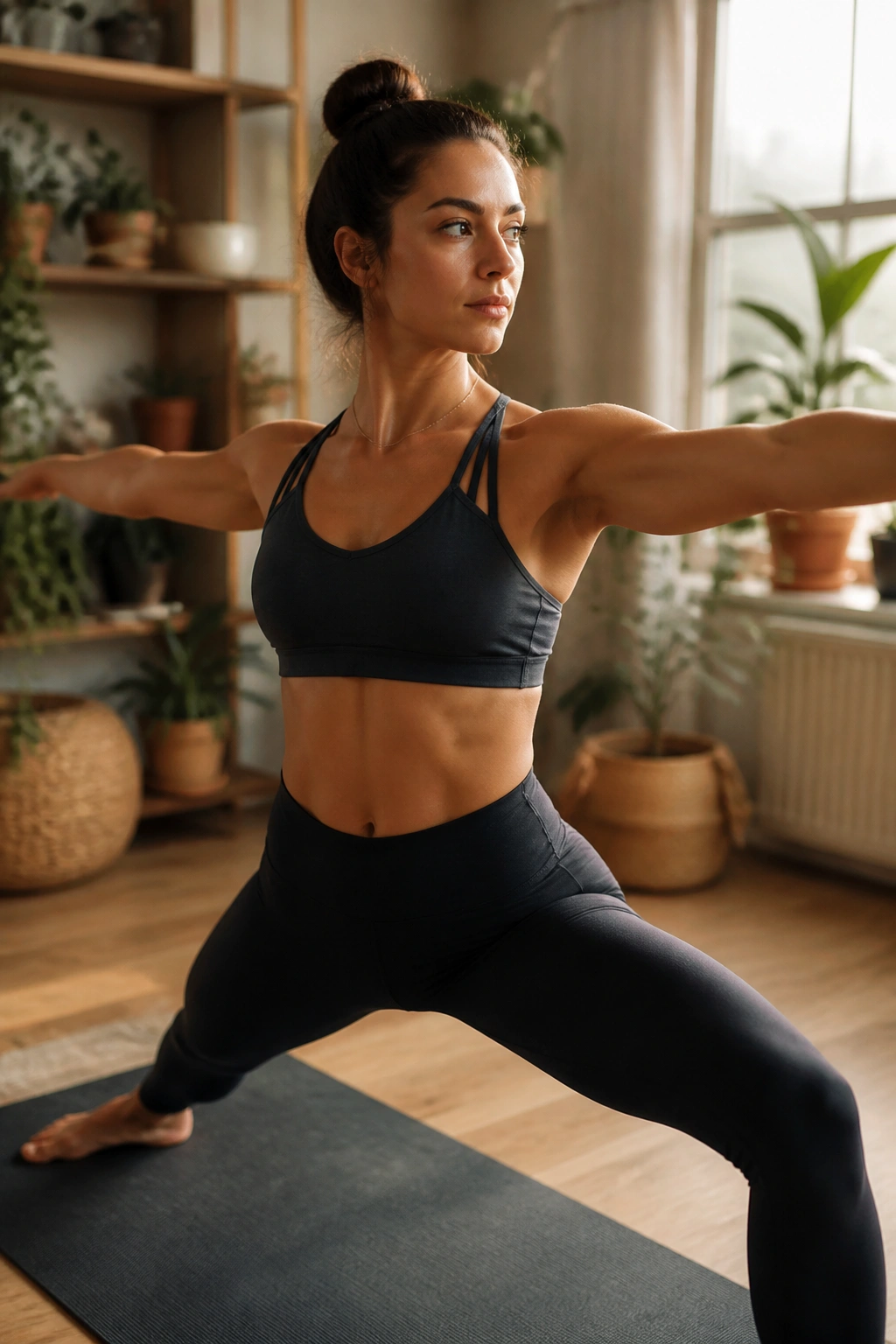
Unlike a stretch-only session, a strength-focused yoga flow holds poses long enough to make your legs and shoulders complain in a useful way. It’s part mobility, part balance, part quiet endurance.
Build it from sun salutations, chair pose, warrior II, crescent lunge, plank, and downward dog. Hold each position for 3 to 5 breaths, then move on with intention instead of rushing through the shapes. Two or three full rounds is plenty for a solid session.
Best Use
- Tight hips after sitting.
- Stiff shoulders from desk work.
- Days when jumping feels wrong.
- Anyone who wants movement without noise.
I like yoga as a home workout because it fixes the common problem most people ignore: they train hard, then spend the rest of the day folded over a chair. A flow that opens the front of the body and strengthens the legs can change how the next workout feels.
Use a mat, a block if you have one, and a little patience. That’s enough.
14. Low-Impact Cardio Dance Workout
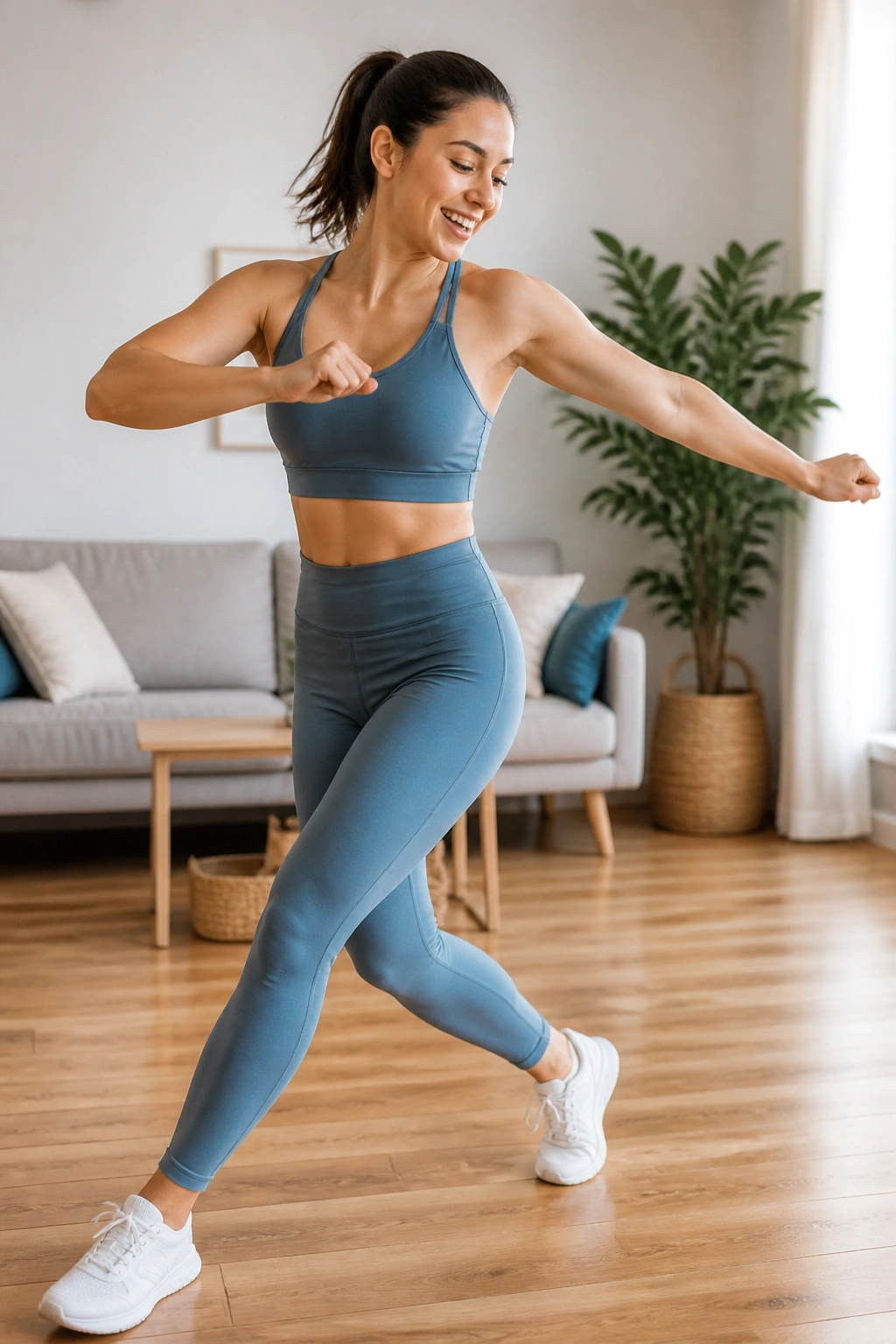
Can you get sweaty without jumping? Absolutely. A low-impact dance workout keeps one foot on the floor most of the time and still gives you the same rising breath that a harder cardio session does.
Build 4 blocks of 4 minutes using step-touches, grapevines, knee lifts, toe taps, and arm sweeps. Keep the music steady and pick moves that you can repeat without thinking too much. The whole point is rhythm. Once the pattern settles in, your heart rate climbs without your joints taking a beating.
This is a smart choice if you live upstairs, share walls, or just don’t want to sound like you’re dropping dumbbells at 7 a.m. It also works well on low-energy days because the first minute feels easy, then the pace sneaks up on you.
A dance workout shouldn’t feel like a choreography exam. It should feel like movement you can stay with.
15. Burpee-Free HIIT Circuit
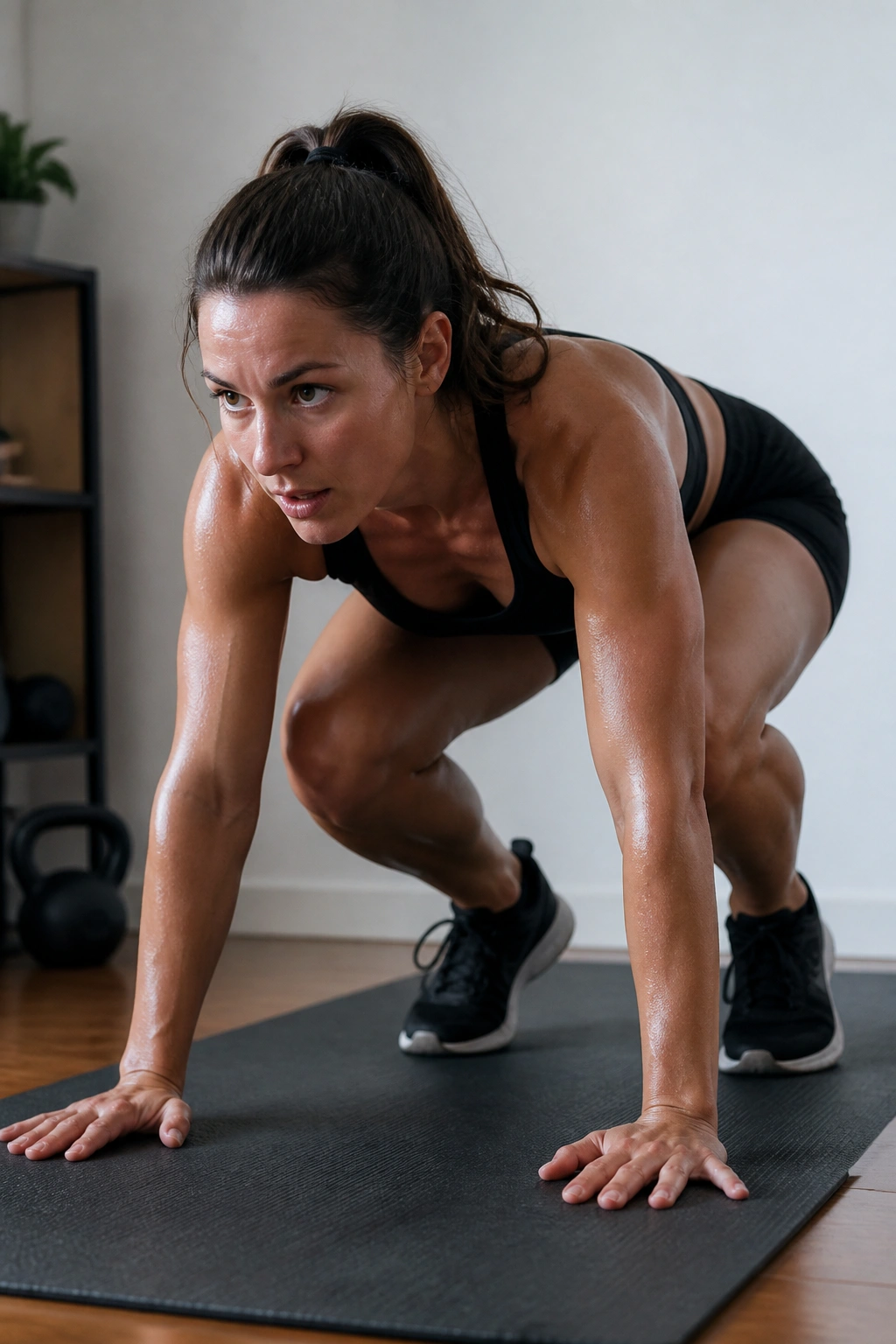
If burpees make you groan, you are not broken. You just know a bad trade when you see one.
A burpee-free HIIT circuit can be every bit as demanding without the full-body drop-and-jump setup. Try 20 seconds of squat thrusts, 20 seconds of skater steps, 20 seconds of high-knee marches, and 20 seconds of plank walkouts, then rest for 40 seconds. Repeat for 6 to 8 rounds.
A Clean Version
- Step back instead of jumping.
- Keep your core braced.
- Use a mat if your wrists dislike the floor.
- Breathe through the rest interval instead of collapsing.
This version is useful for people who want the pulse-raising part of HIIT but need to keep the impact down. It’s also a better fit for a small room because the moves stay compact. You don’t need much space to work hard. Just a little discipline and a timer that doesn’t let you wander off.
16. Single-Leg Balance and Strength Workout
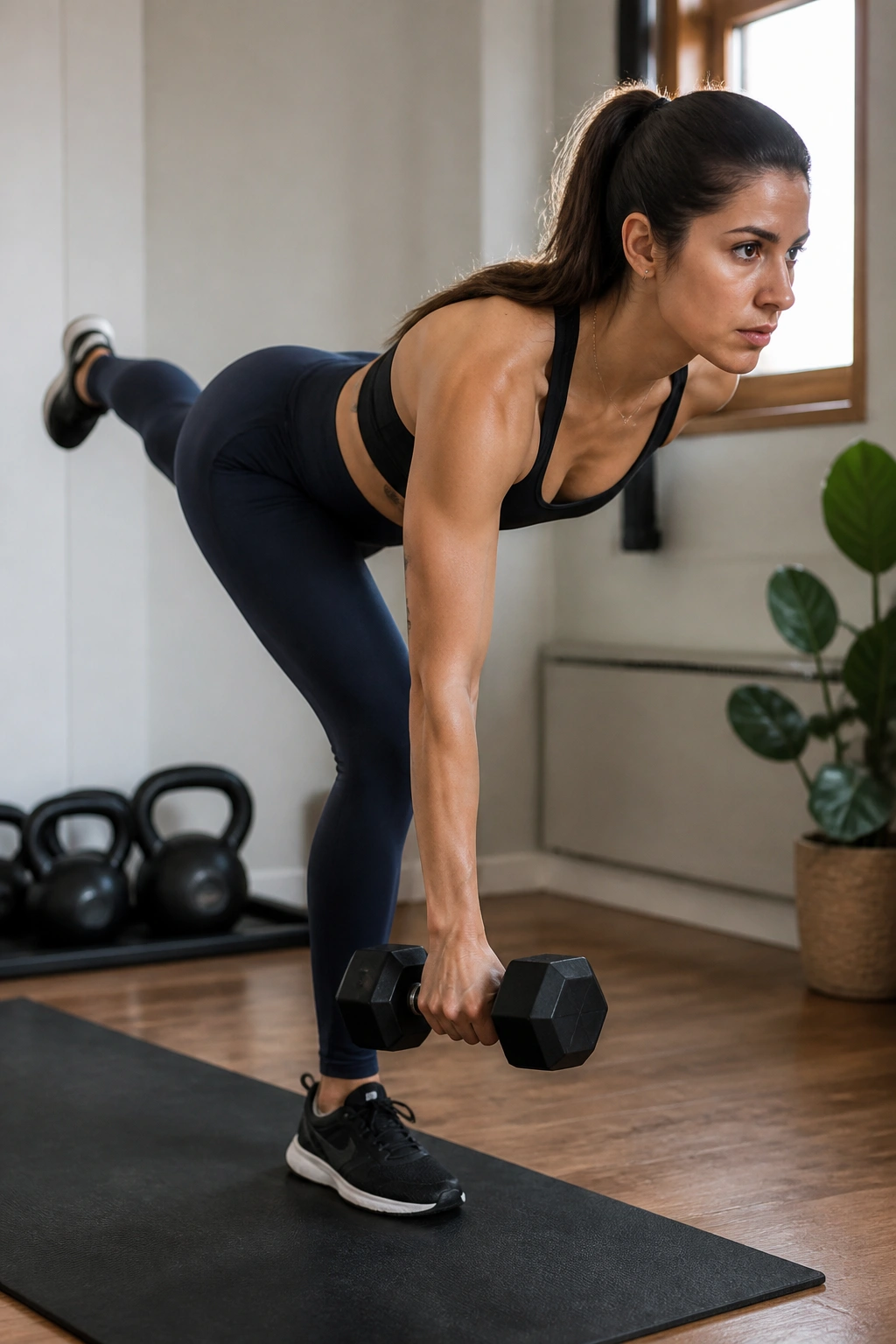
A two-leg workout can hide weak links. A single-leg workout does not. The wobble shows up fast, which is exactly why this kind of training is worth keeping around.
Use single-leg deadlifts, split squats, clock taps, and single-leg glute bridges for 3 rounds. Start with 6 to 8 reps per side on the deadlift and split squat, then finish with 10 slow clock taps or a 20-second balance hold. Keep one hand near a wall if balance is still a mess.
This session is especially useful for runners, hikers, and anyone who feels one ankle or hip lag behind the other. The goal isn’t to stand like a statue. The goal is to make the smaller stabilizers work before they get lazy.
A little wobble is fine. A collapsed arch and a twisting knee are not.
17. Step-Up Workout
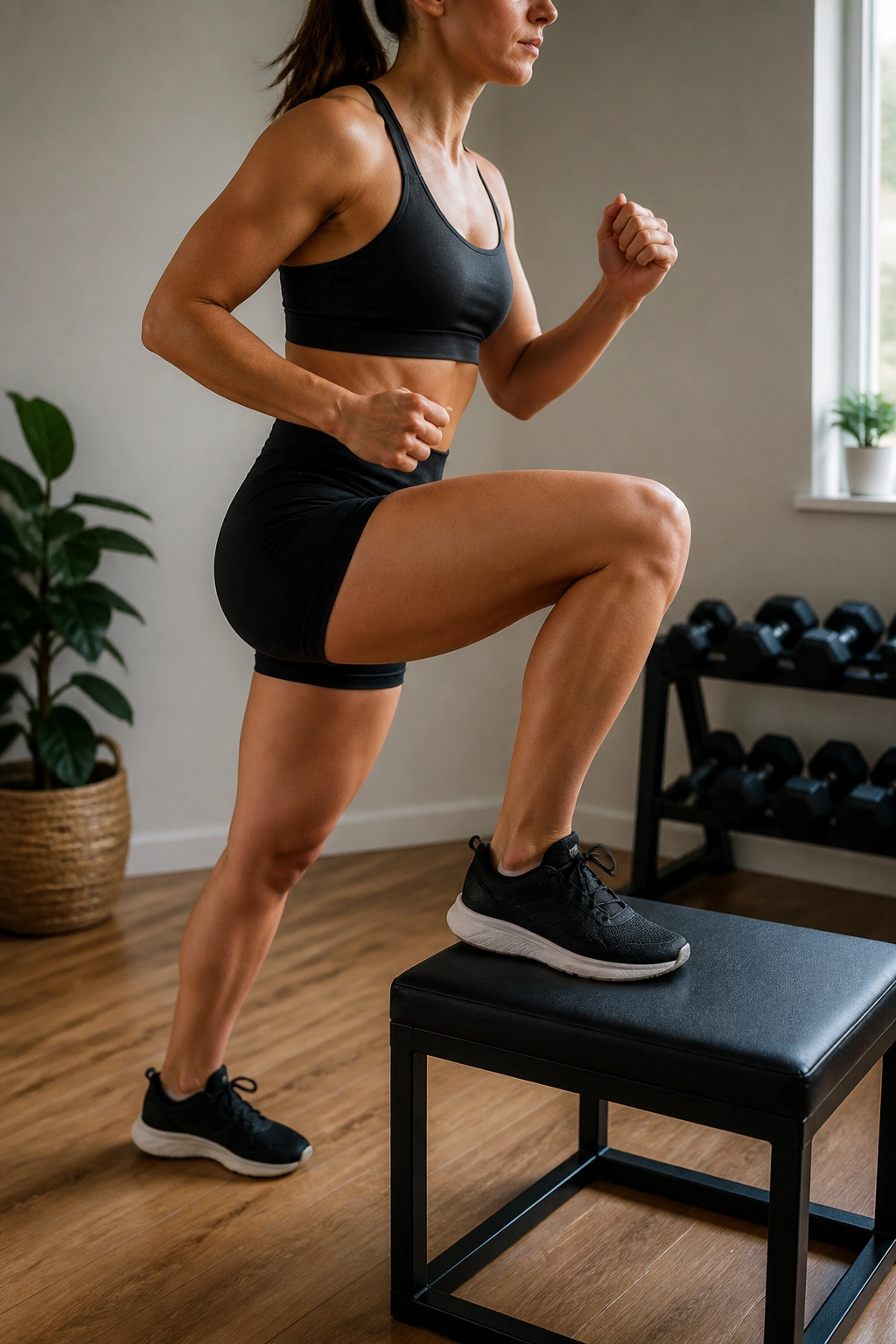
A sturdy step turns the same floor space into a useful strength tool. Step-ups train the legs in a way that feels practical, because the movement pattern is close to climbing stairs, stepping onto a curb, or getting up from a low seat.
Use a low bench, a solid box, or the bottom stair. Do 10 step-ups each leg, 8 lateral step-ups each leg, and 6 slow knee-drive reps per side. Run 3 to 4 rounds. Lower yourself with control; the descent matters as much as the drive up.
What to Focus On
- Push through the whole foot.
- Keep the knee from caving in.
- Stand fully at the top.
- Use the same height for both sides.
This workout is a good middle ground between pure cardio and pure strength. It gets the heart rate up, but the movement still asks for control. That makes it useful on days when jumping is too much and sitting around feels worse.
18. Jump Rope Workout
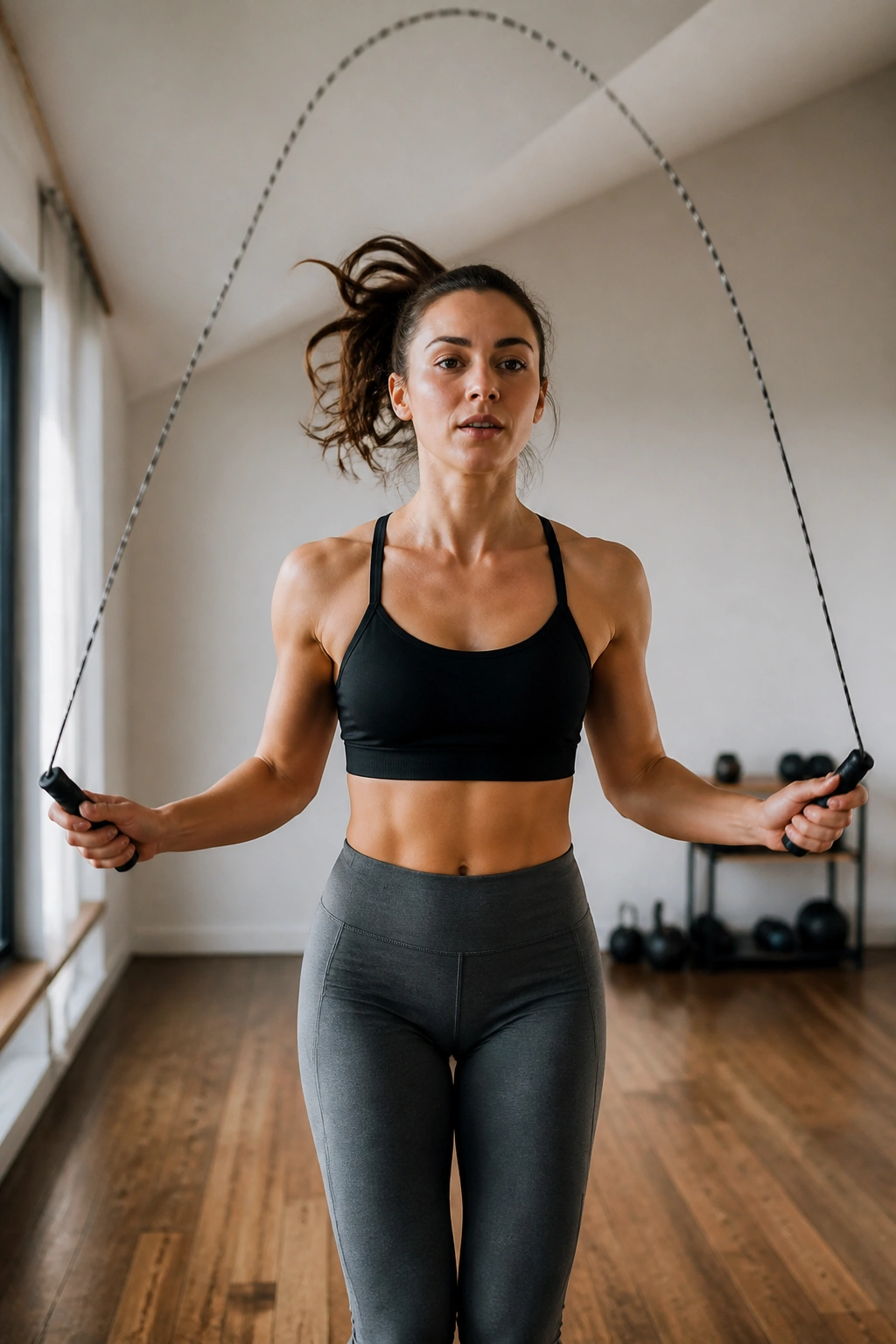
Fast. Cheap. Loud, if you miss the floor.
Jump rope is one of the easiest home cardio tools to store, and it rewards coordination in a way treadmill work never quite does. Start with 30 seconds of basic jumps, 30 seconds of rest, for 10 rounds. If you’re newer to it, use boxer step footwork or pretend rope before you bring the actual rope into the mix.
A rope workout gets better when you keep your jumps low. You’re not trying to hop high. You’re just clearing the rope with enough room to breathe. Shoes help, especially on hard floors. A mat can soften the landing, but keep it thin enough that the rope still clears cleanly.
If you live in a place where noise matters, jump rope may not be your first choice. Fair enough. Still, for people who can use it, the payoff is excellent: quick conditioning, decent calf work, and a rhythm that wakes the whole body up.
19. Kettlebell Complex at Home
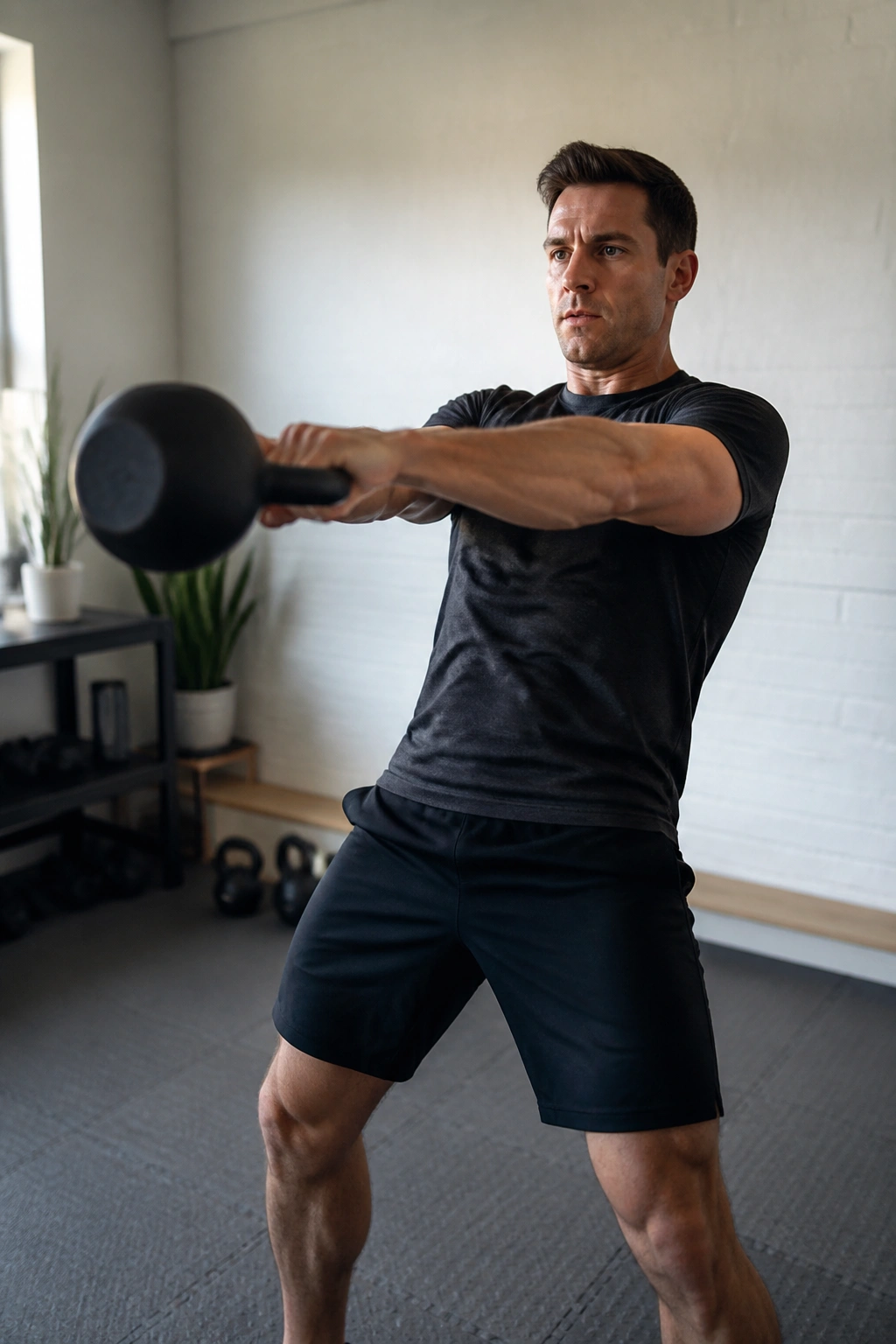
The bell swings once, and your grip wakes up.
A kettlebell complex is one of those workouts that feels compact but covers a lot of ground. Pick one moderate bell and move through 5 goblet squats, 5 swings, 5 cleans, and 5 presses per side without setting it down between moves. Rest for 60 to 90 seconds, then repeat for 3 to 5 rounds.
The hip hinge matters here. Swing from the hips, not from the shoulders. Keep your chest proud during the squat, and don’t rush the press if the bell is still rising from the clean. A sloppy kettlebell session gets ugly fast. A tidy one feels powerful and efficient.
Good Fit For
- People who already know basic lifting form.
- Home gyms with one piece of equipment.
- Short sessions that still feel substantial.
If you’ve only got one kettlebell, you’re not limited. One bell can do more than people think, as long as you respect the hinge and keep your reps clean.
20. Dumbbell Total-Body Complex
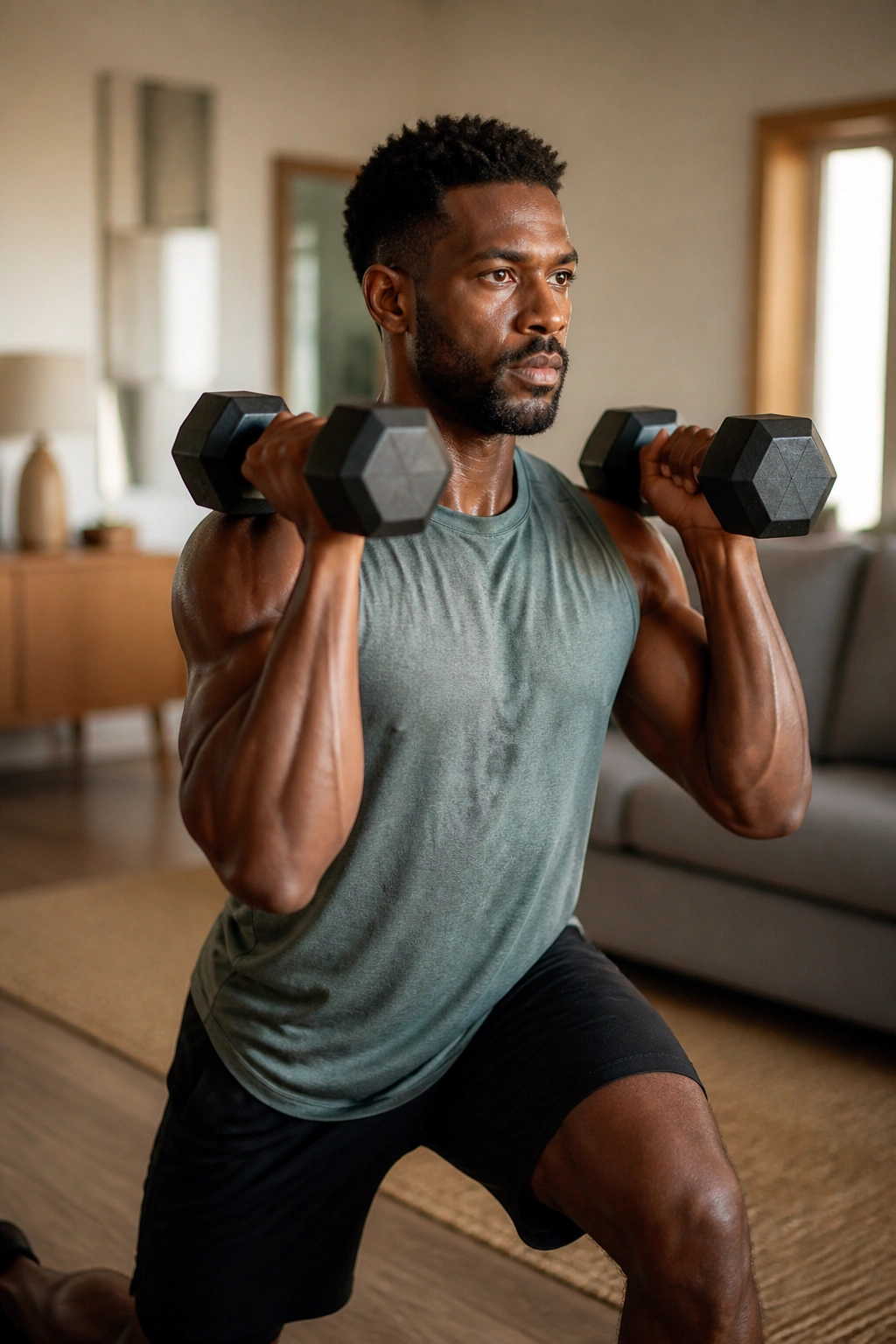
A pair of dumbbells can cover squat, hinge, push, and pull work in one circuit, which is why I keep coming back to this style of workout. It wastes no time.
Choose a pair you can control for 6 reps of Romanian deadlifts, 6 rows, 6 front squats, 6 overhead presses, and 6 reverse lunges per leg. Run the sequence for 3 to 4 rounds, resting 60 seconds between rounds. The final reps should feel hard, but the dumbbells should never start swinging around like loose tools.
This type of circuit is especially useful when you want muscle work without a bunch of separate stations. You pick up the weights once and stay busy. That alone makes the workout easier to finish on a crowded day.
If your grip gives out before your legs, that’s useful information, not failure. It tells you where to adjust next time.
21. Mobility and Stretch Strength Session
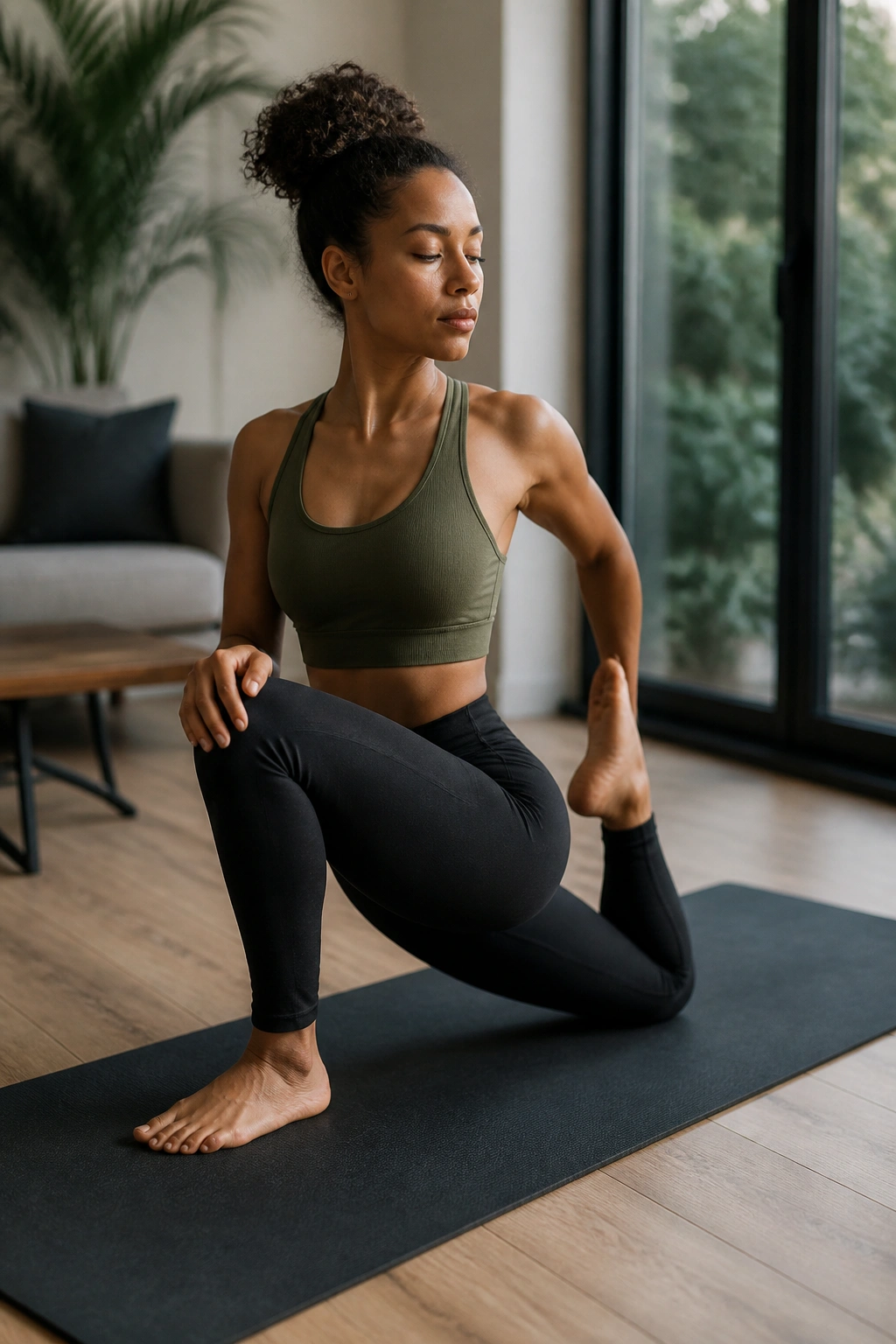
Is recovery a workout? Yes, if you treat it like one instead of a shrug at the end of the day.
Build a session around couch stretch, thoracic rotations, calf stretches, deep squat holds, and shoulder openers. Give each position 30 to 45 seconds or take 5 slow breaths before changing sides. Keep the breathing slow and nasal if you can. The point is not to force range. The point is to make the body remember it has range.
Useful Times to Use It
- After a hard leg day.
- On the day after long sitting.
- Before bed if your hips feel welded shut.
- When you want movement but not sweat.
I like this kind of session because it clears out stiffness before it turns into a bigger problem. It also makes the stronger workouts feel better the next time you try them. That part gets ignored a lot.
You do not need to be dramatic about stretching for it to matter. Ten quiet minutes can still change how your body feels.
22. Slow-Tempo Full-Body Circuit
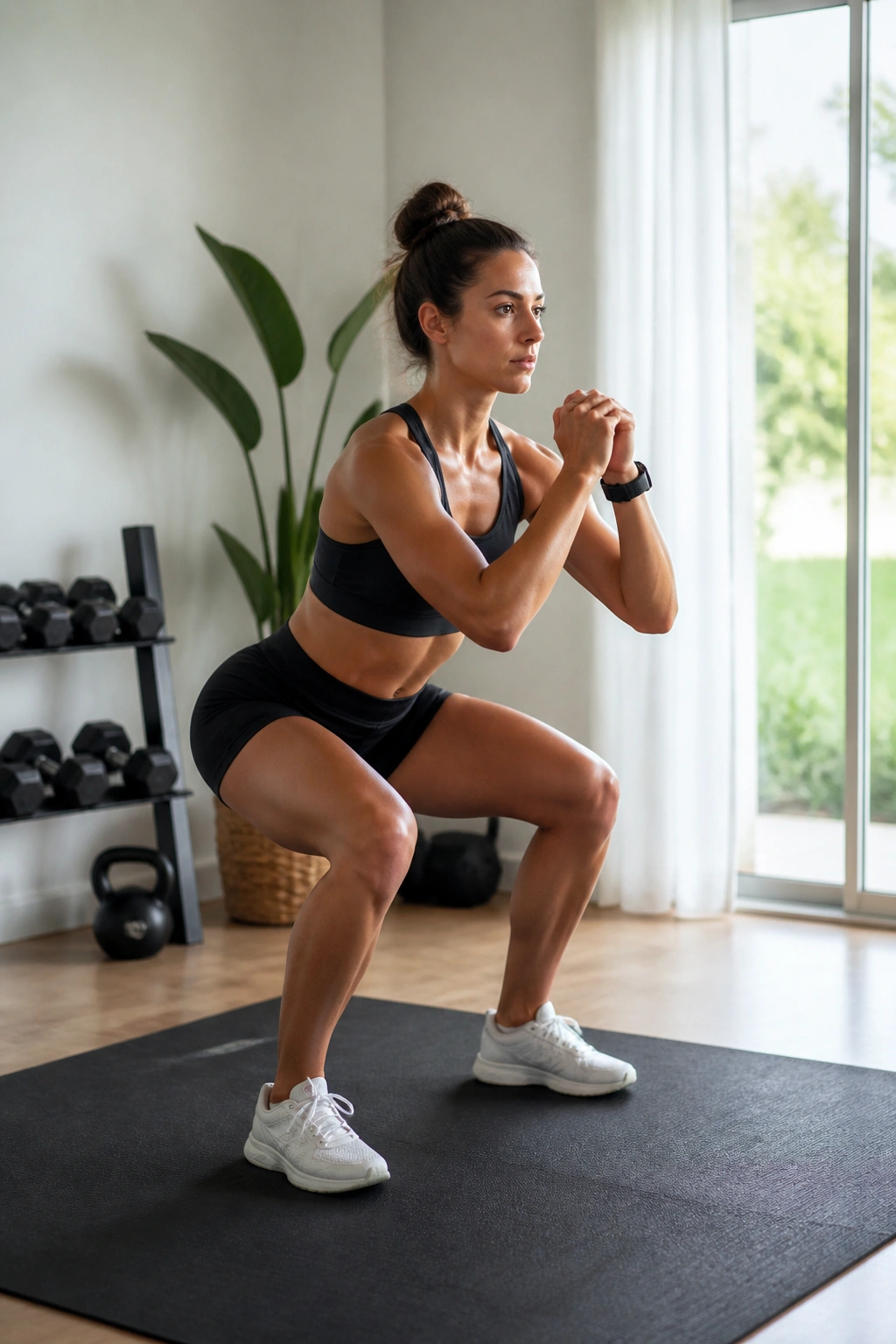
Going slower can be harder than chasing speed. Most people find that out on the first rep, then get annoyed that it’s true.
Use tempo squats, tempo push-ups, reverse lunges, glute bridges, and backpack rows if you have something to load. The rule is simple: 4 seconds down, 1-second pause, 2 seconds up. Do 8 reps of each move for 3 rounds, resting 45 to 60 seconds between rounds. If you don’t have a backpack or weights, keep the same tempo with bodyweight alone.
A slow-tempo workout is useful because it strips away momentum. You can’t bounce through the hard part. You have to own it. That makes it a strong choice for quiet floors, careful form work, and days when you want strength without the chaos of a high-speed circuit.
It’s also a reminder that a home workout does not need noise to count. Sometimes the hardest set is the one that looks calm.
If you want one place to start, make it the workout you can repeat next week without dreading it. That’s the one that sticks.
