



Your knees don’t need a jumping-jack punishment to get a workout. And your living room probably doesn’t need the floor-shaking chaos, either. Low impact workouts at home with no gear make sense on the days when you want to sweat, breathe hard, and feel your muscles work without pounding your joints into the ground.
Low impact does not mean low effort. That’s the part people miss. A slow squat done well can leave your legs honest. A controlled dead bug can light up your core more than a hundred sloppy crunches. Even a basic march in place gets serious fast when you add arm drive, tempo changes, and a longer work interval.
The best home workouts are usually the simplest ones. They rely on bodyweight, a little space, and enough attention to make every rep count. No fancy equipment. No setup drama. No waiting around for motivation to arrive wearing neon sneakers.
So if you want something gentle on the joints but still useful for cardio, strength, and balance, start with the moves below. Mix a few together, move slowly when you need to, and build from there.
1. Low-Impact Marching in Place
Marching looks almost too easy until you do it for three straight minutes with strong arm swings and a steady pace. Then your breathing changes, your calves wake up, and the whole thing stops feeling like a warm-up and starts feeling like work.
Make the March Count
Keep your feet under your hips and lift each knee to a height that feels smooth, not forced. Drive the opposite arm forward with each step. That arm action matters more than people think; it turns a sleepy little march into a real cardio drill.
- Stand tall with your ribs stacked over your hips.
- Land softly through the middle of each foot.
- Move at a pace you can hold for 30 to 60 seconds without bouncing.
- If you want more challenge, bring the knees a little higher or speed up the arm swing.
A good marching interval feels rhythmic, not frantic. If your shoulders start creeping up toward your ears, slow down and reset. That tiny correction keeps the move clean and saves your neck from working overtime.
Best use: as a warm-up, a rest-break cardio move, or the first drill in an indoor circuit.
2. Step Touch With Arm Swings
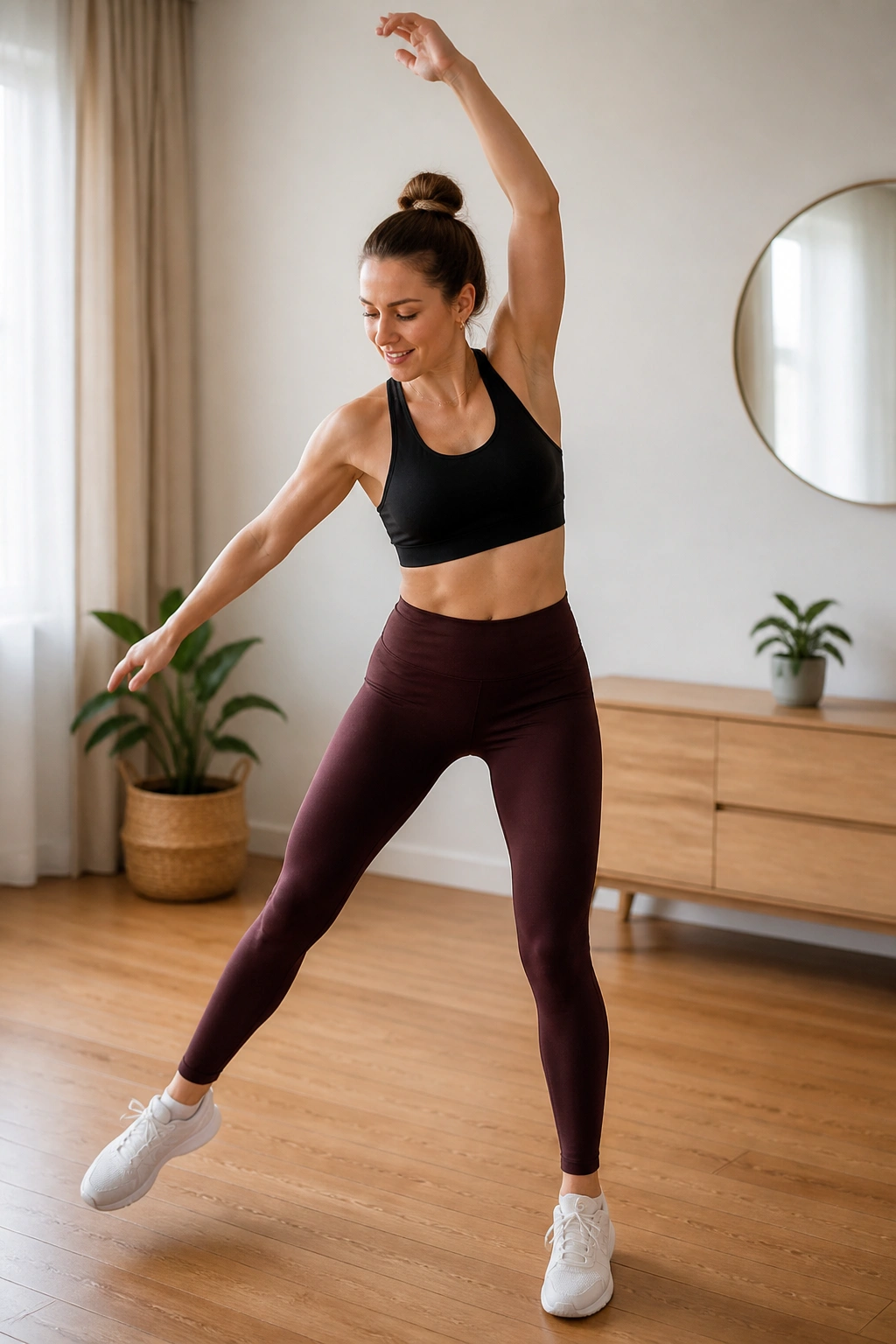
If marching feels too straight, step touches add a bit of side-to-side flow without adding impact. It’s one of those moves that looks harmless until you keep the rhythm going and let your whole body join in.
Take a step to the right, bring the left foot in to tap, then repeat to the other side. Let the arms swing naturally at first. Once that feels smooth, reach the arms overhead on the step out and lower them on the tap. The motion stays soft, but your heart rate climbs faster than you’d expect.
This is a good move for people who hate feeling “stuck” in place. The side travel gives the brain a tiny break, which makes it easier to stay with the workout for longer. I like it best in 45-second bursts, especially if I’m pairing it with a strength move and want something lighter in between.
Try this pattern:
- 45 seconds step touch
- 15 seconds easy march
- 45 seconds step touch with overhead reach
- 15 seconds rest
Clean footwork matters. Don’t fling the feet. Let the heels kiss the floor and keep the knees soft the whole time.
3. Chair Squats That Build Leg Strength
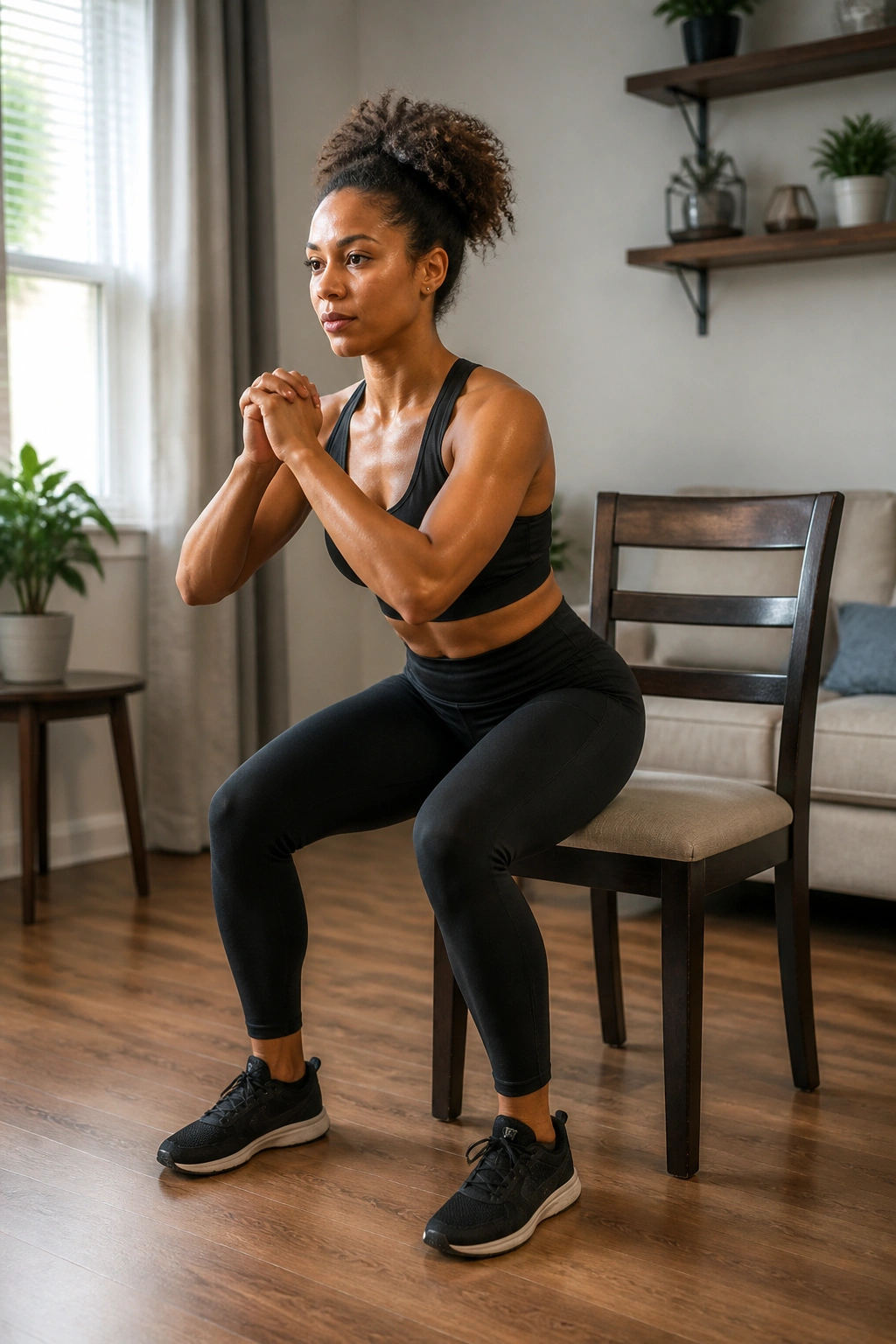
A good chair squat is one of the most useful low impact workouts at home with no gear because it teaches the exact pattern most people need: sit back, stand up, and control the middle.
Here’s the idea. Stand in front of a sturdy chair with your feet about hip-width apart. Reach your hips back as if you’re going to sit, tap the chair lightly, then stand back up without collapsing into the seat. You should feel your glutes, thighs, and core working together.
What to Watch For
- Keep your knees tracking over your toes, not caving inward.
- Push through the whole foot, not only the toes.
- Stop the descent if your lower back starts rounding.
- Use a higher chair if deep squats feel sketchy on your knees.
A chair squat is not about dropping fast. It’s about control. If you can lower for three seconds and stand for one, the move becomes much more demanding without adding a single pound of load.
Try 2 to 4 sets of 8 to 12 reps. If that feels easy, pause for one second above the chair before standing. That tiny pause kills momentum and makes the work honest. It also exposes weak spots, which is useful even if it’s a little humbling.
4. Wall Push-Ups for Chest, Shoulders, and Arms
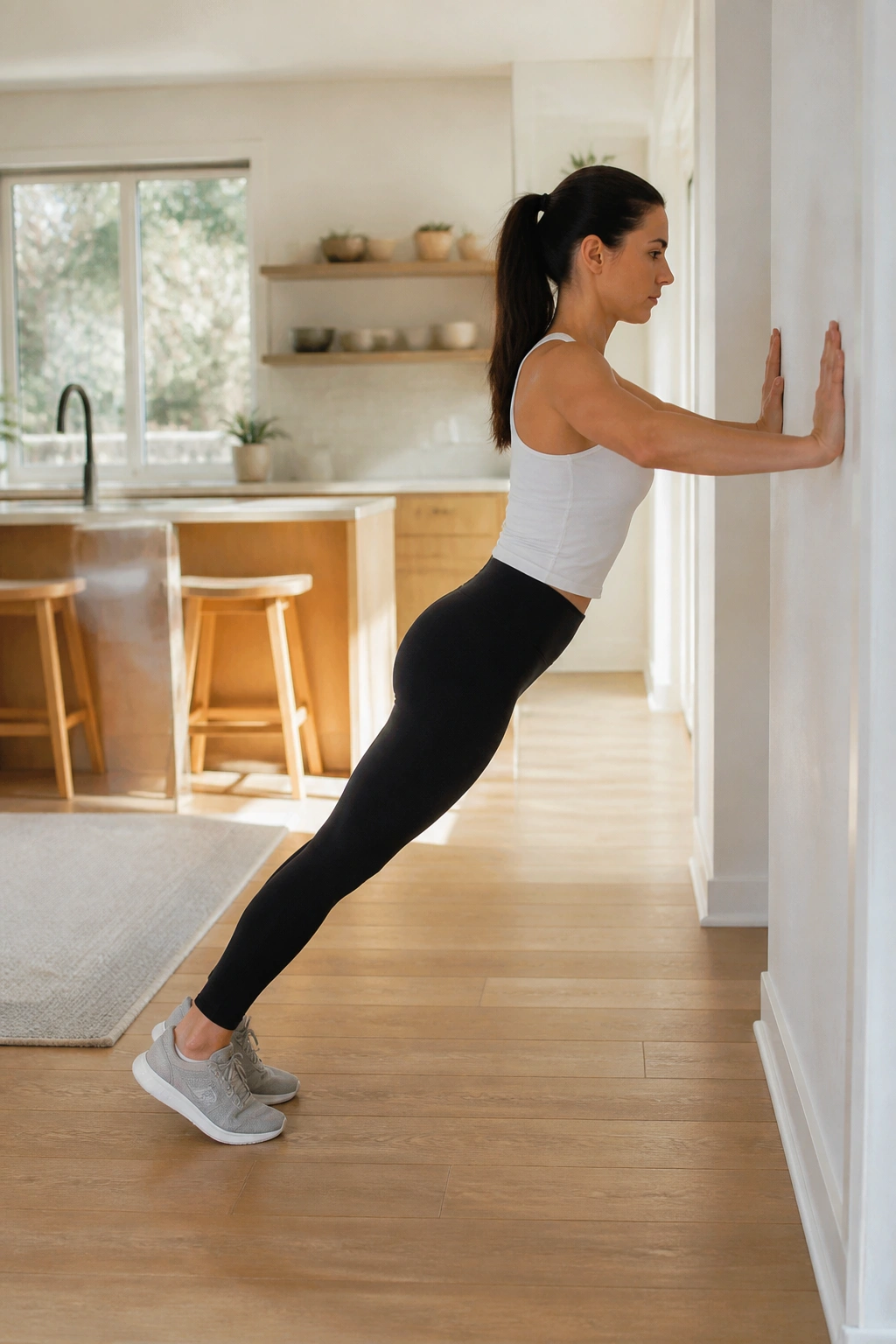
Can you train your upper body without getting on the floor? Yes. Wall push-ups are the cleanest answer, and they’re more useful than people give them credit for.
Stand facing a wall, place your hands a little wider than shoulder-width, and walk your feet back until your body makes a straight line from head to heels. Bend your elbows and bring your chest toward the wall, then press back to the start. That’s the whole move. Simple. Quiet. Effective.
Hand Position Changes Everything
If your hands are too high, the move gets awkward. Too low, and your shoulders may feel pinched. Aim for chest height and keep your wrists stacked under your hands. A little bit of tension through the belly helps keep your hips from sagging.
- Closer feet = easier.
- Farther feet = harder.
- Slower lowering = more challenge.
- Smaller range = better if the shoulders feel cranky.
Wall push-ups are one of the best low impact exercises for beginners because they let you practice solid pressing mechanics without fighting gravity at floor level. They also work well in circuits because you can recover while still staying active.
Try 8 to 15 reps for 2 to 4 rounds. If that feels too easy, lower to a countertop or sturdy table edge. Same pattern, more load.
5. Glute Bridges That Wake Up Your Hips
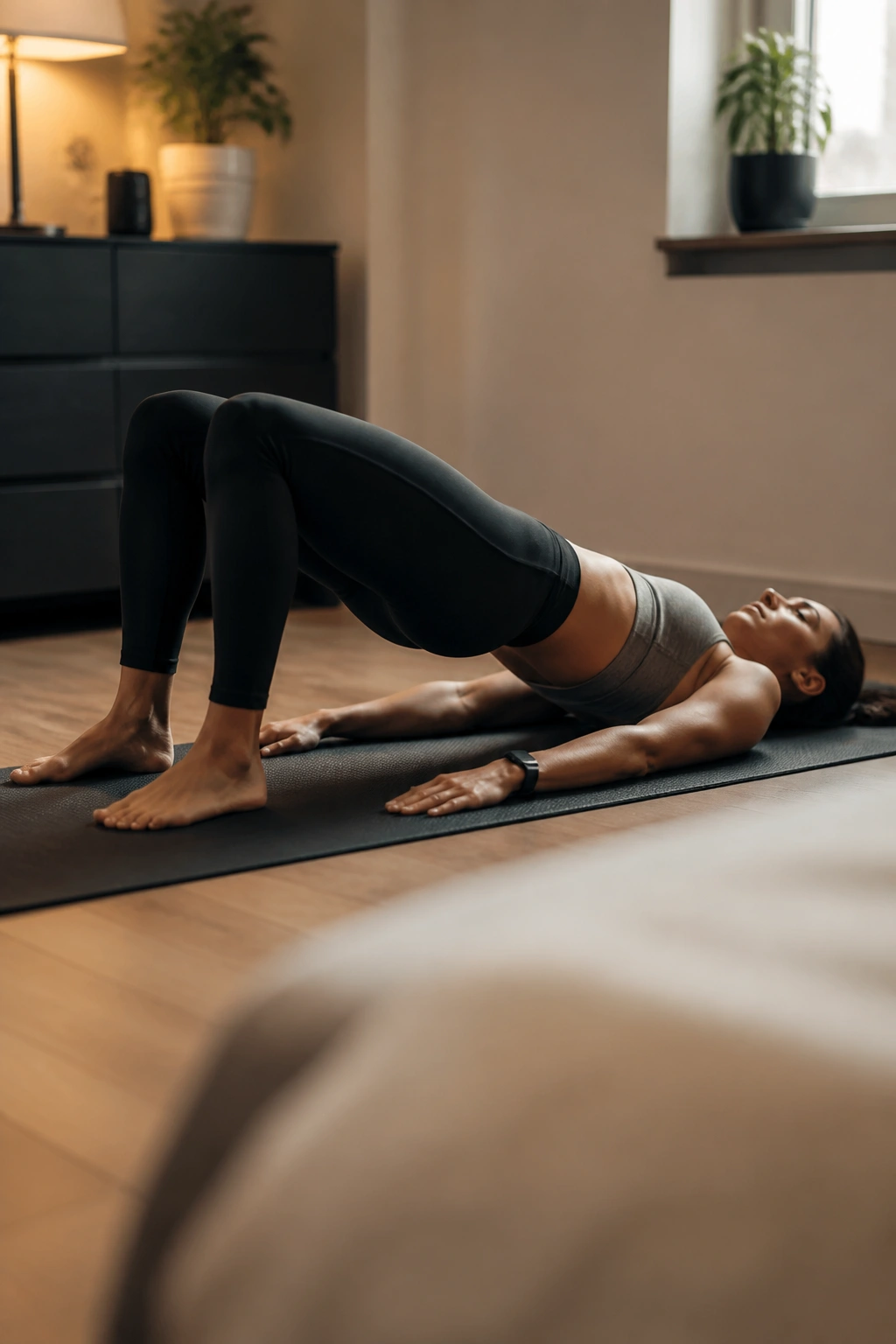
You feel glute bridges in the back of the hips when they’re done right. You may also feel them in the hamstrings, but the glutes should do the heavy lifting. If your lower back takes over, something needs adjusting.
Lie on your back with your knees bent and your feet flat on the floor, about hip-width apart. Press through your heels, squeeze your glutes, and lift your hips until your body makes a straight line from shoulders to knees. Pause for a second, then lower with control.
Small Cues, Big Difference
The most common mistake is pushing the ribs upward and turning the movement into a back bend. Don’t do that. Keep the ribs down and think about tucking the pelvis slightly as the hips rise.
A second useful cue: spread your toes inside your shoes or against the floor. That creates a more stable base. You don’t need to jam the movement. You need to make the right muscles do the work.
Glute bridges are a quiet favorite of mine because they solve a real problem. Lots of people sit too much, and the hips stop contributing the way they should. Bridges bring the posterior chain back online without any jumping, lunging, or awkward setup.
Try 10 to 20 reps, or hold the top position for 20 to 30 seconds. If you want more burn, lift one foot for alternating single-leg bridges after your regular set feels solid.
6. Standing Knee Drives for Cardio and Core
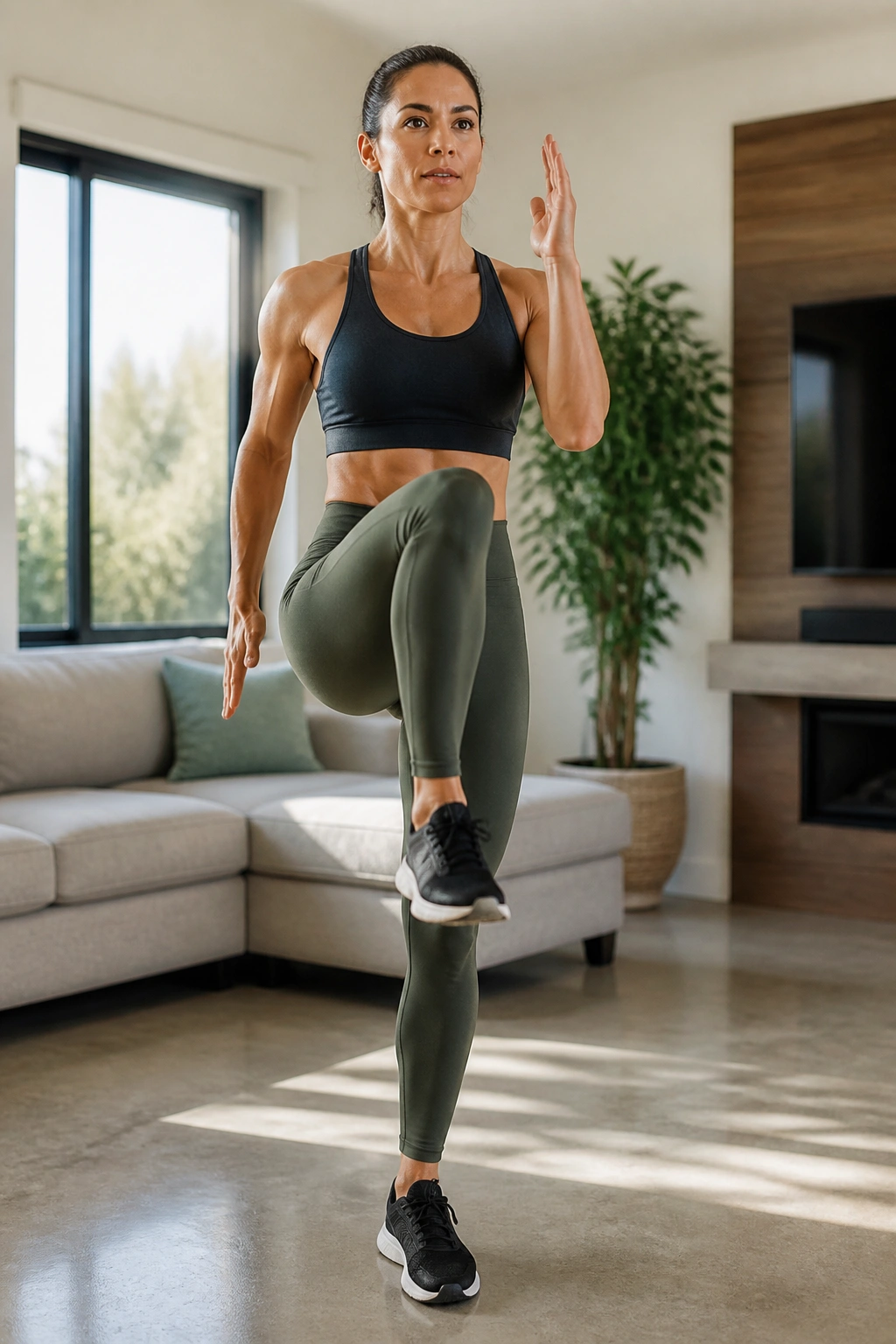
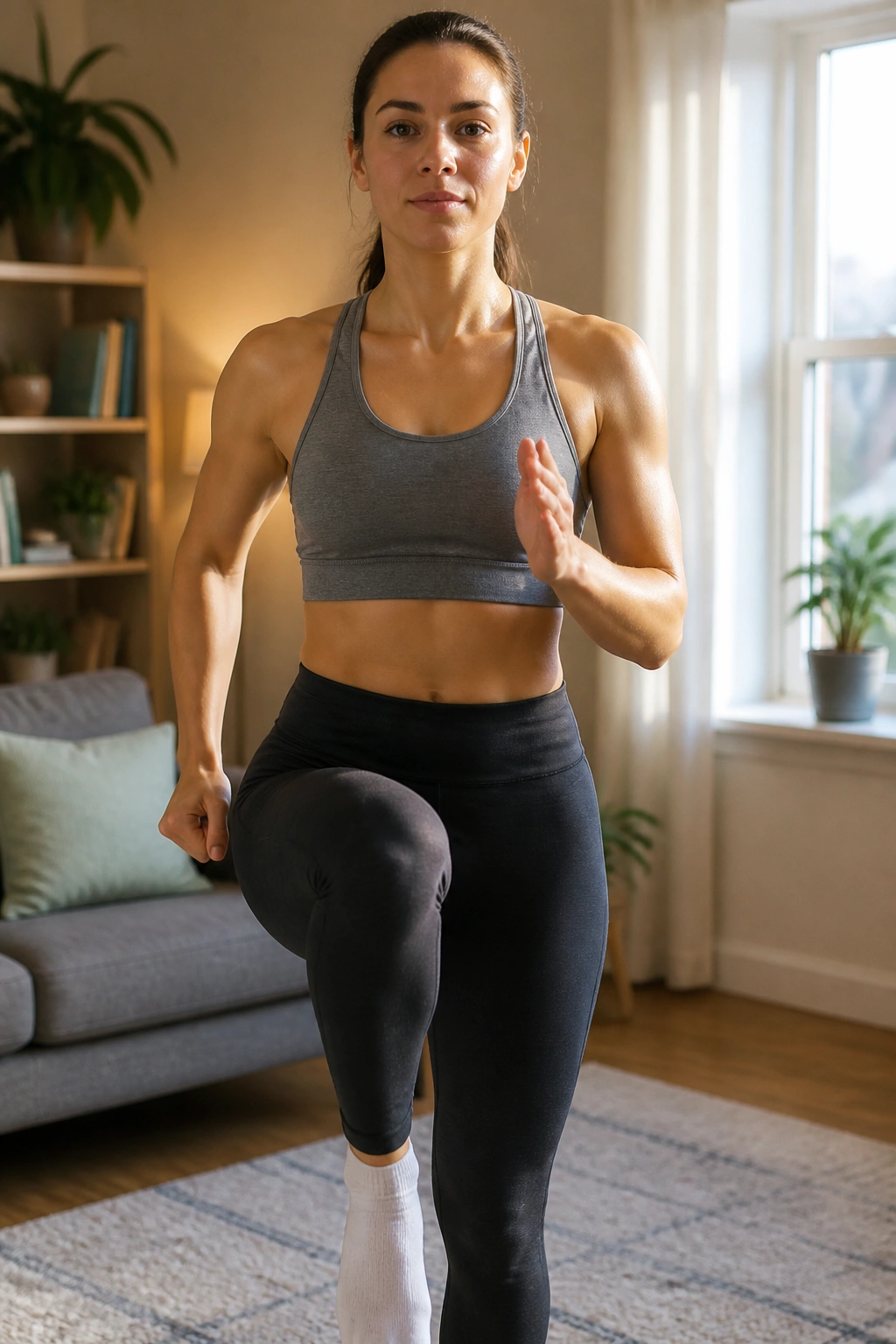
Standing knee drives are sneaky. They look like a mild balance drill, then your abs, hip flexors, and breathing all get involved at once.
Stand tall and drive one knee upward while the opposite arm moves forward. Lower it under control and switch sides. You can keep it slow for balance work or speed it up for a cardio hit. Either way, the motion stays low impact because one foot remains grounded each time.
What makes this useful is the combo effect. Your core has to brace, your standing leg has to stabilize, and your heart rate creeps up without any jumping. That’s a good trade on days when you want to move but your joints want a truce.
A few practical tips:
- Keep the lifted knee below the point where your lower back arches.
- Exhale as the knee rises.
- Stay tall through the crown of the head.
- Use a mirror if you tend to lean backward.
Do 30 seconds on, 15 seconds off for 6 to 10 rounds. If you prefer a steadier pace, count 20 drives per side and keep the motion smooth. There’s no need to fling the knee high. Clean and repeatable wins here.
7. Dead Bug on the Floor
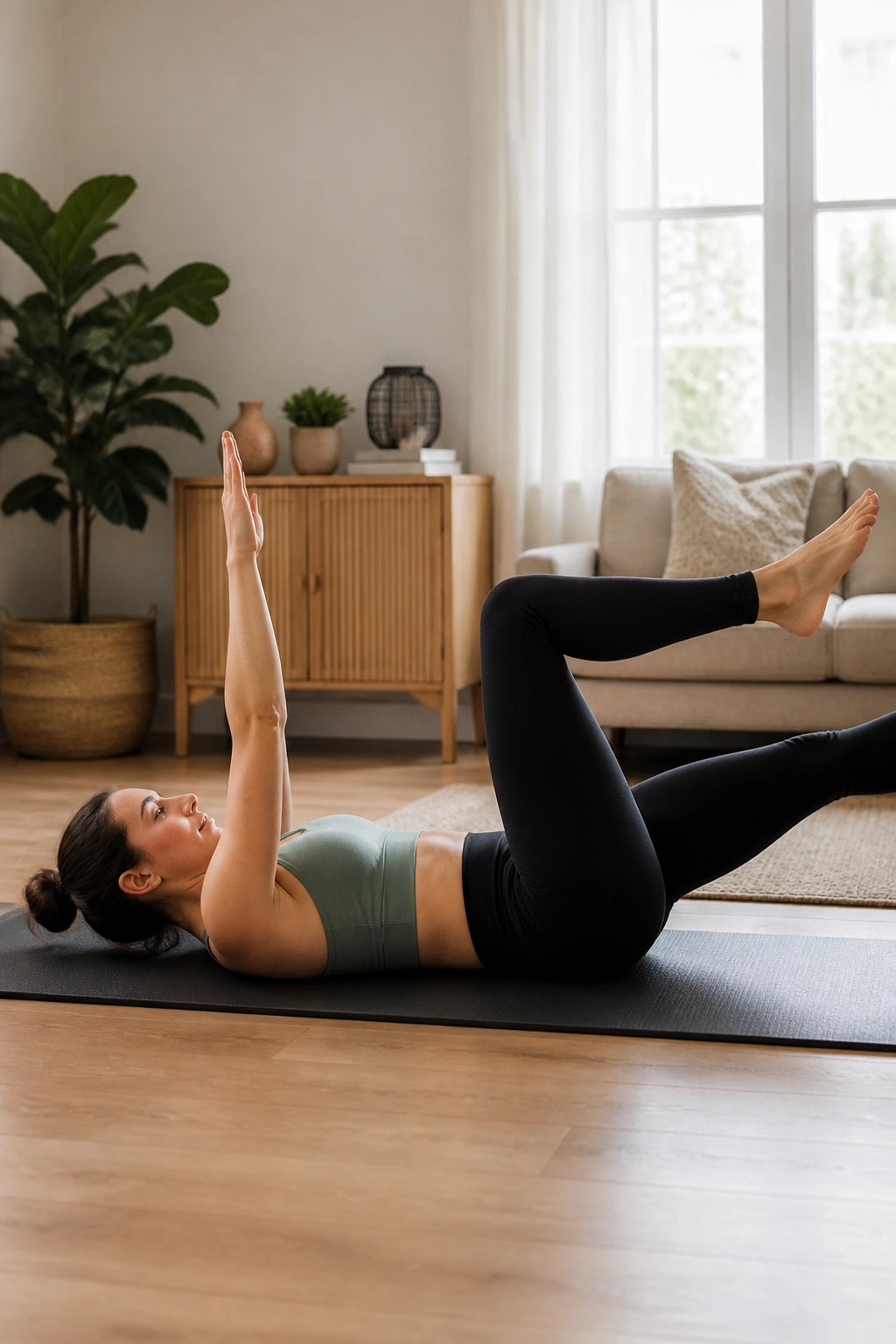
The hardest low impact move is often the one that looks easiest. Dead bug is a perfect example. Nothing flashy happens, but your abs and deep core muscles have to stay awake the whole time.
Lie on your back with your arms pointed toward the ceiling and your knees bent over your hips. Press your lower back gently into the floor. Extend the opposite arm and leg away from center, then return and switch sides. The movement should feel controlled and almost quiet.
Why the Lower Back Stays Happy
The back stays calm when the rib cage doesn’t flare and the pelvis doesn’t tilt wildly. That’s the whole game. If your lower back starts lifting off the floor, shorten the range. Move one limb at a time if you need to. Clean reps matter more than reaching far.
I like this one for people who want core work without neck strain. There’s no crunching, no twisting frenzy, and no need to race through the reps. You can actually feel the belly brace, which is the point.
- Start with 6 slow reps per side.
- Pause for one breath at the full extension.
- Keep the head relaxed on the floor.
- Stop before your back pops up.
Dead bug pairs well with standing cardio moves because it gives the joints a break while the trunk keeps working.
8. Bird Dog for Balance and Back Control
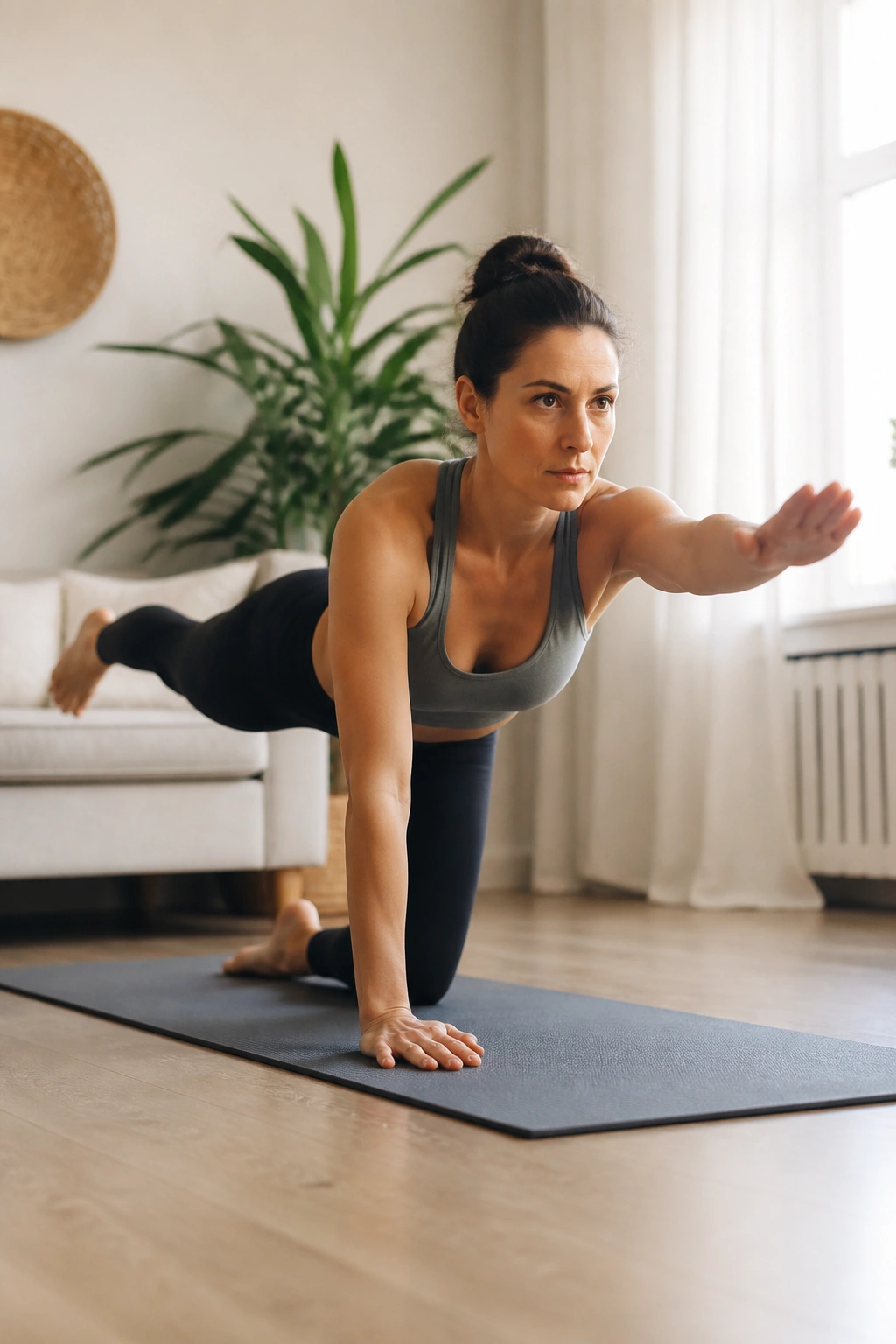
A bird dog done slowly can humble you fast. It asks your balance, your hips, and your core to cooperate, and they do not always agree on the first try.
Get on your hands and knees with your wrists under your shoulders and your knees under your hips. Reach one arm forward and the opposite leg straight back. Hold for a second or two, then return to center and switch sides. The goal is a long line, not a high kick.
The move works because it challenges stability while keeping impact near zero. If your hips twist open, narrow the reach a little. If your shoulders feel tense, soften the elbow slightly rather than locking out hard.
Slow Wins Here
Bird dog gets much better when you move at half speed. A slow reach gives your body time to organize itself. A rushed rep usually turns into a wobble and a shrug.
A solid set can look like this:
- 5 reps per side with a 2-second hold
- 5 reps per side with a 3-second hold
- 20 seconds of rest between rounds
The best part? It doesn’t leave you wrecked. It leaves you more aware of how your body lines up, which carries over to squats, lunges, and even walking around the house without feeling lopsided.
9. Low-Impact Mountain Climbers
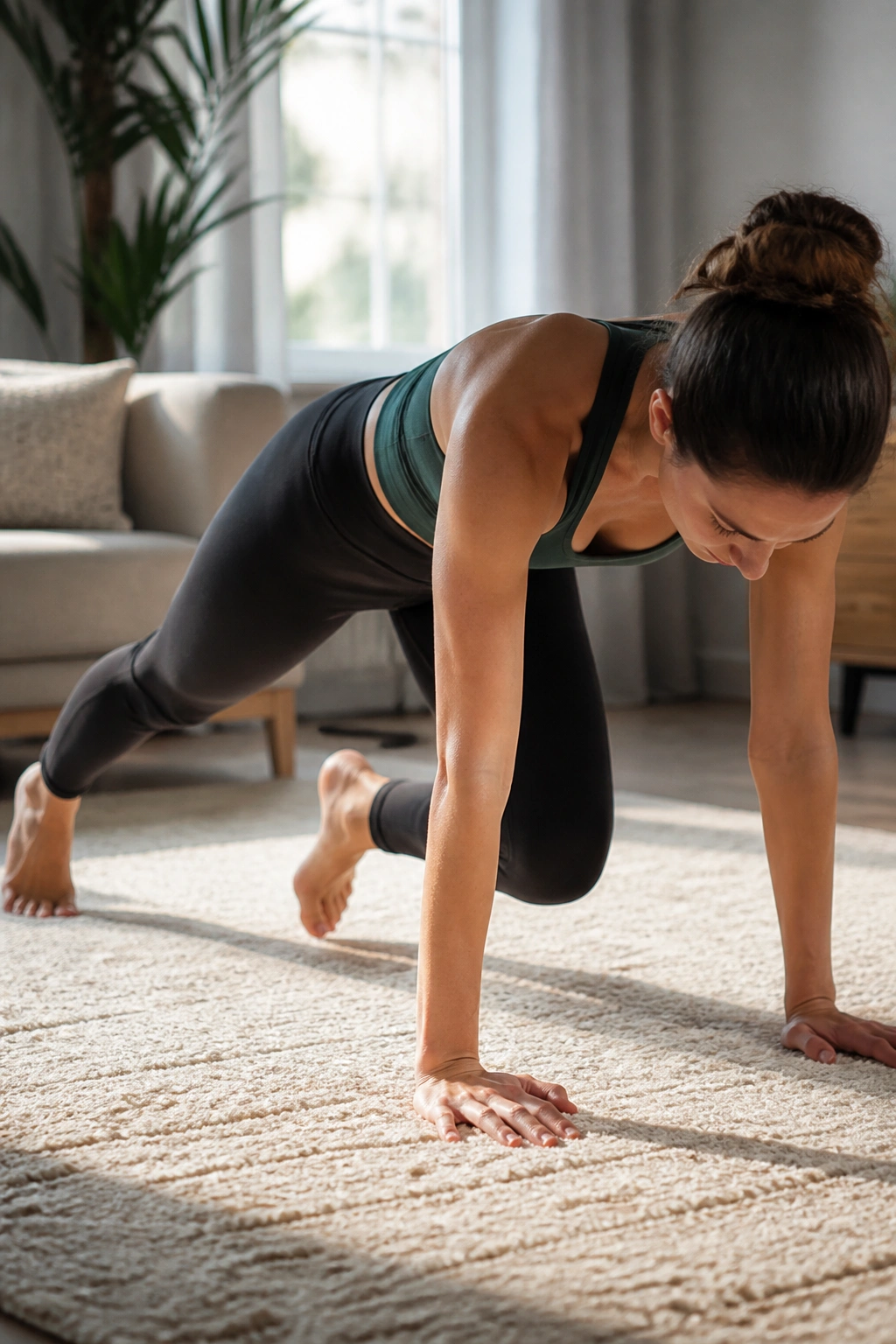
Thirty seconds is enough to tell you whether your midsection is awake. Low-impact mountain climbers get there without the big bouncing version that can be rough on wrists and shoulders.
Start in a high plank with your hands under your shoulders. Instead of driving the knees fast and hard, bring one knee in slowly, then send it back and switch. Keep the motion controlled, like you’re sliding the foot under the body rather than slamming it forward. You can also put your hands on a couch or countertop to reduce the load.
Make Them Joint-Friendly
The goal is to keep your torso steady. If your hips bounce all over the place, slow the pace down. If your wrists complain, elevate your hands. If your shoulders start burning before your core does, check that you’re not dumping your weight too far forward.
- Hands stay planted.
- Shoulders stay above the wrists.
- Knees move one at a time.
- Breathing stays steady, not panicked.
This version is useful because it gives you cardio and core work in one shot, and you can scale it without changing the movement much. A slower climber can be every bit as hard as the fast version if you keep the body braced.
Try 20 to 40 seconds per round. Rest for 20 seconds. Repeat 4 to 8 times.
10. Shadow Boxing in Your Living Room
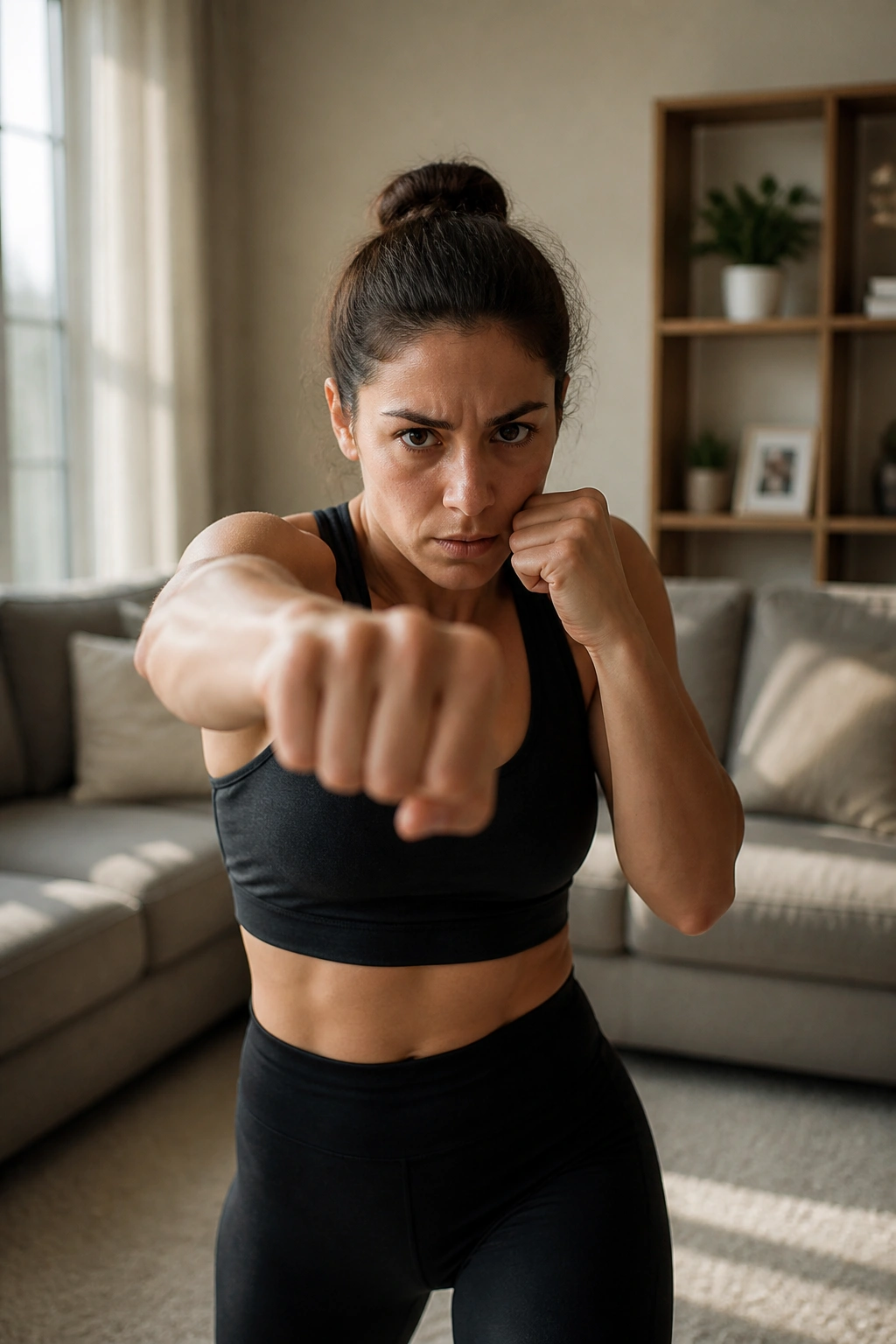
I like shadow boxing when I want something that feels sharp without sounding like an apartment complaint. No equipment. No floor impact. Just hands, feet, and a little rhythm.
Stand in a soft athletic stance and throw light jabs, crosses, hooks, or uppercuts into the air. Keep your chin tucked and your shoulders loose. Step a few inches forward and back if you want more footwork, or stay planted and work on upper-body speed.
Shadow boxing does more than burn calories. It sharpens coordination, opens the shoulders, and wakes up the torso rotation that a lot of bodyweight work misses. That rotation matters. You are not only moving arms around. You’re teaching the trunk to transfer force.
How to Box Without Tensing Up
- Exhale on each punch.
- Keep fists relaxed until the end of the strike.
- Reset your guard after every combo.
- Let the heels pivot a little on the cross.
A simple round could be 30 seconds of jabs, 30 seconds of jab-cross, then 30 seconds of light hooks. Do 3 to 5 rounds. If you want more cardio, add a small step with each punch. No need to bounce around like you’re auditioning for anything. Clean lines and steady pace will do the job.
11. Standing Side Leg Raises
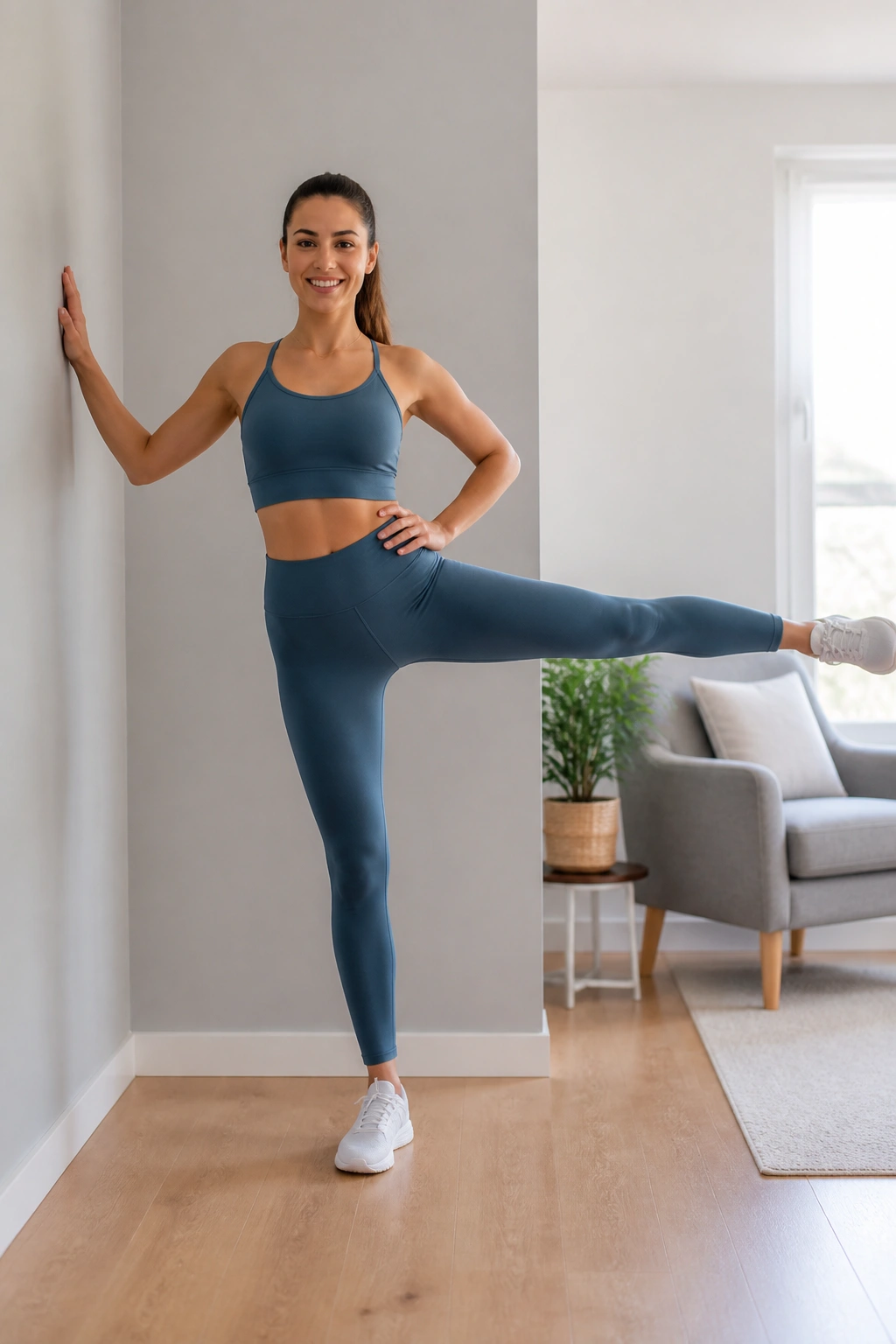
The burn usually shows up on the outside of the hip first. That’s the glute medius talking, and it tends to get ignored until the body starts leaning or one side feels weaker than the other.
Stand next to a wall or a sturdy chair if balance is shaky, then lift one leg out to the side without tipping the torso. Lower it slowly. Repeat on the same side, then switch. Keep the standing leg soft, not locked, and avoid swinging the lifted leg so hard that momentum does the work.
This move is small, which is exactly why it’s useful. Most people rush it and wonder why nothing happens. Then they slow down, pause for one count at the top, and the side hip starts lighting up within a few reps.
If you want to make it harder without adding equipment, hold the top position for two seconds. Or perform tiny pulses for the last five reps. Tiny pulses. Not wild flapping. There’s a difference, and your hips know it.
Try 12 to 20 reps per side for 2 to 4 sets. It’s a good pairing with squats and lunges because it helps the hips stay centered instead of collapsing inward.
12. Reverse Lunge to Knee Lift
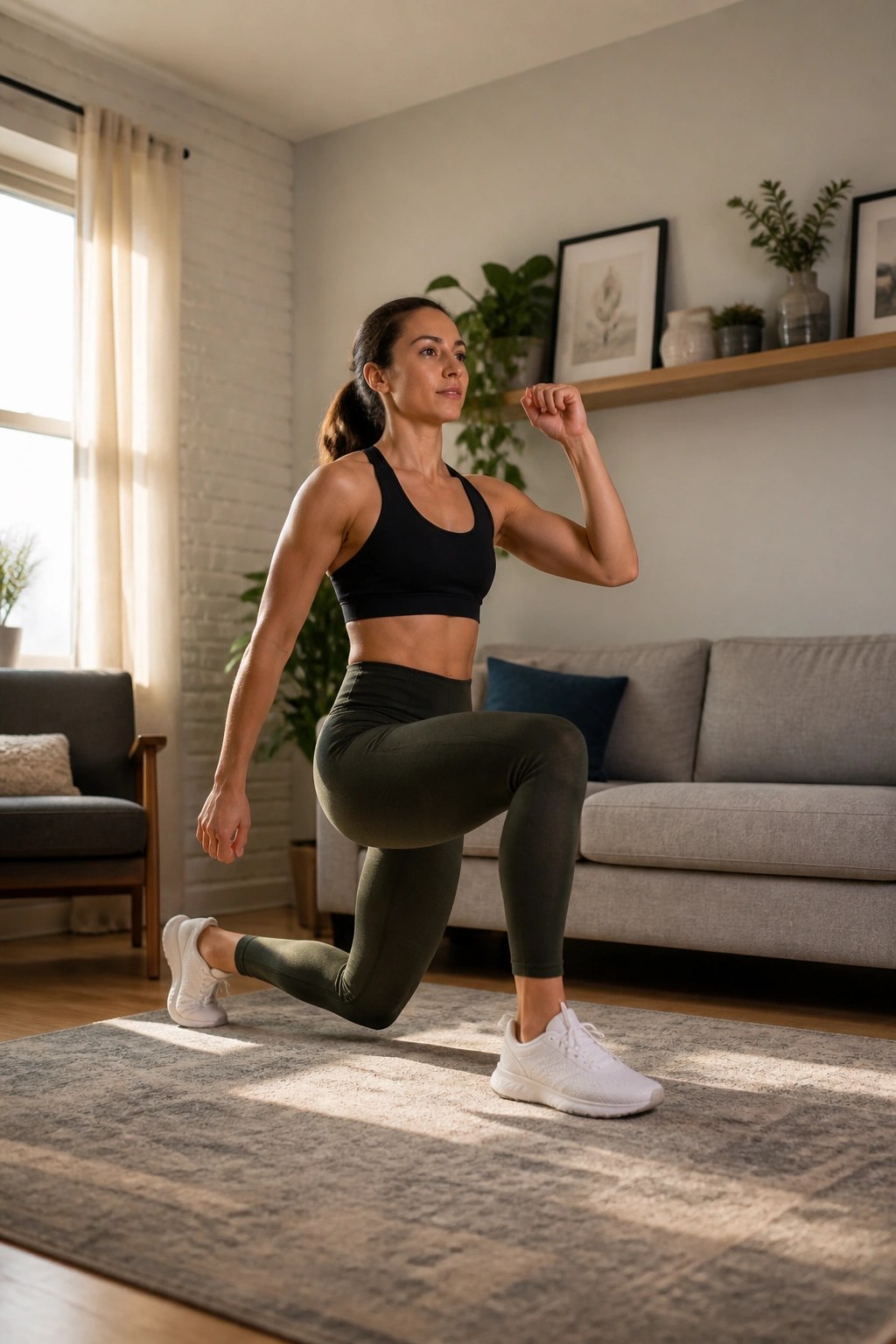
Want a lower-body move that works balance, legs, and control in one go? Reverse lunge to knee lift is hard to beat without jumping.
Step one foot back into a reverse lunge, lowering until both knees bend comfortably and your front knee stays over the middle of the foot. Push through the front heel to stand, then drive the back knee up into a controlled knee lift. Switch sides and repeat.
Clean Form Beats Depth
People often chase depth and lose posture. Don’t. Go as low as you can while keeping the torso tall and the front heel down. If your balance wobbles, shorten the step back and slow the rise.
A reverse lunge is friendlier to the knees than a forward lunge for many people because the step back gives you more control. Adding the knee lift at the top makes the move more dynamic without turning it into a jump.
- Step back softly.
- Keep the front knee from caving inward.
- Squeeze the glute on the standing leg at the top.
- Pause for one breath if balance is tough.
This one works well for intervals: 8 reps per side, then 20 seconds of marching. Repeat 3 rounds. You’ll feel it in the legs, and you’ll also notice if one side is less stable than the other. That’s useful information, not a flaw.
13. Wall Sit for Quiet Leg Burn
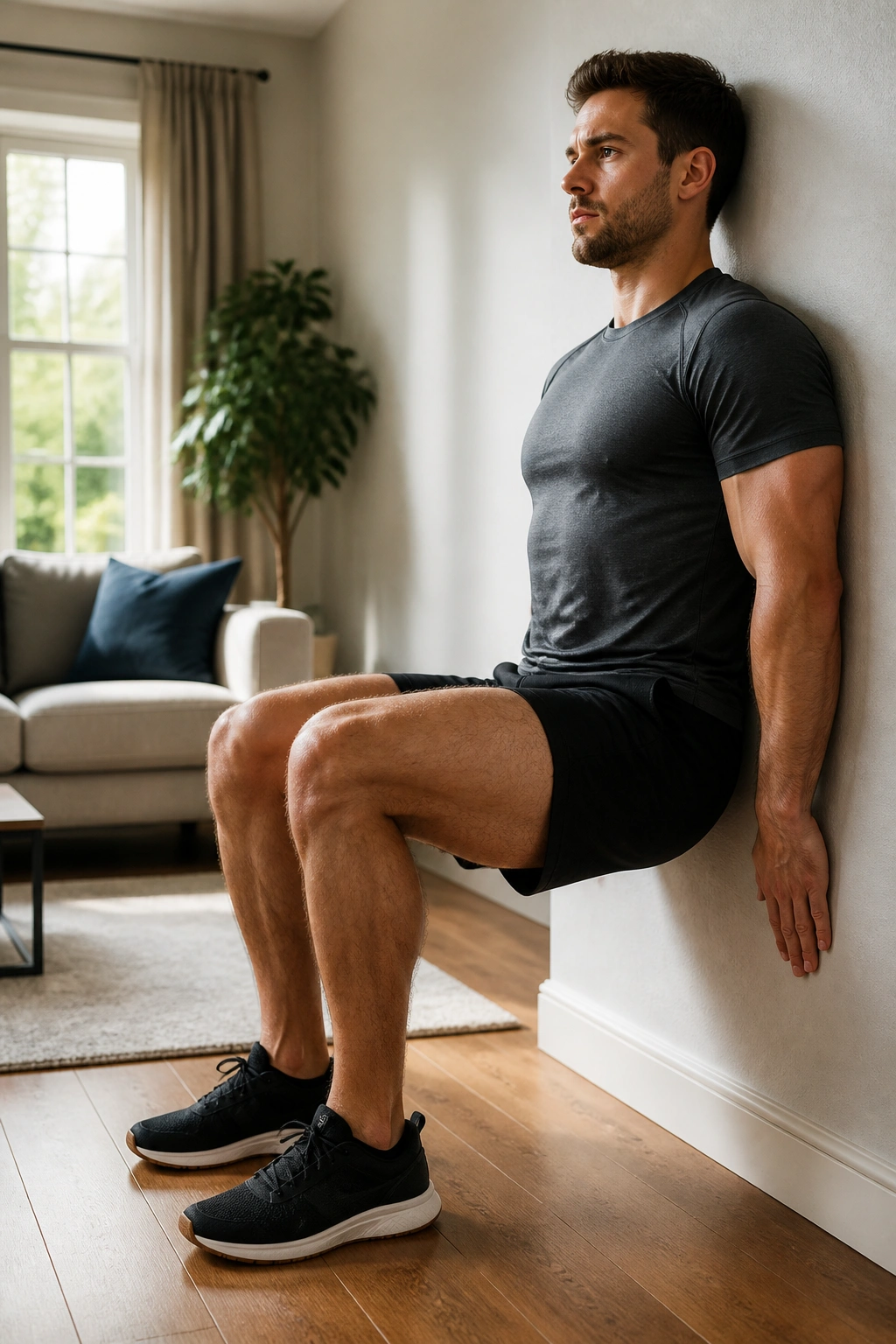
Wall sits look boring until minute two. Then your thighs start talking back, your breathing gets louder, and you remember that stillness can be a workout.
Slide your back down a wall until your knees bend around 90 degrees, or a little higher if that feels better. Keep your feet flat and about two feet from the wall. Hold the position without pressing your lower back hard into the surface. The work should live in the thighs, not the spine.
This move is one of the simplest low impact workouts at home with no gear because there’s no learning curve. You set the position and hang on. That doesn’t mean it’s easy. It means the challenge comes from time under tension, which is a fancy way of saying your muscles keep working while you stare at the wall and negotiate with yourself.
A few useful tweaks:
- Start with 15 to 20 seconds if you’re new to it.
- Add 5 seconds every few sessions.
- Raise the position if the knees feel cranky.
- Hold a bottle of water only if you want more load; you don’t need it.
Wall sits pair nicely with marching or step touches because they let the heart rate recover while the legs still get a signal.
14. Calf Raises and Toe Taps
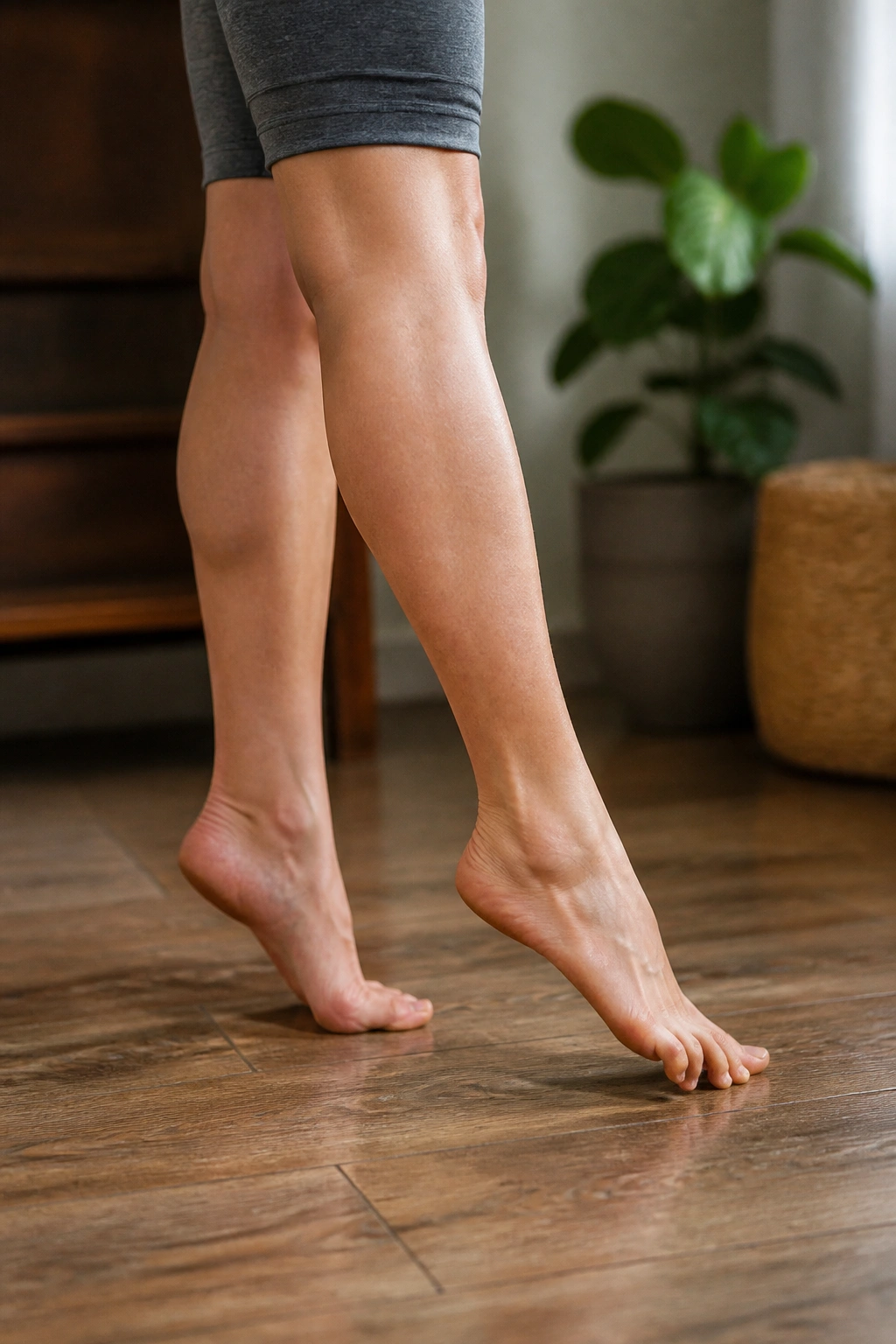
Small muscles. Big payoff. Calf raises and toe taps don’t look dramatic, but they help with ankle strength, foot control, and lower-leg endurance in a way people notice once they’ve ignored it for a while.
For calf raises, stand tall and lift your heels off the floor, then lower slowly until the heels kiss the ground again. For toe taps, lift one foot and tap the toe forward, then to the side, then back under you. Switch sides. Both moves are easy to scale and easy to repeat.
Why Your Feet Will Thank You
A lot of home workouts skip the lower leg. That’s a mistake. Strong calves and stable ankles help the rest of the body feel more grounded during squats, lunges, and longer walks around the house or neighborhood.
- Keep the toes pointing forward during calf raises.
- Use a slow lower for more work.
- Keep the standing leg soft on toe taps.
- Stay tall instead of leaning over.
You can combine these into a short finisher: 15 calf raises, 10 toe taps each direction, then 20 seconds of marching. Repeat 2 to 3 times. It’s not glamorous. It works.
15. Low-Impact Dance Cardio for a Final Push
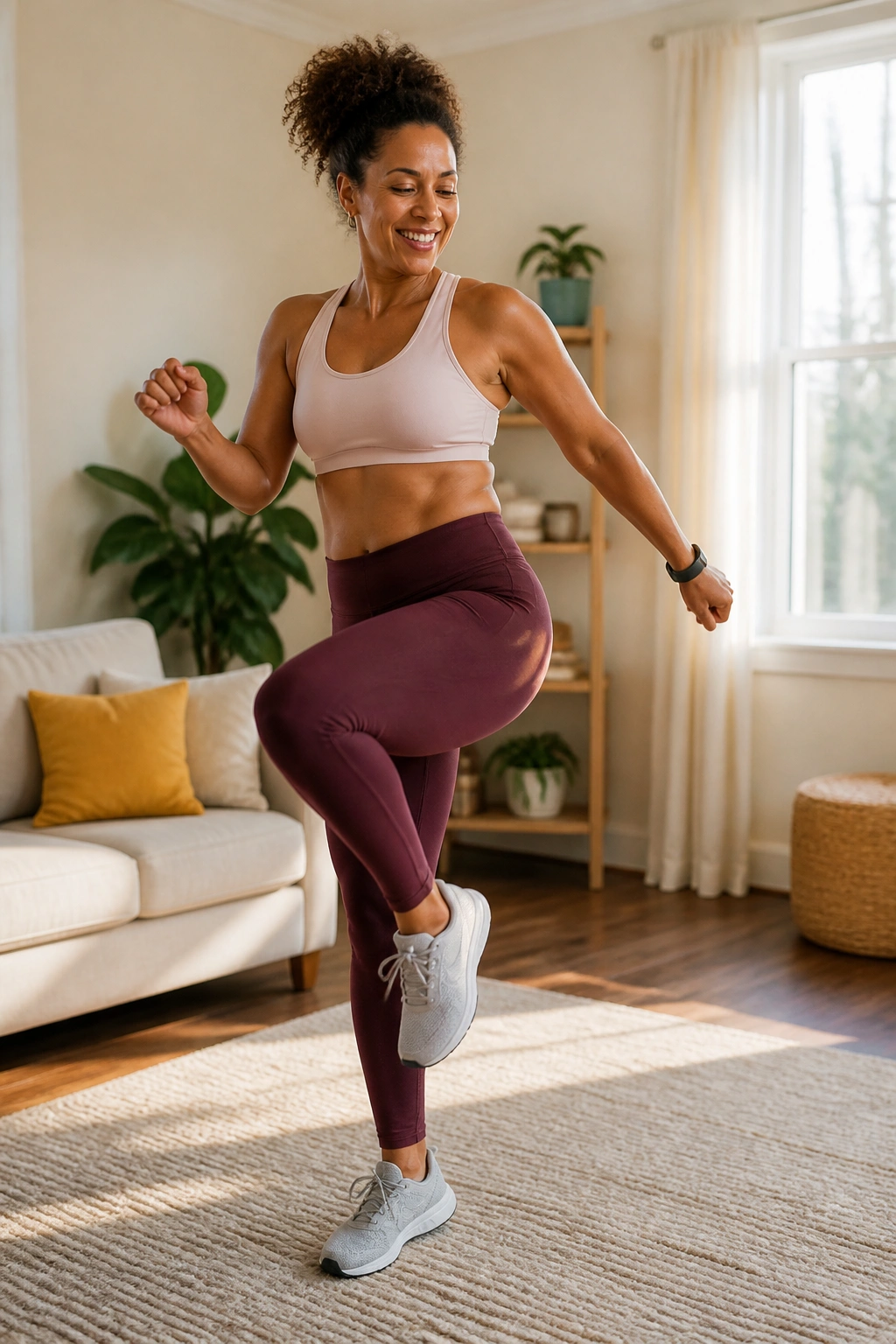
If you want sweat without strain, end with low-impact dance cardio. It gives you the cardio hit people chase in high-impact classes, but it keeps the feet close to the floor and the landings soft.
Use any simple pattern you like: step touch, grapevine, knee lift, hamstring curl, and arm reach. Link them together in a loose rhythm. The point is not to look polished. The point is to keep moving long enough that your heart rate stays up and your legs keep talking.
A good dance-style round can be built like this:
- 30 seconds step touch
- 30 seconds knee lifts
- 30 seconds hamstring curls
- 30 seconds side steps with arm reaches
- 30 seconds easy march
Repeat the circuit 3 to 5 times. If you want more challenge, shorten the rest and make the arm patterns bigger. If coordination is the main issue, strip it back and keep the steps simple. No shame in that. Fancy footwork is optional. Getting your body moving is not.
This is also the move that saves a workout when your energy is low but you still want the feeling of a finish. It’s friendly, adjustable, and easier to stick with than a hard, punishing finisher.
Final Thoughts
The best low impact workouts at home with no gear are the ones you can repeat without dreading them. That sounds simple, but it matters. If a workout beats up your knees or feels too complicated to start, it won’t last.
Pick two or three standing moves, one floor move, and one balance drill. Put them together for 12 to 20 minutes. Keep the pace steady, not frantic. Clean reps beat sweaty chaos every time.
And if you want the easiest way to build a habit, choose the move you can do on a tired day. That’s the one that tends to stick.
