



Strong arms rarely come from endless curls alone. The shape most people notice in a T-shirt comes from a mix of triceps, biceps, shoulders, upper back, and grip strength, which is why the best upper body workouts for sculpted strong arms never lean on one lonely exercise. They press. They pull. They carry. They make the whole arm work instead of one small part of it.
That matters if you want arms that look firm and feel capable. Triceps make up most of the upper arm, so pressing and dip patterns matter more than a lot of casual gym advice admits. Biceps still matter, sure, but rows, chin-ups, hammer curls, and loaded carries do some of the shaping work that pure curl sessions miss. Tiny detail, big payoff.
These 20 workouts cover dumbbells, cables, bands, bodyweight, machines, and a few old-school strength moves. Some are heavy and slow. Some are fast and sweaty. Pick the ones that fit your equipment and your joints, and repeat the ones that challenge you without making your elbows complain for two days.
1. Dumbbell Floor Press and Curl Ladder
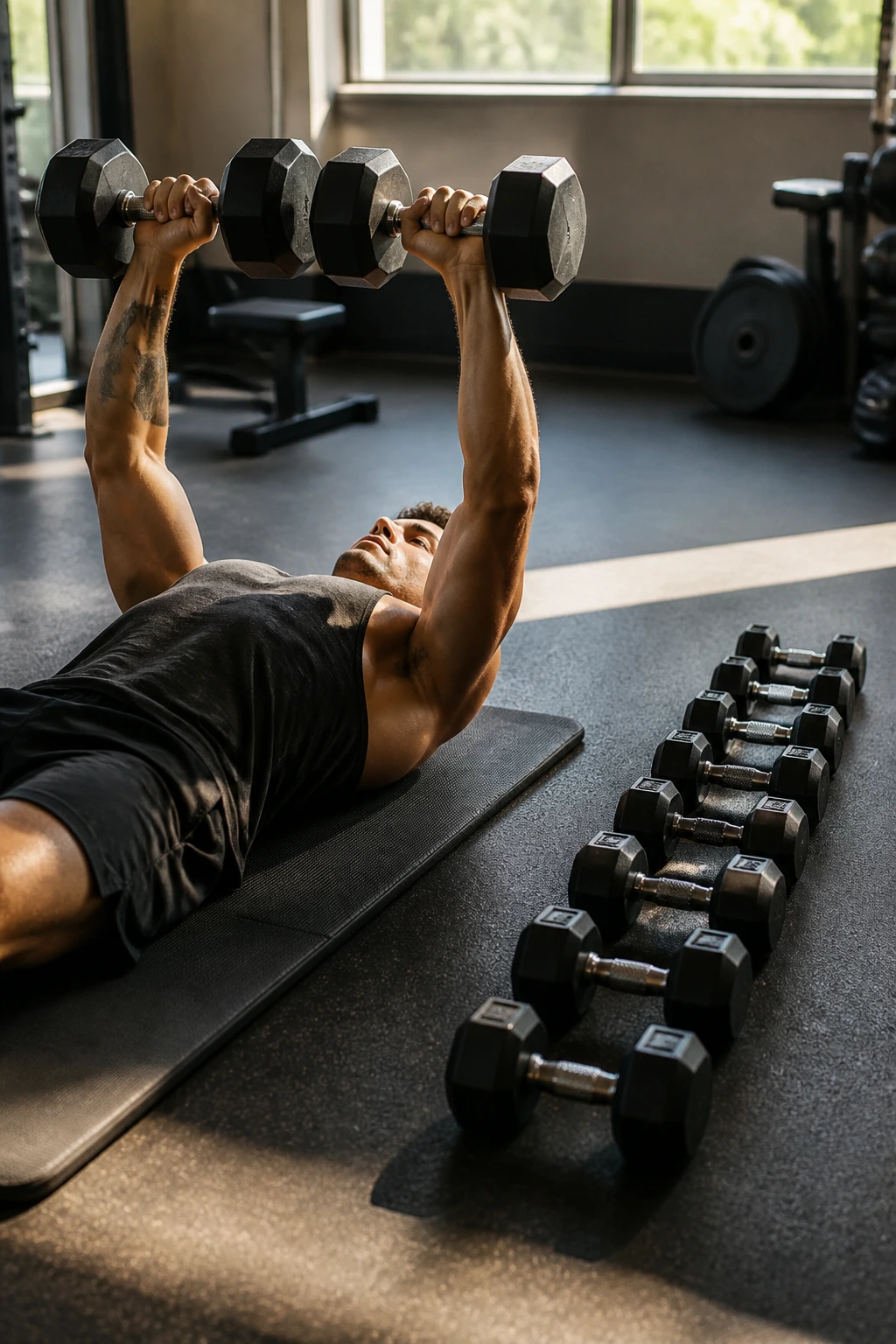
This is the kind of session I like when I want clean, no-drama arm work with a little chest help on the side. The floor press keeps your range controlled, which is handy if your shoulders get cranky on flat bench work, and the curl ladder lets you pile on enough biceps volume to matter.
Why It Works
Start with dumbbell floor press for 5 sets in a ladder: 6 reps, 8 reps, 10 reps, 8 reps, then 6 reps again. Use a weight that leaves 1 or 2 reps in the tank on the middle sets. After that, do alternating dumbbell curls for 3 sets of 10 per arm, then hammer curls for 2 sets of 12.
Keep the dumbbells moving with purpose. No bouncing. No elbow flaring. On the floor press, your upper arms should touch down lightly and pause for a beat before you drive the bells up. On the curls, let your hands lower all the way and stop before your shoulders start helping.
Pro tip: if the last two curl reps turn into a body swing, the weight is too heavy for the goal.
2. Close-Grip Push-Up and Triceps Extension Combo
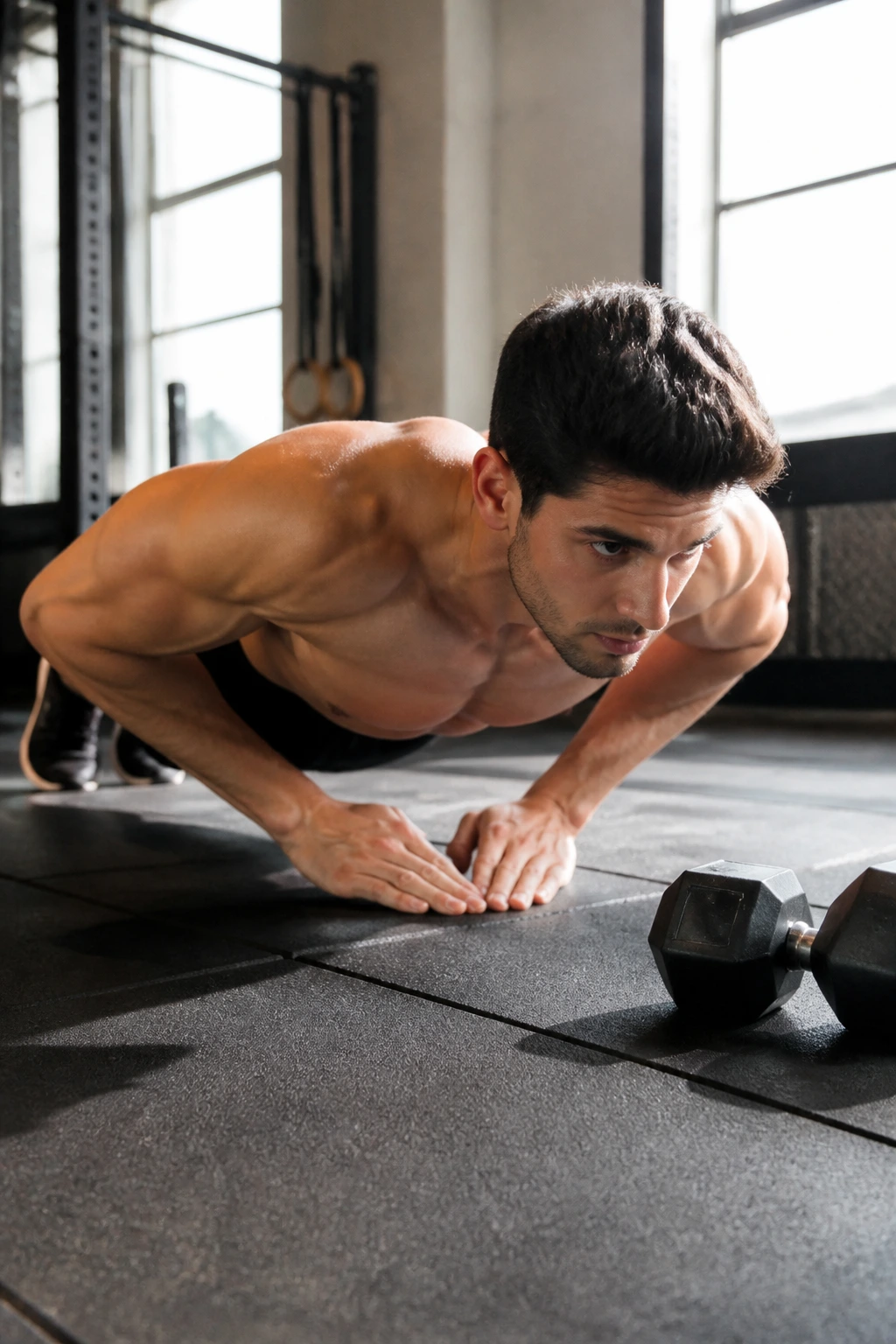
If the back of your arm is the part you want to see change, this combo earns its keep. Close-grip push-ups load the triceps in a way that regular push-ups often don’t, and overhead triceps extensions finish the job by stretching the long head of the triceps under load.
Do 4 rounds. Start with close-grip push-ups for 8 to 15 reps. Then move straight into one dumbbell overhead triceps extensions for 12 reps. Rest 45 to 60 seconds, then repeat. If you can do more than 15 clean push-ups, elevate your feet a little. If you can’t hit 8, put your hands on a bench or sturdy box.
Triceps change shirts. That’s the simple version. The longer version is that they help fill out the upper arm from the side and the back, which is where a lot of the shape shows up when you’re reaching, pressing, or holding something overhead.
3. Single-Arm Row and Hammer Curl Circuit
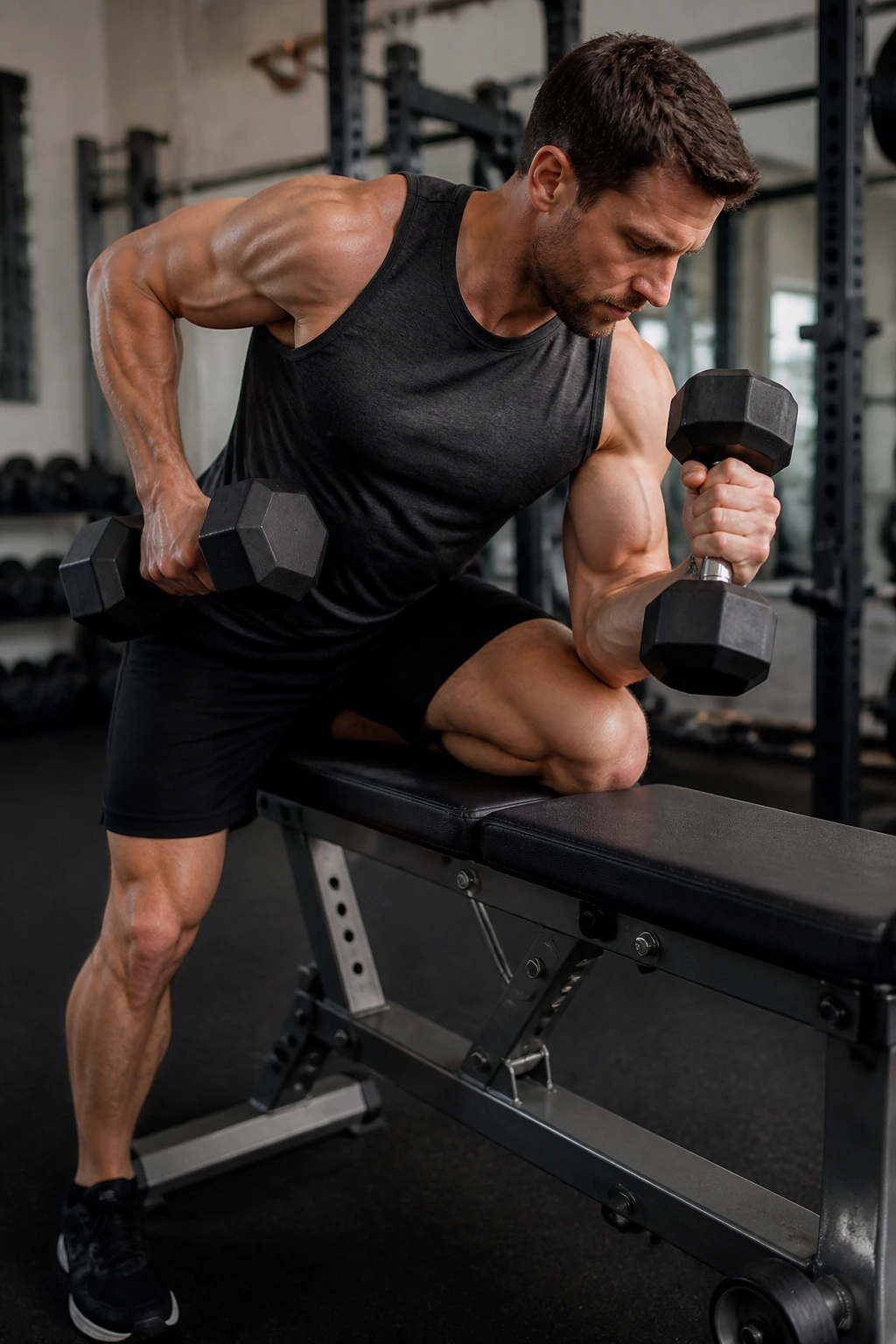
One side always tries to cheat first. That’s not a flaw; it’s useful information. A single-arm row tells you which side is stronger, which side pulls harder, and which side is drifting through the reps without doing the work.
How to Run It
Use a bench or sturdy surface and do one-arm dumbbell rows for 10 to 12 reps per side. Follow that with hammer curls for 10 reps per side, then reverse flys for 12 reps. Rest 30 to 45 seconds and repeat for 3 to 4 rounds.
- Row with your elbow aimed toward your back pocket.
- Keep your chest square to the floor.
- Pause for one second at the top of each row.
- Keep the hammer curl strict; no shoulder roll.
- Use a light reverse fly weight and stop before the traps take over.
The row builds the back that supports your arm size, and the hammer curl hits the brachialis and forearm in a way straight curls don’t. That combination gives the upper arm a thicker look from the side.
4. Standing Overhead Press and Lateral Raise Stack
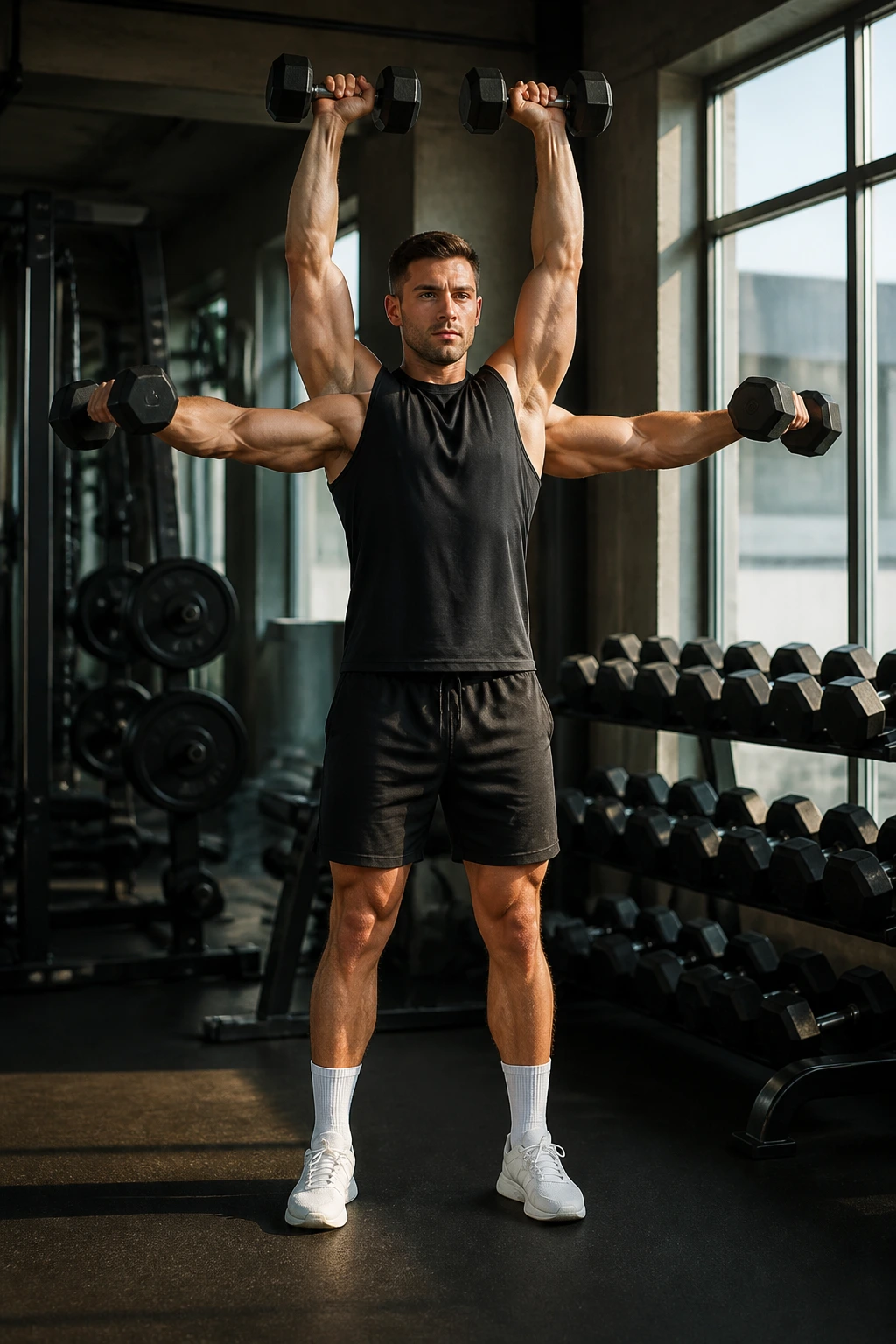
The shoulders do more for arm shape than most people realize. They widen the frame, and once the frame looks broader, the arms look leaner and more defined even before you add another pound of muscle.
A standing overhead press is the main lift here. Do 4 sets of 6 to 8 reps with dumbbells or a barbell, resting 90 seconds between sets. After each press set, do lateral raises for 12 to 15 reps, then finish with 10 short partial reps at the top. That last little bit burns, which is the point.
Keep your ribs down. If your lower back turns the lift into a standing incline bench, the weight is too much. Lateral raises should stop just below shoulder height, not climb into a shrug. The motion gets sloppy fast when people chase heavier dumbbells.
Three good reps beat six ugly ones. Every time.
5. Chin-Up Progression with Eccentric Lowering
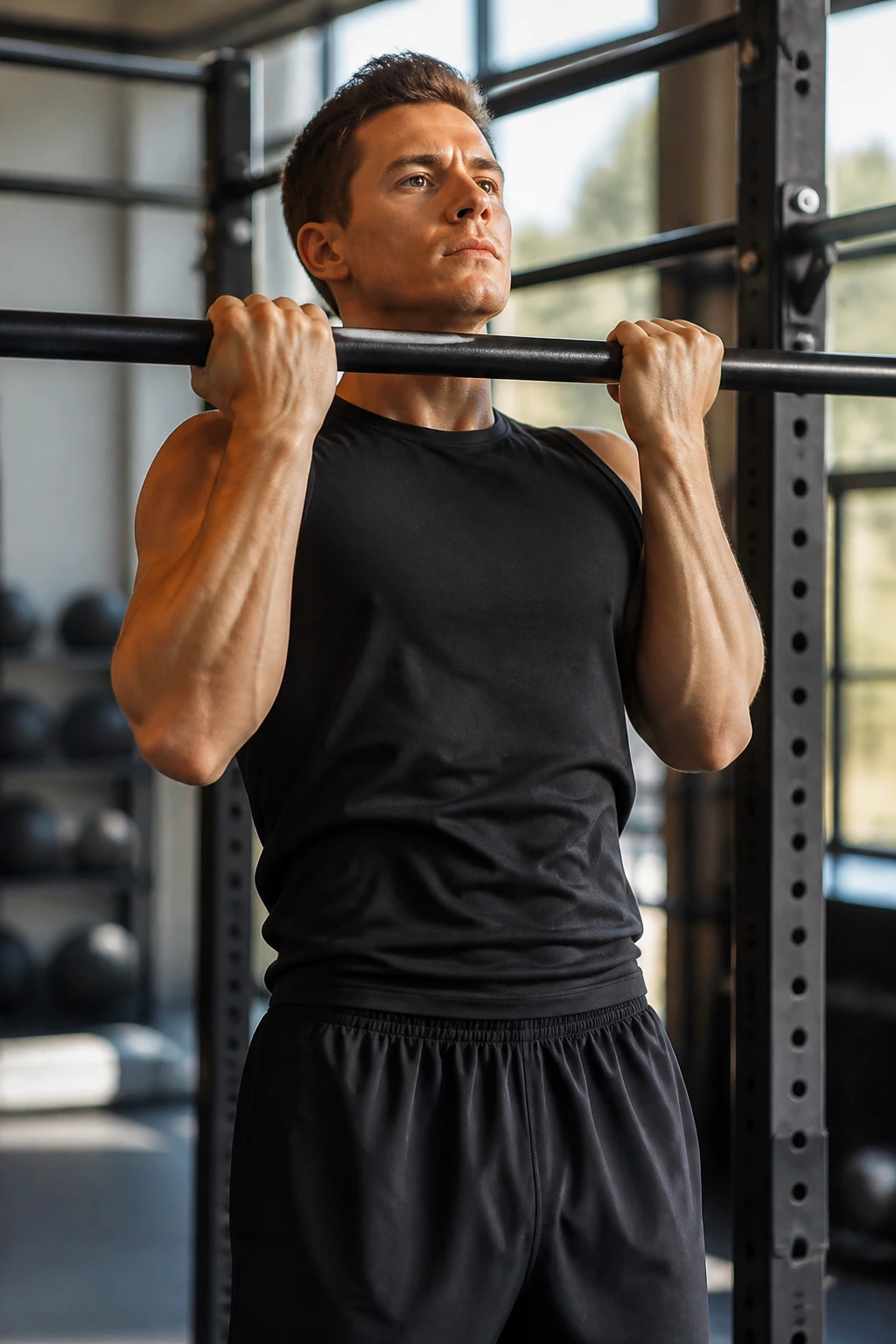
Can you build strong arms without a single curl? Yes, but chin-ups are the reason I would not try to prove the point too hard. A chin-up uses biceps, lats, forearms, and the muscles around the shoulder blade, which makes it one of the most efficient upper body moves you can do.
How to Use It
If you can already do chin-ups, do 4 sets of 4 to 8 reps, with a full dead hang at the bottom and your chin clearly over the bar. If you’re still building, jump or step to the top and lower yourself for 5 slow seconds on each rep. Aim for 3 sets of 3 to 5 negatives.
A lot of people rush the bottom half. Don’t. That’s where the shoulder stabilizers and grip get involved, and it’s also where most of the useful tension lives. If your elbows ache, use a neutral grip instead of a straight bar if you have one.
The slow lowering phase is ugly in the best way. It works.
6. Cable Rope Pushdown and Rope Curl Superset
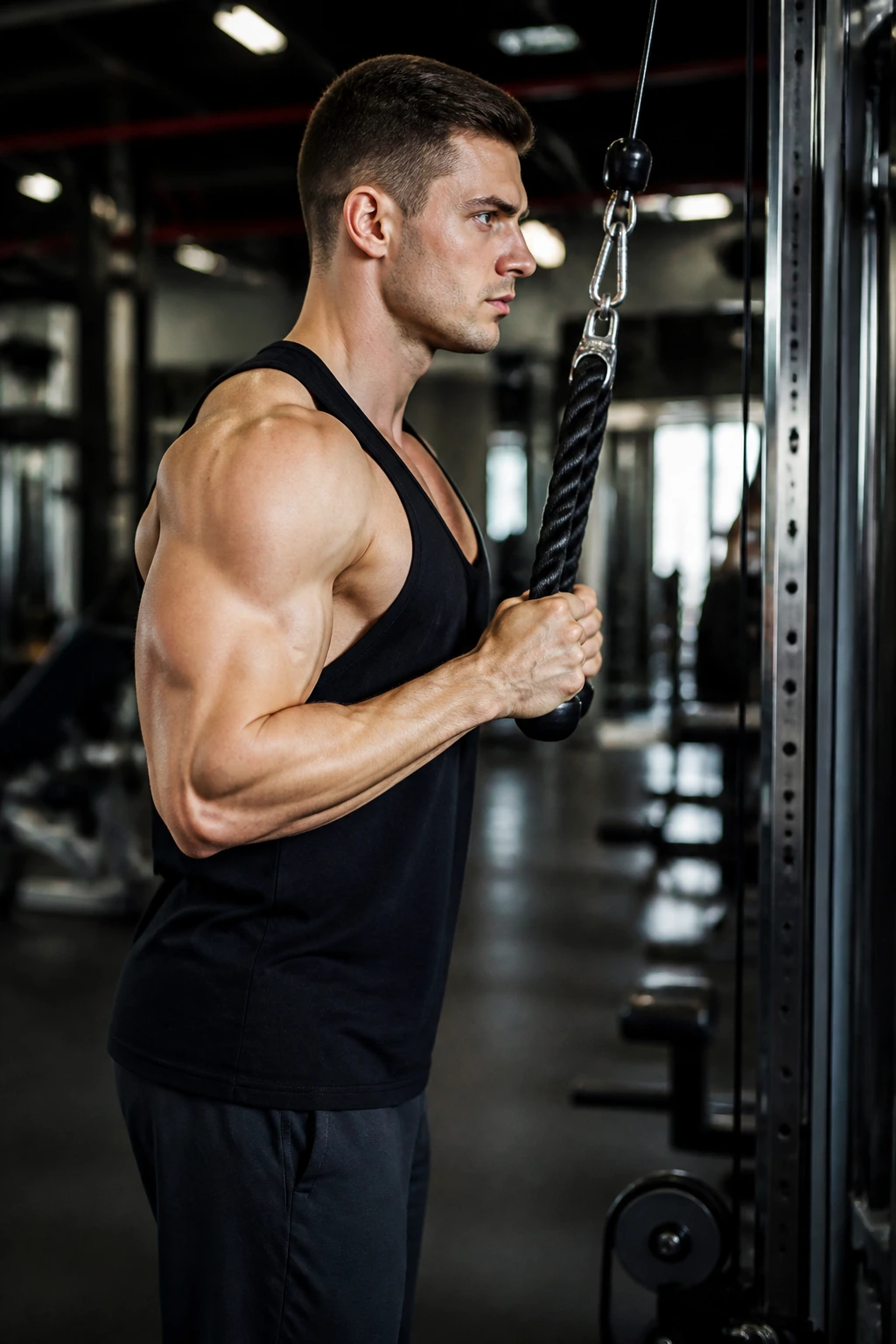
Cables are a little boring in the best possible sense. They keep tension on the muscle the whole time, which makes them ideal for higher-rep arm work when you want a clean pump and less joint drama than you’d get from heavy free weights.
Do rope pushdowns for 12 to 15 reps, then switch immediately to rope cable curls for 12 to 15 reps. Rest 45 seconds and repeat for 4 rounds. If the stack feels too easy, slow the lowering phase to 3 seconds. That tiny change matters more than adding a random extra plate and losing form.
Unlike dumbbells, cables keep pulling from start to finish. That’s why they’re so good for people who want the arm to stay under tension even when the elbow is almost straight. Best for lifters who want a safer high-rep day, or anyone whose wrists dislike heavier barbells.
Use them when your elbows want a break but your training brain still wants work.
7. Renegade Row and Shoulder Tap Ladder
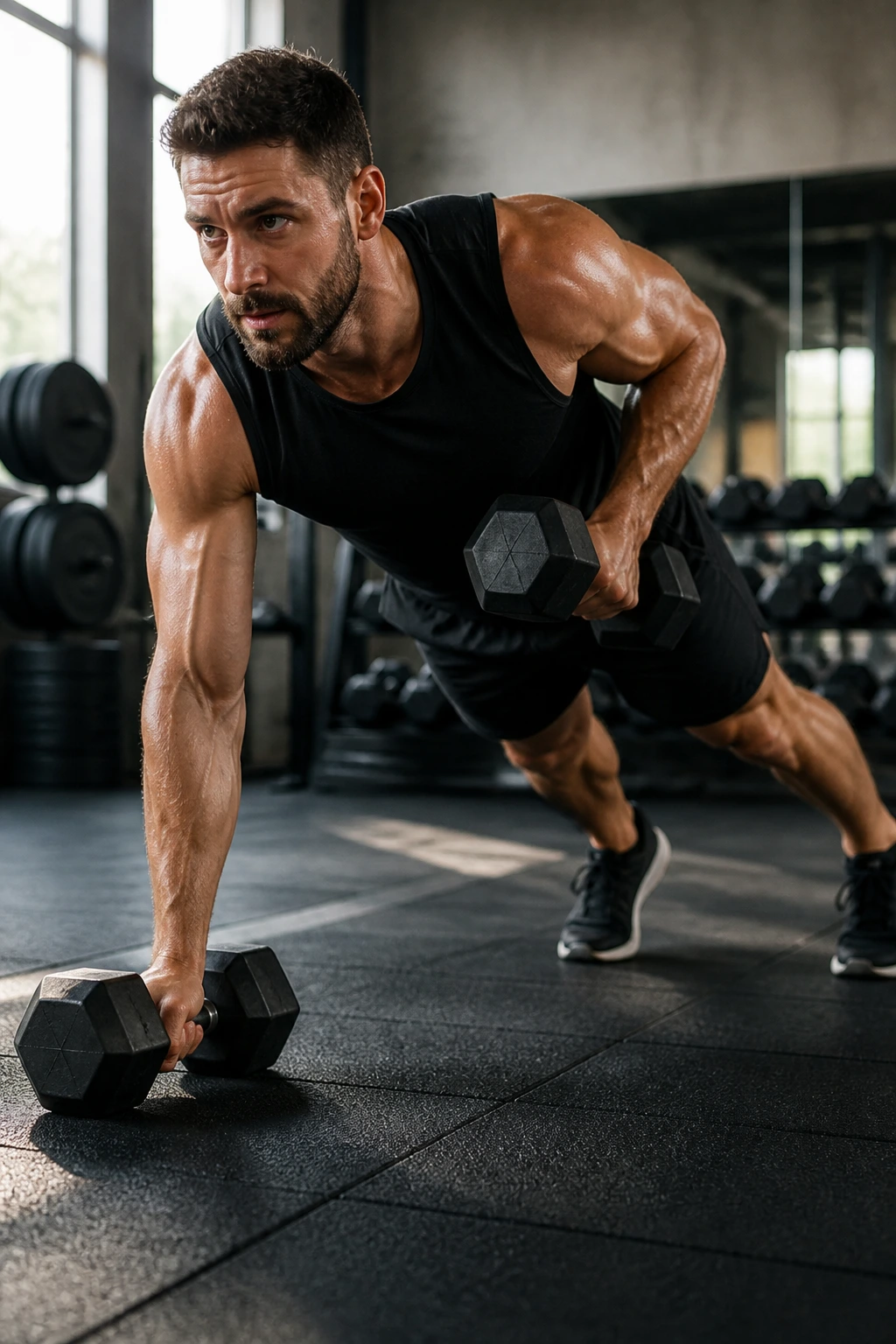
This is not just an arm workout. It’s a control workout, and your arms will feel it because your core refuses to let the rest of you cheat.
Set up in a plank with dumbbells under your hands. Do 6 renegade rows per side, then 12 shoulder taps total, then hold the plank for 20 to 30 seconds. That counts as one round. Run 3 to 5 rounds depending on how stable you feel.
The row hits the lats and biceps, but the shoulder tap is where the body starts arguing with itself. Hips want to twist. They always do. Your job is to keep them quiet while the shoulders keep working. If your dumbbells roll around, widen your feet a little. No shame in that.
Short rest. Tight form. Clean reps. That’s the whole point here.
8. Incline Dumbbell Press and Overhead Triceps Day
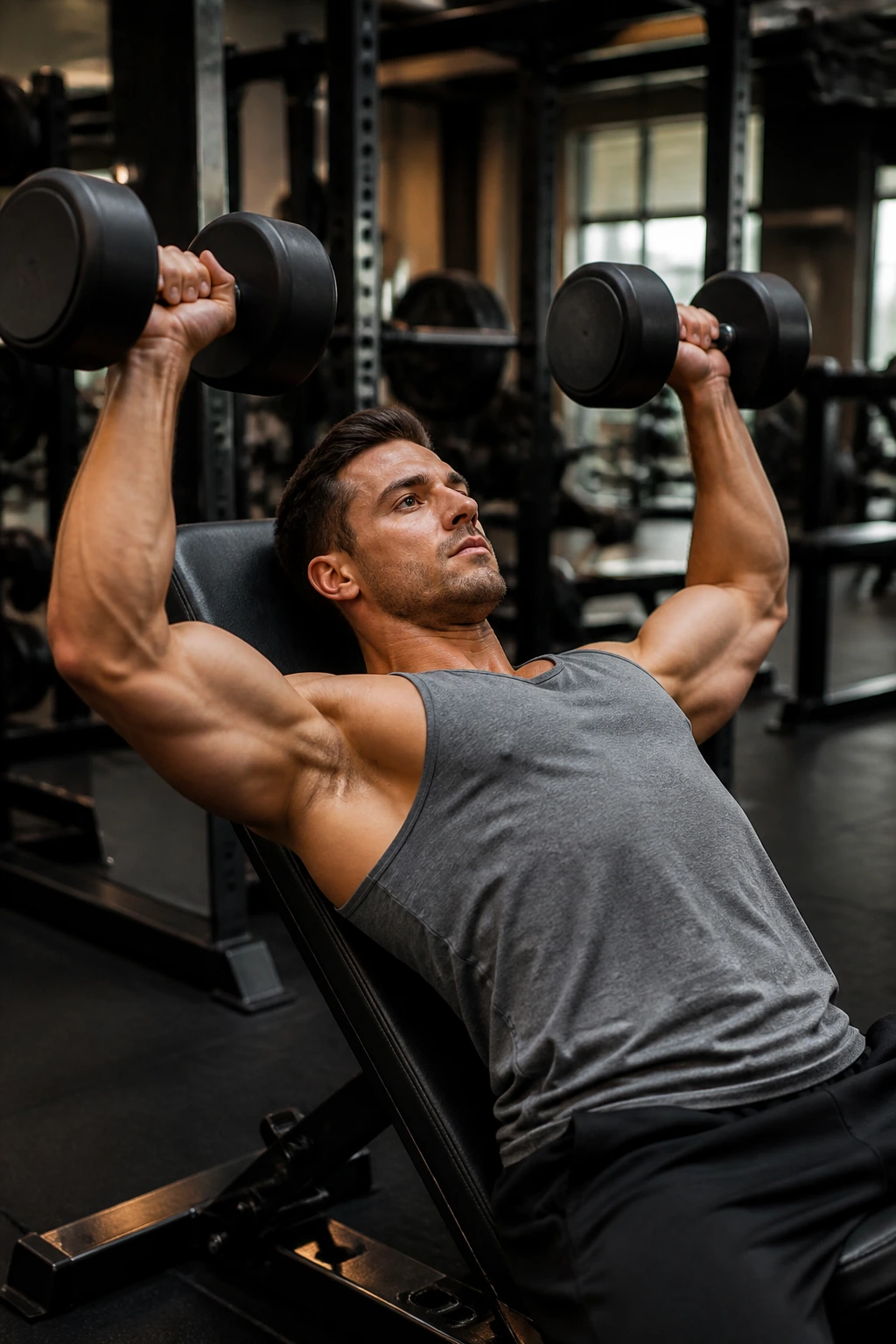
Incline pressing tends to get treated like a chest-only move, and that misses the real payoff. The front delts and triceps do plenty of work, especially when you keep the incline low and the reps honest.
Use a bench set around 30 degrees. Do 4 sets of 8 to 10 reps on the incline dumbbell press, then move to one dumbbell overhead triceps extensions for 10 to 12 reps. Rest 60 to 90 seconds. If you want more arm emphasis, finish with a set of 15 close-grip push-ups right after the extensions.
I like this workout for people who want upper-body size without grinding through heavy barbell work all day. The angle is friendly, the range is useful, and the triceps get hit in two different ways: one from pressing, one from stretched elbow extension.
If your elbows feel wobbly on overhead extensions, keep your upper arms a little farther forward instead of forcing them straight back. That tiny adjustment can save the set.
9. Band-Only Arm Burnout
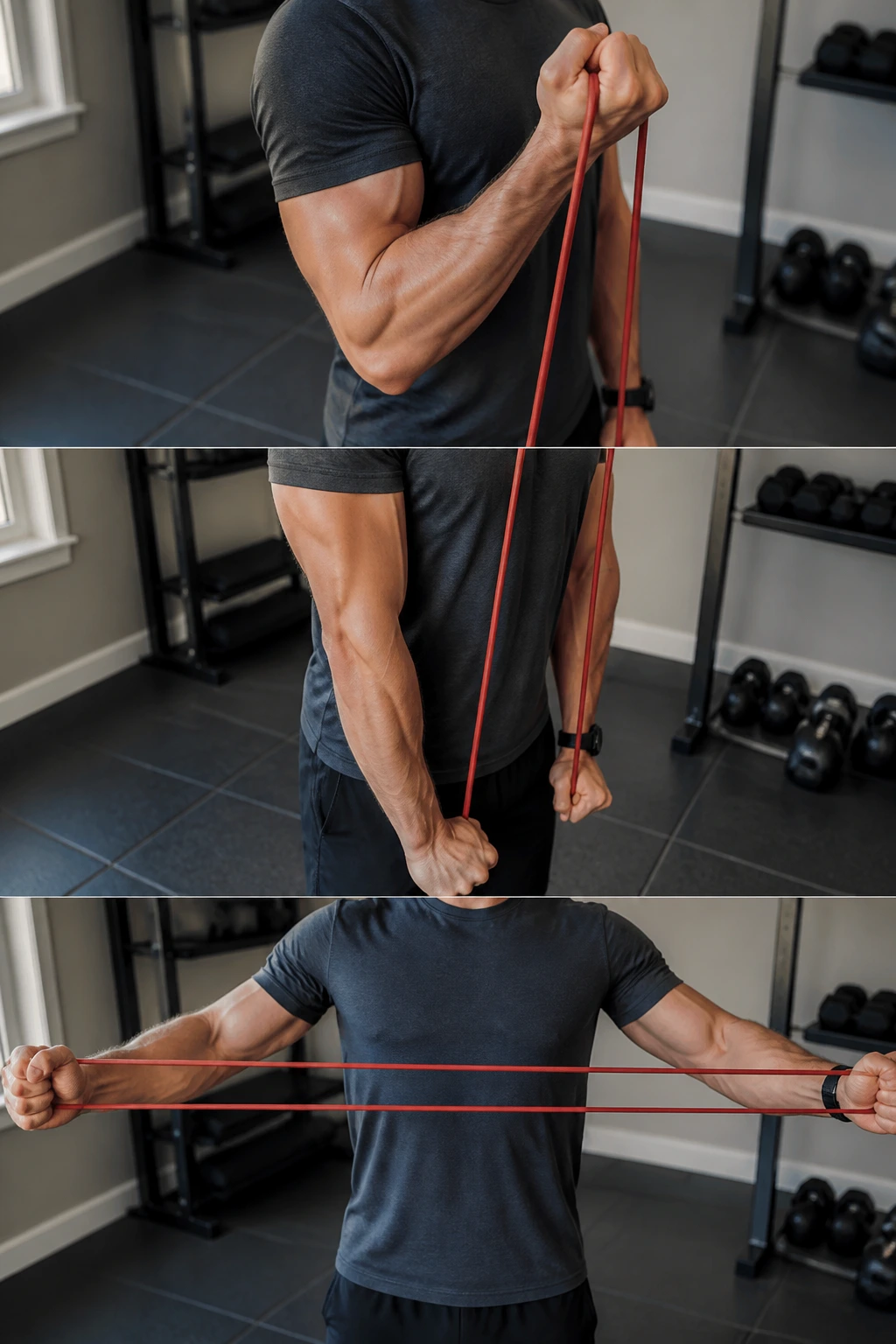
No bench. No cable stack. No problem. A decent resistance band can torch your arms if you stop treating it like a warm-up toy and start using it like real training equipment.
Best Setup
Anchor the band overhead or stand on it. Then do band curls for 20 reps, band pushdowns for 20 reps, and band pull-aparts for 20 reps. Rest 30 seconds and repeat for 4 to 6 rounds. If the band is too easy at the bottom and too hard at the top, step farther away or shorten the band slightly.
- Keep your elbows pinned on curls.
- Lock your upper arms on pushdowns.
- Pull the band apart until your hands are level with your shoulders.
- Stop the set when your neck starts shrugging up.
Bands are sneaky. They feel mild for the first few reps, then the tension climbs fast and the last third of the set gets nasty in a useful way. That makes them a smart option for travel days, home training, or low-impact sessions when joints want a lighter touch.
10. Close-Grip Bench Press Strength Block
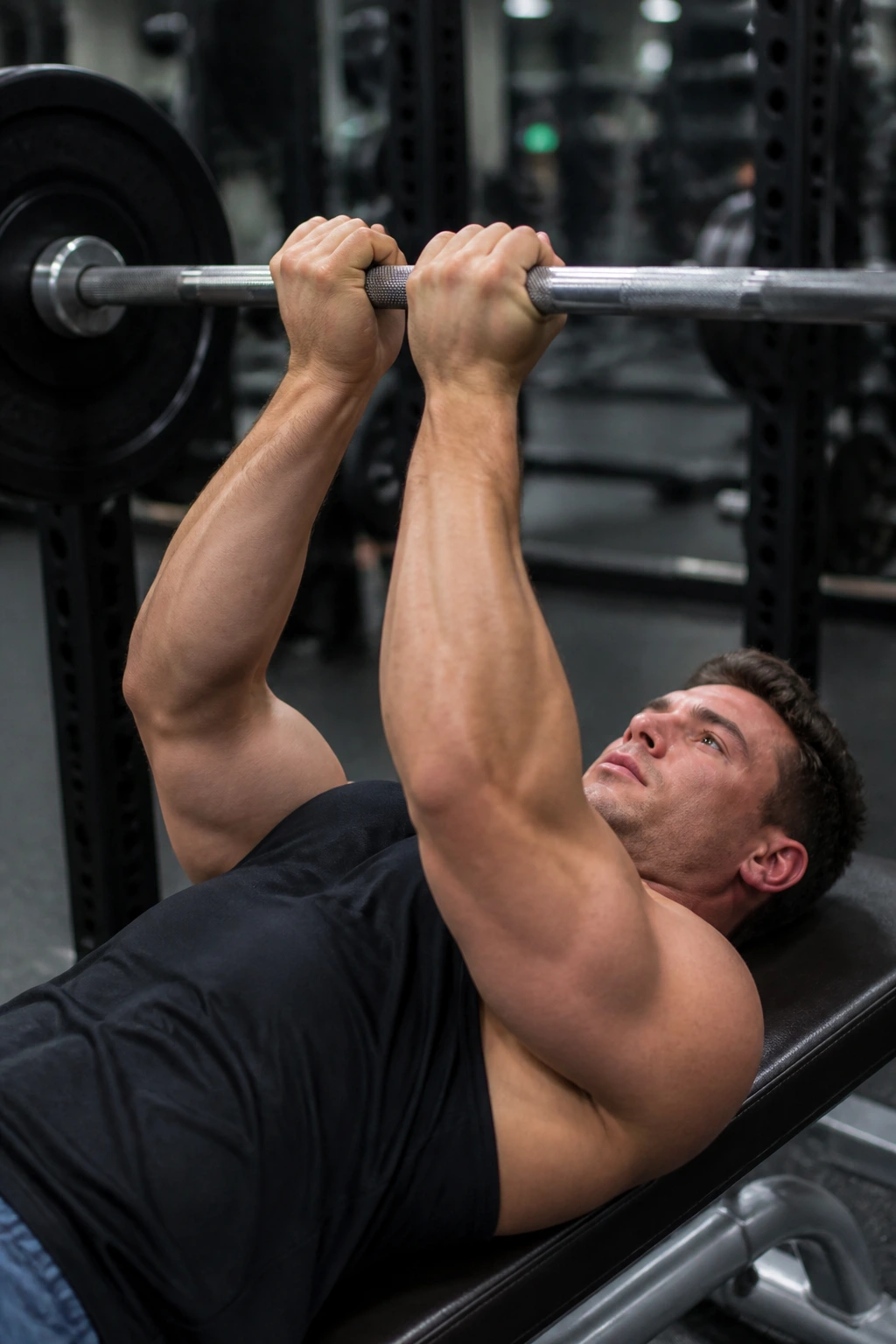
Heavy pressing changes the arm faster than a lot of fluffier “toning” work ever will. The close-grip bench press loads the triceps hard, especially when your hands are just inside shoulder width and the bar path stays tight.
Do 5 sets of 5 reps, resting 2 minutes between sets. Lower the bar to the lower chest, pause for a brief count, then drive it up without letting the elbows flare. Use a load you can own. If the bar starts drifting and your wrists bend back, the weight is too high for clean training.
I like this for lifters who want stronger pressing and more triceps density at the same time. It also carries over to push-ups, dips, and even overhead work, because the triceps learn to stay stable under heavier force.
No need to turn it into a circus. One good barbell, one honest set of reps, and enough rest to repeat them well.
11. Landmine Press and One-Arm Row Combo
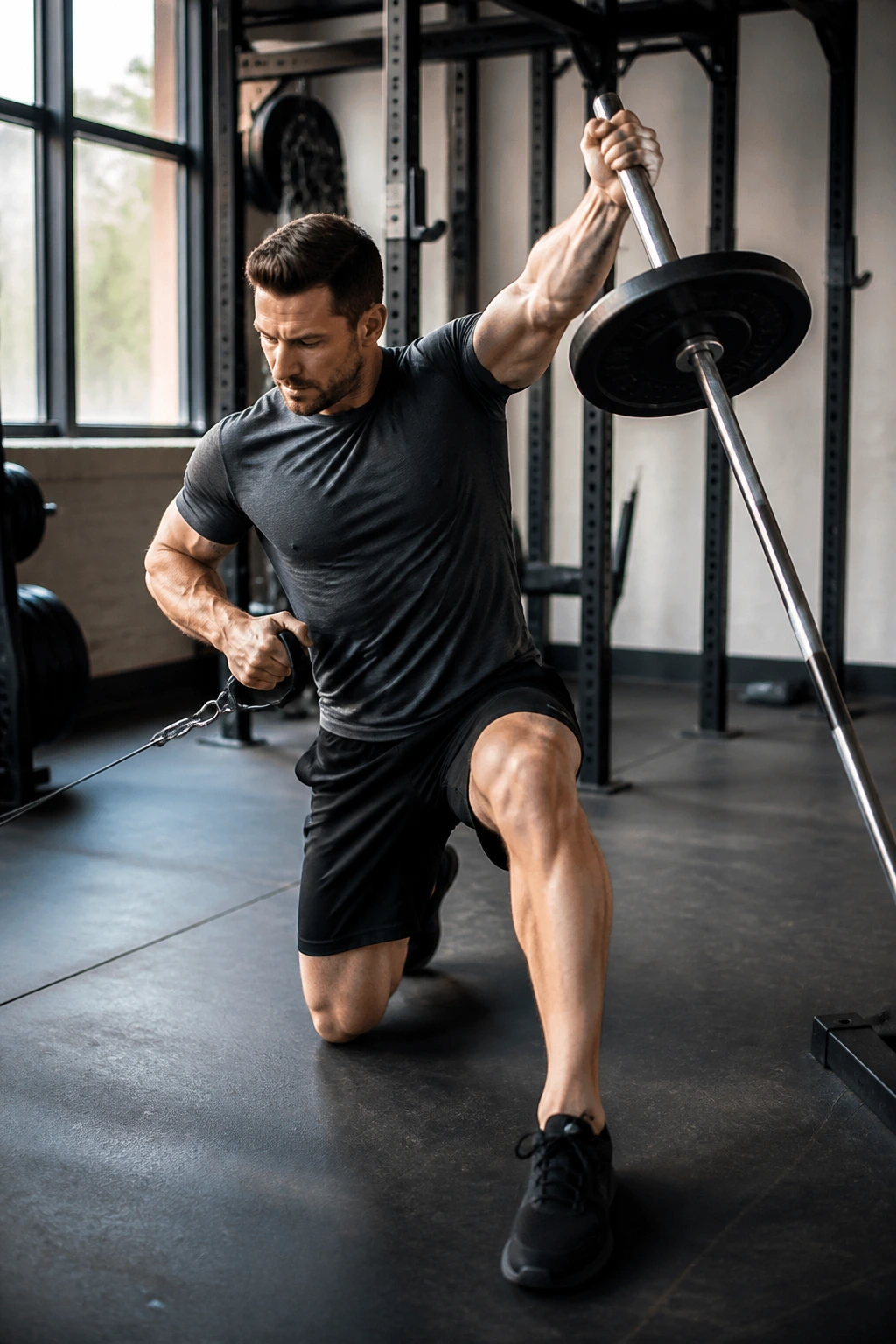
If straight overhead pressing bothers your shoulders, the landmine is the friend you wish more gyms had. The angle is more forgiving, the grip feels natural, and the upper arm still gets plenty of work.
Do one-arm landmine presses for 8 to 10 reps per side, then match them with one-arm cable or dumbbell rows for 10 to 12 reps per side. Run 3 to 4 rounds. Rest about 60 seconds between rounds. That pairing gives you a push and a pull without beating up the joints the way some vertical pressing days can.
Compared with a standard barbell press, the landmine version keeps the arm path a little more diagonal, which usually feels better for people with cranky shoulders or tight thoracic mobility. It’s also a better choice if you want to keep the session athletic instead of purely bodybuilding-style.
Best for lifters who want shoulder work that still respects the elbow and wrist line.
12. Diamond Push-Up and Bench Dip Ladder
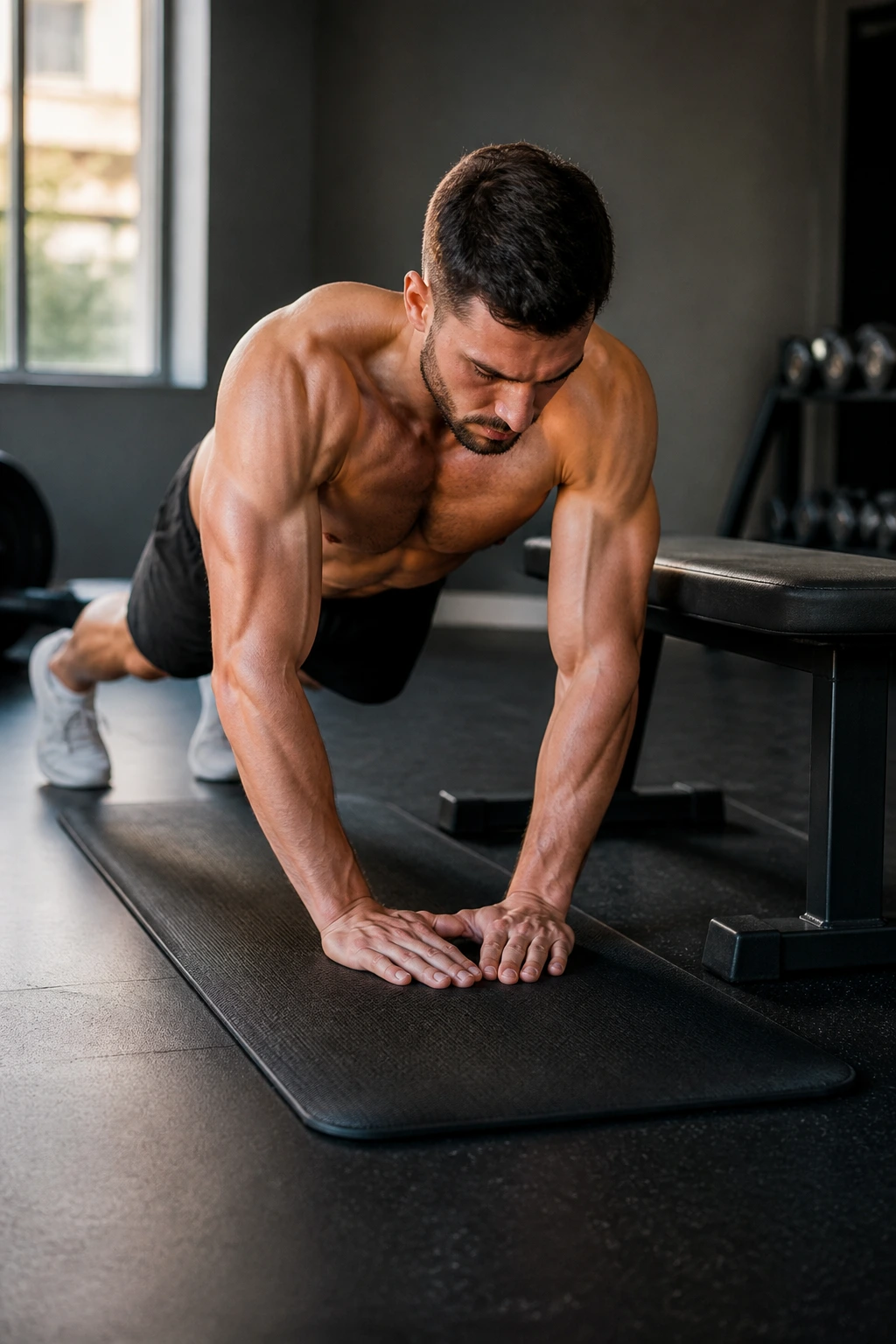
This one is simple, and it bites. Diamond push-ups load the triceps hard because your hands are close together, and bench dips pile on extra elbow extension work in a way that leaves the back of the arm tired fast.
Start with diamond push-ups for 4 sets of 5 to 12 reps. Then do bench dips for 3 sets of 8 to 15 reps. Rest 45 to 60 seconds. If your wrists hate the diamond position, put your hands on push-up handles or dumbbells so the joint angle feels less bent.
Bench dips can bother the front of the shoulder if you sink too deep. Don’t chase depth. Stop when your upper arms are about parallel to the floor, then press up. That is plenty. More than plenty, honestly.
This is a good bodyweight option when you want a hard triceps session without loading a bunch of equipment.
13. EZ-Bar Curl and Skull Crusher Pairing
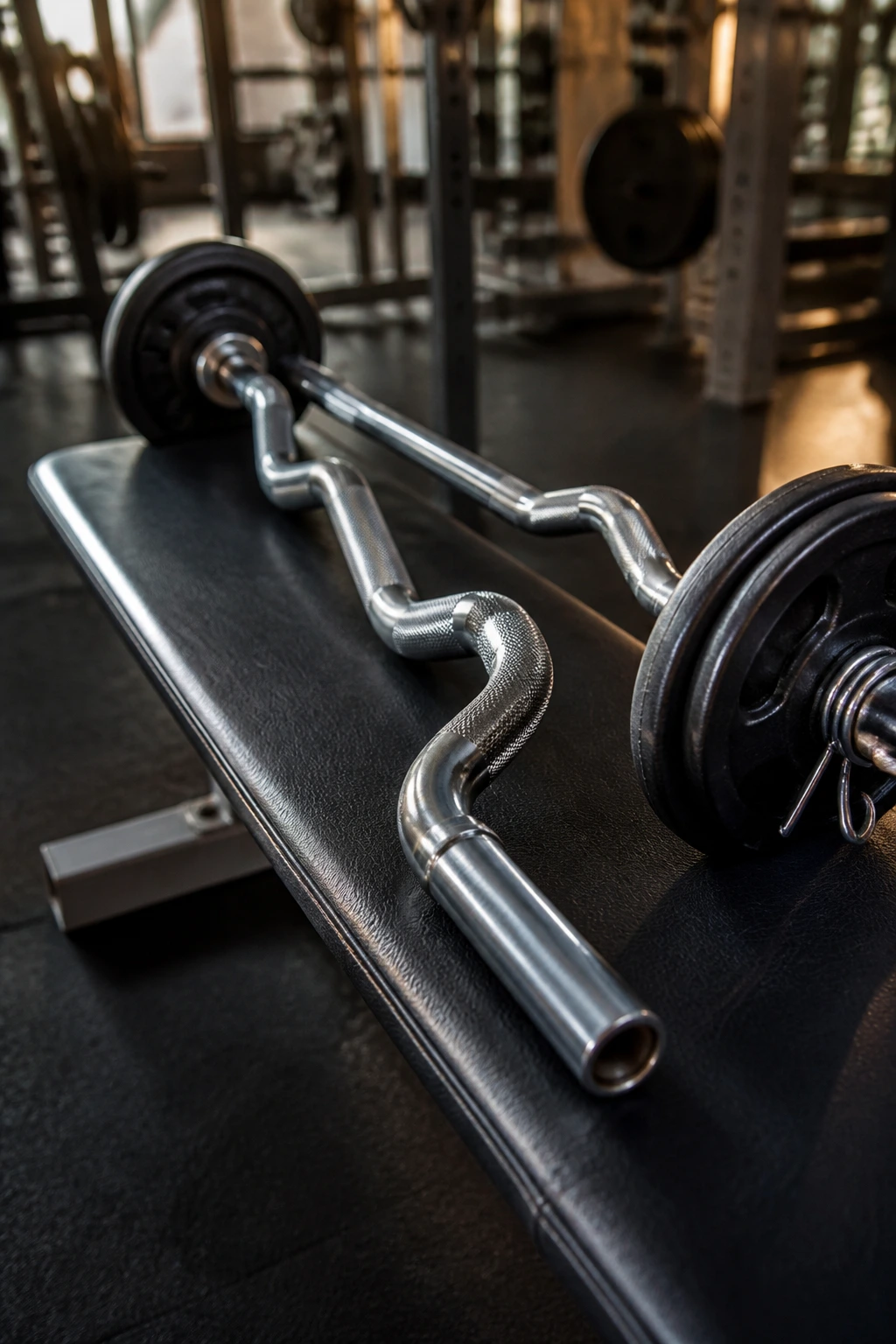
This is a classic arm-day pairing for a reason. The EZ-bar curl gives your wrists a friendlier grip than a straight bar, and skull crushers hit the triceps in a stretched position that dumbbell kickbacks never quite match.
Do 4 rounds. Start with 8 to 12 EZ-bar curls, then move to 8 to 12 skull crushers. Rest 60 to 90 seconds. Keep the curl strict; no hip pop, no shoulder swing. On the skull crusher, lower the bar toward the forehead or just behind it, then press by straightening the elbows, not by turning the whole thing into a chest press.
I prefer this pairing when someone wants a straightforward arm day with clear loading and easy tracking. Add weight only after you can control the last two reps without your form falling apart. That matters more than chasing a random number on the plate.
If your elbows get cranky, swap skull crushers for cable overhead extensions. Same target, less joint grumbling.
14. Face Pulls and Rear Delt Raise Session
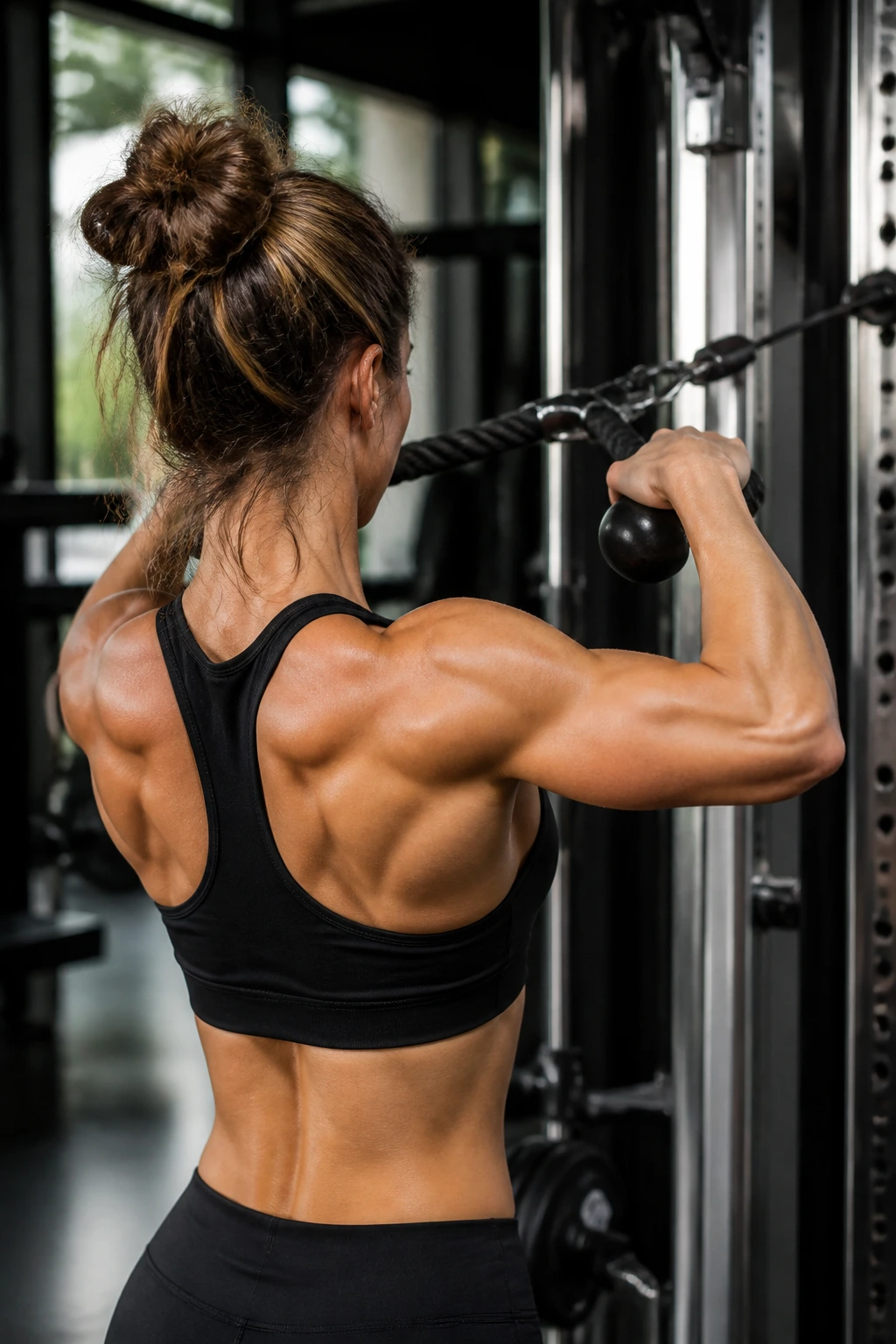
Rear delts do a lot more than people think. They help the shoulder sit back properly, and that changes how the whole arm hangs on the body. Better posture, cleaner shoulder line, more visible arm shape from the side. Small muscle, big visual effect.
Why Rear Delts Matter
Do face pulls for 15 to 20 reps with a cable or band, then rear delt raises for 12 to 15 reps. Rest 30 to 45 seconds and repeat for 4 rounds. On face pulls, pull toward your nose or upper face with elbows high and wrists slightly turned out. On rear delt raises, think about reaching wide rather than lifting high.
The trap here is using too much weight and turning both moves into upper-trap shrugs. That ruins the point. You want the back of the shoulder to do the work, not the neck. A 2-second squeeze at the top helps a lot.
This is not the flashiest session, but I’d keep it in the rotation anyway. Arms look better when the shoulders sit where they’re supposed to sit.
15. Farmer’s Carry and Suitcase Carry Grip Workout
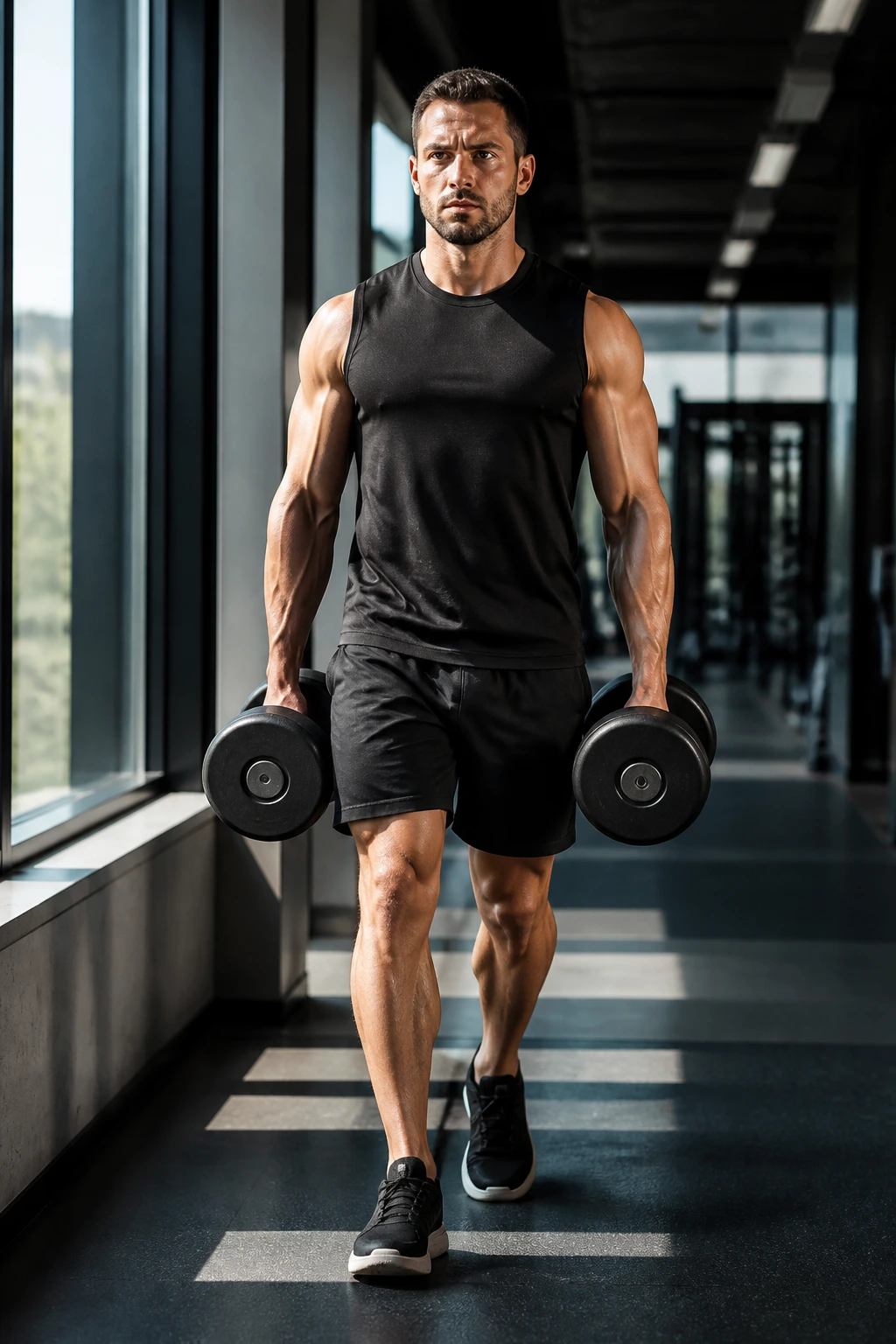
Walk with heavy weights and your arms will tell you the truth fast. Carries build grip, forearms, traps, and a braced upper back without needing a complicated setup, which makes them one of my favorite forgotten arm builders.
Grab a pair of heavy dumbbells or kettlebells for farmer’s carries. Walk for 30 to 60 seconds. Then switch to a suitcase carry on one side for 30 to 45 seconds, and swap hands. Do 3 to 5 rounds. Keep your ribs down and your steps controlled.
- Hold the handles deep in the palm, not near the fingers.
- Don’t lean away from the weight.
- Keep your shoulders level.
- Breathe through your nose if you can.
- Stop before your grip opens and the bells start swinging.
There’s nothing glamorous about walking in a straight line with heavy stuff. Fine. It works. And when your forearms start looking more solid, the whole arm tends to look more athletic too.
16. Suspension Trainer Push and Pull Circuit
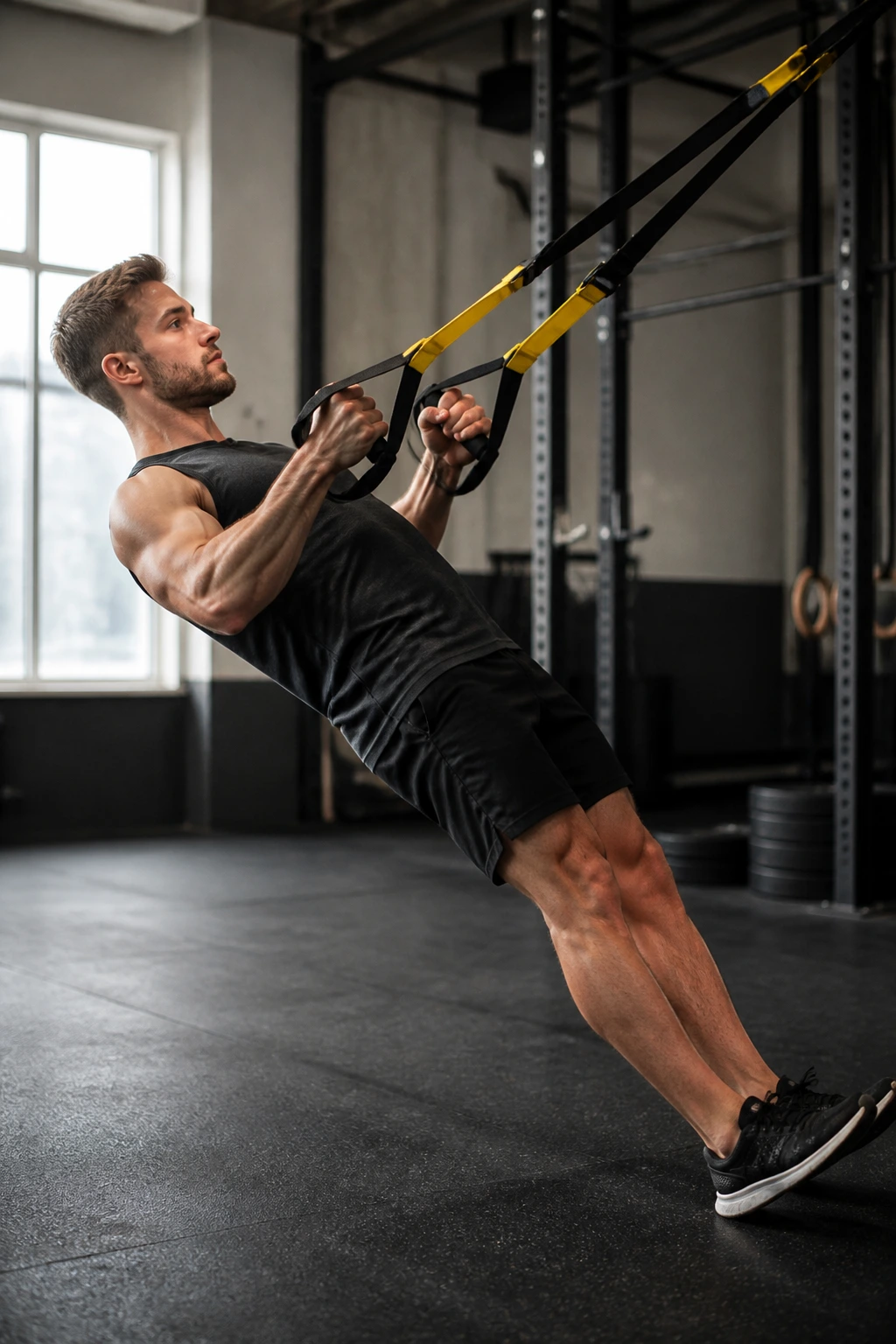
Can a pair of straps build arms? Absolutely, if you stop treating suspension training like a warm-up and start making the angle harder as your reps improve. The beauty of straps is that they force you to stabilize while you press, row, and curl.
Do suspension rows for 10 to 15 reps, suspension chest presses for 10 to 15 reps, and suspension biceps curls for 8 to 12 reps. Run 3 rounds with 45 seconds of rest. The more you walk your feet forward, the harder everything gets.
What I like here is the built-in honesty. If your body drifts or your wrists collapse, the straps show it right away. You can’t hide weak points very well. That makes this a strong choice for people who want functional upper body work and a serious arm pump at the same time.
If you need more challenge, slow the lowering phase to 3 seconds. That usually does more than adding another awkward variation.
17. Kettlebell Clean and Press Complex
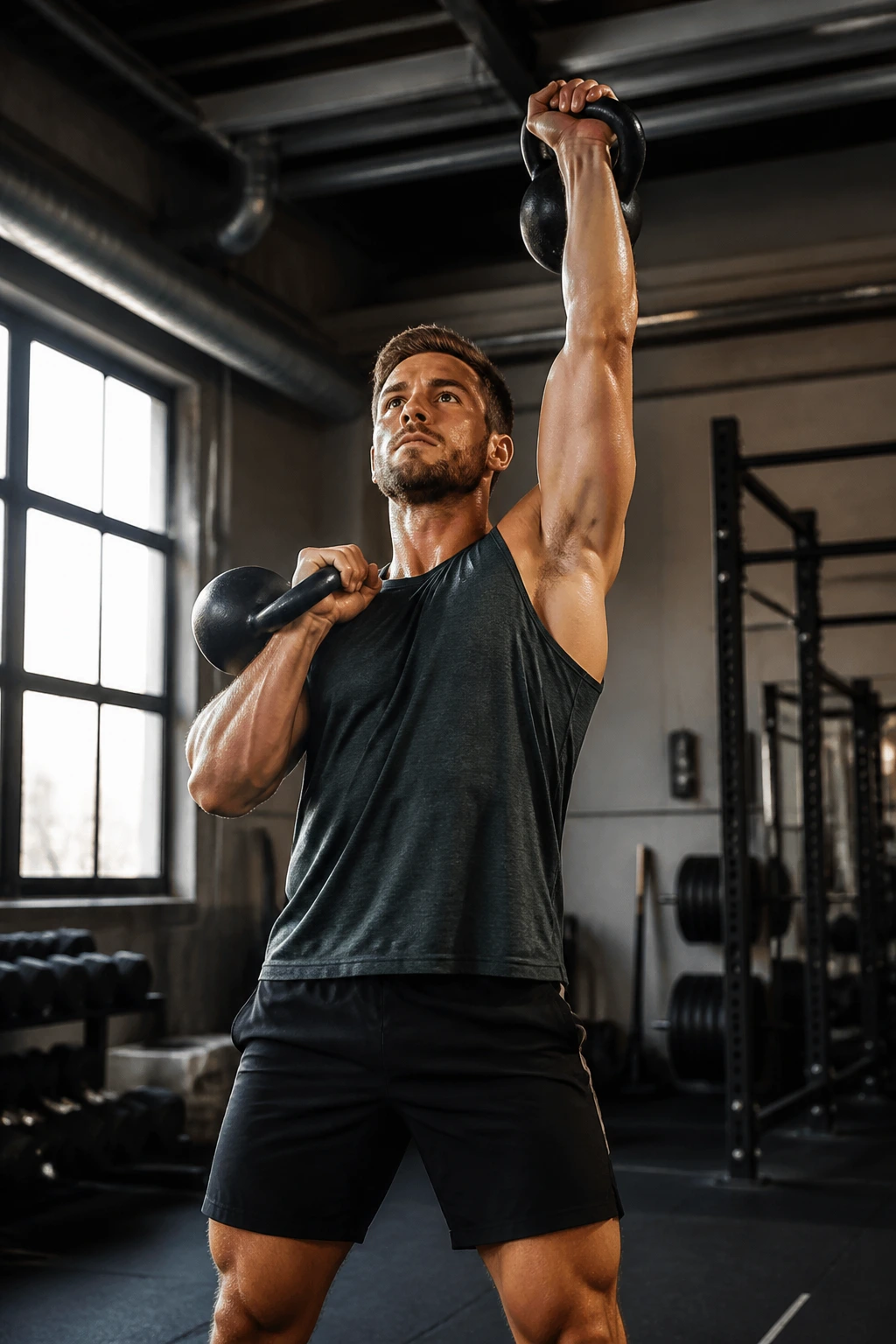
This is a full upper-body problem in one move. The clean gets the hips and upper back involved, the rack position taxes the arms and core, and the press turns the whole thing into a shoulder-and-triceps grinder.
Use one kettlebell or two. Do 5 cleans and 5 presses per side for 4 to 6 rounds. Rest about 60 seconds between sides if you’re using one bell, or between rounds if you’re using two. Keep the bell close on the clean so it doesn’t slap your forearm. That bruise is not a badge of honor.
A lot of people muscle the bell with their arm too early. Don’t. Let the hips do the first part of the clean, then receive the bell smoothly in the rack. That keeps the movement cleaner and saves your wrist. The press should feel stacked and direct, not wobbly.
Best for lifters who like athletic work and don’t mind a little breathing. It gets you there fast.
18. Tempo Push-Up and Iso-Hold Triceps Burner
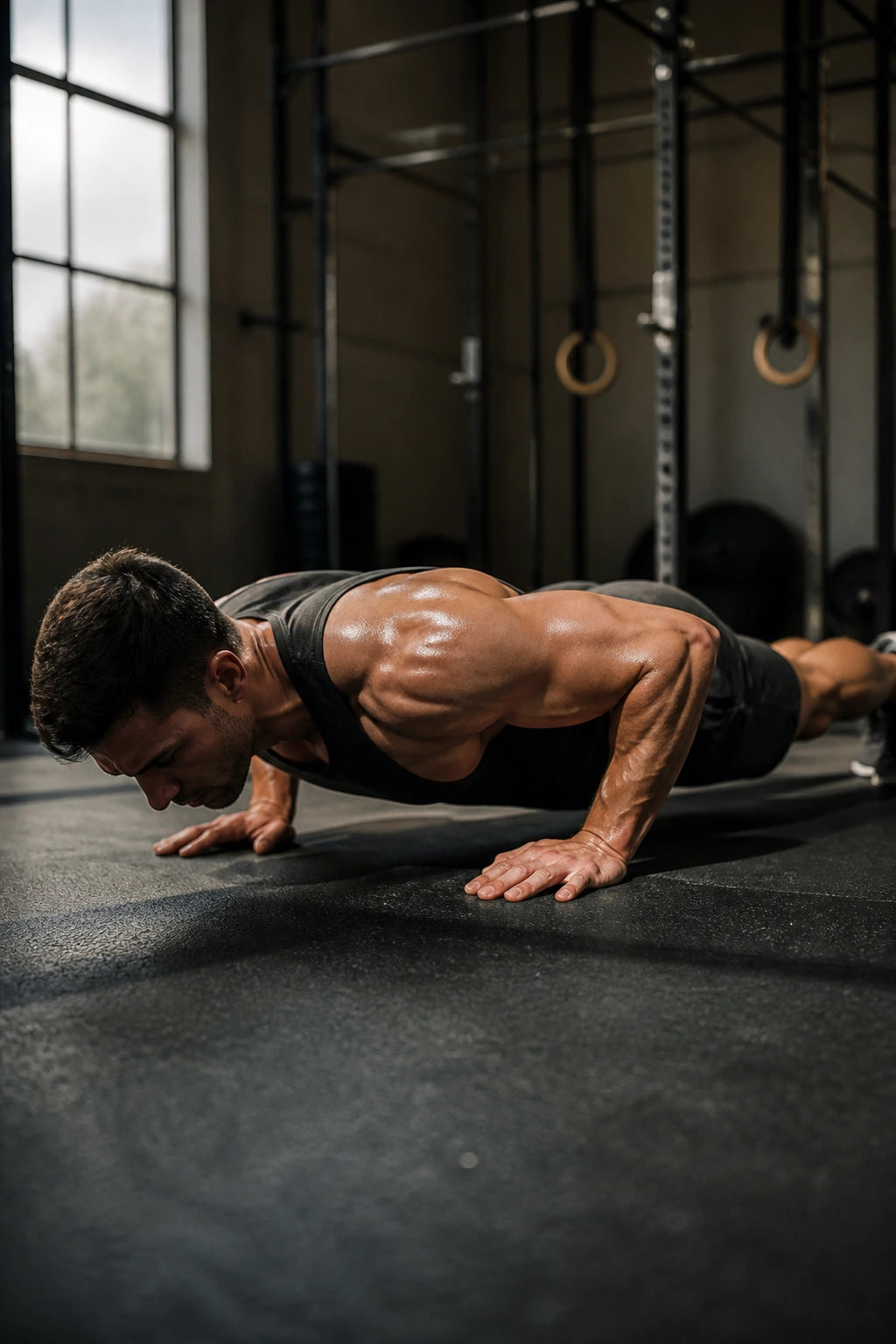
Slow push-ups are rude in the best way. A 3-second lowering phase turns a simple bodyweight move into a serious triceps and chest challenge, and the pause makes cheating nearly impossible.
Do 4 rounds of 8 tempo push-ups, followed by a 10-second hold halfway up on the final rep. Then finish with overhead triceps isometric holds using a dumbbell or band for 20 to 30 seconds. Rest 60 seconds and repeat. If full push-ups are too hard, place your hands on a bench and keep the same tempo.
The slower you lower, the more the triceps stay under tension. That tension is what makes the set feel long even when the rep count looks modest on paper. You should finish each round with your arms warm and your chest a little tight, but not with your lower back sagging.
This workout is quiet, cheap, and mean. Nice combination.
19. Time-Capped Arm Density Circuit
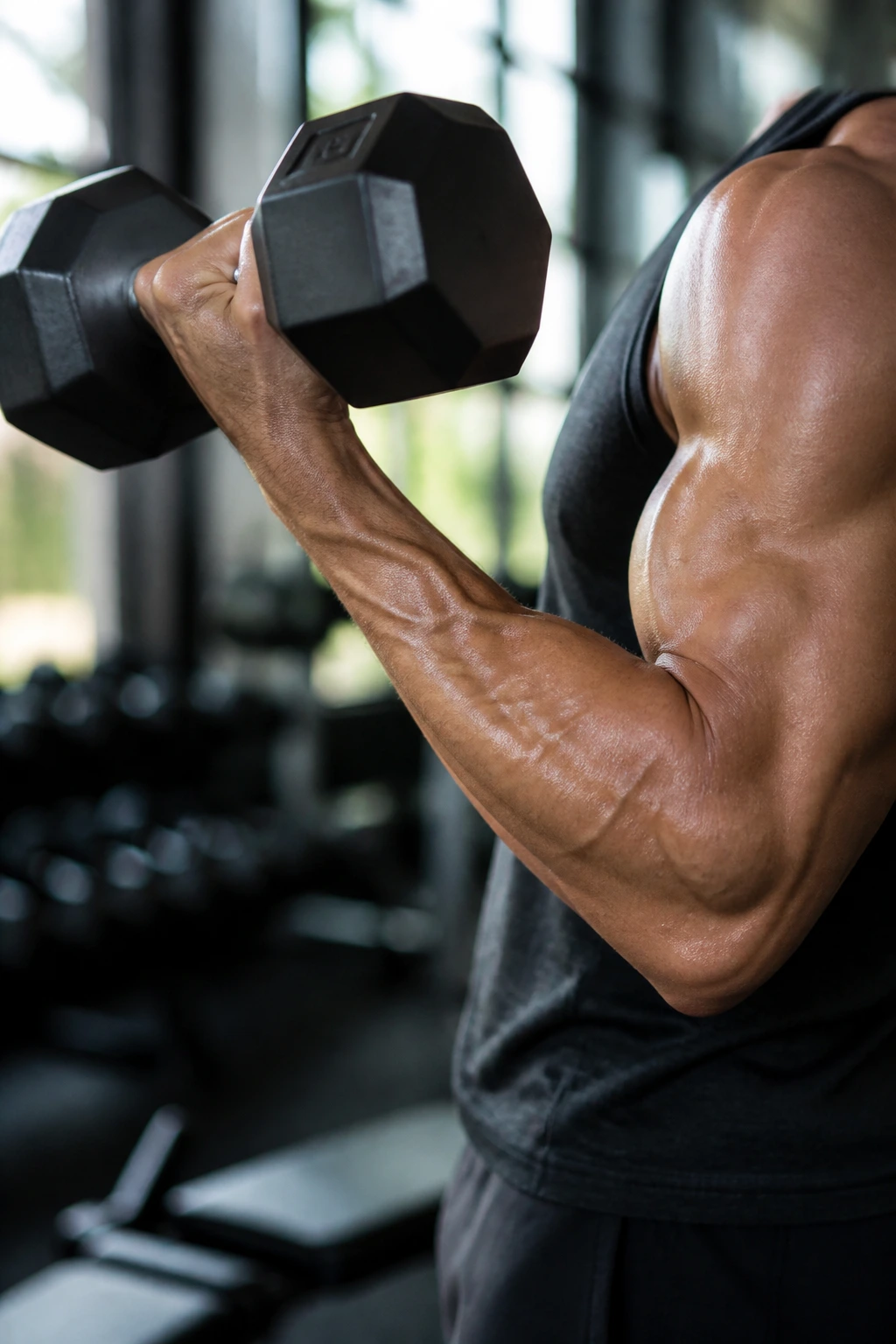
A timer changes the whole mood. Instead of wandering between machines and taking five-minute rests, you keep moving until the clock runs out, which is often the cleanest way to make a short arm session feel serious.
Set a 12-minute timer and cycle through dumbbell curls for 10 reps, rope pushdowns for 12 reps, one-arm rows for 8 reps per side, and push-ups for 8 to 12 reps. Move steadily, rest only when you need it, and try to beat the total number of rounds you got the last time.
- Pick loads you can repeat with good form.
- Keep transitions short.
- Stop each set with 1 or 2 reps left if form starts slipping.
- Write the round count down.
- Add one round next time before adding weight.
This works because density matters. More quality work in less time tends to sharpen the session, and arms usually respond well to that mix of volume and pace.
20. Full Upper-Body Finisher for Arm Definition
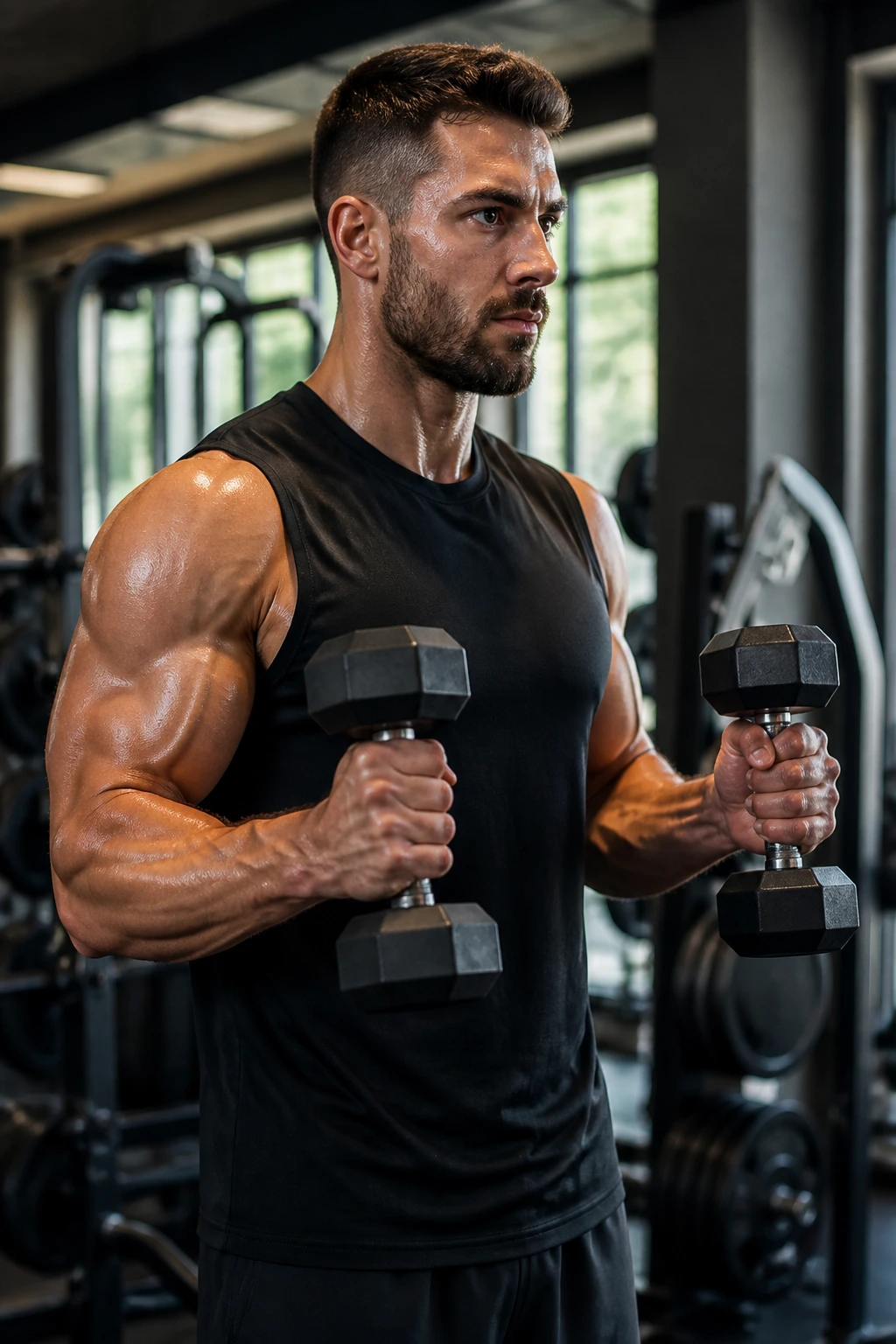
If you want one workout that ties the whole upper body together, use this one. It blends pressing, pulling, curling, and carrying, so the arms get hit from several directions instead of being trained like isolated ornaments.
Do 3 rounds of the following: 10 push-ups, 10 dumbbell rows per side, 12 hammer curls, 12 overhead triceps extensions, and a 30-second farmer’s carry. Rest 60 to 90 seconds between rounds. Keep the weights moderate enough that the last round still looks clean, not frantic.
That mix works because the pressing and triceps work build the back of the arm, the rows and curls handle the front and side, and the carry finishes with grip and shoulder stability. If your arms feel fuller after a session like this, that’s not imagination. It’s what happens when several muscles stop taking turns and start working together.
Pick three or four workouts from this list and repeat them for a few weeks. That’s usually better than chasing a different routine every time you walk into the gym. Strong arms tend to come from showing up with enough consistency to let the details matter.
