



A pair of dumbbells can do more for your upper body than a whole stack of shiny machines, provided you stop treating them like glorified paperweights.
The best upper body workouts with dumbbells are not complicated. They press, row, raise, and curl with enough control that the muscles have to earn every rep.
That matters because dumbbells expose what barbells and machines can hide. One arm drifts. A shoulder rolls forward on the last two reps. Your left side finishes a curl cleanly while your right side cheats a little. You see it immediately, which is annoying and useful at the same time.
Most solid strength guidance points in the same direction: train the big pushing and pulling patterns regularly, then layer smaller arm and shoulder work on top. Dumbbells fit that idea beautifully because they let each side work on its own, and because they do not need much more than a bench, a floor, and a little patience.
1. Dumbbell Bench Press
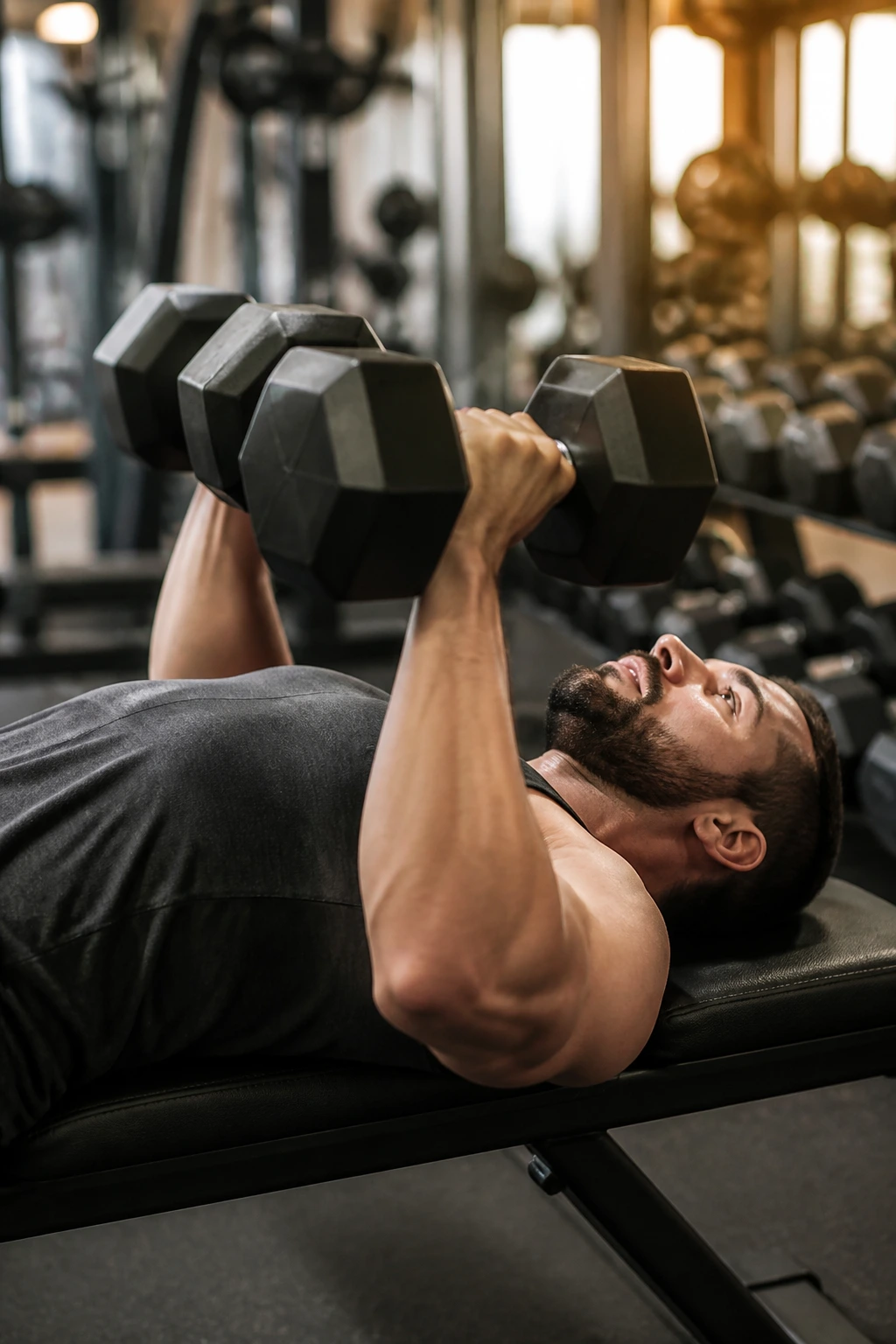
Flat dumbbell bench press is the backbone of a clean upper-body session. If you want one move that teaches pressing power, chest control, and a little triceps grit at the same time, this is the one to start with.
What to Feel on Every Rep
Your chest should do the heavy lifting, but your triceps and front delts are never far behind. Lower the dumbbells until your upper arms are just below parallel or until the bench feels stable and your shoulders stay packed down.
- Keep your shoulder blades pulled back and slightly down.
- Lower with control for 2 to 3 seconds.
- Press up until the dumbbells finish over your mid-chest, not your face.
- Stop the rep if the weights bang together and you lose tension.
My favorite cue: think about bending the dumbbells toward each other as you press. That tiny inward drive keeps your chest active instead of turning the rep into a loose shoulder press.
Three to four sets of 6 to 10 reps works well for most people. Heavier loads make sense here, but only if your wrists stay stacked and your elbows do not flare wildly.
2. Incline Dumbbell Press
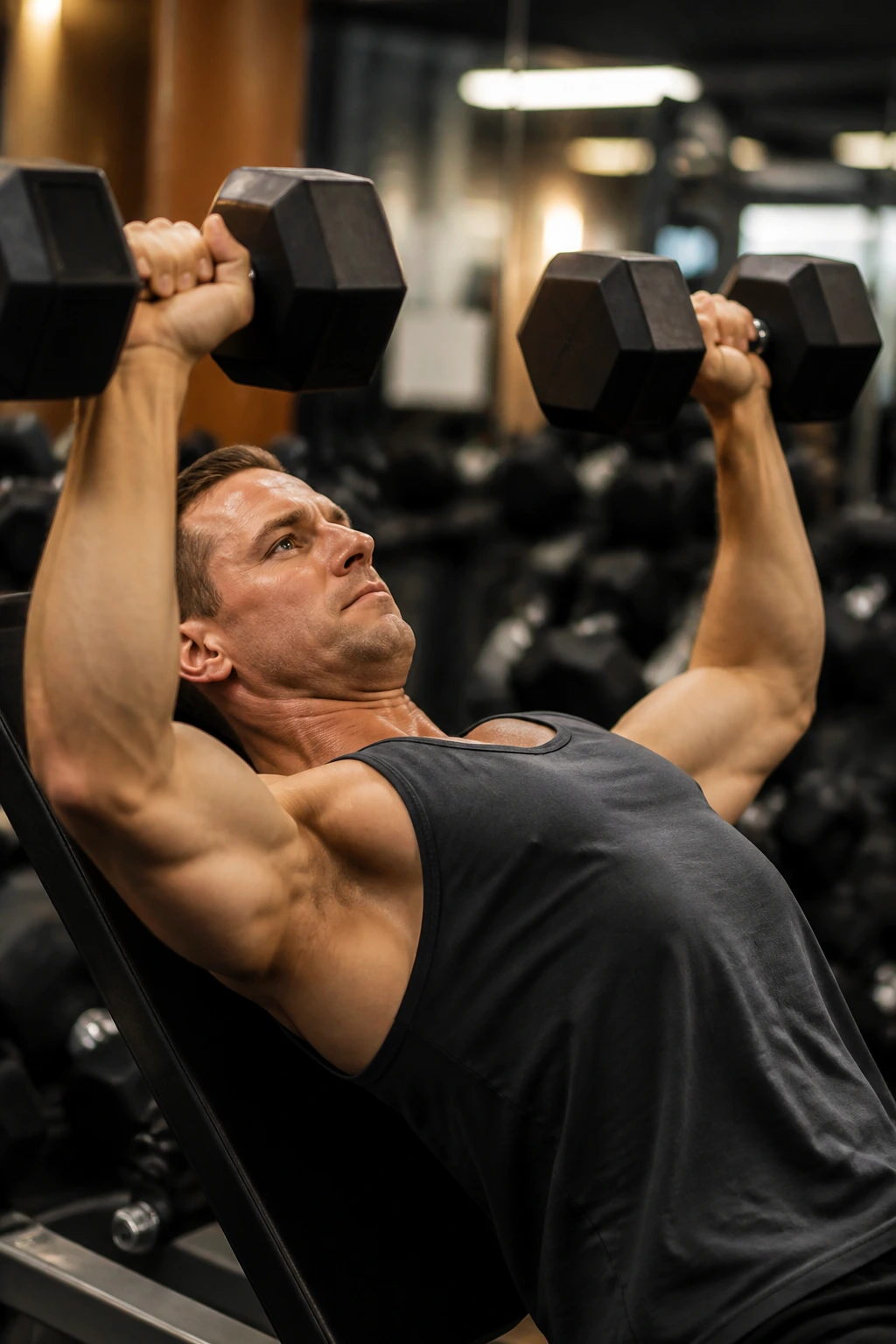
If your upper chest disappears on flat pressing, incline work fixes that gap faster than piling on extra flat sets. A bench set at about 20 to 30 degrees shifts more work toward the upper pec fibers and front delts without turning the movement into a shoulder press.
The mistake is making the bench too steep. Once the angle climbs much past that, the shoulders take over and the chest starts losing the point of the exercise. Keep your ribs down, plant your feet, and lower the dumbbells to the outside of your upper chest with a controlled path.
Steeper is not better.
I like this move as the second press in a session, especially if the flat bench already feels solid. Use 3 sets of 8 to 12 reps, pause for a beat near the bottom, and drive the dumbbells up without letting your shoulders creep forward at the top.
3. Dumbbell Floor Press
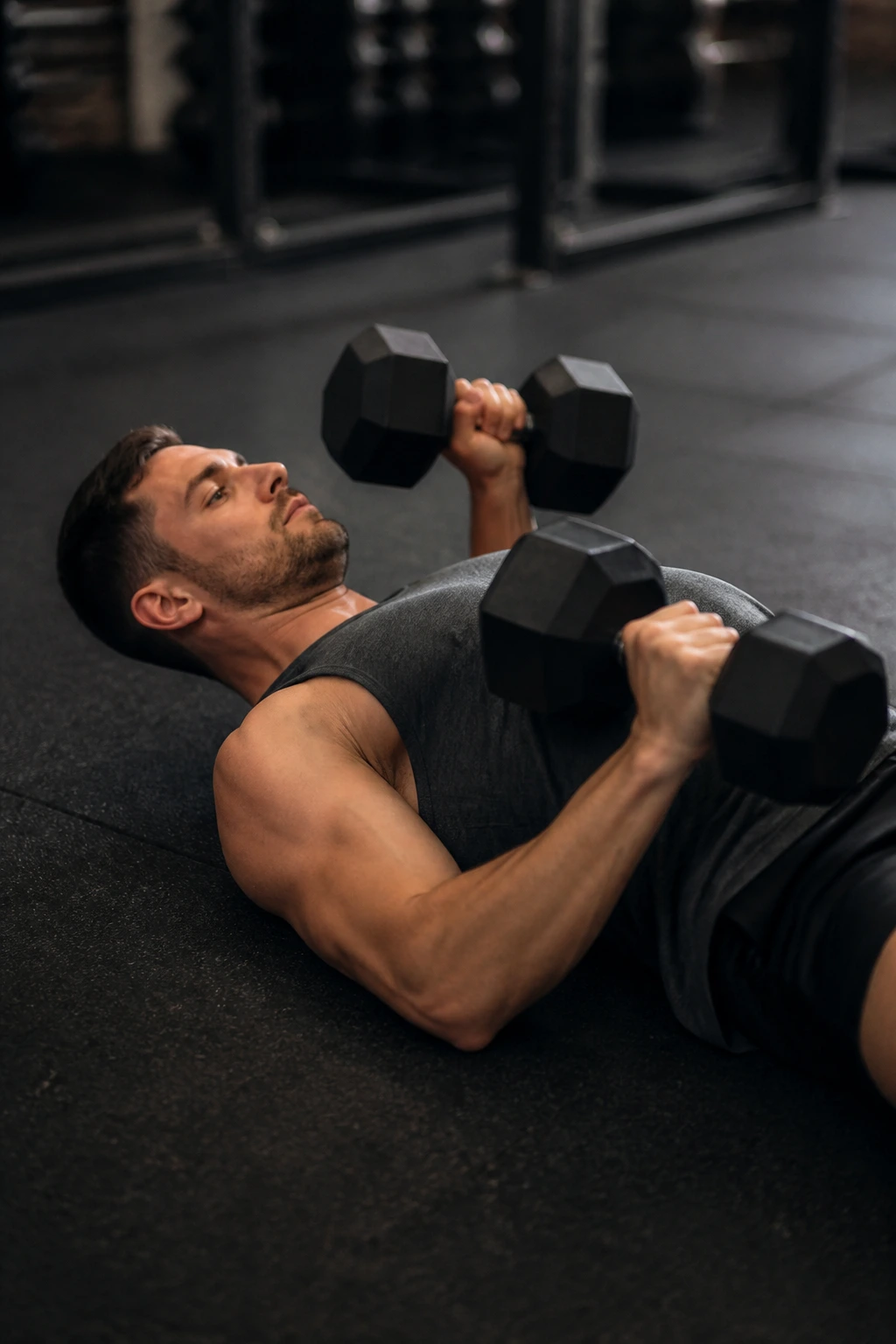
Why does lying on the floor make pressing easier on the shoulders? Because the floor cuts off the deepest part of the range and forces a cleaner lockout. That makes the floor press a smart option when your shoulders feel a little beat up or when you want more triceps work.
How to Use It
Lie flat with your knees bent and upper arms resting lightly on the floor at the bottom. From there, press the dumbbells up until your elbows lock out softly, then lower until your triceps touch down again. The stop on the floor gives you a built-in pause, and that pause is the whole game.
- Use a neutral or slightly angled grip if your shoulders prefer it.
- Keep your elbows about 30 to 45 degrees from your torso.
- Press hard through the top half of the rep.
- Choose 3 to 4 sets of 6 to 10 reps.
This move is also useful when you train at home and do not have a bench. No drama. Just a very honest press.
4. Dumbbell Chest Fly
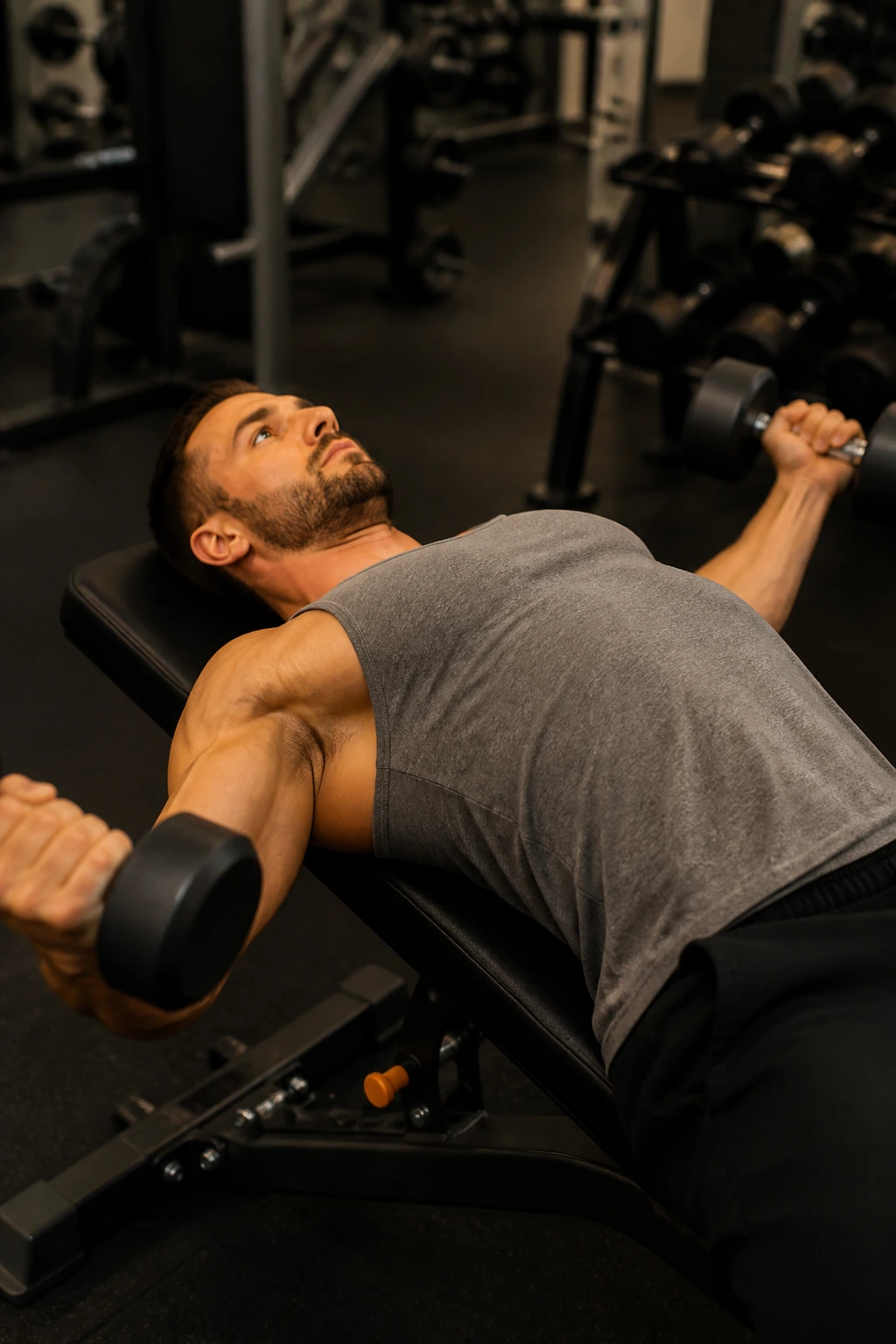
Picture the stretched position at the bottom of a press, then keep going with the control turned all the way up. That is the feel you want from a dumbbell chest fly: a loaded stretch across the chest, with the shoulders staying calm and the elbows slightly bent the whole time.
The fly is not about ego. It is about shape, tension, and a slow lowering phase that makes the pecs work in a way presses do not quite match. Keep the bend in your elbows fixed, lower until you feel a strong chest stretch without shoulder strain, then sweep the dumbbells back up along the same path.
- Use lighter weights than you think.
- Lower for 2 to 4 seconds.
- Stop before the elbows drop below the bench line if your shoulders complain.
- Aim for 10 to 15 reps, not a max-strength grind.
A fly done well feels smooth. A fly done badly feels like somebody is yanking on your shoulder joints. That is the whole difference.
5. One-Arm Dumbbell Row
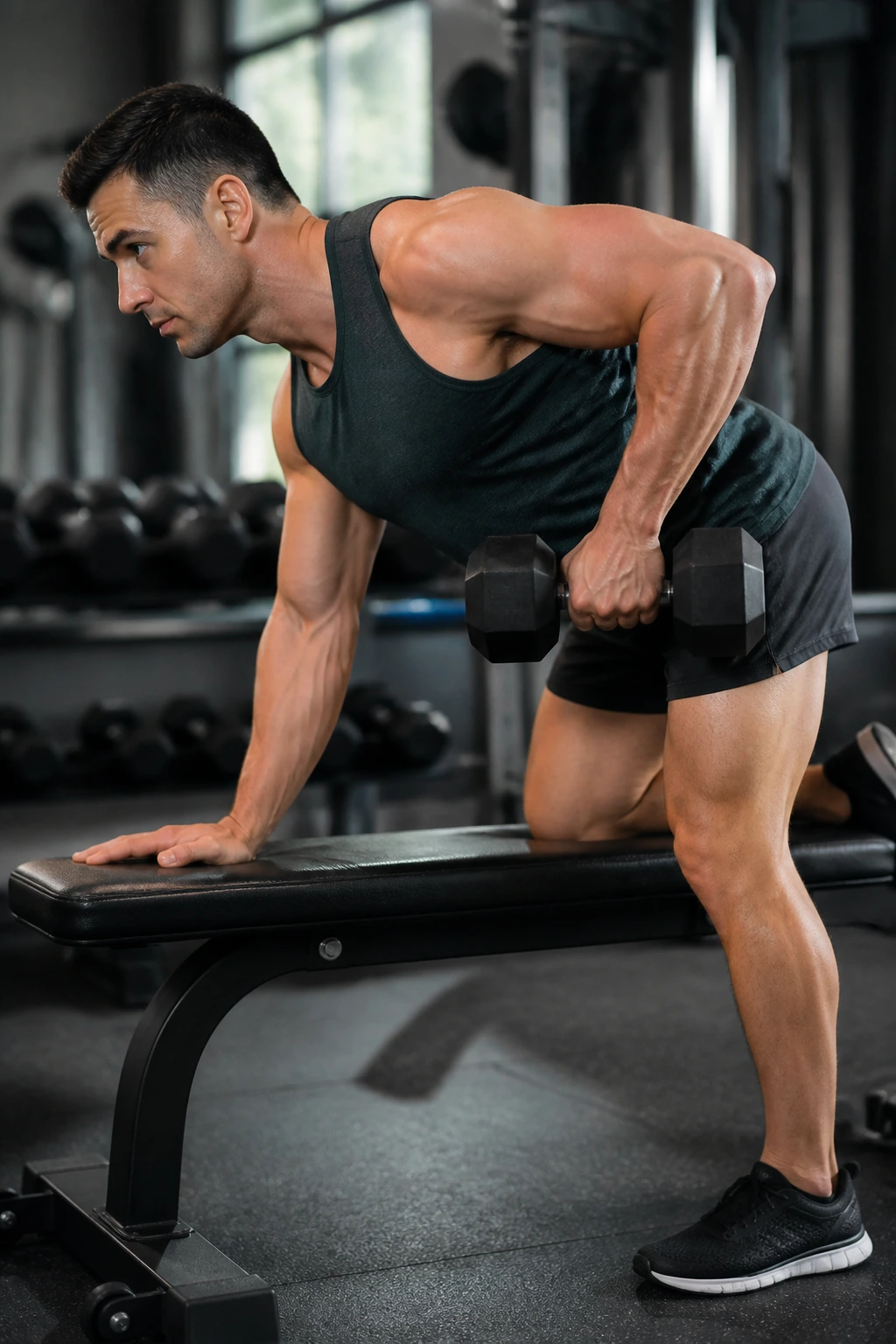
Rows done one arm at a time are brutally honest. If your torso twists, if your lat never really turns on, if your lower back steals the work, you feel it immediately.
Set one hand and one knee on a bench, keep your spine long, and pull the dumbbell toward your hip rather than your ribs. That path matters more than people think. Pulling to the hip tends to hit the lat harder, while pulling high toward the chest shifts the emphasis upward.
Do not yank it. A clean row has a quiet start, a hard squeeze at the top, and a slow return that makes the muscle stay on duty all the way down.
This is one of the best upper body dumbbell exercises for fixing side-to-side imbalance, because your stronger arm cannot bully the weaker one. Use 3 or 4 sets of 8 to 12 reps per side, and keep your shoulder from shrugging up near your ear. That last part gets sloppy fast.
6. Chest-Supported Dumbbell Row
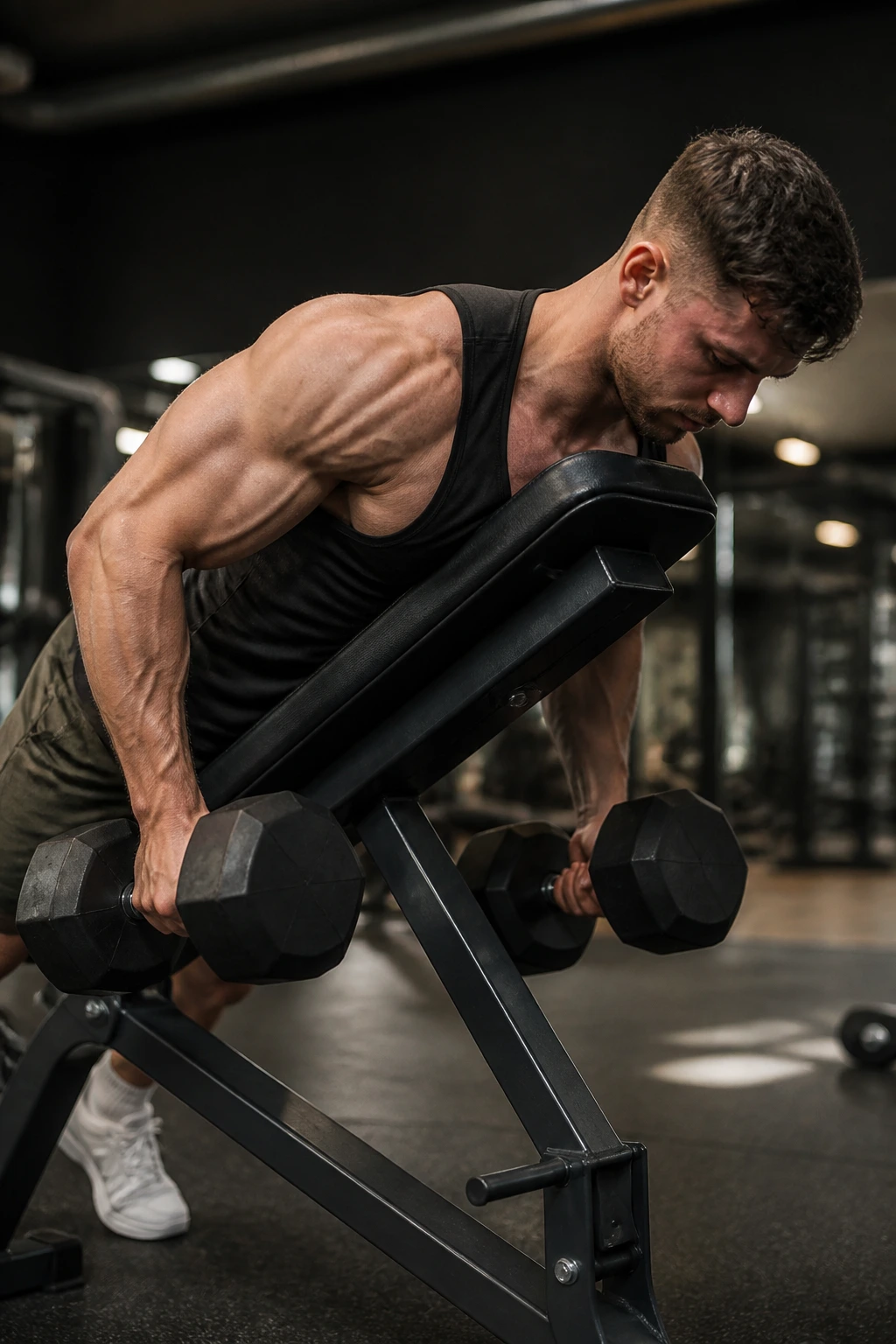
Chest-supported rows are cleaner than bent-over rows, and I mean that in the nicest way. If your lower back gets tired before your lats do, this version solves the problem without turning the workout into a hinge test.
Set an incline bench to about 30 to 45 degrees, lie face down, and let the dumbbells hang straight toward the floor. Pull them up with your elbows slightly away from your body, squeeze the shoulder blades together for a beat, then lower under control until the arms are fully extended again.
This version is the one I reach for when I want strict back work. The bench takes momentum out of the equation, which means the rear delts, mid-back, and lats have nowhere to hide.
Three to four sets of 8 to 12 reps works well. If your grip gives out before your back does, lighten the load a little and keep the rep path sharp.
7. Bent-Over Reverse Fly
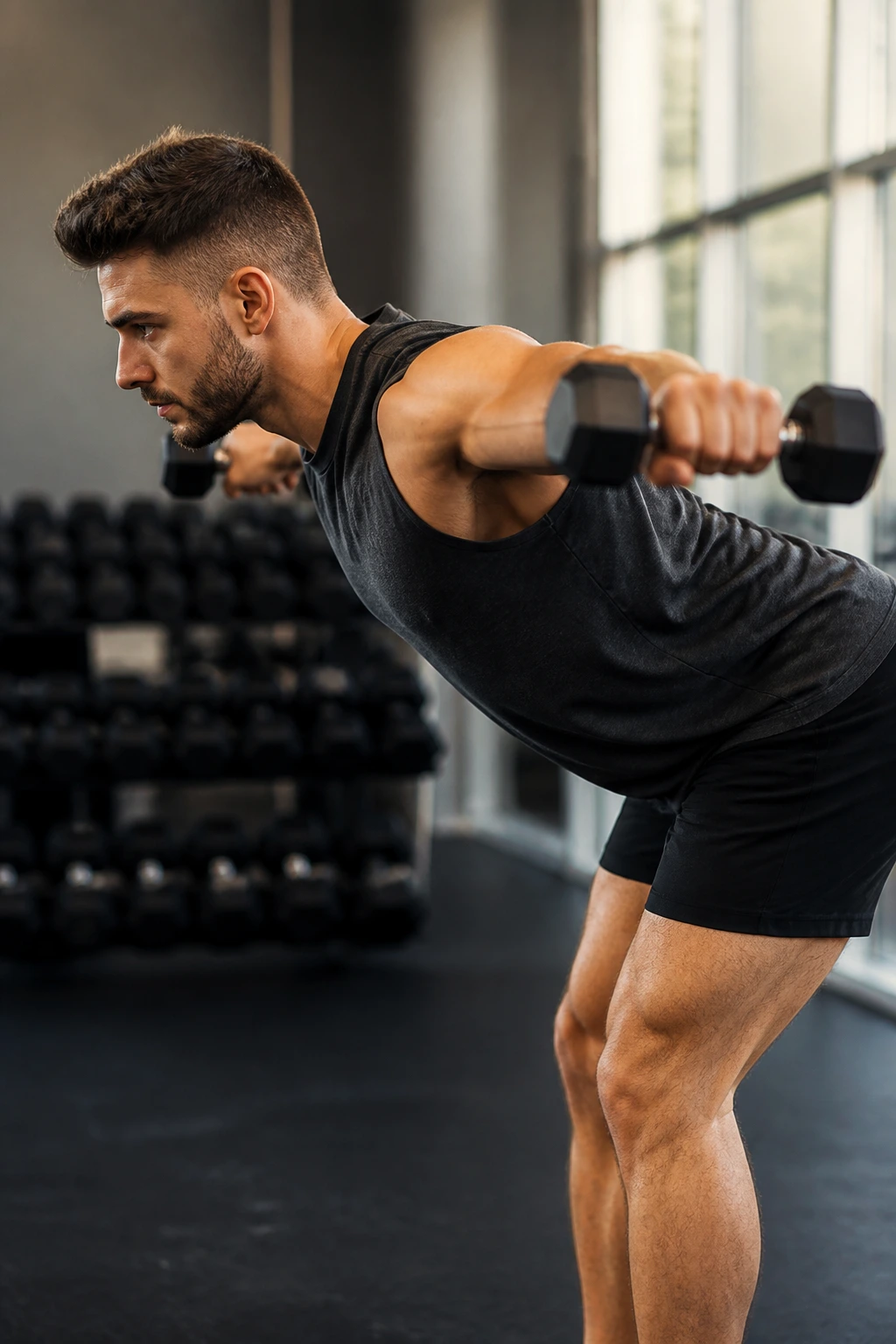
The rear delts burn first here. Good. That is exactly what should happen.
A bent-over reverse fly looks small, almost too small to matter, until the last few reps when your upper back starts lighting up. Hinge at the hips, keep a soft bend in the elbows, and raise the dumbbells out wide until your arms are roughly in line with your shoulders.
How to Keep It Honest
The temptation is to swing the weights and turn the move into a bad shrug. Don’t. Use light dumbbells, move slowly, and think about opening the arms from the shoulder joint rather than lifting with the hands.
- Stay bent over with a flat back.
- Move in a wide arc, not a straight shrug.
- Pause for 1 second at the top.
- Use 12 to 20 reps.
This is one of the best dumbbell workouts for upper back posture and shoulder balance, especially if your pressing volume is high. A little rear-delt work goes a long way.
8. Seated Dumbbell Shoulder Press
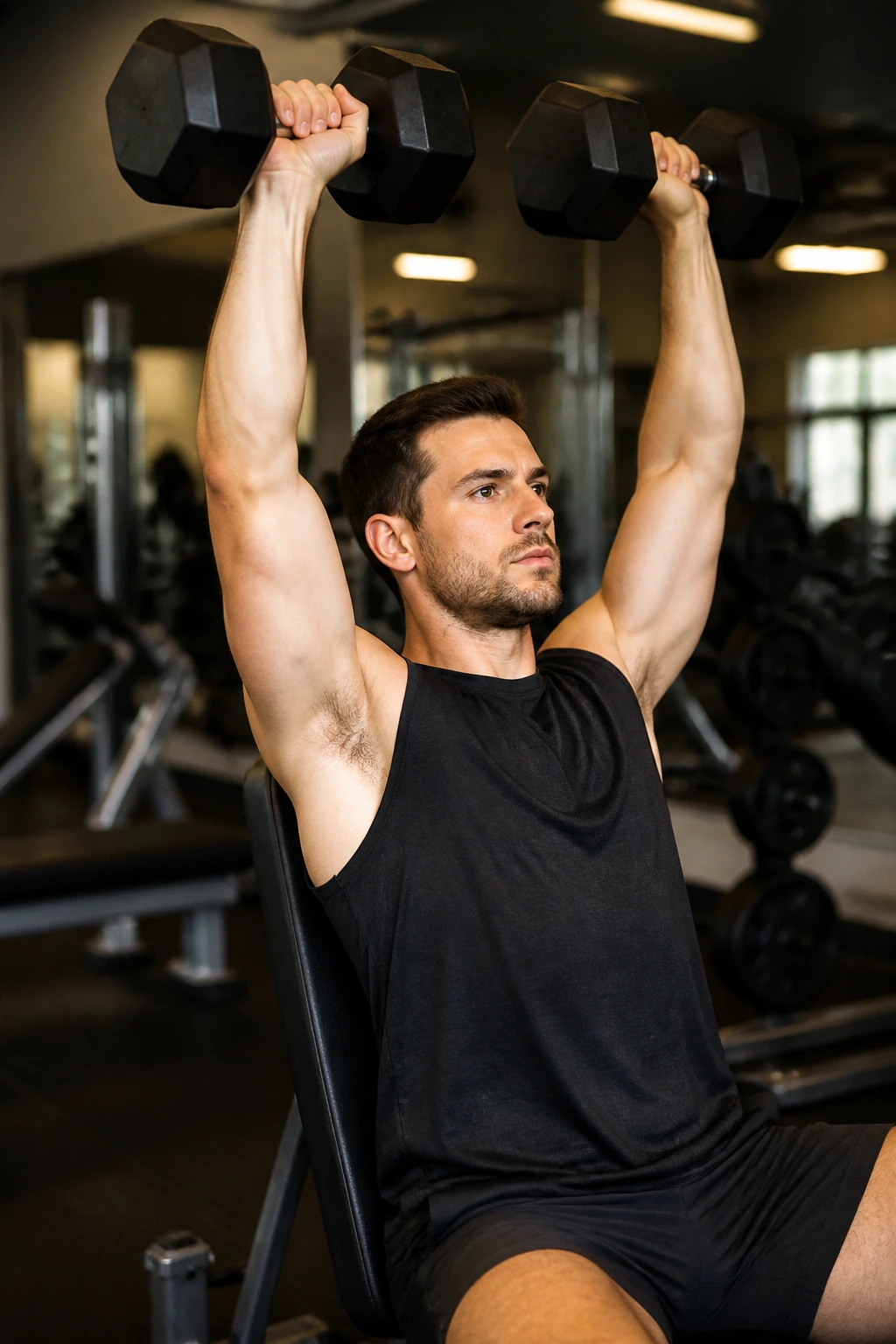
A seated press is where shoulder strength stops being vague and starts becoming obvious. There is no leg drive to hide behind and no gentle cheating from the hips. Just you, the dumbbells, and a vertical press that tells the truth.
Sit with your back supported if possible, press the weights from shoulder height to overhead, and keep your wrists stacked over your elbows on the way up. If your lower back arches hard enough to turn the lift into a lean-back contest, the load is too heavy or the bench angle is off.
The clean version feels smooth through the first half, then gets honest near the top. That is normal. Lock out under control and bring the dumbbells back down until they sit just outside your shoulders.
Use 3 to 5 sets of 6 to 10 reps. Heavier pressing belongs here, but only if the rep path stays tidy and the dumbbells do not drift forward.
9. Arnold Press
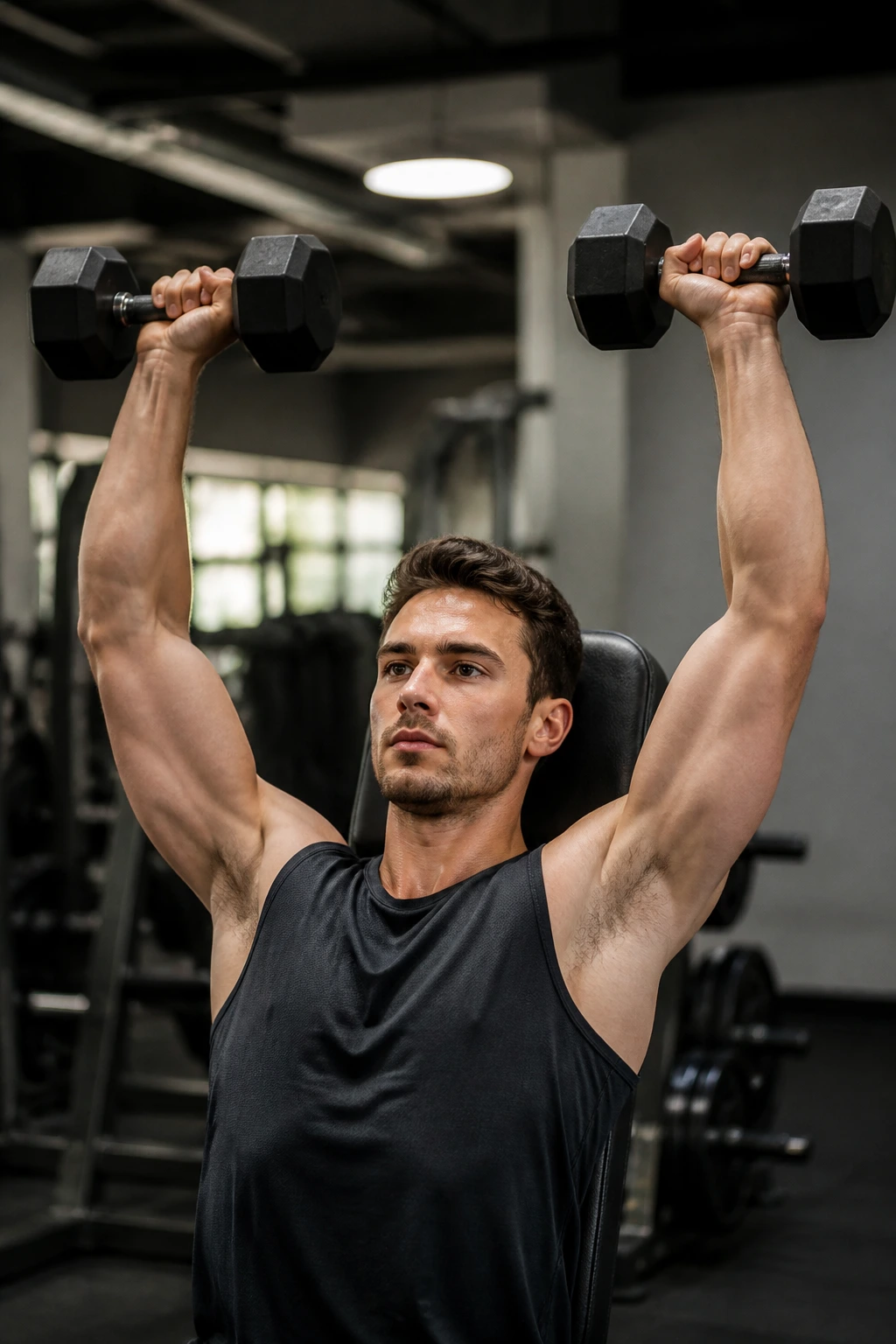
Want a press that asks for a little more coordination and a little more shoulder involvement? The Arnold press is a decent choice, especially when you want an accessory move after your main overhead press.
Start with the palms facing you at shoulder height, then rotate the hands as you press so you finish with the palms forward overhead. That rotation increases the range of motion and gives the front delts a longer job than they get in a standard press.
The catch is simple: people rush it. If the rotation happens too fast, the movement gets messy and the wrists start wandering around like they are late for something. Go lighter than you would on a normal shoulder press and keep the tempo steady.
I like 2 or 3 sets of 8 to 10 reps here. It is not the move for chasing heavy numbers. It is the move for controlled shoulder work that feels a little more complete than a straight press.
10. Dumbbell Lateral Raise
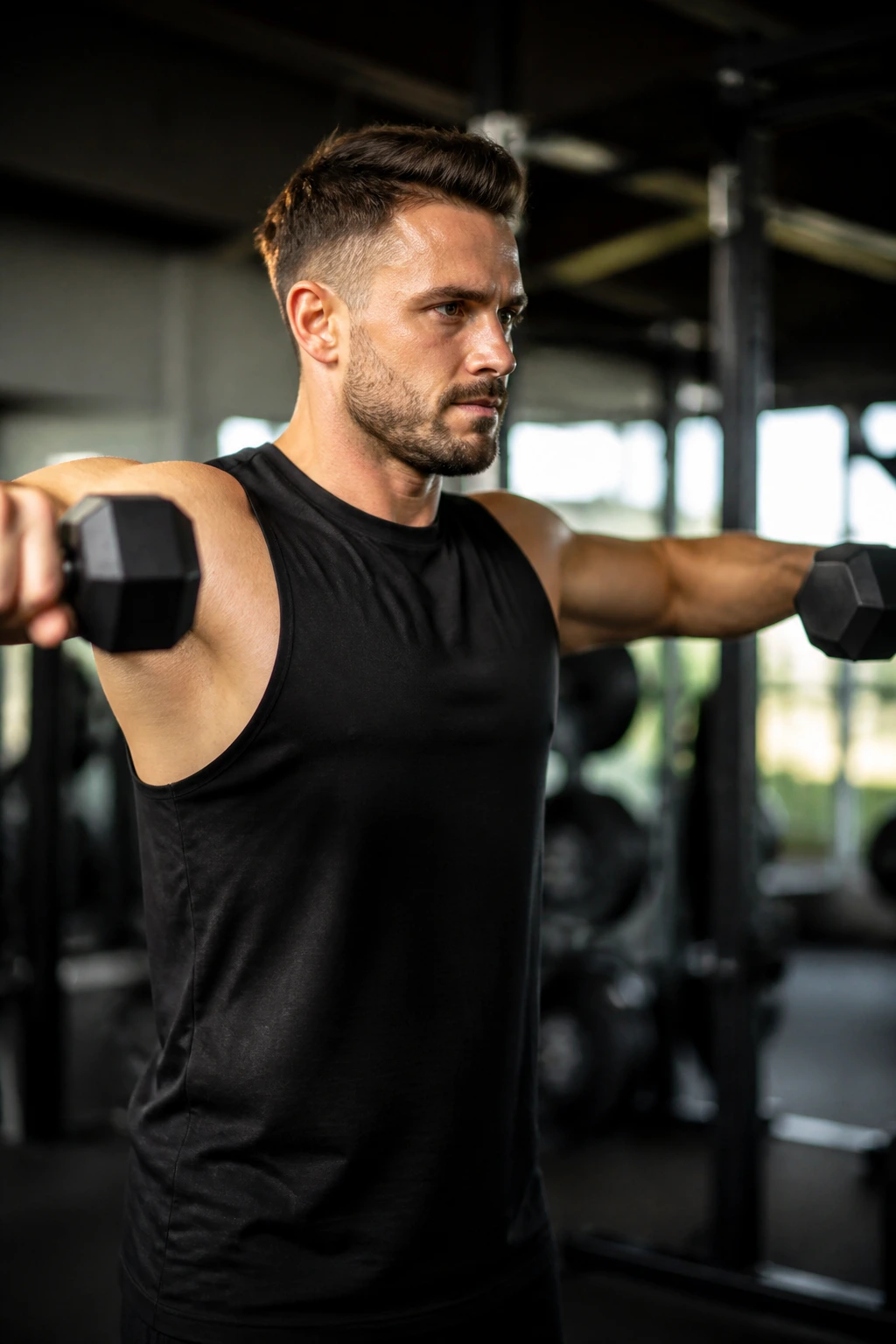
The lateral raise looks tiny until the last five reps. Then it gets mean.
This is the side-delt builder, and side delts are the muscles that give shoulders that rounder, wider look from the front. Hold the dumbbells at your sides, keep a soft elbow bend, and raise them out until your upper arms reach shoulder height. That is high enough. Going higher usually turns the exercise into a trap shrug.
What Makes It Work
The real job here is tension, not load. Light weights done with control hit the side delts far better than heavy dumbbells thrown around with body English.
- Lead with the elbows.
- Keep your shoulders away from your ears.
- Lower for 2 to 3 seconds.
- Work in the 12 to 20 rep range.
A tiny pause near the top helps. So does a slight forward lean if your shoulders like it. The biggest mistake is trying to make this a strength lift. It is not. It is a precision lift, and precision is what makes it good.
11. Dumbbell Shrug
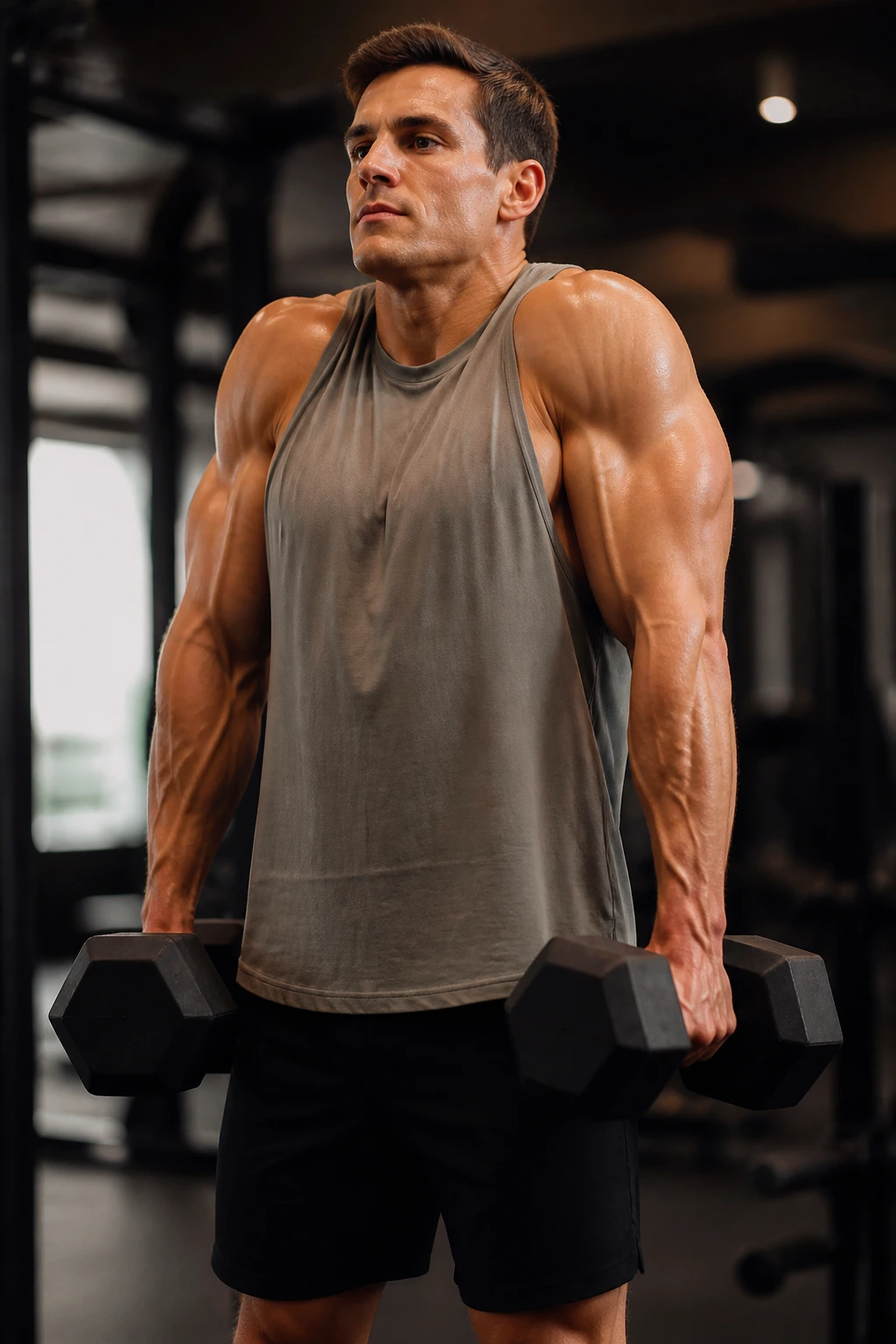
Boring? A little. Useful? Yes.
Shrugs are one of those exercises people mock until their traps lag behind everything else. Hold the dumbbells at your sides, stand tall, and lift your shoulders straight up toward your ears without rolling them in circles. That top squeeze matters more than the weight itself, which is probably why so many shrug reps look sloppy.
Keep the movement vertical. Up. Pause. Down. No shoulder rolling, no jerking, no half-reps because the dumbbells got heavier than your grip wanted.
A 1-second squeeze at the top is enough if the load is honest. I like 3 to 4 sets of 8 to 15 reps, depending on whether the goal is trap size or a bit of upper-back endurance. The weights do not need to be absurd. They do need to be steady.
12. Dumbbell Biceps Curl
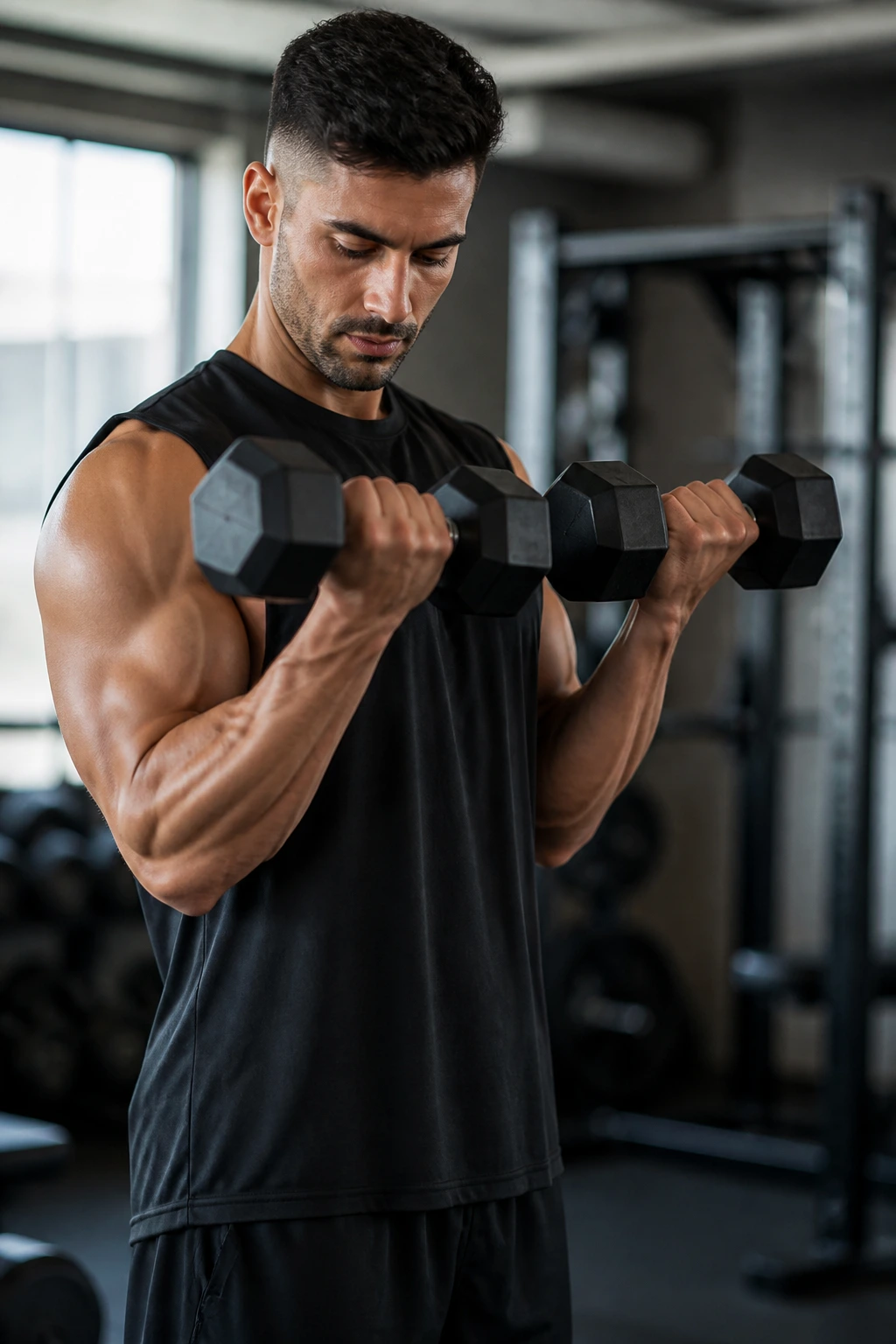
A strict dumbbell curl is different from the kind of curling that turns into a full-body event. That difference matters. A lot.
Keep your elbows near your sides, curl the weights up while turning the palms forward, then lower until the arms are almost straight again. The last part is where most people cheat. They stop lowering early because the bottom half feels boring. That is exactly the part you should own.
If the elbows drift forward, the curl starts becoming a front-delt move. If the shoulders shrug, the biceps lose tension. If you swing your torso, the set turns into noise.
Use 3 sets of 8 to 12 reps, and keep the rep speed smooth rather than frantic. A clean dumbbell curl is not flashy. It is dependable, which is better.
13. Hammer Curl
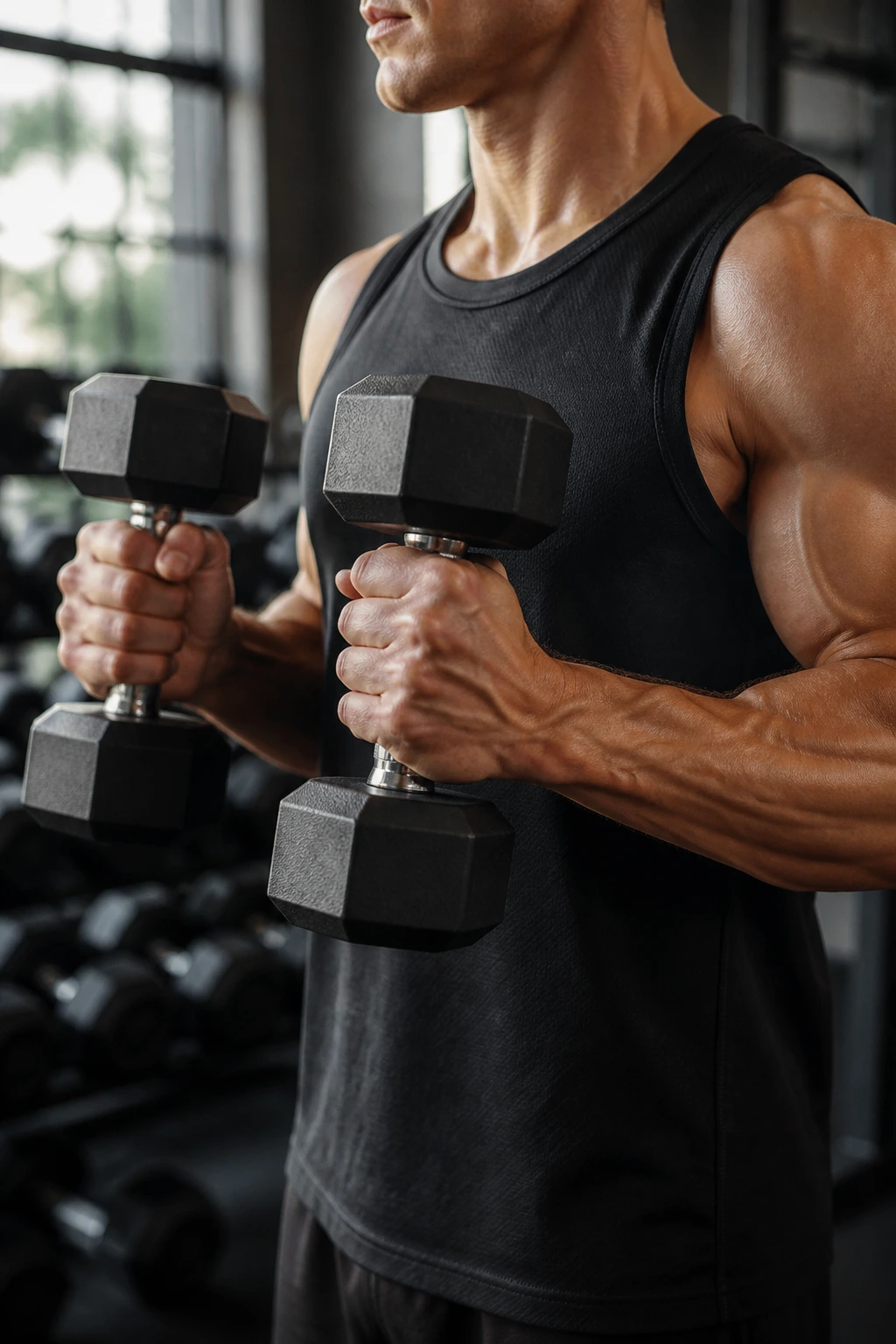
Hammer curls are the best way to add arm thickness without forcing every rep through the same straight-up, straight-down path. The neutral grip shifts work toward the brachialis and brachioradialis, which helps the upper arm look fuller from the side.
Why the Grip Matters
Palms facing in changes the stress on the elbow and wrist, and many people find this version easier on both joints than a fully supinated curl. That makes it useful if standard curls leave your wrists cranky or your forearms underworked.
- Keep the thumbs pointing up.
- Curl both arms together or alternate sides.
- Stop the upper arm from swinging forward.
- Use 8 to 12 reps.
Cross-body hammer curls are a solid variation if you want a little extra forearm involvement. They are simple, ugly in a good way, and easy to load without losing the shape of the movement.
14. Zottman Curl
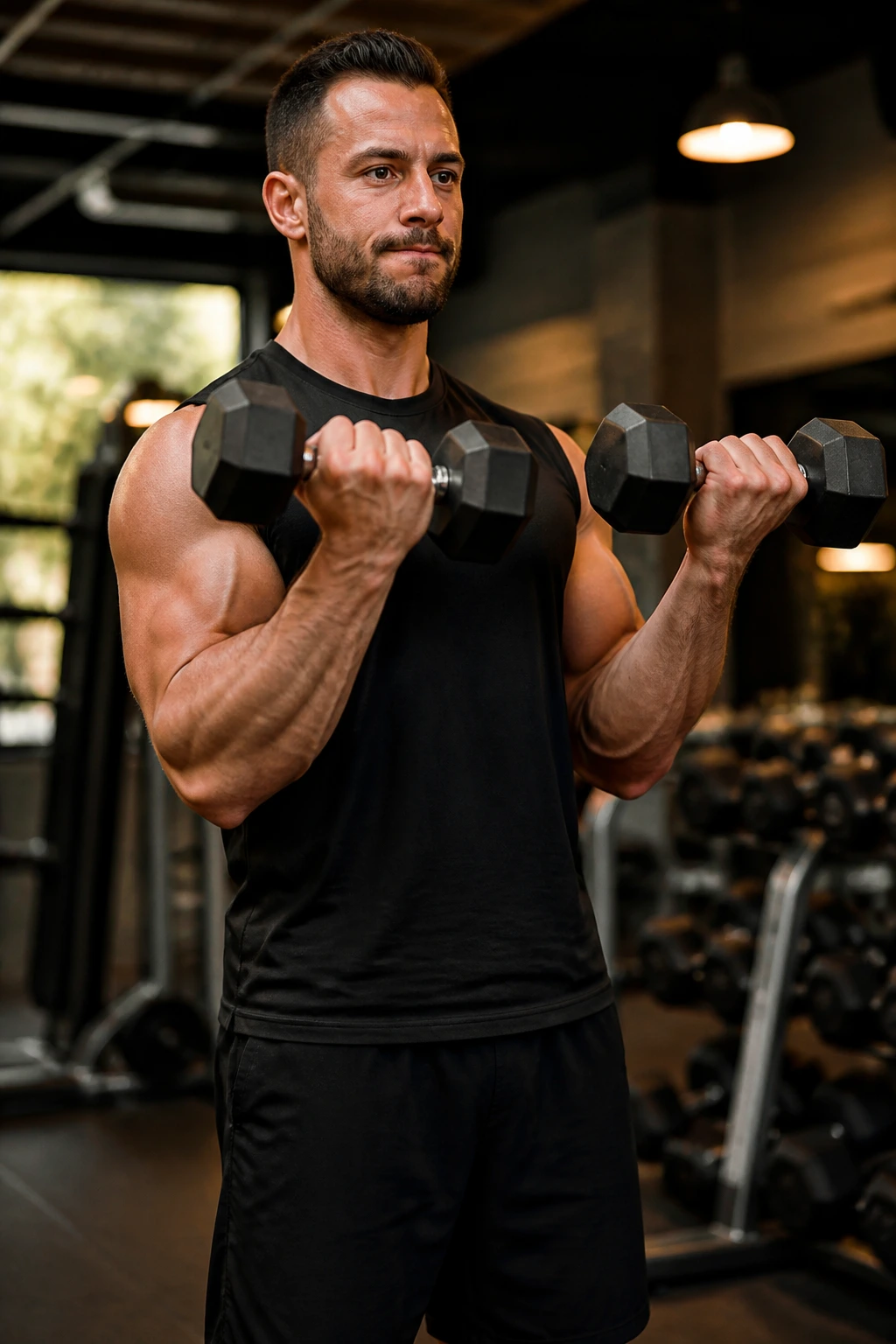
If I had to choose one curl for arm size and forearm work together, it would be this one.
The Zottman curl starts like a normal biceps curl on the way up, then flips to a pronated grip on the way down. That means the biceps get the lifting phase, while the forearms and elbow flexors take over the lowering phase. It sounds fussy. It feels fussy too. And it works.
Use lighter dumbbells than you think you need. The rotation makes the exercise harder than it looks, and the eccentric lowering gets hard fast if you try to load it like a standard curl.
I like 2 or 3 sets of 8 to 10 reps. Control the turn at the top, lower slowly with the palms facing down, and stop before the wrists start wobbling around. This is a detail exercise, not a brute-force one.
15. Concentration Curl
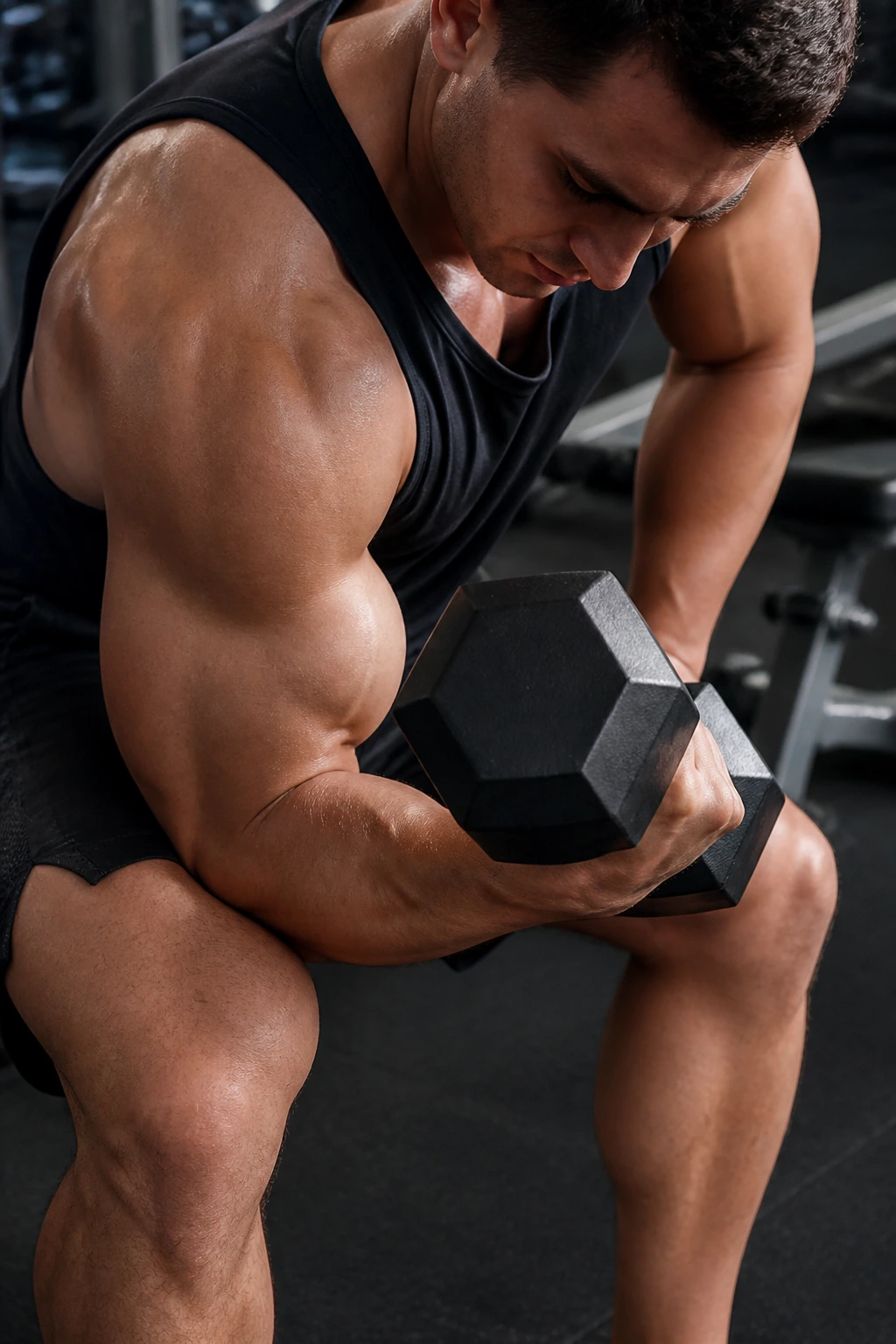
Why does sitting and pinning your arm against your leg make a curl harder? Because it strips away almost all the easy cheating. No swing. No shoulder drive. No hiding behind momentum.
How to Use It
Sit on a bench, brace the upper arm against the inside of your thigh, and curl the dumbbell up in a strict arc. The top position should feel like a hard squeeze in the biceps, not a loose hand wave. Lower slowly and let the arm straighten almost fully before the next rep.
This is a fine finisher after rows or pull-ups if you want to give the biceps a direct job without needing a heavy load.
- Keep the elbow pinned.
- Turn the palm up hard at the top.
- Pause for 1 second in the squeeze.
- Work in the 10 to 15 rep range.
The concentration curl is old-school for a reason. It keeps the rep clean and makes small changes in form easy to spot.
16. Overhead Dumbbell Triceps Extension
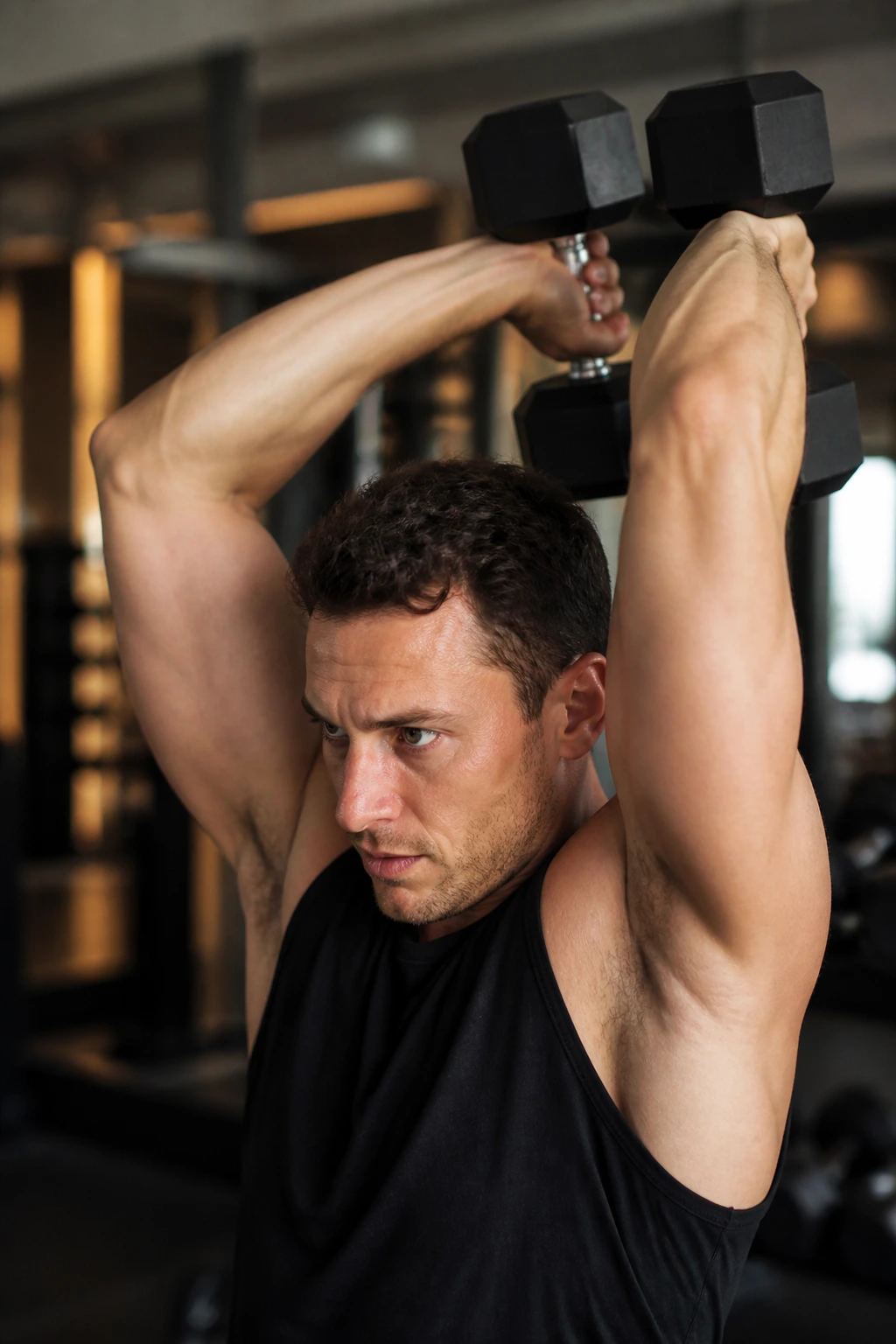
Arms that look full from the side usually need more long-head triceps work. The overhead extension hits that long head in a stretched position, which is exactly why it shows up so often in smart arm programs.
You can do it with one dumbbell held by both hands or with two dumbbells if you like the symmetry. Set your ribs down, keep your elbows pointed mostly forward, and lower the weight behind your head until you feel the triceps stretch. Then extend the arms back up without flaring your lower back.
The ugly version of this lift is an over-arched spine and elbows drifting wide. That wastes the rep and makes the shoulders do too much. Keep the upper arms fairly still and let the elbows hinge.
Use 3 sets of 10 to 15 reps. Slow lowering helps. So does a weight that lets you stay honest instead of chasing a fake burn.
17. Dumbbell Skull Crusher
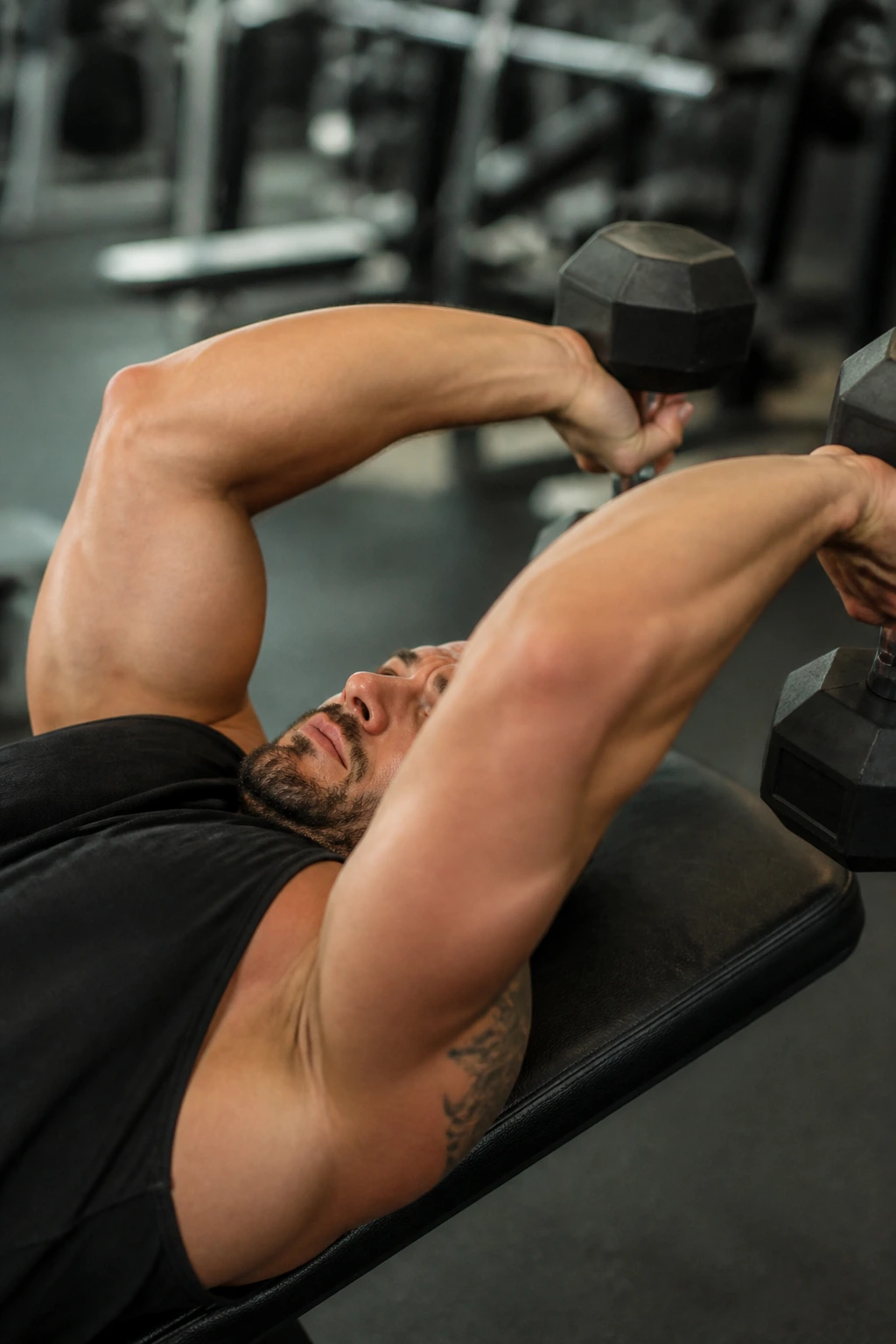
Skull crushers ask more from your elbows than a lot of triceps work, so the setup matters. Lie on a bench or the floor, hold the dumbbells over your chest, and bend only at the elbows as you lower the weights toward the sides of your head or just behind the forehead.
The key is keeping the upper arms still. If the shoulders start moving around, the exercise stops feeling like a triceps isolation move and turns into a strange hybrid press. That is not what you want.
A neutral grip often feels friendlier here than a palms-forward grip, especially if your elbows are fussy. Lower with control, stop short of slamming the joint into the bottom, and press back up through the triceps, not the shoulders.
This is a good exercise for people who want direct triceps work after pressing. It is also one of those lifts where less load and better shape usually win.
18. Renegade Row
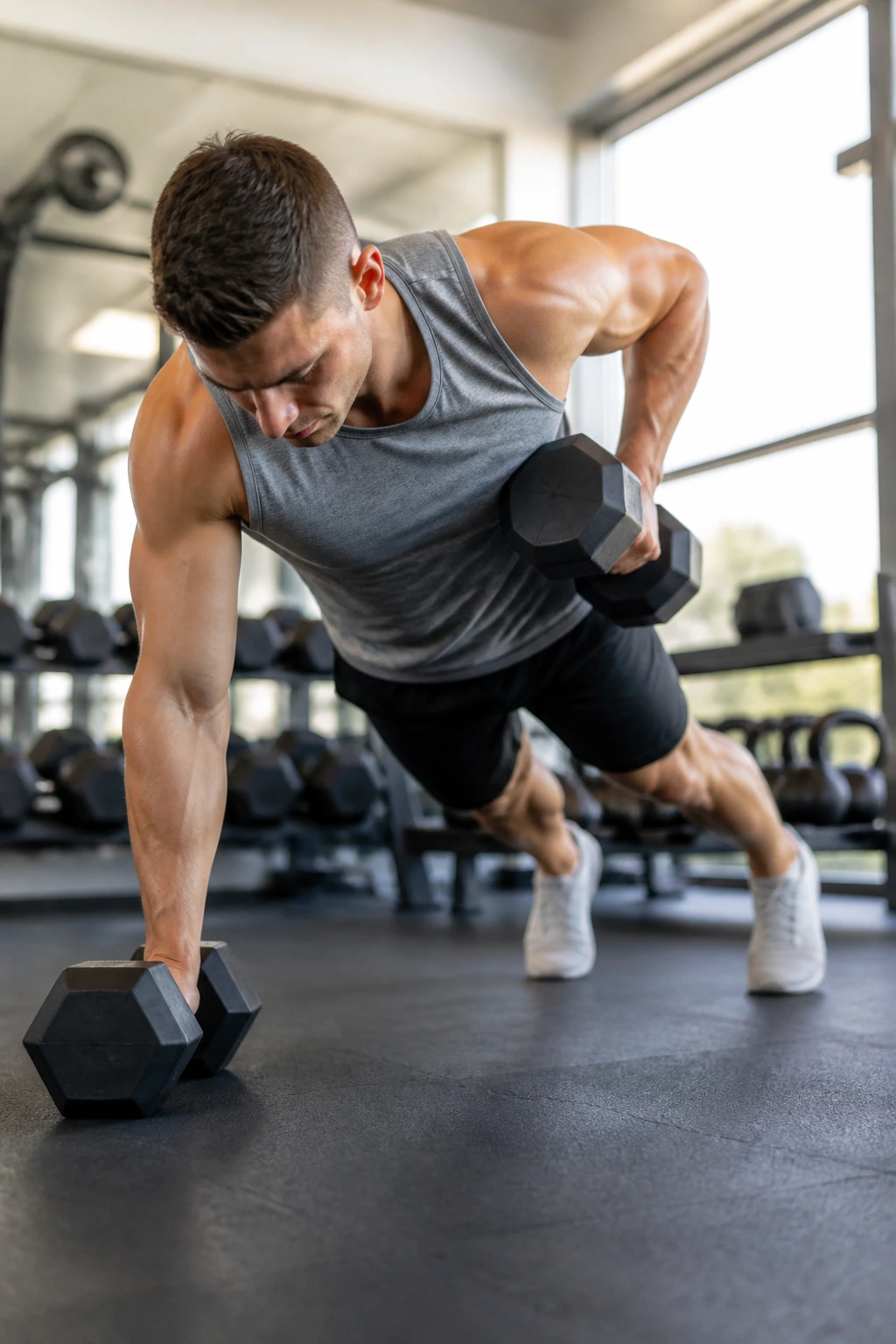
Renegade rows are not just rows. They are rows with a plank attached, and that changes the game completely.
Set the dumbbells on the floor, get into a push-up position with your hands on the handles, and row one dumbbell toward your hip while the rest of your body tries not to twist. That anti-rotation demand is the point. It makes the core work hard while the lats and upper back keep rowing.
Keep your feet wider than you think you need. Narrow stances turn this into a wobble contest. Use hex dumbbells if possible, because round dumbbells are annoying here and tend to roll.
I would stay in the 6 to 10 rep range per side. This is a high-tension move, not a conditioning race. If your hips spin open on every rep, slow down and cut the load.
19. Dumbbell Pullover
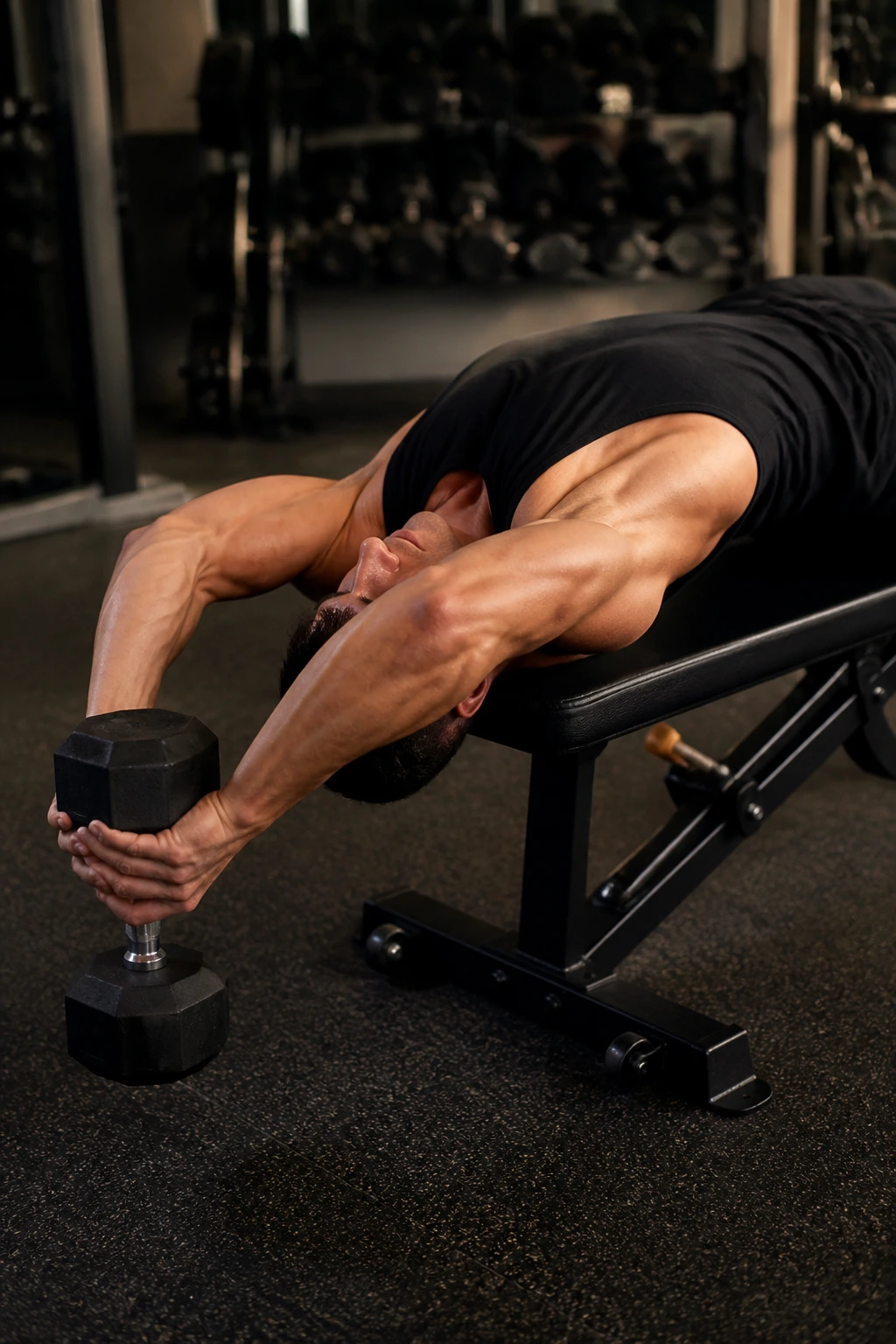
The pullover sits in a strange place between chest work and back work, which is part of why people either love it or forget about it.
Lie across a bench with only your upper back supported, hold one dumbbell with both hands, and lower it in a slow arc behind your head while keeping a slight bend in the elbows. The chest and lats both get involved, and the stretch is the whole reason the exercise still earns a place in good dumbbell upper body workouts.
Where It Fits Best
I like it after pressing or rowing, not before. The movement can feel big and awkward if you try to make it a main lift, but as a controlled accessory it is excellent.
- Keep your ribs from flaring.
- Stop the descent when your shoulders or lats start to complain.
- Use 10 to 15 reps.
- Move slowly through the stretched position.
This is not a magic chest builder. It is a useful bridge between the chest and back, and that makes it worth keeping around.
20. Dumbbell Push Press
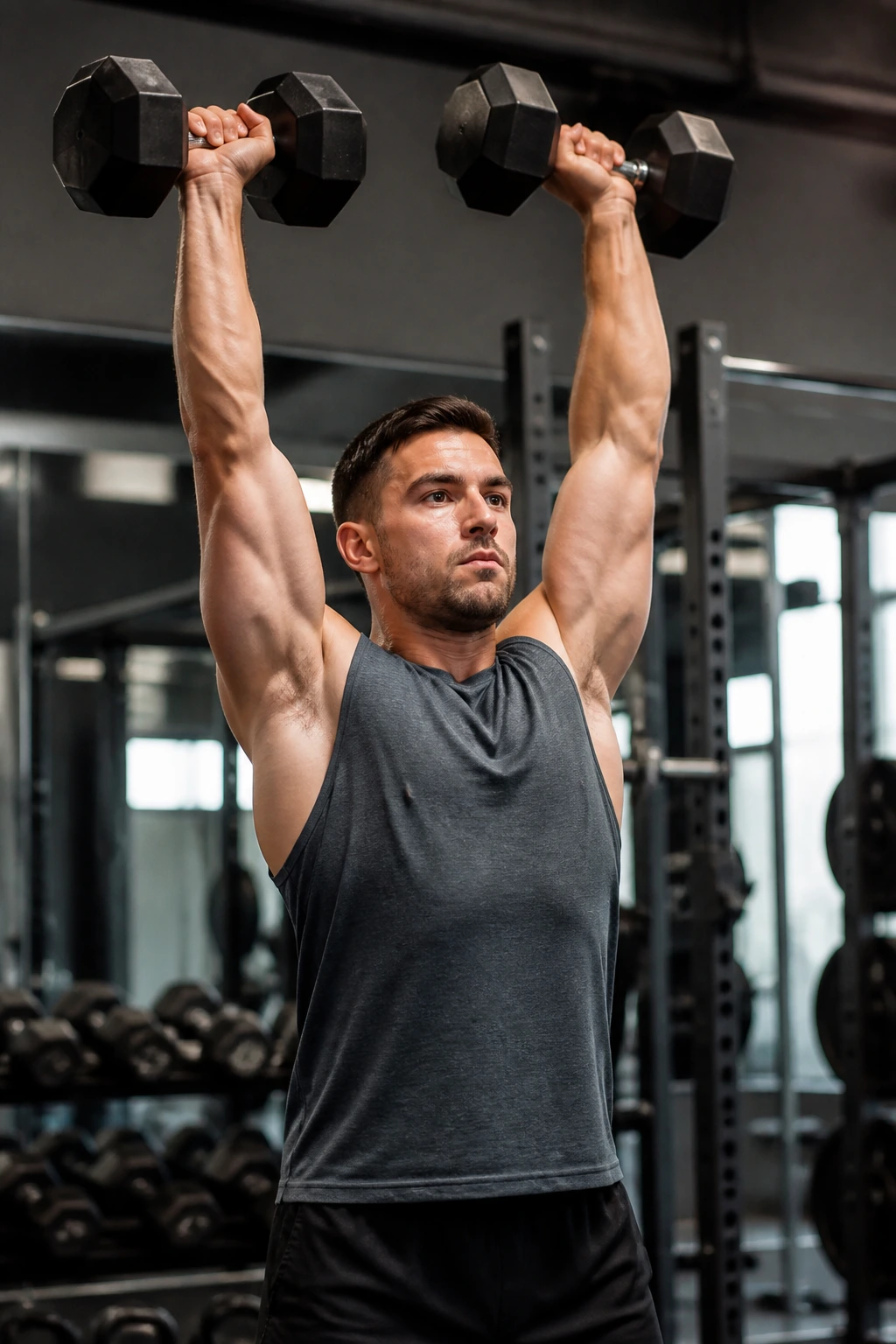
When strict pressing stalls, a small leg drive keeps overload honest. That is the whole point of the push press.
Start like a standing shoulder press, dip a few inches at the knees, then drive upward and finish the rep with the shoulders and arms. The dip is short. The drive is quick. If the movement turns into a squat and a heave, the load is too heavy or the pattern has gone off the rails.
This lift is useful when you want to move heavier dumbbells than a strict press allows, while still training the shoulders hard. It also has a more athletic feel than seated pressing, which some people prefer when their sessions need a little energy.
Use 3 to 5 sets of 4 to 8 reps. Keep the torso tall, brace before every dip, and lock the dumbbells overhead with control instead of bouncing through the top.
Strong Finish
A good dumbbell upper-body session usually does not need more exercises. It needs the right ones, done with enough control that the muscles stay honest.
Pick one press, one row, one shoulder move, and a couple of arm finishers, then leave the gym or the living room before the rep quality starts falling apart. That is the part most people ignore. They chase fatigue instead of tension, and the workout gets noisy.
Keep a simple log. Weight, reps, and whether the last two reps looked clean or ugly. That last detail matters more than people think.
The next time you pick up a pair of dumbbells, you already know where the useful work lives.
