



Your neck doesn’t need a heroic workout to stop aching by 3 p.m. It usually needs a few office yoga poses, a little breathing room, and the courage to stop wearing your shoulders like earrings.
A desk does strange things to a body. Wrists stay bent over a keyboard, hips fold into one shape, the upper back rounds, and the jaw quietly clamps down until you notice the headache. None of that feels dramatic in the moment. It just adds up.
The best office yoga poses are not flashy. They’re the ones that loosen the spots that actually get tight from sitting, typing, and staring at a screen for hours—neck, chest, forearms, hips, lower back—and do it fast enough that you’ll actually use them. A pose that looks elegant but takes too long to set up is not much help on a workday.
Good desk yoga should feel practical. No mat. No sweating through a shirt. No awkward floor time while someone from accounting walks by. Start small, breathe slowly, and choose the pose that matches the part of you that feels most welded shut.
1. Office Yoga Seated Mountain Pose
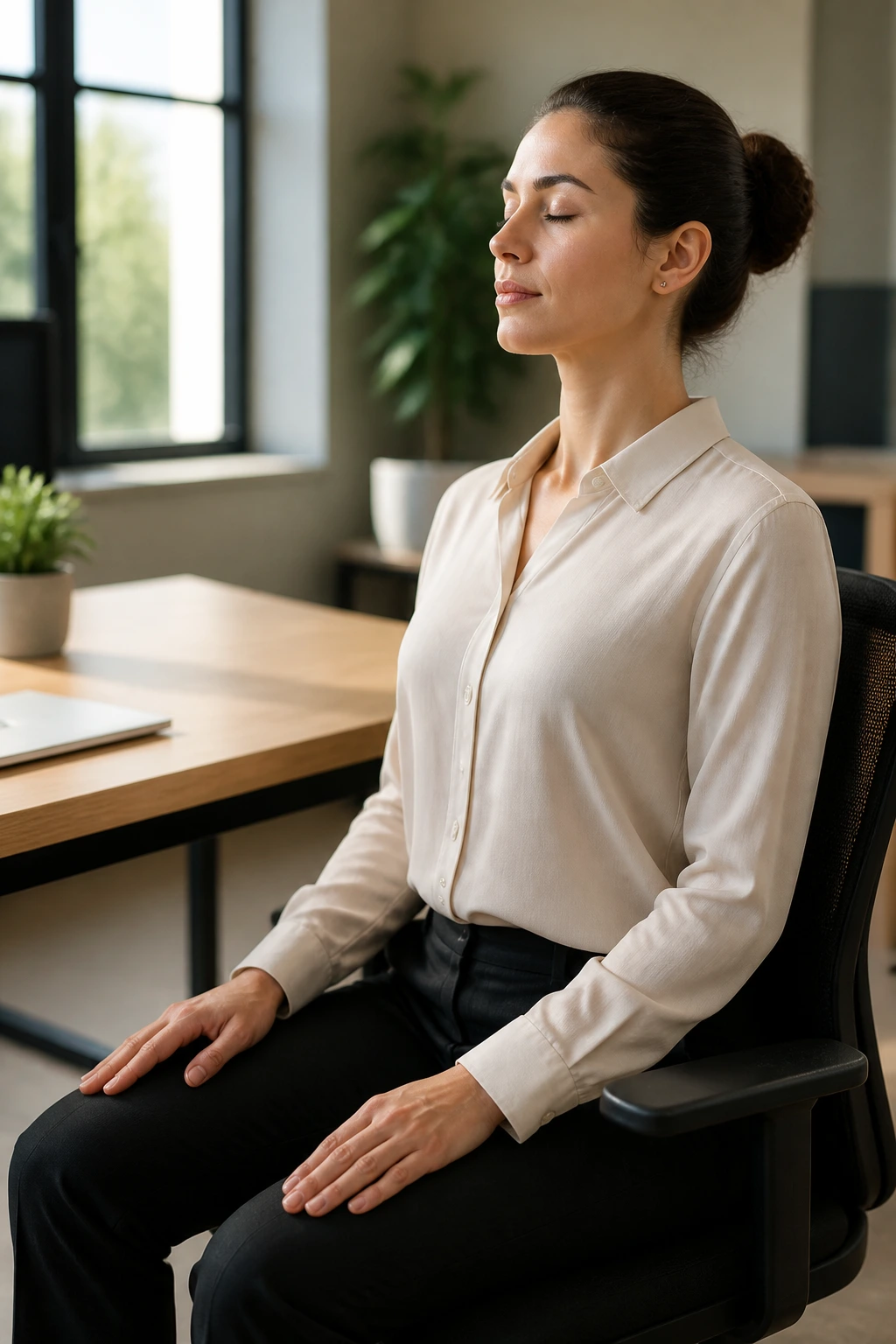
Start here. Seated mountain pose is the boring-looking one that fixes the most without asking for much in return. It gives your spine a clean stack, lets your ribs stop collapsing forward, and reminds your shoulders that they do not need to live near your ears.
How to Set It Up
- Sit all the way back in your chair, then slide forward just enough that both feet land flat on the floor.
- Press down through the sit bones, not the tailbone.
- Rest your hands on your thighs with the palms down or up, whichever feels calmer.
- Gently draw the chin back so the back of the neck feels long.
- Take 5 slow breaths and let the exhale soften your belly and jaw.
That’s the whole point. Not stiffness. Not perfect posture. Just a better shape for your body to borrow for a minute.
If you only have 30 seconds between emails, use this one. It’s a reset, not a performance. And yes, it counts.
2. Neck Side Bend Release
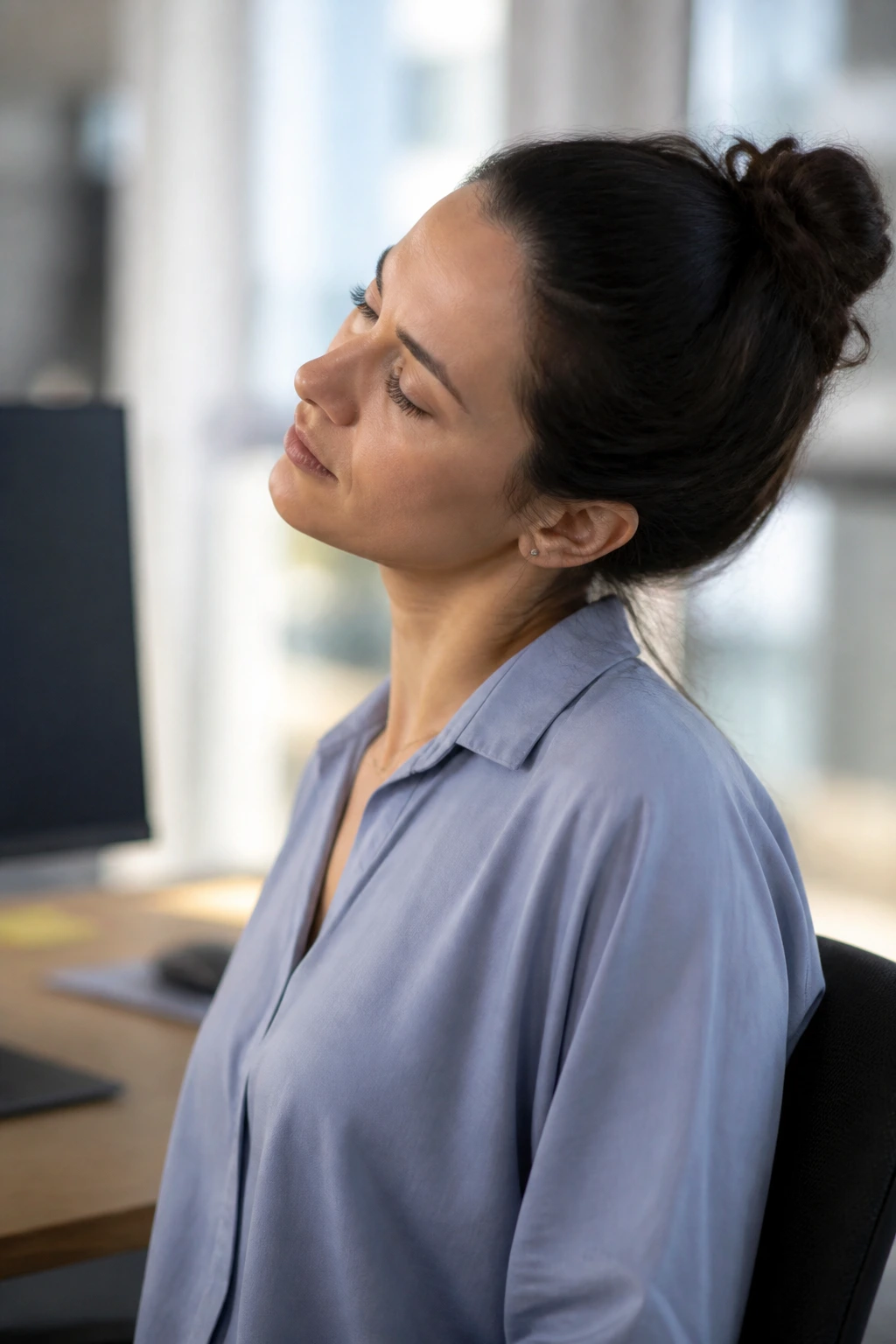
A five-second neck stretch won’t fix a chair that hates you, but it can stop the ache from snowballing into a full-blown headache. This is the move I reach for when the sides of my neck feel knotted from looking down at a laptop too long.
Keep one hand under the chair seat or resting on the armrest so the shoulder on that side stays heavy. Tip the opposite ear toward the shoulder until you feel a gentle pull along the side of the neck, not a jab near the spine. Hold for 20 to 30 seconds, then switch sides.
What to Watch For
- Keep the nose pointing forward.
- Skip the urge to yank with your hand.
- Ease off if the stretch turns sharp or sends tingling into the arm.
- Breathe into the ribs, not the neck.
A tiny range of motion is enough here. More is not better. Softer is usually smarter.
3. Shoulder Rolls

Why do shoulder rolls feel almost too easy? Because they are easy, and that’s exactly why they work in the middle of a workday. You do not need a quiet room or a clean slate. You need six seconds and enough space to move your elbows.
Roll the shoulders up, back, and down in slow circles, then reverse the direction. I like 8 circles backward and 8 forward, with the exhale landing on the down phase. That rhythm matters more than people think. It keeps the movement smooth instead of jittery.
How to Use Them Between Emails
- Do them before you open a stubborn message.
- Pair them with a sip of water.
- Make the circles smaller if your neck feels cranky.
- Stop shrugging once the shoulders start to feel heavy again.
The aim is not to crank the joints loose. The aim is to remind the upper back that movement exists.
4. Eagle Arms
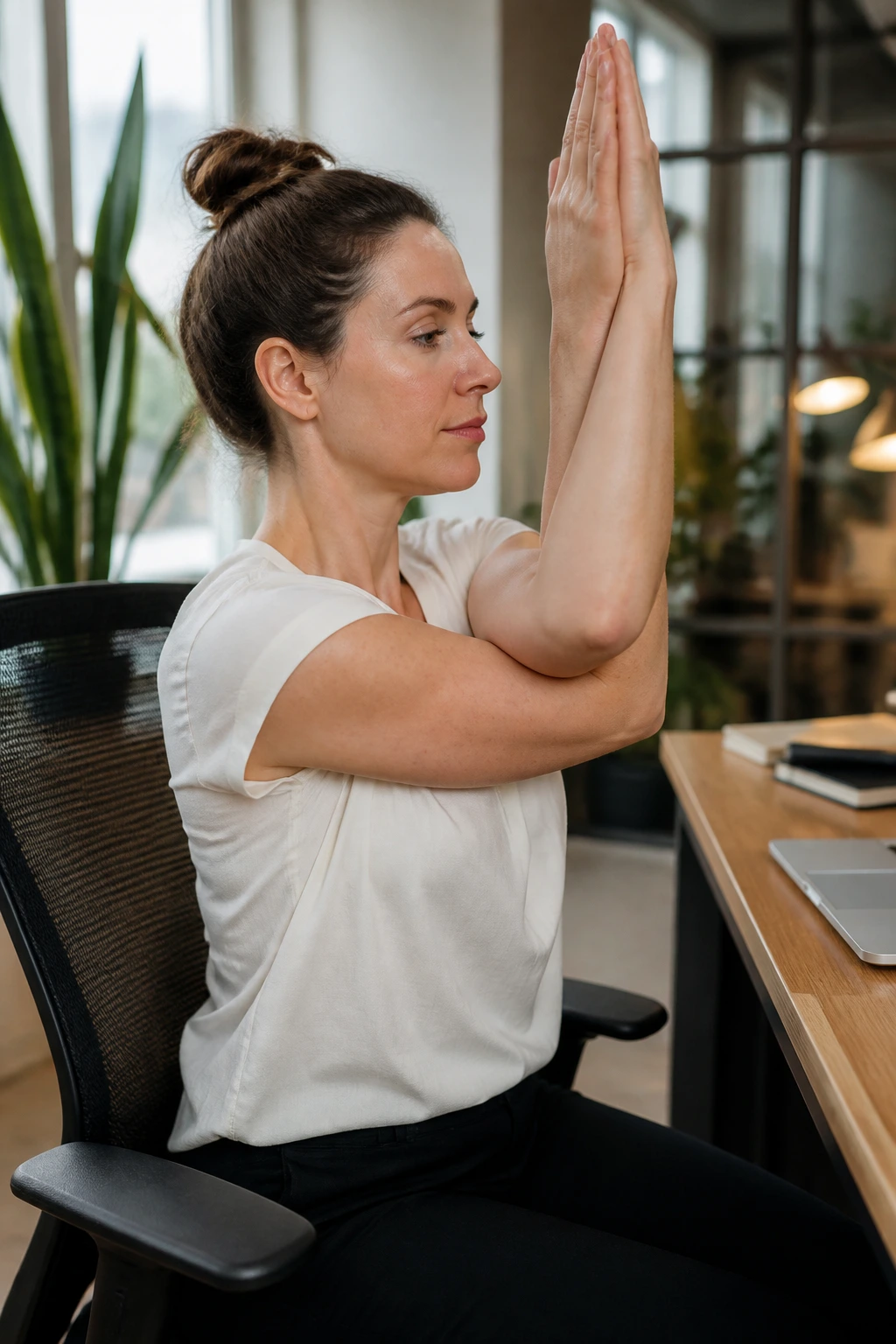
If your upper back lives like a question mark, eagle arms are a nice little insult to the problem. They open the space between the shoulder blades, stretch the back of the shoulders, and make you feel taller without making a scene.
Cross one arm under the other, bend the elbows, and either press the backs of the hands together or wrap the forearms as far as they comfortably go. Lift the elbows a little and let the shoulder blades spread across the ribs. Four to six breaths is usually enough. Then unwind and switch sides.
A strap or even a clean scarf helps if the hands don’t meet. That is not cheating. It is adaptation.
Best cue: keep the neck relaxed and let the stretch live in the shoulders, not in the jaw. If the elbows creep up by your ears, the pose gets noisy fast.
5. Cow Face Arms
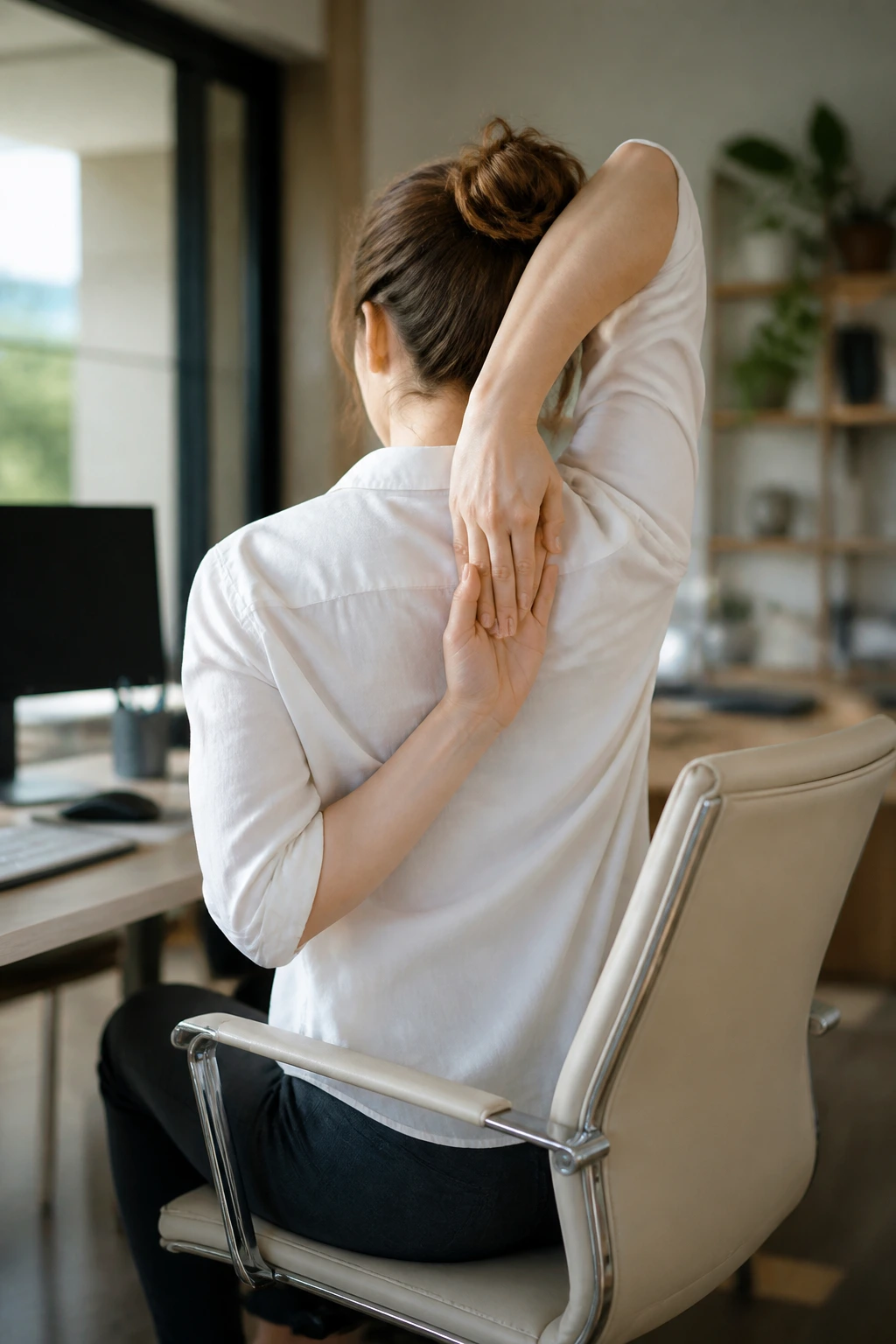
Cow face arms look a bit fiddly at first, and then they become the stretch you keep coming back to. The top arm reaches up and bends so the hand drops behind the head, while the bottom arm threads behind the back and reaches upward. If the fingers meet, great. If they don’t, a strap gives you the bridge.
This one gets deep into the shoulders and the triceps. It also exposes how much tension you carry in the chest, which is mildly annoying and deeply useful information.
Hold for 4 slow breaths on each side. Keep the ribs from flaring forward just to fake more range. That trick always feels bigger than it is, and the lower back pays for it.
If one side feels wildly different from the other, that’s common. Stay with the tighter side a little longer, but only in a calm range. No grimacing. No heroic face.
6. Wrist Flexor Stretch
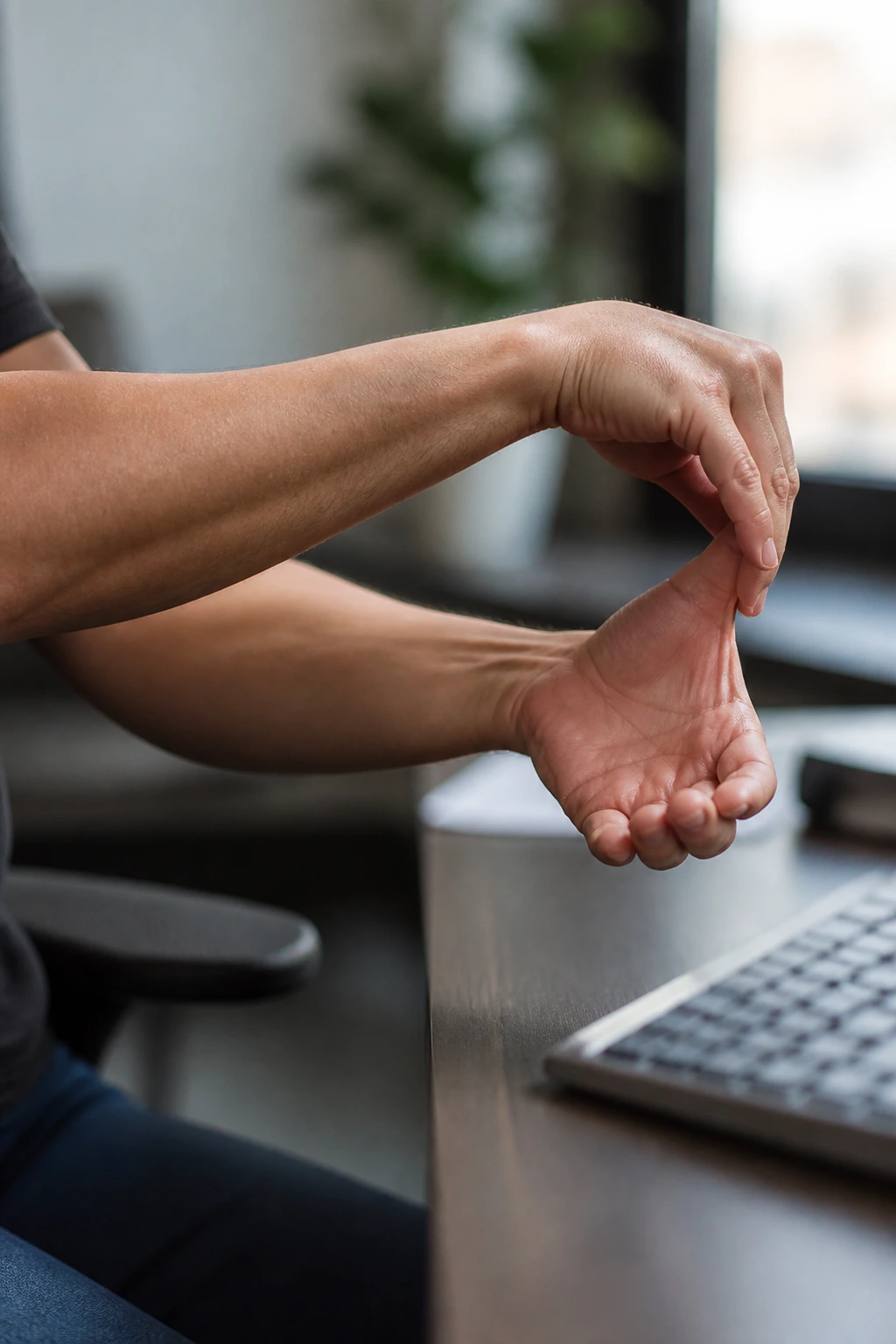
Unlike shaking out your hands for two seconds and hoping for the best, this stretch actually reaches the underside of the forearm—the part that gets sticky after hours of typing and scrolling. It is one of those office yoga poses that looks tiny and ends up being weirdly satisfying.
Extend one arm in front of you, elbow straight but not locked. Turn the palm upward, then use the other hand to gently draw the fingers down and back until you feel the stretch in the forearm and wrist. Hold for 15 to 20 seconds, then switch sides.
How to Sneak It Into a Typing Break
- Use it after a long stretch of mouse work.
- Keep the stretch mild if your elbows feel sensitive.
- Let the shoulder stay low.
- Breathe out as the fingers lift back.
If your wrist pain is sharp, stop. A stretch should feel like tension easing, not like you’re asking a joint to do a bad trick.
7. Wrist Extensor Stretch
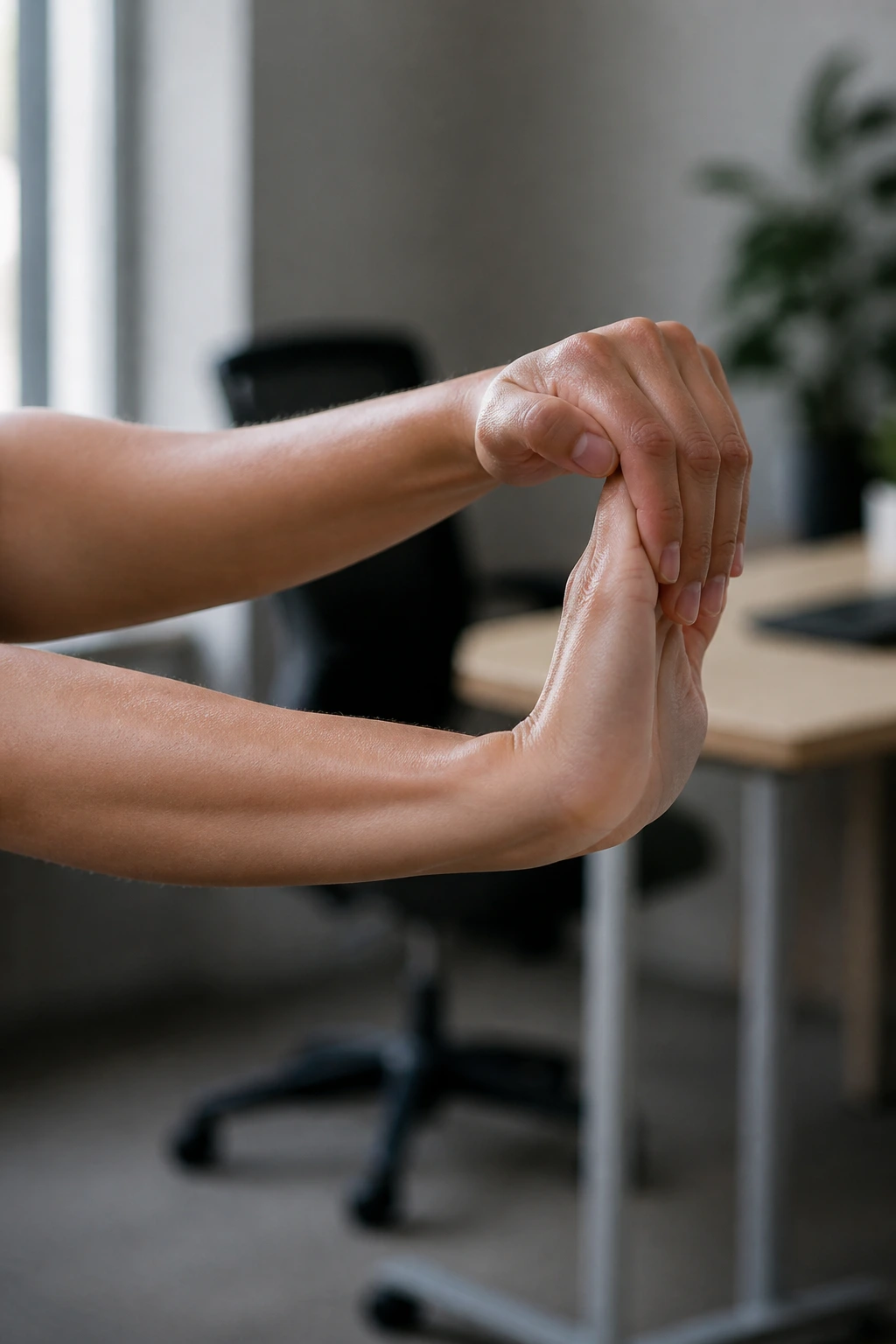
The top side of the forearm gets ignored all the time, and then it complains loudly later. This stretch balances out the flexor work and feels especially good after a day spent with the hands hovering over a keyboard.
Reach one arm forward with the palm facing down. Use the opposite hand to gently fold the fingers and wrist downward so the back of the forearm gets a clean stretch. Keep the elbow straight and the shoulder soft. Fifteen seconds per side is enough to start with.
A small bend in the elbow is fine if the stretch feels too fierce. You do not get extra points for pain. You really don’t.
This one is useful after a lot of clicking, dragging, or trackpad use. It sounds minor. It isn’t. Tiny wrist discomfort has a sneaky way of turning into a day-long distraction.
8. Office Yoga Cat-Cow
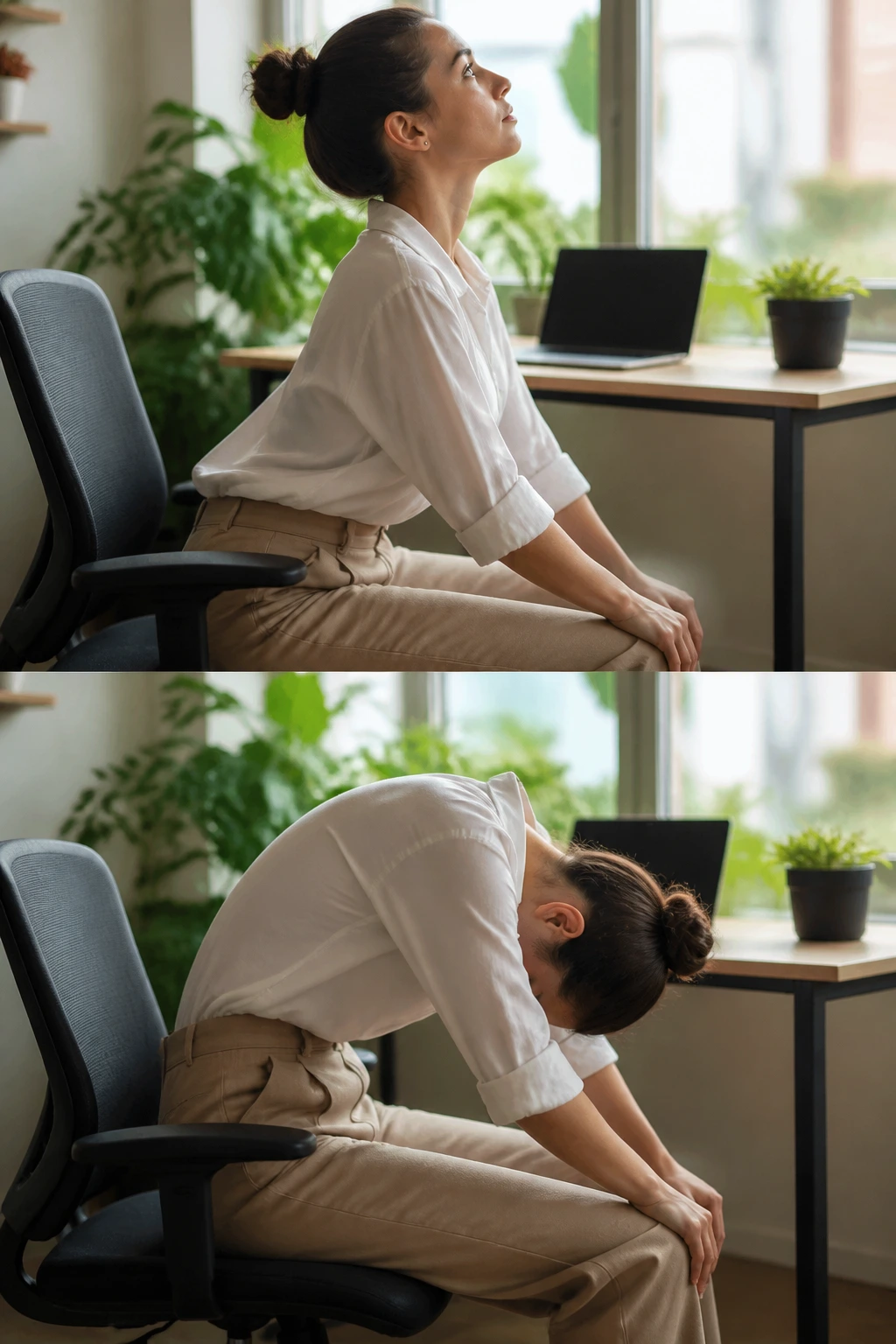
Cat-cow is the pose people underestimate until their spine gets a chance to move in both directions again. The motion is simple: arch on the inhale, round on the exhale. Simple does not mean useless.
Sit near the front edge of your chair with both feet planted. Put your hands on your thighs. Inhale and tilt the pelvis forward slightly so the chest opens and the tailbone lifts. Exhale and round the spine, letting the chin soften toward the chest without jamming it.
Why Your Spine Likes This One
- It wakes up the mid-back, which desk work tends to freeze.
- It gives the ribs a chance to expand.
- It helps you stop breathing so shallowly.
- It feels better when the movement is slow enough to notice.
Six rounds is a good target. If your chair wobbles, move a little slower and keep the motion smaller. That’s not a flaw. That’s good judgment.
9. Seated Side Bend
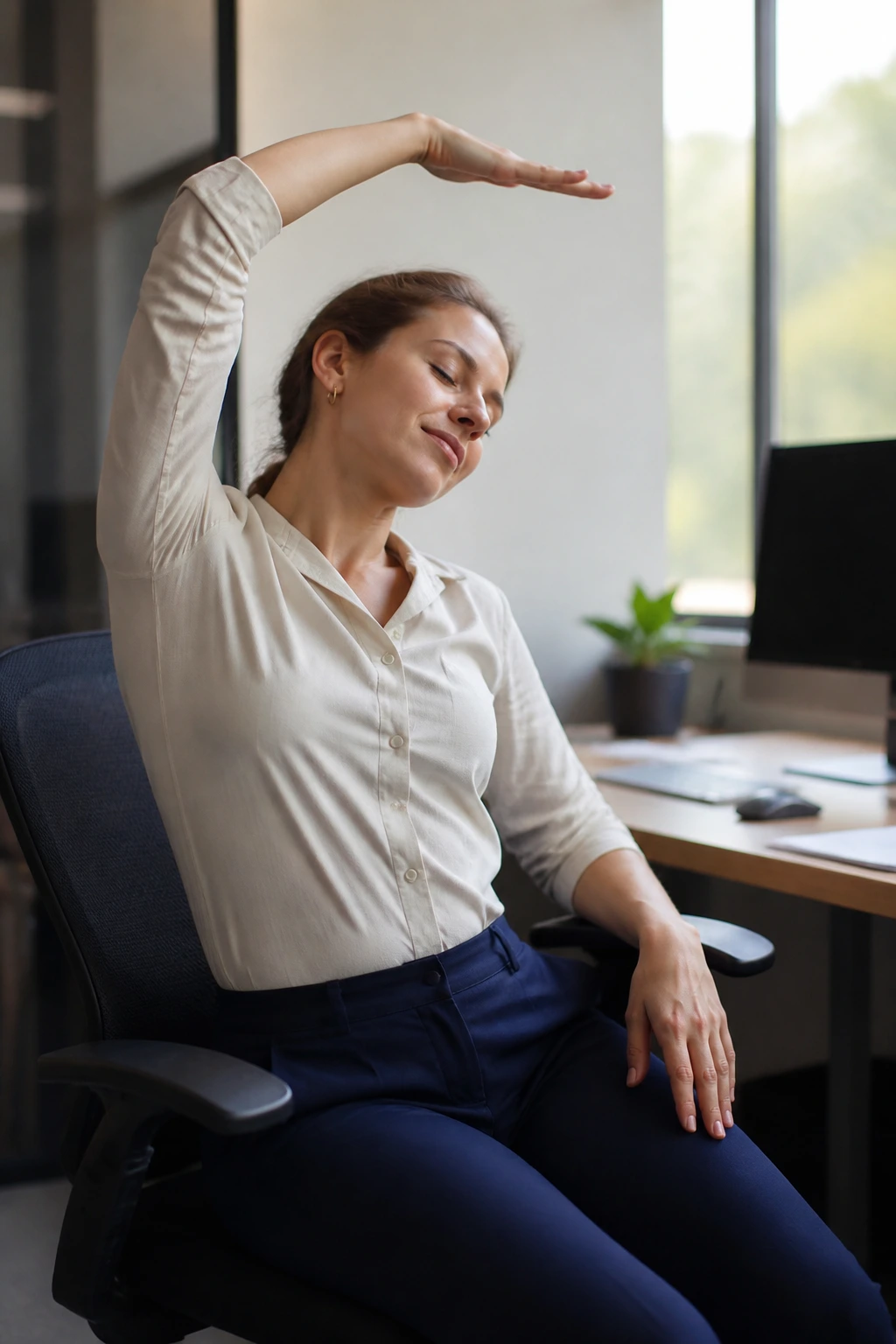
A side bend is the pose that reminds your body it is allowed to take up space. Most office posture shortens one side of the torso and jams the ribs into a lazy little collapse. This stretches that side line from hip to fingertips.
Sit tall, plant one hand on the seat or the side of the chair, and reach the other arm up and over. Keep both sit bones heavy. Do not pitch the chest forward to fake a bigger stretch. Three slow breaths on each side is plenty.
If the lower back starts to pinch, shorten the reach and let the side bend come from the ribs instead of the waist. That tiny adjustment changes everything.
This is a good one for the end of a long meeting block. Not dramatic. Just enough to make your torso feel less compressed.
10. Office Yoga Seated Spinal Twist
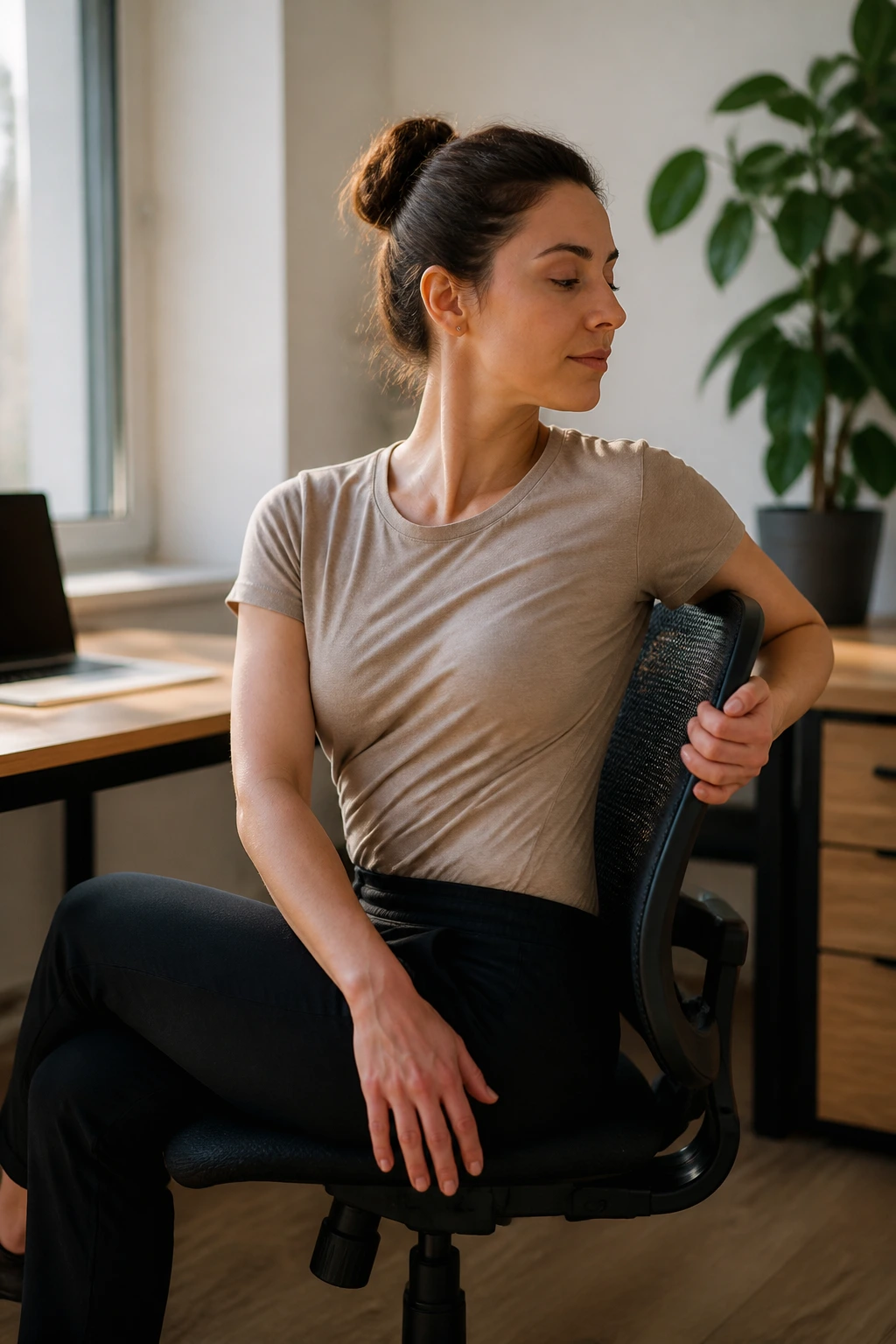
After an hour in the same chair, a twist can feel like wringing out a towel. That is a little dramatic, sure, but not wrong. Seated spinal twist helps the mid-back rotate, and desk work makes rotation feel rare.
Place one hand on the opposite knee and the other on the chair back or seat edge. Sit up tall first. Then rotate gently from the ribs, not by yanking the shoulder farther around. Four to five breaths each side is usually enough.
What Makes It Better
- Keep both hips heavy on the chair.
- Turn the chest before the neck.
- Stop before the low back starts to complain.
- Use the exhale to soften deeper, not to force more range.
The most common mistake is twisting like a corkscrew and forgetting to breathe. That turns a useful pose into a brute-force habit. Small and slow works better.
11. Figure-Four Hip Opener
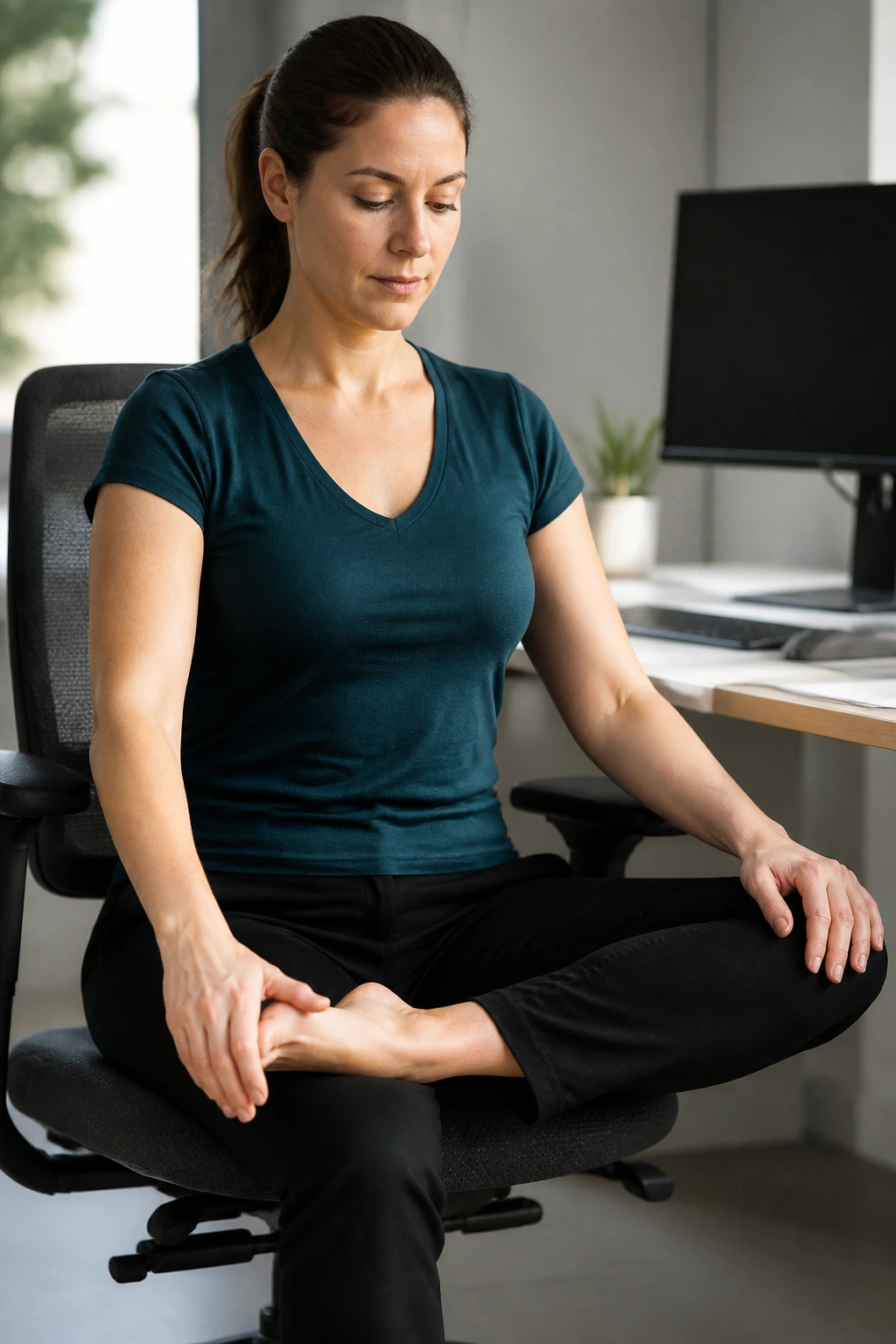
If sitting makes your hips feel like old hinges, figure-four is a relief. It opens the outer hip and glute area, which is where a lot of desk stiffness hides. It also has the nice side effect of telling your lower back to stop doing so much extra work.
Cross one ankle over the opposite thigh so the leg makes a loose shape like the number four. Keep the foot flexed. That matters more than people think, because it protects the knee and keeps the stretch where you want it. Sit upright or hinge slightly forward if that feels good.
A one-sided hip stretch can feel intense even when it is done well. That does not mean you need to push farther. It means your body has opinions.
Hold for 30 to 45 seconds on each side. If the knee on the lifted leg starts to ache, back off immediately and move the ankle closer to the hip.
12. Seated Bound Angle
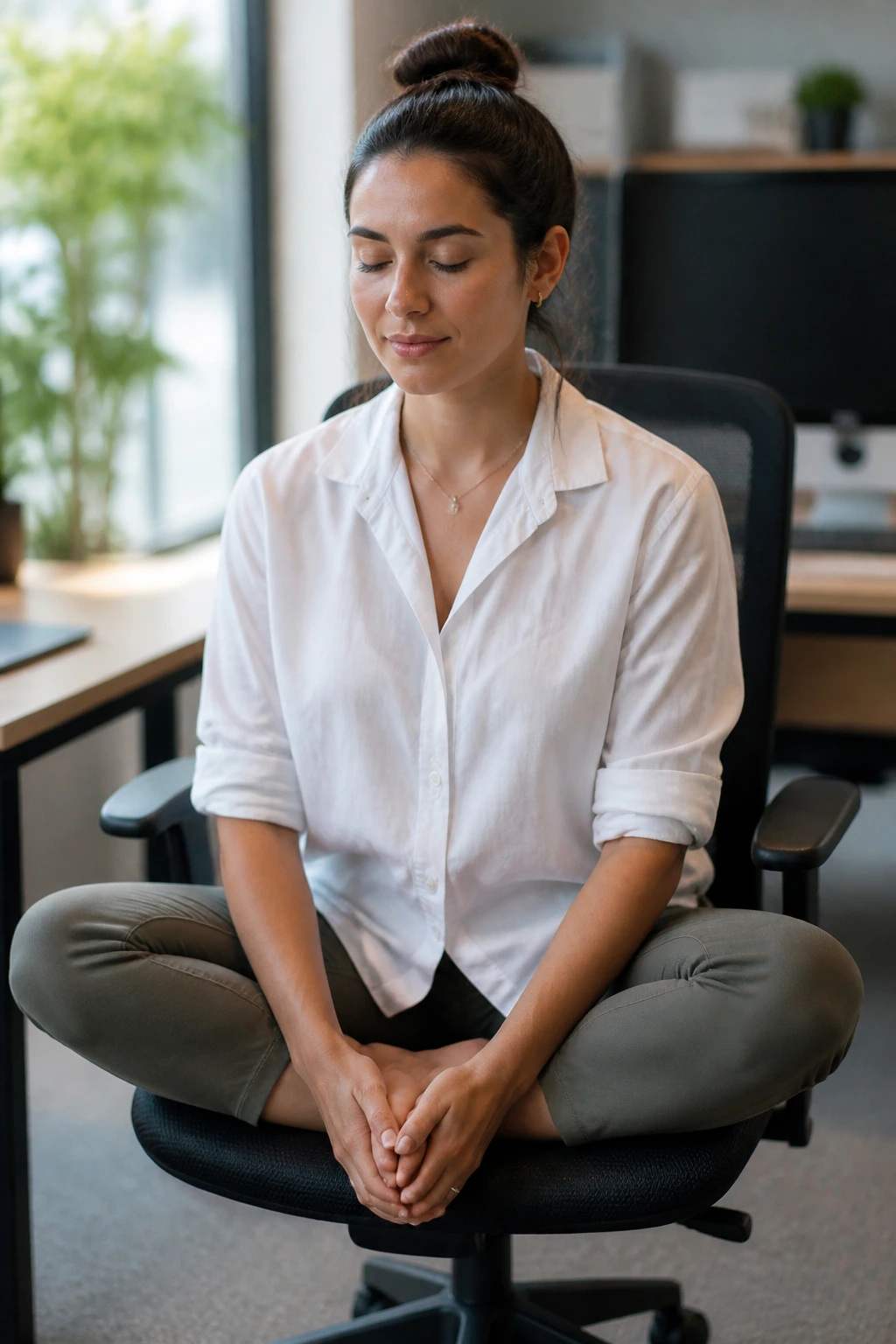
Seated bound angle is the pose people skip because it looks too easy. Which is exactly why it’s useful. It opens both inner thighs at once, softens the hips, and gives your lower back a quieter job for a moment.
Bring the soles of the feet together near the front of the chair and let the knees fall outward. Sit on the edge if your chair is deep. You can stay upright for a gentle version or hinge forward a few inches if your hips want more. Four breaths is a fine starting point.
Why It Feels Different From Figure-Four
- It works both hips at once.
- It opens the groin and inner thighs.
- It can calm the lower belly when you breathe slowly.
- It usually feels less aggressive than a single-leg stretch.
If the knees sit way above the hips, place a folded towel or notebook under each thigh. That little prop makes the pose friendlier. No heroics needed.
13. Standing Desk Chest Opener
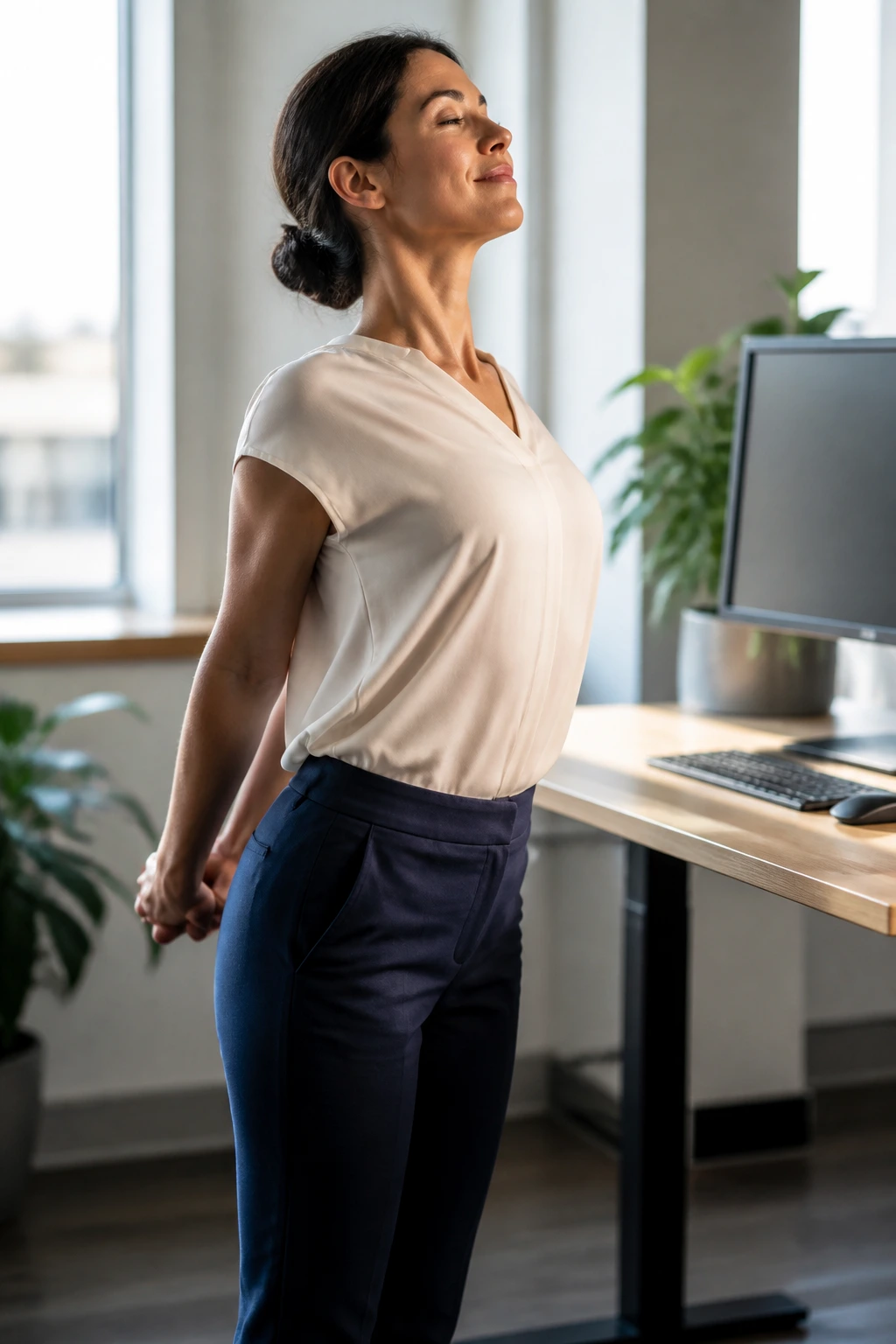
Hours of keyboard work pull the chest shut. That’s the blunt version, and it’s usually true. A standing chest opener reverses that cramped front-body shape without making you leave your workstation.
Stand beside your desk, clasp your hands behind your back if that feels fine, and straighten the arms just enough to broaden the collarbones. Another version is to place both hands on the desk edge behind you and gently walk the feet forward. Hold for 20 to 30 seconds, breathing into the front ribs.
Don’t throw the chin up to fake an open chest. That just dumps the strain into the neck.
The cue I like best is simple: let the sternum widen, not the lower back collapse. That’s the line. If you find yourself arching hard, shorten the stretch and keep it cleaner.
14. Standing Forward Fold with Desk Support
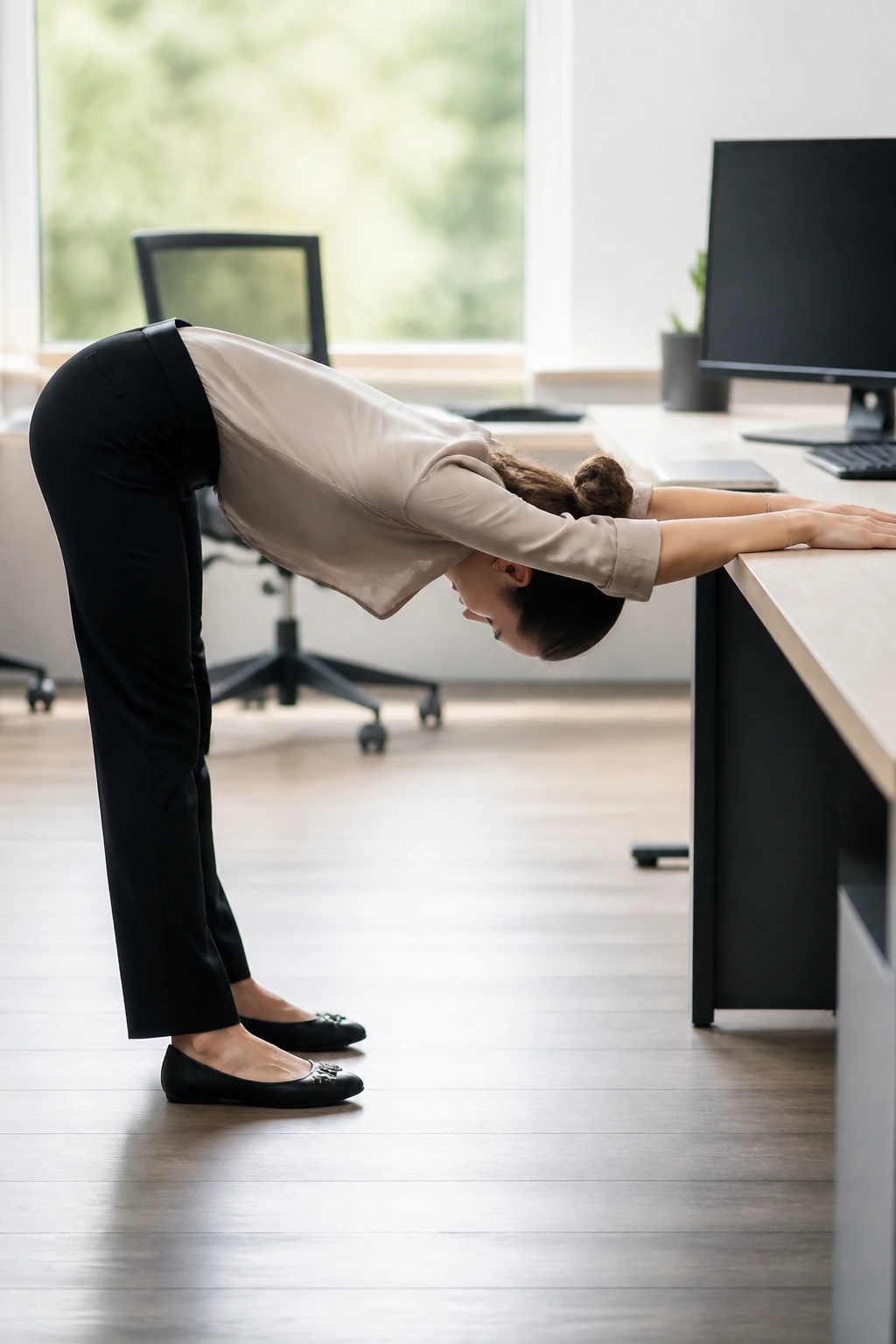
Why does a forward fold feel so good when you’re tired? Because your head gets to hang, your spine gets a little length, and the hamstrings get a mild say in the matter. It is the closest thing to a reset button that still counts as movement.
Place both hands on the desk, step the feet back a little, and hinge at the hips until your torso is roughly parallel with the floor or wherever feels reasonable. Bend the knees as much as you need. Let the neck go loose. Three to five breaths is plenty.
If dizziness is part of the picture, keep the head higher than the heart and use the desk only as a support, not as a full fold. No point in making yourself woozy.
The stretch should feel long along the back body, not jammed in the lower back. If your hamstrings are tight, the knees can stay bent forever. That is fine.
15. Prayer Hands Overhead Side Stretch
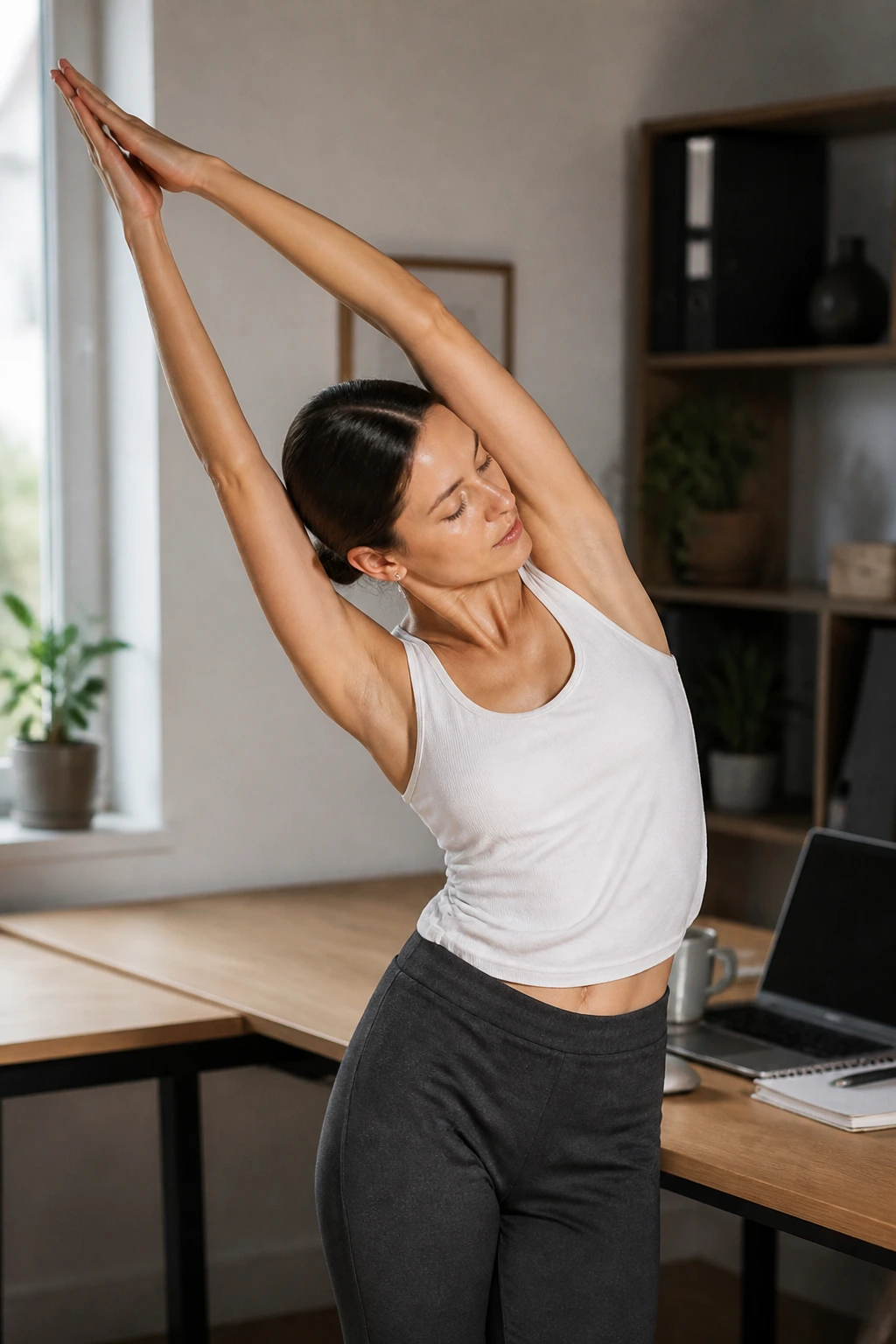
A side bend without the overhead reach misses half the line, and this version gets the whole thing. The reach up through prayer hands lengthens the sides of the torso and opens the ribs a little more than a casual lean does.
Bring the palms together overhead, press lightly, and shift both hands a few inches to one side while keeping the hips anchored. You should feel the stretch from the outer hip into the side waist and under the arm. Hold for 3 breaths, then switch.
The trick is not to collapse into the bend. Reach first, then tilt. That creates length before compression.
If your shoulders hate prayer position, separate the hands and keep the arms parallel. Same idea. Less drama.
16. Seated Ankle Circles
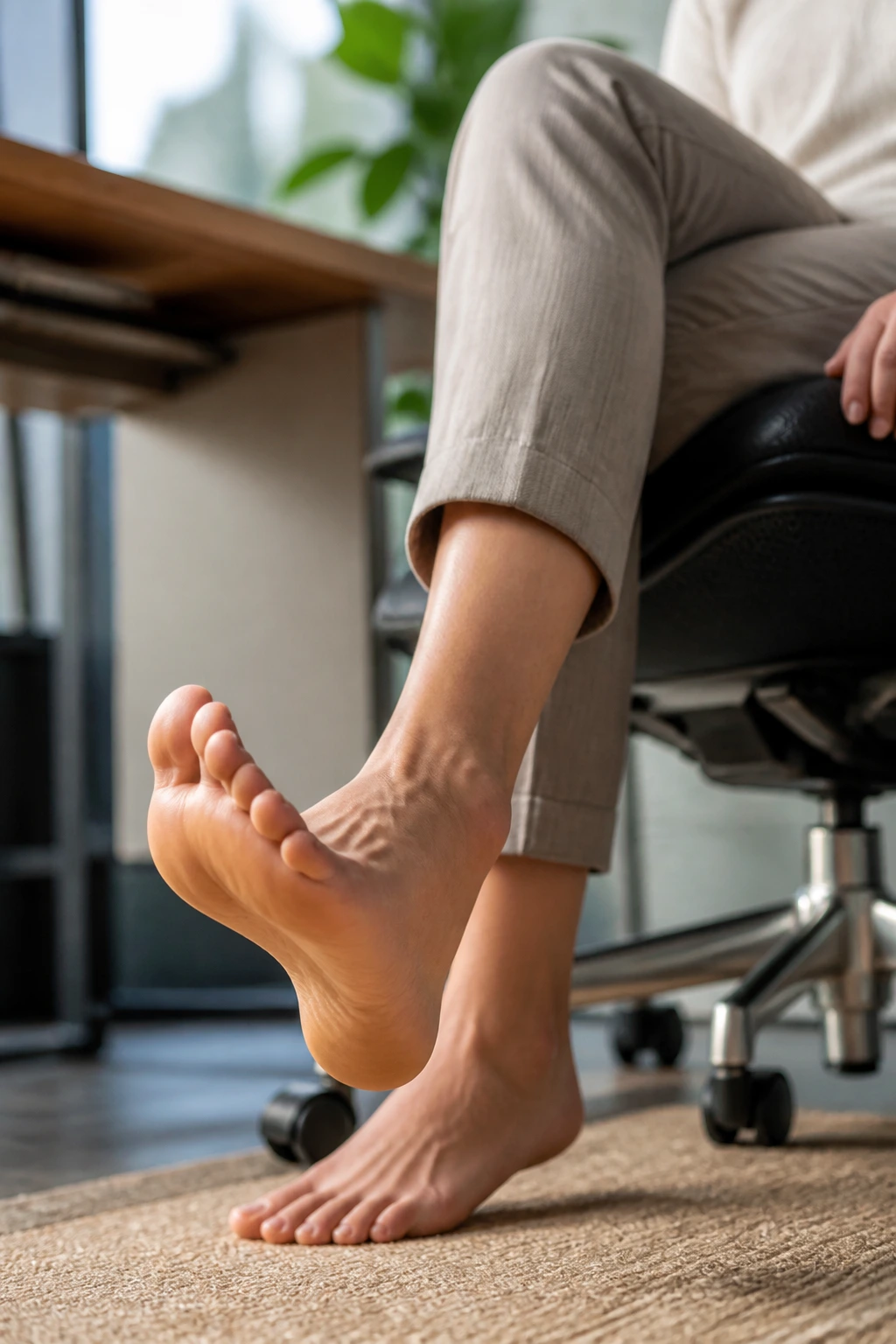
Your ankles have been doing almost nothing except holding you up, which is rude considering how much your whole lower body relies on them. Seated ankle circles wake up the joints, move a little fluid through the feet, and interrupt the deadness that creeps in after long sitting.
Lift one foot an inch off the floor and make 10 slow circles in each direction. Keep the knee still. Then switch ankles. After that, point and flex the toes 5 times on each side. It sounds tiny because it is tiny. Tiny can still be useful.
Why Bother
- It helps the lower leg feel less stuck.
- It’s easy to do in work clothes.
- It gives you a break from staring at a screen without needing space.
- It pairs well with a standing stretch afterward.
If the circles feel crunchy, shrink them. Smooth and slow beats big and sloppy every time.
17. Standing Quad Stretch by the Chair
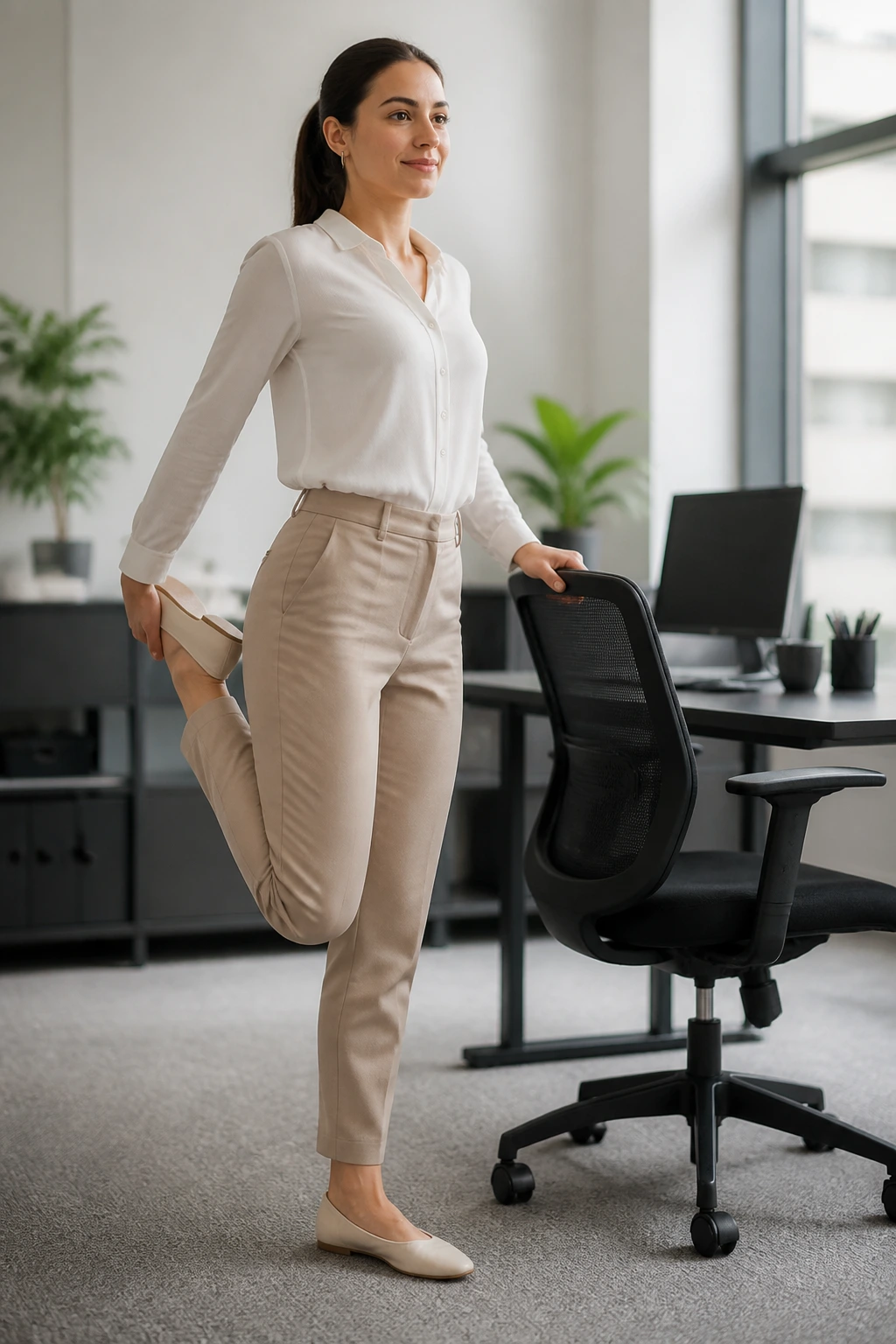
If your hips feel glued, the front of the thighs is often part of the problem. Sitting shortens the quads and hip flexors, then those muscles act like they’ve been asked to do a favor they never agreed to.
Stand next to your chair for balance, bend one knee, and hold the ankle behind you. Keep the knees close together and the standing leg soft. Pull the heel toward the seat of the chair until you feel the stretch along the front thigh. Twenty to 30 seconds per side is enough.
Do not arch the lower back to make the stretch look deeper. That’s the classic mistake. The goal is thigh length, not a dramatic shape.
If grabbing the ankle feels awkward, loop a strap or hold the foot of the chair behind you and keep the range small. Good enough is good enough.
18. Seated Thread the Needle
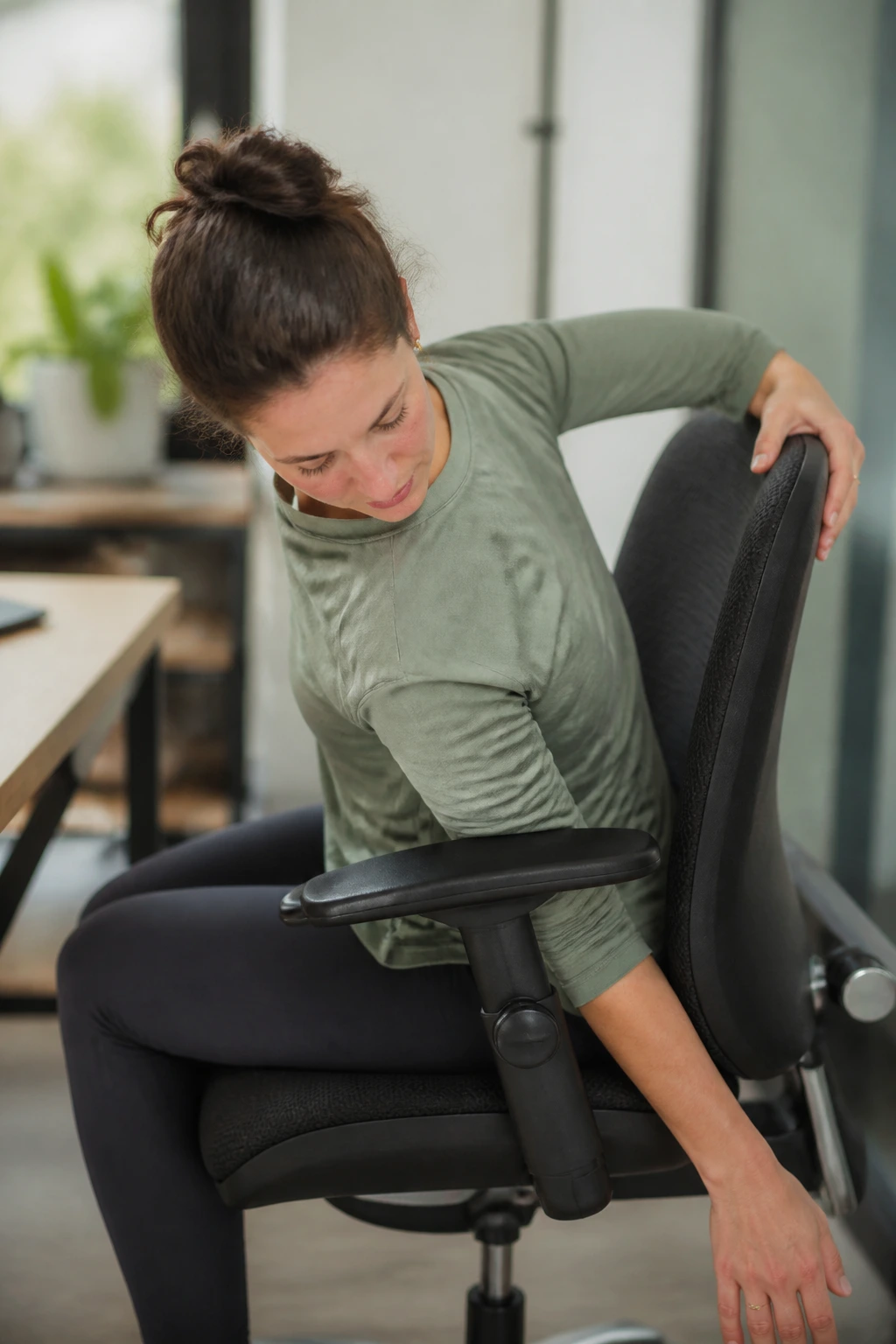
This one reaches the upper back and the back of the shoulder in a way a twist never quite does. It feels different enough that I keep it in the rotation even on busy days when I only have a minute.
Sit tall, reach one arm across the body, and thread it under the opposite arm so the shoulder rolls forward slightly. The top hand can rest on the chair for support. If the body allows it, lower the chest a bit and let the back of the shoulder open. Four breaths per side works well.
Unlike a Classic Twist
- It targets the rear shoulder more directly.
- It can feel gentler on the low back.
- It helps if you spend hours with the mouse hand lifted.
- It plays nicely with a desk and chair setup.
If your neck wants to help, let it chill out. The stretch should live in the shoulder blade area, not in the skull.
19. Supported Heart Opener
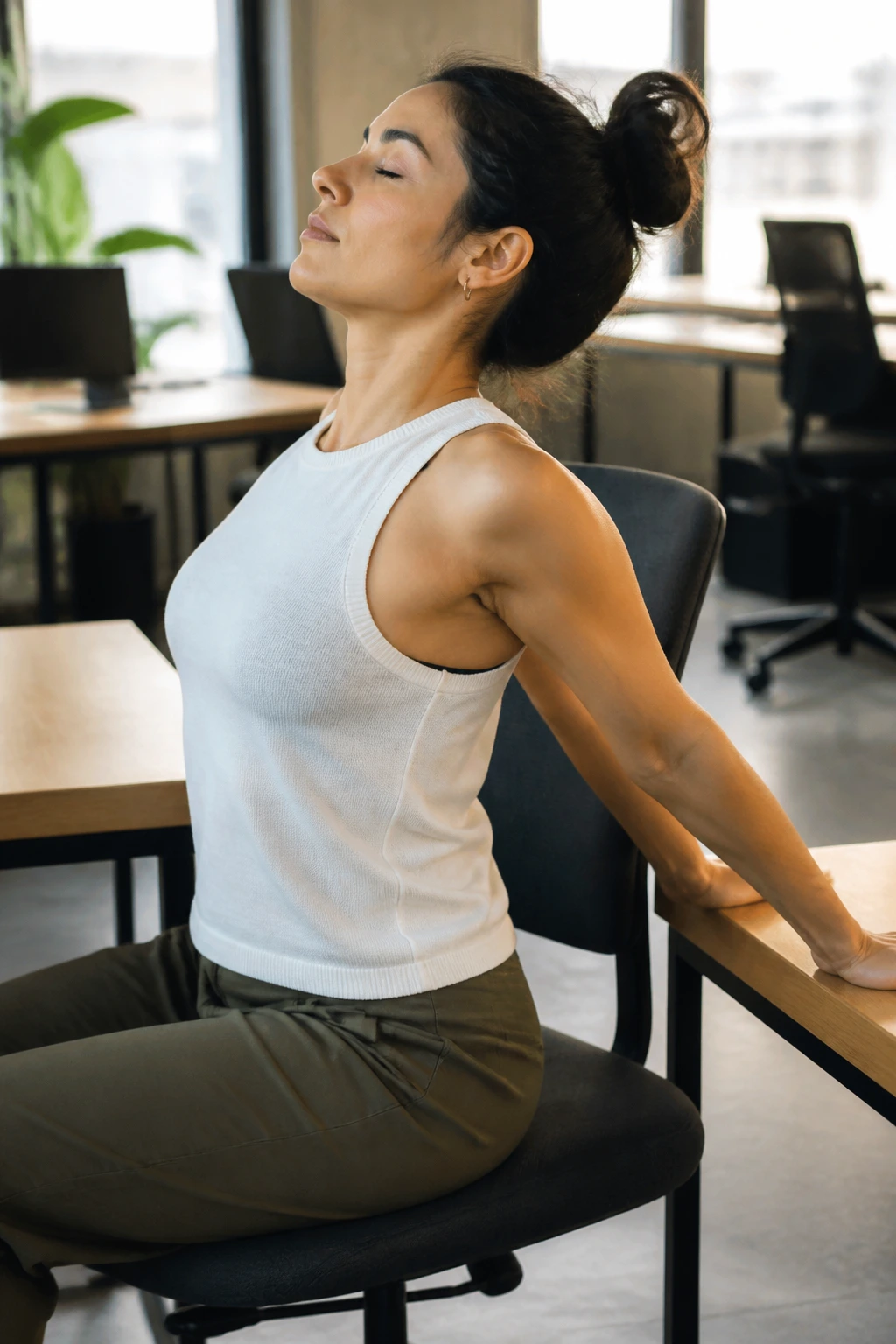
On a rough afternoon, this is the pose that makes an office chair feel less like a trap. A supported heart opener gives the front body a real opening, but it doesn’t ask for a deep backbend or a floor mat.
Stand or sit at the edge of your chair, place the hands behind you on the seat or on a sturdy desk edge, and gently lift the sternum while drawing the shoulder blades down the back. Keep the ribs from flaring up like a proud peacock. Three slow breaths is enough to feel the shift.
The back should feel long and supported, not pinched. If the lower back starts compressing, reduce the lift immediately.
I like this one after a stretch of problem-solving, because the body tends to mirror the mind. A little opening through the chest can take the edge off that clenched, forward-leaning feeling.
20. Office Yoga Seated Savasana Reset
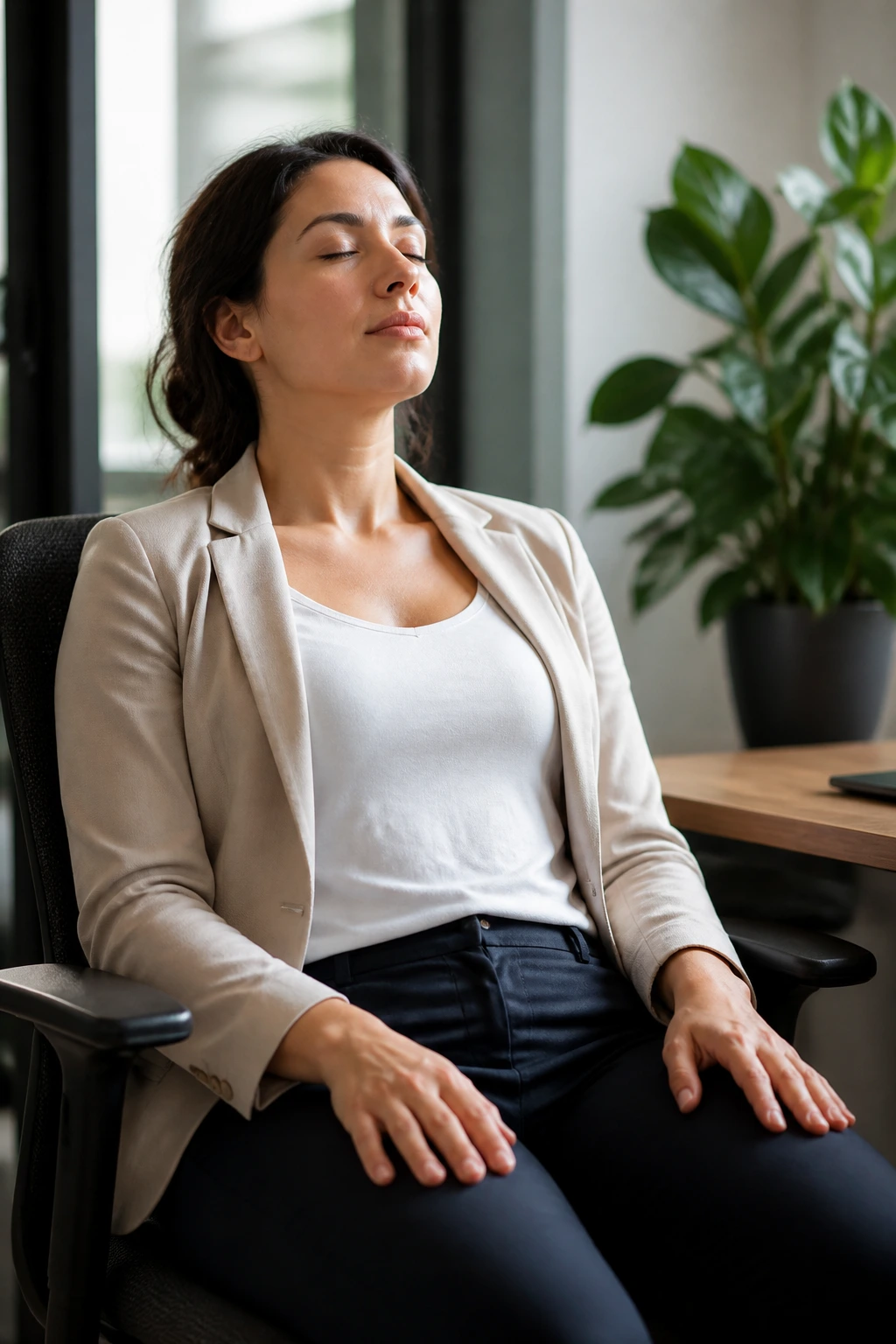
This is the pose for when you have done enough. Sit back in the chair, let the hands rest on the thighs, soften the eyelids, and take 6 slow breaths through the nose if that feels comfortable. Let the jaw go slack. Unclench the tongue. Drop the shoulders.
The shape is simple. The effect isn’t. A minute of stillness can make the whole sequence land better, especially if you’ve just worked through neck rolls, twists, and hip openers in one go.
Do not rush this last part. Seriously.
If you want to make the reset feel even cleaner, breathe in for a count of 4 and out for a count of 6. Then open the eyes slowly, sit a little taller than before, and go back to the day without carrying quite so much of it in your shoulders.
