



If your sleeves look empty even when your arms are working hard, the problem is usually not effort. It’s exercise selection.
Most people hammer a few curls, chase a pump, and wonder why their arms still look flat from the side. Bigger, more defined arms come from training all the pieces: biceps, triceps, brachialis, and forearms, then giving each of them enough tension to actually grow. The triceps carry more total mass than the biceps, which is why skipping triceps work is such a bad trade.
There’s another trap. A sloppy curl with a full body swing may move the weight, but it often shifts the work away from the arm. Clean reps, full range, and a load you can own beat ego lifting every time. And if you want definition, not just size, you also need control on the lowering phase. That part matters more than people want to admit.
The fifteen arm workouts below cover heavy work, strict isolation, long-head triceps work, brachialis thickness, forearm density, and a few finishers that leave your arms feeling like they actually did something. Pick a handful, train them hard, and keep the reps honest.
1. Barbell Curls for a Heavy Baseline
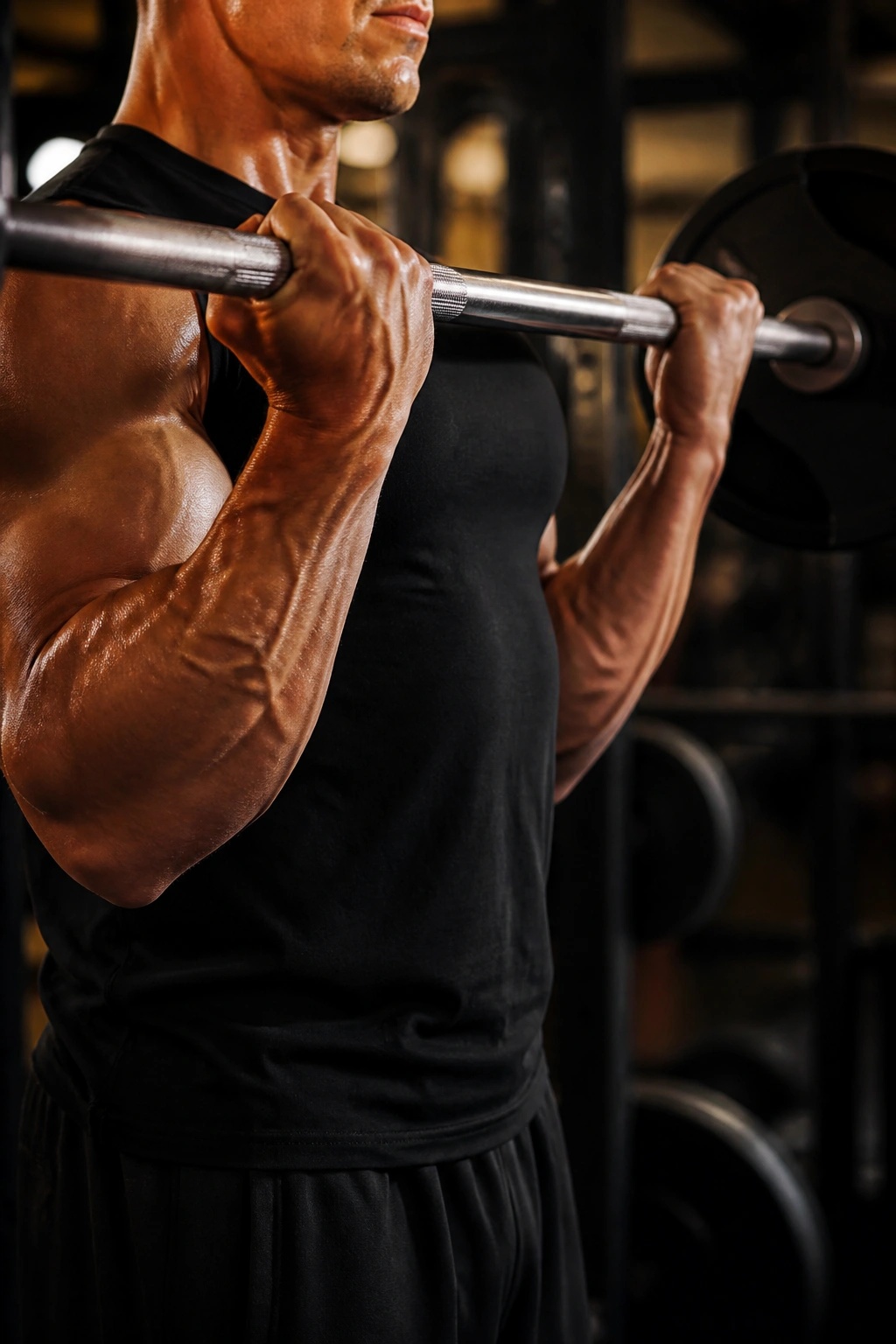
Barbell curls earn the first spot because they tell the truth fast. If your form falls apart at 95 pounds, that matters. If you can curl 135 with clean elbows and no back swing, that matters too.
How to make them count
A straight bar or EZ-bar works. The straight bar loads the wrists a little harder, while the EZ-bar feels friendlier for most people and still lets you push load. I like 3 to 5 sets of 6 to 8 reps here, with 90 to 120 seconds of rest. Heavy enough to challenge you, controlled enough that your shoulders stay quiet.
What to watch for
- Keep your elbows close to your ribs.
- Curl the bar without rocking your torso.
- Lower it under control for about 2 to 3 seconds.
- Stop the set when your lower back starts helping.
The big mistake is turning this into a standing hip thrust. That cheats the biceps and makes the lift noisy instead of useful. If the bar starts bouncing off your thighs, it’s too heavy for the job.
Pro tip: Think “smooth up, slower down.” That one cue fixes a lot.
2. Incline Dumbbell Curls for a Long Stretch
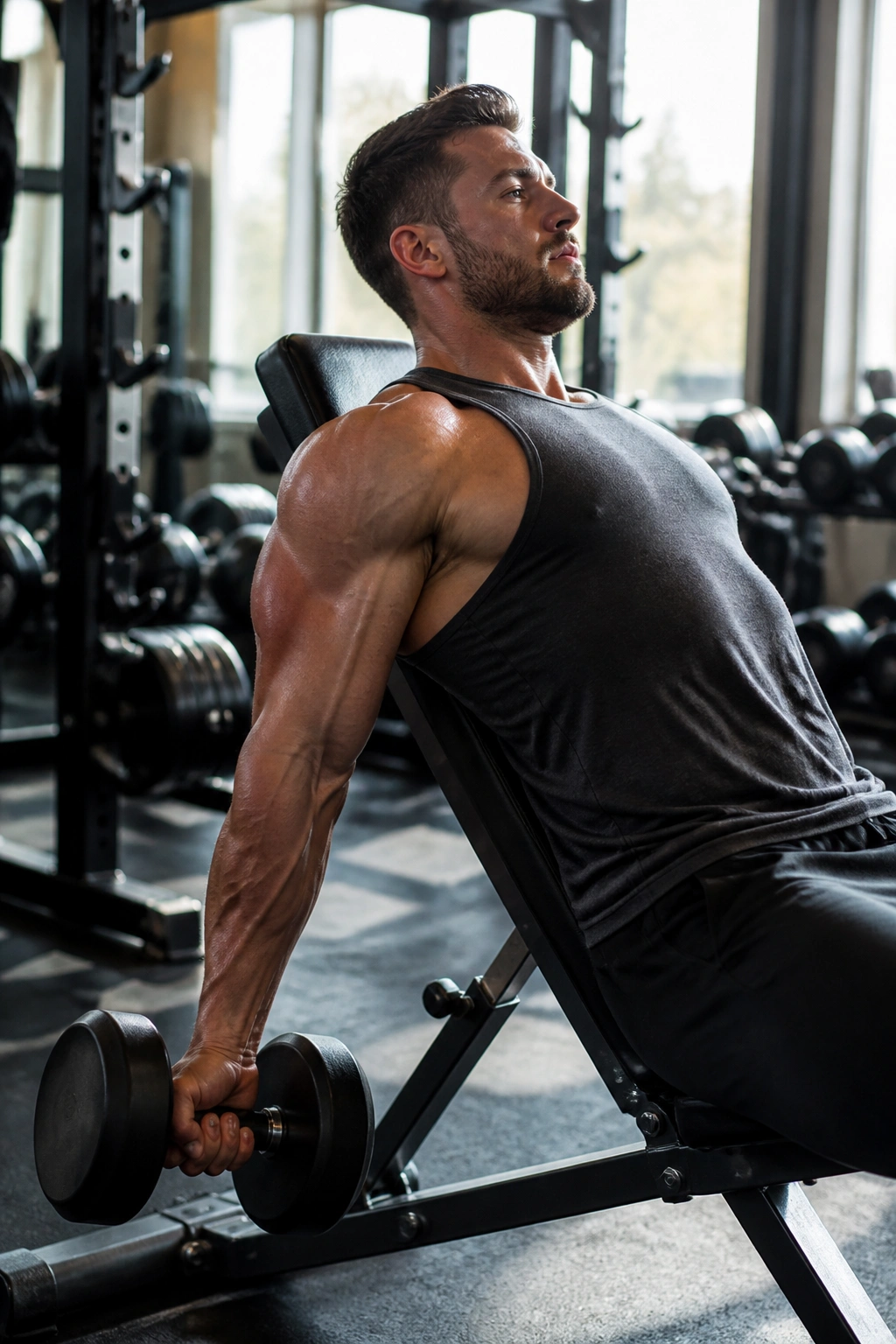
These are sneaky. They look too simple to matter until you try them with the bench set at a 45 to 60-degree incline and your biceps are stretched behind your torso.
That stretched position is the whole point. It puts the long head of the biceps under a load where cheating gets harder, which is exactly why these curls build that rounded look from the front and side. Use a pair of dumbbells you can control for 8 to 12 reps. If you can swing them up, they’re too heavy.
Set your shoulders back into the pad, let your arms hang, and curl without letting your elbows drift forward. The lower half of the rep should feel long and deliberate. You should feel tension in the biceps before the dumbbell reaches halfway up.
If you’ve only ever done standing curls, this one will feel odd at first. Good. Odd usually means the target muscle is doing more of the work.
A slow lowering phase helps a lot here. Count three seconds down and let the stretch do some of the heavy lifting. Not painless. Useful.
3. Hammer Curls for Brachialis Thickness
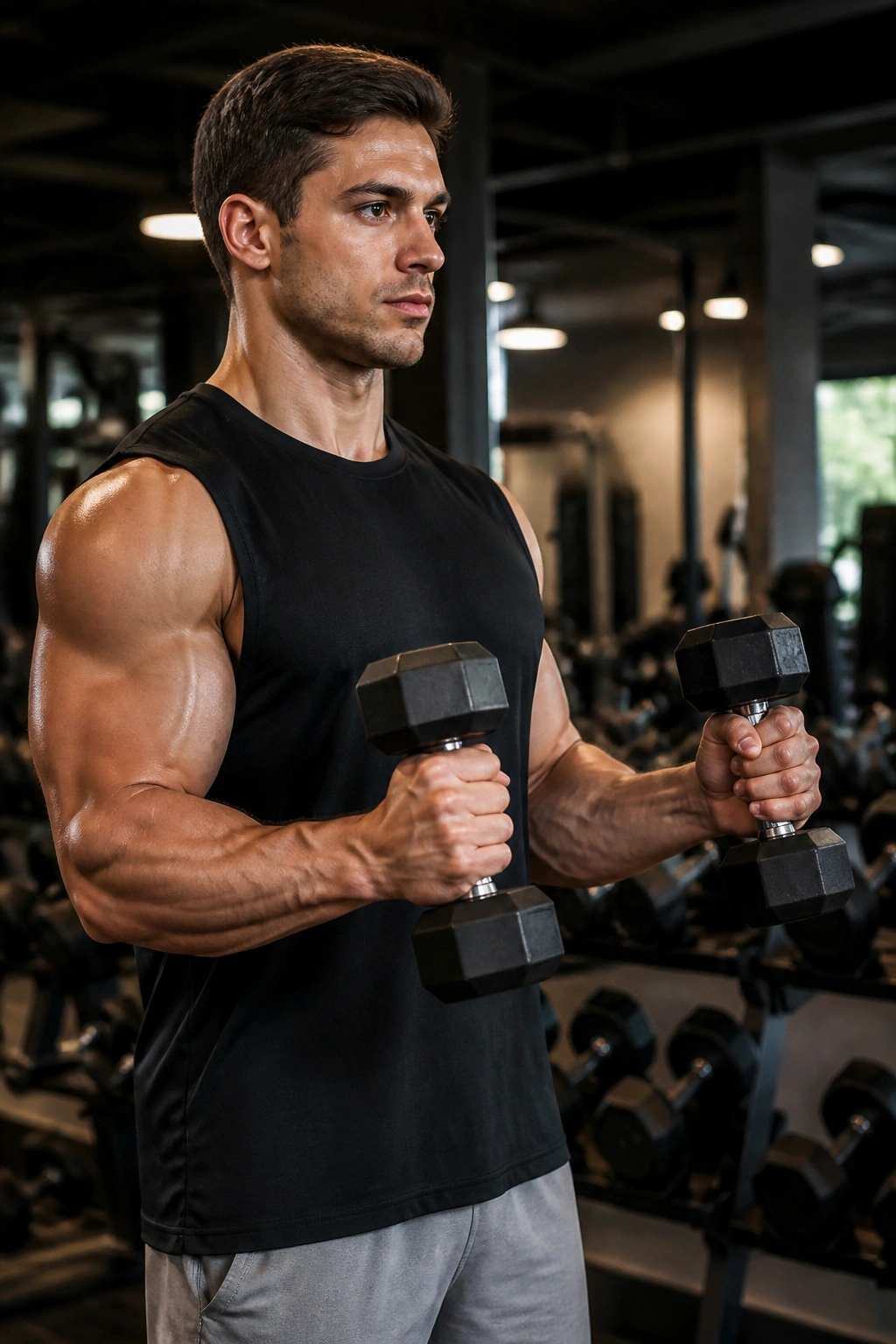
Why do some arms look thicker from the side even when the biceps peak isn’t huge? The brachialis sits under the biceps and pushes the whole upper arm outward. Hammer curls hit it hard.
Hold the dumbbells with your palms facing each other and keep that neutral grip the whole time. No twisting at the top. No wrist roll. I usually like 3 to 4 sets of 8 to 12 reps, because the motion stays strict and the forearms jump in sooner than they do with regular curls.
How to use it
Treat hammer curls as a thickness move, not a show-off lift. Keep your upper arms still, lift until the dumbbells reach about shoulder height, and lower them slowly. If your wrists bend backward, the load is too much. Simple.
They also pair well with a heavier curl earlier in the workout. Barbell curls handle the main biceps load; hammer curls round things out and give the forearms a lot more work than people expect. That’s the nice surprise here.
What makes them worth keeping
- Neutral grip takes stress off some wrists.
- The brachialis gets more of the load.
- The brachioradialis in the forearm works hard.
- They fit well in almost any arm day.
Use them. Your sleeves will notice.
4. Preacher Curls for Clean, Strict Reps
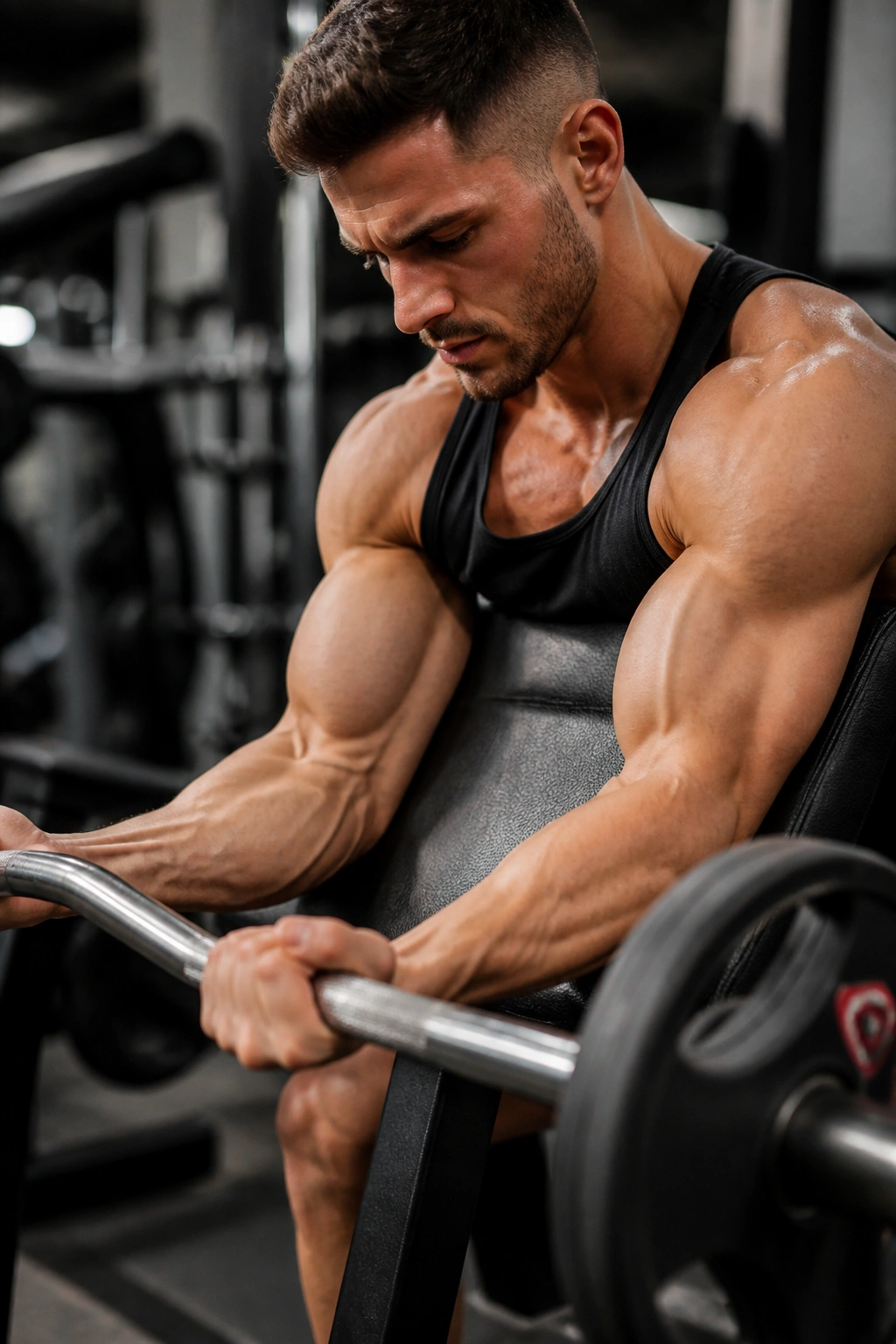
Preacher curls are the exercise I reach for when the session has gotten too sloppy. The pad takes away momentum, which means the biceps have to earn every inch.
Sit down, set the upper arms on the pad, and lower until you feel a full stretch without locking out hard at the bottom. Then curl up without yanking. 8 to 10 reps is a solid range here, and I’d keep the load modest enough that the last rep still looks like the first. If your shoulders creep forward, you’ve already lost the point.
The best thing about preacher curls is the honesty. You cannot hide behind hip drive or a tiny shrug. The downside is just as clear: if you slam into the bottom or let your elbows drift, the joint takes a beating. So stay smooth, and stop a hair short of letting the weight crash.
A lot of lifters use these as a second or third biceps movement, after a heavier curl. That makes sense. The muscle is already warm, the pad keeps the rep path tidy, and the pump gets stupid fast.
Rule of thumb: strict preacher curls should feel hard in the biceps, not loud in the elbows.
5. Cable Curls for Constant Tension
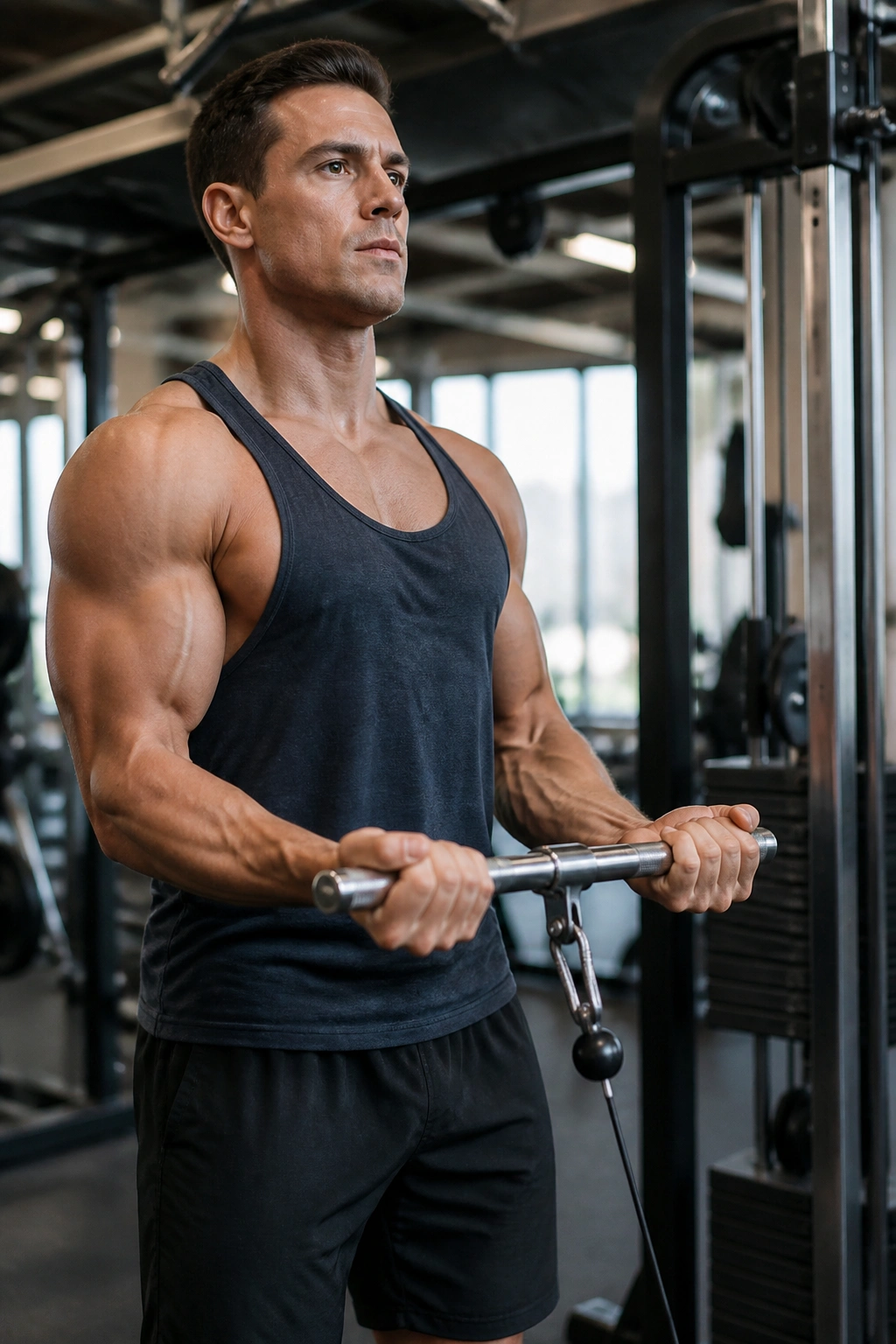
Cable curls are one of those boring-looking moves that deliver more than they should. The weight stack keeps tension on the biceps through most of the rep, which is useful when you want a cleaner pump and less rest at the bottom.
Stand a step or two in front of a low pulley, grab a straight bar, EZ attachment, or even a rope, and curl with your chest tall. The line of pull is different from free weights, so the biceps stay busy even when your arms are near straight. That makes 12 to 15 reps feel a lot harder than the number sounds.
The nice part here is the smooth resistance. Dumbbells go light at the bottom. Cables do not. That means you get more total time under tension without needing to stack plates like a maniac. It also makes cable curls useful late in the workout when your joints are already a little tired and you want cleaner reps, not more chaos.
Keep your knees soft and your elbows pinned. If you lean back and turn it into a body-row, the tension disappears. Hold the last rep for a one-second squeeze, then lower it slowly.
A cable curl is not flashy. It is effective. There’s a difference.
6. Close-Grip Bench Press for Heavy Triceps Work
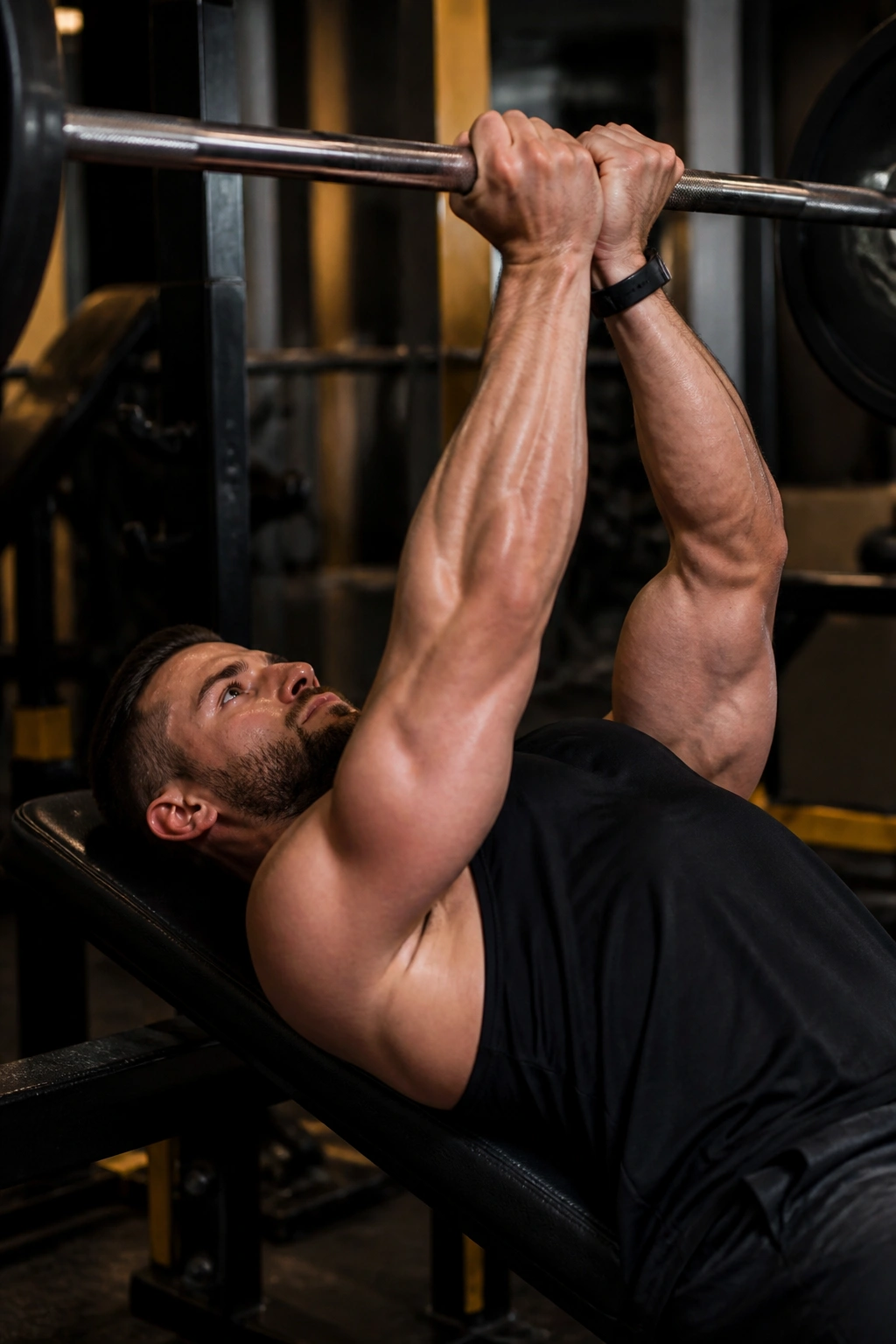
If you want bigger upper arms, the triceps deserve serious load. The close-grip bench press gives you that load in a way that feels familiar if you already bench, but the hand position shifts the work toward the back of the arm.
Use a grip about shoulder-width apart, sometimes a touch narrower, and keep your elbows from flaring wide. The bar should come down under control to the lower chest or upper sternum, then press up with force. I like 4 sets of 5 to 8 reps for this one. Heavy enough to build strength, not so heavy that the elbows turn into a mess.
Hand position and elbow path
The grip does not need to be absurdly narrow. Too narrow tends to beat up the wrists and turn the lift into a strange balance act. Keep it close enough that the triceps are clearly doing the push, but not so close that your hands hate you afterward.
The press itself should feel solid and direct. Lower for about 2 seconds, touch softly, then drive the bar up. A pause at the bottom can clean up the rep if you tend to bounce.
This is a better triceps builder than most people give it credit for, and it carries over nicely to overall pressing strength. That matters.
7. Skull Crushers for the Long Head Stretch
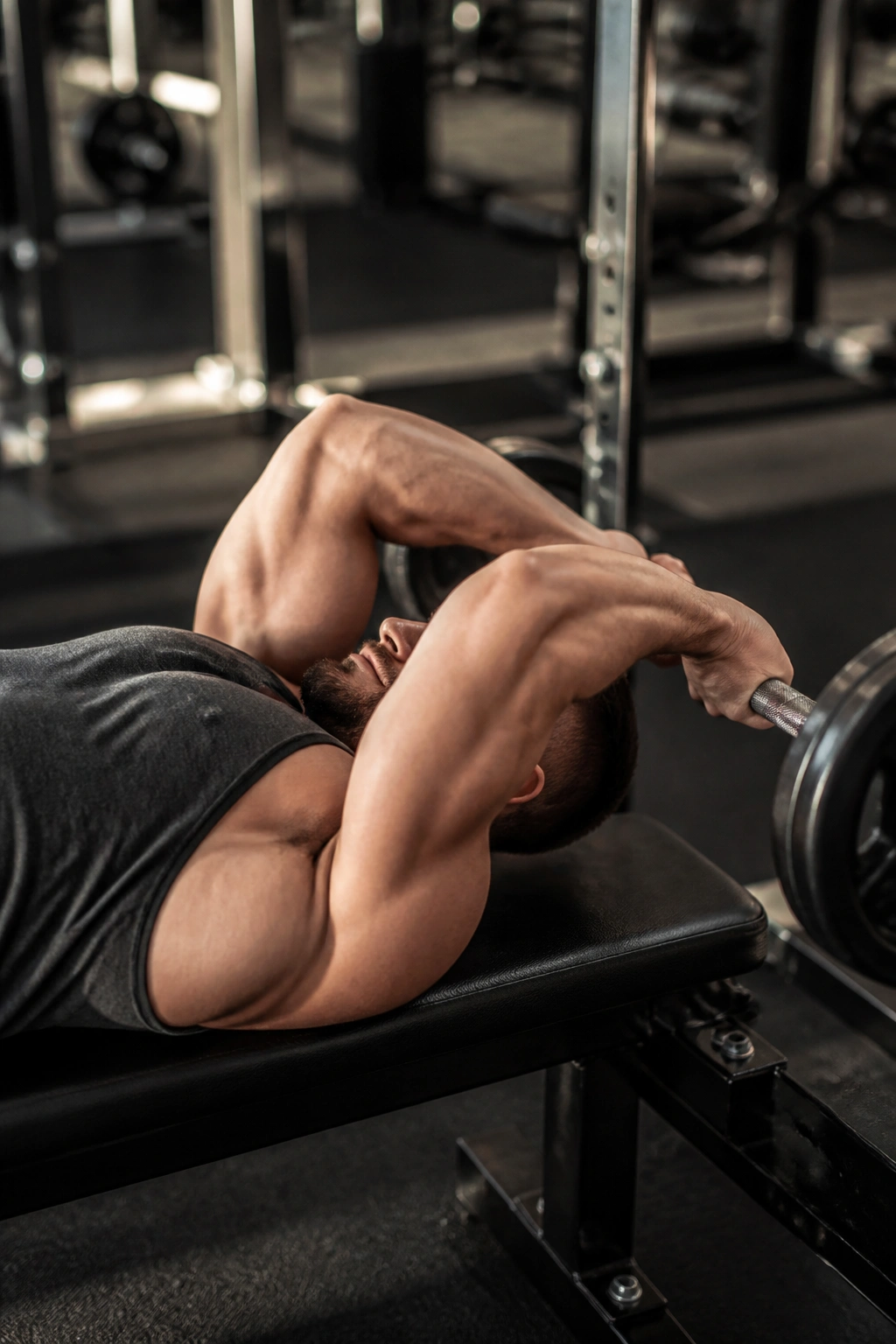
Skull crushers have a bad reputation mostly because people rush them and let the elbows wander. Done right, they’re one of the best ways to load the long head of the triceps, which is the part that helps the back of the arm look full.
Lie on a bench with an EZ-bar or dumbbells, keep your upper arms angled slightly back, and bend only at the elbows. Let the weight travel behind the forehead or just behind the head, then extend without snapping hard at the top. 8 to 12 reps works well. The stretch should feel deep, but not painful.
This exercise rewards control more than brute force. If you lower too fast, the elbows complain. If you flare the upper arms all over the place, the triceps stop doing their share. A slightly angled arm path usually feels better than going perfectly vertical.
One useful tweak: do them on a slight decline or with the bench set flat and your head a little off the edge. That can give you more room to let the bar travel and may feel friendlier on the elbows.
Do not chase a huge load here. Your triceps will grow from clean tension, not from turning the set into a joint test.
8. Overhead Triceps Extensions for the Back-Arm Stretch
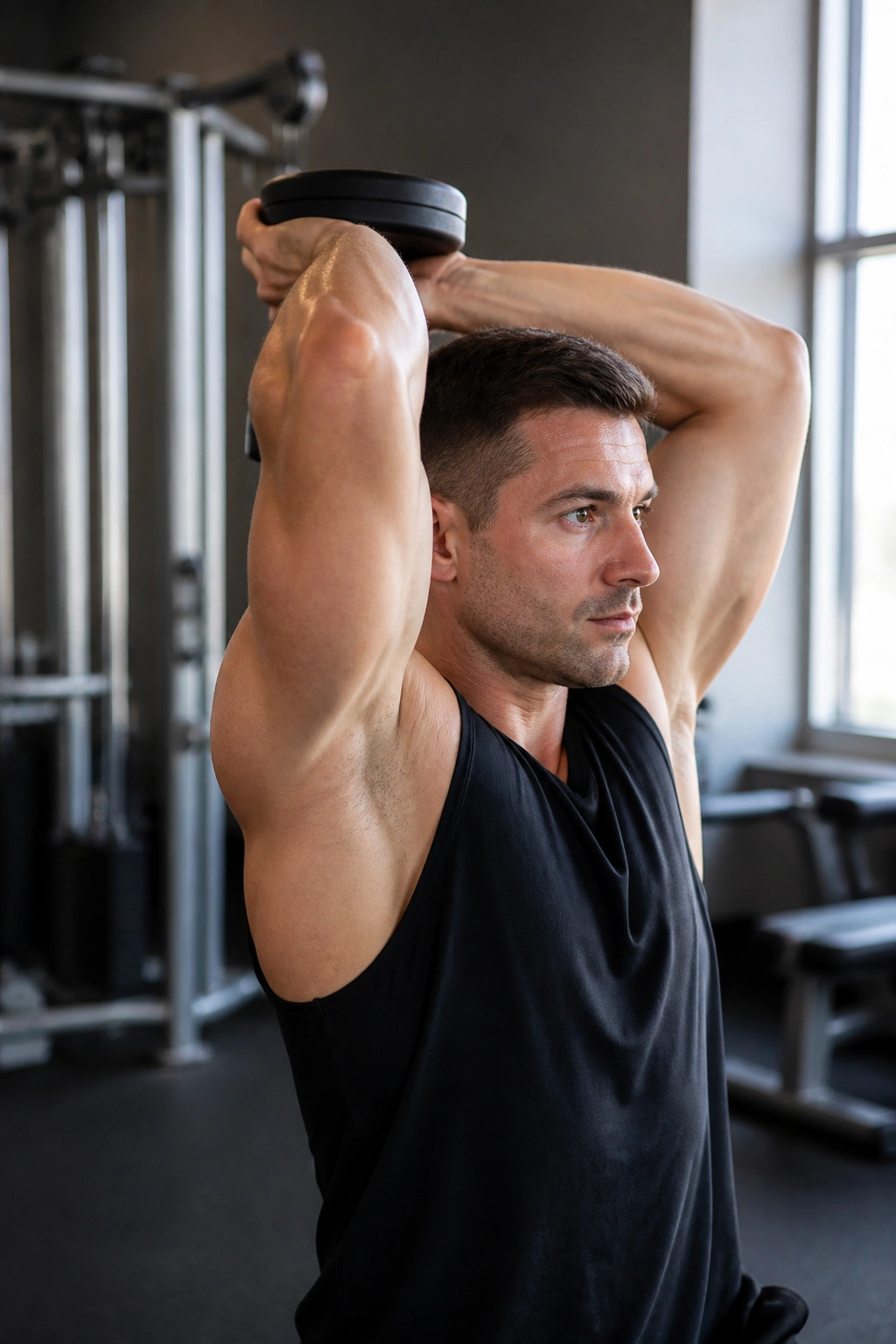
Why do overhead triceps extensions hit different? Because they load the triceps in a long, stretched position, and the long head is stretched harder when your arms go overhead.
Use a single dumbbell, an EZ-bar, or a cable attachment. Stand tall or sit down, brace your ribs, and keep your elbows pointing mostly forward. Lower the weight behind your head until you feel the triceps lengthen, then extend to near lockout. 10 to 15 reps works nicely here because the movement is controlled and the stretch is the selling point.
A cable version can feel smoother than a dumbbell if your elbows are picky. A dumbbell is simpler and easy to set up. Either way, the rep should stay deliberate. If your lower back arches to finish the set, the weight has already won.
This is one of the better triceps moves for people who want that full look from the side. The long head matters. A lot. Skipping it leaves size on the table.
Good setup choices
- Sit if standing makes you arch.
- Use a cable if the dumbbell feels clunky.
- Keep the elbows in, not flared out.
- Lower until you feel a stretch, not pain.
9. Rope Pushdowns for a Hard Squeeze
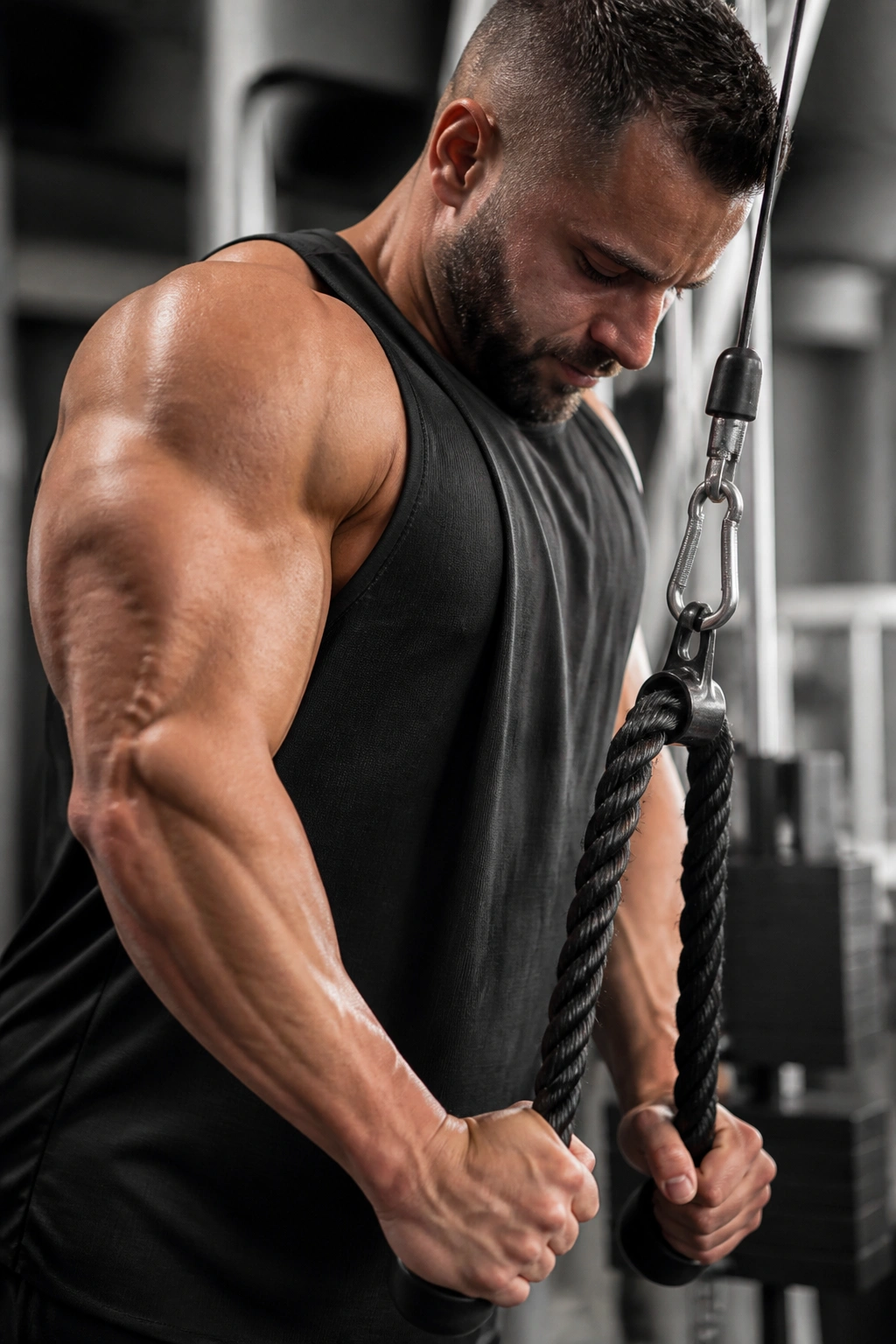
Rope pushdowns look simple, and that’s probably why they get rushed. Big mistake. They can be one of the best triceps finishers if you actually lock the form in.
Set a rope on a high pulley, tuck your elbows, and press down until your arms are almost straight. At the bottom, split the rope apart and hold the squeeze for a beat. 12 to 15 reps is a sweet spot here, sometimes even a little higher if the stack is light. The triceps should feel hot by the end.
What makes this useful is the combination of constant tension and a clean lockout. You get to work the triceps without much body motion, which is handy after heavier pressing or extensions. The cable also lets you keep the movement smooth from top to bottom.
If your shoulders roll forward or your chest dives over the stack, reset. A good pushdown stays upright and tight. Think of your upper arms as door hinges. They should not travel much.
I like these late in a workout, after something heavier. They’re not the star. They’re the closing argument.
10. Dips for Bodyweight Triceps Strength
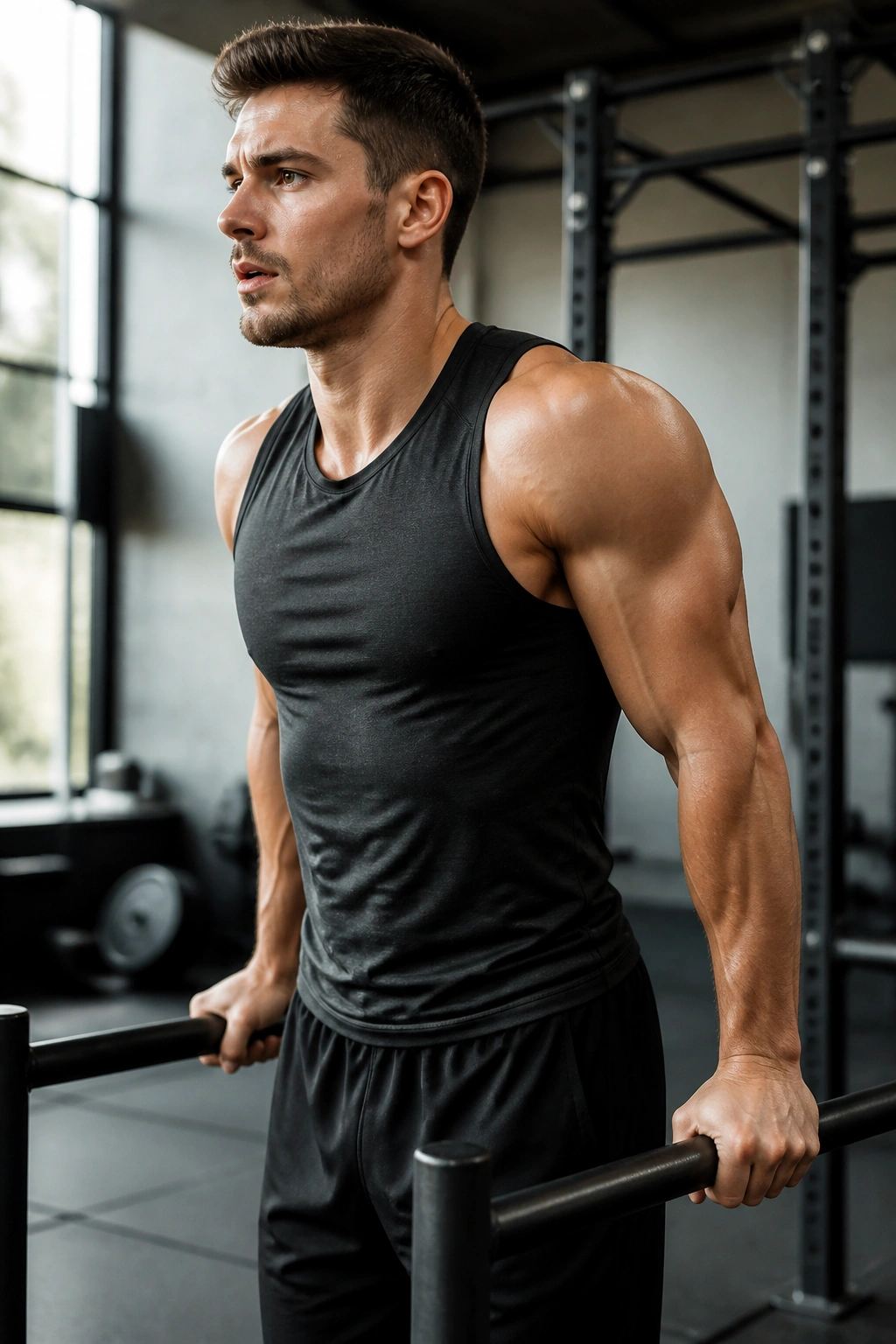
Dips are unforgiving in a good way. They ask for shoulder control, elbow strength, and a little patience, and they reward all three with serious triceps work.
For more triceps bias, keep the torso fairly upright and let the elbows bend close to the body. Lower until the upper arms are at least parallel to the floor if your shoulders allow it, then press back up without kicking or swinging. 6 to 12 reps is a solid range, though bodyweight strength can vary a lot from person to person.
There’s a tradeoff here. Dips can be gold for the triceps, but they can also annoy the front of the shoulder if you go too deep too soon. If that happens, cut the depth a little and work on strength in the pain-free range. No prize is awarded for grinding through bad joint angles.
Weighted dips are an easy progression once bodyweight reps get smooth. A 5- to 10-pound plate hanging from a belt changes the feel fast. Just make sure the shoulders stay packed and the elbows track cleanly.
I like dips because they feel like an honest strength move, not a tiny isolation exercise pretending to be serious.
11. Reverse Curls for Forearms and Brachioradialis
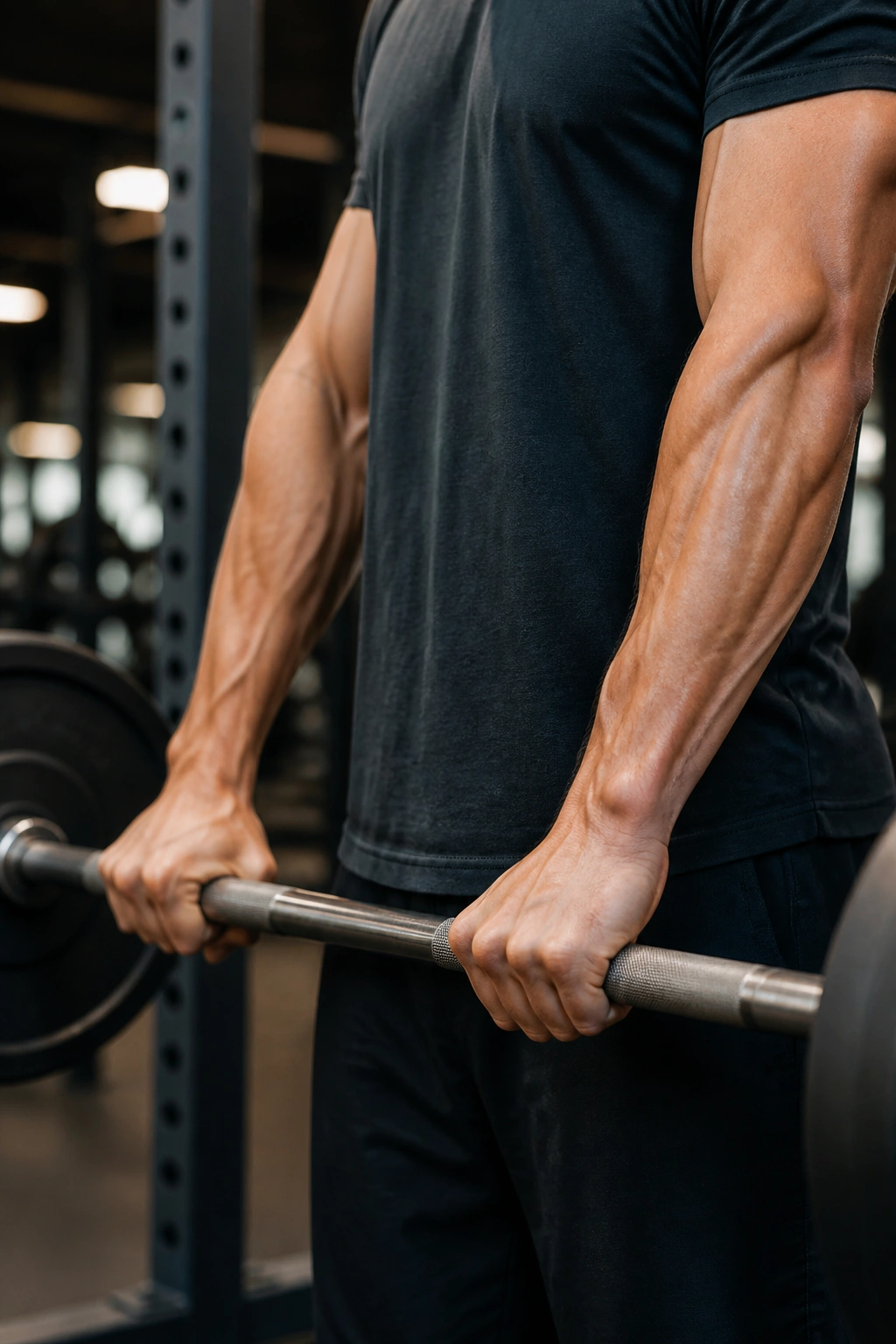
Reverse curls are the move people skip until their forearms start looking small next to their upper arms. Then they wish they hadn’t.
Take a barbell, EZ-bar, or cable bar with a pronated grip, palms facing down, and curl it without letting the wrists collapse. The load shifts away from the usual biceps focus and into the brachioradialis and forearm extensors. That means less peak biceps stress and more thickness along the top of the forearm.
Why grip matters
The pronated grip changes the whole game. You’ll likely need less weight than your regular curl, and that is fine. Push for 10 to 12 clean reps, not sloppy heaving. If the wrists bend back sharply, lower the load. If the elbows float forward, reset and tighten up.
This exercise also helps balance all the supinated gripping from regular curls and rows. That balance can make elbows feel better over time. Not glamorous. Useful.
A lot of lifters rush these and wonder why they feel awkward. They feel awkward because they’re supposed to. That forearm burn is the point. Keep them strict and let the forearms do the job they were built for.
12. Zottman Curls for Up-and-Down Control
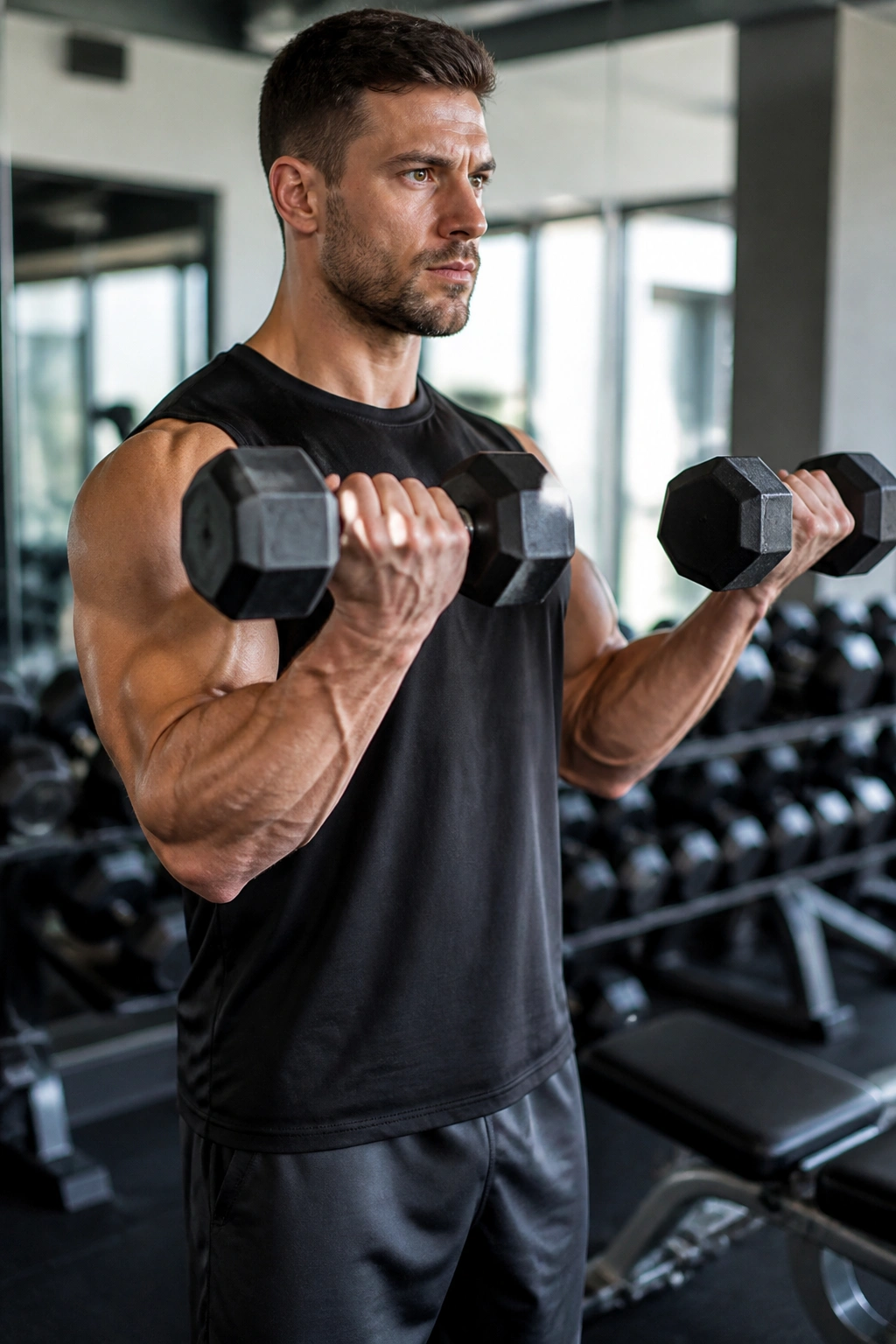
Zottman curls are one of my favorite old-school arm moves because they do two jobs in one rep. Curl up with a supinated grip, then rotate the dumbbells at the top and lower them with the palms facing down.
That lowering phase is where the sneaky value lives. The biceps do the lifting, but the forearms and brachioradialis get hammered on the way down. Use a moderate weight, something you could control for 8 to 10 reps without drama. Heavy Zottman curls are usually ugly Zottman curls.
The exercise feels odd the first few times. That’s normal. Turn your palms smoothly, don’t rush the rotation, and lower with a slow count. The forearms should light up by the end of the set, and the biceps still have to earn the curl.
This is a smart choice if you want a little more grip and forearm work without adding a separate exercise. It also fits well near the end of an arm session, when the goal shifts from brute load to clean tension.
Watch the wrists. If they ache, lighten the dumbbells and slow down.
13. Concentration Curls for Pure Arm Control
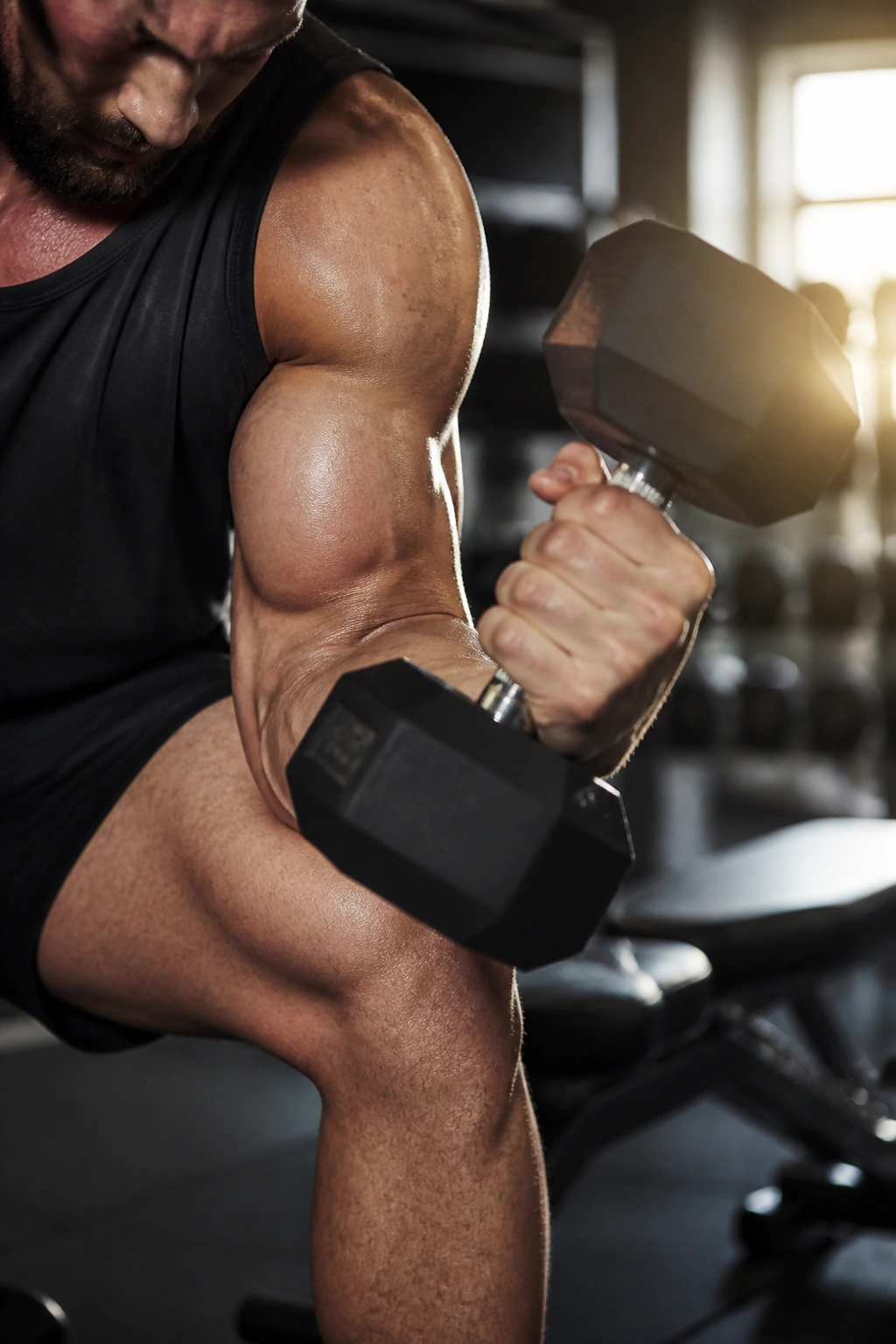
A concentration curl is what happens when you strip away the noise. Sit down, brace the elbow against the inner thigh, and curl one dumbbell with nothing else moving much at all.
That setup makes cheating tough. It also makes it easier to feel the biceps shorten all the way at the top. Use 10 to 15 reps per arm and keep the pace calm. The lift should feel almost slow on purpose. No swinging. No torso twist. Just clean elbow flexion and a hard squeeze near the top.
I like these after a heavier compound or standing curl because they let you chase a very precise contraction. The muscle is already warm, and the body is less able to invent shortcuts. That’s exactly why the pump is so good here.
A small but useful detail
Turn the pinky up a little as you curl. Not dramatically. Just enough to feel the biceps tighten fully at the top. That tiny adjustment can make the rep feel more direct without changing the whole movement.
Concentration curls are not about load. They are about control, and that’s a trade worth making.
14. Diamond Push-Ups for Home Triceps Volume
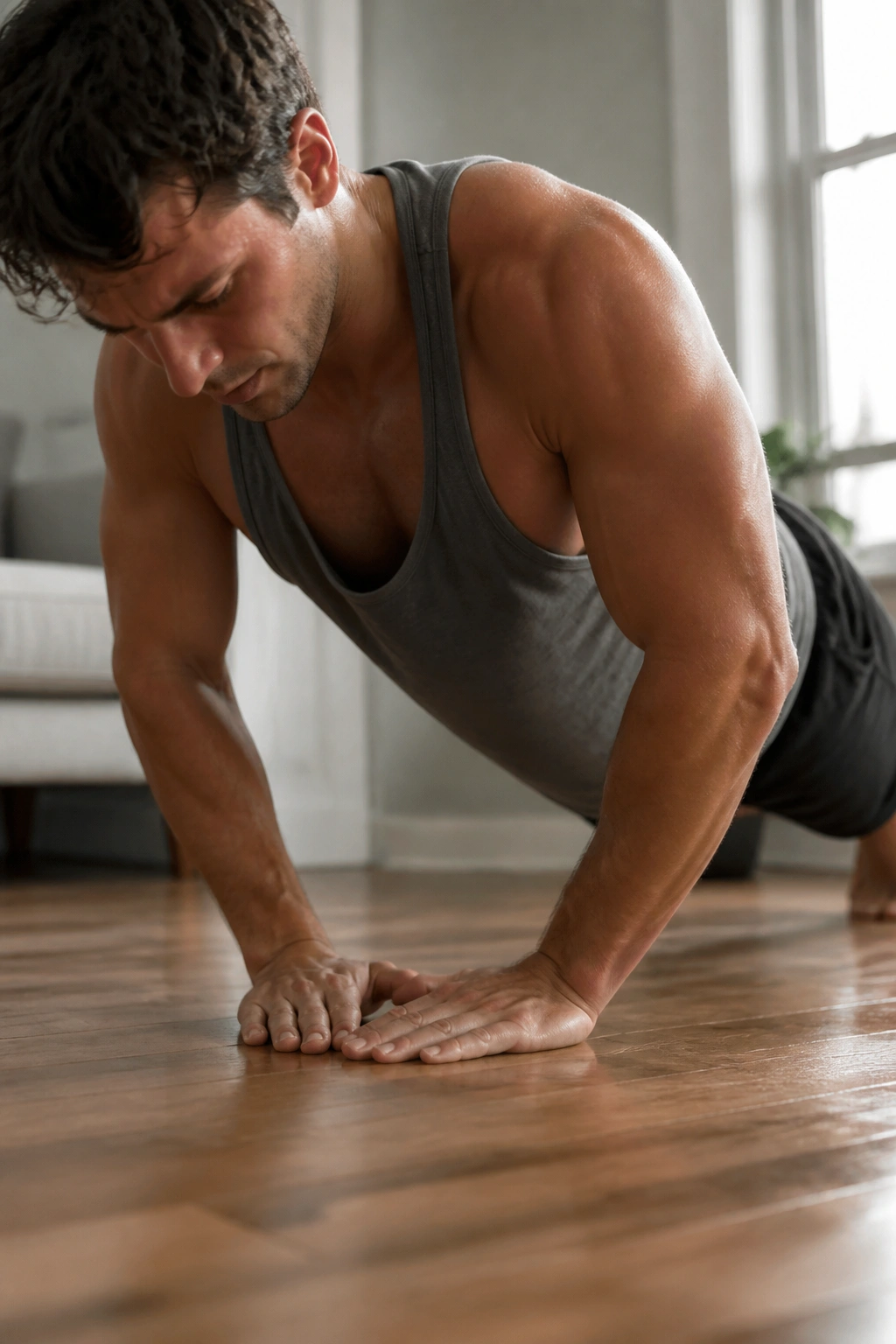
Diamond push-ups get dismissed because they don’t look fancy. That’s a mistake. Put your hands close together under the chest, form a tight diamond or narrow triangle, and you’ve got a triceps-heavy bodyweight press that works anywhere.
Compared with a regular push-up, the narrow hand position shifts more work toward the back of the arms. Keep your body in a straight line, lower your chest with control, and press back up without letting the elbows flare hard. AMRAP sets of 8 to 20 reps can work well depending on strength. If the floor version gets easy, elevate the feet or add a weight vest.
What makes them useful
- Zero equipment.
- Easy to add to the end of a workout.
- Good for high-rep triceps work.
- Better on travel days than trying to invent a machine.
There’s a catch. The narrow hand position can bother some wrists and shoulders. If that happens, use push-up handles or place the hands slightly wider while keeping the triceps bias. No need to suffer for the sake of a hand shape.
These are a strong finisher when you want more triceps volume without another barbell or cable station.
15. Farmer’s Carries for Grip and Forearm Density
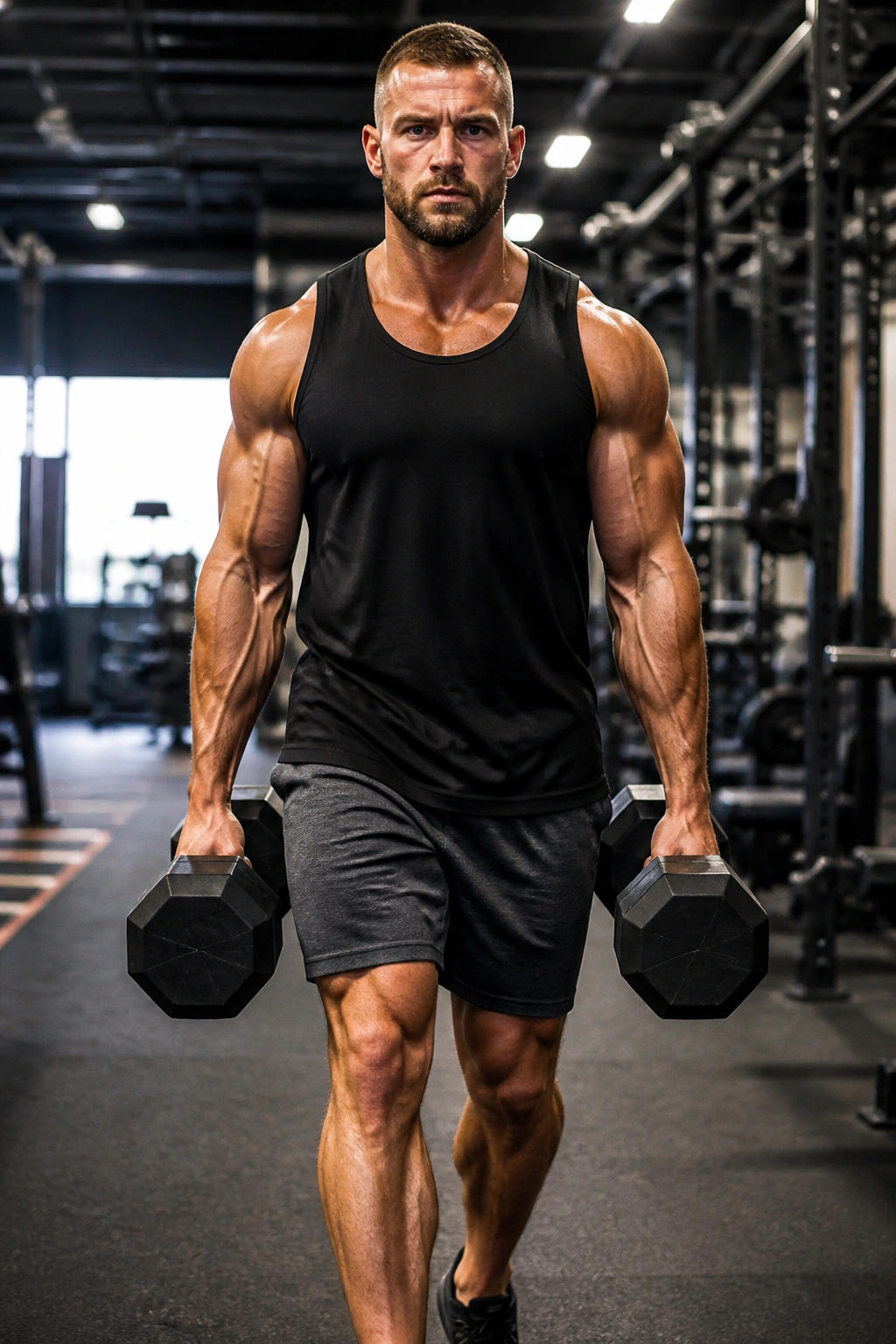
Farmer’s carries are not a curl, and that’s why they matter. If you want forearms that look thick and hands that do not give up halfway through a back session, loaded carries belong in the mix.
Grab a heavy pair of dumbbells or trap bars, stand tall, and walk with control for 30 to 60 seconds per set. Your shoulders stay down, your ribs stay stacked, and your grip stays locked. The challenge is simple: do not let the weight drag your posture into a slump. Short, clean steps help.
This is one of the few arm-adjacent moves that trains the forearms, hands, traps, and midsection at the same time. That makes it efficient in a very practical way. You are not just building size here. You are building the kind of grip that holds up when the rest of the session gets ugly.
A useful progression is to add a little load or a few seconds each week. Another option is to carry one side only, suitcase-style, which hits the obliques and grip even harder. Heavy, controlled, and brutally honest. Good combination.
If your goal is arms that look solid from every angle, do not skip the forearms. They frame the whole look.
Build the bulk first, then earn the definition. That part never changes.
Pick three or four of these moves for a session, then rotate the rest across the week so your elbows stay happy and your arms get hit from different angles. Heavy curls, strict extensions, and a grip exercise each have a job, and the best arm training respects that instead of treating every movement like the same hammer.
You will notice the difference in the mirror, sure, but also in the way shirts sit across the upper arm and the way a dumbbell feels in your hand on the last set. That’s the real test.
