



Upper belly fat workouts get a lot of attention because that little shelf above the navel can be maddeningly stubborn. Crunches can make you sore, sure. They do not magically pull fat off one patch of skin.
That part matters. The upper abs respond best to moves that bring the ribs toward the pelvis, keep the spine from flopping around, and raise your heart rate enough to make the whole session count. When people say they want a toned core, what they usually mean is stronger abdominal muscles under a lower layer of body fat.
Spot reduction is the myth here. What works is a mix of smart ab work, cardio-style intervals, and enough tension that your trunk has to stay honest.
Start with the exercises below, and keep an eye on form. A sloppy rep barely counts; a clean rep does the job.
1. Bicycle Crunches for the Upper Abs
Bicycle crunches are one of those moves that start talking back almost immediately. The first few reps feel easy, then the burn creeps into the upper abdomen and suddenly you remember every weak spot you have.
Why They Hit the Upper Core So Hard
The curl plus twist is the whole point. When one shoulder blade lifts and the opposite elbow reaches across, your rectus abdominis has to shorten while your obliques keep the torso from wobbling all over the place. That combination makes bicycle crunches one of the most useful upper belly fat workouts for building visible core strength.
Quick Form Cues
- Do 2 to 3 sets of 12 to 20 total reps per side.
- Keep the lower back pressed into the floor.
- Rotate the rib cage, not just the elbow.
- Move slowly enough that each rep lasts about 2 seconds.
- Exhale as the shoulder blade leaves the floor.
Best tip: keep your elbows wide and your neck relaxed. If your hands are yanking your head forward, the abs are no longer doing the work.
2. Reverse Crunches with a Slow Curl
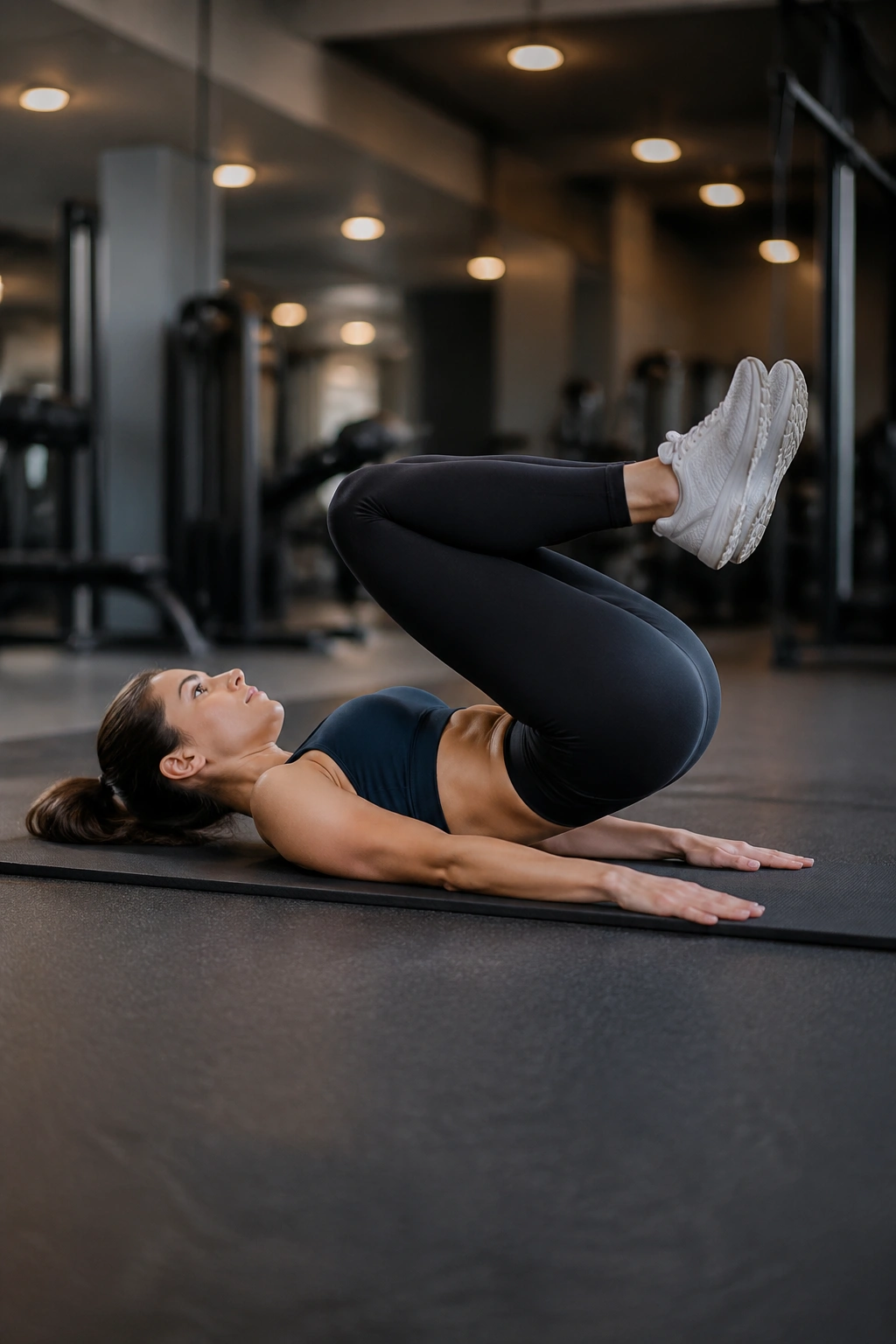
Reverse crunches look gentle until rep six. Then the lower abs, the upper abs, and the muscles that keep your pelvis from tipping all start arguing with each other.
This move works best when you think of it as a curl of the pelvis, not a swing of the legs. Bring your knees in, tilt the tailbone up, and let the hips lift a few inches off the floor. That tiny lift is where the magic lives. If you throw your legs around, you turn the exercise into momentum. That is just noisy. It is not useful.
Keep the lowering phase slow, about 3 seconds. A controlled descent makes the upper core brace harder on the way down, which is the part people skip because it feels less dramatic. It matters more than it looks.
If your lower back arches, shorten the range and bend the knees more. Clean reps of 8 to 12 beat wild reps of 20 every single time.
3. Hollow Body Hold
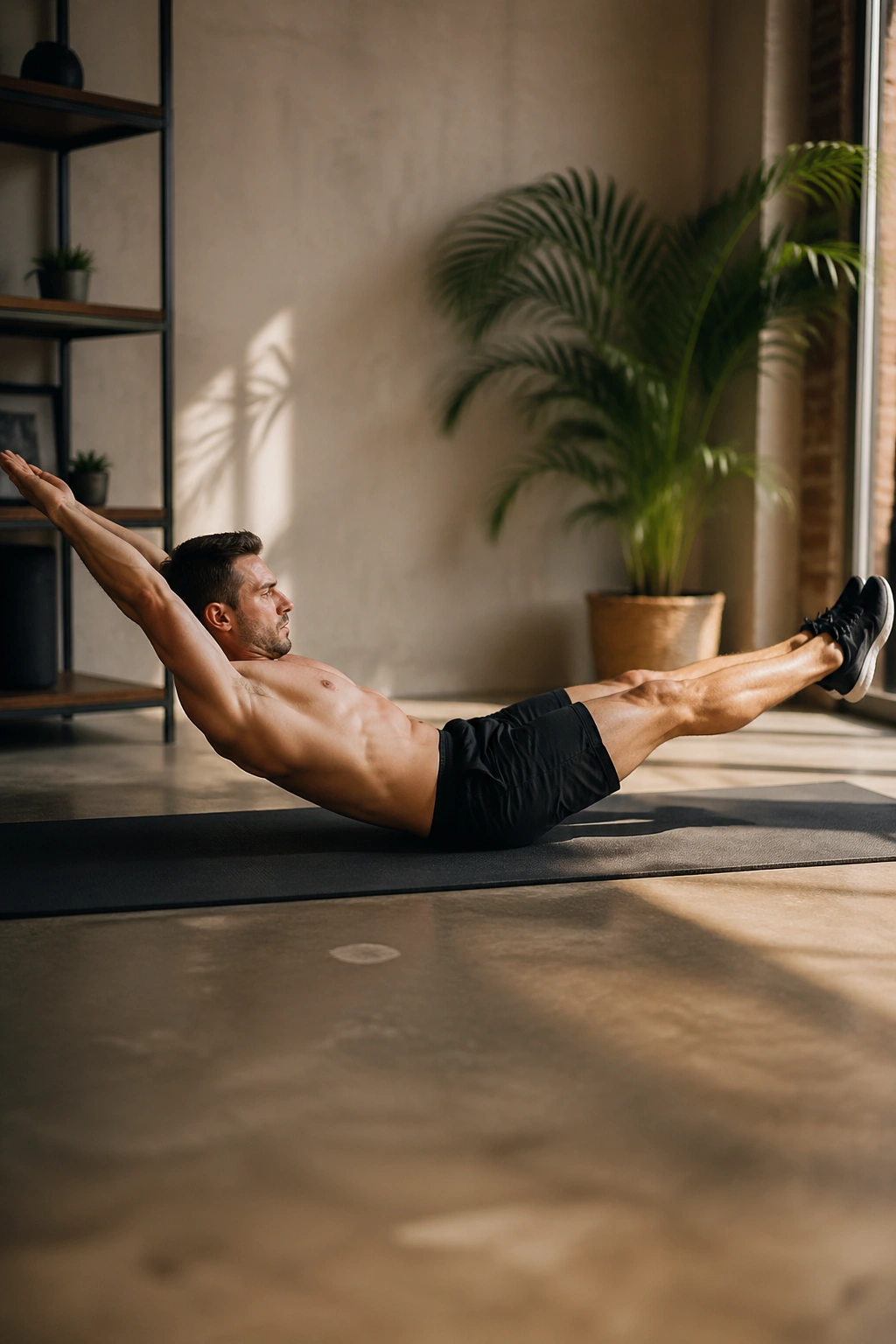
Can you hold your body in one long, tight shape for 20 seconds and still breathe? That is the real test here.
How to Use It
The hollow body hold is not flashy, and that is exactly why it works. Your ribs stay tucked, your lower back presses into the floor, and your arms and legs hover just enough to make the core work without cheating. It trains the trunk to resist extension, which is a big deal if your midsection tends to arch when you get tired.
Start with 15 to 20 seconds and build toward 30 seconds. If full extension feels too hard, bend one knee or keep the arms by your sides. Do not let the lower back pop off the floor. That is the whole battle.
A short hold done well is worth more than a long hold done badly.
4. Dead Bug with Arm Reach
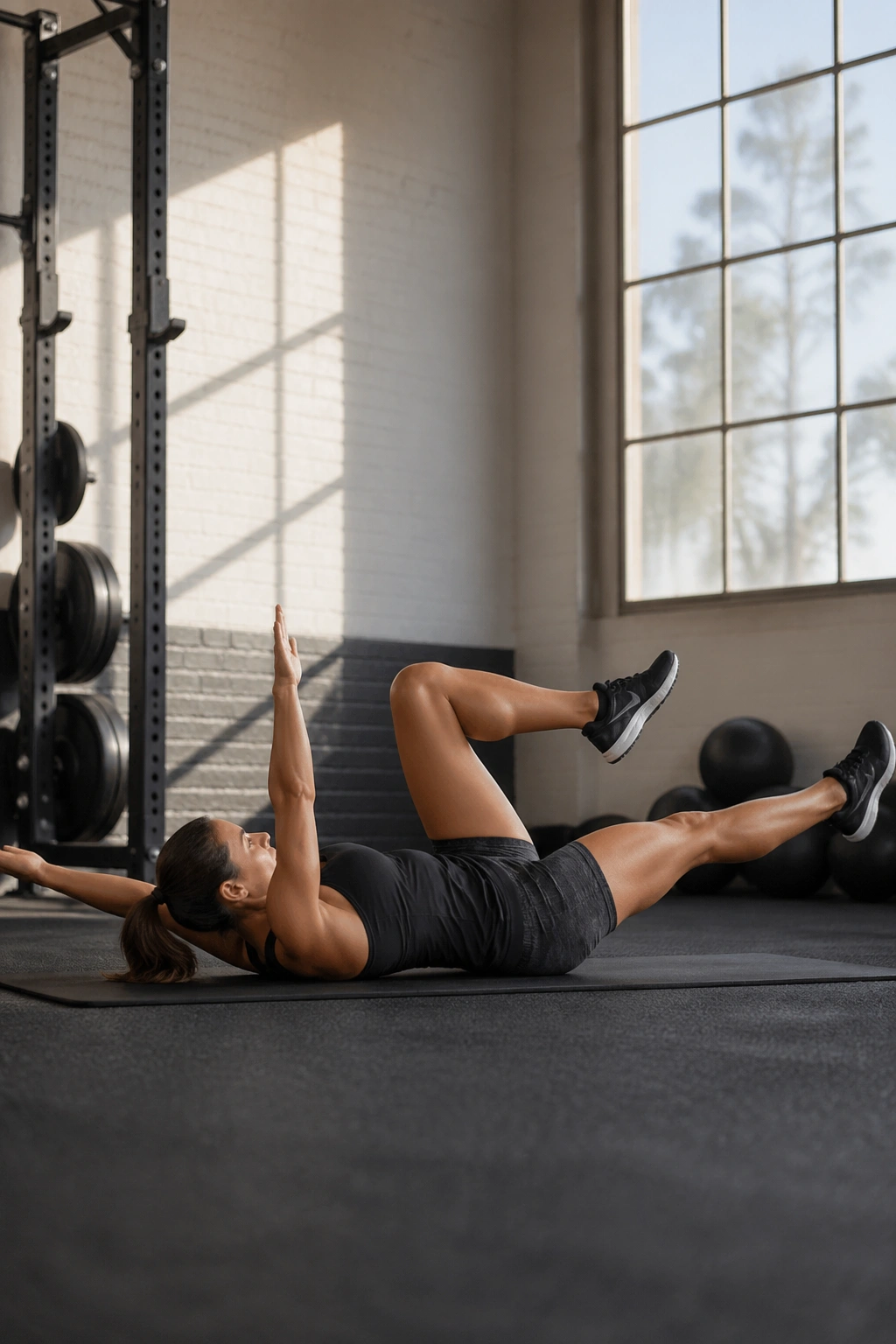
If your back arches the second you lie down on a mat, the dead bug will expose it fast. That is not a flaw in the exercise. That is the point.
The dead bug teaches the core to stay still while the limbs move. Reach one arm overhead and extend the opposite leg, then switch sides without letting the ribs flare or the low back lift. The upper abs work to keep the front of the trunk braced while the hips and shoulders try to pull the body apart. It feels almost too simple at first. Then your abs start shaking.
What to Watch For
- Press the lower back gently into the floor.
- Move one limb at a time.
- Exhale as the arm and leg extend.
- Use 6 to 10 reps per side.
- Stop the movement if the spine arches.
This is one of the best choices for beginners, but it is not easy when done well.
5. Mountain Climbers at a Steady Pace
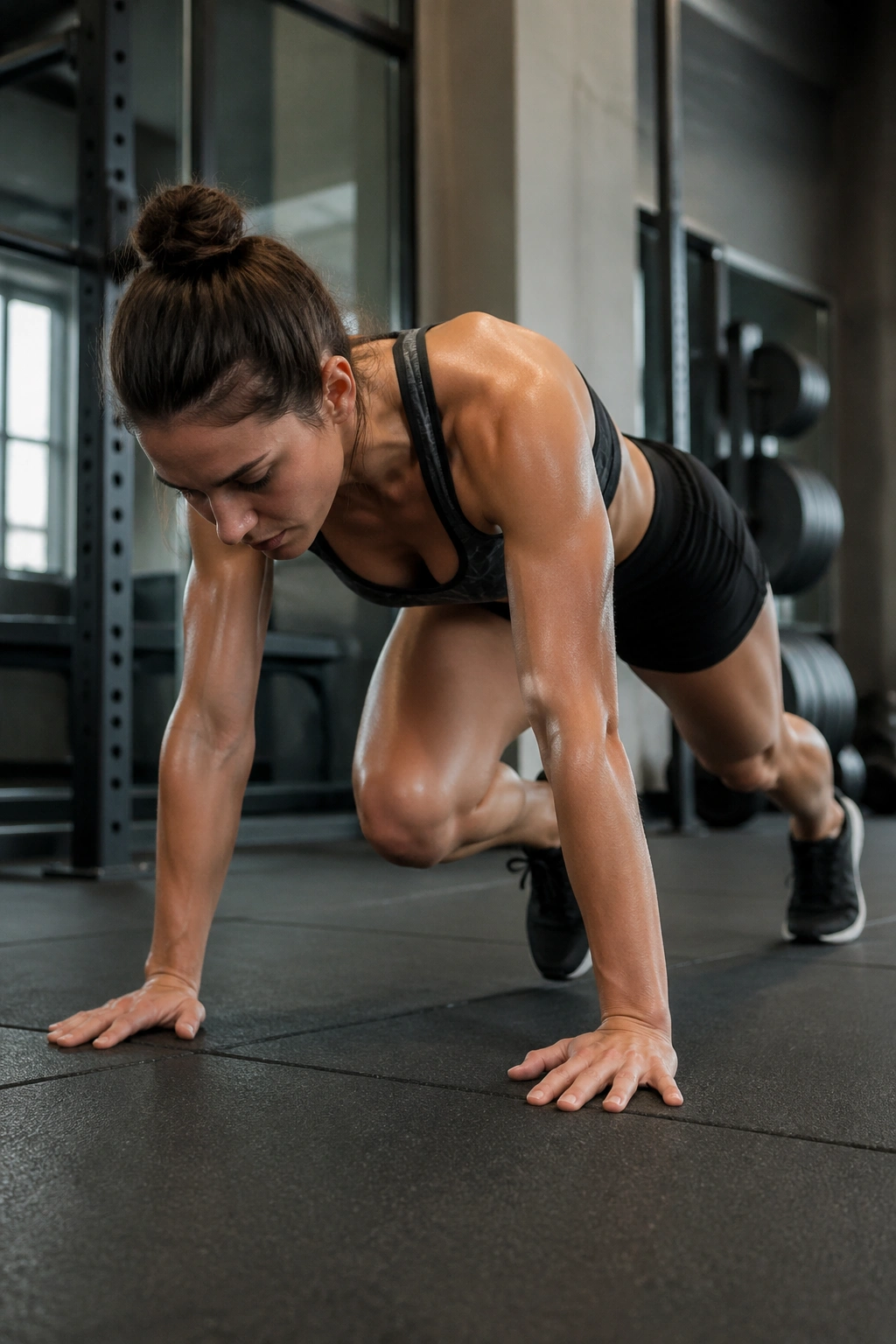
Thirty seconds is enough to change your breathing.
Mountain climbers are one of the cleanest ways to turn core work into a calorie-burning interval. They look like cardio, and they are, but the trunk has to stay braced while the knees drive forward. If the hips bounce all over the place, the body is doing extra motion for no reason. Keep the shoulders stacked over the wrists and drive the knees with purpose.
A steady pace often works better than the frantic version people copy from group classes. Fast and sloppy turns into a noisy hop. Controlled and firm hits the core harder and keeps the shoulders from getting fried too early. Try 20 to 40 seconds of work, then rest for 20 seconds.
You should feel the abs, the hip flexors, and your breathing all at once. That is the sweet spot.
6. Plank Shoulder Taps
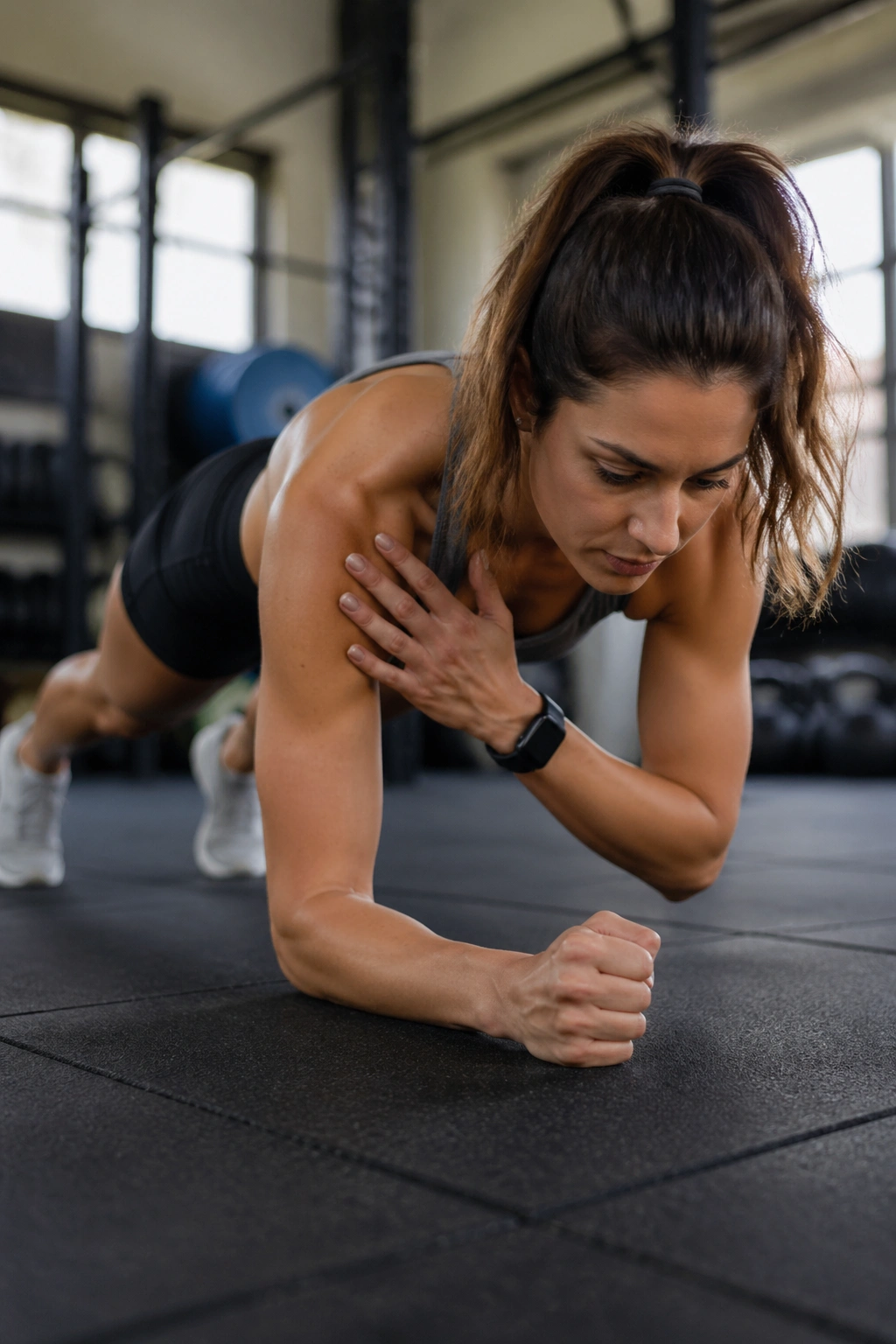
A regular plank asks you to stay still. Shoulder taps ask you to stay still while something tries to pull you out of balance. That is a bigger job.
What Makes Them Different
Each tap forces the torso to resist rotation. The obliques, upper abs, and deep core muscles work together to keep the hips level while one hand leaves the floor. If you rush it, the body sways. If you slow it down, the whole front line of the core has to lock in.
Use 10 to 16 taps per side for 2 or 3 rounds. Keep your feet a little wider than hip-width if you need more stability. Narrow feet make the exercise harder, but only if your shoulders and core can handle it.
Good rule: if your hips rock side to side, slow down. The goal is control, not speed.
7. Toe Touch Crunches
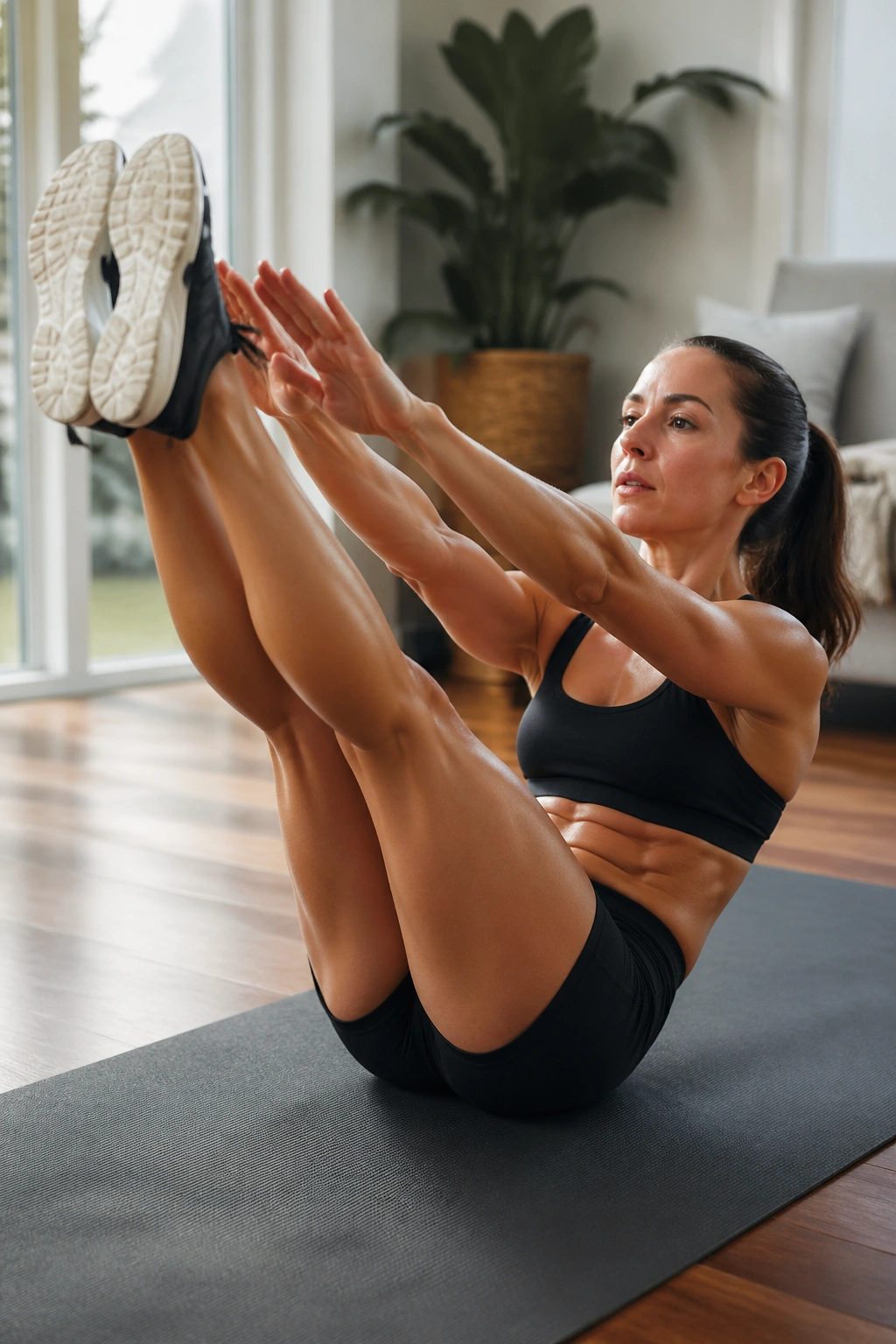
Toe touch crunches feel almost old-school, and I mean that in a good way. Feet up, arms long, eyes on the ceiling. Simple setup. Nasty burn.
The upper abs do a lot of the lifting here because the ribs curl upward toward the toes. Keep the legs straight if you can, but do not chase a perfectly vertical leg position if your lower back starts to arch. A small bend at the knees is smarter than a big range with bad form. Reach your hands up on the exhale and lower with control.
I like these in the middle of a session, not at the very end, because they demand enough precision that sloppy form shows up quickly. 10 to 15 reps is plenty for most people. If you feel it mostly in the neck, your chin is tucked too hard or your shoulders are doing the job the abs should own.
8. Leg Raises with a Posterior Pelvic Tilt
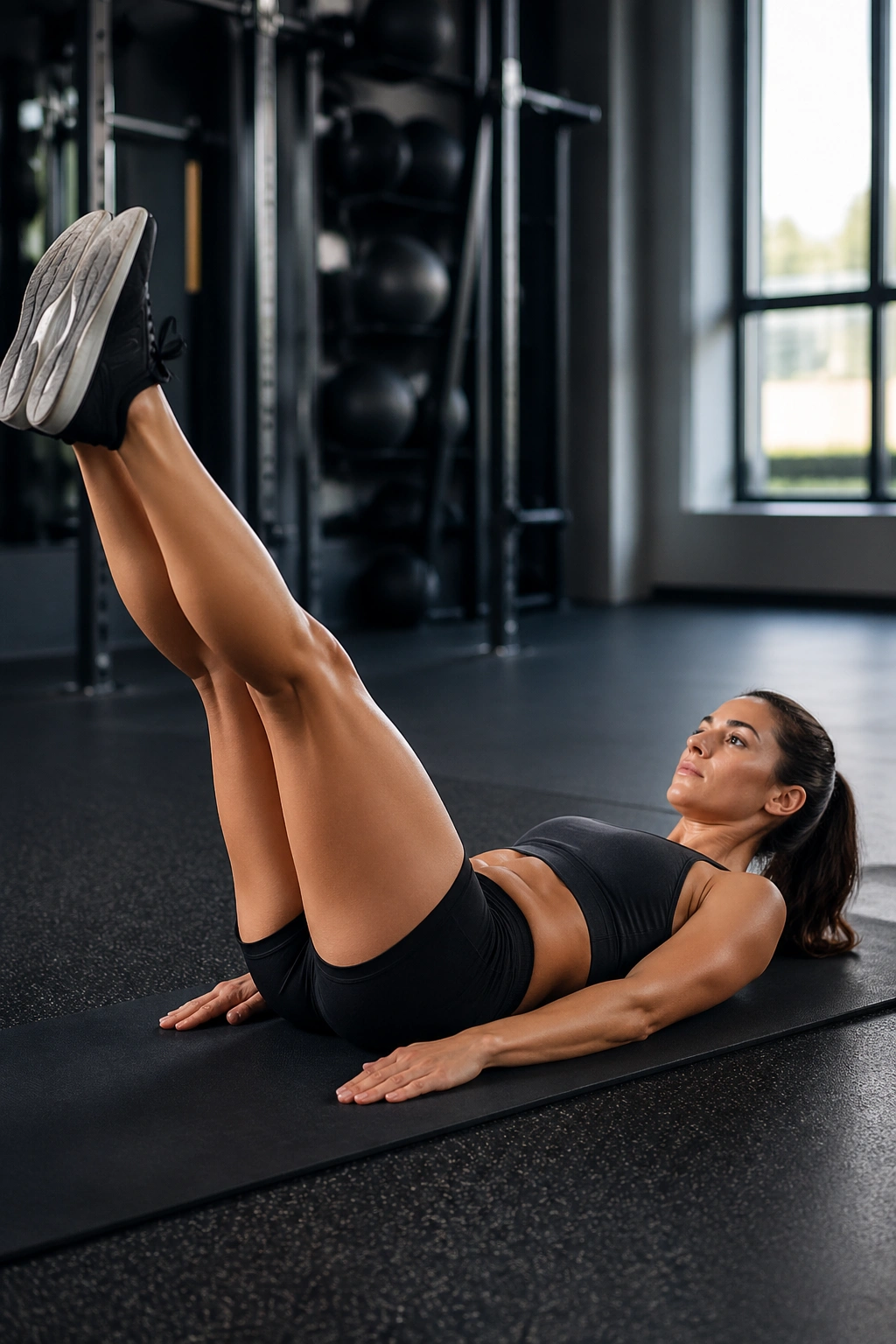
Leg raises are tricky, and most people do them with the lower back hanging off the floor. That is the part that makes the move feel “hard” in all the wrong ways.
The fix is a small posterior pelvic tilt. That means you gently roll the pelvis so the low back stays flat before the legs lift. Then raise the legs only as high as you can control without the spine arching. Lower them slowly until they are a few inches above the floor, then bring them back up. The upper abs help brace the front of the trunk while the hips resist the pull.
Use 6 to 10 clean reps. If straight legs are too much, bend the knees and keep the motion smaller. That is not a shortcut. It is a better rep.
9. Standing Cross-Body Knee Drives
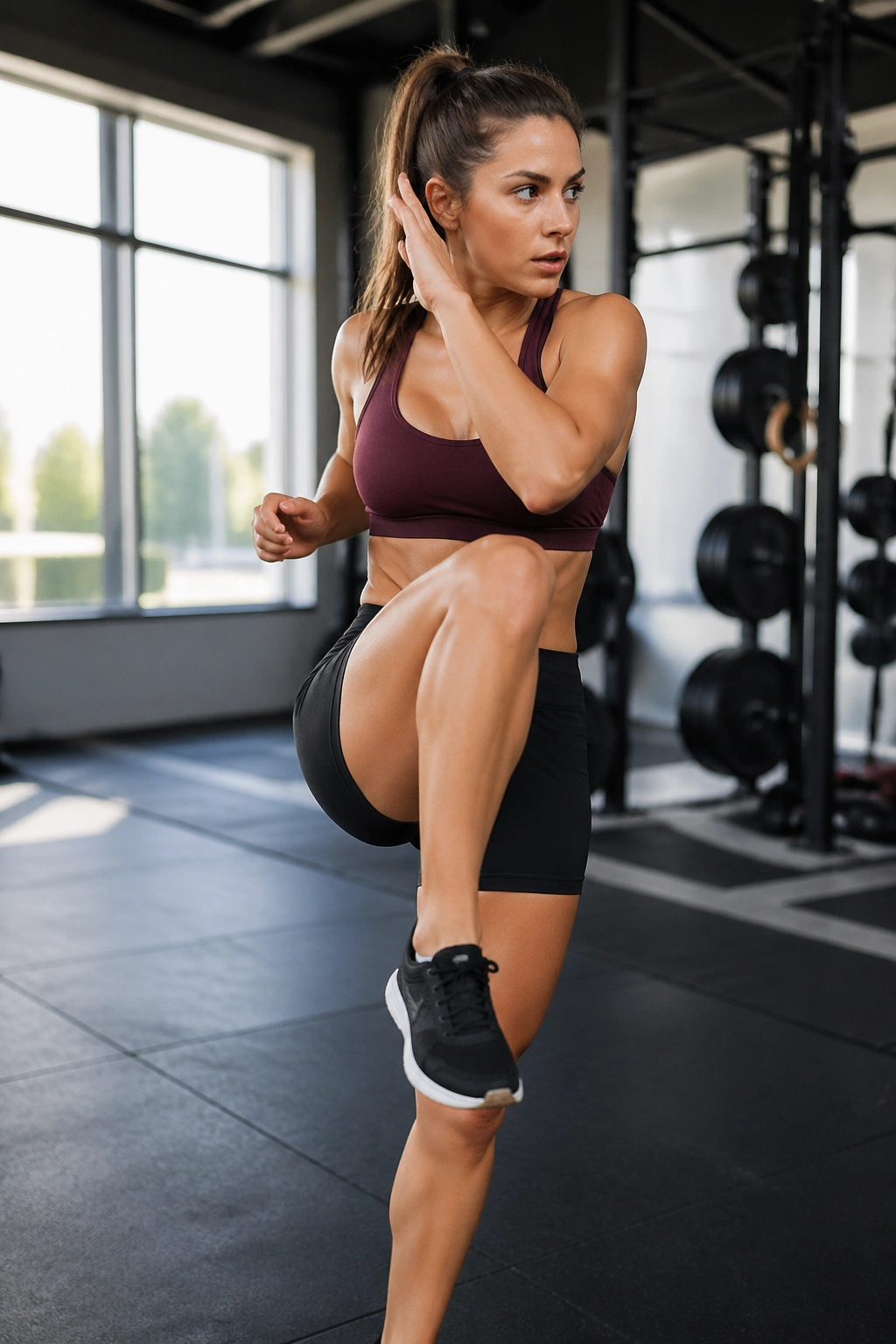
Want a move you can do in a small room without lying on the floor? This one earns its keep fast.
Standing cross-body knee drives pair a core crunch with a little cardio. Bring one knee up toward the opposite elbow while the standing leg stays soft and the torso stays tall. The upper abs work to fold the rib cage in, and the movement stays gentle on the lower back. It is also easier to repeat for longer intervals, which matters when you want a workout that burns more than a few calories.
Try 30 seconds on, 15 seconds off for 4 to 6 rounds. Keep the arms active, almost like a light run in place, and avoid leaning way back to lift the knee. The knee comes up. The ribs come down. That’s the shape.
10. Russian Twists with a Tall Spine
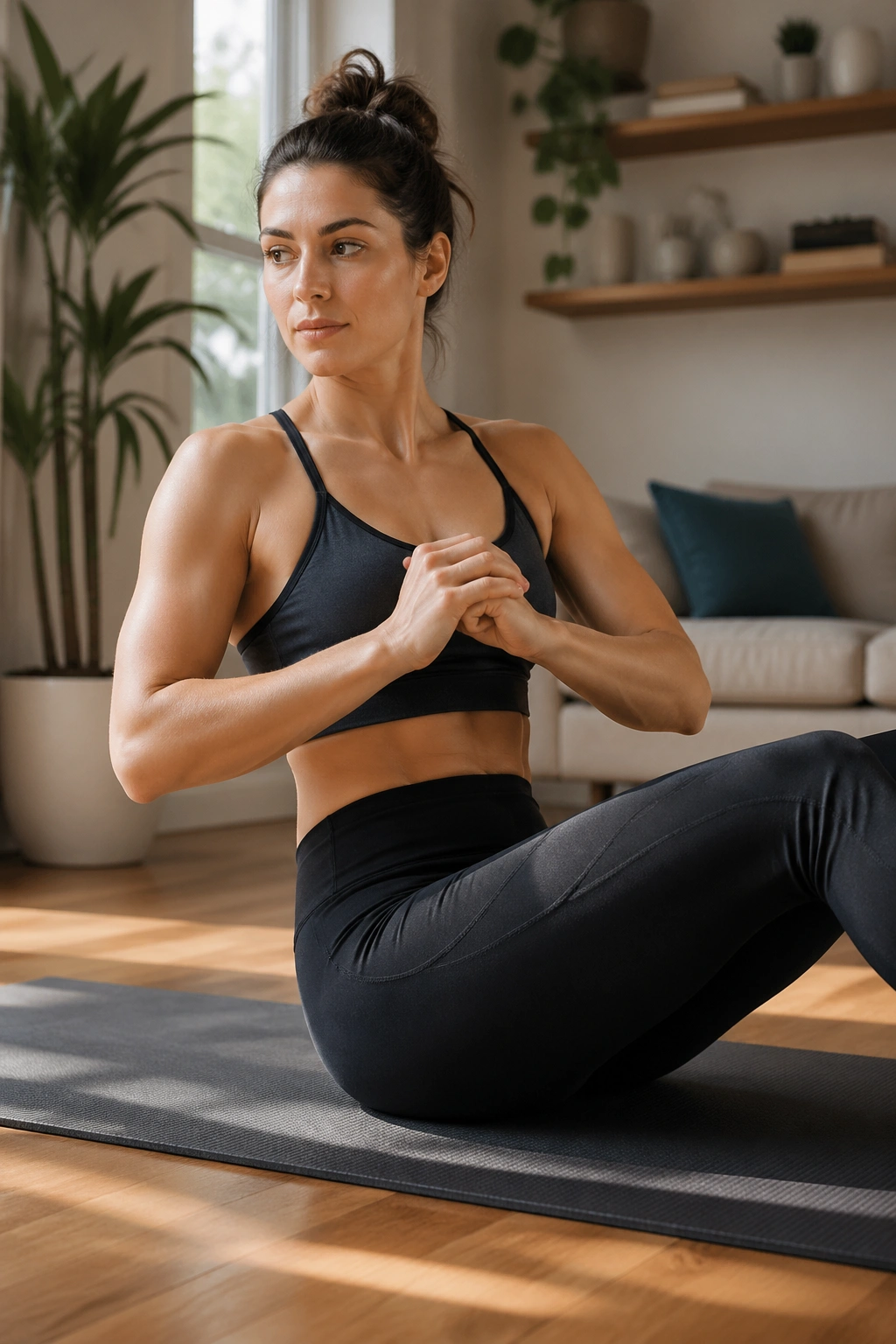
Russian twists are better when they look a little boring. That is not a joke.
The mistake people make is slumping and throwing the hands side to side like they are stirring a giant pot. That puts a lot of lazy motion into the low back. Instead, sit tall, lean back only a little, and rotate the rib cage from side to side. The abs and obliques have to manage the twist, and the upper core stays engaged to keep the spine from folding.
Use a light medicine ball, a single dumbbell, or nothing at all. 12 to 16 twists per side is enough for most people. If your hip flexors take over, sit a little taller and slow the pace down. This is one of those moves where less drama usually means more muscle.
11. V-Ups
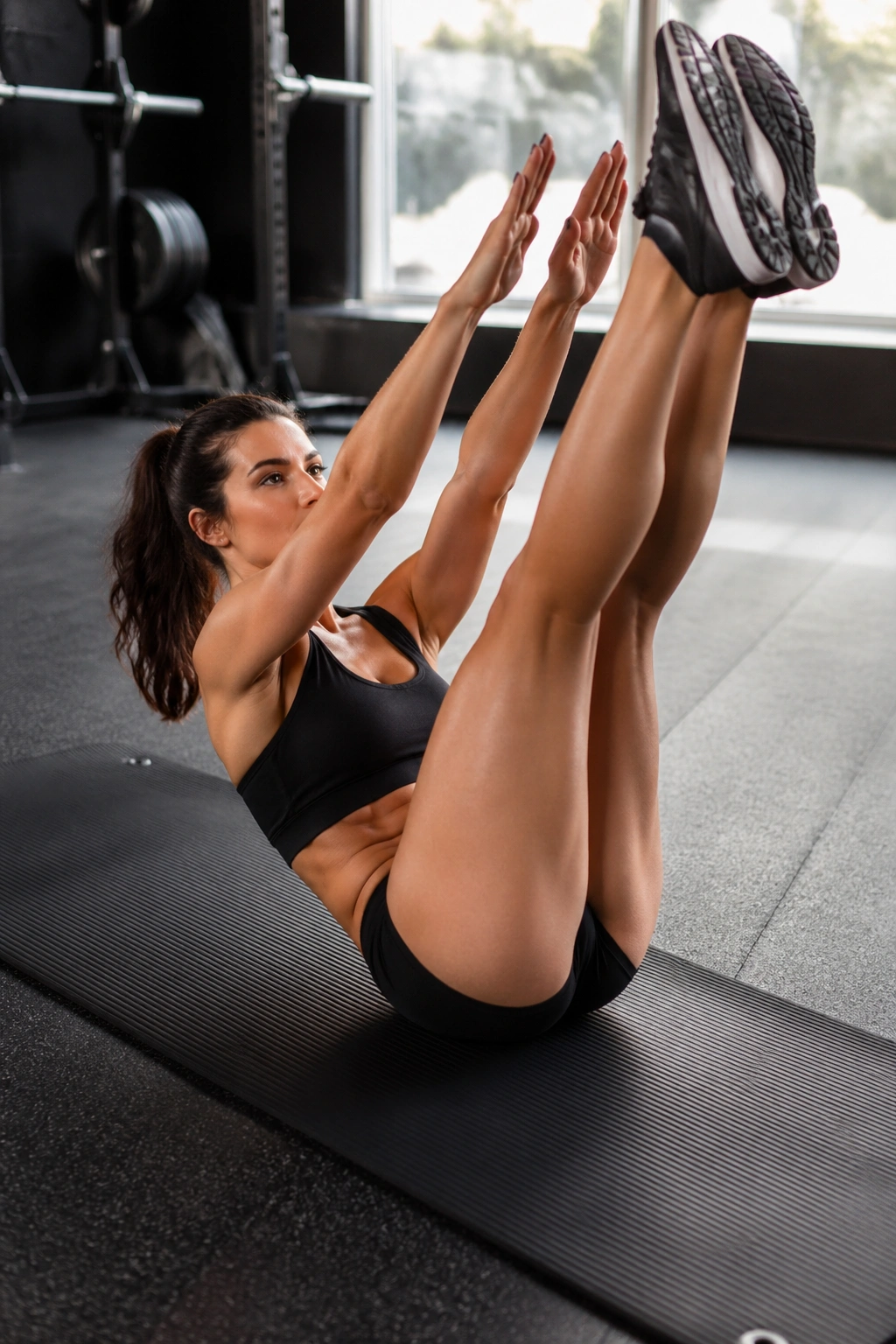
V-ups are the move that makes people stop after rep six and stare at the ceiling for a second.
They combine a leg raise and a crunch into one sharp fold through the middle of the body. The upper abs have to curl the torso up while the legs lift to meet them, and that creates a lot of tension in a short space. If you can keep the motion smooth, they are a strong choice for building visible core control.
Start with 5 to 8 reps and keep every one clean. No flinging the legs. No yanking the neck. If full V-ups are too much, bend the knees and do tuck-ups instead. You still get the fold through the trunk, just with less leverage against you. That is a smart trade.
12. Flutter Kicks with a Braced Core
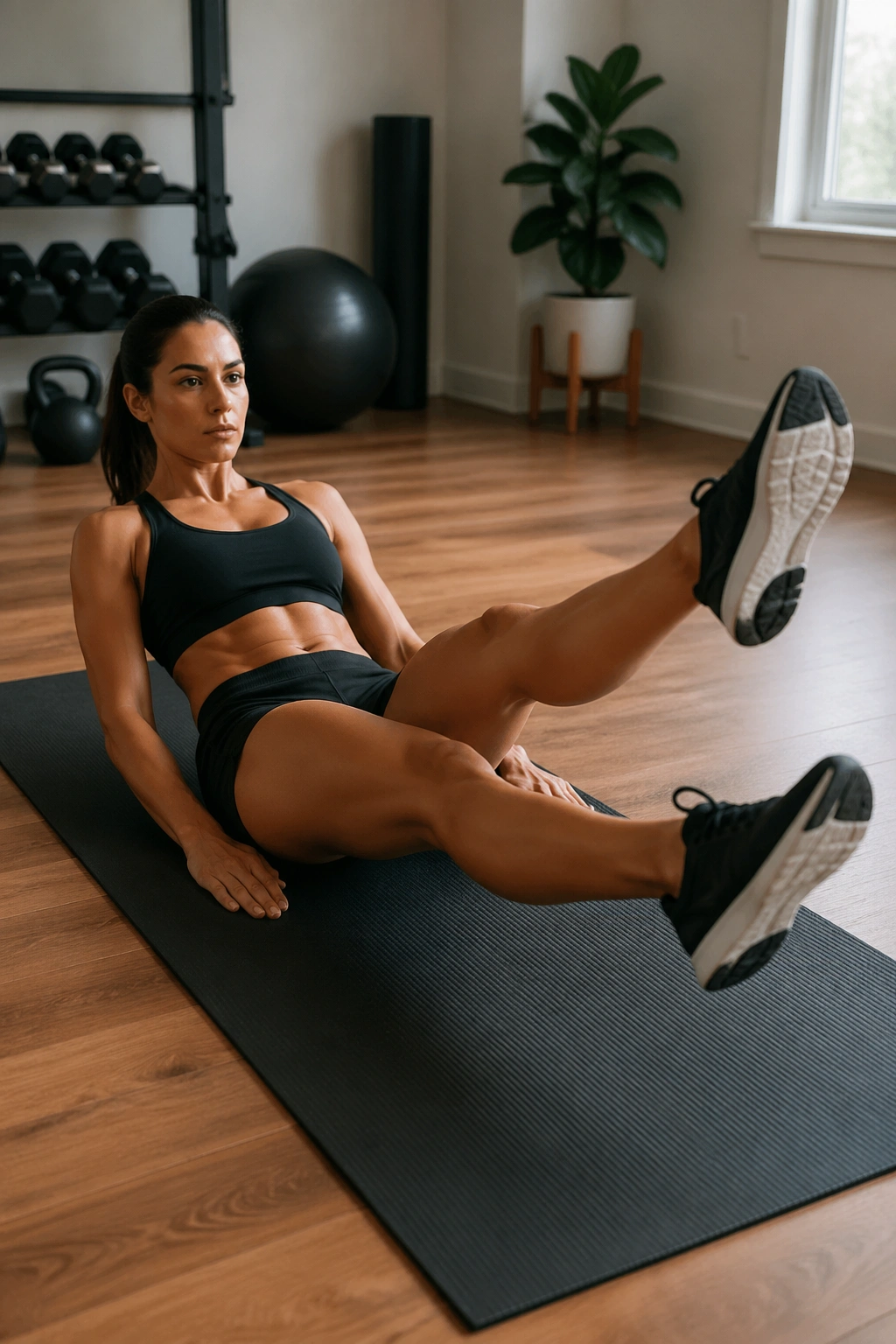
Flutter kicks are sneaky. The legs barely move, and yet the front of the core starts burning faster than people expect.
Keep the legs low, about 4 to 6 inches off the floor if your back allows it, and alternate small kicks without letting the torso wiggle. The upper abs help keep the ribs pinned down while the hip flexors and lower abs stabilize the front of the body. If your neck gets tight, lower your head or place your hands under the hips for support.
I prefer timed sets here: 20 to 30 seconds of work, then a short rest. Longer is fine if your back stays happy, but once the lower spine arches, the exercise loses its edge. Tiny kicks. Tight core. That’s the game.
13. Side Plank Hip Lifts
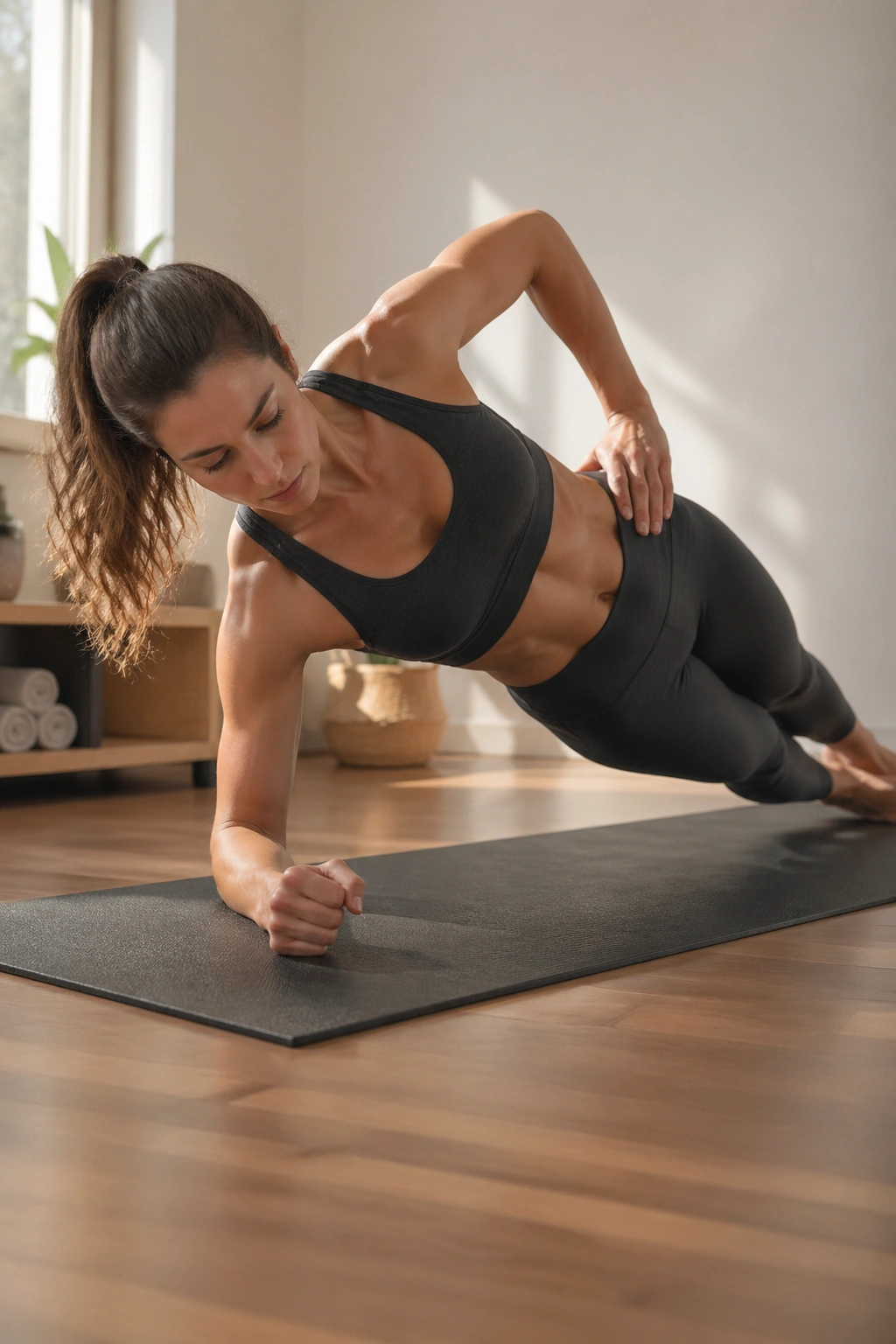
The side plank is not only for obliques. It also teaches the center of the body to stay stacked, which helps the whole midsection look and work better.
Why It Belongs in an Upper Core Routine
When you lift and lower the hip from a side plank, the torso has to hold a straight line while one side of the body does more work than the other. That makes the abdominal wall, the side muscles, and the shoulder all coordinate. It is not a flashy ab move, but it is an honest one.
Use 8 to 12 hip lifts per side. Keep the elbow under the shoulder and the feet stacked if you can manage it. If that is too tough, stagger the feet. You will still get plenty of work, and your form will stay clean. A bent-knee version is fine too.
14. Medicine Ball Slams
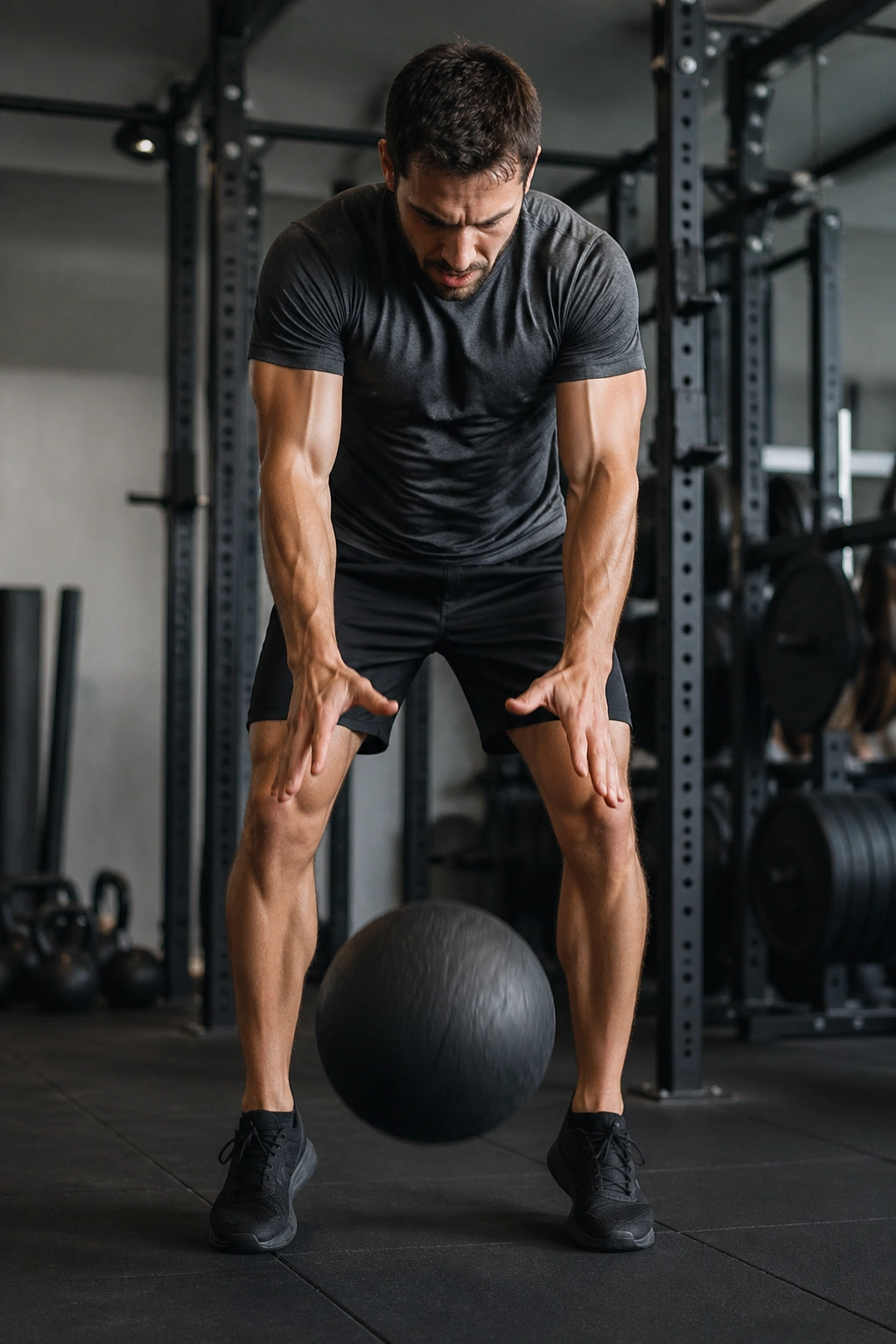
A 10-pound ball and a concrete floor can do a lot of work without feeling fancy.
Medicine ball slams are one of the best full-body options when you want core tension plus a hard breathing rate. Reach overhead, brace the abs, then drive the ball down as if you are trying to leave a dent in the floor. The upper core fires to control the torso on the way up and the way down, and the whole session becomes more athletic than a pure floor routine.
Use a ball that feels heavy but manageable. For many people, 6 to 12 pounds is enough. Do 8 to 15 slams per set. Reset your stance after each rep. If you rush the setup, the slam turns sloppy fast.
15. High Knees Intervals
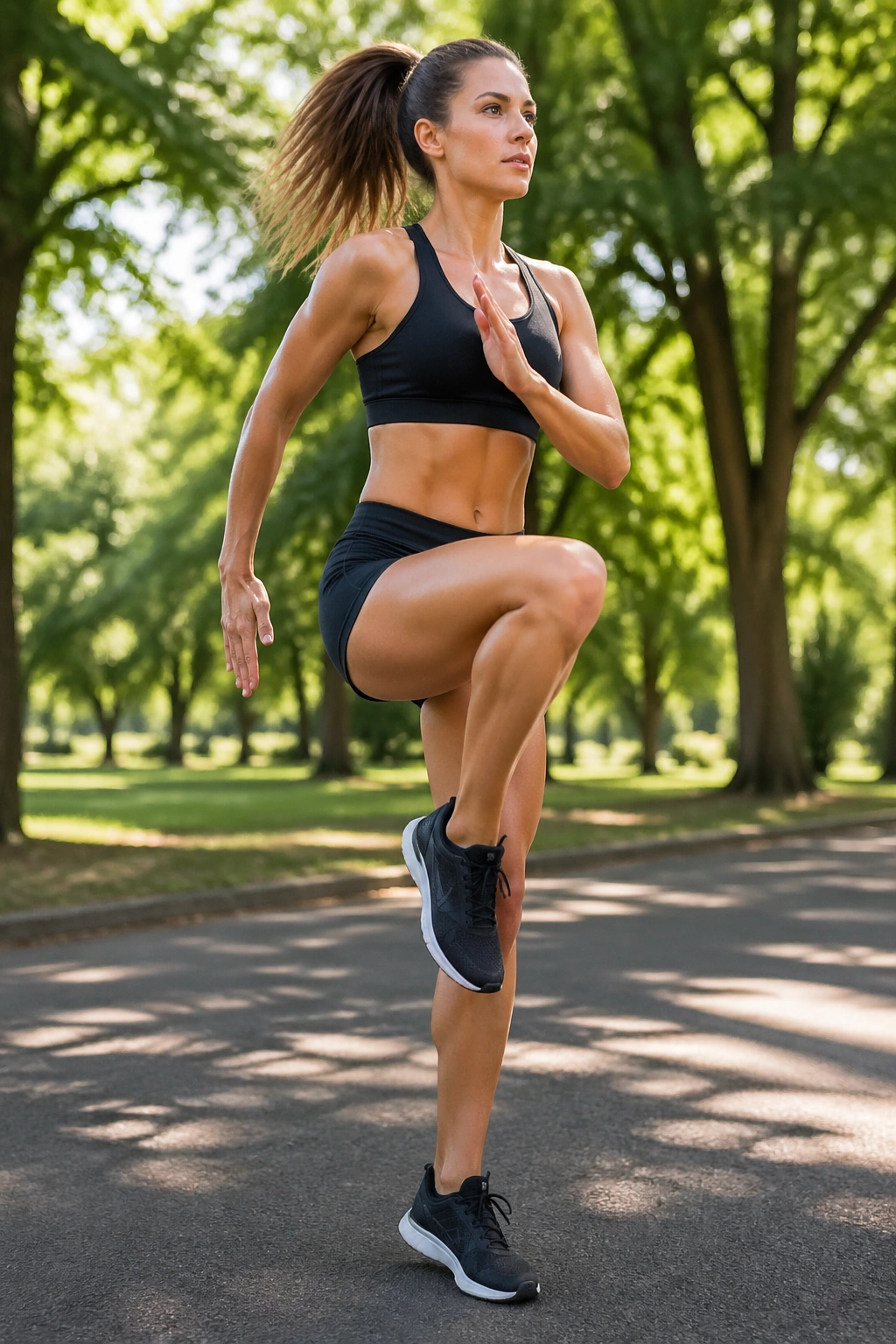
Can you get your heart rate up without fancy equipment? Absolutely.
High knees are basic, and basic is fine when the mechanics are right. Keep the torso tall, drive one knee at a time, and swing the arms with enough force to keep the rhythm alive. The upper abs brace to stop the body from leaning back, which is where a lot of people cheat. If you pound the floor like a drum solo, your joints will complain. Land softly.
How to Make Them Count
- Work for 20 to 30 seconds.
- Rest for 15 to 20 seconds.
- Keep the chest lifted.
- Pull the knees to hip height if you can do it without leaning back.
- Use a quick, light foot strike.
This is a strong choice if your goal is fat loss plus core tone, because it asks for both speed and trunk control.
16. Burpees with a Tight Core
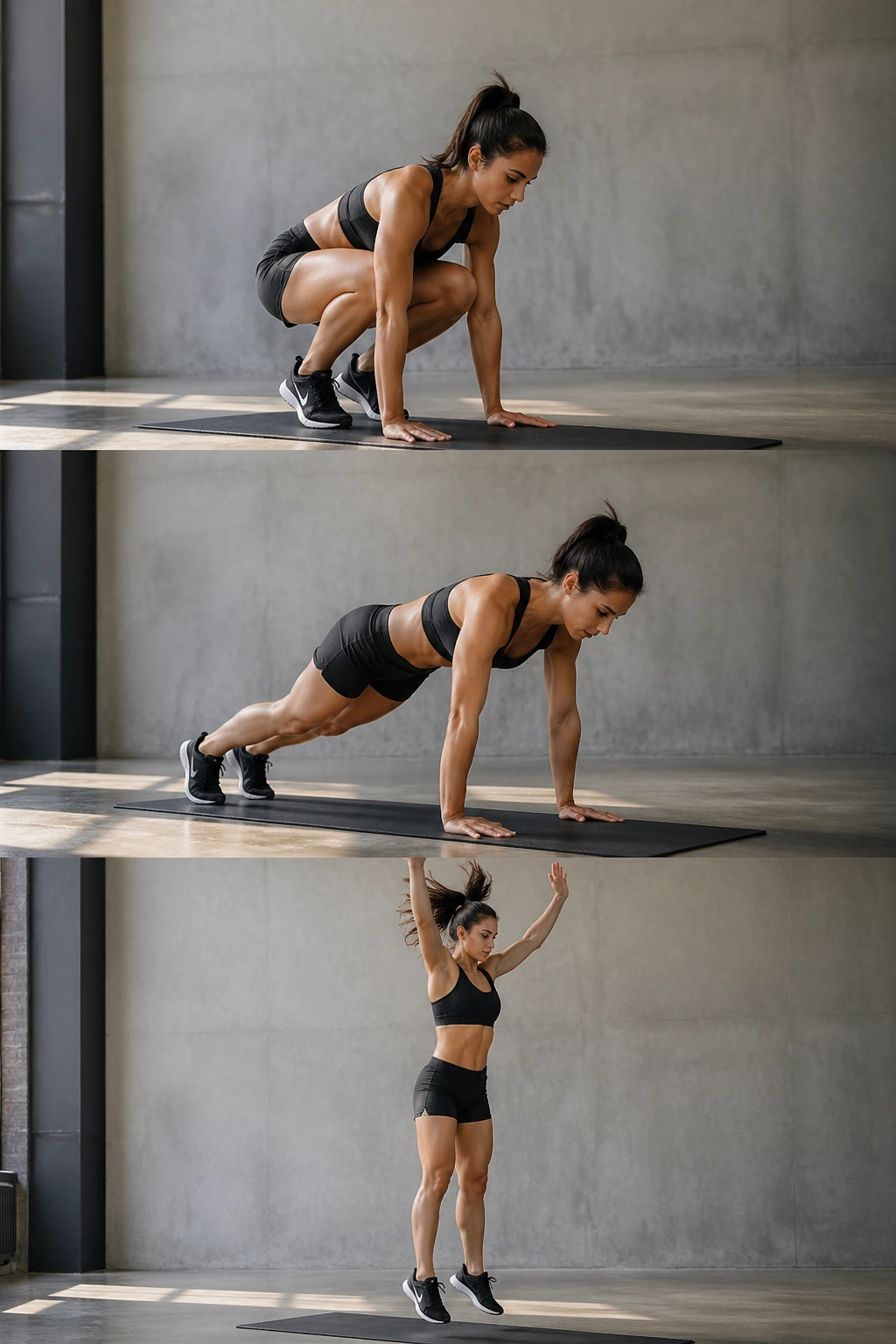
Burpees are ugly in the best way.
Unlike a neat little ab exercise, burpees make the whole body earn its keep. You squat, plant the hands, step or jump back, brace the trunk, return forward, and stand or jump again. The midsection works hard to keep everything connected, especially if you squeeze the ribs down before each plank position. If you let the belly sag in the floor phase, the core stops doing the job.
Use 6 to 10 reps for a hard set, or 30 seconds if you want to keep it moving. Step back instead of jumping if your knees or wrists hate the impact. That version still raises the heart rate and still trains the trunk. No shame there. Smart training beats stubborn training.
17. Jackknife Sit-Ups
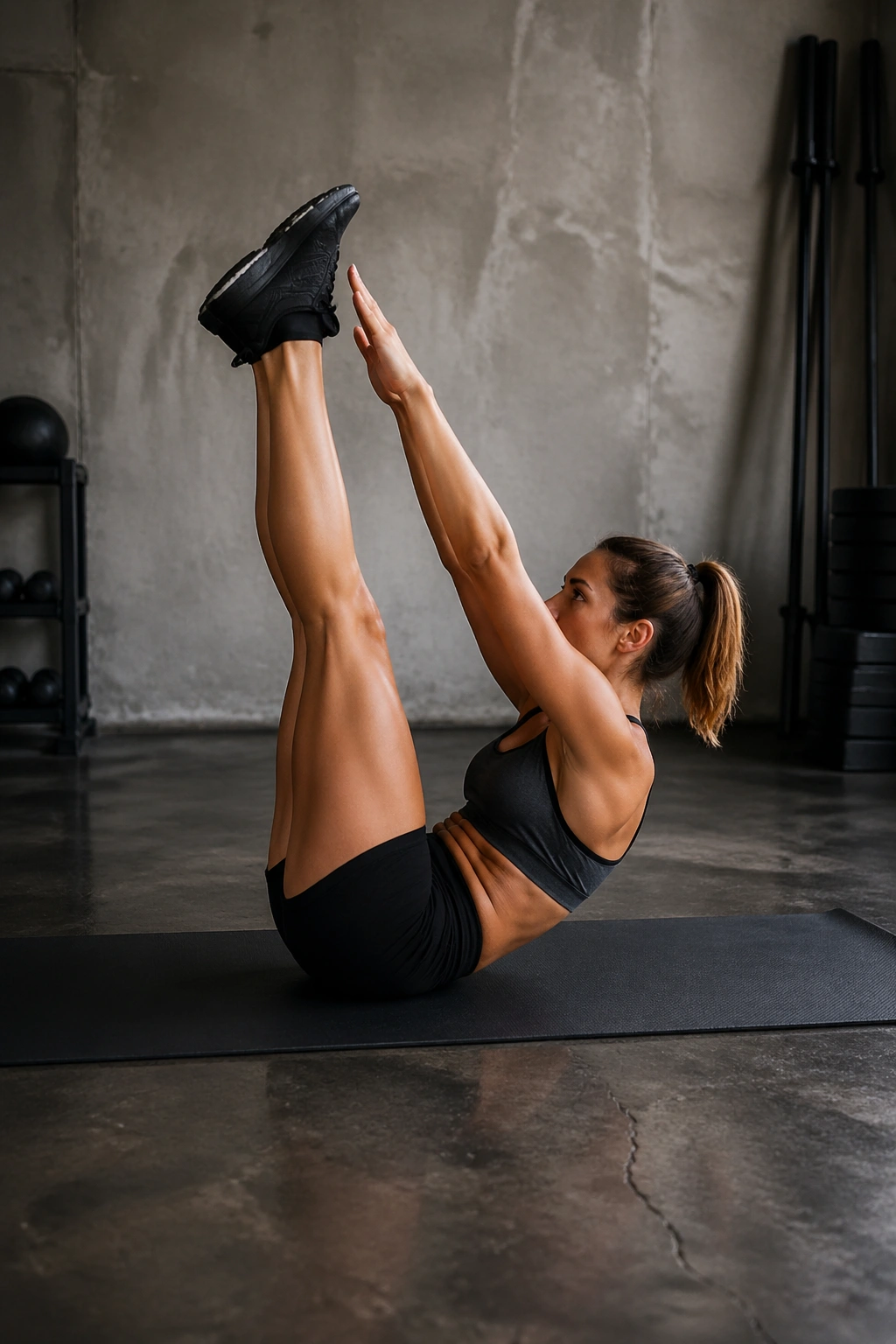
Jackknife sit-ups feel like a full-body fold, and that is why they land so well in a core session.
You lift the torso and the legs together so the body meets in the middle. The upper abs help curl the rib cage forward, while the lower abs and hip flexors raise the legs. It is a demanding move, which is why it’s better in smaller doses than people think. Clean reps are the whole point.
Try 8 to 12 reps and pause for a beat at the top. That tiny pause keeps you from bouncing through the middle. If your neck starts to crank, hold your chin slightly tucked and keep your eyes on the thighs instead of staring at the toes. It sounds minor. It makes a difference.
18. Bear Crawl Holds and Steps
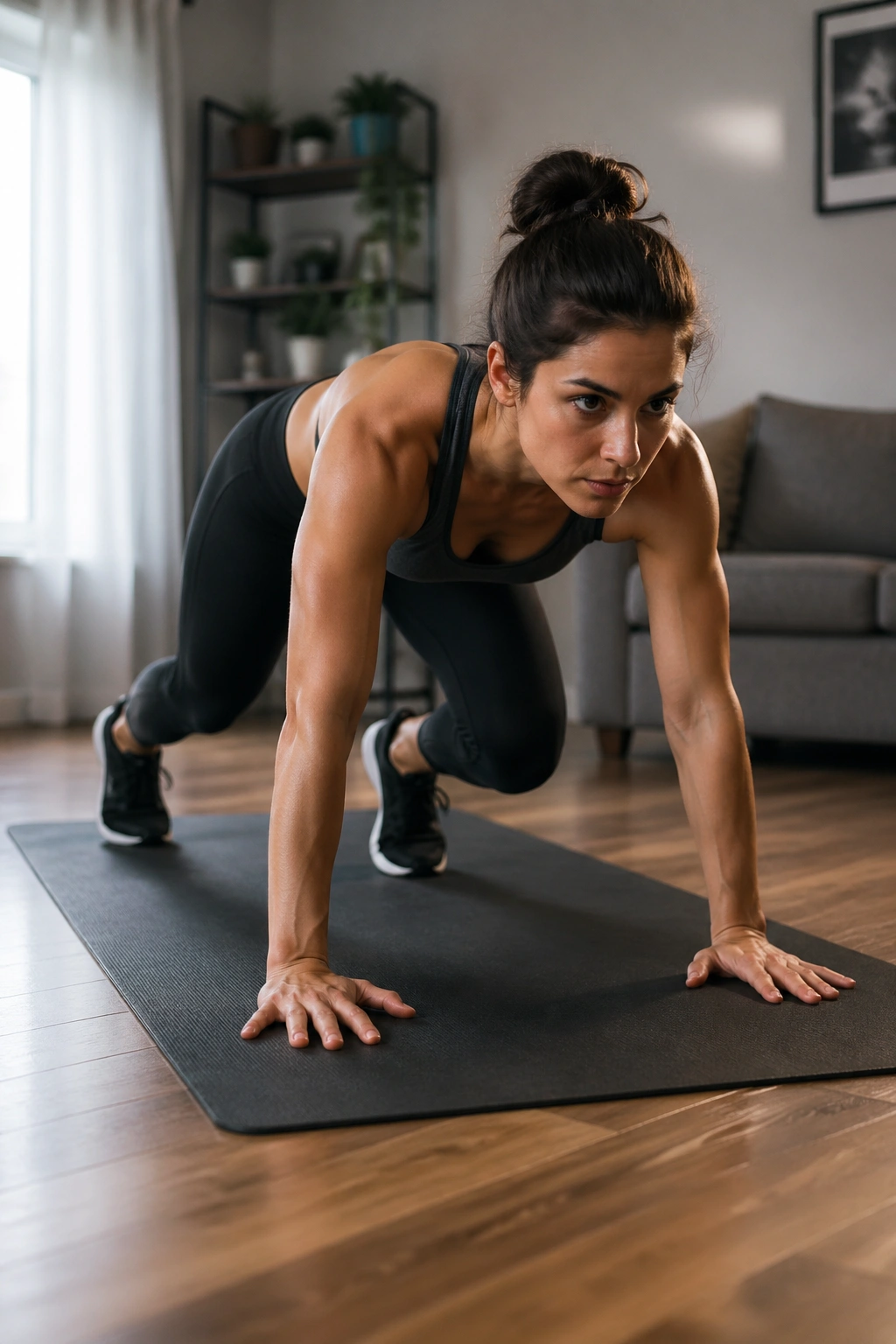
A crawling drill can beat a hundred lazy crunches when the goal is a tight, working core.
In a bear crawl hold, the knees hover about 2 inches off the floor while the shoulders, abs, and hips stay braced. Add a slow step forward and backward, and the whole torso has to keep up with the shifting weight. The upper belly works hard here because the body wants to sag the moment the knees leave the ground.
What to Focus On
- Keep the back flat.
- Move the opposite hand and foot together.
- Hold for 15 to 30 seconds.
- Take 4 to 6 slow steps each direction.
- Breathe through the tension instead of holding your breath.
This one looks simple from across the room. Up close, it is a grinder.
19. Cardio Kickboxing Knee Strikes
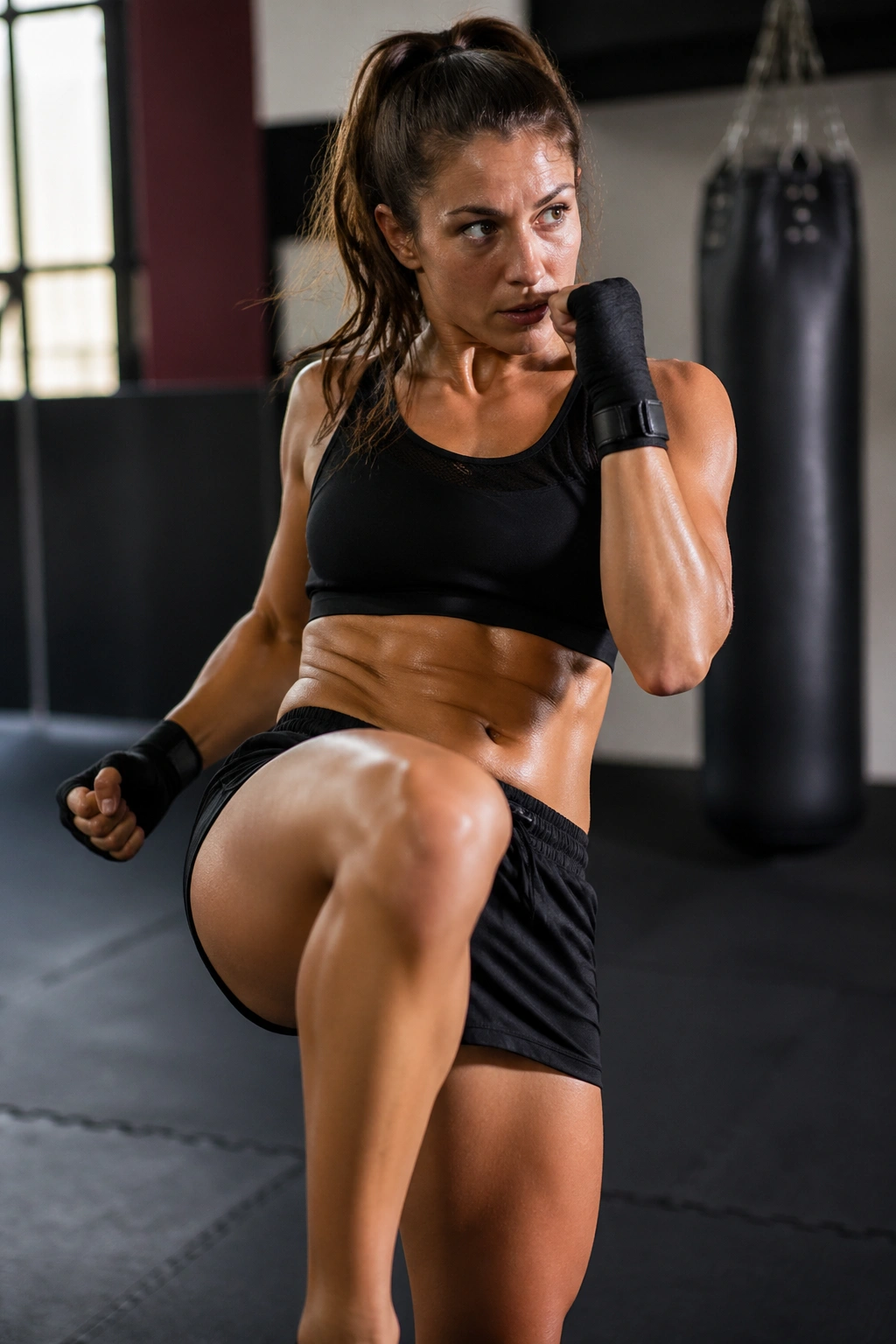
Cardio kickboxing brings rhythm into the picture, and that changes everything.
Drive one knee up while the opposite hand guards the face, then switch sides with a sharp exhale. The torso has to rotate slightly, the core has to brace, and the heart rate climbs because the movement keeps flowing. It’s a good fit if floor work bores you or if you want a standing option that still targets the midsection. The upper abs contribute each time the ribs fold toward the lifted knee.
Use 3 rounds of 1 minute with 30 seconds of rest. You can make it low impact by stepping the supporting foot instead of hopping. Keep the shoulders down and the chin relaxed. The punches and knees should feel crisp, not frantic.
20. A 15-Minute Core Circuit You Can Repeat
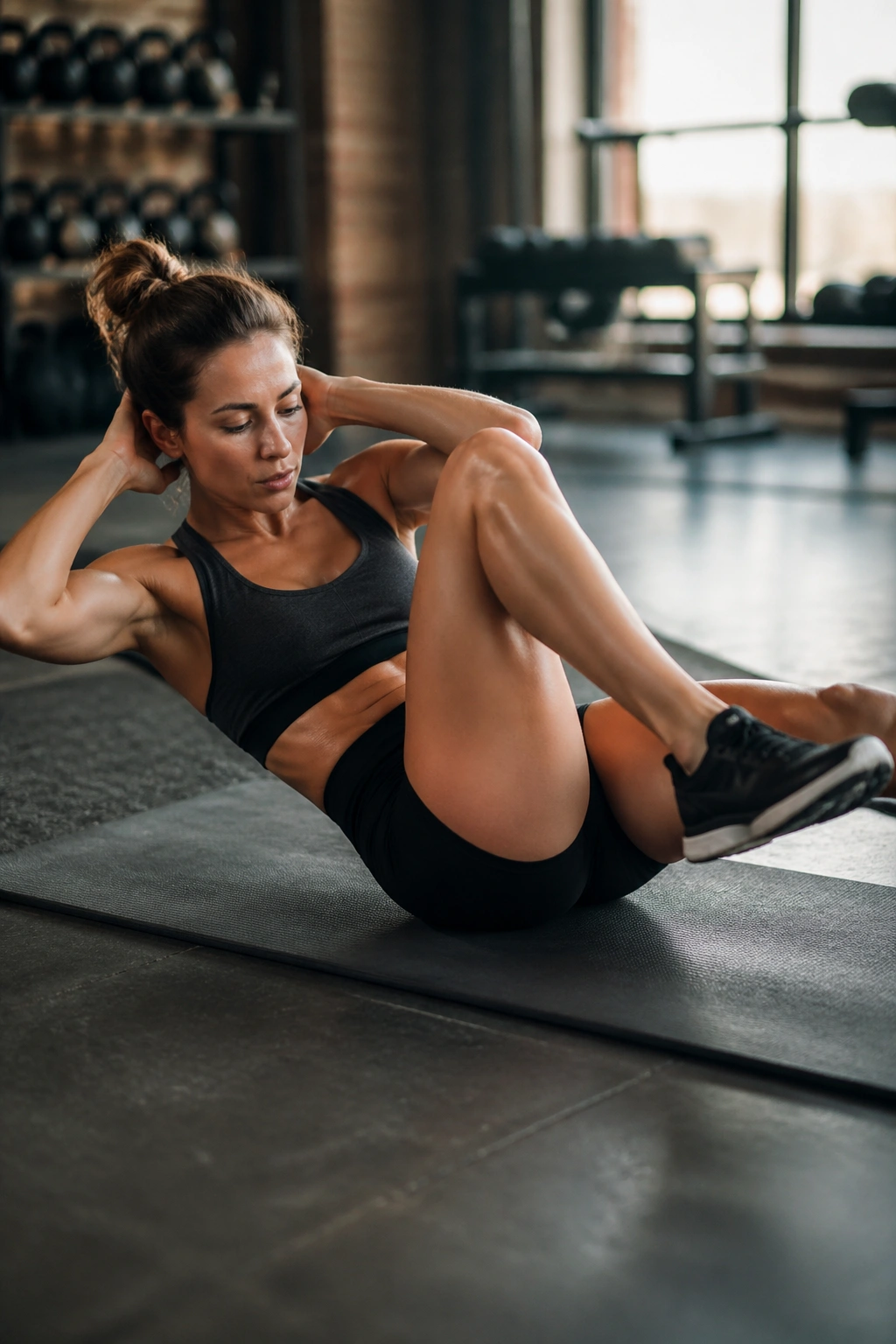
If you want a session that ties all of this together, build a short circuit and repeat it three times. That is usually enough to leave the abs warm, the breathing up, and the whole midsection feeling tighter without turning the workout into a circus.
Here’s a clean setup:
- 30 seconds bicycle crunches
- 30 seconds mountain climbers
- 20 seconds hollow body hold
- 30 seconds standing cross-body knee drives
- 30 seconds plank shoulder taps
- 20 seconds rest
Repeat the circuit 3 rounds. If your back gets tired, swap the hollow hold for dead bugs. If your wrists get cranky, replace shoulder taps with side plank hip lifts. That kind of swap keeps the workout honest without forcing you into bad form.
This is the version I’d hand to someone who wants upper belly fat workouts that actually fit into real life. Short enough to do on a busy day. Hard enough to matter. And if you keep it up, the core starts looking less soft not because one move is magic, but because the whole system is finally doing its share.
