



A good cooldown can feel boring right up until the moment your hips lock up while you bend to tie your shoes. That is where post workout stretches for women at home earn their keep. A mat, a wall, a chair, and five quiet minutes can change how you feel for the rest of the day.
The useful part is not fancy. It’s the simple stuff done well: holding a stretch long enough for the muscle to soften, breathing out so your body stops guarding, and skipping the old habit of bouncing around like you’re trying to shake a knot loose. After a workout, your muscles are warm, which makes this the best time to work on range without forcing it.
I’ve always liked cooldown stretching more than pre-workout stretching, honestly. Pre-workout mobility has a job to do, and post-workout stretching has a different one. It should feel like a slow exhale after effort — not a test, not a contest, and definitely not a grimace-inducing display of flexibility.
Pick the areas that did the most work. Squats and lunges hit the quads, glutes, and hip flexors. Push-ups and planks light up the chest, shoulders, wrists, and front of the neck. Running and jump training leave the calves and hamstrings grumpy. A smart routine starts there and works outward.
1. Standing Quad Stretch for Tight Front Thighs
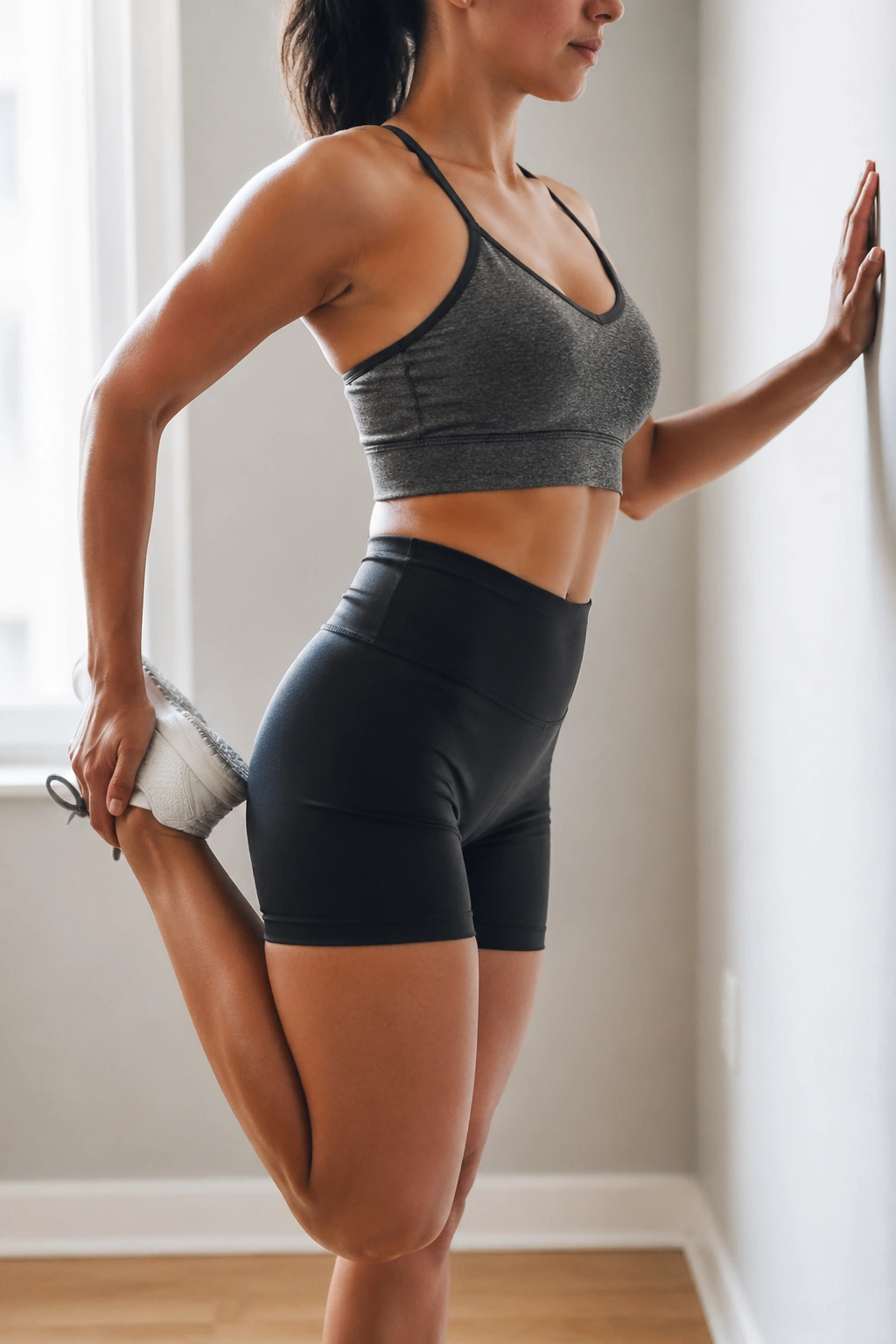
Your quads usually complain first after squats, step-ups, lunges, and long stair climbs. This stretch is one of the simplest ways to quiet that front-of-the-thigh pulling without dropping to the floor.
Why It Works After Leg Day
Stand tall near a wall, countertop, or sturdy chair so you can keep your balance. Bend one knee, grab the top of that foot, and bring the heel toward your glute without yanking it. The key is a tiny pelvic tuck — think tailbone pointing down rather than your low back arching.
- Keep your knees close together.
- Press the standing foot firmly into the floor.
- Hold for about 20 to 30 seconds per side.
- Stop if you feel pinching in the knee.
My favorite cue: squeeze the glute on the stretching side first. That small move takes the stretch out of the front of the hip and makes it land where you want it.
2. Wall Calf Stretch for the Back of the Lower Leg
If your calves feel springy and short, this one matters more than people admit. Tight calves can make walking downstairs feel awkward and can tug on your Achilles after runs, jump rope, or a bunch of fast bodyweight work.
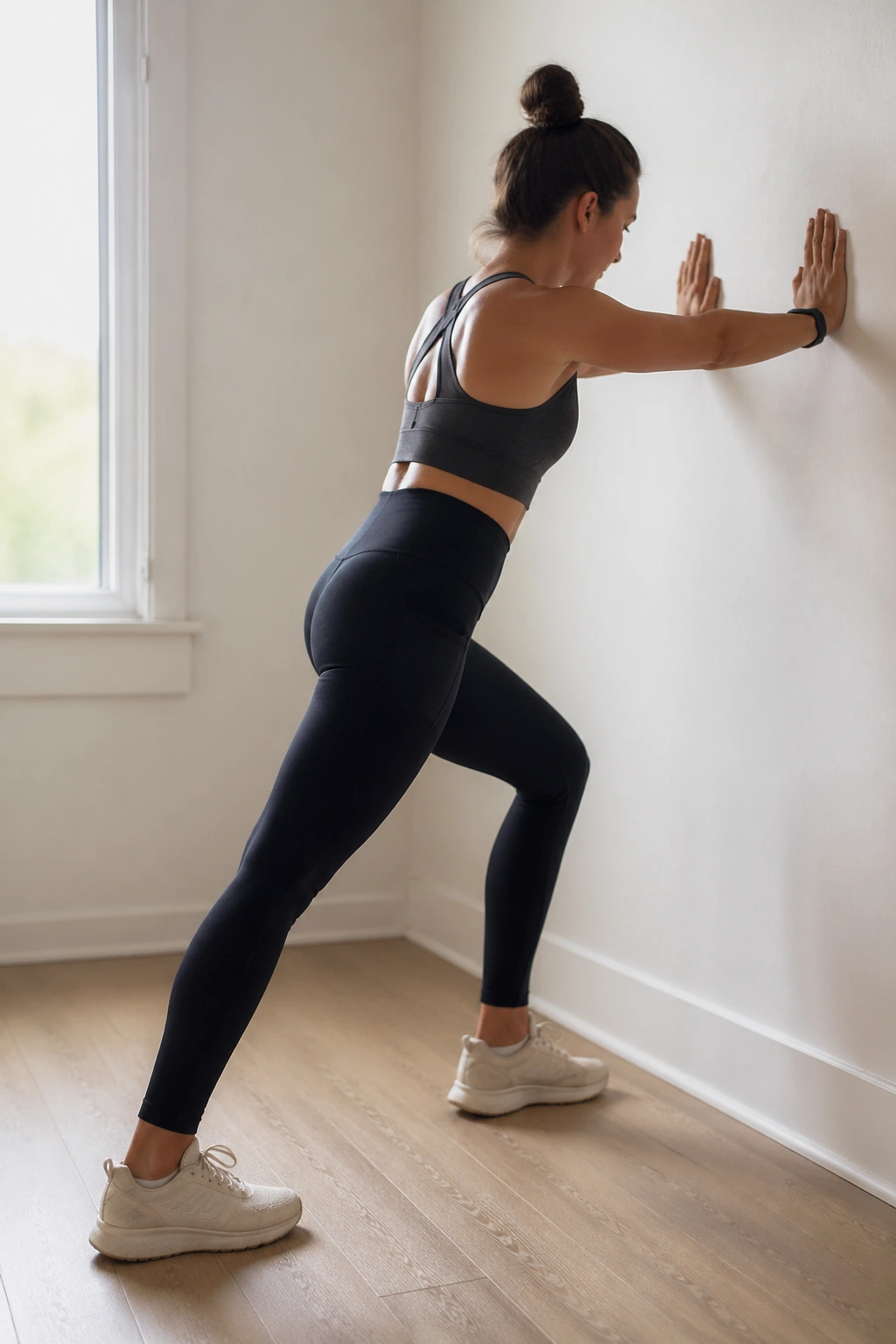
Place both hands on a wall. Step one leg back, keep that heel heavy, and lean forward until you feel the stretch in the lower calf. Then bend the back knee a little and keep the heel down to reach the deeper, lower part of the calf. That second version is the one most people skip, and it’s usually the one that matters after a workout.
The stretch should feel firm, not stabby. If your back heel pops up, you’re too far forward. If your toes are gripping the floor like they’re trying to survive a storm, back off a bit.
After cardio, I like this better than a quick ankle roll because it actually gives the tissue time to let go.
3. Hip Hinge Hamstring Stretch with a Flat Back
Why does a hamstring stretch feel almost useless when you round your back? Because then you’re often pulling on your spine more than your hamstrings. The hinge changes that fast.
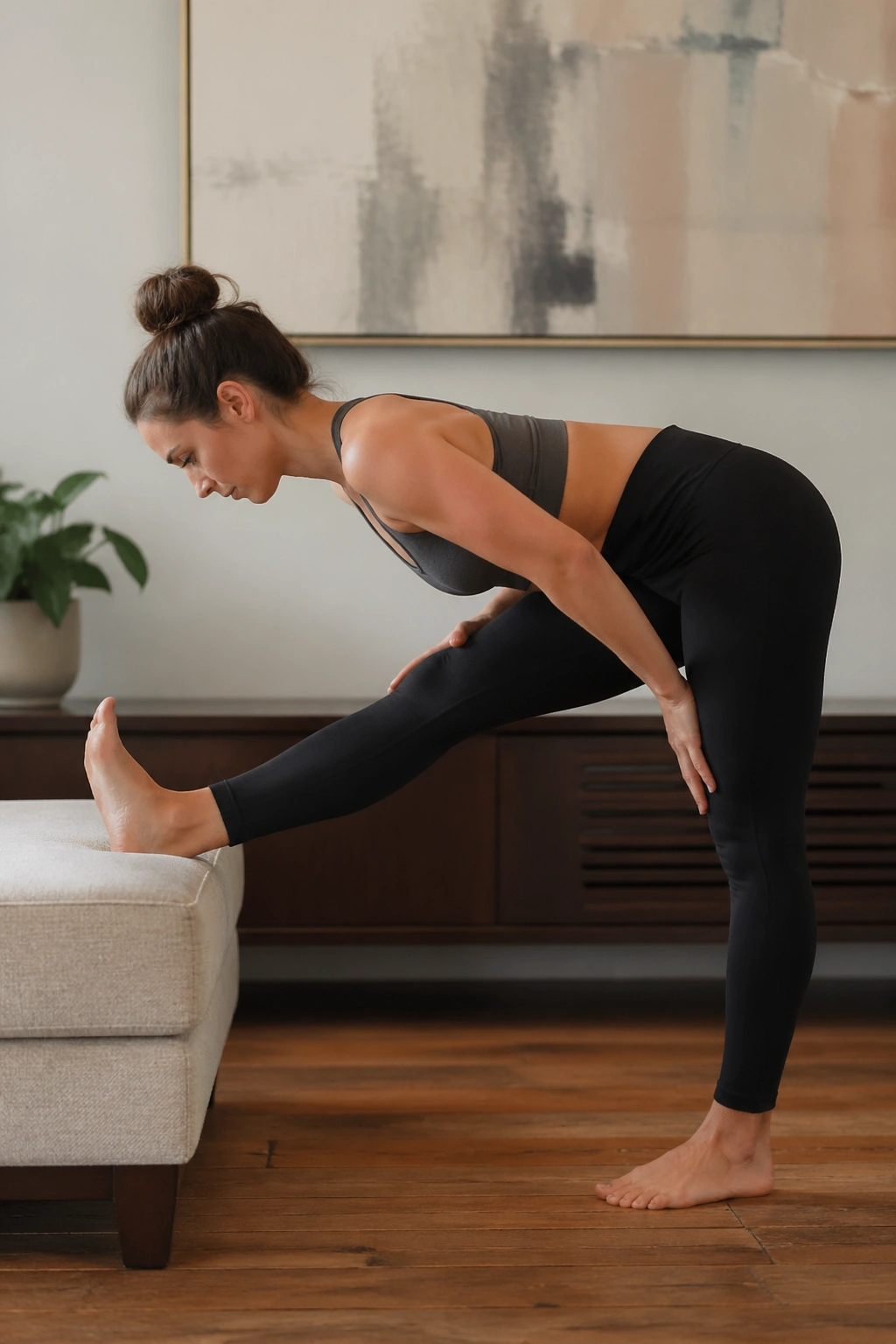
Stand with one heel on a low step, couch edge, or sturdy chair seat. Keep the working leg straight but not locked, then tip forward from the hips with a long spine. Your chest goes toward your thigh; your back does not turn into a question mark. That little change makes a huge difference in where you feel it.
How to Keep It Out of Your Lower Back
If you feel this behind the knee or in the low back, you’re going too far. Bend the knee a little. That is not cheating. It’s smarter.
A good hamstring stretch feels like a slow pull along the back of the thigh, sometimes all the way up toward the sit bone. Hold still, breathe, and let the exhale do some of the work. Then switch sides and check whether one leg feels dramatically tighter than the other — that’s common after single-leg work, running, or even long walks.
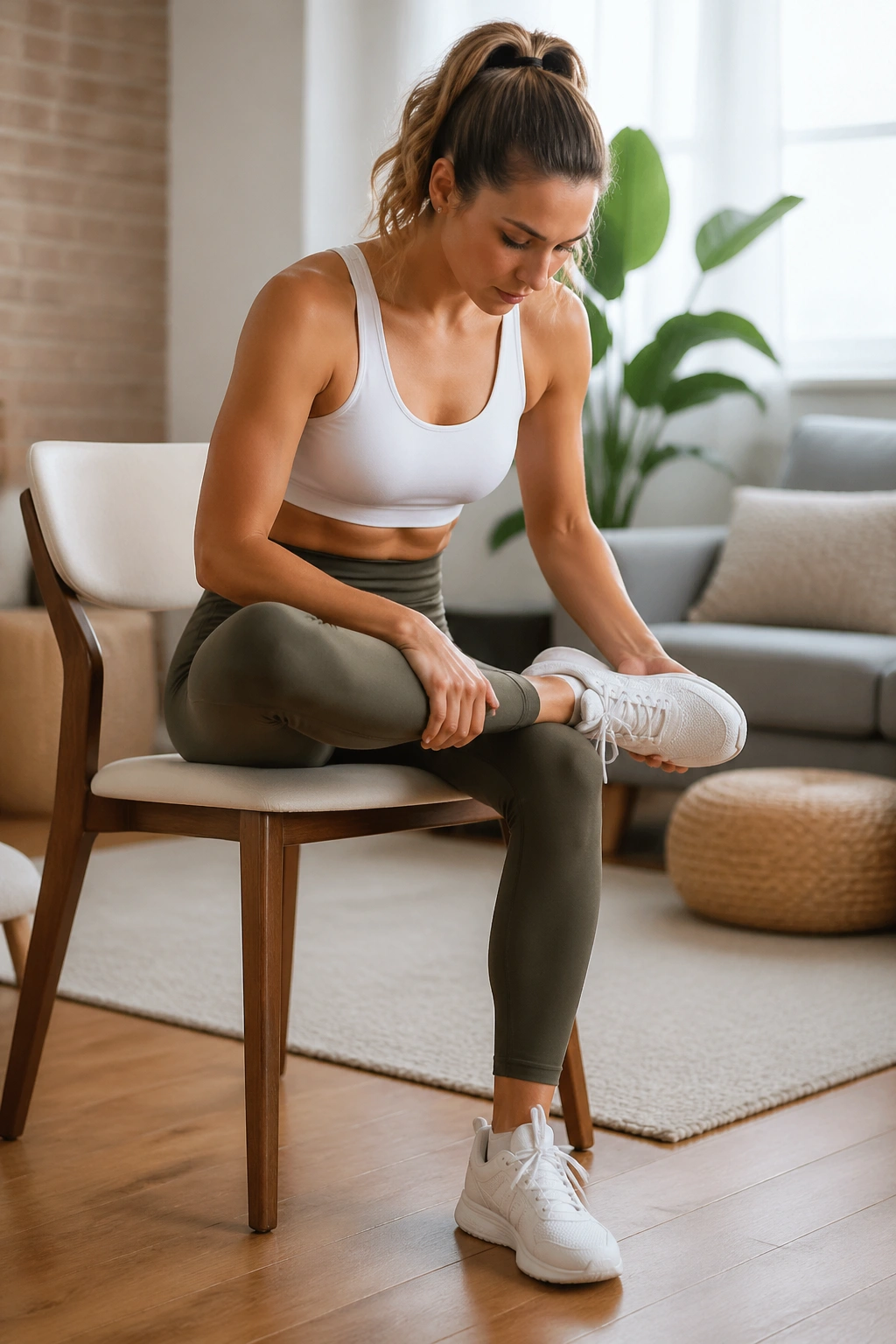
4. Seated Figure-Four Stretch on a Chair
You know that deep, slightly smug feeling in the outer glute after deadlifts or a long car ride? This stretch goes after that spot. It’s also one of the easiest options if getting down on the floor feels like too much after a hard session.
Sit on a chair with both feet flat. Cross one ankle over the opposite thigh, just above the knee, and keep the lifted foot flexed instead of floppy. Lean forward from the hips until you feel the stretch in the outer hip and glute. If your knee complains, back off or lower the ankle a little.
What You’re Actually Reaching
This hits the glute area and the deeper rotators around the hip. That’s the stuff that tends to tighten when you do squats, lunges, cycling, or anything where the hips keep repeating the same motion.
- Stay tall for the first breath.
- Lean forward only as far as the stretch stays mild.
- Keep the ankle flexed to protect the knee.
- Use a chair with a solid seat, not one that wobbles.
One good sign: you should feel the stretch in the butt, not a hard pinch in the knee.
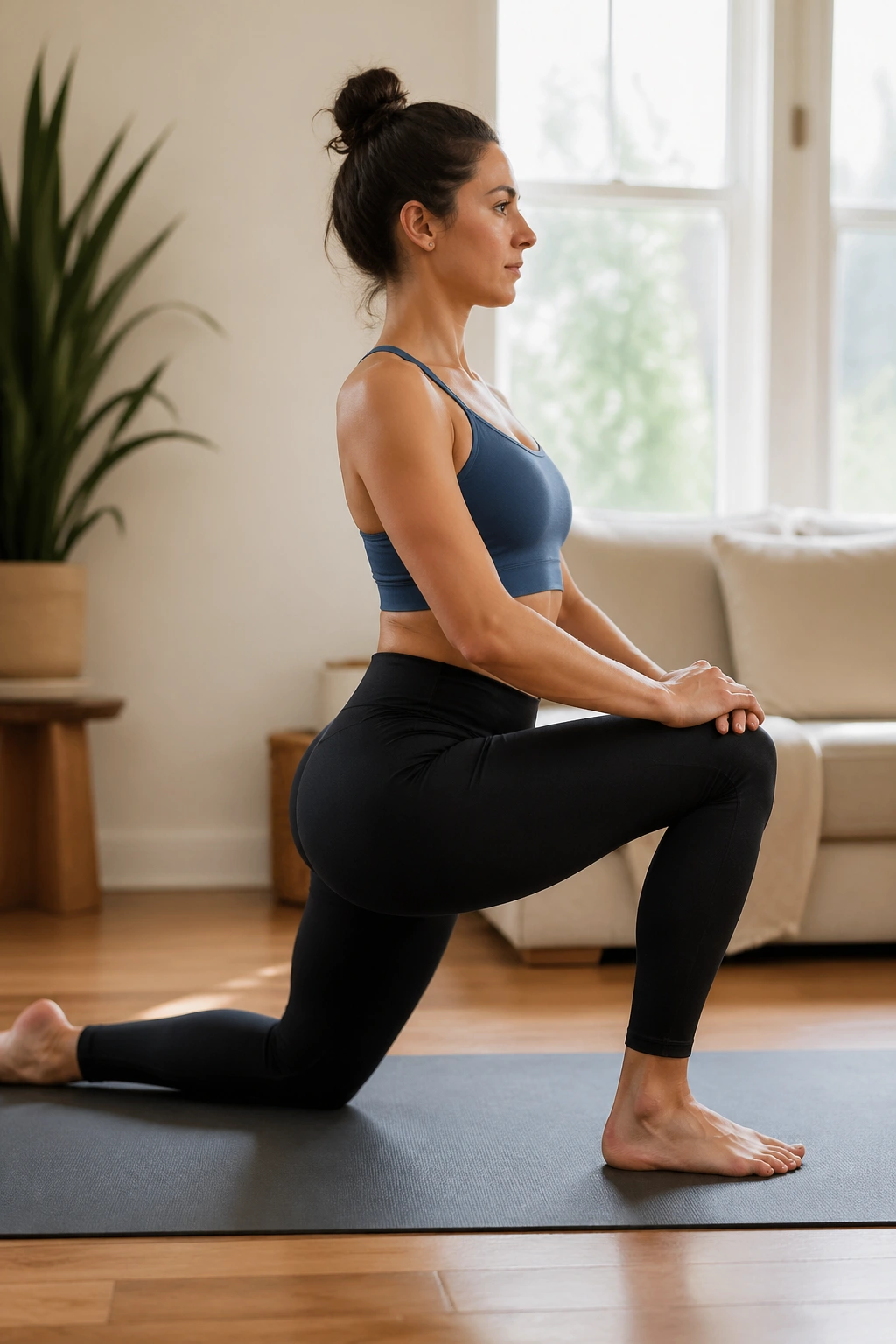
5. Kneeling Hip Flexor Stretch for Tight Front Hips
A kneeling hip flexor stretch is one of those moves that looks almost too plain to matter, then you do it and realize your front hip has been complaining for hours. I reach for it after split squats, hill walks, and any workout that leaves the pelvis feeling stuck forward.
Set one knee on a folded towel or mat and place the other foot in front of you. Shift your weight forward a few inches, but keep the ribcage stacked over the pelvis instead of letting your low back arch. Then squeeze the glute on the kneeling side. That is the part that turns a generic lunge into a real hip flexor stretch.
You should feel the front of the hip, sometimes the top of the thigh. If you feel your low back instead, you’ve pushed too far or lost the pelvic tuck. Back up. Seriously.
I like this stretch because it asks almost nothing from you. No fancy setup. No balance drama. Just a clean line of tension across the front of the hip, which is exactly where many workout routines leave a lot of tension behind.
6. Seated Butterfly Stretch for Inner Thighs
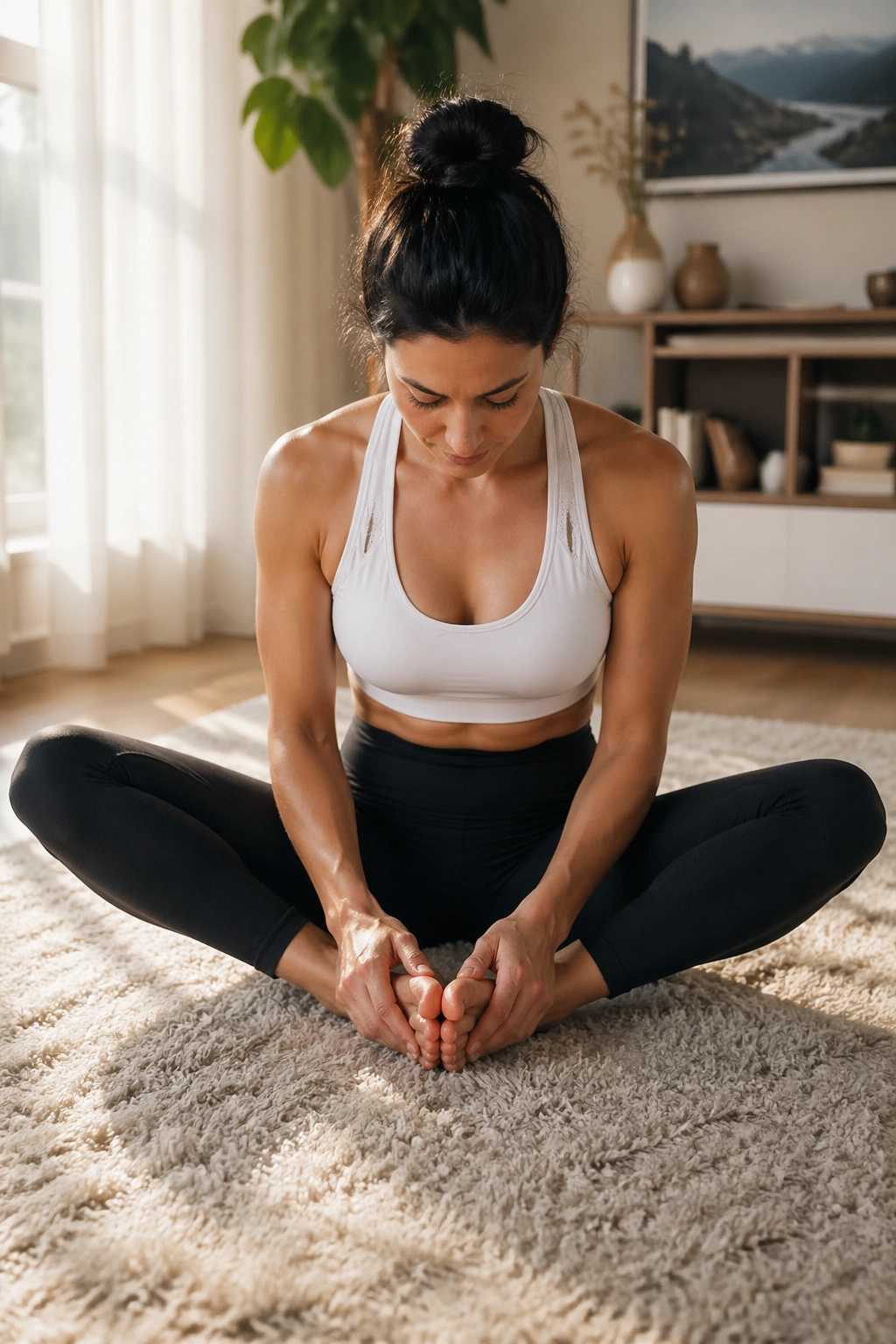
Unlike a deep wide-leg fold, butterfly is kinder when your hips feel cranky. It gives the inner thighs a solid stretch without asking for a big hamstring load or a lot of space.
Sit on the floor or on a folded blanket and bring the soles of your feet together. Let your knees open outward like book covers. Keep your spine long for a few breaths, then hinge forward only a little if it feels good. That tiny forward lean is enough for most people after lower-body training.
The important part is not forcing the knees toward the floor. That old advice is a mess. Your job is to let gravity do the work while you stay relaxed through the hips and lower belly.
This one works well after squats, side lunges, or Pilates-style sessions where the inner thighs have been active for a while. If your feet are far from your body and your back rounds hard, slide them closer in. Small adjustment, better stretch.
7. Child’s Pose With a Side Reach
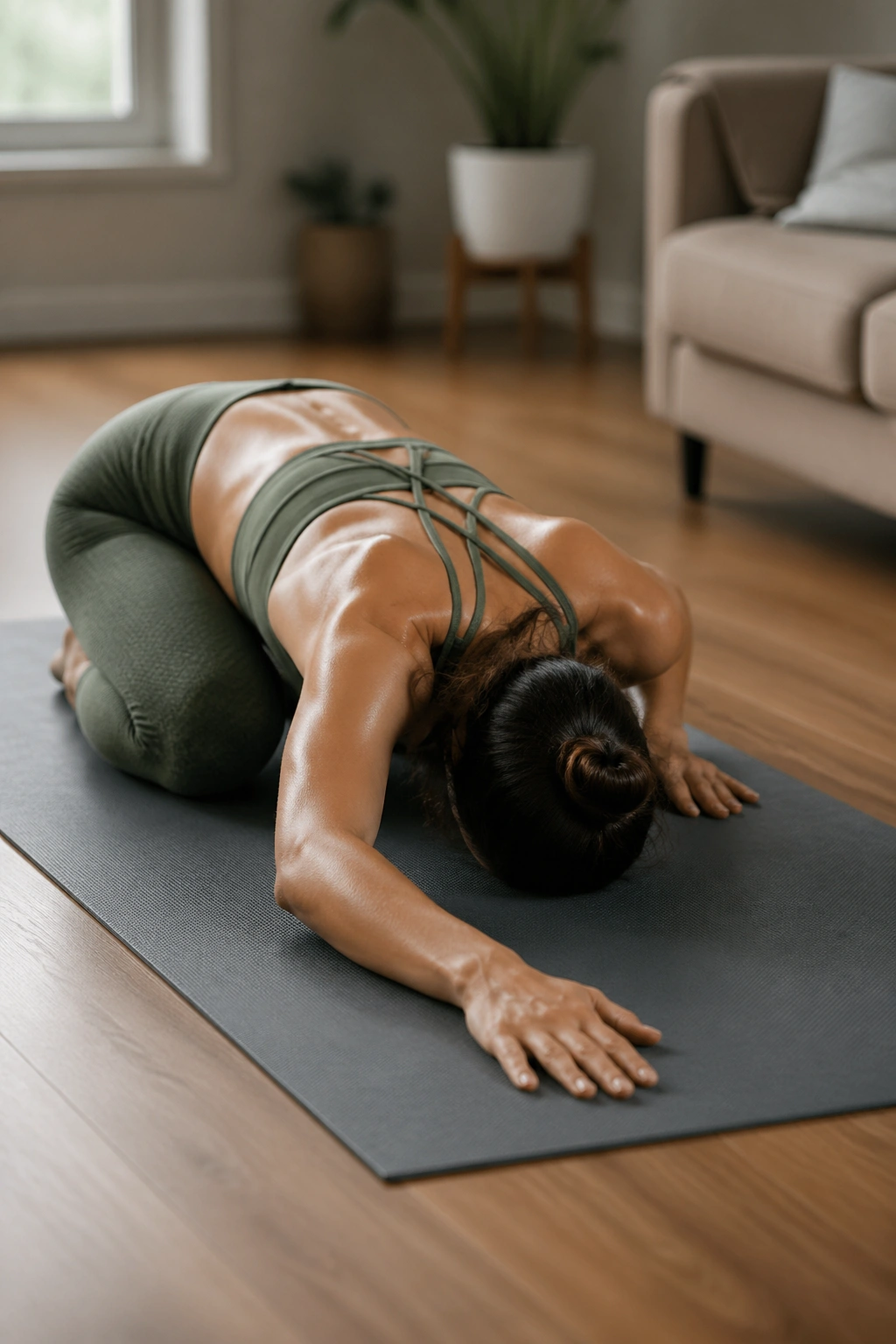
Your ribs should feel like they can finally breathe in this one. Child’s pose with a side reach is a back-and-lat stretch, yes, but it also gives the side body a long, quiet reset after push-ups, planks, or overhead work.
Kneel on a mat, sit your hips back toward your heels, and walk both hands forward. Then walk one hand a little farther to the side while keeping the hips heavy. You’ll feel the stretch travel along the armpit, side ribcage, and lower back on that side.
Why the Side Reach Matters
The side reach turns a basic rest position into something far more useful. It gets into the lat and the muscles between the ribs — the ones that tighten when you brace hard during core work.
- Keep your forehead on the mat or a pillow.
- Breathe into the stretched side ribs.
- Reach your fingertips long, not stiff.
- Switch sides after 20 to 30 seconds.
A lot of people rush this one. Don’t. The slow exhale is part of the stretch.
8. Thread-the-Needle Shoulder Stretch on the Mat
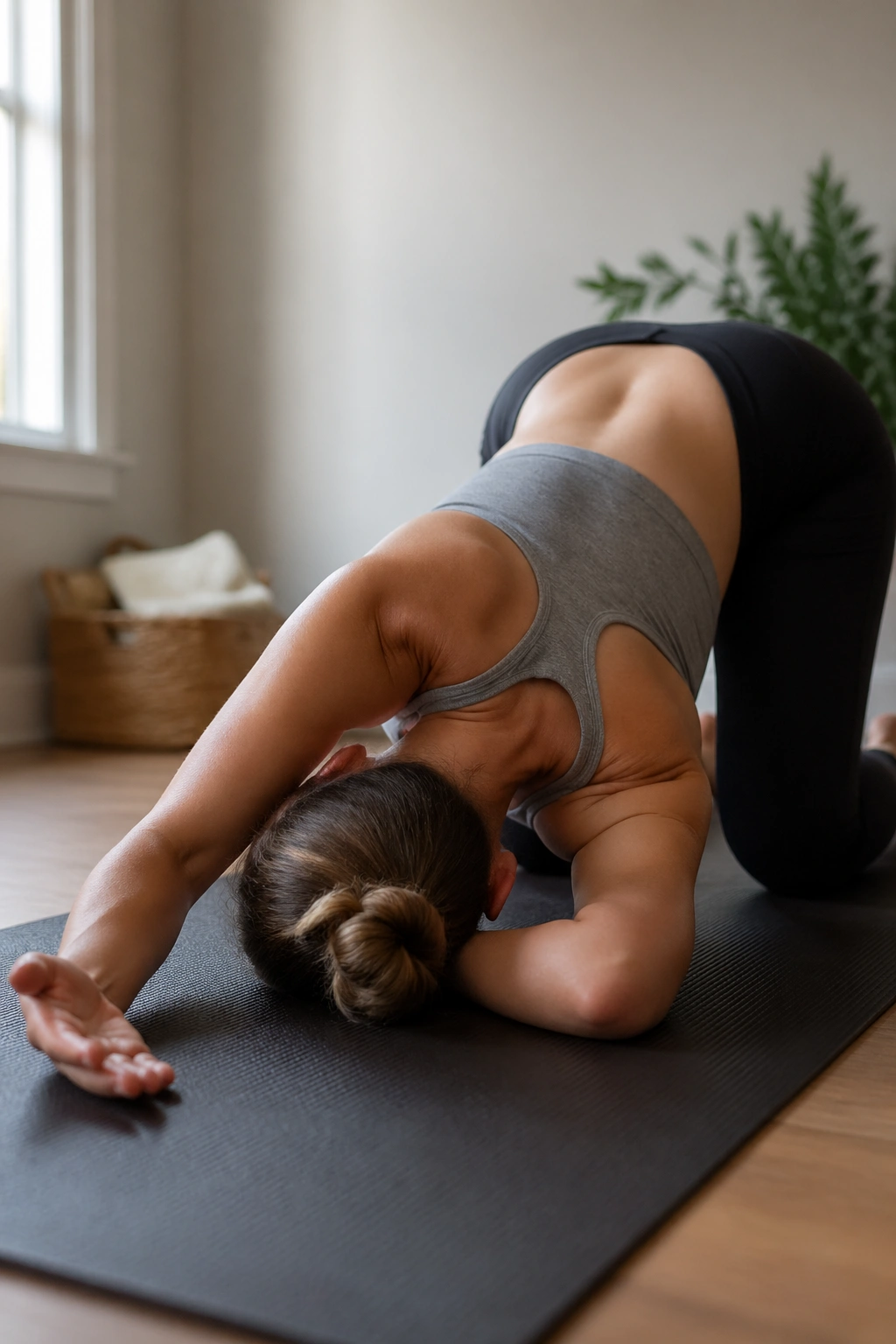
What does a shoulder stretch have to do with push-ups and planks? More than most people think. The upper back and shoulders get stiff fast when you spend a workout bracing, pressing, or holding yourself in a plank.
Start on all fours. Slide one arm under the other and lower the shoulder and side of the head toward the mat. The reaching arm can stay extended, or you can rest it with the palm facing up. If the shoulder feels jammed, place a folded towel under the head so you’re not hanging in space.
This stretch should feel like a twist through the upper back, not a crank through the neck. Keep your hips stacked above your knees if you can. If the hips drift back, the stretch changes shape and gets less useful.
I like this after upper-body circuits because it gives the shoulder blade area a chance to move without effort. That tiny bit of release often makes the next day’s posture feel less hunched, which is a nice bonus when you’ve spent an hour with dumbbells or bodyweight work.
9. Doorway Chest Stretch for Rounded Shoulders
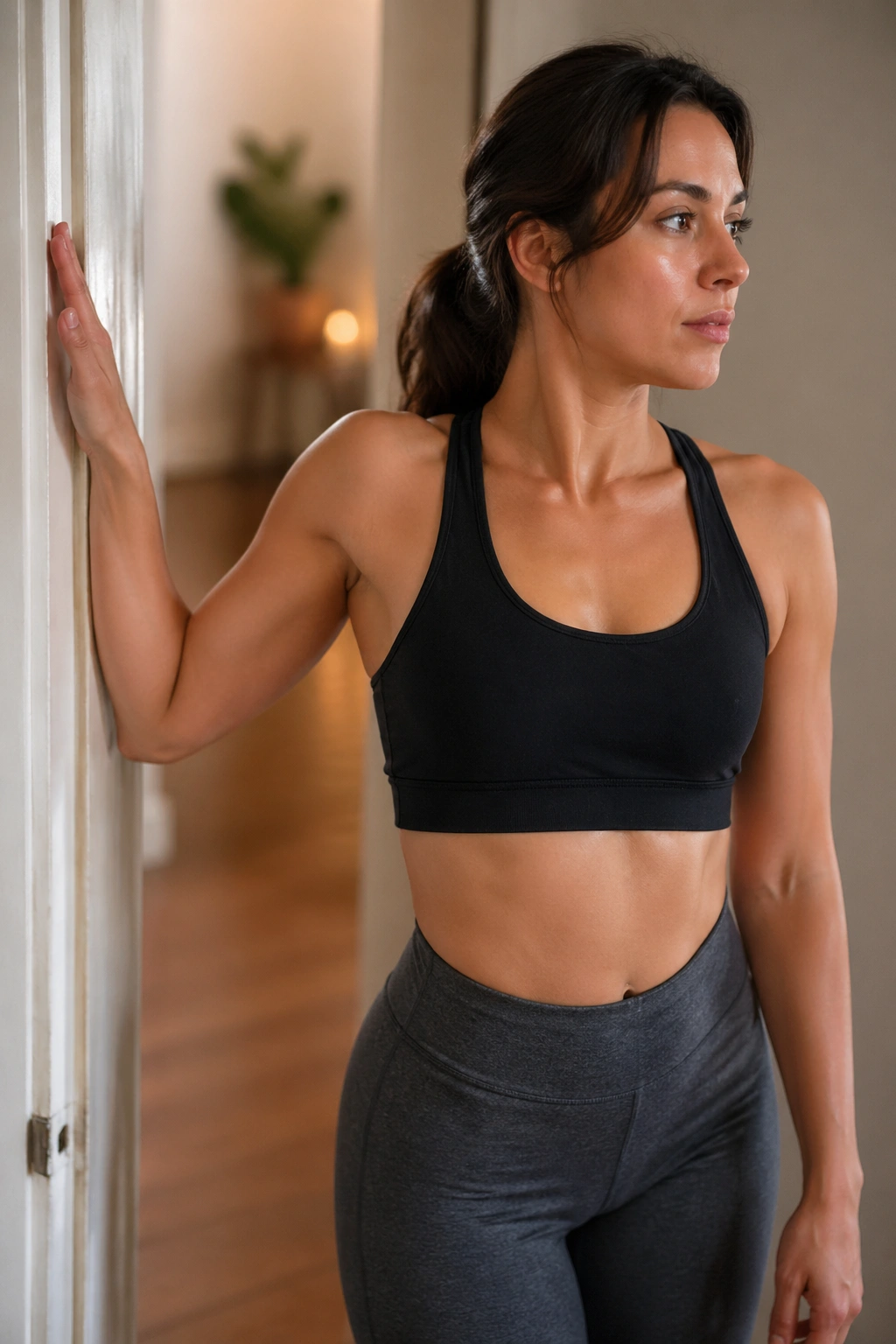
After a day of typing or a push-heavy workout, your chest can feel folded inward. A doorway chest stretch opens that front line without needing any equipment beyond a door frame and a little patience.
Stand in a doorway and place one forearm against the frame with the elbow near shoulder height. Step the opposite foot forward and gently turn your chest away until you feel the stretch across the front of the shoulder and upper chest. Keep the ribcage from flaring. That part matters.
- Elbow slightly below shoulder height is often kinder.
- Keep the shoulder away from the ear.
- Step through slowly, not in a big lurch.
- Hold the stretch where your breathing stays smooth.
Do not crank your arm back just because you can. A chest stretch works best when the front of the shoulder stays calm. If it feels sharp or pinchy, lower the arm angle and try again.
This one is especially good after push-ups, chest presses, or long periods of sitting with rounded shoulders.
10. Overhead Triceps Stretch for the Back of the Arm
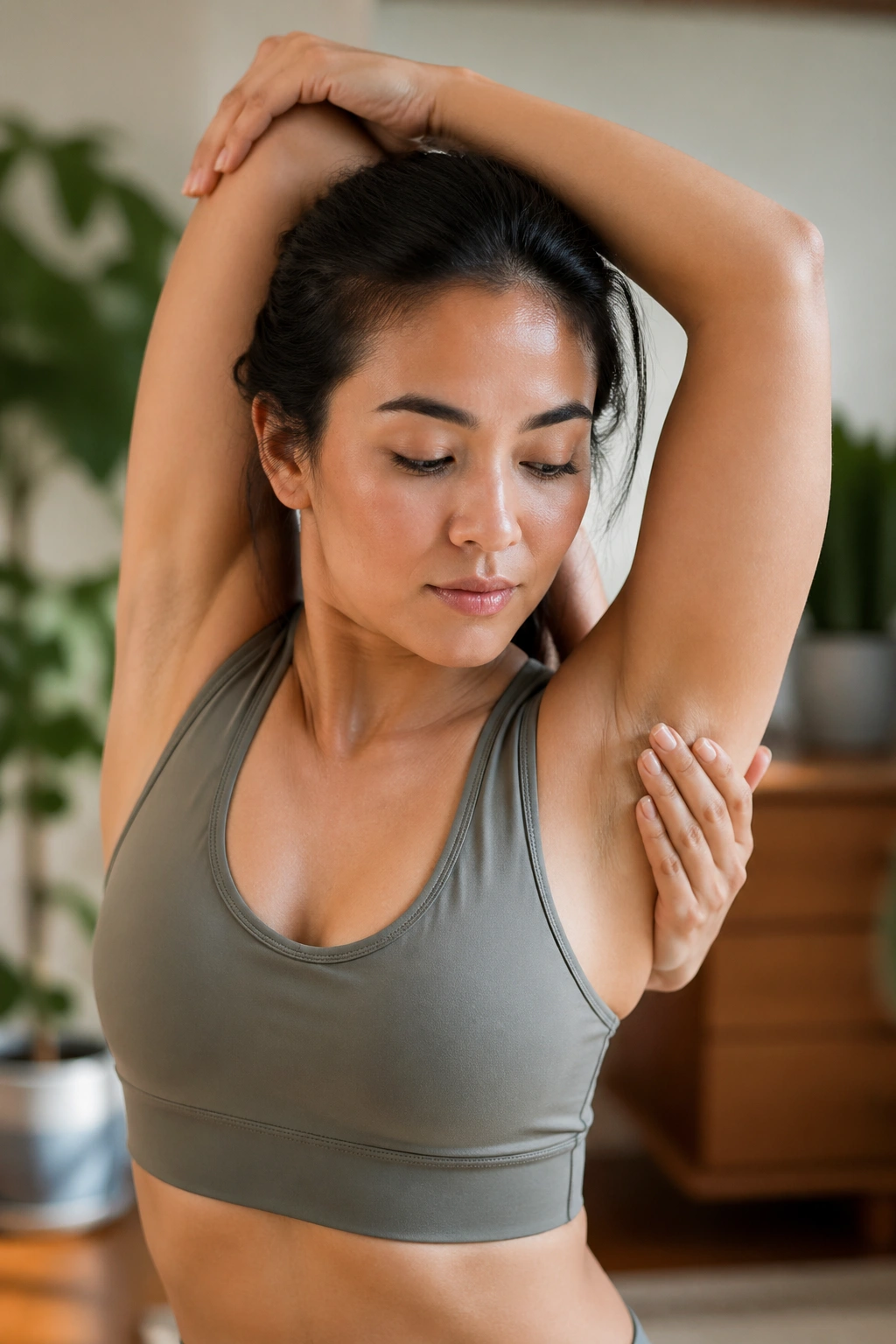
A triceps stretch is never just about the triceps. It also catches the side body and a bit of the shoulder, which is why it feels so satisfying after overhead pressing, plank work, or carrying heavy grocery bags up the stairs.
Reach one arm overhead, bend the elbow, and let the hand drop between your shoulder blades. Use the other hand to guide the elbow back gently, not forcefully. Keep the ribcage down and the neck long. If you arch your back, the stretch migrates somewhere else and the quality drops.
The feeling should land along the back of the upper arm and maybe into the lat. If your elbow is pointing far forward, you’re missing the line. Let it sit a little closer to your ear.
I like this stretch sitting down because it removes the balance factor and lets you focus on the actual sensation. Small detail, big payoff.
11. Cat-Cow Flow for a Stiff Spine
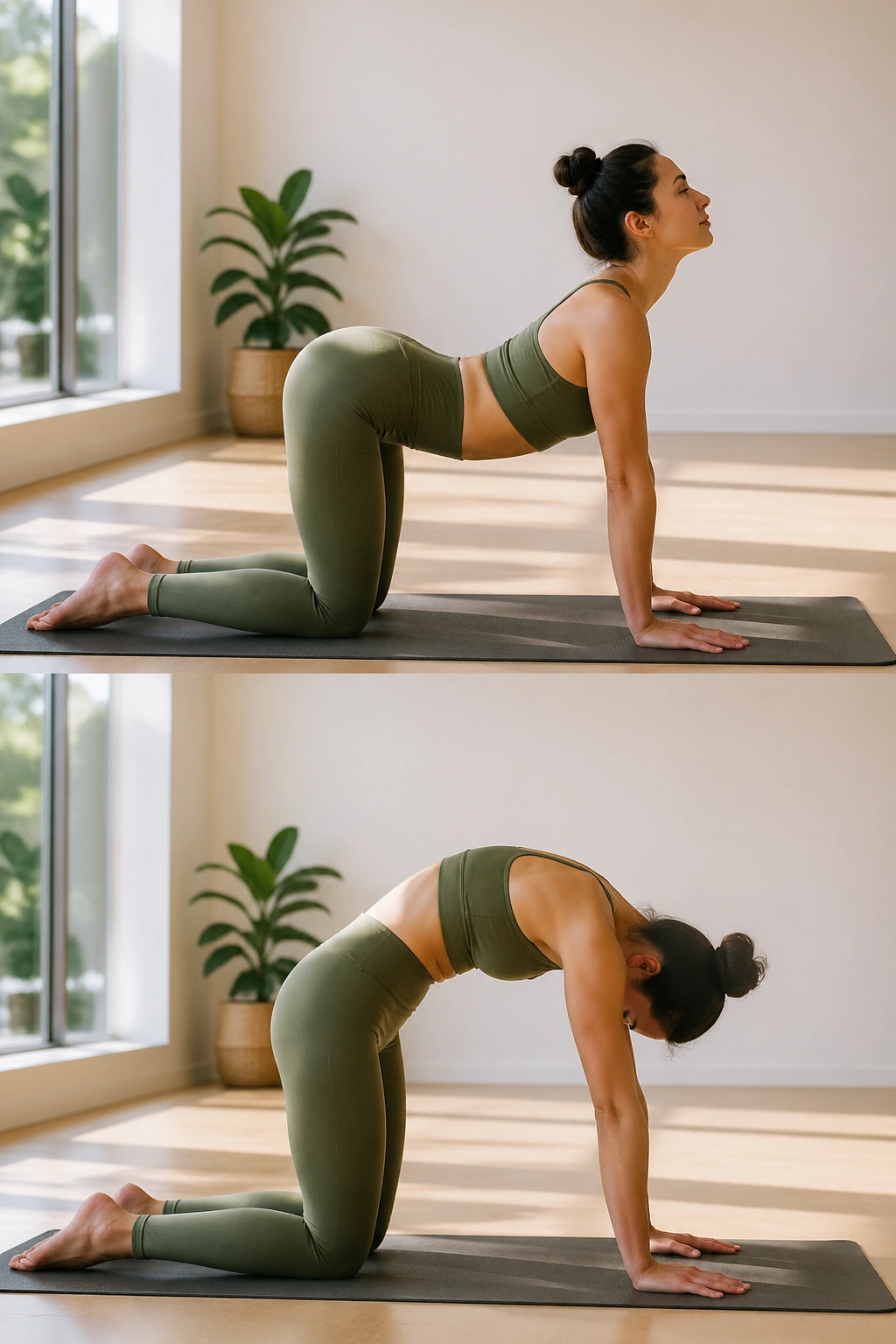
Cat-cow is not a hold. It’s a slow spinal reset, and that makes it useful after workouts that leave your back feeling glued together. Think core circuits, deadlifts, rowing, or even a long stretch of standing around in one place.
Drop to all fours. Inhale as you gently arch the spine, lift the chest, and let the tailbone tip up. Exhale as you round through the back, press the floor away, and draw the belly in. A few easy rounds are enough. You’re not trying to impress anyone.
How to Breathe Through It
Match the movement to the breath instead of rushing through. The inhale should feel like it makes space between the ribs. The exhale should let the lower back soften without collapsing the shoulders.
If you feel a pinch in the neck, keep the gaze a little more neutral. If the low back feels cranky, make the arch smaller. There’s no prize for a deep bend.
This is one of my favorite post-workout stretches when I don’t know where to start. It shows you where the tension is hiding.
12. Reclined Spinal Twist for the Lower Back
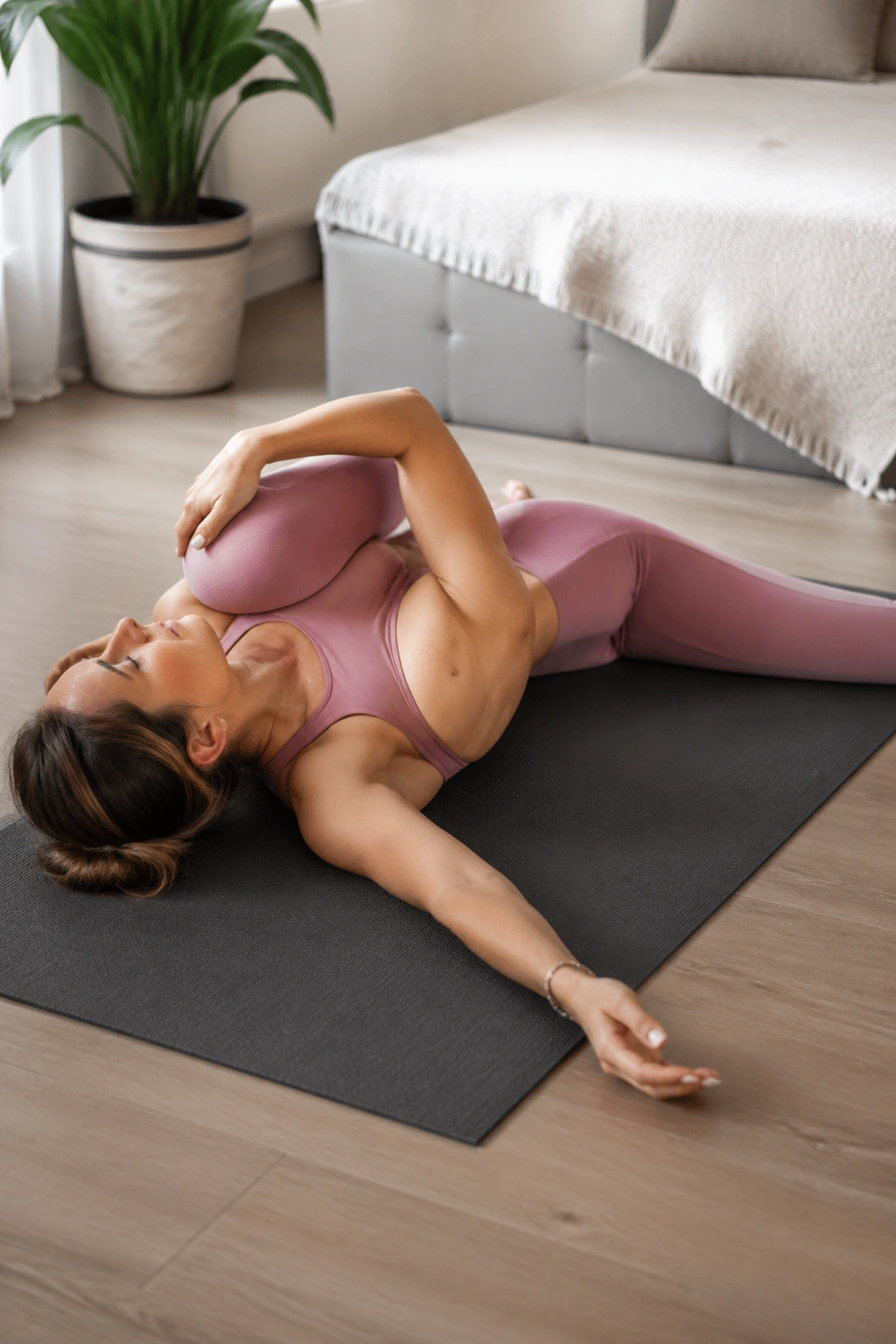
Can a twist calm down a tight lower back? Often, yes — especially if the issue is more stiffness than pain. The reclined spinal twist gives your back and glutes a gentle rotation that feels good after leg day or a lot of sitting.
Lie on your back, bring one knee toward your chest, and guide it across your body toward the opposite side. Keep both shoulders as heavy as possible. If your knee doesn’t reach the floor, that’s fine. A pillow or folded blanket under it is a smart move, not a compromise.
The stretch should land across the outer glute, low back, or side waist. If you feel a yank in the knee, stop and shorten the range. Twists should feel easy enough that you can keep breathing through them.
I like to stay here longer than I think I need to. The first few seconds are often awkward; then the body settles, and the whole floor feels a little more forgiving.
13. Seated Forward Fold With Bent Knees
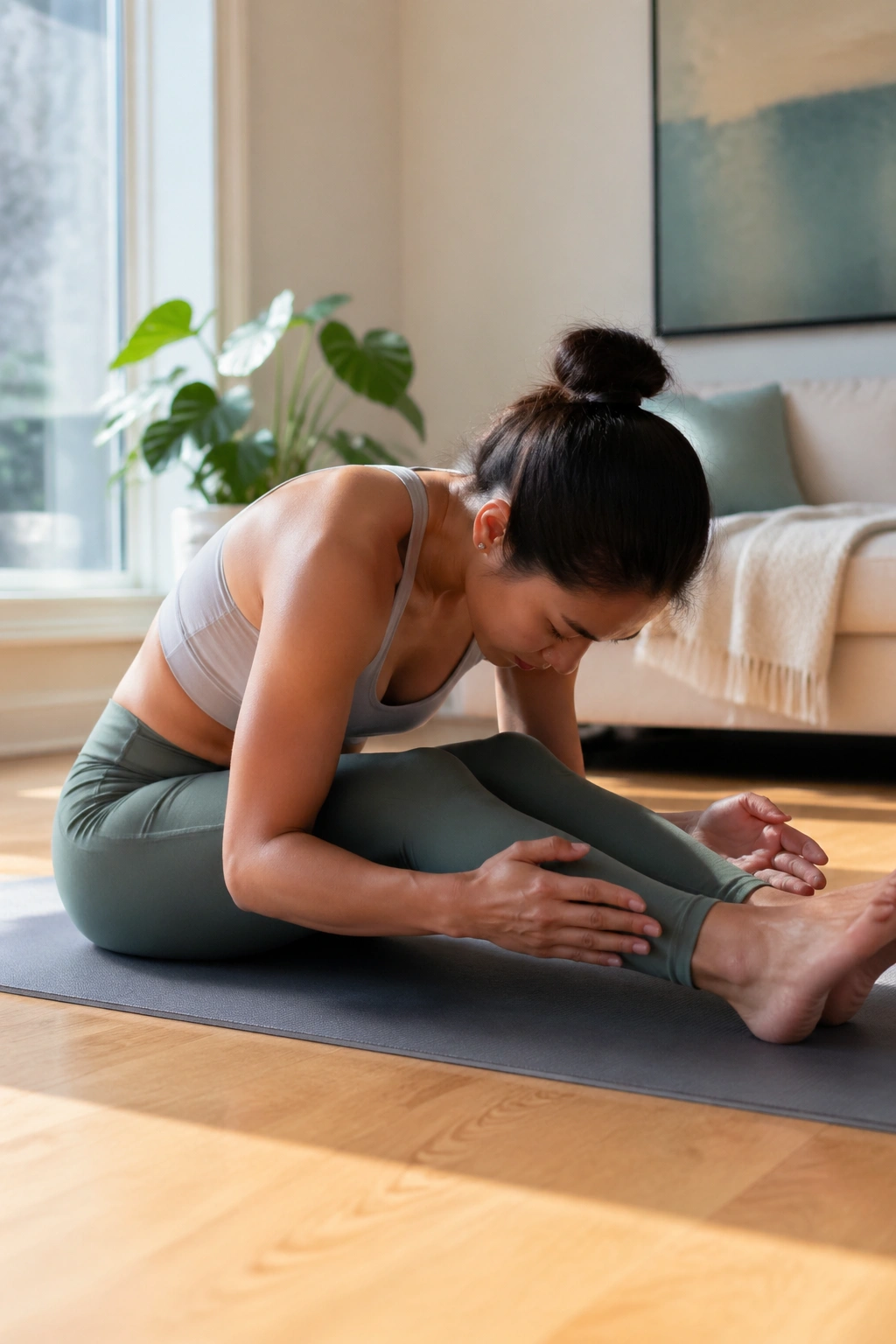
I reach for this one after a run, but only after I remind myself that bent knees are allowed. That tiny permission changes the whole stretch from a hamstring tug-of-war into something calmer and more useful.
Sit on the floor with your legs extended or slightly bent, then hinge forward from the hips. Let your hands rest on your shins, ankles, or the floor. If your lower back rounds hard, bend the knees more. That is not a failure. That is you making the stretch fit your body instead of the other way around.
Do Not Chase Straight Legs
Straight knees can look tidy and feel awful. Bent knees let the hamstrings lengthen without dragging the pelvis into a slump. That matters if you’ve been doing deadlifts, sprint work, or a long walk with tight calves.
A blanket under the sit bones helps too, especially if your hamstrings are tight and your pelvis tips back quickly. That one prop can make the stretch feel twice as honest.
This is less about depth and more about length. A little fold, done well, goes farther than a dramatic reach with a rounded spine.
14. Lunge With Rotation for Hips and Upper Back
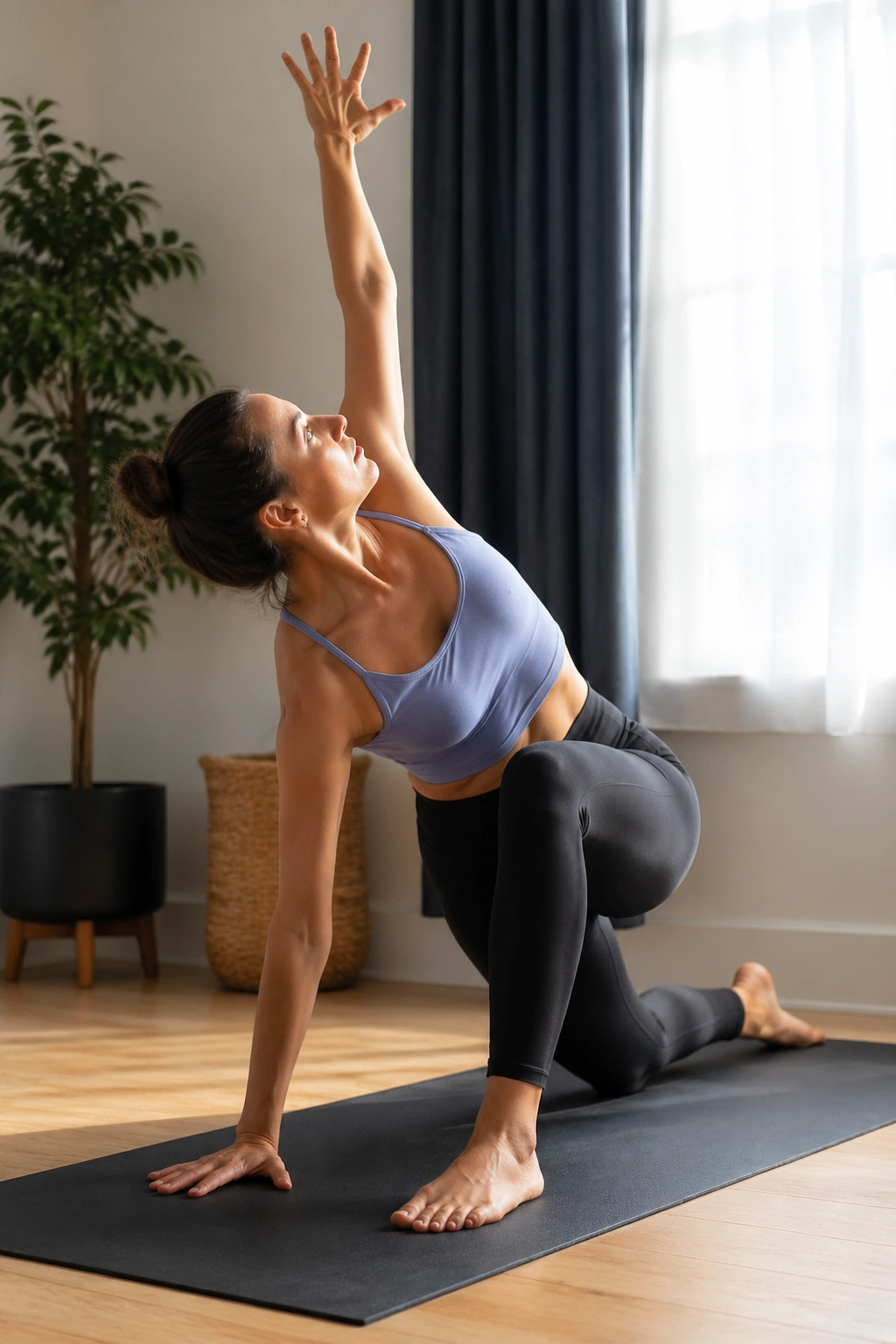
Unlike a still hip flexor stretch, this one gives your upper back a job too. That makes it handy after full-body circuits, kettlebell work, or anything that leaves the torso feeling a bit welded together.
Step into a low lunge with the back knee down. Keep the front foot planted, then bring the opposite hand to the floor or thigh and rotate the chest toward the front leg. The free arm can reach up to the ceiling if that feels steady. Keep the front knee tracking over the ankle, not collapsing inward.
The front of the hip gets the stretch, but the chest and upper back get to open at the same time. That combination is useful. It’s one of those moves that makes the body feel more connected again, not just looser in one place.
If balance is tricky, keep both hands on the front thigh and work a smaller rotation. Less flashy. More useful.
15. Frog Stretch for Inner Thighs and Groin
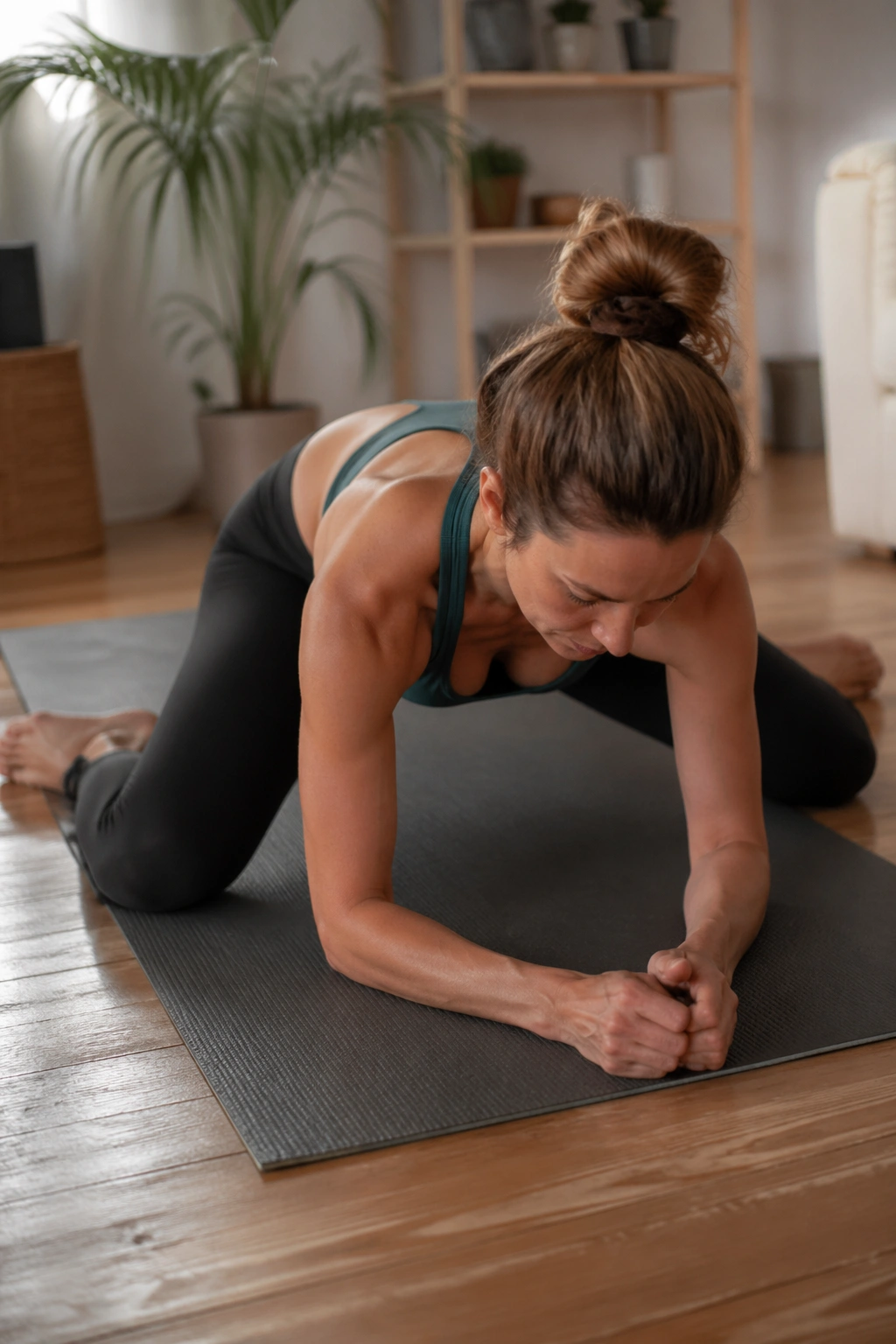
This is the one people either love or hate. Frog stretch goes deep into the inner thighs, and it does not pretend otherwise. If your adductors are tight after squats, side lunges, or dance-style cardio, it can be a serious release.
Start on hands and knees, then slide your knees wide apart while keeping the lower legs bent out to the sides. Your feet stay in line with your knees. Lower onto forearms if that feels okay. Then settle your hips back a few inches until you feel the stretch in the inner thighs.
Padding under the knees helps. A lot. Hard floors make this much harsher than it needs to be.
You do not need to sink to the deepest point. In fact, most people should not. A smaller range with steady breathing usually gives a better result and leaves the groin area less cranky afterward. If your knees hurt, skip this one and choose butterfly instead.
16. Reclined Figure-Four Stretch for the Glutes
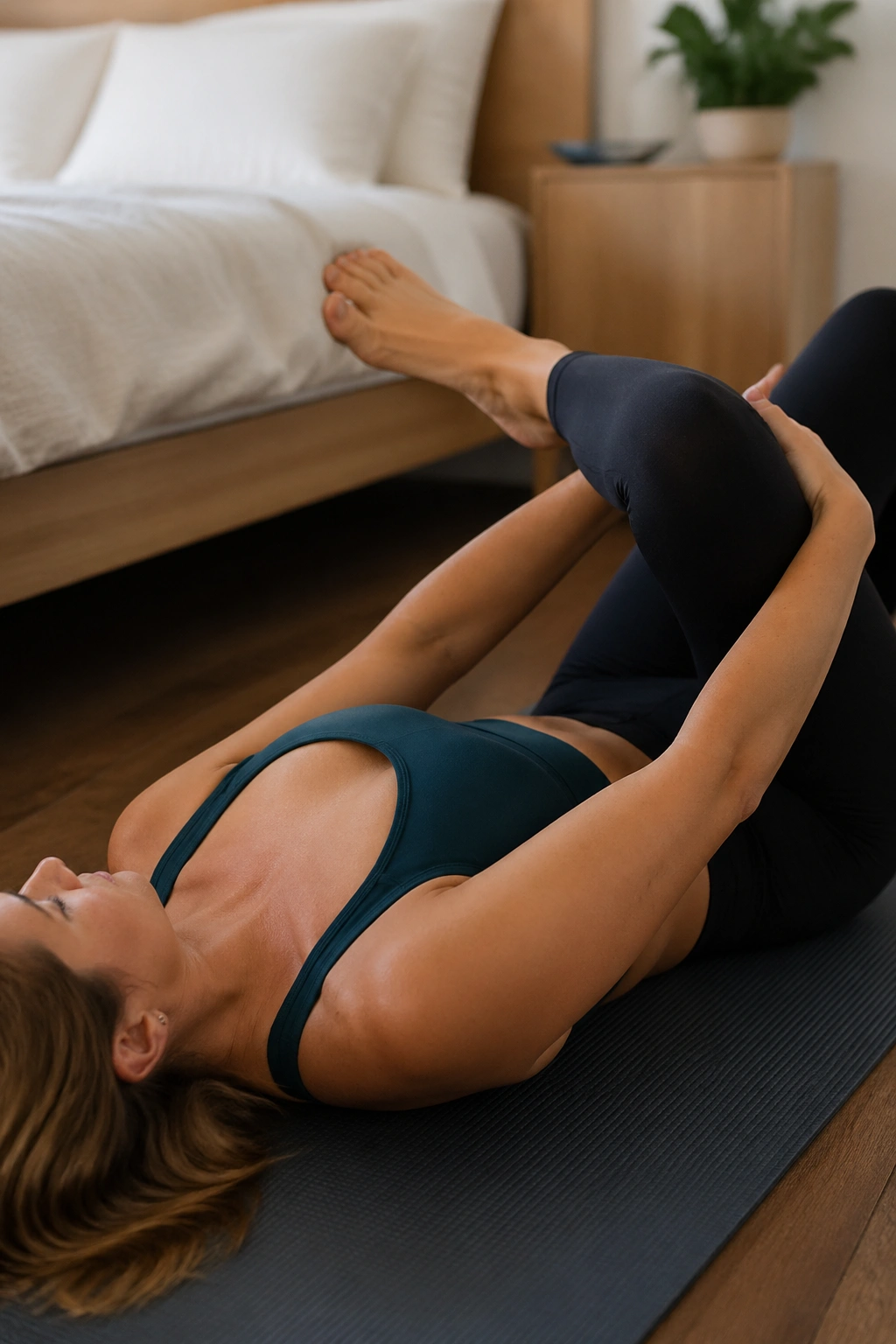
If the chair version feels too mild, this reclined version gives you a little more control. It’s my preference when the outer glute is tight but I don’t want to sit up and fight my way through the hold.
Lie on your back and cross one ankle over the opposite thigh, making a loose figure four. Thread your hands behind the supporting thigh and pull it toward you until you feel the stretch in the glute and outer hip. Keep the crossed foot flexed. That protects the knee and keeps the stretch clean.
How to Make It Gentler
Use a wall or keep the bottom foot on the floor instead of pulling the thigh all the way in. A pillow under the head helps too if your neck is already done for the day.
- Flex the ankle on the crossed leg.
- Keep the pelvis level.
- Stop before the lower back starts twisting hard.
- Breathe into the outer hip instead of straining for depth.
This one pairs well with leg day because it reaches the hip without asking you to balance or sit upright on tired glutes.
17. Side Neck Stretch for Tension at the Desk
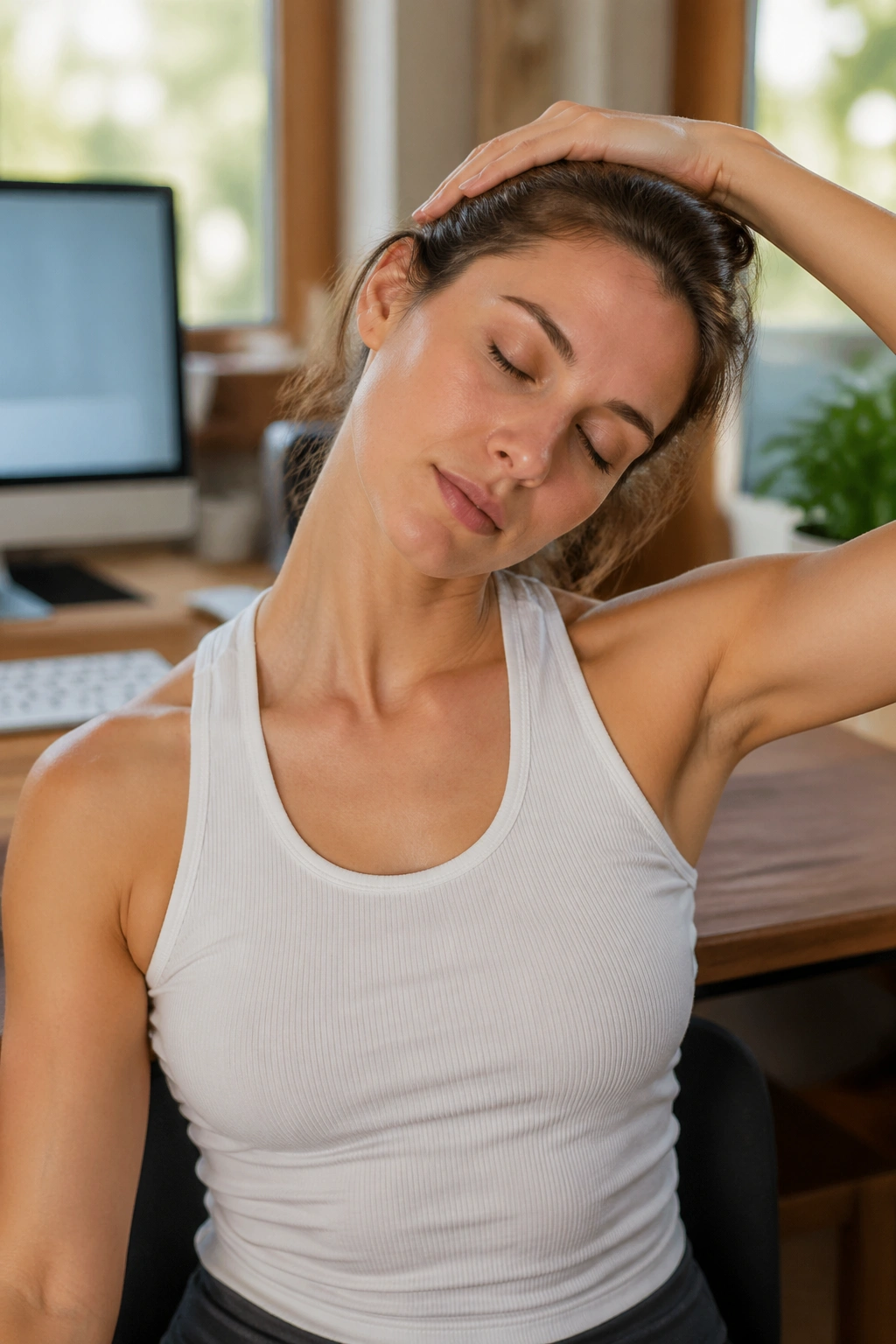
Your neck does not need a dramatic stretch. It needs a gentle one, especially if you spent the day looking down at a phone or bracing your shoulders through push-ups, rows, or overhead work.
Sit or stand tall. Let one ear drift toward the same-side shoulder without lifting that shoulder up to meet it. You can rest the hand on the opposite side of the head very lightly, but don’t pull. That’s the part people get wrong. The stretch should feel long and easy along the side of the neck and upper trap.
- Keep the chin slightly tucked.
- Let the shoulder stay heavy.
- Breathe slowly through the nose.
- Repeat on both sides, but don’t force symmetry.
If you feel tingling, numbness, or a sharp pull, stop. Neck stretching should feel almost boring, which is exactly why it works. The small dose matters more than the drama.
18. Wrist and Forearm Stretch After Planks and Push-Ups
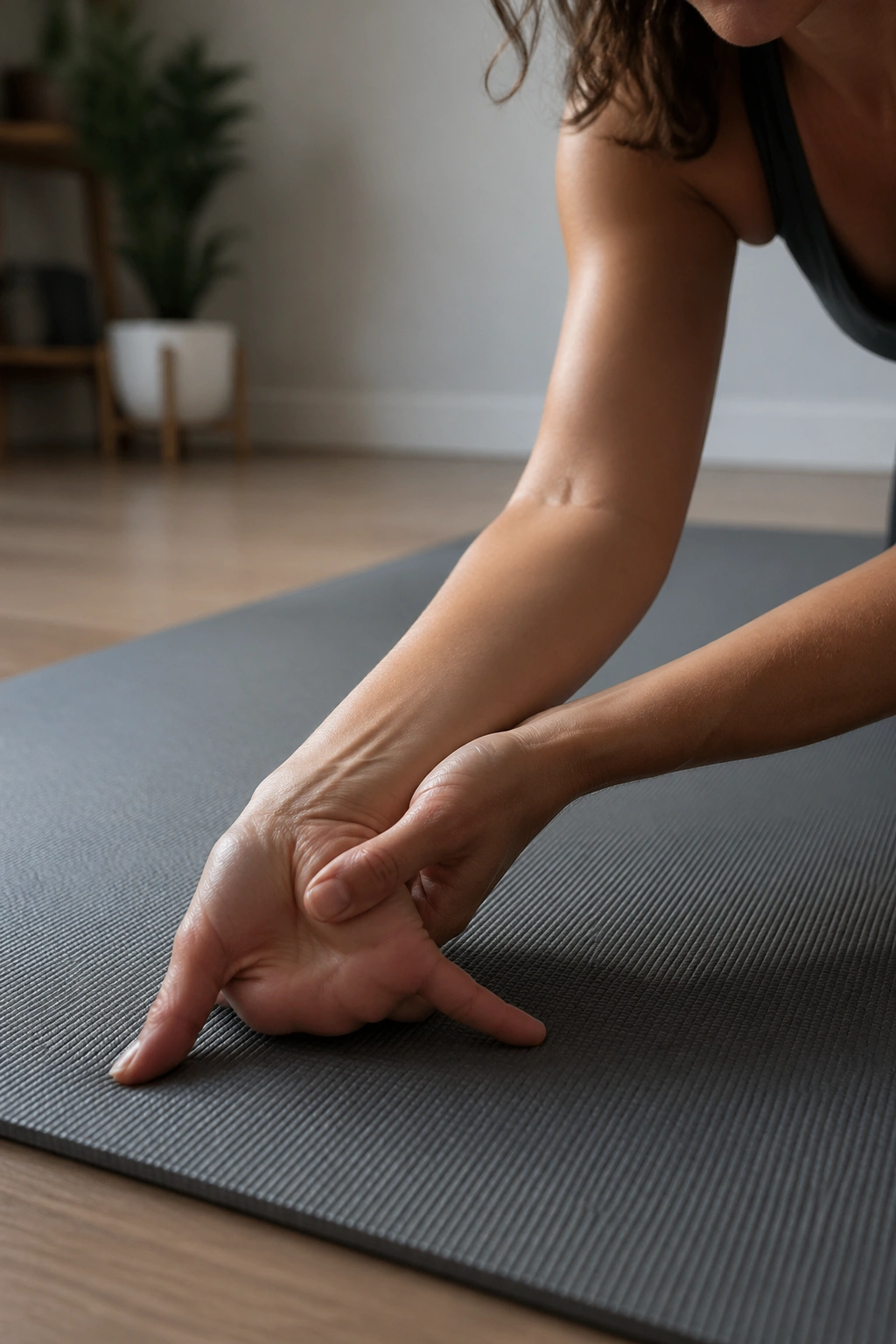
Your wrists need cooldowns too. People forget this until the next morning when opening a jar feels weird after a round of planks, push-ups, burpees, or dumbbell work.
Extend one arm in front of you with the palm down, then gently pull the fingers back with the other hand to stretch the forearm flexors. Flip the palm up and repeat to stretch the other side. The movement is tiny. That’s fine. Forearms are small, but they get a lot of load when you grip weights or support body weight on the floor.
This stretch is best when you keep the elbow straight but not locked. If the fingers or wrist joints feel cranky, reduce the angle and keep it lighter. You want a pull through the forearm, not a jam in the wrist crease.
I like doing this while still on the mat after upper-body work. It’s quick, it’s useful, and it often prevents that stiff, claw-like feeling later.
19. Sphinx Stretch for the Front of the Body
Can a backbend be gentle? Absolutely. Sphinx pose is the softer cousin of cobra, and after ab work or a chunk of running, it can feel like the front of your body finally gets to breathe.
Lie on your stomach and prop yourself up on your forearms with elbows under the shoulders. Let the pelvis stay heavy. The chest lifts a little, the low belly lengthens, and the front of the hips soften. You are not trying to crank your spine into a huge arc.
The best version of this stretch feels spread out, not compressed. If your lower back starts to pinch, lower your chest or move the elbows a little farther forward. That usually fixes it fast.
I like sphinx after crunches, mountain climbers, or a long session of sitting, because it opens the front side of the body without the intensity of a full cobra. Calm, direct, useful.
20. Wide-Leg Straddle Stretch on the Floor
Some days the inner thighs feel like old leather. A wide-leg straddle stretch handles that feeling better than almost anything else, especially after side-to-side work, squats, or dance cardio.
Sit on the floor and open your legs wide, but not absurdly wide. Flex your feet, sit tall for a breath, and then hinge forward from the hips. Your hands can rest on the floor in front of you, on a pillow, or on your shins if the floor is too far away.
What to Watch For
The stretch should live in the inner thighs and maybe the hamstrings. If your lower back rounds hard, sit on a folded blanket and bend the knees a little. That usually gives you more quality, not less.
- Keep the toes facing the ceiling.
- Move only as far as you can keep breathing.
- Lean forward, not just down.
- Hold still for 20 to 30 seconds before easing out.
This one is a little more demanding than butterfly, which is why I usually save it for when my body feels warm and cooperative.
21. Open Book Thoracic Stretch for Upper-Back Rotation
Your upper back loves rotation more than your neck does, which is why the open book stretch earns its spot after workouts that leave the torso stiff. It works especially well after rowing, presses, or anything that keeps you facing forward for a long time.
Lie on your side with your knees bent and stacked. Extend both arms straight in front of you, then sweep the top arm open toward the floor behind you like you’re opening a book. Let your eyes follow the hand if your neck is comfortable with that. Breathe into the ribcage on the opening side.
The movement should feel smooth, not forced. If the knee stack gets sloppy, place a pillow between the knees to keep the lower body quiet while the upper body rotates. That detail helps more than people expect.
I like this one because it makes the mid-back feel alive again. Not loose in a vague way — actually mobile, which is the better goal.
22. Wall Lat Stretch for Overhead Reach
A tight lat can mess with overhead reach, which is why this stretch earns its spot. It’s a good choice after pull-ups, rows, push presses, or any workout that leaves your sides and armpits feeling boxed in.
Place both hands on a wall or the back of a sturdy chair, step your feet back, and send your hips away from the wall while keeping the arms long. Drop the chest slightly and let the ribs stay under control instead of flaring wildly. You should feel the stretch along the side of the torso, under the armpit, and into the back of the shoulder.
If one side is tighter, shift your weight slightly toward that hand. Small angle changes matter here. They change the line of pull without making the stretch harsher.
This is one of those quiet stretches that sneaks up on you. Nothing dramatic. Then you reach for a shelf later and realize your shoulders move more cleanly than they did ten minutes before.
Final Thoughts
A solid cooldown does not need to be long to be worth doing. A few honest stretches, done with good form and a steady breath, usually help more than a rushed marathon of random poses.
If time is short, hit the places that actually worked: quads, hip flexors, calves, chest, and one spinal stretch. That covers the usual trouble spots after home workouts, and it keeps the routine realistic enough that you’ll come back to it tomorrow.
I’d rather see someone do five minutes after every workout than chase a perfect 20-minute routine twice a month. The mat in the living room, the wall by the hallway, the chair by the table — that’s enough.
