



Upper belly fat is stubborn in the way only midsection fat can be. Crunches alone do not fix it, and the fast, wild reps most people copy from videos are usually more neck strain than core work. The most useful upper belly fat exercises for women at home build a stronger core, burn more energy, and keep your ribs and pelvis from drifting apart when your posture gets lazy.
That matters because the upper belly is rarely just fat. Bloating, stress, a slouched posture, weak deep abs, and plain old genetics often sit on top of it. Some days your stomach looks flatter before lunch and softer by evening, and nothing about that is mysterious.
The blunt part is this: fat loss comes from the whole body, not one spot. So the smart play is a mix of core moves, walking, and eating in a way you can keep living with. The exercises below are the muscle-building, calorie-burning side of that equation.
A few of them are old-school and a little boring. Good. Boring usually means they work. Start with the floor moves if you’re new, keep a couple of standing options for days when the mat feels like too much, and pay close attention to the ones that make your lower back want to arch.
1. Slow Bicycle Crunches
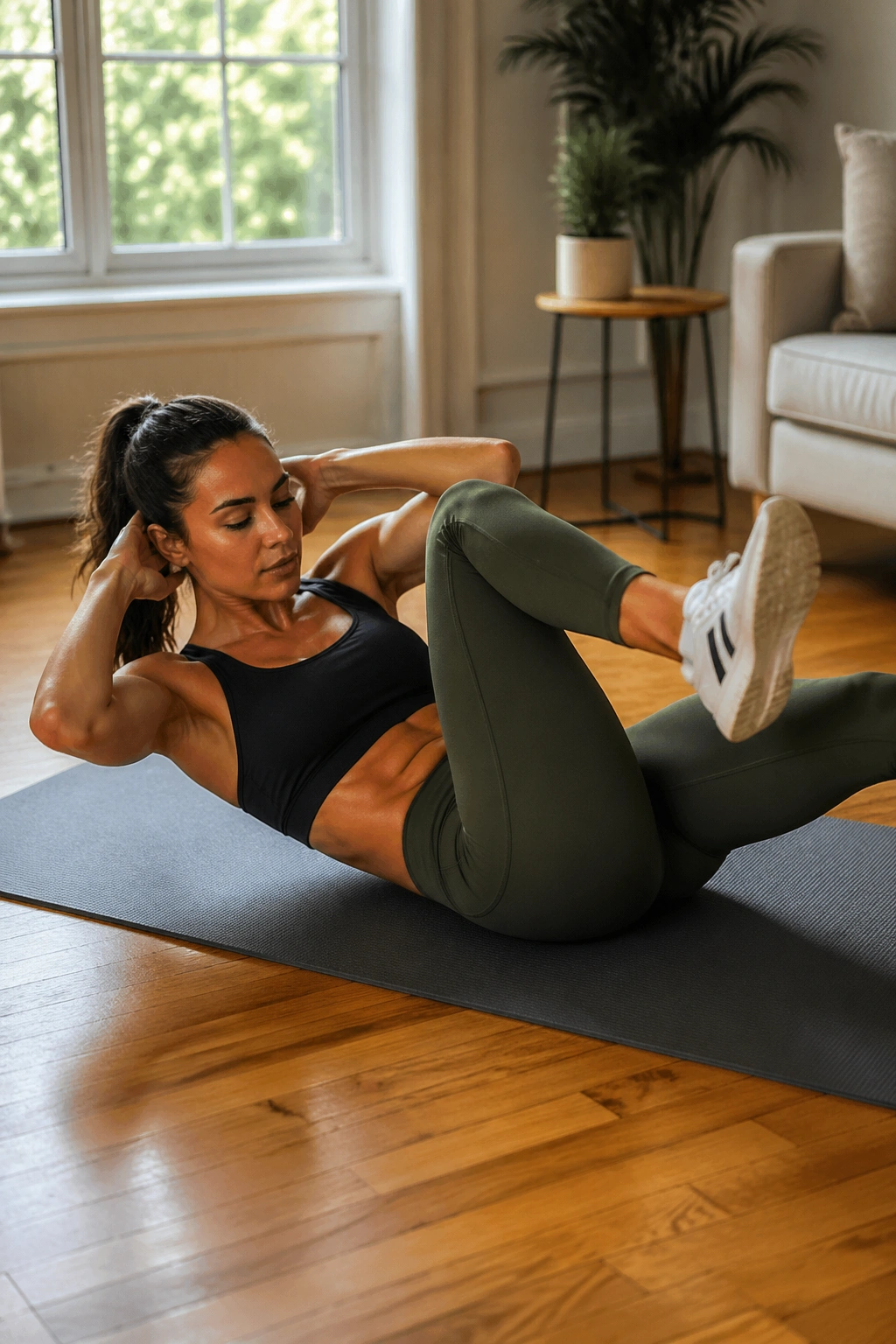
Slow bicycle crunches beat fast ones every time. The speed version looks busy; the slow version makes your upper abs do the actual lifting. Lie on your back, bring one knee in, and twist the opposite shoulder toward it while the other leg reaches out without letting your lower back pop off the floor.
Keep your chin lightly tucked and your hands at the sides of your head, not yanking behind it. Exhale as the shoulder turns, pause for a beat, then switch sides. That pause is where the work lives.
Why the slow version works
The slow tempo keeps momentum from stealing the set. It also makes it easier to feel when your ribs flare or your hips rock, which is the exact point where people stop working their abs and start throwing their body around the room.
If your neck feels crowded, shorten the twist. Seriously. A tiny shoulder curl done well beats a dramatic crunch done badly.
Form cues to remember
- Knees stay bent at about 90 degrees.
- Lower back stays heavy on the floor.
- Elbows stay wide and relaxed.
- Stop the rep the second your neck tenses.
Best tweak: think shoulder to opposite knee, not elbow to knee.
2. Dead Bug
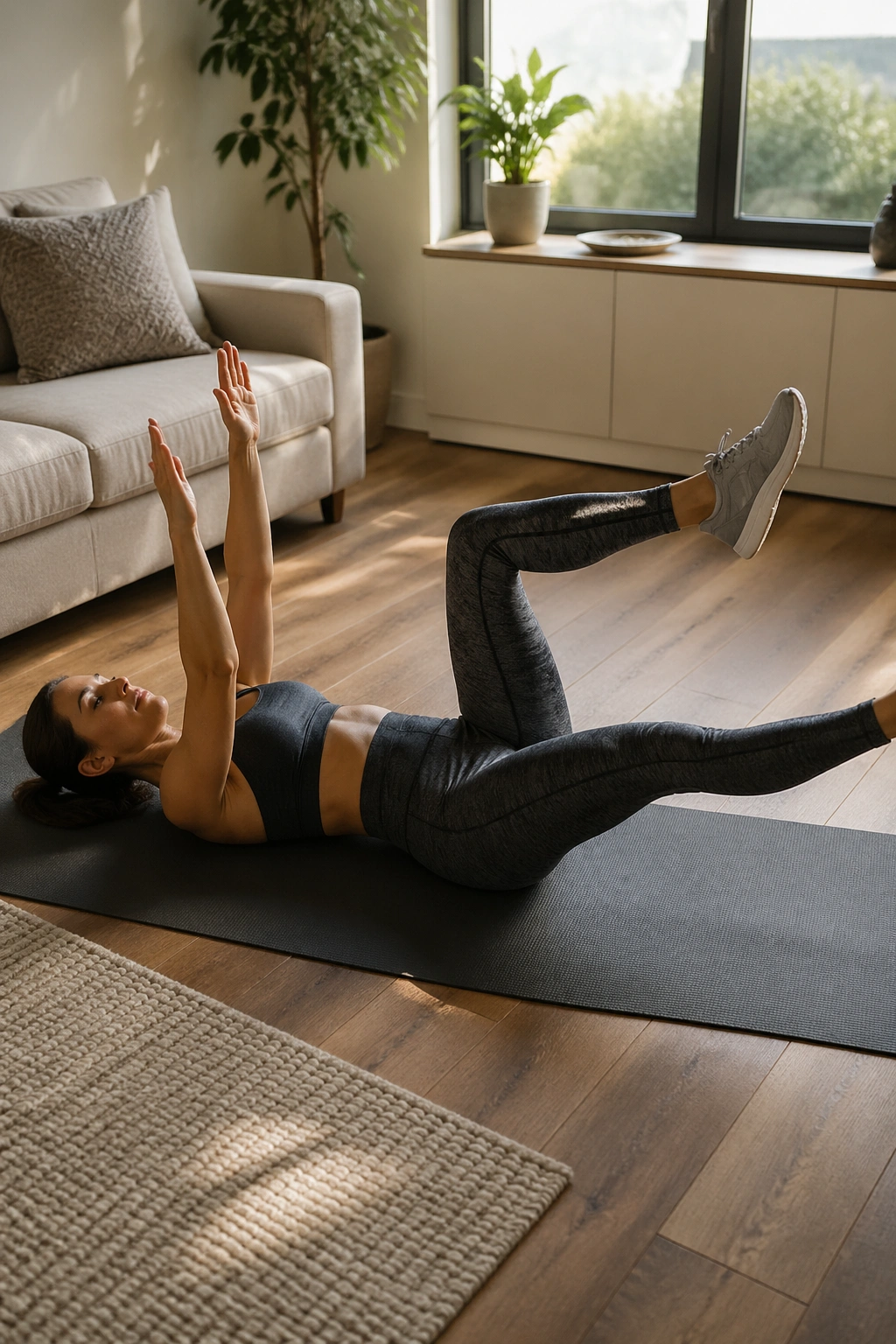
Dead bugs look too easy until your lower back starts to lift.
That tiny lift is the whole game. Lie on your back with your arms pointing toward the ceiling and your hips and knees bent like tabletop legs. As you lower one arm and the opposite leg, keep your ribs down and your lower back quiet. The movement should feel controlled, not dramatic.
What makes the dead bug so useful is the anti-arching part. Your core has to brace while your limbs move, which is a much more honest test than flinging your torso through a bunch of half-sit-ups. If you spend a lot of time sitting, this one also helps undo that sleepy, collapsed feeling through the middle.
If full extension feels shaky, shorten the reach and leave the toes higher. No prize is waiting for the longest lever. Clean reps matter more.
3. Hollow Body Hold
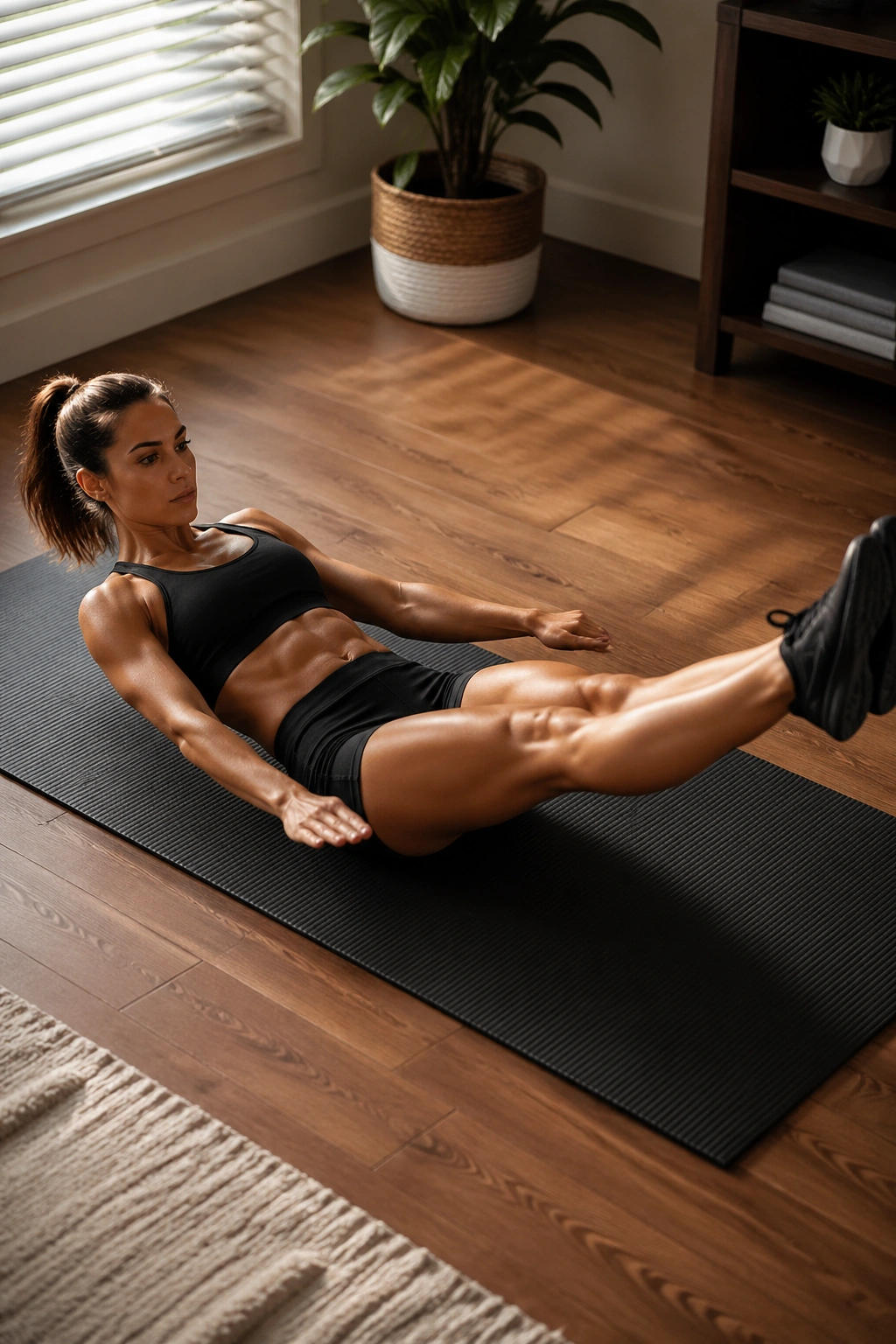
Why do gymnasts love the hollow body hold?
Because it punishes lazy core work in the best possible way. Lie on your back, tuck your pelvis slightly so your lower back presses into the floor, and lift your shoulders, arms, and legs into a shallow banana shape. The whole point is to keep the front of your body braced while the legs and arms hover.
A lot of people feel this instantly in the upper abs, especially when the ribs want to pop up. That little front-rib tension is useful. It teaches your torso to stay tight without a lot of movement, which is a skill many “core workouts” never actually train.
How to scale it
- Keep one knee bent if full extension is too much.
- Put your arms by your sides instead of overhead.
- Hold for 10 to 15 seconds at first.
- Rest, then repeat for 3 to 5 rounds.
One small rule: if your lower back leaves the floor, the hold is too hard right now.
4. Toe Taps
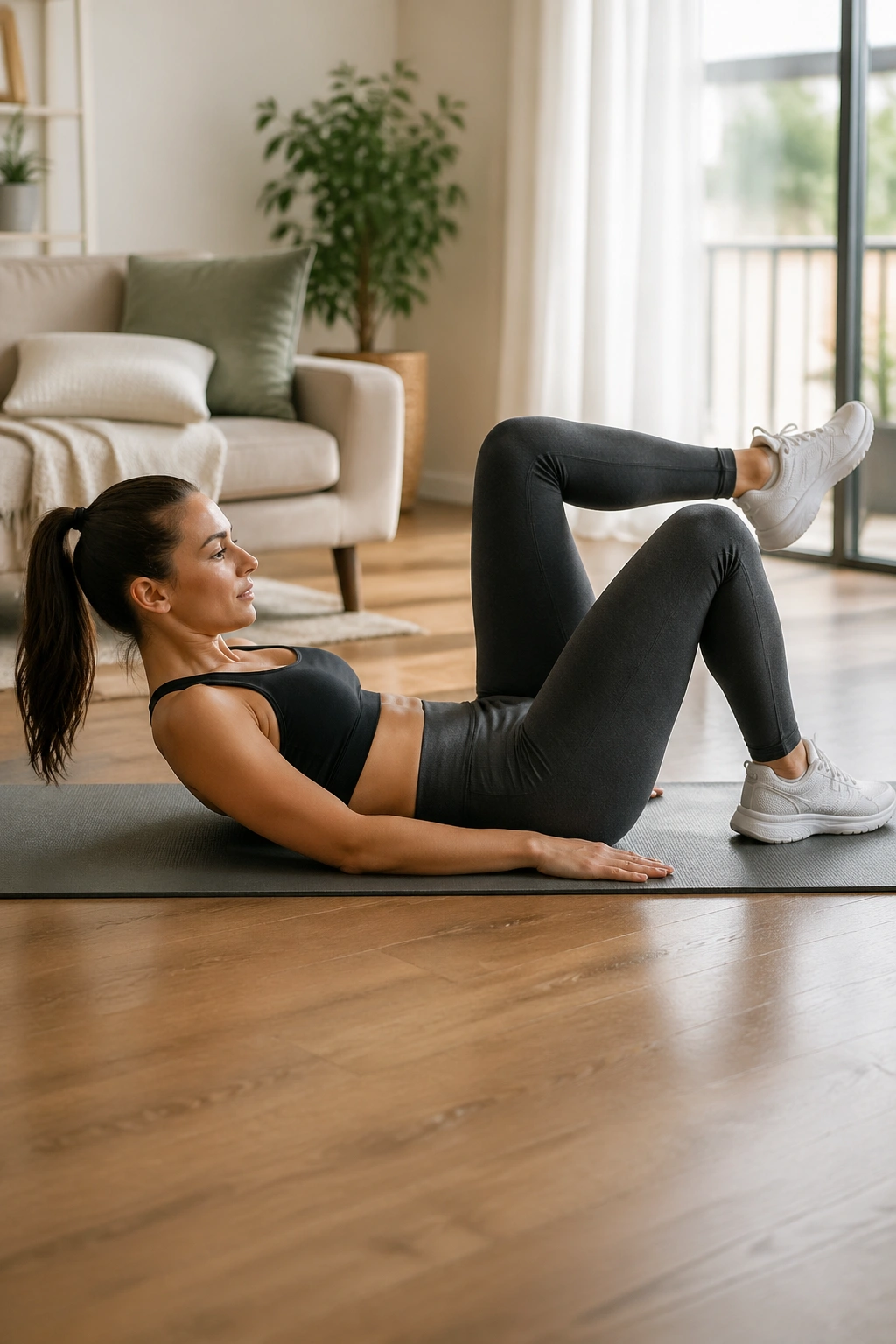
Your abs will shake before your legs look tired.
That’s the nice trick with toe taps. Lie on your back, lift your legs into tabletop, and lower one foot at a time to tap the floor. Keep your knees bent and your back steady. The motion is tiny, which is exactly why it works so well for upper and deep core control.
This move is especially good on days when crunches feel rough but you still want real work. The upper belly has to stay braced while the legs move, and that steady bracing is what makes the set burn. You’re not chasing height here. You’re chasing control.
Common mistakes to avoid
- Letting the lower back arch.
- Dropping the leg too fast.
- Holding the breath.
- Touching the floor with a loud slap instead of a quiet tap.
A quiet tap usually means better control. Loud feet usually mean the abs have checked out.
5. Cross-Body Mountain Climbers
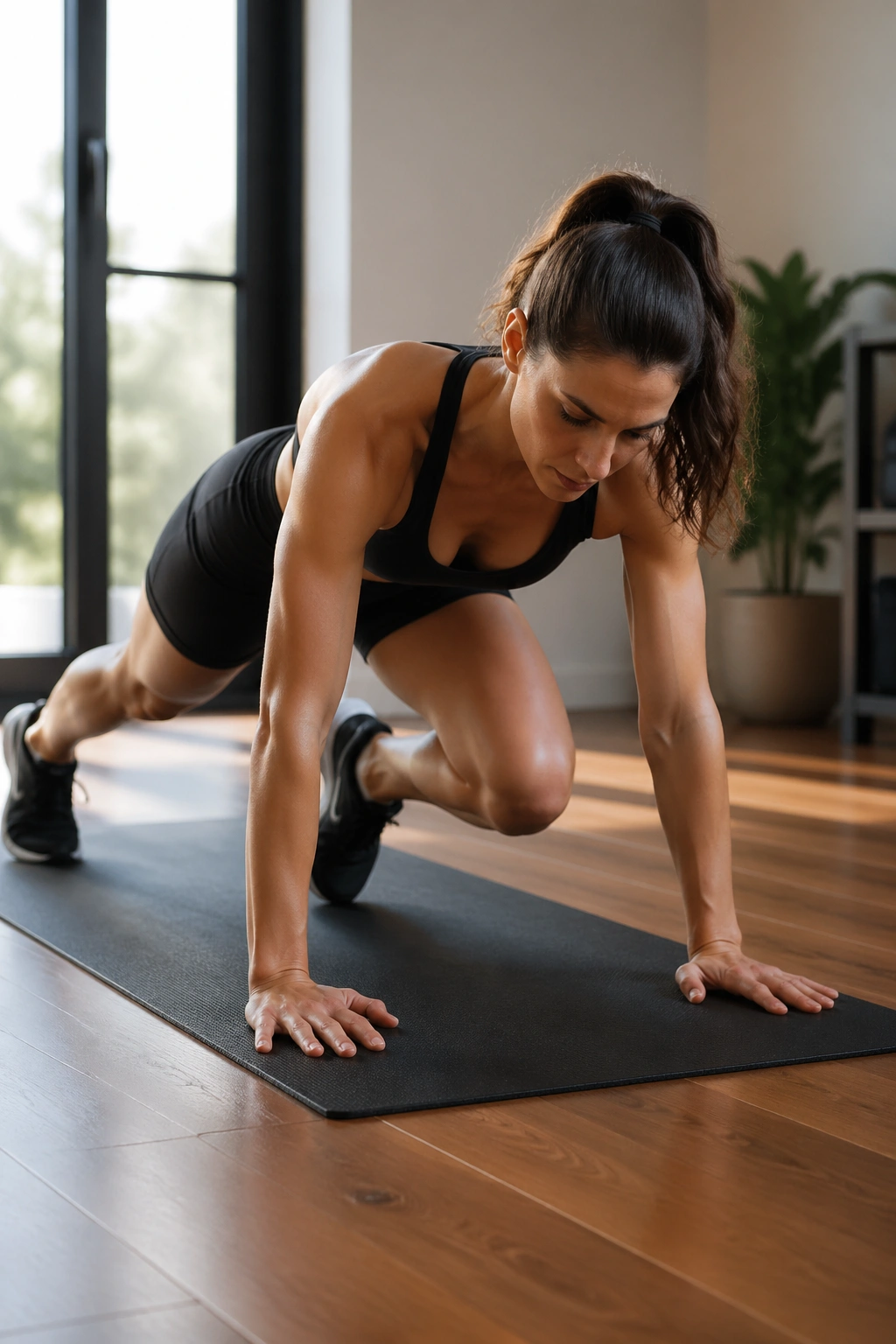
Do not race these.
A fast mountain climber turns into cardio chaos in about three seconds. A cross-body version, done with control, brings your knee toward the opposite elbow and makes your upper abs and obliques work together while your heart rate climbs. Start in a strong plank, wrists under shoulders, and drive one knee across the body without letting your hips bounce around.
This is one of the better at-home moves when you want a calorie burn without equipment. You get the abdominal work, the shoulder work, and the breathing challenge all at once. If your floor space is small, even better. You do not need much room to make this one hard.
Fast version or slow version?
- Slow version: better for beginners and better for feeling the abs.
- Fast version: better when you want more cardio demand.
- Short range: kinder on wrists and hips.
- Cross-body drive: more useful than straight-ahead marching for the waist area.
Keep the shoulders firm and the back flat. If your hips start swinging side to side, slow down. That wobble is the sign the core is losing its job.
6. Reverse Crunches
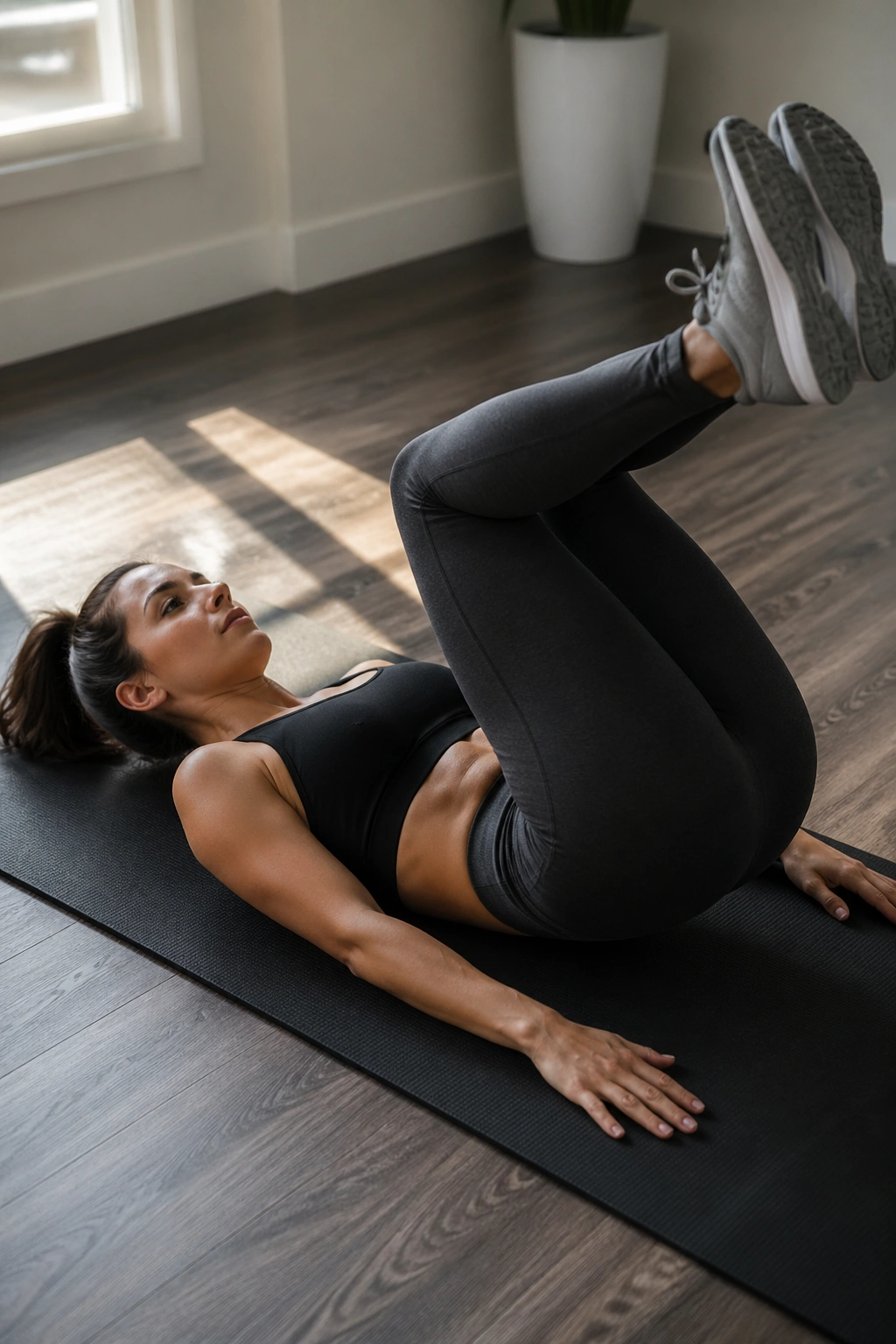
A reverse crunch feels cleaner than a regular sit-up because the movement starts at the pelvis, not the neck.
That matters. Lie on your back, bring your knees in, and curl your tailbone off the floor as if you’re trying to lift the hips a few inches. The range is small. The abs should do the curling, while the legs stay quiet instead of kicking and swinging.
I like reverse crunches for people who hate the strain of sit-ups. The upper belly still has to brace, but the lower back usually gets a break because you are not throwing the torso up and down. If your hip flexors grab too much, bend the knees more and slow the lowering phase.
Look for this feeling: a tight curl under the ribs and a controlled lowering, not a fling upward. If it starts to look like a leg swing, the set has gone off the rails.
7. Pilates Hundred
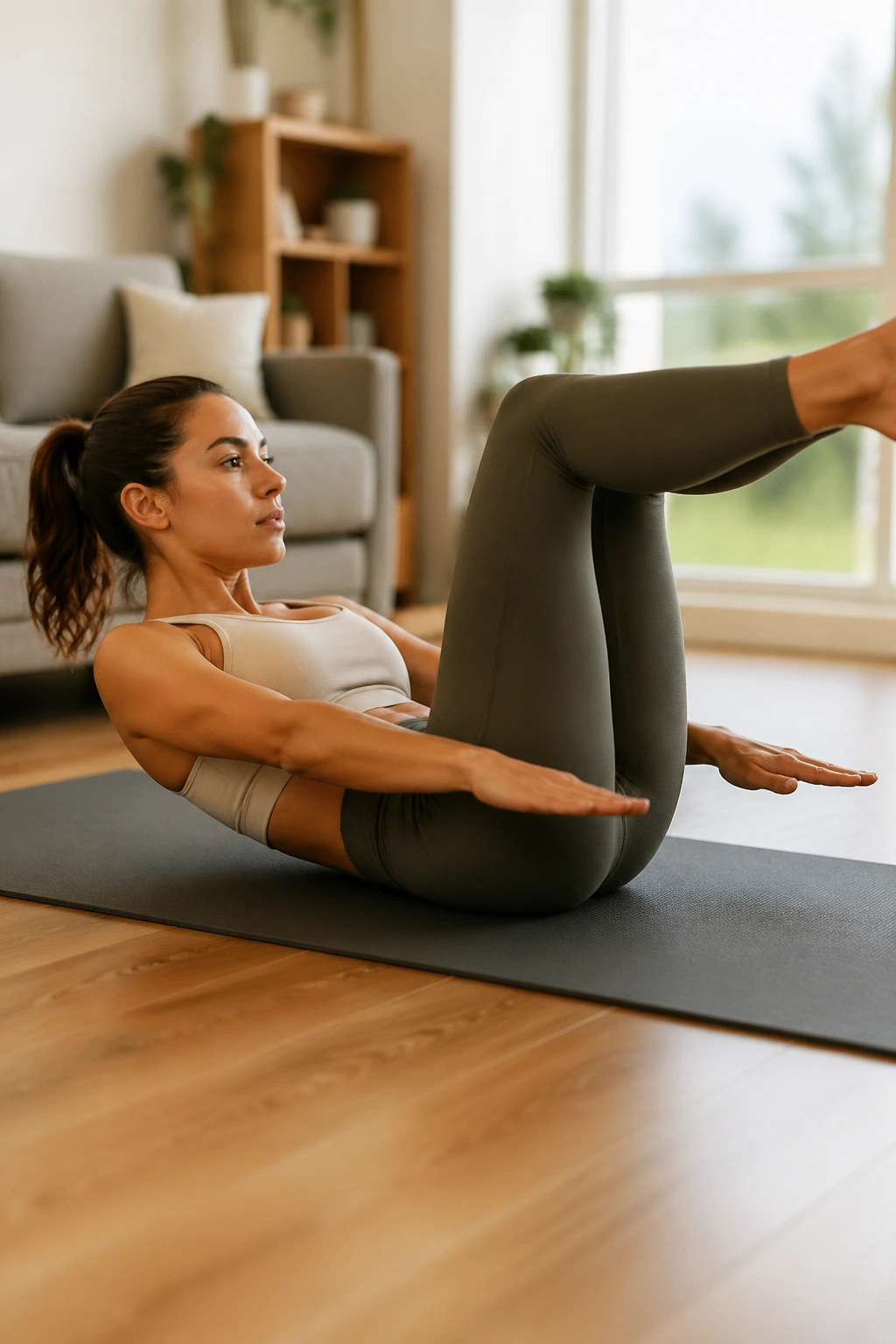
The Pilates hundred looks tame until the breathing starts. That is why it keeps showing up in serious core work. Lie on your back, curl your shoulders up slightly, lift your legs into tabletop or keep them bent, and pump your arms up and down while you breathe in and out in a steady pattern.
The breathing is not decoration. It is part of the exercise. A common rhythm is 5 counts in and 5 counts out for 10 cycles, which gives you the classic 100 arm pumps. If your neck gets tired, keep your head down and leave the upper body curl smaller. There is no medal for grimacing through a bad setup.
Keep the neck quiet
- Think of the ribs staying knit together.
- Keep the chin slightly tucked.
- Pump the arms from the shoulders, not the neck.
- Lower the legs if your back arches.
The whole move works because it asks for endurance, not brute force. That is a useful shift when your upper belly feels soft but your deeper core feels even softer.
8. Plank Shoulder Taps
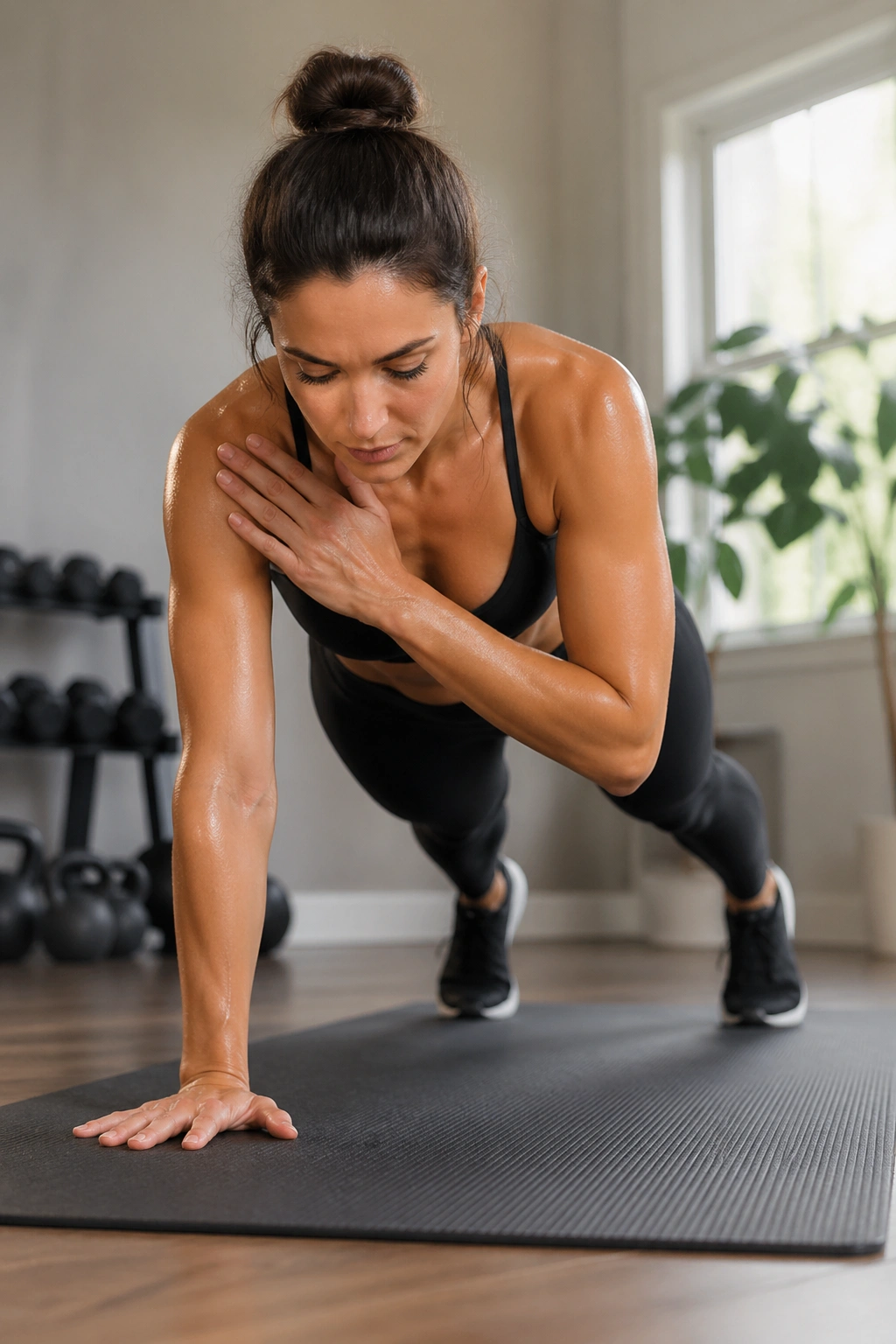
Compared with a plain plank, shoulder taps ask your core to stop the hips from swaying.
That little anti-rotation demand is the magic. Set up in a high plank, spread your feet a bit wider than hip-width if needed, and tap one shoulder with the opposite hand. Then switch. The body wants to wiggle. Your job is to make it stay almost still.
This is one of those moves that feels simple on paper and a little rude in practice. The shoulders work, sure, but the midsection has to keep the whole frame from tipping. If you want a stronger waistline and better core control, that stability piece matters a lot.
What to watch for
- Hips twisting too much.
- Feet set too narrow.
- Hands moving too fast.
- Breath held at the top.
A slower tap is usually a better tap. If your form collapses after eight reps, do six clean ones and rest. That is still a win.
9. Standing Knee Drives
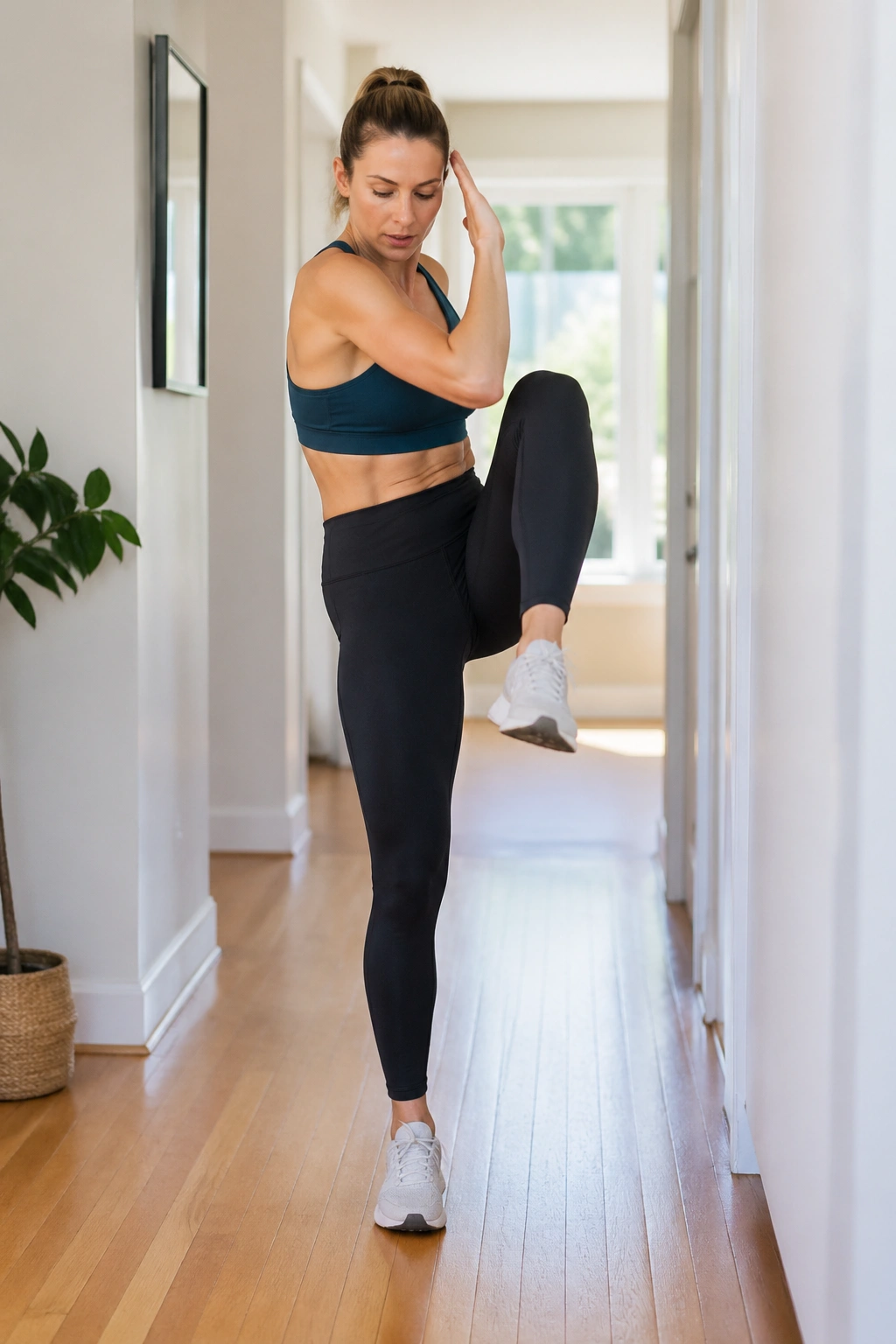
If getting on the floor feels annoying, start here.
Standing knee drives are simple, low-impact, and sneaky. Stand tall, brace your middle, and drive one knee up while bringing the opposite elbow down toward it. You can march in place, hit them one side at a time, or move a little faster once your form feels steady. No mat needed.
This move is useful for women who want something they can do between work, chores, or a quick hallway break. It raises the heart rate, wakes up the abs, and avoids the “I have to lie down and get back up again” problem that makes some workouts feel harder than they should.
Why it earns a spot
- Gentle on the knees.
- Easy to scale up or down.
- Good for beginners.
- Useful on low-energy days.
Keep your chest lifted and your ribcage from flaring backward. If you lean too far, the movement turns into a hip swing. Small and sharp is the goal.
10. Seated In-and-Outs
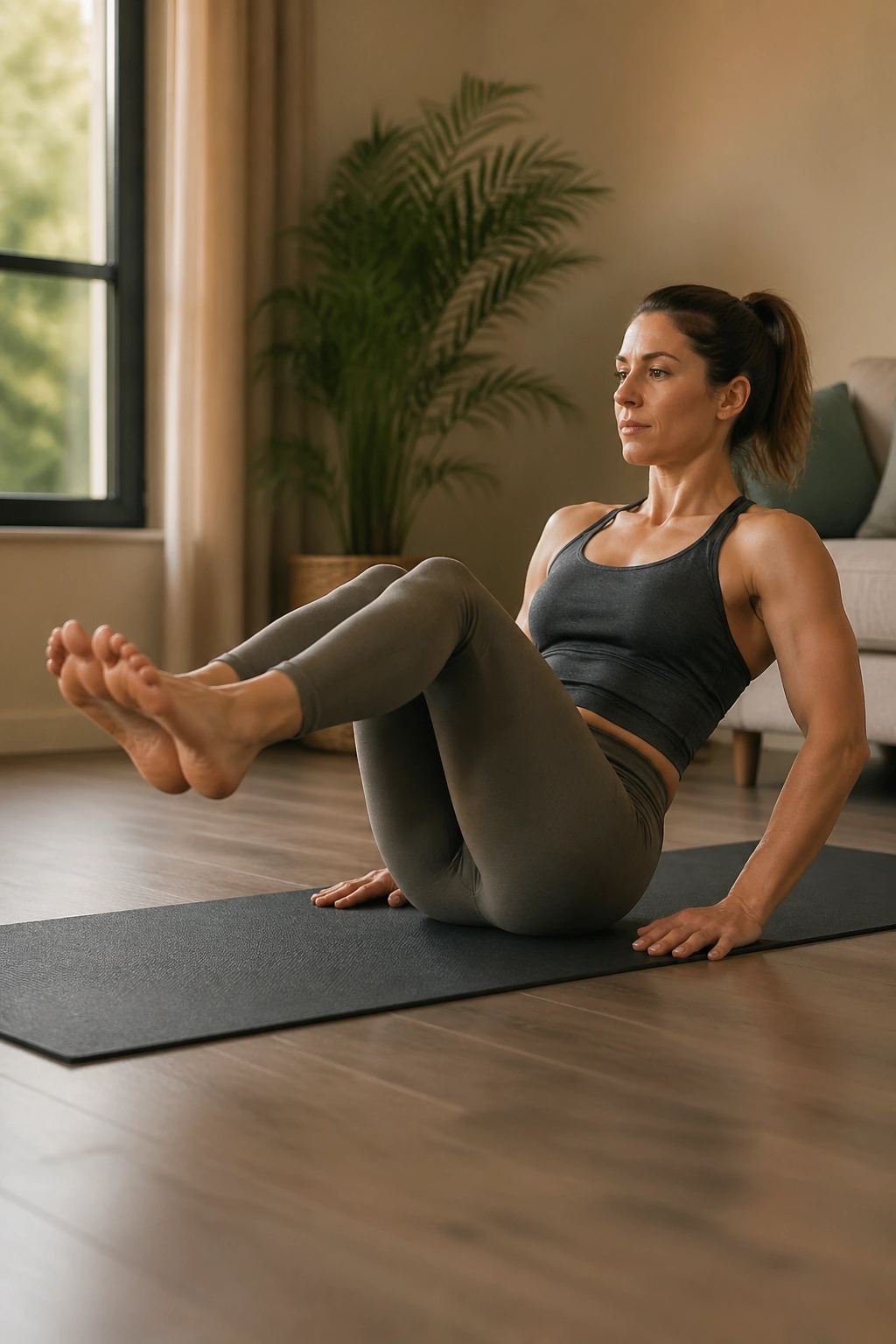
Can you train your core while seated on the floor?
Yes, and this one proves it. Sit down, lean back slightly, lift your feet, and pull your knees toward your chest before extending the legs out again. The trick is staying long through the torso while the abs pull the knees in. If you collapse backward, the lower back starts to complain.
This move gives you a good upper-ab and hip-flexor burn without needing much space. It also works nicely as a middle-of-the-workout exercise when you want something harder than toe taps but less ugly than full V-ups. Keep the motion smooth and stop before the feet slam the floor.
How to protect your back
- Keep your chest open.
- Do not round hard through the spine.
- Bend the knees more if needed.
- Use your hands lightly behind you for balance only, not for pushing.
A small pause at the tucked position helps a lot. That’s where the abs have to hold on.
11. Modified V-Ups
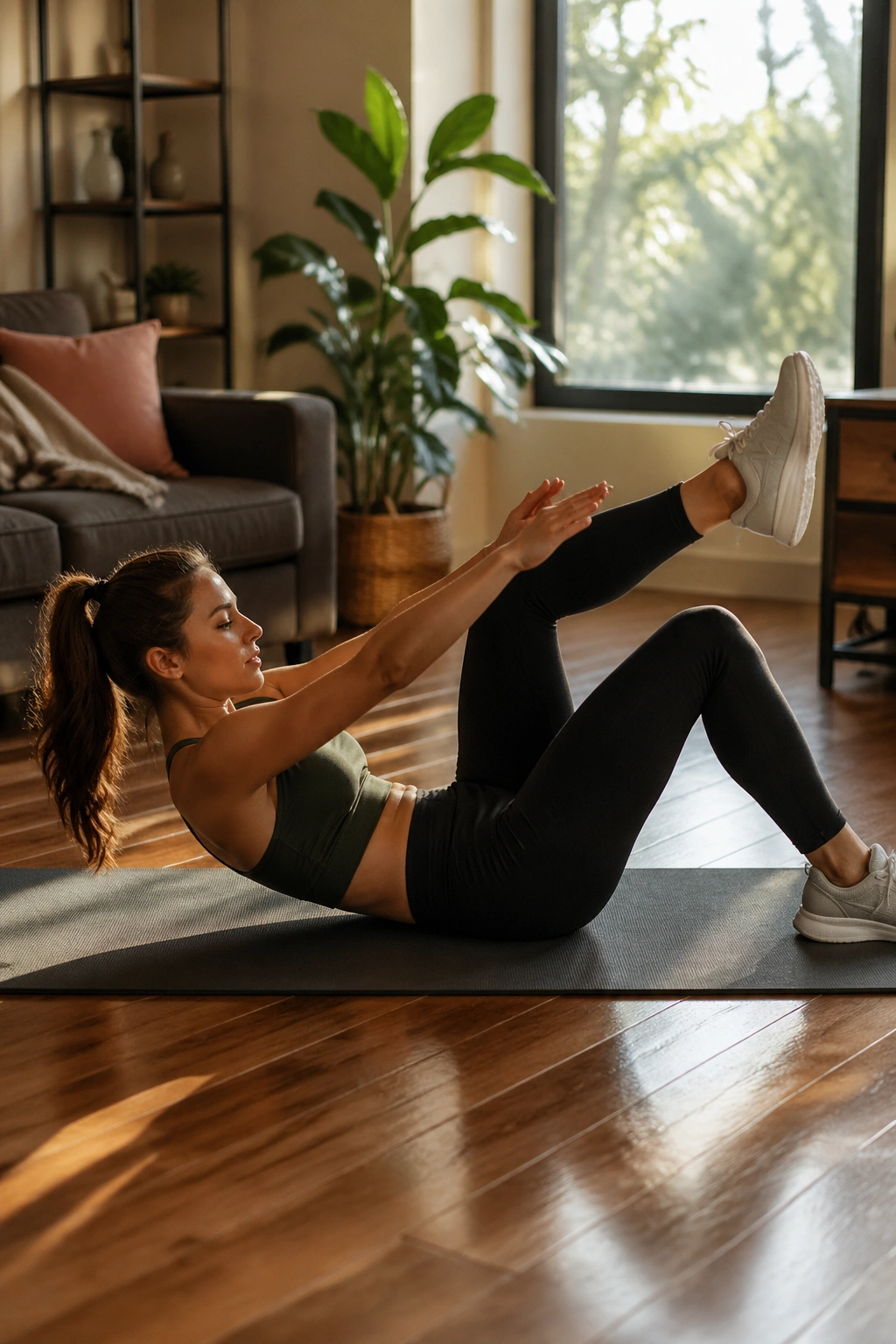
A full V-up is not the goal here.
The modified version is the one most people should start with anyway. Lie on your back, reach your arms overhead, and lift one leg or both knees as you curl your shoulders off the floor. Bring the hands toward the shins, then lower with control. The movement should feel like a sharp fold, not a wild spring.
This is a harder drill than it first looks. The upper belly has to contract hard to bring the shoulders up, and the lower body has to stay honest instead of flinging momentum around. If you feel your low back grip or your neck strain, shorten the range right away.
A good modified V-up leaves you breathing a little harder and moving a little slower by rep five. That is normal. Chasing height is a bad habit here. Chasing control is the whole point.
12. Jackknife Pulses
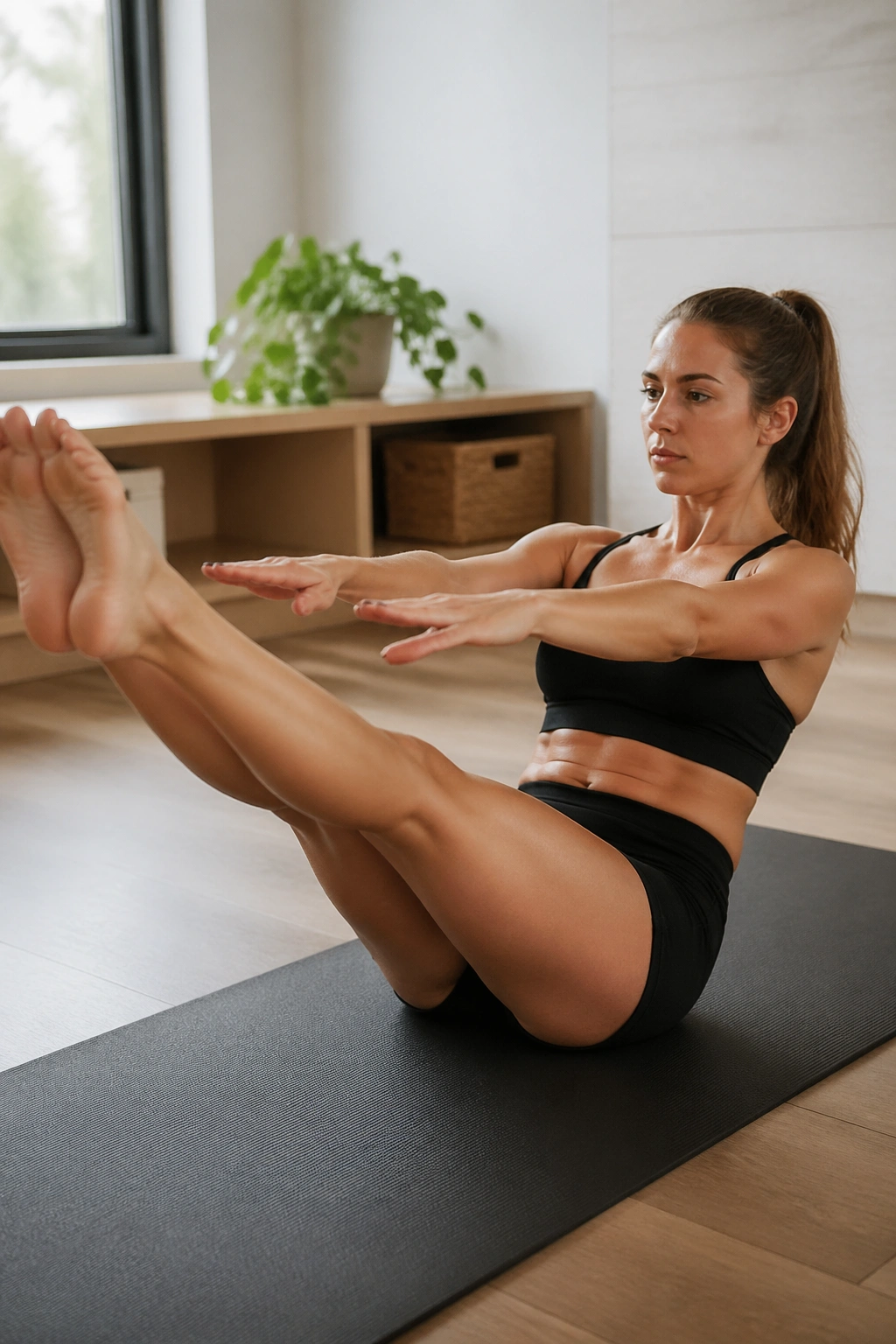
Tiny motion. Big burn.
Jackknife pulses are the kind of exercise that looks almost too small to matter, right until your abs start arguing back. From a V-sit or pike-like position, pulse the torso up and down just an inch or two while keeping the movement tight. The legs stay lifted, the abs stay curled, and the pulse never turns into a flop.
This one is best when you already have some core strength and want a sharper finish to the workout. It lights up the upper abs fast, but it also punishes sloppy form. If the neck starts taking over, stop. If the lower back starts to wobble, stop. The pulse only works while you can keep it clean.
One good set is usually enough to know where you stand. That is the nice and annoying thing about it. There is nowhere to hide.
13. Heel Touches
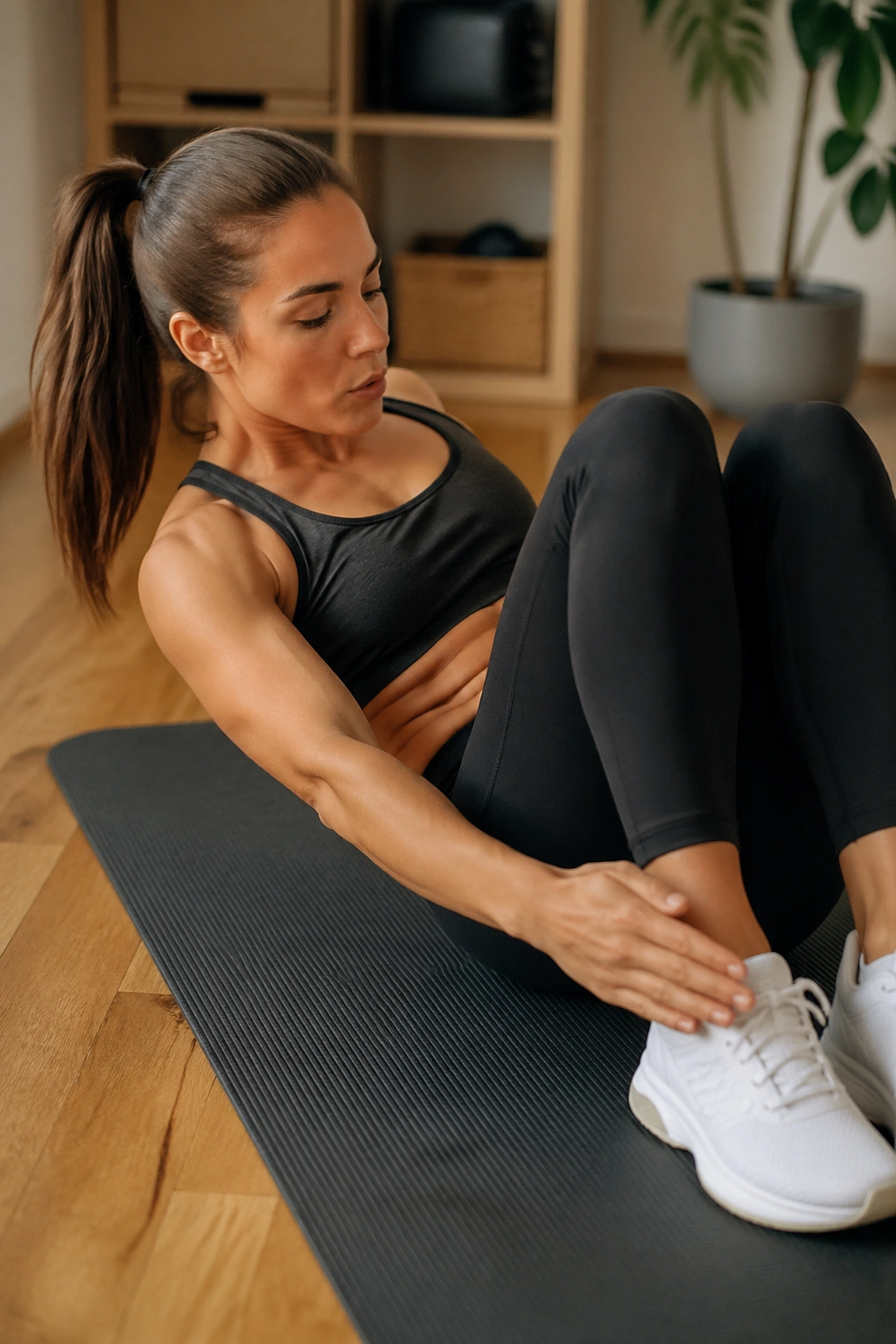
Why do heel touches feel so oddly specific?
Because they ask for side-to-side control instead of straight-up flexion. Lie on your back with your knees bent and feet flat, lift your shoulders a few inches, and reach one hand toward the outside of one heel, then switch sides. Keep the ribs pulled down and the neck long.
Heel touches are especially handy when you want to wake up the side abs without a brutal crunch. They’re also a good choice for people who want a slower, more controlled floor drill that still makes the middle section fire. The movement is small, but the constant side reach keeps the waist working.
Keep these cues in mind
- Shoulders stay off the floor.
- Hands reach, they do not yank.
- Head stays neutral.
- Feet stay planted unless you’re doing a harder variation.
If your neck starts cranking forward, lower your shoulders a little and shorten the reach. Small and steady wins here.
14. Bear Plank March
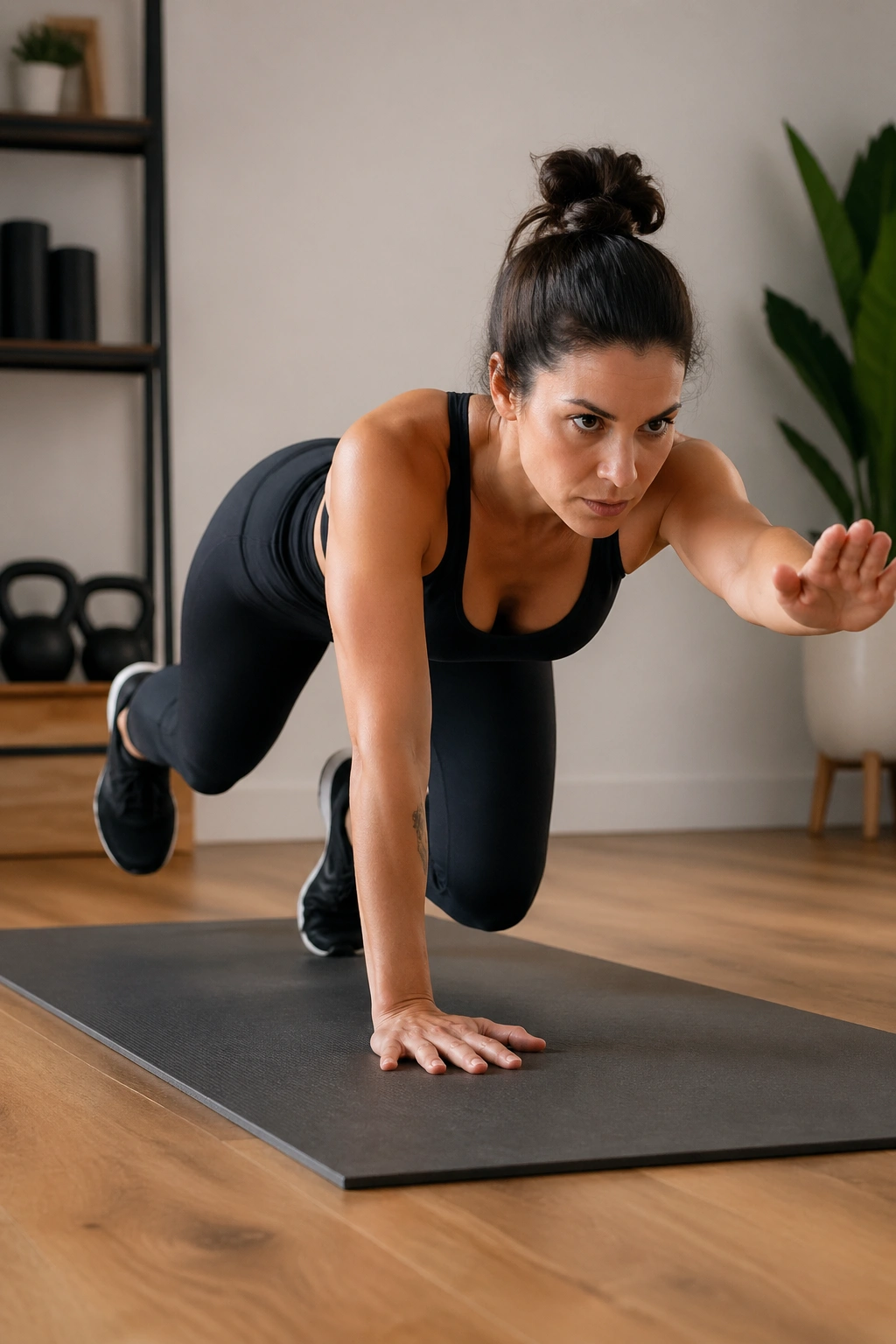
Four inches off the floor can feel brutal.
That’s the whole charm of the bear plank march. Start on hands and knees, tuck your toes, hover your knees a few inches above the floor, then lift one hand or one foot at a time in a slow march. The back should stay flat, the hips quiet, and the belly tight enough that you can feel your whole center working.
This move does a lot in one shot. It trains the core, shoulders, and hip control while keeping the movement compact. It’s also a smart bridge between basic planks and more aggressive floor work. If you want stronger abs but hate endless crunches, this one earns its keep fast.
What goes wrong first
- Knees rising too high.
- Hips rocking side to side.
- Hands stepping too far forward.
- Breath getting trapped.
Keep the march slow enough that your torso does not shift. If you can hold the position for 20 seconds with control, you’re doing better than most people think.
15. Standing Side Crunches
Some days, the floor moves are a hard no.
Standing side crunches are the answer when you want something simple, upright, and easy to repeat. Stand tall, place one hand behind your head or reach that arm overhead, then crunch your ribcage toward the same-side hip. You can do them one side at a time, alternate sides, or add a light dumbbell once the basic motion feels clean.
This is not the most brutal drill on the list, and that is fine. It has a place because it lets you keep working the waist and upper side abs without lying down, and the standing position makes it easier to stay consistent on busy days. If you’re trying to build a habit, the exercise you’ll actually do matters more than the fanciest one in the room.
A simple way to string these moves together is to pick 5 exercises, do each for 30 seconds, rest 15 to 20 seconds, and repeat for 3 rounds. Keep the reps slow enough that your torso does the work, not your swing.
Finish with a walk if you can. That part is boring too. It also helps.
