



High-Intensity Interval Training, or HIIT, often gets a bad reputation for being all about jumping, pounding the pavement, and risking twisted ankles. The common narrative suggests that if you aren’t airborne, you aren’t working hard enough. That is absolute nonsense. You can absolutely spike your heart rate and burn serious calories while keeping your feet planted firmly on the floor. In fact, many professional athletes use low-impact variations to protect their joints during recovery periods while still maintaining their conditioning.
The secret isn’t the impact; it’s the intensity of your effort and the brevity of your rest periods. By focusing on explosive movement—even without leaving the ground—and keeping your core braced tightly, you can achieve the same metabolic spike as someone jumping rope. We are talking about maximal muscle recruitment through range of motion and speed, not gravity-defying acrobatics. If you have bad knees, hip issues, or simply prefer to keep your workout quiet, this approach is going to change exactly how you view home fitness.
1. Standing March with High Reach
This is your foundational move for warming up, but do not mistake it for a leisurely stroll. The goal here is to drive your knees up as high as your hip flexors will allow while simultaneously reaching your hands toward the ceiling. It’s an exercise in coordination and core engagement that forces your heart rate to climb because you are moving limbs in opposite directions.
Why It Works for HIIT
When you move your arms overhead, your heart has to work significantly harder to pump blood against gravity. By combining that with a high-knee march, you are basically doing a vertical cardio move. Focus on driving the knee up sharply—think of it as trying to touch your chest with your thigh—rather than just bobbing your body up and down.
Performance Tips
- Keep your core braced as if you are preparing for a punch.
- Avoid leaning backward; stay tall.
- Squeeze your glute on the standing leg to maintain stability.
- Move as fast as you can for 45 seconds, then rest for 15.
Pro tip: Imagine you are punching the ceiling with your palms open every single time your arm reaches the top.
2. Cross-Body Knee Drives
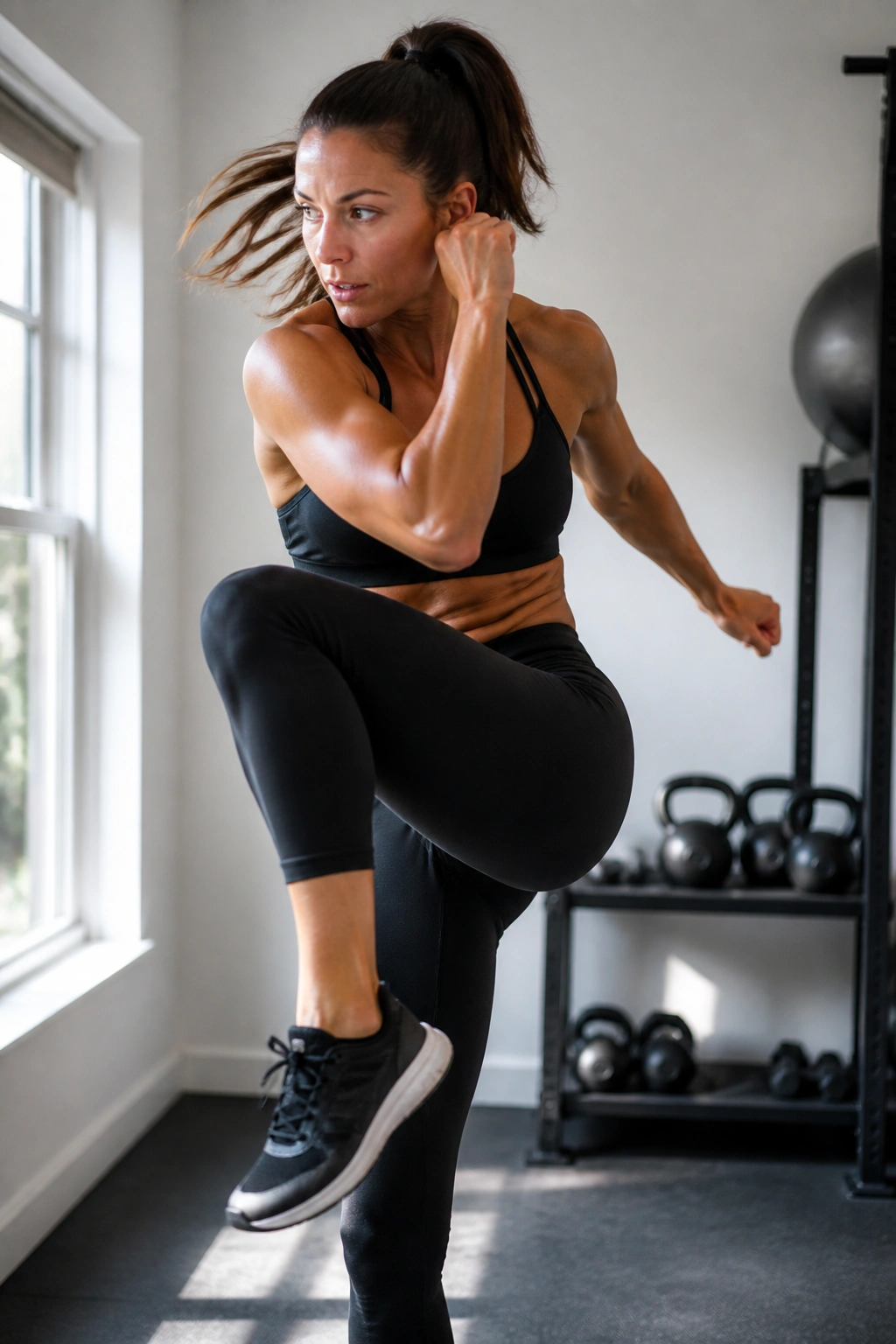
Take your basic march and add a rotation. As you drive your right knee up, bring your left elbow across to meet it. This forces the obliques to fire, turning a simple cardio movement into a targeted abdominal workout. This is about rhythm and snapping the movement with intention rather than just going through the motions.
The Mechanics of the Movement
You want to focus on the crunch—the moment the elbow and knee meet. Exhale sharply as you twist. This is a rhythmic, rapid-fire exercise. If you move slowly, you will feel it in your abs. If you move quickly, you will feel it in your lungs. Both are exactly what you want for a HIIT protocol.
Common Form Mistakes to Avoid
- Rounding your back excessively.
- Using your hands to pull the knee up (use your hip flexors instead).
- Rotating the hips too much (the rotation should come from the thoracic spine).
3. Standing Oblique Crunches
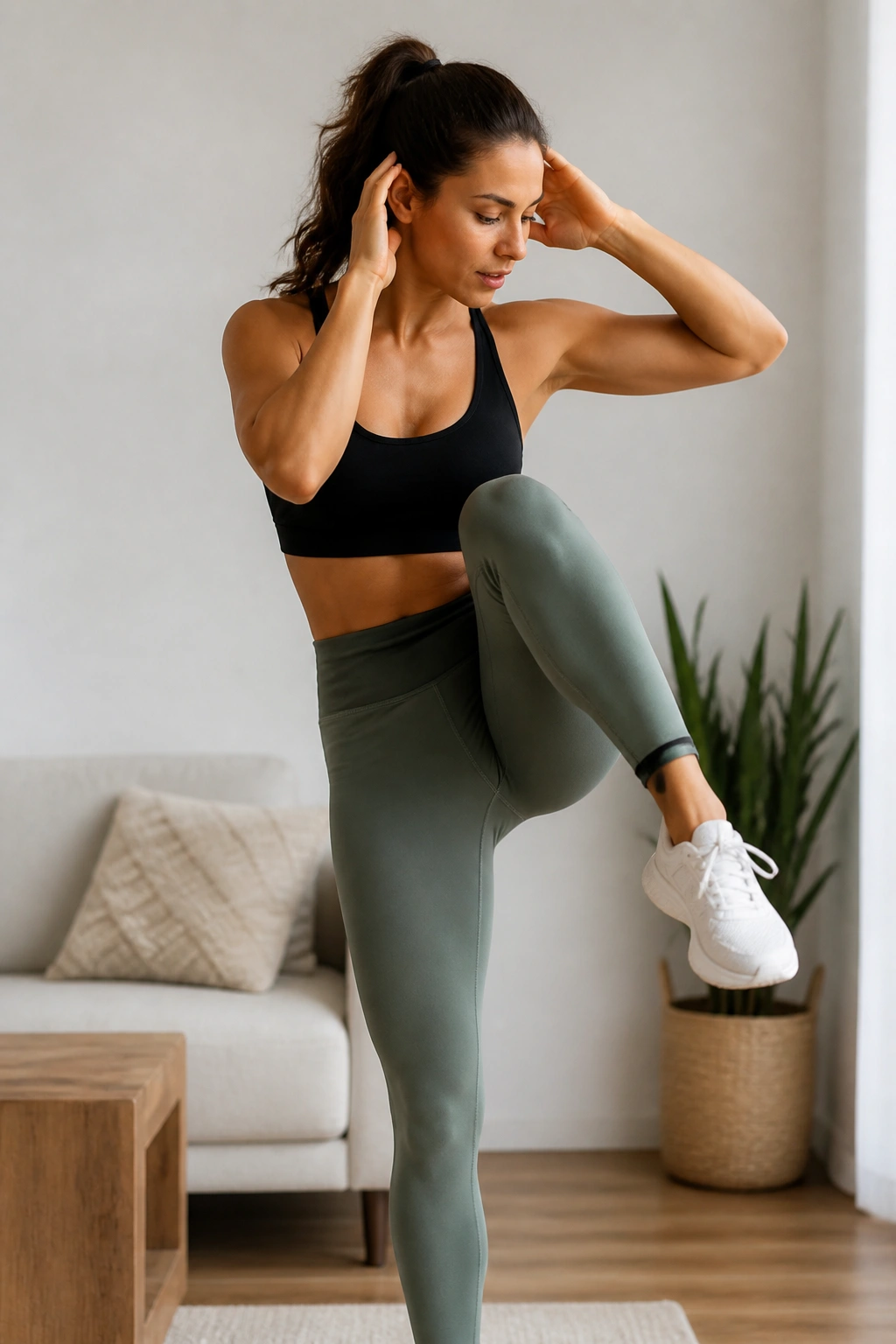
Stand with your feet slightly wider than shoulder-width apart, hands behind your head or reaching long toward the ceiling. Lift your right knee out to the side while simultaneously crunching your right elbow down to meet it. You are effectively trying to close the gap between your ribcage and your hip.
Making It High-Intensity
Most people do this movement too slowly to get a HIIT benefit. You need to treat this as a frantic, repetitive crunch. Imagine you are working against a resistance band that is pulling you back to center.
Why It Triggers Results
This move hits the obliques and the deep core muscles that often get ignored in traditional steady-state cardio. Because you are balancing on one leg for a fraction of a second, your stabilizer muscles in the hips and ankles have to fire rapidly to keep you upright. It’s a full-body stability challenge.
4. High-Knee Torso Twists
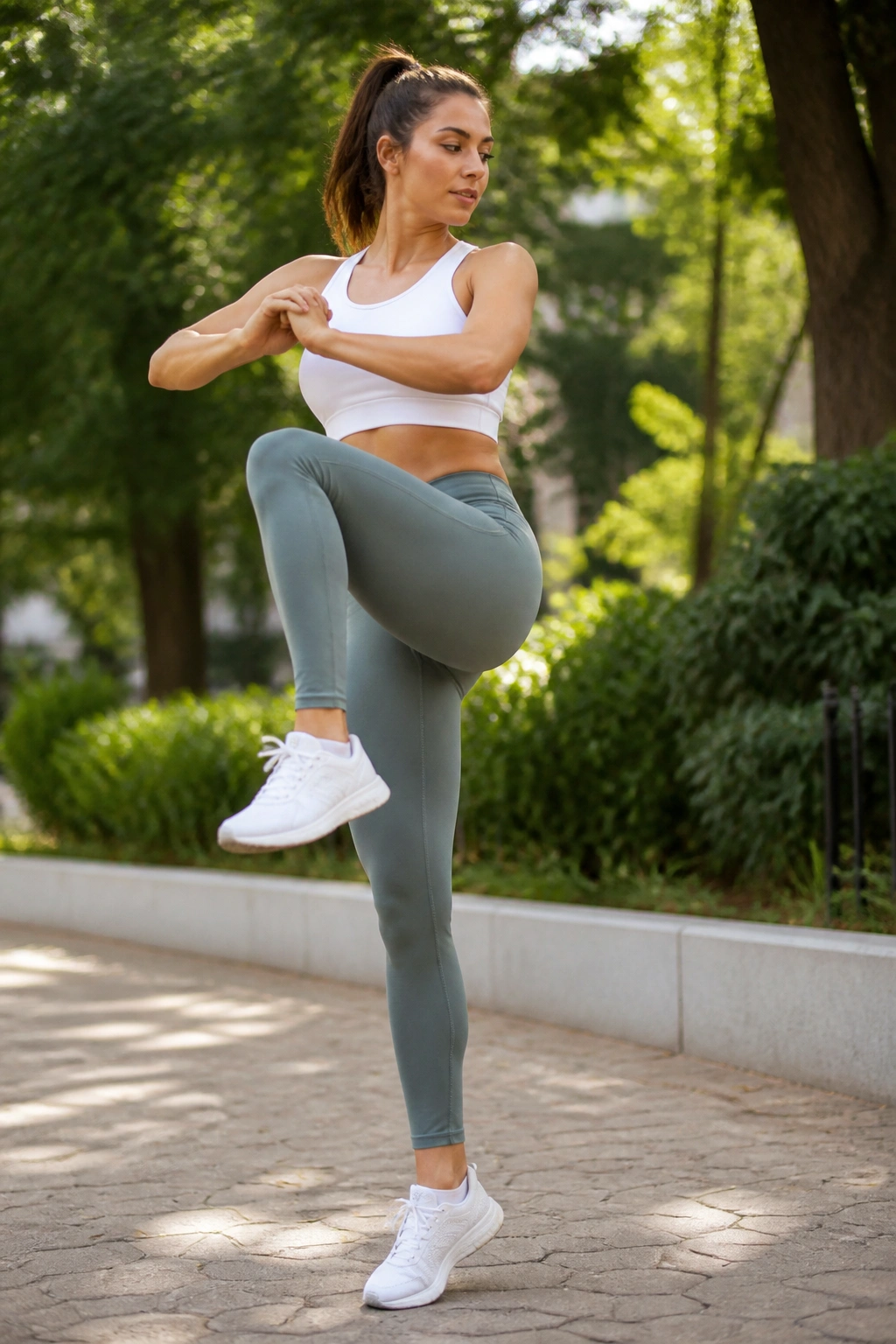
Start with a wider stance again. This time, keep your feet planted but shift your weight from side to side. As you shift weight to the left, bring your right knee up and twist your torso toward that side. Reset, then repeat on the other side.
Developing Speed
The HIIT benefit here comes from the weight transfer. Your heart rate will spike because you are constantly shifting your center of gravity. It’s like doing a speed skater move but keeping your feet on the floor.
What to Watch For
- Keep your gaze forward; don’t look down at your feet.
- Ensure the pivot foot is flat on the ground.
- Maintain a slight bend in your knees to keep the tension in the quads, not the joints.
5. Side-to-Side Step Touches with Arm Swings
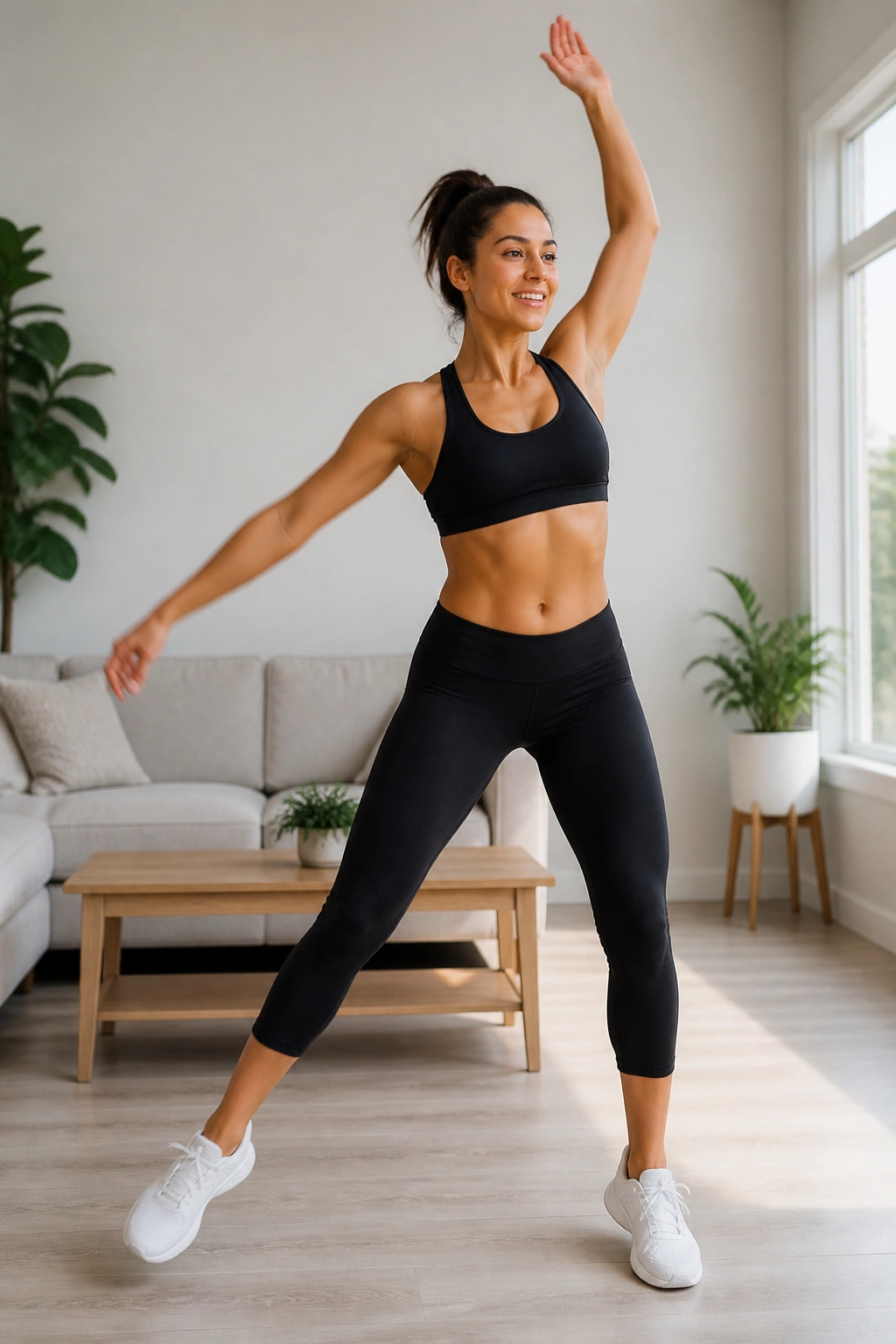
This is the low-impact version of a jumping jack. Instead of hopping, you are stepping wide and tapping your toe, while swinging your arms overhead in a wide arc. It sounds simple, but when performed for a sustained interval, it is brutal on the shoulders and lungs.
The Power of Wide Arm Movement
The larger the arc of your arms, the more energy your body consumes. Keep your arms straight and move them with purpose. Do not let them flop around. You want to feel the muscles in your back and shoulders engaging on every single repetition.
How to Scale Intensity
- Increase the speed of your feet.
- Make the step wider.
- Keep your arms locked straight and move them faster.
6. Standing Bicycle Crunches
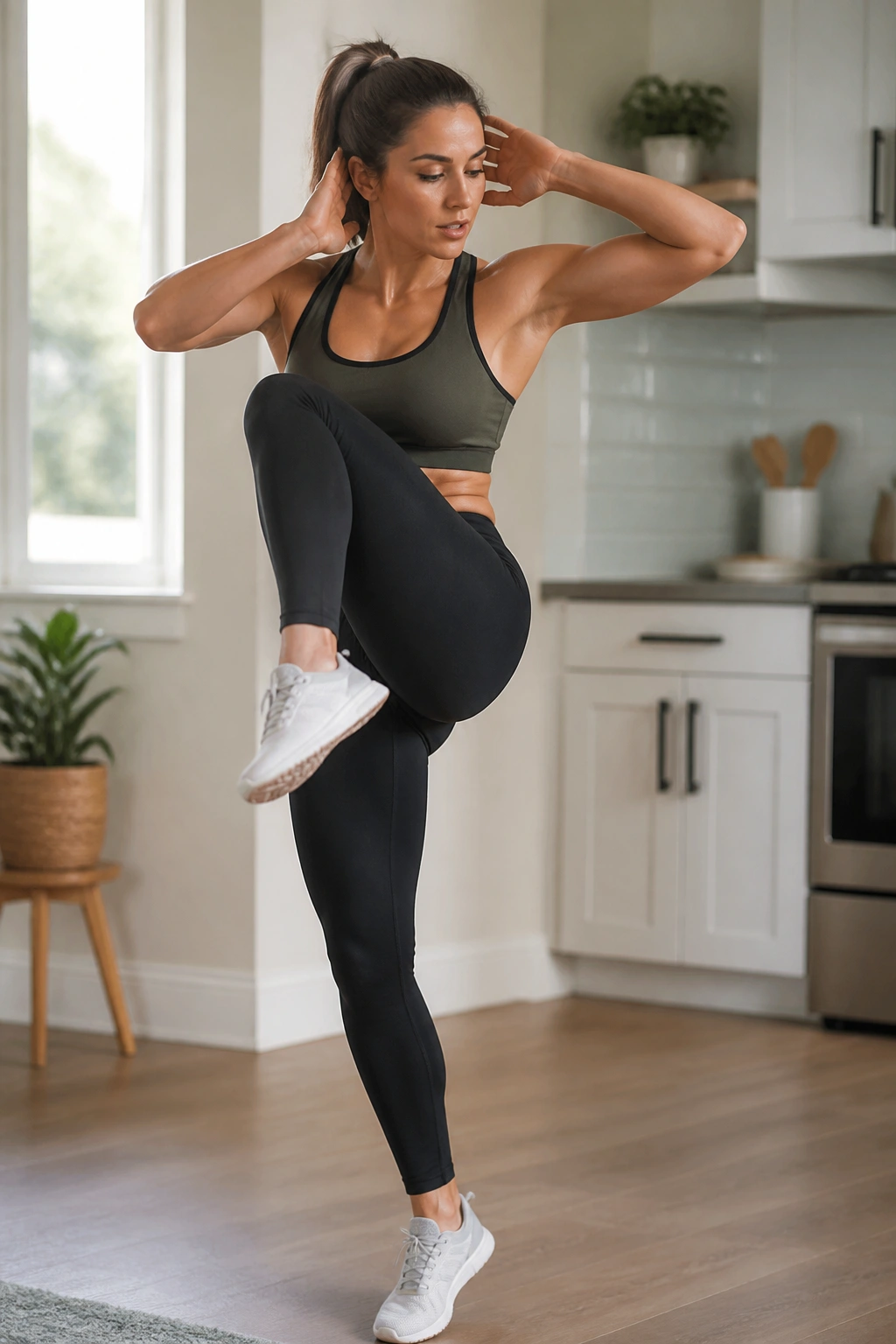
Stand tall, hands behind your head, elbows wide. Lift your right knee and twist your upper body to bring your left elbow toward that knee. Then switch. This is the standing version of the classic floor bicycle, but standing up changes the gravity equation entirely.
Why It’s Effective
Standing requires you to engage your glutes and lower back to stay upright, which adds a layer of difficulty you do not get on the floor. You aren’t just crunching; you are fighting for balance while you crunch.
Focus Points
- Keep the elbows wide; do not pull on your neck.
- Exhale forcefully on the twist.
- Keep the pace snappy. If you aren’t slightly breathless by the end of 30 seconds, pick up the cadence.
7. Shadow Boxing (Jabs and Crosses)
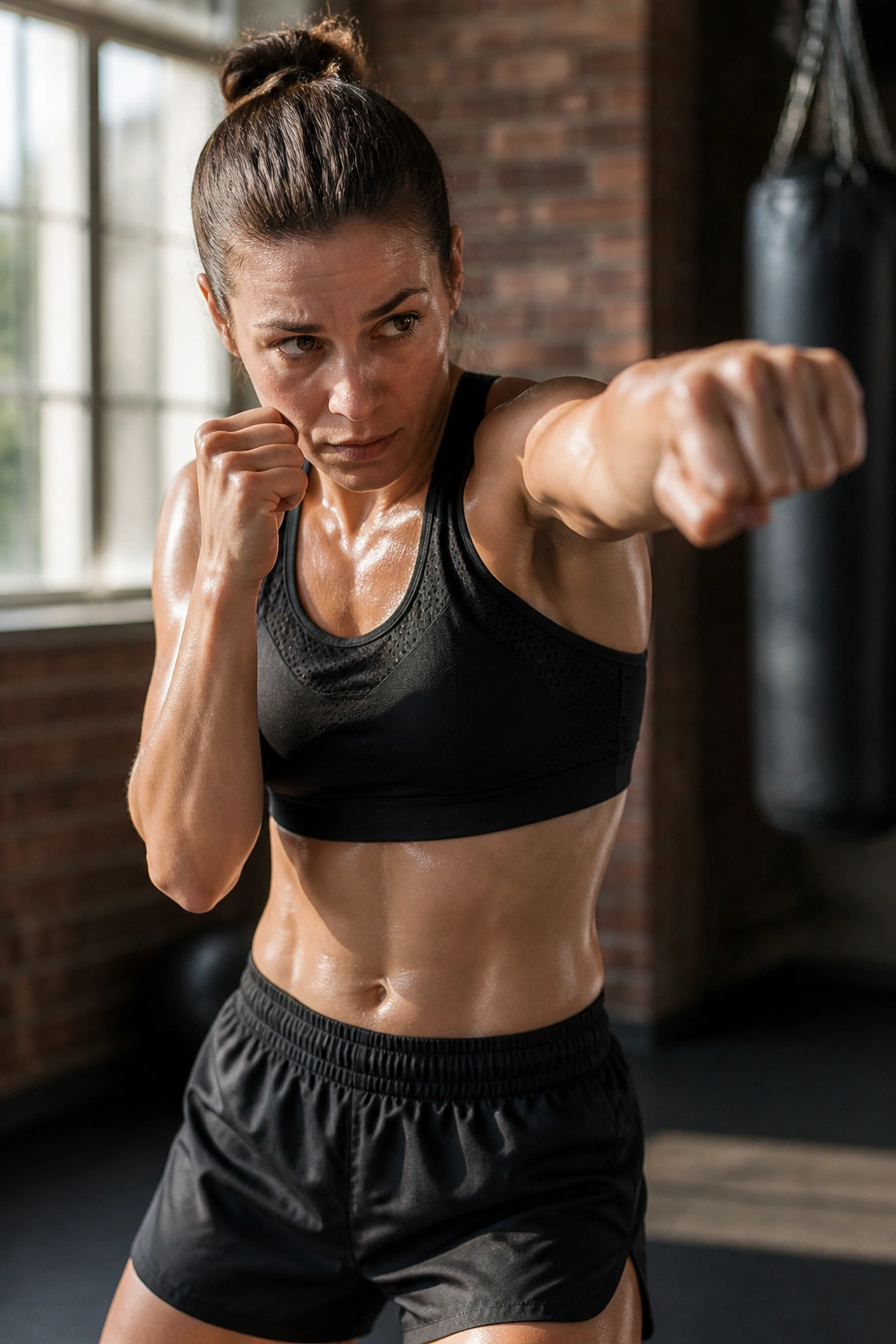
Throwing punches isn’t just for fighters. It’s one of the best high-intensity movements you can do while standing. Keep your knees soft, keep your core tight, and throw straight punches (jabs and crosses) directly in front of you.
The Science of the Punch
Your power comes from the rotation of the torso, not just the arm. Every punch should start from your core. When you throw a cross (the rear hand), pivot your back foot slightly to generate force through your hip.
Interval Strategy
- 30 seconds: Rapid-fire jabs (front hand).
- 30 seconds: Power crosses (rear hand).
- 30 seconds: Freestyle combination.
- 15 seconds: Rest.
Pro tip: Keep your chin tucked. It keeps your neck safe and puts you in a more athletic stance.
8. Standing Leg Lifts (Side)
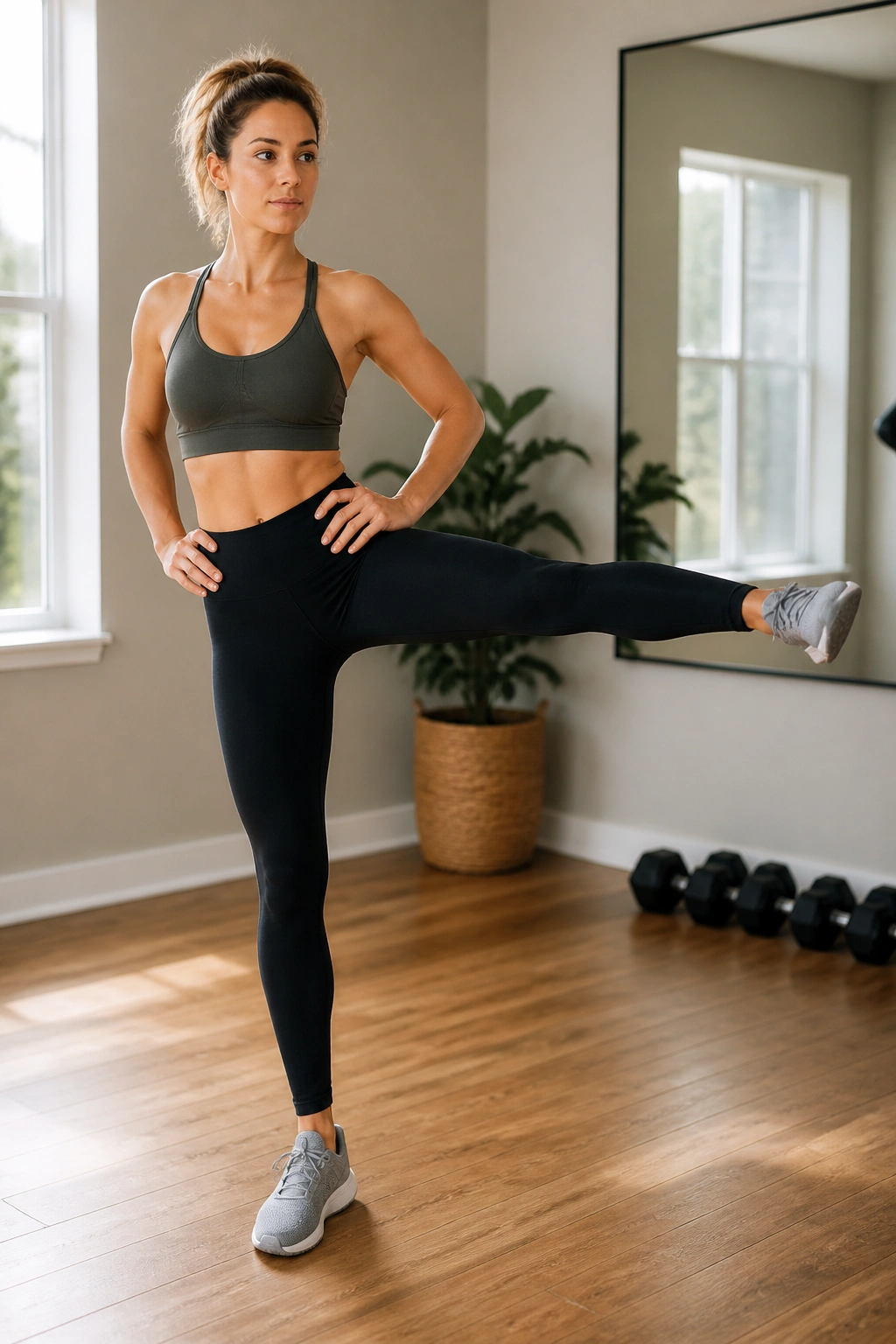
Stand with hands on your hips or reaching out for balance. Lift your right leg straight out to the side, leading with the heel. Return to center without putting your foot down if possible. Repeat for 20 seconds, then switch to the left leg.
Targeting the Glute Medius
This muscle is responsible for stabilizing your pelvis. A strong glute medius makes every other movement in this list easier. While this might feel less like “cardio” than the others, if you do it fast enough and keep the leg hovering, your heart rate will definitely spike.
Avoiding Common Errors
- Don’t lean the entire torso to the side. Keep your spine vertical.
- Keep the foot flexed to protect the knee.
- Only lift as high as your hip allows without twisting your lower back.
9. Standing Heel Digs
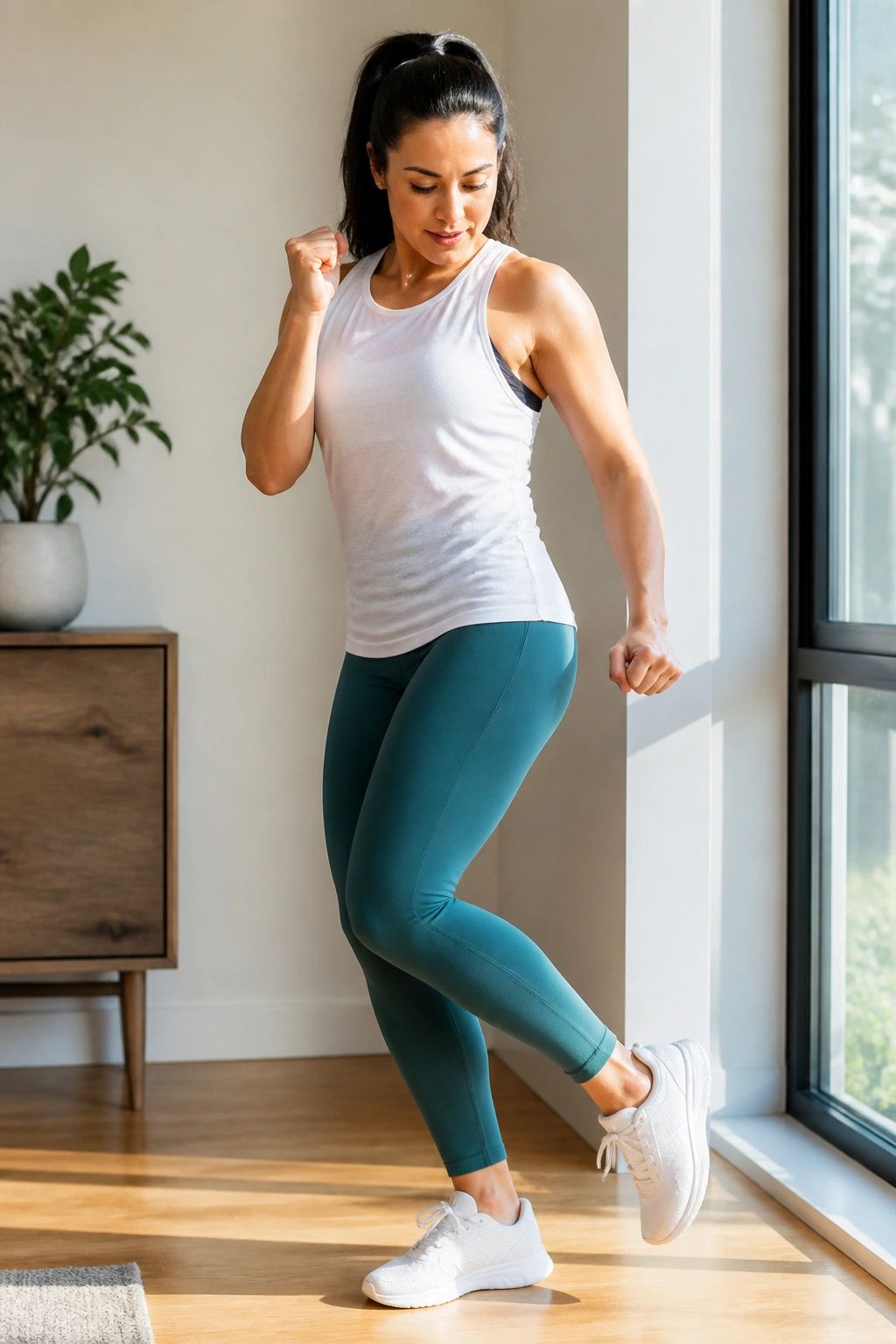
This looks like a simple rhythmic move, but it’s all about fast-twitch muscle fiber activation. Step your right heel forward and tap it, then return to center. Do the same with the left. As you get comfortable, add a bicep curl motion with your arms.
Why Coordination Matters
Moving your arms in opposition to your legs—like a bicep curl with the heel dig—forces your brain to work harder. The more your brain has to coordinate complex movements, the more caloric energy you expend.
Performance Cues
- Keep a slight hop-like rhythm without actually leaving the floor.
- Tighten your biceps as you curl your arms to add tension.
- Keep the tempo consistent. Use a metronome app or a fast-paced song to keep you on beat.
10. Power Jacks (No Jump)
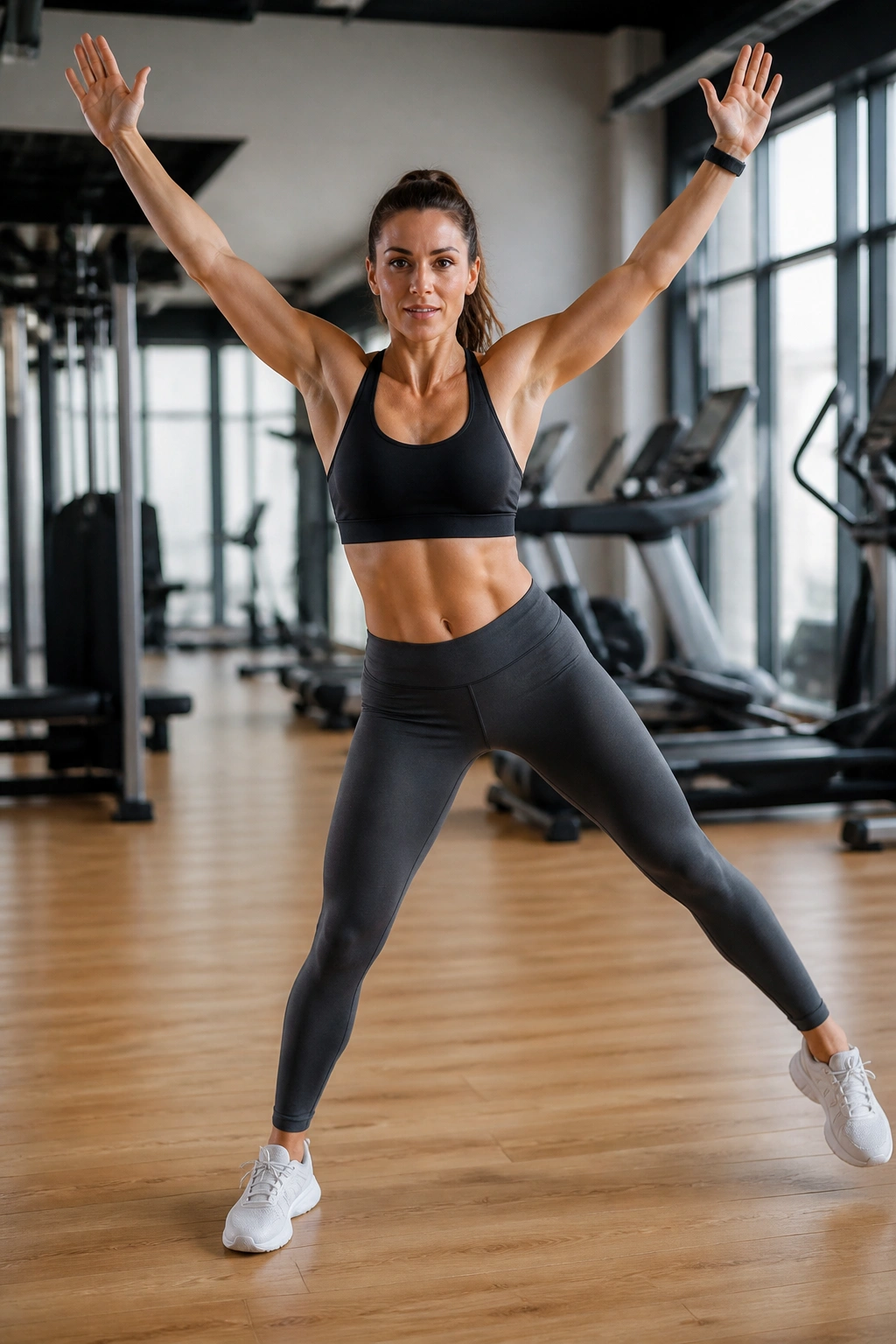
This is the classic jumping jack, stripped of the impact. Step your right foot out to the side while raising your arms, then snap back to center. Immediately step your left foot out while raising your arms.
Managing the Tempo
Because you aren’t jumping, you have to be deliberate about the speed. You are using your inner thighs (adductors) to snap your legs back together forcefully. This snap is where the work happens.
Variations to Boost Heat
- Add a slight squat when your feet are wide.
- Keep your arms perfectly straight and tense, as if you are moving through water.
11. Standing Mountain Climbers
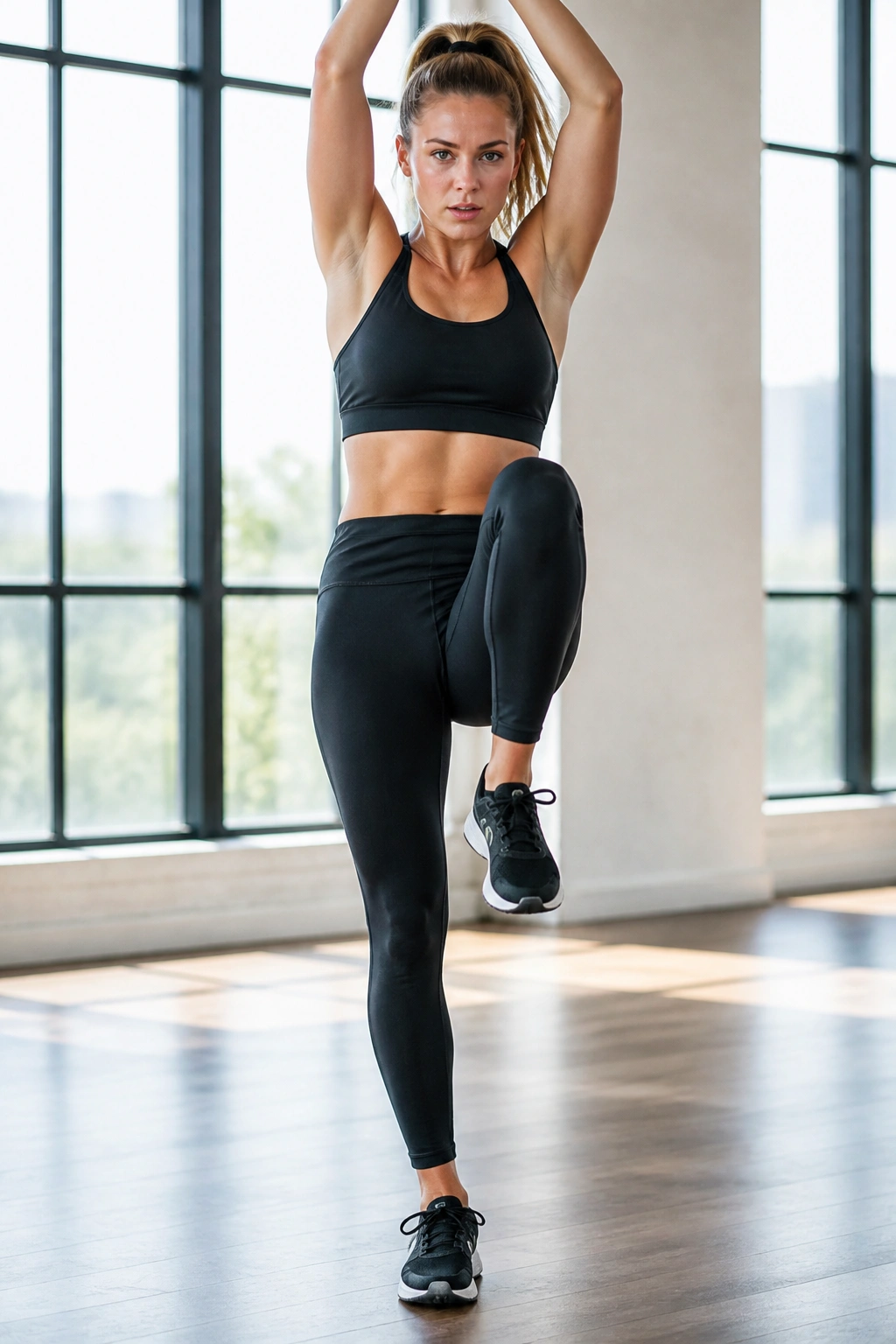
This is a favorite among people who cannot get down on the floor. Stand with your arms overhead. Drive your right knee up toward your chest while pulling your hands down sharply toward your knee. It’s like doing a crunch while standing.
The Crunch Mechanic
You are crunching your abs on every single rep. Think about bringing your ribcage to your hips. The faster you drive the knee and pull the hands, the more intense the spike in your heart rate.
Breath Control
Do not hold your breath. This is high intensity. Force the air out as you crunch. It helps you maintain rhythm and prevents that dizzy feeling that sometimes comes with fast-paced standing work.
12. Windmills (Standing)
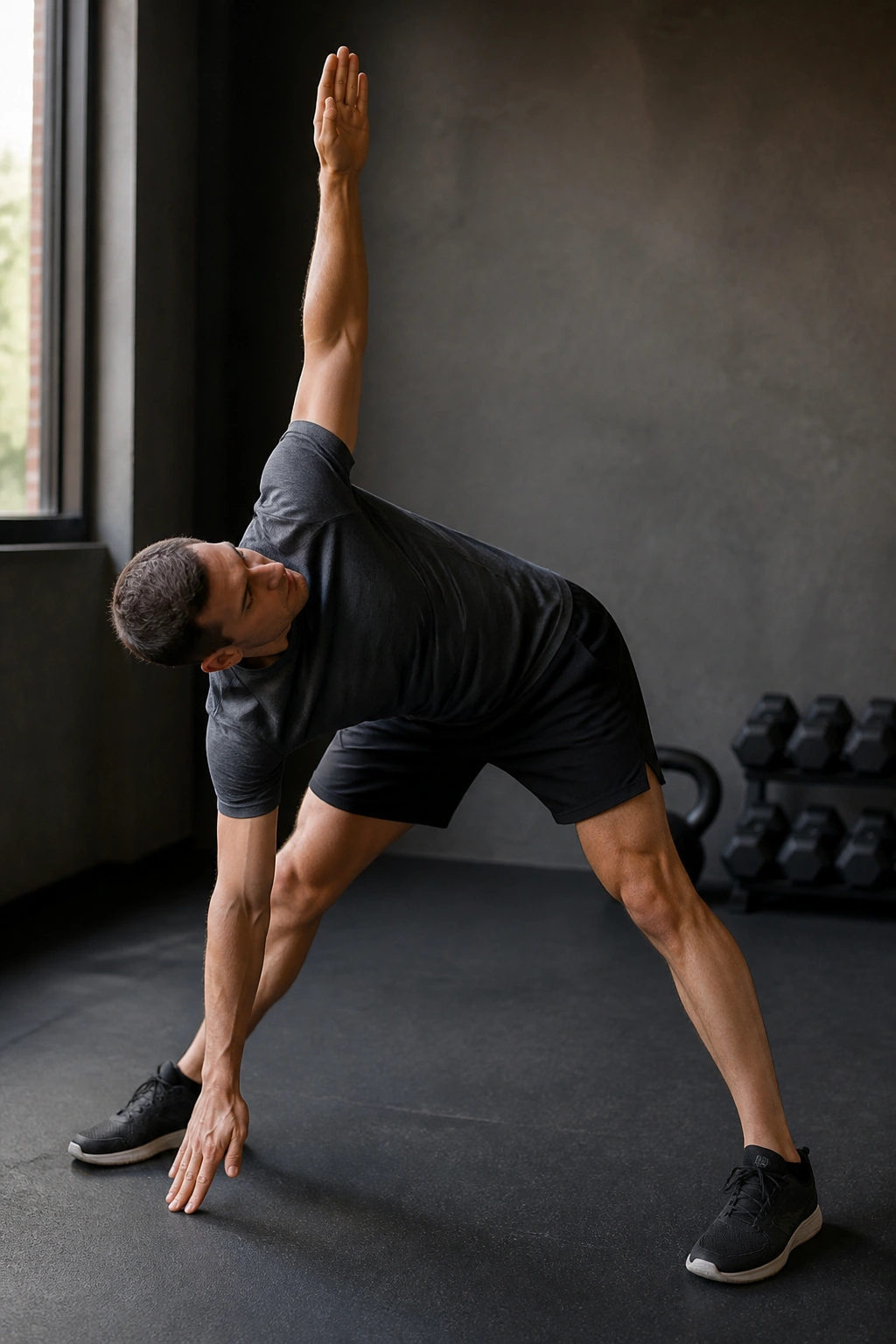
Stand with your feet wide and arms extended out to the sides. Keep your legs straight and hinge at the hips, reaching your right hand down to touch your left foot (or shin, or knee—don’t force it). Stand back up, then switch.
Why This Is Different
This move challenges your balance and your posterior chain (hamstrings and lower back). It forces you to control your body through space. It is slower than a mountain climber, but the muscular tension is much higher.
Form Check
- Keep your back flat. Do not round your spine to reach the floor.
- If you can’t reach your foot, reach your shin. The movement pattern is more important than the depth.
- Keep your weight centered; don’t shift too far forward on your toes.
13. Butt Kicks (Low Impact)
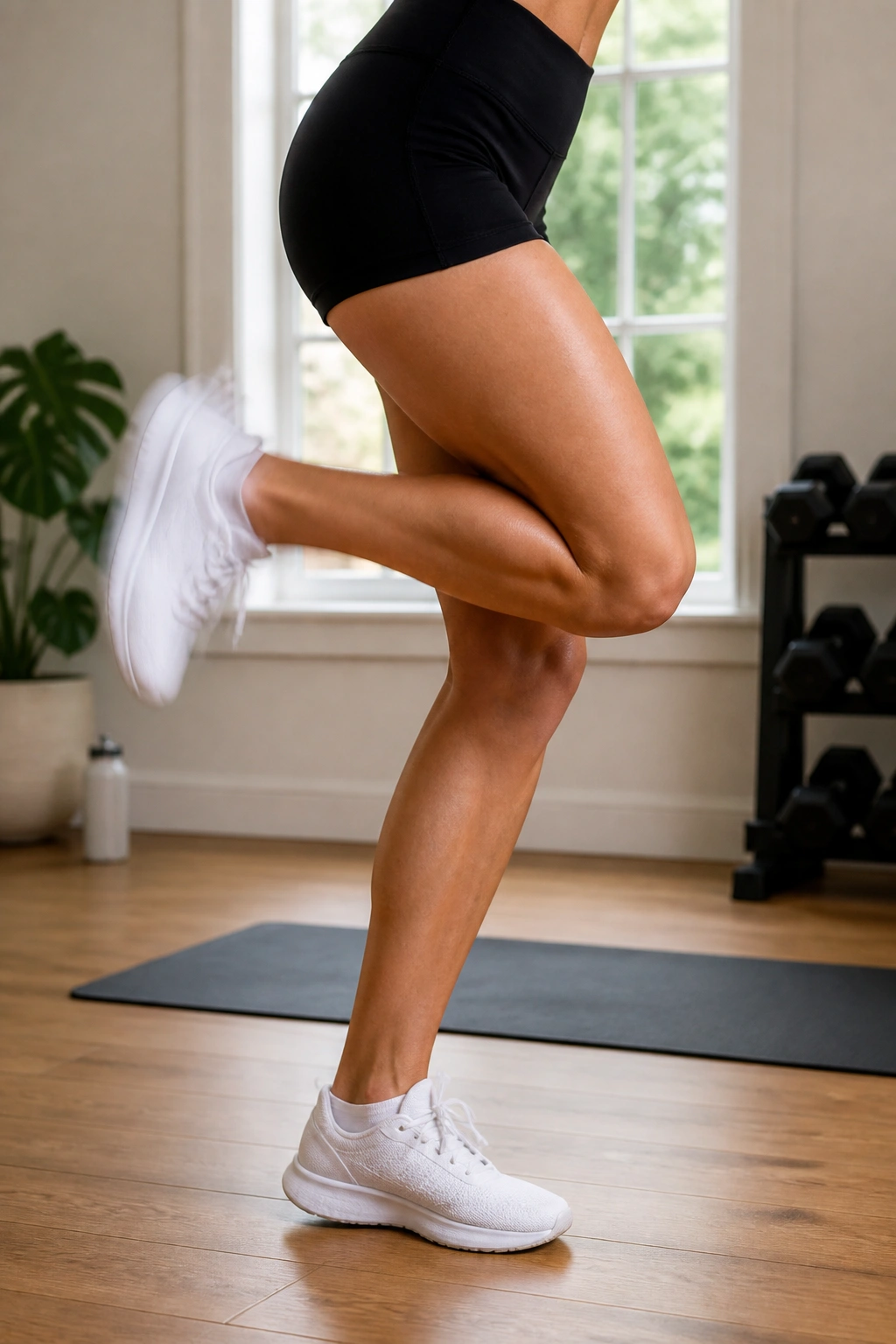
Jogging in place is high impact. “Butt kicks” without the jump are the answer. Simply step from side to side, bringing your heel toward your glute with each step. To make it a HIIT move, you have to move at a sprint pace.
Increasing the Intensity
Focus on speed. The faster you move your feet, the higher your heart rate goes. Use your arms to pump back and forth alongside your body to add momentum and engagement.
What to Avoid
- Don’t arch your lower back. Keep the core engaged to pull your pelvis into a neutral position.
- Don’t let your knees drift too far forward; keep them pointing toward the floor.
14. Standing Leg Lifts (Front)
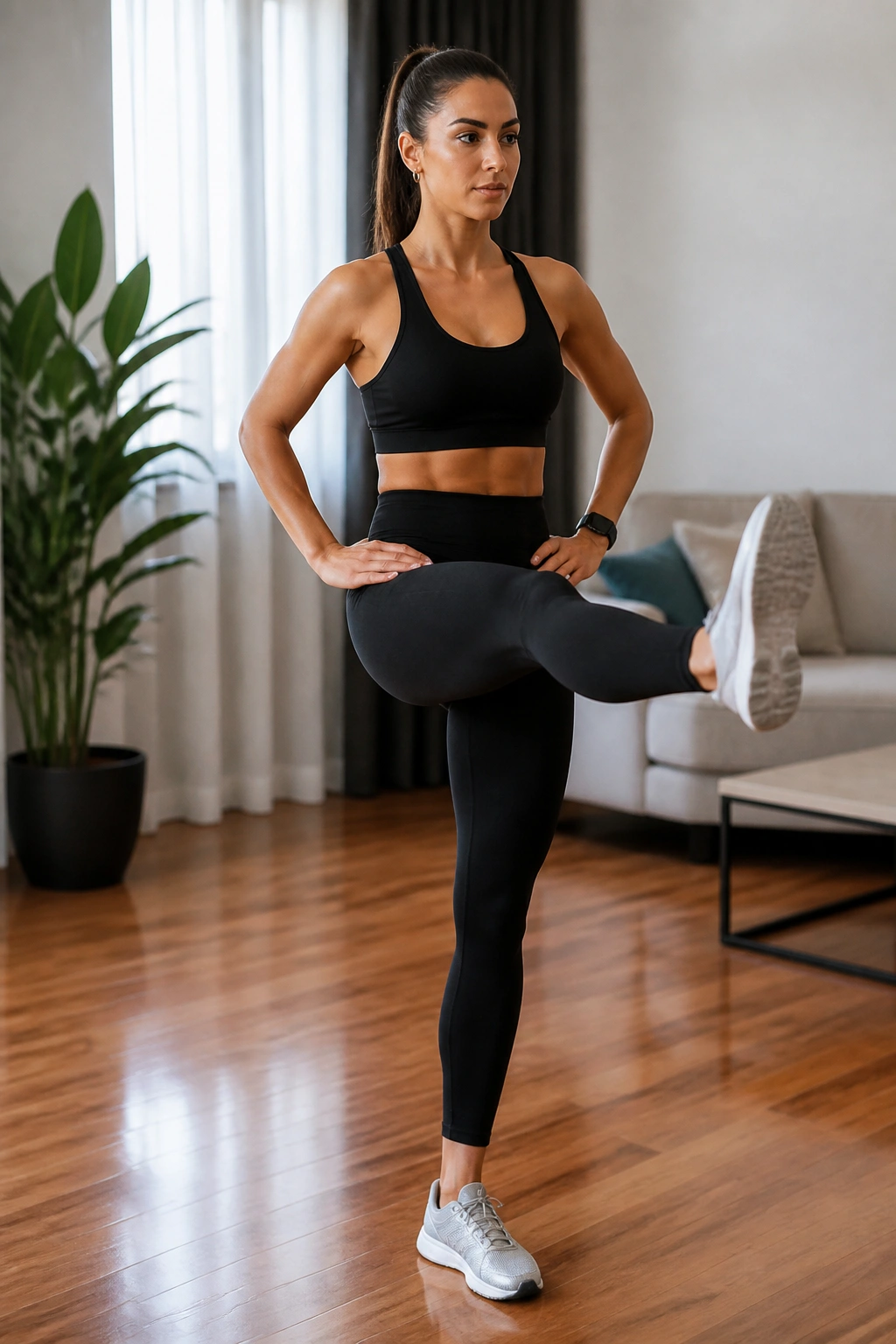
Stand tall, hands at your chest or on your hips. Lift your right leg straight out in front of you, like a controlled kick. Alternate legs. This targets the hip flexors and the lower abs.
Precision vs. Velocity
While you want speed, you want control. Don’t just swing your leg blindly. Actively lift it with your quad and hip flexor. If you feel your lower back arching, your core is not engaged enough.
Why It Works for HIIT
Doing this for 40 seconds straight will make your quads burn. That muscle burn is a huge metabolic trigger. It forces your body to shuttle blood to the legs, which taxes your cardiovascular system.
15. Squat to Overhead Reach
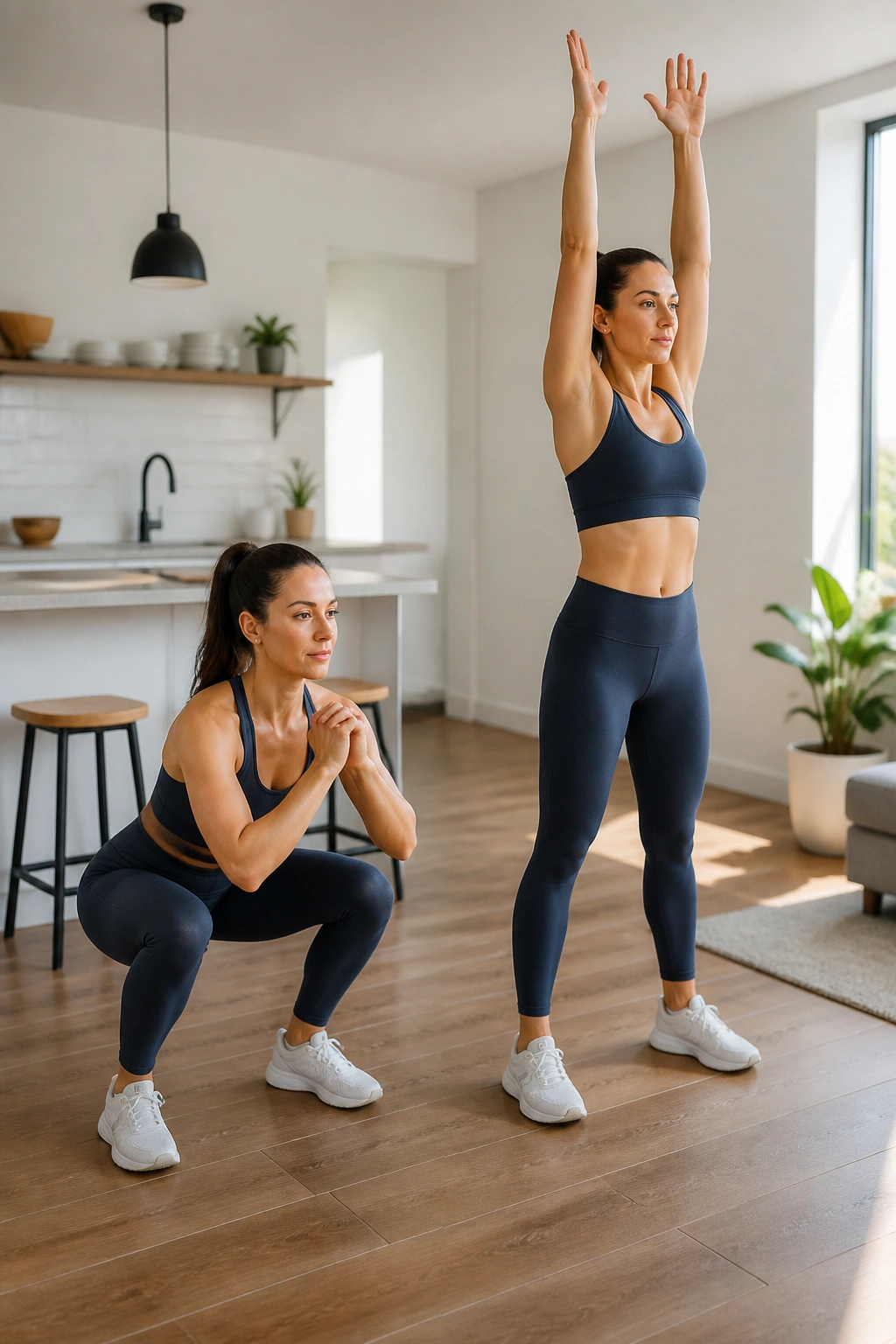
Start in a shallow squat (knees behind toes, chest up). As you stand up, explode into an overhead reach. You don’t need to jump. Just stand up quickly and reach for the sky.
The Power of the Hinge
This move uses the largest muscle groups in your body: your glutes and quads. When you work these big muscles quickly, your body has to work harder to deliver oxygen. It’s one of the most efficient movements for fat loss.
Scaling the Move
- Make the squat deeper if your mobility allows.
- Keep the pace fast on the way up.
16. Speed Skaters (Step Variation)
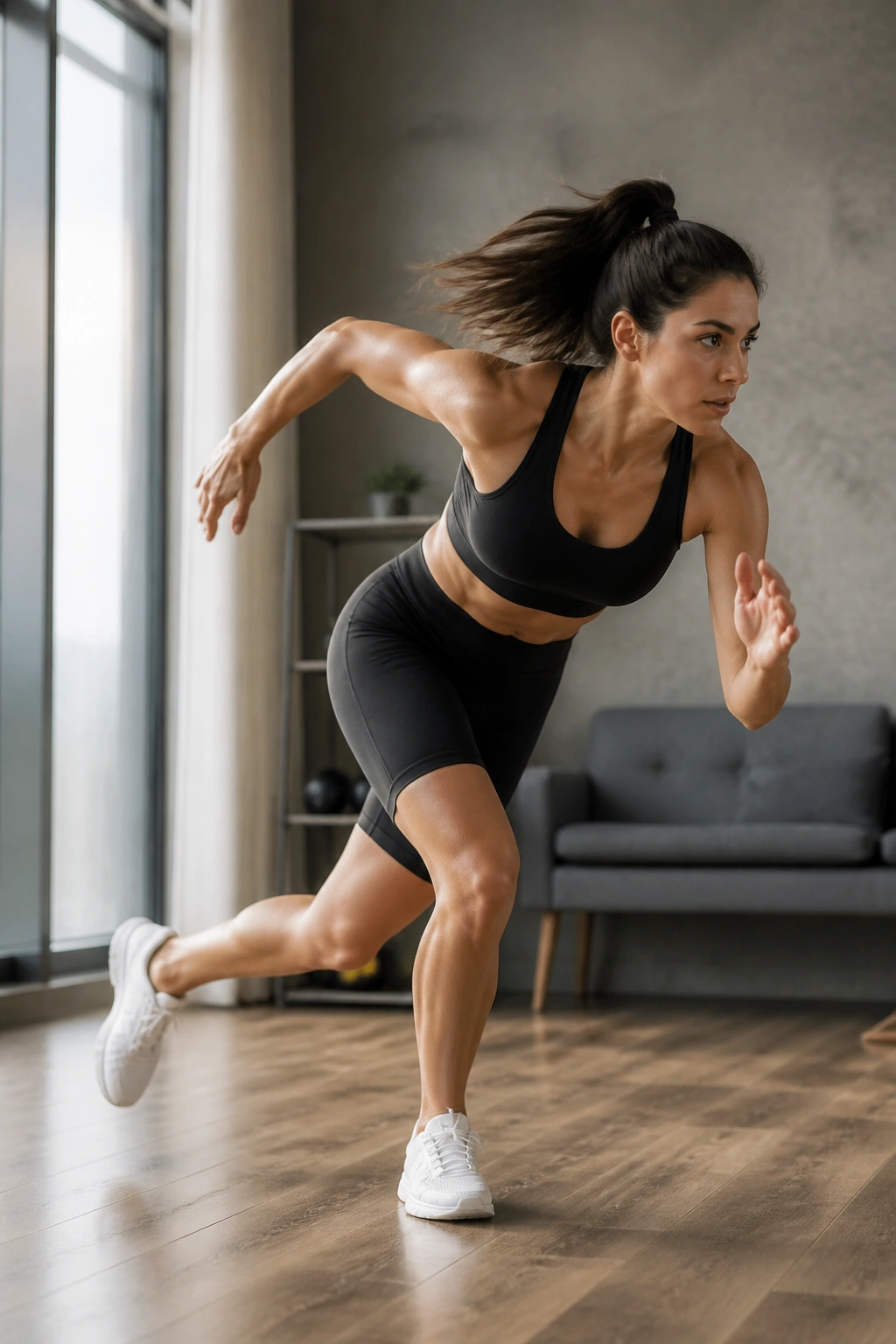
Step wide to the right, sweeping your left leg behind your right. Then step wide to the left, sweeping your right leg behind your left. Keep it fluid, like you are actually speed skating on ice.
The “Step” Factor
Usually, skaters involve a jump. By removing the jump and turning it into a wide, powerful step, you protect your joints while keeping the lateral motion. Lateral motion is crucial for agility and targeting the glute medius.
Building Intensity
- Get lower. A deeper squat makes the movement harder.
- Pump your arms vigorously as if you are actually skating.
17. Standing Toe Touches
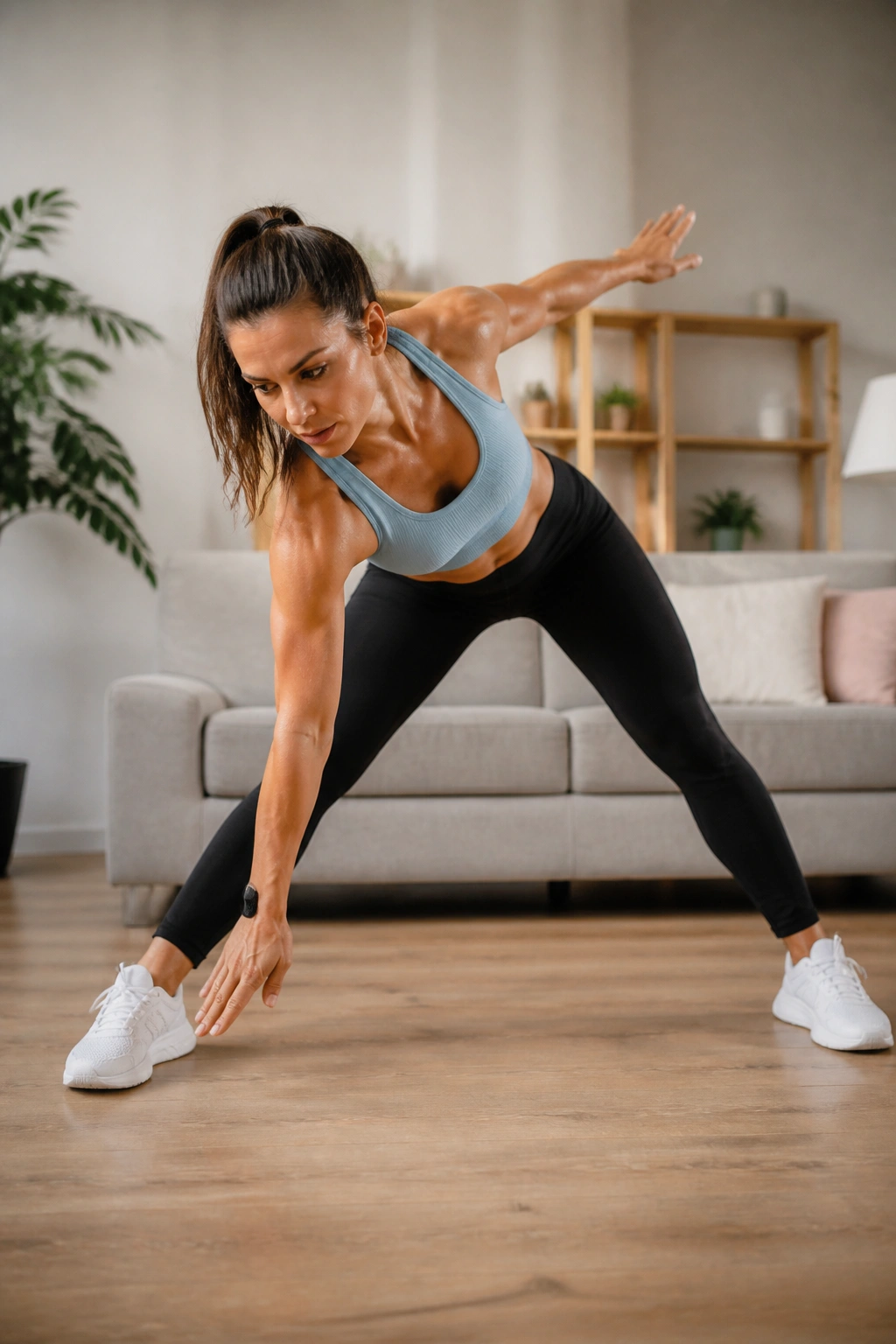
Stand with your feet apart. Extend your arms out to the sides. Reach your right hand to your left toe, then return to start. Reach your left hand to your right toe. This is similar to the windmill but focuses more on a rotational crunch.
The Rotational Component
The twist is where you get the most value. Ensure you are looking at your hand as you reach down—this helps with the range of motion in your neck and thoracic spine.
Why It’s Great for HIIT
The rapid change in direction and the constant movement of the arms keeps your heart rate elevated. It’s a full-body movement that doesn’t feel like traditional cardio, which is exactly why it works for interval training.
18. Arm Circles with Step Taps
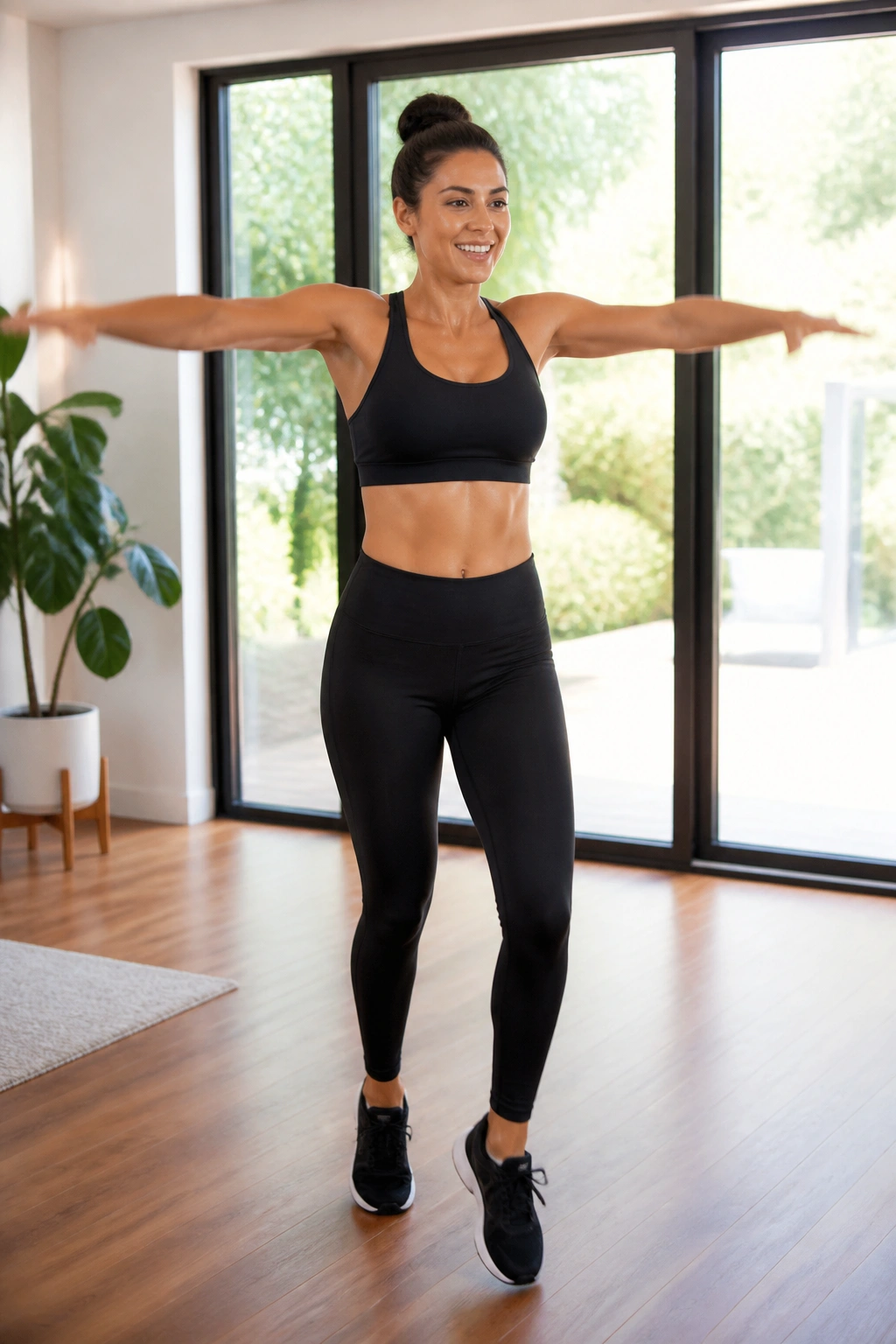
Step tap side to side while keeping your arms extended out to the sides. Rotate your arms in small, tight circles. Keep this up for 30 seconds, then reverse the circles.
The Shoulder Burn
This move targets the deltoids. When your shoulders are under tension, your heart rate rises. It seems deceptively easy for the first 10 seconds, but by the 30-second mark, you will be feeling it.
Mixing It Up
To make this more of a HIIT move, combine it with a faster step-tap. If you just stand there and move your arms, it’s an endurance move. If you move your feet rapidly, it’s a cardio move.
19. Standing Russian Twists
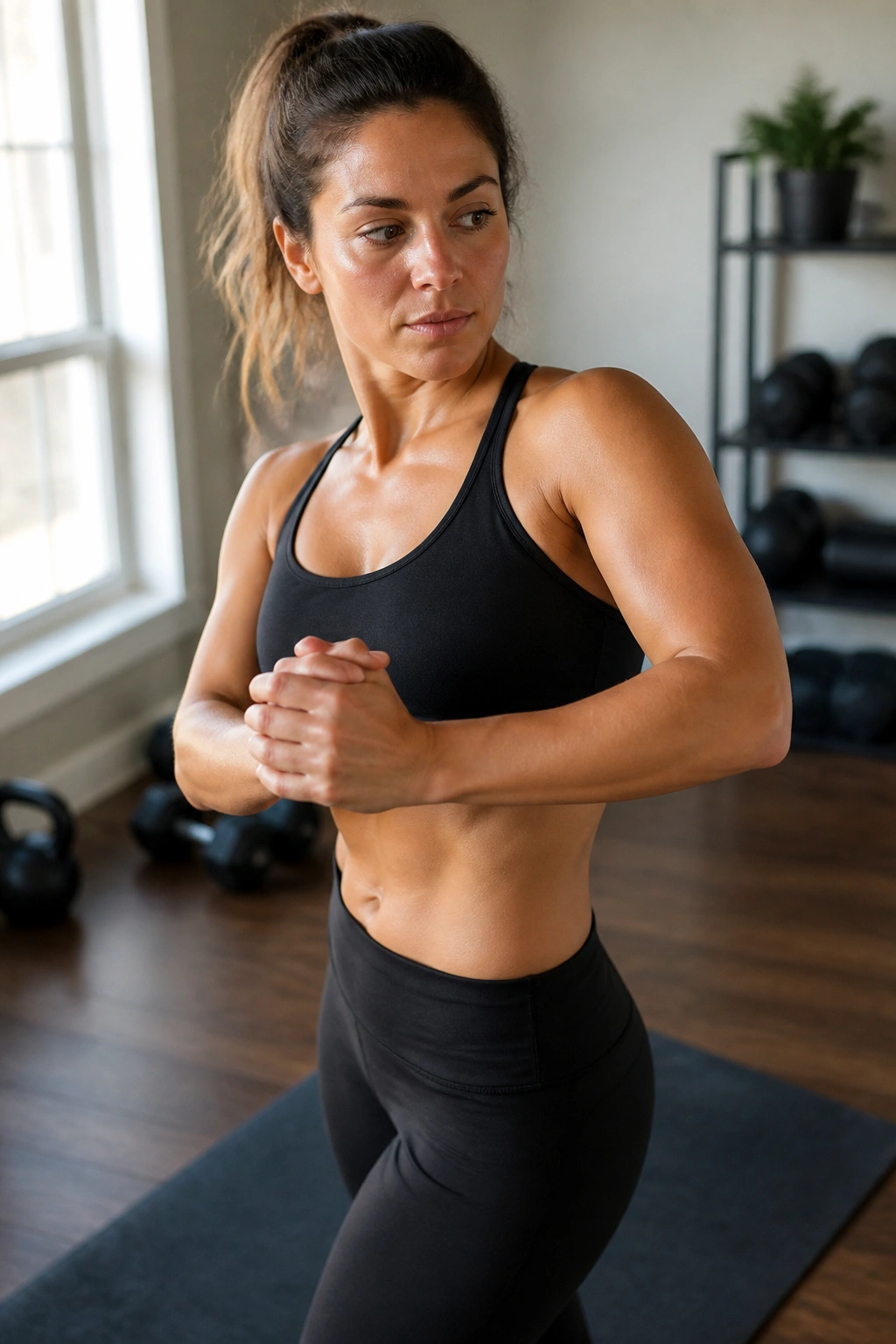
Stand with your feet shoulder-width apart, hands clasped together in front of your chest. With a slight bend in your knees, rotate your entire torso from left to right. Keep your hips facing forward.
Engagement Tips
- Your abs are doing all the work here. Think about wringing out your midsection like a towel.
- Keep the movement explosive. Don’t just swing.
Why This Fits
It’s a low-impact core move that keeps you on your feet. When you perform this with intensity, it helps tighten the waistline while keeping your blood flowing.
20. Good Mornings (Bodyweight)
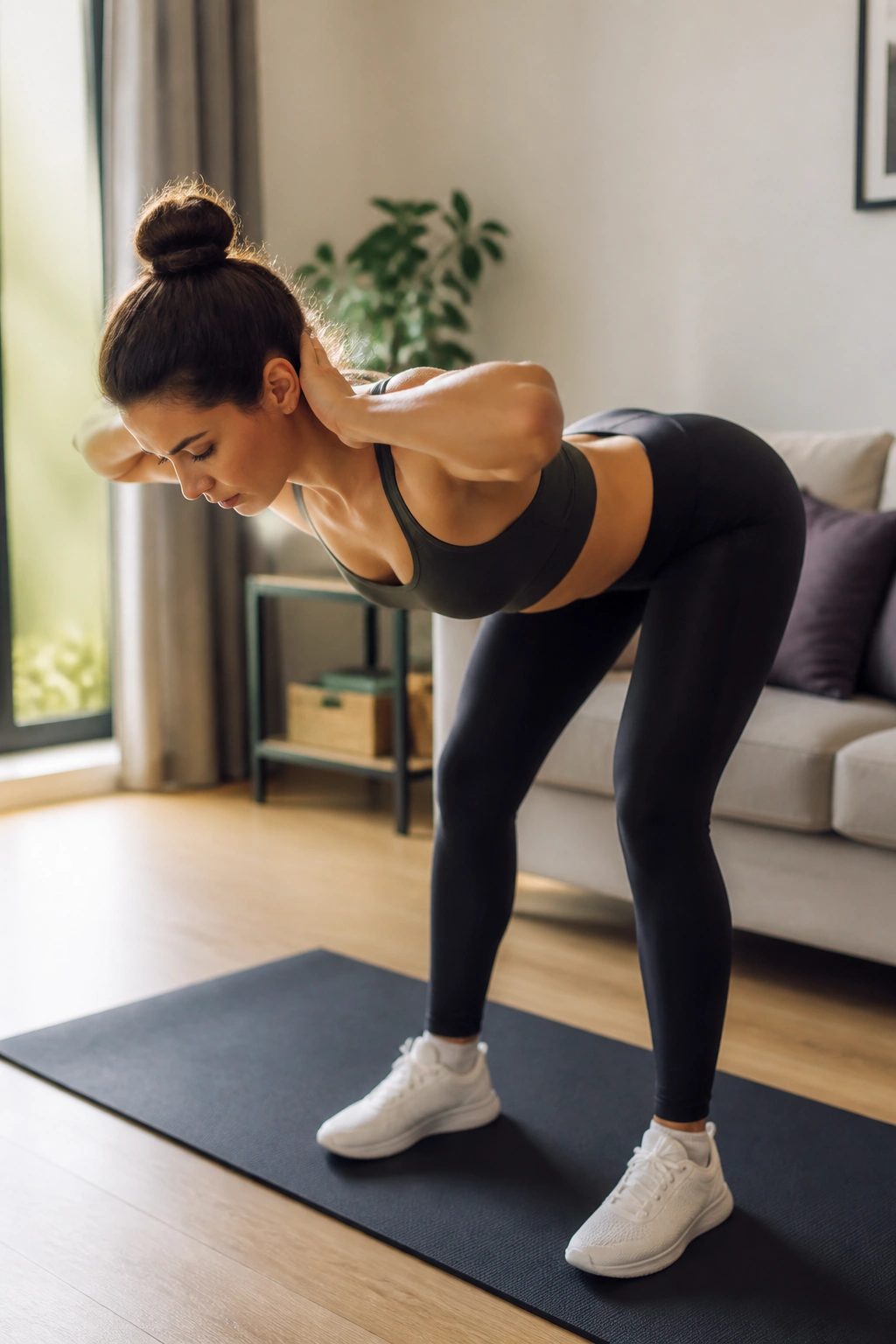
Stand with your feet hip-width apart, hands behind your head. Hinge at your hips, pushing your butt back until your torso is almost parallel to the floor. Keep your back straight. Squeeze your glutes to stand back up.
Posterior Chain Focus
This is the perfect way to finish a session. It’s slower than the other moves, allowing you to catch your breath while still engaging your glutes and hamstrings. It’s active recovery, but don’t underestimate it—it’s a powerful move for posture and strength.
The Final Stretch
- Keep your knees soft, not locked.
- Think about pushing your hips backward against a wall behind you.
Final Thoughts
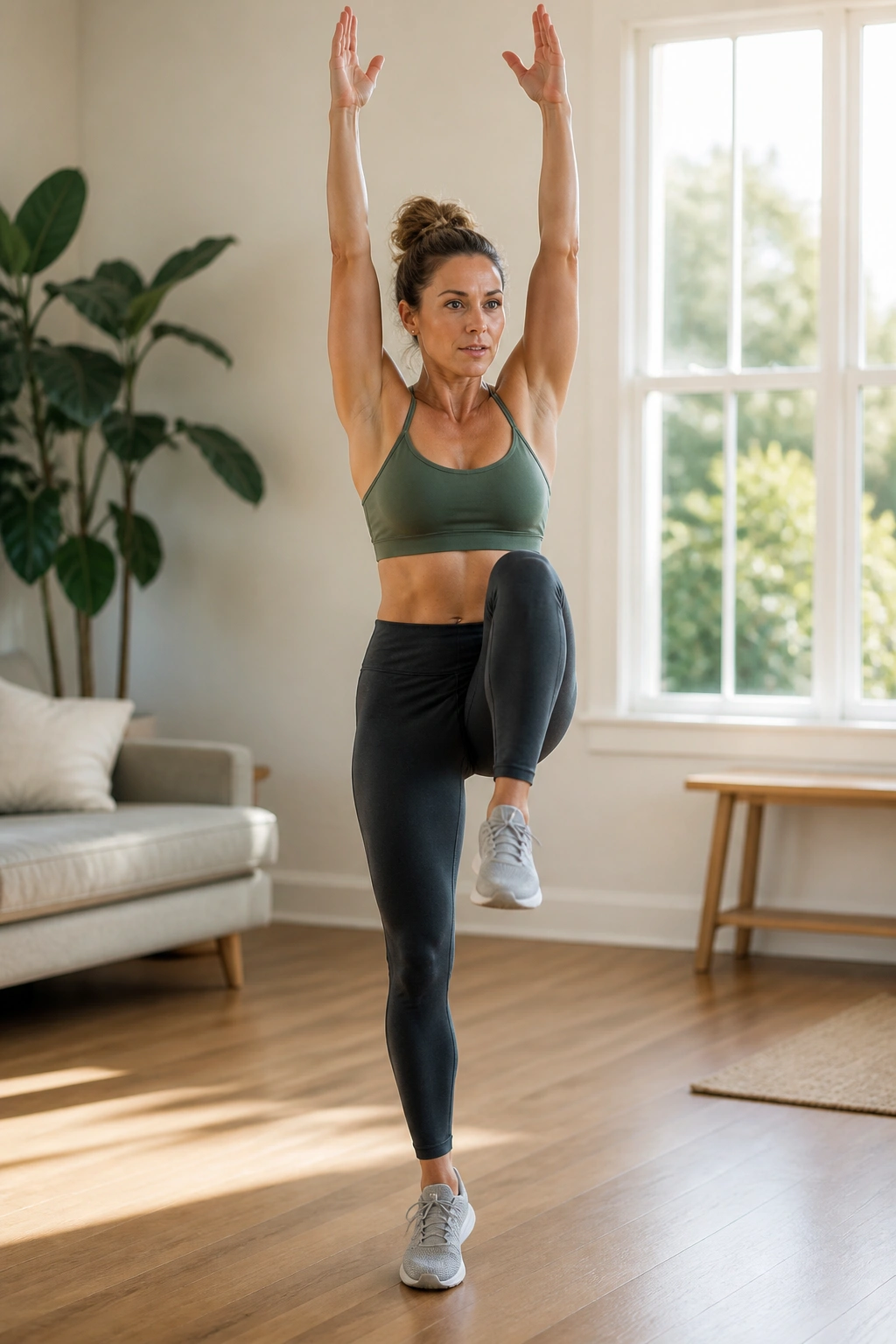
The beauty of low-impact, standing HIIT is that you are entirely in control of the intensity. You don’t need a gym, you don’t need fancy equipment, and you certainly don’t need to hammer your joints to get a massive sweat on. By choosing movements that engage your whole body—arms overhead, core braced, legs moving rapidly—you tap into the exact same energy systems as the high-impact stuff.
Consistency is always going to be the deciding factor in your progress. If your joints feel good, you are much more likely to show up the next day, and the day after that. Don’t let anyone convince you that fitness requires suffering through pain. The only thing that should be burning is your muscles and your lungs, not your knees or lower back. Pick five of these moves, set a timer for 40 seconds of work and 20 seconds of rest, and repeat the circuit four times. You will have a complete workout in less than 20 minutes, leaving you energized rather than beat up.
