



Upper ab workouts can do more than give you a pump in the middle of your body. Done well, they help build the front wall of your core, tighten the way your torso moves, and make a stomach look firmer when your body fat comes down.
The catch is that most people do crunches like they’re trying to finish a chore. Fast reps. Yanked neck. Lower back lifting off the floor. That kind of work burns, sure, but it doesn’t always train the upper abs in a useful way. You want controlled spinal flexion, a hard exhale, and enough tension that your ribs and pelvis feel like they’re trying to meet in the middle.
A toned stomach is never about one exercise alone. Food matters. Full-body training matters. Sleep matters more than people want to admit. Still, the right ab moves can make a visible difference in how your midsection holds itself, and they can help your core stay strong under squats, carries, presses, and just ordinary life. Start with the simple stuff. Earn the harder stuff.
1. Basic Crunch
The plain floor crunch gets dismissed because it looks too easy. That’s a mistake. If you do it slowly, with your lower back heavy on the floor and your ribs drawing down as you lift, it hits the upper portion of the rectus abdominis far better than the rushed version most people do in gym classes.
How to make it count
Lie on your back with your knees bent and feet flat. Place your hands lightly behind your head or crossed over your chest. Exhale, then lift your shoulder blades a few inches off the floor. That’s enough. You do not need to sit all the way up.
- Sets/Reps: 3 sets of 12 to 20 reps
- Tempo: 1 second up, 2 seconds down
- Cue: Your ribs should move toward your hips
- Common mistake: Pulling on the neck
The nice thing about this one is that it teaches restraint. Small range, clean tension. That matters more than the big dramatic rep most people chase.
2. Slow Tempo Crunch
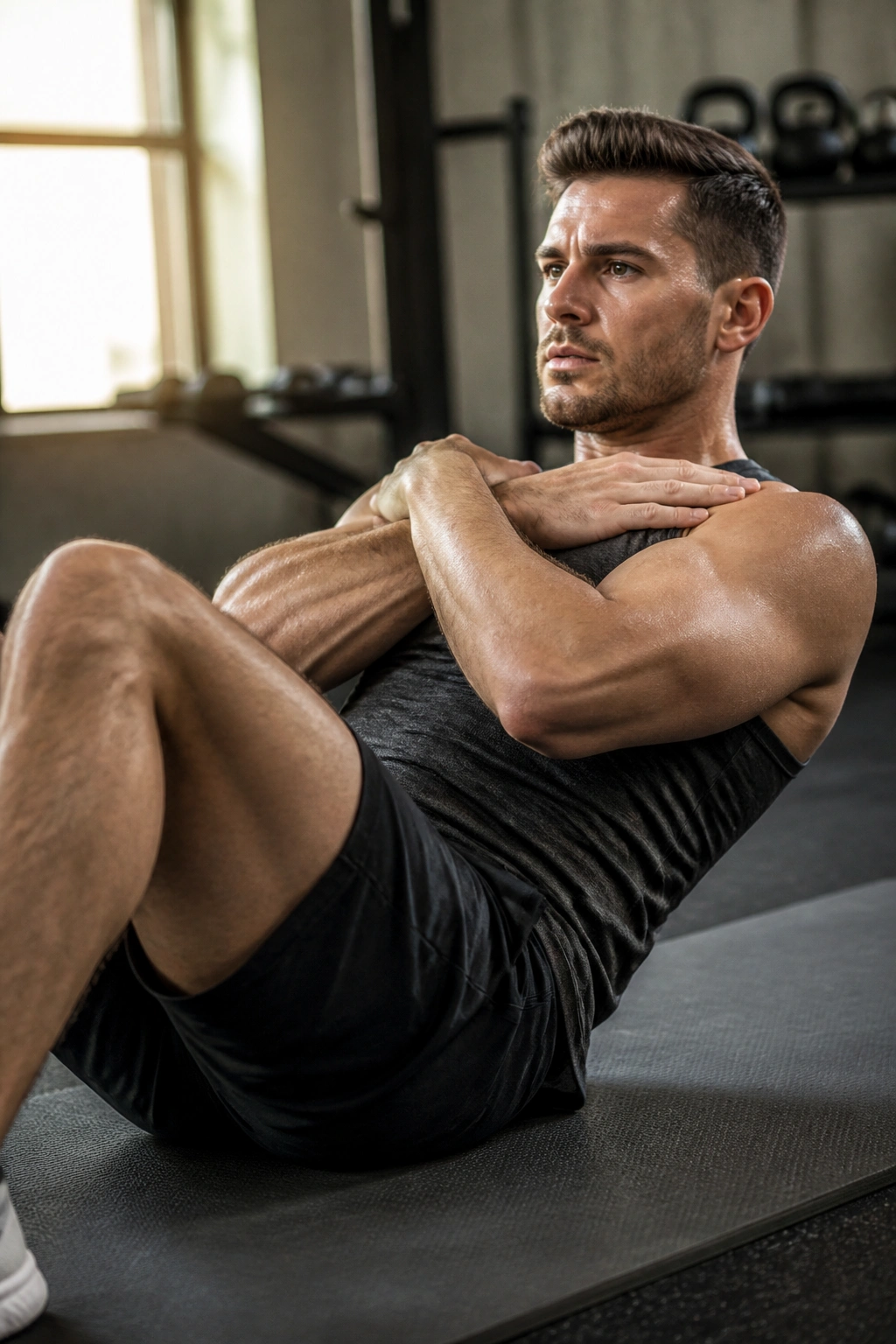
Speed ruins a lot of ab work. Slow tempo crunches solve that fast because they force you to feel the muscle instead of swinging through the motion. One clean rep at a time will expose whether your abs are doing the work or whether your hips and neck are stealing it.
Why the pace matters
Use a 3-1-3 rhythm: three seconds up, one second squeezed at the top, three seconds down. That pause at the top is the part people skip, and it’s the part that makes the exercise hum. You should feel a strong burn right across the front of your stomach by rep eight or nine.
If your chin keeps jutting forward, make the move smaller. That’s not failure. That’s feedback.
How to use it
Try 2 to 4 sets of 8 to 12 reps after a warm-up or at the start of a core session. Slow tempo crunches are perfect when you want a hard set without fancy equipment. They also pair well with planks because they train flexion and bracing from different angles.
3. Arms-Overhead Crunch
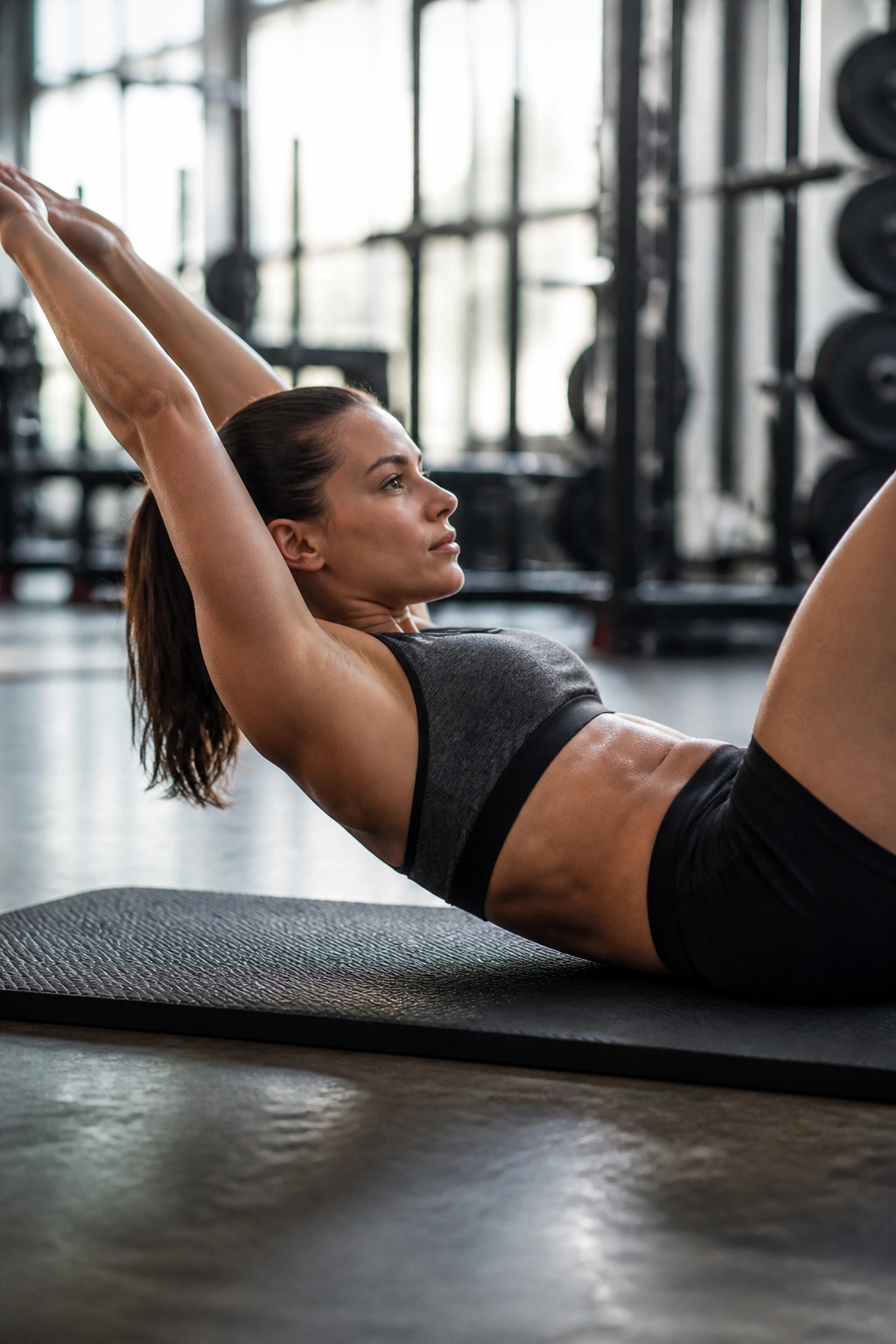
A lot of people don’t realize how much harder a crunch gets when you move your arms overhead. The lever gets longer. Your upper abs have to work more to curl the ribcage toward the pelvis, and the movement feels cleaner than loading the neck with your hands.
What makes it different
Lie flat, stretch your arms behind you, then bring them up as you crunch. Keep the motion small and controlled. If your lower back arches off the floor, the range is too big. If your shoulders are shrugging, the arms are probably doing too much.
- Sets/Reps: 3 sets of 10 to 15 reps
- Best cue: Reach long, then curl
- Best for: People who have outgrown basic crunches
- Avoid if: Your shoulders get tight when your arms go overhead
This one looks simple. It isn’t. The extended arm position changes everything, and that’s exactly why it belongs in any serious upper-ab routine.
4. Reach Crunch
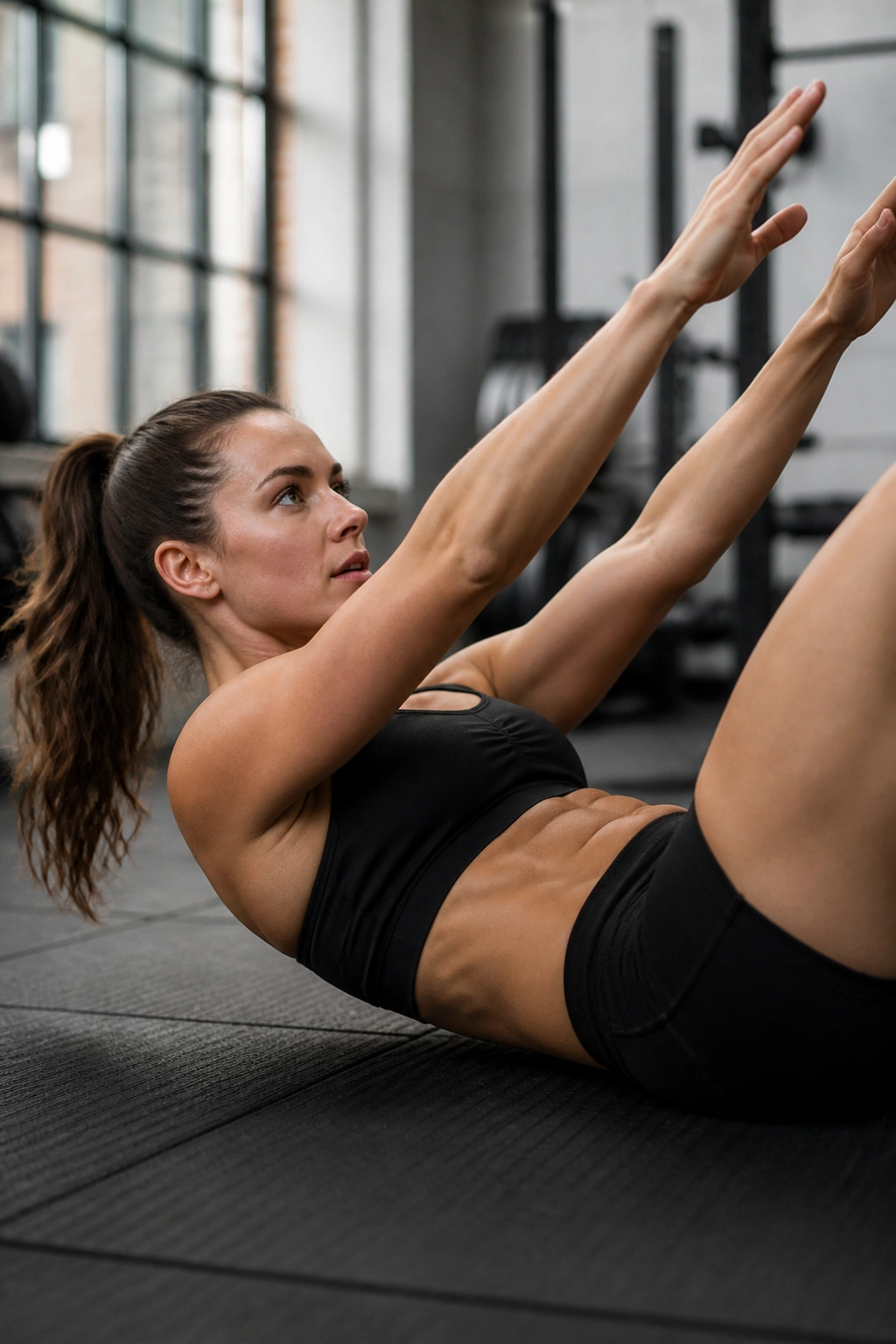
A reach crunch feels a little like trying to close the distance between your ribcage and your knees. That forward reach is the whole point. It pulls the focus away from neck tension and toward the front of the stomach, which is where the work should live.
What to watch for
Start on your back with knees bent. As you lift, reach one or both hands toward the ceiling or toward your knees, depending on how hard you want it. The farther your arms reach, the more your abs have to control the curl.
A lot of people turn this into a mini-sit-up. Don’t. Keep your lower back grounded and your movement sharp. The upper abs light up best when the motion stays honest and compact.
Quick training note
Use 3 sets of 12 reps and pause for half a second at the top. That pause sounds tiny, but it keeps the rep from turning sloppy. Tiny details like that add up quickly.
5. Stability Ball Crunch
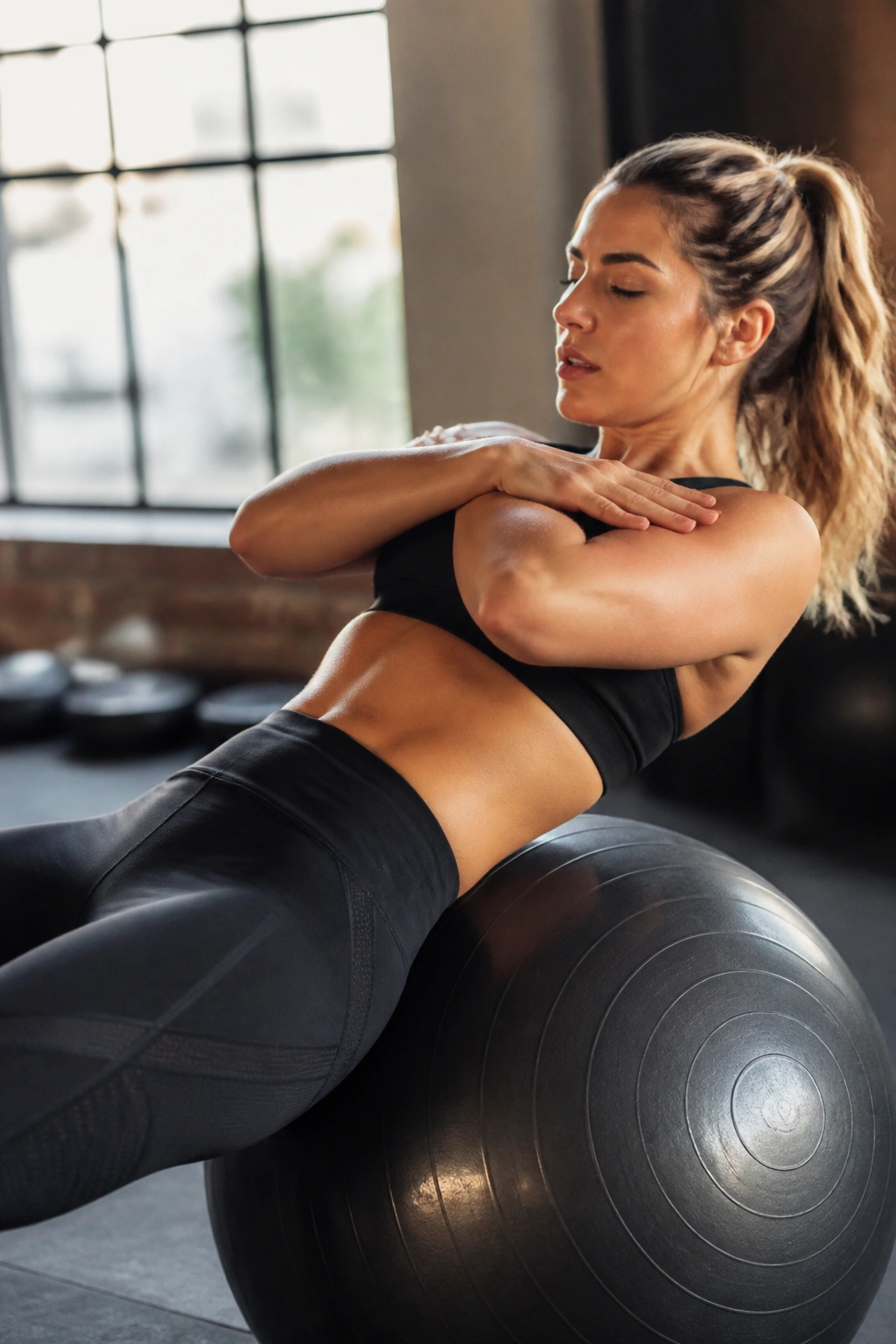
If the floor crunch feels cramped, the stability ball version gives you more range without making the exercise chaotic. Your lower back can arc slightly over the ball, and that extra stretch makes the top of the movement feel richer. It’s one of my favorite choices for people who want a stronger contraction without going straight to weighted work.
How to set it up
Sit on the ball, walk your feet out, and let the ball support your lower back. Your hips should be lower than your knees. As you crunch, think about pulling your ribs down and forward. The ball should roll with you, not shoot across the room.
What it’s good for
- More range than a floor crunch
- A smoother feel for beginners
- Less strain on the neck if done right
- Easy progression before cable work
Go for 3 sets of 15 reps and keep each rep crisp. If the ball feels wobbly, widen your stance a little. No heroics needed.
6. Kneeling Cable Crunch
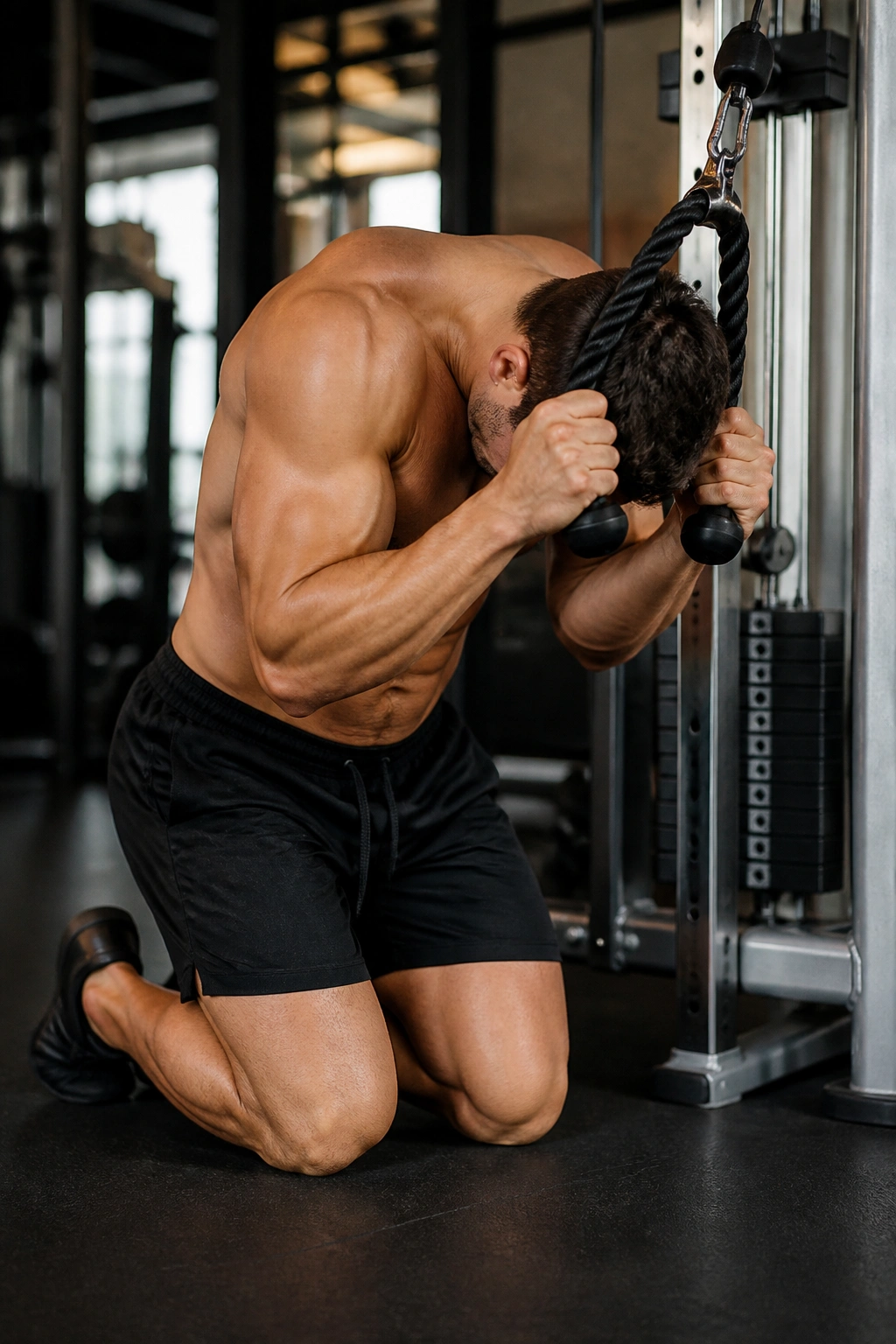
Kneeling cable crunches are one of the cleanest ways to load the upper abs. The cable keeps tension on the muscle the whole time, and the kneeling position cuts down on hip flexor help. That’s why this move shows up in so many serious core programs.
How to do it well
Set a rope attachment high on a cable stack. Kneel a few feet away, hold the rope beside your head, and hinge your torso down by curling your ribs toward your hips. Keep your hips mostly still. The motion should come from the spine, not from collapsing at the waist like a folding chair.
You should feel the front of your midsection work hard by the halfway point of the set. If your arms are doing the lifting, reduce the weight. If your lower back feels pinched, shorten the range.
Best rep range
Aim for 3 or 4 sets of 10 to 15 reps. Use a load that lets you pause for a second at the bottom without losing form. Heavy enough to matter. Not so heavy that you turn it into a shrug.
7. Weighted Floor Crunch
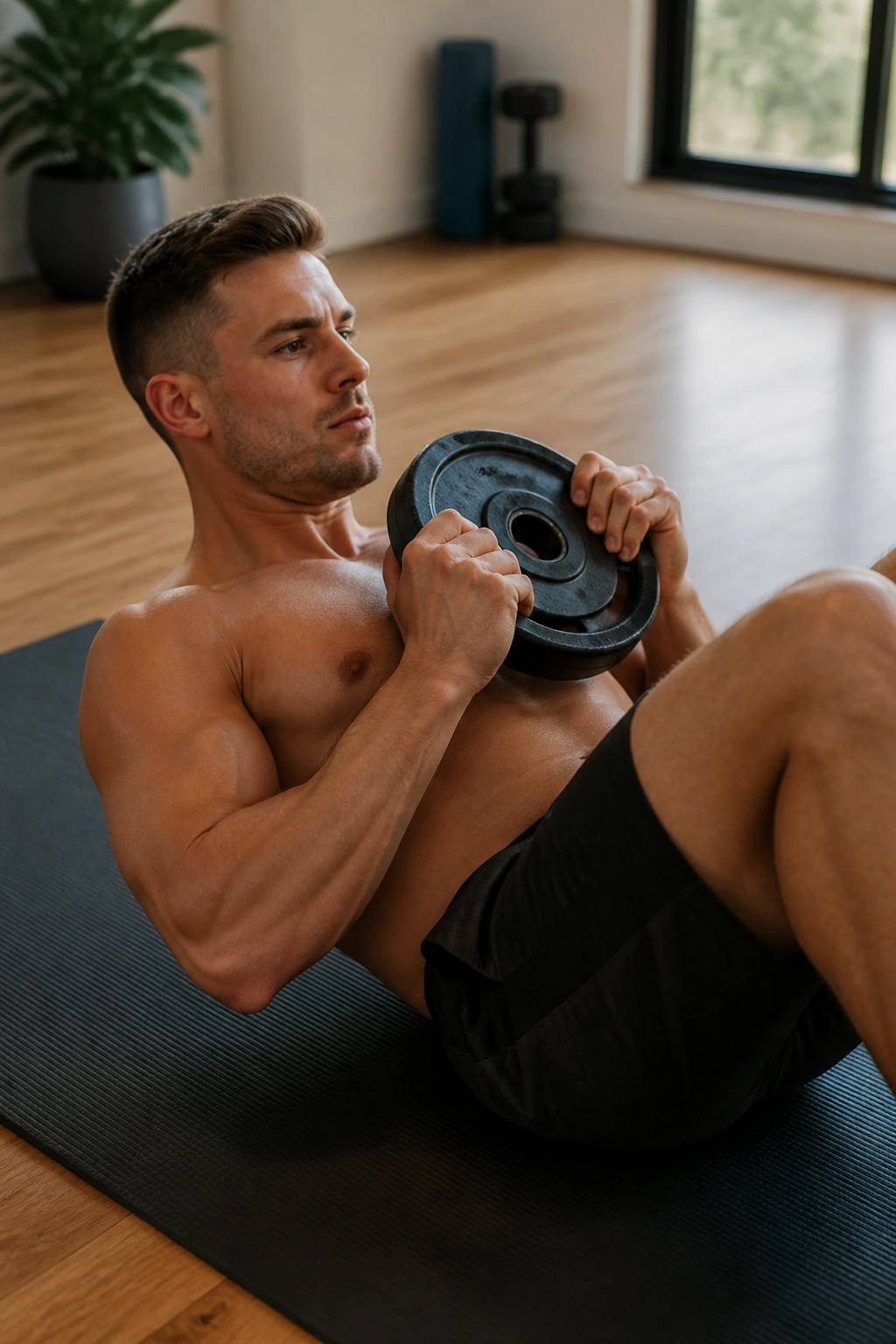
Adding a little load to a floor crunch can wake up the upper abs in a way bodyweight alone sometimes can’t. A 5- to 25-pound plate held on the chest is plenty for most people. The point is not to crush yourself. The point is to make the muscle work harder without turning the movement into a mess.
Keep the load simple
Hold a dumbbell or plate against your chest, then crunch up with the same small, controlled motion you’d use without weight. The load should stay close to the body. If your elbows flare or your neck starts to strain, the weight is too much.
This move rewards precision. A 10-pound plate done slowly will beat a sloppy 25-pound plate every time.
Use 2 to 3 sets of 8 to 12 reps. Rest about 45 seconds. This is a good progression once basic crunches stop feeling challenging after the first few reps.
8. Decline Bench Crunch
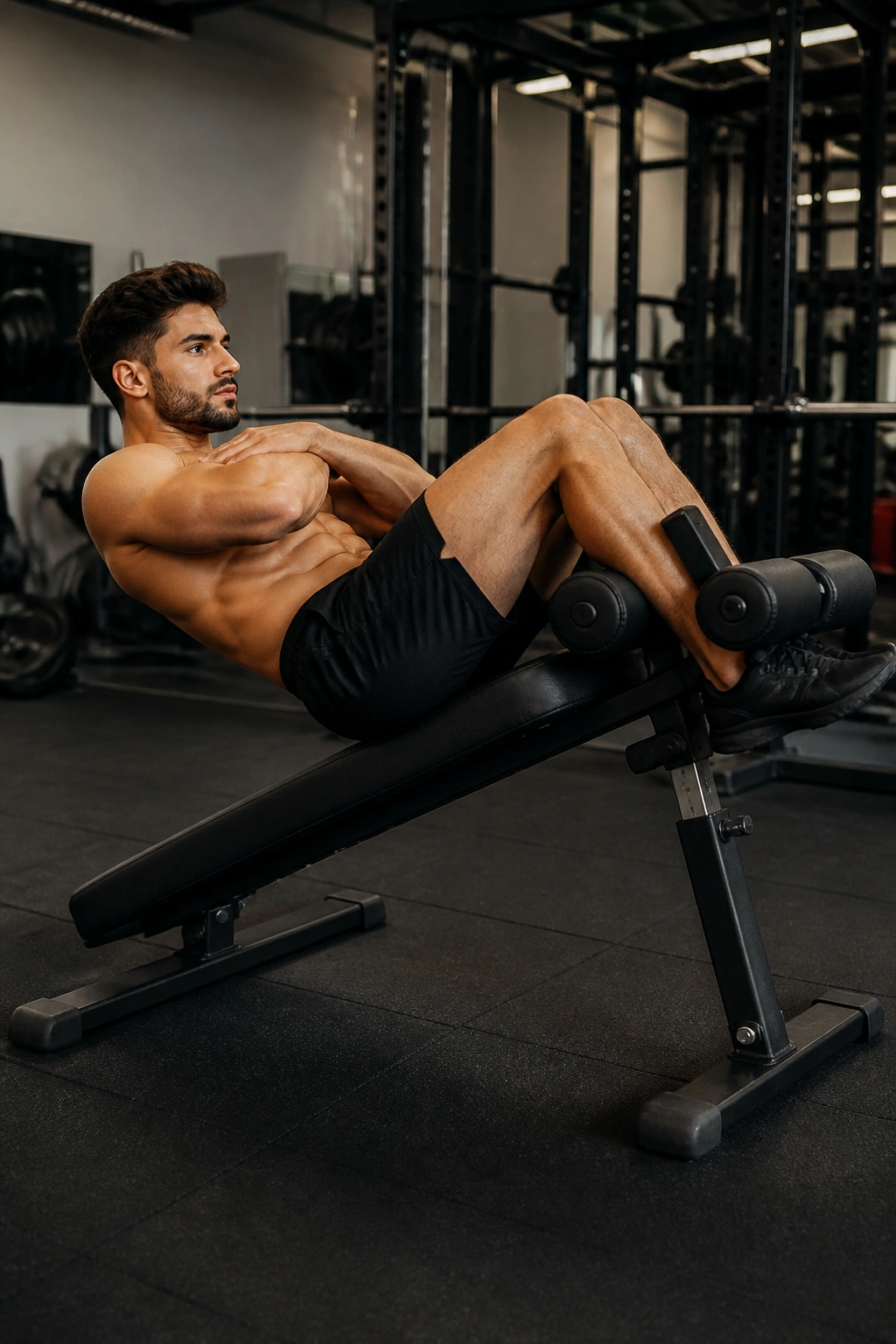
Decline bench crunches are old-school for a reason. Gravity makes the top half of the movement harder, and that extra challenge can be useful if you’ve been cruising through floor work for too long. The downside is also obvious: bad form shows up fast, and your lower back will complain if you rush it.
Why the angle changes the game
On a decline bench, your torso starts below your hips, so the crunch has to work against a longer line of pull. That makes the upper abs fire harder, but only if you keep the motion compact. Sit-ups here are a different beast; a crunch is usually enough.
What to remember
- Start with a shallow decline
- Cross your arms over your chest
- Exhale hard at the top
- Stop if your low back feels sketchy
Use 3 sets of 10 to 15 reps. If your gym has a steep bench and you’re new to this, skip the steep angle. There’s no prize for making a bodyweight crunch awkward.
9. Toe Touch Crunch
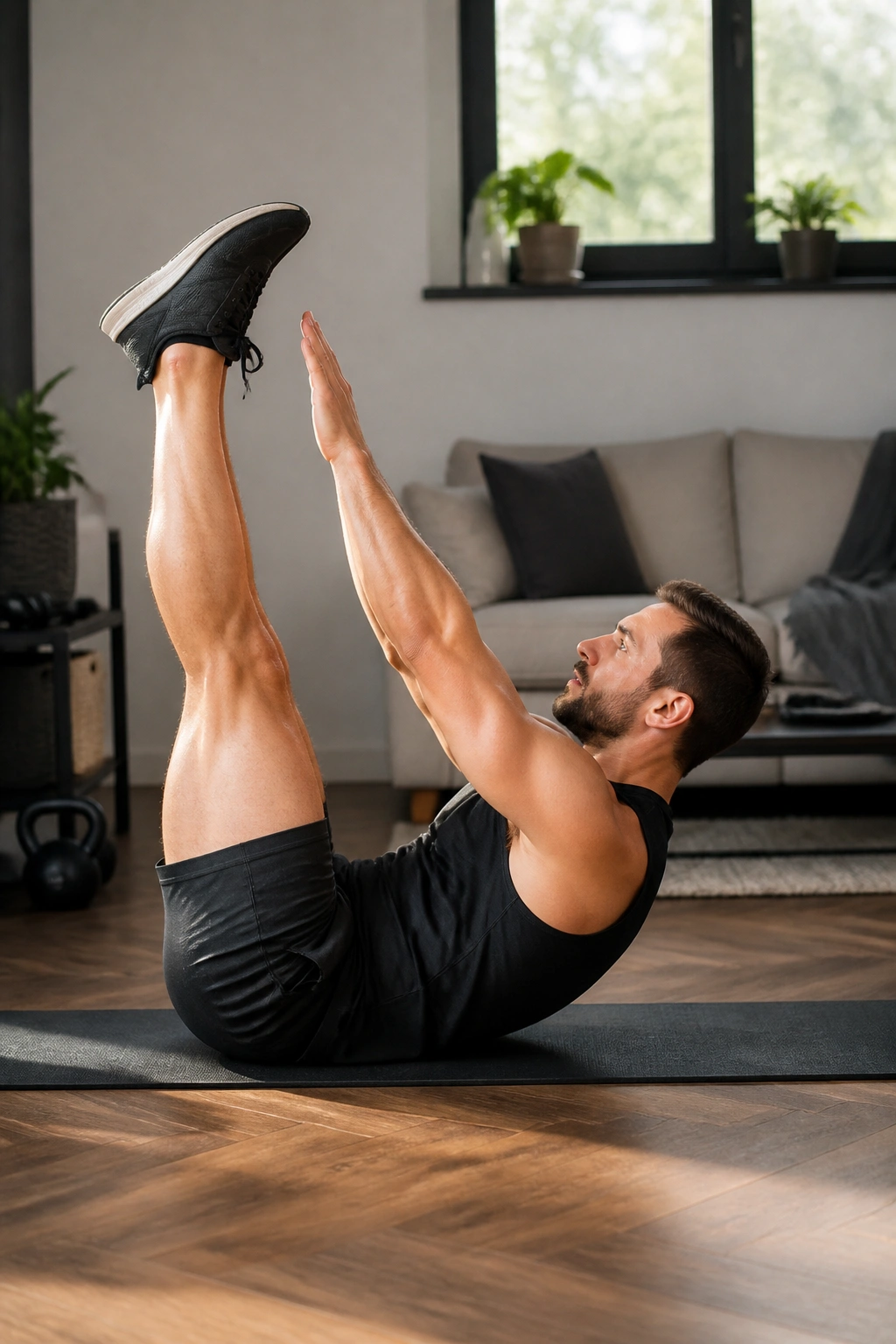
Toe touch crunches look almost silly until you do them for real. Legs up, arms reaching, shoulder blades lifting off the floor, and the whole front side of your core fighting to close the gap. It’s a sharp way to hit the upper abs while making the lower body stay still.
A cleaner version helps
Lie down and bring your legs up so your knees are bent at 90 degrees or straighter if you can control it. Reach toward your toes as you lift. Don’t yank your head forward. Don’t swing your arms. The reach should feel purposeful, not frantic.
The best reps have a small, clean finish at the top. You should feel your abs pull hard without your hip flexors taking over completely.
Training use
Try 3 sets of 10 to 15 reps. If straight legs are too much, bend the knees a bit. That makes the exercise more honest, which is another way of saying it becomes useful instead of just painful.
10. Sit-Up to Reach
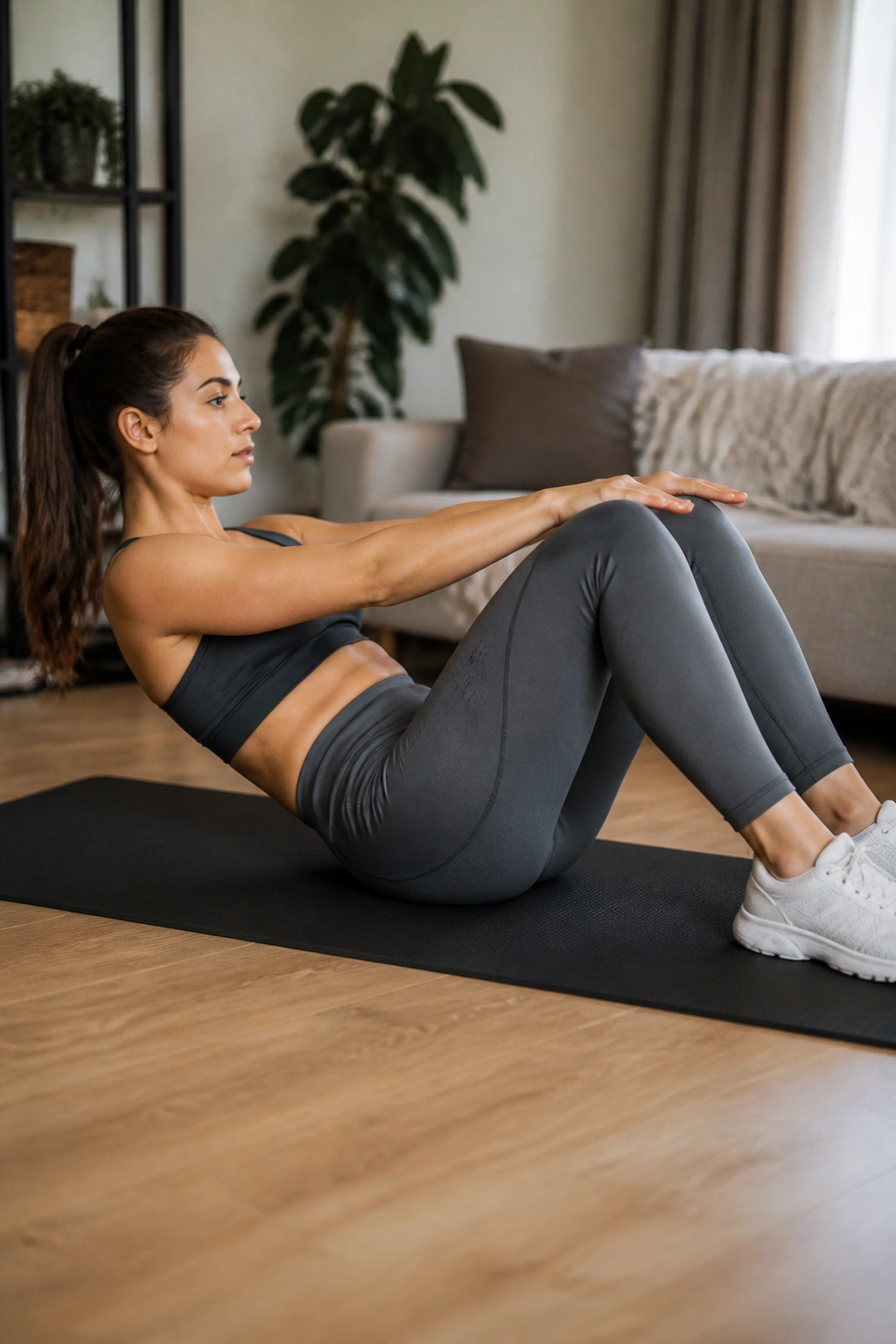
This one sits between a crunch and a full sit-up. You rise partway, then reach forward to finish the rep. That reach gives the upper abs a little extra work, and the partial range keeps the movement from becoming a hip-flexor parade.
The useful version
Start on the floor with knees bent. Curl up halfway, then extend your arms toward your shins or feet. Lower under control. The goal is a strong curl, not a wild throw of the torso.
A lot of people go too high here. That’s the wrong move if your goal is upper-ab tension. Keep the lift to a comfortable middle range and make the top of the rep count.
Who should use it
This is a nice middle step if basic crunches feel too easy but full sit-ups feel clunky. It also works well for home training because it needs nothing but the floor and a little discipline.
11. Jackknife
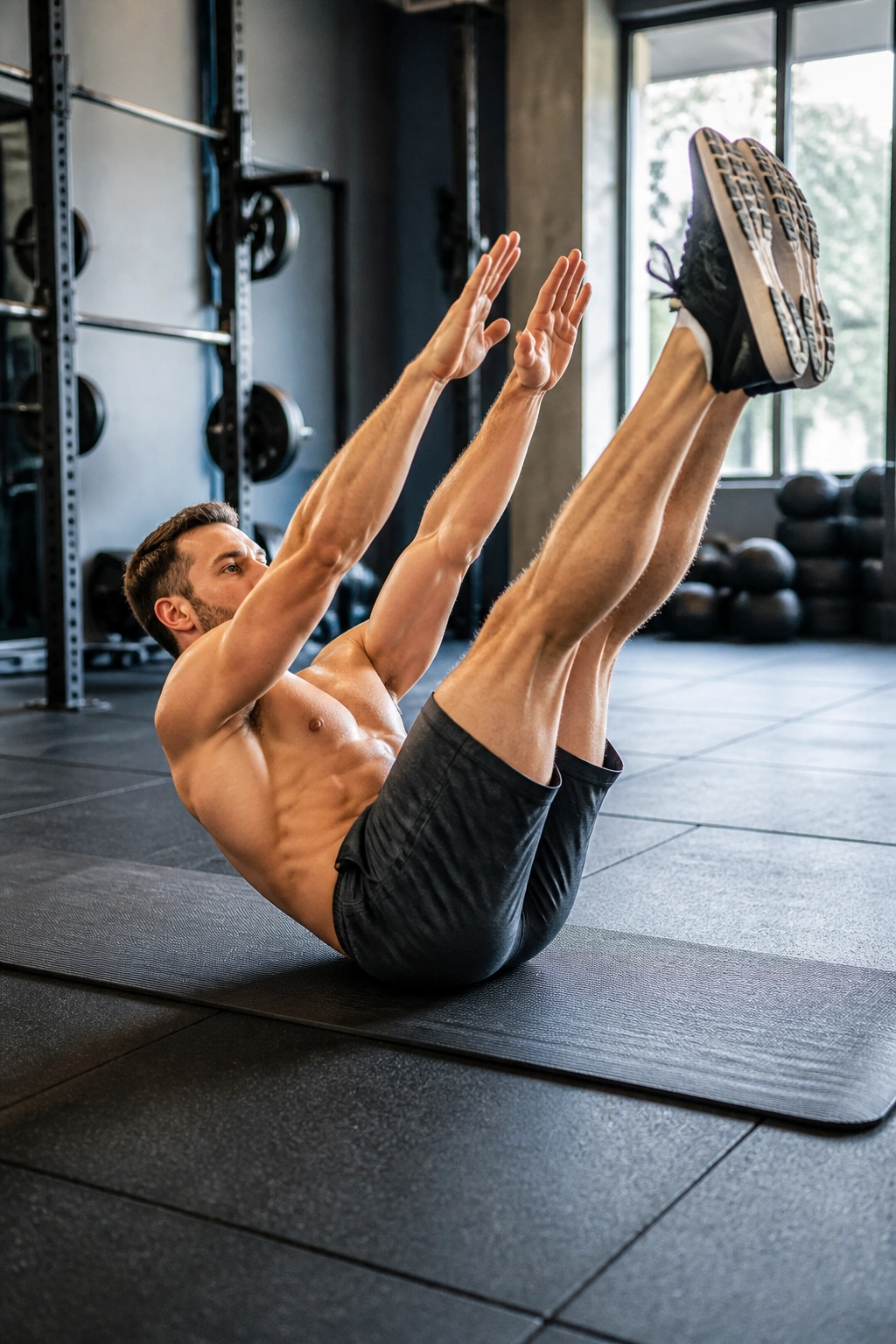
Jackknifes ask your upper and lower body to meet in the middle, which makes them more demanding than they look. The fold happens fast, but the best reps are still controlled. Think sharp, not jerky. That difference matters a lot.
What the movement should feel like
Lie flat with your arms overhead and legs long. At the same time, lift your torso and legs so your hands and feet move toward each other. Your body forms a V for a split second. That squeeze is the money part.
If your lower back arches hard off the floor, you’re losing the battle. Shorten the range or bend the knees slightly.
- Sets/Reps: 3 sets of 8 to 12 reps
- Cue: Fold from the middle, not the hips
- Warning: This one can cramp the abs fast
It’s a hard exercise. Good. Hard exercises belong in a program if they’re done cleanly.
12. V-Up
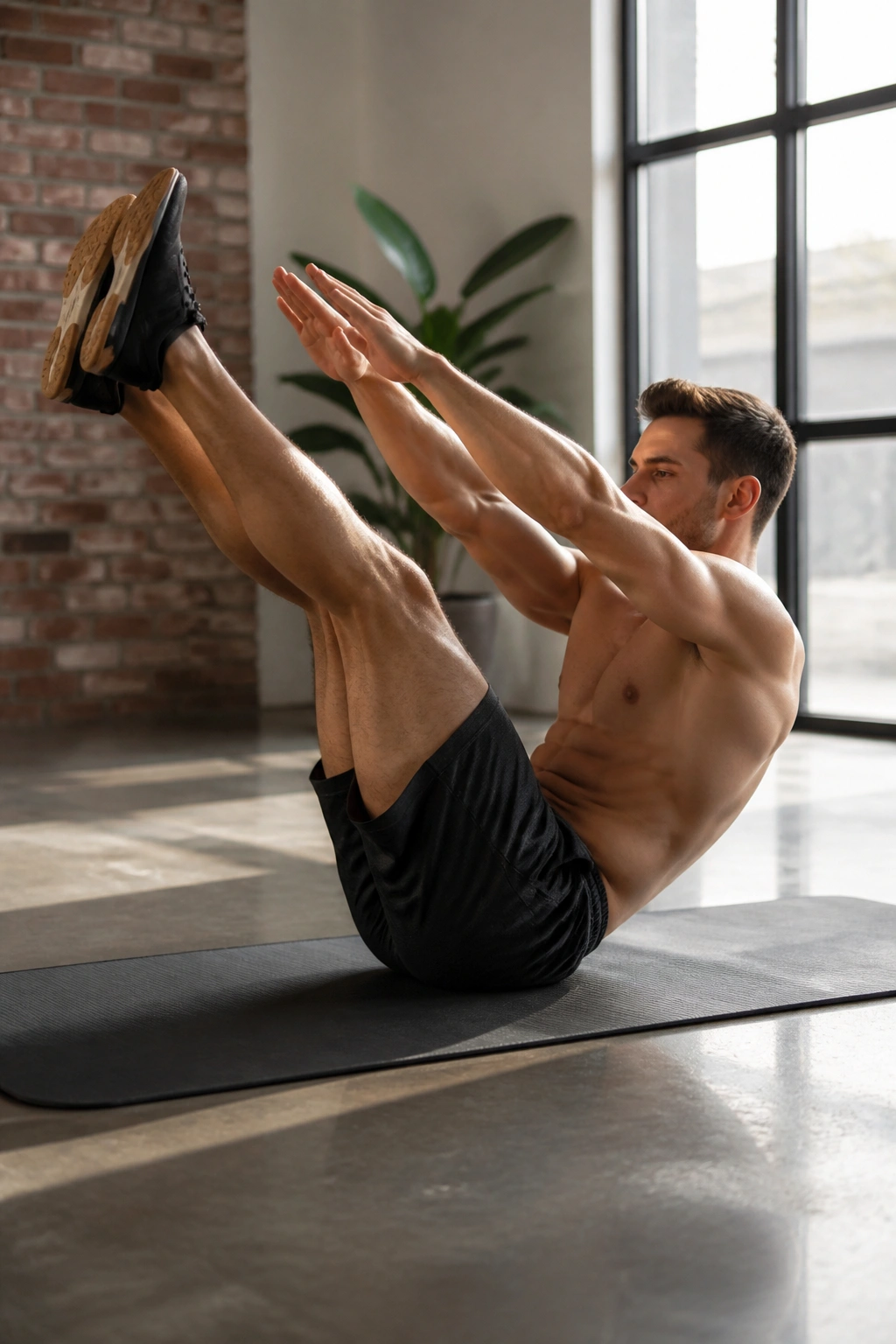
V-ups are the bigger, flashier cousin of the jackknife. They’re also easier to butcher. If you swing your arms or kick your legs just to fake the rep, you’ll get momentum, not muscle. The clean version is a whole different story.
How to keep it honest
Start long on the floor. Lift your legs and upper body together, reaching for your shins or ankles. Lower with control until your back touches down. Stop before your lower back starts to peel away and you lose tension.
Quality beats height. You do not need your toes touching your hands on every rep. A smaller V with control is better than a big, sloppy one.
This is a move for people who already have some core control. If you’re shaking halfway through set one, that’s fine. Use fewer reps and slower lowering.
13. Reverse Crunch
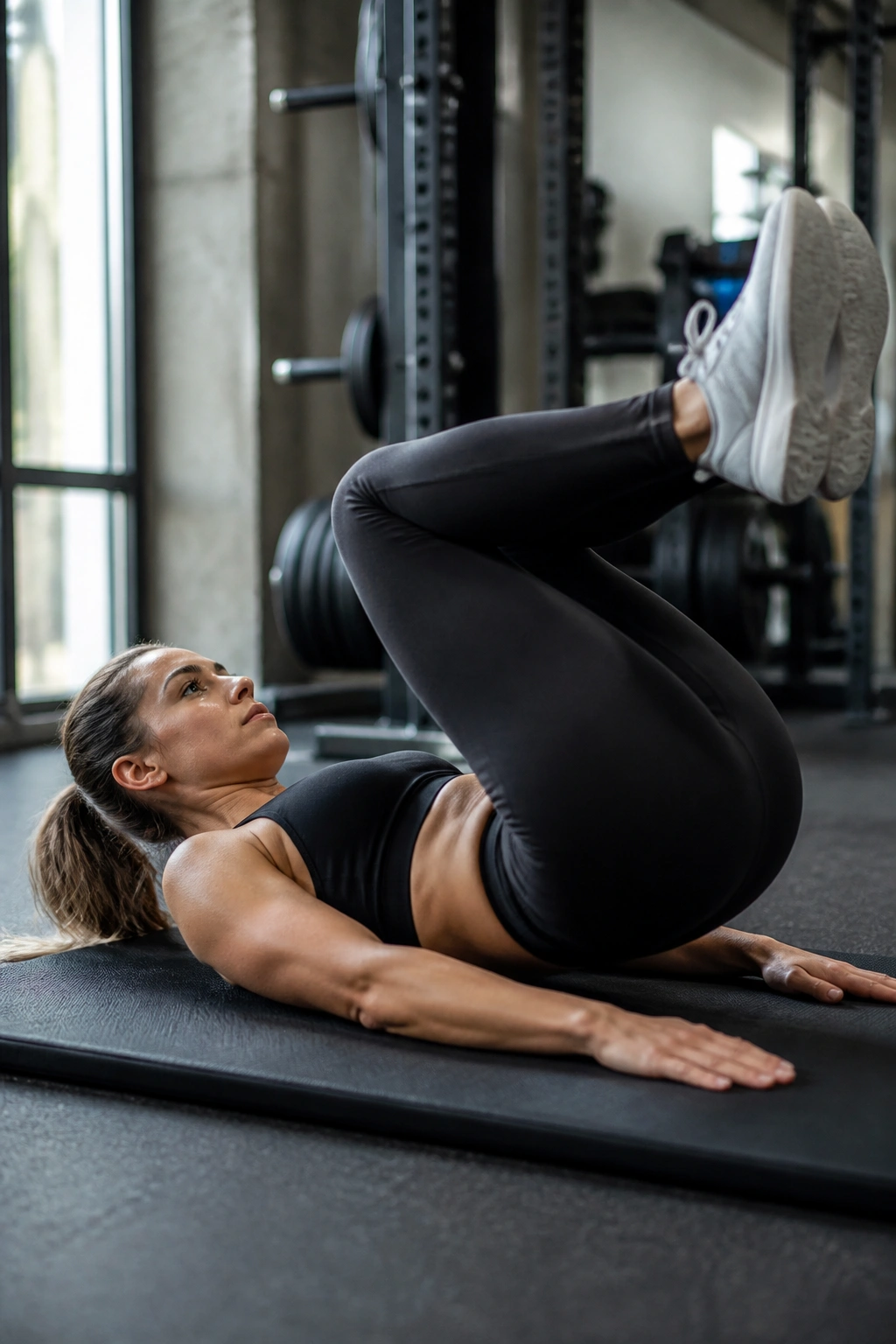
Reverse crunches are not always thought of as an upper-ab exercise, but they belong here because they teach the front of the core to stay braced while the pelvis curls up. That pelvic curl gives the abs a hard, clean contraction without making the neck do any work.
The part people miss
Lie on your back with your knees bent and feet off the floor. Draw your knees toward your chest, then lift your hips slightly as you exhale. The trick is to curl the tailbone off the floor without swinging the legs wildly.
If your legs start to fly around, the hip flexors have taken over. Slow down. Smaller range. Better control.
Why it’s useful
Reverse crunches are friendly for people who hate neck strain. They also pair well with straight crunches because they hit the same front wall from a different angle. Use 3 sets of 10 to 15 reps and keep the lowering phase slow.
14. Dead Bug with Reach
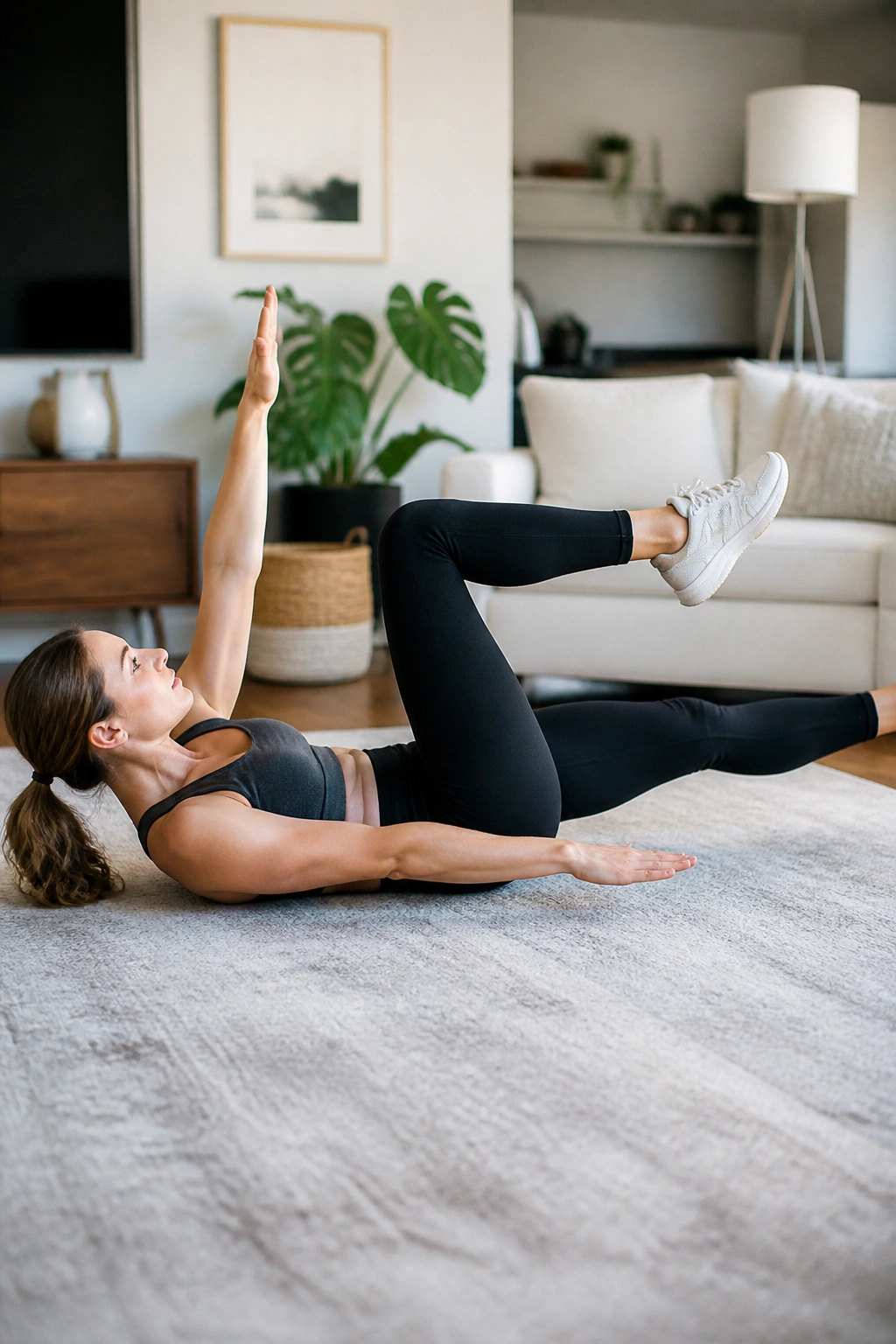
Dead bugs don’t look like upper-ab work, and that’s exactly why people underestimate them. They train the deep front core to hold position while your limbs move, which helps the stomach look and feel tighter in daily life. It’s less dramatic than a crunch, but it earns its spot.
A calm, controlled version
Lie on your back with arms up and knees bent above your hips. Press your lower back gently into the floor. Lower one arm and the opposite leg at the same time, then return to start. Add a reach at the end if you want a little more work through the front of the torso.
The key is that your back stays down. If it arches, you went too far.
Best use
Dead bugs are a perfect warm-up before harder ab work. Try 2 to 3 sets of 6 to 10 reps per side. Clean control here makes the rest of your session feel more stable.
15. Hollow Body Hold
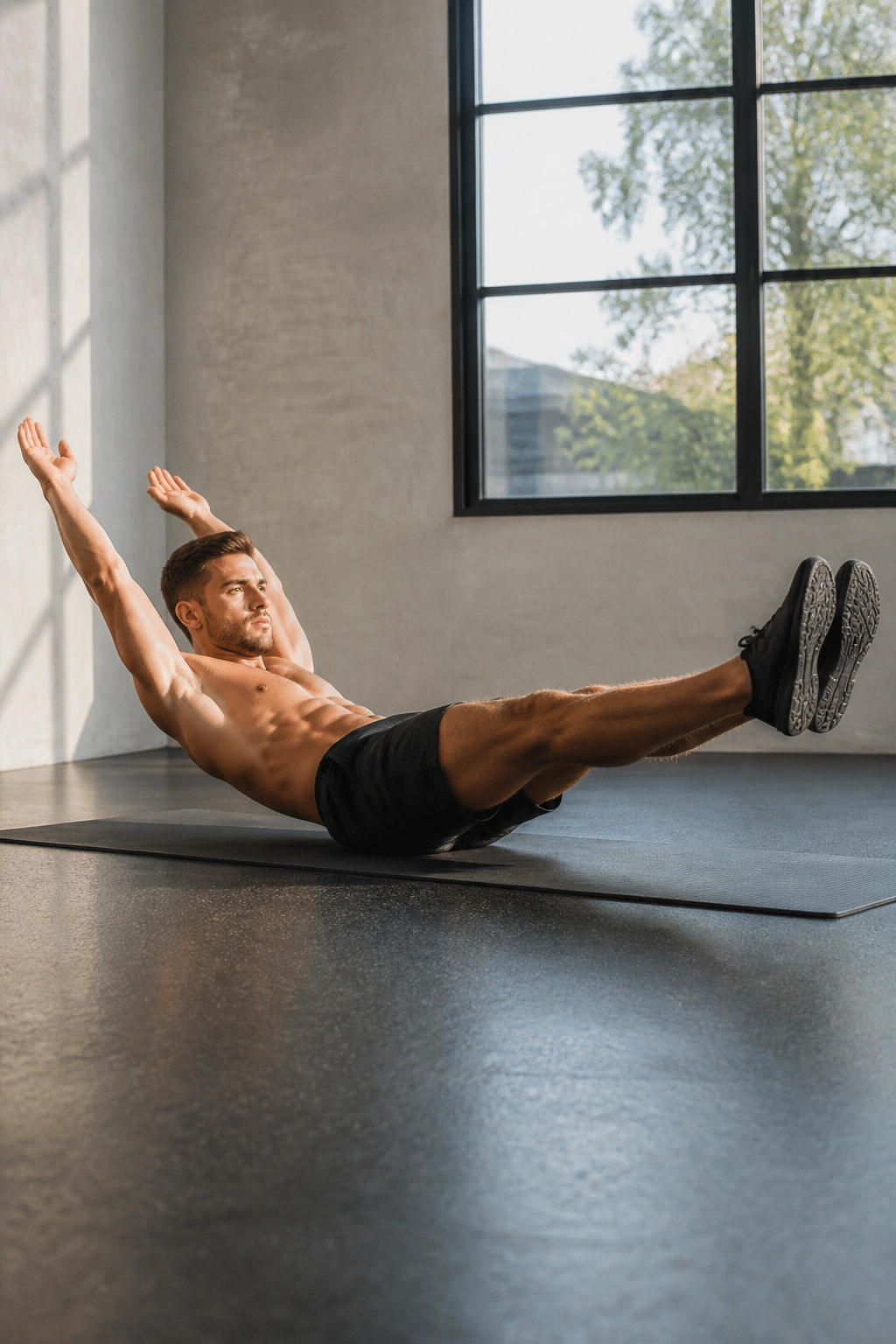
Hollow body holds are brutal in a quiet way. No movement to hide behind. No momentum. Just a long, hard brace through the front of the body while the lower back stays pressed into the floor. If you want a tighter midsection, this kind of isometric work matters.
Why it works
Hold your arms overhead, lift your shoulders off the floor, and extend your legs a few inches above the ground. Your body should look slightly banana-shaped, but not wildly arched. The lower back stays pinned down. That’s the whole game.
If the position falls apart after 5 seconds, bend the knees. That’s not cheating. That’s smart scaling.
Try 3 to 5 holds of 15 to 30 seconds. If you can breathe calmly in the position, it’s probably too easy. If you can’t keep the low back down, it’s too hard. Easy fix.
16. Hollow Rock
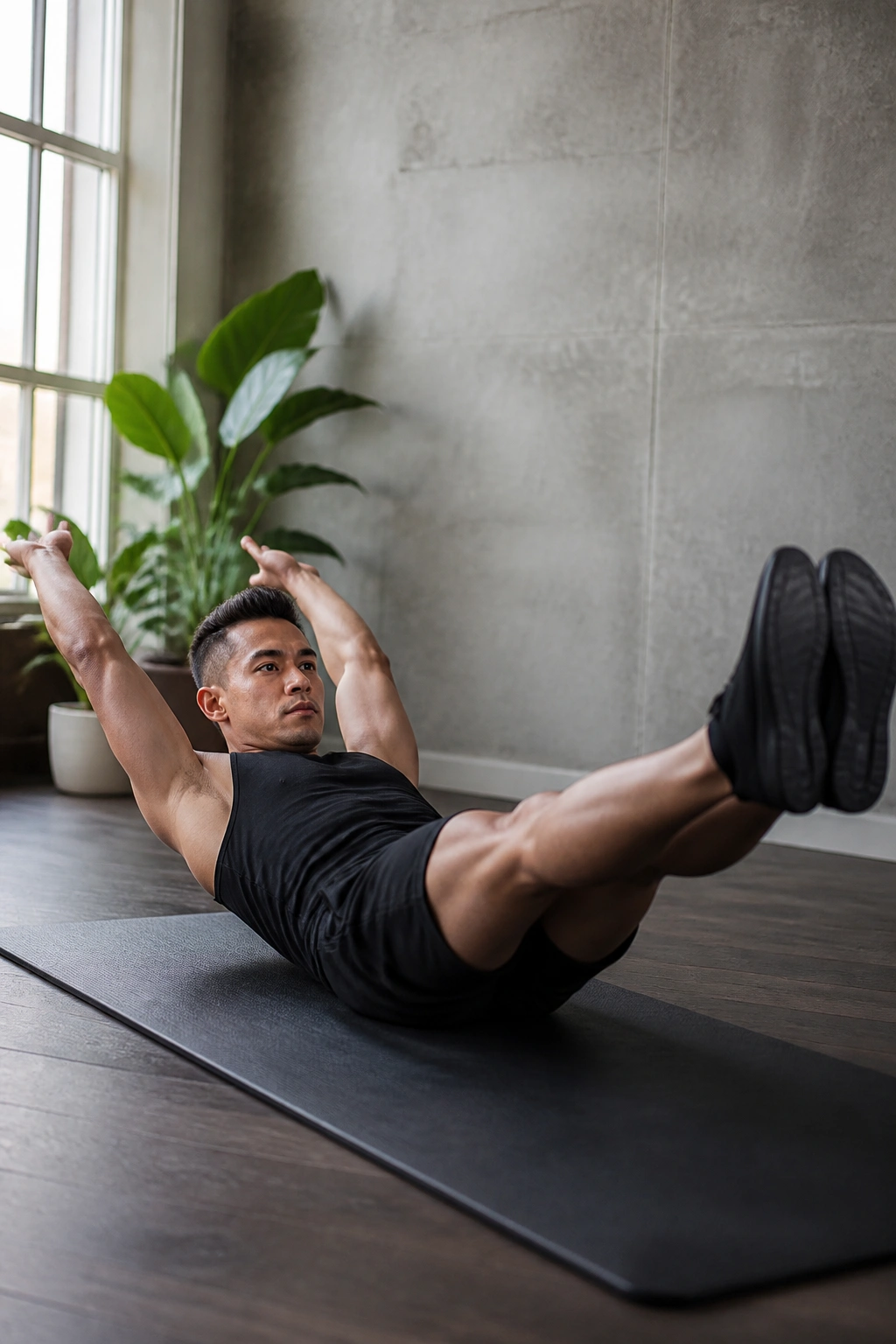
Hollow rocks take the hollow hold and make it move. A tiny rock back and forth turns a static brace into a more demanding test of control, and the upper abs have to keep working to stop the body from collapsing.
Small movement. Big demand.
Get into the hollow position, then rock a few inches forward and back while keeping your ribs tucked and your lower back glued to the floor. The movement should look almost lazy from a distance. That’s deceiving. It should feel intense.
If the rock gets huge, the exercise stops being useful. Keep it tiny.
When to use it
Use hollow rocks after you’ve built enough control to hold the position for at least 20 seconds. 2 to 4 sets of 10 to 20 rocks is plenty. This one is sneaky-hard, so do not chase volume too fast.
17. Bicycle Crunch
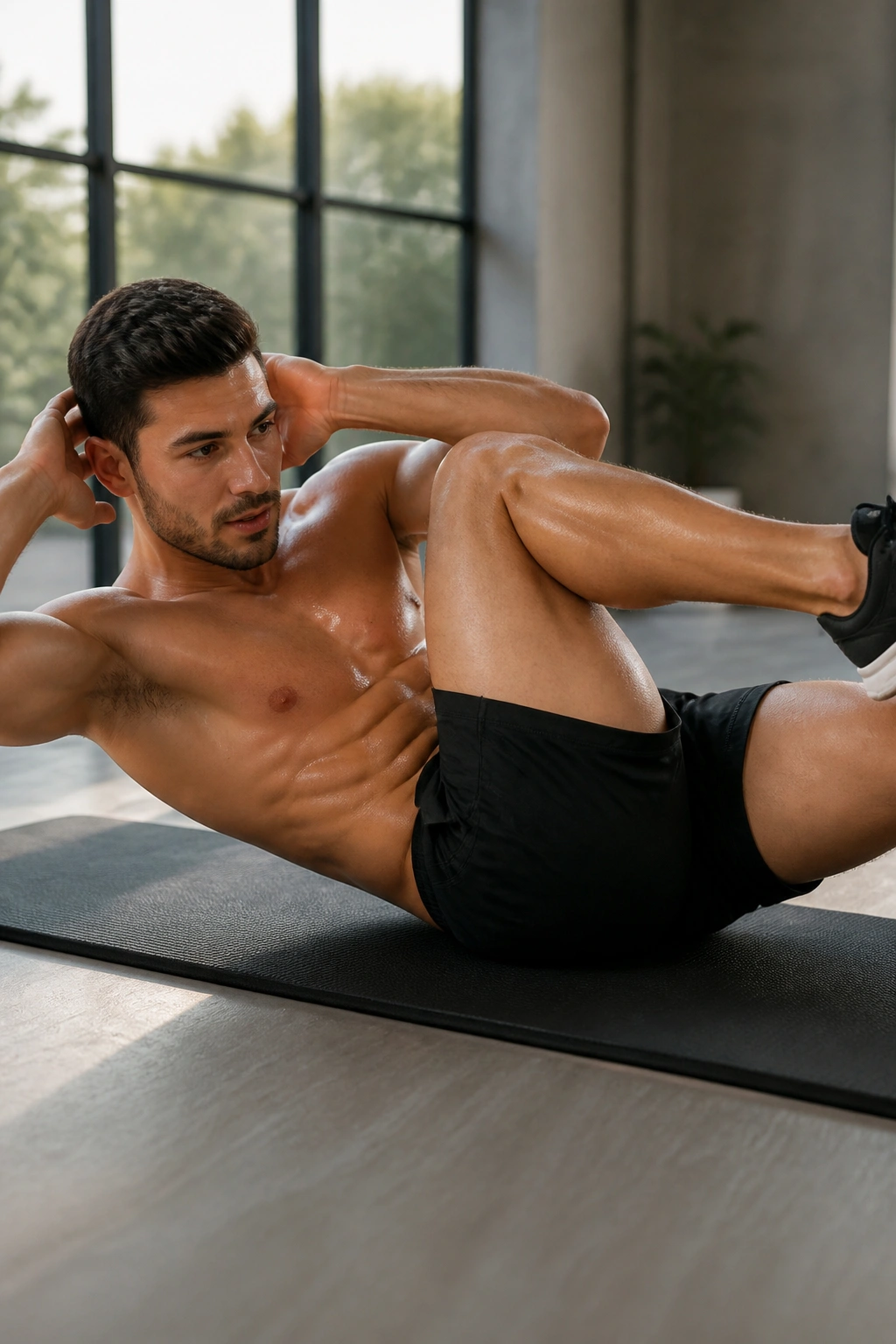
Bicycle crunches get messy because people rush them. The smart version is controlled, with a twist coming from the torso and not from a wild elbow-to-knee chase. Done well, they hit the upper abs and the obliques in a balanced way.
Cleaner than most people think
Lie on your back, lift your shoulder blades, and pedal one leg at a time while rotating your torso. Reach the opposite elbow toward the opposite knee, but don’t force contact. The cleaner cue is to bring the ribcage across the body, not to smash elbow into thigh.
A fast bicycle crunch usually turns into a hip-flexor drill. Slow it down and you’ll feel the front of the stomach much more clearly.
Good habits
- Keep the lower back heavy
- Exhale on each twist
- Move one side at a time
- Don’t yank the head forward
Use 3 sets of 12 to 20 total reps per side.
18. Heel Tap Crunch
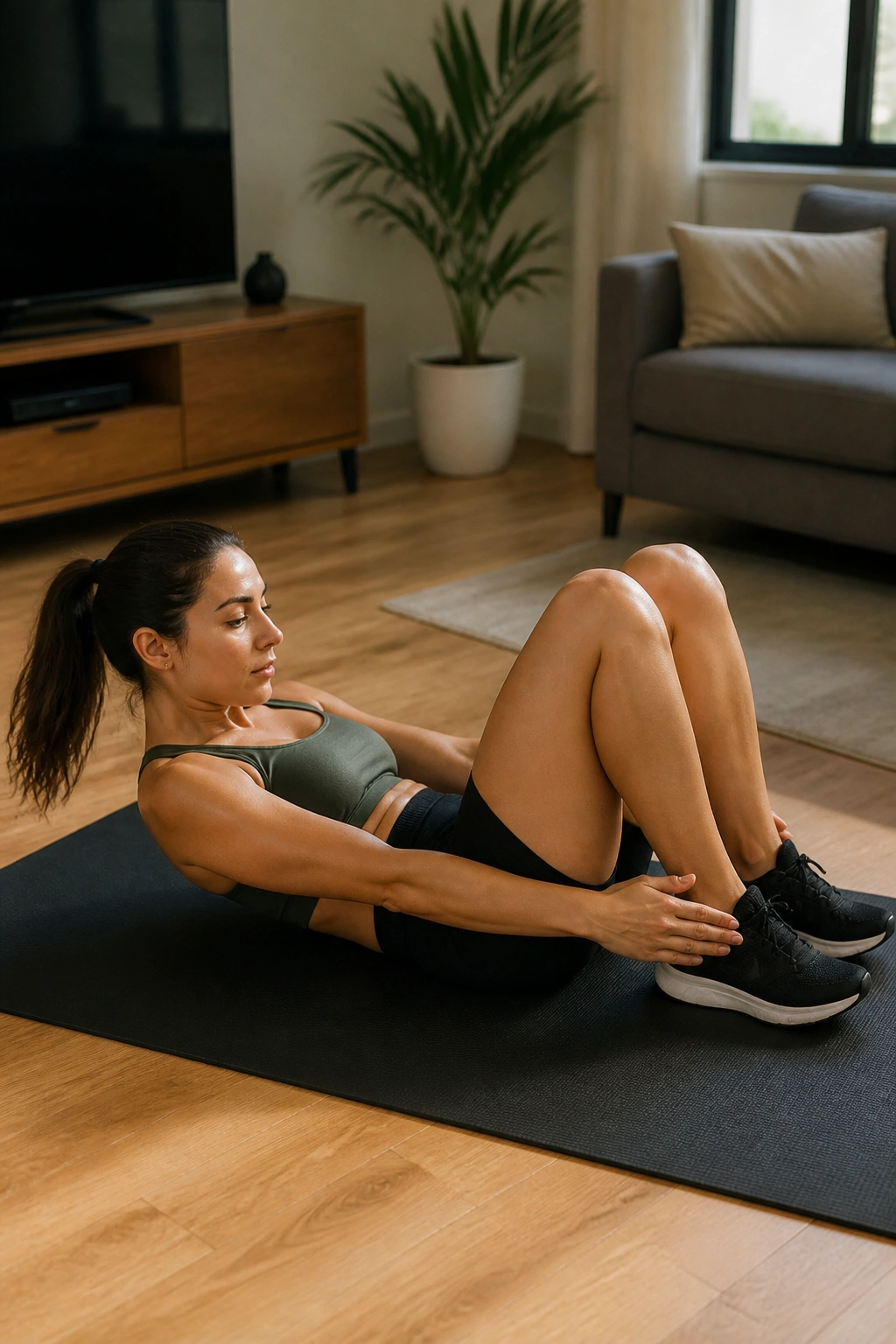
Heel taps are easy to learn and harder than they look. They’re a nice floor-based option when you want the stomach to work without a lot of spinal strain. The upper abs still have to keep the shoulder blades lifted while the hands reach side to side.
What it feels like
Lie on your back with knees bent and feet planted or hovering. Crunch up slightly, then reach one hand toward the same-side heel, return to center, and repeat on the other side. Keep the motion small and the abs tight.
This move is often rushed. Don’t rush it. The slower you go, the more you’ll feel the front of your torso holding you up.
Best for
People who want a gentler crunch variation, beginners building tolerance, or anyone who needs a home workout that doesn’t beat up the neck. Try 3 sets of 16 to 24 alternating taps.
19. Ab Wheel Rollout
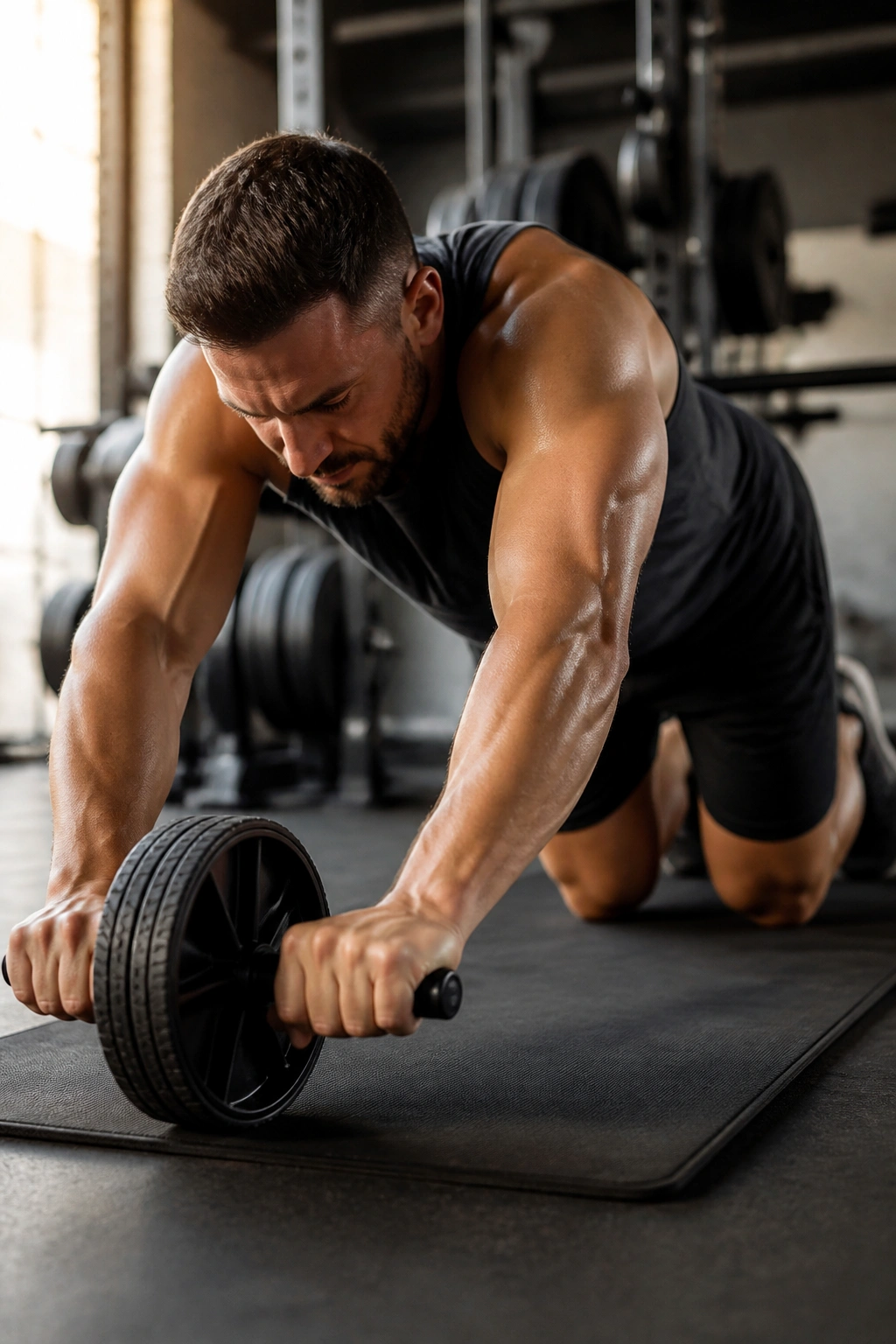
Ab wheel rollouts are not a pure upper-ab exercise, but they belong on this list because they force the whole front line of the body to resist extension. The upper abs have to lock in hard to keep your ribs from flaring and your back from sagging.
A hard move needs a hard rule
Start on your knees, grip the wheel, and roll forward only as far as you can keep your lower back flat and your ribs tucked. Then pull back using your abs, not your hips. That’s the move. Simple to describe. Hard to do.
If your back arches, stop the set. That’s the warning light.
How to progress
Begin with short range rollouts, maybe 6 to 8 inches. Build from there. 2 to 4 sets of 5 to 10 reps is more than enough for most people. This is not an exercise to chase fatigue on. Form matters too much.
20. TRX Pike
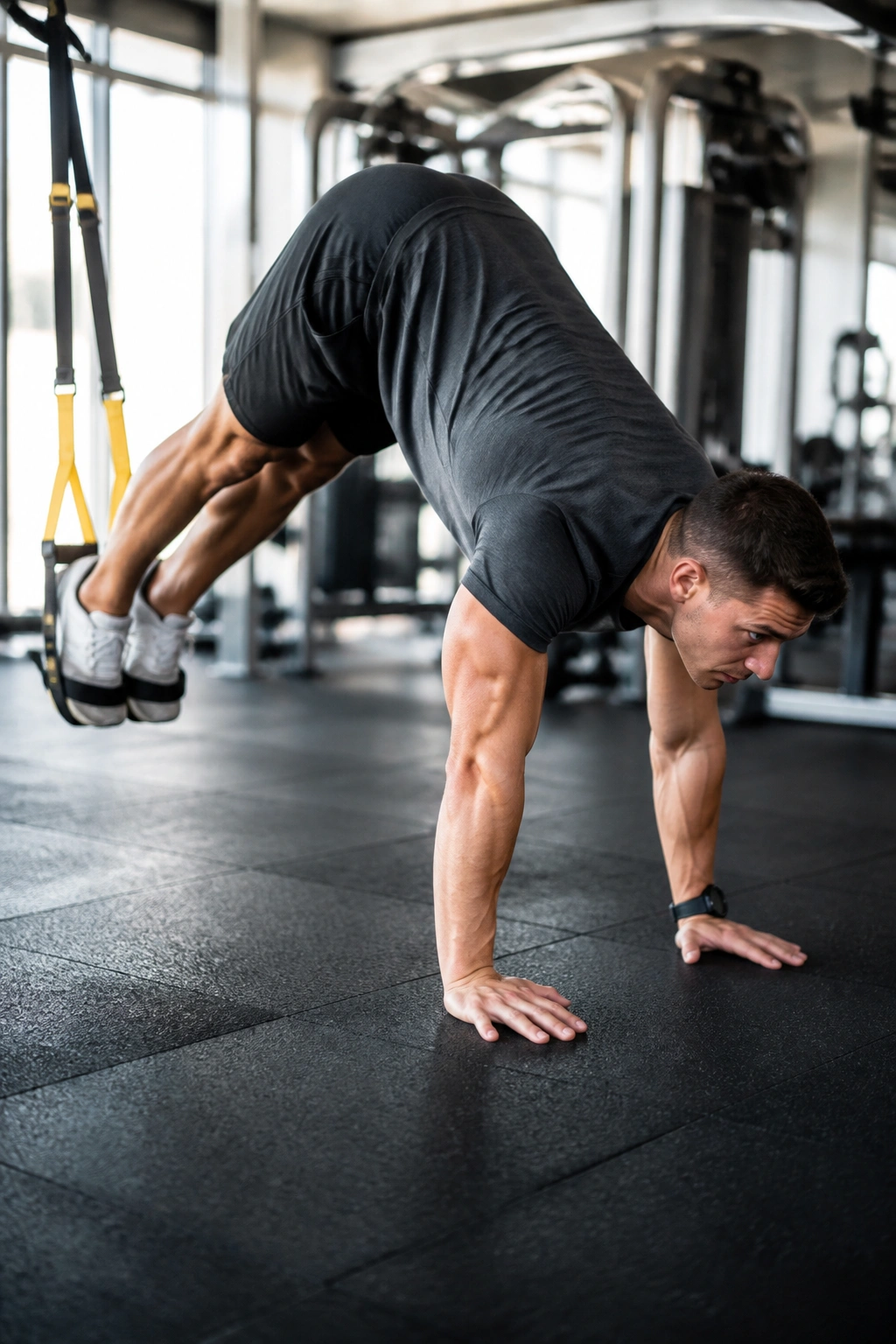
A TRX pike is one of the toughest stomach moves in the bunch, and it asks for real control. Your body starts in a plank, then folds at the hips while your feet slide or hang toward your hands. The front of the core has to stay brutally tight so the movement doesn’t collapse into the shoulders or lower back.
Why advanced people like it
The pike creates a big challenge for the abdominal wall while also teaching bracing under load. That makes it useful for people who want more than just a burn. It’s a strength move. A hard one.
If the TRX version feels too wild, do the same idea on sliders or towels on a smooth floor. That version is easier to control and still plenty demanding.
Quick cues
- Start in a strong plank
- Lift the hips, not the chest
- Keep the ribs tucked
- Lower with control
Use 3 sets of 6 to 10 reps. If you can’t keep your shoulders stable, back up a level.
Final Thoughts

A toned stomach comes from more than one angle, and that’s the part people hate hearing because it isn’t glamorous. You need direct ab work, yes, but you also need enough full-body training and sensible eating to let the muscle show through.
For most people, the best place to start is with slow crunches, cable crunches, hollow holds, and one harder move like the ab wheel or TRX pike. That mix gives you both muscle tension and control. Tricky stuff belongs later.
And one small thing that matters more than it sounds: stop chasing soreness as proof. Good upper ab workouts leave you stronger, steadier, and more aware of your midsection—not just wrecked for the afternoon. That’s the sign you picked the right work.
