



Ten-minute ab workouts work when every rep has a job. Rush through them and you mostly get a tired neck, a hip-flexor ache, and a mat full of half-finished crunches. Slow them down, and ten minutes is enough to make your midsection feel honest.
The best core training does more than chase a six-pack. It teaches your trunk to brace, your ribs to stay stacked over your pelvis, and your lower back to stop stealing work from your abs. That part gets missed all the time. The movement may look small, but the tension should feel real.
I like short core sessions because they fit into the cracks of a day: after a walk, between strength sets, or on a day when jumping around feels like too much. A good ten-minute block can hit the front of the core, the obliques, and the deep stabilizers without turning the session into a circus of random exercises.
Some of the routines here are beginner-friendly and floor-based. Others get spicy fast. Pick one, set a timer, and give it the kind of focus people usually save for longer workouts.
1. Dead Bug and Reverse Crunch Reset
The dead bug earns its place because it teaches your abs to stay braced while your arms and legs move. Pair it with reverse crunches and you get a routine that feels controlled, not chaotic, which is rare in short ab workouts.
Why it works
Dead bugs punish a loose midsection. Reverse crunches bring the pelvis toward the rib cage, which is where a lot of people actually need the work. That combination is calm on the spine and still demanding if you keep the tempo honest.
Set a timer for 40 seconds dead bug, 20 seconds rest, 40 seconds reverse crunch, 20 seconds rest, 40 seconds forearm plank, 20 seconds rest. Repeat the trio twice. The pace should feel crisp, not frantic.
- Keep your lower back heavy on the floor.
- Exhale on the hard part of each rep.
- Stop the reverse crunch before you swing.
Tip: If your neck tightens up, put a folded towel under your head and slow the tempo. That small change keeps the abs in charge.
2. Plank Ladder with Shoulder Taps
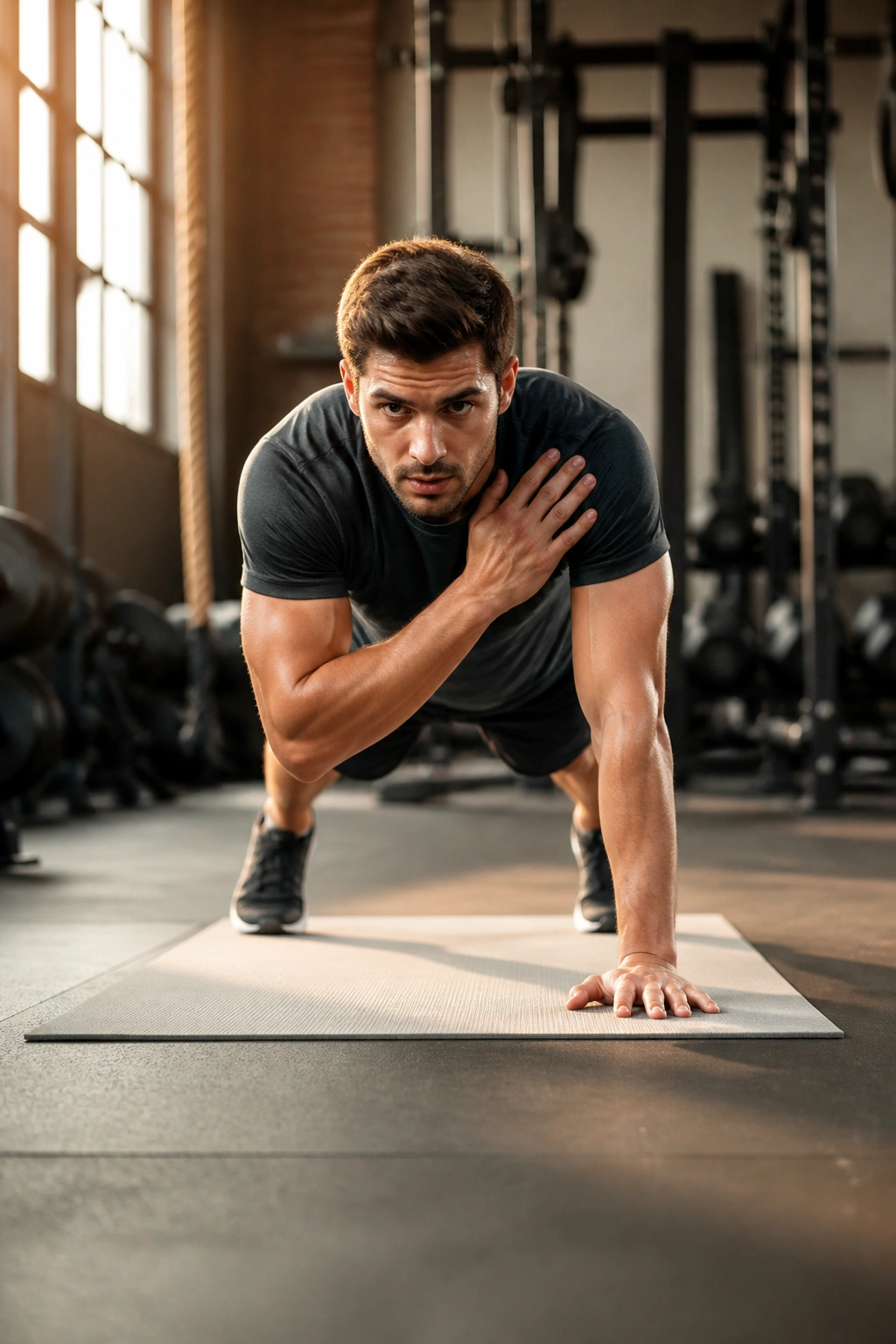
A plank gets harder when you stop chasing time and start chasing stillness. Shoulder taps turn a basic hold into a balance test, and that tiny shift shows you how much your core is doing when your hips try to wiggle out of line.
Run 20 seconds of plank hold, 20 seconds of shoulder taps, 30 seconds of plank hold, 30 seconds of shoulder taps, 40 seconds of plank hold, 40 seconds of shoulder taps, then walk it back down. You’ll spend ten minutes building tension instead of just surviving a timer. Keep your feet a little wider than hip width if the taps feel sloppy.
This one is best when you want a workout that looks simple and behaves rudely. The shoulders get involved, sure, but the real job belongs to the trunk. If the hips stay quiet, you’re doing it right.
A mat helps, but what helps more is patience. The slow, boring version is the one that bites.
3. Standing Knee Drive Core Burn
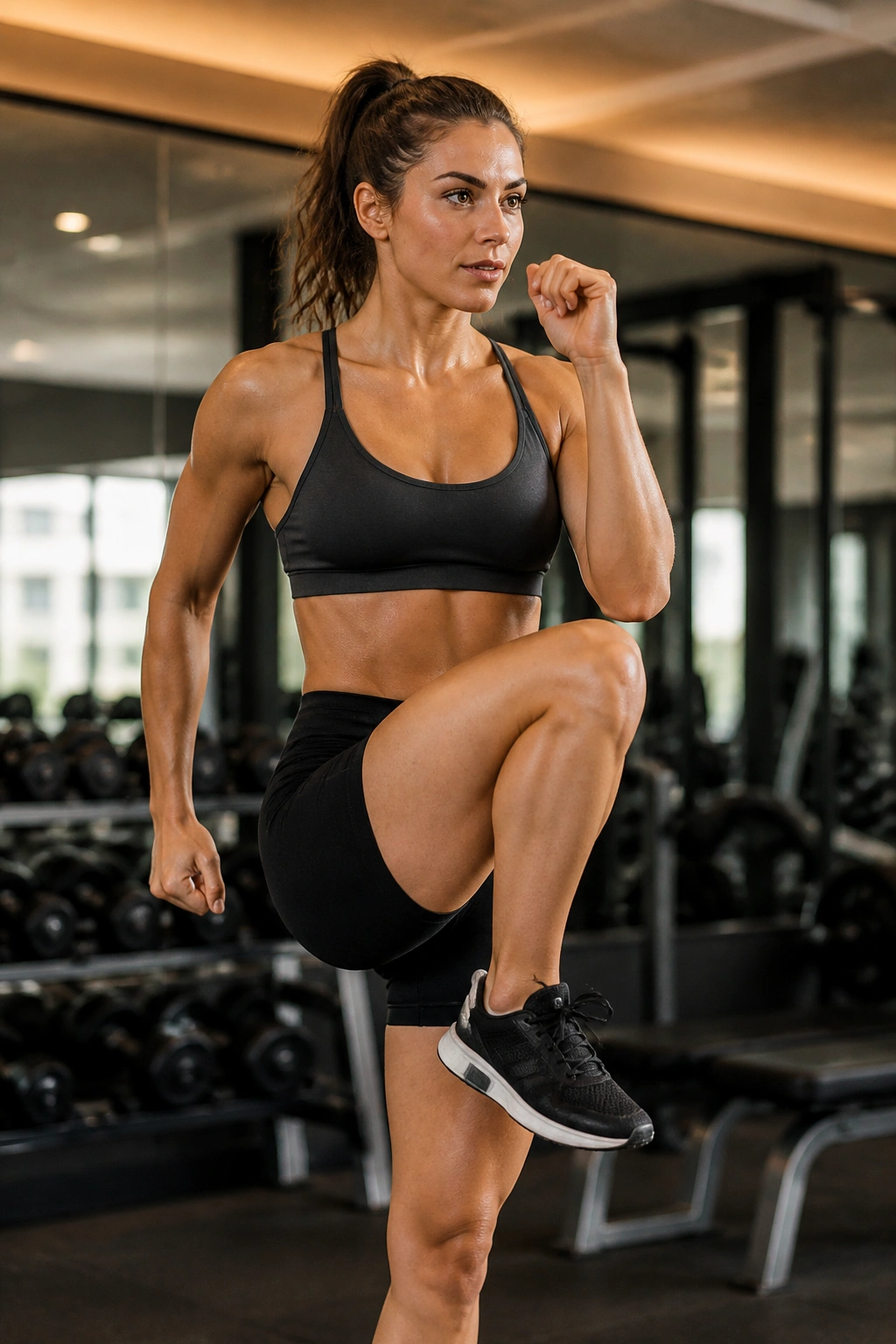
What if you do not want to lie on the floor at all? Then a standing core block earns its keep. Knee drives, cross-body reaches, and slow marching keep your ribs stacked over your pelvis while your heart rate climbs a bit.
How to use it
Set a 10-minute clock and alternate 45 seconds of right-knee drive with 45 seconds of left-knee drive, then 30 seconds of standing cross-body reaches, 30 seconds of marching with hard exhalations. Repeat the pattern until the timer ends. The trick is not speed. The trick is a sharp crunch through the midsection each time the knee comes up, while the standing leg stays heavy and rooted.
No floor required.
This is the one I’d pick for small rooms, hotel floors, or days when a mat is one more thing to clean up. It also lets you breathe more aggressively, which can make the whole session feel cleaner. Keep the hands active and the chest from leaning back.
If your balance is shaky, slow the knee drive down and pause for a beat at the top. That pause does more than rushing ever will.
4. Bicycle Crunch and Hollow Hold Sprint
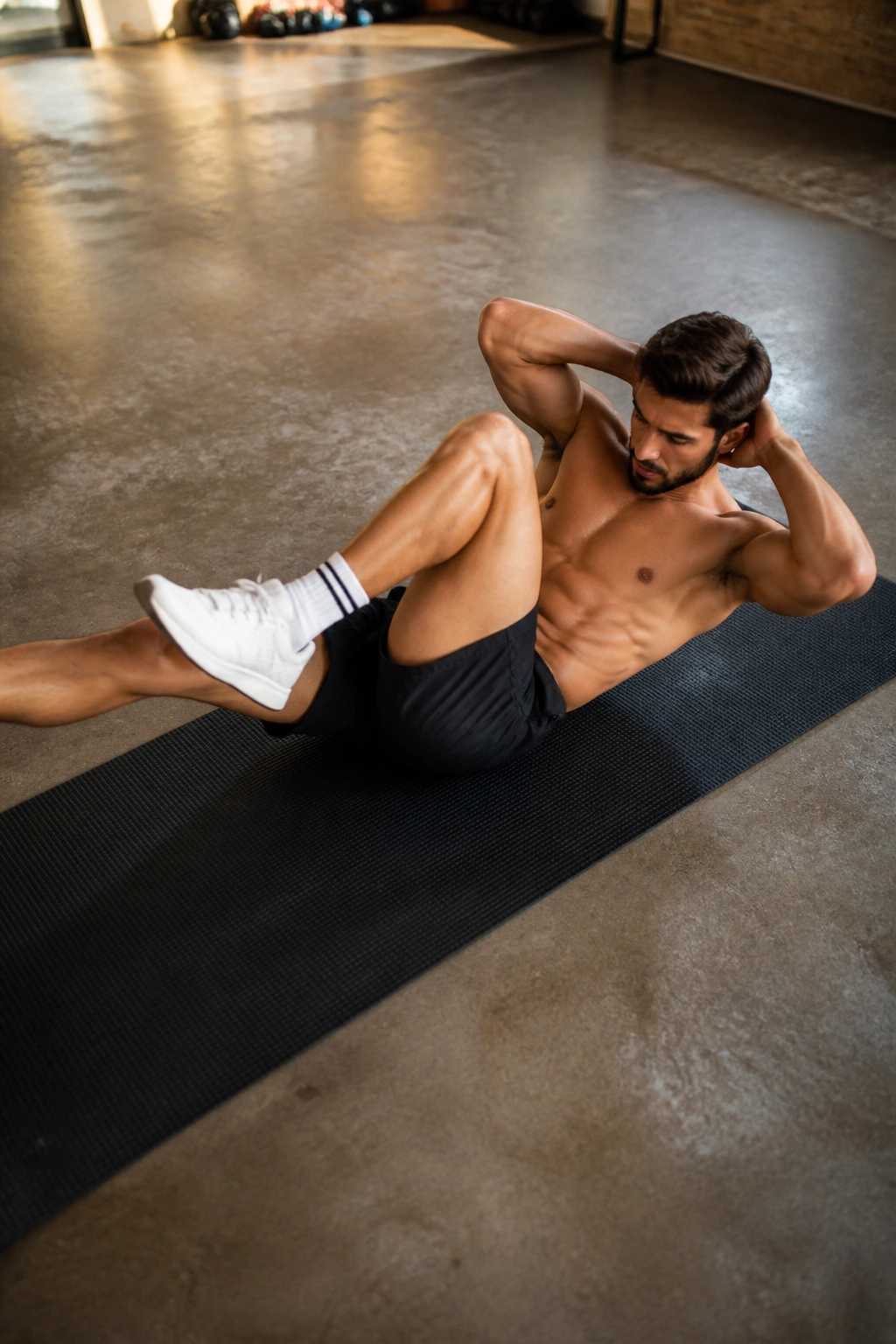
A lot of people can do bicycle crunches fast. Fewer can do them well. The difference is obvious: fast versions yank on the neck, while controlled versions leave the front of the abs shaking in a good way.
The fix is to pair bicycles with a hollow hold, which forces the ribs down and keeps the lower back from arching off the mat. Set a timer for 1 minute of bicycles, 30 seconds of hollow hold, 30 seconds of rest, then repeat that trio five times. By the third round, the abs should feel crowded, not sloppy.
- Keep one shoulder blade off the floor at a time.
- Rotate the rib cage, not just the elbow.
- Bend the knees more if the low back complains.
The point is control, not speed. That single change turns a common crunch variation into a sharper ten-minute ab workout. It also keeps the hips from doing lazy work that the abs should be handling themselves.
5. Side Plank and Hip Dip Sequence
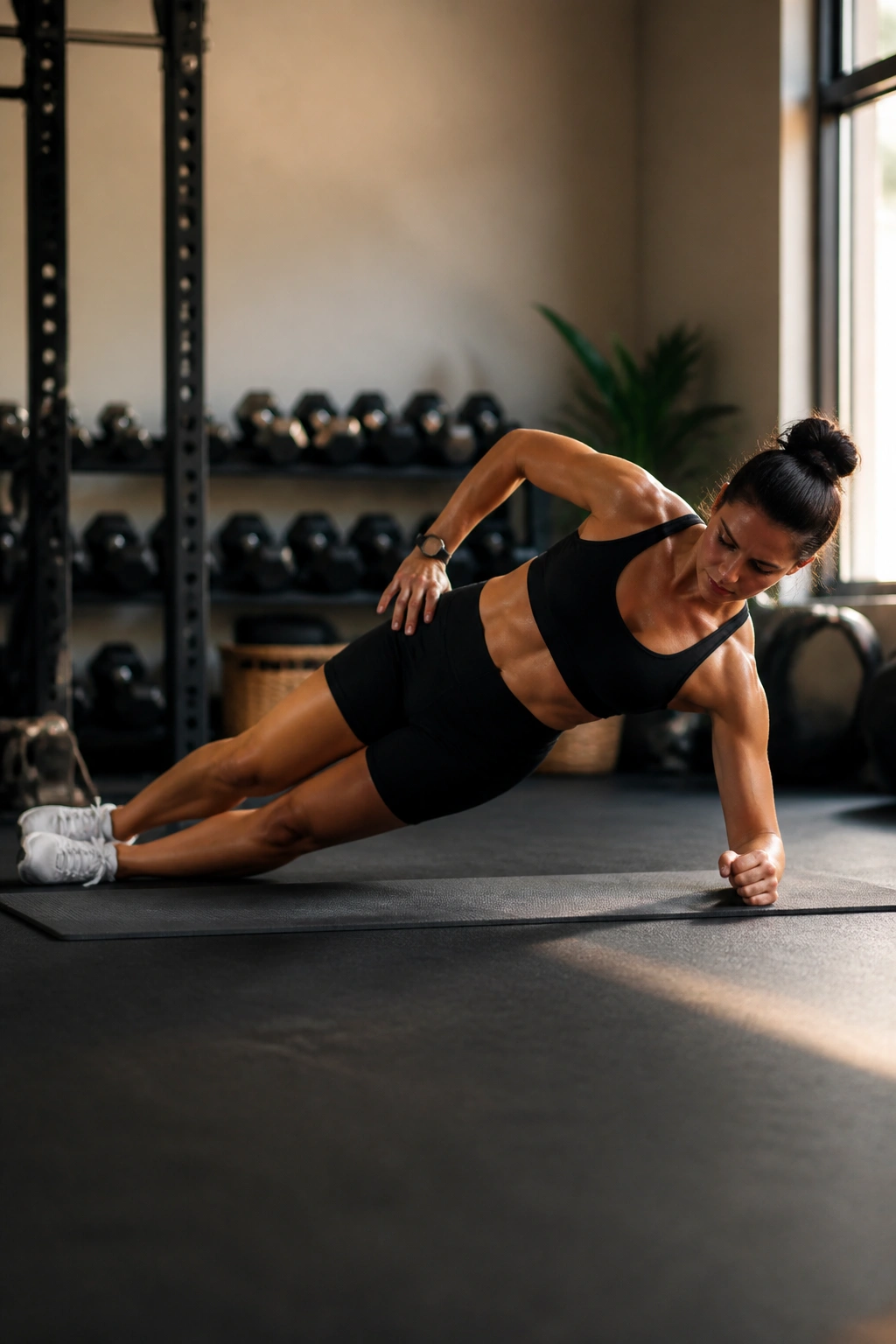
Side planks look tame until you hold one for more than twenty seconds. Then the obliques start talking back, and the shoulder on the floor gets its share of the work too. That is what makes this routine worth keeping around.
Set a timer for 45 seconds on the left side, 15 seconds to switch, 45 seconds on the right side, 15 seconds rest, then repeat the cycle twice. After that, finish with 1 minute of slow hip dips on each side if you still have gas. Keep the body in one long line and think about lifting the waist away from the floor.
I like this one because it does not pretend the side body is a bonus area. It isn’t. Strong obliques help with twisting, carrying groceries, and keeping your ribs from flaring every time you press overhead.
And yes, it will make you feel lopsided at first. That is the point.
6. Slow Mountain Climber Burn
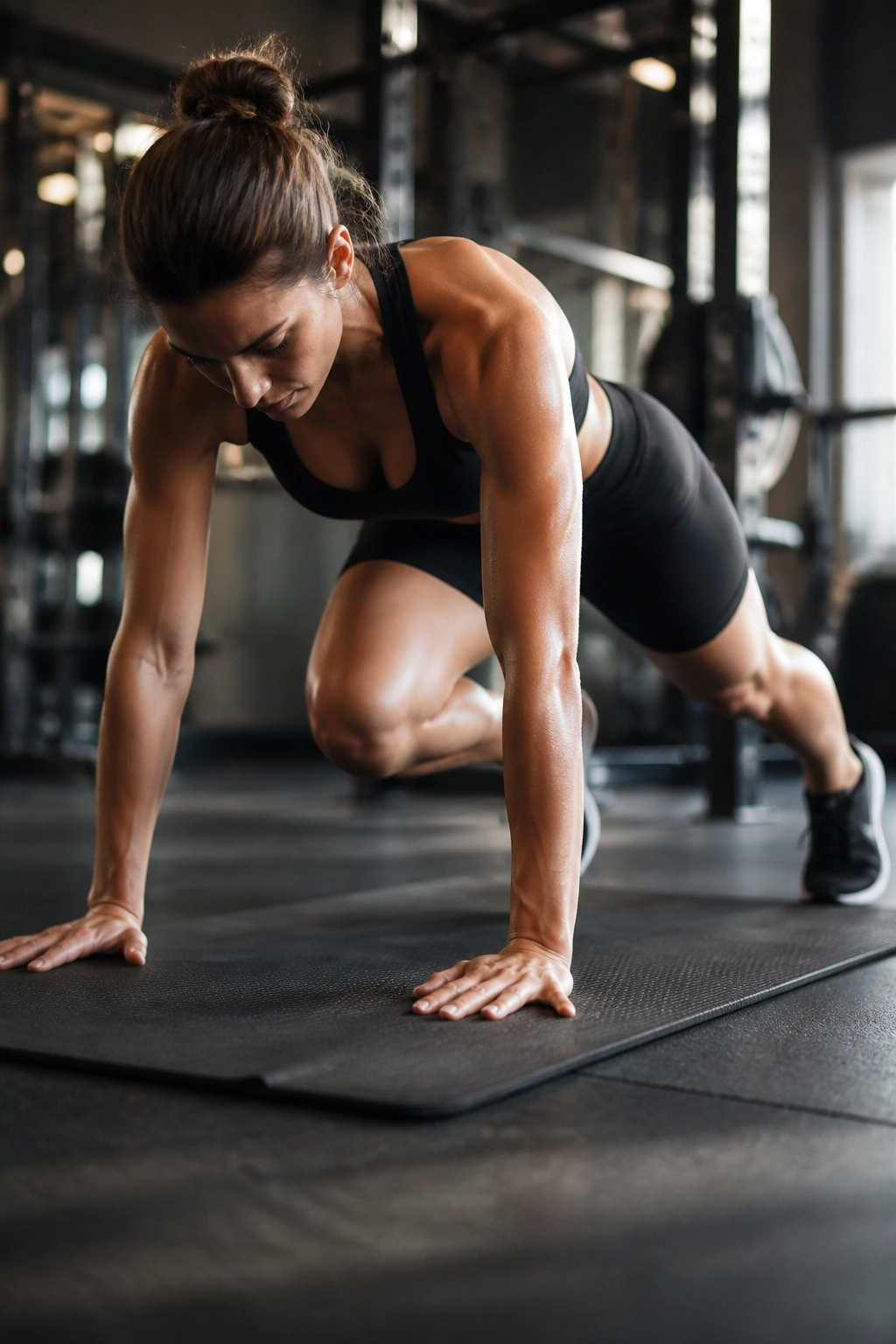
Unlike sprint-style mountain climbers, the slow version makes you own each inch of the movement. One knee drives forward while the other leg presses back, and the pause at the top forces your torso to stay put instead of bouncing around like a loose hinge.
Use 30 seconds on, 15 seconds off, and cycle through right knee, left knee, both knees alternating in a steady rhythm, then finish with a 1-minute bear plank hold. The slower pace is not a downgrade. It is what turns the drill into core work instead of a cardio mess.
The legs will talk.
This is the pick for people who want a sweaty ten-minute block without a dozen jumpy transitions. If your shoulders like plank work and your hips like marching patterns, it fits. Keep the fingers spread and the floor pushed away from you so the upper body doesn’t sag.
By the last round, the abs should feel like they are holding a tray of water.
7. Pilates Hundred and Toe-Tap Flow
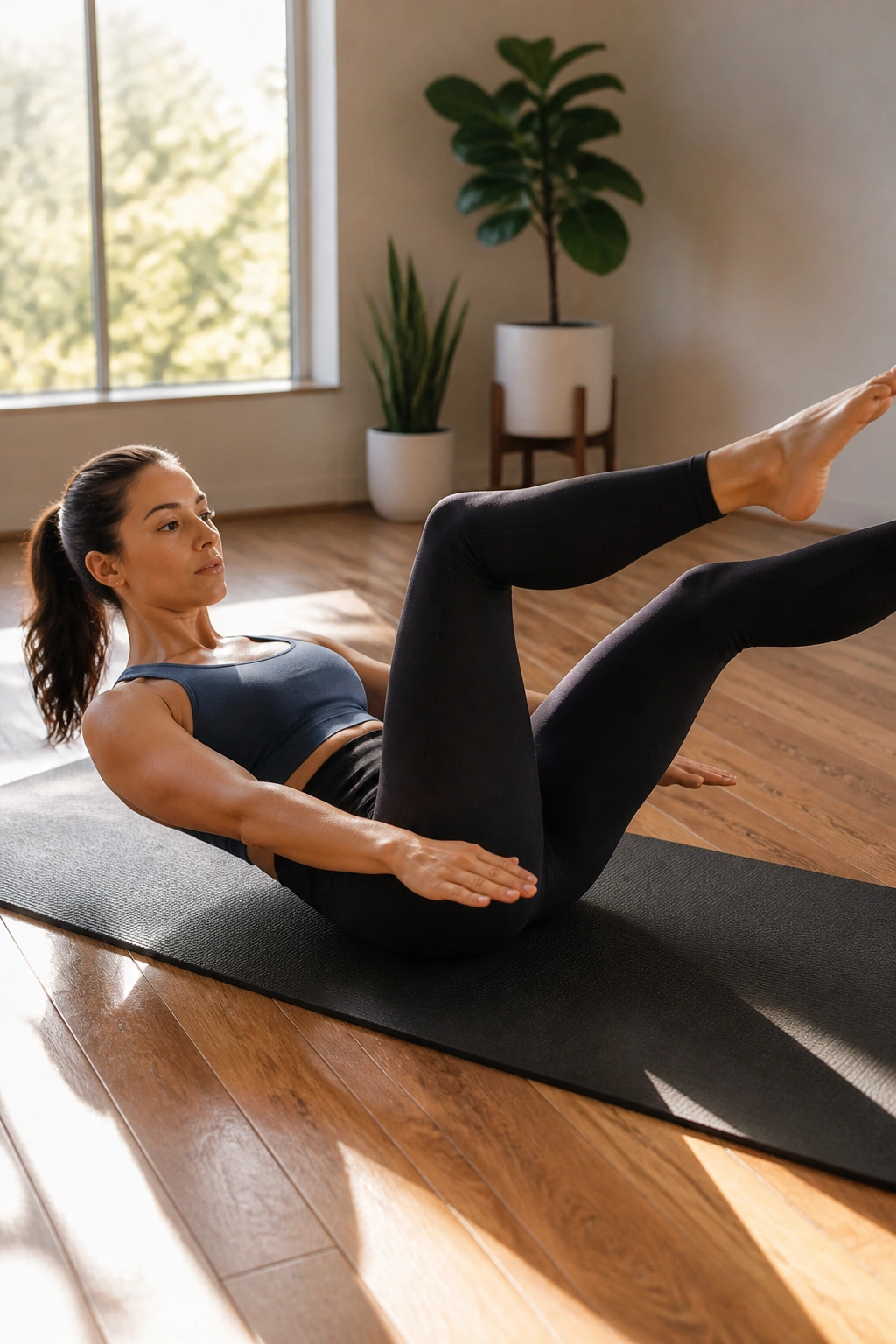
The Pilates hundred gets its reputation from breath control, not from flashy motion. Add toe taps and you get a quiet little ambush for the deep core, especially if you keep the ribs from popping up on every inhale.
What to focus on
Start with 1 minute of the hundred, then 45 seconds of toe taps, 15 seconds rest, 45 seconds of dead bug reaches, 15 seconds rest. Repeat the block until ten minutes are up. If full-leg extensions are too much, keep the knees bent and still move with the breath.
- Exhale fully on the effort.
- Keep your lower back weighted.
- Make the inhale short and low.
Pro tip: If you can hear your breathing, you’re probably doing it right; if you’re flailing, you’re not. That rhythm matters more than speed, and it keeps the whole workout from turning into a hip-flexor contest.
The best version of this routine feels calm on the outside and intense on the inside. That contrast is the whole charm.
8. Forearm Plank to Pike Flow
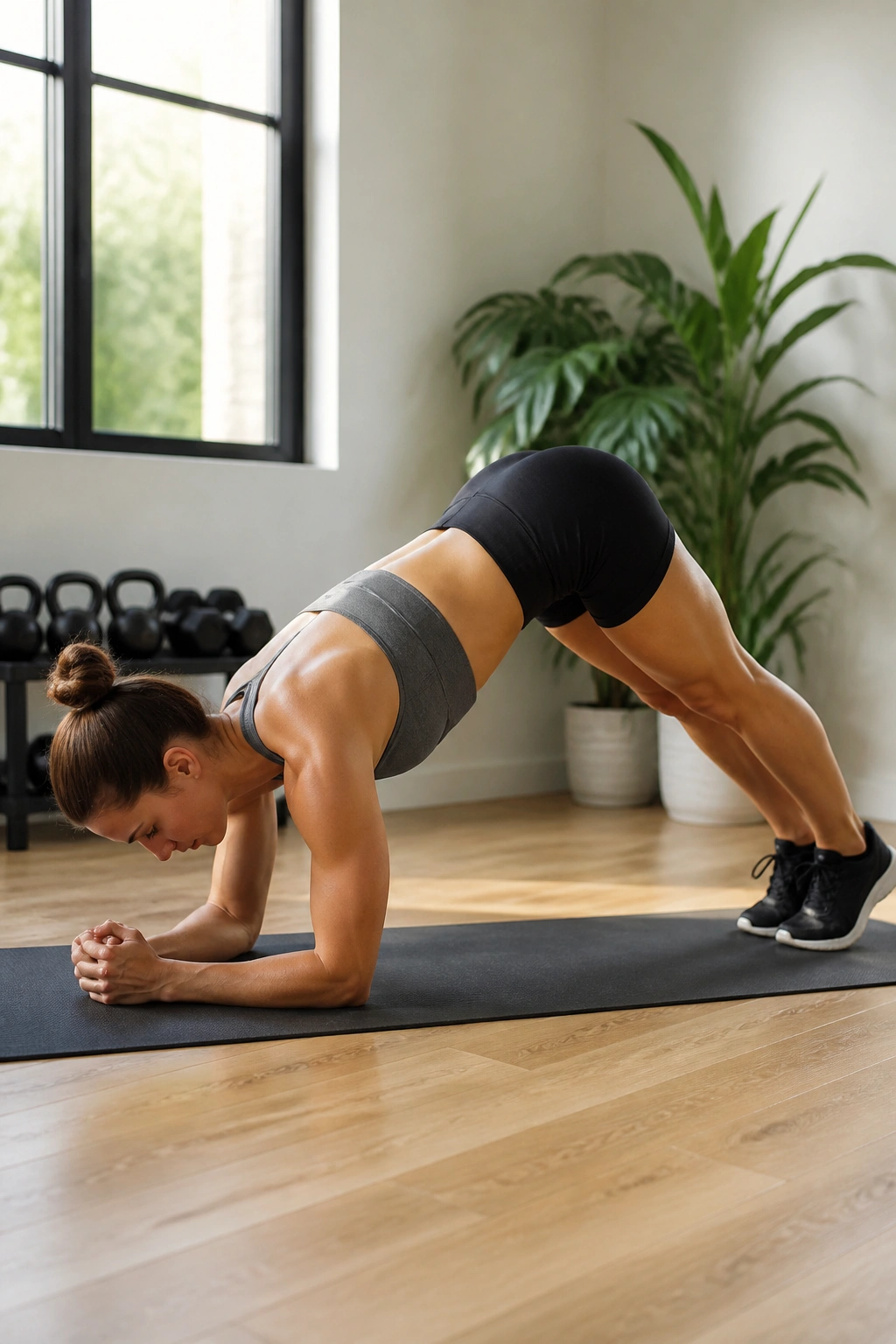
This one is sneaky. It starts like a basic plank and ends with your shoulders, abs, and hamstrings all trying to negotiate with each other.
Move from a forearm plank into a small pike by walking your hips up, then lower back to the plank with control. Run 40 seconds of planks, 20 seconds of pikes, 40 seconds of plank walkouts, 20 seconds of rest, and repeat the sequence twice. Keep the movement compact. A huge pike looks dramatic, but a smaller one usually keeps the core tighter and the spine happier.
I like this when the goal is to train the front of the body without doing dozens of crunches. It feels athletic. It also exposes any lazy bracing fast, which can be useful if you’ve been coasting on easy plank holds.
If the pike starts turning into a backbend, shorten the range immediately. The abs do the work here, not the low back.
9. Bird Dog and Cross-Body Reach
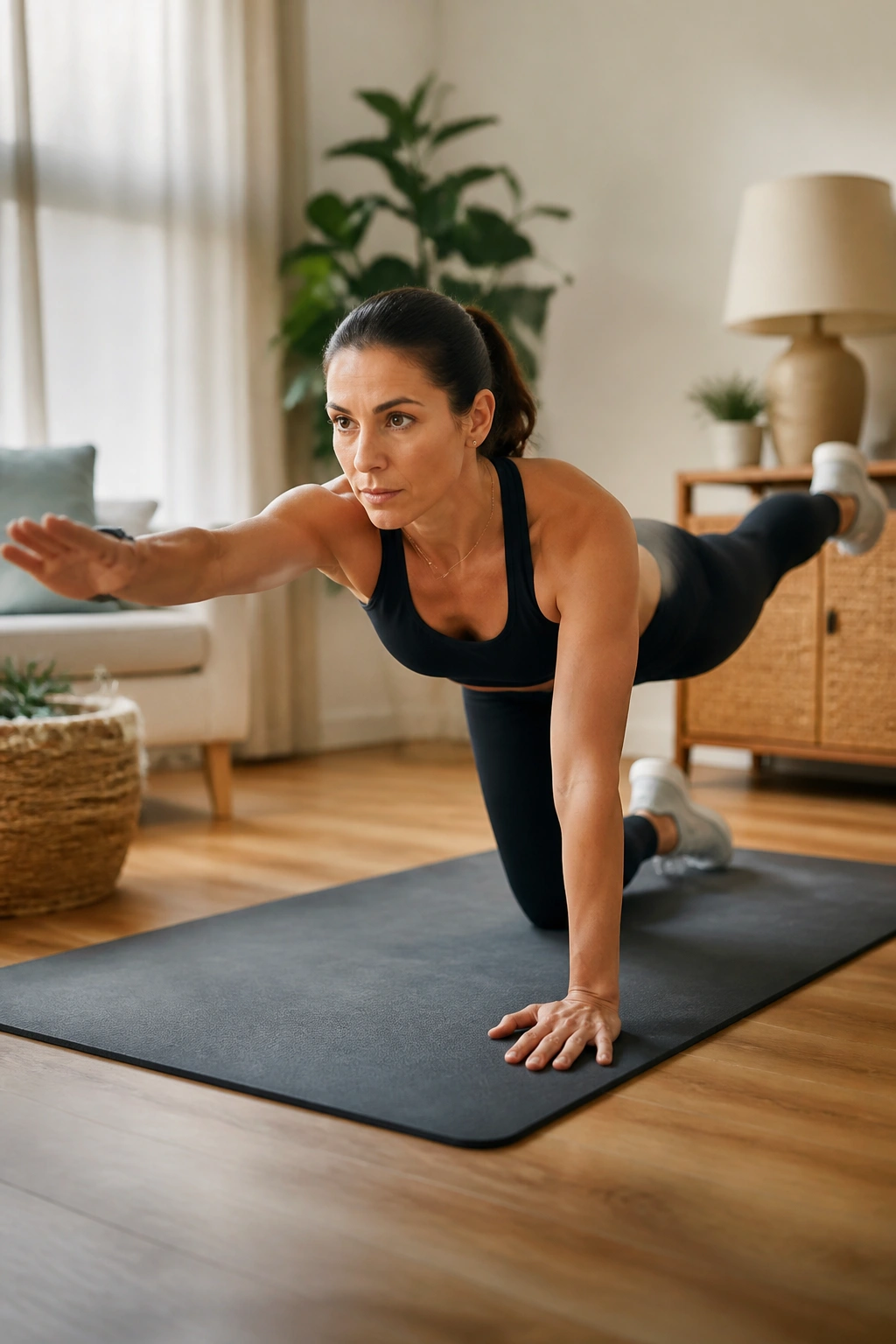
Why does a drill that looks this calm make your core work so hard? Because bird dogs punish every tiny shift. The moment your ribs flare or your hips twist, you feel it.
How to run it
Spend 30 seconds reaching right arm and left leg, 30 seconds switching sides, then 30 seconds of cross-body reaches from a high kneeling position. Repeat that ladder until you hit ten minutes. Move slowly enough that you could balance a glass of water on your low back—that’s the feeling you want.
This workout is a smart choice if your low back gets cranky with crunches. It teaches the spine to stay quiet while the limbs do the work, and that carries over into almost everything else you do in training.
No rush.
If you want one routine that feels almost boring while it is happening and oddly useful later, this is it. It gives you a cleaner brace, and that’s worth more than a noisy burn.
10. V-Sit and Flutter Kick Finisher
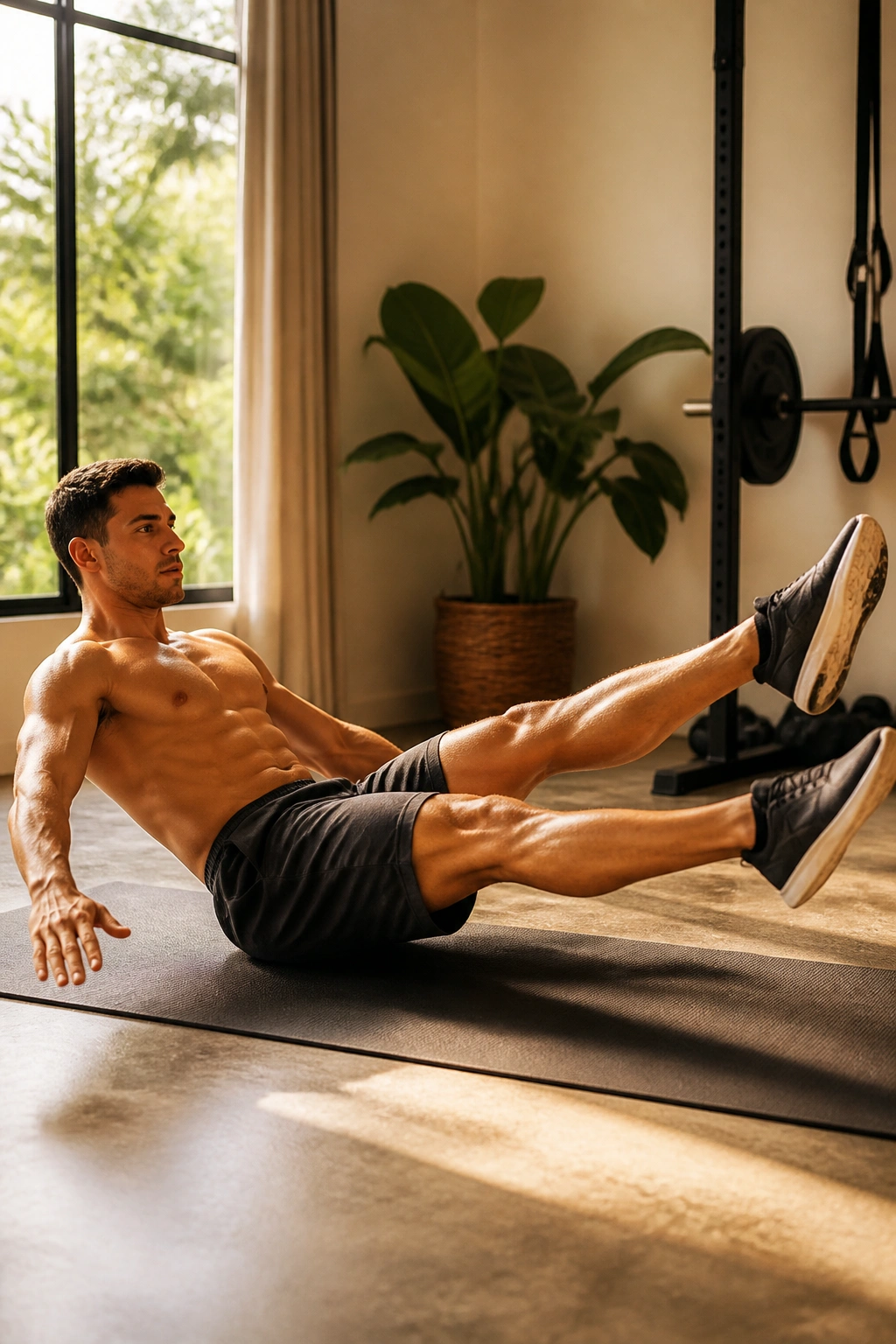
A V-sit makes an honest liar out of the core. You either hold the shape or you fold, and there is not much room between those two outcomes.
The routine is simple: 20 seconds V-sit hold, 20 seconds flutter kicks, 20 seconds rest, then repeat five times. If the full V-sit is too sharp on the hip flexors, keep the knees bent and the chest tall. The flutter kicks should stay low, but not so low that your lower back pops up.
- Hands can stay behind the thighs for support.
- Breath should stay steady.
- Stop before your neck starts yanking forward.
Use this one when you want the abs to feel smoked in a short window. It is not the gentlest option, and that is part of why people remember it. The key is to hold the chest open instead of collapsing into the hips.
The burn shows up fast.
11. Woodchop Shadowboxing Core Drill
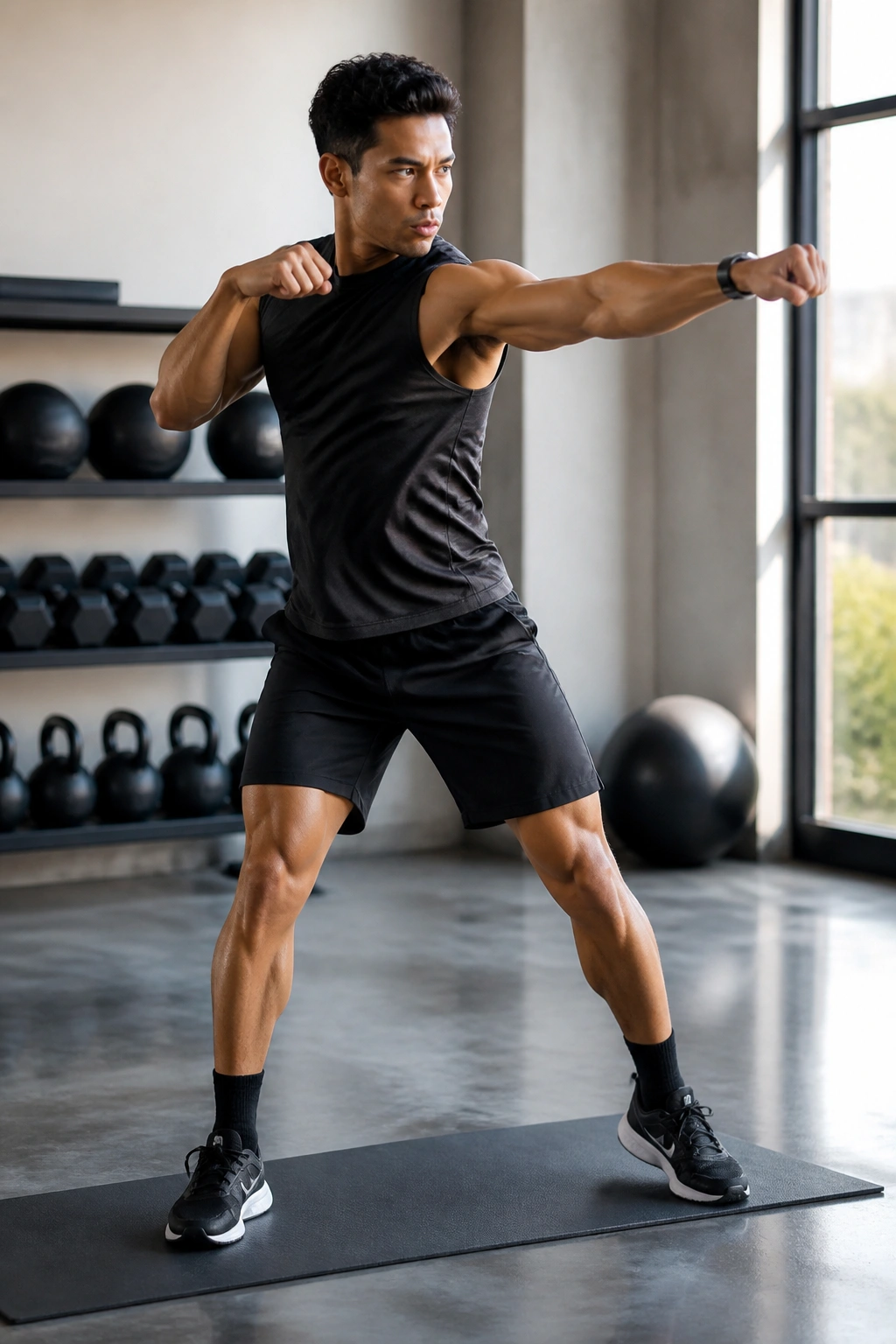
Rotation changes the game. A lot of core work trains the body to resist motion, which is useful, but a good ab routine also needs some twisting, especially if you play sports, swing a bat, or just want your trunk to move cleanly.
This workout mixes standing woodchop motions with short shadowboxing bursts. Set 45 seconds for right-side chops, 15 seconds to switch, 45 seconds for left-side chops, 15 seconds rest, then 1 minute of quick shadowboxing with hard exhalations on each punch. Repeat the sequence twice and finish with 1 minute of standing knee crosses.
Keep the hands moving from high to low across the body, and let the hips turn a little without letting the lower back whip around. That is the part people miss. The movement should come from the whole trunk, not from a flung arm.
It’s a good one when you want to feel athletic instead of just tired. It also teaches you not to shrug through the middle.
12. Crab Toe-Touch and Glute Bridge Mix
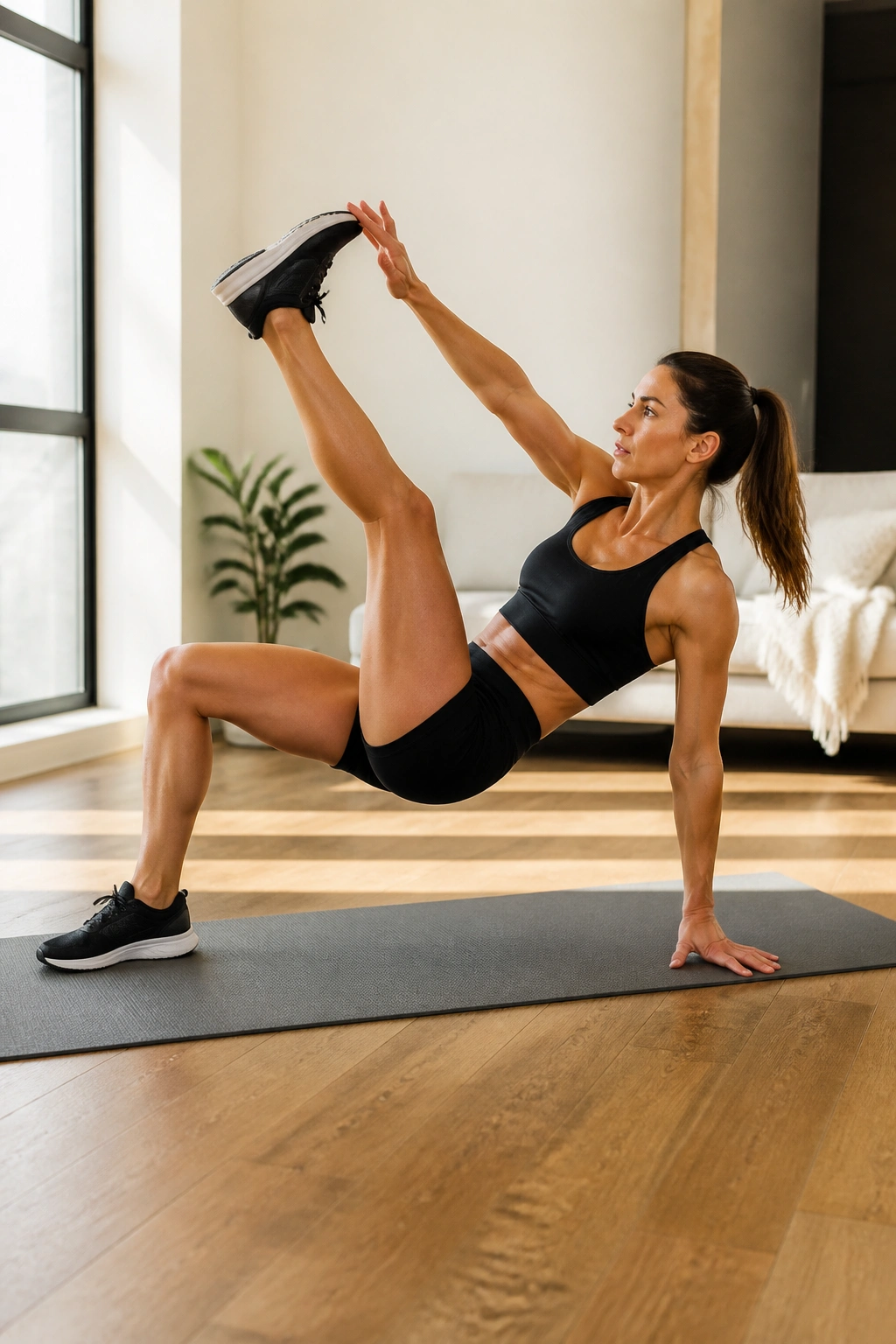
Unlike a pure crunch circuit, this one quietly brings the backside into the conversation. Crab toe-touches and glute bridges ask the core to stabilize while the hips open and close, which is a nicer deal for people who hate nonstop floor flexion.
Run 30 seconds of crab toe-touches, 30 seconds of glute bridges, 20 seconds of bicycle knees, 20 seconds rest, then repeat. The glutes help keep the pelvis from dumping forward, so the abs do not have to work quite as hard to keep the torso steady.
This is the routine I’d hand to someone who sits a lot and wants a core block that does not leave them folded in half. It has a little bit of everything, and none of it is flashy.
The nice part is how it sneaks in extra hip work without making the session feel like leg day.
13. Suitcase March and Anti-Rotation Hold
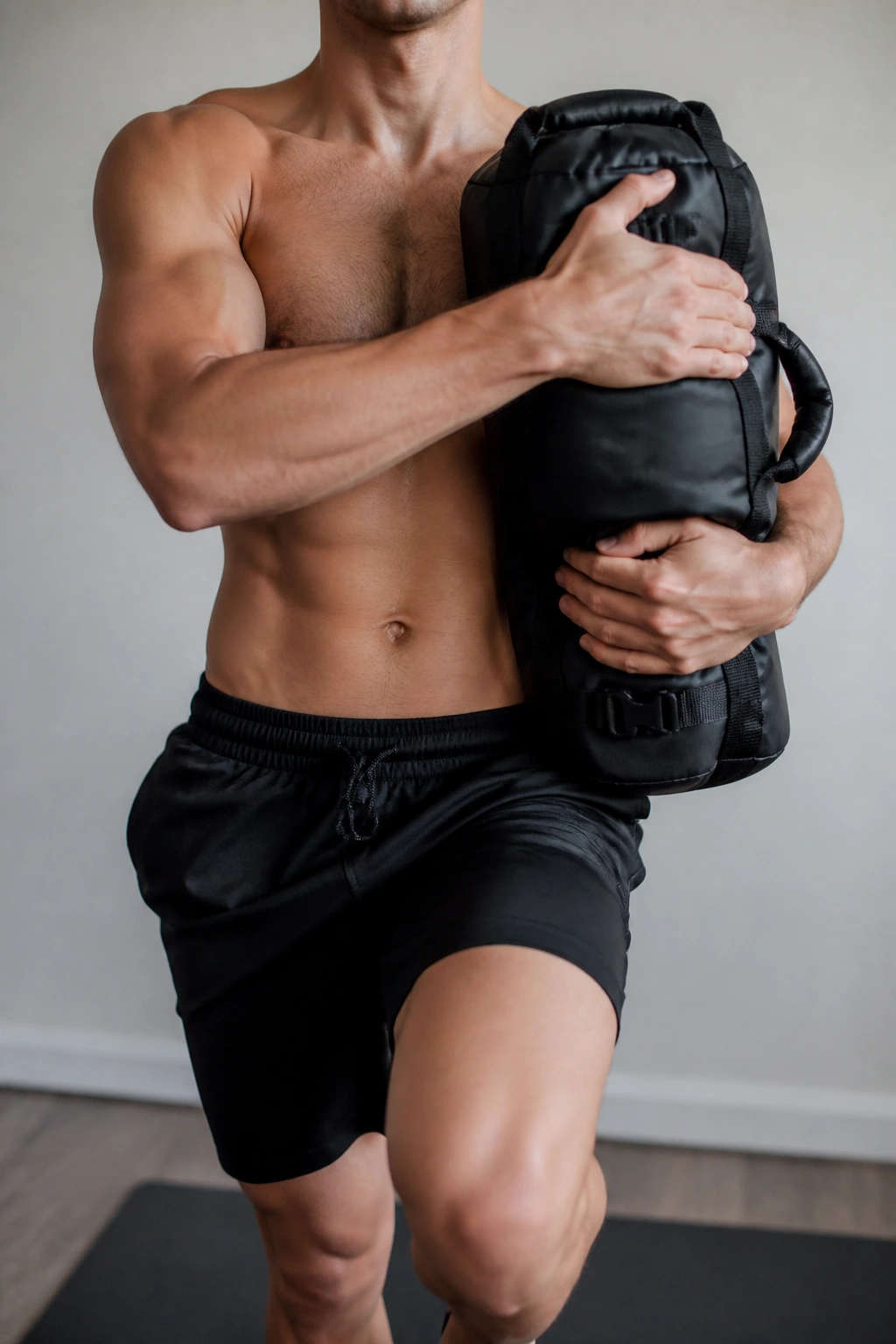
A backpack, a dumbbell, or even a full grocery bag can turn this into a serious anti-rotation drill. The goal is to keep your torso from leaning or twisting while one side of your body carries more load.
Why it works
Hold weight on one side and march in place for 40 seconds, switch sides for 40 seconds, then do 20 seconds of a tall kneeling hold with the bag hugged at chest height. Repeat until ten minutes are gone. Keep the ribs down and the stance narrow enough that you feel the core engage, but not so narrow that you wobble like a metronome.
- Stay tall through the crown of the head.
- Let the feet move quietly.
- Brace before each knee lift.
Small loads can still bite. A heavy kitchen bag and clean posture will often do more than a dramatic weight that forces you to lean. That is the whole appeal here: honest work, no drama.
If you want a core session that feels useful in a real-life way, this one belongs near the top of the pile.
14. Reverse Crunch and Leg Lower Circuit
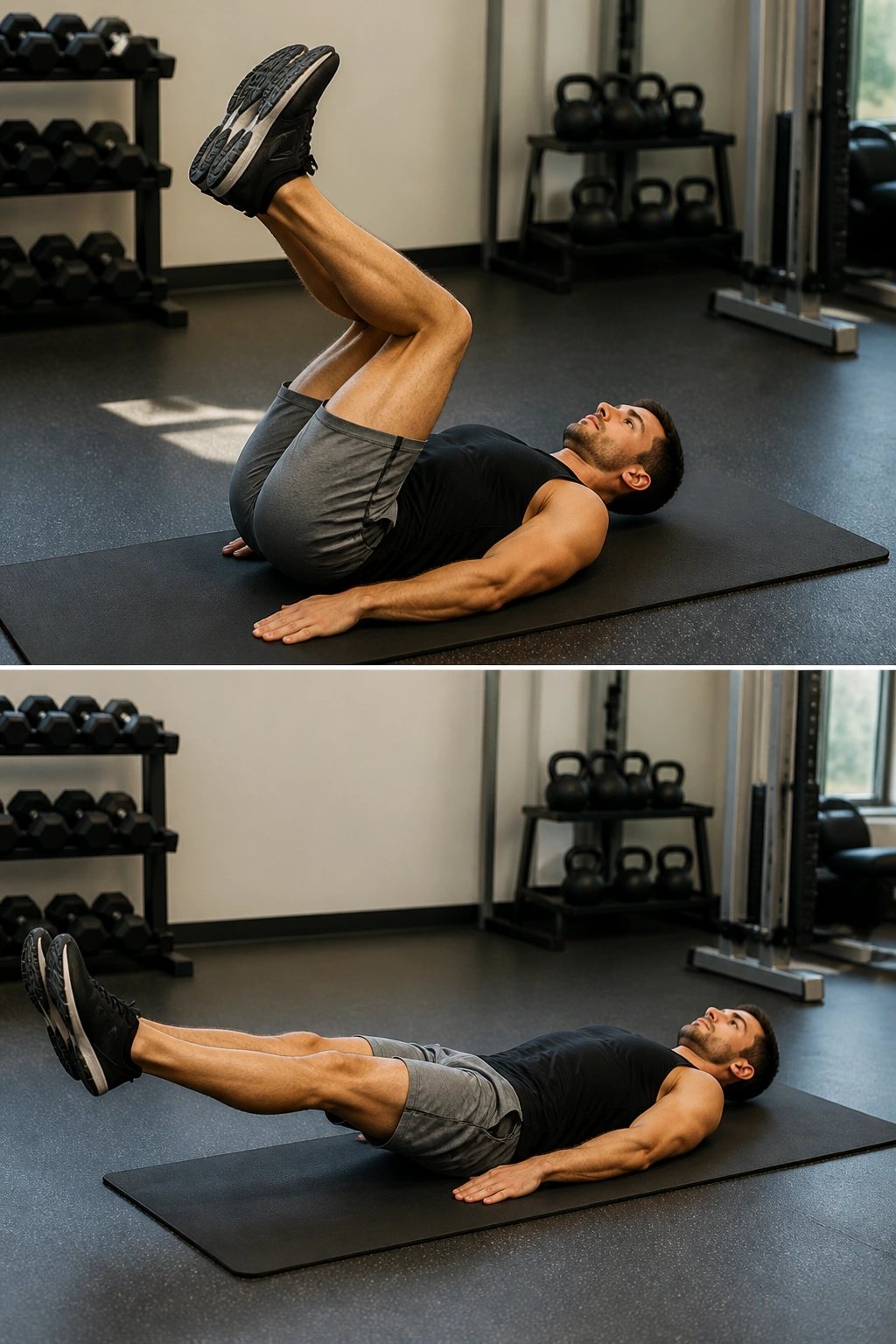
Lower-ab work gets better when the pelvis moves first. That’s the real lesson here. Reverse crunches teach that curl, while leg lowers make you hold it as the legs lengthen away from the body.
Use 45 seconds reverse crunch, 15 seconds rest, 45 seconds leg lower, 15 seconds rest, 30 seconds of a bent-knee hover hold, then repeat twice. The lower back should stay quiet on the mat. If it arches, bend the knees and shorten the lever before you chase a bigger range.
This is the workout I reach for when someone says their core feels strong during planks but weak when the legs move. That complaint is common, and it usually means the front of the abs need cleaner pelvic control. The fix is boring. It works.
If you finish and your hip flexors are doing all the talking, the range was too big. Cut it down and make the abs earn their place.
15. Bear Crawl and Plank Shoulder Tap Ladder
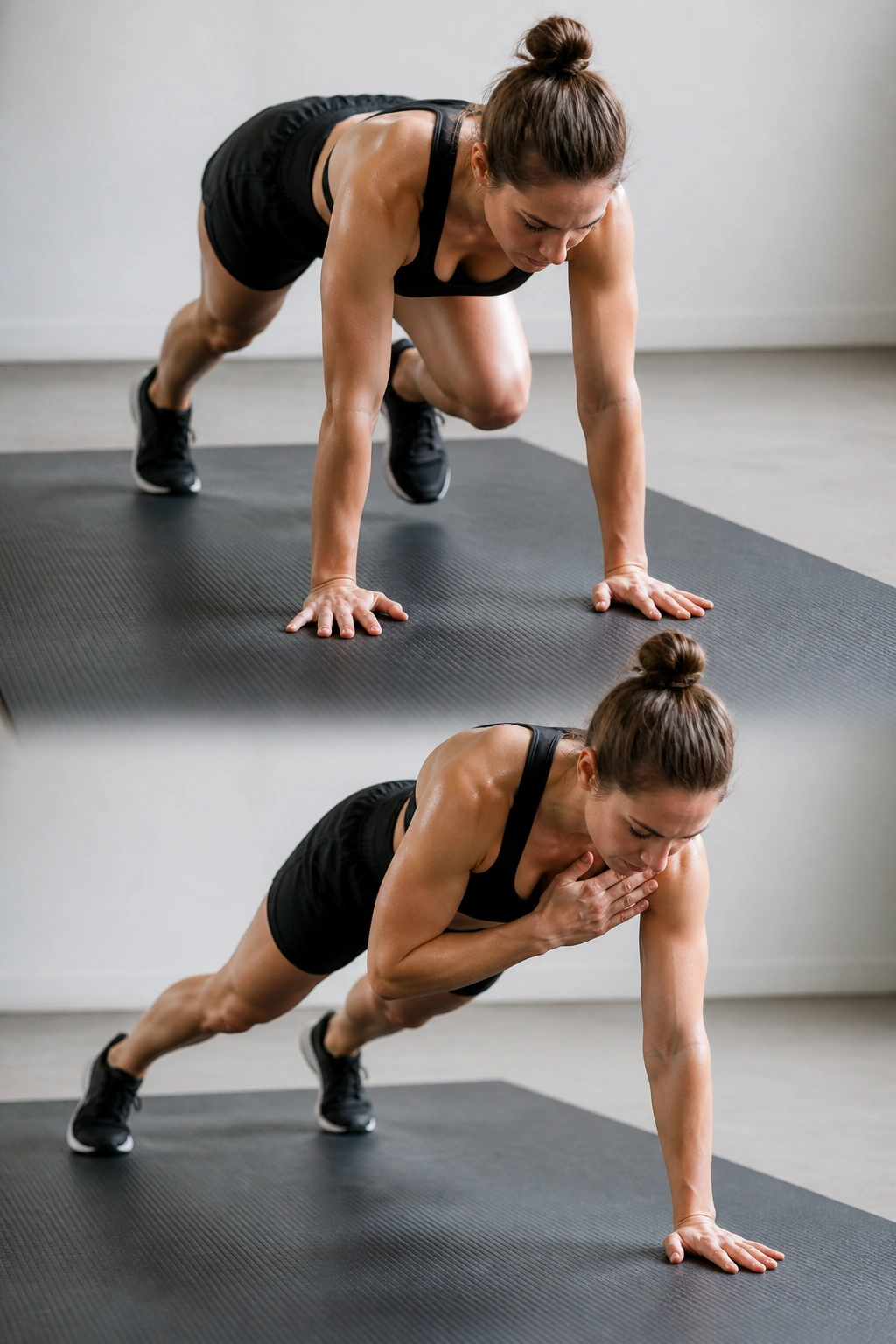
Can a crawl count as ab work? Absolutely, if your hips stop cheating. Bear crawls force the trunk to brace while the limbs move, and shoulder taps add a little extra wobble for good measure.
How to use it
Set 20 seconds bear crawl forward, 20 seconds bear crawl back, 20 seconds plank shoulder taps, 20 seconds rest, then repeat for five rounds. Keep the knees low, the steps small, and the back flat enough that you could slide a tray across it. If the crawl feels noisy, slow down. The point is not to race across the room.
The point is to keep the body steady while the limbs do the annoying work.
This one gets into the legs too, which is part of the appeal. Core training does not need to stay politely in its lane, and this routine proves it. You’ll feel the abs, the shoulders, and even the inner thighs if the form stays tight.
16. Russian Twist and Heel Tap Burner
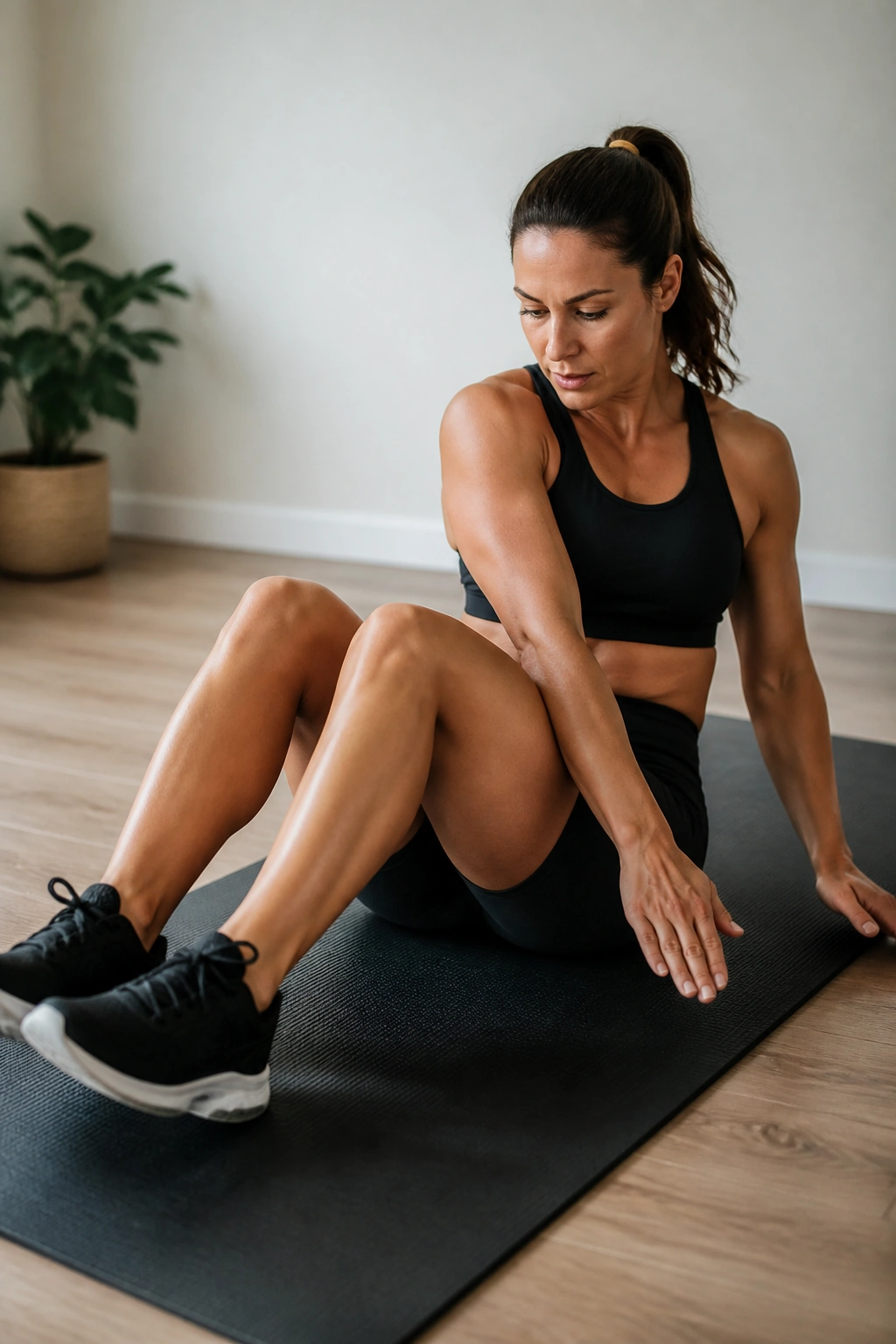
A twist-and-tap circuit can go from harmless to miserable fast, mostly because people rush the reps and turn it into momentum soup. Slow it down and the sides of the waist do their job.
Start with 40 seconds of Russian twists, 20 seconds of heel taps, 40 seconds of seated knee tucks, 20 seconds of rest, then run the block twice. Keep the chest lifted and the feet light. If your lower back rounds hard on the floor, sit a little taller and keep the heels down for the first round.
- Move the hands from side to side with control.
- Exhale as the torso turns.
- Keep the neck relaxed.
The best version of this workout feels crisp, not frantic. That’s the line to chase. Once the movement turns sloppy, the obliques stop doing their share and the hips start cheating.
It’s a sharper routine than it looks from across the room.
17. Lunge and Rotation Core Flow
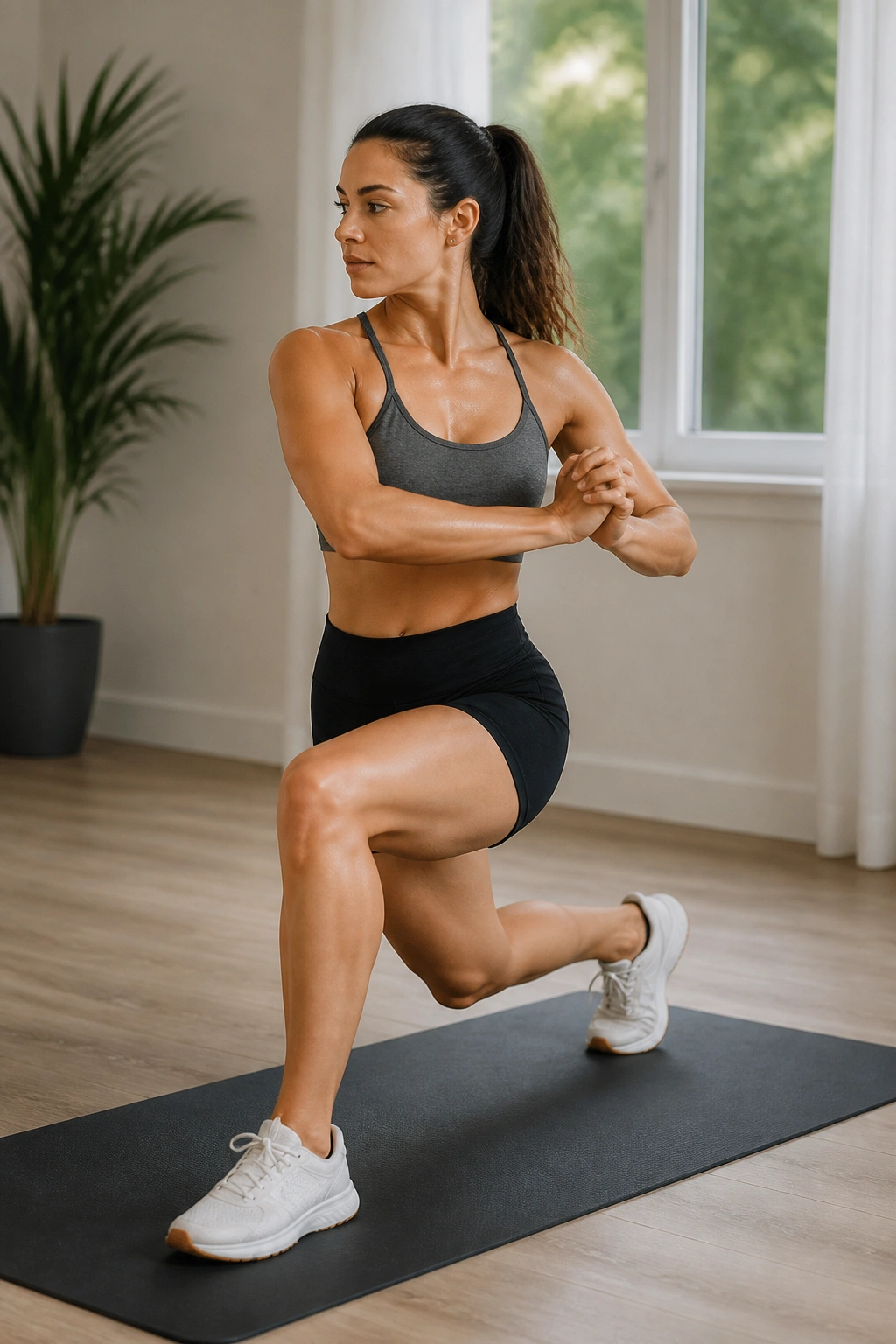
Standing core work earns more respect than it gets. A split stance gives you enough stability to rotate, but not so much that the trunk can slack off, which is why lunge patterns show up in so many smart conditioning sessions.
This flow uses alternating reverse lunges with a torso turn toward the front leg. Do 45 seconds on the right side, 15 seconds to switch, 45 seconds on the left side, 15 seconds rest, then repeat. Finish with 1 minute of slow marching in a half-kneeling stance if you want a little more anti-rotation work.
The movement should feel smooth from the hips up, not loose in the spine. If your knee hates deep bends, shorten the step and keep the torso tall. I like this one on days when the floor feels optional but the core still needs a job.
It is surprisingly good for posture too, which is one reason I keep coming back to it.
18. Core EMOM with Planks, Crunches, and Marches
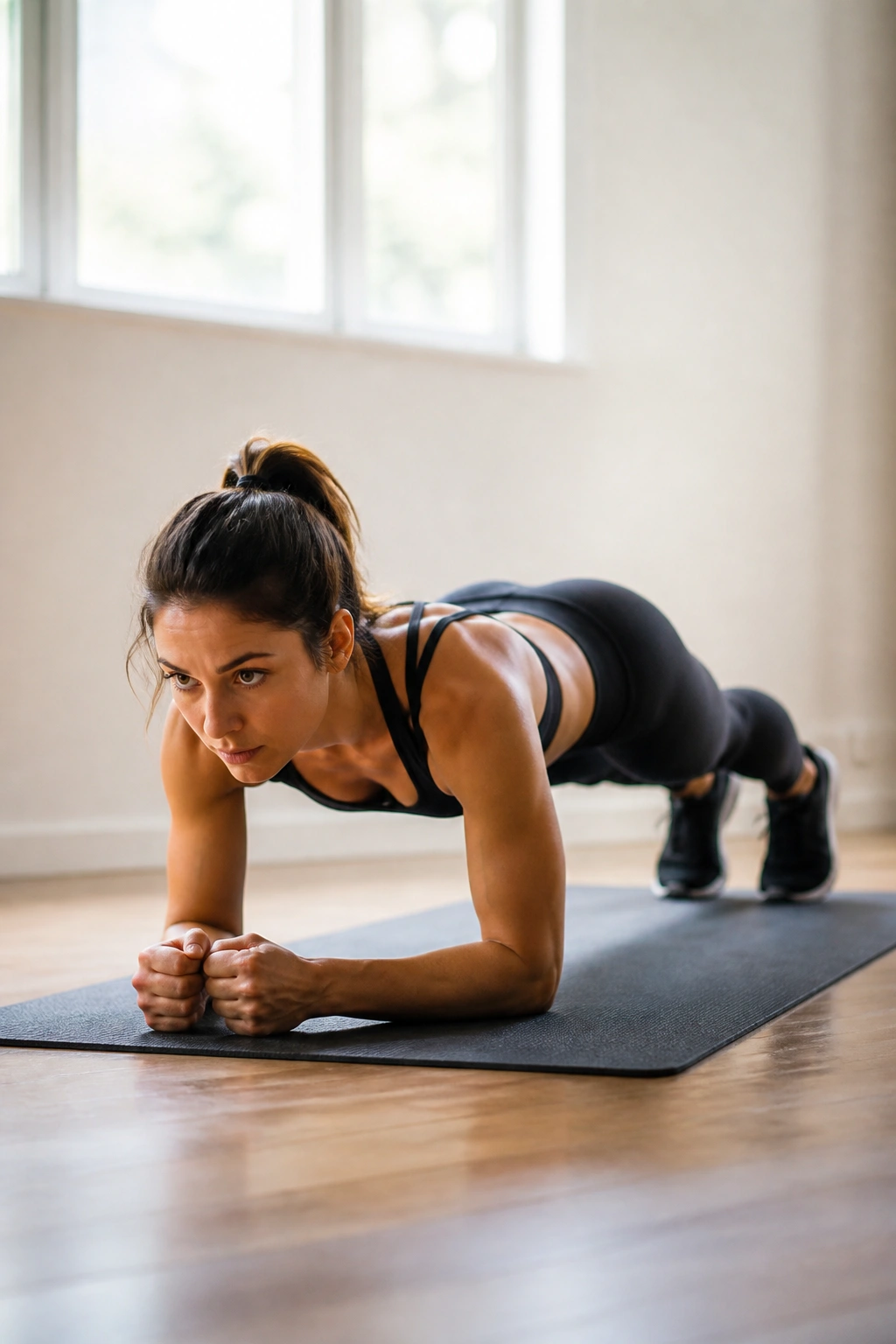
Unlike a free-form circuit, an EMOM gives the timer the bossy job. Every minute starts fresh, which keeps you honest and stops you from loafing through the easy parts.
Use minute one for a 40-second forearm plank, minute two for 30 bicycle crunches plus 20 seconds rest, minute three for 40 seconds dead bug, minute four for 30 seconds mountain climbers, minute five for 40 seconds side plank on the right, minute six for 40 seconds side plank on the left, then repeat the six-minute pattern once more. The remaining seconds in each minute are your recovery. That little pocket of rest matters more than people think.
If you want structure without guessing, this is a strong finisher. It can be scaled up or down by changing the work intervals, but the format stays clean.
The mix also covers a lot of ground in ten minutes: front abs, obliques, shoulder stability, and a little cardio. That is a decent return for one timer.
The Bottom Line
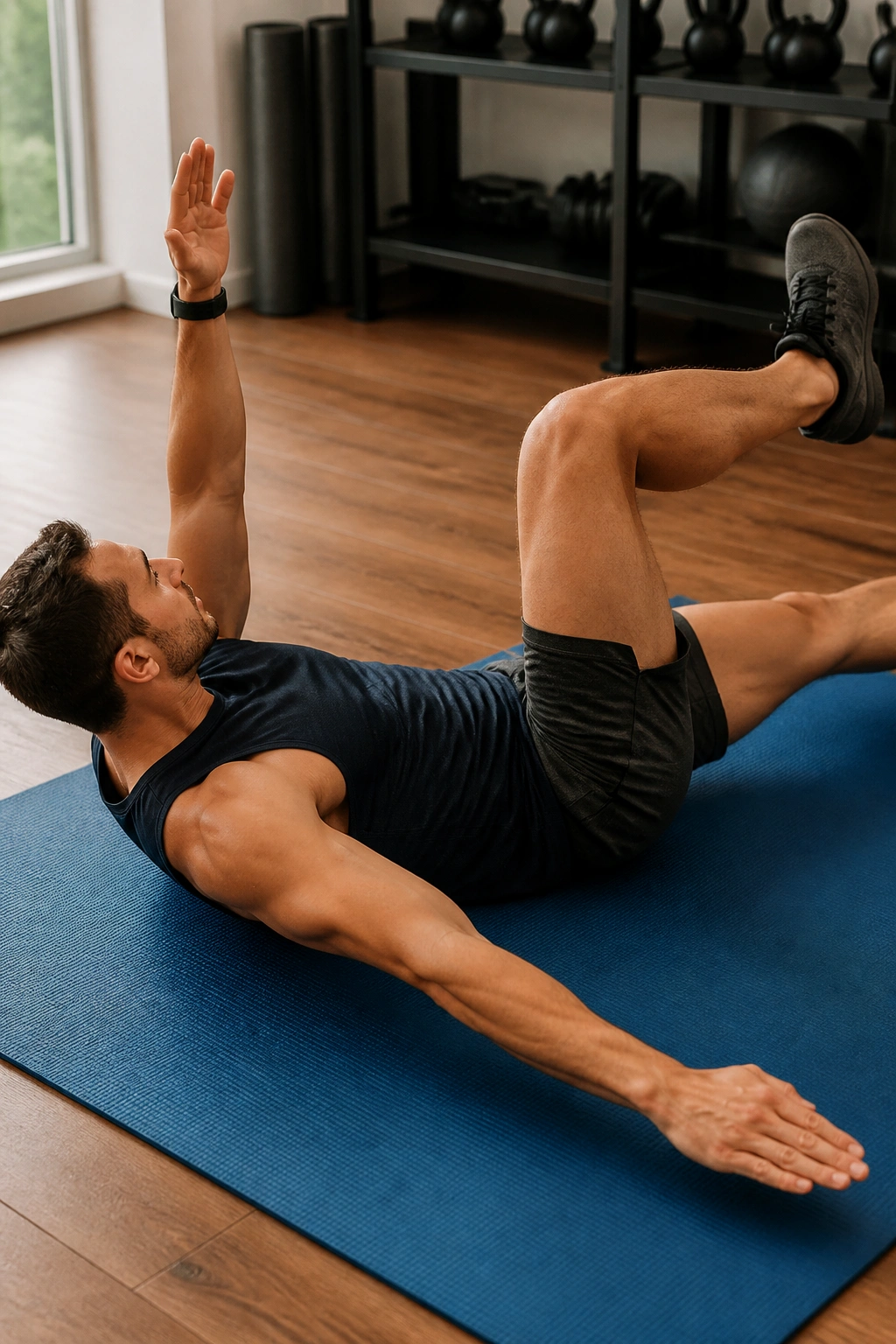
Ten minutes is enough when the work is tight and the rest is honest. Dead bugs, planks, carries, crawls, and rotation drills all train something a crunch alone misses.
Pick based on what your body likes that day. Low back touchy? Start with bird dogs, dead bugs, and suitcase marches. Want sweat? Use the mountain climbers, bear crawls, or EMOM.
Repeat one routine a few times before you judge it. That is where the payoff lives — not in doing everything once, but in doing the same smart pattern well enough that your core starts to feel quieter under load.
