



A tiny band and six feet of floor space can carry a much better glute session than most people expect. Resistance band glute workouts work because they keep tension on the muscles the whole time, not just at the top of the rep. That steady pull is what makes them so useful when you’re stuck at home, in a hotel room, or wedged between a couch and a coffee table.
Travel day. Small apartment. Crowded gym. None of it matters if you can strap a loop band above your knees and make your hips honest again. The glutes do more than fill out jeans; they stabilize your pelvis, help you climb stairs, and keep your knees from caving when you squat, lunge, or step sideways.
No rack. No problem.
The trick is not random squeezing. You want a mix of hip extension, hip abduction, and single-leg control, because that covers the glute max, glute medius, and the smaller stabilizers that people forget until their knees start wobbling. A medium loop band and a long band will handle most of it, and if one band feels too easy, slow the tempo before you buy another piece of gear.
Start with the floor bridge, then keep moving through the list until you find the moves that light up the parts of your hips that usually stay quiet.
1. Resistance Band Glute Bridge on the Floor
A floor glute bridge is the cleanest place to start. Put a mini loop band above your knees, plant your feet flat, and drive your hips up until your body makes a long line from shoulders to knees. If your lower back feels it more than your glutes, the setup is off.
Your feet should stay about hip-width apart, with pressure through the heels and the outside edge of the foot. At the top, gently press your knees out into the band without letting your toes flare wildly. That little outward pressure is what wakes up the side glutes instead of letting the hamstrings steal the show.
Use this pattern for 12 to 20 reps and hold the top for 1 to 2 seconds. If you want more work without a heavier band, slow the lowering phase to 3 seconds. Slow reps win here.
- Best band: medium loop band above the knees
- Best cue: ribs down, hips up
- Common mistake: pushing through the toes
- Better feel: glutes tight, low back quiet
2. Side-Stepping Lateral Band Walks
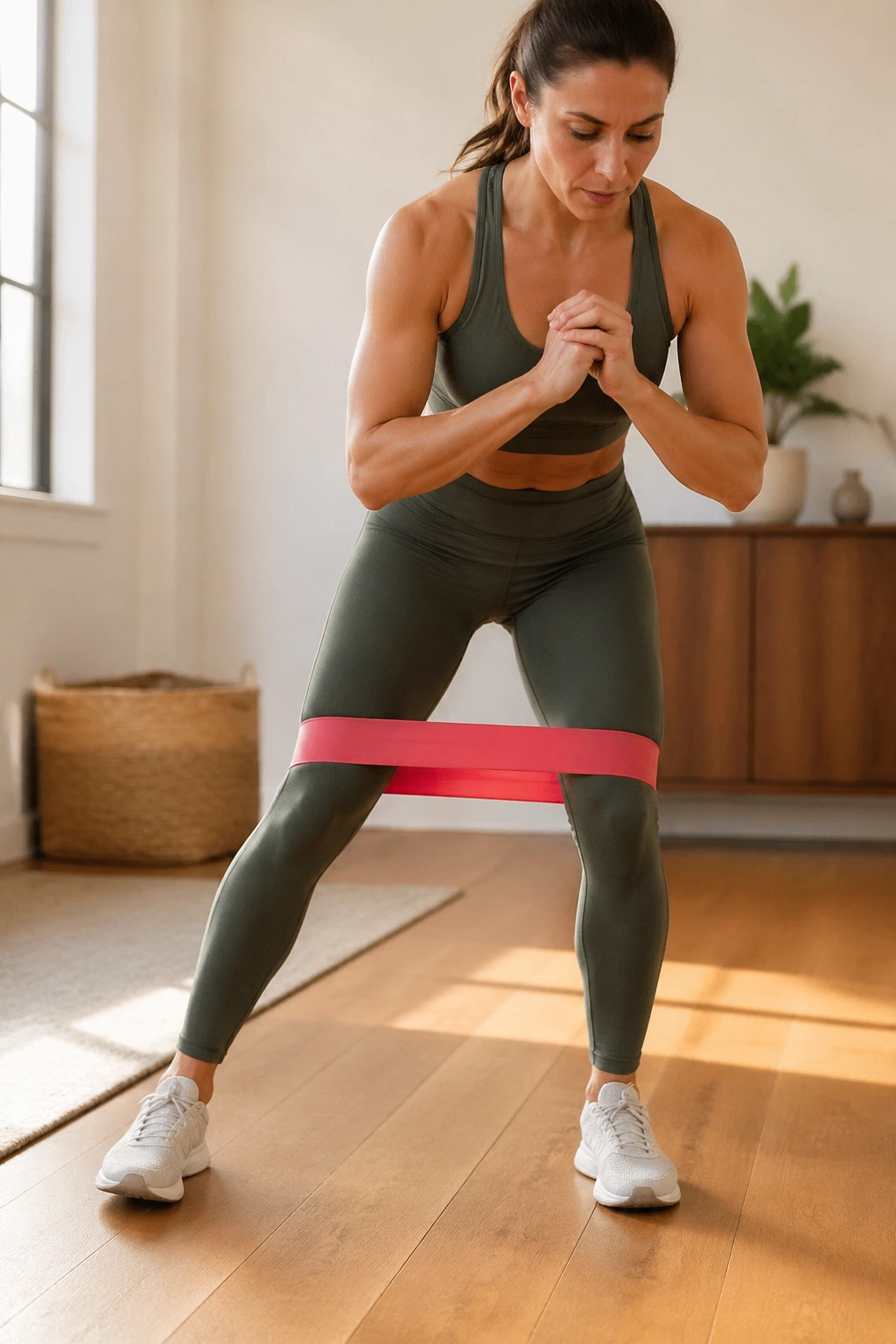
Why does a tiny band around your knees change the whole move? Because lateral tension forces the side glutes to stay awake while you step, and that side glute — the glute medius — is the boring hero of stable knees and level hips. It doesn’t get the spotlight much, but your body notices when it’s lazy.
How to keep the steps honest
Stay in a soft athletic stance, with your hips pushed back a few inches and your chest tall. Step far enough that the band pulls, but not so far that you twist your toes outward or bounce side to side like you’re in a dance class you didn’t sign up for.
- Keep feet parallel
- Stay low, but not collapsed
- Step, then bring the trail foot in under control
- Do 8 to 12 steps each way for 2 to 4 rounds
If the band rolls or pinches, move it higher on the thigh or switch to a fabric loop. That one change can save the whole exercise. Easy.
3. Banded Frog Pumps
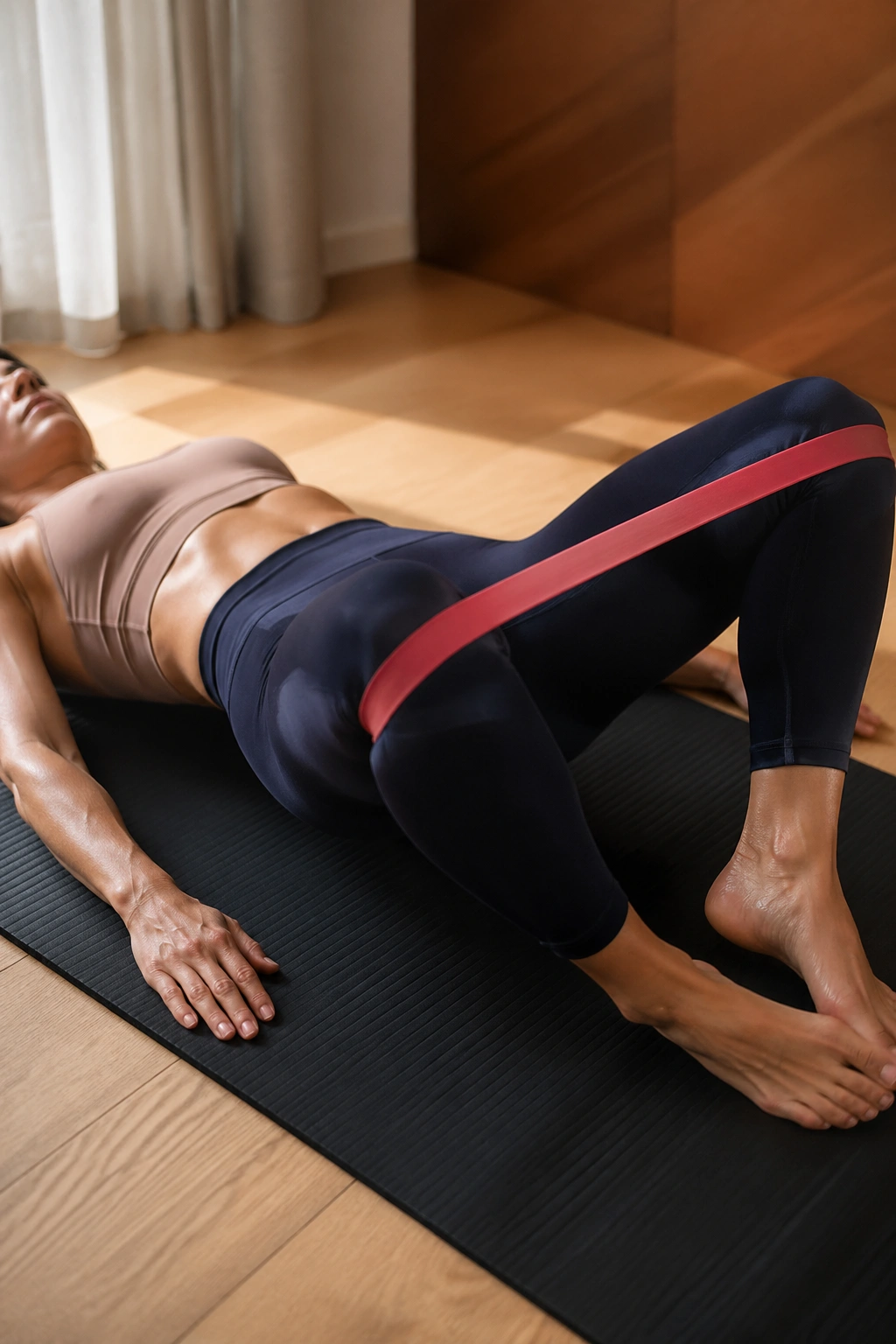
Frog pumps look ridiculous on purpose. With the soles of your feet together and your knees dropped open, the range gets shorter and the work slides straight into the upper glutes. That’s the point. Tiny movement. Real burn.
Set a mini band above your knees, lie back, and tuck your heels close enough that your knees stay comfortably open. Lift your hips only 2 to 4 inches, squeeze hard at the top, then lower with control. If you make it a giant bridge, you lose the whole benefit and start chasing momentum instead.
Twenty to thirty reps is a normal target here, and you can push higher if the band is light. The last five reps should feel a little rude. Good.
- Best use: finisher after bridges or squats
- Best cue: exhale as you squeeze
- Common mistake: over-arching the lower back
- Small upgrade: hold the top rep for 10 to 15 seconds
4. Long-Band Romanian Deadlift
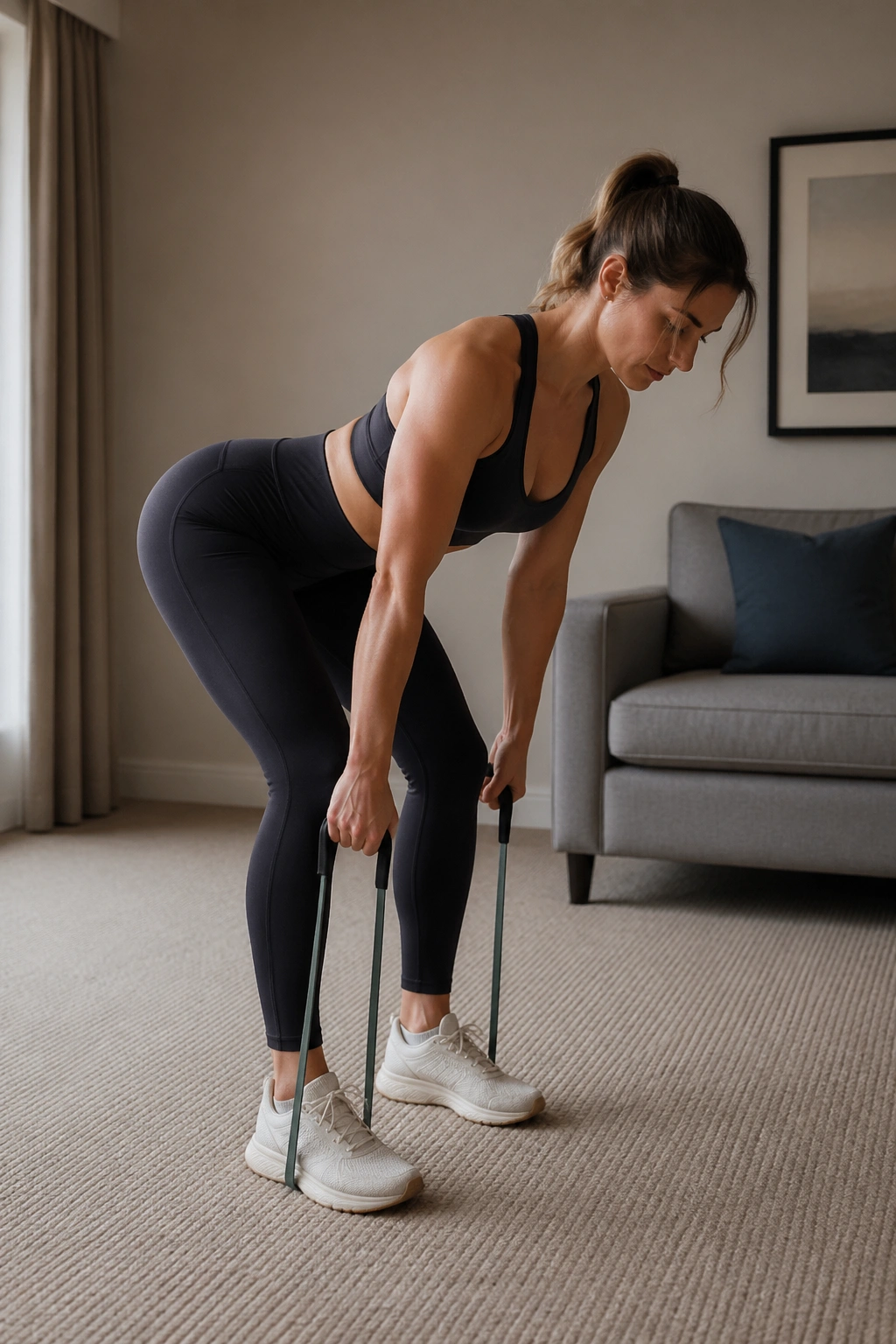
On a carpeted hotel floor, a long resistance band and two feet are enough for a serious hinge session. Stand on the band with feet hip-width apart, hold the other end in each hand, and soften your knees just a little. Then push your hips back until the stretch lands in your hamstrings and the band starts to load.
Setup that matters
Your spine should stay long and mostly quiet. The move starts at the hips, not the shoulders. If the band yanks you upward or your back rounds before you feel your hamstrings, shorten the range and stand a touch taller.
- Weight through midfoot and heel
- Hips move back, not down
- Stop when your back wants to round
- Stand up by driving the hips through
Three sets of 8 to 12 slow reps is enough for most people. Use a 3-second lower and a 1-second squeeze at the top. That tiny pause is where the glutes usually show up.
5. Band-Resisted Split Squats
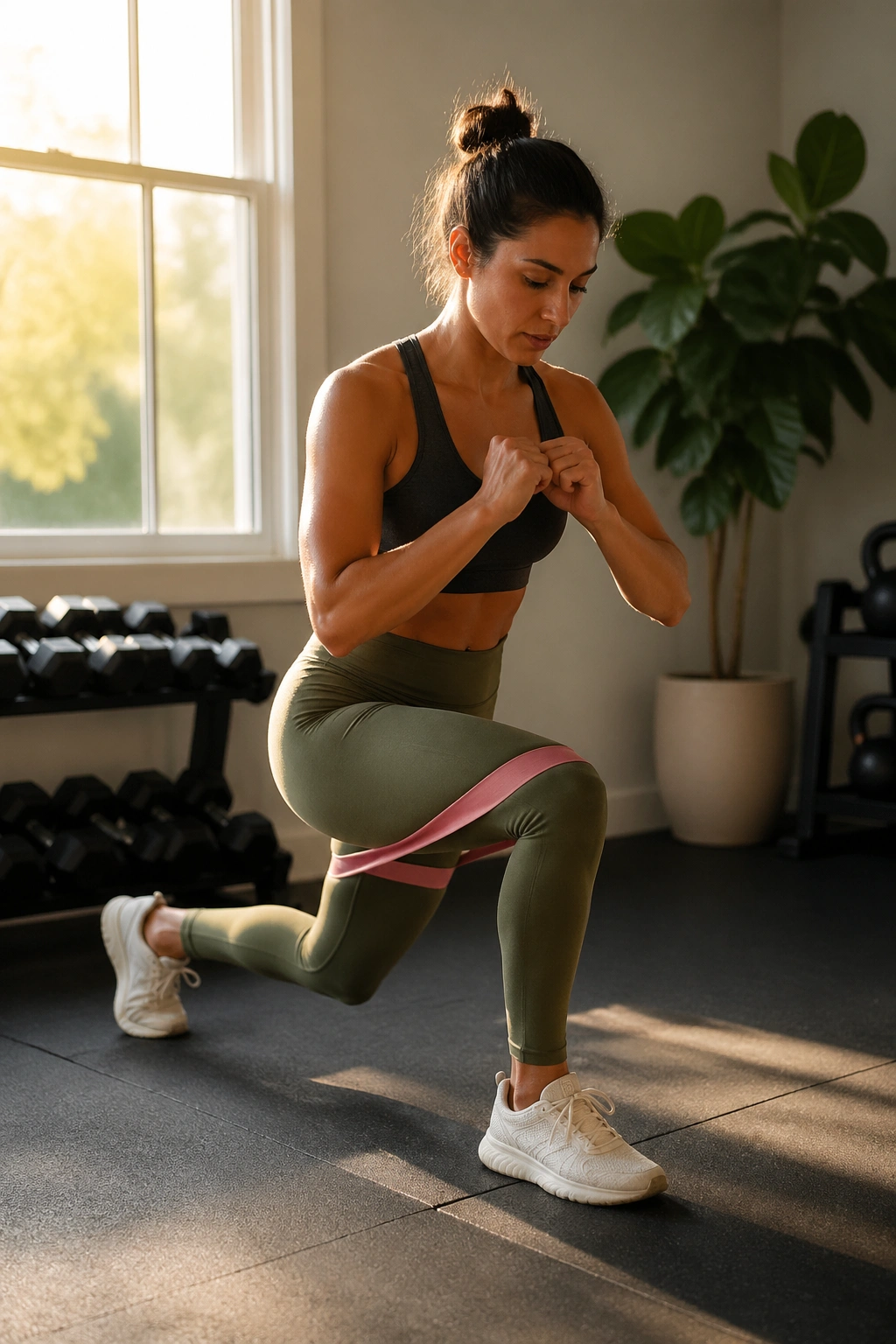
I keep split squats around because one leg always tries to slack off. The band makes that worse in a good way. Put a mini loop band above the knees, step one foot forward and the other back, and lower straight down with a slight forward lean from the hips.
Your front foot does most of the work, but the band keeps the front knee from drifting inward. That matters more than people think. If the knee caves, the glute isn’t doing its job, and the whole move turns into a sloppy balance test.
How to keep the front knee happy
- Keep the front foot flat
- Let the torso lean a little
- Drop straight down, not forward
- Use a wall or couch with one hand if balance is shaky
Eight to 10 reps per side is a solid starting point. Your rear leg will complain first. That’s normal, and honestly, a bit of complaint means the setup is doing something useful.
6. Fire Hydrant Pulses
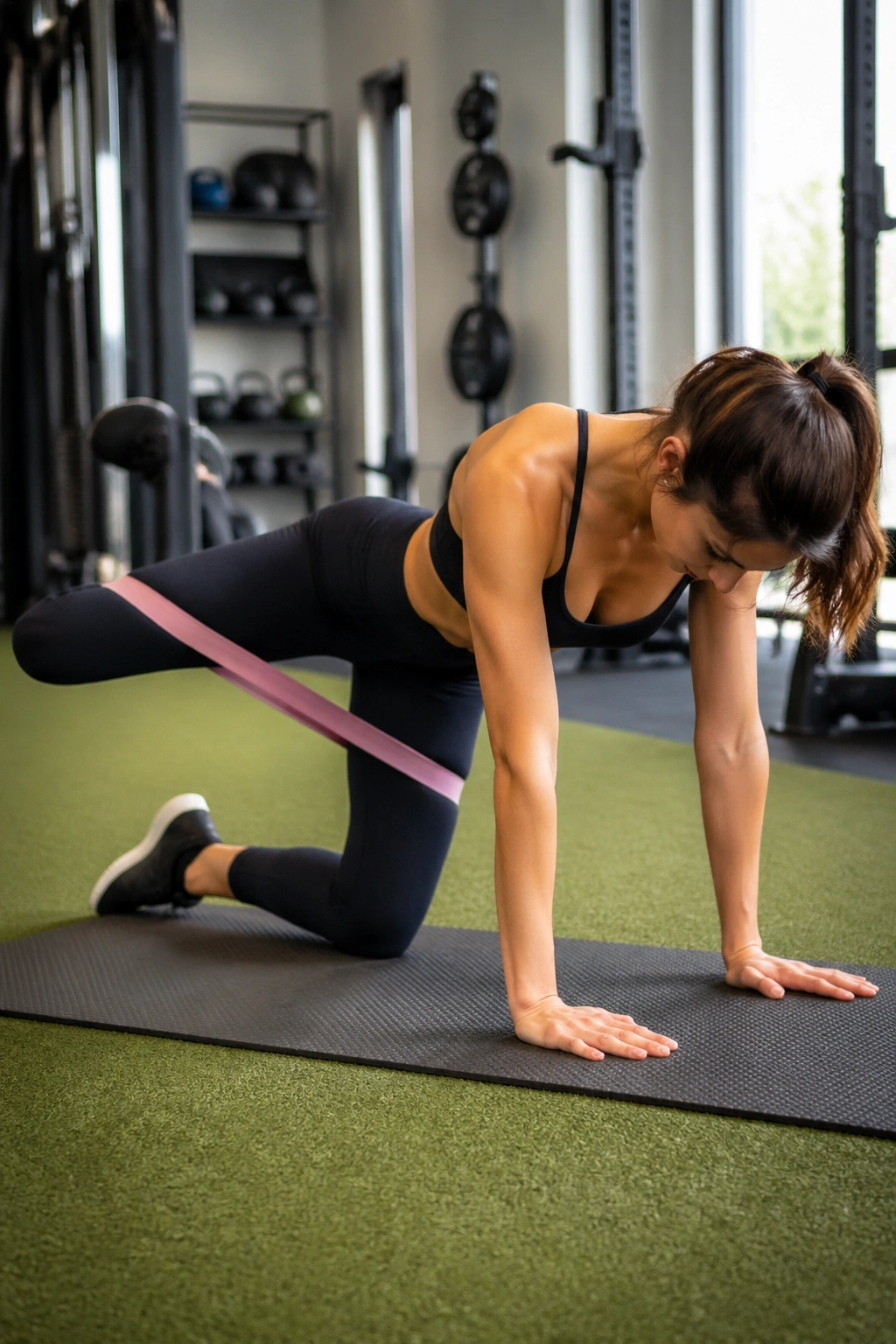
The first rep should feel like the side of your hip wakes up before the rest of you does. That’s the feeling you want. Get on hands and knees, slide a mini band above your knees, and lift one bent leg out to the side without twisting your torso.
The range stays small. You’re not trying to fling the leg as high as possible. You’re trying to keep the pelvis level while the glute medius does its annoying little job of lifting and stabilizing the leg.
- Do 15 to 25 pulses per side
- Hold the top for 1 second every 5th rep
- Keep your shoulders square to the floor
- Stop if your lower back starts doing the work
Fire hydrants are great before squats, after lunges, or as a quick wake-up set when you’ve been sitting too long. They’re also one of the fastest ways to tell whether your glutes are awake or still half asleep.
7. Standing Band Kickbacks
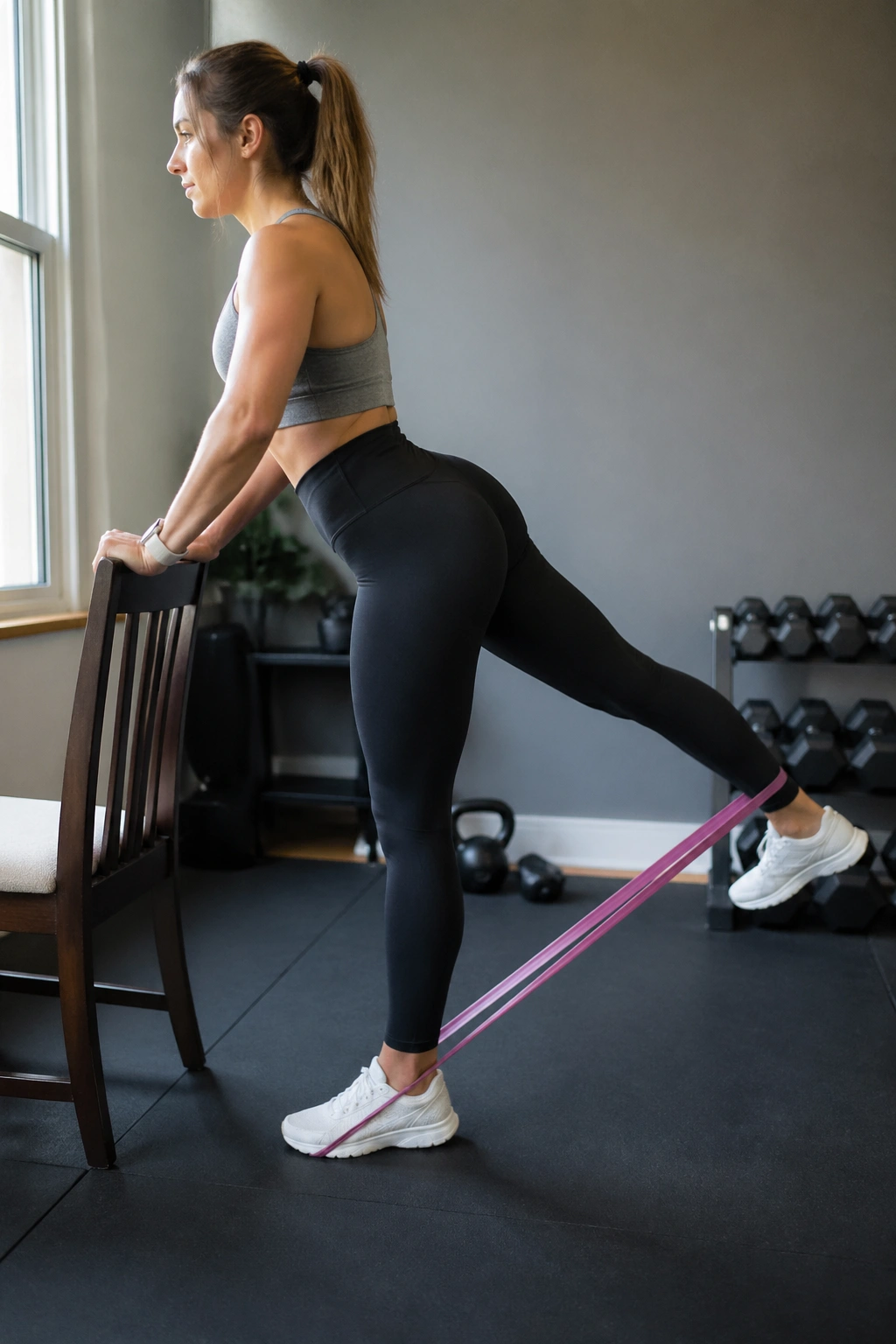
Burn. Fast.
Stand tall, loop one end of a long band under your working foot, and keep the other end around the ankle of the leg that’s moving back. Hold a wall or chair if you need it. The leg kicks straight behind you, but the rib cage stays stacked and the pelvis stays square.
This is one of the best anywhere moves because you can do it in a tight corner without hitting the floor. It also helps people who struggle to “feel” glute work in bridges or squats. There’s less noise here. Less cheating, too.
What not to do
- Don’t swing the leg
- Don’t arch your low back
- Don’t turn the foot out to fake the range
- Don’t let the standing hip sink
Aim for 12 to 20 controlled reps on each side. If the band keeps slipping, switch to a stronger loop or hold the band under both feet for a more stable anchor.
8. Monster Walks Into Squat Pulses
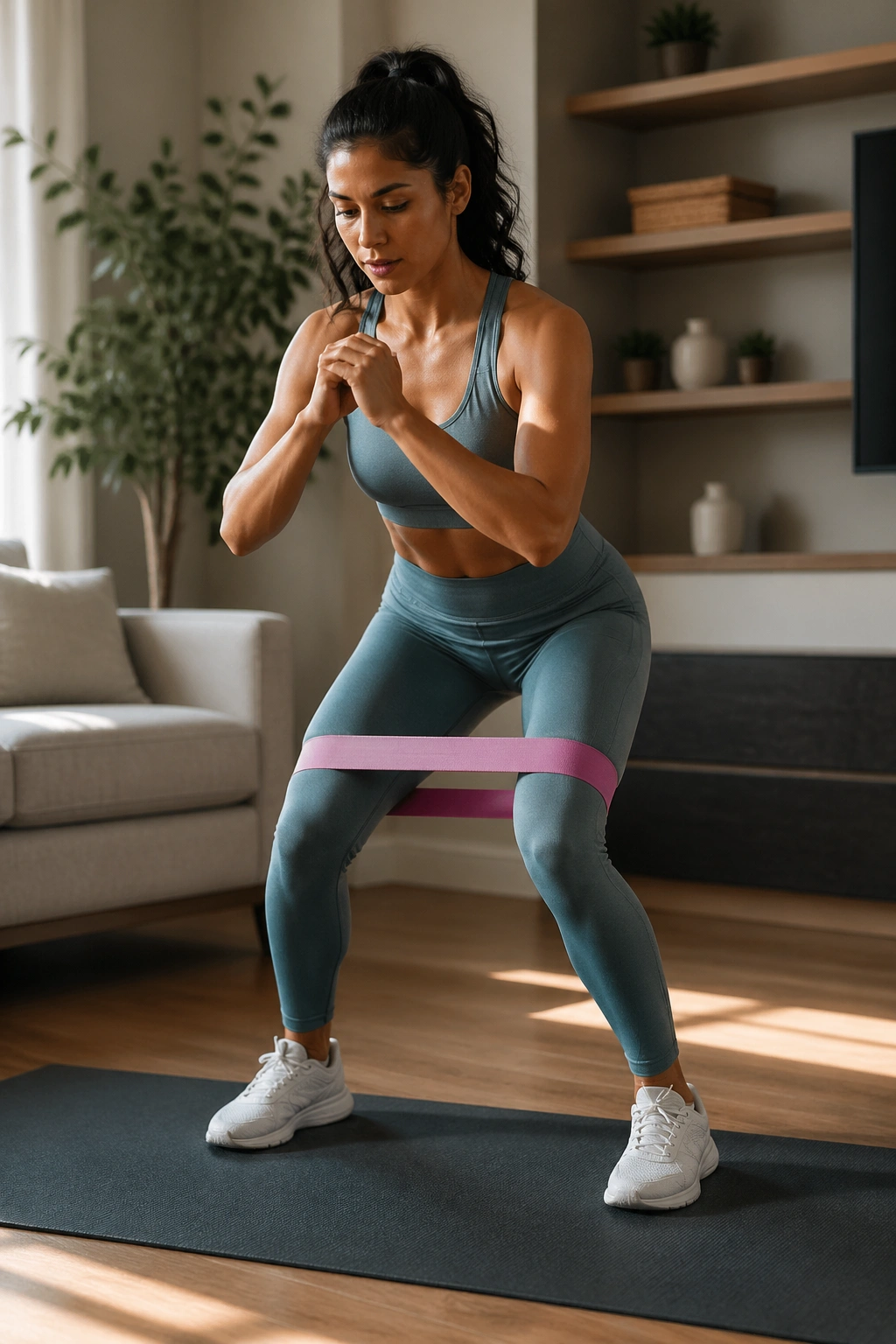
I keep coming back to monster walks when I want a quick reset between heavier sets. They wake up the hips fast, and the squat pulses finish the job without needing much room. Put a band above your knees or ankles, step forward diagonally for 8 to 10 steps, step back the same way, then drop into small squat pulses.
The band should stay tense the whole time. If your feet come together too much, the glutes switch off. If you take giant steps, your hips start rocking and the move turns messy.
Here’s a simple way to run it:
- 8 forward steps
- 8 backward steps
- 8 squat pulses
- 3 to 4 rounds total
That’s enough to make your thighs and glutes feel honest. A lot of people use monster walks as a warm-up and never realize they can be the workout itself.
9. Single-Leg Glute Bridge With a Band
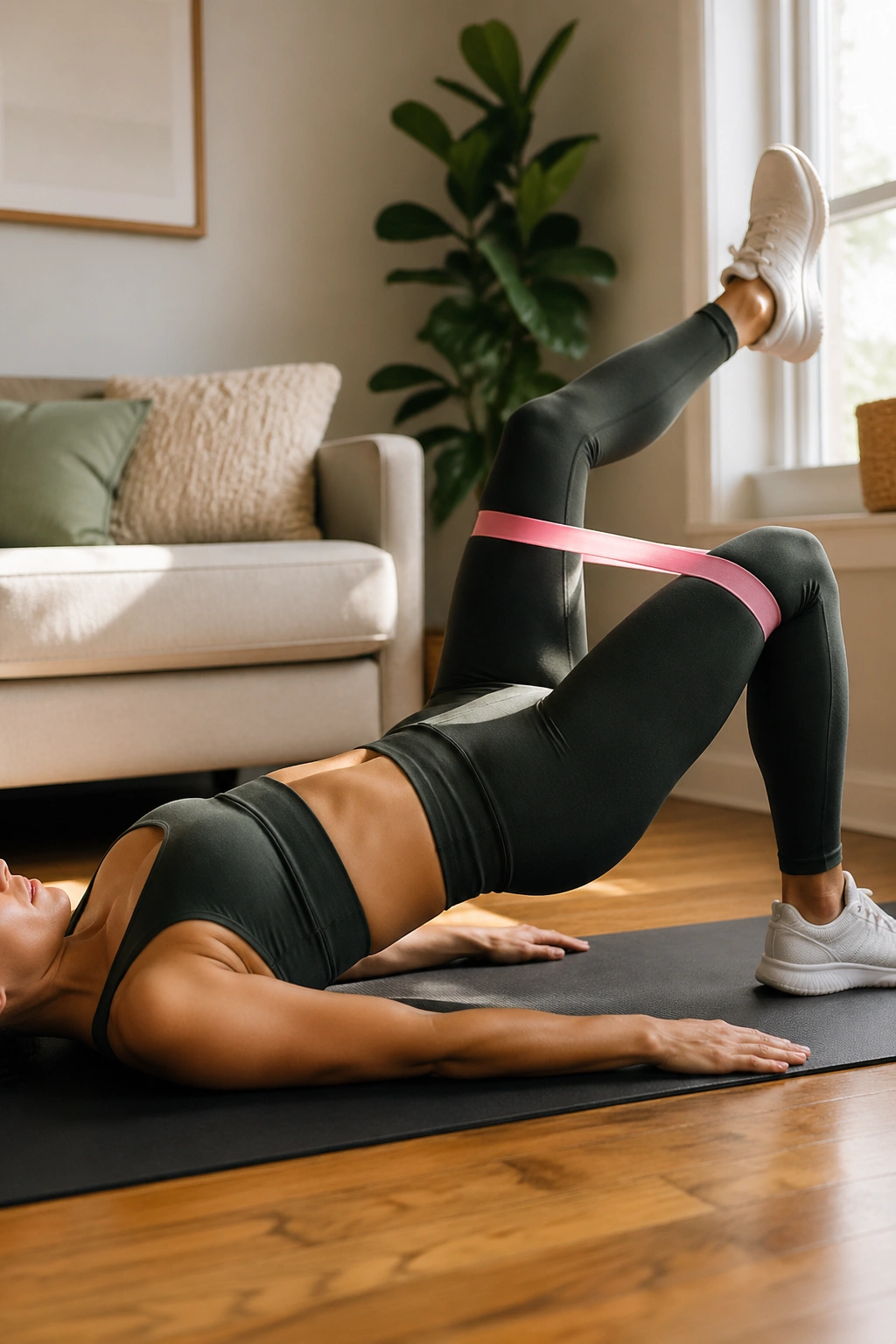
If your two-leg bridge feels easy, this one erases the ego. Put a mini band above your knees, lie on your back, and plant one foot close enough that you can drive through the heel. Extend the other leg straight or keep it bent if your hip flexors are touchy.
Lift your hips without letting them twist. That’s the whole game. The standing knee should stay pressed gently out into the band, and the lifted side should not sag or pull you off center.
Eight to 12 reps per side is enough for most people, especially if you pause for 2 seconds at the top. If your hamstring cramps, move the planted foot a little farther away and lower the bridge height. That usually helps.
Small floor space. Serious work.
10. Clamshell Ladders
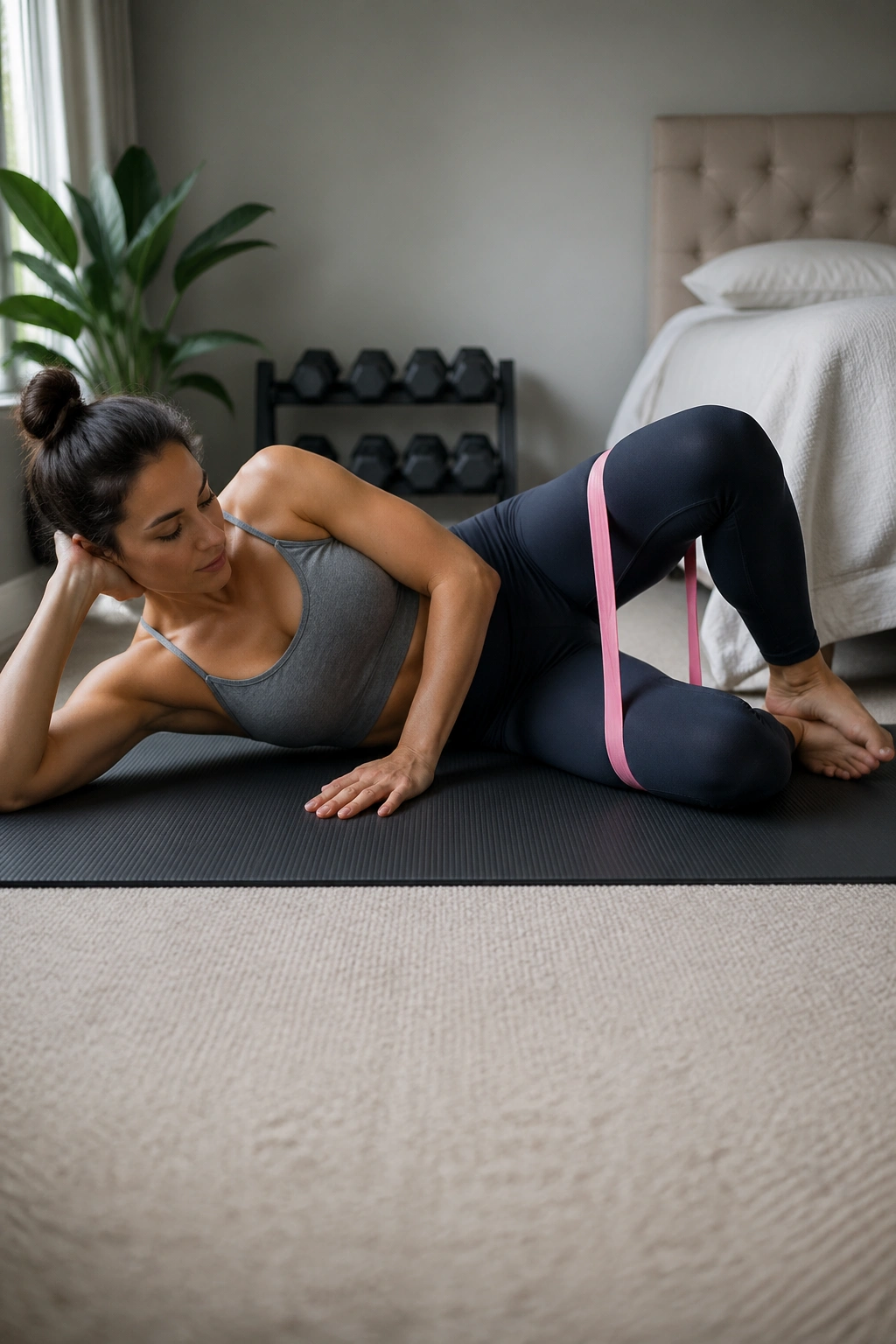
How do you make clamshells feel useful instead of like a rehab checkbox? You turn them into a ladder and stop rushing them. Lie on your side, band above the knees, knees bent about 45 degrees, and keep your feet touching while the top knee opens.
The lower back stays quiet. The pelvis stays still. If the top hip rolls back, you’ve lost the point of the drill.
How to run the ladder
- 10 clean reps per side
- 15 reps per side
- 20 reps per side
- Rest 20 to 30 seconds between rounds
That little increase in reps is sneaky. By the third round, the side glutes are usually on fire, and the rest of your body is annoyed that something so small is doing so much. If you want a sharper feel, press the heels together lightly and pause for 1 second at the top.
11. Couch-Elevated Hip Thrusts
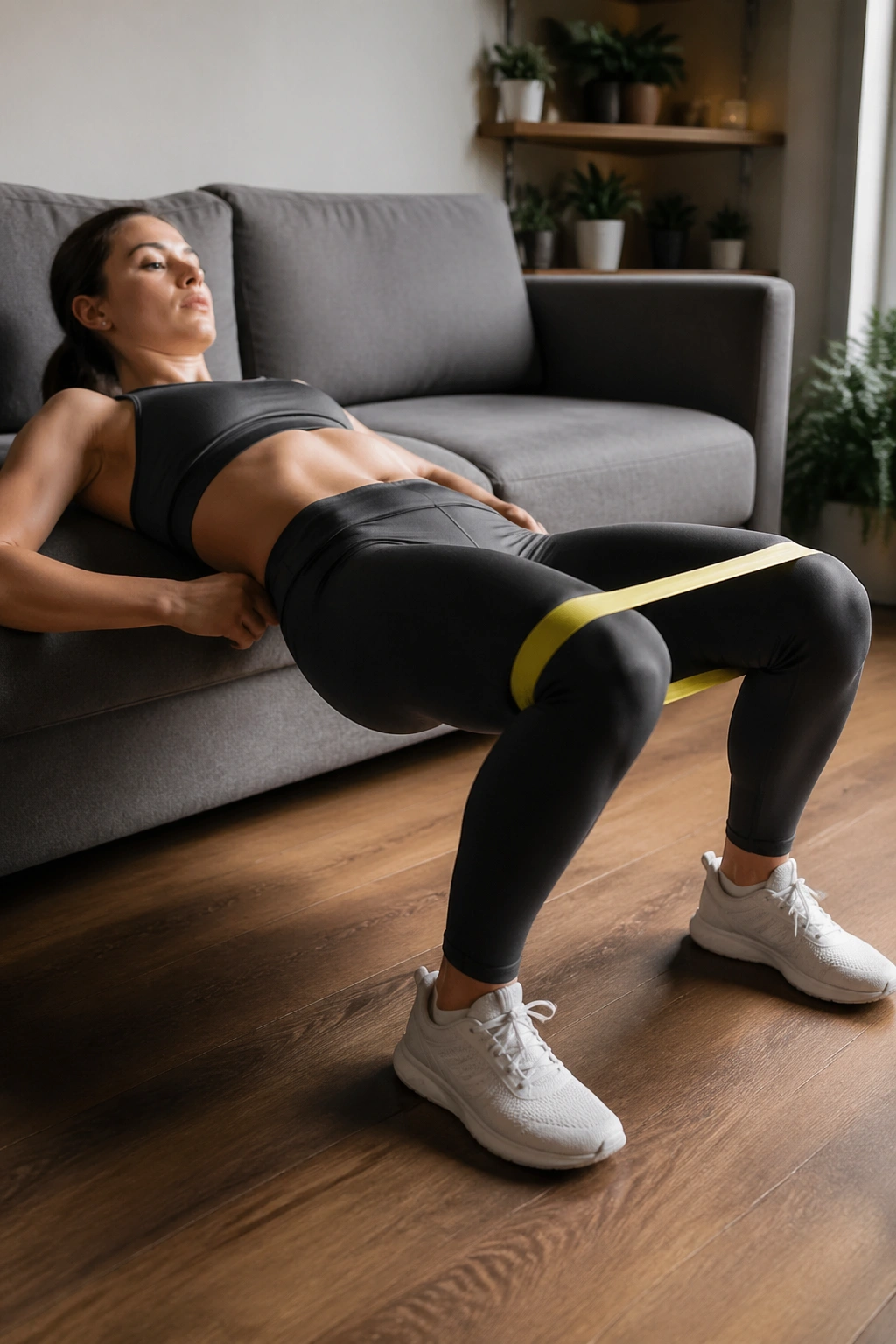
A couch edge turns a boring bridge into a real thrust. Set your upper back across a sturdy couch, bench, or ottoman, place a mini band above your knees, and plant your feet so your shins are close to vertical at the top. Then drive the hips up until the torso and thighs line up.
The upper-back support gives you a bigger range than a floor bridge, which is why this move feels so much heavier. You’ll usually notice the glutes kick in harder near lockout, especially if you keep the knees gently pressing out against the band.
Floor vs. couch
The floor is easier to set up and friendlier if you’re new. The couch version is better when you want more range and a stronger squeeze. Use whichever one lets you keep your ribs down and your lower back calm.
Ten to 15 reps with a 2-second squeeze works well. And please check the furniture first. A wobbly couch is not worth it.
12. Curtsy Lunges With Band Tension
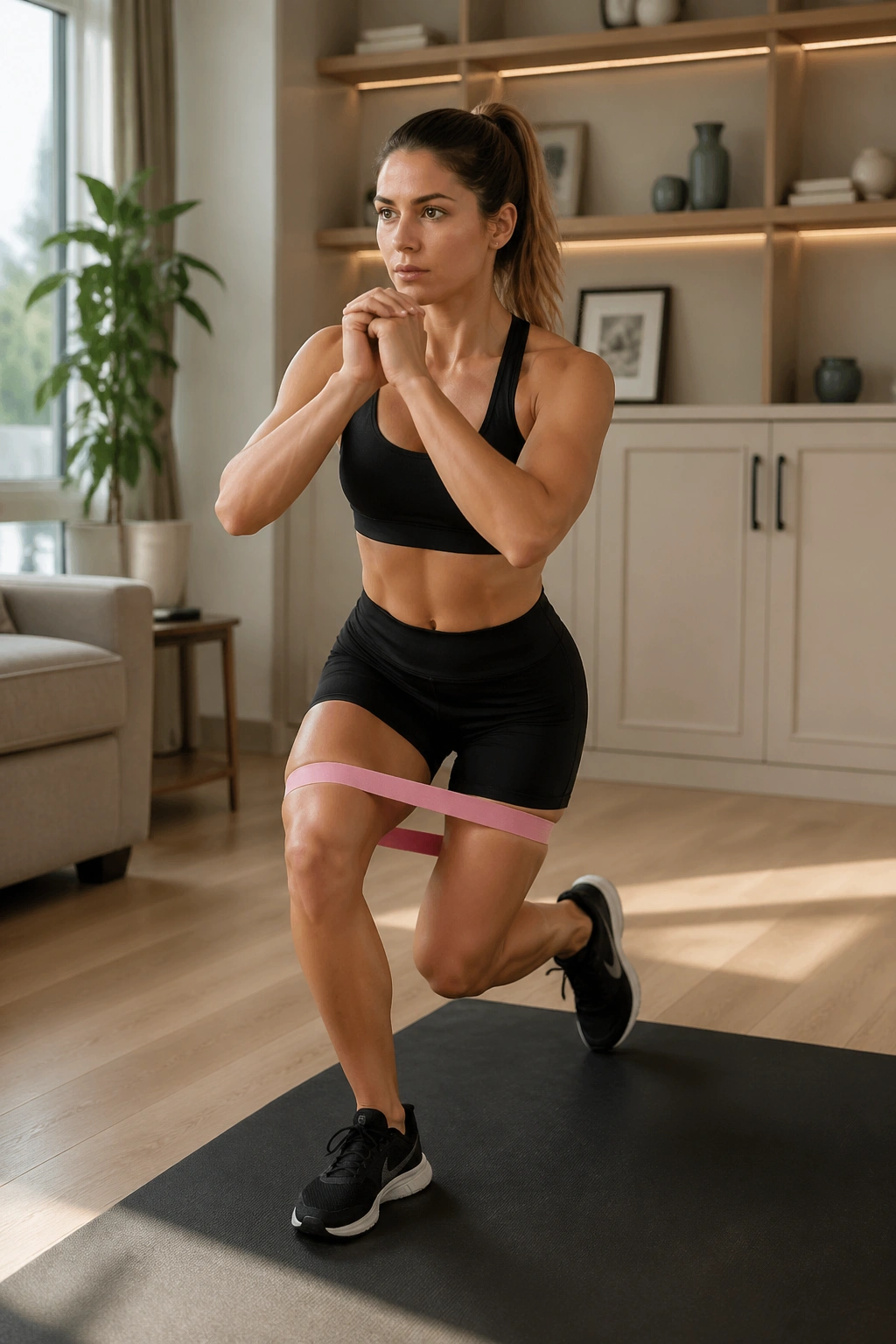
Curtsy lunges get a bad rap, mostly because people rush them. Done slowly, they hit the glute medius, outer glute, and thighs in a way that feels different from a straight-back lunge. Put a mini band above the knees and step one leg back and across behind the other.
Keep the front foot rooted. The torso leans forward a touch, but not enough to fold you in half. The front knee should track over the toes instead of collapsing inward or drifting all over the place.
Use a shorter range if your knees don’t love the crossing pattern. That’s not failure. That’s being smart.
- 6 to 10 reps per side
- Pause for 1 second at the bottom
- Use a wall for balance if needed
- Skip deep crossing if the knee feels cranky
If you like lunges but hate boredom, this one earns its spot.
13. Donkey Kick Pulses
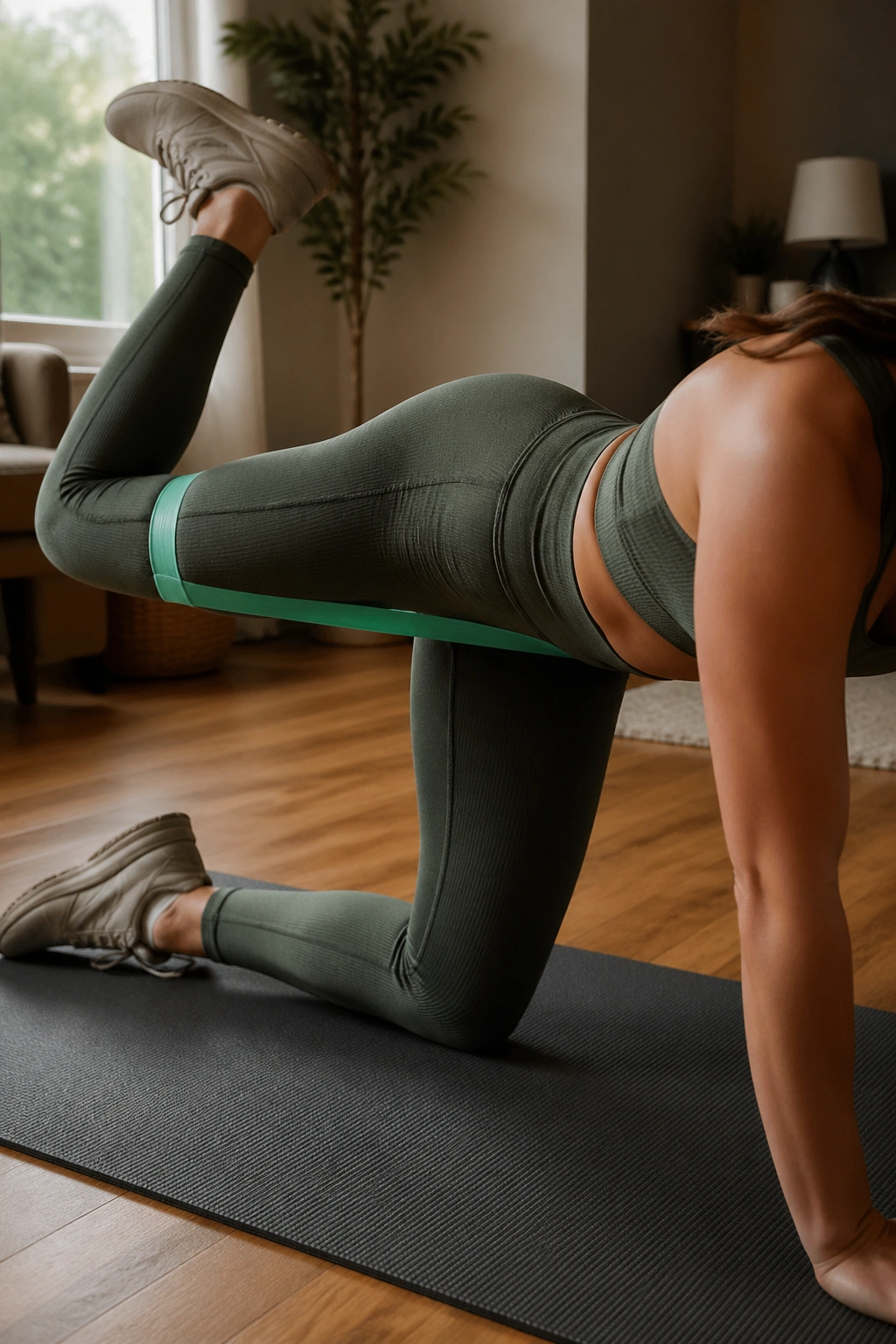
You should feel this in the back pocket area, not in the low back. Start on hands and knees, band above the knees, and bend one leg at 90 degrees. Drive the sole of the foot toward the ceiling without opening the hips or dumping weight into the lumbar spine.
The pulse matters. One strong kick is fine, but a handful of small pulses at the top keeps tension where you want it. That’s the part most people rush through because the burn comes fast.
How to keep the spine quiet
- Brace your abs before each rep
- Stop the lift when the pelvis starts to twist
- Keep the neck relaxed
- Finish with 10 pulses and a 2-second hold
Try 12 to 15 reps per side. If your lower back gets loud, shrink the range and slow the tempo. A smaller, cleaner kick beats a bigger sloppy one every time.
14. Sumo Squats With Band Abduction
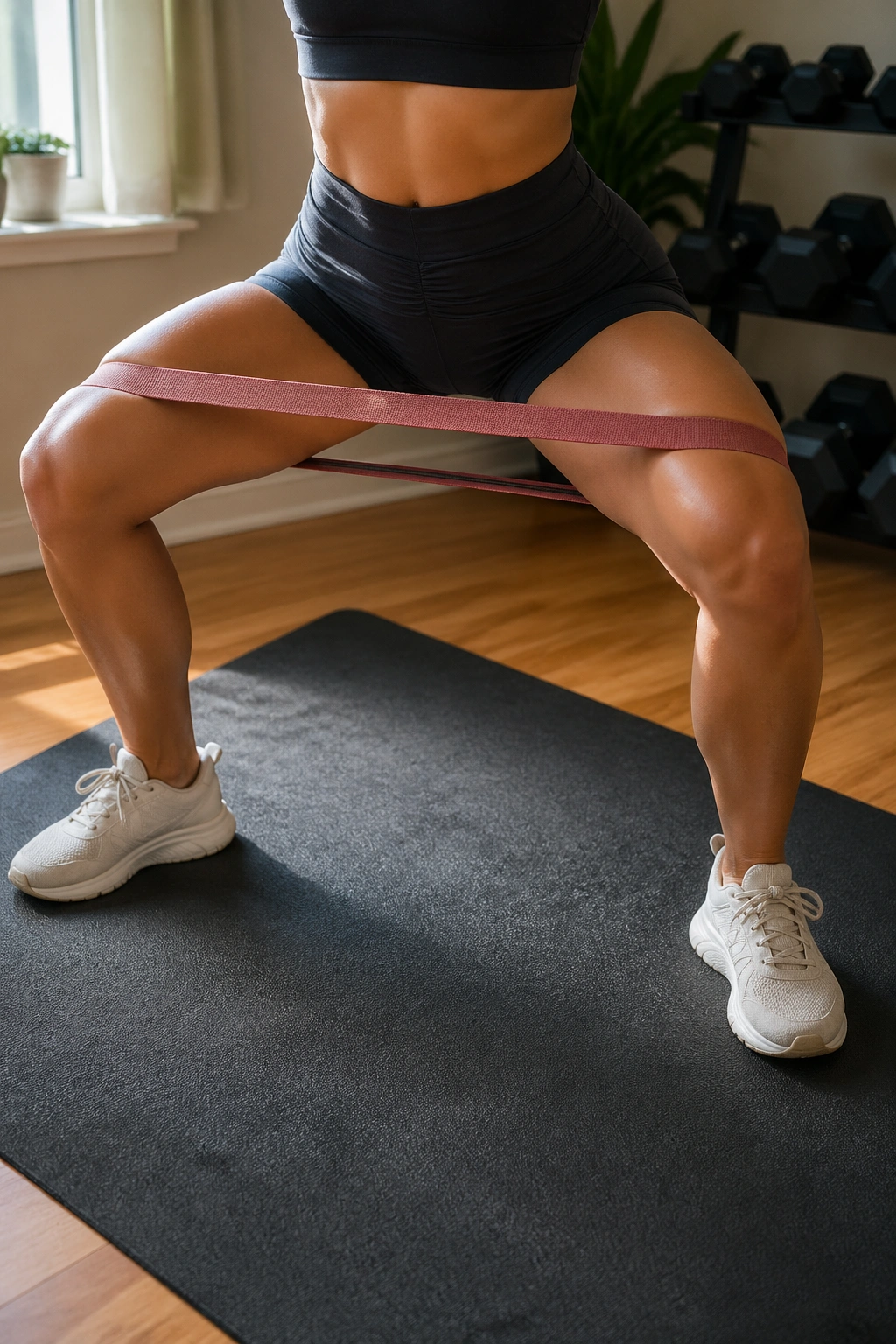
Wide stance. Slow descent. Ugly burn.
Stand with your feet wider than shoulder-width, toes turned out a little, and a mini band above the knees. Sink down into a sumo squat, then press the knees gently out against the band as you stand. The outer glutes and inner thighs both show up here, which is why the move feels useful fast.
Your weight should stay through the whole foot, not dumped into the toes. If the heels lift, the stance is too narrow or the squat is too deep for your current mobility. Back up a little and try again.
- 12 to 20 reps
- 2 seconds down, 1 second up
- Add a 2-second hold at the bottom if you want more heat
- Keep the chest tall, not puffed up
This is one of the easiest ways to blend glutes and legs in a single movement. It’s plain, efficient, and hard to fake.
15. Eight-Minute Anywhere Glute Finisher
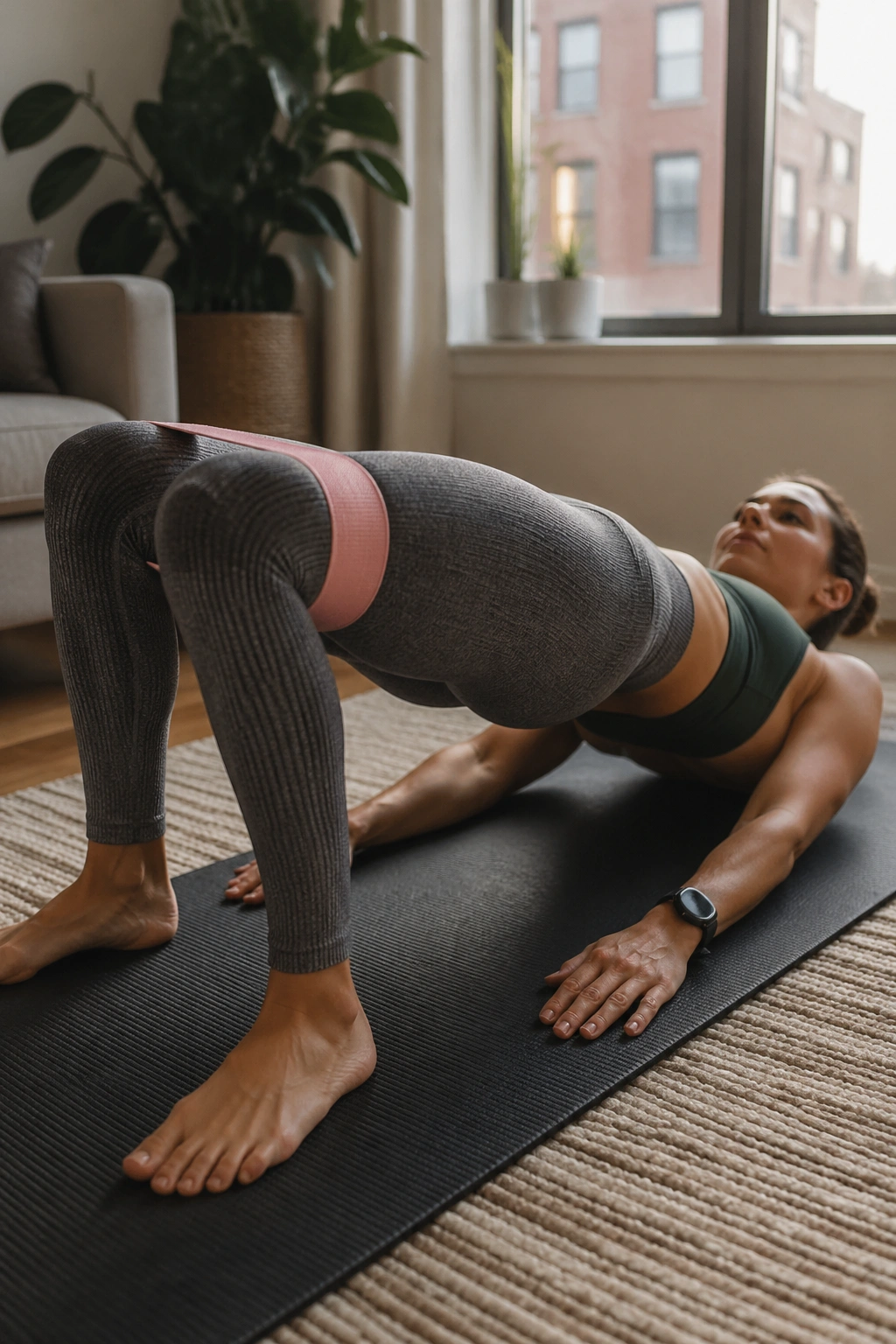
Four moves, short rests, and zero room for laziness. That’s enough to turn a decent session into a sweaty one. Use a mini band above the knees, or swap in a long band for the kickbacks if you want more resistance.
How to run it without rushing
- 30 seconds glute bridges
- 30 seconds lateral band walks
- 30 seconds frog pumps
- 30 seconds standing kickbacks, right side
- 30 seconds standing kickbacks, left side
- 30 seconds rest
- Repeat for 2 to 3 rounds
If the floor is tiny, cut the lateral walk to 4 steps each way and stay near a wall. If you want a harder finisher, replace the rest with 20 seconds of squat pulses. That change alone will make the whole thing nastier.
The point isn’t to collapse at the end. The point is to leave with the glutes loaded, the hips warm, and your legs feeling like they actually did something useful.
Final Thoughts
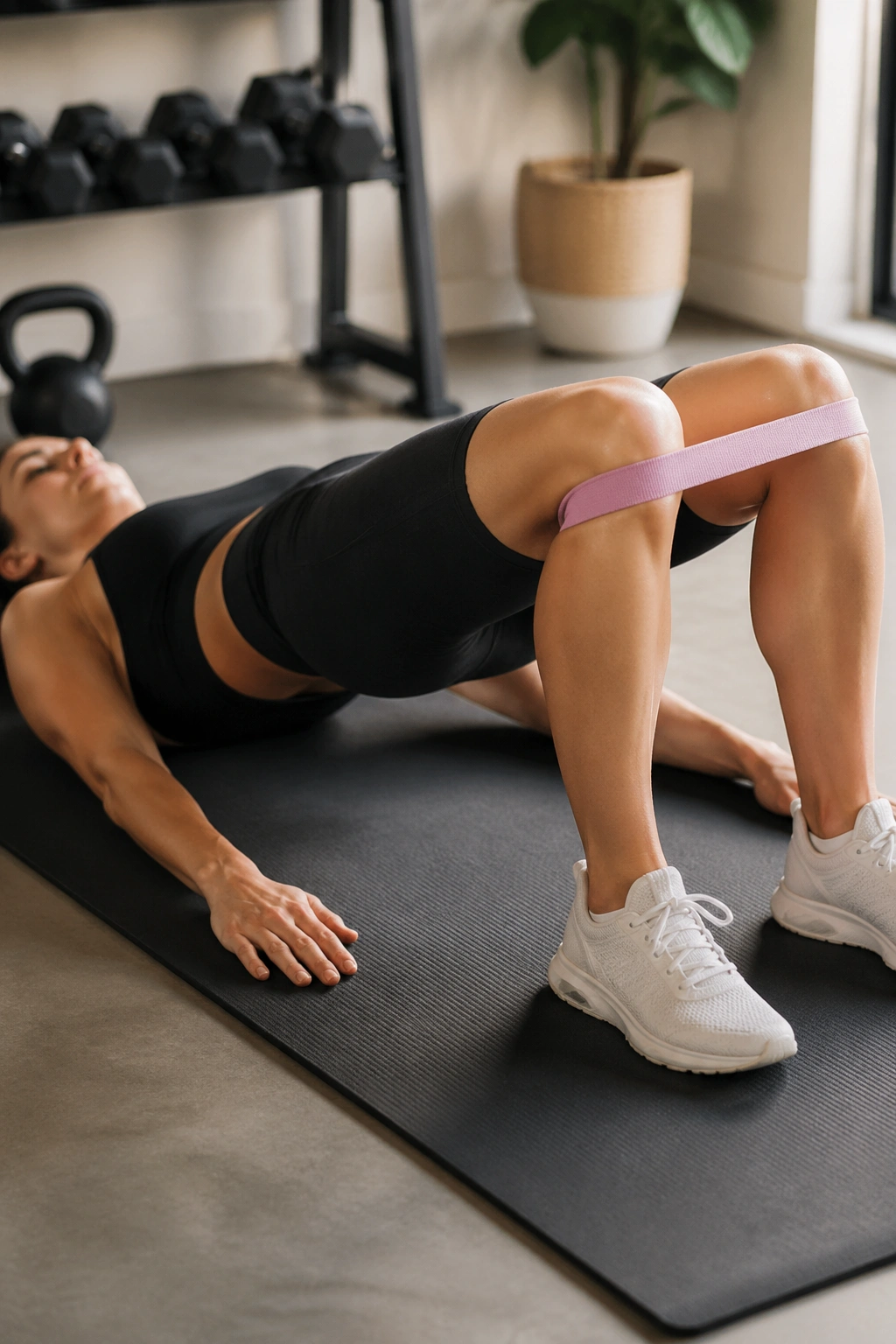
A good band session is less about feeling wrecked and more about giving the right muscles enough honest work to matter. Bridge, hinge, abduct, and go single-leg — that’s the basic pattern mix that keeps glutes and legs from going stale.
A floor, a band, and a calm pace beat fancy equipment more often than people want to admit. That’s especially true when you travel or train in a cramped space and can’t count on much beyond a patch of clean floor.
Keep one light band and one medium band in your bag. That tiny habit removes most excuses, and it makes it a lot easier to train your hips before the day gets away from you.
