



Tone isn’t built by chasing sweat alone. Total body strength workouts do more for a firm, athletic look than endless tiny movements ever will, because they ask your legs, back, chest, shoulders, and core to work together under real load.
That matters. A body that only ever gets trained in pieces can get tired without getting much stronger. A body that gets trained as a unit learns to brace, drive, pull, and press with more force, which is exactly what gives muscles that denser, tighter look people usually mean when they say “tone.” It also tends to travel better into daily life — stairs feel easier, carrying groceries feels less annoying, and your posture stops collapsing halfway through the day.
The trick is choosing workouts that earn their keep. Squats, hinges, pushes, pulls, loaded carries, and a few well-placed tempo drills cover far more ground than flashy stuff that leaves you sore in the wrong places. You do not need circus tricks. You need honest work, good mechanics, and enough variety to keep progressing without boring yourself to death.
Start with the simpler patterns and save the awkward, whole-body grinders for later. The first few below are easy to set up and easy to repeat; the later ones ask a little more from your balance, grip, and lungs, which is exactly where lasting tone gets built.
1. Dumbbell Squat to Press
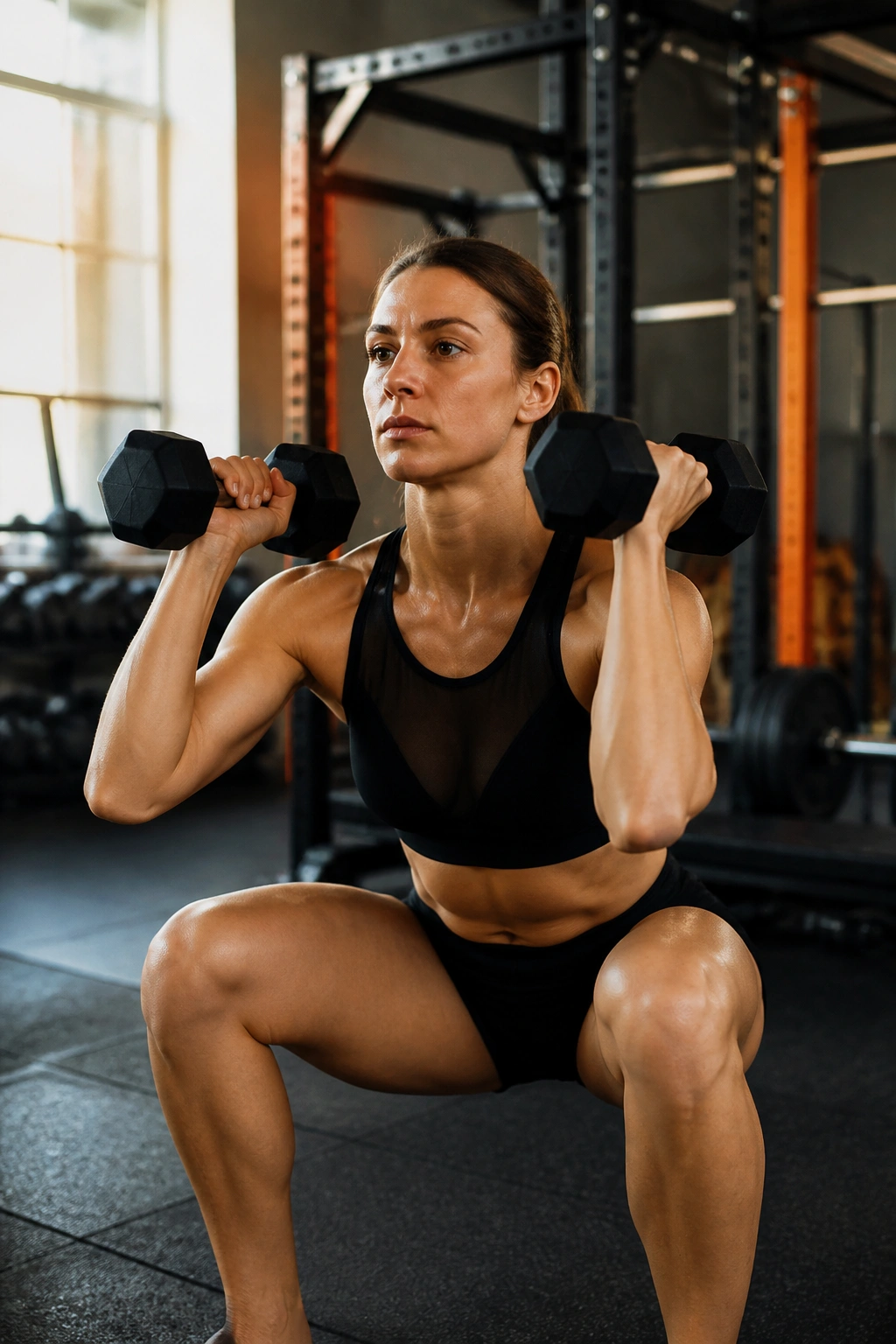
This is the cleanest “I have 30 minutes and want the whole body hit” move on the list. The dumbbell squat to press — often called a thruster — ties your legs and shoulders into one chain, so the rep feels bigger than the parts on paper.
Why It Works
Drop into a squat, stand up hard, then use that upward drive to press the weights overhead. That sequence teaches power transfer, which is a fancy way of saying your lower body stops doing one job and your upper body stops doing another; they work together. The result is a workout that hits quads, glutes, core, and delts without needing a pile of equipment.
How to run it:
- 3 to 4 sets of 6 to 10 reps
- Rest 60 to 90 seconds
- Use dumbbells that let you keep your ribs down at the top
- Stop the set when the press starts turning into a backbend
One useful cue: drive through the middle of your foot, not your toes. If your heels pop up early, the load is too heavy or your squat depth is too ambitious.
2. Romanian Deadlift and Row
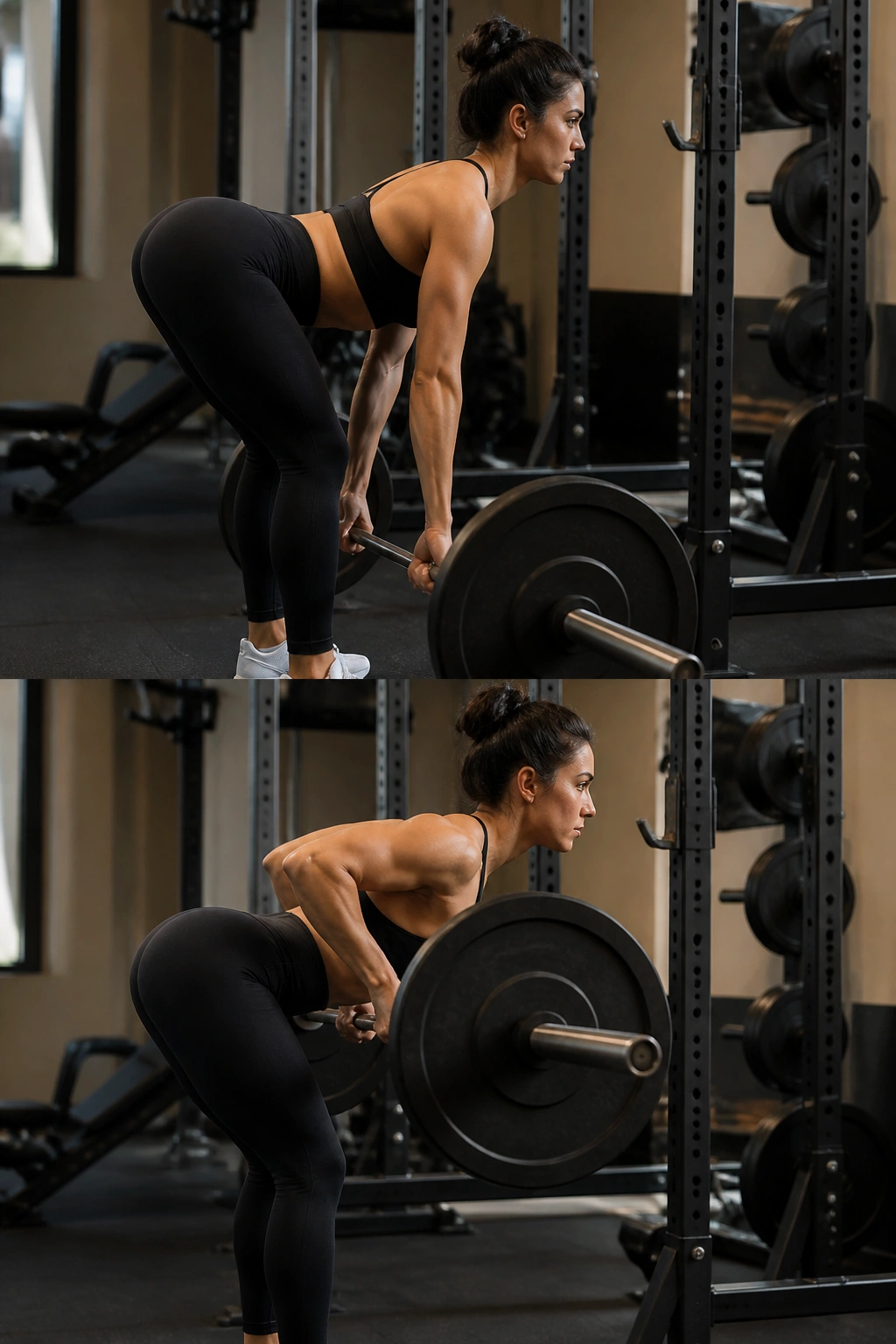
If you only had time for one loaded pair, I’d take this one over almost anything else. The Romanian deadlift and row is blunt, old-school, and quietly excellent for lasting tone because it trains the back side of the body, where a lot of people are weak without realizing it.
The hinge works hamstrings, glutes, and lower back isometrics; the row trains lats, rhomboids, and rear delts. Put them together and you get posture work that actually feels like strength work, not some polite rehab warm-up. That matters if you sit a lot, because your upper back and hips both tend to get lazy when life gets comfortable.
Use a barbell or a pair of dumbbells. Keep the ribs stacked over the pelvis, lower the weight until your hamstrings tug, then row with a short pause at the top — no jerking, no swinging, no pretending momentum counts as strength.
A solid prescription: 4 sets of 6 RDLs and 8 rows, resting about 90 seconds between rounds. Heavy enough to matter. Clean enough to repeat.
3. Push-Up, Row, and Squat Ladder
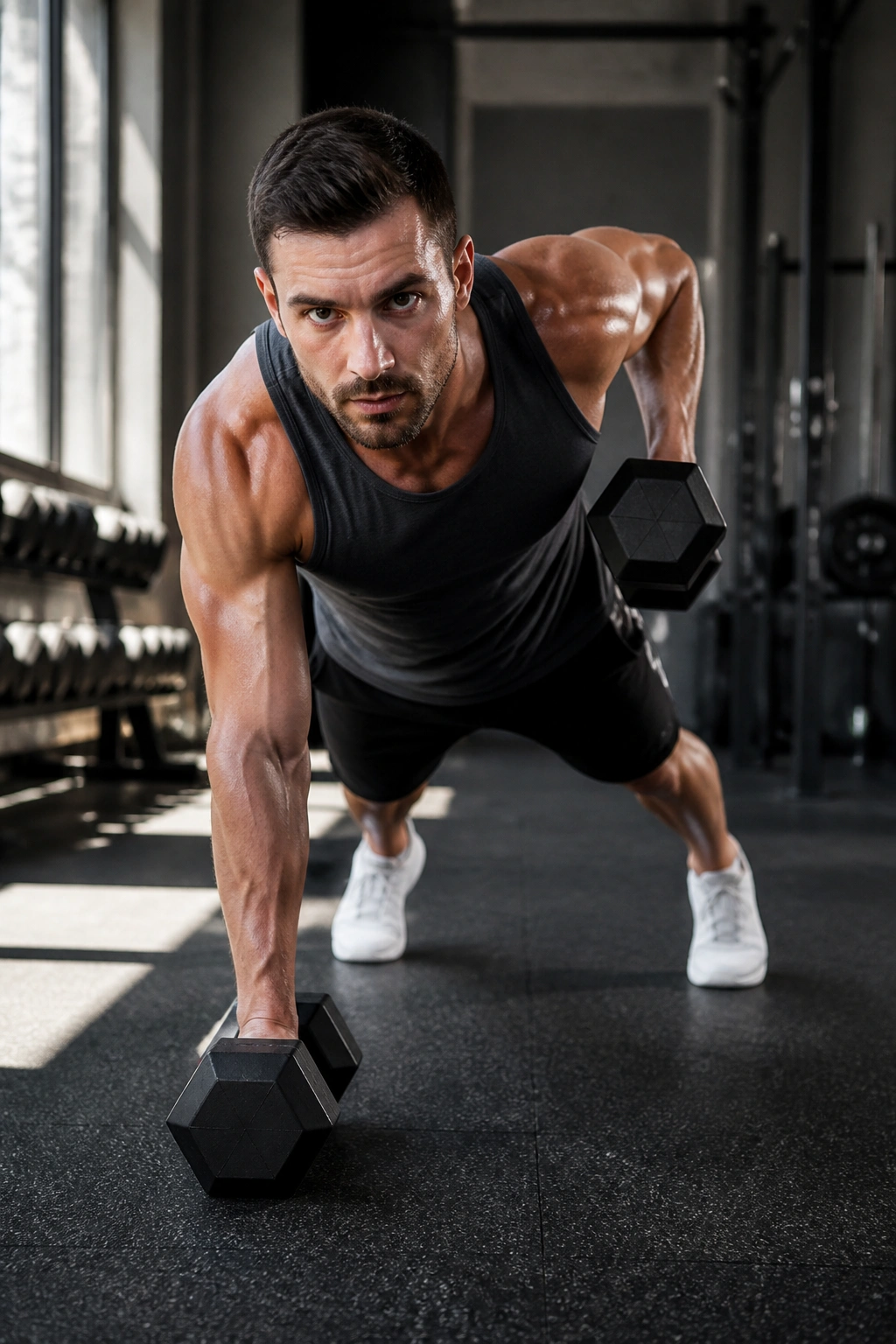
Can bodyweight still build tone? Yes — if you arrange it with some thought instead of just doing random reps until you’re annoyed. A ladder makes the work feel structured, and structure is what keeps bodyweight training from turning into a casual sweat session.
Start with 5 push-ups, 5 rows per side, and 10 squats. Then climb to 6, 6, and 12; 7, 7, and 14; and so on until form slips or the ladder reaches 10. Use dumbbells, a suspension trainer, or a sturdy table row setup if you have one. If push-ups are still rough, put your hands on a bench and keep the body line straight.
How to Get the Most From It
- Move at a steady pace, not a sprint
- Keep the row strict — hips quiet, chest long
- Take 30 to 45 seconds between rungs
- Stop one rung before your form starts getting sloppy
The ladder format works because it lets you build volume without the mental drag of counting endless sets. It’s simple. Not easy.
4. Kettlebell Swing and Goblet Squat Combo
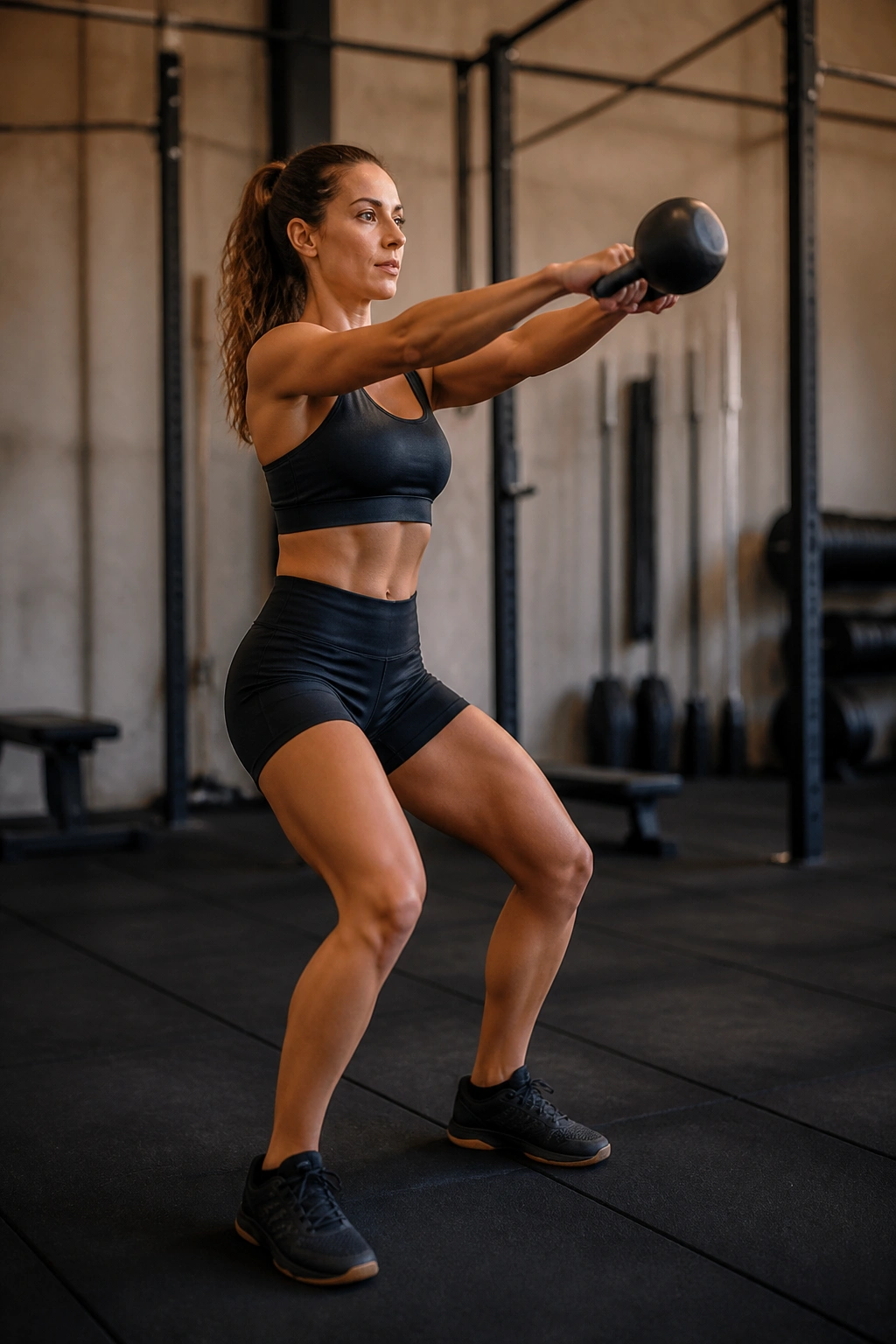
The kettlebell swing and goblet squat combo has a sweaty, blunt honesty to it. You get a hinge that wakes up the posterior chain, then a squat that lights up the thighs and glutes, and there’s very little hiding from either one.
The swing is the power move here. It should feel snappy at the hips, with the bell floating because you drove it there, not because your arms muscled it around. The goblet squat slows things down and gives your legs a thick, stable burn that hangs around long after the set ends. That contrast is useful; power first, grind second.
Try 20 swings and 8 goblet squats for 5 rounds, resting 45 to 60 seconds between rounds. If your lower back feels the swings more than your glutes, you’re squatting the bell instead of hinging it. That’s the usual mistake, and it steals most of the benefit.
Short cue. Big difference: snap the hips, don’t squat the swing.
5. Barbell Complex
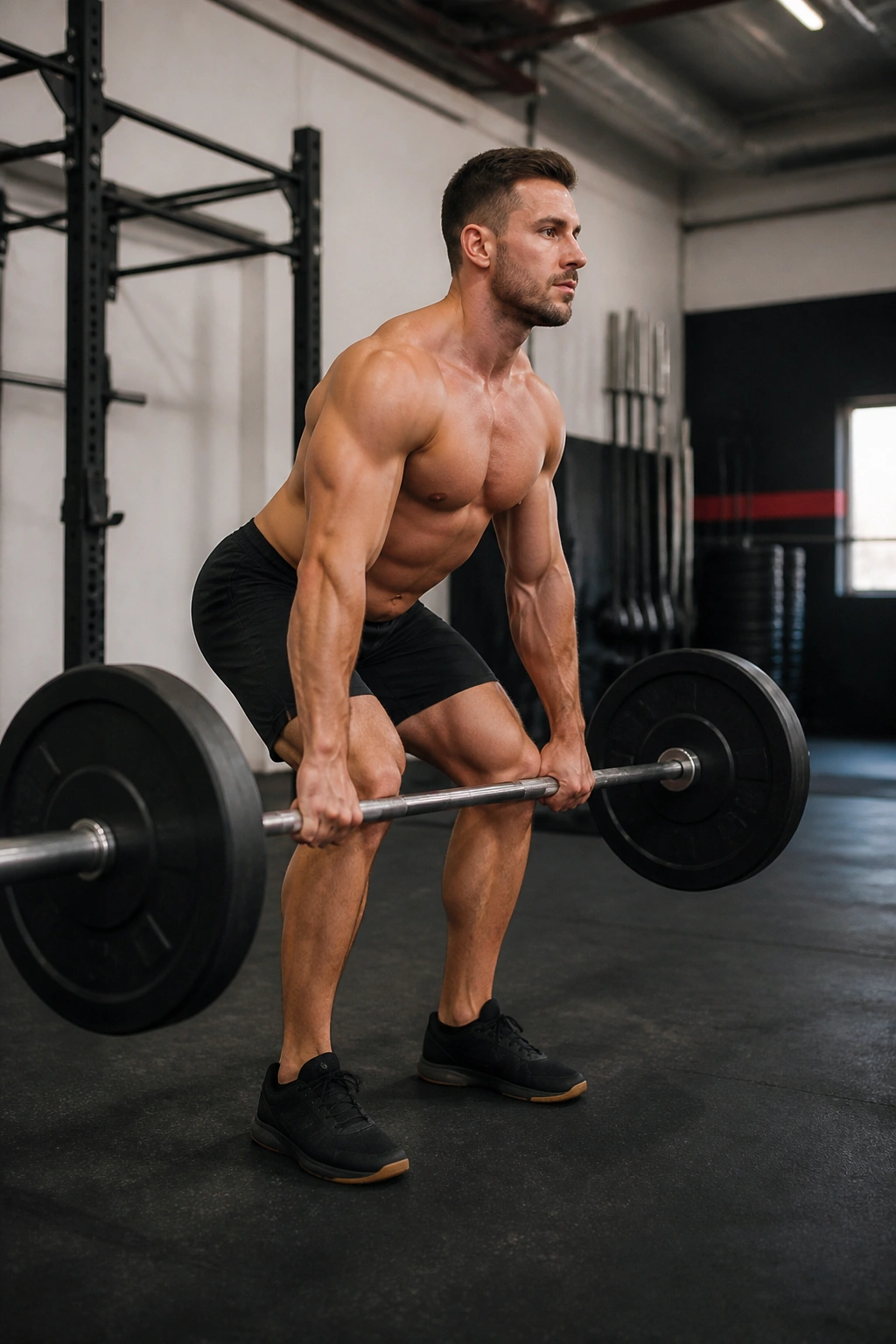
Barbell complexes are rude in the best way. Once the bar leaves the floor, it stays in your hands while you move through several exercises in a row, and that uninterrupted work exposes weak links fast.
A clean, practical complex might look like this: deadlift, bent-over row, hang clean or high pull, front squat, push press. Use the same bar for all of it. Keep the weight modest — heavy enough to feel real, light enough that the cleanest rep in the set still looks clean. If you need to grind every transition, the load is too high and the complex turns into messier conditioning than strength.
A simple structure:
- 5 rounds
- 5 reps per movement
- Rest 90 to 120 seconds between rounds
- Stop if your spine starts chasing fatigue
The best part is the efficiency. The worst part is also the efficiency, because there’s nowhere to hide. That’s why complexes work so well for tone: they demand force, posture, and control while keeping the heart rate honest.
6. Split-Stance Dumbbell Circuit
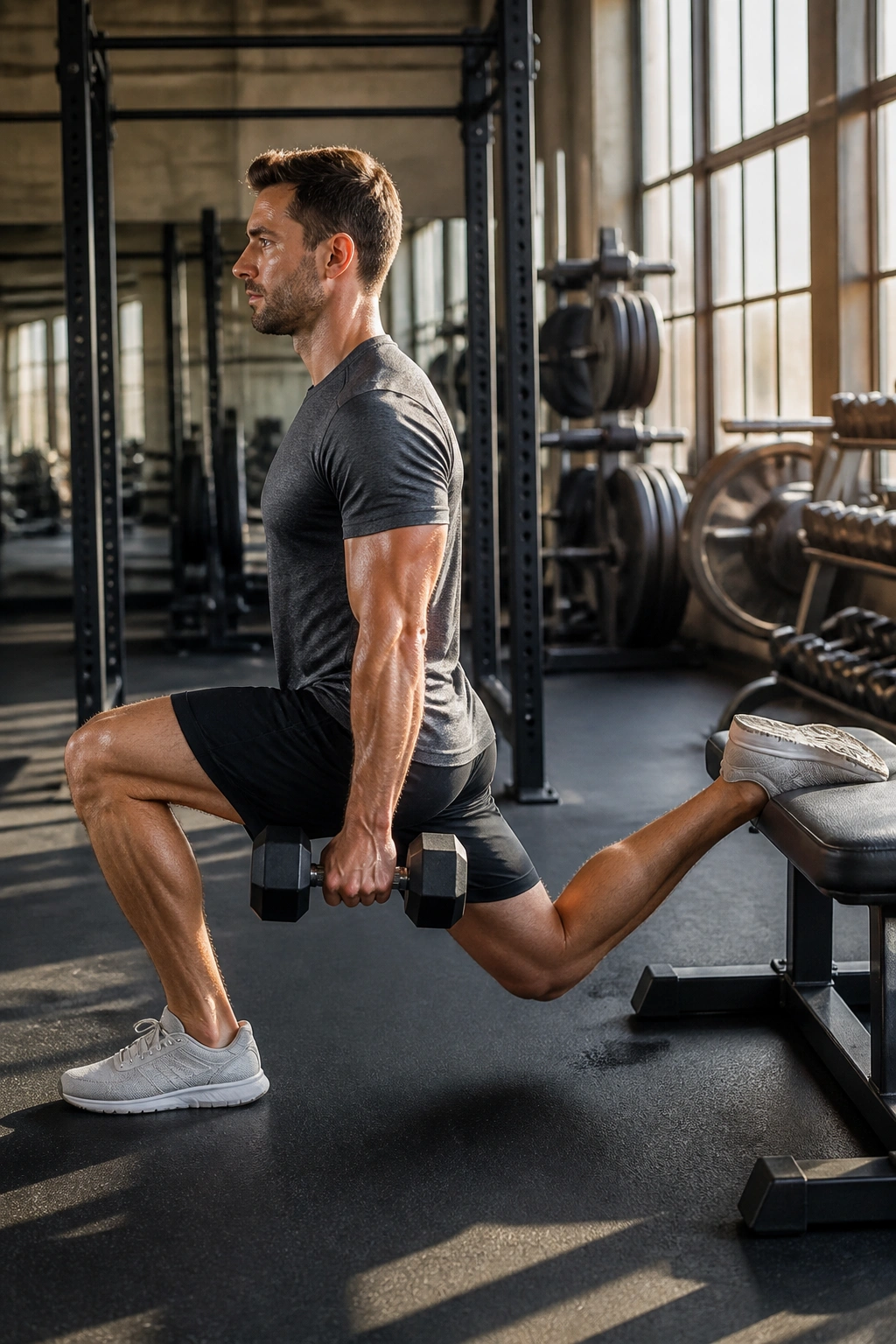
Split stance training looks humble on paper and turns out to be a sneaky test of everything that matters. One leg gets most of the work, the hips have to stay square, and the core can’t loaf around in the background.
Use a rear-foot-elevated split squat, a split-stance row, and a half-kneeling press if you want the full effect. The front leg drives, the back leg stabilizes, and your torso has to keep the whole arrangement from wobbling apart. That’s the kind of work that tightens up the midsection without a single crunch in sight.
What Makes It Different
The dumbbells don’t just add load; they expose side-to-side leaks. If your knee caves inward or your torso twists on every rep, the drill tells on you immediately. Good. You want that feedback.
Run 3 rounds of 8 reps per side on each movement, resting 45 to 60 seconds after each round. Keep the stance long enough that the front knee can track over the middle toes without sliding forward like it’s late for something.
7. Trap Bar Deadlift and Carry
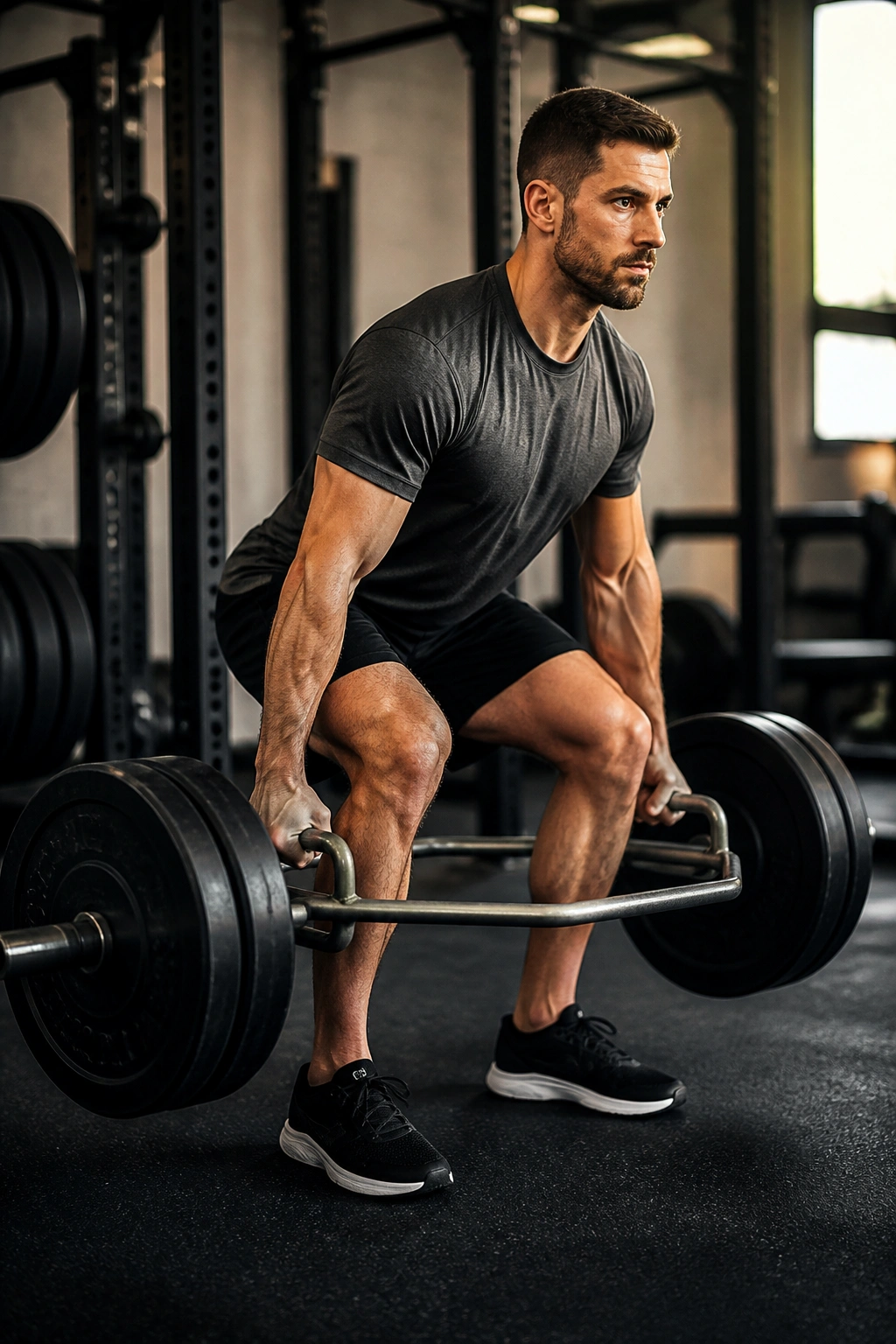
Why do carries show up in strength work so often? Because they keep the body honest after the heavy lift, when fatigue is already trying to make your posture sloppy. The trap bar deadlift and carry pairing is a clean example of that idea.
The trap bar puts the load between your feet instead of in front of you, which usually feels friendlier on the back than a straight bar if your mechanics are still getting dialed in. Pull the weight for 3 to 5 reps, stand tall at the top, then walk it out for 20 to 40 meters. The carry finishes the job by asking your grip, trunk, and glutes to stay switched on while you move.
A good session looks like 5 sets of 4 to 5 deadlifts followed by 1 loaded carry. Rest 90 seconds or so. If the walk turns into a waddle, the deadlift was probably too heavy for the day.
No drama. Just good work.
8. Reverse Lunge to Overhead Press
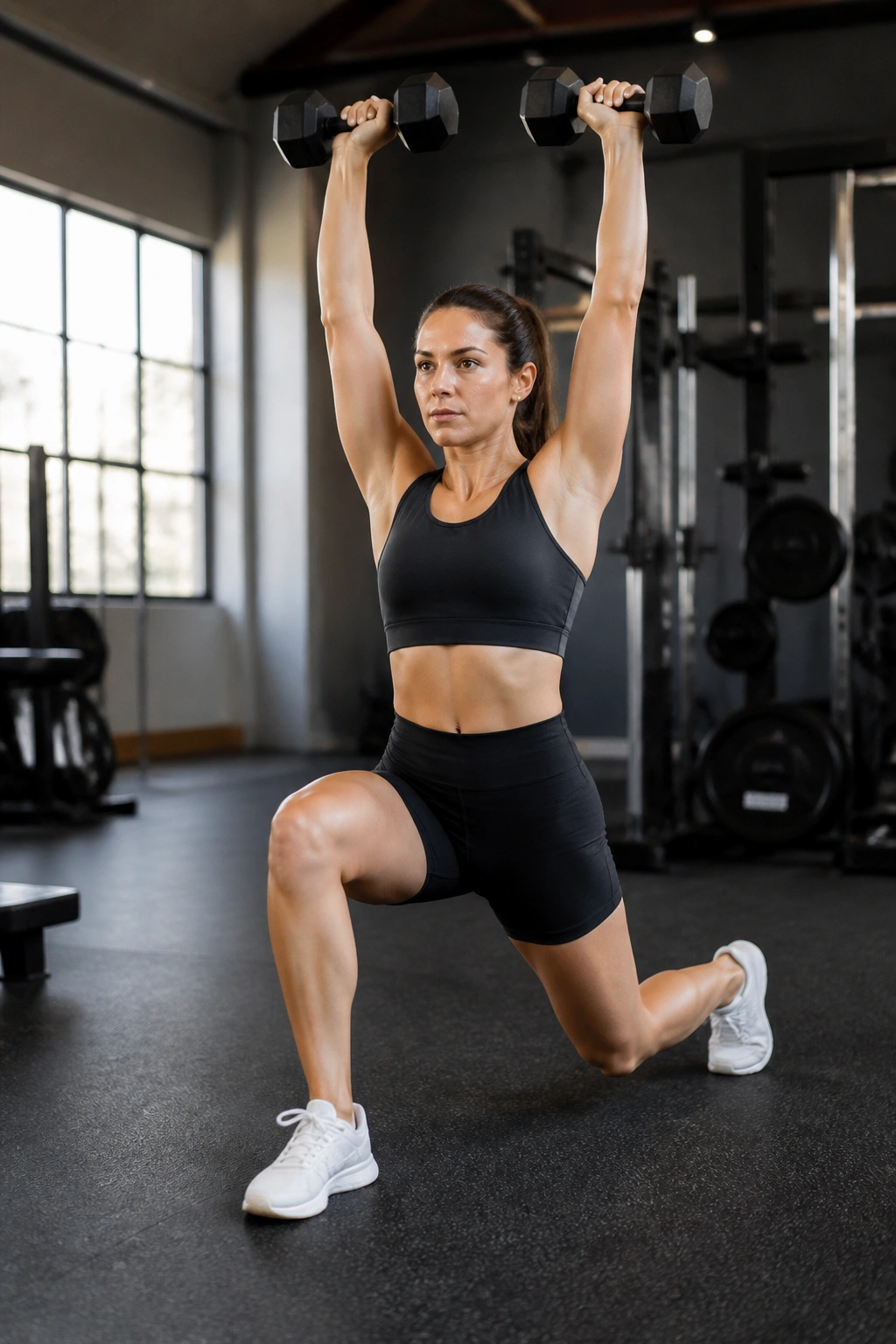
A reverse lunge to overhead press is the kind of combo that makes limited floor space stop being an excuse. You step back, load the front leg, then drive the dumbbells or kettlebells overhead as you stand.
The reverse lunge matters here because it’s kinder to the knees than a forward step for many people, and it keeps the front shin a little more vertical. That often makes the whole movement feel cleaner. The overhead press layer adds shoulder work without needing a separate station, which is why this one shows up in practical full-body strength training so often.
Try 3 to 4 rounds of 8 reps per side. Keep the press smooth; if the weights wobble like a shopping cart with one bad wheel, reduce the load. And if your back arches on the press, shorten the range and reset your rib position before the next rep.
Simple setup. Plenty of payoff.
9. Renegade Row Flow
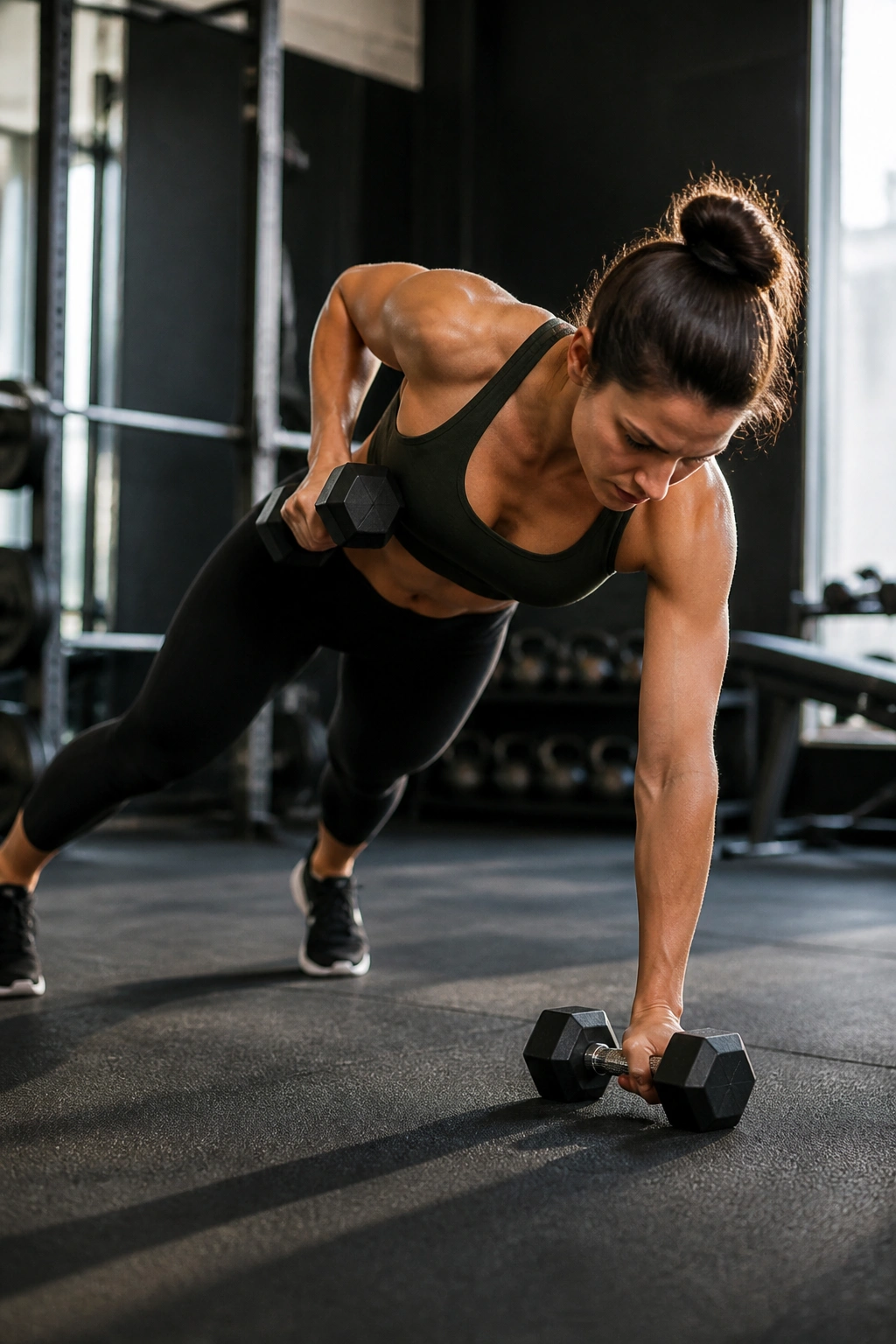
Sloppy renegade rows are a waste of time. Done well, though, they are one of the nicest ways to train your back, core, and shoulders at the same time without drifting into circus territory.
Start in a plank with your hands on dumbbells. Row one weight while the hips stay square, set it down softly, then row the other side. The real work happens before the row even leaves the floor, because your midsection has to stop your body from twisting. That anti-rotation demand is a big part of why the move helps with a firmer, more controlled look through the torso.
Start Higher Than You Think
If floor planks are shaky, put your hands on a bench or use an incline. That version is still useful. The point is not suffering for its own sake; the point is keeping the body stiff enough that the row stays honest.
Do 4 sets of 6 rows per side, resting 60 to 90 seconds. Keep your feet a little wider than you think you need. Narrow stances turn the exercise into a fight with balance, and balance is not the main event here.
10. Front Squat and Pull-Up Pairing
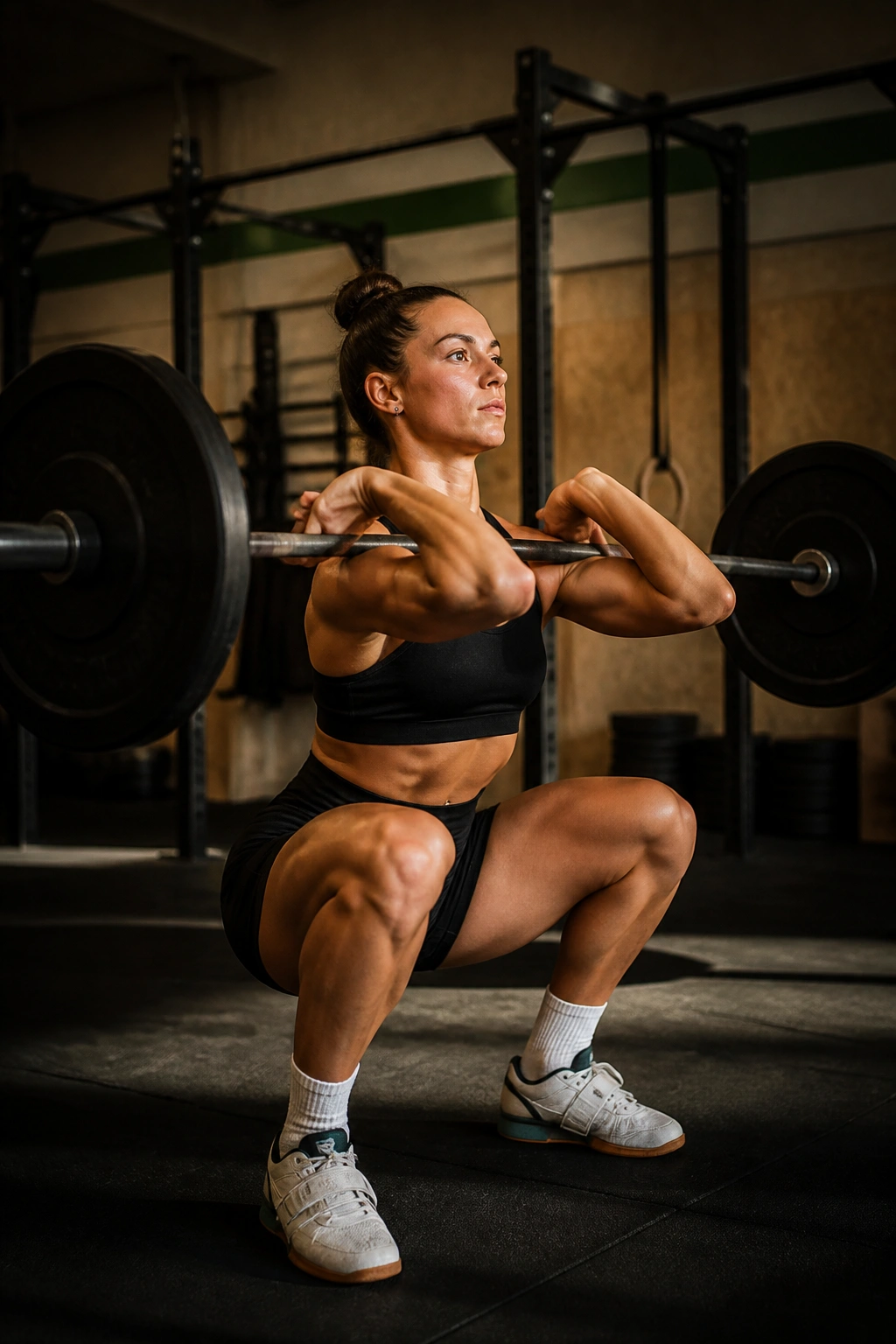
A front squat and pull-up pairing feels almost too obvious, which is probably why people keep skipping it for flashier stuff. That’s a mistake. The front squat loads the legs and upper back hard, while the pull-up trains lats, arms, and trunk tension in one of the cleanest pulling patterns around.
The front rack position forces your torso to stay tall, which is a nice correction if your default posture is a little folded. Pull-ups do the opposite job from pressing work, and that balance is useful when the goal is lasting tone instead of just chasing a pump in one area.
Use 4 supersets of 5 front squats and 4 to 8 pull-ups. If pull-ups are too hard, use bands or switch to inverted rows. If front squats bother your wrists, cross the arms or use a safety bar if the gym has one. No prize gets handed out for forcing a rough variation.
The pairing is heavy enough to build strength and crisp enough to stay repeatable.
11. Sled Push and Drag
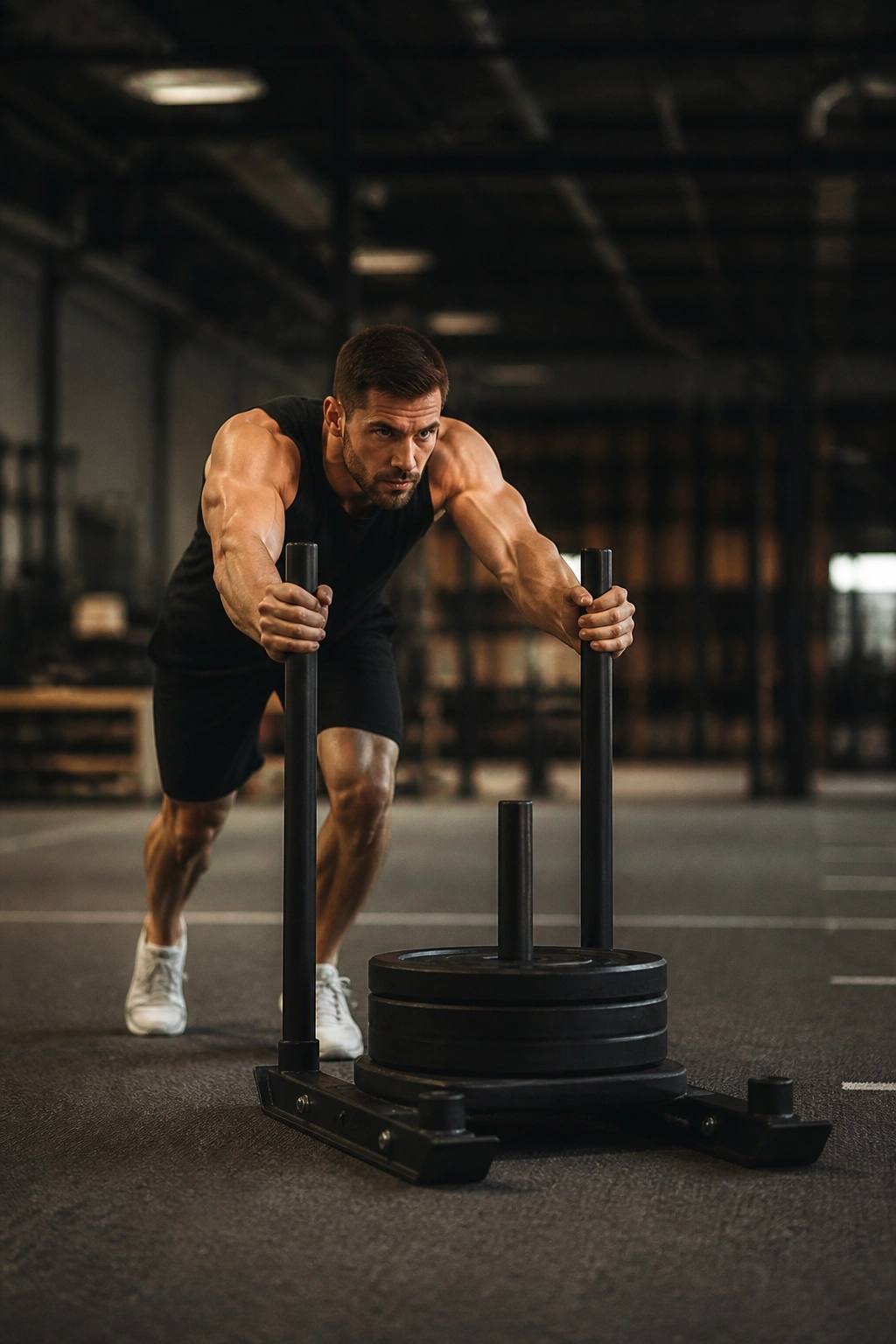
Sled work has a strange gift: it can make your legs burn like crazy without leaving your joints furious the next day. That makes it one of my favorite full-body strength tools for people who want hard work without the beat-up feeling that sometimes follows heavy eccentric lifting.
Push the sled for 20 to 30 meters, then drag it back the other direction with a strap or harness. The push lights up quads and glutes; the drag hits the same muscles from a different angle while asking your posture to stay tall. Your breathing will get loud. That’s fine. Loud breathing is part of the deal.
A simple sled session:
- 6 to 8 rounds
- 20 to 30 meters forward
- 20 to 30 meters back
- Rest just long enough to reset your breathing
If the sled skids without much effort, add weight. If your feet are slipping or your torso folds over, cut the load and keep the steps driving straight.
12. Single-Arm Clean to Press

Why bother with a one-arm clean to press when a regular press exists? Because the clean makes you earn the rack position, and that little extra demand on the core changes the whole feel of the lift.
Use a kettlebell or dumbbell. Hinge, pop the weight into the rack, settle your rib cage, then press overhead without leaning away from the load. One side at a time is the point. Your body has to stop rotating, which wakes up the obliques and the deep trunk muscles that keep you looking and moving solid.
How to Keep It Clean
- Keep the weight close on the clean
- Catch it softly at the shoulder
- Do not fling it around with your arm
- Press only after the ribs are stacked again
Run 4 sets of 5 reps per side. Rest about 45 seconds between sides if needed. This one can get sloppy fast, so start lighter than your ego wants. The clean is supposed to look smooth, not dramatic.
13. Tempo Bodyweight Strength Circuit
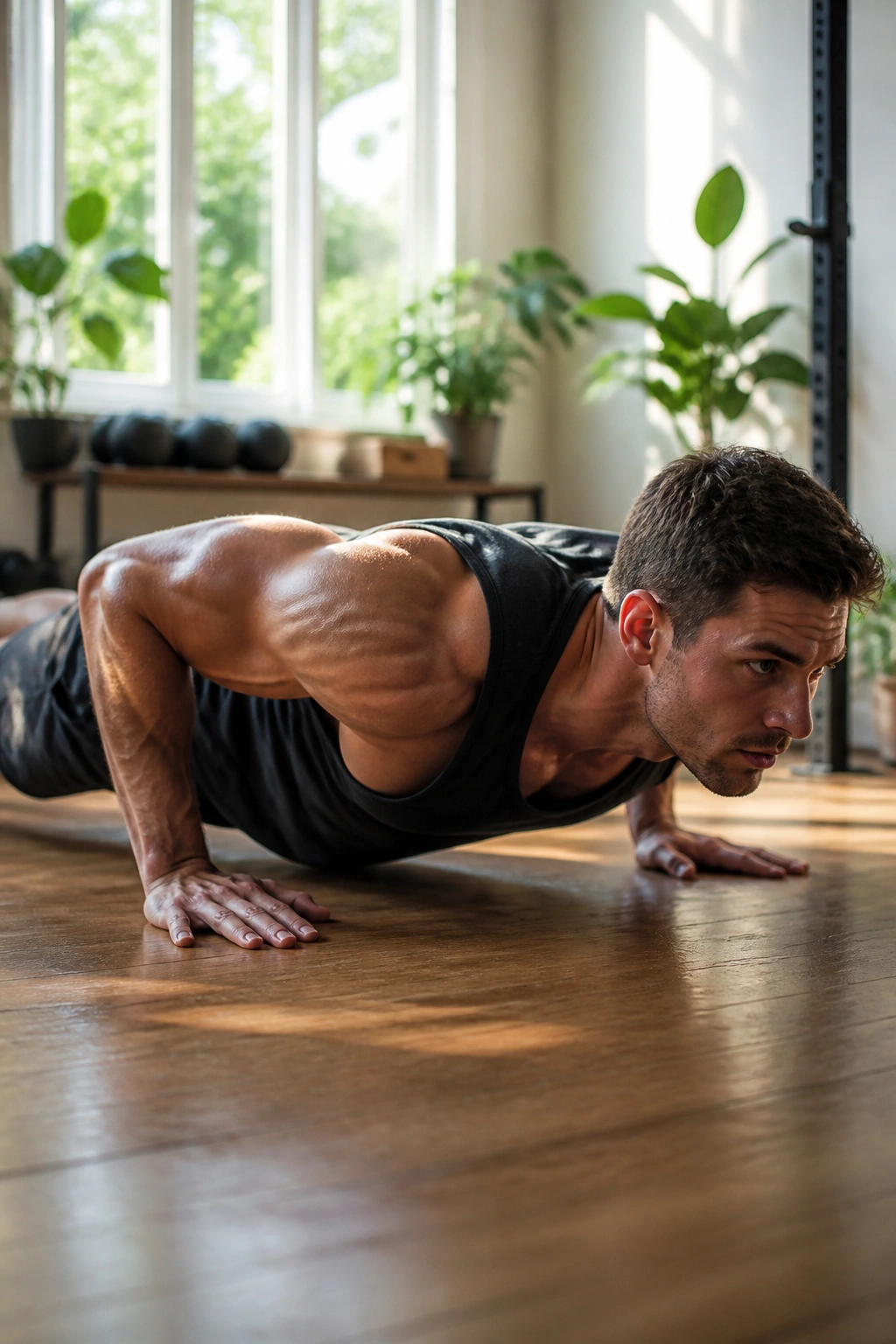
Slow reps are boring until they aren’t. Then you feel every weak spot you normally skate past.
A tempo bodyweight circuit uses controlled lowering to make simple exercises work harder. A push-up with a 3-second descent, a split squat with a 2-second pause at the bottom, a glute bridge with a 2-second squeeze at the top — all of it creates tension without needing a pile of weight. That tension is the whole game when equipment is limited or you want to clean up movement quality.
A Solid Template
- 8 tempo push-ups
- 8 tempo split squats per side
- 12 glute bridges with a squeeze
- 20-second plank
- Repeat for 3 rounds
Keep each rep smooth. No dropping. No bouncing. The slower pace also makes breathing more deliberate, which helps if you tend to rush through bodyweight work like you’re trying to escape it.
This is a good travel workout, a good recovery workout, and a good reminder that control can be hard work too.
14. Hip Thrust and Incline Push-Up Pairing
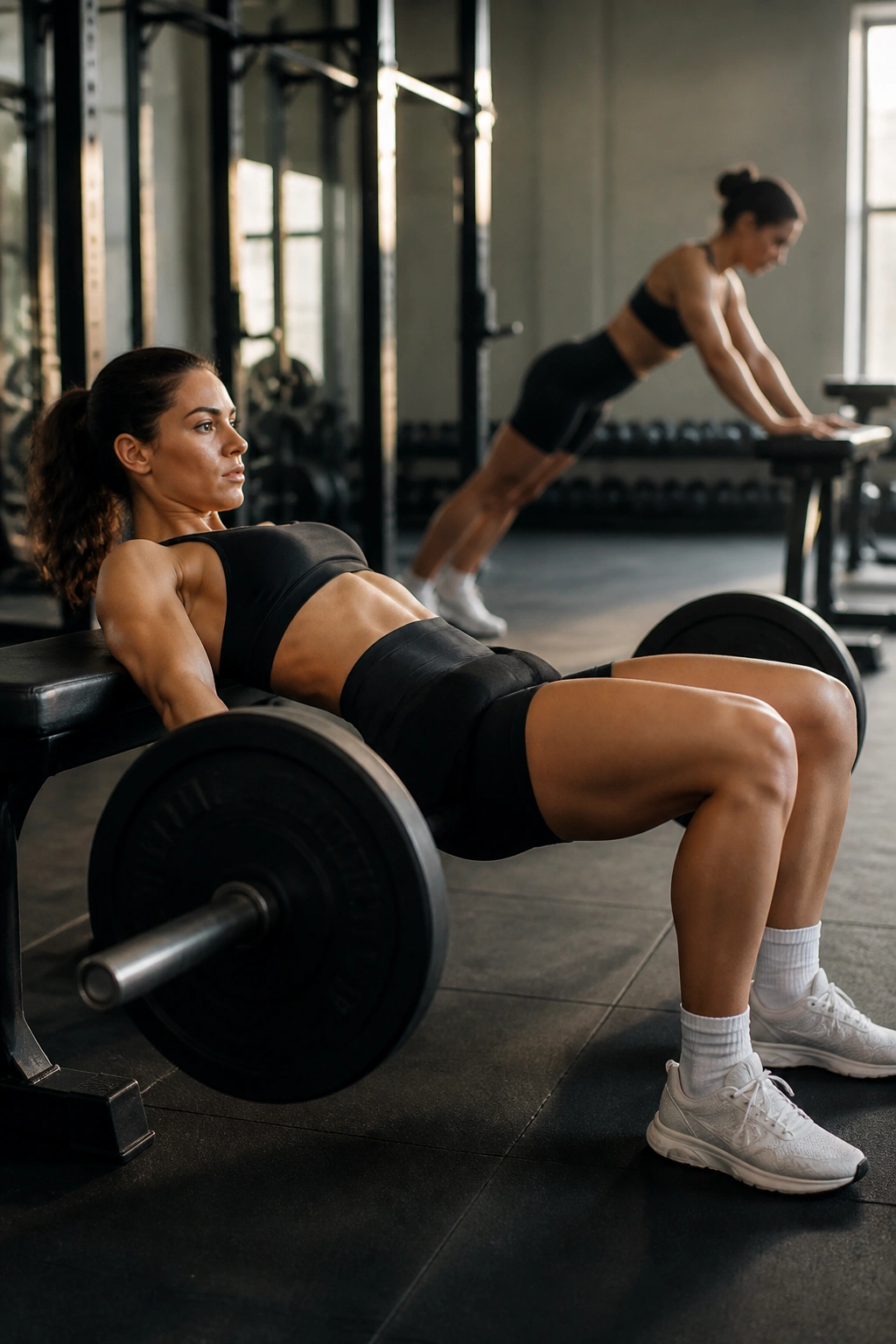
Glutes and chest. That’s the pairing, and it looks plain enough until you try it with enough volume to matter.
The hip thrust gives you hard glute lockout work without needing a deep squat. The incline push-up gives you a pressing pattern that’s easier on the shoulders than a floor push-up for many people, while still asking the chest, triceps, and front delts to show up. Put them together and you get a crisp upper-lower alternation that keeps the session moving.
Run 4 supersets of 10 hip thrusts and 10 to 15 incline push-ups. Rest 60 seconds after each superset. If the top of the hip thrust feels like a shrug instead of a glute squeeze, move the feet a little closer and tuck the pelvis just enough to finish the rep cleanly.
Boring? Maybe. Effective? Very.
15. Landmine Press and Split Squat
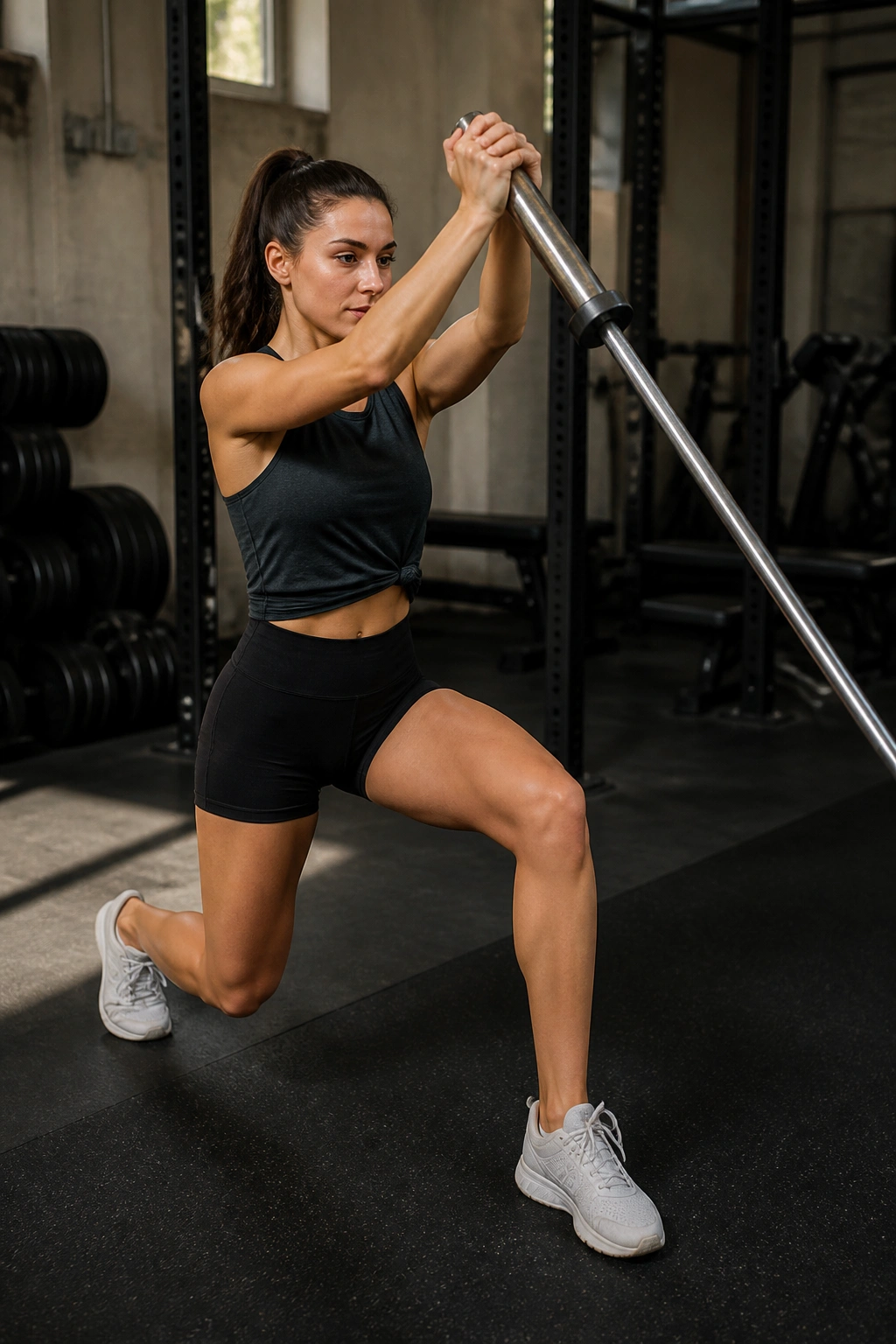
The landmine press deserves more love than it gets. The angled path is easier on the shoulders than a straight overhead press for a lot of lifters, and the split squat makes sure the lower body is doing its part instead of loafing.
Press the bar in a diagonal line from the shoulder, not straight up. That small change matters. It keeps the shoulder in a friendlier position and gives you a strong pressing pattern without the same amount of overhead strain. Pair that with a split squat and you’ve got a session that hits the legs, glutes, core, and upper body in one neat package.
Why the Angle Matters
Because the landmine arc lets the shoulder blade move more naturally, many people can press heavier or with better control than they can overhead. That doesn’t make it magic. It just makes it practical.
Try 4 rounds of 6 to 8 presses per side and 8 split squats per side. Keep the torso tall. If the load twists you around, slow down and tighten the stance before adding weight.
16. Sandbag Bear-Hug Complex

Sandbag training has a way of humbling people who thought they were stronger than they looked. The bag shifts, the grip gets weird, and your torso has to brace like it means it.
A bear-hug complex might include a bear-hug squat, a short carry, and a step-up or walking lunge. The awkward load is the point. Unlike neat dumbbells, the sandbag spreads across the chest and refuses to sit still, which forces the abs, upper back, and hips to work hard just to keep the bag from sliding away from you.
A workable version:
- 5 bear-hug squats
- 20 meters bear-hug carry
- 6 step-ups per leg
- 3 to 4 rounds
Go lighter than you think at first. A sandbag that’s too heavy gets ugly fast. If no sandbag is around, a loaded duffel or a thick backpack can work, but the bag needs to stay secure. Loose plates and bad stitching are a mess waiting to happen.
17. Farmer Carry Ladder
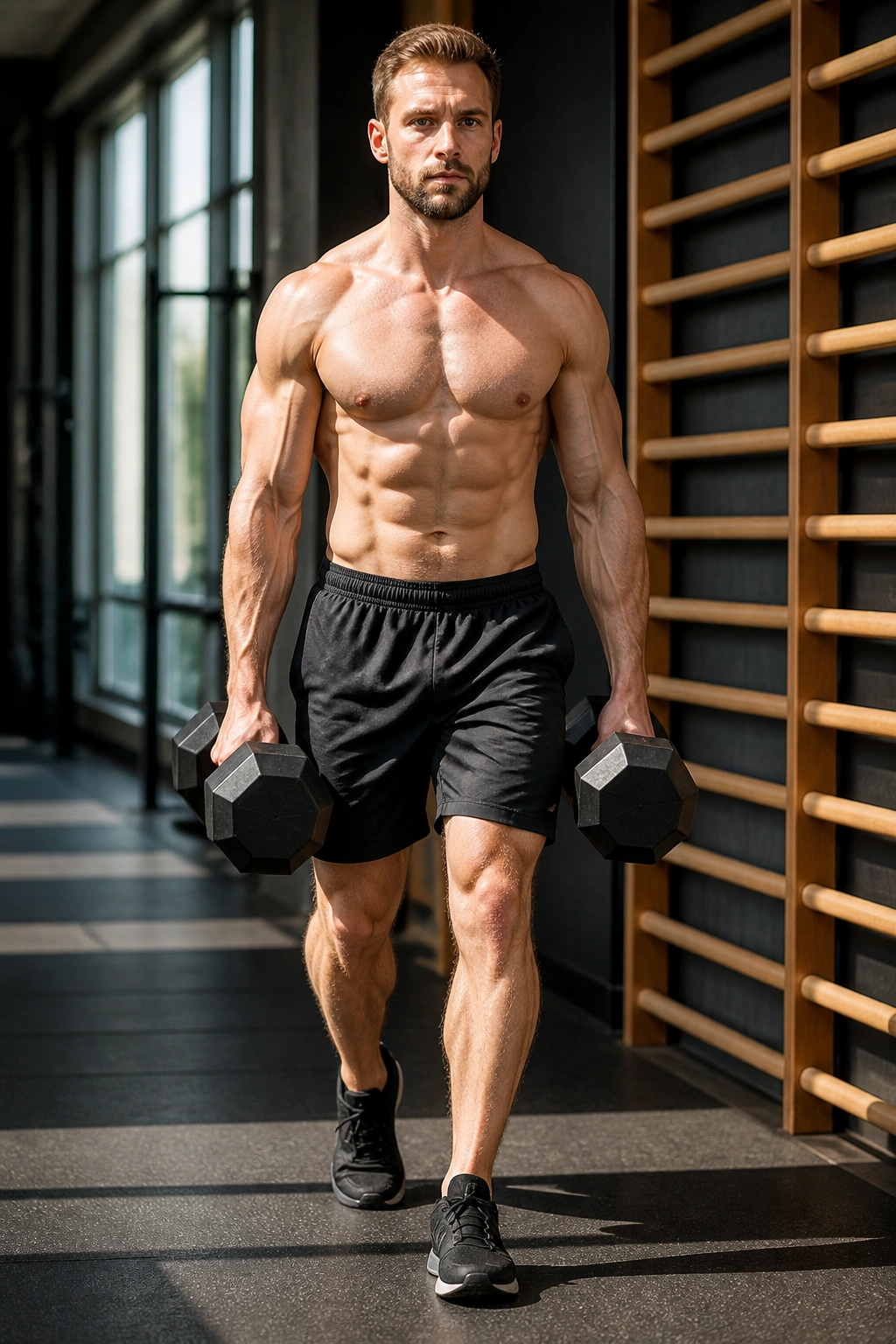
Farmer carries look almost too plain to count as a workout, which is exactly why people underestimate them. Grip, traps, obliques, calves, posture — all of it lights up when you hold real weight and walk like you mean it.
A ladder keeps the session focused. Start with 20 meters, then 30, then 40, and come back down if you have the gas. You can use dumbbells, kettlebells, trap bar handles, or even one side at a time for suitcase carries. That one-sided version is especially good for the waist because the body has to resist leaning.
Quick Setup Rules
- Choose a weight you can hold with a flat wrist
- Walk tall, not fast
- Keep the steps short and steady
- Rest long enough to keep the next carry crisp
This is one of those workouts that pays off in how you move through the day, not just in the gym. The body feels more organized afterward. That’s not a small thing.
18. Step-Up, Row, and Press Tri-Set
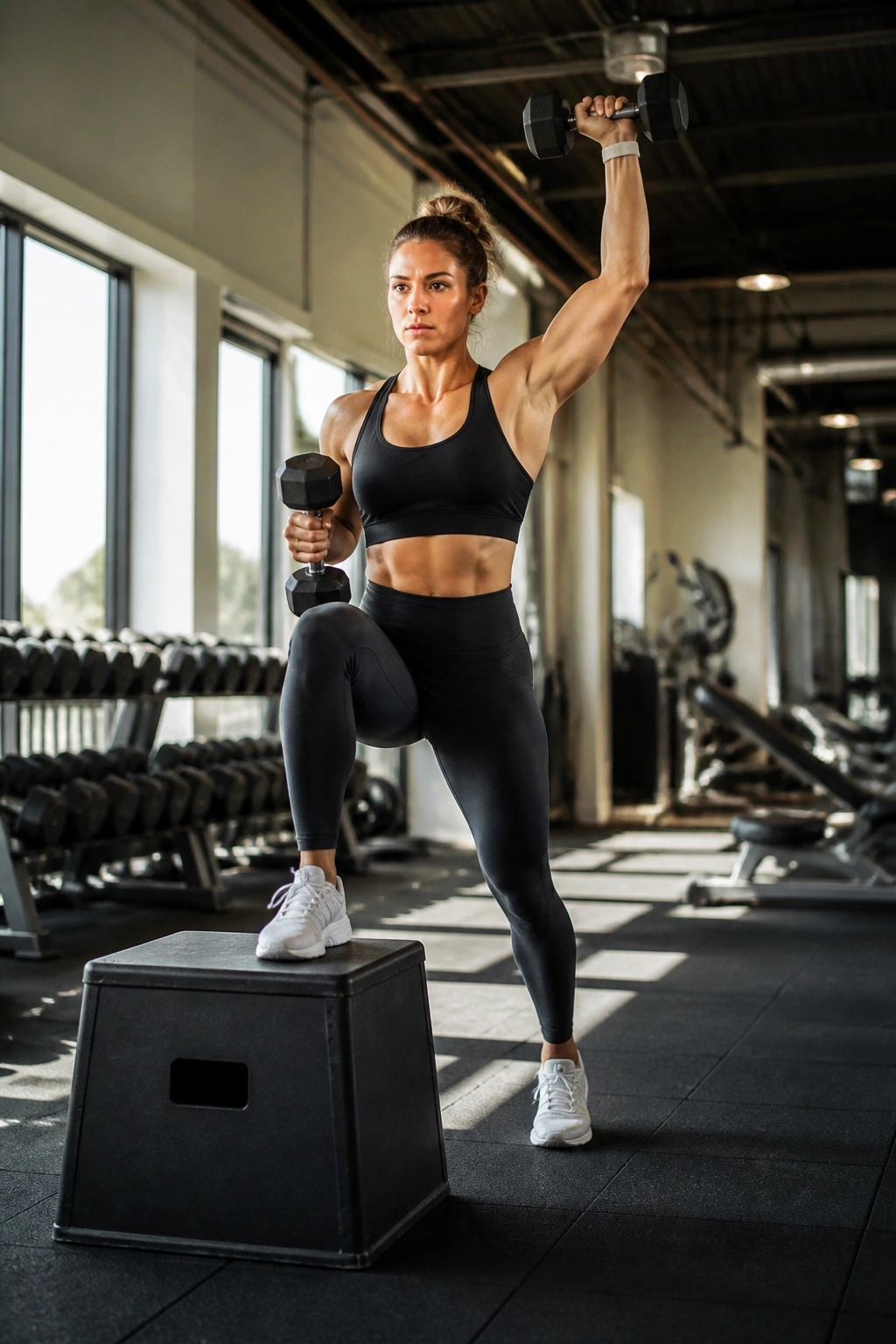
A good step-up is underrated. Add a row and a press, and you’ve got a tri-set that hits legs, back, shoulders, and balance without needing much room.
Use a bench or box that puts your working thigh around parallel or a little below. Step up under control, row at the top, then press overhead before stepping down. That top position turns the move into a stability challenge, because one leg has to support the body while the upper body produces force. If the box is too high, the whole thing turns into a hip-flexor complaint.
A clean prescription:
- 8 step-ups per side
- 8 rows per side
- 8 presses per side
- 3 rounds
- Rest 60 to 90 seconds between rounds
What to Watch For
Keep the shin of the working leg mostly vertical on the step. If you’re pushing off the floor leg hard enough to cheat, lower the box or the load. The target is the lead leg doing the work.
19. Dead Bug, Plank, and Loaded Carry Core Session
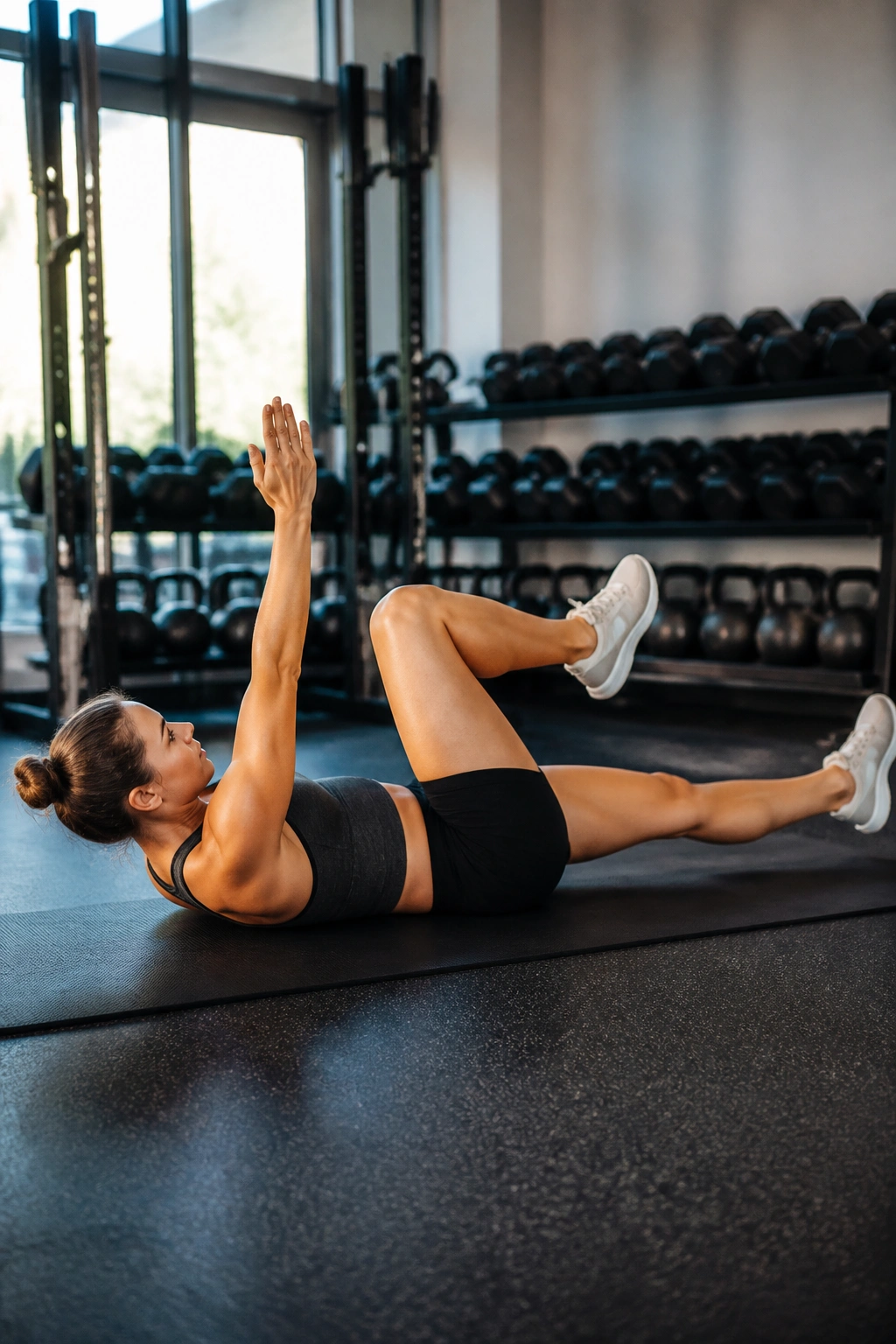
Core training gets much better when it stops pretending abs are the whole story. A strong midsection keeps the torso steady while the arms and legs do their jobs, and that’s exactly what the dead bug, plank, and loaded carry trio teaches.
Start with dead bugs to groove control. Move into a plank that you hold with honest tension, not sagging shoulders and wishful thinking. Finish with a suitcase carry or farmer carry so the core has to keep working while you move. That last part matters because stability under motion is where a lot of people fall apart.
The Format
- 8 dead bugs per side
- 20 to 30-second plank
- 20 to 30 meters suitcase carry per side
- 3 rounds
If your lower back arches during the dead bug, slow the legs down and shorten the range. If the plank turns into a shrug, push the floor away harder. Small corrections. Big effect.
This session won’t leave you gasping like sled pushes, but it often cleans up posture faster than people expect.
20. Final Push

Short on time? Good. A 10-minute density block is where a lot of total body strength workouts earn their place, because the structure keeps you moving without turning the session into chaos.
Set a timer for 10 minutes and cycle through 6 goblet squats, 6 push-ups, 8 dumbbell rows, and a 20-meter carry. Repeat the circuit as many times as you can with clean form. The load should be moderate, not heroic. You want enough resistance to feel the work in your legs, back, and shoulders, but not so much that your reps turn ragged by minute three.
The Reason It Works
Density forces quality under a little pressure. You get repeated practice with the same big patterns, you keep rest controlled, and you leave with a full-body hit instead of a random collection of tired muscles. That combination is useful when the goal is lasting tone rather than a one-off burn.
Finish with one good round if you have it left. Or two. The body usually remembers that kind of work better than the flashy stuff, and it shows up later in the way you stand, lift, and carry yourself.
