



A good 45-minute cardio strength workout has a specific kind of honesty to it: you finish sweaty, your muscles are tired, and you never waste time wandering around the gym wondering what to do next. That matters because most people do not need more random exercise; they need a session with a pace, a load, and a clear finish line.
Forty-five minutes is a sweet spot. Long enough to combine intervals, strength sets, and a short cooldown. Short enough that the work stays crisp, which is where these hybrid sessions actually earn their keep. If you’ve ever done a cardio day that felt too soft or a lift day that never got your heart rate up, you already know why the mix works.
The best cardio strength workouts don’t chase chaos. They use simple tools—dumbbells, a rower, a bike, a treadmill, even bodyweight—and arrange them so one part of the body works while another gets a brief reset. That keeps the session hard without turning it into a mess.
A 45-minute block also fits the practical math of fitness nicely: enough time to count toward weekly activity goals, enough variety to avoid boredom, and enough structure to make progression possible. The 20 workouts below lean on different machines, loading patterns, and pacing tricks, so you can match the day to your equipment and energy.
1. Dumbbell Sprint Ladder

This is the session I reach for when the goal is simple: work hard, stop thinking, and leave with your shirt stuck to your back.
Why It Works
The dumbbell ladder keeps the strength work moving, while the short sprint bursts prevent the room from cooling off between sets. That matters. A lot of mixed workouts fail because the lifting gets too slow and the cardio gets too lazy. This one avoids both.
Start with 5 minutes of brisk movement—marching in place, arm swings, bodyweight squats, and a light walk or jog if you have space. Then run a ladder of 10 goblet squats, 8 bent-over rows per side, 6 push presses, 4 reverse lunges per leg, and 2 burpees. Rest 45 to 60 seconds, then repeat the ladder 3 times. Finish with 8 minutes of fast work: high knees, jumping jacks, or a hard treadmill walk at an incline.
Quick Setup
- Work interval: steady, not sloppy
- Load: a dumbbell that makes the last 2 push presses slow down
- Best move: keep the burpees clean, not frantic
Do not chase speed before your form is solid. A choppy push press helps nobody.
2. Treadmill Incline and Lower-Body Circuit
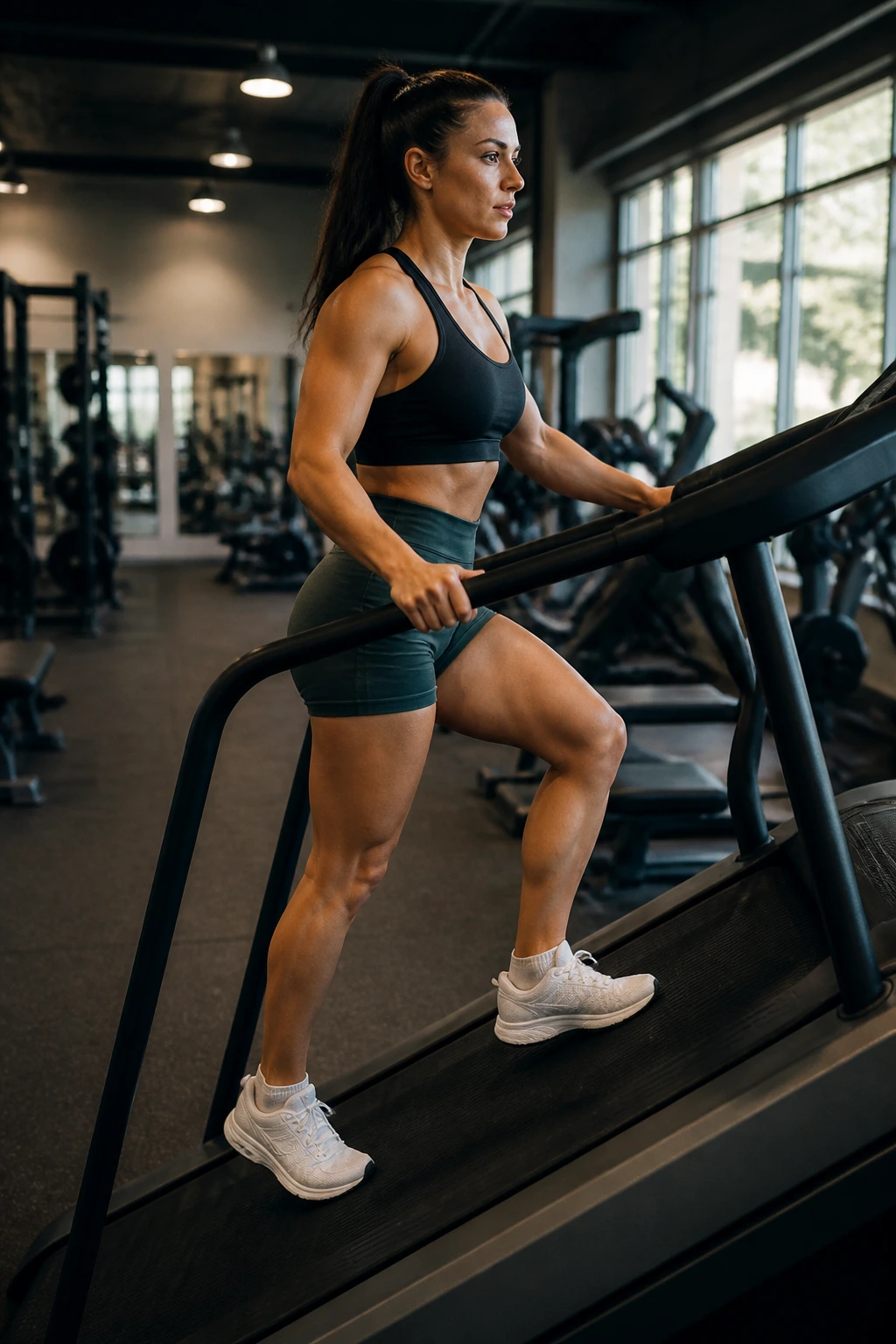
A steep treadmill walk can humble people faster than a run, which is exactly why this workout belongs on the list.
You alternate between 4-minute incline pushes and 4-minute strength blocks. Use the treadmill at 6 to 12 percent incline and walk at a pace that makes talking annoying but still possible in short bursts. Step off, then move straight into split squats, glute bridges, calf raises, and plank shoulder taps for the next block.
What I like here is the rhythm. You get the heart rate spike from the incline, but the legs keep working once you leave the machine. That makes the session feel longer than it is, in a good way. The total shape looks like this: 5-minute warm-up, 4 rounds of incline plus floor work, 5-minute cooldown.
If you want to make it harder, hold light dumbbells during the split squats. If your knees are cranky, keep the incline work to a hard walk and skip the extra load. Simple fix. No drama.
3. Rowing Machine and Goblet Squat Intervals
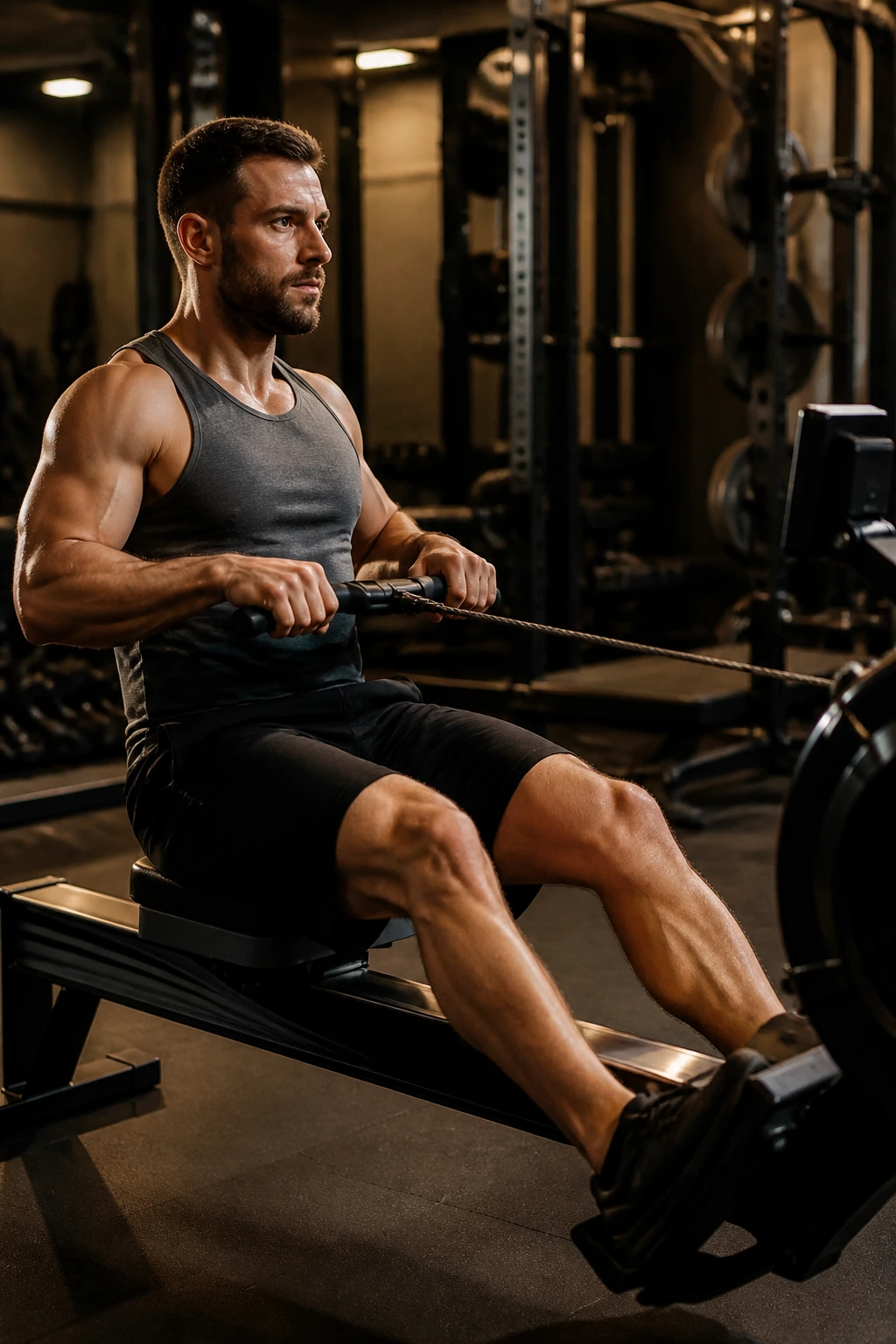
Why do rower workouts feel so efficient? Because they hit your lungs and upper back at the same time, then let your legs take a turn on the floor.
How to Set It Up
Use 6 rounds of 3 minutes rowing at a strong pace and 2 minutes of goblet squats, dead bugs, and push-ups. The row should feel smooth, not panicked. Think hard pull, clean stroke, repeat. During the floor block, keep the goblet squat moderate—8 to 12 reps is enough if the rower pace is honest.
After that, take 3 minutes for recovery and then do the whole thing again. That puts you close to the 45-minute mark once you add the warm-up and cooldown.
What to Watch For
- Don’t yank with the arms first.
- Keep the rower damper moderate, not maxed out.
- Stop the goblet squats before your torso folds forward.
The rowing machine is the star here, but the floor work is what stops it from becoming just cardio. The squat sets give the legs a reason to complain.
4. Kettlebell Complex and Jump Rope
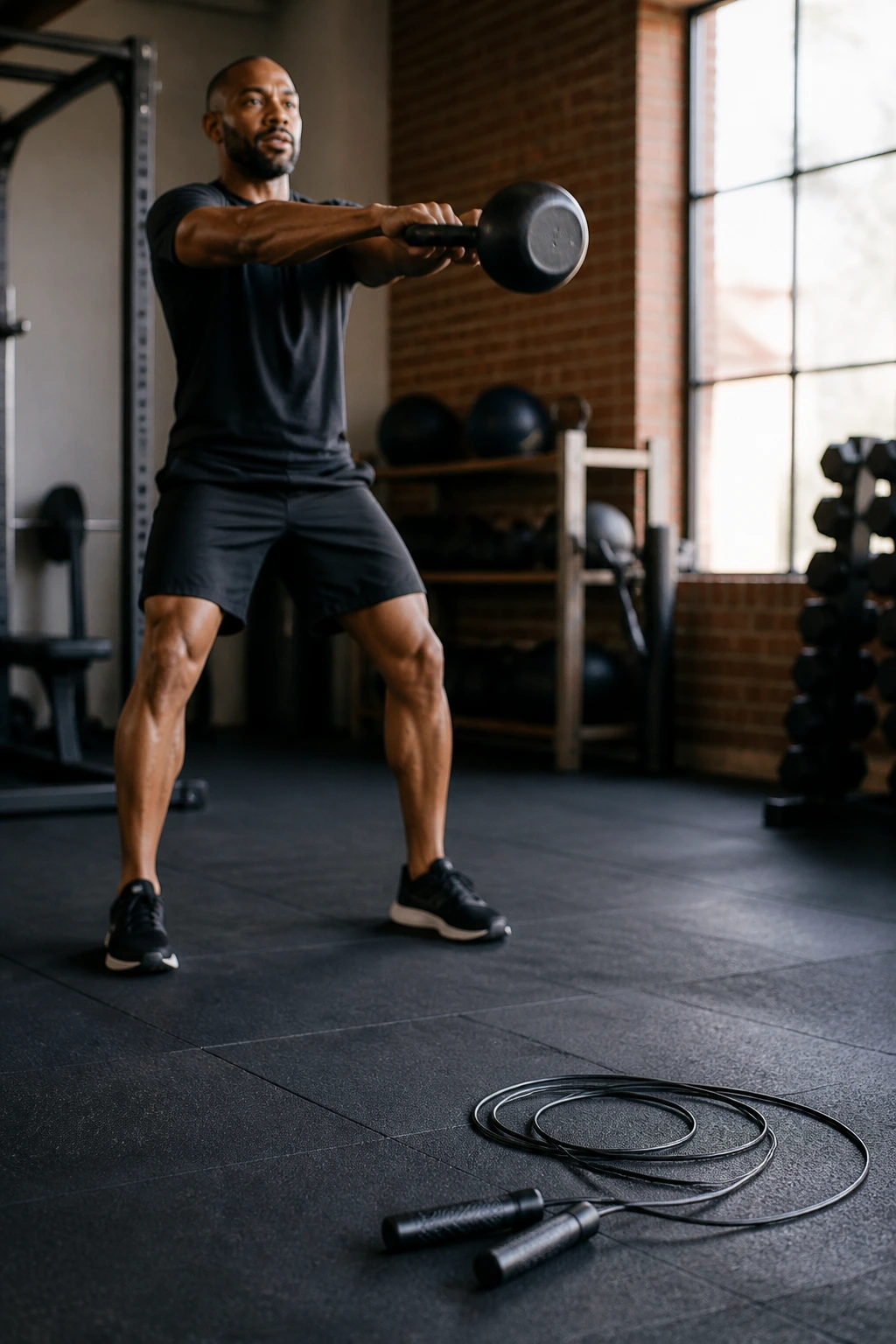
The first time you string kettlebell moves together without putting the bell down, you learn a thing: heart rate and grip fatigue are cousins.
Start with 5 minutes of jump rope in short bursts—20 seconds on, 20 seconds off works fine. Then move into a kettlebell complex: 6 swings, 4 cleans per side, 4 front squats, and 3 push presses per side. Rest 90 seconds, then repeat for 5 rounds. Finish with 5 minutes of easy rope or brisk walking to settle the breathing.
This one feels athletic, which I like. It is not fancy. It just asks your hips to work, your shoulders to stay honest, and your lungs to keep up. If you only have one kettlebell, you can still get a lot out of it.
Light bell? Go faster.
Heavy bell? Slow the pace and keep the reps tight.
That’s the tradeoff, and it’s a fair one.
The jump rope before the complex is not a warm-up by accident. It wakes up the feet and calves so the swing sequence feels less clunky.
5. Bodyweight EMOM Builder
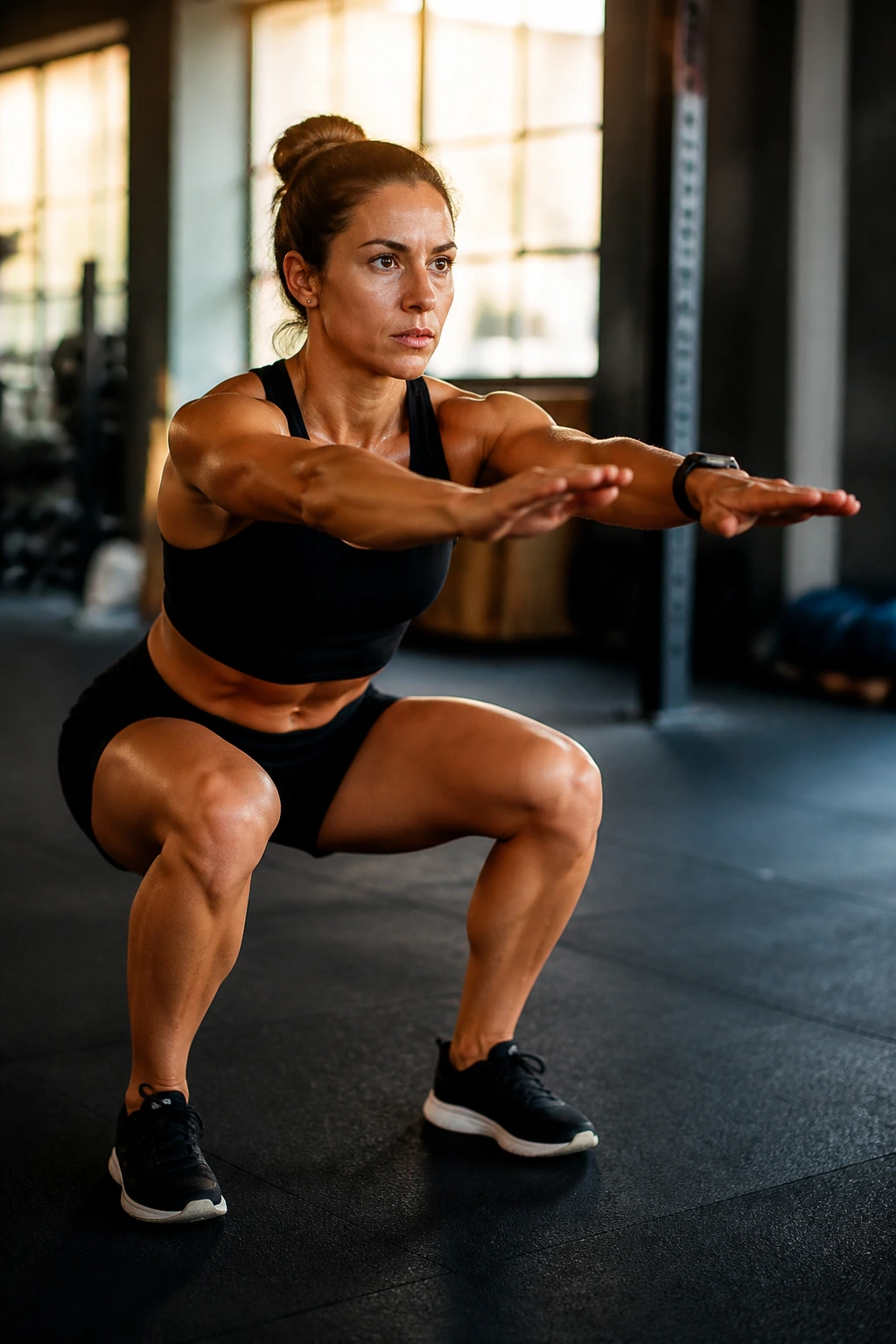
An EMOM sounds neat on paper, and then minute 17 shows up with a pulse like a drum solo.
The Structure
Set a timer for 20 minutes and do one job each minute. Minute 1: 12 air squats. Minute 2: 10 push-ups. Minute 3: 20 mountain climbers per side. Minute 4: 12 alternating lunges per leg. Minute 5: 30-second fast march or high knees. Repeat that pattern four times.
Before the EMOM, spend 10 minutes on a warm-up and mobility flow. After it, use the remaining time for easy core work and a cooldown walk. That gets you to 45 minutes without padding the session with junk.
Why It Stays Useful
Bodyweight work has a bad habit of getting too easy or too chaotic. The minute structure fixes both problems. You know when the rest ends, and you know exactly how much work to do. No guessing. No wandering.
If the last ten seconds of each minute feel generous, add a rep or two next round. If you’re gasping before the next minute starts, drop a rep from each movement. That adjustment is the whole point.
6. Bike Sprints and Push-Pull Supersets

Stationary bikes are underrated. They punish the legs, don’t care about your mood, and make recovery feel possible again after a heavy set.
Use 10 rounds of 30 seconds hard / 60 seconds easy on the bike. Between every two bike rounds, perform a push-pull superset: dumbbell bench press and one-arm rows, 8 to 10 reps each. The idea is to keep the upper body working while the bike keeps your heart rate from settling too much.
This workout suits people who like clear lanes. Legs go on the bike. Chest and back go on the floor or bench. You are not trying to be clever. You’re trying to be consistent.
Best Pairings
- Dumbbells at a load you can control without bouncing
- A seat height that lets the knees bend without pinching
- A fan, if your gym has one
The intervals can be brutal if you attack them too hard too soon. First round should feel manageable. Second and third? That is where the session starts collecting its bill.
7. Heavy Carry Day
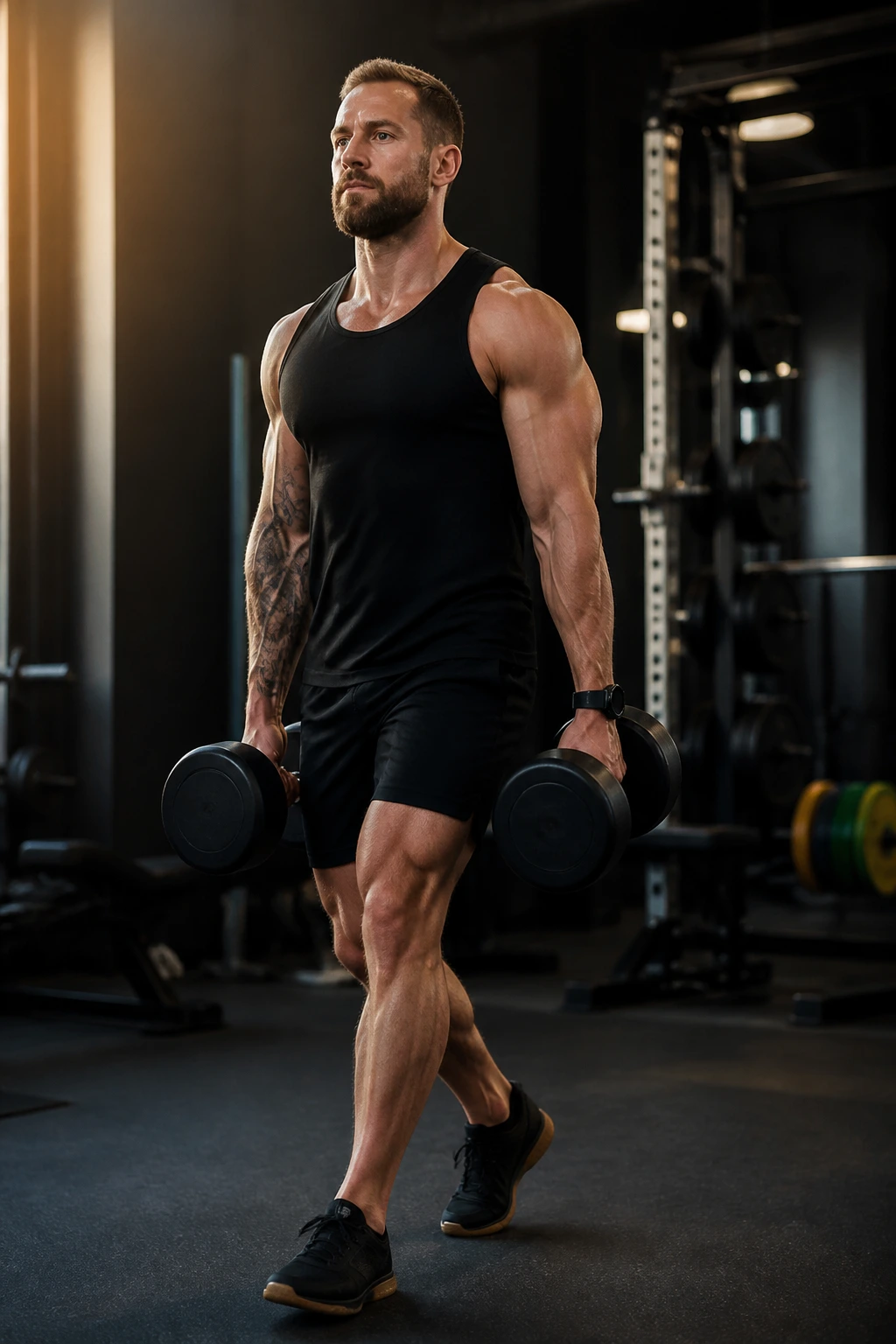
Farmer’s carries look plain until you do them for a few rounds and your midsection starts acting like it has a job.
This workout uses loaded carries as the cardio piece and compound lifts as the strength piece. Start with 5 minutes of walking warm-up. Then alternate 40 meters of farmer’s carries, 40 meters of suitcase carries, and 8 to 10 kettlebell or dumbbell deadlifts. Rest just long enough to set up the next walk.
The beauty here is the sneaky heart rate rise. Carries do not feel like sprinting, but they tax the grip, core, and upper back in a way that makes the whole body work harder than it looks from the outside. That is why these sessions are useful for people who hate endless burpees.
One-sentence truth: if your posture collapses, the load is too heavy.
Keep the ribs stacked over the pelvis, eyes forward, and steps short. A wobbly carry turns into a shrug contest, and that is not the point.
8. Stair Climber and Glute Burn
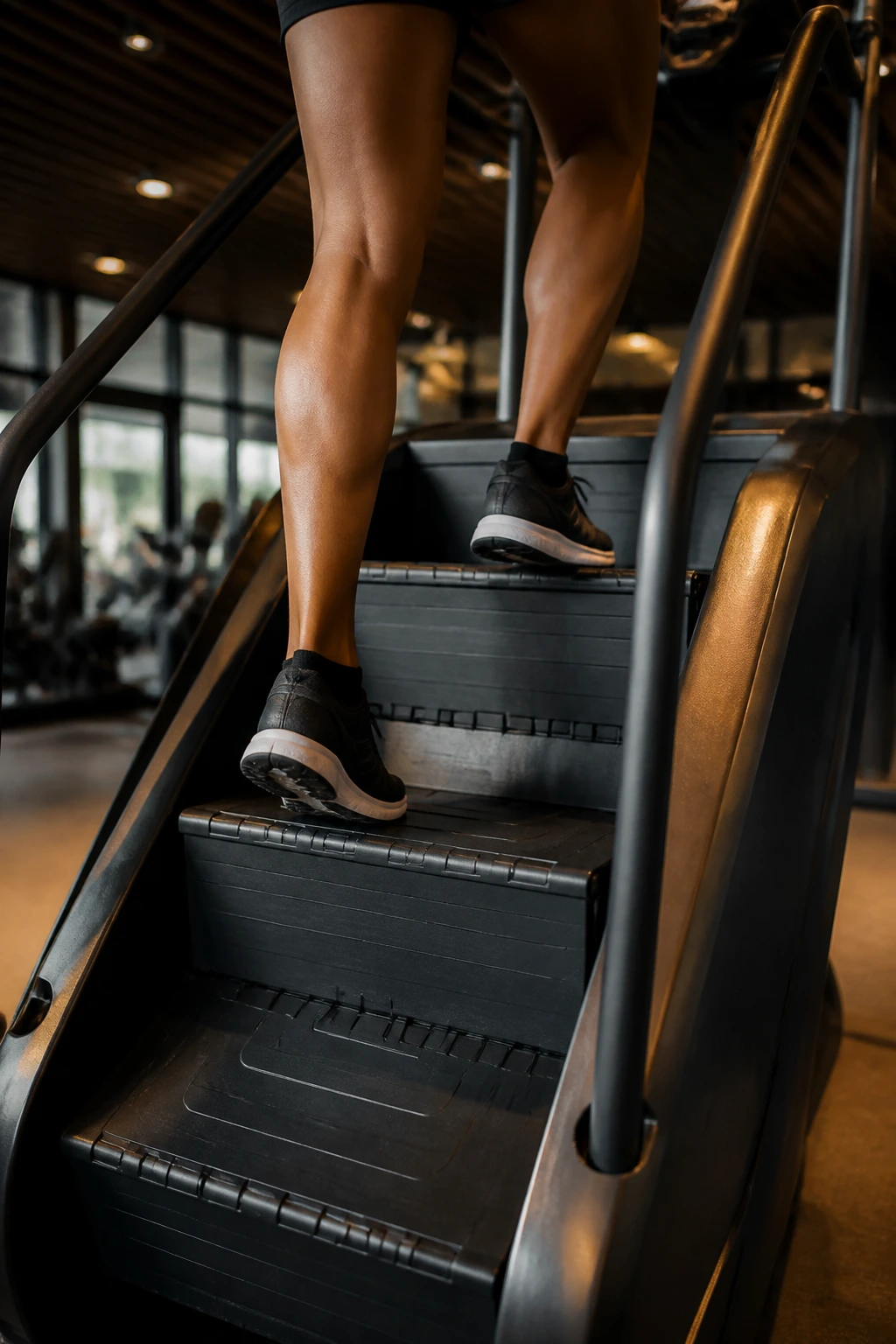
The stair climber is rude in the best possible way. It does not flatter anyone.
Alternate 4-minute stair climbs with 4-minute floor work. On the floor, run through glute bridges, bodyweight split squats, lateral lunges, and forearm planks. The stair pace should be steady enough to hold for the full interval, not a frantic stomp that makes your calves tighten by minute two.
I like this workout for days when the legs need a wake-up without heavy loading. It gives you a lot of lower-body volume without having to barbell squat. If your knees like controlled motion, this one usually feels better than jump-heavy work.
Add a small twist: on every other climb, hold the rails lightly and take shorter steps to keep the tension on the glutes. That small shift changes where you feel the burn.
Skip the temptation to lean on the machine. The second you hang on, the work leaks out of the session.
9. Shadow Boxing and Dumbbell Chains

Boxing rounds give cardio a nice edge. Add light dumbbells, and the shoulders stop getting to relax.
Spend 5 minutes on joint prep and footwork—small steps, shoulder rolls, a few light squats. Then do 6 rounds of 3 minutes: one minute shadow boxing, one minute dumbbell thrusters with light weights, one minute alternating reverse lunges or high knees. Rest 45 seconds between rounds.
This workout feels athletic and a little messy, which is part of its charm. The boxing keeps the feet light. The thrusters spike the heart rate. The lunges make sure the legs stay in the conversation after the upper body gets cocky.
A quick warning: keep the dumbbells light. Two 5- to 10-pound bells are enough for most people here. Heavier weights turn the punches into slow-motion shoulder raises, and nobody wants that.
The finish is usually a decent sweat and a pair of shoulders that know they’ve been used.
10. Track Run and Upper-Body Density

If running is your comfort zone, this session keeps you honest by making the upper body work while the legs recover.
Start with a 5-minute easy jog or brisk walk. Then do 8 rounds of 1-minute run / 1-minute walk on a track, treadmill, or safe outdoor route. After every two rounds, step off for a short strength block: push-ups, inverted rows, and overhead presses for 8 reps each. Keep the weights moderate. The point is density, not max effort.
The pattern works because the running and lifting are cleanly separated, but not too separated. Your lungs stay active, the arms get some real work, and the session never stalls out.
How to Make It Feel Better
- Run the hard minute at a pace you can repeat.
- Walk with purpose, not apology.
- Keep the presses strict if your shoulders like that better.
This is one of those workouts that looks plain from far away and feels far from plain halfway through.
11. Resistance Band Flow
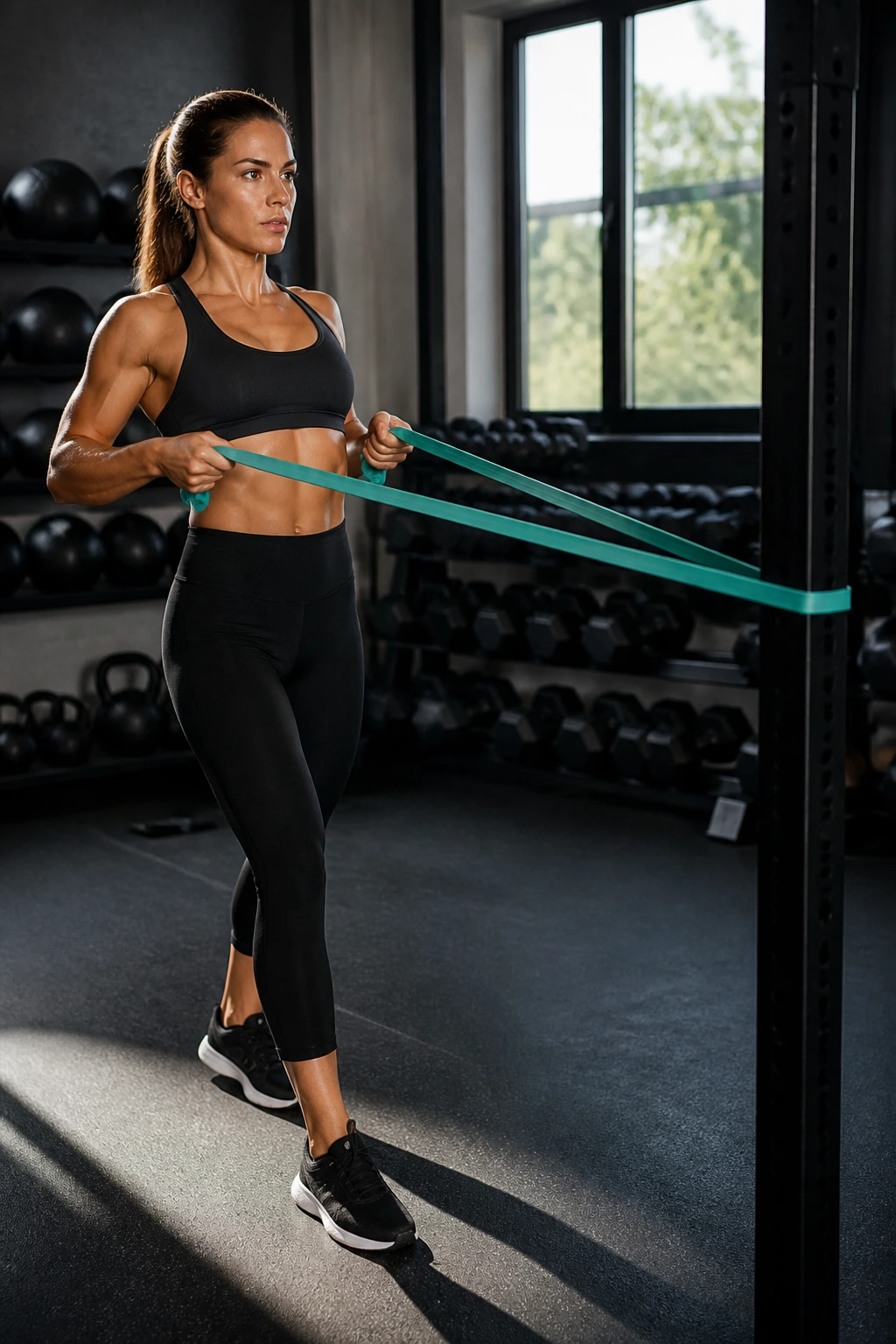
Bands are not flashy. They are useful, cheap, and annoying in exactly the right way.
Use a 5-minute mobility warm-up, then run a circuit of band rows, banded squats, standing presses, lateral walks, and fast feet. Work 40 seconds, rest 20 seconds, and keep moving through 5 exercises for 4 rounds. That fills most of the middle 30 minutes without needing a gym.
This session is a good reset day when joints want less pounding but you still want a real sweat. Bands change the resistance curve, which means the hardest part of each rep usually happens near the end of the movement. That little detail keeps the muscles awake.
One thing I like here: the workout travels well. A loop band and a long resistance band fit in a drawer. No excuses, no giant setup, no machine waiting list.
If your bands are too light, shorten the range or double them. If they feel too heavy, step out a little less. Nice and simple.
12. Elliptical and Total-Body Circuit

The elliptical gets dismissed a lot, usually by people who have not tried using it with intent.
Spend 6 minutes easing in, then do 5 rounds of 4 minutes on the elliptical at a hard but steady pace and 4 minutes of strength work on the floor. Use push-ups, split squats, sit-throughs, and dead bugs. The machine keeps impact low. The floor work keeps the heart rate from dropping too far.
This is a smart pick for anyone whose ankles or shins get testy with running. The elliptical gives a smooth stride and lets you push hard without the same pounding. The floor circuit then adds the real challenge. It is not an easy day, even if it looks polite.
Use a simple rule: if you can talk in full sentences on the elliptical, you’re probably too comfortable. Aim for short phrases. Breathing should feel active from the second or third round.
13. Hill Walks and Strength Blocks

A hill walk sounds tame until you hit the third climb and your calves start negotiating.
Find a hill, treadmill incline, or staircase and do 6 climbs of 2 to 3 minutes. Between climbs, move through walking lunges, single-leg RDLs, and side planks for about 3 minutes. Keep the walking pace firm enough that the breath stays elevated, but not so hard that the strength work turns sloppy.
This workout has a nice outdoors feel if you use a real hill. It also works well on a treadmill when weather or schedule gets in the way. The important thing is the angle. Even a moderate incline changes the whole session.
You do not need a huge load for the strength blocks. A pair of light dumbbells for the lunges or single-leg hinges is enough. The hill has already done part of the job.
One quiet benefit: the workout teaches pacing. Hard enough to matter. Easy enough to repeat. That balance is rare, and useful.
14. Jump Rope and Total-Body Tabata
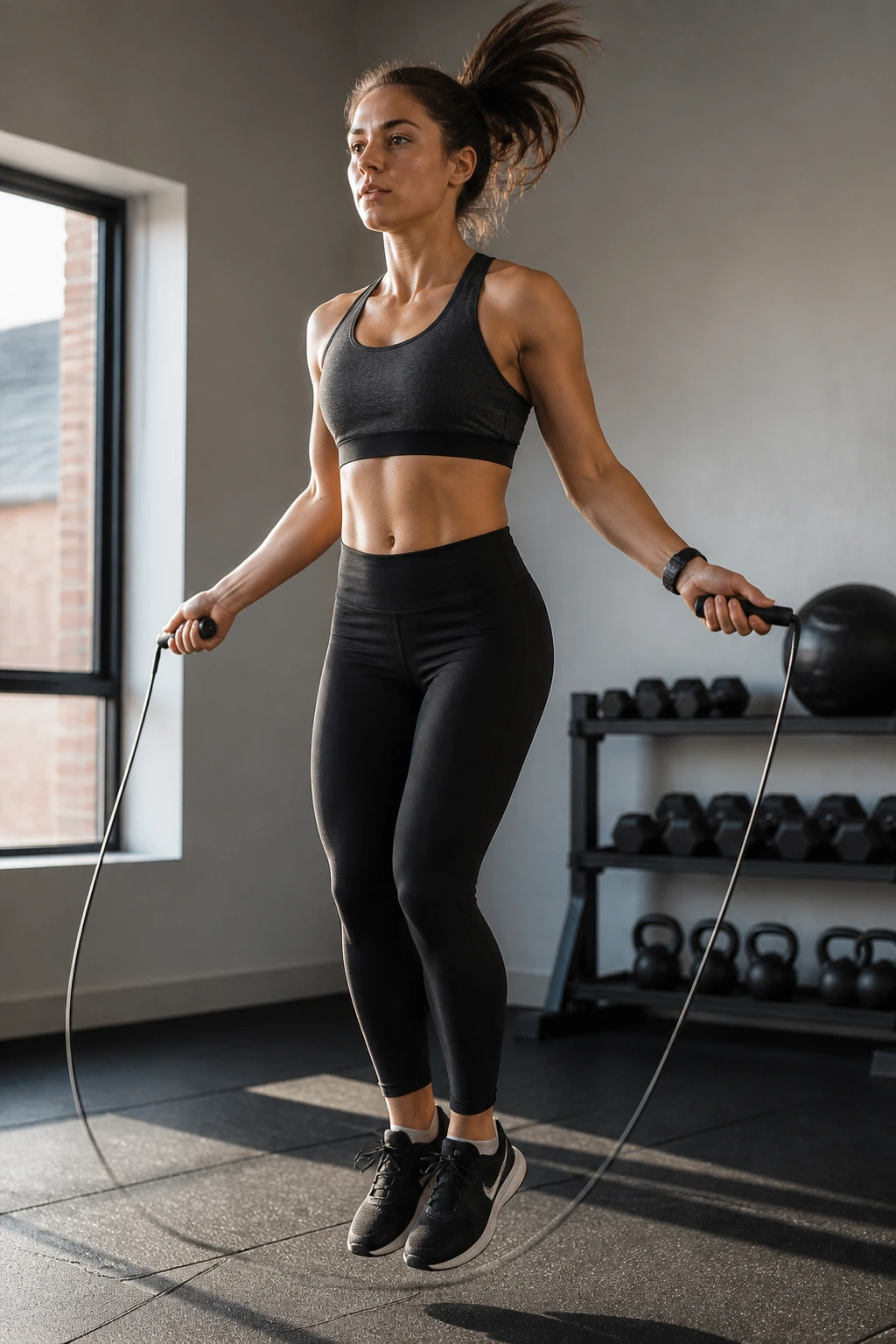
Jump rope is brutal when you respect it and worse when you don’t.
Start with 5 minutes of rope practice: single jumps, boxer steps, and a few easy misses if needed. Then run 6 Tabata rounds of 20 seconds on / 10 seconds off using jump rope, squat jumps, push-ups, bicycle crunches, and skater hops. After every two Tabatas, take 2 minutes to walk and breathe.
This one is quick, sharp, and not at all subtle. Tabata work creates a strange little pocket of time where your form and your ego get into arguments. Short work periods help, but only if the movement stays clean. If the jumps get sloppy, cut the speed and keep the rhythm.
Good Use Cases
- Small spaces
- Low equipment days
- People who want a hard session without setting up a whole gym
The session gets better when you keep the rope low and the jumps small. Big jumps waste energy. Tiny, quick jumps get the job done.
15. Sprint, Recover, Lift

Unlike a pure HIIT day, this one refuses to let the lifting disappear.
Use 10 rounds of 20 seconds sprint / 70 seconds recovery on a bike, rower, or treadmill. After five rounds, step off for a strength block: front squat, dumbbell bench press, and bent-over row, 6 reps each. Do two rounds of lifting, then return to the final five sprints.
The point is contrast. The sprints wake up the system. The lifts anchor it. Together, they give you a workout that feels organized but never easy.
I like this format for people who enjoy measurable pacing. You can compare sprint speeds, breathing, and recovery time from week to week. You can also tell when the lifting starts to suffer. That feedback is useful.
If your sprint speed drops hard by round three, the first two were too hot. Back off a little and finish stronger.
16. Single Dumbbell Circuit
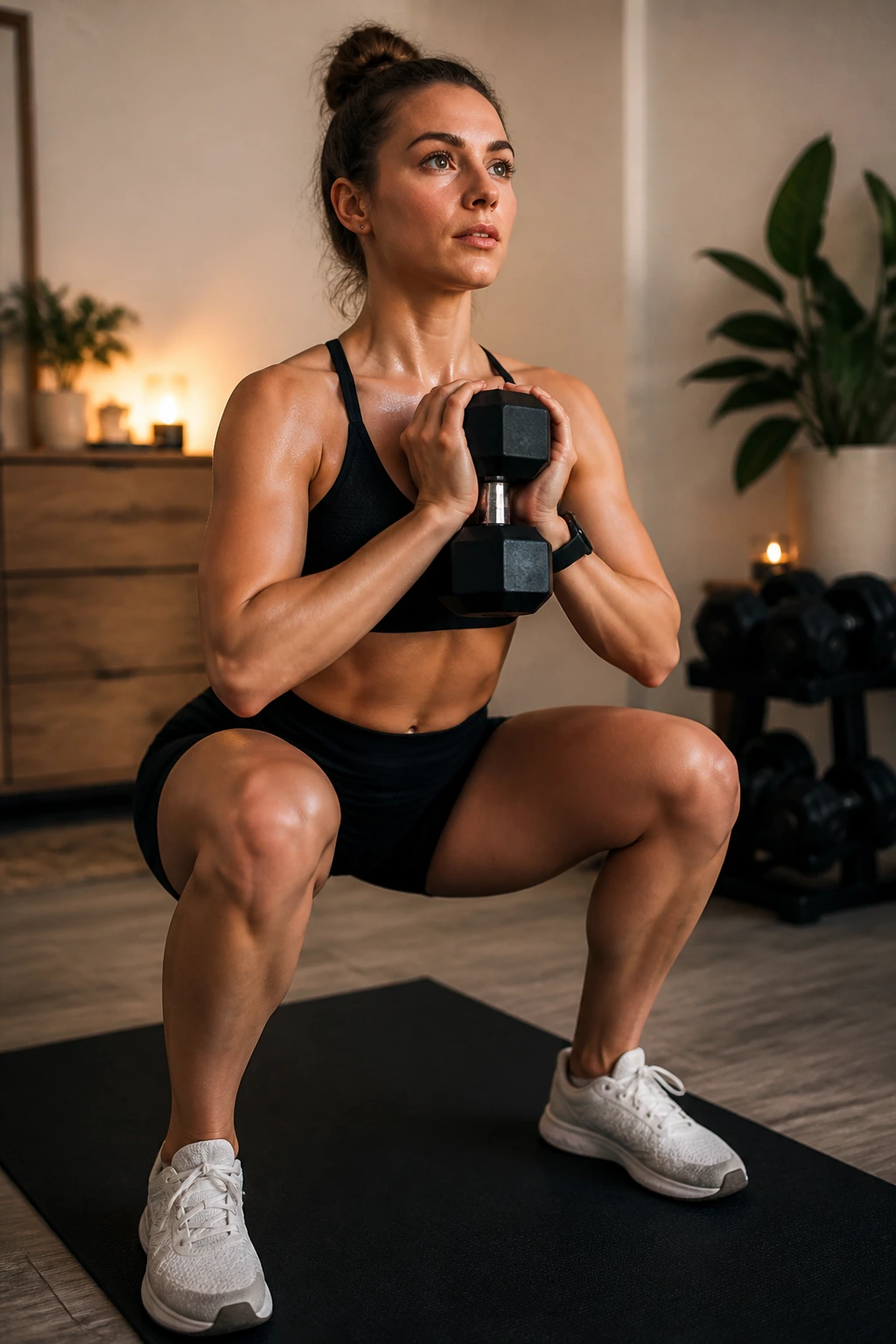
One dumbbell. That’s it. Not because it’s trendy, but because the limitation forces cleaner work.
Build the workout around 5 stations, each done for 45 seconds with 15 seconds to move: goblet squats, one-arm presses, renegade rows, reverse lunges, and mountain climbers. Complete 4 rounds. Add a 5-minute warm-up and a 5-minute cooldown walk, and the clock lands right where it should.
This format is friendly for small spaces and brutal in a quiet way. One-sided work lights up the core because your torso has to stop the dumbbell from pulling you around. That is a good kind of problem to have.
A few practical notes:
- Use the same dumbbell for all stations if you can.
- Choose a weight that lets the last round stay tidy.
- Move quickly between moves, not recklessly.
It looks humble. It does not feel humble after round three.
17. Sandbag and Step-Up Grinder
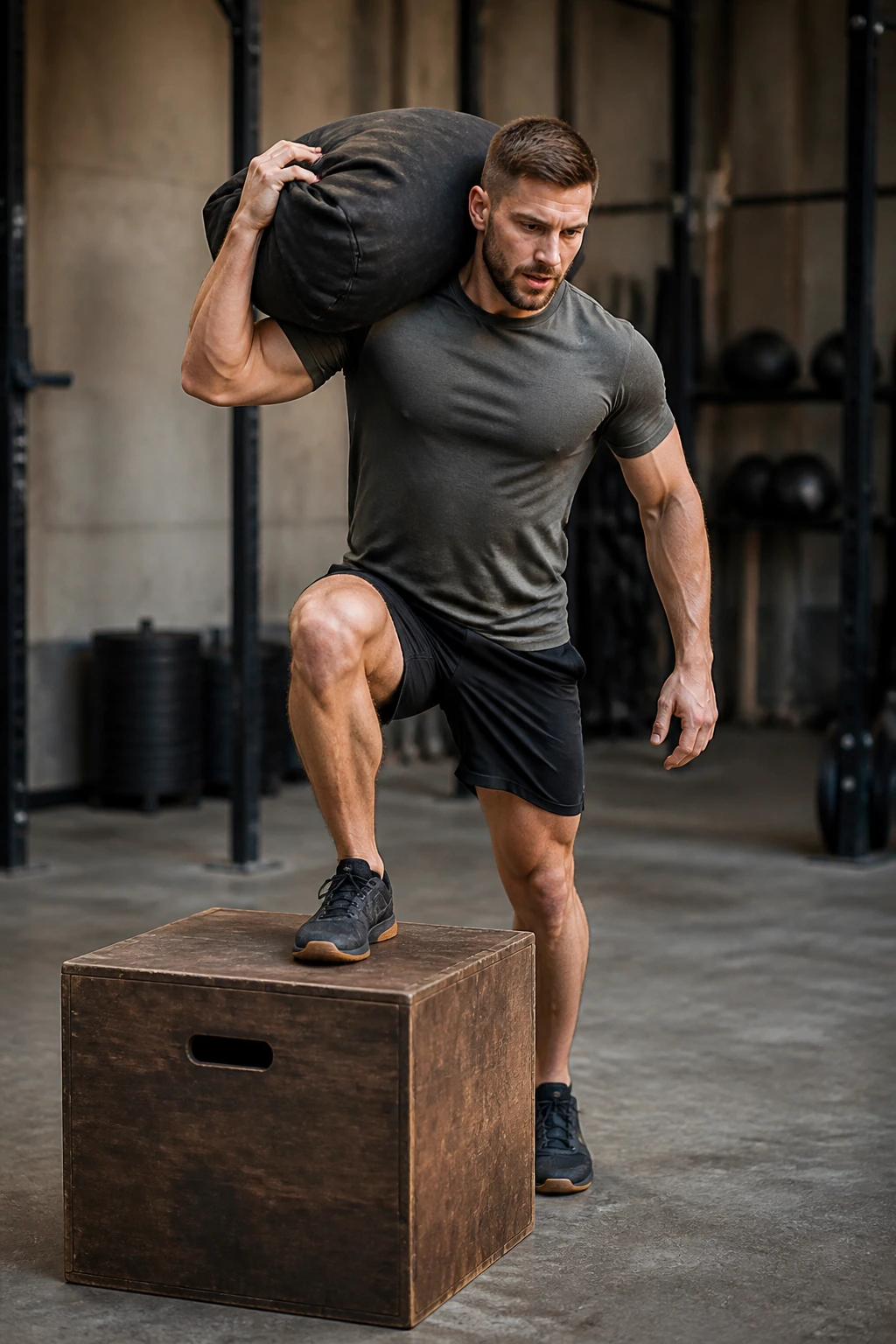
Sandbags make people move differently. Less polished. More honest.
Start with 5 minutes of marching and mobility, then cycle through sandbag shouldering, step-ups, bear-hug carries, and front-loaded squats. Work in 90-second blocks with 30 seconds of rest between stations, and repeat the circuit 4 times. Finish with 5 minutes of easy walking.
The reason this one works so well is that the sandbag shifts slightly in your hands. That small movement forces the core to stay awake, and it makes the cardio piece sneakier than it looks. Step-ups keep the legs under tension, while the carries keep the lungs involved.
If you do not have a sandbag, a heavy backpack or duffel stuffed with towels can stand in for one. Not fancy. Still effective.
Use a lower step if your knees need it. A 12-inch box is plenty for most people. Higher is not always harder; sometimes it is just awkward.
18. Rower, Burpee, and Plank Pyramid

This one is for the days when a straight line of effort sounds nicer than a complicated plan.
Do 1 minute rowing, 5 burpees, and 20 seconds plank. Then 2 minutes rowing, 6 burpees, 30 seconds plank. Keep building until you reach 5 minutes rowing, 9 burpees, and 60 seconds plank, then walk back down the ladder. Add a short warm-up and you land squarely near 45 minutes.
The pyramid shape keeps your mind engaged because the work changes without turning random. The rower handles most of the cardio load. The burpees spike it. The plank gives your shoulders and trunk a chance to keep the whole thing from collapsing.
Here’s the catch: burpees are easier to speed through than to do well. Keep the chest touch controlled and the stand-up crisp. Sloppy burpees save seconds and waste the workout.
This is not a graceful session. It is a good one.
19. Home-Friendly Mat Cardio Strength Mix

No gym. No machine. No problem, assuming there’s a mat and a little floor space.
Use 4 rounds of 5 exercises: air squats, push-ups, mountain climbers, glute bridges, and fast step-touches or jogs in place. Work 50 seconds, rest 10 seconds, then take a 2-minute break after each round. Add a 5-minute mobility warm-up and a 5-minute cooldown stretch.
This workout is built for consistency, not novelty. It’s the kind of session that gets done because it doesn’t ask much setup. And once the first round starts, the breathing ramps up fast enough that the room feels smaller.
A nice tweak: make the push-ups incline push-ups on a couch or bench if the floor version falls apart. Keep the squats full and the glute bridges hard at the top for a one-second squeeze.
The beauty of a home session is that nobody gets to see you make it look harder than it is. You just do the work.
20. Full-Body Finale
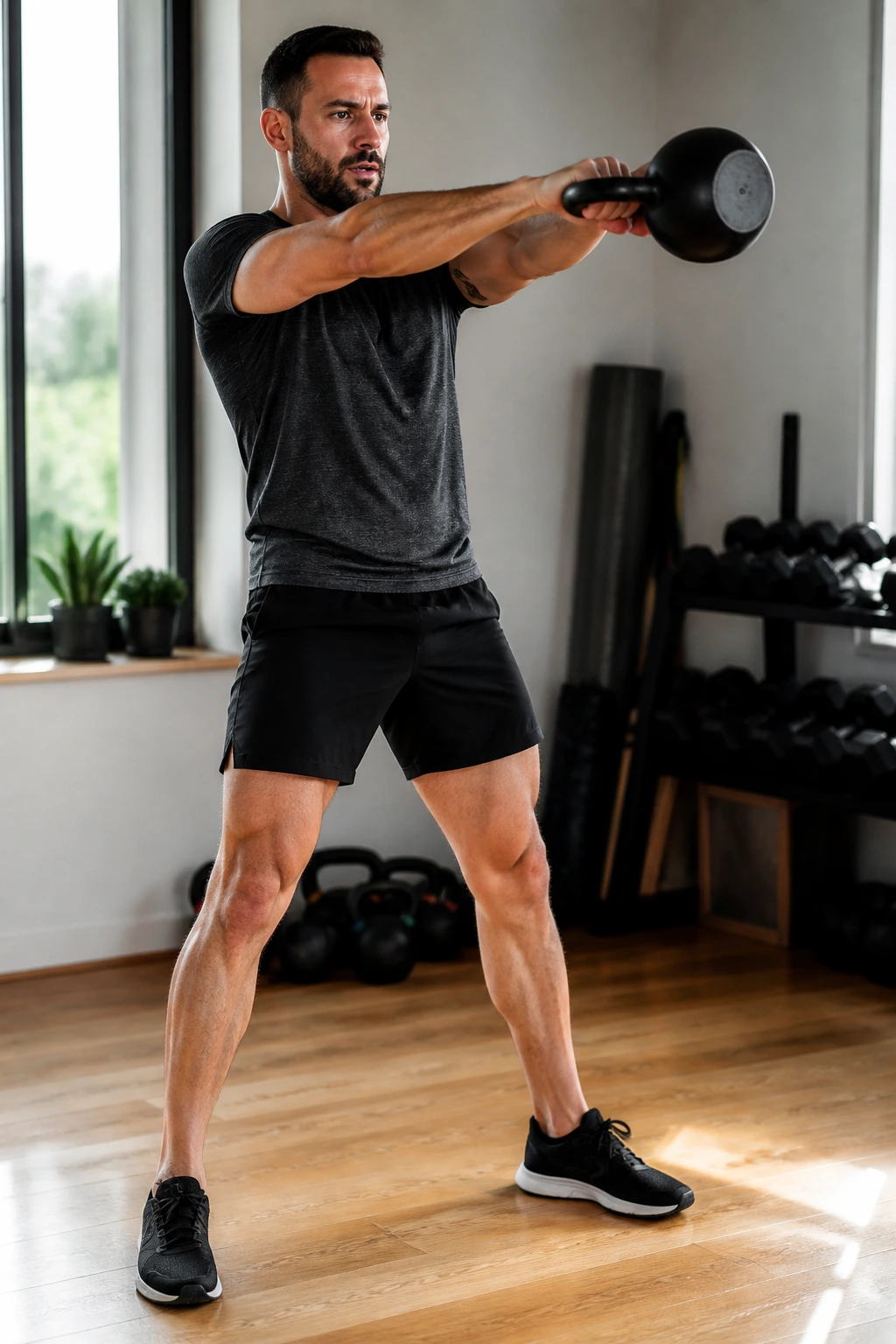
If there’s one 45-minute cardio strength workout worth saving for repeat use, it’s this one.
Start with 5 minutes of easy movement. Then run 3 cycles of 8 minutes AMRAP—as many rounds as possible—using 10 kettlebell swings, 8 push-ups, 12 air squats, and 30 seconds of hard cardio on a bike, rower, rope, or treadmill. Rest 2 minutes between cycles. Finish with 8 minutes of steady walking and breathing work.
This session earns its spot because it scales well. Beginners can use bodyweight and a light bell. Stronger lifters can go heavier and keep the cardio piece aggressive. Either way, the structure stays readable, and that matters when fatigue starts blurring judgment.
Use this as a benchmark workout every few weeks. Not to chase some dramatic transformation—those claims are usually nonsense—but to see whether your pace, recovery, and movement quality have improved. If the same circuit feels smoother and the breathing settles faster, the work is doing its job. Quietly. Exactly how it should.
